EP4510265A1 - Elektrolytlösung, sekundärbatterie, batteriemodul, batteriepack und elektrische vorrichtung - Google Patents
Elektrolytlösung, sekundärbatterie, batteriemodul, batteriepack und elektrische vorrichtung Download PDFInfo
- Publication number
- EP4510265A1 EP4510265A1 EP22962318.6A EP22962318A EP4510265A1 EP 4510265 A1 EP4510265 A1 EP 4510265A1 EP 22962318 A EP22962318 A EP 22962318A EP 4510265 A1 EP4510265 A1 EP 4510265A1
- Authority
- EP
- European Patent Office
- Prior art keywords
- electrolyte
- salt
- secondary battery
- alkali metal
- positive electrode
- Prior art date
- Legal status (The legal status is an assumption and is not a legal conclusion. Google has not performed a legal analysis and makes no representation as to the accuracy of the status listed.)
- Pending
Links
Images

Classifications
-
- H—ELECTRICITY
- H01—ELECTRIC ELEMENTS
- H01M—PROCESSES OR MEANS, e.g. BATTERIES, FOR THE DIRECT CONVERSION OF CHEMICAL ENERGY INTO ELECTRICAL ENERGY
- H01M10/00—Secondary cells; Manufacture thereof
- H01M10/05—Accumulators with non-aqueous electrolyte
- H01M10/056—Accumulators with non-aqueous electrolyte characterised by the materials used as electrolytes, e.g. mixed inorganic/organic electrolytes
- H01M10/0564—Accumulators with non-aqueous electrolyte characterised by the materials used as electrolytes, e.g. mixed inorganic/organic electrolytes the electrolyte being constituted of organic materials only
- H01M10/0566—Liquid materials
- H01M10/0568—Liquid materials characterised by the solutes
-
- H—ELECTRICITY
- H01—ELECTRIC ELEMENTS
- H01M—PROCESSES OR MEANS, e.g. BATTERIES, FOR THE DIRECT CONVERSION OF CHEMICAL ENERGY INTO ELECTRICAL ENERGY
- H01M10/00—Secondary cells; Manufacture thereof
- H01M10/05—Accumulators with non-aqueous electrolyte
- H01M10/052—Li-accumulators
-
- H—ELECTRICITY
- H01—ELECTRIC ELEMENTS
- H01M—PROCESSES OR MEANS, e.g. BATTERIES, FOR THE DIRECT CONVERSION OF CHEMICAL ENERGY INTO ELECTRICAL ENERGY
- H01M10/00—Secondary cells; Manufacture thereof
- H01M10/05—Accumulators with non-aqueous electrolyte
- H01M10/052—Li-accumulators
- H01M10/0525—Rocking-chair batteries, i.e. batteries with lithium insertion or intercalation in both electrodes; Lithium-ion batteries
-
- H—ELECTRICITY
- H01—ELECTRIC ELEMENTS
- H01M—PROCESSES OR MEANS, e.g. BATTERIES, FOR THE DIRECT CONVERSION OF CHEMICAL ENERGY INTO ELECTRICAL ENERGY
- H01M10/00—Secondary cells; Manufacture thereof
- H01M10/05—Accumulators with non-aqueous electrolyte
- H01M10/056—Accumulators with non-aqueous electrolyte characterised by the materials used as electrolytes, e.g. mixed inorganic/organic electrolytes
- H01M10/0564—Accumulators with non-aqueous electrolyte characterised by the materials used as electrolytes, e.g. mixed inorganic/organic electrolytes the electrolyte being constituted of organic materials only
- H01M10/0566—Liquid materials
- H01M10/0569—Liquid materials characterised by the solvents
-
- H—ELECTRICITY
- H01—ELECTRIC ELEMENTS
- H01M—PROCESSES OR MEANS, e.g. BATTERIES, FOR THE DIRECT CONVERSION OF CHEMICAL ENERGY INTO ELECTRICAL ENERGY
- H01M4/00—Electrodes
- H01M4/02—Electrodes composed of, or comprising, active material
- H01M4/13—Electrodes for accumulators with non-aqueous electrolyte, e.g. for lithium-accumulators; Processes of manufacture thereof
- H01M4/131—Electrodes based on mixed oxides or hydroxides, or on mixtures of oxides or hydroxides, e.g. LiCoOx
-
- H—ELECTRICITY
- H01—ELECTRIC ELEMENTS
- H01M—PROCESSES OR MEANS, e.g. BATTERIES, FOR THE DIRECT CONVERSION OF CHEMICAL ENERGY INTO ELECTRICAL ENERGY
- H01M4/00—Electrodes
- H01M4/02—Electrodes composed of, or comprising, active material
- H01M2004/026—Electrodes composed of, or comprising, active material characterised by the polarity
- H01M2004/028—Positive electrodes
-
- H—ELECTRICITY
- H01—ELECTRIC ELEMENTS
- H01M—PROCESSES OR MEANS, e.g. BATTERIES, FOR THE DIRECT CONVERSION OF CHEMICAL ENERGY INTO ELECTRICAL ENERGY
- H01M2220/00—Batteries for particular applications
- H01M2220/20—Batteries in motive systems, e.g. vehicle, ship, plane
-
- H—ELECTRICITY
- H01—ELECTRIC ELEMENTS
- H01M—PROCESSES OR MEANS, e.g. BATTERIES, FOR THE DIRECT CONVERSION OF CHEMICAL ENERGY INTO ELECTRICAL ENERGY
- H01M2300/00—Electrolytes
- H01M2300/0017—Non-aqueous electrolytes
- H01M2300/0025—Organic electrolyte
- H01M2300/0028—Organic electrolyte characterised by the solvent
-
- H—ELECTRICITY
- H01—ELECTRIC ELEMENTS
- H01M—PROCESSES OR MEANS, e.g. BATTERIES, FOR THE DIRECT CONVERSION OF CHEMICAL ENERGY INTO ELECTRICAL ENERGY
- H01M2300/00—Electrolytes
- H01M2300/0017—Non-aqueous electrolytes
- H01M2300/0025—Organic electrolyte
- H01M2300/0028—Organic electrolyte characterised by the solvent
- H01M2300/0037—Mixture of solvents
- H01M2300/004—Three solvents
-
- Y—GENERAL TAGGING OF NEW TECHNOLOGICAL DEVELOPMENTS; GENERAL TAGGING OF CROSS-SECTIONAL TECHNOLOGIES SPANNING OVER SEVERAL SECTIONS OF THE IPC; TECHNICAL SUBJECTS COVERED BY FORMER USPC CROSS-REFERENCE ART COLLECTIONS [XRACs] AND DIGESTS
- Y02—TECHNOLOGIES OR APPLICATIONS FOR MITIGATION OR ADAPTATION AGAINST CLIMATE CHANGE
- Y02E—REDUCTION OF GREENHOUSE GAS [GHG] EMISSIONS, RELATED TO ENERGY GENERATION, TRANSMISSION OR DISTRIBUTION
- Y02E60/00—Enabling technologies; Technologies with a potential or indirect contribution to GHG emissions mitigation
- Y02E60/10—Energy storage using batteries
Definitions
- the present application relates to the technical field of secondary batteries, and in particular to an electrolyte, a secondary battery, a battery module, a battery pack and a power consuming device.
- secondary batteries have been widely used in energy storage power systems such as hydraulic power, thermal power, wind power, and solar power stations, as well as many fields such as electric tools, electric bicycles, electric motorcycles, electric vehicles, military equipment, and aerospace. Due to the great development of secondary batteries, higher requirements have also been placed on the secondary ions in terms of cycle life.
- An electrolyte is an important component of a secondary battery, determines the composition and structure of an SEI film, and has an important impact on the stability of the electrode structure and the cycle life of the secondary battery, optimizing the design on an electrolyte is a main means to improve the cycle life of a secondary battery. Therefore, it is one of the research directions of great concern to those skilled in the art to seek an electrolyte which can better improve the cycle life of a secondary battery.
- the present application has been made in view of the above issues, and is based on an object of providing an electrolyte, a secondary battery, a battery module, a battery pack and a power consuming device, and a secondary battery comprising the electrolyte is enabled to have a relatively long cycle life.
- a first aspect of the present application provides an electrolyte, comprising an organic solvent and an electrolyte salt dissolved in the organic solvent, wherein the electrolyte salt comprises an alkali metal double salt, the alkali metal double salt containing lithium ions and at least one other alkali metal ion other than lithium ions.
- the other alkali metal ion in the alkali metal double salt include sodium ions and potassium ions.
- the alkali metal double salt contains both sodium ions and potassium ions.
- the electrolyte salt further contains a basic lithium salt, which comprises one or more of LiPF 6 , LiBOB, LiODFB, LiTFOP, LiPO 2 F 2 , LiTFSI, LiFSI, and LiBODFP.
- a basic lithium salt which comprises one or more of LiPF 6 , LiBOB, LiODFB, LiTFOP, LiPO 2 F 2 , LiTFSI, LiFSI, and LiBODFP.
- the mass ratio of the basic lithium salt to the alkali metal double salt in the electrolyte salt is X : 1, wherein 0.65 ⁇ X ⁇ 1 .
- the anion types of the basic lithium salt and the alkali metal double salt are the same.
- the amount-of-sub stance concentration of the electrolyte salt in the electrolyte is 0.5 mol/L to 2 mol/L.
- the organic solvent comprises one or more of dimethyl carbonate, methyl ethyl carbonate, methyl propyl carbonate, methyl formate, methyl acetate, methyl butyrate, ethyl propionate, ethylene carbonate, propylene carbonate, and diethyl carbonate.
- a second aspect of the present application further provides a secondary battery, comprising an electrolyte in the first aspect of the present application.
- a positive electrode active material in a positive electrode plate of the secondary battery is a positive electrode active material with a layered structure.
- a third aspect of the present application further provides a battery module, comprising a secondary battery in the second aspect of the present application.
- a fourth aspect of the present application further provides a battery pack, comprising a battery module in the third aspect of the present application.
- a fifth aspect of the present application further provides a power consuming device, comprising at least one selected from a secondary battery in the second aspect of the present application, a battery module in the third aspect of the present application or a battery pack in the fourth aspect of the present application.
- the alkali metal double salt comprises lithium ions and at least one alkali metal ion other than the lithium ions are used in the electrolyte salt.
- alkali metal ions such as sodium ions and potassium ions
- alkali metal ions other than lithium in the alkali metal double salt have a radius larger than that of lithium, and can be intercalated into some of the lithium sites of a layered positive electrode during the initial discharging process, thus improving the stability of a layered structure and preventing the Li/Ni intermixing of the layered positive electrode, such that the cycling performance of the secondary battery is improved.
- sodium ions, potassium ions, etc., in the alkali metal double salt facilitate to improve the composition of organic lithium in SEI when an SEI film is being formed during the initial charging and discharging, such that the co-intercalation of solvent molecules can be effectively ameliorated, damage to electrode materials caused by the co-intercalation of solvent molecules can be avoided, and the cycling performance of the electrodes can be greatly improved.
- lithium sites in the lithium salt are replaced with a sodium salt, a potassium salt, etc., having a larger ion radius; sodium ions and potassium ions can occupy the same spatial position and have the same energy level as lithium ions do, sodium ions and potassium ions occupying lithium sites in situ in the lithium salt have more stable structures, lithium holes provide stable space for storing sodium and potassium, and the failure rate of the deintercalation and intercalation of sodium ions and potassium ions at corresponding lithium sites is reduced, which are beneficial to the more long-lasting action of sodium and potassium ions; and when being deintercalated during charging and discharging, the ions have the same motion trajectories, such that the cycle life of battery cells can be quantitatively improved without introducing additional impurities and causing side reactions.
- ranges are defined in the form of lower and upper limits.
- a given range is defined by selecting a lower limit and an upper limit, and the selected lower and upper limits defining the boundaries of the particular range. Ranges defined in this manner may be inclusive or exclusive, and may be arbitrarily combined, that is, any lower limit may be combined with any upper limit to form a range. For example, if the ranges of 60-120 and 80-110 are listed for a particular parameter, it should be understood that the ranges of 60-110 and 80-120 are also contemplated. Additionally, if minimum range values 1 and 2 are listed and maximum range values 3, 4, and 5 are listed, the following ranges are all contemplated: 1-3, 1-4, 1-5, 2-3, 2-4 and 2-5.
- the numerical range "a-b” denotes an abbreviated representation of any combination of real numbers between a and b, where both a and b are real numbers.
- the numerical range "0-5" means that all real numbers between "0-5" have been listed in the text, and "0-5" is just an abbreviated representation of combinations of these numerical values.
- a parameter is expressed as an integer ⁇ 2, it is equivalent to disclosing that the parameter is, for example, an integer of 2, 3, 4, 5, 6, 7, 8, 9, 10, 11, 12, etc.
- steps (a) and (b) indicates that the method may comprise steps (a) and (b) performed sequentially, or may also comprise steps (b) and (a) performed sequentially.
- the method may further comprise step (c)" indicates that step (c) may be added to the method in any order, e.g., the method may comprise steps (a), (b), and (c), steps (a), (c), and (b), or also steps (c), (a), and (b), etc.
- the term "or” is inclusive unless otherwise specified.
- the phrase “A or B” means “A, B, or both A and B". More specifically, the condition “A or B” is satisfied by any one of the following: A is true (or present) and B is false (or not present); A is false (or not present) and B is true (or present); or both A and B are true (or present).
- ternary positive electrode materials are mostly high-nickel materials, but the overall life of high-nickel materials is generally poor.
- an increase in the nickel content will necessarily lead to more lithium-nickel intermixing, thus reducing the cycle life of secondary batteries.
- an SEI film formed by a conventional lithium salt electrolyte has a low organic lithium content, which easily leads to the co-intercalation of solvent molecules, such that electrode materials are damaged, and the cycle life of secondary batteries is thus reduced.
- the inventors have found an electrolyte during the research wherein an alkali metal double salt is used in an electrolyte salt of the electrolyte, the alkali metal double salt containing lithium ions and other alkali metal ions (such as sodium and potassium) other than lithium ions.
- the electrolyte can effectively improve the cycling performance of a secondary battery and prolong the cycle life of the secondary battery.
- a first aspect of the present application provides an electrolyte, comprising an organic solvent and an electrolyte salt dissolved in the organic solvent, wherein the electrolyte salt comprises an alkali metal double salt, the alkali metal double salt containing lithium ions and at least one other alkali metal ion other than lithium ions.
- the alkali metal double salt containing lithium ions and at least one other alkali metal ion other than lithium ions are used in the electrolyte salt.
- the other alkali metal ion (such as sodium ions and potassium ions) other than lithium in the alkali metal double salt has a radius larger than that of lithium, and can be intercalated into some of lithium sites of a layered positive electrode during the initial discharging process, thus improving the stability of a layered structure and preventing the Li/Ni intermixing of the layered positive electrode, such that the cycling performance of a secondary battery is improved.
- sodium ions, potassium ions, etc., in the alkali metal double salt facilitate to improve the composition of organic lithium in SEI when an SEI film is being formed during the initial charging and discharging, such that the co-intercalation of solvent molecules can be effectively ameliorated, damage to electrode materials caused by the co-intercalation of solvent molecules can be avoided, and the cycling performance of electrodes can be greatly improved.
- the type of metal salt will change the thermodynamic stability and solvation structure of an electrolyte, thus affecting the decomposition behavior of the electrolyte, such that the characteristics of an electrode
- Different anions are different in electronegativity, and anions will enter a solvation layer and participate in solvation structure reactions, which will accelerate the decomposition of an electrolyte and cause irreversible loss.
- lithium sites in the lithium salt are replaced with alkali metal double salts such as sodium salts and potassium salts having a larger ionic radius.
- alkali metal double salts such as sodium salts and potassium salts having a larger ionic radius.
- sodium ions and potassium ions in the alkali metal double salt can occupy the same spatial position and have the same energy level as lithium ions do, sodium ions and potassium ions occupying lithium sites in situ in the lithium salt have more stable structures, lithium holes provide stable space for storing sodium and potassium, and the failure rate of the deintercalation and intercalation of sodium ions and potassium ions at corresponding lithium sites is reduced, which are beneficial to more long-lasting action of sodium and potassium ions; and when being deintercalated during charging and discharging, the ions have the same motion trajectories, such that the cycle life of the secondary battery can be quantitatively improved without introducing extra impurities and causing side reactions.
- other alkali metal ions in the alkali metal double salt include sodium ions and potassium ions. It can be understood that the other alkali metal ions may further include alkali metal ions such as rubidium ions and cesium ions.
- the alkali metal double salt contains both sodium ions and potassium ions. That is, the alkali metal double salt comprises two or more other alkali metal ions, and the two or more other alkali metal ions include sodium ions and potassium ions.
- a, b, and c respectively represent the atomic numbers of lithium, sodium and potassium in the above molecular formulas of the alkali metal double salt.
- the value includes the minimum value and the maximum value of the range, and every value between the minimum value and the maximum value. Specific examples include, but are not limited to, point values in the embodiments and 0.6, 0.7, 0.8, and 0.9.
- the electrolyte salt further contains a basic lithium salt, which comprises one or more of LiPF 6 , LiBOB, LiODFB, LiTFOP, LiPO 2 F 2 , LiTFSI, LiFSI, and LiBODFP. Therefore, the electrolyte salt contains both the alkali metal double salt and the basic lithium salt. It can be understood that in some other embodiments, the electrolyte salt may comprise only the alkali metal double salt and comprise no basic lithium salt described above.
- the electrolyte salt contains both the alkali metal double salt and the basic lithium salt
- the anions in the alkali metal double salt and anions in the basic lithium salt are of the same type.
- the mass ratio of the basic lithium salt to the alkali metal double salt in the electrolyte salt is X : 1, wherein 0.65 ⁇ X ⁇ 1. It can be understood that the mass content of the basic lithium salt in the electrolyte salt is less than that of the alkali metal double salt.
- the value includes the minimum value and the maximum value of the range, and every value between the minimum value and the maximum value. Specific examples include, but are not limited to, point values in the embodiments and 0.68, 0.70, 0.72, 0.75, 0.78, 0.80, 0.82, 0.85, 0.88, 0.90, 0.92, 0.95, and 0.98.
- the amount-of-sub stance concentration of the electrolyte salt in the electrolyte is 0.5 mol/L to 2 mol/L.
- the organic solvent comprises one or more of dimethyl carbonate, methyl ethyl carbonate, methyl propyl carbonate, methyl formate, methyl acetate, methyl butyrate, ethyl propionate, ethylene carbonate, propylene carbonate, and diethyl carbonate. That is, the organic solvent in the electrolyte may comprise any one of the above-mentioned organic solvents, and may also comprise two or more of the above-mentioned organic solvents at the same time.
- a second aspect of the present application further provides a secondary battery, comprising an electrolyte in the first aspect of the present application. Therefore, the secondary battery has good cycling performance and a long cycle life.
- a positive electrode active material in a positive electrode plate of the secondary battery is a positive electrode active material with a layered structure.
- a third aspect of the present application further provides a battery module, comprising a secondary battery in the second aspect of the present application.
- a fourth aspect of the present application further provides a battery pack, comprising a battery module in the third aspect of the present application.
- a fifth aspect of the present application further provides a power consuming device, comprising at least one selected from a secondary battery in the second aspect of the present application, a battery module in the third aspect of the present application or a battery pack in the fourth aspect of the present application.
- a secondary battery is provided.
- a secondary battery comprises a positive electrode plate, a negative electrode plate, an electrolyte, and a separator.
- active ions are intercalated and de-intercalated back and forth between the positive electrode plate and the negative electrode plate.
- the electrolyte functions to conduct ions between the positive electrode plate and the negative electrode plate.
- the separator is arranged between the positive electrode plate and the negative electrode plate and mainly functions to prevent the positive and negative electrodes from short-circuiting while enabling ions to pass through.
- the positive electrode plate includes a positive electrode current collector and a positive electrode film layer provided on at least one surface of the positive electrode current collector, the positive electrode film layer including a positive electrode active material.
- the positive electrode current collector has two surfaces opposite in its own thickness direction, and the positive electrode film layer is provided on either or both of opposite surfaces of the positive electrode current collector.
- the positive electrode current collector may be a metal foil or a composite current collector.
- a metal foil an aluminum foil can be used.
- the composite current collector may comprise a polymer material base layer and a metal layer formed on at least one surface of the polymer material base layer.
- the composite current collector may be formed by forming a metal material on the polymer material substrate.
- the metal material include, but is not limited to, aluminum, an aluminum alloy, nickel, a nickel alloy, titanium, a titanium alloy, silver, a silver alloy, etc.
- the polymer material substrate such as polypropylene (PP), polyethylene terephthalate (PET), polybutylene terephthalate (PBT), polystyrene (PS), and polyethylene (PE)).
- the positive electrode active material may comprise a positive electrode active material known in the art for batteries.
- the positive electrode active material may comprise at least one of the following materials: lithium-containing phosphates of an olivine structure, lithium transition metal oxides, and their respective modified compounds.
- the present application is not limited to these materials, and other conventional materials that can be used as positive electrode active materials for batteries may also be used. These positive electrode active materials may be used alone or as a combination of two or more.
- examples of lithium transition metal oxides may include, but are not limited to, at least one of lithium cobalt oxide (e.g., LiCoO 2 ), lithium nickel oxide (e.g., LiNiO 2 ), lithium manganese oxide (e.g., LiMnO 2 , LiMn 2 O 4 ), lithium nickel cobalt oxide, lithium manganese cobalt oxide, lithium nickel manganese oxide, lithium nickel cobalt manganese oxide (e.g., LiNi 1/3 Co 1/3 Mn 1/3 O 2 (also referred to as NCM 333 ), LiNi 0.5 Co 0.2 Mn 0.3 O 2 (also referred to as NCM 523 ), LiNi 0.5 Co 0.25 Mn 0.25 O 2 (also referred to as NCM 211 ), LiNi 0.6 Co 0.2 Mn 0.2 O 2 (also referred to as NCM 622 ), LiNi 0.8 Co 0.1 Mn 0.1 O 2 (also referred to as NCM 811 )), lithium nickel cobalt aluminum oxide
- lithium-containing phosphates of olivine structure may include, but are not limited to, at least one of lithium iron phosphate (e.g., LiFePO 4 (also referred to as LFP)), lithium iron phosphate and carbon composites, lithium manganese phosphate (e.g., LiMnPO 4 ), lithium manganese phosphate and carbon composites, lithium iron manganese phosphate, and lithium iron manganese phosphate and carbon composites.
- LiFePO 4 also referred to as LFP
- LiMnPO 4 lithium manganese phosphate and carbon composites
- lithium iron manganese phosphate and carbon composites lithium iron manganese phosphate and carbon composites.
- the weight ratio of the positive electrode active material in the positive electrode film layer is 80-100 wt%, based on the total weight of the positive electrode film layer.
- the positive electrode film layer further optionally comprises a binder.
- the binder may include at least one of polyvinylidene fluoride (PVDF), polytetrafluoroethylene (PTFE), vinylidene fluoride-tetrafluoroethylene-propylene terpolymer, vinylidene fluoride-hexafluoropropylene-tetrafluoroethylene terpolymer, tetrafluoroethylene-hexafluoropropylene copolymer, and fluorine-containing acrylate resin.
- PVDF polyvinylidene fluoride
- PTFE polytetrafluoroethylene
- PTFE polytetrafluoroethylene
- vinylidene fluoride-tetrafluoroethylene-propylene terpolymer vinylidene fluoride-hexafluoropropylene-tetrafluoroethylene terpolymer
- the positive electrode film layer also optionally comprises a conductive agent.
- the conductive agent may include at least one of superconducting carbon, acetylene black, carbon black, Ketjen black, carbon dots, carbon nanotubes, graphene, and carbon nanofibers.
- the weight ratio of the conductive agent in the positive electrode film layer is 0-20 wt%, based on the total weight of the positive electrode film layer.
- the positive electrode plate can be prepared by the above-mentioned components for preparing the positive electrode plate, such as the positive electrode active material, the conductive agent, the binder and any other components, are dispersed in a solvent (e.g., N-methylpyrrolidone) to form a positive electrode slurry, wherein the positive electrode slurry has a solid content of 40-80 wt%, and the viscosity at room temperature thereof is adjusted to 5,000-25,000 mPa ⁇ s; and the positive electrode slurry is coated onto the surface of the positive electrode current collector, dried and then cold pressed by means of a cold-rolling mill to form a positive electrode plate, wherein the unit surface density of the positive electrode powder coating is 150-350 mg/m 2 , and the positive electrode plate has a compacted density of 3.0-3.6 g/cm 3 , optionally 3.3-3.5 g/cm 3 .
- a solvent e.g., N-methylpyrrolidone
- the negative electrode plate comprises a negative electrode current collector and a negative electrode film layer provided on at least one surface of the negative electrode current collector, the negative electrode film layer comprising a negative electrode active material.
- the negative electrode current collector has two surfaces opposite in its own thickness direction, and the negative electrode film layer is provided on either or both of the two opposite surfaces of the negative electrode current collector.
- the negative electrode current collector may be a metal foil or a composite current collector.
- a metal foil a copper foil can be used.
- the composite current collector may comprise a polymer material substrate and a metal layer formed on at least one surface of the polymer material substrate.
- the composite current collector may be formed by forming a metal material on the polymer material substrate.
- the metal material includes, but is not limited to, copper, a copper alloy, nickel, a nickel alloy, titanium, a titanium alloy, silver, a silver alloy, etc.
- the polymer material substrate includes but is not limited to polypropylene (PP), polyethylene terephthalate (PET), polybutylene terephthalate (PBT), polystyrene (PS), polyethylene (PE), and other substrates.
- the negative electrode active material can be a negative electrode active material known in the art for batteries.
- the negative electrode active material may comprise at least one of the following materials: artificial graphite, natural graphite, soft carbon, hard carbon, a silicon-based material, a tin-based material and lithium titanate, etc.
- the silicon-based material may be selected from at least one of elemental silicon, a silicon oxide compound, a silicon carbon composite, a silicon nitrogen composite, and a silicon alloy.
- the tin-based material may be selected from at least one of elemental tin, a tin oxide compound, and a tin alloy.
- the present application is not limited to these materials, and other conventional materials that can be used as negative electrode active materials for batteries can also be used. These negative electrode active materials may be used alone or as a combination of two or more.
- the negative electrode film layer may optionally comprise a binder.
- the binder may be selected from at least one of a butadiene styrene rubber (SBR), polyacrylic acid (PAA), sodium polyacrylate (PAAS), polyacrylamide (PAM), polyvinyl alcohol (PVA), sodium alginate (SA), polymethacrylic acid (PMAA), and carboxymethyl chitosan (CMCS).
- SBR butadiene styrene rubber
- PAA polyacrylic acid
- PAAS sodium polyacrylate
- PAM polyacrylamide
- PVA polyvinyl alcohol
- SA sodium alginate
- PMAA polymethacrylic acid
- CMCS carboxymethyl chitosan
- the negative electrode film layer may optionally comprise a conductive agent.
- the conductive agent may be selected from at least one of superconducting carbon, acetylene black, carbon black, Ketj en black, carbon dots, carbon nanotubes, graphene, and carbon nanofibers.
- the weight ratio of the conductive agent in the negative electrode film layer is 0-20 wt%, based on the total weight of the negative electrode film layer.
- the negative electrode film layer may optionally comprise other auxiliary agents, such as thickeners (e.g., sodium carboxymethyl cellulose (CMC-Na)), etc.
- auxiliary agents such as thickeners (e.g., sodium carboxymethyl cellulose (CMC-Na)), etc.
- the weight ratio of the other auxiliary agents in the negative electrode film layer is 0-15 wt%, based on the total weight of the negative electrode film layer.
- the negative electrode plate can be prepared by the above-mentioned components for preparing the negative electrode plate, such as the negative electrode active material, the conductive agent, the binder and any other components, being dispersed in a solvent (e.g., deionized water) to form a negative electrode slurry, wherein the negative electrode slurry has a solid content of 30-70 wt%, and the viscosity at room temperature thereof is adjusted to 2,000-10,000 mPa.s; and the resulting negative electrode slurry being coated onto a negative electrode current collector, followed by a drying procedure and cold pressing (e.g., double rollers), so as to obtain the negative electrode plate.
- the unit surface density of the negative electrode powder coating is 75-220 mg/m 2
- the negative electrode plate has a compacted density of 1.2-2.0 g/m 3 .
- the electrolyte functions to conduct ions between the positive electrode plate and the negative electrode plate.
- the electrolyte of the present application is used in the secondary battery of the present application.
- the electrolyte comprises an electrolyte salt and an organic solvent, wherein the electrolyte salt comprises an alkali metal double salt, the alkali metal double salt comprising lithium ions and at least one alkali metal ion other than lithium ions.
- the electrolyte salt further comprises a basic lithium salt, which comprises one or more of LiPF 6 , LiBOB, LiODFB, LiTFOP, LiPO 2 F 2 , LiTFSI, LiFSI, and LiBODFP.
- a basic lithium salt which comprises one or more of LiPF 6 , LiBOB, LiODFB, LiTFOP, LiPO 2 F 2 , LiTFSI, LiFSI, and LiBODFP.
- the mass ratio of the basic lithium salt to the alkali metal double salt in the electrolyte salt is X : 1, wherein 0.65 ⁇ X ⁇ 1.
- the organic solvent comprises one or more of ethylene carbonate, propylene carbonate, and diethyl carbonate.
- the electrolyte further optionally comprises an additive.
- the additive may include a negative electrode film-forming additive and a positive electrode film-forming additive, and may further include an additive that can improve certain performances of the battery, such as an additive that improves the overcharge performance of the battery, or an additive that improves the high-temperature or low-temperature performance of the battery.
- the secondary battery further comprises a separator.
- the type of the separator is not particularly limited in the present application, and any well-known porous-structure separator with good chemical stability and mechanical stability may be selected.
- the material of the separator may be selected from at least one of glass fibers, non-woven fabrics, polyethylene, polypropylene, and polyvinylidene fluoride.
- the separator may be either a single-layer film or a multi-layer composite film, and is not limited particularly.
- the separator is a multi-layer composite film, the materials in the respective layers may be the same or different, which is not limited particularly.
- the separator has a thickness of 6-40 ⁇ m, optionally 12-20 ⁇ m.
- an electrode assembly may be formed by a positive electrode plate, a negative electrode plate and a separator by a winding process or a stacking process.
- the secondary battery may comprise an outer package.
- the outer package may be used to encapsulate the above-mentioned electrode assembly and electrolyte.
- the outer package of the secondary battery can be a hard housing, for example, a hard plastic housing, an aluminum housing, a steel housing, etc.
- the outer package of the secondary battery may also be a soft bag, such as a pouch-type soft bag.
- the material of the soft bag may be plastics, and the examples of plastics may comprise polypropylene, polybutylene terephthalate, polybutylene succinate, etc.
- the shape of the secondary battery is not particularly limited in the present application and may be cylindrical, square or of any other shape.
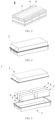
- Figure 1 shows a secondary battery 5 with a square structure as an example.
- the outer package may include a housing 51 and a cover plate 53.
- the housing 51 may comprise a bottom plate and side plates connected to the bottom plate, and the bottom plate and the side plates enclose to form an accommodating cavity.
- the housing 51 has an opening in communication with the accommodating cavity, and the cover plate 53 may cover the opening to close the accommodating cavity.
- the positive electrode plate, the negative electrode plate, and the separator may be subjected to a winding process or a stacking process to form an electrode assembly 52.
- the electrode assembly 52 is encapsulated in the accommodating cavity.
- the electrolyte infiltrates the electrode assembly 52.
- the number of the electrode assemblies 52 contained in the secondary battery 5 may be one or more, and can be selected by those skilled in the art according to actual requirements.
- the secondary battery 5 can be assembled into a battery module 4, and the number of the secondary batteries 5 contained in the battery module 4 may be one or more, and the specific number can be selected by those skilled in the art according to the application and capacity of the battery module 4.
- a plurality of secondary batteries 5 may be arranged sequentially along a length direction of the battery module 4.
- the secondary batteries may also be arranged in any other manner.
- the plurality of secondary batteries 5 may be fixed by fasteners.
- the battery module 4 may further comprise an outer housing with an accommodating space, and the plurality of secondary batteries 5 are accommodated in the accommodating space.
- the above-mentioned battery module 4 may also be assembled into a battery pack 1, the number of the battery modules 4 contained in the battery pack 1 may be one or more, and the specific number can be selected by those skilled in the art according to the application and capacity of the battery pack 1.
- the battery pack 1 may include a battery box and a plurality of battery modules 4 provided in the battery box.
- the battery box comprises an upper box body 2 and a lower box body 3, where the upper box body 2 may cover the lower box body 3 to form a closed space for accommodating the battery modules 4.
- the plurality of the battery modules 4 may be arranged in the battery box in any manner.
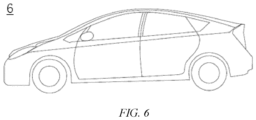
- the present application further provides a power consuming device 6.
- the power consuming device 6 comprises at least one of the secondary battery 5, the battery module 4, or the battery pack 1 provided in the present application.
- the secondary battery 5, the battery module 4 or the battery pack 1 may be used as a power supply of the power consuming device 6 or as an energy storage unit of the power consuming device 6.
- the power consuming device 6 may include a mobile device (e.g., a mobile phone or a laptop computer), an electric vehicle (e.g., a pure electric vehicle, a hybrid electric vehicle, a plug-in hybrid electric vehicle, an electric bicycle, an electric scooter, an electric golf cart, or an electric truck), an electric train, a ship, a satellite, an energy storage system, etc., but is not limited thereto.
- the secondary battery 5, battery module 4 or battery pack 1 can be selected according to the usage requirements thereof.
- FIG 4 shows a power consuming device 6 as an example.
- the power consuming device 6 may be a pure electric vehicle, a hybrid electric vehicle, a plug-in hybrid electric vehicle, etc.
- the battery pack 1 or the battery module 4 may be used.
- the device may be a mobile phone, a tablet computer, a laptop computer, etc.
- the device is generally required to be thin and light, and may have the secondary battery 5 used as a power source.
- An electrolyte salt in the electrolyte was Li 0.5 Na 0.3 K 0.2 PF 6 .
- An electrolyte with a concentration of 1 M was prepared.
- the electrolyte salt of Li 0.5 Na 0.3 K 0.2 PF 6 could be prepared by using a hydrogen fluoride solvent method, and the reaction process thereof could be expressed as follows: (0.5LiF + 0.3NaF + 0.2KF) + PF 5 + CH 3 CN ⁇ Li 0.5 Na 0.3 K 0.2 (CH 3 CN) 4 PF 6 ⁇ Li 0.5 Na 0.3 K 0.2 PF 6
- PVDF Polyvinylidene fluoride
- NMP N-methylpyrrolidone
- the slurry was coated onto a positive electrode current collector with a coater or sprayer, followed by drying at 85°C, cold pressing, and then cold pressing, slicing and slitting, then drying at 85°C under vacuum conditions for 4 hours, and a tab being welded, so as to prepare a secondary battery positive electrode plate meeting the requirements.
- Preparation of negative electrode plate of secondary battery A negative electrode active material of graphite, a conductive agent of Super-P, a thickener of CMC and a binder of SBR were added to a solvent of deionized water at a mass ratio of 96.5 : 1.0 : 1.0 : 1.5 and mixed until uniform to prepare a negative electrode slurry; and the negative electrode slurry was then coated onto a current collector of a copper foil and dried at 85°C, followed by edge-cutting, slicing and slitting, same was then dried at 110°C under vacuum conditions for 4 hours, and a tab being welded, so as to prepare a secondary battery negative electrode plate meeting the requirements.
- Preparation of secondary battery With a 12- ⁇ m polypropylene film as a separator, the positive electrode plate, the separator and the negative electrode plate were stacked in sequence to enable the separator to function for isolation between the positive and negative electrode plates, and were then wound to obtain a square bare cell.
- the bare cell was packed with an aluminum foil, the electrolyte was then injected therein, followed by vacuum packaging, and multiple times of charging and discharging to complete the preparation of the secondary battery.
- An electrolyte salt in the electrolyte was Li 0.5 Na 0.3 K 0.2 BOB.
- An electrolyte with a concentration of 1 M was prepared.
- the electrolyte salt Li 0.5 Na 0.3 K 0.2 BOB could be prepared by using a hydrogen fluoride solvent method.
- An electrolyte salt in the electrolyte was Li 0.5 Na 0.3 K 0.2 ODFB.
- An electrolyte with a concentration of 1 M was prepared.
- the electrolyte salt Li 0.5 Na 0.3 K 0.2 ODFB could be prepared by using a hydrogen fluoride solvent method.
- An electrolyte salt in the electrolyte was Li 0.5 Na 0.3 K 0.2 TFOP.
- An electrolyte with a concentration of 1 M was prepared.
- the electrolyte salt Li 0.5 Na 0.3 K 0.2 TFOP could be prepared by using a hydrogen fluoride solvent method.
- An electrolyte salt in the electrolyte was Li 0.5 Na 0.3 K 0.2 PO 2 F 2 .
- An electrolyte with a concentration of 1 M was prepared.
- the electrolyte salt Li 0.5 Na 0.3 K 0.2 PO 2 F 2 could be prepared by using a hydrogen fluoride solvent method.
- An electrolyte salt in the electrolyte was Li 0.5 Na 0.3 K 0.2 TFSI.
- the electrolyte with a concentration of 1 M was prepared.
- the electrolyte salt Li 0.5 Na 0.3 K 0.2 TFSI could be prepared by using a hydrogen fluoride solvent method.
- An electrolyte salt in the electrolyte was Li 0.5 Na 0.3 K 0.2 FSI.
- the electrolyte with a concentration of 1 M was prepared.
- the electrolyte salt Li 0.5 Na 0.3 K 0.2 FSI could be prepared by using a hydrogen fluoride solvent method.
- An electrolyte salt in the electrolyte was Li 0.5 Na 0.3 K 0.2 BODFP.
- the electrolyte with a concentration of 1 M was prepared.
- the electrolyte salt Li 0.5 Na 0.3 K 0.2 BODFP could be prepared by using a hydrogen fluoride solvent method.
- An electrolyte salt in the electrolyte was Li 0.7 Na 0.2 K 0.1 PF 6 .
- the electrolyte with a concentration of 1 M was prepared.
- the electrolyte salt Li 0.7 Na 0.2 K 0.1 PF 6 could be prepared by using a hydrogen fluoride solvent method.
- An electrolyte salt in the electrolyte was Li 0.8 Na 0.1 K 0.1 PF 6 .
- the electrolyte with a concentration of 1 M was prepared.
- the electrolyte salt Li 0.8 Na 0.1 K 0.1 PF 6 could be prepared by using a hydrogen fluoride solvent method.
- An electrolyte salt in the electrolyte was Li 0.9 Na 0.05 K 0.05 PF 6 .
- the electrolyte with a concentration of 1 M was prepared.
- the electrolyte salt Li 0.9 Na 0.05 K 0.05 PF 6 could be prepared by using a hydrogen fluoride solvent method.
- Electrolyte salts in the electrolyte were LiPF 6 and Li 0.5 Na 0.3 K 0.2 PF 6 .
- the mass ratio LiPF 6 to Li 0.5 Na 0.3 K 0.2 PF 6 was 0.7 : 1, and an electrolyte with a concentration of 1 M was prepared.
- Electrolyte salts in the electrolyte were LiBOB and Li 0.5 Na 0.3 K 0.2 BOB.
- the mass ratio of LiBOB to Li 0.5 Na 0.3 K 0.2 BOB was 0.8 : 1, and an electrolyte with a concentration of 1 M was prepared.
- Electrolyte salts in the electrolyte were LiODFB and Li 0.5 Na 0.3 K 0.2 ODFB.
- the mass ratio of LiODFB to Li 0.5 Na 0.3 K 0.2 ODFB was 0.9 : 1, and an electrolyte with a concentration of 1 M was prepared.
- An electrolyte salt in the electrolyte was Li 0.5 Na 0.5 PF 6 .
- the electrolyte with a concentration of 1 M was prepared.
- An electrolyte salt in the electrolyte was Li 0.5 Na 0.5 PO 2 F 2 .
- the electrolyte with a concentration of 0.8 M was prepared.
- An electrolyte salt in the electrolyte was Li 0.5 Na 0.5 TFSI.
- the electrolyte with a concentration of 1.2 M was prepared.
- An electrolyte salt in the electrolyte was Li 0.5 K 0.5 FSI.
- the electrolyte with a concentration of 1 M was prepared.
- An electrolyte salt in the electrolyte was Li 0.5 Na 0.5 BODFP.
- the electrolyte with a concentration of 1.8 M was prepared.
- An electrolyte salt in the electrolyte was Li 0.7 K 0.3 PF 6 .
- the electrolyte with a concentration of 0.9 M was prepared.
- An electrolyte salt in the electrolyte was Li 0.8 Na 0.2 PF 6 .
- the electrolyte with a concentration of 1 M was prepared.
- An electrolyte salt in the electrolyte was Li 0.9 K 0.1 PF 6 .
- the electrolyte with a concentration of 1 M was prepared.
- Electrolyte salts in the electrolyte were LiPF 6 and Li 0.5 Na 0.5 PF 6 .
- the mass ratio of LiPF 6 to Li 0.5 Na 0.5 PF 6 was 0.7 : 1.
- the electrolyte with a concentration of 1 M was prepared.
- Electrolyte salts in the electrolyte were LiBOB and Li 0.5 K 0.5 BOB.
- the mass ratio of LiBOB to Li 0.5 K 0.5 BOB was 0.8 : 1.
- the electrolyte with a concentration of 1 M was prepared.
- An electrolyte salt in the electrolyte was LiPF 6 , and an electrolyte with a concentration of 1 M was prepared.
- An electrolyte salt in the electrolyte was LiBOB, and an electrolyte with a concentration of 1 M was prepared.
- An electrolyte salt in the electrolyte was LiODFB. The electrolyte with a concentration of 1 M was prepared.
- An electrolyte salt in the electrolyte was LiTFOP. The electrolyte with a concentration of 1 M was prepared.
- An electrolyte salt in the electrolyte was LiPO 2 F 2 .
- the electrolyte with a concentration of 1 M was prepared.
- An electrolyte salt in the electrolyte was LiTFSI. The electrolyte with a concentration of 1 M was prepared.
- An electrolyte salt in the electrolyte was LiFSI. The electrolyte with a concentration of 1 M was prepared.
- An electrolyte salt in the electrolyte was LiBODFP. The electrolyte with a concentration of 1 M was prepared.
- An electrolyte salt in the electrolyte was Li 0.4 Na 0.5 K 0.1 PF 6 , and an electrolyte with a concentration of 1 M was prepared.
- Electrolyte salts in the electrolyte were all Li 0.3 Na 0.3 K 0.4 PF 6 , and an electrolyte with a concentration of 1 M was prepared.
- Electrolyte salts in the electrolyte were LiPF 6 and Li 0.5 Na 0.3 K 0.2 PF 6 .
- the mass ratio LiPF 6 to Li 0.5 Na 0.3 K 0.2 PF 6 was 0.4 : 1, and an electrolyte with a concentration of 1 M was prepared.
- Conditions for cycling performance test of secondary batteries At 25°C and 45°C, the secondary batteries were subjected to 1 C/1 C cyclic charge and discharge test; the charge and discharge voltage ranged from 2.8 V to 4.35 V; and the test was stopped when the capacity decayed to 80% of the initial specific discharge capacity (i.e., 80% SOH (state of health)).
- SOH is the health span of batteries, which characterized the percentage of the full charge capacity of secondary batteries relative to the rated capacity.
- the SOH of a newly manufactured secondary battery was 100%.
- sodium and potassium ions and lithium ions occupy the same spatial position, have the same energy level, and are the same in terms of the motion trajectories of deintercalated ions during charging and discharging, and the doping sodium or potassium ions can effectively prevent Li/Ni intermixing of layered positive electrodes, thus improving the cycling performance.
- sodium ions and potassium ions in the alkali metal double salts facilitate to improve the composition of organic lithium in SEI when SEI films are being formed during initial charging and discharging.
Landscapes
- Chemical & Material Sciences (AREA)
- Engineering & Computer Science (AREA)
- Electrochemistry (AREA)
- General Chemical & Material Sciences (AREA)
- Chemical Kinetics & Catalysis (AREA)
- Manufacturing & Machinery (AREA)
- Physics & Mathematics (AREA)
- Condensed Matter Physics & Semiconductors (AREA)
- General Physics & Mathematics (AREA)
- Inorganic Chemistry (AREA)
- Materials Engineering (AREA)
- Secondary Cells (AREA)
- Battery Electrode And Active Subsutance (AREA)
Applications Claiming Priority (1)
| Application Number | Priority Date | Filing Date | Title |
|---|---|---|---|
| PCT/CN2022/125847 WO2024082123A1 (zh) | 2022-10-18 | 2022-10-18 | 电解液、二次电池、电池模块、电池包和用电装置 |
Publications (2)
| Publication Number | Publication Date |
|---|---|
| EP4510265A1 true EP4510265A1 (de) | 2025-02-19 |
| EP4510265A4 EP4510265A4 (de) | 2025-10-22 |
Family
ID=90736596
Family Applications (1)
| Application Number | Title | Priority Date | Filing Date |
|---|---|---|---|
| EP22962318.6A Pending EP4510265A4 (de) | 2022-10-18 | 2022-10-18 | Elektrolytlösung, sekundärbatterie, batteriemodul, batteriepack und elektrische vorrichtung |
Country Status (6)
| Country | Link |
|---|---|
| US (1) | US20250219148A1 (de) |
| EP (1) | EP4510265A4 (de) |
| JP (1) | JP7850289B2 (de) |
| KR (1) | KR20250002530A (de) |
| CN (1) | CN119654729A (de) |
| WO (1) | WO2024082123A1 (de) |
Family Cites Families (9)
| Publication number | Priority date | Publication date | Assignee | Title |
|---|---|---|---|---|
| JP3309719B2 (ja) * | 1996-07-10 | 2002-07-29 | 松下電器産業株式会社 | 非水電解液二次電池 |
| JP4880930B2 (ja) * | 2005-07-11 | 2012-02-22 | 株式会社豊田中央研究所 | 非水電解液及びリチウム二次電池 |
| JP2009054354A (ja) * | 2007-08-24 | 2009-03-12 | Sony Corp | 非水電解液組成物及び非水電解液二次電池 |
| KR101651143B1 (ko) * | 2013-10-31 | 2016-08-25 | 주식회사 엘지화학 | 사이클 수명이 개선된 리튬 이차전지 |
| CN106745096A (zh) * | 2017-02-16 | 2017-05-31 | 九江天赐高新材料有限公司 | 六氟磷酸碱金属盐的制备方法 |
| US10707530B2 (en) * | 2017-08-15 | 2020-07-07 | GM Global Technology Operations LLC | Carbonate-based electrolyte system improving or supporting efficiency of electrochemical cells having lithium-containing anodes |
| JP2020027737A (ja) * | 2018-08-10 | 2020-02-20 | 株式会社豊田自動織機 | リチウムイオン二次電池 |
| CN110931867A (zh) * | 2019-11-26 | 2020-03-27 | 深圳先进技术研究院 | 一种新型电池及其制备方法 |
| CN114725519A (zh) * | 2021-01-06 | 2022-07-08 | 东莞理工学院 | 一种锂离子电池电解液及其制备方法和锂离子电池 |
-
2022
- 2022-10-18 CN CN202280098838.1A patent/CN119654729A/zh active Pending
- 2022-10-18 KR KR1020247038069A patent/KR20250002530A/ko active Pending
- 2022-10-18 JP JP2024569420A patent/JP7850289B2/ja active Active
- 2022-10-18 EP EP22962318.6A patent/EP4510265A4/de active Pending
- 2022-10-18 WO PCT/CN2022/125847 patent/WO2024082123A1/zh not_active Ceased
-
2025
- 2025-03-20 US US19/084,782 patent/US20250219148A1/en active Pending
Also Published As
| Publication number | Publication date |
|---|---|
| WO2024082123A1 (zh) | 2024-04-25 |
| JP7850289B2 (ja) | 2026-04-22 |
| EP4510265A4 (de) | 2025-10-22 |
| US20250219148A1 (en) | 2025-07-03 |
| JP2025518026A (ja) | 2025-06-12 |
| KR20250002530A (ko) | 2025-01-07 |
| CN119654729A (zh) | 2025-03-18 |
Similar Documents
| Publication | Publication Date | Title |
|---|---|---|
| KR102502618B1 (ko) | 이차 전지, 이차 전지를 포함하는 전지 모듈, 전지 팩 및 장치 | |
| EP4231407A1 (de) | Elektrolytlösung, sekundärbatterie damit und herstellungsverfahren für sekundärbatterie | |
| EP4231368A1 (de) | Lithiumergänzungsverfahren und lade- und entladeverfahren für sekundärbatterie | |
| EP4246647A1 (de) | Elektrolyt, sekundärbatterie und elektrische vorrichtung | |
| EP4235832A1 (de) | Positivelektrodenverbundmaterial für lithium-ionen-sekundärbatterie, positivelektrode und batterie | |
| EP4383397A1 (de) | Elektrolyt, sekundärbatterie und leistungsvorrichtung | |
| JP2024504217A (ja) | 二次電池、電池モジュール、電池パック及び電力消費装置 | |
| EP4297139A1 (de) | Sekundärbatterie, batteriemodul, batteriepack und elektrische vorrichtung | |
| US12119457B2 (en) | Secondary battery, battery module, battery pack and power consuming device | |
| EP4199146A1 (de) | Negative elektrodenplatte, sekundärbatteriemodul, batteriepack und energieverbrauchsvorrichtung | |
| EP4213264A1 (de) | Elektrolyt, sekundärbatterie, batteriemodul, batteriepack und elektrische vorrichtung | |
| US12586792B2 (en) | Negative electrode plate and preparation method therefor, secondary battery, battery module, battery pack and power consuming device | |
| EP4195349A1 (de) | Sekundärbatterie | |
| KR20230070442A (ko) | 음극판, 이차전지, 전지모듈, 전지팩 및 전기기기 | |
| US11996515B2 (en) | Lithium-ion secondary battery, battery module, battery pack, and power consumption apparatus | |
| EP4411917A1 (de) | Sekundärbatterie, verfahren zur herstellung einer sekundärbatterie, batteriemodul, batteriepack und elektrische vorrichtung | |
| WO2024164109A1 (zh) | 预锂化电极材料及其制备方法、二次电池和用电装置 | |
| EP4510265A1 (de) | Elektrolytlösung, sekundärbatterie, batteriemodul, batteriepack und elektrische vorrichtung | |
| KR20230172520A (ko) | 전해액, 이차 전지, 전지 모듈, 전지 팩 및 전기 장치 | |
| EP4629425A1 (de) | Separator und herstellungsverfahren dafür, lithium-ionen-batterie und elektrische vorrichtung | |
| US20250336983A1 (en) | Current collector and preparation method therefor, secondary battery, and electric device | |
| KR102826688B1 (ko) | 리튬-마그네슘 합금을 포함하는 전고체 리튬 이차전지 및 그의 제조 방법 | |
| EP4641729A1 (de) | Lithium-ionen-batterie und elektrische vorrichtung | |
| EP4589675A1 (de) | Batteriezelle, batterie und elektrische vorrichtung | |
| EP4564447A1 (de) | Batteriezelle und herstellungsverfahren dafür, sekundärbatterie und elektrische vorrichtung |
Legal Events
| Date | Code | Title | Description |
|---|---|---|---|
| STAA | Information on the status of an ep patent application or granted ep patent |
Free format text: STATUS: THE INTERNATIONAL PUBLICATION HAS BEEN MADE |
|
| PUAI | Public reference made under article 153(3) epc to a published international application that has entered the european phase |
Free format text: ORIGINAL CODE: 0009012 |
|
| STAA | Information on the status of an ep patent application or granted ep patent |
Free format text: STATUS: REQUEST FOR EXAMINATION WAS MADE |
|
| 17P | Request for examination filed |
Effective date: 20241115 |
|
| AK | Designated contracting states |
Kind code of ref document: A1 Designated state(s): AL AT BE BG CH CY CZ DE DK EE ES FI FR GB GR HR HU IE IS IT LI LT LU LV MC ME MK MT NL NO PL PT RO RS SE SI SK SM TR |
|
| RAP1 | Party data changed (applicant data changed or rights of an application transferred) |
Owner name: CONTEMPORARY AMPEREX TECHNOLOGY(HONG KONG) LIMITED |
|
| REG | Reference to a national code |
Ref country code: DE Ref legal event code: R079 Free format text: PREVIOUS MAIN CLASS: H01M0010052500 Ipc: H01M0010052000 |
|
| A4 | Supplementary search report drawn up and despatched |
Effective date: 20250924 |
|
| RIC1 | Information provided on ipc code assigned before grant |
Ipc: H01M 10/052 20100101AFI20250918BHEP Ipc: H01M 10/0525 20100101ALI20250918BHEP Ipc: H01M 10/0568 20100101ALI20250918BHEP Ipc: H01M 10/0569 20100101ALI20250918BHEP |
|
| DAV | Request for validation of the european patent (deleted) | ||
| DAX | Request for extension of the european patent (deleted) |