EP4512871A1 - Kits de silicone en deux parties stables au stockage - Google Patents
Kits de silicone en deux parties stables au stockage Download PDFInfo
- Publication number
- EP4512871A1 EP4512871A1 EP23192415.0A EP23192415A EP4512871A1 EP 4512871 A1 EP4512871 A1 EP 4512871A1 EP 23192415 A EP23192415 A EP 23192415A EP 4512871 A1 EP4512871 A1 EP 4512871A1
- Authority
- EP
- European Patent Office
- Prior art keywords
- glycerol
- kit according
- phr
- curing
- silicone
- Prior art date
- Legal status (The legal status is an assumption and is not a legal conclusion. Google has not performed a legal analysis and makes no representation as to the accuracy of the status listed.)
- Withdrawn
Links
Images









Classifications
-
- C—CHEMISTRY; METALLURGY
- C08—ORGANIC MACROMOLECULAR COMPOUNDS; THEIR PREPARATION OR CHEMICAL WORKING-UP; COMPOSITIONS BASED THEREON
- C08J—WORKING-UP; GENERAL PROCESSES OF COMPOUNDING; AFTER-TREATMENT NOT COVERED BY SUBCLASSES C08B, C08C, C08F, C08G or C08H
- C08J3/00—Processes of treating or compounding macromolecular substances
- C08J3/20—Compounding polymers with additives, e.g. colouring
-
- C—CHEMISTRY; METALLURGY
- C08—ORGANIC MACROMOLECULAR COMPOUNDS; THEIR PREPARATION OR CHEMICAL WORKING-UP; COMPOSITIONS BASED THEREON
- C08J—WORKING-UP; GENERAL PROCESSES OF COMPOUNDING; AFTER-TREATMENT NOT COVERED BY SUBCLASSES C08B, C08C, C08F, C08G or C08H
- C08J3/00—Processes of treating or compounding macromolecular substances
- C08J3/20—Compounding polymers with additives, e.g. colouring
- C08J3/203—Solid polymers with solid and/or liquid additives
-
- C—CHEMISTRY; METALLURGY
- C08—ORGANIC MACROMOLECULAR COMPOUNDS; THEIR PREPARATION OR CHEMICAL WORKING-UP; COMPOSITIONS BASED THEREON
- C08G—MACROMOLECULAR COMPOUNDS OBTAINED OTHERWISE THAN BY REACTIONS ONLY INVOLVING UNSATURATED CARBON-TO-CARBON BONDS
- C08G77/00—Macromolecular compounds obtained by reactions forming a linkage containing silicon with or without sulfur, nitrogen, oxygen or carbon in the main chain of the macromolecule
- C08G77/04—Polysiloxanes
- C08G77/12—Polysiloxanes containing silicon bound to hydrogen
-
- C—CHEMISTRY; METALLURGY
- C08—ORGANIC MACROMOLECULAR COMPOUNDS; THEIR PREPARATION OR CHEMICAL WORKING-UP; COMPOSITIONS BASED THEREON
- C08G—MACROMOLECULAR COMPOUNDS OBTAINED OTHERWISE THAN BY REACTIONS ONLY INVOLVING UNSATURATED CARBON-TO-CARBON BONDS
- C08G77/00—Macromolecular compounds obtained by reactions forming a linkage containing silicon with or without sulfur, nitrogen, oxygen or carbon in the main chain of the macromolecule
- C08G77/04—Polysiloxanes
- C08G77/14—Polysiloxanes containing silicon bound to oxygen-containing groups
- C08G77/16—Polysiloxanes containing silicon bound to oxygen-containing groups to hydroxy groups
-
- C—CHEMISTRY; METALLURGY
- C08—ORGANIC MACROMOLECULAR COMPOUNDS; THEIR PREPARATION OR CHEMICAL WORKING-UP; COMPOSITIONS BASED THEREON
- C08G—MACROMOLECULAR COMPOUNDS OBTAINED OTHERWISE THAN BY REACTIONS ONLY INVOLVING UNSATURATED CARBON-TO-CARBON BONDS
- C08G77/00—Macromolecular compounds obtained by reactions forming a linkage containing silicon with or without sulfur, nitrogen, oxygen or carbon in the main chain of the macromolecule
- C08G77/04—Polysiloxanes
- C08G77/20—Polysiloxanes containing silicon bound to unsaturated aliphatic groups
-
- C—CHEMISTRY; METALLURGY
- C08—ORGANIC MACROMOLECULAR COMPOUNDS; THEIR PREPARATION OR CHEMICAL WORKING-UP; COMPOSITIONS BASED THEREON
- C08J—WORKING-UP; GENERAL PROCESSES OF COMPOUNDING; AFTER-TREATMENT NOT COVERED BY SUBCLASSES C08B, C08C, C08F, C08G or C08H
- C08J2383/00—Characterised by the use of macromolecular compounds obtained by reactions forming in the main chain of the macromolecule a linkage containing silicon with or without sulfur, nitrogen, oxygen, or carbon only; Derivatives of such polymers
- C08J2383/04—Polysiloxanes
-
- C—CHEMISTRY; METALLURGY
- C08—ORGANIC MACROMOLECULAR COMPOUNDS; THEIR PREPARATION OR CHEMICAL WORKING-UP; COMPOSITIONS BASED THEREON
- C08K—Use of inorganic or non-macromolecular organic substances as compounding ingredients
- C08K5/00—Use of organic ingredients
- C08K5/04—Oxygen-containing compounds
- C08K5/05—Alcohols; Metal alcoholates
- C08K5/053—Polyhydroxylic alcohols
Definitions
- the present invention relates to a storage-stable, curable two-part kit which can form a cured silicone product.
- the kit allows for extended storage time before mixing/curing.
- Silicone elastomers are very versatile and are broadly applied due to their flexibility, solvent and wear resistance, highly hydrophobic nature, high thermal stability, high gas permeability, low surface tension, and chemical and biological inertness amongst other favorable properties. Silicone elastomers, such as in particular polydimethylsiloxane (PDMS), thus find applications as e.g., adhesives, transdermal membranes/patches, dielectric elastomers, and in biomedical applications. Due to the many excellent properties of silicone elastomers, it is of great interest to extend the range of applications and identify elastomers with improved properties for e.g., water handling when in contact with skin and to include inherent drug delivery capabilities.
- PDMS polydimethylsiloxane
- silicones in the sense that if they are chemically functionalized by e.g., hydrophilic moieties, some of the characteristics of the silicone matrix disappear.
- the silicone-glycerol technology allows for a silicone matrix with the initial mechanical properties intact but embeds further functionalization to the system via the embedded glycerol droplets, in the sense that the glycerol-silicone elastomers have significantly improved water handling properties compared to the pristine silicone analogs. This is counterintuitive as the glycerol-silicone elastomers should become more liquid-like with the addition of more liquid glycerol to the system.
- the elastic energy resulting from the surface tension in the emulsified system has a similar magnitude that as of the classical elastic contribution from the elastomer/adhesive.
- Patent publications in this technical field include US 2001/016609 , CN 101747630 A , JP 2007 106946 A , CN112795196A , US20190060211A1 , US 2023/0090479 , CN107868471B and WO2016189117 .
- a storage-stable, curable two-part kit comprises:
- a curing reaction takes place between at least the first polysiloxane polymer and the crosslinker, promoted by said curing catalyst, so as to form a cured silicone product.
- the kit as set out above has an unexpectedly long storage lifetime, often many months.
- a process for providing a cured silicone product comprising:
- sicone product refers to a product formed by crosslinking/curing a polysiloxane polymer.
- Silicon products include gels, adhesives, elastomers, and rubbers.
- a “silicone elastomer” is a silicone product in accordance with the IUPAC definition as a polymer that displays rubber-like elasticity.
- polysiloxane refers to a compound of the form [RR'SiO]n, wherein R and R' are identical or different hydrocarbon groups, and wherein n is the number of repeating units.
- polysiloxane also refers to a compound of the form [RR'SiO]n, which may be partly functionalized in the sense that some R, R' groups have been replaced by or substituted with substituent groups.
- Non-limiting examples of such substituent groups include Cl, CN, F, S, NH 2 , OH, phenyl, benzo derivatives, alkenyl, and alkynyl, either directly attached to the Si atom on the silicone backbone or connected to the Si atom via a short aliphatic chain (1-4 carbon atoms).
- silicone compounds or silicone prepolymers or additives used for crosslinking may include functional groups known in the art, including compounds comprising SiH, SiOR, Si-vinyl, Si-allyl, Si-oxime, and Si-carboxylate functions.
- polydimethylsiloxane refers to a compound of the formula CH 3 [Si(CH 3 ) 2 O] n Si(CH 3 ) 3 , where n is the number of repeating units.
- polydimethylsiloxane encompasses derivatives thereof, wherein one or more methyl groups in PDMS is replaced by, e.g., hydro-, hydroxy-, vinyl-, allyl- groups in a pendant or terminal position.
- the term "curing” refers to the process of cross-linking of polymer chains.
- the curing can be thermally or light-induced or may simply take place at room temperature due to the mixing of the two parts of the kit.
- Curing refers to the elastomer mixture transitioning from a viscoelastic melt to a silicone material with solid-like properties. This means that initially after mixing the melt, it is described by G" > G', where G" is the loss modulus and G' is the storage modulus. After curing, G' > G".
- crosslinker and “crosslinking agent” are used interchangeably and refer to a chemical compound or compounds facilitating the crosslinking of polymer chains, in particular silicone polymer chains. No particular limitation on the actual composition of the crosslinker or crosslinking agent is to be inferred by the selected language or intended thereby.
- a crosslinker or a crosslinking agent may e.g., be a metal, a small molecule, a polymeric crosslinker (e.g., polysiloxane based) or even a crosslinking composition comprising more than one active crosslinker or crosslinking agent involved in the crosslinking process.
- the term “phr” is an abbreviation for "parts per hundred of the polysiloxane basis", used for describing glycerol content in the compositions corresponding to glycerol weight amount per hundred weight parts of polysiloxane.
- the term “phg” is an abbreviation for "parts per hundred glycerol", used for describing the content of component, such as excipients or e.g., water and/or a hydrophilic alcohol and/or an ester in the composition and/or surfactant, corresponding to the weight amount of such component per hundred weight parts of glycerol.
- homogenous means that the glycerol is evenly distributed in the silicone when looking on e.g. a 100 ⁇ m ⁇ 100 ⁇ m microscopy picture, and the composition determined from such image should agree with the overall composition from mixing of the two components.
- film has a typical thickness range of about from 0.02 mm to 10.0 mm, such as about from 0.05 mm to 10 mm, such as about from 0.05 mm to 1 mm, such as about 0.1 mm to 5 mm, such as about 0.1 mm to 1 mm, such as about 0.1 mm.
- excipient is used in the sense of an added substance to either a silicone phase or a glycerol phase of the invention.
- an excipient is a substance comprised in the compositions of the invention additional to either glycerol or silicone.
- Excipients may e.g., be selected from the group consisting of active substances, in particular active substances for human or animal use, in particular drugs, and/or from catalysts, inhibitors, flow agents, silicone oils, solvents, fillers, blowing agents, reinforcing substances, and plasticizers. Other examples of excipients are given herein below.
- an active substance is a substance, which can be released from the compositions of the invention following a release rate of zero or higher orders as detailed herein.
- active substances are substances, which upon their release from the compositions of the invention are chemically and/or biologically active at a surface or in a human or an animal body, such as pharmacologically active ingredients and/or drugs.
- a sprayable composition is a formulation that can be sprayed by various conventional methods, such as by simple laboratory sprays with no additional pressure or by pressurized systems such as aerosol-creating or aerosol-containing systems or others.
- Sprayable compositions be diluted by various means, for example, using solvents, oils, or other excipients to dilute the viscosity of the silicone phase.
- droplet size and droplet dispersity refers to the average droplet size and the standard deviation, respectively.
- the droplet size is ideally between 0.05-10 ⁇ m, such as between 0.1-10 ⁇ m, between 0.1-5 ⁇ m, between 0.5-5 ⁇ m, between 1-5 ⁇ m, or between 2-3 ⁇ m.
- the dispersity is ideally less than 5 ⁇ m, preferably less than 2 ⁇ m, more preferably less than 1.5 ⁇ m, most preferably less than 0.8 ⁇ m.
- viscosity refers to the dynamic viscosity (in SI units of Pa ⁇ s) that is commonly measured in a rheometer in combination with curing studies or by specialized viscosimeters.
- a diluent of the glycerol phase is a component that is miscible with glycerol and brings down the viscosity of pure glycerol and may be water, ethanol, other low-molecular water-soluble alcohols (e.g. C3-C5 water-soluble alcohols), or low-molecular polyethylene glycol (PEG), or mixtures thereof.
- a surfactant is a component that has a hydrophilic and a hydrophobic part in its structure, thereby acting to reduce the interfacial tension between two immiscible components, such as glycerol and silicone.
- a surfactant can facilitate smaller droplets to become thermodynamically/kinetically favored such that the final silicone product also has smaller droplet size.
- the surfactant therefore alters the interface between the glycerol and the silicone by having differences in the respective polarities of its two ends, e.g., non-ionic, anionic, cationic, or amphoteric surfactants.
- Common examples of the preferred nonionic surfactants are short polymers of ethylene oxide or propylene oxide.
- storage stable is meant that the elastomer kit retains its original properties and form (in particular in terms of the glycerol droplets) for a period of at least 3 weeks, such as at least 6 weeks, preferably at least 12 weeks.
- a "two-part" kit is used to describe a kit of two parts that are stored in separate containers until they are to be mixed.
- silicone-glycerol emulsions can be achieved by following a certain mixing process and which furthermore allows for subsequent curing.
- the resulting product provides a kit of two reactive emulsion/blend parts with at least one part being an emulsion of silicone and glycerol.
- the glycerol is either added to one of the parts or to both to give a storage-stable two-component kit, that can subsequently be cured into an elastomer or adhesive without losing the microstructural features of the emulsions (droplet sizes below approximately 4 ⁇ m and a low polydispersity in droplet sizes).
- a storage-stable, curable two-part kit comprising:
- the first and second parts are mixed, a curing reaction takes place between at least the first polysiloxane polymer and the crosslinker, promoted by said curing catalyst, so as to form a cured silicone product.
- the first part (A) should not comprise a crosslinker for the first polysiloxane polymer.
- the first part (A) of the two-part kit comprises a first crosslinkable polysiloxane polymer, which is preferably a polydimethylsiloxane.
- the first part (A) further comprises a curing catalyst.
- the first part (A) further comprises glycerol, wherein said glycerol is in the form of discrete droplets uniformly distributed in said first part.
- the concentration of the glycerol in said first part (A) is 15 to 160 phr of the total amount of polysiloxane polymer in said first part (A).
- the second part (B) may also comprise glycerol in the form of discrete droplets uniformly distributed in said second part (B).
- concentration of the glycerol in said second part (B) is suitably 15 to 160 phr in 100 parts of total amount of any polysiloxane polymer and crosslinker in said second part (B).
- the concentration of the glycerol in the cured silicone product is suitably between 10 to 160 phr, preferably between 15 to 160 phr of said cured silicone product.
- the cured silicone product is an elastomer and the weight ratio of part A to part B (A:B) is in the range 8:1 to 12:1, preferably 11:1 to 9:1, more preferably about 10:1.
- the two-part kit may further comprise a non-reactive silicone oil, preferably in a concentration from 5-10 phr, in part A and/or in part B, preferably in part A.
- the dynamic viscosity of the first part (A) - prior to addition of glycerol - is suitably greater than the dynamic viscosity of the second part (B) before the addition of glycerol to one or both parts.
- the viscosities are measured by standard rheological measurements where the liquid component is placed between two parallel plates (10 or 25 mm diameter) with a gap size of the order of 1 mm in a shear rheometer. A frequency sweep is conducted, and the viscosity is provided by the rheometer.
- the rheometer may be any conventionally used instrument, such as TA Instruments Discovery HR-1.
- the crosslinker-containing part usually becomes significantly less viscous since the crosslinker almost always is of much lower molecular weight than the polymer (the viscosity of polymers scale with the molecular weight to a power of around 2.4 as a rule of thumb). Therefore, it would also be the logical step to include the glycerol in the crosslinker-containing part, both due to the ease of emulsifying the glycerol in the silicone but also due to the reduced difference in the resulting parts A and B.
- the emulsions are much more stable when prepared by mixing glycerol into the high-viscosity silicone part. And the emulsified glycerol droplets remain stable when the final mixing of parts A and B are conducted, despite the significant viscosity difference of parts A and B with part A (containing glycerol) being significantly more viscous than part B.
- the first part (A) of the two-part kit has a dynamic viscosity in the range of 1-100 Pa ⁇ s, preferably 1-40 Pa ⁇ s, more preferably 2-30 Pa ⁇ s.
- part A of the kit comprises a vinyl-functional polysiloxane polymer (e.g., a vinyl-functional PDMS polymer) while part B of the kit comprises a hydride-functional crosslinker.
- the hydride-functional crosslinker typically comprises two or more Si-H functional groups.
- the hydride-functional crosslinker may be a Si-H functional polysiloxane polymer comprising two or more Si-H functional groups.
- Addition curing takes place between the vinyl-functional polysiloxane polymer and the hydride-functional crosslinker and is typically catalysed by a transition metal catalyst, e.g., a Pt catalyst.
- a transition metal catalyst e.g., a Pt catalyst.
- the skilled person will select crosslinkable polymer, crosslinker and appropriate catalyst to achieve the desired addition curing process and the desired properties of the cured silicone product.
- each of the parts (A/B) of the kit may comprise additional polysiloxane components, which may become integrated in the polysiloxane matrix of the cured silicone product, as long as the additional polysiloxane components do not begin to cure prior to mixing parts A and B.
- the first part (A) may comprise more than one crosslinkable polysiloxane polymer component.
- Commercial elastomer compositions also commonly entail silica fillers and resins, where the exact composition and type are proprietary knowledge.
- the second part (B) may further comprise a second crosslinkable polysiloxane polymer, such that when the first and second parts are mixed, a curing reaction takes place between at least the first polysiloxane polymer, the second crosslinkable polysiloxane polymer and the crosslinker, promoted by said curing catalyst, so as to form said cured silicone product.
- a second crosslinkable polysiloxane polymer such that when the first and second parts are mixed, a curing reaction takes place between at least the first polysiloxane polymer, the second crosslinkable polysiloxane polymer and the crosslinker, promoted by said curing catalyst, so as to form said cured silicone product.
- the curing catalyst is a Pt-curing catalyst and is present in the two-part kit in an amount of 5-30 ppm, preferably 5-10 ppm.
- Parts A and B may comprise additional components such as solvents, reinforcing inorganic fillers such as silica or resins (such as Vinyl Q resins from Gelest Inc). Such additional components may be mixed into part A or part B, or both part A and part B, or may be added to the kit during mixing.
- additional components may be mixed into part A or part B, or both part A and part B, or may be added to the kit during mixing.
- the amounts of additional components necessary will vary widely depending on the composition in question but usually is in the range 0-40% by weight, such as 5-30% by weight, such as 10-25% by weight of the final cured silicone product.
- the SQO299 resin from Gelest is used to stabilize emulsions that are elsewise not stable. It is used in concentrations of 0.2-2 phr for optimum performance.
- the two-part kit further comprises one or more additives entailing cosmetical actives or drugs that are either mixed beforehand with the glycerol part(s) or mixed directly into the given A or B parts when preparing the glycerol-silicone emulsion.
- This type of additives are to be released when the product is in contact with water.
- said additive will be present either in solution or dispersion in the glycerol droplets or in the silicone matrix or in both.
- the actives are fully present in the glycerol droplets. This is inherent for hydrophilic components, but for hydrophobic components, this may be facilitated by mixing the active with a surfactant before mixing with the glycerol phase.
- the cured silicone product is in the form of a thin film on a substrate, and wherein said process comprises the additional step of coating mixed first (A) and second (B) parts on said substrate prior to curing.
- SILPURAN ® 2130 A/B (abbreviated as S2130) and SILPURAN ® 2114 A/B (abbreviated as S2114) were supplied from Wacker, which are the two-component addition-curing silicone composition, curing to a silicone adhesive.
- the platinum catalyst is contained in component A and the crosslinker is contained in component B. Mass mix ratio between component A and component B is 1:1 as recommended by the manufacturer.
- SYLGARD TM 184 (abbreviated as S184) was supplied from DOW, which is the two-component addition-curing silicone composition curing to a silicone elastomer.
- DOW is the two-component addition-curing silicone composition curing to a silicone elastomer.
- the platinum catalyst is contained in component base and the crosslinker is contained in component curing agent. Mass mix ratio between base and curing agent is 10:1 recommended by the manufacturer.
- Silopren Gel 4950 (abbreviated as S4950) was supplied by Momentive and is a two-component addition curing silicone composition curing to an adhesive. The mixing ratio is 1:1 recommended by the manufacturer.
- Glycerol (Glycerin Ph. Eur., USP, BP) was purchased from VWR. SQO299 resin was supplied by Gelest Inc. Poly(ethylene glycol) (PEG-200) was supplied from Sigma-Aldrich. Hyaluronic acid (Blanova ® Active Sodium Hyaluronate (8-50 kDa)) was supplied by Azelis.
- a dual asymmetric centrifuge speedmixer (DAC 150.1 FVZ-K, Synergy Devices Ltd, UK) was used for mixing of all compounds.
- a strain-controlled shear rheometer (Hybrid Rheometer, TA Instruments Discovery HR-1, USA) was used to observe time-resolved dynamic-mechanical curing profile of the silicone mixtures as well as to determine the viscosities of the various components.
- Example 1 The materials and equipment of Example 1 were used in subsequent experiments and the below Examples.
- Example 1 Adhesive formulated into a two-component system
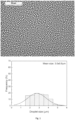
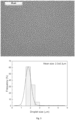
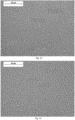
- Figures 1 and 2 show part A right after preparation ( Figure 1 ) with the droplet size of 3.0 ⁇ 0.8 ⁇ m and 7 months after preparation ( Figure 2 ) with the droplet size of 3.2 ⁇ 0.9 ⁇ m.
- the size distribution of all the droplets in the microscope image is analyzed by the image-processing tool ImageJ.
- Example 2 Achieving stable emulsions by gradually adding more and more glycerol to the part with catalyst (part A)
- This mixture was firstly hand mixed with a metal scraper for 30 seconds, then was speed mixed at 3500 rpm for 2 minutes using a speedmixer until a homogeneous part A was obtained (abbreviated as S2114A_80phr glycerol). 5 g S2114B was weighed as part B. A stable emulsion could not be achieved without the gradual addition of glycerol.
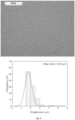
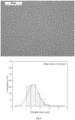
- Figures 3 and 4 show part A right after preparation ( Figure 3 ) with the droplet size of 2.0 ⁇ 0.3 ⁇ m and 6 months ( Figure 4 ) after preparation with the droplet size of 2.1 ⁇ 0.4 ⁇ m, respectively.
- the size distribution of all the droplets in the microscope image is analyzed by the image-processing tool ImageJ.
- Example 3 Elastomer formulated into a two-component system
- Figures 5 and 6 show part A right after preparation ( Figure 5 ) with the droplet size of 2.0 ⁇ 0.3 ⁇ m and 2 months after preparation ( Figure 6 ) with the droplet size of 2.4 ⁇ 0.6 ⁇ m.
- the size distribution of all the droplets in the microscope image is analyzed by the image-processing tool ImageJ.
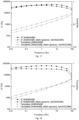
- Example 4 Curing profile for the mixture of parts A and B in examples 1-3 is not affected after the storage time
- SILPURAN ® 2130 S2130B (part B) was added into the part A prepared as per Example 1. Afterwards the mixture was mixed using a speedmixer at 3500 rpm for 2 minutes until uniform. The curing profile of the above homogeneous mixture was tested by a rheometer at a constant frequency of 0.1 Hz applying a parallel-plate geometry of 20 mm in diameter and a gap of 0.8 mm at 100 °C for 30 minutes.
- part B 5 g S2114B (part B) was added to part A (prepared according to Example 2). Afterwards the mixture was mixed using a speedmixer at 3500 rpm for 2 minutes until uniform. The curing profile of the above homogeneous mixture was tested by a rheometer at a constant frequency of 0.1 Hz applying a parallel-plate geometry of 20 mm in diameter and a gap of 0.8 mm at 120 °C for 30 minutes.
- part B 1 g S184 curing agent (part B) was added into part A (prepared according to Example 3). Afterwards, the mixture was mixed using a speedmixer at 3500 rpm for 2 minutes until uniform. The curing profile of the above homogeneous mixture was tested by a rheometer at a constant frequency of 0.1 Hz applying a parallel-plate geometry of 20 mm in diameter and a gap of 0.8 mm at 100 °C for 30 minutes.
- SQO299 resin For hard-to-stabilize emulsions, a small quantity of SQO299 resin (Gelest Inc) may be added to part A of the formulation to achieve emulsion stability.
- the structure of the resin is given below: 5 g part A from Silbione ® RT Gel 4642 (S4642A) and 0.05 g SQO299 resin were added together in a clean 25 mL speedmix container, the mixture was speed mixed at 3500 rpm for 2 minutes until a transparent homogeneous mixture was achieved.
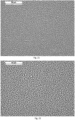
- Figures 10 and 11 show the optical microscopic images of S4642A_40phr glycerol_1phrSQO299 emulsion and S4642B_40phr glycerol_1phrSQO299 emulsion right after preparation.
- mixture preparations of S4645A&B_40phr glycerol_1phrSQO299 and S4950A&B_40phr glycerol_1phrSQO299, and S4645A&B and S4950A&B, are the same as S4642A&B_40phr glycerol_1phrSQO299 and S4642A&B.
- Figures 12 and 13 show the optical microscopic images of S4645A_40phr glycerol_1phrSQO299 emulsion and S4645B_40phr glycerol_1phrSQO299 emulsion right after preparation.
- the uniform mixtures thus made were coated on a polyethylene terephthalate (PET) backing (190 ⁇ m thick, HOSTAPHAN, Mitsubishi Polyester Film) using a film applicator (3540 bird, Elcometer, Germany) with 200 ⁇ m blade gap. Films were fully cured in the oven at 120 °C for 30 minutes.
- Figures 14 and 23 show the cured adhesives on the PET backing covered by PET release liner (50 ⁇ m thick, one surface with fluorosilicone-based coating, Siliconature S.P.A.). These figures show that the formulations can be coated in uniform thickness with homogenous distribution of the glycerol throughout a larger coating area.
- the films are identical, regardless of whether they are prepared from fresh emulsions or prepared from emulsions stored for several months before the coating process.
- Example 6 Diluents of the glycerol phase: Water added to the glycerol phase
- glycerol Various amounts of deionized (DI) water were added to glycerol to decrease the initial viscosity of glycerol.
- the silicone used was S184 component base.
- the glycerol and DI water were added to a 25 mL container, the mixture was speed mixed at 3500 rpm for 2 minutes until a uniform mixture was obtained.
- the S184 base was added into the above mixture, the mixture was firstly hand mixed with a metal scraper for 30 seconds, then the mixture was speed mixed at 3500 rpm for 2 minutes until a uniform mixture was obtained.
- the dynamic viscosities of the mixture were tested with a rheometer with a shear rate of 1 s -1 at 23 °C using a parallel-plate geometry of 20 mm in diameter and a gap of 0.8 mm.
- Viscosities of emulsions with 0 to 30% of water dissolved in glycerol and with liquid (glycerol+water) contents varying from 0 to 80 phr were determined and are shown in Table 7. It can be seen that the addition of water reduces the viscosity of glycerol by a factor of approximately 5 when there is added 30 % (30 phg) of water to the glycerol. However, at 30 phg of water, emulsions are only storage-stable up to 40 phg of glycerol whereas pure glycerol in silicone emulsions works above 80 phr.
- EXAMPLE 7 Various types of additives to the glycerol phase: Low-molecular-weight polyethylenglycol (PEG). Shaded cells are stable, homogeneous emulsions.
- PEG Low-molecular-weight polyethylenglycol
- Viscosities of emulsions with 0 to 30% of PEG-200 dissolved in glycerol and with liquid (glycerol+PEG-200) contents varying from 0 to 80 phr were determined and are shown in Table 8 and plotted in Figure 27 . It can be seen that the addition of PEG-200 decreases the viscosity of the glycerol-PEG200 mixtures. The resulting emulsions are also stable across 80 phr of liquid and up to 30 phg of PEG-200.
- EXAMPLE 8 Various types of additives to the glycerol phase: hyaluronic acid (abbreviated as HAc, Blanova ® Active Sodium Hyaluronate (8-50 kDa)). Shaded cells are stable, homogeneous emulsions.
- HAc water were added to glycerol to alter the initial viscosity of glycerol.
- the silicone used was the S184 "base”.
- the glycerol and HAc were added to a 25 mL container, the mixture was speed mixed at 3500 rpm for 2 minutes until uniform mixture was obtained.
- the S184 base was added into the above mixture, the mixture was firstly hand mixed with a metal scraper for 30 seconds, then the mixture was speed mixed at 3500 rpm for 2 minutes until a uniform mixture was obtained.
- the dynamic viscosities of the mixture were tested with a rheometer with a shear rate of 1 s -1 at 23 °C using a parallel-plate geometry of 20 mm in diameter and a gap of 0.8 mm.
- Viscosities of emulsions with 0 to 1% of HAc dissolved in glycerol and with liquid (glycerol+HAc) contents varying from 0 to 80 phr were determined and are shown in Table 9 and plotted in Figure 28 . It can be seen that the addition of HAc increases the viscosity of the glycerol-HAc mixtures up to a factor of 2.3 at 1 phg of HAc. However, the viscosities of the resulting emulsions do not follow such a uniform pattern; only for the 80 phr formulations, there is a clear increase of the final viscosity with the HAc loading. All resulting emulsions are also stable across 80 phr of liquid and up to 1 phg of HAc.
- SILPURAN ® 2130 part B was mixed with 10, 5, 1, 0.5, and 0.1 phr glycerol, respectively.
- 10 g part B from SILPURAN ® 2130 (S2130B) and glycerol (1g, 0.5g, 0.1g, 0.05g, 0.01g) were added to a 25 mL speedmix container. No additives were added.
- the mixture was at first hand-mixed with a metal scraper for 30 seconds, and then it was speed mixed at 3500 rpm for 2 minutes using a speedmixer.
- the emulsions were investigated visually with respect to their overall translucency and if there were clear signs of phase separation.
- the well-dispersed emulsions are translucent and homogenous in color/translucency over the entire volume.
- the 10 phr emulsion showed initial phase separation after approximately 1 minute and continued phase splitting after this time.
- the 5 phr emulsion was stable for several minutes.
- the emulsions with lower phr seemed stable but were, on the other hand, not homogeneous.
- part B of two other formulations namely SILPURAN ® 2114 and SILPURAN ® 2122 where the emulsions are stable when mixed into part A but not into part B.
- part B does not produce stable emulsions for SILPURAN ® 2130, SILPURAN ® 2114, and SILPURAN ® 2122. Both 1 phr and 3 phr of SQ resin were tried without success.
Landscapes
- Chemical & Material Sciences (AREA)
- Health & Medical Sciences (AREA)
- Chemical Kinetics & Catalysis (AREA)
- Medicinal Chemistry (AREA)
- Polymers & Plastics (AREA)
- Organic Chemistry (AREA)
- Compositions Of Macromolecular Compounds (AREA)
- Medicinal Preparation (AREA)
Priority Applications (3)
| Application Number | Priority Date | Filing Date | Title |
|---|---|---|---|
| EP23192415.0A EP4512871A1 (fr) | 2023-08-21 | 2023-08-21 | Kits de silicone en deux parties stables au stockage |
| CN202480052225.3A CN121752688A (zh) | 2023-08-21 | 2024-08-21 | 储存稳定的两部分硅酮试剂盒 |
| PCT/DK2024/050197 WO2025040229A1 (fr) | 2023-08-21 | 2024-08-21 | Kits de silicone en deux parties stable au stockage |
Applications Claiming Priority (1)
| Application Number | Priority Date | Filing Date | Title |
|---|---|---|---|
| EP23192415.0A EP4512871A1 (fr) | 2023-08-21 | 2023-08-21 | Kits de silicone en deux parties stables au stockage |
Publications (1)
| Publication Number | Publication Date |
|---|---|
| EP4512871A1 true EP4512871A1 (fr) | 2025-02-26 |
Family
ID=87760664
Family Applications (1)
| Application Number | Title | Priority Date | Filing Date |
|---|---|---|---|
| EP23192415.0A Withdrawn EP4512871A1 (fr) | 2023-08-21 | 2023-08-21 | Kits de silicone en deux parties stables au stockage |
Country Status (3)
| Country | Link |
|---|---|
| EP (1) | EP4512871A1 (fr) |
| CN (1) | CN121752688A (fr) |
| WO (1) | WO2025040229A1 (fr) |
Citations (9)
| Publication number | Priority date | Publication date | Assignee | Title |
|---|---|---|---|---|
| US20010016609A1 (en) | 2000-02-08 | 2001-08-23 | Noriyuki Meguriya | Silicone rubber compositions |
| JP2007106946A (ja) | 2005-10-17 | 2007-04-26 | Momentive Performance Materials Japan Kk | 室温硬化性ポリオルガノシロキサン組成物の製造方法 |
| CN101747630A (zh) | 2008-12-01 | 2010-06-23 | 中国电力科学研究院 | 一种耐电痕化和耐蚀损性的室温硫化硅橡胶组合物 |
| WO2016189117A1 (fr) | 2015-05-27 | 2016-12-01 | Danmarks Tekniske Universitet | Élastomères de silicone et leur préparation et utilisation |
| CN107868471A (zh) | 2016-09-27 | 2018-04-03 | 信越化学工业株式会社 | 高连泡硅橡胶海绵的制造方法和高连泡硅橡胶海绵用液体硅橡胶组合物及硅橡胶海绵 |
| US20190060211A1 (en) | 2016-02-25 | 2019-02-28 | Conopco, Inc., D/B/A Unilever | Process for preparing a silicone elastomer with hydrophilic actives and a personal care composition containing the elastomer |
| CN112795196A (zh) | 2020-12-31 | 2021-05-14 | 南京工业大学 | 一种各向异性自增强有机硅复合材料及其制备方法 |
| US20220227997A1 (en) * | 2019-05-14 | 2022-07-21 | Coloplast A/S | Elastomeric silicone compositions comprising glycerol, cyclodextrin and octenidine |
| US20230090479A1 (en) | 2020-03-17 | 2023-03-23 | Shiseido Company, Ltd. | Composition for forming artificial skin, and usage method therefor |
-
2023
- 2023-08-21 EP EP23192415.0A patent/EP4512871A1/fr not_active Withdrawn
-
2024
- 2024-08-21 WO PCT/DK2024/050197 patent/WO2025040229A1/fr active Pending
- 2024-08-21 CN CN202480052225.3A patent/CN121752688A/zh active Pending
Patent Citations (11)
| Publication number | Priority date | Publication date | Assignee | Title |
|---|---|---|---|---|
| US20010016609A1 (en) | 2000-02-08 | 2001-08-23 | Noriyuki Meguriya | Silicone rubber compositions |
| JP2007106946A (ja) | 2005-10-17 | 2007-04-26 | Momentive Performance Materials Japan Kk | 室温硬化性ポリオルガノシロキサン組成物の製造方法 |
| CN101747630A (zh) | 2008-12-01 | 2010-06-23 | 中国电力科学研究院 | 一种耐电痕化和耐蚀损性的室温硫化硅橡胶组合物 |
| WO2016189117A1 (fr) | 2015-05-27 | 2016-12-01 | Danmarks Tekniske Universitet | Élastomères de silicone et leur préparation et utilisation |
| US20180179340A1 (en) * | 2015-05-27 | 2018-06-28 | Danmarks Tekniske Universitet | Silicone elastomers and their preparation and use |
| US20190060211A1 (en) | 2016-02-25 | 2019-02-28 | Conopco, Inc., D/B/A Unilever | Process for preparing a silicone elastomer with hydrophilic actives and a personal care composition containing the elastomer |
| EP3419592B1 (fr) * | 2016-02-25 | 2021-11-10 | Unilever IP Holdings B.V. | Procédé de préparation d'un élastomère de silicone contenant des agents actifs hydrophiles et composition de soins d'hygiène personnelle contenant l'élastomère |
| CN107868471A (zh) | 2016-09-27 | 2018-04-03 | 信越化学工业株式会社 | 高连泡硅橡胶海绵的制造方法和高连泡硅橡胶海绵用液体硅橡胶组合物及硅橡胶海绵 |
| US20220227997A1 (en) * | 2019-05-14 | 2022-07-21 | Coloplast A/S | Elastomeric silicone compositions comprising glycerol, cyclodextrin and octenidine |
| US20230090479A1 (en) | 2020-03-17 | 2023-03-23 | Shiseido Company, Ltd. | Composition for forming artificial skin, and usage method therefor |
| CN112795196A (zh) | 2020-12-31 | 2021-05-14 | 南京工业大学 | 一种各向异性自增强有机硅复合材料及其制备方法 |
Non-Patent Citations (5)
| Title |
|---|
| J.D. ESHELBY: "The force on an elastic singularity", PHILOSOPHICAL TRANSACTIONS OF THE ROYAL SOCIETY OF LONDON. SERIES A, MATHEMATICAL AND PHYSICAL SCIENCES, vol. 244, 1951, pages 87 |
| P. MAZUREKB.E.F. EKBRANTF.B. MADSENL. YUA.L. SKOV: "Glycerol-silicone foams - Tunable 3-phase elastomeric porous materials", EUR. POLYM. J., vol. 113, 2019, pages 107 |
| P. MAZUREKM.A. BROOKA.L. SKOV: "Glycerol -silicone elastomers as active matrices with controllable release profiles", LANGMUIR, vol. 34, 2018, pages 11559 |
| P. MAZUREKS. HVILSTEDA. L. SKOV: "Green silicone elastomer obtained from a counterintuitively stable mixture of glycerol and PDMS", POLYMER, vol. 87, 2016, pages 1 |
| V. CHIUALA, P. MAZUREK, J. EILER, A.C. NIELSEN, A.L. SKOV: "Glycerol-silicone adhesives with excellent fluid handing and mechanical properties for advanced wound care applications", J. ADHES. ADHES., vol. 102, 2020, pages 102667, XP086245182, DOI: 10.1016/j.ijadhadh.2020.102667 |
Also Published As
| Publication number | Publication date |
|---|---|
| CN121752688A (zh) | 2026-03-27 |
| WO2025040229A1 (fr) | 2025-02-27 |
Similar Documents
| Publication | Publication Date | Title |
|---|---|---|
| JP4987211B2 (ja) | 速硬性皮膜形成調合物 | |
| DE68910254T2 (de) | Niedrigviskoser, druckempfindlicher, elastomerer Klebstoff auf der Basis von Siloxanen. | |
| JP5434789B2 (ja) | 付加硬化型シリコーンエマルジョン組成物 | |
| FR2698875A1 (fr) | Système silicone modulateur d'adhérence et son utilisation pour la préparation de compositions antiadhérentes durcissables. | |
| EP3681960B1 (fr) | Encre d'impression 3d de silicone | |
| JPH02163181A (ja) | シリコーン感圧接着剤を塗布した基材の製造方法 | |
| EP3483218B1 (fr) | Composition de silicone, papier antiadhésif et film antiadhésif | |
| Dubbini et al. | Injectable hyaluronic acid/PEG-p (HPMAm-lac)-based hydrogels dually cross-linked by thermal gelling and Michael addition | |
| TW201615698A (zh) | 有機聚矽氧烷交聯物及其製造方法、以及霧滴抑制劑及無溶劑型剝離紙用聚矽氧組成物 | |
| JPS6254824B2 (fr) | ||
| EP4512871A1 (fr) | Kits de silicone en deux parties stables au stockage | |
| WO2018131490A1 (fr) | Composition à libération élevée pour feuilles de libération, et feuille de libération | |
| JPH0482025B2 (fr) | ||
| JP2017538016A (ja) | 縮合架橋粒子の調製方法 | |
| Singh et al. | Fibrillated bacterial cellulose liquid carbene bioadhesives for mimicking and bonding oral cavity surfaces | |
| FR2463163A1 (fr) | Emulsions de silicones d'une haute teneur en matieres solides, leur preparation et elastomeres de silicones obtenus a partir de ces emulsions | |
| JP2025089382A (ja) | グリセロールと、シクロデキストリンと、オクテニジンとを含有するエラストマーシリコーン組成物 | |
| WO2021024910A1 (fr) | Émulsion d'organohydrogènepolysiloxane, et composition d'émulsion de silicone de type durcissement par addition mettant en œuvre celle-ci | |
| EP1742620A1 (fr) | Procede de fabrication d'adhesifs sensibles a la pression en silicone pour administrer des medicaments hydrophiles a l'aide d'un polyether de silicone | |
| US11739194B2 (en) | Glycerol-silicone elastomers as active matrices with controllable release profiles | |
| CN117979960A (zh) | 贴剂 | |
| US20030155684A1 (en) | Curable thixotropic organosiloxane compositions | |
| ES2996217T3 (en) | Polysiloxane composition | |
| EP4722314A1 (fr) | Composition d'agent démoulant et feuille démoulante |
Legal Events
| Date | Code | Title | Description |
|---|---|---|---|
| PUAI | Public reference made under article 153(3) epc to a published international application that has entered the european phase |
Free format text: ORIGINAL CODE: 0009012 |
|
| STAA | Information on the status of an ep patent application or granted ep patent |
Free format text: STATUS: THE APPLICATION HAS BEEN PUBLISHED |
|
| AK | Designated contracting states |
Kind code of ref document: A1 Designated state(s): AL AT BE BG CH CY CZ DE DK EE ES FI FR GB GR HR HU IE IS IT LI LT LU LV MC ME MK MT NL NO PL PT RO RS SE SI SK SM TR |
|
| STAA | Information on the status of an ep patent application or granted ep patent |
Free format text: STATUS: THE APPLICATION IS DEEMED TO BE WITHDRAWN |
|
| 18D | Application deemed to be withdrawn |
Effective date: 20250827 |