EP4516101A2 - Compositions et utilisations de matériaux antimicrobiens présentant des propriétés compatibles avec les tissus - Google Patents
Compositions et utilisations de matériaux antimicrobiens présentant des propriétés compatibles avec les tissus Download PDFInfo
- Publication number
- EP4516101A2 EP4516101A2 EP24200847.2A EP24200847A EP4516101A2 EP 4516101 A2 EP4516101 A2 EP 4516101A2 EP 24200847 A EP24200847 A EP 24200847A EP 4516101 A2 EP4516101 A2 EP 4516101A2
- Authority
- EP
- European Patent Office
- Prior art keywords
- seq
- composition
- rac
- cationic
- synthetic
- Prior art date
- Legal status (The legal status is an assumption and is not a legal conclusion. Google has not performed a legal analysis and makes no representation as to the accuracy of the status listed.)
- Pending
Links
Images












Classifications
-
- A—HUMAN NECESSITIES
- A61—MEDICAL OR VETERINARY SCIENCE; HYGIENE
- A61K—PREPARATIONS FOR MEDICAL, DENTAL OR TOILETRY PURPOSES
- A61K9/00—Medicinal preparations characterised by special physical form
- A61K9/08—Solutions
-
- A—HUMAN NECESSITIES
- A01—AGRICULTURE; FORESTRY; ANIMAL HUSBANDRY; HUNTING; TRAPPING; FISHING
- A01N—PRESERVATION OF BODIES OF HUMANS OR ANIMALS OR PLANTS OR PARTS THEREOF; BIOCIDES, e.g. AS DISINFECTANTS, AS PESTICIDES OR AS HERBICIDES; PEST REPELLANTS OR ATTRACTANTS; PLANT GROWTH REGULATORS
- A01N37/00—Biocides, pest repellants or attractants, or plant growth regulators containing organic compounds containing a carbon atom having three bonds to hetero atoms with at the most two bonds to halogen, e.g. carboxylic acids
- A01N37/44—Biocides, pest repellants or attractants, or plant growth regulators containing organic compounds containing a carbon atom having three bonds to hetero atoms with at the most two bonds to halogen, e.g. carboxylic acids containing at least one carboxylic group or a thio analogue, or a derivative thereof, and a nitrogen atom attached to the same carbon skeleton by a single or double bond, this nitrogen atom not being a member of a derivative or of a thio analogue of a carboxylic group, e.g. amino-carboxylic acids
-
- A—HUMAN NECESSITIES
- A01—AGRICULTURE; FORESTRY; ANIMAL HUSBANDRY; HUNTING; TRAPPING; FISHING
- A01N—PRESERVATION OF BODIES OF HUMANS OR ANIMALS OR PLANTS OR PARTS THEREOF; BIOCIDES, e.g. AS DISINFECTANTS, AS PESTICIDES OR AS HERBICIDES; PEST REPELLANTS OR ATTRACTANTS; PLANT GROWTH REGULATORS
- A01N37/00—Biocides, pest repellants or attractants, or plant growth regulators containing organic compounds containing a carbon atom having three bonds to hetero atoms with at the most two bonds to halogen, e.g. carboxylic acids
- A01N37/44—Biocides, pest repellants or attractants, or plant growth regulators containing organic compounds containing a carbon atom having three bonds to hetero atoms with at the most two bonds to halogen, e.g. carboxylic acids containing at least one carboxylic group or a thio analogue, or a derivative thereof, and a nitrogen atom attached to the same carbon skeleton by a single or double bond, this nitrogen atom not being a member of a derivative or of a thio analogue of a carboxylic group, e.g. amino-carboxylic acids
- A01N37/46—N-acyl derivatives
-
- A—HUMAN NECESSITIES
- A01—AGRICULTURE; FORESTRY; ANIMAL HUSBANDRY; HUNTING; TRAPPING; FISHING
- A01N—PRESERVATION OF BODIES OF HUMANS OR ANIMALS OR PLANTS OR PARTS THEREOF; BIOCIDES, e.g. AS DISINFECTANTS, AS PESTICIDES OR AS HERBICIDES; PEST REPELLANTS OR ATTRACTANTS; PLANT GROWTH REGULATORS
- A01N47/00—Biocides, pest repellants or attractants, or plant growth regulators containing organic compounds containing a carbon atom not being member of a ring and having no bond to a carbon or hydrogen atom, e.g. derivatives of carbonic acid
- A01N47/40—Biocides, pest repellants or attractants, or plant growth regulators containing organic compounds containing a carbon atom not being member of a ring and having no bond to a carbon or hydrogen atom, e.g. derivatives of carbonic acid the carbon atom having a double or triple bond to nitrogen, e.g. cyanates, cyanamides
- A01N47/42—Biocides, pest repellants or attractants, or plant growth regulators containing organic compounds containing a carbon atom not being member of a ring and having no bond to a carbon or hydrogen atom, e.g. derivatives of carbonic acid the carbon atom having a double or triple bond to nitrogen, e.g. cyanates, cyanamides containing —N=CX2 groups, e.g. isothiourea
- A01N47/44—Guanidine; Derivatives thereof
-
- A—HUMAN NECESSITIES
- A61—MEDICAL OR VETERINARY SCIENCE; HYGIENE
- A61K—PREPARATIONS FOR MEDICAL, DENTAL OR TOILETRY PURPOSES
- A61K31/00—Medicinal preparations containing organic active ingredients
- A61K31/70—Carbohydrates; Sugars; Derivatives thereof
- A61K31/715—Polysaccharides, i.e. having more than five saccharide radicals attached to each other by glycosidic linkages; Derivatives thereof, e.g. ethers, esters
-
- A—HUMAN NECESSITIES
- A61—MEDICAL OR VETERINARY SCIENCE; HYGIENE
- A61K—PREPARATIONS FOR MEDICAL, DENTAL OR TOILETRY PURPOSES
- A61K31/00—Medicinal preparations containing organic active ingredients
- A61K31/74—Synthetic polymeric materials
- A61K31/765—Polymers containing oxygen
-
- A—HUMAN NECESSITIES
- A61—MEDICAL OR VETERINARY SCIENCE; HYGIENE
- A61K—PREPARATIONS FOR MEDICAL, DENTAL OR TOILETRY PURPOSES
- A61K38/00—Medicinal preparations containing peptides
-
- A—HUMAN NECESSITIES
- A61—MEDICAL OR VETERINARY SCIENCE; HYGIENE
- A61K—PREPARATIONS FOR MEDICAL, DENTAL OR TOILETRY PURPOSES
- A61K38/00—Medicinal preparations containing peptides
- A61K38/02—Peptides of undefined number of amino acids; Derivatives thereof
-
- A—HUMAN NECESSITIES
- A61—MEDICAL OR VETERINARY SCIENCE; HYGIENE
- A61K—PREPARATIONS FOR MEDICAL, DENTAL OR TOILETRY PURPOSES
- A61K38/00—Medicinal preparations containing peptides
- A61K38/16—Peptides having more than 20 amino acids; Gastrins; Somatostatins; Melanotropins; Derivatives thereof
-
- A—HUMAN NECESSITIES
- A61—MEDICAL OR VETERINARY SCIENCE; HYGIENE
- A61K—PREPARATIONS FOR MEDICAL, DENTAL OR TOILETRY PURPOSES
- A61K45/00—Medicinal preparations containing active ingredients not provided for in groups A61K31/00 - A61K41/00
- A61K45/06—Mixtures of active ingredients without chemical characterisation, e.g. antiphlogistics and cardiaca
-
- A—HUMAN NECESSITIES
- A61—MEDICAL OR VETERINARY SCIENCE; HYGIENE
- A61K—PREPARATIONS FOR MEDICAL, DENTAL OR TOILETRY PURPOSES
- A61K47/00—Medicinal preparations characterised by the non-active ingredients used, e.g. carriers or inert additives; Targeting or modifying agents chemically bound to the active ingredient
- A61K47/30—Macromolecular organic or inorganic compounds, e.g. inorganic polyphosphates
-
- A—HUMAN NECESSITIES
- A61—MEDICAL OR VETERINARY SCIENCE; HYGIENE
- A61K—PREPARATIONS FOR MEDICAL, DENTAL OR TOILETRY PURPOSES
- A61K9/00—Medicinal preparations characterised by special physical form
- A61K9/06—Ointments; Bases therefor; Other semi-solid forms, e.g. creams, sticks, gels
-
- A—HUMAN NECESSITIES
- A61—MEDICAL OR VETERINARY SCIENCE; HYGIENE
- A61L—METHODS OR APPARATUS FOR STERILISING MATERIALS OR OBJECTS IN GENERAL; DISINFECTION, STERILISATION OR DEODORISATION OF AIR; CHEMICAL ASPECTS OF BANDAGES, DRESSINGS, ABSORBENT PADS OR SURGICAL ARTICLES; MATERIALS FOR BANDAGES, DRESSINGS, ABSORBENT PADS OR SURGICAL ARTICLES
- A61L15/00—Chemical aspects of, or use of materials for, bandages, dressings or absorbent pads
- A61L15/16—Bandages, dressings or absorbent pads for physiological fluids such as urine or blood, e.g. sanitary towels, tampons
- A61L15/42—Use of materials characterised by their function or physical properties
-
- A—HUMAN NECESSITIES
- A61—MEDICAL OR VETERINARY SCIENCE; HYGIENE
- A61L—METHODS OR APPARATUS FOR STERILISING MATERIALS OR OBJECTS IN GENERAL; DISINFECTION, STERILISATION OR DEODORISATION OF AIR; CHEMICAL ASPECTS OF BANDAGES, DRESSINGS, ABSORBENT PADS OR SURGICAL ARTICLES; MATERIALS FOR BANDAGES, DRESSINGS, ABSORBENT PADS OR SURGICAL ARTICLES
- A61L15/00—Chemical aspects of, or use of materials for, bandages, dressings or absorbent pads
- A61L15/16—Bandages, dressings or absorbent pads for physiological fluids such as urine or blood, e.g. sanitary towels, tampons
- A61L15/42—Use of materials characterised by their function or physical properties
- A61L15/46—Deodorants or malodour counteractants, e.g. to inhibit the formation of ammonia or bacteria
-
- A—HUMAN NECESSITIES
- A61—MEDICAL OR VETERINARY SCIENCE; HYGIENE
- A61L—METHODS OR APPARATUS FOR STERILISING MATERIALS OR OBJECTS IN GENERAL; DISINFECTION, STERILISATION OR DEODORISATION OF AIR; CHEMICAL ASPECTS OF BANDAGES, DRESSINGS, ABSORBENT PADS OR SURGICAL ARTICLES; MATERIALS FOR BANDAGES, DRESSINGS, ABSORBENT PADS OR SURGICAL ARTICLES
- A61L24/00—Surgical adhesives or cements; Adhesives for colostomy devices
- A61L24/001—Use of materials characterised by their function or physical properties
-
- A—HUMAN NECESSITIES
- A61—MEDICAL OR VETERINARY SCIENCE; HYGIENE
- A61L—METHODS OR APPARATUS FOR STERILISING MATERIALS OR OBJECTS IN GENERAL; DISINFECTION, STERILISATION OR DEODORISATION OF AIR; CHEMICAL ASPECTS OF BANDAGES, DRESSINGS, ABSORBENT PADS OR SURGICAL ARTICLES; MATERIALS FOR BANDAGES, DRESSINGS, ABSORBENT PADS OR SURGICAL ARTICLES
- A61L24/00—Surgical adhesives or cements; Adhesives for colostomy devices
- A61L24/001—Use of materials characterised by their function or physical properties
- A61L24/0015—Medicaments; Biocides
-
- A—HUMAN NECESSITIES
- A61—MEDICAL OR VETERINARY SCIENCE; HYGIENE
- A61L—METHODS OR APPARATUS FOR STERILISING MATERIALS OR OBJECTS IN GENERAL; DISINFECTION, STERILISATION OR DEODORISATION OF AIR; CHEMICAL ASPECTS OF BANDAGES, DRESSINGS, ABSORBENT PADS OR SURGICAL ARTICLES; MATERIALS FOR BANDAGES, DRESSINGS, ABSORBENT PADS OR SURGICAL ARTICLES
- A61L24/00—Surgical adhesives or cements; Adhesives for colostomy devices
- A61L24/001—Use of materials characterised by their function or physical properties
- A61L24/0036—Porous materials, e.g. foams or sponges
-
- A—HUMAN NECESSITIES
- A61—MEDICAL OR VETERINARY SCIENCE; HYGIENE
- A61P—SPECIFIC THERAPEUTIC ACTIVITY OF CHEMICAL COMPOUNDS OR MEDICINAL PREPARATIONS
- A61P13/00—Drugs for disorders of the urinary system
- A61P13/02—Drugs for disorders of the urinary system of urine or of the urinary tract, e.g. urine acidifiers
-
- A—HUMAN NECESSITIES
- A61—MEDICAL OR VETERINARY SCIENCE; HYGIENE
- A61P—SPECIFIC THERAPEUTIC ACTIVITY OF CHEMICAL COMPOUNDS OR MEDICINAL PREPARATIONS
- A61P17/00—Drugs for dermatological disorders
-
- A—HUMAN NECESSITIES
- A61—MEDICAL OR VETERINARY SCIENCE; HYGIENE
- A61P—SPECIFIC THERAPEUTIC ACTIVITY OF CHEMICAL COMPOUNDS OR MEDICINAL PREPARATIONS
- A61P17/00—Drugs for dermatological disorders
- A61P17/02—Drugs for dermatological disorders for treating wounds, ulcers, burns, scars, keloids, or the like
-
- A—HUMAN NECESSITIES
- A61—MEDICAL OR VETERINARY SCIENCE; HYGIENE
- A61P—SPECIFIC THERAPEUTIC ACTIVITY OF CHEMICAL COMPOUNDS OR MEDICINAL PREPARATIONS
- A61P3/00—Drugs for disorders of the metabolism
- A61P3/08—Drugs for disorders of the metabolism for glucose homeostasis
- A61P3/10—Drugs for disorders of the metabolism for glucose homeostasis for hyperglycaemia, e.g. antidiabetics
-
- A—HUMAN NECESSITIES
- A61—MEDICAL OR VETERINARY SCIENCE; HYGIENE
- A61P—SPECIFIC THERAPEUTIC ACTIVITY OF CHEMICAL COMPOUNDS OR MEDICINAL PREPARATIONS
- A61P31/00—Antiinfectives, i.e. antibiotics, antiseptics, chemotherapeutics
-
- A—HUMAN NECESSITIES
- A61—MEDICAL OR VETERINARY SCIENCE; HYGIENE
- A61P—SPECIFIC THERAPEUTIC ACTIVITY OF CHEMICAL COMPOUNDS OR MEDICINAL PREPARATIONS
- A61P31/00—Antiinfectives, i.e. antibiotics, antiseptics, chemotherapeutics
- A61P31/02—Local antiseptics
-
- A—HUMAN NECESSITIES
- A61—MEDICAL OR VETERINARY SCIENCE; HYGIENE
- A61P—SPECIFIC THERAPEUTIC ACTIVITY OF CHEMICAL COMPOUNDS OR MEDICINAL PREPARATIONS
- A61P31/00—Antiinfectives, i.e. antibiotics, antiseptics, chemotherapeutics
- A61P31/04—Antibacterial agents
-
- A—HUMAN NECESSITIES
- A61—MEDICAL OR VETERINARY SCIENCE; HYGIENE
- A61P—SPECIFIC THERAPEUTIC ACTIVITY OF CHEMICAL COMPOUNDS OR MEDICINAL PREPARATIONS
- A61P41/00—Drugs used in surgical methods, e.g. surgery adjuvants for preventing adhesion or for vitreum substitution
-
- A—HUMAN NECESSITIES
- A61—MEDICAL OR VETERINARY SCIENCE; HYGIENE
- A61P—SPECIFIC THERAPEUTIC ACTIVITY OF CHEMICAL COMPOUNDS OR MEDICINAL PREPARATIONS
- A61P5/00—Drugs for disorders of the endocrine system
- A61P5/38—Drugs for disorders of the endocrine system of the suprarenal hormones
- A61P5/46—Drugs for disorders of the endocrine system of the suprarenal hormones for decreasing, blocking or antagonising the activity of glucocorticosteroids
-
- A—HUMAN NECESSITIES
- A61—MEDICAL OR VETERINARY SCIENCE; HYGIENE
- A61P—SPECIFIC THERAPEUTIC ACTIVITY OF CHEMICAL COMPOUNDS OR MEDICINAL PREPARATIONS
- A61P7/00—Drugs for disorders of the blood or the extracellular fluid
- A61P7/02—Antithrombotic agents; Anticoagulants; Platelet aggregation inhibitors
-
- A—HUMAN NECESSITIES
- A61—MEDICAL OR VETERINARY SCIENCE; HYGIENE
- A61P—SPECIFIC THERAPEUTIC ACTIVITY OF CHEMICAL COMPOUNDS OR MEDICINAL PREPARATIONS
- A61P7/00—Drugs for disorders of the blood or the extracellular fluid
- A61P7/04—Antihaemorrhagics; Procoagulants; Haemostatic agents; Antifibrinolytic agents
-
- A—HUMAN NECESSITIES
- A61—MEDICAL OR VETERINARY SCIENCE; HYGIENE
- A61L—METHODS OR APPARATUS FOR STERILISING MATERIALS OR OBJECTS IN GENERAL; DISINFECTION, STERILISATION OR DEODORISATION OF AIR; CHEMICAL ASPECTS OF BANDAGES, DRESSINGS, ABSORBENT PADS OR SURGICAL ARTICLES; MATERIALS FOR BANDAGES, DRESSINGS, ABSORBENT PADS OR SURGICAL ARTICLES
- A61L2400/00—Materials characterised by their function or physical properties
- A61L2400/04—Materials for stopping bleeding
-
- Y—GENERAL TAGGING OF NEW TECHNOLOGICAL DEVELOPMENTS; GENERAL TAGGING OF CROSS-SECTIONAL TECHNOLOGIES SPANNING OVER SEVERAL SECTIONS OF THE IPC; TECHNICAL SUBJECTS COVERED BY FORMER USPC CROSS-REFERENCE ART COLLECTIONS [XRACs] AND DIGESTS
- Y02—TECHNOLOGIES OR APPLICATIONS FOR MITIGATION OR ADAPTATION AGAINST CLIMATE CHANGE
- Y02A—TECHNOLOGIES FOR ADAPTATION TO CLIMATE CHANGE
- Y02A50/00—TECHNOLOGIES FOR ADAPTATION TO CLIMATE CHANGE in human health protection, e.g. against extreme weather
- Y02A50/30—Against vector-borne diseases, e.g. mosquito-borne, fly-borne, tick-borne or waterborne diseases whose impact is exacerbated by climate change
Definitions
- Microbial biofilms can help microbes to create their own local environments.
- Various surgical, trauma and medical settings all involve disruption of our natural barriers of defense and deserve special attention because the outcomes can range from rapid cure to lethal sepsis.
- Natural barriers are typically referred to by their anatomical sites such as skin, pulmonary epithelium, gastrointestinal mucosa, etc. These names may imply a level of simplicity that is unwarranted. These barriers are often both passive and active. They can involve a variety of cells, secreted glycoproteins, matrix components and fluids that act in concert to provide effective defense against microbial invasion. In some sites, resident microbes contribute to the barrier action against other potential invaders. Under most circumstances, these physical and functional barriers are highly effective. However, they can be broken rather easily by mechanical or chemical insults. In addition, certain systemic diseases can weaken our natural barriers and increase the risk of breakdown, as occurs in diabetic foot ulcers or cystic fibrosis. Finally, a first infection can weaken host defenses against a second infection, as occurs in influenza followed by bacterial pneumonia or trichomonas vaginalis followed by certain sexually transmitted diseases (e.g., HIV).
- HIV sexually transmitted diseases
- microbial colonization and / or infection is common in certain settings (e.g., diabetic foot ulcers, complex intra-abdominal infections), and may involve aerobes, anaerobes or both.
- Antimicrobial treatment of early infections may alter the course of the infection, resulting in more resistant and more dangerous infections.
- Common antimicrobial strategies focus on the use of selective antibiotics (e.g., penicillin for gram-positive organisms) in order to avoid the development of bacteria that are resistant to broad-spectrum antibiotics. Inadvertently, this important strategy can have negative outcomes on an individual patient, where targeted antibiotics result in the emergence of an aggressive, different microorganism (e.g., Pseudomonas ) .
- treated wounds can become the site for a "parade of pathogens", where an early, dominant microbial species (e.g., Staph aureus) is replaced by a second (e.g., MRSA, methicillin-resistant Staph aureus) and, perhaps, even a third and fourth microbial species (e.g., a multi-drug resistant gram negative species).
- an early, dominant microbial species e.g., Staph aureus
- MRSA methicillin-resistant Staph aureus
- a third and fourth microbial species e.g., a multi-drug resistant gram negative species.
- tissue adhesions In addition to infection, several other wound-associated outcomes remain major challenges. These include blood loss, tissue adhesions / scarring, and poor wound healing. And, in some cases, known antimicrobial treatments make these problems worse. Certain antimicrobial wound treatments (including antibiotic washes) can result in excessive tissue responses (e.g., tissue adhesions or scarring). Certain antiseptic / antimicrobial materials may alter wound healing, resulting in insufficient tissue responses (e.g., poor wound healing, poor wound strength).
- a mixture of an antimicrobial cationic polypeptide and a second pharmaceutically-acceptable polymer is used in the treatment and prevention of infections that occur when our natural barriers of defense are broken.
- These novel compositions can provide two functions: direct antimicrobial activity and barrier activity.
- Embodiments of the invention addresses one or more weaknesses of previous antimicrobials described above. Notably, it has been recognized that the effectiveness of most of the previous antiseptics and antibiotics were based on determinations of antimicrobial activity in solution with the microbes in suspension (MIC assays), producing results that are not necessarily indicative of effectiveness in tissues, and thus could lead away from determining effectiveness in tissues.
- the inventors focused on the design and selection of agents for broad antimicrobial activity, especially at tissue surfaces and in the terrain ("cracks and crevices") of wounds. This includes the formation of a barrier containing cationic (positively charged) elements that can inhibit the movement of certain substances or cells that display anionic elements (e.g., microbes).
- the synthetic cationic polypeptides of these compositions contain at least one cationic segment and at least one hydrophobic segment, are comprised substantially of natural amino acids, and are broadly antimicrobial (i.e., against gram positive and gram negative bacteria). They can also be designed to self-assemble, based in part on the interaction of their hydrophobic segments.
- synthetic polypeptides are formulated with a second pharmaceutically-acceptable polymer to provide a composition that is directly antimicrobial and that effectively coats tissues. These mixtures may also display hemostatic properties.
- the second pharmaceutically acceptable polymer is not a polyethylene glycol (PEG).
- Embodiments of the invention may be used alone or in combination with other materials that provide similar or complementary activities.
- An embodiment provides aqueous composition for the prevention, inhibition, or treatment of infection comprising: a mixture comprising one or more synthetic, cationic polypeptide(s) with antimicrobial activity; and a second pharmaceutically-acceptable polymer that is not a synthetic, cationic polypeptide(s) with antimicrobial activity; wherein the amounts of the one or more synthetic, cationic polypeptide(s) and the second pharmaceutically-acceptable polymer are each at least about 100 ⁇ g/mL based on the total volume of the aqueous composition; wherein the amount of the second pharmaceutically-acceptable polymer is at least about 10% by weight, based on the weight of the one or more synthetic, cationic polypeptide(s); and wherein the synthetic, cationic polypeptide(s) and the second pharmaceutically-acceptable polymer are mutually miscible in water.
- the synthetic, cationic polypeptide(s) with antimicrobial activity and the second pharmaceutically-acceptable polymer are considered mutually miscible if at least about 90% of the polymeric components remain mutually soluble 24 hours after mixing and maintaining at room temperature in water at a concentration of each polymer of 1 mg/mL, upon visible examination.
- one or more of the synthetic cationic polypeptide(s) in the aqueous composition comprises a segment having a chain length of at least 40 amino acid residues.
- the synthetic cationic polypeptide(s) in the aqueous composition comprises substantially all natural amino acid subunits.
- the synthetic cationic polypeptide(s) in the aqueous composition is characterized by at least one segment containing at least five consecutive cationic amino acid residues and at least one segment containing at least five consecutive hydrophobic amino acid residues.
- the second pharmaceutically-acceptable polymer in the aqueous composition is selected from the group consisting of cellulose, alginate, collagen, polymeric surfactant, polyethylene glycol, polyvinyl alcohol, polyurethane, polyvinyl pyrolidinone (PVP), fibrin(ogen), blood proteins and tissue proteins.
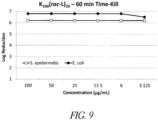
- the antimicrobial activity of the aqueous composition is greater than 3 logs killing of Staphylococcus epidermidis and Escherichia coli in standard 60 minute time-kill assays at a synthetic cationic polypeptide(s) concentration of 100 ⁇ g/mL or less.
- the aqueous composition is further characterized by the ability to disrupt or inhibit a biofilm in vitro at a total polymer concentration of 40 mg/ml or less.
- the aqueous composition is further characterized by a barrier activity, as measured by a decrease in the diffusion rate of an anionic dye of more than 2 logs at a total polymer concentration of 40 mg/mL or less.
- the aqueous composition is further characterized by a storage modulus of at least 50 Pa at a total polymer concentration of less than 40 mg/mL.
- the aqueous composition is further characterized by a storage modulus of at least 50 Pa at a total polymer concentration of less than 40 mg/mL and an ability to pass through a 20g needle using less than 60 N pressure.
- the aqueous composition is further characterized by an ability to pass through a 20g needle and recover a minimum of 70% of its strength as measured by storage modulus within 10 minutes.
- the aqueous composition is in the form of a solution, a gel, a cream, a foam, or a dressing.
- the aqueous composition is further characterized as being in combination with, or binding to, a dressing material, including but not limited to a gauze or sponge.
- the aqueous composition has pro-coagulant activity, pro-hemostatic activity, or both.
- the aqueous composition further comprises an active pharmaceutical ingredient (API) selected from the group consisting of steroid, pro-inflammatory agent, anti-inflammatory agent, anti-acne agent, preservatives hemostatic agent, angiogenic agent, wound healing agent, anti-cancer agent and other antimicrobial agent.
- API active pharmaceutical ingredient
- Another embodiment provides a use of any one of the aqueous compositions described herein for any one or more selected from the group consisting of prevention of infections, treatment of infections, treatment for topical anti-infection, treatment for microbial decolonization, wound treatment, surgical site treatment, trauma treatment, burn treatment, treatment of diabetic foot ulcers, eye treatment, treatment of vaginal infections, treatment of urinary tract infections, hand sanitization, for coating prosthetic devices and/or implants, food preservation and solution preservation.
- Another embodiment provides a method for the prevention and/or treatment of infections comprising: contacting a tissue of a patient subject with any of the aqueous compositions described herein.
- the method further comprises applying negative-pressure to a wound.
- the method further comprises treating the patient systemically with other antibiotics and/or locally with another antimicrobial, and/or at least one selected from the group consisting of an antibiotic, an anti-biofilm agent, a surfactant, and a combination thereof.
- an aqueous composition that includes a mixture of an antimicrobial cationic polypeptide and a second pharmaceutically-acceptable polymer is used in the treatment and/or prevention of infections that occur when our natural barriers of defense are broken.
- This novel composition can display two functions: direct antimicrobial activity and barrier activity.
- Embodiments of the invention addresses one or more weaknesses of previous antimicrobials described above. Notably, the inventors began with the recognition that most of the previous antiseptics and antibiotics were based on antimicrobial activity in solution with the microbes in suspension (MIC assays), a method that could lead away from effectiveness in tissues.
- the inventors focused on the design and selection of agents for broad antimicrobial activity, especially at tissue surfaces and in the terrain ("cracks and crevices") of wounds. This includes the formation of a barrier containing cationic (positively charged) elements that can inhibit the movement of certain substances or cells that display anionic elements (e.g., microbes).
- the synthetic cationic polypeptides of these compositions contain at least one cationic segment and at least one hydrophobic segment, are comprised substantially of natural amino acids, and are broadly antimicrobial (i.e., against gram positive and gram negative bacteria). They can also be designed to self-assemble, based in part on the interaction of their hydrophobic segments.
- synthetic polypeptides are formulated with a second pharmaceutically-accepted polymer to provide a composition that is directly antimicrobial and that effectively coats tissues. These mixtures may also display hemostatic properties.
- the second pharmaceutically acceptable polymer is not a polyethylene glycol (PEG).
- Embodiments of the invention may be used alone or in combination with other materials that provide similar or complementary activities.
- Synthetic cationic polypeptides A variety of synthetic cationic polypeptides can be used in the aqueous compositions described herein.
- the synthetic cationic polypeptide comprises a segment of recurring units or residues of positively charged amino acids (e.g. lysine, arginine) and another segment of recurring units or residues of hydrophobic amino acids (e.g. leucine, isoleucine, valine, alanine).
- Examples include copolypeptides composed of a segment or block of one or more recurring lysine amino acids and a segment or block of one or more recurring leucine amino acids with the overall structure of K x L y ( FIG. 1 ).
- one or more of the synthetic cationic polypeptide(s) comprise a segment having a chain length of at least 40 amino acid residues.
- the synthetic cationic polypeptide(s) comprises substantially all natural amino acid subunits.
- the synthetic cationic polypeptide(s) is characterized by at least one segment containing at least five consecutive cationic amino acid residues and at least one segment containing at least five consecutive hydrophobic amino acid residues.
- the polypeptides include one or more segments comprising at least 5 consecutive recurring lysine amino acid units and one or more segments comprising at least 5 consecutive hydrophobic recurring amino acids (e.g., leucine).
- cationic polypeptides may be relatively long-chain molecules having lysine blocks containing 50 to 200 or more lysine amino acid residues.
- synthetic cationic polypeptides include K 50 (rac-L) 10 , K 50 (rac-L) 20 , K 50 (rac-L) 30 , K 50 (rac-L) 40 , K 50 (rac-L) 50 , K 50 L 10 , K 50 L 20 , K 50 L 30 , K 50 L 40 , K 50 L 50 , K 100 (rac-L) 10 , K 100 (rac-L) 20 , K 100 (rac-L) 30 , K 100 (rac-L) 40 , K 100 (rac-L) 50 , K 100 L 10 , K 100 L 20 , K 100 L 30 , K 100 L 40 , K 100 L 50 , K 200 (rac-L) 10 , K 200 (rac-L) 20 , K 200 (rac-L) 30 , K 200 (rac-L) 40 , K 200 (rac-L)
- synthetic cationic polypeptides e.g. with longer or shorter lysine segments and longer or shorter leucine segments
- this invention includes other synthetic cationic polypeptides where the cationic segments can include other amino acids, such as arginine, and hydrophobic blocks that can contain one or more hydrophobic amino acids, including but not limited to leucine, alanine, valine, and/or isoleucine.
- one or more of the segments may have a random sequence of amino acids, including hydrophobic and hydrophilic amino acids.
- Examples of synthetic cationic polypeptides include those described in US Patent Nos. 6,680,365 ; 6,632,922 ; 6,686,446 ; 6,818,732 ; 7,329,727 ; US Published Patent Application No. 2008/0125581 ; and US Published Patent Application No. 2011/048869 .
- the aforementioned patents and patent applications are hereby incorporated herein by reference, and particularly for the purpose of describing synthetic cationic polypeptides and method of making them.
- Infrared spectroscopy may be used to monitor the progress of the reaction
- Size Exclusion Gel Permeation Chromatography may be used to monitor the growth and status of the polymer at various stages of the process.
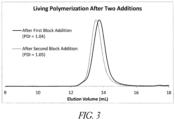
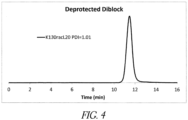
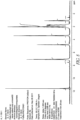
- Other analytical techniques such as nuclear magnetic resonance spectroscopy (NMR), matrix assisted laser desorption ionization mass spectroscopy (MALDI-MS), and inductively coupled plasma mass spectroscopy (ICP-MS) may be used, e.g., as additional quality control tests to ensure consistent reproducibility and purity ( FIG. 3-8 ).
- Synthetic cationic polypeptides can be designed to demonstrate broad-based antimicrobial activity (see US Published Patent Application No. 2011/048869 ).
- a synthetic cationic polypeptide is considered to have antimicrobial activity if it provides greater than 3 logs killing of Staphylococcus epidermidis and Escherichia coli in a standard 60 minute time-kill assays at a synthetic cationic polypeptide concentration of 1.0 mg/mL or less.
- the synthetic cationic polypeptide has an antimicrobial activity that provides greater than 3 logs killing of Staphylococcus epidermidis and Escherichia coli in a standard 60 minute time-kill assays at a synthetic cationic polypeptide concentration of 100 ⁇ g/mL or less.
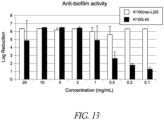
- embodiments of these synthetic cationic polypeptides demonstrate antimicrobial activity in vitro against both Gram-positive and Gram-negative bacteria. This activity is demonstrated in in vitro time-kill assays with the synthetic cationic polypeptides in aqueous media. Further, embodiments of synthetic cationic polypeptides demonstrated anti-biofilm activity in vitro, as depicted in Figure 13 . It is likely that these effects can be explained in part by the cationic polypeptides binding to the anionic charges present in the matrix of the biofilm. In addition, the surfactant -like activity of the synthetic cationic polypeptides may contribute to the anti-biofilm effect. It is also recognized that the inventive compositions may change the structure and/or charge of biofilms, allowing other agents (e.g., locally applied or systemically applied antibiotics) to penetrate the biofilm, thereby enhancing activity.
- agents e.g., locally applied or systemically applied antibiotics
- the second pharmaceutically-acceptable polymer is different from the one or more synthetic, cationic polypeptide(s) having antimicrobial activity.
- the second pharmaceutically-acceptable polymer has little or no antimicrobial activity itself.
- the antimicrobial activity of second pharmaceutically-acceptable polymer is less than 10% of the antimicrobial activity of the synthetic, cationic polypeptide(s).
- the individual amounts of the synthetic, cationic polypeptide(s) and the second pharmaceutically-acceptable polymer in the aqueous composition are at least about 100 ⁇ g/mL, and can be higher, e.g. about 1 mg/mL, about 5 mg/mL, or about 10 mg/mL, or about 20/ml, or about 40 mg/ml or higher.
- the amount of the second pharmaceutically-acceptable polymer in the aqueous composition is at least about 10% by weight, based on the weight of the one or more synthetic, cationic polypeptide(s), and may be higher, e.g., at least about 20% by weight, at least about 30% by weight, or at least about 50% by weight, same basis.
- the synthetic, cationic polypeptide(s) and the second pharmaceutically-acceptable polymer in the aqueous composition are selected such the polymers are mutually miscible.
- the synthetic, cationic polypeptide(s) with antimicrobial activity and the second pharmaceutically-acceptable polymer are considered mutually miscible if at least about 90% of the polymeric components remain mutually soluble 24 hours after mixing and maintaining at room temperature in water at a concentration of each polymer of 1 mg/mL, upon visible examination.
- aqueous compositions described herein can be prepared by intermixing the individual polymeric components with water, e.g., at room temperature with stirring, using ordinary mixing methods known to those skilled in the art.
- the amphiphilic nature of the synthetic cationic polypeptides and their self-assembly in aqueous solution induce stable phase-separated (collapsed or solvated) dispersions of hydrophobic and hydrated hydrophilic material.
- the chain length of the copolypeptides e.g., degree of polymerization or n>50
- the barrier nature of the materials is a product of the ability of the materials to trap and slow down water mobility, and by consequence dramatically slow down the passage of any solute or particle present in water.
- the length of the polypeptide strongly influences the barrier properties (e.g., by drastically reduced diffusion).
- selection of a second polymer for mixing with the synthetic cationic peptide(s) should be undertaken carefully to avoid disruption of influential biophysical parameters and to achieve mutual solubility in the aqueous composition.
- Those skilled in the art can use routine experimentation guided by the teachings provided herein to select the polymeric components and amounts to form the aqueous compositions described herein.
- the properties of the aqueous compositions described herein can be tuned by controlling the ratio of the amount of the cationic polypeptide to the second pharmaceutically-acceptable polymer(s).
- these second polymers may include celluloses (e.g, hydroxyethylcellulose (HEC), hydroxypropylcellulose (HPC), hydroxymethylcellulose (HMC)), alginates, collagens, polymeric surfactants, polyethylene glycols, polyvinyl alcohols, polyurethanes, polyvinyl pyrolidinones (PVP), fibrin(ogen), or blood or tissue proteins.
- the second pharmaceutically acceptable polymer is not a polyethylene glycol (PEG).
- the barrier of the composition is in dynamic equilibrium with its individual components, at least one of which is also antimicrobial.
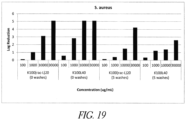
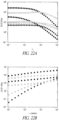
- the leaching of aggregates may be an advantage because the shed material may increase the effective surface area of the barrier which may increase the effectiveness of the interaction between microbes and the barrier material ( FIG. 17-19 ).
- Barrier properties of the materials can be further enhanced by the synergistic effect of polar biopolymers that further crosslink the self-assembled co-polypeptide matrix. By formulating with different biopolymers the flow and mechanical characteristics of the materials, as well as the strength of the barrier can be adjusted and controlled.
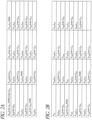
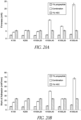
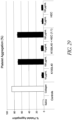
- a texture analysis profile has been used to determine the effects of block copolypeptide composition and hydrophobic enantiopurity on the mechanical properties of the block copolypeptide/HEC mixtures ( FIG. 20 ).
- Measurement of firmness values for individual components indicated that a 1 % (w/w) solution of K 100 L 40 in water had a firmness of 2.94 +/-0.25 mN and a solution of 1% (w/w) HEC in water demonstrated a firmness of 5.38 +/- 0.32 mN ( FIG. 21 (Table 5)).
- Mixing 1% (w/w) K 100 L 40 and 1% HEC (w/w) together resulted in a substantial increase in firmness, to a value of 22.77 +/- 0.90 mN.
- the amounts and types of polymeric components in the aqueous compositions described herein can be selected to achieve various properties.
- the aqueous composition is characterized by a barrier activity, as measured by a decrease in the diffusion rate of an anionic dye of more than 2 logs at a total polymer concentration of 40 mg/mL or less.
- the aqueous composition is characterized by a storage modulus of at least 50 Pa at a total polymer concentration of less than 40 mg/mL.
- the aqueous composition is characterized by a storage modulus of at least 50 Pa at a total polymer concentration of less than 40 mg/mL and an ability to pass through a 20g needle using less than 60 N pressure.
- the aqueous composition is characterized by an ability to pass through a 20g needle and recover a minimum of 70% of its strength as measured by storage modulus within 10 minutes.
- Those skilled in the art can use routine experimentation guided by the teachings provided herein to select the polymeric components and amounts to form aqueous compositions having the properties described herein.
- synthetic cationic polypeptides can exhibit enhanced antimicrobial activity in vivo.
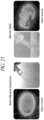
- synthetic cationic polypeptides as micellar solutions and as hydrogels, can be used to coat tissues in vivo ( FIG. 23 ).
- This tissue coating may involve the binding of the cationic peptides, through charge interactions, to anionic charges displayed on damaged tissues (as well as anionic charges in bacterial biofilms).
- self-assembly and cross-linking may increase the amount of material that binds and coats a tissue (e.g. thinner or thicker coating) and therefore influence a variety of biological activities and responses.
- these synthetic cationic polypeptides are antimicrobial when locally applied in vivo.
- tissue binding and tissue coating properties of these materials may substantially affect their activities, including their antimicrobial properties, their anti-biofilm properties, and their effects on tissue adhesion formation and tissue remodeling.
- Molecular characteristics (e.g. length, charge, etc.) of the synthetic cationic polypeptides, as well as structures that they form in aqueous environments (e.g. micelles, sheets, fibrils, hydrogels) may affect tissue binding and tissue coating.
- Aqueous compositions that include mixtures of synthetic cationic polypeptides with two different polymers were both found to be effective in vivo.
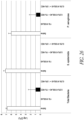
- K 100 ( rac -L) 20 was effective in an porcine open-wound treatment model alone and in combination with PEG 400.
- K 100 L 40 was effective at preventing microbial contamination alone and in combination with hydroxyethyl cellulose. Further, the data suggests that enhanced biophysical properties of the mixtures can improve antimicrobial activity in vivo over the synthetic cationic copolypeptides alone.
- aqueous compositions described herein can be used for any one or more treatments and/or applications, including but not limited to prevention of infections, treatment of infections, treatment for topical anti-infection, treatment for microbial decolonization, wound treatment, surgical site treatment, trauma treatment, burn treatment, treatment of diabetic foot ulcers, eye treatment, treatment of vaginal infections, treatment of urinary tract infections, hand sanitization, for coating prosthetic devices and/or implants, food preservation and solution preservation.
- an aqueous composition as described herein may be formulated as solutions, emulsions, particles, or hydrogels with a variety of viscoelastic properties to enhance their antimicrobial properties, their barrier properties, or both.
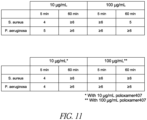
- an aqueous composition as described herein comprises a wound wash product with a single lysine-leucine block copolypeptide in water, saline, or other aqueous media that is mixed with a second polymer, typically a surfactant such as poloxamer 407.
- an aqueous composition as described herein may comprise a viscous fluid / flowing gel that can be applied through a sprayer to coat various tissues. This could be used in open or laparoscopic approaches.
- These materials may by themselves or in combination with other materials be formed into a variety of dressings or bandages. These may include constituting or coating a variety of materials such as gauze or sponges.
- An example would include an aqueous composition as described herein (e.g., containing a synthetic block copolypeptide KxLy) in the form of a coating on gauze or alginate bandages.
- Another example would include a two-layer material where an aqueous composition as described herein (e.g., containing a synthetic block copolypeptide KxLy alone or with another polymer such as a collagen) coats a face of a relatively inert sponge material (e.g. polyacrylate, polyurethane, or polyhema) ( FIG. 27 ).
- a relatively inert sponge material e.g. polyacrylate, polyurethane, or polyhema
- the embodiment could have the appearance of a rectangular sponge with one coated surface or of a spherical sponge where the entire surface is coated (pronounced of a tennis ball). This may be particularly advantageous in the treatment of bleeding wounds where hemostasis is required ( FIG.28-29 ).
- An embodiment provides a method for the prevention and/or treatment of infections that includes contacting a tissue of a subject with an aqueous composition as described herein, e.g., to a wound. Another embodiment further includes applying negative-pressure to the treated wound.
- the subject can be an animal, preferably a human.
- the subject is further treated systemically with an antibiotic and/or locally with another antimicrobial, and/or at least one selected from the group consisting of an antibiotic, an anti-biofilm agent, a surfactant, and a combination thereof.
- aqueous compositions described herein can further include one or more of an active pharmaceutical ingredient (API).
- APIs include steroids, pro-inflammatory agents, anti-inflammatory agents, anti-acne agents, preservatives, hemostatic agents, angiogenic agents, wound healing agents, anti-cancer agents and other antimicrobial agents.
Landscapes
- Health & Medical Sciences (AREA)
- Life Sciences & Earth Sciences (AREA)
- General Health & Medical Sciences (AREA)
- Chemical & Material Sciences (AREA)
- Veterinary Medicine (AREA)
- Animal Behavior & Ethology (AREA)
- Public Health (AREA)
- Engineering & Computer Science (AREA)
- Medicinal Chemistry (AREA)
- Pharmacology & Pharmacy (AREA)
- Epidemiology (AREA)
- Bioinformatics & Cheminformatics (AREA)
- Chemical Kinetics & Catalysis (AREA)
- General Chemical & Material Sciences (AREA)
- Nuclear Medicine, Radiotherapy & Molecular Imaging (AREA)
- Organic Chemistry (AREA)
- Materials Engineering (AREA)
- Immunology (AREA)
- Proteomics, Peptides & Aminoacids (AREA)
- Surgery (AREA)
- Hematology (AREA)
- Diabetes (AREA)
- Pest Control & Pesticides (AREA)
- Plant Pathology (AREA)
- Environmental Sciences (AREA)
- Zoology (AREA)
- Wood Science & Technology (AREA)
- Agronomy & Crop Science (AREA)
- Dentistry (AREA)
- Gastroenterology & Hepatology (AREA)
- Oncology (AREA)
- Communicable Diseases (AREA)
- Molecular Biology (AREA)
- Dispersion Chemistry (AREA)
- Inorganic Chemistry (AREA)
- Endocrinology (AREA)
- Dermatology (AREA)
- Obesity (AREA)
- Emergency Medicine (AREA)
- Urology & Nephrology (AREA)
Applications Claiming Priority (6)
| Application Number | Priority Date | Filing Date | Title |
|---|---|---|---|
| US201261615150P | 2012-03-23 | 2012-03-23 | |
| US201261625757P | 2012-04-18 | 2012-04-18 | |
| US201261625760P | 2012-04-18 | 2012-04-18 | |
| US201261716242P | 2012-10-19 | 2012-10-19 | |
| PCT/US2013/032535 WO2013142374A1 (fr) | 2012-03-23 | 2013-03-15 | Compositions et utilisations de matériaux antimicrobiens ayant des propriétés compatibles avec un tissu |
| EP13764971.1A EP2827841B8 (fr) | 2012-03-23 | 2013-03-15 | Compositions et utilisations de matériaux antimicrobiens ayant des propriétés compatibles avec un tissu |
Related Parent Applications (2)
| Application Number | Title | Priority Date | Filing Date |
|---|---|---|---|
| EP13764971.1A Division EP2827841B8 (fr) | 2012-03-23 | 2013-03-15 | Compositions et utilisations de matériaux antimicrobiens ayant des propriétés compatibles avec un tissu |
| EP13764971.1A Division-Into EP2827841B8 (fr) | 2012-03-23 | 2013-03-15 | Compositions et utilisations de matériaux antimicrobiens ayant des propriétés compatibles avec un tissu |
Publications (2)
| Publication Number | Publication Date |
|---|---|
| EP4516101A2 true EP4516101A2 (fr) | 2025-03-05 |
| EP4516101A3 EP4516101A3 (fr) | 2025-05-07 |
Family
ID=49223273
Family Applications (2)
| Application Number | Title | Priority Date | Filing Date |
|---|---|---|---|
| EP24200847.2A Pending EP4516101A3 (fr) | 2012-03-23 | 2013-03-15 | Compositions et utilisations de matériaux antimicrobiens présentant des propriétés compatibles avec les tissus |
| EP13764971.1A Active EP2827841B8 (fr) | 2012-03-23 | 2013-03-15 | Compositions et utilisations de matériaux antimicrobiens ayant des propriétés compatibles avec un tissu |
Family Applications After (1)
| Application Number | Title | Priority Date | Filing Date |
|---|---|---|---|
| EP13764971.1A Active EP2827841B8 (fr) | 2012-03-23 | 2013-03-15 | Compositions et utilisations de matériaux antimicrobiens ayant des propriétés compatibles avec un tissu |
Country Status (16)
| Country | Link |
|---|---|
| US (4) | US9446090B2 (fr) |
| EP (2) | EP4516101A3 (fr) |
| JP (6) | JP6224069B2 (fr) |
| KR (2) | KR102266659B1 (fr) |
| CN (1) | CN104582688A (fr) |
| AU (2) | AU2013235336B2 (fr) |
| BR (1) | BR112014023068B1 (fr) |
| CA (1) | CA2867903C (fr) |
| ES (1) | ES2991989T3 (fr) |
| HU (1) | HUE069626T2 (fr) |
| IN (1) | IN2014DN08299A (fr) |
| MX (2) | MX344635B (fr) |
| PL (1) | PL2827841T3 (fr) |
| RU (1) | RU2680959C2 (fr) |
| WO (1) | WO2013142374A1 (fr) |
| ZA (1) | ZA201407121B (fr) |
Families Citing this family (15)
| Publication number | Priority date | Publication date | Assignee | Title |
|---|---|---|---|---|
| BRPI0811530B1 (pt) | 2007-05-14 | 2019-01-02 | Research Foundation Of State Univ Of New York | composição compreendendo indutor(es) de resposta fisiológica à dispersão ácido decanóico, superfície, solução, método ex vivo de tratamento ou inibição da formação de um biofilme sobre uma superfície |
| MX344635B (es) * | 2012-03-23 | 2017-01-04 | Amicrobe Inc | Composiciones y usos de materiales antimicrobianos con propiedades compatibles con el tejido. |
| JP6335337B2 (ja) | 2014-02-21 | 2018-05-30 | アヴァディム・テクノロジーズ,インコーポレイテッド | 尿道カテーテルの維持のための方法 |
| AU2015288635B2 (en) * | 2014-07-11 | 2018-07-26 | Menicon Co., Ltd. | Visibility-ensuring material, and device for discharging visibility-ensuring material |
| CA2958421C (fr) * | 2014-08-29 | 2023-10-17 | Aarhus Universitet | Copolymeres a charge positive destines a etre utilises en tant qu'agents antimicrobiens |
| WO2016081724A2 (fr) | 2014-11-19 | 2016-05-26 | Avadim Technologies, Inc. | Procédé pour la prévention et le traitement de l'acné |
| CN110740744A (zh) * | 2017-04-06 | 2020-01-31 | 艾麦克罗比公司 | 性能和安全性增强的局部施用的抗微生物剂的组合物和应用 |
| GB201711555D0 (en) * | 2017-07-18 | 2017-08-30 | Kent Innovation & Entpr | Antibacterial compounds |
| US11541105B2 (en) | 2018-06-01 | 2023-01-03 | The Research Foundation For The State University Of New York | Compositions and methods for disrupting biofilm formation and maintenance |
| EP3934753B1 (fr) * | 2019-03-04 | 2025-11-05 | Capretto EHF. | Élimination microbienne |
| CN109847090B (zh) * | 2019-03-25 | 2021-08-31 | 深圳市康乐美科技有限公司 | 一种具有抗菌、柔软特性的卫生巾 |
| CA3143518A1 (fr) | 2019-06-12 | 2020-12-17 | Avadim Health Ip, Inc. | Compositions et methodes de traitement antiseptique de biofilms sur un tissu de mammifere |
| WO2021207164A1 (fr) * | 2020-04-08 | 2021-10-14 | Amicrobe, Inc. | Compositions et utilisations de polymères d'acides aminés synthétiques appliqués localement pour la prévention et le traitement d'infections virales |
| CN112048084A (zh) * | 2020-08-21 | 2020-12-08 | 浙江隆泰医疗科技股份有限公司 | 一种低温交联的聚乙烯醇复合抗菌肽材料的制备方法 |
| WO2026060306A1 (fr) * | 2024-09-13 | 2026-03-19 | Macro Biologics, Inc. | Compositions et utilisations de polymères d'acides aminés cationiques synthétiques appliqués localement pour la prévention et le traitement d'infections bactériennes et fongiques |
Citations (5)
| Publication number | Priority date | Publication date | Assignee | Title |
|---|---|---|---|---|
| US4886911A (en) | 1986-07-01 | 1989-12-12 | Ici Australia Limited | Herbicidal cyclohexane-1,3-dione derivatives |
| US6632922B1 (en) | 1998-03-19 | 2003-10-14 | The Regents Of The University Of California | Methods and compositions for controlled polypeptide synthesis |
| US6680365B1 (en) | 1998-03-19 | 2004-01-20 | The Regents Of The University Of California | Methods and compositions for controlled polypeptide synthesis |
| US6686446B2 (en) | 1998-03-19 | 2004-02-03 | The Regents Of The University Of California | Methods and compositions for controlled polypeptide synthesis |
| US6818732B2 (en) | 2001-08-30 | 2004-11-16 | The Regents Of The University Of California | Transition metal initiators for controlled poly (beta-peptide) synthesis from beta-lactam monomers |
Family Cites Families (37)
| Publication number | Priority date | Publication date | Assignee | Title |
|---|---|---|---|---|
| US5636643A (en) | 1991-11-14 | 1997-06-10 | Wake Forest University | Wound treatment employing reduced pressure |
| TW570805B (en) | 1998-09-01 | 2004-01-11 | Hoffmann La Roche | Water-soluble pharmaceutical composition in an ionic complex |
| WO2000050006A2 (fr) * | 1999-02-26 | 2000-08-31 | Chiron Corporation | Microemulsions a macromolecules et microparticules adsorbees |
| US20030138453A1 (en) * | 2000-09-28 | 2003-07-24 | O'hagan Derek | Microparticles for delivery of heterologous nucleic acids |
| US6835536B2 (en) * | 2001-08-21 | 2004-12-28 | Micrologix Biotech Inc. | Antimicrobial cationic peptides and formulations thereof |
| JP2003171463A (ja) | 2001-12-06 | 2003-06-20 | Chisso Corp | ポリリジン及びその製造法 |
| CA2443472A1 (fr) | 2002-02-07 | 2003-08-14 | Ophtecs Corporation | Preparation liquide pour lentilles de contact |
| DK1585548T3 (en) * | 2002-12-09 | 2018-09-03 | Abraxis Bioscience Llc | COMPOSITIONS AND PROCEDURES FOR THE DELIVERY OF PHARMACOLOGICAL AGENTS |
| WO2005005436A2 (fr) * | 2003-07-11 | 2005-01-20 | Theravance, Inc. | Antibiotiques de glycopeptide-cephalosporine reticules |
| WO2005018701A1 (fr) * | 2003-08-25 | 2005-03-03 | Kane Biotech Inc. | Compositions antimicrobiennes synergiques et procedes d'inhibition de la formation de biofilms |
| US7314857B2 (en) * | 2003-08-25 | 2008-01-01 | Kane Biotech Inc. | Synergistic antimicrobial compositions and methods of inhibiting biofilm formation |
| CA2550872C (fr) * | 2003-12-30 | 2016-05-03 | Stig Bengmark | Protection de surface de tissus biologiques exposes |
| EP1722819B1 (fr) | 2004-03-12 | 2007-12-26 | Intercell AG | Procede de solubilisation de melanges de peptides |
| DK1927597T3 (en) | 2004-08-18 | 2017-02-13 | Novabiotics Ltd | ANTIBACTERIAL PEPTIDES |
| KR20080023218A (ko) * | 2005-06-06 | 2008-03-12 | 노보자임스 에이/에스 | 항균성을 가진 폴리펩티드 및 그것을 코딩하는폴리뉴클레오티드 |
| US20080139450A1 (en) * | 2005-07-01 | 2008-06-12 | Srinivasa Madhyastha | Antimicrobial Compositions and Uses Thereof |
| US20070190110A1 (en) * | 2006-02-10 | 2007-08-16 | Pameijer Cornelis H | Agents and devices for providing blood clotting functions to wounds |
| KR101475447B1 (ko) * | 2006-12-01 | 2014-12-23 | 더 리젠츠 오브 더 유니버시티 오브 캘리포니아 | 자기-조립 블록 코폴리머의 베시클 그리고 그것의 제조 및 사용 방법 |
| JP2010531189A (ja) | 2007-06-25 | 2010-09-24 | リポペプチド・アクチエボラーグ | 新しい医療用製品 |
| US20090081249A1 (en) * | 2007-08-27 | 2009-03-26 | Massachusetts Institute Of Technology | Bi-Functional Polymer-Attached Inhibitors of Influenza Virus |
| EP2272897B1 (fr) | 2008-03-10 | 2016-12-28 | The University of Tokyo | Copolymère comprenant un bloc hydrophile non chargé et un bloc poly(acide aminé) cationique ayant une chaîne latérale dans laquelle un radical hydrophobe est partiellement introduit, et utilisation de copolymère |
| US20110098344A1 (en) * | 2008-06-19 | 2011-04-28 | Nippon Shinyaku Co., Ltd. | Drug carrier |
| GB0818074D0 (en) * | 2008-10-02 | 2008-11-05 | Lytix Biopharma As | Treatment of biofilms |
| CN102256613B (zh) * | 2008-10-20 | 2014-09-10 | 莫伊莱麦屈克斯公司 | 用于治疗或者预防粘连的多肽 |
| CA2750340C (fr) * | 2009-01-23 | 2017-09-19 | Kane Biotech Inc. | Compositions antimicrobiennes eliminant les biopellicules et leurs applications |
| GB0905451D0 (en) * | 2009-03-31 | 2009-05-13 | Novabiotics Ltd | Biofilms |
| DK2563916T3 (en) * | 2010-04-27 | 2015-10-05 | Lysando Ag | METHOD FOR REDUCING biofilms |
| EP2608800B1 (fr) * | 2010-08-23 | 2017-01-18 | The Regents of The University of California | Compositions et utilisations de substances présentant une forte activité antimicrobienne et une faible toxicité |
| CN103370087A (zh) * | 2011-01-19 | 2013-10-23 | 目立康株式会社 | 隐形眼镜用液体制剂 |
| US9781949B2 (en) | 2011-03-31 | 2017-10-10 | The University Of Massachusetts | Antimicrobial delivery systems, methods of manufacture, and methods of use thereof |
| MX344635B (es) | 2012-03-23 | 2017-01-04 | Amicrobe Inc | Composiciones y usos de materiales antimicrobianos con propiedades compatibles con el tejido. |
| DE102014101663A1 (de) | 2014-02-11 | 2015-08-13 | Fraunhofer-Gesellschaft zur Förderung der angewandten Forschung e.V. | Synthetische artifizielle Peptide mit antimikrobieller Wirkung |
| EP3194422B1 (fr) | 2014-09-19 | 2020-04-29 | Tensive Controls, Inc. | Peptides antimicrobiens |
| AU2015338969B2 (en) | 2014-10-30 | 2020-08-27 | Biomet Manufacturing, Llc | Methods of preventing surgical site infections |
| JP2016113373A (ja) | 2014-12-11 | 2016-06-23 | エスポ化学株式会社 | 抗菌性、抗ウイルス性を有する水溶性組成物 |
| CN110740744A (zh) | 2017-04-06 | 2020-01-31 | 艾麦克罗比公司 | 性能和安全性增强的局部施用的抗微生物剂的组合物和应用 |
| WO2019169324A1 (fr) * | 2018-03-02 | 2019-09-06 | January Therapeutics, Inc. | Compositions de nanoparticules |
-
2013
- 2013-03-15 MX MX2014011237A patent/MX344635B/es active IP Right Grant
- 2013-03-15 AU AU2013235336A patent/AU2013235336B2/en active Active
- 2013-03-15 MX MX2016017289A patent/MX378738B/es unknown
- 2013-03-15 EP EP24200847.2A patent/EP4516101A3/fr active Pending
- 2013-03-15 ES ES13764971T patent/ES2991989T3/es active Active
- 2013-03-15 HU HUE13764971A patent/HUE069626T2/hu unknown
- 2013-03-15 CA CA2867903A patent/CA2867903C/fr active Active
- 2013-03-15 KR KR1020207022133A patent/KR102266659B1/ko active Active
- 2013-03-15 JP JP2015503344A patent/JP6224069B2/ja active Active
- 2013-03-15 PL PL13764971.1T patent/PL2827841T3/pl unknown
- 2013-03-15 BR BR112014023068-4A patent/BR112014023068B1/pt active IP Right Grant
- 2013-03-15 EP EP13764971.1A patent/EP2827841B8/fr active Active
- 2013-03-15 KR KR1020147029534A patent/KR102141254B1/ko active Active
- 2013-03-15 IN IN8299DEN2014 patent/IN2014DN08299A/en unknown
- 2013-03-15 CN CN201380016185.9A patent/CN104582688A/zh active Pending
- 2013-03-15 US US14/385,752 patent/US9446090B2/en active Active
- 2013-03-15 WO PCT/US2013/032535 patent/WO2013142374A1/fr not_active Ceased
- 2013-03-15 RU RU2014137827A patent/RU2680959C2/ru active
-
2014
- 2014-10-01 ZA ZA2014/07121A patent/ZA201407121B/en unknown
-
2016
- 2016-08-18 US US15/240,197 patent/US11298401B2/en active Active
- 2016-11-14 AU AU2016259282A patent/AU2016259282B2/en active Active
-
2017
- 2017-10-04 JP JP2017194019A patent/JP2018020175A/ja active Pending
-
2019
- 2019-09-12 JP JP2019166236A patent/JP7255787B2/ja active Active
-
2020
- 2020-11-04 JP JP2020184556A patent/JP2021020964A/ja active Pending
-
2022
- 2022-03-01 US US17/684,267 patent/US12016898B2/en active Active
- 2022-11-04 JP JP2022176900A patent/JP2023011850A/ja active Pending
-
2024
- 2024-06-20 US US18/749,392 patent/US20250121027A1/en active Pending
-
2025
- 2025-02-07 JP JP2025019121A patent/JP2025065375A/ja active Pending
Patent Citations (7)
| Publication number | Priority date | Publication date | Assignee | Title |
|---|---|---|---|---|
| US4886911A (en) | 1986-07-01 | 1989-12-12 | Ici Australia Limited | Herbicidal cyclohexane-1,3-dione derivatives |
| US6632922B1 (en) | 1998-03-19 | 2003-10-14 | The Regents Of The University Of California | Methods and compositions for controlled polypeptide synthesis |
| US6680365B1 (en) | 1998-03-19 | 2004-01-20 | The Regents Of The University Of California | Methods and compositions for controlled polypeptide synthesis |
| US6686446B2 (en) | 1998-03-19 | 2004-02-03 | The Regents Of The University Of California | Methods and compositions for controlled polypeptide synthesis |
| US7329727B2 (en) | 1998-03-19 | 2008-02-12 | The Regents Of The University Of California | Methods and compositions for controlled polypeptide synthesis |
| US20080125581A1 (en) | 1998-03-19 | 2008-05-29 | Deming Timothy J | Methods and compositions for controlled polypeptide synthesis |
| US6818732B2 (en) | 2001-08-30 | 2004-11-16 | The Regents Of The University Of California | Transition metal initiators for controlled poly (beta-peptide) synthesis from beta-lactam monomers |
Non-Patent Citations (1)
| Title |
|---|
| MERRIAM-WEBSTER: "Miscible Definition & Meaning", 9 November 2022 (2022-11-09), pages 1 - 2, XP055980038, Retrieved from the Internet <URL:URL:https://www.merriam-webster.com/dictionary/miscible> [retrieved on 20221110] * |
Also Published As
Similar Documents
| Publication | Publication Date | Title |
|---|---|---|
| US12016898B2 (en) | Compositions and uses of antimicrobial materials with tissue-compatible properties | |
| Liu et al. | Synthetic polymeric antibacterial hydrogel for methicillin-resistant staphylococcus aureus-infected wound healing: nanoantimicrobial self-assembly, drug-and cytokine-free strategy | |
| Hoque et al. | Dual function injectable hydrogel for controlled release of antibiotic and local antibacterial therapy | |
| JP2015512403A5 (fr) | ||
| Xing et al. | Polysaccharide-based injectable hydrogel loaded with quercetin promotes scarless healing of burn wounds by reducing inflammation | |
| CN114425105A (zh) | 一种抗菌、止血、促修复、防粘连的组合使用型多功能材料的制备方法及应用 | |
| AU2011330855B2 (en) | Compositions with antibacterial and wound healing activity | |
| HK1206614B (en) | Compositions and uses of antimicrobial materials with tissue-compatible properties | |
| WO2018020516A2 (fr) | Réseau polymère, procédé de production et utilisations associées | |
| Zhu et al. | A suture-free, microenvironment-adaptive hydrogel actively orchestrating inflammation-to-regeneration transition for abdominal wall defect repair | |
| WO2025051955A1 (fr) | Matériaux ayant des propriétés anti-inflammatoires et/ou antimicrobiennes | |
| Fralish | Generation of Gelatin-Based Antibiotic-Eluting Conjugates for the Prevention of Surgical Site Infections |
Legal Events
| Date | Code | Title | Description |
|---|---|---|---|
| PUAI | Public reference made under article 153(3) epc to a published international application that has entered the european phase |
Free format text: ORIGINAL CODE: 0009012 |
|
| STAA | Information on the status of an ep patent application or granted ep patent |
Free format text: STATUS: THE APPLICATION HAS BEEN PUBLISHED |
|
| AC | Divisional application: reference to earlier application |
Ref document number: 2827841 Country of ref document: EP Kind code of ref document: P |
|
| AK | Designated contracting states |
Kind code of ref document: A2 Designated state(s): AL AT BE BG CH CY CZ DE DK EE ES FI FR GB GR HR HU IE IS IT LI LT LU LV MC MK MT NL NO PL PT RO RS SE SI SK SM TR |
|
| REG | Reference to a national code |
Ref country code: DE Ref legal event code: R079 Free format text: PREVIOUS MAIN CLASS: A01N0037460000 Ipc: A61K0009080000 |
|
| PUAL | Search report despatched |
Free format text: ORIGINAL CODE: 0009013 |
|
| AK | Designated contracting states |
Kind code of ref document: A3 Designated state(s): AL AT BE BG CH CY CZ DE DK EE ES FI FR GB GR HR HU IE IS IT LI LT LU LV MC MK MT NL NO PL PT RO RS SE SI SK SM TR |
|
| RIC1 | Information provided on ipc code assigned before grant |
Ipc: A01N 37/46 20060101ALI20250403BHEP Ipc: A61P 41/00 20060101ALI20250403BHEP Ipc: A61P 31/04 20060101ALI20250403BHEP Ipc: A61P 31/02 20060101ALI20250403BHEP Ipc: A61P 31/00 20060101ALI20250403BHEP Ipc: A61K 38/16 20060101ALI20250403BHEP Ipc: A61K 47/30 20060101ALI20250403BHEP Ipc: A61K 38/00 20060101ALI20250403BHEP Ipc: A61K 9/08 20060101AFI20250403BHEP |
|
| REG | Reference to a national code |
Ref country code: HK Ref legal event code: DE Ref document number: 40123469 Country of ref document: HK |
|
| STAA | Information on the status of an ep patent application or granted ep patent |
Free format text: STATUS: REQUEST FOR EXAMINATION WAS MADE |
|
| 17P | Request for examination filed |
Effective date: 20251024 |
|
| STAA | Information on the status of an ep patent application or granted ep patent |
Free format text: STATUS: EXAMINATION IS IN PROGRESS |
|
| 17Q | First examination report despatched |
Effective date: 20260316 |