EP4517062A2 - Système pour un véhicule et véhicule le comprenant - Google Patents
Système pour un véhicule et véhicule le comprenant Download PDFInfo
- Publication number
- EP4517062A2 EP4517062A2 EP24197851.9A EP24197851A EP4517062A2 EP 4517062 A2 EP4517062 A2 EP 4517062A2 EP 24197851 A EP24197851 A EP 24197851A EP 4517062 A2 EP4517062 A2 EP 4517062A2
- Authority
- EP
- European Patent Office
- Prior art keywords
- signal
- control unit
- electronic control
- fluid
- circuit
- Prior art date
- Legal status (The legal status is an assumption and is not a legal conclusion. Google has not performed a legal analysis and makes no representation as to the accuracy of the status listed.)
- Pending
Links
Images


Classifications
-
- F—MECHANICAL ENGINEERING; LIGHTING; HEATING; WEAPONS; BLASTING
- F01—MACHINES OR ENGINES IN GENERAL; ENGINE PLANTS IN GENERAL; STEAM ENGINES
- F01P—COOLING OF MACHINES OR ENGINES IN GENERAL; COOLING OF INTERNAL-COMBUSTION ENGINES
- F01P7/00—Controlling of coolant flow
- F01P7/14—Controlling of coolant flow the coolant being liquid
- F01P7/16—Controlling of coolant flow the coolant being liquid by thermostatic control
- F01P7/164—Controlling of coolant flow the coolant being liquid by thermostatic control by varying pump speed
-
- B—PERFORMING OPERATIONS; TRANSPORTING
- B60—VEHICLES IN GENERAL
- B60K—ARRANGEMENT OR MOUNTING OF PROPULSION UNITS OR OF TRANSMISSIONS IN VEHICLES; ARRANGEMENT OR MOUNTING OF PLURAL DIVERSE PRIME-MOVERS IN VEHICLES; AUXILIARY DRIVES FOR VEHICLES; INSTRUMENTATION OR DASHBOARDS FOR VEHICLES; ARRANGEMENTS IN CONNECTION WITH COOLING, AIR INTAKE, GAS EXHAUST OR FUEL SUPPLY OF PROPULSION UNITS IN VEHICLES
- B60K11/00—Arrangement in connection with cooling of propulsion units
- B60K11/02—Arrangement in connection with cooling of propulsion units with liquid cooling
-
- F—MECHANICAL ENGINEERING; LIGHTING; HEATING; WEAPONS; BLASTING
- F01—MACHINES OR ENGINES IN GENERAL; ENGINE PLANTS IN GENERAL; STEAM ENGINES
- F01P—COOLING OF MACHINES OR ENGINES IN GENERAL; COOLING OF INTERNAL-COMBUSTION ENGINES
- F01P11/00—Component parts, details, or accessories not provided for in, or of interest apart from, groups F01P1/00 - F01P9/00
- F01P11/14—Indicating devices; Other safety devices
-
- F—MECHANICAL ENGINEERING; LIGHTING; HEATING; WEAPONS; BLASTING
- F01—MACHINES OR ENGINES IN GENERAL; ENGINE PLANTS IN GENERAL; STEAM ENGINES
- F01P—COOLING OF MACHINES OR ENGINES IN GENERAL; COOLING OF INTERNAL-COMBUSTION ENGINES
- F01P3/00—Liquid cooling
- F01P3/20—Cooling circuits not specific to a single part of engine or machine
-
- F—MECHANICAL ENGINEERING; LIGHTING; HEATING; WEAPONS; BLASTING
- F01—MACHINES OR ENGINES IN GENERAL; ENGINE PLANTS IN GENERAL; STEAM ENGINES
- F01P—COOLING OF MACHINES OR ENGINES IN GENERAL; COOLING OF INTERNAL-COMBUSTION ENGINES
- F01P3/00—Liquid cooling
- F01P3/22—Liquid cooling characterised by evaporation and condensation of coolant in closed cycles; characterised by the coolant reaching higher temperatures than normal atmospheric boiling-point
- F01P3/2285—Closed cycles with condenser and feed pump
-
- B—PERFORMING OPERATIONS; TRANSPORTING
- B60—VEHICLES IN GENERAL
- B60K—ARRANGEMENT OR MOUNTING OF PROPULSION UNITS OR OF TRANSMISSIONS IN VEHICLES; ARRANGEMENT OR MOUNTING OF PLURAL DIVERSE PRIME-MOVERS IN VEHICLES; AUXILIARY DRIVES FOR VEHICLES; INSTRUMENTATION OR DASHBOARDS FOR VEHICLES; ARRANGEMENTS IN CONNECTION WITH COOLING, AIR INTAKE, GAS EXHAUST OR FUEL SUPPLY OF PROPULSION UNITS IN VEHICLES
- B60K1/00—Arrangement or mounting of electrical propulsion units
- B60K2001/003—Arrangement or mounting of electrical propulsion units with means for cooling the electrical propulsion units
-
- B—PERFORMING OPERATIONS; TRANSPORTING
- B60—VEHICLES IN GENERAL
- B60K—ARRANGEMENT OR MOUNTING OF PROPULSION UNITS OR OF TRANSMISSIONS IN VEHICLES; ARRANGEMENT OR MOUNTING OF PLURAL DIVERSE PRIME-MOVERS IN VEHICLES; AUXILIARY DRIVES FOR VEHICLES; INSTRUMENTATION OR DASHBOARDS FOR VEHICLES; ARRANGEMENTS IN CONNECTION WITH COOLING, AIR INTAKE, GAS EXHAUST OR FUEL SUPPLY OF PROPULSION UNITS IN VEHICLES
- B60K1/00—Arrangement or mounting of electrical propulsion units
- B60K2001/003—Arrangement or mounting of electrical propulsion units with means for cooling the electrical propulsion units
- B60K2001/005—Arrangement or mounting of electrical propulsion units with means for cooling the electrical propulsion units the electric storage means
-
- B—PERFORMING OPERATIONS; TRANSPORTING
- B60—VEHICLES IN GENERAL
- B60K—ARRANGEMENT OR MOUNTING OF PROPULSION UNITS OR OF TRANSMISSIONS IN VEHICLES; ARRANGEMENT OR MOUNTING OF PLURAL DIVERSE PRIME-MOVERS IN VEHICLES; AUXILIARY DRIVES FOR VEHICLES; INSTRUMENTATION OR DASHBOARDS FOR VEHICLES; ARRANGEMENTS IN CONNECTION WITH COOLING, AIR INTAKE, GAS EXHAUST OR FUEL SUPPLY OF PROPULSION UNITS IN VEHICLES
- B60K1/00—Arrangement or mounting of electrical propulsion units
- B60K2001/003—Arrangement or mounting of electrical propulsion units with means for cooling the electrical propulsion units
- B60K2001/006—Arrangement or mounting of electrical propulsion units with means for cooling the electrical propulsion units the electric motors
-
- B—PERFORMING OPERATIONS; TRANSPORTING
- B60—VEHICLES IN GENERAL
- B60Y—INDEXING SCHEME RELATING TO ASPECTS CROSS-CUTTING VEHICLE TECHNOLOGY
- B60Y2306/00—Other features of vehicle sub-units
- B60Y2306/03—Lubrication
-
- B—PERFORMING OPERATIONS; TRANSPORTING
- B60—VEHICLES IN GENERAL
- B60Y—INDEXING SCHEME RELATING TO ASPECTS CROSS-CUTTING VEHICLE TECHNOLOGY
- B60Y2400/00—Special features of vehicle units
- B60Y2400/70—Gearings
- B60Y2400/78—Pumps, e.g. jet type
- B60Y2400/785—Pump drives
Definitions
- the invention concerns a biphasic heat exchanging system for a vehicle and a lubrication system for a vehicle.
- the invention also concerns a vehicle comprising the heat exchanging system and/or the lubrication system.
- Biphasic heat exchanging systems comprising:
- the heat absorbed by the cooling fluid determines its passage from the liquid state to a biphasic liquid/vapour state.
- Known biphasic heat exchanging systems also comprise a heat exchanger located downstream of the component to be cooled according to the flow direction of the cooling fluid inside the circuit. This heat exchanger is adapted to remove heat from the cooling fluid and return it to the liquid state.
- the vapour quality of the cooling fluid in the biphasic state in order for the cooling fluid to effectively cool the component, it is useful for the vapour quality of the cooling fluid in the biphasic state to range between 0.3 and 0.6.
- the bubbles of vapour dispersed in the liquid phase of the cooling fluid are so numerous and/or so big as to alter the local condition of thermal exchange between the fluid and the surface while no longer ensuring a layer of liquid on the wall.
- the presence of a layer of liquid on the wall is, in fact, a necessary condition for ensuring a heat exchange that exploits the latent heat of evaporation.
- the value of the flow rate of cooling fluid made to circulate by the pump is defined in the design phase and/or set using experimental calibration, in the attempt to ensure effective cooling of the component.
- the defined fluid flow rate may not be suitable for ensuring the cooling of the component.
- known heat exchanging systems are not always characterized by satisfactory reliability, since they expose the component to be cooled to significant risks of damage and breakdowns.
- FR2997449A1 discloses a system having an exchanger in which a liquid coolant i.e. glycol water, is circulated.
- An accelerometer is placed adjacent to the exchanger so as to measure vibrations of the exchanger for detecting bursting of vapor bubbles of the coolant at a coolant boiling point.
- the accelerometer has a piezoelectric sensor and a strain gauge and is placed on a liquid coolant outlet of the exchanger.
- the accelerometer is placed on a casing of the exchanger that is formed as a plate heat exchanger.
- the accelerometer is connected to a control unit of a coolant circulating pump.
- US2013333641A1 discloses a device characterized in that when the passing of coolant in an internal combustion engine is restricted to accelerate the warm-up of the internal combustion engine and the coolant in this engine is undergoing nucleate boiling, the restriction of the passing of the coolant in the internal engine is maintained. Specifically, the restriction of the passing of the coolant in the internal combustion engine is maintained during nucleate boiling from the beginning of nucleate boiling of the coolant in the internal combustion engine until the maintenance period has elapsed. Thus, the warm-up of the internal combustion engine is effectively accelerated by restricting the passing of the coolant in the engine. Furthermore, the restriction of the passing of the coolant in the internal combustion engine is cancelled when the maintenance period has elapsed. Thus, low-temperature coolant flows in the internal combustion engine and the internal combustion engine is cooled by this coolant, so nucleate boiling of the coolant in the engine is suppressed.
- EP2133534A1 discloses a cooling system for a liquid cooled internal combustion engine having coolant passages and a heat exchanger selected to operate the engine cooling system in the region of nucleate boiling.
- a sensor detects the presence of nucleate boiling and a pump and pressure relief valve responsive to the sensor maintains the coolant system pressure at a level maintaining optimum nucleate boiling to increase heat flux from the engine and reduce overall size of the system.
- One purpose of this invention is to satisfy at least one of the needs described above, preferably in a simple and cost-effective way.
- the reference number 10 is used to indicate, as a whole, a motor vehicle comprising a system 1 and a component 3.
- the component 3 is a component to be cooled and the system 1 is a heat exchanging system adapted to cool the component 3.
- the heat exchanging system 1 comprises:
- the cooling fluid is adapted to pass from a liquid state to a biphasic liquid/vapour state during cooling of the component 3.
- the cooling fluid is water or a mixture of water and glycol.
- the cooling fluid when in the biphasic state, it comprises multiple vapour bubbles 9 dispersed in the liquid phase (some of which are schematically represented in Figures 2 and 3 ).
- the number and size of the vapour bubbles 9 are related to the vapour quality.
- the vapour bubbles 9 could have different shapes.
- the component 3 to be cooled is, for example, a thermal engine or electric motor or a battery of the motor vehicle 10.
- the heat exchanger 5 is arranged downstream of the component 3 according to the flow direction of the cooling fluid in the circuit 2.
- the heat exchanger 5 is a condenser adapted to return the cooling fluid from the biphasic state to the liquid state.
- the heat exchanging system 1 also comprises a tank 8 adapted to contain the cooling fluid and fluidically connected to the circuit 2.
- the heat exchanging system 1 comprises a device 6 for determining the vapour quality x of the cooling fluid and an electronic control unit 7 operationally connected to the device 6 and to the pump 4; the electronic control unit 7 is configured to control the pump 4 as a function of the vapour quality x detected and/or determined by the device 6.
- the electronic control unit 7 is configured to increase the flow rate of the cooling fluid delivered by the pump 4 inside the circuit 2, when the vapour quality x determined by the device 6 is greater than a threshold value xmax.
- the electronic control unit 7 is configured to decrease the flow rate of the cooling fluid delivered by the pump 4, when the vapour quality x determined by the device 6 is less than a threshold value xmin.
- the threshold value xmin in particular, is less than the threshold value xmax.
- the electronic control unit 7 comprises a memory - known and not illustrated - adapted to store the numeric or percentage values of the threshold values xmin and xmax.
- xmin is 0.3 and xmax is 0.6.
- the device 6 is located downstream of the component 3 to be cooled according to flow direction of the cooling fluid inside the circuit 2. Specifically, the device 6 is fluidically interposed between the component 3 to be cooled and the heat exchanger 5.
- the device 6 comprises an ultrasound emitter 20 and an ultrasound receiver 21, between which there is a section of the circuit 2, specifically a section of a pipe of the circuit 2.
- the ultrasound emitter 20 is adapted to emit a first ultrasonic signal and the ultrasound receiver 21 is adapted to generate a second signal associated with the ultrasounds received following the emission of the first ultrasonic signal. Specifically, the ultrasound emitter 20 is adapted to emit the first ultrasonic signal so that this is transmitted to the ultrasound receiver 21 through the lumen of the section of the circuit 2, and, as a result, through the flow of cooling fluid that flows inside.
- the ultrasound emitter 20 directly faces the lumen of the section of the circuit 2, so that the first ultrasonic signal is emitted in the lumen of the pipe section of the circuit 2 in the absence of elements interposed between the ultrasound emitter 20 and the lumen.
- the ultrasound receiver 21 is preferably directly facing the lumen of the pipe section of the circuit 2, so that, between the ultrasound emitter 20 and the ultrasound receiver 21, there is only the flow of cooling fluid.
- the ultrasound emitter 20 and the ultrasound receiver 21 are at least partially aligned along a direction transversal - specifically, orthogonal - to the flow direction of the cooling fluid passing through the section of the circuit 2.
- the second signal is a voltage that is variable over time and having an amplitude proportional to the quantity of ultrasounds received by the ultrasound receiver 21 over time.
- the second signal is related to the amplitude over time of the first ultrasonic signal, as a function of the attenuation that the latter undergoes during propagation through the lumen of the pipe of the circuit 2.
- the attenuation that the first ultrasonic signal undergoes when crossing the lumen of the pipe is less when the cooling fluid that passes through the pipe is in the liquid state ( Figure 2 ) than when the cooling fluid is in the biphasic condition ( Figure 3 ).
- Figure 4 is a representative example of the amplitude of the second signal over time when the cooling fluid that passes through the pipe is in the liquid state
- Figure 5 is a representative example of the amplitude of the second signal over time when the cooling fluid that passes through the pipe is in the biphasic condition.
- the electronic control unit 7 is configured to determine the vapour quality x of the cooling fluid based on the second signal.
- the electronic control unit 7 is configured to calculate the vapour quality x based on one or more statistical parameters detected based on the second signal, for example, peak-peak differences, standard deviation, and/or average value.
- the electronic control unit 7 is also configured to determine and/or calculate the value of the vapour quality x of the cooling fluid as a function of the difference between the stored values of the statistical parameters and the values detected based on the second signal.
- vapour qualities x correspond with greater differences between the value detected and the value stored of the statistical parameters.
- the stored values of statistical parameters associated with the situation in which the cooling fluid is in the liquid state or is in biphasic conditions are determined experimentally or in a calibration phase of the heat exchanging system 1.
- the pump 4 circulates the cooling fluid inside the circuit 2 in order to cool the component 3. Specifically, when crossing the component 3, the cooling fluid passes from the liquid state to the biphasic state and, as a result, its vapour quality x increases.
- the device 6 periodically determines the vapour quality x of the cooling fluid and the electronic control unit 7 compares the vapour quality x with the threshold value xmin and with the threshold value xmax.
- the ultrasound emitter 20 periodically emits the first ultrasonic signal, so that this propagates through the lumen of the pipe in the circuit 2 where the ultrasound emitter 20 is arranged.
- the ultrasound receiver 21 receives the ultrasounds emitted by the ultrasound emitter 20 and sends the corresponding second signal to the electronic control unit 7.
- the first ultrasonic signal when the cooling fluid is in the liquid state, the first ultrasonic signal propagates essentially undisturbed through the liquid ( Figure 2 ); when the cooling fluid is in the biphasic state, the first ultrasonic signal is at least partially intercepted by the vapour bubbles dispersed in the liquid phase ( Figure 3 ) and this causes a greater attenuation thereof.
- the electronic control unit 7 analyses the second signal and determines the statistical parameters. Subsequently, the electronic control unit 7 compares the stored values of the statistical parameters with the values determined by the analysis of the second signal and determines and/or calculates, as a result, the vapour quality x in the section of the circuit 2 at which the device 6 is arranged.
- the electronic control unit 7 determines an increase of the flow rate of the cooling fluid delivered by the pump 4, with the aim of ensuring a suitable flow of heat between the component 3 and the cooling fluid. If the vapour quality x determined is less than the threshold value, the electronic control unit 7 decreases the flow rate of the cooling fluid delivered by the pump 4.
- the cooling fluid reaches the heat exchanger 5, where it is returned to the liquid state. Subsequently, the cooling fluid accumulates in the tank 8.
- reference number 1' indicates a system according to a second embodiment of this invention.
- the system 1' is a heat exchanging system similar to the first heat exchanging system 1 and will be described below only as far as it differs from the latter; the same or equivalent parts of the heat exchanging systems 1, 1' will be denoted, where possible, by the same reference numbers.
- the heat exchanging system 1' differs from the first heat exchanging system 1 in that it comprises a device 6' in place of the device 6.
- the device 6' comprises a light emitter 30' and a light receiver 31', between which a section of the circuit 2 is interposed.
- the light emitter 30' is adapted to emit a third luminous signal and the light receiver 31' is adapted to generate a fourth signal associated with the light received following the emission of the third luminous signal. Specifically, the light emitter 30' is adapted to emit the third luminous signal so that this is transmitted to the light receiver 31' through the lumen of the pipe section of the circuit 2, and, as a result, through the flow of cooling fluid that flows inside.
- the light emitter 30' preferably directly faces the lumen of the pipe section of the circuit 2, so that the third luminous signal is emitted in the lumen of the pipe section of the circuit 2 in the absence of elements interposed between the light emitter 30' and the lumen.
- the light receiver 31' preferably directly faces the lumen of the pipe section of the circuit 2, so that, between the light emitter 30' and the light receiver 31', there is only the flow of cooling fluid.
- the light emitter 30' and the light receiver 31' are at least partially aligned along a direction transversal - specifically, orthogonal - to the flow direction of the cooling fluid.
- the fourth signal is a voltage that is variable over time and having an amplitude proportional to the quantity of light received and/or captured by the light receiver 31' over time.
- the fourth signal is related to the amplitude over time of the third luminous signal, as a function of the attenuation that the latter undergoes during propagation through the lumen of the pipe of the circuit 2.
- the attenuation that the third luminous signal undergoes when crossing the lumen of the pipe is greater when the cooling fluid that passes through the pipe is in the liquid state ( Figure 6 ) than when the cooling fluid is in the biphasic condition ( Figure 7 ).
- the electronic control unit 7 is configured to determine the vapour quality x of the cooling fluid based on the fourth signal.
- the electronic control unit 7 is configured to calculate the vapour quality x based on one or more statistical parameters detected based on the fourth signal, for example, peak-peak distances, standard deviation, and/or average value.
- the electronic control unit 7 is configured to store a value or range of values that the statistical parameters assume when the cooling fluid that passes through the pipe is in the liquid state and to compare the value of the statistical parameters detected based on the fourth signal with the stored values.
- the electronic control unit 7 is also configured to calculate the vapour quality x of the cooling fluid as a function of the difference between the stored values of statistical parameters and the values detected based on the second signal.
- a greater difference between the value detected and the value stored of the statistical parameters implies a greater attenuation of the third luminous signal and, as a result, a greater vapour quality x.
- the light emitter 30' preferably comprises a laser and the light receiver 31' comprises a photodiode. Specifically, the light emitter 30' is adapted to emit a laser beam oriented towards the light receiver 31'.
- the fourth signal is a voltage that is variable over time and having an amplitude proportional to the quantity of coherent light received and/or captured by the photodiode.
- the laser beam preferably propagates along a plane transversal to the flow direction of the cooling fluid.
- the operation of the heat exchanging system 1' is similar to the operation of the heat exchanging system 1 and is described below only as far as it differs from the latter.
- the device 6 ' periodically determines the vapour quality x of the cooling fluid and the electronic control unit 7 compares the vapour quality x with the threshold values xmin and xmax.
- the light emitter 30' periodically emits the third luminous signal, so that this propagates through the lumen of the pipe in the circuit 2 where the light emitter 30' is arranged.
- the light receiver 31' receives the light radiation from the light emitter 30' and sends the corresponding fourth signal to the electronic control unit 7.
- the electronic control unit 7 analyses the fourth signal and determines the statistical parameters. Subsequently, the electronic control unit 7 compares the stored values of the statistical parameters with the values determined by the analysis of the fourth signal and determines and/or calculates, as a result, the vapour quality x.
- reference number 1" indicates a system according to a third embodiment of this invention.
- the system 1" is a heat exchanging system similar to the first heat exchanging system 1 and will be described below only as far as it differs from the latter; the same or equivalent parts of the heat exchanging systems 1, 1' will be distinguished, where possible, by the same reference numbers.
- the heat exchanging system 1" differs from the first heat exchanging system 1 by comprising a device 6" in place of the device 6.
- the device 6" comprises a light emitter 40" and an image acquisition device 41", between which a section of the circuit 2 is interposed.
- the image acquisition device 41" comprises, for example, a video camera and/or camera.
- the light emitter 40" comprises a lamp, for example an LED lamp.
- the light emitter 40" is adapted to emit a light beam at the lumen of the pipe section of the circuit 2 and the image acquisition device 41" is adapted to capture images of at least part of the section of the circuit 2 illuminated by the light beam.
- the image acquisition device 41" is adapted to acquire images of the section of the circuit 2, in order to detect any vapour bubbles 9 dispersed in the liquid phase.
- the light emitter 40" preferably directly faces the lumen of the pipe section of the circuit 2, so that the light beam is emitted in the lumen of the pipe section of the circuit 2 in the absence of elements interposed between the light emitter 40" and the lumen.
- the image acquisition device 41" preferably directly faces the lumen of the pipe section of the circuit 2, so that, between the light emitter 40" and the light receiver 41", there is only the flow of cooling fluid.
- the light emitter 40" and the image acquisition device 41" are at least partially aligned along a direction transversal - specifically, orthogonal - to the flow direction of the cooling fluid.
- the electronic control unit 7 is configured to determine and/or calculate the vapour quality x of the cooling fluid based on the images acquired by the image acquisition device 41", for example by analysing the area of the surface engaged by the bubbles on the section of pipe acquired, through thresholding and weighing of the image in greyscale.
- the electronic control unit 7 is configured to determine the vapour quality x of the cooling fluid using image processing algorithms or alternative ones based on the application of neural networks, in particular by cross-correlation of images by interrogation area processed in relation to known reference data collected during calibration.
- the electronic control unit 7 is configured to calculate at successive time intervals the number of bubbles 9 and/or their size based on the images acquired by the image acquisition device 41" and to calculate the vapour quality x based on the number of bubbles 9 detected, based on their size and/or product of the number of bubbles 9 by their size.
- the "size" of the bubbles 9 means, for example, the area occupied by each of the bubbles 9 within the flow of cooling fluid in the plane of the images acquired by the image acquisition device 41".
- the electronic control unit 7 is also configured to store a value or a range of values that the number of bubbles 9 and/or area occupied by the bubbles 9 in the section of circuit 2 observed by the image acquisition device 41" assume when the cooling fluid that passes through the pipe is in the liquid state and to compare the values detected of the number of bubbles 9 and/or the area occupied by the bubbles 9 based on the images acquired with the stored values.
- the electronic control unit 7 is also configured to calculate the vapour quality x of the cooling fluid as a function of the difference between the stored values of the number of bubbles 9 and/or the area occupied by the bubbles 9 and the values detected based on the images acquired.
- a greater vapour quality x corresponds to a greater number of bubbles 9 and/or greater area occupied by the bubbles 9.
- the operation of the heat exchanging system 1" is similar to the operation of the first heat exchanging system 1 and is described below only as far as it differs from the latter.
- the device 6" periodically determines the vapour quality x of the cooling fluid and the electronic control unit 7 compares the vapour quality x with the threshold values xmin and xmax.
- the light emitter 40" emits a light beam at the lumen of the pipe section of the circuit 2 and the image acquisition device 41" acquires images of at least part of the section of the circuit 2 illuminated by the light beam, so as to photograph any bubbles of vapour 9 dispersed in the liquid phase.
- the electronic control unit 7 determines the vapour quality x of the cooling fluid based on the images acquired by the image acquisition device 41" .
- the electronic control unit 7 calculates at successive time intervals the number of bubbles 9 and/or their size based on the images acquired by the image acquisition device 41" and calculates the vapour quality x based on the comparison of the values detected of the number of bubbles 9 and/or of the area occupied by the bubbles 9 based on the images acquired and values stored.
- reference number 1′′′ indicates a system according to a fourth embodiment of this invention.
- the system 1′′′ is a heat exchanging system similar to the first heat exchanging system 1 and will be described below only as far as it differs from the latter; the same or equivalent parts of the heat exchanging systems 1, 1′′′ will be distinguished, where possible, by the same reference numbers.
- the heat exchanging system 1′′′ differs from the first heat exchanging system 1 in that it comprises a device 6′′′ in place of the device 6.
- the device 6′′′ comprises an ultrasound emitter 20′′′ and an ultrasound receiver 21′′′ directly facing the lumen of the section of circuit 2 and adjacent and/or contiguous and/or integrated and/or in contact with each other.
- the ultrasound emitter 20′′′ and the ultrasound receiver 21′′′ are arranged on the same side of the section of the circuit 2 in relation to the flow of cooling fluid. In other words, unlike what happens with the ultrasound emitter 20 and the ultrasound receiver 21, between the ultrasound emitter 20′′′ and the ultrasound receiver 21′′′ there is no section of the pipe transversal to the flow direction of the cooling fluid.
- the ultrasound emitter 20′′′ is adapted to emit a first ultrasonic signal and the ultrasound receiver 21′′′ is adapted to generate a second signal associated with the ultrasounds received following the emission of the first ultrasonic signal and the reflection thereof against the walls 50 of the section of the circuit 2.
- the ultrasound emitter 20′′′ is adapted to emit the first ultrasonic signal so that this is reflected against the inner walls 50 of the section of the circuit 2 through the flow of cooling fluid that flows inside and reaches, at least in part, the ultrasound receiver 21′′′ through the lumen of the section of the circuit 2, and, as a result, again through the flow of cooling fluid that flows inside.
- the fact that the ultrasound emitter 20′′′ and the ultrasound receiver 21′′′ directly face the lumen of the section of the circuit 2 means that the first ultrasonic signal is emitted in the lumen of the pipe section of the circuit 2 in the absence of elements interposed between the ultrasound emitter 20′′′ and the lumen and that the first signal, once reflected, reaches the ultrasound receiver 21′′′ in the absence of elements interposed between the lumen and the ultrasound receiver 21′′′.
- the second signal is a voltage that is variable over time and having an amplitude proportional to the quantity of reflected ultrasounds received by the ultrasound receiver 21′′′ over time.
- the second signal is related to the amplitude over time of the first ultrasonic signal, as a function of the attenuation that the latter undergoes during propagation through the lumen of the pipe of the circuit 2 and the reflection against the walls 50 of the section of the circuit 2.
- the "walls" 50 of the section of circuit 2 means the inner walls of the pipe through which the flow of cooling fluid passes and arranged near the device 6′′′. More specifically, the walls 50 against which the first ultrasonic signal is reflected are arranged at and/or near the ultrasound emitter 20′′′ and the ultrasound receiver 21′′′.
- the operation of the device 6′′′ is similar to that of the device 6 and the description thereof is omitted for brevity.
- reference number 1 ⁇ indicates a second system according to a fifth embodiment of this invention.
- the system 1 ⁇ is a heat exchanging system similar to the second heat exchanging system 1' and will be described below only as far as it differs from the latter; the same or equivalent parts of the heat exchanging systems 1', 1 ⁇ will be distinguished, where possible, by the same reference numbers.
- the heat exchanging system 1 ⁇ differs from the second heat exchanging system 1' in that it comprises a device 6 ⁇ in place of the device 6'.
- the device 6 ⁇ comprises a light emitter 30 ⁇ and a light receiver 31 ⁇ directly facing the lumen of the section of the circuit 2 and adjacent and/or contiguous and/or integrated and/or in contact with each other.
- the light emitter 30 ⁇ and the ultrasound receiver 31 ⁇ are arranged on the same side of the section of the circuit 2 in relation to the flow of cooling fluid. In other words, unlike what happens with the light emitter 30' and the light receiver 31', between the light emitter 30 ⁇ and the light receiver 31 ⁇ no pipe section is interposed transversal to the flow direction of the cooling fluid.
- the light emitter 30 ⁇ is adapted to emit a third luminous signal and the light receiver 31 ⁇ is adapted to generate a fourth signal associated with the light received following the emission of the third luminous signal and the reflection thereof against the walls 50 of the section of the circuit 2.
- the light emitter 30 ⁇ is adapted to emit the third luminous signal so that this is reflected against the inner walls 50 of the section of the circuit 2 through the flow of cooling fluid that flows inside and reaches at least in part the light receiver 31 ⁇ through the lumen of the section of the circuit 2, and, as a result, again through the flow of cooling fluid that flows inside.
- the fact that the light emitter 30 ⁇ and the light receiver 31'''' directly face the lumen of the section of the circuit 2 means that the first ultrasonic signal is emitted in the lumen of the pipe section of the circuit 2 in the absence of elements interposed between the light emitter 30′′′ and the lumen and that the third signal, once reflected, reaches the light receiver 31 ⁇ in the absence of elements interposed between the lumen and the light receiver 31 ⁇ .
- the fourth signal is a voltage that is variable over time and having an amplitude proportional to the quantity of reflected light received and/or captured by the light receiver 31 ⁇ over time.
- the fourth signal is related to the amplitude over time of the third luminous signal, as a function of the attenuation that the latter undergoes during propagation through the lumen of the pipe of the circuit 2 and the reflection against the walls 50 of the section of the circuit 2.
- the operation of the device 6'''' is similar to that of the device 6' and its description is omitted for brevity.
- reference number 1′′′ ⁇ indicates a system according to a sixth embodiment of this invention.
- the system 1′′′ ⁇ is a lubricating system or a lubricating-cooling system and comprises:
- any reference to lubrication must also be optionally understood as a combined reference to lubrication and cooling of the component 3′′′ ⁇ .
- the component 3′′′ ⁇ to be lubricated is, for example, a thermal engine or electric motor or a transmission of the motor vehicle 10′′′ ⁇ .
- the heat exchanger 5′′′ ⁇ is arranged downstream of the component 3′′′ ⁇ according to the flow direction of the cooling fluid.
- the heat exchanging system 1′′′ ⁇ also comprises a tank 8′′′ ⁇ adapted to contain the lubricating fluid and fluidically connected to the circuit 2′′′ ⁇ .
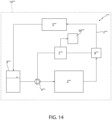
- the lubrication system 1′′′ ⁇ comprises a device 6′′′ ⁇ for determining a quantity y relating to the quantity of free air - i.e. in the form of bubbles, not dissolved in the lubricating fluid - transported by the flow of the lubricating fluid and an electronic control unit 7′′′ ⁇ operationally connected to the device 6′′′ ⁇ and to the pump 4′′′ ⁇ ; the electronic control unit 7′′′ ⁇ is configured to control the pump 4′′′ ⁇ as a function of the quantity y detected and/or determined by the device 6′′′ ⁇ .
- the quantity y is a percentage of free air in relation to a given quantity of lubricating fluid in which it is distributed in the form of bubbles.
- the device 6′′′ ⁇ is located downstream of the component 3′′′ ⁇ according to the flow direction of the cooling fluid inside the circuit 2′′′ ⁇ . Specifically, the device 6''''' is fluidically interposed between the component 3′′′ ⁇ and the heat exchanger 5′′′ ⁇ .
- the electronic control unit 7′′′ ⁇ is configured to make the pump 4′′′ ⁇ decrease the flow rate of the lubricating fluid and/or determine a decrease in the value of an operative parameter of the component 3′′′ ⁇ , when the quantity y is greater than a threshold value ymax.
- the electronic control unit 7′′′ ⁇ is also configured to make the pump 4′′′ ⁇ increase the flow rate of the lubricating fluid and/or increase the operative parameter of the component 3′′′ ⁇ , when the quantity y detected and/or determined is less than a threshold value ymin. Specifically, the threshold value ymin is less than the threshold value ymax.
- the electronic control unit 7′′′ ⁇ is configured to make the pump 4′′′ ⁇ restore the flow rate of the lubricating fluid to a starting value and/or restore the operative parameter of the component 3′′′ ⁇ to a starting value.
- the electronic control unit 7′′′ ⁇ comprises a memory - known and not illustrated - adapted to store the numeric or percentage values of the threshold values ymin and ymax.
- the operative parameter is associated with a kinetic quantity of the component 3′′′ ⁇ and/or a force or a torque exchanged or transmitted by the component 3′′′ ⁇ .
- the operative parameter is the torque delivered by the engine or the rotation speed of the engine shaft.
- the operative parameter is, for example, the torque delivered.
- the vehicle 10′′′ ⁇ preferably comprises a signalling device 60′′′ ⁇ operationally connected to the control unit 7′′′ ⁇ and adapted to emit an alarm signal, for example, a sound and/or light signal, if the lubricating fluid is of poor quality.
- the electronic control unit 7′′′ ⁇ is configured to make the signalling device 60′′′ ⁇ send the user/s of the vehicle 10′′′ ⁇ the alarm signal, when the quantity y is greater than the threshold value ymax.
- the device 6′′′ ⁇ is identical to the device 6, suitably calibrated so as to be adapted to determine the quantity y in place of the vapour quality x.
- the electronic control unit 7′′′ ⁇ is configured to determine the quantity y based on the second signal. More specifically, the electronic control unit 7′′′ ⁇ is configured to calculate the quantity y based on one or more statistical parameters detected based on the second signal, for example, peak-peak differences, standard deviation, and/or average value. Moreover, the electronic control unit 7′′′ ⁇ is configured to store a value or range of values that the statistical parameters assume in a condition in which the flow of lubricating fluid is, in use, without free air, essentially without free air, or comprises a predetermined percentage of free air and to compare the value of the statistical parameters detected based on the second signal with the stored values. The electronic control unit 7′′′ ⁇ is also configured to determine and/or calculate the value of the quantity y as a function of the difference between the stored values of statistical parameters and the values detected based on the second signal.
- the first ultrasonic signal when the flow of the lubricating fluid is without, or essentially without, free air, the first ultrasonic signal essentially propagates undisturbed through the flow. When there is free air in the flow, the first ultrasonic signal is at least partially intercepted by the air bubbles dispersed in the liquid and this causes greater attenuation thereof.
- the device 6′′′ ⁇ is identical to the device 6', suitably configured so as to determine the quantity y in place of the vapour quality x.
- the electronic control unit 7′′′ ⁇ is configured to determine the quantity y based on the fourth signal.
- the electronic control unit 7′′′ ⁇ is configured to calculate the quantity y based on one or more statistical parameters detected based on the fourth signal, for example, peak-peak distances, standard deviation, and/or average value.
- the electronic control unit 7′′′ ⁇ is configured to store a value or range of values that the statistical parameters assume in a condition in which the flow of the cooling fluid is without free air, essentially without free air, or comprises a predetermined percentage of free air and to compare the value of the statistical parameters detected based on the fourth signal with the stored values.
- the electronic control unit 7′′′ ⁇ is also configured to calculate the value of the quantity y as a function of the difference between the stored values of the statistical parameters and values detected based on the fourth signal.
- the third ultrasonic signal essentially propagates undisturbed through the flow.
- the third ultrasonic signal is at least partially intercepted by the air bubbles dispersed in the lubricating fluid and this causes greater attenuation thereof.
- the device 6′′′ ⁇ is identical to the device 6", suitably calibrated so as to be adapted to determine the quantity y in place of the vapour quality x.
- the image acquisition device is adapted to acquire images of the section of the circuit 2′′′ ⁇ , in order to detect any free air bubbles dispersed in the flow of lubricating fluid.
- the electronic control unit 7′′′ ⁇ is configured to determine and/or calculate the quantity y based on the images acquired by the image acquisition device, for example by analysing the area of the surface engaged by the air bubbles on the pipe section acquired, through thresholding and weighing of the image in greyscale.
- the device 6′′′ ⁇ is identical to the device 6′′′ or to the device 6 ⁇ suitably calibrated to determine the quantity y in place of the vapour quality x.
- the description of the device 6′′′ ⁇ when it is identical to the device 6′′′ or the device 6 ⁇ please refer to the description contained above of the device 6′′′ and the device 6 ⁇ .
- the pump 4′′′ ⁇ circulates the cooling fluid inside the circuit 2′′′ ⁇ in order to lubricate the component 3′′′ ⁇ .
- the device 6′′′ ⁇ periodically determines the value of the quantity y of the lubricating fluid and the electronic control unit 7′′′ ⁇ compares the value of the quantity y determined with the threshold values ymin and ymax.
- the electronic control unit 7′′′ ⁇ decreases the flow rate of lubricating fluid delivered by the pump 4′′′ ⁇ and/or decreases the operative parameter of the component 3′′′ ⁇ (for example, if the component 3′′′ ⁇ is an engine, the rotation speed of the engine shaft is reduced) .
- the lubricating fluid is accumulated in the tank 8′′′ ⁇ , where the free air transported here dissolves in the lubricating fluid or is returned in the engine intake line.
- the electronic control unit 7′′′ ⁇ restores the operation of the component 3′′′ ⁇ and/or the flow rate of the pump 4′′′ ⁇ .
- the heat exchanging system 1; 1'; 1"; 1′′′; 1 ⁇ comprises the device 6; 6'; 6"; 6' ' ' ; 6"" for determining the vapour quality x of the cooling fluid
- the reliability of the heat exchanging system 1; 1'; 1"; 1′′′; 1 ⁇ is significantly increased in relation to the known biphasic heat exchanging system discussed in the introduction to this description.
- the flow rate of the pump 4 may be automatically adjusted in order to ensure the correct cooling of the component 3. This makes it possible to ensure efficient cooling of the component 3, including if there are anomalies or losses of cooling fluid from the circuit 2.
- the lubrication system 1′′′ ⁇ comprises the device 6′′′ ⁇
- the reliability and robustness of the lubrication system 1′′′ ⁇ is significantly increased compared to the known lubrication systems discussed in the introduction to this description.
- the device 6 is particularly advantageous, since it makes it possible to determine the vapour quality x or the quantity y efficiently and irrespective of how clean the circuit 2 and/or the cooling fluid are.
- the device 6" is equally advantageous, since the images acquired during operation may be easily used for visual checks.
- the heat exchanging system 1; 1'; 1"; 1′′′; 1 ⁇ could comprise more than one component 3 to be cooled.
- the heat exchanging system 1; 1'; 1"; 1′′′; 1 ⁇ could comprise more than one pump 4 and/or heat exchanger 5.
- the lubrication system 1′′′ ⁇ could comprise more than one component 3′′′ ⁇ to be lubricated and/or lubricated and cooled.
- the lubrication system 1′′′ ⁇ could comprise more than one pump 4′′′ ⁇ and/or more than one heat exchanger 5′′′ ⁇ .
- the device 6; 6'; 6"; 6′′′; 6 ⁇ could be arranged at the component 3 to be cooled.
- the device 6; 6' ; 6"; 6′′′; 6 ⁇ could be adapted to detect and/or determine the vapour quality x of the cooling fluid while the latter removes heat from the component 3 to be cooled.
- the device 6′′′ ⁇ could be arranged at the component 3′′′ ⁇ . Specifically, the device 6′′′ ⁇ could be adapted to detect and/or determine the value of the quantity y while the latter lubricates and/or removes heat from the component 3′′′ ⁇ .
- the heat exchanging system 1; 1'; 1"; 1′′′; 1 ⁇ could also comprise more than one device 6 and/or more than one device 6' and/or more than one device 6 ⁇ and/or more than one device 6′′′ and/or more than one device 6 ⁇ .
- Each of these devices 6; 6'; 6"; 6′′′; 6 ⁇ would be adapted to determine the vapour quality x of the cooling fluid at the respective, various sections of the circuit 2.
- the lubrication system 1′′′ ⁇ could comprise more than one device 6′′′ ⁇ . Each of these devices 6′′′ ⁇ would be adapted to determine the quantity y of the cooling fluid at the respective, various sections of the circuit 2′′′ ⁇ .
- the device 6; 6′′′ could comprise more than one ultrasound emitter 20; 20" and/or more than one ultrasound receiver 21, 21′′′.
- the device 6; 6′′′ could comprise an electronic control unit other than the electronic control unit 7 and adapted to determine the vapour quality x based on the second signal.
- the device 6; 6′′′ could comprise more than one light emitter 30'; 30 ⁇ and/or more than one light receiver 31'; 31 ⁇ .
- the device 6'; 6 ⁇ could comprise an electronic control unit other than the electronic control unit 7 and adapted to determine the vapour quality x based on the fourth signal.
- the device 6" could comprise more than one light emitter 40' and/or more than one image acquisition device 41".
- the device 6" could comprise an electronic control unit other than the electronic control unit 7 and adapted to determine the vapour quality x based on the images acquired by the image acquisition device 41".
- the device 6′′′ ⁇ could comprise an electronic control unit other than the electronic control unit 7′′′ ⁇ and adapted to determine and/or calculate the value of the quantity y.
- the system 1′′′ ⁇ may not comprise the heat exchanger 5′′′ ⁇ .
Landscapes
- Engineering & Computer Science (AREA)
- Chemical & Material Sciences (AREA)
- Combustion & Propulsion (AREA)
- Mechanical Engineering (AREA)
- General Engineering & Computer Science (AREA)
- Transportation (AREA)
- Air-Conditioning For Vehicles (AREA)
- Vehicle Body Suspensions (AREA)
- Cooling Or The Like Of Electrical Apparatus (AREA)
Applications Claiming Priority (1)
| Application Number | Priority Date | Filing Date | Title |
|---|---|---|---|
| IT102023000018093A IT202300018093A1 (it) | 2023-09-04 | 2023-09-04 | Sistema per un veicolo e veicolo comprendente lo stesso |
Publications (2)
| Publication Number | Publication Date |
|---|---|
| EP4517062A2 true EP4517062A2 (fr) | 2025-03-05 |
| EP4517062A3 EP4517062A3 (fr) | 2025-04-30 |
Family
ID=88778609
Family Applications (1)
| Application Number | Title | Priority Date | Filing Date |
|---|---|---|---|
| EP24197851.9A Pending EP4517062A3 (fr) | 2023-09-04 | 2024-09-02 | Système pour un véhicule et véhicule comprenant ce système |
Country Status (2)
| Country | Link |
|---|---|
| EP (1) | EP4517062A3 (fr) |
| IT (1) | IT202300018093A1 (fr) |
Citations (3)
| Publication number | Priority date | Publication date | Assignee | Title |
|---|---|---|---|---|
| EP2133534A1 (fr) | 2008-06-10 | 2009-12-16 | Deere & Company | Système et procédé de refroidissement d'ébullition nucléée |
| US20130333641A1 (en) | 2011-03-03 | 2013-12-19 | Yukari ARAKI | Warmup acceleration device for internal combustion engine |
| FR2997449A1 (fr) | 2012-10-26 | 2014-05-02 | Valeo Systemes Thermiques | Systeme de refroidissement pour moteur de vehicule automobile |
-
2023
- 2023-09-04 IT IT102023000018093A patent/IT202300018093A1/it unknown
-
2024
- 2024-09-02 EP EP24197851.9A patent/EP4517062A3/fr active Pending
Patent Citations (3)
| Publication number | Priority date | Publication date | Assignee | Title |
|---|---|---|---|---|
| EP2133534A1 (fr) | 2008-06-10 | 2009-12-16 | Deere & Company | Système et procédé de refroidissement d'ébullition nucléée |
| US20130333641A1 (en) | 2011-03-03 | 2013-12-19 | Yukari ARAKI | Warmup acceleration device for internal combustion engine |
| FR2997449A1 (fr) | 2012-10-26 | 2014-05-02 | Valeo Systemes Thermiques | Systeme de refroidissement pour moteur de vehicule automobile |
Also Published As
| Publication number | Publication date |
|---|---|
| EP4517062A3 (fr) | 2025-04-30 |
| IT202300018093A1 (it) | 2025-03-04 |
Similar Documents
| Publication | Publication Date | Title |
|---|---|---|
| US9212575B2 (en) | Gear device and vehicle having same mounted thereon | |
| EP4517062A2 (fr) | Système pour un véhicule et véhicule le comprenant | |
| EP1395486B1 (fr) | Systeme et procede de propulsion pour bateau | |
| CN102575650A (zh) | 为传动系统提供紧急润滑的润滑系统 | |
| US20180058570A1 (en) | Lubricating system for a vehicle transmission component, vehicle therewith, and method of lubricating a transmission component | |
| US8392054B2 (en) | Automatic engine oil life determination adjusted for volume of oil exposed to a combustion event | |
| EP3187768B1 (fr) | Système et procédé de détermination dynamique de l'épaisseur d'un film de réfrigérant et de régulation dynamique de l'épaisseur d'un film de réfrigérant au niveau du roulement d'élément roulant d'un refroidisseur sans huile | |
| SE541765C2 (en) | An oil system for lubrication and cooling in a vehicle driven at least partly by an electrical machine | |
| JP2009085423A (ja) | 歯車装置 | |
| CN112752907B (zh) | 气体压缩机 | |
| KR102769288B1 (ko) | 예비 탱크를 갖는 윤활 시스템 | |
| US5275258A (en) | Apparatus for detecting bearing-seizing conditions in a reciprocating machine | |
| JP2006105153A (ja) | エンジンのスート管理システム | |
| US9541312B2 (en) | Passive oil level limiter | |
| CN109072921B (zh) | 制冷剂压缩机单元 | |
| JPH02229996A (ja) | 油潤滑式真空ポンプを監視する方法 | |
| US11454144B1 (en) | Lubricant dilution detection system | |
| JPH1082735A (ja) | 潤滑油中の不溶解分測定装置 | |
| JP5173602B2 (ja) | 過給機 | |
| JP2011089786A (ja) | 潤滑システム | |
| RU212262U1 (ru) | Маслозаполненный винтовой компрессорный модуль | |
| US20250283643A1 (en) | Method for operating a heat exchanger and apparatus having a heat exchanger | |
| JP2017118695A (ja) | 異常判定システム | |
| US20250116649A1 (en) | Device for monitoring water-miscible cooling lubricant | |
| JP2006017122A (ja) | エンジンなどの状態監視方法及びシステム |
Legal Events
| Date | Code | Title | Description |
|---|---|---|---|
| PUAI | Public reference made under article 153(3) epc to a published international application that has entered the european phase |
Free format text: ORIGINAL CODE: 0009012 |
|
| STAA | Information on the status of an ep patent application or granted ep patent |
Free format text: STATUS: THE APPLICATION HAS BEEN PUBLISHED |
|
| AK | Designated contracting states |
Kind code of ref document: A2 Designated state(s): AL AT BE BG CH CY CZ DE DK EE ES FI FR GB GR HR HU IE IS IT LI LT LU LV MC ME MK MT NL NO PL PT RO RS SE SI SK SM TR |
|
| PUAL | Search report despatched |
Free format text: ORIGINAL CODE: 0009013 |
|
| AK | Designated contracting states |
Kind code of ref document: A3 Designated state(s): AL AT BE BG CH CY CZ DE DK EE ES FI FR GB GR HR HU IE IS IT LI LT LU LV MC ME MK MT NL NO PL PT RO RS SE SI SK SM TR |
|
| RIC1 | Information provided on ipc code assigned before grant |
Ipc: B60K 1/00 20060101ALN20250326BHEP Ipc: F01P 11/14 20060101ALI20250326BHEP Ipc: F01P 7/16 20060101ALI20250326BHEP Ipc: B60K 11/02 20060101ALI20250326BHEP Ipc: F01P 3/20 20060101ALI20250326BHEP Ipc: F01P 3/22 20060101AFI20250326BHEP |
|
| STAA | Information on the status of an ep patent application or granted ep patent |
Free format text: STATUS: REQUEST FOR EXAMINATION WAS MADE |
|
| 17P | Request for examination filed |
Effective date: 20251029 |