EP4517564A1 - Procédé de gestion de licences, système, produit programme informatique et support lisible par ordinateur - Google Patents
Procédé de gestion de licences, système, produit programme informatique et support lisible par ordinateur Download PDFInfo
- Publication number
- EP4517564A1 EP4517564A1 EP23194019.8A EP23194019A EP4517564A1 EP 4517564 A1 EP4517564 A1 EP 4517564A1 EP 23194019 A EP23194019 A EP 23194019A EP 4517564 A1 EP4517564 A1 EP 4517564A1
- Authority
- EP
- European Patent Office
- Prior art keywords
- fungible
- private
- devices
- network
- user
- Prior art date
- Legal status (The legal status is an assumption and is not a legal conclusion. Google has not performed a legal analysis and makes no representation as to the accuracy of the status listed.)
- Withdrawn
Links
Images


Classifications
-
- G—PHYSICS
- G06—COMPUTING OR CALCULATING; COUNTING
- G06F—ELECTRIC DIGITAL DATA PROCESSING
- G06F21/00—Security arrangements for protecting computers, components thereof, programs or data against unauthorised activity
- G06F21/10—Protecting distributed programs or content, e.g. vending or licensing of copyrighted material ; Digital rights management [DRM]
-
- G—PHYSICS
- G06—COMPUTING OR CALCULATING; COUNTING
- G06F—ELECTRIC DIGITAL DATA PROCESSING
- G06F21/00—Security arrangements for protecting computers, components thereof, programs or data against unauthorised activity
- G06F21/10—Protecting distributed programs or content, e.g. vending or licensing of copyrighted material ; Digital rights management [DRM]
- G06F21/105—Arrangements for software license management or administration, e.g. for managing licenses at corporate level
-
- H—ELECTRICITY
- H04—ELECTRIC COMMUNICATION TECHNIQUE
- H04L—TRANSMISSION OF DIGITAL INFORMATION, e.g. TELEGRAPHIC COMMUNICATION
- H04L9/00—Cryptographic mechanisms or cryptographic arrangements for secret or secure communications; Network security protocols
- H04L9/50—Cryptographic mechanisms or cryptographic arrangements for secret or secure communications; Network security protocols using hash chains, e.g. blockchains or hash trees
-
- H—ELECTRICITY
- H04—ELECTRIC COMMUNICATION TECHNIQUE
- H04L—TRANSMISSION OF DIGITAL INFORMATION, e.g. TELEGRAPHIC COMMUNICATION
- H04L2209/00—Additional information or applications relating to cryptographic mechanisms or cryptographic arrangements for secret or secure communication H04L9/00
- H04L2209/56—Financial cryptography, e.g. electronic payment or e-cash
Definitions
- the present invention relates to a method, in particular a computer-aided method, for managing licenses for users' devices, in particular for functionalities of devices, preferably for software products on devices.
- the invention relates to a system for managing licenses for users' devices, as well as a computer program product and a computer-readable medium.
- license keys are issued and assigned to the respective device on which a software is to run.
- license keys are often created by a central licensing network or a central licensing computer and assigned to a device. As long as a license key is assigned to the device in question, it or any software contained on it can be used without any problems.
- a business model can also change if, for example, a new software product is launched. Such a software product may not be able to correctly read and capture an existing license certificate or license key.
- a provider's private licensing network is unable to permanently monitor the whereabouts of the license keys or licenses. This can lead to a situation where a user may not be able to clearly detect the accidental loss of license keys. This means that a malicious user who pretends to have lost his licenses can obtain additional license keys.
- the relevant devices are not permanently connected to the Internet or do not have direct contact with a provider's central licensing network, it is possible to transfer licenses without a connection to the central licensing network.
- the license keys can be saved on a portable storage medium such as an SD card and this storage medium can then be connected to the relevant device.
- the license can be transferred from one device to another via the portable storage medium.
- licenses can be cloned by transferring such a license to a device, then creating a backup of this device including the license contained therein, then transferring the license to another device and restoring the backup with the license contained therein.
- one license can be used to operate multiple devices in parallel, even if only one license was purchased for one device.
- the object of the present invention is to provide an alternative method for managing licenses, which in particular avoids the aforementioned disadvantages and prevents misuse, in particular unauthorized copying of licenses, with a high degree of security.
- the invention is based on the fundamental idea of using non-fungible tokens as digital twins of the licenses and thereby preventing unauthorized duplication of licenses, since such non-fungible token licenses are unique and cannot be duplicated.
- a non-fungible token is preferably a cryptographically unique, indivisible and irreplaceable, as well as verifiable token that represents a specific object, in this case a license.
- a blockchain data structure contains a large number of blocks, with the individual blocks being added to the existing data structure one after the other. In addition to one or more transactions, each block contains a so-called Hash value of the previous block is stored.
- the high security standard of a blockchain data structure is created by a majority of trustworthy nodes in a blockchain network, which carries out what is known as validation of blocks. In the network of nodes participating in a blockchain, a new block is created at regular intervals, for example every five or ten minutes, and the hash value of an existing block is also stored. This checks the validity of the transactions to be stored in the block.
- the chain of blocks is thus stored on a large number of blockchain nodes, and the participating nodes are regularly synchronized.
- the information about the transactions is therefore stored redundantly in the blockchain network.
- the invention now takes advantage of the fact that a blockchain data structure does not uniformly include all licenses for all devices of all users and is publicly accessible, but is practically divided up and a separate so-called sidechain is created for each user.
- This sidechain is basically structured like a blockchain as a sequence of blocks with transaction data, but the transaction data only contains information about one user. Preferably, it is not publicly visible which user currently has which license.
- the high data security of non-fungible tokens can be used as digital twins of the license, but at the same time the confidentiality of the individual user's data is guaranteed, since this transaction data is not visible to the general public due to its storage in a sidechain.
- the respective user only has access to the sidechains relating to his devices.
- the blockchain data structure can be designed in relation to a software product. This means that different software products can use different blockchain data structures for license management. This means that each user-related sidechain can also be designed in relation to a software product. In other words, in this case the sidechain not only relates to a specific user, but also to a specific software product. A separation into different, software product-related blockchain data structures can be carried out on the basis of smart contracts.
- a wallet is specifically a software that allows you to store digital objects such as non-fungible tokens.
- the device can be practically any technical device.
- the device can comprise hardware and at least one software or software product.
- the license can be used to release the software for use on a device.
- the device can in particular be a device that comprises sensors for detecting operating parameters in a production process or is connected to such.
- the device can have a computer unit and/or storage means on which software or a software product is stored and can run.
- the license can in particular relate to the release of software or a software product on this device.
- the software or software product can, for example, be operating software and/or control software and/or configuration software for setting up technical devices or systems.
- the device can also be designed to communicate with other devices in a network. For this purpose, it can have wireless or wired interfaces in a manner known per se.
- the non-fungible token can be provided or generated on the basis of a smart contract.
- a smart contract agrees on certain conditions that are stored in the blockchain data structure.
- a smart contract is defined as an if-then condition. If a certain condition is thus met, the contract is automatically processed via the network.
- An external review of the contract conditions such as that which takes place with a notary when buying real estate, is not necessary, since a smart contract is automatically executed when the conditions are met.
- the non-fungible token according to the ERC721 standard provided or generated and/or the transfer of the non-fungible token can be carried out according to the ERC721 standard.
- the ERC721 standard is a blockchain data structure based on Ethereum.
- an Ethereum Virtual Machine can be used to evaluate the agreements in a smart contract.
- the use of other blockchain standards, such as Solana, is also possible.
- the non-fungible token can be provided on a private licensing network or generated by one. This means that a provider who, for example, owns or provides such a private licensing network can create defined non-fungible tokens when a license is required, requested and/or acquired by a user. This gives the provider complete control over the creation of licenses.
- each software product can be assigned its own smart contract.
- the respective sidechain can be generated or provided on the basis of this smart contract.
- This design is based on the idea that only certain participants in the network, namely the private licensing network, are authorized to create licenses or corresponding non-fungible tokens.
- the creation of licenses by other participants, in particular the improper creation of licenses by users, is therefore not possible.
- the creation of licenses can be restricted to certain nodes of the blockchain network. This is the proof-of-authority concept. This means that specific computing operations are not carried out (proof of work), but rather the mining of non-fungible tokens, i.e. the process of creating non-fungible tokens is restricted to certain nodes, specifically a private licensing network.
- the private Licensing network may include or consist of certain nodes of the blockchain network.
- the private licensing network can have access to the entire blockchain data structure, whereas a user preferably only has access to the sidechains relevant to him.
- the wallet into which the non-fungible token is transferred when a license is transferred is located on the respective device and/or linked to it.
- wallets can be provided for one device and one user. This means that a device can have not only one wallet, but several wallets are possible, so that a non-fungible token can be stored in one of the wallets as desired.
- the method may also include transferring a non-fungible token from the wallet of one device to a wallet of another device, preferably a user. For example, if a user does not want to use a device for a certain period of time, he or she can transfer the license for that device to another device during that period. To do this, the non-fungible token representing that license is transferred from one wallet to another wallet.
- the transaction data concerning this transfer are preferably stored in the blockchain data structure, specifically in the two sidechains relating to the devices involved in the transaction. In concrete terms, the user can execute the transaction.
- the transfer can be signed by the wallet in which the non-fungible token was contained.
- the sidechain can be supplemented with the transaction data relating to the transfer of the non-fungible token on a user's computer.
- the blockchain data structure can then be synchronized in the blockchain network so that the transfer of ownership is registered and stored securely. This means that the new device of the same or another user receives the non-fungible token, so that the device is released for use.
- Such a procedure can also be referred to as a private transaction.
- the non-fungible tokens are classified according to their security level. This means that different security levels are possible.
- the classification can be carried out when the non-fungible token is created and/or provided by the provider's private licensing network.
- non-fungible tokens can be assigned to a high-security class, which means that the corresponding license is tied to a device and cannot be transferred to another device without tracking by the private licensing network. It is also possible that transferring a non-fungible token of this security level to another device requires active consent from the private licensing network. Accordingly, the method can be characterized in that a non-fungible token of the high-security class cannot be transferred from the wallet of one device to the wallet of another device without feedback to the private licensing network or without its consent.
- Another, less high security level may include that the corresponding software product requires that a non-fungible token is bound to the respective device while it is to be used. However, it can be transferred by the user to other devices without the private licensing network having to agree to this transfer.
- the method can be characterized in that a non-fungible token of the medium security class can be transferred from the wallet of one device to the wallet of another device without direct tracking or approval by the private licensing network.
- the private licensing network can receive the information of the transfer of the non-fungible token at least with a time delay.
- Non-fungible tokens can also be assigned an even lower level of security if the sole purpose is to prevent easy cloning of licenses.
- the device-specific wallets can be protected from access in such a way that only certain software products, which are preferably installed on the device in question, have access. This can ensure that the wallets cannot be copied.
- so-called credentials can be used for this purpose.
- the non-fungible tokens can be transferred to different wallets depending on their security level.
- a different type of wallet can be assigned to each security level.
- a wallet for a low and a medium security level can be characterized by a transfer according to the ERC721 transfer and commercially available wallet devices.
- the medium security level it can be provided that the data in the wallet is encrypted and can only be decrypted by certain products, i.e. devices and/or software installed on them, of the provider.
- a wallet designed for the high-security class of non-fungible tokens preferably binds the content to a specific device so that the transfer of the non-fungible token is only possible from the private licensing network.
- a Trusted Execution Environment TEE
- TEE Trusted Execution Environment
- TPM 2.0 Trusted Platform Module
- Deactivating a license involves separating the non-fungible token from the device and usually means transferring it to the private licensing network, preferably using the ERC721 standard. The non-fungible token is then in the licensing network's wallet and can be transferred by the user to another device.
- the provider operating the private licensing network can ensure that no unauthorized non-fungible tokens are created or transferred without their consent if the corresponding security level is affected.
- the method can also include the destruction of a non-fungible token in order to block the respective device or a functionality or a software product contained therein for further use by the user.
- a non-fungible token can be specifically destroyed, in particular by a provider, starting from the private licensing network, so that the corresponding device or a corresponding functionality, in particular a software product, can no longer be used.
- a corresponding functionality can be provided for this purpose in the smart contract.
- the data relating to the destruction of the respective non-fungible token can be stored in the respective device and user-related sidechain. It can be provided that the destruction of a non-fungible token can only be initiated by a limited group of people. In particular, this can be certain employees of a provider. Specifically, the destruction of a non-fungible token can be preceded by the identification of the initiator, for example an employee of a provider.
- the destruction of a non-fungible token can be authorized by the private licensing network.
- the blockchain data structure, in particular the affected sidechain can be synchronized so that the revocation of the license takes effect immediately.
- the method can also be designed in such a way that the device must be synchronized with other nodes at least every 30 days. It can be provided that if this period is exceeded, all affected non-fungible tokens are automatically revoked or blocked, so that the affected devices then only have a test license.
- the object underlying the invention is further achieved by a computer program product which is designed to carry out the method described above when the computer program product is installed on a computer or on a computer network.
- the object is further achieved by a computer-readable medium on which this computer program product is stored.
- the private licensing network is designed to access the entire blockchain data structure, i.e. all sidechains.
- the Figure 1 shows a system according to the invention for managing licenses for devices, in particular for functionalities of devices, preferably for software products on devices, of users.
- devices in particular for functionalities of devices, preferably for software products on devices, of users.
- three different users A, B and C are provided.
- User B has several PCs 5, which act as mediators and are arranged between the devices 3 and the licensing network.
- Some of the devices 3 are connected directly to the licensing network 2 via the Internet. For other devices 3, one or more PCs 5 are connected in between.
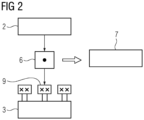
- the Figure 2 now shows the method according to the invention.
- the private licensing network 2 which is operated by a provider, is designed to provide and generate non-fungible tokens 6, each of which represents a license for a device 3, in particular for a functionality of the device 3, preferably for a software product on this device 3.
- the method further comprises providing or generating a blockchain data structure 7, which in the Figure 3 is shown in detail.
- the blockchain data structure 7 is designed in relation to a software product, ie it is intended that there is a separate blockchain data structure 7 for each different software product.
- the blockchain data structure 7 comprises a sidechain 8 assigned to the respective user.
- the blockchain data structure 7 is divided into a plurality of separate sidechains 8, which each form its own blockchain.
- the respective sidechains 8 relating to the respective users can only be viewed by the respective user, whereas the private licensing network 2 has access to the data of all sidechains 8, thus the entire blockchain data structure 7.
- the non-fungible tokens 6 are generally transferred to different wallets 9 depending on their security level. Specifically, a high-security class of non-fungible tokens 6 is tied to a device 3 and cannot be transferred from a wallet 9 of one device 3 to a wallet 9 of another device 3 without feedback to the private licensing network 2 or without its consent.
- non-fungible token 6 When a non-fungible token 6 is transferred, in this case from the private licensing network 2 to a wallet 9 of a device 3, transaction data relating to the transfer are stored in a block of the respective sidechain 8.
- the transaction data is stored in the blockchain data structure 7, specifically in a sidechain 8 contained therein, and is stored on a large number of nodes in a blockchain network and is regularly synchronized, there is a high level of security against manipulation. Due to the fact that the licenses are tied to non-fungible tokens 6, unauthorized duplication of licenses is impossible.
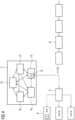
- the private licensing network 2 may include a plurality of nodes 10, as exemplified in Figure 4
- the nodes 10 of the private licensing network 2 can be part of the blockchain network.
- the transfer of a non-fungible token 6 to a wallet 9, which is coupled or connected to a device 3, is shown in detail.
- the transaction data concerning the transfer are stored in the block of sidechain 8.
- non-fungible tokens 6 By binding the licenses to non-fungible tokens 6, unauthorized copying by users can be prevented, since non-fungible tokens 6 are unique and cannot be copied.
- a high level of security against manipulation is ensured.
- the provider who operates the private licensing network 2 can have access to all sidechains 8 of the blockchain data structure 7, so that he always has an overview of the existing non-fungible tokens 6 and thus the licenses for the devices.
Landscapes
- Engineering & Computer Science (AREA)
- Theoretical Computer Science (AREA)
- Software Systems (AREA)
- Computer Security & Cryptography (AREA)
- Technology Law (AREA)
- Computer Hardware Design (AREA)
- Physics & Mathematics (AREA)
- General Engineering & Computer Science (AREA)
- General Physics & Mathematics (AREA)
- Multimedia (AREA)
- Computer Networks & Wireless Communication (AREA)
- Signal Processing (AREA)
- Management, Administration, Business Operations System, And Electronic Commerce (AREA)
Priority Applications (2)
| Application Number | Priority Date | Filing Date | Title |
|---|---|---|---|
| EP23194019.8A EP4517564A1 (fr) | 2023-08-29 | 2023-08-29 | Procédé de gestion de licences, système, produit programme informatique et support lisible par ordinateur |
| PCT/EP2024/072004 WO2025045512A1 (fr) | 2023-08-29 | 2024-08-02 | Procédé de gestion de licences, système, produit programme d'ordinateur et support lisible par ordinateur |
Applications Claiming Priority (1)
| Application Number | Priority Date | Filing Date | Title |
|---|---|---|---|
| EP23194019.8A EP4517564A1 (fr) | 2023-08-29 | 2023-08-29 | Procédé de gestion de licences, système, produit programme informatique et support lisible par ordinateur |
Publications (1)
| Publication Number | Publication Date |
|---|---|
| EP4517564A1 true EP4517564A1 (fr) | 2025-03-05 |
Family
ID=87863220
Family Applications (1)
| Application Number | Title | Priority Date | Filing Date |
|---|---|---|---|
| EP23194019.8A Withdrawn EP4517564A1 (fr) | 2023-08-29 | 2023-08-29 | Procédé de gestion de licences, système, produit programme informatique et support lisible par ordinateur |
Country Status (2)
| Country | Link |
|---|---|
| EP (1) | EP4517564A1 (fr) |
| WO (1) | WO2025045512A1 (fr) |
Citations (3)
| Publication number | Priority date | Publication date | Assignee | Title |
|---|---|---|---|---|
| WO2022204404A1 (fr) * | 2021-03-26 | 2022-09-29 | William Edward Quigley | Billetterie facilitée par jeton, campagnes de pré-vente facilitée par jeton et gestion de droits numériques pour jetons numériques |
| US20230206329A1 (en) * | 2021-11-23 | 2023-06-29 | Strong Force TX Portfolio 2018, LLC | Transaction platforms where systems include sets of other systems |
| US20230245102A1 (en) * | 2022-02-02 | 2023-08-03 | Zelus Wallet, LLC | Non Fungible Token (NFT) Based Licensing and Digital Rights Management (DRM) for Software and Other Digital Assets |
Family Cites Families (1)
| Publication number | Priority date | Publication date | Assignee | Title |
|---|---|---|---|---|
| WO2023069689A2 (fr) * | 2021-10-22 | 2023-04-27 | William Edward Quigley | Recherche et regroupement de données de registres distribués, publicité basée sur la technique du pousser à l'aide de jetons numériques, et dépôt de contrat intelligent pour atténuer le risque de ventes de jetons numériques |
-
2023
- 2023-08-29 EP EP23194019.8A patent/EP4517564A1/fr not_active Withdrawn
-
2024
- 2024-08-02 WO PCT/EP2024/072004 patent/WO2025045512A1/fr active Pending
Patent Citations (3)
| Publication number | Priority date | Publication date | Assignee | Title |
|---|---|---|---|---|
| WO2022204404A1 (fr) * | 2021-03-26 | 2022-09-29 | William Edward Quigley | Billetterie facilitée par jeton, campagnes de pré-vente facilitée par jeton et gestion de droits numériques pour jetons numériques |
| US20230206329A1 (en) * | 2021-11-23 | 2023-06-29 | Strong Force TX Portfolio 2018, LLC | Transaction platforms where systems include sets of other systems |
| US20230245102A1 (en) * | 2022-02-02 | 2023-08-03 | Zelus Wallet, LLC | Non Fungible Token (NFT) Based Licensing and Digital Rights Management (DRM) for Software and Other Digital Assets |
Also Published As
| Publication number | Publication date |
|---|---|
| WO2025045512A1 (fr) | 2025-03-06 |
Similar Documents
| Publication | Publication Date | Title |
|---|---|---|
| DE69634880T2 (de) | Verfahren und gerät zum kontrollierten zugriff zu verschlüsselten datenakten in einem computersystem | |
| DE102016215914A1 (de) | Absichern einer Gerätenutzungsinformation eines Gerätes | |
| EP2515499B1 (fr) | Procédé de production d'une clé cryptographique pour un objet de données numérique protégé, basée sur des composants actuels d'un ordinateur | |
| DE112017007510T5 (de) | Blockchain für offene wissenschaftliche forschung | |
| EP3452941B1 (fr) | Procédé de documentation électronique d'informations de licence | |
| CH713421A2 (de) | Vorrichtung und Verfahren zum Generieren, Widerrufen und Verifizieren eines Zertifikats unter Verwendung einer Blockchain als Zertifizierungsstelle. | |
| DE112013007160T5 (de) | Entwicklungsumgebungssystem, Entwicklungsumgebungsvorrichtung, Entwicklungsumgebungsbereitstellungsverfahren und Programm | |
| EP3735650B1 (fr) | Structure personnelle de chaîne de blocs de documents | |
| EP3777088A1 (fr) | Procédé et système de commande d'une libération d'une ressource | |
| EP1164456B1 (fr) | Mécanisme pour la protection de logiciels | |
| WO2022120400A1 (fr) | Procédé de migration d'une application informatique | |
| EP4181000A1 (fr) | Procédé et environnement de calcul permettant de créer et d'appliquer un algorithme de vérification pour les processus de calcul | |
| DE102014210282A1 (de) | Erzeugen eines kryptographischen Schlüssels | |
| DE69702019T2 (de) | System und Verfahren zur automatischen Verteilung von Kopien einer replizierten Datenbank in einem Rechnersystem | |
| EP4517564A1 (fr) | Procédé de gestion de licences, système, produit programme informatique et support lisible par ordinateur | |
| EP3884636B1 (fr) | Procédé de traitement des programmes d'application sur un système d'automatisation distribué | |
| DE112012000780T5 (de) | Verarbeiten von Berechtigungsprüfungsdaten | |
| DE102019130067B4 (de) | Verfahren zur Durchführung einer erlaubnisabhängigen Kommunikation zwischen wenigstens einem Feldgerät der Automatisierungstechnik und einem Bediengerät | |
| DE112017000530T5 (de) | Konsistentes Speichern von Daten in einem verstreuten Speichernetzwerk | |
| WO2023025712A1 (fr) | Procédé pour attribuer un modèle numérique à un composant physique d'un système d'automatisation, système d'automatisation et installation de production | |
| EP3172671B1 (fr) | Procédé de traitement de données en parallèle dans un système de calcul comportant une pluralité d'unités de calcul et système de calcul comportant une pluralité d'unités de calcul | |
| EP3105703B1 (fr) | Procédé et système de sécurisation de relations de bases de données contre un accès non autorisé | |
| WO2025045514A1 (fr) | Procédé de surveillance de la validité d'une licence, produit programme d'ordinateur et support lisible par ordinateur | |
| EP3703333B1 (fr) | Procédé, dispositif et système de traitement d'au moins une information dans une installation technique de sécurité | |
| EP4700627A1 (fr) | Signature d'un fichier supérieur avec des sous-fissures intégrées |
Legal Events
| Date | Code | Title | Description |
|---|---|---|---|
| PUAI | Public reference made under article 153(3) epc to a published international application that has entered the european phase |
Free format text: ORIGINAL CODE: 0009012 |
|
| STAA | Information on the status of an ep patent application or granted ep patent |
Free format text: STATUS: THE APPLICATION HAS BEEN PUBLISHED |
|
| AK | Designated contracting states |
Kind code of ref document: A1 Designated state(s): AL AT BE BG CH CY CZ DE DK EE ES FI FR GB GR HR HU IE IS IT LI LT LU LV MC ME MK MT NL NO PL PT RO RS SE SI SK SM TR |
|
| STAA | Information on the status of an ep patent application or granted ep patent |
Free format text: STATUS: THE APPLICATION IS DEEMED TO BE WITHDRAWN |
|
| 18D | Application deemed to be withdrawn |
Effective date: 20250906 |