EP4520171A1 - Lösung zur organperfusion - Google Patents
Lösung zur organperfusion Download PDFInfo
- Publication number
- EP4520171A1 EP4520171A1 EP23195461.1A EP23195461A EP4520171A1 EP 4520171 A1 EP4520171 A1 EP 4520171A1 EP 23195461 A EP23195461 A EP 23195461A EP 4520171 A1 EP4520171 A1 EP 4520171A1
- Authority
- EP
- European Patent Office
- Prior art keywords
- organ
- organ perfusion
- perfusion solution
- solution according
- perfusion
- Prior art date
- Legal status (The legal status is an assumption and is not a legal conclusion. Google has not performed a legal analysis and makes no representation as to the accuracy of the status listed.)
- Withdrawn
Links
Images


Classifications
-
- A—HUMAN NECESSITIES
- A01—AGRICULTURE; FORESTRY; ANIMAL HUSBANDRY; HUNTING; TRAPPING; FISHING
- A01N—PRESERVATION OF BODIES OF HUMANS OR ANIMALS OR PLANTS OR PARTS THEREOF; BIOCIDES, e.g. AS DISINFECTANTS, AS PESTICIDES OR AS HERBICIDES; PEST REPELLANTS OR ATTRACTANTS; PLANT GROWTH REGULATORS
- A01N1/00—Preservation of bodies of humans or animals, or parts thereof
- A01N1/10—Preservation of living parts
- A01N1/12—Chemical aspects of preservation
- A01N1/122—Preservation or perfusion media
- A01N1/126—Physiologically active agents, e.g. antioxidants or nutrients
Definitions
- the present invention relates to an organ perfusion solution for ex vivo organ perfusion.
- Surgical transplantation procedures have been developed for a wide range of organs, including kidneys, livers, lungs, hearts, pancreas, or small intestines.
- successful transplantation requires not only the surgical procedures, but also the best possible ex vivo organ preservation in the ischemic phase between explantation and implantation of the donor organ. It is desirable to reduce organ damage, such as ischemic injury, during ex vivo organ preservation to avoid functional impairment of the organs including delayed graft function, and long-term complications. It is also desirable to provide methods which allow to extend the ex vivo organ preservation time to allow transporting donor organs to distant recipients, to permit in-depth functional testing, or even to provide possibilities for ex vivo organ therapy.
- SCS static cold storage
- the organ is perfused with a perfusion solution under normothermic conditions (normothermic machine perfusion) in order to maintain metabolic activity and organ viability.
- the perfusion solution supplies oxygen and metabolites to the organ and removes damaging degradation products.
- perfusion solutions for use in machine perfusion have been described.
- perfusion solutions comprise electrolytes, oxygen transporters, colloids and metabolites.
- EP 4 032 401 A1 describes an organ care solution for ex vivo machine perfusion of donor lungs, the solution comprising a metabolite, a colloid, a hormone, a steroid, a buffer, magnesium sulfate anhydrate and at least one of a phosphodiesterase inhibitor and a nitrate.
- the solution is intended to be mixed with blood or erythrocytes prior to perfusion of the lung.
- An organ perfusion solution for use in ex vivo normothermic machine perfusion of lungs the solution comprising dextran, NaCl, KCI, glucose, NaH 2 PO 4 , CaCl 2 , MgCl 2 , human serum albumin, NaHCOs and NaOH, is commercially available under the name "STEEN Solution” (XVIVO Perfusion AB, Sweden).
- the solution is also intended to be diluted by an erythrocyte concentrate prior to use in the perfusion method.
- WO 2021/198865 discloses that by adding a glutamine compound to organ perfusion solutions, such as the STEEN Solution (XVIVO Perfusion AB, Sweden), a better quality of perfused lungs and longer perfusion times can be achieved.
- organ perfusion solutions such as the STEEN Solution (XVIVO Perfusion AB, Sweden)
- WO 2019/040085 describes that adding the protease inhibitor alpha-1-antitrypsin to STEEN Solution (XVIVO Perfusion AB, Sweden) in ex vivo normothermic perfusion may improve donor organ quality and repair damaged donor organs for transplantation.
- the present invention is based on the objective of providing an organ perfusion solution which reduces organ damage in the ischemic phase and allows longer perfusion times.
- Reperfusion damage which can occur when organs are reperfused with blood following the ischemic phase, should also be avoided.
- a delay in resuming the organ function after transplantation is to be avoided.
- the invention also relates to the use of an organ perfusion solution according to claim 13 and the method of ex vivo organ perfusion according to claims 14 and 15.
- the present invention relates to an organ perfusion solution comprising water, electrolytes, a colloid component, and metabolites, characterized in that the metabolites comprise an alkanoic acid or a salt or ester thereof.
- electrophilyte refers to salts and ionic buffer components that can typically be found in blood or body fluids and to salts and ionic buffer components which are used to prepare buffers in a medical context.
- anionic or cationic compound and the counterion is not specified, it is referred to the compound regardless of the type of counterion used.
- bicarbonate relates, inter alia, to sodium bicarbonate, potassium bicarbonate, and ammonium bicarbonate.
- the term "metabolites” relates to compounds which may occur as intermediate or end products of mammalian metabolism.
- acids the corresponding salts are also included and vice versa.
- anionic or cationic compound it is referred to the compound regardless of the type of counterion used.
- lactate relates, inter alia, to sodium lactate, potassium lactate, and ammonium lactate.
- a colloid component refers to at least one compound which is used to control the colloid osmotic pressure.
- the colloid component can be, for example, at least one polysaccharide, at least one protein, or a mixture thereof.
- organ is also used for parts of organs, such as parts of livers, which are to be perfused.
- the organ perfusion solution of the present invention was found to result in increased cell viability during perfusion.
- the tissue of the perfused organ was found to be healthier, expressing lower levels of marker for ER stress, mitochondrial stress and apoptosis.
- the use of the organ perfusion solution of the present invention results in lower organ damage and allows longer perfusion times, which allows improved functional analysis of the organ and may aid in organ therapy.
- the alkanoic acid is selected from the group consisting of propanoic acid, butanoic acid, pentanoic acid and hexanoic acid.
- the alkanoic acid is butanoic acid, which is preferably used as a butyrate, e.g. as sodium butyrate.
- the organ perfusion solution may comprise further metabolites.
- the further metabolites comprise at least one compound of the citric acid cycle.
- compound of the citric acid cycle refers to all reactants, reaction products and cofactors of the reactions of the citric acid cycle. It is further preferred that the further metabolites comprise at least two, in particular at least three, more preferably at least four and particularly preferably at least five compounds of the citric acid cycle.
- the at least one compound of the citric acid cycle is selected from the group consisting of oxaloacetate, acetylcoenzyme A, citrate, cis-aconitate, isocitrate, oxalosuccinate, ⁇ -ketoglutarate, succinyl-coenzyme A, succinate, fumarate, malate, oxaloacetate, nicotinamide adenine dinucleotide, guanosine diphosphate, guanosine triphosphate, ubiquinol, ubiquinone and mixtures thereof.
- NAD nicotinamide adenine dinucleotide
- NAD + the oxidized form NAD + as well as to the reduced form NADH.
- the NAD is present as NADH in organ perfusion solutions of the present invention.
- the further metabolites comprise at least one and preferably all of urea, lactate, pyruvate, malate, ⁇ -ketoglutarate, and nicotinamide adenine dinucleotide.
- the metabolites comprise, in addition to the alkanoic acid or salt or ester thereof, nicotinamide adenine dinucleotide.
- the metabolites further comprise at least one of urea, lactate, pyruvate, malate, ⁇ -ketoglutarate.
- nicotinamide adenine dinucleotide with an alkanoic acid or salt or ester thereof, such as sodium butyrate, is particularly advantageous to avoid organ damage and allow long organ perfusion times.
- the metabolites comprise at least one and preferably all of the following compounds in the concentrations specified: Compound Concentration (mM) Butyrate 0.01-300, preferably 1-80, in particular 3-30 Glucose 0.1-20, preferably 3-15, in particular 6-9.5 Urea 0.1-15, preferably 1-12, in particular 4-8 Lactate 0.1-10, preferably 0.2-7, in particular 0.8-4 Pyruvate 0.01-3, preferably 0.05-1, in particular 0.1-0.6 Malate 0.05-6, preferably 0.1-4, in particular 0.5-2 ⁇ -Ketoglutarate 0.05-6, preferably 0.1-4, in particular 0.5-2 NAD 0.001-1, preferably 0.006-0.5, in particular 0.01-0.2
- the metabolites further comprise a composition of amino acids and/or a composition of vitamins, wherein the composition of amino acids and the composition of vitamins may comprise one or more types of amino acids and vitamins, respectively.
- the organ perfusion solution of the present invention also comprises electrolytes.
- the electrolytes comprise at least one and preferably all of NaCl, KCI, bicarbonate, monobasic phosphate, dibasic phosphate, CaCl 2 , MgSO 4 , and MgCl 2 .
- the bicarbonate is sodium bicarbonate or potassium bicarbonate, in particular sodium bicarbonate.
- monobasic phosphate is monobasic sodium phosphate or monobasic potassium phosphate. It is also preferred that dibasic phosphate is dibasic sodium phosphate or dibasic potassium phosphate. In a particularly preferred embodiment, monobasic phosphate is monobasic potassium phosphate and dibasic phosphate is dibasic sodium phosphate.
- the electrolytes comprise at least one and preferably all of the following compounds in the concentrations specified: Compound Concentration (mM) NaCl 10-250, preferably 80-160, in particular 105-135 KCI 0.5-20, preferably 1-10, in particular 3-7 CaCl 2 0.1-10, preferably 0.2-7, in particular 0.8-4 MgSO 4 0.01-3, preferably 0.01-1, in particular 0.1-0.5 MgCl 2 0.05-6, preferably 0.1-4, in particular 0.5-2 Bicarbonate 0.5-150, preferably 3-90, in particular 20-40 Monobasic phosphate 0.01-3, preferably 0.05-1, in particular 0.1-0.6 Dibasic phosphate 0.05-6, preferably 0.1-4, in particular 0.5-2
- the organ perfusion solution of the present invention preferably comprises a specific combination of electrolytes and metabolites.
- electrolytes comprise NaCl, KCI, bicarbonate, monobasic phosphate and dibasic phosphate, and the metabolites comprise glucose. It is further preferred that the electrolytes comprise, in addition, at least one and preferably all of CaCl 2 , MgSO 4 , and MgCl 2 .
- the metabolites and the electrolytes comprise all of the following compounds in the concentrations specified: Compound Concentration (mM) Butyrate 0.01-300, preferably 1-80, in particular 3-30 Glucose 0.1-20, preferably 3-15, in particular 6-9.5 Urea 0.1-15, preferably 1-12, in particular 4-8 Lactate 0.1-10, preferably 0.2-7, in particular 0.8-4 Pyruvate 0.01-3, preferably 0.05-1, in particular 0.1-0.6 Malate 0.05-6, preferably 0.1-4, in particular 0.5-2 ⁇ -Ketoglutarate 0.05-6, preferably 0.1-4, in particular 0.5-2 NAD 0.001-1, preferably 0.006-0.5, in particular 0.01-0.2 NaCl 10-250, preferably 80-160, in particular 105-135 KCI 0.5-20, preferably 1-10, in particular 3-7 CaCl 2 0.1-10, preferably 0.2-7, in particular 0.8-4 MgSO 4 0.01-3, preferably 0.01-1, in particular 0.1-0.5 M
- the organ perfusion solution further comprises a colloid component.
- the colloid component is selected from the group consisting of albumin, dextran, and mixtures thereof. It is further preferred that the colloid component comprises albumin, preferably in a concentration of from 0.5 to 10 wt.-%, in particular 3 to 5 wt.-%, and particularly preferably 3.8 to 4.5 wt.-%, based on the total weight of the organ perfusion solution.
- albumin is human serum albumin.
- the colloid component comprises 0.5 to 10 wt.-%; in particular 3 to 5 wt.-%, particularly preferably 3.8 to 4.5 wt.-% albumin, based on the total weight of the organ perfusion solution, and the electrolytes and the metabolites comprise all of the following compounds in the concentrations specified: Compound Concentration (mM) Butyrate 0.01-300, preferably 1-80, in particular 3-30 Glucose 0.1-20, preferably 3-15, in particular 6-9.5 Urea 0.1-15, preferably 1-12, in particular 4-8 Lactate 0.1-10, preferably 0.2-7, in particular 0.8-4 Pyruvate 0.01-3, preferably 0.05-1, in particular 0.1-0.6 Malate 0.05-6, preferably 0.1-4, in particular 0.5-2 ⁇ -Ketoglutarate 0.05-6, preferably 0.1-4, in particular 0.5-2 NAD 0.001-1, preferably 0.006-0.5, in particular 0.01-0.2 NaCl 10-250, preferably 80-160
- the organ perfusion solution may be cell-free or comprise cells.
- the organ perfusion solution is cell-free.
- Cell-free perfusion solutions usually have a higher controllability and reproducibility in the preparation of the solutions than solutions comprising cells.
- cell contamination such as leukocytes or inflammatory factors from blood products can trigger proinflammatory reactions during reperfusion that may negatively affect graft quality and function.
- the organ perfusion solution of the present invention even if cell-free, was found to have the advantageous effects in terms of low organ damage and long perfusion times when used in a perfusion method. With the perfusion solutions of the present invention, machine perfusion can be performed without causing a lack of oxygen supply in the organ.
- the organ perfusion solution further comprises cells. It is particularly preferred that the organ perfusion solution comprises red blood cells, and/or stem cells. It can be possible to further improve the properties of the organ perfusion solution of the present invention, e.g. to further reduce organ damage, by adding cells.
- the organ perfusion solution comprises one or more additives selected from the group consisting of antibiotics, diuretics, vasodilators, anti-clotting agents, oxygen carriers, pharmaceutically active compounds, and anti-inflammatory agents.
- additives selected from the group consisting of antibiotics, diuretics, vasodilators, anti-clotting agents, oxygen carriers, pharmaceutically active compounds, and anti-inflammatory agents.
- the specific compounds which are suitable for use as an additive in each case will be known to the person skilled in the art.
- the invention relates to the use of the organ perfusion solution according to the first aspect of the invention in an organ perfusion method, wherein the organ is preferably a kidney, a liver, a lung, a heart, a pancreas, a small intestine, in particular a kidney or a liver and particularly preferably a kidney.
- the organ perfusion method is a normothermic perfusion method.
- the normothermic perfusion method is in particular performed at 35 to 38°C and particularly preferably at 36 to 37°C.
- the invention is directed to a method of ex vivo organ perfusion, the method comprising perfusing an organ ex vivo with the organ perfusion solution according to the first method of the invention.
- the method is a normothermic machine perfusion method.
- the organ is a kidney, a liver, a lung, a heart, a pancreas, a small intestine, in particular a kidney or a liver and particularly preferably a kidney.
- the method comprises oxygenating the organ perfusion solution prior to perfusing the organ ex vivo with the organ perfusion solution.
- perfusing the organ ex vivo is performed at a temperature in the range of 20 to 38°C, preferably 30 to 37°C and particularly preferably 36 to 37°C.
- An organ perfusion solution of the present invention (Example 1) and an industry standard (Example 1A, Comparative) were prepared by providing aqueous solutions with the compositions specified in Table 1 and adding bovine serum album in each case to a final concentration of 4.5 wt.-%, based on the total weight of the solution.
- Example 1A Comparative Compound Concentration [mM] Concentration [mM] NaCl 119 119 KCI 4.9 4.9 CaCl 2 2.03 2.03 MgSO 4 0.28 0.28 MgCl 2 1.03 1.03 NaHCO 3 27 27 KH 2 PO 4 0.22 0.22 Na 2 HPO 4 0.84 0.84 Glucose 5.55 5.55 Sodium butyrate 10 - Sodium lactate 2.1 - Sodium pyruvate 0.3 - ⁇ -Ketoglutarate 1 - Malic Acid 1 - NADH 0.07 - Urea 6 -
- organ perfusion solutions of Examples 1 and 1A were used under identical conditions for normothermic machine perfusion of mouse kidneys.
- Normothermic machine perfusion was performed for 1 h at 37°C at 100 mmHg using a Hugo Sachs Instruments perfusion apparatus.
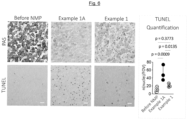
- Periodic acid-Schiff (PAS) staining revealed that the tissue integrity of the kidneys that were perfused with the organ perfusion solution of Example 1 is improved (see Fig. 1 , top panel) compared to kidneys that were perfused with the comparative solution of Example 1A (see Fig. 1 , bottom panel).
- TUNEL terminal deoxynucleotide transferase dUTP nick end labeling assay was carried out in order to examine the degree to which apoptosis was induced by using organ perfusion solutions of Examples 1 and 1A.
- the Deadend Colorimetric TUNEL System (G7130, Promega) was used according to the manufacturer's specifications on paraffin embedded tissue samples.
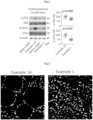
- RT-qPCR analysis revealed that the use of the organ perfusion solution of Example 1 leads to a reduced gene expression of markers of mitochondrial stress (IDH1), ER stress (ATF4), apoptosis (CHOP) and necroptotic cell-death (RIPK3), compared to the use of the organ perfusion solution of Example 1A (see Fig. 3).
- Fig. 3 shows that all samples of kidneys which were perfused with the organ perfusion solution of Example 1A exhibit a z-score that is clearly positive for all four marker genes tested. Compared to these samples, the z-score of the samples of kidneys which were perfused with the organ perfusion solution of the present invention is clearly lower for all four marker genes tested (p ⁇ 0.001 for all conditions).
- Example 1 improved tissue integrity was observed after perfusion with the solution of Example 1 as compared to after perfusion with the solution of Example 1A in ExSRRF (expansion-enhanced super-resolution radial fluctuations) microscopy using a calreticulin (CaIR) staining as a marker of the ER lumen (see Fig. 5 ).
- ExSRRF expansion-enhanced super-resolution radial fluctuations
- Example 1 The organ perfusion solutions of Example 1 and Example 1A were used to perfuse rat kidneys as described for the mouse kidneys in Example 2.
- kidneys were transplanted into rats and the survival of the acceptor animals was monitored.
- Acceptor rats that received kidney transplants which had been perfused with the organ perfusion solution of the present invention (Example 1) were found to have a prolonged survival compared to the acceptor rats that received kidney transplants which had been perfused with the comparative organ perfusion solution (Example 1A).
- organ perfusions solutions of Examples 1 and 1A were used for perfusing pig livers under normothermic conditions.
- Perfusion was performed for 2 h at 37°C using a Hugo Sachs Instruments perfusion apparatus.
Landscapes
- Life Sciences & Earth Sciences (AREA)
- Health & Medical Sciences (AREA)
- Engineering & Computer Science (AREA)
- Dentistry (AREA)
- General Health & Medical Sciences (AREA)
- Wood Science & Technology (AREA)
- Zoology (AREA)
- Environmental Sciences (AREA)
- Agricultural Chemicals And Associated Chemicals (AREA)
Priority Applications (3)
| Application Number | Priority Date | Filing Date | Title |
|---|---|---|---|
| EP23195461.1A EP4520171A1 (de) | 2023-09-05 | 2023-09-05 | Lösung zur organperfusion |
| EP24765182.1A EP4773812A1 (de) | 2023-09-05 | 2024-09-04 | Lösung zur organperfusion |
| PCT/EP2024/074747 WO2025051814A1 (en) | 2023-09-05 | 2024-09-04 | Organ perfusion solution |
Applications Claiming Priority (1)
| Application Number | Priority Date | Filing Date | Title |
|---|---|---|---|
| EP23195461.1A EP4520171A1 (de) | 2023-09-05 | 2023-09-05 | Lösung zur organperfusion |
Publications (1)
| Publication Number | Publication Date |
|---|---|
| EP4520171A1 true EP4520171A1 (de) | 2025-03-12 |
Family
ID=87933670
Family Applications (2)
| Application Number | Title | Priority Date | Filing Date |
|---|---|---|---|
| EP23195461.1A Withdrawn EP4520171A1 (de) | 2023-09-05 | 2023-09-05 | Lösung zur organperfusion |
| EP24765182.1A Pending EP4773812A1 (de) | 2023-09-05 | 2024-09-04 | Lösung zur organperfusion |
Family Applications After (1)
| Application Number | Title | Priority Date | Filing Date |
|---|---|---|---|
| EP24765182.1A Pending EP4773812A1 (de) | 2023-09-05 | 2024-09-04 | Lösung zur organperfusion |
Country Status (2)
| Country | Link |
|---|---|
| EP (2) | EP4520171A1 (de) |
| WO (1) | WO2025051814A1 (de) |
Citations (4)
| Publication number | Priority date | Publication date | Assignee | Title |
|---|---|---|---|---|
| WO1996029865A1 (en) * | 1995-03-27 | 1996-10-03 | Organ, Inc. | Organ evaluation and resuscitation device and method |
| WO2019040085A1 (en) | 2017-08-25 | 2019-02-28 | Csl Behring Llc | PERFUSION COMPOSITIONS AND METHODS OF USING EX VIVO ORGAN PERFUSION ALPHA -1 ANTI-TRYPSIN |
| WO2021198865A1 (en) | 2020-03-28 | 2021-10-07 | University Health Network | Methods, compositions, and systems for enhancing ex-vivo organ perfusion |
| EP4032401A1 (de) | 2011-04-14 | 2022-07-27 | Transmedics, Inc. | Organpflegelösung zur maschinellen ex-vivo-perfusion von spenderlungen |
-
2023
- 2023-09-05 EP EP23195461.1A patent/EP4520171A1/de not_active Withdrawn
-
2024
- 2024-09-04 WO PCT/EP2024/074747 patent/WO2025051814A1/en not_active Ceased
- 2024-09-04 EP EP24765182.1A patent/EP4773812A1/de active Pending
Patent Citations (4)
| Publication number | Priority date | Publication date | Assignee | Title |
|---|---|---|---|---|
| WO1996029865A1 (en) * | 1995-03-27 | 1996-10-03 | Organ, Inc. | Organ evaluation and resuscitation device and method |
| EP4032401A1 (de) | 2011-04-14 | 2022-07-27 | Transmedics, Inc. | Organpflegelösung zur maschinellen ex-vivo-perfusion von spenderlungen |
| WO2019040085A1 (en) | 2017-08-25 | 2019-02-28 | Csl Behring Llc | PERFUSION COMPOSITIONS AND METHODS OF USING EX VIVO ORGAN PERFUSION ALPHA -1 ANTI-TRYPSIN |
| WO2021198865A1 (en) | 2020-03-28 | 2021-10-07 | University Health Network | Methods, compositions, and systems for enhancing ex-vivo organ perfusion |
Non-Patent Citations (9)
| Title |
|---|
| ANONYMOUS: "Blood - Plasma | Britannica", 6 March 2023 (2023-03-06), pages 1, XP093123192, Retrieved from the Internet <URL:https://web.archive.org/web/20230306022809/https://www.britannica.com/science/blood-biochemistry/Plasma> [retrieved on 20240124] * |
| ARNAUD F G ET AL: "NORMOTHERMIC BLOOD PERFUSION OF ISOLATED RABBIT KIDNEYS II. IN VITRO EVALUATION OF RENAL FUNCTION FOLLOWED BY ORTHOTOPIC TRANSPLANTATION", ASAIO JOURNAL, LIPPINCOTT WILLIAMS & WILKINS / ASAIO, HAGERSTOWN, MD, US, vol. 46, no. 6, 1 November 2000 (2000-11-01), pages 707 - 718, XP000977682, ISSN: 1058-2916, DOI: 10.1097/00002480-200011000-00011 * |
| C COSTELLO LESLIE ET AL: "Plasma Citrate Homeostasis: How It Is Regulated; And Its Physiological and Clinical Implications. An Important, But Neglected, Relationship in Medicine", HUMAN ENDOCRINOLOGY, vol. 1, no. 1, 10 March 2017 (2017-03-10), pages 1 - 8, XP093123284, ISSN: 2572-9640, Retrieved from the Internet <URL:https://www.ncbi.nlm.nih.gov/pmc/articles/PMC5345696/pdf/nihms841759.pdf> DOI: 10.24966/HE-9640/100005 * |
| CZOGALLA ET AL., J. VIS. EXP, vol. 117, 2016, pages e54712 |
| CZOGALLA JAN ET AL: "The Mouse Isolated Perfused Kidney Technique", JOURNAL OF VISUALIZED EXPERIMENTS, no. 117, 1 November 2016 (2016-11-01), US, XP093123298, ISSN: 1940-087X, Retrieved from the Internet <URL:https://www.ncbi.nlm.nih.gov/pmc/articles/PMC5226255/pdf/jove-117-54712.pdf> DOI: 10.3791/54712 * |
| FOLKERT O. BELZER ET AL: "24-HOUR AND 72-HOUR PRESERVATION OF CANINE KIDNEYS", THE LANCET, vol. 290, no. 7515, 9 September 1967 (1967-09-09), pages 536 - 539, XP055197958, DOI: 10.1016/S0140-6736(67)90498-9 * |
| HUNTER ET AL., TRANSPL. INT, vol. 35, 31 May 2022 (2022-05-31), pages 10420 |
| ISKE JASPER ET AL: "Pushing the boundaries of innovation: the potential of ex vivo organ perfusion from an interdisciplinary point of view", FRONTIERS IN CARDIOVASCULAR MEDICINE, vol. 10, 12 October 2023 (2023-10-12), XP093123799, ISSN: 2297-055X, Retrieved from the Internet <URL:https://www.ncbi.nlm.nih.gov/pmc/articles/PMC10602690/pdf/fcvm-10-1272945.pdf> DOI: 10.3389/fcvm.2023.1272945 * |
| YAO LINXING ET AL: "Quantitative analysis of short-chain fatty acids in human plasma and serum by GC-MS", ANALYTICAL AND BIOANALYTICAL CHEMISTRY, SPRINGER BERLIN HEIDELBERG, BERLIN/HEIDELBERG, vol. 414, no. 15, 29 January 2022 (2022-01-29), pages 4391 - 4399, XP037857687, ISSN: 1618-2642, [retrieved on 20220129], DOI: 10.1007/S00216-021-03785-8 * |
Also Published As
| Publication number | Publication date |
|---|---|
| WO2025051814A1 (en) | 2025-03-13 |
| EP4773812A1 (de) | 2026-07-15 |
Similar Documents
| Publication | Publication Date | Title |
|---|---|---|
| RU2019965C1 (ru) | Композиция для консервации и хранения органа, предназначенного для имплантации пациенту | |
| JP5192694B2 (ja) | 臓器および細胞の生存能力を維持するための組成物 | |
| US4186253A (en) | Perfusate for preserving organ to be transplanted and preserving method | |
| EP1339279B1 (de) | Lösung zur evaluierung und konservierung | |
| US5306711A (en) | Organ preservative solution | |
| US7087369B2 (en) | Cornea preservation medium | |
| EP1809101A2 (de) | Zusammensetzungen für die kryokonservierung und perfusion von organen | |
| WO2000064254A1 (en) | Novel organ preservation solution | |
| US9049856B2 (en) | Cold organ preservation composition and method of use | |
| US20170202210A1 (en) | Organ preservation solution | |
| WO2025051814A1 (en) | Organ perfusion solution | |
| CN113453548A (zh) | 用于保持活的和静态的生物材料的生存力的组合物、其制造方法及用途 | |
| ES3023733T3 (en) | Preservation and/or rinsing solution for organs to be transplanted | |
| US20250243469A1 (en) | Oxygen carriers for maintaining organ viability during normothermic perfusion | |
| Gondolesi et al. | Matías E. Carnevale, Natalia Lausada, 2 Leonardo Juan de Paz, Pablo Stringa, 2, 4 Mariana Machuca, 5 Martin Rumbo, 3, 4 Edgardo E. Guibert, Claudio Tiribelli, 6 | |
| AHLBERG et al. | 72-HOUR PRESERVA TION OF THE CANINE P ANCREAS1, 2 |
Legal Events
| Date | Code | Title | Description |
|---|---|---|---|
| PUAI | Public reference made under article 153(3) epc to a published international application that has entered the european phase |
Free format text: ORIGINAL CODE: 0009012 |
|
| STAA | Information on the status of an ep patent application or granted ep patent |
Free format text: STATUS: THE APPLICATION HAS BEEN PUBLISHED |
|
| AK | Designated contracting states |
Kind code of ref document: A1 Designated state(s): AL AT BE BG CH CY CZ DE DK EE ES FI FR GB GR HR HU IE IS IT LI LT LU LV MC ME MK MT NL NO PL PT RO RS SE SI SK SM TR |
|
| STAA | Information on the status of an ep patent application or granted ep patent |
Free format text: STATUS: THE APPLICATION IS DEEMED TO BE WITHDRAWN |
|
| 18D | Application deemed to be withdrawn |
Effective date: 20250913 |