EP4520745A2 - Constructions à double ciblage visant à affecter l'élimination de tumeurs - Google Patents
Constructions à double ciblage visant à affecter l'élimination de tumeurs Download PDFInfo
- Publication number
- EP4520745A2 EP4520745A2 EP25153047.3A EP25153047A EP4520745A2 EP 4520745 A2 EP4520745 A2 EP 4520745A2 EP 25153047 A EP25153047 A EP 25153047A EP 4520745 A2 EP4520745 A2 EP 4520745A2
- Authority
- EP
- European Patent Office
- Prior art keywords
- compound
- groups
- substituted
- cancer
- rps
- Prior art date
- Legal status (The legal status is an assumption and is not a legal conclusion. Google has not performed a legal analysis and makes no representation as to the accuracy of the status listed.)
- Pending
Links
Images



Classifications
-
- A—HUMAN NECESSITIES
- A61—MEDICAL OR VETERINARY SCIENCE; HYGIENE
- A61K—PREPARATIONS FOR MEDICAL, DENTAL OR TOILETRY PURPOSES
- A61K51/00—Preparations containing radioactive substances for use in therapy or testing in vivo
- A61K51/02—Preparations containing radioactive substances for use in therapy or testing in vivo characterised by the carrier, i.e. characterised by the agent or material covalently linked or complexing the radioactive nucleus
- A61K51/04—Organic compounds
- A61K51/0404—Lipids, e.g. triglycerides; Polycationic carriers
- A61K51/0406—Amines, polyamines, e.g. spermine, spermidine, amino acids, (bis)guanidines
-
- A—HUMAN NECESSITIES
- A61—MEDICAL OR VETERINARY SCIENCE; HYGIENE
- A61K—PREPARATIONS FOR MEDICAL, DENTAL OR TOILETRY PURPOSES
- A61K31/00—Medicinal preparations containing organic active ingredients
- A61K31/16—Amides, e.g. hydroxamic acids
- A61K31/17—Amides, e.g. hydroxamic acids having the group >N—C(O)—N< or >N—C(S)—N<, e.g. urea, thiourea, carmustine
-
- A—HUMAN NECESSITIES
- A61—MEDICAL OR VETERINARY SCIENCE; HYGIENE
- A61K—PREPARATIONS FOR MEDICAL, DENTAL OR TOILETRY PURPOSES
- A61K31/00—Medicinal preparations containing organic active ingredients
- A61K31/185—Acids; Anhydrides, halides or salts thereof, e.g. sulfur acids, imidic, hydrazonic or hydroximic acids
- A61K31/19—Carboxylic acids, e.g. valproic acid
-
- A—HUMAN NECESSITIES
- A61—MEDICAL OR VETERINARY SCIENCE; HYGIENE
- A61K—PREPARATIONS FOR MEDICAL, DENTAL OR TOILETRY PURPOSES
- A61K31/00—Medicinal preparations containing organic active ingredients
- A61K31/185—Acids; Anhydrides, halides or salts thereof, e.g. sulfur acids, imidic, hydrazonic or hydroximic acids
- A61K31/19—Carboxylic acids, e.g. valproic acid
- A61K31/195—Carboxylic acids, e.g. valproic acid having an amino group
- A61K31/197—Carboxylic acids, e.g. valproic acid having an amino group the amino and the carboxyl groups being attached to the same acyclic carbon chain, e.g. gamma-aminobutyric acid [GABA], beta-alanine, epsilon-aminocaproic acid or pantothenic acid
- A61K31/198—Alpha-amino acids, e.g. alanine or edetic acid [EDTA]
-
- A—HUMAN NECESSITIES
- A61—MEDICAL OR VETERINARY SCIENCE; HYGIENE
- A61K—PREPARATIONS FOR MEDICAL, DENTAL OR TOILETRY PURPOSES
- A61K45/00—Medicinal preparations containing active ingredients not provided for in groups A61K31/00 - A61K41/00
- A61K45/06—Mixtures of active ingredients without chemical characterisation, e.g. antiphlogistics and cardiaca
-
- A—HUMAN NECESSITIES
- A61—MEDICAL OR VETERINARY SCIENCE; HYGIENE
- A61K—PREPARATIONS FOR MEDICAL, DENTAL OR TOILETRY PURPOSES
- A61K51/00—Preparations containing radioactive substances for use in therapy or testing in vivo
- A61K51/02—Preparations containing radioactive substances for use in therapy or testing in vivo characterised by the carrier, i.e. characterised by the agent or material covalently linked or complexing the radioactive nucleus
- A61K51/04—Organic compounds
- A61K51/0402—Organic compounds carboxylic acid carriers, fatty acids
-
- A—HUMAN NECESSITIES
- A61—MEDICAL OR VETERINARY SCIENCE; HYGIENE
- A61K—PREPARATIONS FOR MEDICAL, DENTAL OR TOILETRY PURPOSES
- A61K51/00—Preparations containing radioactive substances for use in therapy or testing in vivo
- A61K51/02—Preparations containing radioactive substances for use in therapy or testing in vivo characterised by the carrier, i.e. characterised by the agent or material covalently linked or complexing the radioactive nucleus
- A61K51/04—Organic compounds
- A61K51/08—Peptides, e.g. proteins, carriers being peptides, polyamino acids, proteins
- A61K51/10—Antibodies or immunoglobulins; Fragments thereof, the carrier being an antibody, an immunoglobulin or a fragment thereof, e.g. a camelised human single domain antibody or the Fc fragment of an antibody
- A61K51/1045—Antibodies or immunoglobulins; Fragments thereof, the carrier being an antibody, an immunoglobulin or a fragment thereof, e.g. a camelised human single domain antibody or the Fc fragment of an antibody against animal or human tumor cells or tumor cell determinants
- A61K51/1072—Antibodies or immunoglobulins; Fragments thereof, the carrier being an antibody, an immunoglobulin or a fragment thereof, e.g. a camelised human single domain antibody or the Fc fragment of an antibody against animal or human tumor cells or tumor cell determinants the tumor cell being from the reproductive system, e.g. ovaria, uterus, testes or prostate
-
- A—HUMAN NECESSITIES
- A61—MEDICAL OR VETERINARY SCIENCE; HYGIENE
- A61P—SPECIFIC THERAPEUTIC ACTIVITY OF CHEMICAL COMPOUNDS OR MEDICINAL PREPARATIONS
- A61P15/00—Drugs for genital or sexual disorders; Contraceptives
-
- A—HUMAN NECESSITIES
- A61—MEDICAL OR VETERINARY SCIENCE; HYGIENE
- A61P—SPECIFIC THERAPEUTIC ACTIVITY OF CHEMICAL COMPOUNDS OR MEDICINAL PREPARATIONS
- A61P35/00—Antineoplastic agents
-
- A—HUMAN NECESSITIES
- A61—MEDICAL OR VETERINARY SCIENCE; HYGIENE
- A61P—SPECIFIC THERAPEUTIC ACTIVITY OF CHEMICAL COMPOUNDS OR MEDICINAL PREPARATIONS
- A61P35/00—Antineoplastic agents
- A61P35/04—Antineoplastic agents specific for metastasis
-
- A—HUMAN NECESSITIES
- A61—MEDICAL OR VETERINARY SCIENCE; HYGIENE
- A61P—SPECIFIC THERAPEUTIC ACTIVITY OF CHEMICAL COMPOUNDS OR MEDICINAL PREPARATIONS
- A61P43/00—Drugs for specific purposes, not provided for in groups A61P1/00-A61P41/00
-
- C—CHEMISTRY; METALLURGY
- C07—ORGANIC CHEMISTRY
- C07B—GENERAL METHODS OF ORGANIC CHEMISTRY; APPARATUS THEREFOR
- C07B59/00—Introduction of isotopes of elements into organic compounds ; Labelled organic compounds per se
- C07B59/001—Acyclic or carbocyclic compounds
-
- C—CHEMISTRY; METALLURGY
- C07—ORGANIC CHEMISTRY
- C07C—ACYCLIC OR CARBOCYCLIC COMPOUNDS
- C07C275/00—Derivatives of urea, i.e. compounds containing any of the groups, the nitrogen atoms not being part of nitro or nitroso groups
- C07C275/04—Derivatives of urea, i.e. compounds containing any of the groups, the nitrogen atoms not being part of nitro or nitroso groups having nitrogen atoms of urea groups bound to acyclic carbon atoms
- C07C275/06—Derivatives of urea, i.e. compounds containing any of the groups, the nitrogen atoms not being part of nitro or nitroso groups having nitrogen atoms of urea groups bound to acyclic carbon atoms of an acyclic and saturated carbon skeleton
- C07C275/16—Derivatives of urea, i.e. compounds containing any of the groups, the nitrogen atoms not being part of nitro or nitroso groups having nitrogen atoms of urea groups bound to acyclic carbon atoms of an acyclic and saturated carbon skeleton being further substituted by carboxyl groups
-
- C—CHEMISTRY; METALLURGY
- C07—ORGANIC CHEMISTRY
- C07C—ACYCLIC OR CARBOCYCLIC COMPOUNDS
- C07C275/00—Derivatives of urea, i.e. compounds containing any of the groups, the nitrogen atoms not being part of nitro or nitroso groups
- C07C275/04—Derivatives of urea, i.e. compounds containing any of the groups, the nitrogen atoms not being part of nitro or nitroso groups having nitrogen atoms of urea groups bound to acyclic carbon atoms
- C07C275/20—Derivatives of urea, i.e. compounds containing any of the groups, the nitrogen atoms not being part of nitro or nitroso groups having nitrogen atoms of urea groups bound to acyclic carbon atoms of an unsaturated carbon skeleton
- C07C275/24—Derivatives of urea, i.e. compounds containing any of the groups, the nitrogen atoms not being part of nitro or nitroso groups having nitrogen atoms of urea groups bound to acyclic carbon atoms of an unsaturated carbon skeleton containing six-membered aromatic rings
-
- C—CHEMISTRY; METALLURGY
- C07—ORGANIC CHEMISTRY
- C07F—ACYCLIC, CARBOCYCLIC OR HETEROCYCLIC COMPOUNDS CONTAINING ELEMENTS OTHER THAN CARBON, HYDROGEN, HALOGEN, OXYGEN, NITROGEN, SULFUR, SELENIUM OR TELLURIUM
- C07F7/00—Compounds containing elements of Groups 4 or 14 of the Periodic Table
- C07F7/22—Tin compounds
- C07F7/2208—Compounds having tin linked only to carbon, hydrogen and/or halogen
-
- G—PHYSICS
- G01—MEASURING; TESTING
- G01N—INVESTIGATING OR ANALYSING MATERIALS BY DETERMINING THEIR CHEMICAL OR PHYSICAL PROPERTIES
- G01N33/00—Investigating or analysing materials by specific methods not covered by groups G01N1/00 - G01N31/00
- G01N33/48—Biological material, e.g. blood, urine; Haemocytometers
- G01N33/50—Chemical analysis of biological material, e.g. blood, urine; Testing involving biospecific ligand binding methods; Immunological testing
- G01N33/53—Immunoassay; Biospecific binding assay; Materials therefor
- G01N33/575—Immunoassay; Biospecific binding assay; Materials therefor for cancer
- G01N33/57555—Immunoassay; Biospecific binding assay; Materials therefor for cancer of the prostate
-
- G—PHYSICS
- G01—MEASURING; TESTING
- G01N—INVESTIGATING OR ANALYSING MATERIALS BY DETERMINING THEIR CHEMICAL OR PHYSICAL PROPERTIES
- G01N33/00—Investigating or analysing materials by specific methods not covered by groups G01N1/00 - G01N31/00
- G01N33/48—Biological material, e.g. blood, urine; Haemocytometers
- G01N33/50—Chemical analysis of biological material, e.g. blood, urine; Testing involving biospecific ligand binding methods; Immunological testing
- G01N33/53—Immunoassay; Biospecific binding assay; Materials therefor
- G01N33/575—Immunoassay; Biospecific binding assay; Materials therefor for cancer
- G01N33/5758—Immunoassay; Biospecific binding assay; Materials therefor for cancer involving compounds serving as markers for tumours, cancers or neoplasias, e.g. cellular determinants, receptors, heat shock/stress proteins, A-protein, oligosaccharides or metabolites
- G01N33/5759—Immunoassay; Biospecific binding assay; Materials therefor for cancer involving compounds serving as markers for tumours, cancers or neoplasias, e.g. cellular determinants, receptors, heat shock/stress proteins, A-protein, oligosaccharides or metabolites involving compounds localised on the membrane of tumour or cancer cells
-
- G—PHYSICS
- G01—MEASURING; TESTING
- G01N—INVESTIGATING OR ANALYSING MATERIALS BY DETERMINING THEIR CHEMICAL OR PHYSICAL PROPERTIES
- G01N33/00—Investigating or analysing materials by specific methods not covered by groups G01N1/00 - G01N31/00
- G01N33/48—Biological material, e.g. blood, urine; Haemocytometers
- G01N33/50—Chemical analysis of biological material, e.g. blood, urine; Testing involving biospecific ligand binding methods; Immunological testing
- G01N33/58—Chemical analysis of biological material, e.g. blood, urine; Testing involving biospecific ligand binding methods; Immunological testing involving labelled substances
-
- G—PHYSICS
- G01—MEASURING; TESTING
- G01N—INVESTIGATING OR ANALYSING MATERIALS BY DETERMINING THEIR CHEMICAL OR PHYSICAL PROPERTIES
- G01N33/00—Investigating or analysing materials by specific methods not covered by groups G01N1/00 - G01N31/00
- G01N33/48—Biological material, e.g. blood, urine; Haemocytometers
- G01N33/50—Chemical analysis of biological material, e.g. blood, urine; Testing involving biospecific ligand binding methods; Immunological testing
- G01N33/58—Chemical analysis of biological material, e.g. blood, urine; Testing involving biospecific ligand binding methods; Immunological testing involving labelled substances
- G01N33/60—Chemical analysis of biological material, e.g. blood, urine; Testing involving biospecific ligand binding methods; Immunological testing involving labelled substances involving radioactive labelled substances
-
- A—HUMAN NECESSITIES
- A61—MEDICAL OR VETERINARY SCIENCE; HYGIENE
- A61K—PREPARATIONS FOR MEDICAL, DENTAL OR TOILETRY PURPOSES
- A61K2121/00—Preparations for use in therapy
-
- C—CHEMISTRY; METALLURGY
- C07—ORGANIC CHEMISTRY
- C07B—GENERAL METHODS OF ORGANIC CHEMISTRY; APPARATUS THEREFOR
- C07B2200/00—Indexing scheme relating to specific properties of organic compounds
- C07B2200/05—Isotopically modified compounds, e.g. labelled
-
- G—PHYSICS
- G01—MEASURING; TESTING
- G01N—INVESTIGATING OR ANALYSING MATERIALS BY DETERMINING THEIR CHEMICAL OR PHYSICAL PROPERTIES
- G01N2500/00—Screening for compounds of potential therapeutic value
- G01N2500/04—Screening involving studying the effect of compounds C directly on molecule A (e.g. C are potential ligands for a receptor A, or potential substrates for an enzyme A)
Definitions
- the present technology is directed to compounds, compositions, and methods related to the treatment of tumors that express prostate specific membrane antigen ("PSMA").
- PSMA prostate specific membrane antigen
- the present technology is particulary suited to treat prostate cancer.
- a compound according to Formula I is provided or a pharmaceutically acceptable salt thereof, wherein X 1 is 124 I, 125 I, 127 I, 131 I, 211 At, or Sn(R 4 ) 3 ; R 1 , R 2 , and R 3 are each independently H, methyl, benzyl, 4-methoxybenzyl, or tert- butyl; R 4 is independently at each occurrence an alkyl group; n is 1 or 2; and m is 0, 1, 2, or 3.
- a compound of Formua II is provided or a pharmaceutically acceptable salt thereof, wherein X 2 is 124 I, 125 I, 127 I, 131 I, 211 At, or Sn(R 8 ) 3 ;R 5 , R 6 , and R 7 are each independently H, methyl, benzyl, 4-methoxybenzyl, or tert- butyl; R 8 is independently at each occurrence an alkyl group; W1 is a bond or -NH-alkylene-; and p is 0, 1, 2, or 3.
- composition in a related aspect, includes a compound of Formula I or II and a pharmaceutically acceptable carrier.
- compositions for treating prostate cancer where the composition includes an effective amount of a compound of Formula I or II.
- a method includes administering a compound of Formula I or II to a subject suffering from prostate cancer.
- a method of enhancing uptake of a therapeutic agent to a tumor presenting prostate specific membrane antigen includes administering a first therapeutic agent comprising a PMSA targeting moiety and a human serum albumin binding moiety to a subject with one or more prostate cancer tumors, where the human serum albumin binding moiety includes a radionuclide; detecting distribution of the first therapeutic agent in the subject; and modifying the first therapeutic agent to provide a second therapeutic agent.
- PSMA prostate specific membrane antigen
- the present technology provides compounds and methods for treatment of cancer expressing PSMA, and are particulary suited to treat prostate cancer.
- the compounds provided herein can be formulated into pharmaceutical compositions and medicaments that are useful in the disclosed methods. Also provided is the use of the compounds in preparing pharmaceutical formulations and medicaments.
- references to a certain element such as hydrogen or H is meant to include all isotopes of that element.
- an R group is defined to include hydrogen or H, it also includes deuterium and tritium.
- Compounds comprising radioisotopes such as tritium, 14 C, 32 P, and 35 S are thus within the scope of the present technology. Procedures for inserting such labels into the compounds of the present technology will be readily apparent to those skilled in the art based on the disclosure herein.
- substituted refers to an organic group as defined below (e.g., an alkyl group) in which one or more bonds to a hydrogen atom contained therein are replaced by a bond to non-hydrogen or non-carbon atoms.
- Substituted groups also include groups in which one or more bonds to a carbon(s) or hydrogen(s) atom are replaced by one or more bonds, including double or triple bonds, to a heteroatom.
- a substituted group is substituted with one or more substituents, unless otherwise specified.
- a substituted group is substituted with 1, 2, 3, 4, 5, or 6 substituents.
- substituent groups include: halogens (i.e., F, Cl, Br, and I); hydroxyls; alkoxy, alkenoxy, aryloxy, aralkyloxy, heterocyclyl, heterocyclylalkyl, heterocyclyloxy, and heterocyclylalkoxy groups; carbonyls (oxo); carboxylates; esters; urethanes; oximes; hydroxylamines; alkoxyamines; aralkoxyamines; thiols; sulfides; sulfoxides; sulfones; sulfonyls; pentafluorosulfanyl (i.e., SFs), sulfonamides; amines; N-oxides; hydrazines; hydrazides; hydrazones; azides; amides; ureas; amidines; guanidines; enamines; imides; isocyanates; isothio
- Substituted ring groups such as substituted cycloalkyl, aryl, heterocyclyl and heteroaryl groups also include rings and ring systems in which a bond to a hydrogen atom is replaced with a bond to a carbon atom. Therefore, substituted cycloalkyl, aryl, heterocyclyl and heteroaryl groups may also be substituted with substituted or unsubstituted alkyl, alkenyl, and alkynyl groups as defined below.
- Alkyl groups include straight chain and branched chain alkyl groups having from 1 to 12 carbon atoms, and typically from 1 to 10 carbons or, in some embodiments, from 1 to 8, 1 to 6, or 1 to 4 carbon atoms. Alkyl groups may be substituted or unsubstituted. Examples of straight chain alkyl groups include groups such as methyl, ethyl, n-propyl, n-butyl, n-pentyl, n-hexyl, n-heptyl, and n-octyl groups.
- branched alkyl groups include, but are not limited to, isopropyl, iso-butyl, sec-butyl, tert-butyl, neopentyl, isopentyl, and 2,2-dimethylpropyl groups.
- Representative substituted alkyl groups may be substituted one or more times with substituents such as those listed above, and include without limitation haloalkyl (e.g., trifluoromethyl), hydroxyalkyl, thioalkyl, aminoalkyl, alkylaminoalkyl, dialkylaminoalkyl, alkoxyalkyl, carboxyalkyl, and the like.
- Cycloalkyl groups include mono-, bi- or tricyclic alkyl groups having from 3 to 12 carbon atoms in the ring(s), or, in some embodiments, 3 to 10, 3 to 8, or 3 to 4, 5, or 6 carbon atoms. Cycloalkyl groups may be substituted or unsubstituted. Exemplary monocyclic cycloalkyl groups include, but not limited to, cyclopropyl, cyclobutyl, cyclopentyl, cyclohexyl, cycloheptyl, and cyclooctyl groups.
- the cycloalkyl group has 3 to 8 ring members, whereas in other embodiments the number of ring carbon atoms range from 3 to 5, 3 to 6, or 3 to 7.
- Bi- and tricyclic ring systems include both bridged cycloalkyl groups and fused rings, such as, but not limited to, bicyclo[2. 1. 1]hexane, adamantyl, decalinyl, and the like.
- Substituted cycloalkyl groups may be substituted one or more times with, non-hydrogen and non-carbon groups as defined above.
- substituted cycloalkyl groups also include rings that are substituted with straight or branched chain alkyl groups as defined above.
- Representative substituted cycloalkyl groups may be mono-substituted or substituted more than once, such as, but not limited to, 2,2-, 2,3-, 2,4-2,5- or 2,6-disubstituted cyclohexyl groups, which may be substituted with substituents such as those listed above.
- Cycloalkylalkyl groups are alkyl groups as defined above in which a hydrogen or carbon bond of an alkyl group is replaced with a bond to a cycloalkyl group as defined above. Cycloalkylalkyl groups may be substituted or unsubstituted. In some embodiments, cycloalkylalkyl groups have from 4 to 16 carbon atoms, 4 to 12 carbon atoms, and typically 4 to 10 carbon atoms. Substituted cycloalkylalkyl groups may be substituted at the alkyl, the cycloalkyl or both the alkyl and cycloalkyl portions of the group. Representative substituted cycloalkylalkyl groups may be mono-substituted or substituted more than once, such as, but not limited to, mono-, di- or tri-substituted with substituents such as those listed above.
- Alkenyl groups include straight and branched chain alkyl groups as defined above, except that at least one double bond exists between two carbon atoms. Alkenyl groups may be substituted or unsubstituted. Alkenyl groups have from 2 to 12 carbon atoms, and typically from 2 to 10 carbons or, in some embodiments, from 2 to 8, 2 to 6, or 2 to 4 carbon atoms. In some embodiments, the alkenyl group has one, two, or three carbon-carbon double bonds.
- Representative substituted alkenyl groups may be mono-substituted or substituted more than once, such as, but not limited to, mono-, di- or tri-substituted with substituents such as those listed above.
- Cycloalkenylalkyl groups are alkyl groups as defined above in which a hydrogen or carbon bond of the alkyl group is replaced with a bond to a cycloalkenyl group as defined above. Cycloalkenylalkyl groups may be substituted or unsubstituted. Substituted cycloalkenylalkyl groups may be substituted at the alkyl, the cycloalkenyl or both the alkyl and cycloalkenyl portions of the group. Representative substituted cycloalkenylalkyl groups may be substituted one or more times with substituents such as those listed above.
- Alkynyl groups include straight and branched chain alkyl groups as defined above, except that at least one triple bond exists between two carbon atoms. Alkynyl groups may be substituted or unsubstituted. Alkynyl groups have from 2 to 12 carbon atoms, and typically from 2 to 10 carbons or, in some embodiments, from 2 to 8, 2 to 6, or 2 to 4 carbon atoms. In some embodiments, the alkynyl group has one, two, or three carbon-carbon triple bonds. Examples include, but are not limited to - C ⁇ CH, -C ⁇ CCH 3 , -CH 2 C ⁇ CCH 3 , -C ⁇ CCH 2 CH(CH 2 CH 3 ) 2 , among others. Representative substituted alkynyl groups may be mono-substituted or substituted more than once, such as, but not limited to, mono-, di- or tri-substituted with substituents such as those listed above.
- Aryl groups are cyclic aromatic hydrocarbons that do not contain heteroatoms.
- Aryl groups may be substituted or unsubstituted.
- Aryl groups herein include monocyclic, bicyclic and tricyclic ring systems.
- aryl groups include, but are not limited to, phenyl, azulenyl, heptalenyl, biphenyl, fluorenyl, phenanthrenyl, anthracenyl, indenyl, indanyl, pentalenyl, and naphthyl groups.
- aryl groups contain 6-14 carbons, and in others from 6 to 12 or even 6-10 carbon atoms in the ring portions of the groups.
- Aralkyl groups are alkyl groups as defined above in which a hydrogen or carbon bond of an alkyl group is replaced with a bond to an aryl group as defined above. Aralkyl groups may be substituted or unsubstituted. In some embodiments, aralkyl groups contain 7 to 16 carbon atoms, 7 to 14 carbon atoms, or 7 to 10 carbon atoms. Substituted aralkyl groups may be substituted at the alkyl, the aryl or both the alkyl and aryl portions of the group. Representative aralkyl groups include but are not limited to benzyl and phenethyl groups and fused (cycloalkylaryl)alkyl groups such as 4-indanylethyl. Representative substituted aralkyl groups may be substituted one or more times with substituents such as those listed above.
- substituted heterocyclyl groups may be mono-substituted or substituted more than once, such as, but not limited to, pyridyl or morpholinyl groups, which are 2-, 3-, 4-, 5-, or 6-substituted, or disubstituted with various substituents such as those listed above.
- Heteroaryl groups are aromatic ring compounds containing 5 or more ring members, of which, one or more is a heteroatom such as, but not limited to, N, O, and S. Heteroaryl groups may be substituted or unsubstituted.
- Heterocyclylalkyl groups are alkyl groups as defined above in which a hydrogen or carbon bond of an alkyl group is replaced with a bond to a heterocyclyl group as defined above. Heterocyclylalkyl groups may be substituted or unsubstituted. Substituted heterocyclylalkyl groups may be substituted at the alkyl, the heterocyclyl or both the alkyl and heterocyclyl portions of the group.
- Heteroaralkyl groups are alkyl groups as defined above in which a hydrogen or carbon bond of an alkyl group is replaced with a bond to a heteroaryl group as defined above. Heteroaralkyl groups may be substituted or unsubstituted. Substituted heteroaralkyl groups may be substituted at the alkyl, the heteroaryl or both the alkyl and heteroaryl portions of the group. Representative substituted heteroaralkyl groups may be substituted one or more times with substituents such as those listed above.
- aryloxy and arylalkoxy refer to, respectively, a substituted or unsubstituted aryl group bonded to an oxygen atom and a substituted or unsubstituted aralkyl group bonded to the oxygen atom at the alkyl. Examples include but are not limited to phenoxy, naphthyloxy, and benzyloxy. Representative substituted aryloxy and arylalkoxy groups may be substituted one or more times with substituents such as those listed above.
- carboxylate refers to a -C(O)OH group.
- protected carboxylate refers to -C(O)O-G groups, where G is a carboxylate protecting group.
- Carboxylate protecting groups are well known to one of ordinary skill in the art. An extensive list of protecting groups for the carboxylate group functionality may be found in Protective Groups in Organic Synthesis, Greene, T.W.; Wuts, P. G. M., John Wiley & Sons, New York, NY, (3rd Edition, 1999 ) which can be added or removed using the procedures set forth therein and which is hereby incorporated by reference in its entirety and for any and all purposes as if fully set forth herein.
- R 70 is a substituted or unsubstituted alkyl, cycloalkyl, alkenyl, alkynyl, aryl, aralkyl, heterocyclylalkyl or heterocyclyl group as defined herein.
- amide includes C- and N-amide groups, i.e., -C(O)NR 71 R 72 , and -NR 71 C(O)R 72 groups, respectively.
- R 71 and R 72 are independently hydrogen, or a substituted or unsubstituted alkyl, alkenyl, alkynyl, cycloalkyl, aryl, aralkyl, heterocyclylalkyl or heterocyclyl group as defined herein.
- Amido groups therefore include but are not limited to carbamoyl groups (-C(O)NH 2 ) and formamide groups (-NHC(O)H).
- the amide is -NR 71 C(O)-(C 1-5 alkyl) and the group is termed “carbonylamino,” and in others the amide is -NHC(O)-alkyl and the group is termed "alkanoylamino.”
- nitrile or "cyano” as used herein refers to the -CN group.
- Urethane groups include N- and O-urethane groups, i.e., -NR 73 C(O)OR 74 and -OC(O)NR 73 R 74 groups, respectively.
- R 73 and R 74 are independently a substituted or unsubstituted alkyl, alkenyl, alkynyl, cycloalkyl, aryl, aralkyl, heterocyclylalkyl, or heterocyclyl group as defined herein.
- R 73 may also be H.
- amine refers to -NR 75 R 76 groups, wherein R 75 and R 76 are independently hydrogen, or a substituted or unsubstituted alkyl, alkenyl, alkynyl, cycloalkyl, aryl, aralkyl, heterocyclylalkyl or heterocyclyl group as defined herein.
- the amine is alkylamino, dialkylamino, arylamino, or alkylarylamino.
- the amine is NH 2 , methylamino, dimethylamino, ethylamino, diethylamino, propylamino, isopropylamino, phenylamino, or benzylamino.
- sulfonamido includes S- and N-sulfonamide groups, i.e., -SO 2 NR 78 R 79 and -NR 78 SO 2 R 79 groups, respectively.
- R 78 and R 79 are independently hydrogen, or a substituted or unsubstituted alkyl, alkenyl, alkynyl, cycloalkyl, aryl, aralkyl, heterocyclylalkyl, or heterocyclyl group as defined herein.
- Sulfonamido groups therefore include but are not limited to sulfamoyl groups (-SO 2 NH 2 ).
- the sulfonamido is -NHSO 2 -alkyl and is referred to as the "alkylsulfonylamino" group.
- thiol refers to -SH groups
- sulfides include -SR 80 groups
- sulfoxides include -S(O)R 81 groups
- sulfones include -SO 2 R 82 groups
- sulfonyls include -SO 2 OR 83 .
- R 80 , R 81 , R 82 , and R 83 are each independently a substituted or unsubstituted alkyl, cycloalkyl, alkenyl, alkynyl, aryl aralkyl, heterocyclyl or heterocyclylalkyl group as defined herein.
- the sulfide is an alkylthio group, -S-alkyl.
- urea refers to -NR 84 -C(O)-NR 85 R 86 groups.
- R 84 , R 85 , and R 86 groups are independently hydrogen, or a substituted or unsubstituted alkyl, alkenyl, alkynyl, cycloalkyl, aryl, aralkyl, heterocyclyl, or heterocyclylalkyl group as defined herein.
- amidine refers to -C(NR 87 )NR 88 R 89 and -NR 87 C(NR 88 )R 89 , wherein R 87 , R 88 , and R 89 are each independently hydrogen, or a substituted or unsubstituted alkyl, cycloalkyl, alkenyl, alkynyl, aryl aralkyl, heterocyclyl or heterocyclylalkyl group as defined herein.
- guanidine refers to -NR 90 C(NR 91 )NR 92 R 93 , wherein R 90 , R 91 , R 92 and R 93 are each independently hydrogen, or a substituted or unsubstituted alkyl, cycloalkyl, alkenyl, alkynyl, aryl aralkyl, heterocyclyl or heterocyclylalkyl group as defined herein.
- halogen refers to bromine, chlorine, fluorine, or iodine. In some embodiments, the halogen is fluorine. In other embodiments, the halogen is chlorine or bromine.
- hydroxyl as used herein can refer to -OH or its ionized form, -O - .
- a "hydroxyalkyl” group is a hydroxyl-substituted alkyl group, such as HO-CH 2 -.
- alginate formic acid, acetic acid, trifluoroacetic acid, benzoic acid, gluconic acid, fumaric acid, oxalic acid, tartaric acid, lactic acid, maleic acid, citric acid, succinic acid, malic acid, methanesulfonic acid, benzenesulfonic acid, naphthalene sulfonic acid, and p-toluenesulfonic acid) or acidic amino acids (such as aspartic acid and glutamic acid).
- an acidic group such as for example, a carboxylic acid group
- it can form salts with metals, such as alkali and earth alkali metals (e.g.
- Stereoisomers of compounds include all chiral, diastereomeric, and racemic forms of a structure, unless the specific stereochemistry is expressly indicated.
- compounds used in the present technology include enriched or resolved optical isomers at any or all asymmetric atoms as are apparent from the depictions.
- racemic and diastereomeric mixtures, as well as the individual optical isomers can be isolated or synthesized so as to be substantially free of their enantiomeric or diastereomeric partners, and these stereoisomers are all within the scope of the present technology.
- PSMA Prostate-specific membrane antigen
- PCa prostate cancer
- PSMA Prostate-specific membrane antigen
- glioma is expressed by prostate cancer
- PSMA is expressed on the neovasculature of several other tumor types, including (but not limited to) glioma, cervical carcinoma, vulvar carcinoma, endometrial carcinoma, primary ovarian carcinoma, metastatic ovarian carcinoma, non-small cell lung cancer, small cell lung cancer, bladder cancer, colon cancer, primary, gastric adenocarcinoma, primary colorectal adenocarcinoma, and renal cell carcinoma.
- Wernicke AG Kim S
- Liu H Bander NH
- Pirog EC Prostate-specific membrane antigen
- Prostate-specific Membrane Antigen (PSMA) Expression in the Neovasculature of Gynecologic Malignancies: Implications for PSMA-targeted Therapy. Appl Immunohistochem Mol Morphol. 2016 Feb 9 (doi: 10.1097/PAI.0000000000000297 ); Wang HL, Wang SS, Song WH, Pan Y, Yu HP, Si TG, Liu Y, Cui XN, Guo Z. Expression of prostate-specific membrane antigen in lung cancer cells and tumor neovasculature endothelial cells and its clinical significance. PLoS One.
- PSMA anti-prostate-specific membrane antigen
- PSMA-targeted radiotherapies Notable is the potential for dose-limiting toxicity in PSMA-targeted radiotherapies. It has been reported that PSMA is expressed at low levels in the parotid and lacrimal glands, and recent experiments have shown that PMPA can be used to displace 68 Ga-PSMA-HBED-CC from rat salivary glands. See O'Keefe DS, Bacich DJ, Heston WDW. Comparative analysis of prostate-specific membrane antigen (PSMA) versus a prostate-specific membrane antigen-like gene. Prostate. 2004;58:200-210 and Wüstemann T, Nikolopoulou A, Amor-Coarasa A, et al. Protecting salivary glands: displacement of off-target bound prostate-specific membrane antigen ligands. Eur J Nucl Med Mol Imaging. 2016:43 (Suppl 1):S15 , each of which is incorporated herein by reference. These findings suggest that uptake of radiopharmaceuticals in these structures is PSMA-
- the present technology provides compounds displaying high affinity for PSMA and appropriate affinity for human serum albumin (HSA) (alternately described herein as “double targeted constructs,” “double targeted compounds,” and “dual targeting ligands”) in order to provide a higher therapeutic index and be suitable for treatment of cancer expressing PSMA by targeted alpha therapy (TAT).
- HSA human serum albumin
- TAT targeted alpha therapy
- the present technology is particulary suited to treat prostate cancer.
- Compositions are also provided that incorporating such compounds, as are methods related to the treatment of cancer expressing PSMA. Futhermore, the present technology provides a method of enhancing uptake of a therapeutic agent, such as a double targeted construct, to a tumor presenting PSMA is provided, by modifying the human serum albumin binding moiety of such agents.
- a compound according to Formula I is provided or a pharmaceutically acceptable salt thereof, wherein X 1 is 124 I, 125 I, 127 I, 131 I, 211 At, or Sn(R 4 ) 3 ; R 1 , R 2 , and R 3 are each independently H, methyl, benzyl, 4-methoxybenzyl, or tert- butyl; R 4 is independently at each occurrence an alkyl group; n is 1 or 2; and m is 0, 1, 2, or 3. In any embodiment herein, R 1 , R 2 , and R 3 may each independently be H or tert-butyl.
- R 4 may independently at each occurrence be methyl, ethyl, propyl, propyl, or butyl. In any embodiment herein, it may be when n is 2, then m is not 2. In any embodiment herein, it may be that X 1 is 124 I, 125 I, 131 I, or 211 At. In any embodiment herein, the compound of Formula I may be a compound of Formula Ia or a pharmaceutically acceptable salt thereof.
- a compound of Formua II is provided or a pharmaceutically acceptable salt thereof, wherein X 2 is 124 I, 125 I, 127 I, 131 I, 211 At, or Sn(R 8 ) 3 ;R 5 , R 6 , and R 7 are each independently H, methyl, benzyl, 4-methoxybenzyl, or tert- butyl; R 8 is independently at each occurrence an alkyl group; W1 is a bond or -NH-alkylene-; and p is 0, 1, 2, or 3. In any embodiment herein, R 5 , R 6 , and R 7 may each independently be H or tert-butyl.
- W 1 may be a bond or a carboxylate-substututed alkylene. In any embodiment herein, W 1 may be a bond, -NH-CH(C(O)OH)-(CH 2 ) 3 -, or -NH-CH(C(O)OH)-(CH 2 ) 4 -. In any embodiment herein, it may be that R 8 is independently at each occurrence methyl, ethyl, propyl, propyl, or butyl. In any embodiment herein, it may be X 1 is 124 I, 125 I, 131 I, or 211 At. In any embodiment herein, the compound of Formula II may be a compound of Formula IIa or a pharmaceutically acceptable salt thereof.
- a composition in an aspect of the present technology, includes any one of the aspects and embodiments of compounds of Formulas I-II and a pharmaceutically acceptable carrier.
- a pharmaceutically acceptable carrier includes carriers and/or excipients.
- a pharmaceutical composition is provided, the pharmaceutical composition including an effective amount of the compound of any one of the aspects and embodiments of compounds of Formulas I-II for treating a condition; and where the condition is cancer expressing PSMA.
- a method includes administering a compound of any one of the aspects and embodiments of compounds of Formulas I-II (e.g., such as administering an effective amount) or administering a pharmaceutical composition comprising an effective amount of a compound of any one of the aspects and embodiments of compounds of Formulas I-II to a subject suffering from a cancer expressing PSMA.
- the cancer may include one or more of glioma, cervical carcinoma, vulvar carcinoma, endometrial carcinoma, primary ovarian carcinoma, metastatic ovarian carcinoma, non-small cell lung cancer, small cell lung cancer, bladder cancer, colon cancer, primary, gastric adenocarcinoma, primary colorectal adenocarcinoma, renal cell carcinoma, and prostate cancer.
- the prostate cancer may include castration resistant prostate cancer.
- Effective amount refers to the amount of a compound or composition required to produce a desired effect.
- One example of an effective amount includes amounts or dosages that yield acceptable toxicity and bioavailability levels for therapeutic (pharmaceutical) use including, but not limited to, the treatment of cancer such as prostate cancer.
- Another example of an effective amount includes amounts or dosages that are capable of reducing symptoms associated with cancer, such as, for example, reduction of the number of cancer cells in circulation.
- a "subject” or “patient” is a mammal, such as a cat, dog, rodent or primate. Typically the subject is a human, and, preferably, a human suffering from or suspected of suffering from a cancer expressing PSMA, such as prostate cancer.
- the term “subject” and “patient” can be used interchangeably.
- compositions and medicaments comprising any of the compounds disclosed herein (e.g., compounds of Formulas I-IV) and a pharmaceutically acceptable carrier or one or more excipients or fillers (collectively, such carriers, excipients, fillers, etc., will be referred to as "pharmaceutically acceptable carriers” unless a more specific term is used).
- the compositions may be used in the methods and treatments described herein.
- Such compositions and medicaments include a therapeutically effective amount of any compound as described herein, including but not limited to a compound of Formulas I-II, for treating one or more of the herein-described conditions.
- the pharmaceutical composition may be packaged in unit dosage form.
- the unit dosage form is effective in treating cancer expressing PSMA when administered to a subject in need thereof.
- cancer expressing PSMA includes one or more of glioma, cervical carcinoma, vulvar carcinoma, endometrial carcinoma, primary ovarian carcinoma, metastatic ovarian carcinoma, non-small cell lung cancer, small cell lung cancer, bladder cancer, colon cancer, primary, gastric adenocarcinoma, primary colorectal adenocarcinoma, renal cell carcinoma, and prostate cancer.
- compositions and medicaments may be prepared by mixing one or more compounds of the present technology, pharmaceutically acceptable salts thereof, stereoisomers thereof, tautomers thereof, or solvates thereof, with pharmaceutically acceptable carriers, excipients, binders, diluents or the like to prevent and treat disorders associated with cancer expressing PSMA, such as prostate cancer.
- the compounds and compositions described herein may be used to prepare formulations and medicaments that prevent or treat a variety of disorders associated with such cancer.
- Such compositions can be in the form of, for example, granules, powders, tablets, capsules, syrup, suppositories, injections, emulsions, elixirs, suspensions or solutions.
- compositions can be formulated for various routes of administration, for example, by oral, parenteral, topical, rectal, nasal, vaginal administration, or via implanted reservoir.
- Parenteral or systemic administration includes, but is not limited to, subcutaneous, intravenous, intraperitoneal, and intramuscular, injections.
- the following dosage forms are given by way of example and should not be construed as limiting the instant present technology.
- powders, suspensions, granules, tablets, pills, capsules, gelcaps, and caplets are acceptable as solid dosage forms. These can be prepared, for example, by mixing one or more compounds of the instant present technology, or pharmaceutically acceptable salts or tautomers thereof, with at least one additive such as a starch or other additive.
- Suitable additives are sucrose, lactose, cellulose sugar, mannitol, maltitol, dextran, starch, agar, alginates, chitins, chitosans, pectins, tragacanth gum, gum arabic, gelatins, collagens, casein, albumin, synthetic or semi-synthetic polymers or glycerides.
- oral dosage forms can contain other ingredients to aid in administration, such as an inactive diluent, or lubricants such as magnesium stearate, or preservatives such as paraben or sorbic acid, or anti-oxidants such as ascorbic acid, tocopherol or cysteine, a disintegrating agent, binders, thickeners, buffers, sweeteners, flavoring agents or perfuming agents. Tablets and pills may be further treated with suitable coating materials known in the art.
- suitable coating materials known in the art.
- Liquid dosage forms for oral administration may be in the form of pharmaceutically acceptable emulsions, syrups, elixirs, suspensions, and solutions, which may contain an inactive diluent, such as water.
- Pharmaceutical formulations and medicaments may be prepared as liquid suspensions or solutions using a sterile liquid, such as, but not limited to, an oil, water, an alcohol, and combinations of these.
- Pharmaceutically suitable surfactants, suspending agents, emulsifying agents may be added for oral or parenteral administration.
- suspensions may include oils.
- oils include, but are not limited to, peanut oil, sesame oil, cottonseed oil, corn oil and olive oil.
- Suspension preparation may also contain esters of fatty acids such as ethyl oleate, isopropyl myristate, fatty acid glycerides and acetylated fatty acid glycerides.
- Suspension formulations may include alcohols, such as, but not limited to, ethanol, isopropyl alcohol, hexadecyl alcohol, glycerol and propylene glycol.
- Ethers such as but not limited to, poly(ethyleneglycol), petroleum hydrocarbons such as mineral oil and petrolatum; and water may also be used in suspension formulations.
- Injectable dosage forms generally include aqueous suspensions or oil suspensions which may be prepared using a suitable dispersant or wetting agent and a suspending agent. Injectable forms may be in solution phase or in the form of a suspension, which is prepared with a solvent or diluent. Acceptable solvents or vehicles include sterilized water, Ringer's solution, or an isotonic aqueous saline solution. An isotonic solution will be understood as isotonic with the subject. Alternatively, sterile oils may be employed as solvents or suspending agents. Typically, the oil or fatty acid is non-volatile, including natural or synthetic oils, fatty acids, mono-, di- or tri-glycerides.
- the pharmaceutical formulation and/or medicament may be a powder suitable for reconstitution with an appropriate solution as described above.
- these include, but are not limited to, freeze dried, rotary dried or spray dried powders, amorphous powders, granules, precipitates, or particulates.
- the formulations may optionally contain stabilizers, pH modifiers, surfactants, bioavailability modifiers and combinations of these.
- Compounds of the present technology may be administered to the lungs by inhalation through the nose or mouth.
- suitable pharmaceutical formulations for inhalation include solutions, sprays, dry powders, or aerosols containing any appropriate solvents and optionally other compounds such as, but not limited to, stabilizers, antimicrobial agents, antioxidants, pH modifiers, surfactants, bioavailability modifiers and combinations of these.
- the carriers and stabilizers vary with the requirements of the particular compound, but typically include nonionic surfactants (Tweens, Pluronics, or polyethylene glycol), innocuous proteins like serum albumin, sorbitan esters, oleic acid, lecithin, amino acids such as glycine, buffers, salts, sugars or sugar alcohols.
- Aqueous and nonaqueous (e.g., in a fluorocarbon propellant) aerosols are typically used for delivery of compounds of the present technology by inhalation.
- Dosage forms for the topical (including buccal and sublingual) or transdermal administration of compounds of the present technology include powders, sprays, ointments, pastes, creams, lotions, gels, solutions, and patches.
- the active component may be mixed under sterile conditions with a pharmaceutically-acceptable carrier or excipient, and with any preservatives, or buffers, which may be required.
- Powders and sprays can be prepared, for example, with excipients such as lactose, talc, silicic acid, aluminum hydroxide, calcium silicates and polyamide powder, or mixtures of these substances.
- the ointments, pastes, creams and gels may also contain excipients such as animal and vegetable fats, oils, waxes, paraffins, starch, tragacanth, cellulose derivatives, polyethylene glycols, silicones, bentonites, silicic acid, talc and zinc oxide, or mixtures thereof.
- Absorption enhancers can also be used to increase the flux of the compounds of the present technology across the skin. The rate of such flux can be controlled by either providing a rate controlling membrane (e.g., as part of a transdermal patch) or dispersing the compound in a polymer matrix or gel.
- excipients and carriers are generally known to those skilled in the art and are thus included in the instant present technology. Such excipients and carriers are described, for example, in " Remingtons Pharmaceutical Sciences” Mack Pub. Co., New Jersey (1991 ), which is incorporated herein by reference.
- the formulations of the present technology may be designed to be short-acting, fast-releasing, long-acting, and sustained-releasing as described below.
- the pharmaceutical formulations may also be formulated for controlled release or for slow release.
- compositions may also comprise, for example, micelles or liposomes, or some other encapsulated form, or may be administered in an extended release form to provide a prolonged storage and/or delivery effect. Therefore, the pharmaceutical formulations and medicaments may be compressed into pellets or cylinders and implanted intramuscularly or subcutaneously as depot injections or as implants such as stents. Such implants may employ known inert materials such as silicones and biodegradable polymers.
- Specific dosages may be adjusted depending on conditions of disease, the age, body weight, general health conditions, sex, and diet of the subject, dose intervals, administration routes, excretion rate, and combinations of drugs. Any of the above dosage forms containing effective amounts are well within the bounds of routine experimentation and therefore, well within the scope of the instant present technology.
- a compound of the present technology can be administered to a patient at dosage levels in the range of about 0.1 to about 1,000 mg per day.
- a dosage in the range of about 0.01 to about 100 mg per kg of body weight per day is sufficient.
- the specific dosage used can vary or may be adjusted as considered appropriate by those of ordinary skill in the art.
- the dosage can depend on a number of factors including the requirements of the patient, the severity of the condition being treated and the pharmacological activity of the compound being used. The determination of optimum dosages for a particular patient is well known to those skilled in the art.
- Effectiveness of the compositions and methods of the present technology may also be demonstrated by a decrease in the symptoms of cancer expressing PSMA, such as, for example, reduction in the volume of a tumor, such as prostate cancer-related tumor. Effectiveness of the compositions and methods of the present technology may also be demonstrated by a decrease in the population of cancer cells in circulation.
- test subjects will exhibit a 10%, 20%, 30%, 50% or greater reduction, up to a 75-90%, or 95% or greater, reduction, in one or more symptom(s) caused by, or associated with, the disorder in the subject, compared to placebo-treated or other suitable control subjects.
- the compounds of the present technology can also be administered to a patient along with other conventional therapeutic agents that may be useful in the treatment of cancer expressing PSMA, such as prostate cancer.
- a pharmaceutical composition of the present technology may further include an anti-cancer agent different than the compounds of Formulas I-II.
- the administration may include oral administration, parenteral administration, or nasal administration.
- the administration may include subcutaneous injections, intravenous injections, intraperitoneal injections, or intramuscular injections.
- the administration may include oral administration.
- the methods of the present technology can also comprise administering, either sequentially or in combination with one or more compounds of the present technology, a conventional therapeutic agent in an amount that can potentially or synergistically be effective for the treatment of cancer expressing PSMA, such as prostate cancer.
- a compound of the present technology is administered to a patient in an amount or dosage suitable for therapeutic use.
- a unit dosage comprising a compound of the present technology will vary depending on patient considerations. Such considerations include, for example, age, protocol, condition, sex, extent of disease, contraindications, concomitant therapies and the like.
- An exemplary unit dosage based on these considerations can also be adjusted or modified by a physician skilled in the art.
- a unit dosage for a patient comprising a compound of the present technology can vary from 1 ⁇ 10 -4 g/kg to 1 g/kg, preferably, 1 ⁇ 10 -3 g/kg to 1.0 g/kg. Dosage of a compound of the present technology can also vary from 0.01 mg/kg to 100 mg/kg or, preferably, from 0.1 mg/kg to 10 mg/kg.
- a compound of the present technology can also be modified, for example, by the covalent attachment of an organic moiety or conjugate to improve pharmacokinetic properties, toxicity or bioavailability (e.g., increased in vivo half-life).
- the conjugate can be a linear or branched hydrophilic polymeric group, fatty acid group or fatty acid ester group.
- a polymeric group can comprise a molecular weight that can be adjusted by one of ordinary skill in the art to improve, for example, pharmacokinetic properties, toxicity or bioavailability.
- Exemplary conjugates can include a polyalkane glycol (e.g., polyethylene glycol (PEG), polypropylene glycol (PPG)), carbohydrate polymer, amino acid polymer or polyvinyl pyrolidone and a fatty acid or fatty acid ester group, each of which can independently comprise from about eight to about seventy carbon atoms.
- Conjugates may include polyethylene amine (PEI), polyglycine, hybrids of PEI and polyglycine, polyethylene glycol (PEG) or methoxypolyethylene glycol (mPEG).
- Conjugates for use with a compound of the present technology can, in one aspect, improve in vivo half-life.
- Other exemplary conjugates for use with a compound of the present technology as well as applications thereof and related techniques include those generally described by U.S. Patent No. 5,672,662 , which is hereby incorporated by reference herein.
- the present technology provides methods of identifying a target of interest including contacting the target of interest with a detectable or imaging effective quantity of a compound of the present technology.
- a detectable or imaging effective quantity is a quantity of a compound of the present technology necessary to be detected by the detection method chosen.
- a detectable quantity can be an administered amount sufficient to enable detection of binding of the labeled compound to a target of interest including, but not limited to, cancer expressing PSMA such as glioma, cervical carcinoma, vulvar carcinoma, endometrial carcinoma, primary ovarian carcinoma, metastatic ovarian carcinoma, non-small cell lung cancer, small cell lung cancer, bladder cancer, colon cancer, primary, gastric adenocarcinoma, primary colorectal adenocarcinoma, renal cell carcinoma, and/or prostate cancer.
- the target may be isolated, purified and further characterized such as by determining the amino acid sequence of a protein to which the compound of the present technology is bound.
- association and/or binding can mean a chemical or physical interaction, for example, between a compound of the present technology and a target of interest.
- associations or interactions include covalent bonds, ionic bonds, hydrophilic-hydrophilic interactions, hydrophobic-hydrophobic interactions and complexes.
- Associated can also refer generally to "binding” or “affinity” as each can be used to describe various chemical or physical interactions. Measuring binding or affinity is also routine to those skilled in the art.
- compounds of the present technology can bind to or interact with a target of interest or precursors, portions, fragments and peptides thereof and/or their deposits.
- a method of enhancing uptake of a therapeutic agent to a tumor presenting prostate specific membrane antigen includes administering a first therapeutic agent includes a PMSA-targeting moiety and a human serum albumin binding moiety to a subject with one or more cancer tumors expressing PSMA, where the human serum albumin binding moiety includes a radionuclide; detecting distribution of the first therapeutic agent in the subject; and modifying the first therapeutic agent to provide a second therapeutic agent.
- the second therapeutic agent is, of course, of a different structure than the first therapeutic agent.
- the second therapeutic agent may therefore be described as including the same PMSA-targeting moiety of the first therapeutic agent and a second human serum albumin binding moiety.
- the PMSA-targeting moiety may include a glutamate-urea-glutamate moiety or a glutamate-urea-lysine moiety.
- the cancer expressing PSMA may be one or more of glioma, cervical carcinoma, vulvar carcinoma, endometrial carcinoma, primary ovarian carcinoma, metastatic ovarian carcinoma, non-small cell lung cancer, small cell lung cancer, bladder cancer, colon cancer, primary, gastric adenocarcinoma, primary colorectal adenocarcinoma, renal cell carcinoma, and prostate cancer.
- the prostate cancer may be castration resistant prostate cancer.
- the human serum albumin binding moiety may include a 124 I-substituted, a 125 I-substituted, a 131 I-substituted, or a 211 At-substituted phenyl moiety.
- the human serum albumin binding moiety may include a 4-( 124 I)-substituted, a 4-( 125 I)-substituted, a 4-( 131 I)-substituted, or 4-( 211 At)-substituted phenyl moiety.
- the human serum albumin binding moiety may include a 1,4-phenylene where the group at the 4 position is 124 I, 125 I, 131 I, or 211 At.
- modifying the first therapeutic agent may include lengthening or shortening a hydrocarbon chain of the human serum albumin binding moiety.
- Modifying the first therapeutic agent may include conjugating a polyalkane glycol (e.g., polyethylene glycol (PEG), polypropylene glycol (PPG), methoxypolyethylene glycol (mPEG)), polyethylene amine (PEI), polyglycine, hybrids of PEI and polyglycine, carbohydrate polymer, amino acid polymer, polyvinyl pyrolidone, a fatty acid, and/or a fatty acid ester group to the human serum albumin binding moiety.
- PEG polyethylene glycol
- PPG polypropylene glycol
- mPEG methoxypolyethylene glycol
- PEI polyethylene amine
- PEI polyglycine
- hybrids of PEI and polyglycine hybrids of PEI and polyglycine, carbohydrate polymer, amino acid polymer, polyvinyl pyrolidone, a
- the conjugating step may include inserting a polyalkane glycol, polyethylene amine (PEI), polyglycine, carbohydrate polymer, amino acid polymer, polyvinyl pyrolidone, a fatty acid, a fatty acid ester group, or a combination of any two or more thereof between the PSMA-targeting moiety and the human serum albumin binding moiety.
- PEI polyethylene amine
- polyglycine polyglycine
- carbohydrate polymer amino acid polymer
- polyvinyl pyrolidone polyvinyl pyrolidone
- a fatty acid e.glycine
- a fatty acid ester group e.glycine
- the conjugating step may include conjugating a polyalkane glycol, polyethylene amine (PEI), polyglycine, carbohydrate polymer, amino acid polymer, polyvinyl pyrolidone, a fatty acid, a fatty acid ester group, or a combination of any two or more thereof at a position on the the human serum albumin binding moiety that is distal to the PSMA-targeting moiety.
- the first therapeutic agent may be a compound of Formula I or II; in any embodiment herein, the second therapeutic agent may be a compound of Formula I or II.
- the method may include administering the second therapeutic agent to a subject with one or more cancer tumors expressing PSMA and detecting distribution of the second therapeutic agent in the subject. Due to the modification of the first therapeutic agent, the second therapeutic agent may exhibit a higher tumor uptake in comparsion with non-tumor tissues of the subject than was exhibited by the first therapeutic agent. In any embodiment of the method, it may be that administering the first therapeutic agent includes parenteral administration, such as intravenous administration and/or intra-arterial administration.
- the examples herein are provided to illustrate advantages of the present technology and to further assist a person of ordinary skill in the art with preparing or using the compounds of the present technology or salts, pharmaceutical compositions, derivatives, solvates, metabolites, prodrugs, racemic mixtures or tautomeric forms thereof.
- the examples herein are also presented in order to more fully illustrate the preferred aspects of the present technology. The examples should in no way be construed as limiting the scope of the present technology, as defined by the appended claims.
- the examples can include or incorporate any of the variations, aspects or aspects of the present technology described above.
- the variations, aspects or aspects described above may also further each include or incorporate the variations of any or all other variations, aspects or aspects of the present technology.
- Preparative HPLC was performed using an XBridge TM Prep C18 5 ⁇ m OBD TM 19 x 100 mm column (Waters) on a dual pump Agilent ProStar HPLC fitted with an Agilent ProStar 325 Dual Wavelength UV-Vis Detector. UV absorption was monitored at 220 nm and 280 nm. A binary solvent system was used, with solvent A comprising H 2 O + 0.01% TFA and solvent B consisting of 90% v/v MeCN/H 2 O + 0.01% TFA. Purification was achieved at a flow rate of 12 mL/min and with the following gradient HPLC method: 0% B 0-1 min., 0-100% B 1-28 mins, 100-0%B 28-30 mins.
- EuO(Z).3OtBu (950 mg, 1.56 mmol) was dissolved in EtOH (10 mL) and transferred to a round bottom flask containing 10% palladium on carbon (12 mg). The suspension was stirred overnight at rt under H 2 atmosphere, and was then filtered through celite. The celite was washed with MeCN, and the combined organic fractions were concentrated under reduced pressure. The product EuO.3OtBu (2) was isolated as a white foam (600 mg; 81%).
- EuEK(Z).4OtBu (37 mg, 46 ⁇ mol) was dissolved in EtOH (4 mL). Then 10% palladium on carbon (8 mg) was added and the suspension was stirred overnight under H 2 atmosphere. The mixture was filtered through celite and the filtrate was concentrated under reduced pressure to give EuEK.4OtBu as a clear oil that solidified upon standing (24 mg; 78%).
- the oil was purified by silica chromatography (50% - 90% EtOAc in hexanes) and a colorless oil was isolated from which a white solid precipitated. The oil was re-dissolved in CH 2 Cl 2 , filtered and concentrated under reduced pressure to give EuO-IPBA.SnMe 3 (12) as a colorless oil (29 mg, 37%).
- Radiosynthesis of Exemplary Compounds A representative synthetic scheme for certain exemplary compounds of the present technology is presented below in Scheme 2. Radiolabeling was carried out according to a modified version of the protocol described in Zechmann CM, Afshar-Oromieh A, Armor T, et al. Radiation dosimetry and first therapy results with a 124I/131I-labeled small molecule (MIP-1095) targeting PSMA for prostate cancer therapy. Eur J Nucl Med Mol Imaging. 2014;41:1280-1292 , incorporated herein by reference.
- the radiolabeled intermediate was eluted into a second vial with 1 mL of a 4M HCl/dioxane solution. The reaction was mixed for 20s and let stand for 40 min. It was then diluted with H 2 O (9 mL) and passed through a pre-activated Bond Elut Plexa TM cartridge (Agilent Technologies, Inc.). The cartridge was washed with 5 mL of a 20% v/v EtOH/H 2 O solution and dried with air. The radiolabeled product was eluted with DMSO (100-300 ⁇ L).
- 131 I-RPS-027 was prepared in 49.5% radiochemical yield from its organostannane precursor. Specific activity varied from 2-10 GBq/ ⁇ mol according to the starting 124 I or 131 I activity.
- the deprotection step proved to be time sensitive: for reaction times below 40 minutes, incomplete deprotection was observed, while reaction times greater than 45 minutes led to the formation of an unidentified impurity that could not be removed during purification by solid phase extraction. No significant difference in labeling yield was observed when 124 I was used in place of 131 I.
- the structure for 131 I-RPS-001 (alternately described herein as 131 I-MIP-1095) is provided below.
- HSA affinity determination HSA was immobilized to HPLC-grade silica by the Schiff base method as described previously and were packed into 10 mm ⁇ 2.1 mm i.d. microcolumns. See Chen J, Hage DS. Quantitative studies of allosteric effects by biointeraction chromatography: analysis of protein binding for low-solubility drugs. Anal Chem. 2006:78:2672-2683 and Matsuda R, Anguizola J, Hoy KS, Hage DS. Analysis of drug-protein interactions by high-performance affinity chromatography: interactions of sulfonyl urea drugs with normal and glycated human serum albumin. Methods Mol Biol.
- the retention factor for each compound was measured on both an HSA microcolumn and a control column by injecting 5 ⁇ L samples that contained approximately 50 ⁇ M of the compound in 0.067M potassium phosphate buffer (pH 7.4). All samples were injected in triplicate at room temperature and at 1.0 mL/min, with the phosphate buffer used as the mobile phase. Similar injections were made with samples containing sodium nitrate, which was used as a void volume marker. Elution of the injected compounds was monitored by absorbance detection.
- the dissociation constant (Kd) for each compound with HSA estimated by using the measured retention factors, after correcting for any observed retention on the control column, along with the estimated content of active HSA in the column, as based on injections made with warfarin and L-tryptophan (i.e., probes for Sudlow sites I and II of HSA). See Chen J, Hage DS. Anal Chem. 2006:78:2672-2683 (cited above) and Joseph KS, Hage DS. The effects of glycation on the binding of human serum albumin to warfarin and L-tryptophan. J Pharm Biomed Anal. 2010;53:811 -818 , incorporated herein by reference. The estimated precision of the Kd values was ⁇ 2-14%.
- LNCaP human prostate cancer cell line
- IC 50 values of the non-radioactive iodine-containing ligands were determined by screening in a multi-concentration competitive binding assay against 99m Tc-((7 S ,12 S ,16 S )-1-(1-(carboxymethyl)-1 H -imidazol-2-yl)-2-((1-(carboxymethyl)-1 H -imidazol-2-yl)methyl)-9,14-dioxo-2,8,13,15-tetraazaoctadecane-7,12,16,18-tetracarboxylic acid technetium tricarbonyl complex) ( 99m Tc-MIP-1427) for binding to PSMA on LNCaP cells, according to protocols described in Kelly J, Amor-Coarasa A, Nikolopoulou A, et al.
- LNCaP cells were plated 48 h prior to the experiment to achieve a density of approximately 5 x 10 5 cells/well (in triplicate) in RPMI-1640 medium supplemented with 0.25% bovine serum albumin. The cells were incubated for 1 h with 1 nM 99m Tc-MIP-1427 in serum-free RPMI-1640 medium in the presence of 0.1-10,000 nM test compounds.
- Radioactive incubation media was then removed by pipette and the cells were washed twice using 1 mL ice-cold HEPES buffer. Cells were harvested from the plates and transferred to tubes for radioactive counting using a Packard Cobra II Gamma Counter. IC 50 values were determined by nonlinear regression using GraphPad Prism software.
- mice Inoculation of mice with xenografts. All animal studies were approved by the Institutional Animal Care and Use Committee of Weill Cornell Medicine and were undertaken in accordance with the guidelines set forth by the USPHS Policy on Humane Care and Use of Laboratory Animals. Animals were housed under standard conditions in approved facilities with 12 h light/dark cycles. Food and water was provided ad libitum throughout the course of the studies. Male inbred athymic nu/nu mice were purchased from The Jackson Laboratory. For inoculation in mice, LNCaP cells were suspended at 4 x 10 7 cells/mL in a 1:1 mixture of PBS:Matrigel (BD Biosciences). Each mouse was injected in the left flank with 0.25 mL of the cell suspension. The mice were imaged when the tumors reached approximately 200-400 mm 3 , while biodistributions were conducted when tumors were in the range 100-400 mm 3 .
- Tissues including blood, heart, lungs, liver, spleen, pancreas, kidneys, stomach, large and small intestines (with contents), skeletal muscle, bone, and tumor, were dissected, excised, weighed wet (Sartorius analytical balance), and counted in a Wizard automated ⁇ -counter (Perkin Elmer). A 1 %ID/g standard was counted with the tissue samples. Tissue time-radioactivity levels expressed as percent injected dose per gram of tissue (%ID/g) were determined. Blood pharmacokinetics were modeled as a dual compartment system using bi-exponential least-squares regression fit to the data. Regression method was implemented in MATLAB R2015b (MathWorks, Natick, MA).
- LNCaP xenograft tumor-bearing mice (two per compound) were injected intravenously via the tail vein as a bolus injection of 7.03-7.77 MBq (190-210 ⁇ Ci) of 124 I-RPS-027.
- the specific activity of 124 I-RPS-027 was in the range 3-10 GBq/ ⁇ mol.
- the mice were imaged by ⁇ PET/CT (Inveon TM ; Siemens Medical Solutions, Inc.) at 1 h, 3 h, 6 h, 24 h and 48 h post-injection. Total acquisition time was thirty minutes, and a CT scan was obtained either immediately before or immediately after the acquisition for both anatomical co-registration and attenuation correction. The data were reconstructed using the commercial Inveon TM software supplied by the vendor. Image-derived tumor uptake was estimated by drawing a region of interest (ROI).
- ROI region of interest
- Table 2 below provides the results of the affinity studies for certain exemplary compounds with PMSA and human serum albumin ("HSA").
- Table 2 Compound IC 50 for PSMA (nM) Kd for HSA ( ⁇ M) RPS-001 (MIP-1095) 0.3 19.2 RPS-005 4 0.98 RPS-020 8 2.1 RPS-022 10 22.9 RPS-023 10 53.2 RPS-025 15 ⁇ 1* RPS-026 40 26.6 RPS-027 15 11.2 *Note: RPS-025 could not be eluted from the HSA affinity microcolumn, which prevented the calculation of a precise Kd
- the range of affinities for PSMA was determined to be 4-40 nM, with the majority of the compounds clustered between 10 nM and 15 nM.
- RPS-001 also known as MIP-1095
- IC 50 0.3 nM
- Compounds bearing the p- (iodophenyl)butyric acid moiety were found to have a high affinity (1-2 ⁇ M) for HSA.
- RPS-025 could not be eluted from the column, which prevented the calculation of a precise Kd.
- RPS-027 had a modest affinity of 11 ⁇ M, while RPS-001, RPS-022 and RPS-026 were in the range 19-26 ⁇ M.
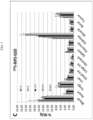
- Kidney uptake (39.09 ⁇ 2.96 %ID/g) was lower at 24 h post injection than observed for 131 I-RPS-001, but clearance was considerably slower. In combination with the comparatively low tumor uptake of approximately 10% (9.37 ⁇ 1.56 %ID/g at 24 h; 10.82 ⁇ 2.64 %ID/g at 96 h), these pharmacokinetics result in poor tumor-to-background ratios at all time points.
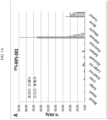
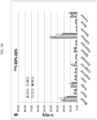
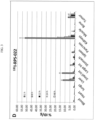
- I-RPS-027 showed a promising biodistribution profile over the time period studied ( FIG. 4 ).
- Activity in the blood at 1 h post injection was 3.91 ⁇ 0.48 %ID/g, which decreased to 0.58 ⁇ 0.17 %ID/g by 24 h.
- Initial uptake was also observed in the liver (6.79 ⁇ 0.70 %ID/g; 1 h), small intestine (8.01 ⁇ 0.78 %ID/g; 1 h), large intestine (8.56 ⁇ 1.67 %ID/g; 3 h), spleen (4.13 ⁇ 1.37 %ID/g; 1 h) and heart (1.30 ⁇ 0.04 %ID/g; 1 h).
- tumor uptake (12.41 ⁇ 0.84 %ID/g; 3 h) was lower than for 131 I-RPS-001, tumor uptake remained as high as 8.13 ⁇ 2.03 %ID/g at 24 h and 3.05 ⁇ 1.30 %ID/g at 72 h, leading to excellent tumor-to-background and tumor-to-kidney (> 2) ratios as early as 18 h post injection. While tumor uptake of 131 I-RPS-027 was roughly 50% of that for 131 I-RPS-001 at all time points studied, the kidney concentration of 131 I-RPS-027 was fivefold less than that for 131 I-RPS-001.
- Desirable pharmacokinetics continued to be observed at longer time points for 131 I-RPS-027 ( FIG. 4 ).
- Activity in the blood remained detectable up to 48 h post injection (0.20 ⁇ 0.06 %ID/g), while tumor-to-background ratio continued to increase due to rapid clearance from the kidney (1.04 ⁇ 0.65 %ID/g at 48 h).
- These in vivo findings were visually recapitulated by ⁇ PET/CT imaging of LNCaP xenograft mice using 124 I-RPS-027.
- Initial uptake in the tumor, kidneys and hepatobiliary system is evident at 1 h ( FIG. 5 ), with clearance from non-target tissue resulting in highly specific tumor targeting at 24 h and 48 h post injection.
- Time-activity curves were plotted to facilitate a greater understanding of the pharmacokinetic profile of the dual binding ligands.
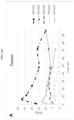
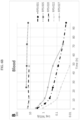
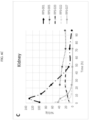
- Uptake in the tumor, the blood and the kidneys is plotted in FIGs. 6A-6C .
- the highest tumor uptake is observed for 131 I-RPS-001, and the kinetics of tumor washout are similar for the three compounds with lower affinity for albumin ( FIG. 6A ).
- the level of activity in the tumor remains most steady in the two ligands with highest albumin binding ( FIG. 6A ). Striking differences are apparent in the rate of blood clearance among the various compounds studied, with 131 I-RPS-005 and 131 I-RPS-020, both having high affinity for albumin, showing minimal blood clearance over 48 h and beyond ( FIG.
- the clearance kinetics of 131 I-RPS-001, 131 I-RPS-022 and 131 I-RPS-027 reflect their relative affinities for albumin, with 131 I-RPS-022 clearing most quickly and 131 I-RPS-027 clearing most gradually.
- Blood curves show a rapid initial distribution phase followed by a slower elimination phase.
- t 1/2 for the distribution phase was 2.17 h, 2.1 h and 3.15 h for 131 I-RPS-001, 131 I-RPS-022 and 131 I-RPS-027, respectively, while the corresponding t 1/2 for the elimination phase was 20.38 h, 17.3 h and 21.66 h.
- the half-lives for distribution and elimination phases for 131 I-RPS-020 were 3.85 h and 3,300 h, respectively.
- Kidney clearance is approximately described by an exponential decay function for 131 I-RPS-001, 131 I-RPS-022 and 131 I-RPS-027 ( FIG. 6C ).
- 131 I-RPS-005 and 131 I-020 show prolonged retention and much flatter clearance curves.
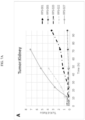
- Tumor-to-kidney (T/K) and tumor-to-blood (T/B) ratios were calculated as a function of time. The T/K ratio of 131 I-RPS-027 reaches approximately 3 by 24 h and continues to increase with time ( FIG. 7A ).
- the T/K ratio of 131 I-RPS-001 does not reach 3 until nearly 96 h post injection.
- the T/K ratio of 131 I-RPS-022 also increases rapidly, particularly at earlier time points (> 1 at 12 h post injection), but this is driven more by rapid kidney clearance than by tumor uptake.
- the tumor-to-blood ratio of 131 I-RPS-027 is lower than 131 I-RPS-001 ( FIG. 7B ), predominantly reflecting enhanced albumin binding.
- 131 I-RPS-027 shows considerably lower kidney uptake at all time points from 1 h to 72 h post injection.
- PSMA prostate-specific membrane antigen
- 131 I-MIP-1095 (alternately described herein as 131 I-RPS-001) and 131 I-RPS-027 at 24 h is 20-fold.
- the lower kidney uptake of 131 I-RPS-027 projects to a significantly lower absorbed dose to the kidney, and a reduced risk of relevant nephrotoxicity at therapeutic doses or under a multiple treatment cycle regime.
- the tumor-to-kidney ratio for 131 I-RPS-027 is greater than 2 as soon as 18 h post injection, rises to 3 by 24 h and exceeds 7 by 72 h.
Landscapes
- Health & Medical Sciences (AREA)
- Life Sciences & Earth Sciences (AREA)
- Chemical & Material Sciences (AREA)
- Organic Chemistry (AREA)
- Engineering & Computer Science (AREA)
- General Health & Medical Sciences (AREA)
- Medicinal Chemistry (AREA)
- Immunology (AREA)
- Molecular Biology (AREA)
- Urology & Nephrology (AREA)
- Hematology (AREA)
- Biomedical Technology (AREA)
- Animal Behavior & Ethology (AREA)
- Veterinary Medicine (AREA)
- Public Health (AREA)
- Pharmacology & Pharmacy (AREA)
- Physics & Mathematics (AREA)
- Epidemiology (AREA)
- Cell Biology (AREA)
- Biochemistry (AREA)
- Food Science & Technology (AREA)
- Biotechnology (AREA)
- Pathology (AREA)
- Microbiology (AREA)
- General Physics & Mathematics (AREA)
- Analytical Chemistry (AREA)
- Proteomics, Peptides & Aminoacids (AREA)
- Optics & Photonics (AREA)
- Oncology (AREA)
- Chemical Kinetics & Catalysis (AREA)
- General Chemical & Material Sciences (AREA)
- Nuclear Medicine, Radiotherapy & Molecular Imaging (AREA)
- Reproductive Health (AREA)
- Bioinformatics & Cheminformatics (AREA)
- Biophysics (AREA)
- Endocrinology (AREA)
- Pharmaceuticals Containing Other Organic And Inorganic Compounds (AREA)
- Medicines That Contain Protein Lipid Enzymes And Other Medicines (AREA)
- Organic Low-Molecular-Weight Compounds And Preparation Thereof (AREA)
- Acyclic And Carbocyclic Compounds In Medicinal Compositions (AREA)
Applications Claiming Priority (3)
| Application Number | Priority Date | Filing Date | Title |
|---|---|---|---|
| US201662353735P | 2016-06-23 | 2016-06-23 | |
| PCT/US2017/038832 WO2017223357A1 (fr) | 2016-06-23 | 2017-06-22 | Constructions à double ciblage destinées à influencer l'élimination des tumeurs |
| EP17816235.0A EP3474903B1 (fr) | 2016-06-23 | 2017-06-22 | Constructions à double ciblage destinées à influencer l'élimination des tumeurs |
Related Parent Applications (1)
| Application Number | Title | Priority Date | Filing Date |
|---|---|---|---|
| EP17816235.0A Division EP3474903B1 (fr) | 2016-06-23 | 2017-06-22 | Constructions à double ciblage destinées à influencer l'élimination des tumeurs |
Publications (2)
| Publication Number | Publication Date |
|---|---|
| EP4520745A2 true EP4520745A2 (fr) | 2025-03-12 |
| EP4520745A3 EP4520745A3 (fr) | 2025-05-14 |
Family
ID=60675799
Family Applications (2)
| Application Number | Title | Priority Date | Filing Date |
|---|---|---|---|
| EP25153047.3A Pending EP4520745A3 (fr) | 2016-06-23 | 2017-06-22 | Constructions à double ciblage visant à affecter l'élimination de tumeurs |
| EP17816235.0A Active EP3474903B1 (fr) | 2016-06-23 | 2017-06-22 | Constructions à double ciblage destinées à influencer l'élimination des tumeurs |
Family Applications After (1)
| Application Number | Title | Priority Date | Filing Date |
|---|---|---|---|
| EP17816235.0A Active EP3474903B1 (fr) | 2016-06-23 | 2017-06-22 | Constructions à double ciblage destinées à influencer l'élimination des tumeurs |
Country Status (10)
| Country | Link |
|---|---|
| US (4) | US10179117B2 (fr) |
| EP (2) | EP4520745A3 (fr) |
| JP (3) | JP7317505B2 (fr) |
| KR (2) | KR102864909B1 (fr) |
| CN (2) | CN109843339B (fr) |
| AU (2) | AU2017281364B2 (fr) |
| CA (1) | CA3028978A1 (fr) |
| IL (1) | IL263863B (fr) |
| SG (1) | SG11201811482YA (fr) |
| WO (1) | WO2017223357A1 (fr) |
Families Citing this family (10)
| Publication number | Priority date | Publication date | Assignee | Title |
|---|---|---|---|---|
| US10806806B2 (en) | 2016-06-23 | 2020-10-20 | Cornell University | Trifunctional constructs with tunable pharmacokinetics useful in imaging and anti-tumor therapies |
| AU2017311510B2 (en) | 2016-08-10 | 2021-11-18 | Cancer Targeted Technology Llc | Chelated PSMA inhibitors |
| MX2019005742A (es) * | 2016-11-23 | 2019-09-13 | Cancer Targeted Tech Llc | Inhibidores de antigeno de membrana especifico de la prostata (psma) de union a albumina. |
| WO2018204477A1 (fr) | 2017-05-02 | 2018-11-08 | Cornell University | Procédés et réactifs pour ciblage de tumeur avec une efficacité améliorée et une toxicité réduite |
| WO2020139012A1 (fr) * | 2018-12-27 | 2020-07-02 | (주)퓨쳐켐 | Composé ciblant psma introduit par acide carboxylique et utilisation associée |
| CA3199581A1 (fr) * | 2020-11-30 | 2022-06-02 | Neil H. Bander | Immunotherapies anticancereuses favorisant un rejet hyper-aigu |
| CN114685599A (zh) * | 2020-12-30 | 2022-07-01 | 南京江原安迪科正电子研究发展有限公司 | 一种psma靶向抑制剂及放射性核素标记的psma靶向抑制剂、制备方法和用途 |
| KR20230173150A (ko) | 2021-04-20 | 2023-12-26 | 테라파워, 엘엘씨 | Ac-225 생성용 티타니아 기반 발생기 |
| CN115448856B (zh) * | 2022-09-30 | 2023-09-22 | 北京师范大学 | 一种用于靶向PSMA的EuK二聚体化合物、衍生物及其应用 |
| WO2025213026A1 (fr) * | 2024-04-04 | 2025-10-09 | Lantheus Medical Imaging, Inc. | Composés de liaison au psma marqués à l'astate -211 |
Citations (1)
| Publication number | Priority date | Publication date | Assignee | Title |
|---|---|---|---|---|
| US5672662A (en) | 1995-07-07 | 1997-09-30 | Shearwater Polymers, Inc. | Poly(ethylene glycol) and related polymers monosubstituted with propionic or butanoic acids and functional derivatives thereof for biotechnical applications |
Family Cites Families (31)
| Publication number | Priority date | Publication date | Assignee | Title |
|---|---|---|---|---|
| TW200607523A (en) | 2004-06-01 | 2006-03-01 | Domantis Ltd | Drug compositions, fusions and conjugates |
| WO2006091796A2 (fr) | 2005-02-22 | 2006-08-31 | Acucela, Inc. | Compositions et methodes destinees au diagnostic et au traitement de maladies retiniennes |
| GB0621973D0 (en) | 2006-11-03 | 2006-12-13 | Philogen Spa | Binding molecules and uses thereof |
| EP2097111B1 (fr) | 2006-11-08 | 2015-07-15 | Molecular Insight Pharmaceuticals, Inc. | Hétérodimères d'acide glutamique |
| US8562945B2 (en) | 2008-01-09 | 2013-10-22 | Molecular Insight Pharmaceuticals, Inc. | Technetium- and rhenium-bis(heteroaryl) complexes and methods of use thereof |
| PT2318366T (pt) * | 2008-08-01 | 2017-08-02 | Univ Johns Hopkins | Agentes de ligação a psma e suas utilizações |
| WO2010032248A2 (fr) | 2008-09-17 | 2010-03-25 | Yeda Research And Development Co. Ltd. | Conjugués d'albumine multifonctionnels |
| JP2012511024A (ja) * | 2008-12-05 | 2012-05-17 | モレキュラ インサイト ファーマシューティカルズ インコーポレイテッド | 癌の治療及び撮像用のca−ix特異性放射性医薬品 |
| AU2012294639B2 (en) | 2011-08-05 | 2017-10-26 | Molecular Insight Pharmaceuticals, Inc. | Radiolabeled prostate specific membrane antigen inhibitors |
| CN103732595B (zh) | 2011-08-17 | 2017-02-08 | 默克及其合伙人公司 | 叶酸的白蛋白‑结合实体缀合物 |
| US20140079636A1 (en) | 2012-04-16 | 2014-03-20 | Dinesh U. Chimmanamada | Targeted therapeutics |
| EP3456700A1 (fr) | 2013-10-18 | 2019-03-20 | Deutsches Krebsforschungszentrum | Inhibiteurs marqués de l'antigène membranaire spécifique de la prostate (psma), leur utilisation comme agents d'imagerie et agents pharmaceutiques pour le traitement du cancer de la prostate |
| US10140408B2 (en) | 2015-09-04 | 2018-11-27 | Qualcomm Incorporated | Selectively encrypting content for distribution from a receiver device to a companion device |
| US20200231614A1 (en) * | 2015-10-22 | 2020-07-23 | The Johns Hopkins University | Psma targeted radiohalogenated ureas for cancer radiotherapy |
| US10806806B2 (en) | 2016-06-23 | 2020-10-20 | Cornell University | Trifunctional constructs with tunable pharmacokinetics useful in imaging and anti-tumor therapies |
| EP3609541A4 (fr) | 2017-04-05 | 2021-04-07 | Cornell University | Constructions trifonctionnelles avec pharmacocinétiques réglables utiles dans les thérapies d'imagerie et antitumorales |
| US11400165B2 (en) | 2017-11-04 | 2022-08-02 | Advanced Proteome Therapeutics Inc. | Composition and method for modifying polypeptides |
| SG11202109761TA (en) | 2019-04-03 | 2021-10-28 | Tarveda Therapeutics Inc | Hsp90-binding conjugates and formulations thereof |
| BR112021022237A2 (pt) | 2019-05-10 | 2022-03-29 | Janssen Biotech Inc | Queladores macrocíclicos e métodos de uso dos mesmos |
| CA3070610A1 (fr) | 2020-01-31 | 2021-07-31 | Humphrey FONGE | Methodes et compositions pour cibler des recepteurs de surface de cellule lies a une maladie au moyen d`anticorps radioetiquetes et/ou etiquetes pour la cytotoxine |
| US12151004B2 (en) | 2020-01-31 | 2024-11-26 | University Of Saskatchewan | Methods and compositions for targeting disease related cell surface receptors using radiolabeled and/or cytotoxin labelled antibodies |
| US20220143228A1 (en) | 2020-10-22 | 2022-05-12 | Actinium Pharmaceuticals, Inc. | Her3 radioimmunotherapy for the treatment of solid cancers |
| UY39510A (es) | 2020-11-10 | 2022-05-31 | Janssen Biotech Inc | Compuestos macrocíclicos y métodos para usarlos |
| JP2024503924A (ja) | 2021-01-27 | 2024-01-29 | ヤンセン バイオテツク,インコーポレーテツド | カリクレイン関連ペプチダーゼ2抗原結合ドメインを含む免疫コンジュゲート及びその使用 |
| GEAP202316335A (en) | 2021-02-01 | 2023-10-10 | Bayer Ag | Multimeric chelator compounds for use in targeted radiotherapy |
| US20230011134A1 (en) | 2021-05-27 | 2023-01-12 | Janssen Biotech, Inc. | Compositions and methods for the treatment of prostate cancer |
| KR20240053607A (ko) | 2021-08-27 | 2024-04-24 | 얀센 바이오테크 인코포레이티드 | 항-psma 방사성 접합체 및 이의 용도 |
| AU2022333321A1 (en) | 2021-08-27 | 2024-04-11 | Janssen Biotech, Inc. | Anti-psma antibodies and uses thereof |
| CN118317957A (zh) | 2021-09-29 | 2024-07-09 | 墨尔本大学 | 在靶向放射疗法应用中作为配体的含大环的化合物和其放射性标记的络合物 |
| CA3240194A1 (fr) | 2021-11-09 | 2023-05-19 | Edward Cleator | Composes macrocycliques et leurs procedes de fabrication |
| JP2024543046A (ja) | 2021-11-09 | 2024-11-19 | ヤンセン バイオテツク,インコーポレーテツド | 大環状化合物及びその診断上の使用 |
-
2017
- 2017-06-22 CN CN201780046339.7A patent/CN109843339B/zh active Active
- 2017-06-22 EP EP25153047.3A patent/EP4520745A3/fr active Pending
- 2017-06-22 US US15/630,808 patent/US10179117B2/en active Active
- 2017-06-22 EP EP17816235.0A patent/EP3474903B1/fr active Active
- 2017-06-22 JP JP2018567684A patent/JP7317505B2/ja active Active
- 2017-06-22 KR KR1020237009535A patent/KR102864909B1/ko active Active
- 2017-06-22 WO PCT/US2017/038832 patent/WO2017223357A1/fr not_active Ceased
- 2017-06-22 CA CA3028978A patent/CA3028978A1/fr active Pending
- 2017-06-22 AU AU2017281364A patent/AU2017281364B2/en active Active
- 2017-06-22 CN CN202310698783.4A patent/CN117069621A/zh active Pending
- 2017-06-22 KR KR1020197001426A patent/KR102513698B1/ko active Active
- 2017-06-22 SG SG11201811482YA patent/SG11201811482YA/en unknown
-
2018
- 2018-12-20 IL IL263863A patent/IL263863B/en unknown
-
2019
- 2019-01-11 US US16/246,422 patent/US10716772B2/en active Active
-
2020
- 2020-06-19 US US16/906,956 patent/US12186288B2/en active Active
-
2023
- 2023-04-04 JP JP2023060583A patent/JP2023103205A/ja active Pending
- 2023-06-08 AU AU2023203581A patent/AU2023203581B2/en active Active
-
2025
- 2025-01-06 US US19/011,473 patent/US20260091008A1/en active Pending
- 2025-07-10 JP JP2025116381A patent/JP2025148450A/ja active Pending
Patent Citations (1)
| Publication number | Priority date | Publication date | Assignee | Title |
|---|---|---|---|---|
| US5672662A (en) | 1995-07-07 | 1997-09-30 | Shearwater Polymers, Inc. | Poly(ethylene glycol) and related polymers monosubstituted with propionic or butanoic acids and functional derivatives thereof for biotechnical applications |
Non-Patent Citations (24)
| Title |
|---|
| BACCALA ASERCIA LLI JHESTON WZHOU M.: "Expression of prostate-specific membrane antigen in tumor-associated neovasculature of renal neoplasms.", UROLOGY., vol. 70, no. 2, August 2007 (2007-08-01), pages 385 - 90, XP022249479, DOI: 10.1016/j.urology.2007.03.025 |
| CHANG SSREUTER VEHESTON WDBANDER NHGRAUER LSGAUDIN PB.: "Five different anti-prostate-specific membrane antigen (PSMA) antibodies confirm PSMA expression in tumor-associated neovasculature.", CANCER RES., vol. 59, no. 13, 1 July 1999 (1999-07-01), pages 3192 - 8 |
| CHEN JHAGE DS., ANAL CHEM., vol. 78, 2006, pages 2672 - 2683 |
| CHEN JHAGE DS: "Quantitative studies of allosteric effects by biointeraction chromatography: analysis of protein binding for low-solubility drugs.", ANAL CHEM., vol. 78, 2006, pages 2672 - 2683 |
| CHEN YFOSS CABYUN Y ET AL.: "Radiohalogenated prostate-specific membrane antigen (PSMA)-based ureas as imaging agents for prostate cancer.", J MED CHEM., vol. 51, 2008, pages 7933 - 7943, XP002614473, DOI: 10.1021/JM801055H |
| FENDLER WPREINHARDT SILHAN H ET AL.: "Preliminary experience with dosimetry, response and patient reported outcome after Lu-PSMA-617 therapy for metastatic castration-resistant prostate cancer.", ONCOTARGET., vol. 8, 2017, pages 3581 - 3590 |
| GREENE, T.W.WUTS, P. G. M.: "Protective Groups in Organic Synthesis", 1999, JOHN WILEY & SONS |
| HAFFNER MCKRONBERGER IEROSS JSSHEEHAN CEZITT MMÜHLMANN GOFNER DZELGER BENSINGER CYANG XJ: "Prostate-specific membrane antigen expression in the neovasculature of gastric and colorectal cancers", HUM PATHOL, vol. 40, no. 12, December 2009 (2009-12-01), pages 1754 - 61, XP026750081, DOI: 10.1016/j.humpath.2009.06.003 |
| HILLIER SRUBINO KMARESCA K ET AL.: "I]MIP-1466, a small molecule prostate-specific membrane antigen (PSMA) inhibitor for targeted radiotherapy of prostate cancer (PCa).", J NUCL MED., vol. 53, 2012, pages 170 |
| JOSEPH KSHAGE DS: "The effects of glycation on the binding of human serum albumin to warfarin and L-tryptophan.", J PHARM BIOMED ANAL., vol. 53, 2010, pages 811 - 818, XP027147862 |
| KELLY JAMOR-COARASA ANIKOLOPOULOU A ET AL.: "Synthesis and pre-clinical evaluation of a new class of high-affinity F-labeled PSMA ligands for detection of prostate cancer by PET imaging.", EUR J NUCL MED MOL IMAGING., vol. 44, 2017, pages 647 - 661 |
| KELLY, J.M., AMOR-COARASA, A., NIKOLOPOULOU' A., WÜSTEMANN' T., BARELLI, P., KIM, D., WILLIAMS, C. JR, ZHENG, X., BI, C., HU, B., : "Double Targeting Ligands with Modulated Pharmacokinetics for Endoradiotherapy of Prostate Cancer", J. NUCL. MED., 27 April 2017 (2017-04-27) |
| KIESS APMINN IVAIDYANATHAN G ET AL.: "2S)-2-(3-(1-Carboxy-5-(4-[211At]astatobenzamido)pentyl)ureido)-pentanedioic acid for PSMA-targeted a-particle radiopharmaceutical therapy.", J NUCL MED., vol. 57, 2016, pages 1569 - 1575, XP055449801, DOI: 10.2967/jnumed.116.174300 |
| KRATOCHWIL CBRUCHERTSEIFER FGIESEL FL ET AL.: "Ac-PSMA-617 for PSMA targeting alpha-radiation therapy of patients with metastatic castration-resistant prostate cancer", J NUCL MED, vol. 57, 2016, pages 1941 - 1944 |
| KRATOCHWIL CGIESEL FLSTEFANOVA M ET AL.: "PSMA-Targeted Radionuclide Therapy of Metastatic Castration-Resistant Prostate Cancer with Lu-Labeled PSMA-617", J NUCLMED., vol. 57, 2016, pages 1170 - 1176, XP055926259, DOI: 10.2967/jnumed.115.171397 |
| MARESCA KPHILLIER SMFEMIA FJBARONE DKCJOYAL JLZIMMERMAN CNKOZIKOWSKI APBARRETT JAECKELMAN WCBABICH JW.: "A series of halogenated heterodimeric inhibitors of prostate specific membrane antigen (PSMA) as radiolabeled probes for targeting prostate cancer", J. MED. CHEM., vol. 52, 2009, pages 347 - 357, XP002614472, DOI: 10.1021/JM800994J |
| MATSUDA RANGUIZOLA JHOY KSHAGE DS: "Analysis of drug-protein interactions by high-performance affinity chromatography: interactions of sulfonyl urea drugs with normal and glycated human serum albumin.", METHODS MOL BIOL., vol. 1286, 2015, pages 255 - 277 |
| O'KEEFE DSBACICH DJHESTON WDW.: "Comparative analysis of prostate-specific membrane antigen (PSMA) versus a prostate-specific membrane antigen-like gene.", PROSTATE., vol. 58, 2004, pages 200 - 210, XP009056585, DOI: 10.1002/pros.10319 |
| SAMPLASKI MKHESTON WELSON PMAGI-GALLUZZI CHANSEL DE: "Folate hydrolase (prostate-specific membrane antigen) 1 expression in bladder cancer subtypes and associated tumor neovasculature.", MOD PATHOL., vol. 24, no. 11, November 2011 (2011-11-01), pages 1521 - 9, XP055953765, DOI: 10.1038/modpathol.2011.112 |
| WANG HLWANG SSSONG WHPAN YYU HPSI TGLIU YCUI XNGUO Z.: "Expression of prostate-specific membrane antigen in lung cancer cells and tumor neovasculature endothelial cells and its clinical significance.", PLOS ONE., vol. 10, no. 5, 15 May 2015 (2015-05-15), pages e0125924 |
| WERNICKE AGKIM SLIU HBANDER NHPIROG EC: "Prostate-specific Membrane Antigen (PSMA) Expression in the Neovasculature of Gynecologic Malignancies: Implications for PSMA-targeted Therapy.", APPL IMMUNOHISTOCHEM MOL MORPHOL, 9 February 2016 (2016-02-09) |
| WÜSTEMANN TNIKOLOPOULOU AAMOR-COARASA A ET AL.: "Protecting salivary glands: displacement of off-target bound prostate-specific membrane antigen ligands.", EUR J NUCLMED MOL IMAGING., vol. 43, 2016, pages 15 |
| ZECHMANN CMAFSHAR-OROMIEH AARMOR T ET AL.: "Radiation dosimetry and first therapy results with a I/131I-labeled small molecule (MIP-1095) targeting PSMA for prostate cancer therapy.", EUR J NUCL MED MOL IMAGING., vol. 41, 2014, pages 1280 - 1292, XP093032318, DOI: 10.1007/s00259-014-2713-y |
| ZHENG XPODARIU MBI CHAGE DS: "Development of enhanced capacity affinity microcolumn by using a hybrid of protein cross-linking/modification and immobilization.", J. CHROMATOGR A, vol. 1400, 2015, pages 82 - 90, XP029240841, DOI: 10.1016/j.chroma.2015.04.051 |
Also Published As
Similar Documents
| Publication | Publication Date | Title |
|---|---|---|
| US20260091008A1 (en) | Double targeted constructs to affect tumor kill | |
| KR102724812B1 (ko) | 영상화 및 항종양 치료요법에 유용한 조정 가능한 약동학을 갖는 삼작용성 작제물 | |
| US12268759B2 (en) | Trifunctional constructs with tunable pharmacokinetics useful in imaging and anti-tumor therapies | |
| AU2017290664B2 (en) | 18F-labeled triazole containing PSMA inhibitors | |
| HK40007144B (en) | Double targeted constructs to affect tumor kill | |
| HK40007144A (en) | Double targeted constructs to affect tumor kill |
Legal Events
| Date | Code | Title | Description |
|---|---|---|---|
| PUAI | Public reference made under article 153(3) epc to a published international application that has entered the european phase |
Free format text: ORIGINAL CODE: 0009012 |
|
| STAA | Information on the status of an ep patent application or granted ep patent |
Free format text: STATUS: REQUEST FOR EXAMINATION WAS MADE |
|
| 17P | Request for examination filed |
Effective date: 20250121 |
|
| AC | Divisional application: reference to earlier application |
Ref document number: 3474903 Country of ref document: EP Kind code of ref document: P |
|
| AK | Designated contracting states |
Kind code of ref document: A2 Designated state(s): AL AT BE BG CH CY CZ DE DK EE ES FI FR GB GR HR HU IE IS IT LI LT LU LV MC MK MT NL NO PL PT RO RS SE SI SK SM TR |
|
| REG | Reference to a national code |
Ref country code: DE Ref legal event code: R079 Free format text: PREVIOUS MAIN CLASS: C07B0059000000 Ipc: C07C0275160000 |
|
| PUAL | Search report despatched |
Free format text: ORIGINAL CODE: 0009013 |
|
| AK | Designated contracting states |
Kind code of ref document: A3 Designated state(s): AL AT BE BG CH CY CZ DE DK EE ES FI FR GB GR HR HU IE IS IT LI LT LU LV MC MK MT NL NO PL PT RO RS SE SI SK SM TR |
|
| RIC1 | Information provided on ipc code assigned before grant |
Ipc: C07F 7/22 20060101ALI20250407BHEP Ipc: C07B 59/00 20060101ALI20250407BHEP Ipc: A61K 31/17 20060101ALI20250407BHEP Ipc: A61K 31/19 20060101ALI20250407BHEP Ipc: A61P 35/00 20060101ALI20250407BHEP Ipc: A61K 51/04 20060101ALI20250407BHEP Ipc: C07C 275/16 20060101AFI20250407BHEP |
|
| STAA | Information on the status of an ep patent application or granted ep patent |
Free format text: STATUS: EXAMINATION IS IN PROGRESS |
|
| 17Q | First examination report despatched |
Effective date: 20260319 |