EP4524097A1 - Procédé et installation de production d'un produit contenant de l'hydrogène en utilisant de l'ammoniac - Google Patents
Procédé et installation de production d'un produit contenant de l'hydrogène en utilisant de l'ammoniac Download PDFInfo
- Publication number
- EP4524097A1 EP4524097A1 EP23020430.7A EP23020430A EP4524097A1 EP 4524097 A1 EP4524097 A1 EP 4524097A1 EP 23020430 A EP23020430 A EP 23020430A EP 4524097 A1 EP4524097 A1 EP 4524097A1
- Authority
- EP
- European Patent Office
- Prior art keywords
- ammonia
- gas
- hydrogen
- oil
- water
- Prior art date
- Legal status (The legal status is an assumption and is not a legal conclusion. Google has not performed a legal analysis and makes no representation as to the accuracy of the status listed.)
- Withdrawn
Links
Images

Classifications
-
- C—CHEMISTRY; METALLURGY
- C01—INORGANIC CHEMISTRY
- C01B—NON-METALLIC ELEMENTS; COMPOUNDS THEREOF; METALLOIDS OR COMPOUNDS THEREOF NOT COVERED BY SUBCLASS C01C
- C01B3/00—Hydrogen; Gaseous mixtures containing hydrogen; Separation of hydrogen from mixtures containing it; Purification of hydrogen; Reversible storage of hydrogen
- C01B3/02—Production of hydrogen; Production of gaseous mixtures containing hydrogen
- C01B3/04—Production of hydrogen; Production of gaseous mixtures containing hydrogen by decomposition of inorganic compounds
- C01B3/047—Decomposition of ammonia
-
- B—PERFORMING OPERATIONS; TRANSPORTING
- B01—PHYSICAL OR CHEMICAL PROCESSES OR APPARATUS IN GENERAL
- B01D—SEPARATION
- B01D53/00—Separation of gases or vapours; Recovering vapours of volatile solvents from gases; Chemical or biological purification of waste gases, e.g. engine exhaust gases, smoke, fumes, flue gases, aerosols
- B01D53/02—Separation of gases or vapours; Recovering vapours of volatile solvents from gases; Chemical or biological purification of waste gases, e.g. engine exhaust gases, smoke, fumes, flue gases, aerosols by adsorption, e.g. preparative gas chromatography
- B01D53/04—Separation of gases or vapours; Recovering vapours of volatile solvents from gases; Chemical or biological purification of waste gases, e.g. engine exhaust gases, smoke, fumes, flue gases, aerosols by adsorption, e.g. preparative gas chromatography with stationary adsorbents
- B01D53/0462—Temperature swing adsorption
-
- B—PERFORMING OPERATIONS; TRANSPORTING
- B01—PHYSICAL OR CHEMICAL PROCESSES OR APPARATUS IN GENERAL
- B01D—SEPARATION
- B01D53/00—Separation of gases or vapours; Recovering vapours of volatile solvents from gases; Chemical or biological purification of waste gases, e.g. engine exhaust gases, smoke, fumes, flue gases, aerosols
- B01D53/02—Separation of gases or vapours; Recovering vapours of volatile solvents from gases; Chemical or biological purification of waste gases, e.g. engine exhaust gases, smoke, fumes, flue gases, aerosols by adsorption, e.g. preparative gas chromatography
- B01D53/04—Separation of gases or vapours; Recovering vapours of volatile solvents from gases; Chemical or biological purification of waste gases, e.g. engine exhaust gases, smoke, fumes, flue gases, aerosols by adsorption, e.g. preparative gas chromatography with stationary adsorbents
- B01D53/047—Pressure swing adsorption
-
- B—PERFORMING OPERATIONS; TRANSPORTING
- B01—PHYSICAL OR CHEMICAL PROCESSES OR APPARATUS IN GENERAL
- B01D—SEPARATION
- B01D53/00—Separation of gases or vapours; Recovering vapours of volatile solvents from gases; Chemical or biological purification of waste gases, e.g. engine exhaust gases, smoke, fumes, flue gases, aerosols
- B01D53/22—Separation of gases or vapours; Recovering vapours of volatile solvents from gases; Chemical or biological purification of waste gases, e.g. engine exhaust gases, smoke, fumes, flue gases, aerosols by diffusion
-
- C—CHEMISTRY; METALLURGY
- C01—INORGANIC CHEMISTRY
- C01C—AMMONIA; CYANOGEN; COMPOUNDS THEREOF
- C01C1/00—Ammonia; Compounds thereof
- C01C1/02—Preparation, purification or separation of ammonia
- C01C1/024—Purification
-
- B—PERFORMING OPERATIONS; TRANSPORTING
- B01—PHYSICAL OR CHEMICAL PROCESSES OR APPARATUS IN GENERAL
- B01D—SEPARATION
- B01D2256/00—Main component in the product gas stream after treatment
- B01D2256/16—Hydrogen
-
- B—PERFORMING OPERATIONS; TRANSPORTING
- B01—PHYSICAL OR CHEMICAL PROCESSES OR APPARATUS IN GENERAL
- B01D—SEPARATION
- B01D2257/00—Components to be removed
- B01D2257/10—Single element gases other than halogens
- B01D2257/102—Nitrogen
-
- B—PERFORMING OPERATIONS; TRANSPORTING
- B01—PHYSICAL OR CHEMICAL PROCESSES OR APPARATUS IN GENERAL
- B01D—SEPARATION
- B01D2257/00—Components to be removed
- B01D2257/40—Nitrogen compounds
- B01D2257/406—Ammonia
-
- C—CHEMISTRY; METALLURGY
- C01—INORGANIC CHEMISTRY
- C01B—NON-METALLIC ELEMENTS; COMPOUNDS THEREOF; METALLOIDS OR COMPOUNDS THEREOF NOT COVERED BY SUBCLASS C01C
- C01B2203/00—Integrated processes for the production of hydrogen or synthesis gas
- C01B2203/02—Processes for making hydrogen or synthesis gas
- C01B2203/0266—Processes for making hydrogen or synthesis gas containing a decomposition step
- C01B2203/0277—Processes for making hydrogen or synthesis gas containing a decomposition step containing a catalytic decomposition step
-
- C—CHEMISTRY; METALLURGY
- C01—INORGANIC CHEMISTRY
- C01B—NON-METALLIC ELEMENTS; COMPOUNDS THEREOF; METALLOIDS OR COMPOUNDS THEREOF NOT COVERED BY SUBCLASS C01C
- C01B2203/00—Integrated processes for the production of hydrogen or synthesis gas
- C01B2203/10—Catalysts for performing the hydrogen forming reactions
- C01B2203/1041—Composition of the catalyst
- C01B2203/1047—Group VIII metal catalysts
-
- C—CHEMISTRY; METALLURGY
- C01—INORGANIC CHEMISTRY
- C01B—NON-METALLIC ELEMENTS; COMPOUNDS THEREOF; METALLOIDS OR COMPOUNDS THEREOF NOT COVERED BY SUBCLASS C01C
- C01B2203/00—Integrated processes for the production of hydrogen or synthesis gas
- C01B2203/12—Feeding the process for making hydrogen or synthesis gas
- C01B2203/1258—Pre-treatment of the feed
Definitions
- the invention relates to a process and a plant for obtaining a hydrogen-containing product using ammonia.
- Ammonia can be catalytically cracked (reformed) to nitrogen and hydrogen according to the reaction 2 NH 3 ⁇ N 2 + 3 H 2 .
- the reaction is endothermic and favored by low pressure and high temperature. However, higher pressures are desirable to avoid a hydrogen compressor.
- a hydrogen-nitrogen mixture (so-called forming gas) or pure hydrogen can be produced as a product from the cracking gas obtained during ammonia cracking, which consists largely of hydrogen and nitrogen as well as unreacted ammonia. Further use of the hydrogen or hydrogen-nitrogen mixture, for example in a gas turbine coupled to a generator, is also possible. In all cases corresponding to embodiments of the invention, hydrogen is thus obtained from ammonia.
- the production of a hydrogen-containing product in the sense understood here does not preclude the production of a hydrogen-containing gas mixture, other products such as nitrogen, and/or subsequent use of the product.
- Corresponding process concepts can include a reaction unit (also called an ammonia cracker) similar to a reforming reactor, to which a pressure swing adsorption is assigned for hydrogen purification.
- a reaction unit also called an ammonia cracker
- a pressure swing adsorption is assigned for hydrogen purification.
- EP 4 112 539 A1 and the EP 4 112 540 A1 whose contents are included here in full.
- An ammonia cracker may comprise a furnace containing reaction tubes filled with catalyst material, as well as a waste heat recovery system.
- the furnace may be heated by one or more burners fired with imported fuel, which provide energy for the endothermic cracking of the ammonia flowing through the reaction tubes.
- the hydrogen is separated from the cracked gas obtained in the ammonia cracker using pressure swing adsorption, producing a residual gas that is used to fuel the ammonia cracker. Additional combustion capacity can be provided by the combustion of pure ammonia. Such concepts are particularly suitable for the production of high-purity hydrogen.
- Nickel-based catalysts can be used in ammonia crackers, which require cracking temperatures of more than 800°C.
- iron-based catalysts can be used more efficiently for ammonia cracking at temperatures as low as around 600°C, thus enabling more energy-efficient operation of the ammonia cracker and facilitating material selection and reactor design.
- the present invention has for its object to improve corresponding processes and plants for obtaining a hydrogen-containing product using ammonia.
- pressure level and "temperature level” to characterize pressures and temperatures. This is intended to express that corresponding pressures and temperatures in a corresponding system do not have to be used in the form of exact pressure or temperature values. However, such pressures and temperatures typically fluctuate within certain ranges, for example, within ⁇ 1%, 5%, 10%, 20%, or 25% of a mean value. Pressure levels and temperature levels can lie in disjoint ranges or in ranges that overlap. The same pressure level can, for example, still exist when unavoidable pressure losses occur. The same applies to temperature levels.
- the pressure levels specified here in bar are absolute pressures.
- the present invention and its embodiments solve a problem that can arise when using conventional iron-based catalysts for ammonia cracking.
- This problem is that these catalysts easily oxidize and lose their activity in the presence of water or oil.
- Iron-based catalysts are sensitive to oxygen-containing compounds (e.g., H2O , CO2 , etc.), which lead to faster decomposition of the catalyst.
- oxygen-containing compounds e.g., H2O , CO2 , etc.
- Even commercially available NH3 (“anhydrous" ammonia) which is normally used as a feedstock for ammonia cracking, contains a residual amount of water (0.2 to 0.5 wt. %) and oil ( ⁇ 5 ppmw). To extend the lifetime of the catalyst, these components must therefore be removed from the ammonia used.
- water and/or oil are removed from an ammonia feedstock to be fed to the ammonia cracker, particularly by adsorption. This can extend the lifetime of the iron-based catalyst, which offers energy advantages over conventional nickel-based catalysts due to the lower cracking temperature, and reduce maintenance and repair costs.
- the process can be advantageously used when the ammonia cracking is carried out at an elevated pressure level, in particular between 20 bar and 60 bar, and the ammonia feedstock freed from water and/or oil does not need to be compressed before being introduced into the ammonia cracker.
- a process is proposed for producing a hydrogen-containing product from an ammonia feed containing water and/or oil.
- Ammonia gas is converted in an ammonia cracker with catalytic support and heat input, in particular by an iron-based catalyst, to obtain a cracked gas containing unreacted ammonia as well as hydrogen and nitrogen.
- Water and/or oil are first removed from an ammonia feed to obtain an ammonia gas to be fed to the ammonia cracker.
- water and/or oil are removed from the ammonia feed by adsorption in an adsorber, yielding an ammonia gas that is enriched in ammonia and depleted in water and/or oil compared to the ammonia feed, and a tail gas that is depleted in ammonia and enriched in water and/or oil compared to the ammonia feed.
- the ammonia feed can flow through several adsorption layers comprising different adsorption materials.
- the removal of water and/or oil is carried out purely by adsorptive means, using pressure swing adsorption in a pressure swing adsorber and/or temperature swing adsorption in a temperature swing adsorber.
- a liquid ammonia feed is pressurized by means of a pump, i.e. brought to a higher pressure level, and then evaporated and superheated in a pretreatment unit before being subjected to the separation of water and/or oil according to the invention.
- a pressure swing adsorber used according to the invention for the removal of water and/or oil which is operated at a temperature between 5°C and 60°C during normal operation, is regenerated by reducing the pressure.
- a purge gas can be used for regeneration, which facilitates the desorption of the adsorbed substances at a pressure between 20 and 60 bar during the adsorption phase. Components supported.
- the pressure during regeneration is preferably reduced to 4 bar, 2.5 bar, or 1.5 bar.
- Temperature swing adsorbers are not regenerated by pressure reduction, but exclusively by purging with a warm regeneration gas.
- the regeneration gas can be an externally supplied gas, in particular nitrogen gas, a portion of the cracked gas obtained by ammonia cracking, or a portion of the hydrogen-containing product, with the regeneration gas being supplied to the absorber to be regenerated, in particular, at a temperature level of at least 95°C, or at least 100°C, or at least 110°C, and at most 250°C, or at most 275°C, or at most 300°C.
- the tail gas produced by the adsorber, or a portion thereof is combusted to provide at least a portion of the heat to be supplied to the ammonia cracker. This can increase the efficiency of the entire plant by utilizing the otherwise unused tail gas.
- the also proposed plant for producing a hydrogen-containing product is designed to carry out the process according to one of the presented process variants.
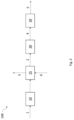
- FIG. 1 An embodiment of a system 100 according to the present invention is illustrated.
- a liquid ammonia feed 1 containing water and/or oil for example from a tank, is pressurized, i.e., brought to a higher pressure level, by means of a pump (not shown) if necessary, and is vaporized and superheated in a pretreatment unit 10.
- the vaporized and superheated ammonia feed 1 is then fed to an adsorber 15, in which water and/or oil are removed and an ammonia gas 2 enriched in ammonia and depleted in water and/or oil compared to the ammonia feed 1 and a tail gas 3 depleted in ammonia and enriched in water and/or oil compared to the ammonia feed 1 are produced.
- the ammonia gas 2 is fed to the ammonia cracker 20 and a cracked gas 4 consisting largely of ammonia, hydrogen and nitrogen.
- the adsorber 15 shown which may in particular have several different adsorption layers, is a temperature swing adsorber.
- a warm regeneration gas 6 is supplied to it, which in particular has a temperature level of at least 95°C or at least 100°C or at least 110°C and at most 250°C or at most 275°C or at most 300°C.
- a portion of the cracked gas 4 produced in the ammonia cracker 20 is used as regeneration gas 6.
- the ammonia gas 2 is converted at a temperature of approximately 600°C with the assistance of an iron-based catalyst. At least part of the heat required for the endothermic cracking reaction is provided by burning tail gas 3 generated in the adsorber 15 and fed to the ammonia cracker 20.
- the cracked gas 4 is fed, for example, to a cold trap in the processing device 30 to separate ammonia by condensation.
- the processing device 30 can also include a pressure swing adsorber, which, however, should not be necessary in addition to the cold trap due to the water and/or oil removed from the ammonia feed 1.
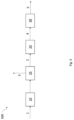
- the adsorber 15, which in turn is a temperature swing adsorber, is not regenerated by a part of the raw gas 4 produced by the ammonia cracker 20, but an external gas 6 is supplied to the temperature swing adsorber, which is in particular pure nitrogen gas that has previously been heated to a temperature level of at least 95°C or at least 100°C or at least 110°C and at most 250°C or at most 275°C or at most 300°C.
- the adsorber 15 is in the Figure 3
- the embodiment shown is a pressure swing adsorber.
- the pressure swing adsorber also produces an ammonia gas 2 that is enriched in ammonia and depleted in water and/or oil compared to the ammonia feed 1, and a tail gas 3 that is depleted in ammonia and enriched in water and/or oil compared to the ammonia feed 1.
Landscapes
- Chemical & Material Sciences (AREA)
- Analytical Chemistry (AREA)
- Organic Chemistry (AREA)
- Engineering & Computer Science (AREA)
- General Chemical & Material Sciences (AREA)
- Oil, Petroleum & Natural Gas (AREA)
- Chemical Kinetics & Catalysis (AREA)
- Inorganic Chemistry (AREA)
- Health & Medical Sciences (AREA)
- General Health & Medical Sciences (AREA)
- Combustion & Propulsion (AREA)
- Hydrogen, Water And Hydrids (AREA)
Priority Applications (1)
| Application Number | Priority Date | Filing Date | Title |
|---|---|---|---|
| EP23020430.7A EP4524097A1 (fr) | 2023-09-15 | 2023-09-15 | Procédé et installation de production d'un produit contenant de l'hydrogène en utilisant de l'ammoniac |
Applications Claiming Priority (1)
| Application Number | Priority Date | Filing Date | Title |
|---|---|---|---|
| EP23020430.7A EP4524097A1 (fr) | 2023-09-15 | 2023-09-15 | Procédé et installation de production d'un produit contenant de l'hydrogène en utilisant de l'ammoniac |
Publications (1)
| Publication Number | Publication Date |
|---|---|
| EP4524097A1 true EP4524097A1 (fr) | 2025-03-19 |
Family
ID=88197153
Family Applications (1)
| Application Number | Title | Priority Date | Filing Date |
|---|---|---|---|
| EP23020430.7A Withdrawn EP4524097A1 (fr) | 2023-09-15 | 2023-09-15 | Procédé et installation de production d'un produit contenant de l'hydrogène en utilisant de l'ammoniac |
Country Status (1)
| Country | Link |
|---|---|
| EP (1) | EP4524097A1 (fr) |
Citations (5)
| Publication number | Priority date | Publication date | Assignee | Title |
|---|---|---|---|---|
| CN108609583B (zh) * | 2018-05-29 | 2019-12-17 | 四川天采科技有限责任公司 | 一种led-mocvd制程高浓度含氨尾气全温程变压吸附制氢再利用方法 |
| CN108744882B (zh) * | 2018-05-29 | 2021-02-26 | 浙江天采云集科技股份有限公司 | 一种led-mocvd制程废气全温程变压吸附提氨再利用的方法 |
| EP3995444A1 (fr) * | 2020-11-04 | 2022-05-11 | Haldor Topsøe A/S | Procédé de craquage de l'ammoniac |
| EP4112539A1 (fr) | 2021-06-30 | 2023-01-04 | Linde GmbH | Procédé et dispositif de production d'hydrogène à partir d'ammoniac |
| EP4112540A1 (fr) | 2021-06-30 | 2023-01-04 | Linde GmbH | Procédé et dispositif de production d'hydrogène à partir d'ammoniac |
-
2023
- 2023-09-15 EP EP23020430.7A patent/EP4524097A1/fr not_active Withdrawn
Patent Citations (5)
| Publication number | Priority date | Publication date | Assignee | Title |
|---|---|---|---|---|
| CN108609583B (zh) * | 2018-05-29 | 2019-12-17 | 四川天采科技有限责任公司 | 一种led-mocvd制程高浓度含氨尾气全温程变压吸附制氢再利用方法 |
| CN108744882B (zh) * | 2018-05-29 | 2021-02-26 | 浙江天采云集科技股份有限公司 | 一种led-mocvd制程废气全温程变压吸附提氨再利用的方法 |
| EP3995444A1 (fr) * | 2020-11-04 | 2022-05-11 | Haldor Topsøe A/S | Procédé de craquage de l'ammoniac |
| EP4112539A1 (fr) | 2021-06-30 | 2023-01-04 | Linde GmbH | Procédé et dispositif de production d'hydrogène à partir d'ammoniac |
| EP4112540A1 (fr) | 2021-06-30 | 2023-01-04 | Linde GmbH | Procédé et dispositif de production d'hydrogène à partir d'ammoniac |
Similar Documents
| Publication | Publication Date | Title |
|---|---|---|
| EP4363372A1 (fr) | Procédé et appareil de production d'hydrogène à partir d'ammoniac | |
| DE2549439C2 (fr) | ||
| DE3751286T2 (de) | Verfahren für die Synthese von Ammoniak. | |
| DE102010008857A1 (de) | Verfahren zur Herstellung von Methanol | |
| DE102009034551A1 (de) | Verfahren und Anlage zur Herstellung von Methanol | |
| DE1545446C3 (de) | Mehrstufenverfahren zur Herstellung eines Wasserstoff, Kohlenmonoxyd, Kohlendioxyd und Methan enthaltenden Gases aus schwefelhaltigen Kohlenwasserstofffraktionen | |
| EP4031640B1 (fr) | Installation et procédé de fabrication de combustibles synthétiques sans eau douce | |
| EP3115336B1 (fr) | Installation et procede de refroidissement de gaz de synthese | |
| DE2345230C2 (de) | Verfahren zur Herstellung von künstlichem Erdgas | |
| EP3235785A1 (fr) | Procédé et installation pour la production d'un gaz synthétique au moyen de la réformation de vapeur catalytique d'un gaz d'alimentation contenant des hydrocarbures | |
| EP2898943B1 (fr) | Porcédé et dispositif pur l'obtention du dimethyléther à partir du gaz de synthèse | |
| EP3744416B1 (fr) | Procédé et installation de synthèse de méthanol | |
| EP4524097A1 (fr) | Procédé et installation de production d'un produit contenant de l'hydrogène en utilisant de l'ammoniac | |
| DE10156092A1 (de) | Verfahren zur katalytischen Methanolherstellung sowie Vorrichtung zur Duchführung des Verfahrens | |
| EP3124433A1 (fr) | Installation et procede de refroidissement de gaz de synthese | |
| DE3518362A1 (de) | Verfahren zur herstellung von methanol | |
| DE69612204T2 (de) | Verfahren zur katalytischen Konvertierung von Kohlenmonoxid mit hohem Wirkungsgrad | |
| EP4534475A1 (fr) | Procédé et installation pour obtenir un produit contenant de l'hydrogène en utilisant de l'ammoniac | |
| EP4566987A1 (fr) | Procédé et installation de décomposition d'ammoniac en utilisant de l'ammoniac | |
| EP4516728A1 (fr) | Procédé et installation de production d'un produit contenant de l'hydrogène en utilisant de l'ammoniac | |
| EP4474342A1 (fr) | Procédé et installation de production d'un produit contenant de l'hydrogène | |
| EP4549374A1 (fr) | Procédé et installation de production d'un produit contenant de l'hydrogène en utilisant de l'ammoniac | |
| EP3860946B1 (fr) | Procédé et dispositif pour la génération de produits gazeux en utilisant un convertisseur catalytique | |
| EP4559870A1 (fr) | Procédé et installation de production d'un produit contenant de l'hydrogène | |
| DE19954871A1 (de) | Verfahren zur Wasserstofferzeugung |
Legal Events
| Date | Code | Title | Description |
|---|---|---|---|
| PUAI | Public reference made under article 153(3) epc to a published international application that has entered the european phase |
Free format text: ORIGINAL CODE: 0009012 |
|
| STAA | Information on the status of an ep patent application or granted ep patent |
Free format text: STATUS: THE APPLICATION HAS BEEN PUBLISHED |
|
| AK | Designated contracting states |
Kind code of ref document: A1 Designated state(s): AL AT BE BG CH CY CZ DE DK EE ES FI FR GB GR HR HU IE IS IT LI LT LU LV MC ME MK MT NL NO PL PT RO RS SE SI SK SM TR |
|
| STAA | Information on the status of an ep patent application or granted ep patent |
Free format text: STATUS: THE APPLICATION IS DEEMED TO BE WITHDRAWN |
|
| 18D | Application deemed to be withdrawn |
Effective date: 20250920 |