EP4524171A1 - Résine à base de dicyclopentadiène hydrogéné, son procédé de préparation et composition d?agent de pégosité ou d'adhésif la comprenant - Google Patents
Résine à base de dicyclopentadiène hydrogéné, son procédé de préparation et composition d?agent de pégosité ou d'adhésif la comprenant Download PDFInfo
- Publication number
- EP4524171A1 EP4524171A1 EP23803671.9A EP23803671A EP4524171A1 EP 4524171 A1 EP4524171 A1 EP 4524171A1 EP 23803671 A EP23803671 A EP 23803671A EP 4524171 A1 EP4524171 A1 EP 4524171A1
- Authority
- EP
- European Patent Office
- Prior art keywords
- based resin
- dicyclopentadiene based
- hydrogenated
- hydrogenated dicyclopentadiene
- dicyclopentadiene
- Prior art date
- Legal status (The legal status is an assumption and is not a legal conclusion. Google has not performed a legal analysis and makes no representation as to the accuracy of the status listed.)
- Pending
Links
Images

Classifications
-
- C—CHEMISTRY; METALLURGY
- C08—ORGANIC MACROMOLECULAR COMPOUNDS; THEIR PREPARATION OR CHEMICAL WORKING-UP; COMPOSITIONS BASED THEREON
- C08F—MACROMOLECULAR COMPOUNDS OBTAINED BY REACTIONS ONLY INVOLVING CARBON-TO-CARBON UNSATURATED BONDS
- C08F232/00—Copolymers of cyclic compounds containing no unsaturated aliphatic radicals in a side chain, and having one or more carbon-to-carbon double bonds in a carbocyclic ring system
- C08F232/02—Copolymers of cyclic compounds containing no unsaturated aliphatic radicals in a side chain, and having one or more carbon-to-carbon double bonds in a carbocyclic ring system having no condensed rings
- C08F232/06—Copolymers of cyclic compounds containing no unsaturated aliphatic radicals in a side chain, and having one or more carbon-to-carbon double bonds in a carbocyclic ring system having no condensed rings having two or more carbon-to-carbon double bonds
-
- C—CHEMISTRY; METALLURGY
- C08—ORGANIC MACROMOLECULAR COMPOUNDS; THEIR PREPARATION OR CHEMICAL WORKING-UP; COMPOSITIONS BASED THEREON
- C08F—MACROMOLECULAR COMPOUNDS OBTAINED BY REACTIONS ONLY INVOLVING CARBON-TO-CARBON UNSATURATED BONDS
- C08F8/00—Chemical modification by after-treatment
- C08F8/04—Reduction, e.g. hydrogenation
-
- C—CHEMISTRY; METALLURGY
- C09—DYES; PAINTS; POLISHES; NATURAL RESINS; ADHESIVES; COMPOSITIONS NOT OTHERWISE PROVIDED FOR; APPLICATIONS OF MATERIALS NOT OTHERWISE PROVIDED FOR
- C09J—ADHESIVES; NON-MECHANICAL ASPECTS OF ADHESIVE PROCESSES IN GENERAL; ADHESIVE PROCESSES NOT PROVIDED FOR ELSEWHERE; USE OF MATERIALS AS ADHESIVES
- C09J145/00—Adhesives based on homopolymers or copolymers of compounds having no unsaturated aliphatic radicals in a side chain, and having one or more carbon-to-carbon double bonds in a carbocyclic or in a heterocyclic system; Adhesives based on derivatives of such polymers
Definitions
- the present disclosure relates to hydrogenated dicyclopentadiene based resin that is environmentally friendly and has excellent tackification/adhesion property, a preparation method thereof, and a composition for tackifier or adhesive comprising the same.
- Dicyclopentadiene (DCPD) based resin a kind of petroleum resin, is resin polymerized from monomer components comprising dicyclopentadiene, and hydrogenated dicyclopentadiene based resin is mixed with various polymers such as amorphous polyalphaolefin (APAO), ethylenevinyl acetate (EVA), styrenic block copolymers (SBCs), and the like and used as tackifying resin of tackifier or adhesive.
- APAO amorphous polyalphaolefin
- EVA ethylenevinyl acetate
- SBCs styrenic block copolymers
- hydrogenated dicyclopentadiene based resin obtained by polymerization of a monomer mixture comprising dicyclopentadiene and vegetable oil, and hydrogenation.
- the vegetable oil may be represented by the following Chemical Formula 1: in the Chemical Formula 1, R 1 to R 3 are each independently, C5-20 alkyl, and at least one of the R 1 to R 3 comprises one or more carbon-carbon double bonds.
- the content of the vegetable oil in the monomer mixture may be 5 wt% to 20 wt%.
- the monomer mixture may comprise dicyclopentadiene and vegetable oil at a weight ratio of 19:1 to 3:1.
- the vegetable oil may have unsaturated fatty acid content of 60 wt% to 90 wt%, in fatty acid.
- the hydrogenated dicyclopentadiene based resin may have an oxygen content of 0.1 wt% to 5 wt%.
- the hydrogenated dicyclopentadiene based resin may have a softening point of 70 °C to 120 °C.
- the hydrogenated dicyclopentadiene based may have heating loss of 3.5% or less.
- the hydrogenated dicyclopentadiene based resin may have a diacetone alcohol cloud point of 105 °C or less, and mixed methylcyclohexane-aniline point of 75 °C or less.
- a method for preparing hydrogenated dicyclopentadiene based resin comprising steps of: subjecting a monomer mixture comprising dicyclopentadiene and vegetable oil to thermal polymerization to prepare polymerized dicyclopentadiene based resin; and subjecting the polymerized dicyclopentadiene based resin to a hydrogenation.
- the content of dicyclopentadiene in the monomer mixture may be 80 to 95 wt%, and the content of vegetable oil may be 5 wt% to 20 wt%.
- the step of preparing the polymerized dicyclopentadiene based resin may comprise: a first polymerization stage wherein the monomer mixtures is subjected to thermal polymerization in a continuous stirred tank reactor (CSTR); and a second polymerization stage wherein the reaction product of the first stage polymerization is subjected to thermal polymerization in a plug flow reactor (PFR).
- CSTR continuous stirred tank reactor
- PFR plug flow reactor
- composition for tackifier or adhesive comprising the hydrogenated dicyclopentadiene based resin.
- the hydrogenated dicyclopentadiene based resin of the present disclosure comprises biobased materials, and thus, is environmentally friendly and simultaneously has excellent properties of heat resistance, tackification/adhesion property, it can be used usefully as tackifying resin of a composition for tackifier or adhesive.
- the hydrogenated dicyclopentadiene based resin according to one embodiment of the invention is obtained by polymerization of a monomer mixture comprising dicyclopentadiene and vegetable oil, and hydrogenation.
- the hydrogenated dicyclopentadiene based resin comprises moieties derived from dicyclopentadiene and moieties derived from vegetable oil.
- the dicyclopentadiene and vegetable oil comprise unsaturated bonds, while these monomers pass though polymerization and hydrogenation, at least a part of the unsaturated bonds included in the monomers may be converted to saturated bonds.
- the moieties derived from dicyclopentadiene included in the hydrogenated dicyclopentadiene based resin and the moieties derived from the vegetable oil may respectively comprise unsaturated bonds, or may not comprise unsaturated bonds.
- the inventors of the present disclosure tried to develop hydrogenated dicyclopentadiene based resin comprising biobased materials following recent tendencies of environment protection and development of environmentally friendly resin, and as the result, conducted polymerization using vegetable oil as comonomers with dicyclopentadiene, and confirmed that hydrogenated dicyclopentadiene based resin prepared by subjecting the obtained polymer to hydrogenation has properties equivalent to or more excellent that the existing dicyclopentadiene based resin, and completed the invention.
- the hydrogenated dicyclopentadiene based resin according to one embodiment of the invention exhibits superior heat resistance compared to the existing dicyclopentadiene based resin, and thus, it can be used usefully as environmentally friendly tackifying resin in a composition for tackifier or adhesive in need of high heat resistance.
- the dicyclopentadiene is used as main monomers, and commercial products having a purity of 75% or more, or 80% or more may be used.
- the vegetable oil is triglyceride comprising unsaturated fatty acid, derived from plants.
- the vegetable oil may be represented by the following Chemical Formula 1: in the Chemical Formula 1, R 1 to R 3 are each independently, C5-20 alkyl, and at least one of the R 1 to R 3 comprises one or more carbon-carbon double bonds.
- the kind of the vegetable oil is not specifically limited, for example, vegetable oils having unsaturated fatty acid content in fatty acid, of 60 wt% or more, or 70 wt% or more, and 90 wt% or more, may be used. Further, two or more kinds of vegetable oils may be used in combination as comonomers.
- the vegetable oil may be one or more selected from the group consisting of soybean oil, safflower oil, sunflower oil, walnut oil, corn oil, sesame oil, and peanut oil, but is not limited thereto, and various kinds of vegetable oils widely known may be used as comonomers for preparing hydrogenated dicyclopentadiene based resin according to one embodiment of the invention.
- the content of the vegetable oil may be 5 wt% or more, or 10 wt% or more, and 20 wt% or less, or 15 wt% or less.
- moieties derived from vegetable oil may be 5 wt% or more, or 10 wt% or more, and 20 wt% or less, or 15 wt% or less.
- the content of the moieties derived from vegetable oil is less than 5 wt% in the hydrogenated cyclopentadiene based resin, it may be difficult to regard the hydrogenated dicyclopentadiene based resin prepared as biobased resin, and if it is greater than 20 wt%, the softening point of the hydrogenated dicyclopentadiene based resin prepared may be lowered, and thus, although it may be suitable as liquid petroleum resin, it may not suitable as general-purpose petroleum.
- the monomer mixture may comprise dicyclopentadiene and vegetable oil at a weight ratio of 19:1 to 3:1.
- the weight ratio of the moieties derived from dicyclopentadiene and the moieties derived from vegetable oil may be 19:1 to 3:1.
- the ratio of dicyclopentadiene is too high, the ratio of the moieties derived from vegetable oil in hydrogenated dicyclopentadiene based resin may decrease, and thus, it may not serve as biobased resin.
- the ratio of vegetable oil is too high compared to dicyclopentadiene, the softening point of hydrogenated dicyclopentadiene based resin may be lowered, and thus, although it may be used as liquid petroleum resin, it may be difficult to utilize as general-purpose petroleum resin.
- the weight ratio of dicyclopentadiene and vegetable oil may be 17:1 to 3:1, or 16:1 to 3:1, and thus, the weight ratio of the moieties derived from dicyclopentadiene and the moieties derived from vegetable oil may be 17:1 to 3:1, or 16:1 to 3:1.
- the monomer mixture for preparation of the hydrogenated dicyclopentadiene based resin according to one embodiment of the invention may not further comprise other monomers, in addition to dicyclopentadiene and vegetable oil. That is, the hydrogenated dicyclopentadiene based resin may comprise only the moieties derived from dicyclopentadiene and the moieties derived from vegetable oil.
- the monomer mixture may further comprise comonomers in addition to dicyclopentadiene and vegetable oil. It is preferable that the content of the additional comonomers may be 30 wt% or less, or 20 wt% or less, based on 100wt% of the mixture.
- the hydrogenated dicyclopentadiene based resin may comprise the moieties derived from additional comonomers in the content of 30 wt% or less, or 20 wt% or less.
- comonomers conventionally used for the preparation of dicyclopentadiene based resin may be used without limitations, and for example, piperylene (PIP), styrene, or a combination thereof may be used.
- the weight average molecular weight (Mw) of the hydrogenated dicyclopentadiene based resin is not specifically limited, it may be, for example, 400 g/mol or more, or 500 g/mol or more, or 600 g/mol or more, or 650 g/mol or more, and 2000 g/mol or less, 1800 g/mol or less, 1600 g/mol or less, or 1500 g/mol or less.
- the polydispersity index (PDI) of the hydrogenated dicyclopentadiene based resin may be, for example, 1.0 or more, or 1.3 or more, or 1.5 or more, and 3.0 or less, 2.7 or less, or 2.5 or less.
- the weight average molecular weight (Mw) and polydispersity index of the hydrogenated dicyclopentadiene based resin may be measured using gel permeation chromatograph (GPC), as embodied in the following experimental examples.
- the hydrogenated dicyclopentadiene based resin is prepared using vegetable oil as comonomers, it may meet an oxygen content of 0.1 wt% or more.
- the oxygen content of the hydrogenated dicyclopentadiene based resin may be 0.1 wt% or more, 0.3 wt% or more, or 0.4 wt% or more, and 5 wt% or less, 3 wt% or less, 2.7 wt% or less.
- the hydrogenated dicyclopentadiene based resin according to one embodiment of the invention exhibits higher oxygen content compared to the existing dicyclopentadiene based resin, it may exhibit more excellent solubility to a polar solvent, and have improved compatibility with a polar substrate.
- the hydrogenated dicyclopentadiene based resin exhibits excellent solubility to a solvent.
- the hydrogenated dicyclopentadiene based resin may meet diacetone alcohol cloud point (DACP) of 105 °C or less, 104 °C or less, or 102 °C or less, and 60 °C or more, 70 °C or more, or 80 °C or more.
- DCP diacetone alcohol cloud point
- the hydrogenated dicyclopentadiene based resin may meet mixed methylcyclohexane-aniline point (MMAP) of 75 °C or less, or 72 °C or less, or 71 °C or less, and 50 °C or more, or 60 °C or more.
- MMAP mixed methylcyclohexane-aniline point
- the aforementioned hydrogenated dicyclopentadiene based resin may be prepared by a preparation method comprising steps of: subjecting a monomer mixture comprising dicyclopentadiene and vegetable oil to thermal polymerization to prepare polymerized dicyclopentadiene based resin; and subjecting the polymerized dicyclopentadiene based resin to hydrogenation.
- the vegetable oil included in the monomer mixture is as explained above.
- the monomer mixture may not further comprise other monomers, in addition to dicyclopentadiene and vegetable oil.
- the content of dicyclopentadiene in the monomer mixture may be 80 to 95 wt%, and the content of vegetable oil may be 5 wt% to 20 wt%.
- the content of dicyclopentadiene may be 80 to 95 wt%, and the content of vegetable oil may be 10 wt% to 15 wt%.
- the monomer mixture may further comprise additional comonomers in addition to dicyclopentadiene and vegetable oil, wherein the additional comonomers and the amount used are as explained above.
- the monomer mixture may be added to thermal polymerization while being dissolve in a solvent, namely, as a monomer composition.
- a solvent namely, as a monomer composition.
- the solvent that can be used in the preparation of the monomer composition is not specifically limited, and for example, one or more selected from the group consisting of pentane, hexane, heptane, nonane, decane, benzene, toluene, and xylene may be used.
- the monomer composition may further comprise additives commonly used in the technical field to which the invention pertains, such as an antioxidant, a polymerization inhibitor, and the like.
- a method for the thermal polymerization of the monomer mixture comprising dicyclopentadiene and vegetable oil is not specifically limited, for example, it may be prepared by a method comprising a) a first polymerization stage wherein the monomer mixtures is subjected to thermal polymerization in a continuous stirred tank reactor (CSTR); and b) a second polymerization stage wherein the reaction product of the first stage polymerization is subjected to thermal polymerization in a plug flow reactor (PFR).
- the monomer mixture may be used in the form of a monomer composition dissolved in a solvent.
- polymerization heat may be controlled, and conversion rate or polymerization rate of monomer may be remarkably improved, and dicyclopentadiene based resin having narrow molecular weight distribution and the resulting uniform properties may be provided.
- the reaction temperature (T 1 ) in the step a) may be 210 to 270 °C, or 220 to 270 °C. If polymerization is conducted at the above reaction temperature range, conversion rate or polymerization rate of monomers may be excellent, and side reactions such as crosslinking may be inhibited.
- the reaction pressure in the step a) may be 1 to 40 bar, or 5 to 35 bar, or 10 to 30 bar. If polymerization is conducted under the above reaction pressure, reactivity of monomers may be increased without generating safety accident.
- the reaction time in the step a) may be set to 10 to 90 minutes, or 20 to 80 minutes, or 30 to 70 minutes. If the reaction time is too short, inhibition of side reactions due to mixing of raw materials may be insufficient, and if the reaction time is too long, productivity of the final resin may decrease, and molecular weight distribution may become wide, and thus, it is preferable that the reaction time is controlled to the above-explained range.
- the reaction temperature(T 2 ) in the step b) may be in the range of ⁇ 30 °C of the reaction temperature (T 1 ) in the step a), namely T 1 -30 °C to T 1 +30 °C, or T 1 -20 °C to T 1 +20 °C, or T 1 -15 °C to T 1 +15 °C. If polymerization is conducted at the above reaction temperature range, side reactions may be inhibited, and productivity may be increased.
- step a) by controlling temperature difference between the step a) and the step b) within ⁇ 30 °C, generation of unreacted oligomers may be minimized, and dicyclopentadiene based resin with narrow molecular weight distribution may be prepared.
- the reaction pressure in the step b) may be 1 to 40 bar, or 5 to 35 bar, or 10 to 30 bar. If the reaction pressure is too low, reactivity may be low due to vaporized monomers, and if the pressure is too high, a risk of safety accident may be high during the process, and thus, it is preferable that the reaction pressure is controlled to the above explained range.
- the reaction time in the step b) may be 1 to 4 times, or 1 to 3 times, or 1 to 2 times of the reaction time in the step a). If the reaction time is too short compared to the reaction time of the step a), the reaction may not be sufficiently progressed, and if the reaction time is too long, side reactions may be generated, and thus, it is preferable that the reaction time is controlled to the above explained range.
- the hydrogenation, or hydrogenation addition is not specifically limited, and may be conducted according to any method known in the art.
- the hydrogenation is a reaction of adding hydrogen to unsaturated bonds such as double bonds to convert to single bonds, and through the hydrogenation, hydrogenated dicyclopentadiene based resin may be obtained from polymerized dicyclopentadiene based resin.
- the hydrogenation catalyst is not specifically limited, and any hydrogenated catalyst known in the art may be used. Specifically, one or more selected from the group of Ni, Fe, Cu, Co, Mo, Pd, Rh, Pt, Nb, Au, Rd, and Raney Ni may be used as the hydrogenation catalyst.
- the hydrogenation catalyst may be used in the content of 0.1 parts by weight or more, or 0.3 parts by weight or more, or 0.5 parts by weight or more, and 1.0 parts by weight or less, or 0.8 parts by weight or less, based on 100 parts by weight of the polymerized dicyclopentadiene based resin to improve reactivity, but the content is not limited thereto.
- the hydrogenation conditions are not specifically limited, and it may be conducted, for example, at 150 to 300 °C under pressure of 50 to 150 bar. In case hydrogenation is conducted under the above pressure and temperature, destruction of a molecular structure may be prevented.
- hydrogen gas may be continuously added so that the reaction pressure may be constantly maintained during hydrogenation.
- the above-explained hydrogenated dicyclopentadiene based resin may be used as hot melt adhesive or pressure sensitive adhesive, and the like, or it may be mixed with various base resin, for example, one or more base resin selected from the group consisting of ethylene-vinyl acetate resin, polyolefin-based resin, polyester based resin, styrene based resin, polyamide based resin, and ethylene-acryl based resin, and used as adhesive or tackfier. Further, it may serve as tackifying or adhesive resin in ink, pant, road marking paint, and the like.
- reaction time 67 minutes
- the polymerized product was decompressed at 260 °C for 30 minutes and polymerized dicyclopentadiene based resin was recovered.
- the polymerized dicyclopentadiene based resin was fed to a fixed bed reactor of 1.5 m length, packed with 0.5 wt% of heterogeneous palladium catalyst, based on 100 wt% of the polymerized dicyclopentadiene based resin, and subjected to hydrogenation at a reaction temperature of 250 °C, a reaction pressure of 100 bar, raw material flow rate of 40 ml/min, and hydrogen flow rate of 4 NMPL to prepare hydrogenated dicyclopentadiene based resin.
- Polymerized dicyclopentadiene based resin and hydrogenated dicyclopentadiene based resin were prepared by the same method as Example 1, except that 1350 g of dicylopentadiene, and 150 g of soybean oil were used as monomers, and CSTR reaction temperature was set to 270 °C and PFR reaction temperature was set to 280 °C.
- Polymerized dicyclopentadiene based resin and hydrogenated dicyclopentadiene based resin were prepared by the same method as Example 1, except that 1275 g of dicylopentadiene, and 225 g of soybean oil were used as monomers, and CSTR reaction temperature was set to 270 °C and PFR reaction temperature was set to 280 °C.
- Polymerized dicyclopentadiene based resin and hydrogenated dicyclopentadiene based resin were prepared by the same method as Example 1, except that 1200 g of dicylopentadiene, and 300 g of soybean oil were used as monomers, and CSTR reaction temperature was set to 275 °C and PFR reaction temperature was set to 280 °C.
- Soybean oil was fed to a fixed bed reactor of 1.5 m length, packed with heterogeneous palladium catalyst (0.5 wt%, based on 100 wt% of the polymerized dicyclopentadiene based resin), and subjected to hydrogenation at a reaction temperature of 250 °C, a reaction pressure of 100 bar, raw material flow rate of 40 ml/min, and hydrogen flow rate of 4 NMPL to prepare hydrogenated soybean oil.
- Hydrogenated soybean oil was prepared by the same method as Comparative Example 9, and 75 parts by weight of HC-100 (Hanwha solutions) and 25 parts by weight of the hydrogenated soybean oil were mixed and used as Comparative Example 10.
- Hydrogenated soybean oil was prepared by the same method as Comparative Example 9, and 85 parts by weight of HC-120 (Hanwha solutions) and 15 parts by weight of the hydrogenated soybean oil were mixed and used as Comparative Example 11.
- Hydrogenated soybean oil was prepared by the same method as Comparative Example 9, and 75 parts by weight of HC-120 (Hanwha solutions) and 25 parts by weight of the hydrogenated soybean oil were mixed and used as Comparative Example 11.
- Weight average molecular weight (polystyrene conversion, Mw), number average molecular weight (Mn), and Z-average molecular weight (Mz) were measured by gel permeation chromatography (GPC) (Viscotek TDA302 and Agilent 1200 series (Pump)).
- the resin to be measured was dissolved in tetrahydofuran to a concentration of 4000 pm and 100 ⁇
- a column Agilent PL Mixed C 2 set + PL 50 ⁇ was used.
- RI detector (Viscotek RI) was used to measure at 35 °C. Using a calibration curve formed after measuring polystyrene standard, Mw, Mn, and Mz values were derived.
- polystyrene standard 12 kinds with molecular weights of 104 / 118 / 236 / 580 / 1480 / 2340 / 2970 / 5030 / 8450 / 10850 / 20650 / 24600 were used.
- PDI polydispersity index
- DBP Diacetone Alcohol Cloud Point
- a mixed solution of 5 g of the resin, 5 g of methylcyclohexane, and 5 g of aniline was prepared. The solution was heated until it became transparent, and then, while cooling the solution, a temperature at which the solution turned cloudy was measured to obtain MMAP.
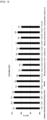
- SAFT Shear Adhesion Failure Temperature
- the SAFT measurement result of EVA hot melt was shown in Fig. 1
- the SAFT measurement result of mPO hot melt was shown in Fig. 2 .
- the resin of Comparative Example 5 was sticky and semi-solid state when mPO was used as base resin, and thus, mPO hot adhesive could not be manufactured.
Landscapes
- Chemical & Material Sciences (AREA)
- Organic Chemistry (AREA)
- Health & Medical Sciences (AREA)
- Chemical Kinetics & Catalysis (AREA)
- Medicinal Chemistry (AREA)
- Polymers & Plastics (AREA)
- General Chemical & Material Sciences (AREA)
- Addition Polymer Or Copolymer, Post-Treatments, Or Chemical Modifications (AREA)
- Compositions Of Macromolecular Compounds (AREA)
- Polymerisation Methods In General (AREA)
- Adhesives Or Adhesive Processes (AREA)
Applications Claiming Priority (3)
| Application Number | Priority Date | Filing Date | Title |
|---|---|---|---|
| KR20220057792 | 2022-05-11 | ||
| KR1020230027510A KR102833782B1 (ko) | 2022-05-11 | 2023-03-02 | 수첨 디사이클로펜타디엔계 수지, 이의 제조방법, 및 이를 포함하는 점접착제용 조성물 |
| PCT/KR2023/002943 WO2023219243A1 (fr) | 2022-05-11 | 2023-03-03 | Résine à base de dicyclopentadiène hydrogéné, son procédé de préparation et composition d'agent de pégosité ou d'adhésif la comprenant |
Publications (1)
| Publication Number | Publication Date |
|---|---|
| EP4524171A1 true EP4524171A1 (fr) | 2025-03-19 |
Family
ID=88730539
Family Applications (1)
| Application Number | Title | Priority Date | Filing Date |
|---|---|---|---|
| EP23803671.9A Pending EP4524171A1 (fr) | 2022-05-11 | 2023-03-03 | Résine à base de dicyclopentadiène hydrogéné, son procédé de préparation et composition d?agent de pégosité ou d'adhésif la comprenant |
Country Status (4)
| Country | Link |
|---|---|
| EP (1) | EP4524171A1 (fr) |
| JP (1) | JP2025515758A (fr) |
| CN (1) | CN119173549A (fr) |
| WO (1) | WO2023219243A1 (fr) |
Family Cites Families (9)
| Publication number | Priority date | Publication date | Assignee | Title |
|---|---|---|---|---|
| US5288805A (en) * | 1992-08-14 | 1994-02-22 | Cargill, Incorporated | Linseed oil based polymeric vehicle |
| US5948920A (en) * | 1996-12-11 | 1999-09-07 | Elf Atochem North America, Inc. | Epoxides from dicyclopentadiene--unsaturated oil copolymers |
| JP2000063425A (ja) * | 1998-06-10 | 2000-02-29 | Teijin Ltd | 水添α―オレフィン―ジシクロペンタジエン共重合体の製造方法 |
| EP1581607B1 (fr) * | 2002-05-02 | 2009-07-08 | Archer-Daniels-Midland Company | Huiles standolisees hydrogenees et partiellement hydrogenees |
| CN103360547B (zh) * | 2013-06-25 | 2014-06-11 | 朗盈科技(北京)有限公司 | 双环戊二烯加氢石油树脂生产系统及方法 |
| KR101805892B1 (ko) * | 2015-06-30 | 2017-12-07 | 코오롱인더스트리 주식회사 | 수소첨가 석유수지, 이의 제조방법 및 용도 |
| KR102294873B1 (ko) * | 2018-06-11 | 2021-08-27 | 한화솔루션 주식회사 | 디사이클로펜타디엔계 수지의 제조방법 |
| KR102373008B1 (ko) * | 2018-12-05 | 2022-03-11 | 한화솔루션 주식회사 | 디사이클로펜타디엔계 수지, 디사이클로펜타디엔계수첨 수지 및 이를 포함하는 접착수지 조성물 |
| KR20220059236A (ko) * | 2020-11-02 | 2022-05-10 | 코오롱인더스트리 주식회사 | 점착부여 수지, 이의 제조방법 및 이를 포함한 조성물 |
-
2023
- 2023-03-03 EP EP23803671.9A patent/EP4524171A1/fr active Pending
- 2023-03-03 CN CN202380039420.8A patent/CN119173549A/zh active Pending
- 2023-03-03 JP JP2024566405A patent/JP2025515758A/ja active Pending
- 2023-03-03 WO PCT/KR2023/002943 patent/WO2023219243A1/fr not_active Ceased
Also Published As
| Publication number | Publication date |
|---|---|
| CN119173549A (zh) | 2024-12-20 |
| JP2025515758A (ja) | 2025-05-20 |
| WO2023219243A1 (fr) | 2023-11-16 |
Similar Documents
| Publication | Publication Date | Title |
|---|---|---|
| EP0078122B1 (fr) | Compositions thermoscellables à base de copolymères d'éthylène | |
| KR101805892B1 (ko) | 수소첨가 석유수지, 이의 제조방법 및 용도 | |
| CN113736019B (zh) | 制备基于二环戊二烯的树脂的方法以及基于二环戊二烯的树脂 | |
| CN107709387B (zh) | 烃类树脂、烃类树脂的制备方法和粘合剂组合物 | |
| TWI761682B (zh) | 製備二環戊二烯系樹脂的方法 | |
| TWI839256B (zh) | 雙環戊二烯系樹脂、雙環戊二烯系氫化樹脂、及包括雙環戊二烯系氫化樹脂之黏合劑樹脂組合物 | |
| EP1200493B1 (fr) | Resines c5 d'hydrocarbures modifiees, aromatiques, legerement colorees | |
| EP1574526A1 (fr) | Procede de production de resine de petrole hydrogenee | |
| KR102427747B1 (ko) | 수소첨가 석유수지, 이의 제조방법 및 용도 | |
| KR20220059236A (ko) | 점착부여 수지, 이의 제조방법 및 이를 포함한 조성물 | |
| KR102414716B1 (ko) | 점접착제용 수지 조성물 및 이의 제조방법 | |
| EP3805273A1 (fr) | Procédé de production de résine hydrocarbonée | |
| KR102931118B1 (ko) | 디시클로펜타디엔계 수지의 제조 방법 및 디시클로펜타디엔계 수지 | |
| KR102833782B1 (ko) | 수첨 디사이클로펜타디엔계 수지, 이의 제조방법, 및 이를 포함하는 점접착제용 조성물 | |
| JPH05194629A (ja) | 水添石油樹脂 | |
| CN110205066B (zh) | 一种热塑性改性淀粉热熔胶及其制备方法 | |
| JP2025515758A (ja) | 水添ジシクロペンタジエン系樹脂、その製造方法、およびこれを含む粘接着剤用組成物 | |
| KR100906168B1 (ko) | 점착부여수지, 그 제조방법 및 이를 포함하는 아크릴계점착제 조성물 | |
| TW202421676A (zh) | 製備雙環戊二烯基樹脂之方法以及雙環戊二烯基樹脂 | |
| KR100894935B1 (ko) | 고연화점 공중합체, 그의 제조방법 및 그의 수소첨가물 | |
| GB2138008A (en) | Ethylene Copolymers for Low Viscosity Hot Melt Systems | |
| KR101167294B1 (ko) | 점착부여수지,그 제조방법 및 이를 포함하는 아크릴계 점착제 조성물 | |
| KR20250019361A (ko) | 수첨 석유수지의 제조방법 | |
| KR102245614B1 (ko) | 에틸렌 비닐아세테이트 수지에 대한 수첨 석유수지의 상용성 평가 방법 | |
| KR20250018588A (ko) | 석유수지용 중합성 조성물 및 석유수지 |
Legal Events
| Date | Code | Title | Description |
|---|---|---|---|
| STAA | Information on the status of an ep patent application or granted ep patent |
Free format text: STATUS: THE INTERNATIONAL PUBLICATION HAS BEEN MADE |
|
| PUAI | Public reference made under article 153(3) epc to a published international application that has entered the european phase |
Free format text: ORIGINAL CODE: 0009012 |
|
| STAA | Information on the status of an ep patent application or granted ep patent |
Free format text: STATUS: REQUEST FOR EXAMINATION WAS MADE |
|
| 17P | Request for examination filed |
Effective date: 20241108 |
|
| AK | Designated contracting states |
Kind code of ref document: A1 Designated state(s): AL AT BE BG CH CY CZ DE DK EE ES FI FR GB GR HR HU IE IS IT LI LT LU LV MC ME MK MT NL NO PL PT RO RS SE SI SK SM TR |
|
| DAV | Request for validation of the european patent (deleted) | ||
| DAX | Request for extension of the european patent (deleted) |