EP4527831A2 - Ionisierbares kationisches lipid zur rna-freisetzung - Google Patents
Ionisierbares kationisches lipid zur rna-freisetzung Download PDFInfo
- Publication number
- EP4527831A2 EP4527831A2 EP25156699.8A EP25156699A EP4527831A2 EP 4527831 A2 EP4527831 A2 EP 4527831A2 EP 25156699 A EP25156699 A EP 25156699A EP 4527831 A2 EP4527831 A2 EP 4527831A2
- Authority
- EP
- European Patent Office
- Prior art keywords
- etoac
- atx
- solution
- added
- mol
- Prior art date
- Legal status (The legal status is an assumption and is not a legal conclusion. Google has not performed a legal analysis and makes no representation as to the accuracy of the status listed.)
- Pending
Links
Images




Classifications
-
- A—HUMAN NECESSITIES
- A61—MEDICAL OR VETERINARY SCIENCE; HYGIENE
- A61K—PREPARATIONS FOR MEDICAL, DENTAL OR TOILETRY PURPOSES
- A61K48/00—Medicinal preparations containing genetic material which is inserted into cells of the living body to treat genetic diseases; Gene therapy
- A61K48/0008—Medicinal preparations containing genetic material which is inserted into cells of the living body to treat genetic diseases; Gene therapy characterised by an aspect of the 'non-active' part of the composition delivered, e.g. wherein such 'non-active' part is not delivered simultaneously with the 'active' part of the composition
- A61K48/0025—Medicinal preparations containing genetic material which is inserted into cells of the living body to treat genetic diseases; Gene therapy characterised by an aspect of the 'non-active' part of the composition delivered, e.g. wherein such 'non-active' part is not delivered simultaneously with the 'active' part of the composition wherein the non-active part clearly interacts with the delivered nucleic acid
-
- A—HUMAN NECESSITIES
- A61—MEDICAL OR VETERINARY SCIENCE; HYGIENE
- A61K—PREPARATIONS FOR MEDICAL, DENTAL OR TOILETRY PURPOSES
- A61K31/00—Medicinal preparations containing organic active ingredients
- A61K31/33—Heterocyclic compounds
- A61K31/395—Heterocyclic compounds having nitrogen as a ring hetero atom, e.g. guanethidine or rifamycins
- A61K31/435—Heterocyclic compounds having nitrogen as a ring hetero atom, e.g. guanethidine or rifamycins having six-membered rings with one nitrogen as the only ring hetero atom
- A61K31/47—Quinolines; Isoquinolines
- A61K31/4709—Non-condensed quinolines and containing further heterocyclic rings
-
- A—HUMAN NECESSITIES
- A61—MEDICAL OR VETERINARY SCIENCE; HYGIENE
- A61K—PREPARATIONS FOR MEDICAL, DENTAL OR TOILETRY PURPOSES
- A61K31/00—Medicinal preparations containing organic active ingredients
- A61K31/70—Carbohydrates; Sugars; Derivatives thereof
- A61K31/7088—Compounds having three or more nucleosides or nucleotides
- A61K31/7105—Natural ribonucleic acids, i.e. containing only riboses attached to adenine, guanine, cytosine or uracil and having 3'-5' phosphodiester links
-
- A—HUMAN NECESSITIES
- A61—MEDICAL OR VETERINARY SCIENCE; HYGIENE
- A61K—PREPARATIONS FOR MEDICAL, DENTAL OR TOILETRY PURPOSES
- A61K31/00—Medicinal preparations containing organic active ingredients
- A61K31/70—Carbohydrates; Sugars; Derivatives thereof
- A61K31/7088—Compounds having three or more nucleosides or nucleotides
- A61K31/713—Double-stranded nucleic acids or oligonucleotides
-
- A—HUMAN NECESSITIES
- A61—MEDICAL OR VETERINARY SCIENCE; HYGIENE
- A61K—PREPARATIONS FOR MEDICAL, DENTAL OR TOILETRY PURPOSES
- A61K47/00—Medicinal preparations characterised by the non-active ingredients used, e.g. carriers or inert additives; Targeting or modifying agents chemically bound to the active ingredient
- A61K47/06—Organic compounds, e.g. natural or synthetic hydrocarbons, polyolefins, mineral oil, petrolatum or ozokerite
- A61K47/20—Organic compounds, e.g. natural or synthetic hydrocarbons, polyolefins, mineral oil, petrolatum or ozokerite containing sulfur, e.g. dimethyl sulfoxide [DMSO], docusate, sodium lauryl sulfate or aminosulfonic acids
-
- A—HUMAN NECESSITIES
- A61—MEDICAL OR VETERINARY SCIENCE; HYGIENE
- A61K—PREPARATIONS FOR MEDICAL, DENTAL OR TOILETRY PURPOSES
- A61K47/00—Medicinal preparations characterised by the non-active ingredients used, e.g. carriers or inert additives; Targeting or modifying agents chemically bound to the active ingredient
- A61K47/06—Organic compounds, e.g. natural or synthetic hydrocarbons, polyolefins, mineral oil, petrolatum or ozokerite
- A61K47/28—Steroids, e.g. cholesterol, bile acids or glycyrrhetinic acid
-
- A—HUMAN NECESSITIES
- A61—MEDICAL OR VETERINARY SCIENCE; HYGIENE
- A61K—PREPARATIONS FOR MEDICAL, DENTAL OR TOILETRY PURPOSES
- A61K47/00—Medicinal preparations characterised by the non-active ingredients used, e.g. carriers or inert additives; Targeting or modifying agents chemically bound to the active ingredient
- A61K47/50—Medicinal preparations characterised by the non-active ingredients used, e.g. carriers or inert additives; Targeting or modifying agents chemically bound to the active ingredient the non-active ingredient being chemically bound to the active ingredient, e.g. polymer-drug conjugates
- A61K47/51—Medicinal preparations characterised by the non-active ingredients used, e.g. carriers or inert additives; Targeting or modifying agents chemically bound to the active ingredient the non-active ingredient being chemically bound to the active ingredient, e.g. polymer-drug conjugates the non-active ingredient being a modifying agent
- A61K47/56—Medicinal preparations characterised by the non-active ingredients used, e.g. carriers or inert additives; Targeting or modifying agents chemically bound to the active ingredient the non-active ingredient being chemically bound to the active ingredient, e.g. polymer-drug conjugates the non-active ingredient being a modifying agent the modifying agent being an organic macromolecular compound, e.g. an oligomeric, polymeric or dendrimeric molecule
- A61K47/59—Medicinal preparations characterised by the non-active ingredients used, e.g. carriers or inert additives; Targeting or modifying agents chemically bound to the active ingredient the non-active ingredient being chemically bound to the active ingredient, e.g. polymer-drug conjugates the non-active ingredient being a modifying agent the modifying agent being an organic macromolecular compound, e.g. an oligomeric, polymeric or dendrimeric molecule obtained otherwise than by reactions only involving carbon-to-carbon unsaturated bonds, e.g. polyureas or polyurethanes
- A61K47/60—Medicinal preparations characterised by the non-active ingredients used, e.g. carriers or inert additives; Targeting or modifying agents chemically bound to the active ingredient the non-active ingredient being chemically bound to the active ingredient, e.g. polymer-drug conjugates the non-active ingredient being a modifying agent the modifying agent being an organic macromolecular compound, e.g. an oligomeric, polymeric or dendrimeric molecule obtained otherwise than by reactions only involving carbon-to-carbon unsaturated bonds, e.g. polyureas or polyurethanes the organic macromolecular compound being a polyoxyalkylene oligomer, polymer or dendrimer, e.g. PEG, PPG, PEO or polyglycerol
-
- A—HUMAN NECESSITIES
- A61—MEDICAL OR VETERINARY SCIENCE; HYGIENE
- A61K—PREPARATIONS FOR MEDICAL, DENTAL OR TOILETRY PURPOSES
- A61K9/00—Medicinal preparations characterised by special physical form
- A61K9/48—Preparations in capsules, e.g. of gelatin, of chocolate
- A61K9/50—Microcapsules having a gas, liquid or semi-solid filling; Solid microparticles or pellets surrounded by a distinct coating layer, e.g. coated microspheres, coated drug crystals
- A61K9/51—Nanocapsules; Nanoparticles
- A61K9/5107—Excipients; Inactive ingredients
- A61K9/5123—Organic compounds, e.g. fats, sugars
-
- A—HUMAN NECESSITIES
- A61—MEDICAL OR VETERINARY SCIENCE; HYGIENE
- A61P—SPECIFIC THERAPEUTIC ACTIVITY OF CHEMICAL COMPOUNDS OR MEDICINAL PREPARATIONS
- A61P31/00—Antiinfectives, i.e. antibiotics, antiseptics, chemotherapeutics
-
- C—CHEMISTRY; METALLURGY
- C07—ORGANIC CHEMISTRY
- C07C—ACYCLIC OR CARBOCYCLIC COMPOUNDS
- C07C333/00—Derivatives of thiocarbamic acids, i.e. compounds containing any of the groups, the nitrogen atom not being part of nitro or nitroso groups
- C07C333/02—Monothiocarbamic acids; Derivatives thereof
- C07C333/04—Monothiocarbamic acids; Derivatives thereof having nitrogen atoms of thiocarbamic groups bound to hydrogen atoms or to acyclic carbon atoms
-
- A—HUMAN NECESSITIES
- A61—MEDICAL OR VETERINARY SCIENCE; HYGIENE
- A61K—PREPARATIONS FOR MEDICAL, DENTAL OR TOILETRY PURPOSES
- A61K47/00—Medicinal preparations characterised by the non-active ingredients used, e.g. carriers or inert additives; Targeting or modifying agents chemically bound to the active ingredient
- A61K47/06—Organic compounds, e.g. natural or synthetic hydrocarbons, polyolefins, mineral oil, petrolatum or ozokerite
- A61K47/16—Organic compounds, e.g. natural or synthetic hydrocarbons, polyolefins, mineral oil, petrolatum or ozokerite containing nitrogen, e.g. nitro-, nitroso-, azo-compounds, nitriles, cyanates
- A61K47/18—Amines; Amides; Ureas; Quaternary ammonium compounds; Amino acids; Oligopeptides having up to five amino acids
Definitions
- nucleic acids are currently being developed as therapeutics for the treatment of a number of diseases. As these molecules are being developed, there has been developed a need to produce them in a form that is stable and has a long shelf-life and that can be easily incorporated into an anhydrous organic or anhydrous polar aprotic solvent to enable encapsulations of the nucleic acids without the side-reactions that can occur in a polar aqueous solution or nonpolar solvents.
- the description herein relates to novel lipid compositions that facilitate the intracellular delivery of biologically active and therapeutic molecules.
- the description relates also to pharmaceutical compositions that comprise such lipid compositions, and that are useful to deliver therapeutically effective amounts of biologically active molecules into the cells of patients.
- the delivery of a therapeutic compound to a subject is important for its therapeutic effects and usually it can be impeded by limited ability of the compound to reach targeted cells and tissues. Improvement of such compounds to enter the targeted cells of tissues by a variety of means of delivery is crucial.
- the description herein relates the novel lipids, in compositions and methods for preparation that facilitate the targeted intracellular delivery of biological active molecules.
- biologically active molecules for which effective targeting to a patient's tissues is often not achieved include: numerous proteins including immunoglobulin proteins, polynucleotides such as genomic DNA, cDNA, or mRNA antisense polynucleotides; and many low molecular weight compounds, whether synthetic or naturally occurring, such as the peptide hormones and antibiotics.
- nucleic acids are currently being developed as therapeutics for the treatment of a number of diseases. These nucleic acids include mRNA for gene expression, DNA in gene therapy, plasmids, small interfering nucleic acids (siNA), siRNA, and microRNA (miRNA) for use in RNA interference (RNAi), antisense molecules, ribozymes, antagomirs, and aptamers.
- mRNA small interfering nucleic acids
- siRNA small interfering nucleic acids
- miRNA microRNA
- antisense molecules ribozymes
- antagomirs antagomirs
- aptamers RNA interference
- R 1 has 8, 9, 10, 11, 12, 13, 14, 16, or 17 carbons.
- R 1 comprises two identical alkyl or alkenyl groups.
- R 1 comprises an alkenyl group.
- R 2 is an alkenyl
- R 2 is a branched, noncyclic alkyl.
- L 2 has 4, 5, 6, or 7 carbons.
- the compound is selected from the group consisting of compounds of formulas ATX-0082, ATX-0085, ATX-0083, ATX-0121, ATX-0091, ATX-0102, ATX-0098, ATX-0092, ATX-0084, ATX-0095, ATX-0125, ATX-0094, ATX-0109, ATX-0110, ATX-0118, ATX-0108, ATX-0107, ATX-0093, ATX-0097, and ATX-0096
- R 1 has 12, 13, 14, 16, or 17 carbons.
- R 1 comprises two identical alkyl or alkenyl groups.
- R 1 comprises an alkyl group.
- R 2 is an alkenyl
- R 2 is a branched, noncyclic alkyl.
- L 1 and L 2 independently have 1, 2, or 3 carbons.
- L 1 and L 2 both have 3 carbons.
- R 3 is propylene or butylene.
- the compound's c-LogD value is at least 11 and its measured pKa more basic than 6.
- the compound is selected from the group consisting of compounds of formulas ATX-0111, ATX-0132, ATX-0134, ATX-0100, ATX-0117, ATX-0114, ATX-0115, ATX-0101, ATX-0106, ATX-0116, ATX-0086, ATX-0058, ATX-0081, ATX-0123, ATX-0122, ATX-0057, ATX-0088, ATX-0087, ATX-0124, ATX-0126, ATX-0129, and ATX-0123.
- Composition means a product comprising the specified ingredients in the specified amounts, as well as any product that results, directly or indirectly, from combination of the specified ingredients in the specified amounts.
- “In combination with” means the administration of a compound of formula 1 with other medicaments in the methods of treatment of this invention, meaning that the compounds of formula I and the other medicaments are administered sequentially or concurrently in separate dosage forms, or are administered concurrently in the same dosage form.
- “Mammal” means a human or other mammal, or means a human being.
- Patient means both human and other mammals, preferably human.
- Alkyl means a saturated or unsaturated, straight or branched, hydrocarbon chain.
- the alkyl group has 1-18 carbons, i.e. is a C 1 -C1 8 group, or is a Ci-Ciz group, a C 1 -C 6 group, or a Ci-Cr group.
- the alkyl group has zero branches ( i.e., is a straight chain), one branch, two branches, or more than two branches.
- Alkenyl is an unsaturated alkyl that may have one double bond, two double bonds, or more than two double bonds.
- Alkynyl is an unsaturated alkyl that may have one triple bond, two triple bonds, or more than two triple bonds.
- Alkyl chains may be optionally substituted with 1 substituent (i.e., the alkyl group is mono-substituted), or 1-2 substituents, or 1-3 substituents, or 1-4 substituents, etc.
- the substituents may be selected from the group consisting of hydroxy, amino, alkylamino, boronyl, carboxy, nitro, cyano, and the like.
- the alkyl group incorporates one or more heteroatoms, the alkyl group is referred to herein as a heteroalkyl group.
- the substituents on an alkyl group are hydrocarbons, then the resulting group is simply referred to as a substituted alkyl.
- the alkyl group including substituents has less than 25, 24, 23, 22, 21, 20, 19, 18, 17, 16, 15, 14, 13, 12, 11, 10, 9, 8, or 7 carbons.
- “Lower alkyl” means a group having one to six carbons in the chain which chain may be straight or branched.
- suitable alkyl groups include methyl, ethyl, n-propyl, isopropyl, n-butyl, t-butyl, n-pentyl, and hexyl.
- Alkoxy means an alkyl-O-group wherein alkyl is as defined above.
- alkoxy groups include: methoxy, ethoxy, n-propoxy, isopropoxy, n-butoxy and heptoxy.
- the bond to the parent moiety is through the ether oxygen.
- Alkoxyalkyl means an alkoxy-alkyl-group in which the alkoxy and alkyl are as previously described. Preferred alkoxyalkyl comprise a lower alkyl group. The bond to the parent moiety is through the alkyl.
- Alkylaryl means an alkyl-aryl-group in which the alkyl and aryl are as previously described. Preferred alkylaryls comprise a lower alkyl group. The bond to the parent moiety is through the aryl.
- Aminoalkyl means an NH2-alkyl-group, wherein alkyl is as defined above, bound to the parent moiety through the alkyl group.
- Carboxyalkyl means an HOOC-alkyl-group, wherein alkyl is as defined above, bound to the parent moiety through the alkyl group.
- “Commercially available chemicals” and the chemicals used in the Examples set forth herein may be obtained from standard commercial sources, where such sources include, for example, Acros Organics (Pittsburgh, Pa.), Sigma-Adrich Chemical (Milwaukee, Wis.), Avocado Research (Lancashire, U.K.), Bionet (Cornwall, U.K.), Boron Molecular (Research Triangle Park, N.C.), Combi-Blocks (San Diego, Calif.), Eastman Organic Chemicals, Eastman Kodak Company (Rochester, N.Y.), Fisher Scientific Co. (Pittsburgh, Pa.), Frontier Scientific (Logan, Utah), ICN Biomedicals, Inc.
- Halo means fluoro, chloro, bromo, or iodo groups. Preferred are fluoro, chloro or bromo, and more preferred are fluoro and chloro.
- Halogen means fluorine, chlorine, bromine, or iodine. Preferred are fluorine, chlorine and bromine.
- Heteroalkyl means a saturated or unsaturated, straight or branched, chain containing carbon and at least one heteroatom.
- the heteroalkyl group may, in various embodiments, have one heteroatom, or 1-2 heteroatoms, or 1-3 heteroatoms, or 1-4 heteroatoms.
- the heteroalkyl chain contains from 1 to 18 ( i.e., 1-18) member atoms (carbon and heteroatoms), and in various embodiments contain 1-12, or 1-6, or 1-4 member atoms.
- the heteroalkyl group has zero branches ( i.e., is a straight chain), one branch, two branches, or more than two branches.
- the hetereoalkyl group is saturated.
- the heteroalkyl group is unsaturated.
- the unsaturated heterolkyl may have one double bond, two double bonds, more than two double bonds, and/or one triple bond, two triple bonds, or more than two triple bonds.
- Heteroalkyl chains may be substituted or unsubstituted. In one embodiment, the heteroalkyl chain is unsubstituted. In another embodiment, the heteroalkyl chain is substituted.
- a substituted heteroalkyl chain may have 1 substituent ( i.e., by monosubstituted), or may have, e.g., 1-2 substituents, or 1-3 substituents, or 1-4 substituents.
- Exemplary heteroalkyl substituents include esters (-C(O)-O-R) and carbonyls (-C(O)-).
- Hydroxyalkyl means an HO-alkyl-group, in which alkyl is previously defined. Preferred hydroxyalkyls contain lower alkyl. Non-limiting examples of suitable hydroxyalkyl groups include hydroxymethyl and 2-hydroxyethyl.
- Hydrophilate means a solvate wherein the solvent molecule is H 2 O.
- Lipid means an organic compound that comprises an ester of fatty acid and is characterized by being insoluble in water, but soluble in many organic solvents. Lipids are usually divided into at least three classes: (1) “simple lipids,” which include fats and oils as well as waxes; (2) “compound lipids,” which include phospholipids, glycolipids, cationic lipids, non-cationic lipids, neutral lipids, and anionic lipids, all described in more detail herein; and (3) "derived lipids” such as steroids.
- lipid particle means a lipid formulation that can be used to deliver a therapeutic nucleic acid (e.g., mRNA) to a target site of interest (e.g., cell, tissue, organ, and the like).
- the lipid particle is a nucleic acid-lipid particle, which is typically formed from a cationic lipid, a non-cationic lipid (e.g., a phospholipid), a conjugated lipid that prevents aggregation of the particle (e.g ., a PEG-lipid), and optionally cholesterol.
- the therapeutic nucleic acid e.g., mRNA
- the therapeutic nucleic acid may be encapsulated in the lipid portion of the particle, thereby protecting it from enzymatic degradation.
- Lipid particles typically have a mean diameter of from 30 nm to 150 nm, from 40 nm to 150 nm, from 50 nm to 150 nm, from 60 nm to 130 nm, from 70 nm to 110 nm, from 70 nm to 100 nm, from 80 nm to 100 nm, from 90 nm to 100 nm, from 70 to 90 nm, from 80 nm to 90 nm, from 70 nm to 80 nm, or 30 nm, 35 nm, 40 nm, 45 nm, 50 nm, 55 nm, 60 nm, 65 nm, 70 nm, 75 nm, 80 nm, 85 nm, 90 nm, 95 nm, 100 nm, 105 nm, 110 nm, 1 15 nm, 120 nm, 125 nm, 130 nm, 135 nm, 140 nm, 145 nm,
- Lipid encapsulated means a lipid particle that provides a therapeutic nucleic acid such as an mRNA with full encapsulation, partial encapsulation, or both.
- the nucleic acid e.g., mRNA
- the nucleic acid is fully encapsulated in the lipid particle.
- Lipid conjugate means a conjugated lipid that inhibits aggregation of lipid particles.
- Such lipid conjugates include, but are not limited to, PEG-lipid conjugates such as, e.g., PEG coupled to dialkyloxypropyls (e.g., PEG-DAA conjugates), PEG coupled to diacylglycerols ( e.g ., PEG-DAG conjugates), PEG coupled to cholesterol, PEG coupled to phosphatidylethanolamines, and PEG conjugated to ceramides, cationic PEG lipids, polyoxazoline (POZ)-lipid conjugates, polyamide oligomers, and mixtures thereof.
- PEG-lipid conjugates such as, e.g., PEG coupled to dialkyloxypropyls (e.g., PEG-DAA conjugates), PEG coupled to diacylglycerols (e.g ., PEG-DAG conjugates), PEG coupled to cholesterol, PEG coupled to
- PEG or POZ can be conjugated directly to the lipid or may be linked to the lipid via a linker moiety.
- Any linker moiety suitable for coupling the PEG or the POZ to a lipid can be used including, e.g., non-ester-containing linker moieties and ester-containing linker moieties.
- non-ester-containing linker moieties such as amides or carbamates, are used.
- Amphipathic lipid means the material in which the hydrophobic portion of the lipid material orients into a hydrophobic phase, while the hydrophilic portion orients toward the aqueous phase. Hydrophilic characteristics derive from the presence of polar or charged groups such as carbohydrates, phosphate, carboxylic, sulfate, amino, sulfhydryl, nitro, hydroxyl, and other like groups. Hydrophobicity can be conferred by the inclusion of apolar groups that include, but are not limited to, long-chain saturated and unsaturated aliphatic hydrocarbon groups and such groups substituted by one or more aromatic, cycloaliphatic, or heterocyclic group(s). Examples of amphipathic compounds include, but are not limited to, phospholipids, aminolipids, and sphingolipids.
- phospholipids include, but are not limited to, phosphatidylcholine, phosphatidylethanolamine, phosphatidylserine, phosphatidylinositol, phosphatidic acid, palmitoyloleoyl phosphatidylcholine, lysophosphatidylcholine, lysophosphatidylethanolamine, dipalmitoylphosphatidylcholine, dioleoylphosphatidylcholine, distearoylphosphatidylcholine, and dilinoleoylphosphatidylcholine.
- amphipathic lipids Other compounds lacking in phosphorus, such as sphingolipid, glycosphingolipid families, diacylglycerols, and ⁇ -acyloxyacids, are also within the group designated as amphipathic lipids. Additionally, the amphipathic lipids described above can be mixed with other lipids including triglycerides and sterols.
- Neutral lipid means a lipid species that exist either in an uncharged or neutral zwitterionic form at a selected pH. At physiological pH, such lipids include, for example, diacylphosphatidylcholine, diacylphosphatidylethanolamine, ceramide, sphingomyelin, cephalin, cholesterol, cerebrosides, and diacylglycerols.
- Non-cationic lipid means an amphipathic lipid or a neutral lipid or anionic lipid, and is described in more detail below.
- lipid means a lipid that is negatively charged at physiological pH. These lipids include, but are not limited to, phosphatidylglycerols, cardiolipins, diacylphosphatidylserines, diacylphosphatidic acids, N-dodecanoyl phosphatidylethanolamines, N-succinyl phosphatidylethanolamines, N-glutarylphosphatidylethanolamines, lysylphosphatidylglycerols, palmitoyloleyolphosphatidylglycerol (POPG), and other anionic modifying groups joined to neutral lipids.
- phosphatidylglycerols cardiolipins
- diacylphosphatidylserines diacylphosphatidic acids
- N-dodecanoyl phosphatidylethanolamines N-succinyl phosphatidylethanolamines
- N-glutarylphosphatidylethanolamines
- Hydrophilic lipids means compounds having apolar groups that include, but are not limited to, long-chain saturated and unsaturated aliphatic hydrocarbon groups and such groups optionally substituted by one or more aromatic, cycloaliphatic, or heterocyclic group(s). Suitable examples include, but are not limited to, diacylglycerol, dialkylglycerol, N-N-dialkylamino, 1,2-diacyloxy-3-aminopropane, and 1,2-dialkyl-3-aminopropane.
- “Cationic lipid” and “amino lipid” are used interchangeably mean those lipids and salts thereof having one, two, three, or more fatty acid or fatty alkyl chains and a pH-titratable amino head group (e.g., an alkylamino or dialkylamino head group).
- the cationic lipid is typically protonated ( i.e., positively charged) at a pH below the pK a of the cationic lipid and is substantially neutral at a pH above the pK a .
- the cationic lipids of the invention may also be termed titratable cationic lipids.
- the cationic lipids comprise: a protonatable tertiary amine (e.g., pH-titratable) head group; Cis alkyl chains, wherein each alkyl chain independently has 0 to 3 ( e.g., 0, 1, 2, or 3) double bonds; and ether, ester, or ketal linkages between the head group and alkyl chains.
- a protonatable tertiary amine e.g., pH-titratable
- Cis alkyl chains wherein each alkyl chain independently has 0 to 3 ( e.g., 0, 1, 2, or 3) double bonds
- ether, ester, or ketal linkages between the head group and alkyl chains e.g., 1, 2, or 3
- Such cationic lipids include, but are not limited to, DSDMA, DODMA, DLinDMA, DLenDMA, ⁇ -DLenDMA, DLin-K-DMA, DLin-K-C2-DMA (also known as DLin-C2K-DMA, XTC2, and C2K), DLin-K-C3 -DM A, DLin-K-C4-DMA, DLen-C2K-DMA, y-DLen-C2K-DMA, DLin-M-C2-DMA (also known as MC2), DLin-M-C3 -DMA (also known as MC3) and (DLin-MP-DMA)(also known as 1-Bl 1).
- Substituted means substitution with specified groups other than hydrogen, or with one or more groups, moieties, or radicals which can be the same or different, with each, for example, being independently selected.
- Antisense nucleic acid means a non-enzymatic nucleic acid molecule that binds to target RNA by means of RNA-RNA or RNA-DNA or RNA-PNA (protein nucleic acid; Egholm et al., 1993 Nature 365, 566 ) interactions and alters the activity of the target RNA (for a review, see Stein and Cheng, 1993 Science 261, 1004 and Woolf et al., U.S. Pat. No. 5,849,902 ).
- antisense molecules are complementary to a target sequence along a single contiguous sequence of the antisense molecule.
- an antisense molecule can bind to substrate such that the substrate molecule forms a loop, and/or an antisense molecule can bind such that the antisense molecule forms a loop.
- the antisense molecule can be complementary to two (or even more) non-contiguous substrate sequences or two (or even more) non-contiguous sequence portions of an antisense molecule can be complementary to a target sequence or both.
- antisense DNA can be used to target RNA by means of DNA-RNA interactions, thereby activating RNase H, which digests the target RNA in the duplex.
- RNA means a molecule comprising at least one ribonucleotide residue.
- ribonucleotide is meant a nucleotide with a hydroxyl group at the 2' position of a ⁇ -D-ribo-furanose moiety.
- the terms include double-stranded RNA, single-stranded RNA, isolated RNA such as partially purified RNA, essentially pure RNA, synthetic RNA, recombinantly produced RNA, as well as altered RNA that differs from naturally occurring RNA by the addition, deletion, substitution, and/or alteration of one or more nucleotides.
- Such alterations can include addition of non-nucleotide material, such as to the end(s) of an interfering RNA or internally, for example at one or more nucleotides of the RNA
- Nucleotides in the RNA molecules of the instant invention can also comprise non-standard nucleotides, such as non-naturally occurring nucleotides or chemically synthesized nucleotides or deoxynucleotides. These altered RNAs can be referred to as analogs or analogs of naturally-occurring RNA.
- ribonucleic acid and "RNA” refer to a molecule containing at least one ribonucleotide residue, including siRNA, antisense RNA, single stranded RNA, microRNA, mRNA, noncoding RNA, and multivalent RNA.
- a ribonucleotide is a nucleotide with a hydroxyl group at the 2' position of a ⁇ -D-ribo-furanose moiety.
- Nucleotides means natural bases (standard) and modified bases well known in the art. Such bases are generally located at the 1' position of a nucleotide sugar moiety. Nucleotides generally comprise abase, sugar, and a phosphate group. The nucleotides can be unmodified or modified at the sugar, phosphate, and/or base moiety, (also referred to interchangeably as nucleotide analogs, modified nucleotides, non-natural nucleotides, non-standard nucleotides and other; see, for example, Usman and McSwiggen, supra; Eckstein, et al., International PCT Publication No.
- RNAi means an RNA-dependent gene silencing process that is controlled by the RNA-induced silencing complex (RISC) and is initiated by short double-stranded RNA molecules in a cell, where they interact with the catalytic RISC component argonaute.
- RISC RNA-induced silencing complex
- the double-stranded RNA or RNA-like iNA or siRNA is exogenous (coming from infection by a virus with an RNA genome or from transfected iNA or siRNA), the RNA or iNA is imported directly into the cytoplasm and cleaved to short fragments by the enzyme dicer.
- the initiating dsRNA can also be endogenous (originating in the cell), as in pre-microRNAs expressed from RNA-coding genes in the genome.
- RNA-induced silencing complex RISC
- argonaute proteins which cleave the target mRNA strand complementary to their bound siRNA or iNA.
- the fragments produced by dicer are double-stranded, they could each in theory produce a functional siRNA or iNA.
- only one of the two strands which is known as the guide strand, binds the argonaute protein and directs gene silencing.
- the other anti-guide strand or passenger strand is degraded during RISC activation.
- the salts can be pharmaceutically acceptable (i.e., non-toxic, physiologically acceptable) salts, although other salts are also useful.
- Salts of a compound of formula I may be formed, for example, by reacting a compound of formula I with an amount of acid or base, such as an equivalent amount, in a medium such as one in which the salt precipitates or in an aqueous medium followed by lyophilization.
- Exemplary acid addition salts include acetates, adipates, alginates, ascorbates, aspartates, benzoates, benzenesulfonates, bisulfates, borates, butyrates, citrates, camphorates, camphorsulfonates, cyclopentanepropionates, digluconates, dodecylsulfates, ethanesulfonates, fumarates, glucoheptanoates, glycerophosphates, hemisulfates, heptanoates, hexanoates, hydrochlorides, hydrobromides, hydroiodides, 2-hydroxyethanesulfonates, lactates, maleates, methanesulfonates, 2-napthalenesulfonates, nicotinates, nitrates, oxalates, pectinates, persulfates, 3-phenylpropionates, phosphates,
- Exemplary basic salts include ammonium salts, alkali metal salts such as sodium, lithium, and potassium salts, alkaline earth metal salts such as calcium and magnesium salts, salts with organic bases (for example, organic amines) such as benzathines, dicyclohexylamines, hydrabamines (formed with N,N-bis(dehydroabietyl)ethylenediamine), N-methyl-D-glucamines, N-methyl-D-glucamides, t-butyl amines, and salts with amino acids such as arginine or lysine.
- organic bases for example, organic amines
- organic amines such as benzathines, dicyclohexylamines, hydrabamines (formed with N,N-bis(dehydroabietyl)ethylenediamine), N-methyl-D-glucamines, N-methyl-D-glucamides, t-butyl amines, and salts with amino acids such as
- Basic nitrogen-containing groups may be quartemized with agents such as lower alkyl halides (e.g., methyl, ethyl, propyl, and butyl chlorides, bromides, and iodides), dialkyl sulfates ( e.g., dimethyl, diethyl, dibutyl, and diamyl sulfates), long chain halides ( e.g., decyl, lauryl, myristyl, and stearyl chlorides, bromides, and iodides), arylalkyl halides (e.g., benzyl and phenethyl bromides), and others.
- lower alkyl halides e.g., methyl, ethyl, propyl, and butyl chlorides, bromides, and iodides
- dialkyl sulfates e.g., dimethyl, diethyl, dibutyl, and di
- polymorphs of the compound of this disclosure i.e., polymorphs of the compound of formula I are within the scope of this disclosure.
- Individual stereoisomers of the compound of this disclosure may, for example, be substantially free of other isomers, or may be admixed, for example, as racemates or with all other, or other selected, stereoisomers.
- the chiral centers of the compound herein can have the S or R configuration as defined by the IUPAC 1974 Recommendations.
- the use of the terms “salt”, “solvate”, and the like, is intended to equally apply to the salt and solvate of enantiomers, stereoisomers, rotamers, tautomers, racemates, or prodrugs of the disclosed compound
- chemotherapeutic agent examples include: alkylating agents, antimetabolites, natural products and their derivatives, hormones and steroids (including synthetic analogs), and synthetics. Examples of compounds within these classes are given below.
- a compound of formula 1 includes a pharmaceutically acceptable salt thereof, in a lipid composition, comprising a nanoparticle or a bilayer of lipid molecules.
- the lipid bilayer preferably further comprises a neutral lipid or a polymer.
- the lipid composition preferably comprises a liquid medium.
- the composition preferably further encapsulates a nucleic acid.
- the nucleic acid preferably has an activity of suppressing the expression of the target gene by utilizing RNA interference (RNAi).
- RNAi RNA interference
- the lipid composition preferably further comprises a nucleic acid and a neutral lipid or a polymer.
- the lipid composition preferably encapsulates the nucleic acid.
- the description provides lipid particles comprising one or more therapeutic mRNA molecules encapsulated within the lipid particles.
- the mRNA is fully encapsulated within the lipid portion of the lipid particle such that the mRNA in the lipid particle is resistant in aqueous solution to nuclease degradation.
- the lipid particles described herein are substantially non-toxic to mammals such as humans.
- the lipid particles typically have a mean diameter of from 30 nm to 150 nm, from 40 nm to 150 nm, from 50 nm to 150 nm, from 60 nm to 130 nm, from 70 nm to 110 nm, or from 70 to 90 nm.
- the lipid particles of the invention also typically have a lipid:RNA ratio (mass/mass ratio) of from 1:1 to 100:1, from 1:1 to 50:1, from 2:1 to 25:1, from 3:1 to 20:1, from 5:1 to 15:1, or from 5:1 to 10:1, or from 10:1 to 14:1, or from 9:1 to 20:1.
- the lipid particles have a lipid: RNA ratio (mass/mass ratio) of 12:1.
- the lipid particles have a lipid: mRNA ratio (mass/mass ratio) of 13:1.
- the lipid particles comprise an mRNA, a cationic lipid (e.g ., one or more cationic lipids or salts thereof described herein), a phospholipid, and a conjugated lipid that inhibits aggregation of the particles (e.g., one or more PEG-lipid conjugates).
- the lipid particles can also include cholesterol.
- the lipid particles may comprise at least 1, 2, 3, 4, 5, 6, 7, 8, 9, 10, or more mRNA that express one or more polypeptides.
- the mRNA may be fully encapsulated within the lipid portion of the particle, thereby protecting the nucleic acid from nuclease degradation.
- a lipid particle comprising an mRNA is fully encapsulated within the lipid portion of the particle, thereby protecting the nucleic acid from nuclease degradation.
- the mRNA in the lipid particle is not substantially degraded after exposure of the particle to a nuclease at 37°C for at least 20, 30, 45, or 60 minutes.
- the mRNA in the lipid particle is not substantially degraded after incubation of the particle in serum at 37°C for at least 30, 45, or 60 minutes or at least 2, 3, 4, 5, 6, 7, 8, 9, 10, 12, 14, 16, 18, 20, 22, 24, 26, 28, 30, 32, 34, or 36 hours.
- the mRNA is complexed with the lipid portion of the particle.
- the nucleic acid-lipid particle compositions are substantially non-toxic to mammals such as humans.
- “Fully encapsulated” means that the nucleic acid (e.g., mRNA) in the nucleic acid-lipid particle is not significantly degraded after exposure to serum or a nuclease assay that would significantly degrade free RNA. When fully encapsulated, preferably less than 25% of the nucleic acid in the particle is degraded in a treatment that would normally degrade 100% of free nucleic acid, more preferably less than 10%, and most preferably less than 5% of the nucleic acid in the particle is degraded. “Fully encapsulated” also means that the nucleic acid-lipid particles do not rapidly decompose into their component parts upon in vivo administration.
- the present invention provides a nucleic acid-lipid particle composition comprising a plurality of nucleic acid-lipid particles.
- the lipid particle comprises mRNA that is fully encapsulated within the lipid portion of the particles, such that from 30% to 100%, from 40% to 100%, from 50% to 100%, from 60% to 100%, from 70% to 100%, from 80% to 100%, from 90% to 100%, from 30% to 95%, from 40% to 95%, from 50% to 95%, from 60% to 95%, from 70% to 95%, from 80% to 95%, from 85% to 95%, from 90% to 95%, from 30% to 90%, from 40% to 90%, from 50% to 90%, from 60% to 90%, from 70% to 90%, from 80% to 90%, or at least 30%, 35%, 40%, 45%, 50%, 55%, 60%, 65%, 70%, 75%, 80%, 85%, 90%, 91%, 92%, 93%, 94%, 95%, 96%, 97%, 98%, or 99% (or any fraction thereof or range therein) of the particles have the mRNA encapsulated therein.
- the proportions of the components can be varied and the delivery efficiency of a particular formulation can be measured using assays know in the art.
- the description includes synthesis of certain cationic lipid compounds.
- the compounds are particularly suitable for delivering polynucleotides to cells and tissues as demonstrated in subsequent sections.
- the lipomacrocycle compound described herein may be used for other purposes as well as, for example, recipients and additives.
- the synthetic methods for the cationic lipid compounds can be synthesized with the skills in the art. Those skilled in the art will recognize other methods to produce these compounds, and also to produce the other compounds of the description.
- the cationic lipid compounds may be combined with an agent to form microparticles, nanoparticles, liposomes, or micelles.
- the agent to be delivered by the particles, liposomes, or micelles may be in the form of a gas, liquid, or solid, and the agent may be a polynucleotide, protein, peptide, or small molecule.
- the lipomacrocycle compounds may be combined with other cationic lipid compounds, polymers (synthetic or natural), surfactants, cholesterol, carbohydrates, proteins, or lipids, to form the particles. These particles may then optionally be combined with a pharmaceutical excipient to form a pharmaceutical composition.
- the present description provides novel cationic lipid compounds and drug delivery systems based on the use of such cationic lipid compounds.
- the system may be used in the pharmaceutical/drug delivery arts to deliver polynucleotides, proteins, small molecules, peptides, antigen, or drugs, to a patient, tissue, organ, or cell.
- These novel compounds may also be used as materials for coating, additives, excipients, materials, or bioengineering.
- the cationic lipid compounds of the present description provide for several different uses in the drug delivery art.
- the amine-containing portion of the cationic lipid compounds may be used to complex polynucleotides, thereby enhancing the delivery of polynucleotide and preventing their degradation.
- the cationic lipid compounds may also be used in the formation of picoparticles, nanoparticles, microparticles, liposomes, and micelles containing the agent to be delivered.
- the cationic lipid compounds are biocompatible and biodegradable, and the formed particles are also biodegradable and biocompatible and may be used to provide controlled, sustained release of the agent to be delivered.
- These and their corresponding particles may also be responsive to pH changes given that these are protonated at lower pH. They may also act as proton sponges in the delivery of an agent to a cell to cause endosome lysis.
- the cationic lipid compounds are relatively non-cytotoxic.
- the cationic lipid compounds may be biocompatible and biodegradable.
- the cationic lipid may have a measured pK a (in the formulation milieu) in the range of approximately 5.5 to approximately 7.5, more preferably between approximately 6.0 and approximately 7.0. It may be designed to have a desired pK a between approximately 3.0 and approximately 9.0, or between approximately 5.0 and approximately 8.0.
- the cationic lipid compounds described herein are particularly attractive for drug delivery for several reasons: they contain amino groups for interacting with DNA, RNA, other polynucleotides, and other negatively charged agents, for buffering the pH, for causing endo-osmolysis, for protecting the agent to be delivered, they can be synthesized from commercially available starting materials; and/or they are pH responsive and can be engineered with a desired pK a .
- Non-limiting examples of non-cationic lipids include phospholipids such as lecithin, phosphatidylethanolamine, lysolecithin, lysophosphatidylethanolamine, phosphatidylserine, phosphatidylinositol, sphingomyelin, egg sphingomyelin (ESM), cephalin, cardiolipin, phosphatidic acid, cerebrosides, dicetylphosphate, distearoylphosphatidylcholine (DSPC), dioleoylphosphatidylcholine (DOPC), dipalmitoylphosphatidylcholine (DPPC), dioleoylphosphatidylglycerol (DOPG), dipalmitoylphosphatidylglycerol (DPPG), dioleoylphosphatidylethanolamine (DOPE), palmitoyloleoyl-phosphatidylcholine (POPC), palmitoyl
- acyl groups in these lipids are preferably acyl groups derived from fatty acids having C 10 -C 24 carbon chains, e.g., lauroyl, myristoyl, palmitoyl, stearoyl, or oleoyl.
- non-cationic lipids include sterols such as cholesterol and derivatives thereof.
- cholesterol derivatives include polar analogues such as 5 ⁇ -cholestanol, 5 ⁇ -coprostanol, cholesteryl-(2'-hydroxy)-ethyl ether, cholesteryl-(4'- hydroxy)-butyl ether, and 6-ketocholestanol; non-polar analogues such as 5 ⁇ -cholestane, cholestenone, 5 ⁇ -cholestanone, 5 ⁇ -cholestanone, and cholesteryl decanoate; and mixtures thereof.
- the cholesterol derivative is a polar analogue such as cholesteryl-(4'-hydroxy)-butyl ether.
- the non-cationic lipid present in lipid particles comprises or consists of a mixture of one or more phospholipids and cholesterol or a derivative thereof In other embodiments, the non-cationic lipid present in the lipid particles comprises or consists of one or more phospholipids, e.g., a cholesterol-free lipid particle formulation. In yet other embodiments, the non-cationic lipid present in the lipid particles comprises or consists of cholesterol or a derivative thereof, e.g., a phospholipid-free lipid particle formulation.
- non-cationic lipids include nonphosphorous containing lipids such as, e.g ., stearylamine, dodecylamine, hexadecylamine, acetyl palmitate, glycerol ricinoleate, hexadecyl stearate, isopropyl myristate, amphoteric acrylic polymers, triethanolamine-lauryl sulfate, alkyl-aryl sulfate polyethyloxylated fatty acid amides, dioctadecyldimethyl ammonium bromide, ceramide, and sphingomyelin.
- nonphosphorous containing lipids such as, e.g ., stearylamine, dodecylamine, hexadecylamine, acetyl palmitate, glycerol ricinoleate, hexadecyl stearate, isopropyl my
- the non-cationic lipid comprises from 10 mol % to 60 mol %, from 20 mol % to 55 mol %, from 20 mol % to 45 mol %, 20 mol % to 40 mol %, from 25 mol % to 50 mol %, from 25 mol % to 45 mol %, from 30 mol % to 50 mol %, from 30 mol % to 45 mol %, from 30 mol % to 40 mol %, from 35 mol % to 45 mol %, from 37 mol % to 42 mol %, or 35 mol %, 36 mol %, 37 mol %, 38 mol %, 39 mol %, 40 mol %, 41 mol %, 42 mol %, 43 mol %, 44 mol %, or 45 mol % (or any fraction thereof or range therein) of the total lipid present in the particle.
- the lipid particles contain a mixture of phospholipid and cholesterol or a cholesterol derivative
- the mixture may comprise up to 40 mol %, 45 mol %, 50 mol %, 55 mol %, or 60 mol % of the total lipid present in the particle.
- the phospholipid component in the mixture may comprise from 2 mol % to 20 mol %, from 2 mol % to 15 mol %, from 2 mol % to 12 mol %, from 4 mol % to 15 mol %, or from 4 mol % to 10 mol % (or any fraction thereof or range therein) of the total lipid present in the particle.
- the cholesterol component in the mixture comprises from 25 mol % to 35 mol %, from 27 mol % to 35 mol %, from 29 mol % to 35 mol %, from 30 mol % to 35 mol %, from 30 mol % to 34 mol %, from 31 mol % to 33 mol %, or 30 mol %, 31 mol %, 32 mol %, 33 mol %, 34 mol %, or 35 mol % (or any fraction thereof or range therein) of the total lipid present in the particle.
- the cholesterol or derivative thereof may comprise up to 25 mol %, 30 mol %, 35 mol %, 40 mol %, 45 mol %, 50 mol %, 55 mol %, or 60 mol % of the total lipid present in the particle.
- the cholesterol or derivative thereof in the phospholipid-free lipid particle formulation may comprise from 25 mol % to 45 mol %, from 25 mol % to 40 mol %, from 30 mol % to 45 mol %, from 30 mol % to 40 mol %, from 31 mol % to 39 mol %, from 32 mol % to 38 mol %, from 33 mol % to 37 mol %, from 35 mol % to 45 mol %, from 30 mol % to 35 mol %, from 35 mol % to 40 mol %, or 30 mol %, 31 mol %, 32 mol %, 33 mol %, 34 mol %, 35 mol %, 36 mol %, 37 mol %, 38 mol %, 39 mol %, or 40 mol % (or any fraction thereof or range therein) of the total lipid present in the particle.
- the non-cationic lipid comprises from 5 mol % to 90 mol %, from 10 mol % to 85 mol %, from 20 mol % to 80 mol %, 10 mol % (e.g., phospholipid only), or 60 mol % ( e.g., phospholipid and cholesterol or derivative thereof) (or any fraction thereof or range therein) of the total lipid present in the particle.
- the percentage of non-cationic lipid present in the lipid particles is a target amount, and that the actual amount of non-cationic lipid present in the formulation may vary, for example, by ⁇ 5 mol %.
- a composition containing a cationic lipid compound may be 30-70% cationic lipid compound, 0-60 % cholesterol, 0-30% phospholipid and 1-10% polyethylene glycol (PEG).
- the composition is 30-40% cationic lipid compound, 40- 50% cholesterol, and 10-20% PEG.
- the composition is 50-75% cationic lipid compound, 20-40% cholesterol, and 5-10% phospholipid, and 1-10% PEG.
- the composition may contain 60-70% cationic lipid compound, 25-35% cholesterol, and 5-10% PEG.
- the composition may contain up to 90% cationic lipid compound and 2-15% helper lipid.
- the formulation may be a lipid particle formulation, for example containing 8-30% compound, 5-30% helper lipid , and 0-20% cholesterol; 4-25% cationic lipid, 4-25% helper lipid, 2- 25% cholesterol, 10- 35% cholesterol-PEG, and 5% cholesterol-amine; or 2-30% cationic lipid, 2-30% helper lipid, 1- 15% cholesterol, 2- 35% cholesterol-PEG, and 1-20% cholesterol-amine; or up to 90% cationic lipid and 2-10% helper lipids, or even 100% cationic lipid.
- the lipid particles described herein may further comprise a lipid conjugate.
- the conjugated lipid is useful in that it prevents the aggregation of particles.
- Suitable conjugated lipids include, but are not limited to, PEG-lipid conjugates, cationic-polymer- lipid conjugates, and mixtures thereof.
- the lipid conjugate is a PEG-lipid.
- PEG-lipids include, but are not limited to, PEG coupled to dialkyloxypropyls (PEG-DAA), PEG coupled to diacylglycerol (PEG-DAG), PEG coupled to phospholipids such as phosphatidylethanolamine (PEG-PE), PEG conjugated to ceramides, PEG conjugated to cholesterol or a derivative thereof, and mixtures thereof.
- PEG is a linear, water-soluble polymer of ethylene PEG repeating units with two terminal hydroxyl groups.
- PEGs are classified by their molecular weights; and include the following: monomethoxypolyethylene glycol (MePEG-OH), monomethoxypolyethylene glycol- succinate (MePEG-S), monomethoxypolyethylene glycol-succinimidyl succinate (MePEG-S- NHS), monomethoxypolyethylene glycol-amine (MePEG-NH 2 ), monomethoxypolyethylene glycol-tresylate (MePEG-TRES), monomethoxypolyethylene glycol-imidazolyl-carbonyl (MePEG-IM), as well as such compounds containing a terminal hydroxyl group instead of a terminal methoxy group (e.g ., HO-PEG-S, HO-PEG-S-NHS, HO-PEG-NH 2 ).
- MePEG-OH monome
- the PEG moiety of the PEG-lipid conjugates described herein may comprise an average molecular weight ranging from 550 daltons to 10,000 daltons. In certain instances, the PEG moiety has an average molecular weight of from 750 daltons to 5,000 daltons ( e.g., from 1,000 daltons to 5,000 daltons, from 1,500 daltons to 3,000 daltons, from 750 daltons to 3,000 daltons, from 750 daltons to 2,000 daltons). In preferred embodiments, the PEG moiety has an average molecular weight of 2,000 daltons or 750 daltons.
- the PEG can be optionally substituted by an alkyl, alkoxy, acyl, or aryl group.
- the PEG can be conjugated directly to the lipid or may be linked to the lipid via a linker moiety.
- Any linker moiety suitable for coupling the PEG to a lipid can be used including, e.g., non-ester-containing linker moieties and ester-containing linker moieties.
- the linker moiety is a non-ester-containing linker moiety.
- Suitable non-ester-containing linker moieties include, but are not limited to, amido (-C(O)NH-), amino (-NR-), carbonyl (-C(O)-), carbamate (-NHC(O)O-), urea (-NHC(O)NH-), disulphide (-S-S-), ether (-0-), succinyl (- (0)CCH 2 CH 2 C(0)-), succinamidyl (-NHC(0)CH 2 CH 2 C(0)NH-), ether, disulphide, as well as combinations thereof (such as a linker containing both a carbamate linker moiety and an amido linker moiety).
- a carbamate linker is used to couple the PEG to the lipid.
- an ester-containing linker moiety is used to couple the PEG to the lipid.
- Suitable ester-containing linker moieties include, e.g., carbonate (-OC(O)O-), succinoyl, phosphate esters (-O-(O)POH-O-), sulfonate esters, and combinations thereof.
- Phosphatidylethanolamines having a variety of acyl chain groups of varying chain lengths and degrees of saturation can be conjugated to PEG to form the lipid conjugate.
- Such phosphatidylethanolamines are commercially available, or can be isolated or synthesized using conventional techniques known to those of skill in the art.
- Phosphatidylethanolamines containing saturated or unsaturated fatty acids with carbon chain lengths in the range of C 10 to C 20 are preferred.
- Phosphatidylethanolamines with mono- or di-unsaturated fatty acids and mixtures of saturated and unsaturated fatty acids can also be used.
- Suitable phosphatidylethanolamines include, but are not limited to, dimyristoylphosphatidylethanolamine (DMPE), dipalmitoyl-phosphatidylethanolamine (DPPE), dioleoyl-phosphatidylethanolamine (DOPE), and distearoyl-phosphatidylethanolamine (DSPE).
- DMPE dimyristoylphosphatidylethanolamine
- DPPE dipalmitoyl-phosphatidylethanolamine
- DOPE dioleoyl-phosphatidylethanolamine
- DSPE distearoyl-phosphatidylethanolamine
- diacylglycerol or “DAG” includes a compound having 2 fatty acyl chains, R 1 and R 2 , both of which have independently between 2 and 30 carbons bonded to the 1- and 2-position of glycerol by ester linkages.
- the acyl groups can be saturated or have varying degrees of unsaturation. Suitable acyl groups include, but are not limited to, lauroyl (C 12 ), myristoyl (C 14 ), palmitoyl (C 16 ), stearoyl (Cis), and icosoyl (C 20 ).
- R 1 and R 2 are the same, i.e., R 1 and R 2 are both myristoyl ( i.e., dimyristoyl), R 1 and R 2 are both stearoyl ( i.e., distearoyl).
- dialkyloxypropyl includes a compound having 2 alkyl chains, R 1 and R 2 , both of which have independently between 2 and 30 carbons.
- the alkyl groups can be saturated or have varying degrees of unsaturation.
- the PEG-DAA conjugate is a PEG-didecyloxypropyl (C 10 ) conjugate, a PEG-dilauryloxypropyl (C 12 ) conjugate, a PEG-dimyristyloxypropyl (C 14 ) conjugate, a PEG-dipalmityloxypropyl (C 16 ) conjugate, or a PEG-distearyloxypropyl (C 18 ) conjugate.
- the PEG preferably has an average molecular weight of 750 or 2,000 daltons.
- the terminal hydroxyl group of the PEG is substituted with a methyl group.
- hydrophilic polymers can be used in place of PEG.
- suitable polymers that can be used in place of PEG include, but are not limited to, polyvinylpyrrolidone, polymethyloxazoline, poly ethyloxazoline, polyhydroxypropyl methacrylamide, polymethacrylamide and polydimethylacrylamide, polylactic acid, polyglycolic acid, and derivatized celluloses such as hydroxymethylcellulose or hydroxyethylcellulose.
- the lipid conjugate (e.g., PEG-lipid) comprises from 0.1 mol % to 2 mol %, from 0.5 mol % to 2 mol %, from 1 mol % to 2 mol %, from 0.6 mol % to 1.9 mol %, from 0.7 mol % to 1.8 mol %, from 0.8 mol % to 1.7 mol %, from 0.9 mol % to 1.6 mol %, from 0.9 mol % to 1.8 mol %, from 1 mol % to 1.8 mol %, from 1 mol % to 1.7 mol %, from 1.2 mol % to 1.8 mol %, from 1.2 mol % to 1.7 mol %, from 1.2 mol % to 1.8 mol %, from 1.2 mol % to 1.7 mol %, from 1.3 mol % to 1.6 mol %, or from 1.4 mol % to 1.5 mol % (or any fraction
- the lipid conjugate (e.g ., PEG-lipid) comprises from 0 mol % to 20 mol %, from 0.5 mol % to 20 mol %, from 2 mol % to 20 mol %, from 1.5 mol % to 18 mol %, from 2 mol % to 15 mol %, from 4 mol % to 15 mol %, from 2 mol % to 12 mol %, from 5 mol % to 12 mol %, or 2 mol % (or any fraction thereof or range therein) of the total lipid present in the particle.
- PEG-lipid comprises from 0 mol % to 20 mol %, from 0.5 mol % to 20 mol %, from 2 mol % to 20 mol %, from 1.5 mol % to 18 mol %, from 2 mol % to 15 mol %, from 4 mol % to 15 mol %, from 2 mol % to 12 mol %, from 5 mol
- the lipid conjugate (e.g., PEG-lipid) comprises from 4 mol % to 10 mol %, from 5 mol % to 10 mol %, from 5 mol % to 9 mol %, from 5 mol % to 8 mol %, from 6 mol % to 9 mol %, from 6 mol % to 8 mol %, or 5 mol %, 6 mol %, 7 mol %, 8 mol %, 9 mol %, or 10 mol % (or any fraction thereof or range therein) of the total lipid present in the particle.
- PEG-lipid comprises from 4 mol % to 10 mol %, from 5 mol % to 10 mol %, from 5 mol % to 9 mol %, from 5 mol % to 8 mol %, from 6 mol % to 9 mol %, from 6 mol % to 8 mol %, or 5 mol %, 6 mol %, 7 mol
- the percentage of lipid conjugate (e.g ., PEG-lipid) present in the lipid particles of the invention is a target amount, and the actual amount of lipid conjugate present in the formulation may vary, for example, by ⁇ 2 mol %.
- concentration of the lipid conjugate can be varied depending on the lipid conjugate employed and the rate at which the lipid particle is to become fusogenic.
- composition and concentration of the lipid conjugate By controlling the composition and concentration of the lipid conjugate, one can control the rate at which the lipid conjugate exchanges out of the lipid particle and, in turn, the rate at which the lipid particle becomes fusogenic.
- other variables including, e.g., pH, temperature, or ionic strength, can be used to vary and/or control the rate at which the lipid particle becomes fusogenic.
- Other methods which can be used to control the rate at which the lipid particle becomes fusogenic will become apparent to those of skill in the art upon reading this disclosure.
- composition and concentration of the lipid conjugate one can control the lipid particle size.
- the nucleic acid-lipid compositions of this disclosure may be administered by various routes, for example, to effect systemic delivery via intravenous, parenteral, intraperitoneal, or topical routes.
- a siRNA may be delivered intracellularly, for example, in cells of a target tissue such as lung or liver, or in inflamed tissues.
- this disclosure provides a method for delivery of siRNA in vivo.
- a nucleic acid-lipid composition may be administered intravenously, subcutaneously, or intraperitoneally to a subject.
- the disclosure provides methods for in vivo delivery of interfering RNA to the lung of a mammalian subject.
- this disclosure provides a method of treating a disease or disorder in a mammalian subject.
- a therapeutically effective amount of a composition of this disclosure containing a nucleic, a cationic lipid, an amphiphile, a phospholipid, cholesterol, and a PEG-linked cholesterol may be administered to a subject having a disease or disorder associated with expression or overexpression of a gene that can be reduced, decreased, downregulated, or silenced by the composition.
- compositions and methods of the disclosure may be administered to subjects by a variety of mucosal administration modes, including by oral, rectal, vaginal, intranasal, intrapulmonary, or transdermal or dermal delivery, or by topical delivery to the eyes, ears, skin, or other mucosal surfaces.
- the mucosal tissue layer includes an epithelial cell layer.
- the epithelial cell can be pulmonary, tracheal, bronchial, alveolar, nasal, buccal, epidermal, or gastrointestinal.
- Compositions of this disclosure can be administered using conventional actuators such as mechanical spray devices, as well as pressurized, electrically activated, or other types of actuators.
- compositions of this disclosure may be administered in an aqueous solution as a nasal or pulmonary spray and may be dispensed in spray form by a variety of methods known to those skilled in the art.
- Pulmonary delivery of a composition of this disclosure is achieved by administering the composition in the form of drops, particles, or spray, which can be, for example, aerosolized, atomized, or nebulized.
- Particles of the composition, spray, or aerosol can be in either a liquid or a solid form.
- Preferred systems for dispensing liquids as a nasal spray are disclosed in U.S. Pat. No. 4,511,069 .
- Such formulations may be conveniently prepared by dissolving compositions according to the present disclosure in water to produce an aqueous solution, and rendering said solution sterile.
- the formulations may be presented in multi-dose containers, for example in the sealed dispensing system disclosed in U.S. Pat. No. 4,511,069 .
- Other suitable nasal spray delivery systems have been described in TRANSDERMAL SYSTEMIC MEDICATION, Y. W. Chien ed., Elsevier Publishers, New York, 1985 ; and in U.S. Pat. No. 4,778,810 .
- Additional aerosol delivery forms may include, e.g., compressed air-, jet-, ultrasonic-, and piezoelectric nebulizers, which deliver the biologically active agent dissolved or suspended in a pharmaceutical solvent, e.g., water, ethanol, or mixtures thereof.
- a pharmaceutical solvent e.g., water, ethanol, or mixtures thereof.
- Nasal and pulmonary spray solutions of the present disclosure typically comprise the drug or drug to be delivered, optionally formulated with a surface active agent, such as a nonionic surfactant (e.g., polysorbate-80), and one or more buffers.
- a surface active agent such as a nonionic surfactant (e.g., polysorbate-80)
- the nasal spray solution further comprises a propellant.
- the pH of the nasal spray solution may be from pH 6.8 to 7.2.
- the pharmaceutical solvents employed can also be a slightly acidic aqueous buffer of pH 4-6.
- Other components may be added to enhance or maintain chemical stability, including preservatives, surfactants, dispersants, or gases.
- this disclosure is a pharmaceutical product which includes a solution containing a composition of this disclosure and an actuator for a pulmonary, mucosal, or intranasal spray or aerosol.
- a dosage form of the composition of this disclosure can be liquid, in the form of droplets or an emulsion, or in the form of an aerosol.
- a dosage form of the composition of this disclosure can be solid, which can be reconstituted in a liquid prior to administration.
- the solid can be administered as a powder.
- the solid can be in the form of a capsule, tablet, or gel.
- the biologically active agent can be combined with various pharmaceutically acceptable additives, as well as a base or carrier for dispersion of the active agent(s).
- additives include pH control agents such as arginine, sodium hydroxide, glycine, hydrochloric acid, citric acid, and mixtures thereof.
- additives include local anesthetics (e.g., benzyl alcohol), isotonizing agents (e.g., sodium chloride, mannitol, sorbitol), adsorption inhibitors (e.g., Tween 80), solubility enhancing agents (e.g., cyclodextrins and derivatives thereof), stabilizers ( e.g., serum albumin), and reducing agents (e.g., glutathione).
- local anesthetics e.g., benzyl alcohol
- isotonizing agents e.g., sodium chloride, mannitol, sorbitol
- adsorption inhibitors e.g., Tween 80
- solubility enhancing agents e.g., cyclodextrins and derivatives thereof
- stabilizers e.g., serum albumin
- reducing agents e.g., glutathione
- the tonicity of the formulation is typically adjusted to a value at which no substantial, irreversible tissue damage will be induced in the mucosa at the site of administration.
- the tonicity of the solution is adjusted to a value of 1/3 to 3, more typically 1/2 to 2, and most often 3/4 to 1.7.
- the biologically active agent may be dispersed in a base or vehicle, which may comprise a hydrophilic compound having a capacity to disperse the active agent and any desired additives.
- the base may be selected from a wide range of suitable carriers, including but not limited to, copolymers of polycarboxylic acids or salts thereof, carboxylic anhydrides (e.g., maleic anhydride) with other monomers ( e.g., methyl(meth)acrylate, acrylic acid, etc.), hydrophilic vinyl polymers such as polyvinyl acetate, polyvinyl alcohol, polyvinylpyrrolidone, cellulose derivatives such as hydroxymethylcellulose, hydroxypropylcellulose, etc., and natural polymers such as chitosan, collagen, sodium alginate, gelatin, hyaluronic acid, and nontoxic metal salts thereof.
- a biodegradable polymer is selected as a base or carrier, for example, polylactic acid, poly(lactic acid-glycolic acid) copolymer, polyhydroxybutyric acid, poly(hydroxybutyric acid-glycolic acid) copolymer, and mixtures thereof.
- synthetic fatty acid esters such as poly glycerin fatty acid esters, sucrose fatty acid esters, etc., can be employed as carriers.
- Hydrophilic polymers and other carriers can be used alone or in combination, and enhanced structural integrity can be imparted to the carrier by partial crystallization, ionic bonding, crosslinking, and the like.
- the carrier can be provided in a variety of forms, including fluid or viscous solutions, gels, pastes, powders, microspheres, and films for direct application to the nasal mucosa.
- the use of a selected carrier in this context may result in promotion of absorption of the biologically active agent.
- Formulations for mucosal, nasal, or pulmonary delivery may contain a hydrophilic low molecular weight compound as a base or excipient.
- a hydrophilic low molecular weight compound provides a passage medium through which a water-soluble active agent, such as a physiologically active peptide or protein, may diffuse through the base to the body surface where the active agent is absorbed.
- the hydrophilic low molecular weight compound optionally absorbs moisture from the mucosa or the administration atmosphere and dissolves the water-soluble active peptide.
- the molecular weight of the hydrophilic low molecular weight compound is generally not more than 10,000 and preferably not more than 3,000.
- hydrophilic low molecular weight compounds include polyol compounds, such as oligo-, di- and monosaccarides including sucrose, mannitol, lactose, L-arabinose, D-erythrose, D-ribose, D-xylose, D-mannose, D-galactose, lactulose, cellobiose, gentibiose, glycerin, polyethylene glycol, and mixtures thereof.
- hydrophilic low molecular weight compounds include N-methylpyrrolidone, alcohols ( e.g., oligovinyl alcohol, ethanol, ethylene glycol, propylene glycol, etc .), and mixtures thereof.
- compositions of this disclosure may alternatively contain as pharmaceutically acceptable carriers substances as required to approximate physiological conditions, such as pH adjusting and buffering agents, tonicity adjusting agents, and wetting agents, for example, sodium acetate, sodium lactate, sodium chloride, potassium chloride, calcium chloride, sorbitan monolaurate, triethanolamine oleate, and mixtures thereof.
- pharmaceutically acceptable carriers include, for example, pharmaceutical grades of mannitol, lactose, starch, magnesium stearate, sodium saccharin, talcum, cellulose, glucose, sucrose, magnesium carbonate, and the like.
- the biologically active agent may be administered in a time-release formulation, for example in a composition which includes a slow release polymer.
- the active agent can be prepared with carriers that will protect against rapid release, for example a controlled release vehicle such as a polymer, microencapsulated delivery system, or bioadhesive gel.
- Prolonged delivery of the active agent, in various compositions of the disclosure can be brought about by including in the composition agents that delay absorption, for example, aluminum monosterate hydrogels and gelatin.
- Example 1 Exemplary lipids
- Exemplary compounds of formula I are provided in Table 1.
- the structure of the Compound is shown in the first column.
- the designation of the compound is give according to formula I
- the first pair of numbers denotes the number of carbons in the ester, including the carbonyl, for L 1 and L 2 ;
- the pair of numbers in the parenthesis denotes the number of carbons in each branch of the branched alkyl, R 1 or if R 2 is also branched, R 1 /R 2 (an asterisk denotes a double bond); the number of carbons in R 3 is given;
- the last line denotes the substitution for R 4 and R 5 .
- the ATX number is given for reference herein.
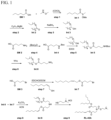
- FIG. 1 shows the synthetic pathway of ATX-0043 that is described further as follows.
- reaction mass was diluted with water (300 ml). Organic layer was separated and the aqueous layer was washed with DCM (3 x 100ml). Combined organic layer was concentrated under reduced pressure.
- TLC thin layer chromatography
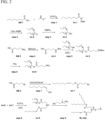
- FIG. 2 shows the synthetic pathway of ATX-0057 that is described further as follows.
- Step 8 hexadecan-8-yl (Z)-4-((4-(non-2-en-1-yloxy)-4-oxobutyl)amino)butanoate
- the first purification was done using silica gel (60-120 mesh) 22 g of crude compound was adsorbed on 60 g of silica gel and poured onto 500 g of silica gel taken in the column. Compound was eluted at 35% EtOAc/hexane.
- the second purification was done using neutral alumina with HPLC grade solvents. Crude compound, 7.5 g, was adsorbed on 18 g of neutral alumina and the resulting was poured onto 130 g of neutral alumina taken in the column. Compound was eluted at 10% EtOAc/hexane. Yield, 29%; confirmed by 1 H NMR, HPLC, and Mass.
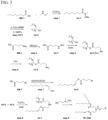
- FIG. 3 shows the synthetic pathway of ATX-0058 that is described further as follows.
- a first purification was done using silica gel (60-120 mesh). 5.0 g of crude compound was adsorbed on 9 g of silica gel and poured onto 90 g of silica gel taken in the column. Compound was eluted at 35% EtOAc/hexane.
- a second purification was done using neutral alumina with HPLC grade solvents. 1.5 g of crude compound was adsorbed on 4 g of neutral alumina and the resulting was poured onto 40 g of neutral alumina taken in the column. Compound was eluted at 10% EtOAc/hexane. Quantity produced, 1.2 g; yield, 21%; confirmed by 1 H NMR; HPLC; Mass.
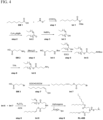
- FIG. 4 shows the synthetic pathway of ATX-0081 that is described further as follows.
- the first purification was done using silica gel (60-120 mesh) of crude compound was adsorbed on 60 g of silica gel and poured onto 500 g of silica gel taken in the column. Compound was eluted at 35% EtOAc/hexane.
- the second purification was done using neutral alumina with HPLC grade solvents. Crude compound was adsorbed on 18 g of neutral alumina and the resulting was poured onto 130 g of neutral alumina taken in the column. Compound was eluted at 10% EtOAc/hexane. Quantity produced, 1.5 g; yield, 45%; confirmed by 1 H NMR, HPLC, and Mass.
- FIG. 5 shows the synthetic pathway of ATX-0082 that is described further as follows.
- the first purification was done using silica gel (60-120 mesh) of crude compound was adsorbed on 60 g of silica gel and poured onto 500 g of silica gel taken in the column. Compound was eluted at 35% EtOAc/hexane.
- the second purification was done using neutral alumina with HPLC grade solvents. Crude compound was adsorbed on 18 g of neutral alumina and the resulting was poured onto 130 g of neutral alumina taken in the column. Compound was eluted at 10% EtOAc/hexane. Quantity produced, 1.2 g; yield, 43%; confirmed by 1 H NMR, HPLC, and Mass.
- FIG. 6 shows the synthetic pathway of ATX-0086 that is described further as follows.
- the first purification was done using silica gel (60-120 mesh) of crude compound was adsorbed on 60 g of silica gel and poured onto 500 g of silica gel taken in the column. Compound was eluted at 35% EtOAc/hexane.
- the second purification was done using neutral alumina with HPLC grade solvents. Crude compound was adsorbed on 18 g of neutral alumina and the resulting was poured onto 130 g of neutral alumina taken in the column. Compound was eluted at 10% EtOAc/hexane. Quantity produced, 1.2 g; yield, 43%; confirmed by 1 H NMR, HPLC, and Mass.
- FIG. 7 shows the synthetic pathway of ATX-0087 that involves nine steps.
- the first purification was done using silica gel (60-120 mesh) of crude compound was adsorbed on 60 g of silica gel and poured onto 500 g of silica gel taken in the column. Compound was eluted at 35% EtOAc/hexane.
- the second purification was done using neutral alumina with HPLC grade solvents. Crude compound was adsorbed on 18 g of neutral alumina and the resulting was poured onto 130 g of neutral alumina taken in the column. Compound was eluted at 10% EtOAc/hexane. Quantity produced, 1.2 g; yield, 43%; confirmed by 1 H NMR, HPLC, and Mass.
- FIG. 8 shows the synthetic pathway of ATX-0088 that is described further as follows.
- a first purification was done using silica gel (60-120 mesh). 5.0 g of crude compound was adsorbed on 9 g of silica gel and poured onto 90 g of silica gel taken in the column. Compound was eluted at 35% EtOAc/hexane.
- a second purification was done using neutral alumina with HPLC grade solvents. Crude compound, 1.5 g, was adsorbed on 4 g of neutral alumina and the resulting was poured onto 40 g of neutral alumina taken in the column. Compound was eluted at 10% EtOAc/hexane. Quantity produced, 1.2 g; yield, 21%; confirmed by 1 H NMR; HPLC; Mass.
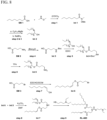
- FIG. 9 shows the synthetic pathway of ATX-0083 that is described further as follows.
- reaction mass was diluted with water (300 ml). Organic layer was separated and the aqueous layer was washed with DCM (3 x 100 ml). Combined organic layer was dried over anhydrous Na 2 SO 4 and concentrated under reduced pressure.
- a first purification was done using neutral alumina. Crude compound, dissolved in hexane, was loaded at the top of neutral alumina (700 g loaded in the column). Compound was eluted at 8-10% EtOAc/hexane.
- a second purification was done using silica gel (100-200 mesh). Compound, dissolved in hexane, was loaded at the top of silica gel (500g loaded in the column). Compound was eluted at 20-25% EtOAc/hexane.
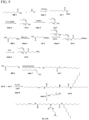
- FIG. 10 shows the synthetic pathway of ATX-0084 that is described further as follows.
- a first purification was done using silica gel (100-200 mesh). 4.6 g of crude compound was adsorbed on 10.0 g of silica gel and poured onto 90.0 g of silica gel taken in the column. Compound was eluted at 50% EtOAc/hexane.
- a second purification was done using neutral alumina with HPLC grade solvents. 2.0 g of crude compound was adsorbed on 6.0 g of neutral alumina and the resulting was poured onto 40.0 g of neutral alumina taken in the column. Compound was eluted at 20% EtOAc/hexane. Quantity produced, 1.2 g; yield, 38 % (300 mg mixture).
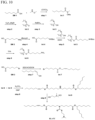
- FIG. 11 shows the synthetic pathway of ATX-0061 that is described further as follows
- reaction was completed for 0.5 hours, reaction mass was concentrated under reduced pressure.
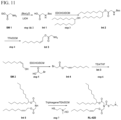
- FIG. 12 shows the synthetic pathway of ATX-0063 that is described further as follows.
- reaction was monitored by TLC (60% EtOAc/hexane; Rf: 0.3), starting was absent from reaction product.
- reaction mass was concentrated under reduced pressure, residual mass was washed with saturated sodium bicarbonate solution (50 ml) and extracted with EtOAc (3 x 25 ml), organic layer dried over sodium sulphate and concentrated under reduced pressure to get Int 3.
- reaction was completed for 1 hour, reaction mass was concentrated under reduced pressure.
- FIG. 13 shows the synthetic pathway of ATX-0064 that is described further as follows.
- reaction was monitored by TLC (60% EtOAc/hexane; Rf: 0.3), starting material was absent from the reaction product.
- Reaction mass was diluted with saturated NaHCO 3 solution (80 ml), organic layer was separated, aqueous layer was washed with DCM (40 ml), dried over sodium sulphate and concentrated under reduced pressure.
- reaction was completed for 1 hour, reaction mass was concentrated under reduced pressure.
- FIG. 14 shows the synthetic pathway of ATX-0081 that is described further as follows.
- the reaction mass was quenched with water (250 mL) and the organic layer was separated.
- the aqueous layer was washed with DCM (2 x 150 mL).
- the combined organic layers were concentrated under reduced pressure.
- the resulting crude was washed with sat.NaHCO 3 solution (150 mL) and then extracted with EtOAc (2 x150 mL).
- the organic layer was separated and concentrated under reduced pressure.
- a first purification was done on silica gel (100-200 mesh; 500 g). In gradient elution, compound was eluted at 70%EtOAc/Hex. After concentration compound (22.0 g) appeared in reddish color.
- a second purification was done using neutral alumina (400 g) with HPLC grade solvents. Compound was eluted at 15%EtOAc/Hex and pure fractions were concentrated under reduced pressure to get 19.0 g of yellow liquid.
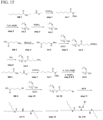
- FIG. 15 shows the synthetic pathway of ATX-0085 that is described further as follows.
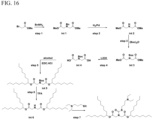
- FIG. 16 shows the synthetic pathway of ATX-0134 that is described further as follows.
- Example 15 Synthesis of ATX-0044 and ATX-0091 to ATX-0133.
- ATX-0044, ATX-0085, ATX-0111, ATX-0132, ATX-0100, ATX-0117, ATX-0114, ATX-0115, ATX-0101, ATX-0106, ATX-0116, ATX-0122, ATX-0123, ATX-0124, ATX-0126, ATX-0129, and ATX-0133 were synthesized using the methods of the previous examples.
- pK a of cationic lipids in LNP or micellar formulations were measured by the procedure of Jayaraman, 2012, Angew. Chem. Int. Ed., 51:8529-33 , hereby incorporated by reference.
- Lipid micelles or LNPs are diluted to 1 mM total lipids in universal buffer with a pH range between 3 and 12 in presence of 0.06 mg/mL 6-( p -toluidino)-2-naphthalenesulfonic acid sodium salt (TNS) reagent (Sigma Aldrich), a pH sensitive fluorescence probe.
- TNS 6-( p -toluidino)-2-naphthalenesulfonic acid sodium salt
- the anionic TNS molecule fluoresces when associated with the surface of positively charged membranes but is not fluorescent when free in solution, allowing measurement of pKa.
- the TNS signal is measured on a spectral plate reader.
- the TNS signal is plotted as function of the pH and
- Reagents used in the assay include
- UB Universal Buffer
- a stock solution of Universal Buffer (UB) in a polystyrene sterile storage bottle prepare 1 L using the following table.
- Component MW (g/mol) [Final] (mM) Hepes 238.3 10 MES 213.2 10 Ammonium acetate 77.1 10 NaCl 58.4 130 Reagents are sterile filtered through a 0.2 ⁇ m filter.
- Preparation of UB solution includes adding 5 mL of 1 M HCl to a 350 mL stock solution.
- the results show the importance of increased lipophilicity (measured by cLogP) combined with chain shortening in lowering the measured pKa compared to predicted, and to increasing the bioactivity of the lipid nanoparticles.
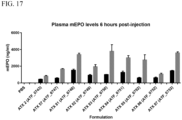
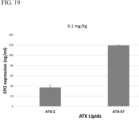
- Example 17 In vivo EPO mRNA stability
- mice Female Balb/c mice (6-8 week old) were used for evaluation of plasma erythropoietin (epo) levels in vivo following injection of lipid encapsulated mouse epo mRNA. All formulations were administered intravenously via tail vein injection at a dose of 0.03 and 0.1 mg/kg at a dosing volume of 5 ml/kg. Terminal blood collection was performed via cardiac puncture under 2% isoflurane at 6 hours after formulation injections. Blood was collected into 0.109 M citrate buffer tube and processed by centrifugation at 5000 rpm for 10 minutes.
- Results show a substantial improvement over ATX-0002 for ATX-0057, ATX-0081, ATX-0082, ATX-0083, ATX-0084, ATX-0085, ATX-0086, and ATX-0087.
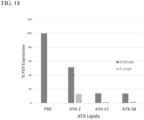
- Example 18 In vivo mouse Factor VII silencing and EPO expression
- Factor VII a blood-clotting factor
- hepatocytes the cells comprising the liver parenchyma.
- Factor VII a blood-clotting factor
- gene silencing indicates successful delivery to parenchyma, as opposed to delivery to the cells of the reticulo-endothelial system (e.g., Kupffer cells).
- Factor VII is a secreted protein that can be readily measured in serum, obviating the need to euthanize animals.
- Silencing at the mRNA level can be readily determined by measuring levels of protein. This is because the protein's short half-life (2-5 hour).
- Compositions with siRNA directed to Factor VIII were formulated with the lipid, and comparator sample phosphate-buffered saline (PBS).
- PBS comparator sample phosphate-buffered saline
- Female C57BL/6 mice (6-8 week old) were used for FV11 siRNA knockdown (KD) experiments.
- Table 1 shows knockdown resulting from lipid nanoparticles comprising the lipids disclosed herein.
- Epo expression following delivery of mRNA using lipid nanoparticles comprising the lipids described herein was measured.
- mice Female Balb/c mice (6-8 week old) were used for evaluation of epo protein expression in vivo following delivery of lipid encapsulated mouse epo mRNA. All formulations were administered intravenously via tail vein injection at a dose of 0.03 and 0.1mg/kg at a dosing volume of 5mL/kg. Terminal blood collection was performed via cardiac puncture under 2% isoflurane at 6 hours after formulation injections. Blood was collected into 0.109 M citrate buffer tube and processed by centrifugation at 5000 rpm for 10 minutes. Serum was collected and epo protein levels were analyzed by epo ELISA assay (R&D systems).
- a standard curve was constructed using samples from PBS-injected mice and relative Factor VII expression was determined by comparing treated groups to untreated PBS control. The results showed that epo mRNA is expressed at substantially higher amounts in ATX-0057 nanoparticles than ATX-002 at 0.1 mg/ml ( FIG. 19 ).
Landscapes
- Health & Medical Sciences (AREA)
- Chemical & Material Sciences (AREA)
- Life Sciences & Earth Sciences (AREA)
- Organic Chemistry (AREA)
- Animal Behavior & Ethology (AREA)
- Veterinary Medicine (AREA)
- Public Health (AREA)
- Medicinal Chemistry (AREA)
- General Health & Medical Sciences (AREA)
- Pharmacology & Pharmacy (AREA)
- Epidemiology (AREA)
- Engineering & Computer Science (AREA)
- General Chemical & Material Sciences (AREA)
- Chemical Kinetics & Catalysis (AREA)
- Bioinformatics & Cheminformatics (AREA)
- Oil, Petroleum & Natural Gas (AREA)
- Molecular Biology (AREA)
- Biochemistry (AREA)
- Oncology (AREA)
- Communicable Diseases (AREA)
- Nuclear Medicine, Radiotherapy & Molecular Imaging (AREA)
- Nanotechnology (AREA)
- Optics & Photonics (AREA)
- Physics & Mathematics (AREA)
- Biomedical Technology (AREA)
- Genetics & Genomics (AREA)
- Biotechnology (AREA)
- Pharmaceuticals Containing Other Organic And Inorganic Compounds (AREA)
- Organic Low-Molecular-Weight Compounds And Preparation Thereof (AREA)
- Medicines That Contain Protein Lipid Enzymes And Other Medicines (AREA)
- Medicinal Preparation (AREA)
- Saccharide Compounds (AREA)
- Acyclic And Carbocyclic Compounds In Medicinal Compositions (AREA)
Applications Claiming Priority (5)
| Application Number | Priority Date | Filing Date | Title |
|---|---|---|---|
| US15/387,067 US10383952B2 (en) | 2016-12-21 | 2016-12-21 | Ionizable cationic lipid for RNA delivery |
| PCT/US2017/015886 WO2018118102A1 (en) | 2016-12-21 | 2017-01-31 | Ionizable cationic lipid for rna delivery |
| EP17826404.0A EP3558943B1 (de) | 2016-12-21 | 2017-12-20 | Ionisierbares kationisches lipid für rna-freisetzung |
| PCT/US2017/067756 WO2018119163A1 (en) | 2016-12-21 | 2017-12-20 | Ionizable cationic lipid for rna delivery |
| EP23196560.9A EP4310075A3 (de) | 2016-12-21 | 2017-12-20 | Ionisierbares kationisches lipid zur rna-freisetzung |
Related Parent Applications (2)
| Application Number | Title | Priority Date | Filing Date |
|---|---|---|---|
| EP23196560.9A Division EP4310075A3 (de) | 2016-12-21 | 2017-12-20 | Ionisierbares kationisches lipid zur rna-freisetzung |
| EP17826404.0A Division EP3558943B1 (de) | 2016-12-21 | 2017-12-20 | Ionisierbares kationisches lipid für rna-freisetzung |
Publications (2)
| Publication Number | Publication Date |
|---|---|
| EP4527831A2 true EP4527831A2 (de) | 2025-03-26 |
| EP4527831A3 EP4527831A3 (de) | 2025-06-25 |
Family
ID=58191571
Family Applications (4)
| Application Number | Title | Priority Date | Filing Date |
|---|---|---|---|
| EP17708003.3A Active EP3558942B1 (de) | 2016-12-21 | 2017-01-31 | Ionisierbares kationisches lipid für rna-freisetzung |
| EP17826404.0A Active EP3558943B1 (de) | 2016-12-21 | 2017-12-20 | Ionisierbares kationisches lipid für rna-freisetzung |
| EP25156699.8A Pending EP4527831A3 (de) | 2016-12-21 | 2017-12-20 | Ionisierbares kationisches lipid zur rna-freisetzung |
| EP23196560.9A Pending EP4310075A3 (de) | 2016-12-21 | 2017-12-20 | Ionisierbares kationisches lipid zur rna-freisetzung |
Family Applications Before (2)
| Application Number | Title | Priority Date | Filing Date |
|---|---|---|---|
| EP17708003.3A Active EP3558942B1 (de) | 2016-12-21 | 2017-01-31 | Ionisierbares kationisches lipid für rna-freisetzung |
| EP17826404.0A Active EP3558943B1 (de) | 2016-12-21 | 2017-12-20 | Ionisierbares kationisches lipid für rna-freisetzung |
Family Applications After (1)
| Application Number | Title | Priority Date | Filing Date |
|---|---|---|---|
| EP23196560.9A Pending EP4310075A3 (de) | 2016-12-21 | 2017-12-20 | Ionisierbares kationisches lipid zur rna-freisetzung |
Country Status (18)
| Country | Link |
|---|---|
| US (3) | US10383952B2 (de) |
| EP (4) | EP3558942B1 (de) |
| JP (7) | JP6905062B2 (de) |
| KR (3) | KR20190134593A (de) |
| CN (3) | CN110337429B (de) |
| AU (3) | AU2017379587B2 (de) |
| CA (2) | CA3047033A1 (de) |
| DK (1) | DK3558943T3 (de) |
| ES (1) | ES2969232T3 (de) |
| FI (1) | FI3558943T3 (de) |
| HR (1) | HRP20231742T1 (de) |
| HU (1) | HUE065439T2 (de) |
| IL (4) | IL267317B2 (de) |
| PL (1) | PL3558943T3 (de) |
| PT (1) | PT3558943T (de) |
| RS (1) | RS65078B1 (de) |
| SI (1) | SI3558943T1 (de) |
| WO (1) | WO2018118102A1 (de) |
Families Citing this family (56)
| Publication number | Priority date | Publication date | Assignee | Title |
|---|---|---|---|---|
| AU2014348212C1 (en) * | 2013-11-18 | 2018-11-29 | Arcturus Therapeutics, Inc. | Ionizable cationic lipid for RNA delivery |
| US11028388B2 (en) | 2014-03-05 | 2021-06-08 | Editas Medicine, Inc. | CRISPR/Cas-related methods and compositions for treating Usher syndrome and retinitis pigmentosa |
| EP3540061A1 (de) | 2014-04-02 | 2019-09-18 | Editas Medicine, Inc. | Verfahren und zusammensetzungen in zusammenhang mit crispr/cas zur behandlung eines primären offenwinkelglaukoms |
| US10383952B2 (en) | 2016-12-21 | 2019-08-20 | Arcturus Therapeutics, Inc. | Ionizable cationic lipid for RNA delivery |
| US10526284B2 (en) | 2016-12-21 | 2020-01-07 | Arcturus Therapeutics, Inc. | Ionizable cationic lipid for RNA delivery |
| US11433143B2 (en) * | 2017-05-18 | 2022-09-06 | The Regents Of The University Of California | Nano-enabled immunotherapy in cancer |
| BR112019025224A2 (pt) | 2017-05-31 | 2020-12-08 | Ultragenyx Pharmaceutical Inc. | Terapêutica para doença de armazenamento de glicogênio tipo iii |
| EP3630200A4 (de) | 2017-05-31 | 2021-02-24 | Arcturus Therapeutics, Inc. | Therapeutika für phenylketonurie |
| HRP20240586T1 (hr) | 2018-10-09 | 2024-07-19 | The University Of British Columbia | Sastavi i sustavi koji sadrže transfekcijske sposobne vezikle bez organskih otapala i deterdženta i s njim povezanim postupcima |
| AU2019394996B2 (en) | 2018-12-06 | 2025-11-06 | Arcturus Therapeutics, Inc. | Compositions and methods for treating ornithine transcarbamylase deficiency |
| SG11202110036RA (en) | 2019-03-19 | 2021-10-28 | Arcturus Therapeutics Inc | Method of making lipid-encapsulated rna nanoparticles |
| WO2020255062A1 (en) | 2019-06-20 | 2020-12-24 | Janssen Sciences Ireland Unlimited Company | Lipid nanoparticle or liposome delivery of hepatitis b virus (hbv) vaccines |
| JP7672394B2 (ja) | 2019-09-03 | 2025-05-07 | アークトゥラス・セラピューティクス・インコーポレイテッド | 治療的に活性な複合体のアシアロ糖タンパク質受容体媒介送達 |
| WO2021067598A1 (en) | 2019-10-04 | 2021-04-08 | Ultragenyx Pharmaceutical Inc. | Methods for improved therapeutic use of recombinant aav |
| KR102433471B1 (ko) * | 2019-10-17 | 2022-08-18 | 한국과학기술원 | 지질이 접합된 유전자편집 단백질 기반 crispr 복합체 및 이의 제조방법 |
| US12351834B2 (en) | 2020-03-03 | 2025-07-08 | Arcturus Therapeutics, Inc. | Compositions and methods for the treatment of ornithine transcarbamylase deficiency |
| AU2021236068A1 (en) * | 2020-03-09 | 2022-10-06 | Arcturus Therapeutics, Inc. | Compositions and methods for inducing immune responses |
| IL299571A (en) | 2020-07-08 | 2023-02-01 | Janssen Sciences Ireland Unlimited Co | Rna replicon vaccines against hbv |
| BR112023000568A2 (pt) * | 2020-07-17 | 2023-01-31 | Sanofi Pasteur | Compostos lipídicos cliváveis, composições contendo os mesmos, e usos dos mesmos |
| EP4196128A4 (de) | 2020-08-14 | 2024-06-12 | Arcturus Therapeutics, Inc. | Verfahren zur lyophilisierung von lipidnanopartikeln |
| EP4228658A4 (de) | 2020-10-14 | 2025-02-19 | George Mason Research Foundation, Inc. | Ionisierbare lipide und verfahren zur herstellung und verwendung davon |
| TW202245809A (zh) | 2020-12-18 | 2022-12-01 | 美商詹森藥物公司 | 用於治療b型肝炎病毒感染之組合療法 |
| WO2022146654A1 (en) | 2020-12-28 | 2022-07-07 | Janssen Pharmaceuticals, Inc. | Transcription activator-like effector nucleases (talens) targeting hbv |
| CA3207753A1 (en) * | 2021-02-10 | 2022-08-18 | Jessica DETERLING | Compounds, compositions, and methods of using thereof |
| KR20240008872A (ko) * | 2021-05-06 | 2024-01-19 | 아크투루스 쎄라퓨틱스, 인크. | Rna 전달을 위한 이온화 가능한 양이온성 지질 |
| CN113633766B (zh) * | 2021-08-11 | 2023-06-30 | 通用生物(安徽)股份有限公司 | 一种脂质体核酸疫苗佐剂及其制备方法 |
| US20240398940A1 (en) | 2021-09-03 | 2024-12-05 | CureVac SE | Novel lipid nanoparticles for delivery of nucleic acids |
| AR127312A1 (es) | 2021-10-08 | 2024-01-10 | Suzhou Abogen Biosciences Co Ltd | Compuestos lipídicos ycomposiciones de nanopartículas lipídicas |
| EP4422698A1 (de) | 2021-10-29 | 2024-09-04 | CureVac SE | Verbesserte zirkuläre rna zur expression therapeutischer proteine |
| IL313876A (en) * | 2021-12-27 | 2024-08-01 | Univ Texas | Compositions and methods for targeted delivery to cells |
| US20250099614A1 (en) | 2022-01-28 | 2025-03-27 | CureVac SE | Nucleic acid encoded transcription factor inhibitors |
| CN116354836A (zh) * | 2022-03-25 | 2023-06-30 | 深圳市新合生物医疗科技有限公司 | 阳离子脂质化合物及其制备方法和应用、以及mRNA递送系统 |
| WO2023218420A1 (en) | 2022-05-13 | 2023-11-16 | Janssen Pharmaceuticals, Inc. | Mrna compositions for inducing latent hiv-1 reversal |
| US20250345407A1 (en) | 2022-05-25 | 2025-11-13 | CureVac SE | Nucleic acid based vaccine encoding an escherichia coli fimh antigenic polypeptide |
| WO2023233290A1 (en) | 2022-05-31 | 2023-12-07 | Janssen Sciences Ireland Unlimited Company | Rnai agents targeting pd-l1 |
| CN117460711B (zh) * | 2022-06-02 | 2025-07-08 | 厦门赛诺邦格生物科技股份有限公司 | 一种含有不饱和键的氨基酸阳离子脂质 |
| WO2024040194A1 (en) | 2022-08-17 | 2024-02-22 | Capstan Therapeutics, Inc. | Conditioning for in vivo immune cell engineering |
| EP4608442A1 (de) | 2022-10-28 | 2025-09-03 | GlaxoSmithKline Biologicals S.A. | Impfstoff auf nukleinsäurebasis |
| CN120435314A (zh) | 2022-12-29 | 2025-08-05 | 波普瓦克斯私人有限公司 | 多靶疫苗和治疗剂 |
| WO2024141784A2 (en) | 2022-12-29 | 2024-07-04 | Popvax Private Limited | Broadly protective betacoronavirus vaccines and compositions |
| CN115745820B (zh) * | 2023-01-05 | 2023-04-28 | 北京悦康科创医药科技股份有限公司 | 长效低毒的新型阳离子脂质化合物及其组合物 |
| CN115677518B (zh) * | 2023-01-05 | 2023-04-14 | 北京悦康科创医药科技股份有限公司 | 用于递送核酸的可电离阳离子脂质化合物和组合物及用途 |
| WO2024184500A1 (en) | 2023-03-08 | 2024-09-12 | CureVac SE | Novel lipid nanoparticle formulations for delivery of nucleic acids |
| WO2024230934A1 (en) | 2023-05-11 | 2024-11-14 | CureVac SE | Therapeutic nucleic acid for the treatment of ophthalmic diseases |
| AU2024279278A1 (en) | 2023-05-31 | 2025-12-18 | Capstan Therapeutics, Inc. | Lipid nanoparticle formulations and compositions |
| WO2025006799A1 (en) | 2023-06-27 | 2025-01-02 | Capstan Therapeutics, Inc. | Extracorporeal and ex vivo engineering of select cell populations from peripheral blood |
| WO2025080555A1 (en) * | 2023-10-10 | 2025-04-17 | The Trustees Of The University Of Pennsylvania | Substituted amidine ionizable lipid compounds, methods of preparation thereof, lipid nanoparticles (lnps) comprising the same, and methods of use thereof |
| WO2025080939A1 (en) | 2023-10-13 | 2025-04-17 | Ultragenyx Pharmaceutical, Inc. | Compositions and methods for treating conditions associated with cartilage oligomeric matrix protein (comp) mutations |
| WO2025128853A2 (en) | 2023-12-13 | 2025-06-19 | Ultragenyx Pharmaceutical Inc. | Compositions and methods for treating conditions associated with ube3a overexpression |
| US20250332281A2 (en) | 2023-12-15 | 2025-10-30 | Capstan Therapeutics, Inc. | Humanized anti-cd8 antibodies and uses thereof |
| WO2025144938A1 (en) | 2023-12-26 | 2025-07-03 | Emmune, Inc. | Systems for nucleic acid transfer |
| WO2025166325A1 (en) | 2024-02-02 | 2025-08-07 | Editas Medicine, Inc. | MODIFIED GUIDE RNAs |
| TW202543585A (zh) | 2024-03-08 | 2025-11-16 | 美商健臻公司 | 脂質奈米粒子 |
| WO2025213138A1 (en) | 2024-04-05 | 2025-10-09 | Editas Medicine, Inc. | Crispr/rna-guided nuclease related methods and compositions for treating primary open angle glaucoma |
| WO2026003582A2 (en) | 2024-06-27 | 2026-01-02 | Axelyf ehf. | Lipids and lipid nanoparticles |
| WO2026030375A2 (en) | 2024-07-30 | 2026-02-05 | Genzyme Corporation | Lipid nanoparticles and methods of manufacture and use thereof |
Citations (5)
| Publication number | Priority date | Publication date | Assignee | Title |
|---|---|---|---|---|
| US4511069A (en) | 1981-06-04 | 1985-04-16 | The Pharmasol Corporation | Dispensing system |
| US4778810A (en) | 1987-01-08 | 1988-10-18 | Nastech Pharmaceutical Co., Inc. | Nasal delivery of caffeine |
| WO1992007065A1 (en) | 1990-10-12 | 1992-04-30 | MAX-PLANCK-Gesellschaft zur Förderung der Wissenschaften e.V. | Modified ribozymes |
| WO1993015187A1 (en) | 1992-01-31 | 1993-08-05 | Massachusetts Institute Of Technology | Nucleozymes |
| US5849902A (en) | 1996-09-26 | 1998-12-15 | Oligos Etc. Inc. | Three component chimeric antisense oligonucleotides |
Family Cites Families (37)
| Publication number | Priority date | Publication date | Assignee | Title |
|---|---|---|---|---|
| FR1481016A (fr) | 1962-04-02 | 1967-05-19 | Bruneau & Cie Lab | Dérivés de la pipérazine et leur fabrication |
| JPS6189286A (ja) | 1984-10-08 | 1986-05-07 | Tokuyama Soda Co Ltd | 液晶組成物 |
| JPS61136584A (ja) | 1984-12-07 | 1986-06-24 | Tokuyama Soda Co Ltd | 液晶組成物 |
| CA2532228C (en) | 2003-07-16 | 2017-02-14 | Protiva Biotherapeutics, Inc. | Lipid encapsulated interfering rna |
| FR2858216B1 (fr) | 2003-07-31 | 2008-04-04 | Oreal | Composition contenant un 2-thioacetamide, son utilisation pour stimuler la pousse des fibres keratiniques et/ou freiner leur chute |
| EP2118127A4 (de) | 2007-01-31 | 2010-12-01 | Affymax Inc | Linker auf stickstoffbasis zur bindung modifizierender gruppen an polypeptide und andere makromoleküle |
| AR065986A1 (es) | 2007-04-12 | 2009-07-15 | Uniqema Americas Inc | Composiciones agroquimicas |
| TW201021852A (en) * | 2008-11-17 | 2010-06-16 | Enzon Pharmaceuticals Inc | Releasable fusogenic lipids for nucleic acids delivery systems |
| CN102292069B (zh) | 2008-11-26 | 2014-07-30 | 中外制药株式会社 | 囊泡制剂 |
| KR101766408B1 (ko) | 2009-06-10 | 2017-08-10 | 알닐람 파마슈티칼스 인코포레이티드 | 향상된 지질 조성물 |
| KR101773643B1 (ko) | 2010-04-28 | 2017-08-31 | 교와 핫꼬 기린 가부시키가이샤 | 양이온성 지질 |
| WO2011136369A1 (ja) | 2010-04-28 | 2011-11-03 | 協和発酵キリン株式会社 | カチオン性脂質 |
| KR20190039347A (ko) | 2010-06-03 | 2019-04-10 | 알닐람 파마슈티칼스 인코포레이티드 | 활성제의 전달을 위한 생분해성 지질 |
| CA2811430A1 (en) | 2010-09-30 | 2012-04-05 | Merck Sharp & Dohme Corp. | Low molecular weight cationic lipids for oligonucleotide delivery |
| EP3485913A1 (de) | 2010-10-21 | 2019-05-22 | Sirna Therapeutics, Inc. | Kationische lipide mit geringem molekulargewicht zur oligonukleotidabgabe |
| EP2718261B1 (de) | 2011-06-08 | 2016-02-24 | Nitto Denko Corporation | Verbindungen für die gezielte wirkstofffreisetzung und verbesserung der sirna-wirkung |
| US9011903B2 (en) | 2011-06-08 | 2015-04-21 | Nitto Denko Corporation | Cationic lipids for therapeutic agent delivery formulations |
| JP2013095755A (ja) * | 2011-11-02 | 2013-05-20 | Kyowa Hakko Kirin Co Ltd | カチオン性脂質 |
| US9579338B2 (en) | 2011-11-04 | 2017-02-28 | Nitto Denko Corporation | Method of producing lipid nanoparticles for drug delivery |
| WO2013086373A1 (en) | 2011-12-07 | 2013-06-13 | Alnylam Pharmaceuticals, Inc. | Lipids for the delivery of active agents |
| HRP20181855T1 (hr) * | 2012-06-08 | 2018-12-28 | Nitto Denko Corporation | Lipidi za formulacije namijenjene unosu terapijskog sredstva |
| WO2014089239A1 (en) | 2012-12-07 | 2014-06-12 | Alnylam Pharmaceuticals, Inc. | Improved nucleic acid lipid particle formulations |
| AU2014348212C1 (en) | 2013-11-18 | 2018-11-29 | Arcturus Therapeutics, Inc. | Ionizable cationic lipid for RNA delivery |
| US9365610B2 (en) | 2013-11-18 | 2016-06-14 | Arcturus Therapeutics, Inc. | Asymmetric ionizable cationic lipid for RNA delivery |
| JP6637988B2 (ja) | 2014-11-18 | 2020-01-29 | アークトゥルス セラピューティクス, インコーポレイテッド | Rna送達のためのイオン化可能カチオン性脂質 |
| US9834510B2 (en) | 2015-12-30 | 2017-12-05 | Arcturus Therapeutics, Inc. | Aromatic ionizable cationic lipid |
| CN206180768U (zh) | 2016-09-09 | 2017-05-17 | 精进电动科技股份有限公司 | 一种电机和减速器连接的输入轴结构 |
| US10743303B2 (en) | 2016-09-29 | 2020-08-11 | Panasonic Intellectual Property Corporation Of America | Wireless communication method, apparatus and system |
| US10383952B2 (en) | 2016-12-21 | 2019-08-20 | Arcturus Therapeutics, Inc. | Ionizable cationic lipid for RNA delivery |
| US10526284B2 (en) | 2016-12-21 | 2020-01-07 | Arcturus Therapeutics, Inc. | Ionizable cationic lipid for RNA delivery |
| BR112019025224A2 (pt) | 2017-05-31 | 2020-12-08 | Ultragenyx Pharmaceutical Inc. | Terapêutica para doença de armazenamento de glicogênio tipo iii |
| SG11202110036RA (en) | 2019-03-19 | 2021-10-28 | Arcturus Therapeutics Inc | Method of making lipid-encapsulated rna nanoparticles |
| US12351834B2 (en) | 2020-03-03 | 2025-07-08 | Arcturus Therapeutics, Inc. | Compositions and methods for the treatment of ornithine transcarbamylase deficiency |
| AU2021236068A1 (en) | 2020-03-09 | 2022-10-06 | Arcturus Therapeutics, Inc. | Compositions and methods for inducing immune responses |
| KR20240008872A (ko) | 2021-05-06 | 2024-01-19 | 아크투루스 쎄라퓨틱스, 인크. | Rna 전달을 위한 이온화 가능한 양이온성 지질 |
| CN113264842B (zh) | 2021-07-21 | 2022-03-01 | 苏州科锐迈德生物医药科技有限公司 | 一种脂质化合物及包含其的脂质载体、核酸脂质纳米粒组合物和药物制剂 |
| WO2023086514A1 (en) | 2021-11-11 | 2023-05-19 | Arcturus Therapeutics, Inc. | Ionizable cationic lipids for rna delivery |
-
2016
- 2016-12-21 US US15/387,067 patent/US10383952B2/en active Active
-
2017
- 2017-01-31 CA CA3047033A patent/CA3047033A1/en not_active Abandoned
- 2017-01-31 CN CN201780087021.3A patent/CN110337429B/zh active Active
- 2017-01-31 JP JP2019533351A patent/JP6905062B2/ja active Active
- 2017-01-31 EP EP17708003.3A patent/EP3558942B1/de active Active
- 2017-01-31 WO PCT/US2017/015886 patent/WO2018118102A1/en not_active Ceased
- 2017-01-31 KR KR1020197021153A patent/KR20190134593A/ko not_active Abandoned
- 2017-01-31 IL IL267317A patent/IL267317B2/en unknown
- 2017-01-31 AU AU2017379587A patent/AU2017379587B2/en active Active
- 2017-12-20 IL IL306099A patent/IL306099B2/en unknown
- 2017-12-20 AU AU2017379059A patent/AU2017379059B2/en active Active
- 2017-12-20 EP EP17826404.0A patent/EP3558943B1/de active Active
- 2017-12-20 DK DK17826404.0T patent/DK3558943T3/da active
- 2017-12-20 ES ES17826404T patent/ES2969232T3/es active Active
- 2017-12-20 CN CN201780086949.XA patent/CN110325511B/zh active Active
- 2017-12-20 PL PL17826404.0T patent/PL3558943T3/pl unknown
- 2017-12-20 JP JP2019533410A patent/JP7437935B2/ja active Active
- 2017-12-20 RS RS20240048A patent/RS65078B1/sr unknown
- 2017-12-20 EP EP25156699.8A patent/EP4527831A3/de active Pending
- 2017-12-20 CA CA3046885A patent/CA3046885C/en active Active
- 2017-12-20 CN CN202210319695.4A patent/CN114917203A/zh active Pending
- 2017-12-20 KR KR1020217027797A patent/KR102385562B1/ko active Active
- 2017-12-20 HR HRP20231742TT patent/HRP20231742T1/hr unknown
- 2017-12-20 IL IL290592A patent/IL290592B2/en unknown
- 2017-12-20 EP EP23196560.9A patent/EP4310075A3/de active Pending
- 2017-12-20 KR KR1020197021199A patent/KR102299053B1/ko active Active
- 2017-12-20 PT PT178264040T patent/PT3558943T/pt unknown
- 2017-12-20 FI FIEP17826404.0T patent/FI3558943T3/fi active
- 2017-12-20 HU HUE17826404A patent/HUE065439T2/hu unknown
- 2017-12-20 SI SI201731472T patent/SI3558943T1/sl unknown
-
2019
- 2019-06-19 IL IL267511A patent/IL267511B/en unknown
- 2019-07-31 US US16/527,955 patent/US10980895B2/en active Active
-
2021
- 2021-01-29 JP JP2021013021A patent/JP2021073263A/ja not_active Withdrawn
- 2021-02-02 AU AU2021200663A patent/AU2021200663B2/en active Active
- 2021-02-22 JP JP2021026300A patent/JP2021088588A/ja not_active Withdrawn
- 2021-04-19 US US17/234,571 patent/US12527881B2/en active Active
-
2023
- 2023-03-08 JP JP2023035778A patent/JP7641308B2/ja active Active
- 2023-03-08 JP JP2023035835A patent/JP7594038B2/ja active Active
-
2025
- 2025-02-21 JP JP2025027123A patent/JP2025081598A/ja active Pending
Patent Citations (5)
| Publication number | Priority date | Publication date | Assignee | Title |
|---|---|---|---|---|
| US4511069A (en) | 1981-06-04 | 1985-04-16 | The Pharmasol Corporation | Dispensing system |
| US4778810A (en) | 1987-01-08 | 1988-10-18 | Nastech Pharmaceutical Co., Inc. | Nasal delivery of caffeine |
| WO1992007065A1 (en) | 1990-10-12 | 1992-04-30 | MAX-PLANCK-Gesellschaft zur Förderung der Wissenschaften e.V. | Modified ribozymes |
| WO1993015187A1 (en) | 1992-01-31 | 1993-08-05 | Massachusetts Institute Of Technology | Nucleozymes |
| US5849902A (en) | 1996-09-26 | 1998-12-15 | Oligos Etc. Inc. | Three component chimeric antisense oligonucleotides |
Non-Patent Citations (14)
| Title |
|---|
| "TRANSDERMAL SYSTEMIC MEDICATION", 1985, ELSEVIER PUBLISHERS |
| ANDERSON ET AL.: "The Practice of Medicinal Chemistry", 1996, ACADEMIC PRESS |
| BURGIN ET AL., BIOCHEMISTRY, vol. 35, 1996, pages 14090 |
| EGHOLM ET AL., NATURE, vol. 365, 1993, pages 566 |
| H. O. HOUSE: "Modem Synthetic Reactions", 1972, W. A. BENJAMIN, INC. |
| J. MARCH: "Advanced Organic Chemistry: reactions, Mechanisms and Structure", 2001, WILEY INTERSCIENCE |
| JAYARAMAN, ANGEW. CHEM. INT. ED., vol. 51, 2012, pages 8529 - 33 |
| LIMBACH ET AL., NUCLEIC ACIDS RES., vol. 22, 1994, pages 2183 |
| no. 7365-45-9 |
| P. GOULD, INTERNATIONAL .L. PHARMACEUTICS, vol. 33, 1986, pages 201 - 217 |
| S. BERGE ET AL., J. PHARMACEUTICAL SCIENCES, vol. 66, no. 1, 1977, pages 1 - 19 |
| S. R. SANDLER ET AL.: "Organic Functional Group Preparations", 1983, JOHN WILEY AND SONS, INC. |
| STEINCHENG, SCIENCE, vol. 261, 1993, pages 1004 |
| T. L. GLICHRIST: "Heterocyclic Chemistry", 1992, JOHN WILEY AND SONS |
Also Published As
Similar Documents
| Publication | Publication Date | Title |
|---|---|---|
| JP7594038B2 (ja) | Rna送達のためのイオン化可能なカチオン性脂質 | |
| US10961188B2 (en) | Ionizable cationic lipid for RNA delivery | |
| EP3397614B1 (de) | Ionisierbares kationisches lipid | |
| EP3221293B1 (de) | Ionisierbare kationische lipide für rna-abgabe | |
| US9670152B2 (en) | Ionizable cationic lipid for RNA delivery | |
| US9365610B2 (en) | Asymmetric ionizable cationic lipid for RNA delivery | |
| WO2018119163A1 (en) | Ionizable cationic lipid for rna delivery |
Legal Events
| Date | Code | Title | Description |
|---|---|---|---|
| PUAI | Public reference made under article 153(3) epc to a published international application that has entered the european phase |
Free format text: ORIGINAL CODE: 0009012 |
|
| STAA | Information on the status of an ep patent application or granted ep patent |
Free format text: STATUS: REQUEST FOR EXAMINATION WAS MADE |
|
| 17P | Request for examination filed |
Effective date: 20250207 |
|
| AC | Divisional application: reference to earlier application |
Ref document number: 3558943 Country of ref document: EP Kind code of ref document: P Ref document number: 4310075 Country of ref document: EP Kind code of ref document: P |
|
| AK | Designated contracting states |
Kind code of ref document: A2 Designated state(s): AL AT BE BG CH CY CZ DE DK EE ES FI FR GB GR HR HU IE IS IT LI LT LU LV MC MK MT NL NO PL PT RO RS SE SI SK SM TR |
|
| PUAL | Search report despatched |
Free format text: ORIGINAL CODE: 0009013 |
|
| AK | Designated contracting states |
Kind code of ref document: A3 Designated state(s): AL AT BE BG CH CY CZ DE DK EE ES FI FR GB GR HR HU IE IS IT LI LT LU LV MC MK MT NL NO PL PT RO RS SE SI SK SM TR |
|
| RIC1 | Information provided on ipc code assigned before grant |
Ipc: C07C 333/04 20060101AFI20250522BHEP |
|
| REG | Reference to a national code |
Ref country code: HK Ref legal event code: DE Ref document number: 40124386 Country of ref document: HK |