EP4531064A1 - Matériau magnétique traité en surface et aimant - Google Patents
Matériau magnétique traité en surface et aimant Download PDFInfo
- Publication number
- EP4531064A1 EP4531064A1 EP24202843.9A EP24202843A EP4531064A1 EP 4531064 A1 EP4531064 A1 EP 4531064A1 EP 24202843 A EP24202843 A EP 24202843A EP 4531064 A1 EP4531064 A1 EP 4531064A1
- Authority
- EP
- European Patent Office
- Prior art keywords
- hard magnetic
- magnetic particles
- polishing
- polished
- permanent magnet
- Prior art date
- Legal status (The legal status is an assumption and is not a legal conclusion. Google has not performed a legal analysis and makes no representation as to the accuracy of the status listed.)
- Pending
Links
Images



Classifications
-
- H—ELECTRICITY
- H01—ELECTRIC ELEMENTS
- H01F—MAGNETS; INDUCTANCES; TRANSFORMERS; SELECTION OF MATERIALS FOR THEIR MAGNETIC PROPERTIES
- H01F41/00—Apparatus or processes specially adapted for manufacturing or assembling magnets, inductances or transformers; Apparatus or processes specially adapted for manufacturing materials characterised by their magnetic properties
- H01F41/02—Apparatus or processes specially adapted for manufacturing or assembling magnets, inductances or transformers; Apparatus or processes specially adapted for manufacturing materials characterised by their magnetic properties for manufacturing cores, coils, or magnets
- H01F41/0253—Apparatus or processes specially adapted for manufacturing or assembling magnets, inductances or transformers; Apparatus or processes specially adapted for manufacturing materials characterised by their magnetic properties for manufacturing cores, coils, or magnets for manufacturing permanent magnets
-
- B—PERFORMING OPERATIONS; TRANSPORTING
- B22—CASTING; POWDER METALLURGY
- B22F—WORKING METALLIC POWDER; MANUFACTURE OF ARTICLES FROM METALLIC POWDER; MAKING METALLIC POWDER; APPARATUS OR DEVICES SPECIALLY ADAPTED FOR METALLIC POWDER
- B22F1/00—Metallic powder; Treatment of metallic powder, e.g. to facilitate working or to improve properties
- B22F1/06—Metallic powder characterised by the shape of the particles
- B22F1/065—Spherical particles
-
- B—PERFORMING OPERATIONS; TRANSPORTING
- B22—CASTING; POWDER METALLURGY
- B22F—WORKING METALLIC POWDER; MANUFACTURE OF ARTICLES FROM METALLIC POWDER; MAKING METALLIC POWDER; APPARATUS OR DEVICES SPECIALLY ADAPTED FOR METALLIC POWDER
- B22F1/00—Metallic powder; Treatment of metallic powder, e.g. to facilitate working or to improve properties
- B22F1/10—Metallic powder containing lubricating or binding agents; Metallic powder containing organic material
-
- B—PERFORMING OPERATIONS; TRANSPORTING
- B22—CASTING; POWDER METALLURGY
- B22F—WORKING METALLIC POWDER; MANUFACTURE OF ARTICLES FROM METALLIC POWDER; MAKING METALLIC POWDER; APPARATUS OR DEVICES SPECIALLY ADAPTED FOR METALLIC POWDER
- B22F1/00—Metallic powder; Treatment of metallic powder, e.g. to facilitate working or to improve properties
- B22F1/14—Treatment of metallic powder
-
- B—PERFORMING OPERATIONS; TRANSPORTING
- B22—CASTING; POWDER METALLURGY
- B22F—WORKING METALLIC POWDER; MANUFACTURE OF ARTICLES FROM METALLIC POWDER; MAKING METALLIC POWDER; APPARATUS OR DEVICES SPECIALLY ADAPTED FOR METALLIC POWDER
- B22F3/00—Manufacture of workpieces or articles from metallic powder characterised by the manner of compacting or sintering; Apparatus specially adapted therefor ; Presses and furnaces
- B22F3/02—Compacting only
-
- B—PERFORMING OPERATIONS; TRANSPORTING
- B22—CASTING; POWDER METALLURGY
- B22F—WORKING METALLIC POWDER; MANUFACTURE OF ARTICLES FROM METALLIC POWDER; MAKING METALLIC POWDER; APPARATUS OR DEVICES SPECIALLY ADAPTED FOR METALLIC POWDER
- B22F3/00—Manufacture of workpieces or articles from metallic powder characterised by the manner of compacting or sintering; Apparatus specially adapted therefor ; Presses and furnaces
- B22F3/12—Both compacting and sintering
- B22F3/16—Both compacting and sintering in successive or repeated steps
-
- B—PERFORMING OPERATIONS; TRANSPORTING
- B22—CASTING; POWDER METALLURGY
- B22F—WORKING METALLIC POWDER; MANUFACTURE OF ARTICLES FROM METALLIC POWDER; MAKING METALLIC POWDER; APPARATUS OR DEVICES SPECIALLY ADAPTED FOR METALLIC POWDER
- B22F3/00—Manufacture of workpieces or articles from metallic powder characterised by the manner of compacting or sintering; Apparatus specially adapted therefor ; Presses and furnaces
- B22F3/22—Manufacture of workpieces or articles from metallic powder characterised by the manner of compacting or sintering; Apparatus specially adapted therefor ; Presses and furnaces for producing castings from a slip
- B22F3/225—Manufacture of workpieces or articles from metallic powder characterised by the manner of compacting or sintering; Apparatus specially adapted therefor ; Presses and furnaces for producing castings from a slip by injection molding
-
- B—PERFORMING OPERATIONS; TRANSPORTING
- B22—CASTING; POWDER METALLURGY
- B22F—WORKING METALLIC POWDER; MANUFACTURE OF ARTICLES FROM METALLIC POWDER; MAKING METALLIC POWDER; APPARATUS OR DEVICES SPECIALLY ADAPTED FOR METALLIC POWDER
- B22F9/00—Making metallic powder or suspensions thereof
- B22F9/02—Making metallic powder or suspensions thereof using physical processes
- B22F9/06—Making metallic powder or suspensions thereof using physical processes starting from liquid material
- B22F9/08—Making metallic powder or suspensions thereof using physical processes starting from liquid material by casting, e.g. through sieves or in water, by atomising or spraying
- B22F9/082—Making metallic powder or suspensions thereof using physical processes starting from liquid material by casting, e.g. through sieves or in water, by atomising or spraying atomising using a fluid
-
- C—CHEMISTRY; METALLURGY
- C22—METALLURGY; FERROUS OR NON-FERROUS ALLOYS; TREATMENT OF ALLOYS OR NON-FERROUS METALS
- C22C—ALLOYS
- C22C22/00—Alloys based on manganese
-
- H—ELECTRICITY
- H01—ELECTRIC ELEMENTS
- H01F—MAGNETS; INDUCTANCES; TRANSFORMERS; SELECTION OF MATERIALS FOR THEIR MAGNETIC PROPERTIES
- H01F1/00—Magnets or magnetic bodies characterised by the magnetic materials therefor; Selection of materials for their magnetic properties
- H01F1/01—Magnets or magnetic bodies characterised by the magnetic materials therefor; Selection of materials for their magnetic properties of inorganic materials
- H01F1/03—Magnets or magnetic bodies characterised by the magnetic materials therefor; Selection of materials for their magnetic properties of inorganic materials characterised by their coercivity
- H01F1/032—Magnets or magnetic bodies characterised by the magnetic materials therefor; Selection of materials for their magnetic properties of inorganic materials characterised by their coercivity of hard-magnetic materials
- H01F1/04—Magnets or magnetic bodies characterised by the magnetic materials therefor; Selection of materials for their magnetic properties of inorganic materials characterised by their coercivity of hard-magnetic materials metals or alloys
- H01F1/047—Alloys characterised by their composition
-
- H—ELECTRICITY
- H01—ELECTRIC ELEMENTS
- H01F—MAGNETS; INDUCTANCES; TRANSFORMERS; SELECTION OF MATERIALS FOR THEIR MAGNETIC PROPERTIES
- H01F1/00—Magnets or magnetic bodies characterised by the magnetic materials therefor; Selection of materials for their magnetic properties
- H01F1/01—Magnets or magnetic bodies characterised by the magnetic materials therefor; Selection of materials for their magnetic properties of inorganic materials
- H01F1/03—Magnets or magnetic bodies characterised by the magnetic materials therefor; Selection of materials for their magnetic properties of inorganic materials characterised by their coercivity
- H01F1/032—Magnets or magnetic bodies characterised by the magnetic materials therefor; Selection of materials for their magnetic properties of inorganic materials characterised by their coercivity of hard-magnetic materials
- H01F1/04—Magnets or magnetic bodies characterised by the magnetic materials therefor; Selection of materials for their magnetic properties of inorganic materials characterised by their coercivity of hard-magnetic materials metals or alloys
- H01F1/06—Magnets or magnetic bodies characterised by the magnetic materials therefor; Selection of materials for their magnetic properties of inorganic materials characterised by their coercivity of hard-magnetic materials metals or alloys in the form of particles, e.g. powder
- H01F1/08—Magnets or magnetic bodies characterised by the magnetic materials therefor; Selection of materials for their magnetic properties of inorganic materials characterised by their coercivity of hard-magnetic materials metals or alloys in the form of particles, e.g. powder pressed, sintered, or bound together
- H01F1/083—Magnets or magnetic bodies characterised by the magnetic materials therefor; Selection of materials for their magnetic properties of inorganic materials characterised by their coercivity of hard-magnetic materials metals or alloys in the form of particles, e.g. powder pressed, sintered, or bound together in a bonding agent
-
- H—ELECTRICITY
- H01—ELECTRIC ELEMENTS
- H01F—MAGNETS; INDUCTANCES; TRANSFORMERS; SELECTION OF MATERIALS FOR THEIR MAGNETIC PROPERTIES
- H01F1/00—Magnets or magnetic bodies characterised by the magnetic materials therefor; Selection of materials for their magnetic properties
- H01F1/01—Magnets or magnetic bodies characterised by the magnetic materials therefor; Selection of materials for their magnetic properties of inorganic materials
- H01F1/03—Magnets or magnetic bodies characterised by the magnetic materials therefor; Selection of materials for their magnetic properties of inorganic materials characterised by their coercivity
- H01F1/032—Magnets or magnetic bodies characterised by the magnetic materials therefor; Selection of materials for their magnetic properties of inorganic materials characterised by their coercivity of hard-magnetic materials
- H01F1/04—Magnets or magnetic bodies characterised by the magnetic materials therefor; Selection of materials for their magnetic properties of inorganic materials characterised by their coercivity of hard-magnetic materials metals or alloys
- H01F1/06—Magnets or magnetic bodies characterised by the magnetic materials therefor; Selection of materials for their magnetic properties of inorganic materials characterised by their coercivity of hard-magnetic materials metals or alloys in the form of particles, e.g. powder
- H01F1/08—Magnets or magnetic bodies characterised by the magnetic materials therefor; Selection of materials for their magnetic properties of inorganic materials characterised by their coercivity of hard-magnetic materials metals or alloys in the form of particles, e.g. powder pressed, sintered, or bound together
- H01F1/086—Magnets or magnetic bodies characterised by the magnetic materials therefor; Selection of materials for their magnetic properties of inorganic materials characterised by their coercivity of hard-magnetic materials metals or alloys in the form of particles, e.g. powder pressed, sintered, or bound together sintered
-
- H—ELECTRICITY
- H02—GENERATION; CONVERSION OR DISTRIBUTION OF ELECTRIC POWER
- H02K—DYNAMO-ELECTRIC MACHINES
- H02K1/00—Details of the magnetic circuit
- H02K1/02—Details of the magnetic circuit characterised by the magnetic material
-
- B—PERFORMING OPERATIONS; TRANSPORTING
- B22—CASTING; POWDER METALLURGY
- B22F—WORKING METALLIC POWDER; MANUFACTURE OF ARTICLES FROM METALLIC POWDER; MAKING METALLIC POWDER; APPARATUS OR DEVICES SPECIALLY ADAPTED FOR METALLIC POWDER
- B22F9/00—Making metallic powder or suspensions thereof
- B22F9/02—Making metallic powder or suspensions thereof using physical processes
- B22F9/04—Making metallic powder or suspensions thereof using physical processes starting from solid material, e.g. by crushing, grinding or milling
- B22F2009/043—Making metallic powder or suspensions thereof using physical processes starting from solid material, e.g. by crushing, grinding or milling by ball milling
-
- B—PERFORMING OPERATIONS; TRANSPORTING
- B22—CASTING; POWDER METALLURGY
- B22F—WORKING METALLIC POWDER; MANUFACTURE OF ARTICLES FROM METALLIC POWDER; MAKING METALLIC POWDER; APPARATUS OR DEVICES SPECIALLY ADAPTED FOR METALLIC POWDER
- B22F2301/00—Metallic composition of the powder or its coating
-
- B—PERFORMING OPERATIONS; TRANSPORTING
- B22—CASTING; POWDER METALLURGY
- B22F—WORKING METALLIC POWDER; MANUFACTURE OF ARTICLES FROM METALLIC POWDER; MAKING METALLIC POWDER; APPARATUS OR DEVICES SPECIALLY ADAPTED FOR METALLIC POWDER
- B22F2998/00—Supplementary information concerning processes or compositions relating to powder metallurgy
- B22F2998/10—Processes characterised by the sequence of their steps
-
- B—PERFORMING OPERATIONS; TRANSPORTING
- B22—CASTING; POWDER METALLURGY
- B22F—WORKING METALLIC POWDER; MANUFACTURE OF ARTICLES FROM METALLIC POWDER; MAKING METALLIC POWDER; APPARATUS OR DEVICES SPECIALLY ADAPTED FOR METALLIC POWDER
- B22F2999/00—Aspects linked to processes or compositions used in powder metallurgy
-
- C—CHEMISTRY; METALLURGY
- C22—METALLURGY; FERROUS OR NON-FERROUS ALLOYS; TREATMENT OF ALLOYS OR NON-FERROUS METALS
- C22C—ALLOYS
- C22C2202/00—Physical properties
- C22C2202/02—Magnetic
-
- H—ELECTRICITY
- H01—ELECTRIC ELEMENTS
- H01F—MAGNETS; INDUCTANCES; TRANSFORMERS; SELECTION OF MATERIALS FOR THEIR MAGNETIC PROPERTIES
- H01F41/00—Apparatus or processes specially adapted for manufacturing or assembling magnets, inductances or transformers; Apparatus or processes specially adapted for manufacturing materials characterised by their magnetic properties
- H01F41/02—Apparatus or processes specially adapted for manufacturing or assembling magnets, inductances or transformers; Apparatus or processes specially adapted for manufacturing materials characterised by their magnetic properties for manufacturing cores, coils, or magnets
- H01F41/0253—Apparatus or processes specially adapted for manufacturing or assembling magnets, inductances or transformers; Apparatus or processes specially adapted for manufacturing materials characterised by their magnetic properties for manufacturing cores, coils, or magnets for manufacturing permanent magnets
- H01F41/0273—Imparting anisotropy
Definitions
- Permanent magnets are formed from hard magnetic materials, which retain their magnetism after being magnetized and are more difficult to demagnetize than soft magnetic materials.
- ferrite and Nd-Fe-B (Neo) dominate the market: between the two, ferrite permanent magnet materials present the lower cost, whereas Neo permanent magnet materials provide better performance.
- a factor for the implementation of permanent magnets in electrical machines is their demagnetization, quantified (typically) by their intrinsic coercivity H CJ .
- one example strategy e.g., an industrially applicable strategy
- Dy 2 Fe 14 B and Tb 2 Fe 14 B phases present a higher magnetocrystalline anisotropy H A than Nd 2 Fe 14 B, resulting in a permanent magnet with a higher H CJ at all temperatures, enabling their potential implementation in demanding conditions.
- Another strategy to enhance H CJ for some ferrite magnets implements chemical additives. All cases indicated can impact the final cost.
- providing the hard magnetic particles further comprises providing manganese bismuth (Mn-Bi) alloy particles in powder form.
- polishing the hard magnetic particles further comprises: mechanically polishing the hard magnetic particles using a polishing container; and removing the polished hard magnetic particles from the polishing container and simultaneously exposing the polished hard magnetic particles to a controlled environmental condition.
- mechanically polishing the hard magnetic particles further comprises mechanically polishing the hard magnetic particles by using a frictional force between at least two hard magnetic particles of the hard magnetic particles.
- mechanically polishing the hard magnetic particles further comprises mechanically polishing the hard magnetic particles by using a frictional force exerted by a surface of the polishing container onto the hard magnetic particles.
- mechanically polishing the hard magnetic particles using a polishing container further comprises providing free polishing structures within the polishing container.
- mechanically polishing the hard magnetic particles using a polishing container further comprises operating a speed of the polishing container based on a particle size and/or hardness of the hard magnetic material.
- mechanically polishing the hard magnetic particles using a polishing container further comprises operating a speed of the polishing container based on a spatial dimension of a portion of the container that the hard magnetic particles interact with.
- forming the permanent magnet further comprises bonding the polished hard magnetic material to a polymer matrix while magnetically orienting the hard magnetic material.
- the method further comprises molding the polished hard magnetic material coupled to a polymer matrix via compression molding, transfer molding, or injection molding.
- forming the permanent magnet further comprises densifying the polished hard magnetic material by sintering the polished hard magnetic material at a temperature above 200°C.
- increasing the magnetic coercivity of the hard magnetic particles by polishing the hard magnetic particles further comprises increasing a magnetic anisotropy of the hard magnetic particles by polishing the hard magnetic particles.
- providing the hard magnetic particles further comprises providing the hard magnetic particles in liquid form, and wherein polishing the hard magnetic particles further comprises atomizing the liquid hard magnetic particles by exposing a stream of the liquid hard magnetic particles to an atomization force.
- a permanent magnet in a fourteenth aspect of the present disclosure, includes polished hard magnetic particles.
- a plurality of the polished hard magnetic particles comprise a rounded surface along a perimeter of a cross-section of the polished hard magnetic particles.
- the permanent magnet further comprises a polymer matrix bonded to the polished hard magnetic particles.
- the polished hard magnetic particles comprise Mn-Bi alloy particles.
- the polished hard magnetic particles comprise densified polished hard magnetic particles.
- an electric motor in an eighteenth aspect of the present disclosure, includes a rotor; a stator; and a permanent magnet comprising polished hard magnetic particles, wherein a plurality of the polished hard magnetic particles comprise a rounded surface along a perimeter of a cross-section of the polished hard magnetic particles.
- the permanent magnet further comprises a polymer matrix bonded to the polished hard magnetic particles.
- the polished hard magnetic particles comprise Mn-Bi alloy particles.
- smoothing the magnetic materials can diminish the defects (concentration) of the magnetic particles, supporting an increase of the intrinsic coercivity of magnetic materials (e.g., hard magnetic materials).
- a more diverse collection of materials can be considered for the creation of magnets (e.g., permanent magnets), reducing a dependency on rare-earth materials and their associated costs.
- a number of processes can be employed to achieve smoothed magnetic materials allowing for flexible implementations suited to a variety of contexts and uses.
- the inventors of the present disclosure recognized that utilizing materials that are able to achieve higher intrinsic coercivity maintaining an affordable cost and avoiding the use of expensive elements (e.g., rare earths as Nd, Dy, and Tb) is of industrial interest. These conditions can be met utilizing Mn-Bi-based permanent magnets. Aspects of the present disclosure also provide for the improvement of Mn-Bi as a magnetic material (e.g., for permanent magnets). By increasing the intrinsic coercivity of Mn-Bi can provide for demagnetization resistance at colder temperatures, allowing for more diverse applications of Mn-Bi permanent magnets (e.g., motors in cold environments).
- a materials resistance to demagnetization e.g., the materials coercivity
- a material can also have different magnetic properties (e.g., different degrees of coercivity) depending on the degree of crystallographic alignment.
- a material's magnetic properties can be measured by the relationship between the material's magnetic polarization intensity J and the external magnetic field intensity H.
- the intrinsic coercivity H CJ reflects the strength of the magnetic materials resistance to demagnetization.
- Applying an external magnetic field that exceeds the materials tolerance to a reverse magnetic field H K e.g., the knee coercive force and/or knee field
- a demagnetization e.g., applying a field where the polarization J is reduced to 90% of the permanent magnets remanence. Therefore, the relationship between H K and H CJ (e.g., squareness) can provide information related to the stability of a permanent magnet under dynamic working conditions.
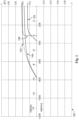
- the external magnetic field intensity H is shown along the x-axis measured in units of kA/m
- the magnetic polarization intensity J is shown along the y-axis measured in units of Tesla.
- remanence B r a measurement for the remaining magnetic induction or flux density in the magnet after magnetization (e.g., the strength of the resulting permanent magnet)
- Curve 102 depicts the magnetic properties of an example of a bonded Sm-Fe-N magnet (e.g., a magnet including and/or made of polymer bonded Sm-Fe-N magnetic material) at 26 degrees Celsius including an H CJ value of 784 kA/m.
- Curve 106 depicts the magnetic properties of an example of a bonded ferrite magnet (e.g., a magnet including and/or made of polymer bonded ferrite magnetic material) at 27 degrees Celsius including an H CJ value of 375 kA/m.
- Curve 108 depicts the magnetic properties of an example of a sintered ferrite magnet (e.g., a magnet including and/or made of sintered ferrite magnetic material) at 20 degrees Celsius including an H CJ value of 318 kA/m.
- Curve 104 depicts the magnetic properties of an example of a bonded unpolished Mn-Bi magnet (e.g., a magnet including and/or made of polymer bonded Mn-Bi magnetic material) at 23 degrees Celsius.
- the magnetic properties of the bonded unpolished Mn-Bi magnet are as follows: a B r value of .352 T, an H CB value of 266 kA/m, an H CJ value of 773 kA/m, a (BH) max value of 24 kJ/m 3 , a J K value of .317 T, an H K value of 386 kA/m, and an H D5 value of 599 kA/m.
- this powder is sintered (e.g., densified in final shape), however, the intrinsic coercivity may be reduced (e.g., H CJ ⁇ 0.50 T).
- H CJ ⁇ 0.50 T Such a decrease can occur due to defects added during compaction.
- Mn-Bi permanent magnet when Mn-Bi permanent magnet are produced in bonded form (e.g., a powder mixed with a binder) a remanence B r can approach that of sintered ferrites (e.g., the sintered ferrites of curve 108), whereas the intrinsic coercivity H CJ may have reached between 0.95 T to 1.20 T, as illustrated in Fig. 1 (e.g., the bonded unpolished Mn-Bi magnet of curve 104). As can be seen by curve 104, Mn-Bi in powder form has good resistance (e.g., H CJ ), about three times higher than ferrite.
- H CJ good resistance
- Graph 200 of Fig. 2 provides examples of J x H curves for Mn-Bi bonded permanent magnets obtained at different temperatures, and therefore shows the influence of temperature on the J x H curves, and the magnetic properties and performance of Mn-Bi permanent magnets.
- the external magnetic field intensity H is shown along the x-axis measured in units of kA/m
- the magnetic polarization intensity J is shown along the y-axis measured in units of Teslas.
- Curve 202 depicts the magnetic properties of an example of a bonded (e.g., polymer bonded) Mn-Bi permanent magnet (e.g., a magnet including and/or made of bonded Mn-Bi magnetic material) at 82 degrees Celsius.
- the magnetic properties of the example bonded Mn-Bi magnet are as follows: a B r value of .308 T, an H CB value of 225 kA/m, an H CJ value of 955 kA/m, a (BH) max value of 18 kJ/m 3 , a J K value of .278 T, an H K value of 268 kA/m, and an H D5 value of 804 kA/m.
- Curve 204 depicts the magnetic properties of an example of a bonded (e.g., polymer bonded) Mn-Bi permanent magnet (e.g., a magnet including and/or made of bonded Mn-Bi magnetic material) at 26 degrees Celsius.
- the magnetic properties of the example bonded Mn-Bi magnet are as follows: a B r value of .335 T, an H CB value of 251 kA/m, an H CJ value of 771 kA/m, a (BH) max value of 21 kJ/m 3 , a J K value of .301 T, an H K value of 356 kA/m, and an H D5 value of 593 kA/m.
- Curves 202 and 204 show that the intrinsic coercivity H CJ actually increases for the example bonded Mn-Bi permanent magnet as the temperature increases, and may perform better than rare earth materials and curves of Fig. 1 (e.g., at least in part due to a positive coercivity coefficient). But, as temperature decreases (e.g., when a Mn-Bi permanent magnet is deployed as part of a traction motor in cold environments), intrinsic coercivity H CJ may be proportionally reduced.
- soft magnetic material it may be advantageous to utilize permanent magnets with a lower intrinsic coercivity H CJ because soft magnetic materials may be required to magnetize and demagnetize in a given implementation.
- electric motor laminations may include soft magnetic materials that are designed to change polarity as they revolve around a magnetic field of a permanent magnet or electromagnet. Therefore, reducing the intrinsic coercivity H CJ of soft magnetic material may provide many advantages, such as improving the stability and reliability across different dynamic conditions by making magnetization and demagnetization easier (e.g., reducing the strength required from the applied magnetic field to demagnetize the soft magnetic material).
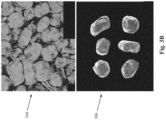
- the mechanically polished particles of Fig. 3B exhibited increased magnetic permeability (e.g., an increase of 300%), and reduced losses caused by the intrinsic coercivity H CJ of the alloy material's resistance and other magnetic losses (e.g., by at least 35%). At least part of this increase in the ease of magnetizing and demagnetizing the soft magnetic material (e.g., reduction in magnetic losses) may be attributed to the mechanical polishing that eliminates obstacles and defects that hinder magnetic domain wall displacement and increases the magnetic anisotropy.
- improvements in hard, powder magnetic material performance may provide an approach to enhance (e.g., increase and/or improve) Mn-Bi resistance to demagnetization. For example, eliminating defects (e.g., inclusions, corners) that reduce (local) magnetic anisotropy to support the enhancement of intrinsic coercivity of hard magnetic particles (e.g., Mn-Bi magnetic material) and magnets.
- polishing e.g., smoothing
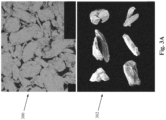
- polishing hard magnetic materials e.g., as in Fig. 3C
- polishing hard magnetic materials make Mn-Bi less amenable to magnetization and demagnetization.
- Fig. 4 provides an example process 400 for polishing hard magnetic materials and producing a permanent magnet from the polished hard magnetic materials.
- process 400 can take a rough, unpolished particle such as the particle 308 of Fig. 3C shown in cross section, and produce a polished particle (e.g., particle 310, 312, or 314 also shown in cross section) exhibiting an improved reduction of local magnetic anisotropy effects.
- This polished particle 310, 312, or 314 can then be used to produce a permanent magnet (e.g., by sintering or bonding the polished particle 310, 312, or 314).
- Step 402 includes providing hard magnetic particles.
- providing the hard magnetic particles and/or e.g., particle 308 can be provided in a powder form (e.g., alloy powder).
- the powder form of these particles can be obtained for instance by pulverizing materials produced via casting (e.g., including a heat treatment) and melt spinning of initial elements, with the latter using a wheel to spin the molten liquid form of the hard magnetic material.
- the hard magnetic particles (e.g., particle 308) can be a Mn-Bi powder form alloy.
- the hard magnetic particles may also be provided in liquid form (e.g., molten Mn-Bi), and step 404 can be applied directly to the liquid form of the molten Mn-Bi particles.
- the particle 308 can be many geometries, regular or irregular, and can include many rough and irregular surfaces (e.g., surface irregularities 316). These irregular (e.g., abnormal, rough) surfaces can be the result of the creation of the powder form, of the hard magnetic materials inherent crystalline formation process (e.g., while in a non-perfectly liquid form such as molten Mn-Bi), or a previous process that formed the particle 308 (e.g., mechanically grinding or powdering a larger block of Mn-Bi).
- rough and irregular surfaces e.g., surface irregularities 316.
- These irregular (e.g., abnormal, rough) surfaces can be the result of the creation of the powder form, of the hard magnetic materials inherent crystalline formation process (e.g., while in a non-perfectly liquid form such as molten Mn-Bi), or a previous process that formed the particle 308 (e.g., mechanically grinding or powdering a larger block of Mn-Bi).
- Step 404 includes increasing the magnetic coercivity of the hard magnetic particles by polishing the hard magnetic particles.
- particle 308 can be smoothed (e.g., polished), and resemble any of particles 310, 312, and/or 314.
- Polished particle 312 exhibits a perfectly continuous rounded surface 318 (e.g., along a perimeter of cross section of a sphere or cylinder), and is capable of exhibiting greatly improved magnetic coercivity as compared to the unpolished particle 308 (e.g., greatly homogenous domain wall displacement effects for hard magnetic materials).
- a perfectly continuous, rounded surface may not always be possible for the entire particle 312.
- Polished particle 310 exhibits surfaces 320, which together form an at least substantially continuous rounded surface 322.
- surface 324 can also constitute (e.g., provide) a continuous rounded surface 322 as a result of polishing the particle 308.
- Polished particle 314 also exhibits surfaces 326 which resemble flatter surfaces for a more continuous percentage of the size of the particle 314 than surfaces 318 or 310 (e.g., resembles a disk).
- the polishing of particle 314 can occur predominately over one or two axes motion, whereas the polishing of particles 310 and 312 can have occurred over across three axes.
- surfaces 326 provide polished surfaces that together can form an at least substantially continuous rounded surface 328.
- the polished surfaces or polished cross sections of the particles need not necessarily be symmetrical; so long as polished surfaces occur, at least some improvement in magnetic coercivity described above can be expected.
- one way of achieving increased intrinsic coercivity is by increasing magnetic anisotropy of the hard magnetic particles. This can be achieved by polishing hard magnetic particles.
- Step 404 can be performed according to a number of polishing processes.
- the particles e.g., any of particles 308, 310, 312, and/or 314.
- the particles can be smoothed against themselves (e.g., by mechanical frictional forces caused by an interaction between surfaces 316 of one particle contacting surfaces 316 of a different particle, or surfaces 320 interacting with other surfaces 316, 320, 324, 326).
- mechanically polishing the hard magnetic particles can be done by using a frictional force exerted by a first hard magnetic particle of the hard magnetic particles onto a second hard magnetic particle of the hard magnetic particles.
- the particles can also be polished with chemical polishing (e.g., polishing materials that cause controlled corrosion forces), alone or in combination with other mechanical polishing processes.
- step 406 includes mechanically polishing the hard magnetic particles using a polishing container.
- the container can be rotated to polish the hard magnetic particles inside the container. This rotation can occur at a controlled or predetermined speed based on physical parameters of the specific powder (e.g., particle size, hardness, kilograms of total powder in container) and/or parameters of the container (e.g., geometry, circumference, diameter). Therefore, the hard magnetic particles can be mechanically polished by operating a speed of the polishing container based on a physical parameter of the hard magnetic material and/or based on a spatial dimension of a portion of the container that the hard magnetic particles interact with.
- the forces e.g., friction, corrosion
- the forces can shape the powders toward a smooth "finishing," enabling the particulate surface to be rounded, thereby helping to avoid demagnetization at lower fields and enhancing its magnetic performance.
- the polishing can provide for many different types of polishing.
- the polishing container may contain an abrasive lining for polishing the hard magnetic materials.
- the hard magnetic particles can be mechanically polished by using a frictional force exerted by a surface of the polishing container onto a first hard magnetic particle of the hard magnetic particles.
- the polishing may also contain free (e.g., unfixed) polishing structures that operate within the container to rotate with the powder and polish the powder (e.g., ball milling).
- the hard magnetic particles can be mechanically polished using a polishing container by providing free polishing structures within the polishing container.
- polishing is atomization.
- the molten material can be exposed to an atomization force to produced polished particles (e.g., particles 310, 312, 314).
- polished particles e.g., particles 310, 312, 314.
- an air stream or liquid stream could be applied as an atomization force to the molten hard magnetic material, where droplets are pulled off of the top of the molten material by the air or liquid stream and collected. These collected droplets can then resemble magnetic particles with polished surfaces.
- the hard magnetic particles can be polished by atomizing the liquid hard magnetic particles by exposing a stream of the liquid hard magnetic particles to an atomization force.
- step 408 includes removing the polished hard magnetic particles from the polishing container and simultaneously exposing the polished hard magnetic particles to a controlled environmental condition.
- the polished hard magnetic particles e.g., particles 310, 312, 314
- the polished hard magnetic particles can be removed from the container in the presence of an inert, controlled atmosphere to prevent possible chemical reactions that could unsmooth (e.g., cause defects on the surface of) the polished particles.
- the polished particles can be removed from the polishing container without being exposed to an environment with the presence of oxygen and/or moisture.
- Step 410 includes forming a permanent magnet, the permanent magnet including the polished hard magnetic particles.
- the polished hard magnetic particles can be used in combination other processes or materials to form a permanent magnet with the improved magnetic coercivity of the polished hard magnetic materials.
- Two examples include permanent magnets prepared with sintered or bonded polished hard magnetic materials, and can include magnetically aligning (e.g., orienting) the materials during binding or sintering.
- sintered (e.g., densified) hard magnetic materials e.g., Mn-Bi
- the material can be compacted to form a permanent magnet body of a specific geometry and densified under a controlled program of time, temperature, and/or atmosphere.
- the hard magnetic material e.g., Mn-Bi
- a binder - for example a polymer matrix of inorganic, organic (e.g., from the family of thermosets and/or thermoplastics), or a mixture of both - and densified via industrially available processes including compression molding, transfer molding, or injection molding.
- a binder for example a polymer matrix of inorganic, organic (e.g., from the family of thermosets and/or thermoplastics), or a mixture of both - and densified via industrially available processes including compression molding, transfer molding, or injection molding.
- At least one advantage of the polymer binder is that for certain hard magnetic materials that are magnetically sensitive to the ranges of heat and pressure required to perform densification, utilizing a binding process can allow for the materials to avoid exposure to the heat and pressure of the densification process.
- the formed permanent magnet can then be utilized in a number of different applications, while exhibiting the increased magnetic coercivity and resistance to demagnetization caused by polish
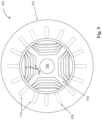
- the electric motor 500 includes a stator 502, a rotor 504, a shaft 506, permanent magnets 508, and stator windings 510.
- the motor 500 can be a type of surface permanent magnet motor.
- the motor 500 can be a type of internal permanent magnet motor.
- stator 502 and rotor 504 can be magnetically coupled to each other (e.g., in magnetic communication with each other, interact with each other magnetically/electrically).
- Stator 502 can include stator windings 510, which can carry charge induced by a rotation of the permanent magnets 508 in rotor 504, or can generate a magnetic flux to cause rotation of the rotor 504 by having current applied to the stator windings 510.
- the stator windings 510 can help drive the permanent magnets 508 in the rotor 504 in a synchronous phase, creating a type of permanent magnet assisted synchronous reluctance motor.
- Shaft 506 can be affixed to the rotor 504 and transmit rotational force exerted on the rotor 504 as mechanical power to a corresponding component.
- shaft 506 can also transmit rotational force to the rotor 504 to rotate the rotor 504 and contribute to the generation of electrical power by the stator windings 510 of the electric motor 500.
- specific motor topologies may depend more or less on the magnetic flux of the permanent magnets for torque creation, and may want to adjust (e.g., increase or decrease) the magnetic flux to the specific implementation of the motor.
- One case refers to the permanent magnet-assisted synchronous reluctance motors, where torque is partially due to the anisotropy of the soft magnetic lamination implemented in the rotor.
- magnetic materials providing resistance to demagnetization - especially at elevated temperatures - compared or superior to Neo grades without Tb and Dy addition e.g., polished magnetic materials produced according to one or more embodiments of the present invention
- enabling magnetic flux density and cost comparable to sintered ferrites can help to solve industrial problems (e.g., the techno-economical gap between the two main hard magnetic compounds).
- a permanent magnet motor can be implemented to provide for and/or assist the movement and/or propulsion of a vehicle (e.g., a traction motor).
- traction motors can experience high temperatures, high temperature variations, and thermal stresses. Because many magnetic materials possess a negative temperature coefficient with respect to their H CJ , increasing the H CJ of permanent magnets and/or permanent magnet materials can provide for more efficient and reliable electric motors.
- Permanent magnets produced by polishing the hard magnetic materials may be advantageously utilized in industrial machines and possibly traction motors (the latter is relevant considering the positive temperature coefficient of H CJ ).
- the permanent magnets do not necessarily use rare-earth elements in their composition, diminishing supply chain constraints on critical materials controlled by a single economic source.
- the permanent magnets may also provide flexibility in manufacturing, because the hard magnetic materials may be explored in distinct production processes including compression molding, transfer molding, injection molding (which may utilize binders), and sintering (not requiring binders).
- the smoothing process generates rounder particles, facilitating the mixture process of the powder with a chosen binder (which can include thermoset and/or thermoplastic compounds).
- the recitation of "at least one of A, B and C” should be interpreted as one or more of a group of elements consisting of A, B and C, and should not be interpreted as requiring at least one of each of the listed elements A, B and C, regardless of whether A, B and C are related as categories or otherwise.
- the recitation of "A, B and/or C" or "at least one of A, B or C” should be interpreted as including any singular entity from the listed elements, e.g., A, any subset from the listed elements, e.g., A and B, or the entire list of elements A, B and C.
Landscapes
- Engineering & Computer Science (AREA)
- Power Engineering (AREA)
- Manufacturing & Machinery (AREA)
- Mechanical Engineering (AREA)
- Chemical & Material Sciences (AREA)
- Materials Engineering (AREA)
- Metallurgy (AREA)
- Organic Chemistry (AREA)
- Nanotechnology (AREA)
- Hard Magnetic Materials (AREA)
- Finish Polishing, Edge Sharpening, And Grinding By Specific Grinding Devices (AREA)
- Manufacturing Cores, Coils, And Magnets (AREA)
Applications Claiming Priority (1)
| Application Number | Priority Date | Filing Date | Title |
|---|---|---|---|
| US18/474,383 US20250104910A1 (en) | 2023-09-26 | 2023-09-26 | Surface Treated Magnetic Material and Magnet |
Publications (1)
| Publication Number | Publication Date |
|---|---|
| EP4531064A1 true EP4531064A1 (fr) | 2025-04-02 |
Family
ID=92925290
Family Applications (1)
| Application Number | Title | Priority Date | Filing Date |
|---|---|---|---|
| EP24202843.9A Pending EP4531064A1 (fr) | 2023-09-26 | 2024-09-26 | Matériau magnétique traité en surface et aimant |
Country Status (5)
| Country | Link |
|---|---|
| US (1) | US20250104910A1 (fr) |
| EP (1) | EP4531064A1 (fr) |
| CN (1) | CN119724892A (fr) |
| CA (1) | CA3255272A1 (fr) |
| MX (1) | MX2024011715A (fr) |
Citations (10)
| Publication number | Priority date | Publication date | Assignee | Title |
|---|---|---|---|---|
| US2576679A (en) * | 1939-08-02 | 1951-11-27 | Electro Chimie Metal | Permanent magnet and method of manufacture thereof |
| JPH08148315A (ja) * | 1994-11-24 | 1996-06-07 | Shin Etsu Chem Co Ltd | 希土類磁石の製造方法 |
| CN102240810A (zh) * | 2011-06-24 | 2011-11-16 | 北京工业大学 | 一种高矫顽力锰铋磁粉的制备方法 |
| EP2980809A2 (fr) * | 2014-07-29 | 2016-02-03 | LG Electronics Inc. | Substance magnétique à base mnbi, son procédé de préparation, aimant fritté à base mnbi et son procédé de préparation |
| EP3131099A1 (fr) * | 2014-03-27 | 2017-02-15 | Hitachi Metals, Ltd. | Poudre d'alliage à base de r-t-b et son procédé de production, et aimant fritté à base de r-t-b et son procédé de production |
| CN106683867A (zh) * | 2017-03-10 | 2017-05-17 | 解伟 | 3d打印纳米晶各向异性磁体 |
| EP3401933A1 (fr) * | 2016-01-07 | 2018-11-14 | Toda Kogyo Corp. | Poudre magnétique à base de manganèse et de bismuth, procédé permettant de produire cette dernière, composé pour un aimant de liaison, aimant de liaison, aimant métallique à base de manganèse et de bismuth et procédé permettant de produire ce dernier |
| EP3572165A1 (fr) * | 2018-05-24 | 2019-11-27 | NETZSCH Trockenmahltechnik GmbH | Procédé et installation de fabrication d'un matériau pour la fabrication d'aimants en terres rares |
| CN114101654A (zh) * | 2021-09-16 | 2022-03-01 | 华北理工大学 | 一种高性能SmFe12基永磁粉体及其制备方法 |
| CN114603145A (zh) * | 2021-01-20 | 2022-06-10 | 江西理工大学 | 烧结钕铁硼sc铸片的粉碎/表面改性的装置及方法 |
-
2023
- 2023-09-26 US US18/474,383 patent/US20250104910A1/en active Pending
-
2024
- 2024-09-24 CA CA3255272A patent/CA3255272A1/en active Pending
- 2024-09-24 MX MX2024011715A patent/MX2024011715A/es unknown
- 2024-09-24 CN CN202411330039.XA patent/CN119724892A/zh active Pending
- 2024-09-26 EP EP24202843.9A patent/EP4531064A1/fr active Pending
Patent Citations (10)
| Publication number | Priority date | Publication date | Assignee | Title |
|---|---|---|---|---|
| US2576679A (en) * | 1939-08-02 | 1951-11-27 | Electro Chimie Metal | Permanent magnet and method of manufacture thereof |
| JPH08148315A (ja) * | 1994-11-24 | 1996-06-07 | Shin Etsu Chem Co Ltd | 希土類磁石の製造方法 |
| CN102240810A (zh) * | 2011-06-24 | 2011-11-16 | 北京工业大学 | 一种高矫顽力锰铋磁粉的制备方法 |
| EP3131099A1 (fr) * | 2014-03-27 | 2017-02-15 | Hitachi Metals, Ltd. | Poudre d'alliage à base de r-t-b et son procédé de production, et aimant fritté à base de r-t-b et son procédé de production |
| EP2980809A2 (fr) * | 2014-07-29 | 2016-02-03 | LG Electronics Inc. | Substance magnétique à base mnbi, son procédé de préparation, aimant fritté à base mnbi et son procédé de préparation |
| EP3401933A1 (fr) * | 2016-01-07 | 2018-11-14 | Toda Kogyo Corp. | Poudre magnétique à base de manganèse et de bismuth, procédé permettant de produire cette dernière, composé pour un aimant de liaison, aimant de liaison, aimant métallique à base de manganèse et de bismuth et procédé permettant de produire ce dernier |
| CN106683867A (zh) * | 2017-03-10 | 2017-05-17 | 解伟 | 3d打印纳米晶各向异性磁体 |
| EP3572165A1 (fr) * | 2018-05-24 | 2019-11-27 | NETZSCH Trockenmahltechnik GmbH | Procédé et installation de fabrication d'un matériau pour la fabrication d'aimants en terres rares |
| CN114603145A (zh) * | 2021-01-20 | 2022-06-10 | 江西理工大学 | 烧结钕铁硼sc铸片的粉碎/表面改性的装置及方法 |
| CN114101654A (zh) * | 2021-09-16 | 2022-03-01 | 华北理工大学 | 一种高性能SmFe12基永磁粉体及其制备方法 |
Non-Patent Citations (1)
| Title |
|---|
| RAMA RAO N V ET AL: "Fast Track Communication;Anisotropic fully dense MnBi permanent magnet with high energy product and high coercivity at elevated temperatures;Anisotropic fully dense MnBi permanent magnet with high energy product and high coercivity at elevated temperatures", JOURNAL OF PHYSICS D: APPLIED PHYSICS, INSTITUTE OF PHYSICS PUBLISHING, BRISTOL, GB, vol. 46, no. 6, 17 January 2013 (2013-01-17), pages 62001, XP020237292, ISSN: 0022-3727, DOI: 10.1088/0022-3727/46/6/062001 * |
Also Published As
| Publication number | Publication date |
|---|---|
| US20250104910A1 (en) | 2025-03-27 |
| CA3255272A1 (en) | 2025-10-30 |
| CN119724892A (zh) | 2025-03-28 |
| MX2024011715A (es) | 2025-04-02 |
Similar Documents
| Publication | Publication Date | Title |
|---|---|---|
| JP6419812B2 (ja) | 熱的安定性が向上したマンガンビスマス系焼結磁石及びそれらの製造方法 | |
| CN101689424B (zh) | R-tm-b系径向各向异性环状磁铁、该磁铁的制造方法、及用于制造该磁铁的模具、以及无刷电动机用转子 | |
| US9093218B2 (en) | Permanent magnet for motor, and method for manufacturing the permanent magnet for motor | |
| US8823235B2 (en) | Rotor for axial gap-type permanent magnetic rotating machine | |
| JP4796788B2 (ja) | コアレスモータ | |
| JP5417632B2 (ja) | 永久磁石及び永久磁石の製造方法 | |
| JP4422953B2 (ja) | 永久磁石の製造方法 | |
| JP2012124189A (ja) | 焼結磁石 | |
| JP5298180B2 (ja) | モータ用永久磁石及びモータ用永久磁石の製造方法 | |
| JP2010062326A (ja) | ボンド磁石 | |
| US20200243231A1 (en) | Composite magnetic material, magnet comprising the material, motor using the magnet, and method of manufacturing the composite magnetic material | |
| JP3739266B2 (ja) | 交換スプリング磁石の製造方法 | |
| EP4531064A1 (fr) | Matériau magnétique traité en surface et aimant | |
| V Sreenivasulu et al. | Fascinating magnetic energy storage nanomaterials: A brief review | |
| CN110506315B (zh) | 永磁体、制造该永磁体的方法及包括该永磁体的电机 | |
| JP2004146542A (ja) | 磁石用固形材料及びその製造方法 | |
| JP5660485B2 (ja) | 積層磁石膜可動子 | |
| Le Breton et al. | Hexaferrite Permanent Magnets and Applications | |
| WO2019078321A1 (fr) | Matériau magnétique composite, aimant contenant ledit matériau, moteur utilisant ledit aimant et procédé de production dudit matériau magnétique composite | |
| JP3682850B2 (ja) | 回転機 | |
| US11948733B2 (en) | Processing of anisotropic permanent magnet without magnetic field | |
| JP4710424B2 (ja) | ラジアル磁気異方性磁石モータの製造方法 | |
| JPH03198632A (ja) | 交流サーボモータ用磁石回転子 | |
| JP4622767B2 (ja) | ラジアル磁気異方性多極磁石の製造方法 | |
| de Lacheisserie et al. | Permanent magnets |
Legal Events
| Date | Code | Title | Description |
|---|---|---|---|
| PUAI | Public reference made under article 153(3) epc to a published international application that has entered the european phase |
Free format text: ORIGINAL CODE: 0009012 |
|
| STAA | Information on the status of an ep patent application or granted ep patent |
Free format text: STATUS: THE APPLICATION HAS BEEN PUBLISHED |
|
| AK | Designated contracting states |
Kind code of ref document: A1 Designated state(s): AL AT BE BG CH CY CZ DE DK EE ES FI FR GB GR HR HU IE IS IT LI LT LU LV MC ME MK MT NL NO PL PT RO RS SE SI SK SM TR |
|
| STAA | Information on the status of an ep patent application or granted ep patent |
Free format text: STATUS: REQUEST FOR EXAMINATION WAS MADE |
|
| 17P | Request for examination filed |
Effective date: 20250821 |