EP4531497A2 - Procédé et système de commande d'un dispositif de chauffage électrique utilisant une commande d'énergie - Google Patents
Procédé et système de commande d'un dispositif de chauffage électrique utilisant une commande d'énergie Download PDFInfo
- Publication number
- EP4531497A2 EP4531497A2 EP25158400.9A EP25158400A EP4531497A2 EP 4531497 A2 EP4531497 A2 EP 4531497A2 EP 25158400 A EP25158400 A EP 25158400A EP 4531497 A2 EP4531497 A2 EP 4531497A2
- Authority
- EP
- European Patent Office
- Prior art keywords
- heater
- temperature
- electrical energy
- energy
- magnitude
- Prior art date
- Legal status (The legal status is an assumption and is not a legal conclusion. Google has not performed a legal analysis and makes no representation as to the accuracy of the status listed.)
- Pending
Links
Images


Classifications
-
- G—PHYSICS
- G05—CONTROLLING; REGULATING
- G05D—SYSTEMS FOR CONTROLLING OR REGULATING NON-ELECTRIC VARIABLES
- G05D23/00—Control of temperature
- G05D23/19—Control of temperature characterised by the use of electric means
- G05D23/1902—Control of temperature characterised by the use of electric means characterised by the use of a variable reference value
-
- G—PHYSICS
- G05—CONTROLLING; REGULATING
- G05B—CONTROL OR REGULATING SYSTEMS IN GENERAL; FUNCTIONAL ELEMENTS OF SUCH SYSTEMS; MONITORING OR TESTING ARRANGEMENTS FOR SUCH SYSTEMS OR ELEMENTS
- G05B19/00—Program-control systems
- G05B19/02—Program-control systems electric
- G05B19/18—Numerical control [NC], i.e. automatically operating machines, in particular machine tools, e.g. in a manufacturing environment, so as to execute positioning, movement or co-ordinated operations by means of program data in numerical form
- G05B19/4155—Numerical control [NC], i.e. automatically operating machines, in particular machine tools, e.g. in a manufacturing environment, so as to execute positioning, movement or co-ordinated operations by means of program data in numerical form characterised by program execution, i.e. part program or machine function execution, e.g. selection of a program
-
- G—PHYSICS
- G05—CONTROLLING; REGULATING
- G05D—SYSTEMS FOR CONTROLLING OR REGULATING NON-ELECTRIC VARIABLES
- G05D23/00—Control of temperature
- G05D23/19—Control of temperature characterised by the use of electric means
- G05D23/1902—Control of temperature characterised by the use of electric means characterised by the use of a variable reference value
- G05D23/1904—Control of temperature characterised by the use of electric means characterised by the use of a variable reference value variable in time
-
- H—ELECTRICITY
- H05—ELECTRIC TECHNIQUES NOT OTHERWISE PROVIDED FOR
- H05B—ELECTRIC HEATING; ELECTRIC LIGHT SOURCES NOT OTHERWISE PROVIDED FOR; CIRCUIT ARRANGEMENTS FOR ELECTRIC LIGHT SOURCES, IN GENERAL
- H05B1/00—Details of electric heating devices
- H05B1/02—Automatic switching arrangements specially adapted to apparatus ; Control of heating devices
- H05B1/0227—Applications
-
- H—ELECTRICITY
- H05—ELECTRIC TECHNIQUES NOT OTHERWISE PROVIDED FOR
- H05B—ELECTRIC HEATING; ELECTRIC LIGHT SOURCES NOT OTHERWISE PROVIDED FOR; CIRCUIT ARRANGEMENTS FOR ELECTRIC LIGHT SOURCES, IN GENERAL
- H05B1/00—Details of electric heating devices
- H05B1/02—Automatic switching arrangements specially adapted to apparatus ; Control of heating devices
- H05B1/0227—Applications
- H05B1/0288—Applications for non specified applications
-
- G—PHYSICS
- G05—CONTROLLING; REGULATING
- G05B—CONTROL OR REGULATING SYSTEMS IN GENERAL; FUNCTIONAL ELEMENTS OF SUCH SYSTEMS; MONITORING OR TESTING ARRANGEMENTS FOR SUCH SYSTEMS OR ELEMENTS
- G05B2219/00—Program-control systems
- G05B2219/30—Nc systems
- G05B2219/42—Servomotor, servo controller kind till VSS
- G05B2219/42033—Kind of servo controller
-
- G—PHYSICS
- G05—CONTROLLING; REGULATING
- G05B—CONTROL OR REGULATING SYSTEMS IN GENERAL; FUNCTIONAL ELEMENTS OF SUCH SYSTEMS; MONITORING OR TESTING ARRANGEMENTS FOR SUCH SYSTEMS OR ELEMENTS
- G05B2219/00—Program-control systems
- G05B2219/30—Nc systems
- G05B2219/50—Machine tool, machine tool null till machine tool work handling
- G05B2219/50333—Temperature
-
- H—ELECTRICITY
- H05—ELECTRIC TECHNIQUES NOT OTHERWISE PROVIDED FOR
- H05B—ELECTRIC HEATING; ELECTRIC LIGHT SOURCES NOT OTHERWISE PROVIDED FOR; CIRCUIT ARRANGEMENTS FOR ELECTRIC LIGHT SOURCES, IN GENERAL
- H05B1/00—Details of electric heating devices
- H05B1/02—Automatic switching arrangements specially adapted to apparatus ; Control of heating devices
- H05B1/0227—Applications
- H05B1/023—Industrial applications
Definitions
- the present disclosure relates to a method for controlling the thermal performance of an electric heater.
- a thermal system for an industrial process typically includes a heater system and a control system to monitor and control the operations of the heater system.
- the control system may be a temperature proportional-integral-derivative (PID) control system configured to control a temperature of the heater system to a target temperature.
- PID temperature proportional-integral-derivative
- temperature PID controllers react to thermal system changes once a temperature sensor detects a change in measured temperature. As such, it may be difficult for the temperature PID controller to quickly and timely react to thermal system changes, such as a thermal load change.
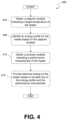
- the present disclosure provides a method for controlling a heated process of a heater.
- the method includes obtaining a setpoint variable indicating a target temperature of the heater.
- the method includes identifying an energy profile for the heater based on the setpoint variable, where the energy profile provides a defined magnitude of initial electrical energy to be applied to the heater to have a temperature of the heated process reach the target temperature.
- the method includes obtaining a process variable indicating a performance characteristic of the heated process.
- the method includes providing electrical energy to the heater based on at least one of the energy profile and the process variable.
- providing the electrical energy to the heater further includes providing the defined magnitude of initial electrical energy to the heater. In some forms, providing the electrical energy to the heater further includes reducing the electrical energy to the heater in response to the process variable indicating that the temperature of the heater is within a temperature approach band of the target temperature of the heater, where the performance characteristic includes the temperature of the heater. In some forms, the electrical energy is reduced to a steady state electrical power based on a natural time constant. In some forms, the electrical energy is reduced to a steady state electrical power based on a proportional-integral control.
- the method further includes determining whether the temperature of the heater is less than the setpoint variable. In response to the temperature of the heater being less than the setpoint variable, the electrical energy provided to the heater is based on the identified energy profile and is equal to the defined magnitude of initial electrical energy. In response to the temperature of the heater being greater than the setpoint variable, the method further includes turning-off electrical energy to the heater, and obtaining the process variable indicating the performance characteristic of the heater, where the performance characteristic includes the temperature of the heater. In some forms, in response to the temperature of the heater being greater than the setpoint variable, the method further includes increasing the electrical energy to the heater to a steady state electrical power in response to the temperature of the heater approaching the setpoint variable. In some forms, the electrical energy is increased from zero to the steady state electrical power based on a natural time constant. In some forms, the electrical energy is increased from zero to the steady state electrical power based on a proportional-integral control.
- the method further includes determining whether the temperature of the heater is equal to the setpoint variable. In some forms, the method further includes controlling the electrical energy to the heater based on a temperature control model for maintaining the temperature of the heater at the setpoint variable. In some forms, the performance characteristic includes at least one of a voltage of the heater, a current of the heater, and a temperature of the heater.
- the instructions for providing, during the energy-based control mode, the electrical energy to the heater based on the energy profile further include providing the defined magnitude of initial electrical energy to the heater, determining whether the temperature of the heater is within a temperature approach band of the target temperature of the heater, reducing the electrical energy provided to the heater to a steady state electrical power in response to the temperature of the heater being within the temperature approach band of the target temperature of the heater.
- the energy profile further defines a steady state electrical power that is applied to the heater in response to the temperature of the heater being within a temperature approach band of the target temperature.
- the method further includes defining the temperature approach band of the target temperature based on a mathematical model.
- the energy profile further defines a duration of time to provide the predetermined value of electrical energy to the heater to have the temperature of the heater reach the target temperature.
- selectively adjusting the gain values based on the response time further comprises adjusting the gain values based on a Ziegler-Nichols tuning routine in response to the response time being less than a threshold response time.
- the energy profile is further based on the calibration magnitude.
- the method further includes selectively adjusting the calibration magnitude when the process variable indicates that the temperature of the heater is equal to the target temperature.
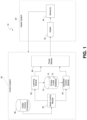
- a thermal system 10 including a heater system 20 having a heater 22 and a control system 30 configured to provide a desired thermal response is shown.
- the control system 30 is configured to control the operation of the heater system 20 and, more particularly, the heater 22.
- the thermal system 10 can be used in abatement system of the semiconductor process to heat fluid flowing through a network of conduits.
- the heater system 20 can include multiple flexible heaters that wrap about the conduits to heat the fluid therein.
- the thermal system 10 can employ cartridge heaters as part of the heater system 20 to directly heat fluid (e.g., gas and/or liquid) flowing through conduits or provided within a container.
- the present disclosure may be applicable to other industrial processes having a thermal system to heat a load.
- the heater 22 of the heater system 20 should not be limited to the examples provided herein, and the heater 22 may include a layered heater, a cartridge heater, a tubular heater, a polymer heater, a flexible heater, among other heaters having a resistive heating element.
- the heater system 20 can include one or more sensors 24 for measuring performance characteristics (i.e., a process variable) of the heater 22, such as, but not limited to: a temperature, a voltage, a current, an electrical power, and/or a resistance of the heater 22, among others.
- the one or more sensors 24 may include a thermocouple, a resistance temperature detector, an infrared camera, a current sensor, and/or a voltage sensor, among others.
- the heater 22 may generate the performance characteristic in lieu of or in addition to the one or more sensors 24 generating the performance characteristics.
- the heater system 20 can be a two-wire heater system, where the heater 22 is operable to generate heat and operate as a sensor to measure a performance characteristic of the heater 22. More particularly, the heater 22 can include one or more resistive heating elements that operate as a sensor for measuring an average temperature of the resistive heating element based on a resistance of the resistive heating element.
- An example two-wire heater system is disclosed in U.S. Patent No. 7,196,295 , which is commonly owned with the present application and the contents of which are incorporated herein by reference in its entirety.
- the heater 22 is configured to include temperature sensing power pins for measuring a temperature of the heater 22.
- the power pins as a thermocouple to measure a temperature of a resistive heating element is disclosed in U.S. Patent No. 10,728,956 , which is commonly owned with the present application and the contents of which are incorporated herein by reference in its entirety.
- the resistive heating element of the heater 22 and the control system 30 are connected via a first power pin and a second power pin that define a first junction and a second junction, respectively.
- the first and second power pins function as thermocouple sensing pins for measuring temperature of the resistive heating element of the heater 22.
- the control system 30, which is in communication with the first and second power pins, may be configured to measure changes in voltage at the first and second junctions. More specifically, the control system 30 may measure millivolt (mV) changes at the junctions and then uses these changes in voltage to calculate a temperature of the resistive heating element.
- mV millivolt
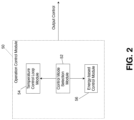
- the control mode selection module 52 sets the operation control mode to the temperature control mode and is thereby controlled by the temperature control loop module 54.
- the control mode selection module 52 sets the operation control mode to the energy-based control mode when the measured temperature is less than the target temperature by a defined deviation (e.g., a deviation of 10°C, 15°C, or other suitable value). Otherwise, the temperature control mode is selected when the measured temperature is greater than the target temperature by the defined deviation.
- the operation control module 50 transitions to the temperature control mode.
- the temperature control loop module 54 is configured to control the heater 22 based on the target temperature and the process variables, such as the temperature of the heater 22. For example, in one form, the temperature control loop module 54 performs a PID control that monitors the temperature of the heater 22 and determines the difference between the actual temperature and the target temperature. The temperature control loop module 54 then determines the level of electrical energy needed for reducing the difference between the actual temperature of the heater 22 and the target temperature, as the output control.
- the learning module 60 includes a parameter module 62, a response time module 64, a temperature determination module 66, an energy profile generator module 68, and a parameter adjustment module 69.
- the learning module 60 which may be implemented by a PID control module, is configured to execute an energy profile learning routine when the mode control module 40 sets the control system 30 to the energy profile learning mode.
- the learning module 60 may execute the energy profile learning routine periodically to define the energy profiles 72.
- the learning module 60 may execute the energy profile learning routine in conjunction with the operation control routine executed by the operation control module 50, thereby enabling the control system 30 to identify various conditions of the thermal system 10, such as energy consumption, heater or sensor failure, changes in heat transfer, among other conditions of the thermal system 10.
- the learning module 60 is configured to generate an energy profile 72 for a range of setpoint/target temperatures while executing the energy profile learning routine (e.g., the learning module 60 is configured to generate an energy profile 72 for a plurality of target temperature between -10°C and 250°C, including endpoints).
- the energy profile 72 correlates a target temperature to a defined magnitude of initial electrical energy and/or power to be applied to the heater 22 and/or a duration of time to provide the electrical energy to have a temperature of the heater 22 reach the target temperature.
- the energy profile 72 may also define a steady state voltage magnitude of the electrical energy that is applied to the heater 22 in response to the process variable indicating that the temperature of the heater 22 is within a temperature approach band of the target temperature of the heater 22.
- the temperature approach band for each energy profile 72 is also defined by, for example, a user, a mathematical model, and/or a learning routine, among others.
- the energy profile generator module 68 is configured to generate the energy profile 72 based on the gain values, the target temperature, the calibration magnitude, and the response time of the heater 22. As an example, if the response time of the heater 22 is determined to be sufficient for controlling the heater 22 (i.e., the response time is less than a threshold value), the energy profile generator module 68 generates the energy profile 72 for the corresponding target temperature, and the energy profile 72 correlates the calibration magnitude and the gain values to the particular target temperature. Furthermore, if the response time of the heater 22 is determined to be sufficient for controlling the heater 22, the energy profile generator module 68 may also correlate a steady state magnitude to the particular target temperature, where the steady state magnitude is based on a natural time constant as indicated by the gain values.
- the learning module 60 of the present disclosure can improve the response of the heater system 20 to recurrent dynamic conditions that may not necessarily require user input.
- the learning module 60 may perform machine learning routine to predict the occurrence and severity of dynamic conditions and ascertain the control mode and control setting to improve the control system response.
- the control system 30 can improve and/or maintain performance as components of the thermal system 10 gradually change.
- data collected and determined by the control system 30 can be provided to the user for additional analytics.
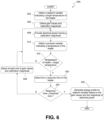
- the control system 30 determines a response time of the heater 22.
- the control system 30 determines whether the response time is less than a threshold response time. If so, the routine 600 proceeds to 632, where the control system 30 generates an energy profile 72 for the particular target temperature based on the gain values and the magnitude of electrical energy. If the response time of the heater 22 is greater than the threshold response time at 624, the routine 600 proceeds to 628, where the control system 30 adjusts at least one of the gain values (e.g., using the Ziegler-Nichols tuning method) and the calibration magnitude and then proceeds to 608.
- the gain values e.g., using the Ziegler-Nichols tuning method
- the phrase at least one of A, B, and C should be construed to mean a logical (A OR B OR C), using a non-exclusive logical OR, and should not be construed to mean "at least one of A, at least one of B, and at least one of C.”
- code may include software, firmware, and/or microcode, and may refer to programs, routines, functions, classes, data structures, and/or objects.
- memory circuit is a subset of the term computer-readable medium.
- computer-readable medium does not encompass transitory electrical or electromagnetic signals propagating through a medium (such as on a carrier wave); the term computer-readable medium may therefore be considered tangible and non-transitory.
- a method for controlling a heated process of a heater comprising:
- Clause 2 The method of Clause 1, wherein providing the electrical energy to the heater further comprises:
- Clause 3 The method of Clause 2, wherein the electrical energy is reduced to a steady state electrical power based on a natural time constant.
- Clause 4 The method of Clause 2, wherein the electrical energy is reduced to a steady state electrical power based on a proportional-integral control.
- Clause 5 The method of Clause 1 further comprising determining whether the temperature of the heater is less than the setpoint variable, wherein:
- Clause 6 The method of Clause 5, wherein the electrical energy is increased from zero to the steady state electrical power based on a natural time constant.
- Clause 7 The method of Clause 5, wherein the electrical energy is increased from zero to the steady state electrical power based on a proportional-integral control.
- Clause 8 The method of Clause 1 further comprising:
- Clause 9 The method of Clause 1, wherein the performance characteristic includes at least one of a voltage of the heater, a current of the heater, and a temperature of the heater.
- a system for controlling a heater comprising: a processor configured to execute instructions stored in a nontransitory computer-readable medium, wherein the instructions comprise:
- a method for learning an energy profile of a heater comprising:
- Clause 15 The method of Clause 14, wherein the energy profile further defines a steady state electrical power that is applied to the heater in response to the temperature of the heater being within a temperature approach band of the target temperature.
- Clause 16 The method of Clause 15 further comprising defining the temperature approach band of the target temperature based on a mathematical model.
- Clause 17 The method of Clause 14, wherein the energy profile further defines a duration of time to provide the predetermined value of electrical energy to the heater to have the temperature of the heater reach the target temperature.
- Clause 18 The method of Clause 14, wherein selectively adjusting the gain values based on the response time further comprises adjusting the gain values based on a Ziegler-Nichols tuning routine in response to the response time being less than a threshold response time.
- Clause 19 The method of Clause 14, wherein the energy profile is further based on the calibration magnitude.
- Clause 20 The method of Clause 14 further comprising selectively adjusting the calibration magnitude when the process variable indicates that the temperature of the heater is equal to the target temperature.
Landscapes
- Engineering & Computer Science (AREA)
- Physics & Mathematics (AREA)
- General Physics & Mathematics (AREA)
- Automation & Control Theory (AREA)
- Human Computer Interaction (AREA)
- Manufacturing & Machinery (AREA)
- Control Of Temperature (AREA)
- Control Of Resistance Heating (AREA)
- Control Of Heat Treatment Processes (AREA)
Applications Claiming Priority (3)
| Application Number | Priority Date | Filing Date | Title |
|---|---|---|---|
| US202063074520P | 2020-09-04 | 2020-09-04 | |
| EP21783639.4A EP4209112B1 (fr) | 2020-09-04 | 2021-09-02 | Procede et systeme de controle d'un radiateur electrique par controle de l'energie |
| PCT/US2021/048884 WO2022051509A1 (fr) | 2020-09-04 | 2021-09-02 | Procédé et système de commande d'un dispositif de chauffage électrique utilisant la commande de l'énergie |
Related Parent Applications (1)
| Application Number | Title | Priority Date | Filing Date |
|---|---|---|---|
| EP21783639.4A Division EP4209112B1 (fr) | 2020-09-04 | 2021-09-02 | Procede et systeme de controle d'un radiateur electrique par controle de l'energie |
Publications (2)
| Publication Number | Publication Date |
|---|---|
| EP4531497A2 true EP4531497A2 (fr) | 2025-04-02 |
| EP4531497A3 EP4531497A3 (fr) | 2025-06-25 |
Family
ID=78032517
Family Applications (2)
| Application Number | Title | Priority Date | Filing Date |
|---|---|---|---|
| EP21783639.4A Active EP4209112B1 (fr) | 2020-09-04 | 2021-09-02 | Procede et systeme de controle d'un radiateur electrique par controle de l'energie |
| EP25158400.9A Pending EP4531497A3 (fr) | 2020-09-04 | 2021-09-02 | Procédé et système de commande d'un dispositif de chauffage électrique utilisant une commande d'énergie |
Family Applications Before (1)
| Application Number | Title | Priority Date | Filing Date |
|---|---|---|---|
| EP21783639.4A Active EP4209112B1 (fr) | 2020-09-04 | 2021-09-02 | Procede et systeme de controle d'un radiateur electrique par controle de l'energie |
Country Status (7)
| Country | Link |
|---|---|
| US (2) | US11921526B2 (fr) |
| EP (2) | EP4209112B1 (fr) |
| JP (1) | JP7753347B2 (fr) |
| KR (2) | KR20250053229A (fr) |
| IL (1) | IL301030B1 (fr) |
| TW (1) | TWI806147B (fr) |
| WO (1) | WO2022051509A1 (fr) |
Families Citing this family (3)
| Publication number | Priority date | Publication date | Assignee | Title |
|---|---|---|---|---|
| US11083050B2 (en) * | 2017-11-21 | 2021-08-03 | Watlow Electric Manufacturing Company | Integrated heater and method of manufacture |
| US12351917B2 (en) * | 2020-12-01 | 2025-07-08 | Applied Materials, Inc. | Multi-zone heater tuning in substrate heater |
| CN121704584B (zh) * | 2026-02-11 | 2026-04-17 | 扬州市优珂电气有限公司 | 一种高效节能电加热器温度智能控制方法 |
Citations (2)
| Publication number | Priority date | Publication date | Assignee | Title |
|---|---|---|---|---|
| US7196295B2 (en) | 2003-11-21 | 2007-03-27 | Watlow Electric Manufacturing Company | Two-wire layered heater system |
| US10728956B2 (en) | 2015-05-29 | 2020-07-28 | Watlow Electric Manufacturing Company | Resistive heater with temperature sensing power pins |
Family Cites Families (28)
| Publication number | Priority date | Publication date | Assignee | Title |
|---|---|---|---|---|
| JPS62114003A (ja) * | 1985-11-13 | 1987-05-25 | Kokusai Electric Co Ltd | 高速応答制御装置 |
| US4737617A (en) * | 1987-07-22 | 1988-04-12 | General Electric Company | Power control for cooking appliance with transient operating modes |
| US5397515A (en) * | 1992-10-30 | 1995-03-14 | Allen-Bradley Company, Inc. | Injection molding machine temperature control system |
| DE4319652C2 (de) * | 1993-06-14 | 2002-08-08 | Perkin Elmer Bodenseewerk Zwei | Verfahren zur Temperatursteuerung |
| JPH09258601A (ja) * | 1996-03-26 | 1997-10-03 | Tec Corp | 加熱定着装置の温度制御方法及び装置 |
| JP2000164499A (ja) * | 1998-11-27 | 2000-06-16 | Komatsu Ltd | 基板温度制御装置及びそのコントローラ |
| US6768084B2 (en) | 2002-09-30 | 2004-07-27 | Axcelis Technologies, Inc. | Advanced rapid thermal processing (RTP) using a linearly-moving heating assembly with an axisymmetric and radially-tunable thermal radiation profile |
| US7035694B2 (en) * | 2003-05-13 | 2006-04-25 | National Instruments Corporation | Automatic tuning of motion controllers using search techniques |
| US7398693B2 (en) | 2006-03-30 | 2008-07-15 | Applied Materials, Inc. | Adaptive control method for rapid thermal processing of a substrate |
| US20070251939A1 (en) * | 2006-04-27 | 2007-11-01 | Applied Materials, Inc. | Control scheme for cold wafer compensation on a lithography track |
| JP4901486B2 (ja) * | 2007-01-04 | 2012-03-21 | 日本フェンオール株式会社 | Pid制御方法及びpid制御装置 |
| MX2009012601A (es) | 2007-06-08 | 2010-04-21 | Pressco Tech Inc | Un metodo y sistema para irradiacion y tratamiento termico especifico de longitud de onda. |
| CN103792973B (zh) | 2007-06-18 | 2017-10-27 | 翱泰温控器(惠州)有限公司 | 液体加热容器及其控制器 |
| US7848840B2 (en) * | 2008-01-04 | 2010-12-07 | Applied Materials, Inc. | Method of controlling process parameters for semiconductor manufacturing apparatus |
| JP2011527044A (ja) * | 2008-07-02 | 2011-10-20 | グラコ ミネソタ インコーポレーテッド | ヒータ及びモータの制御 |
| US8867908B2 (en) * | 2011-08-31 | 2014-10-21 | General Electric Company | Self-programming water heater |
| JP5805509B2 (ja) * | 2011-11-30 | 2015-11-04 | トヨタ紡織株式会社 | ヒータ制御装置及び車両用シートヒータ |
| MX2015012279A (es) | 2013-03-15 | 2016-04-15 | Pacecontrols Llc | Controlador para control automatico de equipo de calefaccion, ventilacion, y aire acondicionado (hvac&r) en ciclo de trabajo, y sistemas y metodos que usan el mismo. |
| US10468279B2 (en) | 2013-12-26 | 2019-11-05 | Kateeva, Inc. | Apparatus and techniques for thermal treatment of electronic devices |
| AU2016314784A1 (en) | 2015-09-03 | 2018-04-26 | Commonwealth Scientific And Industrial Research Organisation | Microwave heating apparatus and method of heating |
| US10641507B2 (en) * | 2015-09-16 | 2020-05-05 | Siemens Industry, Inc. | Tuning building control systems |
| TWI606242B (zh) * | 2015-09-17 | 2017-11-21 | 旺矽科技股份有限公司 | 溫度控制系統及其方法 |
| CA3028991A1 (fr) | 2016-06-24 | 2017-12-28 | Hatco Corporation | Unite de regulation de temperature d'un produit alimentaire |
| US10525638B2 (en) | 2017-08-29 | 2020-01-07 | The Boeing Company | Heater system for fiber placement machine |
| JP6974131B2 (ja) * | 2017-11-20 | 2021-12-01 | アズビル株式会社 | 推定装置および方法 |
| EP3820702A4 (fr) * | 2018-07-13 | 2022-02-23 | Hewlett-Packard Development Company, L.P. | Commande de température de système chauffé |
| US11183400B2 (en) | 2018-08-08 | 2021-11-23 | Lam Research Corporation | Progressive heating of components of substrate processing systems using TCR element-based heaters |
| US11545375B2 (en) | 2019-06-17 | 2023-01-03 | Applied Materials, Inc. | Hybrid control system for workpiece heating |
-
2021
- 2021-09-02 EP EP21783639.4A patent/EP4209112B1/fr active Active
- 2021-09-02 EP EP25158400.9A patent/EP4531497A3/fr active Pending
- 2021-09-02 KR KR1020257012095A patent/KR20250053229A/ko active Pending
- 2021-09-02 KR KR1020237011417A patent/KR102799668B1/ko active Active
- 2021-09-02 JP JP2023514883A patent/JP7753347B2/ja active Active
- 2021-09-02 WO PCT/US2021/048884 patent/WO2022051509A1/fr not_active Ceased
- 2021-09-02 US US17/465,441 patent/US11921526B2/en active Active
- 2021-09-02 IL IL301030A patent/IL301030B1/en unknown
- 2021-09-03 TW TW110132897A patent/TWI806147B/zh active
-
2024
- 2024-02-15 US US18/442,379 patent/US20240264616A1/en active Pending
Patent Citations (2)
| Publication number | Priority date | Publication date | Assignee | Title |
|---|---|---|---|---|
| US7196295B2 (en) | 2003-11-21 | 2007-03-27 | Watlow Electric Manufacturing Company | Two-wire layered heater system |
| US10728956B2 (en) | 2015-05-29 | 2020-07-28 | Watlow Electric Manufacturing Company | Resistive heater with temperature sensing power pins |
Also Published As
| Publication number | Publication date |
|---|---|
| KR102799668B1 (ko) | 2025-04-22 |
| EP4209112B1 (fr) | 2025-02-19 |
| KR20250053229A (ko) | 2025-04-21 |
| EP4209112A1 (fr) | 2023-07-12 |
| IL301030B1 (en) | 2026-02-01 |
| KR20230062854A (ko) | 2023-05-09 |
| US11921526B2 (en) | 2024-03-05 |
| WO2022051509A1 (fr) | 2022-03-10 |
| US20240264616A1 (en) | 2024-08-08 |
| US20220075399A1 (en) | 2022-03-10 |
| EP4209112C0 (fr) | 2025-02-19 |
| EP4531497A3 (fr) | 2025-06-25 |
| IL301030A (en) | 2023-05-01 |
| JP2023540531A (ja) | 2023-09-25 |
| TWI806147B (zh) | 2023-06-21 |
| TW202225878A (zh) | 2022-07-01 |
| JP7753347B2 (ja) | 2025-10-14 |
Similar Documents
| Publication | Publication Date | Title |
|---|---|---|
| US20240264616A1 (en) | Method and system for controlling an electric heater using control on energy | |
| US6211495B1 (en) | Temperature control system for a thermal reactor | |
| US9631831B2 (en) | Method for controlling the opening of an HVAC valve based on the energy-per-flow gradient | |
| US12225635B2 (en) | Method and system for providing variable ramp-up control for an electric heater | |
| KR101738282B1 (ko) | 조절기, 제어 방법 및 제어 프로그램 | |
| US10161995B2 (en) | Temperature control system and method thereof | |
| US20250028302A1 (en) | Systems and methods for using intermediate data to improve system control and diagnostics | |
| CN119311049B (zh) | 一种用于丝网印刷的温度控制方法 | |
| Patil et al. | Development of a System for Low Flow Control with a Proportional Solenoid Valve | |
| CN109765948A (zh) | 一种用于ct探测器的无过冲温度控制算法 | |
| JP2002023862A (ja) | 温度制御装置 |
Legal Events
| Date | Code | Title | Description |
|---|---|---|---|
| PUAI | Public reference made under article 153(3) epc to a published international application that has entered the european phase |
Free format text: ORIGINAL CODE: 0009012 |
|
| STAA | Information on the status of an ep patent application or granted ep patent |
Free format text: STATUS: THE APPLICATION HAS BEEN PUBLISHED |
|
| AC | Divisional application: reference to earlier application |
Ref document number: 4209112 Country of ref document: EP Kind code of ref document: P |
|
| AK | Designated contracting states |
Kind code of ref document: A2 Designated state(s): AL AT BE BG CH CY CZ DE DK EE ES FI FR GB GR HR HU IE IS IT LI LT LU LV MC MK MT NL NO PL PT RO RS SE SI SK SM TR |
|
| PUAL | Search report despatched |
Free format text: ORIGINAL CODE: 0009013 |
|
| AK | Designated contracting states |
Kind code of ref document: A3 Designated state(s): AL AT BE BG CH CY CZ DE DK EE ES FI FR GB GR HR HU IE IS IT LI LT LU LV MC MK MT NL NO PL PT RO RS SE SI SK SM TR |
|
| RIC1 | Information provided on ipc code assigned before grant |
Ipc: H05B 1/02 20060101AFI20250516BHEP |
|
| STAA | Information on the status of an ep patent application or granted ep patent |
Free format text: STATUS: REQUEST FOR EXAMINATION WAS MADE |
|
| 17P | Request for examination filed |
Effective date: 20251219 |
|
| GRAP | Despatch of communication of intention to grant a patent |
Free format text: ORIGINAL CODE: EPIDOSNIGR1 |
|
| STAA | Information on the status of an ep patent application or granted ep patent |
Free format text: STATUS: GRANT OF PATENT IS INTENDED |
|
| INTG | Intention to grant announced |
Effective date: 20260331 |