EP4534075A2 - Formulations de poudre sèche d'anticorps se liant à la lymphopoïétine stromale thymique (tslp) et leurs procédés d'utilisation - Google Patents
Formulations de poudre sèche d'anticorps se liant à la lymphopoïétine stromale thymique (tslp) et leurs procédés d'utilisation Download PDFInfo
- Publication number
- EP4534075A2 EP4534075A2 EP24219600.4A EP24219600A EP4534075A2 EP 4534075 A2 EP4534075 A2 EP 4534075A2 EP 24219600 A EP24219600 A EP 24219600A EP 4534075 A2 EP4534075 A2 EP 4534075A2
- Authority
- EP
- European Patent Office
- Prior art keywords
- dry powder
- asthma
- fab
- trileucine
- leucine
- Prior art date
- Legal status (The legal status is an assumption and is not a legal conclusion. Google has not performed a legal analysis and makes no representation as to the accuracy of the status listed.)
- Pending
Links
Images










Classifications
-
- A—HUMAN NECESSITIES
- A61—MEDICAL OR VETERINARY SCIENCE; HYGIENE
- A61K—PREPARATIONS FOR MEDICAL, DENTAL OR TOILETRY PURPOSES
- A61K9/00—Medicinal preparations characterised by special physical form
- A61K9/14—Particulate form, e.g. powders, Processes for size reducing of pure drugs or the resulting products, Pure drug nanoparticles
- A61K9/16—Agglomerates; Granulates; Microbeadlets ; Microspheres; Pellets; Solid products obtained by spray drying, spray freeze drying, spray congealing,(multiple) emulsion solvent evaporation or extraction
- A61K9/1605—Excipients; Inactive ingredients
- A61K9/1617—Organic compounds, e.g. phospholipids, fats
- A61K9/1623—Sugars or sugar alcohols, e.g. lactose; Derivatives thereof; Homeopathic globules
-
- A—HUMAN NECESSITIES
- A61—MEDICAL OR VETERINARY SCIENCE; HYGIENE
- A61K—PREPARATIONS FOR MEDICAL, DENTAL OR TOILETRY PURPOSES
- A61K39/00—Medicinal preparations containing antigens or antibodies
- A61K39/395—Antibodies; Immunoglobulins; Immune serum, e.g. antilymphocytic serum
- A61K39/39591—Stabilisation, fragmentation
-
- A—HUMAN NECESSITIES
- A61—MEDICAL OR VETERINARY SCIENCE; HYGIENE
- A61K—PREPARATIONS FOR MEDICAL, DENTAL OR TOILETRY PURPOSES
- A61K47/00—Medicinal preparations characterised by the non-active ingredients used, e.g. carriers or inert additives; Targeting or modifying agents chemically bound to the active ingredient
- A61K47/06—Organic compounds, e.g. natural or synthetic hydrocarbons, polyolefins, mineral oil, petrolatum or ozokerite
- A61K47/16—Organic compounds, e.g. natural or synthetic hydrocarbons, polyolefins, mineral oil, petrolatum or ozokerite containing nitrogen, e.g. nitro-, nitroso-, azo-compounds, nitriles, cyanates
- A61K47/18—Amines; Amides; Ureas; Quaternary ammonium compounds; Amino acids; Oligopeptides having up to five amino acids
- A61K47/183—Amino acids, e.g. glycine, EDTA or aspartame
-
- A—HUMAN NECESSITIES
- A61—MEDICAL OR VETERINARY SCIENCE; HYGIENE
- A61K—PREPARATIONS FOR MEDICAL, DENTAL OR TOILETRY PURPOSES
- A61K47/00—Medicinal preparations characterised by the non-active ingredients used, e.g. carriers or inert additives; Targeting or modifying agents chemically bound to the active ingredient
- A61K47/06—Organic compounds, e.g. natural or synthetic hydrocarbons, polyolefins, mineral oil, petrolatum or ozokerite
- A61K47/26—Carbohydrates, e.g. sugar alcohols, amino sugars, nucleic acids, mono-, di- or oligo-saccharides; Derivatives thereof, e.g. polysorbates, sorbitan fatty acid esters or glycyrrhizin
-
- A—HUMAN NECESSITIES
- A61—MEDICAL OR VETERINARY SCIENCE; HYGIENE
- A61K—PREPARATIONS FOR MEDICAL, DENTAL OR TOILETRY PURPOSES
- A61K9/00—Medicinal preparations characterised by special physical form
- A61K9/0012—Galenical forms characterised by the site of application
- A61K9/007—Pulmonary tract; Aromatherapy
- A61K9/0073—Sprays or powders for inhalation; Aerolised or nebulised preparations generated by other means than thermal energy
- A61K9/0075—Sprays or powders for inhalation; Aerolised or nebulised preparations generated by other means than thermal energy for inhalation via a dry powder inhaler [DPI], e.g. comprising micronized drug mixed with lactose carrier particles
-
- A—HUMAN NECESSITIES
- A61—MEDICAL OR VETERINARY SCIENCE; HYGIENE
- A61K—PREPARATIONS FOR MEDICAL, DENTAL OR TOILETRY PURPOSES
- A61K9/00—Medicinal preparations characterised by special physical form
- A61K9/14—Particulate form, e.g. powders, Processes for size reducing of pure drugs or the resulting products, Pure drug nanoparticles
- A61K9/141—Intimate drug-carrier mixtures characterised by the carrier, e.g. ordered mixtures, adsorbates, solid solutions, eutectica, co-dried, co-solubilised, co-kneaded, co-milled, co-ground products, co-precipitates, co-evaporates, co-extrudates, co-melts; Drug nanoparticles with adsorbed surface modifiers
- A61K9/145—Intimate drug-carrier mixtures characterised by the carrier, e.g. ordered mixtures, adsorbates, solid solutions, eutectica, co-dried, co-solubilised, co-kneaded, co-milled, co-ground products, co-precipitates, co-evaporates, co-extrudates, co-melts; Drug nanoparticles with adsorbed surface modifiers with organic compounds
-
- A—HUMAN NECESSITIES
- A61—MEDICAL OR VETERINARY SCIENCE; HYGIENE
- A61K—PREPARATIONS FOR MEDICAL, DENTAL OR TOILETRY PURPOSES
- A61K9/00—Medicinal preparations characterised by special physical form
- A61K9/14—Particulate form, e.g. powders, Processes for size reducing of pure drugs or the resulting products, Pure drug nanoparticles
- A61K9/16—Agglomerates; Granulates; Microbeadlets ; Microspheres; Pellets; Solid products obtained by spray drying, spray freeze drying, spray congealing,(multiple) emulsion solvent evaporation or extraction
- A61K9/1605—Excipients; Inactive ingredients
- A61K9/1629—Organic macromolecular compounds
- A61K9/1652—Polysaccharides, e.g. alginate, cellulose derivatives; Cyclodextrin
-
- A—HUMAN NECESSITIES
- A61—MEDICAL OR VETERINARY SCIENCE; HYGIENE
- A61P—SPECIFIC THERAPEUTIC ACTIVITY OF CHEMICAL COMPOUNDS OR MEDICINAL PREPARATIONS
- A61P11/00—Drugs for disorders of the respiratory system
- A61P11/06—Antiasthmatics
-
- C—CHEMISTRY; METALLURGY
- C07—ORGANIC CHEMISTRY
- C07K—PEPTIDES
- C07K16/00—Immunoglobulins [IG], e.g. monoclonal or polyclonal antibodies
- C07K16/18—Immunoglobulins [IG], e.g. monoclonal or polyclonal antibodies against material from animals or humans
- C07K16/24—Immunoglobulins [IG], e.g. monoclonal or polyclonal antibodies against material from animals or humans against cytokines, lymphokines or interferons
- C07K16/244—Interleukins [IL]
-
- A—HUMAN NECESSITIES
- A61—MEDICAL OR VETERINARY SCIENCE; HYGIENE
- A61K—PREPARATIONS FOR MEDICAL, DENTAL OR TOILETRY PURPOSES
- A61K39/00—Medicinal preparations containing antigens or antibodies
- A61K2039/505—Medicinal preparations containing antigens or antibodies comprising antibodies
-
- A—HUMAN NECESSITIES
- A61—MEDICAL OR VETERINARY SCIENCE; HYGIENE
- A61K—PREPARATIONS FOR MEDICAL, DENTAL OR TOILETRY PURPOSES
- A61K39/00—Medicinal preparations containing antigens or antibodies
- A61K2039/54—Medicinal preparations containing antigens or antibodies characterised by the route of administration
- A61K2039/541—Mucosal route
- A61K2039/543—Mucosal route intranasal
-
- C—CHEMISTRY; METALLURGY
- C07—ORGANIC CHEMISTRY
- C07K—PEPTIDES
- C07K2317/00—Immunoglobulins specific features
- C07K2317/20—Immunoglobulins specific features characterized by taxonomic origin
- C07K2317/21—Immunoglobulins specific features characterized by taxonomic origin from primates, e.g. man
-
- C—CHEMISTRY; METALLURGY
- C07—ORGANIC CHEMISTRY
- C07K—PEPTIDES
- C07K2317/00—Immunoglobulins specific features
- C07K2317/20—Immunoglobulins specific features characterized by taxonomic origin
- C07K2317/22—Immunoglobulins specific features characterized by taxonomic origin from camelids, e.g. camel, llama or dromedary
-
- C—CHEMISTRY; METALLURGY
- C07—ORGANIC CHEMISTRY
- C07K—PEPTIDES
- C07K2317/00—Immunoglobulins specific features
- C07K2317/20—Immunoglobulins specific features characterized by taxonomic origin
- C07K2317/24—Immunoglobulins specific features characterized by taxonomic origin containing regions, domains or residues from different species, e.g. chimeric, humanized or veneered
-
- C—CHEMISTRY; METALLURGY
- C07—ORGANIC CHEMISTRY
- C07K—PEPTIDES
- C07K2317/00—Immunoglobulins specific features
- C07K2317/30—Immunoglobulins specific features characterized by aspects of specificity or valency
- C07K2317/33—Crossreactivity, e.g. for species or epitope, or lack of said crossreactivity
-
- C—CHEMISTRY; METALLURGY
- C07—ORGANIC CHEMISTRY
- C07K—PEPTIDES
- C07K2317/00—Immunoglobulins specific features
- C07K2317/50—Immunoglobulins specific features characterized by immunoglobulin fragments
- C07K2317/55—Fab or Fab'
-
- C—CHEMISTRY; METALLURGY
- C07—ORGANIC CHEMISTRY
- C07K—PEPTIDES
- C07K2317/00—Immunoglobulins specific features
- C07K2317/50—Immunoglobulins specific features characterized by immunoglobulin fragments
- C07K2317/56—Immunoglobulins specific features characterized by immunoglobulin fragments variable (Fv) region, i.e. VH and/or VL
- C07K2317/565—Complementarity determining region [CDR]
-
- C—CHEMISTRY; METALLURGY
- C07—ORGANIC CHEMISTRY
- C07K—PEPTIDES
- C07K2317/00—Immunoglobulins specific features
- C07K2317/70—Immunoglobulins specific features characterized by effect upon binding to a cell or to an antigen
- C07K2317/76—Antagonist effect on antigen, e.g. neutralization or inhibition of binding
-
- C—CHEMISTRY; METALLURGY
- C07—ORGANIC CHEMISTRY
- C07K—PEPTIDES
- C07K2317/00—Immunoglobulins specific features
- C07K2317/90—Immunoglobulins specific features characterized by (pharmaco)kinetic aspects or by stability of the immunoglobulin
- C07K2317/92—Affinity (KD), association rate (Ka), dissociation rate (Kd) or EC50 value
-
- C—CHEMISTRY; METALLURGY
- C07—ORGANIC CHEMISTRY
- C07K—PEPTIDES
- C07K2317/00—Immunoglobulins specific features
- C07K2317/90—Immunoglobulins specific features characterized by (pharmaco)kinetic aspects or by stability of the immunoglobulin
- C07K2317/94—Stability, e.g. half-life, pH, temperature or enzyme-resistance
Definitions
- the present technology relates generally to dry powder formulations of antigen binding fragments derived from antibodies specific for thymic stromal lymphopoietin (TSLP), as well as methods of treating asthma, including mild, moderate and severe asthma, eosinophilic asthma and non/low eosinophilic asthma, using the dry powder formulations via pulmonary delivery.
- the dry powder formulations include a mixture of leucine and trileucine that result in a formulation particularly suitable for delivering antigen binding fragments derived from anti-TSLP antibodies via inhalation.
- Thymic stromal lymphopoietin an epithelial cell-derived cytokine produced in response to environmental and pro-inflammatory stimuli, leads to the activation of multiple inflammatory cells and downstream pathways.
- TSLP Thymic stromal lymphopoietin
- Th2 cytokine and chemokine expression leads to the activation of multiple inflammatory cells and downstream pathways.
- TSLP is increased in the airways of patients with asthma and correlates with Th2 cytokine and chemokine expression. and disease severity. While TSLP is central to the regulation of Th2 immunity, it may also play a key role in other pathways of inflammation and therefore be relevant to multiple asthma phenotypes.
- a dry powder formulation comprising a plurality of microparticles, the microparticles comprising: leucine, about 1% to about 10% trileucine by weight and an antigen binding fragment of an anti-thymic stromal lymphopoietin (TSLP) antibody.
- TSLP anti-thymic stromal lymphopoietin
- a method of treating asthma in a patient comprising administering via inhalation the dry powder formulation of the first aspect.
- a dry powder formulation according to the first aspect for use in a method of treatment, wherein the formulation is to be administered by inhalation.
- the formulation is for use in the treatment of asthma.
- the formulations described herein may be particularly useful for treating patients with less severe asthma who would normally be managed in a primary care setting.
- patients with a Global Initiative for Asthma (GINA) scale of 3 or less, suitably a GINA scale of 2 or 3, may be particularly amenable for treatment with the formulation described herein.
- patients with a GINA score of 3 are amenable for treatment with the formulation described herein.
- patients with a GINA score of 2 are amenable for treatment with the formulation described herein.
- side effects associated with systemic administration are reduced.
- microparticle refers to a solid particle having a size mass mean diameter (MMD) of less than 20 ⁇ m.
- MMD size mass mean diameter
- Mass mean diameter is a measure of the mean particle size of the microparticles, measured using a suitable method, including for example centrifugal sedimentation, electron microscopy, light scattering, laser diffraction, etc.
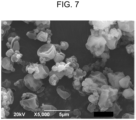
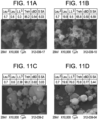
- FIG. 7 shows a scanning electron micrograph of microparticles of an exemplary dry powder formulation provided herein.
- the dry powder formulations including a plurality or microparticles suitably comprise about 1% to about 25% leucine; about 1% to about 10% trileucine; and the active agent.
- Trileucine refers to the chemical compound in which three leucine molecules are linked together in a peptide, as leucine-leucine-leucine (Leu-Leu-Leu), C 18 H 35 N 3 O 4 .
- leucine-leucine-leucine Leu-Leu-Leu
- C 18 H 35 N 3 O 4 The chemical structure of trileucine is provided below:
- An exemplary process of preparing a dry powder formulation may take place as follows.
- a liquid feedstock containing the desired final components of the dry powder formulation are atomized using an atomizer, to a fine mist.
- the mist is then dried as described herein.
- the atomized droplets contain the dissolved components, initially as a liquid droplet.
- different components of the formulation begin to saturate and precipitate at varying rates.
- a shell begins to form around an outer surface of the microparticles of the dry powder formulations. This shell suitably includes the leucine and trileucine components at an outer surface of the shell.
- leucine and trileucine become preferentially located at an outer surface of the microparticles, while smaller amounts of leucine and trileucine can also found throughout the microparticles.
- a higher concentration of leucine and trileucine are suitably found at or near the surface of the microparticles, rather than near the center of the microparticles.
- the center of the microparticles contain a substantial amount of the active agent, along with other excipient components as described herein, suitably in an amorphous form.
- leucine and/or trileucine can be found in the dry powder formulations, but not contained within or associated with a microparticle of the formulation.
- free leucine and/or trileucine that is not associated with a microparticle can be found in the dry powder formulations.
- the amount of free leucine and/or trileucine is on the order of less than about 10%, less than about 5%, less than about 1%, and more suitably less than about 0.1% of the total amount of leucine and/or trileucine in the formulations.
- antibody refers to a protein comprising at least two heavy chains and two light chains connected by disulfide bonds.
- the term “antibody” includes naturally occurring antibodies as well as all recombinant forms of antibodies, e.g., humanized antibodies, fully human antibodies and chimeric antibodies.
- Each heavy chain is usually comprised of a heavy chain variable region (VH) and a heavy chain constant region (CH).
- Each light chain is usually comprised of a light chain variable region (VL) and a light chain constant region (CL).
- antibody also includes other types of antibodies such as single domain antibodies, heavy chain antibodies, i.e. antibodies only composed of one or more, in particular two heavy chains, and nanobodies, i.e. antibodies only composed of a single monomeric variable domain.
- the antibody binding fragment of the invention is selected from is selected from Fab, Fab', F(ab')2, scFv, minibody, or diabody. In certain embodiments, the antibody binding fragment is a Fab. In some embodiments, the anti-TSLP antibody from which the antigen binding fragment is derived is an IgG1.
- the antigen binding fragment for use in the dry powder formulations comprises a heavy chain variable domain comprising SEQ ID NO:4; and a light chain variable domain comprising SEQ ID NO:8. In additional embodiments, the antigen binding fragment for use in the dry powder formulations comprises a heavy chain having the sequence set forth in SEQ ID NO:28; and a light chain having the sequence set forth in SEQ ID NO:29.
- the antigen binding fragment for use in the dry powder formulations comprises (a) a heavy chain variable domain that is a sequence of amino acids that is at least 95%, 90%, 85% or 80% identical to SEQ ID NO: 4; or a sequence of amino acids encoded by a polynucleotide sequence that is at least 80% identical to SEQ ID NO: 30, (b) a light chain variable domain that is a sequence of amino acids that is at least 95%, 90%, 85% or 80% identical to SEQ ID NO: 8; or a sequence of amino acids encoded by a polynucleotide sequence that is at least 80% identical to SEQ ID NO: 31; or a heavy chain variable domain of (a) and a light chain variable domain of (b)
- LCDR light chain CDR
- VL light chain variable domain
- HCDR heavy chain CDR
- VH heavy chain variable domain
- the dry powder formulations described herein further comprise a glass stabilization agent to aid in stabilizing the formulation, and in particular, in stabilizing the active agent.
- a “glass stabilization agent” refers to an excipient that stabilizes an active agent (suitably a polypeptide) in a dry powder formulation, suitably by substituting for water at the active agent surface during drying, or otherwise impeding the degradation process, and forms an amorphous solid that includes the active agent.
- glass stabilization agents include amorphous saccharides, polymeric sugars, buffers, salts, or synthetic polymers (e.g., poly-L-glycolic acid), as well as mixtures of such components.
- the glass stabilization agent is an amorphous saccharide.
- the glass stabilization agent is a buffer.
- the formulations described herein can include both an amorphous saccharide and a buffer, which together or separately may act as a glass stabilization agent.
- Exemplary amorphous saccharides for use in the formulations described herein include, but are not limited to, trehalose, sucrose, raffinose, inulin, dextran, mannitol, and cyclodextrin.
- the amorphous saccharide is present at about 30% to about 70% (weight percentage) of the dry powder formulation.
- the amorphous saccharide is present at about 30% to about 65%, about 35% to about 65%, about 35% to about 60%, about 40% to about 60%, about 30% to about 50%, or about 30%, about 35%, about 40%, about 45%, about 50%, about 55%, or about 60%.
- the amorphous saccharide is trehalose, and is present in the formulations at about 30%-60%, more suitably about 35%-55%, or about 35%, about 40%, about 45% or about 50%, of the weight of the dry powder formulation.
- Exemplary buffers that can be included in the dry powder formulations include various citrate buffers (such as sodium citrate), a phosphate buffer, a histidine buffer, a glycine buffer, an acetate buffer, and a tartrate buffer, as well as combinations of such buffers.
- Amounts of the buffers that can be included in the dry powder formulations can range from about 0.1% to about 20%, more suitably about 0.5% to about 15%, about 1% to about 10%, about 2% to about 8%, about 3% to about 7%, or about 1%, about 2%, about 3%, about 4%, about 5%, about 6%, about 7%, about 8%, about 9% or about 10%.
- dry powder formulations comprise about 30%-50%, trehalose, about 10%-11% leucine, about 1%-3% trileucine, about 8%-9% citrate buffer and an active agent, more suitably about 39% trehalose, about 10.5% leucine, about 2% trileucine, about 8.5% citrate buffer and an active agent.
- dry powder formulations consist essentially of about 30%-50% of an amorphous saccharide, leucine, about 1% to about 10% trileucine, about 1% to about 10% of a buffer, and an active agent, wherein the wherein the leucine and the trileucine are present at a concentration ratio of leucine:trileucine of about 0.1: 1 to about 30:1.
- dry powder formulations are provided that consist essentially of about 30%-50% of an amorphous saccharide, about 8% to about 11% leucine, about 2% to about 4% trileucine, about 1% to about 10% of a buffer, and an active agent.
- Additional dry powder formulations consist essentially of about 35%-45% trehalose, about 9% to about 11% leucine, about 2% to about 3% trileucine, about 2% to about 85 citrate buffer, and an active agent.
- the dry powder formulations consist essentially of about 39% trehalose, about 10.5% leucine, about 2% trileucine, about 8.5% citrate buffer, and an active agent.
- compositions and formulations that "consist essentially" of the recited ingredients contain the recited components and those that do not materially affect the basic and novel characteristics of the claimed formulations.
- Components that do not materially affect the basic and novel characteristics of the claimed formulations are those that do not limit the ability of the leucine and trileucine to stabilize the dry powder formulations.
- compositions and formulations that consist essentially of the recited ingredients specifically exclude other amino acids or tripeptide amino acids, but can include additional sugars, buffers, etc.
- the fine particle fraction (the fraction of particles emitted from an inhalation device having an aerodynamic particle diameter of less than 5 ⁇ m of the dry powder formulations described herein is ⁇ 50%, more suitably ⁇ 60%.
- This fine particle fraction (FPF) may contribute to a low device retention of the dry powder formulations of less than 20%, suitably less than 15%, less than 10%, or less than 5%, remaining in a device following delivery to a patient.
- a high compressed bulk density allows for the delivery of a larger amount of active agent, utilizing the same delivery volume.
- Certain biological agents may require delivery payloads of as much as 50 mg/dose, or higher, to effective treatment.
- the combination of leucine and trileucine can result in a dry powder formulation that has a higher bulk density, and therefore for the same amount of fill weight, takes up substantially less volume.
- Specific surface area (SSA) of the microparticles is defined as the total surface area of the microparticles per unit of mass (suitably with units of m 2 /g).
- Methods of measuring SSA are known in the art, and include for example Brunauer-Emmett-Teller (BET) measurements using specific surface area evaluation of materials by nitrogen adsorption measured as a function of relative pressure. The surface area is determined by calculating the amount of adsorbate gas corresponding to a monomolecular layer on the surface of the microparticles. The technique measures external area and any pore area evaluations to determine the total specific surface area. Instruments for measuring BET are known in the art.
- FIG. 9 shows the results of specific surface area measured using BET, in m 2 /g.
- Each column within FIG. 9 represents a different amount of trileucine in the formulations. Within each column, the amount of leucine increases from about 1% to about 20%. Inset micrographs demonstrate the physical appearance of the microparticles at low SSA (bottom left) and higher SSA (top right). As shown, at lower wt% trileucine, SSA remains below approximately 5 m 2 /g, but increases with increasing leucine. Above about 2% trileucine, the SSA increases to greater than 3.0 m 2 /g, and also increases with increasing percent leucine.
- the dry powder formulations suitably include a glass stabilization agent as described herein, including an amorphous saccharide or a buffer, or the use of both an amorphous saccharide and a buffer.
- amorphous saccharides include those described herein, including trehalose, sucrose, raffinose, inulin, dextran and cyclodextrin.
- the amorphous saccharide is present at about 30% to about 70%, and in embodiments is trehalose, suitably present at about 35%-60, or 35%-55%.
- removing SVPs or reducing them to acceptable levels removes the necessity of this characterization step from the manufacturing process, streamlining manufacturing.
- the removal of SVPs may also make dose ranging more predictable, since the kinetics of drug-release from SVPs is unknown.
- removing SVPs is likely to increase the amount of active agent available to engage in pharmacological activity post-reconstitution, which may mean not only that a higher delivered dose can be achieved, but a more accurate prediction of the delivered dose can be calculated.
- a higher delivered dose may also benefit the patient, for example, by potentially reducing the number or frequency of doses that must be delivered for extracting a pharmacological benefit.
- a "sub-visible particle” is a particle not visible to the naked eye of from about 1 ⁇ m to about 200 ⁇ m.
- the presence of sub-visible particles can be determined by reconstituting a dry powder formulation and the liquid having a cloudy quality. The actual determination of the presence of SVPs can be confirmed using a technique like microflow imaging.
- Microflow imaging or MFI, combines microfluidic flow microscopy and high resolution imaging particle analysis to quantify SVP counts.
- a dry powder formulation disclosed herein comprises a surfactant, wherein upon reconstitution, the number of sub-visible particles in the formulation are decreased. In some embodiments, the number of sub-visible particles are decreased in comparison to an equivalent formulation having no surfactant.
- the number of SVPs of about 10 ⁇ m to about 200 ⁇ m in size are decreased to below 100,000 particles per ml, such as 90,000 particles per ml, 80,000 particles per ml, 70,000 particles per ml, 60,000 particles per ml, 50,000 particles per ml, 40,000 particles per ml or 30,000 particles per ml.
- the number of SVPs of about 10 ⁇ m to about 200 ⁇ m in size are decreased to below 10,000 particles per ml.
- the number of SVPs of about 10 ⁇ m to about 200 ⁇ m in size are decreased to below 1,000 particles per ml.
- the number of SVPs of about 10 ⁇ m to about 200 ⁇ m in size are decreased to below 100 particles per ml.
- the number of SVPs of about 5 ⁇ m to about 200 ⁇ m in size are decreased to below 200,000 particles per ml, such as 180,000 particles per ml, 170,000 particles per ml, 160,000 particles per ml, 150,000 particles per ml or 140,000 particles per ml. In certain embodiments, the number of SVPs of about 5 ⁇ m to about 200 ⁇ m in size are decreased to below 50,000 particles per ml. In certain embodiments, the number of SVPs of about 5 ⁇ m to about 200 ⁇ m in size are decreased to below 10,000 particles per ml. In certain embodiments, the number of SVPs of about 5 ⁇ m to about 200 ⁇ m in size are decreased to below 2,000 particles per ml.
- the number of SVPs of about 2 ⁇ m to about 200 ⁇ m in size are reduced more than 2-fold, such as more than 3-fold, more than 4-fold, more than 5-fold, more than 6-fold, more than 7-fold, more than 8-fold or more than 9-fold, upon reconstitution, compared to a reference control. In certain embodiments, the number of SVPs of about 2 ⁇ m to about 200 ⁇ m in size are reduced more than 10-fold upon reconstitution compared to the reference control. In certain embodiments, the number of SVPs of about 2 ⁇ m to about 200 ⁇ m in size are reduced more than 100-fold upon reconstitution compared to the reference control.
- the number of SVPs of about 1 ⁇ m to about 200 ⁇ m in size are reduced more than 2-fold, such as more than 3-fold, more than 4-fold, more than 5-fold, more than 6-fold, more than 7-fold, more than 8-fold or more than 9-fold, upon reconstitution, compared to a reference control. In certain embodiments, the number of SVPs of about 1 ⁇ m to about 200 ⁇ m in size are reduced more than 10-fold upon reconstitution compared to the reference control.
- the reference control is an equivalent formulation lacking a surfactant.
- the formulation is reconstituted in water.
- the formulation is reconstituted to an active agent concentration of 30 mg/ml.
- the formulation is reconstituted to an active agent concentration of 2.5 mg/ml.
- the number of SVPs are determined by microflow imaging (MFI). In certain embodiments, the number of SVPs are determined by microflow imaging (MFI) using a method as defined in the examples.
- Exemplary surfactants suitable for use in the dry powder formulations described herein include, but are not limited to, polysorbate-20 (PS-20), polysorbate-40 (PS-40), polysorbate-60 (PS-60), polysorbate-80 (PS-80) and poloxamer-188.
- the formulations described herein comprise PS-80, suitably at a concentration in the range of from about 0.27% by weight to about 2.7% by weight, suitably from about 0.27% by weight to about 1.33% by weight, suitably from about 0.67% by weight to about 1.33% by weight.
- the formulation comprises PS-80 at a concentration in the range of from about 0.3% by weight to about 3% by weight.
- the formulation comprises PS-80 at a concentration in the range of from about 0.67% to about 1.33%.
- the formulation comprises PS-80 at a concentration of about 0.7% (w/w), about 0.8% (w/w), about 0.9% (w/w), about 1.0% (w/w), about 1.1% (w/w), about 1.2% (w/w), or about 1.3% (w/w). In some embodiments, the formulation comprises PS-80 at a concentration of about 1.1% (w/w).
- the composition comprises PS-80 at a concentration of 0.7% ⁇ 0.35 (w/w), about 0.8% ⁇ 0.4 (w/w), about 0.9% ⁇ 0.45 (w/w), about 1.0% ⁇ 0.5 (w/w), about 1.1% ⁇ 0.55 (w/w), about 1.2% ⁇ 0.6 (w/w), about 1.3% ⁇ 0.65 (w/w), about 1.4% ⁇ 0.7 (w/w), about 1.5% ⁇ 0.75 (w/w), about 1.6% ⁇ 0.8 (w/w) or about 1.7% ⁇ 0.75 (w/w).
- the formulation comprises PS-80 at a concentration of 1.1% ⁇ 0.55 (w/w).
- the formulations described herein comprise poloxamer-188, suitably at a concentration in the range of from about 1% by weight to about 10% by weight.
- the formulation comprises poloxamer-188 (P188) at a concentration in the range of from about 0.67% to about 2.67%.
- the formulation comprises P188 at a concentration in the range of from about 0.3% by weight to about 3% by weight.
- the formulation comprises P188 at a concentration in the range of from about 0.3% by weight to about 2.5% by weight.
- the formulation comprises P188 at a concentration in the range of from about 0.5% by weight to about 2.5% by weight.
- the formulation comprises P188 at a concentration in the range of from about 0.5% by weight to about 2% by weight.
- the formulation comprises P188 at a concentration in the range of from about 0.5% by weight to about 1.5% by weight.
- the formulation comprises P188 at a concentration in the range of from about 0.67% to about 1.67%.
- the dry powder formulation comprises about 39% trehalose, about 10.5% leucine, about 2% trileucine, about 8.5% citrate buffer and the active agent.
- the methods of preparing dry powder formulations described herein suitably provide microparticles having the desired physical characteristics noted, including the desired compressed bulk density, specific surface area and sizes. Exemplary sizes are described herein, as are exemplary SSAs, including a specific surface area of less than about 10 m 2 /g, suitably about 4-7 m 2 /g.
- the methods provide a plurality of microparticles having an equivalent optical volume mean diameter (oVMD) of about 1 ⁇ m to about 5 ⁇ m, as described herein; a mass median aerodynamic diameter (MMAD) of about 2 ⁇ m to about 4 ⁇ m when provided in an aerosol form; a compressed bulk density of about 0.4 g/cm 3 -0.8 g/cm 3 .
- oVMD equivalent optical volume mean diameter
- MMAD mass median aerodynamic diameter
- An advantage of the methods of preparing dry powder formulations described herein relates to the high throughput nature of the process. For example, if a flow rate of atomization is set at 20 ml/min, the following throughput in grams/hour, was determined. Table 2: Concentration Implications on Throughput Concentration Implications on Throughput Leucine Content TriLeucine Content Max Solids Loading (mg/mL) (Max Solubility limited) Throughput (g/hr) (at 20ml/min process liq. flow rate) 20.0% 25 30 60.0% 33 40 45.0% 44 53 10.0% 50 60 30.0% 67 80 10.5% 2.0% 190 229 10.0% 2.5% 200 240 8.0% 2.0% 250 300
- Such containers can be produced with 10-200 mg of dry powder, suitably 10-100 mg, or 25-75 mg or 50 mg or dry powder formulation.
- Such containers can suitably deliver 0.1-10 mg of a dry powder formulation to a patient's lungs.
- the use of the methods described herein provide dry powder formulations that can reduce the total number of capsules required for use in an inhalation device. For example, the volume required to deliver 50-100 mg of active agent can be reduced from two larger 00 capsules to a single size 3 capsule.
- the methods described herein also provide a mechanism for increasing a compressed bulk density and a specific surface area of a dry powder formulation that comprises a plurality of microparticles.
- a compressed bulk density of about 0.4-1.0 g/cm 3 (suitably about 0.5-0.8 g/cm 3 )
- a specific surface area of about 5-10 m 2 /g (suitably about 5 m 2 /g to about 7 m 2 /g)
- the sizes of the microparticles can be formed in the ranges described herein, including microparticles with a mass median aerodynamic diameter (MMAD) of about 2 ⁇ m to about 4 ⁇ m when provided in an aerosol form.
- MMAD mass median aerodynamic diameter
- Medical conditions that can be treated using the methods described herein include those that effect the nervous system, the endocrine system, the muscular system, the cardiovascular system, the digestive system, the respiratory system (and specifically the lungs), hormone systems, the immune system, the reproductive system, etc.
- TSLP-related inflammatory conditions may be triggered by allergic reactions or environmental irritants or stimulants.
- the TSLP-related inflammatory condition may be asthma, chronic obstructive pulmonary disease, allergic rhinitis, allergic rhinosinusitis, allergic conjunctivitis, atopic dermatitis or eosinophilic esophagitis.
- the dry powder formulation includes a plurality of microparticles, the microparticles comprising: leucine; about 1% to about 10% trileucine by weight; and the anti-thymic stromal lymphopoietin (anti-TSLP) antibody or antibody variant, wherein the leucine and the trileucine are present at a concentration ratio of leucine:trileucine of about 0.1:1 to about 30:1.
- the dry powder formulation may comprise a compressed bulk density of about 0.3-1.0 g/cm 3 . Exemplary components for inclusion in the formulation and amounts thereof are described throughout.
- the dry powder formulation is administered frequently and at lower dosages than a systemically administered anti-TSLP medicine.
- the formulation may be administered daily. Such embodiments may be more convenient for the subject or patient. Furthermore, such embodiments may reduce side effects that can occur via systemic administration.
- the antigen binding fragment of the antibody for use in the methods of treatment comprises
- the antigen binding fragment comprises a heavy chain variable domain comprising SEQ ID NO:4; and a light chain variable domain comprising SEQ ID NO:8.
- FENO refers to fractional exhaled nitric oxide, which is a biomarker for bronchial or airway inflammation.
- FENO is produced by airway epithelial cells in response to inflammatory cytokines, such as TSLP, IL-4 and IL-13.
- cytokines such as TSLP, IL-4 and IL-13.
- FENO levels in healthy adults range from 2 to 30 parts per billion (ppb).
- An exemplary assay for measuring FENO comprises subjects inhaling to total lung capacity through the NIOX MINO ® Airway Inflammation Monitor and then exhaling for 10 seconds at 50 ml/sec (assisted by visual and auditory cues).
- high eosinophilic asthma refers to an asthma patient having a screening blood eosinophil count of ⁇ 250 cells/ ⁇ L.
- a heavy chain variable domain comprising a light chain CDR1 sequence comprising the amino acid sequence set forth in SEQ ID NO:5, a light chain CDR2 sequence comprising the amino acid sequence set forth in SEQ ID NO:6, and a light chain CDR3 sequence comprising the amino acid sequence set forth in SEQ ID NO:7, wherein either of light chain CDR 1, 2 or 3 optionally comprises a single amino acid substitution, wherein the leucine and the trileucine are present at a concentration ratio of leucine:trileucine of about 0.1:1 to about 30: 1.
- Embodiment 2 is a dry powder formulation of embodiment 1, wherein the dry powder formulation has a compressed bulk density of about 0.4-1.0 g/cm3.
- Embodiment 3 is a dry powder formulation of any preceding embodiment, further comprising a glass stabilization agent.
- Embodiment 4 is a dry powder formulation of embodiment 3, wherein the glass stabilization agent is an amorphous saccharide or a buffer.
- Embodiment 5 is a dry powder formulation of embodiment 3, wherein the glass stabilization agent comprises an amorphous saccharide and a buffer.
- Embodiment 6 is a dry powder formulation of embodiment 4 or embodiment 5, wherein the amorphous saccharide is selected from the group consisting of trehalose, sucrose, raffinose, inulin, dextran, mannitol, and cyclodextrin.
- Embodiment 8 is a dry powder formulation of any one of embodiments 4-7, wherein the amorphous saccharide is present at about 30% to about 70% by weight.
- Embodiment 9 is a dry powder formulation of any one of embodiments 4-8, wherein the amorphous saccharide is trehalose.
- Embodiment 10 is a dry powder formulation of embodiment 9, wherein the trehalose is present at about 30%-65% by weight.
- Embodiment 11 is a dry powder formulation of any one of embodiments 4-10, wherein the buffer is present at about 1% to about 10% by weight.
- Embodiment 12 is a dry powder formulation of any one of embodiments 1-11, wherein the concentration ratio of leucine:trileucine is from about 1:1 to about 12:1.
- Embodiment 13 is a dry powder formulation of any one of embodiments 1-12, wherein the concentration ratio of leucine:trileucine is from about 1:1 to about 7:1.
- Embodiment 14 is a dry powder formulation of any one of embodiments 1-13, wherein the concentration ratio of leucine:trileucine is about 5.25:1.
- Embodiment 15 is a dry powder formulation of any one of embodiments 1-14, comprising about 1% to about 7% trileucine by weight.
- Embodiment 16 is a dry powder formulation of any one of embodiments 1-15, comprising about 8% to about 11% leucine by weight and about 2% to about 4% trileucine by weight.
- Embodiment 17 is a dry powder formulation of any one of embodiments 1-16, comprising about 10.5% leucine by weight and about 2% trileucine by weight.
- Embodiment 18 is a dry powder formulation of any one of embodiments 1-17, further comprising a surfactant, wherein the surfactant is optionally selected from polysorbate-20 (PS-20), polysorbate-40 (PS-40), polysorbate-60 (PS-60), polysorbate-80 (PS-80) and poloxamer-188.
- a surfactant is optionally selected from polysorbate-20 (PS-20), polysorbate-40 (PS-40), polysorbate-60 (PS-60), polysorbate-80 (PS-80) and poloxamer-188.
- Embodiment 23 is a dry powder formulation of any one of embodiments 2-22, wherein the compressed bulk density is about 0.5 g/cm3 to about 0.8 g/cm3.
- Embodiment 24 is a dry powder formulation of any of embodiments 2-23, comprising about 39% trehalose, about 10.5% leucine, about 2% trileucine and about 8.5% citrate buffer.
- Embodiment 26 is a dry powder formulation of embodiment 25, wherein the plurality of microparticles have a specific surface area of from about 4 mg2/g to about 7 m2/g.
- Embodiment 28 is a dry powder formulation of embodiment 27, wherein the antigen binding fragment comprises a heavy chain variable domain comprising SEQ ID NO:4 and a light chain variable domain comprising SEQ ID NO:8.
- Embodiment 29 is a dry powder formulation of any preceding embodiment, wherein the antigen binding fragment is selected from Fab, Fab', F(ab')2, scFv, minibody, or diabody.
- Embodiment 31 is a dry powder formulation of embodiment 30, wherein the Fab is human or humanized.
- Embodiment 35 is a method of embodiment 33, wherein the asthma is moderate asthma.
- Embodiment 36 is a method of embodiment 33, wherein the asthma is severe asthma.
- Embodiment 37 is a method of embodiment 33, wherein the asthma is eosinophilic or non-eosinophilic asthma.
- Embodiment 38 is a method of embodiment 33, wherein the asthma is low eosinophilic asthma.
- Embodiment 42 is a dry powder formulation for use according to embodiment 38, wherein the asthma is mild asthma.
- Embodiment 43 is a dry powder formulation for use according to embodiment 38, wherein the asthma is moderate asthma.
- Embodiment 44 is a dry powder formulation for use according to embodiment 38, wherein the asthma is severe asthma.
- Embodiment 47 is a dry powder formulation for use according to embodiment 38, wherein the asthma is characterized by less than three of: daytime asthma symptoms more than twice per week; night waking due to asthma; use of an asthma reliever more than twice/week; and activity limitation due to asthma.
- Fab antibody binding fragments
- Variants Fab 2-9 were also generated from Fab 1 comprising mutations in CDR regions.
- the combination of VH and VL CDRs for each of Fabs1-9 are shown in Table 3.
- Table 3 CDR sequence of anti-TSLP Fabs 1-9 VH CDRs 1, 2 and 3 VL CDRs 1, 2 and 3 Fab 1 SEQ ID NOs:1, 2 and 3 SEQ ID NOs:5, 6 and 7 Fab 2 SEQ ID NOs:1, 2 and 3 SEQ ID NO:11, 6 and 7 Fab 3 SEQ ID NOs:1, 2 and 3 SEQ ID NO:14, 6 and 7 Fab 4 SEQ ID NO:1, 15 and 3 SEQ ID NOs:5, 6 and 7 Fab 5 SEQ ID NOs: 1, 17 and 3 SEQ ID NOs:5, 6 and 7 Fab 6 SEQ ID NOs:1, 2 and 3 SEQ ID NOs:19, 6 and 7 Fab 7 SEQ ID NOs:1, 2 and 3 SEQ ID NOs:19, 6 and 7 Fab 8 SEQ ID NOs:
- Fab 1 The purity, stability and aggregation propensity of Fab 1 was analyzed.
- 50 mg/mL Fab 1 was formulated in 30 mM Sodium citrate, 105 mM trehalose, pH 6.0.
- Samples were placed in stability chambers at 40 0 C and 5 0 C for different periods of time. At different time points, samples were tested by relevant analytical techniques, such as high-performance size exclusion chromatography (HP-SEC).
- HP-SEC high-performance size exclusion chromatography
- TSK-Gel G3000SWxl column 5 ⁇ m, 250 ⁇ , and 7.8 x 300 mm, Catalog no. 08541) from Tosoh Bioscience (Griesheim, Germany) were also used.
- the mobile phase used was 0.1 M Sodium Phosphate Dibasic Anhydrous, 0.1 M Sodium Sulfate, pH 6.8.
- the results of the stability and aggregation analysis are shown in Table 4.
- the charge profile of Fab 1 was also determined by imaging isoelectric focusing (IEF) using an iCE3 analyser.
- the iCE3 capillary IEF analyser, PrinCE MicroInjector autosampler, MicroInjection coated transfer capillary were all purchased and supplied by Protein Simple. Samples were analysed using FC Cartridge with fluorocarbon-coated capillary and built-in electrolyte tanks (Part # 101701, Protein Simple). The autosampler was maintained at 4°C throughout the analysis.
- the pI range of Fab1 was determined to be from 8.35 to 8.80.
- Fab 1 for recombinant mammalian cell-expressed human and cyno TSLP were determined using a Biacore 8K SPR instrument (GE Healthcare, Little Chalfont, Bucks, UK).
- the amine coupling reagents were also used to prepare a control blank surface, with no immobilized streptavidin, to serve as a reference surface within each flow cell.
- N-terminally tagged biotinylated TSLP human and cyno
- ⁇ 100 RUs of Fab1 binding at saturation (Rmax) were then titrated onto each streptavidin surface to enable ⁇ 100 RUs of Fab1 binding at saturation (Rmax).
- Rmax ⁇ 100 RUs of Fab1 binding at saturation
- Binding Affinity determined by Kinetic Exclusion Assay (KinExA).
- K D solution phase binding affinity
- Fab 1 was pre-mixed with varying concentrations of each of hu and cyno TSLP until equilibrium was reached (at least 12 concentrations of each hu and cyno TSLP were prepared using a 2-fold serial dilution method). The amount of free Fab 1 was then measured using the KinExA instrument by capturing free Fab using hu TSLP-coated beads, washing away unbound material and detecting bound Fab 1 fluorometrically using a commercial, species-specific antibody (Alexa Fluor 647 labelled mouse anti-Human Heavy and Light chain specific antibody (Jackson Immunoresearch 209-605-088)).
- a commercial, species-specific antibody Alexa Fluor 647 labelled mouse anti-Human Heavy and Light chain specific antibody (Jackson Immunoresearch 209-605-088)
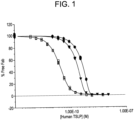
- the K D of Fab 1 for hu TSLP was extracted by global 1:1 fit to three datasets, derived from hu TSLP titrations into 1000 pM (filled diamonds), 500 pM (inverted filled triangles) or 40 pM (open squares) fixed Fab 1 concentration solutions ( FIG. 1 ).
- the K D of Fab 1 for cyno TSLP was extracted by global 1:1 fit to two datasets, derived from cyno TSLP titrations into 1000 pM (filled diamonds) or 40 pM (open squares) fixed Fab 1 concentration solutions ( FIG. 2 ).
- the in vitro binding potency of Fab 1 was determined using a homogeneous fluorescence resonance energy transfer (FRET) Homogeneous Time-Resolved Fluorescence (HTRF ® , Cisbio International) based TSLP: mAb-binding assay. Streptavidin cryptate was used for the detection of biotinylated TSLP.
- FRET fluorescence resonance energy transfer
- HTRF ® Homogeneous Time-Resolved Fluorescence
- Streptavidin cryptate was used for the detection of biotinylated TSLP.
- samples of unlabeled Fab 1 were titrated into the HTRF assay to compete with DyLight-labelled tezepelumab for binding to biotinylated His-Avi hu TSLP.
- a competition assay was also preformed using unlabeled tezepelumab and DyLight-labelled tezepelumab as a positive control.
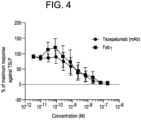
- Fab 1 competes for binding to huTSLP with tezepelumab and binds to hu TSLP with a similar potency as tezepalumab (IC50: Fab 1 - 0.38nM; tezepelumab - 0.23nM - FIG. 3 ).
- the HTRF assay was also performed using Fabs 2-9 , which shows that each of these Fabs also compete for binding to hu TSLP with tezepelumab and bind to hu TSLP with a similar potency to tezepelumab (Table 7).
- Example 4 - Fab 1 neutralizes TSLP activity in a peripheral blood mononuclear cell (PBMC) assay
- Peripheral blood mononuclear cells were isolated by a standard procedure using a ficoll gradient. Briefly, 20 mls of blood diluted with PBS (10ml blood:30ml PBS) were layered onto 15ml ficoll. Tubes were spun at 400g for 40mins at room temperature without brake. PBMC layers were collected and cells washed twice with 50ml PBS. PBMCs were counted using a haemocytometer and trypan blue to exclude dead cells and resuspended in culture media (RPMI with 10% fetal calf serum and 1% penicillin/streptomycin) before plating into a 96-well plate.
- PBS 10ml blood:30ml PBS
- PBMC layers were collected and cells washed twice with 50ml PBS.
- PBMCs were counted using a haemocytometer and trypan blue to exclude dead cells and resuspended in culture media (RPMI with 10% fetal calf serum
- TSLP TSLP-binding antibody fragment Fab 1
- Assays were also performed using the TSLP-binding antibody tezepelumab, as a positive control. After 48h, supernatants were removed and assayed for CCL17 production using an R&D duoset ELISA, according to the manufacturer's protocol. Experiments were performed using six donors in three independent experiments.
- the objective of the study was to determine the maximum tolerated dose (MTD) or maximum feasible dose (MFD) and the pharmacokinetics (PK) of aerosolized Fab 1 after inhalation exposure via face mask in Cynomolgus macaques.
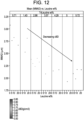
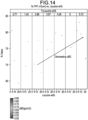
- Table 11 Results of Particle Characterization Analysis / DOE Output Impact Residual Moisture Content Correlation of reducing moisture content with increasing Leucine Content (see FIG. 14 ) Primary Particle Size Distribution No trend observed with Leucine or TriLeucine Glass Transition Temperature (Tg) No trend observed with Leucine or TriLeucine Compressed Bulk Density 1 Primary Negative Correlation with TriLeucine; Secondary Negative Correlation with Leucine.
- the following example evaluates the aerosol performance of formulations comprising leucine and trileucine in a dry powder inhaler device.
- the aerosol performance outputs listed in Table 7 were tested on 20 of the 24 formulations listed in Table 4. All product performance characterization was completed using a Monodose RS01 device, with size 3 capsules.
- Next Generation Impactor (NGI) analysis was performed at a 60L/min flow rate.
- the main aerosol performance parameters calculated from these measurements were a) Fine Particle Fraction ⁇ 5 ⁇ m (FPF ⁇ 5 ⁇ m), defined as the fraction of powder emitted from the device that is measured to be ⁇ 5 ⁇ m in aerodynamic particle diameter; and b) median mass aerodynamic diameter MMAD.
- Table 12 Aerosol Characterization Analysis / DOE Output Instrument/ Technique used Mean mass aerodynamic diameter (MMAD) NGI % Device Deposition NGI % FPF ⁇ 5um NGI
- the anti-TSLP Fab was initially received in a liquid buffer comprising 105mM trehalose, 30mM citrate, pH 6.0. Leucine, trileucine, trehalose and citrate were dissolved into a separate aqueous solution, which was then added to the anti-TSLP Fab solution to create bulk liquid feedstock solutions for spray drying.
- Table 15 summarizes the feedstock compositions prepared in order to achieve the target powder formulation compositions.
- the liquid feedstock solutions were then spray dried, using process parameters listed in Table 16. The parameters were selected to achieve the target particle and aerosol properties for a dry powder formulation intended for inhalation.
- Table 18 Spray dryer process parameters for three anti-TSLP Fab formulation batches of increasing batch size Batch #1 Batch #2 Batch #3 Feedstock concentration [mg/mL] 60 75 75 Outlet temperature (°C) 70 70 70 Feedstock feed rate (mL/min) 3 5 12 Atomizer Gas Flow (kg/h) 2.1 2.1 13.3 Drying gas flow (kg/hr) 59.5 59.5 155 Total batch size* 8.5g 348g 1.2kg Spray dryer Lab-scale Lab-scale Intermediate-scale Days/hours of production 1 day / 1.1h 2 days / 15.9 h 2 days / 22.4 h *Processed powder weight.
- Aerosol performance testing of Batch #1 was performed with a powder fill mass of 50 mg in a Size 3 HPMC capsule, while Batches #2 and #3 were tested with a 20 mg fill mass. While there is a slight increase in the oVMD as the batch size increased from batch size 8.5g to 1.2kg, a compressed bulk powder density (cBD) of between 0.45 and 0.85 g/cm 3 was achieved.
- the aerosol performance of the powders were also maintained independent of batch size, with a high payload delivery of anti-TSLP Fab from the capsule-based inhaler device. The demonstrates the scalability of the formulation with minimal adjustments to the spray dryer process. The full results of powder characterization and aerosol performance testing are summarized in Table 19.
- Table 20 Formulation compositions and spray dry process parameters for formulations comprising increasing amounts of PS-80 Description 40% FAB 1 , control (no PS80) 40% FAB 1 , 0.27% w/w PS80 (0.02% w/v PS80) 40% FAB 1 0.67% w/w PS80 (0.05%w/v PS80) 40% FAB 1 , 1.33% w/w PS30 (0.10% w/v PS80) 40% FAB 1 , 2.00% w/w PS80 (0.15% w/v PS80) 40% FAB 1 , 2.67% w/w PS80 (0.20% w/v PS80) Composition % w/w mg/ml % w/w mg/ml % w/w mg/ml % w/w mg/ml % w/w mg/ml
- Table 21 aerosol performance of formulations comprising PS-80 Description %FPF ( ⁇ 5.0um) FPM ( ⁇ 5.0um) (mg) MMAD (um) 40% FAB 1 , control 78 5.5 2.55 40% FAB 1 , 0.27% w/w PS80 77 5.9 2.56 40% FAB 1 , 0.67% w/w PS80 70 4.4 2.68 40% FAB 1 , 1.33% w/w PS80 75 4.5 2.7 40% FAB 1 , 2.00% w/w PS80 82 4.2 2.27 40% FAB 1 , 2.67% w/w PS80 68 4.0 2.63
- SVP sub-visible particles
- SVP sub-visible particles
- MFI micro-flow imaging technology
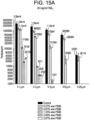
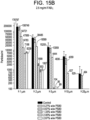
- FIG 14A shows that inclusion of 0.27% (w/w/) PS-80 in the dry powder formulation reduces the absolute number of SVPs per ml on reconstitution.
- the reduction in SVPs counts decreases with increasing concentration of PS-80.
- Significant decreases in SVPs were seen on addition of 0.67% (w/w) PS-80, with a negligible amount of SVPs with a particle diameter of greater than 5 ⁇ m.
- the trend was observed when the formulation was reconstituted to a concentration of 30 mg/ml FAB 1 or 2.5 mg/ml FAB 1 (FIG. 14B).
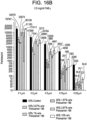
- Formulation characterization and analysis of SVPs were carried out as described above for a second excipient-containing formulation.
- poloxamer 188 as opposed to PS-80, was used as the excipient.
- Aerosol characteristics were also test following storage. The results are shown in Tables 26 and 27.
- Table 26 Aerosol performance of formulations comprising 40% (w/w) Fab 1 and 1.1% (w/w) PS-80 immediately following manufacture and after storage for 1 or 3 months at 40/75 or 3 months at 25/60.
- the percent delivered dose (DD) was also characterized following storage of each formulation under each condition. The results are shown in Tables 26 and 27.
Landscapes
- Health & Medical Sciences (AREA)
- Chemical & Material Sciences (AREA)
- Engineering & Computer Science (AREA)
- Life Sciences & Earth Sciences (AREA)
- Bioinformatics & Cheminformatics (AREA)
- Medicinal Chemistry (AREA)
- General Health & Medical Sciences (AREA)
- Pharmacology & Pharmacy (AREA)
- Veterinary Medicine (AREA)
- Public Health (AREA)
- Animal Behavior & Ethology (AREA)
- Epidemiology (AREA)
- Organic Chemistry (AREA)
- Pulmonology (AREA)
- Molecular Biology (AREA)
- Immunology (AREA)
- Biophysics (AREA)
- Biochemistry (AREA)
- Proteomics, Peptides & Aminoacids (AREA)
- Chemical Kinetics & Catalysis (AREA)
- General Chemical & Material Sciences (AREA)
- Otolaryngology (AREA)
- Genetics & Genomics (AREA)
- Nuclear Medicine, Radiotherapy & Molecular Imaging (AREA)
- Microbiology (AREA)
- Mycology (AREA)
- Oil, Petroleum & Natural Gas (AREA)
- Medicinal Preparation (AREA)
- Medicines Containing Antibodies Or Antigens For Use As Internal Diagnostic Agents (AREA)
- Peptides Or Proteins (AREA)
- Professional, Industrial, Or Sporting Protective Garments (AREA)
Applications Claiming Priority (3)
| Application Number | Priority Date | Filing Date | Title |
|---|---|---|---|
| US201962926833P | 2019-10-28 | 2019-10-28 | |
| PCT/EP2020/080201 WO2021083908A1 (fr) | 2019-10-28 | 2020-10-27 | Formulations de poudre sèche d'anticorps se liant à la lymphopoïétine stromale thymique (tslp) et leurs procédés d'utilisation |
| EP20797753.9A EP4051708B1 (fr) | 2019-10-28 | 2020-10-27 | Formulations de poudre sèche d'anticorps se liant à la lymphopoïétine stromale thymique (tslp) et leurs procédés d'utilisation |
Related Parent Applications (1)
| Application Number | Title | Priority Date | Filing Date |
|---|---|---|---|
| EP20797753.9A Division EP4051708B1 (fr) | 2019-10-28 | 2020-10-27 | Formulations de poudre sèche d'anticorps se liant à la lymphopoïétine stromale thymique (tslp) et leurs procédés d'utilisation |
Publications (2)
| Publication Number | Publication Date |
|---|---|
| EP4534075A2 true EP4534075A2 (fr) | 2025-04-09 |
| EP4534075A3 EP4534075A3 (fr) | 2025-12-17 |
Family
ID=73030137
Family Applications (2)
| Application Number | Title | Priority Date | Filing Date |
|---|---|---|---|
| EP24219600.4A Pending EP4534075A3 (fr) | 2019-10-28 | 2020-10-27 | Formulations de poudre sèche d'anticorps se liant à la lymphopoïétine stromale thymique (tslp) et leurs procédés d'utilisation |
| EP20797753.9A Active EP4051708B1 (fr) | 2019-10-28 | 2020-10-27 | Formulations de poudre sèche d'anticorps se liant à la lymphopoïétine stromale thymique (tslp) et leurs procédés d'utilisation |
Family Applications After (1)
| Application Number | Title | Priority Date | Filing Date |
|---|---|---|---|
| EP20797753.9A Active EP4051708B1 (fr) | 2019-10-28 | 2020-10-27 | Formulations de poudre sèche d'anticorps se liant à la lymphopoïétine stromale thymique (tslp) et leurs procédés d'utilisation |
Country Status (31)
| Country | Link |
|---|---|
| US (3) | US11904053B2 (fr) |
| EP (2) | EP4534075A3 (fr) |
| JP (3) | JP7680654B2 (fr) |
| KR (1) | KR20220088752A (fr) |
| CN (2) | CN114867748B (fr) |
| AR (1) | AR120309A1 (fr) |
| AU (1) | AU2020376222A1 (fr) |
| CA (1) | CA3154999A1 (fr) |
| CL (1) | CL2023003432A1 (fr) |
| CO (1) | CO2022005391A2 (fr) |
| CR (1) | CR20220189A (fr) |
| DK (1) | DK4051708T3 (fr) |
| ES (1) | ES3017790T3 (fr) |
| FI (1) | FI4051708T3 (fr) |
| HR (1) | HRP20250300T1 (fr) |
| HU (1) | HUE071069T2 (fr) |
| IL (1) | IL292437A (fr) |
| LT (1) | LT4051708T (fr) |
| MA (1) | MA57519B1 (fr) |
| MX (1) | MX2022005083A (fr) |
| MY (1) | MY210226A (fr) |
| PH (1) | PH12022551022A1 (fr) |
| PL (1) | PL4051708T3 (fr) |
| PT (1) | PT4051708T (fr) |
| RS (1) | RS66646B1 (fr) |
| SI (1) | SI4051708T1 (fr) |
| SM (1) | SMT202500220T1 (fr) |
| TW (1) | TWI891670B (fr) |
| UA (1) | UA129038C2 (fr) |
| WO (1) | WO2021083908A1 (fr) |
| ZA (1) | ZA202205936B (fr) |
Families Citing this family (6)
| Publication number | Priority date | Publication date | Assignee | Title |
|---|---|---|---|---|
| PH12023552762A1 (en) * | 2021-04-19 | 2024-04-15 | Medimmune Ltd | An anti-tslp fab with improved stability |
| WO2023064770A1 (fr) * | 2021-10-11 | 2023-04-20 | Board Of Regents, The University Of Texas System | Formulations sèches d'anticorps contre le virus du sars-cov-2, compositions et méthodes d'utilisation associées |
| US12110324B2 (en) | 2022-07-22 | 2024-10-08 | Flagship Pioneering Innovations Vi, Llc | Antigen binding molecules targeting thymic stromal lymphopoietin (TSLP) |
| TW202525846A (zh) | 2023-08-25 | 2025-07-01 | 美商普羅特歐拉吉克適美國公司 | 抗il—13多特異性抗體構築體及其用途 |
| TW202529811A (zh) | 2024-01-29 | 2025-08-01 | 瑞典商阿斯特捷利康公司 | 胸腺基質淋巴細胞生成素(tslp)結合片段之組成物及其使用方法 |
| US20260034317A1 (en) | 2024-05-20 | 2026-02-05 | Medimmune Limited | Inhaler and capsule for delivering thymic stromal lymphopoietin (tslp)-binding antibodies |
Citations (1)
| Publication number | Priority date | Publication date | Assignee | Title |
|---|---|---|---|---|
| WO2009035577A1 (fr) | 2007-09-10 | 2009-03-19 | Amgen Inc. | Protéines de liaison à l'antigène capable de se lier à la lymphopoïétine stromale thymique |
Family Cites Families (43)
| Publication number | Priority date | Publication date | Assignee | Title |
|---|---|---|---|---|
| US3773919A (en) | 1969-10-23 | 1973-11-20 | Du Pont | Polylactide-drug mixtures |
| DE3374837D1 (en) | 1982-02-17 | 1988-01-21 | Ciba Geigy Ag | Lipids in the aqueous phase |
| US4816567A (en) | 1983-04-08 | 1989-03-28 | Genentech, Inc. | Recombinant immunoglobin preparations |
| US4970154A (en) | 1987-10-09 | 1990-11-13 | Baylor College Of Medicine | Method for inserting foreign genes into cells using pulsed radiofrequency |
| US4892538A (en) | 1987-11-17 | 1990-01-09 | Brown University Research Foundation | In vivo delivery of neurotransmitters by implanted, encapsulated cells |
| US5106627A (en) | 1987-11-17 | 1992-04-21 | Brown University Research Foundation | Neurological therapy devices |
| US5011472A (en) | 1988-09-06 | 1991-04-30 | Brown University Research Foundation | Implantable delivery system for biological factors |
| GB8823869D0 (en) | 1988-10-12 | 1988-11-16 | Medical Res Council | Production of antibodies |
| US5530101A (en) | 1988-12-28 | 1996-06-25 | Protein Design Labs, Inc. | Humanized immunoglobulins |
| US5676954A (en) | 1989-11-03 | 1997-10-14 | Vanderbilt University | Method of in vivo delivery of functioning foreign genes |
| EP1690934A3 (fr) | 1990-01-12 | 2008-07-30 | Abgenix, Inc. | Génération d'anticorps xenogéniques |
| US6641809B1 (en) | 1990-03-26 | 2003-11-04 | Bristol-Myers Squibb Company | Method of regulating cellular processes mediated by B7 and CD28 |
| ATE300615T1 (de) | 1990-08-29 | 2005-08-15 | Genpharm Int | Transgene mäuse fähig zur produktion heterologer antikörper |
| NZ255101A (en) | 1992-07-24 | 1997-08-22 | Cell Genesys Inc | A yeast artificial chromosome (yac) vector containing an hprt minigene expressible in murine stem cells and genetically modified rodent therefor |
| ATE218893T1 (de) | 1993-08-12 | 2002-06-15 | Neurotech Sa | Biokompatible immunoisolatorische kapseln, die genetisch veränderte zellen enthalten |
| US5484720A (en) | 1994-09-08 | 1996-01-16 | Genentech, Inc. | Methods for calcium phosphate transfection |
| CA2219361C (fr) | 1995-04-27 | 2012-02-28 | Abgenix, Inc. | Anticorps humains derives d'une xenosouris immunisee |
| US5679559A (en) | 1996-07-03 | 1997-10-21 | University Of Utah Research Foundation | Cationic polymer and lipoprotein-containing system for gene delivery |
| US7112655B1 (en) | 1997-02-27 | 2006-09-26 | Japan Tobacco, Inc. | JTT-1 protein and methods of inhibiting lymphocyte activation |
| JP3521382B2 (ja) | 1997-02-27 | 2004-04-19 | 日本たばこ産業株式会社 | 細胞間接着及びシグナル伝達を媒介する細胞表面分子 |
| DE19821060A1 (de) | 1997-09-23 | 1999-04-15 | Bundesrepublik Deutschland Let | Ko-stimulierendes Polypeptid von T-Zellen, monoklonale Antikörper sowie die Herstellung und deren Verwendung |
| US7259247B1 (en) | 1997-09-23 | 2007-08-21 | Bundersrespublik Deutschaland Letztvertreten Durch Den Direktor Des Robert-Koch-Institutes | Anti-human T-cell costimulating polypeptide monoclonal antibodies |
| US7708993B2 (en) | 1999-02-03 | 2010-05-04 | Amgen Inc. | Polypeptides involved in immune response |
| US7435796B1 (en) | 1999-02-03 | 2008-10-14 | Amgen Inc. | Antibodies which bind B7RP1 |
| DK1149114T3 (da) | 1999-02-03 | 2014-06-23 | Amgen Inc | Polypeptider, der er involveret ved et immunrespons |
| PT1218504E (pt) | 1999-09-21 | 2007-10-22 | Genetics Inst Llc | Novas moléculas gl50 e suas utilizações |
| DE60025019T2 (de) | 1999-10-29 | 2006-08-24 | Nektar Therapeutics, San Carlos | Trockenpulverzusammensetzungen mit verbesserter dispersivität |
| EP1755677A4 (fr) | 2004-06-14 | 2009-11-25 | Medimmune Vaccines Inc | Sechage de substances bioactives par pulverisation a haute pression |
| AU2006270009A1 (en) | 2005-07-18 | 2007-01-25 | Amgen Inc. | Human anti-B7RP1 neutralizing antibodies |
| GB0603683D0 (en) | 2006-02-23 | 2006-04-05 | Novartis Ag | Organic compounds |
| JP2010530233A (ja) | 2007-06-20 | 2010-09-09 | アイアールエム・リミテッド・ライアビリティ・カンパニー | アレルギー疾患を処置する方法および組成物 |
| UY32038A (es) | 2008-08-08 | 2010-03-26 | Glaxo Wellcome Mfg Pte Ltd | Inmunoblobulinas anti-cd127 y sus usos |
| PH12012500843A1 (en) | 2009-11-04 | 2019-07-10 | Merck Sharp & Dohme | Engineered anti-tslp antibody |
| AR082163A1 (es) | 2010-07-15 | 2012-11-14 | Hoffmann La Roche | Anticuerpos especificamente ligantes del tslpr humano y metodos de utilizacion de los mismos |
| WO2014031718A1 (fr) * | 2012-08-23 | 2014-02-27 | Merck Sharp & Dohme Corp. | Formulations stables d'anticorps contre la tslp |
| BR112017019412A2 (pt) | 2015-03-11 | 2018-05-02 | Glaxosmithkline Ip Dev Ltd | proteínas ligadoras de tslp |
| JP6516925B2 (ja) | 2015-09-09 | 2019-05-22 | ノバルティス アーゲー | 胸腺間質性リンパ球新生因子(tslp)結合性抗体および抗体を使用する方法 |
| AU2016320748B2 (en) * | 2015-09-09 | 2019-05-02 | Novartis Ag | Thymic stromal lymphopoietin (TSLP)-binding antibodies and methods of using the antibodies |
| US20180303753A1 (en) * | 2015-09-09 | 2018-10-25 | Keith Try Ung | Targeted delivery of spray-dried formulations to the lungs |
| CL2016000915A1 (es) | 2016-04-15 | 2016-11-11 | Univ Pontificia Catolica Chile | Uso de una composición que comprende al menos un anticuerpo monoclonal humanizado o moléculas neutralizantes que neutralizan la función de las moléculas tslp y/o tslpr y/o ox40l y/o cd177, para preparar un medicamento para el tratamiento o para aminorar los síntomas y enfermedad de pacientes infectados con el metapneumovirus humano (hmpv) |
| KR20240070727A (ko) | 2017-04-12 | 2024-05-21 | 암젠 인크 | 항-tslp 항체를 이용한 천식의 치료 |
| EP3743045A1 (fr) * | 2018-01-26 | 2020-12-02 | Novartis AG | Administration à doses élevées d'agents thérapeutiques inhalés |
| PH12023552762A1 (en) * | 2021-04-19 | 2024-04-15 | Medimmune Ltd | An anti-tslp fab with improved stability |
-
2020
- 2020-10-27 LT LTEPPCT/EP2020/080201T patent/LT4051708T/lt unknown
- 2020-10-27 PH PH1/2022/551022A patent/PH12022551022A1/en unknown
- 2020-10-27 DK DK20797753.9T patent/DK4051708T3/da active
- 2020-10-27 IL IL292437A patent/IL292437A/en unknown
- 2020-10-27 CA CA3154999A patent/CA3154999A1/fr active Pending
- 2020-10-27 ES ES20797753T patent/ES3017790T3/es active Active
- 2020-10-27 RS RS20250284A patent/RS66646B1/sr unknown
- 2020-10-27 SI SI202030597T patent/SI4051708T1/sl unknown
- 2020-10-27 MY MYPI2022002213A patent/MY210226A/en unknown
- 2020-10-27 EP EP24219600.4A patent/EP4534075A3/fr active Pending
- 2020-10-27 WO PCT/EP2020/080201 patent/WO2021083908A1/fr not_active Ceased
- 2020-10-27 CN CN202080086052.9A patent/CN114867748B/zh active Active
- 2020-10-27 MA MA57519A patent/MA57519B1/fr unknown
- 2020-10-27 CR CR20220189A patent/CR20220189A/es unknown
- 2020-10-27 SM SM20250220T patent/SMT202500220T1/it unknown
- 2020-10-27 PL PL20797753.9T patent/PL4051708T3/pl unknown
- 2020-10-27 EP EP20797753.9A patent/EP4051708B1/fr active Active
- 2020-10-27 AU AU2020376222A patent/AU2020376222A1/en active Pending
- 2020-10-27 US US17/081,821 patent/US11904053B2/en active Active
- 2020-10-27 PT PT207977539T patent/PT4051708T/pt unknown
- 2020-10-27 HR HRP20250300TT patent/HRP20250300T1/hr unknown
- 2020-10-27 FI FIEP20797753.9T patent/FI4051708T3/fi active
- 2020-10-27 CN CN202511824423.XA patent/CN121731257A/zh active Pending
- 2020-10-27 HU HUE20797753A patent/HUE071069T2/hu unknown
- 2020-10-27 JP JP2022525006A patent/JP7680654B2/ja active Active
- 2020-10-27 MX MX2022005083A patent/MX2022005083A/es unknown
- 2020-10-27 AR ARP200102963A patent/AR120309A1/es unknown
- 2020-10-27 UA UAA202201316A patent/UA129038C2/uk unknown
- 2020-10-27 KR KR1020227017241A patent/KR20220088752A/ko active Pending
- 2020-10-28 TW TW109137435A patent/TWI891670B/zh active
-
2022
- 2022-04-28 CO CONC2022/0005391A patent/CO2022005391A2/es unknown
- 2022-05-27 ZA ZA2022/05936A patent/ZA202205936B/en unknown
- 2022-11-09 US US18/053,941 patent/US12178911B2/en active Active
-
2023
- 2023-11-19 CL CL2023003432A patent/CL2023003432A1/es unknown
-
2024
- 2024-11-19 US US18/952,543 patent/US20250099386A1/en active Pending
-
2025
- 2025-03-26 JP JP2025051583A patent/JP2025094236A/ja active Pending
- 2025-08-26 JP JP2025140274A patent/JP2025169423A/ja active Pending
Patent Citations (1)
| Publication number | Priority date | Publication date | Assignee | Title |
|---|---|---|---|---|
| WO2009035577A1 (fr) | 2007-09-10 | 2009-03-19 | Amgen Inc. | Protéines de liaison à l'antigène capable de se lier à la lymphopoïétine stromale thymique |
Non-Patent Citations (5)
| Title |
|---|
| CORREN ET AL., NEJM, vol. 377, 2017, pages 936 - 946 |
| DARLING RJBRAULT PA, ASSAY AND DRUG DEVELOPMENT TECHNOLOGIES, vol. 2, 2004, pages 647 - 657 |
| GAUVREAU GMO'BYRNE PMBOULET LP ET AL., N ENGL J MED, vol. 370, 2014, pages 2102 - 10 |
| RENNARD, SI ET AL., J APPL PHYSIOL, vol. 60, 1986, pages 532 - 538 |
| TEPPER, JS ET AL., INT J TOXICOL, vol. 35, 2016, pages 376 - 92 |
Also Published As
Similar Documents
| Publication | Publication Date | Title |
|---|---|---|
| EP4051708B1 (fr) | Formulations de poudre sèche d'anticorps se liant à la lymphopoïétine stromale thymique (tslp) et leurs procédés d'utilisation | |
| EP3347377B1 (fr) | Anticorps de liaison à la lymphopoïétine stromale thymique (tslp) et méthodes d'utilisation des anticorps | |
| JP2025172741A (ja) | ロイシン及びトリロイシンを含む乾燥粉末製剤 | |
| CA3040828A1 (fr) | Composition de poudre inhalable comprenant un anticorps il -13 | |
| HK40124015A (en) | Dry powder formulations of thymic stromal lymphopoietin (tslp)-binding antibodies and methods of use thereof | |
| HK40072413B (en) | Dry powder formulations of thymic stromal lymphopoietin (tslp)-binding antibodies and methods of use thereof | |
| HK40072413A (en) | Dry powder formulations of thymic stromal lymphopoietin (tslp)-binding antibodies and methods of use thereof | |
| EA049240B1 (ru) | Сухие порошкообразные составы антител, связывающих тимический стромальный лимфопоэтин (tslp), и способы их применения | |
| BR112022008031B1 (pt) | Formulações de pó seco e fragmentos de ligação ao antígeno de um anticorpo anti-tslp e usos das mesmas | |
| TW202529811A (zh) | 胸腺基質淋巴細胞生成素(tslp)結合片段之組成物及其使用方法 | |
| US20260034317A1 (en) | Inhaler and capsule for delivering thymic stromal lymphopoietin (tslp)-binding antibodies | |
| WO2025026216A9 (fr) | Composition pharmaceutique contenant un conjugué anticorps-médicament de glucocorticoïde | |
| KR20240133723A (ko) | Fab 단편의 분무화 | |
| CN120381514A (zh) | 一种抗cgrp抗体的药物组合物及用途 | |
| HK1251867B (en) | Thymic stromal lymphopoietin (tslp)-binding antibodies and methods of using the antibodies |
Legal Events
| Date | Code | Title | Description |
|---|---|---|---|
| PUAI | Public reference made under article 153(3) epc to a published international application that has entered the european phase |
Free format text: ORIGINAL CODE: 0009012 |
|
| STAA | Information on the status of an ep patent application or granted ep patent |
Free format text: STATUS: THE APPLICATION HAS BEEN PUBLISHED |
|
| AC | Divisional application: reference to earlier application |
Ref document number: 4051708 Country of ref document: EP Kind code of ref document: P |
|
| AK | Designated contracting states |
Kind code of ref document: A2 Designated state(s): AL AT BE BG CH CY CZ DE DK EE ES FI FR GB GR HR HU IE IS IT LI LT LU LV MC MK MT NL NO PL PT RO RS SE SI SK SM TR |
|
| REG | Reference to a national code |
Ref country code: HK Ref legal event code: DE Ref document number: 40124015 Country of ref document: HK |
|
| REG | Reference to a national code |
Ref country code: DE Ref legal event code: R079 Free format text: PREVIOUS MAIN CLASS: A61K0009140000 Ipc: C07K0016240000 |
|
| PUAL | Search report despatched |
Free format text: ORIGINAL CODE: 0009013 |
|
| AK | Designated contracting states |
Kind code of ref document: A3 Designated state(s): AL AT BE BG CH CY CZ DE DK EE ES FI FR GB GR HR HU IE IS IT LI LT LU LV MC MK MT NL NO PL PT RO RS SE SI SK SM TR |
|
| P01 | Opt-out of the competence of the unified patent court (upc) registered |
Free format text: CASE NUMBER: UPC_APP_0012565_4534075/2025 Effective date: 20251107 |
|
| RIC1 | Information provided on ipc code assigned before grant |
Ipc: C07K 16/24 20060101AFI20251113BHEP Ipc: A61P 11/06 20060101ALI20251113BHEP Ipc: A61K 39/395 20060101ALI20251113BHEP Ipc: A61K 9/00 20060101ALI20251113BHEP Ipc: A61K 9/14 20060101ALI20251113BHEP |