EP4538235A1 - Oxyde de vanadium et batterie l'utilisant - Google Patents
Oxyde de vanadium et batterie l'utilisant Download PDFInfo
- Publication number
- EP4538235A1 EP4538235A1 EP23819483.1A EP23819483A EP4538235A1 EP 4538235 A1 EP4538235 A1 EP 4538235A1 EP 23819483 A EP23819483 A EP 23819483A EP 4538235 A1 EP4538235 A1 EP 4538235A1
- Authority
- EP
- European Patent Office
- Prior art keywords
- vanadium oxide
- battery
- negative electrode
- solid electrolyte
- composition formula
- Prior art date
- Legal status (The legal status is an assumption and is not a legal conclusion. Google has not performed a legal analysis and makes no representation as to the accuracy of the status listed.)
- Pending
Links
Images

Classifications
-
- H—ELECTRICITY
- H01—ELECTRIC ELEMENTS
- H01M—PROCESSES OR MEANS, e.g. BATTERIES, FOR THE DIRECT CONVERSION OF CHEMICAL ENERGY INTO ELECTRICAL ENERGY
- H01M4/00—Electrodes
- H01M4/02—Electrodes composed of, or comprising, active material
- H01M4/36—Selection of substances as active materials, active masses, active liquids
- H01M4/48—Selection of substances as active materials, active masses, active liquids of inorganic oxides or hydroxides
- H01M4/485—Selection of substances as active materials, active masses, active liquids of inorganic oxides or hydroxides of mixed oxides or hydroxides for inserting or intercalating light metals, e.g. LiTi2O4 or LiTi2OxFy
-
- C—CHEMISTRY; METALLURGY
- C01—INORGANIC CHEMISTRY
- C01G—COMPOUNDS CONTAINING METALS NOT COVERED BY SUBCLASSES C01D OR C01F
- C01G31/00—Compounds of vanadium
-
- C—CHEMISTRY; METALLURGY
- C01—INORGANIC CHEMISTRY
- C01G—COMPOUNDS CONTAINING METALS NOT COVERED BY SUBCLASSES C01D OR C01F
- C01G31/00—Compounds of vanadium
- C01G31/006—Compounds containing vanadium, with or without oxygen or hydrogen, and containing two or more other elements
-
- H—ELECTRICITY
- H01—ELECTRIC ELEMENTS
- H01M—PROCESSES OR MEANS, e.g. BATTERIES, FOR THE DIRECT CONVERSION OF CHEMICAL ENERGY INTO ELECTRICAL ENERGY
- H01M10/00—Secondary cells; Manufacture thereof
- H01M10/05—Accumulators with non-aqueous electrolyte
- H01M10/052—Li-accumulators
- H01M10/0525—Rocking-chair batteries, i.e. batteries with lithium insertion or intercalation in both electrodes; Lithium-ion batteries
-
- H—ELECTRICITY
- H01—ELECTRIC ELEMENTS
- H01M—PROCESSES OR MEANS, e.g. BATTERIES, FOR THE DIRECT CONVERSION OF CHEMICAL ENERGY INTO ELECTRICAL ENERGY
- H01M4/00—Electrodes
- H01M4/02—Electrodes composed of, or comprising, active material
- H01M4/13—Electrodes for accumulators with non-aqueous electrolyte, e.g. for lithium-accumulators; Processes of manufacture thereof
- H01M4/131—Electrodes based on mixed oxides or hydroxides, or on mixtures of oxides or hydroxides, e.g. LiCoOx
-
- H—ELECTRICITY
- H01—ELECTRIC ELEMENTS
- H01M—PROCESSES OR MEANS, e.g. BATTERIES, FOR THE DIRECT CONVERSION OF CHEMICAL ENERGY INTO ELECTRICAL ENERGY
- H01M4/00—Electrodes
- H01M4/02—Electrodes composed of, or comprising, active material
- H01M4/62—Selection of inactive substances as ingredients for active masses, e.g. binders, fillers
- H01M4/624—Electric conductive fillers
-
- C—CHEMISTRY; METALLURGY
- C01—INORGANIC CHEMISTRY
- C01P—INDEXING SCHEME RELATING TO STRUCTURAL AND PHYSICAL ASPECTS OF SOLID INORGANIC COMPOUNDS
- C01P2002/00—Crystal-structural characteristics
- C01P2002/50—Solid solutions
-
- C—CHEMISTRY; METALLURGY
- C01—INORGANIC CHEMISTRY
- C01P—INDEXING SCHEME RELATING TO STRUCTURAL AND PHYSICAL ASPECTS OF SOLID INORGANIC COMPOUNDS
- C01P2006/00—Physical properties of inorganic compounds
- C01P2006/40—Electric properties
-
- Y—GENERAL TAGGING OF NEW TECHNOLOGICAL DEVELOPMENTS; GENERAL TAGGING OF CROSS-SECTIONAL TECHNOLOGIES SPANNING OVER SEVERAL SECTIONS OF THE IPC; TECHNICAL SUBJECTS COVERED BY FORMER USPC CROSS-REFERENCE ART COLLECTIONS [XRACs] AND DIGESTS
- Y02—TECHNOLOGIES OR APPLICATIONS FOR MITIGATION OR ADAPTATION AGAINST CLIMATE CHANGE
- Y02E—REDUCTION OF GREENHOUSE GAS [GHG] EMISSIONS, RELATED TO ENERGY GENERATION, TRANSMISSION OR DISTRIBUTION
- Y02E60/00—Enabling technologies; Technologies with a potential or indirect contribution to GHG emissions mitigation
- Y02E60/10—Energy storage using batteries
Definitions
- the present disclosure relates to a vanadium oxide and a battery using the same.
- 0 ⁇ x ⁇ 1.0 may be satisfied in the composition formula (1).
- 0.1 ⁇ 0.6 may be satisfied in the composition formula (1).
- the vanadium oxide according to the eighth aspect is more suitable for improving a battery capacity.
- a battery according to a ninth aspect of the present disclosure includes:
- the battery according to the ninth aspect has excellent charge and discharge characteristics.
- the battery according to the tenth aspect allows improvement of the electronic conductivity of the negative electrode. Therefore, the battery according to the tenth aspect has more excellent charge and discharge characteristics.
- a vanadium oxide according to a first embodiment is represented by a composition formula (1): Li 3+x+ ⁇ V 1-x M x O 4+ ⁇ /2 .
- M is at least one selected from the group consisting of tetravalent metal elements.
- the vanadium oxide according to the first embodiment can be used as a battery material.
- the vanadium oxide according to the first embodiment can be used as, for example, a negative electrode active material.
- the vanadium oxide according to the first embodiment can be used for, for example, obtaining a battery having excellent charge and discharge characteristics.
- the vanadium oxide according to the first embodiment is suitable for, for example, improving a battery capacity.
- Examples of the battery include an all-solid-state battery.
- the all-solid-state battery may be a primary battery or a secondary battery.
- a capacity of the battery in which the vanadium oxide according to the first embodiment is used is improved. This is because intercalation of Li into and deintercalation of Li from the vanadium oxide according to the first embodiment are facilitated.
- the vanadium oxide according to the first embodiment can improve a battery capacity.
- the upper limit value and the lower limit value of the range of ⁇ in the composition formula (1) may be defined by any combination selected from values that are a value greater than 0.03 (that is, 0.03 ⁇ ), 0.04, 0.06, 0.1, 0.14, 0.24, 0.25, 0.32, 0.57, 0.6, 0.93, 0.95, and a value less than 1.0 (that is, ⁇ 1.0).
- the vanadium oxide according to the first embodiment can further improve a battery capacity.
- the upper limit value and the lower limit value of the range of x in the composition formula (1) may be defined by any combination selected from values that are a value greater than 0 (that is, 0 ⁇ x), 0.05, 0.1, and a value less than 1.0 (that is, x ⁇ 1.0).
- Raw material powders are prepared so as to obtain a target composition.
- the raw material powders include an oxide, a hydroxide, a carbonate, a nitrate, and an organic salt.
- An amount of the Li source to be mixed in excess can be determined as appropriate in accordance with, for example, the value ⁇ in the target composition and a substance used as the Li source.
- the Li source in order to manufacture the vanadium oxide in which 0.03 ⁇ 1.0 is satisfied, the Li source may be used in excess by, for example, a range from 0.5 mass % to 40 mass % or a range from 1 mass % to 30 mass % with respect to the amount of the Li source for which the molar ratio is determined by setting ⁇ as 0.
- the battery 1000 includes a positive electrode 201, an electrolyte layer 202, and a negative electrode 203.
- the electrolyte layer 202 is disposed between the positive electrode 201 and the negative electrode 203.
- Examples of the positive electrode active material include a lithium-containing transition metal oxide, a transition metal fluoride, a polyanion material, a fluorinated polyanion material, a transition metal sulfide, a transition metal oxysulfide, and a transition metal oxynitride.
- Examples of the lithium-containing transition metal oxide include Li(Ni, Co, Al)O 2 , Li(Ni, Co, Mn)O 2 , and LiCoO 2 .
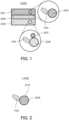
- the positive electrode active material particles 204 may have a median diameter larger than that of the solid electrolyte particles 100. This allows favorable dispersion of the positive electrode active material particles 204 and the solid electrolyte particles 100.
- the electrode material 1100 is included in the positive electrode 201.
- a coating layer 216 may be formed on the surface of an electrode active material particle 206 in order to prevent the electrode active material particle 206 from reacting with the solid electrolyte particle 100. This can inhibit increase of reaction overvoltage of the battery.
- Examples of a coating material included in the coating layer 216 include a sulfide solid electrolyte, an oxide solid electrolyte, a polymer solid electrolyte, and a halide solid electrolyte.
- the solid electrolyte particles 100 included in the positive electrode 201 may be a sulfide solid electrolyte, a halide solid electrolyte, an oxide solid electrolyte, a polymer solid electrolyte, or an organic polymer solid electrolyte.
- the electrolyte layer 202 may have a thickness of 1 ⁇ m or more and 100 ⁇ m or less. In a case where the electrolyte layer 202 has a thickness of 1 ⁇ m or more, short-circuiting between the positive electrode 201 and the negative electrode 203 is unlikely to occur. In a case where the electrolyte layer 202 has a thickness of 100 ⁇ m or less, the battery 1000 can operate at a high power.
- the nonaqueous electrolyte solution contains a nonaqueous solvent and a lithium salt dissolved in the nonaqueous solvent.
- the nonaqueous solvent include a cyclic carbonate solvent, a linear carbonate solvent, a cyclic ether solvent, a linear ether solvent, a cyclic ester solvent, a linear ester solvent, and a fluorinated solvent.
- the cyclic carbonate solvent include ethylene carbonate, propylene carbonate, and butylene carbonate.
- Examples of the linear carbonate solvent include dimethyl carbonate, ethyl methyl carbonate, and diethyl carbonate.
- lithium salt examples include LiPF 6 , LiBF 4 , LiSbF 6 , LiAsF 6 , LiSO 3 CF 3 , LiN(SO 2 CF 3 ) 2 , LiN(SO 2 C 2 F 5 ) 2 , LiN(SO 2 CF 3 )(SO 2 C 4 F 9 ), and LiC(SO 2 CF 3 ) 3 .
- One lithium salt selected from these may be used alone. Alternatively, a mixture of two or more lithium salts selected from these may be used.
- the concentration of the lithium salt is, for example, 0.5 mol/liter or more and 2 mol/liter or less.
- the conductive additive of the above-described (i) or (ii) may be used.
- Examples of the shape of the battery according to the second embodiment include coin type, cylindrical type, prismatic type, sheet type, button type, flat type, and stack type shapes.
- the present disclosure will be described below in more detail by way of examples and a comparative example.
- the vanadium oxide of the examples can be represented by the composition formula (1): Li 3+x+ ⁇ V 1-x M x O 4+ ⁇ /2 .
- a solid electrolyte Li 3 PS 4 80 mg
- the negative electrode mixture 6.5 mg
- a pressure of 360 MPa was applied to the stack, and a solid electrolyte layer and a negative electrode were formed.
- the solid electrolyte layer had a thickness of 500 ⁇ m.
- an insulating ferrule was used to isolate the interior of the insulating cylinder from the outside air atmosphere, thereby sealing the interior of the cylinder.
- the battery of Example 1 had an initial discharge capacity of 354 mAh/g.
- Example 2 Li 2 CO 3 was prepared in excess by 5 mass %. Except for this, a vanadium oxide of Example 2 was produced in the same method as in Example 1. The values of x and ⁇ in the composition formula (1) were obtained in the same method as in Example 1. In Example 2, x was 0.05 and ⁇ was 0.14.
- Example 5 Li 2 CO 3 was prepared in excess by 30 mass %. Except for this, a vanadium oxide of Example 5 was produced in the same method as in Example 1. The values of x and ⁇ in the composition formula (1) were obtained in the same method as in Example 1. In Example 5, x was 0.05 and ⁇ was 0.93.
- Comparative example 1 an excess amount of Li 2 CO 3 was not added. Except for this, a vanadium oxide of Comparative example 1 was produced in the same method as in Example 1. The values of x and ⁇ in the composition formula (1) were obtained in the same method as in Example 1. In Comparative example 1, x was 0.05 and ⁇ was 0.03.
Landscapes
- Chemical & Material Sciences (AREA)
- Chemical Kinetics & Catalysis (AREA)
- Electrochemistry (AREA)
- General Chemical & Material Sciences (AREA)
- Organic Chemistry (AREA)
- Inorganic Chemistry (AREA)
- Engineering & Computer Science (AREA)
- Materials Engineering (AREA)
- Manufacturing & Machinery (AREA)
- Battery Electrode And Active Subsutance (AREA)
- Secondary Cells (AREA)
Applications Claiming Priority (2)
| Application Number | Priority Date | Filing Date | Title |
|---|---|---|---|
| JP2022091589 | 2022-06-06 | ||
| PCT/JP2023/014290 WO2023238496A1 (fr) | 2022-06-06 | 2023-04-06 | Oxyde de vanadium et batterie l'utilisant |
Publications (2)
| Publication Number | Publication Date |
|---|---|
| EP4538235A1 true EP4538235A1 (fr) | 2025-04-16 |
| EP4538235A4 EP4538235A4 (fr) | 2025-12-03 |
Family
ID=89117990
Family Applications (1)
| Application Number | Title | Priority Date | Filing Date |
|---|---|---|---|
| EP23819483.1A Pending EP4538235A4 (fr) | 2022-06-06 | 2023-04-06 | Oxyde de vanadium et batterie l'utilisant |
Country Status (5)
| Country | Link |
|---|---|
| US (1) | US20250096253A1 (fr) |
| EP (1) | EP4538235A4 (fr) |
| JP (1) | JPWO2023238496A1 (fr) |
| CN (1) | CN119301071A (fr) |
| WO (1) | WO2023238496A1 (fr) |
Families Citing this family (3)
| Publication number | Priority date | Publication date | Assignee | Title |
|---|---|---|---|---|
| JPWO2024241689A1 (fr) * | 2023-05-22 | 2024-11-28 | ||
| CN121909167A (zh) * | 2023-12-05 | 2026-04-21 | 松下知识产权经营株式会社 | 锂钒氧化物、负极活性物质和电池 |
| WO2025243707A1 (fr) * | 2024-05-21 | 2025-11-27 | パナソニックIpマネジメント株式会社 | Oxyde de lithium-vanadium, composite et batterie |
Family Cites Families (5)
| Publication number | Priority date | Publication date | Assignee | Title |
|---|---|---|---|---|
| JP5101068B2 (ja) | 2006-09-19 | 2012-12-19 | 三星エスディアイ株式会社 | 非水二次電池用負極材料及びそれを用いた非水二次電池 |
| CN111033858B (zh) | 2017-08-30 | 2023-06-16 | 株式会社村田制作所 | 共烧成型全固体电池 |
| CN107887597B (zh) * | 2017-10-20 | 2020-06-19 | 华中科技大学 | 一种γ相钒酸锂负极材料、负极、锂离子电池及制备方法 |
| CN111213276A (zh) * | 2017-11-13 | 2020-05-29 | 株式会社村田制作所 | 全固体电池 |
| JP7724605B2 (ja) * | 2020-07-21 | 2025-08-18 | 日本ケミコン株式会社 | リチウムバナジウム酸化物の造粒体及び蓄電デバイス |
-
2023
- 2023-04-06 EP EP23819483.1A patent/EP4538235A4/fr active Pending
- 2023-04-06 CN CN202380044363.2A patent/CN119301071A/zh active Pending
- 2023-04-06 JP JP2024526254A patent/JPWO2023238496A1/ja active Pending
- 2023-04-06 WO PCT/JP2023/014290 patent/WO2023238496A1/fr not_active Ceased
-
2024
- 2024-12-04 US US18/968,504 patent/US20250096253A1/en active Pending
Also Published As
| Publication number | Publication date |
|---|---|
| JPWO2023238496A1 (fr) | 2023-12-14 |
| US20250096253A1 (en) | 2025-03-20 |
| WO2023238496A1 (fr) | 2023-12-14 |
| CN119301071A (zh) | 2025-01-10 |
| EP4538235A4 (fr) | 2025-12-03 |
Similar Documents
| Publication | Publication Date | Title |
|---|---|---|
| US12113166B2 (en) | Battery | |
| US20220384843A1 (en) | Solid electrolyte material and battery using same | |
| EP4521506A2 (fr) | Matériau d'électrolyte solide et cellule l'utilisant | |
| US12237466B2 (en) | Battery | |
| EP4538235A1 (fr) | Oxyde de vanadium et batterie l'utilisant | |
| US12542300B2 (en) | Solid electrolyte material and battery using same | |
| US20230103996A1 (en) | Solid electrolyte material, and battery in which same is used | |
| US20230055771A1 (en) | Solid electrolyte material and battery using same | |
| US20230307704A1 (en) | Solid electrolyte material, and battery in which same is used | |
| US20230021952A1 (en) | Solid electrolyte material and battery using same | |
| US20240039044A1 (en) | Solid electrolyte material and battery using same | |
| US20230108478A1 (en) | Solid electrolyte material and battery using same | |
| US20220384844A1 (en) | Solid electrolyte material and battery using same | |
| US20220393233A1 (en) | Solid electrolyte material and battery using same | |
| US20260074208A1 (en) | Negative electrode material and battery employing same | |
| US20260062309A1 (en) | Vanadium oxide and battery using same | |
| EP3905271A1 (fr) | Matériau d'électrolyte solide et batterie l'utilisant | |
| US20230307703A1 (en) | Solid electrolyte material, and battery using same | |
| US20260074207A1 (en) | Vanadium oxide composite and battery using same | |
| US20260074209A1 (en) | Vanadium oxide composite and battery using same | |
| US20260070804A1 (en) | Vanadium oxide composite and battery using same | |
| US20230083305A1 (en) | Solid electrolyte material and battery using same |
Legal Events
| Date | Code | Title | Description |
|---|---|---|---|
| STAA | Information on the status of an ep patent application or granted ep patent |
Free format text: STATUS: THE INTERNATIONAL PUBLICATION HAS BEEN MADE |
|
| PUAI | Public reference made under article 153(3) epc to a published international application that has entered the european phase |
Free format text: ORIGINAL CODE: 0009012 |
|
| STAA | Information on the status of an ep patent application or granted ep patent |
Free format text: STATUS: REQUEST FOR EXAMINATION WAS MADE |
|
| 17P | Request for examination filed |
Effective date: 20241217 |
|
| AK | Designated contracting states |
Kind code of ref document: A1 Designated state(s): AL AT BE BG CH CY CZ DE DK EE ES FI FR GB GR HR HU IE IS IT LI LT LU LV MC ME MK MT NL NO PL PT RO RS SE SI SK SM TR |
|
| DAV | Request for validation of the european patent (deleted) | ||
| DAX | Request for extension of the european patent (deleted) | ||
| A4 | Supplementary search report drawn up and despatched |
Effective date: 20251031 |
|
| RIC1 | Information provided on ipc code assigned before grant |
Ipc: C01G 31/00 20060101AFI20251027BHEP Ipc: H01M 4/485 20100101ALI20251027BHEP Ipc: H01M 4/131 20100101ALI20251027BHEP Ipc: H01M 4/62 20060101ALI20251027BHEP Ipc: H01M 10/0525 20100101ALI20251027BHEP |