EP4538391A1 - Méthode d'obtention de données utiles pour la prédiction du risque qu'un sujet souffre de fibrose - Google Patents
Méthode d'obtention de données utiles pour la prédiction du risque qu'un sujet souffre de fibrose Download PDFInfo
- Publication number
- EP4538391A1 EP4538391A1 EP23742348.8A EP23742348A EP4538391A1 EP 4538391 A1 EP4538391 A1 EP 4538391A1 EP 23742348 A EP23742348 A EP 23742348A EP 4538391 A1 EP4538391 A1 EP 4538391A1
- Authority
- EP
- European Patent Office
- Prior art keywords
- gene
- seq
- subject
- genetic
- polymorphism
- Prior art date
- Legal status (The legal status is an assumption and is not a legal conclusion. Google has not performed a legal analysis and makes no representation as to the accuracy of the status listed.)
- Pending
Links
Images


Classifications
-
- G—PHYSICS
- G16—INFORMATION AND COMMUNICATION TECHNOLOGY [ICT] SPECIALLY ADAPTED FOR SPECIFIC APPLICATION FIELDS
- G16H—HEALTHCARE INFORMATICS, i.e. INFORMATION AND COMMUNICATION TECHNOLOGY [ICT] SPECIALLY ADAPTED FOR THE HANDLING OR PROCESSING OF MEDICAL OR HEALTHCARE DATA
- G16H50/00—ICT specially adapted for medical diagnosis, medical simulation or medical data mining; ICT specially adapted for detecting, monitoring or modelling epidemics or pandemics
- G16H50/30—ICT specially adapted for medical diagnosis, medical simulation or medical data mining; ICT specially adapted for detecting, monitoring or modelling epidemics or pandemics for calculating health indices; for individual health risk assessment
-
- C—CHEMISTRY; METALLURGY
- C12—BIOCHEMISTRY; BEER; SPIRITS; WINE; VINEGAR; MICROBIOLOGY; ENZYMOLOGY; MUTATION OR GENETIC ENGINEERING
- C12Q—MEASURING OR TESTING PROCESSES INVOLVING ENZYMES, NUCLEIC ACIDS OR MICROORGANISMS; COMPOSITIONS OR TEST PAPERS THEREFOR; PROCESSES OF PREPARING SUCH COMPOSITIONS; CONDITION-RESPONSIVE CONTROL IN MICROBIOLOGICAL OR ENZYMOLOGICAL PROCESSES
- C12Q1/00—Measuring or testing processes involving enzymes, nucleic acids or microorganisms; Compositions therefor; Processes of preparing such compositions
- C12Q1/68—Measuring or testing processes involving enzymes, nucleic acids or microorganisms; Compositions therefor; Processes of preparing such compositions involving nucleic acids
- C12Q1/6876—Nucleic acid products used in the analysis of nucleic acids, e.g. primers or probes
- C12Q1/6883—Nucleic acid products used in the analysis of nucleic acids, e.g. primers or probes for diseases caused by alterations of genetic material
-
- G—PHYSICS
- G16—INFORMATION AND COMMUNICATION TECHNOLOGY [ICT] SPECIALLY ADAPTED FOR SPECIFIC APPLICATION FIELDS
- G16B—BIOINFORMATICS, i.e. INFORMATION AND COMMUNICATION TECHNOLOGY [ICT] SPECIALLY ADAPTED FOR GENETIC OR PROTEIN-RELATED DATA PROCESSING IN COMPUTATIONAL MOLECULAR BIOLOGY
- G16B20/00—ICT specially adapted for functional genomics or proteomics, e.g. genotype-phenotype associations
- G16B20/20—Allele or variant detection, e.g. single nucleotide polymorphism [SNP] detection
-
- G—PHYSICS
- G16—INFORMATION AND COMMUNICATION TECHNOLOGY [ICT] SPECIALLY ADAPTED FOR SPECIFIC APPLICATION FIELDS
- G16H—HEALTHCARE INFORMATICS, i.e. INFORMATION AND COMMUNICATION TECHNOLOGY [ICT] SPECIALLY ADAPTED FOR THE HANDLING OR PROCESSING OF MEDICAL OR HEALTHCARE DATA
- G16H50/00—ICT specially adapted for medical diagnosis, medical simulation or medical data mining; ICT specially adapted for detecting, monitoring or modelling epidemics or pandemics
- G16H50/20—ICT specially adapted for medical diagnosis, medical simulation or medical data mining; ICT specially adapted for detecting, monitoring or modelling epidemics or pandemics for computer-aided diagnosis, e.g. based on medical expert systems
-
- C—CHEMISTRY; METALLURGY
- C12—BIOCHEMISTRY; BEER; SPIRITS; WINE; VINEGAR; MICROBIOLOGY; ENZYMOLOGY; MUTATION OR GENETIC ENGINEERING
- C12Q—MEASURING OR TESTING PROCESSES INVOLVING ENZYMES, NUCLEIC ACIDS OR MICROORGANISMS; COMPOSITIONS OR TEST PAPERS THEREFOR; PROCESSES OF PREPARING SUCH COMPOSITIONS; CONDITION-RESPONSIVE CONTROL IN MICROBIOLOGICAL OR ENZYMOLOGICAL PROCESSES
- C12Q2600/00—Oligonucleotides characterized by their use
- C12Q2600/156—Polymorphic or mutational markers
Definitions
- the present invention relates to an in vitro method of obtaining data useful for predicting a subject's risk of suffering fibrosis, being comprised in the field of personalized medicine. Specifically, said method is based on the analysis of a series of genetic polymorphisms, as well as other environmental data of the subject, which together are useful and allow predicting a subject's risk of developing fibrosis.
- fibrosis refers to the growth and abnormal accumulation of extracellular matrix components which causes tissue hardening or fibrosation, resulting in a partial or complete loss of function in the affected tissue or organ.
- the fibrotic disease comprises a wide range of clinical pathologies which are considered to be responsible for 45% of all deaths in the developed world.
- Fibrotic pathologies can affect a large number of different organs and tissues; however, it is believed that their generation pathways are common in any organ.
- fibrotic pathology can occur after a surgical intervention. This condition, known as postoperative fibrosis, is characterized by an excessive proliferation of fibrotic and scar tissue generated after a surgical intervention in a patient, with the formation of more fibrous tissue than necessary, which usually has a negative impact on the patient's quality of life.
- Fibrosis appears very frequently at the joint level, leading to the development of arthrofibrosis, with the subsequent pathological stiffening or hardening of a joint due to an exaggerated fibrotic response.
- the appearance of fibrosis is a complication to be taken into account in surgical interventions performed on the joint due to its incidence: ranging from 1 to 15% of affected patients in knee arthroplasties, and between 4 and 38% in anterior cruciate ligament reconstruction.
- Patent application EP2428583A1 describes a method for determining the progress of a healing process in a subject, which comprises determining the expression level of at least one gene selected from the genes TFAP2A, EGFR, ILIA, IL1B, IL6, IL10, IL18, CD44, TNFRSF1A, HSPD1, MYC, CTGF, MMP7, MMP2, MMP9, MMP25, TGFA, TGFB2, EREG, FN1, HBEGF, NF1, SRC, EGF4, CDKN2A, PLAU, SPP1, ITGB2, BAX, MET, and PPAR, or a functionally equivalent variant of said genes, in a sample from said subject.
- Document ES2422874B1 describes an in vitro method for the prognosis and/or diagnosis of severe liver fibrosis characterized by the detection of a series of genetic polymorphisms and the determination of clinical variables.
- Document CA2805267A1 describes a method which comprises measuring the level of cadherin-11 in a sample obtained from a subject, and comparing same with control values, wherein a cadherin-11 level in the sample obtained from the subject greater than the control value indicates fibrosis or risk of developing fibrosis.
- the present invention discloses an in vitro method of obtaining data useful for predicting the risk of a subject of suffering fibrosis
- the inventors develop the method based on the use of environmental variables (degree of obesity, use or non-use of platelet-rich plasma, and furthermore data relating to the variablesarea susceptible to suffering fibrosis and/or sex of the subject), together with genetic variables comprising the analysis of one or more genetic polymorphisms of genes MMP3, NEDD4, SMAD4, as well as their combinations with polymorphisms of genes IL6R, CTGF, IL-6, BMP4,
- the application of an algorithm that takes into account the preceding variables allows obtaining a fibrosis generation risk value for a subject.
- the algorithm of the invention takes into account genetic and environmental variables jointly, allowing a specific risk value to be calculated for each subject.
- the present invention therefore provides an innovative approach in the area of personalized medicine with multiple associated advantages: it allows obtaining data useful for knowing a patient's risk of suffering fibrosis with high sensitivity and specificity; it allows decision-making or the adoption of preventive measures that can prevent said condition, which in the event that the patient is to be subjected to a surgery, it can in turn facilitate proper recovery and/or future interventions to eliminate the fibrosis generated. Furthermore, it can also be useful in guiding the application of certain preventive treatments based on the risk identified in the patient, such as, for example, adjusting the diet or apply preoperative physiotherapy, oral pharmacology, or alternative surgical techniques, that prevent the generation of fibrosis. Likewise, it allows knowing a patient's risk of suffering postoperative fibrosis before undergoing surgery.
- the present invention relates to an in vitro method of obtaining data useful for predicting the risk of a subject of suffering fibrosis, hereinafter "the method of the invention", which comprises the following steps:
- in vitro refers to the fact that the method of the invention is performed outside the body of the subject.
- fibrosis refers to a process typical of vascularized connective tissue, involving the plasma and circulating and resident cells of the connective tissue, with an emphasis on inflammation mediators, granulocytes, macrophages, platelets, and endothelial cells, in addition to fibroblasts and myofibroblasts, among others.
- fibrosis is characterized by the proliferation of fibroblasts, cells that are abundant in connective tissue, which secrete compounds such as collagen and proteoglycans.
- myofibroblasts also play a very important role during inflammation, repair, and healing. As it is used herein, it refers to a pathological increase in the connective tissue of some organ or tissue.
- healing refers to a natural process whereby the body of a subject who has suffered an injury regenerates the tissues that are compromised in said injury. In said process, a series of complex biochemical phenomena that take place to repair the damage caused by the injury are carried out.
- the healing process of the present invention refers, but is not limited to, any type of healing of a wound caused in the human body, including wounds from postoperative processes.
- keloids refers to pathological scars caused by an aberrant and excessively exuberant wound healing response. Keloids are raised scars that extend beyond the margins of an original wound and invade the normal skin surrounding the wound site. Keloids may continue to grow over time and not regress spontaneously.
- a keloid lesion can be considered to be made up of several different parts that may have very different biological activity from one another. In general, the central part of a mature keloid lesion (the intralesional portion) is largely acellular, while the peripheral part of the lesion (the perilesional portion) is relatively more cellular and is the site of highest angiogenic activity.
- the expression "predicting the risk of a subject of suffering fibrosis” refers to determining or predicting the probability of a subject of suffering said condition.
- obtaining data useful for this prediction comprises the application of an algorithm that takes into account environmental and genetic variables, in particular, genetic polymorphisms.
- the algorithm of the method of the invention is considered predictive when the AUCROC (AUC-area under curve; ROC-receiver operating characteristic) is greater than 0.5.
- AUCROC AUC-area under curve; ROC-receiver operating characteristic
- the AUCROC is defined as the probability of correctly classifying a pair of case and control individuals, randomly selected from the population, by means of the results or values obtained when applying the algorithm thereto.
- the AUCROC is comprised between 0.5 and 1: the AUCROC value of a variable is considered to be more accurate and predictive the closer it is to 1.
- the sensitivity of the diagnostic test is the probability of obtaining a positive result when the individual has the disease or condition, in the present invention, fibrosis.
- the specificity of a test indicates the probability of obtaining a negative result when the individual does not have the disease or condition, in the present invention, when the individual does not develop or suffer fibrosis.
- the term "subject” refers to any individual susceptible of suffering fibrosis, or to any individual whose risk of suffering said condition is of interest.
- the terms “patient” or “subject” are used interchangeably in the present invention.
- fibrosis can affect any organ or tissue of the subject.
- the fibrosis affects a joint. More preferably, the fibrosis affects a joint, wherein the joint is selected from the list consisting of knee, ankle, hip, shoulder, and elbow.
- the method of the invention furthermore allows predicting a subject's risk of suffering postoperative fibrosis prior to being subjected to a surgery.
- the subject is to be subjected to a surgery.
- the surgery to which the subject is to be subjected is performed on a joint.
- joints include, but are not limited to, knee, ankle, hip, shoulder, and elbow.
- the joint is selected from the list consisting of knee, ankle, hip, shoulder, and elbow.
- the fibrosis is postoperative fibrosis.
- postoperative fibrosis refers to the fibrosis process in response to a surgery (or surgical intervention, terms used interchangeably herein) which comprises a secondary scarring process.
- postoperative fibrosis is used to refer to a condition which comprises excessive secondary scarring caused after a surgical intervention, with more fibrous tissue being formed than necessary, causing undesired effects that can complicate the patient's recovery.
- undesired effects relating to said postoperative fibrosis include, but are not limited to, compression of a nerve due to excessive scarring which causes pain to the patient, affecting the patient's recovery and the quality of life of those who suffer same or restricting the range of movement of a joint after surgical intervention.
- Postoperative fibrosis usually appears at the joint level, leading to the development of arthrofibrosis, with the subsequent pathological stiffening or hardening of a joint due to an exaggerated fibrotic response. This can appear in large joints such as shoulders, elbows, hip, and knees, and generally cause loss of function and immobility of said joints. In that sense, in a preferred embodiment of the method of the invention, postoperative fibrosis occurs in a joint.
- the joint is selected from the list consisting of shoulder, elbow, hip, and knee.
- Step (a) of the method of the invention analysis of genetic polymorphisms
- a first step of the method of the invention comprises analyzing in a biological sample isolated from the subject, at least, one genetic polymorphism selected from the list consisting of rs679620 of the MMP3 gene, rs8032158 of the NEDD4 gene, rs12456284 of the SMAD4 gene, and any other polymorphism which is in linkage disequilibrium with said genetic polymorphisms;
- the term "genetic polymorphism” refers to a variation in the nucleotide sequence of the deoxyribonucleic acid (DNA) chain that has a frequency of at least 1% in individuals in a population.
- Genetic polymorphisms can be variations of one or more nucleotides. Single nucleotide polymorphisms, or SNP, generally give rise to two alleles.
- polynucleotide refers to a polymeric form of nucleotides of any length that may or may not be chemically or biochemically modified.
- the term "analyze” referring to genetic polymorphism(s) refers to detecting said polymorphism(s), determining the genotype or genotypes thereof.
- Genetic polymorphism rs679620 of the MMP3 gene refers to an SNP located at position 102842889 of chromosome 11 in Homo sapiens (GenBank accession number of chromosome 11 sequence in Homo sapiens :NC_000011.10).
- the genotypes can be homozygous for adenine (A:A), heterozygous for adenine:guanine (A:G), or homozygous for guanine (G:G).
- Genetic polymorphism rs8032158 of the NEDD4 gene refers to an SNP located at position 55902679 of chromosome 15 in Homo sapiens (GenBank accession number of chromosome 15 sequence in Homo sapiens: NC_000015.10).
- the genotypes can be homozygous for cytosine (C:C), heterozygous for cytosine:thymine (C:T), or homozygous for thymine (T:T).
- Genetic polymorphism rs12456284 of the SMAD4 gene refers to an SNP located at position 51083598 of chromosome 18 in Homo sapiens (GenBank accession number of chromosome 18 sequence in Homo sapiens: NC_000018.10).
- the genotypes can be homozygous for adenine (A:A), heterozygous for adenine:guanine (A:G), or homozygous for guanine (G:G).
- step (a) comprises analyzing, at least, two genetic polymorphisms selected from the list consisting rs679620 of the MMP3 gene, rs8032158 of the NEDD4 gene, rs12456284 of the SMAD4 gene, and any other polymorphism which is in linkage disequilibrium with said genetic polymorphisms.
- step (a) comprises analyzing genetic polymorphism rs12456284 of the SMAD4 gene and genetic polymorphism rs679620 of the MMP3 gene.
- step (a) comprises analyzing genetic polymorphism rs8032158 of the NEDD4 gene and genetic polymorphism rs12456284 of the SMAD4 gene.
- step (a) comprises analyzing genetic polymorphism rs8032158 of the NEDD4 gene and genetic polymorphism rs679620 of the MMP3 gene.
- step (a) comprises analyzing, at least, three genetic polymorphisms selected from the list consisting rs679620 of the MMP3 gene, rs8032158 of the NEDD4 gene, rs12456284 of the SMAD4 gene, and any other polymorphism which is in linkage disequilibrium with said genetic polymorphisms.
- step (a) comprises analyzing three genetic polymorphisms selected from the list consisting rs8032158 of the NEDD4 gene, rs12456284 of the SMAD4 gene, rs679620 of the MMP3 gene, and any other polymorphism which is in linkage disequilibrium with said genetic polymorphisms.
- the genetic polymorphisms are rs8032158 of the NEDD4 gene, rs12456284 of the SMAD4 gene, and rs679620 of the MMP3 gene.
- step (a) of the method of the invention may comprise analyzing, at least, one genetic polymorphism selected from the list consisting of rs2228145 of the IL6R gene, rs9493150 of the CTGF gene, rs1800796 of the IL-6 gene, rs17563 of the BMP4 gene, and/or any other polymorphism which is in linkage disequilibrium with said genetic polymorphisms.
- Genetic polymorphism rs1800796 of the IL-6 gene refers to an SNP located at position 22726627 of chromosome 7 in Homo sapiens (GenBank accession number of chromosome 7 sequence in Homo sapiens: NC_000007.14).
- the genotypes can be homozygous for cytosine (C:C), heterozygous for cytosine:guanine (C:G), or homozygous for guanine (G:G).
- Genetic polymorphism rs17563 of the BMP4 gene refers to an SNP located at position 53950804 of chromosome 14 in Homo sapiens (GenBank accession number of chromosome 14 sequence in Homo sapiens: NC_000014.9).
- the genotypes can be homozygous for cytosine (C:C), heterozygous for cytosine:thymine (C:T), or homozygous for thymine (T:T).
- step (a) further comprises analyzing, at least, one genetic polymorphism selected from the list consisting of rs2228145 of the IL6R gene, rs9493150 of the CTGF gene, rs1800796 of the IL-6 gene, rs17563 of the BMP4 gene, and any other polymorphism which is in linkage disequilibrium with said genetic polymorphisms.
- step (a) further comprises analyzing, at least two, at least three, at least four, genetic polymorphisms selected from the list consisting of rs2228145 of the IL6R gene, rs9493150 of the CTGF gene, rs1800796 of the IL-6 gene, rs17563 of the BMP4 gene, and any other polymorphism which is in linkage disequilibrium with said genetic polymorphisms, including any combination thereof.
- step (a) comprises analyzing, at least, 7 genetic polymorphisms selected from list consisting of rs2228145 of the IL6R gene, rs679620 of the MMP3 gene, rs9493150 of the CTGF gene, rs1800796 of the IL-6 gene, rs17563 of the BMP4 gene, rs8032158 of the NEDD4 gene, and rs12456284 of the SMAD4 gene, and any other polymorphism which is in linkage disequilibrium with said genetic polymorphisms, including any combination thereof.
- step (a) comprises analyzing the genetic polymorphisms rs2228145 of the IL6R gene, rs679620 of the MMP3 gene, rs9493150 of the CTGF gene, rs1800796 of the IL-6 gene, rs17563 of the BMP4 gene, rs8032158 of the NEDD4 gene, and rs12456284 of the SMAD4 gene.
- polymorphisms of the invention is used herein to refer to at least one genetic polymorphism selected from between polymorphisms rs679620 polymorphisms of the MMP3 gene, rs8032158 of the NEDD4 gene, rs12456284 of the SMAD4 gene, any other polymorphism which is in linkage disequilibrium with said genetic polymorphisms, and/or any combination of one or more of the preceding genetic polymorphisms with at least one genetic polymorphism selected from rs2228145 of the IL6R gene, rs9493150 of the CTGF gene, rs1800796 of the IL-6 gene, and rs17563 of the BMP4 gene, including any other polymorphisms in linkage disequilibrium with them.
- genetic polymorphisms are SNPs, therefore the terms polymorphisms of the invention and SNPs of the invention can be used interchangeably throughout the document.
- the genetic polymorphisms that can be analyzed as part of the method of the present invention and are useful in predicting the risk of a subjectof suffering fibrosis are shown in Table 1. Table 1. Genetic polymorphisms that can be included as genotypic variables within the prediction model.
- any other polymorphism which is in linkage disequilibrium with them can be analyzed in the present invention.
- linkage disequilibrium refers to the property of some genes or DNA markers not to segregate independently, in other words, they have a recombination frequency of less than 50%. This is usually because the two loci involved are on the same chromosome, making it impossible to transfer them to the progeny in a random way with the separation of the chromosomes in anaphase. In the present invention, it refers to those genetic polymorphisms that, due to their physical proximity on a chromosome, appear together more frequently than would be expected by chance.
- a genetic polymorphism which is in linkage disequilibrium with another presents the same capacity or gives equivalent information, in the present invention, relating to predicting the risk of a subject of suffering fibrosis, since by the very definition, both polymorphisms are inherited together.
- r 2 A measure of linkage disequilibrium between two genetic markers is defined as "r 2 ".
- polymorphisms which are in linkage disequilibrium with the genetic polymorphisms rs2228145 of the IL6R gene, rs679620 of the MMP3 gene, rs9493150 of the CTGF gene, rs1800796 of the IL-6 gene, rs17563 of the BMP4 gene, rs8032158 of the NEDD4 gene, and/or rs12456284 of the SMAD4 gene preferably have a linkage disequilibrium measurement r 2 ⁇ 0.8, More preferably, a linkage disequilibrium measurement r 2 ⁇ 0.9.
- the analysis of the polymorphisms of the invention can be carried out by any method known to the person skilled in the art for this purpose. For example, it can be performed by means of genotyping kits, sequencing, or amplification using PCR (polymerase chain reaction) and subsequent analysis with restriction enzymes or by means of real-time PCR.
- Genotyping kits may contain fluorophore-labeled oligonucleotides and may require hybridization of these nucleotides to a biological sample isolated from a subject.
- the analysis of the polymorphisms of the invention of step (a) is carried out by any method known to a person skilled in the art for this purpose. In a preferred embodiment, alone or in combination with the other preferred embodiments, it is carried out by amplification, more preferably PCR amplification, and/or sequencing.
- the analysis of the polymorphisms of the invention of step (a) is carried out using a genotyping kit.
- the analysis of the polymorphisms of the invention of step (a) comprises the use of probes and/or primers that detect and/or amplify said polymorphisms.
- the primers and/or probes comprise, or consist of nucleotide sequences: SEQ ID NO: 1, SEQ ID NO: 2, SEQ ID NO: 3, SEQ ID NO: 4, SEQ ID NO: 5, SEQ ID NO: 6, SEQ ID NO: 7, SEQ ID NO: 8, SEQ ID NO: 9, SEQ ID NO: 10, SEQ ID NO: 11, SEQ ID NO: 12, SEQ ID NO: 13, SEQ ID NO: 14, SEQ ID NO: 15, SEQ ID NO: 16, SEQ ID NO: 17, SEQ ID NO: 18, SEQ ID NO: 19, SEQ ID NO: 20, SEQ ID NO: 21, SEQ ID NO: 22, SEQ ID NO: 23, SEQ ID NO: 24, SEQ ID NO: 25, SEQ ID NO: 26, SEQ ID NO: 27, SEQ ID NO: 28, and/or any combination thereof.
- Sequences of SEQ ID NO:1 and SEQ ID NO: 2 correspond to the sequences of the primers necessary to amplify polymorphism rs2228145 of the IL6R gene.
- Sequences of SEQ ID NO:3 and SEQ ID NO: 4 correspond to the sequences of the probes necessary to specifically detect polymorphism rs2228145 of the IL6R gene.
- Sequences of SEQ ID NO: 5 and SEQ ID NO: 6 correspond to the sequences of the primers necessary to amplify polymorphism rs679620 of the MMP3 gene.
- Sequences of SEQ ID NO: 7 and SEQ ID NO: 8 correspond to the sequences of the probes necessary to specifically detect polymorphism rs679620 of the MMP3 gene.
- Sequences of SEQ ID NO: 9 and 10 correspond to the sequences of the primers necessary to amplify polymorphism rs9493150 of the CTGF gene.
- Sequences of SEQ ID NO: 11 and SEQ ID NO: 12 correspond to the sequences of the probes necessary to specifically detect polymorphism rs9493150 of the CTGF gene.
- Sequences of SEQ ID NO: 13 and SEQ ID NO: 14 correspond to the sequences of the primers necessary to amplify polymorphism rs1800796 of the IL-6 gene.
- Sequences of SEQ ID NO: 15 and SEQ ID NO: 16 correspond to the sequences of the probes necessary to specifically detect polymorphism rs1800796 of the IL-6 gene.
- Sequences of SEQ ID NO: 17 and SEQ ID NO: 18 correspond to the sequences of the primers necessary to amplify polymorphism rs17563 of the BMP4 gene.
- Sequences of SEQ ID NO: 19 and SEQ ID NO: 20 correspond to the sequences of the probes necessary to specifically detect polymorphism rs17563 of the BMP4 gene.
- Sequences of SEQ ID NO: 21 and SEQ ID NO: 22 correspond to the sequences of the primers necessary to amplify polymorphism rs8032158 of the NEDD4 gene.
- Sequences of SEQ ID NO: 23 and SEQ ID NO: 24 correspond to the sequences of the probes necessary to specifically detect polymorphism rs8032158 of the NEDD4 gene.
- Sequences of SEQ ID NO: 25 and SEQ ID NO: 26 correspond to the sequences of the primers necessary to amplify polymorphism rs12456284 of the SMAD4 gene.
- Sequences of SEQ ID NO: 27 and SEQ ID NO: 28 correspond to the sequences of the probes necessary to specifically detect polymorphism rs12456284 of the SMAD4 gene.
- the analysis of the polymorphisms carried out in step (a) comprises the use of probes which detect the polymorphisms of the invention.
- the probes that detect said polymorphisms are selected from the list consisting of: SEQ ID NO: 3, SEQ ID NO: 4, SEQ ID NO: 7, SEQ ID NO: 8, SEQ ID NO: 11, SEQ ID NO: 12, SEQ ID NO: 15, SEQ ID NO: 16, SEQ ID NO: 19, SEQ ID NO: 20, SEQ ID NO: 23, SEQ ID NO: 24, SEQ ID NO: 27, SEQ ID NO: 28, and any combination thereof.
- the analysis of the polymorphisms of the invention of step (a) comprises the use of fluorophore-labeled hybridization probes.
- sequencing refers to the determination of the nucleotides of a template nucleic acid and the order thereof.
- amplification refers to the increase in the number of copies of a template nucleic acid, where this can be carried out using fluorescent probes. In a preferred embodiment, amplification takes place by means of real-time PCR.
- template nucleic acid refers to a single-stranded or double-stranded nucleic acid molecule to be amplified or sequenced.
- the increase in the number of copies of a template nucleic acid is carried out by means of complementary DNA synthesis under conditions that allow it.
- Conditions that allow complementary DNA synthesis refer to conditions in which incorporation of nucleotides into a nascent DNA can take place by means of base complementarity with the template nucleic acid.
- the conditions in which sequencing or amplification is performed generally include (a) contacting a template nucleic acid with a polymerase in a mixture further comprising a primer, a bivalent cation, (for example, Mg 2+ ), and nucleotides, generally, dNTPs, and at least one ddNTP, and (b) subjecting said mixture to a temperature sufficient for the polymerase to initiate the incorporation of the nucleotides into the primer by means of base complementarity with the template nucleic acid, and giving rise to a population of complementary DNA molecules of different sizes.
- the separation of said population of complementary DNA molecules generally by electrophoresis, allows determining the nucleotide sequence.
- primer refers to an oligonucleotide capable of acting as a starting point for DNA synthesis when it hybridizes with the template nucleic acid.
- the primer is a deoxyribose oligonucleotide.
- Primers can be prepared by means of any suitable method including, for example, but not limited to, cloning and restriction of suitable sequences and direct chemical synthesis. Primers can be designed to hybridize with specific nucleotide sequences in the template nucleic acid (specific primers) or can be randomly synthesized (arbitrary primers).
- primer refers to a primer the sequence of which is complementary to a specific nucleotide sequence in the template nucleic acid to be amplified or sequenced.
- arbitrary primer refers to a primer the sequence of which is randomly synthesized, and which is used to start DNA synthesis at random positions of the template nucleic acid to be amplified or sequenced. Often a population of different arbitrary primers is used.
- arbitrary primers refers to a set of primers the sequence of which is randomly synthesized, and which is used to start DNA synthesis at random positions of the template nucleic acid to be amplified or sequenced.
- hybridization refers to the pairing of two single-stranded complementary DNA molecules to give a double-stranded molecule.
- complementarity is 100%. This is to say, in the region of complementarity each nucleotide of one of the two nucleic acid molecules can form hydrogen bonds with a nucleotide present in the other nucleic acid molecule.
- two nucleic acid molecules having a region with less than 100% complementarity can also hybridize.
- nucleotide refers to an organic molecule formed by the covalent binding of a pentose, a nitrogenous base, and a phosphate group.
- nucleotide includes deoxyribonucleoside triphosphates such as, for example, but not limited to, dATP, dCTP, dITP, dUTP, dGTP, dTTP, or derivatives thereof.
- nucleotide also includes dideoxyribonucleoside triphosphates (ddNTPs), such as, for example, ddATP, ddCTP, ddGTP, ddITP, ddTTP, or derivatives thereof.
- a "nucleotide” or a “primer” may be labeled or tagged by techniques well known in the state of the art.
- Detectable labels include, for example, radioactive isotopes, fluorescent labels, chemiluminescent labels, bioluminescent labels, or enzyme labels.
- biological sample in the present invention refers to any sample which allows obtaining DNA from the individual from whom said sample was obtained, and includes, but not limited to, tissues and/or biological fluids from an individual, obtained by means of any method known to a person skilled in the art that serves such purpose.
- the biological sample is from any tissue susceptible to DNA extraction.
- the biological sample could be, for example, but not limited to, a tissue or fluid sample, such as blood, plasma, serum, oral mucosa, bronchoalveolar lavage, Lymph, or ascitic fluid.
- the biological sample is selected from the list consisting of tissue, oral mucosa, blood, plasma, serum, and lymph.
- the biological sample can be, for example, but not limited to, fresh, frozen, fixed, or fixed and paraffin embedded.
- Step (b) of the method of the invention Collecting data from the subject
- the algorithm used in the method of the invention that is useful and allows predicting a subject's risk of suffering fibrosis is based on the use of genomic variables together with environmental variables of each subject. To that end, therefore, it is necessary collecting data related to said environmental variables of the subject.
- a second step of the method of the invention comprises collecting data from the subject of, at least, one environmental variable selected from the list consisting of: use or non-use of platelet-rich plasma in the treatment of the subject and degree of obesity.
- step (b) comprises collecting data from the subject, of two environmental variables, wherein the environmental variables are use or non-use of platelet-rich plasma in the treatment of the subject and degree of obesity.
- step (b) of the method of the invention may further comprise collecting data from the subject of, at least, one environmental variable selected from the list consisting of the area of the body susceptible to suffering fibrosis and the sex of the subject, which are environmental variables that may also be useful in predicting the risk of a subjectof suffering fibrosis.
- step (b) further comprises collecting, from the subject, data of at least one environmental variable selected from the list consisting of the area of the body susceptible to suffering fibrosis and the sex of the subject.
- Table 2 shows the data which can be collected from the subject in step (b) of the method of the invention.
- Table 2. Data which can be collected from the subject in step (b) of the method, and respective environmental variables thereof. The left column shows the environmental variables, while the right column shows each of the possible data to be collected from the subject for each variable.
- VARIABLE DATA Area of the body susceptible to suffering fibrosis Hip Shoulder Knee Ankle Other(s) Sex of the subject Man Man Man Man Man Man Man Man Man Man Man Man Man Man Man Man Man Man Man Man Man Man Man Man Man Man Man Man Man Man Man Man Man Man Man Man Man Man Man Man Man Man Man Man Man Man Man Man Man Man Man Man Man Man Man Man Man Man Man Man Man Man Man Man Man Man Man Man Man Man Man Man Man Man Man Man Man Man Man Man Man Man Man Man Man Man Man Man Man Man Man Man Man Man Man Man Man Man Man Man Man Man Man Man Man Man Man Man Man Man Man Man Man Man Man Man Man Man Man Man Man Man Man Man Man Man Man Man Man Man Man Man Man Man Man Man Man Man Man Man Man
- the data collected for the degree of obesity environmental variable is BMI ⁇ 30, BMI >30, fat mass percentage > 25% (men), or fat mass percentage > 33% (women).
- the data collected for the environmental variable, use or non-use of platelet-rich plasma in the treatment of the subject, is use or non-use.
- the data collected for the environmental variable, sex of the subject is man or woman.
- the data collected for the environmental variable, area of the body susceptible to suffering fibrosis, is knee, ankle, hip, shoulder, elbow, or other(s).
- step (b) comprises collecting data from the subject, wherein the data comprises:
- Area of the body susceptible to suffering fibrosis is understood herein to mean the location, tissue, organ, or part of the subject's body that may be susceptible to suffering fibrosis.
- one of the possible data collected from the subject in step (b) of the method of the invention is whether the area of the body, location, or tissue susceptible to suffering fibrosis is hip, shoulder, knee, ankle, or other, with the term “other” including any other part, tissue, or organ of the subject's body.
- the expression “other part of the body” refers to any organ, tissue, or area of the subject's body other than the hip, shoulder, knee, ankle.
- the area of the body susceptible to suffering fibrosis is the tissue or organ of the subject where surgery is performed.
- Another of the possible data collected from the subject in this step (b) of the method of the invention is whether the sex of the subject is male or female.
- platelet-rich plasma is of the 13-00-11/24-00-11 type as described in Kon E., et al., Expert Opin Biol Ther., 20 (12):1447-1460 (2020 ).
- step (b) of the method of the invention another of the possible data collected from the subject relates to the degree of obesity of the subject, with degree of obesity being understood as a body mass index greater than 30 (BMI ⁇ 30), or less than or equal to 30 (BMI ⁇ 30) or a percentage of fat mass greater than 25% in men or less than or equal to 25%, and greater than 33% in women or less than or equal to 33%.
- body mass index or BMI
- Body mass index or BMI of a subject, in the present invention a subject, is defined as the quotient of the subject's weight in kilograms and the square of the subject's height in meters.
- Body fat percentage can be calculated through bioelectrical impedance or skinfold plicometry.
- Step (c) of the method of the invention assigning a ⁇ value to the polymorphisms and data from the subject
- the method of the invention takes into account genetic variables and environmental variables of each subject.
- a value is assigned prior to the application of the algorithm of the invention, in the present invention a ⁇ value, to the polymorphisms analyzed in step (a), and to the collected data from the subject in step (b) of the method of the invention.
- a third step of the method of the invention comprises assigning a ⁇ value to the genetic polymorphisms analyzed in step (a) according to Table 3, and assigning a ⁇ value to the data collected from the subject in step (b) according to Table 3.
- Table 3 Specific ⁇ values for each possibility of the analyzed variables.
- a ⁇ value is assigned for each polymorphism (according to the subject's genotype for that polymorphism).
- data collected from the subject in step (b) of the method a ⁇ value is assigned to each collected data.
- Variable Possibility ⁇ values rs2228145 (or any polymorphism in linkage disequilibrium therewith) A:A -0.860 A:C -0.860 C:C 0.000 rs679620 (or any polymorphism in linkage disequilibrium therewith) A:A 0.000 A:G 0.000 G:G 0.783 rs9493150 (or any polymorphism in C:C 0.000 linkage disequilibrium therewith) C:G 0.000 G:G -0.811 rs1800796 (or any polymorphism in linkage disequilibrium therewith) C:C -0.618 C:G 0.000 G:G -0.618 rs17563 (or any polymorphism in linkage disequilibrium therewith) C:C -0.690 C:T -0.690 T:T 0.000 rs8032158 (or any polymorphism in linkage disequilibrium therewith) C:C 0.000 C:T 0.000 T:
- a ⁇ value is assigned to each polymorphism according to the genotype of the subject.
- a ⁇ value is assigned to each data collected.
- the sum of the ⁇ values assigned in this step (c) of the method of the invention constitutes the ⁇ 1 x value that is part of the algorithm applied in the next step of the method of the invention.
- Step (d) of the method of the invention Calculating the P-value by means of applying an algorithm
- This algorithm hereinafter the algorithm of the invention, relates the risk of a subject of suffering fibrosis, according to previously analyzed genetic polymorphisms and data of environmental variables previously collected from the subject, through ⁇ 1 x.
- ⁇ 1 x is the sum of all the ⁇ values assigned in step (c) to each of the variables: a ⁇ value is assigned according to Table 3 to each polymorphism analyzed in step (a) of the method of the invention depending on the genotype; a ⁇ value is also assigned according to Table 3 to each data collected from the subject in step (b) of the method of the invention.
- the sum of all ⁇ values constitutes the ⁇ 1 x value comprised in the algorithm of the invention.
- the application of the algorithm of the invention allows calculating the P-value of a subject's risk of suffering fibrosis.
- the "P-value of the risk of suffering fibrosis” (also referred to as “fibrosis generation specific risk value” or simply "P-value”, terms used interchangeably herein), refers to a subject's risk of suffering fibrosis.
- the calculated value is per unit basis and can also be interpreted in terms of percentage by multiplying the calculated value by 100. In that sense, the method of the invention allows predicting the risk of a subject of suffering fibrosis.
- the implementation of the method of the invention is based, in addition to the collection of environmental data relating to the subject, on the analysis of genetic polymorphisms, the polymorphisms of the invention.
- the means used for the analysis of said genetic polymorphisms may be part of a kit.
- kits hereinafter the "kit of the invention” comprising means for analyzing in vitro in an isolated biological sample from a subject, at least, three genetic polymorphisms selected from the list consisting of rs679620 of the MMP3 gene, rs8032158 of the NEDD4 gene, rs12456284 of the SMAD4 gene, and any other polymorphism which is in linkage disequilibrium with said genetic polymorphisms.
- kit of the invention may further comprise the means for analyzing in vitro, at least, one genetic polymorphism selected from the list consisting of rs2228145 of the IL6R gene, rs9493150 of the CTGF gene, rs1800796 of the IL-6 gene, rs17563 of the BMP4 gene, and any other polymorphism which is in linkage disequilibrium with said genetic polymorphisms.
- the kit of the invention further comprises means for analyzing in vitro, in the biological sample isolated from the subject, at least one genetic polymorphism selected from the list consisting of rs2228145 of the IL6R gene, rs9493150 of the CTGF gene, rs1800796 of the IL-6 gene, rs17563 of the BMP4 gene, and any other polymorphism which is in linkage disequilibrium with said genetic polymorphisms.
- the kit of the invention comprises means for analyzing in vitro, in a biological sample isolated from the subject, genetic polymorphisms rs2228145 of the IL6R gene, rs679620 of the MMP3 gene, rs9493150 of the CTGF gene, rs1800796 of the IL-6 gene, rs17563 of the BMP4 gene, rs8032158 of the NEDD4 gene, and rs12456284 of the SMAD4 gene.
- the biological sample is from any tissue susceptible to DNA extraction.
- the biological sample could be, for example, but not limited to, a tissue or fluid sample, such as blood, plasma, serum, oral mucosa, bronchoalveolar lavage, Lymph, or ascitic fluid.
- the biological sample is selected from the list consisting of tissue, oral mucosa, blood, plasma, serum, and lymph.
- kits for analyzing in vitro genetic polymorphisms is understood herein to mean all those reagents necessary for analyzing in vitro the polymorphisms of the invention (primers, probes, buffers, enzymes, coenzymes, substrates).
- the kits can include all the supports and containers necessary for its implementation and optimization (plastic tubes, plates, reagents, etc.).
- the kits can further contain other molecules, genes, proteins, or probes of interest, serving as positive and negative controls.
- genetic polymorphisms can be analyzed by means of techniques and methods known in the state of the art, including techniques and methods different from those presented herein. These methods and techniques have been explained in the preceding inventive aspect, and both they, as well as their preferred embodiments are applicable to the kit of the invention.
- the means for analyzing in vitro the polymorphisms of the invention comprise the reagents necessary to carry out the amplification technique, preferably PCR, and/or sequencing.
- the means for analyzing in vitro the polymorphisms of the invention comprise primers and/or probes which specifically detect said genetic polymorphisms.
- the primers and/or probes comprise, or consist of, nucleotide sequences: SEQ ID NO: 1, SEQ ID NO: 2, SEQ ID NO: 3, SEQ ID NO: 4, SEQ ID NO: 5, SEQ ID NO: 6, SEQ ID NO: 7, SEQ ID NO: 8, SEQ ID NO: 9, SEQ ID NO: 10, SEQ ID NO: 11, SEQ ID NO: 12, SEQ ID NO: 13, SEQ ID NO: 14, SEQ ID NO: 15, SEQ ID NO: 16, SEQ ID NO: 17, SEQ ID NO: 18, SEQ ID NO: 19, SEQ ID NO: 20, SEQ ID NO: 21, SEQ ID NO: 22, SEQ ID NO: 23, SEQ ID NO: 24, SEQ ID NO: 25, SEQ ID NO: 26, SEQ ID NO: 27, SEQ ID NO: 28, and/or any combination thereof.
- the means comprise probes that specifically detect the polymorphisms of the invention.
- the probes that detect said polymorphisms are selected from the list consisting of: SEQ ID NO: 3, SEQ ID NO: 4, SEQ ID NO: 7, SEQ ID NO: 8, SEQ ID NO: 11, SEQ ID NO: 12, SEQ ID NO: 15, SEQ ID NO: 16, SEQ ID NO: 19, SEQ ID NO: 20, SEQ ID NO: 23, SEQ ID NO: 24, SEQ ID NO: 27, SEQ ID NO: 28, and any combination thereof.
- kits further comprise instructions for carrying out the analysis of the polymorphisms of the invention and/or the method of the invention.
- These instructions may be present in the mentioned kits in different manners, one or more of which may be present in the kit.
- One way in which these instructions may be present is as information printed on a suitable medium or substrate, e.g., a sheet or sheets of paper on which the information is printed, in the kit packaging, in a package insert, etc.
- Another medium would be a computer-readable medium, for example, a CD, a USB, etc., on which the information has been recorded.
- Another medium that may be present is a website address that can be used over the Internet to access information at a remote site. Any suitable medium may be present in the kits.
- the kit of the invention comprising the means for analyzing in vitro the polymorphisms of the invention, is useful in the method of the invention.
- the invention relates to the use of the kit of the invention in the method of the invention.
- the resulting DNA samples were analyzed by means of a genotyping analysis of SNPs (polymorphisms rs2228145 of the IL6R gene, rs679620 of the MMP3 gene, rs9493150 of the CTGF gene, rs1800796 of the IL-6 gene, rs17563 of the BMP4 gene, rs8032158 of the NEDD4 gene, and rs12456284 of the SMAD4 gene) using the Biomark HD system (Fluidigm) methodology. Patients were categorized taking into account the following environmental factors:
- P 1 1 + e ⁇ ⁇ o + ⁇ 1 x
- a genetic profile was made for rs2228145 of the IL6R gene, rs679620 of the MMP3 gene, rs9493150 of the CTGF gene, rs1800796 of the IL-6 gene, rs17563 of the BMP4 gene, rs8032158 of the NEDD4 gene, and rs12456284 of the SMAD4 gene, obtaining the following genetic profile:
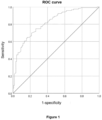
- ROC analysis taking into account genetic polymorphisms rs2228145 of the IL6R gene, rs679620 of the MMP3 gene, rs9493150 of the CTGF gene, rs1800796 of the IL-6 gene, rs17563 of the BMP4 gene, rs8032158 of the NEDD4 gene, and rs12456284 of the SMAD4 gene, and the environmental variables use or non-use of platelet-rich plasma in the treatment of the subject, degree of obesity, area of the body susceptible to suffering fibrosis, and sex of the subject.
- ROC analysis was performed ( Figure 1 ) by establishing a 50.90% risk of suffering fibrosis as a cut-off point to classify the subject or patient in question as having a high or low risk of developing fibrosis.
- the P-value calculated for the subject is greater than 0.509, the subject is classified as having a high risk of suffering fibrosis, meanwhile if the P-value is less than 0.509, the subject is classified as having a low risk of suffering fibrosis.
- said value is clearly lower than the selected cut-off point of 0.509, therefore said patient has a low risk of developing fibrosis.
- Table 6 shows the value of the area under the curve for the model, with an AUC (area under the curve) of 0.818 and its confidence interval of a 95% (95% CI) was 0.766-0.871.
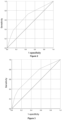
- Figure 2 shows the ROC curve when applying the algorithm taking into account polymorphism rs8032158 of the NEDD4 gene as genetic variable and the use or non-use of platelet-rich plasma as environmental variable.
- Figure 3 shows the ROC curve when applying the algorithm taking into account polymorphism rs12456284 of the SMAD4 gene as genetic variable and the use or non-use of platelet-rich plasma as environmental variable.
- Figure 4 shows the ROC curve when applying the algorithm taking into account polymorphism rs679620 of the MMP3 gene as genetic variable and the use or non-use of platelet-rich plasma as environmental variable.
- Figure 5 shows the ROC curve when applying the algorithm taking into account polymorphism rs8032158 of the NEDD4 gene as genetic variable and the degree of obesity as environmental variable.
- Figure 6 shows the ROC curve when applying the algorithm taking into account polymorphism rs12456284 of the SMAD4 gene as genetic variable and the degree of obesity as environmental variable.
- Figure 7 shows the ROC curve when applying the algorithm taking into account polymorphism rs679620 of the MMP3 gene as genetic variable and the degree of obesity as environmental variable.
- Table 8 Summary of the results obtained from the ROC analysis (3 variables) based on the genetic and environmental variables taken into account when applying the algorithm.
- Figure 8 shows the ROC curve when applying the algorithm taking into account genetic polymorphisms rs12456284 of the SMAD4 gene and rs679620 of the MMP3 gene as genetic variables and the use or non-use of platelet-rich plasma as environmental variable.
- Figure 9 shows the ROC curve when applying the algorithm taking into account genetic polymorphisms rs8032158 of the NEDD4 gene and rs12456284 of the SMAD4 gene as genetic variables and the use or non-use of platelet-rich plasma as environmental variable.
- Figure 10 shows the ROC curve when applying the algorithm taking into account genetic polymorphisms rs8032158 of the NEDD4 gene and rs679620 of the MMP3 gene as genetic variables and the use or non-use of platelet-rich plasma as environmental variable.
- Figure 11 shows the ROC curve when applying the algorithm taking into account genetic polymorphisms rs12456284 of the SMAD4 gene and rs679620 of the MMP3 gene as genetic variables and the degree of obesity as environmental variable.
- Figure 12 shows the ROC curve when applying the algorithm taking into account genetic polymorphisms rs8032158 of the NEDD4 gene and rs12456284 of the SMAD4 gene as genetic variables and the degree of obesity as environmental variable.
- Figure 13 shows the ROC curve when applying the algorithm taking into account genetic polymorphisms rs8032158 of the NEDD4 gene and rs679620 of the MMP3 gene as genetic variables and the degree of obesity as environmental variable.
- Table 9 Summary of the results obtained from the ROC analysis (4 variables) based on the genetic and environmental variables taken into account when applying the algorithm.
- Figure 14 shows the ROC curve when applying the algorithm taking into account genetic polymorphisms rs679620 of the MMP3 gene, rs8032158 of the NEDD4 gene, and rs12456284 of the SMAD4 gene as genetic variables and the use or non-use of platelet-rich plasma as environmental variable.
- Figure 15 shows the ROC curve when applying the algorithm taking into account genetic polymorphisms rs679620 of the MMP3 gene, rs8032158 of the NEDD4 gene, and rs12456284 of the SMAD4 gene as genetic variables and the degree of obesity as environmental variable.
Landscapes
- Health & Medical Sciences (AREA)
- Chemical & Material Sciences (AREA)
- Engineering & Computer Science (AREA)
- Life Sciences & Earth Sciences (AREA)
- Proteomics, Peptides & Aminoacids (AREA)
- Organic Chemistry (AREA)
- Medical Informatics (AREA)
- General Health & Medical Sciences (AREA)
- Genetics & Genomics (AREA)
- Analytical Chemistry (AREA)
- Public Health (AREA)
- Pathology (AREA)
- Zoology (AREA)
- Wood Science & Technology (AREA)
- Physics & Mathematics (AREA)
- Bioinformatics & Cheminformatics (AREA)
- Biomedical Technology (AREA)
- Biotechnology (AREA)
- Biophysics (AREA)
- Molecular Biology (AREA)
- Databases & Information Systems (AREA)
- Data Mining & Analysis (AREA)
- Epidemiology (AREA)
- Primary Health Care (AREA)
- General Engineering & Computer Science (AREA)
- Biochemistry (AREA)
- Immunology (AREA)
- Microbiology (AREA)
- Bioinformatics & Computational Biology (AREA)
- Evolutionary Biology (AREA)
- Spectroscopy & Molecular Physics (AREA)
- Theoretical Computer Science (AREA)
- Measuring Or Testing Involving Enzymes Or Micro-Organisms (AREA)
Applications Claiming Priority (2)
| Application Number | Priority Date | Filing Date | Title |
|---|---|---|---|
| ES202230497A ES2957479B2 (es) | 2022-06-07 | 2022-06-07 | Metodo de obtencion de datos utiles para la prediccion del riesgo de un sujeto de sufrir fibrosis |
| PCT/ES2023/070378 WO2023237800A1 (fr) | 2022-06-07 | 2023-06-07 | Méthode d'obtention de données utiles pour la prédiction du risque qu'un sujet souffre de fibrose |
Publications (1)
| Publication Number | Publication Date |
|---|---|
| EP4538391A1 true EP4538391A1 (fr) | 2025-04-16 |
Family
ID=87377828
Family Applications (1)
| Application Number | Title | Priority Date | Filing Date |
|---|---|---|---|
| EP23742348.8A Pending EP4538391A1 (fr) | 2022-06-07 | 2023-06-07 | Méthode d'obtention de données utiles pour la prédiction du risque qu'un sujet souffre de fibrose |
Country Status (4)
| Country | Link |
|---|---|
| US (1) | US20250349436A1 (fr) |
| EP (1) | EP4538391A1 (fr) |
| ES (1) | ES2957479B2 (fr) |
| WO (1) | WO2023237800A1 (fr) |
Family Cites Families (7)
| Publication number | Priority date | Publication date | Assignee | Title |
|---|---|---|---|---|
| ES2288962T3 (es) * | 2000-04-28 | 2008-02-01 | Bayer Aktiengesellschaft | Diagnostico de fibrosis hepatica con algoritmos de marcadores sericos. |
| KR20130107203A (ko) | 2010-05-04 | 2013-10-01 | 더 브리검 앤드 우먼즈 하스피털, 인크. | 섬유증의 검출 및 치료 |
| EP2428583A1 (fr) | 2010-09-10 | 2012-03-14 | Bioftalmik, S.L. | Procédé pour le pronostic du succès d'une chirurgie filtrante et pour déterminer l'évolution de la cicatrisation |
| ES2422874B1 (es) | 2012-03-12 | 2014-07-15 | Universidad Autnoma De Madrid | Método in vitro de pronóstico de fibrosis hepática grave |
| EP3725892A1 (fr) * | 2012-03-27 | 2020-10-21 | F. Hoffmann-La Roche AG | Procédés de pronostic, de diagnostic et de traitement de la fibrose pulmonaire idiopathique |
| WO2016008014A1 (fr) * | 2014-07-18 | 2016-01-21 | The University Of Sydney | Procédé de prédiction de la progression rapide d'une fibrose et thérapie et réactifs s'y rapportant |
| EP3425056A1 (fr) * | 2017-07-07 | 2019-01-09 | Genepred Biotechnologies | Procédé pour pronostiquer la progression d'une fibrose |
-
2022
- 2022-06-07 ES ES202230497A patent/ES2957479B2/es active Active
-
2023
- 2023-06-07 EP EP23742348.8A patent/EP4538391A1/fr active Pending
- 2023-06-07 WO PCT/ES2023/070378 patent/WO2023237800A1/fr not_active Ceased
- 2023-06-07 US US18/872,910 patent/US20250349436A1/en active Pending
Non-Patent Citations (3)
| Title |
|---|
| KRISTIN G. ARDLIE ET AL: "PATTERNS OF LINKAGE DISEQUILIBRIUM IN THE HUMAN GENOME", NATURE REVIEWS GENETICS, vol. 3, no. 4, 1 April 2002 (2002-04-01), pages 299 - 309, XP055137661, ISSN: 1471-0056, DOI: 10.1038/nrg777 * |
| REICH DAVID E. ET AL: "Linkage disequilibrium in the human genome", NATURE, vol. 411, no. 6834, 1 May 2001 (2001-05-01), London, pages 199 - 204, XP093344017, ISSN: 0028-0836, DOI: 10.1038/35075590 * |
| See also references of WO2023237800A1 * |
Also Published As
| Publication number | Publication date |
|---|---|
| ES2957479B2 (es) | 2025-07-28 |
| WO2023237800A1 (fr) | 2023-12-14 |
| US20250349436A1 (en) | 2025-11-13 |
| ES2957479A1 (es) | 2024-01-19 |
Similar Documents
| Publication | Publication Date | Title |
|---|---|---|
| EP1612279B1 (fr) | Association de SNPs dans PPAR gamma avec la maladie de l'Osteoporose | |
| KR101545258B1 (ko) | 운동 민감도 예측용 바이오마커 | |
| RU2009147281A (ru) | Способы и композиции для диагностики и лечения волчанки | |
| US20150218637A1 (en) | Genetic markers for predicting responsiveness to fgf-18 compound | |
| WO2017112738A1 (fr) | Procédés pour mesurer l'instabilité microsatellitaire | |
| KR102158716B1 (ko) | Arhgap32 유전자의 단일염기다형성을 포함하는 뇌동맥류 진단용 snp 마커 | |
| CN111676283A (zh) | 与高原肺水肿发生相关的线粒体dna单核苷酸多态性的应用 | |
| US20070065865A1 (en) | Polymorphisms Associated with Coronary Artery Disease | |
| KR101761801B1 (ko) | 코 표현형 판단용 조성물 | |
| CN111593118A (zh) | 用于诊断马凡综合征的基因突变 | |
| EP4538391A1 (fr) | Méthode d'obtention de données utiles pour la prédiction du risque qu'un sujet souffre de fibrose | |
| CN113166810A (zh) | 包括gba基因单碱基多态性的脑动脉瘤诊断用snp标志物 | |
| JP5368101B2 (ja) | Pde4d対立遺伝子変異体と脳卒中との関連 | |
| KR102205831B1 (ko) | 혈중 스타틴 약물농도 예측을 위한 유전자 마커 | |
| EP4685242A1 (fr) | Procédé d'obtention de données utiles pour la prédiction de la réponse d'un sujet au traitement avec du plasma riche en plaquettes | |
| KR101992952B1 (ko) | 콜레스테롤 유출능과 관련된 심혈관질환의 발병 위험을 예측하기 위한 조성물, 키트, 및 이를 이용한 방법 | |
| KR102778944B1 (ko) | 아토피 피부염의 발병 위험도 진단을 위한 정보제공 방법 | |
| KR20210132277A (ko) | 냉증 진단용 snp 마커 및 이의 용도 | |
| KR102214804B1 (ko) | Pna 프로브를 이용한 성별 판별 및 클라인펠터 증후군의 진단 방법 | |
| JP7775546B2 (ja) | アルツハイマー病を発症する可能性を判定するためのデータ収集方法及びキット | |
| KR102720023B1 (ko) | 바이설파이트 변환 평가용 키트 및 이를 이용한 평가 방법 | |
| JP7759081B2 (ja) | 閉経後に血清尿酸値高値を示す遺伝的素因の有無を判定する方法、一塩基多型(snp)のアレルを検出する方法、組成物、及びキット | |
| KR102158719B1 (ko) | Loc102724084 유전자의 단일염기다형성을 포함하는 뇌동맥류 진단용 snp 마커 | |
| KR102158723B1 (ko) | Spcs3 유전자의 단일염기다형성을 포함하는 뇌동맥류 진단용 snp 마커 | |
| KR102158725B1 (ko) | Mink1 유전자의 단일염기다형성을 포함하는 뇌동맥류 진단용 snp 마커 |
Legal Events
| Date | Code | Title | Description |
|---|---|---|---|
| STAA | Information on the status of an ep patent application or granted ep patent |
Free format text: STATUS: UNKNOWN |
|
| STAA | Information on the status of an ep patent application or granted ep patent |
Free format text: STATUS: THE INTERNATIONAL PUBLICATION HAS BEEN MADE |
|
| PUAI | Public reference made under article 153(3) epc to a published international application that has entered the european phase |
Free format text: ORIGINAL CODE: 0009012 |
|
| STAA | Information on the status of an ep patent application or granted ep patent |
Free format text: STATUS: REQUEST FOR EXAMINATION WAS MADE |
|
| 17P | Request for examination filed |
Effective date: 20250107 |
|
| AK | Designated contracting states |
Kind code of ref document: A1 Designated state(s): AL AT BE BG CH CY CZ DE DK EE ES FI FR GB GR HR HU IE IS IT LI LT LU LV MC ME MK MT NL NO PL PT RO RS SE SI SK SM TR |
|
| DAV | Request for validation of the european patent (deleted) | ||
| DAX | Request for extension of the european patent (deleted) | ||
| STAA | Information on the status of an ep patent application or granted ep patent |
Free format text: STATUS: EXAMINATION IS IN PROGRESS |
|
| 17Q | First examination report despatched |
Effective date: 20251211 |