EP4538395A2 - Verfahren und zusammensetzungen zur rekombinase-vermittelten selektiven spaltung von nukleinsäuren - Google Patents
Verfahren und zusammensetzungen zur rekombinase-vermittelten selektiven spaltung von nukleinsäuren Download PDFInfo
- Publication number
- EP4538395A2 EP4538395A2 EP25158250.8A EP25158250A EP4538395A2 EP 4538395 A2 EP4538395 A2 EP 4538395A2 EP 25158250 A EP25158250 A EP 25158250A EP 4538395 A2 EP4538395 A2 EP 4538395A2
- Authority
- EP
- European Patent Office
- Prior art keywords
- nucleic acid
- sample
- stranded
- dna
- target rna
- Prior art date
- Legal status (The legal status is an assumption and is not a legal conclusion. Google has not performed a legal analysis and makes no representation as to the accuracy of the status listed.)
- Withdrawn
Links
Images



Classifications
-
- C—CHEMISTRY; METALLURGY
- C12—BIOCHEMISTRY; BEER; SPIRITS; WINE; VINEGAR; MICROBIOLOGY; ENZYMOLOGY; MUTATION OR GENETIC ENGINEERING
- C12Q—MEASURING OR TESTING PROCESSES INVOLVING ENZYMES, NUCLEIC ACIDS OR MICROORGANISMS; COMPOSITIONS OR TEST PAPERS THEREFOR; PROCESSES OF PREPARING SUCH COMPOSITIONS; CONDITION-RESPONSIVE CONTROL IN MICROBIOLOGICAL OR ENZYMOLOGICAL PROCESSES
- C12Q1/00—Measuring or testing processes involving enzymes, nucleic acids or microorganisms; Compositions therefor; Processes of preparing such compositions
- C12Q1/68—Measuring or testing processes involving enzymes, nucleic acids or microorganisms; Compositions therefor; Processes of preparing such compositions involving nucleic acids
- C12Q1/6804—Nucleic acid analysis using immunogens
-
- C—CHEMISTRY; METALLURGY
- C12—BIOCHEMISTRY; BEER; SPIRITS; WINE; VINEGAR; MICROBIOLOGY; ENZYMOLOGY; MUTATION OR GENETIC ENGINEERING
- C12N—MICROORGANISMS OR ENZYMES; COMPOSITIONS THEREOF; PROPAGATING, PRESERVING, OR MAINTAINING MICROORGANISMS; MUTATION OR GENETIC ENGINEERING; CULTURE MEDIA
- C12N15/00—Mutation or genetic engineering; DNA or RNA concerning genetic engineering, vectors, e.g. plasmids, or their isolation, preparation or purification; Use of hosts therefor
- C12N15/09—Recombinant DNA-technology
- C12N15/10—Processes for the isolation, preparation or purification of DNA or RNA
- C12N15/1003—Extracting or separating nucleic acids from biological samples, e.g. pure separation or isolation methods; Conditions, buffers or apparatuses therefor
-
- C—CHEMISTRY; METALLURGY
- C12—BIOCHEMISTRY; BEER; SPIRITS; WINE; VINEGAR; MICROBIOLOGY; ENZYMOLOGY; MUTATION OR GENETIC ENGINEERING
- C12Q—MEASURING OR TESTING PROCESSES INVOLVING ENZYMES, NUCLEIC ACIDS OR MICROORGANISMS; COMPOSITIONS OR TEST PAPERS THEREFOR; PROCESSES OF PREPARING SUCH COMPOSITIONS; CONDITION-RESPONSIVE CONTROL IN MICROBIOLOGICAL OR ENZYMOLOGICAL PROCESSES
- C12Q1/00—Measuring or testing processes involving enzymes, nucleic acids or microorganisms; Compositions therefor; Processes of preparing such compositions
- C12Q1/68—Measuring or testing processes involving enzymes, nucleic acids or microorganisms; Compositions therefor; Processes of preparing such compositions involving nucleic acids
- C12Q1/6806—Preparing nucleic acids for analysis, e.g. for polymerase chain reaction [PCR] assay
-
- C—CHEMISTRY; METALLURGY
- C12—BIOCHEMISTRY; BEER; SPIRITS; WINE; VINEGAR; MICROBIOLOGY; ENZYMOLOGY; MUTATION OR GENETIC ENGINEERING
- C12Q—MEASURING OR TESTING PROCESSES INVOLVING ENZYMES, NUCLEIC ACIDS OR MICROORGANISMS; COMPOSITIONS OR TEST PAPERS THEREFOR; PROCESSES OF PREPARING SUCH COMPOSITIONS; CONDITION-RESPONSIVE CONTROL IN MICROBIOLOGICAL OR ENZYMOLOGICAL PROCESSES
- C12Q1/00—Measuring or testing processes involving enzymes, nucleic acids or microorganisms; Compositions therefor; Processes of preparing such compositions
- C12Q1/68—Measuring or testing processes involving enzymes, nucleic acids or microorganisms; Compositions therefor; Processes of preparing such compositions involving nucleic acids
- C12Q1/6844—Nucleic acid amplification reactions
-
- C—CHEMISTRY; METALLURGY
- C12—BIOCHEMISTRY; BEER; SPIRITS; WINE; VINEGAR; MICROBIOLOGY; ENZYMOLOGY; MUTATION OR GENETIC ENGINEERING
- C12Q—MEASURING OR TESTING PROCESSES INVOLVING ENZYMES, NUCLEIC ACIDS OR MICROORGANISMS; COMPOSITIONS OR TEST PAPERS THEREFOR; PROCESSES OF PREPARING SUCH COMPOSITIONS; CONDITION-RESPONSIVE CONTROL IN MICROBIOLOGICAL OR ENZYMOLOGICAL PROCESSES
- C12Q1/00—Measuring or testing processes involving enzymes, nucleic acids or microorganisms; Compositions therefor; Processes of preparing such compositions
- C12Q1/68—Measuring or testing processes involving enzymes, nucleic acids or microorganisms; Compositions therefor; Processes of preparing such compositions involving nucleic acids
- C12Q1/6876—Nucleic acid products used in the analysis of nucleic acids, e.g. primers or probes
- C12Q1/6888—Nucleic acid products used in the analysis of nucleic acids, e.g. primers or probes for detection or identification of organisms
-
- C—CHEMISTRY; METALLURGY
- C12—BIOCHEMISTRY; BEER; SPIRITS; WINE; VINEGAR; MICROBIOLOGY; ENZYMOLOGY; MUTATION OR GENETIC ENGINEERING
- C12Q—MEASURING OR TESTING PROCESSES INVOLVING ENZYMES, NUCLEIC ACIDS OR MICROORGANISMS; COMPOSITIONS OR TEST PAPERS THEREFOR; PROCESSES OF PREPARING SUCH COMPOSITIONS; CONDITION-RESPONSIVE CONTROL IN MICROBIOLOGICAL OR ENZYMOLOGICAL PROCESSES
- C12Q1/00—Measuring or testing processes involving enzymes, nucleic acids or microorganisms; Compositions therefor; Processes of preparing such compositions
- C12Q1/70—Measuring or testing processes involving enzymes, nucleic acids or microorganisms; Compositions therefor; Processes of preparing such compositions involving virus or bacteriophage
Definitions
- Detection of pathogens is commonly accomplished by antibody-based methods, polymerase chain reaction (PCR), or targeted nucleic acid capture followed by sequencing.
- PCR polymerase chain reaction
- Each of these approaches requires a targeting reagent, such as an antibody or DNA oligonucleotide, and thus requires prior knowledge of the pathogen.
- targeting reagent such as an antibody or DNA oligonucleotide
- these methods can fail to detect previously undiscovered or otherwise ignored pathogens.
- targeted methods can be developed.
- any clinical detection or diagnostic test that includes new detection reagents requires approval by regulatory agencies, thereby increasing the cost and time to bring a test to market.
- step (b) is performed under conditions that stabilize the D-loop. In some embodiments, step (b) comprises contacting the D-loop with a polymerase. In some embodiments, step (b) further comprises contacting the D-loop with a single-stranded binding protein.
- Some embodiments also include extending the single-stranded nucleic acid probe. Some embodiments also include degrading the nucleic acid extended from the nucleic acid probe. Some embodiments also include incorporating dUTP nucleotides into the extended nucleic acid, and contacting the extended nucleic acid with a nuclease selected from the group consisting of uracil DNA glycosylase, apurinic/apyrimidinic endonuclease, and DNA glycosylase endonuclease VII.
- a nuclease selected from the group consisting of uracil DNA glycosylase, apurinic/apyrimidinic endonuclease, and DNA glycosylase endonuclease VII.
- Some embodiments also include (e) preparing a nucleic acid library comprising the non-target nucleic acid. In some embodiments, (e) is performed after step (d). In some embodiments, (e) is performed before step (b).
- kits for dehosting a sample comprising a target nucleic acid and non-target nucleic acid comprising: a single-stranded nucleic acid probe; a recombinase; and a first nuclease.
- Some embodiments also include a component selected from the group consisting of a polymerase, a single-stranded binding protein, a terminator nucleotide, a dUTP nucleotide, and a second nuclease selected from the group consisting of uracil DNA glycosylase, apurinic/apyrimidinic endonuclease, and DNA glycosylase endonuclease VII.
- the recombinase is selected from the group consisting of RecA, UvsX, RAD51, and derivatives thereof.
- the first nuclease is selected from the group consisting of S1 nuclease, mung bean nuclease, and a recombinant protein comprising a domain having nuclease activity and a single-stranded nucleic acid binding domain.
- Some embodiments also include a plurality of single-stranded nucleic acid probes. In some embodiments, the plurality of single-stranded nucleic acid probes comprises different single-stranded nucleic acid probes.
- Some embodiments of the methods and compositions provided herein in a method of removing a target RNA from a non-target RNA in a sample comprising: (a) obtaining a sample comprising a target RNA and a non-target RNA; (b) hybridizing a single-stranded DNA probe to the target RNA; (c) selectively cleaving the target RNA hybridized to the single-stranded DNA probe with a nuclease; and (d) removing the cleaved the target RNA from the non-target RNA.
- the nuclease is specific for RNA/DNA hybrids, such as RNase H.
- kits for dehosting a sample comprising a target RNA and non-target RNA comprising: a single-stranded DNA probe; and a RNase H.
- kits for dehosting a sample comprising a target RNA and non-target RNA
- the kit comprising: a single-stranded DNA probe; and a RNase H.
- Some embodiments also include a component selected from the group consisting of a DNase, a reverse transcriptase.
- Some embodiments of the methods and compositions provided herein in a method of enriching a sample comprising a protein capsid comprising a pathogen nucleic acid for the pathogen nucleic acid comprising: obtaining a sample comprising a protein capsid comprising a pathogen nucleic acid and a host nucleic acid; selectively cleaving the host nucleic acid by contacting the sample with a nuclease selected from a DNase and a RNase under conditions wherein the nuclease does not contact the pathogen nucleic acid.
- Embodiments of the methods and compositions relate to the selective cleavage of target nucleic acids. Some embodiments include recombinase-mediated selective cleavage of target nucleic acids with single-stranded nucleic acid probes and a recombinase. Some embodiments also include the enrichment of non-target nucleic acids in a sample by selective cleavage of target nucleic acids in the sample, and removal of the cleaved target nucleic acids from the sample.
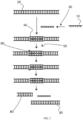
- a single stranded DNA 10 that is complementary to a double stranded target 20 is provided.
- the single stranded DNA 10 is mixed with a recombinase enzyme 30 and contacted against the double stranded target molecule 20.
- the recombinase enzyme 30 then forms a triple helix or D-loop 40 from the single stranded DNA 10 and the double stranded target DNA 20.
- nuclease S1 50 which associates with the D-loop to form a complex 60.
- the nuclease S1 cleaves each strand of the double stranded target at the D-loop thereby cleaving the double-stranded DNA into fragments 80 and 90.
- Nucleases useful with embodiments provided herein include nuclease which target single-stranded DNA. Suitable nucleases include Nuclease S1 and mung bean nuclease. Nuclease S1 may also be useful since it is capable of cleaving irregularities in double-stranded structures, including those proximal to sites of strand invasion or those generated by polymerase activity that perturbs the double-helix structure.
- a recombinant fusion protein that includes a nuclease domain and a single-stranded DNA binding domain can be used to cleave D-loop DNA and/or DNA adjacent to the D-loop.
- a nuclease domain derived from FokI of Flavobacterium okeanokoites and a single-strand binding domain derived from Sso7d of Sulfolobus solfataricus.
- a recombinant protein 100 includes a single-stranded DNA binding domain 120 and a nuclease domain 110.
- the single-stranded DNA binding domain binds to a D-loop which has been created by a single-stranded probe DNA and recombinase complex 130.
- the D-loop is stabilized by a polymerase 140 extending the single-stranded probe DNA.
- the nuclease domain binds to double-stranded DNA adjacent to the D-loop, and cleaves the double stranded DNA into fragments 150 and 160.
- D-loops are transient structures that exist temporarily during DNA synthesis.
- various strategies can be employed to prolong D-loop existence. These strategies include variation of polymerase reaction conditions, variation of nucleotide concentrations, and the use of modified nucleotides that slow or terminate synthesis.
- Single-stranded binding protein may also be added to stabilize D-loops and/or newly synthesized DNA.
- the stability of a D-loop can be increased by initiating DNA synthesis from inserted oligonucleotides probe with a polymerase.
- the polymerase can serve to generate and/or prolong D-loops that include the single-stranded oligonucleotides probe (strands sometimes referred to as the "sense” or “reading” strands) that is exposed during synthesis.
- the D-loops or DNA proximal to the D-loops can be cleaved by addition of nucleases.
- FIG. 4 the triple helix or D-loop 40 of FIG. 1 is contacted with a DNA polymerase 170 which binds to the D-loop to form a complex 180.
- the polymerase can stabilize the D-loop under conditions which extend the single-stranded probe DNA.
- a nuclease S1 50 can contact the D-loop stabilized by the polymerase, and cleave the stranded of the double-stranded host DNA to form fragments 200, 210, 220.
- the generation of newly synthesized DNA can be limited.
- Newly synthesized DNA may be limited by varying the polymerase reaction conditions, of the nucleotide concentrations, or using modified nucleotides that slow or terminate synthesis.
- Destruction of the newly synthesized DNA prevents the DNA from interfering in downstream processes or being sequenced later. This destruction also can expose single-stranded DNA (previously hybridized with the newly synthesized DNA) to digestion by nucleases.
- Degradation of the newly synthesized strand can be accomplished by incorporation of dUTP nucleotides during synthesis.
- the uracil-containing strand can then be cleaved by addition of uracil DNA glycosylase and apurinic/apyrimidinic endonuclease or DNA glycosylase endonuclease VII.
- a recombinase and oligonucleotide probe are combined with the sample.
- the recombinase-activated oligonucleotide probes form D-loops in the host DNA.
- a polymerase and other reagents can be added to the sample to generate paused or prolonged D-loops in the host DNA. If necessary, conditions and reagents are also employed to minimize synthesis of long strands of DNA from the probes.
- Nuclease is added to cleave the host DNA at the D-loops, thus enriching the sample for the pathogen nucleic acids.
- the cleaved host DNA can be removed from the sample.
- the pathogen nucleic acids can be used to prepare a library of nucleic acids, such as a sequencing library using methods such as adapter ligation, such as Illumina TruSeq, or transposon addition, such as Illumina Nextera.
- a sequencing library can be prepared from a sample of polynucleotides containing double-stranded host DNA, and non-host pathogen nucleic acids, and host DNA can be selectively cleaved from the library using a recombinase, polymerase, targeting oligonucleotides, and other reagents.
- a pool of single-stranded probes can target all or a significant portion of a target genome, such as a host genome.
- the single-stranded probes may be generated by chemical synthesis.
- Single-stranded probes may also be generated biochemically from cell lines or host tissue that do not include non-target nucleic acids, such as pathogen nucleic acids.
- genomic DNA is extracted from cell lines.
- Single-stranded probes in a range of 30-60 bases are generated from the genomic DNA.
- the probes can be generated using various molecular biology approaches. For example, they can be generated by use of DNase, exonuclease, and DNA size selection.
- Single-stranded probes may also be generated by random priming and polymerase extension; probes created by extension are then purified by standard methods. To control probe length, terminating nucleotides can be doped into the polymerization reaction mixture. Additionally, shorter probes can be created from longer single-stranded DNA by physical or biochemical fragmentation methods.
- Other methods that can be used to selectively cleave target nucleic acids can include use of restriction enzymes; however, cleavage of the target nucleic acids is limited to the specific recognition sequence and restriction site for a particular restrictions enzyme.
- Other methods can include the use of zinc finger and transcription activator-like effector (TALE) nucleases; however, cleavage of the target nucleic acids is limited to the specific recognition sequence of the nucleases.
- TALE transcription activator-like effector
- Other methods can also include the use of CRISPR/Cas9 nuclease; however, targeting is specified by a RNA guide, chemical synthesis of such guides for host depletion would be challenging, not all host sequences can be targeted, and target sequences much include a protospacer adjacent motif (PAM).
- PAM protospacer adjacent motif
- Some embodiments include selective cleavage of one or more target nucleic acids with one or more nucleic acid probes, a recombinase and a nuclease.
- the target nucleic acid is a double-stranded nucleic acid
- the nucleic acid probe is a single-stranded nucleic acid.
- the target nucleic acid can include any double-stranded polynucleotide with which a recombinase and nucleic acid probe can form a D-loop.
- Examples of target nucleic acids include eukaryotic nucleic acids, prokaryotic nucleic acids, viral nucleic acids, synthetic nucleic acids, and cDNA.
- a target nucleic acid can include mammalian nucleic acids, such as human nucleic acids.
- a target nucleic acid can include genomic DNA.
- the non-target nucleic acid can include any polynucleotide.
- the non-target nucleic acid is not cleaved with a nuclease that cleaves a nucleic acid at D-loop or at a site proximal to a D-loop.
- a non-target nucleic acid comprises a double-stranded polynucleotide.
- a nuclease domain is derived from a FokI protein or a functional fragment thereof comprises a polypeptide having identity with a polypeptide selected from SEQ ID NO:01, SEQ ID NO:02, SEQ ID NO:03, SEQ ID NO:04, SEQ ID NO:05, SEQ ID NO:06, SEQ ID NO:07, SEQ ID NO:08, SEQ ID NO:09, SEQ ID NO:10, and SEQ ID NO:11 of at least 70%, 80%, 90%, 95% or 100%, or a percentage with a range of any two of the foregoing percentages, or a conservative variation of any one of the foregoing polypeptides.
- the nuclease domain comprises a polypeptide having identity with a polypeptide selected from SEQ ID NOs:01-11, of at least 70%, 80%, 90%, 95% or 100%, a functional fragment thereof, or a conservative variation of any one of the foregoing polypeptides.
- a conservative amino acid variation can include an amino acid substitution that substitute functionally-equivalent amino acids. Conservative amino acid changes result in silent changes in the amino acid sequence of the resulting peptide. For example, one or more amino acids of a similar polarity act as functional equivalents and result in a silent alteration within the amino acid sequence of the peptide.
- substitutions that are charge neutral and which replace a residue with a smaller residue may also be considered "conservative substitutions" even if the residues are in different groups, for example, replacement of phenylalanine with the smaller isoleucine.
- Families of amino acid residues having similar side chains have been defined in the art. Several families of conservative amino acid substitutions are shown in TABLE 2.
- the efficiency of cleaving a target nucleic acid can be increased by increasing the stability of the D-loop.
- the stability of a D-loop can be increased by contacting the D-loop with a polymerase.
- the polymerase can extend the nucleic acid probe. Examples of reactions that can be used to extend the nucleic acid probe include an isothermal amplification reaction, or a polymerase chain reaction.
- the polymerase can be a DNA polymerase.
- the conditions of the extension can be such that the rate of extension of the nucleic acid probe can be reduced, substantially inhibited, or inhibited.
- Examples of conditions that reduce the rate of extension of the nucleic acids probe include performing the extension in the presence of at least one type of terminator nucleotide, and performing the extension in the presence of a limiting concentration of at least one nucleotide.
- the stability of a D-loop can be increased by contacting the D-loop with a single strand binding protein.
- the extended polynucleotide can be degraded. Degradation of the extended polynucleotide can be useful to prevent the extended polynucleotide interfering in downstream processes.
- the nucleic acid probe can be extended in the presence of dUTP such that the extended polynucleotide includes UTP residues.
- the extended polynucleotide containing UTP residues can be degraded using enzymes such as uracil DNA glycosylase, apurinic/apyrimidinic endonuclease, or DNA glycosylase endonuclease VII.
- Some embodiments include enriching a sample of polynucleotides for a non-target nucleic acid.
- a sample can comprise a target nucleic acid and a non-target nucleic acid, the target nucleic acid can be selectively cleaved with a method provided herein, and the cleaved target nucleic acid can be removed from the non-target nucleic acid.
- the cleaved target nucleic acid can be removed by methods which fractionate polynucleotides according to size.
- methods that can be used to remove a cleaved target nucleic acid from a non-target nucleic acid include binding the non-target nucleic acid to a substrate, hybridizing the non-target nucleic acid to a capture probe, and/or performing gel filtration.
- the substrate comprises solid phase reversible immobilization (SPRI) beads.
- selective cleavage of target nucleic acids in a sample of polynucleotides, and removal of the cleaved target nucleic acids can result in a sample or sequencing library that comprises, for example, at least 50%, at least 60%, at least 70%, at least 80%, at least 90%, at least 95%, at least 96%, at least 97%, at least 98%, at least 99%, or 100% non-host nucleic acids, or any range of values thereof.
- the methods result in a sample or sequencing library in which non-host nucleic acids comprise, for example, from 50% to 100%, from 60% to 100%, from 70% to 100%, from 80% to 100%, from 90% to 100%, or from 95% to 100% of the nucleic acids in the sample or sequencing library.
- the methods result in a sample or sequencing library that is enriched for non-host nucleic acids.
- the sample or sequencing library that is enriched for non-host nucleic acids by 2x, 3x, 4x, 5x, 10x, 20x, 50x, 100x, 200x, 500x, 1000x, 10,000x, 100,000x, or 1,000,000x, compared to the starting sample.
- a sample can be obtained from a cell, fluid, tissue, or organ from an organism or cell-culture, such as blood, serum, plasma, tears, saliva, mucus, urine, milk, semen, muscle, heart, liver, skin, liver, kidney, or adipose tissue.
- a sample can be from a cell-culture.
- a sample is an environmental sample, such as a soil, water, or air sample.
- the sample is a biological sample.
- the sample is from a human.
- the sample is from a non-human eukaryote.
- the sample is from an animal.
- the sample is from a plant.
- the sample is from a fungus. In some embodiments, the sample is from a protozoan. In some embodiments, the sample contains nucleic acid from at least two different prokaryotic organisms. In some embodiments, the sample contains nucleic acid from human and bacterial organisms. In some embodiments, the sample contains nucleic acid from eukaryotic and prokaryotic organisms. In some embodiments, the sample contains nucleic acid from at least two different eukaryotic organisms. In some embodiments, the sample contains nucleic acid from an unknown organism.
- Some embodiments include selective removal of target RNA from a sample containing the target RNA and a non-target RNA.
- a single-stranded DNA probe is hybridized to the target RNA.
- the single-stranded DNA probe includes a sequence complementary to a sequence selected from the group consisting of ribosomal RNA, tRNA, and mRNA.
- a plurality of single-stranded DNA probes can be hybridized to one or more target RNAs in a sample. The single-stranded DNA probe hybridizes to the target RNA.
- the double-stranded RNA/DNA hybrid can be contacted with an RNase that selectively degrades RNA of a double-stranded RNA/DNA hybrid, such an RNase H.
- the single-stranded DNA can be degraded with a DNase.
- the non-target RNA can be captured with method that can include binding the non-target RNA to a substrate, hybridizing the non-target RNA to a capture probe, or performing gel filtration.
- the substrate comprises solid phase reversible immobilization (SPRI) beads.
- the non-target RNA can be reverse transcribed. Some embodiments also include preparing a library of nucleic acids from the reversed transcribed non-target RNA.
- Some embodiments also include sequencing the library of nucleic acids.
- An example embodiment is depicted in FIG. 5 in which an RNA sample includes pathogen RNA 250 and human host RNA 260.
- Single-stranded DNA 270 which target host RNA can be hybridized to the RNA sample to form RNA/DNA hybrids 280 with the host RNA.
- the RNA strands of the RNA/DNA hybrids can be digested with RNase H, and the remaining single-stranded DNA strands 300 can be digested with DNase to leave non-targeted pathogen RNA.
- the RNA can be reverses transcribed and use to generate a library of nucleic acids.
- a sample can include a protein capsid containing a viral nucleic acid.
- the sample can also include target nucleic acids not contained in a viral capsid or other type of proteinaceous shell.
- the target nucleic acids can be contained in a vesicle, such as an exosome, or an apoptotic body.
- Target nucleic acids can be selectively degraded in the sample by treating the sample with agents that deliver a nuclease, such as a DNase or an RNase to the target nucleic acid, but not to the viral nucleic acid.
- Non-target nucleic acids can be used to prepare a library of nucleic acids. As shown in FIG. 6 , cell-free nucleic acids 320 including double-stranded and single-stranded nucleic acids, and vesicles 330 containing single-stranded nucleic acids, double stranded nucleic acids, or protein capsids 340 containing viral nucleic acids can be contacted with DNase and RNase using delivery agents which can enter the vesicles. Nucleic acids contained in protein capsids 340 are protected from digestion.
- a transposon-based library preparation method such as Nextera (Epicentre, Madison, Wis.).
- Transposon-based methods may use in vitro transposition to simultaneously fragment and tag DNA in a single-tube reaction. This may allow incorporation of platform-specific tags and optional barcodes, and prepare sequencer-ready DNA libraries.
- a nucleic acid library or parts thereof are amplified by PCR or other well-known methods.
- a sequencing method comprises amplification of a nucleic acid library.
- a nucleic acid library can be amplified prior to or after immobilization on a solid support, such as a solid support in a flow cell.
- Nucleic acid amplification includes the process of amplifying or increasing the numbers of a nucleic acid template and/or of a complement thereof that are present by producing one or more copies of the template and/or its complement. Amplification can be carried out by any suitable method.
- the library may be amplified using primer sites in adaptor sequences, and sequenced using sequencing primer sites in the adaptor sequences.
- the adaptor sequences can include indexes to identify the source of the nucleic acids.
- the efficiency of subsequent amplification steps can be reduced by the formation of primer-dimers.
- non-ligated single-stranded adaptors can be removed from ligation products.
- Some embodiments provided herein can include sequencing a nucleic acid.
- sequencing technologies include sequencing-by-synthesis (SBS).
- SBS sequencing-by-synthesis
- extension of a nucleic acid primer along a nucleic acid template is monitored to determine the sequence of nucleotides in the template.
- the underlying chemical process can be polymerization.
- fluorescently labeled nucleotides are added to extend a primer in a template dependent fashion such that detection of the order and type of nucleotides added to the primer can be used to determine the sequence of the template.
- One or more amplified nucleic acids can be subjected to an SBS or other detection technique that involves repeated delivery of reagents in cycles.
- one or more labeled nucleotides, DNA polymerase, etc. can be flowed into/through a hydrogel bead that houses one or more amplified nucleic acid molecules. Those sites where primer extension causes a labeled nucleotide to be incorporated can be detected.
- the nucleotides can further include a reversible termination property that terminates further primer extension once a nucleotide has been added to a primer.
- a nucleotide analog having a reversible terminator moiety can be added to a primer such that subsequent extension cannot occur until a deblocking agent is delivered to remove the moiety.
- a deblocking reagent can be delivered to the flow cell before or after detection occurs. Washes can be carried out between the various delivery steps. The cycle can then be repeated n times to extend the primer by n nucleotides, thereby detecting a sequence of length n.
- Some SBS embodiments include detection of a proton released upon incorporation of a nucleotide into an extension product.
- sequencing based on detection of released protons can use an electrical detector and associated techniques that are commercially available. Examples of such sequencing systems are pyrosequencing such as a commercially available platform from 454 Life Sciences a subsidiary of Roche; sequencing using ⁇ -phosphate-labeled nucleotides, such as a commercially available platform from Pacific Biosciences; and sequencing using proton detection, such as a commercially available platform from Ion Torrent subsidiary of Life Technologies.
- Pyrosequencing detects the release of inorganic pyrophosphate (PPi) as particular nucleotides are incorporated into a nascent nucleic acid strand.
- released PPi can be detected by being immediately converted to adenosine triphosphate (ATP) by ATP sulfurylase, and the level of ATP generated can be detected via luciferase-produced photons.
- ATP adenosine triphosphate
- the sequencing reaction can be monitored via a luminescence detection system. Excitation radiation sources used for fluorescence based detection systems are not necessary for pyrosequencing procedures.
- Some embodiments can utilize methods involving the real-time monitoring of DNA polymerase activity. For example, nucleotide incorporations can be detected through fluorescence resonance energy transfer (FRET) interactions between a fluorophore-bearing polymerase and ⁇ -phosphate-labeled nucleotides, or with zero mode waveguides (ZMWs).
- FRET fluorescence resonance energy transfer
- ZMWs zero mode waveguides
- Another useful sequencing technique is nanopore sequencing.
- the target nucleic acid or individual nucleotides removed from a target nucleic acid pass through a nanopore. As the nucleic acid or nucleotide passes through the nanopore, each nucleotide type can be identified by measuring fluctuations in the electrical conductance of the pore.
- Example reagents include, lysozyme; proteinase K; random hexamers; a polymerase such as ⁇ 29 DNA polymerase, Taq polymerase, Bsu polymerase; transposase such as Tn5; primers, such as P5 and P7 adaptor sequences; ligase; deoxynucleotide triphosphates; buffers; and divalent cations.
- Adaptors can include sequencing primer sites, amplification primer sites, and indexes.
- an "index" can include a sequence of nucleotides that can be used as a molecular identifier and/or barcode to tag a nucleic acid, and/or to identify the source of a nucleic acid.
- an index can be used to identify a single nucleic acid, or a subpopulation of nucleic acids.
- nucleic acid libraries can be prepared within a hydrogel on a flow cell device.
- kits Some embodiments include a kit for selectively cleaving a target nucleic acid by recombinase-mediated cleavage.
- recombinases include RecA, UvsX, RAD51, and derivatives thereof.
- the first nuclease include nuclease S1, mung bean nuclease, and a recombinant protein comprising a domain having nuclease activity and a single-stranded nucleic acid binding domain.
- the kit can include a plurality of different single-stranded nucleic acid probes.
- the single-stranded nucleic acid probe can contain a sequence complementary to a target nucleic acid, such as mitochondrial DNA, a repetitive element such as an interspersed repeat, a tandem repeat, and a long terminal repeat.
- a kit can also include one or more components such as a polymerase, a single-stranded binding protein, a terminator nucleotide, a dUTP nucleotide, a second nuclease such as uracil DNA glycosylase, apurinic/apyrimidinic endonuclease, and DNA glycosylase endonuclease VII, and a reagent to remove cleaved target nucleic acids from non-target nucleic acids, such as SPRI beads.
- a polymerase such as a polymerase, a single-stranded binding protein, a terminator nucleotide, a dUTP nucleotide, a second nuclease such as uracil DNA glycosylase, apurinic/apyrimidinic endonuclease, and DNA glycosylase endonuclease VII
- a reagent to remove cleaved target nucle
- Some embodiments include reagents for preparing a library of single-stranded nucleic acid probes.
- Example reagents for preparing a library of single-stranded nucleic acid probes can include one or more of an enzyme which nicks double-stranded DNA such as DNase I, an enzyme which creates gaps in nicked double-stranded DNA such as exonuclease III, a reagent to denature double-stranded DNA to single-stranded species, and a reagent to remove double-stranded DNA from single-stranded DNA.
- reagents for preparing a library of single-stranded nucleic acid probes can include one or more of a plurality of degenerate primers, and a thermophilic polymerase.
- the degenerate primers include a purification tag, such as biotin.
- the degenerate primers include a cleavable linker, such as a poly-U sequence that can be used to remove the purification tag from products generated from the degenerate primers.
- a kit can include a substrate to capture products generated from the degenerate primers, such as beads, such as beads coated with streptavidin.
- kits for selectively enriching a sample containing a target RNA and a non-target RNA include a single-stranded DNA probe containing a sequence complementary to a target RNA, an RNase H, and a DNase.
- the kit can include a plurality of different single-stranded DNA probes.
- the single-stranded DNA probe includes a sequence complementary to a sequence selected from the group consisting of ribosomal RNA, tRNA, and mRNA.
- Genomic DNA is obtained from a human fibroblast cell-line.
- the genomic DNA is amplified using a library of degenerate primers which each include a 5' biotin tag linked to the primer through a poly-U linker.
- the amplified products are captured on streptavidin beads, and the linker is cleaved using uracil DNA glycosylase.
- the amplified products are denatured to single-stranded nucleic acids, and fragmented by sonication.
- a library of human-specific single-stranded nucleic acid probes is prepared.
- a DNA sample is obtained from human blood. Human DNA is removed from the DNA sample by recombinase-mediated selective cleavage of the human DNA. Briefly, the DNA sample is mixed with the library of Example 1, a UvsX recombinase, a DNA polymerase, and nuclease S1. Non-human DNA is captured using SPRI beads, and cleaved human DNA is removed by washing the beads. A library of nucleic acids is prepared form the non-human DNA, and the library is sequenced.
- RNA sample derived from a blood sample was hybridized with single-stranded DNA oligonucleotides targeting ribosomal RNA and globin mRNA sequences.
- RNA that had hybridized to the single-stranded DNA oligonucleotides were degraded with RNase H, and the single-stranded DNA oligonucleotides were degraded with DNase.
- Remaining RNA was reverse transcribed, a library of nucleic acids was prepared, and the library was sequenced.
- An example work flow is depicted in FIG. 5 . The sequences were aligned to sequences in a database.
Landscapes
- Chemical & Material Sciences (AREA)
- Life Sciences & Earth Sciences (AREA)
- Organic Chemistry (AREA)
- Health & Medical Sciences (AREA)
- Engineering & Computer Science (AREA)
- Wood Science & Technology (AREA)
- Zoology (AREA)
- Proteomics, Peptides & Aminoacids (AREA)
- Analytical Chemistry (AREA)
- Genetics & Genomics (AREA)
- General Engineering & Computer Science (AREA)
- Biotechnology (AREA)
- Bioinformatics & Cheminformatics (AREA)
- Immunology (AREA)
- Biophysics (AREA)
- Molecular Biology (AREA)
- Biochemistry (AREA)
- Microbiology (AREA)
- Physics & Mathematics (AREA)
- General Health & Medical Sciences (AREA)
- Biomedical Technology (AREA)
- Chemical Kinetics & Catalysis (AREA)
- Crystallography & Structural Chemistry (AREA)
- Plant Pathology (AREA)
- Virology (AREA)
- Pathology (AREA)
- Measuring Or Testing Involving Enzymes Or Micro-Organisms (AREA)
- Enzymes And Modification Thereof (AREA)
Applications Claiming Priority (3)
| Application Number | Priority Date | Filing Date | Title |
|---|---|---|---|
| US201862644727P | 2018-03-19 | 2018-03-19 | |
| PCT/US2019/022443 WO2019182887A1 (en) | 2018-03-19 | 2019-03-15 | Methods and compositions for recombinase-mediated selective cleavage of nucleic acids |
| EP19714037.9A EP3768855B1 (de) | 2018-03-19 | 2019-03-15 | Verfahren und zusammensetzungen für rekombinase-vermittelte spaltung von nukleinsäuren |
Related Parent Applications (2)
| Application Number | Title | Priority Date | Filing Date |
|---|---|---|---|
| EP19714037.9A Division EP3768855B1 (de) | 2018-03-19 | 2019-03-15 | Verfahren und zusammensetzungen für rekombinase-vermittelte spaltung von nukleinsäuren |
| EP19714037.9A Division-Into EP3768855B1 (de) | 2018-03-19 | 2019-03-15 | Verfahren und zusammensetzungen für rekombinase-vermittelte spaltung von nukleinsäuren |
Publications (2)
| Publication Number | Publication Date |
|---|---|
| EP4538395A2 true EP4538395A2 (de) | 2025-04-16 |
| EP4538395A3 EP4538395A3 (de) | 2025-07-16 |
Family
ID=65952185
Family Applications (2)
| Application Number | Title | Priority Date | Filing Date |
|---|---|---|---|
| EP25158250.8A Withdrawn EP4538395A3 (de) | 2018-03-19 | 2019-03-15 | Verfahren und zusammensetzungen zur rekombinase-vermittelten selektiven spaltung von nukleinsäuren |
| EP19714037.9A Active EP3768855B1 (de) | 2018-03-19 | 2019-03-15 | Verfahren und zusammensetzungen für rekombinase-vermittelte spaltung von nukleinsäuren |
Family Applications After (1)
| Application Number | Title | Priority Date | Filing Date |
|---|---|---|---|
| EP19714037.9A Active EP3768855B1 (de) | 2018-03-19 | 2019-03-15 | Verfahren und zusammensetzungen für rekombinase-vermittelte spaltung von nukleinsäuren |
Country Status (7)
| Country | Link |
|---|---|
| US (2) | US11649481B2 (de) |
| EP (2) | EP4538395A3 (de) |
| CN (1) | CN111051522A (de) |
| AU (2) | AU2019239619B2 (de) |
| CA (2) | CA3066482C (de) |
| ES (1) | ES3061326T3 (de) |
| WO (1) | WO2019182887A1 (de) |
Families Citing this family (4)
| Publication number | Priority date | Publication date | Assignee | Title |
|---|---|---|---|---|
| GB2603203A (en) * | 2021-02-02 | 2022-08-03 | Univ Heriot Watt | Method for enriching nucelic acids |
| CN113622033B (zh) * | 2021-08-06 | 2024-07-16 | 成都罗宁生物科技有限公司 | 一种用于低宿主背景干扰的核酸文库制备方法及应用 |
| US20230086611A1 (en) * | 2021-09-23 | 2023-03-23 | Genomic Testing Cooperative, LCA | Compositions and Methods for Targeted NGS Sequencing of cfRNA and cfTNA |
| CN113699214A (zh) * | 2021-10-27 | 2021-11-26 | 翌圣生物科技(上海)股份有限公司 | 基于基因捕获技术的测序方法 |
Citations (1)
| Publication number | Priority date | Publication date | Assignee | Title |
|---|---|---|---|---|
| US20170275601A1 (en) | 2016-03-28 | 2017-09-28 | Illumina, Inc. | Recombinase mutants |
Family Cites Families (10)
| Publication number | Priority date | Publication date | Assignee | Title |
|---|---|---|---|---|
| US5403711A (en) * | 1987-11-30 | 1995-04-04 | University Of Iowa Research Foundation | Nucleic acid hybridization and amplification method for detection of specific sequences in which a complementary labeled nucleic acid probe is cleaved |
| US7468244B2 (en) * | 2001-09-27 | 2008-12-23 | University Of Delaware | Polymorphism detection and separation |
| US7399590B2 (en) * | 2002-02-21 | 2008-07-15 | Asm Scientific, Inc. | Recombinase polymerase amplification |
| US20060134650A1 (en) * | 2004-12-21 | 2006-06-22 | Illumina, Inc. | Methylation-sensitive restriction enzyme endonuclease method of whole genome methylation analysis |
| NZ548731A (en) * | 2006-07-24 | 2008-12-24 | Zygem Corp Ltd | Isothermal detection methods and uses thereof |
| US9005891B2 (en) * | 2009-11-10 | 2015-04-14 | Genomic Health, Inc. | Methods for depleting RNA from nucleic acid samples |
| WO2014020137A1 (en) * | 2012-08-02 | 2014-02-06 | Qiagen Gmbh | Recombinase mediated targeted dna enrichment for next generation sequencing |
| US9944924B2 (en) * | 2014-01-16 | 2018-04-17 | Illumina, Inc. | Polynucleotide modification on solid support |
| WO2016100955A2 (en) | 2014-12-20 | 2016-06-23 | Identifygenomics, Llc | Compositions and methods for targeted depletion, enrichment, and partitioning of nucleic acids using crispr/cas system proteins |
| US11162090B2 (en) * | 2016-09-01 | 2021-11-02 | Wisconsin Alumni Research Foundation | Methods and systems for isolating and identifying nucleic acid from a plurality of microorganisms and viruses |
-
2019
- 2019-03-15 CA CA3066482A patent/CA3066482C/en active Active
- 2019-03-15 CN CN201980003319.0A patent/CN111051522A/zh active Pending
- 2019-03-15 EP EP25158250.8A patent/EP4538395A3/de not_active Withdrawn
- 2019-03-15 WO PCT/US2019/022443 patent/WO2019182887A1/en not_active Ceased
- 2019-03-15 AU AU2019239619A patent/AU2019239619B2/en not_active Ceased
- 2019-03-15 CA CA3194112A patent/CA3194112A1/en active Pending
- 2019-03-15 ES ES19714037T patent/ES3061326T3/es active Active
- 2019-03-15 EP EP19714037.9A patent/EP3768855B1/de active Active
- 2019-03-15 US US16/609,722 patent/US11649481B2/en active Active
-
2022
- 2022-06-13 AU AU2022204101A patent/AU2022204101A1/en not_active Abandoned
-
2023
- 2023-04-11 US US18/298,631 patent/US20230287477A1/en active Pending
Patent Citations (1)
| Publication number | Priority date | Publication date | Assignee | Title |
|---|---|---|---|---|
| US20170275601A1 (en) | 2016-03-28 | 2017-09-28 | Illumina, Inc. | Recombinase mutants |
Also Published As
| Publication number | Publication date |
|---|---|
| EP3768855B1 (de) | 2025-12-10 |
| CA3194112A1 (en) | 2019-09-26 |
| EP3768855C0 (de) | 2025-12-10 |
| AU2019239619B2 (en) | 2022-03-31 |
| EP3768855A1 (de) | 2021-01-27 |
| US20230287477A1 (en) | 2023-09-14 |
| EP4538395A3 (de) | 2025-07-16 |
| US11649481B2 (en) | 2023-05-16 |
| CA3066482A1 (en) | 2019-09-26 |
| US20210277442A1 (en) | 2021-09-09 |
| ES3061326T3 (en) | 2026-04-01 |
| AU2019239619A1 (en) | 2019-12-19 |
| CA3066482C (en) | 2023-05-23 |
| CN111051522A (zh) | 2020-04-21 |
| WO2019182887A1 (en) | 2019-09-26 |
| AU2022204101A1 (en) | 2022-06-30 |
Similar Documents
| Publication | Publication Date | Title |
|---|---|---|
| US20250109426A1 (en) | Compositions and methods for targeted depletion, enrichment, and partitioning of nucleic acids using crispr/cas system proteins | |
| US20230287477A1 (en) | Methods and compositions for recombinase-mediated selective cleavage of nucleic acids | |
| EP4549584A2 (de) | Verfahren | |
| US20220333186A1 (en) | Method and system for targeted nucleic acid sequencing | |
| CN113330122A (zh) | 使用位点特异性核酸酶优化核酸的体外分离 | |
| CN116926166A (zh) | 一种长片段dna捕获方法、试剂盒及其用途 | |
| HK40038012A (en) | Methods and compositions for recombinase-mediated selective cleavage of nucleic acids | |
| HK40038012B (en) | Methods and compositions for recombinase-mediated selective cleavage of nucleic acids | |
| EP4623077A1 (de) | Hochdurchsatzamplifikation gezielter nukleinsäuresequenzen |
Legal Events
| Date | Code | Title | Description |
|---|---|---|---|
| PUAI | Public reference made under article 153(3) epc to a published international application that has entered the european phase |
Free format text: ORIGINAL CODE: 0009012 |
|
| STAA | Information on the status of an ep patent application or granted ep patent |
Free format text: STATUS: THE APPLICATION HAS BEEN PUBLISHED |
|
| AC | Divisional application: reference to earlier application |
Ref document number: 3768855 Country of ref document: EP Kind code of ref document: P |
|
| AK | Designated contracting states |
Kind code of ref document: A2 Designated state(s): AL AT BE BG CH CY CZ DE DK EE ES FI FR GB GR HR HU IE IS IT LI LT LU LV MC MK MT NL NO PL PT RO RS SE SI SK SM TR |
|
| REG | Reference to a national code |
Ref country code: DE Ref legal event code: R079 Free format text: PREVIOUS MAIN CLASS: C12Q0001700000 Ipc: C12Q0001680400 |
|
| PUAL | Search report despatched |
Free format text: ORIGINAL CODE: 0009013 |
|
| AK | Designated contracting states |
Kind code of ref document: A3 Designated state(s): AL AT BE BG CH CY CZ DE DK EE ES FI FR GB GR HR HU IE IS IT LI LT LU LV MC MK MT NL NO PL PT RO RS SE SI SK SM TR |
|
| RIC1 | Information provided on ipc code assigned before grant |
Ipc: C12Q 1/6804 20180101AFI20250611BHEP Ipc: C12Q 1/6806 20180101ALI20250611BHEP Ipc: C12Q 1/6888 20180101ALI20250611BHEP Ipc: C12Q 1/70 20060101ALI20250611BHEP |
|
| REG | Reference to a national code |
Ref country code: HK Ref legal event code: DE Ref document number: 40124393 Country of ref document: HK |
|
| STAA | Information on the status of an ep patent application or granted ep patent |
Free format text: STATUS: THE APPLICATION HAS BEEN WITHDRAWN |
|
| 18W | Application withdrawn |
Effective date: 20260112 |