EP4539384A1 - Dispositif et procédé d'émission/réception de signal sur la base d'un duplexage par répartition croisée (xdd) dans un système de communication sans fil - Google Patents
Dispositif et procédé d'émission/réception de signal sur la base d'un duplexage par répartition croisée (xdd) dans un système de communication sans fil Download PDFInfo
- Publication number
- EP4539384A1 EP4539384A1 EP23831979.2A EP23831979A EP4539384A1 EP 4539384 A1 EP4539384 A1 EP 4539384A1 EP 23831979 A EP23831979 A EP 23831979A EP 4539384 A1 EP4539384 A1 EP 4539384A1
- Authority
- EP
- European Patent Office
- Prior art keywords
- xdd
- period
- base station
- information
- change
- Prior art date
- Legal status (The legal status is an assumption and is not a legal conclusion. Google has not performed a legal analysis and makes no representation as to the accuracy of the status listed.)
- Pending
Links
Images



Classifications
-
- H—ELECTRICITY
- H04—ELECTRIC COMMUNICATION TECHNIQUE
- H04W—WIRELESS COMMUNICATION NETWORKS
- H04W72/00—Local resource management
- H04W72/20—Control channels or signalling for resource management
- H04W72/23—Control channels or signalling for resource management in the downlink direction of a wireless link, i.e. towards a terminal
-
- H—ELECTRICITY
- H04—ELECTRIC COMMUNICATION TECHNIQUE
- H04L—TRANSMISSION OF DIGITAL INFORMATION, e.g. TELEGRAPHIC COMMUNICATION
- H04L5/00—Arrangements affording multiple use of the transmission path
- H04L5/0091—Signalling for the administration of the divided path, e.g. signalling of configuration information
- H04L5/0094—Indication of how sub-channels of the path are allocated
-
- H—ELECTRICITY
- H04—ELECTRIC COMMUNICATION TECHNIQUE
- H04L—TRANSMISSION OF DIGITAL INFORMATION, e.g. TELEGRAPHIC COMMUNICATION
- H04L5/00—Arrangements affording multiple use of the transmission path
- H04L5/0091—Signalling for the administration of the divided path, e.g. signalling of configuration information
- H04L5/0096—Indication of changes in allocation
-
- H—ELECTRICITY
- H04—ELECTRIC COMMUNICATION TECHNIQUE
- H04L—TRANSMISSION OF DIGITAL INFORMATION, e.g. TELEGRAPHIC COMMUNICATION
- H04L5/00—Arrangements affording multiple use of the transmission path
- H04L5/14—Two-way operation using the same type of signal, i.e. duplex
-
- H—ELECTRICITY
- H04—ELECTRIC COMMUNICATION TECHNIQUE
- H04L—TRANSMISSION OF DIGITAL INFORMATION, e.g. TELEGRAPHIC COMMUNICATION
- H04L5/00—Arrangements affording multiple use of the transmission path
- H04L5/14—Two-way operation using the same type of signal, i.e. duplex
- H04L5/1469—Two-way operation using the same type of signal, i.e. duplex using time-sharing
-
- H—ELECTRICITY
- H04—ELECTRIC COMMUNICATION TECHNIQUE
- H04W—WIRELESS COMMUNICATION NETWORKS
- H04W72/00—Local resource management
- H04W72/04—Wireless resource allocation
- H04W72/044—Wireless resource allocation based on the type of the allocated resource
- H04W72/0457—Variable allocation of band or rate
-
- H—ELECTRICITY
- H04—ELECTRIC COMMUNICATION TECHNIQUE
- H04W—WIRELESS COMMUNICATION NETWORKS
- H04W72/00—Local resource management
- H04W72/20—Control channels or signalling for resource management
- H04W72/21—Control channels or signalling for resource management in the uplink direction of a wireless link, i.e. towards the network
-
- H—ELECTRICITY
- H04—ELECTRIC COMMUNICATION TECHNIQUE
- H04W—WIRELESS COMMUNICATION NETWORKS
- H04W72/00—Local resource management
- H04W72/04—Wireless resource allocation
- H04W72/044—Wireless resource allocation based on the type of the allocated resource
- H04W72/0446—Resources in time domain, e.g. slots or frames
-
- H—ELECTRICITY
- H04—ELECTRIC COMMUNICATION TECHNIQUE
- H04W—WIRELESS COMMUNICATION NETWORKS
- H04W8/00—Network data management
- H04W8/22—Processing or transfer of terminal data, e.g. status or physical capabilities
- H04W8/24—Transfer of terminal data
Definitions
- Radio Frequency (RF) elements it is necessary to develop, as major technologies for securing the coverage, Radio Frequency (RF) elements, antennas, novel waveforms having a better coverage than Orthogonal Frequency Division Multiplexing (OFDM), beamforming and massive Multiple-input Multiple-Output (MIMO), Full Dimensional MIMO (FD-MIMO), array antennas, and multi antenna transmission technologies such as large-scale antennas.
- OFDM Orthogonal Frequency Division Multiplexing
- MIMO massive Multiple-input Multiple-Output
- FD-MIMO Full Dimensional MIMO
- array antennas and multi antenna transmission technologies such as large-scale antennas.
- OFDM Orthogonal Frequency Division Multiplexing
- MIMO massive Multiple-input Multiple-Output
- FD-MIMO Full Dimensional MIMO
- array antennas and multi antenna transmission technologies such as large-scale antennas.
- OFAM Orthogonal Frequency Division Multiplexing
- FD-MIMO Full Dimensional MIMO
- RIS Reconfigurable Intelligent
- a full-duplex technology for enabling an uplink transmission and a downlink transmission to simultaneously use the same frequency resource at the same time
- a network technology for utilizing satellites, High-Altitude Platform Stations (HAPS), and the like in an integrated manner
- HAPS High-Altitude Platform Stations
- an improved network structure for supporting mobile base stations and the like and enabling network operation optimization and automation and the like
- a dynamic spectrum sharing technology via collision avoidance based on a prediction of spectrum usage an use of Artificial Intelligence (AI) in wireless communication for improvement of overall network operation by utilizing AI from a designing phase for developing 6G and internalizing end-to-end AI support functions
- a next-generation distributed computing technology for overcoming the limit of UE computing ability through reachable super-high-performance communication and computing resources (such as Mobile Edge Computing (MEC), clouds, and the like) over the network.
- MEC Mobile Edge Computing
- 6G communication systems in hyper-connectivity, including person to machine (P2M) as well as machine to machine (M2M), will allow the next hyper-connected experience.
- services such as truly immersive eXtended Reality (XR), high-fidelity mobile hologram, and digital replica could be provided through 6G communication systems.
- services such as remote surgery for security and reliability enhancement, industrial automation, and emergency response will be provided through the 6G communication system such that the technologies could be applied in various fields such as industry, medical care, automobiles, and home appliances.
- the disclosure relates to a cross division duplex (XDD) system, and provides a device and a method for efficiently transmitting and receiving a signal between a base station and a UE by adaptively changing a resource period allocated to the frequency band.
- XDD cross division duplex
- a method performed by a base station supporting a time division duplex (TDD) system in a wireless communication system may include transmitting resource configuration information including a first cross division duplex-uplink (XDD-UL) period to a terminal, determining whether a change of the first XDD-UL period is necessary, identifying, based on a result of the determination, a second XDD-UL period, transmitting information on the second XDD-UL period to the terminal, and receiving, based on at least one of the first XDD-UL period or the second XDD-UL period, an uplink signal from the terminal.
- XDD-UL cross division duplex-uplink
- a base station supporting a time division duplex (TDD) system in a wireless communication system may include at least one transceiver, and at least one processor functionally coupled to the at least one transceiver, wherein the at least one processor is configured to transmit resource configuration information including a first cross division duplex-uplink (XDD-UL) period to a terminal, determine whether a change of the first XDD-UL period is necessary, identify, based on a result of the determination, a second XDD-UL period, transmit information on the second XDD-UL period to the terminal, and receive, based on at least one of the first XDD-UL period or the second XDD-UL period, an uplink signal from the terminal.
- XDD-UL cross division duplex-uplink
- the disclosure provides a device and a method capable of effectively providing services in a wireless communication system.
- the disclosure provides a device and a method capable of effectively performing signal transmission and reception in a wireless communication system.
- the disclosure provides a device and a method for, when a change of a bandwidth is necessary in a wireless communication system employing cross division duplex (XDD), adaptively changing an XDD resource period to efficiently transmit or receive a signal also in the changed bandwidth.
- XDD cross division duplex
- various embodiments of the disclosure will be described using terms used in some communication standards (e.g., the 3rd generation partnership project (3GPP)), but they are for illustrative purposes only. Various embodiments of the disclosure may be easily applied to other communication systems through modifications. Various embodiments of the disclosure may cover all technologies using TDD and FDD together, including not only Study on Evolution of NR Duplex Operation of Rel-18 on the 3GPP LTE standards but also Enhanced Release and Versions to be progressed later.
- 3GPP 3rd generation partnership project
- CDMA code division multiple access
- FDMA frequency division multiple access
- TDMA time division multiple access
- OFDMA orthogonal frequency division multiple access
- SC- FDMA single carrier frequency division multiple access
- CDMA may be implemented by radio technology such as universal terrestrial radio access (UTRA) or CDMA2000.
- TDMA may be implemented by radio technology such as global system for mobile communications (GSM), general packet radio service (GPRS), or enhanced data rates for GSM evolution (EDGE).
- OFDMA may be implemented by radio technology such as IEEE 802.11 (i.e., Wi-Fi), IEEE 802.16 (i.e., WiMAX), IEEE 802-20, or Evolved UTRA (E-UTRA).
- the expression “greater than” or “less than” is used to determine whether a specific condition is satisfied or fulfilled, but this is intended only to illustrate an example and does not exclude “greater than or equal to” or “equal to or less than”.
- a condition indicated by the expression “greater than or equal to” may be replaced with a condition indicated by “greater than”
- a condition indicated by the expression “equal to or less than” may be replaced with a condition indicated by "less than”
- a condition indicated by "greater than and equal to or less than” may be replaced with a condition indicated by "greater than and less than”.
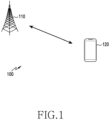
- FIG. 1 illustrates an example of a radio communication environment 100 according to various embodiments of the disclosure.
- a base station 110 and a UE 120 are illustrated as parts of nodes using a radio channel in a wireless communication system.
- the UE 120 may be connected to a plurality of base stations.
- base stations may be connected to the UE 120 through multiple connectivity (for example, dual connectivity (DC)).
- DC dual connectivity
- the base station 110 is a network infrastructure that provides radio access to the UE 120.
- the base station 110 has coverage defined in a predetermined geographical area on the basis of the range within which a signal can be transmitted.
- the term "coverage" used below may indicate a service coverage area of the base station 110.
- the base station 110 may cover one cell or multiple cells. Here, the multiple cells may be divided by a frequency supporting multiple cells or an area of a covered sector.
- the base station 110 may be referred to as "access point (AP)", “eNodeB (eNB)", “5 th -generation (5G) node”, “5G NodeB (NB)", “next generation node B (gNB)", “wireless point”, “transmission/reception point (TRP)", “distributed unit (DU)", “a radio unit (RU)”, “remote radio head (RRH)”, or other terms having an equivalent technical meaning, as well as a base station.
- the base station 110 may be connected to one or more “transmission/reception points (TRPs)”.
- the base station 110 may transmit a downlink signal to the UE 120 or receive an uplink signal from the UE 120 through one or more TRPs.
- the UE 120 is a device used by a user and performs communication with the base station 110 through a radio channel. According to circumstances, the UE 120 may be operated without involvement of the user. That is, at least one of the UEs 120 may be a device that performs machine-type communication (MTC), and may not be carried by the user.
- MTC machine-type communication
- the UE 120 may be referred to as "user equipment (UE)", “mobile station”, “subscriber station”, “customer premises equipment (CPE)", “remote terminal”, “wireless terminal”, “electronic device”, “terminal for vehicle”, “user device”, or other terms having the equivalent technical meaning, as well as a terminal.
- Various embodiments of the disclosure provide a method and a device for operating based a configuration of a TDD communication system. Accordingly, hereinafter, a detailed method for uplink and downlink signal transmission in the TDD communication system is described.
- the base station and the UE may use the TDD communication system of the NR.
- the TDD communication system of the NR may be configured more flexibly than the LTE TDD communication system.
- the TDD communication system of the NR may define a DL-UL pattern indicating a relationship between DL time resources for the DL communication and UL time resources for the UL communication.
- the DL-UL pattern may include a configuration periodicity, a DL time period, and a UL time period.
- the configuration periodicity may indicate a time for which one DL-UL pattern is applied.
- the configuration periodicity may be at least one of 0.5 ms, 0.625 ms, 1 ms, 1.25 ms, 2.5 ms, 3 ms, 4 ms, 5 ms, and 10 ms.
- the DL time period may refer to a time resource for which the DL communication continues.
- the DL time period may be represented by the number of slots, the number of slots and symbols, or only the number of symbols.
- the DL time period may be located in a beginning part within one configuration period.
- the UL time period may refer to a time resource for which the UL continues.
- the UL time period may be represented by the number of slots, the number of slots and symbols, or only the number of symbols.
- the TDD communication system uses the same carrier frequency for uplink transmission and downlink transmission, and may thus need to distinguish between a DL time period and a UL time period.
- the resource structures for the TDD communication system may include the DL time period, the UL time period, and a remaining period between the DL time period and the UL time period. Due to the time period distinguishment, propagation delay may cause inter-cell interference.
- the base station 110 may transmit or receive signals according to frames.
- the base station 110 may transmit or receive signals according to frames.
- a horizontal axis indicates the time domain and a vertical axis indicates the frequency domain.
- the length of a radio frame 204 may be 10 ms.
- the radio frame 204 may be a time domain period including 10 subframes.
- the length of a subframe 203 may be 1 ms.
- a configuration unit in the time domain may be an orthogonal frequency division multiplexing (OFDM) symbol and/or a discrete Fourier transform (DFT)-spread-OFDM (DFT-s-OFDM) symbol, and Nsymb OFDM and/or DFT-s-OFDM symbols 201 may constitute one slot 202.
- OFDM orthogonal frequency division multiplexing
- DFT-s-OFDM discrete Fourier transform
- Nsymb OFDM and/or DFT-s-OFDM symbols 201 may constitute one slot 202.
- the number of the slots 202 constituting one subframe 203 and the length of the slot 202 may vary depending on the SCS.
- the SCS may be referred to as numerology ⁇ . That is, the SCS, the number of the slots included in the subframe, the slot length, and the subframe length may be variably configured. For example, if the SCS is 15 kHz in the NR communication system, one slot 202 may form one subframe 203, and each of the length of the slot 202 and the subframe 203 may be 1 ms. In addition, for example, if the SCS is 30 kHz, two slots may form one subframe 203. In this case, the length of the slot may be 0.5 ms and the length of the subframe may be 1 ms.
- the SCS, the number of the slots included in the subframe, the slot length, and the subframe length may be variably applied depending on the communication system.
- the SCS may be 15 kHz, and two slots may form one subframe, wherein the slot length may be 0.5 ms and the subframe length may be 1 ms.
- the SCS ⁇ may be one of 15 kHz, 30 kHz, 60 kHz, 120 kHz, and 240 kHz, and the number of the slots included in one subframe may be 1, 2, 4, 8, or 16, according to the SCS ⁇ .
- scheduling information of DL data or UL data may be transmitted from the base station 110 to the UE 120 through downlink control information (DCI).
- DCI downlink control information
- the DCI may be defined according to various formats, and each format may indicate whether the DCI includes scheduling information (e.g., an UL grant) for UL data, whether the DCI includes scheduling information (e.g., DL resource allocation) for DL data, whether the DCI is compact DCI having control information of small size or fallback DCI, whether spatial multiplexing using multiple antennas is applied, and/or whether the DCI is DCI for power control.
- NR DCI format 1_0 or NR DCI format 1_1 may include scheduling for DL data.
- NR DCI format 0_0 or NR DCI form 0_1 may include scheduling for UL data.
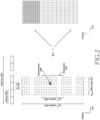
- FIG. 2 illustrates an example of a DL and a UL slot structure in the wireless communication system.
- FIG. 2 illustrates a resource grid structure of a 3GPP NR system.
- the slot may include a plurality of orthogonal frequency division multiplexing (OFDM) symbols in the time domain, and a plurality of resource blocks (RBs) in the frequency domain.
- the signal may include a part or all of the resource grid.
- the number of OFDM symbols included in one slot may vary according to the length of a cyclic prefix (CP).
- FIG. 2 illustrates that one slot includes 14 OFDM symbols for convenience of description, the signal referred to by the disclosure does not limit the configuration of the symbol.
- a modulation scheme of a generated signal is not be limited to quadrature amplitude modulation (QAM) with a specific value, and may conform to modulation schemes of various communication standards such as binary phase-shift keying (BPSK) and quadrature phase shift keying (QPSK).
- QAM quadrature amplitude modulation
- BPSK binary phase-shift keying
- QPSK quadrature phase shift keying
- the UE may receive a PBCH including a master information block (MIB) from the base station to obtain system information related to transmission and reception, such as a system bandwidth, and basic parameter values.
- the UE may a system information block (SIB) by decoding, based on the received PBCH, a physical downlink control channel (PDCCH) and a physical downlink shared channel (PDSCH). Thereafter, the UE may exchange identity with the base station through a random access stage, and may initially access the network through operations such as registration and authentication.
- SIB system information block
- one slot may include 14 symbols, and in the 5G communication system, the uplink-downlink configuration of the symbol and/or slot may include three stages.
- the uplink-downlink configuration of a symbol/slot may be configured through cell-specific configuration information through system information in a symbol unit. More specifically, the cell-specific uplink-downlink configuration information through the system information may include uplink-downlink pattern information and reference subcarrier information.
- the uplink-downlink pattern information may include the periodicity, the number of consecutive downlink slots from the start point of each pattern, the number of symbols of the next slot, the number of consecutive uplink slots from the end of the pattern, and the number of symbols of the next slot.
- the slots and symbols not indicated for uplink and downlink may be determined to be flexible slots/symbols.
- a flexible slot or a slot including flexible symbols may be indicated by the number of consecutive downlink symbols from the start symbol of the slot and the number of consecutive uplink symbols from the end of the slot, or may be indicated by the entire downlink of the slot or the entire uplink of the slot.
- each of the symbols (i.e., symbols not indicated by the downlink and the uplink) indicated by the flexible symbol in each slot is a downlink symbol, an uplink symbol, or a flexible symbol
- SFI slot format indicator
- the slot format indicator may select one index from a table (e.g., 3GPP TS 38.213 Table 11.1.1-1) in which the uplink-downlink configuration of 14 symbols in one slot is pre-configured.
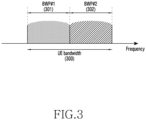
- FIG. 3 illustrates an example of a bandwidth part configuration in a wireless communication system according to an embodiment of the disclosure.
- BWP configuration related to a bandwidth which is allocated to a UE by a base station in a wireless communication system according to embodiments of the disclosure.
- FIG. 3 illustrates an example in which a UE bandwidth 300 is configured to include two bandwidth parts, that is, bandwidth part #1 (BWP#1) 301 and bandwidth part #2 (BWP#2) 302.
- a base station may configure one or multiple bandwidth parts for a UE.
- the base station may configure the following pieces of information with regard to each bandwidth part as given below.
- the bandwidth part configuration is not limited by the above-described information, and in addition to the above configuration information, various parameters related to the bandwidth part may be configured for the UE.
- the base station may transfer the configuration information to the UE through upper layer signaling (for example, radio resource control (RRC) signaling).
- RRC radio resource control
- One configured bandwidth part or at least one bandwidth part among multiple configured bandwidth parts may be activated.
- the base station may transfer whether or not to activate a configured bandwidth part to the UE semi-statically through RRC signaling.
- the base station may transfer whether or not to activate a configured bandwidth part to the UE dynamically through downlink control information (DCI).
- DCI downlink control information
- an initial bandwidth part (BWP) for initial access may be configured for the UE by the base station through a master information block (MIB). More specifically, the UE may receive configuration information regarding a control resource set (CORESET) and a search space which may be used to transmit a PDCCH for receiving system information (which may correspond to remaining system information (RMSI) or system information block 1 (SIB1) necessary for initial access through the MIB in the initial access step.
- the UE may receive configuration information with regard to a search space through the MIB.
- Each of the control resource set and the search space configured through the MIB may be considered identity (ID) 0.
- the base station may indicate, to the UE, to change (or switch or transition) the bandwidth parts by using a bandwidth part indicator field inside DCI.
- a bandwidth part indicator field inside DCI As an example, if the currently activated bandwidth part of the UE is bandwidth part #1 301 in FIG. 3 , the base station may indicate bandwidth part #2 302 with a bandwidth part indicator inside DCI. The UE may change the bandwidth part to bandwidth part #2 302 indicated by the bandwidth part indicator inside received DCI.
- the UE may complete a change to the new bandwidth part indicated by the bandwidth part change indicator at a timepoint not later than slot n+T BWP .
- the UE may transmit/receive a data channel scheduled by the corresponding DCI in the changed new bandwidth part. If the base station wants to schedule a data channel by using the new bandwidth part, the base station may determine time domain resource allocation regarding the data channel in consideration of the UE's bandwidth part change delay time (T BWP ).
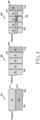
- the FDD system 410 may include dividing an uplink 413 and a downlink 411 by frequency and simultaneously performing bidirectional communication. Specifically, a given frequency band is divided, one part is used for the downlink 411 and the other part is used for the uplink 413.
- the FDD system 410 has less possibility that the interference occurs and can secure continuous and always-on bidirectional communication time because the frequency can be shared. However, since the frequency band is shared a bandwidth of each communication is reduced and the amount of data that can be transmitted at a time may be small, which may cause waste of resources when the data traffic amounts of the uplink and the downlink are asymmetric.
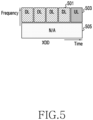
- a UE having more downlink traffic than uplink traffic overall by a configuration of the base station may receive an allocation of a resource ratio between the downlink and the uplink as 4:1 in the time domain.
- a UE which operates at a cell boundary and thus has insufficient uplink coverage may only receive an allocation of an uplink resource in a specific time period by the configuration of the base station.
- a UE which operates at a cell boundary and thus has insufficient uplink coverage but has a relatively large amount of downlink and uplink traffic amount may be allocated with more uplink resources in the time domain and more downlink resources in the frequency domain for the uplink coverage.
- an XDD system may configure an XDD-UL which can be operated as XDD for each base station cell or UE and use the same in an environment in which a system BW is fixed.
- a system BW may be fixed.
- sharing frequency e.g., citizens broadband radio service (CBRS)
- CBRS citizens broadband radio service
- a shared band e.g., citizens broadband radio service (CBRS)
- CBRS citizens broadband radio service
- a currently available system BW may be changed.
- the base station may configure, for the UE, an initial bandwidth part allocated to the UE or a bandwidth part used as XDD-UL, as an MIB in an initial access stage.
- the base station may indicate, based on DCI scheduling a PDSCH or a PUSCH, a changed XDD-UL period.
- the above-described information is a mere example, and is not limited thereto, and the base station may transmit, to the UE, information on a bandwidth or a bandwidth change indicator by using various types of signaling or parameters.
- a method for changing resource information configured as XDD-UL in an XDD system may include configuring, by the base station, information on one or more XDD-UL periods for the UE in advance.
- XDD-UL candidate periods are two, but the disclosure is not limited thereto, and the base station may configure information on multiple XDD-UL candidate periods (e.g., XDD-UL resource information) for the UE.
- the base station may configure the indicator for XDD via at least one of system information including cell-specific configuration information, UE-dedicated higher-layer signaling, a medium access control-control element (MAC-CE), or downlink control information (DCI).
- the disclosure is not limited thereto, and the base station may configure the indicator for XDD for the UE via various types of signaling.
- the information on the resource of the new XDD-UL period may be pre-configured for the UE, and thus the base station may transmit an XDD-UL indicator indicating one of one or more XDD-UL candidate periods to the UE.
- the UE may identify that the allocated XDD-UL period 622 is an unavailable frequency area 625.
- the UE may identify that the allocated XDD-UL period 622 is included in the available frequency area 625, and request a change to a new XDD-UL period 624 from the base station.
- a message for requesting the configuration for the new XDD-UL period from the base station by the UE may include information on the unavailable frequency band 625, an available frequency band, etc.
- an active BWP configured for the UE may be changed by the change of the XDD-UL period. For example, when the allocated XDD-UL period 622 is changed to a new XDD-UL period 624 due to a predetermined reason, the active BWP may be also changed to a period corresponding to the new XDD-UL period 624.
- the change of the active BWP may include deactivation of an active BWP and activation of the deactivated BWP.
- FIG. 7A is a flow chart illustrating an operation of a base station for signal transmission and reception based on a changed XDD period according to various embodiments of the disclosure.
- FIG. 7A illustrates an example of an operation in which XDD-UL is configured in a time domain to which DL is allocated in a TDD system, but is not limited thereto, and an operation in which XDD-DL is configured in a time domain to which UL is allocated may be also performed.
- the base station may configure, based on BWP information, information on XDD for the UE. Specifically, the base station may transmit BWP configuration information for configuring at least one BWP to the UE.
- the BWP configuration information may include mapping information of at least one BWP mapped to each XDD-UL period.
- the base station may configure, based on first BWP information, information on the entire bandwidth available to the UE for the UE, and may configure, based on different pieces of BWP information, information on multiple XDD-UL candidate periods to be allocated to the UE or an XDD-UL period to be allocated to the UE.
- the base station may identify whether the change of the XDD-UL period is necessary according to a request of the UE. For example, the UE may identify whether the change of the XDD-UL period is necessary, and request, based on the identification, the change of the XDD-UL period from the base station. The base station may receive a message about the change of the XDD-UL period of the UE, and identify, based on the received message, whether the change of the XDD-UL period is necessary.
- the UE may identify, based on various reasons including a case where an initially configured XDD-UL period is identified to be unavailable, a case where a channel quality in the configured XDD-UL period deteriorates, etc., whether the change of the XDD-UL period is necessary.
- the UE may request a change to a new XDD-UL period from the base station.
- the UE may identify that the allocated XDD-UL period is included in an unavailable frequency area, and may request a configuration for a new XDD-UL period from the base station.
- a message for requesting the configuration for the new XDD-UL period from the base station by the UE may include information such as an unavailable frequency band and an available frequency band.
- the UE may transmit information on used XDD-UL or information on a used bandwidth to the base station, and the base station may identify, based on the information, whether the change of the XDD-UL period is necessary.
- operation 730 may be performed.
- the base station may transmit the resource configuration information including XDD-UL to be changed to the UE.
- the base station may transmit information on an XDD-UL period to be changed to the UE.
- the information on the XDD-UL period to be changed, the information being transmitted by the base station may include at least one of resource information relating to the XDD-UL period to be changed or an indicator for the XDD-UL period to be changed.
- the base station may configure resource information of XDD for the UE via higher-layer (e.g., radio resource control (RRC)) signaling.
- RRC radio resource control
- the base station may configure information on a new XDD-UL period for the UE.
- the base station may configure, based on the above-described XDD-UL indicator resource or information of the changed XDD-UL, the changed XDD-UL period for the UE.
- the base station may indicate, based on information on BWP, the change of the XDD-UL period.
- the base station may configure, based on first BWP information, information on the entire bandwidth available to the UE, for the UE.
- the base station may configure, based on second BWP information, a period for a band used as XDD-UL.
- the base station may identify a period for a band used as the changed XDD-UL by using third BWP information.
- the base station may indicate the change of the XDD-UL period by transmitting the identified third BWP information or the bandwidth part indicator information to the UE.
- the base station may transmit BWP configuration information for configuring at least one BWP to the UE.
- the BWP configuration information may include mapping information of at least one BWP mapped to each XDD-UL period.
- the base station may configure an initial bandwidth part allocated to the UE and a bandwidth part used as XDD-UL, or bandwidth parts of the XDD-UL candidate periods used as XDD-UL as an MIB in an initial access stage.
- the base station may indicate, based on DCI scheduling a PDSCH or a PUSCH, the changed XDD-UL period.
- the above-described information is a mere example, the disclosure is not limited thereto, and the base station may transmit information on a bandwidth or a bandwidth changed indicator to the UE by using various types of signaling or parameters.
- an active BWP configured for the UE may be changed by the change of the XDD-UL period. For example, when the allocated XDD-UL period is changed to a new XDD-UL period for a predetermined reason, the active BWP may be also changed to a period corresponding to the new XDD-UL period.
- the change of the active BWP may include deactivation of an active BWP and activation of the deactivated BWP.
- the base station may receive, based on the changed XDD-UL configuration information configured for the UE, an uplink signal.
- the base station may transmit, based on the changed XDD-DL information configuration configured for the UE, a downlink signal.
- the base station may identify whether information on XDD-UL is received from the UE. In addition to a case where the XDD-UL fails to be received, in a case where whether the XDD-UL is received fails to be identified, or a case where retransmission is required, information on the changed XDD-UL may be retransmitted.
- the change of the XDD-UL period may all include addition of an XDD-UL period, a change in the size of the XDD-UL period, or replacement of the configured XDD-UL period with another period.
- the operations of FIG. 7A are not limited to the change of the XDD-UL period itself, and may be performed for addition of the XDD-UL period or the change in the size of the XDD-UL period.
- the base station may identify whether to add the XDD-UL period or change the size thereof.
- the base station may indicate the addition of XDD-UL or the change in the size of XDD-UL to the UE.
- the base station may identify to maintain the XDD-UL period and may indicate to maintain the XDD-UL period to the UE, based on additional criterion, in addition to the above-described criteria.
- FIG. 7B is a detailed flow chart illustrating an operation of a base station for signal transmission and reception based on a changed XDD period according to various embodiments of the disclosure.
- FIG. 7B illustrates an operation in which XDD-UL is configured in a time domain to which DL is allocated in a TDD system, but the disclosure is not limited thereto, and an operation in which XDD-DL is configured in a time domain to which UL is allocated may be also performed.
- the base station may receive UE capability information for XDD support.
- the base station may transmit and receive signals to and from multiple UEs, and only some of the multiple UEs may correspond to UEs supporting an XDD system.
- transmission or reception of information on XDD may cause unnecessary waste for the base station, and thus the base station may need to identify a UE supporting XDD by receiving UE capability information for XDD support.
- the base station may receive UE capability information for XDD support from the UE supporting XDD via higher-layer signaling, but the disclosure is not limited thereto, and the base station may receive the UE capability information via various types of signaling or parameters.
- the base station may transmit resource configuration information including information on an XDD-UL period to the UE.
- the base station may configure resource information of XDD for the UE via higher-layer (e.g., radio resource control (RRC)) signaling.
- the resource information of XDD configured by the base station may include resource information relating to at least one of a start symbol and an end symbol of an XDD-UL resource, a start symbol of the XDD-UL resource and the number of consecutive symbols used as XDD-UL from the start symbol, or an application time point of the XDD-UL resource.
- the resource configuration information configured for the UE by the base station may include information on multiple XDD-UL candidate periods.
- the base station may configure, based on BWP information, the information on XDD for the UE. Specifically, the base station may transmit BWP configuration information for configuring at least one bandwidth part to the UE.
- the BWP configuration information may include mapping information of at least one BWP mapped to each XDD-UL period.
- the base station may configure, based on first BWP information, information on the entire bandwidth available to the UE for the UE, and may configure, based on different pieces of BWP information, information on multiple XDD-UL candidate periods to be allocated to the UE or an XDD-UL period to be allocated to the UE.
- the base station may configure an initial bandwidth part allocated to the UE or a bandwidth part used as XDD-UL, as an MIB in an initial access stage.
- the operation of configuring or changing, based on the BWP information, the bandwidth is described in FIG. 3 in detail.
- the above-described information is a mere example, the disclosure is not limited thereto, and the base station may transmit information on the bandwidth or a bandwidth change indicator to the UE by using various types of signaling or parameters.
- each XDD-UL period is not limited to be indicated by a separate BWP, and all BWP information configured by the base station may also commonly include information on the same XDD-UL period.
- the base station may indicate to change the XDD-UL period regardless of the operation for a frequency change.
- the base station may identify whether a change in the location of an XDD-UL resource is necessary. Specifically, the base station may identify that a frequency band used by the UE is unavailable so as to identify whether a change of an XDD-UL period is necessary. According to an embodiment, the base station may identify, based on information on the frequency band, received from the UE, or a result identified by the base station itself, that the frequency band is unavailable. In addition, the base station may also identify whether the change of the XDD-UL period is necessary according to a change of an active BWP of the UE.
- the resource information of XDD configured by the base station may include resource information relating to at least one of a start symbol and an end symbol of the changed XDD-UL resource, a start symbol of the changed XDD-UL resource and the number of consecutive symbols used as XDD-UL from the start symbol, or an application time point of the changed XDD-UL resource.
- the base station may configure an indicator for XDD via at least one of system information including cell-specific configuration information, UE-dedicated higher-layer signaling, a medium access control-control element (MAC), or downlink control information (DCI).
- the disclosure is not limited thereto, and the base station may configure the indicator for XDD for the UE via various types of signaling.
- the change of the XDD-UL period may all include addition of an XDD-UL period, a change in the size of the XDD-UL period, or replacement of the configured XDD-UL period with another period.
- the operations of FIG. 7B are not limited to the change of the XDD-UL period itself, and may be performed for addition of the XDD-UL period or the change in the size of the XDD-UL period.
- the base station may identify whether to add the XDD-UL period or change the size thereof.
- the base station may indicate the addition of XDD-UL or the change in the size of XDD-UL to the UE.
- the base station may identify to maintain the XDD-UL period and may indicate to maintain the XDD-UL period to the UE, based on additional criterion, in addition to the above-described criteria.
- the base station may configure an initial bandwidth part allocated to the UE or a bandwidth part used as XDD-UL, as an MIB in an initial access stage.
- the operation of configuring or changing, based on the BWP information, the bandwidth is described in FIG. 3 in detail.
- the above-described information is a mere example, the disclosure is not limited thereto, and the base station may transmit information on the bandwidth or a bandwidth change indicator to the UE by using various types of signaling or parameters.
- each XDD-UL period is not limited to be indicated by a separate BWP, and all BWP information configured by the base station may also commonly include information on the same XDD-UL period.
- the base station may indicate to change the XDD-UL period regardless of the operation for a frequency change.
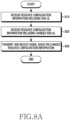
- the UE may receive a configuration of information on a new XDD-UL period from the base station.
- the base station may configure, based on the above-described XDD-UL indicator resource or information of the changed XDD-UL, the changed XDD-UL period for the UE.
- the base station when the base station configures multiple XDD-UL candidate periods for the UE in advance, information on the resource of the new XDD-UL period may be pre-configured for the UE, and thus the base station may transmit an XDD-UL indicator indicating one of one or more XDD-UL candidate periods to the UE.
- the base station may indicate, based on information on BWP, the change of the XDD-UL period.
- the UE may receive, based on first BWP information, a configuration information on the entire bandwidth available to the UE, from the UE.
- the UE may receive, based on second BWP information, a configuration of a period for a band used as XDD-UL.
- the base station may identify a period for a band used as the changed XDD-UL by using third BWP information.
- the base station may indicate the change of the XDD-UL period by transmitting the identified third BWP information or the bandwidth part indicator information to the UE.
- an active BWP configured for the UE may be changed by the change of the XDD-UL period. For example, when the allocated XDD-UL period is changed to a new XDD-UL period for a predetermined reason, the active BWP may be also changed to a period corresponding to the new XDD-UL period.
- the change of the active BWP may include deactivation of an active BWP and activation of the deactivated BWP.
- the UE may transmit, based on the changed XDD-UL configuration information configured by the base station, an uplink signal.
- an uplink signal For example, this is a mere example, and when a change of an XDD-DL period is made, the UE may receive, based on the changed XDD-DL configuration information configured from the base station, a downlink signal.
- the base station may identify whether information on XDD-UL is received from the UE. In addition to a case where the XDD-UL fails to be received, in a case where whether the XDD-UL is received fails to be identified, or a case where retransmission is required, information on the changed XDD-UL may be retransmitted.
- the change of the XDD-UL period may all include addition of an XDD-UL period, a change in the size of the XDD-UL period, or replacement of the configured XDD-UL period with another period.
- the operations of FIG. 8A are not limited to the change of the XDD-UL period itself, and may be performed for addition of the XDD-UL period or the change in the size of the XDD-UL period.
- the base station may identify whether to add the XDD-UL period or change the size thereof.
- the base station may indicate the addition of XDD-UL or the change in the size of XDD-UL to the UE.
- the base station may identify to maintain the XDD-UL period and may indicate to maintain the XDD-UL period to the UE, based on additional criterion, in addition to the above-described criteria.
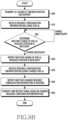
- FIG. 8B is a detailed flow chart illustrating an operation of a UE for signal transmission and reception based on a changed XDD period according to various embodiments of the disclosure.
- FIG. 8B illustrates an operation in which XDD-UL is configured in a time domain to which DL is allocated in a TDD system, but the disclosure is not limited thereto, and an operation in which XDD-DL is configured in a time domain to which UL is allocated may be also performed.
- the UE may transmit UE capability information for XDD support to the base station.
- the base station may transmit and receive signals to and from multiple UEs, and only some of the multiple UEs may correspond to UEs supporting an XDD system.
- transmission or reception of information on XDD may cause unnecessary waste for the base station, and thus the base station may need to identify a UE supporting XDD by receiving UE capability information for XDD support.
- the UE supporting XDD may transmit UE capability information for XDD support to the base station via higher-layer signaling, but the disclosure is not limited thereto, and the UE may transmit the UE capability information via various types of signaling or parameters.
- the UE may receive a configuration of an initial bandwidth part allocated from the base station or a bandwidth part used as XDD-UL, as an MIB in an initial access stage.
- the operation of configuring or changing, based on the BWP information, the bandwidth is described in FIG. 3 in detail.
- the above-described information is a mere example, the disclosure is not limited thereto, and the UE may receive information on the bandwidth or a bandwidth change indicator from the base station by using various types of signaling or parameters.
- each XDD-UL period is not limited to be indicated by a separate BWP, and all BWP information configured by the base station may also commonly include information on the same XDD-UL period.
- the base station may indicate to change the XDD-UL period regardless of the operation for a frequency change.
- the UE may identify whether a change in the location of an XDD-UL resource is necessary. Specifically, the UE may identify whether the change of the XDD-UL period is necessary, and request, based on the identification, the change of the XDD-UL period from the base station. The base station may receive a message for the change of the XDD-UL period of the UE, and identify, based on the received message, whether the change of the XDD-UL period is necessary.
- the UE may identify, based on various reasons including a case where an initially configured XDD-UL period is identified to be unavailable, a case where a channel quality in the configured XDD-UL period deteriorates, etc., whether the change of the XDD-UL period is necessary.
- the UE may notify the base station of a change of an active BWP. The base station may identify whether the change of the XDD-UL period is necessary according to the change of the active BWP.
- the base station may identify whether the change of the XDD-UL period is necessary according to a trigger of a predetermined event (a change of a BWP configuration of the UE, a change of an available frequency band of the UE, a case where a channel quality is equal to or less than a threshold value, etc.).
- a trigger of a predetermined event a change of a BWP configuration of the UE, a change of an available frequency band of the UE, a case where a channel quality is equal to or less than a threshold value, etc.
- the UE may report whether the change in the location of the XDD-UL resource is necessary to the base station. Specifically, when pre-configured criteria related to the above-described reasons are satisfied, the UE may request a change to a new XDD-UL period from the base station. The UE may identify that the allocated XDD-UL period is included in an unavailable frequency area, and may request a configuration for a new XDD-UL period from the base station. A message for requesting the configuration for the new XDD-UL period from the base station by the UE may include information such as an unavailable frequency band and an available frequency band. According to an embodiment, the UE may transmit information on used XDD-UL or information on a used bandwidth to the base station, and the base station may identify, based on the information, whether the change of the XDD-UL period is necessary.
- the resource information of XDD configured by the base station may include resource information relating to at least one of a start symbol and an end symbol of the changed XDD-UL resource, a start symbol of the changed XDD-UL resource and the number of consecutive symbols used as XDD-UL from the start symbol, or an application time point of the changed XDD-UL resource.
- the base station may configure an indicator for XDD via at least one of system information including cell-specific configuration information, UE-dedicated higher-layer signaling, a medium access control-control element (MAC), or downlink control information (DCI).
- the disclosure is not limited thereto, and the UE may receive a configuration of the indicator for XDD from the base station via various types of signaling
- the UE may receive a configuration of information on a new XDD-UL period from the base station.
- the base station may configure, based on the above-described XDD-UL indicator resource or information of the changed XDD-UL, the changed XDD-UL period for the UE.
- the base station when the base station configures multiple XDD-UL candidate periods for the UE in advance, information on the resource of the new XDD-UL period may be pre-configured for the UE, and thus the UE may receive an XDD-UL indicator indicating one of one or more XDD-UL candidate periods from the base station.
- the base station may indicate, based on information on BWP, the change of the XDD-UL period.
- the UE may receive, based on first BWP information, a configuration of information on the entire bandwidth available to the UE, from the base station.
- the UE may receive, based on second BWP information, a configuration of a period for a band used as XDD-UL.
- the base station may identify a period for a band used as the changed XDD-UL by using third BWP information.
- the base station may indicate the change of the XDD-UL period by transmitting the identified third BWP information or the bandwidth part indicator information to the UE.
- the base station when the base station configures multiple XDD-UL candidate periods for the UE in advance, the information on the resource of the new XDD-UL period may be configured for the UE in advance, and thus when the change of the XDD-UL period is necessary (e.g., when the UE requests the change of the XDD-UL period), the base station may identify a period for a band used as the changed XDD-UL among the XDD-UL candidate periods. When the change of the XDD-UL period is necessary, the base station may indicate the change of the XDD-UL period by transmitting indicator information indicating the period for the identified XDD-UL band to the UE.
- the change of the XDD-UL period e.g., when the UE requests the change of the XDD-UL period
- the base station may identify a period for a band used as the changed XDD-UL among the XDD-UL candidate periods.
- the base station may indicate the change of the XDD-UL period by transmitting
- respective operations illustrated in the drawing are not necessarily be performed according to the illustrated sequence, and the sequence of performing the respective operations may be changed or the respective operations may be omitted.
- the communication unit 1010 transmits and receives signals as described above. Accordingly, all or a part of the communication unit 1010 may be referred to as a "transmitter”, a “receiver”, or a “transceiver”. Furthermore, in order to support different radio connection technologies, the communication unit 1010 may include multiple communication modules. In addition, in order to process signals of different frequency bands, the communication unit 1010 may include different communication modules. For example, the different radio access technologies may include a wireless LAN (e.g., IEEE 802.1x), a cellular network (e.g., LTE or NR), etc.
- a wireless LAN e.g., IEEE 802.1x
- a cellular network e.g., LTE or NR
- the different frequency bands may include super high frequency (SHF) (e.g., 2.5 GHz or 5 GHz) band and millimeter wave (mmWave) (e.g., 60 GHz) band.
- SHF super high frequency
- mmWave millimeter wave
- the communication unit 1010 may use the same radio access technology on different frequency bands (e.g., an unlicensed band for licensed assisted access (LAA) or NR-unlicensed (U) and citizens broadband radio service (CBRS) (e.g., 3.5 GHz)).
- LAA licensed assisted access
- U NR-unlicensed
- CBRS citizens broadband radio service
- the storage unit 1020 stores data such as a basic program, an application program, and configuration information for an operation of the UE 120.
- the storage unit 1020 may be configured by a volatile memory, a nonvolatile memory, or a combination of a volatile memory and a nonvolatile memory.
- the storage unit 1020 stores data such as a basic program, an application program, and configuration information for an operation of the UE 120.
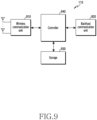
- the controller 1030 controls overall operations of the UE 120.
- the controller 1030 transmits and receives a signal through the communication unit 1010.
- the controller 1030 records and reads data in and from the storage 1020.
- the controller 1030 may include at least one processor.
- the controller 1030 may include a communication processor (CP) for performing control for communication and an application processor (AP) for controlling an upper layer such as an application program.
- the controller 1030 may be configured to perform a function of dynamic spectrum sharing.
- the controller 1030 may be configured such that the UE 120 dynamically uses an LTE cell and an NR cell in an EN-DC environment.
- the controller 1030 may be configured such that the UE 120 dynamically uses cells by two nodes in an MR-DC environment as well as the EN-DC environment. In addition, the controller 1030 may control the UE 120 to perform the above-described operations according to various embodiments.
- the method may further include transmitting bandwidth part (BWP) configuration information for configuring at least one BWP to the terminal, and the resource configuration information may include mapping information of the at least one BWP and at least one XDD-UL period including the first XDD-UL period, the second XDD-UL period, or at least one of the multiple candidate XDD-UL periods.
- BWP bandwidth part
- the determining of whether the change of the first XDD-UL period is necessary may include determining, based on whether the at least one BWP is activated, whether a change of the first XDD-UL period is necessary.
- the determining of whether the change of the first XDD-UL period is necessary based on whether the at least one BWP is activated may include transmitting, to the terminal, a message indicating to deactivate a first BWP configured for the terminal and activate a second BWP, and identifying a change of a first XDD-UL period mapped to the first BWP to a second XDD-UL period mapped to the second BWP.
- the at least one processor may be configured to determine whether a change of the first XDD-UL period is necessary based on a request for a change of the first XDD-UL period, the request being received from the terminal, wherein the request for the change of the first XDD-UL period may include information related to an XDD-UL period preferred by the terminal.
- the at least one processor may be further configured to transmit bandwidth part (BWP) configuration information for configuring at least one BWP to the terminal, wherein the resource configuration information may include mapping information of the at least one BWP and at least one XDD-UL period including the first XDD-UL period, the second XDD-UL period, or at least one of the multiple candidate XDD-UL periods.
- BWP bandwidth part
- the at least one processor may be configured to determine, based on whether the at least one BWP is activated, whether the change of the first XDD-UL period is necessary.
- the at least one processor may be further configured to receive terminal capability information for XDD system support from the terminal, and identify, based on the terminal capability information, whether the terminal supports an XDD system.
- These programs may be stored in non-volatile memories including a random access memory and a flash memory, a read only memory (ROM), an electrically erasable programmable read only memory (EEPROM), a magnetic disc storage device, a compact disc-ROM (CD-ROM), digital versatile discs (DVDs), or other type optical storage devices, or a magnetic cassette.
- ROM read only memory
- EEPROM electrically erasable programmable read only memory
- CD-ROM compact disc-ROM
- DVDs digital versatile discs
- any combination of some or all of them may form a memory in which the program is stored.
- a plurality of such memories may be included in the electronic device.
- an element included in the disclosure is expressed in the singular or the plural according to presented detailed embodiments.
- the singular form or plural form is selected appropriately to the presented situation for the convenience of description, and the disclosure is not limited by elements expressed in the singular or the plural. Therefore, either an element expressed in the plural may also include a single element or an element expressed in the singular may also include multiple elements.
Landscapes
- Engineering & Computer Science (AREA)
- Signal Processing (AREA)
- Computer Networks & Wireless Communication (AREA)
- Databases & Information Systems (AREA)
- Mobile Radio Communication Systems (AREA)
- Bidirectional Digital Transmission (AREA)
Applications Claiming Priority (3)
| Application Number | Priority Date | Filing Date | Title |
|---|---|---|---|
| KR20220078482 | 2022-06-27 | ||
| KR1020220098501A KR20240001643A (ko) | 2022-06-27 | 2022-08-08 | 무선 통신 시스템에서 XDD(cross division duplex)에 기반하여 신호를 송수신하기 위한 장치 및 방법 |
| PCT/KR2023/095024 WO2024005621A1 (fr) | 2022-06-27 | 2023-06-26 | Dispositif et procédé d'émission/réception de signal sur la base d'un duplexage par répartition croisée (xdd) dans un système de communication sans fil |
Publications (2)
| Publication Number | Publication Date |
|---|---|
| EP4539384A1 true EP4539384A1 (fr) | 2025-04-16 |
| EP4539384A4 EP4539384A4 (fr) | 2025-10-15 |
Family
ID=89381173
Family Applications (1)
| Application Number | Title | Priority Date | Filing Date |
|---|---|---|---|
| EP23831979.2A Pending EP4539384A4 (fr) | 2022-06-27 | 2023-06-26 | Dispositif et procédé d'émission/réception de signal sur la base d'un duplexage par répartition croisée (xdd) dans un système de communication sans fil |
Country Status (3)
| Country | Link |
|---|---|
| US (1) | US20250150246A1 (fr) |
| EP (1) | EP4539384A4 (fr) |
| WO (1) | WO2024005621A1 (fr) |
Family Cites Families (7)
| Publication number | Priority date | Publication date | Assignee | Title |
|---|---|---|---|---|
| WO2017020289A1 (fr) * | 2015-08-06 | 2017-02-09 | Qualcomm Incorporated | Techniques de duplexage souple |
| WO2018120064A1 (fr) * | 2016-12-30 | 2018-07-05 | 富士通株式会社 | Appareil de transmission, procédé pouvant supprimer des informations d'interférence et système de communication |
| CN108811120B (zh) * | 2017-05-05 | 2023-05-02 | 中兴通讯股份有限公司 | 数据传输方法及装置 |
| KR102394225B1 (ko) * | 2017-07-25 | 2022-05-04 | 삼성전자주식회사 | 무선 통신 시스템에서 대역폭을 결정하기 위한 장치 및 방법 |
| KR102865242B1 (ko) * | 2019-10-04 | 2025-09-25 | 삼성전자주식회사 | 무선 통신 시스템에서 신호를 송수신하는 방법 및 장치 |
| KR102931642B1 (ko) * | 2020-07-14 | 2026-02-26 | 삼성전자주식회사 | 무선 통신 시스템에서 상향링크-하향링크 설정 변경 방법 및 장치 |
| US12477371B2 (en) * | 2020-07-14 | 2025-11-18 | Samsung Electronics Co., Ltd. | Method and device for controlling measuring and reporting of adjacent channel interference in wireless communication system |
-
2023
- 2023-06-26 EP EP23831979.2A patent/EP4539384A4/fr active Pending
- 2023-06-26 WO PCT/KR2023/095024 patent/WO2024005621A1/fr not_active Ceased
-
2024
- 2024-12-26 US US19/002,187 patent/US20250150246A1/en active Pending
Also Published As
| Publication number | Publication date |
|---|---|
| US20250150246A1 (en) | 2025-05-08 |
| WO2024005621A1 (fr) | 2024-01-04 |
| EP4539384A4 (fr) | 2025-10-15 |
Similar Documents
| Publication | Publication Date | Title |
|---|---|---|
| US11863364B2 (en) | Method and apparatus for performing initial access in wireless communication system | |
| US11818703B2 (en) | Method and apparatus for designing broadcast channel for NR in wireless communication system | |
| CN112740749B (zh) | 用于传输数据的方法和装置 | |
| CN116018865A (zh) | 无线通信系统中用于分配频率资源的方法和装置 | |
| US12022447B2 (en) | Method and device for transmission/reception based on time unit group in wireless communication system | |
| US20190334687A1 (en) | Method and apparatus for detecting signals of a downlink control channel in a wireless communication system | |
| CN116195208A (zh) | 用于控制无线通信系统中相邻信道干扰的测量和报告的方法和设备 | |
| EP4373186A2 (fr) | Procédé et dispositif d'émission ou de réception de signaux sans fil basés sur la configuration de ressources de fréquence dans un système de communication sans fil | |
| US20200367289A1 (en) | Method and apparatus for transmitting or receiving data through uplink carrier in wireless communication system | |
| JP7516632B2 (ja) | 無線通信システムで基準信号の送受信方法及び装置 | |
| US20230276249A1 (en) | Apparatuses and methods for flexible spectrum | |
| US12250676B2 (en) | Method and device for transmitting uplink channel for multiple transmission reception points in wireless communication system | |
| US20230275738A1 (en) | Apparatuses and methods for flexible spectrum | |
| EP4415452A1 (fr) | Procédé et dispositif pour effectuer une transmission/réception en liaison montante dans un système de communication sans fil | |
| EP4456441A1 (fr) | Procédé et appareil de transmission et de réception de signal sans fil dans un système de communication sans fil | |
| EP4131796A1 (fr) | Procédé et appareil de transmission ou de réception en liaison montante d'après un paramètre spécial dans un système de communication sans fil | |
| EP4383584A1 (fr) | Procédé et dispositif de transmission et de réception d'informations d'état de canal dans un système de communication sans fil | |
| US20250294584A1 (en) | Method and device for sidelink transmission or reception in wireless communication system | |
| EP4539384A1 (fr) | Dispositif et procédé d'émission/réception de signal sur la base d'un duplexage par répartition croisée (xdd) dans un système de communication sans fil | |
| KR20240001643A (ko) | 무선 통신 시스템에서 XDD(cross division duplex)에 기반하여 신호를 송수신하기 위한 장치 및 방법 | |
| EP4580078A1 (fr) | Procédé et dispositif de configuration de tci unifiée dans un système de communication utilisant de multiples points de transmission et de réception | |
| KR20240161349A (ko) | 통신 시스템에서 다중 접속 기술 공존 방법 및 장치 | |
| KR20260014260A (ko) | 이기종 무선 접속 기술로 구성되는 무선 통신 시스템에서 신호를 송수신하는 방법 및 장치 | |
| CN120569936A (zh) | 用于支持多种复用方案的无线通信系统中的资源分配的方法和设备 |
Legal Events
| Date | Code | Title | Description |
|---|---|---|---|
| STAA | Information on the status of an ep patent application or granted ep patent |
Free format text: STATUS: THE INTERNATIONAL PUBLICATION HAS BEEN MADE |
|
| PUAI | Public reference made under article 153(3) epc to a published international application that has entered the european phase |
Free format text: ORIGINAL CODE: 0009012 |
|
| STAA | Information on the status of an ep patent application or granted ep patent |
Free format text: STATUS: REQUEST FOR EXAMINATION WAS MADE |
|
| 17P | Request for examination filed |
Effective date: 20250113 |
|
| AK | Designated contracting states |
Kind code of ref document: A1 Designated state(s): AL AT BE BG CH CY CZ DE DK EE ES FI FR GB GR HR HU IE IS IT LI LT LU LV MC ME MK MT NL NO PL PT RO RS SE SI SK SM TR |
|
| DAV | Request for validation of the european patent (deleted) | ||
| DAX | Request for extension of the european patent (deleted) | ||
| A4 | Supplementary search report drawn up and despatched |
Effective date: 20250916 |
|
| RIC1 | Information provided on ipc code assigned before grant |
Ipc: H04L 5/14 20060101AFI20250910BHEP Ipc: H04L 5/00 20060101ALI20250910BHEP Ipc: H04W 8/24 20090101ALI20250910BHEP Ipc: H04W 72/23 20230101ALI20250910BHEP Ipc: H04W 72/21 20230101ALI20250910BHEP Ipc: H04W 72/04 20230101ALI20250910BHEP |