EP4545645A1 - Verfahren zur herstellung einer wässerigen lösung enthaltend glycolsäure - Google Patents
Verfahren zur herstellung einer wässerigen lösung enthaltend glycolsäure Download PDFInfo
- Publication number
- EP4545645A1 EP4545645A1 EP23206537.5A EP23206537A EP4545645A1 EP 4545645 A1 EP4545645 A1 EP 4545645A1 EP 23206537 A EP23206537 A EP 23206537A EP 4545645 A1 EP4545645 A1 EP 4545645A1
- Authority
- EP
- European Patent Office
- Prior art keywords
- seq
- nad
- acid sequence
- amino acid
- nucleic acid
- Prior art date
- Legal status (The legal status is an assumption and is not a legal conclusion. Google has not performed a legal analysis and makes no representation as to the accuracy of the status listed.)
- Withdrawn
Links
Images
Classifications
-
- C—CHEMISTRY; METALLURGY
- C12—BIOCHEMISTRY; BEER; SPIRITS; WINE; VINEGAR; MICROBIOLOGY; ENZYMOLOGY; MUTATION OR GENETIC ENGINEERING
- C12P—FERMENTATION OR ENZYME-USING PROCESSES TO SYNTHESISE A DESIRED CHEMICAL COMPOUND OR COMPOSITION OR TO SEPARATE OPTICAL ISOMERS FROM A RACEMIC MIXTURE
- C12P7/00—Preparation of oxygen-containing organic compounds
- C12P7/40—Preparation of oxygen-containing organic compounds containing a carboxyl group including Peroxycarboxylic acids
- C12P7/42—Hydroxy-carboxylic acids
-
- C—CHEMISTRY; METALLURGY
- C12—BIOCHEMISTRY; BEER; SPIRITS; WINE; VINEGAR; MICROBIOLOGY; ENZYMOLOGY; MUTATION OR GENETIC ENGINEERING
- C12N—MICROORGANISMS OR ENZYMES; COMPOSITIONS THEREOF; PROPAGATING, PRESERVING, OR MAINTAINING MICROORGANISMS; MUTATION OR GENETIC ENGINEERING; CULTURE MEDIA
- C12N15/00—Mutation or genetic engineering; DNA or RNA concerning genetic engineering, vectors, e.g. plasmids, or their isolation, preparation or purification; Use of hosts therefor
- C12N15/09—Recombinant DNA-technology
- C12N15/11—DNA or RNA fragments; Modified forms thereof; Non-coding nucleic acids having a biological activity
- C12N15/52—Genes encoding for enzymes or proenzymes
-
- C—CHEMISTRY; METALLURGY
- C12—BIOCHEMISTRY; BEER; SPIRITS; WINE; VINEGAR; MICROBIOLOGY; ENZYMOLOGY; MUTATION OR GENETIC ENGINEERING
- C12N—MICROORGANISMS OR ENZYMES; COMPOSITIONS THEREOF; PROPAGATING, PRESERVING, OR MAINTAINING MICROORGANISMS; MUTATION OR GENETIC ENGINEERING; CULTURE MEDIA
- C12N9/00—Enzymes; Proenzymes; Compositions thereof; Processes for preparing, activating, inhibiting, separating or purifying enzymes
- C12N9/0004—Oxidoreductases (1.)
- C12N9/0006—Oxidoreductases (1.) acting on CH-OH groups as donors (1.1)
-
- C—CHEMISTRY; METALLURGY
- C12—BIOCHEMISTRY; BEER; SPIRITS; WINE; VINEGAR; MICROBIOLOGY; ENZYMOLOGY; MUTATION OR GENETIC ENGINEERING
- C12P—FERMENTATION OR ENZYME-USING PROCESSES TO SYNTHESISE A DESIRED CHEMICAL COMPOUND OR COMPOSITION OR TO SEPARATE OPTICAL ISOMERS FROM A RACEMIC MIXTURE
- C12P7/00—Preparation of oxygen-containing organic compounds
- C12P7/02—Preparation of oxygen-containing organic compounds containing a hydroxy group
-
- C—CHEMISTRY; METALLURGY
- C12—BIOCHEMISTRY; BEER; SPIRITS; WINE; VINEGAR; MICROBIOLOGY; ENZYMOLOGY; MUTATION OR GENETIC ENGINEERING
- C12P—FERMENTATION OR ENZYME-USING PROCESSES TO SYNTHESISE A DESIRED CHEMICAL COMPOUND OR COMPOSITION OR TO SEPARATE OPTICAL ISOMERS FROM A RACEMIC MIXTURE
- C12P7/00—Preparation of oxygen-containing organic compounds
- C12P7/24—Preparation of oxygen-containing organic compounds containing a carbonyl group
-
- C—CHEMISTRY; METALLURGY
- C12—BIOCHEMISTRY; BEER; SPIRITS; WINE; VINEGAR; MICROBIOLOGY; ENZYMOLOGY; MUTATION OR GENETIC ENGINEERING
- C12Y—ENZYMES
- C12Y101/00—Oxidoreductases acting on the CH-OH group of donors (1.1)
- C12Y101/01—Oxidoreductases acting on the CH-OH group of donors (1.1) with NAD+ or NADP+ as acceptor (1.1.1)
Definitions
- the invention relates to a process for producing an aqueous solution containing glycolic acid.
- glycolic acid also occurs naturally, for example in cane and beet sugar, its synthesis is currently largely based on fossil fuels due to the low concentrations of the substance in these renewable raw materials. Since the glycolic acid synthesized in this way often still contains residues of formaldehyde, which is particularly problematic when used in cosmetic products (e.g., in Skin peels (Sharad, 2013 )) is considered problematic, there is a great need for alternative synthesis methods.
- Chemo-enzymatic methods for glycolic acid production involve the conversion of glycolonitrile, synthesized from formaldehyde and hydrogen cyanide, to glycolic acid using nitrilases (Panova et al., 2008; Ben-Bassat et al., 2008). This process cannot be considered sustainable due to the toxic, energy-intensive chemicals used, which are generally derived from fossil sources.
- One chemical process for producing glycolic acid using a renewable feedstock is the conversion of glyoxal derived from bio-oil to glycolic acid in the presence of zeolite as a catalyst (Dapsens et al., 2014).
- Bio-oil is produced by pyrolysis of biomass—an energy-intensive process that destroys the original composition of the biomass, leaving the synthetic potential of the feedstock unused.
- Glycolic acid (or the corresponding alkali glycolate) can also be formed by reacting chloroacetic acid (produced by chlorination of acetic acid) with alkali, but this produces large amounts of alkali chlorides as a by-product.
- glycolic acid purified by electrodialysis still contains traces of chloroacetic acid and dichloroacetic acid (a by-product of chlorination) ( EP 0784047 B1 ).
- glycolic acid can also be obtained by oxidation of ethylene glycol (ethane-1,2-diol), the simplest dihydric alcohol.
- the oxidation can be achieved, for example, by oxygen in the presence of the bimetallic catalyst AuPt (supported on CeO2 ) (Tschirner et al., 2022).
- Ethylene glycol is produced by the hydrolysis of ethylene oxide (at 200 °C), which in turn is obtained by the oxidation of ethylene (obtained from fossil raw materials).
- Certain microorganisms can ferment biomass to ethanol, which can be dehydrated to ethylene in the presence of phosphoric acid or aluminum oxide. This ethylene can then undergo the previously described steps (oxidation to ethylene oxide and subsequent hydrolysis) to produce ethylene glycol (Wong et al., 2023).
- ethylene glycol can also be obtained by pyrolysis of sugars and the subsequent catalytic hydrogenation of the C 1 -C 3 oxygenates produced by pyrolysis, such as glycolaldehyde, glyoxal, acetol (hydroxyacetone) or pyruvaldehyde (methylglyoxal) ( US 10077222 B2 ; Tullo, 2017).
- the oxidation of ethylene glycol to glycolic acid via the intermediate glycolaldehyde can be accomplished biotechnologically.
- microorganisms that catalyze the oxidation are Pichia naganishii AKU 4267 and Rhodotorula sp. 3Pr-126, which convert 100 g/l of ethylene glycol to 105 g/l and 110 g/l of glycolic acid, respectively, in 120 h (Kataoka et al., 2001).
- yeast Yarrowia lipolytica IMUFRJ 50682 Another microorganism capable of oxidizing ethylene glycol to glycolic acid is the yeast Yarrowia lipolytica IMUFRJ 50682, which is already known to produce various hydrolases for the depolymerization of poly(ethylene terephthalate). Resting cells of Y. lipolytica were able to oxidize 548.6 mM ethylene glycol (34.1 g/L; 1000 mM starting concentration) to 429.5 mM glycolic acid (32.7 g/L) within 72 h in a bioreactor, corresponding to a yield of 74% (based on the amount of substrate converted) (Carniel et al., 2023). The enzymes involved are described by Carniel et al. as similar to the membrane-bound dehydrogenases of acetic acid bacteria ( Gluconobacter, Acetobacter ).
- Zhang et al. (2016) and Hua et al. (2019) describe the conversion of ethylene glycol to glycolic acid by the industrially widely used acetic acid bacterium Gluconobacter oxydans.
- immobilized G. oxydans cells up to 66.9 g/l of glycolic acid (880 mM) can be produced from ethylene glycol in 72 h in an open bioreactor with O2 gassing (Hua et al., 2019).
- Zhang et al. were even able to produce 113.8 g/l of glycolic acid (1.50 M; molar yield 92.9%) after 45 h using an engineered G. oxydans strain overexpressing a membrane-bound alcohol dehydrogenase (mADH) (Zhang et al., 2016).
- mADH membrane-bound alcohol dehydrogenase
- E. coli is able to oxidize ethylene glycol to glycolic acid when a mutant of propanediol oxidoreductase (encoded by fucO ) and glycolaldehyde dehydrogenase (encoded by aldA ) are overexpressed (Boronat et al., 1983; Pandit et al., 2021).
- the first oxidation step (ethylene glycol to glycolaldehyde) can also be accomplished by a cytosolic medium-chain alcohol dehydrogenase (Gox0313) from Gluconobacter oxydans DSM2003.
- This enzyme can convert 500 mM ethylene glycol to 484.2 mM glycolaldehyde in 14 h (30 °C and pH 8.5) in vitro , with the regeneration of the cofactor NAD + occurring with an NADH oxidase (NOX-2) from Lactobacillus brevis ATCC367.
- NOX-2 NADH oxidase
- the second oxidation step (glycolaldehyde to glycolic acid) is not catalyzed by Gox0313 (Zhang et al., 2015).
- an enzymatic process for the oxidation of ethylene glycol to glycolic acid using two microbial oxidases is postulated.
- the first step is catalyzed by enzymes from the class of alcohol oxidases (EC 1.1.3.13) (e.g., from Candida sp. or Pichia pastoris ) or glycerol oxidases (e.g., from Aspergillus japonicus ) to form hydrogen peroxide ( H2O2 ) .
- the final oxidation can, in turn, be carried out by an aldehyde oxidase from Burkholderia sp.
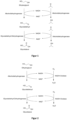
- the object of the invention for producing an aqueous solution of glycolic acid is achieved by oxidizing ethylene glycol, which is dissolved in an aqueous solution, to glycolaldehyde by treatment with a first NAD(P)-dependent oxidoreductase and NAD(P) + in vitro and oxidizing this with a further NAD(P)-dependent oxidoreductase and NAD(P) + in vitro to glycolic acid and reoxidizing the reduced NAD(P)H produced by these oxidations by means of an NAD(P)H oxidase or an alcohol dehydrogenase and thus regenerating it.
- the reaction is therefore not carried out fermentatively.
- the enzymes are therefore not contained in the bacteria, but rather are present as such in the aqueous solution, i.e., in vitro.
- the first oxidoreductase is an alcohol dehydrogenase and/or the further oxidoreductase is an aldehyde dehydrogenase, in particular a glycolaldehyde dehydrogenase.
- an alcohol dehydrogenase is preferably used using a ketone or aldehyde, whereby NAD(P) + and a secondary or primary alcohol are formed in vitro .
- acetone which is produced from 2-propanol by enzymatic cofactor regeneration during an enzymatically catalyzed reduction (see EP 2812439 B1 for examples), can be converted back to 2-propanol. This can then be recycled to the reduction reaction, forming a closed cycle that renders the heterogeneous catalytic gas-phase hydrogenation of acetone to 2-propanol (Al-Rabiah et al., 2022) obsolete.
- NAD(P)H For the oxidation of the cofactor NAD(P)H, it is best to use an NAD(P)H oxidase using compressed air enriched with oxygen or pure oxygen, which forms NAD(P) + and water in vitro .
- overpressure air or oxygen
- overpressure means a pressure greater than ambient pressure, preferably more than 1.1 bar, even more preferably more than 1.2 bar, even more preferably more than 1.5 bar, even more preferably more than 2 bar, and particularly preferably more than 5 bar.
- the upper limit of the overpressure does not exceed 20 bar, preferably 10 bar, and particularly preferably 5 bar.
- oxidases By using NAD(P)-dependent dehydrogenases for the oxidation of ethylene glycol to glycolic acid, the use of oxidases can be avoided. These oxidases have two major disadvantages: 1. the formation of hydrogen peroxide as a by-product of the oxidation, which is harmful to the enzymes used at higher concentrations and whose removal requires the addition of catalase, and 2. product inhibition, as described by Gao et al. (2014).
- enzymes are used that are dependent on the cofactor NAD(P) + , which can be regenerated by using an O 2 -dependent NAD(P)H oxidase or an alcohol dehydrogenase with an aldehyde or ketone (preferably acetone) as a co-substrate.
- the concentration of ethylene glycol in the aqueous solution is 20 - 250 g/l.
- the particularly preferred temperature range is between 20 and 40 °C.
- the most preferred pH range of the reaction is between 6.0 and 9.0.
- an antifoam agent can be added (e.g. Glanapon 2000; Bussetti und Co., GmbH, Austria).
- the enzymes can be present in homogenate or powder form, modified with a water-soluble polymer such as polyethylene glycol, immobilized in or on a solid matrix, or part of a fusion protein.
- a water-soluble polymer such as polyethylene glycol
- the enzymes can also be present in lyophilized or spray-dried form.
- homogenate refers to a physically and/or chemically treated cell suspension (e.g., treated by pressure, lysozyme, or ultrasound), whereby the cellular components are released from the cells.
- a lysate is obtained when the insoluble cellular components of the homogenate are removed, for example, by filtration or centrifugation (see Enzyme Production & Lysate Preparation for details).
- the oxidoreductase used for the oxidation of ethylene glycol to glycolaldehyde is preferably an alcohol dehydrogenase (EC 1.1.1.1 or EC 1.1.1.2).
- the oxidoreductase used for the oxidation of glycolaldehyde to glycolic acid preferably comes from group EC 1.2.1.21 (glycolaldehyde dehydrogenase).
- the NAD(P)H oxidase used for cofactor regeneration can originate from one of the groups EC 1.6.3.1 (NAD(P)H oxidase (H 2 O 2 -forming)), EC 1.6.3.2 (NAD(P)H oxidase (H 2 O-forming)), EC 1.6.3.3 (NADH oxidase (H 2 O 2 -forming)) and EC 1.6.3.4 (NADH oxidase (H 2 O-forming)), with the H 2 O-forming classes being particularly preferred.
- the oxidoreductase used for cofactor regeneration is preferably an alcohol dehydrogenase (EC 1.1.1.1 or EC 1.1.1.2).
- the NAD(P)-dependent oxidoreductase for the oxidation of ethylene glycol to glycolaldehyde preferably comprises or consists of an amino acid sequence having an identity to SEQ ID No. 1, 3, or 5 of at least 80%, even more preferably 85%, even more preferably 90%, even more preferably 95%, even more preferably 98%, even more preferably 99%, in particular 100%.
- the NAD(P)-dependent oxidoreductase according to the invention for the oxidation of ethylene glycol to glycolaldehyde comprises or consists of the amino acid sequence SEQ ID No. 1, 3, or 5.
- the NAD(P)-dependent oxidoreductase for the oxidation of ethylene glycol to glycolaldehyde preferably comprises or consists of an amino acid sequence encoded by a nucleic acid having an identity to SEQ ID No. 2, 4, or 6 of at least 80%, even more preferably 85%, even more preferably 90%, even more preferably 95%, even more preferably 98%, even more preferably 99%, in particular 100%.
- the nucleic acid encoding the NAD(P)-dependent oxidoreductase according to the invention for the oxidation of ethylene glycol to glycolaldehyde comprises or consists of the nucleic acid sequence SEQ ID No. 2, 4, or 6.
- identity refers to the percentage of identical nucleotide or amino acid matches between at least two nucleotide or amino acid sequences aligned using a standardized algorithm. Such an algorithm can, in a standardized and reproducible manner, introduce gaps into the compared sequences to optimize the alignment between two sequences, thus achieving a more meaningful comparison of the two sequences.
- the percentage identity between sequences can be determined using one or more computer algorithms or programs known in the art or described herein.
- the Basic Local Alignment Search Tool (BLAST) (Altschul et al., 1990) provided by the National Center for Biotechnology Information (NCBI) is used to determine identity.
- the BLAST software suite contains various programs, including a tool called "BLAST 2 Sequences,” which is used for the direct pairwise comparison of two nucleotide or amino acid sequences. "BLAST 2 Sequences" can also be accessed and used interactively via the NCBI World Wide Web.
- W word length
- E expectation
- B BLOSUM62 scoring matrix
- the NAD(P)-dependent oxidoreductase for the oxidation of ethylene glycol to glycolaldehyde preferably comprises or consists of an amino acid sequence encoded by a nucleic acid that binds under stringent conditions to a nucleic acid molecule having the nucleic acid sequence SEQ ID No. 2, 4 or 6.
- the stringent conditions refer to conditions under which so-called specific hybrids, but not non-specific hybrids, are formed.
- hybridization can be carried out by conventionally known methods such as those described by J. Sambrook et al. in Molecular Cloning, A Laboratory Manual, 2nd Ed., Cold Spring Harbor Laboratory (1989 ).
- Stringent condition means a condition in which washing is carried out at 65 °C and a salt concentration of 0.1x to 2x SSC (where 1xSSC is a mixture of 0.15 M sodium chloride/0.015 M sodium citrate).
- the enzymes used according to the invention for the oxidation of ethylene glycol to glycolaldehyde are preferably NAD(P)-dependent alcohol dehydrogenases. Surprisingly, it has been found that these enzymes are capable of converting ethylene glycol to glycolaldehyde in the presence of the cofactor NAD(P) + . Accordingly, a further aspect of the present invention relates to the use of these enzymes for the oxidation of ethylene glycol to glycolaldehyde in the presence of the cofactor NAD(P) + .
- the NAD(P)H oxidase selected from the group consisting of an amino acid sequence having an identity to SEQ ID No. 7 of at least 80%, an amino acid sequence encoded by a nucleic acid having an identity to SEQ ID No. 8 of at least 80%, and an amino acid sequence encoded by a nucleic acid that binds under stringent conditions to a nucleic acid molecule having the nucleic acid sequence SEQ ID No. 8, is particularly well suited for the method according to the invention since it has a significantly higher stability compared to other NAD(P)H oxidases from the prior art.
- the enzymes comprising or consisting of the amino acid sequences SEQ ID No. 11, SEQ ID No. 13, SEQ ID No. 15 or SEQ ID No. 17 or encoded by the nucleic acid sequences SEQ ID No. 12, SEQ ID No. 14, SEQ ID No. 16 or SEQ ID No. 18, respectively, are capable of oxidizing both NADH and NADPH.
- a further aspect of the present invention relates to a composition containing glycolic acid and/or salts thereof obtainable by a process according to the invention.
- Glycolaldehyde dimer, ethylene glycol and IPTG were purchased from Sigma-Aldrich, sodium glycolate was purchased from AlfaAesar, acetone, potassium dihydrogen phosphate, di-potassium hydrogen phosphate and sodium dodecyl sulfate (SDS) were purchased from Carl Roth, NAD + , NADH disodium salt, zinc chloride and methanol were purchased from PanReac AppliChem (ITW Reagents) and triethanolamine was purchased from Chem-Lab NV.
- the gene to be expressed was first amplified by PCR using genomic DNA or its synthetic equivalent adapted to the codon usage of E. coli as a template, along with specific oligonucleotides additionally carrying recognition sequences for restriction endonucleases, and isolated from the reaction mixture. After nucleic acid digestion, the gene fragment encoding the target enzyme was ligated into the cleaved backbone of the expression vector pQE70-Kan. The ligation product was transformed into chemically competent E. coli Top10F cells, and the resulting colonies were used for plasmid isolation and restriction analysis.
- the result of the cloning step was verified by restriction enzyme digestion and DNA sequencing.
- the resulting construct carries the target gene under the IPTG-inducible T5 promoter.
- the resulting expression plasmid was transformed into the competent expression cells RB791. After 24 h of incubation at 37 °C, the resulting colonies were inoculated into LB medium for expression assays.
- the cell pellet prepared according to the above procedure was weighed into a suitable container, mixed with buffer, and dissolved while stirring.
- the mass fraction of biomass is typically 20%, with the remainder being buffer.
- Enzyme type catalyzed reaction(s) Donor organism literature Alcohol dehydrogenase I (EC 1.1.1.1) Ethylene glycol ⁇ glycolaldehyde; Geobacillus stearothermophilus (NCBI Protein Database: WP_033015595.1); SEQ ID #1 Acetone ⁇ 2-propanol Alcohol dehydrogenase II (EC 1.1.1.1) Ethylene glycol ⁇ glycolaldehyde; Acetobacter pasteurianus (NCBI Protein Database: AEN03783.1); SEQ ID NO.
- HPLC high-performance liquid chromatography
- Detection was performed using a refractive index detector.
- a Phenomenex Rezex ROA-Organic Acid H+ (8%) column with a corresponding precolumn was used for the measurement and eluted isocratically with 1 mM sulfuric acid.
- Enzyme activities in the lysates were determined using a Shimadzu UV-1900 spectrophotometer. For this purpose, the formation or consumption of NAD(P)H was monitored at a wavelength of 340 nm via the change in absorbance. The measurements were performed with 0.2 mM cofactor (NAD(P) + or NAD(P)H). For this purpose, 20 ⁇ l of a 10 mM stock solution of the cofactor was placed in a cuvette (Greiner bioone semi-micro cuvette made of polystyrene), and the desired pH value was adjusted with 100 mM TEA-HCl buffer (870 ⁇ l).
- the reaction was carried out in a Multifors benchtop bioreactor (Infors AG).
- a glass reactor (volume 1.0 l) with a stirrer, pH electrode, and O2 sensor was used as the vessel. pH was controlled by adding 5M NaOH.
- samples were continuously taken from the reactor solution and analyzed as follows: 50 ⁇ l of the mixture was first diluted with 150 ⁇ l of ultrapure water. Then, 40 ⁇ l of the diluted solution was mixed with 160 ⁇ l of ultrapure water and 200 ⁇ l of MeOH and incubated at 60 °C for 20 min (1200 rpm, Eppendorf Thermomixer). After denaturation, the sample was centrifuged for 10 min at max. g. 150 ⁇ l of the clear supernatant was transferred to HPLC vials and analyzed (HPLC, RI detection).
- the following components were mixed in a 2 ml glass vial: 100 ⁇ l of a 1000 mM TEA-HCl buffer (pH 9), 204 ⁇ l of deionized water, 100 ⁇ l of an ethylene glycol solution (813 mM), 40 ⁇ l of alcohol dehydrogenase II lysate, 4 U of glycolaldehyde dehydrogenase lysate, 15 ⁇ l of a 10 mM NAD + solution (final concentration 0.3 mM), and 15 ⁇ l of acetone. The total volume of the mixture was 500 ⁇ l.
- the mixture was incubated for 20 h at 25 °C with continuous shaking (1200 rpm, Eppendorf Thermomixer). 4 h after the start of the reaction, 20 ⁇ l of acetone were added.
Landscapes
- Chemical & Material Sciences (AREA)
- Organic Chemistry (AREA)
- Life Sciences & Earth Sciences (AREA)
- Engineering & Computer Science (AREA)
- Health & Medical Sciences (AREA)
- Wood Science & Technology (AREA)
- Genetics & Genomics (AREA)
- Zoology (AREA)
- Bioinformatics & Cheminformatics (AREA)
- General Engineering & Computer Science (AREA)
- Biotechnology (AREA)
- Biochemistry (AREA)
- General Health & Medical Sciences (AREA)
- Microbiology (AREA)
- Biomedical Technology (AREA)
- Molecular Biology (AREA)
- Chemical Kinetics & Catalysis (AREA)
- General Chemical & Material Sciences (AREA)
- Plant Pathology (AREA)
- Biophysics (AREA)
- Physics & Mathematics (AREA)
- Medicinal Chemistry (AREA)
- Organic Low-Molecular-Weight Compounds And Preparation Thereof (AREA)
- Enzymes And Modification Thereof (AREA)
- Preparation Of Compounds By Using Micro-Organisms (AREA)
Abstract
Verfahren zur Herstellung einer wässerigen Lösung enthaltend Glycolsäure, indem Ethylenglycol, welches in einer wässerigen Lösung vorliegt, durch Behandeln mit einer ersten NAD(P)-abhängigen Oxidoreduktase und NAD(P)+ in vitro zu Glycolaldehyd oxidiert und dieser mit einer weiteren NAD(P)-abhängigen Oxidoreduktase und NAD(P)+ in vitro zu Glycolsäure oxidiert und das durch diese Oxidationen entstandene reduzierte NAD(P)H mittels einer NAD(P)H-Oxidase oder einer Alkoholdehydrogenase wieder oxidiert und damit regeneriert wird. (Figur 1)
Description
- Die Erfindung betrifft ein Verfahren zur Herstellung einer wässerigen Lösung, welche Glycolsäure enthält.
- Obwohl Glycolsäure auch natürlich vorkommt, etwa im Rohr- und Rübenzucker, erfolgt ihre Synthese derzeit, wegen der geringen Konzentrationen der Substanz in diesen nachwachsenden Rohstoffen, größtenteils aus fossilen Brennstoffen. Da in der so synthetisierten Glycolsäure oft noch Reste an Formaldehyd vorhanden sind, was vor allem bei deren Verwendung in Kosmetikprodukten (z.B. in Hautpeelings (Sharad, 2013)) als problematisch angesehen wird, besteht ein großer Bedarf nach alternativen Synthesemethoden.
- Chemo-enzymatische Methoden zur Glycolsäure-Herstellung umfassen die Umwandlung von aus Formaldehyd und Hydrogencyanid synthetisiertem Glycolonitril zu Glycolsäure mittels Nitrilasen (Panova et al., 2008; Ben-Bassat et al., 2008). Dieses Verfahren kann aufgrund der verwendeten toxischen, energieintensiv hergestellten und generell aus fossilen Quellen stammenden Chemikalien nicht als nachhaltig bezeichnet werden.
- Ein chemisches Verfahren zur Erzeugung von Glycolsäure, das einen erneuerbaren Rohstoff als Ausgangsstoff nimmt, ist die Umsetzung von aus Bio-Öl gewonnenem Glyoxal zu Glycolsäure in Gegenwart von Zeolith als Katalysator (Dapsens et al., 2014). Bio-Öl wird durch Pyrolyse von Biomasse gewonnen - ein energiereicher Prozess, bei dem die ursprüngliche Zusammensetzung der Biomasse zerstört wird und das synthetische Potential des Rohstoffes ungenutzt bleibt.
- Auch durch die Reaktion von Chloressigsäure (hergestellt durch Chlorierung von Essigsäure) mit Alkalilauge kann Glycolsäure (oder das entsprechende Alkaliglycolat) gebildet werden, allerdings fallen dabei große Mengen an Alkalichloriden als Nebenprodukt an. Darüber hinaus enthält die durch Elektrodialyse gereinigte Glycolsäure noch Spuren von Chloressigsäure sowie Dichloressigsäure (Nebenprodukt der Chlorierung) (
EP 0784047 B1 ). - Glycolsäure kann aber auch durch Oxidation von Ethylenglycol (Ethan-1,2-diol), dem einfachsten zweiwertigen Alkohol, erhalten werden. Die Oxidation kann beispielsweise durch Sauerstoff in Gegenwart des bimetallischen Katalysators AuPt (auf CeO2 als Trägermaterial) bewerkstelligt werden (Tschirner et al., 2022).
- Ethylenglycol wird durch die Hydrolyse von Ethylenoxid (bei 200 °C), welches wiederum durch die Oxidation von Ethen (gewonnen aus fossilen Rohstoffen) erhalten wird, hergestellt. Dabei entstehende
- Nebenprodukte (Oligoethylenglycole) müssen destillativ und damit energieintensiv abgetrennt werden. Zur Vermeidung von Nebenprodukten kann beispielsweise der OMEGA-Prozess (Only Mono Ethylene Glycol Advantage) von Shell eingesetzt werden, bei dem Ethylenoxid zuerst mit CO2 zu Ethylencarbonat umgesetzt wird, welches unter Freisetzung von CO2 zu Ethylenglycol hydrolysiert wird (mit KI und K2MoO4 als Katalysatoren). Andere Verfahren sind die Rh- oder Co-katalysierte Hydrohydroxymethylierung von Formaldehyd oder die Hydroformylierung von Formaldehyd zu Glycolaldehyd, welcher anschließend zu Ethylenglycol reduziert wird (Berger, 2016).
- Die genannten Verfahren zur Herstellung von Ethylenglycol können aufgrund der eingesetzten Rohstoffe, Katalysatoren oder Reaktionsbedingungen nicht als nachhaltig oder umweltfreundlich bezeichnet werden.
- Es existieren aber auch Alternativen, die auf nachhaltigen Ressourcen basieren. Bestimmte Mikroorganismen können Biomasse zu Ethanol vergären, welcher in Gegenwart von Phosphorsäure oder Aluminiumoxid zu Ethen dehydratisiert werden kann. Dieses kann dann die zuvor beschriebenen Schritte (Oxidation zu Ethylenoxid und darauffolgende Hydrolyse) zum Ethylenglycol durchlaufen (Wong et al., 2023).
- Ethylenglycol kann aber auch durch Pyrolyse von Zuckern und der darauffolgenden katalytischen Hydrierung von den durch die Pyrolyse entstandenen C1-C3-Oxygenaten wie Glycolaldehyd, Glyoxal, Acetol (Hydroxyaceton) oder Pyruvaldehyd (Methylglyoxal) erhalten werden (
US 10077222 B2 - Die Oxidation von Ethylenglycol zu Glycolsäure über das Intermediat Glycolaldehyd kann biotechnologisch bewerkstelligt werden. Unter den Mikroorganismen, die die Oxidation katalysieren, finden sich beispielsweise Pichia naganishii AKU 4267 oder Rhodotorula sp. 3Pr-126, die 100 g/l Ethylenglycol in 120 h zu 105 g/l bzw. 110 g/l Glycolsäure umsetzen (Kataoka et al., 2001).
- Ein weiterer Mikroorganismus, welcher Ethylenglycol zu Glycolsäure oxidieren kann, ist der Hefepilz Yarrowia lipolytica IMUFRJ 50682, der bereits als Produzent von diversen Hydrolasen zur Depolymerisation von Poly(ethylenterephthalat) bekannt ist. So konnten resting cells von Y. lipolytica in einem Bioreaktor 548,6 mM Ethylenglycol (34,1 g/l; 1000 mM Start-Konzentration) innerhalb von 72 h zu 429,5 mM Glycolsäure (32,7 g/l) oxidieren, was einer Ausbeute von 74% (bezogen auf die umgesetzte Substrat-Menge) entspricht (Carniel et al., 2023). Die beteiligten Enzyme werden von Carniel et al. als ähnlich zu den membran-gebundenen Dehydrogenasen von Essigsäurebakterien (Gluconobacter, Acetobacter) beschrieben.
- Zhang et al. (2016) sowie Hua et al. (2019) beschreiben die Umsetzung von Ethylenglycol zu Glycolsäure durch das industriell häufig eingesetzte Essigsäurebakterium Gluconobacter oxydans. So können mit immobilisierten G. oxydans-Zellen in 72 h bis zu 66,9 g/l Glycolsäure (880 mM) aus Ethylenglycol in einem offenen Bioreaktor mit O2-Begasung hergestellt werden (Hua et al., 2019). Zhang et al. konnten sogar 113,8 g/l Glycolsäure (1,50 M; molare Ausbeute 92,9%) nach 45 h mit einem engineerten G. oxydans-Stamm erzeugen, bei dem eine membran-gebundene Alkoholdehydrogenase (mADH) überexprimiert wurde (Zhang et al., 2016).
- Obwohl Ethylenglycol für Escherichia coli kein natürliches Substrat ist, ist E. coli in der Lage, Ethylenglycol zu Glycolsäure oxidieren, wenn eine Mutante der Propandiol-Oxidoreduktase (kodiert durch fucO) sowie die Glycolaldehyd-Dehydrogenase (kodiert durch aldA) überexprimiert werden (Boronat et al., 1983; Pandit et al., 2021).
- Der erste Oxidationsschritt (Ethylenglycol zu Glycolaldehyd) kann auch durch eine zytosolische Medium-Chain-Alkoholdehydrogenase (Gox0313) aus Gluconobacter oxydans DSM2003 bewerkstelligt werden. Diese kann in vitro 500 mM Ethylenglycol zu 484,2 mM Glycolaldehyd in 14 h (30 °C und pH 8,5) umwandeln, wobei die Regeneration des Kofaktors NAD+ mit einer NADH-Oxidase (NOX-2) aus Lactobacillus brevis ATCC367 erfolgt. Der zweite Oxidationsschritt (Glycolaldehyd zu Glycolsäure) wird von Gox0313 allerdings nicht katalysiert (Zhang et al., 2015).
- Eine Alternative zu den bereits angeführten Dehydrogenasen sind Oxidasen. Gao et al. (2014) beschreiben resting cells von Burkholderia sp. EG13, welche 200 mM Ethylenglycol (12,4 g/l) in 24 h zu Glycolsäure (98,8% Umsatz) oxidieren können. Bei den beteiligten Enzymen handelt es sich hierbei um nicht näher beschriebenen Oxidasen, die einer Substrat-Inhibition ab einer Ethylenglycol-Konzentration von 250 mM sowie einer Produkt-Inhibition ab einer Glycolsäure-Konzentration von 200 mM unterliegen. Um den inhibierenden Effekt der Glycolsäure zu unterdrücken, verwendeten Gao et al. ein Anionentauscherharz zur kontinuierlichen Entfernung von Glycolsäure aus dem Reaktionsgemisch. Somit können im Fed-Batch-Verfahren Produktkonzentrationen von 793 mM (60,3 g/l) erreicht werden.
- In einem Übersichtsartikel von Yamada & Isobe (2015) wird ein enzymatisches Verfahren zur Oxidation von Ethylenglycol zu Glycolsäure mit zwei mikrobiellen Oxidasen postuliert. Der erste Schritt wird durch Enzyme aus der Klasse der Alkohol-Oxidasen (EC 1.1.3.13) (z. B. aus Candida sp. oder Pichia pastoris) oder der Glycerin-Oxidasen (z. B. aus Aspergillus japonicus) unter Bildung von Wasserstoffperoxid (H2O2) katalysiert. Die abschließende Oxidation kann wiederum durch eine Aldehyd-Oxidase aus Burkholderia sp. AlU 129 durchgeführt werden (Yamada & Isobe, 2015; Yamada et al., 2015). Eine von Yamada & Isobe (2015) angekündigte experimentelle Studie zur Optimierung der Reaktionsbedingungen zur Umsetzung von Ethylenglycol zu Glycolsäure mit zwei mikrobiellen Oxidasen ist bis zum jetzigen Zeitpunkt nicht veröffentlicht worden.
- Hier setzt nun die vorliegende Erfindung an und setzt sich zum Ziel, die von Yamada & Isobe (2015) sowie von Gao et al. (2014) beschriebenen Verfahren dahingehend zu verbessern, dass eine effiziente Produktion von Glycolsäure unter Vermeidung der Bildung von enzymschädlichem Wasserstoffperoxid als Nebenprodukt sowie der Vermeidung einer Produkt-Inhibierung ermöglicht wird.
- Die Aufgabe der Erfindung zur Herstellung einer wässerigen Lösung von Glycolsäure wird gelöst, indem Ethylenglycol, welches in einer wässerigen Lösung gelöst vorliegt, durch Behandeln mit einer ersten NAD(P)-abhängigen Oxidoreduktase und NAD(P)+ in vitro zu Glycolaldehyd oxidiert und dieser mit einer weiteren NAD(P)-abhängigen Oxidoreduktase und NAD(P)+ in vitro zu Glycolsäure oxidiert und das durch diese Oxidationen entstandene, reduzierte NAD(P)H mittels einer NAD(P)H-Oxidase oder einer Alkoholdehydrogenase wieder oxidiert und damit regeneriert wird.
- Im erfindungsgemäßen Verfahren wird die Umsetzung somit nicht fermentativ durchgeführt. Die Enzyme sind also nicht in den Bakterien enthalten, sondern liegen vielmehr als solche in der wässerigen Lösung vor, also in vitro.
- In einer bevorzugten Ausführungsform der vorliegenden Erfindung ist die erste Oxidoreduktase eine Alkoholdehydrogenase und/oder die weitere Oxidoreduktase eine Aldehyd-Dehydrogenase, insbesondere eine Glycolaldehyd-Dehydrogenase.
- Zur Oxidation des Kofaktors NAD(P)H wird bevorzugt eine Alkoholdehydrogenase unter Einsatz eines Ketons oder Aldehyds verwendet, wodurch in vitro NAD(P)+ und ein sekundärer oder ein primärer Alkohol gebildet werden.
- Dadurch kann beispielsweise Aceton, das aus 2-Propanol durch die enzymatische Kofaktorregeneration bei einer enzymatisch katalysierten Reduktion entsteht (siehe
EP 2812439 B1 für Beispiele), wieder zu 2-Propanol umgewandelt werden. Dieses kann dann wieder der Reduktionsreaktion zugeführt werden, wodurch ein in sich geschlossener Kreislauf gebildet wird, der die heterogen-katalytische Gasphasenhydrierung von Aceton zu 2-Propanol (Al-Rabiah et al., 2022) obsolet macht. - Zur Oxidation des Kofaktors NAD(P)H wird am besten eine NAD(P)H-Oxidase unter Einsatz von Pressluft, angereichert mit Sauerstoff oder reinem Sauerstoff verwendet, wodurch in vitro NAD(P)+ und Wasser gebildet werden.
- Darüber hinaus ist das Anlegen von Überdruck (Luft oder Sauerstoff) während der Reaktion bevorzugt, um im Falle der Kofaktor-Regeneration durch eine Alkoholdehydrogenase die Verdunstungsverluste des eingesetzten (flüchtigen) Kosubstrats (bevorzugt Aceton) zu begrenzen und im Falle der Kofaktor-Regeneration durch eine NAD(P)H-Oxidase die Löslichkeit des Sauerstoffs im wässrigen Medium zu erhöhen. Überdruck meint in diesem Zusammenhang einen Druck größer als der Umgebungsdruck, bevorzugt mehr als 1,1 bar, noch mehr bevorzugt mehr als 1,2 bar, noch mehr bevorzugt mehr als 1,5 bar, noch mehr bevorzugt mehr als 2 bar, sowie besonders bevorzugt mehr als 5 bar. Die obere Grenze des Überdrucks überschreitet hierbei nicht 20 bar, bevorzugt 10 bar und besonders bevorzugt 5 bar.
- Durch den Einsatz von NAD(P)-abhängigen Dehydrogenasen zur Oxidation von Ethylenglycol zu Glycolsäure kann auf die Verwendung von Oxidasen verzichtet werden, die zwei große Nachteile aufweisen: 1. die Bildung von Wasserstoffperoxid als Nebenprodukt der Oxidationen, welches in höheren Konzentrationen schädlich für die eingesetzten Enzyme ist und dessen Entfernung den Zusatz von Katalase erfordert, sowie 2. die Produkt-Inhibierung, wie von Gao et al. (2014) beschrieben. Stattdessen wird auf Enzyme gesetzt, die abhängig vom Kofaktor NAD(P)+ sind, welcher durch den Einsatz einer O2-abhängigen NAD(P)H-Oxidase oder einer Alkoholdehydrogenase mit einem Aldehyd oder Keton (bevorzugt Aceton) als Kosubstrat regeneriert werden kann.
- Es hat sich gezeigt, dass es besonders vorteilhaft ist, wenn die Alkoholdehydrogenase sowie die Glycolaldehyd-Dehydrogenase im Reaktionsgemisch als Lysat der entsprechenden, sie bildenden Zellen vorliegen.
- Bevorzugte Varianten der beiden erfindungsgemäßen Verfahren sind in den beiliegenden
Figuren 1 und 2 schematisch dargestellt. - In weiteren bevorzugten Ausführungsformen des erfindungsgemäßen Verfahrens beträgt die Konzentration von Ethylenglycol in der wässerigen Lösung 20 - 250 g/l.
- Der besonders bevorzugte Temperaturbereich liegt zwischen 20 und 40 °C.
- Der besonders bevorzugte pH-Bereich der Reaktion liegt zwischen 6,0 und 9,0.
- Um Schaumbildung während des Verfahrens zu unterbinden bzw. zu reduzieren kann ein Antischaummittel zugesetzt werden (z.B. Glanapon 2000; Bussetti und Co., GmbH, Österreich).
- In einer weiteren Variante können die Enzyme im Homogenat oder in Pulverform vorliegen, mit einem wasserlöslichen Polymer wie Polyethylenglycol modifiziert, in oder auf einer festen Matrix immobilisiert oder Teil eines Fusionsproteins sein. Zudem können die Enzyme auch in lyophilisierter oder sprühgetrockneter Form vorliegen.
- Homogenat steht in diesem Kontext für eine physikalisch und/oder chemisch behandelte Zell-Suspension (z.B. mittels Druckes, Lysozym oder Ultraschall behandelt), wobei die Zellbestandteile aus den Zellen freigesetzt werden. Ein Lysat wird erhalten, wenn die unlöslichen Zellbestandteile des Homogenats beispielsweise durch Filtration oder Zentrifugation entfernt werden (siehe Produktion der Enzyme & Herstellung der Lysate für Details).
- Bei der zur Oxidation von Ethylenglycol zu Glycolaldehyd eingesetzten Oxidoreduktase handelt es sich bevorzugt um eine Alkoholdehydrogenase (EC 1.1.1.1 oder EC 1.1.1.2).
- Die zur Oxidation von Glycolaldehyd zu Glycolsäure verwendete Oxidoreduktase stammt bevorzugt aus der Gruppe EC 1.2.1.21 (Glycolaldehyd-Dehydrogenase).
- Die zur Kofaktor-Regeneration eingesetzte NAD(P)H-Oxidase kann aus einer der Gruppen EC 1.6.3.1 (NAD(P)H-Oxidase (H2O2-bildend)), EC 1.6.3.2 (NAD(P)H-Oxidase (H2O-bildend)), EC 1.6.3.3 (NADH-Oxidase (H2O2-bildend)) sowie EC 1.6.3.4 (NADH-Oxidase (H2O-bildend)) stammen, wobei die H2O-bildenden Klassen besonders bevorzugt sind.
- Bei der zur Kofaktor-Regeneration eingesetzten Oxidoreduktase handelt es sich bevorzugt um eine Alkoholdehydrogenase (EC 1.1.1.1 oder EC 1.1.1.2).
- Die NAD(P)-abhängige Oxidoreduktase zur Oxidation von Ethylenglycol zu Glycolaldehyd umfasst vorzugsweise eine Aminosäuresequenz, welche ausgewählt ist aus der Gruppe bestehend aus:
- i) einer Aminosäuresequenz, die eine Identität zu SEQ ID Nr. 1, 3 oder 5 von mindestens 80% aufweist,
- ii) einer Aminosäuresequenz, die durch eine Nukleinsäure kodiert wird, die eine Identität zu SEQ ID Nr. 2, 4 oder 6 von mindestens 80% aufweist, und
- iii) einer Aminosäuresequenz, die durch eine Nukleinsäure kodiert wird, die unter stringenten Bedingungen an ein Nukleinsäuremolekül mit der Nukleinsäuresequenz SEQ ID Nr. 2, 4 oder 6 bindet.
- SEQ ID Nr. 1:

- SEQ ID Nr. 2:

- SEQ ID Nr. 3:

- SEQ ID Nr. 4:


- SEQ ID Nr. 5:

- SEQ ID Nr. 6:


- Die NAD(P)-abhängige Oxidoreduktase zur Oxidation von Ethylenglycol zu Glycolaldehyd umfasst oder besteht vorzugsweise aus einer Aminosäuresequenz, die eine Identität zu SEQ ID Nr. 1, 3 oder 5 von mindestens 80%, noch mehr bevorzugt von 85%, noch mehr bevorzugt von 90%, noch mehr bevorzugt von 95%, noch mehr bevorzugt von 98%, noch mehr bevorzugt von 99%, insbesondere von 100%, aufweist. Besonders bevorzugt umfasst die erfindungsgemäße NAD(P)-abhängige Oxidoreduktase zur Oxidation von Ethylenglycol zu Glycolaldehyd die Aminosäuresequenz SEQ ID Nr. 1, 3 oder 5 oder besteht aus dieser.
- Alternativ umfasst oder besteht die NAD(P)-abhängige Oxidoreduktase zur Oxidation von Ethylenglycol zu Glycolaldehyd vorzugsweise aus einer Aminosäuresequenz, die durch eine Nukleinsäure kodiert wird, die eine Identität zu SEQ ID Nr. 2, 4 oder 6 von mindestens 80%, noch mehr bevorzugt von 85%, noch mehr bevorzugt von 90%, noch mehr bevorzugt von 95%, noch mehr bevorzugt von 98%, noch mehr bevorzugt von 99%, insbesondere von 100%, aufweist. Besonders bevorzugt umfasst die Nukleinsäure, welche die erfindungsgemäße NAD(P)-abhängige Oxidoreduktase zur Oxidation von Ethylenglycol zu Glycolaldehyd kodiert, die Nukleinsäuresequenz SEQ ID Nr. 2, 4 oder 6 oder besteht aus dieser.
- Der Begriff "Identität", wie hier verwendet, bezieht sich auf den Prozentsatz der identischen Nukleotid- bzw. Aminosäureübereinstimmungen zwischen mindestens zwei, unter Verwendung eines standardisierten Algorithmus miteinander ausgerichteten Nukleotid- bzw. Aminosäuresequenzen ("Alignment"). Ein solcher Algorithmus kann, in einer standardisierten und reproduzierbaren Weise, Lücken ("Gap") in die verglichenen Sequenzen einfügen, um das Alignment zwischen zwei Sequenzen zu optimieren, und somit einen aussagekräftigeren Vergleich der beiden Sequenzen erreichen.
- Die prozentuale Identität zwischen Sequenzen kann unter Verwendung von ein oder mehreren Computeralgorithmen oder im Stand der Technik bekannten oder hierin beschriebenen Programmen bestimmt werden. Erfindungsgemäß wird zur Bestimmung der Identität das durch National Center for Biotechnology Information (NCBI) bereitgestellte Basic Local Alignment Search Tool (BLAST) (Altschul et al., 1990), verwendet. Die BLAST-Software-Reihe enthält verschiedene Programme, einschließlich ein als "BLAST 2 Sequences" genanntes Werkzeug, das für den direkten paarweisen Vergleich von zwei Nukleotid- bzw. Aminosäuresequenzen verwendet wird. "BLAST 2 Sequences" kann auch über die NCBI World Wide Web-Seite im Internet interaktiv abgerufen und verwendet werden. Das blastn-Programm (für Nukleotidsequenzen) verwendet als Vorgaben eine Wortlänge (W) von 28, eine Erwartung (E) von 0,05, M = 1, N = -2 und einen Vergleich beider Stränge. Für Aminosäuresequenzen verwendet das blastp-Programm als Vorgaben eine Wortlänge von 3 und eine Erwartung (E) von 0,05 und die BLOSUM62-Scoring-Matrix (Henikoff & Henikoff, 1989), Alignments (B) von 50, Erwartung (E) von 0,05, M = 1, N = - 2.
- Alternativ umfasst die NAD(P)-abhängige Oxidoreduktase zur Oxidation von Ethylenglycol zu Glycolaldehyd vorzugsweise eine Aminosäuresequenz oder besteht aus dieser, die durch eine Nukleinsäure kodiert wird, die unter stringenten Bedingungen an ein Nukleinsäuremolekül mit der Nukleinsäuresequenz SEQ ID Nr. 2, 4 oder 6 bindet. Wie hierin verwendet, beziehen sich die stringenten Bedingungen auf Bedingungen, unter denen sogenannte spezifische Hybride, jedoch keine unspezifischen Hybride gebildet werden.
- Beispielsweise kann die Hybridisierung durch herkömmlich bekannte Verfahren durchgeführt werden, wie die von J. Sambrook et al. in Molecular Cloning, A Laboratory Manual, 2nd Ed., Cold Spring Harbor Laboratory (1989) beschriebenen. Unter stringenter Bedingung ist eine Bedingung gemeint, bei der das Waschen bei 65 °C und einer Salzkonzentration von 0,1x bis 2x SSC durchgeführt wird (wobei unter 1xSSC eine Mischung aus 0,15 M Natriumchlorid/0,015 M Natriumcitrat zu verstehen ist).
- Die erfindungsgemäß eingesetzten Enzyme zur Oxidation von Ethylenglycol zu Glycolaldehyd sind vorzugsweise NAD(P)-abhängige Alkoholdehydrogenasen. Es hat sich überraschenderweise gezeigt, dass diese Enzyme in der Lage sind, Ethylenglycol in Anwesenheit des Kofaktors NAD(P)+ zu Glycolaldehyd umzusetzen. Dementsprechend betrifft ein weiterer Aspekt der vorliegenden Erfindung die Verwendung dieser Enzyme zur Oxidation von Ethylenglycol zu Glycolaldehyd in Anwesenheit des Kofaktors NAD(P)+.
- Die NAD(P)-abhängige Alkoholdehydrogenase zur Oxidation von Ethylenglycol zu Glycolaldehyd umfasst vorzugsweise eine Aminosäuresequenz, welche ausgewählt ist aus der Gruppe bestehend aus:
- i) einer Aminosäuresequenz, die eine Identität zu SEQ ID Nr. 1, 3 oder 5 von mindestens 80% aufweist,
- ii) einer Aminosäuresequenz, die durch eine Nukleinsäure kodiert wird, die eine Identität zu SEQ ID Nr. 2, 4 oder 6 von mindestens 80% aufweist, und
- iii) einer Aminosäuresequenz, die durch eine Nukleinsäure kodiert wird, die unter stringenten Bedingungen an ein Nukleinsäuremolekül mit der Nukleinsäuresequenz SEQ ID Nr. 2, 4 oder 6 bindet.
- Gemäß einer besonders bevorzugten Ausführungsform der vorliegenden Erfindung umfasst die zur Kofaktor-Regeneration eingesetzte NAD(P)H-Oxidase eine Aminosäuresequenz, welche ausgewählt ist aus der Gruppe bestehend aus:
- i) einer Aminosäuresequenz, die eine Identität zu SEQ ID Nr. 7 oder SEQ ID Nr. 9 von mindestens 80% aufweist,
- ii) einer Aminosäuresequenz, die durch eine Nukleinsäure kodiert wird, die eine Identität zu SEQ ID Nr. 8 oder SEQ ID Nr. 10 von mindestens 80% aufweist, und
- iii) einer Aminosäuresequenz, die durch eine Nukleinsäure kodiert wird, die unter stringenten Bedingungen an ein Nukleinsäuremolekül mit der Nukleinsäuresequenz SEQ ID Nr. 8 oder SEQ ID Nr. 10 bindet.
- SEQ ID Nr. 7:

- SEQ ID Nr. 8:


- SEQ ID Nr. 9:

- SEQ ID Nr. 10:


- Die NAD(P)H-Oxidase, die ausgewählt ist aus der Gruppe bestehend aus einer Aminosäuresequenz, die eine Identität zu SEQ ID Nr. 7 von mindestens 80% aufweist, einer Aminosäuresequenz, die durch eine Nukleinsäure kodiert wird, die eine Identität zu SEQ ID Nr. 8 von mindestens 80% aufweist, und einer Aminosäuresequenz, die durch eine Nukleinsäure kodiert wird, die unter stringenten Bedingungen an ein Nukleinsäuremolekül mit der Nukleinsäuresequenz SEQ ID Nr. 8 bindet, eignet sich besonders gut für das erfindungsgemäße Verfahren, da diese eine im Vergleich zu anderen NAD(P)H-Oxidasen aus dem Stand der Technik signifikant höhere Stabilität aufweist.
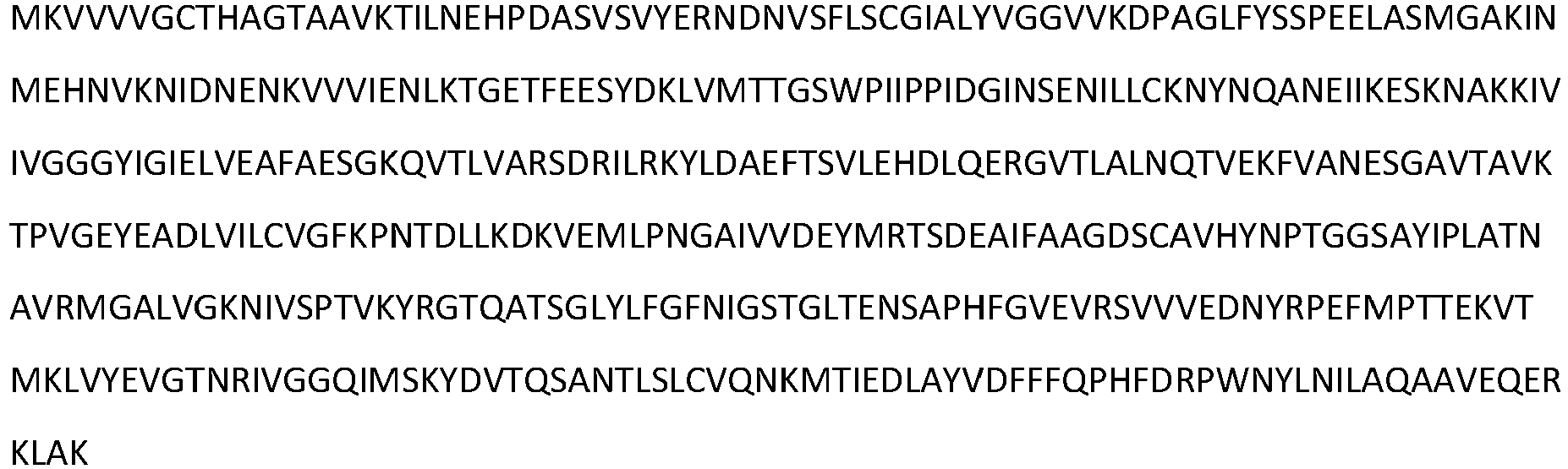
- Alternativ oder zusätzlich zu den zuvor genannten NAD(P)H Oxidasen können auch Varianten der NAD(P)H-Oxidase mit der Aminosäuresequenz SEQ ID Nr. 7 eingesetzt werden. Besonders bevorzugt sind dabei Varianten mit einer der Aminosäuresequenzen SEQ ID Nr. 11, SEQ ID Nr. 13, SEQ ID Nr. 15 oder SEQ ID Nr. 17, welche vorzugsweise durch Nukleinsäuremoleküle kodiert werden, welche die Nukleinsäuresequenzen SEQ ID Nr. 12, SEQ ID Nr. 14, SEQ ID Nr. 16 bzw. SEQ ID Nr. 18 umfassen.
- SEQ ID Nr. 11:
- SEQ ID Nr. 12:


- SEQ ID Nr. 13:

- SEQ ID Nr. 14:


- SEQ ID Nr. 15:

- SEQ ID Nr. 16:


- SEQ ID Nr. 17:

- SEQ ID Nr. 18:


- Die Enzyme, die die Aminosäuresequenzen SEQ ID Nr. 11, SEQ ID Nr. 13, SEQ ID Nr. 15 oder SEQ ID Nr. 17 umfassen oder aus ihnen bestehen oder von den Nukleinsäuresequenzen SEQ ID Nr. 12, SEQ ID Nr. 14, SEQ ID Nr. 16 bzw. SEQ ID Nr. 18 kodiert werden, sind in der Lage, sowohl NADH als auch NADPH zu oxidieren.
- Ein weiterer Aspekt der vorliegenden Erfindung betrifft eine Zusammensetzung enthaltend Glycolsäure und/oder Salze davon erhältlich nach einem erfindungsgemäßen Verfahren.
- Mit den nachfolgenden Beispielen werden bevorzugte Ausführungsformen der Erfindung noch näher beschrieben.
- Glycolaldehyd-Dimer, Ethylenglycol sowie IPTG (Isopropyl-β-D-thiogalactopyranosid) wurden von Sigma-Aldrich, Natrium-Glycolat wurde von AlfaAesar, Aceton, Kaliumdihydrogenphosphat, di-Kaliumhydrogenphosphat sowie Natriumdodecylsulfat (SDS) wurden von Carl Roth, NAD+, NADH-Dinatriumsalz, Zinkchlorid und Methanol wurden von PanReac AppliChem (ITW Reagents) und Triethanolamin wurde von Chem-Lab NV bezogen.
- Für die rekombinante Enzymproduktion in einem Escherichia coli-Stamm wurde zunächst das zu exprimierende Gen in einer PCR unter der Verwendung der genomischen DNA oder deren synthetisch an die Codon-Verwendung von E. coli angepasstes Äquivalent als Matrize zusammen mit spezifischen Oligonukleotiden, die zusätzlich Erkennungssequenzen für Restriktionsendonukleasen tragen, amplifiziert und aus dem Reaktionsgemisch isoliert. Nach dem Nukleinsäure-Verdau wurde das für das Target-Enzym kodierende Genfragment in das geschnittene Rückgrat des Expressionsvektors pQE70-Kan ligiert. Das Ligationsprodukt wurde in chemisch kompetente E. coli-Zellen Top10F transformiert und die entstandenen Kolonien wurden für die Plasmid-Isolierung und Restriktionsanalyse benutzt.
- Das Ergebnis des Klonierungs-Schritts wurde mittels Restriktionsenzym-Verdau und DNA-Sequenzierung überprüft. Das resultierende Konstrukt trägt das Target-Gen unter dem IPTG-induzierbaren T5-Promotor.
- Für die Überexpression des Enzymes in E. coli wurde das resultierende Expressionsplasmid in die kompetenten Expressionszellen RB791 transformiert. Nach 24 h Inkubation bei 37 °C wurden entstandene Kolonien für die Expressionstests in LB-Medium angeimpft.
- Am nächsten Tag wurden damit Expressionskulturen mit einer optische Dichte OD550 von 0,02 angeimpft und bei 37 °C geschüttelt, bis eine OD550 von 0,3 erreicht wurde. Anschließend wurde die Temperatur auf 25 °C gesenkt und die Kulturen wurden beim Erreichen einer OD550 von 0,5 mit 0,1 mM IPTG induziert. Nach 22 h wurden die Kulturen geerntet (vom Medium mittels Zentrifugation in Form eines Zellpellets abgetrennt) und auf die Expression des rekombinanten Enzymes mit Hilfe von SDS-Gelelektrophorese und einer Aktivitätsbestimmung (Verwendung in Use-Test oder optisch-enzymatischer Assay) analysiert.
- Zur Herstellung einer Zell-Suspension wurde das nach obigen Verfahren hergestellte Zellpellet in einem geeigneten Gefäß eingewogen und mit Puffer versetzt und unter Rührung gelöst. Der Massenanteil an Biomasse beträgt üblicherweise 20%, der Rest entfällt auf den Puffer.
- Zum Zell-Aufschluss wurde ein Branson Sonifier 450 verwendet. Die Suspension wurde dreimal mit je 15 Ultraschall-Stößen (Einstellungen am Gerät: Timer = 15; Duty Cycle = 50; Output Control = 3 - 5) behandelt.
- Das erhaltene Homogenat wurde 10 min lang bei 4 °C und 16000 rpm zentrifugiert (Eppendorf Zentrifuge 5417R), um die unlöslichen Zellfragmente abzutrennen und das Lysat zu erhalten.
Tabelle 1. Spenderorganismen und Aufschlussbedingungen für die in den Beispielen verwendeten Enzyme. Enzymtyp (EC-Klasse) katalysierte Reaktion(en) Spenderorganismus Literatur Alkoholdehydrog enase I (EC 1.1.1.1) Ethylenglycol → Glycolaldehyd; Geobacillus stearothermophilus (NCBI Protein Database: WP_033015595.1); SEQ ID Nr. 1 Aceton → 2-Propanol Alkoholdehydrog enase II (EC 1.1.1.1) Ethylenglycol → Glycolaldehyd; Acetobacter pasteurianus (NCBI Protein Database: AEN03783.1); SEQ ID Nr. 3 Aceton → 2-Propanol Alkoholdehydrog enase III (EC 1.1.1.1) Ethylenglycol → Glycolaldehyd Achromobacter xylosoxidans (NCBI Protein Database: WP_006385522.1); SEQ ID Nr. 5 Glycolaldehyd-Dehydrogenase (EC 1.2.1.21) Glycolaldehyd → Glycolsäure Escherichia coli (Hidalgo et al., 1991) NADH-Oxidase I (EC 1.6.3.4) NADH → NAD+ Carnobacterium divergens SEQ ID Nr. 7 NADH-Oxidase II (EC 1.6.3.4) NADH → NAD+ Streptococcus mutans (Matsumoto et al., 1996); SEQ ID Nr. 9 - Zur Quantifizierung von Ethylenglycol, Glycolaldehyd und Glycolsäure wurde HPLC (High Performance Liquid Chromatography) verwendet. Die Detektion erfolgte mittels eines Brechungsindex-Detektors. Zur Messung wurde eine Phenomenex Rezex ROA-Organic Acid H+ (8%) Säule mit entsprechender Vorsäule verwendet und mit 1 mM Schwefelsäure isokratisch eluiert.
- Enzym-Aktivitäten in den Lysaten wurden mit einem Shimadzu UV-1900 Spektrophotometer bestimmt. Dazu wurde die Bildung bzw. der Verbrauch von NAD(P)H bei einer Wellenlänge von 340 nm über die Änderung der Absorption verfolgt. Die Messungen wurden mit 0,2 mM Kofaktor (NAD(P)+oder NAD(P)H) durchgeführt. Dazu wurden 20 µl einer 10 mM Stock-Lösung des Kofaktors in einer Küvette (Greiner bioone Semi-Micro-Küvette aus Polystyrol) vorgelegt und der gewünschte pH-Wert wurde mit 100 mM TEA-HCl-Puffer eingestellt (870 µl). 10 µl Lysat (verdünnt oder unverdünnt) und 100 µl Substrat-Lösung wurden zur Küvette zugesetzt und die Messung unmittelbar danach gestartet. Die Messungen wurden standardmäßig bei 25 °C durchgeführt. Über den Extinktionskoeffizienten von NADH bzw. NADPH bei 340 nm (ε = 6220 L mol-1 cm-1) kann die Enzym-Aktivität des Lysats in U/ml (bezogen auf das Volumen des Lysats) oder U/g (bezogen auf die zur Herstellung eingesetzte Biomasse) bestimmt werden. 1 U steht dabei für 1 µmol Substratumsatz pro Minute (1 U = 1 µmol/min = 1,67·10-8 kat).
- Mit den nachfolgenden Beispielen werden bevorzugte Varianten des erfindungsgemäßen Verfahrens noch näher beschrieben. Die in diesen Beispielen eingesetzten Lysate wurden nach den oben beschriebenen Verfahren hergestellt.
- Die Reaktion wurde in einem Multifors Tisch-Bioreaktor (Infors AG) durchgeführt. Als Gefäß wurde ein Glasreaktor (Volumen 1,0 I) mit aufgesetztem Rührwerk, pH-Elektrode und O2-Sensor verwendet. Die pH-Kontrolle erfolgte durch die Zudosierung von 5M NaOH.
- Zu Beginn wurden 50 ml einer Ethylenglycol-Lösung (3,87 M), 173,6 ml deionisiertes Wasser sowie 7,5 ml eines 2M TEA-HCl-Puffers (pH 8) im Reaktor vorgelegt und unter Rühren auf 25 °C gebracht. Um Schaumbildung im Reaktor zu unterbinden bzw. zu reduzieren wurde ein Antischaummittel zugesetzt (Glanapon 2000; Bussetti und Co., GmbH, Österreich).
- Zum Start der Reaktion wurden 24 ml Alkoholdehydrogenase II-Lysat, 5 kU NADH-Oxidase I, 5 kU Glycolaldehyd-Dehydrogenase-Lysat sowie 10 ml einer 6 mM NAD+-Lösung (finale Konzentration 0,2 mM) eingebracht. Zur Oxidation von NADH zu NAD+ mittels NADH-Oxidase wurde der Reaktionslösung konstant Luft wurde mit einem Fluss von 0,6 L/min über einen Sparger zugeführt.
- Während des Betriebs wurden laufend Proben von der Reaktorlösung genommen, die folgendermaßen analysiert wurden: 50 µl des Ansatzes wurden zuerst mit 150 µl Reinstwasser verdünnt. Danach wurden 40 µl der verdünnten Lösung mit 160 µl Reinstwasser und 200 µl MeOH versetzt und bei 60 °C für 20 min inkubiert (1200 rpm, Eppendorf Thermomixer). Nach der Denaturierung wurde die Probe 10 min bei max. g zentrifugiert. 150 µl des klaren Überstands wurden in HPLC-Vials überführt und vermessen (HPLC, RI-Detektion).
- Nach 17,5 h wurden 95% des Ethylenglycols (644 mM) zu Glycolsäure oxidiert. Nach Beendigung der Reaktion (42 h; 97% Umsatz) wurde der pH-Wert der Reaktorlösung auf pH 4 mit H2SO4 gestellt und der Reaktorinhalt für 1 h bei 60 °C gerührt, um die Enzyme zu deaktivieren. Die Enzyme wurden zuerst über einen Papierfilter im Büchner-Trichter abgetrennt und die erhaltene trübe Lösung wurde nochmals mittels Glasfritte (P4) filtriert, wodurch eine klare Lösung erhalten wurde.
- In einem 2 ml Glas-Vial wurden folgende Komponenten vermischt: 100 µl eines 1000 mM TEA-HCl-Puffers (pH 9), 204 µl deionisiertes Wasser, 100 µl einer Ethylenglycol-Lösung (813 mM), 40 µl Alkoholdehydrogenase II-Lysat, 4 U Glycolaldehyd-Dehydrogenase-Lysat, 15 µl einer 10 mM NAD+-Lösung (finale Konzentration 0,3 mM) sowie 15 µl Aceton. Das Gesamtvolumen des Ansatzes betrug 500 µl.
- Der Ansatz wurde 20 h bei 25 °C unter kontinuierlichem Schütteln (1200 rpm, Eppendorf Thermomixer) inkubiert. 4 h nach Start der Reaktion wurden 20 µl Aceton nachdosiert.
- Zur Aufarbeitung wurden 50 µl des Ansatzes mit 150 µl Reinstwasser und 200 µl MeOH versetzt und bei 60 °C für 20 min inkubiert (1200 rpm, Eppendorf Thermomixer). Nach der Denaturierung wurde die Probe 10 min bei max. g zentrifugiert. 150 µl des klaren Überstands wurden in HPLC-Vials überführt und vermessen (HPLC, RI-Detektion).
- Auf diese Weise konnten 50% des Ethylenglycols (163 mM) zu Glycolsäure oxidiert werden.
-
- Sharad J. (2013). Glycolic acid peel therapy - a current review. Clinical, Cosmetic and Investigational Dermatology, 6, 281-288. https://doi.org/10.2147/CCID.S34029
- Panova, A., Mersinger, L. J., Liu, Q., Foo, T., Roe, D. C., Spillan, W. L., Sigmund, A. E., Ben-Bassat, A., Wagner, L. W., O'Keefe, D., Wu, S., Petrillo, K., Payne, M. S., Breske, S. T., Gallagher, F. G., & DiCosimo, R. (2007). Chemoenzymatic Synthesis of Glycolic Acid. Advanced Synthesis & Catalysis, 349(8-9), 1462-1474. https://doi.org/10.1002/adsc.200700061
- Ben-Bassat, A., Walls, A. M., Plummer, M. A., Sigmund, A. E., Spillan, W., & DiCosimo, R. (2008). Optimization of Biocatalyst Specific Activity for Glycolic Acid Production. Advanced Synthesis & Catalysis, 350(11-12), 1761-1769. https://doi.org/10.1002/adsc.200800228
- Dapsens, P.Y., Mondelli, C., Kusema, B.T., Verel, R., & Pérez-Ramírez, J. (2014). A continuous process for glyoxal valorisation using tailored Lewis-acid zeolite catalysts. Green Chemistry, 16(3), 1176-1186. https://doi.org/10.1039/C3GC42353K
- Tschirner, S., Weingart, E., Teevs, L., & Prüße, U. (2022). Oxidation of Monoethylene Glycol to Glycolic Acid with Gold-Based Catalyst and Glycolic Acid Isolation by Electrodialysis. Reactions, 3, 47-58. https://doi.org/10.3390/reactions3010004
- Berger, A. (2016). Ethylenglycol, RD-05-01999 in Böckler, F., Dill, B., Eisenbrand, G., Faupel, F., Fugmann, B., Gamse, T., Matissek, R., Pohnert, G., Rühling, A., Schmidt, S., & Sprenger, G. (Ed.), RÖMPP [Online], Stuttgart, Georg Thieme Verlag. https://roempp.thieme.de/lexicon/RD-05-01999 (aufgerufen am 24.10.2023)
- Wong, M. K., Lock, S. S. M., Chan, Y. H., Yeoh, S. J., & Tan, I. S. (2023). Towards sustainable production of bio-based ethylene glycol: Progress, perspective and challenges in catalytic conversion and purification. Chemical Engineering Journal, 468, 143699. https://doi.org/10.1016/j.cej.2023.143699
- Tullo, A. H. (2017). Haldor Topsoe, Braskem investigate biobased ethylene glycol. Chemical and Engineering News, 95(46). Aufrufbar unter: https://cen.acs.org/articles/95/i46/Haldor-Topsoe-Braskem-investigate-biobased.html (aufgerufen am 10.10.2023)
- Kataoka, M., Sasaki, M., Hidalgo, A.-R. G. D., Nakano, M., & Shimizu, S. (2001). Glycolic acid production using ethylene glycol-oxidizing microorganisms. Bioscience, Biotechnology, and Biochemistry, 65(10), 2265-2270. https://doi.org/10.1271/bbb.65.2265
- Carniel, A., Santos, A. G., Chinelatto, L. S., Castro, A. M., & Coelho, M. A. Z. (2023). Biotransformation of ethylene glycol to glycolic acid by Yarrowia lipolytica: A route for poly(ethylene terephthalate) (PET) upcycling. Biotechnology Journal, 18, e2200521. https://doi.org/10.1002/biot.202200521
- Zhang, H., Shi, L., Mao, X., Lin, J., & Wei, D. (2016). Enhancement of cell growth and glycolic acid production by overexpression of membrane-bound alcohol dehydrogenase in Gluconobacter oxydans DSM 2003. Journal of Biotechnology, 237, 18-24. https://doi.org/10.1016/j.jbiotec.2016.09.003
- Hua, X., Du, G., & Xu, Y. (2019). Cost-practical of glycolic acid bioproduction by immobilized whole-cell catalysis accompanied with compressed oxygen supplied to enhance mass transfer. Bioresource Technology, 283, 326-331. https://doi.org/10.1016/j.biortech.2019.03.094
- Boronat, A., Caballero, E., & Aguilar, J. (1983). Experimental Evolution of a Metabolic Pathway for Ethylene Glycol Utilization by Escherichia coli. Journal of Bacteriology, 153(1), 134-139. https://doi.org/10.1128/jb.153.1.134-139.1983
- Pandit, A. V., Harrison, E., & Mahadevan, R. (2021). Engineering Escherichia coli for the utilization of ethylene glycol. Microbial Cell Factories, 20, 22. https://doi.org/10.1186/s12934-021-01509-2
- Zhang, X., Zhang, B., Lin, J., & Wei, D. (2015). Oxidation of ethylene glycol to glycolaldehyde using a highly selective alcohol dehydrogenase from Gluconobacter oxydans. Journal of Molecular Catalysis B: Enzymatic, 112, 69-75. https://doi.org/10.1016/j.molcatb.2014.12.006
- Gao, X., Ma, Z., Yang, L., & Ma, J. (2014). Enhanced Bioconversion of Ethylene Glycol to Glycolic Acid by a Newly Isolated Burkholderia sp. EG13. Applied Biochemistry and Biotechnology, 174, 1572-1580. https://doi.org/10.1007/s12010-014-1114-9
- Yamada, M., & Isobe, K. (2015). A Novel Microbial Aldehyde Oxidase Applicable to Production of Useful Raw Materials, Glycolic Acid and Glyoxylic Acid, from Ethylene Glycol. Fermentation Technology, 4(1), 1000116. https://doi.org/10.4172/2167-7972.1000116
- Yamada, M., Adachi, K., Ogawa, N., Kishino, S., Ogawa, J., Kataoka, M., Shimizu, S., & Isobe, K. (2015). A new aldehyde oxidase catalyzing the conversion of glycolaldehyde to glycolate from Burkholderia sp. AlU 129. Journal of Bioscience and Bioengineering, 119(4), 410-415. https://doi.org/10.1016/j.jbiosc.2014.09.005
- Al-Rabiah, A. A., Boz, I., Akhmedov, V. M., Mostafa, M. M. M., & Bagabas, A. A. (2022). Highly Selective Gas-Phase Catalytic Hydrogenation of Acetone to Isopropyl Alcohol. Catalysts, 12(10), 1251. https://doi.org/10.3390/catal12101251
- Altschul, S. F., Gish, W., Miller, W., Myers, E. W., & Lipman, D. J. (1990). Basic local alignment search tool. Journal of Molecular Biology, 215(3), 403-410. https://doi.org/10.1016/S0022-2836(05)80360-2
- Henikoff, S., & Henikoff, J. G. (1992). Amino acid substitution matrices from protein blocks. Proceedings of the National Academy of Sciences of the United States of America, 89(22), 10915-10919. https://doi.org/10.1073/pnas.89.22.10915
- Sambrook, J., Fritsch, E. R., & Maniatis, T. (1989). Molecular Cloning: A Laboratory Manual (2nd ed.). Cold Spring Harbor, NY: Cold Spring Harbor Laboratory Press.
- Protein [Internet]. Bethesda (MD): National Library of Medicine (US), National Center for Biotechnology Information. Accession No. WP_033015595.1, alcohol dehydrogenase AdhP [Geobacillus stearothermophilus]; [aufgerufen am 10.10.2023]. Verfügbar unter: https://www.ncbi.nlm.nih.gov/protein/WP_033015595.1
- Protein [Internet]. Bethesda (MD): National Library of Medicine (US), National Center for Biotechnology Information. Accession No. AEN03783.1, NAD+-dependent and Zn-containing alcohol dehydrogenase [Acetobacter pasteurianus NBRC 101655]; [aufgerufen am 10.10.2023]. Verfügbar unter: https://www.ncbi.nlm.nih.gov/protein/AEN03783.1
- Protein [Internet]. Bethesda (MD): National Library of Medicine (US), National Center for Biotechnology Information. Accession No. WP_006385522.1, alcohol dehydrogenase AdhP [Achromobacter xylosoxidans]; [aufgerufen am 10.10.2023]. Verfügbar unter: https://www.ncbi.nlm.nih.gov/protein/WP_006385522.1
- Hidalgo, E., Chen, Y.-M., Lin, E. C. C., & Aguilar, J. (1991). Molecular cloning and DNA sequencing of the Escherichia coli K-12 ald gene encoding aldehyde dehydrogenase. Journal of Bacteriology, 173(19), 6118-6123. https://doi.org/10.1128/jb.173.19.6118-6123.1991
- Matsumoto, J., Higuchi, M., Shimada, M., Yamamoto, Y., & Kamio, Y. (1996). Molecular Cloning and Sequence Analysis of the Gene Encoding the H2O-forming NADH Oxidase from Streptococcus mutans. Bioscience, Biotechnology, and Biochemistry, 60(1), 39-43. https://doi.org/10.1271/bbb.60.39
Claims (10)
- Verfahren zur Herstellung einer wässerigen Lösung enthaltend Glycolsäure, indem Ethylenglycol, welches in einer wässerigen Lösung vorliegt, durch Behandeln mit einer ersten NAD(P)-abhängigen Oxidoreduktase und NAD(P)+ in vitro zu Glycolaldehyd oxidiert und dieser mit einer weiteren NAD(P)-abhängigen Oxidoreduktase und NAD(P)+ in vitro zu Glycolsäure oxidiert und das durch diese Oxidationen entstandene reduzierte NAD(P)H mittels einer NAD(P)H-Oxidase oder einer Alkoholdehydrogenase wieder oxidiert und damit regeneriert wird.
- Verfahren nach Anspruch 1, dadurch gekennzeichnet, dass die erste Oxidoreduktase eine Alkoholdehydrogenase und/oder die weitere Oxidoreduktase eine Aldehyd-Dehydrogenase ist.
- Verfahren nach Anspruch 2, dadurch gekennzeichnet, dass die Aldehyd-Dehydrogenase eine Glycolaldehyd-Dehydrogenase ist.
- Verfahren nach einem der Ansprüche 1 bis 3, dadurch gekennzeichnet, dass zur Oxidation des Kofaktors NAD(P)H eine Alkoholdehydrogenase unter Einsatz eines Ketons oder Aldehyds verwendet, wodurch in vitro NAD(P)+ und ein sekundärer oder ein primärer Alkohol gebildet werden.
- Verfahren nach einem der Ansprüche 1 bis 3, dadurch gekennzeichnet, dass zur Oxidation des Kofaktors NAD(P)H eine NAD(P)H-Oxidase unter Einsatz von Sauerstoff verwendet wird, wodurch in vitro NAD(P)+ und Wasser gebildet werden.
- Verfahren nach Anspruch 5, dadurch gekennzeichnet, dass NAD(P)H-Oxidase eine Aminosäuresequenz umfasst, welche ausgewählt ist aus der Gruppe bestehend aus:i) einer Aminosäuresequenz, die eine Identität zu SEQ ID Nr. 7 oder SEQ ID Nr. 9 von mindestens 80% aufweist,ii) einer Aminosäuresequenz, die durch eine Nukleinsäure kodiert wird, die eine Identität zu SEQ ID Nr. 8 oder SEQ ID Nr. 10 von mindestens 80% aufweist, undiii) einer Aminosäuresequenz, die durch eine Nukleinsäure kodiert wird, die unter stringenten Bedingungen an ein Nukleinsäuremolekül mit der Nukleinsäuresequenz SEQ ID Nr. 8 oder SEQ ID Nr. 10 bindet.
- Verfahren nach einem der Ansprüche 2 oder 3, dadurch gekennzeichnet, dass die Alkoholdehydrogenase sowie die Glycolaldehyd-Dehydrogenase als Lysat der entsprechenden, sie bildenden Zellen vorliegen.
- Verfahren nach einem der Ansprüche 1 bis 7, dadurch gekennzeichnet, dass die NAD(P)-abhängige Oxidoreduktase zur Oxidation von Ethylenglycol zu Glycolaldehyd eine Aminosäuresequenz umfasst, welche ausgewählt ist aus der Gruppe bestehend aus:i) einer Aminosäuresequenz, die eine Identität zu SEQ ID Nr. 1, 3 oder 5 von mindestens 80% aufweist,ii) einer Aminosäuresequenz, die durch eine Nukleinsäure kodiert wird, die eine Identität zu SEQ ID Nr. 2, 4 oder 6 von mindestens 80% aufweist, undiii) einer Aminosäuresequenz, die durch eine Nukleinsäure kodiert wird, die unter stringenten Bedingungen an ein Nukleinsäuremolekül mit der Nukleinsäuresequenz SEQ ID Nr. 2, 4 oder 6 bindet.
- Verwendung einer NAD(P)-abhängigen Oxidoreduktase zur Oxidation von Ethylenglycol zu Glycolaldehyd, wobei die NAD(P)-abhängige Alkoholdehydrogenase eine Aminosäuresequenz umfasst, welche ausgewählt ist aus der Gruppe bestehend aus:i) einer Aminosäuresequenz, die eine Identität zu SEQ ID Nr. 1, 3 oder 5 von mindestens 80% aufweist,ii) einer Aminosäuresequenz, die durch eine Nukleinsäure kodiert wird, die eine Identität zu SEQ ID Nr. 2, 4 oder 6 von mindestens 80% aufweist, undiii) einer Aminosäuresequenz, die durch eine Nukleinsäure kodiert wird, die unter stringenten Bedingungen an ein Nukleinsäuremolekül mit der Nukleinsäuresequenz SEQ ID Nr. 2, 4 oder 6 bindet.
- Zusammensetzung enthaltend Glycolsäure und/oder Salze davon erhältlich nach einem Verfahren nach einem der Ansprüche 1 bis 8.
Priority Applications (3)
| Application Number | Priority Date | Filing Date | Title |
|---|---|---|---|
| EP23206537.5A EP4545645A1 (de) | 2023-10-27 | 2023-10-27 | Verfahren zur herstellung einer wässerigen lösung enthaltend glycolsäure |
| ARP240102905A AR134181A1 (es) | 2023-10-27 | 2024-10-25 | Procedimiento para la preparación de una solución acuosa que contiene ácido glicólico |
| PCT/EP2024/080288 WO2025088154A2 (de) | 2023-10-27 | 2024-10-25 | Verfahren zur herstellung einer wässerigen lösung enthaltend glycolsäure |
Applications Claiming Priority (1)
| Application Number | Priority Date | Filing Date | Title |
|---|---|---|---|
| EP23206537.5A EP4545645A1 (de) | 2023-10-27 | 2023-10-27 | Verfahren zur herstellung einer wässerigen lösung enthaltend glycolsäure |
Publications (1)
| Publication Number | Publication Date |
|---|---|
| EP4545645A1 true EP4545645A1 (de) | 2025-04-30 |
Family
ID=88598858
Family Applications (1)
| Application Number | Title | Priority Date | Filing Date |
|---|---|---|---|
| EP23206537.5A Withdrawn EP4545645A1 (de) | 2023-10-27 | 2023-10-27 | Verfahren zur herstellung einer wässerigen lösung enthaltend glycolsäure |
Country Status (3)
| Country | Link |
|---|---|
| EP (1) | EP4545645A1 (de) |
| AR (1) | AR134181A1 (de) |
| WO (1) | WO2025088154A2 (de) |
Citations (5)
| Publication number | Priority date | Publication date | Assignee | Title |
|---|---|---|---|---|
| EP0784047B1 (de) | 1996-01-10 | 1999-12-08 | Clariant GmbH | Verfahren zur Darstellung einer besonders reinen Glykolsäure |
| US10077222B2 (en) | 2014-06-30 | 2018-09-18 | Haldor Topsoe A/S | Process for the preparation of ethylene glycol from sugars |
| EP2812439B1 (de) | 2012-02-07 | 2019-05-22 | Annikki GmbH | Verfahren zur enzymatischen regenerierung von redoxkofaktoren |
| WO2020168408A1 (en) * | 2019-02-20 | 2020-08-27 | Braskem S.A. | Degradation pathway for pentose and hexose sugars |
| WO2022240818A1 (en) * | 2021-05-12 | 2022-11-17 | Lygos, Inc. | Methods and organisms for producing glycolic acid |
Family Cites Families (1)
| Publication number | Priority date | Publication date | Assignee | Title |
|---|---|---|---|---|
| CN116348608A (zh) * | 2020-08-26 | 2023-06-27 | 南佛罗里达大学 | 基于一碳底物的合成生长 |
-
2023
- 2023-10-27 EP EP23206537.5A patent/EP4545645A1/de not_active Withdrawn
-
2024
- 2024-10-25 WO PCT/EP2024/080288 patent/WO2025088154A2/de active Pending
- 2024-10-25 AR ARP240102905A patent/AR134181A1/es unknown
Patent Citations (5)
| Publication number | Priority date | Publication date | Assignee | Title |
|---|---|---|---|---|
| EP0784047B1 (de) | 1996-01-10 | 1999-12-08 | Clariant GmbH | Verfahren zur Darstellung einer besonders reinen Glykolsäure |
| EP2812439B1 (de) | 2012-02-07 | 2019-05-22 | Annikki GmbH | Verfahren zur enzymatischen regenerierung von redoxkofaktoren |
| US10077222B2 (en) | 2014-06-30 | 2018-09-18 | Haldor Topsoe A/S | Process for the preparation of ethylene glycol from sugars |
| WO2020168408A1 (en) * | 2019-02-20 | 2020-08-27 | Braskem S.A. | Degradation pathway for pentose and hexose sugars |
| WO2022240818A1 (en) * | 2021-05-12 | 2022-11-17 | Lygos, Inc. | Methods and organisms for producing glycolic acid |
Non-Patent Citations (26)
| Title |
|---|
| AL-RABIAH, A. ABOZ, I.AKHMEDOV, V. M.MOSTAFA, M. M. M.BAGABAS, A. A: "Highly Selective Gas-Phase Catalytic Hydrogenation of Acetone to Isopropyl Alcohol", CATALYSTS, vol. 12, no. 10, 2022, pages 1251 |
| ALTSCHUL, S. F.GISH, W.MILLER, W.MYERS, E. W.LIPMAN, D. J.: "Basic local alignment search tool", JOURNAL OF MOLECULAR BIOLOGY, vol. 215, no. 3, 1990, pages 403 - 410, XP002949123, Retrieved from the Internet <URL:https://doi.org/10.1016/S0022-2836(05)80360-2> DOI: 10.1006/jmbi.1990.9999 |
| BEN-BASSAT, A.WALLS, A. M.PLUMMER, M. A.SIGMUND, A. E.SPILLAN, W.DICOSIMO, R: "Optimization of Biocatalyst Specific Activity for Glycolic Acid Production", ADVANCED SYNTHESIS & CATALYSIS, vol. 350, no. 11-12, 2008, pages 1761 - 1769, XP002511198, Retrieved from the Internet <URL:https://doi.org/10.1002/adsc.200800228> DOI: 10.1002/ADSC.200800228 |
| BERGER, A: "Ethylenglycol", 24 October 2023, GEORG THIEME VERLAG |
| BORONAT, A.CABALLERO, E.AGUILAR, J.: "Experimental Evolution of a Metabolic Pathway for Ethylene Glycol Utilization", ESCHERICHIA COLI. JOURNAL OF BACTERIOLOGY, vol. 153, no. 1, 1983, pages 134 - 139, XP009058663 |
| CARNIEL, A.SANTOS, A. G.CHINELATTO, L. S.CASTRO, A. M.COELHO, M. A. Z.: "Biotransformation of ethylene glycol to glycolic acid by Yarrowia lipolytica: A route for poly(ethylene terephthalate) (PET) upcycling", BIOTECHNOLOGY JOURNAL, vol. 18, 2023, pages e2200521, Retrieved from the Internet <URL:https://doi.org/10.1002/biot.202200521> |
| DAPSENS, P.Y.MONDELLI, C.KUSEMA, B.T.VEREL, R.PEREZ-RAMIREZ, J: "A continuous process for glyoxal valorisation using tailored Lewis-acid zeolite catalysts", GREEN CHEMISTRY, vol. 16, no. 3, 2014, pages 1176 - 1186, XP055256610, Retrieved from the Internet <URL:https://doi.org/10.1039/C3GC42353K> DOI: 10.1039/C3GC42353K |
| GAO, X.MA, Z.YANG, L.MA, J: "Enhanced Bioconversion of Ethylene Glycol to Glycolic Acid by a Newly Isolated Burkholderia sp. EG13", APPLIED BIOCHEMISTRY AND BIOTECHNOLOGY, vol. 174, 2014, pages 1572 - 1580 |
| HENIKOFF, S.HENIKOFF, J. G.: "Amino acid substitution matrices from protein blocks", PROCEEDINGS OF THE NATIONAL ACADEMY OF SCIENCES OF THE UNITED STATES OF AMERICA, vol. 89, no. 22, 1992, pages 10915 - 10919, XP002599751, DOI: 10.1073/pnas.89.22.10915 |
| HIDALGO, E.CHEN, Y.-M.LIN, E. C. C.AGUILAR, J: "Molecular cloning and DNA sequencing of the Escherichia coli K-12 ald gene encoding aldehyde dehydrogenase", JOURNAL OF BACTERIOLOGY, vol. 173, no. 19, 1991, pages 6118 - 6123, XP008015902, Retrieved from the Internet <URL:https://doi.org/10.1128/jb.173.19.6118-6123.1991> |
| HUA, X.DU, G.XU, Y: "Cost-practical of glycolic acid bioproduction by immobilized whole-cell catalysis accompanied with compressed oxygen supplied to enhance mass transfer", BIORESOURCE TECHNOLOGY, vol. 283, 2019, pages 326 - 331, XP085657497, Retrieved from the Internet <URL:https://doi.org/10.1016/j.biortech.2019.03.094> DOI: 10.1016/j.biortech.2019.03.094 |
| KATAOKA, M.SASAKI, M.HIDALGO, A.-R. G. D.NAKANO, M.SHIMIZU, S: "Glycolic acid production using ethylene glycol-oxidizing microorganisms", BIOSCIENCE, BIOTECHNOLOGY, AND BIOCHEMISTRY, vol. 65, no. 10, 2001, pages 2265 - 2270, XP002605804, Retrieved from the Internet <URL:https://doi.org/10.1271/bbb.65.2265> |
| LAURA SALUSJÄRVI: "Biotechnological production of glycolic acid and ethylene glycol: current state and perspectives", APPLIED MICROBIOLOGY AND BIOTECHNOLOGY, vol. 103, no. 6, 1 February 2019 (2019-02-01), Berlin/Heidelberg, pages 2525 - 2535, XP093154111, ISSN: 0175-7598, Retrieved from the Internet <URL:http://link.springer.com/content/pdf/10.1007/s00253-019-09640-2.pdf> DOI: 10.1007/s00253-019-09640-2 * |
| MATSUMOTO, J.HIGUCHI, M.SHIMADA, M.YAMAMOTO, Y.KAMIO, Y.: "Molecular Cloning and Sequence Analysis of the Gene Encoding the H O-forming NADH Oxidase", STREPTOCOCCUS MUTANS. BIOSCIENCE, BIOTECHNOLOGY, AND BIOCHEMISTRY, vol. 60, no. 1, 1996, pages 39 - 43, XP008162426, Retrieved from the Internet <URL:https://doi.org/10.1271/bbb.60.39> DOI: 10.1271/bbb.60.39 |
| PANDIT, A. V.HARRISON, E.MAHADEVAN, R: "Engineering Escherichia coli for the utilization of ethylene glycol", MICROBIAL CELL FACTORIES, vol. 20, 2021, pages 22, Retrieved from the Internet <URL:https://doi.org/10.1186/s12934-021-01509-2> |
| PANOVA, A.MERSINGER, L. J.LIU, Q.FOO, T.ROE, D. C.SPILLAN, W. L.SIGMUND, A. E.BEN-BASSAT, AWAGNER, L. W.O'KEEFE, D: "Chemoenzymatic Synthesis of Glycolic Acid", ADVANCED SYNTHESIS & CATALYSIS, vol. 349, no. 8-9, 2007, pages 1462 - 1474, XP009110927, Retrieved from the Internet <URL:https://doi.org/10.1002/adsc.200700061> DOI: 10.1002/adsc.200700061 |
| SAMBROOK, J.FRITSCH, E. R.MANIATIS, T: "Molecular Cloning: A Laboratory Manual", 1989, COLD SPRING HARBOR LABORATORY |
| SHARAD J: "Glycolic acid peel therapy - a current review", CLINICAL, COSMETIC AND INVESTIGATIONAL DERMATOLOGY, vol. 6, 2013, pages 281 - 288, Retrieved from the Internet <URL:https://doi.org/10.2147/CCID.S34029> |
| TSCHIRNER, S.WEINGART, E.TEEVS, L.PRÜSSE, U: "Oxidation of Monoethylene Glycol to Glycolic Acid with Gold-Based Catalyst and Glycolic Acid Isolation by Electrodialysis", REACTIONS, vol. 3, 2022, pages 47 - 58 |
| TULLO, A. H: "Haldor Topsoe, Braskem investigate biobased ethylene glycol.", CHEMICAL AND ENGINEERING NEWS, vol. 95, no. 46, 2017, Retrieved from the Internet <URL:https://cen.acs.org/articles/95/i46/Haldor-Topsoe-Braskem-investigate-biobased.html> |
| WONG, M. K.LOCK, S. S. M.CHAN, Y. H.YEOH, S. J.TAN, I. S: "Towards sustainable production of bio-based ethylene glycol: Progress, perspective and challenges in catalytic conversion and purification", CHEMICAL ENGINEERING JOURNAL, vol. 468, 2023, pages 143699, Retrieved from the Internet <URL:https://doi.org/10.1016/j.cej.2023.143699> |
| YAMADA, M.ADACHI, K.OGAWA, N.KISHINO, S.OGAWA, J.KATAOKA, M.SHIMIZU, S.ISOBE, K: "A new aldehyde oxidase catalyzing the conversion of glycolaldehyde to glycolate from Burkholderia sp. AlU 129", JOURNAL OF BIOSCIENCE AND BIOENGINEERING, vol. 119, no. 4, 2015, pages 410 - 415 |
| YAMADA, M.ISOBE, K: "A Novel Microbial Aldehyde Oxidase Applicable to Production of Useful Raw Materials, Glycolic Acid and Glyoxylic Acid, from Ethylene Glycol", FERMENTATION TECHNOLOGY, vol. 4, no. 1, 2015, pages 1000116, Retrieved from the Internet <URL:https://doi.org/10.4172/2167-7972.1000116> |
| ZHANG XINGXING ET AL: "Oxidation of ethylene glycol to glycolaldehyde using a highly selective alcohol dehydrogenase fromGluconobacter oxydans", JOURNAL OF MOLECULAR CATALYSIS B : ENZYMATIC, vol. 112, 25 March 2016 (2016-03-25), pages 69 - 75, XP029132777, ISSN: 1381-1177, DOI: 10.1016/J.MOLCATB.2014.12.006 * |
| ZHANG, H.SHI, L.MAO, X.LIN, J.WEI, D: "Enhancement of cell growth and glycolic acid production by overexpression of membrane-bound alcohol dehydrogenase in Gluconobacter oxydans DSM 2003", JOURNAL OF BIOTECHNOLOGY, vol. 237, 2016, pages 18 - 24, Retrieved from the Internet <URL:https://doi.org/10.1016/j.jbiotec.2016.09.003> |
| ZHANG, X.ZHANG, B.LIN, J.WEI, D: "Oxidation of ethylene glycol to glycolaldehyde using a highly selective alcohol dehydrogenase from Gluconobacter oxydans", JOURNAL OF MOLECULAR CATALYSIS B: ENZYMATIC, vol. 112, 2015, pages 69 - 75, XP029132777, Retrieved from the Internet <URL:https://doi.org/10.1016/j.molcatb.2014.12.006> DOI: 10.1016/j.molcatb.2014.12.006 |
Also Published As
| Publication number | Publication date |
|---|---|
| WO2025088154A2 (de) | 2025-05-01 |
| AR134181A1 (es) | 2025-12-10 |
| WO2025088154A3 (de) | 2025-08-28 |
Similar Documents
| Publication | Publication Date | Title |
|---|---|---|
| Larsson et al. | Effect of overexpression of Saccharomyces cerevisiae Pad1p on the resistance to phenylacrylic acids and lignocellulose hydrolysates under aerobic and oxygen-limited conditions | |
| Zeng et al. | Microbial production of diols as platform chemicals: recent progresses | |
| EP4680760A2 (de) | Verfahren zur herstellung einer wässerigen lösung enthaltend d-psicose | |
| EP4615987A1 (de) | Verfahren zur herstellung einer wässerigen lösung, welche glycerin enthält | |
| EP4695410A2 (de) | Verfahren zur herstellung von allitol | |
| Delmoitié et al. | Tailoring non-axenic lactic acid fermentation from cheese whey permeate targeting a flexible lactic acid platform | |
| WO2025133400A2 (de) | Verfahren zur herstellung von 2,5-furandicarbonsäure | |
| WO2025133402A1 (de) | Verfahren zur herstellung von 2,5-furandicarbonsäure | |
| WO2025088154A2 (de) | Verfahren zur herstellung einer wässerigen lösung enthaltend glycolsäure | |
| EP4488374A1 (de) | Verfahren zur herstellung einer wässerigen lösung enthaltend ethylenglycol | |
| EP4678755A1 (de) | Verfahren zur herstellung von einer wässerigen lösung enthaltend d-mannitol | |
| WO2026013248A1 (de) | Verfahren zur herstellung von einer wässerigen lösung enthaltend d-mannitol | |
| EP4733406A1 (de) | Verfahren zur herstellung von 2,5-furandicarbonsäure | |
| EP4464786A1 (de) | Verfahren zur herstellung von wässerigen lösungen enthaltend d-psicose oder l-psicose | |
| EP4520839A2 (de) | Verfahren zur herstellung einer wässerigen lösung enthaltend d-psicose | |
| EP4574983A1 (de) | Verfahren zur herstellung von allitol | |
| EP4722355A1 (de) | Verfahren zur herstellung von 2,5-furandicarbonsäure | |
| EP4446421A1 (de) | Verfahren zur herstellung von allitol | |
| EP4488376A1 (de) | Verfahren zur herstellung einer wässerigen lösung enthaltend l-sorbose | |
| WO2024084032A1 (de) | Verfahren zur herstellung einer wässerigen lösung enthaltend ein alkalisalz der glycolsäure und der milchsäure | |
| EP4431614A1 (de) | Verfahren zur herstellung von wässerigen lösungen enthaltend d-psicose oder l-psicose | |
| EP4678756A1 (de) | Verfahren und anlage zur enzymatischen reduktion einer organischen keto-verbindung | |
| EP4678757A1 (de) | Verfahren zur enzymatischen reduktion einer organischen keto-verbindung | |
| WO2026013247A1 (de) | Verfahren und anlage zur enzymatischen reduktion einer organischen keto-verbindung | |
| EP4545646A1 (de) | Verfahren zur herstellung von d-talitol |
Legal Events
| Date | Code | Title | Description |
|---|---|---|---|
| PUAI | Public reference made under article 153(3) epc to a published international application that has entered the european phase |
Free format text: ORIGINAL CODE: 0009012 |
|
| STAA | Information on the status of an ep patent application or granted ep patent |
Free format text: STATUS: THE APPLICATION HAS BEEN PUBLISHED |
|
| AK | Designated contracting states |
Kind code of ref document: A1 Designated state(s): AL AT BE BG CH CY CZ DE DK EE ES FI FR GB GR HR HU IE IS IT LI LT LU LV MC ME MK MT NL NO PL PT RO RS SE SI SK SM TR |
|
| STAA | Information on the status of an ep patent application or granted ep patent |
Free format text: STATUS: THE APPLICATION IS DEEMED TO BE WITHDRAWN |
|
| 18D | Application deemed to be withdrawn |
Effective date: 20251031 |