EP4546718A2 - Système de simplification d'instructions exécutables pour calcul vérifiable optimisé - Google Patents
Système de simplification d'instructions exécutables pour calcul vérifiable optimisé Download PDFInfo
- Publication number
- EP4546718A2 EP4546718A2 EP25163650.2A EP25163650A EP4546718A2 EP 4546718 A2 EP4546718 A2 EP 4546718A2 EP 25163650 A EP25163650 A EP 25163650A EP 4546718 A2 EP4546718 A2 EP 4546718A2
- Authority
- EP
- European Patent Office
- Prior art keywords
- arithmetic circuit
- computer
- implemented method
- logic
- nodes
- Prior art date
- Legal status (The legal status is an assumption and is not a legal conclusion. Google has not performed a legal analysis and makes no representation as to the accuracy of the status listed.)
- Pending
Links
Images





Classifications
-
- H—ELECTRICITY
- H04—ELECTRIC COMMUNICATION TECHNIQUE
- H04L—TRANSMISSION OF DIGITAL INFORMATION, e.g. TELEGRAPHIC COMMUNICATION
- H04L9/00—Cryptographic mechanisms or cryptographic arrangements for secret or secure communications; Network security protocols
- H04L9/32—Cryptographic mechanisms or cryptographic arrangements for secret or secure communications; Network security protocols including means for verifying the identity or authority of a user of the system or for message authentication, e.g. authorization, entity authentication, data integrity or data verification, non-repudiation, key authentication or verification of credentials
- H04L9/3218—Cryptographic mechanisms or cryptographic arrangements for secret or secure communications; Network security protocols including means for verifying the identity or authority of a user of the system or for message authentication, e.g. authorization, entity authentication, data integrity or data verification, non-repudiation, key authentication or verification of credentials using proof of knowledge, e.g. Fiat-Shamir, GQ, Schnorr, ornon-interactive zero-knowledge proofs
-
- H—ELECTRICITY
- H04—ELECTRIC COMMUNICATION TECHNIQUE
- H04L—TRANSMISSION OF DIGITAL INFORMATION, e.g. TELEGRAPHIC COMMUNICATION
- H04L63/00—Network architectures or network communication protocols for network security
- H04L63/12—Applying verification of the received information
-
- G—PHYSICS
- G06—COMPUTING OR CALCULATING; COUNTING
- G06F—ELECTRIC DIGITAL DATA PROCESSING
- G06F16/00—Information retrieval; Database structures therefor; File system structures therefor
- G06F16/20—Information retrieval; Database structures therefor; File system structures therefor of structured data, e.g. relational data
- G06F16/27—Replication, distribution or synchronisation of data between databases or within a distributed database system; Distributed database system architectures therefor
-
- G—PHYSICS
- G06—COMPUTING OR CALCULATING; COUNTING
- G06F—ELECTRIC DIGITAL DATA PROCESSING
- G06F8/00—Arrangements for software engineering
- G06F8/40—Transformation of program code
- G06F8/41—Compilation
- G06F8/44—Encoding
-
- G—PHYSICS
- G06—COMPUTING OR CALCULATING; COUNTING
- G06F—ELECTRIC DIGITAL DATA PROCESSING
- G06F8/00—Arrangements for software engineering
- G06F8/40—Transformation of program code
- G06F8/41—Compilation
- G06F8/44—Encoding
- G06F8/447—Target code generation
-
- G—PHYSICS
- G06—COMPUTING OR CALCULATING; COUNTING
- G06F—ELECTRIC DIGITAL DATA PROCESSING
- G06F8/00—Arrangements for software engineering
- G06F8/40—Transformation of program code
- G06F8/41—Compilation
- G06F8/45—Exploiting coarse grain parallelism in compilation, i.e. parallelism between groups of instructions
- G06F8/451—Code distribution
-
- G—PHYSICS
- G06—COMPUTING OR CALCULATING; COUNTING
- G06F—ELECTRIC DIGITAL DATA PROCESSING
- G06F9/00—Arrangements for program control, e.g. control units
- G06F9/06—Arrangements for program control, e.g. control units using stored programs, i.e. using an internal store of processing equipment to receive or retain programs
- G06F9/44—Arrangements for executing specific programs
- G06F9/445—Program loading or initiating
- G06F9/44521—Dynamic linking or loading; Link editing at or after load time, e.g. Java class loading
-
- G—PHYSICS
- G06—COMPUTING OR CALCULATING; COUNTING
- G06Q—INFORMATION AND COMMUNICATION TECHNOLOGY [ICT] SPECIALLY ADAPTED FOR ADMINISTRATIVE, COMMERCIAL, FINANCIAL, MANAGERIAL OR SUPERVISORY PURPOSES; SYSTEMS OR METHODS SPECIALLY ADAPTED FOR ADMINISTRATIVE, COMMERCIAL, FINANCIAL, MANAGERIAL OR SUPERVISORY PURPOSES, NOT OTHERWISE PROVIDED FOR
- G06Q20/00—Payment architectures, schemes or protocols
- G06Q20/04—Payment circuits
- G06Q20/06—Private payment circuits, e.g. involving electronic currency used among participants of a common payment scheme
- G06Q20/065—Private payment circuits, e.g. involving electronic currency used among participants of a common payment scheme using e-cash
-
- G—PHYSICS
- G06—COMPUTING OR CALCULATING; COUNTING
- G06Q—INFORMATION AND COMMUNICATION TECHNOLOGY [ICT] SPECIALLY ADAPTED FOR ADMINISTRATIVE, COMMERCIAL, FINANCIAL, MANAGERIAL OR SUPERVISORY PURPOSES; SYSTEMS OR METHODS SPECIALLY ADAPTED FOR ADMINISTRATIVE, COMMERCIAL, FINANCIAL, MANAGERIAL OR SUPERVISORY PURPOSES, NOT OTHERWISE PROVIDED FOR
- G06Q20/00—Payment architectures, schemes or protocols
- G06Q20/38—Payment protocols; Details thereof
- G06Q20/40—Authorisation, e.g. identification of payer or payee, verification of customer or shop credentials; Review and approval of payers, e.g. check credit lines or negative lists
- G06Q20/401—Transaction verification
-
- G—PHYSICS
- G06—COMPUTING OR CALCULATING; COUNTING
- G06Q—INFORMATION AND COMMUNICATION TECHNOLOGY [ICT] SPECIALLY ADAPTED FOR ADMINISTRATIVE, COMMERCIAL, FINANCIAL, MANAGERIAL OR SUPERVISORY PURPOSES; SYSTEMS OR METHODS SPECIALLY ADAPTED FOR ADMINISTRATIVE, COMMERCIAL, FINANCIAL, MANAGERIAL OR SUPERVISORY PURPOSES, NOT OTHERWISE PROVIDED FOR
- G06Q20/00—Payment architectures, schemes or protocols
- G06Q20/38—Payment protocols; Details thereof
- G06Q20/40—Authorisation, e.g. identification of payer or payee, verification of customer or shop credentials; Review and approval of payers, e.g. check credit lines or negative lists
- G06Q20/405—Establishing or using transaction specific rules
-
- H—ELECTRICITY
- H04—ELECTRIC COMMUNICATION TECHNIQUE
- H04L—TRANSMISSION OF DIGITAL INFORMATION, e.g. TELEGRAPHIC COMMUNICATION
- H04L9/00—Cryptographic mechanisms or cryptographic arrangements for secret or secure communications; Network security protocols
- H04L9/06—Cryptographic mechanisms or cryptographic arrangements for secret or secure communications; Network security protocols the encryption apparatus using shift registers or memories for block-wise or stream coding, e.g. DES systems or RC4; Hash functions; Pseudorandom sequence generators
- H04L9/0618—Block ciphers, i.e. encrypting groups of characters of a plain text message using fixed encryption transformation
- H04L9/0637—Modes of operation, e.g. cipher block chaining [CBC], electronic codebook [ECB] or Galois/counter mode [GCM]
-
- H—ELECTRICITY
- H04—ELECTRIC COMMUNICATION TECHNIQUE
- H04L—TRANSMISSION OF DIGITAL INFORMATION, e.g. TELEGRAPHIC COMMUNICATION
- H04L9/00—Cryptographic mechanisms or cryptographic arrangements for secret or secure communications; Network security protocols
- H04L9/06—Cryptographic mechanisms or cryptographic arrangements for secret or secure communications; Network security protocols the encryption apparatus using shift registers or memories for block-wise or stream coding, e.g. DES systems or RC4; Hash functions; Pseudorandom sequence generators
- H04L9/0643—Hash functions, e.g. MD5, SHA, HMAC or f9 MAC
-
- H—ELECTRICITY
- H04—ELECTRIC COMMUNICATION TECHNIQUE
- H04L—TRANSMISSION OF DIGITAL INFORMATION, e.g. TELEGRAPHIC COMMUNICATION
- H04L9/00—Cryptographic mechanisms or cryptographic arrangements for secret or secure communications; Network security protocols
- H04L9/08—Key distribution or management, e.g. generation, sharing or updating, of cryptographic keys or passwords
- H04L9/0816—Key establishment, i.e. cryptographic processes or cryptographic protocols whereby a shared secret becomes available to two or more parties, for subsequent use
- H04L9/0838—Key agreement, i.e. key establishment technique in which a shared key is derived by parties as a function of information contributed by, or associated with, each of these
-
- H—ELECTRICITY
- H04—ELECTRIC COMMUNICATION TECHNIQUE
- H04L—TRANSMISSION OF DIGITAL INFORMATION, e.g. TELEGRAPHIC COMMUNICATION
- H04L9/00—Cryptographic mechanisms or cryptographic arrangements for secret or secure communications; Network security protocols
- H04L9/08—Key distribution or management, e.g. generation, sharing or updating, of cryptographic keys or passwords
- H04L9/0816—Key establishment, i.e. cryptographic processes or cryptographic protocols whereby a shared secret becomes available to two or more parties, for subsequent use
- H04L9/085—Secret sharing or secret splitting, e.g. threshold schemes
-
- H—ELECTRICITY
- H04—ELECTRIC COMMUNICATION TECHNIQUE
- H04L—TRANSMISSION OF DIGITAL INFORMATION, e.g. TELEGRAPHIC COMMUNICATION
- H04L9/00—Cryptographic mechanisms or cryptographic arrangements for secret or secure communications; Network security protocols
- H04L9/08—Key distribution or management, e.g. generation, sharing or updating, of cryptographic keys or passwords
- H04L9/0861—Generation of secret information including derivation or calculation of cryptographic keys or passwords
- H04L9/0877—Generation of secret information including derivation or calculation of cryptographic keys or passwords using additional device, e.g. trusted platform module [TPM], smartcard, USB or hardware security module [HSM]
-
- H—ELECTRICITY
- H04—ELECTRIC COMMUNICATION TECHNIQUE
- H04L—TRANSMISSION OF DIGITAL INFORMATION, e.g. TELEGRAPHIC COMMUNICATION
- H04L9/00—Cryptographic mechanisms or cryptographic arrangements for secret or secure communications; Network security protocols
- H04L9/30—Public key, i.e. encryption algorithm being computationally infeasible to invert or user's encryption keys not requiring secrecy
-
- H—ELECTRICITY
- H04—ELECTRIC COMMUNICATION TECHNIQUE
- H04L—TRANSMISSION OF DIGITAL INFORMATION, e.g. TELEGRAPHIC COMMUNICATION
- H04L9/00—Cryptographic mechanisms or cryptographic arrangements for secret or secure communications; Network security protocols
- H04L9/32—Cryptographic mechanisms or cryptographic arrangements for secret or secure communications; Network security protocols including means for verifying the identity or authority of a user of the system or for message authentication, e.g. authorization, entity authentication, data integrity or data verification, non-repudiation, key authentication or verification of credentials
- H04L9/3236—Cryptographic mechanisms or cryptographic arrangements for secret or secure communications; Network security protocols including means for verifying the identity or authority of a user of the system or for message authentication, e.g. authorization, entity authentication, data integrity or data verification, non-repudiation, key authentication or verification of credentials using cryptographic hash functions
-
- H—ELECTRICITY
- H04—ELECTRIC COMMUNICATION TECHNIQUE
- H04L—TRANSMISSION OF DIGITAL INFORMATION, e.g. TELEGRAPHIC COMMUNICATION
- H04L9/00—Cryptographic mechanisms or cryptographic arrangements for secret or secure communications; Network security protocols
- H04L9/32—Cryptographic mechanisms or cryptographic arrangements for secret or secure communications; Network security protocols including means for verifying the identity or authority of a user of the system or for message authentication, e.g. authorization, entity authentication, data integrity or data verification, non-repudiation, key authentication or verification of credentials
- H04L9/3236—Cryptographic mechanisms or cryptographic arrangements for secret or secure communications; Network security protocols including means for verifying the identity or authority of a user of the system or for message authentication, e.g. authorization, entity authentication, data integrity or data verification, non-repudiation, key authentication or verification of credentials using cryptographic hash functions
- H04L9/3239—Cryptographic mechanisms or cryptographic arrangements for secret or secure communications; Network security protocols including means for verifying the identity or authority of a user of the system or for message authentication, e.g. authorization, entity authentication, data integrity or data verification, non-repudiation, key authentication or verification of credentials using cryptographic hash functions involving non-keyed hash functions, e.g. modification detection codes [MDCs], MD5, SHA or RIPEMD
-
- H—ELECTRICITY
- H04—ELECTRIC COMMUNICATION TECHNIQUE
- H04L—TRANSMISSION OF DIGITAL INFORMATION, e.g. TELEGRAPHIC COMMUNICATION
- H04L9/00—Cryptographic mechanisms or cryptographic arrangements for secret or secure communications; Network security protocols
- H04L9/32—Cryptographic mechanisms or cryptographic arrangements for secret or secure communications; Network security protocols including means for verifying the identity or authority of a user of the system or for message authentication, e.g. authorization, entity authentication, data integrity or data verification, non-repudiation, key authentication or verification of credentials
- H04L9/3247—Cryptographic mechanisms or cryptographic arrangements for secret or secure communications; Network security protocols including means for verifying the identity or authority of a user of the system or for message authentication, e.g. authorization, entity authentication, data integrity or data verification, non-repudiation, key authentication or verification of credentials involving digital signatures
-
- H—ELECTRICITY
- H04—ELECTRIC COMMUNICATION TECHNIQUE
- H04L—TRANSMISSION OF DIGITAL INFORMATION, e.g. TELEGRAPHIC COMMUNICATION
- H04L9/00—Cryptographic mechanisms or cryptographic arrangements for secret or secure communications; Network security protocols
- H04L9/32—Cryptographic mechanisms or cryptographic arrangements for secret or secure communications; Network security protocols including means for verifying the identity or authority of a user of the system or for message authentication, e.g. authorization, entity authentication, data integrity or data verification, non-repudiation, key authentication or verification of credentials
- H04L9/3263—Cryptographic mechanisms or cryptographic arrangements for secret or secure communications; Network security protocols including means for verifying the identity or authority of a user of the system or for message authentication, e.g. authorization, entity authentication, data integrity or data verification, non-repudiation, key authentication or verification of credentials involving certificates, e.g. public key certificate [PKC] or attribute certificate [AC]; Public key infrastructure [PKI] arrangements
-
- H—ELECTRICITY
- H04—ELECTRIC COMMUNICATION TECHNIQUE
- H04L—TRANSMISSION OF DIGITAL INFORMATION, e.g. TELEGRAPHIC COMMUNICATION
- H04L9/00—Cryptographic mechanisms or cryptographic arrangements for secret or secure communications; Network security protocols
- H04L9/50—Cryptographic mechanisms or cryptographic arrangements for secret or secure communications; Network security protocols using hash chains, e.g. blockchains or hash trees
-
- H—ELECTRICITY
- H04—ELECTRIC COMMUNICATION TECHNIQUE
- H04L—TRANSMISSION OF DIGITAL INFORMATION, e.g. TELEGRAPHIC COMMUNICATION
- H04L2209/00—Additional information or applications relating to cryptographic mechanisms or cryptographic arrangements for secret or secure communication H04L9/00
- H04L2209/12—Details relating to cryptographic hardware or logic circuitry
- H04L2209/122—Hardware reduction or efficient architectures
-
- H—ELECTRICITY
- H04—ELECTRIC COMMUNICATION TECHNIQUE
- H04L—TRANSMISSION OF DIGITAL INFORMATION, e.g. TELEGRAPHIC COMMUNICATION
- H04L2209/00—Additional information or applications relating to cryptographic mechanisms or cryptographic arrangements for secret or secure communication H04L9/00
- H04L2209/12—Details relating to cryptographic hardware or logic circuitry
- H04L2209/127—Trusted platform modules [TPM]
-
- H—ELECTRICITY
- H04—ELECTRIC COMMUNICATION TECHNIQUE
- H04L—TRANSMISSION OF DIGITAL INFORMATION, e.g. TELEGRAPHIC COMMUNICATION
- H04L2209/00—Additional information or applications relating to cryptographic mechanisms or cryptographic arrangements for secret or secure communication H04L9/00
- H04L2209/34—Encoding or coding, e.g. Huffman coding or error correction
-
- H—ELECTRICITY
- H04—ELECTRIC COMMUNICATION TECHNIQUE
- H04L—TRANSMISSION OF DIGITAL INFORMATION, e.g. TELEGRAPHIC COMMUNICATION
- H04L2209/00—Additional information or applications relating to cryptographic mechanisms or cryptographic arrangements for secret or secure communication H04L9/00
- H04L2209/56—Financial cryptography, e.g. electronic payment or e-cash
-
- H—ELECTRICITY
- H04—ELECTRIC COMMUNICATION TECHNIQUE
- H04L—TRANSMISSION OF DIGITAL INFORMATION, e.g. TELEGRAPHIC COMMUNICATION
- H04L9/00—Cryptographic mechanisms or cryptographic arrangements for secret or secure communications; Network security protocols
- H04L9/06—Cryptographic mechanisms or cryptographic arrangements for secret or secure communications; Network security protocols the encryption apparatus using shift registers or memories for block-wise or stream coding, e.g. DES systems or RC4; Hash functions; Pseudorandom sequence generators
- H04L9/0618—Block ciphers, i.e. encrypting groups of characters of a plain text message using fixed encryption transformation
-
- H—ELECTRICITY
- H04—ELECTRIC COMMUNICATION TECHNIQUE
- H04L—TRANSMISSION OF DIGITAL INFORMATION, e.g. TELEGRAPHIC COMMUNICATION
- H04L9/00—Cryptographic mechanisms or cryptographic arrangements for secret or secure communications; Network security protocols
- H04L9/30—Public key, i.e. encryption algorithm being computationally infeasible to invert or user's encryption keys not requiring secrecy
- H04L9/3066—Public key, i.e. encryption algorithm being computationally infeasible to invert or user's encryption keys not requiring secrecy involving algebraic varieties, e.g. elliptic or hyper-elliptic curves
Definitions
- This invention relates generally to blockchain technologies, and more particularly to optimising and obfuscating a smart contract by converting the smart contract to an arithmetic circuit and minimising the arithmetic circuit.
- This invention further utilises cryptographic and mathematical techniques to enforce security in relation to electronic transfers conducted over a blockchain network.
- the invention is particularly suited, but not limited to, use in smart contract generation and execution.
- blockchain may refer to any of several types of electronic, computer-based, distributed ledgers. These include consensus-based blockchain and transaction-chain technologies, permissioned and unpermissioned ledgers, shared ledgers and variations thereof.
- the most widely known application of blockchain technology is the Bitcoin ledger, although other blockchain implementations have been proposed and developed. While the example of Bitcoin may be referred to as a useful application of the technology described in the present disclosure, for the purpose of convenience and illustration, Bitcoin is just one of many applications to which the technology described in the present disclosure may be applied. However, it should be noted that the invention is not limited to use with the Bitcoin blockchain; alternative blockchain implementations and protocols, including non-commercial applications, also fall within the scope of the present invention. For example, techniques described within the present disclosure would provide advantages to utilising other blockchain implementations that have limitations similar to Bitcoin regarding what constraints can be encoded within transactions, regardless whether an exchange of cryptocurrency occurs.
- a blockchain is a peer-to-peer, electronic ledger which is implemented as a computer-based decentralised system made up of blocks which in turn may be made up of transactions and other information.
- a "blockchain transaction” refers to an input message encoding a structured collection of field values comprising data and a set of conditions, where fulfilment of the set of conditions is prerequisite for the set of fields to be written to a blockchain data structure.
- each transaction is a data structure that encodes the transfer of control of a digital asset between participants in the blockchain system, and includes at least one input and at least one output.
- a "digital asset” refers to binary data that is associated with a right to use.
- transferring control of a digital asset can be performed by reassociating at least a portion of a digital asset from a first entity to a second entity.
- Each block of the blockchain may contain a hash of the previous block to that blocks become chained together to create a permanent, unalterable record of all transactions which have been written to the blockchain since its inception.
- stack-based scripting language refers to a programming language that supports various stack-based or stack-oriented execution models and operations. That is, the stack-based scripting language may utilise a stack. With the stack, values can be pushed onto the top of the stack or popped from the top of the stack. Various operations performed to the stack can result in pushing or popping one or more of the values to or from the top of the stack. For example, an OP_EQUAL operation pops the top two items from the stack, compares them, and pushes a result (e.g., 1 if equal or 0 if unequal) to the top of the stack.
- a result e.g., 1 if equal or 0 if unequal
- OP_PICK operations performed to the stack
- Some operations of the scripting language can move items from the top of one stack to the top of another stack.
- OP_TOALTSTACK moves a value from the top of the main stack to the top of the alternate stack.
- a stack-based scripting language in some cases, may not be limited solely to operation in a strictly last-in-first-out (LIFO) manner.
- a stack-based scripting language may support operations that copies or moves the n-th item in the stack to the top (e.g., OP_PICK and OP_ROLL respectively, in Bitcoin).
- Scripts written in a stack-based scripting language may be pushed onto a logical stack that can be implemented using any suitable data structure such as a vector, list, or stack.
- Network nodes In order for a transaction to be written to the blockchain, it must be "validated". Network nodes (mining nodes) perform work to ensure that each transaction is valid, with invalid transactions rejected from the network. A node can have standards for validity different from other nodes. Because validity in the blockchain is consensus based, a transaction is considered valid if a majority of nodes agree that a transaction is valid. Software clients installed on the nodes perform this validation work on transactions referencing an unspent transaction (UTXO) in part by executing the UTXO locking and unlocking scripts. If execution of the locking and unlocking scripts evaluates to TRUE and other validation conditions, if applicable, are met, the transaction is validated by the node.
- UTXO unspent transaction
- the validated transaction is propagated to other network nodes, whereupon a mining node can select to include the transaction in a blockchain.
- a mining node can select to include the transaction in a blockchain.
- it in order for a transaction to be written to the blockchain, it must be i) validated by the first node that receives the transaction -- if the transaction is validated, the node relays it to the other nodes in the network; and ii) added to a new block built by a mining node; and iii) mined, i.e., added to the public ledger of past transactions.
- the transaction is considered to be confirmed when a sufficient number of blocks is added to the blockchain to make the transaction practically irreversible.
- a blockchain-based computer program may be a machine readable and executable program recorded in a blockchain transaction.
- the blockchain-based computer program may comprise rules that can process inputs in order to produce results, which can then cause actions to be performed dependent upon those results.
- One area of current research is the use of blockchain-based computer programs for the implementation of "smart contracts". Unlike a traditional contract which would be written in natural language, smart contracts may be computer programs designed to automate the execution of the terms of a machine-readable contract or agreement.
- the smart contract can otherwise be automatically executed and self-enforced. It is machine readable and executable.
- automatic execution refers to the execution of the smart contract that is successfully performed to enable transfer of the UTXO.
- an entity that is able to cause the transfer of the UTXO refers to an entity that is able to create the unlocking script without being required to prove knowledge of some secret.
- the unlocking transaction can be validated without verifying that the source of the data (e.g., an entity that created the unlocking transaction) has access to a cryptographic secret (e.g., private asymmetric key, symmetric key, etc.).
- self-enforcement refers to the validation nodes of the blockchain network being caused to enforce the unlocking transaction according to the constraints.
- "unlocking" a UTXO also known as "spending" the UTXO is used in the technical sense, referring to creating an unlocking transaction that references the UTXO and executes as valid.
- a blockchain transaction output includes a locking script and information regarding ownership of digital assets such as Bitcoins.
- the locking script which may also be referred to as an encumbrance, "locks" the digital assets by specifying conditions that are required to be met in order to transfer the UTXO.
- a locking script could require that certain data be provided in an unlocking script to unlock the associated digital assets.
- the locking script is also known as "scriptPubKey" in Bitcoin.
- a technique for requiring a party to provide data to unlock a digital asset involves embedding a hash of the data inside the locking script. However, this presents a problem if the data is undetermined (e.g., not known and fixed) at the time the locking script is created.
- the invention may be described as a verification method/system, and/or as a control method/system for controlling the validation of blockchain transactions.
- a validated blockchain transactions results in recordation of the transaction on a blockchain, which in some applications, may result in an exchange or transfer of a digital asset via the blockchain.
- the digital asset may be a unit of a resource managed by a blockchain.
- the digital asset may, in some embodiments, be used as cryptocurrency, it is contemplated that the digital asset, in embodiments, is additionally or alternatively usable in other contexts.
- the invention while applicable to the control of digital assets, is technical in nature and can be used in other contexts that utilise blockchain data structures without necessarily involving the transfer of digital assets.
- the method may comprise the step of obtaining a set of conditions encoded in a first programming language. This may be performed prior to the conversion step.
- the method may comprise the step of storing the reduced arithmetic circuit.
- Reducing the arithmetic circuit may involve minimising the arithmetic circuit to produce the reduced arithmetic circuit.
- the arithmetic circuit may be a directed acyclical graph. Additionally or alternatively, the directed acyclical graph may comprise a set of nodes representing logic gates and inputs. Additionally or alternatively, the directed acyclical graph may comprise a set of edges connecting the nodes representing wires between the logic gates and the inputs.
- the arithmetic circuit may include a logic submodule that includes a proper subset of the set of nodes. Additionally or alternatively, reducing the arithmetic circuit may include reducing the logic submodule separately from the rest of the arithmetic circuit.
- the wires between logic gates in the logic submodule may be 1-bit in width.
- the arithmetic circuit may further include another logic submodule that includes another subset of the set of nodes. Additionally, the subset of nodes and the other subset of nodes may be nonintersecting. Additionally, reducing the arithmetic circuit may further include reducing the logic submodule using a first processor core in parallel with reducing the other logic submodule using a second processor core.
- the computer-implemented method may also include allocating the logic submodule to the first processor core and allocating the other logic submodule to the second processor core in accordance with a heuristic for optimising computational resource usage.
- the heuristic may be a longest processing time greedy algorithm.
- Reducing the arithmetic circuit may include determining a set of prime implicants of the arithmetic circuit. Additionally, reducing the arithmetic circuit may include expressing the set of prime implicants as a product of sums that includes a first product term and a second product term. Additionally, reducing the arithmetic circuit may include simplifying the first product term and the second product term.
- Simplifying the first product term and the second product term may be performed by applying a Boolean minimisation rule to the first product term and the second product term.
- the second programming language may be C++.
- the first programming language may be a computer programming language devised for composing machine-readable financial contracts.
- the computer-implemented method may further include generating a quadratic program that includes a set of polynomials that describes the reduced arithmetic circuit. Additionally, the computer-implemented method may further include generating a set of parameters to be used by a node in a blockchain network in performance of the quadratic program.
- the invention can be described as a verification method/system, and/or as a control method/system for controlling the exchange or transfer of a digital asset via a blockchain.
- the digital asset is a token or a portion of cryptocurrency.
- the invention can also be described as a secure method/system for new, improved and advantageous ways of performing operations via a blockchain network or platform. Additionally or alternatively, the invention may provide an improved blockchain programming tool or aid. It may provide an improved, efficient and optimised arrangement that facilitates or enables distributed, verifiable computation.
- FIG 1 illustrates an example blockchain network 100 associated with a blockchain in accordance with an embodiment of the present disclosure.
- the example blockchain network 100 comprises blockchain nodes that are implemented as peer-to-peer distributed electronic devices, each running an instance of software and/or hardware that performs operations that follow a blockchain protocol that is, at least in part, agreed to among operators of nodes 102.
- nodes refers to peer-to-peer electronic devices that are distributed among the blockchain network.
- An example of a blockchain protocol is the Bitcoin protocol.
- the nodes 102 can be comprised of any suitable computing device (e.g., by a server in a data centre, by a client computing device (e.g., a desktop computer, laptop computer, tablet computer, smartphone, etc.), by multiple computing devices in a distributed system of a computing resource service provider, or by any suitable electronic client device such as the computing device 1000 of figure 10 ).
- the nodes 102 have inputs to receive data messages or objects representative of proposed transactions, such as a transaction 104.
- the nodes in some embodiments, are queryable for information they maintain, such as for information of a state of the transaction 104.
- some of the nodes 102 are communicatively coupled to one or more other of the nodes 102. Such communicative coupling can include one or more of wired or wireless communication.
- the nodes 102 each maintain at least a portion of a "ledger" of all transactions in the blockchain. In this manner, the ledger would be a distributed ledger. A transaction processed by a node that affects the ledger is verifiable by one or more of the other nodes such that the integrity of the ledger is maintained.
- each of the nodes in the example blockchain network 100 are able to communicate with one or more other of the nodes 102 such that a message that is passed between nodes can propagate throughout the example blockchain network 100 (or some significant portion of it), assuming that the message is one that the blockchain protocol indicates should be forwarded.
- One such message might be the publication of a proposed transaction by one of the nodes 102, such as node 102A, which would then propagate along a path such as a path 106.
- Another such message might be the publication of a new block proposed for inclusion onto a blockchain.
- At least some of the nodes 102 are mining nodes that perform complex calculations, such as solving cryptographic problems.
- a mining node that solves the cryptographic problem creates a new block for the blockchain and broadcasts the new block to others of the nodes 102.
- the others of the nodes 102 verify the work of the mining node and, upon verification, accept the block into the blockchain (e.g., by adding it to the distributed ledger of the blockchain).
- a block is a group of transactions, often marked with a timestamp and a "fingerprint" (e.g., a hash) of the previous block. In this manner, each block may become linked to a previous block, thereby creating the "chain” that links the blocks in the blockchain.
- valid blocks are added to the blockchain by a consensus of the nodes 102.
- a blockchain comprises a list of validated blocks.
- a transaction includes data that provides proof of ownership of a digital asset (e.g., a number of Bitcoins) and conditions for accepting or transferring ownership/control of the digital asset.
- an "unlocking transaction” refers to a blockchain transaction that reassociates (e.g., transfers ownership or control) at least a portion of a digital asset, indicated by UTXO of a previous transaction, to an entity associated with a blockchain address.
- a "previous transaction” refers to a blockchain transaction that contains the UTXO being referenced by the unlocking transaction.
- the transaction includes a "locking script" that encumbers the transaction with conditions that must be fulfilled before ownership/control can be transferred (“unlocked”).
- the blockchain address is a string of alphanumeric characters that is associated with an entity to which control of at least a portion of a digital asset is being transferred/reassociated.
- blockchain protocols implemented in some embodiments, there is a one-to-one correspondence between a public key associated with the entity and the blockchain address.
- validation of transactions involves validating one or more conditions specified in a locking script and/or unlocking script. Upon successful validation of the transaction 104, the validation node adds the transaction 104 to the blockchain and distributes it to the nodes 102.
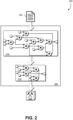
- Figure 2 illustrates an example 200 of an embodiment of the present disclosure. Specifically, figure 2 depicts a smart contract 206 that is converted to an arithmetic circuit 214, which is then reduced by an arithmetic circuit optimisation module in order to reduce the required resources necessary for a worker node 250 in a blockchain to determine an outcome of the smart contract 206.
- the smart contract 202 is a contract or agreement written in a format that allows a computing device either to execute the terms of the contract and/or to determine whether the terms of the contract have been fulfilled.
- the smart contract 202 may include a set of rules and/or conditions that, as a result of being evaluated against a set of input values, allows a computing device to determine the outcome of the smart contract 202, which can then cause further actions to be performed dependent upon the outcome.
- An object of the present disclosure is to describe a protocol that allows entities to compose the set of rules and/or set of conditions, such as that of the smart contract 202, using a domain-specific programming language.
- a domain-specific programming language or "domain-specific language” refers to a computer programming language designed for use in a particular field of use. Examples of DSLs include Hypertext Markup Language (HTML), Actulus Modeling Language (AML), Digital Asset Modeling Language (DAML), Financial Products Markup Language (FpML), and Emacs Lisp.
- a general-purpose programming language or "general-purpose language” in contrast to a DSL, is broadly applicable.
- general-purpose programming languages include Ada, ALGOL, Assembly language, BASIC, Boo, C, C++, C#, Clojure, COBOL, Crystal, D, Dart, Elixir, Erlang, F#, Fortran, Go, Harbour, Haskell, Idris, Java, JavaScript, Julia, Lisp, Lua, Modula-2, NPL, Oberon, Objective-C, Pascal, Perl, PHP, Pike, PL/I, Python, Ring, RPG, Ruby, Rust, Scala, Simula, Swift, and Tcl.
- C++ which may be referred to in embodiments of the present disclosure, is a general-purpose programming language with imperative, object-oriented and general programming features, while also providing facilities for low-level memory manipulation.
- the arithmetic circuit 214 is a directed acyclical graph (DAG) that represents the smart contract 202. That is, the edges of the DAG ("wires") may represent input values or values between nodes in the graph and the nodes may represent arithmetic operations (e.g., sum, product, etc.).
- the input values to the arithmetic circuit 214 are associated with the input values to the smart contract and, in embodiments, the outcome of the smart contract matches the outcome of the arithmetic circuit 214.
- a match does not necessarily require equality. For example, two values may match if they are not equal but mathematically equivalent. As another example, two values may match if they correspond to a common object (e.g. value) or are in some predetermined way complementary and/or they satisfy one or more matching criteria. Generally, any way of determining whether there is a match may be used.
- the reduced arithmetic circuit 216 is the result of the arithmetic circuit having been reduced by the arithmetic circuit reducing module 220 according to Boolean minimisation rules or other mathematic equivalency rules.
- Boolean minimisation rules or other mathematic equivalency rules.
- the expression u + uv can be simply minimised to u, and similarly the arithmetic circuit: can be minimised to simply:
- the arithmetic circuit reducing module 220 can reduce/simplify the arithmetic circuit 214 by evaluating the arithmetic circuit 214 for ways to reduce or minimise the circuit, thereby producing the reduced arithmetic circuit 216 that the arithmetic circuit reducing module 220 outputs.
- the arithmetic circuit reducing module 220 is hardware or software that, as a result of being executed, produces the reduced arithmetic circuit 216 by performing the operations of comparing the product terms in the arithmetic circuit 214 with Boolean minimisation rules or other mathematic equivalency rules in order to determine where and how the arithmetic circuit 214 can be reduced. Further details on the operations performed by the arithmetic circuit reducing module 220 are found in the descriptions of figures 7-9 .
- the worker node 250 is a node in a blockchain network, similar to the nodes 102 of figure 1 and the worker node 350 in figure 3 . That is, the worker node 250 may be a computing device configured to process and/or validate blockchain transactions that is communicatively coupled to one or more other nodes in a blockchain network.
- the worker node 250 in some embodiments, may be designed to determine the output of an arithmetic circuit, such as the reduced arithmetic circuit 216, given a set of input values.
- the execution of the contract can be outsourced to untrusted parties, while the correctness of the contract execution can be publicly verified.
- the protocol makes use of cryptographic primitives that ensure completeness, soundness, and zero-knowledge.
- completeness refers to a verifier being able to determine the validity of the output if the prover follows the protocol correctly.
- soundness refers to the inability of a prover to deceive a verifier as to the authenticity of the output.
- zero-knowledge refers to the ability of a verifier to validate the output without being able to derive the inputs used to generate the output.
- a DSL designed to make smart contract writing and reading easier for humans without non-specialist programmers having to implement any cryptography themselves may be used to generate smart contracts.
- a compiler/interpreter will automatically compile the DSL source code from a user to a cryptographic protocol usable with a blockchain.
- embodiments provide a highly optimised solution for the representation of a complex contract in terms of simple arithmetic gates. This representation can be seen as a solution or tool for the construction of a comprehensive pipeline able to provide a distributed verifiable computation.
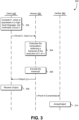
- Figure 3 is a diagram illustrating an example of a process 300 of verifiable computation and actors involved in an embodiment of the present disclosure.
- the process 300 of verifiable computation may include a client node 340, a worker node 350, and a verifier node 360 involved in performing steps in a verifiable computation protocol in an embodiment of the present disclosure.
- one or more of the client node 340, the worker node 350, or the verifier node 360 are nodes in a blockchain network such as the nodes 102 in the example blockchain network 100 of figure 1 .
- a setup phase involves writing contracts in a DSL.
- An interpreter which may be the client node 340, takes as input the source code and produces an arithmetic circuit which consists of "wires" that carry values from a field and connect to addition and multiplication gates.
- arithmetic circuit itself may be a DAG, rather than a hardware circuit, and the wires may be the edges in the DAG. However, it is contemplated that the arithmetic circuit could be embodied in a physical circuit having wires and logic gates.
- the client node 340 compiles a computation written in a GPL into an arithmetic circuit .
- the client node 340 supplies the arithmetic circuit C and the input x to the worker node 350.
- an embodiment of the present disclosure can generate a quadratic program that includes a set of polynomials that provides a complete description of the original circuit . Then, public parameters may be generated to be used by the worker node 350 and the verifier node 360 in performing and verifying the quadratic program.
- the worker node 350 executes the circuit C or the quadratic program on the input x and claims that the output is y .
- the worker node 350 i.e., the prover
- the worker node 350 is expected to obtain a valid transcript for ⁇ ,x, y ⁇ ; thus, in 306 of the process 300, the worker node 350 encodes the transcript.
- a valid transcript for ⁇ ,x, y ⁇ is an assignment of values to the circuit wires such that the values assigned to the input wires are those of x, the intermediate values correspond to the correct operation of each gate in , and the values assigned to the output wire(s) is y ; if the claimed output is incorrect (i.e., y ⁇ ( x )) , then a valid transcript for ⁇ , x, y ⁇ does not exist.
- the worker node 350 provides the output y to the client node 340.
- a public evaluation key EK and the public verification key VK are derived using a secret value s selected by or from the client node 340.
- the worker node 350 uses these public keys to evaluate the computation on a particular input x.
- the output y , the values of the internal circuit wires, and EK are used to produce the proof-of-correctness ⁇ .
- the proof ⁇ can be stored on the blockchain and verified by multiple parties (e.g., the verifier node 360) without requiring the worker node 350 to separately interact with the multiple parties. In this manner, a verifier node 360 can validate the transaction in 310 using the public verification key VK and the proof ⁇ , thereby validating the contract.
- FIG. 4 illustrates an example 400 of the workflow from a smart contract encoded in a DSL to a quadratic arithmetic program (QAP) in accordance with an embodiment of the present disclosure.
- figure 4 depicts a DSL smart contract 402 that is converted by a converter 404 into a GPL contract 406.
- a GPL precompiler 408 also known as a preprocessor
- the GPL pre-processed contract 412 is transformed into an arithmetic circuit 414, which is optimised to produce a reduced arithmetic circuit 416 from which QAP polynomials 418 are derived.
- the DSL smart contract 402 is a contract written in a formal language having precise semantics.
- the DSL smart contract 402 includes a set of conditions, and the outcome of the DSL smart contract 402 depends on fulfilment of the set of conditions.
- An example of a smart contract is an insurance contract that takes, as input, a premium of an insuree and potential distribution to the insuree by an insurer.
- execution of the smart contract distributes the premium to the insurer and dispenses the distribution for the loss to the insuree.
- execution of the smart contract distributes the premium to the insurer and returns the potential distribution to the insurer.
- the converter 404 is a software program that, as a result of execution, receives a set of conditions, such as the DSL smart contract 402, written in a DSL and translates the DSL code into GPL source code, such as the GPL contract 406.
- the GPL contract 406 is a GPL program, such as a C++ program, that contains the contract defined in the DSL smart contract 402.
- the GPL precompiler 408 is a computer-executable program that processes the GPL contract 406 and the required external libraries 410 to produce the stand-alone GPL pre-processed contract 412. In embodiments, the GPL precompiler 408 evaluates constant expressions and registers symbols found in the GPL contract 406.
- the external libraries 410 are collections of pre-written subroutines, functions, classes, containers, values, and/or variable types utilised by the GPL contract 406 by invocation. For example, by invoking the external libraries 410, the GPL contract 406 gains the functionality of that library without having to implement the functionality itself.
- the GPL pre-processed contract 412 includes a set of expressions and operators.
- the main function is produced to have a predefined name and format.
- the arithmetic circuit 414 is a DAG over a set of variables.
- every node of the DAG with an indegree of zero is an input gate representing a variable (e.g., x i ), and every other node of the DAG is a sum gate (+) or a product gate ( ⁇ ).
- every gate (node) has an outdegree of one, so the underlying graph is a directed tree.
- the arithmetic circuit 414 has two measures of complexity: size and depth.
- a "size" of an arithmetic circuit is based on a number of gates within the arithmetic circuit 414.
- "depth" of the arithmetic circuit is based on the length of the longest directed path within the arithmetic circuit.
- any Boolean function can be expressed in its minterm canonical form.
- a product term in which each of the variables appears once, in either its natural or complemented form may be referred to as a minterm. That is, in some examples, a "minterm” is a logical expression of n variables that employs only the complement operator (') and the conjunction operator (). For example, abcd and ab'cd' are two minterms of f ( a, b, c, d). In this manner, there will be 2 n f in n variables.
- an "implicant” refers to a product covering a group of minterms of f (i.e., a product term P in a sum of products is an implicant of f if f takes the value 1 whenever P equals 1.
- a "prime implicant” refers to an implicant that cannot be covered by a more general (e.g., with fewer literals) implicant.
- a prime implicant is a product term P that results in a non-implicant for f if any literal is removed from P.
- the process of removing literals from a Boolean term may be referred to as "expansion". Expanding by one literal doubles the number of input combinations for which the term is true. For example, abc' can be expanded to ab or bc' without changing the cover of f.
- the sum of all prime implicants of a Boolean function may be referred to as a "Blake canonical form".
- the prime implicants that cover an output of the function that no combination of other prime implicants is able to cover may be referred to as "essential prime implicants”.
- the number of prime implicants of a logic function with n input variables can be as large as 3 n / n.
- An extraction of a minimum prime cover is known to belong to the class of nondeterministic polynomial time-complete (NP-complete) problems.
- the following method illustrates one example of building a chart of prime implicants using a Quine-McCluskey algorithm.
- the Quine-McCluskey algorithm found in McCluskey, Minimization of Boolean Functions (1956 ) returns a complete list of prime implicants of a Boolean function.
- the prime implicants returned are used to build a prime implicant table, which may be used as the input to one or more algorithms for the extraction of the essential prime implicants of the function.
- each minterm in v can be expressed as product of natural or complemented inputs depending on the x i values. Pairs of minterms can be combined if their representation varies by a single digit changing. Terms that cannot be combined further are prime implicants.
- the essential prime implicant table is constructed using the list of irreducible prime implicants.
- f can be expressed as sum of the following minterms:
- Table 1 Prime implicants Index vector v Input variables x 4 8 10 11 12 15 a b c d m 4,12 ⁇ ⁇ - 1 0 0 m 8,9,10,11 ⁇ ⁇ ⁇ 1 0 - - m 8,10,12,14 ⁇ ⁇ ⁇ 1 - - 0 m 10,11,14,15 ⁇ ⁇ ⁇ 1 - 1 -
- a "tick" in the table corresponds to a prime implicant requiring a given index vector; that is, a given input sequence, in order to be true. If a column of v has only one tick, then the corresponding minterm can be covered by one prime implicant only. Such prime implicant is essential for f .
- the reduced arithmetic circuit 416 is a reduced or minimised directed acyclical graph (DAG) that can be used to determine the outcome of a set of conditions, such as those specified in the DSL smart contract 402, given a set of inputs.
- DAG directed acyclical graph
- the reduced arithmetic circuit 416 is a minimised (i.e., reduced to the smallest degree) arithmetic circuit.
- the most optimal arithmetic circuit may not necessarily be the smallest arithmetic circuit (e.g., certain larger arithmetic circuit may be evaluated more quickly than larger arithmetic circuits depending on the number and types of arithmetic operations in the circuit), and in such embodiments the reduced arithmetic circuit 416 is an optimised (e.g., for maximum speed, less memory usage, most efficient processor utilisation, etc.), but not necessarily minimised, arithmetic circuit.
- optimised e.g., for maximum speed, less memory usage, most efficient processor utilisation, etc.
- the QAP polynomials 418 are one or more expressions comprising variables and coefficients expressed in a mathematical formula that provides a complete description of the original arithmetic circuit (e.g., arithmetic circuit 414 of figure 4 ).
- the polynomials of the QAP polynomials are defined in terms of their evaluations at the roots of the arithmetic circuit such as described in Gennaro, R. et al., Quadratic Span Programs and Succint NIZKs without PCPs (2013 ).
- the QAP polynomials are encoded into a locking script of a blockchain transaction as a representation of the smart contract.
- the locking script upon execution, receives a set of parameter values (e.g., as a result of execution of a locking script), which are input as variables into the QAP polynomials to cause the result of the smart contract to be determined.
- the GPL precompiler 408 produces the GPL pre-processed contract 412, which may be an arithmetic circuit comprised of arithmetic gates. Note, however, that complex arithmetic circuits also embed logic submodules because of conditional and flow control statements. In embodiments, these submodules are still converted to arithmetic circuits, but they are characterised by 1-bit width gate connections, as can be seen in figure 5 .
- Figure 5 illustrates an example model of an arithmetic circuit 500 containing logic submodules of an embodiment of the present disclosure.
- the arithmetic circuit 500 may include 1-bit inputs 502 and groups of inputs 504 that pass into logic submodules 508A-08B and/or ungrouped arithmetic gates 506A-06D to produce an output 510.
- the thick lines in figure 5 represent groups of 1-bit width wires (e.g., a bus) and the thin lines represent 1-bit bit wires.
- logic circuit reduction can be applied to the logic submodules 508A-08B in the arithmetic circuit 500.
- Each of the logic submodules*508A-08B may comprise proper (strict) subsets of the set of nodes in the arithmetic circuits. In other words, a logic submodule may not encompass the entirety of the arithmetic circuit. Furthermore, in some embodiments the logic submodules*508A-08B are nonintersecting; i.e., in such embodiments the logic submodules*508A-08B would not share any internal gates. Moreover, because the logic submodules 508A-08B do not share any internal gate in such embodiments, the reduction procedure can be parallelised (e.g., each of the logic submodules 508A-08B can be reduced in parallel) to reduce the time complexity of the operation.
- the 1-bit inputs 502 are wires that can carry a value representative of either 1 or 0, whereas the groups of inputs 504 represent a plurality of 1-bit wires.
- Complex arithmetic circuits may embed logic submodules derived from conditional and flow control statements. In embodiments, these logic submodules are also converted to arithmetic circuits, but may be characterised by 1-bit width gate connections, such as the logic submodules 508A-08B depicted. In some embodiments, the wires in the logic submodules 508A-08B are 1-bit width only.
- logic reduction may also be applied to the logic submodules 508A-08B.
- the reduction procedure may be parallelised to reduce the time complexity of the arithmetic circuit 500; for example, separate processor cores may be allocated to perform logic reduction on each of the logic submodules 508A-08B.
- a computationally optimised heuristic may be utilised to assign the logic submodules 508A-08B to different processing cores for logic reduction.
- the computationally optimised heuristic may be a heuristic designed to optimise computational resource usage.
- LPT longest processing time
- the scheduler tries to balance the computational load for each transaction. Further details may be found below in the description of figure 7 .
- the ungrouped arithmetic gates 506A-06D may not be reduced in parallel because the ungrouped arithmetic gates 506A-06D are shared by a groups of 1-bit wires, such as the groups of inputs 504. Note that in embodiments, reduction applies to the number of gates but the number of inputs (e.g., the 1-bit inputs 502 and the group of inputs 504) remain the same.
- the output 510 is a result of the operations performed on the inputs 502 and 504 in accordance with the arithmetic circuit 500.
- the result is a value of true or false.
- the result is a set of one or more 1-bit values.
- the result may be any other value or value supported by the arithmetic circuit.
- the Quine-McCluskey algorithm can return the complete list of prime implicants of a Boolean function f .
- the method described in Petrick, A Direct Determination of the Irredundant Forms of a Boolean Function from the Set of Prime Implicants (1956 ) (Petrick's method) can be used to reduce the number of prime implicants in order to represent f as a composition of essential prime implicants as described below.
- Boolean function f represented in a prime implicant table (e.g., the prime implicant table 1) can be expressed in a dual form using an auxiliary Boolean function f* .
- f * bc ′ d ′ ab ′ + ad ′ ab ′ + ad ′ + ac ′ ab ′ + ac bc ′ d ′ + ad ′ ac
- Boolean functions can be further simplified using certain Boolean rules, such as the rules shown below:
- z ik represents the k -th prime implicant contributing to the sum ⁇ i .
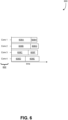
- FIG. 6 illustrates an example 600 of reducing logic submodules in an embodiment of the present disclosure.
- FIG. 6 depicts an illustrative example of a system processing eight logic submodules 608A-08H using four processor cores 622.
- an LPT greedy algorithm is used with the goal being for all of the processor cores to finish processing as near to the same time as possible in order to optimise the processor usage of the system.
- the logic submodules 608A-08H may ordered by complexity (e.g., number of logic gates in the logic submodules 608A-08H) as an estimate of the processing time of the logic submodules 608A-08H relative to each other. It is contemplated, however, that other methods of estimating processing time for the logic submodules 608A-08H may be used.
- the first four logic submodules 608A-08D having the longest estimated processing time may be distributed in a round robin or pseudorandom fashion among the processor cores 622.
- the logic submodule 608D being processed by core 4, having the smallest estimated processing time of the four, finishes first. Consequently, core 4 is allocated the unprocessed logic submodule having the fifth longest estimated processing time, which is logic submodule 608E.
- Core 3 finishes processing logic submodule 608C next, and it is allocated the logic submodule with the sixth longest estimated processing time, logic submodule 608F.
- Core 2 finishes processing logic submodule 608B, and receives logic submodule 608G.
- core 1 finishes processing the logic submodule with the longest estimated processing time, and receives the logic submodule having the shortest estimated processing time of the eight logic submodules 608A-08H, logic submodule 608H.
- all four processor cores 622 finish processing the eight logic submodules 608A-08H near to the same time, resulting in reduced processor idle time.
- Figure 7 illustrates an example 700 of prime implicant reduction of an embodiment of the present disclosure.
- figure 7 depicts a set of prime implicants ⁇ 1 to ⁇ 5 that are simplified according to the steps described above, such as by the arithmetic circuit reducing module 220 of figure 2 .
- the product terms ⁇ i as a list ⁇ 1 , ... , ⁇ M ⁇ .
- two members of the list are compared (referred to as "left" and "right” members) and simplified if possible.
- the left member 702A ( ⁇ 1 ) is paired with the right member 704A ( ⁇ 2 ) and the product terms of f* are simplified using Boolean simplification rules, such as those listed above. If the left member 702A and the right member 704A can be simplified, then the left member will be substituted with a new term ⁇ 12 . However, in the example 700 it can be seen that the left member 702A and the right member 704A cannot be simplified further.
- the left member 702B ( ⁇ 1 ) is joined with the right member 704B ( ⁇ 3 ) and processed according to the Boolean simplification rules.
- the left member 702B and the right member 704B can be simplified to ⁇ 13 .
- the left member 702C ( ⁇ 13 ) is compared with the right member 704C ( ⁇ 4 ).
- the left member 702C and the right member 704C cannot be simplified further.
- the left member 702D and the right member 704D ( ⁇ 5 ) likewise cannot be simplified further.
- the left member is set to its next member in the list, in the example 700 the next member is ⁇ 2 . Consequently, at time t 5 , the left member 702E ( ⁇ 2 ) is joined with the right member 704E ( ⁇ 4 ) and, in accordance with the Boolean simplification rules, they simplified to ⁇ 24 , which becomes the value of the left member. Therefore, at time t 6 , the left member 702F ( ⁇ 24 ) is joined with the right member ( ⁇ 5 ), processed, and simplified to ⁇ 245 . The process ends when no more checks are available, which is seen at time t 7 .
- each simplification step for a pair (left, right) consists in the execution of the following operations:
- the u term in rules 1, 2, and 3 represents the common part in the (left, right) pair.
- a crosscheck (intersection) between the addends of left and right members in the embodiments is characterised by a time complexity O ( n 2 ) or O ( n log n ), depending on the specific implementation (e.g., naive or sorted lists).
- the remaining product terms ⁇ i can be represented in explicit form as sum of p terms ⁇ * with time complexity O (1).
- individual logic submodules such as the logic submodules 508A-08B of figure 5
- a computationally optimised heuristic is performed by a scheduler to assign the individual logic submodules to different processing cores for the logic reduction stage, called a LPT greedy algorithm. If the jobs are sorted by their processing time and then assigned to the machine (processing core) with the earliest end time so far, the scheduler tries to balance the computational load for each logic submodule being processed.
- submodules S i may be assigned to the processing cores in a round-robin fashion without considering the g i values.
- FIG 8 is a flowchart illustrating an example of a process 800 for transforming a DSL contract to a reduced arithmetic circuit in accordance with various embodiments.
- Some or all of the process 800 can be performed under the control of one or more computer systems configured with executable instructions and/or other data, and may be implemented as executable instructions executing collectively on one or more processors.
- the executable instructions and/or other data can be stored on a non-transitory computer-readable storage medium (e.g., a computer program persistently stored on magnetic, optical, or flash media).
- process 800 can be performed by one or more computing devices (e.g., by a server in a data centre, by a client computing device, by multiple computing devices in a distributed system of a computing resource service provider, or by any suitable electronic client device such as the computing device 1000 of figure 10 ).
- the process 800 includes a series of operations wherein a smart contract written in a DSL is converted to a GPL, precompiled, and transformed into an arithmetic circuit.
- the arithmetic circuit is reduced in accordance with techniques described in the present disclosure and output.
- the system performing the process 800 obtains a smart contract written in a DSL.
- a DSL may be a computer programming language designed for use in a particular field.
- a DSL devised for composing financial instruments such as smart contract may be used.
- Such DSLs may make smart contracts easier for an average user to write and read and may allow non-specialist programmers to write smart contracts without having to implement any cryptography.
- the system performing the process 800 converts the smart contract to a GPL.
- the DSL smart contract is converted to a general form that can be compiled/interpreted into a cryptographic protocol for use in a blockchain.
- the GPL is C++ source code but it is contemplated that other GPL languages may be used.
- the GPL source code is precompiled, which may include bringing library files and/or other dependencies into the precompiled source code.
- the process of pre-compiling may also obfuscate variable names, which may have the benefit of disguising the nature of the smart contract from the public after it is committed to the blockchain.
- the system performing the process 800 transforms the precompiled source code into an arithmetic circuit, for example by converting various commands, conditional statements, variables, arithmetic operations into an arithmetic algorithm.
- This arithmetic algorithm may be expressed as a directed cyclical graph similar to the one shown in figure 5 .
- the system performing the process 800 performs a reduction process on the arithmetic algorithm produced in 808.
- the reduction process may be similar to the process 900 of figure 9 .
- This reduction process may result in a smaller, simplified arithmetic algorithm that can be processed more efficiently by a blockchain node, such as the nodes 102 of figure 1 .
- the system performing the process 800 outputs the reduced arithmetic circuit.
- the system provides the reduced circuit to another process that transforms the reduced circuit into QAP polynomials, such as the QAP polynomials 418 of figure 4 .
- the system provides the reduced circuit to a data store or other storage resource for future use.
- the system provides, such as through a display of a user interface, the reduced circuit to one or more entities (e.g., entities that created or are affected by) the original DSL contract through the user interface. Note that one or more of the operations performed in 802-12 may be performed in various orders and combinations, including in parallel.
- Figure 9 is a flowchart illustrating an example of a process 900 for arithmetic circuit reduction of a pre-compiled GPL smart contract in accordance with various embodiments.
- Some or all of the process 900 (or any other processes described, or variations and/or combinations of those processes) can be performed under the control of one or more computer systems configured with executable instructions and/or other data, and may be implemented as executable instructions executing collectively on one or more processors.
- the executable instructions and/or other data can be stored on a non-transitory computer-readable storage medium (e.g., a computer program persistently stored on magnetic, optical, or flash media).
- a non-transitory computer-readable storage medium e.g., a computer program persistently stored on magnetic, optical, or flash media.
- process 900 can be performed by one or more computing devices (e.g., by a server in a data centre, by a client computing device, by multiple computing devices in a distributed system of a computing resource service provider, or by any suitable electronic client device such as the computing device 1000 of figure 10 ).
- the process 900 may be performed as a result of executing the arithmetic circuit reducing module 220 of figure 2 .
- the process 900 includes a series of operations wherein prime implications of an arithmetic logic circuit are determined and expressed as a product of sums, each pair of product terms are compared against logic rules to determine whether the product terms can be simplified, and after all pairs are simplified, the arithmetic circuit is output in reduced form.
- the operations of the process 900 expand upon the operations in 810 of figure 8 .
- the system performing the process 900 obtains the arithmetic circuit.
- the arithmetic circuit may be comprised of a set of minterms.
- the obtained arithmetic circuit may be transformed from precompiled GPL source code, such as from the GPL pre-processed contract 412 of figure 4 .
- the obtained arithmetic circuit represents a smart contract.
- the smart contract was previously written in a DSL format and converted into a GPL format.
- the system performing the process isolates the prime implicants of the arithmetic logic circuit, such as in the manner described above in relation to figure 4 . That is, the system may determine a set of implicants from the set of minterms of the arithmetic circuit. The system may determine which members of the set of implicants comprise the set of prime implicants (i.e., the product terms that result in a non-implicant if any literals are removed) of the arithmetic circuit.
- the set of prime implicants may be treated as a product of the sums ⁇ i of the prime implicants, such as in the manner described above in relation to figure 5 .
- the system performing the process 900 compares first pair of product terms ⁇ L and ⁇ R to determine in 910 whether the pair can be simplified according to Boolean logic rules, such as in the manner described in relation to figure 7 . If not, the system proceeds to 914. Otherwise, if so, the system combines and simplifies the pair in 912, whereupon the system then proceeds to 914.
- the system performing the process 900 determines whether all pairs of product terms have been compared and found to be irreducible. If not, then the system returns to 908 to compare the next pair of product terms. Otherwise, in 916, the system outputs the reduced product terms as a sum of products that is the reduced arithmetic circuit. As noted above in relation to 812 of figure 8 , the system may output the reduced arithmetic circuit to another process for further processing, to a data store, to data file, or to a user interface. Note that one or more of the operations performed in 902-16 may be performed in various orders and combinations, including in parallel.
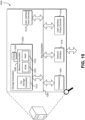
- FIG 10 is an illustrative, simplified block diagram of a computing device 1000 that can be used to practice at least one embodiment of the present disclosure.
- the computing device 1000 can be used to implement any of the systems illustrated and described above.
- the computing device 1000 can be configured for use as a data server, a web server, a portable computing device, a personal computer, or any electronic computing device.
- the computing device 1000 could include one or more processors 1002 that, in embodiments, communicate with and are operatively coupled to a number of peripheral subsystems via a bus subsystem 1004.
- these peripheral subsystems include a storage subsystem 1006 comprising a memory subsystem 1008 and a file/disk storage subsystem 1010, one or more user interface input devices 1012, one or more user interface output devices 1014, and a network interface subsystem 1016.
- a storage subsystem 1006 comprising a memory subsystem 1008 and a file/disk storage subsystem 1010, one or more user interface input devices 1012, one or more user interface output devices 1014, and a network interface subsystem 1016.
- Such storage subsystem 1006 could be used for temporary or long-term storage of information.
- the bus subsystem 1004 provides a mechanism for enabling the various components and subsystems of computing device 1000 to communicate with each other as intended. Although the bus subsystem 1004 is shown schematically as a single bus, alternative embodiments of the bus subsystem utilise multiple busses.
- the network interface subsystem 1016 provides an interface to other computing devices and networks. The network interface subsystem 1016, in some embodiments, serves as an interface for receiving data from and transmitting data to other systems from the computing device 1000. In some embodiments, the bus subsystem 1004 is utilised for communicating data such as details, search terms, and so on.
- the user interface input devices 1012 includes one or more user input devices such as a keyboard; pointing devices such as an integrated mouse, trackball, touchpad, or graphics tablet; a scanner; a barcode scanner; a touch screen incorporated into the display; audio input devices such as voice recognition systems, microphones; and other types of input devices.
- user input devices such as a keyboard
- pointing devices such as an integrated mouse, trackball, touchpad, or graphics tablet
- a scanner such as an integrated mouse, trackball, touchpad, or graphics tablet
- a scanner such as an integrated mouse, trackball, touchpad, or graphics tablet
- a scanner such as an integrated mouse, trackball, touchpad, or graphics tablet
- a scanner such as an integrated mouse, trackball, touchpad, or graphics tablet
- a scanner such as an integrated mouse, trackball, touchpad, or graphics tablet
- barcode scanner such as a barcode scanner
- touch screen incorporated into the display
- audio input devices such as voice recognition systems, microphones
- the one or more user interface output devices 1014
- the display subsystem includes a cathode ray tube (CRT), a flat-panel device such as a liquid crystal display (LCD), light emitting diode (LED) display, or a projection or other display device.
- CTR cathode ray tube
- LCD liquid crystal display
- LED light emitting diode
- output device is intended to include all possible types of devices and mechanisms for outputting information from the computing device 1000.
- the one or more user interface output devices 1014 can be used, for example, to present user interfaces to facilitate user interaction with applications performing processes described and variations therein, when such interaction may be appropriate.
- the storage subsystem 1006 provides a computer-readable storage medium for storing the basic programming and data constructs that provide the functionality of at least one embodiment of the present disclosure.
- the applications programs, code modules, instructions
- the storage subsystem 1006 additionally provides a repository for storing data used in accordance with the present disclosure.
- the storage subsystem 1006 comprises a memory subsystem 1008 and a file/disk storage subsystem 1010.
- the memory subsystem 1008 includes a number of memories, such as a main random access memory (RAM) 1018 for storage of instructions and data during program execution and/or a read only memory (ROM) 1020, in which fixed instructions can be stored.
- the file/disk storage subsystem 1010 provides a non-transitory persistent (non-volatile) storage for program and data files and can include a hard disk drive, a floppy disk drive along with associated removable media, a Compact Disk Read Only Memory (CD-ROM) drive, an optical drive, removable media cartridges, or other like storage media.
- CD-ROM Compact Disk Read Only Memory
- the computing device 1000 includes at least one local clock 1024.
- the at least one local clock 1024 in some embodiments, is a counter that represents the number of ticks that have transpired from a particular starting date and, in some embodiments, is located integrally within the computing device 1000.
- the at least one local clock 1024 is used to synchronise data transfers in the processors for the computing device 1000 and the subsystems included therein at specific clock pulses and can be used to coordinate synchronous operations between the computing device 1000 and other systems in a data centre.
- the local clock is a programmable interval timer.
- the computing device 1000 could be of any of a variety of types, including a portable computer device, tablet computer, a workstation, or any other device described below. Additionally, the computing device 1000 can include another device that, in some embodiments, can be connected to the computing device 1000 through one or more ports (e.g., USB, a headphone jack, Lightning connector, etc.). In embodiments, such a device includes a port that accepts a fibre-optic connector. Accordingly, in some embodiments, this device is that converts optical signals to electrical signals that are transmitted through the port connecting the device to the computing device 1000 for processing. Due to the ever-changing nature of computers and networks, the description of the computing device 1000 depicted in figure 10 is intended only as a specific example for purposes of illustrating the preferred embodiment of the device. Many other configurations having more or fewer components than the system depicted in figure 10 are possible.
- ports e.g., USB, a headphone jack, Lightning connector, etc.
- this device is that converts optical signals to electrical signals that are transmitted through
- the conjunctive phrases "at least one of A, B, and C” and "at least one of A, B, and C” refer to any of the following sets: ⁇ A ⁇ , ⁇ B ⁇ , ⁇ C ⁇ , ⁇ A, B ⁇ , ⁇ A, C ⁇ , ⁇ B, C ⁇ , ⁇ A, B, C ⁇ .
- conjunctive language is not generally intended to imply that certain embodiments require at least one of A, at least one of B and at least one of C each to be present.
- Processes described can be performed under the control of one or more computer systems configured with executable instructions and can be implemented as code (e.g., executable instructions, one or more computer programs or one or more applications) executing collectively on one or more processors, by hardware or combinations thereof.
- the code can be stored on a computer-readable storage medium, for example, in the form of a computer program comprising a plurality of instructions executable by one or more processors.
- the computer-readable storage medium is non-transitory.
- the invention can be implemented by means of hardware comprising several distinct elements, and by means of a suitably programmed computer.
- a device claim enumerating several means several of these means can be embodied by one and the same item of hardware.
- the mere fact that certain measures are recited in mutually different dependent claims does not indicate that a combination of these measures cannot be used to advantage.
- the novel technique described and suggested in the present disclosure extend the functionality of the blockchain without disrupting the properties of the blockchain that ensure the integrity of the data stored within the blockchain data structure.
- the techniques may improve the field of computing, specifically in the field of digital record validation where conditions for validation are defined within blockchain transactions embedded in the records.
- the techniques described and suggested in the present disclosure may further improve the field of computing in the field of smart contract generation and execution by enabling blockchain nodes to optimise processing resource usage by simplifying the smart contracts being validated on the blockchain.
- techniques described and suggested in the present disclosure may improve the efficiency of blockchain nodes by transforming a smart contract into a reduced arithmetic circuit from which a quadratic arithmetic program can be derived, thereby enabling a blockchain node to execute the smart contract more efficiently.
- techniques described and suggested in the present disclosure may be necessarily rooted in computer technology in order to overcome problems specifically arising with smart contract details being publicly viewable once a smart contract is committed to the blockchain by converting the smart contract from a DSL to a GPL and then to a reduced arithmetic, the result causing some of the details of the smart contract to be obfuscated.
Landscapes
- Engineering & Computer Science (AREA)
- Computer Security & Cryptography (AREA)
- Computer Networks & Wireless Communication (AREA)
- Signal Processing (AREA)
- Theoretical Computer Science (AREA)
- General Engineering & Computer Science (AREA)
- Business, Economics & Management (AREA)
- Physics & Mathematics (AREA)
- General Physics & Mathematics (AREA)
- Software Systems (AREA)
- Accounting & Taxation (AREA)
- Computing Systems (AREA)
- General Business, Economics & Management (AREA)
- Finance (AREA)
- Strategic Management (AREA)
- Computer Hardware Design (AREA)
- Databases & Information Systems (AREA)
- Power Engineering (AREA)
- Data Mining & Analysis (AREA)
- Economics (AREA)
- Development Economics (AREA)
- Mathematical Analysis (AREA)
- Mathematical Physics (AREA)
- Mathematical Optimization (AREA)
- Algebra (AREA)
- Pure & Applied Mathematics (AREA)
- Financial Or Insurance-Related Operations Such As Payment And Settlement (AREA)
- Devices For Executing Special Programs (AREA)
- Storage Device Security (AREA)
- Information Retrieval, Db Structures And Fs Structures Therefor (AREA)
- Executing Machine-Instructions (AREA)
- Management, Administration, Business Operations System, And Electronic Commerce (AREA)
- Two-Way Televisions, Distribution Of Moving Picture Or The Like (AREA)
- Stored Programmes (AREA)
- Debugging And Monitoring (AREA)
Applications Claiming Priority (8)
| Application Number | Priority Date | Filing Date | Title |
|---|---|---|---|
| GBGB1718505.9A GB201718505D0 (en) | 2017-11-09 | 2017-11-09 | Computer-implemented system and method |
| GBGB1719998.5A GB201719998D0 (en) | 2017-11-30 | 2017-11-30 | Computer-Implemented system and method |
| GBGB1720768.9A GB201720768D0 (en) | 2017-12-13 | 2017-12-13 | Computer-implemented system and method |
| GBGB1801753.3A GB201801753D0 (en) | 2018-02-02 | 2018-02-02 | Computer-implemented system and method |
| GBGB1805948.5A GB201805948D0 (en) | 2018-04-10 | 2018-04-10 | Computer-implemented system and method |
| GBGB1806444.4A GB201806444D0 (en) | 2018-04-20 | 2018-04-20 | Computer-implemented system and method |
| PCT/IB2018/058432 WO2019092542A1 (fr) | 2017-11-09 | 2018-10-29 | Système de simplification d'instructions exécutables pour des calculs vérifiables optimisés |
| EP18797157.7A EP3707623B1 (fr) | 2017-11-09 | 2018-10-29 | Système de simplification d'instructions exécutables pour des calculs vérifiables optimisés |
Related Parent Applications (2)
| Application Number | Title | Priority Date | Filing Date |
|---|---|---|---|
| EP18797157.7A Division EP3707623B1 (fr) | 2017-11-09 | 2018-10-29 | Système de simplification d'instructions exécutables pour des calculs vérifiables optimisés |
| EP18797157.7A Division-Into EP3707623B1 (fr) | 2017-11-09 | 2018-10-29 | Système de simplification d'instructions exécutables pour des calculs vérifiables optimisés |
Publications (2)
| Publication Number | Publication Date |
|---|---|
| EP4546718A2 true EP4546718A2 (fr) | 2025-04-30 |
| EP4546718A3 EP4546718A3 (fr) | 2025-05-14 |
Family
ID=64100702
Family Applications (9)
| Application Number | Title | Priority Date | Filing Date |
|---|---|---|---|
| EP22170376.2A Pending EP4092953A1 (fr) | 2017-11-09 | 2018-10-29 | Système d'enregistrement de clés de vérification sur une chaîne de blocs |
| EP25184395.9A Pending EP4637076A1 (fr) | 2017-11-09 | 2018-10-29 | Système d'enregistrement de clés de vérification sur une chaîne de blocs |
| EP18796782.3A Active EP3707871B1 (fr) | 2017-11-09 | 2018-10-29 | Système d'enregistrement de clés de vérification sur une chaîne de blocs |
| EP18797158.5A Pending EP3707855A1 (fr) | 2017-11-09 | 2018-10-29 | Système pour protéger une clé de vérification contre une altération et vérifier la validité d'une preuve d'exactitude |
| EP23216404.6A Pending EP4312403A3 (fr) | 2017-11-09 | 2018-10-29 | Amélioration arithmétique de contrats intelligents de type c pour calcul vérifiable |
| EP18796783.1A Active EP3707852B1 (fr) | 2017-11-09 | 2018-10-29 | Amélioration arithmétique de contrats intelligents de type c en vue d'un calcul vérifiable |
| EP18797157.7A Active EP3707623B1 (fr) | 2017-11-09 | 2018-10-29 | Système de simplification d'instructions exécutables pour des calculs vérifiables optimisés |
| EP25163650.2A Pending EP4546718A3 (fr) | 2017-11-09 | 2018-10-29 | Système de simplification d'instructions exécutables pour calcul vérifiable optimisé |
| EP18800333.9A Pending EP3707856A1 (fr) | 2017-11-09 | 2018-11-01 | Système et procédé de calcul distribué |
Family Applications Before (7)
| Application Number | Title | Priority Date | Filing Date |
|---|---|---|---|
| EP22170376.2A Pending EP4092953A1 (fr) | 2017-11-09 | 2018-10-29 | Système d'enregistrement de clés de vérification sur une chaîne de blocs |
| EP25184395.9A Pending EP4637076A1 (fr) | 2017-11-09 | 2018-10-29 | Système d'enregistrement de clés de vérification sur une chaîne de blocs |
| EP18796782.3A Active EP3707871B1 (fr) | 2017-11-09 | 2018-10-29 | Système d'enregistrement de clés de vérification sur une chaîne de blocs |
| EP18797158.5A Pending EP3707855A1 (fr) | 2017-11-09 | 2018-10-29 | Système pour protéger une clé de vérification contre une altération et vérifier la validité d'une preuve d'exactitude |
| EP23216404.6A Pending EP4312403A3 (fr) | 2017-11-09 | 2018-10-29 | Amélioration arithmétique de contrats intelligents de type c pour calcul vérifiable |
| EP18796783.1A Active EP3707852B1 (fr) | 2017-11-09 | 2018-10-29 | Amélioration arithmétique de contrats intelligents de type c en vue d'un calcul vérifiable |
| EP18797157.7A Active EP3707623B1 (fr) | 2017-11-09 | 2018-10-29 | Système de simplification d'instructions exécutables pour des calculs vérifiables optimisés |
Family Applications After (1)
| Application Number | Title | Priority Date | Filing Date |
|---|---|---|---|
| EP18800333.9A Pending EP3707856A1 (fr) | 2017-11-09 | 2018-11-01 | Système et procédé de calcul distribué |
Country Status (9)
| Country | Link |
|---|---|
| US (11) | US11575511B2 (fr) |
| EP (9) | EP4092953A1 (fr) |
| JP (17) | JP2021502636A (fr) |
| KR (8) | KR102738013B1 (fr) |
| CN (9) | CN111316595B (fr) |
| SG (5) | SG11202004149UA (fr) |
| TW (2) | TWI837103B (fr) |
| WO (5) | WO2019092545A1 (fr) |
| ZA (1) | ZA202002575B (fr) |
Families Citing this family (79)
| Publication number | Priority date | Publication date | Assignee | Title |
|---|---|---|---|---|
| US9430909B2 (en) | 2014-04-08 | 2016-08-30 | Micro-Gaming Ventures, LLC | Location-based wagering via remote devices |
| US11783679B2 (en) | 2014-04-08 | 2023-10-10 | Micro-Gaming Ventures, LLC | Location-based wagering via remote devices |
| US10903997B2 (en) | 2017-10-19 | 2021-01-26 | Autnhive Corporation | Generating keys using controlled corruption in computer networks |
| WO2019092552A1 (fr) | 2017-11-09 | 2019-05-16 | nChain Holdings Limited | Systèmes et procédés permettant de garantir l'exécution correcte d'un programme informatique à l'aide d'un système informatique médiateur |
| KR102738013B1 (ko) | 2017-11-09 | 2024-12-05 | 엔체인 홀딩스 리미티드 | 확인 키를 변경으로부터 보호하고 정확성 증명의 유효성을 확인하기 위한 시스템 |
| GB201720946D0 (en) | 2017-12-15 | 2018-01-31 | Nchain Holdings Ltd | Computer-implemented system and method |
| KR102810891B1 (ko) | 2017-12-13 | 2025-05-20 | 엔체인 홀딩스 리미티드 | 암호 자료를 안전하게 공유하기 위한 시스템 및 방법 |
| CN110032568B (zh) * | 2018-12-20 | 2020-05-12 | 阿里巴巴集团控股有限公司 | 数据结构的读取及更新方法、装置、电子设备 |
| WO2020197514A1 (fr) * | 2019-03-27 | 2020-10-01 | Koc Universitesi | Architecture de chaîne de blocs basée sur une table de hachage distribuée pour les environnements à ressources limitées |
| GB201907347D0 (en) * | 2019-05-24 | 2019-07-10 | Nchain Holdings Ltd | In-script functions within a blockchain transaction |
| GB201907345D0 (en) | 2019-05-24 | 2019-07-10 | Nchain Holdings Ltd | Protocol for validating blockchain transactions |
| GB201907392D0 (en) | 2019-05-24 | 2019-07-10 | Nchain Holdings Ltd | Proof-of-work |
| GB201907396D0 (en) * | 2019-05-24 | 2019-07-10 | Nchain Holdings Ltd | Hash function attacks |
| US11570002B2 (en) | 2019-05-29 | 2023-01-31 | International Business Machines Corporation | Reduced-step blockchain verification of media file |
| US11516000B2 (en) * | 2019-05-29 | 2022-11-29 | International Business Machines Corporation | Approximate hash verification of unused blockchain output |
| US11711202B2 (en) | 2019-05-29 | 2023-07-25 | International Business Machines Corporation | Committing data to blockchain based on approximate hash verification |
| US11429738B2 (en) | 2019-05-29 | 2022-08-30 | International Business Machines Corporation | Blockchain endorsement with approximate hash verification |
| US11539527B2 (en) | 2019-05-29 | 2022-12-27 | International Business Machines Corporation | Peer node recovery via approximate hash verification |
| EP3754899B1 (fr) | 2019-06-20 | 2022-03-02 | Telefónica Iot & Big Data Tech, S.A. | Procédé et système pour l'amélioration de la confiance des réseaux inter-dlt |
| WO2019170175A2 (fr) * | 2019-06-28 | 2019-09-12 | Alibaba Group Holding Limited | Système et procédé pour exécuter différents types de contrats de chaîne de blocs |
| CN110445755A (zh) * | 2019-07-04 | 2019-11-12 | 杭州复杂美科技有限公司 | 交易攻击的防御方法、设备和存储介质 |
| GB201913143D0 (en) * | 2019-09-12 | 2019-10-30 | Nchain Holdings Ltd | Running a program from a blockchain |
| GB2587190B (en) | 2019-09-12 | 2021-12-01 | Nchain Holdings Ltd | Storing a program on a blockchain |
| JP7284064B2 (ja) * | 2019-10-16 | 2023-05-30 | 株式会社日立製作所 | コンソーシアムブロックチェーンシステム、計算機、トランザクション承認方法 |
| CN111143859A (zh) * | 2020-01-07 | 2020-05-12 | 杭州宇链科技有限公司 | 一种采集可信数据的模组以及数据传输方法 |
| US11792022B2 (en) | 2020-02-21 | 2023-10-17 | International Business Machines Corporation | Resolution of conflicting data |
| CN115066672A (zh) * | 2020-02-21 | 2022-09-16 | 松下电器(美国)知识产权公司 | 控制方法、分析装置及程序 |
| US12175462B2 (en) * | 2020-02-21 | 2024-12-24 | International Business Machines Corporation | Resolution of conflicting data |
| US11188316B2 (en) * | 2020-03-09 | 2021-11-30 | International Business Machines Corporation | Performance optimization of class instance comparisons |
| CN111506783B (zh) | 2020-04-08 | 2023-12-22 | 百度在线网络技术(北京)有限公司 | 区块链中事务请求处理方法、装置、设备和介质 |
| CN111768187A (zh) * | 2020-08-31 | 2020-10-13 | 支付宝(杭州)信息技术有限公司 | 一种部署智能合约的方法、区块链节点和存储介质 |
| CA3091660A1 (fr) * | 2020-08-31 | 2021-11-03 | Polymath Inc. | Procede, systeme et moyen pour reglement atomique a chaine de blocs |
| CN112926978A (zh) * | 2020-09-07 | 2021-06-08 | 陈建芸 | 基于区块链通信的支付信息处理方法及系统 |
| US12141125B2 (en) * | 2020-09-29 | 2024-11-12 | International Business Machines Corporation | Transaction reordering in blockchain |
| US11029920B1 (en) * | 2020-10-21 | 2021-06-08 | Chariot Technologies Lab, Inc. | Execution of a conditional statement by an arithmetic and/or bitwise unit |
| US12517712B2 (en) | 2020-10-21 | 2026-01-06 | Chariot Technologies Lab, Inc. | Execution of a conditional statement by an arithmetic and/or bitwise unit |
| US11456871B2 (en) * | 2020-11-03 | 2022-09-27 | Provide Technologies, Inc. | System and method for autonomous mapping of enterprise identity |
| KR102346292B1 (ko) * | 2020-11-11 | 2022-01-03 | 엘에스웨어(주) | 키 정보를 이용한 트랜잭션 분류 시스템 및 방법 |
| EP4256751A1 (fr) * | 2020-12-02 | 2023-10-11 | Trock, Stanislav | Chaîne de blocs |
| KR102346293B1 (ko) * | 2020-12-08 | 2022-01-03 | 엘에스웨어(주) | 공통 키셋정보를 이용한 트랜잭션 분산처리를 위한 블록체인 시스템 및 수행방법 |
| GB2602010A (en) * | 2020-12-15 | 2022-06-22 | Nchain Holdings Ltd | Generating and validating blockchain transactions |
| CN113222747B (zh) * | 2020-12-31 | 2024-01-26 | 上海零数众合信息科技有限公司 | 一种区块链隐私交易方法 |
| US11144978B1 (en) * | 2021-02-25 | 2021-10-12 | Mythical, Inc. | Systems and methods to support custom bundling of virtual items within an online game |
| GB2606526A (en) * | 2021-05-10 | 2022-11-16 | Nchain Licensing Ag | Multi-party blockchain address scheme |
| US12041190B2 (en) * | 2021-06-25 | 2024-07-16 | Prateek GOEL | System and method to manage large data in blockchain |
| CN113469690B (zh) * | 2021-07-23 | 2024-03-26 | 佳乔(深圳)投资有限公司 | 一种基于区块链的交易结算方法 |
| CA3227058A1 (fr) * | 2021-07-27 | 2023-02-02 | Julien Marc PECORARO | Systemes et procedes d'authentification et de gestion d'actifs |
| CN113610474B (zh) * | 2021-08-16 | 2023-09-22 | 傲林科技有限公司 | 一种基于事件网的库存管理方法和管理系统 |
| CN113779578B (zh) | 2021-09-13 | 2024-01-19 | 支付宝(杭州)信息技术有限公司 | 移动端应用的智能混淆方法和系统 |
| US20230130347A1 (en) * | 2021-10-26 | 2023-04-27 | Mastercard Asia/Pacific Pte. Ltd. | Methods and systems for generating and validating transactions on a distributed ledger |
| US20230298064A1 (en) * | 2022-01-26 | 2023-09-21 | Seek Xr, Inc. | Systems and methods for facilitating redemption of unique digital asset utility |
| CN114676464A (zh) * | 2022-02-11 | 2022-06-28 | 蚂蚁区块链科技(上海)有限公司 | 数据验证的方法及装置 |
| CN116820419A (zh) * | 2022-03-22 | 2023-09-29 | 瑞昱半导体股份有限公司 | 源代码校验方法及非暂态计算机可读存储介质装置 |
| GB2618106A (en) * | 2022-04-27 | 2023-11-01 | Nchain Licensing Ag | Messaging protocol for compact script transactions |
| US11818207B1 (en) | 2022-07-08 | 2023-11-14 | T-Mobile Innovations Llc | Methods and systems for ledger based content delivery using a mobile edge computing (MEC) server |
| US12470552B1 (en) | 2022-07-27 | 2025-11-11 | Wells Fargo Bank, N.A. | Secure data processing using data packages generated by edge devices |
| CN114978514B (zh) * | 2022-07-27 | 2022-11-01 | 杭州友恭科技有限公司 | 密钥管理方法、系统、装置、电子装置和存储介质 |
| US12301558B1 (en) | 2022-08-23 | 2025-05-13 | Wells Fargo Bank, N.A. | Secure generation of authentication datasets from network activity |
| US12299093B1 (en) | 2022-08-23 | 2025-05-13 | Wells Fargo Bank, N.A. | Machine-learning for real-time and secure analysis of digital metrics |
| US12200132B1 (en) | 2022-08-25 | 2025-01-14 | Wells Fargo Bank, N.A. | Secure multi-verification of biometric data in a distributed computing environment |
| US12347095B1 (en) | 2022-08-26 | 2025-07-01 | Wells Fargo Bank, N.A. | Sensor data processing for monitoring device performance |
| US12248545B1 (en) | 2022-09-01 | 2025-03-11 | Wells Fargo Bank, N.A. | Secure digital authorization via generated datasets |
| JP2024044220A (ja) * | 2022-09-20 | 2024-04-02 | 富士通株式会社 | 電力取引プログラム、電力取引方法および電力取引装置 |
| US11792259B1 (en) | 2022-09-28 | 2023-10-17 | T-Mobile Innovations Llc | Methods and systems for distributing rendering across devices in a customer premise |
| US12469197B2 (en) | 2022-09-28 | 2025-11-11 | T-Mobile Innovations Llc | Methods and systems for partitioning media content across different network slices in a network |
| CN115801288B (zh) * | 2023-01-10 | 2023-04-18 | 南方科技大学 | 一种基于区块链和零知识证明的验证方法、系统及设备 |
| GB2627758A (en) * | 2023-02-28 | 2024-09-04 | Nchain Licensing Ag | Verification of scalar multiplication of elliptic curve points in script |
| GB2627757A (en) * | 2023-02-28 | 2024-09-04 | Nchain Licensing Ag | Verification of scalar multiplication of elliptic curve points in script |
| GB2627756A (en) * | 2023-02-28 | 2024-09-04 | Nchain Licensing Ag | Verification of scalar multiplication of elliptic curve points in script |
| CN116610362B (zh) * | 2023-04-27 | 2024-02-23 | 合芯科技(苏州)有限公司 | 一种处理器指令集译码方法、系统、设备和存储介质 |
| US20240386372A1 (en) * | 2023-05-19 | 2024-11-21 | Rockwell Automation Technologies, Inc. | Industrial supply chain modeling |
| US20240386511A1 (en) * | 2023-05-19 | 2024-11-21 | Rockwell Automation Technologies, Inc. | Industrial manufacturing smart contracts |
| US12488017B2 (en) | 2023-05-24 | 2025-12-02 | Rockwell Automation Technologies, Inc. | Multi-tenant database replication and sharding |
| WO2024249467A2 (fr) * | 2023-05-31 | 2024-12-05 | Visa International Service Association | Système, procédé et produit programme d'ordinateur pour des engagements clé-valeur d'accumulateurs et des engagements vectoriels |
| US20240411900A1 (en) | 2023-06-08 | 2024-12-12 | Auradine, Inc. | End-to-end hardware acceleration for zkp from witness generation to proof generation |
| KR102677928B1 (ko) * | 2023-07-13 | 2024-06-25 | 쿠팡 주식회사 | 서버 및 그의 정보 관리 방법 |
| US20260046133A1 (en) * | 2024-06-04 | 2026-02-12 | Bank Of America Corporation | A method and system for verifying user authorization using zero-proof verification |
| CN119396369B (zh) * | 2024-09-12 | 2026-01-02 | 中国第一汽车股份有限公司 | 策略代码生成方法、装置、电子设备及可读存储介质 |
| CN120874039B (zh) * | 2025-09-23 | 2026-02-13 | 天聚地合(苏州)科技股份有限公司 | Rpa脚本的验证方法、系统、存储介质及设备 |
Family Cites Families (185)
| Publication number | Priority date | Publication date | Assignee | Title |
|---|---|---|---|---|
| US4667290A (en) | 1984-09-10 | 1987-05-19 | 501 Philon, Inc. | Compilers using a universal intermediate language |
| JPH03126133A (ja) | 1989-10-11 | 1991-05-29 | Matsushita Electric Ind Co Ltd | コンパイラ処理方法 |
| JPH05252336A (ja) | 1992-03-04 | 1993-09-28 | Toshiba Corp | 画像形成装置 |
| US5499191A (en) * | 1992-06-15 | 1996-03-12 | Minc Incorporated | Multi-level logic optimization in programmable logic devices |
| US5297150A (en) | 1992-06-17 | 1994-03-22 | International Business Machines Corporation | Rule-based method for testing of programming segments |
| US8639625B1 (en) * | 1995-02-13 | 2014-01-28 | Intertrust Technologies Corporation | Systems and methods for secure transaction management and electronic rights protection |
| JPH08305547A (ja) * | 1995-05-11 | 1996-11-22 | Oki Electric Ind Co Ltd | Pldによるコンピュータおよびコンパイラおよびオペレーティングシステム |
| US6064928A (en) | 1997-04-24 | 2000-05-16 | Automation Systems Laboratory, Inc. | Mechanical sensor diagnostic method and system |
| US5920830A (en) | 1997-07-09 | 1999-07-06 | General Electric Company | Methods and apparatus for generating test vectors and validating ASIC designs |
| US6161180A (en) | 1997-08-29 | 2000-12-12 | International Business Machines Corporation | Authentication for secure devices with limited cryptography |
| US6519754B1 (en) | 1999-05-17 | 2003-02-11 | Synplicity, Inc. | Methods and apparatuses for designing integrated circuits |
| US7360080B2 (en) * | 2000-11-03 | 2008-04-15 | International Business Machines Corporation | Non-transferable anonymous credential system with optional anonymity revocation |
| US7181017B1 (en) | 2001-03-23 | 2007-02-20 | David Felsher | System and method for secure three-party communications |
| EP1283422A1 (fr) | 2001-08-07 | 2003-02-12 | Lucent Technologies Inc. | Banc d'essai pour la validation d'un dispositif à tester |
| AU2002357655A1 (en) * | 2001-10-11 | 2003-04-22 | California Institute Of Technology | Method and apparatus for an asynchronous pulse logic circuit |
| US7209555B2 (en) | 2001-10-25 | 2007-04-24 | Matsushita Electric Industrial Co., Ltd. | Elliptic curve converting device, elliptic curve converting method, elliptic curve utilization device and elliptic curve generating device |
| US7085701B2 (en) | 2002-01-02 | 2006-08-01 | International Business Machines Corporation | Size reduction techniques for vital compliant VHDL simulation models |
| US7281017B2 (en) | 2002-06-21 | 2007-10-09 | Sumisho Computer Systems Corporation | Views for software atomization |
| US6983456B2 (en) * | 2002-10-31 | 2006-01-03 | Src Computers, Inc. | Process for converting programs in high-level programming languages to a unified executable for hybrid computing platforms |
| US20050004899A1 (en) | 2003-04-29 | 2005-01-06 | Adrian Baldwin | Auditing method and service |
| US7178118B2 (en) * | 2003-05-30 | 2007-02-13 | Synplicity, Inc. | Method and apparatus for automated circuit design |
| US20060149962A1 (en) | 2003-07-11 | 2006-07-06 | Ingrian Networks, Inc. | Network attached encryption |
| US7059517B2 (en) | 2003-12-31 | 2006-06-13 | Hewlett-Packard Development Company, L.P. | On-line PIN verification using polynomials |
| US7672460B2 (en) * | 2004-01-22 | 2010-03-02 | Nec Corporation | Mix-net system |
| US7664957B2 (en) | 2004-05-20 | 2010-02-16 | Ntt Docomo, Inc. | Digital signatures including identity-based aggregate signatures |
| US7590236B1 (en) | 2004-06-04 | 2009-09-15 | Voltage Security, Inc. | Identity-based-encryption system |
| US7697691B2 (en) * | 2004-07-14 | 2010-04-13 | Intel Corporation | Method of delivering Direct Proof private keys to devices using an on-line service |
| US20060075109A1 (en) * | 2004-09-28 | 2006-04-06 | Matthew Hartley | Methodology, system and computer readable medium for masking network connection data |
| US20160004820A1 (en) | 2005-02-01 | 2016-01-07 | Newsilike Media Group, Inc. | Security facility for maintaining health care data pools |
| US8200700B2 (en) | 2005-02-01 | 2012-06-12 | Newsilike Media Group, Inc | Systems and methods for use of structured and unstructured distributed data |
| US8874477B2 (en) | 2005-10-04 | 2014-10-28 | Steven Mark Hoffberg | Multifactorial optimization system and method |
| CN101331706B (zh) * | 2005-12-13 | 2012-09-05 | 皇家飞利浦电子股份有限公司 | 安全阈值解密协议计算 |
| TW200725415A (en) | 2005-12-30 | 2007-07-01 | Tatung Co Ltd | Method for automatically translating high level programming language into hardware description language |
| WO2007102518A1 (fr) * | 2006-03-07 | 2007-09-13 | The University Of Tokushima | Dispositif de codage arithmetique, procede de codage arithmetique, programme de codage arithmetique et support d'enregistrement lisible par ordinateur contenant le programme |
| EP2033316A4 (fr) | 2006-06-21 | 2010-08-11 | Element Cxi Llc | Architecture de circuit intégré à tolérance de panne |
| US7926040B2 (en) | 2006-09-06 | 2011-04-12 | International Business Machines Corporation | Method and system for timing code execution in a korn shell script |
| WO2008053650A1 (fr) | 2006-10-30 | 2008-05-08 | Nec Corporation | Dispositif de cryptage par blocs d'une clé commune, procédé, programme et support d'enregistrement |
| FR2918525A1 (fr) | 2007-07-06 | 2009-01-09 | France Telecom | Procede asymetrique de chiffrement ou de verification de signature. |
| GB2450869B (en) * | 2007-07-09 | 2012-04-25 | Hewlett Packard Development Co | Establishing a trust relationship between computing entities |
| US8543885B2 (en) | 2007-11-18 | 2013-09-24 | Lg Electronics Inc. | Methods of joint coding in mobile communication system |
| US8923510B2 (en) | 2007-12-28 | 2014-12-30 | Intel Corporation | Method and apparatus for efficiently implementing the advanced encryption standard |
| US8336036B2 (en) | 2008-11-21 | 2012-12-18 | Korea University Industrial & Academic Collaboration Foundation | System and method for translating high programming level languages code into hardware description language code |
| US8165287B2 (en) | 2008-12-30 | 2012-04-24 | King Fahd University Of Petroleum & Minerals | Cryptographic hash functions using elliptic polynomial cryptography |
| US8189771B2 (en) | 2009-01-12 | 2012-05-29 | King Fahd University Of Petroleum & Minerals | Hash functions with elliptic polynomial hopping |
| FR2947404B1 (fr) | 2009-06-30 | 2011-12-16 | Sagem Securite | Cryptographie par parametrisation sur une courbe elliptique |
| FR2948661B1 (fr) | 2009-07-31 | 2011-07-29 | Arkema France | Composition a base de sulfure organique a odeur masquee |
| JP5159752B2 (ja) | 2009-12-03 | 2013-03-13 | セイコープレシジョン株式会社 | 通信データの検証装置及びそのコンピュータプログラム |
| US8189775B2 (en) | 2010-02-18 | 2012-05-29 | King Fahd University Of Petroleum & Minerals | Method of performing cipher block chaining using elliptic polynomial cryptography |
| US8667301B2 (en) * | 2010-04-01 | 2014-03-04 | Apple Inc. | Obfuscating transformations on data array content and addresses |
| EP2566053A4 (fr) | 2010-04-27 | 2013-11-13 | Nec Corp | Dispositif de codage, procédé de configuration de code correcteur d'erreur et programme correspondant |
| US10515567B2 (en) | 2010-06-01 | 2019-12-24 | Ternarylogic Llc | Cryptographic machines with N-state lab-transformed switching devices |
| EP2721766A4 (fr) | 2011-03-18 | 2015-01-28 | Certicom Corp | Transactions financières sécurisées |
| US8924966B1 (en) * | 2011-03-31 | 2014-12-30 | Emc Corporation | Capture/revert module for complex assets of distributed information technology infrastructure |
| US9569771B2 (en) | 2011-04-29 | 2017-02-14 | Stephen Lesavich | Method and system for storage and retrieval of blockchain blocks using galois fields |
| CA2832204C (fr) | 2011-05-03 | 2019-10-01 | Panther Payments, LLC | Procede et systeme pour faciliter des paiements de personne a personne |
| US8607129B2 (en) | 2011-07-01 | 2013-12-10 | Intel Corporation | Efficient and scalable cyclic redundancy check circuit using Galois-field arithmetic |
| JP5697153B2 (ja) | 2011-08-04 | 2015-04-08 | キヤノンマーケティングジャパン株式会社 | 情報処理システム、携帯端末、制御方法、及びプログラム |
| US8745376B2 (en) | 2011-10-14 | 2014-06-03 | Certicom Corp. | Verifying implicit certificates and digital signatures |
| US9215076B1 (en) * | 2012-03-27 | 2015-12-15 | Amazon Technologies, Inc. | Key generation for hierarchical data access |
| US20150379510A1 (en) | 2012-07-10 | 2015-12-31 | Stanley Benjamin Smith | Method and system to use a block chain infrastructure and Smart Contracts to monetize data transactions involving changes to data included into a data supply chain. |
| BR112015010016A2 (pt) * | 2012-11-07 | 2017-07-11 | Koninklijke Philips Nv | compilador, computador, método de compilação e programa de computador |
| US9306738B2 (en) * | 2012-12-21 | 2016-04-05 | Microsoft Technology Licensing, Llc | Managed secure computations on encrypted data |
| EP2946329A4 (fr) * | 2013-01-16 | 2016-08-31 | Mcafee Inc | Détection de code de langage de script malveillant dans un environnement réseau |
| US8683193B1 (en) | 2013-03-01 | 2014-03-25 | Robert Hansen | Strict communications transport security |
| US9141823B2 (en) * | 2013-03-15 | 2015-09-22 | Veridicom, Sa De Cv | Abstraction layer for default encryption with orthogonal encryption logic session object; and automated authentication, with a method for online litigation |
| US20140321644A1 (en) | 2013-04-29 | 2014-10-30 | Her Majesty The Queen In Right Of Canada, As Represented By The Minister Of National Defence | Method and system for calculations on encrypted data |
| US11127001B2 (en) | 2013-05-09 | 2021-09-21 | Wayne Fueling Systems Llc | Systems and methods for secure communication |
| US9553982B2 (en) | 2013-07-06 | 2017-01-24 | Newvoicemedia, Ltd. | System and methods for tamper proof interaction recording and timestamping |
| US9026978B1 (en) | 2013-10-24 | 2015-05-05 | Cadence Design Systems, Inc. | Reverse interface logic model for optimizing physical hierarchy under full chip constraint |
| JP5842255B2 (ja) * | 2013-12-12 | 2016-01-13 | 国立大学法人東京工業大学 | プログラミング言語による論理回路記述から論理回路を生成するための装置及び方法 |
| JP6095584B2 (ja) | 2014-01-15 | 2017-03-15 | 日本電信電話株式会社 | マルチパーティ計算システム、秘匿計算装置、マルチパーティ計算方法及びプログラム |
| FR3018378A1 (fr) | 2014-03-12 | 2015-09-11 | Enrico Maim | Systeme et procede transactionnels a architecture repartie fondees sur des transactions de transferts d'unites de compte entre adresses |
| US9830580B2 (en) * | 2014-03-18 | 2017-11-28 | nChain Holdings Limited | Virtual currency system |
| US10320781B2 (en) | 2016-12-08 | 2019-06-11 | Sensoriant, Inc. | System and methods for sharing and trading user data and preferences between computer programs and other entities while preserving user privacy |
| US9645794B2 (en) | 2014-09-23 | 2017-05-09 | Texas Instruments Incorporated | Homogeneous atomic pattern for double, add, and subtract operations for digital authentication using elliptic curve cryptography |
| US10409827B2 (en) * | 2014-10-31 | 2019-09-10 | 21, Inc. | Digital currency mining circuitry having shared processing logic |
| US10025926B2 (en) | 2014-11-19 | 2018-07-17 | The Mitre Corporation | Side-channel leakage evaluator and analysis kit |
| US20160162897A1 (en) | 2014-12-03 | 2016-06-09 | The Filing Cabinet, LLC | System and method for user authentication using crypto-currency transactions as access tokens |
| CN104580240A (zh) | 2015-01-22 | 2015-04-29 | 杭州安存网络科技有限公司 | 聊天证据固定方法及装置 |
| PT3259871T (pt) | 2015-02-20 | 2020-11-10 | Ericsson Telefon Ab L M | Método para proporcionar um valor de dispersão para uma parte de dados, dispositivo eletrónico e programa de computador |
| EP3073670B1 (fr) | 2015-03-27 | 2020-09-02 | Black Gold Coin, Inc. | Système et procédé d'identification personnelle et de vérification |
| HK1249791A1 (zh) * | 2015-03-31 | 2018-11-09 | Nasdaq, Inc. | 区块链交易记录的系统和方法 |
| US10911235B2 (en) | 2015-03-31 | 2021-02-02 | Nec Corporation | Method for verifying information |
| US20160321751A1 (en) * | 2015-04-28 | 2016-11-03 | Domus Tower, Inc. | Real-time settlement of securities trades over append-only ledgers |
| US20160342977A1 (en) * | 2015-05-20 | 2016-11-24 | Vennd.io Pty Ltd | Device, method and system for virtual asset transactions |
| JP2017004044A (ja) | 2015-06-04 | 2017-01-05 | 富士通株式会社 | ライセンス管理プログラム、ライセンス管理方法、およびライセンス管理システム |
| CN106293892B (zh) | 2015-06-26 | 2019-03-19 | 阿里巴巴集团控股有限公司 | 分布式流计算系统、方法和装置 |
| WO2017008829A1 (fr) | 2015-07-10 | 2017-01-19 | Nec Europe Ltd. | Procédé et système pour calcul fiable d'un programme |
| US10339523B2 (en) | 2015-07-14 | 2019-07-02 | Fmr Llc | Point-to-point transaction guidance apparatuses, methods and systems |
| US20170085545A1 (en) | 2015-07-14 | 2017-03-23 | Fmr Llc | Smart Rules and Social Aggregating, Fractionally Efficient Transfer Guidance, Conditional Triggered Transaction, Datastructures, Apparatuses, Methods and Systems |
| US11488147B2 (en) | 2015-07-14 | 2022-11-01 | Fmr Llc | Computationally efficient transfer processing and auditing apparatuses, methods and systems |
| US20170048209A1 (en) | 2015-07-14 | 2017-02-16 | Fmr Llc | Crypto Key Recovery and Social Aggregating, Fractionally Efficient Transfer Guidance, Conditional Triggered Transaction, Datastructures, Apparatuses, Methods and Systems |
| US20170091756A1 (en) | 2015-07-14 | 2017-03-30 | Fmr Llc | Point-to-Point Transaction Guidance Apparatuses, Methods and Systems |
| US10366204B2 (en) * | 2015-08-03 | 2019-07-30 | Change Healthcare Holdings, Llc | System and method for decentralized autonomous healthcare economy platform |
| DE102015114215A1 (de) | 2015-08-27 | 2017-03-02 | Rwe Ag | Versorgungssystem und verfahren zum betreiben eines versorgungssystems |
| US20170091726A1 (en) * | 2015-09-07 | 2017-03-30 | NXT-ID, Inc. | Low bandwidth crypto currency transaction execution and synchronization method and system |
| AU2016332385A1 (en) * | 2015-09-30 | 2018-03-15 | Sekisui Chemical Co., Ltd. | Interlayer for laminated glass, and laminated glass |
| US20180331832A1 (en) | 2015-11-05 | 2018-11-15 | Allen Pulsifer | Cryptographic Transactions System |
| US20170132619A1 (en) | 2015-11-06 | 2017-05-11 | SWFL, Inc., d/b/a "Filament" | Systems and methods for autonomous device transacting |
| US10048952B2 (en) | 2015-11-11 | 2018-08-14 | Oracle International Corporation | Compiler optimized data model evaluation |
| FR3043811B1 (fr) | 2015-11-16 | 2017-11-10 | Morpho | Procede d'identification d'une entite |
| US20170140408A1 (en) | 2015-11-16 | 2017-05-18 | Bank Of America Corporation | Transparent self-managing rewards program using blockchain and smart contracts |
| US10841082B2 (en) * | 2015-11-24 | 2020-11-17 | Adi BEN-ARI | System and method for blockchain smart contract data privacy |
| US9992028B2 (en) | 2015-11-26 | 2018-06-05 | International Business Machines Corporation | System, method, and computer program product for privacy-preserving transaction validation mechanisms for smart contracts that are included in a ledger |
| JP2017111591A (ja) | 2015-12-16 | 2017-06-22 | 株式会社ソシオネクスト | 設計方法、設計プログラム及び設計装置 |
| US11423498B2 (en) | 2015-12-16 | 2022-08-23 | International Business Machines Corporation | Multimedia content player with digital rights management while maintaining privacy of users |
| US9715373B2 (en) | 2015-12-18 | 2017-07-25 | International Business Machines Corporation | Dynamic recompilation techniques for machine learning programs |
| US11604889B2 (en) * | 2015-12-22 | 2023-03-14 | Intel Corporation | Efficient and secure sharing of large data repositories |
| US10044696B2 (en) | 2015-12-22 | 2018-08-07 | Mcafee, Llc | Simplified sensor integrity |
| US9483596B1 (en) * | 2016-01-08 | 2016-11-01 | International Business Machines Corporation | Multi power synthesis in digital circuit design |
| US9960920B2 (en) | 2016-01-26 | 2018-05-01 | Stampery Inc. | Systems and methods for certification of data units and/or certification verification |
| US10108812B2 (en) | 2016-01-28 | 2018-10-23 | Nasdaq, Inc. | Systems and methods for securing and disseminating time sensitive information using a blockchain |
| IL278834B2 (en) * | 2016-02-23 | 2023-09-01 | Nchain Holdings Ltd | Automatic registration and management method for smart contracts based on 'block chain' |
| US12107952B2 (en) * | 2016-02-23 | 2024-10-01 | Nchain Licensing Ag | Methods and systems for efficient transfer of entities on a peer-to-peer distributed ledger using the blockchain |
| SG11201805542TA (en) | 2016-02-23 | 2018-09-27 | Nchain Holdings Ltd | Secure multiparty loss resistant storage and transfer of cryptographic keys for blockchain based systems in conjunction with a wallet management system |
| MX2018010056A (es) | 2016-02-23 | 2019-01-21 | Nchain Holdings Ltd | Un metodo y sistema para asegurar software de computadora usando un cuadro hash distribuido y una cadena de bloques. |
| US10387988B2 (en) | 2016-02-26 | 2019-08-20 | Google Llc | Compiler techniques for mapping program code to a high performance, power efficient, programmable image processing hardware platform |
| US11170371B2 (en) | 2016-03-03 | 2021-11-09 | Nec Corporation | Method for managing data in a network of nodes |
| CN109154885B (zh) | 2016-03-21 | 2023-05-12 | 澳大利亚国家Ict有限公司 | 区块链平台上的业务处理执行 |
| US11017387B2 (en) | 2016-03-24 | 2021-05-25 | International Business Machines Corporation | Cryptographically assured zero-knowledge cloud services for elemental transactions |
| US11017388B2 (en) | 2016-03-25 | 2021-05-25 | International Business Machines Corporation | Cryptographically assured zero-knowledge cloud service for composable atomic transactions |
| US10839096B2 (en) | 2016-03-28 | 2020-11-17 | International Business Machines Corporation | Cryptographically provable zero-knowledge content distribution network |
| EP3437002A4 (fr) | 2016-03-31 | 2019-08-21 | Clause, Inc. | Système et procédé de création et d'exécution de contrats juridiques pilotés par des données |
| ES2835784T3 (es) | 2016-04-05 | 2021-06-23 | Zamna Tech Limited | Método y sistema para gestionar información personal dentro de sistemas informáticos independientes y redes digitales |
| US10545739B2 (en) | 2016-04-05 | 2020-01-28 | International Business Machines Corporation | LLVM-based system C compiler for architecture synthesis |
| WO2017178956A1 (fr) | 2016-04-11 | 2017-10-19 | nChain Holdings Limited | Procédé de communication poste à poste sécurisée sur une chaîne de blocs |
| US12288203B2 (en) * | 2016-04-14 | 2025-04-29 | American Express Travel Related Services Company, Inc. | Systems and methods for an electronic wallet payment tool |
| US10529041B2 (en) * | 2016-04-18 | 2020-01-07 | Rs Ltd. | System and method for managing transactions in dynamic digital documents |
| SG10202010720VA (en) * | 2016-04-29 | 2020-12-30 | Nchain Holdings Ltd | Implementing logic gate functionality using a blockchain |
| US10333705B2 (en) * | 2016-04-30 | 2019-06-25 | Civic Technologies, Inc. | Methods and apparatus for providing attestation of information using a centralized or distributed ledger |
| US10046228B2 (en) | 2016-05-02 | 2018-08-14 | Bao Tran | Smart device |
| WO2017190795A1 (fr) | 2016-05-06 | 2017-11-09 | Rwe International Se | Système d'évaluation de données de télémétrie |
| US20170337319A1 (en) * | 2016-05-20 | 2017-11-23 | Ecole polytechnique fédérale de Lausanne (EPFL) | System and Method for Optimization of Digital Circuits with Timing and Behavior Co-Designed by Introduction and Exploitation of False Paths |
| US9774578B1 (en) * | 2016-05-23 | 2017-09-26 | Accenture Global Solutions Limited | Distributed key secret for rewritable blockchain |
| US20170344988A1 (en) | 2016-05-24 | 2017-11-30 | Ubs Ag | System and method for facilitating blockchain-based validation |
| CN107438002B (zh) | 2016-05-27 | 2022-02-11 | 索尼公司 | 基于区块链的系统以及系统中的电子设备和方法 |
| US11107088B2 (en) * | 2016-05-27 | 2021-08-31 | Chronicled, Inc. | Open registry for internet of things |
| US10447478B2 (en) | 2016-06-06 | 2019-10-15 | Microsoft Technology Licensing, Llc | Cryptographic applications for a blockchain system |
| FR3052286B1 (fr) | 2016-06-06 | 2018-06-15 | Morpho | Procede de verification d'un droit d'acces d'un individu |
| US10963869B2 (en) * | 2016-07-14 | 2021-03-30 | International Business Machines Corporation | System and method of cryptographically provable zero knowledge social networking |
| KR101795696B1 (ko) | 2016-07-14 | 2017-11-09 | 주식회사 코인플러그 | 메신저 서비스를 통하여 송수신되는 데이터에 대한 기록 및 검증 서비스를 제공하는 방법, 및 이를 이용한 서버 |
| US20180018738A1 (en) | 2016-07-14 | 2018-01-18 | Digital Asset Holdings | Digital asset platform |
| US10417217B2 (en) | 2016-08-05 | 2019-09-17 | Chicago Mercantile Exchange Inc. | Systems and methods for blockchain rule synchronization |
| US10832247B2 (en) | 2016-09-15 | 2020-11-10 | American Express Travel Related Services Company, Inc. | Systems and methods for blockchain based payment networks |
| US10740844B2 (en) | 2016-09-26 | 2020-08-11 | Shapeshift Ag | System and method of managing trustless asset portfolios |
| CN106506146A (zh) | 2016-10-26 | 2017-03-15 | 北京瑞卓喜投科技发展有限公司 | 基于区块链技术的交易信息校验方法、装置及系统 |
| CN106534317B (zh) | 2016-11-17 | 2019-09-03 | 杭州云象网络技术有限公司 | 一种基于区块链技术的灾备云存储系统构建方法 |
| TWM543413U (zh) * | 2016-12-05 | 2017-06-11 | Taiwan United Financial Technology Co Ltd | 利用區塊鏈技術進行交易的網路借貸平台 |
| MX2019007003A (es) * | 2016-12-15 | 2019-11-28 | Walmart Apollo Llc | Metodo y aparato para compras colaborativas. |
| CN106780032A (zh) * | 2016-12-16 | 2017-05-31 | 杭州云象网络技术有限公司 | 一种多链场景下的区块链链间资产转移方法 |
| WO2018127456A2 (fr) | 2017-01-06 | 2018-07-12 | Koninklijke Philips N.V. | Pinocchio/trinocchio sur des données authentifiées |
| EP3566389B1 (fr) | 2017-01-06 | 2021-08-18 | Koninklijke Philips N.V. | Calcul vérifiable de préservation de la confidentialité distribuée |
| CN106790253A (zh) * | 2017-01-25 | 2017-05-31 | 中钞信用卡产业发展有限公司北京智能卡技术研究院 | 基于区块链的认证方法和装置 |
| WO2018165155A1 (fr) * | 2017-03-09 | 2018-09-13 | Walmart Apollo, Llc | Système et procédés d'impression tridimensionnelle avec commandes de chaîne de blocs |
| WO2018170341A1 (fr) | 2017-03-15 | 2018-09-20 | NuID, Inc. | Procédés et systèmes de stockage et d'accès universels à des identifiants appartenant à un utilisateur pour une authentification numérique trans-institutionnelle |
| WO2018187408A1 (fr) * | 2017-04-07 | 2018-10-11 | Walmart Apollo, Llc | Système pour enregistrer la propriété d'oeuvres numériques et fournir des copies de sauvegarde |
| US20180294956A1 (en) * | 2017-04-07 | 2018-10-11 | Walmart Apollo, Llc | Systems and Methods for Data Backup and Authentication Using Blockchain |
| KR101882802B1 (ko) | 2017-04-17 | 2018-07-27 | 주식회사 코인플러그 | Utxo 기반 프로토콜을 이용한 블록체인 기반의 문서 관리 방법 및 이를 이용한 문서 관리 서버 |
| US10419209B1 (en) | 2017-04-26 | 2019-09-17 | Wells Fargo Bank, N.A. | Parallel assurance of blockchain signatures |
| CN107274184A (zh) | 2017-05-11 | 2017-10-20 | 上海点融信息科技有限责任公司 | 基于零知识证明的区块链数据处理 |
| CN107040545B (zh) | 2017-05-26 | 2019-05-31 | 中国人民解放军信息工程大学 | 工程文件全生命周期安全保护方法 |
| CN107179932A (zh) | 2017-05-26 | 2017-09-19 | 福建师范大学 | 基于fpga高层次综合指令的优化方法及其系统 |
| ES2907567T3 (es) * | 2017-06-22 | 2022-04-25 | Softhale Nv | Dispositivo de inhalación con boquilla multilíquido |
| CN107329815B (zh) | 2017-06-26 | 2020-08-04 | 浙江工业大学 | 一种基于BP-Tabu搜索的云任务负载均衡调度方法 |
| CN107330775A (zh) * | 2017-07-05 | 2017-11-07 | 贵州大学 | 一种基于比特币协议的首价密封交易方法 |
| US10476879B2 (en) * | 2017-07-26 | 2019-11-12 | International Business Machines Corporation | Blockchain authentication via hard/soft token verification |
| US20190205898A1 (en) * | 2017-07-31 | 2019-07-04 | Chronicled, Inc | Decentralized confidential transfer system, method and device |
| CN107426234A (zh) | 2017-08-08 | 2017-12-01 | 武汉协鑫新能源电力设计有限公司 | 一种基于区块链技术的绿色电力认证机制 |
| US10268829B2 (en) | 2017-08-11 | 2019-04-23 | Dragonchain, Inc. | Security systems and methods based on cryptographic utility token inventory tenure |
| US10135607B1 (en) * | 2017-08-11 | 2018-11-20 | Dragonchain, Inc. | Distributed ledger interaction systems and methods |
| US10296248B2 (en) * | 2017-09-01 | 2019-05-21 | Accenture Global Solutions Limited | Turn-control rewritable blockchain |
| US10333710B2 (en) | 2017-09-12 | 2019-06-25 | Qed-It Systems Ltd. | Method and system for determining desired size of private randomness using Tsallis entropy |
| US20190098013A1 (en) * | 2017-09-25 | 2019-03-28 | Walmart Apollo, Llc | System and Methods for Location Verification with Blockchain Controls |
| US10521616B2 (en) | 2017-11-08 | 2019-12-31 | Analog Devices, Inc. | Remote re-enrollment of physical unclonable functions |
| KR102738013B1 (ko) | 2017-11-09 | 2024-12-05 | 엔체인 홀딩스 리미티드 | 확인 키를 변경으로부터 보호하고 정확성 증명의 유효성을 확인하기 위한 시스템 |
| GB201720946D0 (en) | 2017-12-15 | 2018-01-31 | Nchain Holdings Ltd | Computer-implemented system and method |
| CN108009441B (zh) | 2017-11-23 | 2023-05-30 | 创新先进技术有限公司 | 资源转移和资金转移的方法和装置 |
| US10949511B2 (en) | 2017-11-30 | 2021-03-16 | Bank Of America Corporation | Multicomputer processing for data authentication using a blockchain approach |
| US20190180276A1 (en) | 2017-12-07 | 2019-06-13 | Bank Of America Corporation | Automated Event Processing Computing Platform for Handling and Enriching Blockchain Data |
| US10715317B2 (en) | 2017-12-12 | 2020-07-14 | International Business Machines Corporation | Protection of confidentiality, privacy and financial fairness in a blockchain based decentralized identity management system |
| FR3075534B1 (fr) | 2017-12-14 | 2020-01-10 | CopSonic | Dispositif de stockage de cles numeriques pour signer des transactions sur une chaine de blocs |
| FR3098947B1 (fr) | 2019-07-19 | 2021-09-10 | Idemia Identity & Security France | Procédé de traitement d’une transaction émise depuis une entité de preuve |
| US20210342490A1 (en) * | 2020-05-04 | 2021-11-04 | Cerebri AI Inc. | Auditable secure reverse engineering proof machine learning pipeline and methods |
| US11226799B1 (en) * | 2020-08-31 | 2022-01-18 | International Business Machines Corporation | Deriving profile data for compiler optimization |
| CN113779578B (zh) * | 2021-09-13 | 2024-01-19 | 支付宝(杭州)信息技术有限公司 | 移动端应用的智能混淆方法和系统 |
-
2018
- 2018-10-29 KR KR1020207014213A patent/KR102738013B1/ko active Active
- 2018-10-29 US US16/762,466 patent/US11575511B2/en active Active
- 2018-10-29 CN CN201880072801.5A patent/CN111316595B/zh active Active
- 2018-10-29 JP JP2020524517A patent/JP2021502636A/ja active Pending
- 2018-10-29 JP JP2020524430A patent/JP7234229B2/ja active Active
- 2018-10-29 WO PCT/IB2018/058437 patent/WO2019092545A1/fr not_active Ceased
- 2018-10-29 CN CN201880072678.7A patent/CN111345004B/zh active Active
- 2018-10-29 KR KR1020207014203A patent/KR20200080265A/ko not_active Ceased
- 2018-10-29 KR KR1020207014209A patent/KR102743526B1/ko active Active
- 2018-10-29 CN CN202311496467.5A patent/CN117640170A/zh active Pending
- 2018-10-29 CN CN202410422365.7A patent/CN118413305A/zh active Pending
- 2018-10-29 JP JP2020524541A patent/JP7221954B2/ja active Active
- 2018-10-29 SG SG11202004149UA patent/SG11202004149UA/en unknown
- 2018-10-29 SG SG11202004147RA patent/SG11202004147RA/en unknown
- 2018-10-29 EP EP22170376.2A patent/EP4092953A1/fr active Pending
- 2018-10-29 US US16/762,471 patent/US11658801B2/en active Active
- 2018-10-29 JP JP2020524532A patent/JP7208989B2/ja active Active
- 2018-10-29 CN CN201880073019.5A patent/CN111345005A/zh active Pending
- 2018-10-29 SG SG11202004148PA patent/SG11202004148PA/en unknown
- 2018-10-29 EP EP25184395.9A patent/EP4637076A1/fr active Pending
- 2018-10-29 WO PCT/IB2018/058433 patent/WO2019092543A1/fr not_active Ceased
- 2018-10-29 EP EP18796782.3A patent/EP3707871B1/fr active Active
- 2018-10-29 EP EP18797158.5A patent/EP3707855A1/fr active Pending
- 2018-10-29 US US16/762,475 patent/US11635950B2/en active Active
- 2018-10-29 WO PCT/IB2018/058432 patent/WO2019092542A1/fr not_active Ceased
- 2018-10-29 KR KR1020247039805A patent/KR20250005429A/ko active Pending
- 2018-10-29 CN CN202411136782.1A patent/CN119155068A/zh active Pending
- 2018-10-29 CN CN202511422968.8A patent/CN121333548A/zh active Pending
- 2018-10-29 KR KR1020247042701A patent/KR20250005540A/ko active Pending
- 2018-10-29 EP EP23216404.6A patent/EP4312403A3/fr active Pending
- 2018-10-29 SG SG11202004146WA patent/SG11202004146WA/en unknown
- 2018-10-29 CN CN201880072692.7A patent/CN111406379A/zh active Pending
- 2018-10-29 EP EP18796783.1A patent/EP3707852B1/fr active Active
- 2018-10-29 WO PCT/IB2018/058434 patent/WO2019092544A1/fr not_active Ceased
- 2018-10-29 US US16/762,461 patent/US20210377041A1/en active Pending
- 2018-10-29 KR KR1020247040976A patent/KR20250005502A/ko active Pending
- 2018-10-29 EP EP18797157.7A patent/EP3707623B1/fr active Active
- 2018-10-29 EP EP25163650.2A patent/EP4546718A3/fr active Pending
- 2018-11-01 KR KR1020207014106A patent/KR102869606B1/ko active Active
- 2018-11-01 EP EP18800333.9A patent/EP3707856A1/fr active Pending
- 2018-11-01 WO PCT/IB2018/058583 patent/WO2019092561A1/fr not_active Ceased
- 2018-11-01 JP JP2020524561A patent/JP2021502747A/ja active Pending
- 2018-11-01 SG SG11202004153UA patent/SG11202004153UA/en unknown
- 2018-11-01 US US16/762,490 patent/US20210192514A1/en active Pending
- 2018-11-01 KR KR1020257033143A patent/KR20250151595A/ko active Pending
- 2018-11-01 CN CN201880072729.6A patent/CN111316594A/zh active Pending
- 2018-11-08 TW TW107139685A patent/TWI837103B/zh not_active IP Right Cessation
- 2018-11-08 TW TW107139662A patent/TWI806918B/zh active
-
2020
- 2020-05-08 ZA ZA2020/02575A patent/ZA202002575B/en unknown
-
2023
- 2023-01-06 JP JP2023000947A patent/JP7572468B2/ja active Active
- 2023-02-02 JP JP2023014319A patent/JP7534024B2/ja active Active
- 2023-02-03 US US18/105,672 patent/US12200103B2/en active Active
- 2023-02-22 JP JP2023026258A patent/JP7477674B2/ja active Active
- 2023-04-03 US US18/130,373 patent/US12309168B2/en active Active
- 2023-04-13 US US18/134,276 patent/US12219044B2/en active Active
- 2023-10-05 JP JP2023173507A patent/JP2023182741A/ja active Pending
- 2023-10-12 JP JP2023176820A patent/JP2023179687A/ja active Pending
-
2024
- 2024-04-18 JP JP2024067707A patent/JP7787937B2/ja active Active
- 2024-05-17 US US18/667,910 patent/US12407693B2/en active Active
- 2024-07-26 JP JP2024121031A patent/JP7791258B2/ja active Active
- 2024-08-20 US US18/810,422 patent/US20240413971A1/en active Pending
- 2024-10-10 JP JP2024177786A patent/JP7826419B2/ja active Active
-
2025
- 2025-07-11 JP JP2025116969A patent/JP2025157352A/ja active Pending
- 2025-08-01 US US19/288,029 patent/US20250358294A1/en active Pending
- 2025-08-15 JP JP2025135303A patent/JP2025169358A/ja active Pending
- 2025-12-05 JP JP2025235975A patent/JP2026035866A/ja active Pending
- 2025-12-11 JP JP2025244978A patent/JP2026062692A/ja active Pending
Non-Patent Citations (1)
| Title |
|---|
| GENNARO, R. ET AL., QUADRATIC SPAN PROGRAMS AND SUCCINT NIZKS WITHOUT PCPS, 2013 |
Also Published As
Similar Documents
| Publication | Publication Date | Title |
|---|---|---|
| US12200103B2 (en) | System for simplifying executable instructions for optimised verifiable computation | |
| HK40103210A (en) | Arithmetic enhancement of c-like smart contracts for verifiable computation |
Legal Events
| Date | Code | Title | Description |
|---|---|---|---|
| PUAI | Public reference made under article 153(3) epc to a published international application that has entered the european phase |
Free format text: ORIGINAL CODE: 0009012 |
|
| STAA | Information on the status of an ep patent application or granted ep patent |
Free format text: STATUS: THE APPLICATION HAS BEEN PUBLISHED |
|
| REG | Reference to a national code |
Ref country code: DE Ref legal event code: R079 Free format text: PREVIOUS MAIN CLASS: H04L0009400000 Ipc: H04L0009080000 |
|
| PUAL | Search report despatched |
Free format text: ORIGINAL CODE: 0009013 |
|
| AC | Divisional application: reference to earlier application |
Ref document number: 3707623 Country of ref document: EP Kind code of ref document: P |
|
| AK | Designated contracting states |
Kind code of ref document: A2 Designated state(s): AL AT BE BG CH CY CZ DE DK EE ES FI FR GB GR HR HU IE IS IT LI LT LU LV MC MK MT NL NO PL PT RO RS SE SI SK SM TR |
|
| AK | Designated contracting states |
Kind code of ref document: A3 Designated state(s): AL AT BE BG CH CY CZ DE DK EE ES FI FR GB GR HR HU IE IS IT LI LT LU LV MC MK MT NL NO PL PT RO RS SE SI SK SM TR |
|
| RIC1 | Information provided on ipc code assigned before grant |
Ipc: H04L 9/40 20220101ALI20250407BHEP Ipc: H04L 9/00 20220101ALI20250407BHEP Ipc: H04L 9/32 20060101ALI20250407BHEP Ipc: H04L 9/08 20060101AFI20250407BHEP |
|
| P01 | Opt-out of the competence of the unified patent court (upc) registered |
Free format text: CASE NUMBER: UPC_APP_1485_4546718/2025 Effective date: 20250730 |
|
| STAA | Information on the status of an ep patent application or granted ep patent |
Free format text: STATUS: REQUEST FOR EXAMINATION WAS MADE |
|
| 17P | Request for examination filed |
Effective date: 20251113 |