EP4546896A1 - Procédé et appareil d'acquisition de temps de validation - Google Patents
Procédé et appareil d'acquisition de temps de validation Download PDFInfo
- Publication number
- EP4546896A1 EP4546896A1 EP22947358.2A EP22947358A EP4546896A1 EP 4546896 A1 EP4546896 A1 EP 4546896A1 EP 22947358 A EP22947358 A EP 22947358A EP 4546896 A1 EP4546896 A1 EP 4546896A1
- Authority
- EP
- European Patent Office
- Prior art keywords
- mode
- information
- time
- indication information
- validation
- Prior art date
- Legal status (The legal status is an assumption and is not a legal conclusion. Google has not performed a legal analysis and makes no representation as to the accuracy of the status listed.)
- Pending
Links
Images

Classifications
-
- H—ELECTRICITY
- H04—ELECTRIC COMMUNICATION TECHNIQUE
- H04W—WIRELESS COMMUNICATION NETWORKS
- H04W24/00—Supervisory, monitoring or testing arrangements
- H04W24/02—Arrangements for optimising operational condition
-
- H—ELECTRICITY
- H04—ELECTRIC COMMUNICATION TECHNIQUE
- H04B—TRANSMISSION
- H04B7/00—Radio transmission systems, i.e. using radiation field
- H04B7/14—Relay systems
- H04B7/15—Active relay systems
- H04B7/185—Space-based or airborne stations; Stations for satellite systems
- H04B7/1853—Satellite systems for providing telephony service to a mobile station, i.e. mobile satellite service
- H04B7/18545—Arrangements for managing station mobility, i.e. for station registration or localisation
- H04B7/18547—Arrangements for managing station mobility, i.e. for station registration or localisation for geolocalisation of a station
- H04B7/1855—Arrangements for managing station mobility, i.e. for station registration or localisation for geolocalisation of a station using a telephonic control signal, e.g. propagation delay variation, Doppler frequency variation, power variation, beam identification
-
- H—ELECTRICITY
- H04—ELECTRIC COMMUNICATION TECHNIQUE
- H04B—TRANSMISSION
- H04B7/00—Radio transmission systems, i.e. using radiation field
- H04B7/14—Relay systems
- H04B7/15—Active relay systems
- H04B7/185—Space-based or airborne stations; Stations for satellite systems
- H04B7/1853—Satellite systems for providing telephony service to a mobile station, i.e. mobile satellite service
- H04B7/18532—Arrangements for managing transmission, i.e. for transporting data or a signalling message
-
- H—ELECTRICITY
- H04—ELECTRIC COMMUNICATION TECHNIQUE
- H04W—WIRELESS COMMUNICATION NETWORKS
- H04W48/00—Access restriction; Network selection; Access point selection
- H04W48/08—Access restriction or access information delivery, e.g. discovery data delivery
- H04W48/12—Access restriction or access information delivery, e.g. discovery data delivery using downlink control channel
-
- H—ELECTRICITY
- H04—ELECTRIC COMMUNICATION TECHNIQUE
- H04W—WIRELESS COMMUNICATION NETWORKS
- H04W48/00—Access restriction; Network selection; Access point selection
- H04W48/16—Discovering, processing access restriction or access information
-
- H—ELECTRICITY
- H04—ELECTRIC COMMUNICATION TECHNIQUE
- H04W—WIRELESS COMMUNICATION NETWORKS
- H04W56/00—Synchronisation arrangements
- H04W56/004—Synchronisation arrangements compensating for timing error of reception due to propagation delay
- H04W56/0045—Synchronisation arrangements compensating for timing error of reception due to propagation delay compensating for timing error by altering transmission time
-
- H—ELECTRICITY
- H04—ELECTRIC COMMUNICATION TECHNIQUE
- H04W—WIRELESS COMMUNICATION NETWORKS
- H04W84/00—Network topologies
- H04W84/02—Hierarchically pre-organised networks, e.g. paging networks, cellular networks, WLAN [Wireless Local Area Network] or WLL [Wireless Local Loop]
- H04W84/04—Large scale networks; Deep hierarchical networks
- H04W84/06—Airborne or Satellite Networks
-
- H—ELECTRICITY
- H04—ELECTRIC COMMUNICATION TECHNIQUE
- H04B—TRANSMISSION
- H04B7/00—Radio transmission systems, i.e. using radiation field
- H04B7/14—Relay systems
- H04B7/15—Active relay systems
- H04B7/185—Space-based or airborne stations; Stations for satellite systems
- H04B7/1851—Systems using a satellite or space-based relay
- H04B7/18513—Transmission in a satellite or space-based system
Definitions
- the disclosure relates to the field of communication technologies, in particular to a validation duration acquisition method and a validation duration acquisition apparatus.
- a terminal may compensate a transmission delay by ephemeris information and related information of common timing advance (common TA).
- common TA common timing advance
- the ephemeris information and common TA information are notified to the terminal through system information.
- the terminal may believe that the previously acquired ephemeris information and the common TA information are available within a validation duration.
- a validation duration acquisition method is provided. The method is performed by a terminal, and includes:
- the method further includes:
- the method further includes:
- the method further includes: merging and receiving the SI through at least one SI window.
- the method further includes: receiving the SI independently through each SI window in at least one SI window.
- the second indication information is also configured to indicate at least one of:
- the first indication information is included in an SI block type 1 (SIB1).
- SIB1 SI block type 1
- the first mode is an explicit acquisition mode
- the second mode is an implicit acquisition mode
- a validation duration acquisition method is provided.
- the method is performed by a network device, and includes:
- the method further includes:
- the method further includes:
- the method further includes:
- the method further includes:
- the method further includes:
- the second indication information is also configured to indicate at least one of:
- the first indication information is included in an SIB1.
- the first mode is an explicit acquisition mode
- the second mode is an implicit acquisition mode
- a validation duration acquisition apparatus is provided.
- the apparatus is applied to a terminal, and includes:
- the transceiver unit is further configured to:
- the transceiver unit is further configured to:
- the transceiver unit is further configured to: receive the SI independently through each SI window in at least one SI window.
- the transceiver unit is further configured to:
- the second indication information is also configured to indicate at least one of:
- the first indication information is included in an SIB1.
- the first mode is an explicit acquisition mode
- the second mode is an implicit acquisition mode
- a validation duration acquisition apparatus is provided.
- the apparatus is applied to a network device, and includes:
- the transceiver unit is further configured to:
- the transceiver unit is further configured to:
- the transceiver unit is further configured to:
- the transceiver unit is further configured to:
- the transceiver unit is further configured to:
- the second indication information is also configured to indicate at least one of:
- the first indication information is included in an SIB1.
- the first mode is an explicit acquisition mode
- the second mode is an implicit acquisition mode
- a communication apparatus includes a processor and a memory.
- the memory stores a computer program
- the processor executes the computer program stored in the memory to cause the apparatus to implement the validation time acquisition method described in the embodiment of the first aspect.
- a communication apparatus includes a processor and a memory.
- the memory stores a computer program
- the processor executes the computer program stored in the memory to cause the apparatus to implement the validation time acquisition method described in the embodiment of the second aspect.
- a communication apparatus includes a processor and an interface circuit.
- the interface circuit is configured to receive code instructions and transmit the code instructions to the processor, and the processor is configured to run the code instructions to implement the validation time acquisition method described in the embodiment of the first aspect.
- a communication apparatus includes a processor and an interface circuit.
- the interface circuit is configured to receive code instructions and transmit the code instructions to the processor, and the processor is configured to run the code instructions to implement the validation time acquisition method described in the embodiment of the second aspect.
- a computer-readable storage medium for storing instructions. When the instructions are executed, the validation time acquisition method described in the embodiment of the first aspect is implemented.
- a computer-readable storage medium for storing instructions.
- the instructions are executed, the validation time acquisition method described in the embodiment of the second aspect is implemented.
- a computer program is provided.
- the computer program is executed by a computer, the computer is caused to implement the validation time acquisition method described in the embodiment of the first aspect.
- a computer program is provided.
- the computer program is executed by a computer, the computer is caused to implement the validation time acquisition method described in the embodiment of the second aspect.
- the first indication information sent by the network device is received, in which the first indication information is configured to indicate the acquisition mode of the validation duration of the first information, and the acquisition mode includes a first mode and a second mode.
- the terminal may determine the acquisition mode of the validation duration of the first information according to an indication, and flexibly configures the acquisition mode of the validation duration, which may effectively improve an efficiency of information transmission, improve a robustness of communication system transmission, and in a case of updating the SI, ensure that the network device and the terminal may agree on a validation time of the updated SI.
- first, second, and third may be used in embodiments of the disclosure to describe various types of information, the information should not be limited to these terms. These terms are only used to distinguish the same type of information from each other.
- first information may also be referred to as the second information, and similarly, the second information may also be referred to as the first information.
- second information may also be referred to as the first information.
- if and if as used herein may be interpreted as “when", “while” or "in response to determining”.
- FIG. 1a is a structural diagram of a communication system according to an embodiment of the disclosure.
- the communication system may include, but is not limited to, a first network device, a second network device and a terminal.
- the number and the form of devices illustrated in FIG. 1a are only for examples and do not constitute a limitation on the embodiments of the disclosure, and two or more network devices and two or more terminals may be included in practical applications.
- the communication system illustrated in FIG. 1a includes, for example, a network device 101 and a terminal 102.
- LTE long term evolution
- 5G 5th generation mobile communication system
- NR 5th generation new radio
- the network device 101 in this embodiment of the disclosure is an entity on a network side for transmitting or receiving signals.
- the network device 101 may be an evolved NodeB (eNB), a transmission reception point (TRP), a next generation NodeB (gNB) in the NR system, a base station in other future mobile communication systems, or an access node in a wireless fidelity (WiFi) system.
- eNB evolved NodeB
- TRP transmission reception point
- gNB next generation NodeB
- WiFi wireless fidelity
- the specific technology and specific device form adopted by the network device are not limited in the embodiments of the disclosure.
- the network device provided by this embodiment of the disclosure may be composed of a central unit (CU) and a distributed unit (DU).
- the CU may also be called a control unit.
- CU-DU structure allows to divide a protocol layer of the network device, such as a base station, such that functions of some of the protocol layers are placed in the CU for a centralized control, and functions of some or all of the remaining protocol layers are distributed in the DU, and the DU is centrally controlled by the CU.
- the terminal 102 in this embodiment of the disclosure is an entity on a user side for receiving or transmitting signals, such as a mobile phone.
- the terminal may also be referred to as a terminal, a user equipment (UE), a mobile station (MS), a mobile terminal (MT), and the like.
- the terminal may be a car with communication functions, a smart car, a mobile phone, a wearable device, an internet of things (IoT) device including a narrow band IoT (NB-IoT) and enhanced/massive machine type of communication ((e/m)MTC) and the like, a Pad, a computer with wireless transceiver functions, a virtual reality (VR) terminal, an augmented reality (AR) terminal, a wireless terminal in industrial control, a wireless terminal in self-driving, a wireless terminal in remote medical surgery, a wireless terminal in smart grid, a wireless terminal in transportation safety, a wireless terminal in smart city, a wireless terminal in smart home, etc.
- the specific technology and specific device form adopted by the terminal are not limited in the embodiments of the disclosure.
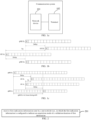
- FIGS. 1b and 1c are schematic diagrams of an uplink-downlink timing alignment transmission mode on a network device side
- FIG. 1c is a schematic diagram of an uplink-downlink timing misalignment transmission mode on a network device side.
- the terminal may compensate the transmission delay by ephemeris information and related information of common timing advance (common TA).
- common TA common timing advance
- the ephemeris information and common TA information are notified to the terminal through system information (SI).
- the terminal may believe that the previously acquired ephemeris information and the common TA information are available during a validation duration.
- the terminal needs to acquire the ephemeris information and the common TA information by reading the system information. Validation times of such information may be indicated directly in the system information or bound to a system information window (SI window).
- SI window system information window
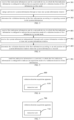
- FIG. 2 is a flowchart of a validation time acquisition method according to an embodiment of the disclosure. It should be noted that the validation time acquisition method according to this embodiment of the disclosure is executed by a terminal. The method may be executed independently or in combination with any other embodiment of the disclosure. As shown in FIG. 2 , the method may include the following steps.
- first indication information sent by a network device is received, in which the first indication information is configured to indicate an acquisition mode of a validation time of first information.
- the terminal receives the first indication information sent by the network device, and determines the acquisition mode of the validation time of the first information according to an indication of the first indication information.
- the acquisition mode includes a first mode and a second mode.
- the first mode is an explicit acquisition mode
- the second mode is an implicit acquisition mode
- the explicit acquisition mode means that the terminal may acquire the validation time by parsing a relevant information field in the SI, that is, information of the validation time is explicitly carried in the SI.
- the implicit acquisition mode means that the terminal implicitly acquires the validation time corresponding to the SI by parsing the SI, and this SI does not explicitly carry the information of the validation time.
- the terminal may receive the SI sent by the network device, and determine the validation time of the first information according to a signaling carried in the SI.
- the terminal may merge and receive the SI via at least one SI window.
- “merging and receiving” means that if the terminal fails to receive the SI correctly in a first SI window and obtain the SI transmitted in the first SI window, the terminal continues to detect in at least one subsequent second SI window, and may merge and decode information received in the first SI window and information received in the at least one second SI window to obtain the SI.
- the SI explicitly carries a signaling for determining the validation time, so the SI transmitted by at least one SI window is the same, and thus the terminal may merge and receive the SI transmitted by the at least one SI window.
- the terminal may receive the SI sent by the network device, and determine the validation time of the first information according to an end position of an SI window where the SI is located.
- the terminal independently receives the SI through each of at least one SI window.
- independently receiving means that the terminal receives the SI based on a single SI window. If the terminal fails to correctly receive the SI in a third SI window and obtain the SI transmitted in the third SI window, the terminal will restart a detection and reception of the SI in a subsequent fourth SI window. If the terminal correctly receives the SI, the terminal may obtain the SI transmitted in the fourth SI window. If the terminal still fails to receive the SI correctly in the fourth SI window, the terminal will restart a detection and reception of the SI in a subsequent fifth SI window.
- the validation time of the first information is indicated in an implicit way.
- the validation time is bound to the SI window, or the validation time is determined according to the end position of the SI window, or the validation time is determined implicitly by multiplexing a certain information field in the SI, etc. Therefore, multiple pieces of SI transmitted in different SI windows are different, and cannot be merged and received.
- the first indication information may be 1bit information and is configured to indicate the acquisition mode of the validation time of the first information. As an example, if the value of the first indication information is "1", it indicates that the acquisition mode of the validation time of the first information is the first mode (the explicit acquisition mode), and if the value of the first indication information is "0", it indicates that the acquisition mode of the validation time of the first information is the second mode (the implicit acquisition mode).
- the value of the first indication information is "0", it indicates that the acquisition mode of the validation time of the first information is the first mode (the explicit acquisition mode), and if the value of the first indication information is "1", it indicates that the acquisition mode of the validation time of the first information is the second mode (the implicit acquisition mode).
- the terminal may receive second indication information.
- the second indication information is configured to indicate that the validation time of the first information is acquired within a first time domain range via the first mode, and/or indicate that the validation time of the first information is acquired within a second time domain range via the second mode.
- the second indication information is configured to indicate that the validation time of the first information is acquired within the first time domain range via the first mode.
- the second indication information is configured to indicate that the validation time of the first information is acquired within the second time domain range via the second mode.
- the second indication information is configured to indicate that the validation time of the first information is acquired within the first time domain range via the first mode, and, the validation time of the first information is acquired within the second time domain range via the second mode.
- the terminal may according to an indication of the second indication information, determine that in which time domain, the validation time is acquired by the explicit acquisition mode, and in which time domain, the validation time is acquired by the implicit acquisition mode.
- the second indication information is configured to indicate at least one of: a starting position of the first time domain range, an end position of the first time domain range, a time length of the first time domain range, a starting position of the second time domain range, an end position of the second time domain range, or a time length of the second time domain range.
- the first indication information is included in a system information block type 1 (SIB1).
- SIB1 system information block type 1
- the first indication information and the second indication information may be carried in the same SI or in different SI.
- the second indication information may be included in a master information block (MIB), or other SI blocks (SIBx), such as the SIB1.
- MIB master information block
- SIBx SI blocks
- the SI configured to acquire the validation time of the first information may be any SI other than SIB1.
- the first indication information and the second indication information may also be carried by other higher-layer signaling (such as a radio resource control (RRC) signaling), a medium access control (MAC) control element (CE) or a physical layer signaling.
- RRC radio resource control
- MAC medium access control
- CE control element
- the first information may include ephemeris information and common TA information.
- the first indication information sent by the network device is received, in which the first indication information is configured to indicate an acquisition mode of a validation time of first information, and the acquisition mode includes a first mode and a second mode.
- the terminal may determine the acquisition mode of the validation time of the first information according to an indication, and flexibly configures the acquisition mode of the validation time, which may effectively improve an efficiency of information transmission, improve a robustness of communication system transmission, and in a case of updating the SI, ensure that the network device and the terminal may agree on a validation time of the updated SI.
- FIG. 3 is a flowchart of a validation time acquisition method according to an embodiment of the disclosure. It should be noted that the validation time acquisition method of this embodiment of the disclosure is executed by a terminal. The method may be performed independently or in combination with any other embodiment of the disclosure. As shown in FIG. 3 , the method may include the following steps.
- first indication information sent by a network device is received, in which the first indication information is configured to indicate that an acquisition mode of a validation time of first information is a first mode.
- the terminal may receive the first indication information sent by the network device, and determines the acquisition mode of the validation time of the first information according to an indication of the first indication information.
- the acquisition mode of the validation time indicated by the first indication information is the first mode, i.e., an explicit acquisition mode.
- the explicit acquisition mode means that the terminal may acquire the validation time by parsing relevant information fields in the SI, that is, information of the validation time is explicitly carried in the SI.
- the terminal may also receive second indication information sent by the network device.
- the second indication information is configured to indicate the validation time of the first information is acquired within a first time domain range by the first mode.
- the second indication information is configured to indicate at least one of: a starting position of the first time domain range, an end position of the first time domain range, or a time length of the first time domain range.
- the terminal may determine the first time domain range, and explicitly acquire the validation time of the first information within the first time domain range.
- the terminal may merge and receive the SI within the first time domain range. That is, the terminal may merge and receive the SI transmitted by at least one SI window within the first time domain range.
- the first information may include ephemeris information and common TA information.
- SI is merged and received through at least one SI window.
- the terminal may merge and receive the SI transmitted by at least one SI window.
- the SI carries a signaling for determining the validation time of the first information.
- the terminal may merge and receive the SI transmitted by the at least one SI window.
- “merging and receiving” means that if the terminal fails to receive the SI correctly in a first SI window and obtain the SI transmitted in the first SI window, the terminal continues to detect in at least one subsequent second SI window, and may merge and decode information received in the first SI window and information received in the at least one second SI window to obtain the SI.
- the validation time of the first information is determined according to a signaling carried in the SI.
- the terminal may merge and receive the SI through at least one SI window, and determine the validation time of the first information according to the signaling carried in the SI.
- the signaling carried in the SI is configured to determine the validation time of the first information.
- the network device may explicitly indicates the validation time of the first information to the terminal through the signaling.
- the first indication information sent by the network device is received, in which the first indication information is configured to indicate that the acquisition mode of the validation time of the first information is the first mode.
- the SI is merged and received through at least one SI window.
- the validation time of the first information is determined according to the signaling carried in the SI.
- the terminal may determine the acquisition mode of the validation time of the first information according to an indication, and flexibly configures the acquisition mode of the validation time, which may effectively improve an efficiency of information transmission, improve a robustness of communication system transmission, and in a case of updating the SI, ensure that the network device and the terminal may agree on a validation time of the updated SI.
- FIG. 4 is a flowchart of a validation time acquisition method according to an embodiment of the disclosure. It should be noted that the validation time acquisition method of this embodiment of the disclosure is executed by a terminal. The method may be performed independently or in combination with any other embodiment of the disclosure. As shown in FIG. 4 , the method may include the following steps.
- first indication information sent by a network device is received, in which the first indication information is configured to indicate that an acquisition mode of a validation time of first information is a second mode.
- the terminal may receive the first indication information sent by the network device, and determine the acquisition mode of the validation time of the first information according to an indication of the first indication information.
- the acquisition mode of the validation time indicated by the first indication information is a second mode, i.e., an implicit acquisition mode.
- the implicit acquisition mode means that the terminal implicitly acquires the validation time corresponding to the SI by parsing the SI.
- the SI does not explicitly carry information of the validation time.
- the terminal may receive second indication information sent by the network device.
- the second indication information is configured to indicate the validation time of the first information is acquired within a second time domain range by the second mode.
- the second indication information is configured to indicate at least one of: a starting position of the second time domain range, an end position of the second time domain range, or a time length of the second time domain range.
- the terminal determines the second time domain range, and implicitly acquires the validation time of the first information within the second time domain range.
- the terminal may independently receive the SI within the second time domain range. That is, the terminal may independently receive the SI transmitted by each SI window in at least one SI window within the second time domain range.
- the first information may include ephemeris information and common TA information.
- SI is received independently through each SI window in at least one SI window.
- the terminal acquires the validation time of the first information by an implicit way, and the terminal independently receives the SI through each of at least one SI window and then determine the validation time of the first information.
- independently receiving means that the terminal receives the SI based on a single SI window. If the terminal fails to correctly receive the SI in a third SI window and obtain the SI transmitted in the third SI window, the terminal will restart a detection and reception of the SI in a subsequent fourth SI window. If the terminal correctly receives the SI, the terminal may obtain the SI transmitted in the fourth SI window. If the terminal still fails to receive the SI correctly in the fourth SI window, the terminal will restart a detection and reception of the SI in a subsequent fifth SI window.
- the validation time of the first information is indicated in an implicit way.
- the validation time is bound to the SI window, or the validation time is determined according to the end position of the SI window. Therefore, multiple pieces of SI transmitted in different SI windows are different, and cannot be merged and received.
- the validation time of the first information is determined according to an end position of an SI window where the first information is located.
- multiple pieces of SI transmitted in the at least one SI window do not explicitly carry a signaling for determining the validation time of the first information, but indicate the validation time of the first information in an implicit way.
- the terminal independently receives the SI through the SI window, and determines the validation time of the first information according to the end position of the SI window where the SI is located.
- the first indication information sent by the network device is received, in which the first indication information is configured to indicate that the acquisition mode of the validation time of the first information is the second mode.
- the SI is independently received through each SI window in at least one SI window.
- the validation time of the first information is determined according the end position of the SI window where the SI is located.
- the terminal may determine the acquisition mode of the validation time of the first information according to an indication, and flexibly configures the acquisition mode of the validation time, which may effectively improve an efficiency of information transmission, improve a robustness of communication system transmission, and in a case of updating the SI, ensure that the network device and the terminal may agree on a validation time of the updated SI.
- FIG. 5 is a flowchart of a validation time acquisition method according to an embodiment of the disclosure. It should be noted that the validation time acquisition method of this embodiment of the disclosure is executed by a network device. The method may be performed independently or in combination with any other embodiment of the disclosure. As shown in FIG. 5 , the method may include the following steps.
- first indication information is sent to a terminal, in which the first indication information is configured to indicate an acquisition mode of a validation time of first information.
- the network device may send the first indication information to the terminal, and the terminal may determine the acquisition mode of the validation time of the first information according to an indication of the first indication information.
- the acquisition mode includes a first mode and a second mode.
- the first mode is an explicit acquisition mode
- the second mode is an implicit acquisition mode
- the explicit acquisition mode means that the terminal may acquire the validation time by parsing a relevant information field in the SI, that is, information of the validation time is explicitly carried in the SI.
- the implicit acquisition mode means that the terminal implicitly acquires the validation time corresponding to the SI by parsing the SI, and this SI does not explicitly carry the information of the validation time.
- the network device may send the SI to the terminal.
- the SI carries a signaling, which is configured to determine the validation time of the first information.
- the network device may sends the SI to the terminal through at least one SI window.
- the at least one SI window is configured for merging and receiving the SI.
- “merging and receiving” means that if the terminal fails to receive the SI correctly in a first SI window and obtain the SI transmitted in the first SI window, the terminal continues to detect in at least one subsequent second SI window, and may merge and decode information received in the first SI window and information received in the at least one second SI window to obtain the SI.
- the SI explicitly carries a signaling for determining the validation time, so the SI transmitted by at least one SI window is the same, and thus the terminal may merge and receive the SI transmitted by the at least one SI window.
- the network device may send the SI to the terminal, and the validation time of the first information may be determined according to an end position of an SI window where the SI is located.
- the network device may send the SI to the terminal through at least one SI window.
- the at least one SI window is configured to receive the SI independently.
- independently receiving means that the terminal receives the SI based on a single SI window. If the terminal fails to correctly receive the SI in a third SI window and obtain the SI transmitted in the third SI window, the terminal will restart a detection and reception of the SI in a subsequent fourth SI window. If the terminal correctly receives the SI, the terminal may obtain the SI transmitted in the fourth SI window. If the terminal still fails to receive the SI correctly in the fourth SI window, the terminal will restart a detection and reception of the SI in a subsequent fifth SI window.
- the validation time of the first information is indicated in an implicit way.
- the validation time is bound to the SI window, or the validation time is determined according to the end position of the SI window, or the validation time is determined implicitly by multiplexing a certain information field in the SI, etc. Therefore, multiple pieces of SI transmitted in different SI windows are different, and cannot be merged and received.
- the first indication information may be 1bit information and is configured to indicate the acquisition mode of the validation time of the first information. As an example, if the value of the first indication information is "1", it indicates that the acquisition mode of the validation time of the first information is the first mode (the explicit acquisition mode), and if the value of the first indication information is "0", it indicates that the acquisition mode of the validation time of the first information is the second mode (the implicit acquisition mode).
- the value of the first indication information is "0", it indicates that the acquisition mode of the validation time of the first information is the first mode (the explicit acquisition mode), and if the value of the first indication information is "1", it indicates that the acquisition mode of the validation time of the first information is the second mode (the implicit acquisition mode).
- the network device may send second indication information to the terminal.
- the second indication information is configured to indicate that the validation time of the first information is acquired within a first time domain range via the first mode, and/or indicate that the validation time of the first information is acquired within a second time domain range via the second mode.
- the second indication information is configured to indicate that the validation time of the first information is acquired within the first time domain range via the first mode.
- the second indication information is configured to indicate that the validation time of the first information is acquired within the second time domain range via the second mode.
- the second indication information is configured to indicate that the validation time of the first information is acquired within the first time domain range via the first mode, and the validation time of the first information is acquired within the second time domain range via the second mode.
- the terminal may according to an indication of the second indication information, determine that in which time domain, the validation time is acquired by the explicit acquisition mode, and in which time domain, the validation time is acquired by the implicit acquisition mode.
- the second indication information is used to indicate at least one of: a starting position of the first time domain range, an end position of the first time domain range, a time length of the first time domain range, a starting position of the second time domain range, an end position of the second time domain range, or a time length of the second time domain range.
- the first indication information is included in an SIB1.
- the first indication information and the second indication information may be carried in the same SI or in different SI.
- the second indication information may be included in a MIB, or any other SIB (SIBx).
- the first indication information and the second indication information may also be carried by other higher-layer signaling (such as an RRC signaling), a MAC CE or a physical layer signaling.
- higher-layer signaling such as an RRC signaling
- MAC CE MAC CE
- the SI configured to acquire the validation time of the first information may be any SI other than SIB1.
- the first information may include ephemeris information and common TA information.
- the first indication information is sent to the terminal, in which the first indication information is configured to indicate the acquisition mode of the validation time of the first information, and the acquisition mode includes a first mode and a second mode.
- the terminal may determine the acquisition mode of the validation time of the first information according to an indication, and flexibly configures the acquisition mode of the validation time, which may effectively improve an efficiency of information transmission, improve a robustness of communication system transmission, and in a case of updating the SI, ensure that the network device and the terminal may agree on a validation time of the updated SI.
- the disclosure also provides a validation time acquisition apparatus. Since the validation time acquisition apparatus provided by the embodiments of the disclosure corresponds to the validation time acquisition methods provided by the above-mentioned several embodiments, the implementations of the validation time acquisition methods are also applicable to the validation time acquisition apparatus provided by the following embodiments, which will not be described in detail.
- FIG. 6 is a schematic diagram of a validation time acquisition apparatus according to an embodiment of the disclosure.
- the validation time acquisition apparatus 600 includes: a transceiver unit 610.
- the transceiver unit 610 is configured to receive first indication information sent by a network device, in which the first indication information is configured to indicate an acquisition mode of a validation time of first information, and the acquisition mode comprises a first mode and a second mode.
- the transceiver unit 610 is further configured to:
- the transceiver unit 610 is further configured to:
- the transceiver unit 610 is further configured to: merge and receive the SI through at least one SI window.
- the transceiver unit 610 is further configured to: receive the SI independently through each SI window in at least one SI window.
- the transceiver unit 610 is further configured to:
- the second indication information is further configured to indicate at least one of:
- the first indication information is comprised in an SIB1.
- the first mode is an explicit acquisition mode
- the second mode is an implicit acquisition mode
- the first indication information sent by the network device may be received, in which the first indication information is configured to indicate the acquisition mode of the validation time of the first information, and the acquisition mode includes a first mode and a second mode.
- the terminal may determine the acquisition mode of the validation time of the first information according to an indication, and flexibly configures the acquisition mode of the validation time, which may effectively improve an efficiency of information transmission, improve a robustness of communication system transmission, and in a case of updating the SI, ensure that the network device and the terminal may agree on a validation time of the updated SI.
- FIG. 7 is a schematic diagram of a validation time acquisition apparatus provided by an embodiment of the disclosure.
- the validation time acquisition apparatus 700 includes: a transceiver unit 710.
- the transceiver unit 710 is configured to send first indication information to a terminal, in which the first indication information is configured to indicate an acquisition mode of a validation time of first information, and the acquisition mode comprises a first mode and a second mode.
- the transceiver unit 710 is further configured to:
- the transceiver unit 710 is further configured to:
- the transceiver unit 710 is further configured to:
- the transceiver unit 710 is further configured to:
- the transceiver unit 710 is further configured to:
- the second indication information is further configured to indicate at least one of:
- the first indication information is included in an SIB1.
- the first mode is an explicit acquisition mode
- the second mode is an implicit acquisition mode
- the first indication information is sent to the terminal, in which the first indication information is configured to indicate an acquisition mode of a validation time of first information, and the acquisition mode comprises a first mode and a second mode.
- the terminal may determine the acquisition mode of the validation time of the first information according to an indication, and flexibly configures the acquisition mode of the validation time, which may effectively improve an efficiency of information transmission, improve a robustness of communication system transmission, and in a case of updating the SI, ensure that the network device and the terminal may agree on a validation time of the updated SI.
- an embodiment of the disclosure provides a communication apparatus, including a processor and a memory.
- the memory stores a computer program
- the processor executes the computer program stored in the memory to cause the apparatus to implement the method shown in the embodiments of FIGS. 2-4 .
- an embodiment of the disclosure provides a communication apparatus, including a processor and a memory.
- the memory stores a computer program
- the processor executes the computer program stored in the memory to cause the apparatus to implement the method shown in the embodiment of FIG. 5 .
- an embodiment of the disclosure provides a communication apparatus, including a processor and an interface circuit.
- the interface circuit is configured to receive code instructions and transmit the code instructions to the processor, and the processor is configured to run the code instructions to implement the method shown in embodiments of FIGS. 2-4 .
- an embodiment of the disclosure provides a communication apparatus, including a processor and an interface circuit.
- the interface circuit is configured to receive code instructions and transmit the code instructions to the processor, and the processor is configured to run the code instructions to implement the method shown in embodiment of FIG. 5 .
- FIG. 8 is a schematic diagram of another validation time acquisition apparatus 800 provided by an embodiment of the disclosure.
- the validation time acquisition apparatus 800 may be a terminal, a network device, or a chip, a chip system or a processor that supports the network device to realize the above-described methods, or a chip, a chip system or a processor that supports the terminal to realize the above-described methods.
- the apparatus may be configured to realize the methods described in the above method embodiments with reference to the description of the above-described method embodiments.
- the validation time acquisition apparatus 800 may include one or more processors 801.
- the processor 801 may be a general purpose processor or a dedicated processor, such as, a baseband processor or a central processor.
- the baseband processor is configured for processing communication protocols and communication data.
- the central processor is configured for controlling the validation time acquisition apparatus (e.g., a base station, a baseband chip, a terminal, a terminal chip, a DU, or a CU), executing computer programs, and processing data of the computer programs.
- the validation time acquisition apparatus 800 may include one or more memories 802, on which a computer program 803 may be stored.
- the processor 801 executes the computer program 803 to cause the validation time acquisition apparatus 800 to perform the methods described in the above method embodiments.
- the computer program 803 may be solidified in the processor 801, in which case, the processor 801 may be implemented by hardware.
- data may also be stored in the memory 802.
- the validation time acquisition apparatus 800 and the memory 802 may be provided separately or may be integrated together.
- the validation time acquisition apparatus 800 may also include a transceiver 805 and an antenna 806.
- the transceiver 805 may be referred to as a transceiver unit, a transceiver machine, or a transceiver circuit, for realizing a transceiver function.
- the transceiver 805 may include a receiver and a transmitter.
- the receiver may be referred to as a receiver machine or a receiving circuit, for realizing a receiving function.
- the transmitter may be referred to as a transmitter machine or a transmitting circuit, for realizing a transmitting function.
- the validation time acquisition apparatus 800 may also include one or more interface circuits 807.
- the interface circuits 807 are configured to receive code instructions and transmit the code instructions to the processor 801.
- the processor 801 runs the code instructions to cause the validation time acquisition apparatus 800 to perform the method described in the method embodiments.
- the processor 801 may include a transceiver for implementing the receiving and transmitting functions.
- the transceiver may be, for example, a transceiver circuit, an interface, or an interface circuit.
- the transceiver circuit, interface, or interface circuit for implementing the receiving and transmitting functions may be separated or may be integrated together.
- the transceiver circuit, interface, or interface circuit de scribed above may be configured for code/data reading and writing, or may be configured for signal transmission or delivery.
- the validation time acquisition apparatus 800 may include circuits.
- the circuits may implement sending, receiving or communicating functions in the preceding method embodiments.
- the processor and the transceiver described in this disclosure may be implemented on integrated circuits (ICs), analog ICs, radio frequency integrated circuits (RFICs), mixed signal ICs, application specific integrated circuits (ASICs), printed circuit boards (PCBs), and electronic devices.
- ICs integrated circuits
- RFICs radio frequency integrated circuits
- ASICs application specific integrated circuits
- PCBs printed circuit boards
- the processor and the transceiver may also be produced using various IC process technologies, such as complementary metal oxide semiconductor (CMOS), nMetal-oxide-semiconductor (NMOS), positive channel metal oxide semiconductor (PMOS), bipolar junction transistor (BJT), bipolar CMOS (BiCMOS), silicon-germanium (SiGe), gallium arsenide (GaAs) and so on.
- CMOS complementary metal oxide semiconductor
- NMOS nMetal-oxide-semiconductor
- PMOS positive channel metal oxide semiconductor
- BJT bipolar junction transistor
- BiCMOS bipolar CMOS
- SiGe silicon-germanium
- GaAs gallium arsenide
- the validation time acquisition apparatus in the above description of embodiments may be a network device or a terminal, but the scope of the validation time acquisition apparatus described in the disclosure is not limited thereto, and the structure of the validation time acquisition apparatus is not limited by FIGS. 6 and 7 .
- the validation time acquisition apparatus may be an independent device or may be a part of a larger device.
- the described validation time acquisition apparatus may be:
- the validation time acquisition apparatus may be a chip or a chip system may be referred to the schematic diagram of a chip shown in FIG. 9 .
- the chip includes a processor 901 and an interface 902. There may be one or more processors 901, and there may be a plurality of interfaces 902.
- the chip is configured to realize the functions of the network device in the embodiments of the disclosure.
- the chip further includes a memory 903 for storing necessary computer programs and data.
- An embodiment of the disclosure also provides a communication system.
- the system includes the validation time acquisition apparatus as a terminal and the validation time acquisition apparatus as a network device in the embodiments of FIGS. 6-7 , or the system includes the validation time acquisition apparatus as a terminal and the validation time acquisition apparatus as a network device in the embodiment of FIG. 8 .
- the disclosure also provides a readable storage medium having instructions stored thereon. When the instructions are executed by a computer, the functions of any of the method embodiments described above is implemented.
- the disclosure also provides a computer program product.
- the computer program product is executed by a computer, the functions of any of the method embodiments described above is implemented.
- the above embodiments may be implemented in whole or in part by software, hardware, firmware, or any combination thereof.
- software When implemented using software, it may be implemented, in whole or in part, in the form of a computer program product.
- the computer program product includes one or more computer programs. When loading and executing the computer programs on the computer, all or part of processes or functions described in the embodiments of the disclosure may be implemented.
- the computer may be a general-purpose computer, a dedicated computer, a computer network, or other programmable devices.
- the computer program may be stored in a computer-readable storage medium or transmitted from one computer-readable storage medium to another computer-readable storage medium.
- the computer program may be transmitted from one web site, computer, server, or data center to another web site, computer, server, or data center, in a wired manner (e.g., by using coaxial cables, fiber optics, or digital subscriber lines (DSLs) or wirelessly (e.g., by using infrared wave, wireless wave, or microwave).
- the computer-readable storage medium may be any usable medium to which the computer has access or a data storage device such as a server and a data center integrated by one or more usable mediums.
- the usable medium may be a magnetic medium (e.g., floppy disk, hard disk, and tape), an optical medium (e.g., a high-density digital video disc (DVD)), or a semiconductor medium (e.g., a solid state disk (SSD)).
- a magnetic medium e.g., floppy disk, hard disk, and tape
- an optical medium e.g., a high-density digital video disc (DVD)
- DVD high-density digital video disc
- SSD solid state disk
- the term “at least one” in the disclosure may also be described as one or more, and the term “multiple” may be two, three, four, or more, which is not limited in the disclosure.
- “first”, “second”, and “third”, and “A”, “B”, “C” and “D” are used to distinguish different technical features of the type, the technical features described using the “first”, “second”, and “third”, and “A”, “B”, “C” and “D” do not indicate any order of precedence or magnitude.
- the correspondences shown in the tables in this disclosure may be configured or may be predefined.
- the values of information in the tables are merely examples and may be configured to other values, which are not limited by the disclosure.
- the correspondences illustrated in certain rows in the tables in this disclosure may not be configured.
- the above tables may be adjusted appropriately, such as splitting, combining, and the like.
- the names of the parameters shown in the titles of the above tables may be other names that may be understood by the communication apparatus, and the values or representations of the parameters may be other values or representations that may be understood by the communication apparatus.
- Each of the above tables may also be implemented with other data structures, such as, arrays, queues, containers, stacks, linear tables, pointers, chained lists, trees, graphs, structures, classes, heaps, and Hash tables.
- predefine in this disclosure may be understood as define, define in advance, store, pre-store, pre-negotiate, pre-configure, solidify, or pre-fire.
Landscapes
- Engineering & Computer Science (AREA)
- Computer Networks & Wireless Communication (AREA)
- Signal Processing (AREA)
- Physics & Mathematics (AREA)
- Astronomy & Astrophysics (AREA)
- General Physics & Mathematics (AREA)
- Aviation & Aerospace Engineering (AREA)
- Computer Security & Cryptography (AREA)
- Mobile Radio Communication Systems (AREA)
Applications Claiming Priority (1)
| Application Number | Priority Date | Filing Date | Title |
|---|---|---|---|
| PCT/CN2022/100931 WO2023245587A1 (fr) | 2022-06-23 | 2022-06-23 | Procédé et appareil d'acquisition de temps de validation |
Publications (2)
| Publication Number | Publication Date |
|---|---|
| EP4546896A1 true EP4546896A1 (fr) | 2025-04-30 |
| EP4546896A4 EP4546896A4 (fr) | 2025-08-06 |
Family
ID=83758017
Family Applications (1)
| Application Number | Title | Priority Date | Filing Date |
|---|---|---|---|
| EP22947358.2A Pending EP4546896A4 (fr) | 2022-06-23 | 2022-06-23 | Procédé et appareil d'acquisition de temps de validation |
Country Status (4)
| Country | Link |
|---|---|
| US (1) | US20250392381A1 (fr) |
| EP (1) | EP4546896A4 (fr) |
| CN (1) | CN115280828B (fr) |
| WO (1) | WO2023245587A1 (fr) |
Family Cites Families (11)
| Publication number | Priority date | Publication date | Assignee | Title |
|---|---|---|---|---|
| EP3446515B1 (fr) * | 2016-04-20 | 2020-12-02 | Convida Wireless, LLC | Provision d'informations de système |
| CN108811096B (zh) * | 2017-05-02 | 2021-05-07 | 电信科学技术研究院 | 一种下行信道传输、接收方法、装置、基站及终端 |
| WO2019064235A2 (fr) * | 2017-09-28 | 2019-04-04 | Telefonaktiebolaget Lm Ericsson (Publ) | Procédé de mise à jour d'informations système |
| CN110337078A (zh) * | 2018-03-30 | 2019-10-15 | 电信科学技术研究院有限公司 | 一种系统信息传输方法、装置、网络设备及终端 |
| CN113273137A (zh) * | 2019-01-17 | 2021-08-17 | 华为技术有限公司 | 系统消息处理的方法和装置 |
| CN114365547B (zh) * | 2019-09-30 | 2024-01-30 | 华为技术有限公司 | 一种系统信息的传输方法和通信装置 |
| WO2021066696A1 (fr) * | 2019-10-03 | 2021-04-08 | Telefonaktiebolaget Lm Ericsson (Publ) | Procédés de mise à jour de données d'éphémérides dans un réseau non terrestre (ntn) |
| CN115767673A (zh) * | 2020-06-15 | 2023-03-07 | 华为技术有限公司 | 一种信息指示方法及装置 |
| CN114630340A (zh) * | 2020-12-11 | 2022-06-14 | 华为技术有限公司 | 数据传输方法及数据传输装置 |
| WO2023123002A1 (fr) * | 2021-12-28 | 2023-07-06 | 北京小米移动软件有限公司 | Procédé et appareil de rapport d'informations, dispositif, et support de stockage |
| WO2023184457A1 (fr) * | 2022-03-31 | 2023-10-05 | 北京小米移动软件有限公司 | Procédé et appareil de détermination de temps effectif |
-
2022
- 2022-06-23 EP EP22947358.2A patent/EP4546896A4/fr active Pending
- 2022-06-23 US US18/876,129 patent/US20250392381A1/en active Pending
- 2022-06-23 WO PCT/CN2022/100931 patent/WO2023245587A1/fr not_active Ceased
- 2022-06-23 CN CN202280002253.5A patent/CN115280828B/zh active Active
Also Published As
| Publication number | Publication date |
|---|---|
| CN115280828B (zh) | 2026-03-10 |
| CN115280828A (zh) | 2022-11-01 |
| WO2023245587A1 (fr) | 2023-12-28 |
| EP4546896A4 (fr) | 2025-08-06 |
| US20250392381A1 (en) | 2025-12-25 |
Similar Documents
| Publication | Publication Date | Title |
|---|---|---|
| US20250274242A1 (en) | Method and device for determining transmission configuration indication state | |
| US20250260543A1 (en) | Method and apparatus for determining transmission configuration indication state | |
| EP4525534A1 (fr) | Procédé et appareil de configuration de ressources | |
| US20250274915A1 (en) | Methods and apparatuses for data transmission | |
| EP4503457A1 (fr) | Procédé et appareil de détermination de temps effectif | |
| US20250133572A1 (en) | Downlink control information alignment method and apparatus | |
| US20250254670A1 (en) | Resource configuration method and device, and storage medium | |
| US20240163017A1 (en) | Methods for processing data reception, related communication apparatus and storage medium | |
| EP4546896A1 (fr) | Procédé et appareil d'acquisition de temps de validation | |
| EP4472308A1 (fr) | Procédé et appareil de déclenchement d'une radiorecherche | |
| EP4518211A1 (fr) | Procédé de traitement pour rétroaction de demande de répétition automatique hybride (harq), et appareil associé | |
| US20250203493A1 (en) | Method and apparatus for requesting system information | |
| US20260065144A1 (en) | Method and apparatus for generating model | |
| US20260006531A1 (en) | Method and apparatus for target ue determination in ue to ue relay scenario | |
| US20250039939A1 (en) | Resource determination method and apparatus | |
| US20250193832A1 (en) | Measurement time determination method and apparatus | |
| EP4694218A1 (fr) | Procédé et appareil de détermination d'informations de couverture de satellite | |
| US20240340850A1 (en) | Method and apparatus for implementing paging cause indication | |
| EP4447527A1 (fr) | Procédé et appareil d'indication d'intervalle de mesure | |
| US20240284417A1 (en) | Time domain resource assignment method and apparatus | |
| US20240405948A1 (en) | Method and apparatus for reporting multi-carrier aggregation capability | |
| US20250219697A1 (en) | Channel state information (csi) report acquisition method and apparatus, and storage medium | |
| EP4597944A1 (fr) | Procédé et appareil de traitement de communication de relais pour dispositif terminal dans un scénario de relais ue à ue | |
| EP4561154A1 (fr) | Procédé et appareil d'indication d'informations, dispositif, et support de stockage | |
| RU2847786C2 (ru) | Способ определения состояния индикации конфигурации передачи и устройство |
Legal Events
| Date | Code | Title | Description |
|---|---|---|---|
| STAA | Information on the status of an ep patent application or granted ep patent |
Free format text: STATUS: THE INTERNATIONAL PUBLICATION HAS BEEN MADE |
|
| PUAI | Public reference made under article 153(3) epc to a published international application that has entered the european phase |
Free format text: ORIGINAL CODE: 0009012 |
|
| STAA | Information on the status of an ep patent application or granted ep patent |
Free format text: STATUS: REQUEST FOR EXAMINATION WAS MADE |
|
| 17P | Request for examination filed |
Effective date: 20250113 |
|
| AK | Designated contracting states |
Kind code of ref document: A1 Designated state(s): AL AT BE BG CH CY CZ DE DK EE ES FI FR GB GR HR HU IE IS IT LI LT LU LV MC MK MT NL NO PL PT RO RS SE SI SK SM TR |
|
| A4 | Supplementary search report drawn up and despatched |
Effective date: 20250707 |
|
| RIC1 | Information provided on ipc code assigned before grant |
Ipc: H04W 56/00 20090101AFI20250701BHEP Ipc: H04L 5/00 20060101ALI20250701BHEP Ipc: H04B 7/185 20060101ALI20250701BHEP Ipc: H04W 48/16 20090101ALI20250701BHEP Ipc: H04W 24/02 20090101ALI20250701BHEP Ipc: H04W 48/12 20090101ALI20250701BHEP |
|
| DAV | Request for validation of the european patent (deleted) | ||
| DAX | Request for extension of the european patent (deleted) |