EP4472308A1 - Procédé et appareil de déclenchement d'une radiorecherche - Google Patents
Procédé et appareil de déclenchement d'une radiorecherche Download PDFInfo
- Publication number
- EP4472308A1 EP4472308A1 EP22922914.1A EP22922914A EP4472308A1 EP 4472308 A1 EP4472308 A1 EP 4472308A1 EP 22922914 A EP22922914 A EP 22922914A EP 4472308 A1 EP4472308 A1 EP 4472308A1
- Authority
- EP
- European Patent Office
- Prior art keywords
- paging
- terminal device
- type
- target type
- paging message
- Prior art date
- Legal status (The legal status is an assumption and is not a legal conclusion. Google has not performed a legal analysis and makes no representation as to the accuracy of the status listed.)
- Pending
Links
Images

Classifications
-
- H—ELECTRICITY
- H04—ELECTRIC COMMUNICATION TECHNIQUE
- H04W—WIRELESS COMMUNICATION NETWORKS
- H04W48/00—Access restriction; Network selection; Access point selection
- H04W48/08—Access restriction or access information delivery, e.g. discovery data delivery
- H04W48/12—Access restriction or access information delivery, e.g. discovery data delivery using downlink control channel
-
- H—ELECTRICITY
- H04—ELECTRIC COMMUNICATION TECHNIQUE
- H04W—WIRELESS COMMUNICATION NETWORKS
- H04W68/00—User notification, e.g. alerting and paging, for incoming communication, change of service or the like
- H04W68/02—Arrangements for increasing efficiency of notification or paging channel
-
- H—ELECTRICITY
- H04—ELECTRIC COMMUNICATION TECHNIQUE
- H04W—WIRELESS COMMUNICATION NETWORKS
- H04W68/00—User notification, e.g. alerting and paging, for incoming communication, change of service or the like
- H04W68/02—Arrangements for increasing efficiency of notification or paging channel
- H04W68/025—Indirect paging
-
- H—ELECTRICITY
- H04—ELECTRIC COMMUNICATION TECHNIQUE
- H04W—WIRELESS COMMUNICATION NETWORKS
- H04W72/00—Local resource management
- H04W72/04—Wireless resource allocation
- H04W72/044—Wireless resource allocation based on the type of the allocated resource
- H04W72/0457—Variable allocation of band or rate
-
- H—ELECTRICITY
- H04—ELECTRIC COMMUNICATION TECHNIQUE
- H04W—WIRELESS COMMUNICATION NETWORKS
- H04W72/00—Local resource management
- H04W72/20—Control channels or signalling for resource management
- H04W72/23—Control channels or signalling for resource management in the downlink direction of a wireless link, i.e. towards a terminal
- H04W72/231—Control channels or signalling for resource management in the downlink direction of a wireless link, i.e. towards a terminal the control data signalling from the layers above the physical layer, e.g. RRC or MAC-CE signalling
Definitions
- the disclosure relates to a field of communication technology, in particular to paging triggering methods and paging triggering apparatuses.
- UE user equipment
- NR 5G new radio
- the network device is capable of notifying the terminal device of a change in system information through paging. Due to the introduction of different terminal types or terminal features, the system information supports system information fields for different terminal types. When the information field for only a certain type of terminal in the system information is updated, the network device still triggers paging for all terminals, which may lead to signaling resource waste and increase terminal power consumption.
- a paging triggering method performed by a network device.
- the method includes:
- each type is configured with at least one of a corresponding paging radio network temporary identity, a corresponding resource or a corresponding paging early indication.
- triggering the paging for the target type of terminal device includes:
- triggering the paging for the target type of terminal device includes: sending a second paging message using a resource corresponding to the target type.
- the resource includes at least one of: a bandwidth part (BWP), a control resource set (CORESET), a search space, or a paging occasion.
- BWP bandwidth part
- CORESET control resource set
- search space search space
- paging occasion a paging occasion
- triggering the paging for the target type of terminal device includes:
- the paging early indication is carried in downlink control information (DCI).
- DCI downlink control information
- a paging triggering method performed by a terminal device.
- the method includes: in response to a paging triggered by a network device, obtaining changed system information, in which a change in system information is associated with a target type to which the terminal device belongs.
- the target type is one of at least one type, in which each of the at least one type is configured with at least one of a corresponding paging radio network temporary identity, a corresponding resource or a corresponding paging early indication.
- the method includes: receiving a first paging message sent by the network device, in which the first paging message is scrambled using a paging radio network temporary identity corresponding to the target type to which the terminal device belongs.
- the method includes: receiving a second paging message on a resource corresponding to the target type to which the terminal device belongs.
- the resource includes at least one of: a bandwidth part (BWP), a control resource set (CORESET), a search space, or a paging occasion.
- BWP bandwidth part
- CORESET control resource set
- search space search space
- paging occasion a paging occasion
- the method includes:
- the paging early indication is carried in downlink control information (DCI).
- DCI downlink control information
- a paging triggering apparatus applied to a network device.
- the apparatus includes:
- each type is configured with at least one of a corresponding paging radio network temporary identity, a corresponding resource or a corresponding paging early indication.
- the transceiver unit is configured to:
- the transceiver unit is configured to: send a second paging message using a resource corresponding to the target type.
- the resource includes at least one of: a bandwidth part (BWP), a control resource set (CORESET), a search space, or a paging occasion.
- BWP bandwidth part
- CORESET control resource set
- search space search space
- paging occasion a paging occasion
- the transceiver unit is configured to:
- the paging early indication is carried in downlink control information (DCI).
- DCI downlink control information
- a paging triggering apparatus applied to a terminal device.
- the apparatus includes: a transceiver unit, configured to, in response to a paging triggered by a network device, obtain changed system information, in which a change in system information is associated with a target type to which the terminal device belongs.
- the target type is one of at least one type, in which each of the at least one type is configured with at least one of a corresponding paging radio network temporary identity, a corresponding resource or a corresponding paging early indication.
- the transceiver unit is configured to: receive a first paging message sent by the network device, in which the first paging message is scrambled using a paging radio network temporary identity corresponding to the target type to which the terminal device belongs.
- the transceiver unit is configured to: receive a second paging message on a resource corresponding to the target type to which the terminal device belongs.
- the resource includes at least one of: a bandwidth part (BWP), a control resource set (CORESET), a search space, or a paging occasion.
- BWP bandwidth part
- CORESET control resource set
- search space search space
- paging occasion a paging occasion
- the transceiver unit is configured to:
- the paging early indication is carried in downlink control information (DCI).
- DCI downlink control information
- a communication device includes: a processor and a memory having a computer program stored thereon.
- the processor executes the computer program stored in the memory, to cause the communication device to performing the paging triggering method described in the first aspect above.
- a communication device includes: a processor and a memory having a computer program stored thereon.
- the processor executes the computer program stored in the memory, to cause the communication device to perform the paging triggering method described in the second aspect above.
- a communication device includes: a processor and an interface circuit.
- the interface circuit is configured to receive code instructions and transmit the code instructions to the processor.
- the processor is configured to run the code instructions to cause the communication device to perform the paging triggering method described in the first aspect above.
- a communication device includes: a processor and an interface circuit.
- the interface circuit is configured to receive code instructions and transmit the code instructions to the processor.
- the processor is configured to run the code instructions to cause the communication device to perform the paging triggering method described in the second aspect above.
- a computer-readable storage medium for storing instructions. When the instructions are executed, the paging triggering method described in the first aspect above is performed.
- a computer-readable storage medium for storing instructions.
- the instructions are executed, the paging triggering method described in the second aspect above is performed.
- a computer program is provided.
- the computer program runs on a computer, the computer is caused to perform the paging triggering method described in the first aspect above.
- a computer program is provided.
- the computer program runs on a computer, the computer is caused to perform the paging triggering method described in the second aspect above.
- the paging for the target type of terminal device in response to the change in the system information, the paging for the target type of terminal device is triggered.
- the change in the system information is associated with the target type of terminal device in at least one type of terminal device.
- Different types of terminal devices may be divided into multiple paging groups, when the system information of only a certain type of terminal devices has changed, the network device only triggers the paging for this type of terminal, which effectively saves signaling overhead, reduces power consumption and improves communication efficiency.
- first, second, and third may be used in embodiments of the disclosure to describe various types of information, the information should not be limited to these terms. These terms are only used to distinguish the same type of information from each other.
- first information may also be referred to as the second information, and similarly, the second information may also be referred to as the first information.
- second information may also be referred to as the first information.
- if' as used herein may be interpreted as "when", “while” or "in response to determining”.
- LTE long term evolution
- 5G 5th generation
- NR 5G new radio
- the network device in embodiments of the disclosure is an entity on a network side for transmitting or receiving signals.
- the network device may be an evolved NodeB (eNB), a transmission reception point (TRP), a next generation NodeB (gNB) in a NR system, a base station in other future mobile communication systems, or an access node in a wireless fidelity (WiFi) system.
- eNB evolved NodeB
- TRP transmission reception point
- gNB next generation NodeB
- WiFi wireless fidelity
- the specific technology and specific device form adopted by the network device are not limited in embodiments of the disclosure.
- the network device according to embodiments of the disclosure may be composed of a central unit (CU) and distributed unit(s) (DU).
- the CU may also be called control unit.
- CU-DU structure allows to divide a protocol layer of the network device, such as a base station, such that some of the protocol layer functions are placed in the CU for centralized control, and some or all of the remaining protocol layer functions are distributed in the DU(s), and the DU(s) is/are centrally controlled by the CU.
- the terminal device in embodiments of the disclosure is an entity on a user side for receiving or transmitting signals, such as a cellular phone.
- the terminal device may also be referred to as terminal, user equipment (UE), mobile station (MS), mobile terminal (MT), and the like.
- the terminal device may be a car with communication functions, a smart car, a mobile phone, a wearable device, a Pad, a computer with wireless transceiver functions, a virtual reality (VR) terminal device, an augmented reality (AR) terminal device, a wireless terminal device in industrial control, a wireless terminal device in self-driving, a wireless terminal device in remote medical surgery, a wireless terminal device in smart grid, a wireless terminal device in transportation safety, a wireless terminal device in smart city, a wireless terminal device in smart home, etc.
- the specific technology and specific device form adopted by the terminal device are not limited in embodiments of the disclosure.
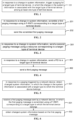
- FIG. 1 is a flowchart illustrating a paging triggering method according to an embodiment of the disclosure. It is noteworthy that the paging triggering method of embodiments of the disclosure is performed by a network device. As illustrated in FIG. 1 , the method includes the following.
- a paging for a target type of terminal device(s) is triggered, in which the change in the system information is associated with the target type of terminal device(s) among at least one type of terminal device(s).
- the communication system includes at least one type of terminal device(s), and the change in the system information may be associated with a certain type of terminal device(s) among the at least one type of terminal device(s).
- the terminal devices may be classified based on their features. It is understandable that there are many ways to classify the terminal devices.
- the terminal devices may be classified based on their capabilities.
- the communication system may include: ordinary terminal devices (which may be called legacy UE or non-RedCap UE), reduced capability (RedCap) terminal devices, enhanced reduced capability (eRedCap) terminal devices, etc.
- the terminal devices may be classified based on protocols supported by the terminal devices.
- the communication system may include: terminal devices supporting the Release 15 (R15) protocol, terminal devices supporting the Release 17 (R17) protocol, and so on.
- the terminal devices may be classified based on features supported by the terminal devices.
- the communication system may include: terminal devices that support coverage enhancement and terminal devices that do not support coverage enhancement.
- the change in the system information may be associated with the target type of terminal device(s) among the at least one type of terminal device(s). That is, the change in the system information is a change for the target type of terminal device(s) among the at least one type of terminal device(s) and thus the information field corresponding to the target type of terminal devices in the system information is updated.
- the network device may trigger the paging for the target type of terminal device(s).
- the system information may be at least one of a Master Information Block (MIB) or a series of System Information Blocks (SIBs).
- MIB Master Information Block
- SIBs System Information Blocks
- each type of terminal device is configured with at least one of a corresponding paging radio network temporary identity (P-RNTI), a corresponding resource or a corresponding paging early indication (PEI).
- P-RNTI paging radio network temporary identity
- PEI paging early indication
- the resource includes at least one of a bandwidth part (BWP), a control resource set (CORESET), a search space, or a paging occasion (PO).
- BWP bandwidth part
- CORESET control resource set
- PO paging occasion
- triggering by the network device the paging for the target type of terminal device(s) means that only the target type of terminal devices may obtain a paging message sent by the network device and obtain the changed system information in response to the triggered paging.
- the network device may trigger the paging for the target type of terminal device(s) based on at least one of the P-RNTI, the resource or the PEI corresponding to the target type of terminal device(s).
- the network device may use a P-RNTI corresponding to the target type of terminal device(s) to scramble the paging message, and send the scrambled paging message to the target type of terminal device(s).
- the network device may use a resource corresponding to the target type of terminal device(s) to send a paging message.
- the network device may send a PEI to the target type of terminal device(s), and then send a paging message to the target type of terminal device(s).
- the PEI is used for instructing the target type of terminal device(s) to receive the paging message.
- the network device may use a P-RNTI corresponding to the target type of terminal device(s) to scramble a paging message, and send the scrambled paging message on a resource corresponding to the target type of terminal device(s).
- the network device may send a PEI to the target type of terminal device(s), and then send a paging message scrambled by a P-RNTI corresponding to the target type of terminal device(s) to the target type of terminal device(s).
- the PEI is used for instructing the target type of terminal device(s) to receive the paging message.
- the network device may send a PEI to the target type of terminal device(s), and then send a paging message using a resource corresponding to the target type of terminal device(s).
- the PEI is used for instructing the target type of terminal device(s) to receive the paging message.
- the network device may send a PEI to the target type of terminal device(s), and then send a paging message scrambled by a P-RNTI corresponding to the target type of terminal device(s) on a resource corresponding to the target type of terminal device(s).
- the PEI is used for instructing the target type of terminal device(s) to receive the paging message.
- the PEI may be carried in downlink control information (DCI).
- DCI downlink control information
- the DCI may carry a respective PEI corresponding to each type of terminal device(s) among the at least one type of terminal device(s).
- the PEI is used for instructing the corresponding type of terminal device(s) to receive or not receive the paging message, or used to indicate whether there is a paging message for the corresponding type of terminal device(s).
- the network device triggers the paging for the target type of terminal devices.
- the change in the system information is associated with the target type of terminal devices among at least one type of terminal devices. Different types of terminal devices may be divided into multiple paging groups. When the system information of only a certain type of terminal devices has changed, the network device only triggers the paging for this type of terminal devices, which effectively saves signaling overhead, reduces power consumption and improves communication efficiency.
- FIG. 2 is a flowchart illustrating a paging triggering method according to an embodiment of the disclosure. It is noteworthy that the paging triggering method according to embodiments of the disclosure is performed by a network device. As illustrated in FIG. 2 , the method includes the following.
- a first paging message is scrambled using a P-RNTI corresponding to a target type of terminal device(s).
- the change in the system information is associated with the target type of terminal device(s) among at least one type of terminal device(s). It is understandable that the target type may be any one of the at least one type.
- the methods for classifying the terminal devices are as described above and will not be repeated here.
- the system information may be at least one of an MIB or an SIB.
- the target type of terminal device(s) may successfully decode the scrambled first paging message and obtain the first paging message. That is, the network device triggers the paging for the target type of terminal device(s).
- the scrambled first paging message is sent.
- the network device After scrambling the first paging message using the P-RNTI corresponding to the target type of terminal device(s), the network device sends the scrambled first paging message.
- the target type of terminal devices receives the scrambled first paging message, obtains the first paging message, and obtains the changed system information in response to the triggered paging.
- any terminal device may receive the scrambled first paging message, but only the target type of terminal devices may obtain the first paging message after receiving the scrambled first paging message and obtain the changed system information in response to obtaining the first paging message. That is, the network device triggers the paging for the target type of terminal devices, indicating that the system information of the target type of terminal devices has changed.
- the target type of terminal devices since the transmitted first paging message is scrambled by the P-RNTI corresponding to the target type of terminal devices, only the target type of terminal devices may decode the message to obtain the first paging message.
- the network device scrambles the first paging message by using the P-RNTI corresponding to the target type of terminal device(s), and sends the scrambled first paging message to the target type of terminal device(s).
- Different types of terminal devices may be divided into multiple paging groups.
- the network device scrambles the paging message by using the P-RNTI corresponding to this type of terminal device(s), so that only this type of terminal device(s) may correctly decode the received message and obtain the paging message.
- the network device only triggers the paging for this type of terminal devices, which effectively saves signaling overhead, reduces power consumption and improves communication efficiency.
- FIG. 3 is a flowchart illustrating a paging triggering method according to an embodiment of the disclosure. It is noteworthy that the paging triggering method according to embodiments of the disclosure is performed by a network device. As illustrated in FIG. 3 , the method includes the following.
- a second paging message is sent using a resource corresponding to a target type of terminal device(s).
- the change in the system information is associated with the target type of terminal device(s) among at least one type of terminal device(s). It is understandable that the target type of terminal device(s) may be terminal device(s) corresponding to any one of the at least one type. In embodiment of the disclosure, the methods for classifying the terminal devices are as described above and will not be repeated here.
- the system information may be at least one of an MIB or an SIB.
- the resource includes at least one of a BWP, a CORESET, a search space, or a PO.
- each type of the at least one type has a corresponding resource.
- the network device In response to the change in the system information being a change associated with the target type of terminal device(s), the network device sends the second paging message using a resource corresponding to the target type of terminal device(s).
- the target type of terminal device(s) may monitor on the resource corresponding to the target type of terminal device(s) and receive the second paging message. That is, the network device triggers the paging for the target type of terminal device(s), indicating that the system information of the target type of terminal device(s) has changed. The target type of terminal device(s) obtains the changed system information in response to the triggered paging.
- n types of terminal devices there may be n types of terminal devices.
- Each type of the n types is configured with a corresponding search space, i.e., a search space 1 corresponds to a type 1, a search space 2 corresponds to a type 2, ..., a search space n corresponds to a type n.
- the network device sends a paging message in the search space 1.
- each type is configured with a corresponding resource, and each type of terminal devices monitors the paging message sent by the network device on its own corresponding resource, so that when the network device sends the second paging message using the resource corresponding to the target type, the paging is triggered only for the target type of terminal device(s).
- the network device in response to the change in the system information, sends the second paging message using a resource corresponding to the target type of terminal device(s).
- Different types of terminal devices may be divided into multiple paging groups.
- the network device sends the paging message on a resource corresponding to this type of terminal device(s).
- Each type of terminal device(s) performs the paging monitoring on its own corresponding resource, but only this type of terminal device(s) may obtain the paging message.
- the network device only triggers the paging for this type of terminal device(s), which effectively saves signaling overhead, reduces power consumption and improves communication efficiency.
- FIG. 4 is a flowchart illustrating a paging triggering method according to an embodiment of the disclosure. It is noteworthy that the paging triggering method according to embodiments of the disclosure is performed by a network device. As illustrated in FIG. 4 , the method includes the following.
- a PEI is sent to a target type of terminal device(s).
- the PEI is used for instructing the target type of terminal device(s) to receive a third paging message at a corresponding PO.
- the change in the system information is associated with the target type of terminal device(s) among at least one type of terminal devices. It is understood that the target type of terminal device(s) may be any type of terminal device(s) among the at least one type of terminal device(s).
- the methods for classifying the terminal devices are as described above and will not be repeated herein.
- the system information may be at least one of an MIB or an SIB.
- the target type of terminal device(s) After receiving the PEI, the target type of terminal device(s) receives the third paging message at a certain PO based on the PEI, i.e., the network device triggers the paging for the target type of terminal device(s).
- the target type of terminal device(s) may obtain the changed system information in response to the triggered paging.
- the PEI may be carried in DCI.
- the DCI may carry a respective PEI corresponding to each type of terminal device(s) of the at least one type of terminal device(s).
- the PEI is used for instructing the corresponding type of terminal device(s) to receive or not receive the paging message.
- an information field in the DCI may carry the respective PEI corresponding to each type of terminal device(s).
- the bit value of a bit included in the information field of the PEI may be used for instructing a certain type of terminal device(s) to receive or not receive the paging message. For example, if the bit value is 1, it indicates that the corresponding type of terminal device(s) receives the paging message, and if the bit value is 0, it indicates that the corresponding type of terminal device(s) does not receive the paging message. Or, if the bit value is 0, it indicates that the corresponding type of terminal device(s) receives the paging message, and if the bit value is 1, it indicates that the corresponding type of terminal device(s) does not receive the paging message.
- each type of terminal device(s) among these n types of terminal devices is configured with a corresponding PEI, and the DCI carries the PEIs respectively corresponding to these n types of terminal devices.
- the DCI at least has an information field containing n bits respectively corresponding to the n types of terminals, in which a first bit is a PEI corresponding to the type 1, a second bit is a PEI corresponding to the type 2, ......, an nth bit is a PEI corresponding to the type n, and if the bit value is 1, it indicates that the corresponding type of terminal device(s) receives the paging message, and if the bit value is 0, it indicates that the corresponding type of terminal device(s) does not receive the paging message.
- the network device sends the DCI carrying the PEIs corresponding to the n types and in n-bit information field, the first bit has a bit value of 1 and the remaining bits all have a bit value of 0. That is, only the target type of terminal device(s) receives the paging message at a certain PO, while other types of terminal devices do not need to receive the paging message (e.g., they may remain in a sleep state).
- bit value of 1 for instructing the corresponding type of terminal device(s) to receive the paging message is only one possible implementation, and it is also possible that the bit value of 0 is used for instructing the corresponding type of terminal device(s) to receive the paging message.
- any terminal device may receive the DCI carrying the respective PEI corresponding to each type of terminal device(s) of the at least one type of terminal device(s).
- a third paging message is sent.
- the network device After sending the PEI to the target type of terminal device(s), the network device sends the third paging message to the target type of terminal device(s).
- the target type of terminal device(s) After receiving the PEI, the target type of terminal device(s) receives the third paging message based on the indication of the PEI. That is, the network device triggers the paging for the target type of terminal device(s), indicating that the system information of the target type of terminal device(s) has changed. The target type of terminal device(s) may obtain the changed system information in response to the triggered paging.
- the network device in response to the change in the system information, sends PEIs to the target type of terminal device(s), and then sends the third paging message.
- Different types of terminal devices may be divided into multiple paging groups.
- the network device sends the PEIs to the target type of terminal device(s) to instruct only the target type of terminal device(s) to receive the paging message, so that only this type of terminal device(s) receives the paging message.
- the network device only triggers the paging for this type of terminal(s), which effectively saves signaling overhead, reduces power consumption and improves communication efficiency.
- the first paging message, the second paging message, and the third paging message may all be the same paging message. They are named differently only to differentiate the application scenarios, and it does not mean that their contents are different. Certainly, the first paging message, the second paging message, and the third paging message may be different messages, which is not limited in embodiments of the disclosure.
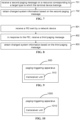
- FIG. 5 is a flowchart illustrating a paging triggering method according to an embodiment of the disclosure. It is noteworthy that the paging triggering method according to embodiments of the disclosure is performed by a terminal device. As illustrated in FIG. 5 , the method includes the following.
- step 501 in response to a paging triggered by a network device, changed system information is obtained, in which a change in system information is associated with a target type to which the terminal device belongs.
- the communication system includes at least one type of terminal device(s), and the change in the system information may be associated with a certain type of terminal device(s) among the at least one type of terminal device(s).
- the terminal devices may be classified based on their features. It is understandable that there are many ways to classify the terminal devices.
- the terminal devices may be classified based on their capabilities.
- the communication system may include: ordinary terminal devices (which may be called legacy UE or non-RedCap UE), reduced capability (RedCap) terminal devices, enhanced reduced capability (eRedCap) terminal devices, etc.
- the terminal devices may be classified based on protocols supported by the terminal devices.
- the communication system may include: terminal devices supporting the R15 protocol, terminal devices supporting the R17 protocol, and so on.
- the terminal devices may be classified based on features supported by the terminal devices.
- the communication system may include: terminal devices that support coverage enhancement and terminal devices that do not support coverage enhancement.
- the change in the system information may be associated with the target type to which the terminal device belongs among the at least one type. That is, the change in the system information is a change for the target type of terminal device (s) among the at least one type of terminal device(s) and thus the information field corresponding to the target type of terminal device(s) in the system information is updated.
- the network device may trigger the paging for the target type of terminal device(s).
- the system information may be at least one of a MIB or a series of SIBs.
- each type of terminal device(s) is configured with at least one of a corresponding P-RNTI, a corresponding resource or a corresponding PEI.
- the resource includes at least one of a BWP, a CORESET, a search space, or a PO.
- the target type of terminal device(s) may obtain the changed system information in response to the paging triggered by the network device for the target type of terminal device(s).
- the network device may trigger the paging for the target type of terminal device(s) based on at least one of the P-RNTI, the resource, or the PEI corresponding to the target type of terminal device(s).
- the network device may use a P-RNTI corresponding to the target type of terminal device(s) to scramble a paging message, and send the scrambled paging message to the target type of terminal device(s).
- the network device may use a resource corresponding to the target type of terminal device(s) to send a paging message.
- the network device may send a PEI to the target type of terminal device(s), and then send a paging message to the target type of terminal device(s).
- the PEI is used for instructing the target type of terminal device(s) to receive the paging message.
- the network device may use a P-RNTI corresponding to the target type of terminal device(s) to scramble a paging message, and send the scrambled paging message on a resource corresponding to the target type of terminal device(s).
- the network device may send a PEI to the target type of terminal device(s), and then send a paging message scrambled by a P-RNTI corresponding to the target type of terminal device(s) to the target type of terminal device(s).
- the PEI is used for instructing the target type of terminal device(s) to receive the paging message.
- the network device may send a PEI to the target type of terminal device(s), and then send a paging message using a resource corresponding to the target type of terminal device(s).
- the PEI is used for instructing the target type of terminal device(s) to receive the paging message.
- the network device may send a PEI to the target type of terminal device(s), and then send a paging message scrambled by a P-RNTI corresponding to the target type of terminal device(s) on a resource corresponding to the target type of terminal device(s).
- the PEI is used for instructing the target type of terminal device(s) to receive the paging message.
- the PEI may be carried in DCI.
- the DCI may carry a respective PEI corresponding to each type of terminal device(s) among the at least one type of terminal device(s).
- the PEI is used for instructing the corresponding type of terminal device(s) to receive or not receive a paging message, or used to indicate whether there is a paging message for the corresponding type of terminal device(s).
- the changed system information is obtained, in which the change in the system information is associated with a target type to which the terminal device belongs.
- Different types of terminal devices may be divided into multiple paging groups.
- the network device only triggers the paging for this type of terminal device(s), which effectively saves signaling overhead, reduces power consumption and improves communication efficiency.
- FIG. 6 is a flowchart illustrating a paging triggering method according to an embodiment of the disclosure. It is noteworthy that the paging triggering method according to embodiments of the disclosure is performed by a terminal device. As illustrated in FIG. 6 , the method includes the following.
- a first paging message sent by a network device is received, in which the first paging message is scrambled using a P-RNTI corresponding to a target type to which the terminal device belongs.
- the target type of terminal device(s) may be any one type of terminal device(s) among the at least one type of terminal device(s).
- the methods for classifying the terminal devices are as described above and will not be repeated here.
- the system information may be at least one of an MIB or an SIB.
- each type of terminal device(s) of the at least one type of terminal device(s) has a corresponding P-RNTI.
- the network device scrambles the first paging message using a P-RNTI corresponding to the target type of terminal device(s).
- the target type of terminal device(s) decodes the scrambled first paging message.
- the scrambled first paging message is obtained by the network device by scrambling the first paging message using the corresponding P-RNTI of the target type of terminal device(s).
- the target type of terminal device(s) After receiving the scrambled first paging message, the target type of terminal device(s) decodes the scrambled first paging message, and then determines that the first paging message is a message scrambled by the corresponding P-RNTI of the target type of terminal device(s). That is, the target type of terminal device(s) determines that the network device has triggered the paging for the target type of terminal device(s).
- step 602 changed system information is obtained based on the first paging message.
- the change in the system information is associated with the target type of terminal device(s).
- the terminal device may obtain, based on the P-RNTI corresponding to the target type to which it belongs, the first paging message from the received scrambled first paging message. That is, the terminal device receives an indication that the system information has changed.
- the terminal device may obtain the changed system information based on the first paging message.
- the first paging message sent by the network device is received, in which the first paging message being scrambled using a P-RNTI corresponding to the type to which the terminal device belongs.
- the changed system information is obtained.
- Different types of terminal devices may be divided into multiple paging groups.
- the network device only triggers the paging for this type of terminal device(s) and only this type of terminal device(s) may obtain the changed system information, which effectively saves signaling overhead, reduces power consumption and improves communication efficiency.
- FIG. 7 is a flowchart illustrating a paging triggering method according to an embodiment of the disclosure. It is noteworthy that the paging triggering method according to embodiments of the disclosure is performed by a terminal device. As illustrated in FIG. 7 , the method includes the following.
- a second paging message is received on a resource corresponding to a target type to which the terminal device belongs.
- the target type to which the terminal device belongs may be any one of the at least one type to which terminal device belong.
- the methods for classifying the terminal devices are as described above and will not be repeated here.
- the system information may be at least one of an MIB or an SIB.
- the resource includes at least one of a BWP, a CORESET, a search space, or a PO.
- each type of terminal device(s) among the at least one type of terminal device(s) has a corresponding resource.
- the network device sends the second paging message using a resource corresponding to the target type of terminal device(s).
- the target type of terminal device(s) may monitor on the resource corresponding to the target type of terminal device(s) to receive the second paging message, to determine whether the network device triggers the paging for the target type of terminal device(s).
- the target type of terminal device(s) obtains the changed system information in response to the triggered paging.
- n types of terminal devices there may be n types of terminal devices.
- Each type of the n types is configured with a corresponding search space, i.e., a search space 1 corresponds to a type 1, a search space 2 corresponds to a type 2, ..., a search space n corresponds to a type n.
- the network device sends a paging message in the search space 1.
- the target type of terminal device(s) receives the paging message in the search space 1.
- each type of terminal device(s) is configured with a corresponding resource, and each type of terminal device(s) monitors the paging message sent by the network device on its own corresponding resource.
- the network device uses the resource corresponding to the target type of terminal device(s) to send the second paging message, the paging is triggered only for the target type of terminal device(s).
- step 702 changed system information is obtained based on the second paging message.
- the change in the system information is associated with the target type of terminal device(s).
- the terminal device may receive the second paging message on a corresponding resource based on the target type to which the terminal device belongs. That is, the terminal device receives an indication that the system information has changed.
- the terminal device may obtain the changed system information based on the second paging message.
- the second paging message is received on a resource corresponding to the target type to which the terminal device belongs, and the changed system information is obtained based on the second paging message.
- Different types of terminal devices may be divided into multiple paging groups.
- the network device sends a paging message on a resource corresponding to the type.
- Each type of terminal device(s) performs the paging monitoring on its own corresponding resource, but only the corresponding type of terminal device(s) may obtain the paging message.
- the network device only triggers the paging for this type of terminal device(s) and only this type of terminal device(s) may obtain the changed system information, which effectively saves signaling overhead, reduces power consumption and improves communication efficiency.
- FIG. 8 is a flowchart illustrating a paging triggering method according to an embodiment of the disclosure. It is noteworthy that the paging triggering method according to embodiments of the disclosure is performed by a terminal device. As illustrated in FIG. 8 , the method includes the following.
- a PEI sent by a network device is received.
- the PEI is used for instructing a target type of terminal device(s) to receive a third paging message. It is understandable that the target type may be any one of the at least one type. In embodiments of the disclosure, the methods for classifying the terminal devices are as described above and will not be repeated here.
- the system information may be at least one of an MIB or an SIB.
- each type has a corresponding PEI.
- the network device In response to a change in system information being a change associated with the target type of terminal device(s), the network device sends the PEI to the target type of terminal device(s).
- the target type of terminal device(s) After receiving the PEI, the target type of terminal device(s) receives the third paging message at a certain PO based on the PEI, i.e., the network device triggers the paging for the target type of terminal device(s).
- the target type of terminal device(s) may obtain the changed system information in response to the triggered paging.
- the PEI may be carried in DCI.
- the DCI may carry a respective PEI corresponding to each type of terminal device(s).
- the PEI is used for instructing the corresponding type of terminal device(s) to receive or not receive a paging message.
- an information field in the DCI may carry the respective PEI corresponding to each type of terminal device(s).
- the bit value of a bit included in the information field of the PEI may be used for instructing a certain type of terminal device(s) to receive or not receive a paging message. For example, if the bit value is 1, it indicates that the corresponding type of terminal device(s) receives the paging message, and if the bit value is 0, it indicates that the corresponding type of terminal device(s) does not receive the paging message. Or, if the bit value is 0, it indicates that the corresponding type of terminal device(s) receives the paging message, and if the bit value is 1, it indicates that the corresponding type of terminal device(s) does not receive the paging message.
- each type of terminal device(s) among these n types of terminal devices is configured with a corresponding PEI, and the DCI carries the PEIs respectively corresponding to these n types of terminal devices.
- the DCI at least has an information field containing n bits respectively corresponding to the n types of terminals, in which a first bit is a PEI corresponding to the type 1, a second bit is a PEI corresponding to the type 2, ......, an nth bit is a PEI corresponding to the type n, and if the bit value is 1, it indicates that the corresponding type of terminal device(s) receives the paging message, and if the bit value is 0, it indicates that the corresponding type of terminal device(s) does not receive the paging message.
- the network device sends the DCI carrying the PEIs corresponding to the n types and in the n-bit information field, the first bit has a bit value of 1 and the remaining bits all have a bit value of 0. That is, only the target type of terminal device(s) receives the paging message at a certain PO, while other types of terminal devices do not need to receive the paging message (e.g., they may remain in a sleep state).
- bit value of 1 for instructing the corresponding type of terminal device(s) to receive the paging message is only one possible implementation, and it is also possible that the bit value of 0 is used for instructing the corresponding type of terminal device(s) to receive the paging message.
- any terminal device may receive the DCI carrying the respective PEI corresponding to each type of terminal device(s) of the at least one type of terminal device(s).
- a third paging message is received.
- the target type of terminal device(s) After receiving the PEI, the target type of terminal device(s) receives the third paging message based on the indication of the PEI. That is, the network device triggers the paging for the target type of terminal device(s). The target type of terminal device(s) may obtain changed system information in response to the triggered paging.
- step 803 changed system information is obtained based on the third paging message.
- the change in the system information is associated with the target type of terminal device(s).
- the terminal device may receive the third paging message based on the PEI. That is, the terminal device receives an indication that the system information has changed.
- the terminal device may obtain the changed system information based on the third paging message.
- the terminal device receives the PEI sent by the network device.
- the terminal device receives the third paging message and obtains changed system information based on the third paging message.
- Different types of terminal devices may be divided into multiple paging groups.
- the network device sends a PEI to instruct the target type of terminal device(s) to receive a paging message, and only the target type of terminal device(s) may obtain the paging message and the paging is triggered only for the target type of terminal device(s), so that the target type of terminal device(s) may obtain the changed system information, which effectively saves signaling overhead, reduces power consumption and improves communication efficiency.
- the first paging message, the second paging message, and the third paging message may all be the same paging message. They are named differently only to differentiate the application scenarios, and it does not mean that their contents are different. Certainly, the first paging message, the second paging message, and the third paging message may be different messages, which is not limited in embodiments of the disclosure.
- the disclosure also provides paging triggering apparatuses. Since the apparatuses according to embodiments of the disclosure correspond to the methods according to the above embodiments, the implementations of the methods are applicable to the apparatuses according to embodiments, which will not be described in detail in this embodiment.
- FIG. 9 is a schematic diagram illustrating a paging triggering apparatus 900 according to an embodiment of the disclosure.
- the apparatus 900 includes: a transceiver unit 910.
- the transceiver unit 910 is configured to, in response to a change in system information, trigger a paging for a target type of terminal device(s); in which the change in the system information is associated with the target type of terminal device(s) among at least one type of terminal device(s).
- each type is configured with at least one of a corresponding P-RNTI, a corresponding resource or a corresponding PEI.
- the resource includes at least one of: a BWP, a CORESET, a search space, or a PO.
- the transceiver unit 910 is configured to:
- the PEI is carried in DCI.
- the paging in response to the change in the system information, the paging is triggered for the target type of terminal device(s).
- the change in the system information is associated with the target type of terminal device(s) among at least one type of terminal device(s). Different types of terminal devices may be divided into multiple paging groups.
- the network device When the system information of only a certain type of terminal device(s) has changed, the network device only triggers the paging for this type of terminal device(s), which effectively saves signaling overhead, reduces power consumption and improves communication efficiency.
- FIG. 10 is a schematic diagram illustrating a paging triggering apparatus 1000 according to an embodiment of the disclosure.
- the apparatus 1000 includes: a transceiver unit 1010.
- the transceiver unit 1010 is configured to, in response to a paging triggered by a network device, obtain changed system information, in which a change in system information is associated with a target type to which the terminal device belongs.
- the target type is one of at least one type to which terminal devices belongs.
- Each of the at least one type is configured with at least one of a corresponding P-RNTI, a corresponding resource or a corresponding PEI.
- the transceiver unit 1010 is configured to: receive a first paging message sent by the network device, in which the first paging message is scrambled using a P-RNTI corresponding to the target type to which the terminal device belongs.
- the transceiver unit 1010 is configured to: receive a second paging message on a resource corresponding to the target type to which the terminal device belongs.
- the resource includes at least one of: a BWP, a CORESET, a search space, or a PO.
- the transceiver unit 1010 is configured to:
- the PEI is carried in DCI.
- the changed system information is obtained, in which the change in the system information is associated with the target type to which the terminal device belongs.
- Different types of terminal devices may be divided into multiple paging groups.
- the network device only triggers the paging for this type of terminal device(s), which effectively saves signaling overhead, reduces power consumption and improves communication efficiency.
- embodiments of the disclosure also provide a communication device including: a processor and a memory having a computer program stored thereon.
- a communication device including: a processor and a memory having a computer program stored thereon.
- the computer program is executed by the processor, the methods illustrated in embodiments of FIGS. 1 to 4 are performed.
- embodiments of the disclosure also provide a communication device including: a processor and a memory having a computer program stored thereon.
- a communication device including: a processor and a memory having a computer program stored thereon.
- the computer program is executed by the processor, the methods illustrated in embodiments of FIGS. 5 to 8 are performed.
- embodiments of the disclosure also provide a communication device including: a processor and an interface circuit.
- the interface circuit is configured to receive code instructions and transmit them to the processor.
- the processor is configured to run the code instructions to perform the methods illustrated in embodiments of FIGS. 1 to 4 .
- embodiments of the disclosure also provide a communication device including: a processor and an interface circuit.
- the interface circuit is configured to receive code instructions and transmit them to the processor.
- the processor is configured to run the code instructions to perform the methods illustrated in embodiments of FIGS. 5 to 8 .
- FIG. 11 is a schematic diagram illustrating a paging triggering device 1100 according to an embodiment of the disclosure.
- the paging triggering device 1100 may be a network device, a terminal device, or a chip, a chip system or a processor that supports the network device to realize the above-described methods, or a chip, a chip system or a processor that supports the terminal device to realize the above-described methods.
- the device may be used to realize the methods described in the above method embodiments with reference to the description of the above-described method embodiments.
- the paging triggering device 1100 may include one or more processors 1101.
- the processor 1101 may be a general purpose processor or a dedicated processor, such as, a baseband processor or a central processor.
- the baseband processor is used for processing communication protocols and communication data.
- the central processor is used for controlling the paging triggering device (e.g., base station, baseband chip, terminal device, terminal device chip, DU, or CU), executing computer programs, and processing data of the computer programs.
- the paging triggering device 1100 may include one or more memories 1102 on which computer programs 1103 may be stored.
- the processor 1101 executes the computer programs 1103 to cause the paging triggering device 1100 to perform the methods described in the above method embodiments.
- the computer program 1103 may be solidified in the processor 1101, in which case the processor 1101 may be implemented by hardware.
- data may also be stored in the memory 1102.
- the paging triggering device 1100 and the memory 1102 may be provided separately or may be integrated together.
- the paging triggering device 1100 may also include a transceiver 1105 and an antenna 1106.
- the transceiver 1105 may be referred to as transceiver unit, transceiver machine, or transceiver circuit, for realizing the transceiver function.
- the transceiver 1105 may include a receiver and a transmitter.
- the receiver may be referred to as receiver machine or receiving circuit, for realizing the receiving function.
- the transmitter may be referred to as transmitter machine or transmitting circuit, for realizing the transmitting function.
- the paging triggering device 1100 may also include one or more interface circuits 1107.
- the interface circuits 1107 are used to receive code instructions and transmit them to the processor 1101.
- the processor 1101 runs the code instructions to cause the paging triggering device 1100 to perform the method described in the method embodiments.
- the processor 1101 may include a transceiver for implementing the receiving and transmitting functions.
- the transceiver may be, for example, a transceiver circuit, an interface, or an interface circuit.
- the transceiver circuit, interface, or interface circuit for implementing the receiving and transmitting functions may be separated or may be integrated together.
- the transceiver circuit, interface, or interface circuit described above may be used for code/data reading and writing, or may be used for signal transmission or delivery.
- the paging triggering device 1100 may include circuits.
- the circuits may implement the sending, receiving or communicating function in the preceding method embodiments.
- the processor and transceiver described in this disclosure may be implemented on integrated circuits (ICs), analog ICs, radio frequency integrated circuits (RFICs), mixed signal ICs, application specific integrated circuits (ASICs), printed circuit boards (PCBs), and electronic devices.
- ICs integrated circuits
- RFICs radio frequency integrated circuits
- ASICs application specific integrated circuits
- PCBs printed circuit boards
- the processor and transceiver may also be produced using various IC process technologies, such as complementary metal oxide semiconductor (CMOS), nMetal-oxide-semiconductor (NMOS), positive channel metal oxide semiconductor (PMOS), bipolar junction transistor (BJT), bipolar CMOS (BiCMOS), silicon-germanium (SiGe), gallium arsenide (GaAs) and so on.
- CMOS complementary metal oxide semiconductor
- NMOS nMetal-oxide-semiconductor
- PMOS positive channel metal oxide semiconductor
- BJT bipolar junction transistor
- BiCMOS bipolar CMOS
- SiGe silicon-germanium
- GaAs gallium arsenide
- the paging triggering device in the above description of embodiments may be a network device or a terminal device, but the scope of the paging triggering device described in the disclosure is not limited thereto, and the structure of the paging triggering device may not be limited by FIGS. 9 and 10 .
- the paging triggering device may be a stand-alone device or may be part of a larger device.
- the described paging triggering device may be:
- the paging triggering device may be a chip or a chip system may be referred to the schematic diagram of a chip shown in FIG. 12 .
- the chip includes a processor 1201 and an interface 1202. There may be one or more processors 1201, and there may be multiple interfaces 1202.
- the chip further includes a memory 1203 used for storing necessary computer programs and data.
- Embodiments of the disclosure also provide a communication system.
- the system includes a paging triggering device as a terminal device and a paging triggering device as a network device in the preceding embodiments of FIGS. 9-10 .
- the system includes a paging triggering device as a terminal device and a paging triggering device as a network device in the preceding embodiment of FIG. 11 .
- the disclosure also provides a readable storage medium having instructions stored thereon. When the instructions are executed by a computer, the function of any of the method embodiments described above is implemented.
- the disclosure also provides a computer program product.
- the computer program product is executed by a computer, the function of any of the method embodiments described above is implemented.
- the above embodiments may be implemented in whole or in part by software, hardware, firmware, or any combination thereof.
- software When implemented using software, it may be implemented, in whole or in part, in the form of a computer program product.
- the computer program product includes one or more computer programs. When loading and executing the computer program on the computer, all or part of processes or functions described in the embodiments of the disclosure is implemented.
- the computer may be a general-purpose computer, a dedicated computer, a computer network, or other programmable devices.
- the computer program may be stored in a computer-readable storage medium or transmitted from one computer-readable storage medium to another computer-readable storage medium.
- the computer program may be transmitted from one web site, computer, server, or data center to another web site, computer, server, or data center, in a wired manner (e.g., by using coaxial cables, fiber optics, or digital subscriber lines (DSLs) or wirelessly (e.g., by using infrared wave, wireless wave, or microwave).
- the computer-readable storage medium may be any usable medium to which the computer has access or a data storage device such as a server and a data center integrated by one or more usable mediums.
- the usable medium may be a magnetic medium (e.g., floppy disk, hard disk, and tape), an optical medium (e.g., a high-density digital video disc (DVD)), or a semiconductor medium (e.g., a solid state disk (SSD)).
- a magnetic medium e.g., floppy disk, hard disk, and tape
- an optical medium e.g., a high-density digital video disc (DVD)
- DVD high-density digital video disc
- SSD solid state disk
- the term “at least one” in the disclosure may also be described as one or more, and the term “multiple” may be two, three, four, or more, which is not limited in the disclosure.
- “first”, “second”, and “third”, and “A”, “B”, “C” and “D” are used to distinguish different technical features of the type, the technical features described using the “first”, “second”, and “third”, and “A”, “B”, “C” and “D” do not indicate any order of precedence or magnitude.
- the correspondences shown in the tables in this disclosure may be configured or may be predefined.
- the values of information in the tables are merely examples and may be configured to other values, which are not limited by the disclosure.
- the correspondences illustrated in certain rows in the tables in this disclosure may not be configured.
- the above tables may be adjusted appropriately, such as splitting, combining, and the like.
- the names of the parameters shown in the titles of the above tables may be other names that may be understood by the communication device, and the values or representations of the parameters may be other values or representations that may be understood by the communication device.
- Each of the above tables may also be implemented with other data structures, such as, arrays, queues, containers, stacks, linear tables, pointers, chained lists, trees, graphs, structures, classes, heaps, and Hash tables.
- predefine in this disclosure may be understood as define, define in advance, store, pre-store, pre-negotiate, pre-configure, solidify, or pre-fire.
Landscapes
- Engineering & Computer Science (AREA)
- Computer Networks & Wireless Communication (AREA)
- Signal Processing (AREA)
- Computer Security & Cryptography (AREA)
- Mobile Radio Communication Systems (AREA)
Applications Claiming Priority (1)
| Application Number | Priority Date | Filing Date | Title |
|---|---|---|---|
| PCT/CN2022/075098 WO2023142085A1 (fr) | 2022-01-29 | 2022-01-29 | Procédé et appareil de déclenchement d'une radiorecherche |
Publications (2)
| Publication Number | Publication Date |
|---|---|
| EP4472308A1 true EP4472308A1 (fr) | 2024-12-04 |
| EP4472308A4 EP4472308A4 (fr) | 2025-03-05 |
Family
ID=87470238
Family Applications (1)
| Application Number | Title | Priority Date | Filing Date |
|---|---|---|---|
| EP22922914.1A Pending EP4472308A4 (fr) | 2022-01-29 | 2022-01-29 | Procédé et appareil de déclenchement d'une radiorecherche |
Country Status (4)
| Country | Link |
|---|---|
| US (1) | US20250106818A1 (fr) |
| EP (1) | EP4472308A4 (fr) |
| CN (1) | CN116897570A (fr) |
| WO (1) | WO2023142085A1 (fr) |
Families Citing this family (1)
| Publication number | Priority date | Publication date | Assignee | Title |
|---|---|---|---|---|
| US12376074B2 (en) * | 2022-07-13 | 2025-07-29 | Qualcomm Incorporated | Paging early indication responses |
Family Cites Families (6)
| Publication number | Priority date | Publication date | Assignee | Title |
|---|---|---|---|---|
| US20120276933A1 (en) * | 2011-04-28 | 2012-11-01 | Renesas Mobile Corporation | Detecting change in system information |
| CN112956256B (zh) * | 2018-11-20 | 2022-12-13 | 华为技术有限公司 | 监听或发送唤醒信号的方法和装置及通信设备 |
| WO2021159244A1 (fr) * | 2020-02-10 | 2021-08-19 | 华为技术有限公司 | Procédé et dispositif de radiorecherche |
| US11770794B2 (en) * | 2020-04-10 | 2023-09-26 | Qualcomm Incorporated | Indication of system information update via a downlink shared channel |
| US12520176B2 (en) * | 2020-07-15 | 2026-01-06 | Beijing Xiaomi Mobile Software Co., Ltd. | Method and apparatus for broadcasting indication, and method and apparatus for receiving indication |
| WO2022226742A1 (fr) * | 2021-04-26 | 2022-11-03 | 北京小米移动软件有限公司 | Procédé de surveillance de message de radiomessagerie, appareil de surveillance de message de radiomessagerie, et support de stockage |
-
2022
- 2022-01-29 EP EP22922914.1A patent/EP4472308A4/fr active Pending
- 2022-01-29 US US18/832,062 patent/US20250106818A1/en active Pending
- 2022-01-29 WO PCT/CN2022/075098 patent/WO2023142085A1/fr not_active Ceased
- 2022-01-29 CN CN202280000220.7A patent/CN116897570A/zh active Pending
Also Published As
| Publication number | Publication date |
|---|---|
| EP4472308A4 (fr) | 2025-03-05 |
| CN116897570A (zh) | 2023-10-17 |
| US20250106818A1 (en) | 2025-03-27 |
| WO2023142085A1 (fr) | 2023-08-03 |
Similar Documents
| Publication | Publication Date | Title |
|---|---|---|
| EP4518201A1 (fr) | Procédé et dispositif de détermination d'état d'indication de configuration | |
| US20250260543A1 (en) | Method and apparatus for determining transmission configuration indication state | |
| EP4376483A1 (fr) | Procédé de rapport de mesure de dispositif terminal de relais, et appareil | |
| EP4525534A1 (fr) | Procédé et appareil de configuration de ressources | |
| US20250274915A1 (en) | Methods and apparatuses for data transmission | |
| US20240236944A1 (en) | Paging method and apparatus | |
| US20250016579A1 (en) | Beam indication method and device for smart repeater | |
| US20240365338A1 (en) | Method and apparatus for transmitting downlink control information (dci) | |
| EP4531461A1 (fr) | Procédé et appareil de connexion de relais | |
| EP4492889A1 (fr) | Procédé de détermination d'informations de configuration de ressource de signal de référence de sondage (srs), et appareil l'utilisant | |
| US20250133572A1 (en) | Downlink control information alignment method and apparatus | |
| EP4447558A1 (fr) | Procédé et appareil de contrôle d'accès | |
| EP4472308A1 (fr) | Procédé et appareil de déclenchement d'une radiorecherche | |
| EP4451786A1 (fr) | Procédé et dispositif de détermination d'une configuration de réception discontinue de liaison latérale | |
| EP4694218A1 (fr) | Procédé et appareil de détermination d'informations de couverture de satellite | |
| EP4518211A1 (fr) | Procédé de traitement pour rétroaction de demande de répétition automatique hybride (harq), et appareil associé | |
| EP4529279A1 (fr) | Procédé de transmission d'informations de transfert de données et appareil | |
| US20240340850A1 (en) | Method and apparatus for implementing paging cause indication | |
| US20240405948A1 (en) | Method and apparatus for reporting multi-carrier aggregation capability | |
| US20240292384A1 (en) | Resource allocation method and apparatus thereof | |
| CN116097869A (zh) | 一种侧行链路pdcp复用的激活方法及装置 | |
| EP4546896A1 (fr) | Procédé et appareil d'acquisition de temps de validation | |
| US12598584B2 (en) | Paging processing method, communication apparatus, and storage medium | |
| US20250261058A1 (en) | Configuration method for mobility management, and apparatus | |
| EP4539581A1 (fr) | Procédé et appareil de commande d'accès |
Legal Events
| Date | Code | Title | Description |
|---|---|---|---|
| STAA | Information on the status of an ep patent application or granted ep patent |
Free format text: STATUS: THE INTERNATIONAL PUBLICATION HAS BEEN MADE |
|
| PUAI | Public reference made under article 153(3) epc to a published international application that has entered the european phase |
Free format text: ORIGINAL CODE: 0009012 |
|
| STAA | Information on the status of an ep patent application or granted ep patent |
Free format text: STATUS: REQUEST FOR EXAMINATION WAS MADE |
|
| 17P | Request for examination filed |
Effective date: 20240827 |
|
| AK | Designated contracting states |
Kind code of ref document: A1 Designated state(s): AL AT BE BG CH CY CZ DE DK EE ES FI FR GB GR HR HU IE IS IT LI LT LU LV MC MK MT NL NO PL PT RO RS SE SI SK SM TR |
|
| A4 | Supplementary search report drawn up and despatched |
Effective date: 20250205 |
|
| RIC1 | Information provided on ipc code assigned before grant |
Ipc: H04W 48/12 20090101ALI20250130BHEP Ipc: H04W 68/00 20090101AFI20250130BHEP |
|
| DAV | Request for validation of the european patent (deleted) | ||
| DAX | Request for extension of the european patent (deleted) |