EP4553157A2 - Anti-cd38-antikörper zur behandlung von leichtkettiger amyloidose und anderen cd38-positiven hämatologischen malignomen - Google Patents
Anti-cd38-antikörper zur behandlung von leichtkettiger amyloidose und anderen cd38-positiven hämatologischen malignomen Download PDFInfo
- Publication number
- EP4553157A2 EP4553157A2 EP25163256.8A EP25163256A EP4553157A2 EP 4553157 A2 EP4553157 A2 EP 4553157A2 EP 25163256 A EP25163256 A EP 25163256A EP 4553157 A2 EP4553157 A2 EP 4553157A2
- Authority
- EP
- European Patent Office
- Prior art keywords
- antibody
- seq
- patient
- cells
- light chain
- Prior art date
- Legal status (The legal status is an assumption and is not a legal conclusion. Google has not performed a legal analysis and makes no representation as to the accuracy of the status listed.)
- Pending
Links
Images





Classifications
-
- C—CHEMISTRY; METALLURGY
- C07—ORGANIC CHEMISTRY
- C07K—PEPTIDES
- C07K16/00—Immunoglobulins [IG], e.g. monoclonal or polyclonal antibodies
- C07K16/18—Immunoglobulins [IG], e.g. monoclonal or polyclonal antibodies against material from animals or humans
- C07K16/28—Immunoglobulins [IG], e.g. monoclonal or polyclonal antibodies against material from animals or humans against receptors, cell surface antigens or cell surface determinants
- C07K16/2896—Immunoglobulins [IG], e.g. monoclonal or polyclonal antibodies against material from animals or humans against receptors, cell surface antigens or cell surface determinants against molecules with a "CD"-designation, not provided for elsewhere
-
- A—HUMAN NECESSITIES
- A61—MEDICAL OR VETERINARY SCIENCE; HYGIENE
- A61K—PREPARATIONS FOR MEDICAL, DENTAL OR TOILETRY PURPOSES
- A61K31/00—Medicinal preparations containing organic active ingredients
- A61K31/56—Compounds containing cyclopenta[a]hydrophenanthrene ring systems; Derivatives thereof, e.g. steroids
- A61K31/57—Compounds containing cyclopenta[a]hydrophenanthrene ring systems; Derivatives thereof, e.g. steroids substituted in position 17 beta by a chain of two carbon atoms, e.g. pregnane or progesterone
- A61K31/573—Compounds containing cyclopenta[a]hydrophenanthrene ring systems; Derivatives thereof, e.g. steroids substituted in position 17 beta by a chain of two carbon atoms, e.g. pregnane or progesterone substituted in position 21, e.g. cortisone, dexamethasone, prednisone or aldosterone
-
- A—HUMAN NECESSITIES
- A61—MEDICAL OR VETERINARY SCIENCE; HYGIENE
- A61K—PREPARATIONS FOR MEDICAL, DENTAL OR TOILETRY PURPOSES
- A61K31/00—Medicinal preparations containing organic active ingredients
- A61K31/66—Phosphorus compounds
- A61K31/664—Amides of phosphorus acids
-
- A—HUMAN NECESSITIES
- A61—MEDICAL OR VETERINARY SCIENCE; HYGIENE
- A61K—PREPARATIONS FOR MEDICAL, DENTAL OR TOILETRY PURPOSES
- A61K31/00—Medicinal preparations containing organic active ingredients
- A61K31/69—Boron compounds
-
- A—HUMAN NECESSITIES
- A61—MEDICAL OR VETERINARY SCIENCE; HYGIENE
- A61K—PREPARATIONS FOR MEDICAL, DENTAL OR TOILETRY PURPOSES
- A61K38/00—Medicinal preparations containing peptides
- A61K38/04—Peptides having up to 20 amino acids in a fully defined sequence; Derivatives thereof
- A61K38/05—Dipeptides
-
- A—HUMAN NECESSITIES
- A61—MEDICAL OR VETERINARY SCIENCE; HYGIENE
- A61K—PREPARATIONS FOR MEDICAL, DENTAL OR TOILETRY PURPOSES
- A61K38/00—Medicinal preparations containing peptides
- A61K38/16—Peptides having more than 20 amino acids; Gastrins; Somatostatins; Melanotropins; Derivatives thereof
- A61K38/43—Enzymes; Proenzymes; Derivatives thereof
- A61K38/46—Hydrolases (3)
- A61K38/47—Hydrolases (3) acting on glycosyl compounds (3.2), e.g. cellulases, lactases
-
- A—HUMAN NECESSITIES
- A61—MEDICAL OR VETERINARY SCIENCE; HYGIENE
- A61K—PREPARATIONS FOR MEDICAL, DENTAL OR TOILETRY PURPOSES
- A61K39/00—Medicinal preparations containing antigens or antibodies
- A61K39/395—Antibodies; Immunoglobulins; Immune serum, e.g. antilymphocytic serum
- A61K39/39533—Antibodies; Immunoglobulins; Immune serum, e.g. antilymphocytic serum against materials from animals
- A61K39/3955—Antibodies; Immunoglobulins; Immune serum, e.g. antilymphocytic serum against materials from animals against proteinaceous materials, e.g. enzymes, hormones, lymphokines
-
- A—HUMAN NECESSITIES
- A61—MEDICAL OR VETERINARY SCIENCE; HYGIENE
- A61K—PREPARATIONS FOR MEDICAL, DENTAL OR TOILETRY PURPOSES
- A61K45/00—Medicinal preparations containing active ingredients not provided for in groups A61K31/00 - A61K41/00
- A61K45/06—Mixtures of active ingredients without chemical characterisation, e.g. antiphlogistics and cardiaca
-
- A—HUMAN NECESSITIES
- A61—MEDICAL OR VETERINARY SCIENCE; HYGIENE
- A61K—PREPARATIONS FOR MEDICAL, DENTAL OR TOILETRY PURPOSES
- A61K9/00—Medicinal preparations characterised by special physical form
- A61K9/0012—Galenical forms characterised by the site of application
- A61K9/0019—Injectable compositions; Intramuscular, intravenous, arterial, subcutaneous administration; Compositions to be administered through the skin in an invasive manner
-
- A—HUMAN NECESSITIES
- A61—MEDICAL OR VETERINARY SCIENCE; HYGIENE
- A61P—SPECIFIC THERAPEUTIC ACTIVITY OF CHEMICAL COMPOUNDS OR MEDICINAL PREPARATIONS
- A61P35/00—Antineoplastic agents
-
- A—HUMAN NECESSITIES
- A61—MEDICAL OR VETERINARY SCIENCE; HYGIENE
- A61P—SPECIFIC THERAPEUTIC ACTIVITY OF CHEMICAL COMPOUNDS OR MEDICINAL PREPARATIONS
- A61P35/00—Antineoplastic agents
- A61P35/02—Antineoplastic agents specific for leukemia
-
- A—HUMAN NECESSITIES
- A61—MEDICAL OR VETERINARY SCIENCE; HYGIENE
- A61P—SPECIFIC THERAPEUTIC ACTIVITY OF CHEMICAL COMPOUNDS OR MEDICINAL PREPARATIONS
- A61P37/00—Drugs for immunological or allergic disorders
-
- A—HUMAN NECESSITIES
- A61—MEDICAL OR VETERINARY SCIENCE; HYGIENE
- A61P—SPECIFIC THERAPEUTIC ACTIVITY OF CHEMICAL COMPOUNDS OR MEDICINAL PREPARATIONS
- A61P37/00—Drugs for immunological or allergic disorders
- A61P37/02—Immunomodulators
- A61P37/06—Immunosuppressants, e.g. drugs for graft rejection
-
- A—HUMAN NECESSITIES
- A61—MEDICAL OR VETERINARY SCIENCE; HYGIENE
- A61P—SPECIFIC THERAPEUTIC ACTIVITY OF CHEMICAL COMPOUNDS OR MEDICINAL PREPARATIONS
- A61P9/00—Drugs for disorders of the cardiovascular system
-
- C—CHEMISTRY; METALLURGY
- C12—BIOCHEMISTRY; BEER; SPIRITS; WINE; VINEGAR; MICROBIOLOGY; ENZYMOLOGY; MUTATION OR GENETIC ENGINEERING
- C12Y—ENZYMES
- C12Y302/00—Hydrolases acting on glycosyl compounds, i.e. glycosylases (3.2)
- C12Y302/01—Glycosidases, i.e. enzymes hydrolysing O- and S-glycosyl compounds (3.2.1)
- C12Y302/01035—Hyaluronoglucosaminidase (3.2.1.35), i.e. hyaluronidase
-
- A—HUMAN NECESSITIES
- A61—MEDICAL OR VETERINARY SCIENCE; HYGIENE
- A61K—PREPARATIONS FOR MEDICAL, DENTAL OR TOILETRY PURPOSES
- A61K39/00—Medicinal preparations containing antigens or antibodies
- A61K2039/505—Medicinal preparations containing antigens or antibodies comprising antibodies
-
- C—CHEMISTRY; METALLURGY
- C07—ORGANIC CHEMISTRY
- C07K—PEPTIDES
- C07K2317/00—Immunoglobulins specific features
- C07K2317/20—Immunoglobulins specific features characterized by taxonomic origin
- C07K2317/21—Immunoglobulins specific features characterized by taxonomic origin from primates, e.g. man
-
- C—CHEMISTRY; METALLURGY
- C07—ORGANIC CHEMISTRY
- C07K—PEPTIDES
- C07K2317/00—Immunoglobulins specific features
- C07K2317/20—Immunoglobulins specific features characterized by taxonomic origin
- C07K2317/24—Immunoglobulins specific features characterized by taxonomic origin containing regions, domains or residues from different species, e.g. chimeric, humanized or veneered
-
- C—CHEMISTRY; METALLURGY
- C07—ORGANIC CHEMISTRY
- C07K—PEPTIDES
- C07K2317/00—Immunoglobulins specific features
- C07K2317/50—Immunoglobulins specific features characterized by immunoglobulin fragments
- C07K2317/56—Immunoglobulins specific features characterized by immunoglobulin fragments variable (Fv) region, i.e. VH and/or VL
-
- C—CHEMISTRY; METALLURGY
- C07—ORGANIC CHEMISTRY
- C07K—PEPTIDES
- C07K2317/00—Immunoglobulins specific features
- C07K2317/50—Immunoglobulins specific features characterized by immunoglobulin fragments
- C07K2317/56—Immunoglobulins specific features characterized by immunoglobulin fragments variable (Fv) region, i.e. VH and/or VL
- C07K2317/565—Complementarity determining region [CDR]
-
- C—CHEMISTRY; METALLURGY
- C07—ORGANIC CHEMISTRY
- C07K—PEPTIDES
- C07K2317/00—Immunoglobulins specific features
- C07K2317/70—Immunoglobulins specific features characterized by effect upon binding to a cell or to an antigen
- C07K2317/73—Inducing cell death, e.g. apoptosis, necrosis or inhibition of cell proliferation
- C07K2317/732—Antibody-dependent cellular cytotoxicity [ADCC]
Definitions
- the present invention relates to methods of treatment of light chain amyloidosis and other CD38-positive hematological malignancies.
- B-cell malignancies include B-cell chronic lymphocytic leukemia, mantle cell lymphoma, Burkitt lymphoma, follicular lymphoma, diffuse large B-cell lymphoma, multiple myeloma, Hodgkin's lymphoma, hairy cell leukemia, primary effusion lymphoma and AIDS-related Non-Hodgkin's Lymphoma.
- B-cell malignancies comprise more than 85% of diagnosed lymphomas.
- MM Multiple myeloma
- the disease ultimately attacks bones and bone marrow, resulting in multiple tumors and lesions throughout the skeletal system.
- Approximately 1% of all cancers and slightly more than 10% of all hematologic malignancies can be attributed to multiple myeloma. Incidence of multiple myeloma increases in the aging population, with the median age at time of diagnosis being about 61 years.
- A Light chain amyloidosis
- Monoclonal plasma cells in the bone marrow produce the misfolded immunoglobulin light chains that accumulate in tissues and cause toxicity in vital organs leading to organ failure and death ( Comenzo et al., Leukemia 26:2317-25, 2012 ).
- amyloidosis frequently manifests in kidneys, heart, skin, nervous system and in soft tissues, such as the tongue ( Merlini and Belotti, NEJM, 349:583-596, 2003 ), resulting in albuminuria and renal failure, heart failure, arrhythmias, risk of sudden cardiac death, hepatomegaly, bloating, early satiety, paresthesias, dysthesias, orthostatic hypotension, constipation, or diarrhea ( Chaulagain and Comenzo; Curr Hematol Malig Rep 8:291-8, 2013 ).
- CD38 is a type II membrane protein having function in receptor-mediated adhesion and signaling as well as mediating calcium mobilization via its ecto-enzymatic activity, catalyzing formation of cyclic ADP-ribose (cADPR) from NAD + and also hydrolyzing cADPR into ADP-ribose (ADPR).
- cADPR cyclic ADP-ribose
- CD38 mediates cytokine secretion and activation and proliferation of lymphocytes ( Funaro et al., J Immunology 145:2390-6, 1990 ; Guse et al., Nature 398:70-3, 1999 ), and via its NAD glycohydrolase activity regulates extracellular NAD + levels which have been implicated in modulating the regulatory T-cell compartment (Adriouch et al., 14:1284-92, 2012; Chiarugi et al., Nature Reviews 12:741-52, 2012 ).
- CD38 is expressed on multiple myeloma malignant plasma cells, and is implicated in various hematological malignancies.
- the invention provides for a method of treating a patient having a CD38-positive hematological malignancy, comprising administering to the patient in need thereof an anti-CD38 antibody for a time sufficient to treat the CD38-positive hematological malignancy, wherein the patient is undergoing hematopoietic stem cell transplantation (HSCT).
- HSCT hematopoietic stem cell transplantation
- the invention also provides for a method of treating a patient having light chain amyloidosis (AL), comprising administering to the patient in need thereof an anti-CD38 antibody for a time sufficient to treat AL.
- AL light chain amyloidosis
- the invention also provides for a method of treating a patient having light chain amyloidosis (AL), comprising administering to the patient in need thereof an anti-CD38 antibody for a time sufficient to treat AL, wherein the patient is undergoing hematopoietic stem cell transplantation (HSCT).
- AL light chain amyloidosis
- HSCT hematopoietic stem cell transplantation
- Antibodies as used herein is meant in a broad sense and includes immunoglobulin molecules including monoclonal antibodies including murine, human, human-adapted, humanized and chimeric monoclonal antibodies, antibody fragments, bispecific or multispecific antibodies, dimeric, tetrameric or multimeric antibodies, and single chain antibodies.
- Immunoglobulins can be assigned to five major classes, namely IgA, IgD, IgE, IgG and IgM, depending on the heavy chain constant domain amino acid sequence.
- IgA and IgG are further sub-classified as the isotypes IgA 1 , IgA 2 , IgG 1 , IgG 2 , IgG 3 and IgG 4 .
- Antibody light chains of any vertebrate species can be assigned to one of two clearly distinct types, namely kappa ( ⁇ ) and lambda ( ⁇ ), based on the amino acid sequences of their constant domains.
- Antibody fragments refers to a portion of an immunoglobulin molecule that retains the heavy chain and/or the light chain antigen binding site, such as heavy chain complementarity determining regions (HCDR) 1, 2 and 3, light chain complementarity determining regions (LCDR) 1, 2 and 3, a heavy chain variable region (VH), or a light chain variable region (VL).
- HCDR heavy chain complementarity determining regions
- LCDR light chain complementarity determining regions
- VH heavy chain variable region
- VL light chain variable region
- Antibody fragments include a Fab fragment, a monovalent fragment consisting of the VL, VH, CL and CHI domains; a F(ab) 2 fragment, a bivalent fragment comprising two Fab fragments linked by a disulfide bridge at the hinge region; a Fd fragment consisting of the VH and CHI domains; a Fv fragment consisting of the VL and VH domains of a single arm of an antibody; a domain antibody (dAb) fragment ( Ward et al., Nature 341:544- 6, 1989 ), which consists of a VH domain.
- dAb domain antibody
- VH and VL domains can be engineered and linked together via a synthetic linker to form various types of single chain antibody designs in which the VH/VL domains pair intramolecularly, or intermolecularly in those cases in which the VH and VL domains are expressed by separate single chain antibody constructs, to form a monovalent antigen binding site, such as single chain Fv (scFv) or diabody; described for example in Intl. Pat. Publ. Nos. WO1998/44001 , WO1988/01649 , WO1994/13804 , and WO1992/01047 .
- scFv single chain Fv
- WO1998/44001 WO1988/01649
- WO1994/13804 WO1992/01047
- isolated antibody refers to an antibody or antibody fragment that is substantially free of other antibodies having different antigenic specificities (e.g., an isolated antibody specifically binding CD38 is substantially free of antibodies that specifically bind antigens other than human CD38).
- An isolated antibody that specifically binds CD38 can have cross-reactivity to other antigens, such as orthologs of human CD38, such as Macaca fascicularis (cynomolgus) CD38.
- an isolated antibody may be substantially free of other cellular material and/or chemicals.
- An antibody variable region consists of a "framework" region interrupted by three "antigen binding sites".
- the antigen binding sites are defined using various terms: Complementarity Determining Regions (CDRs), three in the VH (HCDR1, HCDR2, HCDR3) and three in the VL (LCDR1, LCDR2, LCDR3) are based on sequence variability ( Wu and Kabat J Exp Med 132:211-50, 1970 ; Kabat et al Sequences of Proteins of Immunological Interest, 5th Ed.
- Hypervariable regions three in the VH (H1, H2, H3) and three in the VL (L1, L2, L3) refer to the regions of an antibody variable domains which are hypervariable in structure as defined by Chothia and Lesk ( Chothia and Lesk Mol Biol 196:901-17, 1987 ).
- Other terms include “IMGT-CDRs” ( Lefranc et al., Dev Comparat Immunol 27:55-77, 2003 ) and “Specificity Determining Residue Usage” (SDRU) ( Almagro, Mol Recognit 17:132-43, 2004 ).
- IMGT International ImMunoGeneTics
- Chothia residues as used herein are the antibody VL and VH residues numbered according to Al-Lazikani ( Al-Lazikani et al., J Mol Biol 273:927-48, 1997 ).
- Framework or “framework sequences” are the remaining sequences of a variable region other than those defined to be antigen binding sites. Because the antigen binding sites can be defined by various terms as described above, the exact amino acid sequence of a framework depends on how the antigen-binding site was defined.
- Humanized antibody refers to an antibody in which the antigen binding sites are derived from non-human species and the variable region frameworks are derived from human immunoglobulin sequences. Humanized antibodies may include substitutions in the framework regions so that the framework may not be an exact copy of expressed human immunoglobulin or germline gene sequences.
- Human-adapted antibodies or “human framework adapted (HFA)” antibodies refers to humanized antibodies adapted according to methods described in U.S. Pat. Publ. No. US2009/0118127 .
- Human-adapted antibodies are humanized by selecting the acceptor human frameworks based on the maximum CDR and FR similarities, length compatibilities and sequence similarities of CDR1 and CDR2 loops and a portion of light chain CDR3 loops.
- Human antibody refers to an antibody having heavy and light chain variable regions in which both the framework and the antigen binding sites are derived from sequences of human origin. If the antibody contains a constant region, the constant region also is derived from sequences of human origin.
- a human antibody comprises heavy and/or light chain variable regions that are "derived from” sequences of human origin wherein the variable regions of the antibody are obtained from a system that uses human germline immunoglobulin or rearranged immunoglobulin genes.
- Such systems include human immunoglobulin gene libraries displayed on phage, and transgenic non-human animals such as mice or rat carrying human immunoglobulin loci as described herein.
- a "human antibody” may contain amino acid differences when compared to the human germline or rearranged immunoglobulin sequences due to for example naturally occurring somatic mutations or intentional introduction of substitutions in the framework or antigen binding sites.
- a human antibody is at least about 80%, 81%, 82%, 83%, 84%, 85%, 86%, 87%, 88%, 89%, 90%, 91%, 92%, 93%, 94%, 95%, 96%, 97%, 98%, 99% or 100% identical in amino acid sequence to an amino acid sequence encoded by a human germline or rearranged immunoglobulin gene.
- human antibody may contain consensus framework sequences derived from human framework sequence analyses, for example as described in Knappik et al., J Mol Biol 296:57-86, 2000 , or synthetic HCDR3 incorporated into human immunoglobulin gene libraries displayed on phage, for example as described in Shi et al., J Mol Biol 397:385-96, 2010 and Intl. Pat. Publ. No. WO2009/085462 ). Antibodies in which antigen binding sites are derived from a non-human species are not included in the definition of human antibody.
- Isolated humanized antibodies may be synthetic.
- Human antibodies, while derived from human immunoglobulin sequences, may be generated using systems such as phage display incorporating synthetic CDRs and/or synthetic frameworks, or can be subjected to in vitro mutagenesis to improve antibody properties, resulting in antibodies that do not naturally exist within the human antibody germline repertoire in vivo.
- Recombinant antibody includes all antibodies that are prepared, expressed, created or isolated by recombinant means, such as antibodies isolated from an animal (for example a mouse or a rat) that is transgenic or transchromosomal for human immunoglobulin genes or a hybridoma prepared therefrom, antibodies isolated from a host cell transformed to express the antibody, antibodies isolated from a recombinant, combinatorial antibody library, and antibodies prepared, expressed, created or isolated by any other means that involve splicing of human immunoglobulin gene sequences to other DNA sequences, or antibodies that are generated in vitro using Fab arm exchange such as bispecific antibodies.
- recombinant means such as antibodies isolated from an animal (for example a mouse or a rat) that is transgenic or transchromosomal for human immunoglobulin genes or a hybridoma prepared therefrom, antibodies isolated from a host cell transformed to express the antibody, antibodies isolated from a recombinant, combinatorial antibody library, and antibodies prepared, expressed, created or isolated by any other means that
- “Monoclonal antibody” refers to a preparation of antibody molecules of single molecular composition.
- a monoclonal antibody composition displays a single binding specificity and affinity for a particular epitope, or in a case of a bispecific monoclonal antibody, a dual binding specificity to two distinct epitopes.
- “Monoclonal antibody” therefore refers to an antibody population with single amino acid composition in each heavy and each light chain, except for possible well known alterations such as removal of C-terminal lysine from the antibody heavy chain.
- Monoclonal antibodies may have heterogeneous glycosylation within the antibody population.
- Monoclonal antibody may be monospecific or multispecific, or monovalent, bivalent or multivalent. A bispecific antibody is included in the term monoclonal antibody.
- Epitope refers to a portion of an antigen to which an antibody specifically binds.
- Epitopes usually consist of chemically active (such as polar, non-polar or hydrophobic) surface groupings of moieties such as amino acids or polysaccharide side chains and can have specific three-dimensional structural characteristics, as well as specific charge characteristics.
- An epitope can be composed of contiguous and/or noncontiguous amino acids that form a conformational spatial unit. For a noncontiguous epitope, amino acids from differing portions of the linear sequence of the antigen come in close proximity in 3-dimensional space through the folding of the protein molecule.
- Variant refers to a polypeptide or a polynucleotide that differs from a reference polypeptide or a reference polynucleotide by one or more modifications for example, substitutions, insertions or deletions.
- “In combination with” means that two or more therapeutics can be administered to a subject together in a mixture, concurrently as single agents or sequentially as single agents in any order.
- Treating” or “treatment” refers to therapeutic treatment wherein the object is to slow down (lessen) an undesired physiological change or disease, or to provide a beneficial or desired clinical outcome during treatment.
- Beneficial or desired clinical outcomes include alleviation of symptoms, diminishment of extent of disease, stabilized (i.e., not worsening) state of disease, delay or slowing of disease progression, amelioration or palliation of the disease state, and remission (whether partial or total), whether detectable or undetectable.
- Treatment can also mean prolonging survival as compared to expected survival if a subject was not receiving treatment.
- Those in need of treatment include those subjects already with the undesired physiological change or diseases well as those subjects prone to have the physiological change or disease.
- “Inhibits growth” refers to a measurable decrease in the cell growth in vitro or in vivo when the cell is contacted with a therapeutic or a combination of therapeutics or drugs, when compared to the growth of the same cell grown in appropriate control conditions well known to the skilled in the art. Inhibition of growth of a cell in vitro or in vivo may be at least about 10%, 20%, 30%, 40%, 50%, 60%, 70%, 80%, 90%, 99%, or 100%.
- Inhibition of cell growth can occur by a variety of mechanisms, for example by antibody-dependent cell-mediated cytotoxicity (ADCC), antibody-dependent cellular phagocytosis (ADCP), complement dependent cytotoxicity (CDC), apoptosis, necrosis, or by inhibition of cell proliferation.
- ADCC antibody-dependent cell-mediated cytotoxicity
- ADCP antibody-dependent cellular phagocytosis
- CDC complement dependent cytotoxicity
- apoptosis necrosis
- necrosis or by inhibition of cell proliferation.
- “Therapeutically effective amount” refers to an amount effective, at dosages and for periods of time necessary, to achieve a desired therapeutic result.
- a therapeutically effective amount may vary according to factors such as the disease state, age, sex, and weight of the individual, and the ability of a therapeutic or a combination of therapeutics to elicit a desired response in the individual.
- Exemplary indicators of an effective amount of a therapeutic or combination of therapeutics include, for example, improved well-being of the patient, reduction of a tumor burden, arrested or slowed growth of a tumor, and/or absence of metastasis of cancer cells to other locations in the body.
- Nonhuman animal includes all vertebrates, e.g., mammals and non-mammals, such as nonhuman primates, sheep, dogs, cats, horses, cows chickens, amphibians, reptiles, etc.
- the terms “patient” and “subject” are used interchangeably herein.
- the invention provides for a method of treating patients having a CD38-positive hematological malignancy undergoing hematopoietic stem cell transplantation with an anti-CD38 antibody that does not kill (e.g. mediate killing of) CD34 + hematopoietic stem cells within the transplant, which cells are also CD38 positive.
- the invention also provides for a method for treating patients having light chain amyloidosis.
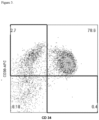
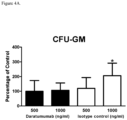
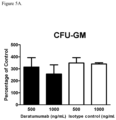
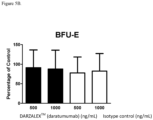
- the invention is based, at least in part, on the discovery that an anti-CD38 antibody DARZALEX TM (daratumumab) is effective in killing AL plasma cells, but does not kill CD38 + CD34 + hematopoietic stem cells isolated from patients having light chain amyloidosis or multiple myeloma, allowing combination treatment with DARZALEX TM (daratumumab) and hematopoietic stem cell transplantation.
- DARZALEX TM (daratumumab) is effective in killing AL plasma cells, but does not kill CD38 + CD34 + hematopoietic stem cells isolated from patients having light chain amyloidosis or multiple myeloma
- the methods of the invention may be used to treat an animal patient belonging to any classification.
- animals include mammals such as humans, rodents, dogs, cats and farm animals.
- the invention provides for a method of treating a patient having a CD38-positive hematological malignancy, comprising administering to the patient in need thereof an anti-CD38 antibody for a time sufficient to treat the CD38-positive hematological malignancy, wherein the patient is undergoing hematopoietic stem cell transplantation (HSCT).
- HSCT hematopoietic stem cell transplantation
- CD38-positive hematological malignancy refers to a hematological malignancy characterized by the presence of tumor cells expressing CD38 including leukemias, lymphomas, myeloma and plasma cell disorders.
- Examples of CD38-positive hematological malignancies include precursor B-cell lymphoblastic leukemia/lymphoma and B-cell non-Hodgkin's lymphoma, acute promyelocytic leukemia, acute lymphoblastic leukemia and mature B-cell neoplasms, such as B-cell chronic lymphocytic leukemia(CLL)/small lymphocytic lymphoma (SLL), B-cell acute lymphocytic leukemia, B-cell prolymphocytic leukemia, lymphoplasmacytic lymphoma, mantle cell lymphoma (MCL), follicular lymphoma (FL), including low-grade, intermediate- grade and high-grade FL, cutaneous follicle center lymphoma,
- CD-38 positive hematological malignancy and “plasma cell disorders” may thus be partially overlapping.
- the CD38-positive hematological malignancy is light chain amyloidosis (AL).
- the CD38-positive hematological malignancy is multiple myeloma (MM).
- the CD38-positive hematological malignancy is Waldenstrom's macroglobulinemia.
- the CD38-positive hematological malignancy is diffuse large B-cell lymphoma (DLBCL).
- DLBCL diffuse large B-cell lymphoma
- the CD38-positive hematological malignancy is non-Hodgkin's lymphoma.
- the CD38-positive hematological malignancy is acute lymphoblastic leukemia (ALL).
- ALL acute lymphoblastic leukemia
- the CD38-positive hematological malignancy is follicular lymphoma (FL).
- the CD38-positive hematological malignancy is Burkitt's lymphoma (BL).
- the CD38-positive hematological malignancy is mantle cell lymphoma (MCL).
- the CD38-positive hematological malignancy is a plasma cell disorder.
- the CD38-positive hematological malignancy is light chain amyloidosis (AL), multiple myeloma (MM), acute lymphoblastic leukemia (ALL), non-Hodgkin's lymphoma, diffuse large B-cell lymphoma (DLBCL), Burkitt's lymphoma (BL), follicular lymphoma (FL) or mantle-cell lymphoma (MCL).
- AL light chain amyloidosis
- MM multiple myeloma
- ALL acute lymphoblastic leukemia
- NHL non-Hodgkin's lymphoma
- DLBCL diffuse large B-cell lymphoma
- BL Burkitt's lymphoma
- FL follicular lymphoma
- MCL mantle-cell lymphoma
- Exemplary B-cell non-Hodgkin's lymphomas are lymphomatoid granulomatosis, primary effusion lymphoma, intravascular large B-cell lymphoma, mediastinal large B-cell lymphoma, heavy chain diseases (including ⁇ , ⁇ , and a disease), lymphomas induced by therapy with immunosuppressive agents, such as cyclosporine-induced lymphoma, and methotrexate-induced lymphoma.
- the disorder involving cells expressing CD38 is Hodgkin's lymphoma.
- disorders involving cells expressing CD38 include malignancies derived from T and NK cells including mature T cell and NK cell neoplasms including T-cell prolymphocytic leukemia, T-cell large granular lymphocytic leukemia, aggressive NK cell leukemia, adult T-cell leukemia/lymphoma, extranodal NK/T cell lymphoma, nasal type, 78 enteropathy-type T-cell lymphoma, hepatosplenic T-cell lymphoma, subcutaneous panniculitis-like T-cell lymphoma, blastic NK cell lymphoma, Mycosis Fungoides/Sezary Syndrome, primary cutaneous CD30 positive T-cell lymphoproliferative disorders (primary cutaneous anaplastic large cell lymphoma C-ALCL, lymphomatoid papulosis, borderline lesions), angioimmunoblastic T-cell lymphoma, peripheral T-cell lymphoma unspecified, and ana
- malignancies derived from myeloid cells include acute myeloid leukemia, including acute promyelocytic leukemia, and chronic myeloproliferative diseases, including chronic myeloid leukemia.
- the invention also provides for a method of treating a patient having light chain amyloidosis (AL), comprising administering to the patient in need thereof an anti-CD38 antibody for a time sufficient to treat AL
- the invention also provides for a method of treating a patient having light chain amyloidosis, comprising administering to the patient in need thereof an anti-CD38 antibody for a time sufficient to treat the light chain amyloidosis, wherein the patient is undergoing hematopoietic stem cell transplantation (HSCT).
- HSCT hematopoietic stem cell transplantation
- the invention also provides for a method of treating a patient having multiple myeloma, comprising administering to the patient in need thereof an anti-CD38 antibody for a time sufficient to treat the multiple myeloma, wherein the patient is undergoing hematopoietic stem cell transplantation (HSCT).
- HSCT hematopoietic stem cell transplantation
- the anti-CD38 antibody competes for binding to CD38 with an antibody comprising a heavy chain variable region (VH) of SEQ ID NO: 4 and a light chain variable region (VL) of SEQ ID NO: 5.
- VH heavy chain variable region
- VL light chain variable region
- the anti-CD38 antibody binds at least to the region SKRNIQFSCKNIYR (SEQ ID NO: 2) and the region EKVQTLEAWVIHGG (SEQ ID NO: 3) of human CD38 (SEQ ID NO: 1).
- the anti-CD38 antibody comprises a heavy chain complementarity determining region (HCDR) 1, a HCDR2 and a HCDR3 of SEQ ID NOs: 6, 7 and 8, respectively.
- HCDR heavy chain complementarity determining region
- the anti-CD38 antibody comprises a light chain complementarity determining region (LCDR) 1, a LCDR2 and a LCDR3 of SEQ ID NOs: 9, 10 and 11, respectively.
- LCDR light chain complementarity determining region
- the anti-CD38 antibody comprises the HCDR1, the HCDR2 and the HCDR3 of SEQ ID NOs: 6, 7 and 8, respectively, and the LCDR1, the LCDR2 and the LCDR3 of SEQ ID NOs: 9, 10 and 11, respectively.
- the anti-CD38 antibody comprises a heavy chain variable region (VH) amino acid sequence that is 95%, 96%, 97%, 98%, 99% or 100% identical to that of SEQ ID NO: 4 and a light chain variable region (VL) amino acid sequence that is 95%, 96%, 97%, 98%, 99% or 100% identical to that of SEQ ID NO: 5.
- VH heavy chain variable region
- VL light chain variable region
- the anti-CD38 antibody comprises the VH of SEQ ID NO: 4 and the VL of SEQ ID NO: 5.
- the anti-CD38 antibody comprises a heavy chain comprising an amino acid sequence that is 95%, 96%, 97%, 98%, 99% or 100% identical to that of SEQ ID NO: 12 and a light chain comprising an amino acid sequence that is 95%, 96%, 97%, 98%, 99% or 100% identical to that of SEQ ID NO: 13.
- the anti-CD38 antibody comprises the heavy chain of SEQ ID NO: 12 and the light chain of SEQ ID NO: 13.
- the epitope of the antibody includes some or all of the residues having the sequences shown in SEQ ID NO: 2 or SEQ ID NO: 3.
- the antibody epitope comprises at least one amino acid in the region SKRNIQFSCKNIYR (SEQ ID NO: 2) and at least one amino acid in the region EKVQTLEAWVIHGG (SEQ ID NO: 3) of human CD38 (SEQ ID NO: 1).
- the antibody epitope comprises at least two amino acids in the region SKRNIQFSCKNIYR (SEQ ID NO: 2) and at least two amino acids in the region EKVQTLEAWVIHGG (SEQ ID NO: 3) of human CD38 (SEQ ID NO: 1).
- the antibody epitope comprises at least three amino acids in the region SKRNIQFSCKNIYR (SEQ ID NO: 2) and at least three amino acids in the region EKVQTLEAWVIHGG (SEQ ID NO: 3) of human CD38 (SEQ ID NO: 1).
- An exemplary antibody that binds to the region SKRNIQFSCKNIYR (SEQ ID NO: 2) and the region EKVQTLEAWVIHGG (SEQ ID NO: 3) of human CD38 (SEQ ID NO: 1) is DARZALEX TM (daratumumab).
- DARZALEX TM (daratumumab).
- DARZALEX TM (daratumumab) comprises the heavy chain variable region (VH) and the light chain variable region (VL) amino acid sequences shown in SEQ ID NO: 4 and 5, respectively, heavy chain CDRs HCDR1, HCDR2 and HCDR3 of SEQ ID NOs: 6, 7 and 8, respectively, and light chain CDRs LCDR1, LCDR2 and LCDR3 of SEQ ID NOs: 9, 10 and 11, respectively, and is of IgG1/ ⁇ subtype and described in U.S. Pat. No. 7,829,693 .
- DARZALEX TM (daratumumab) heavy chain amino acid sequence is shown in SEQ ID NO: 12 and light chain amino acid sequence shown in SEQ ID NO: 13.
- Antibodies may be evaluated for their competition with a reference antibody, for example DARZALEX TM (DARZALEX TM (daratumumab)) having the VH of SEQ ID NO: 4 and the VL of SEQ ID NO: 5 for binding to CD38 using well known in vitro methods.
- a reference antibody for example DARZALEX TM (DARZALEX TM (daratumumab)) having the VH of SEQ ID NO: 4 and the VL of SEQ ID NO: 5 for binding to CD38 using well known in vitro methods.
- CHO cells recombinantly expressing CD38 may be incubated with an unlabeled reference antibody for 15 min at 4°C, followed by incubation with an excess of a fluorescently labeled test antibody for 45 min at 4°C. After washing in PBS/BSA, fluorescence may be measured by flow cytometry using standard methods.
- the extracellular domain of CD38 may be coated on the surface of an ELISA plate.
- HRP horseradish peroxidase
- test antibody competes with the reference antibody when the reference antibody inhibits binding of the test antibody, or the test antibody inhibits binding of the reference antibody to CD38 by at least 80%, for example 81%, 82%, 83%, 84%, 85%, 86%, 87%, 88%, 89%, 90%, 91%, 92%, 93%, 94%, 95%, 96%, 97%, 98%, 99% or 100%.
- the epitope of the test antibody may further be defined for example by peptide mapping or hydrogen/deuterium protection assays using known methods, or by crystal structure determination.
- Antibodies binding to the region SKRNIQFSCKNIYR (SEQ ID NO: 2) and the region EKVQTLEAWVIHGG (SEQ ID NO: 3) of human CD38 (SEQ ID NO: 1). may be generated for example by immunizing mice with peptides having the amino acid sequences shown in SEQ ID NOs: 2 and 3 using standard methods and as described herein, and characterizing the obtained antibodies for binding to the peptides using for example ELISA or mutagenesis studies.
- anti-CD38 antibodies that may be used in the methods of the invention include those described in Int. Pat. Publ. No. WO05/103083 , Intl. Pat. Publ. No. WO06/125640 , Intl. Pat. Publ. No. WO07/042309 , Intl. Pat. Publ. No. WO08/047242 or Intl. Pat. Publ. No. WO14/178820 .
- AL is cardiac stage I, cardiac stage II or cardiac stage III.
- AL is relapsed or refractory.
- AL diagnosis is performed by a physician according to guidelines available for example at National Comprehensive Cancer Network (http:// www necn.org/_professionals/_physician_gls/ _f guidelines_asp#site).
- AL patients present damage in various organ systems due to accumulation of light chains and their misfolded intermediates as amyloid fibers in vital organs, causing organ dysfunction and mortality.
- Patients may have multiple organ systems affected at diagnosis; about one third of patients have more than 3 organs affected at diagnosis ( Chaulagain and Comenzo Curr Hematol Malig Rep 8:291-8, 2013 ).
- AL prognosis involves cardiac staging as cardiac damage appears to be present in all AL patients at diagnosis even if the patient is asymptomatic ( Palladini et al., Blood 116:3426-30, 2010 ; Kristen et al., Blood 116: 2455-61, 2010 ). Based on the presence of one, two or both cardiac biomarkers N-terminal prohormone of brain natriuretic peptide (NT-proBNP) and troponin T, AL patients may be classified to cardiac stage I, II or III, see e.g. Comenzo et al., Leukemia 26:2317-25, 2012 .
- NT-proBNP N-terminal prohormone of brain natriuretic peptide
- Current treatment options for AL are directed towards killing the light chain immunoglobulin secreting plasma cells, and include a combination of agents such as Velcade ® (bortezomib), cyclophosphamide such as Cytoxan ® or Neosar ® , Alkeran ® (melphalan), Thalomid ® (thalidomide), Revlimid ® (lenalidomide), or Pomalyst ® (pomalidomide) as well as steroids (dexamethasone), interferon alpha (IFN- ⁇ ) and stem cell transplantation.
- agents such as Velcade ® (bortezomib), cyclophosphamide such as Cytoxan ® or Neosar ® , Alkeran ® (melphalan), Thalomid ® (thalidomide), Revlimid ® (lenalidomide), or Pomalyst ® (pomalidomide) as well as steroids (dexamethasone), interferon alpha (IFN
- High-dose Alkeran ® (melphalan) may be used with stem cell transplantation (see for example Anderson et al., Systemic light chain amyloidosis, NCCN Clinical Practice Guidelines in Oncology Version I.2015, NCCN.org. 2014).
- NINLARO ® ixazomib
- NEOD001 a monoclonal antibody targeting AL amyloid protein is being evaluated for treatment of AL.
- MM is relapsed or refractory.
- MM oligovine MM
- therapies for MM include chemotherapy, stem cell transplantation, Thalomid ® (thalidomide), Revlimid ® (lenalidomide), Velcade ® (bortezomib), Kyprolis ® (carfilzomib), Farydak ® (panobinostat), Aredia ® (pamidronate), and Zometa ® (zoledronic acid).
- Symptoms that may be associated with relapse or resistance are, for example, a decline or plateau of the well-being of the patient or reestablishment or worsening of various symptoms associated with hematological malignancy, and/or the spread of cancerous cells in the body from one location to other organs, tissues or cells.
- the symptoms associated with hematological malignancy may vary according to the type of cancer.
- symptoms associated with AL may include increased fatigue, purpura, enlarged tongue, diarrhea or edema, proteinurea, or increased plasma free light chain.
- the HSCT is allogeneic, autologous or syngeneic, i.e. the donor is a twin.
- Autologous HSCT comprises the extraction of HSC from the subject and freezing of the harvested HSC. After myeloablation, the subject's stored HSC are transplanted into the subject.
- Allogeneic HSCT involves HSC obtained from an allogeneic HSC donor who has an HLA type that matches the subject.
- Hematopoietic stem cell transplantation is the transplantation of blood stem cells derived from the bone marrow (in this case known as bone marrow transplantation), blood (such as peripheral blood and umbilical cord blood), or amniotic fluid.
- Undergoing hematopoietic stem cell transplantation means that the patient did already receive, is receiving or will receive HSCT.
- the patient has completed chemotherapy and/or radiation therapy prior to HSCT.
- Patients may be treated with chemotherapy and/or radiation therapy prior to HSCT (so-called pre-transplant preparation) to eradicate some or all of the patient's hematopoietic cells prior to transplant.
- the patient may also be treated with immunosuppressants in case of allogeneic HSCT.
- An exemplary pre-transplant preparation therapy is high-dose melphalan (see for example Skinner et al., Ann Intern Med 140:85-93, 2004 ; Gertz et al., Bone Marrow Transplant 34: 1025-31, 2004 ; Perfetti et al., Haematologica 91:1635-43, 2006 ).
- the radiation therapy which may be employed in pre-transplant treatment may be carried out according to commonly known protocols in this field. Radiation therapy may also be provided simultaneously, sequentially or separately with the anti-CD38 antibody.
- DARZALEX TM may not mediate killing CD38 + CD34 + stem cells within the transplant and hence is a suitable therapy to combine with HSCT.
- Antibodies competing with daratumumab, and/or antibodies binding the same epitope as DARZALEX TM (daratumumab) may also not kill CD38+CD34+ stem cells.
- exemplary antibodies that can be used in the methods of the invention disclosed herein may not kill CD38 + CD34 + stem cells within the transplant and hence are suitable therapies to combine with HSCT. Inability of the antibodies to kill CD38 + CD34 + stem cells within the transplant can be assessed using the methods described herein.
- Anti-CD38 antibodies used in the methods of the invention may also be selected de novo from, e.g., a phage display library, where the phage is engineered to express human immunoglobulins or portions thereof such as Fabs, single chain antibodies (scFv), or unpaired or paired antibody variable regions ( Knappik et al., J Mol Biol 296:57-86, 2000 ; Krebs et al., J Immunol Meth 254:67-84, 2001 ; Vaughan et al., Nature Biotechnology 14:309-314, 1996 ; Sheets et al., PITAS (USA) 95:6157-6162, 1998 ; Hoogenboom and Winter, J Mol Biol 227:381, 1991 ; Marks et al., J Mol Biol 222:581, 1991 ).
- a phage display library where the phage is engineered to express human immunoglobulins or portions thereof such as Fabs, single chain antibodies (scF
- CD38 binding variable domains may be isolated from e.g., phage display libraries expressing antibody heavy and light chain variable regions as fusion proteins with bacteriophage pIX coat protein as described in Shi et al., J. Mol. Biol. 397:385-96, 2010 and Intl. Pat. Publ. No. WO09/085462 ).
- the antibody libraries may be screened for binding to human CD38 extracellular domain, obtained positive clones further characterized, Fabs isolated from the clone lysates, and subsequently cloned as full length antibodies.
- Such phage display methods for isolating human antibodies are established in the art. See for example: US Pat. No. 5,223,409 ; US Pat. No.
- the anti-CD38 antibody does not mediate killing CD34-positive hematopoietic progenitor cells by complement dependent cytotoxicity (CDC).
- CDC complement dependent cytotoxicity
- Does not kill” or “does not mediate killing of” refers to the inability of the anti-CD38 antibody to induce cell killing when compared to an appropriate control, such as an isotype control.
- the anti-CD38 antibody "does not kill” when the measured killing of cells in the presence of DARZALEX TM (daratumumab) is not statistically significant when compared to the killing of cells in the presence of an isotype control.
- Isotype control is a well-known term.
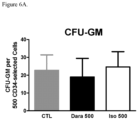
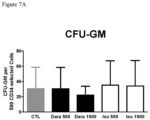
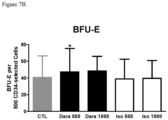
- CD34-positive hematopoietic progenitor cell killing by CDC may be measured in fresh or frozen isolated CD34 + cells by incubating the cells in 10% serum with complement and 500 ng/ml anti-CD38 antibody, followed by assaying the degree of colony formation of the cells plated in semisolid medium according to known methods. For example, BFU-E and CFU-GM formation may be assessed after 14 days in culture using commercial reagents such as MethoCult TM by Stem Cell Technologies.
- the Fc portion of the antibody may mediate antibody effector functions such as antibody-dependent cell-mediated cytotoxicity (ADCC), antibody-dependent cellular phagocytosis (ADCP) or complement dependent cytotoxicity (CDC).
- ADCC antibody-dependent cell-mediated cytotoxicity
- ADCP antibody-dependent cellular phagocytosis
- CDC complement dependent cytotoxicity
- Such function may be mediated by binding of an Fc effector domain(s) to an Fc receptor on an immune cell with phagocytic or lytic activity or by binding of an Fc effector domain(s) to components of the complement system.
- the effect(s) mediated by the Fc-binding cells or complement components result in inhibition and/or depletion of target cells, for example CD38-expressing cells.
- Human IgG isotypes IgG1, IgG2, IgG3 and IgG4 exhibit differential capacity for effector functions.
- ADCC may be mediated by IgG1 and IgG3
- ADCP may be mediated by
- the anti-CD38 antibody is of IgG1, IgG2, IgG3 or IgG4 isotype.
- the anti-CD38 antibody induces killing of CD38 expressing plasma cells in vitro by antibody-dependent cell-mediated cytotoxicity (ADCC), antibody-dependent cellular phagocytosis (ADCP), complement dependent cytotoxicity (CDC), apoptosis, or in vitro modulation of CD38 enzymatic activity.
- ADCC antibody-dependent cell-mediated cytotoxicity
- ADCP antibody-dependent cellular phagocytosis
- CDC complement dependent cytotoxicity
- apoptosis or in vitro modulation of CD38 enzymatic activity.
- the anti-CD38 antibody induces killing of CD38 expressing cells in vitro by ADCC, ADCP or CDC.
- the anti-CD38 antibody induces killing of CD38 expressing cells in vitro by ADCC.
- the anti-CD38 antibody induces killing of CD38 expressing cells in vitro by ADCP.
- the anti-CD38 antibody induces killing of CD38 expressing cells in vitro by CDC.
- Antibody-dependent cellular cytotoxicity is a mechanism for inducing cell death that depends upon the interaction of antibody-coated target cells with effector cells possessing lytic activity, such as natural killer cells, monocytes, macrophages and neutrophils via Fc gamma receptors (FcyR) expressed on effector cells.
- effector cells possessing lytic activity, such as natural killer cells, monocytes, macrophages and neutrophils via Fc gamma receptors (FcyR) expressed on effector cells.
- FcyR Fc gamma receptors
- NK cells express FcyRIIIa
- monocytes express Fcy ⁇ RI, Fc ⁇ RII and FcyRIIIa.
- Death of the antibody-coated target cell such as CD38-expressing cells, occurs as a result of effector cell activity through the secretion of membrane pore-forming proteins and proteases.
- the antibody may be added to CD38-expressing cells in combination with immune effector cells, which may be activated by the antigen antibody complexes resulting in cytolysis of the target cell. Cytolysis is generally detected by the release of label (e.g. radioactive substrates, fluorescent dyes or natural intracellular proteins) from the lysed cells.
- label e.g. radioactive substrates, fluorescent dyes or natural intracellular proteins
- exemplary effector cells for such assays include peripheral blood mononuclear cells (PBMC) and NK cells.
- PBMC peripheral blood mononuclear cells
- target cells include Daudi cells (ATCC ® CCL-213 TM ) or B cell leukemia or lymphoma tumor cells expressing CD38.
- target cells are labeled with 20 ⁇ Ci of 51 Cr for 2 hours and washed extensively.
- Cell concentration of the target cells can be adjusted to 1 ⁇ 10 6 cells/ml, and anti-CD38 antibodies at various concentrations are added.
- Assays are started by adding Daudi cells at an effector:target cell ratio of 40:1. After incubation for 3 hr at 37°C, assays are stopped by centrifugation, and 51 Cr release from lysed cells are measured in a scintillation counter. Percentage of cellular cytotoxicity may be calculated as % maximal lysis which may be induced by adding 3% perchloric acid to target cells.
- Anti-CD38 antibodies used in the methods of the invention may induce ADCC by about 20%, 25%, 30%, 35%, 40%, 45%, 50%, 55%, 60%, 65%, 70%, 75%, 80%, 85%, 90%, 95% or 100% of control (cell lysis induced by 3% perchloric acid).
- ADCP Antibody-dependent cellular phagocytosis
- phagocytic cells such as macrophages or dendritic cells.
- ADCP may be evaluated by using monocyte-derived macrophages as effector cells and Daudi cells (ATCC ® CCL-213 TM ) or B cell leukemia or lymphoma tumor cells expressing CD38 as target cells engineered to express GFP or other labeled molecule.
- Effctor:target cell ratio may be for example 4:1. Effector cells may be incubated with target cells for 4 hours with or without anti-CD38 antibody. After incubation, cells may be detached using accutase.
- Macrophages can be identified with anti-CD11b and anti-CD14 antibodies coupled to a fluorescent label, and percent phagocytosis can be determined based on % GFP fluorescent in the CD11 + CD14 + macrophages using standard methods.
- Anti-CD38 antibodies used in the methods of the invention may induce ADCP by about 20%, 25%, 30%, 35%, 40%, 45%, 50%, 55%, 60%, 65%, 70%, 75%, 80%, 85%, 90%, 95% or 100% .
- “Complement-dependent cytotoxicity”, or “CDC” refers to a mechanism for inducing cell death in which an Fc effector domain of a target-bound antibody binds and activates complement component C1q which in turn activates the complement cascade leading to target cell death. Activation of complement may also result in deposition of complement components on the target cell surface that facilitate ADCC by binding complement receptors (e.g., CR3) on leukocytes.
- complement receptors e.g., CR3
- CDC of CD38-expressing cells can be measured for example by plating Daudi cells at 1 ⁇ 10 5 cells/well (50 ⁇ l/well) in RPMI-B (RPMI supplemented with 1% BSA), adding 50 ⁇ l anti-CD38 antibodies to the wells at final concentration between 0-100 ⁇ g/ml, incubating the reaction for 15 min at room temperature, adding 11 ⁇ l of pooled human serum to the wells, and incubation the reaction for 45 min at 37° C. Percentage (%) lysed cells may be detected as % propidium iodide stained cells in FACS assay using standard methods.
- Anti-CD38 antibodies used in the methods of the invention may induce CDC by about 20%, 25%, 30%, 35%, 40%, 45%, 50%, 55%, 60%, 65%, 70%, 75%, 80%, 85%, 90%, 95% or 100%.
- the ability of monoclonal antibodies to induce ADCC can be enhanced by engineering their oligosaccharide component.
- Human IgG1 or IgG3 are N-glycosylated at Asn297 with the majority of the glycans in the well-known biantennary G0, G0F, G1, G1F, G2 or G2F forms.
- Antibodies produced by non-engineered CHO cells typically have a glycan fucose content of about at least 85%. The removal of the core fucose from the biantennary complex-type oligosaccharides attached to the Fc regions enhances the ADCC of antibodies via improved Fc ⁇ RIIIa binding without altering antigen binding or CDC activity.
- Such mAbs can be achieved using different methods reported to lead to the successful expression of relatively high defucosylated antibodies bearing the biantennary complex-type of Fc oligosaccharides such as control of culture osmolality ( Konno et al., Cytotechnology 64:249-65, 2012 ), application of a variant CHO line Lec13 as the host cell line ( Shields et al., J Biol Chem 277:26733-40, 2002 ), application of a variant CHO line EB66 as the host cell line ( Olivier et al., MAbs 2(4), 2010; Epub ahead of print; PMID:20562582 ), application of a rat hybridoma cell line YB2/0 as the host cell line ( Shinkawa et al., J Biol Chem 278:3466-73, 2003 ), introduction of small interfering RNA specifically against the ⁇ 1,6-fucosyltrasferase ( FUT8 ) gene ( Mor
- ADCC elicited by anti-CD38 antibodies used in the methods of the invention, and in some embodiments of each and every one of the numbered embodiments listed below, may also be enhanced by certain substitutions in the antibody Fc.
- Exemplary substitutions are for example substitutions at amino acid positions 256, 290, 298, 312, 356, 330, 333, 334, 360, 378 or 430 (residue numbering according to the EU index) as described in U.S. Pat. No. 6,737,056 .
- CDC elicited by anti-CD38 antibodies used in the methods of the invention, and in some embodiments of each and every one of the numbered embodiments listed below, may also be enhanced by certain substitutions in the antibody Fc.
- Exemplary substitutions are, for example, substitutions at amino acid positions 423, 268, 267 and/or 113 (residue numbering according to the EU index) as described in Moore et al., Mabs 2:181-9, 2010 .
- the anti-CD38 antibody comprises a substitution in the antibody Fc.
- the anti-CD38 antibody comprises a substitution in the antibody Fc at amino acid positions 256, 290, 298, 312, 356, 330, 333, 334, 360, 378 and/or 430 (residue numbering according to the EU index).
- the anti-CD38 antibody comprises a substitution in the antibody Fc at amino acid position 113, 267, 268 and/or 423 (residue numbering according to the EU index).
- the anti-CD38 antibody comprises has a biantennary glycan structure with fucose content of about between 0% to about 15%, for example 15%, 14%, 13%, 12%, 11% 10%, 9%, 8%, 7%, 6%, 5%, 4%, 3%, 2%, 1% or 0%.
- the anti-CD38 antibody comprises has a biantennary glycan structure with fucose content of about 50%, 40%, 45%, 40%, 35%, 30%, 25%, 20%, 15%, 14%, 13%, 12%, 11% 10%, 9%, 8%, 7%, 6%, 5%, 4%, 3%, 2%, 1% or 0%
- “Fucose content” means the amount of the fucose monosaccharide within the sugar chain at Asn297.
- the relative amount of fucose is the percentage of fucose-containing structures related to all glycostructures. These may be characterized and quantified by multiple methods, for example: 1) using MALDI-TOF of N-glycosidase F treated sample (e.g. complex, hybrid and oligo- and high-mannose structures) as described in Intl. Pat. Publ. No.
- WO2008/077546 2) by enzymatic release of the Asn297 glycans with subsequent derivatization and detection/ quantitation by HPLC (UPLC) with fluorescence detection and/or HPLC-MS (UPLC-MS); 3) intact protein analysis of the native or reduced mAb, with or without treatment of the Asn297 glycans with Endo S or other enzyme that cleaves between the first and the second GlcNAc monosaccharides, leaving the fucose attached to the first GlcNAc; 4) digestion of the mAb to constituent peptides by enzymatic digestion (e.g., trypsin or endopeptidase Lys-C), and subsequent separation, detection and quantitation by HPLC-MS (UPLC-MS) or 5) separation of the mAb oligosaccharides from the mAb protein by specific enzymatic deglycosylation with PNGase F at Asn 297.
- UPLC UPLC
- the oligosaccharides released can be labeled with a fluorophore, separated and identified by various complementary techniques which allow: fine characterization of the glycan structures by matrix-assisted laser desorption ionization (MALDI) mass spectrometry by comparison of the experimental masses with the theoretical masses, determination of the degree of sialylation by ion exchange HPLC (GlycoSep C), separation and quantification of the oligosacharride forms according to hydrophilicity criteria by normal-phase HPLC (GlycoSep N), and separation and quantification of the oligosaccharides by high performance capillary electrophoresis-laser induced fluorescence (HPCE-LIF).
- MALDI matrix-assisted laser desorption ionization
- Low fucose or “low fucose content” as used in the application refers to antibodies with fucose content of about 0% - 15%.
- Normal fucose or 'normal fucose content refers to antibodies with fucose content of about over 50%, typically about over 60%, 70%, 80% or over 85%.
- the anti-CD38 antibody used in the methods of the invention may induce killing of CD38-expressing cells by apoptosis in vitro.
- Methods for evaluating apoptosis are well known, and include for example annexin IV staining using standard methods.
- the anti-CD38 antibody in the methods of the invention may induce apoptosis in about 20%, 25%, 30%, 35%, 40%, 45%, 50%, 55%, 60%, 65%, 70%, 75%, 80%, 85%, 90%, 95% or 100% of cells.
- the anti-CD38 antibody used in the methods of the invention may induce in vitro killing of CD38-expressing cells by modulation of CD38 enzymatic activity.
- CD38 is a multifunctional ectoenzme with ADP-ribosyl cyclase 1 activity catalyzing the formation of cyclic ADP-ribose (cADPR) and ADPR from NAD + , and also functions to hydrolyze NAD + and cADPR to ADPR.
- CD38 also catalyzes the exchange of the nicotinamide group of NADP + with nicotinic acid under acidic conditions, to yield NAADP + (nicotinic acid-adenine dinucleotide phosphate).
- Modulation of the enzymatic activity of human CD38 with anti-CD38 antibodies used in the methods of the invention may be measured in an assay described in Graeff et al., J. Biol. Chem. 269:30260-7, 1994 ).
- substrate NGD + may be incubated with CD38, and the modulation of the production of cyclic GDP-ribose (cGDPR) may be monitored spectrophotometrically at excitation at 340 nM and emission at 410 nM at different time points after addition of the antibody at various concentrations.
- Inhibition of the synthesis of cADPR may be determined according to the HPLC method described in Munshi et al., J. Biol. Chem. 275: 21566-71, 2000 .
- the anti-CD38 antibodies used in the methods of the invention may inhibit CD38 enzymatic activity by at least about 20%, 25%, 30%, 35%, 40%, 45%, 50%, 55%, 60%, 65%, 70%, 75%, 80%, 85%, 90%, 95% or 100% .
- Antibodies that are substantially identical to the antibody comprising the VH of SEQ ID NO: 4 and the VL of SEQ ID NO: 5 may be used in the methods of the invention.
- the term "substantially identical” means that the antibody VH or VL amino acid sequences being compared are identical or have "insubstantial differences". Insubstantial differences are substitutions of 1, 2, 3, 4, 5, 6, 7, 8, 9, 10, 11, 12, 13, 14, or 15 amino acids in the antibody VL and/or VL that do not adversely affect antibody properties. Percent identity may be determined for example by pairwise alignment using the default settings of the AlignX module of Vector NTI v.9.0.0 (Invitrogen, Carlsbad, CA).
- the protein sequences of the present invention may be used as a query sequence to perform a search against public or patent databases to, for example, identify related sequences.
- Exemplary programs used to perform such searches are the XBLAST or BLASTP programs (http _//www_ncbi_nlm/nih_gov), or the GenomeQuest TM (GenomeQuest, Westborough, MA) suite using the default settings.
- Exemplary substitutions that may be made to the antibodies that specifically bind CD38 used in the methods of the invention are for example conservative substitutions with an amino acid having similar charge, hydrophobic, or stereochemical characteristics. Conservative substitutions may also be made to improve antibody properties, for example stability or affinity, or to improve antibody effector functions.
- amino acid substitutions may be made for example to the VH and/or the VL of the anti-CD38.
- any native residue in the heavy or light chain may also be substituted with alanine, as has been previously described for alanine scanning mutagenesis ( MacLennan et al., Acta Physiol Scand Suppl 643:55-67, 1998 ; Sasaki et al., Adv Biophys 35:1-24, 1998 ). Desired amino acid substitutions may be determined by those skilled in the art at the time such substitutions are desired. Amino acid substitutions may be done for example by PCR mutagenesis ( U.S. Pat. No. 4,683,195 ).
- variants may be generated using well known methods, for example using random (NNK) or non-random codons, for example DVK codons, which encode 11 amino acids (Ala, Cys, Asp, Glu, Gly, Lys, Asn, Arg, Ser, Tyr, Trp) and screening the libraries for variants with desired properties.
- the generated variants may be tested for their binding to CD38, their ability to induce ADCC, ADCP or apoptosis, or modulate CD38 enzymatic activity in vitro using methods described herein.
- Constant modifications refer to amino acid modifications that do not significantly affect or alter the binding characteristics of the antibody containing the amino acid sequences.
- Conservative modifications include amino acid substitutions, additions and deletions.
- Conservative substitutions are those in which the amino acid is replaced with an amino acid residue having a similar side chain.
- amino acids with acidic side chains e.g., aspartic acid, glutamic acid
- basic side chains e.g., lysine, arginine, histidine
- nonpolar side chains e.g., alanine, valine, leucine, isoleucine, proline, phenylalanine, methionine
- uncharged polar side chains e.g., glycine, asparagine, glutamine, cysteine, serine, threonine, tyrosine, tryptophan
- aromatic side chains e.g., phenylalanine, tryptophan, histidine, tyrosine
- aliphatic side chains e.g., glycine, alanine, valine, leucine, isoleucine, serine, threonine
- amide e.g., asparagine, glutamine
- any native residue in the polypeptide may also be substituted with alanine, as has been previously described for alanine scanning mutagenesis ( MacLennan et al., (1988) Acta Physiol Scand Suppl 643:55-67 ; Sasaki et al., (1988) Adv Biophys 35:1-24 ).
- Amino acid substitutions to the antibodies of the invention may be made by known methods for example by PCR mutagenesis ( US Patent No. 4,683,195 ).
- libraries of variants may be generated for example using random (NNK) or non-random codons, for example DVK codons, which encode 11 amino acids (Ala, Cys, Asp, Glu, Gly, Lys, Asn, Arg, Ser, Tyr, Trp).
- NNK random
- DVK codons which encode 11 amino acids (Ala, Cys, Asp, Glu, Gly, Lys, Asn, Arg, Ser, Tyr, Trp).
- the resulting antibody variants may be tested for their characteristics using assays described herein.
- the antibody may bind CD38 with a dissociation constant (K D ) of less than about 1 ⁇ 10 7 M, 1 ⁇ 10 8 M, 1 ⁇ 10 -9 M, 1 ⁇ 10 -10 M, 1 ⁇ 10 -11 M, 1 ⁇ 10 -12 M, 1 ⁇ 10 -13 M, 1 ⁇ 10 -14 M or 1 ⁇ 10 -15 , as determined by surface plasmon resonance or the Kinexa method, as practiced by those of skill in the art.
- the antibody binds human CD38 with a K D of less than about 1 ⁇ 10 -8 M.
- the antibody binds human CD38 with a K D of less than about 1 ⁇ 10 -9 M.
- K D affinity and other binding parameters
- K D affinity and other binding parameters
- a standardized buffer such as the buffer described herein.
- the internal error for affinity measurements for example using Biacore 3000 or ProteOn may typically be within 5-33% for measurements within the typical limits of detection. Therefore the term "about" in the context of K D reflects the typical standard deviation in the assay. For example, the typical SD for a K D of 1 ⁇ 10 -9 M is up to ⁇ 0.33 ⁇ 10 -9 M.
- the anti-CD38 antibody is a bispecific antibody.
- the VL and/or the VH regions of the existing anti-CD38 antibodies or the VL and VH regions identified de novo as described above may be engineered into bispecific full length antibodies.
- Such bispecific antibodies may be made by modulating the CH3 interactions between the monospecific antibody heavy chains to form bispecific antibodies using technologies such as those described in U.S. Pat. No. 7,695,936 ; Intl. Pat. Publ. No. WO04/111233 ; U.S. Pat. Publ. No. US2010/0015133 ; U.S. Pat. Publ. No. US2007/0287170 ; Intl. Pat. Publ. No. WO2008/119353 ; U.S.
- WO2009/134776 or structures that include various dimerization domains to connect the two antibody arms with different specificity, such as leucine zipper or collagen dimerization domains (Int. Pat. Publ. No. WO2012/022811 , U.S. Pat. No. 5,932,448 ; U.S. Pat. No. 6,833,441 ).
- bispecific antibodies may be generated in vitro in a cell-free environment by introducing asymmetrical mutations in the CH3 regions of two monospecific homodimeric antibodies and forming the bispecific heterodimeric antibody from two parent monospecific homodimeric antibodies in reducing conditions to allow disulfide bond isomerization according to methods described in Intl.Pat. Publ. No. WO2011/131746 .
- the first monospecific bivalent antibody e.g., anti-CD38 antibody
- the second monospecific bivalent antibody are engineered to have certain substitutions at the CH3 domain that promote heterodimer stability; the antibodies are incubated together under reducing conditions sufficient to allow the cysteines in the hinge region to undergo disulfide bond isomerization; thereby generating the bispecific antibody by Fab arm exchange.
- the incubation conditions may optimally be restored to non-reducing.
- Exemplary reducing agents that may be used are 2- mercaptoethylamine (2-MEA), dithiothreitol (DTT), dithioerythritol (DTE), glutathione, tris(2-carboxyethyl)phosphine (TCEP), L-cysteine and beta-mercaptoethanol, preferably a reducing agent selected from the group consisting of: 2- mercaptoethylamine, dithiothreitol and tris(2-carboxyethyl)phosphine.
- incubation for at least 90 min at a temperature of at least 20°C in the presence of at least 25 mM 2-MEA or in the presence of at least 0.5 mM dithiothreitol at a pH of from 5-8, for example at pH of 7.0 or at pH of 7.4 may be used.
- Exemplary CH3 mutations that may be used in a first heavy chain and in a second heavy chain of the bispecific antibody are K409R and/or F405L.
- the anti-CD38 antibody is conjugated to a toxin. Conjugation methods and suitable toxins are well known.
- the subject having AL is homozygous for phenylalanine at position 158 of CD16 (FcyRIIIa-158F/F genotype) or heterozygous for valine and pheynylalanine at position 158 of CD16 (Fc ⁇ RIIIa-158F/V genotype).
- CD16 is also known as the Fc gamma receptor IIIa (FcyRIIIa) or the low affinity immunoglobulin gamma Fc region receptor III-A isoform.
- Valine/phenylalanine (V/F) polymorphism at FcyRIIIa protein residue position 158 has been shown to affect FcyRIIIa affinity to human IgG.
- Receptor with FcyRIIIa-158F/F or Fc ⁇ RIIIa-158F/V polymorphisms demonstrates reduced Fc engagement and therefore reduced ADCC when compared to the FcyRIIIa-158V/V.
- the lack of or low amount of fucose on human N-linked oligosaccharides improves the ability of the antibodies to induce ADCC due to improved binding of the antibodies to human FcyRIIIa (CD16) ( Shields et al., J Biol Chem 277:26733-40, 2002 ).
- Patients can be analyzed for their FcyRIIIa polymorphism using routine methods.
- the invention also provides for a method of treating a subject having AL, comprising administering to the patient in need thereof an anti-CD38 antibody that binds to the region SKRNIQFSCKNIYR (SEQ ID NO: 2) and the region EKVQTLEAWVIHGG (SEQ ID NO: 3) of human CD38 (SEQ ID NO: 1), wherein the anti-CD38 antibody induces in vitro killing of CD38-expressing pathogenic plasma cells by antibody-dependent cell-mediated cytotoxicity (ADCC), antibody-dependent cellular phagocytosis (ADCP), complement dependent cytotoxicity (CDC), apoptosis, or in vitro modulation of CD38 enzymatic activity, wherein the subject is homozygous for valine at position 158 of CD16.
- ADCC antibody-dependent cell-mediated cytotoxicity
- ADCP antibody-dependent cellular phagocytosis
- CDC complement dependent cytotoxicity
- apoptosis or in vitro modulation of CD38 enzymatic activity, wherein the subject
- the invention also provides for a method of treating a subject having AL, comprising administering to the patient in need thereof an anti-CD38 antibody that binds to the region SKRNIQFSCKNIYR (SEQ ID NO: 2) and the region EKVQTLEAWVIHGG (SEQ ID NO: 3) of human CD38 (SEQ ID NO: 1), wherein the anti-CD38 antibody induces in vitro killing of CD38-expressing pathogenic plasma cells by antibody-dependent cell-mediated cytotoxicity (ADCC), antibody-dependent cellular phagocytosis (ADCP), complement dependent cytotoxicity (CDC), apoptosis, or in vitro modulation of CD38 enzymatic activity, wherein the subject is homozygous for phenylalanine at position 158 of CD16 or heterozygous for valine and pheynylalanine at position 158 of CD16.
- ADCC antibody-dependent cell-mediated cytotoxicity
- ADCP antibody-dependent cellular phagocytosis
- CDC complement dependent cyto
- the invention also provides for a method of treating a patient having AL, comprising administering to the patient in need thereof an anti-CD38 antibody that competes for binding to CD38 with an antibody comprising a heavy chain variable region (VH) of SEQ ID NO: 4 and a light chain variable region (VL) of SEQ ID NO: 5, wherein the anti-CD38 antibody induces in vitro killing of CD38-positive pathogenic plasma cells by antibody-dependent cell-mediated cytotoxicity (ADCC), antibody-dependent cellular phagocytosis (ADCP), complement dependent cytotoxicity (CDC), apoptosis, or in vitro modulation of CD38 enzymatic activity, wherein the patient is homozygous for valine at position 158 of CD16.
- ADCC antibody-dependent cell-mediated cytotoxicity
- ADCP antibody-dependent cellular phagocytosis
- CDC complement dependent cytotoxicity
- apoptosis or in vitro modulation of CD38 enzymatic activity, wherein the patient is homozygous for valine
- the invention also provides for a method of treating a patient having AL, comprising administering to the patient in need thereof an anti-CD38 antibody that competes for binding to CD38 with an antibody comprising a heavy chain variable region (VH) of SEQ ID NO: 4 and a light chain variable region (VL) of SEQ ID NO: 5, wherein the anti-CD38 antibody induces in vitro killing of CD38-positive pathogenic plasma cells by antibody-dependent cell-mediated cytotoxicity (ADCC), antibody-dependent cellular phagocytosis (ADCP), complement dependent cytotoxicity (CDC), apoptosis, or in vitro modulation of CD38 enzymatic activity, wherein the patient is homozygous for phenylalanine at position 158 of CD16 or heterozygous for valine and pheynylalanine at position 158 of CD16.
- ADCC antibody-dependent cell-mediated cytotoxicity
- ADCP antibody-dependent cellular phagocytosis
- CDC complement dependent cytotoxicity
- the invention also provides for the method of treating a patient having AL, comprising
- the determining that the patient is homozygous or heterozygous for valine at position 158 of CD16 is done by polymerase chain reaction (PCR) and sequencing.
- PCR polymerase chain reaction
- the anti-CD38 antibody may be provided in suitable pharmaceutical compositions comprising the anti-CD38 antibody and a pharmaceutically acceptable carrier.
- the carrier may be diluent, adjuvant, excipient, or vehicle with which the anti-CD38 antibody is administered.
- vehicles may be liquids, such as water and oils, including those of petroleum, animal, vegetable or synthetic origin, such as peanut oil, soybean oil, mineral oil, sesame oil and the like. For example, 0.4% saline and 0.3% glycine can be used. These solutions are sterile and generally free of particulate matter. They may be sterilized by conventional, well-known sterilization techniques (e.g., filtration).
- compositions may contain pharmaceutically acceptable auxiliary substances as required to approximate physiological conditions such as pH adjusting and buffering agents, stabilizing, thickening, lubricating and coloring agents, etc.
- concentration of the anti-CD38 antibody in such pharmaceutical formulation may vary widely, i.e., from less than about 0.5%, usually to at least about 1% to as much as 15 or 20%, 25%, 30%, 35%, 40%, 45% or 50% by weight and will be selected primarily based on required dose, fluid volumes, viscosities, etc., according to the particular mode of administration selected.
- Suitable vehicles and formulations, inclusive of other human proteins, e.g., human serum albumin are described, for example, in e.g. Remington: The Science and Practice of Pharmacy, 21st Edition, Troy, D.B. ed., Lipincott Williams and Wilkins, Philadelphia, PA 2006, Part 5, Pharmaceutical Manufacturing pp 691-1092, see especially pp. 958-989 .
- the mode of administration of the anti-CD38 antibody may be any suitable route such as parenteral administration, e.g., intradermal, intramuscular, intraperitoneal, intravenous or subcutaneous, pulmonary, transmucosal (oral, intranasal, intravaginal, rectal) or other means appreciated by the skilled artisan, as well known in the art.
- parenteral administration e.g., intradermal, intramuscular, intraperitoneal, intravenous or subcutaneous, pulmonary, transmucosal (oral, intranasal, intravaginal, rectal) or other means appreciated by the skilled artisan, as well known in the art.
- the anti-CD38 antibody in the methods of the invention may be administered to a patient by any suitable route, for example parentally by intravenous (i.v.) infusion or bolus injection, intramuscularly or subcutaneously or intraperitoneally.
- i.v. infusion may be given over for example 15, 30, 60, 90, 120, 180, or 240 minutes, or from 1, 2, 3, 4, 5, 6, 7, 8, 9, 10, 11 or 12 hours.
- the dose of the anti-CD38 antibody given to a patient is sufficient to alleviate or at least partially arrest the disease being treated ("therapeutically effective amount") and may be sometimes 0.005 mg to about 100 mg/kg, e.g. about 0.05 mg to about 30 mg/kg or about 5 mg to about 25 mg/kg, or about 4 mg/kg, about 8 mg/kg, about 16 mg/kg or about 24 mg/kg, or for example about 1, 2, 3, 4, 5, 6, 7, 8, 9 or 10 mg/kg, but may even higher, for example about 15, 16, 17, 18, 19, 20, 21, 22, 23, 24, 25, 30, 40, 50, 60, 70, 80, 90 or 100 mg/kg.
- a fixed unit dose may also be given, for example, 50, 100, 200, 500 or 1000 mg, or the dose may be based on the patient's surface area, e.g., 500, 400, 300, 250, 200, or 100 mg/m 2 .
- 1 and 8 doses e.g., 1, 2, 3, 4, 5, 6, 7 or 8
- the administration of the anti-CD38 antibody in the methods of the invention may be repeated after one day, two days, three days, four days, five days, six days, one week, two weeks, three weeks, one month, five weeks, six weeks, seven weeks, two months, three months, four months, five months, six months or longer. Repeated courses of treatment are also possible, as is chronic administration.
- the repeated administration may be at the same dose or at a different dose.
- the anti-CD38 antibody may be administered at 8 mg/kg or at 16 mg/kg at weekly interval for 8 weeks, followed by administration at 8 mg/kg or at 16 mg/kg every two weeks for an additional 16 weeks, followed by administration at 8 mg/kg or at 16 mg/kg every four weeks by intravenous infusion.
- the anti-CD38 antibody is administered at 16 mg/kg once a week for 8 weeks, followed by administration at 16 mg/kg once every two weeks for 16 weeks, followed by administration at 16 mg/kg once every four weeks until discontinuation.
- the anti-CD38 antibody is administered at 8 mg/kg once a week for 8 weeks, followed by administration at 8 mg/kg once every two weeks for 16 weeks, followed by administration at 8 mg/kg once every four weeks until discontinuation.
- the anti-CD38 antibody is administered at 16 mg/kg once a week for 4 weeks, followed by administration at 16 mg/kg once every two weeks for 16 weeks, followed by administration at 16 mg/kg once every four weeks until discontinuation.
- the anti-CD38 antibody is administered at 8 mg/kg once a week for 4 weeks, followed by administration at 8 mg/kg once every two weeks for 16 weeks, followed by administration at 8 mg/kg once every four weeks until discontinuation.
- the anti-CD38 antibody may be administered as maintenance therapy, such as, e.g., once a week for a period of 6 months or more.
- the anti-CD38 antibody may be provided as a daily dosage in an amount of about 0.1-100 mg/kg, such as 0.5, 0.9, 1.0, 1.1, 1.5, 2, 3, 4, 5, 6, 7, 8, 9, 10, 11, 12, 13, 14, 15, 16, 17, 18, 19, 20, 21, 22, 23, 24, 25, 26, 27, 28, 29, 30, 40, 45, 50, 60, 70, 80, 90 or 100 mg/kg, per day, on at least one of day 1, 2, 3, 4, 5, 6, 7, 8, 9, 10, 11, 12, 13, 14, 15, 16, 17, 18, 19, 20, 21, 22, 23, 24, 25, 26, 27, 28, 29, 30, 31, 32, 33, 34, 35, 36, 37, 38, 39, or 40, or alternatively, at least one of week 1, 2, 3, 4, 5, 6, 7, 8, 9, 10, 11, 12, 13, 14, 15, 16, 17, 18, 19 or 20 after initiation of treatment, or any combination thereof, using single or divided doses of every 24, 12, 8, 6, 4, or 2 hours, or any combination thereof.
- 0.1-100 mg/kg such as 0.5, 0.9, 1.0, 1.1, 1.5, 2, 3, 4, 5, 6, 7, 8, 9, 10, 11, 12, 13, 14, 15, 16, 17,
- the anti-CD38 antibody may also be administered prophylactically in order to reduce the risk of developing cancer, delay the onset of the occurrence of an event in cancer progression, and/or reduce the risk of recurrence when a cancer is in remission. This may be especially useful in patients wherein it is difficult to locate a tumor that is known to be present due to other biological factors.
- the anti-CD38 antibody may be lyophilized for storage and reconstituted in a suitable carrier prior to use. This technique has been shown to be effective with conventional protein preparations and well known lyophilization and reconstitution techniques can be employed.
- compositions comprising an antibody that specifically binds CD38 and a hyaluronidase
- the anti-CD38 antibody may be administered as a pharmaceutical composition comprising the anti-CD38 antibody and a hyaluronidase subcutaneously.
- the concentration of the anti-CD38 antibody in the pharmaceutical composition administered subcutaneously may be about 20 mg/ml.
- the pharmaceutical composition administered subcutaneously may comprise between about 1,200 mg - 1,800 mg of the anti-CD38 antibody.
- the pharmaceutical composition administered subcutaneously may comprise about 1,200 mg of the anti-CD38 antibody.
- the pharmaceutical composition administered subcutaneously may comprise about 1,600 mg of the anti-CD38 antibody.
- the pharmaceutical composition administered subcutaneously may comprise about 1,800 mg of the anti-CD38 antibody.
- the pharmaceutical composition administered subcutaneously may comprise between about 30,000 U - 45,000 U of the hyaluronidase.
- the pharmaceutical composition administered subcutaneously may comprise about 1,200 mg of the anti-CD38 antibody and about 30,000 U of the hyaluronidase.
- the pharmaceutical composition administered subcutaneously may comprise about 1,800 mg of the anti-CD38 antibody and about 45,000 U of the hyaluronidase.
- the pharmaceutical composition administered subcutaneously may comprise about 1,600 mg of the anti-CD38 antibody and about 30,000 U of the hyaluronidase.
- the pharmaceutical composition administered subcutaneously may comprise about 1,600 mg of the anti-CD38 antibody and about 45,000 U of the hyaluronidase.
- the pharmaceutical composition administered subcutaneously may comprise the hyaluronidase rHuPH20 having the amino acid sequence of SEQ ID NO: 22.
- rHuPH20 is a recombinant hyaluronidase (HYLENEX ® recombinant) and is described in Int. Pat. Publ. No. WO2004/078140 .
- Hyaluronidase is an enzyme that degrades hyaluronic acid (EC 3.2.1.35) and lowers the viscosity of hyaluronan in the extracellular matrix, thereby increasing tissue permeability.
- SEQ ID NO: 22 is an enzyme that degrades hyaluronic acid (EC 3.2.1.35) and lowers the viscosity of hyaluronan in the extracellular matrix, thereby increasing tissue permeability.
- the administration of the pharmaceutical composition comprising the anti-CD38 antibody and the hyaluronidase may be repeated after one day, two days, three days, four days, five days, six days, one week, two weeks, three weeks, four weeks, five weeks, six weeks, seven weeks, two months, three months, four months, five months, six months or longer. Repeated courses of treatment are also possible, as is chronic administration. The repeated administration may be at the same dose or at a different dose.
- the pharmaceutical composition comprising the anti-CD38 antibody and the hyaluronidase may be administered once weekly for eight weeks, followed by once in two weeks for 16 weeks, followed by once in four weeks.
- the pharmaceutical compositions to be administered may comprise about 1,200 mg of the anti-CD38 antibody and about 30,000 U of hyaluronidase, wherein the concentration of the antibody that specifically binds CD38 in the pharmaceutical composition is about 20 mg/ml.
- the pharmaceutical compositions to be administered may comprise about 1,800 mg of the anti-CD38 antibody and about 45,000 U of hyaluronidase.
- the pharmaceutical compositions to be administered may comprise about 1,600 mg of the anti-CD38 antibody and about 30,000 U of hyaluronidase.
- the pharmaceutical compositions to be administered may comprise about 1,600 mg of the anti-CD38 antibody and about 45,000 U of hyaluronidase.
- the pharmaceutical composition comprising the anti-CD38 antibody and the hyaluronidase may be administered subcutaneously to the abdominal region.
- the pharmaceutical composition comprising the anti-CD38 antibody and the hyaluronidase may be administered in a total volume of about 80 ml, 90 ml, 100 ml, 110 ml or 120 ml.
- 20 mg/ml of the anti-CD38 antibody in 25 mM sodium acetate, 60 mM sodium chloride, 140 mM D-mannitol, 0.04% polysorbate 20, pH 5.5 may be mixed with rHuPH20, 1.0 mg/mL (75-150 kU/mL) in 10 mM L-Histidine, 130 mM NaCl, 10 mM L-Methionine, 0.02% Polysorbate 80, pH 6.5 prior to administration of the mixture to a subject.
- the anti-CD38 antibody may be administered in combination with a second therapeutic agent.
- the invention also provides for a method of treating light chain amyloidosis (AL), comprising administering to a patient in need thereof an anti-CD38 antibody in combination with a proteasome inhibitor for a time sufficient to treat AL.
- AL light chain amyloidosis
- the invention also provides for a method of treating light chain amyloidosis (AL), comprising administering to a patient in need thereof an anti-CD38 antibody in combination with a proteasome inhibitor and a corticosteroid for a time sufficient to treat AL.
- AL light chain amyloidosis
- the invention also provides for a method of treating light chain amyloidosis (AL), comprising administering to a patient in need thereof an anti-CD38 antibody in combination with a proteasome inhibitor, a corticosteroid and a cyclophosphamide for a time sufficient to treat AL.
- AL light chain amyloidosis
- the second therapeutic agent is a proteasome inhibitor.
- the proteasome inhibitor is Velcade ® (bortezomib), or vinca alkaloids, for example vincristine or an anthracycline, such as doxorubicin.
- the second therapeutic agent is a corticosteroid.
- the corticosteroid is dexamethasone.
- the corticosteroid is prednisone.
- the second therapeutic agent is a cyclophosphamide.
- the second therapeutic agent is a glutamic acid derivative.
- the glutamic acid derivative is Thalomid ® (thalidomide), Revlimid ® (lenalidomide), Actimid ® (CC4047).
- the second therapeutic agent is Velcade ® (bortezomib), cyclophosphamide such as Cytoxan ® or Neosar ® , Alkeran ® (melphalan), Thalomid ® (thalidomide), Revlimid ® (lenalidomide), or Pomalyst ® (pomalidomide), a corticosteroid (dexamethasone), interferon alpha (IFN- ⁇ ), stem cell transplantation, Ninlaro ® (ixazomib) or NEOD001.
- Bortezomib may be administered at 1.3 mg/m 2 SQ twice weekly or once weekly
- the invention also provides for a method of treating light chain amyloidosis (AL), comprising administering to a patient in need thereof an anti-CD38 antibody comprising the HCDR1, the HCDR2 and the HCDR3 of SEQ ID NOs: 6, 7 and 8, respectively and the LCDR1, the LCDR3 and the LCDR3 of SEQ ID NOs: 9, 10 and 11, respectively, in combination with bortezomib for a time sufficient to treat AL.
- AL light chain amyloidosis
- the invention also provides for a method of treating light chain amyloidosis (AL), comprising administering to a patient in need thereof an anti-CD38 antibody comprising the HCDR1, the HCDR2 and the HCDR3 of SEQ ID NOs: 6, 7 and 8, respectively and the LCDR1, the LCDR3 and the LCDR3 of SEQ ID NOs: 9, 10 and 11, respectively, in combination with bortezomib and cyclophosphamide for a time sufficient to treat AL.
- AL light chain amyloidosis
- the invention also provides for a method of treating light chain amyloidosis (AL), comprising administering to a patient in need thereof an anti-CD38 antibody comprising the HCDR1, the HCDR2 and the HCDR3 of SEQ ID NOs: 6, 7 and 8, respectively and the LCDR1, the LCDR3 and the LCDR3 of SEQ ID NOs: 9, 10 and 11, respectively, in combination with bortezomib, cyclophosphamide and a corticosteroid for a time sufficient to treat AL.
- AL light chain amyloidosis
- the invention also provides for a method of treating light chain amyloidosis (AL), comprising administering to a patient in need thereof an anti-CD38 antibody comprising the HCDR1, the HCDR2 and the HCDR3 of SEQ ID NOs: 6, 7 and 8, respectively and the LCDR1, the LCDR3 and the LCDR3 of SEQ ID NOs: 9, 10 and 11, respectively, in combination with bortezomib, cyclophosphamide and dexamethasone for a time sufficient to treat AL.
- AL light chain amyloidosis
- the invention also provides for a method of treating light chain amyloidosis (AL), comprising administering to a patient in need thereof an anti-CD38 antibody comprising the HCDR1, the HCDR2 and the HCDR3 of SEQ ID NOs: 6, 7 and 8, respectively and the LCDR1, the LCDR3 and the LCDR3 of SEQ ID NOs: 9, 10 and 11, respectively, in combination with bortezomib and a corticosteroid for a time sufficient to treat AL.
- AL light chain amyloidosis
- the invention also provides for a method of treating light chain amyloidosis (AL), comprising administering to a patient in need thereof an anti-CD38 antibody comprising the HCDR1, the HCDR2 and the HCDR3 of SEQ ID NOs: 6, 7 and 8, respectively and the LCDR1, the LCDR3 and the LCDR3 of SEQ ID NOs: 9, 10 and 11, respectively, in combination with bortezomib and dexamethasone for a time sufficient to treat AL.
- AL light chain amyloidosis
- the invention also provides for a method of treating light chain amyloidosis (AL), comprising administering to a patient in need thereof an anti-CD38 antibody comprising the HCDR1, the HCDR2 and the HCDR3 of SEQ ID NOs: 6, 7 and 8, respectively and the LCDR1, the LCDR3 and the LCDR3 of SEQ ID NOs: 9, 10 and 11, respectively, in combination with melphalan for a time sufficient to treat AL.
- AL light chain amyloidosis
- the invention also provides for a method of treating light chain amyloidosis (AL), comprising administering to a patient in need thereof an anti-CD38 antibody comprising the HCDR1, the HCDR2 and the HCDR3 of SEQ ID NOs: 6, 7 and 8, respectively and the LCDR1, the LCDR3 and the LCDR3 of SEQ ID NOs: 9, 10 and 11, respectively, in combination with bortezomib and melphalan for a time sufficient to treat AL.
- AL light chain amyloidosis
- the invention also provides for a method of treating light chain amyloidosis (AL), comprising administering to a patient in need thereof an anti-CD38 antibody comprising the HCDR1, the HCDR2 and the HCDR3 of SEQ ID NOs: 6, 7 and 8, respectively and the LCDR1, the LCDR3 and the LCDR3 of SEQ ID NOs: 9, 10 and 11, respectively, in combination with bortezomib, melphalan and a corticosteroid for a time sufficient to treat AL.
- AL light chain amyloidosis
- the invention also provides for a method of treating light chain amyloidosis (AL), comprising administering to a patient in need thereof an anti-CD38 antibody comprising the HCDR1, the HCDR2 and the HCDR3 of SEQ ID NOs: 6, 7 and 8, respectively and the LCDR1, the LCDR3 and the LCDR3 of SEQ ID NOs: 9, 10 and 11, respectively, in combination with bortezomib, melphalan and dexamethasone for a time sufficient to treat AL.
- AL light chain amyloidosis
- the invention also provides for a method of treating light chain amyloidosis (AL), comprising administering to a patient in need thereof an anti-CD38 antibody comprising the HCDR1, the HCDR2 and the HCDR3 of SEQ ID NOs: 6, 7 and 8, respectively and the LCDR1, the LCDR3 and the LCDR3 of SEQ ID NOs: 9, 10 and 11, respectively, in combination with IFN- ⁇ for a time sufficient to treat AL.
- AL light chain amyloidosis
- the invention also provides for a method of treating light chain amyloidosis (AL), comprising administering to a patient in need thereof an anti-CD38 antibody comprising the HCDR1, the HCDR2 and the HCDR3 of SEQ ID NOs: 6, 7 and 8, respectively and the LCDR1, the LCDR3 and the LCDR3 of SEQ ID NOs: 9, 10 and 11, respectively, in combination with IFN- ⁇ and a corticosteroid for a time sufficient to treat AL.
- AL light chain amyloidosis
- the invention also provides for a method of treating light chain amyloidosis (AL), comprising administering to a patient in need thereof an anti-CD38 antibody comprising the HCDR1, the HCDR2 and the HCDR3 of SEQ ID NOs: 6, 7 and 8, respectively and the LCDR1, the LCDR3 and the LCDR3 of SEQ ID NOs: 9, 10 and 11, respectively, in combination with IFN- ⁇ and dexamethasone for a time sufficient to treat AL.
- AL light chain amyloidosis
- the invention also provides for a method of treating light chain amyloidosis (AL), comprising administering to a patient in need thereof an anti-CD38 antibody comprising the HCDR1, the HCDR2 and the HCDR3 of SEQ ID NOs: 6, 7 and 8, respectively and the LCDR1, the LCDR3 and the LCDR3 of SEQ ID NOs: 9, 10 and 11, respectively, in combination with lenalinomide for a time sufficient to treat AL.
- AL light chain amyloidosis
- the invention also provides for a method of treating light chain amyloidosis (AL), comprising administering to a patient in need thereof an anti-CD38 antibody comprising the HCDR1, the HCDR2 and the HCDR3 of SEQ ID NOs: 6, 7 and 8, respectively and the LCDR1, the LCDR3 and the LCDR3 of SEQ ID NOs: 9, 10 and 11, respectively, in combination with lenalinomide and cyclophosphamide for a time sufficient to treat AL.
- AL light chain amyloidosis
- the invention also provides for a method of treating light chain amyloidosis (AL), comprising administering to a patient in need thereof an anti-CD38 antibody comprising the HCDR1, the HCDR2 and the HCDR3 of SEQ ID NOs: 6, 7 and 8, respectively and the LCDR1, the LCDR3 and the LCDR3 of SEQ ID NOs: 9, 10 and 11, respectively, in combination with lenalinomide, cyclophosphamide and a corticosteroid for a time sufficient to treat AL.
- AL light chain amyloidosis
- the invention also provides for a method of treating light chain amyloidosis (AL), comprising administering to a patient in need thereof an anti-CD38 antibody comprising the HCDR1, the HCDR2 and the HCDR3 of SEQ ID NOs: 6, 7 and 8, respectively and the LCDR1, the LCDR3 and the LCDR3 of SEQ ID NOs: 9, 10 and 11, respectively, in combination with lenalinomide, cyclophosphamide and dexamethasone for a time sufficient to treat AL.
- AL light chain amyloidosis
- the invention also provides for a method of treating light chain amyloidosis (AL), comprising administering to a patient in need thereof an anti-CD38 antibody comprising the HCDR1, the HCDR2 and the HCDR3 of SEQ ID NOs: 6, 7 and 8, respectively and the LCDR1, the LCDR3 and the LCDR3 of SEQ ID NOs: 9, 10 and 11, respectively, in combination with pomalinomide for a time sufficient to treat AL.
- AL light chain amyloidosis
- the invention also provides for a method of treating light chain amyloidosis (AL), comprising administering to a patient in need thereof an anti-CD38 antibody comprising the HCDR1, the HCDR2 and the HCDR3 of SEQ ID NOs: 6, 7 and 8, respectively and the LCDR1, the LCDR3 and the LCDR3 of SEQ ID NOs: 9, 10 and 11, respectively, in combination with pomalinomide and a corticosteroid for a time sufficient to treat AL.
- AL light chain amyloidosis
- the invention also provides for a method of treating light chain amyloidosis (AL), comprising administering to a patient in need thereof an anti-CD38 antibody comprising the HCDR1, the HCDR2 and the HCDR3 of SEQ ID NOs: 6, 7 and 8, respectively and the LCDR1, the LCDR3 and the LCDR3 of SEQ ID NOs: 9, 10 and 11, respectively, in combination with pomalinomide and dexamethasone for a time sufficient to treat AL.
- AL light chain amyloidosis
- the invention also provides for a method of treating light chain amyloidosis (AL), comprising administering to a patient in need thereof an anti-CD38 antibody comprising the HCDR1, the HCDR2 and the HCDR3 of SEQ ID NOs: 6, 7 and 8, respectively and the LCDR1, the LCDR3 and the LCDR3 of SEQ ID NOs: 9, 10 and 11, respectively, in combination with thalidomide for a time sufficient to treat AL.
- AL light chain amyloidosis
- the invention also provides for a method of treating light chain amyloidosis (AL), comprising administering to a patient in need thereof an anti-CD38 antibody comprising the HCDR1, the HCDR2 and the HCDR3 of SEQ ID NOs: 6, 7 and 8, respectively and the LCDR1, the LCDR3 and the LCDR3 of SEQ ID NOs: 9, 10 and 11, respectively, in combination with thalidomide and a corticosteroid for a time sufficient to treat AL.
- AL light chain amyloidosis
- the invention also provides for a method of treating light chain amyloidosis (AL), comprising administering to a patient in need thereof an anti-CD38 antibody comprising the HCDR1, the HCDR2 and the HCDR3 of SEQ ID NOs: 6, 7 and 8, respectively and the LCDR1, the LCDR3 and the LCDR3 of SEQ ID NOs: 9, 10 and 11, respectively, in combination with thalidomide and dexamethasone for a time sufficient to treat AL.
- AL light chain amyloidosis
- the invention also provides for a method of treating light chain amyloidosis (AL), comprising administering to a patient in need thereof an anti-CD38 antibody comprising the HCDR1, the HCDR2 and the HCDR3 of SEQ ID NOs: 6, 7 and 8, respectively and the LCDR1, the LCDR3 and the LCDR3 of SEQ ID NOs: 9, 10 and 11, respectively, in combination with ixazomib for a time sufficient to treat AL.
- AL light chain amyloidosis
- the invention also provides for a method of treating light chain amyloidosis (AL), comprising administering to a patient in need thereof an anti-CD38 antibody comprising the VH of SEQ ID NO: 4 and the VL of SEQ ID NO: 5 in combination with bortezomib for a time sufficient to treat light chain amyloidosis (AL) for a time sufficient to treat AL.
- AL light chain amyloidosis
- the invention also provides for a method of treating light chain amyloidosis (AL), comprising administering to a patient in need thereof an anti-CD38 antibody comprising the VH of SEQ ID NO: 4 and the VL of SEQ ID NO: 5 in combination with bortezomib and cyclophosphamide for a time sufficient to treat AL.
- AL light chain amyloidosis
- the invention also provides for a method of treating light chain amyloidosis (AL), comprising administering to a patient in need thereof an anti-CD38 antibody comprising the VH of SEQ ID NO: 4 and the VL of SEQ ID NO: 5 in combination with bortezomib, cyclophosphamide and a corticosteroid for a time sufficient to treat AL.
- AL light chain amyloidosis
- the invention also provides for a method of treating light chain amyloidosis (AL), comprising administering to a patient in need thereof an anti-CD38 antibody comprising the VH of SEQ ID NO: 4 and the VL of SEQ ID NO: 5 in combination with bortezomib, cyclophosphamide and dexamethasone for a time sufficient to treat AL.
- AL light chain amyloidosis
- the invention also provides for a method of treating light chain amyloidosis (AL), comprising administering to a patient in need thereof an anti-CD38 antibody comprising the VH of SEQ ID NO: 4 and the VL of SEQ ID NO: 5 in combination with bortezomib and a corticosteroid for a time sufficient to treat AL.
- AL light chain amyloidosis
- the invention also provides for a method of treating light chain amyloidosis (AL), comprising administering to a patient in need thereof an anti-CD38 antibody comprising the VH of SEQ ID NO: 4 and the VL of SEQ ID NO: 5 in combination with bortezomib and dexamethasone for a time sufficient to treat AL.
- AL light chain amyloidosis
- the invention also provides for a method of treating light chain amyloidosis (AL), comprising administering to a patient in need thereof an anti-CD38 antibody comprising the VH of SEQ ID NO: 4 and the VL of SEQ ID NO: 5 in combination with melphalan for a time sufficient to treat AL.
- AL light chain amyloidosis
- the invention also provides for a method of treating light chain amyloidosis (AL), comprising administering to a patient in need thereof an anti-CD38 antibody comprising the VH of SEQ ID NO: 4 and the VL of SEQ ID NO: 5 in combination with bortezomib and melphalan for a time sufficient to treat AL.
- AL light chain amyloidosis
- the invention also provides for a method of treating light chain amyloidosis (AL), comprising administering to a patient in need thereof an anti-CD38 antibody comprising the VH of SEQ ID NO: 4 and the VL of SEQ ID NO: 5 in combination with bortezomib, melphalan and a corticosteroid for a time sufficient to treat AL.
- AL light chain amyloidosis
- the invention also provides for a method of treating light chain amyloidosis (AL), comprising administering to a patient in need thereof an anti-CD38 antibody comprising the VH of SEQ ID NO: 4 and the VL of SEQ ID NO: 5 in combination with bortezomib, melphalan and dexamethasone for a time sufficient to treat AL.
- AL light chain amyloidosis
- the invention also provides for a method of treating light chain amyloidosis (AL), comprising administering to a patient in need thereof an anti-CD38 antibody comprising the VH of SEQ ID NO: 4 and the VL of SEQ ID NO: 5 in combination with IFN- ⁇ for a time sufficient to treat AL.
- AL light chain amyloidosis
- the invention also provides for a method of treating light chain amyloidosis (AL), comprising administering to a patient in need thereof an anti-CD38 antibody comprising the VH of SEQ ID NO: 4 and the VL of SEQ ID NO: 5 in combination with IFN- ⁇ and a corticosteroid for a time sufficient to treat AL.
- AL light chain amyloidosis
- the invention also provides for a method of treating light chain amyloidosis (AL), comprising administering to a patient in need thereof an anti-CD38 antibody comprising the VH of SEQ ID NO: 4 and the VL of SEQ ID NO: 5 in combination with IFN- ⁇ and dexamethasone for a time sufficient to treat AL.
- AL light chain amyloidosis
- the invention also provides for a method of treating light chain amyloidosis (AL), comprising administering to a patient in need thereof an anti-CD38 antibody comprising the VH of SEQ ID NO: 4 and the VL of SEQ ID NO: 5 in combination with lenalinomide for a time sufficient to treat AL.
- AL light chain amyloidosis
- the invention also provides for a method of treating light chain amyloidosis (AL), comprising administering to a patient in need thereof an anti-CD38 antibody comprising the VH of SEQ ID NO: 4 and the VL of SEQ ID NO: 5 in combination with lenalinomide and cyclophosphamide for a time sufficient to treat AL.
- AL light chain amyloidosis
- the invention also provides for a method of treating light chain amyloidosis (AL), comprising administering to a patient in need thereof an anti-CD38 antibody comprising the VH of SEQ ID NO: 4 and the VL of SEQ ID NO: 5 in combination with lenalinomide, cyclophosphamide and a corticosteroid for a time sufficient to treat AL.
- AL light chain amyloidosis
- the invention also provides for a method of treating light chain amyloidosis (AL), comprising administering to a patient in need thereof an anti-CD38 antibody comprising the VH of SEQ ID NO: 4 and the VL of SEQ ID NO: 5 in combination with lenalinomide, cyclophosphamide and dexamethasone for a time sufficient to treat AL.
- AL light chain amyloidosis
- the invention also provides for a method of treating light chain amyloidosis (AL), comprising administering to a patient in need thereof an anti-CD38 antibody comprising the VH of SEQ ID NO: 4 and the VL of SEQ ID NO: 5 in combination with pomalinomide for a time sufficient to treat AL.
- AL light chain amyloidosis
- the invention also provides for a method of treating light chain amyloidosis (AL), comprising administering to a patient in need thereof an anti-CD38 antibody comprising the VH of SEQ ID NO: 4 and the VL of SEQ ID NO: 5 in combination with pomalinomide and a corticosteroid for a time sufficient to treat AL.
- AL light chain amyloidosis
- the invention also provides for a method of treating light chain amyloidosis (AL), comprising administering to a patient in need thereof an anti-CD38 antibody comprising the VH of SEQ ID NO: 4 and the VL of SEQ ID NO: 5 in combination with pomalinomide and dexamethasone for a time sufficient to treat AL.
- AL light chain amyloidosis
- the invention also provides for a method of treating light chain amyloidosis (AL), comprising administering to a patient in need thereof an anti-CD38 antibody comprising the HCDR1, the HCDR2 and the HCDR3 of SEQ ID NOs: 6, 7 and 8, respectively and the VH of SEQ ID NO: 4 and the VL of SEQ ID NO: 5 in combination with thalidomide for a time sufficient to treat AL.
- AL light chain amyloidosis
- the invention also provides for a method of treating light chain amyloidosis (AL), comprising administering to a patient in need thereof an anti-CD38 antibody comprising the VH of SEQ ID NO: 4 and the VL of SEQ ID NO: 5 in combination with thalidomide and a corticosteroid for a time sufficient to treat AL.
- AL light chain amyloidosis
- the invention also provides for a method of treating light chain amyloidosis (AL), comprising administering to a patient in need thereof an anti-CD38 antibody comprising the VH of SEQ ID NO: 4 and the VL of SEQ ID NO: 5 in combination with thalidomide and dexamethasone for a time sufficient to treat AL.
- AL light chain amyloidosis
- the invention also provides for a method of treating light chain amyloidosis (AL), comprising administering to a patient in need thereof an anti-CD38 antibody comprising the VH of SEQ ID NO: 4 and the VL of SEQ ID NO: 5 in combination with ixazomib for a time sufficient to treat AL.
- AL light chain amyloidosis
- the patient is resistant to treatment with a proteasome inhibitor.
- the patient is resistant to treatment with cyclophosphamide.
- the patient is resistant to treatment with a corticosteroid.
- the patient is resistant to treatment with a proteasome inhibitor, cyclophosphamide and a corticosteroid.
- the patient is resistant to treatment with a Velcade ® (bortezomib), cyclophosphamide and dexamethasone.
- the combination of the anti-CD38 antibody and the second therapeutic agent may be administered over any convenient timeframe.
- the anti-CD38 antibody and the second therapeutic agent may be administered to a patient on the same day, and even in the same intravenous infusion.
- the anti-CD38 antibody and the second therapeutic agent may also be administered on alternating days or alternating weeks or months, and so on.
- the anti-CD38 antibody and the second therapeutic agent may be administered with sufficient proximity in time that they are simultaneously present (e.g., in the serum) at detectable levels in the patient being treated.
- an entire course of treatment with the anti-CD38 antibody consisting of a number of doses over a time period is followed or preceded by a course of treatment with the second therapeutic agent, consisting of a number of doses.
- a recovery period of 1, 2 or several days or weeks may be used between administration of the anti-CD38 antibody and the second therapeutic agent.
- Anti-CD38 antibody or a combination of anti-CD38 antibody and the second therapeutic agent may be administered together with any form of radiation therapy including external beam radiation, intensity modulated radiation therapy (IMRT) and any form of radiosurgery including Gamma Knife, Cyberknife, Linac, and interstitial radiation (e.g. implanted radioactive seeds, GliaSite balloon), and/or with surgery.
- IMRT intensity modulated radiation therapy
- radiosurgery including Gamma Knife, Cyberknife, Linac, and interstitial radiation (e.g. implanted radioactive seeds, GliaSite balloon), and/or with surgery.
- DARZALEX TM (daratumumab) or an isotype control antibody was assessed on in vitro progenitor cell colony growth in semisolid assays as an indicator of DARZALEX TM (daratumumab)'s impact on the proliferation of CD34 + human hematopoietic progenitor cells.
- Methylcellulose progenitor cell assays containing recombinant cytokines were performed according to manufacturer's instructions with unselected and CD34-selected mobilized blood stem cells from the day 1 leukapheresis product at several concentrations.
- CD34 selection was performed with the Miltenyi MiniMacs device.
- CD34-unselected cells were used at a concentration of 0.5 ⁇ 10 4 /ml and CD34-selected cells at 500 cells/ml.
- Assays were performed with DARZALEX TM (daratumumab) or control antibody at varying concentrations; in some assays, cells were plated in media containing DARZALEX TM (daratumumab) or control antibody, while in other assays cells were plated after incubating at 37° C in 5% CO 2 for one hour in complement-rich human serum with DARZALEX TM (daratumumab) or control antibody. Colonies were counted on day 14 (CFU-GM, BFU-E, CFU-Mix).
- Example 2 CD38 is expressed on clonal AL plasma cells
- CD38 was uniformly found on the cell surface in all cases ( Paiva et al., Blood 117:3613-6, 2011 ).
- NK cells from patients with AL are functional and induce DARZALEX TM (daratumumab)-mediated ADCC against CD38-expressing cells three weeks after stem cell transplant (SCT)
- NK cells CD3-/CD56+/CD16+
- DARZALEX TM daratumumab
- MM1S cells human plasma cells
- MM1S cells express high levels of CD38, making them suitable targets for DARA.
- Flow cytometry was performed employing the FlowCellect TM Human Natural Killer Cell Characterization Kit (Millipore, Billerica, MA; catalogue # FCIM025164).
- Bioluminescent cytotoxicity assays were performed following manufacturer's instructions.
- Target cell concentration was optimizedat 5000 MM1S cells per well.
- Target cells were incubated with DARZALEX TM (daratumumab) or control antibody (human IgG1 kappa, Sigma-Aldrich, St Louis MO) at 100 ng/mL for 15 minutes in a 37 °C 5% CO 2 incubator. Then, they were added to wells containing patient NK cells at 10: 1 effector:target cell concentration. The number of NK cells in each sample was calculated based upon the flow cytometry characterization of the fresh patient specimens.
- NK cells from patients with AL (n 6) combined with DARZALEX TM (daratumumab) had a median specific lysis of 32% (range, -3 to 73%).
- DARZALEX TM (daratumumab) does not induce CD34+ hematopoietic progenitor cell killing even though high CD38 expression is found on these cells
- CD38 expression on CD34 + cells was analyzed using flow cytometry using APC-conjugated anti-human CD38 (HIT2, Biolegend, San Diego CA).
- the CD34 + cells had the appearance of myeloblasts, and expressed high levels of CD38 ( Figure 3 ).
- DARZALEX TM (daratumumab) on CD34 + cell growth in vitro was studied using mobilized blood stem and progenitor cells from MM and AL patients undergoing blood stem cell mobilization and collection on an IRB approved clinical study requiring informed consent as described in Example 1. Both unselected and CD34-selected mobilized blood progenitor cells from patients with MM and AL were used, and the effects of daratumumab or an isotype control antibody on in vitro progenitor cell colony growth in semisolid assays was assessed as an indicator of DARZALEX TM (daratumumab)'s impact on the proliferation of CD34 + human hematopoietic progenitor cells.
- Methylcellulose progenitor cell assays containing recombinant cytokines were performed according to manufacturer's instructions with unselected or CD34-selected mobilized blood stem cells from the day 1 leukapheresis product at several concentrations.
- CD34 selection was performed with the Miltenyi MiniMacs device.
- CD34-unselected cells were used at a concentration of 0.5 ⁇ 10 4 /ml and CD34-selected cells at 500 cells/ml.
- Assays were performed with DARZALEX TM (daratumumab) or control antibody at varying concentrations; in some assays, cells were plated in media containing DARZALEX TM (daratumumab) or control antibody, while in other assays cells were plated after incubating at 37° C in 5% CO 2 for one hour in complement-rich human serum with DARZALEX TM (daratumumab) or control antibody. Colonies were counted on day 14 (CFU-GM, BFU-E, CFU-Mix).
- Thawed cryopreserved unselected mobilized blood progenitor cells grew similar numbers of CFU-GM ( Figure 4A ) and BFU-E ( Figure 4B ) in cultures with DARZALEX TM (daratumumab) or isotype control (500 or 1000ng/ml, compared to no antibody control.
- DARZALEX TM daratumumab
- isotype control 500 or 1000ng/ml, compared to no antibody control.
- thawed unselected mobilized human blood progenitor cells were plated at a concentration of 5 ⁇ 10 4 cells per ml of semisolid medium (methylcellulose) in the presence of DARZALEX TM (daratumumab) or isotype control at 500 ng/ml or 1000 ng/ml.
- CFU-GM and GFU-E were counted two weeks later as percentage CFU-GM when compared to no antibody control.
- the plates with 1000ng/ml of isotype control antibody there was significantly more
- DARZALEX TM (daratumumab) on fresh unselected mobilized blood progenitor cells was also assessed.
- DARZALEX TM did not reduce CFU-GM ( Figure 5A ) or BFU-E ( Figure 5B ). Both DARZALEX TM (daratumumab) and the isotype control had increased CFU-GM formation at similar levels when compared to the no antibody control.
- DARZALEX TM (daratumumab) to induce CDC on fresh CD34-selected hematopoietic progenitor cells was assessed.
- the CD34 + cells were incubated in 10 % complement-rich human serum with no antibody, 500 ng/ml DARZALEX TM (daratumumab) or 500 ng/ml isotype control for 1 hour and then plated directly in semisolid medium. Colony formation was assessed per 500 CD34-selected cells.
- DARZALEX TM did not reduce either CFU-GM ( Figure 6A ) or BFU-E ( Figure 6B ), indicating that the antibody did not induce CDC on the initial CD34-selected progenitor cells, despite the expression of CD38 on these cells. For unclear reason, there were more BFU-E in DARZALEX TM (daratumumab) treated samples. DARZALEX TM (daratumumab) increased the number of BFU-E formed.
- DARZALEX TM (daratumumab)'s effect on fresh CD34-selected hematopoietic progenitor cells was also tested by plating the cells directly into methylcellulose containing 500 ng/mL or 1000 ng/mL DARZALEX TM (daratumumab) or isotype control, or no antibody. Colony formation was assessed at day 14 for CFU-GM per 500 CD34-selected cells ( Figure 7A ) or BFU-E per 500 CD34-selected cells ( Figure 7B ).
- DARZALEX TM (daratumumab)-mediated ADCC by patient NK cells is dependent on FcyRIIIA genotype
- Genomic DNA from patient cells was employed in PCR-based analysis using previously described methods and primers ( Hatjiharissi et al., Blood 110:2561-2564, 2007 ) Amplicons were sequenced and analyzed for FcyRIIIA-158 polymorphisms.
- DARZALEX TM (daratumumab)-specific lysis in ADCC assays of patients with Fc ⁇ RIIIA - 158aa alleles encoding V/F and V/V was compared to F/F homozygotes.
- Example 6 A randomized phase 3 study to evaluate the efficacy and safety of DARZALEX TM (daratumumab) in combination with cyclophosphamide, bortezomib and dexamethasone (CyBorD) compared to CyBorD alone in newly diagnosed systemic AL amyloidosis
- the primary objective is to evaluate the complete hematologic response following treatment with DARZALEX TM (daratumumab) in combination with CyBorD compared to CyBorD alone in AL patients.
- the primary endpoint is complete hematological response rate.
- the secondary efficacy endpoints include:
- the exploratory endpoint is to evaluate minimal residual disease status in patients who achieve complete hematologic response in bone marrow and blood
- DARZALEX TM (daratumumab) is administered at 16mg/kg weekly for the first 2 cycles (8 weeks) of treatment, followed by every 2 weeks for 4 cycles (16 weeks) and then every 4 weeks until a maximum of 6 cycles of therapy (24weeks) with the CyBorD backbone (both cohorts).
- Subjects randomized to the DARZALEX TM (daratumumab) group may continue DARZALEX TM (daratumumab) every 4 weeks after 6 cycles until disease progression for a maximum of 2 years.
- Subjects receive weekly cyclophosphamide 300 mg/m 2 either po or IV, bortezomib 1.3 mg/m 2 SQ, and dexamethasone 40mg per week. Cycles are repeated every 4 weeks. A maximum number of 6 cycles are given.
- a safety run-in is conducted in 6 subjects treated with DARZALEX TM (daratumumab) plus CyBorD for at least 1 cycle to establish safety of the combination regimen. Dosing of these 6 subjects is staggered such that subjects receive the first dose no sooner than 48 hours apart from the previously enrolled subject. Safety evaluation is performed by the sponsor and external experts after at least 1 cycle is completed for 6 subjects prior to the start of the randomized portion of the protocol. Subjects in the safety run-in continue all scheduled assessments as specified in the T&E, and contribute to the overall safety evaluation of DARZALEX TM (daratumumab)+CyBorD regimen. However, these subjects are not included in the overall efficacy assessment.
- Safety will be measured by adverse events, laboratory test results, ECGs, vital sign measurements, physical examination findings, and ECOG performance status. Any clinically relevant changes occurring during the study will be recorded on the Adverse Event section of the eCRF. Any clinically significant abnormalities persisting at the end of the study/early withdrawal will be followed by the investigator until resolution or until a clinically stable endpoint is reached.
- Disease evaluations will be performed every 28 days on the scheduled assessment day ( ⁇ 3 days). If treatment has been delayed for any reason, then the disease evaluations will be performed according to schedule, regardless of any changes to the dosing regimen.
- Hematologic response and progression criteria Response Category Criteria Complete Normalization of free light chain levels and ratio, negative serum and urine immunofixation Very Good Partial Reduction in the dFLC ⁇ 40 mg/L Partial A greater than 50% reduction in the dFLC No response Less than a PR Progression From CR, any detectable monoclonal protein or abnormal free light chain ratio (light chain must be double) From PR, 50% increase in serum M-protein to >0.5 g/dl or 50% increase in urine M-protein to >200 mg/day (a visible peak must be present) Free light chain increase of 50% to >100 mg/L Abbreviations: CR, Complete response; dFLC difference between iFLC and uninvolved FLC; FLC free light chain; PR, partial response
- Example 7 A randomized phase 2 study to evaluate the efficacy and safety of DARZALEX TM (daratumumab) as a single agent for the treatment of subjects with systemic AL amyloidosis
- DARZALEX TM daratumumab
- placebo placebo
Landscapes
- Health & Medical Sciences (AREA)
- Chemical & Material Sciences (AREA)
- Life Sciences & Earth Sciences (AREA)
- Medicinal Chemistry (AREA)
- General Health & Medical Sciences (AREA)
- Public Health (AREA)
- Animal Behavior & Ethology (AREA)
- Veterinary Medicine (AREA)
- Pharmacology & Pharmacy (AREA)
- Immunology (AREA)
- Organic Chemistry (AREA)
- Epidemiology (AREA)
- Bioinformatics & Cheminformatics (AREA)
- Engineering & Computer Science (AREA)
- Chemical Kinetics & Catalysis (AREA)
- Nuclear Medicine, Radiotherapy & Molecular Imaging (AREA)
- General Chemical & Material Sciences (AREA)
- Proteomics, Peptides & Aminoacids (AREA)
- Genetics & Genomics (AREA)
- Biochemistry (AREA)
- Gastroenterology & Hepatology (AREA)
- Molecular Biology (AREA)
- Biophysics (AREA)
- Microbiology (AREA)
- Endocrinology (AREA)
- Mycology (AREA)
- General Engineering & Computer Science (AREA)
- Wood Science & Technology (AREA)
- Zoology (AREA)
- Transplantation (AREA)
- Oncology (AREA)
- Hematology (AREA)
- Dermatology (AREA)
- Cardiology (AREA)
- Heart & Thoracic Surgery (AREA)
- Medicines Containing Antibodies Or Antigens For Use As Internal Diagnostic Agents (AREA)
- Peptides Or Proteins (AREA)
- Acyclic And Carbocyclic Compounds In Medicinal Compositions (AREA)
- Preventing Corrosion Or Incrustation Of Metals (AREA)
- Separation Using Semi-Permeable Membranes (AREA)
Priority Applications (1)
| Application Number | Priority Date | Filing Date | Title |
|---|---|---|---|
| MA71420A MA71420A (fr) | 2015-05-20 | 2016-05-20 | Anticorps anti-cd38 pour le traitement de l'amyloïdose à chaîne légère et d'autres tumeurs malignes hématologiques positives à cd38 |
Applications Claiming Priority (5)
| Application Number | Priority Date | Filing Date | Title |
|---|---|---|---|
| US201562164206P | 2015-05-20 | 2015-05-20 | |
| US201562214586P | 2015-09-04 | 2015-09-04 | |
| EP16797387.4A EP3297729A4 (de) | 2015-05-20 | 2016-05-20 | Anti-cd38-antikörper zur behandlung von leichtkettigen amyloidosen und anderen cd38-positiven hämatologischen malignitäten |
| EP23151608.9A EP4219561A3 (de) | 2015-05-20 | 2016-05-20 | Anti-cd38-antikörper zur behandlung von leichtkettiger amyloidose und anderen cd38-positiven hämatologischen malignomen |
| PCT/US2016/033544 WO2016187546A1 (en) | 2015-05-20 | 2016-05-20 | Anti-cd38 antibodies for treatment of light chain amyloidosis and other cd38-positive hematological malignancies |
Related Parent Applications (2)
| Application Number | Title | Priority Date | Filing Date |
|---|---|---|---|
| EP16797387.4A Division EP3297729A4 (de) | 2015-05-20 | 2016-05-20 | Anti-cd38-antikörper zur behandlung von leichtkettigen amyloidosen und anderen cd38-positiven hämatologischen malignitäten |
| EP23151608.9A Division EP4219561A3 (de) | 2015-05-20 | 2016-05-20 | Anti-cd38-antikörper zur behandlung von leichtkettiger amyloidose und anderen cd38-positiven hämatologischen malignomen |
Publications (2)
| Publication Number | Publication Date |
|---|---|
| EP4553157A2 true EP4553157A2 (de) | 2025-05-14 |
| EP4553157A3 EP4553157A3 (de) | 2025-07-23 |
Family
ID=57320911
Family Applications (3)
| Application Number | Title | Priority Date | Filing Date |
|---|---|---|---|
| EP25163256.8A Pending EP4553157A3 (de) | 2015-05-20 | 2016-05-20 | Anti-cd38-antikörper zur behandlung von leichtkettiger amyloidose und anderen cd38-positiven hämatologischen malignomen |
| EP23151608.9A Pending EP4219561A3 (de) | 2015-05-20 | 2016-05-20 | Anti-cd38-antikörper zur behandlung von leichtkettiger amyloidose und anderen cd38-positiven hämatologischen malignomen |
| EP16797387.4A Withdrawn EP3297729A4 (de) | 2015-05-20 | 2016-05-20 | Anti-cd38-antikörper zur behandlung von leichtkettigen amyloidosen und anderen cd38-positiven hämatologischen malignitäten |
Family Applications After (2)
| Application Number | Title | Priority Date | Filing Date |
|---|---|---|---|
| EP23151608.9A Pending EP4219561A3 (de) | 2015-05-20 | 2016-05-20 | Anti-cd38-antikörper zur behandlung von leichtkettiger amyloidose und anderen cd38-positiven hämatologischen malignomen |
| EP16797387.4A Withdrawn EP3297729A4 (de) | 2015-05-20 | 2016-05-20 | Anti-cd38-antikörper zur behandlung von leichtkettigen amyloidosen und anderen cd38-positiven hämatologischen malignitäten |
Country Status (26)
| Country | Link |
|---|---|
| US (3) | US10766965B2 (de) |
| EP (3) | EP4553157A3 (de) |
| JP (1) | JP6827426B2 (de) |
| KR (2) | KR102649222B1 (de) |
| CN (1) | CN108136218B (de) |
| AR (1) | AR106534A1 (de) |
| AU (3) | AU2016264725B2 (de) |
| BR (1) | BR112017024877A2 (de) |
| CA (2) | CA3256477A1 (de) |
| CL (1) | CL2017002909A1 (de) |
| CR (1) | CR20170526A (de) |
| EA (1) | EA201792546A1 (de) |
| EC (1) | ECSP17083788A (de) |
| GT (1) | GT201700247A (de) |
| HK (1) | HK1253242A1 (de) |
| IL (3) | IL319936A (de) |
| MA (2) | MA42136A (de) |
| MX (1) | MX389805B (de) |
| MY (1) | MY198983A (de) |
| NI (1) | NI201700142A (de) |
| PE (1) | PE20180671A1 (de) |
| PH (1) | PH12017502104A1 (de) |
| TW (3) | TWI737642B (de) |
| UA (1) | UA124143C2 (de) |
| WO (1) | WO2016187546A1 (de) |
| ZA (1) | ZA201708651B (de) |
Families Citing this family (39)
| Publication number | Priority date | Publication date | Assignee | Title |
|---|---|---|---|---|
| EP1914242A1 (de) * | 2006-10-19 | 2008-04-23 | Sanofi-Aventis | Neue Antikörper gegen CD38 zur Behandlung von Krebs |
| SG10202112838YA (en) | 2008-04-09 | 2021-12-30 | Genentech Inc | Novel compositions and methods for the treatment of immune related diseases |
| JOP20210044A1 (ar) | 2010-12-30 | 2017-06-16 | Takeda Pharmaceuticals Co | الأجسام المضادة لـ cd38 |
| US9732154B2 (en) | 2014-02-28 | 2017-08-15 | Janssen Biotech, Inc. | Anti-CD38 antibodies for treatment of acute lymphoblastic leukemia |
| US9603927B2 (en) | 2014-02-28 | 2017-03-28 | Janssen Biotech, Inc. | Combination therapies with anti-CD38 antibodies |
| PH12017500442B1 (en) | 2014-09-09 | 2023-05-24 | Janssen Biotech Inc | Combination therapies with anti-cd38 antibodies |
| CN107406506A (zh) | 2014-12-04 | 2017-11-28 | 詹森生物科技公司 | 用于治疗急性髓系白血病的抗cd38抗体 |
| EA201792546A1 (ru) | 2015-05-20 | 2018-04-30 | Янссен Байотек, Инк. | Антитела к cd38 для лечения амилоидоза легких цепей и прочих cd38-положительных гематологических злокачественных опухолей |
| IL256242B2 (en) | 2015-06-22 | 2024-09-01 | Janssen Biotech Inc | Combination therapies for heme malignancies with anti-cd38 antibodies and survivin inhibitors |
| US20170044265A1 (en) | 2015-06-24 | 2017-02-16 | Janssen Biotech, Inc. | Immune Modulation and Treatment of Solid Tumors with Antibodies that Specifically Bind CD38 |
| CA3004152C (en) * | 2015-11-03 | 2024-04-16 | Janssen Biotech, Inc. | Subcutaneous formulations of anti-cd38 antibodies and their uses |
| US10781261B2 (en) | 2015-11-03 | 2020-09-22 | Janssen Biotech, Inc. | Subcutaneous formulations of anti-CD38 antibodies and their uses |
| KR20250175345A (ko) | 2016-06-21 | 2025-12-16 | 테네오바이오, 인코포레이티드 | Cd3 결합 항체 |
| US20190233533A1 (en) | 2016-06-28 | 2019-08-01 | Umc Utrecht Holding B.V. | Treatment Of IgE-Mediated Diseases With Antibodies That Specifically Bind CD38 |
| MA45674A (fr) | 2016-07-15 | 2019-05-22 | Takeda Pharmaceuticals Co | Méthodes et matériaux permettant d'évaluer une réponse à des traitements de déplétion de plasmoblastes et de plasmocytes |
| PE20241349A1 (es) | 2016-09-14 | 2024-07-03 | Teneobio Inc | Anticuerpos de union a cd3 |
| IL317134A (en) | 2016-12-21 | 2025-01-01 | Teneobio Inc | An antibody containing only heavy chains that binds a human B-cell maturation antigen, a pharmaceutical composition containing the same, its use in the treatment of B-cell disorders and a method for its preparation |
| JP7679196B2 (ja) * | 2017-06-08 | 2025-05-19 | ブラック ベルト セラピューティクス リミテッド | Cd38調節抗体 |
| KR20250007003A (ko) | 2017-06-20 | 2025-01-13 | 테네오바이오, 인코포레이티드 | 항-bcma 중쇄-단독 항체 |
| CN110945026B (zh) | 2017-06-20 | 2024-03-19 | 特纳奥尼股份有限公司 | 仅有重链的抗bcma抗体 |
| US11530257B2 (en) | 2017-06-29 | 2022-12-20 | The Trustees Of Columbia University In The City Of New York | Chimeric antibodies for treatment of amyloid deposition diseases |
| US11382974B2 (en) * | 2017-08-01 | 2022-07-12 | The Trustees Of Columbia University In The City Of New York | Methods and compositions for treatment of amyloid deposition diseases |
| EP3681908A1 (de) * | 2017-09-13 | 2020-07-22 | Teneobio, Inc. | An ektoenzyme bindende schwerkettige antikörper |
| MA50514A (fr) | 2017-10-31 | 2020-09-09 | Janssen Biotech Inc | Méthodes de traitement du myélome multiple à haut risque |
| KR20210006321A (ko) | 2018-01-12 | 2021-01-18 | 다케다 야쿠힌 고교 가부시키가이샤 | 항-cd38 항체의 피하 투여 |
| CN110144008B (zh) | 2018-02-12 | 2021-03-19 | 杭州尚健生物技术有限公司 | Cd38蛋白抗体及其应用 |
| US12018069B2 (en) | 2018-06-28 | 2024-06-25 | The Trustees Of Columbia University In The City Of New York | Methods and compositions for imaging amyloid deposits |
| KR20210086651A (ko) * | 2018-10-26 | 2021-07-08 | 테네오바이오, 인코포레이티드 | Cd38에 결합하는 중쇄 항체 |
| JP7712206B2 (ja) * | 2019-01-28 | 2025-07-23 | サノフィ-アベンティス・ユー・エス・エルエルシー | 多発性骨髄腫の処置方法 |
| JP2022520572A (ja) * | 2019-02-12 | 2022-03-31 | プロシーナ バイオサイエンシーズ リミテッド | 免疫グロブリン軽鎖に対するモノクローナル抗体と、抗体産生細胞および他の免疫細胞上のcd38細胞膜分子に対するモノクローナル抗体の組み合わせによるalアミロイドーシスの処置 |
| WO2020176748A1 (en) * | 2019-02-27 | 2020-09-03 | Genentech, Inc. | Dosing for treatment with anti-tigit and anti-cd20 or anti-cd38 antibodies |
| EP4582446A3 (de) | 2019-03-05 | 2025-08-13 | Prothena Biosciences Limited | Verfahren zur behandlung von al-amyloidose |
| JP7687956B2 (ja) * | 2019-03-15 | 2025-06-03 | モルフォシス・ゲゼルシャフト・ミット・ベシュレンクテル・ハフツング | 自己抗体介在性自己免疫疾患の処置のための、抗cd38抗体及びその医薬組成物 |
| WO2020206330A1 (en) | 2019-04-05 | 2020-10-08 | Teneobio, Inc. | Heavy chain antibodies binding to psma |
| EP3980064A1 (de) | 2019-06-10 | 2022-04-13 | Takeda Pharmaceutical Company Limited | Kombinationstherapien unter verwendung von cd-38-antikörpern |
| CR20210622A (es) | 2019-06-14 | 2022-06-27 | Teneobio Inc | Anticuerpos multiespecíficos de cadena pesada que se unen a cd22 y cd3 |
| WO2022120247A1 (en) * | 2020-12-04 | 2022-06-09 | Fate Therapeutics, Inc. | Off-the-shelf ipsc-derived nk cell therapy for hematological cancer treatment |
| US20220275101A1 (en) * | 2021-02-09 | 2022-09-01 | Janssen Biotech, Inc. | Use of Approved Anti-CD38 Antibody Drug Product to Treat Light Chain Amyloidosis |
| AU2022380155A1 (en) * | 2021-11-03 | 2024-06-20 | Janssen Biotech, Inc. | Corticosteriod reduction in treatment with anti-cd38 antibodies |
Citations (35)
| Publication number | Priority date | Publication date | Assignee | Title |
|---|---|---|---|---|
| US4683195A (en) | 1986-01-30 | 1987-07-28 | Cetus Corporation | Process for amplifying, detecting, and/or-cloning nucleic acid sequences |
| WO1988001649A1 (en) | 1986-09-02 | 1988-03-10 | Genex Corporation | Single polypeptide chain binding molecules |
| WO1992001047A1 (en) | 1990-07-10 | 1992-01-23 | Cambridge Antibody Technology Limited | Methods for producing members of specific binding pairs |
| US5223409A (en) | 1988-09-02 | 1993-06-29 | Protein Engineering Corp. | Directed evolution of novel binding proteins |
| WO1994013804A1 (en) | 1992-12-04 | 1994-06-23 | Medical Research Council | Multivalent and multispecific binding proteins, their manufacture and use |
| US5427908A (en) | 1990-05-01 | 1995-06-27 | Affymax Technologies N.V. | Recombinant library screening methods |
| WO1998044001A1 (en) | 1997-03-27 | 1998-10-08 | Commonwealth Scientific And Industrial Research Organisation | High avidity polyvalent and polyspecific reagents |
| US5885793A (en) | 1991-12-02 | 1999-03-23 | Medical Research Council | Production of anti-self antibodies from antibody segment repertoires and displayed on phage |
| US5932448A (en) | 1991-11-29 | 1999-08-03 | Protein Design Labs., Inc. | Bispecific antibody heterodimers |
| US6172197B1 (en) | 1991-07-10 | 2001-01-09 | Medical Research Council | Methods for producing members of specific binding pairs |
| US6737056B1 (en) | 1999-01-15 | 2004-05-18 | Genentech, Inc. | Polypeptide variants with altered effector function |
| WO2004078140A2 (en) | 2003-03-05 | 2004-09-16 | Halozyme, Inc. | SOLUBLE HYALURONIDASE GLYCOPROTEIN (sHASEGP), PROCESS FOR PREPARING THE SAME, USES AND PHARMACEUTICAL COMPOSITIONS COMPRISING THEREOF |
| US6833441B2 (en) | 2001-08-01 | 2004-12-21 | Abmaxis, Inc. | Compositions and methods for generating chimeric heteromultimers |
| WO2004111233A1 (ja) | 2003-06-11 | 2004-12-23 | Chugai Seiyaku Kabushiki Kaisha | 抗体の製造方法 |
| WO2005103083A2 (en) | 2004-02-06 | 2005-11-03 | Morphosys Ag | Anti-cd38 human antibodies and uses therefor |
| WO2006125640A2 (en) | 2005-05-24 | 2006-11-30 | Morphosys Ag | Generation and profiling of fully human hucal gold®-derived therapeutic antibodies specific for human cd38 |
| WO2007042309A2 (en) | 2005-10-12 | 2007-04-19 | Morphosys Ag | Generation and profiling of fully human hucal gold-derived therapeutic antibodies specific for human cd38 |
| US20070287170A1 (en) | 2006-03-24 | 2007-12-13 | Merck Patent Gmbh | Engineered heterodimeric protein domains |
| WO2008047242A2 (en) | 2006-10-19 | 2008-04-24 | Sanofi-Aventis | Novel anti-cd38 antibodies for the treatment of cancer |
| WO2008077546A1 (en) | 2006-12-22 | 2008-07-03 | F. Hoffmann-La Roche Ag | Antibodies against insulin-like growth factor i receptor and uses thereof |
| WO2008119353A1 (en) | 2007-03-29 | 2008-10-09 | Genmab A/S | Bispecific antibodies and methods for production thereof |
| US20090118127A1 (en) | 2007-10-19 | 2009-05-07 | Gopalan Raghunathan | Methods for Use in Human-Adapting Monoclonal Antibodies |
| WO2009085462A1 (en) | 2007-12-19 | 2009-07-09 | Centocor, Inc. | Design and generation of human de novo pix phage display libraries via fusion to pix or pvii, vectors, antibodies and methods |
| US20090182127A1 (en) | 2006-06-22 | 2009-07-16 | Novo Nordisk A/S | Production of Bispecific Antibodies |
| WO2009134776A2 (en) | 2008-04-29 | 2009-11-05 | Abbott Laboratories | Dual variable domain immunoglobulins and uses thereof |
| US20100015133A1 (en) | 2005-03-31 | 2010-01-21 | Chugai Seiyaku Kabushiki Kaisha | Methods for Producing Polypeptides by Regulating Polypeptide Association |
| US7695936B2 (en) | 1995-03-01 | 2010-04-13 | Genentech, Inc. | Knobs and holes heteromeric polypeptides |
| US7829693B2 (en) | 1999-11-24 | 2010-11-09 | Alnylam Pharmaceuticals, Inc. | Compositions and methods for inhibiting expression of a target gene |
| US20100286374A1 (en) | 2008-01-07 | 2010-11-11 | Gunasekaran Kannan | Method for making antibody fc-heterodimeric molecules using electrostatic steering effects |
| US20110123532A1 (en) | 2009-04-27 | 2011-05-26 | Oncomed Pharmaceuticals, Inc. | Method for Making Heteromultimeric Molecules |
| WO2011131746A2 (en) | 2010-04-20 | 2011-10-27 | Genmab A/S | Heterodimeric antibody fc-containing proteins and methods for production thereof |
| WO2011143545A1 (en) | 2010-05-14 | 2011-11-17 | Rinat Neuroscience Corporation | Heterodimeric proteins and methods for producing and purifying them |
| WO2012022811A1 (en) | 2010-08-20 | 2012-02-23 | Leadartis, S.L. | Engineering multifunctional and multivalent molecules with collagen xv trimerization domain |
| US20120149876A1 (en) | 2010-11-05 | 2012-06-14 | Zymeworks Inc. | Stable Heterodimeric Antibody Design with Mutations in the Fc Domain |
| WO2014178820A1 (en) | 2013-04-29 | 2014-11-06 | Teva Pharmaceuticals Australia Pty Ltd. | Anti-cd38 antibodies and fusions to attenuated interferon alpha-2b |
Family Cites Families (129)
| Publication number | Priority date | Publication date | Assignee | Title |
|---|---|---|---|---|
| WO1989008114A1 (en) | 1988-02-25 | 1989-09-08 | The General Hospital Corporation | Rapid immunoselection cloning method |
| JPH06504186A (ja) | 1990-07-13 | 1994-05-19 | ザ ジェネラル ホスピタル コーポレイション | Cd53細胞表面抗原とその使用 |
| AU6123894A (en) | 1993-01-29 | 1994-08-15 | Board Of Trustees Of The Leland Stanford Junior University | Modulation of physiological responses of lymphocytes by cd38 or antibodies thereto |
| GB9424449D0 (en) | 1994-12-02 | 1995-01-18 | Wellcome Found | Antibodies |
| WO1998016245A1 (fr) | 1996-10-15 | 1998-04-23 | Shionogi & Co., Ltd. | Procede de determination d'un auto-anticorps |
| DK0932417T3 (da) | 1996-10-17 | 2003-04-14 | Immunomedics Inc | Non-antigent toxinkonjugat og fusionsprotein af internaliserende receptorsystem |
| WO2000006194A2 (en) | 1997-02-05 | 2000-02-10 | Biotransplant, Inc. | Depletion of cells responsible for antibody-mediated graft rejection |
| JP3835827B2 (ja) | 1997-05-02 | 2006-10-18 | ザ ガバメント オブ ザ ユナイテッド ステイツ オブ アメリカ,アズ リプレゼンティッド バイ ザ セクレタリーオブ ザ デパートメント オブ ヘルス アンド ヒューマン サービシーズ | 悪性細胞に対する、oncタンパク質を含む、免疫毒素 |
| WO1999062526A2 (en) * | 1998-06-05 | 1999-12-09 | Mayo Foundation For Medical Education And Research | Use of genetically engineered antibodies to cd38 to treat multiple myeloma |
| US7223397B1 (en) | 1999-01-07 | 2007-05-29 | Research Development Foundation | Potentiation of anti-CD38-Immunotoxin cytotoxicity |
| US7183387B1 (en) | 1999-01-15 | 2007-02-27 | Genentech, Inc. | Polypeptide variants with altered effector function |
| KR100737090B1 (ko) | 2000-02-15 | 2007-07-06 | 아스텔라스세이야쿠 가부시키가이샤 | 축합 이미다졸륨 유도체 |
| FR2807767B1 (fr) | 2000-04-12 | 2005-01-14 | Lab Francais Du Fractionnement | Anticorps monoclonaux anti-d |
| JP2003535908A (ja) | 2000-06-22 | 2003-12-02 | アイデック ファーマスーティカルズ コーポレイション | 二重特異性融合タンパク及び標的細胞を殺傷するエフェクター細胞を増強するための使用方法 |
| EP1174440A1 (de) | 2000-07-19 | 2002-01-23 | U-BISys B.V. | Ein selektiv exprimiertes Epitop auf das menschliches CD38 Molekül detektiert von einem "phage display library"-derivierten menschlichen scFv Antikörperfragment |
| US20070042436A1 (en) | 2000-10-17 | 2007-02-22 | Lund Frances E | CD38 modulated chemotaxis |
| CA2424643A1 (en) | 2000-10-17 | 2002-04-25 | Trudeau Institute, Inc. | Cd38 modulated chemotaxis |
| US20040166490A1 (en) | 2002-12-17 | 2004-08-26 | Morris David W. | Novel therapeutic targets in cancer |
| DE60317677T2 (de) | 2002-06-13 | 2008-10-30 | Crucell Holland B.V. | Ox40 (=cd134) rezeptor agonisten und therapeutische verwendung |
| MXPA05011078A (es) | 2003-04-15 | 2006-01-24 | Astellas Pharma Inc | Bromuro y sus cristales. |
| UA101945C2 (uk) | 2003-05-30 | 2013-05-27 | Дженентек, Инк. | Лікування злоякісного новоутворення за допомогою бевацизумабу |
| US7902338B2 (en) | 2003-07-31 | 2011-03-08 | Immunomedics, Inc. | Anti-CD19 antibodies |
| CA2542840A1 (en) | 2003-10-22 | 2005-05-12 | University Of Rochester | Anti-thymocyte antiserum and use thereof to trigger b cell apoptosis |
| KR101128777B1 (ko) | 2003-11-04 | 2012-04-13 | 조마 테크놀로지 리미티드 | 다발성 골수종을 치료하기 위한 길항제 항-cd40단클론성 항체의 용도 |
| WO2005063819A2 (en) | 2003-12-23 | 2005-07-14 | Crucell Holland B.V. | Human binding molecule against cd1a |
| AU2005235811B2 (en) | 2004-02-06 | 2011-11-03 | Morphosys Ag | Anti-CD38 human antibodies and uses therefor |
| JP5225069B2 (ja) * | 2005-03-23 | 2013-07-03 | ゲンマブ エー/エス | 多発性骨髄腫の治療のためのcd38に対する抗体 |
| DK2439273T3 (da) | 2005-05-09 | 2019-06-03 | Ono Pharmaceutical Co | Humane monoklonale antistoffer til programmeret død-1(pd-1) og fremgangsmåder til behandling af cancer ved anvendelse af anti-pd-1- antistoffer alene eller i kombination med andre immunterapeutika |
| US20090304687A1 (en) | 2005-12-09 | 2009-12-10 | Seattle Genetics , Inc. | Methods of using cd40 binding agents |
| DK2049109T3 (en) | 2006-08-02 | 2016-01-11 | Sunesis Pharmaceuticals Inc | Combined use of (+) - 1,4-dihydro-7 - [(3S, 4S) -3-methoxy-4- (methylamino) -1-pyrrolidinyl] -4-oxo-1- (2-thiazolyl) -1,8-naphthyridine-3-carboxylic acid and cytarabine (Ara-C) for the treatment of leukemia |
| WO2008073160A2 (en) | 2006-08-17 | 2008-06-19 | The Trustees Of Columbia University In The City Of New York | Methods for converting or inducing protective immunity |
| WO2008037257A2 (en) | 2006-09-26 | 2008-04-03 | Genmab A/S | Anti-cd38 plus corticosteroids plus a non-corticosteroid chemotherapeutic for treating tumors |
| US7618992B2 (en) | 2006-12-29 | 2009-11-17 | Astellas Pharma Inc. | Method of treating cancer by co-administration of anticancer agents |
| EP2136839A4 (de) | 2007-03-22 | 2010-04-07 | Imclone Llc | Stabile antikörperformulierungen |
| CA2682292A1 (en) | 2007-03-30 | 2008-10-09 | Medimmune, Llc | Aqueous formulation comprising an anti-human interferon alpha antibody |
| WO2008150530A2 (en) | 2007-06-01 | 2008-12-11 | Biogen Idec Ma Inc. | Cripto binding molecules |
| BR122017025062B8 (pt) | 2007-06-18 | 2021-07-27 | Merck Sharp & Dohme | anticorpo monoclonal ou fragmento de anticorpo para o receptor de morte programada humano pd-1, polinucleotídeo e composição compreendendo o referido anticorpo ou fragmento |
| US20090076249A1 (en) | 2007-09-19 | 2009-03-19 | Michel De Weers | Antibodies against CD38 for treatment of multiple myeloma |
| MX2010005099A (es) | 2007-11-09 | 2010-05-27 | Novartis Ag | Usos de anticuerpos anti-cd40. |
| US8440199B2 (en) | 2007-12-12 | 2013-05-14 | Imperial Innovations Limited | Methods for mobilizing mesenchymal stem cells in a patient |
| AU2009221916A1 (en) | 2008-03-03 | 2009-09-11 | Dyax Corp. | Metalloproteinase 9 and metalloproteinase 2 binding proteins |
| SI4269578T1 (sl) | 2008-03-06 | 2024-07-31 | Halozyme, Inc. | Sestava topne hialuronidaze |
| TWI489994B (zh) | 2008-03-17 | 2015-07-01 | Baxter Healthcare Sa | 供免疫球蛋白及玻尿酸酶之皮下投藥之用的組合及方法 |
| RU2589704C2 (ru) | 2008-03-25 | 2016-07-10 | Роше Гликарт Аг | Применение антитела к cd20 типа ii, обладающего повышенной антитело-обусловленной клеточнозависимой цитотоксичностью (adcc), в сочетании с циклофосфамидом, винкристином и доксорубицином для лечения неходжкинских лимфом |
| KR20130116386A (ko) | 2008-04-14 | 2013-10-23 | 할로자임, 아이엔씨 | 히알루로난 관련 질환 및 상태 치료용 변형된 히알루로니다제 및 그 용도 |
| TWI394580B (zh) | 2008-04-28 | 2013-05-01 | Halozyme Inc | 超快起作用胰島素組成物 |
| KR101695327B1 (ko) | 2008-11-07 | 2017-01-11 | 암젠 리서치 (뮌헨) 게엠베하 | 급성 림프구성 백혈병의 치료방법 |
| EP2191842A1 (de) | 2008-11-28 | 2010-06-02 | Sanofi-Aventis | Antitumorkombinationen mit Antikörpern, die insbesondere CD38 und Cytarabin erkennen |
| EP2191843A1 (de) | 2008-11-28 | 2010-06-02 | Sanofi-Aventis | Antitumorkombinationen mit Antikörpern, die insbesondere CD38 und Cyclophosphamid erkennen |
| EP2191841A1 (de) | 2008-11-28 | 2010-06-02 | Sanofi-Aventis | Antitumorkombinationen mit Antikörpern, die insbesondere CD38 und Vincristin erkennen |
| EP2191840A1 (de) | 2008-11-28 | 2010-06-02 | Sanofi-Aventis | Antitumorkombinationen mit Antikörpern, die insbesondere CD38 und Melphalan erkennen |
| SMT202000092T1 (it) | 2009-05-14 | 2020-05-08 | Ambit Biosciences Corp | Formulazione essiccata a spruzzo o liofilizzata di ac220 |
| US9345661B2 (en) | 2009-07-31 | 2016-05-24 | Genentech, Inc. | Subcutaneous anti-HER2 antibody formulations and uses thereof |
| AR078161A1 (es) * | 2009-09-11 | 2011-10-19 | Hoffmann La Roche | Formulaciones farmaceuticas muy concentradas de un anticuerpo anti cd20. uso de la formulacion. metodo de tratamiento. |
| HUE028832T2 (en) * | 2009-09-17 | 2017-01-30 | Baxalta Inc | Stable co-formulation of hyaluronidase and immunoglobulin, as well as a process for its preparation |
| JP5898082B2 (ja) | 2009-10-07 | 2016-04-06 | マクロジェニクス,インコーポレーテッド | フコシル化程度の変更により改良されたエフェクター機能を示すFc領域含有ポリペプチドおよびその使用法 |
| EP2327725A1 (de) | 2009-11-26 | 2011-06-01 | InflaRx GmbH | Anti-C5a-bindende Teile mit hoher Blockieraktivität |
| NZ602685A (en) | 2010-03-01 | 2014-10-31 | Cytodyn Inc | Concentrated protein formulations and uses thereof |
| US20110210017A1 (en) | 2010-03-01 | 2011-09-01 | Lai Rebecca Y | Fabrication of electrochemical biosensors via click chemistry |
| GB201003701D0 (en) | 2010-03-05 | 2010-04-21 | Cilian Ag | System for the expression of a protein |
| US20130137134A1 (en) | 2010-03-29 | 2013-05-30 | Ben Gurion University Of The Negev Research And Development Authority | Method and system for detecting and monitoring hematological cancer |
| SMT202000031T1 (it) | 2010-06-09 | 2020-03-13 | Genmab As | Anticorpi contro cd38 umano |
| DK2621531T3 (en) | 2010-09-27 | 2017-02-27 | Morphosys Ag | ANTI-CD38 ANTIBODY AND LENALIDOMIDE OR BORTEZOMIB FOR TREATMENT OF MULTIPLE MYELOM AND NHL |
| US9358233B2 (en) | 2010-11-29 | 2016-06-07 | Boehringer Ingelheim International Gmbh | Method for treating acute myeloid leukemia |
| UA112170C2 (uk) | 2010-12-10 | 2016-08-10 | Санофі | Протипухлинна комбінація, що містить антитіло, яке специфічно розпізнає cd38, і бортезоміб |
| CL2013001944A1 (es) | 2010-12-30 | 2014-09-12 | Takeda Pharmaceutical | Anticuerpo aislado que se une especificamente a cd38 humana y cd38 de cinomolgo; acido nucleico que lo codifica; celula huesped; metodo de produccion; y su uso para tratar una enfermedad autoinmune. |
| JOP20210044A1 (ar) | 2010-12-30 | 2017-06-16 | Takeda Pharmaceuticals Co | الأجسام المضادة لـ cd38 |
| EP2937349B1 (de) | 2011-03-23 | 2016-12-28 | Amgen Inc. | Fusionierte tricyclische duale inhibitoren von cdk 4/6 und flt3 |
| AR085934A1 (es) | 2011-04-08 | 2013-11-06 | Ab Science | Tratamiento de mieloma multiple con masitinib |
| US20130011378A1 (en) | 2011-06-17 | 2013-01-10 | Tzung-Horng Yang | Stable formulations of a hyaluronan-degrading enzyme |
| US20140309183A1 (en) | 2011-08-24 | 2014-10-16 | David Kerr | Low-Dose Combination Chemotherapy |
| EP2561868A1 (de) | 2011-08-24 | 2013-02-27 | Anton Bernhard Van Oosten | Pharmazeutische Zusammensetzungen mit Hydroxychlorocin (HCQ), Curcumin, Piperin/BioPerin und Verwendungen in der Medizin |
| EP3559049B1 (de) | 2011-10-28 | 2025-06-11 | Teva Pharmaceuticals Australia Pty Ltd | Polypeptidkonstrukte und anwendungen davon |
| WO2013083140A1 (en) | 2011-12-07 | 2013-06-13 | N.V. Nutricia | Beta-lactoglobulin peptides for treating cow's milk protein allergy |
| WO2013102144A2 (en) | 2011-12-30 | 2013-07-04 | Halozyme, Inc. | Ph20 polypeptede variants, formulations and uses thereof |
| FR2987254B1 (fr) * | 2012-02-24 | 2015-06-12 | Helgoual Ch Guy L | Dispositif endoscopique destine notamment a un usage medical. |
| JP2015509526A (ja) | 2012-03-07 | 2015-03-30 | カディラ ヘルスケア リミティド | 医薬製剤 |
| CN108686203A (zh) | 2012-04-04 | 2018-10-23 | 哈洛齐梅公司 | 使用抗透明质酸剂和肿瘤靶向紫杉烷的组合疗法 |
| HK1203971A1 (en) | 2012-05-15 | 2015-11-06 | Bristol-Myers Squibb Company | Cancer immunotherapy by disrupting pd-1/pd-l1 signaling |
| US9682143B2 (en) | 2012-08-14 | 2017-06-20 | Ibc Pharmaceuticals, Inc. | Combination therapy for inducing immune response to disease |
| MX368288B (es) | 2012-09-25 | 2019-09-27 | Morphosys Ag | Una combinación de anticuerpos anti-cd38 y melfalán para usarse en el tratamiento de mieloma múltiple. |
| DK2914302T3 (en) | 2012-11-05 | 2017-04-10 | Morphosys Ag | RADIOACTIVALLY MARKED ANTIBODY AND USES OF IT |
| UA118255C2 (uk) | 2012-12-07 | 2018-12-26 | Санофі | Композиція, яка містить антитіло до cd38 і леналідомід |
| CN105188749B (zh) | 2012-12-21 | 2017-12-19 | 西雅图基因公司 | 抗ntb‑a抗体及相关组合物和方法 |
| WO2014142220A1 (ja) | 2013-03-13 | 2014-09-18 | アステラス製薬株式会社 | 抗腫瘍剤 |
| US20140271644A1 (en) | 2013-03-15 | 2014-09-18 | Memorial Sloan-Kettering Cancer Center | Combination/adjuvant therapy for wt-1-positive disease |
| US20140356318A1 (en) | 2013-05-28 | 2014-12-04 | Israel Barken | Adoptive cell therapy with specific regulatory lymphocytes |
| EP3021866A4 (de) | 2013-07-15 | 2017-02-22 | The Board of Trustees of the Leland Stanford Junior University | Medizinische verwendungen von cd38-agonisten |
| US20150118251A1 (en) * | 2013-10-31 | 2015-04-30 | Sanofi | Specific anti-cd38 antibodies for treating human cancers |
| EP3066125A2 (de) | 2013-11-06 | 2016-09-14 | Boehringer Ingelheim International GmbH | Pharmazeutische kombinationen mit cd33-antikörpern und entmethylierungsmitteln |
| WO2015121454A1 (en) | 2014-02-14 | 2015-08-20 | Cellectis | Cells for immunotherapy engineered for targeting antigen present both on immune cells and pathological cells |
| US9603927B2 (en) | 2014-02-28 | 2017-03-28 | Janssen Biotech, Inc. | Combination therapies with anti-CD38 antibodies |
| US9732154B2 (en) | 2014-02-28 | 2017-08-15 | Janssen Biotech, Inc. | Anti-CD38 antibodies for treatment of acute lymphoblastic leukemia |
| EP3154581B1 (de) | 2014-06-16 | 2019-02-20 | The United States Of America, As Represented By The Secretary, Department Of Health And Human Services | Blockierung von cd38 mithilfe von anti-cd38 f(ab')2 zum schutz von nk-zellen |
| WO2015195555A1 (en) | 2014-06-16 | 2015-12-23 | The United States Of America, As Represented By The Secretary, Department Of Health & Human Services | Blocking cd38 using anti-cd38 antibody conjugated to protein g to protect nk cells |
| US9499514B2 (en) | 2014-07-11 | 2016-11-22 | Celgene Corporation | Antiproliferative compounds and methods of use thereof |
| PH12017500442B1 (en) | 2014-09-09 | 2023-05-24 | Janssen Biotech Inc | Combination therapies with anti-cd38 antibodies |
| CN107406506A (zh) | 2014-12-04 | 2017-11-28 | 詹森生物科技公司 | 用于治疗急性髓系白血病的抗cd38抗体 |
| CA2970478A1 (en) | 2014-12-10 | 2016-06-16 | S-Aima Holding Company, Llc | Generation of hemoglobin-based oxygen carriers using elastin-like polypeptides |
| MA41555A (fr) | 2015-02-17 | 2017-12-26 | Millennium Pharm Inc | Polythérapie pour le traitement du cancer |
| EA201792546A1 (ru) | 2015-05-20 | 2018-04-30 | Янссен Байотек, Инк. | Антитела к cd38 для лечения амилоидоза легких цепей и прочих cd38-положительных гематологических злокачественных опухолей |
| IL256242B2 (en) | 2015-06-22 | 2024-09-01 | Janssen Biotech Inc | Combination therapies for heme malignancies with anti-cd38 antibodies and survivin inhibitors |
| US20170044265A1 (en) | 2015-06-24 | 2017-02-16 | Janssen Biotech, Inc. | Immune Modulation and Treatment of Solid Tumors with Antibodies that Specifically Bind CD38 |
| EA037548B1 (ru) | 2015-06-24 | 2021-04-12 | Янссен Байотек, Инк. | Иммуномодуляция и лечение солидных опухолей антителами, которые специфически связывают cd38 |
| CN107921050A (zh) | 2015-06-29 | 2018-04-17 | 阿布拉科斯生物科学有限公司 | 使用纳米颗粒mtor抑制剂联合疗法治疗血液学恶性肿瘤的方法 |
| US20170121417A1 (en) * | 2015-11-03 | 2017-05-04 | Janssen Biotech, Inc. | Subcutaneous Formulations of Anti-CD38 Antibodies and Their Uses |
| US10781261B2 (en) | 2015-11-03 | 2020-09-22 | Janssen Biotech, Inc. | Subcutaneous formulations of anti-CD38 antibodies and their uses |
| CA3004152C (en) | 2015-11-03 | 2024-04-16 | Janssen Biotech, Inc. | Subcutaneous formulations of anti-cd38 antibodies and their uses |
| US20190233533A1 (en) | 2016-06-28 | 2019-08-01 | Umc Utrecht Holding B.V. | Treatment Of IgE-Mediated Diseases With Antibodies That Specifically Bind CD38 |
| US20180117150A1 (en) | 2016-11-01 | 2018-05-03 | Janssen Biotech, Inc. | Combination Therapies for CD38-Positive Hematological Malignances with ANTI-CD38 Antibodies and Cyclophosphamide |
| KR20200005662A (ko) | 2017-05-18 | 2020-01-15 | 테사로, 인코포레이티드 | 암을 치료하기 위한 조합 요법 |
| MA50514A (fr) | 2017-10-31 | 2020-09-09 | Janssen Biotech Inc | Méthodes de traitement du myélome multiple à haut risque |
| KR20250117714A (ko) | 2018-03-28 | 2025-08-05 | 다케다 야쿠힌 고교 가부시키가이샤 | 항-cd38 항체의 피하 투약 |
| US20190298827A1 (en) | 2018-04-03 | 2019-10-03 | Janssen Biotech, Inc. | Methods of Treating Multiple Myeloma |
| UA130542C2 (uk) | 2018-05-16 | 2026-03-18 | Янссен Байотек, Інк. | Антитіло до cd38 та терапевтичний засіб, який перенаправляє т-клітини, для лікування множинної мієломи у суб'єкта |
| KR20210077725A (ko) | 2018-10-17 | 2021-06-25 | 얀센 바이오테크 인코포레이티드 | 항-cd38 항체의 피하 투여를 제공하는 방법 |
| EA202191352A1 (ru) | 2018-11-13 | 2021-08-11 | Янссен Байотек, Инк. | Контроль содержания микроэлементов-металлов во время продукции антител к cd38 |
| WO2020170211A1 (en) | 2019-02-22 | 2020-08-27 | Janssen Biotech, Inc. | Methods of treating newly diagnosed multiple myeloma with a combination of an antibody that specifically binds cd38, lenalidomide and dexamethasone |
| WO2020194245A1 (en) | 2019-03-28 | 2020-10-01 | Janssen Biotech, Inc. | Clinically proven subcutaneous pharmaceutical compositions comprising anti-cd38 antibodies and their uses in combination with bortezomib, melphalan and prednisone |
| US20200308297A1 (en) | 2019-03-28 | 2020-10-01 | Janssen Biotech, Inc. | Clinically Proven Subcutaneous Pharmaceutical Compositions Comprising Anti-CD38 Antibodies and Their Uses |
| WO2020194244A1 (en) | 2019-03-28 | 2020-10-01 | Janssen Biotech, Inc. | Clinically proven subcutaneous pharmaceutical compositions comprising anti-cd38 antibodies and their uses in combination with bortezomib and dexamethasone |
| WO2020194242A1 (en) | 2019-03-28 | 2020-10-01 | Janssen Biotech, Inc. | Clinically proven subcutaneous pharmaceutical compositions comprising anti-cd38 antibodies and their uses in combination with pomalidomide and dexamethasone |
| WO2020194243A1 (en) | 2019-03-28 | 2020-10-01 | Janssen Biotech, Inc. | Clinically proven subcutaneous pharmaceutical compositions comprising anti-cd38 antibodies and their uses in combination with lenalidomide and dexamethasone |
| US20200397896A1 (en) | 2019-04-19 | 2020-12-24 | Janssen Biotech, Inc. | Combination Therapies Comprising Daratumumab, Bortezomib, Thalidomide and Dexamethasone and Their Uses |
| US20200392242A1 (en) | 2019-04-19 | 2020-12-17 | Janssen Biotech, Inc. | Combination Therapies Comprising Daratumumab, Bortezomib, Thalidomide and Dexamethasone and Their Uses |
| US20200405854A1 (en) | 2019-04-19 | 2020-12-31 | Janssen Biotech, Inc. | Combination Therapies Comprising Daratumumab, Bortezomib, Thalidomide and Dexamethasone and Their Uses |
| CN114286681B (zh) | 2019-06-04 | 2024-08-16 | 上海科技大学 | Nad+和/或nad+抑制剂和/或nad+激动剂的用途及其联合制剂 |
| US20220275101A1 (en) * | 2021-02-09 | 2022-09-01 | Janssen Biotech, Inc. | Use of Approved Anti-CD38 Antibody Drug Product to Treat Light Chain Amyloidosis |
| US20220275090A1 (en) | 2021-02-22 | 2022-09-01 | Janssen Biotech, Inc. | Combination Therapies with Anti-CD38 Antibodies and PARP or Adenosine Receptor Inhibitors |
-
2016
- 2016-05-20 EA EA201792546A patent/EA201792546A1/ru unknown
- 2016-05-20 BR BR112017024877A patent/BR112017024877A2/pt not_active Application Discontinuation
- 2016-05-20 CN CN201680042671.1A patent/CN108136218B/zh active Active
- 2016-05-20 EP EP25163256.8A patent/EP4553157A3/de active Pending
- 2016-05-20 CA CA3256477A patent/CA3256477A1/en active Pending
- 2016-05-20 CR CR20170526A patent/CR20170526A/es unknown
- 2016-05-20 WO PCT/US2016/033544 patent/WO2016187546A1/en not_active Ceased
- 2016-05-20 IL IL319936A patent/IL319936A/en unknown
- 2016-05-20 JP JP2017560213A patent/JP6827426B2/ja active Active
- 2016-05-20 UA UAA201712618A patent/UA124143C2/uk unknown
- 2016-05-20 MA MA042136A patent/MA42136A/fr unknown
- 2016-05-20 KR KR1020237038952A patent/KR102649222B1/ko active Active
- 2016-05-20 MY MYPI2017704365A patent/MY198983A/en unknown
- 2016-05-20 MX MX2017014810A patent/MX389805B/es unknown
- 2016-05-20 EP EP23151608.9A patent/EP4219561A3/de active Pending
- 2016-05-20 IL IL300548A patent/IL300548A/en unknown
- 2016-05-20 KR KR1020177036154A patent/KR102602754B1/ko active Active
- 2016-05-20 MA MA71420A patent/MA71420A/fr unknown
- 2016-05-20 EP EP16797387.4A patent/EP3297729A4/de not_active Withdrawn
- 2016-05-20 US US15/160,476 patent/US10766965B2/en active Active
- 2016-05-20 AU AU2016264725A patent/AU2016264725B2/en active Active
- 2016-05-20 CA CA2986594A patent/CA2986594C/en active Active
- 2016-05-20 HK HK18112528.6A patent/HK1253242A1/zh unknown
- 2016-05-20 PE PE2017002449A patent/PE20180671A1/es unknown
- 2016-10-28 TW TW105134916A patent/TWI737642B/zh active
- 2016-10-28 TW TW112110649A patent/TW202402324A/zh unknown
- 2016-10-28 TW TW110128156A patent/TWI796746B/zh active
- 2016-10-31 AR ARP160103318A patent/AR106534A1/es unknown
-
2017
- 2017-11-16 CL CL2017002909A patent/CL2017002909A1/es unknown
- 2017-11-17 NI NI201700142A patent/NI201700142A/es unknown
- 2017-11-19 IL IL255740A patent/IL255740A/en unknown
- 2017-11-20 PH PH12017502104A patent/PH12017502104A1/en unknown
- 2017-11-20 GT GT201700247A patent/GT201700247A/es unknown
- 2017-12-19 ZA ZA2017/08651A patent/ZA201708651B/en unknown
- 2017-12-20 EC ECIEPI201783788A patent/ECSP17083788A/es unknown
-
2020
- 2020-08-05 US US16/986,214 patent/US12091466B2/en active Active
-
2021
- 2021-05-07 AU AU2021202895A patent/AU2021202895B2/en active Active
-
2024
- 2024-06-14 AU AU2024204056A patent/AU2024204056A1/en active Pending
- 2024-07-16 US US18/774,480 patent/US20250011458A1/en active Pending
Patent Citations (47)
| Publication number | Priority date | Publication date | Assignee | Title |
|---|---|---|---|---|
| US4683195A (en) | 1986-01-30 | 1987-07-28 | Cetus Corporation | Process for amplifying, detecting, and/or-cloning nucleic acid sequences |
| US4683195B1 (de) | 1986-01-30 | 1990-11-27 | Cetus Corp | |
| WO1988001649A1 (en) | 1986-09-02 | 1988-03-10 | Genex Corporation | Single polypeptide chain binding molecules |
| US5571698A (en) | 1988-09-02 | 1996-11-05 | Protein Engineering Corporation | Directed evolution of novel binding proteins |
| US5223409A (en) | 1988-09-02 | 1993-06-29 | Protein Engineering Corp. | Directed evolution of novel binding proteins |
| US5403484A (en) | 1988-09-02 | 1995-04-04 | Protein Engineering Corporation | Viruses expressing chimeric binding proteins |
| US5580717A (en) | 1990-05-01 | 1996-12-03 | Affymax Technologies N.V. | Recombinant library screening methods |
| US5427908A (en) | 1990-05-01 | 1995-06-27 | Affymax Technologies N.V. | Recombinant library screening methods |
| US5969108A (en) | 1990-07-10 | 1999-10-19 | Medical Research Council | Methods for producing members of specific binding pairs |
| WO1992001047A1 (en) | 1990-07-10 | 1992-01-23 | Cambridge Antibody Technology Limited | Methods for producing members of specific binding pairs |
| US6172197B1 (en) | 1991-07-10 | 2001-01-09 | Medical Research Council | Methods for producing members of specific binding pairs |
| US5932448A (en) | 1991-11-29 | 1999-08-03 | Protein Design Labs., Inc. | Bispecific antibody heterodimers |
| US6582915B1 (en) | 1991-12-02 | 2003-06-24 | Medical Research Council | Production of anti-self bodies from antibody segment repertories and displayed on phage |
| US6593081B1 (en) | 1991-12-02 | 2003-07-15 | Medical Research Council | Production of anti-self antibodies from antibody segment repertoires and displayed on phage |
| US5885793A (en) | 1991-12-02 | 1999-03-23 | Medical Research Council | Production of anti-self antibodies from antibody segment repertoires and displayed on phage |
| US6521404B1 (en) | 1991-12-02 | 2003-02-18 | Medical Research Council | Production of anti-self antibodies from antibody segment repertoires and displayed on phage |
| US6544731B1 (en) | 1991-12-02 | 2003-04-08 | Medical Research Council | Production of anti-self antibodies from antibody segment repertories and displayed on phage |
| US6555313B1 (en) | 1991-12-02 | 2003-04-29 | Medical Research Council | Production of anti-self antibodies from antibody segment repertoires and displayed on phage |
| WO1994013804A1 (en) | 1992-12-04 | 1994-06-23 | Medical Research Council | Multivalent and multispecific binding proteins, their manufacture and use |
| US7695936B2 (en) | 1995-03-01 | 2010-04-13 | Genentech, Inc. | Knobs and holes heteromeric polypeptides |
| WO1998044001A1 (en) | 1997-03-27 | 1998-10-08 | Commonwealth Scientific And Industrial Research Organisation | High avidity polyvalent and polyspecific reagents |
| US6737056B1 (en) | 1999-01-15 | 2004-05-18 | Genentech, Inc. | Polypeptide variants with altered effector function |
| US7829693B2 (en) | 1999-11-24 | 2010-11-09 | Alnylam Pharmaceuticals, Inc. | Compositions and methods for inhibiting expression of a target gene |
| US6833441B2 (en) | 2001-08-01 | 2004-12-21 | Abmaxis, Inc. | Compositions and methods for generating chimeric heteromultimers |
| WO2004078140A2 (en) | 2003-03-05 | 2004-09-16 | Halozyme, Inc. | SOLUBLE HYALURONIDASE GLYCOPROTEIN (sHASEGP), PROCESS FOR PREPARING THE SAME, USES AND PHARMACEUTICAL COMPOSITIONS COMPRISING THEREOF |
| WO2004111233A1 (ja) | 2003-06-11 | 2004-12-23 | Chugai Seiyaku Kabushiki Kaisha | 抗体の製造方法 |
| WO2005103083A2 (en) | 2004-02-06 | 2005-11-03 | Morphosys Ag | Anti-cd38 human antibodies and uses therefor |
| US20100015133A1 (en) | 2005-03-31 | 2010-01-21 | Chugai Seiyaku Kabushiki Kaisha | Methods for Producing Polypeptides by Regulating Polypeptide Association |
| WO2006125640A2 (en) | 2005-05-24 | 2006-11-30 | Morphosys Ag | Generation and profiling of fully human hucal gold®-derived therapeutic antibodies specific for human cd38 |
| WO2007042309A2 (en) | 2005-10-12 | 2007-04-19 | Morphosys Ag | Generation and profiling of fully human hucal gold-derived therapeutic antibodies specific for human cd38 |
| US8088896B2 (en) | 2005-10-12 | 2012-01-03 | Morphosys Ag | Generation and profiling of fully human gold-derived therapeutic antibodies specific for human CD38 |
| US20070287170A1 (en) | 2006-03-24 | 2007-12-13 | Merck Patent Gmbh | Engineered heterodimeric protein domains |
| US20090182127A1 (en) | 2006-06-22 | 2009-07-16 | Novo Nordisk A/S | Production of Bispecific Antibodies |
| WO2008047242A2 (en) | 2006-10-19 | 2008-04-24 | Sanofi-Aventis | Novel anti-cd38 antibodies for the treatment of cancer |
| US8153765B2 (en) | 2006-10-19 | 2012-04-10 | Sanof Aventis | Anti-CD38 antibodies for the treatment of cancer |
| WO2008077546A1 (en) | 2006-12-22 | 2008-07-03 | F. Hoffmann-La Roche Ag | Antibodies against insulin-like growth factor i receptor and uses thereof |
| WO2008119353A1 (en) | 2007-03-29 | 2008-10-09 | Genmab A/S | Bispecific antibodies and methods for production thereof |
| US20090118127A1 (en) | 2007-10-19 | 2009-05-07 | Gopalan Raghunathan | Methods for Use in Human-Adapting Monoclonal Antibodies |
| WO2009085462A1 (en) | 2007-12-19 | 2009-07-09 | Centocor, Inc. | Design and generation of human de novo pix phage display libraries via fusion to pix or pvii, vectors, antibodies and methods |
| US20100286374A1 (en) | 2008-01-07 | 2010-11-11 | Gunasekaran Kannan | Method for making antibody fc-heterodimeric molecules using electrostatic steering effects |
| WO2009134776A2 (en) | 2008-04-29 | 2009-11-05 | Abbott Laboratories | Dual variable domain immunoglobulins and uses thereof |
| US20110123532A1 (en) | 2009-04-27 | 2011-05-26 | Oncomed Pharmaceuticals, Inc. | Method for Making Heteromultimeric Molecules |
| WO2011131746A2 (en) | 2010-04-20 | 2011-10-27 | Genmab A/S | Heterodimeric antibody fc-containing proteins and methods for production thereof |
| WO2011143545A1 (en) | 2010-05-14 | 2011-11-17 | Rinat Neuroscience Corporation | Heterodimeric proteins and methods for producing and purifying them |
| WO2012022811A1 (en) | 2010-08-20 | 2012-02-23 | Leadartis, S.L. | Engineering multifunctional and multivalent molecules with collagen xv trimerization domain |
| US20120149876A1 (en) | 2010-11-05 | 2012-06-14 | Zymeworks Inc. | Stable Heterodimeric Antibody Design with Mutations in the Fc Domain |
| WO2014178820A1 (en) | 2013-04-29 | 2014-11-06 | Teva Pharmaceuticals Australia Pty Ltd. | Anti-cd38 antibodies and fusions to attenuated interferon alpha-2b |
Non-Patent Citations (48)
| Title |
|---|
| "GenBank", Database accession no. NP_001766 |
| "Remington: The Science and Practice of Pharmacy", 2006, LIPINCOTT WILLIAMS AND WILKINS, pages: 691 - 1092 |
| "Specificity Determining Residue Usage", MOL RECOGNIT, vol. 17, 2004, pages 132 - 43 |
| AL-LAZIKANI ET AL., J MOL BIOL, vol. 273, 1997, pages 927 - 48 |
| ANDERSON ET AL.: "Systemic light chain amyloidosis, NCCN Clinical Practice Guidelines", ONCOLOGY |
| CHAULAGAINCOMENZO, CURR HEMATOL MALIG REP, vol. 8, 2013, pages 291 - 8 |
| CHIARUGI ET AL., NATURE, vol. 12, 2012, pages 741 - 52 |
| CHOTHIA, LESK MOL BIOL, vol. 196, 1987, pages 901 - 17 |
| COMENZO ET AL., LEUKEMA, vol. 26, 2012, pages 2317 - 2325 |
| COMENZO ET AL., LEUKEMIA, vol. 26, 2012, pages 2317 - 25 |
| FERRARA ET AL., BIOTECHNOL BIOENG, vol. 93, 2006, pages 851 - 61 |
| FERRARA ET AL., J BIOL CHEM, vol. 281, 2006, pages 5032 - 6 |
| FUNARO ET AL., J IMMUNOLOGY, vol. 145, 1990, pages 2390 - 6 |
| GERTZ ET AL., BONE MARROW TRANSPLANT, vol. 34, 2004, pages 1025 - 31 |
| GRAEFF ET AL., J. BIOL. CHEM., vol. 269, 1994, pages 30260 - 7 |
| GUSE ET AL., NATURE, vol. 398, 1999, pages 70 - 3 |
| HATJIHARISSI ET AL., BLOOD, vol. 110, 2007, pages 2561 - 2564 |
| HOOGENBOOMWINTER: "227", J MOL BIOL, 1991, pages 381 |
| JAGGARD ET AL., HEMATOLOGICA, vol. 99, 2014, pages 1479 - 1485 |
| KNAPPIK ET AL., J MOL BIOL, vol. 296, 2000, pages 57 - 86 |
| KONNO ET AL., CYTOTECHNOLOGY, vol. 64, 2012, pages 249 - 65 |
| KREBS ET AL., J IMMUNOL METH, vol. 254, 2001, pages 67 - 84 |
| LEFRANC ET AL., DEV COMPARAT IMMUNOL, vol. 27, 2003, pages 55 - 77 |
| MACLENNAN ET AL., ACTA PHYSIOL SCAND SUPPL, vol. 643, 1988, pages 55 - 67 |
| MACLENNAN ET AL., ACTA PHYSIOL SCAND SUPPL, vol. 643, 1998, pages 55 - 67 |
| MARKS ET AL., J MOL BIOL, vol. 222, 1991, pages 581 |
| MERLINIBELOTTI, NEJM, vol. 349, 2003, pages 583 - 596 |
| MIKHAEL ET AL., BLOOD, vol. 119, 2012, pages 4391 - 4394 |
| MOORE ET AL., MABS, vol. 2, 2010, pages 181 - 9 |
| MORI ET AL., BIOTECHNOL BIOENG, vol. 88, 2004, pages 901 - 8 |
| MUNSHI ET AL., J. BIOL. CHEM., vol. 275, 2000, pages 21566 - 71 |
| OLIVIER ET AL., MABS, vol. 2, no. 4, 2010 |
| PAIVA ET AL., BLOOD, vol. 117, 2011, pages 3613 - 6 |
| PALLADINI ET AL., BLOOD, vol. 116, 2010, pages 2455 - 61 |
| PALLADINI ET AL., BLOOD, vol. 126, 2015, pages 612 - 615 |
| PERFETTI ET AL., HAEMATOLOGICA, vol. 91, 2006, pages 1635 - 43 |
| SASAKI ET AL., ADV BIOPHYS, vol. 35, 1988, pages 1 - 24 |
| SASAKI ET AL., ADV BIOPHYS, vol. 35, 1998, pages 1 - 24 |
| SHEETS ET AL., PITAS (USA, vol. 95, 1998, pages 6157 - 6162 |
| SHI ET AL., J MOL BIOL, vol. 397, 2010, pages 385 - 96 |
| SHI ET AL., J. MOL. BIOL., vol. 397, 2010, pages 385 - 96 |
| SHIELDS ET AL., J BIOL CHEM, vol. 277, 2002, pages 26733 - 40 |
| SHINKAWA ET AL., J BIOL CHEM, vol. 278, 2003, pages 3466 - 73 |
| SKINNER ET AL., ANN INTERN MED, vol. 140, 2004, pages 85 - 93 |
| VAUGHAN ET AL., NATURE BIOTECHNOLOGY, vol. 14, 1996, pages 309 - 314 |
| WARD ET AL., NATURE, vol. 341, 1989, pages 544 - 6 |
| WUKABAT, J EXP MED, vol. 132, 1970, pages 211 - 50 |
| XHOU ET AL., BIOTECHNOL BIOENG, vol. 99, 2008, pages 652 - 65 |
Also Published As
Similar Documents
| Publication | Publication Date | Title |
|---|---|---|
| US20250011458A1 (en) | Anti-CD38 Antibodies for Treatment of Light Chain Amyloidosis and Other CD38-Positive Hematological Malignancies | |
| US20250011457A1 (en) | Combination Therapies with Anti-CD38 Antibodies | |
| US10604580B2 (en) | Combination therapies with anti-CD38 antibodies | |
| US10556961B2 (en) | Anti-CD38 antibodies for treatment of acute lymphoblastic leukemia | |
| HK40096186A (en) | Anti-cd38 antibodies for treatment of light chain amyloidosis and other cd38-positive hematological malignancies | |
| EA048267B1 (ru) | Антитела к cd38 для лечения амилоидоза легких цепей и прочих cd38-положительных гематологических злокачественных опухолей | |
| EA040269B1 (ru) | Антитела к cd38 для лечения амилоидоза легких цепей и прочих cd38-положительных гематологических злокачественных опухолей |
Legal Events
| Date | Code | Title | Description |
|---|---|---|---|
| PUAI | Public reference made under article 153(3) epc to a published international application that has entered the european phase |
Free format text: ORIGINAL CODE: 0009012 |
|
| STAA | Information on the status of an ep patent application or granted ep patent |
Free format text: STATUS: REQUEST FOR EXAMINATION WAS MADE |
|
| 17P | Request for examination filed |
Effective date: 20250312 |
|
| AC | Divisional application: reference to earlier application |
Ref document number: 3297729 Country of ref document: EP Kind code of ref document: P Ref document number: 4219561 Country of ref document: EP Kind code of ref document: P |
|
| AK | Designated contracting states |
Kind code of ref document: A2 Designated state(s): AL AT BE BG CH CY CZ DE DK EE ES FI FR GB GR HR HU IE IS IT LI LT LU LV MC MK MT NL NO PL PT RO RS SE SI SK SM TR |
|
| PUAL | Search report despatched |
Free format text: ORIGINAL CODE: 0009013 |
|
| STAA | Information on the status of an ep patent application or granted ep patent |
Free format text: STATUS: EXAMINATION IS IN PROGRESS |
|
| AK | Designated contracting states |
Kind code of ref document: A3 Designated state(s): AL AT BE BG CH CY CZ DE DK EE ES FI FR GB GR HR HU IE IS IT LI LT LU LV MC MK MT NL NO PL PT RO RS SE SI SK SM TR |
|
| RIC1 | Information provided on ipc code assigned before grant |
Ipc: C12N 15/13 20060101AFI20250617BHEP |
|
| 17Q | First examination report despatched |
Effective date: 20250704 |
|
| REG | Reference to a national code |
Ref country code: HK Ref legal event code: DE Ref document number: 40125221 Country of ref document: HK |