EP4567428A2 - Behandlung mit hochsilylierten igg-zusammensetzungen - Google Patents
Behandlung mit hochsilylierten igg-zusammensetzungen Download PDFInfo
- Publication number
- EP4567428A2 EP4567428A2 EP25157385.3A EP25157385A EP4567428A2 EP 4567428 A2 EP4567428 A2 EP 4567428A2 EP 25157385 A EP25157385 A EP 25157385A EP 4567428 A2 EP4567428 A2 EP 4567428A2
- Authority
- EP
- European Patent Office
- Prior art keywords
- hsigg
- preparation
- ivig
- dose
- administered
- Prior art date
- Legal status (The legal status is an assumption and is not a legal conclusion. Google has not performed a legal analysis and makes no representation as to the accuracy of the status listed.)
- Pending
Links
Images


Classifications
-
- A—HUMAN NECESSITIES
- A61—MEDICAL OR VETERINARY SCIENCE; HYGIENE
- A61K—PREPARATIONS FOR MEDICAL, DENTAL OR TOILETRY PURPOSES
- A61K39/00—Medicinal preparations containing antigens or antibodies
- A61K39/395—Antibodies; Immunoglobulins; Immune serum, e.g. antilymphocytic serum
- A61K39/39516—Antibodies; Immunoglobulins; Immune serum, e.g. antilymphocytic serum from serum, plasma
-
- C—CHEMISTRY; METALLURGY
- C07—ORGANIC CHEMISTRY
- C07K—PEPTIDES
- C07K16/00—Immunoglobulins [IG], e.g. monoclonal or polyclonal antibodies
-
- A—HUMAN NECESSITIES
- A61—MEDICAL OR VETERINARY SCIENCE; HYGIENE
- A61K—PREPARATIONS FOR MEDICAL, DENTAL OR TOILETRY PURPOSES
- A61K47/00—Medicinal preparations characterised by the non-active ingredients used, e.g. carriers or inert additives; Targeting or modifying agents chemically bound to the active ingredient
- A61K47/50—Medicinal preparations characterised by the non-active ingredients used, e.g. carriers or inert additives; Targeting or modifying agents chemically bound to the active ingredient the non-active ingredient being chemically bound to the active ingredient, e.g. polymer-drug conjugates
- A61K47/51—Medicinal preparations characterised by the non-active ingredients used, e.g. carriers or inert additives; Targeting or modifying agents chemically bound to the active ingredient the non-active ingredient being chemically bound to the active ingredient, e.g. polymer-drug conjugates the non-active ingredient being a modifying agent
- A61K47/54—Medicinal preparations characterised by the non-active ingredients used, e.g. carriers or inert additives; Targeting or modifying agents chemically bound to the active ingredient the non-active ingredient being chemically bound to the active ingredient, e.g. polymer-drug conjugates the non-active ingredient being a modifying agent the modifying agent being an organic compound
- A61K47/549—Sugars, nucleosides, nucleotides or nucleic acids
-
- A—HUMAN NECESSITIES
- A61—MEDICAL OR VETERINARY SCIENCE; HYGIENE
- A61P—SPECIFIC THERAPEUTIC ACTIVITY OF CHEMICAL COMPOUNDS OR MEDICINAL PREPARATIONS
- A61P25/00—Drugs for disorders of the nervous system
-
- A—HUMAN NECESSITIES
- A61—MEDICAL OR VETERINARY SCIENCE; HYGIENE
- A61P—SPECIFIC THERAPEUTIC ACTIVITY OF CHEMICAL COMPOUNDS OR MEDICINAL PREPARATIONS
- A61P29/00—Non-central analgesic, antipyretic or antiinflammatory agents, e.g. antirheumatic agents; Non-steroidal antiinflammatory drugs [NSAID]
-
- A—HUMAN NECESSITIES
- A61—MEDICAL OR VETERINARY SCIENCE; HYGIENE
- A61P—SPECIFIC THERAPEUTIC ACTIVITY OF CHEMICAL COMPOUNDS OR MEDICINAL PREPARATIONS
- A61P37/00—Drugs for immunological or allergic disorders
-
- A—HUMAN NECESSITIES
- A61—MEDICAL OR VETERINARY SCIENCE; HYGIENE
- A61P—SPECIFIC THERAPEUTIC ACTIVITY OF CHEMICAL COMPOUNDS OR MEDICINAL PREPARATIONS
- A61P7/00—Drugs for disorders of the blood or the extracellular fluid
-
- A—HUMAN NECESSITIES
- A61—MEDICAL OR VETERINARY SCIENCE; HYGIENE
- A61P—SPECIFIC THERAPEUTIC ACTIVITY OF CHEMICAL COMPOUNDS OR MEDICINAL PREPARATIONS
- A61P7/00—Drugs for disorders of the blood or the extracellular fluid
- A61P7/04—Antihaemorrhagics; Procoagulants; Haemostatic agents; Antifibrinolytic agents
-
- C—CHEMISTRY; METALLURGY
- C07—ORGANIC CHEMISTRY
- C07K—PEPTIDES
- C07K16/00—Immunoglobulins [IG], e.g. monoclonal or polyclonal antibodies
- C07K16/06—Immunoglobulins [IG], e.g. monoclonal or polyclonal antibodies from serum
-
- A—HUMAN NECESSITIES
- A61—MEDICAL OR VETERINARY SCIENCE; HYGIENE
- A61K—PREPARATIONS FOR MEDICAL, DENTAL OR TOILETRY PURPOSES
- A61K39/00—Medicinal preparations containing antigens or antibodies
- A61K2039/505—Medicinal preparations containing antigens or antibodies comprising antibodies
-
- A—HUMAN NECESSITIES
- A61—MEDICAL OR VETERINARY SCIENCE; HYGIENE
- A61K—PREPARATIONS FOR MEDICAL, DENTAL OR TOILETRY PURPOSES
- A61K39/00—Medicinal preparations containing antigens or antibodies
- A61K2039/54—Medicinal preparations containing antigens or antibodies characterised by the route of administration
-
- A—HUMAN NECESSITIES
- A61—MEDICAL OR VETERINARY SCIENCE; HYGIENE
- A61K—PREPARATIONS FOR MEDICAL, DENTAL OR TOILETRY PURPOSES
- A61K39/00—Medicinal preparations containing antigens or antibodies
- A61K2039/545—Medicinal preparations containing antigens or antibodies characterised by the dose, timing or administration schedule
-
- C—CHEMISTRY; METALLURGY
- C07—ORGANIC CHEMISTRY
- C07K—PEPTIDES
- C07K2317/00—Immunoglobulins specific features
- C07K2317/40—Immunoglobulins specific features characterized by post-translational modification
- C07K2317/41—Glycosylation, sialylation, or fucosylation
-
- C—CHEMISTRY; METALLURGY
- C07—ORGANIC CHEMISTRY
- C07K—PEPTIDES
- C07K2317/00—Immunoglobulins specific features
- C07K2317/70—Immunoglobulins specific features characterized by effect upon binding to a cell or to an antigen
- C07K2317/72—Increased effector function due to an Fc-modification
-
- C—CHEMISTRY; METALLURGY
- C12—BIOCHEMISTRY; BEER; SPIRITS; WINE; VINEGAR; MICROBIOLOGY; ENZYMOLOGY; MUTATION OR GENETIC ENGINEERING
- C12P—FERMENTATION OR ENZYME-USING PROCESSES TO SYNTHESISE A DESIRED CHEMICAL COMPOUND OR COMPOSITION OR TO SEPARATE OPTICAL ISOMERS FROM A RACEMIC MIXTURE
- C12P21/00—Preparation of peptides or proteins
- C12P21/005—Glycopeptides, glycoproteins
Definitions
- Intravenous immunoglobulin is a commercially available therapeutic product (e.g., Bivigam ® , Carimune ® , Cuvitru ® , Flebogamma ® , Gammagard ® , GamaSTAN ® , Gammaked ® , Gammaplex ® , Gamunex-C ® , Hizentra ® , Hyqvia ® , Octagam ® and Privigen ® ) primarily composed of human immunoglobulin G (IgG).
- IVIG is prepared from the pooled plasma of thousands of healthy donors, thus ensuring that the diversity in the IgG repertoire exceeds that of an individual donor.
- Intravenous immunoglobulin is used to treat a wide variety of chronic autoimmune and systemic inflammatory conditions. Autoimmune indications include idiopathic thrombocytopenic purpura (ITP), Kawasaki disease, Guillain-Barré syndrome and other autoimmune neuropathies, myasthenia gravis, dermatomyositis and several rare diseases. The precise mechanism of action of IVIg is not well-understood. Various studies have documented a series of non-mutually exclusive mechanisms modulating components of the innate and adaptive immune system (4, 6).
- IVIG has been shown to mediate anti-inflammatory responses through its action on dendritic cells, natural killer cells, regulatory T cells, B cells, and the monocyte/macrophage system, and through its suppression or neutralization of soluble factors, such as inflammatory cytokines, chemokines, and pathogenic autoantibodies.
- a dose of a highly sialylated IgG (hsIgG) preparation that is about 1% - 10% of the effective dose for IVIG can be effective for treating disorders that are treated with IVIG.
- a highly sialylated IgG preparation can be prepared from IVIG
- IVIG includes a heterogeneous mixture of IgG subclasses and a wide array of antibodies expected to be present in human serum.
- hsIgG is prepared from IVIG, the large number of donors ensures diversity in the Ig repertoire.
- a highly sialylated IgG (hsIgG) preparation is an IgG preparation in which at least 60% of the branched glycans on the IgG antibodies have a sialic acid (i.e., are sialylated) on both the alpha 1,3 and alpha 1,6 branch that is connected through a NeuAc- ⁇ 2,6-Gal terminal linkage.
- at least 60% of the branched glycans have a sialic acid on each branch and this sialic acid is NeuAc and is linked to Gal by an ⁇ 2,6 linkage.
- IgG antibodies have a glycosylation site at position N297 of the Fc domain and in the highly sialylated IgG preparation at least 60% of the branched glycans on the Fc domain of the IgG antibodies have a sialic acid on both the alpha 1,3 and alpha 1,6 branch that is connected through a NeuAc- ⁇ 2,6-Gal terminal linkage.
- the IgG antibodies can also have branched glycans on the Fab region and at least 50% of these branched glycans have a sialic acid on both the alpha 1,3 and alpha 1,6 branch that is connected through a NeuAc- ⁇ 2,6-Gal terminal linkage.
- hsIgG preparation when prepared from IVIG, can also be referred to as highly as highly sialylated IVIGor hyper sialylated IVG preparation (hsIVIG).
- the hsIgG preparation used in the methods described herein comprises IgG wherein at least 60% (70%, 75%, 80%, 85%, 90%, or 95%) of the branched glycans on the IgG have a sialic acid on both the ⁇ 1,3 branch and the ⁇ 1,6 branch. In some embodiments, at least 65%, 70%, 75%, 80%, 85%, 90% or 95% of the Fc glycans on the IgG have a sialic on both the ⁇ 1,3 branch and the ⁇ 1,6 branch.
- At least 50%, 55%, 60%, 65%, 70%, 75%, 80%, or 85% of the Fab branched glycans on IgG have a sialic acid on both the ⁇ 1,3 branch and the ⁇ 1,6 branch. In some cases, at least 80%, of the branched glycans on the IgG have a sialic acid on both the ⁇ 1,3 branch and the ⁇ 1,6 branch. In some embodiments, at least 85% of the Fc glycans on the IgG have a sialic on both the ⁇ 1,3 branch and the ⁇ 1,6 branch. In some embodiments, at least 60% of the Fab branched glycans on IgG have a sialic acid on both the ⁇ 1,3 branch and the ⁇ 1,6 branch.
- At least 90%, 92%, 93%, 94% or 95% w/w of the proteins in the hsIgG preparation are IgG.
- the invention relates to a method for treating a disorder, the method comprising administering a composition comprising a hsIgG preparation to a subject at a dose that is 1% - 10% of the effective dose for IVIG
- the effective dose of IVIG is 400 mg/kg, 500 mg/kg, 600 mg/kg, 1000 mg/kg, or 2000 mg/kg.
- a composition comprising hsIgG preparation is administered at a dose of about 2, 3, 4, 5, 6, 7, 8, 9, 10, 15, 20, 25, 30, 35, 40, 45, 50, 55, 60, 65, 70, 75, 80, 85, 90, 95, 100, 105, 110, 115, 120, 125, 130, 135, 140, 145, 150, 155, 160, 165, 170, 175, 180, 185, 190, 195, or 200, 250, 300, 350, 400, 450, 500, 550, 600, 650, 700, 750, 800, 850, 900, 950, 975, or 1000 mg/kg.
- a composition comprising hsIgG preparation is administered daily, weekly, semiweekly, biweekly, monthly, semimonthly, bimonthly, every 3 days, every 4 days, every 5 days, every 6 days, every 7 days, once every 14 days, once every 21 days, once every 28 days, once daily for two consecutive days in a 28-day cycle, or with the same administration frequency as the FDA approved IVIG dose.
- the hsIgG preparation is administered less often than the effective or approved administration frequency for IVIG.
- a composition comprising hsIgG preparation is administered intravenously, subcutaneously, or intramuscularly.
- a composition is administered in a single dose.
- a composition is administered in multiple doses.
- the disorder is an inflammatory disorder.
- the subject is suffering from antibody deficiency.
- the subject is suffering from primary antibody deficiency.
- the disorder is associated with the presence of autoantibodies.
- the disorder is a neurological disorder.
- the neurological disorder is selected from the group consisting of: dermatomyositis, Guillain-Barre syndrome, chronic inflammatory demyelinating polyneuropathy (CIDP), multifocal motor neuropathy (MMN), myasthenia gravis and stiff person syndrome.
- the disorder is selected from the group consisting of: immune cytopenias, parvovirus B19 associated red cell aplasia, hypogammaglobulinaemia secondary to myeloma and chronic lymphatic leukaemia and post-bone marrow transplantation.
- the disorder is selected from the group consisting of: sculitis, systemic lupus erythematosis (SLE), mucous membrane pemphigoid and uveitis and in dermatology it is used most commonly to treat Kawasaki syndrome, dermatomyositis, toxic epidermal necrolysis and the blistering diseases.
- SLE systemic lupus erythematosis
- mucous membrane pemphigoid mucous membrane pemphigoid
- uveitis in dermatology it is used most commonly to treat Kawasaki syndrome, dermatomyositis, toxic epidermal necrolysis and the blistering diseases.
- the disorder is FDA-approved for treatment with IVIG.
- the dose is 1% - 10% (e.g., 1% - 10%, 1-9%, 1-8%, 1-7%, 1-6%, 1-5%, 1-4%, 1-3%, 1-2%, 2 - 10%, 2-9%, 2-8%, 2-7%, 2-6%, 2-5%, 2-4%, 2-3%, 3-10%, 3-9%, 3-8%, 3-7%, 3-6%, 3-5%, 3-4%, 1-2%, 3%, 2% or 1%) of the FDA approved IVIG dose for the disorder.
- the FDA approved dose of IVIG is 200 mg/kg 400 mg/kg, 500 mg/kg, 600 mg/kg, 1000 mg/kg, or 2000 mg/kg.
- a composition comprising a hsIgG preparation is administered at a dose of about 2, 3, 4, 5, 6, 7, 8, 9, 10, 15, 20, 25, 30, 35, 40, 45, 50, 55, 60, 65, 70, 75, 80, 85, 90, 95, 100, 105, 110, 115, 120, 125, 130, 135, 140, 145, 150, 155, 160, 165, 170, 175, 180, 185, 190, 195, or 200, 250, 300, 350, 400, 450, 500, 550, 600, 650, 700, 750, 800, 850, 900, 950, 975, or 1000 mg/kg.
- a composition comprising a hsIgG preparation is administered daily, weekly, semiweekly, biweekly, monthly, semimonthly, bimonthly, every 3 days, every 4 days, every 5 days, every 6 days, every 7 days, once every 14 days, once every 21 days, once every 28 days, once daily for two consecutive days in a 28-day cycle, or with the same administration frequency as the FDA approved IVIG dose.
- a composition comprising hsIgG preparation is administered intravenously, subcutaneously, or intramuscularly.
- a composition is administered in a single dose.
- a composition is administered in multiple doses.
- the disorder is selected from the group consisting of:
- the disorder is selected from the group consisting of:
- the composition comprises a hsIgG preparation wherein at least 60% of the branched glycans on the Fab domain have a sialic acid on both the ⁇ 1,3 arm and the ⁇ 1,6 arm that is connected through aNeuAc- ⁇ 2,6-Gal terminal linkage; and at least 60% of the branched glycan on the Fc domain have a sialic acid on both the ⁇ 1,3 arm and the ⁇ 1,6 arm that is connected through a NeuAc- ⁇ 2,6-Gal terminal linkage.
- a method of treating CIDP in a subject having CIDP comprising by administering a hsIgG preparation at a dose of 10% or less than 10% of the of the effective dose for IVIG
- the effective dose for IVIG is 200-2000 mg/kg.
- the hsIgG preparation is administered at a dose of 10% of the effective dose for IVIG In some embodiments, the hsIgG preparation is administered at a dose of 1% - 10%, 1-9%, 1-8%, 1-7%, 1-6%, 1-5%, 1-4%, 1-3%, 1-2% or 1% of the effective dose for IVIG In some embodiments, the a hsIgG preparation is administered at a dose of about 2, 3, 4, 5, 6, 7, 8, 9, 10, 15, 20, 25, 30, 35, 40, 45, 50, 55, 60, 65, 70, 75, 80, 85, 90, 95, 100, 105, 110, 115, 120, 125, 130, 135, 140, 145, 150, 155, 160, 165, 170, 175, 180, 185, 190, 195, or 200 mg/kg.
- a method of ITP in a subject having ITP comprising administering a hsIgG preparation at a dose of 10% or less than 10% of the effective dose for IVIG
- the effective dose for IVIG is 1000-2000 mg/kg mg/kg.
- the a hsIgG preparation is administered at a dose of 10% of the effective dose for IVIG In some embodiments, the a hsIgG preparation is administered at a dose of 1% - 10%, 1-9%, 1-8%, 1-7%, 1-6%, 1-5%, 1-4%, 1-3%, 1-2%, 2 - 10%, 2-9%, 2-8%, 2-7%, 2-6%, 2-5%, 2-4%, 2-3%, 3-10%, 3-9%, 3-8%, 3-7%, 3-6%, 3-5%, 3-4%, 1-2%, 2% or 1% of the effective dose for IVIG In some embodiments, the a hsIgG preparation is administered at a dose of about 2, 3, 4, 5, 6, 7, 8, 9, 10, 15, 20, 25, 30, 35, 40, 45, 50, 55, 60, 65, 70, 75, 80, 85, 90, 95, 100, 105, 110, 115, 120, 125, 130, 135, 140, 145, 150, 155, 160, 165, 170, 175, 180, 185, 190,
- a method of wAIHA in a subject having wAIHA comprising administering a hsIgG preparation at a dose of 10% or less than 10%of the effective dose for IVIG
- the effective dose for IVIG is 1000 mg/kg.
- the hsIgG preparation is administered at a dose of 1% - 10%, 1-9%, 1-8%, 1-7%, 1-6%, 1-5%, 1-4%, 1-3%, 1-2%, 2 - 10%, 2-9%, 2-8%, 2-7%, 2-6%, 2-5%, 2-4%, 2-3%, 3-10%, 3-9%, 3-8%, 3-7%, 3-6%, 3-5%, 3-4%, 1-2%, 2% or 1% of the effective dose for IVIG
- the hsIgG preparation is administered at a dose of 1% of the effective dose for IVIG
- the hsIgG preparation is administered at a dose of about 2, 3, 4, 5, 6, 7, 8, 9, 10, 15, 20, 25, 30, 35, 40, 45, 50, 55, 60, 65, 70, 75, 80, 85, 90, 95, 100, 105, 110, 115, 120, 125, 130, 135, 140, 145, 150, 155, 160, 165, 170, 175, 180, 185, 190, 195, or 200 mg
- a method of Guillain-Barre Syndrome in a subject having Guillain-Barre Syndrome comprising administering hsIgG preparation at a dose of 10% of the of the effective dose for IVIG.
- the effective dose for IVIG is 1000-2000 mg/kg.
- the hsIgG preparation is administered at a dose of less than 10% of the effective dose for IVIG In some embodiments, the hsIgG preparation is administered at a dose of 1% - 10%, 1-9%, 1-8%, 1-7%, 1-6%, 1-5%, 1-4%, 1-3%, 1-2%, 2 - 10%, 2-9%, 2-8%, 2-7%, 2-6%, 2-5%, 2-4%, 2-3%, 3-10%, 3-9%, 3-8%, 3-7%, 3-6%, 3-5%, 3-4%, 1-2%, 2% or 1% of the effective dose for IVIG.
- the a hsIgG preparation is administered at a dose of about 2, 3, 4, 5, 6, 7, 8, 9, 10, 15, 20, 25, 30, 35, 40, 45, 50, 55, 60, 65, 70, 75, 80, 85, 90, 95, 100, 105, 110, 115, 120, 125, 130, 135, 140, 145, 150, 155, 160, 165, 170, 175, 180, 185, 190, 195, or 200 mg/kg.
- a method of PID primary humoral immunodeficiency disease in a subject having PID comprising administering a hsIgG preparation at a dose of 10% or less than 10% of the effective dose for IVIG.
- the effective dose for IVIG is 200-800 mg/kg.
- the hsIgG preparation is administered at a dose of 1% - 10%, 1-9%, 1-8%, 1-7%, 1-6%, 1-5%, 1-4%, 1-3%, 1-2%, 2 - 10%, 2-9%, 2-8%, 2-7%, 2-6%, 2-5%, 2-4%, 2-3%, 3-10%, 3-9%, 3-8%, 3-7%, 3-6%, 3-5%, 3-4%, 1-2%, 2% or 1% of the effective dose for IVIG.
- the hsIgG preparation is administered at a dose of 1% of the effective dose for IVIG.
- the a hsIgG preparation is administered at a dose of about 2, 3, 4, 5, 6, 7, 8, 9, 10, 15, 20, 25, 30, 35, 40, 45, 50, 55, 60, 65, 70, 75, 80, 85, 90, 95, 100, 105, 110, 115, 120, 125, 130, 135, 140, 145, 150, 155, 160, 165, 170, 175, 180, 185, 190, 195, or 200 mg/kg.
- Disclosed herein is a method of method of treating Kawasaki disease in a subject having Kawasaki disease comprising administering a hsIgG preparation at a dose of 10% or less than 10% of the of the effective dose for IVIG
- the effective dose for IVIG is 1000-2000 mg/kg.
- the hsIgG preparation is administered at a dose of 1% - 10%, 1-9%, 1-8%, 1-7%, 1-6%, 1-5%, 1-4%, 1-3%, 1-2%, 2 - 10%, 2-9%, 2-8%, 2-7%, 2-6%, 2-5%, 2-4%, 2-3%, 3-10%, 3-9%, 3-8%, 3-7%, 3-6%, 3-5%, 3-4%, 1-2%, 2% or 1% of the effective dose for IVIG
- the hsIgG preparation is administered at a dose of 1% of the effective dose for IVIG
- the a hsIgG preparation is administered at a dose of about 2, 3, 4, 5, 6, 7, 8, 9, 10, 15, 20, 25, 30, 35, 40, 45, 50, 55, 60, 65, 70, 75, 80, 85, 90, 95, 100, 105, 110, 115, 120, 125, 130, 135, 140, 145, 150, 155, 160, 165, 170, 175, 180, 185, 190, 195, or
- administering a composition comprising a hsIgG preparation at a dose that is 1% - 10%, 1-9%, 1-8%, 1-7%, 1-6%, 1-5%, 1-4%, 1-3%, 1-2%, 2 - 10%, 2-9%, 2-8%, 2-7%, 2-6%, 2-5%, 2-4%, 2-3%, 3-10%, 3-9%, 3-8%, 3-7%, 3-6%, 3-5%, 3-4%, 1-2%, 2% or 1% of the effective dose for IVIG has similar efficacy to administering a composition comprising the effective dose of IVIG.
- At least one side effect attributed to the effective dose for IVIG is alleviated by administering a hsIgG preparation at a dose that is 1% - 10% of the effective dose for IVIG
- administration of a composition comprising a hsIgG preparation, as compared to the effective dose of IVIQ results in the reduction in severity or time of one or more of the following side effects: swelling, pain, discoloration of a limb, shortness of breath, rapid pulse/tachycardia, numbness or weakness in a limb or one side of the body, brown or red urine, yellowing of eyes or skin, fever over 100 °F, dizziness, muscle cramps, nausea, vomiting, myalgia, and hypotension.
- glycocan is a sugar, which can be monomers or polymers of sugar residues, such as at least three sugars, and can be linear or branched.
- a “glycan” can include natural sugar residues (e.g., glucose, N-acetylglucosamine, N-acetyl neuraminic acid, galactose, mannose, fucose, hexose, arabinose, ribose, xylose, etc.) and/or modified sugars (e.g., 2'-fluororibose, 2'-deoxyribose, phosphomannose, 6'sulfo N-acetylglucosamine, etc.).
- natural sugar residues e.g., glucose, N-acetylglucosamine, N-acetyl neuraminic acid, galactose, mannose, fucose, hexose, arabinose, ribose, xylose, etc.
- glycocan includes homo and heteropolymers of sugar residues.
- glycan also encompasses a glycan component of a glycoconjugate (e.g., of a glycoprotein, glycolipid, proteoglycan, etc.).
- a glycoconjugate e.g., of a glycoprotein, glycolipid, proteoglycan, etc.
- free glycans including glycans that have been cleaved or otherwise released from a glycoconjugate.
- Fc region refers to a dimer of two "Fc polypeptides", each "Fc polypeptide” comprising the constant region of an antibody excluding the first constant region immunoglobulin domain.
- an "Fc region” includes two Fc polypeptides linked by one or more disulfide bonds, chemical linkers, or peptide linkers.
- Fc polypeptide refers to the last two constant region immunoglobulin domains of IgA, IgD, and IgG, and the last three constant region immunoglobulin domains of IgE and IgM, and may also include part or all of the flexible hinge N-terminal to these domains.
- Fc polypeptide comprises immunoglobulin domains Cgamma2 (Cy2) and Cgamma3 (C ⁇ 3) and the lower part of the hinge between Cgamma1 (C ⁇ 1) and Cy2.
- the human IgG heavy chain Fc polypeptide is usually defined to comprise residues starting at T223 or C226 or P230, to its carboxyl-terminus, wherein the numbering is according to the EU index as in Kabat et al. (1991, NIH Publication 91-3242, National Technical Information Services, Springfield, VA ).
- Fc polypeptide comprises immunoglobulin domains Calpha2 (C ⁇ 2) and Calpha3 (C ⁇ 3) and the lower part of the hinge between Calpha1 (C ⁇ 1) and C ⁇ 2.
- An Fc region can be synthetic, recombinant, or generated from natural sources such as IVIG
- an "N-glycosylation site of an Fc region” refers to an amino acid residue within an Fc region to which a glycan is N-linked.
- percent refers to the number of moles of a particular glycan (glycan X) relative to total moles of glycans of a preparation. The percent can, in some cases, be assessed by determining the number of moles of PNGase F-released Fc glycan X relative to total moles of PNGase F-released Fc glycans.
- purified refers to a nucleic acid sequence (e.g., a polynucleotide) or an amino acid sequence (e.g., a polypeptide) that is removed or separated from other components present in its natural environment.
- an isolated polypeptide is one that is separated from other components of a cell in which it was produced (e.g., the endoplasmic reticulum or cytoplasmic proteins and RNA).
- An isolated polynucleotide is one that is separated from other nuclear components (e.g., histones) and/or from upstream or downstream nucleic acid sequences.
- An isolated nucleic acid sequence or amino acid sequence can be at least 60% free, or at least 75% free, or at least 90% free, or at least 95% free from other components present in natural environment of the indicated nucleic acid sequence or amino acid sequence.
- ST6 sialyltransferase refers to a polypeptide whose amino acid sequence includes at least one characteristic sequence of and/or shows at least 100%, 99%, 98%, 97%, 96%, 95%, 94%, 93%, 92%, 91%, 90% identity with a protein involved in transfer of a sialic acid to a terminal galactose of a glycan through an ⁇ 2,6 linkage (e.g., ST6 Gal-I).
- an ST6 sialyltransferase sequences are known in the art, such as those described herein; in some embodiments, an ST6 sialyltransferase shares at least one characteristic sequence of and/or shows the specified degree of overall sequence identity with one of the ST6 sialyltransferases set forth herein (each of which may be considered a "reference" ST6 sialyltransferase). In some embodiments, an ST6 sialyltransferase as described herein shares at least one biological activity with a reference ST6 sialyltransferase as set forth herein. In some such embodiment, the shared biological activity relates to transfer of a sialic acid to a glycan.
- a suitable ST6 sialyltransferase for preparing hsIgG is human ST6Gal, which can be expressed in CHO cells.
- N-linked oligosaccharide chains are added to a protein in the lumen of the endoplasmic reticulum (see Molecular Biology of the Cell, Garland Publishing, Inc. (Alberts et al., 1994 )).
- an initial oligosaccharide typically 14-sugar
- an asparagine residue contained within the target consensus sequence of Asn-X-Ser/Thr, where X may be any amino acid except proline.
- the structure of this initial oligosaccharide is common to most eukaryotes, and contains 3 glucose, 9 mannose, and 2 N-acetylglucosamine residues.
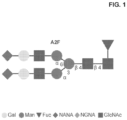
- This initial oligosaccharide chain can be trimmed by specific glycosidase enzymes in the endoplasmic reticulum, resulting in a short, branched core oligosaccharide composed of two N-acetylglucosamine and three mannose residues (depicted in Figure 1 , linked to an asparagine residue).
- One of the branches is referred to in the art as the " ⁇ 1,3 arm”, and the second branch is referred to as the " ⁇ 1,6 arm”, as denoted in Figure 1 .
- N-glycans can be subdivided into three distinct groups called “high mannose type”, “hybrid type”, and “complex type”, with a common pentasaccharide core (Man (alpha1,6)-(Man(alpha1,3))-Man(beta1,4)-GlcpNAc(beta 1,4)-GlcpNAc(beta 1,N)-Asn) occurring in all three groups.
- the glycoprotein After initial processing in the endoplasmic reticulum, the glycoprotein is transported to the Golgi where further processing may take place. If the glycan is transferred to the Golgi before it is completely trimmed to the core pentasaccharide structure, it results in a "high-mannose glycan".
- one or more monosaccharides units of N-acetylglucosamine may be added to core mannose subunits to form a "complex glycan".
- Galactose may be added to N-acetylglucosamine subunits, and sialic acid subunits may be added to galactose subunits, resulting in chains that terminate with any of a sialic acid, a galactose or an N-acetylglucosamine residue.
- a fucose residue may be added to an N-acetylglucosamine residue of the core oligosaccharide.
- Each of these additions is catalyzed by specific glycosyl transferases, known in the art.
- Sialic acids are a family of 9-carbon monosaccharides with heterocyclic ring structures. They bear a negative charge via a carboxylic acid group attached to the ring as well as other chemical decorations including N-acetyl and N-glycolyl groups.
- the two main types of sialyl residues found in glycoproteins produced in mammalian expression systems are N-acetyl-neuraminic acid (NeuAc) and N-glycolylneuraminic acid (NeuGc). These usually occur as terminal structures attached to galactose (Gal) residues at the nonreducing termini of both N- and O-linked glycans.
- the glycosidic linkage configurations for these sialyl groups can be either ⁇ 2,3 or ⁇ 2,6.
- Hybrid glycans comprise characteristics of both high-mannose and complex glycans.
- one branch of a hybrid glycan may comprise primarily or exclusively mannose residues, while another branch may comprise N-acetylglucosamine, sialic acid, and/or galactose sugars.
- the specified percent refers to a range of ⁇ 5 mg/kg.
- 10% of a 1,000 mg/kg dose is 1000 mg/kg ⁇ 5% and 5% of a 1,000 mg/kg dose is 50 mg/kg ⁇ 5%.
- Antibodies are glycosylated at conserved, N-linked glycosylation sites in the Fc regions of immunoglobulin heavy chains.
- each heavy chain of an IgG antibody has a single N-linked glycosylation site at Asn297 of the CH2 domain (see Jefferis, Nature Reviews 8:226-234 (2009 )).
- IgA antibodies have N-linked glycosylation sites within the CH2 and CH3 domains
- IgE antibodies have N-linked glycosylation sites within the CH3 domain
- IgM antibodies have N-linked glycosylation sites within the CH1, CH2, CH3, and CH4 domains (see Arnold et al., J. Biol. Chem.
- Each antibody isotype has a distinct variety of N-linked carbohydrate structures in the constant regions.
- IgG has a single N-linked biantennary carbohydrate at Asn297 of the CH2 domain in each Fc polypeptide of the Fc region, which also contains the binding sites for C1q and FcyR (see Jefferis et al., Immunol. Rev. 163:59-76 (1998 ); and Wright et al., Trends Biotech 15:26-32 (1997 )).
- the core oligosaccharide normally consists of GlcNAc2Man3GlcNAc, with differing numbers of outer residues.
- Variation among individual IgG can occur via attachment of galactose and/or galactose-sialic acid at one or both terminal GlcNAc or via attachment of a third GlcNAc arm (bisecting GlcNAc), and/or attachment of fucose.
- a hsIgG preparation is a preparation comprising a mixture of IgG antibodies (e.g., prepared from IVIG) in which at least 60% of the branched glycans are disialylated, i.e., have a sialic acid on the ⁇ 1,3 arm (e.g., with a NeuAc- ⁇ 2,6-Gal terminal linkage) and on the ⁇ 1,6 arm (e.g., with a NeuAc- ⁇ 2,6-Gal terminal linkage).
- IgG antibodies e.g., prepared from IVIG
- at least 60% of the branched glycans are disialylated, i.e., have a sialic acid on the ⁇ 1,3 arm (e.g., with a NeuAc- ⁇ 2,6-Gal terminal linkage) and on the ⁇ 1,6 arm (e.g., with a NeuAc- ⁇ 2,6-Gal terminal linkage).
- An hsIgG preparation disclosed herein can be used to treat disorders that are treated with IVIG.
- the hsIgG preparations are far more potent than IVIG, permitting effective treatment at a far lower dose and/or less frequent treatment.
- An hsIgG preparation can be 10 to 100-times more potent than IVIG allowing treatment at a dose that is 1% - 10% of the effective or approved IVIG dose.
- IVIG Current treatments utilizing IVIG have distinct limitations, which include, but are not limited to, variable efficacy, clinical risks, high costs, and finite supply. At the current maximal dosing regimens, only partial and poorly sustained responses are obtained in many instances. In addition, the long infusion times (4-6 h) associated with the high volume of IVIg treatment (IVIG is commonly dosed at 1,000 - 2,000 mg/kg) consume significant resources at infusion centers and negatively affect patient-reported outcomes, such as convenience and quality of life.
- a hsIgG preparation because it is so much more potent than IVIG, can provide shorter infusion times, a far lower amount of protein administered, and, in some cases, less frequent administration. For this reason, a hsIgG preparation can provide a greatly improved patient experience and higher quality of life compared to treatment with IVIG.
- conditions which must be treated with intravenous administration of IVIG can be treated with subcutaneous administration (injection or infusion) of hsIgG, e.g., by means of a subcutaneous pump, allowing administration by the patient at home.
- an effective dose of hsIgG can be prepared from a far lower amount of IVIG, than would be required for an effective dose of IVIG This is an important advantage because IVIG is costly in limited supply.
- the level of sialylation can be measured on an individual Fc region (e.g., the number of branched glycans that have a sialic acid an ⁇ 1,3 arm, an ⁇ 1,6 arm, or both, of the branched glycans in the Fc region), or on the overall composition of a preparation of glycoproteins (e.g., the number or percentage of branched glycans that are have a sialic acid on an ⁇ 1,3 arm, an ⁇ 1,6 arm, or both, of the branched glycans in the Fc region in a preparation of glycoproteins).
- an individual Fc region e.g., the number of branched glycans that have a sialic acid an ⁇ 1,3 arm, an ⁇ 1,6 arm, or both, of the branched glycans in the Fc region
- the overall composition of a preparation of glycoproteins e.g., the number or percentage of branched glycans that
- ST6 GalI sialyltransferase catalyzes the transfer of sialic acid from a sialic acid donor (e.g., cytidine 5'-monophospho-N-acetyl neuraminic acid) to a terminal galactose residue of glycans through an ⁇ 2,6 linkage in an ordered fashion.
- a sialic acid donor e.g., cytidine 5'-monophospho-N-acetyl neuraminic acid
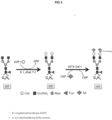
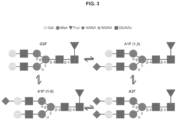
- ST6 sialyltransferase transfers a sialic acid to an ⁇ 1,3 arm of a branched glycan, which can be followed by transfer of a second sialic acid to an ⁇ 1,6 arm (yielding a disialylated branched glycan), and can further be followed by removal of sialic acid from an ⁇ 1,3 arm (yielding a branched glycan having a sialic acid on an ⁇ 1,6 arm). Accordingly, by controlling and/or modulating activity (e.g., kinetics) of ST6 sialyltransferase, glycoproteins having particular sialylation patterns can be produced.
- modulating activity e.g., kinetics
- a hsIgG preparation can be manufactured from commercially available IVIG as follows. Bulk IVIG, 10% solution (0.1 g/mL), is pooled and diluted with 3-(N-morpholino) propanesulfonic acid (MOPS) pH 7.4 buffer. The solution is diafiltered (DF) with five diavolumes (DVs) of MOPS pH 7.4 buffer using 30 kDa tangential flow filtration (TFF) membranes (membranes composed of polyethersulfone). The buffer exchanged IVIG solution is then concentrated, followed by depth and 0.2 ⁇ m filtrations resulting in a final IVIG concentration of ⁇ 150 mg/mL.
- MOPS 3-(N-morpholino) propanesulfonic acid
- DF diafiltered
- DVs diavolumes
- TMF tangential flow filtration
- Sialylation is accomplished in two enzymatic reaction steps using two sugar nucleotides dissolved in MOPS pH 7.4 buffer.
- galactosylation occurs by reaction with beta-1,4 galactosyltransferase enzyme (B4GalT), uridine diphosphate galactose (UDP-Gal) and manganese chloride in MOPS pH 7.4 buffer.
- B4GalT beta-1,4 galactosyltransferase enzyme
- UDP-Gal uridine diphosphate galactose
- the reaction solution is adjusted to approximately 135 mg/mL by addition of MOPS buffer and is maintained at approximately 37°C for approximately 48 hours.
- the material is further incubated for approximately 72 hours with the addition of human ⁇ 2,6-sialyltransferase enzyme (ST6-Gal1) and cytidine 5'monophospho-N-acetyl neuraminic acid (CMP-NANA), and adjusted to approximately 120 mg/mL with MOPS buffer pH 7.4.
- CMP-NANA is charged portion wise over the course of reaction at approximately 12 hour intervals.
- Glycans of glycoproteins can be evaluated using any methods known in the art.
- sialylation of glycan compositions e.g., level of branched glycans that are have a sialic acid on an ⁇ 1,3 arm and/or an ⁇ 1,6 arm
- sialylation of glycan compositions can be characterized using methods described in, e.g., Barb, Biochemistry 48:9705-9707 (2009 ); Anumula, J. Immunol. Methods 382:167-176 (2012 ); Gilar et al., Analytical Biochem. 417:80-88 (2011 ); Wuhrer et al., J. Chromatogr. B. 849:115-128 (2007 ).
- one or more parameters described in Table 1 are evaluated.
- glycan structure and composition as described herein are analyzed, for example, by one or more, enzymatic, chromatographic, mass spectrometry (MS), chromatographic followed by MS, electrophoretic methods, electrophoretic methods followed by MS, nuclear magnetic resonance (NMR) methods, and combinations thereof.
- exemplary enzymatic methods include contacting a glycoprotein preparation with one or more enzymes under conditions and for a time sufficient to release one or more glycan(s) (e.g., one or more exposed glycan(s)).
- the one or more enzymes include(s) PNGase F.
- Exemplary chromatographic methods include, but are not limited to, Strong Anion Exchange chromatography using Pulsed Amperometric Detection (SAX-PAD), liquid chromatography (LC), high performance liquid chromatography (HPLC), ultra performance liquid chromatography (UPLC), thin layer chromatography (TLC), amide column chromatography, and combinations thereof.
- Exemplary mass spectrometry (MS) include, but are not limited to, tandem MS, LC-MS, LC-MS/MS, matrix assisted laser desorption ionisation mass spectrometry (MALDI-MS), Fourier transform mass spectrometry (FTMS), ion mobility separation with mass spectrometry (IMS-MS), electron transfer dissociation (ETD-MS), and combinations thereof.
- Exemplary electrophoretic methods include, but are not limited to, capillary electrophoresis (CE), CE-MS, gel electrophoresis, agarose gel electrophoresis, acrylamide gel electrophoresis, SDS-polyacrylamide gel electrophoresis (SDS-PAGE) followed by Western blotting using antibodies that recognize specific glycan structures, and combinations thereof.
- CE capillary electrophoresis
- CE-MS gel electrophoresis
- agarose gel electrophoresis agarose gel electrophoresis
- acrylamide gel electrophoresis acrylamide gel electrophoresis
- SDS-PAGE SDS-polyacrylamide gel electrophoresis
- Exemplary nuclear magnetic resonance include, but are not limited to, one-dimensional NMR (1D-NMR), two-dimensional NMR (2D-NMR), correlation spectroscopy magnetic-angle spinning NMR (COSY-NMR), total correlated spectroscopy NMR (TOCSY-NMR), heteronuclear single-quantum coherence NMR (HSQC-NMR), heteronuclear multiple quantum coherence (HMQC-NMR), rotational nuclear overhauser effect spectroscopy NMR (ROESY-NMR), nuclear overhauser effect spectroscopy (NOESY-NMR), and combinations thereof.
- glycans are analyzed in accordance with the present disclosure using one or more available methods (to give but a few examples, see Anumula, Anal. Biochem., 350(1):1, 2006 ; Klein et al., Anal. Biochem., 179:162, 1989 ; and/or Townsend, R.R. Carbohydrate Analysis" High Performance Liquid Chromatography and Capillary Electrophoresis., Ed. Z.
- glycans are characterized using one or more of chromatographic methods, electrophoretic methods, nuclear magnetic resonance methods, and combinations thereof.
- methods for evaluating one or more target protein specific parameters, e.g., in a glycoprotein preparation, e.g., one or more of the parameters disclosed herein, can be performed by one or more of following methods.
- Glycan(s) e.g., N-linked glycan, exposed N-linked glycan, glycan detection, glycan identification, and characterization; site specific glycation; glycoform detection (e.g., parameters 1-7); percent glycosylation; and/or aglycosyl
- site specific glycation e.g., parameters 1-7
- percent glycosylation e.g., parameters 1-7
- percent glycosylation e.g., parameters 1-7
- percent glycosylation e.g., parameters 1-7
- percent glycosylation e.g., percent glycosylation
- aglycosyl Chen and Flynn, J. Am. Soc. Mass Spectrom., 20:1821-1833
- Peptide LC-MS reducing/non-reducing
- Dick et al. Biotechnol. Bioeng., 100:1132-1143
- 2008 C-terminal lysine Yan et al
- Glycan e.g., N-linked glycan, exposed N-linked glycan
- LC-MS reducing/non-reducing/alkylated
- Glycan e.g., N-linked glycan, exposed N-linked glycan
- Methods include removal (e.g., enzymatic, chemical, and physical) of glycans Goetze et al., Glycobiol., 21:949-959 (2011 ) Xie et al., mAbs, 2:379-394 (2010 ) Bioanalyzer (reducing/non-reducing) Forrer et al., Anal.
- the sterile composition for injection can be formulated in accordance with conventional pharmaceutical practices using distilled water for injection as a vehicle.
- physiological saline or an isotonic solution containing glucose and other supplements such as D-sorbitol, D-mannose, D-mannitol, and sodium chloride may be used as an aqueous solution for injection, optionally in combination with a suitable solubilizing agent, for example, alcohol such as ethanol and polyalcohol such as propylene glycol or polyethylene glycol, and a nonionic surfactant such as polysorbate 80 TM , HCO-50 and the like.
- Non-limiting examples of oily liquid include sesame oil and soybean oil, and it may be combined with benzyl benzoate or benzyl alcohol as a solubilizing agent.
- Other items that may be included are a buffer such as a phosphate buffer, or sodium acetate buffer, a soothing agent such as procaine hydrochloride, a stabilizer such as benzyl alcohol or phenol, and an antioxidant.
- the formulated injection can be packaged in a suitable ampule.
- the dose is 1% - 10% of the FDA approved (or other national or international regulatory agency) IVIG dose or the effective IVIG dose for a disorder.
- the FDA (or other national or international regulatory agency) approved dose or effective dose of IVIG is 200 mg/kg, 400 mg/kg, 500 mg/kg, 600 mg/kg, 1000 mg/kg, or 2000 mg/kg.
- a composition comprising a hsIgG preparation is administered at a dose of about 4, 5, 6, 10, 15, 20, 30, 40, 50, 60, 70, 80, 90, 100, 110, 120, 130, 140, 150, 160, 170, 180, 190, 200, 250, 300, 350, 400, 450, 500, 550, 600, 650, 700, 750, 800, 850, 900, 950, 975, or 1000 mg/kg.
- a composition comprising a hsIgG preparation is administered daily, weekly, semiweekly, biweekly, monthly, semimonthly, bimonthly, every 3 days, every 4 days, every 5 days, every 6 days, every 7 days, once every 14 days, once every 21 days, once every 28 days, once daily for two consecutive days in a 28-day cycle, or with the same administration frequency as the FDA approved IVIG dose.
- a composition is administered in a single dose.
- a composition is administered in multiple doses. The dose and method of administration varies depending on the weight, age, condition, and the like of the patient, and can be suitably selected as needed by those skilled in the art.
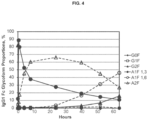
- A2F exhibited a steady decline from 71% at 20 h to 44% at 64 h, suggesting that the A1F-1,6 glycoform was generated from the removal of sialic acid residues on the more exposed ⁇ 1,3 branch of disialylated A2F. Additional incubation led to the cleavage of the 1,6 sialic acid in the A1F-1,6 glycoform, generating the asialylated but fully galactosylated and fucosylated species G2F. G2F, which was present in trace amounts at the beginning of the reaction, appeared at measurable amounts at 40 h and continued increasing, reaching 15% by 64 h as the levels of A2F and A1F-1,6 declined.
- IVIG sialylation of IVIG by the sialyltransferase ST6 was analyzed.
- IVIG was first galactosylated and then sialylated. The reactions were performed sequentially. There was no purification between galactosylation and sialylation reactions. The relative abundance of glycoforms was analyzed following the sialylation reactions.
- a reaction was set up that contained the following components at the concentrations indicated: Constituent Final concentration MOPS (pH 7.4) 25 mM MnCl 2 10 mM IVIG 12.5 mg/ml B4GalT1 (90 u/ml) 400 mu/ml UDP-Galactose 50 mM
- the reaction was incubated for 72 hours at 37 °C.
- reaction was incubated at 37 °C. Aliquots were extracted at various times frozen at -20 °C for later analyses.
- FIG. 4 depicts the time course of IVIG Fc domain glycoform proportions over the course of a sialylation reaction performed essentially as described above in the presence of CMP-NANA and ST6Gal1. Briefly, galactosylated IVIG was incubated with 20 mM CMP-NANA and 0.3 U/mg ST6Ga11 at 37 °C. Aliquots were removed at different time points, and the relative proportions of IVIG glycoforms were determined by glycopeptide LC-MS/MS analyses. As shown in FIG. 4 , the predominant glycoform changed over time from G2F to A1F (1,3) to A2F to A1F (1,6) during the course of a reaction due to competing addition (forward reaction) and removal (back reaction) steps.
- a hsIgG preparation manufactured from commercially available IVIG was prepared essentially as described above with periodic addition of CMP-NANA during the sialylation reaction.
- the starting IVIG material and the resulting hsIgG preparation were extensively analyzed before and after sialylation.
- the hsIgG preparation was substantially tetrasialylated (i.e., the branched glycan on each Fc chain was sialylated on both branches. More detailed analyses of glycosylation were performed in an isotype- and site-specific manner to discriminate the different Fc isotypes and Fab glycosylation.
- Fc glycosylation was changed from predominantly asialylated species (e.g., G0F and G1F) in the starting IVIG material to more than 90% disialylated species (e.g., A2F, A2, and A2F+BGlcNAc) in each IgG isotype in the hsIgG preparation.
- Analysis of the Fab glycans further revealed that, although the IVIG starting material contained a significant distribution of monosialylated ( ⁇ 35%) and disialylated ( ⁇ 35%) glycans in the Fab, the distribution shifted to a higher level of disialylated glycans in the hsIgG preparation ( ⁇ 75%).
- hsIgG is about 10 times potent than IVIG in prevent platelet destruction in a murine model of ITP
- washburn et al. compared a hsIgG preparation to IVIG in a murine anti-CD41 antibody-induced thrombocytopeania model.
- 6A6-IgG2a antibodies were produced by transient transfection of 293T cells followed by purification of recombinant antibodies from serum-free cell culture supernatants with protein G beads (GE Healthcare) as suggested by the manufacturer.
- IVIG preparations were diluted in glycine buffer (saline) for experiments.
- Chronic ITP was induced by daily injections of 0.1 ⁇ g/g 6A6-IgG2a antiplatelet antibody. Mice were rendered thrombocytopenic until the end of the experiment (day 3).
- Platelet counts were determined before and 4 h after daily antibody injection of a 1:4 dilution in PBS in a hematology system (Advia 120; Bayer HealthCare). Platelet counts before antibody injection were set to 100%.
- a dose-response profile for IVIG in the ITP model ( FIG. 5 ). After maximum platelet depletion with the antiplatelet antibody, mice were treated with IVIG from 0.1 to 1 g/kg, and platelet levels were measured on the day of the IVIg treatment (day 1) and the two subsequent days after treatment (days 2 and 3 of the experiment). A clear dose-response was observed in this model within this range ( FIG. 5 ). Complete activity of IVIg was lost at 0.1 g/kg.
- a hsIgG preparation (at least 80% of the branched glycans were sialylated on both the ⁇ 1,3 arm and the ⁇ 1,6 arm by way of NeuAc- ⁇ 2,6-Gal terminal linkages) was compared to IVIG in human patients with ITP.
- a single ascending dose was given to normal healthy volunteers over a 3.5 month period.
- patients were given a single dose of hsIgG every 14 days in the following order: 3 mg/kg, 10 mg/kg, 30 mg/kg, 60 mg/kg, 120 mg/kg, and 250 mg/kg. End point measurements were safety and tolerability.
- ITP patients were given a single dose of hsIVIG in the following fixed order: 60 mg/kg, 120 mg/kg, 250 mg/kg, 500 mg/kg, and 1000 mg/kg.
- the hsIgG dose was administered, and after 28 days, 1000 mg/kg IVIG was administered to the same patient. Platelet levels were measured throughout the study. End point measurements were safety and tolerability.
- ITP patients were started on either hsIgG or IVIG and switched mid-study.
- 5 patients were started on a high hsIVIG dose and another 5 patients were started on 1,000 mg/kg IVIG.
- the patients that started on a high hsIVIG dose were given 1,000 mg/kg IVIG for the remainder of the study, and the patients that started on 1,000 mg/kg IVIG were given a high hsIgG dose for the remainder of the study.
- Platelet response was measured throughout.
- 5 patients were started on a low hsIgG dose and another 5 patients were started on 1,000 mg/kg IVIG.
- the patients that started on a low hsIgG dose were given 1,000 mg/kg IVIG for the remainder of the study, and the patients that started on 1,000 mg/kg IVIG were given a low hsIG dose for the remainder of the study. Platelet response was measured throughout. The potency of the hsIVIG was determined.
- a hsIgG preparation is more potent than IVIG in human ITP patient
- a hsIgG preparation was compared to IVIG in a human patient with ITP.
- this hsIgG preparation at least 80% of the branched glycans were sialylated on both the ⁇ 1,3 arm and the ⁇ 1,6 arm by way of NeuAc- ⁇ 2,6-Gal terminal linkages.
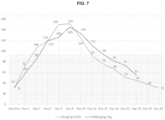
- the patient was dosed with 43mg/kg hsIVIG. As shown in FIG 7 , this patient had similar reticulocyte count when administered a hsIgG preparation at 43 mg/kg as at the 1000 mg/kg IVIG dose.
- the hsIgG preparation was about 25-fold more potent than IVIG in preventing platelet destruction in this patient.
Landscapes
- Health & Medical Sciences (AREA)
- Chemical & Material Sciences (AREA)
- Life Sciences & Earth Sciences (AREA)
- Medicinal Chemistry (AREA)
- General Health & Medical Sciences (AREA)
- Organic Chemistry (AREA)
- Pharmacology & Pharmacy (AREA)
- Animal Behavior & Ethology (AREA)
- Public Health (AREA)
- Veterinary Medicine (AREA)
- Engineering & Computer Science (AREA)
- Bioinformatics & Cheminformatics (AREA)
- General Chemical & Material Sciences (AREA)
- Nuclear Medicine, Radiotherapy & Molecular Imaging (AREA)
- Chemical Kinetics & Catalysis (AREA)
- Immunology (AREA)
- Biochemistry (AREA)
- Molecular Biology (AREA)
- Epidemiology (AREA)
- Hematology (AREA)
- Diabetes (AREA)
- Proteomics, Peptides & Aminoacids (AREA)
- Biophysics (AREA)
- Genetics & Genomics (AREA)
- Microbiology (AREA)
- Rheumatology (AREA)
- Pain & Pain Management (AREA)
- Mycology (AREA)
- Biomedical Technology (AREA)
- Neurology (AREA)
- Neurosurgery (AREA)
- Medicines That Contain Protein Lipid Enzymes And Other Medicines (AREA)
- Medicines Containing Antibodies Or Antigens For Use As Internal Diagnostic Agents (AREA)
- Medicinal Preparation (AREA)
- Pharmaceuticals Containing Other Organic And Inorganic Compounds (AREA)
- Peptides Or Proteins (AREA)
Applications Claiming Priority (4)
| Application Number | Priority Date | Filing Date | Title |
|---|---|---|---|
| US201862744536P | 2018-10-11 | 2018-10-11 | |
| US201962879930P | 2019-07-29 | 2019-07-29 | |
| EP19872100.3A EP3863673A4 (de) | 2018-10-11 | 2019-10-11 | Behandlung mit hochsilylierten igg-zusammensetzungen |
| PCT/US2019/055983 WO2020077298A1 (en) | 2018-10-11 | 2019-10-11 | Treatment with highly silylated igg compositions |
Related Parent Applications (1)
| Application Number | Title | Priority Date | Filing Date |
|---|---|---|---|
| EP19872100.3A Division EP3863673A4 (de) | 2018-10-11 | 2019-10-11 | Behandlung mit hochsilylierten igg-zusammensetzungen |
Publications (2)
| Publication Number | Publication Date |
|---|---|
| EP4567428A2 true EP4567428A2 (de) | 2025-06-11 |
| EP4567428A3 EP4567428A3 (de) | 2025-10-01 |
Family
ID=70164359
Family Applications (2)
| Application Number | Title | Priority Date | Filing Date |
|---|---|---|---|
| EP25157385.3A Pending EP4567428A3 (de) | 2018-10-11 | 2019-10-11 | Behandlung mit hochsilylierten igg-zusammensetzungen |
| EP19872100.3A Withdrawn EP3863673A4 (de) | 2018-10-11 | 2019-10-11 | Behandlung mit hochsilylierten igg-zusammensetzungen |
Family Applications After (1)
| Application Number | Title | Priority Date | Filing Date |
|---|---|---|---|
| EP19872100.3A Withdrawn EP3863673A4 (de) | 2018-10-11 | 2019-10-11 | Behandlung mit hochsilylierten igg-zusammensetzungen |
Country Status (11)
| Country | Link |
|---|---|
| US (2) | US20210353752A1 (de) |
| EP (2) | EP4567428A3 (de) |
| JP (2) | JP2022502466A (de) |
| KR (2) | KR20250160224A (de) |
| CN (1) | CN113438953A (de) |
| AU (1) | AU2019357842A1 (de) |
| BR (1) | BR112021006852A2 (de) |
| CA (1) | CA3115821A1 (de) |
| IL (1) | IL282136A (de) |
| MA (1) | MA53875A (de) |
| WO (1) | WO2020077298A1 (de) |
Families Citing this family (7)
| Publication number | Priority date | Publication date | Assignee | Title |
|---|---|---|---|---|
| EP2877589B1 (de) | 2012-07-26 | 2024-03-06 | Momenta Pharmaceuticals, Inc. | Glykoproteine mit entzündungshemmenden eigenschaften |
| WO2014186310A1 (en) | 2013-05-13 | 2014-11-20 | Momenta Pharmaceuticals, Inc. | Methods for the treatment of neurodegeneration |
| WO2015057622A1 (en) | 2013-10-16 | 2015-04-23 | Momenta Pharmaceuticals, Inc. | Sialylated glycoproteins |
| BR112022023334A2 (pt) * | 2020-05-19 | 2022-12-20 | Momenta Pharmaceuticals Inc | Imunoglobulina hipersialilada |
| AU2021329106A1 (en) * | 2020-08-20 | 2023-03-02 | Momenta Pharmaceuticals, Inc. | Sialylated glycoproteins |
| JP2023538400A (ja) * | 2020-08-21 | 2023-09-07 | モメンタ ファーマシューティカルズ インコーポレイテッド | 高シアル化免疫グロブリン |
| JP2025542423A (ja) * | 2022-12-21 | 2025-12-25 | コングク ユニバーシティ インダストリアル コーオペレーション コーポレーション | α-2,6-シアル化免疫グロブリンの眼球乾燥症または炎症性眼疾患の予防または治療用途 |
Citations (18)
| Publication number | Priority date | Publication date | Assignee | Title |
|---|---|---|---|---|
| WO2008128220A1 (en) | 2007-04-16 | 2008-10-23 | Momenta Pharmaceuticals, Inc. | Proteolytic release of glycans |
| WO2008128216A1 (en) | 2007-04-16 | 2008-10-23 | Momenta Pharmaceuticals, Inc. | Methods for labeling glycans |
| WO2008128218A1 (en) | 2007-04-16 | 2008-10-23 | Momenta Pharmaceuticals, Inc. | Characterization of n-glycan mixtures by nuclear magnetic resonance |
| WO2008128230A1 (en) | 2007-04-16 | 2008-10-23 | Momenta Pharmaceuticals, Inc. | Reference glycoprotein products and related methods |
| WO2008128221A1 (en) | 2007-04-16 | 2008-10-23 | Momenta Pharmaceuticals, Inc. | Ms methods to evaluate glycans |
| WO2008128225A1 (en) | 2007-04-16 | 2008-10-23 | Momenta Pharmaceuticals, Inc. | Multi-dimensional chromatographic methods for separating n-glycans |
| WO2008128222A1 (en) | 2007-04-16 | 2008-10-23 | Momenta Pharmaceuticals, Inc. | Analysis of phosphorylated glycans, glycopeptides or glycoproteins by imac |
| WO2008128219A1 (en) | 2007-04-16 | 2008-10-23 | Momenta Pharmaceuticals, Inc. | Comparative analysis of protein conformations by using 2d noesy nmr spectra |
| WO2008128228A1 (en) | 2007-04-16 | 2008-10-23 | Momenta Pharmaceuticals, Inc. | Methods related to cell surface glycosylation |
| WO2008128227A1 (en) | 2007-04-16 | 2008-10-23 | Momenta Pharmaceuticals, Inc. | Defined glycoprotein products and related methods |
| WO2008130926A2 (en) | 2007-04-16 | 2008-10-30 | Momenta Pharmaceuticals, Inc. | Characterization of n-glycans using exoglycosidases |
| WO2008130924A2 (en) | 2007-04-16 | 2008-10-30 | Momenta Pharmaceuticals, Inc. | Isotopically-labeled glycans |
| WO2010071817A2 (en) | 2008-12-19 | 2010-06-24 | Momenta Pharmaceuticals, Inc. | Characterization of o-linked glycans |
| WO2010071824A2 (en) | 2008-12-19 | 2010-06-24 | Momenta Pharmaceuticals, Inc. | Methods related to modified glycans |
| WO2010085251A1 (en) | 2009-01-22 | 2010-07-29 | Momenta Pharmaceuticals, Inc. | Galactose-alpha-1, 3-galactose-containing n-glycans in glycoprotein products derived from cho cells |
| WO2011069056A2 (en) | 2009-12-04 | 2011-06-09 | Momenta Pharmaceuticals, Inc. | Antennary fucosylation in glycoproteins from cho cells |
| WO2011127322A1 (en) | 2010-04-07 | 2011-10-13 | Momenta Pharmaceuticals, Inc. | High mannose glycans |
| US20160108450A1 (en) | 2013-05-02 | 2016-04-21 | Momenta Pharmaceutcals, Inc. | Sialylated glycoproteins |
Family Cites Families (9)
| Publication number | Priority date | Publication date | Assignee | Title |
|---|---|---|---|---|
| CA2647524C (en) * | 2006-04-05 | 2019-11-26 | The Rockefeller University | Polypeptides with enhanced anti-inflammatory and decreased cytotoxic properties and relating methods |
| TWI489994B (zh) * | 2008-03-17 | 2015-07-01 | Baxter Healthcare Sa | 供免疫球蛋白及玻尿酸酶之皮下投藥之用的組合及方法 |
| AR078734A1 (es) * | 2009-10-22 | 2011-11-30 | Eiger Health Partners Llc | Composiciones, metodos para el tratamiento, y diagnostico de trastornos relacionados con la autoinmunidad y metodos para preparar tales composiciones |
| EP2877589B1 (de) * | 2012-07-26 | 2024-03-06 | Momenta Pharmaceuticals, Inc. | Glykoproteine mit entzündungshemmenden eigenschaften |
| WO2014186310A1 (en) * | 2013-05-13 | 2014-11-20 | Momenta Pharmaceuticals, Inc. | Methods for the treatment of neurodegeneration |
| WO2015057622A1 (en) * | 2013-10-16 | 2015-04-23 | Momenta Pharmaceuticals, Inc. | Sialylated glycoproteins |
| MX384716B (es) * | 2014-01-29 | 2025-03-14 | Enzymatica Ab | Polipéptido con actividad proteasa para su uso en el tratamiento de infecciones microbianas en un sujeto con una inmunodeficiencia. |
| AU2017245143B2 (en) * | 2016-03-30 | 2024-01-11 | Ab Biosciences, Inc. | Recombinant intravenous immunoglobulin (rIVIG) compositions and methods for their production and use |
| JP6931058B2 (ja) * | 2016-12-21 | 2021-09-01 | エフ.ホフマン−ラ ロシュ アーゲーF. Hoffmann−La Roche Aktiengesellschaft | 抗体のインビトロ糖鎖工学における酵素の再使用 |
-
2019
- 2019-10-11 US US17/284,188 patent/US20210353752A1/en not_active Abandoned
- 2019-10-11 JP JP2021519701A patent/JP2022502466A/ja active Pending
- 2019-10-11 KR KR1020257035884A patent/KR20250160224A/ko active Pending
- 2019-10-11 CN CN201980082700.0A patent/CN113438953A/zh active Pending
- 2019-10-11 WO PCT/US2019/055983 patent/WO2020077298A1/en not_active Ceased
- 2019-10-11 MA MA053875A patent/MA53875A/fr unknown
- 2019-10-11 EP EP25157385.3A patent/EP4567428A3/de active Pending
- 2019-10-11 EP EP19872100.3A patent/EP3863673A4/de not_active Withdrawn
- 2019-10-11 BR BR112021006852-0A patent/BR112021006852A2/pt unknown
- 2019-10-11 KR KR1020217013913A patent/KR20210077706A/ko not_active Ceased
- 2019-10-11 AU AU2019357842A patent/AU2019357842A1/en active Pending
- 2019-10-11 CA CA3115821A patent/CA3115821A1/en active Pending
-
2021
- 2021-04-07 IL IL282136A patent/IL282136A/en unknown
-
2025
- 2025-03-04 US US19/069,596 patent/US20250195643A1/en active Pending
- 2025-08-22 JP JP2025138771A patent/JP2025186266A/ja active Pending
Patent Citations (18)
| Publication number | Priority date | Publication date | Assignee | Title |
|---|---|---|---|---|
| WO2008128220A1 (en) | 2007-04-16 | 2008-10-23 | Momenta Pharmaceuticals, Inc. | Proteolytic release of glycans |
| WO2008128216A1 (en) | 2007-04-16 | 2008-10-23 | Momenta Pharmaceuticals, Inc. | Methods for labeling glycans |
| WO2008128218A1 (en) | 2007-04-16 | 2008-10-23 | Momenta Pharmaceuticals, Inc. | Characterization of n-glycan mixtures by nuclear magnetic resonance |
| WO2008128230A1 (en) | 2007-04-16 | 2008-10-23 | Momenta Pharmaceuticals, Inc. | Reference glycoprotein products and related methods |
| WO2008128221A1 (en) | 2007-04-16 | 2008-10-23 | Momenta Pharmaceuticals, Inc. | Ms methods to evaluate glycans |
| WO2008128225A1 (en) | 2007-04-16 | 2008-10-23 | Momenta Pharmaceuticals, Inc. | Multi-dimensional chromatographic methods for separating n-glycans |
| WO2008128222A1 (en) | 2007-04-16 | 2008-10-23 | Momenta Pharmaceuticals, Inc. | Analysis of phosphorylated glycans, glycopeptides or glycoproteins by imac |
| WO2008128219A1 (en) | 2007-04-16 | 2008-10-23 | Momenta Pharmaceuticals, Inc. | Comparative analysis of protein conformations by using 2d noesy nmr spectra |
| WO2008128228A1 (en) | 2007-04-16 | 2008-10-23 | Momenta Pharmaceuticals, Inc. | Methods related to cell surface glycosylation |
| WO2008128227A1 (en) | 2007-04-16 | 2008-10-23 | Momenta Pharmaceuticals, Inc. | Defined glycoprotein products and related methods |
| WO2008130926A2 (en) | 2007-04-16 | 2008-10-30 | Momenta Pharmaceuticals, Inc. | Characterization of n-glycans using exoglycosidases |
| WO2008130924A2 (en) | 2007-04-16 | 2008-10-30 | Momenta Pharmaceuticals, Inc. | Isotopically-labeled glycans |
| WO2010071817A2 (en) | 2008-12-19 | 2010-06-24 | Momenta Pharmaceuticals, Inc. | Characterization of o-linked glycans |
| WO2010071824A2 (en) | 2008-12-19 | 2010-06-24 | Momenta Pharmaceuticals, Inc. | Methods related to modified glycans |
| WO2010085251A1 (en) | 2009-01-22 | 2010-07-29 | Momenta Pharmaceuticals, Inc. | Galactose-alpha-1, 3-galactose-containing n-glycans in glycoprotein products derived from cho cells |
| WO2011069056A2 (en) | 2009-12-04 | 2011-06-09 | Momenta Pharmaceuticals, Inc. | Antennary fucosylation in glycoproteins from cho cells |
| WO2011127322A1 (en) | 2010-04-07 | 2011-10-13 | Momenta Pharmaceuticals, Inc. | High mannose glycans |
| US20160108450A1 (en) | 2013-05-02 | 2016-04-21 | Momenta Pharmaceutcals, Inc. | Sialylated glycoproteins |
Non-Patent Citations (18)
| Title |
|---|
| ALBERTS: "Molecular Biology of the Cell", 1994, GARLAND PUBLISHING, INC. |
| ANUMULA, ANAL. BIOCHEM., vol. 350, no. 1, 2006, pages 1 |
| ANUMULA, J. IMMUNOL. METHODS, vol. 382, 2012, pages 167 - 176 |
| ARNOLD ET AL., J. BIOL. CHEM., vol. 280, 2005, pages 29080 - 29087 |
| BARB, BIOCHEMISTRY, vol. 48, 2009, pages 9705 - 9707 |
| ENGEL ET AL., BMC PROCEEDINGS, vol. 7, 2013, pages 110 |
| GILAR ET AL., ANALYTICAL BIOCHEM., vol. 417, 2011, pages 80 - 88 |
| HUANG ET AL., JAM CHEM SOC, vol. 134, no. 29, 2012, pages 12308 - 12318 |
| JEFFERIS ET AL., IMMUNOL. REV., vol. 163, 1998, pages 59 - 76 |
| JEFFERIS, NATURE REVIEWS, vol. 8, 2009, pages 226 - 234 |
| KABAT ET AL.: "National Technical Information Services", 1991, NIH PUBLICATION, pages: 91 - 3242 |
| KLEIN ET AL., ANAL. BIOCHEM., vol. 179, 1989, pages 162 |
| MATTU ET AL., J. BIOL. CHEM., vol. 273, 1998, pages 2260 - 2272 |
| NETTLETON ET AL., INT. ARCH. ALLERGY IMMUNOL., vol. 107, 1995, pages 328 - 329 |
| TOWNSEND, R.R.: "High Performance Liquid Chromatography and Capillary Electrophoresis.", 1995, article "Carbohydrate Analysis", pages: 181 - 209 |
| WASHBURN ET AL., PROC NATL ACAD SCI, vol. 112, no. 11, pages 1297 - 306 |
| WRIGHT ET AL., TRENDS BIOTECH, vol. 15, 1997, pages 26 - 32 |
| WUHRER ET AL., J. CHROMATOGR. B., vol. 849, 2007, pages 115 - 128 |
Also Published As
| Publication number | Publication date |
|---|---|
| WO2020077298A9 (en) | 2020-05-22 |
| KR20210077706A (ko) | 2021-06-25 |
| CN113438953A (zh) | 2021-09-24 |
| CA3115821A1 (en) | 2020-04-16 |
| EP4567428A3 (de) | 2025-10-01 |
| BR112021006852A2 (pt) | 2021-08-17 |
| EP3863673A4 (de) | 2023-01-11 |
| WO2020077298A1 (en) | 2020-04-16 |
| EP3863673A1 (de) | 2021-08-18 |
| AU2019357842A1 (en) | 2021-05-13 |
| KR20250160224A (ko) | 2025-11-11 |
| US20250195643A1 (en) | 2025-06-19 |
| JP2022502466A (ja) | 2022-01-11 |
| US20210353752A1 (en) | 2021-11-18 |
| JP2025186266A (ja) | 2025-12-23 |
| IL282136A (en) | 2021-05-31 |
| MA53875A (fr) | 2021-08-18 |
Similar Documents
| Publication | Publication Date | Title |
|---|---|---|
| US20250195643A1 (en) | Treatment with highly siaylated igg compositions | |
| US20230357813A1 (en) | Hypersialylated immunoglobulin | |
| AU2020259492B2 (en) | Sialylated glycoproteins | |
| JP7835691B2 (ja) | 高シアル化免疫グロブリン | |
| WO2022036275A2 (en) | Manufacturing process for protein | |
| EA050771B1 (ru) | Лечение композициями высокосиалилированного igg | |
| ES2805964T3 (es) | Composiciones de galactosa alfa (1-3) galactosa | |
| US20230365713A1 (en) | Sialylated glycoproteins | |
| US20230417762A1 (en) | Sialylated glycoproteins | |
| Nahrgang | Influence of cell-line and process conditions on the glycosylation of recombinant proteins |
Legal Events
| Date | Code | Title | Description |
|---|---|---|---|
| PUAI | Public reference made under article 153(3) epc to a published international application that has entered the european phase |
Free format text: ORIGINAL CODE: 0009012 |
|
| STAA | Information on the status of an ep patent application or granted ep patent |
Free format text: STATUS: THE APPLICATION HAS BEEN PUBLISHED |
|
| AC | Divisional application: reference to earlier application |
Ref document number: 3863673 Country of ref document: EP Kind code of ref document: P |
|
| AK | Designated contracting states |
Kind code of ref document: A2 Designated state(s): AL AT BE BG CH CY CZ DE DK EE ES FI FR GB GR HR HU IE IS IT LI LT LU LV MC MK MT NL NO PL PT RO RS SE SI SK SM TR |
|
| PUAL | Search report despatched |
Free format text: ORIGINAL CODE: 0009013 |
|
| AK | Designated contracting states |
Kind code of ref document: A3 Designated state(s): AL AT BE BG CH CY CZ DE DK EE ES FI FR GB GR HR HU IE IS IT LI LT LU LV MC MK MT NL NO PL PT RO RS SE SI SK SM TR |
|
| RIC1 | Information provided on ipc code assigned before grant |
Ipc: G01N 33/68 20060101AFI20250828BHEP Ipc: A61K 39/395 20060101ALI20250828BHEP Ipc: C07K 16/06 20060101ALI20250828BHEP |