EP4570913A1 - Anti-cgrp-antikörper und verwendung - Google Patents
Anti-cgrp-antikörper und verwendung Download PDFInfo
- Publication number
- EP4570913A1 EP4570913A1 EP23851970.6A EP23851970A EP4570913A1 EP 4570913 A1 EP4570913 A1 EP 4570913A1 EP 23851970 A EP23851970 A EP 23851970A EP 4570913 A1 EP4570913 A1 EP 4570913A1
- Authority
- EP
- European Patent Office
- Prior art keywords
- seq
- amino acid
- set forth
- acid sequence
- variable region
- Prior art date
- Legal status (The legal status is an assumption and is not a legal conclusion. Google has not performed a legal analysis and makes no representation as to the accuracy of the status listed.)
- Pending
Links
Images




Classifications
-
- A—HUMAN NECESSITIES
- A61—MEDICAL OR VETERINARY SCIENCE; HYGIENE
- A61P—SPECIFIC THERAPEUTIC ACTIVITY OF CHEMICAL COMPOUNDS OR MEDICINAL PREPARATIONS
- A61P25/00—Drugs for disorders of the nervous system
- A61P25/06—Antimigraine agents
-
- A—HUMAN NECESSITIES
- A61—MEDICAL OR VETERINARY SCIENCE; HYGIENE
- A61P—SPECIFIC THERAPEUTIC ACTIVITY OF CHEMICAL COMPOUNDS OR MEDICINAL PREPARATIONS
- A61P25/00—Drugs for disorders of the nervous system
- A61P25/02—Drugs for disorders of the nervous system for peripheral neuropathies
-
- A—HUMAN NECESSITIES
- A61—MEDICAL OR VETERINARY SCIENCE; HYGIENE
- A61P—SPECIFIC THERAPEUTIC ACTIVITY OF CHEMICAL COMPOUNDS OR MEDICINAL PREPARATIONS
- A61P29/00—Non-central analgesic, antipyretic or antiinflammatory agents, e.g. antirheumatic agents; Non-steroidal antiinflammatory drugs [NSAID]
-
- C—CHEMISTRY; METALLURGY
- C07—ORGANIC CHEMISTRY
- C07K—PEPTIDES
- C07K16/00—Immunoglobulins [IG], e.g. monoclonal or polyclonal antibodies
- C07K16/18—Immunoglobulins [IG], e.g. monoclonal or polyclonal antibodies against material from animals or humans
-
- C—CHEMISTRY; METALLURGY
- C07—ORGANIC CHEMISTRY
- C07K—PEPTIDES
- C07K16/00—Immunoglobulins [IG], e.g. monoclonal or polyclonal antibodies
- C07K16/18—Immunoglobulins [IG], e.g. monoclonal or polyclonal antibodies against material from animals or humans
- C07K16/26—Immunoglobulins [IG], e.g. monoclonal or polyclonal antibodies against material from animals or humans against hormones ; against hormone releasing or inhibiting factors
-
- G—PHYSICS
- G01—MEASURING; TESTING
- G01N—INVESTIGATING OR ANALYSING MATERIALS BY DETERMINING THEIR CHEMICAL OR PHYSICAL PROPERTIES
- G01N33/00—Investigating or analysing materials by specific methods not covered by groups G01N1/00 - G01N31/00
- G01N33/48—Biological material, e.g. blood, urine; Haemocytometers
- G01N33/50—Chemical analysis of biological material, e.g. blood, urine; Testing involving biospecific ligand binding methods; Immunological testing
- G01N33/68—Chemical analysis of biological material, e.g. blood, urine; Testing involving biospecific ligand binding methods; Immunological testing involving proteins, peptides or amino acids
- G01N33/6854—Immunoglobulins
-
- G—PHYSICS
- G01—MEASURING; TESTING
- G01N—INVESTIGATING OR ANALYSING MATERIALS BY DETERMINING THEIR CHEMICAL OR PHYSICAL PROPERTIES
- G01N33/00—Investigating or analysing materials by specific methods not covered by groups G01N1/00 - G01N31/00
- G01N33/48—Biological material, e.g. blood, urine; Haemocytometers
- G01N33/50—Chemical analysis of biological material, e.g. blood, urine; Testing involving biospecific ligand binding methods; Immunological testing
- G01N33/68—Chemical analysis of biological material, e.g. blood, urine; Testing involving biospecific ligand binding methods; Immunological testing involving proteins, peptides or amino acids
- G01N33/6893—Chemical analysis of biological material, e.g. blood, urine; Testing involving biospecific ligand binding methods; Immunological testing involving proteins, peptides or amino acids related to diseases not provided for elsewhere
- G01N33/6896—Neurological disorders, e.g. Alzheimer's disease
-
- A—HUMAN NECESSITIES
- A61—MEDICAL OR VETERINARY SCIENCE; HYGIENE
- A61K—PREPARATIONS FOR MEDICAL, DENTAL OR TOILETRY PURPOSES
- A61K39/00—Medicinal preparations containing antigens or antibodies
- A61K2039/505—Medicinal preparations containing antigens or antibodies comprising antibodies
-
- C—CHEMISTRY; METALLURGY
- C07—ORGANIC CHEMISTRY
- C07K—PEPTIDES
- C07K2317/00—Immunoglobulins specific features
- C07K2317/10—Immunoglobulins specific features characterized by their source of isolation or production
- C07K2317/14—Specific host cells or culture conditions, e.g. components, pH or temperature
-
- C—CHEMISTRY; METALLURGY
- C07—ORGANIC CHEMISTRY
- C07K—PEPTIDES
- C07K2317/00—Immunoglobulins specific features
- C07K2317/20—Immunoglobulins specific features characterized by taxonomic origin
- C07K2317/24—Immunoglobulins specific features characterized by taxonomic origin containing regions, domains or residues from different species, e.g. chimeric, humanized or veneered
-
- C—CHEMISTRY; METALLURGY
- C07—ORGANIC CHEMISTRY
- C07K—PEPTIDES
- C07K2317/00—Immunoglobulins specific features
- C07K2317/30—Immunoglobulins specific features characterized by aspects of specificity or valency
- C07K2317/31—Immunoglobulins specific features characterized by aspects of specificity or valency multispecific
-
- C—CHEMISTRY; METALLURGY
- C07—ORGANIC CHEMISTRY
- C07K—PEPTIDES
- C07K2317/00—Immunoglobulins specific features
- C07K2317/30—Immunoglobulins specific features characterized by aspects of specificity or valency
- C07K2317/33—Crossreactivity, e.g. for species or epitope, or lack of said crossreactivity
-
- C—CHEMISTRY; METALLURGY
- C07—ORGANIC CHEMISTRY
- C07K—PEPTIDES
- C07K2317/00—Immunoglobulins specific features
- C07K2317/50—Immunoglobulins specific features characterized by immunoglobulin fragments
- C07K2317/56—Immunoglobulins specific features characterized by immunoglobulin fragments variable (Fv) region, i.e. VH and/or VL
-
- C—CHEMISTRY; METALLURGY
- C07—ORGANIC CHEMISTRY
- C07K—PEPTIDES
- C07K2317/00—Immunoglobulins specific features
- C07K2317/50—Immunoglobulins specific features characterized by immunoglobulin fragments
- C07K2317/56—Immunoglobulins specific features characterized by immunoglobulin fragments variable (Fv) region, i.e. VH and/or VL
- C07K2317/565—Complementarity determining region [CDR]
-
- C—CHEMISTRY; METALLURGY
- C07—ORGANIC CHEMISTRY
- C07K—PEPTIDES
- C07K2317/00—Immunoglobulins specific features
- C07K2317/60—Immunoglobulins specific features characterized by non-natural combinations of immunoglobulin fragments
- C07K2317/62—Immunoglobulins specific features characterized by non-natural combinations of immunoglobulin fragments comprising only variable region components
- C07K2317/622—Single chain antibody (scFv)
-
- C—CHEMISTRY; METALLURGY
- C07—ORGANIC CHEMISTRY
- C07K—PEPTIDES
- C07K2317/00—Immunoglobulins specific features
- C07K2317/70—Immunoglobulins specific features characterized by effect upon binding to a cell or to an antigen
- C07K2317/76—Antagonist effect on antigen, e.g. neutralization or inhibition of binding
-
- C—CHEMISTRY; METALLURGY
- C07—ORGANIC CHEMISTRY
- C07K—PEPTIDES
- C07K2317/00—Immunoglobulins specific features
- C07K2317/90—Immunoglobulins specific features characterized by (pharmaco)kinetic aspects or by stability of the immunoglobulin
- C07K2317/92—Affinity (KD), association rate (Ka), dissociation rate (Kd) or EC50 value
-
- G—PHYSICS
- G01—MEASURING; TESTING
- G01N—INVESTIGATING OR ANALYSING MATERIALS BY DETERMINING THEIR CHEMICAL OR PHYSICAL PROPERTIES
- G01N2333/00—Assays involving biological materials from specific organisms or of a specific nature
- G01N2333/435—Assays involving biological materials from specific organisms or of a specific nature from animals; from humans
- G01N2333/46—Assays involving biological materials from specific organisms or of a specific nature from animals; from humans from vertebrates
-
- G—PHYSICS
- G01—MEASURING; TESTING
- G01N—INVESTIGATING OR ANALYSING MATERIALS BY DETERMINING THEIR CHEMICAL OR PHYSICAL PROPERTIES
- G01N2333/00—Assays involving biological materials from specific organisms or of a specific nature
- G01N2333/435—Assays involving biological materials from specific organisms or of a specific nature from animals; from humans
- G01N2333/46—Assays involving biological materials from specific organisms or of a specific nature from animals; from humans from vertebrates
- G01N2333/47—Assays involving proteins of known structure or function as defined in the subgroups
-
- G—PHYSICS
- G01—MEASURING; TESTING
- G01N—INVESTIGATING OR ANALYSING MATERIALS BY DETERMINING THEIR CHEMICAL OR PHYSICAL PROPERTIES
- G01N2333/00—Assays involving biological materials from specific organisms or of a specific nature
- G01N2333/435—Assays involving biological materials from specific organisms or of a specific nature from animals; from humans
- G01N2333/575—Hormones
- G01N2333/5753—Calcitonin gene related peptide
-
- G—PHYSICS
- G01—MEASURING; TESTING
- G01N—INVESTIGATING OR ANALYSING MATERIALS BY DETERMINING THEIR CHEMICAL OR PHYSICAL PROPERTIES
- G01N2800/00—Detection or diagnosis of diseases
- G01N2800/28—Neurological disorders
- G01N2800/2807—Headache; Migraine
Definitions
- the present disclosure provides an antibody specifically binding to human calcitonin gene-related peptide (hereinafter referred to as "CGRP") or an antigen-binding fragment thereof, and a composition comprising same. Also provided are a nucleic acid molecule encoding the antibody or the antigen-binding fragment thereof disclosed herein, a vector and a host cell used for expressing the antibody or the antigen-binding fragment thereof disclosed herein, and therapeutic and diagnostic methods and use of the antibody or the antigen-binding fragment thereof disclosed herein.
- CGRP human calcitonin gene-related peptide
- CGRP is a neuropeptide consisting of 37 amino acid residues. It is widely distributed in peripheral and central nervous systems, and plays an important role in functional regulation of cardiovascular system, pain, and nervous system, etc.
- CGRP is a member of the calcitonin gene-related peptide family, which includes two CGRP forms, adrenomedullin, islet amyloid polypeptide, calcitonin, and calcitonin receptor-stimulating peptide.
- the two forms of CGRP i.e., CGRP- ⁇ and CGRP- ⁇ forms, are present in humans and have similar activities.
- the two forms of CGRP differ by 3 amino acids and exhibit different distributions.
- CGRP is involved in the regulation of many physiological functions of the body.
- CGRP has a powerful vasodilative effect and is one of the most potent known peripheral microvasodilators. CGRP is involved in the regulation of various physiological activities by activating CGRP receptors on the cell membrane, and particularly, plays an important role in vasodilation and migraine. Many studies have shown that CGRP is involved in the central nervous system learning and memory processes. Also, it has been reported that CGRP is involved in the regulation of related metabolism during the development of diabetes mellitus. Recent studies have shown that CGRP has a protective effect against several diseases in the cardiovascular system.
- Migraine is a common trigeminal vascular headache, which seriously affects the daily life of patients.
- Triptan is used as a specific analgesic during migraine attack but is limited to use in patients with cardiovascular diseases due to its vasoconstrictive effect. Also, some patients demonstrate resistance to triptan, leading to an urgent need for new effective drugs.
- Clinical studies have shown that CGRP plays an important role in acute migraine attack, and theoretically, the CGRP activity can be reduced by preventing the synthesis and release of CGRP, reducing the concentration of CGRP after release, and preventing CGRP from activating its receptors.
- the present application is intended to provide an antibody capable of specifically binding to CGRP (i.e., an anti-CGRP antibody) or an antigen-binding fragment thereof, a polynucleotide molecule encoding the antibody or the antigen-binding fragment thereof disclosed herein, an expression vector and a host cell for expressing the antibody or the antigen-binding fragment thereof disclosed herein, and use of the antibody or the antigen-binding fragment thereof disclosed herein.
- CGRP i.e., an anti-CGRP antibody
- an antigen-binding fragment thereof a polynucleotide molecule encoding the antibody or the antigen-binding fragment thereof disclosed herein
- an expression vector and a host cell for expressing the antibody or the antigen-binding fragment thereof disclosed herein, and use of the antibody or the antigen-binding fragment thereof disclosed herein.
- the present disclosure provides an anti-CGRP antibody or an antigen-binding fragment thereof, comprising an HCDR1, an HCDR2, an HCDR3, an LCDR1, an LCDR2, and an LCDR3 defined as follows:
- the antibody or the antigen-binding fragment thereof comprises: an HCDR1 having the amino acid sequence set forth in SEQ ID NOs: 2, 11, 19, 26, 31, 37, or 43; an HCDR2 having the amino acid sequence set forth in SEQ ID NOs: 3, 110, 12, 111, 20, 112, 27, 32, 38, or 44; an HCDR3 having the amino acid sequence set forth in SEQ ID NOs: 4, 13, 21, 28, 33, 39, or 45; an LCDR1 having the amino acid sequence set forth in SEQ ID NOs: 51, 59, 67, 73, 113, 81, or 86; an LCDR2 having the amino acid sequence set forth in SEQ ID NOs: 52, 60, 68, 74, 82, or 87; and an LCDR3 having the amino acid sequence set forth in SEQ ID NOs: 53, 61, 69, 75, 83, or 88.
- the present disclosure provides an anti-CGRP antibody or an antigen-binding fragment thereof, comprising a heavy chain variable region and/or a light chain variable region, wherein
- the antibody or the antigen-binding fragment thereof disclosed herein comprises:
- the antibody disclosed herein is a murine antibody or a chimeric antibody. In some embodiments, the antibody disclosed herein further comprises heavy chain framework regions and/or light chain framework regions derived from a murine antibody.
- the antibody or the antigen-binding fragment thereof disclosed herein comprises a heavy chain variable region and a light chain variable region, wherein
- the antibody disclosed herein is a humanized antibody.
- the antibody disclosed herein comprises heavy chain framework regions (e.g., heavy chain framework regions contained in an amino acid sequence encoded by a human heavy chain germline gene) and/or light chain framework regions (e.g., light chain framework regions contained in an amino acid sequence encoded by a human light chain germline gene) derived from a human immunoglobulin.
- the heavy chain framework regions and/or the light chain framework regions optionally comprise one or more (e.g., 1, 2, 3, 4, 5, 6, 7, 8, 9, or 10) back mutations from a human residue to a murine residue.
- the antibody or the antigen-binding fragment thereof disclosed herein comprises:
- the antibody or the antigen-binding fragment thereof disclosed herein comprises:
- the antibody or the antigen-binding fragment thereof disclosed herein is a murine antibody, a chimeric antibody, a humanized antibody, or a fully human antibody, or an antigen-binding fragment thereof.
- the antigen-binding fragment in the antibody or the antigen-binding fragment thereof disclosed herein, is Fab, Fab', F(ab') 2 , Fv, scFv, or sdAb.
- the antibody or the antigen-binding fragment thereof in the antibody or the antigen-binding fragment thereof disclosed herein, is of any IgG subtype, such as IgG1, IgG2, IgG3, or IgG4, preferably IgG1 subtype or IgG4 subtype.
- the present disclosure provides an isolated anti-CGRP antibody or an antigen-binding fragment thereof, having one or more of the following properties:
- the epitope comprises amino acid positions 8-19 in human CGRP protein.
- the CGRP includes ⁇ -CGRP and/or ⁇ -CGRP.
- the CGRP has the amino acid sequence set forth in SEQ ID NO: 97.
- the antibody disclosed herein is a monoclonal antibody.
- the present disclosure further provides a multispecific antibody, comprising the light chain variable region and the heavy chain variable region of the antibody or the antigen-binding fragment thereof disclosed herein.
- the present disclosure further provides a single-chain antibody, comprising the light chain variable region and the heavy chain variable region of the antibody or the antigen-binding fragment thereof disclosed herein.
- the present disclosure provides a polynucleotide molecule, encoding the anti-CGRP antibody or the antigen-binding fragment thereof disclosed herein.
- the present disclosure provides an expression vector, comprising the polynucleotide molecule disclosed herein, wherein preferably, the vector is a eukaryotic expression vector.
- the present disclosure provides a host cell, comprising the polynucleotide molecule disclosed herein or the expression vector disclosed herein, wherein preferably, the host cell is a eukaryotic cell, more preferably, a mammalian cell.
- the present disclosure provides a method for preparing the anti-CGRP antibody or the antigen-binding fragment thereof disclosed herein, comprising expressing the antibody or the antigen-binding fragment thereof in the host cell disclosed herein in a condition suitable for the expression of the antibody or the antigen-binding fragment thereof, and isolating the expressed antibody or antigen-binding fragment thereof from the host cell.
- the present disclosure provides a pharmaceutical composition, comprising the anti-CGRP antibody or the antigen-binding fragment thereof disclosed herein, the polynucleotide molecule disclosed herein, the expression vector disclosed herein, the host cell disclosed herein, the multispecific antibody disclosed herein, or the single-chain antibody disclosed herein, and a pharmaceutically acceptable carrier or excipient.
- the present disclosure provides a pharmaceutical combination, comprising the antibody or the antigen-binding fragment thereof disclosed herein, the polynucleotide molecule disclosed herein, the expression vector disclosed herein, the host cell disclosed herein, the multispecific antibody disclosed herein, the single-chain antibody disclosed herein, or the pharmaceutical composition disclosed herein, and one or more additional therapeutic agents.
- the present disclosure provides use of the antibody or the antigen-binding fragment thereof disclosed herein, the polynucleotide molecule disclosed herein, the expression vector disclosed herein, the host cell disclosed herein, the multispecific antibody disclosed herein, the single-chain antibody disclosed herein, the pharmaceutical composition disclosed herein, or the pharmaceutical combination disclosed herein in preparing a medicament for treating and/or preventing a CGRP-mediated disease or disorder.
- the disease or disorder is a symptom having CGRP-associated pain; and more preferably, the pain is selected from migraine with aura, migraine without aura, high-frequency episodic migraine, menstrual migraine, hemiplegic migraine, cluster headache, migrainous neuralgia, chronic headache, tension headache, general headache, hot flashes, chronic paroxysmal hemicrania, secondary headache due to potential structural problems in head, secondary headache due to potential structural problems in neck, cranial neuralgia, sinus headache, allergy-induced headache, trigeminal neuralgia, fibromyalgia, and sciatica.
- the present disclosure provides the antibody or the antigen-binding fragment thereof disclosed herein, the polynucleotide molecule disclosed herein, the expression vector disclosed herein, the host cell disclosed herein, the multispecific antibody disclosed herein, the single-chain antibody disclosed herein, the pharmaceutical composition disclosed herein, or the pharmaceutical combination disclosed herein for use in treating and/or preventing a CGRP-mediated disease or disorder.
- the disease or disorder is a symptom having CGRP-associated pain; and more preferably, the pain is selected from migraine with aura, migraine without aura, high-frequency episodic migraine, menstrual migraine, hemiplegic migraine, cluster headache, migrainous neuralgia, chronic headache, tension headache, general headache, hot flashes, chronic paroxysmal hemicrania, secondary headache due to potential structural problems in head, secondary headache due to potential structural problems in neck, cranial neuralgia, sinus headache, allergy-induced headache, trigeminal neuralgia, fibromyalgia, and sciatica.
- the present disclosure provides a method for treating and/or preventing a CGRP-mediated disease or disorder, comprising: administering to a subject in need a therapeutically or prophylactically effective amount of the antibody or the antigen-binding fragment thereof disclosed herein, the polynucleotide molecule disclosed herein, the expression vector disclosed herein, the host cell disclosed herein, the multispecific antibody disclosed herein, the single-chain antibody disclosed herein, the pharmaceutical composition disclosed herein, or the pharmaceutical combination disclosed herein.
- the disease or disorder is a symptom having CGRP-associated pain; and more preferably, the pain is selected from migraine with aura, migraine without aura, high-frequency episodic migraine, menstrual migraine, hemiplegic migraine, cluster headache, migrainous neuralgia, chronic headache, tension headache, general headache, hot flashes, chronic paroxysmal hemicrania, secondary headache due to potential structural problems in head, secondary headache due to potential structural problems in neck, cranial neuralgia, sinus headache, allergy-induced headache, trigeminal neuralgia, fibromyalgia, and sciatica.
- the present disclosure provides a kit, comprising the antibody or the antigen-binding fragment thereof disclosed herein, the polynucleotide molecule disclosed herein, the expression vector disclosed herein, the host cell disclosed herein, the multispecific antibody disclosed herein, the single-chain antibody disclosed herein, the pharmaceutical composition disclosed herein, or the pharmaceutical combination disclosed herein, and preferably, further comprising an administration device.
- the present disclosure provides a method for detecting the presence of CGRP in a sample by using the antibody or the antigen-binding fragment thereof disclosed herein or a detection composition comprising the antibody or the antigen-binding fragment thereof.
- the method comprises: contacting the antibody or the antigen-binding fragment thereof disclosed herein or the detection composition comprising the antibody or the antigen-binding fragment thereof with the sample.
- the term "or” should be interpreted as having the same meaning as “and/or” defined above. For example, when items in a list are separated, “or” or “and/or” should be interpreted as being inclusive, i.e., including at least one of the list of numbers or elements, but also including more than one, and, optionally, additional unlisted items. Only in cases where contrary terms such as “only one”, “exactly one” or “consisting of " as used in the claims are explicitly indicated, will it refer to the one number solely listed or one element of the list.
- calcitonin gene-related peptide and "CGRP” as used herein refer to any form of calcitonin gene-related peptide and variants thereof that maintain at least a portion of the activity of CGRP.
- CGRP may be ⁇ -CGRP or ⁇ -CGRP.
- CGRP as used herein includes CGRPs of native sequences from all mammalian species, e.g., human, canine, feline, equine, and bovine.
- percent (%) amino acid sequence identity is defined as the percentage of amino acid residues in a candidate amino acid sequence that are identical to those in a reference amino acid sequence after aligning the amino acid sequences (with gaps introduced if necessary) to achieve maximum percent sequence identity without considering any conservative substitution as part of sequence identity.
- sequence alignment so as to determine the percent amino acid sequence identity, for example, using computer software available to the public, such as BLAST, BLAST-2, ALIGN, or MEGALIGN (DNASTAR) software.
- suitable parameters for measuring the alignment including any algorithm required to give the maximum alignment for the full length of the aligned sequences.
- activity and “bioactivity”, or the terms “biological property” and “biological characteristic” are used interchangeably herein and include, but are not limited to, epitope/antigen affinity and specificity, the ability to neutralize or antagonize CGRP activity in vivo or in vitro, the IC 50 , the in vivo stability of the antibody, and the immunogenic properties of the antibody.
- Other identifiable biological properties or characteristics of the antibody known in the art include, for example, cross-reactivity (i.e., cross-reactivity with non-human homologs of the targeted peptide, or with other proteins or tissues in general), and the ability to maintain a high expression level of the protein in mammalian cells.
- antibody refers to any form of an antibody with the desired bioactivity. Thus, it is used in the broadest sense and specifically includes, but is not limited to, monoclonal antibodies (including full-length monoclonal antibodies), polyclonal antibodies, multispecific antibodies (e.g., bispecific antibodies), humanized antibodies, fully human antibodies, chimeric antibodies, and camelized single-domain antibodies.
- isolated antibody refers to the purified state of a binding compound, and, in this case, means that the molecule is substantially free of other biomolecules, such as nucleic acids, proteins, lipids, sugars, or other substances such as cell debris and growth medium.
- isolatedate(d) does not mean the complete absence of such substances or the absence of water, buffers, or salts, unless they are present in amounts that will significantly interfere with the experimental or therapeutic use of the binding compounds described herein.
- the term "monoclonal antibody” refers to an antibody obtained from a substantially homogeneous population of antibodies, i.e., the antibodies composing the population are identical except for possible naturally occurring mutations that may be present in minor amounts.
- a monoclonal antibody is highly specific and targets a single antigen epitope.
- conventional (polyclonal) antibody preparations typically comprise a large number of antibodies targeting (or specific for) different epitopes.
- the modifier "monoclonal” indicates the characteristic of an antibody obtained from a substantially homogeneous population of antibodies, and should not be construed as producing the antibody by any particular method.
- full-length antibody refers to an immunoglobulin molecule comprising at least four peptide chains when present naturally, including two heavy (H) chains and two light (L) chains linked to each other by disulfide bonds.
- Each of the heavy chains consists of a heavy chain variable region (abbreviated herein as VH) and a heavy chain constant region (abbreviated herein as CH).
- the heavy chain constant region consists of 3 domains, i.e., CH1, CH2, and CH3.
- Each of the light chains consists of a light chain variable region (abbreviated herein as VL) and a light chain constant region.
- the light chain constant region consists of one domain CL.
- the VH and VL regions can be further divided into complementarity-determining regions (CDRs) with high variability and more conservative regions called framework regions (FRs) that are spaced apart by the CDRs.
- CDRs complementarity-determining regions
- FRs framework regions
- Each VH or VL region consists of 3 CDRs and 4 FRs arranged in the following order from the amino terminus to the carboxyl terminus: FR1, CDR1, FR2, CDR2, FR3, CDR3, and FR4.
- the variable regions of the heavy and light chains contain binding domains that interact with antigens.
- the constant regions of an antibody can mediate the binding of immunoglobulins to host tissues or factors, including various cells of the immune system (e.g., effector cells) and the first component (C1q) of classical complement system.
- parent antibody includes a fragment or a derivative of the antibody, generally comprising at least one fragment of an antigen-binding region or variable region (e.g., one or more CDRs) of a parent antibody which retains at least some of the binding specificity of the parent antibody.
- the binding fragment of an antibody include, but are not limited to, Fab, Fab', F(ab') 2 , and Fv fragments; a diabody; a linear antibody; a single-chain antibody molecule, e.g., sc-Fv; and a nanobody and a multispecific antibody formed by fragments of the antibody.
- the binding fragment or the derivative generally retains at least 10% of the antigen-binding activity of the parent antibody when the antigen-binding activity is expressed on a molar concentration basis.
- the binding fragment or the derivative retains at least 20%, 50%, 70%, 80%, 90%, 95%, or 100% or more of the antigen binding affinity of the parent antibody.
- the antigen-binding fragment of the antibody may comprise conservative or non-conservative amino acid substitutions that do not significantly alter its bioactivity (referred to as "conservative variants" or "function-conservative variants" of the antibody).
- binding compound refers to both the antibody and the binding fragment thereof.
- single-chain Fv or "scFv” antibody refers to an antibody fragment comprising the VH and VL domains of an antibody, where these domains are present in a single polypeptide chain.
- an Fv polypeptide also comprises a polypeptide linker between the VH and VL domains that enables the scFv to form the desired structure for antigen binding.
- domain antibody is an immunofunctional immunoglobulin fragment that contains only the heavy chain variable region or the light chain variable region.
- two or more VH regions are covalently linked to a peptide linker to form a bivalent domain antibody.
- the 2 VH regions of the bivalent domain antibody may target the same or different antigens.
- bivalent antibody comprises 2 antigen-binding sites. In certain cases, the 2 binding sites have the same antigen specificity. However, the bivalent antibody may be bispecific.
- diabody refers to a small antibody fragment having two antigen-binding sites and comprising a heavy chain variable domain (VH) linked to a light chain variable domain (VL) in the same polypeptide chain (VH-VL or VL-VH).
- VH heavy chain variable domain
- VL light chain variable domain
- linker that is too short to allow pairing between two domains in one chain, the domains are forced to pair with the complementary domains of another chain to form two antigen-binding sites.
- murine antibody or “hybridoma antibody” in the present disclosure refers to an anti-human CGRP monoclonal antibody prepared according to the knowledge and skills in the art. The preparation is performed by injecting the CGRP antigen to a test subject and then isolating hybridomas expressing antibodies with the desired sequences or functional properties.
- chimeric antibody is an antibody having variable domains of a first antibody and constant domains of a second antibody, wherein the first and second antibodies are from different species.
- the variable domains are obtained from an antibody of an animal such as a rodent ("parent antibody”)
- the constant domain sequences are obtained from a human antibody, such that the resulting chimeric antibody is less likely to induce an adverse immune response in a human subject as compared to the parent rodent antibody.
- humanized antibody refers to an antibody form comprising sequences from both human and non-human (such as mouse and rat) antibodies.
- the humanized antibody comprises substantially all of at least one, and typically two, variable domains, in which all or substantially all of the hypervariable loops are equivalent to those of a non-human immunoglobulin and all or substantially all of the framework regions (FRs) are those of a human immunoglobulin sequence.
- the humanized antibody may optionally comprise at least a portion of a human immunoglobulin constant region (Fc).
- Fully human antibody refers to an antibody that comprises only human immunoglobulin sequences.
- a fully human antibody may contain mouse glycochains if produced in mice, mouse cells or hybridomas derived from mouse cells.
- mouse antibody refers to an antibody that comprises only mouse immunoglobulin sequences.
- a fully human antibody may contain rat glycochains if produced in rats, rat cells or hybridomas derived from rat cells.
- rat antibody refers to an antibody that comprises only rat immunoglobulin sequences.
- the "isotype" of an antibody refers to the type of antibody (e.g., IgM, IgE, and IgG (such as IgG1, IgG2, or IgG4)) provided by the heavy chain constant region gene.
- the isotype also includes modified forms of one of these types in which modifications have been made to alter the Fc function, e.g., to enhance or attenuate the effector function or the binding to Fc receptors.
- Fc region is used herein to define the C-terminal region of an immunoglobulin heavy chain comprising at least a part of constant regions.
- the term includes native sequence Fc regions and variant Fc regions.
- the Fc region of a human IgG heavy chain extends from Cys226 or Pro230 to the carboxyl terminus of the heavy chain.
- the C-terminal lysine (Lys447) of the Fc region may or may not be present (numbering in this paragraph is according to the EU numbering system, also known as the EU index, e.g., Rabat et al., Sequences of Proteins of Immunological Interest, 5th Ed. Public Health Service, National Institutes of Health, Bethesda, MD, 1991 ).
- epitope refers to a protein determinant capable of specific binding to an antibody.
- the epitopes are usually composed of a variety of chemically active surface molecules such as amino acids or sugar side chains and usually have specific three-dimensional structural characteristics as well as specific charge characteristics. Conformational epitopes and non-conformational epitopes differ in that the binding to the former rather than the latter shall fail in the presence of denaturing solvents.
- cross-reaction refers to the binding to antigenic fragments of the same target molecule of human, monkey and/or murine (mouse or rat) origin.
- the "cross-reaction” should be interpreted as an interspecies reaction with the same molecule X expressed in different species.
- the cross-reaction specificity of monoclonal antibodies recognizing human CGRP, and monkey and/or murine (mouse or rat) CGRP can be determined by FACS analysis.
- affinity refers to the inherent binding affinity that reflects the interaction between members of a binding pair.
- the affinity of molecule X for its partner Y can be generally represented by the equilibrium dissociation constant (K D ), which is a ratio of the dissociation rate constant (k dis ) to the association rate constant (k on ).
- K D equilibrium dissociation constant
- the affinity can be measured using common methods known in the art. One specific method for measuring affinity is the ForteBio kinetic binding assay as described herein.
- the term "not bind to" a protein or cell means the absence of binding to the protein or cell, or the absence of binding with high affinity, i.e., binding to the protein or cell with a K D of 1.0 ⁇ 10 -6 M or higher, more preferably 1.0 ⁇ 10 -5 M or higher, more preferably 1.0 ⁇ 10 -4 M or higher, 1.0 ⁇ 10 -3 M or higher, and more preferably 1.0 ⁇ 10 -2 M or higher.
- high affinity for IgG antibodies refers to a K D for the antigen of 1.0 ⁇ 10 -6 M or less, preferably 5.0 ⁇ 10 -8 M or less, more preferably 1.0 ⁇ 10 -8 M or less, 5.0 ⁇ 10 -9 M or less, and more preferably 1.0 ⁇ 10 -9 M or less.
- the "high-affinity" binding may vary.
- the "high-affinity” binding of the IgM subtype refers to a K D of 10 -6 M or less, preferably 10 -7 M or less, and more preferably 10 -8 M or less.
- nucleic acid refers to deoxyribonucleic acid (DNA) or ribonucleic acid (RNA) and polymers thereof in either single- or double-stranded form.
- RNA ribonucleic acid
- nucleic acids containing known analogs of natural nucleotides that have binding properties similar to that of the reference nucleic acid and are metabolized in a manner similar to naturally occurring nucleotides (see U.S. Pat. No. 8,278,036 to Kariko et al.
- a particular nucleic acid sequence also implicitly includes conservatively modified variants thereof (e.g., degenerate codon substitutions), alleles, orthologs, SNPs, and complementary sequences as well as the sequence explicitly indicated.
- the degenerate codon substitutions can be achieved by generating sequences in which the third position of one or more selected (or all) codons is substituted with mixed bases and/or deoxyinosine residues ( Batzer et al., Nucleic Acid Res.
- the "construct” refers to any recombinant polynucleotide molecule (such as plasmid, cosmid, virus, autonomously replicating polynucleotide molecule, phage, or linear or circular single- or double-stranded DNA or RNA polynucleotide molecule) derived from any origin, capable of genomic integration or autonomous replication, and comprising a polynucleotide molecule where one or more polynucleotide molecules have been linked in a functionally operative manner (i.e., operably linked).
- the recombinant construct typically comprises the polynucleotide disclosed herein operably linked to transcription initiation regulatory sequences that will direct transcription of the polynucleotide in a host cell. Both heterologous and non-heterologous (i.e., endogenous) promoters can be used to direct the expression of the nucleic acid of the present disclosure.
- the "vector” refers to any recombinant polynucleotide construct that can be used for transformation purpose (i.e., the introduction of heterologous DNA into a host cell).
- One such vector is the "plasmid”, which refers to a circular double-stranded DNA loop into which additional DNA segments can be ligated.
- Another such vector is the viral vector, in which additional DNA segments can be ligated into the viral genome.
- Some certain vectors are capable of autonomous replication in a host cell into which they are introduced (e.g., bacterial vectors having a bacterial origin of replication and episomal mammalian vectors).
- vectors e.g., non-episomal mammalian vectors
- expression vectors are referred to herein as "expression vectors”.
- expression vector refers to a nucleic acid molecule capable of replicating and expressing a target gene when transformed, transfected, or transduced into a host cell.
- the expression vector comprises one or more phenotypic selectable markers and an origin of replication to ensure the maintenance of the vector and to provide amplification in the host if needed.
- the "activation”, “stimulation”, and “treatment” for a cell or a receptor may have the same meaning, for example, the cell or the receptor is activated, stimulated, or treated with a ligand.
- the "ligand” includes natural and synthetic ligands, such as cytokines, cytokine variants, analogs, mutant proteins, and binding compounds derived from antibodies.
- the “ligand” also includes small molecules, such as peptidomimetics of cytokines and peptidomimetics of antibodies.
- the “activation” may refer to the activation of a cell regulated by internal mechanisms and external or environmental factors.
- the "response/reaction” e.g., a response of a cell, a tissue, an organ, or an organism, includes changes in biochemical or physiological behaviors (e.g., concentration, density, adhesion or migration, gene expression rate, or differentiation state within a biological compartment), where the changes are associated with the activation, stimulation, or treatment, or are associated with an internal mechanism such as genetic programming.
- biochemical or physiological behaviors e.g., concentration, density, adhesion or migration, gene expression rate, or differentiation state within a biological compartment
- the term “treat”, “treating”, or “treatment” for any disease or disorder refers in one embodiment to ameliorating the disease or disorder (i.e., slowing or arresting or reducing the progression of the disease or at least one of its clinical symptoms).
- the “treat”, “treating”, or “treatment” refers to alleviating or ameliorating at least one physical parameter, including those physical parameters that may not be discernible by the patient.
- the “treat”, “treating”, or “treatment” refers to modulating the disease or disorder, physically (e.g., stabilization of discernible symptoms), physiologically (e.g., stabilization of physical parameters), or both.
- methods for assessing the treatment and/or prevention of a disease are generally known in the art.
- the "subject” includes any human or non-human animals.
- non-human animal includes all vertebrates, e.g., mammals and non-mammals, such as non-human primates, sheep, dogs, cats, horses, cattle, chickens, amphibians, and reptiles.
- cyno or “cynomolgus” refers to cynomolgus monkeys.
- the administration "in combination with” one or more other therapeutic agents includes simultaneous (concurrent) administration and sequential administration in any order.
- the "therapeutically effective amount”, “therapeutically effective dose”, and “effective amount” refer to an amount of the CGRP antibody or the antigen-binding fragment thereof disclosed herein that is effective in preventing or ameliorating one or more symptoms of a disease or condition or the progression of the disease or condition when administered alone or in combination with an additional therapeutic agent to a cell, a tissue, or a subject.
- the therapeutically effective dose also refers to an amount of the antibody or the antigen-binding fragment thereof sufficient to cause the amelioration of symptoms, e.g., an amount for treating, curing, preventing, or ameliorating a related medical condition or promoting the treatment, cure, prevention, or amelioration of such a condition.
- the therapeutically effective dose refers to the amount of the ingredient only.
- the therapeutically effective dose refers to the combined amount of active ingredients that produce the therapeutic effect, regardless of whether such active ingredients are administered in combination, sequentially, or simultaneously.
- the effective amount of a therapeutic agent will increase a diagnostic index or parameter by at least 10%, generally at least 20%, preferably at least about 30%, more preferably at least 40%, and most preferably at least 50%.
- the "pharmaceutically acceptable carrier” refers to a component in a pharmaceutical formulation or composition other than the active component that is non-toxic to the subject.
- the pharmaceutically acceptable carrier includes, but is not limited to, a buffer, an excipient, a stabilizer, or a preservative.
- cancer is used herein to refer to a group of cells that exhibit abnormally high levels of proliferation and growth.
- the cancer may be benign (also referred to as benign tumor), premalignant, or malignant.
- the cancer cell may be a solid cancer cell or a leukemia cancer cell.
- tumor refers to one or more cells comprising cancer.
- tumor growth is used herein to refer to the proliferation or growth of one or more cells comprising cancer, which results in a corresponding increase in the size or extent of the cancer.
- the present disclosure provides an antibody or an antigen-binding fragment thereof specifically binding to CGRP.
- anti-CGRP antibody refers to an antibody that is capable of binding to a CGRP protein or a fragment thereof with sufficient affinity such that the antibody can be used as a diagnostic and/or therapeutic agent targeting CGRP.
- the present disclosure provides an antibody that binds to CGRP protein (e.g., ⁇ -CGRP and/or ⁇ -CGRP).
- CGRP protein e.g., ⁇ -CGRP and/or ⁇ -CGRP.
- the antibody disclosed herein binds to human CGRP protein. In some embodiments, the antibody disclosed herein binds to an epitope on human CGRP protein comprising amino acid positions 8-19.
- the anti-CGRP antibody disclosed herein comprises:
- the antibody or the antigen-binding fragment thereof disclosed herein comprises a heavy chain variable region and/or a light chain variable region, wherein
- the antibody or the antigen-binding fragment thereof disclosed herein comprises:
- the antibody or the antigen-binding fragment thereof disclosed herein comprises a heavy chain variable region and a light chain variable region, wherein
- the antibody or the antigen-binding fragment thereof disclosed herein comprises an HCDR1, an HCDR2, an HCDR3, an LCDR1, an LCDR2, and an LCDR3 as follows:
- the antibody or the antigen-binding fragment thereof comprises: an HCDR1 having the amino acid sequence set forth in SEQ ID NOs: 2, 11, 19, 26, 31, 37, or 43; an HCDR2 having the amino acid sequence set forth in SEQ ID NOs: 3, 110, 12, 111, 20, 112, 27, 32, 38, or 44; an HCDR3 having the amino acid sequence set forth in SEQ ID NOs: 4, 13, 21, 28, 33, 39, or 45; an LCDR1 having the amino acid sequence set forth in SEQ ID NOs: 51, 59, 67, 73, 113, 81, or 86; an LCDR2 having the amino acid sequence set forth in SEQ ID NOs: 52, 60, 68, 74, 82, or 87; and an LCDR3 having the amino acid sequence set forth in SEQ ID NOs: 53, 61, 69, 75, 83, or 88.
- the antibody or the antigen-binding fragment thereof disclosed herein comprises:
- the antibody or the antigen-binding fragment thereof disclosed herein comprises an HCDR1, an HCDR2, an HCDR3, an LCDR1, an LCDR2, and an LCDR3 as follows:
- the antibody or the antigen-binding fragment thereof disclosed herein comprises a heavy chain variable region and a light chain variable region, wherein the heavy chain variable region comprises the amino acid sequence set forth in any one of SEQ ID NOs: 46, 47, 48, 8, and 24, or comprises an amino acid sequence having at least 95%, 96%, 97%, 98%, or 99% sequence identity to the amino acid sequence set forth in any one of SEQ ID NOs: 46, 47, 48, 8, and 24; and/or, the light chain variable region comprises the amino acid sequence set forth in any one of SEQ ID NOs: 77, 78, 54, and 63, or comprises an amino acid sequence having at least 95%, 96%, 97%, 98%, or 99% sequence identity to the amino acid sequence set forth in any one of SEQ ID NOs: 77, 78, 54, and 63.
- the antibody or the antigen-binding fragment thereof disclosed herein comprises an HCDR1, an HCDR2, and an HCDR3 having the amino acid sequences set forth in SEQ ID NO: 43, SEQ ID NO: 44, and SEQ ID NO: 45, respectively, and an LCDR1, an LCDR2, and an LCDR3 having the amino acid sequences set forth in SEQ ID NO: 73, SEQ ID NO: 74, and SEQ ID NO: 75, respectively.
- the antibody or the antigen-binding fragment thereof disclosed herein comprises a heavy chain variable region and a light chain variable region, wherein the heavy chain variable region comprises the amino acid sequence set forth in any one of SEQ ID NOs: 42, 46, 47, 48, and 49 (preferably any one of SEQ ID NOs: 46, 47, and 48), or comprises an amino acid sequence having at least 95%, 96%, 97%, 98%, or 99% sequence identity to any one of the foregoing sequences; and/or, the light chain variable region comprises the amino acid sequence set forth in any one of SEQ ID NOs: 72, 76, 77, 78, and 79 (preferably any one of SEQ ID NOs: 77 and 78), or comprises an amino acid sequence having at least 95%, 96%, 97%, 98%, or 99% sequence identity to any one of the foregoing sequences.
- the heavy chain variable region comprises the amino acid sequence set forth in any one of SEQ ID NOs: 42, 46, 47, 48, and 49 (preferably any one of SEQ ID
- the antibody or the antigen-binding fragment thereof disclosed herein comprises an HCDR1, an HCDR2, an HCDR3, an LCDR1, an LCDR2, and an LCDR3 as follows:
- the antibody or the antigen-binding fragment thereof disclosed herein comprises a heavy chain variable region and a light chain variable region, wherein the heavy chain variable region comprises the amino acid sequence set forth in any one of SEQ ID NOs: 8 and 24, or comprises an amino acid sequence having at least 95%, 96%, 97%, 98%, or 99% sequence identity to the amino acid sequence set forth in any one of SEQ ID NOs: 8 and 24; and/or, the light chain variable region comprises the amino acid sequence set forth in any one of SEQ ID NOs: 54 and 63, or comprises an amino acid sequence having at least 95%, 96%, 97%, 98%, or 99% sequence identity to the amino acid sequence set forth in any one of SEQ ID NOs: 54 and 63.
- the antibody or the antigen-binding fragment thereof disclosed herein comprises a heavy chain variable region and a light chain variable region, wherein
- the antibody or the antigen-binding fragment thereof disclosed herein comprises: a heavy chain variable region having the amino acid sequence set forth in SEQ ID NO: 46 and a light chain variable region having the amino acid sequence set forth in SEQ ID NO: 78; or
- the antibody or the antigen-binding fragment thereof disclosed herein comprises a constant region derived from a human immunoglobulin. In some embodiments, the antibody or the antigen-binding fragment thereof disclosed herein comprises a heavy chain constant region set forth in SEQ ID NO: 108 and/or a light chain constant region set forth in SEQ ID NO: 109.
- the antibody or the antigen-binding fragment thereof disclosed herein comprises:
- the antibody or the antigen-binding fragment thereof disclosed herein is a murine antibody, a chimeric antibody, a humanized antibody, or a fully human antibody, or an antigen-binding fragment thereof.
- CGRP in any suitable form may be used as the immunogen (antigen) for antibody production.
- immunogen antigen
- any CGRP variant or fragment thereof may be used as the immunogen.
- hybridoma cells that produce murine monoclonal anti-human CGRP antibodies can be produced by methods well known in the art.
- Antibodies derived from rodents may induce undesired immunogenicity of the antibodies when used as therapeutic agents in vivo. Repeated use of these antibodies induces immune responses in the human body to therapeutic antibodies. Such immune responses result in at least a loss of therapeutic efficacy and, in severe cases, a potentially lethal allergic reaction.
- One method for reducing the immunogenicity of rodent antibodies comprises producing chimeric antibodies, in which the mouse variable region is fused to the human constant region ( Liu et al., (1987) Proc. Natl. Acad. Sci. USA 84:3439-43 ). However, the preservation of intact rodent variable regions in a chimeric antibody can still induce deleterious immunogenicity in patients.
- CDR complementarity-determining region
- the chimeric or humanized antibody of the present disclosure can be prepared on the basis of the sequence of the prepared murine monoclonal hybridoma antibody.
- DNA encoding an immunoglobulin having heavy and light chains can be obtained from a murine hybridoma of interest and engineered to comprise non-murine (e.g., human) immunoglobulin sequences using standard molecular biology techniques.
- the chimeric heavy chain and the chimeric light chain can be obtained by operably linking the immunoglobulin heavy chain and light chain variable regions of hybridoma origin to the human IgG constant regions, respectively, using methods known in the art (see, e.g., U.S. Pat. No. 4,816,567 to Cabilly et al. ).
- the chimeric antibody of the present disclosure comprises constant regions which can be selected from subtypes of any human IgG, e.g., IgG1, IgG2, IgG3, and IgG4, preferably IgG4.
- the chimeric CGRP antibody of the present disclosure can be obtained by "mixing and matching" a chimeric light chain expression plasmid with a chimeric heavy chain expression plasmid to transfect expression cells.
- the CGRP binding of such "mixed and matched" antibodies can be assayed using the above binding assay and other conventional binding assays (e.g., ELISA).
- variable region CDRs of the antibody disclosed herein can be determined using any of many well-known schemes, including Chothia based on the three-dimensional structure of antibodies and the topology of the CDR loops ( Chothia et al., (1989) Nature 342: 877-883 ; Al-Lazikani et al., Standard conformations for the canonical structures of immunoglobulins, Journal of Molecular Biology, 273, 927-948 (1997 )), Kabat based on antibody sequence variability ( Kabat et al., Sequences of Proteins of Immunological Interest, 4th edition, U.S.
- the boundaries of the CDRs of the antibody disclosed herein can be determined by those skilled in the art according to any scheme (e.g., different assignment systems or combinations) in the art.
- the CDRs of the antibody disclosed herein are defined by Kabat, Chothia, AbM, Contact, North, or IMGT. In some embodiments, the CDRs of the antibody disclosed herein are defined by Kabat.
- the boundaries of the CDRs of the variable regions of the same antibody obtained based on different assignment systems may differ. That is, the CDR sequences of the variable regions of the same antibody defined by different assignment systems are different.
- the scope of the antibody also encompasses antibodies where the variable region sequences comprise the particular CDR sequences but the claimed CDR boundaries differ from the particular CDR boundaries defined in the present invention due to the application of different schemes (e.g., different assignment systems or combinations).
- Antibodies with different specificities have different binding sites for different antigens.
- CDRs vary from antibody to antibody, only a limited number of amino acid positions within a CDR are directly involved in antigen binding.
- the smallest overlapping region can be determined using at least two of the Kabat, Chothia, AbM, Contact and North methods, thereby providing the "smallest binding unit" for antigen binding.
- the smallest binding unit may be a sub-portion of the CDR.
- the residues in the remainder of the CDR sequence can be determined by the antibody structure and protein folding.
- variants of any of the CDRs presented herein are also contemplated by the present disclosure.
- the amino acid residue of the smallest binding unit may remain unchanged, while the remaining CDR residues defined according to Kabat or Chothia may be replaced by conservative amino acid residues.
- murine CDR regions can be inserted into human germline framework regions using methods known in the art. See U.S. Pat. No. 5,225,539 to Winter et al. , and U.S. Pat. Nos. 5,530,101 ; 5,585,089 ; 5,693,762 and 6,180,370 to Queen et al.
- the amino acid difference includes an amino acid deletion, insertion, or substitution.
- the anti-CGRP antibody or the antigen-binding fragment thereof disclosed herein includes those antibodies having an amino acid sequence that has been mutated by an amino acid deletion, insertion, or substitution but still has at least about 90%, 91%, 92%, 93%, 94%, 95%, 96%, 97%, 98%, 99% or 100% identity to the amino acid sequences of the antibodies described above (particularly in the CDR regions set forth in the above sequences).
- the antibody disclosed herein has no more than 1, 2, 3, 4, or 5 amino acid mutations (deletions, insertions, or substitutions) in the CDR regions.
- the antibody disclosed herein has no more than 1, 2, 3, 4, or 5 amino acid mutations (deletions, insertions or substitutions) in the frame regions.
- polynucleotide molecules encoding the antibody disclosed herein include those that have been mutated by nucleotide deletion, insertion, or substitution but still have at least about 60%, 70%, 80%, 90%, 95%, or 100% identity to the corresponding CDR coding regions set forth in the above sequences.
- the CGRP antibody is an IgG antibody, e.g., IgG1, IgG2, IgG3, or IgG4 antibody or a modified form thereof, as described below.
- one or more amino acid modifications may be introduced into an Fc region of the antibody provided herein, thus producing an Fc region variant.
- the Fc region variant may comprise a human Fc region sequence (e.g., human IgG1, IgG2, IgG3, or IgG4 Fc region) which comprises an amino acid modification (e.g., substitution) at one or more amino acid positions.
- an antibody modified by cysteine engineering may need to be produced, e.g., "sulfo-MAb", wherein one or more residues of the antibody are substituted by a cysteine residue.
- the antibody disclosed herein can be further modified to contain other non-protein moieties known in the art and readily available.
- Suitable moieties for antibody derivatization include, but are not limited to, water-soluble polymers.
- the water-soluble polymers include, but are not limited to, polyethylene glycol (PEG), ethylene glycol/propylene glycol copolymer, carboxymethyl cellulose, glucan, polyvinyl alcohol, polyvinylpyrrolidone, poly-1,3-dioxane, poly-1,3,6-trioxane, ethylene/maleic anhydride copolymer, polyamino acid (homopolymer or random copolymer), and glucan or poly(n-vinylpyrrolidone)polyethylene glycol, propylene glycol homopolymer, polypropylene oxide/ethylene oxide copolymer, polyoxyethylated polyol (e.g., glycerol), polyvinyl alcohol, and
- the antibody disclosed herein can be further used to prepare a multispecific antibody.
- the multispecific antibody comprises a second functional module (e.g., a second antibody) having a binding specificity different from the antibody disclosed herein, thereby being capable of binding to at least two different binding sites and/or target molecules.
- a second functional module e.g., a second antibody
- the present disclosure further provides a multispecific antibody comprising the light chain variable region and the heavy chain variable region of the antibody or the antigen-binding fragment thereof disclosed herein.
- the antibody disclosed herein can be further used to prepare a single-chain antibody.
- the present disclosure further provides a single-chain antibody comprising the light chain variable region and the heavy chain variable region of the antibody or the antigen-binding fragment thereof disclosed herein.
- the present disclosure provides a polynucleotide molecule encoding the anti-CGRP antibody or the antigen-binding fragment thereof disclosed herein.
- the polynucleotide molecule may comprise a polynucleotide molecule encoding the amino acid sequence of the light chain variable region and/or the heavy chain variable region of the antibody, or comprise a polynucleotide molecule encoding the amino acid sequence of the light chain and/or the heavy chain of the antibody.
- the present disclosure provides an expression vector, comprising the polynucleotide molecule disclosed herein, wherein preferably, the vector is a eukaryotic expression vector.
- the polynucleotide molecule disclosed herein is contained in one or more expression vectors.
- the present disclosure provides a host cell, comprising the polynucleotide molecule disclosed herein or the expression vector disclosed herein, wherein preferably, the host cell is a eukaryotic cell, more preferably, a mammalian cell.
- the present disclosure provides a method for preparing the anti-CGRP antibody or the antigen-binding fragment thereof disclosed herein, comprising expressing the antibody or the antigen-binding fragment thereof in the host cell disclosed herein in a condition suitable for the expression of the antibody or the antigen-binding fragment thereof, and isolating the expressed antibody or antigen-binding fragment thereof from the host cell.
- the present disclosure provides a mammalian host cell for expressing the recombinant antibody of the present disclosure, including a number of immortalized cell lines available from the American Type Culture Collection (ATCC). Those cell lines include, in particular, Chinese hamster ovary (CHO) cells, NS0, SP2/0 cells, HeLa cells, baby hamster kidney (BHK) cells, monkey kidney cells (COS), human hepatocellular carcinoma cells, A549 cells, 293T cells, and many other cell lines.
- the mammalian host cell includes human, mouse, rat, dog, monkey, pig, goat, cattle, horse, and hamster cells. Particularly preferred cell lines are selected by determining which cell line has a high expression level.
- the present disclosure provides a method for preparing an anti-CGRP antibody, comprising introducing an expression vector into a mammalian host cell, and culturing the host cell for a period of time sufficient to allow the expression of the antibody in the host cell, or more preferably to allow the secretion of the antibody into a medium in which the host cell grows, thereby producing the antibody.
- the antibody can be isolated from the medium using standard protein purification methods.
- nonfucosylated antibodies are advantageous because they generally have more potent efficacy in vitro and in vivo than their fucosylated counterparts, and are unlikely to be immunogenic because their glycan structures are normal components of natural human serum IgG.
- the present disclosure provides a pharmaceutical composition, comprising the anti-CGRP antibody or the antigen-binding fragment thereof disclosed herein, the polynucleotide molecule disclosed herein, the expression vector disclosed herein, the host cell disclosed herein, or the multispecific antibody or the single-chain antibody disclosed herein, and a pharmaceutically acceptable carrier or excipient.
- a pharmaceutical composition comprising the anti-CGRP antibody or the antigen-binding fragment thereof disclosed herein, the polynucleotide molecule disclosed herein, the expression vector disclosed herein, the host cell disclosed herein, or the multispecific antibody or the single-chain antibody disclosed herein, and a pharmaceutically acceptable carrier or excipient.
- composition refers to a formulation that allows the bioactivity of active ingredients contained therein to be present in an effective form and does not comprise additional ingredients having toxicity unacceptable to a subject to which the formulation is administered.
- the pharmaceutical formulation comprising the anti-CGRP antibody disclosed herein, preferably in the form of an aqueous solution or a lyophilized formulation, may be prepared by mixing the anti-CGRP antibody disclosed herein having the desired purity with one or more optional pharmaceutical adjuvants ( Remington's Pharmaceutical Sciences, 16th edition, Osol, A. Ed. (1980 )).
- the pharmaceutical composition or formulation of the present disclosure may further comprise one or more additional active ingredients which are required for a specific indication being treated, preferably active ingredients having complementary activities that do not adversely affect one another.
- the additional active ingredients are chemotherapeutic agents, immune checkpoint inhibitors, growth inhibitors, antibiotics, or various known anti-tumor or anti-cancer agents, which are suitably present in combination in amounts that are effective for the purpose intended.
- the pharmaceutical composition disclosed herein further comprises a composition of a polynucleotide molecule encoding the anti-CGRP antibody.
- the present disclosure provides a pharmaceutical combination, comprising the antibody or the antigen-binding fragment thereof disclosed herein, the polynucleotide molecule disclosed herein, the expression vector disclosed herein, the host cell disclosed herein, the multispecific antibody or the single-chain antibody disclosed herein, or the pharmaceutical composition disclosed herein, and one or more additional therapeutic agents.
- the present disclosure provides a kit, comprising the antibody or the antigen-binding fragment thereof disclosed herein, the polynucleotide molecule disclosed herein, the expression vector disclosed herein, the host cell disclosed herein, the multispecific antibody or the single-chain antibody disclosed herein, or the pharmaceutical composition or the pharmaceutical combination disclosed herein.
- anti-CGRP antibodies disclosed herein can be used in a therapeutic method. It will also be appreciated that when discussing an "antibody", a composition comprising the antibody is also included.
- the anti-CGRP antibody disclosed herein may be used in a therapeutically or prophylactically effective amount for any therapeutic or prophylactic method described in any one of the embodiments of the present disclosure.
- the present disclosure provides use of the antibody or the antigen-binding fragment thereof disclosed herein, the polynucleotide molecule disclosed herein, the expression vector disclosed herein, the host cell disclosed herein, the multispecific antibody or the single-chain antibody disclosed herein, or the pharmaceutical composition or the pharmaceutical combination disclosed herein in preparing a medicament for treating and/or preventing a CGRP-mediated disease or disorder.
- the disease or disorder is a symptom having CGRP-associated pain; and more preferably, the pain is selected from migraine with aura, migraine without aura, high-frequency episodic migraine, menstrual migraine, hemiplegic migraine, cluster headache, migrainous neuralgia, chronic headache, tension headache, general headache, hot flashes, chronic paroxysmal hemicrania, secondary headache due to potential structural problems in head, secondary headache due to potential structural problems in neck, cranial neuralgia, sinus headache, allergy-induced headache, trigeminal neuralgia, fibromyalgia, and sciatica.
- the present disclosure provides the antibody or the antigen-binding fragment thereof disclosed herein, the polynucleotide molecule disclosed herein, the expression vector disclosed herein, the host cell disclosed herein, the multispecific antibody or the single-chain antibody disclosed herein, or the pharmaceutical composition or the pharmaceutical combination disclosed herein for use in treating and/or preventing a CGRP-mediated disease or disorder.
- the disease or disorder is a symptom having CGRP-associated pain; and more preferably, the pain is selected from migraine with aura, migraine without aura, high-frequency episodic migraine, menstrual migraine, hemiplegic migraine, cluster headache, migrainous neuralgia, chronic headache, tension headache, general headache, hot flashes, chronic paroxysmal hemicrania, secondary headache due to potential structural problems in head, secondary headache due to potential structural problems in neck, cranial neuralgia, sinus headache, allergy-induced headache, trigeminal neuralgia, fibromyalgia, and sciatica.
- the present disclosure provides a method for treating and/or preventing a CGRP-mediated disease or disorder, comprising: administering to a subject in need the antibody or the antigen-binding fragment thereof disclosed herein, the polynucleotide molecule disclosed herein, the expression vector disclosed herein, the host cell disclosed herein, the multispecific antibody or the single-chain antibody disclosed herein, or the pharmaceutical composition or the pharmaceutical combination disclosed herein.
- the disease or disorder is a symptom having CGRP-associated pain; and more preferably, the pain is selected from migraine with aura, migraine without aura, high-frequency episodic migraine, menstrual migraine, hemiplegic migraine, cluster headache, migrainous neuralgia, chronic headache, tension headache, general headache, hot flashes, chronic paroxysmal hemicrania, secondary headache due to potential structural problems in head, secondary headache due to potential structural problems in neck, cranial neuralgia, sinus headache, allergy-induced headache, trigeminal neuralgia, fibromyalgia, and sciatica.
- the pain described herein is selected from migraine with aura, migraine without aura, high-frequency episodic migraine, menstrual migraine, hemiplegic migraine, cluster headache, migrainous neuralgia, chronic headache, tension headache, general headache, hot flashes, chronic paroxysmal hemicrania, secondary headache due to potential structural problems in head, secondary headache due to potential structural problems in neck, cranial neuralgia, sinus headache, allergy-induced headache, trigeminal neuralgia, fibromyalgia, and sciatica.
- the routes of administration of the present disclosure include, but are not limited to, oral administration, intravenous administration, subcutaneous administration, intramuscular administration, intra-arterial administration, intra-articular administration (e.g., in arthritic joints), administration by inhalation or aerosol delivery, intratumoral administration, and the like.
- the present disclosure provides a method for detecting the presence of CGRP in a sample using the antibody or the antigen-binding fragment thereof disclosed herein.
- detection includes quantitative or qualitative detection.
- the sample is a biological sample.
- the biological sample is blood, serum, or other liquid samples of biological origin.
- the biological sample includes cells or tissues.
- the method comprises contacting the antibody or the antigen-binding fragment thereof disclosed herein or a detection composition comprising the antibody or the antigen-binding fragment thereof with the sample, and detecting the presence or absence of a conjugate or a binding signal produced by the binding of the antibody or the antigen-binding fragment thereof to CGRP.
- the antibody or the antigen-binding fragment thereof disclosed herein may be labeled to indicate whether the conjugate is formed.
- the methods may be used for diagnostic purposes, or for non-diagnostic purposes.
- the present disclosure provides use of the antibody or the antigen-binding fragment thereof disclosed herein or a detection composition comprising the antibody or antigen-binding fragment thereof in preparing a detection reagent for detecting the presence of CGRP in a sample.
- the antibody disclosed herein can be prepared using a variety of methods well known to those skilled in the art, including the specific embodiments listed below, embodiments formed by combinations thereof with other methods, and equivalents well known to those skilled in the art; preferred embodiments include, but are not limited to, the examples of the present disclosure.
- the human ⁇ -CGRP (7-37) polypeptide used to immunize mice was chemically synthesized by Anaspec and conjugated to KLH protein.
- the molecular weight ratio of the polypeptide to KLH carrier protein was 1:4.
- the human ⁇ -CGRP (1-37) polypeptide for hybridoma screening was prepared by chemical synthesis in Anaspec and conjugating to biotin protein, and the full-length polypeptide was purchased from Abcam.
- the inguinal lymph nodes, the popliteal lymph nodes, and the spleens of the mice were collected and ground in normal saline containing EDTA.
- a suspension rich in lymphocytes was collected and fused with mouse myeloma cells Sp2/0 using the conventional electrotransfection method.
- the fusion product was cultured in a DMEM complete medium containing 1:50 HAT (hypoxanthine H, amethopterin A, and thymidine T) for 5 days to screen for target fusion cells (hybridoma cells). Then the medium was changed to a DMEM complete medium containing 1:50 HT (hypoxanthine H and thymidine T), and the culture continued until the end of the screening.
- HAT hyperxanthine H, amethopterin A, and thymidine T
- composition of the DMEM complete medium was as follows: 15% FBS (fetal bovine serum) + 1:50 L-Glutamine + 100 U/mL penicillin-streptomycin + 1:100 OPI (oxaloacetic acid, pyruvic acid, and insulin), and the incubator conditions were 8% CO 2 and 37 °C.
- 273 hybridoma cell strains capable of secreting an antibody binding to human ⁇ -CGRP were selected by ELISA.
- 29 hybridoma cell strains expressed an antibody capable of binding to rat ⁇ -CGRP.
- 13 hybridoma cell strains expressing an antibody capable of binding to human ⁇ -CGRP were screened from the 29 hybridoma cells by ELISA, and the antibodies secreted by the hybridoma cells were purified and analyzed. Further, the mRNAs of the 13 hybridoma cells were extracted and the coding sequences for antibody variable regions were determined.
- the 13 hybridoma antibodies thus preliminarily selected were designated 1A2, 1B2, 1F5, 2A2, 2B8, 2C2, 2E4, 3B1, 3C1, 3C5, 3E5, 3F7, and 3H10, respectively.
- the binding of the antibodies to human ⁇ -CGRP was verified by indirect ELISA.
- 96-well MaxiSorp plates (Thermo Fisher Scientific Nunc) were coated with 2 ⁇ g/mL NeutrAvidin and then blocked with 1% BSA.
- 1 ⁇ g/mL biotinylated human ⁇ -CGRP (Anaspec) and the hybridoma cell culture supernatant were then added and co-incubated for 30 minutes in 96-well plates, respectively.
- An HRP-labeled goat anti-mouse secondary antibody was added for the assay.
- the DNA coding sequences corresponding to the variable regions of the anti-CGRP murine antibodies were sequenced by a degenerate primer PCR-based method. Briefly, the 13 hybridoma cell strains were separately subjected to expansion culture and centrifuged at 1000 rpm, and the cells were collected. Total RNA was extracted with Trizol. A first-strand cDNA was synthesized using the total RNA as a template, and then the DNA coding sequences for variable regions were amplified by PCR using the first-strand cDNA as a subsequent template. The PCR primer used was based on an Ig-primer set. PCR products were recovered and purified.
- the products of the amplification were sequenced to give the amino acid sequences of the heavy chain variable regions and light chain variable regions of the anti-CGRP murine antibodies.
- the numbers of heavy and light chains of the hybridoma antibodies are shown in Table 1 Table 1. Numbers of heavy and light chains for the hybridoma antibody 1A2 1B2 1F5 2A2 2B8 2C2 2E4 3B1 3C1 3C5 3E5 3F7 3H10 Heavy chain 2 1 1 1 1 2 1 1 1 1 1 1 1 1 1 2 1 Light chain 3 1 3 1 3 1 1 1 1 1 2 1 3 2
- anti-CGRP chimeric antibodies were constructed by selecting the light chain and heavy chain variable regions of anti-CGRP murine antibodies 1A2, 1B2, 1F5, 2A2, 2B8, 2C2, 2E4, 3B1, 3C1, 3C5, 3E5, 3F7, and 3H10.
- the coding sequences for the heavy chain constant region Fc and the light chain constant region ⁇ were cloned from human B lymphocytes (from Beijing Blood Institute) and introduced into the pCDNA3.1 plasmid to form vectors HXT4S and HXT2, respectively.
- the heavy and light chain variable region coding sequences of the anti-CGRP murine antibodies described above were synthesized by Tsingke and subcloned into HXT4S and HXT2, respectively, by BSPQI cleavage.
- Various chimeric heavy and light chain expression plasmids were mixed and paired and used to transfect expression cells (CHOK1 18, Suzhou TopAlliance), and 368 chimeric antibodies were obtained.
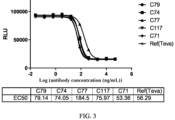
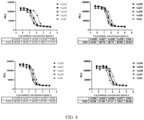
- the best chimeric antibodies were screened according to the ability of the chimeric antibodies in Table 3 to bind to full-length (1-37) CGRP and truncated (1-19) CGRP and the cellular biological activity thereof to block the binding of CGRP to CALCRL-RAMP1. The procedures and results are shown below.
- Streptavidin was diluted to 0.5 ⁇ g/mL by using PBS (Hyclone) and added into a plate at 100 ⁇ L/well. The plate was incubated in a thermostat incubator at 37 °C for 90 min and then washed. 2% BSA was added to the plate at 200 ⁇ L/well, and the plate was incubated in the thermostat incubator at 37 °C for 90 min and washed. Biotin-huCGRPaSA was diluted to 2.0 ⁇ g/mL with 2% BSA and added into the plate at 100 ⁇ L/well, and the plate was incubated in the thermostat incubator at 37 °C for 60 min.
- the reference antibody (47-RM) was diluted to 2500 ng/mL with a diluent (2% BSA) and serially 4-fold diluted to 0.15 ng/mL, and the chimeric antibodies were diluted with a cell supernatant stock solution. All the chimeric antibody solutions and the reference antibody solution were added into plates at 80 ⁇ L/well, and the plates were incubated in a thermostat incubator at 37 °C for 60 min and washed.
- An HRP-conjugated mouse anti-human antibody IgG4 manufactured by Southern Biotech, Cat. No.
- Streptavidin was diluted to 0.5 ⁇ g/mL by using PBS (Hyclone) and added into a plate at 100 ⁇ L/well. The plate was incubated in a thermostat incubator at 37 °C for 90 min and then washed. 2% BSA was added to the plate at 200 ⁇ L/well, and the plate was incubated in the thermostat incubator at 37 °C for 90 min and washed. Biotin-1-19 polypeptide was diluted to 2.0 ⁇ g/mL with 2% BSA and added into the plate at 100 ⁇ L/well, and the plate was incubated in the thermostat incubator at 37 °C for 60 min.
- the reference antibody (Lily) was diluted to 2500 ng/mL with a diluent (2% BSA) and then serially 4-fold diluted to 0.15 ng/mL.
- a diluent 2% BSA
- the stock solution was diluted. All the chimeric antibody solutions and the reference antibody solution were added into plates at 80 ⁇ L/well, and the plates were incubated in a thermostat incubator at 37 °C for 60 min and washed.
- An HRP-conjugated mouse anti-human antibody IgG4 manufactured by Southern Biotech, Cat. No.
- Streptavidin was diluted to 0.5 ⁇ g/mL by using PBS (Hyclone) and added into a plate at 100 ⁇ L/well. The plate was incubated in a thermostat incubator at 37 °C for 90 min and then washed. 2% BSA was added to the plate at 200 ⁇ L/well, and the plate was incubated in the thermostat incubator at 37 °C for 90 min and washed. Biotin-huCGRPaSA was diluted to 2.0 ⁇ g/mL with 2% BSA and added into the plate at 100 ⁇ L/well, and the plate was incubated in the thermostat incubator at 37 °C for 60 min.
- the chimeric antibodies in Table 3 and reference antibody (47-RM-20190815) were diluted to 1000 ng/mL with a diluent (2% BSA) and serially 10-fold diluted to 1 ng/mL. All the chimeric antibody solutions and the reference antibody solution were added into plates at 100 ⁇ L/well, and the plates were incubated in a thermostat incubator at 37 °C for 60 min and washed.
- An HRP-conjugated mouse anti-human antibody IgG4 manufactured by Southern Biotech, Cat. No.
- the antibody molecules selected in Table 3 (6.1) and Table 4 (6.2) were expressed by transient transfection and purified, and the binding activity of these antibody molecules to the full-length CGRP was detected by Elisa. As shown in Table 5, 45 antibody molecules exhibited binding activity and relative binding activity as compared to the reference antibody (47-RM-20190815). Table 5.
- SK-N-MC CRE 2E9 cells (SK-N-MC cells from ATCC, further engineered in-house for luciferase assay) were cultured in a MEM complete medium (Gibco, 11095-080) containing 10% FBS and passaged once every 3 days. On day one of the study, the cells were seeded at a density of 5 ⁇ 10 5 cells per well in a 96-well opaque low white plate (Costar, 3917) and cultured for 16-18 h in an incubator at 37.0 °C, 5.0% CO 2 .
- CGRP detection products and reference product were added at 50 ⁇ L/well.
- the cells and the antibodies were incubated in an incubator at 37.0 °C, 5.0% CO 2 for 30 min, and the CGRP antigen (working concentration: 4 ng/mL) was added at 50 ⁇ L/well.
- the cells were continuously cultured for 5-6 h at 37.0 °C, 5.0% CO 2 , before luciferase substrate ONE-Lite Luciferase Assay System (Vazyme, DD1203-04) was added at 50 ⁇ L/well.
- IC 50 value of the samples of interest was calculated using the data processing software Graphoad Prism8.0, and the relative activity was calculated according to the following formula: IC 50 (Ref-TEVA) / IC 50 (sample set) ⁇ 100%.
- NCBI Ig-Blast http://www.ncbi.nlm.nih.gov/projects/igblast/ was used to search for consensus sequences in germline and rearranged Ig variable region sequence databases.
- the amino acid sequences of complementarity-determining regions (CDRs) were identified by sequence annotation and by Internet-based sequence analysis (http://www.imgt.org/IMGT_vquest/vquest and http://www.ncbi.nlm.nih.gov/igblast/), based on Kabat system ( Wu, T. T and Kabat, E. A. 1970 J. Exp. Med., 132:211-250 ) and IMGT system ( Lefranc M.-P.
- 13 anti-CGRP chimeric antibodies C258, C245, C85, C92, C71, C97, C48, C347, C125, C74, C255, C177, and C79 were analyzed for their light chain and heavy chain information, and a total of 6 light chains (1A2-LC2, 1F5-LC1, 2B8-LC2, 3C1-LC, 3E5-LC and 3H10-LC2) and 7 heavy chains (1B2-HC, 1F5-HC, 2A2-HC, 2B8-HC1, 3C1-HC, 3E5-HC and 3H10-HC) were selected to construct humanized antibodies.
- human germline IgG genes homologous to the cDNA sequence of the murine antibody variable regions were retrieved in the human immunoglobulin gene database of the NCBI (http://www.ncbi.nlm.nih.gov/igblast/).
- NCBI http://www.ncbi.nlm.nih.gov/igblast/.
- the amino acid sequences of CDRs of the variable regions and their boundaries were then determined as per the Kabat numbering system.
- human IGHV and IGKV with high homology to the variable regions of the murine antibody were selected as templates for humanization and antibody variable regions were humanized by CDR grafting.
- Humanization was carried out based on the variable region sequences of the antibodies secreted by the hybridoma cells obtained above.
- the humanization process involved the following procedures:
- the humanized anti-CTLA-4 antibody variable regions designed above were diversely combined, and the four humanized light chains (3C1LC) and four humanized heavy chains (3C1HC) from chimeric antibody C245 were combined to give 237 humanized anti-CGRP antibodies.
- the numbers and amino acid sequences of the antibodies are detailed in Table 8.
- the humanized variable regions above were linked to the constant region sequences to prepare full-length antibodies.
- the optimal humanized antibodies were screened according to the ability of the humanized antibodies in Table 8 (Example 7) to bind to full-length (1-37) CGRP and the cellular biological activity thereof to block the binding of CGRP to CALCRL-RAMP1. The procedures and results are shown below.
- Biotin CGRPaSA was diluted with PBS (Hyclone) to 1.0 ⁇ g/mL, and the dilution was added to a microplate at 100 ⁇ L/well. The plate was let stand in an incubator at 37 °C and coated for 90 min and then washed, and 2% BSA was added to the plate at 200 ⁇ L/well. The plate was incubated in an incubator at 37 °C for 90 min and then washed.
- the humanized antibodies in Table 8 and the reference antibody (chimeric antibody C245) were diluted to 1000 ng/mL with a diluent (2% BSA) with a dilution factor of not more than 10.
- the chimeric antibodies and the reference antibody were serially 2.5-fold diluted on a sample dilution plate. All the chimeric antibody solutions and the reference antibody solution were added into plates at 100 ⁇ L/well, and the plates were incubated in a thermostat incubator at 37 °C for 60 min and washed.
- An HRP-conjugated goat anti-human antibody IgG (manufacturer: Sigma, Cat. No. A0170; Fc specificity) was diluted 5000-fold with 2% BSA and added into the plates at 100 ⁇ L/well, and the plates were incubated in the thermostat incubator at 37 °C for 60 min and washed.
- Chromogenic reagent TMB was carefully added at 100 ⁇ L/well to avoid bubbles, and the system was incubated at 37 °C for 15 min away from light for chromogenic reaction. Finally, a 2 M hydrochloric acid solution was added at 100 ⁇ L/well to stop the reaction while avoiding bubbles, and the plates were read on a microplate reader within 10 min (wavelength: 450/620 nm).
- SK-N-MC CRE 2E9 cells were cultured in a MEM complete medium (Gibco, 11095-080) containing 10% FBS and passaged once every 3 days. On day one of the study, the cells were seeded at a density of 5 ⁇ 10 5 cells per well in a 96-well opaque low white plate (Costar, 3917) and cultured for 16-18 h in an incubator at 37.0 °C, 5.0% CO 2 . On day two, the cell supernatant in the 96-well plate was removed by pipetting, and serially diluted CGRP detection products and reference product (Top dose at 10 ⁇ g/mL, 3-fold dilution) were added at 50 ⁇ L/well.
- MEM complete medium Gibco, 11095-080
- the cells and the antibodies were incubated in an incubator at 37.0 °C, 5.0% CO 2 for 30 min, and the CGRP antigen (working concentration: 4 ng/mL) was added at 50 ⁇ L/well.
- the cells were continuously cultured for 5-6 h at 37.0 °C, 5.0% CO 2 , before luciferase substrate ONE-Lite Luciferase Assay System (Vazyme, DD1203-04) was added at 50 ⁇ L/well.
- the mixture was mixed well on a mixer for 5 min away from light at room temperature, and then luminescence signal values were read on an M1000 pro multifunctional microplate reader (Tecan).
- the IC 50 value of the samples of interest was calculated using the data processing software Graphoad Prism8.0.
- variable regions and CDR amino acid sequence numbers of humanized antibody molecules hu66, hu71, hu131, hu224, hu228, and hu231 are shown in Table 11.
- 13 chimeric antibody molecules with in vitro efficacy of greater than 70% were selected in Example 6.4, and by analyzing the light and heavy chains contained in these antibodies, 7 chimeric antibody molecules C48, C85, C97, C125, C245, C258, and C347 were selected for in vivo efficacy assay.
- the in vivo efficacy was evaluated using a rat capsaicin-induced vasodilation model. It was found that C245 had a superior inhibitory effect on capsaicin-induced skin vasodilation to that of the reference Teva, and that the effect was sustained for at least 5 days in the SD rats.
- the rat local blood flow increasing model was constructed by percutaneous capsaicin administration, and the rats were randomized into 9 groups by body weight, with 8 animals in each group, i.e., a modeling control group, a Ref (Teva, fremanezumab) group, a C48 group, a C85 group, a C97 group, a C125 group, a C245 group, a C258 group, and a C347 group.
- the treatments were given subcutaneously at 10 mg/10 mL/kg, while the modeling control group received normal saline at the same volume.
- mice received 1 dose.
- the mice were anesthetized by pentobarbital sodium and marked with O-shaped circles with a diameter of about 8 mm bilaterally along the abdominal midline, while avoiding areas with visible blood vessels.
- 4 ⁇ L of capsaicin (1 mg) solution was uniformly applied in the circle at one side, while the other side was not treated.
- the skin blood flow data within the O-shaped circles were collected before capsaicin treatment and at 5 min, 10 min, and 20 min after capsaicin treatment, and the comprehensive blood flow change rate and the blood flow increase inhibition rate were calculated according to the blood flow data at each time point.
- the animals in the modeling control group after capsaicin treatment exhibited a significant increase in the blood flow and a comprehensive blood flow change rate of 46.0 ⁇ 5.4% at 20 min after capsaicin treatment.
- the animals in the C258 group and the C347 group after capsaicin treatment exhibited a certain increase trend in the comprehensive blood flow change rate relative to that of the modeling control group.
- the animals in the Ref (Teva, fremanezumab) group, the C48 group, the C85 group, the C97 group, and the C125 group exhibited mild decreases in the comprehensive blood flow change rate relative to that of the modeling control group over the 20 min observation period after capsaicin treatment.
- the animals in the C245 group exhibited a greater decrease in the comprehensive blood flow change rate relative to that of the modeling control group, a comprehensive blood flow change rate of 21.97 ⁇ 3.46% and a blood flow increase inhibition rate of 45.72 ⁇ 8.54% at 5 min after capsaicin treatment, and a further decrease in blood flow over time.
- the animals in the C245 group exhibited a comprehensive blood flow change rate of 17.81 ⁇ 5.80% and a blood flow increase inhibition rate of 61.25 ⁇ 12.63%.
- the animals in the modeling control group after capsaicin treatment exhibited a comprehensive blood flow change rate of about 50%.
- the animals in the C347 group after capsaicin treatment exhibited a certain increase trend in the blood flow relative to that of the modeling control group.
- the animals in the C48 group, the C85 group, the C97 group, and the C125 group exhibited mild decrease trends in the blood flow relative to that of the modeling control group, but overall decreases to different extents in the blood flow inhibition rate relative to that on day 2 post-dose.
- the animals in the C258 group also exhibited a mild decrease in the comprehensive blood flow change rate relative to that of the modeling control group, and exhibited a certain increase in the blood flow increase inhibition rate relative to that on day 2 post-dose.
- the animals in the C245 group exhibited a greater decrease in the comprehensive blood flow change rate relative to that of the modeling control group, and a comprehensive blood flow change rate of 26.75 ⁇ 4.41% and a blood flow increase inhibition rate that reached 45.88 ⁇ 8.92% at 5 min after capsaicin treatment.
- the animals in the C245 group exhibited a certain increase trend in the blood flow over time and a blood flow increase inhibition rate of 36.40 ⁇ 5.10% at 20 min after capsaicin treatment.
- the detailed assay results are shown in FIGs. 7-1 to 7-4 .
- the comprehensive blood flow change rates and the blood flow increase inhibition rates of C245 and the reference antibody Ref are shown in Table 12. Table 12.
- Example 8.2 6 humanized antibody molecules with good in vitro efficacy were selected in Example 8.2 and further evaluated for their in vivo efficacy using a rat capsaicin-induced vasodilation model. It was found that hu224, hu228, and hu231 exhibited inhibitory effects on capsaicin-induced skin vasodilation and that the effects were sustained for at least 4 days in SD rats.
- the rat local blood flow increasing model was constructed by percutaneous capsaicin administration, and the rats were randomized into 8 groups by body weight, with 8 animals in each group, i.e., a modeling control group, a Ref (Teva, fremanezumab) group, a hu66 group, a hu71 group, a hu131 group, a hu231 group, a hu224 group, and a hu228 group.
- the treatments were given subcutaneously at 10 mg/10 mL/kg, while the modeling control group received normal saline at the same volume. Each group received 1 dose.
- mice On days 2 and 4 post-dose, the mice were anesthetized by pentobarbital sodium and marked with O-shaped circles with a diameter of about 8 mm bilaterally along the abdominal midline, while avoiding areas with visible blood vessels. 4 ⁇ L. of capsaicin (1 mg) solution was uniformly applied in the circle at one side, while the other side was not treated. The skin blood flow data within the O-shaped circles were collected before capsaicin treatment and at 5 min, 10 min, and 20 min after capsaicin treatment, and the comprehensive blood flow change rate and the blood flow increase inhibition rate were calculated according to the blood flow data at each time point.
- the animals in the modeling control group exhibited a comprehensive blood flow change rate of 47.55 ⁇ 8.14% at 5 min after capsaicin treatment, a certain increase trend in the blood flow over time, and a comprehensive blood flow change rate of 57.00 ⁇ 4.71% at 20 min after capsaicin treatment.
- the animals in the hu71 group and the hu131 group exhibited a certain increase trend in the comprehensive blood flow change rate relative to that of the model control group after capsaicin treatment.
- the animals in the hu66 group exhibited a mild decrease in the comprehensive blood flow change rate relative to that of the model control group over the 20 min observation period.
- the animals in the Ref (Teva, fremanezumab) group, the hu231 group, the hu224 group, and the hu228 group exhibited greater decreases in the comprehensive blood flow change rate relative to that of the model control group, comprehensive blood flow change rates of 30.86 ⁇ 8.35%, 25.91 ⁇ 5.97%, 23.1 ⁇ 6.38% and 28.94 ⁇ 7.58% and blood flow increase inhibition rates of 35.09 ⁇ 17.56%, 45.52 ⁇ 12.55%, 51.43 ⁇ 13.43% and 39.14 ⁇ 15.94% at 5 min after capsaicin treatment, respectively, and further decreases in the blood flow over time.
- the animals in the Ref (Teva, Fremanezumab) group, the hu231 group, the hu224 group, and the hu228 group exhibited the comprehensive blood flow change rates of 24.61 ⁇ 9.68%, 9.94 ⁇ 8.17%, 9.37 ⁇ 8.43%, and 14.84 ⁇ 10.1%, respectively, where the hu231 group, the hu224 group, and the hu228 group exhibited the comprehensive blood flow change rates significantly lower than that of the modeling control group (P ⁇ 0.05).
- the animals in the modeling control group after capsaicin treatment exhibited a comprehensive blood flow change rate that was always greater than 50%.
- the animals in the hu66 group, the hu71 group, and the hu131 group after capsaicin treatment exhibited certain increase trends in the blood flow relative to that of the modeling control group. Similar to those on D2, the animals in the Ref (Teva, fremanezumab) group, the hu231 group, the hu224 group, and the hu228 group exhibited greater decreases in the comprehensive blood flow change rate relative to that of the modeling control group, and the decrease in the comprehensive blood flow change rate exhibited a gradual increase over time.
- the detailed assay results are shown in FIGs. 8-1 to 8-4 .
- Example 12 3 humanized antibody molecules hu224, hu228, and hu231 with good in vitro efficacy were selected in Example 12, and further evaluated for their in vivo efficacy on the MMA diameter and mean arterial pressure in SD rats with closed cranial window electrostimulation-induced migraine. It was found that hu224, hu228, and hu231 exhibited inhibitory effects on closed cranial window electrostimulation-induced MMA vasodilation and that the effects were sustained for at least 120 min in the SD rats.
- mice 40 male SD rats (Vital River Laboratory Animal Technology Co., Ltd.) were selected.
- the rats were randomized into 5 groups by body weight, with 8 animals in each group, i.e., a vehicle group, a sumatriptan group, a hu224 group, a hu228 group, and a hu231 group.
- the treatments were given subcutaneously at 10 mg/10 mL/kg, while the vehicle group received normal saline at the same volume.
- the sumatriptan group was administered 5 min after the first electrostimulation. Each group received 1 dose.
- the animals were placed on a thermostat blanket after deep anesthetization by an intraperitoneal compound Zoletil/xylazine injection.
- the animals were connected to a small animal ventilator by tracheal intubation to ensure stable respiration during the molding and recording process, and the mean arterial pressure was measured by femoral artery intubation.
- the animals were fixed to a stereotaxic apparatus, the skull was exposed, and the skull above the middle meningeal artery was thinned using a dental drill until the middle meningeal artery was visible, and a closed cranial window (10 ⁇ 7 mm 2 ) was established.
- electrostimulation was given to the closed cranial window (about 200 ⁇ m to the middle meningeal artery) through a bipolar electrode, and the stimulation conditions of the vehicle group, reference compound group, and treatment group are as follows: the stimulation intensity was 20 V and 10 Hz, the wave width was 0.5 ms, and the stimulation was 30 s.
- the MMA diameter was measured and the 5-min stable femoral artery pressure was recorded; after the end of electrostimulation, the femoral artery pressure changes and the MMA diameters were recorded at 30 min, 60 min, 90 min, 120 min (4 time points).
- Example 12 Epitope identification of chimeric antibodies and humanized antibodies binding to CGRP
- C245 Fab Fab monomer fragments derived from antibody C245 binding to six synthetic human CGRP alpha polypeptide fragments (polypeptide 1-13, polypeptide 1-19, polypeptide 1-37, polypeptide 8-19, polypeptide 8-26, and polypeptide 13-24) were determined on an Octet RBD 96e system.
- Human CGRP synthetic polypeptide fragments were immobilized on the surfaces of SA bioprobes (Sartorius, Cat. No.
- hu224 Fab Fab monomer fragments derived from humanized antibody hu224 binding to four synthetic human CGRP alpha polypeptide fragments (polypeptide 1-13, polypeptide 1-19, polypeptide 1-37, and polypeptide 8-19) were determined on an Octet RBD 96e system.
- Human CGRP synthetic polypeptide fragments were immobilized on the surfaces of SA bioprobes (Sartorius, Cat. No. 18-5019) at the following concentrations: 8.5 nM for CGRP (1-19), 15.5 nM for hCGRP (1-37), 10 nM for hCGRP (8-19), and 15.5 nM for hCGRP (8-26).
- the immobilized synthetic human CGRP polypeptide fragments were bound to 45 nM of hu224 Fab and the binding dissociation curves were fitted using analytical software.
- the molecular sequences of the synthetic human CGRP alpha polypeptide fragments are as follows: The molecular sequence of the synthetic hCGRP (1-13) polypeptide fragment was Biotin-Linker(G 5 )-ACDTATCVTHRLA, where the N-terminus was biotin-labeled, and CYS residues at positions 7 and 12 theoretically form 1 intrachain disulfide bond.
- the molecular sequence of the synthetic hCGRP (1-19) polypeptide fragment was Biotin-Linker(G 5 )-ACDTATCVTHRLAGLLSRS, where the N-terminus was biotin-labeled, and CYS residues at positions 7 and 12 theoretically form 1 intrachain disulfide bond.
- the molecular sequence of the synthetic hCGRP (1-37) polypeptide fragment was Biotin-Linker(G 5 )-ACDTATCVTHRLAGLLSRSGGVVKNNFVPTNVGSKAF-NH 2 , where the N-terminus was biotin-labeled, the C-terminus was the tail (F-NH 2 refers to phenylalanine amide, i.e., a CONH 2 structure formed at the tail), and CYS residues at positions 7 and 12 theoretically form 1 intrachain disulfide bond.
- the molecular sequence of the synthetic hCGRP (8-19) polypeptide fragment was Blotin-Linker(G 5 )-VTHRLAGLLSRS, where the N-terminus was biotin-labeled.
- the molecular sequence of the synthetic hCGRP (8-26) polypeptide fragment was Biotin-Linker(G 5 )-VTHRLAGLLSRSGGVVKNN, where the N-terminus was biotin-labeled.
- the molecular sequence of the synthetic hCGRP (13-24) polypeptide fragment was Biotin-Linker(G 5 )-AGLLSRSGGVVK, where the N-terminus was biotin-labeled.
- the kinetic parameters of the C245 Fab binding to the six synthetic human CGRP polypeptide fragments are shown in Table 14, and the results of kinetic characterization parameter detection are shown in FIG. 11 .
- the kinetic parameters of the hu224 Fab binding to the four synthetic human CGRP polypeptide fragments are shown in Table 14, and the results of kinetic characterization parameter detection are shown in FIG. 12 .
- the C245 Fab exhibited binding activity to all of the four polypeptide fragments hCGRP (1-19), hCGRP (1-37), hCGRP (8-19) and hCGRP (8-26) used, wherein the full-length hCGRP (1-37) polypeptide and the shortest hCGRP (8-19) polypeptide fragment demonstrated similar affinity KD values of 2.487E-10M and 2.523E-10M, respectively, suggesting that amino acids 8-19 in human CGRP are the major binding epitope of the C245 antibody to the human CGRP antigen.
- hCGRP (1-13) and hCGRP (13-24) polypeptide fragments were synthesized by division at amino acid position 13 at the center of amino acids 8-19 in human CGRP, and then the affinity was detected. The two fragments showed a 100-fold decrease in affinity and no binding activity, respectively, suggesting that the integrity of amino acids 8-19 in human CGRP has an important effect on the binding to the C245 antibody.
- the humanized antibody-derived hu224 Fab exhibited binding activity to all of the four polypeptide fragments hCGRP (1-19), hCGRP (1-37), hCGRP (8-19) and hCGRP (8-26) used, wherein the full-length hCGRP (1-37) polypeptide and the shortest hCGRP (8-19) polypeptide fragment demonstrated similar affinity KD values of 2.882E-10M and 4.447E-10M, respectively, suggesting that amino acids 8-19 in human CGRP are the major binding epitope of the antibody to the human CGRP antigen.
- Table 14 The humanized antibody-derived hu224 Fab exhibited binding activity to all of the four polypeptide fragments hCGRP (1-19), hCGRP (1-37), hCGRP (8-19) and hCGRP (8-26) used, wherein the full-length hCGRP (1-37) polypeptide and the shortest hCGRP (8-19) polypeptide fragment demonstrated similar affinity KD values of 2.882E-10M and 4.447
- Amino acid sequences of human ⁇ -CGRP fragments and related peptides CGRP Amino acid sequence SEQ ID NO 1-37 (WT) ACDTATCVTHRLAGLLSRSGGVVKNNFVPTNVGSKAF 97 1-13 ACDTATCVTHRLA 98 1-19 ACDTATCVTHRLAGLLSRS 99 8-19 VTHRLAGLLSRS 100 8-26 VTHRLAGLLSRSGGVVKNN 101 13-24 AGLLSRSGGVVK 102
- the association/dissociation profiles for three antibodies Hu224, galcanezumab analogue and fremanezumab analogue binding to the antigen human ⁇ -CGRP in solutions at different pH (7.4 and 5.5) were determined on an Octet RBD96e system.
- the pH 7.4 buffer contained 10 mM HEPES (pH 7.4), 150 mM sodium chloride, 3 mM EDTA, and 0.05% P20.
- the pH 5.5 buffer contained 10 mM NaAc (pH 5.5), 150 mM sodium chloride, and 0.05% P20.
- the three antibodies Hu224, galcanezumab analogue, and fremanezumab analogue were immobilized on the surfaces of AHC2 bioprobes (Sartorius, Cat. No. 18-5142) at 10 ⁇ g/mL, respectively.
- 50 nM human ⁇ -CGRPs diluted in different pH (7.4 and 5.5) buffers were used to bind to the antibodies during the 0 to 200 s antigen association phase, and different pH (7.4 and 5.5) buffers were used to wash during the 0 to 200 s antigen dissociation phase.
- the conditions were pH 7.4 association and pH 7.4 dissociation, pH 7.4 association and pH 5.5 dissociation, and pH 5.5 association and pH 5.5 dissociation.
- the binding signals of the antigen at the time of injection for 200 s were calculated using analytical software and fitted to give the dissociation constant kd.
- the amino acid sequence of the synthetic human ⁇ -CGRP polypeptide fragment is ACDTATCVTHRLAGLLSRSGGVVKNNFVPTNVGSKAF (SEQ ID NO: 97)-NH 2 , where the C-terminus was the tail (F-NH 2 refers to phenylalanine amide, i.e., a CONH 2 structure formed at the tail), and CYS residues at positions 7 and 12 theoretically form 1 intrachain disulfide bond.
- the Hu224 antibody showed significant dissociation relative to galcanezumab and fremanezumab.
- antibody Hu224 may have low affinity to CGRP, and the high dissociation rate can accelerate the recycling of the antibody. That is, the dissociated antibody is captured by FcRn and recycled to the outside of cells, and the antibody is released in the neutral pH extracellular environment, such that the retention time of the antibody in the blood is increased, and the half-life of the antibody is prolonged.
- the PK data of cynomolgus monkey also show that the anti-CGRP antibody of the present disclosure has a longer half-life than that of galcanezumab, and it can be predicted that the duration of the in vivo efficacy of the anti-CGRP antibody disclosed herein will be longer. Table 16.
Landscapes
- Health & Medical Sciences (AREA)
- Life Sciences & Earth Sciences (AREA)
- Chemical & Material Sciences (AREA)
- Engineering & Computer Science (AREA)
- Biomedical Technology (AREA)
- Organic Chemistry (AREA)
- General Health & Medical Sciences (AREA)
- Medicinal Chemistry (AREA)
- Immunology (AREA)
- Molecular Biology (AREA)
- Proteomics, Peptides & Aminoacids (AREA)
- Neurology (AREA)
- Neurosurgery (AREA)
- Urology & Nephrology (AREA)
- Biochemistry (AREA)
- Hematology (AREA)
- Pharmacology & Pharmacy (AREA)
- Nuclear Medicine, Radiotherapy & Molecular Imaging (AREA)
- General Chemical & Material Sciences (AREA)
- Veterinary Medicine (AREA)
- Animal Behavior & Ethology (AREA)
- Chemical Kinetics & Catalysis (AREA)
- Public Health (AREA)
- Pain & Pain Management (AREA)
- Bioinformatics & Cheminformatics (AREA)
- Analytical Chemistry (AREA)
- Pathology (AREA)
- General Physics & Mathematics (AREA)
- Biophysics (AREA)
- Physics & Mathematics (AREA)
- Food Science & Technology (AREA)
- Microbiology (AREA)
- Cell Biology (AREA)
- Biotechnology (AREA)
- Genetics & Genomics (AREA)
- Rheumatology (AREA)
- Endocrinology (AREA)
- Peptides Or Proteins (AREA)
Applications Claiming Priority (2)
| Application Number | Priority Date | Filing Date | Title |
|---|---|---|---|
| CN202210962095 | 2022-08-11 | ||
| PCT/CN2023/112454 WO2024032750A1 (zh) | 2022-08-11 | 2023-08-11 | 抗cgrp抗体及用途 |
Publications (1)
| Publication Number | Publication Date |
|---|---|
| EP4570913A1 true EP4570913A1 (de) | 2025-06-18 |
Family
ID=89850981
Family Applications (1)
| Application Number | Title | Priority Date | Filing Date |
|---|---|---|---|
| EP23851970.6A Pending EP4570913A1 (de) | 2022-08-11 | 2023-08-11 | Anti-cgrp-antikörper und verwendung |
Country Status (4)
| Country | Link |
|---|---|
| US (1) | US20260125454A1 (de) |
| EP (1) | EP4570913A1 (de) |
| CN (1) | CN117586390A (de) |
| WO (1) | WO2024032750A1 (de) |
Family Cites Families (12)
| Publication number | Priority date | Publication date | Assignee | Title |
|---|---|---|---|---|
| DD120304A1 (de) | 1975-06-20 | 1976-06-05 | ||
| US4816567A (en) | 1983-04-08 | 1989-03-28 | Genentech, Inc. | Recombinant immunoglobin preparations |
| US5225539A (en) | 1986-03-27 | 1993-07-06 | Medical Research Council | Recombinant altered antibodies and methods of making altered antibodies |
| US5530101A (en) | 1988-12-28 | 1996-06-25 | Protein Design Labs, Inc. | Humanized immunoglobulins |
| HUE043492T2 (hu) | 2005-08-23 | 2019-08-28 | Univ Pennsylvania | Módosított nukleozidokat tartalmazó RNS és eljárások az alkalmazására |
| JO3330B1 (ar) * | 2010-06-10 | 2019-03-13 | Lilly Co Eli | الأجسام المضادة cgrp |
| RS66303B1 (sr) * | 2011-05-20 | 2025-01-31 | H Lundbeck As | Upotreba anti-cgrp antitela i fragmenata antitela za sprečavanje ili inhibiranje fotofobije ili odbojnosti prema svetlu kod subjekata kojima je to potrebno, naročito kod subjekata koji pate od migrene |
| SG10201604040PA (en) * | 2011-05-20 | 2016-07-28 | Alderbio Holdings Llc | Anti-cgrp compositions and use thereof |
| JP2021518748A (ja) * | 2018-02-23 | 2021-08-05 | アールイーエムディー バイオセラピューティクス,インコーポレイテッドREMD Biotherapeutics,Inc | カルシトニン遺伝子関連ペプチド(cgrp)アンタゴニスト抗体 |
| GEAP202515689A (en) * | 2019-01-08 | 2025-04-25 | H Lundbeck As | Treatment of medication overuse headache using anti-cgrp or anti-cgrp-r antibodies |
| PE20211707A1 (es) * | 2019-01-08 | 2021-09-01 | H Lundbeck As | Tratamiento agudo y tratamiento rapido de la cefalea usando anticuerpos anticgrp |
| CN114127110B (zh) * | 2019-05-30 | 2022-07-01 | 山东博安生物技术股份有限公司 | 抗cgrp抗体及其应用 |
-
2023
- 2023-08-11 EP EP23851970.6A patent/EP4570913A1/de active Pending
- 2023-08-11 US US19/102,829 patent/US20260125454A1/en active Pending
- 2023-08-11 CN CN202311014768.XA patent/CN117586390A/zh active Pending
- 2023-08-11 WO PCT/CN2023/112454 patent/WO2024032750A1/zh not_active Ceased
Also Published As
| Publication number | Publication date |
|---|---|
| WO2024032750A1 (zh) | 2024-02-15 |
| CN117586390A (zh) | 2024-02-23 |
| US20260125454A1 (en) | 2026-05-07 |
Similar Documents
| Publication | Publication Date | Title |
|---|---|---|
| CN111961134B (zh) | 抗血液树突细胞抗原2抗体及其用途 | |
| CN113366016B (zh) | 抗人白细胞介素5(il-5)单克隆抗体及其应用 | |
| US20170233481A1 (en) | Anti-cd25 antibodies and their uses | |
| WO2018133842A1 (zh) | 人程序性死亡受体pd-1的单克隆抗体及其片段 | |
| CN103172742A (zh) | 人cd22特异性抗体及其治疗和诊断应用 | |
| TW201641516A (zh) | 抗-il-23抗體 | |
| JP2008529489A5 (de) | ||
| EP4101867A1 (de) | Anti-cd3 und anti-cd123 bispezifischer antikörper und verwendung davon | |
| US20150010538A1 (en) | Anti-cd25 antibodies and their uses | |
| TW200848428A (en) | Novel antibodies | |
| JP2023538098A (ja) | Fgfr3抗体および使用の方法 | |
| WO2019096219A1 (zh) | 一种人源化抗il-13抗体及其制备方法和应用 | |
| WO2023227033A1 (zh) | 抗bdca2抗体及其用途 | |
| CN114907479A (zh) | 抗cd112r抗体及其用途 | |
| EP4640707A1 (de) | Anti-cmet-antikörper, antikörper-wirkstoff-konjugat und herstellungsverfahren dafür und verwendung davon | |
| US20250332197A1 (en) | Claudin18.2 humanized antibody and application thereof | |
| EP3902836B1 (de) | Flt3-agonistische antikörper und ihre verwendungen | |
| CN114072428A (zh) | 一种靶向PD-L1和TGF-β的融合蛋白及其用途 | |
| CN105683218A (zh) | 针对toso的抗体 | |
| US20260125454A1 (en) | Anti-cgrp antibody and use | |
| WO2022127842A1 (zh) | 靶向il-17a和il-36r的双特异性抗体及其应用 | |
| WO2021032174A1 (zh) | 一种抗cd47抗原结合蛋白及其应用 | |
| EP4410839A1 (de) | Anti-b7-h3-antikörper und anwendung davon | |
| WO2022012559A1 (zh) | 抗cldn-18.2抗体及其用途 | |
| JP7735545B2 (ja) | Cdcプラットホーム抗体 |
Legal Events
| Date | Code | Title | Description |
|---|---|---|---|
| STAA | Information on the status of an ep patent application or granted ep patent |
Free format text: STATUS: THE INTERNATIONAL PUBLICATION HAS BEEN MADE |
|
| PUAI | Public reference made under article 153(3) epc to a published international application that has entered the european phase |
Free format text: ORIGINAL CODE: 0009012 |
|
| STAA | Information on the status of an ep patent application or granted ep patent |
Free format text: STATUS: REQUEST FOR EXAMINATION WAS MADE |
|
| 17P | Request for examination filed |
Effective date: 20250129 |
|
| AK | Designated contracting states |
Kind code of ref document: A1 Designated state(s): AL AT BE BG CH CY CZ DE DK EE ES FI FR GB GR HR HU IE IS IT LI LT LU LV MC ME MK MT NL NO PL PT RO RS SE SI SK SM TR |
|
| DAV | Request for validation of the european patent (deleted) | ||
| DAX | Request for extension of the european patent (deleted) |