EP4574840A1 - Verfahren zur herstellung von immunglobulin oder multimerimmunglobulin unter verwendung von fadenpilzen - Google Patents
Verfahren zur herstellung von immunglobulin oder multimerimmunglobulin unter verwendung von fadenpilzen Download PDFInfo
- Publication number
- EP4574840A1 EP4574840A1 EP23854873.9A EP23854873A EP4574840A1 EP 4574840 A1 EP4574840 A1 EP 4574840A1 EP 23854873 A EP23854873 A EP 23854873A EP 4574840 A1 EP4574840 A1 EP 4574840A1
- Authority
- EP
- European Patent Office
- Prior art keywords
- immunoglobulin
- filamentous fungus
- iga
- multimeric
- genome
- Prior art date
- Legal status (The legal status is an assumption and is not a legal conclusion. Google has not performed a legal analysis and makes no representation as to the accuracy of the status listed.)
- Pending
Links
Images





Classifications
-
- C—CHEMISTRY; METALLURGY
- C12—BIOCHEMISTRY; BEER; SPIRITS; WINE; VINEGAR; MICROBIOLOGY; ENZYMOLOGY; MUTATION OR GENETIC ENGINEERING
- C12N—MICROORGANISMS OR ENZYMES; COMPOSITIONS THEREOF; PROPAGATING, PRESERVING, OR MAINTAINING MICROORGANISMS; MUTATION OR GENETIC ENGINEERING; CULTURE MEDIA
- C12N15/00—Mutation or genetic engineering; DNA or RNA concerning genetic engineering, vectors, e.g. plasmids, or their isolation, preparation or purification; Use of hosts therefor
- C12N15/09—Recombinant DNA-technology
- C12N15/63—Introduction of foreign genetic material using vectors; Vectors; Use of hosts therefor; Regulation of expression
- C12N15/79—Vectors or expression systems specially adapted for eukaryotic hosts
- C12N15/80—Vectors or expression systems specially adapted for eukaryotic hosts for fungi
-
- C—CHEMISTRY; METALLURGY
- C07—ORGANIC CHEMISTRY
- C07K—PEPTIDES
- C07K16/00—Immunoglobulins [IG], e.g. monoclonal or polyclonal antibodies
- C07K16/12—Immunoglobulins [IG], e.g. monoclonal or polyclonal antibodies against material from bacteria
- C07K16/1203—Gram-negative bacteria
- C07K16/1228—Enterobacterales (O), e.g. Citrobacter (G), Serratia (G), Proteus (G), Providencia (G), Morganella (G) or Yersinia (G)
- C07K16/1232—Escherichia (G)
-
- C—CHEMISTRY; METALLURGY
- C12—BIOCHEMISTRY; BEER; SPIRITS; WINE; VINEGAR; MICROBIOLOGY; ENZYMOLOGY; MUTATION OR GENETIC ENGINEERING
- C12N—MICROORGANISMS OR ENZYMES; COMPOSITIONS THEREOF; PROPAGATING, PRESERVING, OR MAINTAINING MICROORGANISMS; MUTATION OR GENETIC ENGINEERING; CULTURE MEDIA
- C12N15/00—Mutation or genetic engineering; DNA or RNA concerning genetic engineering, vectors, e.g. plasmids, or their isolation, preparation or purification; Use of hosts therefor
- C12N15/09—Recombinant DNA-technology
- C12N15/87—Introduction of foreign genetic material using processes not otherwise provided for, e.g. co-transformation
- C12N15/90—Stable introduction of foreign DNA into chromosome
-
- C—CHEMISTRY; METALLURGY
- C07—ORGANIC CHEMISTRY
- C07K—PEPTIDES
- C07K2317/00—Immunoglobulins specific features
- C07K2317/20—Immunoglobulins specific features characterized by taxonomic origin
-
- C—CHEMISTRY; METALLURGY
- C07—ORGANIC CHEMISTRY
- C07K—PEPTIDES
- C07K2317/00—Immunoglobulins specific features
- C07K2317/30—Immunoglobulins specific features characterized by aspects of specificity or valency
- C07K2317/35—Valency
-
- C—CHEMISTRY; METALLURGY
- C07—ORGANIC CHEMISTRY
- C07K—PEPTIDES
- C07K2317/00—Immunoglobulins specific features
- C07K2317/50—Immunoglobulins specific features characterized by immunoglobulin fragments
- C07K2317/52—Constant or Fc region; Isotype
-
- C—CHEMISTRY; METALLURGY
- C07—ORGANIC CHEMISTRY
- C07K—PEPTIDES
- C07K2317/00—Immunoglobulins specific features
- C07K2317/70—Immunoglobulins specific features characterized by effect upon binding to a cell or to an antigen
- C07K2317/73—Inducing cell death, e.g. apoptosis, necrosis or inhibition of cell proliferation
-
- C—CHEMISTRY; METALLURGY
- C07—ORGANIC CHEMISTRY
- C07K—PEPTIDES
- C07K2317/00—Immunoglobulins specific features
- C07K2317/70—Immunoglobulins specific features characterized by effect upon binding to a cell or to an antigen
- C07K2317/76—Antagonist effect on antigen, e.g. neutralization or inhibition of binding
-
- C—CHEMISTRY; METALLURGY
- C12—BIOCHEMISTRY; BEER; SPIRITS; WINE; VINEGAR; MICROBIOLOGY; ENZYMOLOGY; MUTATION OR GENETIC ENGINEERING
- C12N—MICROORGANISMS OR ENZYMES; COMPOSITIONS THEREOF; PROPAGATING, PRESERVING, OR MAINTAINING MICROORGANISMS; MUTATION OR GENETIC ENGINEERING; CULTURE MEDIA
- C12N15/00—Mutation or genetic engineering; DNA or RNA concerning genetic engineering, vectors, e.g. plasmids, or their isolation, preparation or purification; Use of hosts therefor
- C12N15/09—Recombinant DNA-technology
- C12N15/11—DNA or RNA fragments; Modified forms thereof; Non-coding nucleic acids having a biological activity
- C12N15/62—DNA sequences coding for fusion proteins
Definitions
- the present disclosure relates to a method for producing an immunoglobulin or a multimeric immunoglobulin using a filamentous fungus, a filamentous fungus that can be used in the production method, and a method for producing the filamentous fungus.
- transgenic animals, mammalian cell cultures, plants, or the like have been used for the production of beneficial proteins such as antibodies.
- transgenic animals and mammalian cell cultures have a risk of being contaminated with viruses, prions, and the like.
- a koji mold (Aspergillus oryzae), which is a type of filamentous fungus, is a filamentous fungus that has been used from long ago in the production of traditional brewing products in Japan such as Japanese alcohol, soy sauce, and miso, and is a microorganism certified as a national fungus by the Brewing Society of Japan (Non Patent Literature 1: Kita moto, 2002 ).
- A. oryzae has excellent protein secretion ability, and useful proteins are actually produced using A.
- Non Patent Literature 2 Ito et al., 2007, Non Patent Literature 3: Nakajima et al., 2006, Non Patent Literature 4: Tsuchiya et al., 1992, and Non Patent Literature 5: Tsuchiya et al., 1994).
- A. oryzae is recognized as a highly safe microorganism by the World Health Organization (WHO) and the Food and Agriculture Organization (FAO) (Non Patent Literature 6: Barbesgaard et al., 1992), and is also used for production of enzyme agents and metabolic compounds for foods, chemical products, and medical products.
- WHO World Health Organization
- FEO Food and Agriculture Organization
- Heterologous proteins produced by filamentous fungi include a wide range of proteins such as crystalline cellulose mitigating proteins derived from heterologous filamentous fungi (Non Patent Literature 7: Chen et al. (2010) Appl Environ Microbiol , Patent Literature 1: JP 2009-207368 A ), taste-modifying proteins derived from plants (Non Patent Literature 3: Nakajima et al. (2006) Appl Environ Microbiol and Patent Literature 2: WO 2005/073372 A ), and human lysozyme proteins (Patent Literature 3: WO 2007/099776 A ).
- Immunoglobulins such as IgG using Aspergillus niger and A. oryzae, which are filamentous fungi (Patent Literature 4, WO 2003/089614 A and Non Patent Literature 8: Huynh et al. (2020), Fungal Biol. Biotechnol ).
- the immunoglobulin is classified into five types of IgG, IgA, IgM, IgD, and IgE depending on a difference in structure of a heavy chain constant region, and each type has different chemical properties.
- IgM and IgA immunoglobulins function in a monomer state or a multimer state in a living body.
- the globulin in the multimer state is called a multimeric immunoglobulin.
- the present disclosure provides a method for producing an immunoglobulin or a multimeric immunoglobulin using a filamentous fungus.
- the present disclosure provides a filamentous fungus that can be used in the production method or a method for producing the filamentous fungus.
- an immunoglobulin or multimeric immunoglobulin retaining a physiological activity for example, a bacterial growth inhibitory activity or the like
- the immunoglobulin or the multimeric immunoglobulin can be secreted into a cell culture medium, and the produced immunoglobulin or multimeric immunoglobulin can be separated to utilize the physiological activity.
- the present disclosure provides a method for producing a multimeric immunoglobulin using a filamentous fungus containing a nucleic acid fragment encoding an immunoglobulin in a genome.
- the present disclosure provides a filamentous fungus containing a nucleic acid fragment encoding a mammalian immunoglobulin in a genome and producing a multimeric mammalian immunoglobulin.
- the present disclosure provides a method for producing a filamentous fungus encoding an immunoglobulin in a genome, the method including inserting a nucleic acid sequence encoding the immunoglobulin into a genome of a filamentous fungus to be modified.
- the present disclosure provides a filamentous fungus containing a nucleic acid fragment encoding an immunoglobulin in a genome and producing an immunoglobulin.
- the present disclosure provides the following.
- a method for producing a multimeric immunoglobulin including:
- a filamentous fungus containing a nucleic acid fragment encoding an immunoglobulin in a genome which is used in the method according to Item 1 or 2.
- a method for producing a filamentous fungus containing a nucleic acid fragment encoding an immunoglobulin in a genome including:
- composition containing a culture supernatant of the filamentous fungus according to Item 10 or 11.
- the present disclosure has an effect of providing a method for producing an immunoglobulin or a multimeric immunoglobulin using a filamentous fungus.
- the present disclosure has an effect of providing a filamentous fungus that can be used in the production method or a method for producing the filamentous fungus.
- the inventors of the present disclosure have attempted to produce a multimeric immunoglobulin using a filamentous fungus based on the existing knowledge, but unlike a monomer immunoglobulin, it was not possible to produce a multimeric immunoglobulin, and particularly, it was not possible to produce a multimeric immunoglobulin by secreting a multimeric immunoglobulin having physiological activity into a cell culture medium and isolating the multimeric immunoglobulin.
- a filamentous fungus containing a nucleic acid sequence encoding an immunoglobulin on a genome contains two or more copies of a nucleic acid sequence encoding an immunoglobulin on a genome.
- a case where the term "about” used in connection with a numerical value x means that the value may vary, for example, within 10%, 9%, 8%, 7%, 6%, 5%, 4%, 3%, 2%, 1%, 0.5%, 0.1%, 0.05%, or 0.01%.
- containing has the same meaning as commonly understood by those skilled in the technical field to which the present invention pertains, but includes, for example, “containing” and “consisting of”, and specifically means that a composition "containing” A may also contain B as another component, in addition to containing only A.
- the "separating” has the same meaning as commonly understood by those skilled in the technical field to which the present invention belongs, and means, for example, selectively obtaining certain components from a mixed composition and excluding other components.
- "separating” in a case where an immunoglobulin is separated from a culture medium, “separating” may have the same meaning as “isolating”, “purifying”, “enriching”, and “concentrating”.
- the "protein” refers to a substance composed of a polypeptide in which amino acids are linked by peptide bonds.
- a molecular weight of the protein is not particularly limited.
- the term “protein” also includes the meaning of a polypeptide and a peptide.
- the present disclosure provides a method for producing an immunoglobulin using a filamentous fungus containing a nucleic acid fragment encoding an immunoglobulin in a genome.
- the method for producing an immunoglobulin of the present disclosure includes:
- a filamentous fungus produced by a method for producing a modified filamentous fungus for producing a multimeric mammalian immunoglobulin described below can be typically used.
- the type of immunoglobulin produced by the method of the present disclosure is not particularly limited, and can be selected from, for example, IgG, IgA, IgM, IgD, or IgE.
- the immunoglobulin is IgA or IgM.
- the resulting immunoglobulin has a physiological activity, for example, a binding activity to an antigen.
- the immunoglobulin is IgA or IgM having a physiological activity, for example, a binding activity to an antigen.
- conditions for culturing the filamentous fungus for example, a composition of a medium, a culture temperature, a medium pH, and shaking conditions can be arbitrarily adjusted and optimized based on technologies known to those skilled in the art. By optimizing these conditions, the amount, yield, quality, and the like of the immunoglobulin can be improved, and an immunoglobulin having desired properties in stability and the like can be produced.
- a pH of the medium in which the filamentous fungus is cultured can be adjusted at any pH of 4 to 11.
- the pH of the medium is selected from a range of 4.0 to 11.0, 4.5 to 10.0, 5.0 to 9.0, 5.5 to 8.5, or 6.0 to 8.0.
- the pH of the medium can be set within a range of 5.0 or more, 5.5 or more, 6.0 or more, 6.5 or more, 7.0 or more, 7.5 or more, 8.0 or more, 8.5 or more, 9.0 or more, or 9.5 or more, and 11.0 or less, 10.5 or less, 10.0 or less, 9.5 or less, 9.0 or less, 8.5 or less, 8.0 or less, 7.5 or less, 7.0 or less, 6.5 or less, 6.0 or less, 5.5 or less, or 5.0 or less, or any combination of an upper limit and a lower limit thereof.
- the immunoglobulin produced by the bacterial cell body in the step of separating the immunoglobulin in the culture medium from the other culture medium components, can be separated according to a conventional method. Since the filamentous fungus used in the method for producing an immunoglobulin of the present disclosure typically secretes and produces the immunoglobulin to the outside of the bacterial cell body, it is not essential to perform a treatment of disrupting the bacterial cell body for isolation and purification of the immunoglobulin. In a preferred aspect, the method for producing an immunoglobulin of the present disclosure does not include a treatment for disrupting the bacterial cell body.
- the filamentous fungus used in the method for producing an immunoglobulin of the present disclosure may produce an immunoglobulin in a bacterial cell body.
- a filamentous fungus containing an immunoglobulin in a bacterial cell body is suitable for oral administration.
- the filamentous fungus containing an immunoglobulin in a bacterial cell body is orally administered, the bacterial cell body may be disrupted before administration, or may not be disrupted.
- the manipulation of separating the immunoglobulin from the culture medium can be performed using various methods commonly utilized in the technical field of the present disclosure to separate proteins. For example, techniques such as affinity chromatography, ion exchange chromatography, hydrophobic interaction chromatography, ethanol precipitation, reverse phase HPLC, chromatography on silica or with a cation exchange resin such as DEAE, chromatofocusing, SDS-PAGE, ammonium sulfate precipitation, and gel filtration can be used alone or in combination.
- the immunoglobulin produced by the method of the present disclosure may be immunoglobulins of various organisms.
- the immunoglobulin may be an immunoglobulin of a human, a non-human primate, a mouse, a rat, a guinea pig, a rabbit, a hamster, a dog, a cat, a weasel, a cow, a pig, a horse, a deer, a wild boar, a sheep, a goat, a camel, or the like.
- the immunoglobulin is a human immunoglobulin.
- the immunoglobulin produced by the method of the present disclosure may contain a natural amino acid sequence in a heavy chain or a light chain, or may contain a mutation with respect to the natural amino acid sequence.
- the mutation includes addition, deletion, and substitution of an amino acid, and includes shortening of an N-terminus or C-terminus.
- the properties such as antigen binding ability and stability of the immunoglobulin to be produced can be adjusted by the mutation.
- the present disclosure provides a method for producing a multimeric immunoglobulin using a filamentous fungus containing a nucleic acid fragment encoding an immunoglobulin in a genome.
- the method for producing a multimeric immunoglobulin of the present disclosure includes:
- filamentous fungus encoding the immunoglobulin in the genome used in the method for producing a multimeric immunoglobulin of the present disclosure a filamentous fungus produced by a method for producing a modified filamentous fungus for producing an immunoglobulin described below can be typically used.
- conditions for culturing the filamentous fungus for example, a composition of a medium, a culture temperature, a medium pH, and shaking conditions can be arbitrarily adjusted and optimized based on techniques known to those skilled in the art. By optimizing these conditions, the amount, yield, quality, and the like of the immunoglobulin can be improved, and an immunoglobulin having desired properties in stability and the like can be produced.
- a pH of the medium in which the filamentous fungus is cultured can be adjusted at any pH of 4 to 11.
- the pH of the medium can be selected from a range of 4.0 to 11.0, 4.5 to 10.0, 5.0 to 9.0, 5.5 to 8.5, or 6.0 to 8.0.
- the pH of the medium can be set within a range of 5.0 or more, 5.5 or more, 6.0 or more, 6.5 or more, 7.0 or more, 7.5 or more, 8.0 or more, 8.5 or more, 9.0 or more, or 9.5 or more, and 11.0 or less, 10.5 or less, 10.0 or less, 9.5 or less, 9.0 or less, 8.5 or less, 8.0 or less, 7.5 or less, 7.0 or less, 6.5 or less, 6.0 or less, 5.5 or less, or 5.0 or less, or any combination of an upper limit and a lower limit thereof.
- the multimeric immunoglobulin secreted and produced outside the bacterial cell body can be separated according to a conventional method. Since the filamentous fungus used in the method for producing a multimeric immunoglobulin of the present disclosure typically secretes and produces the multimeric immunoglobulin to the outside of the bacterial cell body, it is not essential to perform a treatment of disrupting the bacterial cell body. In a preferred aspect, the method for producing a multimeric immunoglobulin of the present disclosure does not include a treatment for disrupting the bacterial cell body.
- the manipulation of separating the multimeric immunoglobulin from the culture medium can be performed using various methods commonly utilized in the technical field of the present disclosure to separate proteins. For example, techniques such as affinity chromatography, ion exchange chromatography, hydrophobic interaction chromatography, ethanol precipitation, reverse phase HPLC, chromatography on silica or with a cation exchange resin such as DEAE, chromatofocusing, SDS-PAGE, ammonium sulfate precipitation, and gel filtration can be used alone or in combination.
- the separated immunoglobulin in a multimer form can be confirmed using various methods commonly used in the technical field of the present disclosure. For example, it can be confirmed that the immunoglobulin is a multimer by analyzing the immunoglobulin separated from the culture medium by sodium dodecyl sulfate-polyacrylamide gel electrophoresis (SDS-PAGE) in a non-reduced state.
- SDS-PAGE sodium dodecyl sulfate-polyacrylamide gel electrophoresis
- the multimeric immunoglobulin produced by the method of the present disclosure may be immunoglobulins of various organisms.
- the immunoglobulin may be an immunoglobulin of a human, a non-human primate, a mouse, a rat, a guinea pig, a rabbit, a hamster, a dog, a cat, a weasel, a cow, a pig, a horse, a deer, a wild boar, a sheep, a goat, a camel, or the like.
- the multimeric immunoglobulin is preferably IgA or IgM.
- the multimeric immunoglobulin produced by the method of the present disclosure may contain a natural amino acid sequence in a heavy chain or a light chain, or may contain a mutation with respect to the natural amino acid sequence.
- the mutation includes addition, deletion, and substitution of an amino acid, and includes shortening of an N-terminus or C-terminus.
- a heavy chain of an immunoglobulin lacking a partial or entire C-terminal tail piece can be used.
- the properties such as multimer forming ability, antigen binding ability, and stability of the multimeric immunoglobulin to be produced can be adjusted by the mutation.
- the multimeric immunoglobulin produced by the method of the present disclosure may contain a heterologous amino acid sequence to promote multimerization.
- a heterologous amino acid sequence for example, an amino acid sequence forming a coiled-coil domain can be used.
- the heterologous amino acid sequence can be derived from any of cartilage oligomer substrate protein (COMP), mannose-binding protein A, coiled-coil serine-rich protein 1, polypeptide release factor 2, SNAP-25, SNARE, Lac repressor, or apolipoprotein E.
- heterologous amino acid sequence for promoting multimerization for example, a coiled-coil assembly domain of cartilage oligomer substrate protein (COMP) described in JP 2016-512309 A can be used.
- the heterologous amino acid sequence can be fused to an N-terminus or a C-terminus, preferably a C-terminus, of an immunoglobulin protein.
- Various linker sequences can be used for the fusion as long as a desired physiological function of the multimeric immunoglobulin is not lost, and may not be used.
- a linker consisting of an amino acid sequence SSADDAKKDAAKKDDAKKDDAKKDAS or a linker consisting of an amino acid sequence SSADDAAADAAAADDAAADDAAADAS can be used.
- the heterologous sequence linker or linker for promoting multimerization can be fused to a shortened N-terminus or C-terminus of the immunoglobulin.
- the present disclosure provides a modified filamentous fungus containing a nucleic acid fragment encoding a mammalian immunoglobulin in a genome and producing an immunoglobulin or a multimeric immunoglobulin.
- the modified filamentous fungus can be used in (Method for Producing Immunoglobulin) or (Method for Producing Multimeric Immunoglobulin) of the present disclosure, and produces or secretes an immunoglobulin or a multimeric immunoglobulin inside the bacterial cell body or outside the bacterial cell body.
- the modified filamentous fungus producing a multimeric immunoglobulin of the present disclosure typically contains two or more copies of a nucleic acid fragment encoding an immunoglobulin on a genome.
- the modified filamentous fungus of the present disclosure contains 2 or more copies, 3 or more copies, 4 or more copies, 5 or more copies, 6 or more copies, 7 or more copies, 8 or more copies, 9 or more copies, or 10 or more copies of a nucleic acid sequence encoding an immunoglobulin on a genome.
- the higher the copy number of the nucleic acid sequence encoding the immunoglobulin contained on the genome the easier it is to obtain a modified filamentous fungus that produces or secretes a multimeric immunoglobulin more efficiently.
- a filamentous fungus producing a dimeric immunoglobulin contains 2 or more copies, 3 or more copies, 4 or more copies, 5 or more copies, 6 or more copies, 7 or more copies, 8 or more copies, 9 or more copies, or 10 or more copies of a nucleic acid sequence encoding an immunoglobulin on a genome.
- a filamentous fungus producing a trimer immunoglobulin contains 3 or more copies, 4 or more copies, 5 or more copies, 6 or more copies, 7 or more copies, 8 or more copies, 9 or more copies, or 10 or more copies of a nucleic acid sequence encoding an immunoglobulin on a genome.
- a filamentous fungus producing a pentamer immunoglobulin contains 5 or more copies, 6 or more copies, 7 or more copies, 8 or more copies, 9 or more copies, or 10 or more copies of a nucleic acid sequence encoding an immunoglobulin on a genome.
- a nucleic acid fragment encoding an immunoglobulin is inserted or substituted into a single region or a plurality of regions on a genome.
- a nucleic acid fragment encoding an immunoglobulin is inserted or substituted into a single region on a genome.
- the single region on the genome means one continuous region on the genome of the filamentous fungus.
- the single region on the genome has, for example, a size on the order of one locus.
- the single region on the genome has a size of about 3 to 12 kbp, but is not particularly limited.
- the modified filamentous fungus producing an immunoglobulin or a multimeric immunoglobulin of the present disclosure can be obtained by culturing a filamentous fungus subjected to a genome modification treatment and identifying a filamentous fungus that produces or secretes an immunoglobulin or a multimeric immunoglobulin in a bacterial cell body or in a culture medium.
- the multimer form of the multimeric immunoglobulin secreted by the filamentous fungus subjected to the genome modification treatment can be confirmed using various methods generally used in the technical field of the present disclosure.
- the multimeric immunoglobulin is a multimer by analyzing the immunoglobulin separated from the culture medium by sodium dodecyl sulfate-polyacrylamide gel electrophoresis (SDS-PAGE) in a non-reduced state.
- genome modification technology gene editing technology
- various methods commonly used in the technical field of the present disclosure can be used.
- CRISPR-Cas system meganucleases (MNs), zinc finger nucleases (ZFN), transcription activation-like effector nucleases (TALENs), and the like can be used.
- MNs meganucleases
- ZFN zinc finger nucleases
- TALENs transcription activation-like effector nucleases
- a genome-modified filamentous fungus in which a plasmid for genome modification does not remain in the filamentous fungus after modification by using a genome editing plasmid for producing a multi-stage multi-mutant strain disclosed in JP 2018-191551 A for a single-stage mutation manipulation or a multi-stage mutation manipulation.
- the genome-modified filamentous fungus according to the present disclosure can be produced by modifying a genome of a conventionally known filamentous fungus.
- the filamentous fungus to be modified is not particularly limited.
- Non-limiting examples of the filamentous fungi that can be used include, but are not limited to, Aspergillus filamentous fungi such as Aspergillus aculeatus, Aspergillus luchuensis, Aspergillus caesiellus, Aspergillus candidus, Aspergillus carneus, Aspergillus clavatus, Aspergillus deflectus, Aspergillus fischerianus, Aspergillus flavus, Aspergillus fumigatus, Aspergillus glaucus, Aspergillus nidulans, Aspergillus niger, Aspergillus ochraceus, Aspergillus oryzae, Aspergillus parasiticus, Aspergillus pe
- the filamentous fungus to be modified may be a wild type strain or a mutant strain into which various mutations are introduced.
- a mutant strain in which a vacuolar acid protease gene is disrupted which is described in WO 2007/099776 A
- a mutant strain in which a function of an autophagy-related gene is reduced which is disclosed in JP 2012-179011 A , may be used.
- a filamentous fungus modified in addition to a modification in which a nucleic acid sequence encoding an immunoglobulin is introduced into a genome can be used.
- modifications such as disruption of a vacuolar acid protease gene described in WO 2007/099776 A and functional reduction of an autophagy-related gene disclosed in JP 2012-179011 A can be added.
- the immunoglobulin or the multimeric immunoglobulin encoded by the nucleic acid fragment contained in the genome of the modified filamentous fungus of the present disclosure may be immunoglobulins of various organisms.
- the immunoglobulin may be an immunoglobulin of a human, a non-human primate, a mouse, a rat, a guinea pig, a rabbit, a hamster, a dog, a cat, a weasel, a cow, a pig, a horse, a deer, a wild boar, a sheep, a goat, a camel, or the like.
- the immunoglobulin or the multimeric immunoglobulin is preferably IgA or IgM.
- the present disclosure provides a method for producing a filamentous fungus encoding an immunoglobulin in a genome, the method including inserting a nucleic acid sequence encoding the immunoglobulin into a genome of a filamentous fungus to be modified to produce a modified filamentous fungus producing an immunoglobulin or a multimeric immunoglobulin.
- the method for producing a modified filamentous fungus of the present disclosure typically includes:
- the single-stage genome modification manipulation means not including two or more manipulations of transducing a nucleic acid fragment encoding an immunoglobulin into a filamentous fungus.
- the single-stage genome modification manipulation includes a step of transducing a nucleic acid fragment encoding an immunoglobulin into a filamentous fungus and a step of identifying the transduced filamentous fungus using a negative marker or a positive marker.
- the method for producing a modified filamentous fungus of the present disclosure may further involve an additional genome modification manipulation as long as the method includes a step of inserting a nucleic acid fragment encoding an immunoglobulin into a genome of a filamentous fungus to be modified by a single-stage genome modification manipulation.
- a step of transducing one copy of the nucleic acid fragment encoding the immunoglobulin by a single-stage genome modification manipulation may be involved.
- any other genome modification manipulation that is beneficial for the production of the immunoglobulin may be involved.
- the genetic constitution of the filamentous fungus can be modified by a method other than the genome modification.
- a heterologous gene may be transduced with a plasmid.
- a plurality of genome modifications or modification steps may be included in combination, and the step may be performed before or after or both, the step of inserting the nucleic acid fragment encoding an immunoglobulin into the genome of the filamentous fungus to be modified.
- the filamentous fungus prepared in the method for producing a modified filamentous fungus of the present disclosure is not particularly limited.
- various filamentous fungi mentioned as genome modification targets in can be used.
- the genome modification manipulation used in the method for producing a modified filamentous fungus of the present disclosure is not particularly limited.
- various genome modification technologies mentioned in can be used.
- vectors or nucleic acid constructs commonly used in the technical field of the present disclosure can be used as vectors or nucleic acid constructs used in the genome modification manipulation included in the method for producing a modified filamentous fungus of the present disclosure.
- a vector containing a selectable marker gene, a cloning site, and a control region (a promoter or a terminator) disclosed in JP 2012-179011 A can be used.
- a vector containing a DNA fragment AMA1 derived from A. nidulans which enables autonomous replication of a plasmid and a DNA fragment designed to highly express Aoace2 gene which significantly deteriorates growth due to high expression which is disclosed in JP 2018-191551 A , can be suitably used.
- the step of confirming that the genetically modified filamentous fungus into which the nucleic acid fragment is inserted secretes the multimeric immunoglobulin into the culture medium can be performed using various methods commonly used in the technical field of the present disclosure.
- the immunoglobulin is a multimer by analyzing the immunoglobulin separated from the culture medium by sodium dodecyl sulfate-polyacrylamide gel electrophoresis (SDS-PAGE) in a non-reduced state.
- the immunoglobulin or multimeric immunoglobulin produced using the modified filamentous fungus of the present invention can be provided as a composition containing a purified immunoglobulin, or can be provided as a composition containing an immunoglobulin or a modified filamentous fungus itself expressing a multimeric immunoglobulin, a composition containing a part or the whole of a culture solution of a modified filamentous fungus expressing an immunoglobulin or a multimeric immunoglobulin, or a composition containing a part or the whole of the modified filamentous fungus and the culture solution.
- the composition of the present invention is preferably provided in the form of, but not limited to, a pharmaceutical composition, a food composition, a feed composition, and the like.
- the pharmaceutical composition, the food composition, and the feed composition as the composition of the present invention each include a material composition used to produce a final product.
- the pharmaceutical composition according to the present invention is used for preventing or treating a disease or disorder by utilizing an effect of an immunoglobulin or a multimeric immunoglobulin produced using a modified filamentous fungus.
- the pharmaceutical composition according to the present invention is used for treating a disease associated with C. difficile.
- the disease associated with C. difficile is not particularly limited, examples thereof include an inflammatory bowel disease, ulcerative colitis, Crohn's disease, allergy, asthma, obesity, autoimmune disease, and neonatal necrotizing enterocolitis, and among them, an inflammatory bowel disease is preferable.
- Such a pharmaceutical composition according to the present invention only needs to contain an effective amount of the immunoglobulin or multimeric immunoglobulin produced using the modified filamentous fungus according to the present invention, and can be appropriately set, for example, so that a content ratio of the antibody according to the present invention in 100 wt% of the pharmaceutical composition is in a range of 0.001 to 99.99 wt%, in consideration of the type of a target disease, a dosage form, an administration method, a target to be administered, a degree of symptoms of an administration subject, a degree of effect exerted by administration, and the like.
- an effective amount means an amount by which the multimeric immunoglobulin produced using the modified filamentous fungus according to the present invention exhibits a desired physiological effect in a living body.
- the pharmaceutical composition according to the present invention may contain a pharmaceutically acceptable carrier or additive together with the immunoglobulin or multimeric immunoglobulin produced using the modified filamentous fungus according to the present invention.
- the pharmaceutically acceptable carrier or additive means any carrier, diluent, excipient, suspending agent, lubricant, adjuvant, medium, delivery system, emulsifier, disintegrant, absorbent, preservative, surfactant, colorant, flavoring, or sweetener, and a known pharmaceutically acceptable carrier or additive may be employed.
- Examples of the individual to be administered include, but are not limited to, mammals such as a human, a mouse, a rat, a guinea pig, a rabbit, a hamster, a dog, a cat, a weasel, a cow, and a pig, and birds such as a chicken.
- a dose and administration method of the pharmaceutical composition vary depending on the type, gender, species, age, general condition, severity of the disease, degree of desired effect, and the like of the intestinal disease that affects the individual to be administered.
- the dosage may be appropriately set in a range of 0.001 to 100 mg/kg/day.
- the administration method is not particularly limited, but it is preferable to directly administer to the digestive tract, and examples of such an administration method include oral administration, nasal administration, transmucosal administration, and enteral administration.
- enteral administration is not limited to administration via the anus, and includes, for example, administration via a tube or the like inserted into the digestive tract from the outside of the individual like a gastrostomy or the like.
- a position where the digestive tract is inserted is not limited to the intestine, and examples thereof include esophagus, stomach, small intestine (including duodenum, jejunum, ileum, and the like), and large intestine (including cecum, colon, rectum, and the like).
- an administration interval may be every day, every other day, every week, every other week, every 2 or 3 weeks, every month, every other month, or every 2 or 3 months as long as the therapeutic effect on the disease is obtained.
- the food composition or the feed composition according to the present invention contains the immunoglobulin or multimeric immunoglobulin produced using the modified filamentous fungus according to the present invention.
- the food composition according to the present invention includes, in addition to a general food, all forms of foods ingested as foods, such as a food for specified health uses including a food for conditional specified health uses, a nutritional supplementary food, a functional food, and a food for a patient.
- a food composition or feed composition the physiological activity of the immunoglobulin or multimeric immunoglobulin produced using the modified filamentous fungus according to the present invention can be utilized.
- the food composition can be provided as a food composition labeled as for intestinal regulation, intestinal environment improvement, intestinal environment optimization improvement, intestinal spoilage prevention, or the like.
- a blending ratio of the immunoglobulin or multimeric immunoglobulin produced using the modified filamentous fungus in such a food composition or feed composition is not particularly limited, and may be appropriately adjusted according to the form, use, and the like of the food composition or feed composition. Usually, the blending ratio may be about 0.001 to 99 wt% with respect to the total amount of the composition.
- the intake amount of the food composition or the feed composition according to the present invention is not particularly limited, and can be set according to an intended effect, an intended degree thereof, other various conditions, and the like.
- the amount of the immunoglobulin or multimeric immunoglobulin according to the present invention may be usually about 0.001 to 100 mg/kg/day, and the immunoglobulin or multimeric immunoglobulin may be taken once to several times a day.
- Specific examples of the form of the food composition described above include, but are not limited to, drinks such as soft drinks, carbonated drinks, nutritional drinks, fruit drinks, lactic acid drinks, and milk drinks; frozen desserts such as ice cream, ice sorbet, and shaved ice; confectioneries such as candies, candies, gum, chocolate, tablet candies, snacks, biscuits, jelly, jam, cream, and baked confectioneries; noodles such as buckwheat noodles, thick noodles made from wheat flour, starch noodles, Chinese-style noodles, and instant noodles; fish or livestock processed foods such as fish cakes, ham, and sausage; dairy products such as processed milk products and fermented milk products; oil and fat and oil and fat processed foods such as salad oil, tempura oil, margarine, mayonnaise, shortening, whipped cream, and dressing; seasonings such as sauces and tare sauce; and soups, stews, salads, side dishes, furikake, pickles, bread, and cereal.
- nutritional supplementary sauce such as candies, candies, gum
- the food composition of the feed composition according to the present invention can be provided as a composition containing a purified immunoglobulin, or can be provided as a composition containing an immunoglobulin or a modified filamentous fungus itself expressing a multimeric immunoglobulin, a composition containing a part or the whole of a culture solution of a modified filamentous fungus expressing an immunoglobulin or a multimeric immunoglobulin, or a composition containing a part or the whole of the modified filamentous fungus and the culture solution.
- the food composition or the feed composition of the present invention is provided as a composition produced through a process of culturing, preferably fermenting, a filamentous fungus.
- a culture or a brewed and fermented product may be used as a food composition as it is, or a product obtained by purifying a part of the brewed and fermented product may be used as a food composition.
- a solid component including a filamentous fungus can be filtered from a culture or a brewed and fermented product to provide as a liquid composition.
- Such a composition can include the filamentous fungus itself, a part of the filamentous fungus, an extract of the filamentous fungus, a component serving as a medium for the filamentous fungus, or a mixture thereof.
- Non-limiting examples of such a food composition include mirin, sake, amazake, miso, soy sauce, salt koji, rice koji, soy sauce koji, barley koji, soybean koji, koji natto, sake lees fish koji: fish sauce base, ragi (Indonesia), ketchup (Indonesian miso, no tomatoes), soy sauce: Hishio Jiuniang, sweet fermented rice, mochi koji, maki koji, cheonggukjang, or katsuobushi, and other miscellaneous.
- the feed composition of the present invention can be provided as a feed composition labeled as for intestinal regulation, intestinal environment improvement, intestinal environment optimization improvement, intestinal spoilage prevention, or the like for various animals.
- a feed composition may be prepared by mixing with a normal feed, or as necessary, by mixing a component that can be blended with a normal feed, or a feed composition itself may be used as a feed.
- pomace used for production of various filamentous fungi fermented foods can be blended with a feed.
- E. coli DH5 ⁇ was used for DNA manipulation.
- PrimeSTARHS DNA polymerase (TaKaRa) was used for PCR.
- In-Fusion HD cloning kit (TaKaRa) was used for plasmid production. Plasmids were extracted by alkaline SDS method. The nucleic acid sequence was analyzed by FASMAC Co., Ltd.
- the genome editing plasmid pRGE-gwAup ( Fig. 2 ) expressing sgRNA performing double-stranded DNA cleavage targeting the upstream of the wA gene was produced as described by Katayama et al. [Appl. Environ. Microbiol., 85:e01896-18, 2019 ].
- a DNA fragment containing an sgRNA coding sequence and a U6 terminator was connected to ppAsATC9a2 cleaved with SmaI to produce pRGE-gRT6.
- a U6 promoter was connected to pRGE-gRT6 cleaved with SmaI to produce pRGE-gwAup.
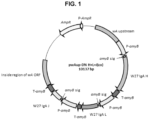
- a donor DNA plasmid pwAup-DN H+L+J(co) ( Fig. 1 ) was produced as follows.
- plasmid pwAup-DN H+LlinkerSmaI(co) was constructed.
- a DNA fragment containing an amyB promoter, a signal sequence of AmyB, and a coding region of an H chain of W27 IgA was amplified.
- a DNA fragment containing an amyB terminator, an amyB promoter, a signal sequence of AmyB, a coding region of an L chain of W27 IgA, and an amyB terminator was amplified, and at the same time, a linker sequence and an SmaI cleavage site were also introduced into the 3' end of the amyB terminator.
- These two DNA fragments were connected by plasmid pwAup-DN cleaved with SmaI using In-Fusion HD cloning kit to produce pwAup-DN H+LlinkerSmaI(co).
- Plasmid pwAup-DN H+L+J(co) was constructed.
- a DNA fragment containing an amyB promoter, a signal sequence of AmyB, a coding region of a J chain of W27 IgA, and an amyB terminator was amplified.
- the DNA was connected to plasmid pwAup-DN H+LlinkerSmaI(co) cleaved with SmaI using In-Fusion HD cloning kit to produce pwAup-DN H+L+J(co).
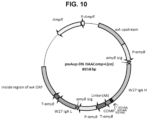
- a donor DNA plasmid pwAup-DN HAAComp+L(co) ( Fig. 10 ) was produced as follows.
- the signal sequence of AmyB and the coding regions of the H chain and C-terminal linker of W27 IgA were amplified.
- a DNA fragment containing a part of a linker sequence, a COMP domain, an amyB terminator, an amyB promoter, a signal sequence of AmyB, and a coding region of an L chain of W27 IgA was amplified.
- the lysine residue originally contained in the linker connecting the H chain and the COMP domain was substituted with alanine.
- These two DNA fragments were connected by plasmid pwAupADN cleaved with SmaI using In-Fusion HD cloning kit to produce pwAup-DN HAAComp+L(co).
- a donor DNA plasmid pwAup-DN H+L+J(co) ( Fig. 1 ) and a genome editing plasmid pRGE-gwAup ( Fig. 2 ) were used.
- a donor DNA plasmid pwAup-DN HAAComp+L(co) ( Fig. 10 )
- a genome editing plasmid pRGE-gwAup ( Fig. 2 ) were used.
- the 10 protease genes disrupted strains NSlD1- ⁇ P10 [ Yoon et al.
- DPY medium 50% Dextrin, 5% Hipolypeptone, 2.5% Yeast extract, 0.5% K 2 HPO 4 , 0.05% MgSO 4 ⁇ 7H 2 O, pH 8.0
- DPY medium 2% Dextrin, 1% Hipolypeptone, 0.5% Yeast extract, 0.5% K 2 HPO 4 , 0.05% MgSO 4 ⁇ 7H 2 O, pH 8.0
- Conidia of an IgA-producing strain were inoculated into a liquid medium so as to be 1 ⁇ 10 7 per 100 mL, and shake-cultured at 150 rpm and 30°C for 8 days. The culture supernatant was collected by filtration with Miracloth (Merck Millipore). The amount of IgA produced in the culture solution of the transformant was analyzed by ELISA assay or Western analysis.
- a concentration of the produced IgA by ammonium sulfate precipitation was performed as follows.
- the culture supernatant obtained by filtration using Miracloth (Merck Millipore) was centrifuged at 10,000 ⁇ g and 4°C for 10 minutes in the case of culture with 5 ⁇ DPY medium, or at 3,500 rpm (2,150 ⁇ g) and 4°C for 10 minutes in the case of using DPY medium, and the supernatant was collected.
- the pH was adjusted by adding 1/10 volume of 10 ⁇ PBS buffer, and further diluted 5 times with PBS buffer in culture with 5 ⁇ DPY medium.
- the mixture was centrifuged at 15,000 rpm (20,620 ⁇ g) and 4°C for 10 minutes in culture with 5 ⁇ DPY medium, or at 3,500 rpm (2,150 ⁇ g) and 4°C for 10 minutes in the case of using DPY medium, and the supernatant was sequentially filtered through filters of 3.0 ⁇ m, 0.45 ⁇ m, and 0.2 ⁇ m.
- an anti-H chain antibody Goat Anti-Mouse IgA-UNLB (Cat. No. 1040-01, SouthernBiotech), a secondary antibody Rabbit anti-goat IgG(H+L)/(H&L) antibody, and an HRP conjugate (Cat. No. SA00001-4, Proteintech Group, Inc.) were used.
- an anti-L chain antibody Goat Anti-Mouse Kappa-UNLB (Cat. No. 1050-01, SouthernBiotech), a secondary antibody Rabbit anti-goat IgG(H+L)/(H&L) antibody, and an HRP conjugate (Cat. No. SA00001-4, Proteintech Group, Inc.) were used.
- an anti-J chain antibody Ig J chain (M-159) (Cat. No. sc-66929, Santa Curz Biotechnology) and a secondary antibody Anti-rabbit IgG, HRP-linked antibody (Cat. No. 7074, Cell Signaling Technology) were used.
- Quantification of the purified antibody was performed by an ELISA method. Details of the antibody quantification method are as follows. First, Anti-goat-mouse IgA (Southern Biotech: 1040-01) was diluted with 0.05 M Na 2 CO 3 to 2 ⁇ g/ml, added to each well of C96 MaxiSorp Nunc-Immuno Plate (Thermo Fisher) (hereinafter, referred to as ELISA plate) by 50 ⁇ l/well, and immobilized overnight at 4°C.
- ELISA plate C96 MaxiSorp Nunc-Immuno Plate
- the plate was washed 3 times with PBS using Vaccu-Pette/96 multi-well pipetter (Sigma-Aldrich) (hereinafter, plate washer), then PBS (PBS-BSA) containing 1% bovine serum albumin (BSA) (Wako) was added so as to be 150 ⁇ l/well, and the plate was allowed to stand at 4°C overnight to perform blocking.
- PBS-BSA PBS-BSA
- BSA bovine serum albumin
- a dilution series of the antibody fluids was prepared using PBS-BSA at equal magnification (x1, x1/100 and x1/1,000 of the purified antibodies are defined as x1), 3-fold (x1/3), 10-fold (x1/10), 30-fold (x1/30), 100-fold (x1/100), 300-fold (x1/300), 1,000-fold (x1/1,000), and 3,000-fold (x1/3,000).
- PBS-BSA was completely removed from the plate, the serial dilution was added so as to be 50 ⁇ l/well, and the plate was allowed to stand at room temperature for 1 hour for reaction.
- the plate was washed 3 times with a plate washer with PBS (PBS-T) containing 0.05%Tween 20 (Chem Cruz), and then, a secondary antibody Alkaline Phosphatase (ALP)-conjugated anti-goat mouse IgA (Southern Biotech: 1040-04) was diluted with PBS-BSA to a final concentration of 0.5 ⁇ g/ml, added at 50 ⁇ l/well, and allowed to stand at room temperature for 1 hour for reaction.
- PBS-T plate washer with PBS
- ALP Alkaline Phosphatase
- the plate was washed 3 times with a plate washer using PBS-T, and then a substrate solution prepared by adding 10 ⁇ l of 1 M MgCl 2 and 1 tablet of Substrate for Alkaline Phosphatase (Sigma-Aldrich) to 5 ml of a carbonate buffer (6.5 mM Na 2 CO 3 , 18.5 mM NaHCO 3 ) was added at 50 ⁇ l/well. After the mixture was left to stand while being shielded from light at room temperature, it was visually confirmed that the color was sufficiently developed, and absorbance at an optical density (O.D.) of 405 nm was measured using TriStar 2 LB942 (BERTHOLD TECHNOLOGIES).
- O.D. optical density
- E. coli DH5 ⁇ or BW38092 and a variant thereof, all of which are K12 strains
- E. coli was subjected to aerobic culture (LB medium) at 37°C overnight and collected by centrifugation. After washing the bacterial cell body with PBS, bacteria were suspended in a 0.05 M Na 2 CO 3 buffer and coated onto an ELISA plate (4°C overnight).
- LB medium aerobic culture
- PBS 0.05 M Na 2 CO 3 buffer
- each antibody dilution series in a 96-well plate was prepared and added, and reacted at room temperature for about 1 hour.
- E. coli was anaerobically cultured in LB medium (37°C overnight). All subsequent manipulations were performed in an anaerobic chamber. The culture solution was centrifuged, and bacteria were collected and then washed with LB medium. After the bacterial solution was diluted 10 times with a culture solution, SYTO24 (Invitrogen) and Counting beads contained in Cell Viability Kit (Becton Dickinson) were added, and the number of SYTO24 positive viable bacteria was calculated by flow cytometry (measurement was under aerobic conditions) from comparison with the Counting beads. The bacterial solution was diluted with LB medium to 300 cells/5 ⁇ l.
- a dimer of IgA is composed of an H chain, an L chain, and a J chain.
- codon modification was performed based on the codon use frequency of tef1, which is one of the genes having the highest expression level in A. oryzae.
- tef1 codon use frequency
- a sequence encoding a signal sequence of ⁇ -amylase AmyB which is secreted in the largest amount in A. oryzae, was ligated and designed to be translocated to the endoplasmic reticulum and secreted after translation.
- those of the amyB gene were used ( Fig. 1 ).
- RS_H000_L001 which is a CHO cell producing recombinant IgA of the W27 antibody, in which a mutation for protein L binding was introduced into the light chain.
- the amino acid sequences of the heavy chain variable region and the light chain variable region of RS_H000_L001 are shown below.
- RS_H000_L001 is referred to as "'W27 IgA”.
- Heavy chain variable region SEQ ID NO: 1 W27G2_HV
- Light chain variable region SEQ ID NO: 2 (RS_LV001)
- W27 IgA used for genome modification of a filamentous fungus in the present example contains a signal sequence of ⁇ -amylase AmyB as described below.
- the genome editing plasmid pRGE-gwAup [Katayama et al., Appl. Environ. Microbiol., 85:e01896-18, 2019] was used to express sgRNA performing double-stranded DNA cleavage targeting the upstream of the wA gene ( Fig. 2 ).
- the NSlD1- ⁇ P10 strain was transformed using the donor DNA plasmid pwAup-DN H+L+J(co) for dimeric IgA expression and the genome editing plasmid pRGE-gwAup.
- the amount of the donor DNA plasmid used for the genome editing plasmid was increased, such that a transformant into which multiple copies of the expression cassette were introduced was easily obtained.
- the copy number and the production amount of the expression cassette of dimeric IgA were analyzed, and a strain having a high copy number and a high production amount was named as "H+L+J(co) #1" and used for the subsequent production experiment.
- the dimeric IgA-producing strain "H+L+J(co) #1" was inoculated into a liquid medium and cultured for 8 days, and then, the culture supernatant was collected and concentrated to about 10 times by ammonium sulfate precipitation.
- the H chain, the L chain, and the J chain were detected in the culture supernatant and the concentrated sample, and production to the culture solution was confirmed ( Fig. 3 ).
- the cartilage oligomeric matrix protein (COMP) domain is a coiled-coil domain derived from a cartilage oligomeric matrix protein, and has been used for inducing pentamer formation.
- Such an expression cassette using the promoter and terminator of the amyB gene, was designed to be inserted into the wA locus by homologous recombination by being positioned inside the upstream region and the ORF internal region of the dye synthesis gene wA, thereby producing a donor DNA plasmid pwAup-DN HAAComp+L(co) ( Fig. 10 ).
- the genome editing plasmid pRGE-gwAup [ Katayama et al., Appl. Environ. Microbiol., 85:e01896-18, 2019 ] was used to express sgRNA performing double-stranded DNA cleavage targeting the upstream of the wA gene.
- the NSlD1- ⁇ P10 strain was transformed using the produced donor DNA plasmid pwAup-DN HAAComp+L(co) and the genome editing plasmid pRGE-gwAup.
- the amount of the donor DNA plasmid used for the genome editing plasmid was increased, such that a transformant into which multiple copies of the expression cassette were introduced was easily obtained.
- the copy number and the production amount of the expression cassette of pentamer IgA were analyzed, and a strain having a high copy number and a high production amount was named as "HAAComp+L(co) #1" and used for the subsequent production experiment.
- the pentamer IgA-producing strain "HAAComp+L(co) #1” was inoculated into a liquid medium and cultured for 8 days, and then, the culture supernatant was collected and concentrated to about 10 times by ammonium sulfate precipitation. As a result of Western analysis, the H chain and the L chain were detected in the culture supernatant and the concentrated sample, and production to the culture solution was confirmed ( Fig. 11 ).
- Genome-modified CHO cells were produced using a nucleic acid construct encoding IgA containing a natural L chain and a fusion protein having the following configuration as an H chain, and the multimer formation state of secreted IgA was examined.
- Configuration name Configuration of H chain Amino acid sequence name of H chain/SEQ ID NO: AAcomp COMP sequence is fused to C-terminus of full-length H chain via linker consisting of amino acid sequence SSADDAAADAAAADDAAADDAAADAS SEQ ID NO: 13
- KKcomp COMP sequence is fused to C-terminus of full-length H chain via linker consisting of amino acid sequence SSADDAKKDAAKKDDAKKDDAKKDAS SEQ ID NO: 14 direct-comp COMP sequence is fused to C-terminus of full-length H chain without linker
- SEQ ID NO: 15 notail-comp COMP sequence is fused to C-terminus of H chain lacking tail piece without linker SEQ ID NO: 16
- the binding force of multimerized W27 IgA secreted from a koji mold and a CHO cell to E. coli was confirmed. Note that, as described in WO 2014/142084 A , it is known that the W27 IgA antibody expressed in mammalian cells binds to E. coli.
- the multimerized W27 IgA secreted from a koji mold and a CHO cell was purified to test the E. coli binding ability by these multimeric IgA.
- the used multimeric IgA was subjected to SDS-PAGE in a reduced state (left) and a non-reduced state, and the results of CBB staining are illustrated in Figs. 17 and 18 .
- the expression of the multimeric IgA was confirmed in both of the dimeric IgA-expression-modified koji strain (Koji HLJ#1) ( Fig. 17 ) and the pentamer IgA-expression-modified koji strain (Koji HAA COMP+L#1) ( Fig. 18 ). Note that the IgA antibody produced by a koji mold tended to have a band spread on SDS-PAGE in a non-reduced state.
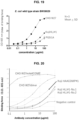
- Fig. 19 illustrates the test results of confirming the binding of the multimeric IgA (KojiHLJ#1) obtained from the dimeric IgA-expression-modified koji strain "H+L+J(co) #1" to the E. coli BW38029 strain.
- Fig. 20 illustrates the test results of confirming the binding of the multimeric antibody (Koji HAACOMP#1) obtained from the pentamer IgA-expression-modified koji strain "HAAComp+L(co) #1" to the E. coli BW38029 strain.
- multimeric IgA (CHO W27notailCOMP) obtained from a pentamer IgA-expression-modified CHO cell to which a COMP sequence was added in a state in which a C-terminal tail piece of an IgA heavy chain was partially deficient
- multimeric IgA (CHO W27dimer) expressed in a dimeric IgA-expression-modified CHO cell
- multimeric IgA Koji HLJ#1-No.
- the multimeric W27IgA expressed in the dimeric IgA-expression-modified CHO cell As in the multimeric W27IgA expressed in the dimeric IgA-expression-modified CHO cell, the multimeric W27IgA obtained from the dimeric IgA-expression-modified koji strain (KojiHLJ#1) showed a growth inhibitory effect on E. coli expressing SHMT. On the other hand, the W27 IgG antibody expressed in the CHO cell hardly exhibited such a growth inhibitory effect.
- the multimeric IgA antibody secreted from the multimeric IgA-expression-modified koji strain exhibited a growth inhibitory effect on E. coli, as in the multimeric IgA antibody secreted from a CHO cell.
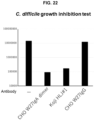
- the dimeric IgA antibody (KojiHLJ#1) obtained from a koji mold showed a growth inhibitory effect on C . difficile, as in the multimeric W27 IgA expressed in the dimeric IgA-expression-modified CHO cell.
- the W27 IgG antibody expressed in the CHO cell hardly exhibited such a growth inhibitory effect.
- the multimeric IgA antibody secreted from the multimeric IgA-expression-modified koji strain has an excellent physiological activity similar to that of the multimeric IgA antibody secreted from a CHO cell.
Landscapes
- Health & Medical Sciences (AREA)
- Genetics & Genomics (AREA)
- Life Sciences & Earth Sciences (AREA)
- Chemical & Material Sciences (AREA)
- Engineering & Computer Science (AREA)
- Organic Chemistry (AREA)
- Wood Science & Technology (AREA)
- Biotechnology (AREA)
- Molecular Biology (AREA)
- Bioinformatics & Cheminformatics (AREA)
- General Engineering & Computer Science (AREA)
- Zoology (AREA)
- Biomedical Technology (AREA)
- General Health & Medical Sciences (AREA)
- Biophysics (AREA)
- Biochemistry (AREA)
- Mycology (AREA)
- Physics & Mathematics (AREA)
- Plant Pathology (AREA)
- Microbiology (AREA)
- Proteomics, Peptides & Aminoacids (AREA)
- Medicinal Chemistry (AREA)
- Immunology (AREA)
- Peptides Or Proteins (AREA)
- Preparation Of Compounds By Using Micro-Organisms (AREA)
Applications Claiming Priority (2)
| Application Number | Priority Date | Filing Date | Title |
|---|---|---|---|
| JP2022129448 | 2022-08-15 | ||
| PCT/JP2023/029403 WO2024038839A1 (ja) | 2022-08-15 | 2023-08-14 | 糸状菌を用いた免疫グロブリンまたは多量体免疫グロブリンの製造方法 |
Publications (1)
| Publication Number | Publication Date |
|---|---|
| EP4574840A1 true EP4574840A1 (de) | 2025-06-25 |
Family
ID=89941677
Family Applications (1)
| Application Number | Title | Priority Date | Filing Date |
|---|---|---|---|
| EP23854873.9A Pending EP4574840A1 (de) | 2022-08-15 | 2023-08-14 | Verfahren zur herstellung von immunglobulin oder multimerimmunglobulin unter verwendung von fadenpilzen |
Country Status (5)
| Country | Link |
|---|---|
| EP (1) | EP4574840A1 (de) |
| JP (1) | JPWO2024038839A1 (de) |
| CN (1) | CN119731333A (de) |
| TW (1) | TW202413407A (de) |
| WO (1) | WO2024038839A1 (de) |
Families Citing this family (1)
| Publication number | Priority date | Publication date | Assignee | Title |
|---|---|---|---|---|
| TW202440928A (zh) * | 2023-03-03 | 2024-10-16 | 國立大學法人東京大學 | 免疫球蛋白 |
Family Cites Families (14)
| Publication number | Priority date | Publication date | Assignee | Title |
|---|---|---|---|---|
| DK1495055T3 (da) | 2002-04-18 | 2013-11-11 | Genencor Int | Produktion af funktionelle antistoffer i filamentøse svampe |
| JP4782565B2 (ja) | 2004-01-28 | 2011-09-28 | 株式会社ミツカングループ本社 | 新規味覚改変ポリペプチドnas、そのdna及びその用途 |
| JP5140832B2 (ja) | 2006-03-03 | 2013-02-13 | 国立大学法人 東京大学 | 異種タンパク質を高生産する麹菌変異株 |
| EP2102240A2 (de) * | 2007-01-05 | 2009-09-23 | Novozymes A/S | Überexpression des chaperon-bips in einem heterokaryon |
| JP2009207368A (ja) | 2008-02-29 | 2009-09-17 | Toyota Central R&D Labs Inc | アスペルギルス由来のセルロース分解助長因子とその利用 |
| JP5881034B2 (ja) | 2011-03-01 | 2016-03-09 | 国立大学法人 東京大学 | 糸状菌変異株及びこれを用いたタンパク質の製造方法 |
| EP3597747B1 (de) * | 2012-08-24 | 2023-03-15 | Chugai Seiyaku Kabushiki Kaisha | Maus-fgcgammarii-spezifischer fc-antikörper |
| TW202237660A (zh) * | 2012-08-24 | 2022-10-01 | 日商中外製藥股份有限公司 | FcγRIIb特異性Fc區域變異體 |
| JP5916946B2 (ja) | 2013-03-11 | 2016-05-11 | 学校法人関西文理総合学園 | モノクローナルIgA抗体の製造方法 |
| US9261190B2 (en) | 2013-03-14 | 2016-02-16 | Federal-Mogul Corporation | Low tension piston rings and method for manufacturing the same |
| AR095199A1 (es) * | 2013-03-15 | 2015-09-30 | Genzyme Corp | Anticuerpos anti-cd52 |
| JP6944697B2 (ja) | 2017-05-16 | 2021-10-06 | 国立大学法人 東京大学 | 糸状菌におけるゲノム編集を用いる多段階による多重変異株の製造方法 |
| JP2021500930A (ja) * | 2017-11-01 | 2021-01-14 | エフ.ホフマン−ラ ロシュ アーゲーF. Hoffmann−La Roche Aktiengesellschaft | Compボディ−多価標的結合物質 |
| JP2021110421A (ja) | 2020-01-14 | 2021-08-02 | トヨタ自動車株式会社 | 車両用油量調整装置 |
-
2023
- 2023-08-14 EP EP23854873.9A patent/EP4574840A1/de active Pending
- 2023-08-14 CN CN202380059422.3A patent/CN119731333A/zh active Pending
- 2023-08-14 JP JP2024541543A patent/JPWO2024038839A1/ja active Pending
- 2023-08-14 TW TW112130441A patent/TW202413407A/zh unknown
- 2023-08-14 WO PCT/JP2023/029403 patent/WO2024038839A1/ja not_active Ceased
Also Published As
| Publication number | Publication date |
|---|---|
| TW202413407A (zh) | 2024-04-01 |
| CN119731333A (zh) | 2025-03-28 |
| JPWO2024038839A1 (de) | 2024-02-22 |
| WO2024038839A1 (ja) | 2024-02-22 |
Similar Documents
| Publication | Publication Date | Title |
|---|---|---|
| Dupuis et al. | Precision cellular agriculture: The future role of recombinantly expressed protein as food | |
| JPH10509317A (ja) | アスペルギルス中の融合体から得られるプロセッシングされた組換えラクトフェリンおよびラクトフェリンポリペプチド断片 | |
| CN105175518B (zh) | 凝结芽孢杆菌fm603产生的细菌素及其制备方法 | |
| ZA200301244B (en) | Lactic acid bacteria capable of reducing an individual's tendency to develop allergic reactions. | |
| Cabanos et al. | High-level production of lactostatin, a hypocholesterolemic peptide, in transgenic rice using soybean A1aB1b as carrier | |
| US20240026279A1 (en) | Methods and compositions for producing recombinant components for use in food and other products | |
| US20250346880A1 (en) | Compositions comprising digestive enzymes | |
| UA34467C2 (uk) | Виділений та очищений днк фрагмент, що кодує оксалат-декарбоксилазу | |
| EP4574840A1 (de) | Verfahren zur herstellung von immunglobulin oder multimerimmunglobulin unter verwendung von fadenpilzen | |
| US7098029B1 (en) | Product and method for control of obesity | |
| Gu et al. | Recombinant expressions of sweet plant protein mabinlin II in Escherichia coli and food-grade Lactococcus lactis | |
| Dhanda et al. | Identification, purification, characterization and biopreservation potential of antimicrobial peptide of Pediococcus acidilactici NCDC 252 | |
| CN107475222B (zh) | 基因工程改造的耐热人溶菌酶 | |
| CN104945490B (zh) | 分离的植物防御素多肽及其制备方法和在治疗肺癌中的用途 | |
| KR20190079031A (ko) | 신규한 크로노박터 사카자키 특이 박테리오파지 cs4 및 이를 포함하는 항균 조성물 | |
| EP4678662A1 (de) | Immunglobulin | |
| Suryadi et al. | Hydrolyzation of snail (Achatina fulica) meat with rice water as novel probiotic supplements for animal feed | |
| Fischer et al. | Crystallization of the α-amylase of Aspergillus oryzae | |
| WO2022115503A1 (en) | Treatment and prevention of coronavirus infection | |
| US20240376167A1 (en) | Animal free alpha s1 and alpha s2 casein-fusion milk protein, process for preparing the same | |
| KR101300218B1 (ko) | 항생제 대체용 a3 펩타이드를 함유하는 사료첨가제 및 그의 제조 방법 | |
| Zhai et al. | The superposition anti-viral activity of porcine tri-subtype interferon expressed by Saccharomyces cerevisiae | |
| CA3284842A1 (en) | Immunoglobulin | |
| CN114717254B (zh) | 酵母工程菌展示表达乳酸链球菌素Nisin的方法及其应用 | |
| EP4711462A1 (de) | An clostridioide difficile-zellen bindender antikörper |
Legal Events
| Date | Code | Title | Description |
|---|---|---|---|
| STAA | Information on the status of an ep patent application or granted ep patent |
Free format text: STATUS: THE INTERNATIONAL PUBLICATION HAS BEEN MADE |
|
| PUAI | Public reference made under article 153(3) epc to a published international application that has entered the european phase |
Free format text: ORIGINAL CODE: 0009012 |
|
| STAA | Information on the status of an ep patent application or granted ep patent |
Free format text: STATUS: REQUEST FOR EXAMINATION WAS MADE |
|
| 17P | Request for examination filed |
Effective date: 20250312 |
|
| AK | Designated contracting states |
Kind code of ref document: A1 Designated state(s): AL AT BE BG CH CY CZ DE DK EE ES FI FR GB GR HR HU IE IS IT LI LT LU LV MC ME MK MT NL NO PL PT RO RS SE SI SK SM TR |
|
| DAV | Request for validation of the european patent (deleted) | ||
| DAX | Request for extension of the european patent (deleted) |