EP4578383A1 - Dispositif et procédé de surveillance de présence et/ou de concentration de biomarqueurs et leur utilisation - Google Patents
Dispositif et procédé de surveillance de présence et/ou de concentration de biomarqueurs et leur utilisation Download PDFInfo
- Publication number
- EP4578383A1 EP4578383A1 EP23383405.0A EP23383405A EP4578383A1 EP 4578383 A1 EP4578383 A1 EP 4578383A1 EP 23383405 A EP23383405 A EP 23383405A EP 4578383 A1 EP4578383 A1 EP 4578383A1
- Authority
- EP
- European Patent Office
- Prior art keywords
- sensor
- oect
- biomarker
- reverse iontophoretic
- skin
- Prior art date
- Legal status (The legal status is an assumption and is not a legal conclusion. Google has not performed a legal analysis and makes no representation as to the accuracy of the status listed.)
- Pending
Links
Images


Classifications
-
- A—HUMAN NECESSITIES
- A61—MEDICAL OR VETERINARY SCIENCE; HYGIENE
- A61B—DIAGNOSIS; SURGERY; IDENTIFICATION
- A61B5/00—Measuring for diagnostic purposes; Identification of persons
- A61B5/145—Measuring characteristics of blood in vivo, e.g. gas concentration or pH-value ; Measuring characteristics of body fluids or tissues, e.g. interstitial fluid or cerebral tissue
- A61B5/1468—Measuring characteristics of blood in vivo, e.g. gas concentration or pH-value ; Measuring characteristics of body fluids or tissues, e.g. interstitial fluid or cerebral tissue using chemical or electrochemical methods, e.g. by polarographic means
- A61B5/1477—Measuring characteristics of blood in vivo, e.g. gas concentration or pH-value ; Measuring characteristics of body fluids or tissues, e.g. interstitial fluid or cerebral tissue using chemical or electrochemical methods, e.g. by polarographic means non-invasive
-
- A—HUMAN NECESSITIES
- A61—MEDICAL OR VETERINARY SCIENCE; HYGIENE
- A61B—DIAGNOSIS; SURGERY; IDENTIFICATION
- A61B5/00—Measuring for diagnostic purposes; Identification of persons
- A61B5/145—Measuring characteristics of blood in vivo, e.g. gas concentration or pH-value ; Measuring characteristics of body fluids or tissues, e.g. interstitial fluid or cerebral tissue
- A61B5/14507—Measuring characteristics of blood in vivo, e.g. gas concentration or pH-value ; Measuring characteristics of body fluids or tissues, e.g. interstitial fluid or cerebral tissue specially adapted for measuring characteristics of body fluids other than blood
- A61B5/14517—Measuring characteristics of blood in vivo, e.g. gas concentration or pH-value ; Measuring characteristics of body fluids or tissues, e.g. interstitial fluid or cerebral tissue specially adapted for measuring characteristics of body fluids other than blood for sweat
- A61B5/14521—Measuring characteristics of blood in vivo, e.g. gas concentration or pH-value ; Measuring characteristics of body fluids or tissues, e.g. interstitial fluid or cerebral tissue specially adapted for measuring characteristics of body fluids other than blood for sweat using means for promoting sweat production, e.g. heating the skin
-
- A—HUMAN NECESSITIES
- A61—MEDICAL OR VETERINARY SCIENCE; HYGIENE
- A61B—DIAGNOSIS; SURGERY; IDENTIFICATION
- A61B5/00—Measuring for diagnostic purposes; Identification of persons
- A61B5/145—Measuring characteristics of blood in vivo, e.g. gas concentration or pH-value ; Measuring characteristics of body fluids or tissues, e.g. interstitial fluid or cerebral tissue
- A61B5/14546—Measuring characteristics of blood in vivo, e.g. gas concentration or pH-value ; Measuring characteristics of body fluids or tissues, e.g. interstitial fluid or cerebral tissue for measuring analytes not otherwise provided for, e.g. ions, cytochromes
-
- H—ELECTRICITY
- H10—SEMICONDUCTOR DEVICES; ELECTRIC SOLID-STATE DEVICES NOT OTHERWISE PROVIDED FOR
- H10K—ORGANIC ELECTRIC SOLID-STATE DEVICES
- H10K10/00—Organic devices specially adapted for rectifying, amplifying, oscillating or switching; Organic capacitors or resistors having potential barriers
- H10K10/40—Organic transistors
-
- H—ELECTRICITY
- H10—SEMICONDUCTOR DEVICES; ELECTRIC SOLID-STATE DEVICES NOT OTHERWISE PROVIDED FOR
- H10K—ORGANIC ELECTRIC SOLID-STATE DEVICES
- H10K19/00—Integrated devices, or assemblies of multiple devices, comprising at least one organic element specially adapted for rectifying, amplifying, oscillating or switching, covered by group H10K10/00
- H10K19/901—Assemblies of multiple devices comprising at least one organic element specially adapted for rectifying, amplifying, oscillating or switching
Definitions
- the present invention relates to the detection, quantification and/or monitoring of biomarkers concentration, using biorecognition elements such as nanobodies or aptamers, and iontophoresis mechanisms. More specifically, the present invention relates to products and methods for such transcutaneous detection, quantification and/or monitoring.
- biomarkers of interest present in the body fluids of a user.
- the object is most often not only to detect said biomarkers, but also to quantify and continuously monitor their evolution in the user.
- Reverse iontophoresis is the application of a small electric current with modulations in pulse width and pauses to the skin. This process enhances molecular transport across the skin and sweat interface, facilitating the extraction of biomarkers.
- the drawbacks of conventional wearable devices are addressed by the present invention, which provides a device and method for monitoring biomarkers presence and/or concentration in a body fluid of a user.
- a bioreceptor is a biomolecule which can identify a biological analyte.
- the bioreceptors are selected from the group formed by nanobodies and aptamers. These small bioreceptor molecules allow the detection on the OECTs without causing interferences due to the size of the biomolecules. The inventors have observed that OECTs detection methods are more reliable if the biorecognition elements are small than if some bigger biomolecules, such as antibodies, are used.
- the first and second reverse iontophoretic electrodes are concentric with respect to a central point. In this way, the electric current distribution is even from all sides, facilitating a homogeneous extraction of the body fluid.
- the OECT sensor is placed in the central point of the design formed by the first and second iontophoretic electrodes. In this way, as the electric current distribution is even from all sides around a focal point, which is the central point, the OECT sensor can achieve a better distributed and constant body fluid flow.
- This disposition of the OECT sensor contributes to avoiding cross contamination of the analyte under measurement.
- the pH sensor and/or the ionic strength sensor are placed in the central point.
- the pH sensor and/or the ionic strength sensor like the OECT sensor, are in contact with the membrane in such a way that, when the membrane is moistened with the fluid, the corresponding sensor is allowed to measure the flux of the collected biofluid.
- sensors that obtain measurements that vary rapidly along the user's skin are preferably placed on the central point, but where sensors that acquire measurements that do not vary significantly can be arranged on points on the user's skin that are most comfortable to the user.
- the device further comprises a wireless communication module.
- the device can send the results obtained to a mobile device or a computer, among others, for convenient checking.
- the device further comprises a display module.
- the patch 10 can comprise one or more electrophysiological sensors 60.
- Electrophysiological sensors 60 are represented in figure 2 . They obtain data which can complement the measurements obtained with the OECT sensor 50, to provide better and more personalized results for each user.
- the electrophysiological sensors 60 can be, among others, a temperature sensor 61 that monitors the temperature of the user, a pH sensor 62 which determines the pH on the user's skin 30, an ionic strength sensor 63 which measures the strength of the electric field in the body fluid, and an impedance sensor 64, which obtains the impedance of the body fluid.
- the pH sensor 62 and /or the ionic strength sensor 63 can be placed on the central point 43 defined by the concentric electrodes 41, 42. This is because the pH of the skin 30 varies significantly between different areas and; the inventors have observed that, if accurate pH measurements which represents the pH of the skin 30 over which the patch 10 is placed, is desired, the pH sensor 62 must preferably be very close to the reverse iontophoretic electrodes 41, 42. The same applies to the ionic strength sensor 63 which, to obtain a representative measurement of the body fluid extracted, must preferably be placed close to the reverse iontophoretic electrodes 41, 42.
- the strength of the bond between the biomolecules engaged in the assay can vary with temperature, influencing the specificity and sensitivity of the immunoassay. For instance, elevated temperatures can result in increased nonspecific binding and reduced specific binding, causing a shift in the entire calibration curve and altering sensitivity.
- intermolecular interactions can vary with temperature. Non-limiting examples of such intermolecular interactions include: inter molecular hydrogen bonds (not only bonding ionic covalent or coordination such as in complexes), different diffusion and convection, mobility of molecule, different adsorption kinetics, different chemical activity/affinity hence differences in reaction kinetics.
- one or more of the OECT sensor 50, the reverse iontophoretic electrodes 41, 42 and the one or more electrophysiological sensors 60 can be printed on a support layer and are in this sense in the same level.
- the support layer can be the membrane 20 or, in other cases, and additional support layer which is flexible and adapts to the user's skin 30.
- the different elements being printable is a great advantage, as the industrialization of the product is easier and cheaper.
- the electronics unit 100 also comprises an artificial intelligence module 110, with an integrated software whose function will be explained in more detail later, but which can calculate a biomarker's 11 concentration in real time, based on the signal from the OECT sensor 50 and the measurements from the electrophysiological sensor(s) 60.
- an artificial intelligence module 110 with an integrated software whose function will be explained in more detail later, but which can calculate a biomarker's 11 concentration in real time, based on the signal from the OECT sensor 50 and the measurements from the electrophysiological sensor(s) 60.
- the electronics unit 100 can also comprise a display module 70, a wireless communication module 90 or both.
- the display module 70 shows the data obtained in the patch 10, that is, the monitorization of the biomarker/s 11 of interest.
- the wireless communication module 90 sends to an external device, for example a computer or a mobile phone, said data.
- the electronics unit 100 also comprise a power supply 80 which provides energy to the different elements, and which can be a standard component.
- the electronics unit 100 also comprises a reverse iontophoretic current control module 120, connected between the processing means 71 and the reverse iontophoretic electrodes 41, 42.
- the reverse iontophoretic current control module 120 will be explained below in more detail. It allows the adaptation of the current applied to the user's skin by the reverse iontophoretic electrodes 41, 42 depending on the results obtained in the processing means 71, this is, like a feedback loop.
- the device of the invention can comprise several patches 10, in this case from 1 to n all associated to the same electronics unit 100. This allows biomarker's 11 monitoring at different times.
- the patch 10 can comprise a single pair of reverse iontophoretic electrodes 41, 42 with several OECT sensors 50.
- the OECT sensor 50 can be biofunctionalized with the same bioreceptor or alternatively, with different bioreceptors. This allows the device to monitor several biomarkers 11.
- the device can comprise several patches 10, where each patch 10 comprises more than one OECT sensors 50 biofunctionalized with different bioreceptors.
- the processing means 71 are connected to the OECT sensor 50, to receive the signal that it generates when the bioreceptor react with the biomarker 11 of interest of the body fluid. Having said signal, the processing means 71 determine the presence and quantity of the biomarker 11 of interest present in the body fluid.
- the patch 10 also comprises the one or more electrophysiological sensors 60
- the measurements that they obtained are also send to the processing means 71, which combine them with the signal from the OECT sensor 50 to determine the presence and/or quantity of a biomarker present in the body fluid in a more personalized way.
- the information provided by the electrophysiological sensors 60 relates to the physiological state of the user and the reverse iontophoretic extraction of the body fluid, which can influence the estimates of biomarker 11 concentration.
- the artificial intelligence module 110 implements sensory data fusion.
- the machine learning module 110 can be applied.
- the artificial intelligence module 110 applies regression models to estimate biomarker's concentrations based on the OECT sensor 50 and coupling sensor's 60 data.
- the artificial intelligence module 110 predicts a continuous output (the concentration of the biomarker/s) based on input features (OECT and coupling sensor data).
- the artificial intelligence 100 module is first trained on a dataset where the true biomarker's concentrations are known, learning the relationship between sensor data and biomarker levels and setting the parameters of the internal regression model.
- the artificial intelligence module 110 can continuously update its models based on new incoming data. This adaptive approach improves its accuracy over time and adjusts to individual variations. Over time, the artificial intelligence module 110 can tailor its models to individual users, taking into account each person's unique physiological responses and patterns which leads to more personalized and accurate assessments.
- the reverse iontophoretic current control module 120 is connected to the processing means 71, and more particularly, to the artificial intelligence module 110, whose output can further include parameters to control the reverse iontophoretic current applied by the reverse iontophoretic electrodes 41, 42, adapting extraction of the body fluid to the physiological condition of the user estimated based on the data from the electrophysiological sensor 60, to further improve the accuracy and robustness of the concentration results.
- the processing means 71 they can send an order to the reverse iontophoretic current control module 120 to, for example, increase or decrease the current applied by the reverse iontophoretic electrodes 41,42 to the user's skin 30.
- they can control the current intensity, the duration of the current application and/or the activation or deactivation of the reverse iontophoretic electrodes 41, 42, between others.
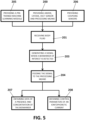
- figure 5 illustrates a method for monitoring of biomarkers presence and/or concentration using a device comprising a reverse iontophoretic patch 10.
- a first and a second reverse iontophoretic electrodes 41, 42 (anode and cathode electrodes), configured to pass an electrical signal between them to create an electric field to drive ions flow in a body fluid present on a user's skin 30; an OECT sensor 50 biofunctionalized with a bioreceptor; and processing means 71.
- the method can also comprise providing a pre-trained 205 machine learning module 110 in the processing means 71, in the form, for example, of a machine learning algorithm.
- the method can also comprise a previous step of training the artificial intelligence algorithm.
- the method can also comprise providing 206 one or more electrophysiological sensors.
- the one or more electrophysiological sensors 60 are: a temperature sensor 61, a pH sensor 62, an ionic strength sensor 63 and an impedance sensor 64, which generate a temperature measurement, a pH measurement, an ionic strength measurement and an impedance measurement respectively.
- the next step is receiving 201 a body fluid or analyte (which may comprise a biomarker, such as ions or biomolecules comprised in the body fluid) in the OECT sensor 50 and generating 203, in the OECT sensor 50, a signal when the bioreceptor reacts with a biomarker of interest present in the analyte.
- a body fluid or analyte which may comprise a biomarker, such as ions or biomolecules comprised in the body fluid
- the method can further comprise obtaining 208 control parameters of a reverse iontophoretic current for the reverse iontophoretic electrodes 41, 42, which are then applied to them.
Landscapes
- Health & Medical Sciences (AREA)
- Life Sciences & Earth Sciences (AREA)
- Physics & Mathematics (AREA)
- Medical Informatics (AREA)
- Surgery (AREA)
- Biophysics (AREA)
- Pathology (AREA)
- Engineering & Computer Science (AREA)
- Biomedical Technology (AREA)
- Heart & Thoracic Surgery (AREA)
- Veterinary Medicine (AREA)
- Molecular Biology (AREA)
- Optics & Photonics (AREA)
- Animal Behavior & Ethology (AREA)
- General Health & Medical Sciences (AREA)
- Public Health (AREA)
- Dermatology (AREA)
- Chemical & Material Sciences (AREA)
- Chemical Kinetics & Catalysis (AREA)
- General Chemical & Material Sciences (AREA)
- Investigating Or Analyzing Materials By The Use Of Electric Means (AREA)
Priority Applications (2)
| Application Number | Priority Date | Filing Date | Title |
|---|---|---|---|
| EP23383405.0A EP4578383A1 (fr) | 2023-12-29 | 2023-12-29 | Dispositif et procédé de surveillance de présence et/ou de concentration de biomarqueurs et leur utilisation |
| PCT/EP2024/088410 WO2025141057A1 (fr) | 2023-12-29 | 2024-12-23 | Dispositif et procédé de surveillance de la présence de biomarqueurs et/ou de la concentration en biomarqueurs et utilisation correspondante |
Applications Claiming Priority (1)
| Application Number | Priority Date | Filing Date | Title |
|---|---|---|---|
| EP23383405.0A EP4578383A1 (fr) | 2023-12-29 | 2023-12-29 | Dispositif et procédé de surveillance de présence et/ou de concentration de biomarqueurs et leur utilisation |
Publications (1)
| Publication Number | Publication Date |
|---|---|
| EP4578383A1 true EP4578383A1 (fr) | 2025-07-02 |
Family
ID=89573313
Family Applications (1)
| Application Number | Title | Priority Date | Filing Date |
|---|---|---|---|
| EP23383405.0A Pending EP4578383A1 (fr) | 2023-12-29 | 2023-12-29 | Dispositif et procédé de surveillance de présence et/ou de concentration de biomarqueurs et leur utilisation |
Country Status (2)
| Country | Link |
|---|---|
| EP (1) | EP4578383A1 (fr) |
| WO (1) | WO2025141057A1 (fr) |
Citations (3)
| Publication number | Priority date | Publication date | Assignee | Title |
|---|---|---|---|---|
| US20210076988A1 (en) | 2014-12-03 | 2021-03-18 | The Regents Of The University Of California | Non-invasive and wearable chemical sensors and biosensors |
| US11122982B2 (en) | 2016-04-01 | 2021-09-21 | The Regents Of The University Of California | Flexible epidermal multimodal health monitor |
| WO2022170361A1 (fr) * | 2021-02-05 | 2022-08-11 | The Regents Of The University Of California | Capteur de transpiration de bout de doigt à toucher unique et traitement de données personnalisées pour une prédiction fiable de concentrations de biomarqueurs sanguins |
-
2023
- 2023-12-29 EP EP23383405.0A patent/EP4578383A1/fr active Pending
-
2024
- 2024-12-23 WO PCT/EP2024/088410 patent/WO2025141057A1/fr active Pending
Patent Citations (3)
| Publication number | Priority date | Publication date | Assignee | Title |
|---|---|---|---|---|
| US20210076988A1 (en) | 2014-12-03 | 2021-03-18 | The Regents Of The University Of California | Non-invasive and wearable chemical sensors and biosensors |
| US11122982B2 (en) | 2016-04-01 | 2021-09-21 | The Regents Of The University Of California | Flexible epidermal multimodal health monitor |
| WO2022170361A1 (fr) * | 2021-02-05 | 2022-08-11 | The Regents Of The University Of California | Capteur de transpiration de bout de doigt à toucher unique et traitement de données personnalisées pour une prédiction fiable de concentrations de biomarqueurs sanguins |
Non-Patent Citations (3)
| Title |
|---|
| BIJELIC GORAN ET AL: "SixthSense: Smart Integrated Extreme Environment Health Monitor with Sensory Feedback for Enhanced Situation Awareness", 2022 IEEE-EMBS INTERNATIONAL CONFERENCE ON WEARABLE AND IMPLANTABLE BODY SENSOR NETWORKS (BSN), IEEE, 27 September 2022 (2022-09-27), pages 1 - 4, XP034217801, DOI: 10.1109/BSN56160.2022.9928493 * |
| GAO FUPENG ET AL: "Wearable and flexible electrochemical sensors for sweat analysis: a review", MICROSYSTEMS & NANOENGINEERING, vol. 9, no. 1, 1 January 2023 (2023-01-01), XP093148691, ISSN: 2055-7434, Retrieved from the Internet <URL:https://www.nature.com/articles/s41378-022-00443-6.pdf> DOI: 10.1038/s41378-022-00443-6 * |
| PARLAK ONUR ET AL: "Molecularly selective nanoporous membrane-based wearable organic electrochemical device for noninvasive cortisol sensing", SCIENCE ADVANCES, vol. 4, no. 7, 6 July 2018 (2018-07-06), US, XP093148695, ISSN: 2375-2548, Retrieved from the Internet <URL:https://www.ncbi.nlm.nih.gov/pmc/articles/PMC6054510/pdf/aar2904.pdf> DOI: 10.1126/sciadv.aar2904 * |
Also Published As
| Publication number | Publication date |
|---|---|
| WO2025141057A1 (fr) | 2025-07-03 |
Similar Documents
| Publication | Publication Date | Title |
|---|---|---|
| Ok et al. | Wearable and implantable cortisol‐sensing electronics for stress monitoring | |
| Fiore et al. | Microfluidic paper-based wearable electrochemical biosensor for reliable cortisol detection in sweat | |
| Yang et al. | Flexible electrochemical biosensors for health monitoring | |
| US9314631B2 (en) | Tongue sensors for monitoring multiple physiological parameters and tongue stimulation | |
| KR102036424B1 (ko) | 붕대 유형의 연속 포도당 모니터링 시스템을 위한 전기화학적 센서 | |
| Huang et al. | Recent advances in skin-like wearable sensors: Sensor design, health monitoring, and intelligent auxiliary | |
| Lee et al. | A patch type non-enzymatic biosensor based on 3D SUS micro-needle electrode array for minimally invasive continuous glucose monitoring | |
| Pérez et al. | Wearable electrochemical biosensors to measure biomarkers with complex blood-to-sweat partition such as proteins and hormones | |
| US10201295B2 (en) | User interactions for a bandage type monitoring device | |
| US10251605B2 (en) | Bandage type of continuous glucose monitoring system | |
| CN115192008B (zh) | 一种电化学间质液提取肌肉疲劳检测与电调控方法及装置 | |
| Yeung et al. | Utilizing gradient porous graphene substrate as the solid-contact layer to enhance wearable electrochemical sweat sensor sensitivity | |
| CN108348156B (zh) | 机械地共置汗液刺激和感测 | |
| CN103002804B (zh) | 透皮装置 | |
| Lin et al. | Gold nanowire sponge electrochemistry for permeable wearable sweat analysis comfortably and wirelessly | |
| EP4578383A1 (fr) | Dispositif et procédé de surveillance de présence et/ou de concentration de biomarqueurs et leur utilisation | |
| EP4512310A1 (fr) | Systèmes de capteur de biomarqueur de fluide interstitiel à micro-aiguilles intégrées et procédés associés | |
| Singh et al. | Current trends in the development of electrochemical biosensor for detecting analytes from sweat | |
| CN114569123B (zh) | 汗液传感器 | |
| Medagedara et al. | Review of Recent Advances in Non-invasive, Flexible, Wearable Sweat Monitoring Sensors | |
| Luprano | Bio-sensing textile for medical monitoring applications | |
| Gupta et al. | A Comparative Study of the Application of Biosensors in Human Health | |
| Ercolani¹ et al. | Assessment: Preliminary Results | |
| Ghafar-Zadeh et al. | Toward implantable glucometer: Design, modeling and experimental results | |
| Paul et al. | Advanced electrochemical sensing platform for health and environmental monitoring |
Legal Events
| Date | Code | Title | Description |
|---|---|---|---|
| PUAI | Public reference made under article 153(3) epc to a published international application that has entered the european phase |
Free format text: ORIGINAL CODE: 0009012 |
|
| STAA | Information on the status of an ep patent application or granted ep patent |
Free format text: STATUS: THE APPLICATION HAS BEEN PUBLISHED |
|
| AK | Designated contracting states |
Kind code of ref document: A1 Designated state(s): AL AT BE BG CH CY CZ DE DK EE ES FI FR GB GR HR HU IE IS IT LI LT LU LV MC ME MK MT NL NO PL PT RO RS SE SI SK SM TR |
|
| STAA | Information on the status of an ep patent application or granted ep patent |
Free format text: STATUS: REQUEST FOR EXAMINATION WAS MADE |
|
| 17P | Request for examination filed |
Effective date: 20251211 |