EP4578865A2 - Promédicaments dirigeant la lymphe - Google Patents
Promédicaments dirigeant la lymphe Download PDFInfo
- Publication number
- EP4578865A2 EP4578865A2 EP25162065.4A EP25162065A EP4578865A2 EP 4578865 A2 EP4578865 A2 EP 4578865A2 EP 25162065 A EP25162065 A EP 25162065A EP 4578865 A2 EP4578865 A2 EP 4578865A2
- Authority
- EP
- European Patent Office
- Prior art keywords
- compound
- acid
- compounds
- pharmaceutical agent
- group
- Prior art date
- Legal status (The legal status is an assumption and is not a legal conclusion. Google has not performed a legal analysis and makes no representation as to the accuracy of the status listed.)
- Pending
Links
Images









Classifications
-
- A—HUMAN NECESSITIES
- A61—MEDICAL OR VETERINARY SCIENCE; HYGIENE
- A61K—PREPARATIONS FOR MEDICAL, DENTAL OR TOILETRY PURPOSES
- A61K31/00—Medicinal preparations containing organic active ingredients
- A61K31/33—Heterocyclic compounds
- A61K31/335—Heterocyclic compounds having oxygen as the only ring hetero atom, e.g. fungichromin
- A61K31/365—Lactones
-
- A—HUMAN NECESSITIES
- A61—MEDICAL OR VETERINARY SCIENCE; HYGIENE
- A61K—PREPARATIONS FOR MEDICAL, DENTAL OR TOILETRY PURPOSES
- A61K31/00—Medicinal preparations containing organic active ingredients
- A61K31/33—Heterocyclic compounds
- A61K31/395—Heterocyclic compounds having nitrogen as a ring hetero atom, e.g. guanethidine or rifamycins
- A61K31/40—Heterocyclic compounds having nitrogen as a ring hetero atom, e.g. guanethidine or rifamycins having five-membered rings with one nitrogen as the only ring hetero atom, e.g. sulpiride, succinimide, tolmetin, buflomedil
-
- A—HUMAN NECESSITIES
- A61—MEDICAL OR VETERINARY SCIENCE; HYGIENE
- A61K—PREPARATIONS FOR MEDICAL, DENTAL OR TOILETRY PURPOSES
- A61K31/00—Medicinal preparations containing organic active ingredients
- A61K31/33—Heterocyclic compounds
- A61K31/395—Heterocyclic compounds having nitrogen as a ring hetero atom, e.g. guanethidine or rifamycins
- A61K31/40—Heterocyclic compounds having nitrogen as a ring hetero atom, e.g. guanethidine or rifamycins having five-membered rings with one nitrogen as the only ring hetero atom, e.g. sulpiride, succinimide, tolmetin, buflomedil
- A61K31/4025—Heterocyclic compounds having nitrogen as a ring hetero atom, e.g. guanethidine or rifamycins having five-membered rings with one nitrogen as the only ring hetero atom, e.g. sulpiride, succinimide, tolmetin, buflomedil not condensed and containing further heterocyclic rings, e.g. cromakalim
-
- A—HUMAN NECESSITIES
- A61—MEDICAL OR VETERINARY SCIENCE; HYGIENE
- A61K—PREPARATIONS FOR MEDICAL, DENTAL OR TOILETRY PURPOSES
- A61K31/00—Medicinal preparations containing organic active ingredients
- A61K31/56—Compounds containing cyclopenta[a]hydrophenanthrene ring systems; Derivatives thereof, e.g. steroids
- A61K31/565—Compounds containing cyclopenta[a]hydrophenanthrene ring systems; Derivatives thereof, e.g. steroids not substituted in position 17 beta by a carbon atom, e.g. estrane, estradiol
- A61K31/568—Compounds containing cyclopenta[a]hydrophenanthrene ring systems; Derivatives thereof, e.g. steroids not substituted in position 17 beta by a carbon atom, e.g. estrane, estradiol substituted in positions 10 and 13 by a chain having at least one carbon atom, e.g. androstanes, e.g. testosterone
-
- A—HUMAN NECESSITIES
- A61—MEDICAL OR VETERINARY SCIENCE; HYGIENE
- A61K—PREPARATIONS FOR MEDICAL, DENTAL OR TOILETRY PURPOSES
- A61K45/00—Medicinal preparations containing active ingredients not provided for in groups A61K31/00 - A61K41/00
- A61K45/06—Mixtures of active ingredients without chemical characterisation, e.g. antiphlogistics and cardiaca
-
- A—HUMAN NECESSITIES
- A61—MEDICAL OR VETERINARY SCIENCE; HYGIENE
- A61P—SPECIFIC THERAPEUTIC ACTIVITY OF CHEMICAL COMPOUNDS OR MEDICINAL PREPARATIONS
- A61P5/00—Drugs for disorders of the endocrine system
- A61P5/24—Drugs for disorders of the endocrine system of the sex hormones
-
- C—CHEMISTRY; METALLURGY
- C07—ORGANIC CHEMISTRY
- C07J—STEROIDS
- C07J1/00—Normal steroids containing carbon, hydrogen, halogen or oxygen, not substituted in position 17 beta by a carbon atom, e.g. estrane, androstane
- C07J1/0003—Androstane derivatives
- C07J1/0018—Androstane derivatives substituted in position 17 beta, not substituted in position 17 alfa
- C07J1/0022—Androstane derivatives substituted in position 17 beta, not substituted in position 17 alfa the substituent being an OH group free esterified or etherified
- C07J1/0025—Esters
-
- C—CHEMISTRY; METALLURGY
- C07—ORGANIC CHEMISTRY
- C07J—STEROIDS
- C07J1/00—Normal steroids containing carbon, hydrogen, halogen or oxygen, not substituted in position 17 beta by a carbon atom, e.g. estrane, androstane
- C07J1/0003—Androstane derivatives
- C07J1/0018—Androstane derivatives substituted in position 17 beta, not substituted in position 17 alfa
- C07J1/0022—Androstane derivatives substituted in position 17 beta, not substituted in position 17 alfa the substituent being an OH group free esterified or etherified
- C07J1/0029—Ethers
-
- C—CHEMISTRY; METALLURGY
- C07—ORGANIC CHEMISTRY
- C07J—STEROIDS
- C07J31/00—Normal steroids containing one or more sulfur atoms not belonging to a hetero ring
- C07J31/006—Normal steroids containing one or more sulfur atoms not belonging to a hetero ring not covered by C07J31/003
-
- C—CHEMISTRY; METALLURGY
- C07—ORGANIC CHEMISTRY
- C07J—STEROIDS
- C07J7/00—Normal steroids containing carbon, hydrogen, halogen or oxygen substituted in position 17 beta by a chain of two carbon atoms
- C07J7/0005—Normal steroids containing carbon, hydrogen, halogen or oxygen substituted in position 17 beta by a chain of two carbon atoms not substituted in position 21
- C07J7/001—Normal steroids containing carbon, hydrogen, halogen or oxygen substituted in position 17 beta by a chain of two carbon atoms not substituted in position 21 substituted in position 20 by a keto group
- C07J7/0015—Normal steroids containing carbon, hydrogen, halogen or oxygen substituted in position 17 beta by a chain of two carbon atoms not substituted in position 21 substituted in position 20 by a keto group not substituted in position 17 alfa
- C07J7/002—Normal steroids containing carbon, hydrogen, halogen or oxygen substituted in position 17 beta by a chain of two carbon atoms not substituted in position 21 substituted in position 20 by a keto group not substituted in position 17 alfa not substituted in position 16
-
- B—PERFORMING OPERATIONS; TRANSPORTING
- B01—PHYSICAL OR CHEMICAL PROCESSES OR APPARATUS IN GENERAL
- B01J—CHEMICAL OR PHYSICAL PROCESSES, e.g. CATALYSIS OR COLLOID CHEMISTRY; THEIR RELEVANT APPARATUS
- B01J20/00—Solid sorbent compositions or filter aid compositions; Sorbents for chromatography; Processes for preparing, regenerating or reactivating thereof
- B01J20/281—Sorbents specially adapted for preparative, analytical or investigative chromatography
- B01J20/291—Gel sorbents
-
- C—CHEMISTRY; METALLURGY
- C07—ORGANIC CHEMISTRY
- C07J—STEROIDS
- C07J31/00—Normal steroids containing one or more sulfur atoms not belonging to a hetero ring
-
- C—CHEMISTRY; METALLURGY
- C07—ORGANIC CHEMISTRY
- C07J—STEROIDS
- C07J5/00—Normal steroids containing carbon, hydrogen, halogen or oxygen, substituted in position 17 beta by a chain of two carbon atoms, e.g. pregnane and substituted in position 21 by only one singly bound oxygen atom, i.e. only one oxygen bound to position 21 by a single bond
-
- C—CHEMISTRY; METALLURGY
- C07—ORGANIC CHEMISTRY
- C07J—STEROIDS
- C07J9/00—Normal steroids containing carbon, hydrogen, halogen or oxygen substituted in position 17 beta by a chain of more than two carbon atoms, e.g. cholane, cholestane, coprostane
-
- C—CHEMISTRY; METALLURGY
- C09—DYES; PAINTS; POLISHES; NATURAL RESINS; ADHESIVES; COMPOSITIONS NOT OTHERWISE PROVIDED FOR; APPLICATIONS OF MATERIALS NOT OTHERWISE PROVIDED FOR
- C09J—ADHESIVES; NON-MECHANICAL ASPECTS OF ADHESIVE PROCESSES IN GENERAL; ADHESIVE PROCESSES NOT PROVIDED FOR ELSEWHERE; USE OF MATERIALS AS ADHESIVES
- C09J5/00—Adhesive processes in general; Adhesive processes not provided for elsewhere, e.g. relating to primers
Definitions
- the present invention relates to compounds in the form of prodrugs, in particular, compounds that promote transport of a pharmaceutical agent to the lymphatic system and subsequently enhance release of the parent drug.
- the lymphatic system consists of a specialised network of vessels, nodes and lymphoid tissues that are distributed throughout the body in close proximity to the vascular system.
- the lymphatic system plays a number of key roles in immune response, fluid balance, nutrient absorption, lipid homeostasis, and tumour metastasis. Due to the unique anatomical and physiological characteristics of the lymphatic system, targeted drug delivery to and through the lymphatic system has been suggested as a means to improve both pharmacokinetic and pharmacodynamic profiles.
- Lymphatic drug transport has the potential to enhance oral bioavailability through avoidance of first pass metabolism, to alter systemic drug disposition, and to enhance efficacy against lymph or lymphocyte mediated pathologies such as lymphoma, leukemia, lymphatic tumour metastasis, autoimmune disease, lymph resident infections and transplant rejection.
- intestinal lymph lipoproteins that are assembled in intestinal absorptive cells (enterocytes) in response to lipid absorption. Association with these lipoproteins subsequently promotes drug transport into the lymph since their size precludes ready diffusion across the vascular endothelium lining the blood capillaries that drain the small intestine. Instead, these large colloidal structures enter the lymphatic capillaries since the lymphatic endothelium is considerably more permeable than that of the vascular endothelium.
- drugs with high lymphatic transport have been highly lipophilic in order to promote physical association with lipoproteins (usually, but not exclusively, log D>5 and solubility in long chain triglyceride of >50 mg/g).
- Lipophilic prodrugs provide a means to temporarily increase lipophilicity and lipoprotein affinity of a pharmaceutical compound, thereby increasing lymphatic targeting. Having been transported via the lymphatic system, the prodrug ultimately reverts to the parent drug in order to be active at its target site.
- Testosterone undecanoate provides one example of a marketed compound for which this approach has been taken.
- testosterone is almost entirely metabolised on its first pass through the liver, and consequently, it has minimal bioavailability.
- the undecanoate ester of testosterone redirects a small proportion of the absorbed dose into the lymphatic system, thereby avoiding hepatic first pass metabolism and increasing the oral bioavailability of testosterone.
- this process is still very inefficient, and the bioavailability of testosterone after oral administration of the undecanoate ester is thought to be ⁇ 5%.
- Another mechanism of promoting lymphatic drug transport is to employ prodrugs that incorporate into endogenous pathways associated with the absorption, transport and disposition of dietary lipids.
- a dietary lipid utilised as a prodrug is triglyceride.
- drug-lipid conjugates have been documented in a number of previous publications where the parent drug contains an available carboxylic acid group and has been directly conjugated to a glyceride backbone ( Paris, G. Y. et al., J. Med. Chem. 1979,22, (6), 683-687 ; Garzon Aburbeh, A. et al., J. Med. Chem. 1983, 26, (8), 1200-1203 ; Deverre, J.
- a short linker has been used to facilitate drug-triglyceride conjugation where the drug does not contain an available carboxylic acid ( Scriba, G. K. E., Arch. Pharm. (Weinheim). 1995,328, (3), 271-276 ; and Scriba, G. K. E. et al., J. Pharm. Pharmacol. 1995, 47, (11), 945-948 ).
- These drug-lipid conjugates employ succinic acid to facilitate conjugation to an available hydroxyl functionality.
- the present invention provides a compound of the formula (I) represented by the formula (II): wherein
- the present invention provides a compound of formula (I) represented by the formula (III): wherein
- the present invention provides a method of treating or preventing a disease or disorder in which increased testosterone levels are beneficial, comprising administering to the subject in need thereof a therapeutically effective amount of a compound of the formula (IV).
- the present invention provides the use of a compound of the formula (IV) in the manufacture of a medicament for the treatment or prevention of a disease or disorder in which increased testosterone levels are beneficial.
- the present invention provides a compound of the formula (IV) for use in the treatment or prevention of a disease or disorder in which increased testosterone levels are beneficial.
- the present invention provides a method of promoting lymphatic transport and systemic release of a pharmaceutical agent comprising conjugating to the pharmaceutical agent a prodrug residue of the formula (VI): wherein
- prodrugs When prodrug strategies are employed in the field of drug development to improve pharmacokinetic properties, prodrugs are usually expected to revert to the parent compound via non-specific degradation or enzyme-mediated biotransformation, prior to exhibiting biological activity.
- the current invention discloses modified glyceride based compounds that are able to promote lymphatic transport of the pharmaceutical agent and improve reversion of the compound to the active pharmaceutical agent.
- Dietary lipids such as triglycerides use a unique metabolic pathway to gain access to the lymph (and ultimately the systemic circulation) that is entirely distinct from that of other nutrients such as proteins and carbohydrates.
- dietary triglycerides are hydrolysed by luminal lipases to release one monoglyceride and two fatty acids for each molecule of triglyceride. The monoglyceride and two fatty acids are subsequently absorbed into enterocytes, where they are re-esterified to triglycerides.
- triglycerides are assembled into intestinal lipoproteins (primarily chylomicrons) and the chylomicrons so formed are exocytosed from enterocytes and subsequently gain preferential access to the intestinal lymphatics.
- lipids in the form of chylomicrons drain through a series of capillaries, nodes and ducts, finally emptying into the systemic circulation at the junction of the left subclavian vein and internal jugular vein.
- triglycerides in chylomicrons are preferentially and efficiently taken up by tissues with high expression of lipoprotein lipases such as adipose tissue, the liver and potentially certain types of tumour tissues.
- Lipid mimetic compounds are expected to behave similarly to natural triglycerides and to be transported to and through the lymphatic system before reaching the systemic circulation. In this way, the pharmacokinetic and pharmacodynamic profiles of the parent pharmaceutical agent may be manipulated to enhance access to the lymph and lymphoid tissues, thereby promoting oral bioavailability via avoidance of first pass metabolism (and potentially intestinal efflux). Lipid mimetic compounds may also promote drug-targeting to sites within the lymph, lymph nodes and lymphoid tissues, and to sites of high lipid utilization and lipoprotein lipase expression such as adipose tissue and some tumours.
- Lipidated prodrugs that readily convert to parent drug after transport via the systemic circulation reduce free drug concentrations in the gastrointestinal (GI) tract, which may provide benefits in reducing gastrointestinal irritation, in taste masking, in promoting drug solubilisation in intestinal bile salt micelles (due to similarities to endogenous monoglycerides) and in enhancing passive membrane permeability (by increasing lipophilicity).
- GI gastrointestinal
- Lipidated prodrugs also promote solubility in lipid vehicles comprising either lipids alone or mixtures of lipids with surfactants and/or cosolvents, and in doing so allow larger doses to be administered with the drug in solution than might be possible for parent drug.
- the portion of the drug-glyceride conjugate linking the pharmaceutical agent to the glyceride unit can be modified to improve stability of the drug-glyceride conjugate in the GI tract, promote transport to the intestinal lymph and ultimately, promote release of the pharmaceutical agent from the pharmaceutical agent-glyceride prodrug. Accordingly, by altering the "linker" joining the pharmaceutical agent to the glyceride unit, optimal pharmacokinetic profiles can be achieved for the resultant compound.
- the term "optionally substituted” is taken to mean that a group may or may not be further substituted with one or more groups selected from hydroxyl, alkyl, alkoxy, alkoxycarbonyl, alkenyl, alkenyloxy, alkynyl, alkynyloxy, amino, aminoacyl, thio, arylalkyl, arylalkoxy, aryl, aryloxy, acylamino, carboxy, cyano, halogen, nitro, sulfo, phosphono, phosphorylamino, phosphinyl, heteroaryl, heteroaryloxy, heterocyclyl, heterocycloxy, trihalomethyl, pentafluoroethyl, trifluoromethoxy, difluoromethoxy, trifluoromethanethio, trifluoroethenyl, mono- and di-alkylamino, mono- and di-(substituted alkyl)a
- alkyl used either alone or in compound words, denotes straight chain or branched alkyl. Prefixes such as “C 2 -C 20 " are used to denote the number of carbon atoms within the alkyl group (from 2 to 20 in this case).
- straight chain and branched alkyl examples include methyl, ethyl, n -propyl, isopropyl, n -butyl, sec- butyl , t- butyl, n -pentyl, hexyl, heptyl, 5-methylheptyl, 5-methylhexyl, octyl, nonyl, decyl, undecyl, dodecyl and docosyl (C 22 ).
- alkenyl used either alone or in compound words, denotes straight chain or branched hydrocarbon residues containing at least one carbon to carbon double bond including ethylenically mono-, di- or polyunsaturated alkyl groups as previously defined.
- the alkenyl group is a straight chain alkenyl group.
- Prefixes such as “C 2- C 20 " are used to denote the number of carbon atoms within the alkenyl group (from 2 to 20 in this case).
- alkenyl examples include vinyl, allyl, 1-methylvinyl, butenyl, iso-butenyl, 3-methyl-2-butenyl, 1-pentenyl, 1-hexenyl, 3-hexenyl, 1-heptenyl, 3-heptenyl, 1-octenyl, 1-nonenyl, 2-nonenyl, 3-nonenyl, 1-decenyl, 3-decenyl, 1,3-butadienyl, 1,4-pentadienyl, 1,3-hexadienyl, 1,4-hexadienyl and 5-docosenyl (C 22 ).
- alkynyl used either alone or in compound words, denotes straight chain or branched hydrocarbon residues containing at least one carbon to carbon triple bond.
- the alkynyl group is a straight chain alkynyl group.
- Prefixes such as “C 2 -C 20 " are used to denote the number of carbon atoms within the alkenyl group (from 2 to 20 in this case).
- heterocycle or “heterocyclic group”
- heterocyclic group used either alone or in compound words, denotes a saturated, partially unsaturated or fully unsaturated monocyclic, bicyclic or fused polycyclic ring systems containing at least one heteroatom selected from the group consisting of nitrogen, sulfur and oxygen.
- Prefixes such as “C 5 -C 8 " are used to denote the number of carbon atoms within the cyclic portion of the group (from 5 to 8 in this case).
- heterocyclic substituents include, but are not limited to, pyrrole, furan, benzofuran, benzothiazole, imidazole, benzimidazole, imidazoline, pyrazole, pyrazoline, triazole, oxazole, oxazoline, isoxazole, isoxazoline, furazan, oxadiazole, piperidine, pyridine, pyrimidine, pyridazine and pyrazine, each of which may be further substituted with 1 to 3 substituents.
- aryl or “aromatic cyclic group” denotes any single- or polynuclear, conjugated or fused residues of aromatic hydrocarbon ring systems. Prefixes such as “C 5 -C 8 " are used to denote the number of carbon atoms within the cyclic portion of the aryl group (from 5 to 8 in this case).
- aryl include phenyl (single nuclear), naphthyl (fused polynuclear), biphenyl (conjugated polynuclear) and tetrahydronaphthyl (fused polynuclear).
- linker denotes the portion of the compound spaning from “X” to “L” for compounds of the formula (I) as described herein, joining the pharmaceutical agent to the glyceride unit.
- self-immolative group defines a chemical moiety that forms a scissile bond with the linker and a stable bond with the pharmaceutical agent, wherein the bond with the pharmaceutical agent becomes labile upon cleavage of the linker.
- self-immolative groups include, but are not limited to acetal self-immolative groups, para-hydroxybenzyl carbonyl self-immolative groups, flipped ester self-immolative groups and trimethyl lock self-immolative groups.
- a number of other suitable self-immolative groups are known in the art as described, for example, in Blencowe et al., Polym. Chem. 2011, 2, 773-790 and Kratz et al. Chem Med Chem. 2008, 3, 20-53.
- pharmaceutical agent denotes any pharmaceutically active agent or imaging (contrasting) agent which would benefit from transport via the intestinal lymphatic system, for example, to avoid first pass metabolism or for targeted delivery within the lymphatic system.
- Suitable pharmaceutically active agents include, but are not limited to, testosterone, mycophenolic acid, oestrogens (estrogen), morphine, metoprolol, raloxifene, alphaxolone, statins such as atorvastatin, pentazocine, propranolol, L-DOPA, buprenorphine, midazolam, lidocaine, chlorpromazine, amitriptyline, nortriptyline, pentazocine, isosorbidedinitrate, glyceryl trinitrate, oxprenolol, labetalol, verapamil, salbutamol, epitiostanol, melphalan, lovastatin, non-steroidal anti-inflammatory medications (NSAIDS, such as aspirin, ibuprofen, naproxen), COX-2 inhibitors (such as celecoxib, rofecoxib), corticosteroid anti-inflammatory medications (such as predni
- imaging agents include, but are not limited to, fluorophores such as the Alexa Fluor series of optical imaging probes for fluorescence microscopy or where the fluorophore has emission spectra in the infra-red range, for in vivo imaging; gamma emitters that can be used for positron emission tomography (PET), such as fluorodeoxyglucose, or chelating agents in order to chelate magnetic resonance imaging probes such as gadolinium or iron.
- fluorophores such as the Alexa Fluor series of optical imaging probes for fluorescence microscopy or where the fluorophore has emission spectra in the infra-red range, for in vivo imaging
- PET positron emission tomography
- fluorodeoxyglucose fluorodeoxyglucose
- chelating agents in order to chelate magnetic resonance imaging probes such as gadolinium or iron.
- the two separate bonds are taken to be the bond from the nitrogen atom to the purine moiety and the bond from the nitrogen atom to the hydrogen atom when the linker is bonded to the available primary amine.
- the pharmaceutical agent is labetalol having the structure: and the linker is bonded to the available amide group, the two separate bonds are taken to be the bond from the nitrogen atom to the carboxyl carbon atom and the bond from the nitrogen atom to the hydrogen atom.
- Reference to - - - - - for compounds of the formula (I) is not intended to imply that the nitrogen atom is bonded to the pharmaceutical agent via a double bond.
- a length equivalent to a linear C 20 alkyl group refers to the length that 20 singularly bonded carbon atoms would theoretically span.
- -Z- is -C(O)- when -L- is -X'-.
- the present invention provides compounds of the formula (I) represented by the formula (II): wherein
- compounds of the formula (III) are selected from those compounds listed in Table 1.
- Table 1 Compounds of formula: Compound No. R 5 R 6 n Z L A 1 H H 2 C(O)TML 1 NMethyl Sertraline 2 H H 6 C(O) O Alphaxalone 3 H H 6 C(O) O Metoprolol 4 H H 6 C(O) O Raloxifene 5 H H 6 C(O)TML SO 2 NH
- the pharmaceutical agent is testosterone or a derivative or analogue thereof.
- Testosterone replacement therapy is commonly used for patients with hypogonadism (a disorder characterised by abnormally low serum testosterone levels) to restore their serum testosterone levels to the normal range and thus relieve many of the symptoms of hypogonadism such as mood disturbance, sexual dysfunction and so on.
- the present invention provides compounds of the formula (I) represented by the formula (IV):
- compounds of the formula (IV) are selected from those compounds listed in Table 2. Table 2.
- the present invention provides a method of treating or preventing a disease or disorder in which increased testosterone levels are beneficial, comprising administering to the subject in need thereof a therapeutically effective amount of a compound according to formula (IV).
- the present invention provides the use of a compound according to the formula (IV) in the manufacture of a medicament for treating or preventing a disease or disorder in which increased testosterone levels are beneficial.
- the present invention provides a compound of formula (IV) for use in the treatment or prevention of a disease or disorder in which increased testosterone levels are beneficial.
- Diseases and disorders in which increased testosterone levels may be beneficial include, but are not limited to, hypogonadism, anaemia due to bone marrow failure, anaemia due to renal failure, chronic respiratory failure, chronic cardiac failure, steroid-dependent autoimmune disorders, AIDS wasting, hereditary angioedema or urticaria, terminal breast cancer or menopause.
- the pharmaceutical agent is mycophenolic acid (MPA).
- MPA acts on the purine synthesis pathway in lymphocytes and is a widely used immunosuppressant for the treatment of autoimmune disorders and organ transplant rejection.
- the present invention provides compounds of the formula (I) represented by the formula (VII):
- the present invention provides a method of treating or preventing an autoimmune disorder and organ transplant rejection, comprising administering to the subject in need thereof a therapeutically effective amount of a compound according to formula (VII).
- the present invention provides the use of a compound according to the formula (VII) in the manufacture of a medicament for treating or preventing an autoimmune disorder and organ transplant rejection.
- the present invention provides a compound of formula (VII) for use in the treatment or prevention of an autoimmune disorder and organ transplant rejection.
- the present invention provides a method of promoting lymphatic transport and systemic release of a pharmaceutical agent comprising conjugating to the pharmaceutical compound a prodrug residue of the formula (VI): wherein
- Y and Z for the compounds as hereinbefore defined will be selected to facilitate stable transport of the pharmaceutical agent to the intestinal lymph.
- Y and Z will be selected to facilitate release of the pharmaceutical agent in the lymph, lymphocytes, lymphoid tissues, tissues with high lipase activity such as adipose tissue, certain cancers, the liver or in the systemic circulation.
- Y and Z are selected to both facilitate stable transport of the pharmaceutical agent to the intestinal lymph and to facilitate release of the pharmaceutical agent in the lymph, lymphocytes, lymphoid tissues, tissues with high lipase activity such as adipose tissue, certain cancers, the liver or in the systemic circulation.
- Compounds of the present invention are useful for the stable transport of pharmaceutical agents to the intestinal lymph and release of the pharmaceutical agents in the lymph, lymphocytes, lymphoid tissues, tissues with high lipase activity such as adipose tissue, certain cancers, the liver or in the systemic circulation.
- Compounds of the present invention are particularity useful for the transport and release of pharmaceutical agents that benefit from avoidance of first pass metabolism, for example, compounds that exhibit greater than 50% first pass metabolism.
- the pharmaceutical agent will exhibit greater than 60% first pass metabolism.
- the pharmaceutical agent will exhibit greater than 70% first pass metabolism.
- the pharmaceutical agent will exhibit greater than 80% first pass metabolism.
- the pharmaceutical agent will exhibit greater than 90% first pass metabolism.
- Suitable surfactants for use in the lipid formulations include propylene glycol mono- and di-esters of C 8 -C 22 fatty acids, such as, but not limited to, propylene glycol monocaprylate, propylene glycol dicaprylate, propylene glycol monolaurate, sold under trade names such as Capryol ® 90, Labrafac ® PG, Lauroglycol ® FCC, sugar fatty acid esters, such as, but not limited to, sucrose palmitate, sucrose laurate, surcrose stearate; sorbitan fatty acid esters such as, but not limited to, sorbitan laurate, sorbitan palmitate, sorbitan oleate; polyoxyethylene sorbitan fatty acid esters such as, but not limited to, polysorbate 20, polysorbate 40, polysorbate 60, and polysorbate 80, polysorbate 85; polyoxyethylene mono- and di-fatty acid esters including, but not limited to polyoxyl 40 stearate
- Trifluoroacetic acid (TFA) (7.7 ⁇ L, 0.104 mmol) was added to a solution of Boc carbamate XXV (23.0 mg, 0.0209 mmol) in CH 2 Cl 2 (1 mL) and the reaction stirred at rt for six hours. TLC analysis at this time showed slow progression of the reaction so further TFA (15.4 ⁇ L, 0.208 mmoL) was added and the mixture stirred at rt for an additional 18 hours. Triethylamine (Et 3 N, 50 ⁇ L) was added and the reaction concentrated under a stream of N 2 gas to give the crude product. Purification by silica gel chromatography (20% to 40% to 60% ethyl acetate/hexanes with 1% Et 3 N) gave Compound 3 (19.0 mg, 91%) as a colourless oil.
- TFA Trifluoroacetic acid
- Tetra-n-butylammonium fluoride (TBAF, 0.1 M in THF, 70.0 ⁇ L, 7.0 ⁇ mol) and acetic acid (1.0 M in THF, 10.0 ⁇ L, 10.0 ⁇ mol) were added to a solution of TBS ether XXVII (7.1 mg, 5.4 ⁇ mol) in THF (0.4 mL) at 0 °C and the mixture was stirred at 0 °C for 50 minutes.
- the reaction was diluted with ethyl acetate (20 mL), washed with water and brine (15 mL), dried (MgSO 4 ) and concentrated under reduced pressure to give the crude product. Purification by silica gel chromatography (0% to 2% MeOH/CH 2 Cl 2 with 1% Et 3 N) gave Compound 4 (4.9 mg, 75%) as a pale yellow oil.
- Tetrabutylammonium fluoride (TBAF, 1.0 M in THF, 98.3 ⁇ L, 98.3 ⁇ mol) was added to a solution of TBDPS ether XXI (39.0 mg, 39.3 ⁇ mol) in THF (2.5 mL) at 0°C and the mixture stirred at rt for three hours.
- the reaction was diluted with water (10 mL), extracted with ethyl acetate (3 ⁇ 15 mL), and the organic extracts washed with brine (30 mL), dried (MgSO 4 ) and concentrated under reduced pressure to give the crude product. Purification by silica gel chromatography (10% to 20% ethyl acetate/hexanes) gave alcohol XI (21.8 mg, 74%) as a colourless solid.
- Example 5 Methods for preparing Compounds of the formula (I) wherein Z represents C(O)R 3 and R 3 represents a trimethyl lock self-immolative group and L represents X' where X' is O, NR 4 or S(O) 2 NH.
- the primary hydroxyl group of p -hydroxybenzyl alcohol ( XLVI ) is first protected as a silyl ether and the free phenolic hydroxyl group coupled with acid-TG IV to give PHB triglyceride XLVIII .
- primary alcohol XLIX can be activated by treatment with p -nitrophenyl (PNP) chloroformate to give PNP carbonate L. Displacement of the PNP group is then achieved by reaction with a pharmaceutical agent (AX'H) under basic conditions to give the desired PHB prodrug LI.
- Example 8 Methods for preparing Compounds of the formula (I) wherein Z represents C(O)R 3 and R 3 represents a flipped-ester self-immolative group and L represents X' where X' is O, S or N(R 4 ).
- FSI prodrugs can be synthesised by coupling of a pharmaceutical agent (A-X'H) with 4-bromobutyric acid ( XXII ) to give bromide LII. Displacement of bromide LII using the carboxylate derived from acid-TG IV generates the desired ester bond in target FSI prodrug LIII .
- DBU 1,8-Diazabicyclo[5.4.0]undec-7-ene (19 ⁇ L, 125.7 ⁇ mol) was added to a suspension of acid-TG IV (43.8 mg, 62.9 ⁇ mol), bromide LII (27.5 mg, 62.9 ⁇ mol) and tetrabutylammonium iodide (TBAI, 11.6 mg, 31.4 ⁇ mol) in toluene (3 mL) and the mixture heated at reflux for 6 hours. The reaction was cooled to rt, then diluted with ethyl acetate (10 mL) and water (10 mL) and the aqueous layer extracted with ethyl acetate (3 ⁇ 10 mL).
- DBU 1,8-Diazabicyclo[5.4.0]undec-7-ene
- Lipid-based formulations of the compounds of the invention or control compounds were prepared as previously described ( Trevaskis, N.L. et al., Pharmaceutical Research, 2005, 22(11), 1863-1870 ). Briefly, approximately 2 mg of the compound (1 mg in the case of Compound 35 and Compound 1 ), 40 mg oleic acid and 25 mg Tween 80 were mixed in a glass vial until equilibrated (gentle heat (below 50°C) may be applied for a short period).
- aqueous phase consisting of 5.6 mL (phosphate buffered saline (PBS, pH 7.4) was subsequently added to the lipid phase (in the case of control compounds including mycophenolic acid, metoprolol tartrate, atorvastatin calcium, aspirin, and sertraline hydrochloride, each compound was dissolved in PBS instead of the lipid phase for the preparation of control compound containing formulations) and the formulation emulsified by ultrasonication with a ultrasonic processor equipped with a 3.2-mm microprobe tip running at an amplitude of 240 ⁇ m and a frequency of 20 kHz for 2 min at room temperature. Compound concentrations in all formulations were verified using HPLC-MS.
- PBS phosphate buffered saline
- SD rats Male Sprague-Dawley (SD) rats were selected for the lymphatic transport studies where the pharmaceutical agent was mycophenolic acid (MPA), metoprolol (MET), atorvastatin (ATV), sertraline (SER) or celecoxib (CEL).
- MPA mycophenolic acid
- MET metoprolol
- ATV atorvastatin
- SER sertraline
- CEL celecoxib
- Anaesthetised rats were placed on a heated pad at 37°C and cannulas were inserted into the duodenum (for formulation administration and rehydration), mesenteric lymph duct (for lymph collection) and carotid artery (for blood collection) as previously described ( Edwards et al. Advanced Drug Delivery Reviews 2001, 50(1), 45-60 ). Postsurgery, rats were re-hydrated for 0.5 h via intraduodenal infusion of normal saline at 2.8 mL/h. The lipid formulations were infused into the duodenum at 2.8 mL/h for 2 h, after which the infusion was changed to 2.8 mL/h normal saline for the remainder of the experiment.
- Lymph was continuously collected for 6 to 8 h into pre-weighed Eppendorf tubes containing 10 ⁇ L of 1,000 IU/mL heparin. The collection tubes were changed hourly and lymph flow was measured gravimetrically. Aliquots of hourly lymph samples were stored at -80°C prior to assay.
- Drug concentration in lymph is expressed as total drug and includes free drug and drug associated with different glycerides. This is assayed by hydrolysis of lymph (to liberate drug from any re-esterified glycerides) prior to assessment of free drug.
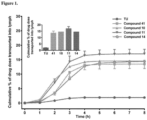
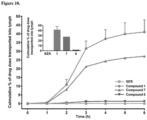
- FIG. 1 illustrates the cumulative lymphatic transport of total testosterone related derivatives (% of administered dose) versus time in anaesthetised mesenteric lymph duct cannulated female SD rats following intraduodenal infusion of formulations from 0 to 2 h.
- Each Formulation contained 2 mg of the exemplified compound or the control, testosterone undecanoate (TU), dispersed in 40 mg oleic acid, 25 mg Tween 80 and 5.6 ml PBS.
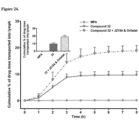
- Figure 2 illustrates the cumulative lymphatic transport of total MPA-containing compounds (% of administered dose) versus time in anaesthetised, mesenteric lymph duct cannulated male SD rats following intraduodenal infusion of formulations from 0 to 2 h.
- the embedded figure shows the terminal data points (cumulative % dose transport in lymph over 8h) in the form of a bar graph.
- Figure 2 and Table 8 illustrate that the compounds of the invention significantly increase lymphatic transport of MPA from 43-132 fold compared to MPA alone. Extending the linker length enhances transport of MPA, with Compound 30 improving the lymphatic transport of MPA to 7.1 % of the administered dose and compound 34 enhancing transport to 22.1%.
- the correlation between linker length and increase in transportation is likely due to the case of re-esterification of the monoglyceride intermediates, as the longer alkyl chains more closely mimic monoglyceride that results from digestion of natural triglyceride.
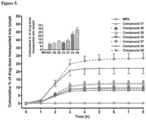
- TG mimetic prodrugs with methyl substitution in the spacer improved stability of MPA in the GI lumen ( Figure 23 ) and resulted in a trend towards better in vivo lymphatic transport of MPA ( Figure 5 and Table 10).
- Figure 5 and Table 10 illustrates that lymphatic transport has improved for Compound 36 (9.1%) and Compound 38 (12.1%) compared to Compound 31 (8.2%), and that Compound 37 (12.6%) and Compound 39 (28.4%) lead to higher lymphatic transport than Compound 32 (9.6%) and Compound 34 (22.1%), respectively.
- Table 10 illustrates that lymphatic transport has improved for Compound 36 (9.1%) and Compound 38 (12.1%) compared to Compound 31 (8.2%), and that Compound 37 (12.6%) and Compound 39 (28.4%) lead to higher lymphatic transport than Compound 32 (9.6%) and Compound 34 (22.1%), respectively.
- Table 10 illustrates that lymphatic transport has improved for Compound 36 (9.1%) and Compound 38 (12.1%) compared to Com
- Compounds of the invention conjugated at the 2' position of the triglyceride via an ester bond, are more effective in promoting lymphatic transport when compared to conjugation at the 1' (or 3') position, or linked via ether bonds.
- Figures 7 to 11 and Table 12 provide additional evidence that the TG mimetic prodrug strategy can be extended to compounds beyond MPA and testosterone.
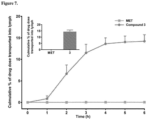
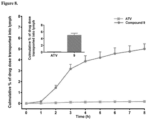
- the figures present the lymphatic transport of total compound (% of dose) following ID infusion to anaesthetised, mesenteric lymph-duct cannulated rats.
- the data show that the lymphatic transport of MET ( Figure 7 ), ATV ( Figure 8 ) and ASP ( Figure 9 ) is enhanced following administration of Compounds 3, 9 and 8, respectively.
- Figure 10 provides yet further evidence of the current invention and illustrates that in addition to examples of carboxylic acid terminated drugs such as MPA, and hydroxyl terminated drugs such as TST, that lymphatic drug transport of eg. amine terminated drugs such as sertraline (SER) can be enhanced by the formation of glyceride mimetic prodrugs that incorporate a self-immolative linker between the drug and the glyceride.
- carboxylic acid terminated drugs such as MPA
- hydroxyl terminated drugs such as TST
- lymphatic drug transport of eg. amine terminated drugs such as sertraline (SER) can be enhanced by the formation of glyceride mimetic prodrugs that incorporate a self-immolative linker between the drug and the glyceride.
- SER sertraline
- modification to include a para hydroxyl benzoate self immolative (Compound 6 )
- Compound 7 provides for enhancement in lymphatic drug transport when compared to the drug alone.
- a trimethyl lock self-immolative prodrug of an amine containing drug the lymphatic transport of a prodrug of the non steroidal anti-inflammatory drug celecoxib (CEL, Compound 5 ) is shown in Figure 11 .
- rat studies In order to assess the oral bioavailability of the compounds of the invention, pharmacokinetic studies were conducted in rats and dogs. In rat studies, female (for testosterone related studies) or male (for alphaxolone related studies) Sprague-Dawley rats (240-320 g) was anaesthetised and the carotid artery was cannulated the day before drug administration. The rats were then allowed to regain consciousness and fasted overnight prior to the commencement of experiments with free access to water.
- ALP alphaxolone
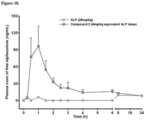
- Compound 2 compounds (except for alphaxolone (ALP) and Compound 2 ) were administered via oral gavage in lipid formulations containing 1 to 2 mg of the compound, 40 mg oleic acid and 25 mg Tween 80 dispersed in 2 mL PBS (as described above for lymphatic transport studies in rats, the only difference being a smaller volume of PBS for the conscious studies here).
- the oral formulation of ALP contained 7.5 mg of ALP suspended in 1 mL of 0.5 % (w/v) carboxymethyl cellulose and 0.4 % (v/v) Tween 80 in saline).
- the oral formulation of Compound 2 contained 3 mg of the compound, 20 mg oleic acid and 12.5 mg Tween 80 dispersed in 1 mL PBS.
- Blood samples were collected from the carotid artery cannula from 5 min prior to administration up to 24 h post-dosing and centrifuged at 5000 rpm for 5 min to separate plasma. During the blood sample collection period the rats had free access to water at all times but remained fasted for a further 8 hours following drug administration. Plasma samples were stored at -80 °C prior to assay by HPLC-MS-MS. In this case samples were assayed for free drug (i.e.
- Andriol Testocaps the commercial TU product
- Compound 13 was given to the dogs.
- Andriol Testocaps were supplied by Merck Sharp & Dohme (Australia) Pty Limited and were formulated as soft gelatin capsule containing a 12.0% (w/w) solution of TU in lauroglycol FCC/castor oil [40:60% (w/w)] with the individual capsule composition being 40mg of TU, lauroglycol FCC, castor oil, gelatin, glycerol, and sunset yellow (E110).
- Compound 13 was prepared in a long-chain lipid based self-emulsifying drug delivery system (SEDDS) that consisted of 30.5% w/w soybean oil, 30.5% w/w Maisine 35-1, 31.6% w/w Cremophor EL and 7.4% w/w ethanol. Formulations were filled into hard gelatin capsules. Two capsules of Andriol Testocaps containing 80 mg TU or two capsules of Compound 13 containing a total dose of 90 mg Compound 13 dissolved in 2 g of the SEDDS formulation were administrated to the fed greyhound dog by placing the capsules as far posterior to the pharynx as possible, closing the mouth and rubbing the throat to stimulate swallowing.
- SEDDS self-emulsifying drug delivery system
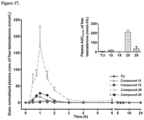
- Figure 12 illustrates dose-normalized testosterone plasma concentrations following oral gavage of formulations to conscious, carotid artery cannulated female SD rats.
- the embedded figure is the plot of the dose-normalized plasma AUC 0-24h (nmol ⁇ h/L) of testosterone in the form of a bar graph.
- methyl branched TG mimetic prodrugs facilitate the lymphatic transport of testosterone by stabilising MG intermediates.
- methyl group modification may also reduce the systemic release of parent testosterone from the prodrug molecules.
- Figure 14 and Table 15 for example, after administration of Compound 18, the systemic exposure of testosterone in plasma was lower than its straight chain counterpart, Compound 10, even though the lymphatic transport of Compound 18 was approximately 2 fold higher (see Table 9).
- trimethly lock self immolative group is not the only effective self immolative and other examples are similarly effective.
- Compound 21 (having an acetal self-immolative group) resulted in higher systemic testosterone levels than Compound 11. This effect was even more marked when adding the acetal self immolative to the beta methyl protected C5 prodrug (Compound 23 vs Compound 18) where the self immolative analogue results in increases in systemic exposure of testosterone of 90 fold when compared to TU.
- Table 17 Pharmacokinetic parameters after oral administration to conscious carotid artery cannulated SD female rats (doses are normalized to a 2 mg/kg equivalent testosterone dose and data are presented as mean ⁇ SEM).
- Example 10 In vitro hydrolysis of compounds by rat digestive fluid or porcine pancreatic lipase
- Bile and pancreatic fluid was maintained at 37 °C and used within 0.5 h of collection for in vitro prodrug hydrolysis experiments.
- the hydrolysis experiments were conducted via incubation (at 37 °C) of 0.375 mL of rat digestive fluid with 0.625 ml of the drug-loaded lipid formulations (as described in the rat lymphatic transport studies).
- the volume ratio of digestive fluid to formulation mimicked the flow rate of bile and pancreatic fluid ( ⁇ 1.5 mL/h) and the infusion rate of the intraduodenal formulations (2.8 mL/h) during the in vivo lymphatic transport studies.
- pancreatic lipase solution was prepared prior to the hydrolysis experiment by dispersion of 1 g porcine pancreatin in 5 ml of lipolysis buffer and 16.9 ⁇ l of 5M NaOH. The suspension was mixed well and centrifuged at 3500 rpm for 15 minutes at 5 °C to provide a supernatant.
- lipolysis buffer An amount of 1000 ml of lipolysis buffer was prepared with 0.474 g of tris-maleate (2mM), 0.206 g of CaCl 2 .H 2 O (1.4 mM) and 8.775 g of NaCl (150 mM) adjusted with NaOH to pH 6.5.
- prodrug hydrolysis in the intestine 20 ⁇ l of prodrug solution (1 mg/ml dissolved in acetonitrile), 900 ⁇ l of simulated intestinal micellar solution [prepared with 0.783 g of NaTDC (3 mM) and 0.291 g of phosphatidyl choline (0.75 mM) in 500 ml lipolysis buffer] and 100 ⁇ l of enzyme solution were incubated at 37°C. 20 ⁇ l samples of the incubation solution were taken at 0, 5, 10, 15, 30, 60, 90, 120 and 180 minutes post incubation and added to 180 ⁇ l of ACN to stop lipolysis. The mixture was vortexed and centrifuged at 5000 rpm for 5 minutes to precipitate proteins prior to analysis. The supernatant was analysed by HPLC-MS for residual compound concentrations, and the potential products of compound hydrolysis were analysed.
- the monoglycerides forms of the prodrugs are formed very rapidly.
- the stability in simulated intestinal conditions is therefore better assessed by the stability of the monoglycerides form that is generated by the initial digestion process.
- the monoglycerides form must remain intact to be absorbed and re-esterified in the enterocyte prior to entry into the lymphatics.
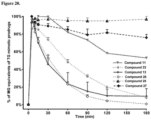
- Figures 20 to 22 provide further evidence of the ability of methyl substitution to improve the luminal stability of testosterone prodrugs including prodrugs containing self immolative linkers, where the self immolative groups might be expected to reduce luminal stability.
- the monoglycerides forms of compound 11 or compound 13 were not highly stable in the in vitro lipolysis assay and this was similar or worse for the tri-methyl lock self immolative analogues (Compound 22 and Compound 26).
- the methyl substituted monoglycerides Compound 25 and Compound 27
- Figure 15 the methyl substituted monoglycerides
- the data demonstrate that the monoglyceride (MG) intermediates of prodrugs containing a straight chain linker (e.g. Compound 31 and Compound 32) are relatively rapidly degraded in BPF. It is likely that the instability of these MG intermediates results from breakdown via hydrolytic enzymes such as monoacylglycerol lipase and pancreatic lipase. This in turn reduces the availability of the drug conjugated MG-like intermediates to be absorbed and to be available for re-esterification. Ultimately this reduces lymphatic transport of drug. Protection of MG intermediates from degradation therefore may enhance lymphatic drug transport.
- MG monoglyceride
Landscapes
- Health & Medical Sciences (AREA)
- Chemical & Material Sciences (AREA)
- General Health & Medical Sciences (AREA)
- Organic Chemistry (AREA)
- Life Sciences & Earth Sciences (AREA)
- Animal Behavior & Ethology (AREA)
- Public Health (AREA)
- Veterinary Medicine (AREA)
- Medicinal Chemistry (AREA)
- Pharmacology & Pharmacy (AREA)
- Epidemiology (AREA)
- Bioinformatics & Cheminformatics (AREA)
- Engineering & Computer Science (AREA)
- Diabetes (AREA)
- Endocrinology (AREA)
- Chemical Kinetics & Catalysis (AREA)
- General Chemical & Material Sciences (AREA)
- Nuclear Medicine, Radiotherapy & Molecular Imaging (AREA)
- Pharmaceuticals Containing Other Organic And Inorganic Compounds (AREA)
- Acyclic And Carbocyclic Compounds In Medicinal Compositions (AREA)
- Steroid Compounds (AREA)
- Medicinal Preparation (AREA)
- Organic Low-Molecular-Weight Compounds And Preparation Thereof (AREA)
- Furan Compounds (AREA)
- Pyrrole Compounds (AREA)
- Medicines That Contain Protein Lipid Enzymes And Other Medicines (AREA)
Applications Claiming Priority (3)
| Application Number | Priority Date | Filing Date | Title |
|---|---|---|---|
| AU2014903148A AU2014903148A0 (en) | 2014-08-12 | Lymph Directing Prodrugs | |
| PCT/AU2015/050460 WO2016023082A1 (fr) | 2014-08-12 | 2015-08-12 | Promédicaments de transport vers le système lymphatique |
| EP15832378.2A EP3180349B1 (fr) | 2014-08-12 | 2015-08-12 | Promédicaments de transport vers le système lymphatique et leurs utilisations thérapeutiques |
Related Parent Applications (1)
| Application Number | Title | Priority Date | Filing Date |
|---|---|---|---|
| EP15832378.2A Division EP3180349B1 (fr) | 2014-08-12 | 2015-08-12 | Promédicaments de transport vers le système lymphatique et leurs utilisations thérapeutiques |
Publications (2)
| Publication Number | Publication Date |
|---|---|
| EP4578865A2 true EP4578865A2 (fr) | 2025-07-02 |
| EP4578865A3 EP4578865A3 (fr) | 2025-07-30 |
Family
ID=55303701
Family Applications (2)
| Application Number | Title | Priority Date | Filing Date |
|---|---|---|---|
| EP15832378.2A Active EP3180349B1 (fr) | 2014-08-12 | 2015-08-12 | Promédicaments de transport vers le système lymphatique et leurs utilisations thérapeutiques |
| EP25162065.4A Pending EP4578865A3 (fr) | 2014-08-12 | 2015-08-12 | Promédicaments dirigeant la lymphe |
Family Applications Before (1)
| Application Number | Title | Priority Date | Filing Date |
|---|---|---|---|
| EP15832378.2A Active EP3180349B1 (fr) | 2014-08-12 | 2015-08-12 | Promédicaments de transport vers le système lymphatique et leurs utilisations thérapeutiques |
Country Status (6)
| Country | Link |
|---|---|
| US (6) | US11311512B2 (fr) |
| EP (2) | EP3180349B1 (fr) |
| JP (4) | JP6749890B2 (fr) |
| CN (4) | CN117088931A (fr) |
| AU (5) | AU2015303835B2 (fr) |
| WO (1) | WO2016023082A1 (fr) |
Families Citing this family (23)
| Publication number | Priority date | Publication date | Assignee | Title |
|---|---|---|---|---|
| CN117088931A (zh) | 2014-08-12 | 2023-11-21 | 莫纳什大学 | 定向淋巴的前药 |
| US11738087B2 (en) * | 2015-09-08 | 2023-08-29 | Monash University | Lymph directing prodrugs |
| CA3077739A1 (fr) | 2017-08-29 | 2019-03-07 | Puretech Lyt, Inc. | Promedicaments lipidiques orientant vers le systeme lymphatique |
| US11883497B2 (en) * | 2017-08-29 | 2024-01-30 | Puretech Lyt, Inc. | Lymphatic system-directing lipid prodrugs |
| JP6826014B2 (ja) * | 2017-09-13 | 2021-02-03 | 株式会社東芝 | 生分解性化合物、脂質粒子、脂質粒子を含む組成物、およびキット |
| FR3071726B1 (fr) * | 2017-09-29 | 2020-09-04 | Univ Paris Sud | Agents inhibant la proteine tctp pour le traitement de maladies proliferatives et de maladies infectieuses |
| CN107894474B (zh) * | 2017-11-15 | 2020-05-12 | 上海应用技术大学 | 气相色谱法同时检测羟基氯喹侧链及其原料与中间体的方法 |
| JP2021505688A (ja) * | 2017-12-11 | 2021-02-18 | グラクソスミスクライン、インテレクチュアル、プロパティー、ディベロップメント、リミテッドGlaxosmithkline Intellectual Property Development Limited | インドールアミン2,3−ジオキシゲナーゼのモジュレーター |
| EP3727362A4 (fr) * | 2017-12-19 | 2021-10-06 | PureTech LYT, Inc. | Promédicaments lipidiques d'acide mycophénolique et leurs utilisations |
| US11608345B1 (en) | 2017-12-19 | 2023-03-21 | Puretech Lyt, Inc. | Lipid prodrugs of rapamycin and its analogs and uses thereof |
| US11304954B2 (en) | 2017-12-19 | 2022-04-19 | Puretech Lyt, Inc. | Lipid prodrugs of mycophenolic acid and uses thereof |
| CA3107481A1 (fr) * | 2018-08-02 | 2020-02-06 | Puretech Lyt, Inc. | Promedicaments lipidiques de neurosteroides de pregnane et leurs utilisations |
| EP3870174B1 (fr) | 2018-10-22 | 2023-11-01 | Board of Regents of the University of Nebraska | Promédicaments antiviraux et nanoformulations de ceux-ci |
| CN120535538A (zh) | 2018-11-29 | 2025-08-26 | 内布拉斯加大学董事会 | 抗病毒前药及其纳米制剂 |
| CN109851593B (zh) * | 2019-02-01 | 2021-04-16 | 沈阳药科大学 | 基于淋巴介导转运的甘油三酯前药及其制备方法 |
| CA3130349A1 (fr) * | 2019-02-28 | 2020-09-03 | Puretech Lyt, Inc. | Promedicaments lipidiques d'inhibiteurs de jak et leurs utilisations |
| US12611415B2 (en) | 2019-09-19 | 2026-04-28 | Monash University | Methods and compounds for treatment of metabolic disease |
| IL295362A (en) * | 2020-02-05 | 2022-10-01 | Puretech Lyt Inc | Lipid drug inhibitors of neurosteroids |
| CN112763586A (zh) * | 2020-11-25 | 2021-05-07 | 华南农业大学 | 一种氯氰碘柳胺对映体的手性色谱分离分析方法 |
| CN115252800B (zh) * | 2021-04-29 | 2025-04-15 | 苏州裕泰医药科技有限公司 | 淋巴介导转运的紫杉醇类甘油三酯前药及脂质制剂 |
| AU2022309017A1 (en) | 2021-07-07 | 2024-01-25 | Terran Biosciences Inc. | N,n-dimethyltryptamine and related psychedlics and uses thereof |
| WO2023086438A1 (fr) * | 2021-11-10 | 2023-05-19 | Emory University | Promédicaments d'analogues de neurostéroïdes et leurs utilisations |
| WO2023103929A1 (fr) * | 2021-12-06 | 2023-06-15 | 江苏亚虹医药科技股份有限公司 | Dérivé de fulvestrant, son procédé de préparation et utilisation médicale associée |
Family Cites Families (60)
| Publication number | Priority date | Publication date | Assignee | Title |
|---|---|---|---|---|
| GB8313634D0 (en) * | 1982-06-18 | 1983-06-22 | Ici Plc | Halogenophenyl glyceride esters |
| DE3834132A1 (de) * | 1988-10-07 | 1990-04-12 | Knoll Ag | Hydroxypropafenonglyceride |
| GB9221220D0 (en) | 1992-10-09 | 1992-11-25 | Sandoz Ag | Organic componds |
| MY115461A (en) | 1995-03-30 | 2003-06-30 | Wellcome Found | Synergistic combinations of zidovudine, 1592u89 and 3tc |
| ATE286884T1 (de) * | 1996-03-28 | 2005-01-15 | Shionogi & Co | Durch lymphe absorbierbare imidazolderivate |
| US5962440A (en) | 1996-05-09 | 1999-10-05 | Bristol-Myers Squibb Company | Cyclic phosphonate ester inhibitors of microsomal triglyceride transfer protein and method |
| US6013665A (en) | 1997-12-16 | 2000-01-11 | Abbott Laboratories | Method for enhancing the absorption and transport of lipid soluble compounds using structured glycerides |
| US7635690B2 (en) | 1999-01-22 | 2009-12-22 | Emory University | HIV-1 mutations selected for by β-2′,3′-didehydro-2′,3′-dideoxy-5-fluorocytidine |
| DE60037345T2 (de) | 1999-12-10 | 2008-11-13 | Pfizer Products Inc., Groton | Pyrrolo(2,3-d)pyrimidin-Verbindungen |
| PE20020354A1 (es) | 2000-09-01 | 2002-06-12 | Novartis Ag | Compuestos de hidroxamato como inhibidores de histona-desacetilasa (hda) |
| JP4324343B2 (ja) | 2001-04-24 | 2009-09-02 | 富士フイルム株式会社 | トリヨードフェニル基及びステロイド残基を有する化合物 |
| DE60217322T2 (de) | 2001-04-27 | 2007-10-04 | Zenyaku Kogyo K.K. | Heterocyclische verbindung und antitumormittel, das diese als wirkstoff enthält |
| TWI329105B (en) | 2002-02-01 | 2010-08-21 | Rigel Pharmaceuticals Inc | 2,4-pyrimidinediamine compounds and their uses |
| PT1536827E (pt) | 2002-08-14 | 2009-03-20 | Silence Therapeutics Ag | Utilização de proteína cinase n beta |
| US20040204472A1 (en) | 2003-03-04 | 2004-10-14 | Pharmacia Corporation | Treatment and prevention of obesity with COX-2 inhibitors alone or in combination with weight-loss agents |
| AU2004228668B2 (en) | 2003-04-03 | 2011-10-27 | Park Funding, Llc | PI-3 kinase inhibitor prodrugs |
| ES2382377T3 (es) | 2003-05-30 | 2012-06-07 | Gemin X Pharmaceuticals Canada Inc. | Compuestos triheterocíclicos, composiciones, y métodos para tratar cáncer |
| EP1692153A4 (fr) | 2003-07-03 | 2007-03-21 | Univ Pennsylvania | Inhibition de l'expression d'une syk kinase |
| CN1867664A (zh) | 2003-10-17 | 2006-11-22 | 兰贝克赛实验室有限公司 | 使用新的链霉菌菌种生产他克莫司(fk-506) |
| WO2005113556A1 (fr) | 2004-05-13 | 2005-12-01 | Icos Corporation | Quinazolinones utilisees en tant qu'inhibiteurs de la phosphatidylinositol 3-kinase delta humaine |
| JP4806680B2 (ja) | 2004-05-19 | 2011-11-02 | メダレックス インコーポレイテッド | 自己犠牲リンカー及び薬剤複合体 |
| AU2006206458B2 (en) | 2005-01-19 | 2012-10-25 | Rigel Pharmaceuticals, Inc. | Prodrugs of 2,4-pyrimidinediamine compounds and their uses |
| PL1888550T3 (pl) | 2005-05-12 | 2014-12-31 | Abbvie Bahamas Ltd | Promotory apoptozy |
| GB0510390D0 (en) | 2005-05-20 | 2005-06-29 | Novartis Ag | Organic compounds |
| US7402325B2 (en) | 2005-07-28 | 2008-07-22 | Phoenix Biotechnology, Inc. | Supercritical carbon dioxide extract of pharmacologically active components from Nerium oleander |
| US7989622B2 (en) | 2005-10-07 | 2011-08-02 | Exelixis, Inc. | Phosphatidylinositol 3-kinase inhibitors and methods of their use |
| JP5191391B2 (ja) | 2005-11-01 | 2013-05-08 | ターゲジェン インコーポレーティッド | キナーゼのビ−アリールメタ−ピリミジン阻害剤 |
| SG10202003901UA (en) | 2005-12-13 | 2020-05-28 | Incyte Holdings Corp | Heteroaryl substituted pyrrolo[2,3-b]pyridines and pyrrolo[2,3-b]pyrimidines as janus kinase inhibitors |
| JO2660B1 (en) | 2006-01-20 | 2012-06-17 | نوفارتيس ايه جي | Pi-3 inhibitors and methods of use |
| US20090023805A1 (en) | 2006-02-13 | 2009-01-22 | Anne Claire Marrast | Method of administration |
| WO2007129161A2 (fr) | 2006-04-26 | 2007-11-15 | F. Hoffmann-La Roche Ag | Composés pharmaceutiques |
| DK2526933T3 (en) | 2006-09-22 | 2015-05-18 | Pharmacyclics Inc | Inhibitors of Bruton's tyrosine kinase |
| TW200824713A (en) | 2006-10-18 | 2008-06-16 | Wyeth Corp | Processes for the synthesis of individual isomers of mono-PEG CCI-779 |
| KR101566840B1 (ko) | 2007-03-12 | 2015-11-06 | 와이엠 바이오사이언시즈 오스트레일리아 피티와이 엘티디 | 페닐 아미노 피리미딘 화합물 및 이의 용도 |
| WO2008118802A1 (fr) | 2007-03-23 | 2008-10-02 | Regents Of The University Of Minnesota | Composés thérapeutiques |
| PE20090717A1 (es) | 2007-05-18 | 2009-07-18 | Smithkline Beecham Corp | Derivados de quinolina como inhibidores de la pi3 quinasa |
| KR100975520B1 (ko) | 2008-02-01 | 2010-08-12 | 종근당바이오 주식회사 | 마이코페놀레이트 모페틸의 개선된 제조방법 |
| HUE029767T2 (en) | 2008-03-11 | 2017-04-28 | Incyte Holdings Corp | JAK inhibitor azetidine and cyclobutane derivatives |
| JP5757864B2 (ja) | 2008-05-20 | 2015-08-05 | ニューロジェシックス, インコーポレイテッド | 水溶性アセトアミノフェン類似体 |
| US8648119B2 (en) | 2008-05-23 | 2014-02-11 | Otonomy, Inc. | Controlled release immunomodulator compositions and methods for the treatment of otic disorders |
| US8338439B2 (en) | 2008-06-27 | 2012-12-25 | Celgene Avilomics Research, Inc. | 2,4-disubstituted pyrimidines useful as kinase inhibitors |
| CN101676291B (zh) | 2008-09-18 | 2012-05-09 | 上海海和药物研究开发有限公司 | 一类雷帕霉素碳酸酯类似物、其药物组合物及其制备方法和用途 |
| US8535655B2 (en) * | 2008-10-10 | 2013-09-17 | Polyactiva Pty Ltd. | Biodegradable polymer—bioactive moiety conjugates |
| WO2011051967A2 (fr) | 2009-10-23 | 2011-05-05 | Alkem Laboratories Ltd | Compositions pharmaceutiques contenant du mycophénolate et leurs procédés de préparation |
| WO2011083150A2 (fr) | 2010-01-07 | 2011-07-14 | Akron Molecules Gmbh | Petites molécules pour traiter l'obésité |
| US20110213028A1 (en) | 2010-02-26 | 2011-09-01 | Catabasis Pharmaceuticals, Inc. | Fatty acid mycophenolate derivatives and their uses |
| US20130245253A1 (en) | 2010-03-26 | 2013-09-19 | Department Of Veterans Affairs | Conjugated Neuroactive Steroid Compositions And Methods Of Use |
| WO2012131019A1 (fr) | 2011-04-01 | 2012-10-04 | Sandoz Ag | Acylation régiosélective de la rapamycine au niveau de la position c-42 |
| ES3018133T3 (en) | 2011-11-30 | 2025-05-14 | Univ Emory | Jak inhibitors for use in the prevention or treatment of a viral disease caused by a coronaviridae |
| GB201304662D0 (en) | 2013-03-14 | 2013-05-01 | Sigmoid Pharma Ltd | Compositions |
| AU2015210833B2 (en) | 2014-02-03 | 2019-01-03 | Vitae Pharmaceuticals, Llc | Dihydropyrrolopyridine inhibitors of ROR-gamma |
| DE102014103507A1 (de) * | 2014-03-14 | 2015-09-17 | Fresenius Medical Care Deutschland Gmbh | Medizinische Funktionsvorrichtung mit einem Ventilsitz für ein remanentes Rückschlagventil |
| CN117088931A (zh) | 2014-08-12 | 2023-11-21 | 莫纳什大学 | 定向淋巴的前药 |
| US11738087B2 (en) | 2015-09-08 | 2023-08-29 | Monash University | Lymph directing prodrugs |
| JP6948313B6 (ja) | 2015-09-17 | 2022-01-14 | モデルナティエックス インコーポレイテッド | 治療剤の細胞内送達のための化合物および組成物 |
| AU2016354564B2 (en) | 2015-11-12 | 2021-04-29 | Board Of Regents Of The University Of Nebraska | Polyethylene glycol-conjugated glucocorticoid prodrugs and compositions and methods thereof |
| CN110418796A (zh) | 2017-03-08 | 2019-11-05 | 施万生物制药研发Ip有限责任公司 | 托法替尼(tofacitinib)的葡萄糖苷酸前药 |
| CA3068462A1 (fr) | 2017-06-23 | 2019-12-27 | The Board Of Trustees Of The University Of Illinois | Traitement des troubles neuropsychiatriques a l'aide de neurosteroides et analogues de ceux-ci |
| CA3077739A1 (fr) | 2017-08-29 | 2019-03-07 | Puretech Lyt, Inc. | Promedicaments lipidiques orientant vers le systeme lymphatique |
| US20190065544A1 (en) | 2017-08-29 | 2019-02-28 | Walmart Apollo, Llc | System and method for collaborative sharing of database information |
-
2015
- 2015-08-12 CN CN202311047800.4A patent/CN117088931A/zh active Pending
- 2015-08-12 AU AU2015303835A patent/AU2015303835B2/en active Active
- 2015-08-12 EP EP15832378.2A patent/EP3180349B1/fr active Active
- 2015-08-12 JP JP2017507748A patent/JP6749890B2/ja active Active
- 2015-08-12 CN CN201580053370.4A patent/CN106715456B/zh active Active
- 2015-08-12 US US15/502,757 patent/US11311512B2/en active Active
- 2015-08-12 CN CN202311048091.1A patent/CN117164657A/zh active Pending
- 2015-08-12 WO PCT/AU2015/050460 patent/WO2016023082A1/fr not_active Ceased
- 2015-08-12 EP EP25162065.4A patent/EP4578865A3/fr active Pending
- 2015-08-12 CN CN202011362790.XA patent/CN112430250A/zh active Pending
-
2018
- 2018-12-04 US US16/209,600 patent/US20190105299A1/en not_active Abandoned
-
2020
- 2020-06-11 JP JP2020101605A patent/JP7229967B2/ja active Active
- 2020-07-07 AU AU2020204522A patent/AU2020204522B2/en active Active
-
2021
- 2021-11-15 AU AU2021269278A patent/AU2021269278B2/en active Active
- 2021-11-23 AU AU2021273557A patent/AU2021273557A1/en not_active Abandoned
-
2022
- 2022-03-17 US US17/697,694 patent/US20220211664A1/en not_active Abandoned
-
2023
- 2023-02-15 JP JP2023021722A patent/JP2023063311A/ja active Pending
-
2024
- 2024-05-06 AU AU2024202980A patent/AU2024202980A1/en active Pending
-
2025
- 2025-02-20 JP JP2025025841A patent/JP2025093940A/ja active Pending
- 2025-03-21 US US19/087,218 patent/US20250213522A1/en not_active Abandoned
- 2025-07-26 US US19/281,599 patent/US20250352510A1/en active Pending
- 2025-12-14 US US19/419,013 patent/US20260102373A1/en active Pending
Non-Patent Citations (18)
| Title |
|---|
| BLENCOWE ET AL., POLYM. CHEM, vol. 2, 2011, pages 773 - 790 |
| DEVERRE, J. R. ET AL., J. PHARM. PHARMACOL, vol. 41, no. 3, 1989, pages 191 - 193 |
| EDWARDS ET AL., ADVANCED DRUG DELIVERY REVIEWS, vol. 50, no. 1, 2001, pages 45 - 60 |
| GARZON ABURBEH, A ET AL., J. MED. CHEM., vol. 26, no. 8, 1983, pages 1200 - 1203 |
| GARZON ABURBEH, A ET AL., J. MED. CHEM., vol. 29, no. 5, 1986, pages 687 - 69 |
| HAN, S ET AL., J CONTROL. RELEASE, vol. 177, 2014, pages 1 - 10 |
| KRATZ ET AL., CHEM MED CHEM, vol. 3, 2008, pages 20 - 53 |
| LEVINE, M. N.RAINES, R. T, CHEM. SCI, vol. 3, 2012, pages 2412 - 2420 |
| MERGEN, F. ET AL., J. PHARM. PHARMACOL, vol. 43, no. 11, 1991, pages 815 - 816 |
| PARIS, G. Y ET AL., J. MED. CHEM, vol. 22, no. 6, 1979, pages 683 - 687 |
| POUTON, C.W., EUR. J. PHARM. SCI, vol. 11, 2000, pages 93 - 98 |
| POUTON, C.W., EUR. J. PHARM. SCI, vol. 29, 2006, pages 278 - 287 |
| SCRIBA, G. K. E ET AL., J. PHARM. PHARMACOL, vol. 47, no. 11, 1995, pages 945 - 948 |
| SCRIBA, G. K. E., ARCH. PHARM, vol. 328, no. 3, 1995, pages 271 - 276 |
| SUGIHARA, J ET AL., J. PHARMACOBIODYN, vol. 11, no. 8, 1988, pages 555 - 562 |
| TREVASKIS, N.L ET AL., PHARMACEUTICAL RESEARCH, vol. 22, no. 11, 2005, pages 1863 - 1870 |
| WARREN ET AL., MOL. PHARMACEUTICS, vol. 10, 2013, pages 2823 - 2848 |
| WITTMAN, M. D. ET AL., BIOORG. MED. CHEM. LETT, vol. 11, 2001, pages 811 - 814 |
Also Published As
| Publication number | Publication date |
|---|---|
| AU2015303835A1 (en) | 2017-03-02 |
| CN106715456B (zh) | 2023-08-29 |
| AU2020204522A1 (en) | 2020-07-30 |
| US20190105299A1 (en) | 2019-04-11 |
| CN106715456A (zh) | 2017-05-24 |
| AU2024202980A1 (en) | 2024-05-30 |
| US20250352510A1 (en) | 2025-11-20 |
| JP2023063311A (ja) | 2023-05-09 |
| CN117164657A (zh) | 2023-12-05 |
| WO2016023082A1 (fr) | 2016-02-18 |
| AU2021273557A1 (en) | 2021-12-23 |
| EP3180349C0 (fr) | 2025-03-12 |
| US20170326103A1 (en) | 2017-11-16 |
| AU2015303835B2 (en) | 2020-04-09 |
| US20250213522A1 (en) | 2025-07-03 |
| AU2020204522B2 (en) | 2021-08-26 |
| AU2021269278B2 (en) | 2024-02-08 |
| US20260102373A1 (en) | 2026-04-16 |
| US20220211664A1 (en) | 2022-07-07 |
| EP4578865A3 (fr) | 2025-07-30 |
| EP3180349A4 (fr) | 2018-08-22 |
| JP2025093940A (ja) | 2025-06-24 |
| JP2017530095A (ja) | 2017-10-12 |
| EP3180349B1 (fr) | 2025-03-12 |
| US11311512B2 (en) | 2022-04-26 |
| JP6749890B2 (ja) | 2020-09-02 |
| JP7229967B2 (ja) | 2023-02-28 |
| EP3180349A1 (fr) | 2017-06-21 |
| AU2021269278A1 (en) | 2021-12-16 |
| CN112430250A (zh) | 2021-03-02 |
| CN117088931A (zh) | 2023-11-21 |
| JP2020169186A (ja) | 2020-10-15 |
Similar Documents
| Publication | Publication Date | Title |
|---|---|---|
| US20260102373A1 (en) | Lymph directing prodrugs | |
| US20250312461A1 (en) | Lymph directing prodrugs | |
| HK40128236A (en) | Lymph directing prodrugs |
Legal Events
| Date | Code | Title | Description |
|---|---|---|---|
| PUAI | Public reference made under article 153(3) epc to a published international application that has entered the european phase |
Free format text: ORIGINAL CODE: 0009012 |
|
| STAA | Information on the status of an ep patent application or granted ep patent |
Free format text: STATUS: THE APPLICATION HAS BEEN PUBLISHED |
|
| REG | Reference to a national code |
Ref country code: DE Ref legal event code: R079 Free format text: PREVIOUS MAIN CLASS: C07J0005000000 Ipc: A61K0031560000 |
|
| PUAL | Search report despatched |
Free format text: ORIGINAL CODE: 0009013 |
|
| AC | Divisional application: reference to earlier application |
Ref document number: 3180349 Country of ref document: EP Kind code of ref document: P |
|
| AK | Designated contracting states |
Kind code of ref document: A2 Designated state(s): AL AT BE BG CH CY CZ DE DK EE ES FI FR GB GR HR HU IE IS IT LI LT LU LV MC MK MT NL NO PL PT RO RS SE SI SK SM TR |
|
| AK | Designated contracting states |
Kind code of ref document: A3 Designated state(s): AL AT BE BG CH CY CZ DE DK EE ES FI FR GB GR HR HU IE IS IT LI LT LU LV MC MK MT NL NO PL PT RO RS SE SI SK SM TR |
|
| RIC1 | Information provided on ipc code assigned before grant |
Ipc: A61K 31/56 20060101AFI20250626BHEP Ipc: A61K 31/568 20060101ALI20250626BHEP Ipc: A61P 5/24 20060101ALI20250626BHEP Ipc: A61K 45/06 20060101ALI20250626BHEP Ipc: A61K 31/365 20060101ALI20250626BHEP Ipc: A61K 31/40 20060101ALI20250626BHEP Ipc: A61K 31/4025 20060101ALI20250626BHEP Ipc: C07J 1/00 20060101ALI20250626BHEP Ipc: B01J 20/281 20060101ALI20250626BHEP Ipc: G01N 30/00 20060101ALI20250626BHEP Ipc: C07J 7/00 20060101ALI20250626BHEP Ipc: C07J 9/00 20060101ALI20250626BHEP Ipc: C07J 5/00 20060101ALI20250626BHEP Ipc: C07J 31/00 20060101ALI20250626BHEP |
|
| STAA | Information on the status of an ep patent application or granted ep patent |
Free format text: STATUS: REQUEST FOR EXAMINATION WAS MADE |
|
| REG | Reference to a national code |
Ref country code: HK Ref legal event code: DE Ref document number: 40128236 Country of ref document: HK |
|
| 17P | Request for examination filed |
Effective date: 20260128 |