ES2860675T3 - Compounds, systems and methods for monitoring and treating a surface of a subject - Google Patents
Compounds, systems and methods for monitoring and treating a surface of a subjectInfo
- Publication number
- ES2860675T3 ES2860675T3 ES14822888T ES14822888T ES2860675T3 ES 2860675 T3 ES2860675 T3 ES 2860675T3 ES 14822888 T ES14822888 T ES 14822888T ES 14822888 T ES14822888 T ES 14822888T ES 2860675 T3 ES2860675 T3 ES 2860675T3
- Authority
- ES
- Spain
- Prior art keywords
- therapeutic
- group
- porphyrin
- unsubstituted
- oxygen
- Prior art date
- Legal status (The legal status is an assumption and is not a legal conclusion. Google has not performed a legal analysis and makes no representation as to the accuracy of the status listed.)
- Active
Links
- 0 *C1C(*)Cc2c[n]cc2C1 Chemical compound *C1C(*)Cc2c[n]cc2C1 0.000 description 1
Classifications
-
- A—HUMAN NECESSITIES
- A61—MEDICAL OR VETERINARY SCIENCE; HYGIENE
- A61K—PREPARATIONS FOR MEDICAL, DENTAL OR TOILETRY PURPOSES
- A61K49/00—Preparations for testing in vivo
- A61K49/001—Preparation for luminescence or biological staining
- A61K49/0013—Luminescence
- A61K49/0015—Phosphorescence
-
- A—HUMAN NECESSITIES
- A61—MEDICAL OR VETERINARY SCIENCE; HYGIENE
- A61B—DIAGNOSIS; SURGERY; IDENTIFICATION
- A61B5/00—Measuring for diagnostic purposes; Identification of persons
- A61B5/145—Measuring characteristics of blood in vivo, e.g. gas concentration or pH-value ; Measuring characteristics of body fluids or tissues, e.g. interstitial fluid or cerebral tissue
- A61B5/1455—Measuring characteristics of blood in vivo, e.g. gas concentration or pH-value ; Measuring characteristics of body fluids or tissues, e.g. interstitial fluid or cerebral tissue using optical sensors, e.g. spectral photometrical oximeters
- A61B5/14551—Measuring characteristics of blood in vivo, e.g. gas concentration or pH-value ; Measuring characteristics of body fluids or tissues, e.g. interstitial fluid or cerebral tissue using optical sensors, e.g. spectral photometrical oximeters for measuring blood gases
- A61B5/14556—Measuring characteristics of blood in vivo, e.g. gas concentration or pH-value ; Measuring characteristics of body fluids or tissues, e.g. interstitial fluid or cerebral tissue using optical sensors, e.g. spectral photometrical oximeters for measuring blood gases by fluorescence
-
- A—HUMAN NECESSITIES
- A61—MEDICAL OR VETERINARY SCIENCE; HYGIENE
- A61B—DIAGNOSIS; SURGERY; IDENTIFICATION
- A61B5/00—Measuring for diagnostic purposes; Identification of persons
- A61B5/68—Arrangements of detecting, measuring or recording means, e.g. sensors, in relation to patient
- A61B5/6801—Arrangements of detecting, measuring or recording means, e.g. sensors, in relation to patient specially adapted to be attached to or worn on the body surface
- A61B5/683—Means for maintaining contact with the body
- A61B5/6832—Means for maintaining contact with the body using adhesives
- A61B5/6833—Adhesive patches
-
- A—HUMAN NECESSITIES
- A61—MEDICAL OR VETERINARY SCIENCE; HYGIENE
- A61L—METHODS OR APPARATUS FOR STERILISING MATERIALS OR OBJECTS IN GENERAL; DISINFECTION, STERILISATION OR DEODORISATION OF AIR; CHEMICAL ASPECTS OF BANDAGES, DRESSINGS, ABSORBENT PADS OR SURGICAL ARTICLES; MATERIALS FOR BANDAGES, DRESSINGS, ABSORBENT PADS OR SURGICAL ARTICLES
- A61L15/00—Chemical aspects of, or use of materials for, bandages, dressings or absorbent pads
- A61L15/16—Bandages, dressings or absorbent pads for physiological fluids such as urine or blood, e.g. sanitary towels, tampons
- A61L15/42—Use of materials characterised by their function or physical properties
- A61L15/56—Wetness-indicators or colourants
-
- C—CHEMISTRY; METALLURGY
- C07—ORGANIC CHEMISTRY
- C07D—HETEROCYCLIC COMPOUNDS
- C07D487/00—Heterocyclic compounds containing nitrogen atoms as the only ring hetero atoms in the condensed system, not provided for by groups C07D451/00 - C07D477/00
- C07D487/22—Heterocyclic compounds containing nitrogen atoms as the only ring hetero atoms in the condensed system, not provided for by groups C07D451/00 - C07D477/00 in which the condensed system contains four or more hetero rings
-
- G—PHYSICS
- G01—MEASURING; TESTING
- G01N—INVESTIGATING OR ANALYSING MATERIALS BY DETERMINING THEIR CHEMICAL OR PHYSICAL PROPERTIES
- G01N21/00—Investigating or analysing materials by the use of optical means, i.e. using sub-millimetre waves, infrared, visible or ultraviolet light
- G01N21/62—Systems in which the material investigated is excited whereby it emits light or causes a change in wavelength of the incident light
- G01N21/63—Systems in which the material investigated is excited whereby it emits light or causes a change in wavelength of the incident light optically excited
- G01N21/64—Fluorescence; Phosphorescence
- G01N21/6408—Fluorescence; Phosphorescence with measurement of decay time, time resolved fluorescence
Landscapes
- Health & Medical Sciences (AREA)
- Life Sciences & Earth Sciences (AREA)
- Physics & Mathematics (AREA)
- General Health & Medical Sciences (AREA)
- Engineering & Computer Science (AREA)
- Animal Behavior & Ethology (AREA)
- Veterinary Medicine (AREA)
- Public Health (AREA)
- Biomedical Technology (AREA)
- Pathology (AREA)
- Chemical & Material Sciences (AREA)
- Molecular Biology (AREA)
- Surgery (AREA)
- Medical Informatics (AREA)
- Heart & Thoracic Surgery (AREA)
- Biophysics (AREA)
- Epidemiology (AREA)
- Organic Chemistry (AREA)
- Spectroscopy & Molecular Physics (AREA)
- Optics & Photonics (AREA)
- Hematology (AREA)
- Nuclear Medicine, Radiotherapy & Molecular Imaging (AREA)
- Analytical Chemistry (AREA)
- Biochemistry (AREA)
- General Physics & Mathematics (AREA)
- Immunology (AREA)
- Materials Engineering (AREA)
- Investigating, Analyzing Materials By Fluorescence Or Luminescence (AREA)
- Nitrogen Condensed Heterocyclic Rings (AREA)
Abstract
Porfirina de posición meso no sustituida fosforescente que presenta la fórmula (I): **(Ver fórmula)** en la que M es un metal, en la que cada R es, independientemente, un átomo o un grupo de átomos, y en la que por lo menos un R es -OR1, en el que R1 es un grupo alquinilo o incluye un grupo triazolilo, o incluye un grupo alquilglutamato, o termina en un par de grupos alquilglutamato.Phosphorescent unsubstituted meso-position porphyrin having the formula (I): ** (See formula) ** in which M is a metal, in which each R is, independently, an atom or a group of atoms, and in wherein at least one R is -OR1, wherein R1 is an alkynyl group or includes a triazolyl group, or includes an alkylglutamate group, or terminates in a pair of alkylglutamate groups.
Description
DESCRIPCIÓNDESCRIPTION
Compuestos, sistemas y métodos para monitorizar y tratar una superficie de un sujetoCompounds, systems and methods for monitoring and treating a surface of a subject
Antecedentes de la invenciónBackground of the invention
Campo de la invenciónField of the invention
La invención se refiere a compuestos que resultan útiles como sensores en un apósito no invasivo detector de analitos. Los compuestos pueden ser porfirinas metaladas con posiciones meso no sustituidas los cuales son sensibles al oxígeno. Las porfirinas metaladas pueden excitarse al iluminarlas con una primera longitud de onda, seguido de la emisión de fosforescencia de una segunda longitud de onda cuya intensidad de emisión y/o tiempo de vida puede utilizarse como indicador de la concentración de oxígeno.The invention relates to compounds that are useful as sensors in a non-invasive analyte-detecting dressing. The compounds can be metalated porphyrins with unsubstituted meso positions which are sensitive to oxygen. Metalated porphyrins can be excited by illuminating them with a first wavelength, followed by the emission of phosphorescence of a second wavelength whose emission intensity and / or lifetime can be used as an indicator of oxygen concentration.
Descripción de la técnica relacionadaDescription of Related Art
En un contexto clínico, con frecuencia resulta deseable monitorizar la salud del paciente mediante la medición de los niveles tisulares de gases. Los análisis de gases tisulares son una parte esencial del cuidado moderno del paciente y se utilizan en el diagnóstico y tratamiento de varias condiciones. En particular, la medición de la concentración tisular de oxígeno es un elemento esencial de la monitorización general de la salud general del paciente y para el tratamiento de condiciones específicas, tales como isquemia, quemaduras y síndrome del pie diabético.In a clinical setting, it is often desirable to monitor the health of the patient by measuring tissue gas levels. Tissue gas analyzes are an essential part of modern patient care and are used in the diagnosis and treatment of various conditions. In particular, the measurement of tissue oxygen concentration is an essential element of the general monitoring of the general health of the patient and for the treatment of specific conditions, such as ischemia, burns and diabetic foot syndrome.
En general, existen tres tecnologías principales que se utilizan para realizar los análisis de gases en sangre y tejidos. Un primer aparato, conocido como oxímetro de pulso, es un instrumento no invasivo básico que detecta la saturación de oxígeno de la hemoglobina. La medición del porcentaje de hemoglobina unida al oxígeno proporciona una estimación de la oxigenación arterial. El dispositivo puede colocarse en un dedo u otra parte corporal, y la medición se lleva a cabo mediante monitorización de la reflectancia o absorbancia de la luz incidente. Aunque la oximetría de pulso es una técnica rápida y simple, la desventaja principal es que la medición no mide las concentraciones absolutas de oxígeno arterial. En particular, puede realizarse un diagnóstico inexacto en situaciones en las que las concentraciones de hemoglobina sean bajas o en el caso de que la hemoglobina se encuentre ligada a una especie que no sea el oxígeno.In general, there are three main technologies used to perform blood and tissue gas analysis. A first device, known as a pulse oximeter, is a basic non-invasive instrument that detects the oxygen saturation of hemoglobin. Measurement of the percentage of hemoglobin bound to oxygen provides an estimate of arterial oxygenation. The device can be placed on a finger or other body part, and the measurement is carried out by monitoring the reflectance or absorbance of the incident light. Although pulse oximetry is a quick and simple technique, the main disadvantage is that the measurement does not measure absolute arterial oxygen concentrations. In particular, an inaccurate diagnosis can be made in situations where hemoglobin concentrations are low or where hemoglobin is bound to a species other than oxygen.
Un segundo tipo de medición, más directo, de los niveles tisulares de gases puede realizarse con sistemas a base de sondas. Dos métodos actuales basados en la medición transcutánea del oxígeno (TcpO2) implican electrodos o un parche a base de una lámina sensora óptica. Al contrario que un oxímetro de pulso, las mediciones de TcpO2 pueden proporcionar una indicación directa de la función microvascular, ya que TcpO2mide el suministro real de oxígeno disponible para las células de tejido de la piel. TcpO2, además, responde a sucesos macrocirculatorios, tales como un cambio en la presión sanguínea.A second, more direct type of measurement of tissue gas levels can be performed with probe-based systems. Two current methods based on the transcutaneous measurement of oxygen (TcpO2) involve electrodes or a patch made of an optical sensing sheet. Unlike a pulse oximeter, TcpO2 measurements can provide a direct indication of microvascular function, as TcpO2 measures the actual supply of oxygen available to skin tissue cells. TcpO2 also responds to macrocirculatory events, such as a change in blood pressure.
Para el sistema más común a base de electrodos, el monitor de TcpO2 consiste en un electrodo combinado de platino y plata cubierto con una membrana hidrofóbica permeable al oxígeno, con un reservorio de tampón fosfato y cloruro potásico atrapado dentro del electrodo. Se encuentra un pequeño elemento calefactor dentro del ánodo de plata. En la práctica, el electrodo se aplica en un sitio aceptable en la piel y se calienta a 44°C a fin de proporcionar una medición. For the more common electrode-based system, the TcpO2 monitor consists of a combined platinum and silver electrode covered with an oxygen-permeable hydrophobic membrane, with a potassium chloride and phosphate buffer reservoir trapped within the electrode. A small heating element is located inside the silver anode. In practice, the electrode is applied to an acceptable site on the skin and heated to 44 ° C in order to provide a measurement.
Otro sistema comercial conocido como sistema VisiSens™ combina láminas sensoras ópticas y tecnología de obtención de imágenes. Se adhieren láminas sensoras ópticas químicas fluorescentes a la superficie de la muestra y se leen no invasivamente utilizando un microscopio. La visualización bidimensional de las distribuciones de oxígeno, pH o CO2 durante el tiempo puede llevarse a cabo con resolución microscópica.Another commercial system known as the VisiSens ™ system combines optical sensor sheets and imaging technology. Fluorescent chemical optical sensor sheets are adhered to the surface of the sample and read non-invasively using a microscope. Two-dimensional visualization of oxygen, pH or CO2 distributions over time can be carried out with microscopic resolution.
Entre las limitaciones de los sistemas de TcpO2 se incluyen la necesidad de calibraciones de dos (o más) puntos con muestras bien definidas especialmente preparadas. El sensor debe estar en contacto con el tejido mediante un líquido de contacto. En caso de haber aire entre el tejido y el sensor, los valores serán cuestionables. Para los sistemas comerciales de electrodos, pueden requerirse 15 a 20 minutos después de aplicar la sonda en la piel para la estabilización de la lectura de TcpO2 y se recomienda que se realicen calibraciones antes de cada periodo de monitorización, al cambiar los sitios de medición, cada cuatro horas y/o cada vez que se ha cambiado la membrana del electrodo. Además, el calentamiento puede afectar a la capacidad de adquirir mediciones fisiológicamente relevantes.Limitations of TcpO2 systems include the need for two (or more) point calibrations with specially prepared well-defined samples. The sensor must be in contact with the tissue by means of a contact liquid. If there is air between the tissue and the sensor, the values will be questionable. For commercial electrode systems, 15 to 20 minutes after the probe is applied to the skin may be required for stabilization of the Tc p O2 reading and it is recommended that calibrations be performed before each monitoring period when changing test sites. measurement, every four hours and / or every time the electrode membrane has been changed. Furthermore, heating can affect the ability to acquire physiologically relevant measurements.
Un tercer enfoque a la monitorización de los niveles de gases implica un análisis de sangre. El análisis se lleva a cabo utilizando una muestra de sangre extraída de una arteria. La máquina utilizada para el análisis aspira dicha sangre de la jeringa y mide el pH y las presiones parciales de oxígeno y dióxido de carbono. También puede calcularse la concentración de bicarbonato. Una ventaja de la prueba es que los resultados habitualmente se encuentran disponibles para la interpretación en minutos. Sin embargo, la prueba es invasiva, requiere un profesional formado para adquirir con precisión la muestra, y las muestras deben mantenerse a temperatura ambiente y analizarse rápidamente o los resultados pueden ser inexactos. A third approach to monitoring gas levels involves a blood test. The analysis is carried out using a blood sample taken from an artery. The machine used for the analysis draws this blood from the syringe and measures the pH and the partial pressures of oxygen and carbon dioxide. The bicarbonate concentration can also be calculated. An advantage of the test is that the results are usually available for interpretation within minutes. However, the test is invasive, requires a trained professional to accurately acquire the sample, and samples must be kept at room temperature and analyzed quickly or results may be inaccurate.
Globalmente, aunque existen varios métodos para monitorizar los niveles tisulares de gases, cada uno de dichos métodos posee desventajas inherentes. Por lo tanto, resultaría deseable disponer de un sistema y un método para monitorizar los niveles tisulares de gases que (i) sea mínimamente invasivo o no invasivo, (ii) sea capaz de medir con precisión el suministro real de oxígeno, (iii) proporcione una lectura rápida, y (iv) requiere conocimientos expertos mínimos de manera que permita la administración por el paciente u otro no profesional. En particular, existe una necesidad de compuestos que puedan utilizarse como sensor de oxígeno en un apósito detector de analitos no invasivo.Overall, although there are several methods for monitoring tissue gas levels, each of these methods has inherent disadvantages. Therefore, it would be desirable to have a system and method for monitoring tissue gas levels that (i) is minimally invasive or non-invasive, (ii) is capable of accurately measuring the actual oxygen supply, (iii) provides a quick read, and (iv) requires minimal expert knowledge in a manner that allows administration by the patient or other non-professional. In particular, there is a need for compounds that can be used as an oxygen sensor in a non-invasive analyte sensing dressing.
En el documento n° WO 2007/0801811 A1 se da a conocer un sistema para medir la presión parcial (concentración) de oxígeno tisular y una sonda óptica que contiene un sensor de oxígeno para utilizar dicho sistema. El sensor es un fósforo sensible al oxígeno y comprende porfirinas Pd o Pt fosforescentes encapsuladas en dendrímeros para protegerlas de agentes inhibidores diferentes del oxígeno. Entre los ejemplos de dichas porfirinas se incluyen, p.ej., tetrabenzoporfirina, tetranaftoporfirina, tetraantraporfirina y derivados de las mismas.In document No. WO 2007/0801811 A1 a system for measuring the partial pressure (concentration) of tissue oxygen and an optical probe containing an oxygen sensor is disclosed for using such a system. The sensor is an oxygen sensitive phosphor and comprises phosphorescent Pd or Pt porphyrins encapsulated in dendrimers to protect them from non-oxygen inhibiting agents. Examples of such porphyrins include, eg, tetrabenzoporphyrin, tetranaphtoporphyrin, tetraanthraporphyrin, and derivatives thereof.
Descripción resumida de la invenciónSummary description of the invention
La presente invención se define en las reivindicaciones independientes. Las realizaciones preferentes se definen en las reivindicaciones dependientes. Supera las desventajas anteriormente indicadas y otras mediante la provisión de compuestos que resultan útiles como sensor de oxígeno en un apósito detector de analitos no invasivo. Los compuestos pueden ser porfirinas metaladas con posiciones meso no sustituidas los cuales son sensibles al oxígeno. Las porfirinas metaladas pueden excitarse al iluminarlas con una primera longitud de onda, seguido de la emisión de fosforescencia de una segunda longitud de onda cuya intensidad de emisión y/o tiempo de vida puede utilizarse como indicador de la concentración de oxígeno. Un apósito sensor de oxígeno no invasivo que incluye los compuestos puede aplicarse en la superficie de tejidos tales como la piel a fin de proporcionar una lectura exacta y rápida sin necesidad de una capacitación especializada.The present invention is defined in the independent claims. Preferred embodiments are defined in the dependent claims. It overcomes the above and other disadvantages by providing compounds that are useful as an oxygen sensor in a non-invasive analyte sensing dressing. The compounds can be metalated porphyrins with unsubstituted meso positions which are sensitive to oxygen. Metalated porphyrins can be excited by illuminating them with a first wavelength, followed by the emission of phosphorescence of a second wavelength whose emission intensity and / or lifetime can be used as an indicator of oxygen concentration. A non-invasive oxygen sensing dressing that includes the compounds can be applied to the surface of tissues such as the skin to provide a fast and accurate reading without the need for specialized training.
En un aspecto, la presente invención proporciona un dispositivo de administración interactivo, detector y terapéutico para la detección y monitorización de propiedades de los tejidos que se utiliza para informar al usuario de la necesidad específica y localización espacial para la intervención terapéutica. En determinadas realizaciones, el dispositivo sensor y de administración terapéutica puede inducirse para liberar espacialmente terapéuticos utilizando una parte interactiva. Tras la liberación terapéutica, la presente invención puede continuar monitorizando las propiedades del tejido en respuesta al tratamiento.In one aspect, the present invention provides a therapeutic, sensing, and interactive delivery device for the detection and monitoring of tissue properties that is used to inform the user of the specific need and spatial location for therapeutic intervention. In certain embodiments, the therapeutic delivery and sensor device can be induced to spatially deliver therapeutics using an interactive part. Following therapeutic release, the present invention can continue to monitor tissue properties in response to treatment.
Según un aspecto de la invención, se proporciona un dispositivo que incluye un sensor configurado para detectar una concentración de un analito que incluye, aunque sin limitación, oxígeno molecular, dióxido de carbono, óxidos nítricos, analitos disueltos en el plasma e iones de hidrógeno. Preferentemente, el analito es oxígeno. El dispositivo incluye además una matriz compatible con el sensor, siendo accesible y/o permeable al analito por lo menos una parte de la matriz. El dispositivo incluye un apósito que comprende la matriz y un sensor que incluye un compuesto de la presente exposición, en el que el dispositivo emite una señal, tal como una señal fosforescente, en respuesta a la concentración del analito detectado por el sensor que incluye el compuesto de la presente exposición.According to one aspect of the invention, there is provided a device that includes a sensor configured to detect a concentration of an analyte that includes, but is not limited to, molecular oxygen, carbon dioxide, nitric oxides, analytes dissolved in plasma, and hydrogen ions. Preferably the analyte is oxygen. The device further includes a matrix compatible with the sensor, at least a part of the matrix being accessible and / or permeable to the analyte. The device includes a dressing comprising the matrix and a sensor including a compound of the present disclosure, wherein the device emits a signal, such as a phosphorescent signal, in response to the concentration of analyte detected by the sensor including the compound of the present exposition.
Según otro aspecto de la invención, se proporciona un método de fabricación de un dispositivo para detectar un analito, que comprende seleccionar un sensor que incluye un compuesto de la presente exposición. El sensor está configurado para detectar una concentración del analito, incluyendo, aunque sin limitación, oxígeno molecular, dióxido de carbono, óxidos nítricos, analitos disueltos en plasma o tejido, e iones de hidrógeno. Preferentemente, el analito es oxígeno. El método incluye además seleccionar una matriz compatible basada en la naturaleza química del sensor e inmersión del sensor en la matriz compatible, siendo por lo menos una parte de la matriz, permeable al analito. El método incluye además incorporar la matriz en un apósito, en el que el apósito se configura para emitir una señal que varía en respuesta a la concentración del analito detectado por el sensor que incluye el compuesto de la presente exposición. According to another aspect of the invention, there is provided a method of manufacturing a device for detecting an analyte, which comprises selecting a sensor that includes a compound of the present disclosure. The sensor is configured to detect a concentration of the analyte, including, but not limited to, molecular oxygen, carbon dioxide, nitric oxides, analytes dissolved in plasma or tissue, and hydrogen ions. Preferably the analyte is oxygen. The method further includes selecting a compatible matrix based on the chemical nature of the sensor and immersing the sensor in the compatible matrix, at least a part of the matrix being permeable to the analyte. The method further includes incorporating the matrix into a dressing, wherein the dressing is configured to emit a signal that varies in response to the concentration of the analyte detected by the sensor that includes the compound of the present disclosure.
Según todavía otro aspecto de la invención, se proporciona un kit para detectar un analito. El kit incluye un apósito que comprende un sensor que incluye un compuesto de la presente exposición. El sensor está configurado para detectar por lo menos un analito. El apósito incluye una matriz compatible con el sensor y un detector configurado para accionar el sensor y medir una señal como función de la posición sobre una superficie del apósito. El analito puede ser, aunque sin limitación, oxígeno molecular, dióxido de carbono, óxidos nítricos, analitos disueltos en el plasma e iones de hidrógeno, y la señal corresponde a la presencia del analito próximo a la superficie del apósito. Preferentemente, el analito es oxígeno.According to yet another aspect of the invention, there is provided a kit for detecting an analyte. The kit includes a dressing comprising a sensor that includes a compound of the present disclosure. The sensor is configured to detect at least one analyte. The dressing includes a sensor compatible array and a detector configured to actuate the sensor and measure a signal as a function of position on a surface of the dressing. The analyte may be, but is not limited to, molecular oxygen, carbon dioxide, nitric oxides, analytes dissolved in plasma, and hydrogen ions, and the signal corresponds to the presence of the analyte near the surface of the dressing. Preferably the analyte is oxygen.
En una forma, los compuestos de la presente exposición son compuestos fosforescentes en los que la fosforescencia resulta desactivada por el oxígeno. Una parte fosforescente del compuesto puede convertirse al estado de triplete excitado mediante absorción de la luz, seguido del retorno al estado basal con emisión de luz (fosforescencia) o transferencia de energía al oxígeno molecular en el caso de que se encuentren presentes moléculas de oxígeno para la colisión con moléculas del compuesto fosforescente en el estado de triplete excitado. Por lo tanto, el incremento de la presión parcial de oxígeno causa un incremento de la tasa de caída de la fosforescencia (tiempos de vida más cortos) y una reducción de la intensidad de fosforescencia total. El compuesto puede utilizarse con un sistema de medición del oxígeno que incluye una fuente de luz, una cámara y un ordenador. La fuente de luz ilumina el compuesto de manera que una parte fosforescente del compuesto se convierte en el estado de triplete excitado. La emisión de luz (fosforescencia) puede detectarse con la cámara y las imágenes de la cámara pueden guardarse en la memoria del ordenador (que puede encontrarse, por ejemplo, en un dispositivo móvil, cámara o teléfono inteligente) para el cálculo y construcción de un mapa de presión de oxígeno a partir de los datos. La patente US n° 6.362.175 proporciona un método de ejemplo para crear un mapa de presiones de oxígeno utilizando otros compuestos fosforescentes en los que la fosforescencia resulta inhibida por el oxígeno.In one form, the compounds of the present disclosure are phosphorescent compounds in which phosphorescence is deactivated by oxygen. A phosphorescent part of the compound can be converted to the excited triplet state by absorption of light, followed by return to the ground state with light emission (phosphorescence) or transfer of energy to molecular oxygen in the event that oxygen molecules are present to the collision with molecules of the phosphorescent compound in the excited triplet state. Therefore, increasing the partial pressure of oxygen causes an increase in the rate of decay of phosphorescence (shorter lifetimes) and a reduction in the intensity of total phosphorescence. The compound can be used with a system of oxygen measurement that includes a light source, a camera, and a computer. The light source illuminates the compound so that a phosphorescent part of the compound becomes the excited triplet state. The emission of light (phosphorescence) can be detected with the camera and the images from the camera can be saved in the computer memory (which can be found, for example, in a mobile device, camera or smartphone) for the calculation and construction of a oxygen pressure map from the data. US Patent No. 6,362,175 provides an exemplary method of creating an oxygen pressure map using other phosphorescent compounds in which phosphorescence is inhibited by oxygen.
En una realización, el compuesto de la presente exposición es una porfirina fosforescente con posición meso no sustituida, que presenta la fórmula (I):In one embodiment, the compound of the present disclosure is an unsubstituted meso-position phosphorescent porphyrin, having the formula (I):

en la que M es un metal, en el que cada R es, independientemente, un átomo o un grupo de átomos, y en el que por lo menos una R es -OR1, en la que R1 es un átomo o un grupo de átomos.in which M is a metal, in which each R is independently an atom or a group of atoms, and in which at least one R is -OR1, in which R1 is an atom or a group of atoms .
En la porfirina de fórmula (I), puede seleccionarse R1 del grupo que consiste en hidrógeno, alquilo sustituido o no sustituido, alquilcarbonilo sustituido o no sustituido, alquenilo sustituido o no sustituido, alquinilo sustituido o no sustituido, cicloalquilo sustituido o no sustituido, heterocicloalquilo sustituido o no sustituido, arilo sustituido o no sustituido, heteroarilo, halo, ciano y nitro. En un ejemplo de la porfirina de fórmula (I), R1 es hidrógeno. En otro ejemplo de la porfirina de fórmula (I), R1 es alquinilo, tal como 2-propinilo (propargilo). En la porfirina de fórmula (I), una pluralidad de R puede ser -Or 1, y opcionalmente, cada R puede ser -OR1.In the porphyrin of formula (I), R1 may be selected from the group consisting of hydrogen, substituted or unsubstituted alkyl, substituted or unsubstituted alkylcarbonyl, substituted or unsubstituted alkenyl, substituted or unsubstituted alkynyl, substituted or unsubstituted cycloalkyl, heterocycloalkyl substituted or unsubstituted, substituted or unsubstituted aryl, heteroaryl, halo, cyano, and nitro. In an example of the porphyrin of formula (I), R1 is hydrogen. In another example of the porphyrin of formula (I), R1 is alkynyl, such as 2-propynyl (propargyl). In the porphyrin of formula (I), a plurality of R's can be -Or 1, and optionally, each R can be -OR1.
En un ejemplo de la porfirina de fórmula (I), R1 incluye un grupo triazolilo. El grupo triazolilo puede unirse a O mediante una cadena alquilo. En un ejemplo de la porfirina de fórmula (I), R1 incluye un grupo alquilglutamato. R1 puede terminar en un par de grupos alquilglutamato. En otro ejemplo de la porfirina de fórmula (I), R1 incluye un grupo triazolilo y R1 termina en un par de grupos etilglutamato, y cada R es -OR1. En un ejemplo de la porfirina de fórmula (I), el metal es platino o paladio.In an example of the porphyrin of formula (I), R1 includes a triazolyl group. The triazolyl group can be attached to O via an alkyl chain. In an example of the porphyrin of formula (I), R1 includes an alkylglutamate group. R1 can end in a pair of alkylglutamate groups. In another example of the porphyrin of formula (I), R1 includes a triazolyl group and R1 terminates in a pair of ethylglutamate groups, and each R is -OR1. In an example of the porphyrin of formula (I), the metal is platinum or palladium.
La porfirina de fórmula (I) puede ser un fósforo sensible al oxígeno cuya intensidad de emisión depende de la presión parcial de oxígeno. En un ejemplo de la porfirina de fórmula (I), la porfirina puede excitarse al iluminarla con una primera longitud de onda en un intervalo de 350 a 600 nanómetros, seguido de la emisión de fosforescencia a una segunda longitud de onda en el intervalo de 600 a 700 nanómetros. La primera longitud de onda puede ser de 532 nanómetros y la segunda longitud de onda puede ser de 644 nanómetros. La primera longitud de onda también puede ser de 546 nanómetros y la segunda longitud de onda puede ser de 674 nanómetros.The porphyrin of formula (I) can be an oxygen-sensitive phosphor whose emission intensity depends on the partial pressure of oxygen. In an example of the porphyrin of formula (I), the porphyrin can be excited by illumination with a first wavelength in the range of 350 to 600 nanometers, followed by the emission of phosphorescence at a second wavelength in the range of 600 at 700 nanometers. The first wavelength can be 532 nanometers and the second wavelength can be 644 nanometers. The first wavelength can also be 546 nanometers and the second wavelength can be 674 nanometers.
En otra realización, el compuesto de la presente exposición es una porfirina fosforescente con posición meso no sustituida, que presenta la fórmula (II): In another embodiment, the compound of the present disclosure is an unsubstituted meso position phosphorescent porphyrin, having the formula (II):

En la porfirina de fórmula (II), puede seleccionarse R1 del grupo que consiste en hidrógeno, alquilo sustituido o no sustituido, alquilcarbonilo sustituido o no sustituido, alquenilo sustituido o no sustituido, alquinilo sustituido o no sustituido, cicloalquilo sustituido o no sustituido, heterocicloalquilo sustituido o no sustituido, arilo sustituido o no sustituido, heteroarilo, halo, ciano y nitro. En un ejemplo de la porfirina de fórmula (II), R1 es hidrógeno. En otro ejemplo de la porfirina de fórmula (II), R1 es alquinilo, tal como 2-propinilo (propargilo). En la porfirina de fórmula (I), una pluralidad de R puede ser -Or 1, y opcionalmente, cada R puede ser -Or 1.In the porphyrin of formula (II), R1 may be selected from the group consisting of hydrogen, substituted or unsubstituted alkyl, substituted or unsubstituted alkylcarbonyl, substituted or unsubstituted alkenyl, substituted or unsubstituted alkynyl, substituted or unsubstituted cycloalkyl, heterocycloalkyl substituted or unsubstituted, substituted or unsubstituted aryl, heteroaryl, halo, cyano, and nitro. In an example of the porphyrin of formula (II), R1 is hydrogen. In another example of the porphyrin of formula (II), R1 is alkynyl, such as 2-propynyl (propargyl). In the porphyrin of formula (I), a plurality of R's can be -Or 1, and optionally, each R can be -Or 1.
En un ejemplo de la porfirina de fórmula (II), R1 incluye un grupo triazolilo. El grupo triazolilo puede unirse a O mediante una cadena alquilo. En un ejemplo de la porfirina de fórmula (II), R1 incluye un grupo alquilglutamato. R1 puede terminar en un par de grupos alquilglutamato. En otro ejemplo de la porfirina de fórmula (II), R1 incluye un grupo triazolilo y R1 termina en un par de grupos etilglutamato, y cada R es -OR1. En un ejemplo de la porfirina de fórmula (II), el metal es platino o paladio.In an example of the porphyrin of formula (II), R1 includes a triazolyl group. The triazolyl group can be attached to O via an alkyl chain. In an example of the porphyrin of formula (II), R1 includes an alkylglutamate group. R1 can end in a pair of alkylglutamate groups. In another example of the porphyrin of formula (II), R1 includes a triazolyl group and R1 terminates in a pair of ethylglutamate groups, and each R is -OR1. In an example of the porphyrin of formula (II), the metal is platinum or palladium.
La porfirina de fórmula (II) puede ser un fósforo sensible al oxígeno cuya intensidad de emisión depende de la presión parcial de oxígeno. En un ejemplo de la porfirina de fórmula (II), la porfirina puede excitarse al iluminarla con una primera longitud de onda en un intervalo de 350 a 600 nanómetros, seguido de la emisión de fosforescencia a una segunda longitud de onda en el intervalo de 600 a 800 nanómetros. La primera longitud de onda puede ser de 594 nanómetros y la segunda longitud de onda puede ser de 740 nanómetros. La primera longitud de onda puede ser de 605 nanómetros y la segunda longitud de onda puede ser de 770 nanómetros. La primera longitud de onda también puede ser de 600 a 615 nanómetros y la segunda longitud de onda puede ser de 760 a 800 nanómetros.The porphyrin of formula (II) can be an oxygen sensitive phosphor whose emission intensity depends on the partial pressure of oxygen. In an example of the porphyrin of formula (II), the porphyrin can be excited by illumination with a first wavelength in the range of 350 to 600 nanometers, followed by the emission of phosphorescence at a second wavelength in the range of 600 at 800 nanometers. The first wavelength can be 594 nanometers and the second wavelength can be 740 nanometers. The first wavelength can be 605 nanometers and the second wavelength can be 770 nanometers. The first wavelength can also be 600 to 615 nanometers and the second wavelength can be 760 to 800 nanometers.
La presente exposición proporciona además un método para producir una porfirina. El método incluye la etapa de formar un anillo porfirina mediante una reacción de condensación de un compuesto de fórmula (III), The present disclosure further provides a method for producing a porphyrin. The method includes the step of forming a porphyrin ring by a condensation reaction of a compound of formula (III),
en la que R2 es un átomo o un grupo de átomos, en la que R3 es un átomo o un grupo de átomos, y en la que por lo menos uno de R2 y R3 es -OR4, en la que R4 es un átomo o un grupo de átomos. En el método, R4 puede seleccionarse del grupo que consiste en hidrógeno, alquilo sustituido o no sustituido, alquilcarbonilo sustituido o no sustituido, alquenilo sustituido o no sustituido, alquinilo sustituido o no sustituido, cicloalquilo sustituido o no sustituido, heterocicloalquilo sustituido o no sustituido, arilo sustituido o no sustituido, heteroarilo, halo, ciano y nitro. En una versión del método, R2 es -OR4, y R3 es -OR4. En una versión del método, R4 es alquilcarbonilo, tal como alquil C1-C10-carbonilo, p.ej., terc-butilcarbonilo (también conocido como trimetilacetilo o pivaloilo).in which R2 is an atom or a group of atoms, in which R3 is an atom or a group of atoms, and in which at least one of R2 and R3 is -OR4, in which R4 is an atom or a group of atoms. In the method, R4 can be selected from the group consisting of hydrogen, substituted or unsubstituted alkyl, substituted or unsubstituted alkylcarbonyl, substituted or unsubstituted alkenyl, substituted or unsubstituted alkynyl, substituted or unsubstituted cycloalkyl, substituted or unsubstituted heterocycloalkyl, substituted or unsubstituted aryl, heteroaryl, halo, cyano, and nitro. In one version of the method, R2 is -OR4, and R3 is -OR4. In one version of the method, R4 is alkylcarbonyl, such as C1-C10 alkylcarbonyl, eg, tert-butylcarbonyl (also known as trimethylacetyl or pivaloyl).
En una versión del método de la presente exposición, el compuesto de fórmula (III) se condensa formando una tetraciclohexenoporfirina. La tetraciclohexenoporfirina puede utilizarse para sintetizar, mediante metalación, una porfirina fosforescente con posición meso no sustituida que presenta la fórmula (I), anteriormente. La tetraciclohexenoporfirina puede utilizarse además para sintetizar, mediante oxidación y metalación, una porfirina fosforescente con posición meso no sustituida que presenta la fórmula (II), anteriormente. En la porfirina de fórmula (I) o en la porfirina de fórmula (II) producidas mediante el método de la presente exposición, R1 puede seleccionarse del grupo que consiste en hidrógeno, alquilo sustituido o no sustituido, alquilcarbonilo sustituido o no sustituido, alquenilo sustituido o no sustituido, alquinilo sustituido o no sustituido, cicloalquilo sustituido o no sustituido, heterocicloalquilo sustituido o no sustituido, arilo sustituido o no sustituido, heteroarilo, halo, ciano y nitro. R1 puede ser hidrógeno, o R1 puede ser alquinilo, tal como 2-propinilo (propargilo). En la porfirina de fórmula (I) o en la porfirina de fórmula (II) producidas mediante el método de la presente exposición, una pluralidad de R puede ser -OR1, y opcionalmente, cada R puede ser -OR1. R1 puede incluir un grupo triazolilo. El grupo triazolilo puede unirse a O mediante una cadena alquilo. En la porfirina de fórmula (I) o la porfirina de fórmula (II) producidas mediante el método de la presente exposición, R1 puede incluir un grupo alquilglutamato. R1 puede terminar en un par de grupos alquilglutamato. R1 puede incluir un grupo triazolilo y R1 puede terminar en un par de grupos etilglutamato, en los que cada R es -OR1. En la porfirina de fórmula (I) o en la porfirina de fórmula (II) producidas mediante el método de la presente exposición, el metal puede ser platino o paladio.In one version of the method of the present disclosure, the compound of formula (III) is condensed to form a tetracyclohexeneporphyrin. Tetracyclohexenoporphyrin can be used to synthesize, by metalation, a phosphorescent porphyrin with an unsubstituted meso position having the formula (I), above. Tetracyclohexeneporphyrin can further be used to synthesize, by oxidation and metallation, an unsubstituted meso-position phosphorescent porphyrin having the formula (II), above. In the porphyrin of formula (I) or in the porphyrin of formula (II) produced by the method of the present disclosure, R1 can be selected from the group consisting of hydrogen, substituted or unsubstituted alkyl, substituted or unsubstituted alkylcarbonyl, substituted alkenyl or unsubstituted, substituted or unsubstituted alkynyl, substituted or unsubstituted cycloalkyl, substituted or unsubstituted heterocycloalkyl, substituted or unsubstituted aryl, heteroaryl, halo, cyano, and nitro. R1 can be hydrogen, or R1 can be alkynyl, such as 2-propynyl (propargyl). In the porphyrin of formula (I) or in the porphyrin of formula (II) produced by the method of the present disclosure, a plurality of R can be -OR1, and optionally, each R can be -OR1. R1 can include a triazolyl group. The triazolyl group can be attached to O via an alkyl chain. In the porphyrin of formula (I) or porphyrin of formula (II) produced by the method of the present disclosure, R1 may include an alkylglutamate group. R1 can end in a pair of alkylglutamate groups. R1 can include a triazolyl group and R1 can terminate in a pair of ethylglutamate groups, where each R is -OR1. In the porphyrin of formula (I) or porphyrin of formula (II) produced by the method of the present disclosure, the metal can be platinum or palladium.
La presente exposición proporciona además un método para medir la oxigenación en un tejido de un sujeto (p.ej., un animal, preferentemente un mamífero, lo más preferentemente un ser humano). El método incluye las etapas de situar un compuesto de fórmula (I) o fórmula (II) contiguamente al tejido del sujeto, causando que el compuesto emita fosforescencia, y calcular la presión de oxígeno basándose en la intensidad de la fosforescencia y/o tiempo de vida de la fosforescencia del compuesto. El compuesto puede asociarse a una matriz incorporada en un apósito que se aplica sobre una superficie de tejido (p.ej., la piel).The present disclosure further provides a method for measuring oxygenation in a tissue of a subject (eg, an animal, preferably a mammal, most preferably a human). The method includes the steps of locating a compound of formula (I) or formula (II) contiguously to the subject's tissue, causing the compound to emit phosphorescence, and calculating the oxygen pressure based on the intensity of phosphorescence and / or time of phosphorescence life of the compound. The compound can be associated with a matrix incorporated in a dressing that is applied to a tissue surface (eg, the skin).
Un ejemplo no limitativo de la presente exposición es un grupo de cuatro porfirinas metaladas de posición meso no sustituida que pueden ser el componente nuclear en torno al que pueden construirse estructuras macromoleculares que funcionarán como materiales sensores de oxígeno para varias aplicaciones biomédicas, incluyendo, aunque sin limitación, obtención de imágenes de hipoxia relacionada con cáncer a nivel celular y evaluación no invasiva de la oxigenación o perfusión en quemaduras de la piel, y heridas agudas y crónicas.A non-limiting example of the present disclosure is a group of four unsubstituted meso position metalated porphyrins that can be the nuclear component around which macromolecular structures can be built that will function as oxygen sensing materials for various biomedical applications, including, but not limited to limiting, imaging of cancer-related hypoxia at the cellular level, and non-invasive assessment of oxygenation or perfusion in skin burns, and acute and chronic wounds.
La estructura plana de dichas porfirinas de la presente exposición, que resulta habilitada por la ausencia de sustituyentes en las posiciones meso de su anillo central, le proporciona secciones transversales de absorción grandes y propiedades emisivas inusualmente brillantes, clasificándolas de esta manea entre las moléculas de porfirina más brillantemente fosforescentes. Las diferentes características espectrales mostradas por dichas moléculas, que comprenden múltiples bandas de excitación diferentes que comprenden la mayor parte de la zona visible del espectro y diferentes perfiles de emisión, les permite funcionar como un conjunto de herramientas versátiles de obtención de imágenes compatibles con los equipos de obtención de imágenes más ampliamente utilizados. Los compuestos además muestran tiempos de vida de la fosforescencia de 40 microsegundos a 1 milisegundo. Los estudios fotofísicos muestran que presentan coeficientes de absorción y un rendimiento cuántico de fosforescencia más elevados que la mayoría de porfirinas conocidas. En consecuencia, se prevé que estas moléculas resultarán altamente beneficiosas en numerosas aplicaciones de medición del oxígeno, ya que pueden excitarse con una diversidad de fuentes de láser fácilmente disponibles, y producen una señal mucho más brillante que permite que la recogida y análisis de la señal sea más eficiente.The flat structure of these porphyrins in the present disclosure, which is enabled by the absence of substituents in the meso positions of their central ring, provides them with large absorption cross-sections and unusually bright emissive properties, thus classifying them among porphyrin molecules. more brilliantly phosphorescent. The different spectral characteristics displayed by these molecules, comprising multiple different excitation bands that comprise most of the visible area of the spectrum and different emission profiles, allow them to function as a set of versatile imaging tools compatible with equipment. widely used imaging tools. The compounds also show phosphorescence lifetimes of 40 microseconds to 1 millisecond. Photophysical studies show that they have higher absorption coefficients and phosphorescence quantum yield than most known porphyrins. Consequently, these molecules are anticipated to be highly beneficial in numerous oxygen measurement applications, as they can be excited with a variety of readily available laser sources, and produce a much brighter signal that allows signal collection and analysis. be more efficient.
Sintéticamente, dichas moléculas pueden funcionalizarse con grupos periféricos alquino, provocando que resulten compatibles con una metodología de modificación sintética altamente eficiente y rápida conocida como cicloadición de 1,3-Huisgen (habitualmente denominada "química click"). Dicho elegante enfoque sintético es ampliamente utilizado por investigadores que están desarrollando estructuras macromoleculares para la utilización en aplicaciones biomédicas, entre ellos los que llevan a cabo investigación en el campo de la obtención de imágenes de oxígeno. Especialmente la utilización de la sencilla metodología "click" permite a no especialistas modificar y funcionalizar las porfirinas utilizando procedimientos sintéticos simples.Synthetically, these molecules can be functionalized with peripheral alkyne groups, making them compatible with a highly efficient and rapid synthetic modification methodology known as 1,3-Huisgen cycloaddition (commonly referred to as "click chemistry"). Such an elegant synthetic approach is widely used by researchers developing macromolecular structures for use in biomedical applications, including those conducting research in the field of oxygen imaging. Especially the use of the simple "click" methodology allows non-specialists to modify and functionalize the porphyrins using simple synthetic procedures.
La presente invención ofrece a la comunidad de investigación una diversidad de sensores de mandril de oxígeno que pueden funcionalizarse fácil y eficientemente en estructuras de orden superior; resulta importante que dichas estructuras serán compatibles con la tecnología de obtención de imágenes actualmente disponible para la utilización en una amplia diversidad de aplicaciones de detección de oxígeno. Debido a los protocolos sintéticos que existen para las moléculas en crecimiento utilizando "química click" junto con el hecho de que existe un gran número de investigadores con experiencia en esa metodología, se anticipa que las moléculas de porfirina indicadas en la presente memoria resultarán extremadamente útiles como componentes esenciales para la construcción de estructuras macromoleculares para aplicaciones de obtención de imágenes de oxígeno. Adicionalmente, los intermediarios sintéticos protegidos químicamente pueden encontrarse disponibles como sensores de mandril de oxígeno para investigadores que deseen explorar adicionalmente alternativas sintéticas que requieren la introducción de diferentes grupos funcionales periféricos.The present invention offers the research community a variety of oxygen mandrel sensors that can be easily and efficiently functionalized into higher order structures; It is important that such structures will be compatible with currently available imaging technology for use in a wide variety of oxygen detection applications. Due to the synthetic protocols that exist for growing molecules using "click chemistry" together with the fact that there are a large number of researchers with experience in this methodology, it is anticipated that the porphyrin molecules indicated herein will be extremely useful as essential components for the construction of structures. macromolecular for oxygen imaging applications. Additionally, chemically protected synthetic intermediates may be available as oxygen mandrel sensors for researchers who wish to further explore synthetic alternatives that require the introduction of different peripheral functional groups.
En el compuesto de la presente exposición, la presencia de exclusivamente grupos terminales alquino en la periferia en una versión del compuesto permite su funcionalización mediante la reacción de cicloadición de 1,3-Huisgen (habitualmente denominada "química click"), que es rápida y sintéticamente de alta eficiencia; una metodología en el ensamblaje covalente de moléculas grandes.In the compound of the present disclosure, the presence of exclusively terminal alkyne groups in the periphery in one version of the compound allows its functionalization by the 1,3-Huisgen cycloaddition reaction (commonly referred to as "click chemistry"), which is rapid and synthetically high efficiency; a methodology in the covalent assembly of large molecules.
El brillo potenciado de las nuevas porfirinas, junto con la capacidad de ser fácilmente excitable con líneas láser comunes presentes en los microscopios comerciales, es una combinación de características no presente en productos que actualmente se encuentran disponibles comercialmente.The enhanced brightness of the new porphyrins, along with the ability to be easily excitable with common laser lines found in commercial microscopes, is a combination of characteristics not present in products that are currently commercially available.
El protocolo sintético optimizado desarrollado para la síntesis de las nuevas moléculas, que es por lo menos parcialmente el resultado de la utilización de un grupo protector estable durante las etapas requeridas para modificar intermediarios sintéticos, permitirá la producción de las porfirinas finales en grandes cantidades y con alto rendimiento. The optimized synthetic protocol developed for the synthesis of the new molecules, which is at least partially the result of the use of a stable protecting group during the steps required to modify synthetic intermediates, will allow the production of the final porphyrins in large quantities and with high performance.
Estas características y otras características, aspectos y ventajas de la presente invención se entenderá mejor tras la consideración de la descripción detallada, dibujos y reivindicaciones adjuntas a continuación.These features and other features, aspects, and advantages of the present invention will be better understood upon consideration of the detailed description, drawings, and claims that follow.
Breve descripción de los dibujosBrief description of the drawings
La figura 1 es una ilustración esquemática de componentes ejemplares de un apósito según la presente invención. La figura 2A es una ilustración esquemática de una realización de la presente invención que incluye un dispositivo sensor/terapéutico y un dispositivo de interacción.Figure 1 is a schematic illustration of exemplary components of a dressing in accordance with the present invention. Figure 2A is a schematic illustration of an embodiment of the present invention that includes a sensor / therapy device and an interaction device.
La figura 2B es una ilustración esquemática de un ejemplo de datos 2-dimensionales adquiridos con un dispositivo de la presente invención.Figure 2B is a schematic illustration of an example of 2-dimensional data acquired with a device of the present invention.
La figura 2C es un diagrama de una estructura ejemplar de porfirina metalada que puede utilizarse con la presente invención.Figure 2C is a diagram of an exemplary structure of metalated porphyrin that can be used with the present invention.
La figura 2D es un diagrama de un dendrímero de porfirinas metaladas de estructura ejemplar que puede utilizarse con la presente invención.Figure 2D is a diagram of an exemplary structure metalated porphyrin dendrimer that can be used with the present invention.
La figura 2E lista elementos incluidos en una formación para un vendaje líquido.Figure 2E lists items included in a formation for a liquid bandage.
La figura 3A es una ilustración en perspectiva que muestra un ejemplo de una estructura apilada según la presente invención.Figure 3A is a perspective illustration showing an example of a stacked structure according to the present invention.
La figura 3B es una ilustración en perspectiva que muestra un ejemplo de una estructura intercalada según la presente invención.Fig. 3B is a perspective illustration showing an example of a sandwich structure according to the present invention.
La figura 4 es una ilustración esquemática de una realización alternativa de un dispositivo de la presente invención. La figura 5 muestra un ejemplo de una parte sensora de polímero que incluye una porfirina de platino de posición meso no sustituida incluida en una capa de PLGA seca sobre la superficie de una película de cera. La matriz sensora de polímero es flexible y se adhiere fácilmente a la película de cera hidrofóbica.Figure 4 is a schematic illustration of an alternative embodiment of a device of the present invention. Figure 5 shows an example of a polymer sensor portion including an unsubstituted meso-position platinum porphyrin embedded in a dry PLGA layer on the surface of a wax film. The polymer sensing matrix is flexible and easily adheres to the hydrophobic wax film.
La figura 6A es una ilustración esquemática de una parte sensora según la presente invención.Figure 6A is a schematic illustration of a sensor part in accordance with the present invention.
La figura 6B es una ilustración esquemática de una parte terapéutica según la presente invención.Figure 6B is a schematic illustration of a therapeutic part according to the present invention.
La figura 7 proporciona una serie de imágenes ejemplares que muestran el fotoabrillantado con la iluminación de 660 nanómetros que muestra la liberación terapéutica mediada por la luz a partir de nanopartículas de PLGA en un sistema biológico.Figure 7 provides a series of exemplary images showing photo-brightening with 660 nanometer illumination showing therapeutic light-mediated release from PLGA nanoparticles in a biological system.
La figura 8 ilustra una realización de la aplicación de administración terapéutica de la invención que utiliza el corte ultrasónico de polímero puenteado con triazol para facilitar la difusión y liberación terapéuticas.Figure 8 illustrates one embodiment of the therapeutic delivery application of the invention utilizing triazole-bridged polymer ultrasonic cutting to facilitate therapeutic diffusion and release.
La figura 9 es un gráfico que muestra la respuesta espectral de un elemento sensor de oxígeno según la presente invención al iluminarlo con luz de 635 nanómetros bajo diferentes condiciones atmosféricas.Fig. 9 is a graph showing the spectral response of an oxygen sensing element according to the present invention when illuminated with 635 nanometer light under different atmospheric conditions.
La figura 10A es un mapeado espacial de la tensión de oxígeno en un tumor ovárico modelo in vitro.Figure 10A is a spatial mapping of oxygen tension in an in vitro model ovarian tumor.
La figura 10B es un gráfico que muestra la proporción espectral calibrada como función de la tensión de oxígeno. Dicha proporción calibrada puede utilizarse para el mapeado especial de la tensión de oxígeno en sistemas biológicos, tales como el tumor ovárico modelo in vitro mostrado en la fig. 10A.Figure 10B is a graph showing the calibrated spectral ratio as a function of oxygen tension. Such calibrated ratio can be used for special oxygen tension mapping in biological systems, such as the in vitro model ovarian tumor shown in FIG. 10A.
La figura 11 proporciona una serie de informes relacionados con la aplicación in vivo del sensor dual de O2/pH sobre una superficie de piel lisa (a-e), un sitio donante de injerto de piel como modelo de la cicatrización de heridas agudas (f-j) y una herida crónica (k-o). Las imágenes de pO2 y pH sobre piel intacta (d y e, respectivamente) muestran una distribución homogénea, mientras que se observó heterogeneidad en el caso de imágenes de heridas crónicas (n y o, respectivamente), tal como se informa en Meier et al., Angewandte Chemie International Edition, 50(46): 10893-10896, 2011.Figure 11 provides a series of reports related to the in vivo application of the dual O2 / pH sensor on a smooth skin surface (ae), a skin graft donor site as a model of acute wound healing (fj) and a chronic wound (ko). The pO2 and pH images on intact skin (d and e, respectively) show a homogeneous distribution, while heterogeneity was observed in the case of chronic wound images (nyo, respectively), as reported in Meier et al., Angewandte Chemie International Edition, 50 (46): 10893-10896, 2011.
La figura 12 es un gráfico de flujo que ilustra una realización de un método de fabricación de un dispositivo de la presente invención. Figure 12 is a flow chart illustrating one embodiment of a method of manufacturing a device of the present invention.
La figura 13 muestra un esquema de síntesis de una tetraciclohexenoporfirina de posición meso no sustituida, funcionalizada con 2,2-dimetilpropanoato.Figure 13 shows a synthesis scheme of an unsubstituted meso-position tetracyclohexenoporphyrin, functionalized with 2,2-dimethylpropanoate.
La figura 14 muestra esquemas de síntesis de (i) tetraciclohexenoporfirinas de posición meso no sustituida, funcionalizadas con propiniloxi metalado, y (ii) tetrabenzoporfirinas de posición meso no sustituida, funcionalizadas con propiniloxi metalado.Figure 14 shows synthesis schemes of (i) meso-unsubstituted tetracyclohexeneporphyrins functionalized with metalated propynyloxy, and (ii) meso-unsubstituted tetrabenzoporphyrins functionalized with metalated propynyloxy.
La figura 15 muestra esquemas para el ensamblaje del dendrímero basado en tetraciclohexenoporfirina metalada de posición meso no sustituida octafuncionalizada de la figura 2D.Figure 15 shows schematics for the assembly of the octafunctionalized meso-unsubstituted meso-position metalated tetracyclohexeneporphyrin-based dendrimer of Figure 2D.
Los números de referencia iguales se utilizan para referirse a partes iguales de figura a figura en la descripción siguiente de los dibujos.Like reference numerals are used to refer to like parts from figure to figure in the following description of the drawings.
Descripción detallada de la invenciónDetailed description of the invention
Determinadas implementaciones de la presente invención pueden incluir un apósito. En la presente memoria, un apósito puede incluir una cobertura para la aplicación en una superficie y especialmente para la aplicación en una superficie de una parte corporal de un paciente. El término apósito puede aplicarse además a otras coberturas, tales como una pomada o gasa y puede ser un sólido o líquido. Los términos apósito, vendaje, cobertura y términos relacionados pueden utilizarse en toda la exposición para referirse a una cobertura.Certain implementations of the present invention may include a dressing. As used herein, a dressing may include a covering for application to a surface and especially for application to a surface of a body part of a patient. The term dressing can also be applied to other coverings, such as an ointment or gauze and can be a solid or liquid. The terms dressing, bandage, coverage, and related terms may be used throughout the discussion to refer to coverage.
En una realización, la presente invención es un dispositivo de vendaje/apósito de herida 100 que presenta uno o más de los tres componentes siguientes: una parte sensora 16, una parte terapéutica 14 y una parte de interacción 20, tal como se ilustra en la fig. 1. El dispositivo 100 es contactable y, preferentemente, reversiblemente adherible a la superficie corporal, tal como tejido intacto y/o abierto/dañado. El presente dispositivo 100 puede ser utilizado por un "usuario", en el que el usuario puede ser, por ejemplo, un cuidador del paciente, un médico o incluso un paciente. En una realización, la presente invención puede ser un dispositivo 100 que incluye una parte sensora/diagnóstica 16. La parte diagnóstica 16 puede combinarse con una parte de interacción 20 (por ejemplo, un detector) para medir una señal de la parte diagnóstica y proporcionar un resultado a un usuario. En otra realización, la presente invención puede ser un dispositivo 100 que incluye una parte sensora 16 y una parte terapéutica 14. En referencia a la fig. 2a , en todavía otra realización, el dispositivo 100 puede incluir dos dispositivos diferentes, aunque interdependientes: un apósito 10 que incluye partes diagnósticas y terapéuticas, tal como se ha indicado anteriormente, y una parte de interacción 20.In one embodiment, the present invention is a wound dressing / dressing device 100 having one or more of the following three components: a sensing part 16, a therapeutic part 14, and an interaction part 20, as illustrated in FIG. fig. 1. Device 100 is contactable and preferably reversibly adherent to the body surface, such as intact and / or open / damaged tissue. The present device 100 can be used by a "user", where the user can be, for example, a caregiver of the patient, a doctor or even a patient. In one embodiment, the present invention may be a device 100 that includes a sensor / diagnostic part 16. The diagnostic part 16 may be combined with an interaction part 20 (eg, a detector) to measure a signal from the diagnostic part and provide a result to a user. In another embodiment, the present invention may be a device 100 that includes a sensing part 16 and a therapeutic part 14. Referring to FIG. 2a, in yet another embodiment, device 100 may include two different, yet interdependent devices: a dressing 10 that includes diagnostic and therapeutic portions, as noted above, and an interaction portion 20.
Generalmente, la presente invención es capaz de llevar a cabo varias funciones. En referencia a la fig. 2B, la presente invención es capaz de generar un mapa bidimensional 30 de parámetros fisiológicamente relevantes, en donde cada punto en el mapa corresponde a un valor escalar correspondiente a los datos relevantes a uno o a múltiples analitos en el tejido subyacente, tal como la concentración del analito o analitos. En un aspecto, el mapa puede leerse continuamente o por puntos a ojo desnudo como una respuesta de un sensor colorimétrico; la señal cuantitativa puede estimularse y registrarse utilizando el dispositivo interactivo, o la señal cuantitativa puede recogerse con un dispositivo de grabación digital externo. En la realización ilustrada en la fig. 2B, los puntos oscuros 32 en el mapa son diferentes de los puntos blancos 42, indicando una variación en la señal espacialmente específica detectada. Además, la presente invención es capaz de administrar dosis de terapéuticos, tales como, aunque sin limitación, antibióticos, agentes antiinflamatorios, compuestos biológicos y medicaciones para el dolor. Además, la presente invención es capaz de administrar una dosis de biomarcadores o trazadores de tomografía de emisión de positrones junto con, o en lugar de, los terapéuticos. Todavía adicionalmente, el presente dispositivo es capaz de administrar dichos terapéuticos de una manera controlada en respuesta a un estímulo o estímulos específicos aplicados externamente. Dicha liberación puede conseguirse mediante mecanismos autónomos independientes de la parte de interacción, tales como, aunque sin limitarse a ellos, presión mecánica, calor, otro estímulo energético o mediante un estímulo generado por el dispositivo de interacción, tal como, aunque sin limitación, luz o ultrasonidos. Además, el presente dispositivo es capaz de monitorizar la cantidad de terapéuticos y/o la localización de administración sobre la superficie del dispositivo que puede registrarse y/o rastrearse utilizando un cambio colorimétrico que se produce durante o después del procedimiento de administración o se monitoriza utilizando la parte de interacción. El presente dispositivo también es capaz de almacenamiento, procesamiento, visualización y/o transmisión de datos.Generally, the present invention is capable of performing various functions. With reference to fig. 2B, the present invention is capable of generating a two-dimensional map 30 of physiologically relevant parameters, where each point on the map corresponds to a scalar value corresponding to data relevant to one or more analytes in the underlying tissue, such as the concentration of the analyte or analytes. In one aspect, the map can be read continuously or by points with the naked eye as a response from a colorimetric sensor; the quantitative signal can be stimulated and recorded using the interactive device, or the quantitative signal can be collected with an external digital recording device. In the embodiment illustrated in FIG. 2B, the dark dots 32 on the map are different from the white dots 42, indicating a variation in the detected spatially specific signal. Furthermore, the present invention is capable of administering doses of therapeutics, such as, but not limited to, antibiotics, anti-inflammatory agents, biologics, and pain medications. Furthermore, the present invention is capable of administering a dose of positron emission tomography biomarkers or tracers in conjunction with, or in place of, therapeutics. Still further, the present device is capable of delivering said therapeutics in a controlled manner in response to a specific externally applied stimulus or stimuli. Such release can be achieved by autonomous mechanisms independent of the interaction part, such as, but not limited to, mechanical pressure, heat, other energetic stimulus, or by a stimulus generated by the interaction device, such as, but not limited to, light. or ultrasounds. Furthermore, the present device is capable of monitoring the amount of therapeutics and / or the location of administration on the surface of the device that can be recorded and / or tracked using a colorimetric change that occurs during or after the administration procedure or is monitored using the interaction part. The present device is also capable of data storage, processing, display and / or transmission.
Las mediciones de parámetros, tales como parámetros de los tejidos, se llevan a cabo utilizando elementos sensores que son capaces de proporcionar información de vuelta al usuario directa o indirectamente. Dichos elementos sensores pueden no estar en contacto directo con el tejido. En un aspecto, los elementos sensores están contenidos y/o compartimentalizados dentro de la parte sensora, que se encuentra en contacto físico con el tejido subyacente. La lectura y cuantificación de los parámetros del tejido pueden llevarse a cabo por medios ópticos para la detección de señales a partir de especies que incluyen, aunque sin limitarse a ellas, cromóforos, fluoróforos o fósforos cuyas propiedades de absorción o emisión cambian basándose en su interacción pasiva o activa con el tejido. La señal puede responder a los analitos mediante modulación de la dispersión inelástica de un campo electromagnético, incluyendo mecanismos tales como la fosforescencia, la fluorescencia, la absorción y similares.Parameter measurements, such as tissue parameters, are carried out using sensor elements that are capable of providing information back to the user directly or indirectly. Said sensor elements may not be in direct contact with the tissue. In one aspect, the sensor elements are contained and / or compartmentalized within the sensor portion, which is in physical contact with the underlying tissue. The reading and quantification of tissue parameters can be carried out by optical means for the detection of signals from species including, but not limited to, chromophores, fluorophores or phosphors whose absorption or emission properties change based on their interaction. passive or active with tissue. The signal can respond to analytes by modulating the inelastic dispersion of an electromagnetic field, including mechanisms such as phosphorescence, fluorescence, absorption, and the like.
Resulta posible alterar y fijar los tiempos de vida del estado excitado de un sensor. Los estados excitados de una molécula presentan tiempos de vida intrínsecos durante los que pueden poblarse. Estos tiempos de vida dependen de una serie de parámetros, incluyendo la estructura molecular, la temperatura, las condiciones de solvatación, moléculas circundantes e interacciones química, entre otros. El tiempo de vida de dichos estados puede resultar importante en el desarrollo de sensores óptimos, especialmente en el caso de la detección de oxígeno. Por ejemplo, los tejidos en el cuerpo contienen moléculas naturales que son fluorescentes, de manera que la exposición del tejido a determinadas longitudes de onda de luz puede conducir a emisiones fluorescentes. La intensidad de la señal de dichas emisiones puede ser más grande o comparable a las emisiones de algunas moléculas sensoras. Para separar la emisión del sensor respecto de la fluorescencia, resulta posible crear químicamente un sensor cuyo tiempo de vida de estado excitado emisor sea más prolongado que los estados de las moléculas en el tejido que dan lugar a emisión de fluorescencia. En el caso de que se cree una molécula cuyo estado excitado es un denominado estado de triplete, y este estado de triplete conduzca a fosforescencia, en este caso resulta posible distinguir temporalmente la fosforescencia de una molécula y la fluorescencia. Por ejemplo, el sensor de oxígeno Oxyphor R2 presenta un tiempo de vida de fosforescencia máximo de prácticamente 1 milisegundo, un tiempo de vida que es mil veces mayor que la fuente de fluorescencia de tejido más prolongada. Mediante la utilización de una iluminación temporal corta (p.ej., de 1 microsegundo de duración) con un sistema de cámara temporalmente controlado para detectar las señales emitidas en tiempos de vida más largos (p.ej., 500 microsegundos después de la ráfaga de iluminación), resulta posible detectar selectivamente solo la fosforescencia, sin detectar la señal de fluorescencia.It is possible to alter and fix the lifetimes of the excited state of a sensor. The excited states of a molecule have intrinsic lifetimes during which they can be populated. These lifetimes depend on a number of parameters, including molecular structure, temperature, solvation conditions, surrounding molecules and chemical interactions, among others. The lifetime of these states can be important in the development of optimal sensors, especially in the case of oxygen detection. For example, tissues in the body contain natural molecules that are fluorescent, so exposure of the tissue to certain wavelengths of light can lead to fluorescent emissions. The signal intensity of these emissions can be greater or comparable to the emissions of some sensor molecules. To separate sensor emission from fluorescence, it is possible to chemically create a sensor whose emitter excited state lifetime is longer than the states of molecules in tissue that give rise to fluorescence emission. In the case where a molecule is created whose excited state is a so-called triplet state, and this triplet state leads to phosphorescence, in this case it becomes possible to temporarily distinguish phosphorescence of a molecule and fluorescence. For example, the Oxyphor R2 oxygen sensor has a maximum phosphorescence lifetime of nearly 1 millisecond, a lifetime that is a thousand times longer than the longest tissue fluorescence source. By utilizing short temporary illumination (eg, 1 microsecond duration) with a temporally controlled camera system to detect emitted signals over longer lifetimes (eg, 500 microseconds after burst illumination), it is possible to selectively detect only the phosphorescence, without detecting the fluorescence signal.
Uno o más cualesquiera de dichas partes sensoras puede incluirse o imbricarse dentro de una matriz compatible que sirve para modular la sensibilidad de las partes sensoras y/o para potenciar la estabilidad y tiempo de vida útil de las partes sensoras. Dicha combinación de elemento/matriz del sensor en lo sucesivo se denomina "parte sensora", entendiendo que dicha expresión comprende una diversidad de formulaciones de elemento/matriz de sensor. En determinadas realizaciones, entre los elementos de sensor se incluyen una espuma, hidrogel, polímero o mezcla de múltiples ingredientes de porosidad uniforme o variable, y/o estructuras o capas dendriméricas heterogéneas/asimétricas u homogéneas/simétricas que circundan cada elemento sensor individual. En algunas realizaciones, entre los elementos sensores se incluyen los elementos ilustrados en las figs. 2C-E. Por ejemplo, la figura 2E lista elementos incluidos en una formación para un vendaje líquido. Entre los ingredientes activos se incluyen cloruro de bencetonio y entre los ingredientes inactivos se incluyen acetato de amilo, cloruro de benzalconio, aceite de ricino, aceite de clavo (eugenol y carofileno), etanol, acetato de n-butilo y nitrocelulosa.One or more of said sensor parts can be included or embedded within a compatible matrix that serves to modulate the sensitivity of the sensor parts and / or to enhance the stability and useful life of the sensor parts. Said sensor element / matrix combination is hereinafter referred to as "sensor part", it being understood that said term encompasses a variety of sensor element / matrix formulations. In certain embodiments, sensor elements include a foam, hydrogel, polymer, or mixture of multiple ingredients of uniform or variable porosity, and / or heterogeneous / asymmetric or homogeneous / symmetric dendrimeric structures or layers that surround each individual sensor element. In some embodiments, the sensor elements include the elements illustrated in FIGS. 2C-E. For example, Figure 2E lists items included in an array for a liquid bandage. Active ingredients include benzethonium chloride and inactive ingredients include amyl acetate, benzalkonium chloride, castor oil, clove oil (eugenol and carophyllene), ethanol, n-butyl acetate, and nitrocellulose.
Observar que la lectura óptica es únicamente una de entre una diversidad de visualizaciones de información según la presente invención y, por lo tanto, la invención no se encuentra necesariamente limitada a una interfaz óptica de cuantificación. En una realización específica, una característica de la presente invención es el confinamiento de dichos agentes sensores/informadores en un compartimiento o serie de compartimientos separados del tejido por una capa semipermeable para impedir la interacción directa del tejido y/o líquidos biológicos con los elementos sensores, así como con terapéuticos no liberados. Entre los aspectos integrales de la membrana semipermeable se incluyen su capacidad de separar físicamente los elementos sensores y terapéuticos respecto del tejido, y permitir selectivamente que el analito o analitos fisiológicos de interés atraviesen e interactúen con los elementos sensores y/o matriz encapsuladora del terapéutico. El analito o analitos pueden ser cualquiera de entre varias especies biológicamente relevantes, incluyendo, aunque sin limitación, oxígeno molecular, dióxido de carbono, óxidos nítricos, analitos disueltos en plasma e iones de hidrógeno. Las características interactivas de la invención pueden implementarse mediante una única construcción de tipo "sándwich", en la que la resolución espacial de la invención está determinada por el radio de difusión natural del analito en toda la matriz o por la formación de múltiples compartimientos dispuestos físicamente a través de la invención.Note that optical reading is only one of a variety of information displays according to the present invention, and therefore the invention is not necessarily limited to an optical quantization interface. In a specific embodiment, a feature of the present invention is the confinement of said sensor / reporter agents in a compartment or series of compartments separated from the tissue by a semi-permeable layer to prevent direct interaction of tissue and / or biological fluids with the sensor elements. , as well as with non-released therapeutics. Integral aspects of the semipermeable membrane include its ability to physically separate the therapeutic and sensor elements from tissue, and selectively allow the physiological analyte (s) of interest to pass through and interact with the therapeutic sensor elements and / or encapsulating matrix. The analyte (s) can be any of a number of biologically relevant species, including, but not limited to, molecular oxygen, carbon dioxide, nitric oxides, analytes dissolved in plasma, and hydrogen ions. The interactive features of the invention can be implemented by a single "sandwich" construction, in which the spatial resolution of the invention is determined by the natural diffusion radius of the analyte throughout the matrix or by the formation of multiple physically arranged compartments. through invention.
En el caso de que el analito o analitos de interés sean impermeables en la piel o de otro modo incapaces de alcanzar el aparato sensor (tal como gases en lechos capilares bajo la epidermis), una realización de la invención puede utilizar los elementos penetrantes que residen o están distribuidos por la superficie más inferior de la invención, en contacto con el tejido del usuario, tal como agujas o microagujas. Dichos elementos penetrativos, que permeabilizan o penetran cualesquiera capas oclusivas (por ejemplo, piel o escaras de quemaduras) que se encuentren entre la capa inferior de la invención y el analito o analitos de interés, facilitan de esta manera mediciones más exactas y más rápidas. Otro enfoque es la utilización de tecnología de terapia de láser fraccionado para crear orificios de tamaño micrométrico en el tejido que puedan permitir la difusión de analitos atravesando la superficie del mismo. Dicho enfoque puede desplegarse antes de la aplicación de la invención o durante su utilización para facilitar el movimiento de analitos a través de tejidos normalmente impermeables. Observar que estas son solo dos realizaciones de dicha característica (es decir, una metodología para transportar los analitos a través de una barrera de difusión y ponerlos en contacto con el aparato sensor); también pueden utilizarse muchas otras realizaciones y variaciones.In the event that the analyte (s) of interest are impermeable to the skin or otherwise unable to reach the sensing apparatus (such as gases in capillary beds under the epidermis), an embodiment of the invention may utilize the penetrating elements that reside or they are distributed over the lowermost surface of the invention, in contact with the wearer's tissue, such as needles or microneedles. Said penetrative elements, which permeabilize or penetrate any occlusive layers (eg skin or burn sores) that lie between the lower layer of the invention and the analyte (s) of interest, thus facilitate more accurate and faster measurements. Another approach is the use of fractional laser therapy technology to create micrometer-sized holes in the tissue that can allow the diffusion of analytes across the tissue surface. Such an approach can be deployed prior to application of the invention or during use to facilitate movement of analytes through normally impermeable fabrics. Note that these are only two embodiments of said feature (ie, a methodology for transporting the analytes through a diffusion barrier and bringing them into contact with the sensor apparatus); Many other embodiments and variations can also be used.
Con respecto al encapsulado terapéutico, en determinadas realizaciones, la presente invención es capaz de administrar uno o más agentes terapéuticos en la superficie en contacto con la invención. Por ejemplo, un usuario puede determinar la liberación de un terapéutico a partir de la invención debido a la necesidad percibida o basándose en información de retorno proporcionada por la invención. Pueden incluirse terapéuticos en una matriz degradable que está fijada en la invención o es parte de la misma. La inclusión de terapéuticos puede llevarse a cabo por varios medios, tales como el encapsulado físico (por ejemplo, en ácido poli(láctico-co-glicólico (PLGA), polidimetilsiloxano (PDMS) u otra matriz de polímero) o la unión covalente mediante un conector químico reactivo que libera el terapéutico en respuesta a un estímulo físico, químico o de otro tipo (por ejemplo, luz, presión o cambios térmicos). Los terapéuticos también pueden incluirse en partículas, tales como nanopartículas. La matriz en la que se incluye el terapéutico, en lo sucesivo denominada "aparato terapéutico", puede incluir, aunque sin limitación, polímeros, tales como PLGA o poliestireno, una mezcla de múltiples polímeros, u otras clases de material, tales como dendrímeros, hidrocoloides o hidrogeles. El aparato terapéutico puede aplicarse en regiones específicas de la invención o en la invención entera, a fin de facilitar la liberación terapéutica en localizaciones especiales determinadas por el usuario en el dispositivo inventivo. La invención puede incluir además múltiples compartimientos, cada uno de los cuales contiene un terapéutico o mezcla de terapéuticos diferente, la totalidad de los cuales puede ser liberada por el usuario en localizaciones especiales seleccionadas de una manera controlada por la dosis mediante la aplicación del estímulo externo anteriormente mencionado. De esta manera, la invención puede actuar almacenando o liberando múltiples terapéuticos, proporcionando de esta manera, en una realización, una nueva plataforma de administración multiterapéutico.With respect to therapeutic encapsulation, in certain embodiments, the present invention is capable of delivering one or more therapeutic agents to the surface in contact with the invention. For example, a user may determine the release of a therapeutic from the invention due to perceived need or based on feedback provided by the invention. Therapeutics can be included in a degradable matrix that is fixed in or is part of the invention. Inclusion of therapeutics can be accomplished by various means, such as physical encapsulation (for example, in poly (lactic-co-glycolic acid (PLGA), polydimethylsiloxane (PDMS), or other polymer matrix) or covalent attachment via a A reactive chemical linker that releases the therapeutic in response to a physical, chemical, or other stimulus (eg, light, pressure, or thermal changes). Therapeutics can also be included in particles, such as nanoparticles. The matrix in which it is included The therapeutic, hereinafter referred to as "therapeutic apparatus", may include, but is not limited to, polymers, such such as PLGA or polystyrene, a mixture of multiple polymers, or other kinds of material, such as dendrimers, hydrocolloids or hydrogels. The therapeutic apparatus can be applied to specific regions of the invention or the entire invention, in order to facilitate therapeutic delivery at special locations determined by the user in the inventive device. The invention may further include multiple compartments, each of which contains a different therapeutic or mixture of therapeutics, all of which can be released by the user at selected special locations in a dose-controlled manner by application of the external stimulus. previously mentioned. In this way, the invention can act by storing or releasing multiple therapeutics, thereby providing, in one embodiment, a new multitherapeutic delivery platform.
En referencia a las figs. 3A-B, la invención puede construirse en diferentes formatos geométricos para optimizar la funcionalidad sensora y de administración terapéutica, tal como, aunque sin limitación, (i) una estructura verticalmente apilada tal como se ilustra en la fig. 3A, en la que el aparato terapéutico 14 reside físicamente bajo el aparato sensor 16, (ii) una estructura intercalada tal como en la fig. 3b , en la que el aparato sensor 16 y el aparato terapéutico 14 forman un patrón en el misma capa, (ii) una estructura mixta en la que el aparato sensor y el aparato terapéutico se combinan físicamente, y (iv) combinaciones de los mismos o variaciones a partir de los mismos. La estructura mixta permite que el aparato terapéutico comparta componentes comunes con el aparato sensor, además de permitir que las dos matrices se solapen y/o de otro modo coincidan dentro de la misma estructura. Además, el dispositivo 10 puede presentar una capa superior 18 que puede funcionar como una capa de barrera o una capa potenciadora. En las figs. 3A y 3B, el dispositivo 10 se aplica en una superficie 12 que puede ser una superficie de una parte corporal, tal como tejido de la piel.With reference to figs. 3A-B, the invention can be constructed in different geometric formats to optimize sensory and therapeutic delivery functionality, such as, but not limited to, (i) a vertically stacked structure as illustrated in FIG. 3A, wherein the therapeutic apparatus 14 physically resides under the sensor apparatus 16, (ii) an interleaved structure such as in FIG. 3b, in which the sensor apparatus 16 and the therapeutic apparatus 14 form a pattern in the same layer, (ii) a mixed structure in which the sensor apparatus and the therapeutic apparatus are physically combined, and (iv) combinations thereof or variations therefrom. The mixed structure allows the therapeutic apparatus to share common components with the sensor apparatus, in addition to allowing the two arrays to overlap and / or otherwise coincide within the same structure. In addition, device 10 may have a top layer 18 that can function as a barrier layer or an enhancement layer. In figs. 3A and 3B, device 10 is applied to a surface 12 which may be a surface of a body part, such as skin tissue.
En el caso de que la diana de administración terapéutica no sea físicamente contigua a la capa o capas de tejido inmediato en contacto con la invención (tal como lechos capilares bajo la epidermis), una realización de la invención hace uso de elementos penetrantes, tales como agujas, que residen sobre la superficie más inferior de la invención, o están dispuestas en ella, y están en contacto con el tejido del usuario. Dichos elementos, que pueden ser microscópicos, permearán o penetrarán cualesquiera capas oclusivas que residan entre la capa inferior de la invención y la diana terapéutica. La terapia de láser fraccionado puede utilizarse adicionalmente para crear orificios de tamaño micrométrico en el tejido que pueden facilitar el movimiento de terapéuticos a través de tejidos normalmente impermeables a los terapéuticos. Además, un agente químico o combinaciones de múltiples agentes químicos que actúan mejorando la permeabilidad del tejido, directamente o en respuesta a estímulos físicos (por ejemplo, luz, presión, señales eléctricas o cambios térmicos), pueden integrarse en la invención para facilitar la penetración de los terapéuticos.In the event that the therapeutic delivery target is not physically contiguous with the layer or layers of tissue immediately in contact with the invention (such as capillary beds under the epidermis), one embodiment of the invention makes use of penetrating elements, such as needles, which reside on or are disposed on the lowermost surface of the invention, and are in contact with the wearer's tissue. Said elements, which can be microscopic, will permeate or penetrate any occlusive layers that reside between the lower layer of the invention and the therapeutic target. Fractional laser therapy can further be used to create micrometer-sized holes in tissue that can facilitate movement of therapeutics through normally therapeutically impervious tissues. In addition, a chemical agent or combinations of multiple chemical agents that act to improve tissue permeability, directly or in response to physical stimuli (eg, light, pressure, electrical signals, or thermal changes), can be integrated into the invention to facilitate penetration. of therapeutics.
Adicionalmente, la invención puede fabricarse para ser degradable durante el tiempo. Muchos apósitos, suturas y vendajes pueden configurarse o fabricarse de que manera que los componentes degradados resulten no tóxicos, no resulten perjudiciales y/o resulten absorbibles con seguridad por el cuerpo. Dichos apósitos pueden incorporarse con seguridad en varios dispositivos, sondas implantables o dentro de heridas cerradas para una monitorización y/o liberación terapéutica segura a largo plazo.Additionally, the invention can be manufactured to be degradable over time. Many dressings, sutures, and bandages can be configured or manufactured so that the degraded components are non-toxic, non-harmful, and / or safely absorbable by the body. Such dressings can be safely incorporated into various devices, implantable probes, or into closed wounds for safe long-term monitoring and / or therapeutic release.
Con respecto a la liberación terapéutica, un aspecto integral del aparato terapéutico es su capacidad de liberar terapéuticos en respuesta a algún estímulo externo, incluyendo, aunque sin limitarse a ellos, luz, presión, fuerza mecánica o cambios térmicos. Al contrario que los sistemas de administración terapéutica actuales, la presente invención proporciona la capacidad a un usuario de controlar interactiva y espacialmente la localización exacta de liberación terapéutica en tejido a partir de la invención. Mientras que los dispositivos actuales liberan los terapéuticos a través de un vendaje, apósito o parche, las propiedades y cinética de liberación del aparato terapéutico en la presente invención pueden controlarse cuantitativamente mediante cuidadosa modulación del estímulo externo aplicado en múltiples puntos arbitrarios sobre el vendaje según seleccione el usuario, de manera que la modulación de la intensidad o la duración del estímulo externo resultará en la administración de una dosis predeterminada de terapéutico. Un aparato terapéutico según la presente invención puede incluir un polímero que contiene o está compuesto de moléculas fotoactivas/fotosensibles que induce, o de otro modo facilitan, la liberación terapéutica en respuesta a luz aplicada en una posición dada del vendaje. En la presente realización, la liberación de diferentes terapéuticos puede inducirse o potenciarse para la utilización de diferentes longitudes de onda de luz, creando de esta manera una plataforma simple para la administración simultánea o secuencial de múltiples terapéuticos diferentes dentro del mismo aparato. Dicha liberación terapéutica inducida por una longitud de onda podría ser activada por un usuario para administrar diferentes terapéuticos en diferentes localizaciones espaciales en el aparato.With respect to therapeutic release, an integral aspect of the therapeutic apparatus is its ability to release therapeutics in response to some external stimulus, including, but not limited to, light, pressure, mechanical force, or thermal changes. Contrary to current therapeutic delivery systems, the present invention provides the ability for a user to interactively and spatially control the exact location of therapeutic release in tissue from the invention. While current devices deliver therapeutics through a bandage, dressing, or patch, the properties and release kinetics of the therapeutic apparatus in the present invention can be quantitatively controlled by careful modulation of the external stimulus applied at multiple arbitrary points on the bandage as selected. the user, such that modulation of the intensity or duration of the external stimulus will result in the administration of a predetermined dose of therapeutic. A therapeutic apparatus according to the present invention may include a polymer containing or composed of photoactive / photosensitive molecules that induces, or otherwise facilitates, therapeutic release in response to light applied to a given position of the bandage. In the present embodiment, the release of different therapeutics can be induced or enhanced to utilize different wavelengths of light, thereby creating a simple platform for the simultaneous or sequential administration of multiple different therapeutics within the same apparatus. Such wavelength-induced therapeutic release could be triggered by a user to deliver different therapeutics at different spatial locations in the apparatus.
La liberación basada en la luz puede restringirse a dispositivos únicos, tales como el aparato integrador de la invención, de manera que sólo la utilización de una fuente específica de luz resultará en la liberación terapéutica. De esta manera, la liberación de sustancias controladas puede monitorizarse y restringirse. Entre dichos mecanismos pueden incluirse enfoques ópticos y/o mecánicos. Por ejemplo, la liberación terapéutica puede ser iniciada por únicamente un pulso predeterminado de luz que se ajuste a parámetros específicos, entre los que pueden incluirse, por ejemplo, una intensidad, duración, polarización, longitud de onda y desplazamientos de longitud de onda predeterminados de la misma.Light-based release can be restricted to single devices, such as the integrating apparatus of the invention, so that only use of a specific light source will result in therapeutic release. In this way, the release of controlled substances can be monitored and restricted. Such mechanisms may include optical and / or mechanical approaches. For example, therapeutic release may be initiated by only a predetermined pulse of light that conforms to specific parameters, which may include, for example, a predetermined intensity, duration, polarization, wavelength, and wavelength offsets of the same.
En una realización, otras interacciones, tales como la iluminación continua, pueden no presentar ningún efecto sobre la liberación terapéutica. Los terapéuticos también pueden liberarse mediante estimulación mecánica (tal como una presión aplicada en localizaciones espaciales por un usuario); dicha presión puede aplicarse directamente en la invención o inducirse por otros medios (es decir, ondas de presión creadas por luz, pulsos lumínicos, señales eléctricas o ultrasonidos). Dichos mecanismos también pueden utilizarse para permeabilizar el tejido subyacente para facilitar la penetración a través de tejido intacto.In one embodiment, other interactions, such as continuous lighting, may have no effect on therapeutic release. Therapeutics can also be delivered by mechanical stimulation (such as pressure applied at spatial locations by a user); said pressure can be applied directly in the invention or induced by other means (ie pressure waves created by light, light pulses, electrical signals or ultrasound). Such mechanisms can also be used to permeabilize underlying tissue to facilitate penetration through intact tissue.
La cinética de liberación terapéutica y los patrones espaciales de administración también pueden estar mediados por la construcción misma de la invención. En una realización, el vendaje puede construirse para presentar una única matriz terapéutica en la que se encuentran incluidos los terapéuticos. En otra realización, la invención puede estar compuesta de zonas discretas, cada una de las cuales contiene un terapéutico diferente, una dosis terapéutica diferente o una combinación de las dos. En todavía otra realización, cada zona discreta presenta una cinética de liberación terapéutica diferente que puede ser determinada por las propiedades químicas de la matriz terapéutica seleccionada. En la totalidad de las implementaciones anteriormente descritas, cada zona discreta puede construirse para liberar un terapéutico individualmente o en combinación con otros terapéuticos en respuesta a una diversidad de señales exógenas proporcionadas por el usuario, tales como diferentes longitudes de onda de luz aplicadas en localizaciones espaciales sobre la invención. De esta manera, la invención puede adaptarse a una amplia diversidad de aplicaciones. Por ejemplo, puede conseguirse la liberación terapéutica con luz de diferentes colores a lo ancho de todo el espectro visible. Son ejemplos la luz azul (450 a 495 nanómetros), la luz verde (495 a 570 nanómetros) o la luz naranja (590 a 620 nanómetros).Therapeutic release kinetics and spatial patterns of administration may also be mediated by the construct of the invention itself. In one embodiment, the dressing can be constructed to present a single therapeutic matrix in which the therapeutics are included. In another embodiment, the invention may be composed of discrete zones, each of which contains a different therapeutic, a different therapeutic dose, or a combination of the two. In yet another embodiment, each discrete zone exhibits different therapeutic release kinetics that can be determined by the chemical properties of the selected therapeutic matrix. In all of the implementations described above, each discrete zone can be constructed to deliver a therapeutic individually or in combination with other therapeutics in response to a variety of exogenous signals provided by the user, such as different wavelengths of light applied at spatial locations. about the invention. In this way, the invention can be adapted to a wide variety of applications. For example, therapeutic release can be achieved with light of different colors across the entire visible spectrum. Examples are blue light (450 to 495 nanometers), green light (495 to 570 nanometers), or orange light (590 to 620 nanometers).
Con respecto al aspecto de monitorización de la presente invención, los mismos mecanismos que permiten informar de los parámetros del tejido pueden utilizarse adicionalmente después del tratamiento para monitorizar la respuesta terapéutica. En el caso de que se perciba que la respuesta clínica no es adecuada, pueden liberarse cantidades adicionales de terapéutico a partir de la invención mediante los mecanismos de liberación controlada por el usuario comentados anteriormente.With respect to the monitoring aspect of the present invention, the same mechanisms that allow reporting of tissue parameters can be further utilized after treatment to monitor therapeutic response. In the event that the clinical response is perceived to be inadequate, additional amounts of therapeutic may be released from the invention by the user-controlled release mechanisms discussed above.
Otro aspecto de la presente invención se refiere al almacenamiento, procesamiento, visualización y transmisión de datos. El agente de administración o esquema de control utilizado para facilitar o inducir la liberación terapéutica puede ser parte de un sistema programable interactivo para la liberación e información terapéutica medida controlada. Un aparato de interacción configurado para producir presión, sonido, luz, electricidad u otra liberación terapéutica basada en la energía, puede programarse para liberar una cantidad dada de terapéutico en un intervalo de tiempo dado en una localización espacial seleccionada, y puede ser reprogramada o actualizada "al vuelo" por un cuidador, médico o administrador remoto. El sistema de administración terapéutica puede programarse interactivamente de manera segura en una red, intranet o por internet mediante comunicación por cable o inalámbrica, o una estación de conexión conectada a red, proporcionando todos ellos un enlace a un ordenador local o servidor/ordenador remoto. Dicho enlace remoto puede utilizarse en la monitorización de la dosis y frecuencia de administración terapéutica y para informar al médico o cuidador, y puede programarse remotamente para permitir cambios de dosis o tipo terapéutico. Además, el esquema de administración puede incorporar sensores que proporcionan lecturas de zonas de la invención para informar a un cuidador o médico de parámetros tisulares relevantes y la respuesta del tejido. Los parámetros del tejido, la respuesta al tratamiento y todos los datos adquiridos pueden almacenarse, procesarse y visualizarse, local o remotamente. El almacenamiento, procesamiento y visualización de datos pueden llevarse a cabo utilizando el aparato de interacción mismo, una estación de conexión o un ordenador o dispositivo móvil. De esta manera, la invención proporciona además una tecnología de "punto de atención" que permite una utilización más eficaz de los recursos clínicos hospitalarios y ambulatorios. Dicho enfoque tecnología puede ser compatible con los esfuerzos de la medicina de punto de atención, tales como la utilización domiciliaria monitorizada y las interacciones del paciente basadas en un quiosco.Another aspect of the present invention relates to data storage, processing, display and transmission. The delivery agent or control scheme used to facilitate or induce therapeutic release may be part of an interactive programmable system for controlled metered release and therapeutic information. An interaction apparatus configured to produce pressure, sound, light, electricity, or other energy-based therapeutic release, can be programmed to release a given amount of therapeutic in a given time interval at a selected spatial location, and can be reprogrammed or updated. "on the fly" by a remote caregiver, doctor or administrator. The therapeutic delivery system can be interactively programmed in a secure manner on a network, intranet or over the internet using wired or wireless communication, or a network connected docking station, all of which provide a link to a local computer or server / remote computer. Such a remote link can be used to monitor the dose and frequency of therapeutic administration and to inform the physician or caregiver, and can be remotely programmed to allow changes in dose or therapeutic type. In addition, the delivery scheme may incorporate sensors that provide readings of sites of the invention to inform a caregiver or physician of relevant tissue parameters and tissue response. Tissue parameters, response to treatment and all acquired data can be stored, processed and viewed, locally or remotely. Data storage, processing and display can be carried out using the interaction apparatus itself, a docking station, or a computer or mobile device. Thus, the invention further provides a "point of care" technology that enables more efficient utilization of hospital and outpatient clinical resources. Such a technology approach can be compatible with point-of-care medicine efforts, such as monitored home utilization and kiosk-based patient interactions.
Las figs. 2A-B ilustran una realización del dispositivo 100, en la que un apósito 10 presenta una capa de matriz sensora que incluye un fósforo sensible al oxígeno cuya intensidad de emisión es dependiente de la presión parcial de oxígeno. Un dispositivo de interacción 20 incluye una parte accionadora 22 y una parte detectora 28. La parte accionadora genera una señal accionadora 24 y la parte detectora 28 detecta una señal de respuesta 26. En la realización ilustrada, el fósforo sensible al oxígeno dentro del apósito 10 puede accionarse 24 y una medida correspondiente de fosforescencia 26 puede traducirse en concentraciones de oxígeno. La matriz sensora incluye además una matriz polimérica permeable al oxígeno que presenta el fósforo incluido en ella y sirve como soporte sólido para el elemento sensor. En una realización de la presente invención, el elemento sensor puede ser un constructo en el que una porfirina metalada, tal como se ilustra en la fig. 2C, se encapsula física o covalentemente dentro de una capa dendrítica. La capa dendrítica sirve para atenuar la difusión del oxígeno hacia el mandril, protegiendo de esta manera a la porfirina de la inhibición excesiva, e incrementando su sensibilidad a pequeños cambios de presión del oxígeno. La excitación y posterior emisión del fósforo pueden utilizarse para determinar la tensión de oxígeno. Específicamente, puede determinarse la tensión de oxígeno del tejido, que es la presión parcial de oxígeno (habitualmente expresada en mmHg o Torr) en el vapor que se encuentra en equilibrio con el tejido de interés. Por ejemplo, la tensión de oxígeno en el tejido es proporcionar a la concentración media de oxígeno dentro de los componentes celulares y extracelulares del tejido y, por consiguiente, puede ser determinada. En otra realización de la invención, el sensor de oxígeno puede excitarse utilizando la excitación indirecta mediante transferencia de energía a partir de un segundo fluoróforo. El sensor se incluye en una matriz polimérica que permite que el oxígeno difunda libremente por el mismo y se utiliza únicamente como soporte sólido para el elemento sensor. El aparato sensor se combina con el aparato de liberación terapéutica y se separa del aparato de liberación terapéutica mediante una membrana permeable al oxígeno. En determinadas realizaciones, el aparato sensor se aísla de la presión ambiente de oxígeno mediante una membrana impermeable al oxígeno que comprende la capa superior del aparato de vendaje tal como se ilustra en la fig. 6A. Figs. 2A-B illustrate an embodiment of device 100, in which a dressing 10 has a sensing matrix layer that includes an oxygen-sensitive phosphor whose emission intensity is dependent on the partial pressure of oxygen. An interaction device 20 includes an actuator part 22 and a sensing part 28. The actuating part generates an actuating signal 24 and the sensing part 28 detects a response signal 26. In the illustrated embodiment, the oxygen-sensitive phosphor within the dressing 10 24 can be actuated and a corresponding measurement of phosphorescence 26 can be translated into oxygen concentrations. The sensing matrix further includes an oxygen permeable polymeric matrix having the phosphorus included therein and serving as a solid support for the sensing element. In one embodiment of the present invention, the sensor element may be a construct in which a metalated porphyrin, as illustrated in FIG. 2C, is physically or covalently encapsulated within a dendritic layer. The dendritic layer serves to attenuate the diffusion of oxygen to the mandrel, thus protecting the porphyrin from excessive inhibition, and increasing its sensitivity to small changes in oxygen pressure. The excitation and subsequent emission of the phosphor can be used to determine the oxygen tension. Specifically, the oxygen tension of the tissue can be determined, which is the partial pressure of oxygen (usually expressed in mmHg or Torr) in the vapor that is in equilibrium with the tissue of interest. For example, the oxygen tension in the tissue is to provide the average concentration of oxygen within the cellular and extracellular components of the tissue and, therefore, can be determined. In another embodiment of the invention, the oxygen sensor can be excited using indirect excitation by energy transfer from a second fluorophore. The sensor is enclosed in a polymeric matrix that allows oxygen to freely diffuse through it and is used only as a solid support for the sensor element. Sensor device is combined with release device therapeutic and is separated from the therapeutic delivery apparatus by an oxygen permeable membrane. In certain embodiments, the sensor apparatus is isolated from ambient oxygen pressure by an oxygen-impermeable membrane comprising the top layer of the bandage apparatus as illustrated in FIG. 6A.
A título de ejemplo específico, una porfirina-platino de posición meso no sustituida construida al efecto se encapsula dentro de un dendrímero glutámico de segunda generación, tal como se ilustra en la fig. 2D. Los dendrímeros glutámicos son conocidos de la técnica y se han utilizado con éxito para incrementar la sensibilidad de diversas porfirinas metaladas al oxígeno. En referencia a la fig. 5, el sensor se incluye en una capa de poli(ácido láctico-coglicólico) (PLGA) adherido a un material plástico permeable al oxígeno que lo separa del aparato terapéutico de liberación. En el presente ejemplo, el elemento sensor de dendrímero de porfirina puede excitarse al iluminarlo a 532 nanómetros, seguido de la emisión de fosforescencia a 644 nanómetros cuya intensidad puede utilizarse como indicador de la concentración de oxígeno. Evidentemente se encuentran contemplados de manera similar otros ejemplos de excitación y emisión. Por ejemplo, entre otros ejemplos de excitación/emisión para diferentes sensores se incluye: (i) la excitación a 546 nanómetros y la emisión a 674 nanómetros, y (ii) la excitación a 594 nanómetros y la emisión a 740 nanómetros.By way of specific example, an unsubstituted meso-position platinum-porphyrin constructed for this purpose is encapsulated within a second-generation glutamic dendrimer, as illustrated in FIG. 2D. Glutamic dendrimers are known in the art and have been used successfully to increase the sensitivity of various metalated porphyrins to oxygen. With reference to fig. 5, the sensor is enclosed in a layer of poly (lactic-coglycolic acid) (PLGA) adhered to an oxygen-permeable plastic material that separates it from the therapeutic delivery device. In the present example, the porphyrin dendrimer sensing element can be excited by illumination at 532 nanometers, followed by emission of phosphorescence at 644 nanometers whose intensity can be used as an indicator of oxygen concentration. Obviously, other excitation and emission examples are similarly contemplated. For example, other examples of excitation / emission for different sensors include: (i) excitation at 546 nanometers and emission at 674 nanometers, and (ii) excitation at 594 nanometers and emission at 740 nanometers.
En una realización de la presente invención, se incluye un agente terapéutico en un polímero accionado por luz grabado sobre la superficie proximal (es decir, la superficie más próxima a la superficie corporal) de un parche (una capa de soporte). En una realización, el polímero accionado por luz contiene una molécula fotoactiva incluida en el polímero. En otra realización, el polímero accionado por luz contiene una fracción activada por luz dentro de la estructura química del polímero. En referencia a la fig. 6b , dicha capa de polímero puede adherirse directamente a la superficie proximal utilizando una capa adhesiva o puede separarse del adhesivo mediante una capa de membrana permeable. Al irradiarlo con luz, el compuesto fotoactivo conduce a la degradación estructural del polímero, facilitando la liberación local de terapéutico. Es conocido de la técnica que los terapéuticos pueden liberarse fácilmente a partir del encapsulado de polímero utilizando longitudes de onda seleccionadas de luz. Las moléculas de fotosensibilizador utilizadas en la terapia fotodinámica pueden encapsularse en nanopartículas de polímero de PLGA para la incorporación y administración potenciadas en células y tejidos biológicos. En un estudio anterior, el fotosensibilizador (y fluoróforo) 5-etilamino-9-dietilaminobenzofenotiazinio (EtNBS) se encapsuló en nanopartículas de polímero PLGA de 120 nanómetros de diámetro y se administró en células y en tumores de cáncer ovárico de modelo. Al encapsularlos, la estrecha proximidad de los fotosensibilizadores actúa inhibiendo las propiedades de absorción y emisión de las partículas, de manera que, al encapsularlas, las partículas de EtNBS-PLGA iluminadas emiten fluorescencia débilmente. Al administrar luz roja intensa en las nanopartículas, las especies de radical generadas por EtNBS actúan degradando físicamente la estructura del polímero PLGA, conduciendo a la liberación del terapéutico a partir de las nanopartículas. En referencia a la fig. 7, el efecto se observa como fotoabrillantado en muestras que contienen las nanopartículas, ya que la liberación de EtNBS anula la inhibición y resulta en una intensidad incrementada de la emisión de fluorescencia.In one embodiment of the present invention, a therapeutic agent is included in a light-actuated polymer etched on the proximal surface (ie, the surface closest to the body surface) of a patch (a backing layer). In one embodiment, the light-actuated polymer contains a photoactive molecule included in the polymer. In another embodiment, the light-activated polymer contains a light-activated moiety within the chemical structure of the polymer. With reference to fig. 6b, said polymer layer can be adhered directly to the proximal surface using an adhesive layer or it can be separated from the adhesive by a permeable membrane layer. When irradiated with light, the photoactive compound leads to the structural degradation of the polymer, facilitating the local release of the therapeutic. It is known in the art that therapeutics can be readily released from the polymer encapsulation using selected wavelengths of light. Photosensitizer molecules used in photodynamic therapy can be encapsulated in PLGA polymer nanoparticles for enhanced incorporation and delivery into biological cells and tissues. In a previous study, the photosensitizer (and fluorophore) 5-ethylamino-9-diethylaminobenzophenothiazinium (EtNBS) was encapsulated in 120 nanometer diameter PLGA polymer nanoparticles and delivered into model ovarian cancer cells and tumors. When encapsulated, the close proximity of the photosensitizers acts to inhibit the absorption and emission properties of the particles, such that, when encapsulated, the illuminated EtNBS-PLGA particles weakly fluoresce. By delivering intense red light onto the nanoparticles, the radical species generated by EtNBS act to physically degrade the structure of the PLGA polymer, leading to the release of the therapeutic from the nanoparticles. With reference to fig. 7, the effect is observed as photo-brightening in samples containing the nanoparticles, since the release of EtNBS cancels the inhibition and results in an increased intensity of the fluorescence emission.
Otra realización de un mecanismo de liberación terapéutica puede implicar el corte de enlaces químicos dentro del aparato terapéutico mediante ultrasonidos, conduciendo a la liberación terapéutica controlada debido a una difusión potenciada o facilitada a través del material de matriz terapéutica degradado. En la presente realización, el terapéutico se incluye o se une químicamente al material de matriz de matriz terapéutica mediante fracciones químicas conocidas como conectores triazol. Cada conector triazol está unido a un conector polimérico largo (-100 kDa), tal como polimetacrilato (PMA), que resulta en la formación de una red de polímero/triazol, la porosidad del cual puede ajustarse químicamente. Tal como demuestran Bielawski et al., la aplicación de pulsos ultrasónicos de 20 kHz a triazol/PMA en solución puede resultar en un supercalentamiento localizado y en la formación de vacuolas llenas de vapor, el colapso rápido de las cuales resulta en la aplicación de la consiguiente tensión en las cadenas largas de polímero y en la consecuente escisión mecánica de los conectores triazol, resultando en la formación de azidas y alquinos de PMA (J.N. Brantley et al., Science 333, 1606-1609, 2011). Dicho mecanismo químico se utiliza en la presente realización para causar cambios en la fluidez y difusividad del aparato terapéutico, induciendo una administración terapéutica potenciada mediante difusión facilitada localmente, tal como se ilustra en la fig. 8. En la presente realización particular, la utilización de PMA resulta doblemente ventajosa, ya que el PMA es conocido por su capacidad de absorber muchas veces su propia masa de fluido, convirtiéndolo en material de vendaje/apósito absorbente y eficaz Lo anterior representa únicamente una realización del enfoque de corte de enlace mecánico a base de triazol/PMA, además de únicamente un enfoque de degradación del aparato terapéutico. Resultan posibles muchos otros enfoques comprendidos dentro del alcance de la invención, incluyendo esquemas alternativos de encapsulado que utilizan diferentes polímeros y/o grupos conectores, así como otros esquemas en los que el terapéutico se une al polímero de matriz directamente en lugar de incluirlo dentro.Another embodiment of a therapeutic release mechanism may involve cutting of chemical bonds within the therapeutic apparatus by ultrasound, leading to controlled therapeutic release due to enhanced or facilitated diffusion through the degraded therapeutic matrix material. In the present embodiment, the therapeutic is included or chemically bound to the therapeutic matrix matrix material by chemical moieties known as triazole linkers. Each triazole linker is attached to a long polymeric linker (-100 kDa), such as polymethacrylate (PMA), which results in the formation of a polymer / triazole network, the porosity of which can be chemically adjusted. As demonstrated by Bielawski et al., The application of 20 kHz ultrasonic pulses to triazole / PMA in solution can result in localized superheating and the formation of vapor-filled vacuoles, the rapid collapse of which results in the application of the consequent tension in the long polymer chains and in the consequent mechanical cleavage of the triazole linkers, resulting in the formation of PMA azides and alkynes (JN Brantley et al., Science 333, 1606-1609, 2011). Said chemical mechanism is used in the present embodiment to cause changes in the fluidity and diffusivity of the therapeutic apparatus, inducing enhanced therapeutic delivery by locally facilitated diffusion, as illustrated in FIG. 8. In the present particular embodiment, the use of PMA is doubly advantageous, since PMA is known for its ability to absorb many times its own mass of fluid, turning it into an absorbent and effective bandage / dressing material. The foregoing represents only one realization of the triazole / PMA based mechanical bond cleavage approach, in addition to just a therapeutic device degradation approach. Many other approaches within the scope of the invention are possible, including alternative encapsulation schemes that utilize different polymers and / or linking groups, as well as other schemes in which the therapeutic is attached to the matrix polymer directly rather than within.
Los terapéuticos pueden liberarse por la degradación micro- o macroestructural de la matriz de liberación terapéutica. En este caso, la degradación microestructural se define como alteraciones estructurales de la matriz que conducen a la liberación terapéutica a escalas de tamaño nanométrico y de un solo micrómetro. Por el contrario, la degradación macroestructural indica alteraciones estructurales que se producen a escalas de tamaño superiores a 10 micrómetros. Pueden envasarse múltiples terapéuticos dentro de cada zona para la liberación simultánea de un régimen terapéutico completo. Alternativamente, para casos en los que no resulta deseable o posible que los terapéuticos se coadministren, pueden distribuirse espacialmente diferentes terapéuticos o regímenes terapéuticos a diferentes zonas en el aparato terapéutico. Dichos diferentes terapéuticos o regímenes terapéuticos pueden presentar un código de color, a modo indicador (por ejemplo, rojo, azul o verde en el lado distal del parche) y para diferenciar entre diferentes terapéuticos liberados. Por ejemplo, la luz azul libera un primer terapéutico y la luz roja libera un segundo terapéutico. Adicionalmente, podría utilizarse cualquier fracción accionada por luz para inducir una secuencia catalítica y/o en cascada que conduzca a una degradación estructural rápida. Además, puede contenerse un terapéutico en una forma de nanopartícula que se libera a partir de la matriz, tal como un polímero, gel o hidrogel, con la activación por luz mediante cualquiera de los mecanismos anteriormente descritos.Therapeutics can be released by microstructural or macrostructural degradation of the therapeutic release matrix. In this case, microstructural degradation is defined as structural alterations of the matrix that lead to therapeutic release at single micrometer and nano size scales. In contrast, macrostructural degradation indicates structural alterations that occur at size scales greater than 10 microns. Multiple therapeutics can be packaged within each zone for the simultaneous delivery of a complete therapeutic regimen. Alternatively, for cases where it is undesirable or possible for therapeutics to be co-administered, different therapeutics or therapeutic regimens may be spatially distributed to different areas in the therapeutic apparatus. Said different therapeutics or therapeutic regimens may have a code of color, as an indicator (eg red, blue or green on the distal side of the patch) and to differentiate between different therapeutics released. For example, blue light releases a first therapy and red light releases a second therapy. Additionally, any light-actuated fraction could be used to induce a catalytic and / or cascade sequence leading to rapid structural degradation. In addition, a therapeutic can be contained in a nanoparticle form that is released from the matrix, such as a polymer, gel, or hydrogel, with activation by light by any of the mechanisms described above.
En otras realizaciones de la invención, se consigue la liberación terapéutica espacialmente selectiva mediante la utilización de un aparato de vendaje formulado en forma de un parche adhesivo que se mantiene fijo en el paciente. Un usuario puede inducir la liberación de terapéuticos de una manera controlada mediante la utilización de un aparato interactuante que administra luz al sujetarlo contra el aparato de vendaje. Tras la administración, la zona radiada del parche puede cambiar de color, indicando que el terapéutico ha sido liberado. Un único parche puede contener una multitud de zonas liberadoras de terapéuticos.In other embodiments of the invention, spatially selective therapeutic release is achieved through the use of a bandage apparatus formulated in the form of an adhesive patch that remains fixed on the patient. A user can induce the release of therapeutics in a controlled manner by using an interacting apparatus that delivers light by holding it against the bandage apparatus. After administration, the radiated area of the patch may change color, indicating that the therapeutic has been released. A single patch can contain a multitude of therapeutic release zones.
Además, pueden combinarse realizaciones de la invención con tecnologías de parche de elución terapéutica actualmente utilizadas. Entre dichos parches de elución de fármaco se incluyen parches de fármaco en el adhesivo de una capa y de doble capa, así como diseños de reservorio, matriz y parche con vapor. Por ejemplo, podrían utilizarse fácilmente parches de fármaco único o múltiples fármacos en el adhesivo en combinación con las matrices de liberación terapéutica descritos en la presente memoria. Pueden incluirse tecnologías de reservorio, matriz y parche de vapor en realizaciones de la invención, incluyendo, aunque sin limitación, zonas/espacios que no contienen matrices de liberación terapéutica activada por luz, capas dentro de la realización o dentro del aparato de liberación terapéutica mismo.In addition, embodiments of the invention can be combined with currently used therapeutic elution patch technologies. Such drug elution patches include drug patches in the single-layer and double-layer adhesive, as well as reservoir, matrix, and vapor patch designs. For example, single or multiple drug patches could easily be used in the adhesive in combination with the therapeutic release matrices described herein. Vapor patch, matrix, and reservoir technologies may be included in embodiments of the invention, including, but not limited to, areas / spaces that do not contain light-activated therapeutic release matrices, layers within the embodiment, or within the therapeutic delivery apparatus itself. .
A título de ejemplo específico de un aparato terapéutico, el terapéutico antiinflamatorio diclofenac (ácido 2-(2-(2,6-diclorofenilamino)fenil)acético) se incluye con la molécula fotoactiva azul de metileno en una capa de PLGA adherida a la superficie proximal de un material de refuerzo de plástico. El material de soporte del parche está compuesto de una capa de 0,3 cm de grueso de alcohol polivinílico. La capa proximal del parche contiene una capa adhesiva compuesta de gel de metilcelulosa. La matriz de polímero liberadora de terapéutico se distribuye en un patrón sobre la superficie proximal del parche en zonas circulares de 1 cm de diámetro cada una de las cuales está separada por 2 cm. Cada zona circular presenta un círculo correspondiente que aparece sobre la superficie de parche distal para indicar la localización espacial exacta del aparato liberador de terapéutico en el parche. En el presente ejemplo, la localización espacial está marcada por cis-azobenceno, que experimenta isomerización trans al iluminarla con luz de 635 nanómetros que resulta en un cambio de color después de la radiación. Dicho cambio de color indica que se ha utilizado una zona específica del parche.As a specific example of a therapeutic device, the anti-inflammatory therapeutic diclofenac (2- (2- (2,6-dichlorophenylamino) phenyl) acetic acid) is included with the photoactive methylene blue molecule in a layer of PLGA adhered to the surface. proximal of a plastic reinforcing material. The backing material for the patch is composed of a 0.3 cm thick layer of polyvinyl alcohol. The proximal layer of the patch contains an adhesive layer composed of methylcellulose gel. The therapeutic-releasing polymer matrix is distributed in a pattern on the proximal surface of the patch in circular zones 1 cm in diameter each of which is separated by 2 cm. Each circular area has a corresponding circle appearing on the distal patch surface to indicate the exact spatial location of the therapeutic delivery apparatus on the patch. In the present example, the spatial location is marked by cis-azobenzene, which undergoes trans isomerization when illuminated with 635 nanometer light resulting in a color change after radiation. Such a color change indicates that a specific area of the patch has been used.
Debe indicarse que la utilización de luz en muchas de dichas realizaciones puede sustituirse por la disrupción mecánica mediante presión procedente de una fuente externa. Por ejemplo, la matriz de liberación terapéutica podría ser bolsa vejiga llena con un único o múltiples terapéuticos que se liberan con su ruptura. El flujo de material a partir de la bolsa facilitaría la administración del terapéutico o terapéuticos en el paciente. En otra realización, la utilización de presión podría inducir a que un material se expandiese estructuralmente, conduciendo a la liberación de terapéutico.It should be noted that the use of light in many of these embodiments can be substituted for mechanical disruption by pressure from an external source. For example, the therapeutic release matrix could be a bladder bag filled with a single or multiple therapeutics that are released upon rupture. The flow of material from the bag would facilitate the administration of the therapeutic (s) to the patient. In another embodiment, the use of pressure could induce a material to expand structurally, leading to the release of therapeutic.
En una realización de la invención, el aparato de interacción puede adoptar la forma de un dispositivo de mano, tal como un aplicador en forma de pluma, que puede contener un suministro de energía interno, tal como una batería. Para la utilización con matrices de liberación terapéutica basada en la luz, dicho suministro de energía alimenta un diodo emisor de luz (LED) brillante fijado en un extremo. El LED se seleccionaría para emitir un color de luz específico, por ejemplo luz roja de, por ejemplo, aproximadamente, 630 nanómetros. Este LED puede activarse mediante el pulsado de un botón en la pluma o activarse mediante la presión del aparato de interacción contra una superficie. Una vez activado, el LED se mantendría operativo durante un periodo de tiempo fijado que determine un circuito electrónico dentro de la pluma. En el caso de un aparato de liberación terapéutica inducida por presión, un emisor de ultrasonidos puede ser alimentado por la fuente de energía, ser activado por el usuario y controlado utilizando un circuito electrónico. Un circuito electrónico utilizado con un dispositivo energético, tal como un LED o emisor de ultrasonidos, puede interactuar con un ordenador, plataforma de móviles o red a fin de recibir instrucciones de programación, incluyendo información respecto a la dosis administrada total y el número de dosis en un periodo de tiempo fijado. Dicho circuito electrónico también podría interactuar con el ordenador, plataforma de móviles o red para comunicar información de tratamiento, incluyendo el número de veces que se ha utilizado, el número de dosis recibidas, el programa histórico de dosis y similares. El circuito electrónico puede contener un mecanismo de almacenamiento de datos o puede interactuar con un ordenador, plataforma de móviles o red para almacenar la información.In one embodiment of the invention, the interaction apparatus may take the form of a handheld device, such as a pen-shaped applicator, which may contain an internal power supply, such as a battery. For use with light-based therapeutic release arrays, such a power supply powers a bright light-emitting diode (LED) attached to one end. The LED would be selected to emit a specific light color, for example red light of, for example, about 630 nanometers. This LED can be activated by pressing a button on the pen or activated by pressing the interaction device against a surface. Once activated, the LED would remain operational for a set period of time determined by an electronic circuit within the pen. In the case of a pressure-induced therapeutic release apparatus, an ultrasound emitter can be powered by the power source, activated by the user, and controlled using electronic circuitry. An electronic circuit used with an energetic device, such as an LED or ultrasound emitter, can interact with a computer, mobile platform or network in order to receive programming instructions, including information regarding the total administered dose and the number of doses in a fixed period of time. Said electronic circuit could also interact with the computer, mobile platform or network to communicate treatment information, including the number of times it has been used, the number of doses received, the historical dose schedule and the like. The electronic circuit may contain a data storage mechanism or it may interact with a computer, mobile platform or network to store the information.
Una realización de la invención está diseñada para la utilización en pacientes con heridas abiertas y comprende aparato diagnóstico (sensor), de tratamiento (terapéutico) y de interacción. Es conocido de la técnica que las zonas de inflamación local en las heridas agudas y crónicas muestran niveles de oxígeno relativamente elevados en contraste con el tejido no inflamado. Una realización de la invención informa de que la oxigenación del tejido podría utilizarse para identificar y mapear espacialmente las zonas de inflamación en heridas, proporcionando información detallada del estado de la herida al cuidador o médico. Una vez dichos sitios específicos de inflamación han sido reconocidos, pueden tratarse utilizando tecnología interactiva en la invención mediante la liberación inducida por el usuario de terapéuticos antiinflamatorios utilizando el aparato de interacción. An embodiment of the invention is designed for use in patients with open wounds and comprises diagnostic (sensor), treatment (therapeutic) and interaction apparatus. It is known in the art that areas of local inflammation in acute and chronic wounds show relatively high oxygen levels in contrast to non-inflamed tissue. One embodiment of the invention reports that tissue oxygenation could be used to identify and spatially map areas of inflammation in wounds, providing detailed information on the condition of the wound to the caregiver or physician. Once such specific sites of inflammation have been recognized, they can be treated using interactive technology in the invention by user-induced release of anti-inflammatory therapeutics using the interaction apparatus.
Una vez se han administrado los terapéuticos, puede monitorizarse el estado de oxigenación a fin de realizar un seguimiento del estado de inflamación de las zonas tratadas, utilizando el aparato de interacción u otros dispositivos de grabación, proporcionando información de retorno de la respuesta terapéutica en tiempo real. El cuidador o médico que trata la herida utilizando dicha invención a continuación podría utilizar la información mostrada para determinar el próximo curso óptimo de tratamiento, sin retirar la invención ni comprometer la esterilidad.Once the therapeutics have been administered, the oxygenation status can be monitored in order to track the inflammation status of the treated areas, using the interaction device or other recording devices, providing feedback information on the therapeutic response in time. real. The caregiver or physician treating the wound using said invention could then use the information displayed to determine the next optimal course of treatment, without withdrawing the invention or compromising sterility.
La investigación de los solicitantes ha conducido al desarrollo de sondas moleculares de información de retorno rápida que miden parámetros tisulares tales como la concentración de oxígeno (también denominada tensión de oxígeno). Applicants' research has led to the development of fast feedback molecular probes that measure tissue parameters such as oxygen concentration (also referred to as oxygen tension).
Dichos sistemas de información de oxígeno pueden utilizar moléculas (es decir, fluoróforos) cuyas propiedades de emisión no son sensibles al oxígeno, junto con moléculas (es decir, fósforos) cuyas propiedades de emisión están influidas por la concentración de oxígeno molecular. Tal como se ilustra en la fig. 9, la emisión del fluoróforo/sonda de fósforo puede utilizarse para medir la tensión de oxígeno en sistemas biológicos reversiblemente con alta fidelidad. Una primera curva (a) muestra un espectro inicial de emisión de la sonda en aire, mientras que una segunda curva (b) muestra la emisión tras el equilibrado de la sonda en un medio sustancialmente libre de oxígeno (es decir, después de una purga con nitrógeno). Finalmente, una tercera curva (c) muestra la emisión una vez se ha equilibrado nuevamente la sonda en aire. Tal como se esperaba, las curvas (a) y (c) muestran un perfil similar. Dichas sondas pueden calibrarse de manera que la proporción espectral entre emisión de fluoróforo y de fósforo se correlacione con la concentración de oxígeno. Además, dicha calibración puede utilizarse para la lectura de un mapa de la concentración de oxígeno en muestras biológicas, tal como se muestra en las figs. 10A-B. También resulta posible utilizar moléculas tales como pigmentos, cuyas propiedades de absorción de la luz (tales como la longitud de onda de absorción o la sección transversal de absorción) pueden resultar moduladas por la presencia de analitos tales como el oxígeno a fin de realizar mediciones colorimétricas del oxígeno basadas en la absorción de la luz.Such oxygen information systems can use molecules (ie, fluorophores) whose emission properties are not sensitive to oxygen, together with molecules (ie, phosphors) whose emission properties are influenced by the concentration of molecular oxygen. As illustrated in fig. 9, the emission of the fluorophore / phosphorous probe can be used to measure oxygen tension in biological systems reversibly with high fidelity. A first curve (a) shows an initial emission spectrum of the probe in air, while a second curve (b) shows the emission after equilibration of the probe in a substantially oxygen-free medium (i.e. after a purge with nitrogen). Finally, a third curve (c) shows the emission once the probe has been equilibrated in air again. As expected, curves (a) and (c) show a similar profile. Such probes can be calibrated so that the spectral ratio between fluorophore and phosphorous emission correlates with the oxygen concentration. Furthermore, said calibration can be used for reading a map of the oxygen concentration in biological samples, as shown in figs. 10A-B. It is also possible to use molecules such as pigments, whose light absorption properties (such as absorption wavelength or absorption cross-section) can be modulated by the presence of analytes such as oxygen in order to perform colorimetric measurements. oxygen based on light absorption.
La presente invención proporciona un sistema y un método para la obtención de imágenes de múltiples parámetros tisulares utilizando un apósito de herida. La invención proporcionada en la presente memoria permite la liberación local selectiva de terapéuticos (tal como se ha indicado anteriormente y se detalla adicionalmente después) en cualquier parte del tejido o herida cubierto por el apósito, así como la posterior monitorización de parámetros fisiológicos para evaluar la respuesta terapéutica.The present invention provides a system and method for imaging multiple tissue parameters using a wound dressing. The invention provided herein allows for the selective local release of therapeutics (as indicated above and further detailed below) to any part of the tissue or wound covered by the dressing, as well as subsequent monitoring of physiological parameters to assess the therapeutic response.
Se ha demostrado la viabilidad de obtener imágenes de parámetros tisulares (concretamente pÜ2 y pH) utilizando una cámara digital convencional. El dispositivo muestra una lectura dependiente de la longitud de onda, almacenando los datos en canales de 3 colores RGB (por sus siglas en inglés, rojo/verde/azul). En referencia a la fig. 11, los elementos sensores se encapsularon en una membrana permeable a analitos, para formar un parche en la piel para la monitorización de la curación de heridas. El método se aplicó sobre piel intacta, así como sobre una herida crónica. En el caso de las imágenes de piel intacta, se observó una distribución homogénea de pÜ2 y el pH. Por otra parte, los valores de oxígeno y pH de una herida crónica indicaron una etapa inflamatoria sostenida.The feasibility of obtaining images of tissue parameters (specifically pÜ2 and pH) using a conventional digital camera has been demonstrated. The device displays a wavelength dependent reading, storing data in 3-color RGB (red / green / blue) channels. With reference to fig. 11, the sensor elements were encapsulated in an analyte-permeable membrane, to form a patch on the skin for monitoring wound healing. The method was applied to intact skin, as well as to a chronic wound. In the case of intact skin images, a homogeneous distribution of pÜ2 and pH was observed. On the other hand, the oxygen and pH values of a chronic wound indicated a sustained inflammatory stage.
A continuación, en referencia a la fig. 12, se proporciona un diagrama de flujo para ilustrar el método 120 de fabricación de un dispositivo de la presente invención. El método ejemplar 120 incluye, en la etapa 121, un fabricante o un médico que determinar si resulta deseable que un dispositivo dado incluya una parte sensora. En el caso de que el individuo determinar que se desea un componente sensor, en la etapa siguiente 122, el individuo identificar un analito de interés que debe ser detectado por la parte sensora. Una vez se ha identificado un analito, en la etapa 123 se selecciona un sensor adecuado para detectar el analito identificado. Por ejemplo, en el caso de que el oxígeno molecular sea el analito de interés, puede seleccionarse una molécula de porfirina metalada de posición meso no sustituida diseñado para ser un sensor eficaz del oxígeno. La molécula de porfirina puede excitarse con una longitud de onda específica de luz y la presencia de oxígeno puede detectarse mediante la medición de una señal de emisión fosforescente correspondiente.Next, referring to FIG. 12, a flow chart is provided to illustrate the method 120 of manufacturing a device of the present invention. Exemplary method 120 includes, in step 121, a manufacturer or physician who determines whether it is desirable for a given device to include a sensing portion. In the event that the individual determines that a sensing component is desired, in next step 122, the individual identifies an analyte of interest that is to be detected by the sensing party. Once an analyte has been identified, in step 123 a suitable sensor is selected to detect the identified analyte. For example, where molecular oxygen is the analyte of interest, an unsubstituted meso-position metalated porphyrin molecule designed to be an effective oxygen sensor can be selected. The porphyrin molecule can be excited with a specific wavelength of light and the presence of oxygen can be detected by measuring a corresponding phosphorescent emission signal.
Tras seleccionar un sensor, en la etapa 124, el diseñador determinar si se desea o no una parte terapéutica. En el caso de que deba incluirse una parte terapéutica, se identifica una terapia de interés en la etapa 125. La terapia identificada puede incluir la liberación de medicación para el dolor, tal como un AINE. Basándose en la terapia identificada en la etapa 125, el terapéutico o terapéuticos, tales como uno o más AINE, se seleccionan en la etapa 126.After selecting a sensor, in step 124, the designer determines whether or not a therapeutic part is desired. In the event that a therapeutic portion is to be included, a therapy of interest is identified at step 125. The identified therapy may include the release of pain medication, such as an NSAID. Based on the therapy identified at step 125, the therapeutic or therapeutics, such as one or more NSAIDs, are selected at step 126.
La selección de una parte terapéutica puede llevarse a cabo para garantizar la compatibilidad del sensor con la matriz, tal como se indica posteriormente. Es decir, la selección de una parte terapéutica puede llevarse a cabo considerando la compatibilidad del sensor y, tal como se indicará, la matriz, de manera que la selección de la parte terapéutica se basa en una propiedad química del sensor o la matriz o ambos.The selection of a therapeutic part can be carried out to ensure compatibility of the sensor with the matrix, as indicated below. That is, the selection of a therapeutic part can be carried out considering the compatibility of the sensor and, as will be indicated, the matrix, so that the selection of the therapeutic part is based on a chemical property of the sensor or the matrix or both. .
Por ejemplo, una realización implica combinar un polímero degradable por oxígeno atómico, que puede ser el componente básico de la matriz de liberación terapéutica, con un núcleo de porfirina de base libre independiente del oxígeno que podría generar suficiente oxígeno atómico para inducir la degradación de la matriz. Un análogo dendrítico metalado de la porfirina sirve como la molécula informadora de oxígeno, y está incluida en la matriz sensora seleccionada en la etapa 123. Al presentar inherentemente diferentes propiedades, dichas dos moléculas pueden accionarse utilizando luz de diferentes longitudes de onda, permitiendo de esta manera un control voluntario de la detección de oxígeno separada de la liberación terapéutica. Además, el encapsulado dendrítico puede minimizar eficientemente la cantidad de oxígeno atómico que puede alcanzar la matriz terapéutica tras la activación con luz de la molécula informadora de oxígeno, maximizando de esta manera la selectividad durante la utilización de la porfirina de base libre (o cualquier fotosensibilizador) para la liberación terapéutica activada por luz.For example, one embodiment involves combining an atomic oxygen degradable polymer, which may be the building block of the therapeutic release matrix, with an oxygen independent free base porphyrin core that could generate sufficient atomic oxygen to induce degradation of the matrix. A metalated dendritic analog of porphyrin serves as the oxygen reporter molecule, and is included in the sensor matrix selected in step 123. By inherently exhibiting different properties, these two molecules can actuated using light of different wavelengths, thus allowing voluntary monitoring of oxygen detection separate from therapeutic release. Furthermore, dendritic encapsulation can efficiently minimize the amount of atomic oxygen that can reach the therapeutic matrix after light activation of the oxygen reporter molecule, thus maximizing selectivity during the use of free base porphyrin (or any photosensitizer). ) for light-activated therapeutic release.
En la etapa 127, dados los componentes seleccionados, se selecciona un material de matriz adecuado. Tal como se ha indicado anteriormente, pueden seleccionarse materiales de matriz individuales para cada una de las partes sensora y terapéutica o puede seleccionarse una única matriz para el soporte de ambas partes, sensora y terapéutica. At step 127, given the selected components, a suitable matrix material is selected. As noted above, individual matrix materials can be selected for each of the sensor and therapeutic parts or a single matrix can be selected to support both the sensor and therapeutic parts.
En una realización, el sensor puede incluirse en el material de la matriz. La mezcla de los componentes de la matriz sensora con el sensor puede implicar la utilización de un componente a base de sililo adicional (cloruro de triisopropilsililo o TIPS-Cl) que presenta una estructura similar a la observada en la mezcla que forma la matriz (polidimetilsiloxano o PDMS). Para una técnica de formulación dada para mejorar la compatibilidad del sensor con el material de la matriz, la molécula informadora de oxígeno del sensor puede incluirse dentro de la matriz. Específicamente, para conseguir una inclusión deseada, puede seleccionarse la base de la matriz basándose en la naturaleza química del sensor, de manera que se garantiza que la base de la matriz sea deseablemente compatible con el sensor y garantice el "curado".In one embodiment, the sensor can be included in the matrix material. The mixture of the components of the sensor matrix with the sensor may involve the use of an additional silyl-based component (triisopropylsilyl chloride or TIPS-Cl) that has a similar structure to that observed in the mixture that forms the matrix (polydimethylsiloxane or PDMS). For a given formulation technique to improve the compatibility of the sensor with the matrix material, the oxygen reporter molecule from the sensor can be included within the matrix. Specifically, to achieve a desired inclusion, the matrix base can be selected based on the chemical nature of the sensor, so as to ensure that the matrix base is desirably compatible with the sensor and ensures "cure."
La compatibilidad entre el sensor y su matriz es altamente dependiente de la similitud estructural entre los dos componentes. Por ejemplo, la compatibilidad puede ser dependiente de la hidrofobicidad, polaridad de grupos funcionales de superficie, polaridad de toda la molécula, tipo y número de cargas, peso molecular, estabilidad, reactividad y otros factores.The compatibility between the sensor and its matrix is highly dependent on the structural similarity between the two components. For example, compatibility may be dependent on hydrophobicity, polarity of surface functional groups, polarity of the entire molecule, type and number of charges, molecular weight, stability, reactivity, and other factors.
Por ejemplo, las moléculas de sensor modificadas con dendrímeros glutámicos portan grupos funcionales de superficie altamente polares, que no son compatibles con la matriz de PDMS hidrofóbica de baja polaridad. En el caso de que las moléculas de sensor se mezclen en la mezcla de curado de PDMS, tal como una solución de diclorometano (DCM), se aglomerarían y precipitarían separándose de la mezcla de curado. En el caso de que se utilice dimetilformamida (DMF) como el solvente para las moléculas de sensor, puede conseguirse una mezcla mejor con la mezcla de curado. Sin embargo, la mezcla de curado no se polimeriza ni forma un vendaje sólido en presencia de DMF. Según un aspecto de la presente invención, puede añadirse cloruro de triisopropilsililo (TIPS-Cl) como cosolvente polar, aunque hidrofóbico, para facilitar la mezcla de las moléculas de sensor y PDMS. También es estructuralmente similar a los componentes de la mezcla de curado de PDMS y, por lo tanto, no interfiere con el procedimiento de curado.For example, glutamic dendrimer modified sensor molecules carry highly polar surface functional groups, which are not compatible with the low polarity hydrophobic PDMS matrix. In the event that the sensor molecules were mixed into the PDMS cure mixture, such as a dichloromethane (DCM) solution, they would agglomerate and precipitate out of the cure mixture. In the case that dimethylformamide (DMF) is used as the solvent for the sensor molecules, better mixing can be achieved with the cure mix. However, the cure mixture does not polymerize or form a solid bandage in the presence of DMF. According to one aspect of the present invention, triisopropylsilyl chloride (TIPS-Cl) can be added as a polar, albeit hydrophobic, cosolvent to facilitate mixing of the sensor and PDMS molecules. It is also structurally similar to the components of the PDMS cure mix and therefore does not interfere with the cure process.
Por lo tanto, entre algunos factores generales que pueden considerarse al emparejar las moléculas de sensor y la matriz de vendaje se incluyen las estructuras químicas del sensor y de la matriz, la concentración de la molécula de sensor dentro de la matriz y los cambios potenciales en las propiedades ópticas, mecánicas y químicas de la matriz al mezclar los dos. A este respecto, resulta ventajoso seleccionar la matriz basándose en la naturaleza química del sensor o viceversa.Therefore, some general factors that can be considered when pairing the sensor molecules and the bandage matrix include the chemical structures of the sensor and the matrix, the concentration of the sensor molecule within the matrix, and potential changes in the optical, mechanical and chemical properties of the matrix when mixing the two. In this regard, it is advantageous to select the matrix based on the chemical nature of the sensor or vice versa.
De esta manera, la etapa 127 contraste con otros enfoques de acoplamiento de un sensor con otro material, tal como la utilización de solventes para solubilizar una molécula informadora de oxígeno en la mezcla de la matriz sensora debido a que dichos intentos se ha demostrado que resultan incompatibles, ya que impiden el procedimiento de polimerización conocido como "curado", que es la base para formar una matriz sensora sólida y flexible a partir de una mezcla viscosa de diferentes componentes.In this way, step 127 contrasts with other approaches of coupling a sensor with another material, such as the use of solvents to solubilize an oxygen reporter molecule in the sensor matrix mixture because such attempts have been shown to result incompatible, since they prevent the polymerization process known as "curing", which is the basis for forming a solid and flexible sensor matrix from a viscous mixture of different components.
Finalmente, en la etapa 128, las partes sensora y terapéutica y los materiales de matriz seleccionados se ensamblan en un dispositivo, tal como un apósito. Cabe destacar que el diseñador puede decidir la omisión de la parte sensora o la parte terapéutica. Por ejemplo, en la etapa 121, en el caso de que el diseñador determinar que no resulta deseable una parte sensora, el método 120 indica que el diseñador debería proceder directamente a la etapa 124. Sin embargo, resulta preferible incluir por lo menos una de las partes, sensora y terapéutica. Por lo tanto, en el caso de que en la etapa 1 se determine que no se desea una parte terapéutica, el método 120 incluye una etapa 130 en la que, en caso de que no se haya seleccionado ni sensor ni terapéutico para la inclusión en la fabricación del apósito, el método 120 procede a la etapa 121. Alternativamente, en el caso de que se desee por lo menos una parte de entre una parte sensora y una parte terapéutica, el método 120 indica que el diseñador debería proceder a la etapa 127.Finally, in step 128, the sensory and therapeutic parts and the selected matrix materials are assembled into a device, such as a dressing. It should be noted that the designer can decide to omit the sensory part or the therapeutic part. For example, at step 121, in the event that the designer determines that a sensor part is undesirable, method 120 indicates that the designer should proceed directly to step 124. However, it is preferable to include at least one of the parts, sensorial and therapeutic. Therefore, in the event that in step 1 it is determined that a therapeutic part is not desired, the method 120 includes a step 130 in which, in the event that neither sensor nor therapeutic has been selected for inclusion in manufacturing the dressing, method 120 proceeds to step 121. Alternatively, in the event that at least one part of a sensing part and a therapeutic part is desired, method 120 indicates that the designer should proceed to step 127.
Para realizaciones de la presente invención que incorporan las sondas informadoras de oxígeno anteriormente mencionadas, la parte sensora puede incluir una matriz compuesta de una capa de polidimetilsiloxano (PDMS) altamente transpirable en la que las moléculas sensoras se encuentran incluidas, y una capa de cloruro de polivinilo/cloruro de polivinilideno (PVC/PVDC) impermeable a los gases para bloquear la entrada de oxígeno exterior. Se contempla la utilización de materiales alternativos, en donde el material se selecciona basándose en las características de permeabilidad deseadas. Se indican ejemplos de dichos materiales en la Tabla 1. For embodiments of the present invention incorporating the aforementioned oxygen reporter probes, the sensor portion may include a matrix composed of a highly breathable polydimethylsiloxane (PDMS) layer in which sensor molecules are included, and a layer of chloride of Gas-tight polyvinyl / polyvinylidene chloride (PVC / PVDC) to block outside oxygen entry. The use of alternative materials is contemplated, where the material is selected based on the desired permeability characteristics. Examples of such materials are listed in Table 1.
Tabla 1: permeabilidad al oxígeno de diferentes materiales poliméricos (la permeabilidad al O2 presenta las unidades de 10-10 cm2 s-1 cmHg-1).Table 1: oxygen permeability of different polymeric materials (O2 permeability presents the units of 10-10 cm2 s-1 cmHg-1).

Aunque la permeabilidad es un parámetro a considerar en el diseño y construcción de un apósito según la presente invención, también puede considerarse la cantidad (o grosor) del material. Por ejemplo, la película transparente comercial "Tegaderm" está compuesta principalmente de poliuretano (PU) y polímeros de acrilato (por ejemplo, PMMA y PEMA). Se publicitan como transpirables y adecuados para el vendaje de heridas crónicas, aunque el PU presenta una permeabilidad baja en comparación con el PDMS.Although patency is a parameter to be considered in the design and construction of a dressing according to the present invention, the amount (or thickness) of the material can also be considered. For example, the commercial "Tegaderm" transparent film is composed primarily of polyurethane (PU) and acrylate polymers (eg PMMA and PEMA). They are advertised as breathable and suitable for dressing chronic wounds, although PU has low permeability compared to PDMS.
Basándose en los factores anteriormente mencionados, resulta posible seleccionar un material polimérico (incluyendo, aunque sin limitarse a ellos, los listados en la Tabla 1) o una combinación de polímeros para la utilización como la capa externa de la realización que impediría que el oxígeno exterior interfiriese con el vendaje sensor, manteniendo simultáneamente suficiente capacidad de intercambio de oxígeno necesaria para la curación de la herida.Based on the aforementioned factors, it is possible to select a polymeric material (including, but not limited to, those listed in Table 1) or a combination of polymers for use as the outer layer of the embodiment that would prevent outside oxygen interfere with the sensor bandage while maintaining sufficient oxygen exchange capacity necessary for wound healing.
Además, resulta posible ajustar la permeabilidad a los gases de los materiales de barrera para adaptarse a diferentes aplicaciones clínicas. Pueden utilizarse materiales de transpirabilidad más elevada en apósitos de heridas crónicas diseñados para llevarse a largo plazo, en los que resulta esencial un intercambio suficiente de oxígeno para la cicatrización de las heridas. En el caso de que el vendaje se diseñe para el control de heridas agudas, en donde se desea una lectura rápida del oxígeno y otras propiedades del vendaje (absorción de exudados, mantenimiento de la humedad, control de las infecciones y similares), pueden utilizarse materiales menos permeables como capa de barrera.Furthermore, it is possible to adjust the gas permeability of barrier materials to suit different clinical applications. Higher breathability materials can be used in chronic wound dressings designed for long-term wear, where sufficient oxygen exchange is essential for wound healing. In the case where the dressing is designed for acute wound control, where a quick oxygen reading and other properties of the dressing (exudate absorption, moisture maintenance, infection control and the like) are desired, they can be used less permeable materials as a barrier layer.
Otro aspecto de la presente invención se refiere al control de heridas y quemaduras agudas. Las lesiones traumáticas resultan en heridas y quemaduras agudas que con frecuencia requieren injertos o colgajos de piel para salvar tejido y extremidades a fin de restaurar la función y mejorar el resultado estético. La evaluación postquirúrgica de perfusión y oxigenación en heridas y quemaduras agudas es típicamente cualitativa y subjetiva, basándose en evaluaciones episódicas, tales como el color y temperatura de la herida, el llenado capilar, los ultrasonidos Doppler y la palpación (Park et al., The Surgical Clinics of North America, 90(6): 1181-1194, 2010). Estos enfoques requieren una amplia capacitación, están sometidas a la experiencia del operador y pueden omitir sucesos críticos debido a su naturaleza episódica, conduciendo a un mal resultado quirúrgico. Por ejemplo, los procedimientos de rehabilitación quirúrgica para combatientes heridos, tales como la microcirugía reconstructiva, puede fracasar debido a un fallo anastomótico no detectado, provocando la pérdida de perfusión y la posterior isquemia, infarto y necrosis del tejido trasplantado (Orgill et al., The New England Journal of Medicine, 360(9):893-901, 2009). Lo anterior también resulta problemático al aplicar piel sobre quemaduras térmicas, en las que resultados insuficientes del desbridamiento resultan en la incapacidad de detectar un suministro adecuado de sangre al injerto, conduciendo al consiguiente fracaso del injerto (Meier et al., Angewandte Chemie International Edition, 50(46): 10893-10896, 2011). Este problema de agarre parcial del injerto presenta consecuencias particularmente negativas en el tratamiento de las quemaduras maxilofaciales, en las que la pérdida de piel injertado presenta profundas consecuencias de recuperación, funcionales y estéticas. Las tecnologías actuales de detección del oxígeno se basan en herramientas frágiles de medición punto a punto que no se integran fácilmente en los contextos quirúrgicos o los cuidados posteriores al tratamiento.Another aspect of the present invention relates to the control of acute wounds and burns. Traumatic injuries result in acute wounds and burns that often require grafts or skin flaps to save tissue and extremities to restore function and improve cosmetic outcome. Post-surgical evaluation of perfusion and oxygenation in acute wounds and burns is typically qualitative and subjective, based on episodic evaluations, such as wound color and temperature, capillary filling, Doppler ultrasound, and palpation (Park et al., The Surgical Clinics of North America, 90 (6): 1181-1194, 2010). These approaches require extensive training, are subject to operator experience, and can miss critical events due to their episodic nature, leading to a poor surgical outcome. For example, surgical rehabilitation procedures for wounded combatants, such as reconstructive microsurgery, may fail due to undetected anastomotic failure, causing loss of perfusion and subsequent ischemia, infarction, and necrosis of transplanted tissue (Orgill et al., The New England Journal of Medicine, 360 (9): 893-901, 2009). This is also problematic when applying skin over thermal burns, in which insufficient debridement results result in the inability to detect an adequate blood supply to the graft, leading to subsequent graft failure (Meier et al., Angewandte Chemie International Edition, 50 (46): 10893-10896, 2011). This problem of partial graft grip has particularly negative consequences in the treatment of maxillofacial burns, in which the loss of grafted skin has profound consequences for recovery, functional and aesthetic. Current oxygen sensing technologies rely on fragile point-to-point measurement tools that are not easily integrated into surgical settings or post-treatment care.
Resulta un problema que las heridas y quemaduras agudas con frecuencia son heterogéneas, con patrones complejos de inflamación e infección. La inflamación en heridas y quemaduras puede conducir a un mal agarre del injerto, mientras que la infección puede complicar significativamente el procedimiento de injertación y la recuperación postquirúrgica. La inflamación puede visualizarse fácilmente en las heridas agudas, ya que las zonas de tejido inflamado muestran una oxigenación de línea base mayor (Meier etal., Angewandte Chemie International Edition, 50(46): 10893-10896, 2011) que el tejido sano. Las infecciones resultan en el agotamiento del oxígeno tisular localmente, así como en cambios en el pH del lecho de la herida. Las intervenciones terapéuticas espacialmente dirigidas, tales como el tratamiento de la inflamación, actualmente requieren la retirada de apósitos de la herida para permitir la aplicación terapéutica, lo que puede causar una pérdida de esterilidad y puede perturbar la herida, quemadura o injerto. It is a problem that acute wounds and burns are often heterogeneous, with complex patterns of inflammation and infection. Inflammation in wounds and burns can lead to poor graft grip, while infection can significantly complicate the graft procedure and post-surgical recovery. Inflammation can be easily visualized in acute wounds, as areas of inflamed tissue show greater baseline oxygenation (Meier et al., Angewandte Chemie International Edition, 50 (46): 10893-10896, 2011) than healthy tissue. Infections result in depletion of tissue oxygen locally, as well as changes in the pH of the wound bed. Spatially directed therapeutic interventions, such as the treatment of inflammation, currently require the removal of dressings from the wound to allow therapeutic application, which can cause a loss of sterility and can disturb the wound, burn or graft.
La invención proporciona una solución a estos complejos problemas clínicos. La invención puede construirse para mostrar un mapa en tiempo real activo de tanto oxigenación como pH en toda la herida o sitio de la quemadura, proporcionando una visualización colorimétrica o de realidad aumentada. Los sensores de oxígeno y pH mismos pueden incluirse en el aparato de vendaje y separarse de la superficie de la herida o quemadura mediante membranas selectivamente permeables. Lo anterior garantiza la lectura de las propiedades del tejido sin ningún riesgo de interacción con los sensores del vendaje. Dicha lectura resulta de gran importante en el procedimiento de injertación de la piel en el tratamiento de quemaduras, ya que el sitio de la quemadura debe desbridarse adecuadamente para que agarre el injerto. Un desbridamiento inadecuado resulta en baja perfusión y oxigenación que con frecuencia resulta en el fracaso del injerto. Por otra parte, el desbridamiento excesivo puede retirar capas de tejido críticas que resultan necesarias para el agarre del injerto y la recuperación de la funcionalidad. Un aparato de vendaje capaz de visualizar la perfusión y oxigenación en todo el sitio de la quemadura ahorraría numerosos protocolos quirúrgicos y permitiría al médico planificar mejor sus intervenciones a fin de maximizar el éxito del injerto y minimizar el impacto sobre el paciente. De manera igualmente importante, un aparato de vendaje que pueda permitir la administración espacial selectiva de terapéuticos permitirá al cuidador tratar la inflamación y la infección sin retirar el vendaje ni la consiguiente disrupción de la quemadura y pérdida de la esterilidad.The invention provides a solution to these complex clinical problems. The invention can be constructed to display an active real-time map of both oxygenation and pH throughout the wound or burn site, providing a colorimetric or augmented reality display. The oxygen and pH sensors themselves can be included in the dressing apparatus and separated from the wound or burn surface by selectively permeable membranes. This guarantees the reading of the tissue properties without any risk of interaction with the bandage sensors. Said reading is of great importance in the skin grafting procedure in the treatment of burns, since the burn site must be adequately debrided in order to grasp the graft. Inadequate debridement results in poor perfusion and oxygenation that often results in graft failure. On the other hand, excessive debridement can remove critical tissue layers that are necessary for graft grasping and restoration of function. A bandage device capable of visualizing perfusion and oxygenation throughout the burn site would save numerous surgical protocols and allow the physician to better plan their interventions in order to maximize graft success and minimize the impact on the patient. Equally important, a bandage apparatus that can allow spatially selective delivery of therapeutics will allow the caregiver to treat inflammation and infection without removing the bandage and consequent disruption of the burn and loss of sterility.
Para permitir la intervención terapéutica, una parte separada de la invención contiene terapéuticos incluidos en polímeros de degradación lumínica inducida por longitudes de onda específicas de luz. Un aparato de interacción que contiene diversos LED de color se aplica en el aparato de vendaje sensor y terapéutico, en el que un LED de color específico induce la liberación selectiva de un terapéutico específico. Por ejemplo, pueden exponerse zonas de inflamación a luz azul para liberar un antiinflamatorio, mientras que zona infectada en el mismo sitio de herida puede tratarse con anticuerpos mediante iluminación con luz roja. De esta manera, el mapeado de oxigenación y pH proporcionado por la invención permite la administración espacialmente dirigida de terapéuticos requeridos en las zonas de tejido afectadas, sin retirar en ningún momento el vendaje o comprometer la esterilidad. Además, debido a que la invención se mantiene sobre la herida, la misma capacidad de mapeado de oxígeno y pH puede realizar un seguimiento del proceso de recuperación, proporcionando al médico información de retorno en tiempo real para una evaluación exacta de la curación de la herida.To allow therapeutic intervention, a separate part of the invention contains therapeutics embedded in light degradation polymers induced by specific wavelengths of light. An interaction apparatus containing various colored LEDs is applied in the therapeutic and sensor dressing apparatus, wherein a specific colored LED induces the selective release of a specific therapeutic. For example, areas of inflammation can be exposed to blue light to release an anti-inflammatory, while infected areas at the same wound site can be treated with antibodies by illumination with red light. In this way, the oxygenation and pH mapping provided by the invention allows the spatially directed administration of required therapeutics to the affected tissue areas, without ever removing the bandage or compromising sterility. In addition, because the invention remains on the wound, the same oxygen and pH mapping capability can track the recovery process, providing the clinician with feedback in real time for an accurate assessment of wound healing. .
Otro aspecto de la presente invención se refiere al control de heridas crónicas (por ejemplo, úlceras). El control de heridas crónicas es un problema de atención sanitaria difícil: se estima que 2% de la población mundial sufre de heridas crónicas o comorbilidades asociadas (Gethin et al., Wounds UK, 3(3):52-55, 2007). Entre los principales orígenes de las heridas crónicas se incluyen las úlceras venosas y/o arteriales, las úlceras de decúbito (llagas por presión) y las úlceras diabéticas. Aunque las heridas crónicas afectan a pacientes de todos los grupos demográficos y edades, las personas de edad avanzada y los diabéticos resultan particularmente afectados, suponiendo costes colectivos de gestión de las heridas superiores a 10.000 millones de dólares EE.UU. cada año (Snyder et al., Clinics in dermatology, 23(4):388-95, 2005).Another aspect of the present invention relates to the control of chronic wounds (eg ulcers). Chronic wound management is a difficult healthcare problem: an estimated 2% of the world's population suffers from chronic wounds or associated comorbidities (Gethin et al., Wounds UK, 3 (3): 52-55, 2007). The main sources of chronic wounds include venous and / or arterial ulcers, pressure ulcers (pressure sores), and diabetic ulcers. Although chronic wounds affect patients of all age groups and demographics, the elderly and diabetics are particularly affected, with collective wound management costs in excess of US $ 10 billion each year (Snyder et al. al., Clinics in dermatology, 23 (4): 388-95, 2005).
La presente invención proporciona una plataforma que ofrece varias aplicaciones en la gestión de las heridas crónicas. A título de primer ejemplo, los pacientes de heridas crónicas informan de dolor severo persistente que afecta negativamente a su nivel de actividad y calidad de vida (Jorgensen et al., Official Publication of the Wound Healing Society [and] the European Tissue Repair Society, 14(3):233-9, 2006). Aunque se encuentra disponible una amplia diversidad de medicaciones orales para el dolor, para la gestión del dolor, el dolor de heridas crónicas tales como las úlceras venosas de las piernas, con frecuencia no se tratan adecuadamente debido a la fragilidad del paciente, por contraindicaciones o por mala tolerancia a los analgésicos sistémicos, o la simple reticencia a tomar más medicación. Estos pacientes informan además de dolor severo asociado a los frecuentes cambios de vendaje (Jorgensen et al., Official Publication of the Wound Healing Society [and] the European Tissue Repair Society, 14(3):233-9, 2006). Además, las directrices de la Organización Mundial de la Salud (OMS) para la gestión del dolor sugieren seguir una "escalera de alivio del dolor", partiendo del nivel más bajo (es decir, antiinflamatorios no esteroideos-AINE no narcóticos) y subiendo hasta opiáceos locales y/o sistémicos según necesidad. Aunque Jorgensen et al. recientemente han informado del desarrollo de un apósito de espuma para heridas que eluye AINE para el tratamiento de las úlceras venosas de las piernas, esta solución sólo ofrece el nivel más bajo de control del dolor (J0rgensen, Bo, et al., Journal of Wound Repair and Regeneration, vol. 14, iss. 3:233-239, 2006). Además, la presencia de un apósito de herida sobre el lecho de la herida evita la posibilidad de control adición del dolor local sin la retirada del vendaje.The present invention provides a platform that offers various applications in the management of chronic wounds. As a first example, chronic wound patients report persistent severe pain that negatively affects their activity level and quality of life (Jorgensen et al., Official Publication of the Wound Healing Society [and] the European Tissue Repair Society, 14 (3): 233-9, 2006). Although a wide variety of oral pain medications are available, for pain management, the pain of chronic wounds such as venous leg ulcers are often not adequately treated due to patient frailty, contraindications or due to poor tolerance to systemic painkillers, or simple reluctance to take more medication. These patients also report severe pain associated with frequent dressing changes (Jorgensen et al., Official Publication of the Wound Healing Society [and] the European Tissue Repair Society, 14 (3): 233-9, 2006). In addition, the World Health Organization (WHO) guidelines for pain management suggest following a "pain relief ladder", starting at the lowest level (ie, non-steroidal anti-inflammatory drugs-non-narcotic NSAIDs) and working up to local and / or systemic opiates as needed. Although Jorgensen et al. recently reported the development of a foam wound dressing that elutes NSAIDs for the treatment of venous leg ulcers, this solution offers only the lowest level of pain control (J0rgensen, Bo, et al., Journal of Wound Repair and Regeneration, vol. 14, iss. 3: 233-239, 2006). Furthermore, the presence of a wound dressing on the wound bed avoids the possibility of additional local pain control without removal of the dressing.
Una realización de la invención puede actuar como una plataforma de control escalonado del dolor crónico de las heridas, ofreciendo la capacidad de tratar el dolor a demanda de manera espacialmente específica. En una realización de la invención, el aparato terapéutico dentro de un aparato de vendaje contiene AlNE, que pueden eluirse constitutivamente o eluirse en respuesta a una longitud de onda particular de luz administrada por el aparato de interacción (por ejemplo, luz verde). En dicha misma realización, el aparato terapéutico contiene además un fármaco adicional, que representa un "escalón hacia arriba" en la escalera del dolor de la OMS (por ejemplo, fentanilo, buprenorfina o morfina), que se eluye a partir del aparato terapéutico en respuesta a una longitud de onda de luz diferente (por ejemplo, luz azul). De esta manera, el paciente o cuidador podría evitar un consumo innecesario de terapéuticos opiáceos, basándose por el contrario en la administración terapéutica espacialmente específica en un régimen a demanda. One embodiment of the invention may act as a chronic wound pain tiered control platform, offering the ability to treat pain on demand in a spatially specific manner. In one embodiment of the invention, the therapeutic apparatus within a bandage apparatus contains AlNE, which can be constitutively eluted or eluted in response to a particular wavelength of light delivered by the interacting apparatus (eg, green light). In said same embodiment, the therapeutic apparatus further contains an additional drug, representing an "upward rung" on the WHO pain ladder (eg, fentanyl, buprenorphine, or morphine), which is eluted from the therapeutic apparatus in response to a different wavelength of light (for example, blue light). In this way, the patient or caregiver could avoid unnecessary consumption of opioid therapeutics, relying instead on spatially specific therapeutic administration in an on-demand regimen.
Adicionalmente, la frecuencia de retirada del apósito y examen de la herida puede reducirse adicionalmente por la capacidad de la invención como sensor espacialmente específico de parámetros fisiológicamente relevantes, tales como el pH. Es conocido de la técnica que el pH puede correlacionarse con el estadio clínico de las úlceras de presión (Gethin et al., Wounds UK, 3(3):52-55, 2007) y, por lo tanto, podría utilizarse para monitorizar la curación de las heridas, así como identificar problemas potenciales, tales como la infección, sin el doloroso, laborioso y psicológicamente problemático procedimiento de retirada repetida del apósito. Además, la identificación precoz de la regresión de la herida aceleraría la identificación de patologías, y la intervención y tratamiento de las heridas, previniendo potencialmente de esta manera comorbilidades tales como la infección. También se ha demostrado que el pH se correlaciona con la tensión de oxígeno, por sí mismo un indicador importante de la cicatrización de heridas.Additionally, the frequency of dressing removal and wound examination can be further reduced by the ability of the invention as a spatially specific sensor of physiologically relevant parameters, such as pH. It is known in the art that pH can be correlated with the clinical stage of pressure ulcers (Gethin et al., Wounds UK, 3 (3): 52-55, 2007) and therefore could be used to monitor pressure ulcers. wound healing, as well as identifying potential problems, such as infection, without the painful, time-consuming and psychologically troublesome procedure of repeated dressing removal. Furthermore, early identification of wound regression would accelerate the identification of pathologies, and the intervention and treatment of wounds, thus potentially preventing comorbidities such as infection. PH has also been shown to correlate with oxygen tension, itself an important indicator of wound healing.
Puede utilizarse adicionalmente un aparato de vendaje especialmente personalizado para monitorizar y visualizar los lipopolisacáridos (LPS) como indicador de infecciones y liberar antibióticos a demanda. Además, la gestión y cirugía de heridas crónicas es similar a la realizada en el tratamiento de los injertos para quemaduras. De esta manera, podrían utilizarse realizaciones de la invención de una manera similar para verificar el adecuado desbridamiento y monitorizar los lechos de heridas postoperatoriamente para infección sin retirada del vendaje.A specially customized dressing apparatus can additionally be used to monitor and visualize lipopolysaccharides (LPS) as an indicator of infections and deliver antibiotics on demand. In addition, the management and surgery of chronic wounds is similar to that performed in the treatment of grafts for burns. Thus, embodiments of the invention could be used in a similar manner to verify proper debridement and monitor wound beds postoperatively for infection without removal of the bandage.
Otro aspecto de la presente invención se refiere al control del dolor. La invención puede utilizarse para evitar la utilización de agujas, catéteres, bombas de infusión y de jeringa, mientras que el aparato de interacción asociado permitiría la telemetría y monitorización remotas. Por lo tanto, la medicación del dolor podría personalizarse y calibrarse en tiempo real de acuerdo con la intensidad del dolor del paciente según medición en la escala de dolor. La dosimetría y calibración exactas presentan el potencial de reducir los efectos secundarios.Another aspect of the present invention relates to pain control. The invention can be used to avoid the use of needles, catheters, infusion and syringe pumps, while the associated interaction apparatus would allow remote telemetry and monitoring. Therefore, pain medication could be personalized and calibrated in real time according to the intensity of the patient's pain as measured by the pain scale. Accurate dosimetry and calibration have the potential to reduce side effects.
Otro aspecto de la presente invención se refiere a una administración terapéutica a demanda acelerada. Muchos parches y vendajes de administración terapéutica utilizados actualmente utilizan reservorios saturados con un fármaco dado que está separado de la piel del paciente mediante una membrana. Para este tipo de parche, se selecciona la membrana de manera que la tasa de difusión terapéutico a través de la membrana sea inferior a la de la capa de piel protectora denominada estrato córneo. Ello garantizar que la elución del terapéutico a través de la membrana se produzca a una tasa que permita la administración transdérmica. Algunos diseños menos caros incorporan capas adhesivas que consiguen el mismo efecto, en los que el adhesivo actúa como reservorio y también como una matriz de control de la difusión (Prausnitz etal., Nature Biotechnology, 26(11): 1261-8, noviembre de 2008).Another aspect of the present invention relates to accelerated on-demand therapeutic administration. Many currently used therapeutic delivery patches and bandages utilize reservoirs saturated with a drug since it is separated from the patient's skin by a membrane. For this type of patch, the membrane is selected so that the therapeutic diffusion rate through the membrane is lower than that of the protective skin layer called the stratum corneum. This ensures that elution of the therapeutic through the membrane occurs at a rate that allows transdermal delivery. Some less expensive designs incorporate adhesive layers that achieve the same effect, in which the adhesive acts as a reservoir and also as a diffusion control matrix (Prausnitz et al., Nature Biotechnology, 26 (11): 1261-8, November, 2008).
La limitación crucial de dichos enfoques es que la tasa de administración del terapéutico en última instancia está limitada por la tasa de transporte transdérmico del terapéutico. Lo anterior puede resultar aceptable para sistemas de liberación lenta del terapéutico o para terapéuticos marginalmente hidrofílicos. Sin embargo, la mayoría de los fármacos actuales son significativamente hidrofóbicos y en muchos casos requieren la administración en una única dosis y no la liberación prolongada en el tiempo. También resulta problemático que los parches basados en la difusión son ambientalmente sensibles: los parches de fentanilo que se llevan por error durante una ducha caliente, por ejemplo, pueden llevar a la muerte del paciente debido a la mayor difusión a temperaturas más altas.The crucial limitation of such approaches is that the rate of administration of the therapeutic is ultimately limited by the rate of transdermal transport of the therapeutic. This may be acceptable for slow release therapeutic systems or for marginally hydrophilic therapeutics. However, most of the current drugs are significantly hydrophobic and in many cases require administration in a single dose and not prolonged release over time. It is also problematic that diffusion-based patches are environmentally sensitive: fentanyl patches that are mistakenly worn during a hot shower, for example, can lead to patient death due to increased diffusion at higher temperatures.
Una solución a estos problemas sería un mecanismo que alterase temporalmente el estrato córneo para facilitar una difusión incrementada del terapéutico. Un mecanismo propuesto sería alterar el estrato córneo utilizando terapia fotodinámica (Dougherty et al., Journal of the National Cancer Institute, 90(12):889-905, 1998). En dicho enfoque, un fotosensibilizador hidrofóbico de penetración dérmica limitada sería asimilado por el estrato córneo. Bajo iluminación, las especies de radical reactivo liberadas por el fotosensibilizador reaccionarían, abriendo poros y fisuras en el estrato córneo a través de las que podrían pasar los terapéuticos. La luz azul, de longitud de onda corta, podría utilizarse adicionalmente para la fotoactivación a fin de limitar la profundidad de generación de las especies de radicales reactivos a sólo el estrato córneo.One solution to these problems would be a mechanism that temporarily alters the stratum corneum to facilitate increased diffusion of the therapeutic. One proposed mechanism would be to alter the stratum corneum using photodynamic therapy (Dougherty et al., Journal of the National Cancer Institute, 90 (12): 889-905, 1998). In such an approach, a hydrophobic photosensitizer with limited dermal penetration would be assimilated by the stratum corneum. Under illumination, the reactive radical species released by the photosensitizer would react, opening pores and fissures in the stratum corneum through which therapeutics could pass. Short wavelength blue light could additionally be used for photoactivation to limit the depth of generation of reactive radical species to just the stratum corneum.
Tras la alteración del estrato córneo, los terapéuticos en la invención podrían: (1) fluir directamente a continuación hacia el interior del tejido, (2) resultar liberados a través de una membrana semipermeable, o (3) inducir su liberación mediante una membrana secundaria que contiene un fotosensibilizador diferente. El primer caso, el flujo directo de terapéutico, resultaría útil para la liberación a corto plazo, instantánea, de agentes terapéuticos no compatibles con los enfoques transdérmicos actuales. Este caso también resultaría útil para la administración de terapéuticos en poblaciones especiales, tales como niños o personas de edad avanzada, en los que los enfoques de administración estándar resultan difíciles o imposibles de utilizar.Following alteration of the stratum corneum, the therapeutics in the invention could: (1) then flow directly into the tissue, (2) be released through a semipermeable membrane, or (3) induce release through a secondary membrane containing a different photosensitizer. The first case, direct flow of therapeutics, would be useful for the instantaneous, short-term release of therapeutic agents not compatible with current transdermal approaches. This case would also be useful for the administration of therapeutics in special populations, such as children or the elderly, where standard administration approaches are difficult or impossible to use.
La liberación a través de una membrana semipermeable podría utilizarse para construir realizaciones de la invención con un mecanismo de "encendido" selectivo. Sin la acción fotodinámica para facilitar la degradación local del estrato córneo, las realizaciones de parche y vendaje de la invención se mantendrían totalmente durmientes. Únicamente la iluminación con luz activaría la liberación de agentes terapéuticos. Dicho enfoque podría utilizarse en situaciones que requieren la autoadministración, tales como el cuidado domiciliario, o utilizarse para aplicaciones de bajo coste, en el Tercer Mundo, en donde puede utilizarse la luz solar para activar las realizaciones de parche y/o vendaje de la invención.Release through a semi-permeable membrane could be used to construct embodiments of the invention with a selective "on" mechanism. Without the photodynamic action to facilitate local degradation of the stratum corneum, the patch and bandage embodiments of the invention would remain fully dormant. Only illumination with light would activate the release of therapeutic agents. Such an approach could be used in situations that require self-administration, such as home care, or used for low-cost applications, in the Third World, where sunlight can be used to activate the patch and / or bandage embodiments of the invention. .
Otro aspecto de la presente exposición se refiere a la administración de vacunas. La necesidad de una administración segura y eficiente de las vacunas depende de herramientas simples de ingeniería para la administración transdérmica. Un reto a superar es la limitada penetración de los materiales a través del estrato córneo. Se conocen de la técnica varias técnicas diferentes que facilitan la administración transcutánea de fármacos. Dichos métodos de administración de fármacos alteran el estrato córneo, por ejemplo mediante la utilización de microagujas (Bariya et al., Journal of Pharmacy and Pharmacology, 64(1):11-29, 2012; Vrdoljak et al., Journal of Controlled Release, 159(1):34-42, 2012) y los lásers fraccionados ablativos (AFL, por sus siglas en inglés) (Chen et al., Journal of Controlled Release, 159(1):43-51, 2012), que resultan mínimamente invasivos y no totalmente indoloros, y/o requieren un pretratamiento de la piel. Another aspect of the present disclosure relates to the administration of vaccines. The need for an administration Safe and efficient vaccine relies on simple engineering tools for transdermal delivery. A challenge to overcome is the limited penetration of the materials through the stratum corneum. Several different techniques are known in the art that facilitate transcutaneous drug delivery. Such drug delivery methods alter the stratum corneum, for example using microneedles (Bariya et al., Journal of Pharmacy and Pharmacology, 64 (1): 11-29, 2012; Vrdoljak et al., Journal of Controlled Release , 159 (1): 34-42, 2012) and ablative fractional lasers (AFL) (Chen et al., Journal of Controlled Release, 159 (1): 43-51, 2012), which they are minimally invasive and not totally painless, and / or require skin pre-treatment.
Los parches en la piel para la administración transcutánea de vacunas ofrecen las ventajas de ser un método no invasivo, indoloro y de buena relación coste-eficacia de inmunización, que no requiere la asistencia de personal sanitario muy formado. En un ejemplo, se utiliza un parche de hidrogel en la vacunación transcutánea del tétanos y la difteria (Hirobe et al., Vaccine, 30(10): 1847-1854, 2012). El octildodecil-lactato, que es un potenciador de la absorción que altera la bicapa lipídica del estrato córneo (Hood et al., Food and Chemical Toxicology, 37(11): 1105-1111, 1999), ha sido utilizado en la preparación del parche a fin de estimular la transmisión de las vacunas a través de la piel. Las realizaciones de la invención que utilizan la potenciación activada por la luz de la penetración en la piel, tal como se ha comentado anteriormente, podrían permitir la liberación de una vacuna a partir de un aparato de parche cutáneo para la liberación controlada de dosis de vacuna. En una realización de la invención, lo anterior podría llevarse a cabo con jaulas de polímero encapsulantes de vacunas que resultan degradadas por la aplicación de luz de una longitud de onda específica. La liberación de la vacuna se produce simultáneamente o después de la penetración en la piel activada por luz mediante la utilización de matrices poliméricas con diferentes rutas de degradación.Skin patches for transcutaneous administration of vaccines offer the advantages of being a non-invasive, painless and cost-effective method of immunization, which does not require the assistance of highly trained healthcare personnel. In one example, a hydrogel patch is used in transcutaneous vaccination of tetanus and diphtheria (Hirobe et al., Vaccine, 30 (10): 1847-1854, 2012). Octyldodecyl-lactate, which is an absorption enhancer that alters the lipid bilayer of the stratum corneum (Hood et al., Food and Chemical Toxicology, 37 (11): 1105-1111, 1999), has been used in the preparation of the patch to stimulate the transmission of vaccines through the skin. Embodiments of the invention utilizing light-activated enhancement of skin penetration, as discussed above, could allow the release of a vaccine from a skin patch apparatus for controlled release of vaccine doses. . In one embodiment of the invention, this could be carried out with encapsulating polymer cages of vaccines that are degraded by the application of light of a specific wavelength. Release of the vaccine occurs simultaneously or after light-activated skin penetration using polymeric matrices with different degradation routes.
La administración de la vacuna es aplicable en áreas tales como la pediatría, en la que disponer de un método indoloro que requiera un pretratamiento mínimo resulta esencial al tratar con pacientes jóvenes. Además, puede ayudar a combatir el problema de los brotes de enfermedades en los países en desarrollo, como modo simple y económico de vacunar rápidamente grandes poblaciones sin necesidad de personal sanitario capacitado. En este caso, pueden utilizarse matrices poliméricas degradables por la luz que son activables por luz solar, y la vacunación puede llevarse a cabo simplemente mediante exposición a la luz solar.Administration of the vaccine is applicable in areas such as pediatrics, where having a painless method that requires minimal pretreatment is essential when dealing with young patients. In addition, it can help combat the problem of disease outbreaks in developing countries as a simple and inexpensive way to rapidly vaccinate large populations without the need for trained health personnel. In this case, light-degradable polymeric matrices that are activatable by sunlight can be used, and vaccination can be carried out simply by exposure to sunlight.
Existen muchas aplicaciones adicionales, incluyendo, aunque sin limitación: (i) terapéuticos para el dolor, para el cuidado paliativo y crónico, tanto en contextos hospitalarios como para el cuidado domiciliario, (ii) administración localizada y espacialmente específica de antiinflamatorios esteroideos en pacientes que sufren de inflamación crónica, lesiones deportivas o artritis reumatoide, (ii) antibióticos y/o terapéuticos antiinflamatorios en pacientes de EPOC para la utilización en la UCI, (iv) administración terapéutica personalizada para poblaciones seleccionadas de pacientes, tales como pacientes pediátricos, neonatos o geriátricos, y (v) administración remota automatizada de un terapéutico o terapéuticos en pacientes en localizaciones en las que el cuidado médico y/o la autoadministración no es una opción (es decir, pilotos de caza o de aviación comercial, soldados inconscientes/incapacitados en el campo de batalla, y similares).There are many additional applications, including, but not limited to: (i) therapeutics for pain, for palliative and chronic care, both in hospital settings and for home care, (ii) localized and spatially specific administration of steroidal anti-inflammatory drugs in patients who suffer from chronic inflammation, sports injuries or rheumatoid arthritis, (ii) antibiotics and / or anti-inflammatory therapeutics in COPD patients for use in the ICU, (iv) personalized therapeutic administration for selected patient populations, such as pediatric patients, neonates or nursing homes, and (v) automated remote administration of a therapeutic (s) to patients in locations where medical care and / or self-administration is not an option (i.e., fighter or commercial aviation pilots, unconscious / incapacitated soldiers in the battlefield, and the like).
Por lo tanto, es una ventaja de la presente invención estimular nuevas áreas de investigación en los campos de la liberación del dolor (postoperatorio, agudo, crónico y paliativo) y la vacunación (preventiva y curativa). Otra ventaja de la presente invención es proporcionar enfoques terapéuticos personalizados en medicina pediátrica, geriatría y cuidados post-trauma. Todavía otra ventaja de la presente invención es que contribuye al establecimiento de programas de cuidado domiciliario y de telemonitorización clínicamente potentes y fácilmente accesibles a los usuarios.Therefore, it is an advantage of the present invention to stimulate new areas of research in the fields of pain relief (postoperative, acute, chronic and palliative) and vaccination (preventive and curative). Another advantage of the present invention is to provide personalized therapeutic approaches in pediatric medicine, geriatrics and post-trauma care. Yet another advantage of the present invention is that it contributes to the establishment of home care and telemonitoring programs that are clinically powerful and easily accessible to users.
La invención se ilustra adicionalmente en los Ejemplos, a continuación, que se presentan con fines ilustrativos y no limitativos.The invention is further illustrated in the Examples, below, which are presented for illustrative and non-limiting purposes.
EjemplosExamples
Ejemplo 1Example 1
A continuación, en referencia a la figura 13, se muestra un esquema para la síntesis de una tetraciclohexenoporfirina 7 de posición meso no sustituida y funcionalizada con 2,2-dimetilpropanoato. Los reactivos y condiciones etiquetados en la figura 13 pueden abreviarse de la manera siguiente: i) 1,3-butadieno (en exceso), t.a., 2d, 90%; ii) K2OsO4, KaFe(CN)a, K2CO3, CH3SO2NH2, tBuOH/H2O (1/1), t.a., durante la noche, al 95%; iii) (CHa)aCCOCl, 4-dimetilaminopiridina, piridina, CH2Ch , t.a., durante la noche, conversión de 75-80%; iv) CNCH2CO2tBu, tBuOK, THF, t.a., 4h, 81%; v) TFA, rt.a. 30 min, 52%; vi) p-TsOH(monohidr.), formaldehído (al 37% en agua), benceno, reflujo (condensador de Dean-Stark), 8 h, 42%.Next, with reference to FIG. 13, a scheme for the synthesis of a 2,2-dimethylpropanoate functionalized, unsubstituted meso-position tetracyclohexenoporphyrin 7 is shown. The reagents and conditions labeled in Figure 13 can be abbreviated as follows: i) 1,3-butadiene (in excess), r.t., 2d, 90%; ii) K2OsO4, KaFe (CN) a, K2CO3, CH3SO2NH2, tBuOH / H2O (1/1), r.t., overnight, 95%; iii) (CHa) aCCOCl, 4-dimethylaminopyridine, pyridine, CH2Ch, r.t., overnight, 75-80% conversion; iv) CNCH2CO2tBu, tBuOK, THF, r.t., 4h, 81%; v) TFA, rt.a. 30 min, 52%; vi) p-TsOH (monohydr.), formaldehyde (37% in water), benzene, reflux (Dean-Stark condenser), 8h, 42%.
Se hizo reaccionar p-tolilsulfona de etinilo 1 con un exceso de 1,3-butadieno a temperatura ambiente durante dos días, formando 1-(ciclohexa-1,4-dién-1-ilsulfonil)-4-metlbenceno 2 con un rendimiento de 90%. La p-tolilsulfona de ciclohexadienilo 2 se hizo reaccionar con K2OsO4, K3Fe(CN)6, K2CO3, CH3SO2NH2, tBuOH/H2O (1/1) a temperatura ambiente, durante la noche, formando 4-tosilciclohex-4-en-1,2-diol 3 con un rendimiento de 95%. El diol 3 se hizo reaccionar con (C ^^C C O C l, 4-dimetilaminopiridina, piridina, CH2Ch a temperatura ambiente durante la noche, rindiendo una conversión de 75% a 80% en bis(2,2-dimethylpropanoato) de 4-tosilciclohex-4-en-1,2-diilo 4. El ciclohexeno sustituido 4 se hizo reaccionar con CNCH2CO2tBu, tBuOK, THF a temperatura ambiente durante 4 horas, formando el 4,5,6,7-tetrahidro-2H-isoindol 5 funcionalizado con 2,2-dimetilpropanoato sustituido con t-butoxicarbonilo con un rendimiento de 80%. El tetrahidro-2H-isoindol 5 se hizo reaccionar con ácido trifluoroacético a temperatura ambiente durante 30 min, formando bis(2,2-dimetilpropanoato) de 4,5,6,7-tetrahidro-2H-isoindol-5,6-diilo 6 con un rendimiento de 52%. El tetrahidro-2H-isoindol 6 se condensó utilizando p-TsOH (monohidrato), formaldehído (al 37% en agua), benceno, reflujo (condensador de Dean-Stark) durante 8 horas, formando tetraciclohexenoporfirina 7 con posición meso no sustituida y funcionalizada con 2,2-dimetilpropanoato, con un rendimiento de 42%.Ethynyl p-tolylsulfone 1 was reacted with an excess of 1,3-butadiene at room temperature for two days, forming 1- (cyclohexa-1,4-diene-1-ylsulfonyl) -4-methylbenzene 2 in a yield of 90%. Cyclohexadienyl p-tolylsulfone 2 was reacted with K2OsO4, K3Fe (CN) 6, K2CO3, CH3SO2NH2, tBuOH / H2O (1/1) at room temperature, overnight, forming 4-tosylcyclohex-4-en-1, 2-diol 3 in 95% yield. Diol 3 was reacted with (C ^^ CCOC l, 4-dimethylaminopyridine, pyridine, CH2Ch at room temperature overnight, yielding a 75% to 80% conversion to 4-tosylcyclohex bis (2,2-dimethylpropanoate) -4-en-1,2-diyl 4. The Substituted cyclohexene 4 was reacted with CNCH2CO2tBu, tBuOK, THF at room temperature for 4 hours, forming the 4,5,6,7-tetrahydro-2H-isoindole 5 functionalized with t-butoxycarbonyl substituted 2,2-dimethylpropanoate in yield of 80%. Tetrahydro-2H-isoindole 5 was reacted with trifluoroacetic acid at room temperature for 30 min, forming 4,5,6,7-tetrahydro-2H-isoindole-5,6-diyl bis (2,2-dimethylpropanoate) with a yield of 52%. Tetrahydro-2H-isoindole 6 was condensed using p-TsOH (monohydrate), formaldehyde (37% in water), benzene, reflux (Dean-Stark condenser) for 8 hours, forming tetracyclohexenoporphyrin 7 with unsubstituted and functionalized meso position with 2,2-dimethylpropanoate, with a yield of 42%.
Ejemplo 2Example 2
A continuación, en referencia a la figura 14, se muestran los esquemas de síntesis de: (i) tetraciclohexenoporfirinas 8B, 9B de posición meso no sustituida funcionalizadas con propiniloxi metalado y (ii) tetrabenzoporfirinas 12B, 13B de posición meso no sustituida y funcionalizadas con propiniloxi metalado.Next, with reference to Figure 14, the synthesis schemes of: (i) tetracyclohexeneporphyrins 8B, 9B of non-substituted meso position functionalized with metalated propynyloxy and (ii) tetrabenzoporphyrins 12B, 13B of unsubstituted meso position and functionalized with metalated propynyloxy.
En (i), la tetraciclohexenoporfirina 7 de posición meso no sustituida y funcionalizada con 2,2-dimetilpropanoato de la figura 13 se sometió a reflujo con cloruro de platino o cloruro de paladio a fin de obtener el complejo de tetraciclohexenoporfirina de posición meso no sustituida funcionalizada con 2,2-dimetipropanoato y platino 8A o un complejo de tetraciclohexenoporfirina de posición meso no sustituida funcionalizada con 2,2-dimetilpropnoato y platino 9A. El complejo de tetraciclohexenoporfirina de posición meso no sustituida funcionalizada con 2,2-dimetilpropanoato y platino 8A y el complejo de tetraciclohexenoporfirina de posición meso no sustituida funcionalizada con 2,2-dimetilpropnoato y platino 9a se hicieron reaccionar con hidruro de litio-aluminio en una mezcla de diclorometano seco y THF a temperatura ambiente durante 4 horas, formando los complejos de octahidroxi tetraciclohexenoporifirina de posición meso no sustituida correspondientes 10. Los complejos octahidroxi tetraciclohexenoporfirina de posición meso no sustituida 10 se hicieron reaccionar con hidruro sódico y bromuro de propargilo en N,N-dimetilformamida seca, a temperatura ambiente durante la noche, formando el complejo tetraciclohexenoporfirina de posición meso no sustituida funcionalizada con octapropiloxi correspondiente 8B y el complejo de tetraciclohexenoporfirina de posición meso no sustituida funcionalizada con octa-propiloxi y paladio 9B.In (i), the meso-unsubstituted and 2,2-dimethylpropanoate-functionalized tetracyclohexenoporphyrin 7 of Figure 13 was refluxed with platinum chloride or palladium chloride to obtain the meso-unsubstituted tetracyclohexenoporphyrin complex. functionalized with 2,2-dimethylpropnoate and platinum 8A or an unsubstituted meso-position tetracyclohexenoporphyrin complex functionalized with 2,2-dimethylpropnoate and platinum 9A. The unsubstituted meso-position tetracyclohexeneporphyrin complex functionalized with 2,2-dimethylpropanoate and platinum 8A and the unsubstituted meso-position tetracyclohexenoporphyrin complex functionalized with 2,2-dimethylpropnoate and platinum 9a were reacted with lithium aluminum hydride in a mixture of dry dichloromethane and THF at room temperature for 4 hours, forming the corresponding unsubstituted meso-position octahydroxy tetracyclohexeneporipyrin complexes 10. The unsubstituted meso-position octahydroxy tetracyclohexenoporphyrin complexes 10 were reacted with sodium hydride and propargyl bromide in N, Dry N-dimethylformamide, at room temperature overnight, forming the corresponding octapropyloxy-functionalized unsubstituted meso-tetracyclohexeneporphyrin complex 8B and the octa-propyloxy-palladium-functionalized unsubstituted meso-position tetracyclohexenoporphyrin complex 9B.
En (ii), la tetraciclohexenoporfirina 7 de posición meso no sustituida funcionalizada con 2,2-dimetilpropanoato de la figura 13 se oxidó con 2,3-dicloro-5,6-diciano-1,4-benzoquinona (DDQ) a fin de obtener la tetrabenzoporfirina 11 de posición meso no sustituida funcionalizada con 2,2-dimetilpropanoato, que se sometió a reflujo con cloruro de platino o cloruro de paladio, obteniendo un complejo de tetrabenzoporfirina de posición meso no sustituida funcionalizada con 2,2-dimetlipropanoato y platino 12A o un complejo de tetrabenzoporfirina de posicion meso no sustituida funcionalizada con 2,2-dimetilpropanoato y paladio 13A. El complejo de tetrabenzoporfirina de posición meso no sustituida funcionalizada con 2,2-dimetilpropanoato y platino 12A y el complejo de tetrabenzoporfirina de posición meso no sustituida funcionalizada con 2,2-dimetilpropnoato y platino 13A se hicieron reaccionar con hidruro de litio-aluminio en una mezcla de diclorometano seco y THF a temperatura ambiente durante 4 horas, formando los complejos de octahidroxi tetrabenzoporifirina de posición meso no sustituida correspondientes 14. Los complejos octahidroxi tetrabenzoporfirina de posición meso no sustituida 14 se hicieron reaccionar con hidruro sódico y bromuro de propargilo en N,N-dimetilformamida seca, a temperatura ambiente durante la noche, formando el complejo tetraciclobenzoporfirina de posición meso no sustituida funcionalizada con octapropiloxi correspondiente 12B y el complejo de tetrabenzoporfirina de posición meso no sustituida funcionalizada con octa-propiloxi y paladio 13B. In (ii), the 2,2-dimethylpropanoate functionalized unsubstituted meso-position 7-tetracyclohexenoporphyrin of Figure 13 was oxidized with 2,3-dichloro-5,6-dicyano-1,4-benzoquinone (DDQ) in order to obtaining the tetrabenzoporphyrin 11 of unsubstituted meso position functionalized with 2,2-dimethylpropanoate, which was refluxed with platinum chloride or palladium chloride, obtaining a complex of tetrabenzoporphyrin of unsubstituted meso position functionalized with 2,2-dimethylpropanoate and platinum 12A or an unsubstituted meso-position tetrabenzoporphyrin complex functionalized with 2,2-dimethylpropanoate and palladium 13A. The complex of unsubstituted meso-position tetrabenzoporphyrin functionalized with 2,2-dimethylpropanoate and platinum 12A and the complex of unsubstituted meso-position tetrabenzoporphyrin functionalized with 2,2-dimethylpropnoate and platinum 13A were reacted with lithium aluminum hydride in a mixture of dry dichloromethane and THF at room temperature for 4 hours, forming the corresponding unsubstituted meso-position octahydroxy tetrabenzoporipyrin complexes 14. The unsubstituted meso-position octahydroxy tetrabenzoporphyrin complexes 14 were reacted with sodium hydride and propargyl bromide in N, Dry N-dimethylformamide, at room temperature overnight, forming the corresponding octapropyloxy functionalized unsubstituted meso-functional tetracyclobenzoporphyrin complex 12B and the octa-propyloxy-13B palladium functionalized unsubstituted meso-position tetrabenzoporphyrin complex.
Ejemplo 3Example 3
A continuación, en referencia a la figura 15, se muestran esquemas de síntesis de un complejo metálico de tetraciclohexenoporfirina de posición meso no sustituida octasustituido 19 (también mostrado en la figura 2D). En primer lugar, se ensambló un dendrón glutámico de generación 2 utilizando monómeros de ácido glutámico funcionalizados (parte superior de la figura 15) y después el dendrón glutámico de generación 2 se hizo reaccionar con el núcleo de porfirina de extremo alquino (parte inferior de la figura 15) utilizando una reacción rápida y eficiente catalizada por cobre conocida como cicloadición 1,3-dipolar de Huisgen. Se produjo la reacción entre los grupos alquino en la porfirina y los grupos azida en el dendrón glutamato.Next, with reference to Figure 15, synthesis schemes of a meso-unsubstituted or octasubstituted position tetracyclohexeneporphyrin metal complex 19 (also shown in Figure 2D) are shown. First, a generation 2 glutamic dendron was assembled using functionalized glutamic acid monomers (upper part of Figure 15) and then the generation 2 glutamic dendron was reacted with the alkyne-end porphyrin core (lower part of the Figure 15) using a fast and efficient copper catalyzed reaction known as Huisgen 1,3-dipolar cycloaddition. Reaction occurred between the alkyne groups on the porphyrin and the azide groups on the dendron glutamate.
Todavía en referencia a la figura 15, se hizo reaccionar un glutamato de dietilo (2-aminopentanodioato de dietilo) 16 con la propilazida de ácido dicarboxílico 17, formando la azida 18, un dendrón glutámico de generación 2. El complejo de tetraciclohexenoporfirina 8B de posición meso no sustituida funcionalizada con octapropiloxi y platino y el complejo de tetraciclohexenoporfirina 9B de posición meso no sustituida funcionalizada con octapropiloxi y paladio se hicieron reaccionar con la azida 18, formando los complejos metálicos de tetraciclohexenoporfirina 19 de posición meso no sustituida ocatasustituida, la versión que contiene platino de la cual puede excitarse al iluminarla con una longitud de onda de 532 nanómetros, seguido de la emisión de fosforescencia de una longitud de onda de 644 nanómetros. Para la versión que contiene paladio, las longitudes de onda correspondientes de excitación/emisión son 546/674 nm. Still referring to Figure 15, a diethyl glutamate (diethyl 2-aminopentanedioate) 16 was reacted with the dicarboxylic acid propylazide 17, forming azide 18, a generation 2 glutamic dendron. unsubstituted meso functionalized with octapropyloxy and platinum and the tetracyclohexeneporphyrin 9B complex of unsubstituted meso position functionalized with octapropyloxy and palladium were reacted with azide 18, forming the metal complexes of tetracyclohexenoporphyrin 19 of unsubstituted meso position or substituted catas, the version containing platinum of which it can be excited when illuminated with a wavelength of 532 nanometers, followed by the emission of phosphorescence of a wavelength of 644 nanometers. For the version containing palladium, the corresponding excitation / emission wavelengths are 546/674 nm.
De una manera similar, el complejo de tetrabenzoporfirina de posición meso no sustituida funcionalizada con octapropiloxi y platino 12b y el complejo de tetrabenzoporfirina de posición meso no sustituida funcionalizada con octapropiloxi y paladio 13B pueden hacerse reaccionar con la azida 18, formando complejos metálicos de tetrabenzoporfirina de posición meso no sustituida octasustituida. In a similar manner, the octapropyloxy-functionalized platinum 12b-functionalized meso-unsubstituted tetrabenzoporphyrin complex and the octapropyloxy-13B palladium-functionalized meso-unsubstituted tetrabenzoporphyrin complex can be reacted with azide 18, forming metal complexes of tetrabenzoporphyrin of unsubstituted meso position octasubstituted.
De esta manera, la invención proporciona compuestos que resultan útiles como sensores en un apósito no invasivo sensor de oxígeno. En una forma, los compuestos pueden ser porfirinas metaladas con posiciones meso no sustituidas los cuales son sensibles al oxígeno. Las porfirinas metaladas pueden excitarse al iluminarlas con una primera longitud de onda, seguido de la emisión de fosforescencia de una segunda longitud de onda cuya intensidad puede utilizarse como indicador de la concentración de oxígeno.Thus, the invention provides compounds that are useful as sensors in a non-invasive oxygen sensing dressing. In one form, the compounds can be metalated porphyrins with unsubstituted meso positions which are sensitive to oxygen. The metalated porphyrins can be excited by illumination with a first wavelength, followed by the emission of phosphorescence of a second wavelength whose intensity can be used as an indicator of oxygen concentration.
Aunque la presente invención se ha descrito en detalle en referencia a determinadas realizaciones, el experto en la materia podrá apreciar que la presente invención puede ponerse en práctica mediante otras realizaciones diferentes de las descritas, las cuales han sido presentadas con fines ilustrativos y no limitativos. Por lo tanto, el alcance de las reivindicaciones adjuntas no debería limitarse a la descripción de las realizaciones contenidas en la presente memoria. Although the present invention has been described in detail with reference to certain embodiments, the person skilled in the art will appreciate that the present invention can be put into practice by means of other embodiments than those described, which have been presented for illustrative and non-limiting purposes. Therefore, the scope of the appended claims should not be limited to the description of the embodiments contained herein.
Claims (15)


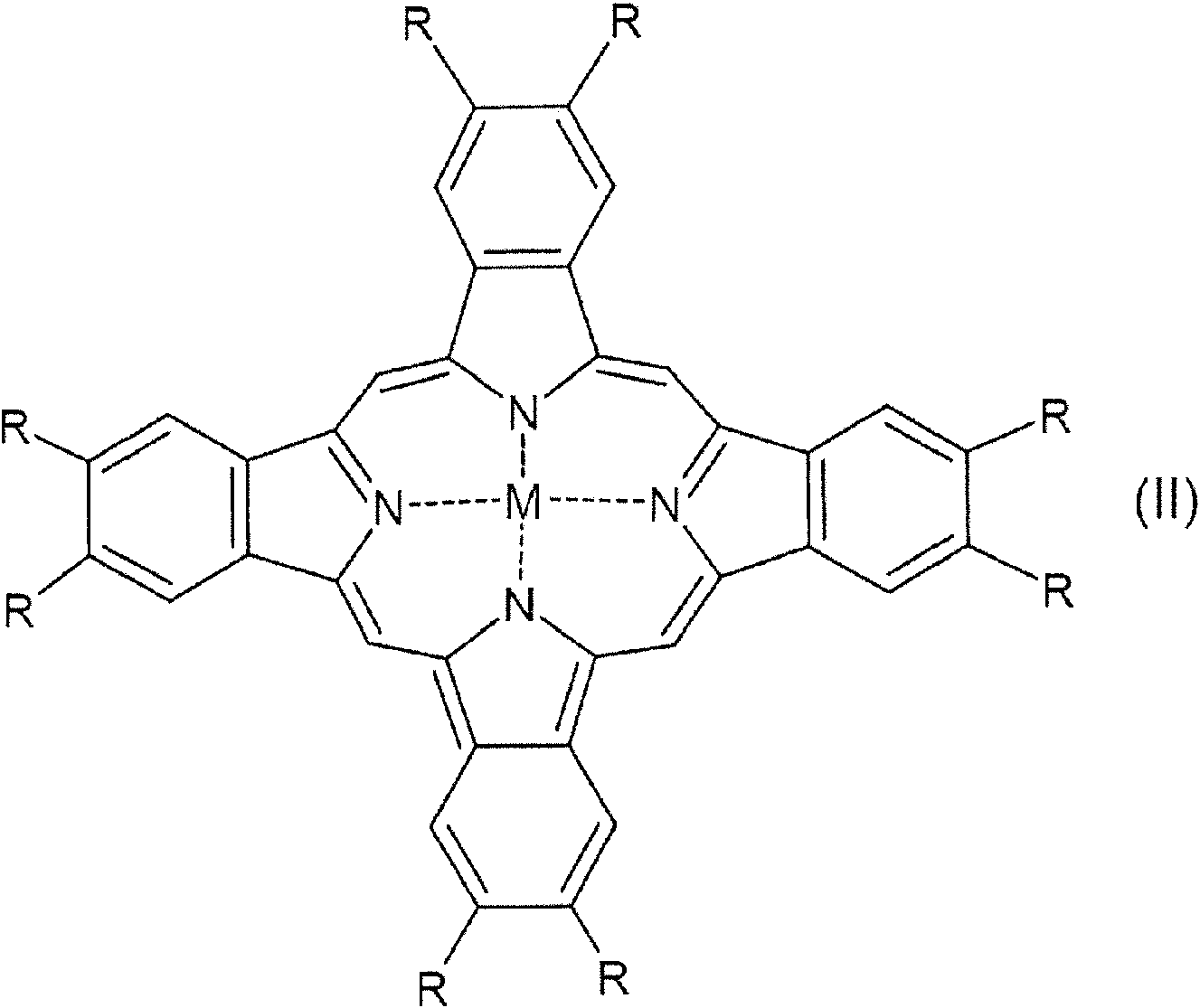
Applications Claiming Priority (2)
| Application Number | Priority Date | Filing Date | Title |
|---|---|---|---|
| PCT/US2013/049847 WO2014011724A1 (en) | 2012-07-10 | 2013-07-10 | System and method for monitoring and treating a surface of a subject |
| PCT/US2014/042377 WO2015006015A1 (en) | 2013-07-10 | 2014-06-13 | Compounds, systems, and methods for monitoring and treating a surface of a subject |
Publications (1)
| Publication Number | Publication Date |
|---|---|
| ES2860675T3 true ES2860675T3 (en) | 2021-10-05 |
Family
ID=52280743
Family Applications (1)
| Application Number | Title | Priority Date | Filing Date |
|---|---|---|---|
| ES14822888T Active ES2860675T3 (en) | 2013-07-10 | 2014-06-13 | Compounds, systems and methods for monitoring and treating a surface of a subject |
Country Status (4)
| Country | Link |
|---|---|
| EP (1) | EP3019854B1 (en) |
| JP (1) | JP6470748B2 (en) |
| ES (1) | ES2860675T3 (en) |
| WO (1) | WO2015006015A1 (en) |
Families Citing this family (5)
| Publication number | Priority date | Publication date | Assignee | Title |
|---|---|---|---|---|
| EP2872877B1 (en) | 2012-07-10 | 2023-05-24 | The General Hospital Corporation | System and method for monitoring and treating a surface of a subject |
| WO2017197385A1 (en) | 2016-05-13 | 2017-11-16 | The General Hospital Corporation | Systems and methods of optical transcutaneous oxygenation monitoring |
| US11202860B2 (en) * | 2018-06-06 | 2021-12-21 | International Business Machines Corporation | Controlled drug delivery in point-of-care drug delivery system based on real-time monitoring with integrated sensor |
| WO2023021352A1 (en) * | 2021-08-18 | 2023-02-23 | 3M Innovative Properties Company | Dressing system |
| WO2023178034A1 (en) * | 2022-03-14 | 2023-09-21 | Hollister Incorporated | System and method for detecting oxygen for prediction, detection, mitigation and/or prevention of peristomal skin injury |
Family Cites Families (9)
| Publication number | Priority date | Publication date | Assignee | Title |
|---|---|---|---|---|
| US5837865A (en) * | 1993-10-15 | 1998-11-17 | Trustees Of The University Of Pennsylvania | Phosphorescent dendritic macromolecular compounds for imaging tissue oxygen |
| EP0915883B1 (en) * | 1996-07-22 | 2002-04-03 | Novartis AG | Process for the preparation of platinum or palladium benzoporphyrins and platinum or palladium cyclohexenoporphyrins, intermediates, and an oxygen sensor comprising platinum or palladium cyclohexenoporphyrin |
| US20030203888A1 (en) * | 2001-06-06 | 2003-10-30 | Boyle Ross William | Chromophores |
| JP3931236B2 (en) * | 2003-07-09 | 2007-06-13 | 独立行政法人情報通信研究機構 | Nanodevice manufacturing method using potential singularity on substrate |
| EP1973503B1 (en) * | 2006-01-04 | 2013-09-25 | The Trustees of the University of Pennsylvania | Oxygen sensor for internal monitoring of tissue oxygen in vivo |
| EP1808627A1 (en) | 2006-01-12 | 2007-07-18 | Luxembourg Patent Company S.A. | Indiactor device showing the opening status of a valve |
| JP2009162871A (en) * | 2007-12-28 | 2009-07-23 | Fujifilm Corp | Photosensitive composition, photospacer, photospacer manufacturing method, protective film, coloring pattern, substrate for display device, and display device |
| WO2012033916A1 (en) * | 2010-09-08 | 2012-03-15 | Southern Illinois University Edwardsville | Method for treating chronic pain |
| EP2872877B1 (en) * | 2012-07-10 | 2023-05-24 | The General Hospital Corporation | System and method for monitoring and treating a surface of a subject |
-
2014
- 2014-06-13 JP JP2016525348A patent/JP6470748B2/en active Active
- 2014-06-13 ES ES14822888T patent/ES2860675T3/en active Active
- 2014-06-13 WO PCT/US2014/042377 patent/WO2015006015A1/en not_active Ceased
- 2014-06-13 EP EP14822888.5A patent/EP3019854B1/en active Active
Also Published As
| Publication number | Publication date |
|---|---|
| JP2016531168A (en) | 2016-10-06 |
| EP3019854A1 (en) | 2016-05-18 |
| WO2015006015A1 (en) | 2015-01-15 |
| EP3019854A4 (en) | 2016-12-14 |
| EP3019854B1 (en) | 2021-01-06 |
| JP6470748B2 (en) | 2019-02-13 |
Similar Documents
| Publication | Publication Date | Title |
|---|---|---|
| US12059481B2 (en) | Compounds, systems, and methods for monitoring and treating a surface of a subject | |
| JP6494044B2 (en) | Sensor for measuring an object in a living animal medium | |
| US9789206B2 (en) | Compounds, systems, and methods for monitoring and treating a surface of a subject | |
| EP3019854B1 (en) | Compounds, systems, and methods for monitoring and treating a surface of a subject | |
| JP2015171550A (en) | Method and system for controlling localized biological response to an implant | |
| US12232870B2 (en) | Systems and methods of optical transcutaneous oxygenation monitoring | |
| JP2012505706A (en) | Method and device for self-adjusting photon therapy intervention | |
| JP2007537805A (en) | Optical sensor for detecting the analysis target in the body | |
| WO2020041240A1 (en) | Mediated drug release for reducing in vivo analyte indicator degradation | |
| US20200178854A1 (en) | Reduction of in vivo analyte signal degradation using multiple metals | |
| CA3110179C (en) | Mediated drug release for reducing in vivo analyte indicator degradation | |
| CA3118592A1 (en) | Drug eluting matrix on analyte indicator | |
| Li et al. | Nanoparticle Oxygen Sensing in Skin |