ES2891601T3 - Tira de acero que presenta bajo contenido de Si - Google Patents
Tira de acero que presenta bajo contenido de Si Download PDFInfo
- Publication number
- ES2891601T3 ES2891601T3 ES13715142T ES13715142T ES2891601T3 ES 2891601 T3 ES2891601 T3 ES 2891601T3 ES 13715142 T ES13715142 T ES 13715142T ES 13715142 T ES13715142 T ES 13715142T ES 2891601 T3 ES2891601 T3 ES 2891601T3
- Authority
- ES
- Spain
- Prior art keywords
- less
- steel strip
- steel
- strip according
- equal
- Prior art date
- Legal status (The legal status is an assumption and is not a legal conclusion. Google has not performed a legal analysis and makes no representation as to the accuracy of the status listed.)
- Active
Links
Classifications
-
- C—CHEMISTRY; METALLURGY
- C23—COATING METALLIC MATERIAL; COATING MATERIAL WITH METALLIC MATERIAL; CHEMICAL SURFACE TREATMENT; DIFFUSION TREATMENT OF METALLIC MATERIAL; COATING BY VACUUM EVAPORATION, BY SPUTTERING, BY ION IMPLANTATION OR BY CHEMICAL VAPOUR DEPOSITION, IN GENERAL; INHIBITING CORROSION OF METALLIC MATERIAL OR INCRUSTATION IN GENERAL
- C23C—COATING METALLIC MATERIAL; COATING MATERIAL WITH METALLIC MATERIAL; SURFACE TREATMENT OF METALLIC MATERIAL BY DIFFUSION INTO THE SURFACE, BY CHEMICAL CONVERSION OR SUBSTITUTION; COATING BY VACUUM EVAPORATION, BY SPUTTERING, BY ION IMPLANTATION OR BY CHEMICAL VAPOUR DEPOSITION, IN GENERAL
- C23C2/00—Hot-dipping or immersion processes for applying the coating material in the molten state without affecting the shape; Apparatus therefor
- C23C2/04—Hot-dipping or immersion processes for applying the coating material in the molten state without affecting the shape; Apparatus therefor characterised by the coating material
- C23C2/06—Zinc or cadmium or alloys based thereon
-
- C—CHEMISTRY; METALLURGY
- C21—METALLURGY OF IRON
- C21D—MODIFYING THE PHYSICAL STRUCTURE OF FERROUS METALS; GENERAL DEVICES FOR HEAT TREATMENT OF FERROUS OR NON-FERROUS METALS OR ALLOYS; MAKING METAL MALLEABLE, e.g. BY DECARBURISATION OR TEMPERING
- C21D9/00—Heat treatment, e.g. annealing, hardening, quenching or tempering, adapted for particular articles; Furnaces therefor
- C21D9/46—Heat treatment, e.g. annealing, hardening, quenching or tempering, adapted for particular articles; Furnaces therefor for sheet metals
-
- B—PERFORMING OPERATIONS; TRANSPORTING
- B32—LAYERED PRODUCTS
- B32B—LAYERED PRODUCTS, i.e. PRODUCTS BUILT-UP OF STRATA OF FLAT OR NON-FLAT, e.g. CELLULAR OR HONEYCOMB, FORM
- B32B15/00—Layered products comprising a layer of metal
- B32B15/01—Layered products comprising a layer of metal all layers being exclusively metallic
- B32B15/013—Layered products comprising a layer of metal all layers being exclusively metallic one layer being formed of an iron alloy or steel, another layer being formed of a metal other than iron or aluminium
-
- B—PERFORMING OPERATIONS; TRANSPORTING
- B32—LAYERED PRODUCTS
- B32B—LAYERED PRODUCTS, i.e. PRODUCTS BUILT-UP OF STRATA OF FLAT OR NON-FLAT, e.g. CELLULAR OR HONEYCOMB, FORM
- B32B15/00—Layered products comprising a layer of metal
- B32B15/04—Layered products comprising a layer of metal comprising metal as the main or only constituent of a layer, which is next to another layer of the same or of a different material
- B32B15/043—Layered products comprising a layer of metal comprising metal as the main or only constituent of a layer, which is next to another layer of the same or of a different material of metal
-
- B—PERFORMING OPERATIONS; TRANSPORTING
- B32—LAYERED PRODUCTS
- B32B—LAYERED PRODUCTS, i.e. PRODUCTS BUILT-UP OF STRATA OF FLAT OR NON-FLAT, e.g. CELLULAR OR HONEYCOMB, FORM
- B32B15/00—Layered products comprising a layer of metal
- B32B15/18—Layered products comprising a layer of metal comprising iron or steel
-
- C—CHEMISTRY; METALLURGY
- C21—METALLURGY OF IRON
- C21D—MODIFYING THE PHYSICAL STRUCTURE OF FERROUS METALS; GENERAL DEVICES FOR HEAT TREATMENT OF FERROUS OR NON-FERROUS METALS OR ALLOYS; MAKING METAL MALLEABLE, e.g. BY DECARBURISATION OR TEMPERING
- C21D8/00—Modifying the physical properties of ferrous metals or ferrous alloys by deformation combined with, or followed by, heat treatment
- C21D8/02—Modifying the physical properties of ferrous metals or ferrous alloys by deformation combined with, or followed by, heat treatment during manufacturing of plates or strips
- C21D8/0221—Modifying the physical properties of ferrous metals or ferrous alloys by deformation combined with, or followed by, heat treatment during manufacturing of plates or strips characterised by the working steps
- C21D8/0226—Hot rolling
-
- C—CHEMISTRY; METALLURGY
- C21—METALLURGY OF IRON
- C21D—MODIFYING THE PHYSICAL STRUCTURE OF FERROUS METALS; GENERAL DEVICES FOR HEAT TREATMENT OF FERROUS OR NON-FERROUS METALS OR ALLOYS; MAKING METAL MALLEABLE, e.g. BY DECARBURISATION OR TEMPERING
- C21D8/00—Modifying the physical properties of ferrous metals or ferrous alloys by deformation combined with, or followed by, heat treatment
- C21D8/02—Modifying the physical properties of ferrous metals or ferrous alloys by deformation combined with, or followed by, heat treatment during manufacturing of plates or strips
- C21D8/0221—Modifying the physical properties of ferrous metals or ferrous alloys by deformation combined with, or followed by, heat treatment during manufacturing of plates or strips characterised by the working steps
- C21D8/0236—Cold rolling
-
- C—CHEMISTRY; METALLURGY
- C21—METALLURGY OF IRON
- C21D—MODIFYING THE PHYSICAL STRUCTURE OF FERROUS METALS; GENERAL DEVICES FOR HEAT TREATMENT OF FERROUS OR NON-FERROUS METALS OR ALLOYS; MAKING METAL MALLEABLE, e.g. BY DECARBURISATION OR TEMPERING
- C21D8/00—Modifying the physical properties of ferrous metals or ferrous alloys by deformation combined with, or followed by, heat treatment
- C21D8/02—Modifying the physical properties of ferrous metals or ferrous alloys by deformation combined with, or followed by, heat treatment during manufacturing of plates or strips
- C21D8/0247—Modifying the physical properties of ferrous metals or ferrous alloys by deformation combined with, or followed by, heat treatment during manufacturing of plates or strips characterised by the heat treatment
- C21D8/0263—Modifying the physical properties of ferrous metals or ferrous alloys by deformation combined with, or followed by, heat treatment during manufacturing of plates or strips characterised by the heat treatment following hot rolling
-
- C—CHEMISTRY; METALLURGY
- C21—METALLURGY OF IRON
- C21D—MODIFYING THE PHYSICAL STRUCTURE OF FERROUS METALS; GENERAL DEVICES FOR HEAT TREATMENT OF FERROUS OR NON-FERROUS METALS OR ALLOYS; MAKING METAL MALLEABLE, e.g. BY DECARBURISATION OR TEMPERING
- C21D8/00—Modifying the physical properties of ferrous metals or ferrous alloys by deformation combined with, or followed by, heat treatment
- C21D8/02—Modifying the physical properties of ferrous metals or ferrous alloys by deformation combined with, or followed by, heat treatment during manufacturing of plates or strips
- C21D8/0247—Modifying the physical properties of ferrous metals or ferrous alloys by deformation combined with, or followed by, heat treatment during manufacturing of plates or strips characterised by the heat treatment
- C21D8/0273—Final recrystallisation annealing
-
- C—CHEMISTRY; METALLURGY
- C21—METALLURGY OF IRON
- C21D—MODIFYING THE PHYSICAL STRUCTURE OF FERROUS METALS; GENERAL DEVICES FOR HEAT TREATMENT OF FERROUS OR NON-FERROUS METALS OR ALLOYS; MAKING METAL MALLEABLE, e.g. BY DECARBURISATION OR TEMPERING
- C21D8/00—Modifying the physical properties of ferrous metals or ferrous alloys by deformation combined with, or followed by, heat treatment
- C21D8/02—Modifying the physical properties of ferrous metals or ferrous alloys by deformation combined with, or followed by, heat treatment during manufacturing of plates or strips
- C21D8/0278—Modifying the physical properties of ferrous metals or ferrous alloys by deformation combined with, or followed by, heat treatment during manufacturing of plates or strips involving a particular surface treatment
-
- C—CHEMISTRY; METALLURGY
- C22—METALLURGY; FERROUS OR NON-FERROUS ALLOYS; TREATMENT OF ALLOYS OR NON-FERROUS METALS
- C22C—ALLOYS
- C22C38/00—Ferrous alloys, e.g. steel alloys
-
- C—CHEMISTRY; METALLURGY
- C22—METALLURGY; FERROUS OR NON-FERROUS ALLOYS; TREATMENT OF ALLOYS OR NON-FERROUS METALS
- C22C—ALLOYS
- C22C38/00—Ferrous alloys, e.g. steel alloys
- C22C38/001—Ferrous alloys, e.g. steel alloys containing N
-
- C—CHEMISTRY; METALLURGY
- C22—METALLURGY; FERROUS OR NON-FERROUS ALLOYS; TREATMENT OF ALLOYS OR NON-FERROUS METALS
- C22C—ALLOYS
- C22C38/00—Ferrous alloys, e.g. steel alloys
- C22C38/002—Ferrous alloys, e.g. steel alloys containing In, Mg, or other elements not provided for in one single group C22C38/001 - C22C38/60
-
- C—CHEMISTRY; METALLURGY
- C22—METALLURGY; FERROUS OR NON-FERROUS ALLOYS; TREATMENT OF ALLOYS OR NON-FERROUS METALS
- C22C—ALLOYS
- C22C38/00—Ferrous alloys, e.g. steel alloys
- C22C38/004—Very low carbon steels, i.e. having a carbon content of less than 0,01%
-
- C—CHEMISTRY; METALLURGY
- C22—METALLURGY; FERROUS OR NON-FERROUS ALLOYS; TREATMENT OF ALLOYS OR NON-FERROUS METALS
- C22C—ALLOYS
- C22C38/00—Ferrous alloys, e.g. steel alloys
- C22C38/02—Ferrous alloys, e.g. steel alloys containing silicon
-
- C—CHEMISTRY; METALLURGY
- C22—METALLURGY; FERROUS OR NON-FERROUS ALLOYS; TREATMENT OF ALLOYS OR NON-FERROUS METALS
- C22C—ALLOYS
- C22C38/00—Ferrous alloys, e.g. steel alloys
- C22C38/04—Ferrous alloys, e.g. steel alloys containing manganese
-
- C—CHEMISTRY; METALLURGY
- C22—METALLURGY; FERROUS OR NON-FERROUS ALLOYS; TREATMENT OF ALLOYS OR NON-FERROUS METALS
- C22C—ALLOYS
- C22C38/00—Ferrous alloys, e.g. steel alloys
- C22C38/06—Ferrous alloys, e.g. steel alloys containing aluminium
-
- C—CHEMISTRY; METALLURGY
- C22—METALLURGY; FERROUS OR NON-FERROUS ALLOYS; TREATMENT OF ALLOYS OR NON-FERROUS METALS
- C22C—ALLOYS
- C22C38/00—Ferrous alloys, e.g. steel alloys
- C22C38/18—Ferrous alloys, e.g. steel alloys containing chromium
- C22C38/22—Ferrous alloys, e.g. steel alloys containing chromium with molybdenum or tungsten
-
- C—CHEMISTRY; METALLURGY
- C22—METALLURGY; FERROUS OR NON-FERROUS ALLOYS; TREATMENT OF ALLOYS OR NON-FERROUS METALS
- C22C—ALLOYS
- C22C38/00—Ferrous alloys, e.g. steel alloys
- C22C38/18—Ferrous alloys, e.g. steel alloys containing chromium
- C22C38/24—Ferrous alloys, e.g. steel alloys containing chromium with vanadium
-
- C—CHEMISTRY; METALLURGY
- C22—METALLURGY; FERROUS OR NON-FERROUS ALLOYS; TREATMENT OF ALLOYS OR NON-FERROUS METALS
- C22C—ALLOYS
- C22C38/00—Ferrous alloys, e.g. steel alloys
- C22C38/18—Ferrous alloys, e.g. steel alloys containing chromium
- C22C38/26—Ferrous alloys, e.g. steel alloys containing chromium with niobium or tantalum
-
- C—CHEMISTRY; METALLURGY
- C22—METALLURGY; FERROUS OR NON-FERROUS ALLOYS; TREATMENT OF ALLOYS OR NON-FERROUS METALS
- C22C—ALLOYS
- C22C38/00—Ferrous alloys, e.g. steel alloys
- C22C38/18—Ferrous alloys, e.g. steel alloys containing chromium
- C22C38/28—Ferrous alloys, e.g. steel alloys containing chromium with titanium or zirconium
-
- C—CHEMISTRY; METALLURGY
- C22—METALLURGY; FERROUS OR NON-FERROUS ALLOYS; TREATMENT OF ALLOYS OR NON-FERROUS METALS
- C22C—ALLOYS
- C22C38/00—Ferrous alloys, e.g. steel alloys
- C22C38/18—Ferrous alloys, e.g. steel alloys containing chromium
- C22C38/32—Ferrous alloys, e.g. steel alloys containing chromium with boron
-
- C—CHEMISTRY; METALLURGY
- C22—METALLURGY; FERROUS OR NON-FERROUS ALLOYS; TREATMENT OF ALLOYS OR NON-FERROUS METALS
- C22C—ALLOYS
- C22C38/00—Ferrous alloys, e.g. steel alloys
- C22C38/18—Ferrous alloys, e.g. steel alloys containing chromium
- C22C38/38—Ferrous alloys, e.g. steel alloys containing chromium with more than 1.5% by weight of manganese
-
- C—CHEMISTRY; METALLURGY
- C22—METALLURGY; FERROUS OR NON-FERROUS ALLOYS; TREATMENT OF ALLOYS OR NON-FERROUS METALS
- C22C—ALLOYS
- C22C38/00—Ferrous alloys, e.g. steel alloys
- C22C38/18—Ferrous alloys, e.g. steel alloys containing chromium
- C22C38/40—Ferrous alloys, e.g. steel alloys containing chromium with nickel
- C22C38/44—Ferrous alloys, e.g. steel alloys containing chromium with nickel with molybdenum or tungsten
-
- C—CHEMISTRY; METALLURGY
- C22—METALLURGY; FERROUS OR NON-FERROUS ALLOYS; TREATMENT OF ALLOYS OR NON-FERROUS METALS
- C22C—ALLOYS
- C22C38/00—Ferrous alloys, e.g. steel alloys
- C22C38/18—Ferrous alloys, e.g. steel alloys containing chromium
- C22C38/40—Ferrous alloys, e.g. steel alloys containing chromium with nickel
- C22C38/46—Ferrous alloys, e.g. steel alloys containing chromium with nickel with vanadium
-
- C—CHEMISTRY; METALLURGY
- C22—METALLURGY; FERROUS OR NON-FERROUS ALLOYS; TREATMENT OF ALLOYS OR NON-FERROUS METALS
- C22C—ALLOYS
- C22C38/00—Ferrous alloys, e.g. steel alloys
- C22C38/18—Ferrous alloys, e.g. steel alloys containing chromium
- C22C38/40—Ferrous alloys, e.g. steel alloys containing chromium with nickel
- C22C38/48—Ferrous alloys, e.g. steel alloys containing chromium with nickel with niobium or tantalum
-
- C—CHEMISTRY; METALLURGY
- C22—METALLURGY; FERROUS OR NON-FERROUS ALLOYS; TREATMENT OF ALLOYS OR NON-FERROUS METALS
- C22C—ALLOYS
- C22C38/00—Ferrous alloys, e.g. steel alloys
- C22C38/18—Ferrous alloys, e.g. steel alloys containing chromium
- C22C38/40—Ferrous alloys, e.g. steel alloys containing chromium with nickel
- C22C38/50—Ferrous alloys, e.g. steel alloys containing chromium with nickel with titanium or zirconium
-
- C—CHEMISTRY; METALLURGY
- C22—METALLURGY; FERROUS OR NON-FERROUS ALLOYS; TREATMENT OF ALLOYS OR NON-FERROUS METALS
- C22C—ALLOYS
- C22C38/00—Ferrous alloys, e.g. steel alloys
- C22C38/18—Ferrous alloys, e.g. steel alloys containing chromium
- C22C38/40—Ferrous alloys, e.g. steel alloys containing chromium with nickel
- C22C38/54—Ferrous alloys, e.g. steel alloys containing chromium with nickel with boron
-
- C—CHEMISTRY; METALLURGY
- C22—METALLURGY; FERROUS OR NON-FERROUS ALLOYS; TREATMENT OF ALLOYS OR NON-FERROUS METALS
- C22C—ALLOYS
- C22C38/00—Ferrous alloys, e.g. steel alloys
- C22C38/18—Ferrous alloys, e.g. steel alloys containing chromium
- C22C38/40—Ferrous alloys, e.g. steel alloys containing chromium with nickel
- C22C38/58—Ferrous alloys, e.g. steel alloys containing chromium with nickel with more than 1.5% by weight of manganese
-
- C—CHEMISTRY; METALLURGY
- C23—COATING METALLIC MATERIAL; COATING MATERIAL WITH METALLIC MATERIAL; CHEMICAL SURFACE TREATMENT; DIFFUSION TREATMENT OF METALLIC MATERIAL; COATING BY VACUUM EVAPORATION, BY SPUTTERING, BY ION IMPLANTATION OR BY CHEMICAL VAPOUR DEPOSITION, IN GENERAL; INHIBITING CORROSION OF METALLIC MATERIAL OR INCRUSTATION IN GENERAL
- C23C—COATING METALLIC MATERIAL; COATING MATERIAL WITH METALLIC MATERIAL; SURFACE TREATMENT OF METALLIC MATERIAL BY DIFFUSION INTO THE SURFACE, BY CHEMICAL CONVERSION OR SUBSTITUTION; COATING BY VACUUM EVAPORATION, BY SPUTTERING, BY ION IMPLANTATION OR BY CHEMICAL VAPOUR DEPOSITION, IN GENERAL
- C23C2/00—Hot-dipping or immersion processes for applying the coating material in the molten state without affecting the shape; Apparatus therefor
- C23C2/26—After-treatment
- C23C2/28—Thermal after-treatment, e.g. treatment in oil bath
-
- C—CHEMISTRY; METALLURGY
- C23—COATING METALLIC MATERIAL; COATING MATERIAL WITH METALLIC MATERIAL; CHEMICAL SURFACE TREATMENT; DIFFUSION TREATMENT OF METALLIC MATERIAL; COATING BY VACUUM EVAPORATION, BY SPUTTERING, BY ION IMPLANTATION OR BY CHEMICAL VAPOUR DEPOSITION, IN GENERAL; INHIBITING CORROSION OF METALLIC MATERIAL OR INCRUSTATION IN GENERAL
- C23F—NON-MECHANICAL REMOVAL OF METALLIC MATERIAL FROM SURFACE; INHIBITING CORROSION OF METALLIC MATERIAL OR INCRUSTATION IN GENERAL; MULTI-STEP PROCESSES FOR SURFACE TREATMENT OF METALLIC MATERIAL INVOLVING AT LEAST ONE PROCESS PROVIDED FOR IN CLASS C23 AND AT LEAST ONE PROCESS COVERED BY SUBCLASS C21D OR C22F OR CLASS C25
- C23F17/00—Multi-step processes for surface treatment of metallic material involving at least one process provided for in class C23 and at least one process covered by subclass C21D or C22F or class C25
-
- C—CHEMISTRY; METALLURGY
- C21—METALLURGY OF IRON
- C21D—MODIFYING THE PHYSICAL STRUCTURE OF FERROUS METALS; GENERAL DEVICES FOR HEAT TREATMENT OF FERROUS OR NON-FERROUS METALS OR ALLOYS; MAKING METAL MALLEABLE, e.g. BY DECARBURISATION OR TEMPERING
- C21D2211/00—Microstructure comprising significant phases
- C21D2211/005—Ferrite
-
- C—CHEMISTRY; METALLURGY
- C21—METALLURGY OF IRON
- C21D—MODIFYING THE PHYSICAL STRUCTURE OF FERROUS METALS; GENERAL DEVICES FOR HEAT TREATMENT OF FERROUS OR NON-FERROUS METALS OR ALLOYS; MAKING METAL MALLEABLE, e.g. BY DECARBURISATION OR TEMPERING
- C21D2211/00—Microstructure comprising significant phases
- C21D2211/008—Martensite
-
- Y—GENERAL TAGGING OF NEW TECHNOLOGICAL DEVELOPMENTS; GENERAL TAGGING OF CROSS-SECTIONAL TECHNOLOGIES SPANNING OVER SEVERAL SECTIONS OF THE IPC; TECHNICAL SUBJECTS COVERED BY FORMER USPC CROSS-REFERENCE ART COLLECTIONS [XRACs] AND DIGESTS
- Y10—TECHNICAL SUBJECTS COVERED BY FORMER USPC
- Y10T—TECHNICAL SUBJECTS COVERED BY FORMER US CLASSIFICATION
- Y10T428/00—Stock material or miscellaneous articles
- Y10T428/12—All metal or with adjacent metals
- Y10T428/12493—Composite; i.e., plural, adjacent, spatially distinct metal components [e.g., layers, joint, etc.]
- Y10T428/12771—Transition metal-base component
- Y10T428/12785—Group IIB metal-base component
- Y10T428/12792—Zn-base component
- Y10T428/12799—Next to Fe-base component [e.g., galvanized]
Landscapes
- Chemical & Material Sciences (AREA)
- Engineering & Computer Science (AREA)
- Materials Engineering (AREA)
- Mechanical Engineering (AREA)
- Metallurgy (AREA)
- Organic Chemistry (AREA)
- Thermal Sciences (AREA)
- Physics & Mathematics (AREA)
- Crystallography & Structural Chemistry (AREA)
- Chemical Kinetics & Catalysis (AREA)
- Oil, Petroleum & Natural Gas (AREA)
- Heat Treatment Of Sheet Steel (AREA)
- Coating With Molten Metal (AREA)
Abstract
Tira de acero que presenta una resistencia a la tracción final Rm en la categoría de acero de 600 MPa que consiste, en porcentaje de masa, en los siguientes elementos: C 0,08-0,11%; Mn 1,70-2,20%; Si como máximo del 0,1%; Cr 0,40-0,70%; Mo como máximo del 0,3%; Ni como máximo del 1,0%, Al 0,01-1,50%; Nb como máximo del 0,005%; P opcionalmente más del 0,005% y como máximo del 0,05%; N igual a o inferior al 0,015%; Ti igual a o inferior al 0,1%; V igual a o inferior al 0,1%; B igual a o inferior al 0,01% en la que la suma de Cr, Mo y Ni es de al menos el 0,5%; siendo el equilibrio Fe e impurezas inevitables; y presentando una microestructura que consiste en: martensita 2-50%; ferrita 50-98%; y perlita 0% o menos del 3%.
Description
DESCRIPCIÓN
Tira de acero que presenta bajo contenido de Si
La invención se refiere a una tira de acero que presenta bajo contenido de silicio, en particular, una tira de acero galvanizado por inmersión en caliente, más particularmente, una tira de acero de doble fase o fase compleja galvanizada por inmersión en caliente.
La tira de acero de doble fase (DP) que presenta propiedades equilibradas en cuanto a resistencia y ductilidad (conformabilidad) se conoce bien en la técnica. En las tiras de acero laminadas en frío de DP, el silicio es un elemento de aleación muy común por razones de reducción y/o control de costes, fortalecimiento de disoluciones sólidas, evitando la precipitación de carburos, lo cual es favorable en vista de la ductilidad (elongación). Sin embargo, el Si induce problemas relacionados con la superficie.
Los óxidos de Si formados durante el procesamiento en el molino de tiras en caliente y en la línea de recocido aumentan el riesgo de aparición de las denominadas “rayas de tigre”, que afectan el aspecto y la capacidad de recubrimiento. Por tanto, comúnmente, el uso de silicio en acero de DP está restringido, especialmente en acero de DP galvanizado por inmersión en caliente (HDG). Por lo general, el contenido de Si en el acero de DP es de 0,2-0,3% en peso en láminas de DP HDG y 0,2-0,5% en peso en láminas de acero sin recubrimiento.
A partir del documento EP 2169091 A1 se conoce una lámina de acero galvanizado por inmersión en caliente de alta resistencia con bajo límite elástico. La composición del acero comprende, en porcentaje de masa, 0,01-0,12% de C, el 0,2% o menos de Si, menos del 2% de Mn, el 0,04% o menos de P, el 0,02% o menos de S, el 0,3% o menos de sol. Al, el 0,01% o menos de N, 0,3-2% de Cr, cumpliendo también la condición 2,1 < [Mneq] < 3 y 0,24 < [%Cr]/[%Mn], siendo el equilibrio hierro e impurezas inevitables. La microestructura de acero está compuesta por ferrita y una segunda fase, en la que la relación de área de la segunda fase es el 2-25%, la relación de área de la perlita o la bainita en la segunda fase es el 0-20%, el diámetro promedio del grano de la segunda fase es de 0,9-7 micrómetros y la relación de área de granos con un diámetro de grano de menos de 0,8 micrómetros en la segunda fase es inferior al 15%. La composición del acero se muestra a modo de ejemplo mediante una serie de ejemplos en base a una filosofía de aleación de Si bajo y de Al bajo.
El documento EP2434027A1 da a conocer un material de acero para soldadura con alto aporte de calor. El material de acero presenta una composición que contiene (en % de masa) del 0,03 al 0,08% de C, del 0,01 al 0,15% de Si, del 1,8 al 2,6% de Mn, el 0,012% o menos de P, del 0,0005 al 0,0040% de S, del 0,005 al 0,1% de Al, del 0,003 al 0,03% de Nb, del 0,003 al 0,03% de Ti, del 0,0025 al 0,0070% de N y del 0,0003 al 0,0025% de B, en donde un equivalente de carbono Ceq se encuentra dentro de un intervalo entre 0,33 y 0,45.
El documento internacional WO2008/102009A1 da a conocer una tira de acero de alta resistencia laminada en frío y recocida de manera continuada que comprende (en % de peso): 0,04-0,30% de C, 1,0-3,5% de Mn, 0-1,0% de Si, 0-2,0% de Al, 0-1,0% de Cr, 0-0,02% de P, 0-0,01% de S, 0-0,25% de V, 0-0,1% de Nb, 0-0,20% de Ti, 0-0,015% de N, 0-0,010% de B e impurezas inevitables, siendo el equilibrio hierro. La tira está dotada de una capa de recubrimiento de aleación de zinc galvanizada por inmersión en caliente o galvanizada por recocido, en donde la aleación de zinc consiste en 0,3 - 4,0% de Mg y 0,05 - 6,0% de Al; opcionalmente, como máximo el 0,2% de uno o más elementos adicionales; impurezas inevitables; siendo el resto zinc.
El documento EP2447390A1, que es técnica anterior en virtud del artículo 54(3) EPC, da a conocer una lámina de acero galvanizado de alta resistencia que contiene (en % de peso) más del 0,015% a menos del 0,10% de C, el 0,5% o menos de Si, del 1,0% al 1,9% de Mn, del 0,015% al 0,050% de P, el 0,03% o menos de S, del 0,01% al 0,5% de sol. Al, el 0,005% o menos de N, menos del 0,40% de Cr, el 0,005% o menos de B, menos del 0,15% de Mo, el 0,4% o menos de V, y menos del 0,020% de Ti, en donde la composición cumple adicionalmente las condiciones 2,2:5[Mneq1<3,1, [%Mn]+3,3[%Mo]<1,9 y [% Mn]+3,3[%Mo])/(1,3[%Cr]+8[%P]+ 150B*)<3,5.
El documento JP2007092126 da a conocer una lámina de acero delgada que presenta una composición (en % de peso), que comprende C: del 0,05 al 0,15%, Si: el 0,3% o menos, Mn: del 1,5 al 2,5%, P: el 0,05% o menos, S: el 0,01% o menos, Al: el 1,0% o menos, N: el 0,01% o menos, Nb: del 0,02 al 0,1%, en donde el equilibrio está compuesto por Fe e impurezas inevitables, y el contenido de C, N, Nb cumple la fórmula Nb-(92,9/14) * N > 0,02 (1) C-(12/92,9) * Nb-1 > 0,01 (2) en donde Nb-1 = Nb-(92,9/14) * N. La lámina de acero presenta una microestructura que comprende una fase ferrita del 60 al 90% por área y una fase martensita del 10 al 40%, en donde la relación de área total de la fase ferrita y la fase martensita es >95. La lámina presenta una resistencia a la tracción de 590 MPa o más
El documento internacional WO2011/152017A1 da a conocer una lámina de acero, que comprende en % de masa: C: igual a o superior al 0,05% e inferior al 0,12%; P: del 0,001 al 0,040%; y S: igual a o inferior al 0,0050%, en donde una capa superficial de lámina de acero, que constituye una parte de la lámina de acero hasta una profundidad de 10 pm medida desde cada superficie de la lámina de acero, presenta una estructura que contiene más del 70% de fase ferrita por fracción volumétrica y una parte de capa interior de lámina de acero, en el lado interior a partir de la profundidad de 10 pm medida desde cada superficie, presenta una estructura que contiene del 20 al 70% en fracción volumétrica de fase ferrita con un tamaño promedio de grano cristalino igual a o inferior a 5 pm. La lámina de acero presenta una
resistencia a la tracción igual a o superior a 980 MPa, y la lámina de acero presenta una capa galvanizada sobre una superficie de la misma.
El documento JP2011219812A da a conocer una lámina de acero que puede fabricarse sin devanado a temperatura ambiente después del laminado en caliente. La composición comprende, en % de peso, C: 0,05-0,15%, Si: el 0,1% o menos, Mn: 1,4-2,5%, Al: el 1,2% o menos, Ti: 0,02-0,06%, Cr: del 0,2 al 0,8%, P: el 0,05% o menos S: el 0,005% o menos, N: el 0.01% o menos, siendo el equilibrio Fe e impurezas inevitables La resistencia a la tracción es de 780 MPa o más. La microestructura comprende ferrita, bainita con una relación de área del 60% o más y una fase martensita del 10% o menos.
El documento JPH 11293396 da a conocer una lámina de acero galvanizado por inmersión en caliente que se produce utilizando, como sustrato, una lámina de acero laminada en frío que presenta una composición que contiene, en peso, 0. 06-0,18% de C, < 1,5% de Si, 1,4-2,3% de Mn, 0,2-0,6% de Cr, <0,05% de P, 0,010-0,100% de sol. Al, <0,01% de S y <0,01% de N, y la estructura de lámina de acero consiste en >5% por relación de área, en total, de fase martensítica, fase bainítica y fase austenítica retenida y fase perlítica y fase ferrítica de equilibrio.
Un objeto de la presente invención es proporcionar una composición de acero, tal como una composición de acero de doble fase (DP) o fase compleja (CP), que combine las propiedades de microestructura deseadas en cuanto a resistencia y ductilidad con una calidad superficial suficiente, evitando en particular la aparición de rayas de tigre.
Otro objeto de la invención es proporcionar una composición de acero de este tipo que presente una buena capacidad de recubrimiento.
Según la invención, se proporciona una tira de acero que presenta una resistencia a la tracción final Rm en la categoría de acero de 600 MPa, que presenta una composición y una microestructura tal como se definen en la reivindicación 1.
Sorprendentemente, se ha encontrado que la composición de acero según la invención no muestra rayas de tigre a un nivel aceptable de propiedades de resistencia y conformabilidad comparables a las tiras de acero de DP tradicionales (HDG) al nivel de 600 MPa.
En cuanto a los aspectos metalúrgicos, se considera que se aplican las siguientes pautas:
C es 0,08-0,11%, en vista de la soldabilidad por puntos. Si C se encuentra por debajo del 0,08%, entonces el contenido de carbono es demasiado bajo para crear microestructuras de DP o CP.
Si es como máximo el 0,1%. El Si ha demostrado ser el principal factor responsable de las rayas tigre. Con el fin de evitar el riesgo de que se produzcan estos defectos superficiales de manera segura, la cantidad se limita a un máximo del 0,1%. Preferiblemente, el contenido de Si se encuentra en el intervalo de 0,02-0,08%.
Por lo general, la adición de Al y Si presenta un efecto beneficioso similar sobre la conformabilidad de los aceros. Sin embargo, en vista de las rayas de tigre, Al tiene un efecto insignificante. Por lo tanto, Al se encuentra en el intervalo de 0,01-1,50%, tal como 0,01-1,10%. Preferiblemente, la cantidad mínima de Al es superior al 0,1%, más preferiblemente más de aproximadamente el 0,2%, y el contenido de Al es ventajosamente inferior al 0,5%, tal como de aproximadamente el 0,3%. Mn está presente a un nivel del 1,70-2,20%, preferiblemente 1,70-1,95, compensando de este modo la reducción de la resistencia provocada por el bajo contenido de Si. Cr, Mo y Ni también están presentes por razones de resistencia y endurecimiento que determinan la microestructura de DP o CP de la tira de acero de la invención. Según la invención, la suma total de estos elementos es de al menos el 0,5%. Las cantidades de los elementos individuales son
Cr 0,40-0,70%, preferiblemente 0,5-0,6%;
Mo como máximo del 0,3%, preferiblemente menos del 0,01%; y
Ni 0-1,0%, preferiblemente 0-0,05%.
La composición de la tira de acero puede comprender opcionalmente otros elementos de aleación en pequeñas cantidades. La suma de impurezas inevitables y otros elementos de aleación es ventajosamente inferior al 1,25%. Los límites superiores de los elementos de aleación adicionales y las impurezas individuales son
P opcionalmente más del 0,005% y como máximo del 0,05%
N como máximo del 0,015%
Nb como máximo del 0,005%
Ti como máximo del 0,1%
V como máximo del 0,1%
B como máximo del 0,01%.
La tira de acero según la invención presenta una microestructura que consiste en martensita 2-50%, preferiblemente al menos un 5%; ferrita 50-98%; y perlita menos del 3%, preferiblemente de aproximadamente el 0%. Ventajosamente, el tamaño del grano es de aproximadamente 30 micrómetros o menos.
En una realización preferida, la tira de acero se recubre con un recubrimiento que comprende Zn. Aunque el recubrimiento puede aplicarse de diversas maneras, se prefiere galvanizado por inmersión en caliente utilizando un baño de recubrimiento de GI habitual. También pueden aplicarse otros recubrimientos de Zn. Un ejemplo comprende un recubrimiento de aleación de Zn según el documento internacional WO 2008102009, en particular, una capa de recubrimiento de aleación de zinc que consiste en 0,3 - 4,0% de Mg y 0,05% - 6,0% de Al y, opcionalmente, como máximo el 0,2% de uno o más elementos adicionales junto con impurezas inevitables y siendo el resto zinc. Un elemento adicional agregado típicamente en una pequeña cantidad de menos del 0,2% en peso podría seleccionarse del grupo que comprende Pb o Sb, Ti, Ca, Mn, Sn, La, Ce, Cr, Ni, Zr o Bi. Pb, Sn, Bi y Sb suelen añadirse para formar aspectos cristalinos. Preferiblemente, la cantidad total de elementos adicionales en la aleación de zinc es como máximo del 0,2%. Estas pequeñas cantidades de un elemento adicional no alteran en gran medida las propiedades del recubrimiento ni del baño para las aplicaciones habituales. Preferiblemente, cuando están presentes uno o más elementos adicionales en el recubrimiento de aleación de zinc, cada uno está presente en una cantidad < 0,02% en peso, preferiblemente cada uno está presente en una cantidad < 0,01% en peso. Por lo general, solo se añaden elementos adicionales para evitar la formación de escoria en el baño con aleación de zinc fundido para el galvanizado por inmersión en caliente, o para formar aspectos cristalinos en la capa de recubrimiento.
La invención se ilustrará con más detalle por medio de los siguientes ejemplos:
Ejemplos 1-4
Las láminas que presentan una composición tal como se indica en la tabla 1 se fabricaron por medio de un proceso de laminación en frío y recocido continuo habitual. Tras el laminado en caliente, la tira se laminó en frío hasta alcanzar un grosor final indicado en la tabla 2. Para los ejemplos 1-2 se fabricó una tira laminada en frío mediante rutas de fabricación y laminación de acero habituales. Después del laminado en frío, el material se recuece continuamente en líneas de recocido habituales. Los datos pertinentes para los ejemplos 1 y 2 se presentan en la tabla 3. Después de calentar a una temperatura T1, se lleva a cabo un enfriamiento lento (velocidad 1-10°C/s) hasta T2 y posteriormente se realiza un enfriamiento rápido (velocidad 20-60°C/s) hasta la temperatura T3. A continuación, el material se galvaniza. Los ejemplos 3-4 se prepararon de manera similar.
Las láminas también se examinaron visualmente para detectar la presencia de rayas de tigre. No se observaron rayas de tigre. La calidad de la superficie es casi completa. También se logró una buena capacidad de recubrimiento.

Tabla 2. Ejemplos de propiedades físicas 1 -4
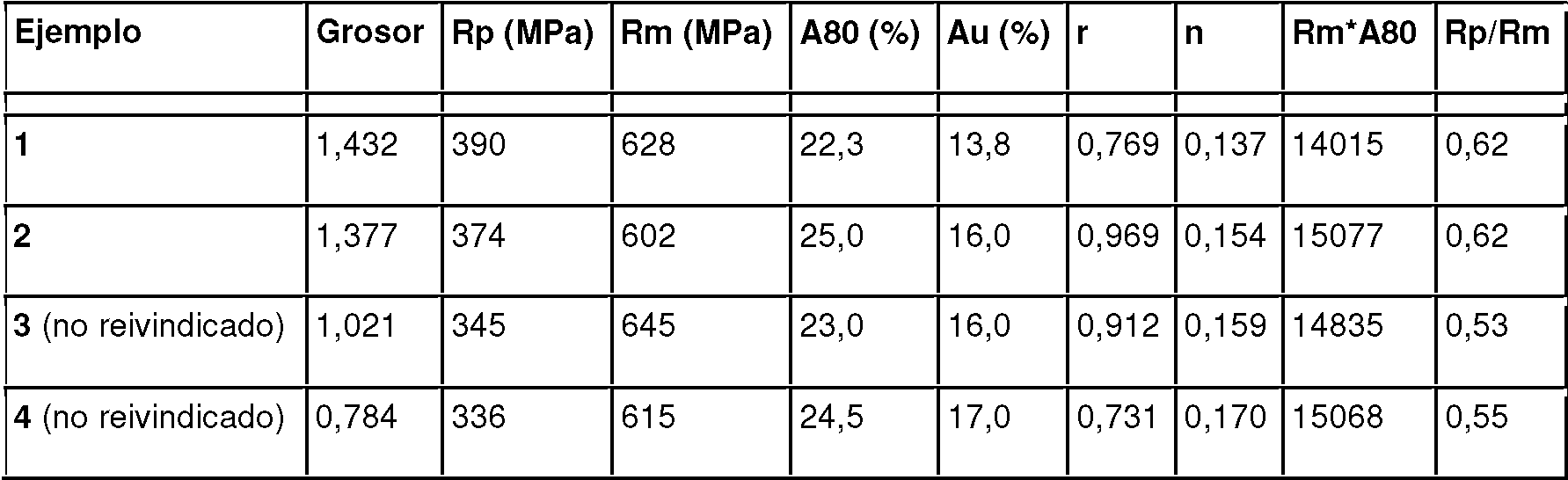
Tabla 3. Ejemplos de datos de recocido 1-2

Claims (10)
1. Tira de acero que presenta una resistencia a la tracción final Rm en la categoría de acero de 600 MPa que consiste, en porcentaje de masa, en los siguientes elementos:
C 0,08-0,11%;
Mn 1,70-2,20%;
Si como máximo del 0,1%;
Cr 0,40-0,70%;
Mo como máximo del 0,3%;
Ni como máximo del 1,0%,
Al 0,01-1,50%;
Nb como máximo del 0,005%;
P opcionalmente más del 0,005% y como máximo del 0,05%;
N igual a o inferior al 0,015%;
Ti igual a o inferior al 0,1%;
V igual a o inferior al 0,1%;
B igual a o inferior al 0,01%
en la que la suma de Cr, Mo y Ni es de al menos el 0,5%;
siendo el equilibrio Fe e impurezas inevitables;
y presentando una microestructura que consiste en:
martensita 2-50%;
ferrita 50-98%;
y perlita 0% o menos del 3%.
2. Tira de acero según la reivindicación 1, en la que Si es como máximo del 0,08%.
3. Tira de acero según la reivindicación 1 o la reivindicación 2, que comprende
Mn 1,70-1,95%;
Si 0,02-0,08%;
Al 0,1-0,5%.
4. Tira de acero según cualquiera de las reivindicaciones anteriores, que comprende
Cr 0,50-0,60%;
Mo como máximo del 0,01%;
Ni como máximo del 0,05%.
5. Tira de acero según una de las reivindicaciones anteriores, en la que Al es al menos del 0,2%.
6. Tira de acero según cualquiera de las reivindicaciones anteriores que presenta una microestructura que comprende al menos un 5% de martensita;
y aproximadamente el 0% de perlita.
7. Tira de acero según cualquiera de las reivindicaciones anteriores, en la que el tamaño del grano es de aproximadamente 30 micrómetros o menos.
8. Tira de acero según cualquiera de las reivindicaciones anteriores, recubierta con un recubrimiento que comprende Zn.
9. Tira de acero según la reivindicación 8, que se galvaniza por inmersión en caliente.
10. Tira de acero según la reivindicación 8 o la reivindicación 9, en la que el recubrimiento comprende, en porcentaje de masa: 0,3-4,0% de Mg y 0,05-6,0% de Al y opcionalmente como máximo el 0,2% de uno o más elementos adicionales junto con impurezas inevitables y siendo el resto zinc.
Applications Claiming Priority (2)
| Application Number | Priority Date | Filing Date | Title |
|---|---|---|---|
| EP12002492 | 2012-04-05 | ||
| PCT/EP2013/001017 WO2013149734A1 (en) | 2012-04-05 | 2013-04-05 | Steel strip having a low si content |
Publications (1)
| Publication Number | Publication Date |
|---|---|
| ES2891601T3 true ES2891601T3 (es) | 2022-01-28 |
Family
ID=48083106
Family Applications (2)
| Application Number | Title | Priority Date | Filing Date |
|---|---|---|---|
| ES13715142T Active ES2891601T3 (es) | 2012-04-05 | 2013-04-05 | Tira de acero que presenta bajo contenido de Si |
| ES13717709T Active ES2892350T3 (es) | 2012-04-05 | 2013-04-05 | Tira de acero que presenta bajo contenido de Si |
Family Applications After (1)
| Application Number | Title | Priority Date | Filing Date |
|---|---|---|---|
| ES13717709T Active ES2892350T3 (es) | 2012-04-05 | 2013-04-05 | Tira de acero que presenta bajo contenido de Si |
Country Status (9)
| Country | Link |
|---|---|
| US (3) | US9593400B2 (es) |
| EP (3) | EP2834385B1 (es) |
| JP (2) | JP6227626B2 (es) |
| KR (2) | KR102018935B1 (es) |
| CN (3) | CN104411855A (es) |
| CA (2) | CA2869339C (es) |
| ES (2) | ES2891601T3 (es) |
| PT (1) | PT2834383T (es) |
| WO (3) | WO2013149733A1 (es) |
Families Citing this family (9)
| Publication number | Priority date | Publication date | Assignee | Title |
|---|---|---|---|---|
| WO2013149733A1 (en) | 2012-04-05 | 2013-10-10 | Tata Steel Ijmuiden B.V. | Steel strip having a low si content |
| KR101482359B1 (ko) | 2012-12-27 | 2015-01-13 | 주식회사 포스코 | 극저온 인성이 우수하고 저항복비 특성을 갖는 고강도 강판 및 그의 제조방법 |
| MA39245B2 (fr) * | 2014-02-05 | 2021-04-30 | Arcelormittal S A | Tole d'acier thermoformable, durcissable a l'air et pouvant etre soudee |
| KR102075182B1 (ko) | 2015-12-24 | 2020-02-10 | 주식회사 포스코 | 도금성이 우수한 고강도 용융 아연계 도금 강재 및 그 제조방법 |
| CN107058866B (zh) * | 2017-03-08 | 2019-06-04 | 内蒙古包钢钢联股份有限公司 | 铁素体马氏体冷轧双相钢及其制备方法 |
| JP7326247B2 (ja) | 2017-07-25 | 2023-08-15 | タタ、スティール、アイモイデン、ベスローテン、フェンノートシャップ | 熱間成形された部品を製造するための鋼ストリップ、シート又はブランク、部品、及びブランクを部品に熱間成形する方法 |
| CN107557695B (zh) * | 2017-08-28 | 2019-05-03 | 北京首钢冷轧薄板有限公司 | 一种CP980MPa复相钢的酸轧生产工艺控制方法 |
| CN113088820A (zh) * | 2021-04-02 | 2021-07-09 | 苏州雷格姆海洋石油设备科技有限公司 | 深海井口套管挂用8630mod3-85k锻件的生产工艺 |
| WO2023135550A1 (en) | 2022-01-13 | 2023-07-20 | Tata Steel Limited | Cold rolled low carbon microalloyed steel and method of manufacturing thereof |
Family Cites Families (24)
| Publication number | Priority date | Publication date | Assignee | Title |
|---|---|---|---|---|
| JPH11293396A (ja) * | 1998-04-15 | 1999-10-26 | Nkk Corp | 高強度溶融亜鉛めっき鋼板及び合金化溶融亜鉛めっき鋼板ならびにその製造方法 |
| CN1145709C (zh) * | 2000-02-29 | 2004-04-14 | 川崎制铁株式会社 | 应变时效硬化特性优良的高强度冷轧钢板及其制造方法 |
| AU780588B2 (en) | 2000-04-07 | 2005-04-07 | Jfe Steel Corporation | Hot rolled steel plate, cold rolled steel plate and hot dip galvanized steel plate being excellent in strain aging hardening characteristics, and method for their production |
| JP3704306B2 (ja) * | 2001-12-28 | 2005-10-12 | 新日本製鐵株式会社 | 溶接性、穴拡げ性および耐食性に優れた溶融亜鉛めっき高強度鋼板およびその製造方法 |
| US6811624B2 (en) * | 2002-11-26 | 2004-11-02 | United States Steel Corporation | Method for production of dual phase sheet steel |
| JP4325508B2 (ja) * | 2004-08-16 | 2009-09-02 | 住友金属工業株式会社 | 高張力溶融亜鉛めっき鋼板と製造方法 |
| JP4665692B2 (ja) * | 2005-09-29 | 2011-04-06 | Jfeスチール株式会社 | 曲げ剛性に優れた高強度薄鋼板およびその製造方法 |
| CA2644892C (en) * | 2006-03-16 | 2015-11-24 | Sumitomo Metal Industries, Ltd. | Steel plate for submerged arc welding |
| JP2008111150A (ja) * | 2006-10-30 | 2008-05-15 | Nippon Steel Corp | 高耐食性溶融Zn系めっき鋼板 |
| EP3421634A1 (en) | 2007-02-23 | 2019-01-02 | Tata Steel IJmuiden B.V. | Cold rolled and continuously annealed high strength steel strip and method for producing said steel |
| WO2008110200A1 (de) | 2007-03-09 | 2008-09-18 | Datacollect Traffic Systems Gmbh & Co. Kg | Vorrichtung zum ermitteln von daten |
| PL2130938T3 (pl) * | 2007-03-27 | 2018-11-30 | Nippon Steel & Sumitomo Metal Corporation | Blacha stalowa o dużej wytrzymałości walcowana na gorąco o doskonałych właściwościach powierzchniowych i właściwościach wywijania obrzeży otworu |
| JP5272547B2 (ja) | 2007-07-11 | 2013-08-28 | Jfeスチール株式会社 | 降伏強度が低く、材質変動の小さい高強度溶融亜鉛めっき鋼板およびその製造方法 |
| PL2028282T3 (pl) * | 2007-08-15 | 2012-11-30 | Thyssenkrupp Steel Europe Ag | Stal dwufazowa, płaski wyrób wytworzony ze stali dwufazowej i sposób wytwarzania płaskiego wyrobu |
| EP3696292B1 (en) * | 2007-10-25 | 2024-03-13 | JFE Steel Corporation | A high tensile strength galvanized steel sheet with excellent formability and anti-crush properties and method of manufacturing the same |
| JP5167487B2 (ja) * | 2008-02-19 | 2013-03-21 | Jfeスチール株式会社 | 延性に優れる高強度鋼板およびその製造方法 |
| JP5438302B2 (ja) * | 2008-10-30 | 2014-03-12 | 株式会社神戸製鋼所 | 加工性に優れた高降伏比高強度の溶融亜鉛めっき鋼板または合金化溶融亜鉛めっき鋼板とその製造方法 |
| EP2434027B1 (en) * | 2009-05-22 | 2015-08-19 | JFE Steel Corporation | Steel material for high heat input welding |
| JP5740847B2 (ja) | 2009-06-26 | 2015-07-01 | Jfeスチール株式会社 | 高強度溶融亜鉛めっき鋼板およびその製造方法 |
| PL2500445T3 (pl) * | 2009-11-09 | 2020-08-10 | Nippon Steel Corporation | Blacha stalowa cienka o dużej wytrzymałości mająca doskonałą obrabialność i utwardzalność farby przy wypalaniu oraz sposób wytwarzania blachy stalowej cienkiej o dużej wytrzymałości |
| JP5432802B2 (ja) * | 2010-03-31 | 2014-03-05 | 株式会社神戸製鋼所 | 加工性に優れた高降伏比高強度の溶融亜鉛めっき鋼板および合金化溶融亜鉛めっき鋼板 |
| JP5459028B2 (ja) * | 2010-04-08 | 2014-04-02 | 新日鐵住金株式会社 | 疲労特性と黒皮上への化成処理性に優れた高強度熱延鋼板およびその製造方法 |
| JP5434960B2 (ja) * | 2010-05-31 | 2014-03-05 | Jfeスチール株式会社 | 曲げ性および溶接性に優れる高強度溶融亜鉛めっき鋼板およびその製造方法 |
| WO2013149733A1 (en) | 2012-04-05 | 2013-10-10 | Tata Steel Ijmuiden B.V. | Steel strip having a low si content |
-
2013
- 2013-04-05 WO PCT/EP2013/001016 patent/WO2013149733A1/en not_active Ceased
- 2013-04-05 CN CN201380022072.XA patent/CN104411855A/zh active Pending
- 2013-04-05 EP EP13717709.3A patent/EP2834385B1/en active Active
- 2013-04-05 EP EP13716206.1A patent/EP2834384A1/en not_active Withdrawn
- 2013-04-05 WO PCT/EP2013/001017 patent/WO2013149734A1/en not_active Ceased
- 2013-04-05 WO PCT/EP2013/001015 patent/WO2013149732A1/en not_active Ceased
- 2013-04-05 KR KR1020147030791A patent/KR102018935B1/ko active Active
- 2013-04-05 EP EP13715142.9A patent/EP2834383B1/en active Active
- 2013-04-05 CA CA2869339A patent/CA2869339C/en not_active Expired - Fee Related
- 2013-04-05 CN CN201380022075.3A patent/CN104411856B/zh not_active Expired - Fee Related
- 2013-04-05 KR KR1020147030792A patent/KR102018936B1/ko active Active
- 2013-04-05 JP JP2015503786A patent/JP6227626B2/ja active Active
- 2013-04-05 CA CA2869340A patent/CA2869340C/en not_active Expired - Fee Related
- 2013-04-05 PT PT137151429T patent/PT2834383T/pt unknown
- 2013-04-05 JP JP2015503785A patent/JP6359518B2/ja not_active Expired - Fee Related
- 2013-04-05 US US14/389,620 patent/US9593400B2/en active Active
- 2013-04-05 US US14/389,697 patent/US9695493B2/en active Active
- 2013-04-05 ES ES13715142T patent/ES2891601T3/es active Active
- 2013-04-05 CN CN201380022062.6A patent/CN104246000B/zh not_active Expired - Fee Related
- 2013-04-05 ES ES13717709T patent/ES2892350T3/es active Active
-
2017
- 2017-05-10 US US15/591,433 patent/US20170240990A1/en not_active Abandoned
Also Published As
| Publication number | Publication date |
|---|---|
| KR20150000896A (ko) | 2015-01-05 |
| EP2834385B1 (en) | 2021-07-21 |
| WO2013149734A1 (en) | 2013-10-10 |
| EP2834384A1 (en) | 2015-02-11 |
| EP2834385A1 (en) | 2015-02-11 |
| JP2015517033A (ja) | 2015-06-18 |
| JP2015514868A (ja) | 2015-05-21 |
| JP6359518B2 (ja) | 2018-07-18 |
| EP2834383A1 (en) | 2015-02-11 |
| CA2869340C (en) | 2016-10-25 |
| CA2869340A1 (en) | 2013-10-10 |
| US20170240990A1 (en) | 2017-08-24 |
| US20150071811A1 (en) | 2015-03-12 |
| KR102018935B1 (ko) | 2019-09-05 |
| WO2013149733A1 (en) | 2013-10-10 |
| CN104411856A (zh) | 2015-03-11 |
| CN104246000A (zh) | 2014-12-24 |
| US9695493B2 (en) | 2017-07-04 |
| CN104246000B (zh) | 2016-10-12 |
| CA2869339C (en) | 2016-10-25 |
| EP2834383B1 (en) | 2021-07-21 |
| KR20150000895A (ko) | 2015-01-05 |
| ES2892350T3 (es) | 2022-02-03 |
| US20150064497A1 (en) | 2015-03-05 |
| PT2834383T (pt) | 2021-09-29 |
| CN104411855A (zh) | 2015-03-11 |
| CN104411856B (zh) | 2016-09-21 |
| US9593400B2 (en) | 2017-03-14 |
| JP6227626B2 (ja) | 2017-11-08 |
| WO2013149732A1 (en) | 2013-10-10 |
| KR102018936B1 (ko) | 2019-09-05 |
| CA2869339A1 (en) | 2013-10-10 |
Similar Documents
| Publication | Publication Date | Title |
|---|---|---|
| ES2891601T3 (es) | Tira de acero que presenta bajo contenido de Si | |
| ES3035701T3 (en) | High strength hot-dip galvanized steel sheet having excellent formability and a method of manufacturing the same | |
| ES2712379T3 (es) | Artículo moldeado por estampación en caliente, chapa de acero laminada en frío y procedimiento para fabricar artículos moldeados por estampación en caliente | |
| ES2921699T3 (es) | Lámina de acero tratada térmicamente y laminada en frío de alta resistencia y alta conformabilidad, procedimiento de fabricación y unión soldada por puntos de resistencia | |
| ES2387040T3 (es) | Acero de doble fase, producto plano de un acero de doble fase de este tipo y procedimiento para la fabricación de un producto plano | |
| ES2367713T3 (es) | Acero de fase dual, producto plano de un acero de fase dual tal y procedimiento para la fabricación de un producto plano. | |
| ES2386701T3 (es) | Procedimiento de fabricación de chapas de acero de doble fase laminadas en frío con resistencia muy elevada y chapas así obtenidas | |
| TWI502081B (zh) | Molten galvanized steel sheet and method of manufacturing the same | |
| ES2455222T3 (es) | Acero de resistencia superior, conformable en frío y producto plano de acero compuesto de un acero de este tipo | |
| ES2639231T3 (es) | Chapa de acero con muy altas características mecánicas de resistencia y de maleabilidad, procedimiento de fabricación y uso de estas chapas | |
| ES2971654T3 (es) | Chapa de acero laminada en frío y tratada térmicamente y un procedimiento de fabricación de la misma | |
| JP5920118B2 (ja) | 成形性に優れた高強度鋼板およびその製造方法 | |
| JP5867278B2 (ja) | 常中温域での成形性に優れた高強度溶融亜鉛めっき鋼板及びその製造方法 | |
| CN101657558A (zh) | 高强度热镀锌钢板及其制造方法 | |
| CA3081941C (en) | Cold rolled and coated steel sheet and a method of manufacturing thereof | |
| WO2013150669A1 (ja) | 合金化溶融亜鉛めっき熱延鋼板およびその製造方法 | |
| ES2899448T3 (es) | Procedimiento de producción de una lámina de acero que tiene una resistencia, ductilidad y conformabilidad mejoradas | |
| EP3856937A1 (en) | Hot rolled and steel sheet and a method of manufacturing thereof | |
| ES2990993T3 (es) | Lámina de acero recubierta de alta resistencia que tiene resistencia y conformabilidad mejoradas | |
| ES2818195T3 (es) | Tira de acero galvanizado por inmersión en caliente de alta resistencia | |
| ES2970206T3 (es) | Lámina de acero enchapada de excelente calidad de superficie, resistencia y ductilidad |