ES2926813T3 - Feline calicivirus vaccine - Google Patents
Feline calicivirus vaccine Download PDFInfo
- Publication number
- ES2926813T3 ES2926813T3 ES16825417T ES16825417T ES2926813T3 ES 2926813 T3 ES2926813 T3 ES 2926813T3 ES 16825417 T ES16825417 T ES 16825417T ES 16825417 T ES16825417 T ES 16825417T ES 2926813 T3 ES2926813 T3 ES 2926813T3
- Authority
- ES
- Spain
- Prior art keywords
- fcv
- tio
- virus
- attenuated
- lin
- Prior art date
- Legal status (The legal status is an assumption and is not a legal conclusion. Google has not performed a legal analysis and makes no representation as to the accuracy of the status listed.)
- Active
Links
Classifications
-
- C—CHEMISTRY; METALLURGY
- C07—ORGANIC CHEMISTRY
- C07K—PEPTIDES
- C07K14/00—Peptides having more than 20 amino acids; Gastrins; Somatostatins; Melanotropins; Derivatives thereof
- C07K14/005—Peptides having more than 20 amino acids; Gastrins; Somatostatins; Melanotropins; Derivatives thereof from viruses
- C07K14/08—RNA viruses
-
- C—CHEMISTRY; METALLURGY
- C07—ORGANIC CHEMISTRY
- C07K—PEPTIDES
- C07K14/00—Peptides having more than 20 amino acids; Gastrins; Somatostatins; Melanotropins; Derivatives thereof
- C07K14/005—Peptides having more than 20 amino acids; Gastrins; Somatostatins; Melanotropins; Derivatives thereof from viruses
-
- A—HUMAN NECESSITIES
- A61—MEDICAL OR VETERINARY SCIENCE; HYGIENE
- A61K—PREPARATIONS FOR MEDICAL, DENTAL OR TOILETRY PURPOSES
- A61K39/00—Medicinal preparations containing antigens or antibodies
- A61K39/12—Viral antigens
-
- A—HUMAN NECESSITIES
- A61—MEDICAL OR VETERINARY SCIENCE; HYGIENE
- A61P—SPECIFIC THERAPEUTIC ACTIVITY OF CHEMICAL COMPOUNDS OR MEDICINAL PREPARATIONS
- A61P31/00—Antiinfectives, i.e. antibiotics, antiseptics, chemotherapeutics
- A61P31/12—Antivirals
- A61P31/14—Antivirals for RNA viruses
-
- A—HUMAN NECESSITIES
- A61—MEDICAL OR VETERINARY SCIENCE; HYGIENE
- A61P—SPECIFIC THERAPEUTIC ACTIVITY OF CHEMICAL COMPOUNDS OR MEDICINAL PREPARATIONS
- A61P31/00—Antiinfectives, i.e. antibiotics, antiseptics, chemotherapeutics
- A61P31/12—Antivirals
- A61P31/20—Antivirals for DNA viruses
- A61P31/22—Antivirals for DNA viruses for herpes viruses
-
- A—HUMAN NECESSITIES
- A61—MEDICAL OR VETERINARY SCIENCE; HYGIENE
- A61P—SPECIFIC THERAPEUTIC ACTIVITY OF CHEMICAL COMPOUNDS OR MEDICINAL PREPARATIONS
- A61P37/00—Drugs for immunological or allergic disorders
- A61P37/02—Immunomodulators
- A61P37/04—Immunostimulants
-
- C—CHEMISTRY; METALLURGY
- C12—BIOCHEMISTRY; BEER; SPIRITS; WINE; VINEGAR; MICROBIOLOGY; ENZYMOLOGY; MUTATION OR GENETIC ENGINEERING
- C12N—MICROORGANISMS OR ENZYMES; COMPOSITIONS THEREOF; PROPAGATING, PRESERVING, OR MAINTAINING MICROORGANISMS; MUTATION OR GENETIC ENGINEERING; CULTURE MEDIA
- C12N7/00—Viruses; Bacteriophages; Compositions thereof; Preparation or purification thereof
-
- C—CHEMISTRY; METALLURGY
- C12—BIOCHEMISTRY; BEER; SPIRITS; WINE; VINEGAR; MICROBIOLOGY; ENZYMOLOGY; MUTATION OR GENETIC ENGINEERING
- C12N—MICROORGANISMS OR ENZYMES; COMPOSITIONS THEREOF; PROPAGATING, PRESERVING, OR MAINTAINING MICROORGANISMS; MUTATION OR GENETIC ENGINEERING; CULTURE MEDIA
- C12N7/00—Viruses; Bacteriophages; Compositions thereof; Preparation or purification thereof
- C12N7/02—Recovery or purification
-
- C—CHEMISTRY; METALLURGY
- C12—BIOCHEMISTRY; BEER; SPIRITS; WINE; VINEGAR; MICROBIOLOGY; ENZYMOLOGY; MUTATION OR GENETIC ENGINEERING
- C12N—MICROORGANISMS OR ENZYMES; COMPOSITIONS THEREOF; PROPAGATING, PRESERVING, OR MAINTAINING MICROORGANISMS; MUTATION OR GENETIC ENGINEERING; CULTURE MEDIA
- C12N7/00—Viruses; Bacteriophages; Compositions thereof; Preparation or purification thereof
- C12N7/04—Inactivation or attenuation; Producing viral sub-units
-
- A—HUMAN NECESSITIES
- A61—MEDICAL OR VETERINARY SCIENCE; HYGIENE
- A61K—PREPARATIONS FOR MEDICAL, DENTAL OR TOILETRY PURPOSES
- A61K39/00—Medicinal preparations containing antigens or antibodies
- A61K2039/51—Medicinal preparations containing antigens or antibodies comprising whole cells, viruses or DNA/RNA
- A61K2039/525—Virus
- A61K2039/5254—Virus avirulent or attenuated
-
- A—HUMAN NECESSITIES
- A61—MEDICAL OR VETERINARY SCIENCE; HYGIENE
- A61K—PREPARATIONS FOR MEDICAL, DENTAL OR TOILETRY PURPOSES
- A61K39/00—Medicinal preparations containing antigens or antibodies
- A61K2039/51—Medicinal preparations containing antigens or antibodies comprising whole cells, viruses or DNA/RNA
- A61K2039/525—Virus
- A61K2039/5256—Virus expressing foreign proteins
-
- A—HUMAN NECESSITIES
- A61—MEDICAL OR VETERINARY SCIENCE; HYGIENE
- A61K—PREPARATIONS FOR MEDICAL, DENTAL OR TOILETRY PURPOSES
- A61K39/00—Medicinal preparations containing antigens or antibodies
- A61K2039/55—Medicinal preparations containing antigens or antibodies characterised by the host/recipient, e.g. newborn with maternal antibodies
- A61K2039/552—Veterinary vaccine
-
- C—CHEMISTRY; METALLURGY
- C12—BIOCHEMISTRY; BEER; SPIRITS; WINE; VINEGAR; MICROBIOLOGY; ENZYMOLOGY; MUTATION OR GENETIC ENGINEERING
- C12N—MICROORGANISMS OR ENZYMES; COMPOSITIONS THEREOF; PROPAGATING, PRESERVING, OR MAINTAINING MICROORGANISMS; MUTATION OR GENETIC ENGINEERING; CULTURE MEDIA
- C12N2710/00—MICROORGANISMS OR ENZYMES; COMPOSITIONS THEREOF; PROPAGATING, PRESERVING, OR MAINTAINING MICROORGANISMS; MUTATION OR GENETIC ENGINEERING; CULTURE MEDIA dsDNA viruses
- C12N2710/00011—Details
- C12N2710/16011—Herpesviridae
- C12N2710/16034—Use of virus or viral component as vaccine, e.g. live-attenuated or inactivated virus, VLP, viral protein
-
- C—CHEMISTRY; METALLURGY
- C12—BIOCHEMISTRY; BEER; SPIRITS; WINE; VINEGAR; MICROBIOLOGY; ENZYMOLOGY; MUTATION OR GENETIC ENGINEERING
- C12N—MICROORGANISMS OR ENZYMES; COMPOSITIONS THEREOF; PROPAGATING, PRESERVING, OR MAINTAINING MICROORGANISMS; MUTATION OR GENETIC ENGINEERING; CULTURE MEDIA
- C12N2770/00—MICROORGANISMS OR ENZYMES; COMPOSITIONS THEREOF; PROPAGATING, PRESERVING, OR MAINTAINING MICROORGANISMS; MUTATION OR GENETIC ENGINEERING; CULTURE MEDIA ssRNA viruses positive-sense
- C12N2770/00011—Details
- C12N2770/16011—Caliciviridae
- C12N2770/16021—Viruses as such, e.g. new isolates, mutants or their genomic sequences
-
- C—CHEMISTRY; METALLURGY
- C12—BIOCHEMISTRY; BEER; SPIRITS; WINE; VINEGAR; MICROBIOLOGY; ENZYMOLOGY; MUTATION OR GENETIC ENGINEERING
- C12N—MICROORGANISMS OR ENZYMES; COMPOSITIONS THEREOF; PROPAGATING, PRESERVING, OR MAINTAINING MICROORGANISMS; MUTATION OR GENETIC ENGINEERING; CULTURE MEDIA
- C12N2770/00—MICROORGANISMS OR ENZYMES; COMPOSITIONS THEREOF; PROPAGATING, PRESERVING, OR MAINTAINING MICROORGANISMS; MUTATION OR GENETIC ENGINEERING; CULTURE MEDIA ssRNA viruses positive-sense
- C12N2770/00011—Details
- C12N2770/16011—Caliciviridae
- C12N2770/16034—Use of virus or viral component as vaccine, e.g. live-attenuated or inactivated virus, VLP, viral protein
-
- C—CHEMISTRY; METALLURGY
- C12—BIOCHEMISTRY; BEER; SPIRITS; WINE; VINEGAR; MICROBIOLOGY; ENZYMOLOGY; MUTATION OR GENETIC ENGINEERING
- C12N—MICROORGANISMS OR ENZYMES; COMPOSITIONS THEREOF; PROPAGATING, PRESERVING, OR MAINTAINING MICROORGANISMS; MUTATION OR GENETIC ENGINEERING; CULTURE MEDIA
- C12N2770/00—MICROORGANISMS OR ENZYMES; COMPOSITIONS THEREOF; PROPAGATING, PRESERVING, OR MAINTAINING MICROORGANISMS; MUTATION OR GENETIC ENGINEERING; CULTURE MEDIA ssRNA viruses positive-sense
- C12N2770/00011—Details
- C12N2770/16011—Caliciviridae
- C12N2770/16061—Methods of inactivation or attenuation
-
- C—CHEMISTRY; METALLURGY
- C12—BIOCHEMISTRY; BEER; SPIRITS; WINE; VINEGAR; MICROBIOLOGY; ENZYMOLOGY; MUTATION OR GENETIC ENGINEERING
- C12N—MICROORGANISMS OR ENZYMES; COMPOSITIONS THEREOF; PROPAGATING, PRESERVING, OR MAINTAINING MICROORGANISMS; MUTATION OR GENETIC ENGINEERING; CULTURE MEDIA
- C12N2770/00—MICROORGANISMS OR ENZYMES; COMPOSITIONS THEREOF; PROPAGATING, PRESERVING, OR MAINTAINING MICROORGANISMS; MUTATION OR GENETIC ENGINEERING; CULTURE MEDIA ssRNA viruses positive-sense
- C12N2770/00011—Details
- C12N2770/32011—Picornaviridae
- C12N2770/32022—New viral proteins or individual genes, new structural or functional aspects of known viral proteins or genes
-
- C—CHEMISTRY; METALLURGY
- C12—BIOCHEMISTRY; BEER; SPIRITS; WINE; VINEGAR; MICROBIOLOGY; ENZYMOLOGY; MUTATION OR GENETIC ENGINEERING
- C12N—MICROORGANISMS OR ENZYMES; COMPOSITIONS THEREOF; PROPAGATING, PRESERVING, OR MAINTAINING MICROORGANISMS; MUTATION OR GENETIC ENGINEERING; CULTURE MEDIA
- C12N2770/00—MICROORGANISMS OR ENZYMES; COMPOSITIONS THEREOF; PROPAGATING, PRESERVING, OR MAINTAINING MICROORGANISMS; MUTATION OR GENETIC ENGINEERING; CULTURE MEDIA ssRNA viruses positive-sense
- C12N2770/00011—Details
- C12N2770/32011—Picornaviridae
- C12N2770/32034—Use of virus or viral component as vaccine, e.g. live-attenuated or inactivated virus, VLP, viral protein
-
- Y—GENERAL TAGGING OF NEW TECHNOLOGICAL DEVELOPMENTS; GENERAL TAGGING OF CROSS-SECTIONAL TECHNOLOGIES SPANNING OVER SEVERAL SECTIONS OF THE IPC; TECHNICAL SUBJECTS COVERED BY FORMER USPC CROSS-REFERENCE ART COLLECTIONS [XRACs] AND DIGESTS
- Y02—TECHNOLOGIES OR APPLICATIONS FOR MITIGATION OR ADAPTATION AGAINST CLIMATE CHANGE
- Y02A—TECHNOLOGIES FOR ADAPTATION TO CLIMATE CHANGE
- Y02A50/00—TECHNOLOGIES FOR ADAPTATION TO CLIMATE CHANGE in human health protection, e.g. against extreme weather
- Y02A50/30—Against vector-borne diseases, e.g. mosquito-borne, fly-borne, tick-borne or waterborne diseases whose impact is exacerbated by climate change
Landscapes
- Health & Medical Sciences (AREA)
- Life Sciences & Earth Sciences (AREA)
- Chemical & Material Sciences (AREA)
- Virology (AREA)
- Organic Chemistry (AREA)
- General Health & Medical Sciences (AREA)
- Medicinal Chemistry (AREA)
- Immunology (AREA)
- Genetics & Genomics (AREA)
- Engineering & Computer Science (AREA)
- Bioinformatics & Cheminformatics (AREA)
- Animal Behavior & Ethology (AREA)
- Public Health (AREA)
- Veterinary Medicine (AREA)
- Pharmacology & Pharmacy (AREA)
- Wood Science & Technology (AREA)
- Zoology (AREA)
- Microbiology (AREA)
- Biochemistry (AREA)
- Molecular Biology (AREA)
- Biotechnology (AREA)
- General Chemical & Material Sciences (AREA)
- Nuclear Medicine, Radiotherapy & Molecular Imaging (AREA)
- Chemical Kinetics & Catalysis (AREA)
- Biomedical Technology (AREA)
- General Engineering & Computer Science (AREA)
- Epidemiology (AREA)
- Mycology (AREA)
- Oncology (AREA)
- Communicable Diseases (AREA)
- Gastroenterology & Hepatology (AREA)
- Biophysics (AREA)
- Proteomics, Peptides & Aminoacids (AREA)
- Micro-Organisms Or Cultivation Processes Thereof (AREA)
- Peptides Or Proteins (AREA)
- Medicines Containing Antibodies Or Antigens For Use As Internal Diagnostic Agents (AREA)
- Medicines That Contain Protein Lipid Enzymes And Other Medicines (AREA)
- Acyclic And Carbocyclic Compounds In Medicinal Compositions (AREA)
Abstract
La presente invención se refiere a una nueva proteína de la cápside felina, a calicivirus felino vivo atenuado que comprende esa proteína de la cápside, a virus portadores recombinantes vivos y calicivirus felino híbrido atenuado vivo que comprende esa proteína de la cápside, a vacunas que comprenden dichos calicivirus felinos atenuados vivos, virus portadores recombinantes vivos y calicivirus felino híbrido atenuado vivo, ya métodos para la preparación de dichos virus. (Traducción automática con Google Translate, sin valor legal)The present invention relates to a novel feline capsid protein, live attenuated feline calicivirus comprising said capsid protein, live recombinant carrier viruses and live attenuated hybrid feline calicivirus comprising said capsid protein, vaccines comprising said live attenuated feline caliciviruses, live recombinant carrier viruses and live attenuated hybrid feline calicivirus, and methods for preparing said viruses.
Description
DESCRIPCIÓNDESCRIPTION
Vacuna contra el calicivirus felinoFeline calicivirus vaccine
La presente invención se refiere a una nueva proteína de la cápside del calicivirus felino, a calicivirus felino vivo atenuado que comprende esa proteína de la cápside, a virus portadores recombinantes vivos y a calicivirus felinos híbridos vivos atenuados que comprenden esa proteína de la cápside, a vacunas que comprenden dichos calicivirus felinos vivos atenuados, virus portadores vivos recombinantes y calicivirus felinos híbridos vivos atenuados, y a métodos de preparación de dichos virus.The present invention relates to a novel feline calicivirus capsid protein, to live attenuated feline calicivirus comprising that capsid protein, to live recombinant carrier viruses and to live attenuated hybrid feline caliciviruses comprising that capsid protein, to vaccines comprising said live attenuated feline caliciviruses, recombinant live carrier viruses and live attenuated hybrid feline caliciviruses, and methods of preparing said viruses.
El calicivirus felino (FCV) es un virus de ARN monocatenario de sentido positivo que pertenece al género Vesivirus de la familia Calicivirus. El virus es muy contagioso y provoca enfermedad de las vías respiratorias superiores (VRS) y la ulceración oral en felinos. El virus también se asocia con la gingivitis crónica y la estomatitis. Más recientemente, surgió un calicivirus felino sistémico virulento, comúnmente denominado VS-FCV, que causa una elevada mortalidad, lesiones cutáneas edematosas y ulcerosas e ictericia. La transmisión del FCV se produce en gran medida por el contacto con las secreciones nasales u orales (Scherk, M. A. et al., Journal of Feline Medicine and Surgery (2013) 15, Archivo suplementario).Feline calicivirus (FCV) is a positive-sense, single-stranded RNA virus that belongs to the Vesivirus genus of the Calicivirus family. The virus is highly contagious and causes upper respiratory tract disease (RSV) and oral ulceration in felines. The virus is also associated with chronic gingivitis and stomatitis. More recently, a virulent systemic feline calicivirus, commonly referred to as VS-FCV, has emerged that causes high mortality, edematous and ulcerative skin lesions, and jaundice. Transmission of FCV occurs largely through contact with nasal or oral secretions (Scherk, MA et al., Journal of Feline Medicine and Surgery (2013) 15, Supplemental File).
El genoma y la organización genómica de la familia de los calicivirus son bien conocidos en la técnica. Una visión general se publica, entre otros, por Clarke, J. et al. (Inf. Diseases 181 (Supl. 2): S309-316 (2000)). La primera secuencia completa del genoma de un calicivirus felino se publicó ya en 1992 (Carter, M. J. et al., Virology 190: 443 448 (1992)), y en años posteriores se han publicado las secuencias completas del genoma de muchos más calicivirus felinos (entre otros, por Oka, T. et al., GenomeA, mayo/junio de 2013, vol. 1, número 3, e00349-13, Genomea.asm.org) y están disponibles, entre otros, en Genbank.The genome and genomic organization of the calicivirus family are well known in the art. An overview is published, among others, by Clarke, J. et al. (Inf. Diseases 181 (Suppl. 2): S309-316 (2000)). The first complete genome sequence of a feline calicivirus was published as early as 1992 (Carter, MJ et al., Virology 190:443-448 (1992)), and complete genome sequences of many more feline caliciviruses have been published in subsequent years. (among others by Oka, T. et al., GenomeA, May/June 2013, vol. 1, number 3, e00349-13, Genomea.asm.org) and are available, among others, in Genbank.
El genoma del FCV comprende solo tres marcos de lectura abiertos; los ORF 1, 2 y 3. El ORF1 codifica una gran poliproteína no estructural. El ORF3, un ORF 3'-terminal corto, codifica una proteína menor que se cree que participa en la encapsulación del ARN genómico.The FCV genome comprises only three open reading frames; ORFs 1, 2, and 3. ORF1 encodes a large nonstructural polyprotein. ORF3, a short 3'-terminal ORF, encodes a minor protein thought to be involved in the encapsulation of genomic RNA.
El ORF 2 es el marco de lectura abierto que codifica la proteína de la cápside del FCV. Se sabe que la proteína de la cápside es la que desencadena la respuesta inmunitaria protectora en el hospedador. Por tanto, la proteína de la cápside es la proteína diana para el desarrollo de vacunas para la protección de los felinos contra la infección por FCV.ORF 2 is the open reading frame that encodes the FCV capsid protein. The capsid protein is known to trigger the protective immune response in the host. Therefore, the capsid protein is the target protein for the development of vaccines for the protection of felines against FCV infection.
Las cepas de FCV comprenden solo un serotipo y predominantemente un serogrupo en todo el mundo. Sin embargo, existe una considerable variación genética, y por tanto antigénica, entre las cepas. Este alto nivel de variación antigénica dificulta la obtención de una amplia protección en los felinos contra el FCV: aunque la vacunación con una cepa homóloga es muy eficaz, el nivel de protección cruzada de una cepa contra otra cepa es muy variable. (Coyne C.P. et al., J. Virol. 86: 11356-11367 (2012)).FCV strains comprise only one serotype and predominantly one serogroup worldwide. However, there is considerable genetic, and thus antigenic, variation between strains. This high level of antigenic variation makes it difficult to obtain broad protection in felines against FCV: although vaccination with a homologous strain is highly effective, the level of cross-protection of one strain against another strain is highly variable. (Coyne CP et al., J. Virol. 86: 11356-11367 (2012)).
En este momento, existen vacunas vivas e inactivadas modificadas que suelen administrarse por vía sistémica. Originalmente, las vacunas solían ser vacunas únicas, principalmente basado en la cepa FCV F9 o FCV 255. Sin embargo, todas padecen el problema identificado anteriormente: la falta de una amplia protección cruzada.At this time, there are live and modified inactivated vaccines that are usually administered systemically. Originally, the vaccines used to be single vaccines, mainly based on the FCV F9 or FCV 255 strain. However, they all suffer from the problem identified above: the lack of broad cross-protection.
Actualmente, este problema se sortea en cierta medida, al menos parcialmente, mediante la administración de vacunas bivalentes que comprenden dos cepas diferentes de FCV, tales como FCV 431 y FCV G1.Currently, this problem is somewhat, at least partially, circumvented by the administration of bivalent vaccines comprising two different strains of FCV, such as FCV 431 and FCV G1.
Estas vacunas bivalentes (inactivadas) están actualmente disponibles en el mercado tanto en Estados Unidos como en Europa. (Poulet H, et al., Vaccine 26: 3647-3654 (2008), Chengjin Huang et al., Journal of Feline Medicine and Surgery Febrero 12:129-137 (2010)).These bivalent (inactivated) vaccines are currently commercially available in both the United States and Europe. (Poulet H, et al., Vaccine 26: 3647-3654 (2008), Chengjin Huang et al., Journal of Feline Medicine and Surgery Feb 12:129-137 (2010)).
Una alternativa para las vacunas vivas atenuadas e inactivadas fue desarrollada por McCabe V. J. et al. quienes construyeron un virus portador recombinante vivo atenuado (LARCV), en este caso un mixomavirus, expresando la proteína de la cápside del FCV y administrando con éxito este mixomavirus recombinante como vacuna LARCV a felinos.An alternative to live attenuated and inactivated vaccines was developed by McCabe VJ et al. who constructed a live attenuated recombinant carrier virus (LARCV), in this case a myxomavirus, expressing the FCV capsid protein and successfully administering this recombinant myxomavirus as a LARCV vaccine to felines.
Estas vacunas basadas en el portador de mixoma recombinante tienen la ventaja de que el portador está atenuado, no se replica en felinos y solo porta el ORF de FCV que codifica la proteína de la cápside de FCV. Por tanto, no hay excreción de FCV o del virus portador en el medio ambiente después de la vacunación.These recombinant myxoma carrier-based vaccines have the advantage that the carrier is attenuated, does not replicate in felines, and only carries the FCV ORF encoding the FCV capsid protein. Therefore, there is no excretion of FCV or carrier virus into the environment after vaccination.
Otro ejemplo de virus portador vivo atenuado que expresa la proteína de la cápside del FCV es el portador del Herpesvirus felino descrito por Yokoyama, N. et al. (J. Vet. Med. Sci. 60: 717-723 (1998)). Este portador también se utilizó en la vacunación de felinos contra el FCV.Another example of a live attenuated carrier virus expressing FCV capsid protein is the feline Herpesvirus carrier described by Yokoyama, N. et al. (J. Vet. Med. Sci. 60: 717-723 (1998)). This carrier was also used in the vaccination of felines against FCV.
El documento WO91/01332 divulga una proteína de la cápside del calicivirus felino y vacunas de subunidades para el FCV. WO91/01332 discloses a feline calicivirus capsid protein and subunit vaccines for FCV.
Los documentos WO2005/080416 y WO2007012944 divulgan vacunas para inmunizar a un gato contra el calicivirus felino. Los documentos WO2005/080416 y WO2007012944 divulgan ácidos nucleicos que codifican una proteína de la cápside y están dirigidos a una vacuna viva o muerta que comprende un calicivirus felino aislado, una vacuna de subunidad que comprende una proteína de la cápside, una vacuna de ácido nucleico y una vacuna de vector viral recombinante.WO2005/080416 and WO2007012944 disclose vaccines for immunizing a cat against feline calicivirus. WO2005/080416 and WO2007012944 disclose nucleic acids encoding a capsid protein and directed to a live or killed vaccine comprising an isolated feline calicivirus, a subunit vaccine comprising a capsid protein, a nucleic acid vaccine and a recombinant viral vector vaccine.
El documento US6541458 divulga secuencias del gen de la cápside de una cepa dominante de FCV, FCV 431. El documento WO0076538 divulga un calicivirus felino aislado y mutantes del mismo. Se divulgan clones de ácido nucleico que codifican un antígeno de la cápside.US6541458 discloses capsid gene sequences of a dominant strain of FCV, FCV 431. WO0076538 discloses a feline calicivirus isolate and mutants thereof. Nucleic acid clones encoding a capsid antigen are disclosed.
Sin embargo, todavía no se ha desarrollado una vacuna viva atenuada contra el FCV o una vacuna basada en un portador recombinante que sea segura y muestre un amplio nivel de protección cruzada.However, no live attenuated FCV vaccine or recombinant carrier-based vaccine has yet been developed that is safe and shows a broad level of cross-protection.
Uno de los objetivos de la presente invención es proporcionar vacunas contra el FCV que sean seguras y que muestren un amplio nivel de protección cruzada.One of the objectives of the present invention is to provide vaccines against FCV that are safe and that show a broad level of cross-protection.
Se descubrió sorprendentemente que existe una cepa de FCV hasta ahora desconocida cuya proteína de la cápside muestra un espectro notablemente amplio de protección cruzada contra muchas cepas de campo de FCV. Un ejemplo de la proteína de la cápside de un representante de esta cepa se muestra en el SEQ ID NO: 34. El representante de esta nueva cepa del FCV cuya secuencia de la proteína de la cápside se muestra en el SEQ ID NO: 34 se denomina además cepa del FCV Kalem Crouch.It was surprisingly found that there is a hitherto unknown FCV strain whose capsid protein shows a remarkably broad spectrum of cross-protection against many FCV field strains. An example of the capsid protein of a representative of this strain is shown in SEQ ID NO: 34. The representative of this new FCV strain whose capsid protein sequence is shown in SEQ ID NO: 34 is also referred to as Kalem Crouch FCV strain.
La tabla 1 muestra las propiedades de neutralización cruzada del antisuero obtenido contra la nueva cepa de FCV de acuerdo con la invención con otras 31 cepas de FCV. Se muestra el log-io de la reducción del título del virus. Una reducción del título de >1,5 log-io se considera significativa.Table 1 shows the cross-neutralizing properties of the antiserum obtained against the new FCV strain according to the invention with 31 other FCV strains. The log-io of virus titer reduction is shown. A titer reduction of >1.5 log-io is considered significant.
Como se desprende de esta tabla, el antisuero generado contra la nueva cepa de FCV Kalem Crouch neutraliza sorprendentemente 26 de las 31 cepas de FCV analizadas. Se realizó una comparación con la cepa F9 comúnmente utilizada. Como puede observarse en la tabla 1, se observa que el antisuero generado contra f9 solo muestra una reducción significativa del título para 3 de las 22 cepas de FCV probadas.As can be seen from this table, the antiserum raised against the new Kalem Crouch FCV strain surprisingly neutralized 26 of the 31 FCV strains tested. A comparison was made with the commonly used F9 strain. As can be seen in Table 1, it is observed that the antiserum generated against f9 only shows a significant reduction in titer for 3 of the 22 FCV strains tested.
La secuencia de aminoácidos de la proteína de la cápside de esta nueva cepa del FCV se ha comparado con la secuencia de aminoácidos conocida de otras 24 proteínas de la cápside del FCV y se puede concluir que la secuencia difiere bastante de las proteínas conocidas de la cápside del FCV. Como puede verse en la figura 5, la identidad de secuencia global entre la proteína de la cápside de la nueva cepa y la de las cepas conocidas del FCV es de aproximadamente el 87 %. Además, se identifican varios aminoácidos únicos de la nueva proteína de la cápside K89, M90, M100, 1317, L390, A391, V392, Q396, S397, K398, N404, T426, T431, S438, S437, D440, E445, K447, L448, E451, N452, G484, G489, 1491, N516, S517, E518, 1524, S545, S634, F635, P636. Además, la secuencia KLEYEN del aminoácido 447-452, y GVISD del aminoácido 489-493 son también únicas.The amino acid sequence of the capsid protein of this new strain of FCV has been compared with the known amino acid sequence of 24 other FCV capsid proteins and it can be concluded that the sequence differs quite a bit from known capsid proteins. of the FCV. As can be seen in Figure 5, the overall sequence identity between the capsid protein of the new strain and that of known FCV strains is approximately 87%. In addition, several unique amino acids of the novel capsid protein K89, M90, M100, 1317, L390, A391, V392, Q396, S397, K398, N404, T426, T431, S438, S437, D440, E445, K447, L448, E451, N452, G484, G489, 1491, N516, S517, E518, 1524, S545, S634, F635, P636. Furthermore, the KLEYEN sequence from amino acid 447-452, and GVISD from amino acid 489-493 are also unique.
Se entenderá que, para la secuencia de aminoácidos de SEQ ID NO: 34 y el ADN que codifica la proteína, pueden existir pequeñas variaciones naturales entre los representantes individuales de esta cepa. En primer lugar, a nivel de nucleótidos, existe el llamado "bamboleo en la segunda y tercera base" que explica que pueden producirse cambios de nucleótidos que pasan desapercibidos en la secuencia de aminoácidos que codifican: por ejemplo, los tripletes TTA, TTG, TCA, TCT, TCG y TCC codifican leucina. Además, puede haber pequeñas variaciones a nivel de nucleótidos entre los representantes del FCV que pueden dar lugar a pequeñas variaciones en la secuencia de aminoácidos. Estas variaciones pueden reflejarse en una diferencia de aminoácidos en la secuencia global o en supresiones, sustituciones, inserciones, inversiones o adiciones de uno o más aminoácidos en dicha secuencia. Se han descrito sustituciones de aminoácidos que no alteran esencialmente las actividades biológicas e inmunológicas, por ejemplo, por Neurath et al. en "The Proteins" Academic Press New York (1979). Los reemplazos de aminoácidos entre aminoácidos relacionados o los reemplazos que han ocurrido frecuentemente en la evolución son, entre otros, Ser/Ala, Ser/Gly, Asp/Gly, Asp/Asn, Ile/Val (véase Dayhof, M.D., Atlas of protein sequence and structure, Nat. Biomed. Res. Found., Washington D.C., 1978, vol. 5, supl. 3). Otras sustituciones de aminoácidos incluyen Asp/Glu, Thr/Ser, Ala/Gly, Ala/Thr, Ser/Asn, Ala/Val, Thr/Phe, Ala/Pro, Lys/Arg, Leu/Ile, Leu/Val y Ala/Glu.It will be understood that, for the amino acid sequence of SEQ ID NO: 34 and the DNA encoding the protein, minor natural variations may exist between individual representatives of this strain. Firstly, at the nucleotide level, there is the so-called "second and third base wobble" which explains that inadvertent nucleotide changes can occur in the amino acid sequence they code for: for example, the triplets TTA, TTG, TCA , TCT, TCG and TCC code for leucine. In addition, there may be minor variations at the nucleotide level between FCV representatives that may lead to minor variations in the amino acid sequence. These variations may be reflected in an amino acid difference in the overall sequence or in deletions, substitutions, insertions, inversions, or additions of one or more amino acids in said sequence. Amino acid substitutions that do not essentially alter biological and immunological activities have been described, for example, by Neurath et al. in "The Proteins" Academic Press New York (1979). Amino acid replacements between related amino acids or replacements that have occurred frequently in evolution include, but are not limited to, Ser/Ala, Ser/Gly, Asp/Gly, Asp/Asn, Ile/Val (see Dayhof, MD, Atlas of protein sequence and structure, Nat. Biomed. Res. Found., Washington DC, 1978, vol 5, suppl 3). Other amino acid substitutions include Asp/Glu, Thr/Ser, Ala/Gly, Ala/Thr, Ser/Asn, Ala/Val, Thr/Phe, Ala/Pro, Lys/Arg, Leu/Ile, Leu/Val, and Ala. /glu.
Basándose en esta información, Lipman y Pearson desarrollaron un método para la comparación rápida y sensible de proteínas (Science, 227, 1435-1441, 1985) y determinar la similitud funcional entre proteínas idénticas. Dichas sustituciones de aminoácidos de las realizaciones ilustrativas de la presente invención, así como las variaciones que tengan eliminaciones y/o inserciones están dentro del alcance de la invención siempre que las proteínas resultantes conserven su reactividad inmunológica. Esto explica por qué una proteína de la cápside del FCV de acuerdo con la invención, cuando se aísla a partir de diferentes aislados de campo, puede tener un nivel de identidad de alrededor del 90 %, sin dejar de representar una proteína con una reactividad cruzada inmunológica comparable.Based on this information, Lipman and Pearson developed a method for rapid and sensitive comparison of proteins (Science, 227, 1435-1441, 1985) and determining functional similarity between identical proteins. Such amino acid substitutions of illustrative embodiments of the present invention, as well as variations having deletions and/or insertions, are within the scope of the invention as long as the resulting proteins retain their immunological reactivity. This explains why an FCV capsid protein according to the invention, when isolated from different field isolates, can have a level of identity of about 90%, while still representing a cross-reactive protein. comparable immunology.
Por tanto, una primera realización de la presente invención se refiere a una proteína de la cápside del calicivirus felino que tiene una secuencia de aminoácidos como se indica en el SEQ ID NO: 34.Therefore, a first embodiment of the present invention relates to a calicivirus capsid protein feline having an amino acid sequence as indicated in SEQ ID NO: 34.
Otra realización de la presente invención y/o sus variantes se refiere a un FCV vivo atenuado que comprende una proteína de cápside de acuerdo con la presente invención y/o cualquier realización de la misma.Another embodiment of the present invention and/or its variants relates to a live attenuated FCV comprising a capsid protein according to the present invention and/or any embodiment thereof.
Una proteína de la cápside o la región que codifica la proteína de la cápside de acuerdo con la invención, como el ORF2 o un fragmento del mismo, puede utilizarse de varias maneras en la preparación de vacunas para la protección de los felinos contra el FCV.A capsid protein or capsid protein coding region according to the invention, such as ORF2 or a fragment thereof, can be used in various ways in the preparation of vaccines for the protection of felines against FCV.
Un fragmento de ADN que comprende la región que codifica una proteína de la cápside de acuerdo con la invención y/o realizaciones de la misma puede, por ejemplo, utilizarse para la preparación de virus portadores recombinantes distintos de FCV que comprenden la proteína de la cápside de acuerdo con la invención y/o realizaciones de la misma. También puede utilizarse para la preparación de FCV híbridos, como se describe a continuación.A DNA fragment comprising the region encoding a capsid protein according to the invention and/or embodiments thereof can, for example, be used for the preparation of recombinant carrier viruses other than FCV comprising the capsid protein according to the invention and/or embodiments thereof. It can also be used for the preparation of hybrid FCVs, as described below.
Por tanto, una tercera realización de la presente invención se refiere a un fragmento de ADN caracterizado porque comprende una región que codifica una proteína de la cápside de acuerdo con la invención y/o realizaciones del mismo.Therefore, a third embodiment of the present invention relates to a DNA fragment characterized in that it comprises a region that encodes a capsid protein according to the invention and/or embodiments thereof.
En los casos en los que se utiliza un portador recombinante como portador de un fragmento de ADN que comprende la región que codifica una proteína de la cápside de acuerdo con la invención y/o realizaciones del mismo, la expresión de la proteína de la cápside se obtendría normalmente colocando el fragmento de ADN que comprende la región que codifica una proteína de la cápside de acuerdo con la invención y/o sus variantes bajo el control de un promotor heterólogo adecuado.In cases where a recombinant carrier is used as a carrier of a DNA fragment comprising the region encoding a capsid protein according to the invention and/or embodiments thereof, the expression of the capsid protein is would normally be obtained by placing the DNA fragment comprising the region encoding a capsid protein according to the invention and/or its variants under the control of a suitable heterologous promoter.
Un promotor adecuado es un promotor capaz de impulsar la transcripción de una región codificante que se encuentra cadena abajo del promotor en la célula hospedadora; en este caso un eucariota, más concretamente una célula de felino. Se conoce en la técnica un gran número de promotores adecuados para la expresión de la proteína de la cápside de FCV, que se reconocen por su nivel eficaz de expresión. Entre estos promotores se encuentran los clásicos, tal como el promotor temprano inmediato del citomegalovirus (humano) (Sun-Young Lee et al, Journal of Biomedical Science 6: 8-17 (1999), Seed, B. et al., Nature 329, 840-842, 1987; Fynan, E.F. et al., PNAS 90, 11478 11482,1993; Ulmer, J.B. et al., Science 259, 1745-1748, 1993), el potenciador-promotor de citomegalovirus humano (Donofrio G., et al., Clinical and Vaccine Immunology 13: 1246-1254, (2006)), el promotor temprano inmediato del citomegalovirus de ratón (MCMViel), el promotor temprano del citomegalovirus de ratón (MCMVel), el promotor temprano inmediato del sV40 (Sprague J. et al., J. Virology 45, 773,1983), el promotor del SV-40 (Berman, P.W. et al., Science, 222, 524-527, 1983), el promotor de metalotioneína (Brinster, R.L. et al., Nature 296, 39-42, 1982), el promotor de choque térmico (Voellmy et al., Proc. Natl. Acad. Sci. USA, 82, 4949-53, 1985), el promotor principal tardío de Ad2, el promotor de p-actina (Tang et al., Nature 356, 152-154, 1992) y el promotor CAG. (Miyazaki, J; Takaki, S.; Araki, K; Tashiro, F; Tominaga, A.; Takatsu, K; Yamamura, K., Gene 79 (2): 269-277 (1989), y Niwa, H; Yamamura, K; Miyazaki, J., Gene 108 (2): 193-199 (1991)).A suitable promoter is a promoter capable of driving transcription of a coding region that is downstream of the promoter in the host cell; in this case a eukaryote, more specifically a feline cell. A large number of promoters suitable for expression of the FCV capsid protein are known in the art, and are recognized by their efficient level of expression. Among these promoters are classic ones, such as the cytomegalovirus (human) immediate early promoter (Sun-Young Lee et al, Journal of Biomedical Science 6: 8-17 (1999), Seed, B. et al., Nature 329 , 840-842, 1987; Fynan, EF et al., PNAS 90, 11478 11482,1993; Ulmer, JB et al., Science 259, 1745-1748, 1993), the enhancer-promoter of human cytomegalovirus (Donofrio G. , et al., Clinical and Vaccine Immunology 13: 1246-1254, (2006)), the mouse cytomegalovirus immediate early promoter (MCMViel), the mouse cytomegalovirus early promoter (MCMVel), the sV40 immediate early promoter ( Sprague J. et al., J. Virology 45, 773, 1983), the SV-40 promoter (Berman, PW et al., Science, 222, 524-527, 1983), the metallothionein promoter (Brinster, RL et al., Nature 296, 39-42, 1982), the heat shock promoter (Voellmy et al., Proc. Natl. Acad. Sci. USA, 82, 4949-53, 1985), the Ad2 late major promoter , the p-actin promoter (Tang et al., Nature 3 56, 152-154, 1992) and the CAG promoter. (Miyazaki, J; Takaki, S.; Araki, K; Tashiro, F; Tominaga, A.; Takatsu, K; Yamamura, K., Gene 79 (2): 269-277 (1989), and Niwa, H; Yamamura, K; Miyazaki, J., Gene 108 (2): 193-199 (1991)).
Adecuadamente, la región codificante de la proteína de la cápside se sitúa bajo el control de un promotor adecuado. El fragmento de ADN que comprende una región que codifica una proteína de la cápside de acuerdo con la invención y/o realizaciones del mismo puede ser, por ejemplo, un plásmido. Este plásmido puede estar en forma circular o lineal.Suitably, the capsid protein coding region is placed under the control of a suitable promoter. The DNA fragment comprising a region encoding a capsid protein according to the invention and/or embodiments thereof may be, for example, a plasmid. This plasmid can be circular or linear in shape.
Dada la amplia protección proporcionada por la proteína de la cápside de acuerdo con la invención y/o las realizaciones de la misma, es atractivo utilizar la región que codifica la proteína de la cápside de acuerdo con la invención y/o realizaciones de la misma en un virus portador recombinante vivo.Given the broad protection provided by the capsid protein according to the invention and/or embodiments thereof, it is attractive to use the region encoding the capsid protein according to the invention and/or embodiments thereof in a live recombinant carrier virus.
Estos virus portadores vivos atenuados (LARCV) son virus recombinantes capaces de infectar a un animal hospedador, en este caso una especie felina, y portadora de un gen exógeno, en este caso la región que codifica la proteína de la cápside de acuerdo con la invención y/o realizaciones de la misma, bajo el control de un promotor adecuado.These live attenuated carrier viruses (LARCV) are recombinant viruses capable of infecting a host animal, in this case a feline species, and carrying an exogenous gene, in this case the region that encodes the capsid protein according to the invention and/or embodiments thereof, under the control of a suitable promoter.
Los LARCV y sus usos han sido revisados, entre otros, por Souza, A.P.D. et al., en Braz. J. Med. Biol. Res, 38: 509 522 (2005). Algunos ejemplos de estos virus portadores recombinantes vivos son: poxvirus (es decir, el virus vaccinia), adenovirus, herpesvirus, mixomavirus y, más recientemente, alfavirus.LARCVs and their uses have been reviewed, among others, by Souza, APD et al., in Braz. J. Med. Biol. Res, 38: 509-522 (2005). Some examples of these live recombinant carrier viruses are: poxviruses (ie vaccinia virus), adenoviruses, herpesviruses, myxomaviruses and, more recently, alphaviruses.
Por tanto, una cuarta realización de la presente invención se refiere a virus portadores recombinantes vivos atenuados (LARCV) que comprenden la región codificante de la proteína de la cápside de acuerdo con la invención, bajo el control de un promotor.Therefore, a fourth embodiment of the present invention relates to live attenuated recombinant carrier viruses (LARCV) comprising the coding region of the capsid protein according to the invention, under the control of a promoter.
Un ejemplo de este tipo de virus portador recombinante vivo atenuado es el proporcionado por McCabe et al, que describen el uso de mixomavirus como LARCV para la proteína de la cápside de la cepa F9 del FCV (véase más arriba). An example of this type of live attenuated recombinant carrier virus is provided by McCabe et al, who describe the use of myxomaviruses as LARCV for the capsid protein of FCV strain F9 (see above).
Otro ejemplo de virus portador vivo atenuado que expresa la proteína de la cápside del FCV es el portador del herpesvirus felino que expresa la proteína de la cápside del FCV, como el descrito por Yokoyama, N. et al., (véase más arriba).Another example of a live attenuated carrier virus expressing FCV capsid protein is the feline herpesvirus carrier expressing FCV capsid protein, such as that described by Yokoyama, N. et al., (see above).
Es conveniente que el virus portador recombinante vivo atenuado sea un mixomavirus o un herpesvirus felino.Conveniently, the live attenuated recombinant carrier virus is a feline myxomavirus or herpesvirus.
Otra realización de la presente invención y/o realizaciones de la misma se refiere a un virus portador recombinante vivo atenuado de acuerdo con la invención y/o realizaciones del mismo, para su uso en la protección de los felinos contra la infección por el FCV.Another embodiment of the present invention and/or embodiments thereof relates to a live attenuated recombinant carrier virus according to the invention and/or embodiments thereof, for use in protecting felines against FCV infection.
La proteína de la cápside y su región codificante también pueden permitir otra estrategia para la protección de los felinos contra el FCV. Esta estrategia está relacionada con un FCV híbrido.The capsid protein and its coding region may also allow another strategy for feline protection against FCV. This strategy is related to a hybrid FCV.
Es conocido en la técnica que existen vacunas vivas atenuadas para la protección de los felinos contra la infección por el FCV. Un ejemplo de este tipo de FCV vivo atenuado es la cepa F9 de FCV, conocida por proporcionar una vacuna viva segura cuando se administra por vía sistémica. Sin embargo, como se ha mencionado anteriormente, las cepas de FCV en general y también la cepa F9 no proporcionan una amplia protección cruzada contra la infección de los felinos por otras cepas de FCV.It is known in the art that live attenuated vaccines exist for the protection of felines against FCV infection. An example of this type of live attenuated FCV is the FCV strain F9, known to provide a safe live vaccine when administered systemically. However, as mentioned above, FCV strains in general and also the F9 strain do not provide extensive cross-protection against feline infection with other FCV strains.
Sorprendentemente, se descubrió, que las cepas híbridas de FCV que comprenden una región que codifica una proteína de la cápside de acuerdo con la invención y/o realizaciones del mismo y un ORF1 de un FCV atenuado proporcionan tanto un alto nivel de seguridad como una amplia protección cruzada.Surprisingly, it was found that hybrid FCV strains comprising a region encoding a capsid protein according to the invention and/or embodiments thereof and an ORF1 of an attenuated FCV provide both a high level of safety and a wide range of cross protection.
Otra realización se refiere a un FCV híbrido vivo atenuado, caracterizado porque dicho FCV comprende una región que codifica una proteína de la cápside de acuerdo con la invención y/o realizaciones del mismo y comprende una región que codifica una atenuación del marco de lectura abierto 1 (ORF1) de un FCV atenuado.Another embodiment relates to a live attenuated hybrid FCV, characterized in that said FCV comprises a region encoding a capsid protein according to the invention and/or embodiments thereof and comprises a region encoding an attenuation of open reading frame 1 (ORF1) of an attenuated FCV.
De manera adecuada, el FCV híbrido vivo atenuado de la presente invención y/o realizaciones de la misma comprende un marco de lectura abierto 2 (ORF2) que codifica una proteína de la cápside de acuerdo con la invención y/o realizaciones de la misma y comprende un marco de lectura abierto 1 (ORF1) de un FCV atenuado. Los métodos para la construcción de calicivirus híbridos son bien conocidos en la técnica. Para los calicivirus de felino, Neill et al. describieron intercambios de dominios de proteínas de la cápside entre distintas cepas del FCV (Neill, D. J. et al., J. Virol 74:1079-1084 (2000)). Otros métodos para la recuperación de virus recombinantes de células tras la transfección de construcciones de ARNc o ADNc ya fueron descritos en 2002 por Thumfart J. O. y Meyers G. (J. Virol. 76: 6398-6407 (2002)). Aubry, F. et al., han descrito recientemente métodos aún más rápidos para generar virus de ARN monocatenario de sentido positivo utilizando amplicones subgenómicos (J. Gen. Virol 95:2462-2467 (2014)).Suitably, the live attenuated hybrid FCV of the present invention and/or embodiments thereof comprises an open reading frame 2 (ORF2) encoding a capsid protein according to the invention and/or embodiments thereof and comprises an open reading frame 1 (ORF1) of an attenuated FCV. Methods for the construction of hybrid caliciviruses are well known in the art. For feline caliciviruses, Neill et al. described exchanges of capsid protein domains between different FCV strains (Neill, DJ et al., J. Virol 74:1079-1084 (2000)). Other methods for the recovery of recombinant viruses from cells after transfection of cRNA or cDNA constructs were already described in 2002 by Thumfart JO and Meyers G. (J. Virol. 76: 6398-6407 (2002)). Aubry, F. et al., have recently described even more rapid methods for generating positive-sense single-stranded RNA viruses using subgenomic amplicons (J. Gen. Virol 95:2462-2467 (2014)).
Los virus atenuados pueden obtenerse, por ejemplo, cultivando los virus de acuerdo con la invención y/o realizaciones de los mismos en presencia de un agente mutagénico, seguido de la selección de los virus que muestren una disminución del nivel de progenie y/o de la velocidad de replicación. Se conocen en la técnica muchos de estos agentes.Attenuated viruses can be obtained, for example, by culturing the viruses according to the invention and/or embodiments thereof in the presence of a mutagenic agent, followed by selection for viruses that show a decreased level of progeny and/or replication speed. Many such agents are known in the art.
Otro método de atenuación frecuentemente utilizado es el pase en serie in vitro. Durante este proceso, los virus se adaptan a la línea celular utilizada para el pase en serie. Como consecuencia, se comportan de forma atenuada cuando se administran posteriormente al hospedador natural de nuevo en forma de vacuna.Another frequently used attenuation method is in vitro serial passage. During this process, the viruses adapt to the cell line used for serial passage. As a consequence, they behave in an attenuated manner when subsequently administered to the natural host again as a vaccine.
Otra forma de obtener virus atenuados es someterlos a un crecimiento a temperaturas diferentes a las de su hábitat natural. Los métodos de selección de mutantes sensibles a la temperatura (mutantes TS) son bien conocidos en la técnica. Dichos métodos comprenden el crecimiento de los virus en presencia de un mutágeno, seguido del crecimiento a una temperatura subóptima y a la temperatura óptima, valoración de la progenie del virus en las capas celulares y selección visual de las placas que proliferan más lentamente a la temperatura óptima. Estas pequeñas placas comprenden virus vivos atenuados de crecimiento lento y, por tanto, deseados.Another way to obtain attenuated viruses is to subject them to growth at temperatures different from those in their natural habitat. Methods for selection of temperature sensitive mutants (TS mutants) are well known in the art. Such methods include growth of viruses in the presence of a mutagen, followed by growth at suboptimal and optimal temperatures, assay of virus progeny in cell layers, and visual selection of plaques that proliferate slowest at the optimal temperature. . These small plaques comprise live attenuated viruses that are slow growing and therefore desirable.
Un método más directo y predecible para la generación de virus de ARN monocatenario atenuado de sentido positivo es, por ejemplo, el descrito por Weeks, S. A. et al., in J. of Biol. Chem., 287: 31618-31622 (2014).A more direct and predictable method for the generation of positive-sense attenuated single-stranded RNA viruses is, for example, that described by Weeks, SA et al., in J. of Biol. Chem., 287: 31618-31622 (2014) .
Opcionalmente, el experto utilizaría una región que codifique una atenuación del marco abierto de lectura 1 (ORF1) o el ORF1 de cepas de FCV atenuadas ya disponibles. Un ejemplo bien conocido de este tipo de virus vivo atenuado es la cepa F9 del FCV.Optionally, the skilled artisan would use a region encoding an attenuated open reading frame 1 (ORF1) or the ORF1 of already available attenuated FCV strains. A well-known example of this type of live attenuated virus is the FCV strain F9.
Kalunda et al. AJVR (1975) 36:353-356 describieron las propiedades de la cepa FCV-F9 como vacuna. Véase también Bittle, et al., igual que la referencia anterior. (1976) 37:275-278. Kalunda et al. AJVR (1975) 36:353-356 described the properties of the FCV-F9 strain as a vaccine. See also Bittle, et al., same as previous reference. (1976) 37:275-278.
De manera adecuada, la invención y/o realizaciones de la misma se refieren a un FCV híbrido vivo atenuado de acuerdo con la invención que comprende una región que codifica una atenuación del marco de lectura abierto 1 (ORF1) o un marco de lectura abierto 1 (ORF1) que se obtiene de la cepa F9 del FCV.Suitably, the invention and/or embodiments thereof relate to a live attenuated hybrid FCV according to the invention comprising a region encoding an attenuation of open reading frame 1 (ORF1) or open reading frame 1 (ORF1) which is obtained from the FCV F9 strain.
En la sección de ejemplos, se describe en detalle un método in vitro para la preparación de un FCV híbrido de acuerdo con la invención y/o las realizaciones del mismo descritas anteriormente.In the examples section, an in vitro method for the preparation of a hybrid FCV according to the invention and/or the embodiments thereof described above is described in detail.
De nuevo, otra realización de la presente invención se refiere a FCV híbrido vivo atenuado de acuerdo con la invención y/o realizaciones del mismo, para su uso en la protección de los felinos contra la infección por el FCV. Las células de mamífero, adecuadas para el cultivo de virus portadores recombinantes vivos son conocidas en la técnica. Dichas células son las que sustentan el crecimiento de los conocidos LARCV, tales como poxvirus, adenovirus, herpesvirus, mixomavirus y, más recientemente, alfavirus.Again, another embodiment of the present invention relates to live attenuated hybrid FCV according to the invention and/or embodiments thereof, for use in protecting felines against FCV infection. Mammalian cells suitable for growing live recombinant carrier viruses are known in the art. These cells are the ones that support the growth of the known LARCVs, such as poxviruses, adenoviruses, herpesviruses, myxomaviruses and, more recently, alphaviruses.
El virus portador recombinante atenuado basado en el mixoma que expresa la proteína de la cápside del FCV puede, por ejemplo, cultivarse en células RK13. El virus portador recombinante basado en el herpesvirus felino atenuado que expresa la cápside del FCV puede, por ejemplo, cultivarse en células de riñón felino Crandell-Rees (CRFK).Recombinant attenuated myxoma-based carrier virus expressing FCV capsid protein can, for example, be grown in RK13 cells. Recombinant carrier virus based on attenuated feline herpesvirus expressing the FCV capsid can, for example, be grown in Crandell-Rees feline kidney (CRFK) cells.
Igualmente, las células adecuadas para el cultivo del FCV vivo atenuado y del FCV híbrido vivo atenuado son conocidas en la técnica. Las células más comunes para el cultivo de FCV son las células CRFK.Similarly, cells suitable for culturing live attenuated FCV and hybrid live attenuated FCV are known in the art. The most common cells for FCV culture are CRFK cells.
Por tanto, de nuevo, otra realización de la presente invención se refiere a un cultivo celular que comprende un FCV vivo atenuado de acuerdo con la invención y/o realizaciones del mismo, de acuerdo con la invención o un FCV híbrido vivo atenuado de acuerdo con la invención. LARCVTherefore, again, another embodiment of the present invention relates to a cell culture comprising a live attenuated FCV according to the invention and/or embodiments thereof, according to the invention or a hybrid live attenuated FCV according to the invention. LARCV
Como se ha indicado anteriormente, la proteína de la cápside del FCV de acuerdo con la invención y/o realizaciones de la misma proporciona un amplio nivel de protección cruzada contra varias cepas de FCV diferentes.As indicated above, the FCV capsid protein according to the invention and/or embodiments thereof provides a broad level of cross-protection against a number of different FCV strains.
Por este motivo, los FCV vivos atenuados de acuerdo con la invención y/o realizaciones de los mismos, los virus portadores recombinantes vivos de acuerdo con la invención y/o realizaciones de los mismos y los FCV híbridos vivos atenuados de acuerdo con la invención y/o realizaciones de los mismos proporcionan una base muy adecuada para las vacunas para la protección de los felinos contra el FCV.For this reason, live attenuated FCVs according to the invention and/or embodiments thereof, live recombinant carrier viruses according to the invention and/or embodiments thereof and live attenuated hybrid FCVs according to the invention and /or embodiments thereof provide a very suitable basis for vaccines for the protection of felines against FCV.
Por tanto, otra realización más de la presente invención se refiere a las vacunas para la protección de los felinos contra el FCV, en donde dichas vacunas comprenden un FCV vivo atenuado de acuerdo con la invención y/o realizaciones de las mismas y un portador farmacéuticamente aceptable y/o un virus portador recombinante vivo atenuado de acuerdo con la invención y/o realizaciones del mismo y un portador farmacéuticamente aceptable y/o un FCV híbrido vivo atenuado de acuerdo con la invención y/o realizaciones del mismo y un portador farmacéuticamente aceptable.Therefore, yet another embodiment of the present invention relates to vaccines for the protection of felines against FCV, wherein said vaccines comprise a live attenuated FCV according to the invention and/or embodiments thereof and a pharmaceutical carrier. acceptable and/or a live attenuated recombinant carrier virus according to the invention and/or embodiments thereof and a pharmaceutically acceptable carrier and/or a live attenuated hybrid FCV according to the invention and/or embodiments thereof and a pharmaceutically acceptable carrier .
La protección a este respecto debe interpretarse en sentido amplio: se considera que la protección de los felinos contra el FCV comprende la vacunación para prevenir la enfermedad, la vacunación para disminuir los signos de la enfermedad y la vacunación terapéutica tras el diagnóstico de la enfermedad.Protection in this regard should be interpreted broadly: protection of felines against FCV is considered to include vaccination to prevent disease, vaccination to reduce signs of disease, and therapeutic vaccination after diagnosis of disease.
Algunos ejemplos de portadores farmacéuticamente aceptables que son adecuados para su uso en una vacuna de acuerdo con la invención son el agua estéril, solución salina, tampones acuosos como PBS y similares. Además, una vacuna de acuerdo con la invención puede comprender otros aditivos como estabilizantes y/o antioxidantes.Some examples of pharmaceutically acceptable carriers that are suitable for use in a vaccine according to the invention are sterile water, saline, aqueous buffers such as PBS, and the like. Furthermore, a vaccine according to the invention may comprise other additives such as stabilizers and/or antioxidants.
Como se ha mencionado anteriormente, la virulencia del FCV aislado en el campo es relativamente alta: la infección por calicivirus felino es una causa de infección de las vías respiratorias superiores y cuando se administra un FCV virulento por vía orofaríngea provoca pirexia, secreción oculonasal, gingivoestomatitis, glositis, pérdida de peso y mal estado físico. La forma sistémica virulenta del FCV provoca pirexia, vasculitis, edema, lesiones ulcerosas en las extremidades, ictericia y muerte. (Hay información esporádica de que incluso la cepa vacunal del FCV F9, cuando se administra por vía orofaríngea, causa gingivoestomatitis).As mentioned above, the virulence of FCV isolated in the field is relatively high: feline calicivirus infection is a cause of upper respiratory tract infection and when virulent FCV is administered oropharyngeally it causes pyrexia, oculonasal discharge, gingivostomatitis , glossitis, weight loss and poor physical condition. The virulent systemic form of FCV causes pyrexia, vasculitis, edema, ulcerative lesions on the extremities, jaundice, and death. (There is sporadic information that even the vaccine strain of FCV F9, when administered oropharyngeally, causes gingivostomatitis).
Un virus vivo atenuado, tal y como se define en el presente documento, es un virus que tiene un nivel de virulencia reducido en comparación con el virus aislado en el campo. La vacunación con un virus vivo atenuado, un virus híbrido vivo atenuado o de acuerdo con la invención y/o realizaciones del mismo, al menos reduce la gravedad de la infección (reducción de los signos y síntomas clínicos) en términos de duración de la pirexia, úlceras orales, pérdida de peso y/o días de virus excretados, en comparación con la infección de animales no vacunados con un FCV de tipo silvestre.A live attenuated virus, as defined herein, is a virus that has a reduced level of virulence compared to virus isolated in the field. Vaccination with a live attenuated virus, a live attenuated hybrid virus or according to the invention and/or embodiments thereof, at least reduces the severity of the infection (reduction of clinical signs and symptoms) in terms of duration of pyrexia , oral ulcers, weight loss, and/or days of virus excreted, compared to infection of unvaccinated animals with a wild-type FCV.
LARCV Normalmente, las vacunas basadas en el FCV vivo atenuado y en el FCV híbrido vivo atenuado pueden utilizarse sin añadir adyuvantes. No obstante, si fuese necesario, se puede incluir un adyuvante en la vacuna. LARCV Normally, live attenuated FCV and hybrid live attenuated FCV based vaccines can be used without the addition of adjuvants. However, if necessary, an adjuvant can be included in the vaccine.
Un adyuvante es una sustancia inmunoestimulante que potencia la respuesta inmunitaria del hospedador de forma inespecífica. El adyuvante puede ser un adyuvante hidrófilo, por ejemplo, hidróxido de aluminio o fosfato de aluminio, o un adyuvante hidrófobo, por ejemplo, un adyuvante a base de aceite mineral.An adjuvant is an immunostimulatory substance that enhances the host's immune response in a nonspecific manner. The builder may be a hydrophilic builder, eg, aluminum hydroxide or aluminum phosphate, or a hydrophobic builder, eg, a mineral oil-based builder.
LARCV Las vacunas a base de FCV vivo atenuado y de FCV híbrido vivo atenuado de acuerdo con la invención y/o sus variantes pueden comprender un estabilizante. Puede añadirse un estabilizante a una vacuna de acuerdo con la invención y/o realizaciones de la misma, por ejemplo, para protegerla frente a la degradación, para potenciar el periodo de validez o para mejorar la eficacia de la liofilización. Los estabilizantes útiles son, entre otros, SPGA (Bovarnik et al., 1950, J. Bacteriology, vol. 59, p. 509), leche desnatada, gelatina, seroalbúmina bovina, carbohidratos, por ejemplo, sorbitol, manitol, trehalosa, almidón, sacarosa, dextrano o glucosa, lactosa, proteínas, tales como la albúmina o la caseína o productos de degradación de las mismas, y tampones, tales como fosfatos de metales alcalinos. Para reconstituir una composición liofilizada, se suspende en un diluyente fisiológicamente aceptable. Dicho diluyente puede ser, por ejemplo, tan simple como agua estéril o una solución salina fisiológica. En una forma más compleja, la vacuna liofilizada puede estar suspendida en una emulsión, por ejemplo, como se describe en el documento EP 1.140.152.LARCV The live attenuated FCV and hybrid live attenuated FCV based vaccines according to the invention and/or its variants may comprise a stabilizer. A stabilizer may be added to a vaccine according to the invention and/or embodiments thereof, for example, to protect against degradation, to enhance shelf life, or to improve the efficiency of lyophilization. Useful stabilizers include SPGA (Bovarnik et al., 1950, J. Bacteriology, vol. 59, p. 509), skim milk, gelatin, bovine serum albumin, carbohydrates, eg, sorbitol, mannitol, trehalose, starch , sucrose, dextran or glucose, lactose, proteins, such as albumin or casein or degradation products thereof, and buffers, such as alkali metal phosphates. To reconstitute a lyophilized composition, it is suspended in a physiologically acceptable diluent. Said diluent can be, for example, as simple as sterile water or a physiological saline solution. In a more complex form, the freeze-dried vaccine may be suspended in an emulsion, for example as described in EP 1,140,152.
La pauta posológica para la aplicación de una vacuna de acuerdo con la invención y/o realizaciones de la misma al organismo diana puede ser la aplicación de dosis únicas o múltiples y en una cantidad tal que sea inmunológicamente eficaz.The dosage regimen for the application of a vaccine according to the invention and/or embodiments thereof to the target organism can be the application of single or multiple doses and in such an amount that it is immunologically effective.
Lo que representa una "cantidad inmunogénicamente eficaz" para una vacuna de acuerdo con la invención que se basa en un virus de acuerdo con la invención y/o realizaciones de la misma depende del efecto deseado. El término "cantidad inmunológicamente eficaz", tal y como se utiliza en el presente documento, se refiere a la cantidad de FCV vivo atenuado, virus portador vivo atenuado o FCV híbrido vivo atenuado de acuerdo con la invención que sea necesaria para inducir una respuesta inmunitaria en los felinos en la medida en que disminuya los efectos patológicos causados por la infección con un virus FCV de tipo silvestre, cuando se compara con los efectos patológicos causados por la infección con un FCV de tipo silvestre en felinos no inmunizados.What an "immunogenically effective amount" represents for a vaccine according to the invention that is based on a virus according to the invention and/or embodiments thereof depends on the desired effect. The term "immunologically effective amount", as used herein, refers to the amount of live attenuated FCV, live attenuated carrier virus or live attenuated hybrid FCV according to the invention that is necessary to induce an immune response. in felines to the extent that it diminishes the pathological effects caused by infection with a wild-type FCV virus, when compared to the pathological effects caused by infection with a wild-type FCV virus in non-immunized felines.
El experto puede determinar si un tratamiento es "inmunológicamente eficaz", por ejemplo, administrando una exposición experimental a la infección a animales vacunados y determinando a continuación los signos clínicos de la enfermedad en el animal diana, parámetros serológicos o midiendo el reaislamiento del patógeno, seguido de la comparación de estos resultados con los observados tras la exposición en felinos no vacunados.The skilled person can determine whether a treatment is "immunologically effective" by, for example, administering an experimental challenge to the infection in vaccinated animals and then determining clinical signs of disease in the target animal, serological parameters, or measuring re-isolation of the pathogen, followed by comparison of these results with those observed after challenge in unvaccinated felines.
La cantidad de virus administrada dependerá de la vía de administración, posiblemente la presencia de un adyuvante y el momento de la administración.The amount of virus administered will depend on the route of administration, possibly the presence of an adjuvant, and the time of administration.
Una cantidad preferida de una vacuna viva que comprenda un FCV vivo atenuado o un virus híbrido vivo atenuado de acuerdo con la invención y/o sus variantes se expresa, por ejemplo, como dosis infecciosa de cultivo de tejidos (TCID50 ). Por ejemplo, para dicho virus vivo atenuado, puede utilizarse ventajosamente una dosis en el intervalo entre 102 y 108 TCID50 por dosis para el animal; preferentemente se utiliza un intervalo entre 104 y 106 TCID50. Una cantidad preferida de un virus portador vivo recombinante basado en el mixomavirus en una vacuna estaría en el intervalo de 104 - 108 unidades formadoras de placas (UFP).A preferred amount of a live vaccine comprising a live attenuated FCV or a live attenuated hybrid virus according to the invention and/or its variants is expressed, for example, as a tissue culture infectious dose (TCID 50 ). For example, for such a live attenuated virus, a dose in the range of 102 to 108 TCID 50 per dose to the animal may be advantageously used; preferably a range between 104 and 106 TCID 50 is used. A preferred amount of a live recombinant myxomavirus-based carrier virus in a vaccine would be in the range of 104-108 plaque-forming units (PFU).
Una cantidad preferida de un virus portador vivo recombinante basado en el Herpesvirus felino en una vacuna también estaría en el intervalo de 104 - 108 unidades formadoras de placas (UFP).A preferred amount of a live recombinant Feline Herpesvirus-based carrier virus in a vaccine would also be in the range of 104-108 plaque-forming units (PFU).
Se pueden aplicar varias formas de administración, todas ellas conocidas en la técnica. Las vacunas de acuerdo con la invención se administran preferentemente a los felinos mediante inyección, preferentemente mediante inyección intramuscular. El protocolo de administración puede optimizarse de acuerdo con la práctica estándar de vacunación con FCV o virus portador vivo recombinante.Various forms of administration can be applied, all of which are known in the art. Vaccines according to the invention are preferably administered to felines by injection, preferably by intramuscular injection. The administration protocol can be optimized according to the standard practice of vaccination with FCV or recombinant live carrier virus.
Los felinos domésticos suelen estar vacunados contra varias enfermedades. Por razones de facilidad de administración, y también por razones económicas, es conveniente administrar varias vacunas al mismo tiempo, preferentemente como vacuna combinada. Dichas vacunas combinadas comprenderían entonces un FCV vivo atenuado de acuerdo con la invención y/o realizaciones del mismo y/o un FCV híbrido vivo atenuado de acuerdo con la invención y/o realizaciones del mismo y/o un virus portador recombinante vivo de acuerdo con la invención y/o realizaciones del mismo, y además de esto, al menos otro microorganismo felino-patógeno o virus felino-patógeno y/o al menos otro componente inmunogénico y/o material genético que codifica dicho otro componente inmunogénico de dicho microorganismo felino-patógeno o virus felino-patógeno.Domestic cats are usually vaccinated against various diseases. For reasons of ease of administration, and also for economic reasons, it is convenient to administer several vaccines at the same time, preferably as a combined vaccine. Said combination vaccines would then comprise a live attenuated FCV according to the invention and/or embodiments thereof and/or a hybrid live attenuated FCV according to the invention and/or embodiments thereof and/or a live recombinant carrier virus according to the invention and/or embodiments thereof, and in addition thereto, at least one other feline-pathogenic microorganism or feline-pathogenic virus and/or at least one other immunogenic component and/or genetic material encoding said other immunogenic component of said feline-pathogenic microorganism pathogen or feline-pathogenic virus.
Por tanto, una forma preferida de esta realización se refiere a vacunas para la protección de los felinos contra el FCV, en donde dichas vacunas comprenden un FCV vivo atenuado de acuerdo con la invención y un portador farmacéuticamente aceptable y/o un virus portador recombinante vivo de acuerdo con la invención y un portador farmacéuticamente aceptable y/o un FCV híbrido vivo atenuado de acuerdo con la invención y un portador farmacéuticamente aceptable y al menos un microorganismo patógeno felino o virus patógeno felino y/o al menos un componente inmunogénico y/o material genético diferente que codifica dicho otro componente inmunogénico de dicho microorganismo patógeno felino o virus patógeno felino.Therefore, a preferred form of this embodiment refers to vaccines for the protection of felines against FCV, wherein said vaccines comprise a live attenuated FCV according to the invention and a pharmaceutically acceptable carrier and/or a live recombinant carrier virus according to the invention and a pharmaceutically acceptable carrier and/or a live attenuated hybrid FCV according to the invention and a pharmaceutically acceptable carrier and at least one feline pathogenic microorganism or feline pathogenic virus and/or at least one immunogenic component and/or different genetic material encoding said other immunogenic component of said feline pathogenic microorganism or feline pathogenic virus.
En una forma más preferida de esta realización, el al menos un microorganismo patógeno felino diferente o virus patógeno en gatos se selecciona entre el grupo que consiste en el virus de la panleucopenia felina, Chlamydia psittaci, Bordetella bronchiseptica, parvovirus felino, virus de la rabia y virus del herpes felino.In a more preferred form of this embodiment, the at least one different feline pathogenic microorganism or cat pathogenic virus is selected from the group consisting of feline panleukopenia virus, Chlamydia psittaci, Bordetella bronchiseptica, feline parvovirus, rabies virus and feline herpes virus.
En la sección de ejemplos, se proporciona un ejemplo detallado de la construcción de un FCV híbrido vivo atenuado de acuerdo con la invención. Básicamente, el método in vitro comprende la etapa de ensamblar un primer y un segundo amplicón, cada uno de los cuales comprende una parte del genoma viral completo, preferiblemente utilizando la extensión del solapamiento, lo que da lugar a un amplicón que comprende el genoma viral de longitud completa.A detailed example of the construction of a live attenuated hybrid FCV according to the invention is provided in the examples section. Basically, the in vitro method comprises the step of assembling a first and a second amplicon, each of which comprises a part of the entire viral genome, preferably using overlap extension, resulting in an amplicon comprising the viral genome. full length.
De manera adecuada, el primer amplicón de FCV comprende la región ORF1 completa y una parte 5' adyacente a la región ORF2 de un FCV atenuado y el segundo amplicón de FCV comprende una parte 3' de la región ORF1 y la región ORF2//ORF3 completa adyacente, en donde el ORF2 es un ORF2 que codifica una proteína de la cápside de FCV de acuerdo con la invención y/o realizaciones de la misma.Suitably, the first FCV amplicon comprises the entire ORF1 region and a part 5' adjacent to the ORF2 region of an attenuated FCV and the second FCV amplicon comprises a 3' part of the ORF1 region and the ORF2//ORF3 region. adjacent full length, wherein ORF2 is an ORF2 encoding an FCV capsid protein according to the invention and/or embodiments thereof.
Por lo tanto, existe una región superpuesta que abarca una parte 5' de la región ORF1 y una parte 3' de la región ORF2 que está presente en ambos amplicones. Esto permitiría el ensamblaje del primer y segundo amplicón a través de la extensión solapada.Thus, there is an overlapping region encompassing a 5' part of the ORF1 region and a 3' part of the ORF2 region that is present in both amplicons. This would allow assembly of the first and second amplicons through overlapping extension.
Por tanto, otra realización más se refiere a métodos in vitro para obtener un FCV híbrido vivo atenuado de acuerdo con la invención, que comprenden las etapas de:Therefore, yet another embodiment refers to in vitro methods for obtaining a live attenuated hybrid FCV according to the invention, comprising the steps of:
a. Preparación un primer amplicón del FCV que comprende la región completa del ORF1 y una parte adyacente 5' del ORF2 de un FCV atenuado,a. Preparation of a first FCV amplicon comprising the entire region of ORF1 and a 5'-adjacent part of ORF2 from an attenuated FCV,
b. Preparación de un segundo amplicón de FCV que comprenda una parte 3' de la región ORF1 y la región ORF2//ORF3 adyacente completa, en donde el ORF2 es un ORF2 de acuerdo con la invención,b. Preparation of a second FCV amplicon comprising a 3' part of the ORF1 region and the entire adjacent ORF2//ORF3 region, wherein ORF2 is an ORF2 according to the invention,
c. Ensamblaje del primer y segundo amplicón mediante extensión solapada,c. Assembly of the first and second amplicons by overlapping extension,
d. Generación de FCV infecciosos,d. Generation of infectious FCV,
e. Infección de células susceptibles con el FCV infeccioso,and. Infection of susceptible cells with the infectious FCV,
f. Recuperación de la progenie infecciosa de FCVF. Recovery of infectious FCV progeny
Leyenda de las figurasLegend of the figures
Figura 1: los amplicones que cubren 5349 pb del extremo 5' del genoma del FCV, o 2422 y 2416 pb del extremo 3' de los genomas del FCV F9 y Kalem Crouch, respectivamente, se amplificaron mediante la PCR a partir del ADNc del FCV.Figure 1: Amplicons covering 5349 bp from the 5' end of the FCV genome, or 2422 and 2416 bp from the 3' end of the FCV F9 and Kalem Crouch genomes, respectively, were amplified by PCR from FCV cDNA .
Figura 2: los conjuntos de extensión de solapamiento de longitud completa del FCV F9 (SEQ ID NO: 60), Kalem Crouch (SEQ ID NO: 59), FK (SEQ ID NO: 62) y KF (SEQ ID NO: 61) se generaron y resolvieron en un gel de agarosa al 1 %. FCV F9 y Kalem Crouch se prepararon a partir de sus respectivos amplicones 5' y 3' como controles para demostrar el correcto diseño del solapamiento.Figure 2: The FCV F9 (SEQ ID NO: 60), Kalem Crouch (SEQ ID NO: 59), FK (SEQ ID NO: 62), and KF (SEQ ID NO: 61) full-length overlapping extension assemblies were generated and resolved on a 1% agarose gel. FCV F9 and Kalem Crouch were prepared from their respective 5' and 3' amplicons as controls to demonstrate correct overlap design.
Figura 3: el ADN recombinante de FK y KF FCV se amplificó mediante la PCR y se resolvió en un gel de agarosa al 1 %.Figure 3: Recombinant FK and KF FCV DNA was amplified by PCR and resolved on a 1% agarose gel.
Figura 4: un ejemplo del típico CPE (efecto citopático) del FCV en células CrFK infectadas con el FCV Kalem Crouch.Figure 4: An example of the typical CPE (cytopathic effect) of FCV in CrFK cells infected with Kalem Crouch FCV.
Figura 5: alineación de la secuencia de la proteína de la cápside del FCV Kalem Crouch (SEQ ID NO: 34) y F9 (SEQ ID NO: 35) con las secuencias publicadas del FCV (SEQ ID NO: 36-58). La numeración de los aminoácidos es a nivel de nucleótidos.Figure 5: Alignment of the FCV Kalem Crouch (SEQ ID NO: 34) and F9 (SEQ ID NO: 35) capsid protein sequence with published FCV sequences (SEQ ID NO: 36-58). Amino acid numbering is at the nucleotide level.
Figura 6: alineación de secuencias de las cepas de FCV F9 (SEQ ID NO: 59) y Kalem Crouch (SEQ ID NO: 60) con las cepas recombinantes de FCV FK (SEQ ID NO: 61) y Kf . (SEQ ID NO: 62).Figure 6: Sequence alignment of FCV strains F9 (SEQ ID NO: 59) and Kalem Crouch (SEQ ID NO: 60) with recombinant FCV strains FK (SEQ ID NO: 61) and Kf. (SEQ ID NO: 62).
Figura 7: alineación de la secuencia de la proteína de la cápside del FCV Kalem Crouch (SEQ ID NO: 34) y F9 (SEQ ID NO: 35) con las secuencias publicadas del FCV (SEQ ID NO: 36-58). La numeración de los aminoácidos es a nivel de aminoácidos.Figure 7: Alignment of the FCV Kalem Crouch (SEQ ID NO: 34) and F9 (SEQ ID NO: 35) capsid protein sequence with published FCV sequences (SEQ ID NO: 36-58). Amino acid numbering is at the amino acid level.
Figura 8: mapa del plásmido p22m-GFP con la mutación en el sitio NcoI del MCS indicada.Figure 8: Map of the plasmid p22m-GFP with the mutation in the NcoI site of the MCS indicated.
Figura 9: comparación de las construcciones p22m-GFP y p22m-4a derivadas del plásmido p22-GFP. Figure 9: Comparison of p22m-GFP and p22m-4a constructs derived from plasmid p22-GFP.
F ig u r a 10 : u n d ia g r a m a d e l g e n o m a c o m p le to d e l c lo n M R 24 - K a le m C r o u c h c o n u n in s e r to p M C P K r e s a l ta d o . Ejemplos: Figure 10: A diagram of the complete genome of the MR 24-K a le m C rouch clone with a highlighted MCPK insert. Examples:
Ejemplo 1:Example 1:
S e u t i l iz a r o n s u e r o s h ip e r in m u n e s c r ia d o s e n g a to s a la s c e p a s d e F C V F 9 y K a le m C r o u c h p a r a d e t e r m in a r e l ín d ic e d e n e u t r a l iz a c ió n d e la s d is t in ta s c e p a s d e F C V . E l e x p e r im e n to s e r e a l iz a c o m o s e d e s c r ib e e n la s e c c ió n 8 a c o n t in u a c ió n . L o s d a to s s e m u e s t r a n e n la ta b la 1. D e la ta b la s e d e s p r e n d e q u e e l s u e r o c r ia d o c o n t r a K a le m C r o u c h t ie n e u n a a m p l ia p r o te c c ió n c r u z a d a c o n t r a m u c h a s o t r a s c e p a s d e l F C V . E n e l c a s o d e l s u e r o c o n t r a K a le m C r o u c h s e o b s e r v a u n a r e d u c c ió n L o g - i0 s ig n i f ic a t iv a ( e s d e c ir , > 1,5 ) c o n t r a 16 d e la s 31 c e p a s d e F C V . L a t a b la 1 t a m b ié n m u e s t r a q u e la p r o te c c ió n c r u z a d a d e la c e p a F 9 n o r m a lm e n te u t i l iz a d a e s m u c h o m e n o r . E l s u e r o g e n e r a d o c o n t r a f 9 m u e s t r a u n a r e d u c c ió n s ig n i f ic a t iv a d e L og -iü ( e s d e c ir , > 1,5 ) p a ra 3 d e la s 22 c e p a s d e F C V . C a b e d e s t a c a r q u e la s 2 c e p a s d e F C V q u e s o n n e u t r a l iz a d a s o a l m e n o s r e d u c id a s s ig n i f ic a t iv a m e n te p o r e l s u e r o F 9 , 3809 , 6420 , C V - 21, s o n v i r u s s im i la r e s a l F 9. D e e s te m o d o , K a le m C r o u c h n o s o lo o f r e c e p r o te c c ió n c r u z a d a p a r a m u c h a s m á s c e p a s d e F C V q u e F 9 , ta m b ié n p r o p o r c io n a p r o te c c ió n c r u z a d a p a r a la s c e p a s d is t in ta s d e F 9.S eutilized sera sh ip er in munescr ia dosenga to the strains of FCVF 9 and K ale m C rouchparadetermin in arelin d ic edeneutral iz atio n of the sd is t in ta sstrains of FCV . E lexper im ent s to be performed as described in sect io n 8 cont in uat io n . The data is shown in table 1. From the table it can be seen that the serum raised against Kalem Croucht ie nee a broad cross-protection against many or trans- strains of FCV. In the case of the serum against K a le m C rouch , a significant reduction (ie, > 1.5) was observed against 16 of the 31 FCV strains. Table 1 also shows that the cross-protection of the normally used F 9 strain is much less. The serum generated against f 9 shows a significant reduction in L og -iü (ie, > 1.5) for 3 of the 22 FCV strains. It should be noted that the 2 strains of FCV that are neutralized or at least reduced ig nif ic a t iv a lly by the serum F 9 , 3809 , 6420, CV-21, are im i la resal F 9 viruses. Thus, K a le m C rouchnoso It offers cross-protection for many more strains of FCV than F 9 , it also provides cross-protection for the different strains of F 9.
T l 1: R i n L i r l rT l 1: R i n L i r l r

Ejemplo 2Example 2
C o n s t r u c c ió n d e c lo n e s h íb r id o s d e F C V .C o n s t r u c tio n o f h i b r id c lo n s o f F C V .
1. C u l t iv o c e lu la r1. C u l t iv e C e lu la r
T o d a s la s l ín e a s c e lu la r e s s e m a n tu v ie r o n e n f r a s c o s d e c u lt iv o d e te j id o s a 37 ° C , C O 2 a l 5 % .All the lines were kept in tissue culture flasks at 37 ° C , 5 % CO 2 .
L a s c é lu la s d e r iñ ó n fe l in o d e C r a n d e l l - R e e s ( C r F K ) s e c u lt iv a r o n e n e l m e d io M 6 B 8 s u p le m e n ta d o c o n u n 5 % d e s u e r o b o v in o fe ta l , b ic a r b o n a to d e s o d io a l 0 , 15 % , L g lu ta m in a 2 m M , 100 U / m l d e p e n ic i l in a , 10 | jg / m l d e e s t r e p to m ic in a y 2 j g / m l d e fu n g iz o n a .L a s c é lu la s d e r iñ o n faith l in o d e c r a n d e l - r e s (c r f k) s e c u lt iv a r o n e n e l m e d io m 6 b 8 s u p le m e n ta d o c o n u n u n u n % d e s u e r o b o v in o fe ta l, b ic 0 , 15 % s o d e , L g lu ta m in a 2 m M , 100 U / m l p e n ic i l in a , 10 | jg/m l of strep tom ic in and 2 j g/m l of fung iz o n a .
L a s c é lu la s B s R T 7 s e m a n tu v ie r o n e n m e d io D M E M s u p le m e n ta d o c o n u n 5 % d e s u e r o b o v in o fe ta l , L g lu ta m in a 2 m M , p ir u v a to d e s o d io 1 m M y 1 m g /m l d e g e n e t ic in a ( G 418 ) . L a g e n e t ic in a s e r e t i r ó e n e l m o m e n to d e la s ie m b r a a n te s d e la t r a n s fe c c ió n .BsRT 7 cells were maintained in DME medium supplemented with 5% bovine-feta l serum, L g lu ta min a 2 m M , s o d io py r 1 m M y 1 m g /m l of g e n e t ic in a ( G 418 ) . T h e g e n e t ic in a s e r e t i r o d a t th e m o m e n t o f th e sow b e r t h e t r a n s fe c io n .
2. A is la m ie n t o d e l v i r u s2. V i r u s Isolation
S e r e c o g ie r o n h is o p o s o r o f a r í n g e o s /n a s a le s d e g a to s y s e t r a n s p o r t a r o n e n m e d io M 6 B 8. L o s h is o p o s s e a g i ta r o n b r e v e m e n te e n u n v ó r t e x y s e in o c u ló la s u s p e n s ió n d e v i r u s s o b r e c é lu la s C r F K c o n f lu e n te s y s e in c u b a r o n a 37 °C c o n C O 2 a l 5 % h a s ta q u e s e o b s e r v ó C P E e s p e c í f ic o d e l F C V . L o s f r a s c o s in f e c ta d o s s e d e s c o n g e la r o n p a r a l is a r la s c é lu la s , s e c la r i f ic a r o n p a r a e l im in a r lo s r e s to s c e lu la r e s y a lm a c e n a d o e n a l í c u o ta s a - 70 °C .Oposoropharyngeal/nasal hys were collected from cats and transported in the M 6 B 8 medium. incubated at 37 °C with 5% CO 2 until FCV-specific CPE was observed. The in fected vials are thawed to freeze the cells, dry the rif ic aron to remove the rest of the cells, and store at -70°C.
3. P r o l i fe r a c ió n d e l F C V3. P r o l i fe r a tio n o f the FC V
S e a d s o r b ió u n a d i lu c ió n a d e c u a d a d e l v i r u s p a r a in f e c ta r u n a m o n o c a p a c o n f lu e n te d e C rF K . L a s c é lu la s s e in c u b a r o n a 37 °C , 5 % d e C O 2 h a s ta q u e s e o b s e r v ó C P E e s p e c í f ic o d e l F C V . L o s f r a s c o s in f e c ta d o s s e d e s c o n g e la r o n p a r a l is a r la s c é lu la s , s e c la r i f ic a r o n p a ra e l im in a r lo s r e s to s c e lu la r e s y a lm a c e n a d o e n a l í c u o ta s a -70 °C .S eadsorb ió an adequate dilution of the virus to infect runaconf lu en te monolayer of C rF K . The cells were incubated at 37 °C, 5% CO 2 until FCV-specific CPE was observed. The in fected vials are defrosted to stop the cells, dry the rif ic aron to remove the rest of the sce lu res and store at -70°C.
4. A is la m ie n t o d e A R N4. RNA Isolation
L a s u s p e n s ió n v i r a l c la r i f ic a d a s e c e n t r i f u g ó a 131500 x g , a 4 ° C u t i l iz a n d o u n r o to r S W 28 d u r a n te a p r o x im a d a m e n te 16 h o r a s . E l A R N s e e x t r a jo d e l s e d im e n to r e s u l ta n te u t i l iz a n d o u n k i t R N e a s y ® M in ip r e p ( Q ia g e n , H ild e n , A le m a n ia ) . E l A R N s e e lu y ó e n 50 j l d e a g u a l ib r e d e R N a s a , s e s e p a r ó e n a l í c u o ta s y s e a lm a c e n ó a - 70 ° C h a s ta s u u s o . 5. S ín te s is d e A D N cThe clarified suspension was centrifuged at 131,500 x g, at 4 °C using a SW 28 rotor for approximately 16 hours. The RNA was extracted from the sediment that was used using a kit R N e a s y ® M in ip r e p (Q ia g e n , H ild e n , Ger m a n ia). The RNA was elu yó in 50 jl of water i b r e d e r N a s a , it was separated in aliquots and it was stored at -70 ° C h a s t u u s o . 5. S in te s is o f D N c
E l A R N d e l F C V s e u t i l iz ó c o m o m o ld e p a r a la s ín te s is d e l A D N c . E l A D N c s e s in t e t iz ó u t i l iz a n d o u n k i t IN V IT R O G E N S u p e r s c r ip t II® ( C a r ls b a d , C A ) y lo s c e b a d o r e s F r 2 F ( S E Q ID N O : 32 ) y F r 4 R ( S E Q ID N O : 33 ) .The RNA of the FCV was used as a template for the synthesis of cDNA. T he DNA c s s s ynthet iz ó u s a d o u n k i t IN V IT R O G E N S u p e r s c r i p t II® ( C a r ls bad , C A ) and the primers F r 2 F ( S E Q ID N O : 32 ) and F Er Q 4 NO: 33).
6. V a lo r a c ió n d e l v i r u s6. V a lo r a tio n of the v i r u s
S e u t i l iz a r o n d i lu c io n e s s e r ia d a s d e fa c to r d ie z d e l v i r u s ( 100 j l / p o c i l l o , 5 p o c i l lo s p o r d i lu c ió n ) e n m e d io d e c r e c im ie n to p a ra in f e c ta r u n a m o n o c a p a c o n f lu e n te d e c é lu la s C r F K e n p la c a s d e 96 p o c i l lo s . L a s c é lu la s C r F K in f e c ta d a s s e in c u b a r o n a 37 °C , 5 % d e C O 2 d u r a n te u n m á x im o d e 5 d ía s y s e e x a m in ó p a r a d e t e c ta r e l C P E e s p e c í f ic o d e l F C V . S e r e g is t r ó e l n ú m e r o d e p o c i l lo s e n lo s q u e e s ta b a p r e s e n te e l C P E y s e c a lc u la r o n lo s t í t u lo s m e d ia n te e l m é to d o d e R e e d M u e n c h . L o s t í t u lo s s e e x p r e s a r o n c o m o T C ID 50 /m l.S eutil iz arondi lu c io nesser ia das de fa c to rd ie z delvirus ( 100 jl / well , 5 well spordi lu c ió n ) in decre ment medium to infect runamonocapaconf lu en te dec é lu the sCrFK enp the casde 96 wells. In fected C r FK cells were incubated at 37 °C, 5 % CO 2 for a maximum of 5 days and were tested for FCV-specific CPE. The number of wells was registered in those that were present at the CPE and the st i tu s were dried using the Reed M uench method. The titles were expressed as TC ID 50 /m l.
7. P r e p a r a c ió n d e a n t ic u e r p o s c o n t r a e l F C V7. PREPARATION AGAINST FCV
S e g e n e r a r o n a n t ic u e r p o s c o n t r a la s c e p a s d e l F C V e n g a to s . C a d a g r u p o d e t r a ta m ie n to e s ta b a f o r m a d o p o r 3 g a to s a lo ja d o s p o r s e p a r a d o . L o s g a to s fu e r o n in f e c ta d o s p o r la v ía o r o fa r í n g e a o p o r in y e c c io n e s s u b c u tá n e a s . L o s g a to s fu e r o n h ip e r in m u n iz a d o s c o n u n a s e g u n d a d o s is d e l v i r u s p o r v í a o r o fa r í n g e a . S e r e c o g ió e l p la s m a d e lo s g a to s t r e s s e m a n a s d e s p u é s d e la s e g u n d a in o c u la c ió n .S e g e n e r a r o n n t i c u e r p o s a n t h e s c e p a s o f the F C V e n g a to s . Each treatment group was made up of 3 cats housed separately. The cats were infected by the oropharyngeal route or by subcutaneous injection. The cats were hyperimmunized with a second dose of the virus by the oropharyngeal route. Plasma was collected from the cats three weeks after the second inoculation.
8. E n s a y o d e n e u t r a l iz a c ió n d e l v i r u s8. V i r u s neu t r a l iz a tio n essay
S e m e z c la r o n d i lu c io n e s s e r ia d a s d e lo s v i r u s c o n u n v o lu m e n ig u a l d e u n a c a n t id a d c o n s ta n te d e d i lu c ió n d e p la s m a o d e m e d io d e c r e c im ie n to y s e in c u b a r o n d u r a n te 1 h o ra a 37 ° C . L a m e z c la d e v i r u s o s u e r o v i r a l s e in o c u ló e n c é lu la s C r F K c o n f lu e n te s (5 p o c i l lo s p o r d i lu c ió n ) e n u n a p la c a d e 96 p o c i l lo s . L a s p la c a s s e in c u b a r o n a 37 ° C , 5 % d e C O 2 d u r a n te 5 d ía s . E l ín d ic e d e n e u t r a l iz a c ió n s e d e te r m in ó c a lc u la n d o la d i f e r e n c ia d e l t í t u lo o b s e r v a d o .The serious round of viruses was mixed with an equal volume of a constant amount of half-decreasing dilution and incubated for 1 hour at 37 °C. The devirus or serum viral mixture was inoculated into the conf luent C r FK cells (5 well spordi lu c io n) in a 96-well chain. L asp la casse incubated at 37°C, 5% CO 2 for 5 days. The in d ice of neutral iz a tio n is determined by ca lcu la n the difference of the title observed.
9. D is e ñ o d e c e b a d o r e s p a r a g e n e r a r a m p l ic o n e s d e A D N s u p e r p u e s to s a p a r t i r d e l A D N c d e l F C V9. D e s e n o f primers f o r a g e n e r a m p l i c o n s o f D N a superimposed from D N c of F C V
L a s r e a c c io n e s d e P C R p a r a g e n e r a r u n a m p l ic ó n q u e c u b r ie r a 5349 p b d e l 5 ' d e l g e n o m a d e l F C V s e r e a l iz a r o n u t i l iz a n d o la p o l im e r a s a P h u s io n ( N E B , Ip s w ic h , M A ) c o n e l p a r d e c e b a d o r e s o l ig o n u c le o t í d ic o s F K P 1 F ( S E Q ID N O : 5 ) y F K P 1 R ( S E Q ID N O : 6 ) y la s c o n d ic io n e s d e P C R d e s c r i t a s e n la ta b la 4. D e fo r m a s im ila r , ta m b ié n s e r e a l iz a r o n r e a c c io n e s d e P C R p a r a g e n e r a r u n a m p l ic ó n q u e c u b r ie r a lo s 2422 p b d e l e x t r e m o 3 ' d e l F C V F 9 y lo s 2416 p b d e l e x t r e m o 3 ' d e l F C V K a le m C r o u c h , u t i l iz a n d o la p o l im e r a s a P h u s io n ( N E B , Ip s w ic h , M A ) c o n e l p a r d e c e b a d o r e s o l ig o n u c le o t í d ic o s F K P 2 F ( S E Q ID N O : 7 ) y F K P 2 R ( S E Q ID N O : 8 ) u t i l iz a n d o la p o l im e r a s a P h u s io n ( N E B , Ip s w ic h , M A ) , y la s c o n d ic io n e s d e P C R d e s c r i t a s e n la t a b la 5.The PCR reactions to generate an amplification that covered 5349 pb of the 5 ' of the FCV genome were carried out using the P hus io n polymerase ( NEB , Ip sw ic h , MA ) with the pardebadoresol ig onuc le otí d ic os FKP 1 F ( SEQ ID NO : 5) and FKP 1 R (SEQ ID NO: 6) and the PCR conditions described in Table 4. In similar ways, PCR reactions were also carried out to generate an amplification that covered the 2422 pb of the 3 ' end of the FCVF 9 and the 2416 pb of the 3 ' end of the FCVK ale m C rouch , using the P hus io n polymerase ( NEB , Ip sw ic h , MA ) with the pardebador sol ig onuc le ot FKP 2 F (SEQ ID NO: 7) and FKP 2 R (SEQ ID NO: 8) using the P hus io n polymerase (NEB, Ip sw ic h, MA), and the scond ic io ns of PCR described in table 5.
10. P u r i f ic a c ió n d e l A D N d e la s r e a c c io n e s d e P C R10. P u r i f ic a tio n D a N o f P C R R e a c tio n s
T o d o e l A D N a m p l i f ic a d o s e p u r i f ic ó u t i l iz a n d o e l k i t d e p u r i f ic a c ió n d e P C R Q IA q u ic k ® ( Q ia g e n , H ild e n , A le m a n ia ) u t i l i z a n d o d o s la v a d o s d e c o lu m n a . L a c o n c e n t r a c ió n y la p u r e z a d e l A D N e lu id o s e d e te r m in a r o n c o n u n in s t r u m e n to N a n o d r o p ( T h e r m o S c ie n t i f ic , W a l th a m , M A ) .T o d o e l a d n a m p l i f ic a d o s e p u r i f ic o u t i l iz a n d o e l k i t d e p u r i f ic a c io n d e p c r q ia q u ic k ® (q ia g e n, h ild e n, a le m a n ia) u t T h e c o n c e n t r a tio n a n d P ur e z a d N e lu i d o n D e t e r m in a r o n a N a n o d r o p in s t r u m e n t ( T h e r m o S c i e n t i f ic , W a l th a m , M A ) .
11. C o m b in a c ió n d e a m p l ic o n e s d e F C V p a r a g e n e r a r u n F C V d e lo n g i tu d c o m p le ta11. C o m b in a t i o n o f F C V A mpl i c o n s f o r g e n e r a n f C V o f F ul L e n g i tu d
S e h iz o u n a m e z c la e q u im o la r c o n 0 ,1, 0 ,25 o 0 ,5 p m o l d e c a d a a m p l ic ó n d e F C V g e n e r a d o c o m o s e d e s c r ib e e n la s e c c ió n 9 d e m é to d o s , y s e p u r i f ic ó c o m o s e d e s c r ib e e n la s e c c ió n 10 d e m é to d o s . S e u t i l iz ó u n a c a n t id a d s u f ic ie n te d e d ic h a m e z c la , n o r m a lm e n te 5 p l, c o m o p la n t i l la p a r a la P C R d e e x te n s ió n s o la p a d a d e s c r i ta e n la t a b la 6 , u t i l iz a n d o la p o l im e r a s a P h u s io n ( N E B , Ip s w ic h , M A ) .S e h iz o u n a m e z c la e q u im o la r c o n 0, 1, 0, 25 or 0, 5 p m o l d e c a d a a m p l ic o n d e f c v g e n e r a d o c o m o m o s e d e s c r ib e e n la s e c c io n 9 d e m e d e d o s, y s e p u r i of m e t o d s . S e u t i l iz o u n a c a n t id a d s u f ic ie n te d e d ic h a m e z c la, n o r m a lm e n te 5 p l, c o m o p la n t i l la p a r a p c r d e x te n s io n s o la p a d a d e s c r i e r a s a P h u s io n ( N E B , Ip s w ic h , M A ).
12. G e n e r a c ió n d e A D N in f e c c io s o d e lo n g i tu d c o m p le ta d e l F C V12. G e n e r a tio n o f FULL-LENGTH F C V INFECTIOUS D N A
S e u t i l iz ó u n a c a n t id a d s u f ic ie n te d e r e a c c ió n d e A D N c , p r e p a r a d a c o m o s e d e s c r ib e e n la s e c c ió n 5 a n te r io r , o d e r e a c c ió n d e P C R d e e x te n s ió n s o la p a d a , p r e p a r a d a c o m o s e d e s c r ib e e n la s e c c ió n 11, n o r m a lm e n t e e n t r e 1 y 5 p l, c o m o p la n t i l la p a r a g e n e r a r A D N in f e c c io s o d e lo n g i tu d c o m p le ta d e l F C V . L a p o l im e r a s a P h u s io n (N E B , Ip s w ic h , M A ) s e u t i l iz ó ju n to c o n lo s p a r e s d e c e b a d o r e s o l ig o n u c le o t í d ic o s M B L 446 ( S E Q ID N O : 1 ) y M B L 447 ( S E Q ID N O : 2 ) o F C V T 7 f ( S E Q ID N O : 3 ) y F C V p A r ( S E Q ID N O : 4 ) , y la s c o n d ic io n e s d e P C R d e s c r i t a s e n la s ta b la s 7 y 8 r e s p e c t iv a m e n te .S e u t i l iz ó u n a c a n t id a d s u f ic ie n te d e r e a c c ió n d e A D N c , p r e p a r a d a c o m o s e d e s c r ib e e n la s e c c ió n 5 a n te r io r , o d e r e a c c ió n d e P C R d e e x te n s ió n s o la p a d a , p r e p a r a d a c o m o s e d e s c r ib e e n la s e c c ió n 11, normally between 1 and 5 p l, as a template to generate infective DNA of the full length of the FC V . The p h u s io n p o l i m e r a s (N E B , Ip s w i h , M A ) w e l e u t i l i z o d e d o n th e p a r e s o l i g o n u c le o t i d ic o s M B L 446 (S E 1 S ID 4 4 7 (S E 1 S ID 4 4 7 N O : 2 ) or FC V T 7 f ( S EQ ID N O : 3 ) and FC V p A r ( S E Q ID N O : 4 ), and the P C R conditions described in Tables 7 and 8, respectively.
13. T r a n s fe c c ió n d e A D N in f e c c io s o d e lo n g i tu d c o m p le ta d e l F C V e n c é lu la s B s R T 713. T r a n s fe c tio n o f FULL-LENGTH F C V e n C e l s B s R T 7
L a s c é lu la s B s R T 7 , c u l t iv a d a s c o m o s e d e s c r ib e e n la s e c c ió n 1 h a s ta a p r o x im a d a m e n t e u n 50 - 70 % d e c o n f lu e n c ia e n p la c a s d e 24 p o c i l lo s , s e t r a n s fe c ta r o n c o n A D N in f e c c io s o d e F C V d e lo n g i tu d c o m p le ta g e n e r a d o c o m o s e d e s c r ib e e n la s e c c ió n 12 u t i l iz a n d o L ip o fe c ta m in e ® 3000 d e IN V IT R O G E N ® . N o r m a lm e n te s e u t i l iz a r o n 3 p g d e A D N p o r p o c i l lo . L a s c é lu la s s e in c u b a r o n c o n e l c o m p le jo d e A D N - l ip o fe c t a m in e d u r a n te u n m á x im o d e 72 h o ra s .L a s c é lu la s b s r t 7, c u l t iv a d a s c o m o s e d e s c r ib e e n la s e c c io n 1 h a s ta a p r o x im a d a m e n t e u n 50 - 70 % d e c o n f lu e n c ia e n p la c a s d e 24 p o c i l s. G e n e r a d c o m p le t e n e r a d F C V i o s as d e s c r i b e d in s e c tio n 12 u sing IN V IT R O G E N ® L i p o fe c ta m in e ® 3000 . Normally, 3 pg of DNA per well were used. The cells were incubated with the DNA-lipo fe c t a m in e complex for a maximum of 72 hours.
14. In fe c c ió n d e c é lu la s C r F K c o n l is a d o d e c é lu la s B s R T 7 t r a n s fe c ta d a s14. In fe c tio n o f C r F K c o n l is a d o f B s R T 7 t r a n s fe c ta d c e lu s
L a s c é lu la s B s R T 7 t r a n s fe c ta d a s s e l is a r o n p o r c o n g e la c ió n - d e s c o n g e la c ió n . E l l is a d o c e lu la r s e u t i l iz ó p a ra in f e c ta r u n a m o n o c a p a c o n f lu e n te d e c é lu la s C rF K .Bs R T 7 T r a n s fe c t a d c e l u a s s e l is a r by freezing - thawing. The cell lysate was used to infect a single layer of C rF K cells.
15. T in c ió n d e in m u n o f lu o r e s c e n c ia d e l F C V15. Immunofluorescence staining of FCV
L a s c é lu la s C r F K in f e c ta d a s c o n F C V s e f i ja r o n c o n m e ta n o l y s e la v a r o n c o n P B S . L a s c é lu la s f i ja d a s s e in c u b a r o n s e c u e n c ia lm e n t e c o n u n s u e r o p o l ic lo n a l a n t i F C V y u n c o n ju g a d o d e a n t ic u e r p o s F IT C a n t ig a to o c o n u n a n t ic u e r p o m o n o c lo n a l d e r a tó n N C L - 1 G 9 ( L e ic a M ic r o s y s te m s , R e in o U n id o ) y u n c o n ju g a d o d e a n t ic u e r p o s F IT C a n t ir r a tó n . L a f lu o r e s c e n c ia s e o b s e r v ó c o n u n m ic r o s c o p io D M 1 L ( L e ic a M ic r o s y s te m s , R e in o U n id o ) c o n e l f i l t r o I3.C r F K cells infected with FC V were fixed with m e t a n o l and washed with P B S . L a s c é lu la s f i ja d a s s e in c u b a r o n s e c u e n c ia lm e n t e c o n u n s u e r o p o l ic lo n a l a n t i f c v y u n c o n c o n ju g a d o d o d e a n t ic u e r p o s f it c a n m s , U n ed K e in g ) and a c o n ju g a d o f an t i c e r p o s F IT C a n ti r a t o n . F lu o r e s c e n c e w e s o b s e r v e d u n d M 1 L m ic r o s c o p e ( L e ic a M ic r o s y s te m s , U n i d K in o d ) w ith I3 f i l t r o .
16. A n á l is is d e la s e c u e n c ia d e l F C V16. A n a l is is o f th e FC V sequence
E l A D N d e l F C V d e lo n g i tu d c o m p le ta s e p r e p a r ó a p a r t i r d e l A D N c u t i l iz a n d o lo s c e b a d o r e s o l ig o n u c le o t í d ic o s M B L 446 ( S E Q ID N O : 1 ) y M B L 447 ( S E Q ID N O : 2 ) ju n to c o n la p o l im e r a s a P h u s io n ( N E B , Ip s w ic h , M A ) y la s c o n d ic io n e s d e P C R d e s c r i t a s e n la t a b la 4. E l A D N d e l F C V r e s u l ta n te d e lo n g itu d c o m p le ta s e p u r i f ic ó c o m o s e d e s c r ib e e n la s e c c ió n 11 d e lo s m é to d o s y s e s e c u e n c ió u t i l iz a n d o c u a lq u ie r c o m b in a c ió n d e c e b a d o r e s d e o l ig o n u c le ó t id o s d e la ta b la 3. L a s m u e s t r a s d e A D N fu e r o n s e c u e n c ia d a s p o r G A T C - b io te c h , R e in o U n id o . S e e n v ia r o n 30 - 100 n g /p l d e p lá s m id o o 10 - 50 n g /p l d e p r o d u c to d e P C R c o n 10 p m o l/p l d e c e b a d o r d e s e c u e n c ia c ió n .E L A D N D E L F C V D E LO N G I TU D C O M P LE TA S E P R E P A R O A P A R T I R D E L A D N C U T I L IZ A N D O LO S C E B A D O R E S O L IG O N U C LO To c o n la p o l im e r a s a p h u s io n (n e b, ip s w ic h, m a) and the s c o n d ic io n e s d e p c r d e s c r i t a s e n la t a b la 4. e l a d n d e l f c v r e s u l ta n te d e lo n g is d c o m ic ó c o m o s e d e s c r ib e e n la s e c c ió n 11 d e lo s m é to d o s y s e s e c u e n c ió u t i l iz a n d o c u a lq u ie r c o m b in a c ió n d e c e b a d o r e s d e o l ig o n u c le ó t id o s d e la ta b la 3. L a s m u e s t r a s d e A D N fu e r o n s e c u e n c ia d a s p o r G A T C - b io te c h , U n ed K e in g . 30 - 100 ng/p l of plasmid or 10 - 50 n g/p l of P C R p r o d u c t w ith 10 pmol/p l of sequencing primer were sent.
T l 1 r P R r n r r A D N in f i l n i m l l F V . T l 1 r PR rnrr DNA in filnimll FV .

n in i nn in i n

T l 2 r P R i l iz r n r r m l i n l F V . T l 2 r PR il iz rnrrmlinl FV .

T l r P R r l n i i n l l n i m l l n m r m in n l F V . T l r PR rlniinllnimllnmrm in nl FV .
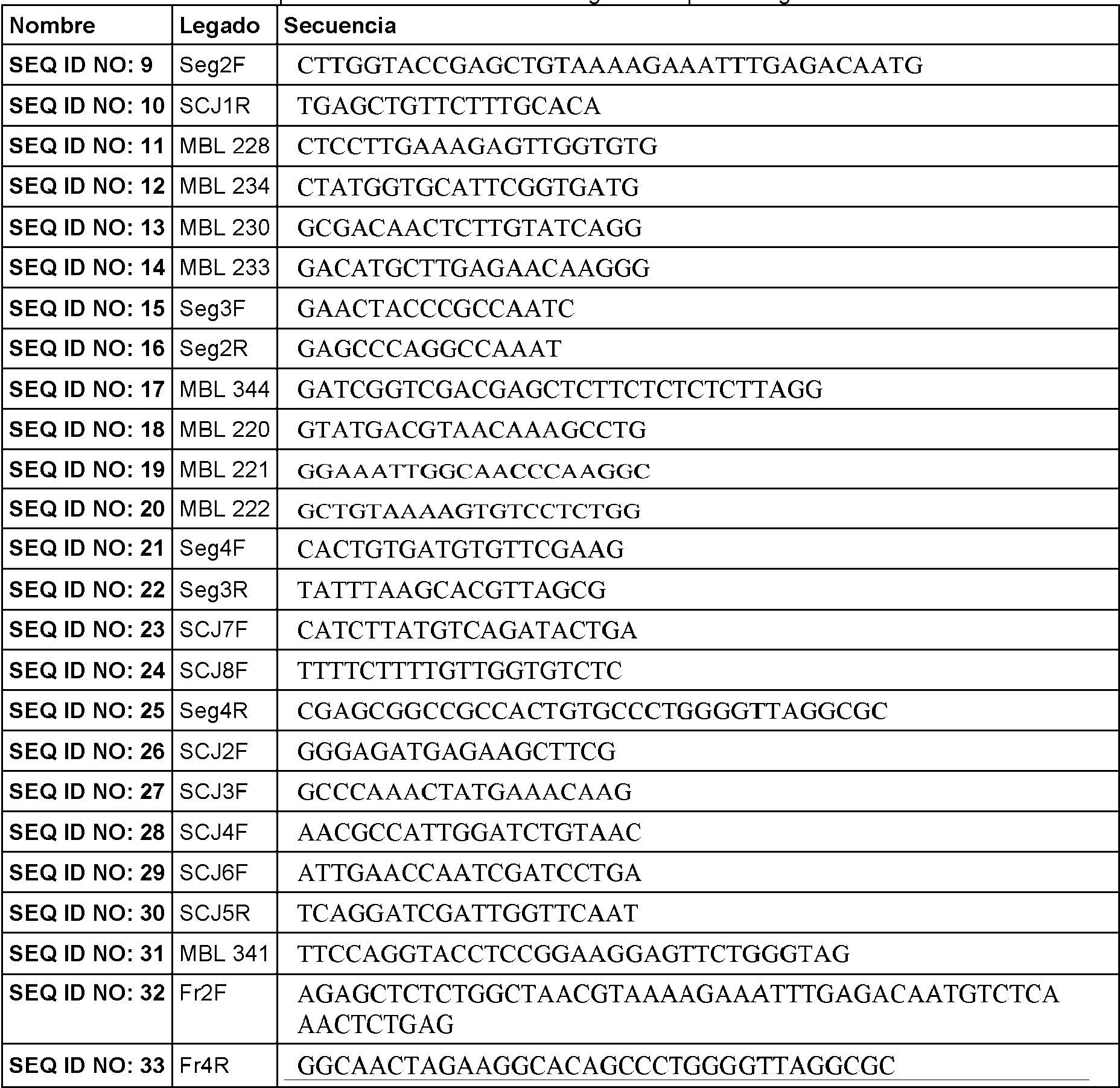
Tabla 4 C o n d ic io n e s d e P C R p a r a g e n e r a r u n a m p l ic ó n d e F C V q u e c u b r a 5349 p b d e s d e e l e x t r e m o 5 '. Table 4 PCR conditions to generate an FCV amplification covering 5349 bp from the 5' end.

T l n i i n P R r n r r n m l i n F V r h 2422 l x r m '. T l niin PR rnrrnmlin FV rh 2422 lxrm '.

Tabla 6 C o n d ic io n e s d e la P C R p a r a l le v a r a c a b o u n a P C R d e e x te n s ió n s o la p a d a q u e c o m b in e lo s a m p l ic o n e s d e l F V r n r r n l n i l l A D N l F V l n i m l . Table 6 C ond it io ns of the PCR parale varacabo una PCR de extensionso la padaquecomb in e lo sampl ic ones del FV rnrrnlnill DNA l FV lniml .

Tabla 7 Condiciones de la PCR para amplificar el ADN del FCV de longitud completa a partir del ADNc y añadir un r m r T7 ' n r m li A '. Table 7 PCR conditions to amplify full-length FCV DNA from cDNA and add an rmr T7 'nrm li A'.

Tabla 8 Condiciones de la PCR para amplificar el ADN del FCV de longitud completa a partir de material de plantilla l P R x n i n l ñ ir n r m r T7 ' n r m li A '. Table 8 PCR conditions to amplify full-length FCV DNA from template material l PR xninl ñ ir nrmr T7 ' nrm li A '.

2. Preparación de la construcción Myxo-Kalem Crouch2. Preparation of the Myxo-Kalem Crouch Construct
Se clonó pMCPK (porción procesada de la proteína de la cápside mayor del aislado de FCV Kalem Crouch) utilizando los sitios BamHI y XhoI en el plásmido MCS (sitio de clonación múltiple) de p22m-GFP (un derivado de p22-GFP). Véase la figura 8.pMCPK (processed portion of the major capsid protein of FCV Kalem Crouch isolate) was cloned using the BamHI and XhoI sites in the MCS (multiple cloning site) plasmid of p22m-GFP (a derivative of p22-GFP). See figure 8.
Para evitar la adición de AA (aminoácidos) extra en el extremo C a pMCPK, la traducción del codón de inicio en el sitio NcoI del MCS en p22-GFP se eliminó introduciendo una mutación puntual (CCATGG->CCATCG, figura 1). Se utilizó la mutagénesis dirigida al sitio para mutar el plásmido p22-GFP utilizando los siguientes cebadores: p22sdmF: 5'-CATCGATCGATGTCGACGGATCCA-3' SEQ ID NO: 63To avoid the addition of extra AA (amino acids) at the C-terminus to pMCPK, the translation start codon at the NcoI site of the MCS in p22-GFP was abolished by introducing a point mutation (CCATGG->CCATCG, Figure 1). Site-directed mutagenesis was used to mutate plasmid p22-GFP using the following primers: p22sdmF: 5'-CATCGATCGATGTCGACGGATCCA-3' SEQ ID NO: 63
p22sdmR: 5'-GTGCATCCGTCGACATCGATCGATG-3' SEQ ID NO: 64p22sdmR: 5'-GTGCATCCGTCGACATCGATCGATG-3' SEQ ID NO: 64
Programa de la PCR: 30 s a 98 °C, 20x[10 s a 98 °C, 10 s a 58,3 °C, 2 min a 72 °C], 5 min a 72 °C, ~ a 4 °C, y la polimerasa Phusion (NEB, cat: M0530L).PCR program: 30 s at 98 °C, 20x[10 s at 98 °C, 10 s at 58.3 °C, 2 min at 72 °C], 5 min at 72 °C, ~ at 4 °C, and the Phusion polymerase (NEB, cat: M0530L).
El plásmido p22-GFP se eliminó de la reacción con digestión por Dpnl antes de la transformación en E. coli XL10 gold (cat: 200315). Se recogieron varias de las colonias de E. coli resultantes para establecer cultivos de minipreparación que se analizaron mediante la digestión del ADN plasmídico extraído (kit QiaPrep Spin Miniprep, cat: 27104) con NcoI. En un gel de agarosa al 1 %, una banda única correspondiente al plásmido linealizado indicaba una mutación exitosa (ya que el único sitio de NcoI que queda en el plásmido p22m-GFP está presente aguas arriba del gen GFP). Un fragmento de 342 pb, además del plásmido linealizado después de la digestión, indicó la presencia de dos sitios NcoI y, por tanto, de un plásmido p22-GFP intacto. Posteriormente se utilizó secuenciación para confirmar la mutación.Plasmid p22-GFP was removed from the reaction with Dpnl digestion prior to transformation into E. coli XL10 gold (cat: 200315). Several of the resulting E. coli colonies were picked to establish miniprep cultures that were analyzed by digesting the extracted plasmid DNA (QiaPrep Spin Miniprep kit, cat: 27104) with NcoI. On a 1% agarose gel, a single band corresponding to the linearized plasmid indicated a successful mutation (since the only remaining NcoI site in plasmid p22m-GFP is present upstream of the GFP gene). A 342 bp fragment, in addition to the linearized plasmid after digestion, indicated the presence of two NcoI sites and thus of an intact p22-GFP plasmid. Later it was used sequencing to confirm the mutation.
El inserto de pMCPK se preparó mediante PCR, con los cebadores:The pMCPK insert was prepared by PCR, with the primers:
(KApBamHIF:(KApBamHIF:
5TCGAGGATCCGCCACCArGGCCGATGATGGATCGGTGACAACCCC-3', SEQ ID NO: 655TCGAGGATCCGCC ACCArGGCC GATGATGGATCGGTGACAACCCC-3', SEQ ID NO: 65
KpXhoInR:KpXhoInR:
5'-TCGACTCGAGTCATAATTTAGTCATAGAACTCCTAATATTAGAGGC-3' SEQ ID NO: 66,5'-TCGACTCGAGTCATAATTTAGTCATAGAACTCCTAATATTAGAGGC-3' SEQ ID NO: 66,
que incluyen un codón de inicio en una secuencia Kozac en el extremo 5' de pMCPK. El programa de la PCR utilizado fue: 30 s a 98 °C, 35x[10 s a 98 °C, 10 s a 55 °C, 40 s a 72 °C], 5 min a 72 °C, ~ a 4 °C, mientras que el molde era ADNc preparado a partir de ARN total aislado de células CRFK infectadas con el FCV Kalem Crouch. Tras confirmar el tamaño correcto del amplicón en un gel de agarosa al 1 %, el ADN insertado en la reacción de PCR se purificó (kit de limpieza de PCR de Qiagen) y se digirió con BamHI y Xhol en paralelo con el plásmido p22m-GFP. Tras el ligamiento, este procedimiento da lugar a la sustitución del inserto de GFP y de los flancos de repetición 5' y 3' del RHDV por pMCPK (figura 2). El inserto digerido y el ADN plasmídico se cargaron en un gel de agarosa al 1 % y se extrajeron y purificaron bandas de 1664 pb (inserto) y 4031 pb (columna vertebral del plásmido) utilizando el kit de extracción de ADN en gel StrataPrep (cat: 400766). La cadena principal y el inserto se ligaron durante una noche a 4 °C y posteriormente se transformaron 2 ul de esta ligación en E. coli XL10 gold (cat: 200315). Se establecieron cultivos de minipreparación y el ADN extraído se analizó mediante la digestión con BamHI y Xhol. La identidad del inserto se confirmó utilizando la misma reacción de PCR que generó el inserto de pMCPK (véase más arriba), y posteriormente secuenciación. Se eligió la construcción p22m-4a para su uso en los pasos siguientes.which include a start codon in a Kozac sequence at the 5' end of pMCPK. The PCR program used was: 30 s at 98 °C, 35x[10 s at 98 °C, 10 s at 55 °C, 40 s at 72 °C], 5 min at 72 °C, ~ at 4 °C, while the template was cDNA prepared from total RNA isolated from CRFK cells infected with Kalem Crouch FCV. After confirming the correct size of the amplicon on a 1% agarose gel, the DNA inserted in the PCR reaction was purified (Qiagen PCR cleanup kit) and digested with BamHI and Xhol in parallel with plasmid p22m-GFP. . After ligation, this procedure results in the replacement of the GFP insert and the 5' and 3' repeat flanks of RHDV by pMCPK (FIG. 2). The digested insert and plasmid DNA were loaded onto a 1% agarose gel and bands of 1664 bp (insert) and 4031 bp (plasmid backbone) were extracted and purified using the StrataPrep DNA Gel Extraction Kit (cat. : 400766). The backbone and insert were ligated overnight at 4°C and 2 ul of this ligation were subsequently transformed into E. coli XL10 gold (cat: 200315). Miniprep cultures were established and the extracted DNA was analyzed by digestion with BamHI and Xhol. The identity of the insert was confirmed using the same PCR reaction that generated the pMCPK insert (see above), and subsequent sequencing. The p22m-4a construct was chosen for use in the following steps.
Se aplicaron 50 ul de material de MR24 diluido en 1 ml de medio M6B8 FBS al 5 % a una placa de 6 cm con ~80 % de células RK13 confluentes durante 5 h antes de lavar todo el virus MR-24 no absorbido, complementando con 3 ml adicionales del mismo medio, y transfectando con ~4,5 ug de plásmido p22m-4a utilizando Lipofectamine 3000. Después de ~17 h, parte de las células se cosecharon mediante un suave raspado y se guardaron junto con el medio. La mitad restante de las células de la placa se fijó (EtOH al 100 %) y se tiñó para la inmunofluorescencia con antisueros del FCV, seguida de un anticuerpo antigato marcado con FITC, para confirmar la expresión de pMCPK. Las células teñidas indicaron una mayor expresión de pMCPK y la posible recombinación entre p22m-4a y MR-24 para dar MR-24-Kalem Crouch, ya que las células de control transfectadas con p22m-4a solo, o infectadas con MR-24 solo, no se tiñó (véase en la figura 10 un diagrama del virus recombinante MR24-Kalem Crouch).50 ul of MR24 material diluted in 1 ml of 5% M6B8 FBS medium was applied to a 6 cm dish with ~80% confluent RK13 cells for 5 h before washing away all unabsorbed MR-24 virus, supplementing with An additional 3 ml of the same medium, and transfecting with ~4.5 ug of plasmid p22m-4a using Lipofectamine 3000. After ~17 h, part of the cells were harvested by gentle scraping and saved together with the medium. The remaining half of the cells in the plate were fixed (100% EtOH) and immunofluorescently stained with FCV antisera, followed by FITC-labeled anti-cat antibody, to confirm pMCPK expression. Stained cells indicated increased expression of pMCPK and possible recombination between p22m-4a and MR-24 to give MR-24-Kalem Crouch, as control cells transfected with p22m-4a alone, or infected with MR-24 alone , did not stain (see Figure 10 for a diagram of the MR24-Kalem Crouch recombinant virus).
El enriquecimiento del virus del mixoma recombinante MR-24-Kalem Crouch se llevó a cabo mediante rondas sucesivas de titulación, detección por inmunofluorescencia de la pMCPK expresada, y dilución de las muestras enriquecidas. Brevemente, una serie de placas de cultivo de tejidos de 96 pocillos sembradas con células RK-13 se infectaron con el virus de la infección/transfección en una serie de diluciones. Después de 3 días, todas las placas de 96 pocillos se congelaron y se conservaron como reservas de la primera ronda. A continuación, se infectó una segunda serie de placas de 96 pocillos sembradas con RK-13 con material procedente de las existencias de la primera ronda (5-10 pl de cada pocillo). Después de 2-3 días, estos platos duplicados se fijaron con metanol helado y se tiñeron primero con un antisuero policlonal anti-FCV de gato y luego con un segundo anticuerpo marcado con FITC IgG de cabra anti-felino. Se identificaron los pocillos que contenían focos de infección fluorescentes y se tomaron los pocillos correspondientes en las placas de la primera ronda, luego se diluyó y se utilizó para infectar una segunda serie de placas de 96 pocillos, que se convirtió en las acciones de la segunda ronda. Este procedimiento se repitió hasta que las existencias de virus contenían la mayoría de los virus recombinantes. La purificación final se logró mediante tres rondas de aislamiento de foco único. Se expandieron los tres mejores clones de tinción (es decir, B8, A9 y A10), y el clon A9 se utilizó en otros experimentos para determinar la pureza clonal (es decir, la ausencia de MR24 de tipo silvestre creciendo en el fondo) y la estabilidad de la secuencia del inserto (es decir, pMCPK). MR24-Kalem Crouch se pasó 5 veces en células RK13 inoculando cada vez a una MOI de 0,001.Enrichment of the MR-24-Kalem Crouch recombinant myxoma virus was carried out by successive rounds of titration, immunofluorescence detection of expressed pMCPK, and dilution of the enriched samples. Briefly, a series of 96-well tissue culture plates seeded with RK-13 cells were infected with the infection/transfection virus in a series of dilutions. After 3 days, all 96-well plates were frozen and stored as first round stocks. A second set of RK-13 seeded 96-well plates was then infected with material from the first round stock (5-10 μl from each well). After 2-3 days, these duplicate plates were fixed with ice-cold methanol and stained first with a cat anti-FCV polyclonal antiserum and then with a second FITC-labeled goat anti-feline IgG antibody. Wells containing fluorescent foci of infection were identified and corresponding wells taken in the first round plates, then diluted and used to infect a second set of 96-well plates, which became the second round stocks. round. This procedure was repeated until the virus stocks contained the majority of the recombinant viruses. Final purification was achieved by three rounds of single focus isolation. The three best staining clones (i.e., B8, A9, and A10) were expanded, and clone A9 was used in further experiments to determine clonal purity (i.e., absence of wild-type MR24 growing in the background) and the stability of the insert sequence (ie, pMCPK). MR24-Kalem Crouch was passaged 5 times in RK13 cells inoculating each time at an MOI of 0.001.
Para determinar la estabilidad del inserto pMCPK, se comparó el ADN de MR24-Kalem Crouch del paso 1 y el ADN de MR24-Kalem Crouch del paso 5. No se detectaron mutaciones ni en p22m-4a frente a MR24-Kalem Crouch del pase 1, ni en MR24-Kalem Crouch del pase 1 frente a MR-24-Kalem Crouch del pase 5, indicando que pMCPK en p22m-4a se recombinó con éxito con MR24 y se mantuvo estable durante 5 pases del virus.To determine the stability of the pMCPK insert, MR24-Kalem Crouch DNA from passage 1 and MR24-Kalem Crouch DNA from passage 5 were compared. No mutations were detected in either p22m-4a versus MR24-Kalem Crouch passage 1. , nor in MR24-Kalem Crouch from passage 1 versus MR-24-Kalem Crouch from passage 5, indicating that pMCPK on p22m-4a successfully recombined with MR24 and remained stable through 5 virus passages.
En conjunto, estos experimentos muestran que la proteína procesada de la cápside principal del FCV Kalem Crouch (pMCPK) se ha insertado en, y se expresa a partir de, el sitio MGF del clon A9 de MR24-Kalem Crouch.Taken together, these experiments show that the processed FCV Kalem Crouch major capsid protein (pMCPK) has been inserted into, and is expressed from, the MGF site of MR24-Kalem Crouch clone A9.
ResultadosResults
1. Aislamiento y proliferación del FCV Kalem Crouch1. Isolation and proliferation of FCV Kalem Crouch
La cepa de calicivirus felino (FCV) Kalem Crouch se aisló de un hisopo tomado durante un brote de FCV en Jersey en diciembre de 2010. El hisopo procedía de un macho castrado, de 2 años y 6 meses, denominado Kalem Crouch y fue recogido por New Era Veterinary Surgery, San Salvador, Jersey. El hisopo se agitó brevemente en un vórtex y la s u s p e n s ió n d e v i r u s s e in o c u ló e n c é lu la s C r F K c o n f lu e n te s y s e in c u b ó a 37 ° C c o n u n 5 % d e C O 2 h a s ta q u e s e o b s e r v ó e l C P E e s p e c í f ic o d e l F C V . E l m a t r a z in f e c ta d o s e d e s c o n g e ló p a r a l is a r la s c é lu la s , s e c la r i f ic ó p a ra e l im in a r lo s r e s to s c e lu la r e s y a lm a c e n a d o a - 70 °C . E l t í t u lo d e l v i r u s fu e d e 10691 T C ID 50 /m l.The Kalem Crouch strain of feline calicivirus (FCV) was isolated from a swab taken during an FCV outbreak in Jersey in December 2010. The swab was from a 2-year, 6-month-old castrated male named Kalem Crouch and was collected by New Era Veterinary Surgery, San Salvador, Jersey. The swab was briefly vortexed and the Virus suspension was inoculated into conf lu ent C r FK cells and in cub ed at 37 ° C with 5 % CO 2 until FCV - specific CPE was observed . The infected flask is thawed to paralyze the cells, dried to remove the remains of the cells, and stored at -70°C. The title of the virus was 10691 TC ID 50 /ml.
S e d e te r m in ó la s e c u e n c ia d e n u c le ó t id o s d e l a is la d o . L a s e c u e n c ia e s tá a n o ta d a e n e l S E Q ID N O : 60.The sequence of the nuclei of the island was determined. The sequence is noted in S EQ ID NO : 60.
L a s e c u e n c ia d e a m in o á c id o s d e la p r o te ín a d e la c á p s id e s e a l in e ó c o n o t r a s s e c u e n c ia s d e l F C V d is p o n ib le s e n e l d o m in io p ú b l ic o . L a a l in e a c ió n d e la s e c u e n c ia e s tá a n o ta d a e n la s f ig u r a s 5 y 7.T h e amino acid sequence of the c a p s id p r o te n is a l in e w ith n o th r a s e u e n c ia s of the F C V avail able in the public domain. The alignment of the sequence is noted in figures 5 and 7.
2. G e n e r a c ió n d e l v i r u s F C V r e c o m b in a n te2. G e n e r a tio n o f r e c o m b in a n t F C V v i r u s
2.1. P r e p a r a c ió n d e a m p l ic o n e s d e F C V2.1. P r e p a r a t i o n o f F C V ampl ic o n s
E l A D N c d e F C V F 9 o K a le m C r o u c h , e la b o r a d o c o m o s e d e s c r ib e e n la s e c c ió n 5 d e m é to d o s , s e u t i l iz ó c o m o m o ld e e n la s r e a c c io n e s d e P C R c o n la p o l im e r a s a P h u s io n (N E B , Ip s w ic h , M A ) , e l p a r d e c e b a d o r e s o l ig o n u c le o t í d ic o s F K P 1 F ( S E Q ID N O : 9 ) y F K P 1 R ( S E Q ID N O : 10 ), y la s c o n d ic io n e s d e s c r i ta s e n la ta b la 4 p a ra g e n e r a r u n a m p l ic ó n q u e c u b r a 5349 p b d e l e x t r e m o 5 ' d e l g e n o m a d e l F C V . D e fo r m a s im ila r , s e u t i l iz ó e l p a r d e c e b a d o r e s o l ig o n u c le o t í d ic o s F K P 2 F ( S E Q ID N O : 11 ) y F K P 2 R ( S E Q ID N O : 12 ) y la s c o n d ic io n e s d e P C R d e s c r i ta s e n la ta b la 5 p a ra g e n e r a r a m p l ic o n e s q u e c u b r ía n 2422 p b d e l e x t r e m o 3 ' d e l F C V F 9 y 2416 p b d e l e x t r e m o 3 ' d e l F C V K a le m C r o u c h . E s to s a m p l ic o n e s y 5 p l d e G e n e R u le r 1 k b m á s e s c a le r a d e A D N ( T h e r m o S c ie n t i f ic , W a l th a m , M A ) s e r e s o lv ie r o n r e a l iz a n d o u n a e le c t r o f o r e s is e n ta m p ó n 1 x T B E ( S ig m a - A ld r ic h , S t. L o u is , M O ) a 120 V a lo la r g o d e 1 h. E n la f ig u r a 1 s e m u e s t r a n la s b a n d a s d e l ta m a ñ o e s p e r a d o .E l a d n c d e f c v f 9 o k a le m c r o u c h, e la b o r a d o c o m o s e d e s c r ib e e n la s e c c io n 5 d e m é d o s, s e u t i l iz o c o m o m o m o m o ld e e n la s r e a c c c io n e s d e p c r c r c N E B , Ip s w i h , M A ), the pair of olig o n u c leo t i d i c o primers F K P 1 F ( S E Q ID N O : 9 ) and F K P 1 R ( S E Q ID N O : 10 ), and the c o n d ic io n e s T a b le 4 f o r g e n e r a n a m p l i c o n c u b r e 5349 p b o f th e ex t r e m 5 'of t h e l e n m a d e l F C V . D e fo r m a s im ila r, s e u t i l iz o e l p a r d e c e b a d o r e s o l ig o n u c le o tí d ic o s f k p 2 f (s e q id n o: 11) and f k p 2 r (s e q id n o: 12) and the s c o n d ic ic ic ic iio n e s d e p c r d e s T a b le 5 shows p a ra g e n e r a m p l i c o n s that c u b r i a n 2422 p b of the 3 'ex t e m o f the FC V F 9 and 2416 p b of the 3 ' ex t e m o f the F C V K a u c h C . E s a s a m p l ic o n e s y 5 p l d e g e n e r u le r 1 k b m a s e s c a le r a d e a d n (t h e r m o s c ie n t i f ic, w a l th a m, m a) n 1 x T B E ( S ig m a - A ld r ic h , St. L o u is , M O ) at 120 V a l o d 1 h. F igure 1 shows the slats of the expected size.
2.2. E n s a m b la je d e a m p l ic o n e s d e l F C V m e d ia n te la P C R d e e x te n s ió n s o la p a d a2.2. E n s a m b l e o f Ampl i c o n s o f F C V m e d ia n t P C R d e ex te n s io n s o l p a d a
L o s a m p l ic o n e s d e l F C V g e n e r a d o s e n la s e c c ió n d e r e s u l ta d o s 2 s e p u r i f ic a r o n u t i l iz a n d o e l k i t d e p u r i f ic a c ió n d e P C R Q IA q u ic k ® ( Q ia g e n , H ild e n , A le m a n ia ) . E s to s a m p l ic o n e s s e u t i l iz a r o n p a ra f a b r ic a r v i r u s h íb r id o s : E l v i r u s h íb r id o F K c o m p r e n d e la c á p s id e d e K a le m C r o u c h e n e l f o n d o d e F 9 y e l v i r u s h íb r id o K F c o m p r e n d e la c á p s id e d e F 9 e n e l f o n d o d e K a le m C r o u c h .L o s a m p l ic o n e s d e l f c v g e n e r a d o s e n la s e c io n d e r e s u l ta d o s 2 s e p u r i f ic a r o n u t i l iz a n d o e l k i t d e p u r i f ic a c io n d e p c r q ia ic k ® ( E s a s a m p l ic o n e s s e u t i l iz a r o n p a ra f a b r ic a r v i r u s h íb r id o s: e l v i r u s h íb r id o f k c o m p r e n d e la c a p a p s id e d e k a le m c r o u c h e n e l id e of F 9 in the background of K a le m C r o u c .
P a r a p r o d u c i r e l m o ld e d e A D N d e F C V F K y K F , s e p r e p a r a r o n m e z c la s e q u im o la r e s q u e c o n te n ía n e n t r e 0 ,1 y 0 ,5 p m o l d e c a d a a m p l ic ó n c o n a m p l ic o n e s d e l e x t r e m o 5 ' d e l F C V F 9 y d e l e x t r e m o 3 ' d e l F C V K a le m C r o u c h , o c o n a m p l ic o n e s d e l e x t r e m o 5 ' d e l F C V K a le m C r o u c h y d e l e x t r e m o 3 ' d e l F C V F 9. E s ta s m e z c la s s e u t i l iz a r o n c o m o p la n t i l la s e n r e a c c io n e s d e P C R d e e x te n s ió n s o la p a d a c o n la s c o n d ic io n e s d e s c r i ta s e n la ta b la 6. L o s t a m a ñ o s e s p e r a d o s d e lo s a m p l ic o n e s d e A D N F K y K F e n s a m b la d o s e r a n d e 7685 y 7702 p b r e s p e c t iv a m e n te . E l A D N e n s a m b la d o e n e s ta s m u e s t r a s y 5 p l d e G e n e R u le r 1 k b m á s e s c a le r a d e A D N ( T h e r m o S c ie n t i f ic , W a l th a m , M A ) s e r e s o lv ie r o n m e d ia n te e le c t r o f o r e s is e n ta m p ó n T B E 1 x ( S ig m a - A ld r ic h , S t. L o u is , M O ) a 120 V a lo la r g o d e 1 h. E l A D N e n s a m b la d o r e s u l ta n te d e F 9 , K a le m C r o u c h , F K y K F s e m u e s t r a e n la f ig u r a 2.P a r a p r o d u c i r e l m o ld e d e A D N d e F C V F K y K F , s e p r e p a r a r o n m e z c la s e q u im o la r e s q u e c o n te n ía n e n t r e 0 ,1 y 0 ,5 p m o l d e c a d a a m p l ic ó n c o n a m p l ic o n e s d e l e x t r e m o 5 ' d e l F C V F 9 y d e l e x t r e m o 3 ' d e l F C V K a le m C r o u c h , o c o n a m p l ic o n e s d e l e x t r e m o 5 ' d e l F C V K a le m C r o u c h y d e l e x t r e m o 3 ' d e l F C V F 9. E s ta s m e z c la s s e u t i l iz a r o n c o m o p la n t i l la s e n r e a c c io n e s d e P C R d e e x te n s ió n s o la p a d a c o n la s c o n d ic io n e s d e s c r i ta s e n la ta b 6. The expected sizes of the DNA amplicons K and KF assembled will be 7685 and 7702 p b r e s p e c t iv a m e n t . E l a d n e n s a m b la d o e n e s ta s m u e s t r a s y 5 p l d e g e n e r u le r 1 k b m a s e s c a le r a d e a d n (t h e r m o s c ie n t i f ic, w a l th a m, m a) in T B E 1 x buffer ( S ig m a - A ld r i ch , St. L o u is , M O ) at 120 V a l o d 1 h. The resulting assembled DNA of F9, KalemCrouch, FK, and KF is shown in Figure 2.
2.3. G e n e r a c ió n d e v i r u s in fe c c io s o s d e F C V23. G e n e r a tio n o f F C V infective v i r u s
E l A D N in f e c c io s o d e l F C V F K o K F s e p r e p a r ó u t i l iz a n d o la p o l im e r a s a P h u s io n ( N E B , Ip s w ic h , M A ) y e l p a r d e c e b a d o r e s o l ig o n u c le o t í d ic o s F C V T 7 f ( S E Q ID N O : 3 ) y F C V p A r ( S E Q ID N O : 4 ) c o n la s c o n d ic io n e s d e P C R d e s c r i t a s e n la t a b la 8. L o s ta m a ñ o s e s p e r a d o s d e l A D N in f e c c io s o d e l F C V F K y K F s o n 7728 y 7737 p b , r e s p e c t iv a m e n te . E l A D N d e l F C V in f e c c io s o e n e s ta s m u e s t r a s y 5 p l d e G e n e R u le r 1 k b m á s e s c a le r a d e A D N ( T h e r m o S c ie n t if ic , W a l th a m , M A ) s e r e s o lv ie r o n m e d ia n te e le c t r o f o r e s is e n ta m p ó n T B E 1 x ( S ig m a - A ld r ic h , S t. L o u is , M O ) a 120 V a lo la r g o d e 1 h. E l A D N in f e c c io s o d e lo n g i tu d c o m p le ta d e F K y K F s e m u e s t r a e n la f ig u r a 3 p a r te s A y B , r e s p e c t iv a m e n te .E L A D N IN F E C C IO S O D E L F C V F K O K F S E P R E P A R O U T I L IZ A N D O LA P O L IM E R A S A P H U S IO N (N E B, IP S W IC H, M A) Y E L P A R D E B A D O R E S O L 3) y f c v p a r (s e q id n: 4) c o n la s c o n d ic io n e s d e p c r d e s c r i t a s e n la t a b la 8. l o s ta m a ñ o s e s p e r a d o s d e l a d n in f e c c iio s o d e l f c v f k y k f s 7728 tea . E L A D N D E L F C V IN F E C C IO S O E N E S TA S M U E S T R A S Y 5 P L D E G E N E R U R 1 K B M A S E S C A LE R A D E A D N (T H E R M O S C IE N T IF IC, W A L TH A M, m a) Electrophoresis in TBE 1 x buffer (Sigm a-Aldr ic h, St. L o u is, M O) at 120 V a lo r g od 1 h. The full-length infective DNA of FK and KF is shown in Fig. 3, parts A and B, respectively.
2.4. R e c u p e r a c ió n d e l v i r u s in f e c c io s o d e l F C V2.4. R e c u p e r a t i o n d e l f C V infective v i r u s
E l A D N in f e c c io s o d e l F C V F K y K F s e p u r i f ic ó a p a r t i r d e la s r e a c c io n e s d e P C R d e lo n g i tu d c o m p le ta u t i l iz a n d o e l k i t d e p u r i f ic a c ió n d e P C R Q IA q u ic k ® ( Q ia g e n , H ild e n , A le m a n ia ) , y s e t r a n s fe c tó e n c é lu la s B s R T 7 c o n f lu e n te s a l 50 90 % q u e c r e c ía n e n u n a p la c a d e 24 p o c i l lo s u t i l iz a n d o e l r e a c t iv o L ip o fe c ta m in e ® 3000 d e In v i t r o g e n ® ( C a r ls b a d , C A ) , ta l c o m o s e d e s c r ib e e n la s e c c ió n 13 d e m é to d o s . L a s c é lu la s B s R T 7 t r a n s fe c ta d a s s e in c u b a r o n c o n lo s c o m p le jo s d e t r a n s fe c c ió n e n c o n d ic io n e s n o r m a le s d e c r e c im ie n t o d u r a n te 24 - 72 h a n te s d e la l is is p o r c o n g e la c ió n -d e s c o n g e la c ió n . A c o n t in u a c ió n , e l l is a d o d e B s R T 7 d e c a d a p o c i l lo s e a p l ic ó a u n p o c i l lo e n e l q u e c r e c ía n la s c é lu la s C r F K h a s ta a lc a n z a r u n a c o n f lu e n c ia d e e n t r e e l 50 y e l 100 % . L a s c é lu la s C r F K c u l t iv a d a s e n p r e s e n c ia d e l l is a d o c e lu la r B s R T 7 s e in c u b a r o n e n c o n d ic io n e s n o r m a le s d e c r e c im ie n to , c o m o s e d e s c r ib e e n la s e c c ió n 1 d e m é to d o s . L a p r e s e n c ia d e u n v i r u s s e d e te c tó n o r m a lm e n te p o r la fo r m a c ió n d e p la c a s e n la m o n o c a p a d e c é lu la s C r F K , s im i la r e s a la s m o s t r a d a s e n la f ig u r a 4.E L A D N IN F E C C IO S O D E L F C V F K Y K F S E P U R I F IC O A P A R T I R D E LA S R E A C C IO N E S D E P C R D E LO N G I D C O M P Le T I L IZ m a n ia), y s e t r a n s Fe c tos In v i t r o g e n ® ( C a r ls b a d , C A ), as described in m e th o d s s e c tio n 13 . L a s c é lu la s b s r t 7 t r a n s Fe c ta d a s s e in c u b a r o n c o n s c o m p le jo s d e t r a n s Fe c io n e n c o n d ic ic ic ic ic ic ic io n e s n o r m a s d e c r e c im ie n t o d u r a n te 24 - 72 -d e s c o n g e la tio n . A c o n t in u a c io n, e l l is a d o d e b s r t 7 d e c a d a p o c i l s e a p l ic o a u n p o c i l lo e n e l q u e c r e c ía n la s c é lu la s c r f k h a s ta lc a n z a r u n a c o n c l. L a s c é lu la s c r f k c u l t iv a d a s e n p r e s e n c ia d e l is a d o c e lu la r b s r t 7 s and in c u b a r o n e n c o n d ic ic ic ic ic ic io n e s n o r m a le s d e c r e c im ie n to, c o m o s e d e s c r ib e n T h e p r e s e n c e of a v i r u s is t e c t o n o r m a l m e n t b y t h e f o r m a t i o n d e p la c a s in the monolayer of c e lu las C r F K , similar to m o s f a t r a .
2.5. S e c u e n c ia d e lo s v i r u s F C V F K y K F .2.5. S e u e n c e o f the v i r u s F C V F K and K F .
S e s e c u e n c ia r o n lo s v i r u s F C V r e c o m b in a n te s . Recombinant FCV viruses were sequenced.
E s ta s s e c u e n c ia s s e h a n c o m p a r a d o c o n la s d e F C V F 9 y K a le m C r o u c h e n la f ig u r a 6. E l v i r u s F K r e c o m b in a n te s e in d ic a c o m o S E Q ID N O : 61 y c o m p r e n d e la c á p s id e d e K a le m C r o u c h . E l v i r u s K F r e c o m b in a n te s e in d ic a c o m o S E Q ID N O : 62 y c o m p r e n d e la c á p s id e d e F 9.E s ta s s e c u e n c ia s s e h a n c o m p a r a d o c o n la s d e f c v f 9 y k a le m c r o u c h e n la f ig u r a 6. e l v i r u s f k r e c o m b in a n s e in d ic a c o m o s e q id n. m C r o u c h . The v i r u s K F r e c o m b in a n t is indicated as S EQ ID NO : 62 and comprises the cap s id of F 9.
2.6. E f ic a c ia d e la c o n s t r u c c ió n M y x o - K a le m C r o u c h e n g a to s2.6. C o n s t r u c tio n e f ic a c e M y x o - K a le m C r o u c h e n g a to s
D is e ñ o e x p e r im e n ta l :Experimental design :
Q u in c e g a to s d o m é s t ic o s d e p e lo c o r to d e e n t r e 8 y 11 s e m a n a s d e e d a d fu e r o n d iv id id o s e n d o s g r u p o s . U n g r u p o d e 10 g a to s v a c u n a d o s p o r v ía s u b c u tá n e a , d o s v e c e s , c o n t r e s s e m a n a s d e d i f e r e n c ia c o n la c o n s t r u c c ió n r e c o m b in a n te M y x o - K a le m C r o u c h d e s c r i t o a n t e r io r m e n te ( p a s e 5 ) ( 10623 T C ID 50 p o r d o s is ) y u n g r u p o d e 5 g a to s d e c o n t r o l . C u a t r o s e m a n a s d e s p u é s d e la s e g u n d a v a c u n a c ió n , s e to m a r o n m u e s t r a s d e lo s g a to s y d o s d e lo s g a to s d e c o n t r o l n o v a c u n a d o s fu e r o n d e s a f ia d o s p o r v ía in t r a n a s a l c o n la c e p a v i r u le n ta d e F C V K a le m C r o u c h ( 1040 T C ID 50 p o r g a to ) y m e z c la d o s c o n e l r e s to d e lo s g a to s p a r a la e x p o s ic ió n d e c o n ta c to . T o d o s lo s g a to s fu e r o n s o m e t id o s a u n h is o p a d o d ia r io d e s d e e l d ía 1 h a s ta e l 17 d e l e n s a y o . S e r e g is t r a r o n la s o b s e r v a c io n e s c l ín ic a s , in c lu id o s lo s p e s o s y la s te m p e r a t u r a s c o r p o r a le s . L o s h a l la z g o s c l ín ic o s s e p u n tu a r o n c o m o s e in d ic a a c o n t in u a c ió n , v é a s e la ta b la 8. (S e a d m in is t r ó u n a n t ip i r é t ic o p a ra a l iv ia r la p ir e x ia y e l s u f r im ie n to . E n u n e x p e r im e n t o a n te r io r , s e d e m o s t r ó q u e la a d m in is t r a c ió n d e u n a n t i t é r m ic o n o t e n ía n in g ú n e fe c to s o b r e la e x c r e c ió n d e l v i r u s )Fif th blind short-haired domestics between 8 and 11 weeks of age were divided into two groups. A group of 10 cats vaccinated subcutaneously , twice , three weeks apart with the recombinant construct M yxo - K a le m C rouch described above ( pass 5 ) ( 10623 TC ID 50 per dose is ) and a group of 5 cat out of control Four weeks after the second vaccination , samples were taken from the cats and two of the vaccinated control cats were challenged intranasally with the virulent strain of FCVK a le m C rouch ( 1040 TC ID 50 per cat ) and mixed with the three con ta c t expos itio n . All cats were subjected to daily osaunh is from day 1 to day 17 of the trial. Clin ical observac io ns , including body weights and tem peratures , were recorded . Loshal la zgoscl ín ic ossepun tu aron as in d ic aacont in uat io n , see ta b le 8. In a previous exper im ent , it was shown that the adm in is tra tio n of an antith e rm ic o had no effect on the excrec io n of the virus )
T l : R m n l n i n i n l ín iT l : R m n l n i n i n l ín i

R e s u l ta d o s :Results :
L o s g a to s e s ta b a n d e s p r o v is to s d e a n t ic u e r p o s a n te s d e la v a c u n a c ió n (D ía -1 ) . N o s e o b s e r v ó u n a fu e r te s e r o c o n v e r s ió n e n lo s g a to s d e s p u é s d e la v a c u n a c ió n ( D ía 48 ) . S e o b s e r v ó u n a fu e r te s e r o c o n v e r s ió n e n lo s g a to s d e s p u é s d e la e x p o s ic ió n ( D ía 66 ) .The cats were deprived of advances before vaccination (D ay -1). No strong conversion was observed in the cats after vaccination (D ay 48). A strong conversion was observed in the cats after the exposure (D ay 66).
T a b la 9 : T í tu lo d e lo s a n t ic u e r o sT a b le 9 : T i tu l o f s an t i c u e r o s

n in i nn in i n

N o s e p u d o a is la r e l v i r u s d e lo s g a to s a l p r in c ip io d e l e x p e r im e n t o n i e l d ía a n t e r io r a la e x p o s ic ió n . S e p u d o a is la r e l v i r u s e n t o d o s lo s g a to s d e lo s g r u p o s 1 y 2 , s e o b s e r v a r o n s ig n o s c l ín ic o s a s o c ia d o s a l F C V e n g a to s p e r t e n e c ie n te s a a m b o s g r u p o s , lo q u e in d ic a u n a e x p o s ic ió n im p o r ta n te .It was not possible to isolate the virus from the cats at the beginning of the exposure on the day before the exposure. S E P U D O A IS LA R E L V I R U S E N T O D O S G A S D E LO S G R U P O S 1 Y 2, S E O B S E R V A R O N S IG N O S C L ÍN IC O S A S O C IA D O S A L F C V E N G A S P O.
T a b la 10 : P u n tu a c io n e s c l ín ic a sT a b le 10 : C lin ica l SC o rs

T l 11 : i n l ín i r r :T l 11 : i n l ín i r r :

U n a p r u e b a n o p a r a m é t r ic a d e K r u s k a l - W a l l is s o b r e lo s d a to s m o s t r ó u n a d i f e r e n c ia e s ta d ís t ic a m e n te s ig n i f ic a t iv a e n t r e lo s g a to s v a c u n a d o s y lo s g a to s d e c o n t r o l e n c u a n to a la p u n tu a c ió n to ta l (P = 0 ,037 ) y la p u n tu a c ió n d e p ir e x ia (P = 0 ,020 ) , lo q u e in d ic a q u e la c o n s t r u c c ió n M y x o - K a le m C r o u c h fu e c a p a z d e in d u c i r in m u n id a d c o n t r a la in fe c c ió n p o r e x p o s ic ió n a l F C V ( r e d u c c ió n d e la s p u n tu a c io n e s c l ín ic a s e n lo s g a to s d e s p u é s d e la e x p o s ic ió n ) . D is e ñ o e x p e r im e n ta lU n a p r u e b a n o p a r a m é t r ic a d e k r u s k a l - w a l is s o b r e lo s d a s m o s t r o u n a d i f e r e n c ia e s ta d ís t ic a m e n s ig n i f ic a t iv a e n t r e lo n to ta l (P = 0.037) and the pyrexia score (P = 0.020), which indicates that the M y x o - K a le m C r o u c h c o n s t r u c tio n was c a p a z e In d u c i r i m m u n ity a n t r in fe c tio n b y e x p o s it io n a l FCV (r e d u c tio n o f c l in ica l p u n tu a tio n in p u e x o d cat s) Experimental design
2.7 E s tu d io p a r a g e n e r a r s u e r o h ip e r in m u n e c o n t r a lo s v i r u s h íb r id o s F K y K F d e l F C V .2.7 S tu d io fo r g e n e r a r h i p e r i m m u n e s e r o s h i b r i d o s v i r u s F K and K F of the F C V .
E l e s tu d io in c lu y ó s e is g a to s d o m é s t ic o s d e p e lo c o r to d e e n t r e 229 y 432 d ía s d e e d a d . E s to s s e d iv id ie r o n e n d o s g r u p o s d e 3 g a to s c o n u n r e p a r to r e la t iv a m e n te e q u i ta t iv o d e to m s e n t r e lo s g r u p o s . C a d a g r u p o s e a lo jó p o r s e p a r a d o . D e s p u é s d e la a c l im a ta c ió n , lo s g a to s p e r t e n e c ie n te s a l g r u p o 1 fu e r o n in o c u la d o s p o r v ía s u b c u tá n e a c o n 1046 T C ID s o /d o s is d e c e p a F K d e F C V . L o s g a to s p e r t e n e c ie n te s a l g r u p o 2 fu e r o n in o c u la d o s p o r v ía s u b c u tá n e a c o n 1046 T C ID 50 / d o s is d e c e p a K F d e F C V .The study included six short-lived domestic cats between 229 and 432 days of age. These are divided into two groups of 3 cats with a relatively equitable distribution of all between the groups. Each group is set separately. After acclimatization, the cats belonging to group 1 were harmless by subcutaneous route with 1046 TC ID so /dos is FCV FK strain. The cats belonging to group 2 were harmless subcutaneously with 1046 TC ID 50 / doses of FCV KF strain.
T o d o s lo s g a to s r e c ib ie r o n u n a s e g u n d a d o s is d e l m is m o v i r u s a 105 T C ID 50 /d o s is p o r v ía in t r a n a s a l d o s s e m a n a s d e s p u é s ( d ía 14 ) . E l s u e r o s e r e c o g ió t r e s s e m a n a s d e s p u é s d e la s e g u n d a in o c u la c ió n .All cats received a second dose of the same movirusa 105 TC ID 50 / dose intranasally every two weeks after (day 14). The serum was collected three weeks after the second inoculation.
E l s u e r o s e in a c t iv ó p o r c a lo r y s e r e a l iz ó u n a p r u e b a d e n e u t r a l iz a c ió n d e l v i r u s . L a n e u t r a l iz a c ió n d e l v i r u s s e e v a lu ó m e d ia n te la r e d u c c ió n d e l e fe c to c i to p á t ic o ( E C P ) in d u c id o p o r e l v i r u s e n la s c é lu la s C rF K . S e m e z c la r o n r é p l ic a s q u ín tu p le s d e 32 - 316 T C ID 50 d e v i r u s c o n u n v o lu m e n ig u a l d e d i lu c io n e s s e r ia d a s d e s u e r o s ( e m p e z a n d o p o r 1 :4 ) . A c o n t in u a c ió n , la s m e z c la s d e v i r u s / s u e r o s e in c u b a r o n d u r a n te a l m e n o s 60 m in u to s a 37 °C . A c o n t in u a c ió n , s e a ñ a d ie r o n 100 p l d e la s m e z c la s v i r u s - s u e r o a p la c a s d e c u lt iv o d e t e j id o s d e 96 p o c i l lo s s e m b r a d a s c o n c é lu la s C r F K e n 100 p l d e m e d io d e c r e c im ie n to . L a in c u b a c ió n s e c o n t in u ó d u r a n te 5 d ía s . E l t í t u lo d e V N s e e x p r e s a c o m o la in v e r s a d e la m a y o r d i lu c ió n d e s u e r o e n la q u e e l C P E in d u c id o p o r e l v i r u s e s tu v o c o m p le ta m e n te a u s e n te .The serum was inactivated by heat and a virus neutralization test was performed. The neutralization of the virus is evaluated by the reduction of the cytopathic effect (ECP) induced by the virus in the C rF K cells. The ron répl ic asquín tu p le s de 32-316 TC ID 50 deviruses with an equal volume of dilution ser ia das sera (starting with 1:4). Next, the virus/serum mixture was incubated for at least 60 min at 37 °C. Next, 100 μl of the virus-serum mixture were added to the 96-well tissue culture sown with C r FK cells in 100 μl of median decrease. In cubation is continued for 5 days. The title of VN is expressed as the inverse of the highest serum dilution in which the CPE induced by the virus is completely absent.
R e s u l ta d o sResults
T l 12 : T í l V N r l r im r in l i n . .T l 12 : T í l V N r l r im r in l i n . .


L o s d a to s m u e s t r a n q u e lo s v i r u s r e c o m b in a n te s F K y K F s o n in m u n o g é n ic o s e n lo s g a to s . L o s a n t ic u e r p o s d e s a r r o l la d o s e n lo s g a to s e r a n fu n c io n a le s ( n e u t r a l iz a n te s ) . L a r e a c t iv id a d c r u z a d a d e lo s a n t ic u e r p o s m o s t r ó u n a je r a r q u ía s im i la r a la o b s e r v a d a e n t r e la c e p a F 9 d e l F C V y la c e p a K a le m C r o u c h d e l F C V , d e m o d o q u e la in o c u la c ió n d e g a to s c o n la c e p a h íb r id a K F ( c á p s id e d e F 9 ) in d u jo a n t ic u e r p o s n e u t r a l iz a n te s d e l v i r u s c o n t r a la c e p a F 9 , p e r o n o c o n t r a la c e p a K a le m C r o u c h , m ie n t r a s q u e la in o c u la c ió n c o n la c e p a h íb r id a F K ( c á p s id e d e K a le m C r o u c h ) d io lu g a r a la in d u c c ió n d e a n t ic u e r p o s n e u t r a l iz a n te s d e l v i r u s c o n t r a la s c e p a s F 9 y K a le m C r o u c h .D a ta s s h o w t h e r e c o m b in a n t v i r u s s F K and K F are im m u n o g e n ic in cat s . T h e an t i c u e r p o s d e r o l l a d o n d o s c a ts were f u n c io n a l s (neutral iz a n ts). L a r e a c t iv id a d c r u z a d a d e s a n t ic u e r p o s m o s t r o u n a r a r q u ia s im i la r a o b s e r v a d a e n t r e la c e p a f 9 d e l f c v and the c a k a le m c r o u c h. Ib r id a k f (c a p s id e d e f 9) in d u jo a n t ic u e r p o s n e u t r a l iz a n te s d e l v i r u s c o n t r a c e p a f 9, p e r o n o c o n t r a la c a k a le m c r o u c h, m ie n t r a H i b r id strain F K (c a p s id e de K ale m C r o u c h ) gave rise to the in d u c tio n of an t i c u e r p o s n e u t r a l iz a n t s of the v i r u s c o n ut r a le C h a r a s F. K o r a s
2.8. Ín d ic e d e n e u t r a l iz a c ió n2.8. N e u tr a l iz a tio n in d ice
S e u t i l iz a r o n s u e r o s h ip e r in m u n e s g e n e r a d o s e n g a to s c o n t r a la s c e p a s F 9 y K a le m C r o u c h d e F C V p a r a d e t e r m in a r e l ín d ic e d e n e u t r a l iz a c ió n d e la s c e p a s r e c o m b in a n te s F K y K F d e F C V . L o s d a to s s e m u e s t r a n e n la ta b la 7. D e la t a b la s e d e s p r e n d e q u e la c e p a f K d e F C V s e n e u t r a l iz a f u e r te m e n te c o n e l s u e r o h ip e r in m u n e a n t i- F C V K a le m C r o u c h , m ie n t r a s q u e la c e p a K f d e l F C V s e n e u t r a l iz a f u e r te m e n te c o n e l s u e r o h ip e r in m u n e a n t i- F C V F 9.S e u t i l iz a r o n s u e r o s h ip e r in m u n e s g e n e r a d o s e n g a to s c o n t r a the s c e p a s f 9 y k a le m c r o u c h d e f c v p a r a d e t e r m in a r e l ín d ic L o s d a s s s e m u e s t r a n e n la ta b la 7. d e la t a b la s e d e s p r e n d e q u e la c e p a f k d e f c v s e n e u t r a l iz a f u e r te m e n c o n e l s u e r o h ip e r in m u n e a m ize strongly with the h i p e r i m m u n e an t i-F C V F 9 serum.
Capacidad de neutralización Capacidad de neutralizaciónneutralization capacity neutralization capacity
del suero hiperinmune anti- del suero hiperinmune anti- Título del virus Muestra de FCV FCV F9 FCV Kalem Crouch (log1ü/ml) FCV FK híbrido 0 ,34 6 ,67 6 ,67 of hyperimmune serum anti- of hyperimmune serum anti- Virus titer FCV sample FCV F9 FCV Kalem Crouch (log 1ü /ml) Hybrid FCV FK 0 .34 6 .67 6 .67
FCV KF híbrido 3 ,33 2 ,67 7 Hybrid FCV KF 3 .33 2 .67 7
FCV F9 X+2 3 ,17 1,83 7 ,5 FCV F9 X+2 3 .17 1.83 7 .5
FCV Kalem Crouch n.°FCV Kalem Crouch #
4063 1 5 ,5 5 ,5 4063 1 5 .5 5 .5
Claims (15)
Applications Claiming Priority (2)
| Application Number | Priority Date | Filing Date | Title |
|---|---|---|---|
| EP15202594 | 2015-12-23 | ||
| PCT/EP2016/082330 WO2017109045A1 (en) | 2015-12-23 | 2016-12-22 | Feline calicivirus vaccine |
Publications (1)
| Publication Number | Publication Date |
|---|---|
| ES2926813T3 true ES2926813T3 (en) | 2022-10-28 |
Family
ID=55068854
Family Applications (1)
| Application Number | Title | Priority Date | Filing Date |
|---|---|---|---|
| ES16825417T Active ES2926813T3 (en) | 2015-12-23 | 2016-12-22 | Feline calicivirus vaccine |
Country Status (10)
| Country | Link |
|---|---|
| US (1) | US10421790B2 (en) |
| EP (2) | EP3394085B1 (en) |
| JP (1) | JP2018537996A (en) |
| CN (2) | CN108473539B (en) |
| AU (2) | AU2016378486B2 (en) |
| BR (1) | BR112018012642A2 (en) |
| CA (1) | CA3006917A1 (en) |
| ES (1) | ES2926813T3 (en) |
| RU (1) | RU2018123480A (en) |
| WO (1) | WO2017109045A1 (en) |
Families Citing this family (13)
| Publication number | Priority date | Publication date | Assignee | Title |
|---|---|---|---|---|
| US11167027B2 (en) | 2017-11-06 | 2021-11-09 | Intervet Inc. | Multivalent feline vaccine |
| WO2019110213A1 (en) * | 2017-12-08 | 2019-06-13 | Intervet International B.V. | Feline calicivirus vaccine |
| EP3706789A1 (en) | 2017-11-06 | 2020-09-16 | Intervet International B.V. | Feline calicivirus vaccine |
| AU2018383915B9 (en) * | 2017-12-15 | 2023-06-01 | Intervet International B.V. | Multivalent feline vaccine |
| CN109811088B (en) * | 2018-12-21 | 2022-10-04 | 广州芭卡生物科技有限公司 | Primer, kit and application for detecting pathogens of cat upper respiratory tract infection |
| CN112852840A (en) * | 2021-01-20 | 2021-05-28 | 西南民族大学 | Recombinant VP1 gene, recombinant protein and application of a kind of bovine Newbei virus |
| CN112921123B (en) * | 2021-04-06 | 2022-11-04 | 中国农业科学院哈尔滨兽医研究所(中国动物卫生与流行病学中心哈尔滨分中心) | Method for rapid detection of feline calicivirus and primers and kits for detection |
| CN116064943A (en) * | 2022-09-01 | 2023-05-05 | 伊诺达生物科技(太原)有限公司 | Probe, primer set and kit for detecting cat parvovirus and bordetella bronchiseptica and application |
| CN116103245B (en) * | 2022-09-08 | 2026-03-27 | 武汉科前生物股份有限公司 | Feline calicivirus LZ-2016 strain and vaccine composition |
| CN115850456B (en) * | 2022-09-27 | 2025-09-16 | 长春西诺生物科技有限公司 | Bivalent freeze-dried egg yolk antibody for cat infectious rhinoconjunctivitis virus, and preparation method and application thereof |
| CN116536449A (en) * | 2022-10-14 | 2023-08-04 | 深圳思凝一云科技有限公司 | Visual isothermal nucleic acid amplification kit for rapidly detecting feline calicivirus |
| CN117143924B (en) * | 2023-09-11 | 2024-03-22 | 华中农业大学 | Recombinant feline herpesvirus co-expressing feline calicivirus and feline parvovirus antigen proteins, live vector vaccine and application thereof |
| CN119350483A (en) * | 2024-12-26 | 2025-01-24 | 北京凯特道格生物科技有限公司 | A kind of cat's quadruple yolk antibody and its preparation method and application |
Family Cites Families (10)
| Publication number | Priority date | Publication date | Assignee | Title |
|---|---|---|---|---|
| ATE119545T1 (en) * | 1989-07-21 | 1995-03-15 | Upjohn Co | FELINCALICIVIRUS CAPSID PROTEIN AND NUCLEOTIDE SEQUENCE. |
| US6458363B1 (en) | 1998-12-21 | 2002-10-01 | Akzo Nobel N.V. | Method to produce inactivated w/o emulsion adjuvated vaccines |
| AU5329300A (en) * | 1999-06-10 | 2001-01-02 | Michigan State University | Feline calicivirus isolated from cat urine and vaccines thereof |
| US6541458B1 (en) * | 1999-07-16 | 2003-04-01 | Merial | Feline calicivirus genes and vaccines in particular recombinant vaccines |
| US7345152B2 (en) * | 2002-09-12 | 2008-03-18 | Wyeth | Monoclonal antibody specific for an epitope of inactivated feline immunodeficiency-encoded glycoprotein |
| WO2005080416A1 (en) * | 2004-01-20 | 2005-09-01 | Pharmacia & Upjohn Company Llc | Feline calicivirus vaccines |
| DK1734992T3 (en) * | 2004-01-21 | 2011-12-05 | Merial Ltd | Enhanced inactivated FCV vaccines |
| ATE496629T1 (en) | 2005-07-28 | 2011-02-15 | Pfizer Prod Inc | VACCINE AGAINST FELINE CALICIVIRUS (FCV) CONTAINING AN FCV CAPSID PROTEIN OR AN ISOLATED FCV CAPSID PROTEIN HAVING THE PROTEIN SEQUENCE SEQ ID NO: 13 OR WITH A PROTEIN SEQUENCE THAT IS AT LEAST 95 IDENTICAL TO SEQ ID NO: 13. |
| WO2019110213A1 (en) * | 2017-12-08 | 2019-06-13 | Intervet International B.V. | Feline calicivirus vaccine |
| AU2018383915B9 (en) * | 2017-12-15 | 2023-06-01 | Intervet International B.V. | Multivalent feline vaccine |
-
2016
- 2016-12-22 ES ES16825417T patent/ES2926813T3/en active Active
- 2016-12-22 EP EP16825417.5A patent/EP3394085B1/en active Active
- 2016-12-22 US US16/064,650 patent/US10421790B2/en active Active
- 2016-12-22 CN CN201680076354.1A patent/CN108473539B/en active Active
- 2016-12-22 CA CA3006917A patent/CA3006917A1/en not_active Abandoned
- 2016-12-22 WO PCT/EP2016/082330 patent/WO2017109045A1/en not_active Ceased
- 2016-12-22 CN CN202210237354.2A patent/CN114591405A/en active Pending
- 2016-12-22 JP JP2018532744A patent/JP2018537996A/en not_active Withdrawn
- 2016-12-22 AU AU2016378486A patent/AU2016378486B2/en active Active
- 2016-12-22 EP EP22171947.9A patent/EP4141022A1/en active Pending
- 2016-12-22 RU RU2018123480A patent/RU2018123480A/en not_active Application Discontinuation
- 2016-12-22 BR BR112018012642A patent/BR112018012642A2/en not_active Application Discontinuation
-
2020
- 2020-11-25 AU AU2020277165A patent/AU2020277165B2/en active Active
Also Published As
| Publication number | Publication date |
|---|---|
| JP2018537996A (en) | 2018-12-27 |
| EP3394085B1 (en) | 2022-08-24 |
| AU2016378486B2 (en) | 2020-08-27 |
| US20180371026A1 (en) | 2018-12-27 |
| US10421790B2 (en) | 2019-09-24 |
| AU2020277165A1 (en) | 2020-12-24 |
| EP4141022A1 (en) | 2023-03-01 |
| AU2020277165B2 (en) | 2021-08-19 |
| BR112018012642A2 (en) | 2018-12-04 |
| CA3006917A1 (en) | 2017-06-29 |
| RU2018123480A (en) | 2020-01-24 |
| CN108473539A (en) | 2018-08-31 |
| RU2018123480A3 (en) | 2020-01-24 |
| EP3394085A1 (en) | 2018-10-31 |
| CN108473539B (en) | 2022-03-22 |
| WO2017109045A1 (en) | 2017-06-29 |
| CN114591405A (en) | 2022-06-07 |
| AU2016378486A1 (en) | 2018-06-21 |
Similar Documents
| Publication | Publication Date | Title |
|---|---|---|
| AU2020277165B2 (en) | Feline calicivirus vaccine | |
| JP2022120083A (en) | Porcine Circovirus Type 3 Immunogenic Compositions, Methods of Making and Using the Same | |
| JP7721269B2 (en) | Recombinant non-pathogenic Marek's disease virus constructs encoding multiple heterologous antigens | |
| RU2515901C2 (en) | CHIMERIC PORCINE CIRCOVIRUS PCV2Gen-1Rep OF AND ITS APPLICATION | |
| ES2879254T3 (en) | Fusion polypeptides and vaccines | |
| BR122021023230B1 (en) | COMBINATION VACCINE COMPRISING A VACCINE COMPRISING AN ATENUATED LIVE PARVOVIRUS | |
| JP2019517804A (en) | Recombinant non-pathogenic Marek's disease virus construct encoding infectious laryngotracheitis virus and infectious bursal disease virus antigen | |
| CA2811243C (en) | Bvdv vaccine | |
| US12357682B2 (en) | DNA plasmid-launched live-attanuated vaccines for plus-sense singel stranded RNA | |
| AU2005279303B2 (en) | Nucleic acid sequences encoding proteins capable of associating into a virus-like particle | |
| ES2261148T3 (en) | VACCINE AND DIAGNOSIS OF THE VIRUS OF THE COLERA PORCINO. | |
| ES2240968T3 (en) | CAPSIDES AND PROTEINS RECOMBINANT OF THE VIRUS OF THE HEMORRAGICAL DISEASE OF THE RABBIT (RHDV), KITS OF DIAGNOSIS AND VACCINES THAT CONTAIN THEM. | |
| ES2261329T3 (en) | MUTANTS OF PESTIVIRUS AND VACCINES THAT CONTAIN THEM. | |
| ES2783898T3 (en) | Live attenuated parvovirus | |
| EP1650308A1 (en) | Nucleic acid sequences encoding proteins capable of associating into a virus-like particle | |
| AU2017256071B2 (en) | Reoviridae vaccine | |
| WO2012153160A1 (en) | Recombinant vaccine against prrs in a viral vector | |
| AU2011236056A1 (en) | Nucleic acid sequences encoding proteins capable of associating into a virus-like particle |