JP2004201913A - Gaming machine - Google Patents
Gaming machine Download PDFInfo
- Publication number
- JP2004201913A JP2004201913A JP2002374280A JP2002374280A JP2004201913A JP 2004201913 A JP2004201913 A JP 2004201913A JP 2002374280 A JP2002374280 A JP 2002374280A JP 2002374280 A JP2002374280 A JP 2002374280A JP 2004201913 A JP2004201913 A JP 2004201913A
- Authority
- JP
- Japan
- Prior art keywords
- game
- winning
- stop
- probability
- internal winning
- Prior art date
- Legal status (The legal status is an assumption and is not a legal conclusion. Google has not performed a legal analysis and makes no representation as to the accuracy of the status listed.)
- Withdrawn
Links
- 230000008859 change Effects 0.000 claims description 3
- 230000015572 biosynthetic process Effects 0.000 claims description 2
- 238000010586 diagram Methods 0.000 abstract description 13
- 238000000034 method Methods 0.000 description 121
- 230000008569 process Effects 0.000 description 116
- 238000012544 monitoring process Methods 0.000 description 18
- 238000012545 processing Methods 0.000 description 12
- 238000005070 sampling Methods 0.000 description 10
- 241000167854 Bourreria succulenta Species 0.000 description 8
- 235000019693 cherries Nutrition 0.000 description 8
- 239000004973 liquid crystal related substance Substances 0.000 description 8
- 101000710013 Homo sapiens Reversion-inducing cysteine-rich protein with Kazal motifs Proteins 0.000 description 7
- 101000760620 Homo sapiens Cell adhesion molecule 1 Proteins 0.000 description 6
- 238000001514 detection method Methods 0.000 description 6
- 238000003780 insertion Methods 0.000 description 6
- 230000037431 insertion Effects 0.000 description 6
- 238000013461 design Methods 0.000 description 5
- 101000661816 Homo sapiens Suppression of tumorigenicity 18 protein Proteins 0.000 description 4
- NJPPVKZQTLUDBO-UHFFFAOYSA-N novaluron Chemical compound C1=C(Cl)C(OC(F)(F)C(OC(F)(F)F)F)=CC=C1NC(=O)NC(=O)C1=C(F)C=CC=C1F NJPPVKZQTLUDBO-UHFFFAOYSA-N 0.000 description 4
- 230000007704 transition Effects 0.000 description 4
- 230000002093 peripheral effect Effects 0.000 description 3
- 230000004044 response Effects 0.000 description 3
- 101000585359 Homo sapiens Suppressor of tumorigenicity 20 protein Proteins 0.000 description 2
- 102100029860 Suppressor of tumorigenicity 20 protein Human genes 0.000 description 2
- 238000004891 communication Methods 0.000 description 2
- 239000000284 extract Substances 0.000 description 2
- 238000000605 extraction Methods 0.000 description 2
- 238000003825 pressing Methods 0.000 description 2
- 230000001960 triggered effect Effects 0.000 description 2
- 101000661807 Homo sapiens Suppressor of tumorigenicity 14 protein Proteins 0.000 description 1
- 230000009471 action Effects 0.000 description 1
- 230000005540 biological transmission Effects 0.000 description 1
- 230000029087 digestion Effects 0.000 description 1
- 230000000694 effects Effects 0.000 description 1
- 238000009987 spinning Methods 0.000 description 1
Images
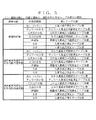
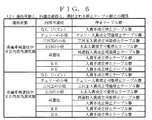
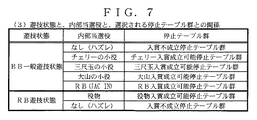


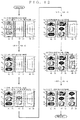




Landscapes
- Slot Machines And Peripheral Devices (AREA)
Abstract
【課題】面白みのある遊技機を提供する。
【解決手段】遊技機は、遊技に必要な図柄を変動表示するリール(3L,3C,3R)と、遊技者が操作する停止ボタン(7L,7C,7R)と、ボーナスの入賞成立が実現可能な回数の情報を記憶する回数情報記憶手段と、回数情報記憶手段に記憶された情報が示す回数が1以上であり且つ所定の条件が成立したことに基づいて、ボーナスの入賞成立を許可することを決定する高確率再遊技フラグ更新手段(116)と、遊技者による停止ボタン(7L,7C,7R)の操作態様及び高確率再遊技フラグ更新手段(116)の決定結果に基づいて変動表示を停止制御する停止制御手段(102)とを備える。停止制御手段(102)は、高確率再遊技フラグ更新手段(116)がボーナスの入賞成立を許可すると決定することを図柄の停止制御の態様により報知する。
【選択図】 図17An object of the present invention is to provide an interesting gaming machine.
A gaming machine can realize reels (3L, 3C, 3R) for variably displaying symbols required for a game, a stop button (7L, 7C, 7R) operated by a player, and a winning of a bonus. A number-of-times information storage means for storing a number of pieces of information, and permitting the winning of a bonus based on the fact that the number of times indicated by the information stored in the number-of-times information storage means is one or more and a predetermined condition is satisfied. Is determined based on the operation mode of the stop button (7L, 7C, 7R) by the player and the determination result of the high-probability re-game flag updating means (116). Stop control means (102) for performing stop control. The stop control means (102) notifies that the high-probability re-game flag updating means (116) determines that the winning of the bonus is permitted, by means of a symbol stop control mode.
[Selection diagram] FIG.
Description
【0001】
【発明の属する技術分野】
本発明は、遊技に必要な図柄を変動表示する変動表示手段と、その変動表示を制御するマイクロコンピュータ等の制御手段とを備えたスロットマシン、パチンコ機その他の遊技機に関する。
【0002】
【従来の技術】
例えば、停止ボタンを備えたスロットマシン、いわゆるパチスロ機は、正面の表示窓内に複数の図柄を変動表示する回転リールを複数配列して構成した機械的変動表示装置、或いはリール上の図柄を画面に表示する電気的変動表示装置を有する。遊技者のスタート操作に応じて、制御手段が変動表示装置を駆動制御して各リールを回転させることにより、図柄を変動表示させ、一定時間後自動的に或いは遊技者の停止操作により、各リールの回転を順次停止させる。このとき、表示窓内に現れた各リールの図柄が特定の組合せ(入賞図柄)になった場合にメダル、又はコイン等の遊技媒体を払出すことで遊技者に利益を付与する。
【0003】
現在主流の機種は、複数種類の入賞態様を有するものである。特に、ある役の入賞が成立したときは、1回のメダルの払出しに終わらず、所定期間、通常の状態よりも条件の良い遊技状態となる。このような役として、遊技者に相対的に大きい利益を与えるゲームを所定回数行える役(「ビッグボーナス」と称し、以下「BB」と略記する)と、遊技者に相対的に小さい利益を与えるゲームを所定回数行える役(「レギュラーボーナス」と称し、以下「RB」と略記する)がある。
【0004】
また、現在主流の機種においては、有効化された入賞ライン(以下「有効ライン」という)に沿って所定の図柄の組合せが並び、メダル、コイン等が払出される入賞が成立するためには、内部的な抽選処理(以下「内部抽選」という)により役に当選(以下「内部当選」という)し、且つその内部当選した役(以下「内部当選役」という)の入賞成立を示す図柄組合せを有効ラインに停止できるタイミングで遊技者が停止操作を行うことが要求される。つまり、いくら内部当選したとしても、遊技者の停止操作のタイミングが悪いと内部当選役の入賞を成立させることができない。すなわち、停止操作をタイミングよく行う技術が要求される(「目押し」といわれる技術介入性の比重が高い)遊技機が現在の主流である。
【0005】
また、単位時間当りに使用可能(投入可能)な遊技媒体が所定の値を超えないようにすること等を目的として、入賞が成立すると遊技媒体を賭けることなく次のゲームを行うことが可能となる役(以下「再遊技」という)が設けられた遊技機が現在の主流である。そして、この「再遊技」に内部当選する確率が高い期間(以下「高確率再遊技期間」という)を発生させる機能を備えた遊技機が提供されている。
【0006】
更に、BBに内部当選した回数からBBの入賞が成立した回数を減算した回数を記憶し、その回数分の入賞成立を実現可能とする(例えば、特許文献1参照。)が、「高確率再遊技期間」において再遊技の「引き込み制御」、或いは「蹴飛ばし制御」を優先したり、小役の「引き込み制御」を優先することにより、「高確率再遊技期間」のゲーム回数に関する終了条件が成立するまでの間、BBの入賞が成立しないようにした遊技機が提供されている。このような遊技機では、上記終了条件の成立までに要するゲームの回数が小さくなった場合に、リールとは別に設けられた表示手段を用いることにより当該ゲームの回数が小さいことを報知するようにしたものが知られている。
【0007】
【特許文献1】
特開2000−210413号公報
【0008】
【発明が解決しようとする課題】
しかしながら、上記のような遊技機では、従来にない報知態様により上記報知が可能であり、面白みのある遊技機が望まれている。
【0009】
本発明の目的は、面白みのある遊技機を提供することである。
【0010】
【課題を解決するための手段】
本発明の遊技機は、遊技に必要な図柄を変動表示する変動表示手段(例えば、後述のリール3L,3C,3R)と、遊技者が操作する操作手段(例えば、後述の停止ボタン7L,7C,7R)と、所定の役(例えば、ボーナスなど)の入賞成立が実現可能な回数の情報を記憶する回数情報記憶手段(例えば、後述のヒットリクエストフラグ格納手段107及びストック数格納手段110)と、回数情報記憶手段に記憶された情報が示す回数が1以上であり且つ所定の条件が成立したことに基づいて、所定の役の入賞成立を許可することを決定する入賞成立許可手段(例えば、高確率再遊技フラグ更新手段116)と、遊技者による操作手段の操作態様(例えば、操作タイミング(停止操作位置))及び入賞成立許可手段の決定結果に基づいて変動表示を停止制御する停止制御手段(例えば、後述の停止制御手段102)とを備え、停止制御手段は、入賞成立許可手段が所定の役の入賞成立を許可すると決定することを図柄の停止制御の態様により報知することを特徴とする。
【0011】
本発明の具体的態様では、停止制御の態様は、遊技者が操作手段を操作した後、変動表示が停止するまでの間における図柄の移動量(例えば、後述の滑りコマ数)であることを特徴とする。
【0012】
本発明の具体的態様では、停止制御手段は、移動量を大きくすること(例えば、後述の滑りコマ数を“4”とすること)により報知を行うことを特徴とする。
【0013】
本発明の具体的態様では、所定の条件は、所定の抽選(例えば、後述の終了抽選)に当選し、所定回数のゲーム(例えば、後述の延長ゲーム回数分のゲーム)が行われること(例えば、ゲームが開始すること又は終了すること)を契機として成立し、停止制御手段は、所定回数のゲームにおいて報知を行うことを特徴とする。
【0014】
本発明の具体的態様では、内部当選役を決定する内部当選役決定手段を備え、回数情報記憶手段に記憶された情報が示す回数が1以上である状況(例えば、後述のヒットリクエストフラグが“10(H)”又は“20(H)”である状況)において、所定の役の入賞成立が許可されていない場合(例えば、後述の高確率再遊技中である場合)に内部当選役決定手段が特定の役(例えば、後述の再遊技)を内部当選役と決定する確率は、所定の役の入賞成立が許可されている場合(例えば、後述の通常確率再遊技中であり、且つ内部当選状態である場合)と比べて高いことを特徴とする。
【0015】
本発明の具体的態様では、内部当選役を決定する内部当選役決定手段(例えば、後述の内部当選役決定手段101)を備え、内部当選役決定手段が所定の役を内部当選役と決定することを契機として回数情報記憶手段に記憶された情報が示す回数が1となり(例えば、後述のヒットリクエストフラグが“00(H)”から“10(H)”又は“20(H)”に移行し)、所定の条件は、所定回数のゲームが行われることを契機として成立し、停止制御手段は、所定回数のゲームにおいて報知を行うことを特徴とする。
【0016】
【作用及び効果】
本発明の遊技機では、停止制御手段は、入賞成立許可手段が所定の役の入賞成立を許可すると決定することを図柄の停止制御の態様により報知する。従って、遊技者は、図柄の停止制御態様に注目し、所定の役の入賞成立が許可されることに期待して遊技を進めることができるので、遊技の面白みが増大する。また、例えば、役の入賞の成否が上記図柄の停止態様により把握される場合には、遊技者は、視線を移動することなく役の入賞の成否及び上記報知に係る停止制御の態様を把握し、快適に遊技を進めることができる。また、上記報知を行うための表示手段を設けた場合においても、遊技者は、上記停止制御の態様及びその表示手段の表示内容に基づいて所定の役の入賞成立が許可されか否かを予想することができるので、所定の役の入賞成立が許可されることに対する遊技者の期待感に幅を持たせることができる。
【0017】
本発明の実施態様では、停止制御の態様は、遊技者が操作手段を操作した後、変動表示が停止するまでの間における図柄の移動量である。従って、遊技者は、上記図柄の移動量に注目し、所定の役の入賞成立が許可されることに期待して遊技を進めることができる。また、例えば、役の入賞の成否が上記図柄の停止態様により把握され、役の図柄組合せを構成する図柄の「引込み制御」が行われる場合には、上記図柄の移動量が「引込み制御」に基づくものであるか又は上記報知に係る停止制御の態様に基づくものであるかを的確に把握することが困難な場合が生じ得る。従って、遊技者は、上記図柄の移動量に応じて所定の役の入賞成立が許可されることに対して期待感を抱くとともに、遊技性の向上を図ることができる。
【0018】
また、停止制御手段は、移動量を大きくすることにより報知を行う。従って、遊技者は、所定の役の入賞成立が許可されることを容易に認識することが可能となる。
【0019】
また、所定の条件は、所定の抽選に当選し、所定回数のゲームが行われることを契機として成立する。停止制御手段は、所定回数のゲームにおいて上記報知を行う。従って、遊技者は、その所定回数のゲームにおける停止制御の態様に基づいて、所定回数のゲームが行われることを契機として所定の役の入賞成立が許可されることを把握することができる。また、例えば、上記所定回数として複数の回数を採用した場合には、複数のゲームにわたる上記図柄の移動量(例えば、リールの大きな滑りの連続)に応じて所定の役の入賞成立が許可されることに対する期待感を持つことができる。また、例えば、乱数抽選の結果などに基づいて上記所定回数を決定することもできる。これにより、遊技の面白みが増大する。
【0020】
また、回数情報記憶手段に記憶された情報が示す回数が1以上である状況において、所定の役の入賞成立が許可されていない場合に内部当選役決定手段が特定の役を内部当選役と決定する確率を、所定の役の入賞成立が許可されている場合と比べて高くすることもできる。
【0021】
また、内部当選役決定手段が所定の役を内部当選役と決定することを契機として回数情報記憶手段に記憶された情報が示す回数が1となる。また、所定の条件は、所定回数のゲームが行われることを契機として成立し、停止制御手段は、所定回数のゲームにおいて報知を行う。従って、遊技者は、その所定回数のゲームにおける停止制御の態様に基づいて、所定の役が内部当選役と決定されたこと、及び所定回数のゲームが行われることを契機としてその入賞成立が許可されることに期待して遊技を進めることができる。また、例えば、乱数抽選の結果などに基づいて上記所定回数を決定することもできる。これにより、遊技の面白みが増大する。
【0022】
【発明の実施の形態】
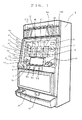
図1は、本発明の一実施例の遊技機1の外観を示す斜視図である。遊技機1は、いわゆる「パチスロ機」である。この遊技機1は、コイン、メダル、遊技球又はトークンなどの他、遊技者に付与された、もしくは付与される遊技価値の情報を記憶したカード等の遊技媒体を用いて遊技する遊技機であるが、以下ではメダルを用いるものとして説明する。
【0023】
遊技機1の全体を形成しているキャビネット2の正面には、略垂直面としてのパネル表示部2aが形成され、その中央には縦長矩形の表示窓4L,4C,4Rが設けられる。表示窓4L,4C,4Rには、入賞ラインとして水平方向にトップライン8b,センターライン8c及びボトムライン8d、斜め方向にクロスダウンライン8a及びクロスアップライン8eが設けられている。これらの入賞ラインは、後述の1−BETスイッチ11、2−BETスイッチ12、最大BETスイッチ13を操作すること、或いはメダル投入口22にメダルを投入することにより、それぞれ1本、3本、5本が有効化される。どの入賞ラインが有効化されたかは、後で説明するBETランプ9a,9b,9cの点灯で表示される。
【0024】
キャビネット2の内部には、各々の外周面に複数種類の図柄によって構成される図柄列が描かれた3個のリール3L,3C,3Rが回転自在に横一列に設けられ、変動表示手段を形成している。各リールの図柄は表示窓4L,4C,4Rを通して観察できるようになっている。各リールは、定速回転(例えば80回転/分)で回転する。
【0025】
表示窓4L,4C,4Rの左側には、1−BETランプ9a、2−BETランプ9b、最大BETランプ9c、クレジット表示部19が設けられる。1−BETランプ9a、2−BETランプ9b及び最大BETランプ9cは、一のゲームを行うために賭けられたメダルの数(以下「BET数」という)に応じて点灯する。ここで、本実施例では、一のゲームは、全てのリールが停止したときに終了する。1−BETランプ9aは、BET数が“1”で1本の入賞ラインが有効化されたときに点灯する。2−BETランプ9bは、BET数が“2”で3本の入賞ラインが有効化されたときに点灯する。最大BETランプ9cは、BET数が“3”で全て(5本)の入賞ラインが有効化されたときに点灯する。クレジット表示部19は、7セグメントLEDから成り、貯留されているメダルの枚数を表示する。
【0026】
表示窓4L,4C,4Rの右側には、当り表示ランプ(いわゆるWINランプ)17及び払出表示部18が設けられる。当り表示ランプ17は、基本的に、BB又はRBの入賞成立が実現可能となった後、BB又はRBの入賞が成立するまでの間、点灯する。ここで、BB及びRBを総称して、以下「ボーナス」という。払出表示部18は、7セグメントLEDから成り、入賞成立時のメダルの払出枚数を表示する。
【0027】
パネル表示部2aの右側上部には、ボーナス遊技情報表示部20が設けられる。ボーナス遊技情報表示部20は、7セグメントLEDから成り、後で説明するBB一般遊技状態におけるゲームの回数等を表示する。表示窓4L,4C,4Rの下方には水平面の台座部10が形成され、その台座部10と表示窓4L,4C,4Rとの間には液晶表示装置5が設けられている。この液晶表示装置5の表示画面5aには、遊技に関連する情報等が表示される。
【0028】
液晶表示装置5の右側にはメダル投入口22が設けられ、液晶表示装置5の左側には、1−BETスイッチ11、2−BETスイッチ12、及び最大BETスイッチ13が設けられる。1−BETスイッチ11は、1回の押し操作により、クレジットされているメダルのうちの1枚がゲームに賭けられ、2−BETスイッチ12は、1回の押し操作により、クレジットされているメダルのうちの2枚がゲームに賭けられ、最大BETスイッチ13は、1回のゲームに賭けることが可能な最大枚数のメダルが賭けられる。これらのBETスイッチを操作することで、前述のとおり、所定の入賞ラインが有効化される。
【0029】
台座部10の前面部の左寄りには、遊技者がゲームで獲得したメダルのクレジット/払出しを押しボタン操作で切り換えるC/Pスイッチ14が設けられている。このC/Pスイッチ14の切り換えにより、正面下部のメダル払出口15からメダルが払出され、払出されたメダルはメダル受け部16に溜められる。C/Pスイッチ14の右側には、遊技者の操作により上記リールを回転させ、表示窓4L,4C,4R内での図柄の変動表示を開始するためのスタートレバー6が所定の角度範囲で回動自在に取り付けられている。
【0030】
キャビネット2の上方の左右には、スピーカ21L,21Rが設けられ、その2台のスピーカ21L,21Rの間には、入賞図柄の組合せ及びメダルの配当枚数等を表示する配当表パネル23が設けられている。台座部10の前面部中央で、液晶表示装置5の下方位置には、3個のリール3L,3C,3Rの回転をそれぞれ停止させるための3個の停止ボタン(停止操作部)7L,7C,7Rが設けられている。
【0031】
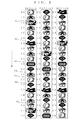
図2は、各リール3L,3C,3Rに表わされた複数種類の図柄が21個配列された図柄列を示している。各図柄には“00”〜“20”のコードナンバーが付され、データテーブルとして後で説明するROM32(図16)に格納(記憶)されている。各リール3L,3C,3R上には、“ドンちゃん(図柄91)”、“七(図柄92)”、“HANABI(図柄93)”、“大山(図柄94)”、“三尺玉(図柄95)”、“扇子(図柄96)”及び“チェリー(図柄97)”の図柄で構成される図柄列が表わされている。各リール3L,3C,3Rは、図柄列が図2の矢印方向に移動するように回転駆動される。
【0032】
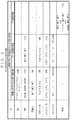
図3は、各遊技状態における入賞図柄組合せに対応する役及び払出枚数を示す。
【0033】
実施例の遊技状態には、「一般遊技状態」、「通常確率再遊技中BB内部当選状態」、「通常確率再遊技中RB内部当選状態」、「高確率再遊技中BB内部当選状態」、「高確率再遊技中RB内部当選状態」、「BB一般遊技状態」及び「RB遊技状態」がある。これら“7種類”の各遊技状態は、基本的に、内部当選する可能性のある役の種類、後述の再遊技に内部当選する確率及び入賞成立を実現することが可能なボーナスの種別により区別される。各遊技状態の特徴、すなわち各遊技状態において内部当選する役の種類、その確率及び各遊技状態におけるリール3L,3C,3Rの停止制御(入賞する可能性のある役の種類等)については、後で図4〜図7を参照して説明する。また、各遊技状態間の移行は、後述の遊技状態監視処理(図22)及び高確率再遊技フラグのオン・オフの切り換えにより行われる。なお、後述(図5〜図7)のように、各遊技状態には、ボーナスに内部当選したゲームにおいてボーナスの入賞が不成立となるようなリール3L,3C,3Rの停止制御が行われるという共通点がある。
【0034】
また、実施例では、ボーナスに内部当選した後、ボーナスの入賞が成立するまでの間、ボーナスを内部当選役として保持する(一般に、「持ち越し」と称される)。更に、ボーナスに内部当選した状態(ボーナスを持ち越した状態)においても、ボーナスに内部当選するようになっている。そして、入賞が成立することなく複数回ボーナスに内部当選した場合には、ボーナスの種別毎にその回数を計数(貯留)し、その回数分のボーナスの入賞成立を実現可能にしている。BBの入賞成立を実現可能な回数を、以下「BBストック数」という。また、RBの入賞成立を実現可能な回数を、以下「RBストック数」という。なお、後述の図24のST65、図28のST114、ST117又はST120により、ボーナスの入賞成立を実現可能な回数は、「BBストック数」と「RBストック数」とを合計した回数よりも“1”大きいものとなる。詳細には、「通常確率再遊技中BB内部当選状態」又は「高確率再遊技中BB内部当選状態」では、BBの入賞成立を実現可能な回数は、BBストック数に“1”を加算した回数と一致する。また、「通常確率再遊技中RB内部当選状態」又は「高確率再遊技中RB内部当選状態」では、RBの入賞成立を実現可能な回数は、RBストック数に“1”を加算した回数と一致する。
【0035】
ここで、BBの入賞成立を契機として発生し、「BB一般遊技状態」及び「RB遊技状態」により構成される遊技状態を総称して、以下「BB遊技状態」という。また、「通常確率再遊技中BB内部当選状態」、「通常確率再遊技中RB内部当選状態」、「高確率再遊技中BB内部当選状態」及び「高確率再遊技中RB内部当選状態」は、ボーナスに内部当選している状態であり、これらを総称して、以下「内部当選状態」という。なお、「内部当選状態」は、ボーナスを持ち越している状態(後述のヒットリクエストフラグが“20(H)”又は“10(H)”である状態)を含む。また、「高確率再遊技中BB内部当選状態」及び「高確率再遊技中RB内部当選状態」は、後述の再遊技に内部当選する確率が高い状態(後述の高確率再遊技フラグがセットされた状態)であり、これらを総称して、以下「高確率再遊技中(高確率再遊技期間)」という。また、「一般遊技状態」、「通常確率再遊技中BB内部当選状態」及び「通常確率再遊技中RB内部当選状態」は、後述の再遊技に内部当選する確率が通常の状態(後述の高確率再遊技フラグがセットされていない状態)であり、これらを総称して、以下「通常確率再遊技中」という。
【0036】
「高確率再遊技中」の発生条件は、後述のヒットリクエストフラグが“00(H)”であるときにボーナスに内部当選したこと(後述の図24のST63の判別が“NO”)、又はBB遊技状態又はRB遊技状態の終了時においてBBストック数及びRBストック数が“0”でないこと(後述の図28のST122を行うこと)である。
【0037】
「高確率再遊技中」の終了条件は、高確率再遊技中の終了抽選に当選(後述の図25のST75の判別が“YES”)した後又は「なし(ハズレ)」に内部当選した後(後述の図25のST73の判別が“YES”)、抽選により決定される後述の「高確率再遊技延長ゲーム回数」と同数のゲームが終了すること(後述の図21のST31の判別が“YES”)である。
【0038】
ここで、「ヒットリクエストフラグ」は、あるゲームの状況(ボーナスを持ち越しているか否か、持ち越しているボーナスの種類など)を示すものであり、その次のゲームにおいて遊技状態の移行の契機となり得るフラグ(情報)である。具体的には、あるゲームにおいて「ヒットリクエストフラグ」が“20(H)”であるとき、その次のゲームにおける遊技状態は、「通常確率再遊技中BB内部当選状態」又は「高確率再遊技中BB内部当選状態」である。また、あるゲームにおいて「ヒットリクエストフラグ」が“10(H)”であるとき、その次のゲームにおける遊技状態は、「通常確率再遊技中RB内部当選状態」又は「高確率再遊技中RB内部当選状態」である。また、あるゲームにおいて「ヒットリクエストフラグ」が“00(H)”であるとき、その次のゲームにおける遊技状態は、「一般遊技状態」である。なお、「ヒットリクエストフラグ」は、後述の図24のST64及び図28でセットされ、後述の図22及び図24のST63の判別において用いられる。
【0039】
また、「高確率再遊技フラグ」は、「高確率再遊技中」であるか否かを判別するためのフラグである。具体的には、「高確率再遊技フラグ」は、「高確率再遊技中」においては、“オン”の状況にある。また、「通常確率再遊技中」においては、基本的に“オフ”の状況にある。この「高確率再遊技フラグ」は、後述の図24のST66及び図28のST122で“オン”とされ、後述の図21のST32で“オフ”とされる。なお、フラグが“オン”の状況とは、所定の記憶領域に“1”を示す情報が記憶されていることをいう。また、フラグが“オフ”の状況とは、所定の記憶領域に“0”を示す情報が記憶されていることをいう。
【0040】
また、「次ボーナス抽選処理」とは、BB遊技状態又は“HANABI−HANABI−HANABI”が有効ラインに沿って並ぶことにより発生したRB遊技状態の終了時にBBストック数及びRBストック数が“1以上”である場合において、次ボーナス抽選テーブル(図15(3))に基づいて次ボーナスをBB又はRBのいずれとするか、すなわち、ヒットリクエストフラグとして“20(H)”又は“10(H)”のいずれをセット(記憶)するかを決定する。具体的には、後述の図28の処理をいう。「次ボーナス」とは、次に入賞成立が許可(許容)されることとなるボーナスの種類(種別)をいう。
【0041】
「高確率再遊技延長ゲーム回数(以下「延長ゲーム回数」という)」とは、「高確率再遊技中」の終了抽選に当選した後、「通常確率再遊技中」に移行するまで(ボーナスの入賞成立が許容されるまで)に必要なゲーム(終了抽選に当選したゲームを含む)の回数をいう。すなわち、上記終了抽選に当選した場合には、「高確率再遊技中」が所定回数(“0回”又は“3回”)のゲームにおいて延長される。この延長されたゲームを、以下「延長ゲーム」という。「延長ゲーム」に該当するか否かを識別するための情報として「高確率再遊技延長フラグ(以下「延長フラグ」という)」を用いる。この「延長フラグ」が“オン”であるゲームが「延長ゲーム」に該当する。「延長ゲーム」では、後述の「滑りコマ数」が可能な限り(後述の「誤入賞」を考慮しつつ)“4コマ”となるような制御を行い、遊技者に「延長ゲーム」であることを報知するようにしている。なお、「延長ゲーム回数」は、後述の延長ゲーム回数カウンタ122により計数され、後述の図21のST34及び図25のST79で更新される。また、「延長フラグ」は、後述の図21のST33で“オフ”とされ、図25のST77で“オン”とされる。
【0042】
図3に示すように、BBの入賞は、内部当選状態において“七−七−七”又は“ドンちゃん−ドンちゃん−ドンちゃん”が有効ラインに沿って並ぶことにより成立する。BBの入賞が成立した後、遊技状態がBB一般遊技状態となる。RBの入賞は、内部当選状態において“HANABI−HANABI−HANABI”が有効ラインに沿って並ぶこと、又はBB一般遊技状態において“扇子−扇子−扇子”が並ぶことにより成立する。BB一般遊技状態においてRBの入賞が成立することを、一般に「JAC IN」と称する。RBの入賞が成立した後、遊技状態がRB遊技状態となる。
【0043】
ここで、遊技状態に拘らずボーナス(「JAC IN」を除く)に内部当選したゲームでは、ボーナスの入賞が成立しないようにしている。また、一般遊技状態においてボーナスに内部当選した場合(後述の図24のST63の判別が“NO”の場合)には、次のゲームにおいて別の遊技状態へ移行する。従って、一般遊技状態においてボーナスの入賞が成立することはない。
【0044】
再遊技の入賞は、一般遊技状態及び内部当選状態において“扇子−扇子−扇子”が並ぶことにより成立する。再遊技の入賞が成立すると、投入したメダルの枚数と同数のメダルが自動投入されるので、遊技者はメダルを消費することなく次のゲームを行うことができる。ここで、「高確率再遊技中」では、再遊技に内部当選したとき、“55425/65536”の確率で遊技者の停止操作(停止ボタン7L,7C,7Rの操作タイミング、或いは操作順序(停止順序))に拘らずその再遊技の入賞を不成立とするリールの停止制御(一般に、「蹴飛ばし制御」と称される)を行う。この停止制御により、「高確率再遊技中」と「通常確率再遊技中」の再遊技の入賞が成立する確率を等しくしている。
【0045】
また、一般遊技状態、内部当選状態及びBB一般遊技状態では、「チェリーの小役」、「三尺玉の小役」、及び「大山の小役」の入賞成立を実現することが可能であるが、その払出枚数は図示のとおりである。
【0046】
役物の入賞は、RB遊技状態において“扇子−扇子−扇子”、“ドンちゃん−扇子−扇子”又は“HANABI−扇子−扇子”が並ぶことにより成立する。役物の入賞成立回数が“8回”となったとき、遊技状態が変化する。ここで、役物の入賞が成立する可能性のあるRB遊技状態のゲームは、一般に「JACゲーム」と称される。
【0047】
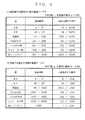
次に、図4を参照して、BET数が“3”のとき、一般遊技状態又は内部当選状態において内部当選役を決定する際(後述の図23)に使用する確率抽選テーブルを示す。
【0048】
図4(1)は、通常確率再遊技中用確率抽選テーブルを示す。図4(1)に示す確率抽選テーブルでは、確率抽選処理における乱数の抽出範囲“0”〜“16383”のうち、“136”〜“2380”の範囲内の乱数が抽出された場合に「再遊技」が内部当選役となる。「再遊技」に内部当選する確率は、“2245/16384”である。
【0049】
図4(2)は、高確率再遊技中用確率抽選テーブルを示す。図4(2)に示す確率抽選テーブルでは、確率抽選処理における乱数の抽出範囲“0”〜“16383”のうち、“136”〜“14686”の範囲内の乱数が抽出された場合に「再遊技」が内部当選役となる。「再遊技」に内部当選する確率は、“14551/16384”である。
【0050】
以上のように、「高確率再遊技中」では、「通常確率再遊技中」と比べて再遊技に内部当選する確率が高くなっている。なお、図4(1)及び(2)に示すテーブルでは、「再遊技」及び「なし(はずれ)」以外に内部当選する確率は、同じである。例えば、ボーナスに内部当選する確率(BB又はRBのいずれかに内部当選する確率)は、いずれの確率抽選テーブルにおいても“136/16384(約“1/120.5”)”である。なお、「高確率再遊技中」及び「通常確率再遊技中」では、「再遊技」の入賞が成立する確率は、後述の図26のST84の処理を行うことにより等しくなっている。
【0051】
次に、図5〜図7を参照して、遊技状態と、内部当選役と、選択される停止テーブル群との関係について説明する。停止テーブル群とは、例えば、後述の図9〜図11に示すような停止テーブルの集合を示し、リール3L,3C,3Rの停止制御の際に選択されるものである。
【0052】
ここで、選択される停止テーブル群の内容は、基本的に、遊技状態及び内部当選役毎に変化しうるものであるが、実施例では、停止テーブル群の欄に示すテーブル群の名称を、入賞の可能性の有無及びその可能性がある役の種類に基づいて定めている。このため、実施例では、同一の名称の停止テーブル群が選択されたとしても、常にリール3L,3C,3Rの停止態様までもが一致するわけではない。入賞不成立停止テーブル群が選択された場合には、内部当選役、遊技状態に拘らず、いずれの役の入賞も成立することはない。入賞成立可能停止テーブル群が選択された場合には、対応する役の入賞成立は可能であるが、その他の役の入賞成立を実現することは基本的にできない。例えば、「三尺玉入賞成立可能停止テーブル群」が選択された場合には、「三尺玉の小役」の入賞成立を実現しうるが、BB等の他の役の入賞成立を実現することはできない。また、「再遊技入賞成立可能停止テーブル群」が選択された場合には、「再遊技」の入賞成立を実現しうるが、他の役の入賞成立を実現することはできない。
【0053】
図5(1)に示すように、一般遊技状態では、ボーナスに内部当選した場合には、入賞不成立停止テーブル群が選択される。このため、ボーナスの入賞成立を実現することはできない。
【0054】
通常確率再遊技中BB内部当選状態では、ボーナスに内部当選した場合には、入賞不成立停止テーブル群が選択され、ボーナスの入賞成立を実現することはできない。他方、「なし(ハズレ)」に内部当選した場合には、BB入賞成立可能停止テーブル群が選択されるので、BBの入賞成立を実現することができる。なお、図4(1)に示すように、“12307/16384”の確率で「なし(ハズレ)」に内部当選する。
【0055】
通常確率再遊技中RB内部当選状態では、ボーナスに内部当選した場合には、入賞不成立停止テーブル群が選択され、ボーナスの入賞成立を実現することはできない。他方、内部当選役が「なし(ハズレ)」の場合には、RB入賞成立可能停止テーブル群が選択されるので、RBの入賞成立を実現することができる。なお、図4(1)に示すように、“12307/16384”の確率で内部当選役が「なし(ハズレ)」となる。
【0056】
図6(2)に示すように、高確率再遊技中BB内部当選状態では、ボーナスに内部当選した場合には、入賞不成立停止テーブル群が選択され、ボーナスの入賞成立を実現することはできない。同様に、「なし(ハズレ)」に内部当選した場合にも、入賞不成立停止テーブル群が選択されるので、BBの入賞成立を実現することはできない。ただし、「なし(ハズレ)」に内部当選した場合(いずれの役にも内部当選しない場合)には、「延長ゲーム回数」が“0”になることを契機としてBBの入賞成立が許容される(高確率再遊技フラグが“オフ”となる)。なお、図4(2)に示すように、「なし(ハズレ)」に内部当選する確率は“1/16384”であり、稀である。また、再遊技に内部当選した場合には、後述の再遊技用選択テーブル(図8)に基づいて再遊技入賞成立可能停止テーブル群又は入賞不成立停止テーブル群が選択される。
【0057】
高確率再遊技中RB内部当選状態では、ボーナスに内部当選した場合には、入賞不成立停止テーブル群が選択され、ボーナスの入賞成立を実現することはできない。同様に、「なし(ハズレ)」に内部当選した場合にも、入賞不成立停止テーブル群が選択されるので、RBの入賞成立を実現することはできない。ただし、「なし(ハズレ)」に内部当選した場合には、「延長ゲーム回数」が“0”になることを契機としてRBの入賞成立が許容される(高確率再遊技フラグが“オフ”となる)。なお、図4(2)に示すように、「なし(ハズレ)」に内部当選する確率は“1/16384”であり、稀である。また、再遊技に内部当選した場合には、後述の再遊技用選択テーブル(図8)に基づいて再遊技入賞成立可能停止テーブル群又は入賞不成立停止テーブル群が選択される。
【0058】
図7(3)に示すように、BB一般遊技状態及びRB遊技状態では、図示の停止テーブル群が選択され、リール3L,3C,3Rの停止制御が行われる。
【0059】
次に、図8を参照して、再遊技用選択テーブルについて説明する。このテーブルは、「高確率再遊技中」において再遊技入賞成立可能停止テーブル群又は入賞不成立停止テーブル群のいずれを選択するかを決定するためのものである。具体的には、後述の図26のST84の処理で使用される。この選択テーブルでは、再遊技入賞成立可能停止テーブル群を選択する確率は、“10111/65536”である。入賞不成立停止テーブル群を選択する確率は、“55425/65536”である。
【0060】
ここで、前述(図4(2))のように、「高確率再遊技中」において再遊技に内部当選する確率は、“14551/16384”である。従って、「高確率再遊技中」において再遊技の入賞が成立する確率は、再遊技入賞成立可能停止テーブル群が選択される確率を考慮すると、約“0.1370(“14551/16384”ד10111/65536”)”である。他方、「通常確率再遊技中」では、必ず再遊技入賞成立可能停止テーブル群が選択されるので、再遊技に内部当選する確率は、その入賞が成立する確率と等しい。すなわち、「通常確率再遊技中」において再遊技の入賞が成立する確率は、約“0.1370(“2245/16384”)”である。以上のように、実施例では、「高確率再遊技中」及び「通常確率再遊技中」において再遊技の入賞が成立する確率が等しくなっている。
【0061】
次に、図9〜図11を参照して、停止テーブルの例について説明する。停止テーブルは、後述の滑りコマ数決定処理(図20のST21)で使用される。停止テーブルを用いたリールの停止制御は、一般に「テーブル制御」と称される。
【0062】
「停止テーブル」には、各リール3L,3C,3Rの「停止操作位置」、「停止制御位置」、及び「滑りコマ数」が示されている。「停止操作位置」は、各リール3L,3C,3Rに対応して設けられた停止ボタン7L,7C,7Rが操作されたとき、センターライン8cに位置していた図柄(具体的には、図柄の中心がセンターライン8cの上方に位置し、その中心がセンターライン8cの位置に最も近い図柄)のコードナンバーを表わす。「停止制御位置」とは、停止操作が行われたリールが停止したとき、センターライン8cの位置に停止表示される図柄のコードナンバーを表わす。「滑りコマ数」は、停止ボタンが操作された後、リールが停止するまでの間に表示窓内を移動した図柄の数を示す(リールが停止するまでの間における図柄の移動量(移動距離)を示す)。また、「滑りコマ数」は、停止ボタンが操作されたとき、所定の入賞ラインに位置していた図柄のコードナンバーと、実際にリールが停止したときに、その入賞ラインに停止した図柄のコードナンバーとの差の絶対値により表わされる。この「滑りコマ数」は、「引き込み数」と称されることもある。
【0063】
ここで、本実施例では、いわゆる「滑りコマ数」を最大“4コマ”としている。例えば、右のリール3Rの回転中において、コードナンバー“10”の“HANABI(図2の図柄93)”がセンターライン8cの位置に到達したとき、停止ボタン7Rが操作された場合、コードナンバー“14”の“ドンちゃん(図2の図柄91)”をセンターライン8cの位置に停止表示するように右のリール3Rを停止制御することができる。
【0064】
停止テーブルは、左のリール用、中央のリール用、及び右のリール用の“3つ”のテーブルにより構成されている。また、各停止テーブルには、予めテーブル番号が定められている。なお、一のゲームでは、必ずしも一の停止テーブルが“3つ”のリール3L,3C,3Rの停止制御に用いられるものではない。例えば、一のゲームが開始して“3つ”のリール3L,3C,3Rが回転しているときに行うリールの停止操作(以下「第1停止操作」という)に対応する停止制御に用いる停止テーブルと、一のゲームが開始して“3つ”のリール3L,3C,3Rが回転を開始した後、“1つ”のリールのみが回転しているときに行うリールの停止操作(以下「第3停止操作」という)に対応する停止制御に用いる停止テーブルのテーブル番号が異なる場合がある。また、一のゲームが開始して“3つ”のリール3L,3C,3Rが回転を開始した後、“2つ”のリールが回転しているときに行うリールの停止操作を、以下「第2停止操作」という。
【0065】
また、複数の停止テーブル群に一の停止テーブルが属する場合がある。例えば、一の停止テーブルが「チェリー入賞成立可能停止テーブル群」及び「入賞不成立停止テーブル群」のいずれにも属する場合がある。また、例えば「再遊技入賞成立可能停止テーブル群」が選択された場合などには、「第1停止操作」の「停止操作位置」、乱数抽選の結果などに基づいて入賞成立を示す図柄組合せ(“扇子−扇子−扇子”など)が並ぶ有効ラインを決定するようにしている。また、「第3停止操作」に対応するリールの停止制御では、内部当選していない役(持ち越されていない役を含む)の入賞が成立すること(以下「誤入賞」という)を防止する措置をとるようにしている(後述の図27のST97)。
【0066】
図9及び図10は、入賞不成立停止テーブル群などに含まれる停止テーブル(テーブル番号は夫々“18”,“21”)を示す。図9では、右のリール用のテーブルにおける「滑りコマ数」が全て“4コマ”となっている。また、図10では、中央のリール用のテーブルにおける「滑りコマ数」が全て“4コマ”となっている。これらのテーブルは、「延長ゲーム」における停止制御で使用される場合がある。
【0067】
図11は、再遊技入賞成立可能停止テーブル群などに含まれる停止テーブル(テーブル番号は“29”)を示す。この停止テーブルは、例えば、「停止操作位置」がコードナンバー“01”、“10”及び“16”とは異なる場合であり、“扇子−扇子−扇子”が並ぶ有効ラインとしてセンターライン8cが選択された場合に使用される。
【0068】
図11において、左のリール3Lの「停止制御位置」は、「停止操作位置」がコードナンバー“01”、“10”及び“16”とは異なる場合には、コードナンバー“00”,“06”,“09”又は“15”のいずれかである。図2に示す図柄列において、これらに対応する図柄は、“扇子”である。
【0069】
図11において、中央のリール3Cの「停止制御位置」は、コードナンバー“03”,“07”,“11”,“15”又は“20”のいずれかである。図2に示す図柄列において、これらに対応する図柄は、“扇子”である。
【0070】
図11において、右のリール3Rの「停止制御位置」は、コードナンバー“02”,“07”,“11”,“15”又は“19”のいずれかである。図2に示す図柄列において、これらに対応する図柄は、“扇子”である。
【0071】
以上のように、図11に示す停止テーブルが各リール3L,3C,3Rの停止制御に使用された場合には、センターライン8cに沿って“扇子−扇子−扇子”が並び、再遊技の入賞成立が実現し得る。
【0072】
次に、図12及び図13を参照して、「延長ゲーム」における表示窓4L,4C,4R内の図柄の表示態様について説明する。なお、図12及び図13に示す例は、例えば内部当選役が「なし(ハズレ)」の場合における図柄の表示態様を示す。
【0073】
図12は、第1停止操作に対応する左のリール3Lの停止制御に用いる停止テーブルとしてテーブル番号“18”の停止テーブルが選択された後、中央のリール3Cに対応してテーブル番号“21”、右のリール3Rに対応してテーブル番号“18”の停止テーブルが夫々選択された場合の図柄の表示態様を示す。
【0074】
初めに、図12(1)に示すように、「第1停止操作」として左の停止ボタン7Lが操作され、その「停止操作位置」が“11”となっている。テーブル番号“18”の停止テーブルが選択されていることから滑りコマ数として“0”が決定され、左の表示窓4L内の図柄の停止態様は、図12(2)に示すものとなる(停止制御位置:11)。
【0075】
次に、図12(3)に示すように、「第2停止操作」として中央の停止ボタン7Cが操作され、その「停止操作位置」が“07”となっている。テーブル番号“21”の停止テーブルが選択されていることから滑りコマ数として“4”が決定され、中央の表示窓4C内の図柄の停止態様は、図12(4)に示すものとなる(停止制御位置:11)。
【0076】
続いて、図12(5)に示すように、「第3停止操作」として右の停止ボタン7Rが操作され、その「停止操作位置」が“18”となっている。テーブル番号“18”の停止テーブルが選択されていること及び誤入賞の成否の判別に基づいて滑りコマ数として“4”が決定され、右の表示窓4R内の図柄の停止態様は、図12(6)に示すものとなる(停止制御位置:01)。
【0077】
図13は、図12の場合と同様に、第1停止操作に対応する左のリール3Lの停止制御に用いる停止テーブルとしてテーブル番号“18”の停止テーブルが選択された後、中央のリール3Cに対応してテーブル番号“21”、右のリール3Rに対応してテーブル番号“18”の停止テーブルが夫々選択された場合の図柄の表示態様を示す。
【0078】
初めに、図13(1)に示すように、「第1停止操作」として左の停止ボタン7Lが操作され、その「停止操作位置」が“11”となっている。テーブル番号“18”の停止テーブルが選択されていることから滑りコマ数として“0”が決定され、左の表示窓4L内の図柄の停止態様は、図13(2)に示すものとなる(停止制御位置:11)。
【0079】
次に、図13(3)に示すように、「第2停止操作」として中央の停止ボタン7Cが操作され、その「停止操作位置」が“06”となっている。テーブル番号“21”の停止テーブルが選択されていることから滑りコマ数として“4”が決定され、中央の表示窓4C内の図柄の停止態様は、図13(4)に示すものとなる(停止制御位置:10)。
【0080】
続いて、図13(5)に示すように、「第3停止操作」として右の停止ボタン7Rが操作され、その「停止操作位置」が“17”となっている。テーブル番号“18”の停止テーブルが選択されていることに基づいて滑りコマ数として“4”を決定した場合には、図柄の停止態様は図13(8)に示すものとなる。しかしながら、図13(8)では、センターライン8cに沿って“三尺玉−三尺玉−三尺玉”が並び「三尺玉の小役」の誤入賞が成立している。そこで、滑りコマ数が“4”の場合には誤入賞が成立することから、後で図14を参照して説明する「検索順序」に基づいて「滑りコマ数」として“1”が決定され、図13(6)に示す変動表示態様を経由した後、右の表示窓4R内の図柄の停止態様は、図13(7)に示すものとなる(停止制御位置:18)。
【0081】
次に、図14を参照して、誤入賞が成立する場合の「滑りコマ数」の検索順序について説明する。検索順序とは、選択された「滑りコマ数」に従って「第3停止操作」に対応するリールを停止制御することにより「誤入賞」が成立する場合に、「誤入賞」が成立するか否かを検索(判別)していく「滑りコマ数」の順序(順番)をいう。また、この検索順序は、「停止テーブル」及び「停止操作位置」から決定される「滑りコマ数」に基づいて停止制御することにより「誤入賞」が成立する場合、「誤入賞」が成立しないことを条件に「滑りコマ数」として決定される“0”〜“4”の滑りコマ数の優先順位を定めるものでもある。
【0082】
「停止テーブル」及び「停止操作位置」から決定される「滑りコマ数」が“0”の場合に「誤入賞」が成立するとき、次に「滑りコマ数」が“1”の場合に「誤入賞」が成立するか否かを判別する。「誤入賞」が成立しないときは、「滑りコマ数」が“1”と決定される。「誤入賞」が成立するときは、次に「滑りコマ数」が“2”の場合に「誤入賞」が成立するか否かを判別する。「誤入賞」が成立しないときは、「滑りコマ数」が“2”と決定される。「誤入賞」が成立するときは、次に「滑りコマ数」が“3”の場合に「誤入賞」が成立するか否かを判別する。「誤入賞」が成立しないときは、「滑りコマ数」が“3”と決定される。「誤入賞」が成立するときは、「滑りコマ数」が“4”と決定される。「停止テーブル」及び「停止操作位置」から決定される「滑りコマ数」が“1”,“2”,“3”,“4”の場合の検索順序は図示のとおりである。なお、実施例では、“0”〜“4”の少なくともいずれか一の「滑りコマ数」で「誤入賞」が成立しないように停止テーブルを構成し、停止テーブルを選択するようにしている。
【0083】
ところで、前述の図13の「第3停止操作」においても「滑りコマ数」の検索が行われている。「停止テーブル」及び「停止操作位置」から決定される「滑りコマ数」が“4”の場合、図13(8)に示すように「三尺玉の小役」の「誤入賞」が成立する。次に「滑りコマ数」が“0”の場合に「誤入賞」が成立するか否かを判別すると、「三尺玉の小役」の「誤入賞」が成立する。次に「滑りコマ数」が“1”の場合に「誤入賞」が成立するか否かを判別すると、「誤入賞」は成立しない。そこで、図13の「第3停止操作」では、「滑りコマ数」が“1”と決定されている。
【0084】
ここで、図13及び図14では、「第1停止操作」に対応するリールの停止制御では、「滑りコマ数」が常に“4”となるように構成した停止テーブルを用いていないが、これに限られるものではない。例えば、「延長ゲーム」において「入賞不成立停止テーブル群」が選択された場合、「第1停止操作」に対応するリールの停止制御において「滑りコマ数」が基本的に“4”となるような停止テーブル(「チェリーの小役」の誤入賞を避ける場合にのみ「滑りコマ数」が“4”とならないテーブル)を用いることもできる。例えば、図13及び図14に示すような「第1停止操作(停止操作位置:11)」が行われた場合、「滑りコマ数」を“4”とし、「停止制御位置」を“15”とすることもできる。
【0085】
次に、図15を参照して、遊技制御に用いられる抽選テーブルについて説明する。
【0086】
図15(1)は、高確率再遊技終了抽選テーブルを示す。この抽選テーブルには、当選(高確率再遊技中の終了)、不当選(高確率再遊技中の継続)が決定(選択)されることとなる乱数範囲と、それらの選択確率が示されている。「高確率再遊技中」においてその終了抽選に当選する確率は、“1/256”である。この抽選テーブルは、後述の図25のST74で使用される。
【0087】
図15(2)は、延長ゲーム回数抽選テーブルを示す。この抽選テーブルには、「延長ゲーム回数」として“0”、“3”が決定(選択)されることとなる乱数範囲と、その選択確率が示されている。この抽選テーブルは、後述の図25のST78で使用される。
【0088】
図15(3)は、次ボーナス抽選テーブルを示す。この抽選テーブルには、BB遊技状態又は“HANABI−HANABI−HANABI”が有効ラインに沿って並ぶことにより発生したRB遊技状態の終了時にBBストック数及びRBストック数が“1以上”である場合において、次に入賞成立が許容されることとなるボーナスをBB又はRBのいずれとするかを決定(後述の図28のST112)するために用いられる。具体的には、次のゲーム以降の遊技状態を「高確率再遊技中BB内部当選状態」又は「高確率再遊技中RB内部当選状態」のいずれとするかを決定するために用いられる。「次ボーナス」としてBBが選択される確率は、RBのものと比べて高く設定されている。この抽選テーブルは、後述の図28のST112で使用される。
【0089】
図16は、遊技機1における遊技処理動作を制御する主制御回路71と、主制御回路71に電気的に接続する周辺装置(アクチュエータ)と、主制御回路71から送信される制御指令に基づいて液晶表示装置5及びスピーカ21L,21Rを制御する副制御回路72とを含む回路構成を示す。
【0090】
主制御回路71は、回路基板上に配置されたマイクロコンピュータ30を主たる構成要素とし、これに乱数サンプリングのための回路を加えて構成されている。マイクロコンピュータ30は、予め設定されたプログラムに従って制御動作を行うCPU31と、記憶手段であるROM32及びRAM33を含む。
【0091】
CPU31には、基準クロックパルスを発生するクロックパルス発生回路34及び分周器35と、サンプリングされる乱数を発生する乱数発生器36及びサンプリング回路37とが接続されている。なお、乱数サンプリングのための手段として、マイクロコンピュータ30内で、すなわちCPU31の動作プログラム上で乱数サンプリングを実行するように構成してもよい。その場合、乱数発生器36及びサンプリング回路37は省略可能であり、或いは、乱数サンプリング動作のバックアップ用として残しておくことも可能である。
【0092】
マイクロコンピュータ30のROM32には、スタートレバー6を操作(スタート操作)する毎に行われる乱数サンプリングの判定に用いられる確率抽選テーブル、停止ボタンの操作に応じてリールの停止態様を決定するための停止テーブル群、副制御回路72へ送信するための各種制御指令(コマンド)等が格納されている。このコマンドには、「デモ表示コマンド」、「全リール停止コマンド」等がある。これらのコマンドについては後で説明する。なお、副制御回路72が主制御回路71へコマンド、情報等を入力することはなく、主制御回路71から副制御回路72への一方向で通信が行われる。
【0093】
RAM33には、種々の情報が格納される。例えば、高確率再遊技フラグ、ヒットリクエストフラグ、延長フラグ、BBストック数の情報、RBストック数の情報等が格納される。また、RAM33には、後述の延長ゲーム回数カウンタ122がセットされている。
【0094】
図16の回路において、マイクロコンピュータ30からの制御信号により動作が制御される主要なアクチュエータとしては、各種ランプ(1−BETランプ9a、2−BETランプ9b、最大BETランプ9c、当り表示ランプ17)と、各種表示部(払出表示部18、クレジット表示部19、ボーナス遊技情報表示部20)と、メダルを収納し、ホッパー駆動回路41の命令により所定枚数のメダルを払出す遊技価値付与手段としてのホッパー(払出しのための駆動部を含む)40と、リール3L,3C,3Rを回転駆動するステッピングモータ49L,49C,49Rとがある。
【0095】
更に、ステッピングモータ49L,49C,49Rを駆動制御するモータ駆動回路39、ホッパー40を駆動制御するホッパー駆動回路41、各種ランプを駆動制御するランプ駆動回路45、及び各種表示部を駆動制御する表示部駆動回路48がI/Oポート38を介してCPU31の出力部に接続されている。これらの駆動回路は、それぞれCPU31から出力される駆動指令などの制御信号を受けて、各アクチュエータの動作を制御する。
【0096】
また、マイクロコンピュータ30が制御指令を発生するために必要な入力信号を発生する主な入力信号発生手段としては、スタートスイッチ6S、1−BETスイッチ11、2−BETスイッチ12、最大BETスイッチ13、C/Pスイッチ14、投入メダルセンサ22S、リール停止信号回路46、リール位置検出回路50、払出完了信号回路51がある。これらも、I/Oポート38を介してCPU31に接続されている。
【0097】
スタートスイッチ6Sは、スタートレバー6の操作を検出する。投入メダルセンサ22Sは、メダル投入口22に投入されたメダルを検出する。リール停止信号回路46は、各停止ボタン7L,7C,7Rの操作に応じて停止信号を発生する。リール位置検出回路50は、リール回転センサからのパルス信号を受けて各リール3L,3C,3Rの位置を検出するための信号をCPU31へ供給する。払出完了信号回路51は、メダル検出部40Sの計数値(ホッパー40から払出されたメダルの枚数)が指定された枚数データに達した時、メダル払出完了を検知するための信号を発生する。
【0098】
図16の回路において、乱数発生器36は、一定の数値範囲に属する乱数を発生し、サンプリング回路37は、スタートレバー6が操作された後の適宜のタイミングで1個の乱数をサンプリングする。こうしてサンプリングされた乱数及びROM32内に格納されている確率抽選テーブルに基づいて、内部当選役が決定される。
【0099】
リール3L,3C,3Rの回転が開始された後、ステッピングモータ49L,49C,49Rの各々に供給される駆動パルスの数が計数され、その計数値はRAM33の所定エリアに書き込まれる。リール3L,3C,3Rからは一回転毎にリセットパルスが得られ、これらのパルスはリール位置検出回路50を介してCPU31に入力される。こうして得られたリセットパルスにより、RAM33で計数されている駆動パルスの計数値が“0”にクリアされる。これにより、RAM33内には、各リール3L,3C,3Rについて一回転の範囲内における回転位置に対応した計数値が格納される。
【0100】
上記のようなリール3L,3C,3Rの回転位置とリール外周面上に描かれた図柄とを対応づけるために、図柄テーブルが、ROM32内に格納されている。この図柄テーブルでは、前述したリセットパルスが発生する回転位置を基準として、各リール3L,3C,3Rの一定の回転ピッチ毎に順次付与されるコードナンバーと、それぞれのコードナンバー毎に対応して設けられた図柄を示す図柄コードとが対応づけられている。
【0101】
更に、ROM32内には、入賞図柄組合せテーブルが格納されている。この入賞図柄組合せテーブルでは、入賞となる図柄の組合せと、入賞のメダル配当枚数と、その入賞を表わす入賞判定コードとが対応づけられている。上記の入賞図柄組合せテーブルは、左のリール3L,中央のリール3C,右のリール3Rの停止制御時、及び全リール停止後の入賞確認を行うときに参照される。
【0102】
上記乱数サンプリングに基づく抽選処理(確率抽選処理)により内部当選した場合には、CPU31は、遊技者が停止ボタン7L,7C,7Rを操作したタイミングでリール停止信号回路46から送られる操作信号、及び選択された「停止テーブル」に基づいて、リール3L,3C,3Rを停止制御する信号をモータ駆動回路39に送る。
【0103】
内部当選した役の入賞成立を示す停止態様となれば、CPU31は、払出し指令信号をホッパー駆動回路41に供給してホッパー40から所定個数のメダルの払出しを行う。その際、メダル検出部40Sは、ホッパー40から払出されるメダルの枚数を計数し、その計数値が指定された数に達した時に、メダル払出完了信号がCPU31に入力される。これにより、CPU31は、ホッパー駆動回路41を介してホッパー40の駆動を停止し、「メダル払出処理」を終了する。
【0104】
次に、図17を参照して、遊技機1の機能を実現するために必要な主制御回路71の機能実現手段(動作部)を含むブロック図について説明する。主制御回路71は、次のような各手段を備えている。
【0105】
スタートスイッチ6Sからの入力信号及び後述の遊技状態格納手段109に格納された情報に基づいて内部当選役を決定(後述の図20のST15)する内部当選役決定手段101、
後述の滑りコマ数決定手段114の決定結果に基づいてリール3L,3C,3Rを停止制御(後述の図20のST22)する停止制御手段102、
リール3L,3C,3Rの停止態様に基づいて入賞役(入賞が成立した役)を識別(後述の図20のST15)する入賞検索手段103、
内部当選役決定手段101の決定結果及び入賞検索手段103の検索結果に基づいてBB遊技状態又はRB遊技状態の終了(終了したボーナスの情報を含む)を監視(後述の図21のST36)するボーナス終了監視手段104、
ボーナス終了監視手段104の監視結果及び後述のストック数格納手段110に格納(記憶)された情報に基づいて「次ボーナス」を決定(後述の図28)する次ボーナス決定手段105、
内部当選役決定手段101の決定結果、次ボーナス決定手段105の決定結果及び後述のヒットリクエストフラグ格納手段107に格納(記憶)された情報に基づいて後述のヒットリクエストフラグ格納手段107に格納(記憶)された情報を更新(後述の図24のST64、図28のST113、ST116、ST119、ST121)するヒットリクエストフラグ更新手段106、
ヒットリクエストフラグの情報を格納(記憶)するヒットリクエストフラグ格納手段107、
入賞検索手段103の検索結果、ボーナス終了監視手段104の監視(判別)結果、ヒットリクエストフラグ格納手段107に格納(記憶)された情報及び後述の高確率再遊技フラグ格納手段117に格納された情報に基づいて後述の遊技状態格納手段109に格納された情報の監視及び更新(後述の図22など)を行う遊技状態監視手段108、
遊技状態の情報を格納する遊技状態格納手段109、
BBストック数及びRBストック数の情報を格納(記憶)するストック数格納手段110、
内部当選役決定手段101の決定結果及びヒットリクエストフラグ更新手段106の更新態様に基づいてストック数格納手段110に格納(記憶)された情報を更新(後述の図24のST62、ST65、図28のST114、ST117、120)するストック数更新手段111、
内部当選役決定手段101の決定結果及び遊技状態格納手段109に格納された情報に基づいて停止テーブル群を選択(後述の図26)する停止テーブル群選択手段112、
停止ボタン7L,7C,7R(リール停止信号回路46)からの入力信号、停止テーブル群選択手段112の選択結果及び後述の高確率再遊技延長フラグ更新手段119に格納された情報に基づいて停止テーブルを選択(後述の図27のST93、ST100、ST103、ST106)する停止テーブル選択手段113、
停止ボタン7L,7C,7R(リール停止信号回路46)からの入力信号(停止操作位置)及び停止テーブル選択手段113の選択結果に基づいて「滑りコマ数」を決定(後述の図27のST94、ST97)する滑りコマ数決定手段114、
滑りコマ数決定手段114の決定結果に基づいて誤入賞の成否を判別(後述の図27のST96)する誤入賞判別手段115、
内部当選役決定手段101の決定結果、次ボーナス決定手段105の決定結果、
ヒットリクエストフラグ格納手段107に格納(記憶)されている情報、後述の高確率再遊技延長フラグ格納手段120に格納されている情報及び後述の延長ゲーム回数カウンタ122に格納されている情報に基づいて後述の高確率再遊技フラグ格納手段117に格納された情報を更新する(後述の図21のST32、図24のST66、図28のST122)高確率再遊技フラグ更新手段116、
高確率再遊技フラグの情報を格納する高確率再遊技フラグ格納手段117、
内部当選役決定手段101の決定結果及び高確率再遊技フラグ格納手段117に格納された情報に基づいて「高確率再遊技中」の終了抽選(後述の図25のST74)を行う高確率再遊技終了抽選手段118、
内部当選役決定手段101の決定結果、高確率再遊技終了抽選手段118の抽選結果、後述の高確率再遊技延長フラグ格納手段120に格納された情報及び延長ゲーム回数カウンタ122に格納された情報に基づいて後述の高確率再遊技延長フラグ格納手段120に格納された情報を更新(後述の図21のST33、図25のST77)する高確率再遊技延長フラグ更新手段119、
延長フラグの情報を格納する高確率再遊技延長フラグ格納手段120、
高確率再遊技延長フラグ格納手段120に格納された情報などに基づいて後述の延長ゲーム回数カウンタ122に格納された情報を更新(後述の図21のST34、図25のST78、ST79)する延長ゲーム回数更新手段121、
延長ゲーム回数の情報を格納する延長ゲーム回数カウンタ122。
【0106】
ここで、高確率再遊技フラグ更新手段116は、延長フラグが“オン”の状況(ヒットリクエストフラグが“00(H)”以外の状況)において延長ゲーム回数カウンタ122に格納されている情報が“0”となることを契機として高確率再遊技フラグを“オフ”とする(後述の図21のST32)。高確率再遊技フラグが“オフ”となると、次のゲームの開始時に遊技状態監視手段108により遊技状態が更新(高確率再遊技中が終了)される。「高確率再遊技中」が終了することにより、停止テーブル群選択手段112は、内部当選役決定手段101の決定結果に基づいてBB入賞成立可能停止テーブル群或いはRB入賞成立可能停止テーブル群を選択する。以上より、高確率再遊技フラグ更新手段(入賞成立許可手段)116は、回数情報記憶手段に記憶された情報が示す回数が1以上であり且つ所定の条件が成立したことに基づいて、所定の役(ボーナス)の入賞成立を許可することを決定するものである。
【0107】
また、停止制御手段102は、遊技者による停止ボタン7L,7C,7Rの操作態様(操作タイミング(停止操作位置))、及び高確率再遊技フラグ更新手段(入賞成立許可手段)の決定結果に応じた停止テーブル選択手段113及び滑りコマ数決定手段114の決定結果に基づいてリール3L,3C,3Rを停止制御する。
【0108】
次に、図18を参照して、CPU31の遊技制御に関する概略フローチャート及びボーナスに関する遊技の流れについて説明する。
【0109】
初めに、CPU31の遊技制御に関する概略フローチャートについて説明する。通常遊技(高確率再遊技中)において一のゲームが開始すると、CPU31は、内部当選役を決定するための確率抽選を行い、「高確率再遊技中」の終了抽選を行う。次に、この終了抽選に当選した場合には、「延長ゲーム」を経由してボーナスの入賞成立が許容される。ボーナスの入賞が成立した場合には、BB遊技状態又はRB遊技状態へ移行する。
【0110】
次に、ボーナスに関する遊技の流れについて説明する。通常遊技(高確率再遊技中)においてボーナスに内部当選した場合には、BB、RBがストック(ストック数に“1”が加算)される。そして、上記終了抽選に当選した場合には、「延長ゲーム」を経由してストック(貯留)されたボーナスの入賞成立が許容される。BB遊技状態又はRB遊技状態が終了した場合には、再び上記通常遊技に移行する。
【0111】
次に、図19〜図21に示すメインフローチャートを参照して、主制御回路71のCPU31の制御動作について説明する。
【0112】
初めに、CPU31は、遊技開始時の初期化を行う(ステップ[以下、STと表記する]1)。具体的には、RAM33の記憶内容の初期化、通信データの初期化等を行う。続いてゲーム終了時のRAM33の所定の記憶内容を消去する(ST2)。具体的には、前回のゲームに使用されたRAM33の書き込み可能エリアのデータの消去、RAM33の書き込みエリアへの次のゲームに必要なパラメータの書き込み、次のゲームのシーケンスプログラムの開始アドレスの指定等を行う。次に、前回のゲーム終了後、すなわち全リール3L,3C,3R停止後から“30秒”経過したか否かを判別する(ST3)。この判別が“YES”であれば、副制御回路72に対し、「デモ画像」の表示を要求する「デモ表示コマンド」を送信する(ST4)。
【0113】
次に、CPU31は、メダルの自動投入の要求があるか、すなわち前回のゲームで再遊技の入賞が成立したか否かを判別する(ST5)。この判別が“YES”のときは、投入要求分のメダルを自動投入し(ST6)、ST8に移る。ST5の判別が“NO”のときは、投入メダルセンサ22S又はBETスイッチ11,12,13からの入力があるか否かを判別する(ST7)。この判別が“YES”のときは、ST8に移り、“NO”のときは、ST3に移る。
【0114】
次に、CPU31は、スタートレバー6の操作に基づくスタートスイッチ6Sからの入力があるか否かを判別する(ST8)。この判別が“YES”のときは前回のゲームが開始してから“4.1秒”経過しているか否かを判別し(ST9)、この判別が“YES”のときはST11に移り、“NO”のときはST10に移る。ST10では、「ゲーム開始待ち時間消化処理」を行う。具体的には、前回のゲームが開始してから“4.1秒”経過するまでの間、遊技者のゲームを開始する操作に基づく入力を無効にする処理を行う。
【0115】
次に、CPU31は、リールの回転処理を行い(ST11)、同時に抽選用の乱数を抽出し(ST12)、1ゲーム監視用タイマをセットする(ST13)。ST12の処理で抽出した乱数は、後で説明する確率抽選処理において使用される。ST13の処理の1ゲーム監視用タイマには、遊技者の停止ボタンの停止操作によらずに自動的にリールを停止させるための自動停止タイマが含まれる。
【0116】
図20のST14では、後で図22を参照して説明する遊技状態監視処理を行う。続いて、後で図23及び図24を参照して説明する確率抽選処理を行う(ST15)。この確率抽選処理(内部抽選処理)は、遊技状態に応じて確率抽選テーブルを使用し、上記ST12において抽出した乱数値がどの役の乱数範囲に属するか否かを判別し、内部当選役(成立フラグ)を決定するものである。続いて、後で図25を参照して説明する高確率再遊技終了関連処理(ST16)を行い、ST17に移る。ST17では、後で図26を参照して説明する停止テーブル群選択処理を行い、ST18に移る。ST18では、ゲーム開始時の送信処理を行う。具体的には、内部当選役の情報、停止テーブル群選択処理の決定結果、遊技状態、セットされてストック数等の情報を含むコマンドを副制御回路72へ送信する処理を行う。
【0117】
次に、CPU31は、停止ボタンが“オン”かどうかを判別する(ST19)。具体的には、いずれかの停止ボタンが操作されたかどうかを判別する。この判別が“YES”のときは、ST21に移り、“NO”のときは、ST20に移る。ST20では、自動停止タイマの値が“0”であるか否かを判別し、この判別が“YES”のときは、ST21に移り、“NO”のときは、ST19に移る。
【0118】
ST21では、CPU31は、後で図27を参照して説明する滑りコマ数決定処理を行う。この滑りコマ数決定処理では、滑りコマ数を決定する処理を行う。続いて、滑りコマ数分、停止操作された停止ボタンに対応するリールを回転させてから停止させる(ST22)。続いて、CPU31は、全てのリールが停止したかどうかを判別する(ST23)。この判別が“YES”のときは、ST24に移り、“NO”のときは、ST19に移る。ST24では、全てのリールが停止したことを示す「全リール停止コマンド」を送信し、図21のST25に移る。
【0119】
図21のST25では、CPU31は入賞検索を行う。入賞検索とは、表示窓4L,4C,4Rの図柄の停止態様に基づいて入賞役(入賞が成立した役)を識別するための入賞フラグをセットすることである。具体的には、センターライン8cに沿って並ぶ図柄のコードナンバー及び入賞判定テーブルに基づいて入賞役を識別する。続いて、入賞フラグが正常であるか否かを判別する(ST26)。この判別が“NO”のときはイリーガルエラーの表示を行う(ST27)。この場合、遊技は中止となる。ST26の判別が“YES”のときは、遊技状態に応じてメダルのクレジット又は払出しを行うとともに、入賞役に応じて遊技状態をBB遊技状態或いはRB遊技状態へ移行する(ST28)。
【0120】
次に、現在の遊技状態がBB一般遊技状態又はRB遊技状態であるか否かを判別する(ST29)。この判別が“NO”のとき(遊技状態がBB一般遊技状態又はRB遊技状態でないとき)は、ST30に移り、“YES”のときは、ST35に移る。ST30では、延長フラグが“オン”であるか否かを判別する。この判別が“YES”のとき、すなわち今回のゲームが「延長ゲーム」に該当するときは、ST31に移る。この判別が“NO”のときは、図19のST2に移る。ST31では、延長ゲーム回数カウンタ122の値が“0”であるか否かを判別する。この判別が“YES”のときは、ST32に移り、“NO”のときは、ST34に移る。ST32では、高確率再遊技フラグを“オフ”とする。続いて、高確率再遊技延長フラグを“オフ”とし(ST33)、図19のST2に移る。ST34では、延長ゲーム回数カウンタ122の値を“1”減算し、図19のST2に移る。
【0121】
ST29の判別が“YES”のとき(遊技状態がBB一般遊技状態又はRB遊技状態であるとき)は、ボーナスの「遊技数チェック処理」を行う(ST35)。この「遊技数チェック処理」では、RB遊技状態が発生した回数、BB一般遊技状態のゲーム回数、RB遊技状態における入賞回数、及びRB遊技状態におけるゲーム回数をチェックするとともに、BB一般遊技状態及びRB遊技状態間における遊技状態の移行(セット)を行う。
【0122】
次に、ボーナスの終了時であるか否かを判別する(ST36)。具体的には、BBの入賞が成立した後では、3回目のRB遊技状態において入賞回数が8回又はゲーム回数が12回であるか、又はBB一般遊技状態においてゲーム回数が30回であるか否かを判別する。また、“HANABI−HANABI−HANABI”が有効ラインに沿って並ぶことによりRBの入賞が成立した後では、RB遊技状態において入賞回数が8回又はゲーム回数が12回であるか否かを判別する。ST36の判別が“YES”のときは、BB遊技状態又はRB遊技状態を終了してST37に移り、“NO”のときは、ST2に移る。ST37では、後で図28を参照して説明する次ボーナス抽選処理を行い、ST2に移る。
【0123】
次に、図22を参照して、遊技状態監視処理について説明する。ここで、以下の処理に用いるヒットリクエストフラグは、一般遊技状態においてBB又はRBに内部当選したとき(後述の図24のST64)、及びBB遊技状態等が終了したとき(後述の図28)においてのみ変更される可能性がある。
【0124】
初めに、CPU31は、遊技状態がBB一般遊技状態又はRB遊技状態であるか否かを判別する(ST41)。この判別が“YES”のときは、それぞれの遊技状態に合わせて遊技状態をセットする(ST42)。具体的には、ST35(図21)の処理で移行した遊技状態をセットする。続いて、図20のST15に移る。ST41の判別が“NO”のときは、ヒットリクエストフラグが“10(H)”であるか否かを判別する(ST43)。この判別が“YES”のときは、遊技状態をRB内部当選状態にセットする(ST44)。具体的には、高確率再遊技フラグが“オン”の場合には、遊技状態を「高確率再遊技中RB内部当選状態」にセットし、“オフ”の場合には、「通常確率再遊技中RB内部当選状態」にセットする。続いて、図20のST15に移る。
【0125】
ST43の判別が“NO”のときは、ヒットリクエストフラグが“20(H)”であるか否かを判別する(ST45)。この判別が“YES”のときは、遊技状態をBB内部当選状態にセットする(ST46)。具体的には、高確率再遊技フラグが“オン”の場合には、遊技状態を「高確率再遊技中BB内部当選状態」にセットし、“オフ”の場合には、「通常確率再遊技中BB内部当選状態」にセットする。続いて、図20のST15に移る。ST45の判別が“NO”のときは、遊技状態を一般遊技状態にセットし(ST47)、図20のST15に移る。
【0126】
以上のように、ゲーム開始時におけるヒットリクエストフラグ及び高確率再遊技フラグに基づいて遊技状態の変更を行うようにしている。つまり、前回のゲームにおける遊技状況に応じて遊技状態を変更するようにしている。例えば、後述のST64(図24)でヒットリクエストフラグの内容が変更され、ST66で高確率再遊技フラグが“オフ”から“オン”に変更されるが、その変更を契機とした遊技状態の変更は、次のゲームの開始時に行われることとなる。そして、この遊技状態監視処理においてセットされた遊技状態に基づいて後述の確率抽選処理(図23、図24)、停止テーブル群選択処理(図26)、滑りコマ数決定処理(図27)などが行われる。
【0127】
次に、図23及び図24を参照して、確率抽選処理について説明する。
【0128】
初めに、CPU31は、遊技状態がBB一般遊技状態又はRB遊技状態であるか否かを判別する(ST51)。この判別が“YES”のときは、ST55に移り、“NO”のときは、ST52に移る。ST52では、高確率再遊技フラグが“オフ”であるか否か、すなわち「通常確率再遊技中」であるか否かを判別する。この判別が“YES”のときは、ST53に移り、“NO”のときは、ST54に移る。ST53では、通常確率再遊技中用確率抽選テーブル(図4(1))に基づいて内部当選役の抽選を行い、ST56に移る。ST54では、高確率再遊技中用確率抽選テーブル(図4(2))に基づいて内部当選役の抽選を行い、ST56に移る。ST51の判別が“YES”のときは、ボーナス中用確率抽選テーブル(図示せず)に基づいて内部当選役の抽選を行い(ST55)、ST56に移る。ST56では、選択された内部当選役の情報をRAM33に格納し、図24のST61に移る。
【0129】
図24のST61では、内部当選役がBB又はRBであるか否かを判別する。この判別が“YES”のときは、ST62に移り、“NO”のときは、図20のST16に移る。ST62では、内部当選したボーナスの種別に応じてBBストック数又はRBストック数に“1”を加算し、ST63に移る。ST63では、セットされているヒットリクエストフラグが“10(H)”又は“20(H)”であるか否かを判別する。この判別が“NO”のとき、すなわち「一般遊技状態」であるときは、ST64に移る。ST63の判別が“YES”のときは、図20のST16に移る。ST64では、ボーナスの種別に基づいてヒットリクエストフラグをセット(記憶)する。具体的には、内部当選役がRBであるときは、ヒットリクエストフラグとして“10(H)”をセットし、BBであるときは、“20(H)”をセットする。続いて、内部当選したボーナスのストック数から“1”減算する(ST65)。続いて、高確率再遊技フラグを“オン”とし(ST66)、図20のST16に移る。
【0130】
次に、図25を参照して、高確率再遊技終了関連処理について説明する。
【0131】
初めに、CPU31は、高確率再遊技フラグがセットされているか否かを判別する(ST71)。この判別が“YES”のときは、ST72に移り、“NO”のときは、図20のST17に移る。ST72では、延長フラグが“オフ”であるか否かを判別する。この判別が“YES”のときは、ST73に移り、“NO”のとき(延長ゲームであるとき)は、図20のST17に移る。ST73では、「なし(ハズレ)」に内部当選したか否かを判別する。この判別が“YES”のときは、ST76に移り、“NO”のときは、ST74に移る。ST74では、抽出した乱数値及び高確率再遊技終了抽選テーブル(図15(1))に基づいて「高確率再遊技中」を終了とするか否かの抽選を行う。続いて、「高確率再遊技中」の終了に当選したか否かを判別し(ST75)、この判別が“YES”のときは、ST76に移り、“NO”のときは、図20のST17に移る。ST76では、延長ゲーム回数カウンタ122を初期化し、ST77に移る。ST77では、延長フラグを“オン”とする。次に、延長ゲーム回数を抽出した乱数値及び延長ゲーム回数抽選テーブル(図15(2))に基づいて延長ゲーム回数を決定する(ST78)。続いて、決定した延長ゲーム回数を延長ゲーム回数カウンタ122にセットし(ST79)、図20のST17に移る。
【0132】
次に、図26を参照して、停止テーブル群選択処理について説明する。
【0133】
初めに、CPU31は、停止テーブル選択用の乱数を抽出する(ST81)。抽出された乱数値は、遊技状態及び内部当選役に対応する停止テーブル群に含まれる停止テーブルのうち、いずれの停止テーブルを選択するかを決定するために用いられる。続いて、「高確率再遊技中」かどうかを判別する(ST82)。この判別が“YES”のときは、ST83に移り、“NO”のときは、ST85に移る。ST83では、内部当選役が再遊技であるかどうかを判別する。この判別が“YES”のときは、ST84に移り、“NO”のときは、ST85に移る。ST84では、“0”〜“65535”の範囲から抽出した乱数値及び再遊技用選択テーブル(図8)に基づいて再遊技入賞成立可能停止テーブル群又は入賞不成立停止テーブル群のいずれかを選択し、図20のST18に移る。ST85では、内部当選役及び遊技状態に基づいて停止テーブル群を選択し、図20のST18に移る。
【0134】
次に、図27を参照して、滑りコマ数決定処理について説明する。
【0135】
初めに、CPU31は、延長フラグが“オン”であるか否か(延長ゲームであるか否か)を判別する(ST91)。この判別が“YES”のときは、ST92に移り、“NO”のときは、ST101に移る。ST92では、停止テーブル群選択処理(図26)において入賞不成立停止テーブル群が選択されたか否かを判別する。この判別が“YES”のときは、ST93に移り、“NO”のときは、ST98に移る。ここで、例えば「延長ゲーム」において再遊技に内部当選し、入賞不成立停止テーブル群が選択された場合、ST92において“YES”と判別される。
【0136】
ST93では、「滑りコマ数」が基本的に“4”となる停止テーブルを選択し、ST94に移る。ここで、ST93において左のリール用の停止テーブルとして選択されるテーブルは、「チェリーの小役」の誤入賞が成立しないようにすることを目的として、「停止操作位置」“09”〜“10”、“18”〜“20”に対応する「滑りコマ数」が“4”とならないように構成されている。ST94では、「停止操作位置」及び選択した「停止テーブル」に基づいて「滑りコマ数」を決定する。次に、停止制御の契機となった停止操作が「第3停止操作」であるか否かを判別する(ST95)。この判別が“YES”のときは、ST96に移り、“NO”のときは、図20のST22に移る。ST96では、回転が停止している“2つ”のリールの「停止制御位置」及び「第3停止操作」を契機として決定された「滑りコマ数」に応じた「停止制御位置」に基づいて「誤入賞」が成立するか否かを判別する。この判別が“YES”のときは、ST97に移り、“NO”のときは、図20のST22に移る。ST97では、図14の検索順序に基づいて新たに「滑りコマ数」を決定し、ST96に移る。
【0137】
ST92の判別が“NO”のときは、チェリー入賞成立可能停止テーブル群を選択したか否かを判別する(ST98)。この判別が“YES”のときは、ST99に移り、“NO”のときは、ST104に移る。ST99では、停止制御の対象が左のリール3Lであるか否かを判別する。この判別が“YES”のときは、ST100に移り、“NO”のときは、ST93に移る。ST100では、抽選により停止テーブルを選択し、ST94に移る。
【0138】
ST91の判別が“NO”のときは、入賞不成立停止テーブル群を選択したか否かを判別する(ST101)。この判別が“YES”のときは、ST103に移り、“NO”のときは、ST102に移る。ST102では、チェリー入賞成立可能停止テーブル群を選択したか否かを判別する。この判別が“YES”のときは、ST103に移り、“NO”のときは、ST104に移る。ST103では、「滑りコマ数」が“3以下”となるような停止テーブルを選択し、ST94に移る。
【0139】
ST104では、停止制御の契機となった停止操作が「第1停止操作」であるか否かを判別する。ここで、ST104の判別が行われるのは、入賞不成立停止テーブル群及びチェリー入賞成立可能停止テーブル群以外の停止テーブル群が選択された場合、すなわち、一の種類の図柄が“3つ(例えば、扇子が3つ)”いずれかの有効ラインに沿って並ぶように停止制御する場合である。ST104の判別が“YES”のときは、ST105に移り、“NO”のときは、ST106に移る。ST105では、「停止操作位置」及び乱数抽選の結果に基づいて有効ラインを選択する。続いて、選択した有効ラインに応じて停止テーブルを選択し(ST106)、ST94に移る。
【0140】
次に、図28を参照して、次ボーナス抽選処理について説明する。なお、この処理は、図21のST36の判別が“YES”であるときに行われる。
【0141】
初めに、CPU31は、BBストック数及びRBストック数の両方が“1以上”であるか否かを判別する(ST111)。この判別が“YES”のときは、ST112に移り、“NO”のときは、ST115に移る。ST112では、“0”〜“255”の範囲から抽出した乱数値及び次ボーナス抽選テーブル(図15(3))に基づいて抽選(ボーナスの選択)を行う。続いて、選択したボーナスのヒットリクエストフラグをセット(記憶)する(ST113)。具体的には、選択したボーナスが「BB」であるとき、“20(H)”をセットする。選択したボーナスが「RB」であるとき、“10(H)”をセットする。続いて、選択されたボーナスのストック数を“1”減算し(ST114)、ST122に移る。
【0142】
ST111の判別が“NO”のときは、BBストック数が“1以上”であるか否かを判別する(ST115)。この判別が“YES”のときは、ST116に移り、“NO”のときは、ST118に移る。ST116では、ヒットリクエストフラグとして“20(H)”をセット(記憶)する。続いて、BBストック数を“1”減算し(ST117)、ST122に移る。
【0143】
ST115の判別が“NO”のときは、RBストック数が“1以上”であるか否かを判別する(ST118)。この判別が“YES”のときは、ST119に移り、“NO”のときは、ST121に移る。ST119では、ヒットリクエストフラグとして“10(H)”をセット(記憶)する。続いて、RBストック数を“1”減算し(ST120)、ST122に移る。ST118の判別が“NO”のとき、すなわちBBストック数及びRBストック数の両方が“0”であるとき(次ボーナスがなしのとき)は、ヒットリクエストフラグとして“00(H)”をセット(記憶)し(ST121)、図19のST2に移る。ST122では、高確率再遊技フラグを“オン”とし、図19のST2に移る。
【0144】
ここで、上記ST113、ST116、ST119、ST121でセットされたヒットリクエストフラグ、或いはST122でセットされた高確率再遊技フラグに基づいて次のゲームにおける遊技状態監視処理で遊技状態の変更が行われる。また、ST114、ST117及びST120では、ヒットリクエストフラグのセットに対応してBBストック数又はRBストック数から“1”減算している。このため、「通常確率再遊技中BB内部当選状態」又は「高確率再遊技中BB内部当選状態」では、BBの入賞成立を実現可能な回数は、BBストック数に“1”を加算した回数と一致する。また、「通常確率再遊技中RB内部当選状態」又は「高確率再遊技中RB内部当選状態」では、RBの入賞成立を実現可能な回数は、RBストック数に“1”を加算した回数と一致する。従って、ヒットリクエストフラグ格納手段107及びストック数格納手段110は、所定の役(例えば、ボーナスなど)の入賞成立が実現可能な回数の情報を記憶する回数情報記憶手段として機能する。
【0145】
以上、実施例について説明したが、本発明はこれに限られるものではない。
【0146】
実施例では、延長ゲームにおける「滑りコマ数」を“4”とすることにより「高確率再遊技中」が終了することを報知するようにしているが、これに限られるものではなく、任意の「滑りコマ数(例えば、“0”など)」を採用することができる。また、例えば、複数の延長ゲーム(所定回数のゲーム)における一の又は複数のリールの「滑りコマ数」に所定の規則性を持たせることにより所定の役の入賞成立が許可されることを報知することもできる。例えば、各延長ゲームにおける一又は複数のリールの滑りコマ数として“4”と“0”とを交互に選択することにより上記報知を行うこともできる。
【0147】
また、所定の役としてボーナスを採用しているが、これに限られるものではない。例えば、再遊技、小役、シングルボーナスなど、任意の役を採用することもできる。また、「滑りコマ数」の検索順序は、図14に示すものに限られず、任意の順序を採用することができる。例えば、検索順序として「4→3→2→1→0」、「4→0→3→1→2」など、任意の順序を採用することができる。
【0148】
また、実施例では、終了抽選に当選することを契機として「高確率再遊技中」が終了するようにしているが、これに限られるものではない。例えば、「高確率再遊技中」の終了条件として、BB遊技状態又はRB遊技状態が終了した後、特定回数のゲームが行われることを採用することもできる。この場合、入賞成立許可手段が所定の役の入賞成立を許可すると決定すること(特定回数のゲームが行われること)を、特定回数のゲームが行われる前に、図柄の停止制御の態様により報知することもできる。
【0149】
実施例では、「停止制御の態様」として「滑りコマ数」を採用しているが、これに限られるものではない。例えば、「停止制御の態様」としてリールの停止制御の方式を採用することもできる。この方式には、テーブル制御、コントロール制御などがある。コントロール制御とは、一般に内部当選役に対応する図柄組合せを構成する図柄を、表示窓内の所定の位置に最大限引き込む(その図柄が最大限滑り落ちるように見せる)ようにする制御方式をいい、この方式では、いわゆる「リーチ目」が皆無に等しいものとなる。例えば、延長ゲームにおいて、一又は複数のリールの停止制御の方式を、テーブル制御からコントロール制御へ或いはテーブル制御からコントロール制御へ切り換えることにより、所定の役の入賞成立が許可されることを報知することもできる。
【0150】
また、内部当選役決定手段101が所定の役を内部当選役と決定することを契機として回数情報記憶手段(ヒットリクエストフラグ格納手段107)に記憶された情報が示す回数が“1”となる。すなわち、ボーナスに内部当選することによりヒットリクエストフラグとして“10(H)”又は“20(H)”がセット(記憶)される。所定の条件として、所定回数(例えば、“5回”)のゲームが行われることを契機として成立するものを採用する。停止制御手段102は、所定回数のゲームにおいて所定の役の入賞が成立することの報知を停止制御の態様により行うこともできる。
【0151】
更に、本実施例のようなスロットマシンの他、パチンコ遊技機等の他の遊技機にも本発明を適用できる。さらに、上述のスロットマシンでの動作を家庭用ゲーム機用として擬似的に実行するようなゲームプログラムにおいても、本発明を適用してゲームを実行することができる。その場合、ゲームプログラムを記録する記録媒体は、CD−ROM、FD(フレキシブルディスク)、その他任意の記録媒体を利用できる。
【図面の簡単な説明】
【図1】実施例のスロットマシンの斜視図。
【図2】リール上に配列された図柄の例を示す図。
【図3】役と図柄組合せと払出枚数との関係を示す図。
【図4】確率抽選テーブルの例を示す図。
【図5】遊技状態と、内部当選役と、停止テーブル群との関係を示す図。
【図6】遊技状態と、内部当選役と、停止テーブル群との関係を示す図。
【図7】遊技状態と、内部当選役と、停止テーブル群との関係を示す図。
【図8】再遊技用選択テーブルを示す図。
【図9】停止テーブルの例を示す図。
【図10】停止テーブルの例を示す図。
【図11】停止テーブルの例を示す図。
【図12】表示窓内の図柄の表示態様の例を示す図。
【図13】表示窓内の図柄の表示態様の例を示す図。
【図14】滑りコマ数の検索順序の例を示す図。
【図15】各種抽選テーブルの例を示す図。
【図16】実施例の電気回路の構成を示すブロック図。
【図17】機能実現手段(動作部)を含むブロック図。
【図18】主制御回路の概略フローチャート。
【図19】主制御回路のメインフローチャート。
【図20】図19に続くフローチャート。
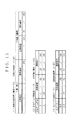
【図21】図20に続くフローチャート。
【図22】遊技状態監視処理を示すフローチャート。
【図23】確率抽選処理を示すフローチャート。
【図24】図23に続くフローチャート。
【図25】高確率再遊技終了関連処理を示すフローチャート。
【図26】停止テーブル群選択処理を示すフローチャート。
【図27】滑りコマ数決定処理を示すフローチャート。
【図28】次ボーナス抽選処理を示すフローチャート。
【符号の説明】
1…遊技機、2…キャビネット、2a…パネル表示部、3L,3C,3R…リール、4L,4C,4R…表示窓、5…液晶表示装置、5a…液晶表示画面、6…スタートレバー、7L,7C,7R…停止ボタン、8a…クロスダウンライン、8b…トップライン、8c…センターライン、8d…ボトムライン、8e…クロスアップライン、9a…1−BETランプ、9b…2−BETランプ、9c…最大BETランプ、10…台座部、11…1−BETスイッチ、12…2−BETスイッチ、13…最大BETスイッチ、14…C/Pスイッチ、15…メダル払出口、16…メダル受け部、17…当り表示ランプ、18…払出表示部、19…クレジット表示部、20…ボーナス遊技情報表示部、21L,21R…スピーカ、22…メダル投入口、22S…投入メダルセンサ、23…配当表パネル、30…マイクロコンピュータ、31…CPU、32…ROM、33…RAM、34…クロックパルス発生回路、35…分周器、36…乱数発生器、37…サンプリング回路、38…I/Oポート、39…モータ駆動回路、40…ホッパー、41…ホッパー駆動回路、45…ランプ駆動回路、46…リール停止信号回路、48…表示部駆動回路、49L,49C,49R…ステッピングモータ、50…リール位置検出回路、51…払出完了信号回路、71…主制御回路、72…副制御回路、101…内部当選役決定手段、102…停止制御手段、103…入賞検索手段、104…ボーナス終了監視手段、105…次ボーナス決定手段、106…ヒットリクエストフラグ更新手段、107…ヒットリクエストフラグ格納手段、108…遊技状態監視手段、109…遊技状態格納手段、110…ストック数格納手段、111…ストック数更新手段、112…停止テーブル群選択手段、113…停止テーブル選択手段、114…滑りコマ数決定手段、115…誤入賞判別手段、116…高確率再遊技フラグ更新手段、117…高確率再遊技フラグ格納手段、118…高確率再遊技終了抽選手段、119…高確率再遊技延長フラグ更新手段、120…高確率再遊技延長フラグ格納手段、121…延長ゲーム回数更新手段、122…延長ゲーム回数カウンタ。[0001]
TECHNICAL FIELD OF THE INVENTION
The present invention relates to a slot machine, a pachinko machine, and other gaming machines provided with variable display means for variably displaying symbols required for a game and control means such as a microcomputer for controlling the variable display.
[0002]
[Prior art]
For example, a slot machine equipped with a stop button, a so-called pachislot machine, is a mechanical fluctuation display device configured by arranging a plurality of rotating reels that variably display a plurality of symbols in a front display window, or a screen on a symbol on a reel. And an electric fluctuation display device for displaying the information. In response to the player's start operation, the control means drives and controls the variable display device to rotate each reel, thereby displaying the symbols in a variable manner, and automatically controlling the reels after a certain time or by the player's stop operation. Are sequentially stopped. At this time, when the symbols of the reels appearing in the display window have a specific combination (winning symbol), a game medium such as a medal or a coin is paid out to give a profit to the player.
[0003]
Currently mainstream models have a plurality of types of winning modes. In particular, when a winning of a certain combination is established, a gaming state having better conditions than a normal state is provided for a predetermined period without ending one payout of medals. As such a hand, a hand that can perform a game that gives a player a relatively large profit a predetermined number of times (hereinafter, referred to as a “big bonus”, abbreviated as “BB”), and gives a relatively small profit to the player There is a role (referred to as “regular bonus”, hereinafter abbreviated as “RB”) that allows the user to play the game a predetermined number of times.
[0004]
Also, in the current mainstream models, a predetermined combination of symbols are arranged along an activated pay line (hereinafter referred to as an "effective line"), and in order for a medal, a coin, etc. to be paid out, a winning is established. A symbol combination that wins the role by the internal lottery process (hereinafter referred to as “internal lottery”) (hereinafter referred to as “internal lottery”) and shows the winning combination of the internally won role (hereinafter referred to as “internal lottery role”) It is required that the player perform a stop operation at a timing when the player can stop on the activated line. In other words, no matter how much internal winning is achieved, if the timing of the stop operation of the player is bad, the winning of the internal winning combination cannot be established. That is, a gaming machine that requires a technique for performing a stop operation with good timing (a high degree of technical intervention called "eye-catching") is the mainstream at present.
[0005]
Further, for the purpose of ensuring that the number of game media that can be used (insertable) per unit time does not exceed a predetermined value, when a prize is established, the next game can be played without betting the game media. A gaming machine provided with a new role (hereinafter referred to as “re-game”) is currently the mainstream. Then, a gaming machine having a function of generating a period in which the probability of internally winning the “re-game” is high (hereinafter, referred to as “high-probability re-game period”) is provided.
[0006]
Further, the number of times that the number of winnings of the BB is subtracted from the number of times of internal winning of the BB is stored, and the winning of the number of times is realized (for example, see Patent Document 1). By giving priority to the "pull-in control" or "kicking control" of the replay in the "game period" or the "pull-in control" of the small role, the termination condition regarding the number of games in the "high probability re-game period" is satisfied. There is provided a gaming machine in which a BB winning is not established until the game is completed. In such a gaming machine, when the number of games required until the end condition is satisfied is reduced, the display means provided separately from the reel is used to notify that the number of games is small. Is known.
[0007]
[Patent Document 1]
JP-A-2000-210413
[0008]
[Problems to be solved by the invention]
However, in the above-mentioned gaming machines, the above-mentioned notification can be made by a notification mode which has not been used in the past, and an interesting gaming machine is desired.
[0009]
An object of the present invention is to provide an interesting gaming machine.
[0010]
[Means for Solving the Problems]
The gaming machine according to the present invention includes variable display means (for example,
[0011]
In a specific mode of the present invention, the mode of the stop control is that the amount of movement of the symbol (for example, the number of sliding frames to be described later) after the player operates the operation means until the variable display stops. Features.
[0012]
In a specific aspect of the present invention, the stop control means performs the notification by increasing the movement amount (for example, setting the number of sliding frames to be described later to “4”).
[0013]
In a specific aspect of the present invention, the predetermined condition is that a predetermined lottery (for example, an end lottery to be described later) is won and a predetermined number of games (for example, a game for the number of extended games to be described later) are performed (for example, , Starting or ending the game), and the stop control means performs notification in a predetermined number of games.
[0014]
According to a specific aspect of the present invention, an internal winning combination determination unit that determines an internal winning combination is provided, and the number of times indicated by the information stored in the number-of-times information storage unit is 1 or more (for example, when a hit request flag described later is “ 10 (H) ”or“ 20 (H) ”), when the winning of the predetermined combination is not permitted (for example, when a high-probability replay described later is being performed), the internal winning combination determination means Is determined to be a specific combination (for example, a replay game described later) as an internal winning combination, when the winning of a predetermined combination is permitted (for example, during the normal probability replay described later and the internal (In the case of a state).
[0015]
In a specific aspect of the present invention, an internal winning combination determining means (for example, an internal winning combination determining means 101 described later) for determining an internal winning combination is provided, and the internal winning combination determining means determines a predetermined combination as an internal winning combination. As a result, the number of times indicated by the information stored in the number-of-times information storage unit becomes 1 (for example, a hit request flag described later shifts from “00 (H)” to “10 (H)” or “20 (H)”. The predetermined condition is satisfied when a predetermined number of games are played, and the stop control means performs notification in the predetermined number of games.
[0016]
[Action and effect]
In the gaming machine according to the present invention, the stop control means notifies the prize establishment permission means that the prize establishment of the predetermined combination is permitted by the symbol stop control mode. Therefore, the player pays attention to the symbol stop control mode, and can proceed with the game with expectation that the winning of the predetermined combination is permitted, thereby increasing the fun of the game. Also, for example, when the success or failure of the winning combination is grasped by the stop mode of the symbol, the player grasps the success or failure of the winning combination and the mode of the stop control according to the notification without moving the line of sight. , Can play the game comfortably. Further, even in the case where the display means for performing the notification is provided, the player predicts whether or not the winning of the predetermined combination is permitted based on the mode of the stop control and the display content of the display means. Therefore, it is possible to give the player a sense of expectation that the winning of the predetermined combination is permitted.
[0017]
In the embodiment of the present invention, the mode of the stop control is a movement amount of the symbol from when the player operates the operation means to when the variable display stops. Therefore, the player pays attention to the amount of movement of the symbol, and can proceed with the game in expectation of winning of the predetermined combination. In addition, for example, the success or failure of the winning combination is grasped by the stop mode of the symbol, and when the “draw-in control” of the symbol constituting the symbol combination is performed, the moving amount of the symbol is set to the “pull-in control”. In some cases, it may be difficult to accurately determine whether the notification is based on the notification or the mode of the stop control according to the notification. Therefore, the player has a feeling of expectation that the winning of the predetermined combination is permitted according to the amount of movement of the symbol, and can improve the playability.
[0018]
Further, the stop control unit performs the notification by increasing the movement amount. Therefore, the player can easily recognize that the winning of the predetermined combination is permitted.
[0019]
The predetermined condition is satisfied when a predetermined lottery is won and a predetermined number of games are played. The stop control means performs the notification in a predetermined number of games. Therefore, based on the mode of the stop control in the predetermined number of games, the player can know that the winning of the predetermined combination is permitted when the predetermined number of games is played. In addition, for example, when a plurality of times are adopted as the predetermined number of times, winning of a predetermined combination is permitted according to an amount of movement of the symbol over a plurality of games (for example, a series of large slips of reels). You can have a sense of expectation for things. Further, for example, the predetermined number of times can be determined based on a random number lottery result or the like. This increases the fun of the game.
[0020]
Further, in a situation where the number of times indicated by the information stored in the number-of-times information storage means is 1 or more, when the winning of the predetermined combination is not permitted, the internal winning combination determining means determines the specific combination as the internal winning combination. The probability of winning may be higher than in the case where winning of a predetermined combination is permitted.
[0021]
Also, the number of times indicated by the information stored in the number-of-times information storage means becomes 1 when the internal winning combination determining means determines the predetermined combination as the internal winning combination. In addition, the predetermined condition is satisfied when the predetermined number of games are played, and the stop control unit performs notification in the predetermined number of games. Therefore, based on the mode of the stop control in the predetermined number of games, the player is permitted to win the winning when the predetermined combination is determined as the internal winning combination and the predetermined number of games are played. The game can be advanced in the hope that it will be done. Further, for example, the predetermined number of times can be determined based on a random number lottery result or the like. This increases the fun of the game.
[0022]
BEST MODE FOR CARRYING OUT THE INVENTION
FIG. 1 is a perspective view showing an appearance of a
[0023]
At the front of the
[0024]
Inside the
[0025]
On the left side of the
[0026]
On the right side of the
[0027]
A bonus game
[0028]
On the right side of the liquid
[0029]
A C /
[0030]
Speakers 21L and 21R are provided on the left and right above the
[0031]
FIG. 2 shows a symbol row in which a plurality of 21 types of symbols represented on each of the
[0032]
FIG. 3 shows winning combinations and payout numbers corresponding to winning symbol combinations in each gaming state.
[0033]
The gaming state of the embodiment includes a “general gaming state”, a “normal internal probability BB internal winning state”, a “normal internal probability RB internal winning state”, a “high internal probability BB internal winning state”, There is a “high probability replaying RB internal winning state”, a “BB general gaming state”, and a “RB gaming state”. Each of these "seven types" of game states is basically distinguished by the type of a role that may be internally won, the probability of internally winning a re-game described below, and the type of bonus that can achieve winning. Is done. The characteristics of each gaming state, that is, the types and the probabilities of the internal winning combinations in each gaming state and the stop control of the
[0034]
Further, in the embodiment, after the internal winning of the bonus, the bonus is held as an internal winning combination until the winning of the bonus is achieved (generally referred to as “carryover”). Furthermore, even when the bonus is internally won (the bonus is carried over), the bonus is internally won. If a bonus is internally won a plurality of times without winning, the number of bonuses is counted (stored) for each type of bonus, and the winning of the bonus for the number of times can be realized. The number of times that BB winning can be achieved is hereinafter referred to as “the number of BB stocks”. In addition, the number of times that RB winning can be achieved is hereinafter referred to as “the number of RB stocks”. Note that the number of times the bonus can be won in ST65 in FIG. 24 and ST114, ST117, or ST120 in FIG. 28 described later is “1” more than the total number of “BB stock number” and “RB stock number”. "It will be big. In detail, in the “normal probability replaying BB internal winning state” or the “high probability replaying BB internal winning state”, the number of times that BB winning can be achieved is obtained by adding “1” to the number of BB stocks. Matches the number of times. In the “normal probability replaying RB internal winning state” or the “high probability replaying RB internal winning state”, the number of times that RB winning can be achieved is the number of times that “1” is added to the number of RB stocks. Matches.
[0035]
Here, a game state generated when the winning of the BB is established and constituted by the “BB general game state” and the “RB game state” is hereinafter collectively referred to as “BB game state”. In addition, the “normal probability replaying BB internal winning state”, the “normal probability replaying RB internal winning state”, the “high probability replaying BB internal winning state”, and the “high probability replaying RB internal winning state” are: , A state in which the bonus is internally won, and these are collectively referred to as an “internal winning state” hereinafter. The “internal winning state” includes a state in which the bonus is carried over (a state in which a hit request flag described later is “20 (H)” or “10 (H)”). The “high-probability replaying BB internal winning state” and the “high-probability replaying RB internal winning state” are states in which there is a high probability of an internal win in a replay described later (a high-probability replay flag described later is set). These are collectively referred to as “high-probability replaying (high-probability replay period)”. The “general game state”, “normal probability replaying BB internal winning state”, and “normal probability replaying RB internal winning state” include a state in which the probability of an internal win in a replay described later is a normal state (a high probability described later). A state in which the probability re-game flag is not set), and these are collectively referred to as “normal probability re-game in progress” hereinafter.
[0036]
The condition for the occurrence of the "high probability replay" is that a bonus is internally won when a hit request flag described later is "00 (H)" (the determination in ST63 of FIG. 24 described later is "NO"), or At the end of the BB gaming state or the RB gaming state, the number of BB stocks and the number of RB stocks are not “0” (performing ST122 in FIG. 28 described later).
[0037]
The ending condition of “during high-probability re-game” is after the end lottery during high-probability re-game has been won (the determination of ST75 in FIG. 25 described later is “YES”) or after the internal win has been made to “none (loss)”. (The determination in ST73 in FIG. 25 described later is “YES”), and the same number of games as the “high-probability replay extended game count” described later determined by lottery are ended (the determination in ST31 in FIG. 21 described later is “ YES ”).
[0038]
Here, the “hit request flag” indicates the status of a certain game (whether a bonus is carried over, the type of bonus carried over, etc.), and may be a trigger for a transition of the gaming state in the next game. Flag (information). Specifically, when the "hit request flag" is "20 (H)" in a certain game, the game state in the next game is "the normal probability replaying BB internal winning state" or the "high probability replay game". Medium BB internal winning state ". Further, when the "hit request flag" is "10 (H)" in a certain game, the gaming state in the next game is "the normal probability replaying RB internal winning state" or the "high probability replaying RB internal". Winning state ". When the "hit request flag" is "00 (H)" in a certain game, the gaming state in the next game is the "general gaming state". Note that the “hit request flag” is set in ST64 and FIG. 28 of FIG. 24 described later and is used in determination of ST63 of FIG. 22 and FIG. 24 described later.
[0039]
The “high-probability re-game flag” is a flag for determining whether or not “high-probability re-game is in progress”. Specifically, the “high-probability re-game flag” is “on” during “high-probability re-game”. In addition, the "normal probability replay" is basically in an "off" state. The “high-probability re-game flag” is turned “ON” in ST66 of FIG. 24 and ST122 of FIG. 28 described later, and is “OFF” in ST32 of FIG. 21 described later. Note that the state where the flag is “on” means that information indicating “1” is stored in a predetermined storage area. The state where the flag is “off” means that information indicating “0” is stored in a predetermined storage area.
[0040]
The “next bonus lottery process” means that the number of BB stocks and the number of RB stocks are “1 or more” at the end of the BB gaming state or the RB gaming state caused by “HANABI-HANABI-HANABI” being arranged along the activated line. ", The next bonus is determined to be either BB or RB based on the next bonus lottery table (FIG. 15 (3)), that is," 20 (H) "or" 10 (H) "as the hit request flag. "Is set (stored). Specifically, it refers to the processing of FIG. 28 described later. The “next bonus” refers to the type (type) of the bonus for which the winning formation is permitted (permitted) next.
[0041]
The “high-probability replay extended game count (hereinafter referred to as“ extended game count ”)” refers to the end of the “high-probability replay game” lottery, and then the transition to “normal probability replay game” (the bonus It means the number of games (including the game won in the end lottery) required until winning is allowed. In other words, if the end lottery is won, the "high probability replay" is extended for a predetermined number of games ("0" or "3"). This extended game is hereinafter referred to as “extended game”. A “high-probability replay extension flag (hereinafter referred to as“ extension flag ”)” is used as information for identifying whether or not the game corresponds to the “extension game”. The game whose “extended flag” is “on” corresponds to the “extended game”. In the “extended game”, the control is performed such that the “number of sliding frames” described below becomes “4 frames” as much as possible (taking into consideration the “misplaced prize” described later), and the player is an “extended game”. I will try to inform you. The “number of extension games” is counted by an extension
[0042]
As shown in FIG. 3, the winning of the BB is achieved when "7-7-7" or "Don-chan-Don-chan" is lined up along the activated line in the internal winning state. After the winning of BB is established, the gaming state becomes the BB general gaming state. The winning of the RB is established when “HANABI-HANABI-HANABI” is arranged along the activated line in the internal winning state, or when “fan-fan-fan” is arranged in the BB general game state. RB winning in the BB general gaming state is generally referred to as “JAC IN”. After the winning of the RB is established, the gaming state becomes the RB gaming state.
[0043]
Here, in a game in which a bonus (excluding “JAC IN”) is internally won irrespective of a game state, a bonus prize is not established. In addition, when the bonus is internally won in the normal game state (when the determination in ST63 of FIG. 24 described later is “NO”), the game shifts to another game state in the next game. Therefore, the winning of the bonus is not established in the general gaming state.
[0044]
The winning of the re-game is achieved by arranging "fan-fan-fan" in the general game state and the internal winning state. When the winning of the replay is established, the same number of medals as the inserted medals are automatically inserted, so that the player can play the next game without consuming the medals. Here, in the "high probability replay", when the player internally wins the replay, the player performs a stop operation (operation timing of the
[0045]
In addition, in the general gaming state, the internal winning state, and the BB general gaming state, it is possible to realize the winning of “Cherry small role”, “Sansakutama small role”, and “Oyama small role”. However, the payout number is as shown in the figure.
[0046]
The winning of the role is established when "fan-fan-fan", "Don-chan-fan-fan" or "HANABI-fan-fan" is arranged in the RB gaming state. When the number of winning prizes for the accessory becomes “8”, the gaming state changes. Here, the game in the RB gaming state in which there is a possibility that the winning of the accessory is established is generally called a “JAC game”.
[0047]
Next, with reference to FIG. 4, when the number of BETs is "3", a probability lottery table used to determine an internal winning combination in the general gaming state or the internal winning state (FIG. 23 described later) is shown.
[0048]
FIG. 4A shows a normal probability re-game in-use probability lottery table. In the probability lottery table shown in FIG. 4A, if a random number in the range of “136” to “2380” is extracted from the random number extraction range of “0” to “16383” in the probability lottery process, "Game" will be the internal winning role. The probability of internally winning a “replay” is “2245/16384”.
[0049]
FIG. 4 (2) shows a high-probability replaying probability lottery table. In the probability lottery table shown in FIG. 4 (2), when a random number in the range of “136” to “14686” is extracted from the random number extraction range “0” to “16383” in the probability lottery process, “Re- "Game" will be the internal winning role. The probability of internally winning a “replay” is “14551/16384”.
[0050]
As described above, the probability of being internally won for a replay is higher in “high probability replaying” than in “normal probability replaying”. In addition, in the tables shown in FIGS. 4A and 4B, the probability of internal winning other than “re-game” and “none (missing)” is the same. For example, the probability of internally winning a bonus (the probability of internally winning either BB or RB) is “136/16384 (about“ 1 / 120.5 ”)” in any probability lottery table. Note that in the “high probability replaying” and the “normal probability replaying”, the probability of winning of the “replay” is equalized by performing the process of ST84 in FIG. 26 described later.
[0051]
Next, with reference to FIG. 5 to FIG. 7, a relationship between a game state, an internal winning combination, and a selected stop table group will be described. The stop table group indicates, for example, a set of stop tables as shown in FIGS. 9 to 11 described later, and is selected at the time of stop control of the
[0052]
Here, the contents of the selected stop table group can basically change for each game state and each internal winning combination. In the embodiment, the names of the table groups shown in the column of the stop table group are as follows. It is determined based on the possibility of winning and the type of role that has the possibility. Therefore, in the embodiment, even if the stop table group having the same name is selected, the stop modes of the
[0053]
As shown in FIG. 5A, in the general gaming state, when a bonus is internally won, a winning non-satisfaction stop table group is selected. Therefore, it is not possible to achieve the winning of the bonus.
[0054]
In the BB internal winning state during the normal probability replay, if a bonus is internally won, a winning non-satisfaction stop table group is selected, and the winning of the bonus cannot be realized. On the other hand, in the case where the internal winning is made to “none (losing)”, the BB winning establishment possible stop table group is selected, so that the BB winning can be realized. In addition, as shown in FIG. 4A, an internal winning is made to “none (loss)” with a probability of “12307/16384”.
[0055]
In the RB internal winning state during the normal probability replay, if the bonus is internally won, the winning unsuccessful stop table group is selected, and the winning of the bonus cannot be realized. On the other hand, when the internal winning combination is “None (Loss)”, the RB winning establishment possible stop table group is selected, so that the RB winning can be realized. In addition, as shown in FIG. 4A, the internal winning combination becomes “none (loss)” with a probability of “12307/16384”.
[0056]
As shown in FIG. 6 (2), in the BB internal winning state during the high-probability replay, when a bonus is internally won, a winning non-satisfaction stop table group is selected, and the winning of the bonus cannot be realized. Similarly, even when an internal win is made to "None (losing)", the winning unsuccessful stop table group is selected, so that the winning of BB cannot be realized. However, in the case where the internal winning is made to “None (losing)” (when no internal winning is performed for any combination), the winning of the BB is allowed when the “number of extended games” becomes “0”. (The high-probability re-game flag is turned off). As shown in FIG. 4 (2), the probability of internally winning “none (loss)” is “1/16384”, which is rare. In the case where a re-game is internally won, a re-game winning satisfiable stop table group or a prize unsatisfied stop table group is selected based on a re-game selection table (FIG. 8) described later.
[0057]
In the RB internal winning state during the high-probability replay, if the bonus is internally won, the winning unsuccessful stop table group is selected, and the winning of the bonus cannot be realized. Similarly, even when an internal win is made to “none (losing)”, the winning non-satisfaction stop table group is selected, so that it is impossible to achieve the RB winning. However, in the case of internally winning “None (losing)”, winning of the RB is permitted when the “number of extended games” becomes “0” (when the high-probability re-game flag is set to “OFF”). Become). As shown in FIG. 4 (2), the probability of internally winning “none (loss)” is “1/16384”, which is rare. In the case where a re-game is internally won, a re-game winning satisfiable stop table group or a prize unsatisfied stop table group is selected based on a re-game selection table (FIG. 8) described later.
[0058]
As shown in FIG. 7 (3), in the BB general game state and the RB game state, the illustrated stop table group is selected, and stop control of the
[0059]
Next, the replay selection table will be described with reference to FIG. This table is used to determine whether to select a replay winning satisfiable stop table group or a prize unsuccessful stop table group during “high probability replay”. Specifically, it is used in the process of ST84 in FIG. 26 described later. In this selection table, the probability of selecting the replay winning contest possible stop table group is “10111/65536”. The probability of selecting the winning unsuccessful stop table group is “55425/65536”.
[0060]
Here, as described above (FIG. 4 (2)), the probability of internally winning a replay in "high probability replay" is "145551/16384". Therefore, the probability of winning a replay in “high probability replaying” is approximately “0.1370 (“ 14551/16384 ”ד 10111 / 65536 ")". On the other hand, in the “normal probability replaying”, the replay winning satisfiable stop table group is always selected, so that the probability of internally winning the replay is equal to the probability of winning. In other words, the probability of winning a replay in “normal probability replaying” is about “0.1370 (“ 2245/16384 ”)”. As described above, in the embodiment, the probability of winning a re-game in “high probability re-game” and “normal probability re-game” is equal.
[0061]
Next, an example of the stop table will be described with reference to FIGS. The stop table is used in a sliding frame number determination process (ST21 in FIG. 20) described later. Reel stop control using a stop table is generally referred to as “table control”.
[0062]
The "stop table" indicates "stop operation position", "stop control position", and "number of sliding frames" of each of the
[0063]
Here, in the present embodiment, the so-called “number of sliding frames” is set to a maximum of “4 frames”. For example, when the
[0064]
The stop table is composed of "three" tables for the left reel, the center reel, and the right reel. In addition, a table number is predetermined for each stop table. Note that in one game, one stop table is not necessarily used for stop control of the “three”
[0065]
One stop table may belong to a plurality of stop table groups. For example, one stop table may belong to both the “cherry winning establishment possible stop table group” and the “winning non-establishment stop table group”. Further, for example, when the “re-game winning establishment possible stop table group” is selected or the like, a symbol combination indicating winning establishment based on the “stop operation position” of the “first stop operation”, the result of random number lottery, and the like ( An effective line in which “fan-fan-fan” and the like are arranged is determined. Further, in the reel stop control corresponding to the "third stop operation", measures for preventing a winning of a role that has not been internally won (including a role not carried over) (hereinafter, referred to as a "false winning"). (ST97 in FIG. 27 described later).
[0066]
FIGS. 9 and 10 show stop tables (table numbers are “18” and “21”, respectively) included in a winning failure stop table group and the like. In FIG. 9, the "number of sliding frames" in the table for the right reel is all "4 frames". In FIG. 10, the "number of sliding frames" in the center reel table is all "4 frames". These tables may be used for stop control in the “extended game”.
[0067]
FIG. 11 shows a stop table (the table number is “29”) included in the replay winning satisfiable stop table group and the like. In this stop table, for example, the “stop operation position” is different from the code numbers “01”, “10”, and “16”, and the
[0068]
In FIG. 11, when the "stop operation position" of the
[0069]
In FIG. 11, the "stop control position" of the
[0070]
In FIG. 11, the “stop control position” of the
[0071]
As described above, when the stop table shown in FIG. 11 is used for the stop control of each of the
[0072]
Next, with reference to FIG. 12 and FIG. 13, a display mode of the symbols in the
[0073]
FIG. 12 shows that after the stop table of table number “18” is selected as the stop table used for the stop control of the
[0074]
First, as shown in FIG. 12A, the
[0075]
Next, as shown in FIG. 12C, the
[0076]
Subsequently, as shown in FIG. 12 (5), the
[0077]
FIG. 13 shows that, as in the case of FIG. 12, after the stop table of the table number “18” is selected as the stop table used for the stop control of the
[0078]
First, as shown in FIG. 13A, the
[0079]
Next, as shown in FIG. 13C, the
[0080]
Subsequently, as shown in FIG. 13 (5), the
[0081]
Next, with reference to FIG. 14, a description will be given of a search order of the "number of sliding frames" when an erroneous winning is established. The search order refers to whether or not “misplaced prize” is established when “misplaced prize” is established by stopping control of the reel corresponding to “third stop operation” according to the selected “number of sliding frames”. Refers to the order (order) of the “number of sliding frames” for searching (determining). In addition, in the search order, when the stop control is performed based on the “number of sliding frames” determined from the “stop table” and the “stop operation position”, if the “misplaced prize” is established, the “misplaced prize” is not established. On this condition, the priority of the number of sliding frames from “0” to “4” determined as the “number of sliding frames” is determined.
[0082]
When the “number of slips” determined from the “stop table” and the “stop operation position” is “0”, “misplaced prize” is established. Next, when the “number of slips” is “1”, “ It is determined whether or not a "false prize" is established. When the "false winning" is not established, the "number of sliding frames" is determined to be "1". If the "winning prize" is established, then it is determined whether or not the "winning prize" is established when the "number of sliding frames" is "2". When the "false winning" is not established, the "number of sliding frames" is determined to be "2". If the "winning prize" is established, then it is determined whether the "winning prize" is established when the "number of sliding frames" is "3". When the "false winning" is not established, the "number of sliding frames" is determined to be "3". When the “false winning” is established, the “number of sliding frames” is determined to be “4”. The search order when the "number of sliding frames" determined from the "stop table" and the "stop operation position" is "1", "2", "3", "4" is as shown in the figure. In the embodiment, the stop table is configured so that at least one of the number of sliding frames of “0” to “4” does not establish the “false winning”, and the stop table is selected.
[0083]
Incidentally, the search for the "number of sliding frames" is also performed in the "third stop operation" in FIG. When the "number of sliding frames" determined from the "stop table" and the "stop operation position" is "4", the "misplaced prize" of the "small role of three shakudama" is established as shown in FIG. I do. Next, when it is determined whether or not the “misplaced prize” is established when the “number of sliding frames” is “0”, the “misplaced prize” of the “small part of the three shakutama” is established. Next, when it is determined whether or not the “misplaced prize” is established when the “number of sliding frames” is “1”, the “misplaced prize” is not established. Therefore, in the "third stop operation" in FIG. 13, the "number of sliding frames" is determined to be "1".
[0084]
Here, in FIGS. 13 and 14, the stop control of the reel corresponding to the “first stop operation” does not use the stop table configured so that the “number of sliding frames” is always “4”. It is not limited to. For example, when the "winning failure stop table group" is selected in the "extended game", the "number of sliding frames" is basically "4" in the reel stop control corresponding to the "first stop operation". A stop table (a table in which the “number of sliding frames” does not become “4” only when avoiding an erroneous winning of “the small part of cherry”) may be used. For example, when the “first stop operation (stop operation position: 11)” shown in FIGS. 13 and 14 is performed, the “number of sliding frames” is set to “4”, and the “stop control position” is set to “15”. It can also be.
[0085]
Next, a lottery table used for game control will be described with reference to FIG.
[0086]
FIG. 15A shows a high-probability re-game end lottery table. This lottery table shows a random number range in which a winning (the end during the high-probability re-game) and a non-winning (the continuation during the high-probability re-game) are determined (selected), and their selection probabilities. I have. The probability of winning the end lottery in “high probability replaying” is “1/256”. This lottery table is used in ST74 of FIG. 25 described later.
[0087]
FIG. 15B shows an extended game number lottery table. This lottery table shows a random number range in which “0” and “3” are determined (selected) as the “number of extended games”, and the selection probabilities. This lottery table is used in ST78 of FIG. 25 described later.
[0088]
FIG. 15C shows the next bonus lottery table. In this lottery table, when the BB game state or the number of BB stocks and the number of RB stocks are “1 or more” at the end of the RB game state generated by arranging the BB game state or “HANABI-HANABI-HANABI” along the activated line, This is used to determine whether the bonus for which the winning is to be established next is BB or RB (ST112 in FIG. 28 described later). Specifically, it is used to determine whether the game state after the next game is the “high-probability re-game BB internal winning state” or the “high-probability re-game RB internal winning state”. The probability that BB is selected as the “next bonus” is set higher than that of RB. This lottery table is used in ST112 of FIG. 28 described later.
[0089]
FIG. 16 shows a
[0090]
The
[0091]
The
[0092]
The
[0093]
Various information is stored in the
[0094]
In the circuit of FIG. 16, various lamps (1-BET lamp 9a, 2-BET lamp 9b, maximum BET lamp 9c, hit display lamp 17) are used as main actuators whose operations are controlled by control signals from the
[0095]
Further, a
[0096]
Main input signal generating means for generating an input signal necessary for the
[0097]
The start switch 6S detects an operation of the
[0098]
In the circuit of FIG. 16, a
[0099]
After the rotation of the
[0100]
A symbol table is stored in the
[0101]
Further, in the
[0102]
When the internal winning is performed by the lottery process (probability lottery process) based on the random number sampling, the
[0103]
In the stop mode indicating the winning of the internally won combination, the
[0104]
Next, with reference to FIG. 17, a block diagram including a function realizing unit (operation unit) of the
[0105]
An internal winning combination determining means 101 for determining an internal winning combination based on an input signal from the start switch 6S and information stored in a game state storing means 109 described later (ST15 in FIG. 20 described later);
A stop control means 102 for stopping and controlling the
A
A bonus that monitors the end of the BB gaming state or the RB gaming state (including information on the terminated bonus) based on the determination result of the internal winning combination determination means 101 and the search result of the winning search means 103 (ST36 in FIG. 21 described later). End monitoring means 104,
A next
Based on the determination result of the internal winning combination determination means 101, the determination result of the next bonus determination means 105, and the information stored (stored) in the hit request flag storage means 107 described later, it is stored (stored) in the hit request flag storage means 107 described later. Hit request flag updating means 106 for updating the updated information (ST64 in FIG. 24 described later, ST113, ST116, ST119, ST121 in FIG. 28).
Hit request flag storage means 107 for storing (storing) hit request flag information;
The search result of the winning
Game state storage means 109 for storing information on the game state,
A stock
The information stored (stored) in the stock number storing means 110 is updated based on the determination result of the internal winning combination determining means 101 and the updating mode of the hit request flag updating means 106 (ST62 and ST65 in FIG. 24 described later, and FIG. 28). ST114, ST117, 120) The stock number updating means 111,
A stop table
The stop table is based on the input signals from the
The “number of sliding frames” is determined based on an input signal (stop operation position) from the
An erroneous
The determination result of the internal winning combination determining means 101, the determination result of the next bonus determining means 105,
Based on the information stored (stored) in the hit request flag storage means 107, the information stored in the high probability replay extension flag storage means 120 described later, and the information stored in the extended
A high-probability re-game flag storage means 117 for storing information of the high-probability re-game flag,
High-probability replay in which an end lottery of “during high-probability replay” (ST74 in FIG. 25 to be described later) is performed based on the determination result of the internal winning combination determining means 101 and the information stored in the high-probability replay flag storage means 117. End lottery means 118,
The determination result of the internal winning combination determination means 101, the lottery result of the high-probability re-game end lottery means 118, the information stored in the high-probability re-game extension flag storage means 120 described later, and the information stored in the extension
A high-probability replay extension flag storage means 120 for storing information of an extension flag,
An extended game that updates information stored in an extended
An extension
[0106]
Here, the high-probability re-game
[0107]
In addition, the stop control means 102 responds to the operation mode (operation timing (stop operation position)) of the
[0108]
Next, with reference to FIG. 18, a schematic flowchart relating to the game control of the
[0109]
First, a schematic flowchart relating to the game control of the
[0110]
Next, the flow of a game related to a bonus will be described. When a bonus is internally won in a normal game (during a high probability replay), BB and RB are stocked ("1" is added to the stock number). When the end lottery is won, the winning of the bonus stocked (stored) via the “extended game” is permitted. When the BB gaming state or the RB gaming state ends, the process returns to the normal game.
[0111]
Next, a control operation of the
[0112]
First, the
[0113]
Next, the
[0114]
Next, the
[0115]
Next, the
[0116]
In ST14 of FIG. 20, a game state monitoring process described later with reference to FIG. 22 is performed. Subsequently, a probability lottery process described later with reference to FIGS. 23 and 24 is performed (ST15). This probability lottery process (internal lottery process) uses a probability lottery table in accordance with the game state, determines whether the random number value extracted in ST12 belongs to a random number range of which role, and determines an internal winning combination (established). Flag). Subsequently, a high-probability re-game end related process (ST16) described later with reference to FIG. 25 is performed, and the process proceeds to ST17. In ST17, a stop table group selection process described later with reference to FIG. 26 is performed, and the process proceeds to ST18. In ST18, a transmission process at the start of the game is performed. Specifically, a process of transmitting to the sub-control circuit 72 a command including information on the internal winning combination, the determination result of the stop table group selection process, the game state, the number of stocks set, and the like.
[0117]
Next, the
[0118]
In ST21, the
[0119]
In ST25 of FIG. 21, the
[0120]
Next, it is determined whether the current gaming state is the BB general gaming state or the RB gaming state (ST29). If the determination is "NO" (the gaming state is not the BB general gaming state or the RB gaming state), the process proceeds to ST30, and if "YES", the process proceeds to ST35. In ST30, it is determined whether or not the extension flag is “ON”. When this determination is "YES", that is, when the current game corresponds to the "extended game", the process proceeds to ST31. If this determination is "NO", the process moves to ST2 in FIG. In ST31, it is determined whether or not the value of the extension
[0121]
When the determination in ST29 is "YES" (when the gaming state is the BB general gaming state or the RB gaming state), a bonus "game number check process" is performed (ST35). In the "game number check process", the number of times the RB gaming state has occurred, the number of games in the BB general gaming state, the number of winnings in the RB gaming state, and the number of games in the RB gaming state are checked. The transition (set) of the game state between the game states is performed.
[0122]
Next, it is determined whether or not the bonus has ended (ST36). Specifically, after the winning of the BB is established, whether the number of winnings is 8 or the number of games is 12 in the third RB gaming state, or whether the number of games is 30 in the BB general gaming state. Determine whether or not. Further, after the winning of the RB is achieved by arranging “HANABI-HANABI-HANABI” along the activated line, it is determined whether or not the number of winnings is 8 or the number of games is 12 in the RB gaming state. . If the determination in ST36 is "YES", the BB gaming state or the RB gaming state ends, and the process moves to ST37. If "NO", the process moves to ST2. In ST37, a next bonus lottery process described later with reference to FIG. 28 is performed, and the process proceeds to ST2.
[0123]
Next, a game state monitoring process will be described with reference to FIG. Here, the hit request flag used in the following processing is determined when the BB or RB is internally won in the normal gaming state (ST64 in FIG. 24 described later) and when the BB gaming state or the like ends (FIG. 28 described later). Only subject to change.
[0124]
First, the
[0125]
If the determination in ST43 is "NO", it is determined whether or not the hit request flag is "20 (H)" (ST45). If this determination is "YES", the gaming state is set to the BB internal winning state (ST46). Specifically, when the high-probability re-game flag is “on”, the gaming state is set to “the BB internal winning state during the high-probability re-game”, and when the “off”, the “normal probability re-game” is set. Medium BB internal winning state ". Subsequently, the process proceeds to ST15 in FIG. If the determination in ST45 is "NO", the gaming state is set to the general gaming state (ST47), and the routine goes to ST15 in FIG.
[0126]
As described above, the game state is changed based on the hit request flag and the high-probability re-game flag at the start of the game. That is, the game state is changed according to the game state in the previous game. For example, the content of the hit request flag is changed in ST64 (FIG. 24) described later, and the high-probability re-game flag is changed from "OFF" to "ON" in ST66. Will be performed at the start of the next game. Based on the gaming state set in the gaming state monitoring processing, a probability lottery processing (FIGS. 23 and 24), a stop table group selection processing (FIG. 26), a sliding frame number determination processing (FIG. 27), and the like, which will be described later, are performed. Done.
[0127]
Next, the probability lottery process will be described with reference to FIGS.
[0128]
First, the
[0129]
In ST61 of FIG. 24, it is determined whether or not the internal winning combination is BB or RB. If the determination is “YES”, the process proceeds to ST62, and if “NO”, the process proceeds to ST16 in FIG. In ST62, “1” is added to the number of BB stocks or the number of RB stocks according to the type of the internally won bonus, and the process proceeds to ST63. In ST63, it is determined whether or not the set hit request flag is “10 (H)” or “20 (H)”. If the determination is "NO", that is, if the game is in the "general game state", the process proceeds to ST64. If the determination in ST63 is "YES", the process moves to ST16 in FIG. In ST64, a hit request flag is set (stored) based on the type of bonus. Specifically, when the internal winning combination is RB, “10 (H)” is set as the hit request flag, and when the internal winning combination is BB, “20 (H)” is set. Subsequently, "1" is subtracted from the number of stocks of the internally won bonus (ST65). Subsequently, the high-probability re-game flag is set to “ON” (ST66), and the routine goes to ST16 in FIG.
[0130]
Next, the high-probability re-game termination related processing will be described with reference to FIG.
[0131]
First, the
[0132]
Next, the stop table group selection processing will be described with reference to FIG.
[0133]
First, the
[0134]
Next, with reference to FIG. 27, the sliding frame number determination processing will be described.
[0135]
First, the
[0136]
In ST93, a stop table in which the "number of sliding frames" is basically "4" is selected, and the process proceeds to ST94. Here, the table selected as the stop table for the left reel in ST93 is “stop operation position” “09” to “10” for the purpose of preventing erroneous winning of “small win of cherry” from being established. , And "18" to "20" so that the "number of sliding frames" does not become "4". In ST94, the "number of sliding frames" is determined based on the "stop operation position" and the selected "stop table". Next, it is determined whether or not the stop operation that triggered the stop control is the “third stop operation” (ST95). If the determination is "YES", the process moves to ST96, and if "NO", the process moves to ST22 in FIG. In ST96, based on the "stop control position" of the "two" reels whose rotation is stopped and the "stop control position" corresponding to the "number of sliding frames" determined in response to the "third stop operation". It is determined whether or not a “false winning” is achieved. If the determination is "YES", the process moves to ST97, and if "NO", the process moves to ST22 in FIG. In ST97, the “sliding frame number” is newly determined based on the search order in FIG. 14, and the process proceeds to ST96.
[0137]
If the determination in ST92 is "NO", it is determined whether or not a group of cherry winning success possible stop tables has been selected (ST98). If this determination is "YES", the process moves to ST99, and if "NO", the process moves to ST104. In ST99, it is determined whether or not the target of the stop control is the
[0138]
If the determination in ST91 is "NO", it is determined whether or not a winning non-satisfaction stop table group is selected (ST101). If this determination is "YES", the process moves to ST103, and if "NO", the process moves to ST102. In ST102, it is determined whether or not the stoppage table group capable of establishing the winning of cherry is selected. If this determination is "YES", the process moves to ST103, and if "NO", the process moves to ST104. In ST103, a stop table in which the "number of sliding frames" becomes "3 or less" is selected, and the routine goes to ST94.
[0139]
In ST104, it is determined whether or not the stop operation that triggered the stop control is the “first stop operation”. Here, the determination in ST104 is performed when a stop table group other than the winning non-establishment stop table group and the cherry winning achievable stop table group is selected, that is, when one type of symbol is "3 (for example, This is a case where stop control is performed so as to line up along any of the active lines. If the determination in ST104 is "YES", the process moves to ST105, and if "NO", the process moves to ST106. In ST105, an effective line is selected based on the “stop operation position” and the result of the random number lottery. Subsequently, a stop table is selected according to the selected activated line (ST106), and the routine goes to ST94.
[0140]
Next, the next bonus lottery process will be described with reference to FIG. This process is performed when the determination in ST36 in FIG. 21 is "YES".
[0141]
First, the
[0142]
If the determination in ST111 is "NO", it is determined whether the BB stock number is "1 or more" (ST115). If this determination is "YES", the process moves to ST116, and if "NO", the process moves to ST118. In ST116, “20 (H)” is set (stored) as a hit request flag. Subsequently, “1” is subtracted from the BB stock number (ST117), and the process proceeds to ST122.
[0143]
If the determination in ST115 is “NO”, it is determined whether or not the number of RB stocks is “1 or more” (ST118). If this determination is "YES", the process moves to ST119, and if "NO", the process moves to ST121. In ST119, “10 (H)” is set (stored) as a hit request flag. Subsequently, the number of RB stocks is decremented by "1" (ST120), and the process proceeds to ST122. When the determination in ST118 is “NO”, that is, when both the number of BB stocks and the number of RB stocks are “0” (when there is no next bonus), “00 (H)” is set as the hit request flag ( (ST121), and then proceeds to ST2 in FIG. In ST122, the high-probability re-game flag is set to “ON”, and the routine goes to ST2 in FIG.
[0144]
Here, the game state is changed in the game state monitoring process in the next game based on the hit request flag set in ST113, ST116, ST119, ST121, or the high probability re-game flag set in ST122. In ST114, ST117, and ST120, “1” is subtracted from the number of BB stocks or the number of RB stocks in accordance with the setting of the hit request flag. For this reason, in the “normal probability replaying BB internal winning state” or the “high probability replaying BB internal winning state”, the number of times that BB winning can be achieved is the number of times “1” is added to the number of BB stocks. Matches. In the “normal probability replaying RB internal winning state” or the “high probability replaying RB internal winning state”, the number of times that RB winning can be achieved is the number of times that “1” is added to the number of RB stocks. Matches. Therefore, the hit request
[0145]
The embodiments have been described above, but the present invention is not limited thereto.
[0146]
In the embodiment, by setting the “number of sliding frames” in the extension game to “4”, the end of “during high-probability replay” is notified, but the present invention is not limited to this. “The number of sliding frames (for example,“ 0 ”)” can be adopted. Also, for example, by giving a predetermined regularity to the “number of sliding pieces” of one or a plurality of reels in a plurality of extension games (a predetermined number of games), it is notified that winning of a predetermined combination is permitted. You can also. For example, the notification can be performed by alternately selecting “4” and “0” as the number of sliding frames of one or a plurality of reels in each extension game.
[0147]
In addition, a bonus is adopted as a predetermined combination, but the present invention is not limited to this. For example, an arbitrary combination such as a replay, a small combination, a single bonus, etc. may be adopted. Further, the search order of the “number of sliding frames” is not limited to the order shown in FIG. 14, and an arbitrary order can be adopted. For example, an arbitrary order such as “4 → 3 → 2 → 1 → 0” or “4 → 0 → 3 → 1 → 2” can be adopted as the search order.
[0148]
In the embodiment, the “high-probability replaying” ends when the winning of the end lottery is won. However, the present invention is not limited to this. For example, as a termination condition of “during high-probability replay”, it is also possible to employ that a specific number of games are played after the BB gaming state or the RB gaming state ends. In this case, it is notified by the mode of the symbol stop control that the winning determination permission means determines that the winning of the predetermined combination is permitted (that the specific number of games is performed) before the specific number of games is performed. You can also.
[0149]
In the embodiment, “the number of sliding frames” is adopted as the “stop control mode”, but the present invention is not limited to this. For example, a method of reel stop control may be adopted as the “mode of stop control”. This method includes table control and control control. The control control generally refers to a control system that draws a symbol constituting a symbol combination corresponding to an internal winning combination to a predetermined position in a display window as much as possible (shows the symbol as slipping as much as possible), In this method, the so-called “reach eyes” are almost equal to none. For example, in the extension game, by switching the stop control method of one or a plurality of reels from table control to control control or from table control to control control, it is notified that winning of a predetermined combination is permitted. You can also.
[0150]
The number of times indicated by the information stored in the number-of-times information storage means (hit request flag storage means 107) becomes "1" when the internal winning combination determination means 101 determines that the predetermined combination is the internal winning combination. That is, “10 (H)” or “20 (H)” is set (stored) as a hit request flag by internally winning the bonus. As the predetermined condition, a condition that is established when a predetermined number of games (for example, “5 times”) are played is used. The stop control means 102 can also perform notification of winning of a predetermined combination in a predetermined number of games in a form of stop control.
[0151]
Further, in addition to the slot machine as in the present embodiment, the present invention can be applied to other gaming machines such as a pachinko gaming machine. Furthermore, the present invention can be applied to a game program that executes the above-described operation of the slot machine for a home game machine in a pseudo manner. In this case, the recording medium for recording the game program may be a CD-ROM, FD (flexible disk), or any other recording medium.
[Brief description of the drawings]
FIG. 1 is a perspective view of a slot machine according to an embodiment.
FIG. 2 is a diagram showing an example of symbols arranged on a reel.
FIG. 3 is a view showing a relationship between a winning combination, a symbol combination, and a payout number.
FIG. 4 is a diagram showing an example of a probability lottery table.
FIG. 5 is a diagram showing a relationship among a gaming state, an internal winning combination, and a stop table group.
FIG. 6 is a diagram showing a relationship among a gaming state, an internal winning combination, and a stop table group.
FIG. 7 is a view showing a relationship among a gaming state, an internal winning combination, and a stop table group.
FIG. 8 is a view showing a replay selection table.
FIG. 9 is a diagram showing an example of a stop table.
FIG. 10 is a diagram showing an example of a stop table.
FIG. 11 is a diagram showing an example of a stop table.
FIG. 12 is a diagram showing an example of a display mode of a symbol in a display window.
FIG. 13 is a view showing an example of a display mode of a symbol in a display window.
FIG. 14 is a diagram showing an example of a search order of the number of sliding frames.
FIG. 15 is a view showing examples of various lottery tables.
FIG. 16 is a block diagram illustrating a configuration of an electric circuit according to an embodiment.
FIG. 17 is a block diagram including a function realizing unit (operation unit).
FIG. 18 is a schematic flowchart of a main control circuit.
FIG. 19 is a main flowchart of the main control circuit.
FIG. 20 is a flowchart following FIG. 19;
FIG. 21 is a flowchart following FIG. 20;
FIG. 22 is a flowchart showing a game state monitoring process.
FIG. 23 is a flowchart showing a probability lottery process.
FIG. 24 is a flowchart following FIG. 23;
FIG. 25 is a flowchart showing high-probability re-game end related processing.
FIG. 26 is a flowchart illustrating a stop table group selection process.
FIG. 27 is a flowchart showing a sliding frame number determination process.
FIG. 28 is a flowchart showing a next bonus lottery process.
[Explanation of symbols]
DESCRIPTION OF
Claims (6)
遊技者が操作する操作手段と、
所定の役の入賞成立が実現可能な回数の情報を記憶する回数情報記憶手段と、
前記回数情報記憶手段に記憶された情報が示す回数が1以上であり且つ所定の条件が成立したことに基づいて、前記所定の役の入賞成立を許可することを決定する入賞成立許可手段と、
遊技者による前記操作手段の操作態様及び前記入賞成立許可手段の決定結果に基づいて前記変動表示を停止制御する停止制御手段と
を備え、
前記停止制御手段は、前記入賞成立許可手段が前記所定の役の入賞成立を許可すると決定することを前記図柄の停止制御の態様により報知することを特徴とする遊技機。A change display means for changing and displaying symbols required for the game,
Operating means operated by a player;
Number information storage means for storing information on the number of times that a predetermined winning combination can be achieved,
Prize establishment permission means for deciding to permit prize formation of the predetermined combination based on that the number of times indicated by the information stored in the number information storage means is 1 or more and a predetermined condition is satisfied;
Stop control means for stopping and controlling the variable display based on an operation mode of the operation means by the player and a result of the determination of the winning establishment permission means,
The gaming machine, wherein the stop control means notifies the prize establishment permission means that the prize establishment of the predetermined combination is permitted by the stop control mode of the symbol.
Priority Applications (1)
| Application Number | Priority Date | Filing Date | Title |
|---|---|---|---|
| JP2002374280A JP2004201913A (en) | 2002-12-25 | 2002-12-25 | Gaming machine |
Applications Claiming Priority (1)
| Application Number | Priority Date | Filing Date | Title |
|---|---|---|---|
| JP2002374280A JP2004201913A (en) | 2002-12-25 | 2002-12-25 | Gaming machine |
Publications (1)
| Publication Number | Publication Date |
|---|---|
| JP2004201913A true JP2004201913A (en) | 2004-07-22 |
Family
ID=32812345
Family Applications (1)
| Application Number | Title | Priority Date | Filing Date |
|---|---|---|---|
| JP2002374280A Withdrawn JP2004201913A (en) | 2002-12-25 | 2002-12-25 | Gaming machine |
Country Status (1)
| Country | Link |
|---|---|
| JP (1) | JP2004201913A (en) |
Cited By (3)
| Publication number | Priority date | Publication date | Assignee | Title |
|---|---|---|---|---|
| JP2007117487A (en) * | 2005-10-28 | 2007-05-17 | Aruze Corp | Game machine |
| JP2007289416A (en) * | 2006-04-25 | 2007-11-08 | Aruze Corp | Game machine |
| JP2008054785A (en) * | 2006-08-30 | 2008-03-13 | Aruze Corp | Game machine |
-
2002
- 2002-12-25 JP JP2002374280A patent/JP2004201913A/en not_active Withdrawn
Cited By (3)
| Publication number | Priority date | Publication date | Assignee | Title |
|---|---|---|---|---|
| JP2007117487A (en) * | 2005-10-28 | 2007-05-17 | Aruze Corp | Game machine |
| JP2007289416A (en) * | 2006-04-25 | 2007-11-08 | Aruze Corp | Game machine |
| JP2008054785A (en) * | 2006-08-30 | 2008-03-13 | Aruze Corp | Game machine |
Similar Documents
| Publication | Publication Date | Title |
|---|---|---|
| JP4503893B2 (en) | Game machine | |
| JP4156255B2 (en) | Game machine | |
| JP2004024323A (en) | Gaming machine | |
| JP2004167049A (en) | Gaming machine | |
| JP2003180946A (en) | Gaming machine | |
| JP2004049302A (en) | Gaming machine | |
| JP2003180938A (en) | Gaming machine | |
| JP2004201913A (en) | Gaming machine | |
| JP2003310866A (en) | Gaming machine | |
| JP4527915B2 (en) | Game machine | |
| JP2002136658A (en) | Gaming machine | |
| JP2004000814A (en) | Gaming machine | |
| JP4198869B2 (en) | Game machine | |
| JP2005185517A (en) | Game machine | |
| JP2003310859A (en) | Gaming machine | |
| JP2004229859A (en) | Gaming machine | |
| JP2004215974A (en) | Gaming machine | |
| JP2004215973A (en) | Gaming machine | |
| JP2003305158A (en) | Gaming machine | |
| JP2004008561A (en) | Gaming machine | |
| JP2004041615A (en) | Gaming machine | |
| JP2004008414A (en) | Gaming machine | |
| JP2003260189A (en) | Gaming machine | |
| JP2004254718A (en) | Game machine | |
| JP2003305159A (en) | Gaming machine |
Legal Events
| Date | Code | Title | Description |
|---|---|---|---|
| A621 | Written request for application examination |
Free format text: JAPANESE INTERMEDIATE CODE: A621 Effective date: 20051013 |
|
| A761 | Written withdrawal of application |
Free format text: JAPANESE INTERMEDIATE CODE: A761 Effective date: 20081111 |