JP2012201815A - Ink composition - Google Patents
Ink composition Download PDFInfo
- Publication number
- JP2012201815A JP2012201815A JP2011068249A JP2011068249A JP2012201815A JP 2012201815 A JP2012201815 A JP 2012201815A JP 2011068249 A JP2011068249 A JP 2011068249A JP 2011068249 A JP2011068249 A JP 2011068249A JP 2012201815 A JP2012201815 A JP 2012201815A
- Authority
- JP
- Japan
- Prior art keywords
- formula
- group
- ink composition
- component
- weight
- Prior art date
- Legal status (The legal status is an assumption and is not a legal conclusion. Google has not performed a legal analysis and makes no representation as to the accuracy of the status listed.)
- Granted
Links
- 0 Cc1c(*)c(*)c(C(C2C(*)=C(*)C(*)=C(*)C2S2)=O)c2c1* Chemical compound Cc1c(*)c(*)c(C(C2C(*)=C(*)C(*)=C(*)C2S2)=O)c2c1* 0.000 description 3
Classifications
-
- C—CHEMISTRY; METALLURGY
- C09—DYES; PAINTS; POLISHES; NATURAL RESINS; ADHESIVES; COMPOSITIONS NOT OTHERWISE PROVIDED FOR; APPLICATIONS OF MATERIALS NOT OTHERWISE PROVIDED FOR
- C09D—COATING COMPOSITIONS, e.g. PAINTS, VARNISHES OR LACQUERS; FILLING PASTES; CHEMICAL PAINT OR INK REMOVERS; INKS; CORRECTING FLUIDS; WOODSTAINS; PASTES OR SOLIDS FOR COLOURING OR PRINTING; USE OF MATERIALS THEREFOR
- C09D11/00—Inks
Landscapes
- Chemical & Material Sciences (AREA)
- Life Sciences & Earth Sciences (AREA)
- Engineering & Computer Science (AREA)
- Materials Engineering (AREA)
- Wood Science & Technology (AREA)
- Organic Chemistry (AREA)
- Inks, Pencil-Leads, Or Crayons (AREA)
- Ink Jet Recording Methods And Recording Media Thereof (AREA)
- Ink Jet (AREA)
Abstract
【課題】安定したインクジェット吐出性を有し、硬化性が良好であり、バンディングの発生が抑制され、高光沢で高画質の印刷物が得られるインク組成物を提供すること。
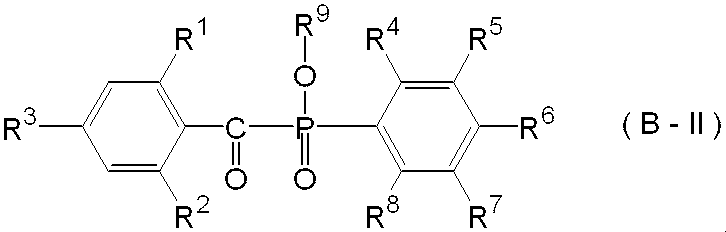
【解決手段】(成分A)着色剤、(成分B)ラジカル重合開始剤、及び、(成分C)ラジカル重合性化合物を含有し、(成分B)ラジカル重合開始剤が、式(B−I)で表される化合物、及び、式(B−II)で表される化合物をそれぞれ少なくとも1種含み、かつ、式(B−I)で表される化合物をインク組成物の総重量に対して1重量%以上7重量%以下含有し、式(B−II)で表される化合物をインク組成物の総重量に対して1重量%以上14重量%以下含有することを特徴とするインク組成物。
【選択図】なしThe present invention provides an ink composition that has stable ink jet discharge properties, good curability, suppresses the occurrence of banding, and provides a high-gloss and high-quality printed matter.
The composition comprises (Component A) a colorant, (Component B) a radical polymerization initiator, and (Component C) a radical polymerizable compound, wherein (Component B) the radical polymerization initiator is represented by the formula (BI): And at least one compound represented by formula (B-II), and one compound represented by formula (B-I) is added to the total weight of the ink composition. An ink composition comprising 1% by weight or more and 14% by weight or less of the compound represented by the formula (B-II) in an amount of from 7% by weight to 7% by weight.
[Selection figure] None
Description
本発明は、インク組成物に関する。 The present invention relates to an ink composition.
画像データ信号に基づき、紙などの被記録媒体に画像を形成する画像記録方法として、電子写真方式、昇華型及び溶融型熱転写方式、インクジェット方式などがある。電子写真方式は、感光体ドラム上に帯電及び露光により静電潜像を形成するプロセスを必要とし、システムが複雑となり、結果的に製造コストが高価になるなどの問題がある。また、熱転写方式は、装置は安価であるが、インクリボンを用いるため、ランニングコストが高く、かつ、廃材が出るなどの問題がある。
一方、インクジェット方式は、安価な装置で、かつ、必要とされる画像部のみにインクを吐出し被記録媒体上に直接画像形成を行うため、インクを効率良く使用でき、ランニングコストが安い。更に、騒音が少なく、画像記録方式として優れている。
近年、紫外線などの放射線の照射により硬化可能なインク組成物(放射線硬化型インク組成物)を、インクジェットにより描画した後、紫外線などの放射線を照射して、インクを硬化する、無溶剤型のインクジェット記録方式が注目されている。
As an image recording method for forming an image on a recording medium such as paper based on an image data signal, there are an electrophotographic method, a sublimation type and a melt type thermal transfer method, an ink jet method and the like. The electrophotographic system requires a process of forming an electrostatic latent image on a photosensitive drum by charging and exposure, and there is a problem that the system becomes complicated and consequently the manufacturing cost becomes high. In addition, although the thermal transfer method is inexpensive, there are problems such as high running costs and waste materials due to the use of ink ribbons.
On the other hand, the ink jet method is an inexpensive device and ejects ink only to a required image portion to form an image directly on a recording medium. Therefore, the ink can be used efficiently and the running cost is low. Furthermore, there is little noise and it is excellent as an image recording method.
In recent years, an ink composition (radiation curable ink composition) that can be cured by irradiation with radiation such as ultraviolet rays is drawn by inkjet, and then the ink is cured by irradiation with radiation such as ultraviolet rays. The recording method is attracting attention.
一般に、水を希釈剤として含む水性インクや有機溶剤を希釈剤として含む溶剤型インクと比較して、放射線硬化型インクによるインクジェット記録方式は、ガラス、金属、プラスチック被記録媒体といった非吸収性被記録媒体への描画が可能であり、被記録媒体の適応範囲が広い、描画画像の耐擦過性や耐溶剤性に優れる、感度が高く、生産性に優れる、揮発性の溶剤を含まないので、環境への負荷が小さいといったメリットを有する。
放射線硬化型インクの硬化機構としては、ラジカル重合型とカチオン重合型に大別されるが、ラジカル重合型は、カチオン重合型と比較して、保存安定性に優れる、安価といったメリットを有しているため、市場で広く使用されている。
特許文献1では、インクの硬化性を向上させるために、少なくともN−ビニル化合物を含む重合性化合物、ビスアシルフォスフィンオキサイド、モノアシルフォスフィンオキサイド及びα−アミノケトンから選ばれる2種以上を含む光重合開始剤及び重合促進剤として重合性官能基を有する微粒子含有するインク組成物が開示されている。
In general, compared with water-based inks containing water as a diluent and solvent-based inks containing an organic solvent as a diluent, the radiation-curable ink-jet recording method uses non-absorbable recording media such as glass, metal, and plastic recording media. It is possible to draw on the medium, the applicable range of the recording medium is wide, the scratch and solvent resistance of the drawn image is excellent, the sensitivity is high, the productivity is excellent, and the volatile solvent is not included. It has the merit that the load on is small.
The curing mechanism of radiation curable ink is broadly classified into radical polymerization type and cationic polymerization type, but radical polymerization type has advantages such as excellent storage stability and low cost compared with cationic polymerization type. Because it is widely used in the market.
In Patent Document 1, in order to improve the curability of the ink, light containing at least two kinds selected from a polymerizable compound containing at least an N-vinyl compound, bisacylphosphine oxide, monoacylphosphine oxide, and α-aminoketone. An ink composition containing fine particles having a polymerizable functional group as a polymerization initiator and a polymerization accelerator is disclosed.
ラジカル重合型は大気中の酸素による重合阻害を受けて硬化不足になりやすいといったデメリットも有している。硬化が不十分であると、印刷物表面のべとつき、バンディングの発生、光沢の無い眠い画像になりやすいといった印刷物の品質低下を招くため、その改良が試みられてきた。特許文献1に記載のインク組成物では、硬化性は改良されたものの、微粒子が原因と推測されるインクジェット吐出安定性の不良が生じ、さらに、画質も満足できるものではなかった。 The radical polymerization type has a demerit that it tends to be insufficiently cured due to polymerization inhibition by oxygen in the atmosphere. Insufficient curing leads to a reduction in the quality of the printed material, such as stickiness of the surface of the printed material, occurrence of banding, and a dull and sleepy image, and attempts have been made to improve it. In the ink composition described in Patent Document 1, although the curability is improved, the ink jet ejection stability, which is presumed to be caused by fine particles, is poor, and the image quality is not satisfactory.
本発明の目的は、安定したインクジェット吐出性を有し、硬化性が良好であり、バンディングの発生が抑制され、高光沢で高画質の印刷物が得られるインク組成物を提供することである。
ここで、バンディングとは、画像に出現する帯状の濃度ムラを意味し、特にハーフトーン画像での発生が顕著である。
An object of the present invention is to provide an ink composition having a stable inkjet discharge property, good curability, suppression of banding, and high-gloss and high-quality printed matter.
Here, banding means band-like density unevenness appearing in an image, and the occurrence particularly in a halftone image is remarkable.
本発明の上記課題は、以下の<1>に記載の手段により解決された。好ましい実施態様である<2>〜<8>と共に以下に記載する。
<1> (成分A)着色剤、(成分B)ラジカル重合開始剤、及び、(成分C)ラジカル重合性化合物を含有し、(成分B)ラジカル重合開始剤が、式(B−I)で表される化合物、及び、式(B−II)で表される化合物をそれぞれ少なくとも1種含み、かつ、式(B−I)で表される化合物をインク組成物の総重量に対して1重量%以上7重量%以下含有し、式(B−II)で表される化合物をインク組成物の総重量に対して1重量%以上14重量%以下含有することを特徴とするインク組成物、
The above-described problems of the present invention have been solved by the means described in <1> below. It is described below together with <2> to <8> which are preferred embodiments.
<1> (Component A) a colorant, (Component B) a radical polymerization initiator, and (Component C) a radical polymerizable compound, wherein (Component B) the radical polymerization initiator is represented by the formula (BI) Each of the compound represented by formula (B-II) and the compound represented by formula (BI) in an amount of 1% by weight based on the total weight of the ink composition An ink composition comprising 1% by weight or more and 14% by weight or less of a compound represented by the formula (B-II),
<2> 式(B−I)で表される化合物が(B−I−1)であり、式(B−II)で表される化合物が(B−II−1)である、<1>に記載のインク組成物、 <2> The compound represented by the formula (BI) is (B-I-1), and the compound represented by the formula (B-II) is (B-II-1). <1> The ink composition according to claim 1,
<3> (成分B)ラジカル重合開始剤が、式(B−III)で表される化合物及び/又は式(B−IV)で表される化合物を更に含む、<1>又は<2>に記載のインク組成物、 <3> (Component B) The radical polymerization initiator further includes a compound represented by the formula (B-III) and / or a compound represented by the formula (B-IV), in <1> or <2> The ink composition according to the description,
<4> (成分C)ラジカル重合性化合物が、式(C−1)〜式(C−4)で表される化合物よりなる群から選択される少なくとも1つの化合物を含有する、<1>〜<3>のいずれか1つに記載のインク組成物、 <4> (Component C) The radical polymerizable compound contains at least one compound selected from the group consisting of compounds represented by formula (C-1) to formula (C-4), <1> to <3> The ink composition according to any one of
<5> (成分C)ラジカル重合性化合物が、式(C−1)〜式(C−4)で表される化合物よりなる群から選択される少なくとも2つの化合物を含有する、<4>に記載のインク組成物、
<6> (成分C)ラジカル重合性化合物が、式(C−2)で表される化合物、及び、式(C−3)で表される化合物を、それぞれ少なくとも1つ含む、<5>に記載のインク組成物、
<7> (成分C)ラジカル重合性化合物が、式(C−1)〜式(C−4)で表される化合物を、ラジカル重合性化合物の総量に対して80重量%以上含有する、<4>〜<6>のいずれか1つに記載のインク組成物、
<8> インクジェット記録用である、<1>〜<7>のいずれか1つに記載のインク組成物。
<5> (Component C) The radical polymerizable compound contains at least two compounds selected from the group consisting of compounds represented by formulas (C-1) to (C-4), in <4> The ink composition according to the description,
<6> (Component C) The radically polymerizable compound includes at least one compound represented by the formula (C-2) and a compound represented by the formula (C-3), respectively, in <5> The ink composition according to the description,
<7> (Component C) The radically polymerizable compound contains 80% by weight or more of the compound represented by the formula (C-1) to the formula (C-4) with respect to the total amount of the radically polymerizable compound. 4> to <6>, the ink composition according to any one of
<8> The ink composition according to any one of <1> to <7>, which is for inkjet recording.
本発明によれば、安定したインクジェット吐出性を有し、硬化性が良好であり、バンディングの発生が抑制され、高光沢で高画質の印刷物が得られるインク組成物が提供された。 ADVANTAGE OF THE INVENTION According to this invention, the ink composition which has the stable inkjet discharge property, sclerosis | hardenability was good, generation | occurrence | production of banding was suppressed, and a high glossy and high quality printed matter was obtained was provided.
本発明のインク組成物は、(成分A)着色剤、(成分B)ラジカル重合開始剤、及び、(成分C)ラジカル重合性化合物を含有し、(成分B)ラジカル重合開始剤が、式(B−I)で表される化合物、及び、式(B−II)で表される化合物をそれぞれ少なくとも1種含み、かつ、式(B−I)で表される化合物をインク組成物の総重量に対して1重量%以上7重量%以下含有し、式(B−II)で表される化合物をインク組成物の総重量に対して1重量%以上14重量%以下含有することを特徴とする。
以下、「(成分A)着色剤」等を単に「成分A」等ともいう。
また、本発明において、数値範囲を表す「A〜B」(但し、A<B)の記載は、A以上B以下を意味し、「X〜Y」(但し、X>Y)の記載は、X以下Y以上を意味する。すなわち、端点を含む数値範囲を意味する。
The ink composition of the present invention contains (Component A) a colorant, (Component B) a radical polymerization initiator, and (Component C) a radical polymerizable compound, and (Component B) the radical polymerization initiator is represented by the formula ( The total weight of the ink composition includes at least one compound represented by BI) and at least one compound represented by Formula (B-II), and the compound represented by Formula (BI). 1% by weight to 7% by weight with respect to the total weight of the ink composition, and 1% by weight to 14% by weight with respect to the total weight of the ink composition. .
Hereinafter, “(component A) colorant” or the like is also simply referred to as “component A” or the like.
In the present invention, the description of “A to B” (where A <B) representing the numerical range means A or more and B or less, and the description of “X to Y” (where X> Y) X or less means Y or more. That is, it means a numerical range including end points.
本発明のインク組成物は、活性放射線により硬化可能な油性のインク組成物である。「活性放射線」とは、その照射によりインク組成物中に開始種を発生させるエネルギーを付与できる放射線であり、α線、γ線、X線、紫外線、可視光線、電子線などを包含する。中でも、硬化感度及び装置の入手容易性の観点から紫外線及び電子線が好ましく、紫外線がより好ましい。 The ink composition of the present invention is an oil-based ink composition that can be cured by actinic radiation. “Actinic radiation” is radiation that can give energy to generate an initial species in the ink composition by irradiation, and includes α rays, γ rays, X rays, ultraviolet rays, visible rays, electron rays, and the like. Of these, ultraviolet rays and electron beams are preferable from the viewpoint of curing sensitivity and device availability, and ultraviolet rays are more preferable.
活性放射線硬化型のインクジェット印刷により得た印刷物は、水性インクジェット、溶剤インクジェットにより得た印刷物に比べ、硬化膜の光沢性が低く、筋ムラが目立つといわれている。光沢が低くなる1つの要因は、インクジェット着弾直後に打滴が活性放射線によって硬化されることで、打滴の着弾形状が保存され、印刷物表面が凹凸になることが考えられる。また、筋ムラは、活性放射線による硬化が不十分な場合に起き易く、インクジェット着弾後の隣接した打滴が不均一に融合し(打滴干渉)、濃度ムラを生じるためと考えられる。
一方、本発明のインク組成物は、印刷物の光沢性に優れ、筋ムラの少ないインクジェット画像を提供する。理由は定かではないが、吐出された成分A〜成分Cを含むインク組成物は、着弾直後の活性放射線照射によって、特に打滴内部で高い硬化性が得られるため、不必要な打滴の融合を抑制し、かつ適度な打滴の拡がりも兼ね備えることで、比較的平滑な印刷物表面が得られるためと推定される。
It is said that printed matter obtained by actinic radiation curable ink jet printing has low gloss of cured film and streak unevenness as compared with printed matter obtained by aqueous ink jet or solvent ink jet. One cause of low gloss is considered to be that the droplet landing shape is preserved by the actinic radiation immediately after the ink jet landing, and the printed surface is uneven. In addition, streak unevenness is likely to occur when curing by actinic radiation is insufficient, and it is considered that adjacent droplets after ink jet landing are fused non-uniformly (droplet interference), resulting in density unevenness.
On the other hand, the ink composition of the present invention provides an inkjet image having excellent glossiness of printed matter and less streak unevenness. The reason is not clear, but the ink composition containing the ejected components A to C can obtain high curability, particularly inside the droplets, by irradiation with actinic radiation immediately after landing. It is presumed that a relatively smooth surface of the printed matter can be obtained by suppressing the above-mentioned and also having an appropriate expansion of droplet ejection.
特に酸素溶存量が高いと推定される式(C−1)、式(C−2)及び式(C−4)で表される重合性化合物の存在により、硬化膜の最表面が酸素重合阻害をうけ、初期反応速度を低下させることで、打滴の最表面が長時間液状に保たれ、打滴最表面が濡れ広がり、合一が促進されると推定される。また、硬化膜を軟化させる成分である、式(C−3)で表される化合物を加えることにより、硬化中の膜のレベリングを更に促進させ、打滴の平滑性が更に促進される。その結果、より平滑な平面が形成され、光沢のある画像が得られると推定される。
同一部分を重ね打ちにより印刷するマルチパスモードでの印刷では、重ね打ちの際に先に打滴された液滴上に打滴が重なるケースが発生する。この際、先に打滴されたインク膜の最表面が液状であると、後に打たれた打滴の濡れ広がりが大きくなり、より高い光沢が得られる。
In particular, due to the presence of the polymerizable compound represented by the formula (C-1), formula (C-2) and formula (C-4), which is estimated to have a high oxygen dissolved amount, the outermost surface of the cured film is inhibited from oxygen polymerization. Therefore, it is presumed that by reducing the initial reaction rate, the outermost surface of the droplet ejection is kept in a liquid state for a long time, the outermost surface of the droplet ejection is wet and spread, and coalescence is promoted. Further, by adding the compound represented by the formula (C-3), which is a component that softens the cured film, leveling of the film during curing is further promoted, and the smoothness of droplet ejection is further promoted. As a result, it is estimated that a smoother plane is formed and a glossy image is obtained.
In printing in the multi-pass mode in which the same portion is printed by overstrike, there is a case in which the droplets are superimposed on the droplets previously ejected during the overstrike. At this time, if the outermost surface of the ink film previously ejected is in liquid form, wetting and spreading of the later deposited ink droplets will increase, and higher gloss will be obtained.
打滴の硬化状態のコントロールにあたっては、打滴のごく最表面のみが液状態を保持することが重要である。打滴内部までもが液状態を長時間保持してしまうと最終的に印刷物の表面がべとついたり、重ね打ち時に後から着弾した打滴が膜の内部に入り込み、印刷物にクレーター状のくぼみを形成してしまう。その結果、逆に印刷物表面の平滑性を失うことになりかねない。また、内部の硬化性が低いと、着弾後の打滴干渉(打滴の不均一な合一により打滴位置がずれる)を生じさせることで、筋ムラを目立たせてしまうことがある。式(B−I)で表される化合物と、式(B−II)で表される化合物とを、特定の量で配合することにより、高い内部の硬化性を保持できると推定される。
本発明によれば、成分A〜成分Cの組み合わせにより、打滴内部の硬化性を強く促進しつつ、硬化膜最表面のみを選択的に長時間液状に保つことが実現でき、光沢性が高く、筋ムラの目立たない印刷物が得られたものと推定される。
In controlling the cured state of the droplet ejection, it is important that only the very outermost surface of the droplet ejection retains the liquid state. If the liquid state is maintained for a long time even inside the droplets, the surface of the printed material will eventually become sticky, or the droplets that have landed later during the overstrike will enter the film, resulting in a crater-like depression in the printed material Will be formed. As a result, the smoothness of the printed surface may be lost. Moreover, if the internal curability is low, droplet ejection interference after landing (the droplet ejection position shifts due to non-uniform coalescence of droplet ejection) may cause streak unevenness. It is presumed that high internal curability can be maintained by blending the compound represented by the formula (BI) and the compound represented by the formula (B-II) in a specific amount.
According to the present invention, the combination of Component A to Component C can be realized to selectively keep only the outermost surface of the cured film in a liquid state for a long time while strongly promoting the curability inside the droplet ejection, and has high gloss. It is presumed that a printed matter with inconspicuous stripe unevenness was obtained.
(成分A)着色剤
本発明のインク組成物は、着色剤を含有する。
本発明のインク組成物は、ホワイト、シアン、マゼンタ、イエロー、及び、ブラックよりなる群から選択される少なくとも1種の着色剤を含有することが好ましい。
着色剤としては、特に制限はないが、耐候性に優れ、色再現性に富んだ顔料及び油溶性染料が好ましく、溶解性染料等の公知の着色剤から任意に選択して使用できる。着色剤は、活性放射線による硬化反応の感度を低下させないという観点から、重合禁止剤として機能しない化合物、特にラジカル重合を禁止しない化合物を選択することが好ましい。
(Component A) Colorant The ink composition of the present invention contains a colorant.
The ink composition of the present invention preferably contains at least one colorant selected from the group consisting of white, cyan, magenta, yellow, and black.
Although there is no restriction | limiting in particular as a coloring agent, The pigment and oil-soluble dye which were excellent in weather resistance and were rich in color reproducibility are preferable, and it can select and use arbitrarily from well-known coloring agents, such as a soluble dye. As the colorant, it is preferable to select a compound that does not function as a polymerization inhibitor, particularly a compound that does not inhibit radical polymerization, from the viewpoint of not reducing the sensitivity of the curing reaction by actinic radiation.
本発明に使用できる顔料としては、特に制限はなく、目的に応じて適宜選択することができ、例えば、公知の有機顔料及び無機顔料などが挙げられ、また、染料で染色した樹脂粒子、市販の顔料分散体や表面処理された顔料(例えば、顔料を分散媒として水、液状有機化合物や不溶性の樹脂等に分散させたもの、並びに樹脂や顔料誘導体等で顔料表面を処理したもの等)も挙げられる。例えば、伊藤征司郎編「顔料の辞典」(2000年、朝倉書店発行)、橋本勲著「有機顔料ハンドブック」(2006年、カラーオフィス発行)、W.Herbst,K.Hunger編「Industrial Organic Pigments」(1992年、Wiley−VHC発行)、特開2002−12607号公報、特開2002−188025号公報、特開2003−26978号公報、特開2003−342503号公報に記載のものが挙げられる。 The pigment that can be used in the present invention is not particularly limited and may be appropriately selected depending on the intended purpose. Examples thereof include known organic pigments and inorganic pigments. In addition, resin particles dyed with a dye, Examples include pigment dispersions and surface-treated pigments (for example, pigments dispersed in water, liquid organic compounds, insoluble resins, etc., and pigment surfaces treated with resins, pigment derivatives, etc.). It is done. For example, edited by Seijiro Ito, “Dictionary of Pigments” (2000, published by Asakura Shoten), Isao Hashimoto, “Organic Pigment Handbook” (2006, published by Color Office); Herbst, K.M. Hunger, “Industrial Organic Pigments” (1992, issued by Wiley-VHC), JP 2002-12607 A, JP 2002-188025 A, JP 2003-26978 A, JP 2003-342503 A Can be mentioned.
有機顔料及び無機顔料としては、例えば、黄色顔料、赤色顔料、マゼンタ顔料、青色顔料、シアン顔料、緑色顔料、橙色顔料、紫色顔料、褐色顔料、黒色顔料、白色顔料等が挙げられる。
黄色顔料としては、例えば、C.I.ピグメントイエロー 1、2、3、4、5、10、65、73、74、75、97、98、111、116、130、167、205等のモノアゾ顔料、61、62、100、168、169、183、191、206、209、212等のモノアゾレーキ顔料、12、13、14、16、17、55、63、77、81、83、97、83、124、126、127、152、155、172、174、176、214、219等のジスアゾ顔料、24、108、193、199等のアントラキノン顔料、60等のモノアゾピラゾロン顔料、93、95、128、166等の縮合アゾ顔料、109、110、139、173、185等のイソインドリン顔料、120、151、154、175、180、181、194等のベンズイミダゾロン顔料、117、150、153等のアゾメチン金属錯体顔料、138等のキノフタロン顔料、213等のキノキサリン顔料等が好ましい。
Examples of organic pigments and inorganic pigments include yellow pigments, red pigments, magenta pigments, blue pigments, cyan pigments, green pigments, orange pigments, purple pigments, brown pigments, black pigments, and white pigments.
Examples of yellow pigments include C.I. I. Pigment Yellow 1, 2, 3, 4, 5, 10, 65, 73, 74, 75, 97, 98, 111, 116, 130, 167, 205, monoazo pigments, 61, 62, 100, 168, 169, Monoazo lake pigments such as 183, 191, 206, 209, 212, 12, 13, 14, 16, 17, 55, 63, 77, 81, 83, 97, 83, 124, 126, 127, 152, 155, 172, Disazo pigments such as 174, 176, 214, 219, anthraquinone pigments such as 24, 108, 193, and 199, monoazopyrazolone pigments such as 60, condensed azo pigments such as 93, 95, 128, and 166, 109, 110, 139, Isoindoline pigments such as 173 and 185, benzimidazoles such as 120, 151, 154, 175, 180, 181 and 194 An azomethine metal complex pigment such as 117, 150, and 153, a quinophthalone pigment such as 138, and a quinoxaline pigment such as 213 are preferable.
赤色又はマゼンタ顔料としては、例えば、C.I.ピグメントレッド 3等のモノアゾ系顔料、193等のモノアゾレーキ顔料、38等のジスアゾ顔料、2、5、8、9、10、11、12、14、15、16、17、18、22、23、31、32、112、114、146、147、150、170、187、188、210、213、238、245、253、256、258、266、268、269等のナフトールAS顔料、3、4、6等のβ−ナフトール顔料、49、53、68等β−ナフトールレーキ顔料、237、239、247等のナフトールASレーキ顔料、41等のピラゾロン顔料、48、52、57、58、63、64:1、200等のBONAレーキ顔料、81:1、169、172等のキサンテンレーキ顔料、88、181等のチオインジゴ顔料、122、202(C.I.ピグメントバイオレット 19との混合物を含む)、123、149、178、179、190、224等のペリレン顔料、144、166、214、220、221、242、262等の縮合アゾ顔料、168、177、263等のアントラキノン顔料、83等のアントラキノンレーキ顔料、171、175、176、185、208等のベンズイミダゾロン顔料、207、209、262等のキナクリドン顔料、254、255、264、270、272等のジケトピロロピロール顔料、257、271等のアゾメチン金属錯体顔料等が挙げられる。 Examples of red or magenta pigments include C.I. I. Monoazo pigments such as CI Pigment Red 3, monoazo lake pigments such as 193, disazo pigments such as 38, 2, 5, 8, 9, 10, 11, 12, 14, 15, 16, 17, 18, 22, 23, 31 , 32, 112, 114, 146, 147, 150, 170, 187, 188, 210, 213, 238, 245, 253, 256, 258, 266, 268, 269, etc., naphthol AS pigments, 3, 4, 6, etc. Β-naphthol pigments, 49, 53, 68 etc. β-naphthol lake pigments, 237, 239, 247 etc. naphthol AS lake pigments, 41 etc. pyrazolone pigments, 48, 52, 57, 58, 63, 64: 1, BONA lake pigments such as 200, xanthene lake pigments such as 81: 1, 169, 172, thioindigo pigments such as 88, 181, 122, 202 C. I. Pigment Violet 19), 123, 149, 178, 179, 190, 224 etc. perylene pigments, 144, 166, 214, 220, 221, 242, 262 etc. condensed azo pigments, 168 Anthraquinone pigments such as 177, 263, anthraquinone lake pigments such as 83, benzimidazolone pigments such as 171, 175, 176, 185, 208, quinacridone pigments such as 207, 209, 262, 254, 255, 264, 270, Examples thereof include diketopyrrolopyrrole pigments such as 272 and azomethine metal complex pigments such as 257 and 271.
青又はシアン顔料としては、例えば、C.I.プグメントブルー 25、26等のナフトールAS顔料、15、15:1、15:2、15:3、15:4、15:6、16、17:1等のフタロシアニン顔料、1、24:1、56等の染付けレーキ顔料、60等のアントラキノン系顔料等が好ましい。
緑色顔料としては、例えば、C.I.ピグメントグリーン 1、4等の染付けレーキ顔料、7、36等のフタロシアニン顔料、8等のアゾメチン金属錯体顔料等が好ましい。
橙色顔料としては、例えば、C.I.ピグメントオレンジ 1等のモノアゾ顔料、2、3、5等のβ−ナフトール顔料、4、24、38、74等のナフトールAS顔料、13、34等のピラゾロン顔料、36、60、62、64、72等のベンズイミダゾロン顔料、15、16等のジスアゾ顔料、17、46等のβ−ナフトールレーキ顔料、19等のナフタレンスルホン酸レーキ顔料、43等のペリノン顔料、48、49等のキナクリドン顔料、51等のアントラキノン系顔料、61等のイソインドリノン顔料、66等のイソインドリン系顔料、68等のアゾメチン金属錯体顔料、71、73、81等のジケトピロロピロール顔料等が好ましい。
Examples of blue or cyan pigments include C.I. I. Naphthol AS pigments such as Pigment Blue 25 and 26, phthalocyanine pigments such as 15, 15: 1, 15: 2, 15: 3, 15: 4, 15: 6, 16, 17: 1 and the like, 1, 24: 1, Preferred are dyed lake pigments such as 56, anthraquinone pigments such as 60, and the like.
Examples of the green pigment include C.I. I. Dye lake pigments such as CI Pigment Green 1 and 4, phthalocyanine pigments such as 7 and 36, azomethine metal complex pigments such as 8 and the like are preferable.
Examples of the orange pigment include C.I. I. Monoazo pigments such as CI Pigment Orange 1, β-naphthol pigments such as 2, 3, 5 and the like, naphthol AS pigments such as 4, 24, 38 and 74, pyrazolone pigments such as 13, 34, 36, 60, 62, 64 and 72 Benzimidazolone pigments such as 15 and 16, disazo pigments such as 15 and 16, β-naphthol lake pigments such as 17 and 46, naphthalene sulfonic acid lake pigments such as 19; perinone pigments such as 43, quinacridone pigments such as 48 and 49, 51 Anthraquinone pigments such as 61, isoindolinone pigments such as 61, isoindoline pigments such as 66, azomethine metal complex pigments such as 68, diketopyrrolopyrrole pigments such as 71, 73, and 81 are preferred.
褐色顔料としては、例えば、C.I.ピグメントブラウン 5等のBONAレーキ顔料、23、41、42等の縮合アゾ顔料、25、32等のベンズイミダゾロン顔料等が好ましい。
紫色顔料としては、例えば、C.I.ピグメントバイオレット 1、2、3、27等の染付けレーキ顔料、13、17、25、50等のナフトールAS顔料、5:1等のアントラキノンレーキ顔料、19等のキナクリドン顔料、23、37等のジオキサジン顔料、29等のペリレン顔料、32等のベンズイミダゾロン顔料、38等のチオインジゴ顔料等が挙げられる。
黒色顔料としては、例えば、C.I.ピグメントブラック 1等のインダジン顔料、7であるカーボンブラック、10であるグラファイト、11であるマグネタイト、20等のアントラキノン顔料、31、32等のペリレン顔料等が好ましい。
白色顔料としては、例えば、C.I.ピグメントホワイト 4である酸化亜鉛、6である酸化チタン、7である硫化亜鉛、12である酸化ジルコニウム(ジルコニウムホワイト)、18である炭酸カルシウム、19である酸化アルミ・酸化ケイ素(カオリンクレー)、21又は22である硫酸バリウム、23である水酸化アルミニウム(アルミナホワイト)、27である酸化ケイ素、28であるケイ酸カルシウム等が好ましい。白色顔料に使用される無機粒子は単体でも良いし、ケイ素、アルミニウム、ジルコニウム、チタン等の酸化物や有機金属化合物、有機化合物との複合粒子であってもよい。中でも酸化チタンは、他の白色顔料と比べて比重が小さい、屈折率が大きい、隠蔽力や着色力が大きい、酸やアルカリ、その他の環境に対する耐久性にも優れていることから、好適に使用される。なお、酸化チタンに加えて他の白色顔料(上述した白色顔料以外のものであってもよい。)を併用してもよい。
Examples of the brown pigment include C.I. I. A BONA lake pigment such as CI Pigment Brown 5; a condensed azo pigment such as 23, 41 and 42; a benzimidazolone pigment such as 25 and 32 are preferred.
Examples of purple pigments include C.I. I. Pigment violet 1, 2, 3, 27 etc. dyed lake pigments, 13, 17, 25, 50 etc. naphthol AS pigments, 5: 1 etc. anthraquinone lake pigments, 19 etc. quinacridone pigments, 23, 37 etc. dioxazine pigments No. 29, perylene pigment, No. 32 benzimidazolone pigment, No. 38 thioindigo pigment and the like.
Examples of the black pigment include C.I. I. Indazine pigments such as CI pigment black 1, carbon black as 7, graphite as 10, magnetite as 11, anthraquinone pigment as 20 and perylene pigment as 31 and 32 are preferable.
Examples of white pigments include C.I. I. Pigment white 4, zinc oxide 6, titanium oxide 7, zinc sulfide 12, zirconium oxide 12 (zirconium white), calcium carbonate 18, aluminum oxide / silicon oxide 19 (kaolin clay), 21 Alternatively, barium sulfate 22, aluminum hydroxide 23 (alumina white), silicon oxide 27, calcium silicate 28, and the like are preferable. The inorganic particles used for the white pigment may be simple substances, or may be oxides such as silicon, aluminum, zirconium, and titanium, organometallic compounds, and composite particles with organic compounds. Of these, titanium oxide is suitable for use because it has a lower specific gravity than other white pigments, a large refractive index, a large hiding power and coloring power, and excellent durability against acids, alkalis and other environments. Is done. In addition to titanium oxide, other white pigments (may be other than the above-mentioned white pigments) may be used in combination.
本発明で使用することのできる油溶性染料とは、水に実質的に不溶な染料を意味する。具体的には、25℃での水への溶解度(水100gに溶解できる染料の質量)が1g以下であり、好ましくは0.5g以下、より好ましくは0.1g以下であるものを指す。従って、油溶性染料とは、いわゆる水に不溶性の油溶性色素を意味する。 The oil-soluble dye that can be used in the present invention means a dye that is substantially insoluble in water. Specifically, the solubility in water at 25 ° C. (the mass of the dye that can be dissolved in 100 g of water) is 1 g or less, preferably 0.5 g or less, more preferably 0.1 g or less. Accordingly, the oil-soluble dye means a so-called water-insoluble oil-soluble dye.
本発明に使用可能な油溶性染料のうち、イエロー染料としては、任意のものを使用することができる。例えば、カップリング成分としてフェノール類、ナフトール類、アニリン類、ピラゾロン類、ピリドン類、開鎖型活性メチレン化合物類を有するアリールもしくはヘテリルアゾ染料;例えばカップリング成分として開鎖型活性メチレン化合物類を有するアゾメチン染料;例えばベンジリデン染料やモノメチンオキソノール染料等のようなメチン染料;例えばナフトキノン染料、アントラキノン染料等のようなキノン系染料;等が挙げられ、これ以外の染料種としてはキノフタロン染料、ニトロ・ニトロソ染料、アクリジン染料、アクリジノン染料等を挙げることができる。
本発明に使用可能な油溶性染料のうち、マゼンタ染料としては、任意のものを使用することができる。例えばカップリング成分としてフェノール類、ナフトール類、アニリン類を有するアリールもしくはヘテリルアゾ染料;例えばカップリング成分としてピラゾロン類、ピラゾロトリアゾール類を有するアゾメチン染料;例えばアリーリデン染料、スチリル染料、メロシアニン染料、オキソノール染料のようなメチン染料;ジフェニルメタン染料、トリフェニルメタン染料、キサンテン染料のようなカルボニウム染料;例えばナフトキノン、アントラキノン、アントラピリドンなどのようなキノン系染料;例えばジオキサジン染料等のような縮合多環系染料等を挙げることができる。
Among the oil-soluble dyes that can be used in the present invention, any yellow dye can be used. For example, phenols, naphthols, anilines, pyrazolones, pyridones, aryl or heteryl azo dyes having open-chain active methylene compounds as coupling components; for example, azomethine dyes having open-chain active methylene compounds as coupling components; Examples include methine dyes such as benzylidene dyes and monomethine oxonol dyes; quinone dyes such as naphthoquinone dyes and anthraquinone dyes; and other dye species such as quinophthalone dyes, nitro / nitroso dyes, Examples include acridine dyes and acridinone dyes.
Among the oil-soluble dyes that can be used in the present invention, any magenta dye can be used. For example, aryl or heteryl azo dyes having phenols, naphthols, anilines as coupling components; for example, azomethine dyes having pyrazolones, pyrazolotriazoles as coupling components; for example arylidene dyes, styryl dyes, merocyanine dyes, oxonol dyes Methine dyes; carbonium dyes such as diphenylmethane dyes, triphenylmethane dyes, xanthene dyes; quinone dyes such as naphthoquinone, anthraquinone, anthrapyridone; condensed polycyclic dyes such as dioxazine dyes, etc. Can be mentioned.
本発明に適用可能な油溶性染料のうち、シアン染料としては、任意のものを使用することができる。例えばインドアニリン染料、インドフェノール染料あるいはカップリング成分としてピロロトリアゾール類を有するアゾメチン染料;シアニン染料、オキソノール染料、メロシアニン染料のようなポリメチン染料;ジフェニルメタン染料、トリフェニルメタン染料、キサンテン染料のようなカルボニウム染料;フタロシアニン染料;アントラキノン染料;例えばカップリング成分としてフェノール類、ナフトール類、アニリン類を有するアリールもしくはヘテリルアゾ染料;インジゴ・チオインジゴ染料等を挙げることができる。
前記の各染料は、クロモフォア(発色性の原子団)の一部が解離して初めてイエロー、マゼンタ、シアンの各色を呈するものであってもよく、その場合のカウンターカチオンはアルカリ金属や、アンモニウムのような無機のカチオンであってもよいし、ピリジニウム、4級アンモニウム塩のような有機のカチオンであってもよく、さらにはそれらを構造に有するポリマーカチオンであってもよい。
Of the oil-soluble dyes applicable to the present invention, any cyan dye can be used. For example, indoaniline dyes, indophenol dyes or azomethine dyes having pyrrolotriazoles as coupling components; polymethine dyes such as cyanine dyes, oxonol dyes, merocyanine dyes; carbonium dyes such as diphenylmethane dyes, triphenylmethane dyes, xanthene dyes Phthalocyanine dyes; anthraquinone dyes; for example, aryl or heteryl azo dyes having phenols, naphthols and anilines as coupling components; indigo / thioindigo dyes and the like.
Each of the above dyes may exhibit yellow, magenta, and cyan colors only after a part of chromophore (chromogenic atomic group) is dissociated. In this case, the counter cation may be an alkali metal or ammonium. Such inorganic cations may be used, and organic cations such as pyridinium and quaternary ammonium salts may be used, and furthermore, polymer cations having such a structure may be used.
以下に限定されるものではないが、好ましい具体例としては、例えば、C.I.ソルベント・ブラック 3,7,27,29及び34;C.I.ソルベント・イエロー 14,16,19,29,30,56,82,93及び162;C.I.ソルベント・レッド 1,3,8,18,24,27,43,49,51,72,73,109,122,132及び218;C.I.ソルベント・バイオレット 3;C.I.ソルベント・ブルー 2,11,25,35,38,67及び70;C.I.ソルベント・グリーン 3及び7;並びにC.I.ソルベント・オレンジ 2等が挙げられる。
これらの中で特に好ましいものは、Nubian Black PC−0850、Oil Black HBB 、Oil Yellow 129、Oil Yellow 105、Oil Pink 312、Oil Red 5B、Oil Scarlet 308、Vali Fast Blue 2606、Oil Blue BOS(オリエント化学(株)製)、Aizen Spilon Blue GNH(保土ヶ谷化学(株)製)、NeopenYellow 075、Neopen Mazenta SE1378、Neopen Blue 808、Neopen Blue FF4012、Neopen Cyan FF4238(BASF社製)等である。
Although not limited to the following, preferred specific examples include C.I. I. Solvent Black 3, 7, 27, 29 and 34; C.I. I. Solvent Yellow 14, 16, 19, 29, 30, 56, 82, 93 and 162; C.I. I. Solvent Red 1, 3, 8, 18, 24, 27, 43, 49, 51, 72, 73, 109, 122, 132 and 218; I. Solvent Violet 3; C.I. I. Solvent Blue 2,11,25,35,38,67 and 70; I. Solvent Green 3 and 7; I. Solvent Orange 2 etc. are mentioned.
Among these, particularly preferred are the Black Black PC-0850, Oil Black HBB, Oil Yellow 129, Oil Yellow 105, Oil Pink 312, Oil Red 5B, Oil Scallet 308, Vali Fast Blue chemistry 2606e Bile 2OSe 2B eO (Manufactured by Co., Ltd.), Aizen Spillon Blue GNH (manufactured by Hodogaya Chemical Co., Ltd.), Neopen Yellow 075, Neopen Magenta SE1378, Neopen Blue 808, Neopen Blue FF4012, and Neo42 Cy FF4012.
また、本発明においては、水非混和性有機溶媒に溶解する範囲で、分散染料を用いることもできる。分散染料は一般に水溶性の染料も包含するが、本発明においては水非混和性有機溶媒に溶解する範囲で用いることが好ましい。
分散染料の好ましい具体例としては、C.I.ディスパースイエロー 5,42,54,64,79,82,83,93,99、100,119,122,124,126,160,184:1,186,198,199,201,204,224及び237;C.I.ディスパーズオレンジ 13,29,31:1,33,49,54,55,66,73,118,119及び163;C.I.ディスパーズレッド 54,60,72,73,86,88,91,92,93,111,126,127,134,135,143,145,152,153,154,159,164,167:1,177,181,204,206,207,221,239,240,258,277,278,283,311,323,343,348,356及び362;C.I.ディスパーズバイオレット 33;C.I.ディスパーズブルー 56,60,73,87,113,128,143,148,154,158,165,165:1,165:2,176,183,185,197,198,201,214,224,225,257,266,267,287,354,358,365及び368;並びにC.I.ディスパーズグリーン 6:1及び9等が挙げられる。
In the present invention, a disperse dye can be used as long as it is soluble in a water-immiscible organic solvent. The disperse dye generally includes a water-soluble dye, but in the present invention, the disperse dye is preferably used as long as it is soluble in a water-immiscible organic solvent.
Preferable specific examples of the disperse dye include C.I. I. Disperse Yellow 5,42,54,64,79,82,83,93,99, 100,119,122,124,126,160,184: 1,186,198,199,201,204,224 and 237 C. I. Disperse Orange 13, 29, 31: 1, 33, 49, 54, 55, 66, 73, 118, 119 and 163; I. Disperse Red 54, 60, 72, 73, 86, 88, 91, 92, 93, 111, 126, 127, 134, 135, 143, 145, 152, 153, 154, 159, 164, 167: 1,177 , 181, 204, 206, 207, 221, 239, 240, 258, 277, 278, 283, 311, 323, 343, 348, 356 and 362; I. Disperse Violet 33; C.I. I. Disperse Blue 56, 60, 73, 87, 113, 128, 143, 148, 154, 158, 165, 165: 1, 165: 2, 176, 183, 185, 197, 198, 201, 214, 224, 225 , 257, 266, 267, 287, 354, 358, 365 and 368; I. Disperse Green 6: 1 and 9 etc. are mentioned.
本発明に用いることができる(A)着色剤は、1種単独で用いてもよいし、2種以上を併用してもよい。
本発明において、着色剤の含有量は、着色剤の物性(比重、着色力や色味等)、インク組成物を何色組み合わせて印刷物を作製するかといった条件により適宜選択することができるが、隠蔽力や着色力の点から、インク組成物全体の重量に対して、0.1〜30重量%であることが好ましく、0.2〜25重量%であることがさらに好ましく、0.3〜20重量%であることが特に好ましい。
The colorant (A) that can be used in the present invention may be used alone or in combination of two or more.
In the present invention, the content of the colorant can be appropriately selected according to the physical properties of the colorant (specific gravity, coloring power, color, etc.), and how many colors of the ink composition are combined to produce a printed material. From the viewpoint of hiding power and coloring power, the content is preferably 0.1 to 30% by weight, more preferably 0.2 to 25% by weight, and more preferably 0.3 to Particularly preferred is 20% by weight.
本発明において、着色剤は、インク組成物の調製に際して、各成分とともに直接添加により配合してもよいが、予め汎用の有機溶剤(メチルエチルケトン、トルエン、ブタノール、酢酸ブチル等)あるいは本発明に使用するラジカル重合性化合物のような液体の媒体に添加し、分散又は溶解させた後、配合することもできる。媒体が硬化画像に残留する場合の耐溶剤性の劣化、及び、残留するVOC(Volatile Organic Compound:揮発性有機化合物)の問題を避けるためにも、着色剤は、ラジカル重合性化合物に予め添加して配合することが好ましい。また、配合時の作業性を考慮すると、使用する媒体は、低粘度のラジカル重合性化合物を選択することがより好ましい。
本発明において、着色剤に顔料を使用する場合には、顔料と分散剤とを混合した後、ラジカル重合性化合物に添加して分散する、又は、ラジカル重合性化合物と分散剤とを混合した後、顔料を添加して分散することが好ましい。分散には、例えば、ボールミル、サンドミル、ソルトミル、アトライター、ロールミル、アジテーター、ヘンシェルミキサー、コロイドミル、超音波ホモジナイザー、パールミル、湿式ジェットミル、ペイントシェーカー等の各分散装置を用いることが好ましい。
In the present invention, the colorant may be directly added together with each component in the preparation of the ink composition, but is used in advance for general-purpose organic solvents (methyl ethyl ketone, toluene, butanol, butyl acetate, etc.) or the present invention. It can also be added to a liquid medium such as a radically polymerizable compound and dispersed or dissolved before blending. In order to avoid the problem of solvent resistance deterioration when the medium remains in the cured image and the problem of remaining VOC (Volatile Organic Compound), a colorant is added to the radical polymerizable compound in advance. It is preferable to blend them. In consideration of workability at the time of blending, it is more preferable to select a low-viscosity radical polymerizable compound as the medium to be used.
In the present invention, when a pigment is used as the colorant, the pigment and the dispersant are mixed and then added to the radical polymerizable compound and dispersed, or the radical polymerizable compound and the dispersant are mixed. It is preferable to add and disperse the pigment. For the dispersion, for example, it is preferable to use a dispersion device such as a ball mill, a sand mill, a salt mill, an attritor, a roll mill, an agitator, a Henschel mixer, a colloid mill, an ultrasonic homogenizer, a pearl mill, a wet jet mill, or a paint shaker.
なお、着色剤として顔料を使用する場合には、顔料粒子の平均粒径は、好ましくは0.005〜0.5μm、より好ましくは0.01〜0.45μm、さらに好ましくは0.015〜0.4μmとなるよう、顔料、分散剤、媒体の選定、分散条件、ろ過条件を設定することが好ましい。平均粒径が上記の範囲であると、ヘッドノズルの詰まりを抑制し、インク組成物の保存安定性、透明性及び硬化速度を維持することができるので好ましい。 In addition, when using a pigment as a coloring agent, the average particle diameter of the pigment particles is preferably 0.005 to 0.5 μm, more preferably 0.01 to 0.45 μm, and still more preferably 0.015 to 0. It is preferable to set the pigment, the dispersant, the medium, the dispersion conditions, and the filtration conditions so as to be 4 μm. The average particle size within the above range is preferable because clogging of the head nozzle can be suppressed and the storage stability, transparency and curing speed of the ink composition can be maintained.
(成分B)ラジカル重合開始剤
本発明のインク組成物は、(成分B)ラジカル重合開始剤を含有する。ラジカル重合開始剤が、(成分B−1)式(B−I)で表される化合物、及び、(成分B−2)式(B−II)で表される化合物をそれぞれ少なくとも1種含む。
なお、本発明における重合開始剤は、活性放射線等の外部エネルギーを吸収して重合開始種を生成する化合物だけでなく、特定の活性エネルギー線を吸収して重合開始剤の分解を促進させる化合物(いわゆる、増感剤)も含まれる。
(Component B) Radical polymerization initiator The ink composition of the present invention contains (Component B) a radical polymerization initiator. The radical polymerization initiator contains (Component B-1) at least one compound represented by Formula (BI) and (Component B-2) a compound represented by Formula (B-II).
The polymerization initiator in the present invention is not only a compound that absorbs external energy such as actinic radiation to generate a polymerization initiating species, but also a compound that absorbs a specific active energy ray and promotes decomposition of the polymerization initiator ( So-called sensitizers) are also included.
(成分B−1)式(B−I)で表される化合物
本発明のインク組成物は、(成分B)ラジカル重合開始剤として、(成分B−1)式(B−I)で表される化合物(以下、化合物(B−I)ともいう。)を含有する。
(Component B-1) Compound Represented by Formula (BI) The ink composition of the present invention is represented by (Component B-1) Formula (BI) as (Component B) a radical polymerization initiator. (Hereinafter, also referred to as compound (BI)).
式(B−I)中、R1及びR2は互いに独立して直鎖又は分岐の炭素数1〜4のアルキル基を表し、炭素数1〜3のアルキル基であることが好ましく、エチル基又はメチル基であることがより好ましく、メチル基であることが更に好ましい。R1及びR2は同じでも異なっていてもよいが、同じであることがより好ましい。 In formula (BI), R 1 and R 2 each independently represent a linear or branched alkyl group having 1 to 4 carbon atoms, preferably an alkyl group having 1 to 3 carbon atoms, an ethyl group Or it is more preferable that it is a methyl group, and it is still more preferable that it is a methyl group. R 1 and R 2 may be the same or different, but are more preferably the same.
式(B−I)中、R3は水素原子、炭素数1〜20の炭化水素基又は炭素数1〜20のアルコキシ基を表す。炭素数1〜20の炭化水素基としては、直鎖又は分岐の炭素数1〜20のアルキル基、炭素数6〜20のアルコキシ基、炭素数7〜20のアラルキル基が例示され、炭素数1〜12のアルキル基、炭素数6〜10のアリール基、炭素数7〜13のアラルキル基であることが好ましく、炭素数1〜4のアルキル基であることがより好ましく、メチル基又はエチル基であることが更に好ましく、メチル基であることが最も好ましい。炭素数1〜20のアルコキシ基は、直鎖又は分岐の炭素数1〜20のアルコキシ基であり、好ましくは炭素数1〜12のアルコキシ基であり、より好ましくは炭素数1〜6のアルコキシ基であり、更に好ましくは炭素数1〜4のアルコキシ基であり、特に好ましくはメトキシ基又はエトキシ基である。
これらの中でも、R3はメチル基であることが好ましい。
また、2つ存在するR1、R2及びR3は、それぞれ同じでも異なっていてもよいが、合成上の観点から、同じであることが好ましい。
In formula (BI), R 3 represents a hydrogen atom, a hydrocarbon group having 1 to 20 carbon atoms, or an alkoxy group having 1 to 20 carbon atoms. Examples of the hydrocarbon group having 1 to 20 carbon atoms include linear or branched alkyl groups having 1 to 20 carbon atoms, alkoxy groups having 6 to 20 carbon atoms, and aralkyl groups having 7 to 20 carbon atoms. Preferably an alkyl group having 12 to 12 carbon atoms, an aryl group having 6 to 10 carbon atoms, and an aralkyl group having 7 to 13 carbon atoms, more preferably an alkyl group having 1 to 4 carbon atoms, and a methyl group or an ethyl group. More preferably, it is most preferably a methyl group. A C1-C20 alkoxy group is a linear or branched C1-C20 alkoxy group, Preferably it is a C1-C12 alkoxy group, More preferably, it is a C1-C6 alkoxy group. And more preferably an alkoxy group having 1 to 4 carbon atoms, particularly preferably a methoxy group or an ethoxy group.
Among these, R 3 is preferably a methyl group.
Two R 1 s , R 2 s and R 3 s may be the same or different, but are preferably the same from the viewpoint of synthesis.
式(B−I)中、R4、R5、R6、R7及びR8は互いに独立して水素原子、ハロゲン原子、炭素数1〜20の炭化水素基又は炭素数1〜20のアルコキシ基を表す。
ハロゲン原子としては、フッ素原子、塩素原子、臭素原子、ヨウ素原子が挙げられ、塩素原子が好ましい。
炭素数1〜20の炭化水素基としては、直鎖又は分岐の炭素数1〜20のアルキル基、炭素数6〜20のアリール基、炭素数7〜20のアラルキル基が例示され、炭素数1〜12のアルキル基、炭素数6〜10のアリール基、炭素数7〜13のアラルキル基であることが好ましく、炭素数1〜4のアルキル基であることがより好ましく、メチル基又はエチル基であることが更に好ましく、メチル基であることが特に好ましい。
炭素数1〜20のアルコキシ基は、直鎖又は分岐の炭素数1〜12のアルコキシ基であることが好ましく、炭素数1〜6のアルコキシ基であることがより好ましく、メトキシ基又はエトキシ基であることがより好ましく、メトキシ基であることが更に好ましい。
In the formula (BI), R 4 , R 5 , R 6 , R 7 and R 8 are each independently a hydrogen atom, a halogen atom, a hydrocarbon group having 1 to 20 carbon atoms or an alkoxy group having 1 to 20 carbon atoms. Represents a group.
Examples of the halogen atom include a fluorine atom, a chlorine atom, a bromine atom, and an iodine atom, and a chlorine atom is preferable.
Examples of the hydrocarbon group having 1 to 20 carbon atoms include linear or branched alkyl groups having 1 to 20 carbon atoms, aryl groups having 6 to 20 carbon atoms, and aralkyl groups having 7 to 20 carbon atoms. Preferably an alkyl group having 12 to 12 carbon atoms, an aryl group having 6 to 10 carbon atoms, and an aralkyl group having 7 to 13 carbon atoms, more preferably an alkyl group having 1 to 4 carbon atoms, and a methyl group or an ethyl group. More preferably, it is particularly preferably a methyl group.
The alkoxy group having 1 to 20 carbon atoms is preferably a linear or branched alkoxy group having 1 to 12 carbon atoms, more preferably an alkoxy group having 1 to 6 carbon atoms, and a methoxy group or an ethoxy group. More preferably, it is more preferably a methoxy group.
式(B−I)で表される化合物の好適な例は、ビス(2,4,6−トリメチルベンゾイル)フェニル−ホスフィンオキシド;ビス(2,6−ジメチルベンゾイル)フェニル−ホスフィンオキシド;ビス(2,4,6−トリメチルベンゾイル)−2−メトキシフェニル−ホスフィンオキシド;ビス(2,6−ジメチルベンゾイル)−2−メトキシフェニル−ホスフィンオキシド;ビス(2,4,6−トリメチルベンゾイル)−2,4−ジメトキシフェニル−ホスフィンオキシド;ビス(2,6−ジメチルベンゾイル)−2,4−ジメトキシフェニル−ホスフィンオキシド;ビス(2,4,6−トリメチルベンゾイル)−2,4−ジペンチルオキシフェニル−ホスフィンオキシド;ビス(2,6−ジメチルベンゾイル)−2,4−ジペンチルオキシフェニル−ホスフィンオキシドである。 Suitable examples of the compound represented by the formula (BI) include bis (2,4,6-trimethylbenzoyl) phenyl-phosphine oxide; bis (2,6-dimethylbenzoyl) phenyl-phosphine oxide; bis (2 , 4,6-trimethylbenzoyl) -2-methoxyphenyl-phosphine oxide; bis (2,6-dimethylbenzoyl) -2-methoxyphenyl-phosphine oxide; bis (2,4,6-trimethylbenzoyl) -2,4 Dimethoxyphenyl-phosphine oxide; bis (2,6-dimethylbenzoyl) -2,4-dimethoxyphenyl-phosphine oxide; bis (2,4,6-trimethylbenzoyl) -2,4-dipentyloxyphenyl-phosphine oxide; Bis (2,6-dimethylbenzoyl) -2,4-dipentyloxy Phenyl - phosphine oxide.
これらの中でも、以下の式(B−I−1)で表される、ビス(2,4,6−トリメチルベンゾイル)フェニル−ホスフィンオキシドが特に好適である。 Among these, bis (2,4,6-trimethylbenzoyl) phenyl-phosphine oxide represented by the following formula (B-I-1) is particularly preferable.
成分B−1の含有量は、インク組成物の総重量に対して1重量%以上7重量%以下である。成分B−1の含有量が1重量%未満であると十分な硬化性を得ることができない。また、7重量%を超えると、インクジェット吐出性に劣る。
成分B−1の含有量は2〜6重量%であることが好ましく、2〜5重量%であることが特に好ましい。
成分B−1は、1種単独で使用してもよく、2種以上を併用してもよい。なお、2種以上を使用する場合には、合計して上記の含有量となるようにすればよい。
The content of Component B-1 is 1% by weight or more and 7% by weight or less based on the total weight of the ink composition. If the content of component B-1 is less than 1% by weight, sufficient curability cannot be obtained. Moreover, when it exceeds 7 weight%, it is inferior to inkjet dischargeability.
The content of Component B-1 is preferably 2 to 6% by weight, and particularly preferably 2 to 5% by weight.
Component B-1 may be used alone or in combination of two or more. In addition, what is necessary is just to make it become said content in total, when using 2 or more types.
(成分B−2)式(B−II)で表される化合物
本発明のインク組成物は、(成分B)ラジカル重合開始剤として、(成分B−2)式(B−II)で表される化合物(以下、化合物(B−II)ともいう。)を含有する。
(Component B-2) Compound Represented by Formula (B-II) The ink composition of the present invention is represented by (Component B-2) Formula (B-II) as (Component B) a radical polymerization initiator. (Hereinafter, also referred to as compound (B-II)).
ここで、R1〜R8は式(B−I)におけるR1〜R8と同義であり、好ましい態様も同様である。
R9は炭素数1〜20の炭化水素基を表し、炭素数1〜20の炭化水素基としては、直鎖又は分岐の炭素数1〜20のアルキル基、炭素数6〜20のアリール基、炭素数7〜20のアラルキル基が例示され、炭素数1〜12のアルキル基、炭素数6〜10のアリール基、炭素数7〜13のアラルキル基であることが好ましく、炭素数1〜4のアルキル基であることがより好ましく、メチル基又はエチル基であることが更に好ましい。
Here, R < 1 > -R < 8 > is synonymous with R < 1 > -R < 8 > in Formula (BI), and its preferable aspect is also the same.
R 9 represents a hydrocarbon group having 1 to 20 carbon atoms, and as the hydrocarbon group having 1 to 20 carbon atoms, a linear or branched alkyl group having 1 to 20 carbon atoms, an aryl group having 6 to 20 carbon atoms, An aralkyl group having 7 to 20 carbon atoms is exemplified, and an alkyl group having 1 to 12 carbon atoms, an aryl group having 6 to 10 carbon atoms, and an aralkyl group having 7 to 13 carbon atoms are preferable. It is more preferably an alkyl group, and further preferably a methyl group or an ethyl group.
式(B−II)で表される化合物の例は、2,4,6−トリメチルベンゾイル−エトキシ−フェニル−ホスフィンオキシド;2,6−ジメチルベンゾイル−エトキシ−フェニル−ホスフィンオキシド;2,4,6−トリメチルベンゾイル−メトキシ−フェニル−ホスフィンオキシド;2,6−ジメチルベンゾイル−メトキシ−フェニル−ホスフィンオキシド;2,4,6−トリメチルベンゾイル−(4−ペンチルオキシフェニル)−フェニル−ホスフィンオキシド;2,6−ジメチルベンゾイル−(4−ペンチルオキシフェニル)−フェニル−ホスフィンオキシドである。 Examples of the compound represented by formula (B-II) are 2,4,6-trimethylbenzoyl-ethoxy-phenyl-phosphine oxide; 2,6-dimethylbenzoyl-ethoxy-phenyl-phosphine oxide; -Trimethylbenzoyl-methoxy-phenyl-phosphine oxide; 2,6-dimethylbenzoyl-methoxy-phenyl-phosphine oxide; 2,4,6-trimethylbenzoyl- (4-pentyloxyphenyl) -phenyl-phosphine oxide; -Dimethylbenzoyl- (4-pentyloxyphenyl) -phenyl-phosphine oxide.
これらの中でも、以下の式(B−II−1)で表される、2,4,6−トリメチルベンゾイル−エトキシ−フェニル−ホスフィンオキシドが特に好適である。 Among these, 2,4,6-trimethylbenzoyl-ethoxy-phenyl-phosphine oxide represented by the following formula (B-II-1) is particularly suitable.
成分B−2の含有量は、インク組成物の総重量に対して1重量%以上14重量%以下である。成分B−2の含有量が1重量%未満であると十分な光沢性を得ることができない。また、14重量%を超えると、均一な硬化性が得られない。
成分B−2の含有量は1〜12重量%であることが好ましく、3〜10重量%であることが特に好ましい。
成分B−2は、1種単独で使用してもよく、2種以上を併用してもよい。なお、2種以上を使用する場合には、合計して上記の含有量となるようにすればよい。
The content of Component B-2 is 1% by weight or more and 14% by weight or less based on the total weight of the ink composition. If the content of Component B-2 is less than 1% by weight, sufficient gloss cannot be obtained. On the other hand, if it exceeds 14% by weight, uniform curability cannot be obtained.
The content of Component B-2 is preferably 1 to 12% by weight, and particularly preferably 3 to 10% by weight.
Component B-2 may be used alone or in combination of two or more. In addition, what is necessary is just to make it become said content in total, when using 2 or more types.
本発明のインク組成物は、(成分B)重合開始剤として、更に、(成分B−3)式(B−III)で表される化合物、及び/又は、(成分B−4)式(B−IV)で表される化合物を含有することが好ましい。式(B−III)で表される化合物及び/又は式(B−IV)で表される化合物を含有することにより、硬化性及び光沢性が向上するので好ましい。 The ink composition of the present invention further comprises (Component B) a compound represented by Formula (B-III) and / or (Component B-4) Formula (B) as (Component B) a polymerization initiator. It is preferable to contain the compound represented by -IV). By containing the compound represented by the formula (B-III) and / or the compound represented by the formula (B-IV), the curability and gloss are improved, which is preferable.
(成分B−3)式(B−III)で表される化合物
本発明のインク組成物は、(成分B−3)式(B−III)で表される化合物を含有することが好ましい。
(Component B-3) Compound Represented by Formula (B-III) The ink composition of the present invention preferably comprises (Component B-3) a compound represented by the formula (B-III).
前記式(B−III)において、R11、R12、R13、R14、R15、R16、R17及びR18の一価の置換基としては、アルキル基、ハロゲン原子、ヒドロキシ基、シアノ基、ニトロ基、アミノ基、アルキルチオ基、アルキルアミノ基(一置換及び二置換の場合を含む。なお、以下においても同様である。)、アルコキシ基、アルコキシカルボニル基、アシルオキシ基、アシル基、カルボキシ基又はスルホ基を表す。上記アルキル基、アルキルチオ基、アルキルアミノ基、アルコキシ基、アルコキシカルボニル基、アシルオキシ基、及び、アシル基におけるアルキル部分の炭素数は、1〜20であることが好ましく、1〜8であることがより好ましく、1〜4であることが更に好ましい。
R11、R12、R13、R14、R15、R16、R17及びR18は、それぞれ隣接する2つが互いに連結して環を形成していてもよい。これらが環を形成する場合の環構造としては、5又は6員環の脂肪族環、芳香族環などが挙げられ、炭素原子以外の元素を含む複素環であってもよく、また、形成された環同士が更に組み合わさって2核環、例えば、縮合環を形成していてもよい。これらの環構造は置換基を更に有していてもよい。置換基としては、ハロゲン原子、ヒドロキシ基、シアノ基、ニトロ基、アミノ基、アルキルチオ基、アルキルアミノ基、アルコキシ基、アルコキシカルボニル基、アシルオキシ基、アシル基、カルボキシ基及びスルホ基が挙げられる。形成された環構造が複素環である場合のヘテロ原子の例としては、N、O、及びSを挙げることができる。
In the above formula (B-III), R 11 , R 12 , R 13 , R 14 , R 15 , R 16 , R 17 and R 18 as monovalent substituents include an alkyl group, a halogen atom, a hydroxy group, A cyano group, a nitro group, an amino group, an alkylthio group, an alkylamino group (including the case of mono- and disubstitution. The same applies to the following), an alkoxy group, an alkoxycarbonyl group, an acyloxy group, an acyl group, Represents a carboxy group or a sulfo group. The number of carbon atoms in the alkyl group, the alkylthio group, the alkylamino group, the alkoxy group, the alkoxycarbonyl group, the acyloxy group, and the alkyl moiety in the acyl group is preferably 1-20, and more preferably 1-8. Preferably, it is 1-4.
R 11 , R 12 , R 13 , R 14 , R 15 , R 16 , R 17, and R 18 may be linked to each other to form a ring. Examples of the ring structure in the case where these form a ring include a 5- or 6-membered aliphatic ring, an aromatic ring, etc., and may be a heterocyclic ring containing an element other than a carbon atom. The rings may be further combined to form a binuclear ring, for example, a condensed ring. These ring structures may further have a substituent. Examples of the substituent include a halogen atom, a hydroxy group, a cyano group, a nitro group, an amino group, an alkylthio group, an alkylamino group, an alkoxy group, an alkoxycarbonyl group, an acyloxy group, an acyl group, a carboxy group, and a sulfo group. N, O, and S can be mentioned as an example of a hetero atom in case the formed ring structure is a heterocyclic ring.
式(B−III)で表される化合物としては、チオキサントン、2−イソプロピルチオキサントン、4−イソプロピルチオキサントン、2−クロロチオキサントン、2−ドデシルチオキサントン、2,4−ジエチルチオキサントン、2,4−ジメチルチオキサントン、1−メトキシカルボニルチオキサントン、2−エトキシカルボニルチオキサントン、3−(2−メトキシエトキシカルボニル)チオキサントン、4−ブトキシカルボニルチオキサントン、3−ブトキシカルボニル−7−メチルチオキサントン、1−シアノ−3−クロロチオキサントン、1−エトキシカルボニル−3−クロロチオキサントン、1−エトキシカルボニル−3−エトキシチオキサントン、1−エトキシカルボニル−3−アミノチオキサントン、1−エトキシカルボニル−3−フェニルスルフリルチオキサントン、3,4−ジ[2−(2−メトキシエトキシ)エトキシカルボニル]チオキサントン、1−エトキシカルボニル−3−(1−メチル−1−モルホリノエチル)チオキサントン、2−メチル−6−ジメトキシメチルチオキサントン、2−メチル−6−(1,1−ジメトキシベンジル)チオキサントン、2−モルホリノメチルチオキサントン、2−メチル−6−モルホリノメチルチオキサントン、n−アリルチオキサントン−3,4−ジカルボキシミド、n−オクチルチオキサントン−3,4−ジカルボキシイミド、N−(1,1,3,3−テトラメチルブチル)チオキサントン−3,4−ジカルボキシイミド、1−フェノキシチオキサントン、6−エトキシカルボニル−2−メトキシチオキサントン、6−エトキシカルボニル−2−メチルチオキサントン、チオキサントン−2−ポリエチレングリコールエステル、2−ヒドロキシ−3−(3,4−ジメチル−9−オキソ−9H−チオキサントン−2−イルオキシ)−N,N,N−トリメチル−1−プロパンアミニウムクロリドが例示できる。
これらの中でも、表面硬化性、密着性、画質及び耐ブロッキング性の観点から、ジエチルチオキサントン又はイソプロピルチオキサントンが好ましく、イソプロピルチオキサントンン(2位、4位及び/又はその混合物を含む)が特に好ましい。
Examples of the compound represented by the formula (B-III) include thioxanthone, 2-isopropylthioxanthone, 4-isopropylthioxanthone, 2-chlorothioxanthone, 2-dodecylthioxanthone, 2,4-diethylthioxanthone, 2,4-dimethylthioxanthone, 1-methoxycarbonylthioxanthone, 2-ethoxycarbonylthioxanthone, 3- (2-methoxyethoxycarbonyl) thioxanthone, 4-butoxycarbonylthioxanthone, 3-butoxycarbonyl-7-methylthioxanthone, 1-cyano-3-chlorothioxanthone, 1- Ethoxycarbonyl-3-chlorothioxanthone, 1-ethoxycarbonyl-3-ethoxythioxanthone, 1-ethoxycarbonyl-3-aminothioxanthone, 1-ethoxycarbonyl 3-phenylsulfylthioxanthone, 3,4-di [2- (2-methoxyethoxy) ethoxycarbonyl] thioxanthone, 1-ethoxycarbonyl-3- (1-methyl-1-morpholinoethyl) thioxanthone, 2-methyl-6- Dimethoxymethylthioxanthone, 2-methyl-6- (1,1-dimethoxybenzyl) thioxanthone, 2-morpholinomethylthioxanthone, 2-methyl-6-morpholinomethylthioxanthone, n-allylthioxanthone-3,4-dicarboximide, n -Octylthioxanthone-3,4-dicarboximide, N- (1,1,3,3-tetramethylbutyl) thioxanthone-3,4-dicarboximide, 1-phenoxythioxanthone, 6-ethoxycarbonyl-2-methoxy Thioxanthone, -Ethoxycarbonyl-2-methylthioxanthone, thioxanthone-2-polyethylene glycol ester, 2-hydroxy-3- (3,4-dimethyl-9-oxo-9H-thioxanthone-2-yloxy) -N, N, N-trimethyl An example is -1-propanaminium chloride.
Among these, diethylthioxanthone or isopropylthioxanthone is preferable from the viewpoint of surface curability, adhesion, image quality, and blocking resistance, and isopropylthioxanthone (including 2-position, 4-position and / or a mixture thereof) is particularly preferable.
(成分B−4)式(B−IV)で表される化合物
本発明のインク組成物は、(成分B−4)式(B−IV)で表される化合物を含有することが好ましい。
(Component B-4) Compound represented by formula (B-IV) The ink composition of the present invention preferably comprises (Component B-4) a compound represented by formula (B-IV).
式(B−IV)において、R19、R20、R21、R22、R23、R14、R25及びR26の一価の置換基としては、アルキル基、ハロゲン原子、ヒドロキシ基、シアノ基、ニトロ基、アミノ基、アルキルチオ基、アルキルアミノ基、アルコキシ基、アルコキシカルボニル基、アシルオキシ基、アシル基、カルボキシ基又はスルホ基を表す。上記アルキル基、アルキルチオ基、アルキルアミノ基、アルコキシ基、アルコキシカルボニル基、アシルオキシ基、及び、アシル基におけるアルキル部分の炭素数は、1〜20であることが好ましく、1〜8であることがより好ましく、1〜4であることが更に好ましい。
R19、R20、R21及びR22は、それぞれ隣接する2つが互いに連結、例えば、縮合して環を形成していてもよい。
これらが環を形成する場合の環構造としては、5又は6員環の脂肪族環、芳香族環などが挙げられ、炭素原子以外の元素を含む複素環であってもよく、また、形成された環同士が更に組み合わさって2核環、例えば、縮合環を形成していてもよい。これらの環構造は置換基を更に有していてもよい。置換基としては、式(B−III)で前述したものが挙げられる。形成された環構造が複素環である場合のヘテロ原子の例としては、N、O、及びSを挙げることができる。
また、成分B−4化合物は、チオクロマノンの環構造上に少なくとも1つの置換基(アルキル基、ハロゲン原子、ヒドロキシ基、シアノ基、ニトロ基、アミノ基、アルキルチオ基、アルキルアミノ基、アルコキシ基、アルコキシカルボニル基、アシルオキシ基、アシル基、カルボキシ基及びスルホ基等)を有する化合物であることが好ましい。上記置換基としては、アルキル基、ハロゲン原子、ヒドロキシ基、アルキルチオ基、アルキルアミノ基、アルコキシ基及びアシルオキシ基が好ましく、炭素数1〜20のアルキル基及びハロゲン原子がより好ましく、炭素数1〜4のアルキル基及びハロゲン原子が更に好ましい。
また、成分B−4は、芳香環上、及び、シクロヘキサノン環上のそれぞれに、少なくとも1つの置換基を有する化合物であることがより好ましい。
nは0又は1であり、1であることがより好ましい。
In the formula (B-IV), monovalent substituents for R 19 , R 20 , R 21 , R 22 , R 23 , R 14 , R 25 and R 26 are alkyl groups, halogen atoms, hydroxy groups, cyano Represents a group, nitro group, amino group, alkylthio group, alkylamino group, alkoxy group, alkoxycarbonyl group, acyloxy group, acyl group, carboxy group or sulfo group. The number of carbon atoms in the alkyl group, the alkylthio group, the alkylamino group, the alkoxy group, the alkoxycarbonyl group, the acyloxy group, and the alkyl moiety in the acyl group is preferably 1-20, and more preferably 1-8. Preferably, it is 1-4.
Two of R 19 , R 20 , R 21 and R 22 may be linked to each other, for example, condensed to form a ring.
Examples of the ring structure in the case where these form a ring include a 5- or 6-membered aliphatic ring, an aromatic ring, etc., and may be a heterocyclic ring containing an element other than a carbon atom. The rings may be further combined to form a binuclear ring, for example, a condensed ring. These ring structures may further have a substituent. Examples of the substituent include those described above for the formula (B-III). N, O, and S can be mentioned as an example of a hetero atom in case the formed ring structure is a heterocyclic ring.
In addition, Component B-4 compound has at least one substituent (alkyl group, halogen atom, hydroxy group, cyano group, nitro group, amino group, alkylthio group, alkylamino group, alkoxy group, alkoxy group on the ring structure of thiochromanone. A compound having a carbonyl group, an acyloxy group, an acyl group, a carboxy group, a sulfo group, or the like is preferable. As the substituent, an alkyl group, a halogen atom, a hydroxy group, an alkylthio group, an alkylamino group, an alkoxy group and an acyloxy group are preferable, an alkyl group having 1 to 20 carbon atoms and a halogen atom are more preferable, and the number of carbon atoms is 1 to 4. Of these, alkyl groups and halogen atoms are more preferred.
Component B-4 is more preferably a compound having at least one substituent on each of the aromatic ring and the cyclohexanone ring.
n is 0 or 1, and is more preferably 1.
成分B−4の具体例としては、下記(I−1)〜(I−31)が好ましく例示できる。これらの中でも、(I−14)、(I−17)、及び、(I−19)がより好ましく、(I−14)が特に好ましい。 As specific examples of Component B-4, the following (I-1) to (I-31) can be preferably exemplified. Among these, (I-14), (I-17), and (I-19) are more preferable, and (I-14) is particularly preferable.
成分B−3は1種単独で使用してもよく、2種以上を併用してもよい。また、成分B−4は1種単独で使用してもよく、2種以上を併用してもよい。
本発明のインク組成物において、成分B−3及び/又は成分B−4を含有することが好ましく、成分B−3又は成分B−4を含有することがより好ましい。
本発明のインク組成物中における成分B−3及び成分B−4の総含有量は、使用するインク組成物の色、組み合わされる他の重合開始剤の種類、含有量、及び、使用する成分B−3及び/又は成分B−4の化合物の種類等により適宜選択されるが、0.1〜8重量%が好ましく、0.4〜7重量%がより好ましく、0.8〜6重量%が更に好ましい。
Component B-3 may be used alone or in combination of two or more. Moreover, component B-4 may be used individually by 1 type, and may use 2 or more types together.
The ink composition of the present invention preferably contains Component B-3 and / or Component B-4, and more preferably contains Component B-3 or Component B-4.
The total content of Component B-3 and Component B-4 in the ink composition of the present invention is the color of the ink composition to be used, the type of other polymerization initiator to be combined, the content, and the component B to be used. -3 and / or component B-4 depending on the type of the compound, etc., but is preferably 0.1 to 8% by weight, more preferably 0.4 to 7% by weight, and 0.8 to 6% by weight. Further preferred.
(成分B−5)その他のラジカル重合開始剤
本発明において、上記の成分B−1〜成分B−4に加えて、(成分B−5)その他のラジカル重合開始剤を含有してもよい。
その他のラジカル重合開始剤としては、例えば、芳香族ケトン類、芳香族オニウム塩化合物、有機過酸化物、チオ化合物、ヘキサアリールビイミダゾール化合物、ケトオキシムエステル化合物、ボレート化合物、アジニウム化合物、メタロセン化合物、活性エステル化合物、及び、炭素ハロゲン結合を有する化合物等が挙げられる。これらの中でも、硬化性の観点から、芳香族ケトン類が好ましい。
芳香族ケトンとしては、α−ヒドロキシケトン及び/又はα−アミノケトンが好ましく、α−ヒドロキシケトンとしては、公知のものを用いることができるが、例えば、1−[4−(2−ヒドロキシエトキシ)−フェニル]−2−ヒドロキシ−2−メチル−1−プロパン−1−オン、2−ヒドロキシ−2−メチル−1−フェニル−プロパン−1−オン、1−ヒドロキシシクロヘキシルフェニルケトン等が挙げられ、中でも、1−ヒドロキシシクロヘキシルフェニルケトン化合物が好ましい。なお、本発明において、1−ヒドロキシシクロヘキシルフェニルケトン化合物には、1−ヒドロキシシクロヘキシルフェニルケトンが任意の置換基で置換された化合物も含まれる。置換基としては、ラジカル重合開始剤としての能力を発揮し得る範囲で任意に選択することができ、具体的には炭素数1〜4のアルキル基が例示できる。
また、α−アミノケトンとしては、公知のものを用いることができるが、以下の式(5)で表される化合物であることが好ましい。
(Component B-5) Other radical polymerization initiator In the present invention, in addition to the components B-1 to B-4, (Component B-5) other radical polymerization initiator may be contained.
Other radical polymerization initiators include, for example, aromatic ketones, aromatic onium salt compounds, organic peroxides, thio compounds, hexaarylbiimidazole compounds, ketoxime ester compounds, borate compounds, azinium compounds, metallocene compounds, Examples thereof include active ester compounds and compounds having a carbon halogen bond. Among these, aromatic ketones are preferable from the viewpoint of curability.
As the aromatic ketone, α-hydroxyketone and / or α-aminoketone is preferable, and as α-hydroxyketone, a known one can be used. For example, 1- [4- (2-hydroxyethoxy)- Phenyl] -2-hydroxy-2-methyl-1-propan-1-one, 2-hydroxy-2-methyl-1-phenyl-propan-1-one, 1-hydroxycyclohexyl phenyl ketone, among others, A 1-hydroxycyclohexyl phenyl ketone compound is preferred. In the present invention, the 1-hydroxycyclohexyl phenyl ketone compound includes a compound in which 1-hydroxycyclohexyl phenyl ketone is substituted with an arbitrary substituent. As a substituent, it can select arbitrarily in the range which can exhibit the capability as a radical polymerization initiator, Specifically, a C1-C4 alkyl group can be illustrated.
Moreover, as alpha-amino ketone, although a well-known thing can be used, it is preferable that it is a compound represented by the following formula | equation (5).
式(5)中、Arは、−SR13あるいは−N(R7H)(R8H)で置換されているフェニル基を表し、R13は水素原子又はアルキル基を表し、R1H及びR2Hはそれぞれ独立に、炭素数1〜8のアルキル基を表し、R3H及びR4Hはそれぞれ独立に水素原子、炭素数1〜12のアルキル基、炭素数1〜4のアルコキシ置換された炭素数2〜4のアルキル基又は炭素数3〜5のアルケニル基を表す。R1HとR2Hとは互いに結合して炭素数2〜9のアルキレン基を構成してもよい。R3HとR4Hとは互いに結合して炭素数3〜7のアルキレン基を形成してもよく、そのアルキレン基は、アルキレン鎖中に−O−又は−N(R12)−を含むものであってもよい。R12は、炭素数1〜4のアルキル基を表す。R7H及びR8Hはそれぞれ独立に、水素原子、炭素数1〜12のアルキル基、炭素数1〜4のアルコキシ置換された炭素数2〜4のアルキル基又は炭素数3〜5のアルケニル基を表す。R7HとR8Hとは互いに結合して炭素数3〜7のアルキレン基を形成してもよく、そのアルキレン基は、アルキレン鎖中に−O−又は−N(R12)−を含むものであってもよい。ここで、R12は前記したものと同義である。
α−アミノケトンの例としては、2−メチル−1−フェニル−2−モルフォリノプロパン−1−オン、2−メチル−1−[4−(ヘキシル)フェニル]−2−モルフォリノプロパン−1−オン、2−エチル−2−ジメチルアミノ−1−(4−モルフォリノフェニル)−ブタン−1−オン等が挙げられる。また、BASFジャパン社製IRGACURE907、IRGACURE369、IRGACURE379等の如き市販品も好ましく例示できる。
In formula (5), Ar represents a phenyl group substituted with —SR 13 or —N (R 7H ) (R 8H ), R 13 represents a hydrogen atom or an alkyl group, and R 1H and R 2H represent Each independently represents an alkyl group having 1 to 8 carbon atoms, and R 3H and R 4H are each independently a hydrogen atom, an alkyl group having 1 to 12 carbon atoms, and an alkoxy-substituted carbon atom having 2 to 2 carbon atoms. 4 alkyl group or a C3-C5 alkenyl group is represented. R 1H and R 2H may be bonded to each other to form an alkylene group having 2 to 9 carbon atoms. R 3H and R 4H may be bonded to each other to form an alkylene group having 3 to 7 carbon atoms, and the alkylene group contains —O— or —N (R 12 ) — in the alkylene chain. There may be. R 12 represents an alkyl group having 1 to 4 carbon atoms. R 7H and R 8H each independently represent a hydrogen atom, an alkyl group having 1 to 12 carbon atoms, an alkoxy-substituted alkyl group having 2 to 4 carbon atoms or an alkenyl group having 3 to 5 carbon atoms. To express. R 7H and R 8H may be bonded to each other to form an alkylene group having 3 to 7 carbon atoms, and the alkylene group contains —O— or —N (R 12 ) — in the alkylene chain. There may be. Here, R 12 has the same meaning as described above.
Examples of α-amino ketones include 2-methyl-1-phenyl-2-morpholinopropan-1-one, 2-methyl-1- [4- (hexyl) phenyl] -2-morpholinopropan-1-one 2-ethyl-2-dimethylamino-1- (4-morpholinophenyl) -butan-1-one and the like. Commercially available products such as IRGACURE907, IRGACURE369, IRGACURE379, etc. manufactured by BASF Japan are also preferred.
本発明のインク組成物は、成分B−1〜成分B−4以外のその他のラジカル重合開始剤として、公知の増感剤を用いることもできる。
増感剤としては、例えば、多核芳香族類(例えば、ピレン、ペリレン、トリフェニレン、2−エチル−9,10−ジメトキシアントラセン等)、キサンテン類(例えば、フルオレッセイン、エオシン、エリスロシン、ローダミンB、ローズベンガル等)、シアニン類(例えば、チアカルボシアニン、オキサカルボシアニン等)、メロシアニン類(例えば、メロシアニン、カルボメロシアニン等)、チアジン類(例えば、チオニン、メチレンブルー、トルイジンブルー等)、アクリジン類(例えば、アクリジンオレンジ、クロロフラビン、アクリフラビン等)、アントラキノン類(例えば、アントラキノン等)、スクアリウム類(例えば、スクアリウム等)、クマリン類(例えば、7−ジエチルアミノ−4−メチルクマリン等)等が挙げられる。
また、増感剤は、1種単独で用いてもよいし、2種以上を併用してもよい。
In the ink composition of the present invention, a known sensitizer can also be used as a radical polymerization initiator other than Component B-1 to Component B-4.
Examples of the sensitizer include polynuclear aromatics (eg, pyrene, perylene, triphenylene, 2-ethyl-9,10-dimethoxyanthracene), xanthenes (eg, fluorescein, eosin, erythrosine, rhodamine B, Rose Bengal etc.), cyanines (eg thiacarbocyanine, oxacarbocyanine etc.), merocyanines (eg merocyanine, carbomerocyanine etc.), thiazines (eg thionine, methylene blue, toluidine blue etc.), acridines (eg , Acridine orange, chloroflavin, acriflavine, etc.), anthraquinones (eg, anthraquinone, etc.), squaliums (eg, squalium), coumarins (eg, 7-diethylamino-4-methylcoumarin, etc.) and the like.
Moreover, a sensitizer may be used individually by 1 type and may use 2 or more types together.
インク組成物中における重合開始剤の総含有量は、2〜30重量%が好ましく、5〜26重量%がより好ましく、10〜22重量%が更に好ましい。
上記の範囲内であると、インク組成物を十分硬化させることができ、硬化度が均一な硬化膜を得ることができる。
The total content of the polymerization initiator in the ink composition is preferably 2 to 30% by weight, more preferably 5 to 26% by weight, and still more preferably 10 to 22% by weight.
Within the above range, the ink composition can be sufficiently cured, and a cured film having a uniform degree of curing can be obtained.
(成分C)ラジカル重合性化合物
本発明のインク組成物は、(成分C)ラジカル重合性化合物を含有する。(成分C)ラジカル重合性化合物として、下記式(C−1)〜式(C−4)で表される化合物よりなる群から選択される少なくとも1つの化合物を含有することが好ましい。
(Component C) Radical polymerizable compound The ink composition of the present invention contains (Component C) a radical polymerizable compound. (Component C) The radically polymerizable compound preferably contains at least one compound selected from the group consisting of compounds represented by the following formulas (C-1) to (C-4).
以下、式(C−1)〜式(C−4)で表される化合物について、詳述する。
(成分C−1)式(C−1)で表される化合物
本発明のインク組成物は、(成分C−1)式(C−1)で表される化合物を含有することが好ましい。成分C−1を含有することにより、光沢性に優れ、筋ムラの少ない画像が得られる。
Hereinafter, the compounds represented by formula (C-1) to formula (C-4) will be described in detail.
(Component C-1) Compound represented by Formula (C-1) The ink composition of the present invention preferably comprises (Component C-1) a compound represented by Formula (C-1). By containing Component C-1, an image having excellent gloss and less streak unevenness can be obtained.
前記式(C−1)で表される化合物は、アクリレート化合物であっても、メタクリレート化合物であってもよいが、アクリレート化合物、すなわち、R1が水素原子であることが好ましい。
式(C−1)のX1における二価の連結基としては、本発明の効果を大きく損なうものでない限り特に制限はないが、二価の炭化水素基、又は、炭化水素基及びエーテル結合を組み合わせた二価の基であることが好ましく、二価の炭化水素基、ポリ(アルキレンオキシ)基、又は、ポリ(アルキレンオキシ)アルキル基であることがより好ましい。また、前記二価の連結基の炭素原子数は、1〜60であることが好ましく、1〜40であることがより好ましい。
式(C−1)におけるX1としては、単結合、二価の炭化水素基、又は、炭化水素基及びエーテル結合を組み合わせた二価の基であることが好ましく、単結合、又は、二価の炭化水素基であることがより好ましく、単結合であることが特に好ましい。
式(C−1)のR2〜R12におけるアルキル基としては、炭素原子数1〜8のアルキル基であることが好ましく、炭素数1〜4のアルキル基であることがより好ましく、メチル基であることが特に好ましい。また、R2〜R12におけるアルキル基は、直鎖状であっても、分岐を有していてもよく、環構造を有していてもよい。
式(C−1)におけるR2〜R12としてはそれぞれ独立に、水素原子、又は、炭素原子数1〜8のアルキル基であることが好ましく、水素原子、又は、炭素原子数1〜4のアルキル基であることがより好ましく、水素原子、又は、メチル基であることが更に好ましい。
また、式(C−1)におけるR2〜R12としては、全てが水素原子であるか、又は、R3〜R5がメチル基であり、かつR2及びR6〜R12が水素原子であることが特に好ましく、R3〜R5がメチル基であり、かつR2及びR6〜R12が水素原子であることが最も好ましい。
Although the compound represented by the formula (C-1) may be an acrylate compound or a methacrylate compound, the acrylate compound, that is, R 1 is preferably a hydrogen atom.
The divalent linking group in X 1 of the formula (C-1) is not particularly limited as long as it does not significantly impair the effects of the present invention, but a divalent hydrocarbon group, or a hydrocarbon group and an ether bond may be used. It is preferably a combined divalent group, more preferably a divalent hydrocarbon group, a poly (alkyleneoxy) group, or a poly (alkyleneoxy) alkyl group. In addition, the divalent linking group preferably has 1 to 60 carbon atoms, and more preferably 1 to 40 carbon atoms.
X 1 in formula (C-1) is preferably a single bond, a divalent hydrocarbon group, or a divalent group in which a hydrocarbon group and an ether bond are combined, and is a single bond or a divalent group. The hydrocarbon group is more preferably a single bond.
The alkyl group in R 2 to R 12 in formula (C-1) is preferably an alkyl group having 1 to 8 carbon atoms, more preferably an alkyl group having 1 to 4 carbon atoms, and a methyl group It is particularly preferred that Moreover, the alkyl group in R < 2 > -R < 12 > may be linear, may have a branch, and may have a ring structure.
R 2 to R 12 in formula (C-1) are each independently preferably a hydrogen atom or an alkyl group having 1 to 8 carbon atoms, and preferably a hydrogen atom or having 1 to 4 carbon atoms. An alkyl group is more preferable, and a hydrogen atom or a methyl group is still more preferable.
Moreover, as R < 2 > -R < 12 > in Formula (C-1), all are hydrogen atoms, or R < 3 > -R < 5 > is a methyl group, and R < 2 > and R < 6 > -R < 12 > are hydrogen atoms. It is particularly preferable that R 3 to R 5 are methyl groups, and it is most preferable that R 2 and R 6 to R 12 are hydrogen atoms.
式(C−1)で表される化合物の具体例としては、以下に示す化合物(C−1−1)〜(C−1−6)を好ましく例示できるが、これらに限定されるものではないことは言うまでもない。 Specific examples of the compound represented by the formula (C-1) include compounds (C-1-1) to (C-1-6) shown below, but are not limited thereto. Needless to say.
これらの中でも、イソボロニルアクリレート(C−1−1)、イソボロニルメタクリレート(C−1−2)、ノルボルニルアクリレート(C−1−3)及びノルボルニルメタクリレート(C−1−4)が好ましく、イソボロニルアクリレート(C−1−1)及びイソボロニルメタクリレート(C−1−2)がより好ましく、イソボロニルアクリレート(C−1−1)が特に好ましい。 Among these, isobornyl acrylate (C-1-1), isobornyl methacrylate (C-1-2), norbornyl acrylate (C-1-3) and norbornyl methacrylate (C-1-4) ) Is preferred, isobornyl acrylate (C-1-1) and isobornyl methacrylate (C-1-2) are more preferred, and isobornyl acrylate (C-1-1) is particularly preferred.
本発明のインク組成物における式(C−1)で表される化合物の含有量は、インク組成物の全重量に対し、2〜40重量%であることが好ましく、6〜35重量%であることがより好ましく、10〜30重量%であることがさら好ましい。含有量が2重量%以上であると、被記録媒体への密着性及び得られる画像の光沢性により優れ、また、含有量が40重量%以下であると、硬化速度により優れる。 The content of the compound represented by the formula (C-1) in the ink composition of the present invention is preferably 2 to 40% by weight, and preferably 6 to 35% by weight with respect to the total weight of the ink composition. More preferably, it is more preferably 10 to 30% by weight. When the content is 2% by weight or more, the adhesion to the recording medium and the glossiness of the obtained image are excellent, and when the content is 40% by weight or less, the curing speed is excellent.
(成分C−2)式(C−2)で表される化合物
本発明のインク組成物は、(成分C−2)式(C−2)で表される化合物を含有することが好ましい。
本発明のインク組成物は、成分C−2を含有することにより、光沢性に優れ、筋ムラの少ない画像が得られ、また、ポリエチレンテレフタレート(PET)、アクリル樹脂に対する基材密着性に優れる。
(Component C-2) Compound represented by Formula (C-2) The ink composition of the present invention preferably comprises (Component C-2) a compound represented by Formula (C-2).
By containing Component C-2, the ink composition of the present invention is excellent in glossiness and can produce images with little streak unevenness, and is excellent in substrate adhesion to polyethylene terephthalate (PET) and acrylic resin.
前記式(C−2)で表される化合物は、アクリレート化合物であっても、メタクリレート化合物であってもよいが、アクリレート化合物、すなわち、R1が水素原子であることが好ましい。
式(C−2)のX2における二価の連結基としては、本発明の効果を大きく損なうものでない限り特に制限はないが、二価の炭化水素基、又は、炭化水素基及びエーテル結合を組み合わせた二価の基であることが好ましく、二価の炭化水素基、ポリ(アルキレンオキシ)基、又は、ポリ(アルキレンオキシ)アルキル基であることがより好ましい。また、前記二価の連結基の炭素原子数は、1〜60であることが好ましく、1〜20であることがより好ましい。
式(C−2)におけるX2としては、単結合、二価の炭化水素基、又は、炭化水素基及びエーテル結合を組み合わせた二価の基であることが好ましく、炭素原子数1〜20の二価の炭化水素基であることがより好ましく、炭素原子数1〜8の二価の炭化水素基であることが更に好ましく、メチレン基であることが特に好ましい。
Although the compound represented by the formula (C-2) may be an acrylate compound or a methacrylate compound, the acrylate compound, that is, R 1 is preferably a hydrogen atom.
The divalent linking group for X 2 in the formula (C-2) is not particularly limited as long as it does not significantly impair the effects of the present invention, but a divalent hydrocarbon group, or a hydrocarbon group and an ether bond may be used. It is preferably a combined divalent group, more preferably a divalent hydrocarbon group, a poly (alkyleneoxy) group, or a poly (alkyleneoxy) alkyl group. The divalent linking group preferably has 1 to 60 carbon atoms, and more preferably 1 to 20 carbon atoms.
X 2 in Formula (C-2) is preferably a single bond, a divalent hydrocarbon group, or a divalent group in which a hydrocarbon group and an ether bond are combined, and has 1 to 20 carbon atoms. A divalent hydrocarbon group is more preferable, a divalent hydrocarbon group having 1 to 8 carbon atoms is further preferable, and a methylene group is particularly preferable.
式(C−2)で表される化合物の具体例としては、以下に示す化合物(C−2−1)〜(C−2−4)を好ましく例示できるが、これらに限定されるものではないことは言うまでもない。 Specific examples of the compound represented by the formula (C-2) include compounds (C-2-1) to (C-2-4) shown below, but are not limited thereto. Needless to say.
これらの中でも、サイクリックトリメチロールプロパンフォーマルアクリレート(C−2−1)及びサイクリックトリメチロールプロパンフォーマルメタクリレート(C−2−2)が好ましく、サイクリックトリメチロールプロパンフォーマルアクリレート(C−2−1)が特に好ましい。 Among these, cyclic trimethylolpropane formal acrylate (C-2-1) and cyclic trimethylolpropane formal methacrylate (C-2-2) are preferable, and cyclic trimethylolpropane formal acrylate (C-2-1). Is particularly preferred.
本発明のインク組成物における式(C−2)で表される化合物の含有量は、インク組成物の全重量に対し、4〜50重量%であることが好ましく、8〜45重量%であることがより好ましく、12〜40重量%であることが更に好ましく、16〜35重量%であることが特に好ましい。含有量が4重量%以上であると、被記録媒体への密着性及び得られる画像の光沢性により優れ、また、含有量が50重量%以下であると、硬化速度により優れる。 The content of the compound represented by the formula (C-2) in the ink composition of the present invention is preferably 4 to 50% by weight, more preferably 8 to 45% by weight, based on the total weight of the ink composition. More preferably, it is more preferably 12 to 40% by weight, and particularly preferably 16 to 35% by weight. When the content is 4% by weight or more, the adhesion to the recording medium and the glossiness of the obtained image are excellent, and when the content is 50% by weight or less, the curing speed is excellent.
(成分C−3)式(C−3)で表される化合物
本発明のインク組成物は、(成分C−3)式(C−3)で表される化合物を含有することが好ましい。
(Component C-3) Compound Represented by Formula (C-3) The ink composition of the present invention preferably comprises (Component C-3) a compound represented by Formula (C-3).
式(C−3)中、nは1〜5の整数を表し、インク組成物が硬化した後の柔軟性、被記録媒体及び支持体との密着性、並びに、原材料の入手性の観点から、nは2〜4の整数であることが好ましく、nが2又は4であることがより好ましく、nが4である、すなわちN−ビニルカプロラクタムであることが特に好ましい。N−ビニルカプロラクタムは安全性に優れ、汎用的で比較的安価に入手でき、特に良好なインク硬化性、及び硬化膜の被記録媒体や支持体への密着性が得られるので好ましい。 In the formula (C-3), n represents an integer of 1 to 5, from the viewpoint of flexibility after the ink composition is cured, adhesion to the recording medium and the support, and availability of raw materials. n is preferably an integer of 2 to 4, more preferably n is 2 or 4, and particularly preferably n is 4, that is, N-vinylcaprolactam. N-vinylcaprolactam is preferable because it is excellent in safety, is general-purpose and can be obtained relatively inexpensively, and provides particularly good ink curability and adhesion of a cured film to a recording medium or a support.
本発明のインク組成物における成分C−3の含有量は、インク組成物全体の重量に対して、5〜35重量%であることが好ましく、10〜30重量%であることがより好ましく、15〜25重量%であることが更に好ましい。含有量が5重量%以上であると、被記録媒体への密着性により優れ、また、含有量が35重量%以下であると、吐出性により優れる。 The content of Component C-3 in the ink composition of the present invention is preferably 5 to 35% by weight, more preferably 10 to 30% by weight, based on the total weight of the ink composition, 15 More preferably, it is ˜25% by weight. When the content is 5% by weight or more, the adhesiveness to the recording medium is excellent, and when the content is 35% by weight or less, the discharge property is excellent.
(成分C−4)式(C−4)で表される化合物
本発明のインク組成物は、(成分C−4)式(C−4)で表される化合物を含有することが好ましい。
(Component C-4) Compound represented by Formula (C-4) The ink composition of the present invention preferably comprises (Component C-4) a compound represented by Formula (C-4).
式(C−4)におけるR1は、水素原子又はメチル基を表し、硬化速度の点で、水素原子が好ましい。
式(C−4)におけるX3は、単結合又は二価の連結基を表す。
X3の好ましい構造は、式(C−2)におけるX2と同様である。
インク組成物の硬化速度、及び、基材への密着性の観点から、X3としては、単結合が好ましい。また、柔軟性の観点から、X3としては、−R6−O−、−R6−COO−、−R6−NR7COO−、又は、これらを組み合わせた基であることが好ましく、R6が炭素数1〜5までの直鎖又は分枝のアルキル基である−R6−O−、−R6−COO−、又は、これらを2以上組み合わせた基であることがより好ましい。
R 1 in the formula (C-4) represents a hydrogen atom or a methyl group, and a hydrogen atom is preferable from the viewpoint of curing rate.
X 3 in Formula (C-4) represents a single bond or a divalent linking group.
A preferred structure of X 3 is the same as X 2 in formula (C-2).
From the viewpoint of the curing rate of the ink composition and the adhesion to the substrate, X 3 is preferably a single bond. From the viewpoint of flexibility, as the X 3, -R 6 -O -, - R 6 -COO -, - R 6 -NR 7 COO-, or is preferably a group formed by combining these groups, R It is more preferable that 6 is a linear or branched alkyl group having 1 to 5 carbon atoms, -R 6 -O-, -R 6 -COO-, or a group obtained by combining two or more thereof.
以下に式(C−4)で表される化合物の具体例を示すが、本発明はこれらに限定されるものではない。 Specific examples of the compound represented by formula (C-4) are shown below, but the present invention is not limited thereto.
また、式(C−4)で表される化合物は、例えば、SR285、CD611、SR203(以上サートマー・ジャパン(株)製)、KAYARAD TC−110S(日本化薬(株)製)等として入手可能である。 Moreover, the compound represented by the formula (C-4) is available as, for example, SR285, CD611, SR203 (above Sartomer Japan Co., Ltd.), KAYARAD TC-110S (Nihon Kayaku Co., Ltd.) It is.
本発明のインク組成物における成分C−4の含有量は、インク組成物全体の重量に対して、5〜40重量%の範囲であることが好ましく、10〜35重量%の範囲がより好ましく、15〜30重量%の範囲がさらに好ましい。含有量が5重量%以上であると、被記録媒体への密着性により優れ、また、含有量が40重量%以下であると、硬化速度により優れる。 The content of Component C-4 in the ink composition of the present invention is preferably in the range of 5 to 40% by weight, more preferably in the range of 10 to 35% by weight, based on the weight of the entire ink composition. The range of 15 to 30% by weight is more preferable. When the content is 5% by weight or more, the adhesiveness to the recording medium is excellent, and when the content is 40% by weight or less, the curing speed is excellent.
また、式(C−2)又は式(C−4)で表される化合物は、例えば、米国特許第3,087,962号公報、J.Chem.Soc.,Chem.Commun.,14巻,1073〜1074頁(1986年)、米国特許第4,097,677号公報、New Journal of Chemistry,17巻,12号,835〜841頁(1993年)等に記載されている従来公知の合成方法により製造することができる。 Moreover, the compound represented by Formula (C-2) or Formula (C-4) is disclosed in, for example, U.S. Pat. No. 3,087,962, J. Pat. Chem. Soc. , Chem. Commun. 14, pp. 1073-1074 (1986), U.S. Pat. No. 4,097,677, New Journal of Chemistry, Vol. 17, No. 12, pp. 835-841 (1993), etc. It can be produced by a known synthesis method.
また、本発明のインク組成物は、式(C−1)で表される化合物、式(C−2)で表される化合物、式(C−3)で表される化合物及び式(C−4)で表される化合物よりなる群から選択される、少なくとも1つの化合物を含有することが好ましく、少なくとも2つの化合物を含有することがより好ましく、式(C−2)で表される化合物及び式(C−3)で表される化合物をそれぞれ少なくとも1つ含むことが更に好ましく、式(C−2)で表される化合物及び式(C−3)で表される化合物をそれぞれ少なくとも1つと、式(C−1)で表される化合物及び/又は式(C−4)で表される化合物を少なくとも1つ含むことが特に好ましく、式(C−2)で表される化合物、(C−3)で表される化合物及び式(C−1)で表される化合物をそれぞれ少なくとも1つ含むことが最も好ましい。 In addition, the ink composition of the present invention includes a compound represented by the formula (C-1), a compound represented by the formula (C-2), a compound represented by the formula (C-3), and a formula (C- It is preferable to contain at least one compound selected from the group consisting of compounds represented by 4), more preferably at least two compounds, and a compound represented by formula (C-2) and More preferably, each of the compounds represented by formula (C-3) includes at least one compound, and each of the compounds represented by formula (C-2) and (C-3) includes at least one compound. It is particularly preferable that at least one compound represented by formula (C-1) and / or a compound represented by formula (C-4) is contained, and a compound represented by formula (C-2), (C -3) and a compound represented by formula (C-1) It is most preferred that at least one, respectively.
本発明のインク組成物は、式(C−1)で表される化合物、式(C−2)で表される化合物、式(C−3)で表される化合物、及び、式(C−4)で表される化合物を、(成分C)ラジカル重合性化合物の総量に対して20重量%以上含有することが好ましく、50重量%以上含有することがより好ましく、80重量%以上含有することが更に好ましい。
(C)ラジカル重合性化合物が上記構成であると、硬化性、被記録媒体への密着性及び光沢性に優れるので好ましい
The ink composition of the present invention includes a compound represented by formula (C-1), a compound represented by formula (C-2), a compound represented by formula (C-3), and a formula (C- The compound represented by 4) is preferably contained in an amount of 20% by weight or more, more preferably 50% by weight or more, and more preferably 80% by weight or more based on the total amount of the (Component C) radical polymerizable compound. Is more preferable.
(C) It is preferable that the radically polymerizable compound has the above-described structure because it is excellent in curability, adhesion to a recording medium and gloss.
(成分C−5)他の重合性化合物
本発明のインク組成物は、成分C−1〜C−4以外の、他の重合性化合物を含有していてもよい。
他の重合性化合物としては、エチレン性不飽和化合物が好ましい。
他の重合性化合物としては、公知の重合性化合物を用いることができ、成分C−1、成分C−2、成分C−3、及び成分C−4以外の(メタ)アクリレート化合物、ビニルエーテル化合物、アリル化合物、N−ビニル化合物、不飽和カルボン酸類等が例示できる。例えば、特開2009−221414号公報に記載のラジカル重合性モノマー、特開2009−209289号公報に記載の重合性化合物、特開2009−191183号公報に記載のエチレン性不飽和化合物が挙げられる。
他の重合性化合物としては、(メタ)アクリレート化合物であることが好ましく、アクリレート化合物であることがより好ましい。
他の重合性化合物の具体例としては、フェノキシエチル(メタ)アクリレート、及び、プロピレンオキサイド(PO)変性ネオペンチルグリコールジ(メタ)アクリレート等が好ましく挙げられる。
また、本発明のインク組成物は、その他の重合性化合物として、多官能重合性化合物を含有することが好ましく、多官能(メタ)アクリレート化合物を含有することがより好ましい。
(Component C-5) Other polymerizable compounds The ink composition of the invention may contain other polymerizable compounds other than components C-1 to C-4.
As another polymerizable compound, an ethylenically unsaturated compound is preferable.
As other polymerizable compounds, known polymerizable compounds can be used, and (meth) acrylate compounds other than Component C-1, Component C-2, Component C-3, and Component C-4, vinyl ether compounds, Examples include allyl compounds, N-vinyl compounds, and unsaturated carboxylic acids. For example, the radically polymerizable monomer described in JP2009-22214A, the polymerizable compound described in JP2009-209289A, and the ethylenically unsaturated compound described in JP2009-191183A can be mentioned.
The other polymerizable compound is preferably a (meth) acrylate compound, and more preferably an acrylate compound.
Specific examples of other polymerizable compounds include phenoxyethyl (meth) acrylate, propylene oxide (PO) -modified neopentyl glycol di (meth) acrylate, and the like.
The ink composition of the present invention preferably contains a polyfunctional polymerizable compound as the other polymerizable compound, and more preferably contains a polyfunctional (meth) acrylate compound.
他の重合性化合物としては、芳香族基を有する単官能(メタ)アクリレート化合物を含むことが好ましい。芳香族基を有する単官能(メタ)アクリレート化合物の芳香族基の環状構造には、O、N、S等のヘテロ原子を含んでいてもよい。
芳香族基を有する単官能(メタ)アクリレート化合物が有していてもよい芳香環構造としては、ベンゼン、ナフタレン、アントラセン、インデン、フルオレン、1H−フェナレン、フェナントレン、トリフェニレン、ピレン、ナフタセン、テトラフェン、ビフェニル、as−インダセン、s−インダセン、アセナフチレン、フルオランテン、アセフェナントリレン、アセアントリレン、クリセン、プレイアデン、フラン、チオフェン、ピロリン、ピラゾリン、イミダゾリン、イソオキサゾリン、イソチアゾリン、ピリジン、ピリダジン、ピリミジン、ピラジン、トリアゾール及びテトラゾールよりなる群から選ばれた環構造が好ましく例示できる。
これらの中でも、芳香族基を有する単官能(メタ)アクリレート化合物としては、フェノキシエチル(メタ)アクリレートが特に好ましく例示できる。
The other polymerizable compound preferably includes a monofunctional (meth) acrylate compound having an aromatic group. The cyclic structure of the aromatic group of the monofunctional (meth) acrylate compound having an aromatic group may contain heteroatoms such as O, N, and S.
Examples of the aromatic ring structure that the monofunctional (meth) acrylate compound having an aromatic group may have include benzene, naphthalene, anthracene, indene, fluorene, 1H-phenalene, phenanthrene, triphenylene, pyrene, naphthacene, tetraphen, Biphenyl, as-indacene, s-indacene, acenaphthylene, fluoranthene, acephenanthrylene, acanthrylene, chrysene, preaden, furan, thiophene, pyrroline, pyrazoline, imidazoline, isoxazoline, isothiazoline, pyridine, pyridazine, pyrimidine, pyrazine , A ring structure selected from the group consisting of triazole and tetrazole can be exemplified.
Among these, phenoxyethyl (meth) acrylate can be particularly preferably exemplified as a monofunctional (meth) acrylate compound having an aromatic group.
他の重合性化合物の例としては、アクリル酸、メタクリル酸、イタコン酸、クロトン酸、イソクロトン酸、マレイン酸等の不飽和カルボン酸及びそれらの塩、エチレン性不飽和基を有する無水物、アクリロニトリル、スチレン、更に種々の不飽和ポリエステル、不飽和ポリエーテル、不飽和ポリアミド、不飽和ウレタン等のラジカル重合性化合物が挙げられる。
他の重合性化合物として具体的には、2−エチルヘキシル(メタ)アクリレート、2−ヒドロキシエチル(メタ)アクリレート、ブトキシエチル(メタ)アクリレート、カルビトール(メタ)アクリレート、シクロヘキシル(メタ)アクリレート、テトラヒドロフルフリル(メタ)アクリレート、ベンジル(メタ)アクリレート、メチル(メタ)アクリレート、n−ブチル(メタ)アクリレート、アリル(メタ)アクリレート、グリシジル(メタ)アクリレート、ジメチルアミノメチル(メタ)アクリレート、ビス(4−(メタ)アクリロキシポリエトキシフェニル)プロパン、ネオペンチルグリコールジ(メタ)アクリレート、PO変性ネオペンチルグリコールジ(メタ)アクリレート、1,6−ヘキサンジオールジ(メタ)アクリレート、エチレングリコールジ(メタ)アクリレート、ジエチレングリコールジ(メタ)アクリレート、トリエチレングリコールジ(メタ)アクリレート、テトラエチレングリコールジ(メタ)アクリレート、ポリエチレングリコールジ(メタ)アクリレート、ポリプロピレングリコールジアクリレート、ペンタエリスリトールトリ(メタ)アクリレート、ペンタエリスリトールテトラ(メタ)アクリレート、ジペンタエリスリトールテトラ(メタ)アクリレート、トリメチロールエタントリ(メタ)アクリレート、トリメチロールプロパントリ(メタ)アクリレート、テトラメチロールメタンテトラ(メタ)アクリレート、オリゴエステル(メタ)アクリレート、2,2−ビス(4−(メタ)アクリロキシポリエトキシフェニル)プロパン、N−メチロール(メタ)アクリルアミド、ジアセトン(メタ)アクリルアミド、エポキシ(メタ)アクリレート等の(メタ)アクリル酸誘導体、その他、アリルグリシジルエーテル、ジアリルフタレート、トリアリルトリメリテート等のアリル化合物の誘導体が挙げられる。
これらの中でも、PO変性ネオペンチルグリコールジ(メタ)アクリレートが好ましく例示できる。
Examples of other polymerizable compounds include unsaturated carboxylic acids such as acrylic acid, methacrylic acid, itaconic acid, crotonic acid, isocrotonic acid, maleic acid and their salts, anhydrides having ethylenically unsaturated groups, acrylonitrile, Examples thereof include radically polymerizable compounds such as styrene, various unsaturated polyesters, unsaturated polyethers, unsaturated polyamides, and unsaturated urethanes.
Specific examples of other polymerizable compounds include 2-ethylhexyl (meth) acrylate, 2-hydroxyethyl (meth) acrylate, butoxyethyl (meth) acrylate, carbitol (meth) acrylate, cyclohexyl (meth) acrylate, and tetrahydrofur Furyl (meth) acrylate, benzyl (meth) acrylate, methyl (meth) acrylate, n-butyl (meth) acrylate, allyl (meth) acrylate, glycidyl (meth) acrylate, dimethylaminomethyl (meth) acrylate, bis (4- (Meth) acryloxypolyethoxyphenyl) propane, neopentyl glycol di (meth) acrylate, PO-modified neopentyl glycol di (meth) acrylate, 1,6-hexanediol di (meth) acrylate Ethylene glycol di (meth) acrylate, diethylene glycol di (meth) acrylate, triethylene glycol di (meth) acrylate, tetraethylene glycol di (meth) acrylate, polyethylene glycol di (meth) acrylate, polypropylene glycol diacrylate, pentaerythritol tri ( (Meth) acrylate, pentaerythritol tetra (meth) acrylate, dipentaerythritol tetra (meth) acrylate, trimethylolethane tri (meth) acrylate, trimethylolpropane tri (meth) acrylate, tetramethylolmethane tetra (meth) acrylate, oligoester (Meth) acrylate, 2,2-bis (4- (meth) acryloxypolyethoxyphenyl) propane, N- Chiroru (meth) acrylamide, diacetone (meth) acrylamide, (meth) acrylic acid derivatives such as epoxy (meth) acrylate, other, allyl glycidyl ether, diallyl phthalate, and allyl compound derivatives such as triallyl trimellitate.
Among these, PO-modified neopentyl glycol di (meth) acrylate can be preferably exemplified.
更に具体的には、山下晋三編「架橋剤ハンドブック」(1981年、大成社);加藤清視編「UV・EB硬化ハンドブック(原料編)」(1985年、高分子刊行会);ラドテック研究会編「UV・EB硬化技術の応用と市場」79頁(1989年、(株)シーエムシー出版);滝山栄一郎著「ポリエステル樹脂ハンドブック」(1988年、日刊工業新聞社)等に記載の市販品又は業界で公知のラジカル重合性又は架橋性のモノマー、オリゴマー及びポリマーを用いることができる。
他の重合性化合物の分子量は、80〜2,000であることが好ましく、80〜1,000であることがより好ましく、80〜800であることが更に好ましい。
More specifically, Shinzo Yamashita “Cross-linking agent handbook” (1981, Taiseisha); Kato Kiyosumi “UV / EB curing handbook (raw material)” (1985, Polymer publication society); Ed. “Application and Market of UV / EB Curing Technology” on page 79 (1989, CMC Publishing Co., Ltd.); “Polyester Resin Handbook” by Eiichiro Takiyama (1988, Nikkan Kogyo Shimbun) Radical polymerizable or crosslinkable monomers, oligomers and polymers known in the industry can be used.
The molecular weight of the other polymerizable compound is preferably 80 to 2,000, more preferably 80 to 1,000, and still more preferably 80 to 800.
本発明のインク組成物が他の重合性化合物を含有する場合、本発明のインク組成物における他の重合性化合物の含有量は、インク組成物の全重量に対し、1〜30重量%が好ましく、3〜25重量%がより好ましく、5〜20重量%が特に好ましい。
また、本発明のインク組成物が多官能重合性化合物を含有する場合、多官能重合性化合物の含有量は、インク組成物の全重量に対し、1〜20重量%であることが好ましく、2〜10重量%であることがより好ましく、3〜7重量%であることが特に好ましい。
When the ink composition of the present invention contains other polymerizable compound, the content of the other polymerizable compound in the ink composition of the present invention is preferably 1 to 30% by weight with respect to the total weight of the ink composition. 3 to 25% by weight is more preferable, and 5 to 20% by weight is particularly preferable.
When the ink composition of the present invention contains a polyfunctional polymerizable compound, the content of the polyfunctional polymerizable compound is preferably 1 to 20% by weight with respect to the total weight of the ink composition. It is more preferably 10 to 10% by weight, and particularly preferably 3 to 7% by weight.
本発明のインク組成物は、界面活性剤、分散剤、その他の成分を含有することができる。
<界面活性剤>
光沢性、筋ムラを抑制する観点から、本発明のインク組成物は、シリコーン系界面活性剤及びフッ素系界面活性剤を含有しないか、又は、シリコーン系界面活性剤及びフッ素系界面活性剤の総含有量が、インク組成物の全重量に対し、0重量%を超え0.1重量%以下が好ましく、0重量%を超え0.05重量%以下がより好ましい。
なお、シリコーン系界面活性剤及びフッ素系界面活性剤以外の界面活性剤としては、特開昭62−173463号、同62−183457号の各公報に記載されたものが挙げられる。例えば、ジアルキルスルホコハク酸塩類、アルキルナフタレンスルホン酸塩類、脂肪酸塩類等のアニオン性界面活性剤、ポリオキシエチレンアルキルエーテル類、ポリオキシエチレンアルキルアリルエーテル類、アセチレングリコール類、ポリオキシエチレン・ポリオキシプロピレンブロックコポリマー類等のノニオン性界面活性剤、アルキルアミン塩類、第四級アンモニウム塩類等のカチオン性界面活性剤が挙げられる。
The ink composition of the present invention can contain a surfactant, a dispersant, and other components.
<Surfactant>
From the viewpoint of suppressing glossiness and uneven stripes, the ink composition of the present invention does not contain a silicone-based surfactant and a fluorosurfactant, or a total of a silicone-based surfactant and a fluorosurfactant. The content is preferably more than 0% by weight and 0.1% by weight or less, more preferably more than 0% by weight and 0.05% by weight or less, based on the total weight of the ink composition.
Examples of surfactants other than silicone surfactants and fluorine surfactants include those described in JP-A Nos. 62-173463 and 62-183457. For example, anionic surfactants such as dialkylsulfosuccinates, alkylnaphthalenesulfonates, fatty acid salts, polyoxyethylene alkyl ethers, polyoxyethylene alkyl allyl ethers, acetylene glycols, polyoxyethylene / polyoxypropylene blocks Nonionic surfactants such as copolymers, and cationic surfactants such as alkylamine salts and quaternary ammonium salts.
本発明のインク組成物中における界面活性剤、シリコーン系界面活性剤、フッ素系界面活性剤の含有量は、インク組成物全体の重量に対し、0〜0.1重量%であることが好ましく、0〜0.05重量%であることが更に好ましい。特に好ましくは、含有しないことである。
硬化膜の表面エネルギーを低下させる界面活性剤、シリコーン系界面活性剤、フッ素系界面活性剤は、特にマルチパスモードで描画を行った場合、先に打滴され、硬化又は半硬化された液滴の上に重ねがきされた打滴の接触角を大きく増大させ、画像の光沢が低下するものと推定される。
The content of the surfactant, silicone surfactant, and fluorosurfactant in the ink composition of the present invention is preferably 0 to 0.1% by weight based on the total weight of the ink composition. More preferably, it is 0 to 0.05% by weight. Particularly preferably, it is not contained.
Surfactants, silicone surfactants, and fluorosurfactants that reduce the surface energy of the cured film are droplets that are first ejected and cured or semi-cured, especially when drawing in multi-pass mode. It is presumed that the contact angle of the droplets overlaid on the surface is greatly increased and the glossiness of the image is lowered.
<分散剤>
本発明のインク組成物において、着色剤として顔料を使用する場合には、インク組成物中に安定に顔料を分散させるため、分散剤を含有することが好ましい。
本発明に用いることができる分散剤としては、高分子分散剤が好ましい。なお、本発明における「高分子分散剤」とは、重量平均分子量が1,000以上の分散剤を意味する。
高分子分散剤の主鎖骨格は、特に制限はないが、ポリウレタン骨格、ポリアクリル骨格、ポリエステル骨格、ポリアミド骨格、ポリイミド骨格、ポリウレア骨格等が挙げられ、インク組成物の保存安定性の点で、ポリウレタン骨格、ポリアクリル骨格、ポリエステル骨格が好ましい。また、高分子分散剤の構造に関しても特に制限はないが、ランダム構造、ブロック構造、くし型構造、星型構造等が挙げられ、同様に保存安定性の点で、ブロック構造又はくし型構造が好ましい。
<Dispersant>
In the ink composition of the present invention, when a pigment is used as the colorant, it is preferable to contain a dispersant in order to stably disperse the pigment in the ink composition.
As the dispersant that can be used in the present invention, a polymer dispersant is preferable. The “polymer dispersing agent” in the present invention means a dispersing agent having a weight average molecular weight of 1,000 or more.
The main chain skeleton of the polymer dispersant is not particularly limited, and examples thereof include a polyurethane skeleton, a polyacryl skeleton, a polyester skeleton, a polyamide skeleton, a polyimide skeleton, a polyurea skeleton, and the like, in terms of storage stability of the ink composition, A polyurethane skeleton, a polyacryl skeleton, and a polyester skeleton are preferable. The structure of the polymer dispersant is not particularly limited, and examples thereof include a random structure, a block structure, a comb structure, and a star structure. Similarly, in terms of storage stability, a block structure or a comb structure is used. preferable.
高分子分散剤としては、ビックケミー社より市販されている湿潤分散剤DISPERBYKシリーズの101、102、103、106、108、109、110、111、112、116、130、140、142、145、161、162、163、164、166、167、168、170、171、174、180、182、183、184、185、2000、2001、2020、2050、2070、2096、2150、チバ・スペシャルティ・ケミカルズ社より市販されているEFKAシリーズの4008、4009、4010、4015、4020、4046、4047、4050、4055、4060、4080、4300、4330、4340、4400、4401、4402、4403、4406、4800、5010、5044、5054、5055、5063、5064、5065、5066、5070、5244、ルーブリゾール社より市販されているSolsperseシリーズの3000、11200、13240、13650、13940、16000、17000、18000、20000、21000、24000SC、24000GR、26000、28000、31845、32000、32500、32550、32600、33000、34750、35100、35200、36000、36600、37500、38500、39000、53095、54000、55000、56000、71000、楠本化成(株)より市販されているDISPARLONシリーズの1210、1220、1831、1850、1860、2100、2150、2200、7004、KS−260、KS−273N、KS−860、KS−873N、PW−36、DN−900、DA−234、DA−325、DA−375、DA−550、DA−1200、DA−1401、DA−7301、味の素(株)より市販されているアジスパーシリーズのPB−711、PB−821、PB−822、PN−411、PA−111、エアープロダクツ社より市販されているサーフィノールシリーズの104A、104C、104E、104H、104S、104BC、104DPM、104PA、104PG−50、420、440、DF110D、DF110L、DF37、DF58、DF75、DF210、CT111、CT121、CT131、CT136、GA、TG、TGE、日信化学工業(株)より市販されているオルフィンシリーズのSTG、E1004、サンノプコ(株)製SNスパースシリーズの70、2120、2190、ADEKA社より市販されているアデカコール及びアデカトールシリーズ、三洋化成工業(株)より市販されているサンノニックシリーズ、ナロアクティーCLシリーズ、エマルミンシリーズ、ニューポールPEシリーズ、イオネットMシリーズ、イオネットDシリーズ、イオネットSシリーズ、イオネットTシリーズ、サンセパラー100が挙げられる。 As the polymer dispersant, the wet dispersant DISPERBYK series 101, 102, 103, 106, 108, 109, 110, 111, 112, 116, 130, 140, 142, 145, 161, commercially available from Big Chemie, 162, 163, 164, 166, 167, 168, 170, 171, 174, 180, 182, 183, 184, 185, 2000, 2001, 2020, 2050, 2070, 2096, 2150, commercially available from Ciba Specialty Chemicals EFKA Series 4008, 4009, 4010, 4015, 4020, 4046, 4047, 4050, 4055, 4060, 4080, 4300, 4330, 4340, 4400, 4401, 4402, 4403, 4406, 4800, 5400 10, 5044, 5054, 5055, 5063, 5064, 5065, 5066, 5070, 5244, Solsperse series 3000, 11200, 13240, 13650, 13940, 16000, 17000, 18000, 20000, 21000, commercially available from Lubrizol. , 24000SC, 24000GR, 26000, 28000, 31845, 32000, 32500, 32550, 32600, 33000, 34750, 35100, 35200, 36000, 36600, 37500, 38500, 39000, 53095, 54000, 55000, 56000, 71000 DISPARLON series 1210, 1220, 1831, 1850, 18 available from 0, 2100, 2150, 2200, 7004, KS-260, KS-273N, KS-860, KS-873N, PW-36, DN-900, DA-234, DA-325, DA-375, DA-550, DA-1200, DA-1401, DA-7301, Ajisper series PB-711, PB-821, PB-822, PN-411, PA-111, commercially available from Ajinomoto Co., Inc., commercially available from Air Products Surfinol series 104A, 104C, 104E, 104H, 104S, 104BC, 104DPM, 104PA, 104PG-50, 420, 440, DF110D, DF110L, DF37, DF58, DF75, DF210, CT111, CT121, CT131, CT136 , GA, TG, TGE, Olfin series STG commercially available from Nissin Chemical Industry Co., Ltd., E1004, SN Sparse Series 70, 2120, 2190 manufactured by San Nopco Co., Ltd., Adeka Coal and Adekator series commercially available from ADEKA, Examples include Sannonic series, Naroacty CL series, Emarmin series, New Pole PE series, Ionette M series, Ionette D series, Ionette S series, Ionette T series, and Sanseparr 100 available from Sanyo Chemical Industries, Ltd. .
インク組成物中の分散剤の好ましい添加量は、インク組成物中における顔料の重量をP、インク組成物中における高分子分散剤の重量をDとした場合、その重量比(D/P)が、0.01≦D/P≦2.0であることが好ましく、0.03≦D/P≦1.5であることがより好ましく、0.05≦D/P≦0.6であることがさらに好ましい。上記範囲であると、顔料の凝集・沈降、インク粘度上昇が生じず、保存安定性に優れるインク組成物が得られ、インク粘度が低粘度で吐出安定性にも優れるインク組成物が得られる。
さらに、分散時には、分散剤に加えて、一般にシナジストと呼ばれる分散助剤(例えば、ルーブリゾール社より市販されているSolsperseシリーズの5000、12000、22000、チバ・スペシャルティ・ケミカルズ社より市販されているEFKA6745等)や、各種界面活性剤、消泡剤を添加して、顔料の分散性、濡れ性を向上させることも好ましい。
The preferred addition amount of the dispersant in the ink composition is such that the weight ratio (D / P) is P where the weight of the pigment in the ink composition is P and the weight of the polymer dispersant in the ink composition is D. 0.01 ≦ D / P ≦ 2.0 is preferable, 0.03 ≦ D / P ≦ 1.5 is more preferable, and 0.05 ≦ D / P ≦ 0.6 is satisfied. Is more preferable. Within the above range, pigment aggregation / sedimentation and ink viscosity increase do not occur, and an ink composition having excellent storage stability can be obtained, and an ink composition having low ink viscosity and excellent ejection stability can be obtained.
Further, at the time of dispersion, in addition to the dispersing agent, a dispersing aid generally called synergist (for example, Solsperse series 5000, 12000, 22000, commercially available from Lubrizol, EFKA 6745, commercially available from Ciba Specialty Chemicals, Inc.) Etc.), various surfactants and antifoaming agents are also added to improve the dispersibility and wettability of the pigment.
本発明のインク組成物には、必要に応じて、前記各成分以外に、共増感剤、紫外線吸収剤、酸化防止剤、褪色防止剤、導電性塩類、溶剤、高分子化合物、塩基性化合物、レベリング添加剤、マット剤、膜物性を調整するためのポリエステル系樹脂、ポリウレタン系樹脂、ビニル系樹脂、アクリル系樹脂、ゴム系樹脂、ワックス類等のその他の成分を含んでいてもよい。
その他の成分としては、公知のものを用いることができ、例えば、特開2009−221416号公報に記載されているものが挙げられる。
In the ink composition of the present invention, a co-sensitizer, an ultraviolet absorber, an antioxidant, an anti-fading agent, a conductive salt, a solvent, a polymer compound, a basic compound, in addition to the above components, as necessary , Leveling additives, matting agents, other resins such as polyester resins, polyurethane resins, vinyl resins, acrylic resins, rubber resins, waxes for adjusting film properties may be included.
As other components, known components can be used, and examples include those described in JP-A-2009-212416.
<インク組成物の物性>
本発明のインク組成物は、吐出性を考慮し、25℃における粘度が40mPa・s以下であることが好ましく、5〜40mPa・sであることがより好ましく、7〜30mPa・sであることが更に好ましい。また、吐出温度(好ましくは25〜80℃、より好ましくは25〜50℃)における粘度が、3〜15mPa・sであることが好ましく、3〜13mPa・sであることがより好ましい。本発明のインク組成物は、粘度が上記範囲になるように適宜組成比を調整することが好ましい。室温(25℃)での粘度を高く設定することにより、多孔質な被記録媒体を用いた場合でも、被記録媒体中へのインク浸透を回避し、未硬化モノマーの低減が可能となるので好ましい。更に、インク液滴着弾時のインクの滲みを抑えることができ、その結果として画質が改善されるので好ましい。
<Physical properties of ink composition>
The ink composition of the present invention has a viscosity at 25 ° C. of preferably 40 mPa · s or less, more preferably 5 to 40 mPa · s, and more preferably 7 to 30 mPa · s in consideration of dischargeability. Further preferred. Moreover, it is preferable that the viscosity in discharge temperature (Preferably 25-80 degreeC, More preferably, 25-50 degreeC) is 3-15 mPa * s, and it is more preferable that it is 3-13 mPa * s. It is preferable that the composition ratio of the ink composition of the present invention is appropriately adjusted so that the viscosity is in the above range. By setting the viscosity at room temperature (25 ° C.) high, even when a porous recording medium is used, ink penetration into the recording medium can be avoided and uncured monomers can be reduced, which is preferable. . Furthermore, it is preferable because ink bleeding at the time of ink droplet landing can be suppressed, and as a result, the image quality is improved.
本発明のインク組成物の25℃における表面張力は、20〜40mN/mであることが好ましく、23〜39mN/mであることがより好ましい。ポリオレフィン、PET、コート紙、非コート紙など様々な被記録媒体へ記録する場合、滲み及び浸透の観点から、20mN/m以上が好ましく、濡れ性の点では40mN/m以下が好ましい。 The surface tension of the ink composition of the present invention at 25 ° C. is preferably 20 to 40 mN / m, and more preferably 23 to 39 mN / m. When recording on various recording media such as polyolefin, PET, coated paper, and non-coated paper, 20 mN / m or more is preferable from the viewpoint of bleeding and penetration, and 40 mN / m or less is preferable in terms of wettability.
(インクジェット記録方法、インクジェット記録装置及び印刷物)
本発明のインクジェット記録方法は、本発明のインク組成物をインクジェット記録用として被記録媒体(支持体、記録材料等)上に吐出し、被記録媒体上に吐出されたインク組成物に活性エネルギー線を照射し、インクを硬化して画像を形成する方法である。
(Inkjet recording method, inkjet recording apparatus and printed matter)
In the inkjet recording method of the present invention, the ink composition of the present invention is ejected onto a recording medium (support, recording material, etc.) for inkjet recording, and active energy rays are applied to the ink composition ejected onto the recording medium. , And the ink is cured to form an image.
より具体的には、本発明のインクジェット記録方法は、(a)本発明のインクジェットインク組成物をインクジェット方式により吐出して被記録媒体上に画像を形成する画像形成工程、及び、(b)得られた画像に活性放射線を照射して、前記インク組成物を硬化する硬化工程を含むことを特徴とする。
本発明のインクジェット記録方法は、上記(a)及び(b)工程を含むことにより、被記録媒体上において硬化したインク組成物により画像が形成される。
また、本発明の別の観点は、本発明のインクジェット記録方法によって記録された印刷物である。
More specifically, the inkjet recording method of the present invention comprises (a) an image forming step of forming an image on a recording medium by ejecting the inkjet ink composition of the present invention by an inkjet method, and (b) obtaining The method includes a curing step of irradiating the obtained image with actinic radiation to cure the ink composition.
By including the steps (a) and (b), the ink jet recording method of the present invention forms an image with the ink composition cured on the recording medium.
Another aspect of the present invention is a printed matter recorded by the inkjet recording method of the present invention.
本発明のインクジェット記録方法における(a)工程には、以下に詳述するインクジェット記録装置を用いることができる。 In the step (a) in the ink jet recording method of the present invention, an ink jet recording apparatus described in detail below can be used.
<インクジェット記録装置>
本発明のインクジェット記録方法に用いることができるインクジェット記録装置としては、特に制限はなく、目的とする解像度を達成し得る公知のインクジェット記録装置を任意に選択して使用することができる。すなわち、市販品を含む公知のインクジェット記録装置であれば、いずれも、本発明のインクジェット記録方法の(a)工程における被記録媒体へのインクの吐出を実施することができる。
<Inkjet recording apparatus>
There is no restriction | limiting in particular as an inkjet recording device which can be used for the inkjet recording method of this invention, The well-known inkjet recording device which can achieve the target resolution can be selected arbitrarily and can be used. That is, any known inkjet recording apparatus including a commercially available product can eject ink onto a recording medium in step (a) of the inkjet recording method of the present invention.
本発明で用いることができるインクジェット記録装置としては、例えば、インク供給系、温度センサー、活性エネルギー線源を含む装置が挙げられる。
インク供給系は、例えば、本発明のインク組成物を含む元タンク、供給配管、インクジェットヘッド直前のインク供給タンク、フィルター、ピエゾ型のインクジェットヘッドからなる。ピエゾ型のインクジェットヘッドは、好ましくは1〜100pl、より好ましくは8〜30plのマルチサイズドットを、好ましくは320×320〜4,000×4,000dpi、より好ましくは400×400〜1,600×1,600dpi、更に好ましくは720×720dpiの解像度で吐出できるよう駆動することができる。なお、本発明でいうdpiとは、2.54cm当たりのドット数を表す。
Examples of the ink jet recording apparatus that can be used in the present invention include an apparatus including an ink supply system, a temperature sensor, and an active energy ray source.
The ink supply system includes, for example, an original tank containing the ink composition of the present invention, a supply pipe, an ink supply tank immediately before the inkjet head, a filter, and a piezo-type inkjet head. The piezo-type inkjet head preferably has a multi-size dot of 1 to 100 pl, more preferably 8 to 30 pl, preferably 320 × 320 to 4,000 × 4,000 dpi, more preferably 400 × 400 to 1,600 ×. It can be driven so that it can discharge at a resolution of 1,600 dpi, more preferably 720 × 720 dpi. In the present invention, dpi represents the number of dots per 2.54 cm.
上述したように、本発明のインク組成物は、吐出されるインク組成物を一定温度にすることが好ましいことから、インクジェット記録装置には、インク組成物温度の安定化手段を備えることが好ましい。一定温度にする部位はインクタンク(中間タンクがある場合は中間タンク)からノズル射出面までの配管系、部材の全てが対象となる。すなわち、インク供給タンクからインクジェットヘッド部分までは、断熱及び加温を行うことができる。
温度コントロールの方法としては、特に制約はないが、例えば、温度センサーを各配管部位に複数設け、インク流量、環境温度に応じた加熱制御をすることが好ましい。温度センサーは、インク供給タンク及びインクジェットヘッドのノズル付近に設けることができる。また、加熱するヘッドユニットは、装置本体を外気からの温度の影響を受けないよう、熱的に遮断若しくは断熱されていることが好ましい。加熱に要するプリンター立上げ時間を短縮するため、あるいは、熱エネルギーのロスを低減するために、他部位との断熱を行うと共に、加熱ユニット全体の熱容量を小さくすることが好ましい。
As described above, the ink composition of the present invention is preferably provided with a means for stabilizing the temperature of the ink composition in the ink jet recording apparatus because the ink composition to be ejected is preferably kept at a constant temperature. The parts to be kept at a constant temperature are all the piping systems and members from the ink tank (intermediate tank if there is an intermediate tank) to the nozzle ejection surface. That is, heat insulation and heating can be performed from the ink supply tank to the inkjet head portion.
The temperature control method is not particularly limited, but for example, it is preferable to provide a plurality of temperature sensors at each piping site and perform heating control according to the ink flow rate and the environmental temperature. The temperature sensor can be provided near the ink supply tank and the nozzle of the inkjet head. Moreover, it is preferable that the head unit to be heated is thermally shielded or insulated so that the apparatus main body is not affected by the temperature from the outside air. In order to shorten the printer start-up time required for heating or to reduce the loss of heat energy, it is preferable to insulate from other parts and reduce the heat capacity of the entire heating unit.
上記のインクジェット記録装置を用いて、本発明のインク組成物の吐出は、インク組成物を、好ましくは25〜80℃、より好ましくは25〜50℃に加熱して、インク組成物の粘度を、好ましくは3〜15mPa・s、より好ましくは3〜13mPa・sに下げた後に行うことが好ましい。特に、本発明のインク組成物として、25℃におけるインク粘度が50mPa・s以下であるものを用いると、良好に吐出が行えるので好ましい。この方法を用いることにより、高い吐出安定性を実現することができる。
本発明のインク組成物のような放射線硬化型インク組成物は、概して通常インクジェット記録用インクで使用される水性インクより粘度が高いため、吐出時の温度変動による粘度変動が大きい。インクの粘度変動は、液滴サイズの変化及び液滴吐出速度の変化に対して大きな影響を与え、ひいては画質劣化を引き起こす。したがって、吐出時のインクの温度はできるだけ一定に保つことが必要である。よって、本発明において、インクの温度の制御幅は、好ましくは設定温度の±5℃、より好ましくは設定温度の±2℃、更に好ましくは設定温度±1℃とすることが適当である。
Using the above inkjet recording apparatus, the ink composition of the present invention is ejected by heating the ink composition to preferably 25 to 80 ° C., more preferably 25 to 50 ° C. Preferably it is performed after lowering to 3 to 15 mPa · s, more preferably 3 to 13 mPa · s. In particular, it is preferable to use an ink composition having an ink viscosity at 25 ° C. of 50 mPa · s or less as the ink composition of the present invention, since it can be discharged satisfactorily. By using this method, high ejection stability can be realized.
A radiation curable ink composition such as the ink composition of the present invention generally has a higher viscosity than a water-based ink usually used in ink jet recording inks, and therefore has a large viscosity fluctuation due to temperature fluctuations during ejection. The ink viscosity fluctuation has a great influence on the change of the droplet size and the change of the droplet discharge speed, and causes the image quality deterioration. Therefore, it is necessary to keep the temperature of the ink at the time of ejection as constant as possible. Therefore, in the present invention, the control range of the ink temperature is preferably set to ± 5 ° C. of the set temperature, more preferably ± 2 ° C. of the set temperature, and further preferably set temperature ± 1 ° C.
次に、(b)吐出されたインク組成物、すなわち得られた画像に活性放射線を照射して、前記インク組成物を硬化する工程について説明する。
被記録媒体上に吐出されたインク組成物は、活性エネルギー線を照射することによって硬化する。これは、本発明のインク組成物に含まれる重合開始剤が活性エネルギー線の照射により分解して、ラジカルなどの重合開始種を発生し、その開始種の機能に重合性化合物の重合反応が、生起、促進されるためである。このとき、インク組成物において重合開始剤と共に増感剤が存在すると、系中の増感剤が活性エネルギー線を吸収して励起状態となり、重合開始剤と接触することによって重合開始剤の分解を促進させ、より高感度の硬化反応を達成させることができる。
Next, (b) the step of irradiating the ejected ink composition, that is, the obtained image, with actinic radiation to cure the ink composition will be described.
The ink composition discharged on the recording medium is cured by irradiating with active energy rays. This is because the polymerization initiator contained in the ink composition of the present invention is decomposed by irradiation with active energy rays to generate polymerization initiation species such as radicals, and the polymerization reaction of the polymerizable compound is a function of the initiation species. This is because it is created and promoted. At this time, if the sensitizer is present together with the polymerization initiator in the ink composition, the sensitizer in the system absorbs the active energy ray to be in an excited state, and the polymerization initiator is decomposed by contact with the polymerization initiator. It can be accelerated and a more sensitive curing reaction can be achieved.
ここで、使用される活性エネルギー線は、α線、γ線、電子線、X線、紫外線、可視光又は赤外光などが使用され得る。活性エネルギー線のピーク波長は、増感剤の吸収特性にもよるが、例えば、200〜600nmであることが好ましく、300〜450nmであることがより好ましく、320〜420nmであることが更に好ましく、活性エネルギー線が、ピーク波長が340〜400nmの範囲の紫外線であることが特に好ましい。 Here, α-rays, γ-rays, electron beams, X-rays, ultraviolet rays, visible light, infrared rays, or the like can be used as active energy rays. Although the peak wavelength of the active energy ray depends on the absorption characteristics of the sensitizer, for example, it is preferably 200 to 600 nm, more preferably 300 to 450 nm, still more preferably 320 to 420 nm, The active energy ray is particularly preferably ultraviolet light having a peak wavelength in the range of 340 to 400 nm.
また、本発明のインク組成物の、重合開始系は、低出力の活性エネルギー線であっても十分な感度を有するものである。したがって、露光面照度が、好ましくは10〜4,000mW/cm2、より好ましくは20〜2,500mW/cm2で硬化させることが適当である。 In addition, the polymerization initiation system of the ink composition of the present invention has sufficient sensitivity even with a low output active energy ray. Therefore, it is appropriate to cure the exposed surface with an illuminance of 10 to 4,000 mW / cm 2 , more preferably 20 to 2,500 mW / cm 2 .
活性エネルギー線源としては、水銀ランプやガス・固体レーザー等が主に利用されており、紫外線光硬化型インクジェット記録用インク組成物の硬化に使用される光源としては、水銀ランプ、メタルハライドランプが広く知られている。しかしながら、現在環境保護の観点から水銀フリー化が強く望まれており、GaN系半導体紫外発光デバイスへの置き換えは産業的、環境的にも非常に有用である。さらに、LED(UV−LED)、LD(UV−LD)は小型、高寿命、高効率、低コストであり、光硬化型インクジェット用光源として期待されている。
また、発光ダイオード(LED)及びレーザーダイオード(LD)を活性エネルギー線源として用いることが可能である。特に、紫外線源を要する場合、紫外LED及び紫外LDを使用することができる。例えば、日亜化学(株)は、主放出スペクトルが365nmと420nmとの間の波長を有する紫色LEDを上市している。更に一層短い波長が必要とされる場合、米国特許第6,084,250号明細書は、300nmと370nmとの間に中心付けされた活性エネルギー線を放出し得るLEDを開示している。また、他の紫外LEDも、入手可能であり、異なる紫外線帯域の放射を照射することができる。本発明で特に好ましい活性エネルギー線源はUV−LEDであり、特に好ましくは340〜400nmにピーク波長を有するUV−LEDである。
なお、LEDの被記録媒体上での最高照度は、10〜2,000mW/cm2であることが好ましく、20〜1,000mW/cm2であることがより好ましく、50〜800mW/cm2であることが特に好ましい。
Mercury lamps, gas / solid lasers, etc. are mainly used as active energy ray sources, and mercury lamps and metal halide lamps are widely used as light sources for curing UV photocurable ink jet recording ink compositions. Are known. However, from the viewpoint of environmental protection, mercury-free is strongly desired, and replacement with a GaN-based semiconductor ultraviolet light-emitting device is very useful industrially and environmentally. Furthermore, LED (UV-LED) and LD (UV-LD) are small, have a long lifetime, high efficiency, and low cost, and are expected as light sources for photo-curable ink jets.
In addition, a light emitting diode (LED) and a laser diode (LD) can be used as an active energy ray source. In particular, when an ultraviolet light source is required, an ultraviolet LED and an ultraviolet LD can be used. For example, Nichia Corporation has introduced a purple LED whose main emission spectrum has a wavelength between 365 nm and 420 nm. When even shorter wavelengths are required, US Pat. No. 6,084,250 discloses an LED that can emit active energy rays centered between 300 nm and 370 nm. Other ultraviolet LEDs are also available and can emit radiation in different ultraviolet bands. A particularly preferable active energy ray source in the present invention is a UV-LED, and a UV-LED having a peak wavelength at 340 to 400 nm is particularly preferable.
The maximum illumination intensity of the LED on a recording medium is preferably 10 to 2,000 mW / cm 2, more preferably 20 to 1,000 mW / cm 2, at 50 to 800 mW / cm 2 It is particularly preferred.
本発明のインク組成物は、このような活性エネルギー線に、好ましくは0.01〜120秒、より好ましくは0.1〜90秒照射されることが適当である。
活性エネルギー線の照射条件並びに基本的な照射方法は、特開昭60−132767号公報に開示されている。具体的には、インク組成物の吐出装置を含むヘッドユニットの両側に光源を設け、いわゆるシャトル方式でヘッドユニットと光源を走査することによって行われる。活性エネルギー線の照射は、インク組成物の着弾後、一定時間(好ましくは0.01〜0.5秒、より好ましくは0.01〜0.3秒、更に好ましくは0.01〜0.15秒)をおいて行われることになる。このようにインク組成物の着弾から照射までの時間を極短時間に制御することにより、被記録媒体に着弾したインク組成物が硬化前に滲むことを防止することが可能となる。また、多孔質な被記録媒体に対しても光源の届かない深部までインク組成物が浸透する前に露光することができるため、未反応モノマーの残留を抑えることができるので好ましい。
さらに、駆動を伴わない別光源によって硬化を完了させてもよい。国際公開第99/54415号パンフレットでは、照射方法として、光ファイバーを用いた方法やコリメートされた光源をヘッドユニット側面に設けた鏡面に当て、記録部へUV光を照射する方法が開示されており、このような硬化方法もまた、本発明のインクジェット記録方法に適用することができる。
The ink composition of the present invention is suitably irradiated with such active energy rays for 0.01 to 120 seconds, more preferably for 0.1 to 90 seconds.
The irradiation conditions of active energy rays and the basic irradiation method are disclosed in JP-A-60-132767. Specifically, the light source is provided on both sides of the head unit including the ink composition discharge device, and the head unit and the light source are scanned by a so-called shuttle method. Irradiation with active energy rays is performed for a certain period of time after the ink composition has landed (preferably 0.01 to 0.5 seconds, more preferably 0.01 to 0.3 seconds, and still more preferably 0.01 to 0.15). Seconds). In this way, by controlling the time from landing to irradiation of the ink composition to an extremely short time, it is possible to prevent the ink composition that has landed on the recording medium from spreading before curing. In addition, since the ink composition can be exposed to a porous recording medium before the ink composition penetrates to a deep part where the light source does not reach, it is preferable because residual unreacted monomers can be suppressed.
Further, the curing may be completed by another light source that is not driven. International Publication No. 99/54415 pamphlet discloses a method using an optical fiber or a method of irradiating a recording unit with UV light by applying a collimated light source to a mirror surface provided on the side of the head unit as an irradiation method. Such a curing method can also be applied to the ink jet recording method of the present invention.
上述したようなインクジェット記録方法を採用することにより、表面の濡れ性が異なる様々な被記録媒体に対しても、着弾したインク組成物のドット径を一定に保つことができ、画質が向上する。なお、カラー画像を得るためには、明度の低い色から順に重ねていくことが好ましい。明度の低いインク組成物から順に重ねることにより、下部のインク組成物まで照射線が到達しやすくなり、良好な硬化感度、残留モノマーの低減、密着性の向上が期待できる。また、照射は、全色を吐出してまとめて露光することが可能だが、1色毎に露光するほうが、硬化促進の観点で好ましい。
このようにして、本発明のインク組成物は、活性エネルギー線の照射により高感度で硬化することで、被記録媒体表面に画像を形成することができる。
By adopting the ink jet recording method as described above, the dot diameter of the landed ink composition can be kept constant even on various recording media having different surface wettability, and the image quality is improved. In addition, in order to obtain a color image, it is preferable to superimpose in order from the color with the lowest brightness. By superimposing the ink compositions in order of low lightness, it becomes easy for the irradiation rays to reach the lower ink composition, and good curing sensitivity, reduction of residual monomers, and improvement in adhesion can be expected. In addition, irradiation can be performed by discharging all colors and collectively exposing, but exposure for each color is preferable from the viewpoint of promoting curing.
Thus, the ink composition of the present invention can form an image on the surface of a recording medium by being cured with high sensitivity by irradiation with active energy rays.
本発明のインク組成物は、複数のインクジェット記録用インクからなるインクセットとして使用することが好ましい。
本発明のインクジェット記録方法において、吐出する各着色インク組成物の順番は、特に限定されるわけではないが、明度の低い着色インク組成物から被記録媒体に付与することが好ましく、イエロー、シアン、マゼンタ、ブラックを使用する場合には、イエロー→シアン→マゼンタ→ブラックの順で被記録媒体上に付与することが好ましい。また、これにホワイトを加えて使用する場合にはホワイト→イエロー→シアン→マゼンタ→ブラックの順で被記録媒体上に付与することが好ましい。さらに、本発明はこれに限定されず、イエロー、ライトシアン、ライトマゼンタ、シアン、マゼンタ、グレー、ブラック、ホワイトのインク組成物との計7色が少なくとも含まれる本発明のインクセットを好ましく使用することもでき、その場合には、ホワイト→ライトシアン→ライトマゼンタ→イエロー→シアン→マゼンタ→ブラックの順で被記録媒体上に付与することが好ましい。
The ink composition of the present invention is preferably used as an ink set comprising a plurality of ink jet recording inks.
In the inkjet recording method of the present invention, the order of the respective colored ink compositions to be ejected is not particularly limited, but it is preferably applied to the recording medium from a colored ink composition having low brightness, and yellow, cyan, When magenta and black are used, it is preferable to apply them on the recording medium in the order of yellow → cyan → magenta → black. In addition, when white is added to this, it is preferable to apply it on the recording medium in the order of white → yellow → cyan → magenta → black. Furthermore, the present invention is not limited to this, and preferably uses the ink set of the present invention including at least seven colors including yellow, light cyan, light magenta, cyan, magenta, gray, black, and white ink compositions. In this case, it is preferable to apply the recording material in the order of white → light cyan → light magenta → yellow → cyan → magenta → black.
本発明において、被記録媒体としては、特に限定されず、支持体や記録材料として公知の被記録媒体を使用することができる。例えば、紙、プラスチック(例えば、ポリエチレン、ポリプロピレン、ポリスチレン等)がラミネートされた紙、金属板(例えば、アルミニウム、亜鉛、銅等)、プラスチックフィルム(例えば、二酢酸セルロース、三酢酸セルロース、プロピオン酸セルロース、酪酸セルロース、酢酸酪酸セルロース、硝酸セルロース、ポリエチレンテレフタレート、ポリエチレン、ポリスチレン、ポリプロピレン、ポリカーボネート、ポリビニルアセタール等)、上述した金属がラミネートされ又は蒸着された紙又はプラスチックフィルム等が挙げられる。また、本発明における被記録媒体として、非吸収性被記録媒体が好適に使用することができる。 In the present invention, the recording medium is not particularly limited, and a known recording medium can be used as a support or a recording material. For example, paper, paper laminated with plastic (eg, polyethylene, polypropylene, polystyrene, etc.), metal plate (eg, aluminum, zinc, copper, etc.), plastic film (eg, cellulose diacetate, cellulose triacetate, cellulose propionate) Cellulose butyrate, cellulose acetate butyrate, cellulose nitrate, polyethylene terephthalate, polyethylene, polystyrene, polypropylene, polycarbonate, polyvinyl acetal, etc.), paper or plastic film on which the above-mentioned metal is laminated or deposited. In addition, as the recording medium in the present invention, a non-absorbable recording medium can be preferably used.
以下に実施例及び比較例を示し、本発明をより具体的に説明する。ただし、本発明はこれらの実施例によって限定されるものではない。
なお、以下の記載における「部」とは、特に断りのない限り「重量部」を示すものとする。
Hereinafter, the present invention will be described in more detail with reference to examples and comparative examples. However, the present invention is not limited to these examples.
In the following description, “parts” means “parts by weight” unless otherwise specified.
実施例及び比較例で使用したインク組成物の素材は、下記に示す通りである。
・NOVOPERM YELLOW 4G01(イエロー顔料、C.I.ピグメントイエロー155、クラリアントジャパン(株)製)
・NOVOPERM YELLOW H2G(イエロー顔料、C.I.ピグメントイエロー120、クラリアントジャパン(株)製)
・CROMOPHTAL YELLOW LA(イエロー顔料、C.I.ピグメントイエロー150、BASFジャパン(株)製)
・NOVOPERM YELLOW PHG(イエロー顔料、C.I.ピグメントイエロー180、クラリアントジャパン(株)製)
・CINQUASIA MAGENTA RT−335D(マゼンタ顔料、C.I.ピグメントバイオレット19とC.I.ピグメントレッド202の混晶、BASFジャパン(株)製)
・INKJET MAGENTA E02(マゼンタ顔料、C.I.ピグメントレッド122、クラリアントジャパン(株)製)
・INKJET MAGENTA E5B02(マゼンタ顔料、C.I.ピグメントバイオレット19、クラリアントジャパン(株)製)
・IRGALITTE BLUE GLVO(シアン顔料、C.I.ピグメントブルー15:4、BASFジャパン(株)製)
・IRGALITTE BLUE GLO(シアン顔料、C.I.ピグメントブルー15:3、BASFジャパン(株)製)
・SPECIAL BLACK 250(ブラック顔料、C.I.ピグメントブラック7、エボニック デグサ ジャパン(株)製)
・KRONOS 2300(ホワイト顔料、C.I.ピグメントホワイト6、クロノス製)
・SOLSPERSE 22000(顔料分散剤、日本ルーブリゾール(株)製)
・SOLSPERSE 32000(顔料分散剤、日本ルーブリゾール(株)製)
・SOLSPERSE 41000(顔料分散剤、日本ルーブリゾール(株)製)
・DISPERBYK−168(顔料分散剤、固形分30%、ビックケミー・ジャパン(株)製)
・TEGO DISPERS 685(顔料分散剤、エボニック デグサ ジャパン(株)製)
The materials of the ink compositions used in the examples and comparative examples are as shown below.
NOVOPERM YELLOW 4G01 (yellow pigment, CI Pigment Yellow 155, manufactured by Clariant Japan Co., Ltd.)
・ NOVOPERM YELLOW H2G (Yellow Pigment, CI Pigment Yellow 120, manufactured by Clariant Japan Co., Ltd.)
・ CROMOPHTAL YELLOW LA (Yellow Pigment, CI Pigment Yellow 150, manufactured by BASF Japan Ltd.)
・ NOVOPERM YELLOW PHG (Yellow Pigment, CI Pigment Yellow 180, manufactured by Clariant Japan Co., Ltd.)
CINQUASIA MAGENTA RT-335D (Magenta pigment, CI Pigment Violet 19 and CI Pigment Red 202 mixed crystal, manufactured by BASF Japan Ltd.)
INKJET MAGENTA E02 (Magenta pigment, CI Pigment Red 122, manufactured by Clariant Japan Co., Ltd.)
・ INKJET MAGENTA E5B02 (Magenta pigment, CI Pigment Violet 19, manufactured by Clariant Japan Co., Ltd.)
・ IRGALITETE BLUE GLVO (Cyan Pigment, CI Pigment Blue 15: 4, manufactured by BASF Japan Ltd.)
・ IRGALITETE BLUE GLO (Cyan Pigment, CI Pigment Blue 15: 3, manufactured by BASF Japan Ltd.)
SPECIAL BLACK 250 (black pigment, CI Pigment Black 7, manufactured by Evonik Degussa Japan Co., Ltd.)
・ KRONOS 2300 (white pigment, CI Pigment White 6, manufactured by Kronos)
・ SOLSPERSE 22000 (pigment dispersant, manufactured by Nippon Lubrizol Co., Ltd.)
・ SOLSPERSE 32000 (pigment dispersant, manufactured by Nippon Lubrizol Co., Ltd.)
・ SOLSPERSE 41000 (pigment dispersant, manufactured by Nippon Lubrizol Co., Ltd.)
DISPERBYK-168 (pigment dispersant, solid content 30%, manufactured by Big Chemie Japan Co., Ltd.)
・ TEGO DISPERS 685 (pigment dispersant, manufactured by Evonik Degussa Japan Co., Ltd.)
・SR506D(イソボルニルアクリレート、サートマー・ジャパン(株)製)
・SR531(サイクリックトリメチロールプロパンホルマールアクリレート、CTFA、サートマー・ジャパン(株)製)
・NVC(N−ビニルカプロラクタム、BASFジャパン(株)製)
・SR285(テトラヒドロフルフリルアクリレート、サートマー・ジャパン(株)製)
・FA−512AS(ジシクロペンテニルオキシエチルアクリレ−ト、日立化成工業(株)製)
・SR339A(2−フェノキシエチルアクリレート、サートマー・ジャパン(株)製)
・SR9003(プロポキシ化(2)ネオペンチルグリコールジアクリレート(ネオペンチルグリコール プロピレンオキサイド2モル付加物をジアクリレート化した化合物)、サートマー・ジャパン(株)製)
・SR341(3−メチル−1,5−ペンタンジオールジアクリレート、サートマー・ジャパン(株)製)
・SR454(エトキシ化(3)トリメチロールプロパントリアクリレート、サートマー・ジャパン(株)製)
・CN964A85(ウレタンアクリレートオリゴマー、平均官能基数2、サートマー・ジャパン(株)製)
SR506D (isobornyl acrylate, manufactured by Sartomer Japan, Inc.)
SR531 (cyclic trimethylolpropane formal acrylate, CTFA, manufactured by Sartomer Japan, Inc.)
・ NVC (N-vinylcaprolactam, manufactured by BASF Japan Ltd.)
SR285 (tetrahydrofurfuryl acrylate, manufactured by Sartomer Japan, Inc.)
FA-512AS (dicyclopentenyloxyethyl acrylate, manufactured by Hitachi Chemical Co., Ltd.)
SR339A (2-phenoxyethyl acrylate, manufactured by Sartomer Japan, Inc.)
SR9003 (propoxylated (2) neopentyl glycol diacrylate (a compound obtained by diacrylated neopentyl glycol propylene oxide 2 mol adduct), manufactured by Sartomer Japan, Inc.)
SR341 (3-methyl-1,5-pentanediol diacrylate, manufactured by Sartomer Japan, Inc.)
SR454 (ethoxylated (3) trimethylolpropane triacrylate, manufactured by Sartomer Japan, Inc.)
CN964A85 (urethane acrylate oligomer, average functional group number 2, manufactured by Sartomer Japan, Inc.)
・Lucirin TPO(光重合開始剤、2,4,6−トリメチルベンゾイルジフェニルフォスフィンオキサイド、BASFジャパン(株)製)
・Lucirin TPO−L(光重合開始剤、エトキシ(2,4,6−トリメチルベンゾイル)フェニルホスフィンオキサイド、BASFジャパン(株)製)
・IRGACURE 819(光重合開始剤、ビス(2,4,6−トリメチルベンゾイル)フェニルホスフィンオキサイド、BASFジャパン(株)製)
・IRGACURE 184(光重合開始剤、ビス(2,4,6−トリメチルベンゾイル)フェニルホスフィンオキサイドBASFジャパン(株)製)
・IRGACURE 369(光重合開始剤、2−ベンジル−2−ジメチルアミノ−1−(4−モルフォリノフェニル)−ブタノン−1、BASFジャパン(株)製)
・SPEEDCURE ITX(光重合開始剤、イソプロピルチオキサントン、Lambson製)
・SPEEDCURE DETX(光重合開始剤、ジエチルチオキサントン、Lambson製)
・FIRSTCURE ST−1(重合禁止剤、ChemFirst Inc.製)
・CMTCO(下記構造の光重合開始剤、6−クロロ−2−メチルチオクロマン−4−オン)
・ Lucirin TPO (photopolymerization initiator, 2,4,6-trimethylbenzoyldiphenylphosphine oxide, manufactured by BASF Japan Ltd.)
・ Lucirin TPO-L (photopolymerization initiator, ethoxy (2,4,6-trimethylbenzoyl) phenylphosphine oxide, manufactured by BASF Japan Ltd.)
IRGACURE 819 (photopolymerization initiator, bis (2,4,6-trimethylbenzoyl) phenylphosphine oxide, manufactured by BASF Japan Ltd.)
IRGACURE 184 (photopolymerization initiator, bis (2,4,6-trimethylbenzoyl) phenylphosphine oxide manufactured by BASF Japan Ltd.)
IRGACURE 369 (photopolymerization initiator, 2-benzyl-2-dimethylamino-1- (4-morpholinophenyl) -butanone-1, manufactured by BASF Japan Ltd.)
SPEEDCURE ITX (photopolymerization initiator, isopropylthioxanthone, manufactured by Lambson)
SPEEDCURE DETX (photopolymerization initiator, diethylthioxanthone, manufactured by Lambson)
FIRSTCURE ST-1 (polymerization inhibitor, manufactured by ChemFirst Inc.)
CMTCO (photopolymerization initiator having the following structure, 6-chloro-2-methylthiochroman-4-one)
(ミルベースの調製)
シアン、イエロー、マゼンタ、ブラック、ホワイトの各ミルベースを表1の組成にて混合し、ミキサー(シルバーソン社製L4R)を用いて2,500回転/分にて10分撹拌した。その後、ビーズミル分散機DISPERMAT LS(VMA社製)に入れ、直径0.65mmのYTZボール((株)ニッカトー製)を用い、2,500回転/分で6時間分散を行った。
(Preparation of mill base)
Cyan, yellow, magenta, black, and white mill bases were mixed at the composition shown in Table 1 and stirred for 10 minutes at 2500 rpm using a mixer (Silverson L4R). Then, it put into bead mill disperser DISPERMAT LS (made by VMA), and disperse | distributed for 6 hours at 2500 rotation / min using the YTZ ball | bowl (made by Nikkato Co., Ltd.) with a diameter of 0.65 mm.
(実施例1)
<インク組成物の調製>
下記の成分を、ミキサー(シルバーソン社製L4R)を用いて2,500回転/分にて15分撹拌した。その後、日本ポール(株)製カートリッジフィルター(製品名プロファイルII AB01A01014J)を用いてろ過し、シアンインクC1を得た。
東機産業(株)製TVE−22LTを用いて測定した25℃における粘度は18.1mPa・s、協和界面科学(株)社製自動表面張力計CBVP−Zを用いて測定した25℃における表面張力は30.4mN/mであった。
シアンインクC1
シアンミルベースCM1 8.6重量部
SR506D 28.6重量部
NVC 16.8重量部
SR531 20.7重量部
SR341 3.8重量部
IRGACURE 184 3.0重量部
IRGACURE 819 3.2重量部
Lucirin TPO−L 9.5重量部
FIRSTCURE ITX 0.8重量部
FIRSTCURE ST−1 0.4重量部
CN964A85 4.6重量部
Example 1
<Preparation of ink composition>
The following components were stirred for 15 minutes at 2500 rpm using a mixer (Silverson L4R). Thereafter, the mixture was filtered using a cartridge filter (product name profile II AB01A01014J) manufactured by Nippon Pole Co., Ltd. to obtain cyan ink C1.
The viscosity at 25 ° C. measured using TVE-22LT manufactured by Toki Sangyo Co., Ltd. was 18.1 mPa · s, and the surface measured at 25 ° C. using an automatic surface tension meter CBVP-Z manufactured by Kyowa Interface Science Co., Ltd. The tension was 30.4 mN / m.
Cyan ink C1
Cyan Mill Base CM1 8.6 parts by weight SR506D 28.6 parts by weight NVC 16.8 parts by weight SR531 20.7 parts by weight SR341 3.8 parts by weight IRGACURE 184 3.0 parts by weight IRGACURE 819 3.2 parts by weight Lucirin TPO-L 9.5 parts by weight FIRSTCURE ITX 0.8 parts by weight FIRSTCURE ST-1 0.4 parts by weight CN964A85 4.6 parts by weight
作製したシアンインクC1を富士フイルム(株)製UVインクジェットプリンターLuxelJet UV350GTWに装填し、ファインアートモード、ランプ5の条件で、王子製紙(株)製コート紙(製品名OKトップコート+)上に0〜100%まで(5%刻み)の濃度を有するトーン画像からなるA1サイズのテスト画像を印刷し、硬化性、バンディング、光沢及びインクジェット吐出性の評価を下記基準で行った。また、被記録媒体を森野化工(株)製ポリ塩化ビニルシート(製品名エムロンカレンダーシート(白)、厚み220μm)に替えてテスト画像を印刷し、密着性の評価を下記基準で行った。結果を表2に示す。 The produced cyan ink C1 was loaded into a UV inkjet printer LuxelJet UV350GTW manufactured by Fuji Film Co., Ltd., and 0 on a coated paper manufactured by Oji Paper Co., Ltd. (product name: OK Top Coat +) under the conditions of Fine Art Mode and Lamp 5. An A1 size test image consisting of a tone image having a density of up to 100% (in 5% increments) was printed, and evaluations of curability, banding, gloss, and inkjet ejection were performed according to the following criteria. In addition, a test image was printed by changing the recording medium to a polyvinyl chloride sheet (product name: Emron calendar sheet (white), thickness: 220 μm) manufactured by Morino Chemical Co., Ltd., and adhesion was evaluated according to the following criteria. The results are shown in Table 2.
<評価>
〔硬化性評価〕
硬化性は、100%濃度部の触感による印刷物表面のべたつきと、印刷物を重ねて1日放置した時の画像部の転写の有無を下記基準で評価した。
◎:印刷物表面にべたつきは全く、転写も無かった。
○:印刷物表面が僅かにべたついているが、転写は無かった。
△:印刷物表面にべたつきがあり、僅かに転写が生じた。
×:印刷物表面が非常にべたついており、酷い転写を生じた。
<Evaluation>
(Curability evaluation)
The curability was evaluated based on the following criteria based on the stickiness of the surface of the printed material due to the tactile sensation of the 100% density portion and the presence or absence of transfer of the image portion when the printed material was left to stand for 1 day.
A: There was no stickiness on the surface of the printed material, and there was no transfer.
○: The printed surface was slightly sticky, but there was no transfer.
(Triangle | delta): There existed stickiness on the printed material surface, and transcription | transfer produced a little.
X: The surface of the printed material was very sticky, and severe transfer occurred.
〔バンディング評価〕
10名の人が50cmの距離からの印刷物のバンディングの有無を観察した。
◎:全員がバンディングは認められないと回答した。
○:10名中、バンディングが認められると回答した人数は、1〜3名であった。
△:10名中、バンディングが認められると回答した人数は、4〜6名であった。
×:10名中、バンディングが認められると回答した人数は、7名以上であった。
[Banding evaluation]
Ten people observed the presence or absence of banding of the printed matter from a distance of 50 cm.
A: All responded that banding was not allowed.
○: Among 10 people, 1 to 3 people answered that banding was recognized.
Δ: Among 10 people, 4 to 6 people answered that banding was recognized.
X: Among 10 people, the number of people who answered that banding was recognized was 7 or more.
〔光沢評価〕
100%濃度部の光沢度を(株)堀場製作所製光沢計(製品名IG−331)を用いて60°光沢を測定した。値が高いほど高光沢であり、鮮やかな印刷物が得られる。光沢値が20を下回ると、コントラストの低い、いわゆる眠い画像となりやすく、鮮やかさが損なわれる。
[Gloss evaluation]
The glossiness at 100% density was measured at 60 ° using a gloss meter (product name IG-331) manufactured by Horiba, Ltd. The higher the value, the higher the gloss and the vivid printed matter. When the gloss value is less than 20, a so-called sleepy image with low contrast tends to be obtained, and vividness is impaired.
〔インクジェット吐出性評価〕
テスト画像を20枚連続して印刷した後、ノズルチェック画像を印刷して不吐出となったノズル数を求めた。不吐出ノズル数が少ないほどインクジェット吐出性は良い。3本以上になると、ヌズル欠けに起因するスジが際立って目立つようになり、印刷物の価値を著しく損なう。
[Inkjet ejection evaluation]
After 20 test images were printed continuously, the nozzle check image was printed to determine the number of nozzles that failed to discharge. The smaller the number of non-ejection nozzles, the better the inkjet ejection properties. When the number is 3 or more, streaks due to missing chips become conspicuous, and the value of the printed matter is significantly impaired.
〔被記録媒体への密着性〕
ISO2409:2007(JIS K5600−5−6)に準拠し、クロスカット法にて評価を行った。
0:カットの縁が完全に滑らかで、どの格子の目にもはがれがない。
1:カットの交差点における塗膜の小さなはがれが見られる。クロスカット部分で影響を受けるのは、5%を上回ることはない。
2:塗膜のカットの縁に沿って、及び/又は、交差点においてはがれる。クロスカット部分で影響を受けるのは、5%を超えるが、15%を上回ることはない。
3:塗膜がカットの縁に沿って、部分的又は全面的に大はがれを生じており、及び/又は目のいろいろな部分が、部分的又は全面的にはがれている。クロスカット部分で影響を受けるのは、15%を超えるが、35%を上回ることはない。
4:塗膜がカットの縁に沿って、部分的又は全面的に大はがれを生じており、及び/又は数か所の目が部分的又は全面的にはがれている。クロスカット部分で影響を受けるのは、35%を超えるが、65%を上回ることはない。
5:はがれの程度が4を超える。
[Adhesion to recording medium]
In accordance with ISO 2409: 2007 (JIS K5600-5-6), evaluation was performed by a cross-cut method.
0: The edge of the cut is completely smooth and there is no peeling to the eyes of any lattice.
1: Small peeling of the coating film is seen at the intersection of cuts. The cross cut is not affected by more than 5%.
2: Peel along the edge of the cut of the coating and / or at the intersection. The cross-cut portion is affected by more than 5% but not more than 15%.
3: The coating film is partially or completely peeled along the edge of the cut, and / or various parts of the eye are partially or completely peeled off. The cross-cut part is affected by more than 15% but not more than 35%.
4: The coating film is partially or completely peeled along the edge of the cut, and / or some eyes are partially or completely peeled off. The cross-cut portion is affected by more than 35% but not more than 65%.
5: The degree of peeling exceeds 4.
(実施例2〜5、比較例1〜6)
実施例1と同様にして表2記載のシアンインクC2〜C5及びCC1〜CC6を作製し、評価した。結果を表2に示す。
(Examples 2-5, Comparative Examples 1-6)
In the same manner as in Example 1, cyan inks C2 to C5 and CC1 to CC6 shown in Table 2 were prepared and evaluated. The results are shown in Table 2.
(実施例6〜20)
実施例1と同様にして表3記載の組成のシアンインクC6〜C20を作製し、評価した。結果を表3に示す。
(Examples 6 to 20)
In the same manner as in Example 1, cyan inks C6 to C20 having the compositions described in Table 3 were prepared and evaluated. The results are shown in Table 3.
(実施例21〜36)
実施例1と同様にして表4記載の組成のシアンインクC21〜C36を作製し、評価した。結果を表4に示す。
(Examples 21 to 36)
In the same manner as in Example 1, cyan inks C21 to C36 having the compositions shown in Table 4 were prepared and evaluated. The results are shown in Table 4.
(実施例37〜43)
実施例1と同様にして表5記載の組成のイエローインクY1〜Y4、マゼンタインクM1〜M3、シアンインクC37、ブラックインクK1及びホワイトインクW1を作製した。次いで表6記載のインクの組み合わせを富士フイルム(株)製UVインクジェットプリンターLuxelJet UV350GTWに装填し、コンポジットブラック(イエロー、マゼンタ、シアン、ブラック各濃度100%設定)とのトーン画像からなるA1サイズのテスト画像を印刷し、ファインアートモード、ランプ5の条件で、王子製紙(株)製コート紙(製品名OKトップコート+)上にテスト画像を印刷し、実施例1と同様にして硬化性、バンディング、光沢及びインクジェット吐出性の評価を行った。また、実施例1と同様にして森野化工(株)製ポリ塩化ビニルシート(製品名エムロンカレンダーシート(白)、厚み220μm)を用いて密着性の評価を行った。結果を表6に示す。
(Examples 37 to 43)
In the same manner as in Example 1, yellow inks Y1 to Y4, magenta inks M1 to M3, cyan ink C37, black ink K1 and white ink W1 having the compositions shown in Table 5 were produced. Next, the ink combinations listed in Table 6 were loaded into a UV inkjet printer LuxelJet UV350GTW manufactured by Fuji Film Co., Ltd., and an A1 size test consisting of a tone image with composite black (100% density for each of yellow, magenta, cyan and black). An image is printed, a test image is printed on coated paper (product name: OK Top Coat +) manufactured by Oji Paper Co., Ltd. under the conditions of Fine Art Mode and Lamp 5, and the curability and banding are the same as in Example 1. Evaluation of gloss and inkjet dischargeability was performed. Further, in the same manner as in Example 1, adhesion was evaluated using a polyvinyl chloride sheet (product name: Emlon calendar sheet (white), thickness: 220 μm) manufactured by Morino Chemical Industries, Ltd. The results are shown in Table 6.
(実施例44)
実施例1と同様にして表5記載の組成のホワイトインクW1を作製し、富士フイルム(株)製UVインクジェットプリンターLuxelJet UV350GTWに装填し、ホワイト(100%設定)とのトーン画像からなるA1サイズのテスト画像を印刷し、ファインアートモード、ランプ5の条件で、(株)きもと製PETシート(製品名ビューフルTP−100)上にテスト画像を印刷し、実施例1と同様にして硬化性、バンディング、光沢、インクジェット吐出性及び密着性の評価を実施例1と同様の基準で評価した。その結果、硬化性◎、バンディング◎、光沢22、インクジェット吐出性1、及び、密着性○であった。
(Example 44)
A white ink W1 having the composition shown in Table 5 was prepared in the same manner as in Example 1 and loaded into a UV inkjet printer LuxelJet UV350GTW manufactured by Fuji Film Co., Ltd., and an A1 size composed of a tone image with white (100% setting). A test image was printed, and the test image was printed on a PET sheet (product name: Viewfull TP-100) manufactured by Kimoto Co., Ltd. under the conditions of Fine Art Mode and Lamp 5. Curing and banding were performed in the same manner as in Example 1. Evaluation of gloss, inkjet dischargeability, and adhesion was evaluated according to the same criteria as in Example 1. As a result, the curability ◎, banding 吐出, gloss 22, ink jet discharge 1 and adhesion ○ were found.
Claims (8)
(成分B)ラジカル重合開始剤が、式(B−I)で表される化合物、及び、式(B−II)で表される化合物をそれぞれ少なくとも1種含み、かつ、
式(B−I)で表される化合物をインク組成物の総重量に対して1重量%以上7重量%以下含有し、
式(B−II)で表される化合物をインク組成物の総重量に対して1重量%以上14重量%以下含有することを特徴とする
インク組成物。
(Component B) the radical polymerization initiator contains at least one compound represented by the formula (BI) and at least one compound represented by the formula (B-II), and
Containing 1 to 7% by weight of the compound represented by formula (BI) with respect to the total weight of the ink composition;
An ink composition comprising a compound represented by the formula (B-II) in an amount of 1% by weight to 14% by weight based on the total weight of the ink composition.
Priority Applications (2)
| Application Number | Priority Date | Filing Date | Title |
|---|---|---|---|
| JP2011068249A JP5666957B2 (en) | 2011-03-25 | 2011-03-25 | Ink composition |
| EP12159029.3A EP2502967B2 (en) | 2011-03-25 | 2012-03-12 | Ink composition |
Applications Claiming Priority (1)
| Application Number | Priority Date | Filing Date | Title |
|---|---|---|---|
| JP2011068249A JP5666957B2 (en) | 2011-03-25 | 2011-03-25 | Ink composition |
Publications (2)
| Publication Number | Publication Date |
|---|---|
| JP2012201815A true JP2012201815A (en) | 2012-10-22 |
| JP5666957B2 JP5666957B2 (en) | 2015-02-12 |
Family
ID=45808329
Family Applications (1)
| Application Number | Title | Priority Date | Filing Date |
|---|---|---|---|
| JP2011068249A Active JP5666957B2 (en) | 2011-03-25 | 2011-03-25 | Ink composition |
Country Status (2)
| Country | Link |
|---|---|
| EP (1) | EP2502967B2 (en) |
| JP (1) | JP5666957B2 (en) |
Cited By (7)
| Publication number | Priority date | Publication date | Assignee | Title |
|---|---|---|---|---|
| JP2021155464A (en) * | 2020-03-25 | 2021-10-07 | セイコーエプソン株式会社 | Radiation ray-curable inkjet composition and inkjet method |
| WO2021261208A1 (en) | 2020-06-24 | 2021-12-30 | サカタインクス株式会社 | Ink composition for photocurable inkjet printing |
| JP2022007965A (en) * | 2020-06-24 | 2022-01-13 | サカタインクス株式会社 | Photocurable ink composition for inkjet printing |
| WO2022030261A1 (en) | 2020-08-07 | 2022-02-10 | サカタインクス株式会社 | Ink composition for photocurable inkjet printing |
| JPWO2022255110A1 (en) * | 2021-06-01 | 2022-12-08 | ||
| US11884828B2 (en) | 2020-03-25 | 2024-01-30 | Seiko Epson Corporation | Radiation curable ink jet composition and ink jet method |
| US11981823B2 (en) | 2019-06-17 | 2024-05-14 | Seiko Epson Corporation | Radiation-curable ink jet composition and ink jet method |
Families Citing this family (2)
| Publication number | Priority date | Publication date | Assignee | Title |
|---|---|---|---|---|
| JP5546028B2 (en) * | 2011-09-09 | 2014-07-09 | 富士フイルム株式会社 | Multi-layer forming ink set, inkjet recording method, and printed matter |
| DE102018220515A1 (en) * | 2018-11-28 | 2020-05-28 | Marabu Gmbh & Co. Kg | UV curable white ink composition |
Citations (6)
| Publication number | Priority date | Publication date | Assignee | Title |
|---|---|---|---|---|
| JP2006206875A (en) * | 2004-12-27 | 2006-08-10 | Seiko Epson Corp | Ink composition |
| JP2007504074A (en) * | 2003-08-29 | 2007-03-01 | チバ スペシャルティ ケミカルズ ホールディング インコーポレーテッド | Optical fiber coating |
| US20080090929A1 (en) * | 2006-10-13 | 2008-04-17 | Hexion Specialty Chemicals, Inc. | Ink compositions and methods of use thereof |
| WO2011027162A1 (en) * | 2009-09-03 | 2011-03-10 | Sericol Limited | Printing ink |
| JP2012117027A (en) * | 2010-11-09 | 2012-06-21 | Seiko Epson Corp | Ultraviolet curable ink composition, and recording method using the same |
| JP2012193260A (en) * | 2011-03-16 | 2012-10-11 | Seiko Epson Corp | Ultraviolet-curable inkjet ink composition |
Family Cites Families (20)
| Publication number | Priority date | Publication date | Assignee | Title |
|---|---|---|---|---|
| US3087962A (en) | 1960-01-21 | 1963-04-30 | Rohm & Haas | Process of making esters of acrylic and methacrylic acids |
| ZA7803231B (en) | 1976-07-07 | Rohm & Haas | Monomer compositions | |
| JPS60132767A (en) | 1983-12-21 | 1985-07-15 | Seikosha Co Ltd | Inkjet printer |
| JPS62173463A (en) | 1986-01-28 | 1987-07-30 | Fuji Photo Film Co Ltd | Image forming method |
| JPS62183457A (en) | 1986-02-07 | 1987-08-11 | Fuji Photo Film Co Ltd | Image forming method |
| DE59814117D1 (en) | 1997-03-03 | 2007-12-20 | Philips Intellectual Property | WHITE LUMINESCENCE DIODE |
| DE19812859A1 (en) | 1998-03-24 | 1999-09-30 | Basf Ag | Mixtures of photoinitiators |
| JP2003026978A (en) | 1998-09-08 | 2003-01-29 | Ricoh Co Ltd | Recording liquid |
| JP4441995B2 (en) | 2000-06-28 | 2010-03-31 | 三菱化学株式会社 | Photopolymerizable composition, photopolymerizable coloring composition and color filter |
| JP4061876B2 (en) | 2000-10-10 | 2008-03-19 | 東洋インキ製造株式会社 | Active energy ray curable inkjet ink |
| JP2003342503A (en) | 2002-05-28 | 2003-12-03 | Konica Minolta Holdings Inc | Black ink for ink-jet recording and method for forming image |
| US8378005B2 (en) | 2006-02-17 | 2013-02-19 | Toyo Ink Mfg. Co., Ltd. | Active energy ray-curable inkjet ink composition |
| AU2007308187A1 (en) | 2006-10-11 | 2008-04-17 | Collins Ink Corporation | Radiation curable and jettable ink compositions |
| GB0719464D0 (en) | 2007-10-04 | 2007-11-14 | Sun Chemical Bv | An ink jet and a method of ink jet printing |
| JP2009191183A (en) | 2008-02-15 | 2009-08-27 | Fujifilm Corp | Ink composition, inkjet recording method, and printed matter |
| JP5244424B2 (en) | 2008-03-05 | 2013-07-24 | 富士フイルム株式会社 | Ink composition, ink jet recording method and printed matter |
| JP2009221416A (en) | 2008-03-18 | 2009-10-01 | Fujifilm Corp | Ink set and inkjet recording method |
| JP2009221414A (en) | 2008-03-18 | 2009-10-01 | Fujifilm Corp | Ink composition, inkjet recording method and printed matter |
| JP5344892B2 (en) * | 2008-11-27 | 2013-11-20 | 富士フイルム株式会社 | Ink jet ink composition and ink jet recording method |
| JP5572026B2 (en) | 2009-09-18 | 2014-08-13 | 富士フイルム株式会社 | Ink composition and inkjet recording method |
-
2011
- 2011-03-25 JP JP2011068249A patent/JP5666957B2/en active Active
-
2012
- 2012-03-12 EP EP12159029.3A patent/EP2502967B2/en active Active
Patent Citations (6)
| Publication number | Priority date | Publication date | Assignee | Title |
|---|---|---|---|---|
| JP2007504074A (en) * | 2003-08-29 | 2007-03-01 | チバ スペシャルティ ケミカルズ ホールディング インコーポレーテッド | Optical fiber coating |
| JP2006206875A (en) * | 2004-12-27 | 2006-08-10 | Seiko Epson Corp | Ink composition |
| US20080090929A1 (en) * | 2006-10-13 | 2008-04-17 | Hexion Specialty Chemicals, Inc. | Ink compositions and methods of use thereof |
| WO2011027162A1 (en) * | 2009-09-03 | 2011-03-10 | Sericol Limited | Printing ink |
| JP2012117027A (en) * | 2010-11-09 | 2012-06-21 | Seiko Epson Corp | Ultraviolet curable ink composition, and recording method using the same |
| JP2012193260A (en) * | 2011-03-16 | 2012-10-11 | Seiko Epson Corp | Ultraviolet-curable inkjet ink composition |
Cited By (20)
| Publication number | Priority date | Publication date | Assignee | Title |
|---|---|---|---|---|
| US11981823B2 (en) | 2019-06-17 | 2024-05-14 | Seiko Epson Corporation | Radiation-curable ink jet composition and ink jet method |
| US12480011B2 (en) | 2020-03-25 | 2025-11-25 | Seiko Epson Corporation | Radiation curable ink jet composition and ink jet method |
| US11987715B2 (en) | 2020-03-25 | 2024-05-21 | Seiko Epson Corporation | Radiation curable ink jet composition and ink jet method |
| JP7463795B2 (en) | 2020-03-25 | 2024-04-09 | セイコーエプソン株式会社 | Radiation-curable ink-jet composition and ink-jet method |
| US11884828B2 (en) | 2020-03-25 | 2024-01-30 | Seiko Epson Corporation | Radiation curable ink jet composition and ink jet method |
| JP2021155464A (en) * | 2020-03-25 | 2021-10-07 | セイコーエプソン株式会社 | Radiation ray-curable inkjet composition and inkjet method |
| JP7354505B2 (en) | 2020-06-24 | 2023-10-03 | サカタインクス株式会社 | Photocurable inkjet printing ink composition |
| CN115702219B (en) * | 2020-06-24 | 2023-05-16 | 阪田油墨股份有限公司 | Photo-curable ink composition for inkjet printing |
| US12509600B2 (en) | 2020-06-24 | 2025-12-30 | Sakata Inx Corporation | Photocurable inkjet printing ink composition |
| CN115702219A (en) * | 2020-06-24 | 2023-02-14 | 阪田油墨股份有限公司 | Photocurable ink composition for inkjet printing |
| JP2022007965A (en) * | 2020-06-24 | 2022-01-13 | サカタインクス株式会社 | Photocurable ink composition for inkjet printing |
| WO2021261208A1 (en) | 2020-06-24 | 2021-12-30 | サカタインクス株式会社 | Ink composition for photocurable inkjet printing |
| KR20230047106A (en) | 2020-08-07 | 2023-04-06 | 사카타 인쿠스 가부시키가이샤 | Ink composition for photocurable inkjet printing |
| CN116157474A (en) * | 2020-08-07 | 2023-05-23 | 阪田油墨股份有限公司 | Ink composition for photocurable inkjet printing |
| JP7354502B2 (en) | 2020-08-07 | 2023-10-03 | サカタインクス株式会社 | Photocurable inkjet printing ink composition |
| JP2022030775A (en) * | 2020-08-07 | 2022-02-18 | サカタインクス株式会社 | Ink composition for photocuring inkjet printing ink |
| WO2022030261A1 (en) | 2020-08-07 | 2022-02-10 | サカタインクス株式会社 | Ink composition for photocurable inkjet printing |
| CN116157474B (en) * | 2020-08-07 | 2024-06-07 | 阪田油墨股份有限公司 | Photocurable inkjet printing ink composition |
| JPWO2022255110A1 (en) * | 2021-06-01 | 2022-12-08 | ||
| JP7298787B2 (en) | 2021-06-01 | 2023-06-27 | Dic株式会社 | Actinic energy ray-curable ink composition and method for producing printed matter |
Also Published As
| Publication number | Publication date |
|---|---|
| EP2502967B1 (en) | 2019-08-21 |
| EP2502967A2 (en) | 2012-09-26 |
| EP2502967A3 (en) | 2016-03-30 |
| JP5666957B2 (en) | 2015-02-12 |
| EP2502967B2 (en) | 2022-10-12 |
Similar Documents
| Publication | Publication Date | Title |
|---|---|---|
| JP5666957B2 (en) | Ink composition | |
| JP5620700B2 (en) | Ink composition for ink jet recording, ink jet recording method, and printed matter | |
| JP5650049B2 (en) | Inkjet recording method and printed matter | |
| JP5228034B2 (en) | Ink set for ink jet recording, ink jet recording method and printed matter | |
| JP5244899B2 (en) | Ink composition, inkjet recording method, and printed matter | |
| JP5349543B2 (en) | Ink jet ink composition, ink set, ink jet recording method, and printed matter | |
| JP5395721B2 (en) | Ink composition for ink jet recording, ink jet recording method, and printed matter | |
| JP5687964B2 (en) | Ink jet ink composition, ink jet recording method, and printed matter | |
| JP5697617B2 (en) | Ink composition for ink jet recording, ink jet recording method, and printed matter | |
| JP5563921B2 (en) | Ink set for ink jet recording, ink jet recording method, and printed matter | |
| JP5832946B2 (en) | Inkjet ink composition | |
| JP5240799B2 (en) | Ink set, ink jet recording method, and ink jet recording apparatus | |
| JP5419934B2 (en) | Inkjet ink composition and inkjet recording method | |
| JP5770765B2 (en) | Radiation curable inkjet ink set and inkjet recording method | |
| JP5547018B2 (en) | Ink composition, inkjet recording method, and inkjet print | |
| JP5697625B2 (en) | Radiation curable inkjet ink set and inkjet recording method | |
| JP2012046719A (en) | Inkjet recording method and printed matter | |
| JP2013057043A (en) | Inkjet ink composition and inkjet recording method | |
| JP5474882B2 (en) | Inkjet ink composition and inkjet recording method | |
| JP5544382B2 (en) | Ink composition for ink jet recording, ink jet recording method, and printed matter | |
| JP2012179900A (en) | Inkjet recording method and printed matter | |
| JP2012180391A (en) | Active energy ray curable ink composition and image forming method | |
| JP2012025912A (en) | Ink-jet ink composition and ink-jet recording method | |
| JP5623933B2 (en) | Inkjet recording method and printed matter | |
| JP2013227448A (en) | Inkjet ink composition, inkjet recording method, and printed matter |
Legal Events
| Date | Code | Title | Description |
|---|---|---|---|
| A977 | Report on retrieval |
Free format text: JAPANESE INTERMEDIATE CODE: A971007 Effective date: 20130426 |
|
| A131 | Notification of reasons for refusal |
Free format text: JAPANESE INTERMEDIATE CODE: A131 Effective date: 20130604 |
|
| A521 | Request for written amendment filed |
Free format text: JAPANESE INTERMEDIATE CODE: A523 Effective date: 20130801 |
|
| A131 | Notification of reasons for refusal |
Free format text: JAPANESE INTERMEDIATE CODE: A131 Effective date: 20140507 |
|
| A521 | Request for written amendment filed |
Free format text: JAPANESE INTERMEDIATE CODE: A523 Effective date: 20140704 |
|
| TRDD | Decision of grant or rejection written | ||
| A01 | Written decision to grant a patent or to grant a registration (utility model) |
Free format text: JAPANESE INTERMEDIATE CODE: A01 Effective date: 20141118 |
|
| A61 | First payment of annual fees (during grant procedure) |
Free format text: JAPANESE INTERMEDIATE CODE: A61 Effective date: 20141211 |
|
| R150 | Certificate of patent or registration of utility model |
Ref document number: 5666957 Country of ref document: JP Free format text: JAPANESE INTERMEDIATE CODE: R150 |
|
| S111 | Request for change of ownership or part of ownership |
Free format text: JAPANESE INTERMEDIATE CODE: R313114 |
|
| R350 | Written notification of registration of transfer |
Free format text: JAPANESE INTERMEDIATE CODE: R350 |
|
| R250 | Receipt of annual fees |
Free format text: JAPANESE INTERMEDIATE CODE: R250 |
|
| R250 | Receipt of annual fees |
Free format text: JAPANESE INTERMEDIATE CODE: R250 |
|
| R250 | Receipt of annual fees |
Free format text: JAPANESE INTERMEDIATE CODE: R250 |
|
| R250 | Receipt of annual fees |
Free format text: JAPANESE INTERMEDIATE CODE: R250 |
|
| R250 | Receipt of annual fees |
Free format text: JAPANESE INTERMEDIATE CODE: R250 |
|
| R250 | Receipt of annual fees |
Free format text: JAPANESE INTERMEDIATE CODE: R250 |
|
| R250 | Receipt of annual fees |
Free format text: JAPANESE INTERMEDIATE CODE: R250 |
|
| R250 | Receipt of annual fees |
Free format text: JAPANESE INTERMEDIATE CODE: R250 |
|
| R250 | Receipt of annual fees |
Free format text: JAPANESE INTERMEDIATE CODE: R250 |