JP2012503473A - Incorporation of heat-resistant and pressure-resistant organisms into materials - Google Patents
Incorporation of heat-resistant and pressure-resistant organisms into materials Download PDFInfo
- Publication number
- JP2012503473A JP2012503473A JP2011527359A JP2011527359A JP2012503473A JP 2012503473 A JP2012503473 A JP 2012503473A JP 2011527359 A JP2011527359 A JP 2011527359A JP 2011527359 A JP2011527359 A JP 2011527359A JP 2012503473 A JP2012503473 A JP 2012503473A
- Authority
- JP
- Japan
- Prior art keywords
- viable
- bar
- microorganisms
- polymer
- pressure
- Prior art date
- Legal status (The legal status is an assumption and is not a legal conclusion. Google has not performed a legal analysis and makes no representation as to the accuracy of the status listed.)
- Pending
Links
Images
Classifications
-
- C—CHEMISTRY; METALLURGY
- C12—BIOCHEMISTRY; BEER; SPIRITS; WINE; VINEGAR; MICROBIOLOGY; ENZYMOLOGY; MUTATION OR GENETIC ENGINEERING
- C12N—MICROORGANISMS OR ENZYMES; COMPOSITIONS THEREOF; PROPAGATING, PRESERVING, OR MAINTAINING MICROORGANISMS; MUTATION OR GENETIC ENGINEERING; CULTURE MEDIA
- C12N1/00—Microorganisms; Compositions thereof; Processes of propagating, maintaining or preserving microorganisms or compositions thereof; Processes of preparing or isolating a composition containing a microorganism; Culture media therefor
- C12N1/20—Bacteria; Culture media therefor
- C12N1/205—Bacterial isolates
-
- C—CHEMISTRY; METALLURGY
- C12—BIOCHEMISTRY; BEER; SPIRITS; WINE; VINEGAR; MICROBIOLOGY; ENZYMOLOGY; MUTATION OR GENETIC ENGINEERING
- C12N—MICROORGANISMS OR ENZYMES; COMPOSITIONS THEREOF; PROPAGATING, PRESERVING, OR MAINTAINING MICROORGANISMS; MUTATION OR GENETIC ENGINEERING; CULTURE MEDIA
- C12N1/00—Microorganisms; Compositions thereof; Processes of propagating, maintaining or preserving microorganisms or compositions thereof; Processes of preparing or isolating a composition containing a microorganism; Culture media therefor
- C12N1/20—Bacteria; Culture media therefor
-
- B—PERFORMING OPERATIONS; TRANSPORTING
- B29—WORKING OF PLASTICS; WORKING OF SUBSTANCES IN A PLASTIC STATE IN GENERAL
- B29C—SHAPING OR JOINING OF PLASTICS; SHAPING OF MATERIAL IN A PLASTIC STATE, NOT OTHERWISE PROVIDED FOR; AFTER-TREATMENT OF THE SHAPED PRODUCTS, e.g. REPAIRING
- B29C43/00—Compression moulding, i.e. applying external pressure to flow the moulding material; Apparatus therefor
-
- C—CHEMISTRY; METALLURGY
- C12—BIOCHEMISTRY; BEER; SPIRITS; WINE; VINEGAR; MICROBIOLOGY; ENZYMOLOGY; MUTATION OR GENETIC ENGINEERING
- C12N—MICROORGANISMS OR ENZYMES; COMPOSITIONS THEREOF; PROPAGATING, PRESERVING, OR MAINTAINING MICROORGANISMS; MUTATION OR GENETIC ENGINEERING; CULTURE MEDIA
- C12N11/00—Carrier-bound or immobilised enzymes; Carrier-bound or immobilised microbial cells; Preparation thereof
- C12N11/02—Enzymes or microbial cells immobilised on or in an organic carrier
- C12N11/08—Enzymes or microbial cells immobilised on or in an organic carrier the carrier being a synthetic polymer
-
- C—CHEMISTRY; METALLURGY
- C12—BIOCHEMISTRY; BEER; SPIRITS; WINE; VINEGAR; MICROBIOLOGY; ENZYMOLOGY; MUTATION OR GENETIC ENGINEERING
- C12N—MICROORGANISMS OR ENZYMES; COMPOSITIONS THEREOF; PROPAGATING, PRESERVING, OR MAINTAINING MICROORGANISMS; MUTATION OR GENETIC ENGINEERING; CULTURE MEDIA
- C12N11/00—Carrier-bound or immobilised enzymes; Carrier-bound or immobilised microbial cells; Preparation thereof
- C12N11/02—Enzymes or microbial cells immobilised on or in an organic carrier
- C12N11/08—Enzymes or microbial cells immobilised on or in an organic carrier the carrier being a synthetic polymer
- C12N11/089—Enzymes or microbial cells immobilised on or in an organic carrier the carrier being a synthetic polymer obtained otherwise than by reactions only involving carbon-to-carbon unsaturated bonds
- C12N11/093—Polyurethanes
-
- C—CHEMISTRY; METALLURGY
- C12—BIOCHEMISTRY; BEER; SPIRITS; WINE; VINEGAR; MICROBIOLOGY; ENZYMOLOGY; MUTATION OR GENETIC ENGINEERING
- C12N—MICROORGANISMS OR ENZYMES; COMPOSITIONS THEREOF; PROPAGATING, PRESERVING, OR MAINTAINING MICROORGANISMS; MUTATION OR GENETIC ENGINEERING; CULTURE MEDIA
- C12N11/00—Carrier-bound or immobilised enzymes; Carrier-bound or immobilised microbial cells; Preparation thereof
- C12N11/02—Enzymes or microbial cells immobilised on or in an organic carrier
- C12N11/08—Enzymes or microbial cells immobilised on or in an organic carrier the carrier being a synthetic polymer
- C12N11/089—Enzymes or microbial cells immobilised on or in an organic carrier the carrier being a synthetic polymer obtained otherwise than by reactions only involving carbon-to-carbon unsaturated bonds
- C12N11/096—Polyesters; Polyamides
-
- C—CHEMISTRY; METALLURGY
- C12—BIOCHEMISTRY; BEER; SPIRITS; WINE; VINEGAR; MICROBIOLOGY; ENZYMOLOGY; MUTATION OR GENETIC ENGINEERING
- C12R—INDEXING SCHEME ASSOCIATED WITH SUBCLASSES C12C - C12Q, RELATING TO MICROORGANISMS
- C12R2001/00—Microorganisms ; Processes using microorganisms
- C12R2001/01—Bacteria or Actinomycetales ; using bacteria or Actinomycetales
- C12R2001/07—Bacillus
-
- Y—GENERAL TAGGING OF NEW TECHNOLOGICAL DEVELOPMENTS; GENERAL TAGGING OF CROSS-SECTIONAL TECHNOLOGIES SPANNING OVER SEVERAL SECTIONS OF THE IPC; TECHNICAL SUBJECTS COVERED BY FORMER USPC CROSS-REFERENCE ART COLLECTIONS [XRACs] AND DIGESTS
- Y10—TECHNICAL SUBJECTS COVERED BY FORMER USPC
- Y10S—TECHNICAL SUBJECTS COVERED BY FORMER USPC CROSS-REFERENCE ART COLLECTIONS [XRACs] AND DIGESTS
- Y10S435/00—Chemistry: molecular biology and microbiology
- Y10S435/8215—Microorganisms
- Y10S435/822—Microorganisms using bacteria or actinomycetales
- Y10S435/832—Bacillus
- Y10S435/839—Bacillus subtilis
Landscapes
- Engineering & Computer Science (AREA)
- Health & Medical Sciences (AREA)
- Life Sciences & Earth Sciences (AREA)
- Chemical & Material Sciences (AREA)
- Genetics & Genomics (AREA)
- Organic Chemistry (AREA)
- Zoology (AREA)
- Wood Science & Technology (AREA)
- Bioinformatics & Cheminformatics (AREA)
- Biotechnology (AREA)
- Microbiology (AREA)
- Biochemistry (AREA)
- General Health & Medical Sciences (AREA)
- General Engineering & Computer Science (AREA)
- Biomedical Technology (AREA)
- Medicinal Chemistry (AREA)
- Tropical Medicine & Parasitology (AREA)
- Virology (AREA)
- Mechanical Engineering (AREA)
- Fodder In General (AREA)
- Micro-Organisms Or Cultivation Processes Thereof (AREA)
- Medicines Containing Material From Animals Or Micro-Organisms (AREA)
- Immobilizing And Processing Of Enzymes And Microorganisms (AREA)
- Agricultural Chemicals And Associated Chemicals (AREA)
- Environmental & Geological Engineering (AREA)
Abstract
生存能力のある微生物を取り込んだ材料を製造する方法に関する。その材料は、高温及び/または高圧条件下で製造され、微生物は、これらの条件下になる前またはその最中に材料に取り込まれる。また、これらの条件下でも生存可能であり続け、また材料の性質に応じて様々な用途を有する微生物が提供される。
【選択図】なしThe present invention relates to a method for producing a material incorporating viable microorganisms. The material is produced under high temperature and / or high pressure conditions, and microorganisms are incorporated into the material before or during these conditions. Also provided are microorganisms that remain viable under these conditions and have a variety of uses depending on the nature of the material.
[Selection figure] None
Description
本願は、生存能力のある微生物を取り込んだ材料を製造するための方法に関する。より具体的には、その材料(例えば、ポリマー、プラスチック、食品、医薬品)は、高温及び/または高圧条件下で製造(例えば、押出成形、ペレット化)され、微生物は、これらの条件下になる前またはその最中に材料に取り込まれる。また、これらの条件下でも生存可能であり続け、典型的には材料の性質に応じて様々な用途(例えば、プロバイオティクスとしてまたは酸素バリアを形成するため)を有する微生物が提供される。 The present application relates to a method for producing a material incorporating viable microorganisms. More specifically, the material (eg, polymer, plastic, food, pharmaceutical) is manufactured (eg, extruded, pelletized) under high temperature and / or high pressure conditions, and the microorganism is under these conditions. It is incorporated into the material before or during it. Also provided are microorganisms that remain viable under these conditions and typically have a variety of uses (eg, as probiotics or to form an oxygen barrier) depending on the nature of the material.
多くの微生物の多種多様で有益な特性が長きにわたって認められている。典型的な例には、酸素の消費もしくは吸収、放射エネルギーの吸収(例えば、UV吸収)またはそのプロバイオティクスとしての使用が挙げられる。
しかしながら、これらの有益な特性が材料に取り入れられるように微生物を材料中に取り込むことは容易ではない。実際、ポリマー、樹脂等だけではなく、食品、動物用飼料、医薬品、薬物にまで至る多くの材料が、高温、高圧の条件下で調製される。例えば、永久非生分解性ポリマーの加工温度は、常圧条件であったとしても100℃よりずっと高く、生体材料を取り込ませるには温度が高すぎる。生きている活性微生物をこのレベルの温度でその生物に致命的な影響を与えることなく着床させるのは不可能である。
そのため、導入する生物が通常は正常な周囲温度で有用な活動を行うとしても、材料製造中に生きているかまたは生存能力のある生物を取り込むことができないならば、利点は得られない。これはポリマーやプラスチックだけではなく、人間や動物が消費する材料(例えば、食物、薬物)にも言える。
材料を加工する温度が(可能性は否めないものの)必ずしもこれほど高いわけではないが、材料は、高温プロセス、例えば、食品の押出成形、調理時の押出成形、その他の押出成形プロセス(例えば、特許文献1)、ペレット化、圧力調理、成型、熱成形等を経ることが多い。これらの高圧プロセスもまた、高温(また恐らくは乾燥)と組み合わされることが多く、典型的な微生物の生存能に悪影響を及ぼす。例えば、Biourgeらは、バチルス株(CIP5832)をドッグフードに含めようとしたが、押出成形/発泡/乾燥プロセスによって芽胞の99%より多くが失われてしまうことから、バチルス株CIP5832を押出成形/発泡/乾燥プロセスの前にドッグフードに含めるべきではないと結論付けている(非特許文献1)。
A wide variety of beneficial properties of many microorganisms have long been recognized. Typical examples include the consumption or absorption of oxygen, the absorption of radiant energy (eg UV absorption) or its use as a probiotic.
However, it is not easy to incorporate microorganisms into a material so that these beneficial properties are incorporated into the material. In fact, not only polymers, resins, etc., but many materials ranging from foods, animal feeds, pharmaceuticals and drugs are prepared under high temperature and high pressure conditions. For example, the processing temperature of permanent non-biodegradable polymers is much higher than 100 ° C., even under normal pressure conditions, and the temperature is too high to incorporate biomaterials. It is impossible to implant live, active microorganisms at this level of temperature without lethal effects on the organism.
Thus, even if the organisms to be introduced perform useful activities, usually at normal ambient temperatures, no advantage is gained if they are unable to take up living or viable organisms during material production. This applies not only to polymers and plastics, but also to materials consumed by humans and animals (eg food, drugs).
Although the temperature at which the material is processed is not necessarily so high (though the possibility is undeniable), the material can be processed at a high temperature process, such as food extrusion, cooking extrusion, or other extrusion processes (e.g., Patent Document 1), pelletization, pressure cooking, molding, thermoforming and the like are often performed. These high pressure processes are also often combined with high temperatures (and possibly drying), which adversely affect the viability of typical microorganisms. For example, Biourge et al. Attempted to include the Bacillus strain (CIP5832) in the dog food, but extruding / foaming the Bacillus strain CIP5832 because more than 99% of the spores were lost by the extrusion / foaming / drying process. / Concluded that it should not be included in the dog food before the drying process (Non-Patent Document 1).
この問題を回避するために、幾つかの解決策が当該分野において提案されている。ある方策は、微生物を使用せずに同じ機能を果たす化合物を使用することである。例えば、特許文献2は、活性化金属をプラスチック容器にその酸素バリア特性を目的として使用することについて開示している。これによって同様の効果は得られるものの、金属の使用は本質的に微生物より深刻な生分解性問題及び環境問題をひきおこす。また、これによってプロセスのコストがより高くなる。別の方策では、典型的には、細菌を含有しているコーティング層を押出成形またはペレット化された製品上に適用することによって高圧(及び/または高温)工程と材料中への微生物の混合とを分離する。特許文献3においては、動物用飼料の調製方法が提供され、この方法では死んだプロバイオティクス細菌を、押出成形またはペレット化されたペレットにコーティングして、そのコーティングされたペレットを、周囲空気または約100℃を超えない温度にまで加熱された空気で乾燥させる。特許文献4には、2種類の物理的にはっきりと異なる成分、すなわちタンパク質源、脂肪源及び炭水化物源を含む少なくとも部分的に押出成形され得る第1成分と、生存能力のあるプロバイオティクス微生物を含む第2の物理的にはっきりと異なる成分とを含むペットフードが開示されている。
マトリックス成分と微生物とを分けて維持することから、これらの応用例では必然的にプロセス工程の数が多くなり、より複雑でコストの高い方法となる。更に、これらのプロセスは、微生物を材料から分離し得る場合にしか適用できず(例えば、微生物が材料の外側にくる)、活性が材料の外側ではなく内側で起きるべき場合は使用することができない。単細胞または多細胞生物の疎水性ポリマーへの取り込みが特許文献5で提案されていて、これは100℃より高い温度ではあるが依然として標準的な圧力条件下の場合のものである。しかしながら、これは(単細胞または多細胞)生物を使用した実施例が含まれていないことから、そのような生物が記載の疎水性ポリマーの調製に使用されても依然として生存可能か否かは不明であり、生物の生存は考えにくい。これらの条件下では細胞中の水が沸騰し始めるからである。
In order to circumvent this problem, several solutions have been proposed in the art. One strategy is to use compounds that perform the same function without the use of microorganisms. For example,
Because the matrix components and microorganisms are maintained separately, these applications inevitably have a large number of process steps, resulting in a more complex and costly method. Furthermore, these processes can only be applied when microorganisms can be separated from the material (eg, the microorganisms are outside the material) and cannot be used when the activity should occur inside rather than outside the material. . Incorporation of unicellular or multicellular organisms into hydrophobic polymers has been proposed in US Pat. No. 6,057,059, which is at temperatures above 100 ° C. but still under standard pressure conditions. However, this does not include examples using organisms (single or multicellular), so it is unclear whether such organisms are still viable when used to prepare the described hydrophobic polymers. Yes, living organisms are unlikely to survive. This is because the water in the cells begins to boil under these conditions.
要約すると、材料加工(例えば、ポリマー加工、食品加工)は、細胞または生物が生存できない高温で行われることが多いことが当該分野で知られている。更に、材料加工においては、特に材料を成型、ペレット化または押出成形する必要がある場合、高圧下で作業をすることが多い(例えば、ポリマー加工、食品加工の場合も)。印加される圧力も、(微)生物の生存能を確保するには高すぎる。更に、生物が生存可能であるためには、最低量の水が加工済み材料中に存在すべきである。実際、生存能が報告されたとしても、通常、この生存能は著しく低下している。 In summary, it is known in the art that material processing (eg, polymer processing, food processing) is often performed at high temperatures where cells or organisms cannot survive. Furthermore, in material processing, particularly when the material needs to be molded, pelletized or extruded, it is often done under high pressure (e.g., polymer processing, food processing). The applied pressure is too high to ensure the viability of the (micro) organism. Furthermore, a minimum amount of water should be present in the processed material in order for the organism to be viable. In fact, even if viability is reported, this viability is usually significantly reduced.
本発明は、生存能力のある微生物を様々な材料に取り込むことができ、材料の製造プロセス中の高圧及び/または高温条件下でも微生物が生存可能なままである方法を得ることを課題とする。この方法によって、製造された材料は、微生物の有益な特性を取り込むことができるものである。 The object of the present invention is to obtain a method in which viable microorganisms can be incorporated into various materials and the microorganisms remain viable even under high pressure and / or high temperature conditions during the material production process. By this method, the material produced is one that can incorporate the beneficial properties of microorganisms.
従来は、材料加工温度は過酷すぎることから、生きているまたは生存能力のある(微)生物を材料(天然または合成ポリマー、樹脂、食品、動物用飼料、薬物等)に取り込むことはできなかった。同じことが、材料加工(例えば、押出成形、ペレット化、圧力調理、熱成型、圧縮成形、射出成形、熱成形、含浸、真空成形、発泡、ホットメルト等のプロセス)の間に印加される圧力にも言える。
しかし驚くべきことに、材料加工温度でも生き延びる特殊な細菌(特にはその芽胞)を、生存能を大きく失うことなく使用可能なことが発見された。更に、この細菌は材料加工温度でも様々な材料に取り込むことが可能であり、細菌は材料に取り込まれてもその特性を維持可能である。最も注目すべきことは、この特殊な細菌が、微生物を使用した作業で通常想定される温度よりはるかに高い温度にも耐えることである。しかしながら、そのような高温は、材料加工の分野(例えば、ポリマー加工、食品加工)では一般的であり、典型的には100〜350℃の範囲、より具体的には120〜300℃の範囲、より一層具体的には130〜300℃の範囲、最も具体的には150〜300℃の範囲である。特定の実施形態において、温度範囲の上限は(例えば生存能を上昇させるために)220℃、210℃、200℃、より一層具体的には150〜200℃に限定される。更に、材料加工中に印加される圧力下でも生存能を大きく失うことなく生き延びる特殊な細菌(特にはその芽胞)を使用可能である。ここでもまた、その細菌を、材料加工圧力下で様々な材料に取り込むことが可能であり、細菌は材料に取り込まれてもその特性を維持可能である。
Previously, material processing temperatures were too harsh, so living or viable (fine) organisms could not be incorporated into materials (natural or synthetic polymers, resins, food, animal feed, drugs, etc.) . The same applies to the pressure applied during material processing (eg processes such as extrusion, pelletization, pressure cooking, thermoforming, compression molding, injection molding, thermoforming, impregnation, vacuum forming, foaming, hot melt, etc.) It can also be said.
Surprisingly, however, it has been discovered that special bacteria (especially their spores) that survive at material processing temperatures can be used without significant loss of viability. Further, the bacteria can be incorporated into various materials even at the material processing temperature, and the bacteria can maintain their characteristics even when incorporated into the material. Most notably, this special bacterium can withstand much higher temperatures than would normally be expected when working with microorganisms. However, such high temperatures are common in the field of material processing (eg polymer processing, food processing), typically in the range of 100-350 ° C., more specifically in the range of 120-300 ° C., More specifically, it is in the range of 130 to 300 ° C, most specifically in the range of 150 to 300 ° C. In certain embodiments, the upper temperature range limit is limited to 220 ° C., 210 ° C., 200 ° C., and more specifically 150-200 ° C. (eg, to increase viability). Furthermore, it is possible to use special bacteria (especially their spores) that survive without significant loss of viability even under pressure applied during material processing. Again, the bacteria can be incorporated into various materials under material processing pressure, and the bacteria can maintain their properties even when incorporated into the material.
これにより、第1の態様において、本発明は、生存可能であり続けながら高温に耐えることができる微生物、特には芽胞形成生物の同定及び単離に関する。第2の態様において、本発明は、生存可能であり続けながら高圧に耐えることができる微生物、特には芽胞形成生物の同定及び単離に関する。特定の実施形態において、生物(またはその芽胞)は、生存可能であり続けながら高温及び高圧の両方に(連続または同時に)耐えることができる。 Thus, in a first aspect, the present invention relates to the identification and isolation of microorganisms, particularly spore-forming organisms, that can survive high temperatures while remaining viable. In a second aspect, the invention relates to the identification and isolation of microorganisms, particularly spore-forming organisms, that can withstand high pressure while remaining viable. In certain embodiments, an organism (or spore thereof) can withstand both high temperatures and high pressures (continuously or simultaneously) while remaining viable.
特定の実施形態において、本発明は、ベルギー微生物保存機関(Belgian Co−ordinated Collections of Micro−organisms:BCCM)にID9698で寄託されているBacillus amyloliquefaciens株、または、gyrA配列が、BCCMにID9698で寄託されているBacillus amyloliquefaciens株の部分gyrA配列(SEQ ID NO:1)と少なくとも70%同一であるバチルス株に関する。 In certain embodiments, the present invention relates to a Bacillus amyloliquefaciens strain deposited at Belgian Co-ordinating Collections of Micro-organisms (BCCM) under ID 9698, or a gyrA sequence deposited at BCCM To a Bacillus strain that is at least 70% identical to a partial gyrA sequence (SEQ ID NO: 1) of the Bacillus amyloliquefaciens strain.
別の形態において、生存能力のある生物が含まれた材料を製造するための方法が提供され、この方法は、天然または合成ポリマー、樹脂、食品、動物用飼料及び薬物から選択されるマトリックスと、温度100〜350℃及び/または圧力1.5〜400バールで生存可能な、微生物の生きているまたは生存能力のある芽胞とを、温度100〜350℃及び/または圧力1.5〜400バールで混合することを含む。 In another form, a method is provided for producing a material containing a viable organism, the method comprising a matrix selected from natural or synthetic polymers, resins, food, animal feed and drugs; A living or viable spore of a microorganism that is viable at a temperature of 100 to 350 ° C. and / or a pressure of 1.5 to 400 bar, at a temperature of 100 to 350 ° C. and / or a pressure of 1.5 to 400 bar. Including mixing.
特定の実施形態において、微生物またはその芽胞は、温度100〜350℃及び圧力1.5〜400バールで生存可能である。特定の実施形態において、芽胞の混合は乾燥条件下で行われる。極めて特定の実施形態において、乾燥条件とは、存在する水の量が5000ppm未満であることを意味し、例えば、吸湿性ポリマーを、使用前に5000ppm未満の含水量にまで乾燥させることが可能である。これは特に非食品または非飼料マトリックスに当てはまることであるが、これは食品または飼料は水を含有していることが多いからである。別の特定の実施形態において、芽胞の混合が湿潤条件下で行われる場合があるが、細胞の内側または外側で水が沸点に到達しないような圧力及び温度となるように注意する必要がある。水の沸点と気圧との関係については当該分野において標準グラフが入手可能である。 In certain embodiments, the microorganism or spore thereof can survive at a temperature of 100-350 ° C. and a pressure of 1.5-400 bar. In certain embodiments, spore mixing is performed under dry conditions. In a very specific embodiment, drying conditions means that the amount of water present is less than 5000 ppm, for example the hygroscopic polymer can be dried to a moisture content of less than 5000 ppm before use. is there. This is especially true for non-food or non-feed matrices, since food or feed often contains water. In another specific embodiment, spore mixing may occur under wet conditions, but care must be taken to ensure that the pressure and temperature are such that water does not reach the boiling point inside or outside the cell. Regarding the relationship between the boiling point of water and the atmospheric pressure, standard graphs are available in the art.
更に特定の実施形態において、本方法で使用される微生物またはその芽胞は、BCCMにID9698で寄託されているBacillus amyloliquefaciens株、または、gyrA配列が、BCCMにID9698で寄託されているBacillus amyloliquefaciens株の部分gyrA配列(SEQ ID NO:1)と少なくとも70%同一であるバチルス株である。 In a more specific embodiment, the microorganism or spore used in the method is a Bacillus amyloliquefaciens strain deposited with BCCM under ID 9698, or a portion of a Bacillus amyloliquefaciens strain with a gyrA sequence deposited with BCCM under ID 9698. A Bacillus strain that is at least 70% identical to the gyrA sequence (SEQ ID NO: 1).
一部の実施形態においては、天然または合成ポリマーが、おけるマトリックス材料として使用される。特定の実施形態において、ポリマーは、アクリレート、メタクリレート、アクリルアミド、メタクリルアミド、アルコール、アミン、無水物、エポキシド、スチレン、官能化ビニル、官能化アリル、プロペン、ブタジエン、エチレン、イソシアネート、ラクタム、ラクトン、糖類、グルコース及びエステルから成る群から選択される少なくとも1種のモノマーを含む。 In some embodiments, natural or synthetic polymers are used as the matrix material. In certain embodiments, the polymer is an acrylate, methacrylate, acrylamide, methacrylamide, alcohol, amine, anhydride, epoxide, styrene, functionalized vinyl, functionalized allyl, propene, butadiene, ethylene, isocyanate, lactam, lactone, saccharide. At least one monomer selected from the group consisting of glucose and esters.
更に特定の実施形態において、ポリマーは極性ポリマーである。極性値は、当該分野、例えば非特許文献2で入手可能であり、典型的にはヒルデブラントパラメータで表される。極性値は、典型的には12(無極性)〜44(極度に極性)(MPa)1/2である。本発明の目的のために、少なくとも17、より具体的には少なくとも18、より一層具体的には少なくとも19、更により一層具体的には少なくとも20、最も具体的には少なくとも21(MPa)1/2の極性値を有する場合、ポリマーは極性であると言うことができる。
In a more specific embodiment, the polymer is a polar polymer. Polarity values are available in the art, for example,
別の特定の実施形態において、ポリマーは最低限の吸水値を有する。吸水値は以下のようにして測定される。すなわち、粒状ポリマーをまずプレスしてプレートにし、70℃で乾燥させる。この事前に乾燥させたポリマープレートの重量を測定し、これを質量M1とする。その後、このプレートを既定の時間にわたって蒸留水中に沈め、表面水を除去した後に再度重量を測定する。これが質量M2となる。時間の関数として、吸水値は以下の式によって求められる。
重量%=(M2−M1)×100/M1
全ての測定は好ましくは2度行われて、平均をとるべきである。特定の実施形態において、吸収値は少なくとも0.01、具体的には少なくとも0.02、より具体的には少なくとも0.1、最も具体的には少なくとも0.2であるべきである。
更に特定の実施形態において、極性及び吸水値は組み合わされ、例えば、ポリマーは、望ましい特性に応じて少なくとも17(MPa)1/2の極性値及び少なくとも0.01の吸水値を有する。高い吸水値は、ポリマーが時間の経過に伴ってより多くの水を吸収することを意味し、高い極性値は、ポリマー鎖と極性溶媒(すなわち、水)との間の相互作用がより大きいことを示す。ポリマーの極性は、所定の溶媒における溶解度に依存し、この溶解度は、化学構造、鎖分岐の量及び結晶化度に左右される。極めて特定の実施形態において、ポリマーは酸素透過性である。
In another specific embodiment, the polymer has a minimum water absorption value. The water absorption value is measured as follows. That is, the granular polymer is first pressed into a plate and dried at 70 ° C. The weight of this pre-dried polymer plate is measured, and this is defined as mass M1. Thereafter, the plate is submerged in distilled water for a predetermined time, the surface water is removed, and the weight is measured again. This is the mass M2. As a function of time, the water absorption value is determined by the following equation:
% By weight = (M2-M1) × 100 / M1
All measurements should preferably be made twice and averaged. In certain embodiments, the absorption value should be at least 0.01, specifically at least 0.02, more specifically at least 0.1, and most specifically at least 0.2.
In a more specific embodiment, the polarity and water absorption values are combined, for example, the polymer has a polarity value of at least 17 (MPa) 1/2 and a water absorption value of at least 0.01 depending on the desired properties. A high water absorption value means that the polymer absorbs more water over time, and a high polarity value means that the interaction between the polymer chain and the polar solvent (ie water) is greater. Indicates. The polarity of the polymer depends on the solubility in a given solvent, and this solubility depends on the chemical structure, the amount of chain branching and the crystallinity. In very specific embodiments, the polymer is oxygen permeable.
特定の実施形態において、(マトリックス)材料ひいては得られる製品は、人間または動物が消費するためのものであり、微生物及びその芽胞はプロバイオティクスである。 In certain embodiments, the (matrix) material and thus the resulting product is for human or animal consumption, and the microorganism and its spores are probiotics.
特定の実施形態においては、追加の工程が行われ、この工程は、押出成形工程、ペレット化工程、圧力調理工程、熱成型工程、圧縮成形工程、射出成形工程、熱成形工程、含浸工程、真空成形工程、発泡工程またはホットメルト工程から選択可能である。この工程は、混合中または混合後に実行可能である。 In certain embodiments, an additional step is performed, which includes an extrusion process, a pelletizing process, a pressure cooking process, a thermoforming process, a compression molding process, an injection molding process, a thermoforming process, an impregnation process, a vacuum. It can be selected from a molding process, a foaming process or a hot melt process. This step can be performed during or after mixing.
更に特定の実施形態において、押出成形工程、ペレット化工程、圧力調理工程、熱成型工程、圧縮成形工程、射出成形工程、熱成形工程、含浸工程、真空成形工程、発泡工程またはホットメルト工程は、温度100〜350℃及び/または圧力1.5〜400バールで行われる。本方法で採用する温度及び圧力を可能な限り調節することによって、依然としてマトリックス材料を要望通りに扱い可能なまま微生物の生存能を最大限確保する。 In a more specific embodiment, the extrusion process, pelletization process, pressure cooking process, thermoforming process, compression molding process, injection molding process, thermoforming process, impregnation process, vacuum forming process, foaming process or hot melt process are: It is carried out at a temperature of 100 to 350 ° C. and / or a pressure of 1.5 to 400 bar. By adjusting the temperature and pressure employed in the method as much as possible, the microbial viability is ensured to the maximum while still allowing the matrix material to be handled as desired.
更なる態様において、本発明は、生存能力のある微生物またはその芽胞が含まれ、天然または合成ポリマー、樹脂、食品、動物用飼料及び薬物から選択されるマトリックスを含む材料と、その材料の使用に関する。より具体的な実施形態において、この生存能力のある微生物は、BCCMにID9698で寄託されているBacillus amyloliquefaciens株、または、gyrA配列が、BCCMにID9698で寄託されているBacillus amyloliquefaciens株の部分gyrA配列(SEQ ID NO:1)と少なくとも70%同一であるバチルス株である。別の具体的な実施形態において、マトリックスは極性ポリマーである。 In a further aspect, the present invention relates to a material comprising a viable microorganism or spore thereof, comprising a matrix selected from natural or synthetic polymers, resins, food, animal feed and drugs, and the use of the material . In a more specific embodiment, the viable microorganism is a Bacillus amyloliquefaciens strain deposited with BCCM under ID 9698 or a Bacillus amyloliquefaciens strain partial gyrA sequence with a gyrA sequence deposited with BCCM under ID 9698. SEQ ID NO: 1) Bacillus strain that is at least 70% identical. In another specific embodiment, the matrix is a polar polymer.
別の態様において、本発明は、生存能力のある微生物が含まれた材料を製造するために、温度100〜350℃及び/または圧力1.5〜400バールで生存可能であり、微生物の生きているまたは生存能力のある芽胞の使用に関する。より具体的な実施形態において、この生きているまたは生存能力のある芽胞は、BCCMにID9698で寄託されているBacillus amyloliquefaciens株、または、gyrA配列が、BCCMにID9698で寄託されているBacillus amyloliquefaciens株の部分gyrA配列(SEQ ID NO:1)と少なくとも70%同一であるバチルス株に由来する。 In another embodiment, the present invention is capable of surviving at a temperature of 100-350 ° C. and / or a pressure of 1.5-400 bar to produce a material containing viable microorganisms. Relates to the use of living or viable spores. In a more specific embodiment, the live or viable spore is a Bacillus amyloliquefaciens strain deposited with BCCM under ID 9698, or a Bacillus amyloliquefaciens strain with a gyrA sequence deposited with BCCM under ID 9698. Derived from a Bacillus strain that is at least 70% identical to the partial gyrA sequence (SEQ ID NO: 1).
本発明を、特定の実施形態に関連して特定の図を参照しながら説明するが、本発明はこれらに限定されず、請求項によって限定される。請求項中のいずれの参照記号も、範囲を限定するものではない。図は概略的なものに過ぎず、非限定的である。図においては、説明を目的として一部の要素のサイズを強調し、正しい縮尺で描いていない場合がある。用語「含む・有する・備える(comprising)」を本明細書及び請求項で使用するにあたって、この用語はその他の要素または工程を除外しない。単数名詞について言及するのに不定冠詞または定冠詞が使用される場合、特に記載がない限り、これには複数の場合も含まれる。 The present invention will be described with respect to particular embodiments and with reference to certain drawings but the invention is not limited thereto but only by the claims. Any reference signs in the claims should not be construed as limiting the scope. The figures are only schematic and are non-limiting. In the drawings, the size of some of the elements is emphasized for the purpose of explanation and may not be drawn to scale. In using the term “comprising” in this specification and the claims, this term does not exclude other elements or steps. Where an indefinite or definite article is used to refer to a singular noun, this includes the plural unless otherwise stated.
更に、用語「第1、第2、第3」等は、同様の要素を区別するために使用され、必ずしも連続したまたは時系列の順番を表してはいない。このようして使用される用語が適当な状況下で同じ意味で使用され、また異なる順序で実行可能である。 Furthermore, the terms “first, second, third” etc. are used to distinguish similar elements and do not necessarily represent a continuous or chronological order. The terms used in this way are used interchangeably under appropriate circumstances and can be performed in different orders.
以下の用語または定義は、本発明の理解を補助するためのものである。本願において特に定義されない限り、本願で使用の全ての用語は、当業者にとってのものと同じ意味を有する。当該分野の定義及び用語について、特に非特許文献3及び4を参照される。本願に記載の定義は、当業者によって理解されるものより狭い範囲を有すると解釈されるものではない。
The following terms or definitions are provided to aid the understanding of the present invention. Unless otherwise defined in this application, all terms used in this application have the same meaning as those of ordinary skill in the art. See, particularly,
本願で使用の用語「芽胞(spore)」または「内生胞子(endospore)」は、多数の細菌によって産生される休眠状態にあり、丈夫で、非生殖性の構造体である。芽胞の主な役割は、環境ストレス下にある間、細菌を生き延びさせることである。したがって、UV及びガンマ線、乾燥、リゾチーム、温度、飢餓及び化学殺菌剤に耐性である。芽胞は一般に土壌及び水中に見られ、長期間にわたって生き延びる。芽胞ではなく外生胞子またはシストを産生する細菌もあるが、シストは、形成のされ方及び好ましくない条件への耐性度が内生胞子/芽胞とは異なる。芽胞はシストより耐性がずっと高い。 As used herein, the term “spore” or “endospore” is a dormant, non-reproductive structure produced by many bacteria. The main role of the spore is to survive the bacteria while under environmental stress. It is therefore resistant to UV and gamma radiation, drying, lysozyme, temperature, starvation and chemical disinfectants. Spores are commonly found in soil and water and survive for long periods of time. Some bacteria produce exogenous spores or cysts rather than spores, but cysts differ from endospores / spores in how they are formed and resistant to unfavorable conditions. Spores are much more resistant than cysts.
本願で使用の用語「極性ポリマー」は、溶解度パラメータを使用して極性であると分類されるポリマーのことである。溶解度パラメータは当該分野で周知であり、例えばハンセンパラメータ、ヒルデブラントパラメータが含まれる。ヒルデブラントパラメータは単位(MJ/m3)1/2またはMPa1/2で表される。ヒルデブラント溶解度パラメータ(δ)によって、材料間の相互作用の度合いを数値的に判断することができ、溶解度、特には多くのポリマー等の非極性材料にとっての溶解度の良い指標となる。同様のδ値を有する材料は混和性であることが多い。ヒルデブラントパラメータの値が高ければ高いほど、ポリマーはより極性である。本発明の目的のために、極性ポリマーは、17以上、18以上、19以上、より具体的には20、最も具体的には少なくとも21(MPa)1/2以上のヒルデブラントパラメータを有する。 The term “polar polymer” as used herein refers to a polymer that is classified as polar using the solubility parameter. Solubility parameters are well known in the art and include, for example, Hansen parameters and Hildebrand parameters. The Hildebrand parameter is expressed in units (MJ / m 3 ) 1/2 or MPa 1/2 . The Hildebrand solubility parameter (δ) makes it possible to numerically determine the degree of interaction between materials, which is a good indicator of solubility, especially for nonpolar materials such as many polymers. Materials with similar δ values are often miscible. The higher the value of the Hildebrand parameter, the more polar the polymer. For the purposes of the present invention, the polar polymer has a Hildebrand parameter of 17 or more, 18 or more, 19 or more, more specifically 20 and most specifically at least 21 (MPa) 1/2 or more.
本願で使用の用語「プロバイオティクス」は、十分な量を投与すると宿主に健康上の利益をもたらし、生きている微生物のことである。 The term “probiotic” as used herein refers to living microorganisms that, when administered in sufficient amounts, provide a health benefit to the host.
第1の態様において、本発明は、生存可能であり続けながら高温に耐えられる微生物、特には芽胞形成生物の同定及び単離に関する。高温は、典型的には、100〜350℃の範囲、より具体的には120〜350℃、130〜350℃、140〜350℃、150〜350℃、120〜300℃、130〜300℃、140〜300℃、150〜300℃の範囲である。或いは、高温を、100℃、110℃、120℃または130℃より高いが220℃、210℃、200℃、190℃、180℃、170℃、160℃または150℃を超えない温度と定義することができる。特定の実施形態において、微生物(またはその芽胞)は、これらの温度に長時間にわたってさらされても生存可能であり続ける。これらの微生物(芽胞)が上記の範囲の温度で生き残ることができる典型的な時間には、最高30秒、最高45秒、最高1分、最高90秒、最高2分、最高150秒、最高3分、最高210秒、最高4分、最高270秒、最高5分、最高6分、最高7分、最高8分、最高9分、最高10分、最高15分、最高20分、最高25分、最高30分、最高45分、最高1時間、最高2時間、最高3時間、最高4時間、最高5時間、最高6時間、最高12時間、最高24時間、最高48時間、最高72時間またはさらに長い時間が含まれる。 In a first aspect, the present invention relates to the identification and isolation of microorganisms, particularly spore-forming organisms that can survive high temperatures while remaining viable. The high temperature is typically in the range of 100-350 ° C, more specifically 120-350 ° C, 130-350 ° C, 140-350 ° C, 150-350 ° C, 120-300 ° C, 130-300 ° C, It is the range of 140-300 degreeC and 150-300 degreeC. Alternatively, define high temperature as a temperature above 100 ° C, 110 ° C, 120 ° C or 130 ° C but not exceeding 220 ° C, 210 ° C, 200 ° C, 190 ° C, 180 ° C, 170 ° C, 160 ° C or 150 ° C. Can do. In certain embodiments, the microorganism (or spore thereof) remains viable after prolonged exposure to these temperatures. Typical times that these microorganisms (spores) can survive at temperatures in the above ranges are up to 30 seconds, up to 45 seconds, up to 1 minute, up to 90 seconds, up to 2 minutes, up to 150 seconds, up to 3 seconds. Minutes, up to 210 seconds, up to 4 minutes, up to 270 seconds, up to 5 minutes, up to 6 minutes, up to 7 minutes, up to 8 minutes, up to 9 minutes, up to 10 minutes, up to 15 minutes, up to 20 minutes, up to 25 minutes, Up to 30 minutes, up to 45 minutes, up to 1 hour, up to 2 hours, up to 3 hours, up to 4 hours, up to 5 hours, up to 6 hours, up to 12 hours, up to 24 hours, up to 48 hours, up to 72 hours or longer Time is included.
第2の態様において、本発明は、生存可能であり続けながら高圧に耐えられる微生物、特には芽胞形成生物の同定及び単離に関する。高圧は、典型的には、1.5〜400バール、2〜400バール、3〜400バール、4〜400バール、5〜400バール、10〜400バール、20〜400バール、25〜400バール、30〜400バール、40〜400バール、50〜400バール、75〜400バール、100〜400バール、150〜400バール、200〜400バール、250〜400バール、300〜400バール、1.5〜350バール、2〜350バール、3〜350バール、4〜350バール、5〜350バール、10〜350バール、20〜350バール、25〜350バール、30〜350バール、40〜350バール、50〜350バール、75〜350バール、100〜350バール、150〜350バール、200〜350バール、250〜350バール、300〜350バールの範囲である。上限が低くなる場合もあり、例えば、最高250バール、最高200バール、最高150バール、最高100バール、最高50バール、最高40バール、最高30バール、最高25バール、最高20バール、最高10バール、最高5バールの圧力である。1バールは、100kPa及び0.98692気圧に等しい。 In a second aspect, the present invention relates to the identification and isolation of microorganisms, particularly spore-forming organisms that can survive high pressure while remaining viable. The high pressure is typically 1.5 to 400 bar, 2 to 400 bar, 3 to 400 bar, 4 to 400 bar, 5 to 400 bar, 10 to 400 bar, 20 to 400 bar, 25 to 400 bar, 30-400 bar, 40-400 bar, 50-400 bar, 75-400 bar, 100-400 bar, 150-400 bar, 200-400 bar, 250-400 bar, 300-400 bar, 1.5-350 Bar, 2-350 bar, 3-350 bar, 4-350 bar, 5-350 bar, 10-350 bar, 20-350 bar, 25-350 bar, 30-350 bar, 40-350 bar, 50-350 Bar, 75-350 bar, 100-350 bar, 150-350 bar, 200-350 bar, 2 0 to 350 bar, in the range of 300 to 350 bar. The upper limit may be lower, for example up to 250 bar, up to 200 bar, up to 150 bar, up to 100 bar, up to 50 bar, up to 40 bar, up to 30 bar, up to 25 bar, up to 20 bar, up to 10 bar, Pressure up to 5 bar. One bar is equal to 100 kPa and 0.98692 atmospheres.
特定の実施形態において、上記の微生物は、BCCMにID9698で寄託されているBacillus amyloliquefaciens株、または、gyrA配列が、BCCMにID9698で寄託されているBacillus amyloliquefaciens株の部分gyrA配列(SEQ ID NO:1)と少なくとも70%同一であるバチルス株である。更に特定の実施形態において、gyrA配列は、SEQ ID NO:1に少なくとも75%同一、少なくとも80%同一、少なくとも85%同一、少なくとも87%同一、少なくとも90%同一、少なくとも91%同一、少なくとも92%同一、少なくとも93%同一、少なくとも94%同一、少なくとも95%同一、少なくとも96%同一、少なくとも97%同一、少なくとも98%同一または少なくとも99%同一でさえある。配列同一性の割合は、当該分野で既知の方法に従って計算される(例えば、BLASTアルゴリズム)。以下の用語:(a)「参照配列」、(b)「比較ウィンドウ」、(c)「配列同一性の割合」は、典型的には、2つ以上の核酸またはポリヌクレオチド間の配列関係を表すために使用される。 In certain embodiments, the microorganism is a Bacillus amyloliquefaciens strain deposited with BCCM under ID 9698, or a Bacillus amyloliquefaciens strain partial gyrA sequence (SEQ ID NO: 1) with a gyrA sequence deposited with BCCM under ID 9698. And at least 70% identical to the Bacillus strain. In more specific embodiments, the gyrA sequence is at least 75% identical, at least 80% identical, at least 85% identical, at least 87% identical, at least 90% identical, at least 91% identical, at least 92% to SEQ ID NO: 1. Identical, at least 93% identical, at least 94% identical, at least 95% identical, at least 96% identical, at least 97% identical, at least 98% identical or even at least 99% identical. The percent sequence identity is calculated according to methods known in the art (eg, the BLAST algorithm). The following terms: (a) “reference sequence”, (b) “comparison window”, (c) “percent sequence identity” typically refers to a sequence relationship between two or more nucleic acids or polynucleotides. Used to represent.
(a)本願において、「参照配列」とは、配列を比較するための基準として使用される確定配列である。参照配列は、ある指定の配列のサブセットまたは全体になり得て、例えば完全長gyrA配列のセグメント(例えば、SEQ ID NO:1等)または完全gyrA配列である。 (A) In the present application, the “reference sequence” is a definite sequence used as a standard for comparing sequences. The reference sequence can be a subset or the entire specified sequence, eg, a segment of a full length gyrA sequence (eg, SEQ ID NO: 1, etc.) or a complete gyrA sequence.
(b)本願において、「比較ウィンドウ」とは、参照配列と比較するポリヌクレオチド配列のある連続した指定のセグメントのことを意味し、比較ウィンドウ内にあるポリヌクレオチド配列の一部は、2つの配列を最適にアラインするために、参照配列(付加、欠失を含まない)に対して付加または欠失(すなわちギャップ)を含み得る。一般に、比較ウィンドウは、少なくとも20連続ヌクレオチド長であり、任意で30、40、50、100またはより長い連続ヌクレオチド長になり得る。当業者ならば、ポリヌクレオチド配列にギャップが含まれることによって参照配列との類似度が高くなるのを回避するために、典型的にはギャップペナルティを導入し、マッチ数から差し引くことがわかる。長さの異なる配列をアラインする際、比較ウィンドウは通常、2つの配列のうちの短いほうを使用して決定される。 (B) In this application, the “comparison window” means a consecutive designated segment of a polynucleotide sequence to be compared with a reference sequence, and a part of the polynucleotide sequence within the comparison window is two sequences. Can be included or deleted (ie, gaps) relative to a reference sequence (not including additions, deletions). In general, the comparison window is at least 20 contiguous nucleotides long, and can optionally be 30, 40, 50, 100 or longer contiguous nucleotides. One skilled in the art knows that a gap penalty is typically introduced and subtracted from the number of matches to avoid a high similarity to the reference sequence due to the inclusion of a gap in the polynucleotide sequence. When aligning sequences of different lengths, the comparison window is usually determined using the shorter of the two sequences.
(c)本願において、「配列同一性の割合」とは、2つの最適にアラインされた配列を比較ウィンドウにおいて比較することによって求められる値を意味し、その際、比較ウィンドウ内のポリヌクレオチド配列の一部は、2つの配列を最適にアラインするために、参照配列(付加、欠失を含まない)に対して付加または欠失(すなわち、ギャップ)を含み得る。割合は、同じ核酸塩基が両方の配列に出現する位置の数を求めてマッチ位置の数を得て、このマッチ位置の数を比較ウィンドウにおける位置の総数で割り、この結果を100倍して配列同一性の割合を得ることによって計算される。 (C) In this application, “percent sequence identity” means a value determined by comparing two optimally aligned sequences in a comparison window, wherein the polynucleotide sequences within the comparison window Some may contain additions or deletions (ie, gaps) relative to a reference sequence (not including additions, deletions) in order to optimally align the two sequences. The ratio is determined by obtaining the number of positions where the same nucleobase appears in both sequences, obtaining the number of match positions, dividing the number of match positions by the total number of positions in the comparison window, and multiplying the result by 100 Calculated by obtaining percent identity.
比較のために配列をアラインする方法は当該分野で周知である。遺伝子は、BLAST「GENEMBL」データベースに登録されている配列との同一性を調べるためにデフォルトパラメータ下でBLAST(Basic Local Alignment Search Tool、非特許文献5〜6)検索を行うことによって比較可能である。配列は、デフォルトパラメータ下でBLASTNアルゴリズムを利用して、GENEMBLデータベースに登録されている全ての公開DNA配列との同一性について解析可能である。
Methods for aligning sequences for comparison are well known in the art. Genes can be compared by performing a BLAST (Basic Local Alignment Search Tool,
ID9698株は、高温に、たとえそれが上記の範囲にあっても特に耐性が高いことを特徴とする。特定の実施形態においては、乾熱処理中にこの高温となる。これらの範囲は、材料加工中、特には天然ポリマー加工、合成ポリマー加工、樹脂加工、食品もしくは飼料加工または医薬組成物(薬物)の加工中に適用される典型的な温度範囲内でもある。微生物の芽胞は、材料加工中に典型的に適用される様々な時間(約15秒〜上記の時間範囲になり得る)にわたってこれらの温度にさらされたとしても、その生存能を保持し続ける。 The ID9698 strain is characterized by high resistance to high temperatures, even if it is in the above range. In certain embodiments, this high temperature occurs during the dry heat treatment. These ranges are also within the typical temperature range applied during material processing, especially during natural polymer processing, synthetic polymer processing, resin processing, food or feed processing or pharmaceutical composition (drug) processing. Microbial spores continue to retain their viability even when exposed to these temperatures for various times typically applied during material processing (which can range from about 15 seconds to the above time range).
また、ID9698株は、高圧に、たとえそれが上記の範囲にあっても特に耐性が高いことを特徴とする。これらの範囲は、材料加工中、特には天然ポリマー加工、合成ポリマー加工、樹脂加工、食品もしくは飼料加工または医薬組成物(薬物)の加工中(例えば、押出成形、ペレット化、圧力調理、熱成型、圧縮成形、射出成形、熱成形、含浸、真空成形、発泡、ホットメルト等の工程中)に適用される典型的な圧力範囲内でもある。微生物の芽胞は、材料加工中に典型的に適用される様々な時間(約15秒〜上記の時間範囲になり得る)にわたってこれらの圧力にさらされたとしても、その生存能を保持し続ける。 In addition, ID9698 strain is characterized by high resistance to high pressure, even if it is in the above range. These ranges are during material processing, especially during natural polymer processing, synthetic polymer processing, resin processing, food or feed processing or pharmaceutical composition (drug) processing (eg extrusion, pelletization, pressure cooking, thermoforming) It is also within the typical pressure range applied during compression molding, injection molding, thermoforming, impregnation, vacuum forming, foaming, hot melt and the like. Microbial spores continue to retain their viability even when exposed to these pressures for various times typically applied during material processing (which can range from about 15 seconds to the above time range).
材料加工には、高温工程、高圧工程またはその両方が含まれ得る。材料加工法に高温工程と高圧工程の両方がある場合、これらの工程は付随的に(材料が、高圧及び高温に同時にさらされる)または連続的に(高温工程に続いて(必ずしも直後ではないが)高圧工程が続く、またはその反対)起こり得る。高圧工程と高温工程の両方を伴う材料加工の例には、ペレット化(例えば、1.5バール下で70〜90℃)及び押出成形(例えば、30〜40バール下で125〜150℃。食品または飼料の場合、ドウ(生地)は典型的には200〜300g水分/kgを含有する)が含まれる。更なる態様において、材料の製造において上述したような耐熱性及び/または耐圧性微生物を使用するための方法が提供される。得られる材料は少なくとも1つの新しい特性を取り込むが、これは微生物を取り込むことによる直接的な結果である。
これにより、生存能力のある生物が含まれた材料を製造するための方法が提供され、この方法は、天然または合成ポリマー、樹脂、食品、動物用飼料及び薬物から選択されるマトリックスと、温度100〜350℃及び/または圧力1.5〜400バールで生存可能な、微生物の生きているまたは生存能力のある芽胞とを、温度100〜350℃及び/または圧力1.5〜400バールで混合することを含む。特定の実施形態において、微生物は、マトリックス/加工材料全体に均等に(均質に)分散させられる。
Material processing can include high temperature processes, high pressure processes, or both. If the material processing method has both a high temperature process and a high pressure process, these processes may be incidental (the material is exposed to high pressure and high temperature simultaneously) or continuously (although not necessarily immediately after the high temperature process). ) Followed by a high pressure process, or vice versa). Examples of material processing involving both high pressure and high temperature processes include pelletization (eg, 70-90 ° C. under 1.5 bar) and extrusion (eg, 125-150 ° C. under 30-40 bar). Or in the case of feed, dough (dough) typically contains 200-300 g moisture / kg). In a further aspect, a method is provided for using a heat and / or pressure resistant microorganism as described above in the manufacture of a material. The resulting material incorporates at least one new property, which is a direct result of incorporating microorganisms.
This provides a method for producing a material containing viable organisms, the method comprising a matrix selected from natural or synthetic polymers, resins, food, animal feed and drugs, and a temperature of 100. Mix microbial live or viable spores viable at ˜350 ° C. and / or pressure 1.5-400 bar at temperature 100-350 ° C. and / or pressure 1.5-400 bar Including that. In certain embodiments, the microorganisms are evenly (homogeneously) distributed throughout the matrix / processed material.
特定の実施形態において、微生物またはその芽胞は、温度100〜350℃、また圧力1.5〜350バールで生存可能である。更に特定の実施形態において、マトリックスと材料との混合は、高温でのみ起こる(すなわち、100〜350℃、より具体的には100〜220℃、より具体的には110〜200℃)。更により一層具体的な実施形態において、この高温は、乾熱処理中に達せられる。別の特定の実施形態において、マトリックスと材料との混合は高圧下でのみ起こる(すなわち、1.5〜400バール)。更に別の特定の実施形態において、マトリックスと材料との混合は、高温及び高圧の両方で起こる。 In certain embodiments, the microorganism or spore thereof can survive at a temperature of 100-350 ° C. and a pressure of 1.5-350 bar. In more specific embodiments, mixing of the matrix and material occurs only at high temperatures (ie, 100-350 ° C, more specifically 100-220 ° C, more specifically 110-200 ° C). In an even more specific embodiment, this high temperature is reached during the dry heat treatment. In another specific embodiment, the mixing of the matrix and material occurs only under high pressure (ie 1.5-400 bar). In yet another specific embodiment, mixing of the matrix and material occurs at both high temperature and pressure.
高温及び/または高圧を維持する時間は特定のプロセスに左右され、典型的にはマトリックスの材料に応じて大きく異なり得る(マトリックスは例えば特定の融点、可塑性を有する)。しかしながら、扱う材料に応じて既知のプロセスを応用することができ、またそのようなプロセスに記載の温度及び圧力、またこのような温度または圧力をかけるべき時間を応用することができる。典型的には、温度または圧力は、少なくとも2秒、少なくとも5秒、少なくとも10秒、少なくとも20秒、少なくとも30秒、少なくとも40秒、少なくとも50秒、少なくとも1分、少なくとも70秒、少なくとも80秒、少なくとも90秒、少なくとも100秒、少なくとも110秒、少なくとも2分、少なくとも5分、少なくとも10分にわたって上昇させられる(100〜350℃または1.5〜400バール)。最長時間もプロセスに左右されるが、典型的には、最高30秒、最高45秒、最高1分、最高90秒、最高2分、最高150秒、最高3分、最高210秒、最高4分、最高270秒、最高5分、最高6分、最高7分、最高8分、最高9分、最高10分、最高15分、最高20分、最高25分、最高30分、最高45分、最高1時間、最高2時間、最高3時間、最高4時間、最高5時間、最高6時間、最高12時間、最高24時間、最高48時間または最高72時間である。一部の生物は、マトリックスへの生存能力を残したままの取り込みに特に適している。したがって、特定の実施形態において、微生物またはその芽胞が、BCCMにID9698で寄託されているBacillus amyloliquefaciens株、または、gyrA配列が、BCCMにID9698で寄託されているBacillus amyloliquefaciens株の部分gyrA配列(SEQ ID NO:1)と少なくとも70%同一であるバチルス株である。 The time to maintain the high temperature and / or high pressure depends on the specific process and typically varies greatly depending on the matrix material (the matrix has a specific melting point, plasticity, for example). However, depending on the material being handled, known processes can be applied, and the temperatures and pressures described in such processes and the time to which such temperatures or pressures should be applied can be applied. Typically, the temperature or pressure is at least 2 seconds, at least 5 seconds, at least 10 seconds, at least 20 seconds, at least 30 seconds, at least 40 seconds, at least 50 seconds, at least 1 minute, at least 70 seconds, at least 80 seconds, Raised for at least 90 seconds, at least 100 seconds, at least 110 seconds, at least 2 minutes, at least 5 minutes, at least 10 minutes (100-350 ° C. or 1.5-400 bar). The maximum time also depends on the process, but typically up to 30 seconds, up to 45 seconds, up to 1 minute, up to 90 seconds, up to 2 minutes, up to 150 seconds, up to 3 minutes, up to 210 seconds, up to 4 minutes Up to 270 seconds, up to 5 minutes, up to 6 minutes, up to 7 minutes, up to 8 minutes, up to 9 minutes, up to 10 minutes, up to 15 minutes, up to 20 minutes, up to 25 minutes, up to 30 minutes, up to 45 minutes, up to 1 hour, maximum 2 hours, maximum 3 hours, maximum 4 hours, maximum 5 hours, maximum 6 hours, maximum 12 hours, maximum 24 hours, maximum 48 hours or maximum 72 hours. Some organisms are particularly suitable for uptake while remaining viable to the matrix. Thus, in certain embodiments, the microorganism or spore thereof is a Bacillus amyloliquefaciens strain deposited with BCCM under ID 9698, or a Bacillus amyloliquefaciens strain SEQIDID sequence (wherein the gyrA sequence is deposited with BCCM under ID 9698). NO: 1) is a Bacillus strain that is at least 70% identical.
工業製品(包装材料、織物繊維、顆粒等)の製造プロセス中、微生物(特にはその芽胞)及び材料(例えば、ポリマー、食品、動物用飼料、医薬組成物)は、マトリックス材料を液体のままで、すなわちマトリックス材料の融点より高い温度または加工温度で通常は短時間混合される。特定の実施形態において、液状材料は沸騰しておらず、温度及び圧力条件は、水の沸点に達しないように選択される。取り込まれた微生物は、典型的には、条件(例えば、温度、圧力、渇水)が好ましくないものである限り不活性のままである。しかしながら、生息環境が好ましいものになるや否や、芽胞は有益な特性を有する活性な代謝細胞に変化する。好ましい周囲条件は通常、温度、圧力及び相対湿度の観点から生命に適した環境で製品が使用され始めるのに先行するまたはそれと一致する。条件が好ましい限り、その生物学的な活性形態はその目的とされる機能を果たす。条件がストレス条件に戻ると、微生物の活性形態は芽胞の形態に戻る。加工中、細菌の不活性形態は、マトリックスとして定義される連続相において封入される。好ましくは、この封入によって、生物は均質に分散させられる。これらの生物は複数の機能を有することができ、多数の考えられ得る用途を以下に示す。 During the manufacturing process of industrial products (packaging materials, textile fibers, granules, etc.), microorganisms (especially their spores) and materials (eg polymers, food, animal feed, pharmaceutical compositions) leave the matrix material liquid. That is, they are usually mixed for a short time at a temperature above the melting point of the matrix material or at a processing temperature. In certain embodiments, the liquid material is not boiling and the temperature and pressure conditions are selected such that the boiling point of water is not reached. Incorporated microorganisms typically remain inactive as long as conditions (eg, temperature, pressure, drought) are not favorable. However, as soon as the habitat becomes favorable, the spores turn into active metabolic cells with beneficial properties. Preferred ambient conditions usually precede or coincide with the product starting to be used in a life-friendly environment in terms of temperature, pressure and relative humidity. As long as the conditions are favorable, the biologically active form performs its intended function. When the condition returns to the stress condition, the active form of the microorganism returns to the spore form. During processing, the inactive form of the bacteria is encapsulated in a continuous phase defined as a matrix. Preferably, this encapsulation ensures that the organism is dispersed homogeneously. These organisms can have multiple functions and a number of possible uses are listed below.
特定の実施形態において、使用されるマトリックス材料は天然または合成ポリマーである。天然ポリマーには、例えば、セルロース及びその他の多糖類が含まれる。多種多様な合成ポリマーが存在し、その多くは極めて重要な工業化合物である(例えば、PET、PVC、PE、PU、PLA、PP等)。特定の実施形態において、天然または合成ポリマーは、アクリレート、メタクリレート、アクリルアミド、メタクリルアミド、アルコール、アミン、無水物、エポキシド、スチレン、官能化ビニル、官能化アリル、プロペン、ブタジエン、エチレン、イソシアネート、ラクタム、ラクトン、糖類、グルコース及びエステルから成る群から選択される少なくとも1種のモノマーを含む。 In certain embodiments, the matrix material used is a natural or synthetic polymer. Natural polymers include, for example, cellulose and other polysaccharides. There are a wide variety of synthetic polymers, many of which are extremely important industrial compounds (eg, PET, PVC, PE, PU, PLA, PP, etc.). In certain embodiments, the natural or synthetic polymer is an acrylate, methacrylate, acrylamide, methacrylamide, alcohol, amine, anhydride, epoxide, styrene, functionalized vinyl, functionalized allyl, propene, butadiene, ethylene, isocyanate, lactam, At least one monomer selected from the group consisting of lactones, sugars, glucose and esters.
取り込む特性または生物は、典型的には、その後に想定される用途のタイプに応じて異なる。特に重要な応用分野は食品包装部門であり、この部門では酸素バリアとして知られるものを、例えばPETボトル等の食品用の多層包装材料において使用する。このようなボトルは、ビール、フルーツジュース等の飲料に使用可能である。この場合のマトリックス材料はポリマーPETであり、製造プロセスの高温に耐えられる微生物が使用される。例えばパッケージに飲料を充填する場合、PETの内部環境は水で飽和するため、微生物(の芽胞)が活性化して、ボトル内に存在する全酸素を消費する呼吸細胞が形成される。これはパッケージの内容物(例えば、食品、飲料)の酸化の防止に有益である。また、微生物の呼吸によってパッケージの壁面を通過しようとする全ての外部酸素が捕捉されるため、効率的な酸素バリアが形成される。
別の実施形態においては、微生物が二酸化炭素を消費するまたは内容物中で脱着を行って浸透バリアとして機能する二酸化炭素を産生する場合、二酸化炭素バリアが得られる。これらの用途では、脱水状態/乾燥状態の生物に再度水分補給が可能である必要がある。このため、このような用途で使用されるポリマーは、水飽和が可能であるべきであり、すなわちポリマーは、中の芽胞がその含水量を増大させて代謝的に活性な生物に戻れるように十分な含水が可能でなくてはならない。これは極性ポリマーの使用によって達成し得る。特定の実施形態において、マトリックス成分として使用されるポリマーは極性ポリマーである。或いはまたはそれに加えて、十分に高い吸水値を有するポリマーが使用される。特定の実施形態において、ポリマーのH2O吸収値は少なくとも0.01、少なくとも0.02、少なくとも0.1または少なくとも0.2である。極めて特定の実施形態において、ポリマーは、十分に高い吸水値を有する極性ポリマーである。
The uptake properties or organisms typically vary depending on the type of application envisaged thereafter. A particularly important field of application is the food packaging sector, where what is known as an oxygen barrier is used in multilayer packaging materials for food, such as PET bottles. Such bottles can be used for beverages such as beer and fruit juice. The matrix material in this case is polymer PET, and microorganisms that can withstand the high temperatures of the manufacturing process are used. For example, when a package is filled with a beverage, the internal environment of PET is saturated with water, so that microorganisms (spores) are activated to form respiratory cells that consume all the oxygen present in the bottle. This is useful for preventing oxidation of the package contents (eg food, beverage). In addition, since all the external oxygen that tries to pass through the wall of the package is captured by the respiration of microorganisms, an efficient oxygen barrier is formed.
In another embodiment, a carbon dioxide barrier is obtained when the microorganism consumes carbon dioxide or desorbs in the contents to produce carbon dioxide that functions as an osmotic barrier. In these applications, it is necessary that the dehydrated / dried organism can be rehydrated again. For this reason, the polymers used in such applications should be capable of water saturation, i.e. the polymers are sufficient to increase the water content of the spores back to metabolically active organisms. It must be possible to contain water. This can be achieved through the use of polar polymers. In certain embodiments, the polymer used as the matrix component is a polar polymer. Alternatively or in addition, a polymer having a sufficiently high water absorption value is used. In certain embodiments, the polymer has an H 2 O absorption value of at least 0.01, at least 0.02, at least 0.1, or at least 0.2. In a very specific embodiment, the polymer is a polar polymer with a sufficiently high water absorption value.
用途の更なる例にUVブロッカーとしての働きがあり、UVブロッカーは上の例と同様の形で作用する。このような場合、その芽胞が極めて強力にUV光をブロックする微生物が使用されるべきである(典型的には、そのような芽胞は高濃度のアスタキサンチンを含有する)。この特徴は、耐水性の紫外線防止フィルム及びポリマーコーティングに利用可能である。
本方法の利用の別の例が、人間または動物が消費する材料(例えば、食品、動物用飼料(ペットフード)、薬物、医薬品等)の調製における利用である。典型的には、このような材料に取り込まれる微生物は、摂取されることによって生物の健康に与えるその有益な特性を目的として使用され、すなわちプロバイオティクスである。プロバイオティクス細菌または酵母培養物は、身体の天然の腸管内菌叢(微生物の生態系)の再構築の支援を目的としたものである。これらは抗生物質の投与後または消化管関連カンジダ症の治療の一環として推奨されることがある。プロバイオティクスによってアレルギー、過度のアルコール摂取、ストレス、有毒物質への暴露及びその他の疾患に対抗するための免疫系が強化されると言われている。これらの場合、人間の身体での効果が高い細菌は、有害な細菌が人間の健康に害を与えるほど増殖する事象の発生回数を低下させ得る。プロバイオティクスは、例えば乳糖不耐症への対処、大腸がんの予防、コレステロールの低下、血圧の低下、免疫機能の改善、感染症の防止、ヘリコバクター・ピロリ感染症の治療、抗生物質関連下痢の軽減、炎症の軽減、ミネラル吸収の改善、ストレス下での有害な細菌の増殖の防止並びに過敏性腸症候群及び潰瘍性大腸炎の症状の改善において有益であることが判明している。特定の実施形態において、(マトリックス)材料は人間または動物による消費用であり、微生物またはその芽胞はプロバイオティクスである。
A further example of an application is acting as a UV blocker, which acts in a similar manner to the above example. In such cases, microorganisms whose spores block UV light very strongly should be used (typically such spores contain high concentrations of astaxanthin). This feature can be used for water resistant UV protection films and polymer coatings.
Another example of the use of this method is in the preparation of materials for human or animal consumption (eg, food, animal feed (pet food), drugs, pharmaceuticals, etc.). Typically, microorganisms that are incorporated into such materials are used for their beneficial properties that are ingested to the health of the organism when ingested, ie probiotics. Probiotic bacteria or yeast cultures are intended to assist in the reconstruction of the body's natural intestinal flora (microbial ecosystem). They may be recommended after administration of antibiotics or as part of the treatment of gastrointestinal related candidiasis. Probiotics are said to strengthen the immune system to combat allergies, excessive alcohol consumption, stress, exposure to toxic substances and other diseases. In these cases, bacteria that are highly effective in the human body can reduce the number of events that multiply so that harmful bacteria are harmful to human health. Probiotics, for example, address lactose intolerance, prevent colorectal cancer, lower cholesterol, lower blood pressure, improve immune function, prevent infection, treat Helicobacter pylori infection, antibiotic-related diarrhea It has been found to be beneficial in reducing inflammation, reducing inflammation, improving mineral absorption, preventing the growth of harmful bacteria under stress and improving the symptoms of irritable bowel syndrome and ulcerative colitis. In certain embodiments, the (matrix) material is for consumption by humans or animals and the microorganism or spore thereof is a probiotic.
微生物またはその芽胞は、例えば、当業者に知られているように粉末としてまたは凍結乾燥粉末として取り込むことが可能である。その他の形態であってもよく、マトリックス材料または実行するプロセスのタイプに依存する。 The microorganism or spore thereof can be incorporated, for example, as a powder or as a lyophilized powder as known to those skilled in the art. Other forms may be used, depending on the matrix material or the type of process being performed.
材料加工中、材料が特定の形状である必要があることが多い。例えば、食品、飼料及び薬物は押出成形されることが多く、動物用飼料はペレット化されることが多く、ポリマーは特定の形状に成型され得る。当業者はこれらのプロセスを知っている。現在では成形を典型的には微生物の添加前に行っているが(非特許文献1)、本願で提示の方法では、微生物の添加を、微生物の生存能力を維持したままそのような加工工程の前に行うことができる。この方法はより単純で費用対効果が高いだけでなく、微生物を材料全体に均等に取り込み可能であるという更なる利点を有する。
このため、押出成形工程、ペレット化工程、圧力調理工程、熱成型工程、圧縮成形工程、射出成形工程、熱成形工程、含浸工程、真空成形工程、発泡工程またはホットメルト工程を、マトリックス材料と微生物またはその芽胞との混合中またはその後に行う方法が提供される。更に特定の実施形態において、押出成形工程、ペレット化工程、圧力調理工程、熱成型工程、圧縮成形工程、射出成形工程、熱成形工程、含浸工程、真空成形工程、発泡工程またはホットメルト工程は、温度100〜350℃で行われる。別の特定の実施形態において、押出成形工程、ペレット化工程、圧力調理工程、熱成型工程、圧縮成形工程、射出成形工程、熱成形工程、含浸工程、真空成形工程、発泡工程またはホットメルト工程は、圧力1.5〜400バールで行われる。更に別の実施形態において、押出成形工程、ペレット化工程、圧力調理工程、熱成型工程、圧縮成形工程、射出成形工程、熱成形工程、含浸工程、真空成形工程、発泡工程またはホットメルト工程は、温度100〜350℃及び圧力1.5〜400バールで行われる(材料を高圧にさらした後に高温にさらす、またはその反対が可能であり、またこの加工工程中に両方が起こることは、温度と圧力とが同時に上昇することを必然的に示唆するものではないが、それも1つの可能性である)。
During material processing, the material often needs to have a specific shape. For example, foods, feeds and drugs are often extruded, animal feeds are often pelletized, and polymers can be molded into specific shapes. Those skilled in the art know these processes. At present, molding is typically performed before the addition of microorganisms (Non-Patent Document 1), but in the method presented in this application, the addition of microorganisms is performed in such a processing step while maintaining the viability of microorganisms. Can be done before. This method is not only simpler and more cost-effective, but has the further advantage that microorganisms can be incorporated evenly throughout the material.
Therefore, the extrusion process, pelletization process, pressure cooking process, thermoforming process, compression molding process, injection molding process, thermoforming process, impregnation process, vacuum forming process, foaming process or hot melt process can be carried out with matrix materials and microorganisms. Alternatively, a method is provided that is performed during or after mixing with the spores. In a more specific embodiment, the extrusion process, pelletization process, pressure cooking process, thermoforming process, compression molding process, injection molding process, thermoforming process, impregnation process, vacuum forming process, foaming process or hot melt process are: It is carried out at a temperature of 100 to 350 ° C. In another specific embodiment, the extrusion process, pelletization process, pressure cooking process, thermoforming process, compression molding process, injection molding process, thermoforming process, impregnation process, vacuum forming process, foaming process or hot melt process are At a pressure of 1.5 to 400 bar. In yet another embodiment, the extrusion process, pelletizing process, pressure cooking process, thermoforming process, compression molding process, injection molding process, thermoforming process, impregnation process, vacuum forming process, foaming process or hot melt process are: Performed at a temperature of 100-350 ° C. and a pressure of 1.5-400 bar (the material can be exposed to high pressure after being exposed to high pressure, or vice versa, and both occur during this processing step, It does not necessarily imply that pressure rises at the same time, but that is one possibility).
更なる態様において、本発明は、生存能力のある微生物またはその芽胞が含まれた材料に関し、この材料は、天然または合成ポリマー、樹脂、食品、動物用飼料及び薬物から選択されるマトリックスを含む。より具体的には、この材料は、上述のような本発明の方法によって得られる。特定の実施形態において、材料中の生存能力のある微生物は上述したように耐熱性及び/または耐圧性の生物である。より具体的には、この生存能力のある微生物は、BCCMにID9698で寄託されているBacillus amyloliquefaciens株、または、gyrA配列が、BCCMにID9698で寄託されているBacillus amyloliquefaciens株の部分gyrA配列(SEQ ID NO:1)と少なくとも70%同一であるバチルス株である。追加の実施形態において、上記の材料のマトリックスは極性ポリマーである。特定の実施形態において、材料は、限定するものではないがBCCMにID9698で寄託されているBacillus amyloliquefaciens株、または、gyrA配列が、BCCMにID9698で寄託されているBacillus amyloliquefaciens株の部分gyrA配列(SEQ ID NO:1)と少なくとも70%同一であるバチルス株等の生存能力のある耐熱性及び/または耐圧性微生物を含有する上述のような極性ポリマーである。別の実施形態において、本発明は、酸素バリアとして生存能力のある好気性の耐熱性及び/または耐圧性微生物を含有する極性ポリマーの使用に関する。 In a further aspect, the present invention relates to a material comprising viable microorganisms or spores thereof, which material comprises a matrix selected from natural or synthetic polymers, resins, foods, animal feeds and drugs. More specifically, this material is obtained by the method of the present invention as described above. In certain embodiments, the viable microorganisms in the material are thermostable and / or pressure tolerant organisms as described above. More specifically, this viable microorganism is a Bacillus amyloliquefaciens strain deposited with BCCM under ID 9698 or a partial gyrID sequence of a Bacillus amyloliquefaciens strain with a gyrA sequence deposited with BCCM under ID 9698 (SEQ NO: 1) is a Bacillus strain that is at least 70% identical. In additional embodiments, the matrix of material is a polar polymer. In certain embodiments, the material is, but is not limited to, a Bacillus amyloliquefaciens strain deposited at BCCM with ID 9698, or a partial gyrA sequence of a Bacillus amyloliquefaciens strain with a gyrA sequence deposited at BCCM at ID 9698. ID NO: 1) a polar polymer as described above containing viable heat-resistant and / or pressure-resistant microorganisms such as Bacillus strains at least 70% identical to ID NO). In another embodiment, the present invention relates to the use of polar polymers containing viable aerobic thermostable and / or pressure-resistant microorganisms as oxygen barriers.
別の態様において、本発明は、生存能力のある生物が含まれた材料を製造するための、微生物の生きているまたは生存能力のある芽胞の使用に関し、この芽胞は、温度100〜350℃及び/または圧力1.5〜400バール、より特定すると温度100〜220℃及び/または圧力1.5〜50バールで生存可能である。より具体的な実施形態において、この生きているまたは生存能力のある芽胞は、BCCMにID9698で寄託されているBacillus amyloliquefaciens株、または、gyrA配列が、BCCMにID9698で寄託されているBacillus amyloliquefaciens株の部分gyrA配列(SEQ ID NO:1)と少なくとも70%同一であるバチルス株に由来する。 In another aspect, the present invention relates to the use of a microbial live or viable spore for producing a material comprising a viable organism, the spore being at a temperature of 100-350 ° C. and Survivable at a pressure of 1.5 to 400 bar, more particularly at a temperature of 100 to 220 ° C. and / or a pressure of 1.5 to 50 bar. In a more specific embodiment, the live or viable spore is a Bacillus amyloliquefaciens strain deposited with BCCM under ID 9698, or a Bacillus amyloliquefaciens strain with a gyrA sequence deposited with BCCM under ID 9698. Derived from a Bacillus strain that is at least 70% identical to the partial gyrA sequence (SEQ ID NO: 1).
本発明の細胞及び方法に関して特定の実施形態、特定の構成、材料及び/または分子を説明したが、形態及び詳細における様々な変更または改変を、本発明の範囲及び趣旨から逸脱することなく加え得る。以下の実施例は、特定の実施形態をより詳しく説明するためのものであり、本願を限定するものはなく、請求項によって限定される。 Although particular embodiments, particular configurations, materials and / or molecules have been described with respect to the cells and methods of the invention, various changes or modifications in form and detail may be made without departing from the scope and spirit of the invention. . The following examples are intended to illustrate specific embodiments in more detail and are not intended to limit the present application, but are limited by the claims.
実施例1:Bacillus amyloliquefaciensの特徴づけ
・微生物の培養
4種類のコロニー(ID9698 t1、ID9698 t2、ID9698 t3、ID9698 t4)を原料から単離することができ、個々のコロニーを純化し、分析した。原料は、アンティアトラス山脈の乾燥地帯であるモロッコのビウグラ(Biougra)から入手した。ここでは太陽光にさらされた乾燥した有機培養基上で夏の極めて高い温度にも耐える芽胞を発見する可能性があった。脂肪酸分析を行い、4種類の培養物全てが「バチルス及び関連種」の群に割り振られた。続いて、部分16S rDNA配列解析を行ったところ、4種類の培養物全てが、Bacillus subtilis複合体に属すると同定された。
Example 1: Characterization of Bacillus amyloliquefaciens and culture of microorganisms Four types of colonies (ID 9698 t1, ID 9698 t2, ID 9698 t3, ID 9698 t4) could be isolated from the raw material and individual colonies were purified and analyzed. The raw material was obtained from Biougra, Morocco, a dry area of the Anti Atlas Mountains. Here it was possible to find spores that could withstand the extremely high temperatures of summer on dry organic media exposed to sunlight. Fatty acid analysis was performed and all four cultures were assigned to the “Bacillus and related species” group. Subsequently, partial 16S rDNA sequence analysis was performed and all four types of cultures were identified as belonging to the Bacillus subtilis complex.
・部分gyrA配列解析を利用したID9698 t1の更なる同定
部分gyrA配列解析及び系統学的研究:Bacillus subtilis複合体内での種の識別のためのgyrA配列の利用可能性はChun及びBaeによって報告されていて(非特許文献7)、また既に実証に成功している。gyrA遺伝子は、RAPD分析の一環で抽出されたDNAからPCRによって増幅された。PCRで増幅されたgyrAは、NucleoFast(登録商標)96 PCR Clean−up Kit(Macherey−Nagel、デューレン、ドイツ)を使用して精製された。シーケンシング反応は、BigDye(登録商標)Terminator Cycle Sequencing Kit(Applied Biosystems、フォスターシティ、カリフォルニア州、米国)を使用して行われ、BigDye(登録商標)XTerminatorT Purification Kit(Applied Biosystems、フォスターシティ、カリフォルニア州、米国)を使用して精製された。シーケンシングは、ABI Prism(登録商標)3130XL Genetic Analyzer(Applied Biosystems、フォスターシティ、カリフォルニア州、米国)を使用して行われた。プライマーは、配列を部分的に重複させて選択され、信頼性の高いデータが集められた。配列アセンブリングは、プログラムであるAutoAssembler(商標)(Applied Biosystems、フォスターシティ、カリフォルニア州、米国)を使用して行われた。類似性マトリックスは、ソフトウェアパッケージであるBioNumerics(Applied Maths、ベルギー)を使用して、ギャップペナルティ0%で不明な塩基の排除後に相同性を計算することによって作成され、類似性マトリックスは、オープンギャップペナルティ100%、ユニットギャップペナルティ0%のペアワイズアラインメントに基づく。
Further identification of ID 9698 t1 using partial gyrA sequence analysis Partial gyrA sequence analysis and phylogenetic studies: The availability of gyrA sequences for species identification within the Bacillus subtilis complex has been reported by Chun and Bae (Non-Patent Document 7) and has already been successfully verified. The gyrA gene was amplified by PCR from DNA extracted as part of the RAPD analysis. PCR amplified gyrA was purified using a NucleoFast® 96 PCR Clean-up Kit (Macherey-Nagel, Duren, Germany). Sequencing reactions were performed using BigDye® Terminator Cycle Sequencing Kit (Applied Biosystems, Foster City, Calif., USA) and BigDye® XT TerminatorT Purification Kit, Biocity, Applied City, Applied City, California (USA) , USA). Sequencing was performed using an ABI Prism® 3130XL Genetic Analyzer (Applied Biosystems, Foster City, Calif., USA). Primers were selected with partial overlapping of sequences and reliable data was collected. Sequence assembly was performed using the program AutoAssembler ™ (Applied Biosystems, Foster City, California, USA). The similarity matrix was created using the software package BioNumerics (Applied Maths, Belgium) by calculating homology after elimination of unknown bases with a gap penalty of 0%, and the similarity matrix is an open gap penalty. Based on pairwise alignment with 100% and unit gap penalty of 0%.
国際塩基配列ライブラリEMBLから収集されたリボソーム小サブユニット配列のアラインメントにおけるコンセンサス配列を含めた後、系統学的解析をソフトウェアパッケージであるBioNumerics(Applied Maths、ベルギー)を使用して行った。得られる系統樹は、近隣結合法を使用して構築された。 After including consensus sequences in the alignment of ribosomal small subunit sequences collected from the international base sequence library EMBL, phylogenetic analysis was performed using the software package BioNumerics (Applied Maths, Belgium). The resulting phylogenetic tree was constructed using the neighborhood join method.
・結論
1.ID9698 t1の系統学的位置は、明らかにBacillus subtilis複合体にある。
2.幾つかのBacillus amyloliquefaciens株に見られた高いgyrA配列類似性(95.9〜99.7%)は、ID9698 t1がこの種に属することを実証している。
・
2. The high gyrA sequence similarity (95.9-99.7%) found in several Bacillus amyloliquefaciens strains demonstrates that ID 9698 t1 belongs to this species.
実施例2:微生物の乾熱耐性
・材料及び方法
以下の微生物を試験した。
1.株ID9698(Bacillus amyloliquefaciensと同定)
2.LMG8197:Bacillus subtilis subsp.Spizizenii;gyrA配列がSEQ ID NO:1に対して70%より大きい配列同一性を示す細菌
3.Enterol(登録商標):生酵母(プロバイオティクス)(Saccharomyces boulardii)の入った市販の薬物
4.Probactiol(登録商標):乳酸菌生菌(プロバイオティクス)(Lactobacillus acidophilus NCFMとBifidobacterium lactis Bl−07との1/1混合物)の入った市販の薬物
なお、結果でも同じ番号を使用した。
Example 2: Resistance to dry heat of microorganisms, materials and methods The following microorganisms were tested.
1. Strain ID 9698 (identified as Bacillus amyloliquefaciens)
2. LMG8197: Bacillus subtilis subsp. 2. Bacteria exhibiting greater than 70% sequence identity to Spizeniii; gyrA sequence to SEQ ID NO: 1. Enterol®: a commercially available drug containing live yeast (probiotics) (Saccharomyces bouraldi) Probactiol (R): a commercially available drug containing live lactic acid bacteria (probiotics) (1/1 mixture of Lactobacillus acidophilus NCFM and Bifidobacterium lactis Bl-07). The same numbers were used in the results.
・乾熱処理
既知の量の異なる微生物の粉末を直径8mmのガラス試験管(VWR、製品番号212−0011)に移し、適切なプラスチックキャップで閉じた。最大で試験管の1/4まで粉末を入れた。試験管の3/4を、100℃±0.1及び110℃±0.1のフライ油並びに240℃±5及び280℃±5の金属浴(バチルスの場合のみ)に沈めた。浴の温度を、データロガー付き熱電対で観察した。全ての処理において、温度を、砂を1/4充填した試験管でも観察した。これらの測定から、サンプルを所望の温度にまで温めるには1分かかると思われた。この温度を更に1分間にわたって維持した(2分間の処理)。酵母のサンプルだけは240℃で1分しか浸漬しなかったが、これは物理的に2分は実行不可能だからであった(サンプルの過剰な発泡)。また、バチルス株のサンプルは280℃で1分間だけ処理された。
Dry heat treatment A known amount of different microbial powder was transferred to an 8 mm diameter glass test tube (VWR, product no. 212-0011) and closed with a suitable plastic cap. The powder was charged up to 1/4 of the test tube. Three quarters of the tubes were submerged in 100 ° C. ± 0.1 and 110 ° C. ± 0.1 frying oil and 240 ° C. ± 5 and 280 ° C. ± 5 metal baths (for Bacillus only). The bath temperature was observed with a thermocouple with a data logger. In all treatments, the temperature was also observed in test tubes filled with ¼ of sand. From these measurements, it appeared that it took 1 minute to warm the sample to the desired temperature. This temperature was maintained for an additional 1 minute (2 minute treatment). Only the yeast sample soaked at 240 ° C. for only 1 minute because it was physically infeasible for 2 minutes (excessive foaming of the sample). Also, the Bacillus strain sample was treated at 280 ° C. for only 1 minute.
処理後、1mlのPPSを試験管に加え、希釈系列をプレート上に並べた。48時間にわたる30℃でのインキュベーション後、全てのプレートでコロニーの数を数えた。30℃でのインキュベーションを1日延ばしても、コロニーの数は増えなかった。インキュベーションは、全てのバチルス株について強化栄養寒天培地(NA+)で、乳酸菌についてはMRS寒天培地(Man,Rogosa and Sharp agar)で、酵母についてはYGC寒天培地(Yeast Extract Glucose Chloramphenicol Agar)で行われた。全ての測定は二連で行われ、結果はlog cfu/グラム粉末で表された。 After treatment, 1 ml of PPS was added to the test tube and the dilution series was arranged on the plate. After incubation at 30 ° C. for 48 hours, the number of colonies was counted on all plates. Prolonging the incubation at 30 ° C for one day did not increase the number of colonies. Incubations were performed on enhanced nutrient agar (NA +) for all Bacillus strains, MRS agar (Man, Rogosa and Sharp agar) for lactic acid bacteria, and YGC agar (Yeast Extract Glucose Chloramphenicol Agar) for yeast. . All measurements were done in duplicate and results were expressed in log cfu / gram powder.
・結果
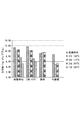
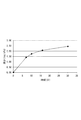
図1の結果から、100℃及び110℃での乳酸菌は既に±3.50logの低下を見せたように思われた。これらの温度でのバチルス株の場合の低下は±1〜1.5log単位であり、酵母株の場合、(コロニー形成能は初期に既に低かったものの)低下は観察されなかった。240℃で、酵母と乳酸菌の両方が依然として若干の増殖を見せる。しかしながら、これはわずかなものであった。両方のサンプルにおいて、cfuの数は絶対数で>108cfuから10cfuに低下した。このわずかな割合の生き残りは、試験管のキャップについた微生物で間違いない。サンプルのこの部分は浴に沈めていないことから、同程度には加熱されなかった。若干異なる装置を使用した第2の実験において、Bacillus amyloliquefaciens株ID9698の乾熱耐性を、酵母及び乳酸菌の乾熱耐性と比較した。
-Result From the result of FIG. 1, it seemed that the lactic acid bacteria in 100 degreeC and 110 degreeC already showed the fall of +/- 3.50log. The decrease for the Bacillus strain at these temperatures is ± 1 to 1.5 log units, and for the yeast strain, no decrease was observed (although the colony-forming ability was already initially low). At 240 ° C, both yeast and lactic acid bacteria still show some growth. However, this was slight. In both samples, the number of cfu dropped from> 10 8 cfu to 10 cfu in absolute numbers. This small percentage of survivors is undoubtedly microorganisms attached to the tube cap. This portion of the sample was not submerged because it was not submerged in the bath. In a second experiment using a slightly different apparatus, the dry heat resistance of Bacillus amyloliquefaciens strain ID 9698 was compared to the dry heat resistance of yeast and lactic acid bacteria.
・材料及び方法
以下の微生物を試験した。
1.株ID9698(Bacillus amyloliquefaciensと同定)
2.酵母:パン酵母Bruggeman Instant(Algist Bruggeman、ヘント)(Saccharomyces cerevisiae)
3.Probactiol(登録商標):乳酸菌生菌(プロバイオティクス)(Lactobacillus acidophilus NCFMとBifidobacterium lactis Bl−07との1/1混合物)の入った市販の薬物
-Materials and methods The following microorganisms were tested.
1. Strain ID 9698 (identified as Bacillus amyloliquefaciens)
2. Yeast: Baker's yeast Bruggeman Instant (Algist Bruggeman, Ghent) (Saccharomyces cerevisiae)
3. Probactiol®: a commercial drug containing live lactic acid bacteria (probiotics) (1/1 mixture of Lactobacillus acidophilus NCFM and Bifidobacterium lactis Bl-07)
・乾熱処理
乾熱処理を、熱重量分析機(TGA)で行った。処理温度は100〜240℃の範囲で10℃間隔で変化させた。10.89log芽胞/gのB.amyloliquefaciens、10.17log cfu/gの酵母または9.09log cfu/gの乳酸菌をそれぞれ含有する既知の量(約15mg)を乾燥粉末を処理温度にまで予備加熱されたTGAに入れ、2分間にわたって熱処理した。この粉末を滅菌マイクロピペットに移し、1mlの滅菌生理食塩水(PPS)に再懸濁させた。その後、適切な希釈物をB.amyloliquefaciensについては強化栄養寒天培地、乳酸菌についてはMRS寒天培地、酵母についてはYGC寒天培地上で培養した。全てのプレートを3日間にわたって30℃でインキュベートしてからコロニー数を数えた。
-Dry heat treatment Dry heat treatment was performed with a thermogravimetric analyzer (TGA). The treatment temperature was varied in the range of 100 to 240 ° C at 10 ° C intervals. 10.89 log spores / g B. Known amounts (about 15 mg) each containing amyloliquefaciens, 10.17 log cfu / g yeast or 9.09 log cfu / g lactic acid bacteria are placed in TGA preheated to the treatment temperature and heat treated for 2 minutes did. This powder was transferred to a sterile micropipette and resuspended in 1 ml of sterile saline (PPS). The appropriate dilution is then The amyloliquefaciens was cultured on an enhanced nutrient agar medium, the lactic acid bacteria on an MRS agar medium, and the yeast on a YGC agar medium. All plates were incubated for 3 days at 30 ° C. before counting the number of colonies.
・結果
試験した微生物の熱安定性における大きな違いを示した。処理温度130℃では、乳酸菌の場合、5logより大きい減少が起きた(表1)。同じ温度で、B.amyloliquefaciens及び酵母では減少はほとんど観察されなかった。酵母の場合、処理温度150℃で大幅な減少が起き(3.61log)、B.amyloliquefaciensでは180℃まで減少がほとんど見られなかった(<1log)。
なお、表1は、乾燥粉末の15mgサンプルにおける減少(log cfu)を示し、「>」は、検出限界を表す。
• Results Showed significant differences in the thermal stability of the tested microorganisms. At a treatment temperature of 130 ° C., a decrease of more than 5 logs occurred in the case of lactic acid bacteria (Table 1). B. at the same temperature. Little reduction was observed in amyloliquefaciens and yeast. In the case of yeast, a significant decrease occurs at a processing temperature of 150 ° C. (3.61 log). In amyloliquefaciens, almost no decrease was observed up to 180 ° C. (<1 log).
Table 1 shows the decrease (log cfu) in the 15 mg sample of dry powder, and “>” represents the detection limit.
より少ない量を使用しての酵母の乾熱耐性を評価するための一連のその他の比較実験においては、コロニー増殖の大幅な低下が既に130℃から観察された(データ示さず)。 In a series of other comparative experiments to assess the dry heat tolerance of yeast using smaller amounts, a significant reduction in colony growth was already observed from 130 ° C. (data not shown).
実施例3:ポリマーの吸水分析
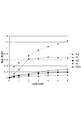
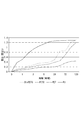
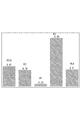
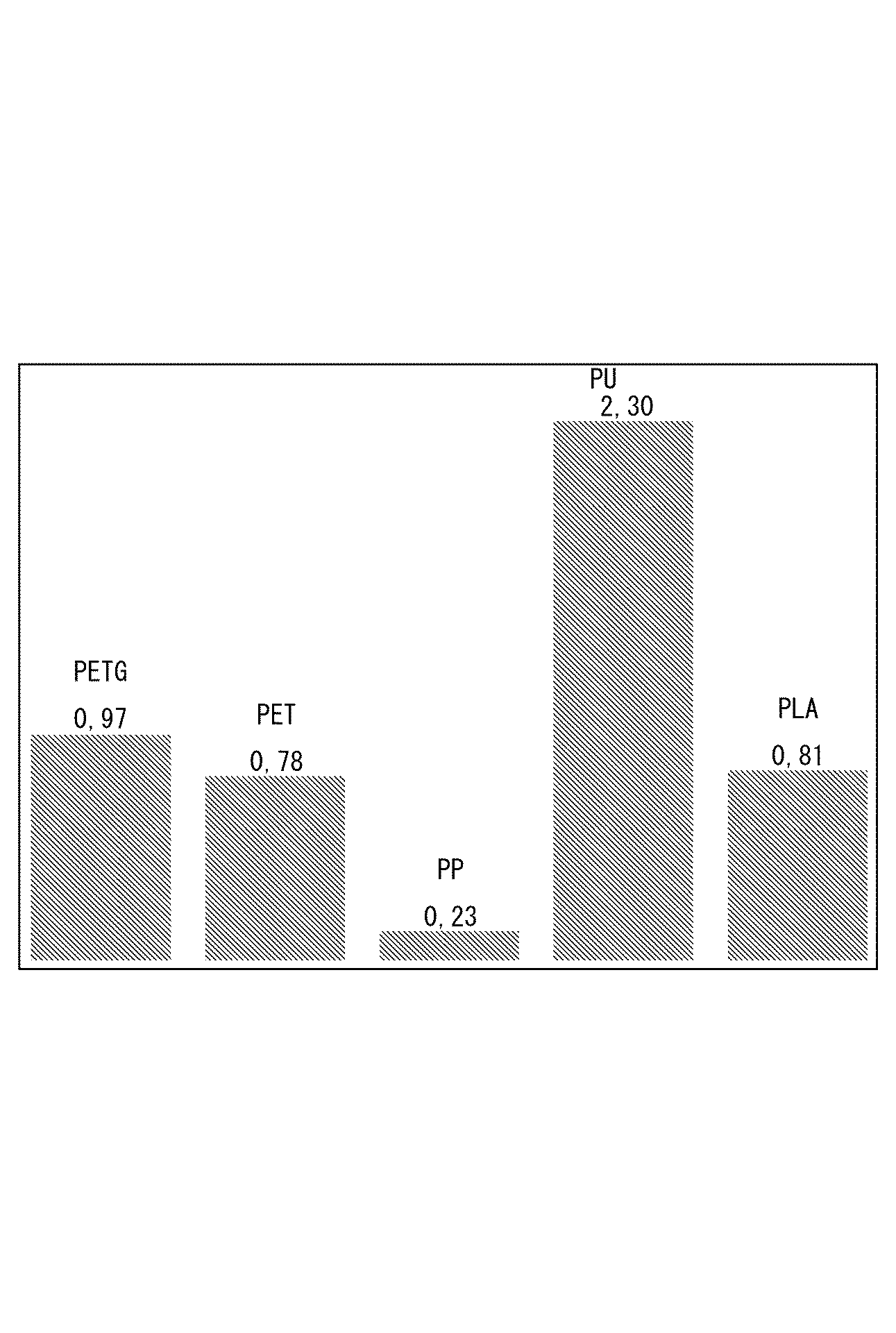
全ての試験ポリマーについて、時間の経過に伴う吸水量の増加が観察された(図2、図3)。図3において、PUは極めて高い吸水量を示し、これは残り3つのポリマーと対照的である。これらの測定において、PUは3日後に停滞状態に達する。PETg及びBioPETg(すなわち、Bacillus amyloliquefaciens芽胞とPETgとの混合物)の場合、高い吸収値も観察される。図3において、これら2種類のポリマー間でのわずかな差をはっきりと観察することができる。BioPETgの停滞状態は、1〜3日目に得られた。4日目からは、上昇を観察することができる。時間の経過に伴うPETの吸水量の少なさは予測可能であった。図4は、湿度100%に3日間にわたってさらされた後の液体含有量(%)を示す。表2は、幾つかのポリマーについての極性値及び吸水値を示す。
Example 3 Polymer Water Absorption Analysis For all test polymers, an increase in water absorption over time was observed (FIGS. 2 and 3). In FIG. 3, PU shows a very high water absorption, in contrast to the remaining three polymers. In these measurements, the PU reaches stagnation after 3 days. High absorption values are also observed for PETg and BioPETg (ie, a mixture of Bacillus amyloliquefaciens spores and PETg). In FIG. 3, slight differences between these two polymers can be clearly observed. BioPETg stagnation was obtained on days 1-3. From the fourth day, an increase can be observed. The small amount of water absorbed by PET over time was predictable. FIG. 4 shows the liquid content (%) after exposure to 100% humidity for 3 days. Table 2 shows the polar and water absorption values for some polymers.
実施例4:ポリエステル中への高温高圧取り込み後に生き残っている芽胞の測定
・導入
乾燥した芽胞材料を、高温及び高圧下でポリエステル中に取り込んだ。取り込みプロセス後の芽胞の生存率を、このポリエステルから芽胞を抽出することによって測定した。生きている芽胞の数を平板培養技法によって数えた。
Example 4: Measurement and introduction of spore surviving after high temperature and high pressure incorporation into polyester Dry spore material was incorporated into polyester under high temperature and high pressure. Spore viability after the uptake process was measured by extracting spores from this polyester. The number of living spores was counted by plate culture technique.
・材料及び方法
乾燥芽胞粉末は、適切な発酵プロセス及び下流処理によって製造された。乾燥芽胞をポリエステルに取り込んだ。ポリエステルの典型的な例として、PETGを使用した。取り込みは、4%w/w濃度のポリマープレスで行われた。芽胞を含有していないポリマーのプレート(素材片)は、210℃、圧力10kNで5分間にわたってプレスされた。乾燥芽胞粉末を、素材片である2枚のポリマープレート間に正しい濃度でプレスすることによって、芽胞を取り込んだ1枚の新しいサンプルを得た。加工は210℃、29バールで5分間にわたって行わされた。
Materials and methods Dry spore powder was produced by a suitable fermentation process and downstream processing. Dry spores were incorporated into polyester. PETG was used as a typical example of polyester. Incorporation was done with a polymer press at 4% w / w concentration. A polymer plate (strip) containing no spores was pressed at 210 ° C. and a pressure of 10 kN for 5 minutes. One new sample incorporating the spores was obtained by pressing the dried spore powder at the correct concentration between the two polymer plates as the raw material pieces. Processing was carried out at 210 ° C. and 29 bar for 5 minutes.
芽胞が取り込まれた0.02gのポリマープレートを、クロロホルム(CHCl3)脱塩水混合物(1/1)に溶解させた。これは超音波浴中で10分間にわたって行われた。溶解プロセス中、芽胞はポリマーからクロロホルム中に放出される。しっかりと攪拌することによって、放出された芽胞は速やかに水側に移動する。溶解後、ポリマーを含有するクロロホルムと、芽胞を含有する水との間で相分離が起きた。水中の生きている芽胞の量を、PPSで適切な10倍希釈物を用意し、栄養寒天培地(NA)上に塗って培養することによって測定した。NAプレートを48時間にわたって30℃でインキュベートしてから芽胞の数を数えた。 0.02 g of polymer plate incorporating the spores was dissolved in chloroform (CHCl 3 ) demineralized water mixture (1/1). This was done for 10 minutes in an ultrasonic bath. During the lysis process, spores are released from the polymer into chloroform. By thoroughly stirring, the released spores quickly move to the water side. After dissolution, phase separation occurred between chloroform containing the polymer and water containing the spores. The amount of live spores in the water was measured by preparing appropriate 10-fold dilutions in PPS, spreading on nutrient agar (NA) and culturing. The NA plate was incubated at 30 ° C. for 48 hours before the number of spores was counted.
・結果及び結論
実験によって、100%のクロロホルムでの10分間の処理によって芽胞の数が最大で1.7log減少することが判明した(図5)。抽出された芽胞は速やかに水相に移動し、クロロホルムとの接触時間は最小限に抑えられる。このため、抽出プロセスは芽胞の生き残りに最小限の影響しか与えないと予想することができる。表3の結果から、選択された芽胞がポリマーマトリックス中への高温及び高圧取り込み後も生き残り、取り込み後にこれらの生物を更に利用できることが見て取れる。なお、表3は、ポリエステル中への取り込み後の芽胞の減少を示す。
Results and conclusions Experiments have shown that treatment with 100% chloroform for 10 minutes reduces the number of spores by a maximum of 1.7 logs (Figure 5). The extracted spores move quickly to the aqueous phase and the contact time with chloroform is minimized. For this reason, the extraction process can be expected to have minimal impact on spore survival. From the results in Table 3, it can be seen that the selected spores survive after high temperature and high pressure uptake into the polymer matrix and can further utilize these organisms after uptake. Table 3 shows the reduction of spores after incorporation into polyester.
実施例5:材料特性が取り込まれた生物の酸素除去活性に与える影響
・導入
乾燥した芽胞材料を異なるポリマー材料に取り込んだ。ポリマーは、幅広い極性で選択された(表2)。ポリウレタン(PU)の極性>ポリ乳酸(PLA)。ポリマーの極性は、ポリマー吸湿性に大きな影響を与える。ポリマーの極性が高ければ高いほど、吸水量は多くなる。これは、幾つかのポリマーについての吸水データによって実証される(表2)。
Example 5: Effect of material properties on oxygen removal activity of incorporated organisms Dried spore material was incorporated into different polymer materials. The polymer was selected with a wide range of polarities (Table 2). Polyurethane (PU) polarity> polylactic acid (PLA). The polarity of the polymer has a great influence on the hygroscopicity of the polymer. The higher the polymer polarity, the greater the water absorption. This is demonstrated by the water absorption data for several polymers (Table 2).
・材料及び方法
乾燥した芽胞粉末は、適切な発酵プロセス及び下流処理によって製造された。乾燥芽胞を、2種類のポリマー(PU、PLA)に4%w/w濃度で取り込んだ。ポリマーマトリックスへの取り込みは、ポリマープレスによって行われた。芽胞を含有していないポリマーのプレート(素材片)は、PUについては130℃、PLAについては170℃の圧力10kNで5分間にわたってプレスされた。乾燥した芽胞粉末を、素材片である2枚のポリマープレート間で正しい濃度でプレスすることによって、芽胞をポリマーマトリックス内で溶融混合し、1枚の新しい混合サンプルを得た。加工は5分間にわたってPUについては130℃、PLAについては170℃の10kNで行われた。ヘッドスペース内の酸素の濃度を、窒素でのフラッシングによって±5%に設定した。9mlの滅菌脱塩水の添加によって、芽胞の発芽に必要な高い湿度を達成した。酸素消費微生物の水中での増殖を防止するために、10mg/lのアンピリシン、様々な抗生物質を添加した。酸素吸収測定は、1.2gのプレス加工されたサンプルを21mlのヘッドスペースを有する閉鎖容器に入れることによって行われた。
Materials and methods Dried spore powder was produced by a suitable fermentation process and downstream processing. Dry spores were incorporated into 2 types of polymers (PU, PLA) at 4% w / w concentration. Incorporation into the polymer matrix was done by polymer press. A polymer plate (strip) containing no spores was pressed for 5 minutes at a pressure of 10 kN at 130 ° C. for PU and 170 ° C. for PLA. The dried spore powder was pressed at the correct concentration between two polymer plates as raw material pieces, so that the spores were melt mixed in the polymer matrix to obtain one new mixed sample. Processing was carried out for 5 minutes at 10 kN at 130 ° C. for PU and 170 ° C. for PLA. The oxygen concentration in the headspace was set to ± 5% by flushing with nitrogen. The high humidity required for spore germination was achieved by the addition of 9 ml of sterile demineralized water. In order to prevent oxygen-consuming microorganisms from growing in water, 10 mg / l ampicillin, various antibiotics were added. Oxygen absorption measurements were made by placing 1.2 g of the pressed sample in a closed container with 21 ml headspace.
ヘッドスペース内の酸素濃度は、非侵襲的酸素測定装置であるOxysense 210Tで測定された。 The oxygen concentration in the headspace was measured with Oxysense 210T, a non-invasive oxygen measuring device.
・結果
平均酸素吸収率(oxygen absorption rate:OAR)(mlO2/日)を2回繰り返した測定について計算した。PU及びPLAに取り込まれた芽胞の酸素吸収率のデータを表4に示す。
And results average oxygen absorption rate (oxygen absorption rate: OAR) was calculated for the measurements were repeated (mlO 2 / day) twice. Table 4 shows the data of oxygen absorption rate of spores taken up by PU and PLA.
PLA及びPU(極性値は20より高い)のポリマーに関して、良好な活性酸素除去活性が認められた。PUとPLAの酸素吸収率に有意な差は観察されなかった。 Good active oxygen scavenging activity was observed for polymers of PLA and PU (polarity values higher than 20). No significant difference was observed in oxygen uptake between PU and PLA.
この実験から、活性酸素除去剤として生物学的因子(芽胞)をポリマー中で使用する場合、極性及び吸水能に関して発明者が定義した基準に準拠しているポリマーを使用することができると結論づけることができる。 From this experiment, we conclude that when using biological agents (spores) in polymers as active oxygen scavengers, we can use polymers that comply with the criteria defined by the inventor for polarity and water absorption capacity. Can do.
Claims (17)
または、gyrA配列が、BCCMにID9698で寄託されているBacillus amyloliquefaciens株の部分gyrA配列(SEQ ID NO:1)と少なくとも70%同一である
ことを特徴とするバチルス株。 Whether it is a Bacillus amyloliquefaciens strain deposited with the Belgian Microorganism Conservation Organization (BCCM) under ID 9698,
Or a Bacillus strain characterized in that the gyrA sequence is at least 70% identical to a partial gyrA sequence (SEQ ID NO: 1) of a Bacillus amyloliquefaciens strain deposited at BCCM under ID 9698.
天然または合成ポリマーから選択されるマトリックスと、
温度100〜220℃及び/または圧力1.5〜50バールで生存可能であり、微生物の生きているまたは生存能力のある芽胞とを、
温度100〜220℃及び/または圧力1.5〜50バールで混合するステップを有する
ことを特徴とする製造方法。 A method for producing a material containing viable organisms, comprising:
A matrix selected from natural or synthetic polymers;
Viable or viable spores of microorganisms that are viable at a temperature of 100-220 ° C. and / or a pressure of 1.5-50 bar,
A method of mixing, comprising mixing at a temperature of 100 to 220 ° C. and / or a pressure of 1.5 to 50 bar.
請求項2に記載の方法。 The method according to claim 2, wherein the microorganism or spore thereof is viable at a temperature of 100 to 220 ° C and a pressure of 1.5 to 50 bar.
請求項2または3に記載の方法。 The microorganism or spore thereof is a Bacillus amyloliquefaciens strain deposited with BCCM under ID 9698, or a partial gyrA sequence (SEQ ID NO: 70%) of a Bacillus amyloliquefaciens strain with a gyrA sequence deposited with BCCM at ID 9698 The method according to claim 2 or 3, wherein the Bacillus strains are the same.
請求項2ないし4のいずれかに記載の方法。 The polymer consists of acrylate, methacrylate, acrylamide, methacrylamide, alcohol, amine, anhydride, epoxide, styrene, functionalized vinyl, functionalized allyl, propene, butadiene, ethylene, isocyanate, lactam, lactone, saccharide, glucose, ester The method according to any one of claims 2 to 4, comprising at least one monomer selected from the group.
請求項2ないし5のいずれかに記載の方法。 The method according to claim 2, wherein the polymer is a polar polymer.
請求項6に記載の方法。 The method of claim 6, wherein the polymer has a polarity of at least 20 (MPa) 1/2.
請求項2ないし7のいずれかに記載の方法。 The method according to any one of claims 2 to 7, wherein the polymer has a water absorption value of at least 0.2.
請求項2ないし8のいずれかに記載の方法。 During the mixing step, extrusion process, pelletizing process, pressure cooking process, thermoforming process, compression molding process, injection molding process, thermoforming process, impregnation process, vacuum forming process, foaming process or hot melt process The method according to claim 2, which is performed after the mixing step.
請求項9に記載の方法。 Extrusion molding process, pelletizing process, pressure cooking process, thermoforming process, compression molding process, injection molding process, thermoforming process, impregnation process, vacuum forming process, foaming process or hot melt process at temperatures of 100 to 220 ° C. and / or Or a pressure of 1.5 to 50 bar.
請求項2ないし10のいずれかに記載の方法。 The method according to any one of claims 2 to 10, wherein the temperature becomes high under dry conditions.
請求項2ないし11に記載の方法によって得られる
ことを特徴とする材料。 A material that contains a living organism,
A material obtained by the method according to claim 2.
請求項12に記載の材料。 The material according to claim 12, wherein the organism is an aerobic microorganism.
請求項12または13に記載の材料。 The organism is a Bacillus amyloliquefaciens strain deposited with BCCM under ID 9698, or a gyrA sequence is at least 70% identical to a partial gyrA sequence (SEQ ID NO: 1) of a Bacillus amyloliquefaciens strain deposited with BCCM under ID 9698 The material according to claim 12 or 13, which is a Bacillus strain.
請求項13ないし14に記載の材料を酸素バリアとして使う
ことを特徴とする使用。 The use of materials containing viable organisms,
Use, characterized in that the material according to claim 13 is used as an oxygen barrier.
生存能力のある微生物が含まれた材料を製造するために、温度100〜220℃及び/または圧力1.5〜50バールで生存可能である微生物の生きているまたは生存能力のある芽胞を使う
ことを特徴とする使用。 Use of living or viable spores of microorganisms,
Use live or viable spores of microorganisms that are viable at temperatures of 100-220 ° C. and / or pressures of 1.5-50 bar to produce materials containing viable microorganisms. Use characterized by.
請求項16に記載の使用。 The spore is a Bacillus amyloliquefaciens strain deposited at BCCM with ID 9698, or a gyrA sequence at least 70% identical to a partial gyrA sequence (SEQ ID NO: 1) of the Bacillus amyloliquefaciens strain deposited at BCCM with ID 9698. The use according to claim 16, which is derived from a Bacillus strain.
Applications Claiming Priority (5)
| Application Number | Priority Date | Filing Date | Title |
|---|---|---|---|
| US19415808P | 2008-09-24 | 2008-09-24 | |
| US61/194,158 | 2008-09-24 | ||
| EP09168652.7 | 2009-08-26 | ||
| EP09168652 | 2009-08-26 | ||
| PCT/EP2009/062389 WO2010034776A1 (en) | 2008-09-24 | 2009-09-24 | Incorporation of thermo-resistant and/or pressure-resistant organisms in materials |
Publications (1)
| Publication Number | Publication Date |
|---|---|
| JP2012503473A true JP2012503473A (en) | 2012-02-09 |
Family
ID=41254669
Family Applications (1)
| Application Number | Title | Priority Date | Filing Date |
|---|---|---|---|
| JP2011527359A Pending JP2012503473A (en) | 2008-09-24 | 2009-09-24 | Incorporation of heat-resistant and pressure-resistant organisms into materials |
Country Status (11)
| Country | Link |
|---|---|
| US (1) | US11028454B2 (en) |
| EP (2) | EP3508342A1 (en) |
| JP (1) | JP2012503473A (en) |
| KR (2) | KR101764592B1 (en) |
| CN (1) | CN102369105A (en) |
| AU (2) | AU2009295886A1 (en) |
| BR (1) | BRPI0913683A2 (en) |
| CA (1) | CA2738602A1 (en) |
| EA (1) | EA201100533A1 (en) |
| MX (1) | MX348019B (en) |
| WO (1) | WO2010034776A1 (en) |
Cited By (1)
| Publication number | Priority date | Publication date | Assignee | Title |
|---|---|---|---|---|
| JP2018083946A (en) * | 2016-11-24 | 2018-05-31 | 喬福材料科技股▲ふん▼有限公司Chiao Fu Material Technology Co.,Ltd. | Biodegradable film material and manufacturing method thereof |
Families Citing this family (11)
| Publication number | Priority date | Publication date | Assignee | Title |
|---|---|---|---|---|
| BE1019981A5 (en) * | 2011-05-18 | 2013-03-05 | Resilux | HOLLOW ITEMS, I.H.B. PLASTIC FORMS, RES.INTAINERS, WITH A BARRIER COAT AND SPRAYING METHOD, RESP. DEVICE FOR MANUFACTURING IT. |
| WO2012145803A2 (en) * | 2011-04-29 | 2012-11-01 | Resilux N.V. | Method for producing a polymer product from multidimensional aggregated components as barrier or carriers of living microbial cells and biological barriers in plastic and textile |
| EP2518138A1 (en) * | 2011-04-29 | 2012-10-31 | Resilux | Method for producing a polymer product from polar lipids from archaea as carriers of living microbial cells and biological barriers in plastic and textile |
| US9476835B2 (en) | 2012-04-13 | 2016-10-25 | Empire Technology Development Llc | Bioluminescent packaging |
| US20140183090A1 (en) * | 2012-07-05 | 2014-07-03 | Empire Technology Development Llc | Bioactive packaging |
| CA2956179C (en) * | 2014-07-25 | 2023-12-12 | The University Of Queensland | Bacillus amyloliquefaciens probiotic compositions, methods of production, and methods of use |
| CN107474356B (en) * | 2017-08-07 | 2020-10-09 | 佛山粤泓益生物科技有限公司 | Polyethylene micro-ecological agricultural plastic master batch and seedling raising tray made of same |
| CN107474426B (en) * | 2017-08-07 | 2020-11-06 | 佛山粤泓益生物科技有限公司 | Polyvinyl chloride micro-ecological agricultural plastic master batch and seedling raising tray made of same |
| CN117431192B (en) * | 2023-12-20 | 2024-04-23 | 航天神舟生物科技集团有限公司 | Bacillus amyloliquefaciens and application thereof in field of planetary protection |
| WO2025186462A1 (en) | 2024-03-07 | 2025-09-12 | Fair-Fusion B.V. | Incorporation of viable micro-organisms in a plastic product |
| WO2026114759A2 (en) * | 2024-11-29 | 2026-06-04 | Evonik Operations Gmbh | Degradable rubber formulations |
Citations (6)
| Publication number | Priority date | Publication date | Assignee | Title |
|---|---|---|---|---|
| JPH03503963A (en) * | 1988-02-17 | 1991-09-05 | ディフシャム アーベー | Gel bodies and methods for biological sterilization control |
| JP2001300477A (en) * | 2000-04-21 | 2001-10-30 | Shinada Kikai Seisakusho:Kk | Waste treatment method for fast and stable decomposition of organic waste using microbial preparations |
| JP2003507428A (en) * | 1999-08-26 | 2003-02-25 | ガネデン バイオテック, インコーポレイテッド | Improved topical compositions comprising commensal bacteria, spores and extracellular products, and uses thereof |
| WO2006024115A1 (en) * | 2004-09-03 | 2006-03-09 | Resilux | Process for manufacturing hydrophobic polymers |
| WO2007064741A2 (en) * | 2005-11-29 | 2007-06-07 | Kemin Industries, Inc. | The use of bacillus pb6 for the prophylaxis or treatment of gastrointestinal and immuno-related diseases |
| JP2007300931A (en) * | 2001-02-21 | 2007-11-22 | Hitachi Plant Technologies Ltd | Heating carrier, method for producing the same, and environmental purification method using heating carrier |
Family Cites Families (13)
| Publication number | Priority date | Publication date | Assignee | Title |
|---|---|---|---|---|
| SE8702840D0 (en) | 1987-07-10 | 1987-07-10 | Plm Ab | BARRIERFORSTERKNING |
| US6423345B2 (en) * | 1998-04-30 | 2002-07-23 | Acusphere, Inc. | Matrices formed of polymer and hydrophobic compounds for use in drug delivery |
| US6248321B1 (en) * | 1999-01-14 | 2001-06-19 | Her Majesty The Queen In Right Of Canada, As Represented By The Minister Of Natural Resources, Canadian Forestry Service | Encapsulation of microparticles in teardrop shaped polymer capsules of cellular size |
| GB0005839D0 (en) * | 2000-03-10 | 2000-05-03 | Provita Eurotech Ltd | Storage and delivery of micro-organisms |
| FR2806417B1 (en) * | 2000-03-16 | 2003-12-26 | Lallemand Sa | COATED PARTICLES CONTAINING LIVING MICROORGANISMS, PROCESS FOR THE PRODUCTION AND APPLICATION OF SAID PARTICLES IN PHARMACEUTICAL, DIETETIC OR FOOD COMPOSITIONS |
| JP2002274521A (en) * | 2001-03-16 | 2002-09-25 | Yoshino Kogyosho Co Ltd | Environmentally friendly plastic containers |
| GB0205867D0 (en) * | 2002-03-13 | 2002-04-24 | Univ Nottingham | Polymer composite loaded with functioning matter |
| US20040109853A1 (en) * | 2002-09-09 | 2004-06-10 | Reactive Surfaces, Ltd. | Biological active coating components, coatings, and coated surfaces |
| KR100427600B1 (en) * | 2003-03-07 | 2004-04-28 | (주)한국바이오케미칼 | Bacillus amyloliquefaciens and additional animal food containing the same |
| US20050238721A1 (en) | 2004-04-07 | 2005-10-27 | Acquarulo Lawrence A Jr | One step compounding extrusion of drug filled polymers |
| US20060228448A1 (en) | 2005-04-11 | 2006-10-12 | The Iams Company | Pet food compositions comprising two components |
| US8592343B2 (en) * | 2005-09-09 | 2013-11-26 | Embrapa And Universidade Federal Rural Do Rio De Janeiro | Polymeric compositions containing rhizobium and/or plant growth-promoting rhizobacteria inoculant, use thereof and seeds treated with the compositions |
| WO2007060539A2 (en) | 2005-11-28 | 2007-05-31 | Jorrocks Pty Ltd. | Methods for preparation of animal feeds |
-
2009
- 2009-09-24 WO PCT/EP2009/062389 patent/WO2010034776A1/en not_active Ceased
- 2009-09-24 US US13/120,908 patent/US11028454B2/en active Active
- 2009-09-24 KR KR1020177002961A patent/KR101764592B1/en not_active Expired - Fee Related
- 2009-09-24 CN CN2009801373603A patent/CN102369105A/en active Pending
- 2009-09-24 EP EP18200290.7A patent/EP3508342A1/en not_active Withdrawn
- 2009-09-24 MX MX2011003048A patent/MX348019B/en active IP Right Grant
- 2009-09-24 CA CA2738602A patent/CA2738602A1/en not_active Abandoned
- 2009-09-24 KR KR1020117009450A patent/KR20110098996A/en not_active Ceased
- 2009-09-24 AU AU2009295886A patent/AU2009295886A1/en not_active Abandoned
- 2009-09-24 BR BRPI0913683A patent/BRPI0913683A2/en not_active Application Discontinuation
- 2009-09-24 EP EP20090783376 patent/EP2352641A1/en not_active Withdrawn
- 2009-09-24 JP JP2011527359A patent/JP2012503473A/en active Pending
- 2009-09-24 EA EA201100533A patent/EA201100533A1/en unknown
-
2016
- 2016-01-17 AU AU2016200258A patent/AU2016200258B2/en not_active Ceased
Patent Citations (6)
| Publication number | Priority date | Publication date | Assignee | Title |
|---|---|---|---|---|
| JPH03503963A (en) * | 1988-02-17 | 1991-09-05 | ディフシャム アーベー | Gel bodies and methods for biological sterilization control |
| JP2003507428A (en) * | 1999-08-26 | 2003-02-25 | ガネデン バイオテック, インコーポレイテッド | Improved topical compositions comprising commensal bacteria, spores and extracellular products, and uses thereof |
| JP2001300477A (en) * | 2000-04-21 | 2001-10-30 | Shinada Kikai Seisakusho:Kk | Waste treatment method for fast and stable decomposition of organic waste using microbial preparations |
| JP2007300931A (en) * | 2001-02-21 | 2007-11-22 | Hitachi Plant Technologies Ltd | Heating carrier, method for producing the same, and environmental purification method using heating carrier |
| WO2006024115A1 (en) * | 2004-09-03 | 2006-03-09 | Resilux | Process for manufacturing hydrophobic polymers |
| WO2007064741A2 (en) * | 2005-11-29 | 2007-06-07 | Kemin Industries, Inc. | The use of bacillus pb6 for the prophylaxis or treatment of gastrointestinal and immuno-related diseases |
Non-Patent Citations (5)
| Title |
|---|
| JPN5011012941; AGTHE O: 'INVESTIGATIONS ON THE SURVIVAL OF SPORES OF BACILLUS STEAROTHERMOPHILUS 以下備考' ARCHIVES OF MEAT, FISH ANDDAIRY SCIENCE V47 N2, 19960529, P40-42 * |
| JPN6013061279; Database DDBJ/EMBL/GenBank [online], Accession No. EF176773: '<http://www.ncbi.nlm.nih.gov/nuccore/129921060?sat=4&satkey=19724584>03-DEC-2007 updated, [retrieved' Definition: Bacillus amyloliquefaciens strain LSC04 GyrA gene, partial cds * |
| JPN6013061280; Appl. Environ. Microbiol., 2006, 72(5), pp.3476-3481 * |
| JPN6013061282; J. Biomed. Mater. Res., 1997, 38(2), pp.115-119 * |
| JPN6013061284; Innov. Food Sci. Emerg. Technol. 2001, 2(4), pp.261-272 * |
Cited By (1)
| Publication number | Priority date | Publication date | Assignee | Title |
|---|---|---|---|---|
| JP2018083946A (en) * | 2016-11-24 | 2018-05-31 | 喬福材料科技股▲ふん▼有限公司Chiao Fu Material Technology Co.,Ltd. | Biodegradable film material and manufacturing method thereof |
Also Published As
| Publication number | Publication date |
|---|---|
| EA201100533A1 (en) | 2011-10-31 |
| US20110217758A1 (en) | 2011-09-08 |
| BRPI0913683A2 (en) | 2015-11-24 |
| AU2016200258B2 (en) | 2017-08-31 |
| EP2352641A1 (en) | 2011-08-10 |
| US11028454B2 (en) | 2021-06-08 |
| AU2016200258A1 (en) | 2016-02-04 |
| KR101764592B1 (en) | 2017-08-23 |
| EP3508342A1 (en) | 2019-07-10 |
| MX348019B (en) | 2017-05-23 |
| KR20110098996A (en) | 2011-09-05 |
| WO2010034776A1 (en) | 2010-04-01 |
| AU2009295886A1 (en) | 2010-04-01 |
| CA2738602A1 (en) | 2010-04-01 |
| MX2011003048A (en) | 2011-05-19 |
| KR20170017001A (en) | 2017-02-14 |
| CN102369105A (en) | 2012-03-07 |
Similar Documents
| Publication | Publication Date | Title |
|---|---|---|
| AU2016200258B2 (en) | Incorporation of thermo-resistant and/or pressure-resistant organisms in materials | |
| Tan et al. | Prospects of kefiran as a food-derived biopolymer for agri-food and biomedical applications | |
| Kosin et al. | Microbial and processing criteria for production of probiotics: a review | |
| Rubel et al. | In vitro prebiotic activity of inulin-rich carbohydrates extracted from Jerusalem artichoke (Helianthus tuberosus L.) tubers at different storage times by Lactobacillus paracasei | |
| Purutoğlu et al. | Diversity and functional characteristics of lactic acid bacteria from traditional kefir grains | |
| Lei et al. | Degradation of zearalenone in swine feed and feed ingredients by Bacillus subtilis ANSB01G | |
| Zheng et al. | Antimicrobial activity and safety evaluation of Enterococcus faecium KQ 2.6 isolated from peacock feces | |
| CA3136385A1 (en) | Methods and systems for stabilization and preservation of microbes | |
| TW200904340A (en) | Processing of natural polysaccharides by selected non-pathogenic microorganisms and methods of making and using the same | |
| KR20170068694A (en) | Novel natural disinfectant with probiotics properties | |
| Naeem et al. | Isolation characterization and identification of lactic acid bacteria from fruit juices and their efficacy against antibiotics | |
| US20220132834A1 (en) | Methods, apparatuses, and systems for improving microbial preservation yield through rescue and serial passage of preserved cells | |
| Lahmamsi et al. | Lactic acid bacteria as an eco-friendly approach in plant production: Current state and prospects | |
| Zwielehner et al. | DGGE and real‐time PCR analysis of lactic acid bacteria in bacterial communities of the phyllosphere of lettuce | |
| Villarreal-Morales et al. | Metagenomics of traditional beverages | |
| Prayoonthien et al. | In vitro fermentation of copra meal hydrolysate by chicken microbiota | |
| KR20180134128A (en) | Sparassis crispa fermentation product having antioxidative and immunological activity, and preparing method thereof | |
| Esawy et al. | Bacillus spp. Isolated from Honey | |
| EP2166083A1 (en) | Novel Lactobacillus paracasei subsp. paracasei SG96, a bacteriostatic composition containing the same and use thereof | |
| Chen et al. | Isolation and characterization of lactic acid bacteria from pobuzihi (fermented cummingcordia), a traditional fermented food in Taiwan | |
| CN106591206A (en) | Bacillus cereus, compound bacteria preparation thereof and preparation method | |
| Euanorasetr et al. | Isolation and characterization of aerobic actinomycetes with probiotic properties in Nile tilapia | |
| Abdel-Aziz et al. | Role of nutrient in microbial developments and microbial metabolic diversity | |
| Yoo et al. | Production of an antimicrobial compound by Bacillus subtilis LS 1–2 using a citrus-processing byproduct | |
| Muthuramamoorthy et al. | Rubber Seed Shell as Low-cost Medium to Produce Lactic Acid Using Lactobacillus plantarum LB2 and Fabrication of a Polylactic Acid-Chitosan Composite for Fish Fillet Packing. |
Legal Events
| Date | Code | Title | Description |
|---|---|---|---|
| A621 | Written request for application examination |
Free format text: JAPANESE INTERMEDIATE CODE: A621 Effective date: 20120330 |
|
| A521 | Request for written amendment filed |
Free format text: JAPANESE INTERMEDIATE CODE: A821 Effective date: 20120502 |
|
| A521 | Request for written amendment filed |
Free format text: JAPANESE INTERMEDIATE CODE: A523 Effective date: 20130226 |
|
| A521 | Request for written amendment filed |
Free format text: JAPANESE INTERMEDIATE CODE: A821 Effective date: 20130228 |
|
| A131 | Notification of reasons for refusal |
Free format text: JAPANESE INTERMEDIATE CODE: A131 Effective date: 20131217 |
|
| A601 | Written request for extension of time |
Free format text: JAPANESE INTERMEDIATE CODE: A601 Effective date: 20140314 |
|
| A602 | Written permission of extension of time |
Free format text: JAPANESE INTERMEDIATE CODE: A602 Effective date: 20140324 |
|
| A601 | Written request for extension of time |
Free format text: JAPANESE INTERMEDIATE CODE: A601 Effective date: 20140414 |
|
| A602 | Written permission of extension of time |
Free format text: JAPANESE INTERMEDIATE CODE: A602 Effective date: 20140421 |
|
| A02 | Decision of refusal |
Free format text: JAPANESE INTERMEDIATE CODE: A02 Effective date: 20140909 |