JP2015199057A - Dispersion type polymer coagulant, soil solidifying agent and coagulation and sedimentation agent, and contamination spreading prevention method of radioactive substance, decontamination method of contaminated soil, vegetation base creation method and water cleaning method - Google Patents
Dispersion type polymer coagulant, soil solidifying agent and coagulation and sedimentation agent, and contamination spreading prevention method of radioactive substance, decontamination method of contaminated soil, vegetation base creation method and water cleaning method Download PDFInfo
- Publication number
- JP2015199057A JP2015199057A JP2015013829A JP2015013829A JP2015199057A JP 2015199057 A JP2015199057 A JP 2015199057A JP 2015013829 A JP2015013829 A JP 2015013829A JP 2015013829 A JP2015013829 A JP 2015013829A JP 2015199057 A JP2015199057 A JP 2015199057A
- Authority
- JP
- Japan
- Prior art keywords
- polymer
- soil
- aqueous solution
- contaminated
- solidifying agent
- Prior art date
- Legal status (The legal status is an assumption and is not a legal conclusion. Google has not performed a legal analysis and makes no representation as to the accuracy of the status listed.)
- Granted
Links
Images



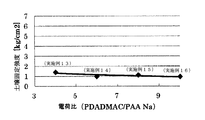
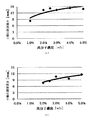
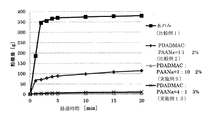
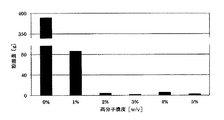
Landscapes
- Separation Of Suspended Particles By Flocculating Agents (AREA)
- Solid-Sorbent Or Filter-Aiding Compositions (AREA)
- Soil Conditioners And Soil-Stabilizing Materials (AREA)
- Compositions Of Macromolecular Compounds (AREA)
Abstract
Description
本発明は、植物の生育を阻害しないで効果的な土壌固化を行えるだけでなく、効率的な水浄化にも適用できる分散型高分子凝集剤及び該分散型高分子凝集剤からなる環境に優しい土壌固化剤と凝集性能に優れる凝集沈殿剤に関する。また、前記土壌固化剤を用いる放射性物質の汚染拡大防止方法と汚染土壌の除染方法及び植生基盤造成方法、並びに前記凝集沈殿剤を用いる水浄化方法に関する。 The present invention not only enables effective soil solidification without inhibiting plant growth, but also is an environmentally friendly dispersion polymer flocculant that can be applied to efficient water purification and the dispersion polymer flocculant. The present invention relates to a coagulating sedimentation agent excellent in soil solidifying agent and coagulation performance. The present invention also relates to a method for preventing contamination of radioactive substances using the soil solidifying agent, a method for decontamination of contaminated soil, a method for creating a vegetation base, and a water purification method using the coagulating precipitant.
イオン性有機高分子は、1分子中にカチオン基及びアニオン基の少なくともどちらかを有する有機高分子であり、特徴的な挙動を有することから様々な用途に適用されている。例えば、生活排水、産業排水等に含まれる懸濁物から固形分を凝集、沈降、分離させるためにカチオン性、アニオン性又は両性の高分子凝集剤が使用されており、特許文献1には両性水溶性高分子凝集剤を汚泥の脱水方法として使用することが提案されている。 An ionic organic polymer is an organic polymer having at least one of a cation group and an anion group in one molecule, and has a characteristic behavior and is applied to various uses. For example, a cationic, anionic or amphoteric polymer flocculant is used to agglomerate, settle and separate solids from a suspension contained in domestic wastewater, industrial wastewater, etc. It has been proposed to use a water-soluble polymer flocculant as a method for dewatering sludge.
また、特許文献2には、植生基盤造成のためにイオン性有機高分子を土壌固化剤として使用することが提案されている。前記特許文献2に開示されている植生基盤造成工法は、水、土壌成分及びアニオン性水溶性有機高分子化合物を含む植生基盤材と、カチオン性高分子化合物を含む団粒剤との混合時に、両者のイオン性高分子が反応してゲル構造が形成することを利用するものである。植生基盤造成は、植物の発芽、生育あるいはバランスの良い成長に寄与し、しかも環境保全にも寄与する緑化基盤の造成として行われる。
特許文献3には、極性の異なるイオン性高分子の溶液を混合することで、両成分からなる不溶性のポリイオンコンプレックス複合体を、繊維、フィルム、塗膜、充填材等の用途へ適用することが提案されている。
In
ポリイオンコンプレックスは、前記の用途の他にも、放射性セシウム汚染土壌の除染方法として適用することが特許文献4、5及び非特許文献1に提案されている。
前記特許文献4及び5に記載の除染方法では、ポリイオンコンプレックスとしてポリカチオンとポリアニオンの両方を含む水溶液として利用する場合、水溶液中にゲル状の沈殿物が生じないように2〜6wt%の塩(塩化ナトリウム、塩化カリウム、硫酸カリウム、硫酸アンモニウム等)を加えている。
In the decontamination methods described in
また、前記非特許文献1には、土壌表層の放射性セシウムの除去に使用する固定化剤として、天然ポリイオンコンプレックス溶液又は合成ポリイオンコンプレックス溶液が開示されている。ここで、天然ポリイオンコンプレックス溶液は、塩濃度2%で塩化カリウム又は塩化ナトリウムを水に加えた塩溶液に、カチオン性高分子(HECHPTA)3kgとアニオン性高分子(CMC)1kgとを含む溶液を加え、撹拌しながら溶解して得られること、また、合成ポリイオンコンプレックス溶液は、塩濃度が5%である塩化ナトリウム及び水酸化ナトリウムを水に加えた塩溶液に、カチオン性高分子(PDADMAC)4.2kgとアニオン性高分子(PAA)0.87kgとを含む溶液を加え、撹拌しながら溶解して得られることがそれぞれ記載されている。前記非特許文献1に記載のポリイオンコンプレックス溶液は、カチオン性高分子とアニオン性高分子との電荷比がほぼ1になるように、それぞれの配合量が調整されている。
Non-Patent
ポリイオンコンプレックスは、アニオン電荷とカチオン電荷が釣り合って総電荷がゼロに近づくと凝集力が生まれ沈殿物が生じやすくなる。そのため、イオン性有機高分子を凝集剤や土壌固化剤等として適用する場合は、汚泥や土壌等の懸濁物中に含まれる固形物の電荷に応じて、アニオン性高分子及びカチオン性高分子のどちらか一方を用いるか、若しくは、前記特許文献1に記載されているように両性高分子を用いる。場合によってはノニオン性高分子凝集剤と併用することもある。しかしながら、これらの方法は、汚泥や土壌等が一部凝集して生成したフロックを、凝集物として容易に分離できるまでの径に肥大化させる造粒効果が十分に得られないという問題がある。そのため、別の造粒材と併用する場合等があり、処理が煩雑となることが避けられない。さらに、両性凝集剤は材料設計が難しく、材料コストの点からも適用の制約を受ける。
In the polyion complex, when the anion charge and the cation charge are balanced and the total charge approaches zero, a cohesive force is generated and a precipitate is easily generated. Therefore, when an ionic organic polymer is applied as a flocculant or a soil solidifying agent, an anionic polymer and a cationic polymer are used depending on the charge of the solid contained in the sludge or soil suspension. Either of these is used, or an amphoteric polymer is used as described in
前記特許文献2及び3に開示されているように、イオン性有機高分子を単独で使用する代わりに、カチオン性高分子及びアニオン性高分子を別々の成分として用い、両者を混合することによって凝集力を発現する方法が採用されている。その場合は、2成分を保管するための容器を複数用意し、それぞれの処理を分離して2回以上行う必要があるため、1成分だけの場合と比べて処理が煩雑となる。また、生活排水、産業排水又は土壌は、場所や環境に応じて、それらに含まれる各成分の種類や含有量及びpHや電荷等が変化しており、カチオン性高分子及びアニオン性高分子をそれぞれ分離して添加すると、浸透度及び凝集力の違いから凝集剤として安定した特性や性能を得ることが難しい。例えば、性状がそれぞれ異なる広範囲の地域に適用する場合、カチオン性高分子及びアニオン性高分子のどちらかを散布した後、もう一方の高分子を散布するまでに時間が長くなるため、この問題が顕著になる。また、2液をそれぞれノズル等によって吹き付けする場合は、液の浸透が十分に行われない状態で両者のゲル化反応が起こるため、固定化できる土壌の範囲と深さに大きな制約を受ける。このように、凝集剤としてカチオン性高分子及びアニオン性高分子を別々の成分として用いることは、効率的で迅速な処理を行うことができず、適用範囲が制約される。
As disclosed in
したがって、前記特許文献4、5及び非特許文献1に記載の放射性セシウム汚染土壌の除染方法においては、カチオン性高分子及びアニオン性高分子からなるポリイオンコンプレックスを含む水溶液を使用することによって、放射性セシウムの土壌深部への移行を抑制して放射性物質の汚染拡大を防止するともに、汚染土壌の表土を固化及び剥離する方法が提案されている。これらの方法は有効な除染方法であるものの、ポリイオンコンプレックスの沈殿物生成を抑制するために塩化ナトリウム、塩化カリウム、硫酸カリウム、硫酸アンモニウム等の塩を余分に添加している。その場合、ポリイオンコンプレックスを散布した土壌の性状や品質が余分に添加した塩によって大きく変化し、将来的に草木や農作物等が育成しづらくなるという環境面への影響が懸念される場合がある。土壌中に含まれる塩を中和処理して土壌の再生を行うことも可能であるが、大きな労力と手間が必要となるだけでなく、土壌再生を完了するまでに時間を要する。したがって、放射性物質の汚染拡大防止方法と汚染土壌の除染方法についても、環境に対する負荷をできるだけ小さくできる土壌固化剤及び該土壌固化剤を利用した簡便、且つ迅速で効率的な処理方法が強く求められている。
Therefore, in the decontamination methods for radioactive cesium-contaminated soils described in
本発明は、上記した従来の問題点に鑑みてなされたものであって、植物の生育を阻害しないで効果的な土壌固化を行えるだけでなく、効率的な水浄化にも適用できる分散型高分子凝集剤及び該分散型高分子凝集剤からなる環境に優しい土壌固化剤と凝集性能に優れる凝集沈殿剤を提供することにある。また、前記土壌固化剤を用いる放射性物質の汚染拡大防止方法と汚染土壌の除染方法及び植生基盤造成方法、並びに前記凝集沈殿剤を用いる水浄化方法を提供することにある。 The present invention has been made in view of the above-described conventional problems, and is not only capable of effective soil solidification without inhibiting plant growth, but also can be applied to efficient water purification. An object is to provide an environmentally friendly soil solidifying agent comprising a molecular flocculant and the dispersion-type polymer flocculant and a flocculant precipitant having excellent flocculant performance. Another object of the present invention is to provide a method for preventing contamination of radioactive substances using the soil solidifying agent, a method for decontamination of contaminated soil, a method for creating a vegetation base, and a method for water purification using the coagulating sedimentation agent.
本発明者は、取扱い性に優れ、添加するだけで大きな凝集力を得ることができる高分子凝集剤としてカチオン性高分子とアニオン性高分子とを含む水溶液に着目し、両者のイオン性高分子のどちらかを別のもう一方のイオン性高分子に対して電荷比で過剰に加えて混合した水溶液が、沈殿物を生成しないで長期間安定した均一のコロイド水溶液を形成するとともに、生活排水、産業排水又は土壌等に添加したときに大きな凝集力を発現できることを見出して本発明に到った。 The inventor of the present invention pays attention to an aqueous solution containing a cationic polymer and an anionic polymer as a polymer flocculant that is excellent in handleability and can obtain a large cohesive force only by adding the ionic polymer. An aqueous solution obtained by adding one of the above to another ionic polymer in excess at a charge ratio and mixing to form a uniform colloidal aqueous solution that is stable for a long period of time without forming a precipitate, The inventors have found that a large cohesive force can be expressed when added to industrial wastewater or soil, etc., and have reached the present invention.
すなわち、本発明の構成は以下の通りである。
[1]本発明は、カチオン性高分子とアニオン性高分子とを含む水溶液の分散型高分子凝集剤であって、前記カチオン性高分子及び前記アニオン性高分子は、どちらかの高分子を第1の高分子とし、もう一方の高分子を第2の高分子とし、前記第1の高分子の配合量(C1)を前記第1の高分子が有するイオン当量質量(EW1)で除算した値(C1/EW1)と、前記第2の高分子の配合量(C2)を前記第2の高分子が有するイオン当量質量(EW2)で除算した値(C2/EW2)とが(C1/EW1):(C2/EW2)=1:1の場合に電荷比が1であるとしたときに、(C1/EW1)/(C2/EW2)>1の関係を満たすように、前記第1の高分子が前記第2の高分子よりも過剰に配合されており、且つ、前記水溶液は沈殿物を生成しない、不透明又は乳白色のコロイド水溶液であることを特徴とする分散型高分子凝集剤を提供する。
[2]本発明は、前記コロイド水溶液が、前記カチオン性高分子又は前記アニオン性高分子に含まれる対イオン以外の塩として塩化ナトリウム、塩化カリウム、塩化アンモニウム、塩化マグネシウム、硫酸ナトリウム、硫酸カリウム、硫酸アンモニウム、硫酸マグネシウム、硝酸ナトリウム、硝酸カリウム、硝酸アンモニウムから選択される塩の少なくとも1種を含み、前記コロイド水溶液の全量を100質量部としたときに、前記塩を構成するカチオン及びアニオンを合わせたイオンの全濃度が1.5質量%未満であることを特徴とする前記[1]に記載の分散型高分子凝集剤を提供する。
[3]本発明は、前記第1の高分子が前記第2の高分子に対して、前記(C1/EW1)を前記(C2/EW2)で除算した値である電荷比が2倍以上となる配合量であり、且つ、前記コロイド水溶液には前記カチオン性高分子又は前記アニオン性高分子に含まれる対イオン以外の塩が含まれないことを特徴とする前記[2]に記載の分散型高分子凝集剤を提供する。
[4]本発明は、前記第1の高分子を前記第2の高分子に対して過剰に配合するときの配合量の上限値が、前記コロイド水溶液が沈殿物を形成しない半透明又は乳白色の均一状態を維持することができるまでの配合量であることを特徴とする前記[1]〜[3]の何れかに記載の分散型高分子凝集剤を提供する。
[5]本発明は、前記カチオン性高分子が、カチオン化セルロース、カチオン化でんぷん、アミノ基を有する高分子若しくは4級アンモニウム塩の高分子から選択される少なくとも1種であり、前記アニオン高分子が、カルボキシメチルセルロース、カルボキシメチルアミロース、リグニンスルホン酸及びその塩、ポリアクリル酸及びその塩、ポリスルホン酸及びその塩から選択される少なくとも1種であることを特徴とする前記[1]〜[4]の何れかに記載の分散型高分子凝集剤を提供する。
[6]本発明は、前記[1]〜[5]の何れかに記載の分散型高分子凝集剤において、前記コロイド水溶液が、前記カチオン性高分子と前記アニオン性高分子とを合わせた高分子を前記コロイド水溶液100mlに対して質量で0.5gを超え10g以下の範囲で含有することを特徴とする土壌固化剤を提供する。
[7]本発明は、前記[1]〜[5]の何れかに記載の分散型高分子凝集剤において、前記コロイド水溶液は、前記カチオン性高分子と前記アニオン性高分子とを合わせた高分子を前記コロイド水溶液100mlに対して質量で0.1gを超え10g以下の範囲で含有することを特徴とする凝集沈殿剤を提供する。
[8]本発明は、前記[1]〜[5]の何れかに記載の分散型高分子凝集剤から水を除去した後に残留物として得られる固形物又は該固形物を粉砕加工して得られる粉状体であることを特徴とする凝集沈殿剤を提供する。
[9]本発明は、放射性セシウムにより汚染された土壌に、前記[6]に記載の土壌固化剤を散布した後、前記土壌を固定させることによって放射性物質の移動及び拡散を防止する放射性物質の汚染拡大防止方法を提供する。
[10]本発明は、放射性セシウムにより汚染された土壌に、前記[6]に記載の土壌固化剤を散布して前記土壌の少なくとも一部を固定させた後、前記土壌の表層を剥離除去することを特徴とする汚染土壌の除染方法を提供する。
[11]本発明は、放射性セシウムにより汚染された土壌に、粘土微粒子を有する懸濁液と前記[6]に記載の土壌固化剤とをこの順に散布することによって、放射性セシウムを前記粘土微粒子中に取り込み、当該放射性セシウムを取り込んだ粘土微粒子を含む土壌を固化させることによって放射性物質の移動及び拡散を防止する放射性物質の汚染拡大防止方法を提供する。
[12]本発明は、前記粘土微粒子が、ベントナイト及びゼオライトの少なくとも何れか1つであることを特徴とする前記[11]に記載の放射性物質の汚染拡大防止方法を提供する。
[13]本発明は、前記粘土微粒子を有する懸濁液が、前記粘土微粒子を0.05〜5質量%含有する水溶液であることを特徴とする前記[11]又は[12]に記載の放射性物質の汚染拡大防止方法を提供する。
[14]本発明は、放射性セシウムにより汚染された土壌に、粘土微粒子を有する懸濁液と前記[6]に記載の土壌固化剤とをこの順に散布することによって、放射性セシウムを前記粘土微粒子中に取り込み、当該放射性セシウムを取り込んだ粘土微粒子を含む土壌を前記土壌固化剤によって前記土壌の少なくとも一部を固化させた後、前記土壌の表層を剥離除去することを特徴とする汚染土壌の除染方法を提供する。
[15]本発明は、前記粘土微粒子が、ベントナイト及びゼオライトの少なくとも何れか1つであることを特徴とする前記[14]に記載の汚染土壌の除染方法を提供する。
[16]本発明は、前記粘土微粒子を有する懸濁液が、前記粘土微粒子を0.05〜5質量%含有する水溶液であることを特徴とする前記[14]又は[15]に記載の汚染土壌の除染方法を提供する。
[17]本発明は、前記[6]に記載の土壌固化剤を被施工面の土壌に吹き付けて該土壌の表層を固化することによって、前記施工面の土壌を造成し緑化を行うことを特徴とする植生基盤造成方法を提供する。
[18]本発明は、汚染水又は排水に前記[7]又は[8]に記載の凝集沈殿剤を混入させ、前記汚染水又は排水に含まれる帯電浮遊粒子を沈殿させることによって水浄化を行うことを特徴とする水浄化方法を提供する。
That is, the configuration of the present invention is as follows.
[1] The present invention is an aqueous dispersion type polymer flocculant containing a cationic polymer and an anionic polymer, wherein the cationic polymer and the anionic polymer are either one of the polymers. The first polymer is the second polymer, the other polymer is the second polymer, and the compounding amount (C 1 ) of the first polymer is the ion equivalent mass (EW 1 ) of the first polymer. and dividing a value (C 1 / EW 1), the second amount of the polymer (C 2) value divided by the second ion equivalent mass polymer has (EW 2) a (C 2 / EW 2 ) and (C 1 / EW 1 ) :( C 2 / EW 2 ) = 1: 1, and the charge ratio is 1, then (C 1 / EW 1 ) / (C 2 / EW 2)> so as to satisfy a relation, which is excessively blended than the first polymer and the second polymer, One, the aqueous solution does not produce a precipitate, provides a distributed polymer flocculant, characterized in that it is opaque or milky colloid solution.
[2] In the present invention, the colloidal aqueous solution may be sodium chloride, potassium chloride, ammonium chloride, magnesium chloride, sodium sulfate, potassium sulfate as a salt other than the counter ion contained in the cationic polymer or the anionic polymer. When the total amount of the aqueous colloidal solution is 100 parts by mass including at least one salt selected from ammonium sulfate, magnesium sulfate, sodium nitrate, potassium nitrate, and ammonium nitrate, The dispersion type polymer flocculant according to the above [1], wherein the total concentration is less than 1.5% by mass.
[3] In the present invention, the first polymer has a charge ratio that is a value obtained by dividing (C 1 / EW 1 ) by (C 2 / EW 2 ) with respect to the second polymer. [2], wherein the compounding amount is twice or more, and the colloidal aqueous solution does not contain a salt other than a counter ion contained in the cationic polymer or the anionic polymer. Dispersed polymer flocculants as described are provided.
[4] In the present invention, when the first polymer is excessively blended with the second polymer, the upper limit of the blending amount is a translucent or milky white in which the colloidal aqueous solution does not form a precipitate. The dispersion type polymer flocculant according to any one of the above [1] to [3], wherein the blending amount is such that a uniform state can be maintained.
[5] In the present invention, the cationic polymer is at least one selected from cationized cellulose, cationized starch, a polymer having an amino group, or a polymer of a quaternary ammonium salt, and the anionic polymer Is at least one selected from carboxymethyl cellulose, carboxymethyl amylose, lignin sulfonic acid and its salt, polyacrylic acid and its salt, polysulfonic acid and its salt [1] to [4] A dispersion-type polymer flocculant as described in any of the above is provided.
[6] The present invention provides the dispersion polymer flocculant according to any one of [1] to [5], wherein the aqueous colloidal solution is a combination of the cationic polymer and the anionic polymer. Provided is a soil solidifying agent characterized in that it contains molecules in a range of more than 0.5 g and not more than 10 g with respect to 100 ml of the colloidal aqueous solution.
[7] The present invention provides the dispersion polymer flocculant according to any one of [1] to [5], wherein the aqueous colloidal solution is a combination of the cationic polymer and the anionic polymer. There is provided an aggregated precipitant characterized by containing molecules in a range of more than 0.1 g and not more than 10 g with respect to 100 ml of the colloidal aqueous solution.
[8] The present invention is obtained by pulverizing a solid obtained as a residue after removing water from the dispersed polymer flocculant according to any one of [1] to [5] or the solid. The present invention provides a coagulating and precipitating agent characterized by being a powdery product.
[9] The present invention provides a radioactive substance that prevents migration and diffusion of radioactive substances by spraying the soil solidifying agent according to [6] above on soil contaminated with radioactive cesium, and then fixing the soil. Provide methods to prevent the spread of contamination.
[10] The present invention peels and removes the surface layer of the soil after spraying the soil solidifying agent according to [6] above to the soil contaminated with radioactive cesium to fix at least a part of the soil. A decontamination method for contaminated soil is provided.
[11] In the present invention, radioactive cesium is dispersed in the clay fine particles by spraying a suspension having clay fine particles and the soil solidifying agent described in [6] in this order on soil contaminated with radioactive cesium. The present invention provides a method for preventing the radioactive material from spreading and preventing the movement and diffusion of the radioactive material by solidifying the soil containing the clay fine particles incorporated with the radioactive cesium.
[12] The present invention provides the radioactive substance contamination prevention method according to [11], wherein the clay fine particles are at least one of bentonite and zeolite.
[13] The radioactivity according to [11] or [12], wherein the suspension having the clay fine particles is an aqueous solution containing 0.05 to 5% by mass of the clay fine particles. Provide a method to prevent the spread of contamination of substances.
[14] The present invention disperses radioactive cesium in the clay fine particles by spraying a suspension having clay fine particles and the soil solidifying agent described in [6] in this order on soil contaminated with radioactive cesium. Decontamination of contaminated soil, wherein at least a part of the soil is solidified by the soil solidifying agent after the soil containing the clay fine particles incorporated with the radioactive cesium is solidified. Provide a method.
[15] The present invention provides the decontamination method for contaminated soil according to [14], wherein the clay fine particles are at least one of bentonite and zeolite.
[16] The contamination according to [14] or [15], wherein the suspension having the clay fine particles is an aqueous solution containing 0.05 to 5% by mass of the clay fine particles. Provide a method for decontamination of soil.
[17] The present invention is characterized in that the soil of the construction surface is created and greened by spraying the soil solidifying agent according to [6] onto the soil of the construction surface and solidifying the surface layer of the soil. Provide a vegetation foundation creation method.
[18] In the present invention, water purification is performed by mixing the coagulating precipitation agent according to [7] or [8] above in contaminated water or waste water, and precipitating charged floating particles contained in the contaminated water or waste water. A water purification method is provided.
本発明のカチオン性高分子及びアニオン性高分子のどちらかを含む水溶液からなる分散型高分子凝集剤は、余分な塩を含まない状態でも、沈殿物を生成せずに長期間安定した均一のコロイド水溶を形成するため、一液の高分子凝集剤水溶液として使用することができることから取扱い性に優れる。また、土壌又は生活排水、産業排水等に添加したときに大きな凝集力が得られるため、効果的な土壌固化を行うことができる土壌固化剤、及び効率的な水浄化にも適用できる凝集沈殿剤としてそれぞれ使用することが可能である。さらに、本発明の分散型高分子凝集剤は、植物の生育を阻害する懸念のある塩の含有量を少なくした状態で使用することができるため、土壌固化剤及び凝集沈殿剤として適用したときに、環境に対する負荷を少なくすることができる。 The dispersive polymer flocculant composed of an aqueous solution containing either the cationic polymer or the anionic polymer of the present invention is stable and uniform for a long period of time without forming a precipitate even in a state where no excess salt is contained. Since it forms a colloidal water solution, it can be used as a one-part polymer flocculant aqueous solution, so that it is easy to handle. In addition, a large cohesive force is obtained when added to soil, domestic wastewater, industrial wastewater, etc., so that a soil solidifying agent capable of effective soil solidification, and a coagulating precipitant that can also be applied to efficient water purification Can be used respectively. Furthermore, since the dispersive polymer flocculant of the present invention can be used in a state in which the content of a salt that may inhibit plant growth is reduced, it can be used when applied as a soil solidifying agent and an aggregating precipitant. The load on the environment can be reduced.
本発明による土壌固化剤を放射性物質の汚染拡大防止方法と汚染土壌の除染方法及び植生基盤造成方法に適用することによって植物の生育を阻害しないで効果的な土壌固化を行うことができ、大きな労力や経済的な負担を伴うことなく、処理後又は造成後の土壌緑化又は農産物生育を自然に行うことができる。また、本発明による凝集沈殿剤を生活排水及び産業排水の水浄化法に適用することによって、効率的な処理を行うことができるだけでなく、浄化水のイオン濃度及びpHの変化も極力抑えることができるため、より安全な水浄化システムを構築することが可能となる。 By applying the soil solidifying agent according to the present invention to the method for preventing the spread of radioactive material contamination, the decontamination method for contaminated soil, and the vegetation base construction method, effective soil solidification can be performed without inhibiting plant growth. Soil greening or agricultural product growth after treatment or creation can be performed naturally without labor and economic burden. Moreover, by applying the coagulating precipitant according to the present invention to the water purification method for domestic wastewater and industrial wastewater, not only can efficient treatment be performed, but also changes in the ion concentration and pH of the purified water can be suppressed as much as possible. Therefore, a safer water purification system can be constructed.
本発明の分散型高分子凝集剤は、カチオン性高分子とアニオン性高分子とを含む水溶液において、どちらかの高分子を第1の高分子とし、もう一方の高分子を第2の高分子としたときに、前記第1の高分子が前記第2の高分子よりも電荷比で過剰に配合することによって、大きな凝集力を維持しながら、沈殿物を生成せずに長期間安定した均一のコロイド水溶を形成できることを見出してなされたものである。 In the dispersion type polymer flocculant of the present invention, in an aqueous solution containing a cationic polymer and an anionic polymer, one of the polymers is the first polymer and the other polymer is the second polymer. When the first polymer is blended in excess at a charge ratio compared to the second polymer, it maintains a large cohesive force and is stable and stable for a long time without generating a precipitate. It has been made by finding that a colloidal water solution can be formed.
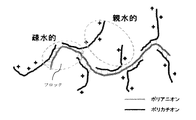
図1は、カチオン性高分子を電荷比で過剰に調整した本発明の分散型高分子凝集剤が水溶液中で有する形態の模式図であり、本発明の分散型高分子凝集剤の一形態例である。図1で示すように、本発明の分散型高分子凝集剤は、カチオン性高分子とアニオン性高分子の両者を含むことによって分子鎖の絡まり合いが生じ、大きな凝集力を生むための核となる疎水的なフロックが形成される。他方、カチオン性高分子及びアニオン性高分子のどちらか一方が過剰に含まれるため水との親和性が増した親水的な分子鎖の存在によって沈殿物の生成が抑制され、水溶液中でコロイド状態となって均一分散する。それによって、水溶液は不透明又は乳白色状の性状を有し、沈殿物を生成しないで長期間安定した均一の溶液が形成できる点に大きな特徴を有する。 FIG. 1 is a schematic diagram of a form of a dispersion polymer flocculant of the present invention in which a cationic polymer is excessively adjusted with a charge ratio in an aqueous solution, and one embodiment of the dispersion polymer flocculant of the present invention It is. As shown in FIG. 1, the dispersive polymer flocculant of the present invention contains both a cationic polymer and an anionic polymer, thereby causing entanglement of molecular chains and serving as a nucleus for generating a large cohesive force. A hydrophobic floc is formed. On the other hand, since either one of the cationic polymer or anionic polymer is excessively contained, the formation of precipitates is suppressed by the presence of hydrophilic molecular chains with increased affinity with water. And uniformly dispersed. Accordingly, the aqueous solution has an opaque or milky white property, and has a great feature in that a uniform solution that is stable for a long period of time can be formed without forming a precipitate.
ここで「不透明又は乳白色」は目視によって判定されるもので、例えば、本発明の分散型高分子凝集剤を2mm厚のガラス板にいれたときに、該ガラス板の向こう側にある文字が明確に判別できない程度の不透明度を有するものである。光線透過率として測定する場合には、同じ厚さで85%未満を有することが基準となる。また、本願発明の効果を奏するためには、夏冬(温度範囲:5〜30℃)で24時間以上放置しても沈殿物が観測されない均一の溶液であることが必要条件である。 Here, “opaque or milky white” is determined by visual observation. For example, when the dispersed polymer flocculant of the present invention is placed in a 2 mm thick glass plate, characters on the other side of the glass plate are clear. It has an opacity level that cannot be distinguished. When measuring as light transmittance, it becomes a standard to have less than 85% with the same thickness. In order to achieve the effect of the present invention, it is a necessary condition that the precipitate is not observed even if it is left for 24 hours or more in summer and winter (temperature range: 5 to 30 ° C.).
本発明で使用するコロイド水溶液は、カチオン性高分子及びアニオン性高分子の添加量を等電荷比にしないで、どちらかの方をが電荷比で過剰になるように添加することによって沈殿物の生成を抑制することができるため、従来技術のように一液性のポリイオンコンプレックスを得るために不可欠な塩をコロイド水溶液中に積極的に加える必要がない。しかしながら、イオン性高分子はもともと対イオンが微量含まれており、本発明で使用するコロイド水溶液には実質的に微量の塩が含まれる場合がある。対イオンを形成するための塩及び本発明のコロイド水溶液に積極的に添加する塩としては、使用するイオン性高分子の種類に応じて異なるが、一般的に、塩化ナトリウム、塩化カリウム、塩化アンモニウム、塩化マグネシウム、硫酸ナトリウム、硫酸カリウム、硫酸アンモニウム、硫酸マグネシウム、硝酸ナトリウム、硝酸カリウム、硝酸アンモニウムから選択される塩の少なくとも1種が使用される。本発明のコロイド水溶液に積極的に添加する前記の塩は、両イオン性高分子の静電力を緩衝する働きをする。 The colloidal aqueous solution used in the present invention does not have an equal charge ratio of the addition amount of the cationic polymer and the anionic polymer, but by adding either one so that the charge ratio is excessive, Since the formation can be suppressed, it is not necessary to actively add a salt essential for obtaining a one-component polyion complex to the colloidal aqueous solution as in the prior art. However, the ionic polymer originally contains a trace amount of counter ions, and the colloidal aqueous solution used in the present invention may contain a substantially trace amount of salt. The salt for forming a counter ion and the salt positively added to the colloidal aqueous solution of the present invention differ depending on the type of ionic polymer used, but in general, sodium chloride, potassium chloride, ammonium chloride At least one salt selected from magnesium chloride, sodium sulfate, potassium sulfate, ammonium sulfate, magnesium sulfate, sodium nitrate, potassium nitrate, and ammonium nitrate is used. The salt added positively to the colloidal aqueous solution of the present invention functions to buffer the electrostatic force of the zwitterionic polymer.
本発明で使用するカチオン性及びアニオン性の両イオン性の高分子において、両者のイオン性高分子の電荷比とは、イオン性高分子が有する「イオン当量質量」によって以下のように定義されるものである。 In the cationic and anionic zwitterionic polymers used in the present invention, the charge ratio of both ionic polymers is defined as follows by the “ion equivalent mass” of the ionic polymer. Is.
本発明で使用するどちらか一方のイオン性高分子(A)の分子量をM1、そのイオン当量質量をEW1とする。イオン性高分子(A)のイオン当量質量(EW1)は、そのイオンを有する構成単位の割合が100モル%であると、そのイオンを有する構成単位の分子量(mA)と同じになる。例えば、イオンを有する構成単位の割合が50モル%でイオンを有しない構成単位の割合が50モル%の場合は、イオン当量質量は、イオンを有する構成単位の分子量(mA)とイオンを有しない構成単位の分子量(mN)との和(mA+mN)となる。このように、イオン当量質量は、イオンを有する構成単位とイオンを有しない構成単位とのモル比で決まる。もう一方のイオン性高分子(B)の場合も、イオン性高分子(B)の分子量をM2、そのイオン当量質量をEW2とすると、同様にしてイオン当量質量が求まる。 The molecular weight of either one of the ionic polymers (A) used in the present invention is M 1 , and the ion equivalent mass is EW 1 . The ion equivalent mass (EW 1 ) of the ionic polymer ( A ) is the same as the molecular weight (m A ) of the structural unit having an ion when the proportion of the structural unit having the ion is 100 mol%. For example, when the proportion of structural units having ions is 50 mol% and the proportion of structural units having no ions is 50 mol%, the ion equivalent mass has the molecular weight (m A ) of the structural units having ions and ions. It becomes the sum (m A + m N ) with the molecular weight (m N ) of the structural unit that does not. Thus, the ion equivalent mass is determined by the molar ratio between the structural unit having ions and the structural unit not having ions. In the case of the other ionic polymer (B), when the molecular weight of the ionic polymer (B) is M 2 and the ion equivalent mass is EW 2 , the ion equivalent mass is obtained in the same manner.
本発明のコロイド溶液に含まれるイオン性高分子の中でどちらか一方のイオン性高分子(A)の配合量をC1とし、もう一方のイオン性性高分子(B)の配合量をC2とする。その場合、コロイド溶液には、イオン性高分子(A)が(C1/M1)モル、イオン性高分子(B)が(C2/M2)モルの濃度で含まれる。したがって、コロイド溶液には、イオン性高分子(A)及びイオン性高分子(B)に含まれる各イオンによる電荷数が、それぞれP1(当量)=(C1/M1)×(M1/EW1)及びP2(当量)=(C2/M2)×(M2/EW2)となる。 The amount of one of the ionic polymer in the ionic polymer contained in the colloidal solution of the present invention (A) and C 1, the other the amount of the ionic polymer (B) C 2 . In this case, the colloidal solution contains the ionic polymer (A) at a concentration of (C 1 / M 1 ) mol and the ionic polymer (B) at a concentration of (C 2 / M 2 ) mol. Therefore, in the colloid solution, the number of charges due to each ion contained in the ionic polymer (A) and the ionic polymer (B) is P 1 (equivalent) = (C 1 / M 1 ) × (M 1 ), respectively. / EW 1 ) and P 2 (equivalent) = (C 2 / M 2 ) × (M 2 / EW 2 ).
仮に、P1=P2(総電荷がゼロ)となる場合は、C1/EW1=C2/EW2となる。他方、コロイド水溶液の総電荷がゼロでない場合は、P1/P2=(C1/EW1)/(C2/EW2)>1となり、(C1/EW1)/(C2/EW2)>1の関係を満たす。P1及びP2は、アニオン性高分子及びカチオン性高分子のどちらかに特定されず、逆の場合であってもよい。したがって、本発明においては、(C1/EW1)/(C2/EW2)>1の関係を満たすようにアニオン性高分子及びカチオン性高分子を配合することによって、どちらか一方のイオン性高分子を電荷比で過剰に加えたコロイド水溶液を調製することができる。
If P 1 = P 2 (total charge is zero), C 1 / EW 1 = C 2 / EW 2 . On the other hand, when the total charge of the colloidal aqueous solution is not zero, P 1 / P 2 = (C 1 / EW 1 ) / (
本発明者等は、カチオン性高分子及びアニオン性高分のそれぞれの対イオンであるアニオン及びカチオンが本発明で使用するコロイド水溶液に含まれる濃度をそれぞれ分析した。その結果、コロイド溶液中に積極的に新たな塩を加えない場合は、アニオン及びカチオンをそれぞれ個別のイオンとしたときに、両者のイオンを合わせた全イオン含有量が全コロイド溶液の重量に対して2.5質量%未満であることが分かった。さらに、対イオンの濃度を除いて、後から本発明のコロイド溶液に積極的に塩を添加するときのイオンの全濃度が、全コロイド溶液の重量に対して1.5質量%未満であるときに、植物の生育を阻害しないで環境に対する負荷を低減できる本発明の分散型高分子凝集剤が得ることができる。新たに添加する塩の全濃度は少なければ少ないほど良く、好ましくは0.5質量%未満である。したがって、本発明の分散型高分子凝集剤は、前記コロイド水溶液の全量を100質量部としたときに、含まれるカチオン及びアニオンの全含有量が少なくとも4.0質量%未満であることが必要であり、好ましくは3.0質量%未満である。本発明のコロイド溶液は、カチオン及びアニオンの全含有量が4.0質量%未満の範囲内であれば、前記イオン性高分子の対イオンに加えて、塩を添加して使用しても良い。その場合はカチオン性高分子及びアニオン性高分子の添加量を等電荷比に近づけて配合できるようになるため、高分子凝集剤としての凝集力の向上を期待できる。 The inventors of the present invention analyzed the concentrations of the anion and cation, which are counterions of the cationic polymer and anionic hawk, respectively, in the aqueous colloid used in the present invention. As a result, when a new salt is not actively added to the colloidal solution, the total ion content of both ions is relative to the weight of the total colloidal solution when the anion and cation are individual ions. And found to be less than 2.5% by mass. Furthermore, when the total concentration of ions when the salt is actively added to the colloidal solution of the present invention later is less than 1.5% by mass with respect to the weight of the total colloidal solution, excluding the concentration of counterions In addition, the dispersed polymer flocculant of the present invention that can reduce the burden on the environment without inhibiting the growth of plants can be obtained. The lower the total concentration of newly added salt, the better, and preferably less than 0.5% by weight. Therefore, the dispersion type polymer flocculant of the present invention needs to have a total content of cations and anions of at least less than 4.0% by mass when the total amount of the aqueous colloidal solution is 100 parts by mass. Yes, preferably less than 3.0% by weight. The colloid solution of the present invention may be used by adding a salt in addition to the counter ion of the ionic polymer as long as the total content of cations and anions is less than 4.0% by mass. . In this case, the addition amount of the cationic polymer and the anionic polymer can be blended close to the equal charge ratio, so that an improvement in cohesion as a polymer coagulant can be expected.
本発明の分散型高分子凝集剤は、環境に対する負荷をできるだけ低減することが第1の目的であり、前記コロイド水溶液に含まれるイオン濃度を最小限にするために、前記対イオン以外には余分な塩を新たに添加しないことが好ましい。その場合、沈殿物の生成を抑制するため、カチオン性高分子及びアニオン性高分子の最適な添加量は等電荷比から離れる程度が大きくなる。本発明の分散型高分子凝集剤は、前記第1の高分子が前記第2の高分子に対して、電荷比で2倍以上の過剰で配合する必要がある。電荷比で2倍以上であれば、前記コロイド水溶液の均一性と安定性が長期間維持することができる。両者の電荷比は、カチオン性高分子及びアニオン性高分子の種類に応じて変化し、この比率の差が大きくなるほど、沈殿物成形のおそれは小さくなるが、一方で、凝集力の低下がやや見られる。そのため、前記第1の高分子の前記第2の高分子に対する電荷比は、前記コロイド溶液の均一性と安定性及び前記コロイド溶液散布後の凝集力の観点から選択することができる。 The primary purpose of the dispersed polymer flocculant of the present invention is to reduce the environmental load as much as possible, and in order to minimize the concentration of ions contained in the aqueous colloidal solution, an extra component other than the counter ion is used. It is preferable not to add new salt. In that case, in order to suppress the formation of precipitates, the optimum amount of addition of the cationic polymer and the anionic polymer is far from the equicharge ratio. In the dispersion type polymer flocculant of the present invention, the first polymer needs to be blended with the second polymer in an excess of 2 times or more in charge ratio. If the charge ratio is 2 times or more, the uniformity and stability of the colloidal aqueous solution can be maintained for a long time. The charge ratio of the two changes depending on the type of the cationic polymer and the anionic polymer, and the larger the difference between the ratios, the smaller the risk of forming a precipitate, but on the other hand, there is a slight decrease in cohesive force. It can be seen. Therefore, the charge ratio of the first polymer to the second polymer can be selected from the viewpoint of the uniformity and stability of the colloid solution and the cohesive force after the colloid solution is sprayed.
本発明において、前記第1の高分子を前記第2の高分子に対して電荷比で過剰に配合するときの配合量の上限値は、前記コロイド水溶液が沈殿物を形成しない半透明又は乳白色の均一状態を維持することができるまでの配合量であることが好ましい。前記コロイド水溶液が透明に変わる電荷比では、水溶液の安定性は大幅に向上するものの、凝集力がカチオン性高分子及びアニオン性高分子のどちらか一方だけを含む水溶液とほとんど変わらなくなり、土壌固化剤又は凝集沈殿剤としての機能低下が顕著になるためである。具体的な配合比率としては、前記第1の高分子は前記第2の高分子に対して、配合量の上限値が電荷比で80倍であり、好ましくは70倍であることが好ましい。 In the present invention, the upper limit of the blending amount when the first polymer is excessively blended with the second polymer in a charge ratio is a translucent or milky white color in which the colloidal aqueous solution does not form a precipitate. It is preferable that it is the compounding quantity until a uniform state can be maintained. At the charge ratio at which the aqueous colloidal solution becomes transparent, the stability of the aqueous solution is greatly improved, but the cohesive force is almost the same as the aqueous solution containing only one of the cationic polymer and the anionic polymer, and the soil solidifying agent. Or it is because the functional fall as a coagulating precipitation agent becomes remarkable. As a specific blending ratio, the upper limit of the blending amount of the first polymer with respect to the second polymer is 80 times in charge ratio, and preferably 70 times.
本発明の分散型高分子凝集剤は、カチオン性高分子としてカチオン化セルロース、カチオン化でんぷん、アミノ基を有する高分子若しくは4級アンモニウム塩の高分子から選択される少なくとも1種であり、また、アニオン高分子として、カルボキシメチルセルロース、カルボキシメチルアミロース、リグニンスルホン酸及びその塩、ポリアクリル酸及びその塩、ポリスルホン酸及びその塩から選択される少なくとも1種を含む。本発明においては、両イオン性高分子の静電力を緩衝させるための塩を新たに加える必要はないが、必要に応じて、コロイド水溶液の全量を100質量部としたときに、前記塩を構成するカチオン及びアニオンを合わせたイオンの全濃度が1.5質量%未満の範囲内で微量の塩を添加してもよい。 The dispersion-type polymer flocculant of the present invention is at least one selected from cationic cellulose, cationic starch, a polymer having an amino group, or a polymer of a quaternary ammonium salt as a cationic polymer, The anionic polymer includes at least one selected from carboxymethyl cellulose, carboxymethyl amylose, lignin sulfonic acid and its salt, polyacrylic acid and its salt, polysulfonic acid and its salt. In the present invention, it is not necessary to newly add a salt for buffering the electrostatic force of the zwitterionic polymer. However, if necessary, the salt is constituted when the total amount of the colloidal aqueous solution is 100 parts by mass. A small amount of salt may be added within the total concentration of ions including the cations and anions to be added is less than 1.5% by mass.
本発明の分散型高分子凝集剤は形態が水溶液であり、カチオン性及びアニオン性からなるイオン性高分子及び/又は塩以外の他の成分は水であるが、水を主成分とする水系媒体を使用しても良い。本発明において使用される水を主成分とする水系媒体は、水が80質量%以上、好ましくは90質量%以上、さらに好ましくは95質量%以上を占める媒体である。水以外には、例えば、水溶性のメチルアルコール、エチルアルコール、2プロパノール等のアルコール類、ジエチルエーテル、テトラヒドロフラン等のエーテル類又はアセトン、メチルエチルケトン、シクロヘキサノン等のケトン類の溶媒を少量配合して使用してもよい。これらの溶媒は、本発明の分散型高分子凝集剤の水溶液に対して粘度を調整したり、必要に応じてカチオン性及びアニオン性からなるイオン性高分子及び/又は塩以外の他の成分を併用するときに、それらの成分を溶解させる必要がある場合に使用される。これらの溶媒の中では、人体に対する影響と環境負荷を少なくするためにエチルアルコールが好ましい。 The dispersion type polymer flocculant of the present invention is in the form of an aqueous solution, and the other components other than the ionic polymer and / or the salt that are cationic and anionic are water, but an aqueous medium containing water as a main component. May be used. The aqueous medium mainly composed of water used in the present invention is a medium in which water accounts for 80% by mass or more, preferably 90% by mass or more, and more preferably 95% by mass or more. In addition to water, for example, water-soluble alcohols such as methyl alcohol, ethyl alcohol, and 2-propanol, ethers such as diethyl ether and tetrahydrofuran, or ketones such as acetone, methyl ethyl ketone, and cyclohexanone are used in a small amount. May be. These solvents adjust the viscosity with respect to the aqueous solution of the dispersion type polymer flocculant of the present invention or, if necessary, other components other than the ionic polymer and / or the salt composed of cationic and anionic properties. It is used when it is necessary to dissolve these components when used in combination. Among these solvents, ethyl alcohol is preferable in order to reduce the influence on the human body and the environmental load.
次に、本発明の分散型高分子凝集剤を用いる土壌固定化剤について説明する。 Next, the soil fixing agent using the dispersed polymer flocculant of the present invention will be described.
[土壌固定化剤]
本発明の分散型高分子凝集剤を土壌固定化剤として使用するときは、前記カチオン性高分子と前記アニオン性高分子とを合わせた高分子を前記コロイド水溶液100mlに対して質量で0.5g[0.5%(w/v=質量/容量)]を超え10g[10%(w/v=質量/容量)]以下の範囲で含有するコロイド水溶液を用いる。前記カチオン性高分子と前記アニオン性高分子とを合わせた高分子の含有量が0.5%(w/v)を超えるときに土壌固化剤として所望の凝集力が得られるため、散布回数を少なくすることができ、簡便な処理を行うのに適している。また、土壌固定した後の土壌連続層の広さと厚さを調整しやすくなり、数cm厚の土壌の固定化も可能となる。この含有量が10%(w/v)以下であると前記コロイド水溶液の粘度の大幅な上昇を抑制できるため、液の散布性と取扱い性が向上するだけでなく、土壌への浸透性を高めることができる。加えて、液中に含まれるカチオン及びアニオンの濃度を低く設定できるため、環境に対する負荷を小さくできる。この含有量が10%(w/v)を超えると、前記コロイド水溶液を長期間保管したときに沈殿物が生成する場合もあり、液の管理と調整が難しくなるという問題が起きやすい。さらに、土壌への浸透性が顕著に低下し、固定できる土壌の厚さが制約を受けるようになり、効率的な土壌固定ができなくなる。
[Soil fixing agent]
When the dispersive polymer flocculant of the present invention is used as a soil fixing agent, 0.5 g of the polymer obtained by combining the cationic polymer and the anionic polymer in a mass of 100 ml of the colloidal aqueous solution is used. A colloidal aqueous solution containing more than [0.5% (w / v = mass / volume)] and 10 g [10% (w / v = mass / volume)] or less is used. Since the desired cohesive force can be obtained as a soil solidifying agent when the content of the polymer combining the cationic polymer and the anionic polymer exceeds 0.5% (w / v), It can be reduced and is suitable for simple processing. Moreover, it becomes easy to adjust the width and thickness of the soil continuous layer after the soil is fixed, and it becomes possible to fix the soil having a thickness of several centimeters. If this content is 10% (w / v) or less, the viscosity of the colloidal aqueous solution can be prevented from significantly increasing, so that not only the spraying and handling properties of the liquid are improved, but also the permeability to the soil is increased. be able to. In addition, since the concentration of cations and anions contained in the liquid can be set low, the burden on the environment can be reduced. When the content exceeds 10% (w / v), a precipitate may be generated when the colloidal aqueous solution is stored for a long period of time, and the problem of difficulty in managing and adjusting the liquid tends to occur. Furthermore, the permeability to the soil is remarkably lowered, the thickness of the soil that can be fixed is restricted, and the soil cannot be fixed efficiently.
本発明の土壌固化剤は様々な用途に適用できる。そこで、具体的な適用例として、放射性物質の汚染拡大防止方法と汚染土壌の除染方法及び植生基板造成方法について以下に説明する。 The soil solidifying agent of the present invention can be applied to various uses. Therefore, as a specific application example, a method for preventing contamination of radioactive substances, a decontamination method for contaminated soil, and a method for creating a vegetation substrate will be described below.
[土壌固化剤による放射性物質の汚染拡大防止方法]
本発明の土壌固化剤を放射性物質の汚染拡大防止方法として適用するときは、前記コロイド水溶液において前記カチオン性高分子と前記アニオン性高分子とを合わせた高分子の含有量を前記コロイド水溶液100mlに対して質量で0.5%(w/v)を超え10%(w/v)以下に規定するだけでなく、4〜30℃における粘度を0.1〜100mPa・sの範囲に調整することが好ましい。
[Method of preventing the spread of radioactive material contamination by soil solidifying agents]
When the soil solidifying agent of the present invention is applied as a method for preventing the spread of radioactive substance contamination, the colloid aqueous solution contains a polymer content of the cationic polymer and the anionic polymer in 100 ml of the colloid aqueous solution. On the other hand, not only is it specified to exceed 0.5% (w / v) but not more than 10% (w / v) by mass, and the viscosity at 4 to 30 ° C. is adjusted to the range of 0.1 to 100 mPa · s. Is preferred.
土壌固定の施工作業は通年において4〜30℃の外部環境で行われるものであり、この粘度範囲は塗布や含浸による施工性、及び乾燥後に形成される固定土壌の連続層の厚さから決められる。また、セシウム等の放射性物質は土壌表面から深さ方向に数センチ以内に局在しており、本発明の土壌固定剤で固定する汚染土壌からなる連続層は数センチ以内の厚さまで形成できれば、放射性物質の汚染拡大防止機能を十分に果たすことができる。本発明においては、土壌固化剤の粘度が0.1mPa・s以上であれば、土壌固定剤の塗布性と浸透性を確保しながら、乾燥後に形成される固定土壌の連続層を厚く形成することができ、放射性物質の汚染拡大に対して大きな抑制効果を奏することができる。さらに、汚染土壌は強固に固定された連続層として形成されるため、破断や亀裂の発生を防止し放射性物質の外部への拡散を防止することができる。また、粘度が100mPa・s以下であれば、土壌固定剤の操作性や施工性の顕著な低下を防ぐとともに、土壌への浸透性を維持できることから、結果的に土壌固定剤で固定された汚染土壌からなる連続層を厚く形成し、多くの放射性物質を厚い汚染土壌中に閉じ込めておくことができる。それによって、効率的な汚染拡大防止を図ることができる。 The soil fixing construction work is carried out in an external environment of 4 to 30 ° C. throughout the year, and this viscosity range is determined from the workability by coating and impregnation and the thickness of the continuous layer of fixed soil formed after drying. . In addition, radioactive substances such as cesium are localized within a few centimeters in the depth direction from the soil surface, and if a continuous layer composed of contaminated soil fixed with the soil fixing agent of the present invention can be formed to a thickness within several centimeters, It can sufficiently fulfill the function of preventing the spread of radioactive material contamination. In the present invention, if the viscosity of the soil solidifying agent is 0.1 mPa · s or more, a thick continuous layer of fixed soil formed after drying is secured while ensuring applicability and permeability of the soil fixing agent. It is possible to achieve a great suppression effect on the expansion of radioactive material contamination. Further, since the contaminated soil is formed as a continuous layer that is firmly fixed, it is possible to prevent the occurrence of breakage and cracks and to prevent the diffusion of radioactive substances to the outside. In addition, if the viscosity is 100 mPa · s or less, the operability and workability of the soil fixative can be prevented from being significantly reduced and the permeability to soil can be maintained. A thick continuous layer of soil can be formed, and many radioactive materials can be confined in thick contaminated soil. Thereby, it is possible to effectively prevent the spread of contamination.
本発明の放射性物質の汚染拡大防止方法は、放射性セシウムにより汚染された土壌に、粘土微粒子を有する懸濁液と本発明の土壌固化剤とをこの順に散布することによって、放射性セシウムを前記粘土微粒子中に取り込み、当該放射性セシウムを取り込んだ粘土微粒子を含む土壌を固化させることが好ましい。それによって、汚染拡大防止の効果を高めることができる。前記粘土微粒子は、放射性物質を選択的に吸着して、土壌固定の処理中及び処理後に起きやすい放射性物質の外部への漏れや飛散を抑制するために有効な成分である。 According to the method for preventing contamination of radioactive substances of the present invention, the suspension of radioactive fine particles and the soil solidifying agent of the present invention are sprayed in this order on the soil contaminated with radioactive cesium, whereby radioactive cesium is dispersed in the clay fine particles. It is preferable to solidify the soil containing the clay fine particles taken in and incorporating the radioactive cesium. Thereby, the effect of preventing the spread of contamination can be enhanced. The clay fine particles are an effective component for selectively adsorbing radioactive substances and suppressing leakage and scattering of radioactive substances that are likely to occur during and after soil fixation treatment.
前記粘土微粒子としては、放射性物質を吸着する吸着能を有する無機粒子、例えば、ベントナイト、ゼオライト、雲母、バーミキュラライト、スメクタイト等が挙げられる。これらの無機粒子の平均粒径は0.01〜20μmの範囲にあるものが使用できるが、好ましくは1〜2μmである。また、これらの無機粒子の最大粒径は100μm以下、好ましくは50μm以下である。平均粒径が0.01μm未満であると、無機粒子の凝集が起こりやすく、放射性除染溶液の調整や塗布等における作業性の低下が顕著になる。また、20μmを超えると、前記の連続層中に大きな径を有する無機粒子が混在するようになるため、前記の連続層の機械強度が大きく低下して剥離が困難になる。さらに、前記の構造物の表面に存在する細かな溝や段差に付着する放射性物質の除染が確実にできなくなり、除染残りが発生しやすい。同じ理由から、これらの無機粒子の最大粒径は、100μm以下、好ましくは50μm以下である。 Examples of the clay fine particles include inorganic particles having an adsorbing ability for adsorbing radioactive substances, such as bentonite, zeolite, mica, vermiculite, and smectite. Although the average particle diameter of these inorganic particles can be in the range of 0.01 to 20 μm, it is preferably 1 to 2 μm. The maximum particle size of these inorganic particles is 100 μm or less, preferably 50 μm or less. When the average particle size is less than 0.01 μm, the aggregation of inorganic particles is likely to occur, and the workability in the adjustment and application of the radioactive decontamination solution becomes remarkable. On the other hand, when the thickness exceeds 20 μm, inorganic particles having a large diameter are mixed in the continuous layer, so that the mechanical strength of the continuous layer is greatly reduced and peeling becomes difficult. Furthermore, decontamination of radioactive substances adhering to fine grooves and steps existing on the surface of the structure cannot be reliably performed, and a decontamination residue is likely to occur. For the same reason, the maximum particle size of these inorganic particles is 100 μm or less, preferably 50 μm or less.
本発明では、上記の無機粒子の中で、放射性物質吸着剤としての実績、取扱い性及び低コスト等の点からベントナイト及びゼオライトが好適である。その中で、ベントナイトは、土壌固定化剤が乾燥するときに、乾燥時に周辺の水分を吸収する効果、所謂サンクション効果が他の無機粒子よりも優れるため、放射性物質を外部へ逃さないということから特に有用である。ベントナイトは、ベントナイト鉱山で採掘した状態のものから粗粒分を除き、最大粒径を100μm以下、好ましくは50μm以下に調整したものをそのまま使用できるため、安価に入手できる。 In the present invention, among the above inorganic particles, bentonite and zeolite are preferable from the viewpoint of achievement as a radioactive material adsorbent, handleability, low cost, and the like. Among them, when bentonite is dried, when the soil fixing agent dries, the effect of absorbing surrounding moisture at the time of drying, the so-called sanction effect, is superior to other inorganic particles, so that radioactive materials are not released outside. It is particularly useful. Bentonite can be obtained at a low cost because it can be used as it is after adjusting the maximum particle size to 100 μm or less, preferably 50 μm or less by removing coarse particles from those mined in the bentonite mine.
本発明で使用する粘土微粒子を有する懸濁液において、前記粘土微粒子の含有量は、前記懸濁液を100質量部としたときに、0.05〜5質量%がより好ましく、さらに0.5〜3質量%が特に好ましい。前記粘土微粒子の含有量が0.05質量%以上で放射性物質の吸着効果が十分に得られ、放射性物質の捕捉能力により除染処理中及び長期保管中に放射性物質の外部への漏れや飛散を避けることができる。また、前記粘土微粒子の含有量が5質量%以下のとき、放射性物質の吸着効果が十分に得られるだけでなく、前記懸濁液そのものの粘度の急激な上昇を抑制できるため、吹き付けや流し込み時の作業性や施工性の大幅な低下を防ぐことができる。前記粘土微粒子は無機質であるために、その含有量が多くなるほど前記懸濁液中での偏析が発生しやすくなり、取扱い性が劣るだけでなく、土壌固定層の離散、破断又は亀裂の発生要因となる場合があるため、前記の上限値を設定することが好ましい。上記で述べたように、本発明においては粘土微粒子としてベントナイトが好適であるが、ベントナイトは増粘剤や止水材として使用される場合が多い。そのため、ベントナイトを本発明の土壌固定剤とともに使用する場合、その含有量が多くなると、粘度の急激な上昇がみられ塗布作業性が大幅に低下するため、前記懸濁液中のベントナイトの含有量は5質量%以下であり、一方で、ベントナイトによる放射性物質の吸着を確実に行うため下限値は0.05質量%であることが好ましい。 In the suspension having clay fine particles used in the present invention, the content of the clay fine particles is more preferably 0.05 to 5% by mass, further 0.5%, when the suspension is 100 parts by mass. -3 mass% is particularly preferred. When the content of the clay fine particles is 0.05% by mass or more, a sufficient adsorption effect of the radioactive substance is obtained, and the radioactive substance trapping ability prevents leakage and scattering of the radioactive substance during the decontamination process and long-term storage. Can be avoided. Further, when the content of the clay fine particles is 5% by mass or less, not only a sufficient adsorption effect of radioactive substances can be obtained, but also a rapid increase in the viscosity of the suspension itself can be suppressed. It is possible to prevent a significant decrease in workability and workability. Since the clay fine particles are inorganic, segregation in the suspension is more likely to occur as the content thereof increases, and not only the handling property is deteriorated, but also the cause of generation of discrete, fractured or cracked soil fixed layers. Therefore, it is preferable to set the upper limit value. As described above, bentonite is suitable as the clay fine particles in the present invention, but bentonite is often used as a thickener or a waterstop material. Therefore, when bentonite is used together with the soil fixing agent of the present invention, if its content increases, the viscosity increases rapidly and the coating workability is greatly reduced, so the content of bentonite in the suspension Is 5% by mass or less, and on the other hand, the lower limit is preferably 0.05% by mass in order to reliably adsorb the radioactive substance by bentonite.
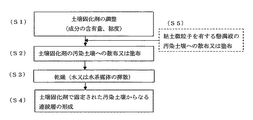
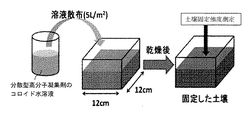
次に、本発明の土壌固化剤を使用した放射性物質の汚染拡大防止方法の工程を、図2を参照しながら説明する。 Next, the process of the radioactive substance contamination expansion preventing method using the soil solidifying agent of the present invention will be described with reference to FIG.
(S1)土壌固化剤の調整:
上記で説明したような配合比率に基づいて、カチオン性高分子とアニオン性高分子とを含む水溶液を調整するとともに、水中に前記カチオン性高分子と前記アニオン性高分子とを合わせたイオン性高分子の含有量を上記で説明したような電荷比の範囲に規定した本発明の土壌固化剤を調整する。また、塗布又は散布を容易に、且つ確実に行うために、土壌固化剤の水溶液の粘度の調整も行う。ここで使用する土壌固化剤には新たに塩が添加されないが、必要であれば、土壌固化剤に含まれるカチオン及びアニオンを合わせたイオンの全濃度が4.0質量%未満に収まるように、1.5質量%未満の範囲で新たな塩を添加しても良い。また、前記カチオン性高分子と前記アニオン性高分子及び/又は塩の成分の他にも、必要に応じて、高分子接着剤、可塑剤、分散剤、界面活性剤、増粘剤、粘度調整剤、防腐剤、着色剤、又は防臭剤等を配合することができる。
(S1) Adjustment of soil solidifying agent:
Based on the blending ratio as described above, an aqueous solution containing a cationic polymer and an anionic polymer is prepared, and the ionic polymer is combined with the cationic polymer and the anionic polymer in water. The soil solidifying agent of the present invention in which the molecular content is defined within the range of the charge ratio as described above is prepared. Moreover, in order to perform application | coating or dispersion | spreading easily and reliably, adjustment of the viscosity of the aqueous solution of a soil solidifying agent is also performed. No new salt is added to the soil solidifying agent used here, but if necessary, the total concentration of ions including the cations and anions contained in the soil solidifying agent is less than 4.0% by mass. You may add a new salt in the range of less than 1.5 mass%. In addition to the cationic polymer and the anionic polymer and / or salt component, if necessary, polymer adhesive, plasticizer, dispersant, surfactant, thickener, viscosity adjustment An agent, an antiseptic, a colorant, a deodorant, or the like can be blended.
(S2)土壌固化剤の汚染土壌への散布又は塗布:
上記(S1)で調整した土壌固化剤は、放射性物質が付着した土壌へ室温(通年で4〜30℃の範囲)で散布又は塗布される。散布又は塗布は、汚染土壌の場所や設置形態に応じて、吹き付け法、流し込み法又は刷毛塗り法等によって行われるが、広範囲の除染を行う場合にはスプレー等による吹き付け法が一般的に使用される。また、散布又は塗布において、本発明の土壌固化剤をあらかじめ加温して粘度調整することができる。さらに、散布又は塗布のときに、加温できる塗布装置又はスプレー装置を用いても良い。
(S2) Application or application of soil solidifying agent to contaminated soil:
The soil solidifying agent adjusted in the above (S1) is sprayed or applied to the soil to which the radioactive substance is attached at room temperature (a range of 4 to 30 ° C. throughout the year). Spraying or application is carried out by spraying, pouring or brushing depending on the location of the contaminated soil and the form of installation, but spraying by spraying etc. is generally used for wide-area decontamination Is done. Moreover, in dispersion | spreading or application | coating, the soil solidifying agent of this invention can be heated previously and viscosity can be adjusted. Furthermore, you may use the coating device or spray apparatus which can be heated at the time of dispersion | spreading or application | coating.
(S3)乾燥:
上記(S2)の工程の後、本発明の土壌固化剤を乾燥して水又は水系媒体を揮散させる。乾燥は、外気温度で所定時間(通常は1時間〜1週間)行われるが、必要に応じて、塗布又は散布場所に熱風を加えて乾燥を速める方法を採用しても良い。本発明は、乾燥時間として通常、2〜3日あれば剥離を行うことができ、気温が高ければ、最短1日で剥離作業を開始することができる。
(S3) Drying:
After the step (S2), the soil solidifying agent of the present invention is dried to evaporate water or an aqueous medium. Drying is performed at an outside air temperature for a predetermined time (usually 1 hour to 1 week), but if necessary, a method of adding hot air to an application or spraying place to accelerate drying may be employed. In the present invention, usually, if the drying time is 2 to 3 days, the peeling can be performed, and if the temperature is high, the peeling operation can be started in the shortest day.
(S4)土壌固化剤で固定された汚染土壌からなる連続層の形成:
本発明の土壌固化溶液を乾燥後、前記イオン性高分子によって固定された汚染土壌からなる連続層が土壌表面及びその近くに形成される。前記連続層の厚さは数mm〜100mm位の範囲であり、通常は数十mmで形成される。
(S4) Formation of a continuous layer composed of contaminated soil fixed with a soil solidifying agent:
After drying the soil solidification solution of the present invention, a continuous layer consisting of contaminated soil fixed by the ionic polymer is formed on and near the soil surface. The thickness of the continuous layer is in the range of several mm to 100 mm, and is usually formed with several tens of mm.
(S5)粘土微粒子を有する懸濁液の汚染土壌への散布又は塗布:
粘土微粒子を有する懸濁液の散布又は塗布する本工程は、図2に示すように上記(S2)の工程の前に行うのが最も効果的である。粘土粒子による放射性物質の選択的な吸着及び捕捉を促進させるため、前記粘土粒子を放射性物質を含む土壌とできるだけ直に接触させる必要があるためである。本工程の後、粘土粒子を含む土壌が完全に乾燥する前に上記(S2)〜(S4)の工程を経ることによって粘土粒子を含む土壌が確実に固化されるため、放射性物質の外部への漏れや飛散を抑制することができる。このとき、必要であれば、本工程の後、長期間放置や熱風等を利用した乾燥工程を導入して土壌をほぼ完全に乾燥させた後、上記(S2)の工程において土壌固化剤の散布又は塗布を行っても良い。本工程において散布又は塗布は、上記(S2)の工程の場合と同じように、汚染土壌の場所や設置形態に応じて、吹き付け法、流し込み法又は刷毛塗り法等によって行われる。本発明の汚染拡大防止方法においては、放射性セシウム等の放射性物質を補足して取り込む効果が高いことから、本発明の土壌固化剤とともに、前記粘土微粒子を有する懸濁液を使用することが好ましい。
(S5) Dispersion or application of suspension having fine clay particles to contaminated soil:
This step of spraying or applying the suspension having clay fine particles is most effective when performed before the step (S2) as shown in FIG. This is because the clay particles need to be brought into direct contact with the soil containing the radioactive material as much as possible in order to promote selective adsorption and capture of the radioactive material by the clay particles. After this step, the soil containing clay particles is solidified by passing through the steps (S2) to (S4) before the soil containing clay particles is completely dried. Leakage and scattering can be suppressed. At this time, if necessary, after this step, after introducing a drying step using long-term standing or hot air to dry the soil almost completely, spraying of the soil solidifying agent in the step (S2) Or you may apply | coat. In the present step, spraying or coating is performed by a spraying method, a pouring method, a brush coating method, or the like according to the location of the contaminated soil and the installation form, as in the case of the step (S2). In the method for preventing the spread of contamination according to the present invention, since the effect of supplementing and taking in radioactive substances such as radioactive cesium is high, it is preferable to use a suspension having the clay fine particles together with the soil solidifying agent of the present invention.
以上のようにして、本発明による放射性物質の汚染拡大防止方法は、セシウム等の放射性物質を固定化した土壌の連続層中に閉じ込めることができる。本発明の汚染拡大防止方法は、住宅地や田畑等の平地土壌だけでなく、除染が困難な山林や雑木林等にも適用することができる。山林等に適用した場合、汚染された土壌や落ち葉等を除去しないで、セシウム等の放射性物質の飛散又は拡散を防止した状態で放置することが可能となる。そのため、セシウム等の放射性物質による人体への悪影響が無くなるまで長期間放置することができ、汚染された土壌、落ち葉又は木々の除去や撤去を行う必要がなくなる。さらに、植物の生育をほとんど阻害しないため、環境に対する負荷を非常に小さくできるという効果も得られる。このように、本発明による汚染拡大防止方法は、放射性物質の有効な除染方法の一つとみなすことができる。 As described above, the method for preventing contamination of radioactive substances according to the present invention can be confined in a continuous layer of soil in which radioactive substances such as cesium are immobilized. The method for preventing the spread of contamination according to the present invention can be applied not only to flat soils such as residential areas and fields, but also to forests and forests where decontamination is difficult. When applied to mountain forests and the like, it is possible to leave them in a state in which radioactive materials such as cesium are prevented from scattering or diffusing without removing contaminated soil or fallen leaves. Therefore, it can be left for a long time until there is no adverse effect on the human body due to radioactive substances such as cesium, and it is not necessary to remove or remove contaminated soil, fallen leaves or trees. Furthermore, since the growth of the plant is hardly inhibited, an effect that the load on the environment can be extremely reduced can be obtained. Thus, the contamination expansion preventing method according to the present invention can be regarded as one of effective decontamination methods for radioactive substances.
[土壌固化剤による汚染土壌の除染方法]
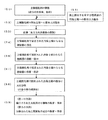
本発明の土壌固化剤を使用した汚染土壌の除染方法の工程を、図3を参照しながら説明する。図3に示すように、本発明による汚染土壌の除染方法は、図2に示す(S1)〜(S5)の工程と同じ工程を経て、汚染土壌からなる連続層の形成を行う。その後、以下の(S6)〜(S9)の工程を追加して、汚染土壌を剥離又は除去して除染を行う。ここで、本発明の土壌固化剤を放射性物質の汚染土壌の除染方法として適用するときは、前記の汚染拡大防止方法と同じように、前記コロイド水溶液において前記カチオン性高分子と前記アニオン性高分子とを合わせた高分子の含有量を0.5〜10%(w/v)に規定するだけでなく、4〜30℃における粘度を0.1〜100mPa・sの範囲に調整することが好ましい。
[Decontamination method of contaminated soil with soil solidifying agent]
The process of the decontamination method for contaminated soil using the soil solidifying agent of the present invention will be described with reference to FIG. As shown in FIG. 3, the decontamination method of contaminated soil by this invention forms the continuous layer which consists of contaminated soil through the same process as the process of (S1)-(S5) shown in FIG. Thereafter, the following steps (S6) to (S9) are added, and decontamination is performed by peeling or removing the contaminated soil. Here, when the soil solidifying agent of the present invention is applied as a decontamination method for contaminated soil of radioactive substances, the cationic polymer and the anionic high concentration in the colloidal aqueous solution are the same as the method for preventing the spread of contamination. Not only to regulate the content of the polymer combined with the molecule to 0.5 to 10% (w / v), but also to adjust the viscosity at 4 to 30 ° C. to the range of 0.1 to 100 mPa · s. preferable.
(S6)土壌固化剤で固定された汚染土壌からなる連続層の剥離、除去:
本発明の土壌固化剤で固定された汚染土壌からなる連続層は、手動で又は剥離装置を用いて剥離する。前記連続層は薄膜であるために容易に剥離することができる。剥離装置は、前記の連続層の片面を固定した後、この固定面又は固定点を起点にしてゆっくりと移動させながら剥離操作を行うものを用いても良い。本発明においては、前記剥離層が剥離に十分に耐えうるような強度と適度の弾性を有するため、操作性と作業性に優れる。また、必要に応じて、前記連続層の剥離部分に熱風又は寒風を当てながら剥離を行っても良い。熱風は、水又は水系媒体の揮散のため又は前記連続層に柔軟性を持たせるために使用する。寒風は、逆に、前記の連続層をやや固くして、剥離時の強度を上げるときに使用する。
(S6) Separation and removal of continuous layer consisting of contaminated soil fixed with soil solidifying agent:
The continuous layer composed of contaminated soil fixed with the soil solidifying agent of the present invention is peeled off manually or using a peeling device. Since the continuous layer is a thin film, it can be easily peeled off. The peeling device may be a device that, after fixing one surface of the continuous layer, performs a peeling operation while slowly moving the fixed surface or fixed point as a starting point. In this invention, since the said peeling layer has the intensity | strength and moderate elasticity which can fully endure peeling, it is excellent in operativity and workability | operativity. Moreover, you may peel as needed, applying hot air or cold wind to the peeling part of the said continuous layer. Hot air is used to volatilize water or an aqueous medium or to give flexibility to the continuous layer. On the contrary, the cold wind is used to increase the strength at the time of peeling by slightly hardening the continuous layer.
(S7)土壌固化剤で固定された汚染土壌からなる連続層の保管・保存:
上記の(S6)の工程で剥離、除去した後、土壌固化剤で固定された汚染土壌からなる連続層はセシウム等の放射性物質を含むため、放射性物質が外部へ飛散又は漏洩しないような処置が施された場所に集めて保管、保存される。最終的に、人体に全く影響が出ないレベルに放射線量の低減が確認される段階まで密閉状態で保管・保存された後、通常の土壌として戻されるか、又は産業廃棄物として廃棄される。
(S7) Storage / preservation of continuous layer consisting of contaminated soil fixed with soil solidifying agent:
After peeling and removing in the step (S6) above, the continuous layer made of contaminated soil fixed with a soil solidifying agent contains radioactive substances such as cesium. Therefore, measures should be taken to prevent the radioactive substances from scattering or leaking outside. They are collected and stored at the place where they are given. Eventually, it is stored and preserved in a sealed state until it is confirmed that the radiation dose has been reduced to a level that does not affect the human body at all, and then returned to normal soil or discarded as industrial waste.
(S8)土壌固化剤で固定された汚染土壌の篩分け又は分級:
この工程は、前記汚染土壌を減容化するために行うものであり、次の2つの方法を採用することができる。第1の方法として、上記(S6)の工程において剥離、除去された前記汚染土壌を十分に乾燥・固化させた後、固化した汚染土壌の篩分け選別を行う。篩分けは、所定のメッシュ径を有するアルミニウム等の金属製の篩を用いて、固化した土壌部分のみを選り分けて除去する。この第1の方法において篩から落ちた固化していない土壌は元の場所に戻して再利用し、篩に残存している固化した大粒径の土壌の塊のみを保管又は保存する。本発明では上記(S5)の工程を導入したときに、本発明の土壌固化剤とともに前記汚染土壌に含まれるゼオライトやベントナイト等の粘土微粒子によってセシウム等の放射性物質を吸着、捕捉する効果が得られため、前記放射性物質のほとんどは固化した大粒径の土壌の塊に残存することになる。他方、篩から落ちた固化していない土壌は、放射性物質の除去率が約80%以上と非常に高くなる。このようにして、後述する(S9)の工程で大粒径の土壌塊のみを別の場所に保管、保存し、前記汚染土壌の減容化を図ることができる。したがって、前記汚染土壌の減容化を実現するために実施する第1の方法は、上記(S5)の工程を導入することにより大きな効果を得ることができる。
(S8) Sifting or classification of contaminated soil fixed with soil solidifying agent:
This step is performed in order to reduce the volume of the contaminated soil, and the following two methods can be employed. As a first method, after the contaminated soil peeled and removed in the step (S6) is sufficiently dried and solidified, the solidified contaminated soil is screened and selected. In the sieving, only a solidified soil portion is selected and removed using a metal sieve such as aluminum having a predetermined mesh diameter. In this first method, the non-solidified soil that has fallen off the sieve is returned to its original location and reused, and only the solidified large-grain soil mass remaining on the sieve is stored or preserved. In the present invention, when the step (S5) is introduced, the effect of adsorbing and capturing radioactive substances such as cesium by the clay fine particles such as zeolite and bentonite contained in the contaminated soil together with the soil solidifying agent of the present invention is obtained. For this reason, most of the radioactive substance remains in a lump of solidified soil having a large particle size. On the other hand, the non-solidified soil that has fallen from the sieve has a very high removal rate of radioactive material of about 80% or more. In this way, in the step (S9) to be described later, only a large particle size soil mass can be stored and stored in another place, and the volume of the contaminated soil can be reduced. Therefore, the 1st method implemented in order to implement | achieve volume reduction of the said contaminated soil can acquire a big effect by introduce | transducing the process of said (S5).
前記汚染土壌を減容化するための第2の方法は、前記特許文献5にも記載されているように、「放射性セシウムの多くは粘土質の微粒子成分に強く吸着・固定化されているため、粗い粒子を洗浄しながら、微細粒子だけを分級して集め、放射性セシウムを含む微細粒子成分のみを放射性廃棄土として処理する」という考え方に基づいて、前記汚染土壌を水の存在下で分級、洗浄するものである。この第2の方法では、上記(S5)の工程を導入しないで、本発明の土壌固化剤のみで処理された前記汚染土壌を使用し、上記(S6)又は(S7)の工程の後に前記汚染土壌を集めて水を用いて分級、洗浄を行う。前記分級・洗浄の工程は水を用いて実施するため、、集められた前記汚染土壌は、十分に乾燥・固化させる必要がない。例えば、上記(S2)の工程で土壌固化剤の汚染土壌への塗布又は散布を行った後、十分な乾燥を行わない状態で前記汚染土壌を採取して、そのまま分級、洗浄を行っても良い。この第2の方法において行う分級は、通常0.1mm未満の分級サイズで実施するが、除染地域の地質及び放射性物質の除染率に応じて最適な分級サイズを設定することができる。前記0.1mm未満の分級サイズで選別された粘土質の微粒子成分以外の他の土壌は、放射性物質の含有量が非常に小さいため、放射線量の検査を行い放射線量を確認した後、元の場所に戻すことができる。仮に、放射線量が許容値以下に低下しなかった場合は、本工程の分級、洗浄工程を繰り返すか、若しくは、所定の期間放置して放射線量の低下を確認した後、通常の土壌として戻すか、又は産業廃棄物として廃棄する。
As described in
(S9)篩分け後の大粒径の土壌の塊又は分級後の粘土質微粒子成分の保管・保存:
前記(S8)の工程において、第1の方法によって篩分けされた大粒径の土壌の塊のみを別の場所に移して隔離した状態で保管、保存する。同様に、第2の方法によって分級し、選別された粘土質の微粒子成分についても隔離した状態で保管・保存する。
(S9) Storage / preservation of large-particle-size soil lump after sieving or clay particulate component after classification:
In the step (S8), only the large-diameter soil lump screened by the first method is transferred to another place and stored and stored. Similarly, the clayey fine particle components classified by the second method and selected are stored and stored in an isolated state.
以上のように、本発明の土壌固化剤による汚染土壌の除染方法は、放射性物質が付着した土壌又は放射性物質を含有する土壌から放射線を迅速、且つ効率的で効果的に低減するために図3に示す(S1)〜(S7)の工程によって放射性物質汚染土壌を密閉状態で保管・保存し、さらに前記放射性物質汚染土壌そのものの減容化を図るためには図3に示す(S1)〜(S9)の工程によって処理を行うことが好ましい。 As described above, the method for decontamination of contaminated soil using the soil solidifying agent of the present invention is intended to reduce radiation quickly, efficiently and effectively from soil to which radioactive material is attached or soil containing radioactive material. In order to store and preserve the radioactive material-contaminated soil in a sealed state by the steps (S1) to (S7) shown in FIG. 3 and further reduce the volume of the radioactive material-contaminated soil itself (S1) to FIG. It is preferable to perform the treatment by the step (S9).
[土壌固化剤による植生基盤造成方法]
本発明の土壌固化剤を適用する別の土壌固定化方法として、植生基盤造成方法について説明する。
[Vegetation foundation creation method with soil solidifying agent]
As another soil immobilization method to which the soil solidifying agent of the present invention is applied, a vegetation base construction method will be described.
植生基盤造成は、土木工事や自然災害等で発生する裸地斜面(方面)において、環境保全、崩落防止、景観回復等を目的として、植生基盤材を吹き付け、土壌の固定と緑化を図るために行われている。また、岩盤や土壌の少ない軟岩、砂地等で植物が生育しにくい土質を有する方面や平坦地面に対して、緑化基盤材の吹付け等によって植物の生育に可能な厚い土壌層の緑地基盤を造成し、その基盤内で植物を生育させ緑化を図る造成法としても採用されている。 For vegetation foundation creation, vegetation foundation materials are sprayed on the bare slopes (directions) generated by civil engineering and natural disasters, etc. for the purpose of environmental conservation, collapse prevention, landscape restoration, etc., in order to fix and green the soil. Has been done. In addition, a green soil base with a thick soil layer that can grow plants by spraying greening base material, etc. on the surface and flat ground where the plant is difficult to grow on rocks, soft rocks with little soil, sandy land, etc. However, it has also been adopted as a method for growing plants and planting trees within the base.
前記植生基盤材又は緑化基盤材としては、土壌成分と水とに加えて、凝集剤として土壌固化剤が従来から使用されている。前記土壌成分は客土材として使用されるものであり、該客土材にはピートモス、バーク堆肥、有機性繊維又は粘土等の団粒化促進材等が混合されたり、さらに、客土材に肥料又は種子等の緑化資材が配合される場合もある。前記植生基盤材又は緑化基盤材に添加される凝集剤は、カチオン性凝集剤及びアニオン性凝集剤の何れか単独で、又はノニオン性凝集剤と併用して使用されている。カチオン性凝集剤及びアニオン性凝集剤の両者を使用する場合は、前記特許文献2に開示されているように、2つタンクに分けて調合したそれぞれの成分を用いて、二液吹付機による吹付けによってゲル構造を形成する方法を採用している。
As the vegetation base material or the greening base material, a soil solidifying agent is conventionally used as a flocculant in addition to soil components and water. The soil component is used as a guest soil material, and the guest soil material is mixed with an aggregation promoting material such as peat moss, bark compost, organic fiber or clay, Greening materials such as fertilizers or seeds may be blended. The flocculant added to the vegetation base material or the greening base material is either a cationic flocculant or an anionic flocculant alone or in combination with a nonionic flocculant. When both a cationic flocculant and an anionic flocculant are used, as disclosed in
本発明の土壌固化剤は、前記植生基盤材又は緑化基盤材に添加する凝集剤として、従来の凝集剤に代えて、水溶液中にカチオン性高分子及びアニオン性高分子のどちらかの成分を過剰に配合することによってゲル構造形成による沈殿物の生成を抑制し、水溶液の均一安定性を増すとともに、両者のイオン性高分子の共存によって促進されるゲル化反応を利用して土壌の凝集力を向上させるものである。さらに、前記水溶中に含まれる塩濃度を従来のポリイオンコンプレックス溶液より大幅に低減できるため、植物の生育を阻害するといった悪影響がほとんど無い。また、本発明の土壌固化剤は、粘土成分として増粘剤や止水材として知られている保水性の高いベントナイトと併用することにより、植生基盤材又は緑化基盤材による土壌固化の機能を一層高めることができる。 The soil solidifying agent of the present invention, as a flocculant to be added to the vegetation base material or the greening base material, in place of the conventional flocculant, either a cationic polymer or an anionic polymer is excessive in the aqueous solution. In addition to suppressing the formation of precipitates due to the formation of a gel structure, the uniform stability of the aqueous solution is increased, and the cohesive strength of the soil is enhanced using the gelation reaction promoted by the coexistence of both ionic polymers. It is to improve. Furthermore, since the salt concentration contained in the water solution can be greatly reduced as compared with the conventional polyion complex solution, there is almost no adverse effect such as inhibiting the growth of plants. In addition, the soil solidifying agent of the present invention is further used in combination with a highly water-retentive bentonite known as a thickener or water-stopping material as a clay component, thereby further enhancing the function of soil solidification by a vegetation base material or a greening base material. Can be increased.
本発明の土壌固化剤は、土壌成分を含む客土材、団粒化促進材、緑化資材、浸食防止剤や金属無機塩等の副資材及び水の少なくとも何れか一種と混合することによって植生基盤材又は緑化基盤材として使用することができる。また、団粒化促進材、緑化資材、浸食防止剤や金属無機塩等の副資材及び水の少なくとも何れか一種と混合して調整した植生基盤材又は緑化基盤材を用いて造成を行った後、本発明の土壌固化剤である水溶液を前記造成箇所に吹き付け等による散布又は流し込み等による塗布を行い、乾燥させて土壌の固化を進めても良い。本発明の土壌固化剤を散布又は塗布する前の造成場所の面積は、土壌の固化状態に応じて任意に設定することができる。前記の植生基盤材又は緑化基盤材による造成場所の土壌固化を迅速に行いたい場合は、本発明の土壌固化剤の散布又は塗布を同時に行うか、又は造成作業後に直ちに行うようにする。 The soil solidifying agent of the present invention is a vegetation base by mixing it with at least one kind of water-containing material including soil components, agglomeration promoting material, tree planting material, erosion inhibitor and metal inorganic salt, and water. It can be used as a timber or a greening base material. In addition, after building using a vegetation base material or a greening base material mixed with at least one of secondary materials such as agglomeration promoting materials, greening materials, erosion inhibitors and metal inorganic salts, and water Application of the aqueous solution, which is the soil solidifying agent of the present invention, by spraying or pouring the formation site or the like by spraying or the like may be carried out, and the soil may be solidified by drying. The area of the creation place before spraying or applying the soil solidifying agent of the present invention can be arbitrarily set according to the solidified state of the soil. In the case where it is desired to quickly solidify the soil at the site where the vegetation base material or the greening base material is used, the soil solidifying agent of the present invention is sprayed or applied at the same time, or immediately after the creation work.
以上のように、本発明の土壌固化剤を植生基盤材又は緑化基盤材の凝集剤成分として適用することによって、簡便な処理で造成工事を容易に進めることができるだけなく、客土材の団粒化の促進により良好な土壌の固化と、植物の発芽、生育性を阻害しない環境に優しい土壌の緑化とを同時に行うことができる。 As described above, by applying the soil solidifying agent of the present invention as a flocculant component of a vegetation base material or a greening base material, it is possible not only to facilitate the construction work by simple processing, but also to aggregate the guest soil material It is possible to simultaneously solidify the soil by promoting the conversion and to plant the environment-friendly soil that does not inhibit the germination and growth of the plant.
[凝集沈殿剤]
本発明の分散型高分子凝集剤は、前記の土壌固化剤としてだけでなく、生活排水及び産業排水の水浄化法に適用する凝集沈殿剤として適用することができる。水浄化の対象は特に制限されないが、下水、し尿及び産業用排水中の帯電浮遊粒子を凝集させて取り除くために使用するだけでなく、汚泥を含む各種の排水又は廃水にも使用することができる。例えば、生活廃水処理汚泥、食品工場廃水処理汚泥、化学工場廃水処理汚泥、養豚場排水処理汚泥、パルプ又は製紙工場汚泥、一般産業排水で発生する有機汚泥及び凝集沈降汚泥を含む混合汚泥等へ適用が可能である。
[Aggregating precipitant]
The dispersive polymer flocculant of the present invention can be applied not only as the above-mentioned soil solidifying agent but also as a flocculant precipitant applied to water purification methods for domestic wastewater and industrial wastewater. Although the object of water purification is not particularly limited, it can be used not only for agglomerating and removing charged suspended particles in sewage, human waste and industrial wastewater, but also for various wastewater or wastewater containing sludge. . For example, domestic wastewater treatment sludge, food factory wastewater treatment sludge, chemical factory wastewater treatment sludge, pig farm wastewater treatment sludge, pulp or paper mill sludge, mixed sludge containing organic sludge generated in general industrial wastewater and coagulated sedimentation sludge, etc. Is possible.
本発明の分散型高分子凝集剤を凝集沈殿剤として使用するときは、前記カチオン性高分子と前記アニオン性高分子とを合わせた高分子を前記コロイド水溶液100mlに対して質量で0.1g〜10g含有するコロイド水溶液を用いる。前記カチオン性高分子と前記アニオン性高分子とを合わせた高分子の含有量が0.1%(w/v)以上で汚染水又は排水に含まれる帯電浮遊粒子を沈殿させるに十分な凝集力が得られる。汚染水又は排水の汚染度や汚濁度が増して前記帯電浮遊粒子が多くなる場合には、イオン性高分子の含有量を増やして使用するか、又は本発明の分散型高分子凝集剤の投入回数を増やして水浄化を行う。一方、前記カチオン性高分子と前記アニオン性高分子とを合わせた高分子の含有量が0.1%(w/v)未満では、分散型高分子凝集剤の投入回数を増やしても、汚染水又は排水によってすぐに希釈化されるため、所望の凝集力を得ることができない。また、この含有量が10%(w/v)以下であると前記コロイド水溶液の粘度の大幅な上昇を抑制できるため、液の散布性と取扱い性が向上するだけでなく、汚染水又は排水との均一混合が容易になり、効率的な水浄化を行うことができる。この含有量が10%(w/v)を超えると、前記の土壌固化剤の場合と同様に、前記コロイド水溶液を長期間保管したときに沈殿物が生成する場合もあり、液の管理と調整が難しくなる。さらに、生成した沈殿物は凝集効果がすでに飽和している場合が多いため、前記帯電浮遊粒子の凝集を進める効果は小さい。このように、本発明の凝集沈殿剤として使用するコロイド水溶液は沈殿を形成しない状態でコロイド粒子が均一に分散していることが、凝集力を保持するために必要である。 When the dispersion-type polymer flocculant of the present invention is used as a coagulation-precipitating agent, a polymer obtained by combining the cationic polymer and the anionic polymer in a mass of 0.1 g to 100 ml of the colloidal aqueous solution. A colloidal aqueous solution containing 10 g is used. Cohesive force sufficient to precipitate charged floating particles contained in contaminated water or waste water when the content of the polymer of the cationic polymer and the anionic polymer is 0.1% (w / v) or more. Is obtained. If the charged floating particles increase due to increased contamination or contamination of contaminated water or wastewater, increase the content of the ionic polymer or use the dispersed polymer flocculant of the present invention. Increase the number of times to purify water. On the other hand, if the content of the polymer including the cationic polymer and the anionic polymer is less than 0.1% (w / v), contamination may occur even if the number of times the dispersed polymer flocculant is added is increased. Since it is immediately diluted by water or waste water, the desired cohesive strength cannot be obtained. In addition, when the content is 10% (w / v) or less, a significant increase in the viscosity of the aqueous colloidal solution can be suppressed. Can be easily mixed and efficient water purification can be performed. When this content exceeds 10% (w / v), as in the case of the soil solidifying agent, a precipitate may be formed when the colloidal aqueous solution is stored for a long period of time. Becomes difficult. Furthermore, since the produced precipitates are often saturated with agglomeration effect, the effect of aggregating the charged floating particles is small. As described above, the colloidal aqueous solution used as the coagulating precipitant of the present invention needs to have the colloidal particles uniformly dispersed without forming a precipitate in order to maintain the cohesive force.
また、本発明の分散型高分子凝集剤を凝集沈殿剤として適用するときは、前記水溶液としてだけでなく、前記水溶液から水を除去した後に残留物として得られる固形物又は該固形物を粉砕加工して得られる粉状体の形態で使用することができる。図1に示すように、本発明の分散型高分子凝集剤に含まれるカチオン性高分子とアニオン性高分子は、大きな凝集力を生むための核となる疎水的なフロックを形成する分子鎖の絡まり合い、及び水との親和性がある分子鎖を有する複雑な形態で構成されている。そのため、その形態を保持した状態で水だけを除去したときに初めて、汚染水又は排水への均一分散性だけでなく、前記帯電浮遊粒子に対して大きな凝集力が得られる。単に固形のカチオン性高分子と固形のアニオン性高分子とを所定配合量で混合しただけでは、そのような効果を得ることは難しい。本発明で得られる前記固形物又は紛状体の凝集沈殿剤は、この点に着目して作製されるものである。 In addition, when the dispersion type polymer flocculant of the present invention is applied as an aggregating and precipitating agent, not only as the aqueous solution, but also a solid obtained as a residue after removing water from the aqueous solution or the solid is pulverized. It can be used in the form of a powdery body obtained. As shown in FIG. 1, the cationic polymer and the anionic polymer contained in the dispersion type polymer flocculant of the present invention are entangled in molecular chains that form a hydrophobic floc serving as a nucleus for generating a large cohesive force. And a complex form with molecular chains that have an affinity for water. Therefore, only when water is removed while maintaining its form, not only uniform dispersibility in contaminated water or wastewater but also a large cohesive force is obtained for the charged floating particles. It is difficult to obtain such an effect simply by mixing a solid cationic polymer and a solid anionic polymer in a predetermined amount. The solid or powdery aggregation precipitant obtained in the present invention is produced by paying attention to this point.
本発明で得られる前記固形物又は紛状体の凝集沈殿剤は、単独で使用する以外にも、もみ殻やポリビニルアルコール(PVA)等からなるプラスチック製の不織布又は繊維の表面に付着させて使用することができる。ここで、もみ殻やプラスチック製の不織布又は繊維は、前記固形物又は紛状体の凝集沈殿剤の担持体として機能するため、水浄化処理中で前記帯電浮遊粒子の凝集剤として機能しなかったものがあっても、そのまま担持された状態にあり、本発明の凝集剤の再利用又は有効活用を図ることが可能である。 In addition to using the solid or powdery coagulating precipitant obtained in the present invention alone, it is used by adhering to the surface of a plastic non-woven fabric or fiber made of rice husk, polyvinyl alcohol (PVA) or the like. can do. Here, the rice husk and the plastic nonwoven fabric or fiber functioned as a carrier for the solid or powdery aggregated precipitant, and thus did not function as a coagulant for the charged floating particles during the water purification treatment. Even if there is something, it is still supported as it is, and it is possible to reuse or effectively utilize the flocculant of the present invention.
水浄化方法で使用する本発明の凝集沈殿剤の水溶液又はその固形物や粉状体は、カチオン性高分子凝集剤及びアニオン性高分子凝集剤の何れか単独、又はそれらの何れかとノニオン性高分子凝集剤との併用で使用する従来の凝集沈殿剤と比べて、排水又は廃水に含まれる前記帯電浮遊粒子に対して大きな凝集力が得られ、凝集粒子の肥大化させる効果が高くなる。これは、図1に示すように、分子鎖の絡まり合いで形成される疎水的なフロックの存在によるものであると考えられる。さらに、本発明の凝集沈殿剤は以下のような特徴を有することが分かった。 The aqueous solution of the coagulating precipitation agent of the present invention used in the water purification method or a solid or powder thereof is either a cationic polymer coagulant or an anionic polymer coagulant alone, or any one of them and highly nonionic. Compared with the conventional coagulating precipitant used in combination with the molecular coagulant, a large cohesive force is obtained for the charged floating particles contained in the waste water or wastewater, and the effect of enlarging the coagulated particles is increased. This is thought to be due to the presence of hydrophobic flocs formed by entanglement of molecular chains as shown in FIG. Furthermore, it has been found that the coagulating precipitation agent of the present invention has the following characteristics.
従来の凝集沈殿剤は、汚染水又は排水に存在する前記帯電浮遊粒子を凝集沈殿させて系内を透明状態にするときの添加量の許容範囲が一般的に狭い。添加量が許容範囲から少しでも多くなると系内の電荷の増加によってお互いに反発し合って凝集力が大幅に低下し、系内で凝集沈殿した粒子が再び浮遊し出すという問題が発生する。すなわち、前記帯電浮遊粒子の浮遊に起因する水溶液の濁度を凝集沈殿剤の添加量の関数として測定すると、濁度の変化が添加量に対してV字形を示すようになる。それに対して、本発明の凝集沈殿剤は、前記フロックの形成によってカチオン性高分子及びアニオン性高分子の電荷が一部中和されるため結果的にイオンに起因する電荷が弱まり、凝集効果を発現するために必要な添加量の範囲を広くすることができる。すなわち、本発明の凝集沈殿剤は、前記濁度の変化が添加量に対してU字に近い形を示すという特徴を有する。仮に、凝集沈殿剤が設定値よりもやや少なく又は多く添加されても、排水又は廃水に含まれる前記帯電浮遊粒子に対して凝集力を同じように維持することができる。そのため、大量の汚染水又は廃水を広範囲にわたって水浄化処理を行うときに凝集沈殿剤の添加量ブレに対して対応を行う必要性が軽減され、効率的な処理を行うことができる。さらに、水浄化処理時に凝集沈殿剤の添加量の許容範囲を広くできるため、ヒューマンエラー又は装置不具合によって生じる問題に対して大きな裕度を有する。このような課題は当該分野において従来から十分に認識されているとは言えず、この効果は本発明の凝集沈殿剤に特有のものである。この特徴については後述の実施例において詳細に述べる。 Conventional coagulant-precipitating agents generally have a narrow allowable range for the amount added when coagulating and precipitating the charged floating particles present in contaminated water or waste water to make the system transparent. If the addition amount is increased from the permissible range as much as possible, there will be a problem that the cohesive force will be repelled by the increase in the charge in the system and the cohesive force will be greatly reduced, and the particles that have aggregated and precipitated in the system will float again. That is, when the turbidity of the aqueous solution resulting from the floating of the charged floating particles is measured as a function of the amount of the coagulating precipitant, the change in turbidity shows a V shape with respect to the amount added. On the other hand, the aggregation precipitation agent of the present invention partially neutralizes the charges of the cationic polymer and the anionic polymer due to the formation of the floc, resulting in a weakening of the charge caused by the ions, resulting in an aggregation effect. The range of the addition amount required for expression can be widened. That is, the coagulating precipitant of the present invention has a feature that the change in turbidity shows a shape close to a U shape with respect to the added amount. Even if the coagulating precipitant is added slightly less or more than the set value, the cohesive force can be maintained in the same manner for the charged floating particles contained in the waste water or waste water. For this reason, when a large amount of contaminated water or waste water is subjected to a water purification treatment over a wide range, the necessity of dealing with the amount of addition of the coagulating precipitant is reduced, and an efficient treatment can be performed. Furthermore, since the allowable range of the addition amount of the coagulating precipitant during the water purification treatment can be widened, it has a great margin for problems caused by human errors or device malfunctions. Such a problem cannot be said to have been sufficiently recognized in the art, and this effect is unique to the coagulating precipitation agent of the present invention. This feature will be described in detail in the embodiments described later.
本発明の凝集沈殿剤は、必要に応じて、無機凝結剤、pH調整剤及び界面活性剤の少なくとも何れか1種と併用して使用することができる。pH調整剤は、処理中の排水又は廃水が所望の値を満足する場合、特に加える必要性はないが、そうでない場合に必要最小限の量の酸又はアルカリを添加する。また、必要であれば、本発明の凝集沈殿剤の水溶液又はその固形物や粉状体に、カチオン性高分子凝結剤、アニオン性高分子凝結剤及びノニオン性高分子凝結剤の少なくとも何れか1種類を微量加えても良い。 The aggregation precipitation agent of the present invention can be used in combination with at least one of an inorganic coagulant, a pH adjuster and a surfactant as required. The pH adjusting agent is not particularly required to be added when the wastewater or wastewater being treated satisfies a desired value, but a minimum amount of acid or alkali is added otherwise. In addition, if necessary, at least one of a cationic polymer coagulant, an anionic polymer coagulant and a nonionic polymer coagulant is added to the aqueous solution of the aggregated precipitant of the present invention or a solid or powder thereof. A trace amount may be added.
水浄化方法は、本発明の凝集沈殿剤を下水、し尿、産業用排水、又は汚泥を含む各種の排水又は廃水に、必要であればpHを調整した状態で添加し、それらの排水又は廃水の中で浮遊している帯電浮遊粒子や汚泥を凝集沈殿させることによって行う。その後、濾過等のフィルトレーション操作によって沈殿物だけを分離して、水の浄化を行う。汚泥沈殿物の場合は、さらに脱水を行うことによって脱水ケーキとして減容化又は軽量化のための処理を行っても良い。 In the water purification method, the coagulating precipitation agent of the present invention is added to various wastewaters or wastewaters containing sewage, human waste, industrial wastewater, or sludge in a state where pH is adjusted if necessary, and the wastewater or wastewater is added. This is done by agglomerating and precipitating charged suspended particles and sludge that are floating inside. Thereafter, only the precipitate is separated by a filtration operation such as filtration to purify the water. In the case of a sludge precipitate, further dehydration may be performed to reduce the volume or reduce the weight as a dehydrated cake.
本発明の水浄化方法は、効率的な処理を行うことができるだけでなく、排水又は廃水に含まれる前記帯電浮遊粒子に対して、pHの調整を行わないでも良好な凝集力が得られる。仮にpH調整が必要になる場合でも、酸又はアルカリなどのpH調整剤の添加を最小限にできるため、浄化水のイオン濃度及びpHの変化が極力抑えられ、より安全な水浄化システムを構築することが可能となる。 The water purification method of the present invention can not only perform efficient treatment, but also provides a good cohesive force without adjusting the pH of the charged floating particles contained in the waste water or waste water. Even if pH adjustment is necessary, the addition of a pH adjusting agent such as acid or alkali can be minimized, so that changes in the ion concentration and pH of the purified water can be suppressed as much as possible, and a safer water purification system is constructed. It becomes possible.
本発明を実施例によって説明するが、本発明の範囲はこれらの実施例に限定されるものではない。 The present invention will be described with reference to examples, but the scope of the present invention is not limited to these examples.
<実施例1〜8、比較例1〜2>
アニオン性高分子として下記の(1)式で示されるカルボキシメチルセルロースのナトリウム塩(ダイセル化学工業株式会社商品名CMCダイセル1220:分子量16万〜38万、以下CMCと略す。)と、カチオン性高分子として下記の(2)式で示されるポリジアリルジメチルアンモニウム塩酸塩(あるいはクロリド)(センカ株式会社商品名ユニセンスFPA1001L:分子量10〜50万、以下PDADMACと略す。)とを用い、ポリアニオン過剰(CMC過剰)又はポリカチオン過剰(PDADMAC過剰)の水溶液をそれぞれ作成し、ポリイオンコンプレックス水溶液とした。
<Examples 1-8, Comparative Examples 1-2>
Sodium salt of carboxymethyl cellulose represented by the following formula (1) as an anionic polymer (Daicel Chemical Industries, Ltd., trade name CMC Daicel 1220: molecular weight 160,000 to 380,000, hereinafter abbreviated as CMC), and a cationic polymer And polydiallyldimethylammonium hydrochloride (or chloride) represented by the following formula (2) (Senka Co., Ltd., trade name: Unisense FPA1001L: molecular weight: 100,000 to 500,000, hereinafter abbreviated as PDADMAC) and a polyanion excess (CMC excess) ) Or polycation-excess (PDADMAC-excess) aqueous solutions, respectively, were prepared as polyion complex aqueous solutions.
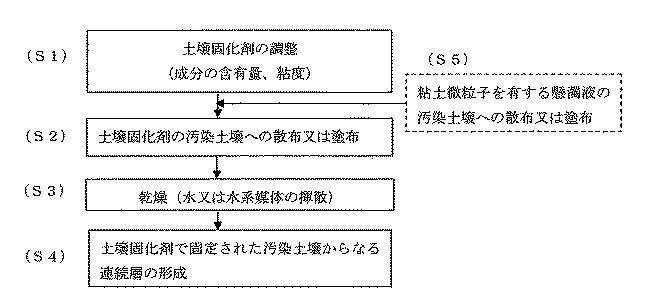
前記(1)式で示されるCMCは、エーテル化度が0.8〜1.0である。ここで、エーテル化度とは、CMCの−O−Rの−Rの部分が−CH2COONaに置換した数であり、本実施例ではエーテル化度として平均の0.9を採用した。エーテル化度が0及び1の場合、1molあたりのそれぞれ分子量は162g及び242gである。CMCのエーテル化度が0.9であるときは、みかけの分子量は162(g/mol)×0.1+242(g/mol)×0.9=234(g/mol)と計算できる。CMCの前記(1)式で示す繰り返し構成単位あたり負電荷が0.9当量存在することになるので、イオン当量質量(EW1)は234g/0.9当量で計算できる。他方、PDADMACは1molあたりの分子量が161.7gであり、純度が高く、前記(2)式で示す繰返し構成単位あたりの電荷が1当量で存在するため、イオン当量質量(EW2)は161.7g/1当量で計算でき、これは繰り返し構成単位の分子量と同じになる。 The CMC represented by the formula (1) has a degree of etherification of 0.8 to 1.0. Here, the degree of etherification, -R parts of CMC of -O-R is the number obtained by replacing the -CH 2 COONa, employing 0.9 average as degree of etherification in the present embodiment. When the degree of etherification is 0 and 1, the molecular weight per mol is 162 g and 242 g, respectively. When the degree of etherification of CMC is 0.9, the apparent molecular weight can be calculated as 162 (g / mol) × 0.1 + 242 (g / mol) × 0.9 = 234 (g / mol). Since 0.9 equivalent of negative charge exists per repeating structural unit represented by the above formula (1) of CMC, the ion equivalent mass (EW 1 ) can be calculated at 234 g / 0.9 equivalent. On the other hand, PDADMAC has a molecular weight of 161.7 g per mol, high purity, and 1 equivalent of the charge per repeating structural unit represented by the above formula (2), so that the ion equivalent mass (EW 2 ) is 161.g. It can be calculated at 7 g / 1 equivalent, which is the same as the molecular weight of the repeating structural unit.
アニオン性高分子過剰のポリイオンコンプレックス水溶液は、濃度が0.8モル/L(リットル)のPDADMACの一定量(10ml)に、濃度が0.8モル/LのCMCを少しずつ加え、CMC及びPDADMACの前記各イオン当量質量(EW1及びEW2)に基づいて所定の電荷比となるように調製した。カチオン性高分子過剰のポリイオンコンプレックス水溶液は、濃度が0.8モル/LのCMCの一定量(10ml)に、濃度が0.8モル/LのPDADMACを少しずつ加え、同様に所定の電荷比となるように調製した。それぞれの水溶液をついて系内に沈殿物が乾燥されないコロイド水溶液であるか否かの性状を調べ、コロイド水溶液となるとき又は沈殿領域となるときのそれぞれのイオン性高分子のモル比率を測定した。その結果を図4に示す。 An anionic polymer-excess polyion complex aqueous solution was added to a certain amount (10 ml) of PDADMAC having a concentration of 0.8 mol / L (liter), and CMC and PDADMAC were added little by little. Based on the respective ion equivalent masses (EW 1 and EW 2 ), a predetermined charge ratio was prepared. The polyion complex aqueous solution with an excess of cationic polymer was added to a certain amount (10 ml) of CMC with a concentration of 0.8 mol / L, and PDADMAC with a concentration of 0.8 mol / L was added little by little. It prepared so that it might become. The properties of each aqueous solution were examined to determine whether or not the aqueous solution was a colloidal aqueous solution in which precipitates were not dried, and the molar ratio of each ionic polymer when it was a colloidal aqueous solution or a precipitation region was measured. The result is shown in FIG.
図4に示すように、アニオン性高分子が過剰の場合はPDADMACに対するCMCの電荷比が4.1倍以上のときに、また、カチオン性高分子を過剰で調整した場合はCMCに対するPDADMACの電荷比が31倍以上のときに、沈殿物を生成しない不透明又は乳白色のコロイド水溶液を得ることができた。このようにして調整された不透明又は乳白色のコロイド水溶液を土壌固化剤として用いたときの土壌固定強度および固定厚さについて測定を行った。 As shown in FIG. 4, when the anionic polymer is excessive, the charge ratio of CAD to PDADMAC is 4.1 times or more, and when the cationic polymer is adjusted excessively, the charge of PDADMAC to CMC. When the ratio was 31 times or more, it was possible to obtain an opaque or milky white colloidal solution that did not produce a precipitate. The soil fixing strength and the fixing thickness when the opaque or milky white colloid aqueous solution prepared as described above was used as a soil solidifying agent were measured.
まず、図4に示す沈殿物を生成しないコロイド領域内にある水溶液において、アニオン性高分子が過剰なものとしてPDADMAC:CMCの電荷比が1:4.1、1:6.8、1:11及び1:14の水溶液を、カチオン性高分子が過剰なものとしてPDADMAC:CMCの電荷比が31:1、32:1、35:1及び36:1の水溶液を、それぞれを試料として調整した。ここで、アニオン性高分子が過剰な水溶液はこの順に実施例1、2、3及び4とし、また、カチオン性高分子が過剰な水溶液はこの順に実施例5、6、7及び8とする。 First, in the aqueous solution in the colloidal region where no precipitate is generated as shown in FIG. 4, the charge ratio of PDADMAC: CMC is 1: 4.1, 1: 6.8, 1:11 because the anionic polymer is excessive. And an aqueous solution having a charge ratio of PDADMAC: CMC of 31: 1, 32: 1, 35: 1, and 36: 1, respectively, with an excess of the cationic polymer. Here, the aqueous solutions in which the anionic polymer is excessive are designated as Examples 1, 2, 3 and 4 in this order, and the aqueous solutions in which the cationic polymer is excessive are designated in Examples 5, 6, 7 and 8 in this order.
また、比較のために、ポリイオンコンプレックスを含まない水のみで散布を行ったときの土壌固定強度の測定を行い、それを比較例1とした。さらに、カチオン性高分子とアニオン性高分子を等電荷比(1:1)で混合し、さらに塩としてNaClを4質量%添加した後、沈殿物の生成が無くなるまで撹拌することによって透明の水溶液を調整した。ここで、カチオン性高分子は前記のPDADMACを用い、アニオン性高分子は下記(3)式に示すポリアクリル酸ナトリウム(PAANa)(株式会社日本触媒商品名アクアリックDL522:分子量17万)を用いた。この水溶液はチェルノブイリ原子力発電所の爆発事故時に除染用土壌固化剤として使用された水溶液を模擬したものであり、本検討においては比較例2として実験に供した。 For comparison, the soil fixing strength was measured when sprayed only with water that did not contain a polyion complex. Furthermore, a cationic polymer and an anionic polymer are mixed at an equal charge ratio (1: 1), and after adding 4% by mass of NaCl as a salt, the mixture is stirred until no precipitate is formed. Adjusted. Here, the above-mentioned PDADMAC is used for the cationic polymer, and sodium polyacrylate (PAANA) (Nippon Shokubai Co., Ltd. trade name Aqualic DL522: molecular weight 170,000) represented by the following formula (3) is used for the anionic polymer. It was. This aqueous solution is a simulation of the aqueous solution used as a soil decontamination agent for decontamination at the Chernobyl nuclear power plant explosion accident.
因みに、PDADMAC、CMC及びPAANaは、前記の(1)〜(3)式で示すように、Na+又はCl−の対イオンを有するため、これらのイオン性高分子を含む水溶液は結果的にカチオン及びアニオンを含むようになる。例えば、電荷比がPDADMAC:CMC=1:4.1であるコロイド水溶液は、コロイド水溶液100mlに対してこれらのイオン性高分子が全質量で0.5g〜1.7gの範囲で含まれる場合、Na+及びCl−の含有量を測定した結果、それぞれ0.028〜0.094質量%及び0.014〜0.048質量%であることが分かった。また、電荷比がPDADMAC:CMC=31:1であるコロイド水溶液は、同じ濃度範囲で、それぞれ0.002〜0.006質量%及び0.104〜0.354質量%である。仮に、コロイド水溶液100mlに対してカチオン性高分子及びアニオン性高分子の全質量が10%(w/v)で含まれる場合であっても、本発明の土壌固定剤として使用する場合にはNa+及びCl−を合わせた全イオンの含有量は2.2質量%未満(カチオン性高分子及びアニオン性高分子の全質量が10%の時に相当する対イオンの濃度)となることが推察できる。それに対して、比較例2は、対イオンに加えてNaClの塩が4質量%添加されているため、水溶液中のイオン濃度が実施例と比べて非常に高くなっている。 Incidentally, since PDADMAC, CMC, and PAANA, as shown in the above formulas (1) to (3), have a counter ion of Na + or Cl − , an aqueous solution containing these ionic polymers eventually becomes a cation. And anions. For example, a colloidal aqueous solution having a charge ratio of PDADMAC: CMC = 1: 4.1 includes a total mass of these ionic polymers in a range of 0.5 g to 1.7 g with respect to 100 ml of the colloidal aqueous solution. As a result of measuring the contents of Na + and Cl − , it was found to be 0.028 to 0.094 mass% and 0.014 to 0.048 mass%, respectively. Moreover, the colloid aqueous solution whose charge ratio is PDADMAC: CMC = 31: 1 is 0.002-0.006 mass% and 0.104-0.354 mass% in the same concentration range, respectively. Even if the total mass of the cationic polymer and the anionic polymer is 10% (w / v) with respect to 100 ml of the colloidal aqueous solution, Na is used when used as the soil fixing agent of the present invention. It can be inferred that the total ion content of + and Cl − is less than 2.2% by mass (corresponding counterion concentration when the total mass of the cationic polymer and the anionic polymer is 10%). . On the other hand, in Comparative Example 2, since 4% by mass of NaCl salt was added in addition to the counter ion, the ion concentration in the aqueous solution was very high compared to the Example.
図5に、本発明の土壌固定強度の測定を行うための実験方法を示す。図5に示すように、12×12cmの容器に1日乾燥させた市販の黒土300gを入れ、上方から約5kgの荷重を1時間かけたものを土壌のモデルとした。本発明の分散型高分子凝集剤である実施例1〜8のコロイド水溶液を上方から5L/m2でスプレーによって散布し、60℃での乾燥機内で乾燥させた。土壌固定強度の測定可能な試料は、前記容器の重さを策定し、散布量内の水分(水の重さは1cm3当たり1gとして計算する。)がほぼ完全に蒸発したことを確認して土壌固定強度の測定を行った。固化による土壌固定強度は、山中式土壌硬度計を用いて、1試料につき5点の測定を行った。また、土壌固定の厚さは、土壌の連続層として形成された部分の厚さを目盛(mm)で計測した。 FIG. 5 shows an experimental method for measuring the soil fixation strength of the present invention. As shown in FIG. 5, 300 g of commercially available black soil dried for 1 day was put in a 12 × 12 cm container, and a load of about 5 kg from above was used as a soil model. The colloidal aqueous solution of Examples 1 to 8, which is a dispersion type polymer flocculant of the present invention, was sprayed at 5 L / m 2 from above and dried in a drier at 60 ° C. For samples that can be measured for soil fixation strength, determine the weight of the container and confirm that the water in the application amount (the weight of water is calculated as 1 g per cm 3 ) has almost completely evaporated. The soil fixation strength was measured. The soil fixation strength by solidification was measured at 5 points per sample using a Yamanaka type soil hardness meter. Moreover, the thickness of soil fixation measured the thickness of the part formed as a continuous layer of soil with a scale (mm).
図6及び図7に、アニオン性高分子を電荷比で過剰に調整した分散高分子凝集剤及びカチオン性高分子を電荷比で過剰に調整したそれぞれの分散高分子凝集剤について、両者のイオン性高分子の全含有量が1%(w/v)のときの土壌固定強度の測定結果を示す。図中には、水のみの場合(比較例1)とカチオン性高分子とアニオン性高分子を等電荷比(1:1)で混合した水溶液(比較例2)を合わせて示している。図6及び図7から分かるように、電荷比でアニオン性高分子(CMC)過剰又はカチオン性高分子(PDADMAC)過剰のそれぞれにおいて、沈殿物生成領域に近い電荷比になるほど土壌固定強度が高くなる(実施例1及び実施例5)。図6に示すように、CMC過剰では比較例1及び2に比べて高い土壌固定強度が得られ、特に実施例1は比較例2に比べて約4倍と高い値を示した。一方、図7に示すように、PDADMAC過剰では土壌固定強度が水単独の比較例1と比べて高くなるが、モル比が1:1である比較例2よりも低くなる。 6 and 7 show the ionic properties of the dispersion polymer flocculant in which the anionic polymer is excessively adjusted by the charge ratio and the dispersion polymer flocculant in which the cationic polymer is excessively adjusted by the charge ratio. The measurement result of soil fixed strength when the total content of the polymer is 1% (w / v) is shown. In the figure, the case of only water (Comparative Example 1) and the aqueous solution (Comparative Example 2) in which the cationic polymer and the anionic polymer are mixed at an equal charge ratio (1: 1) are also shown. As can be seen from FIG. 6 and FIG. 7, in each of the anionic polymer (CMC) excess or the cationic polymer (PDADMAC) excess in the charge ratio, the soil fixation strength increases as the charge ratio becomes closer to the precipitate generation region. (Example 1 and Example 5). As shown in FIG. 6, when the CMC was excessive, a higher soil fixation strength was obtained compared to Comparative Examples 1 and 2, and in particular, Example 1 was about 4 times as high as Comparative Example 2. On the other hand, as shown in FIG. 7, when PDADMAC is excessive, the soil fixing strength is higher than that of Comparative Example 1 in which water is used alone, but is lower than that of Comparative Example 2 in which the molar ratio is 1: 1.
PDADMAC過剰で調整した分散型高分子凝集剤において低い土壌固定強度しか得られなった原因としては、このコロイド水溶液ではPDADMACがCMCに対して電荷比が31倍以上でないと均一分散したコロイド状の性状を示さないため、ポリイオンコンプレックスによるフロックが十分に形成できないためと考えている。そこで、最も高い土壌固定強度を有する実施例1について、土壌固定強度及び土壌固定の厚さと分散高分子凝集剤のコロイド水溶液中に含まれるイオン性高分子の総含有量を意味する高分子濃度との関係を調べた。 The reason why only a low soil fixing strength was obtained in the dispersive polymer flocculant prepared by the excess of PDADMAC is that the colloidal properties in which PDADMAC is uniformly dispersed unless the charge ratio is 31 times or more with respect to CMC in this colloidal aqueous solution. This indicates that the flocs formed by the polyion complex cannot be sufficiently formed. Therefore, with respect to Example 1 having the highest soil fixing strength, the soil fixing strength, the thickness of the soil fixing, and the polymer concentration, which means the total content of ionic polymers contained in the colloidal aqueous solution of the dispersed polymer flocculant, I investigated the relationship.
図8の(a)及び(b)に、電荷比がPDADMAC:CMC=1:4.1である分散型高分子凝集剤(実施例1)を用いた時の土壌固定強度及び土壌の固定厚さの測定結果をそれぞれ示す。図8に示すように、分散高分子凝集剤の含有量がコロイド水溶液100mlに対して質量で0.5g以下[0.5%(w/v)]では土壌の固化ができなくなることが分かる。また、図8には図示していないが、この含有量がコロイド水溶液100mlに対して質量で10g[10%(w/v)]を超えると、土壌固定強度は飽和する傾向にある一方で、前記コロイド溶液の土壌固定厚さは3mm以下と非常に薄くなり、土壌固化剤として使用するには大きな問題があることが分かった。したがって、本実施例のコロイド水溶液は、前記カチオン性高分子と前記アニオン性高分子とを合わせた高分子を前記コロイド水溶液100mlに対して質量で0.5%(w/v)を超え10%(w/v)以下で含有することが必要である。 8 (a) and 8 (b), the soil fixation strength and the soil fixation thickness when the dispersion type polymer flocculant (Example 1) having a charge ratio of PDADMAC: CMC = 1: 4.1 is used. Each measurement result is shown. As shown in FIG. 8, it can be seen that when the content of the dispersed polymer flocculant is 0.5 g or less [0.5% (w / v)] by mass with respect to 100 ml of the colloidal aqueous solution, the soil cannot be solidified. Further, although not shown in FIG. 8, when the content exceeds 10 g [10% (w / v)] by mass with respect to 100 ml of the colloidal aqueous solution, the soil fixing strength tends to be saturated, It has been found that the colloidal solution has a very fixed thickness of 3 mm or less and has a large problem when used as a soil solidifying agent. Therefore, the colloidal aqueous solution of this example has a polymer that is a combination of the cationic polymer and the anionic polymer in a mass exceeding 0.5% (w / v) to 10% with respect to 100 ml of the colloidal aqueous solution. (W / v) It is necessary to contain below.
引き続き、本実施例の分散型高分子凝集剤による土壌固化の効果を検証するため、固化した後の土壌の粉塵量の測定を行った。粉塵量測定方法を図9に模式的に示す。図9に示すように、12×17cmの容器に乾燥させた市販の黒土を400g入れ、土壌固定強度のときと同じようにして土壌に荷重をかけた。その後、実施例1及び5のコロイド水溶液を散布し乾燥させたものを測定対象とし、風速15m/sの風の流れの中で舞い上がる土を掃除機で吸い取り、その吸い取り量を粉塵量として測定した。風速15m/sは気象庁において「強風」と定められており、大きな木の全体が揺れ、風に向かって歩きにくいとされている風速である。また、比較例1の水及び比較例2のポイリオンコンプレックス水溶液についても同じようにして粉塵量の測定を行った。測定時間は合計で20分間として、最初の5分間を1分ごとに測定し、それ以降は5分ごとに測定した。 Subsequently, in order to verify the effect of soil solidification by the dispersed polymer flocculant of this example, the amount of dust in the soil after solidification was measured. A method for measuring the amount of dust is schematically shown in FIG. As shown in FIG. 9, 400 g of dried black clay in a 12 × 17 cm container was put, and the load was applied to the soil in the same manner as in the case of soil fixing strength. After that, the one that was sprayed and dried with the colloidal aqueous solution of Examples 1 and 5 was measured, and the soaring soil in the flow of wind with a wind speed of 15 m / s was sucked with a vacuum cleaner, and the sucked amount was measured as the amount of dust. . The wind speed of 15 m / s is defined as “strong wind” by the Japan Meteorological Agency, and is a wind speed that makes it difficult to walk toward the wind because the whole large tree shakes. Further, the amount of dust was measured in the same manner for the water of Comparative Example 1 and the aqueous Polyon Complex solution of Comparative Example 2. The measurement time was 20 minutes in total, and the first 5 minutes were measured every 1 minute and thereafter every 5 minutes.
図10に、実施例1及び5を用いて固化した土壌の経過時間に伴う粉塵量変化を示す。ここで、実施例1及び5として使用した試料は、イオン性高分子の含有量がコロイド水溶液100mlに対して質量で1mg[1%(w/v)]である。図10には比較例1及び2の粉塵量変化の結果を合わせて示している。また、図11及び図12に、それぞれ実施例5(電荷比でカチオン性高分子過剰の水溶液)及び実施例1(電荷比でアニオン性高分子過剰の水溶液)を用いて固化した土壌の20分間経過後の粉塵量とコロイド水溶液に含まれるイオン性高分子の全含有量を意味する高分子濃度との関係を示す。 FIG. 10 shows the change in the amount of dust with the elapsed time of the soil solidified using Examples 1 and 5. Here, the sample used as Examples 1 and 5 has an ionic polymer content of 1 mg [1% (w / v)] by mass with respect to 100 ml of the colloidal aqueous solution. FIG. 10 also shows the results of changes in the amount of dust in Comparative Examples 1 and 2. 11 and 12 show 20 minutes of soil solidified using Example 5 (aqueous solution with excess cationic polymer in charge ratio) and Example 1 (aqueous solution with excess anionic polymer in charge ratio), respectively. The relationship between the amount of dust after progress and the polymer concentration, which means the total content of ionic polymers contained in the aqueous colloidal solution, is shown.
図10に示すように、水のみの比較例1は土壌固化の効果が全く得られないため、粉塵量が最も高い値となっている。また、イオン性高分子の全含有量が1%(w/v)の条件においては電荷比でアニオン性高分子(CMC)過剰の水溶液(実施例1)が比較例2よりも粉塵量を大幅に抑えることができることが分かる。一方、電荷比でカチオン性高分子(PDADMAC)過剰の水溶液(実施例5)は水のみを散布したときに近い粉塵量となる。しかしながら、図11に示すように、電荷比でPDADMAC過剰の水溶液(実施例5)でも、イオン性高分子の全含有量が1.2%(w/v)以上であれば粉塵量を抑えることができ、比較例2と比べても粉塵量が少なく土壌固化剤として使用することが十分に可能である。CMC過剰の水溶液(実施例1)は、図12に示すように、より少ない0.50%(w/v)を超える含有量で粉塵量低減に対して大きな効果を得ることができる。図11及び図12の測定結果は、前記の土壌固定強度及び土壌の固定厚さの結果と強い相関性があることが容易に理解できる。 As shown in FIG. 10, since the comparative example 1 only with water cannot obtain the effect of soil solidification, the amount of dust is the highest value. In addition, an aqueous solution (Example 1) in which the anionic polymer (CMC) is excessive in the charge ratio under the condition that the total content of the ionic polymer is 1% (w / v) has a larger amount of dust than Comparative Example 2. It can be seen that it can be suppressed. On the other hand, an aqueous solution (Example 5) in which the cationic polymer (PDADMAC) is excessive in charge ratio has a dust amount close to that when only water is sprayed. However, as shown in FIG. 11, even in an aqueous solution with a PDADMAC excess in charge ratio (Example 5), if the total content of the ionic polymer is 1.2% (w / v) or more, the amount of dust is suppressed. Compared with Comparative Example 2, the amount of dust is small and it can be sufficiently used as a soil solidifying agent. As shown in FIG. 12, the CMC-excess aqueous solution (Example 1) can obtain a great effect on reducing the amount of dust with a content exceeding 0.50% (w / v). It can be easily understood that the measurement results of FIGS. 11 and 12 have a strong correlation with the results of the soil fixing strength and the soil fixing thickness.
次に、本実施例の分散型高分子凝集剤の土壌に対する環境負荷の程度を調べるため、固化した後の土壌からの種の発芽率を測定した。 Next, in order to investigate the degree of environmental load on the soil of the dispersed polymer flocculant of the present example, the germination rate of seeds from the soil after solidification was measured.
図13に発芽率測定方法を示す。使用する分散型高分子凝集剤コロイド水溶液内に芝の種(品名:クリーピンングレッドフェスク)50粒を入れ撹拌した後、5L/m2の量で容器(12×12cm)に収納されている土壌(黒土)に散布した。2週間後に土壌を観察し、(発芽本数/50)×100(%)として発芽率を測定した。途中、発芽を促すために、5L/m2の量の水を1週間に1回散布した。 FIG. 13 shows a germination rate measuring method. 50 seeds of turf (product name: creeping red fescue) are placed in the aqueous dispersion polymer colloid used and stirred, and then stored in a container (12 × 12 cm) in an amount of 5 L / m 2 . It was sprayed on soil (black soil). Two weeks later, the soil was observed, and the germination rate was measured as (number of germination / 50) × 100 (%). In the middle, 5 L / m 2 of water was sprayed once a week to promote germination.
表1に分散型高分子凝集剤コロイド水溶液として前記の実施例1及び5を用いて散布した後の土壌について2週間後の発芽率を示す。表1には、比較のため、ポリイオンコンプレックスを含まない水のみで散布を行ったときの土壌、及びPDADMACとPAANaを等電荷比(1:1)で混合し、さらに塩としてNaClを4質量%添加した水溶液を散布したときの土壌について、それぞれ比較例1及び2として発芽率の結果も合わせて示している。表中の質量比及びモル比は、実際に配合したカチオン性高分子及びアニオン性高分子の質量及びモル数を、それぞれ両者の高分子の配合比として示したものである。また、イオン性高分子の濃度は、水溶液100mlに含まれるカチオン性高分子及びアニオン性高分子の全質量をmg単位で表したときの割合を意味し、%(w/v)で表す。 Table 1 shows the germination rate after 2 weeks for the soil after spraying using the above-described Examples 1 and 5 as a colloidal aqueous solution of a dispersive polymer flocculant. In Table 1, for comparison, soil when sprayed only with water not containing a polyion complex, and PDADMAC and PAANA are mixed at an equal charge ratio (1: 1), and further 4% by mass of NaCl as a salt. About the soil when the added aqueous solution is sprayed, the results of germination rate are also shown as Comparative Examples 1 and 2, respectively. The mass ratio and the molar ratio in the table indicate the mass and the number of moles of the cationic polymer and the anionic polymer that were actually blended as the blending ratio of both polymers, respectively. Moreover, the density | concentration of an ionic polymer means the ratio when the total mass of the cationic polymer and anionic polymer contained in 100 ml of aqueous solution is represented by mg unit, and represents it with% (w / v).
表1に示すように、実施例1及び5は発芽率が80%を超えており、水のみを散布した比較例1と対比しても、芝の発芽に対する悪影響はほとんど無いことが分かる。表1にはイオン性高分子の濃度として1%(w/v)の結果を示しているが、2%(w/v)までは発芽率が60%以上であることを確認している。それに対して、比較例2は、対イオンに加えて塩を多く含んでいるために発芽率の大幅な低下がみられ、環境に対する悪影響が懸念される。このように、本実施例は、土壌固定強度が比較的高く、且つ、植物の生育を阻害しないという点で従来のポリイオンコンプレックス水溶液にはない優れた特徴を有し、環境に優しい土壌固化剤として適用するには好適な分散型高分子凝集剤である。 As shown in Table 1, the germination rate of Examples 1 and 5 exceeds 80%, and it can be seen that there is almost no adverse effect on turf germination even when compared with Comparative Example 1 in which only water was sprayed. Table 1 shows the result of 1% (w / v) as the concentration of the ionic polymer, but it has been confirmed that the germination rate is 60% or more up to 2% (w / v). On the other hand, since Comparative Example 2 contains a large amount of salt in addition to the counter ion, the germination rate is significantly reduced, and there is a concern about an adverse effect on the environment. As described above, this example has a relatively high soil fixing strength and has excellent characteristics not found in conventional polyion complex aqueous solutions in that it does not inhibit plant growth, and is an environmentally friendly soil solidifying agent. It is a suitable dispersion type polymer flocculant for application.
<実施例9〜16>
アニオン性高分子として上記の(3)式で示されるPAANaとカチオン性高分子として上記の(2)式で示されるPDADMACとを用い、ポリアニオン(PAANa)過剰又はポリカチオン(PDADMAC)過剰の水溶液をそれぞれ作成し、ポリイオンコンプレックス水溶液とした。PAANaは純度が高く、前記(3)式に示す繰返し構成単位あたりの電荷が1当量で存在するため、イオン当量質量(EW2)は94g/1当量で計算でき、これは繰り返し構成単位の分子量と同じ94(g/mol)になる。
<Examples 9 to 16>
Using PAANAa represented by the above formula (3) as the anionic polymer and PDADMAC represented by the above formula (2) as the cationic polymer, an aqueous solution containing polyanion (PAANA) excess or polycation (PDADMAC) excess was obtained. Each was prepared and used as a polyion complex aqueous solution. Since PAANA has a high purity and the charge per repeating structural unit represented by the above formula (3) is present at 1 equivalent, the ion equivalent mass (EW 2 ) can be calculated at 94 g / 1 equivalent, which is the molecular weight of the repeating structural unit. And 94 (g / mol).
アニオン性高分子過剰のポリイオンコンプレックス水溶液は、濃度が0.0378モル/L(リットル)のPDADMACの一定量(10ml)に、濃度が0.0378モル/LのPAANaを少しずつ加え、PAANa及びPDADMACの前記各イオン当量質量(EW1及びEW2)に基づいて所定の電荷比になるように調製した。カチオン性高分子過剰のポリイオンコンプレックス水溶液は、濃度0.0378モル/LのPAANaの一定量(10ml)に、濃度が0.0378モル/LのDADMACを少しずつ加え、同様にして所定の電荷比になるように調製した。それぞれの水溶液をついて系内に沈殿物を生成しないコロイド水溶液であるか否かの性状を調べ、コロイド領域となるとき又は沈殿物生成領域となるときのそれぞれのイオン性高分子の電荷比を測定した。その結果を図14に示す。 An anionic polymer-excess polyion complex aqueous solution was added to a certain amount (10 ml) of PDADMAC having a concentration of 0.0378 mol / L (liter), and PAANA Na having a concentration of 0.0378 mol / L was added little by little. Were prepared so as to have a predetermined charge ratio based on the respective ion equivalent masses (EW 1 and EW 2 ). The cationic polymer-excess polyion complex aqueous solution was prepared by adding DADMAC with a concentration of 0.0378 mol / L little by little to a fixed amount (10 ml) of PAANA at a concentration of 0.0378 mol / L. It prepared so that it might become. Investigate the properties of each aqueous solution to determine whether it is a colloidal aqueous solution that does not produce precipitates in the system, and measure the charge ratio of each ionic polymer when it becomes a colloid region or a precipitate formation region did. The result is shown in FIG.
図14において、PAANaとPDADMACとのポリイオンコンプレックス水溶液は沈殿生成領域において糊上の沈殿を生成した。また、このポリイオンコンプレックス水溶液は、図4に示すCMCとPDADMACとの組合せからなるポリイオンコンプレックス水溶液とはコロイド領域を示す電荷比が異なる。図14に示すように、アニオン性高分子が過剰の場合はPDADMACに対するPAANaの電荷比が10倍以上のときに、また、カチオン性高分子を過剰で調整した場合はPAANaに対するPDADMACの電荷比が4倍以上のときに、沈殿物を生成しない不透明又は乳白色のコロイド水溶液を得ることができた。このようにして調整された不透明又は乳白色のコロイド水溶液を土壌固化剤として用いたときの土壌固定強度および固定厚さについて実験を行った。 In FIG. 14, the polyion complex aqueous solution of PAANA and PDADMAC produced a precipitate on the glue in the precipitation generation region. Further, this polyion complex aqueous solution has a charge ratio indicating a colloidal region different from that of the polyion complex aqueous solution composed of a combination of CMC and PDADMAC shown in FIG. As shown in FIG. 14, when the amount of the anionic polymer is excessive, the charge ratio of PAADa to PDADMAC is 10 times or more, and when the amount of the cationic polymer is adjusted excessively, the charge ratio of PDADMAC to PAANA is When the ratio was 4 times or more, an opaque or milky white colloidal solution that did not produce a precipitate could be obtained. Experiments were conducted on soil fixation strength and thickness when the thus prepared opaque or milky white colloidal aqueous solution was used as a soil solidifying agent.
まず、図14に示す沈殿物を生成しないコロイド領域内にある水溶液において、アニオン性高分子が過剰なものとしてPDADMAC:PAANaの電荷比が1:10、1:12、1:14及び1:15の水溶液を、カチオン性高分子が過剰なものとしてPDADMAC:PAANaの電荷比が4:1、6:1、8:1及び10:1の水溶液を、それぞれを試料として調整した。ここで、アニオン性高分子が過剰な水溶液はこの順に実施例9、10、11及び12とし、また、カチオン性高分子が過剰な水溶液はこの順に実施例13、14、15及び16とする。土壌固定強度及び固定厚さは、前記実施例1〜8と同じように図5に示す方法に従って測定した。 First, in the aqueous solution in the colloidal region where no precipitate is formed as shown in FIG. 14, the charge ratio of PDADMAC: PAANAe is 1:10, 1:12, 1:14 and 1:15 assuming that the anionic polymer is excessive. The aqueous solution of PDADMAC: PAANa having a charge ratio of 4: 1, 6: 1, 8: 1, and 10: 1 was prepared using a cationic polymer in excess as a sample. Here, the aqueous solutions in which the anionic polymer is excessive are referred to as Examples 9, 10, 11 and 12 in this order, and the aqueous solutions in which the cationic polymer is excessive are referred to as Examples 13, 14, 15 and 16 in this order. The soil fixing strength and the fixing thickness were measured according to the method shown in FIG. 5 in the same manner as in Examples 1-8.
因みに、これらのイオン性高分子を含む水溶液には、対イオンの存在によって結果的にカチオン及びアニオンが含まれる。例えば、電荷比がPDADMAC:PAANa=1:10であるコロイド水溶液は、コロイド水溶液100mlに対してこれらのイオン性高分子が全質量で1g[1%(w/v)]〜5g[5%(w/v)]の範囲で含まれる場合は、Na+及びCl−の含有量を測定した結果、それぞれ0.206〜1.021質量%及び0.032〜0.158質量%であることが分かった。また、電荷比がPDADMAC:PAANa=4:1であるコロイド水溶液は、同じ濃度範囲で、それぞれ0.048〜0.237質量%及び0.124〜0.615質量%である。仮に、コロイド水溶液100mlに対してカチオン性高分子及びアニオン性高分子が全量で10%(w/v)近くまで含まれる場合であっても、本発明の土壌固定剤として使用する場合にはNa+及びCl−を合わせた全イオンの含有量は2.4質量%未満となることが推察できる。 Incidentally, the aqueous solution containing these ionic polymers contains cations and anions as a result of the presence of counterions. For example, a colloidal aqueous solution having a charge ratio of PDADMAC: PAANAa = 1: 10 has a total mass of these ionic polymers of 1 g [1% (w / v)] to 5 g [5% (100%) with respect to 100 ml of the colloidal aqueous solution. w / v)], the contents of Na + and Cl − were measured, and as a result, they were 0.206 to 1.021% by mass and 0.032 to 0.158% by mass, respectively. I understood. Moreover, the colloid aqueous solution whose charge ratio is PDADMAC: PAANAa = 4: 1 is 0.048-0.237 mass% and 0.124-0.615 mass%, respectively in the same concentration range. Even if the cationic polymer and the anionic polymer are contained in a total amount close to 10% (w / v) with respect to 100 ml of the colloidal aqueous solution, Na is used when used as the soil fixing agent of the present invention. It can be inferred that the total ion content of + and Cl − is less than 2.4% by mass.
図15及び図16に、それぞれアニオン性高分子(PAANa)を電荷比で過剰に調整した分散型高分子凝集剤及びカチオン性高分子(PDADMAC)を電荷比で過剰に調整した分散型高分子凝集剤のそれぞれについて、両者のイオン性高分子の電荷比を変えたときの土壌固定強度の測定結果を示す。ここで、図15はPDADMACの濃度を0.5%(w/v)と固定し、これに対してPAANaを電荷比で10〜15倍添加して形成したコロイド溶液を散布して土壌固定強度を調べたものである。図16は、PAANaの濃度を0.5%(w/v)と固定し、これに対してPDADMACを電荷比で4〜10倍量添加して形成したコロイド溶液を散布して土壌固定強度を調べたものである。図15及び図16から分かるように、電荷比でPAANa過剰又はPDADMAC過剰のそれぞれの分散型高分子凝集剤において、沈殿物生成領域に近い電荷比になるほど土壌固定強度が高くなる(実施例9及び実施例13)。また、図15に示すように、電荷比でPAANa過剰では図6に示す比較例2に比べて高い土壌固定強度が得られ、特に、実施例9及び10は、比較例2に比べて約4倍以上と高い値を示す。さらに、図16に示すように、電荷比でPDADMAC過剰においても土壌固定強度が比較例2と同等か、又はそれ以上の高い値を有する。 FIGS. 15 and 16 respectively show a dispersive polymer flocculant in which an anionic polymer (PAANA) is excessively adjusted by a charge ratio and a dispersive polymer aggregate in which a cationic polymer (PDADMAC) is excessively adjusted by a charge ratio. About each of the agent, the measurement result of soil fixed strength when changing the charge ratio of both ionic polymers is shown. Here, FIG. 15 shows that the concentration of PDADMAC is fixed at 0.5% (w / v), and a colloidal solution formed by adding PAANANa in a charge ratio of 10 to 15 times is sprayed on this to fix the soil fixation strength. Was investigated. FIG. 16 shows that the concentration of PAANA is fixed at 0.5% (w / v), and colloidal solution formed by adding PDADMAC in a charge ratio of 4 to 10 times is sprayed on this to fix the soil fixation strength. It has been investigated. As can be seen from FIG. 15 and FIG. 16, in each of the dispersed polymer flocculants with an excess of PAANA Na or PDADMAC in terms of charge ratio, the soil fixation strength becomes higher as the charge ratio becomes closer to the precipitate generation region (Example 9 and Example 13). Further, as shown in FIG. 15, when the charge ratio is excessive PAANA, a higher soil fixation strength is obtained compared to Comparative Example 2 shown in FIG. 6, and in particular, Examples 9 and 10 are about 4 compared to Comparative Example 2. A value as high as twice or more is shown. Furthermore, as shown in FIG. 16, even when PDADMAC is excessive in terms of charge ratio, the soil fixation strength has a value equal to or higher than that of Comparative Example 2.
なお、電荷比でアニオン性高分子過剰の分散型高分子凝集剤とカチオン性高分子過剰の分散型高分子凝集剤との間で観測される土壌固定強度の差は、土壌試料として使用した黒土のイオン性やpHの違いと関係しているものと推察できる。また、実施例13〜16が実施例5〜8と異なり、比較的高い土壌固定強度を得ることができたのは、カチオン性高分子のアニオン性高分子に対する電荷比が4以上と、より小さな電荷比で均一分散したコロイド水溶液を作製できたためであると考えられる。 The difference in soil fixation strength observed between the dispersion polymer flocculant with excess anionic polymer and the cationic polymer excess in charge ratio is the black soil used as the soil sample. It can be inferred that this is related to the difference in ionicity and pH. Moreover, Examples 13-16 differed from Examples 5-8, and were able to obtain comparatively high soil fixation strength, the charge ratio with respect to anionic polymer of a cationic polymer was 4 or more, and smaller This is considered to be because a colloidal aqueous solution uniformly dispersed with a charge ratio could be produced.
引き続き、実施例9及び実施例13について土壌固定強度及び土壌固定の厚さと分散型高分子凝集剤に含まれる全高分子の含有量との関係を調べた。土壌固定強度の測定結果は省略するが、土壌固定強度は、図8に示すPDADMACとCMCとの組合せと同じように、イオン性高分子の全含有量を意味する高分子濃度が増すに伴い、高くなる傾向にある。また、アニオン性高分子過剰の水溶液とカチオン性高分子過剰の水溶液とを対比すると、前者の方が土壌固定強度の増加傾向が大きくなる。 Subsequently, for Example 9 and Example 13, the relationship between the soil fixation strength and the soil fixation thickness and the total polymer content contained in the dispersed polymer flocculant was examined. Although the measurement result of the soil fixation strength is omitted, the soil fixation strength is similar to the combination of PDADMAC and CMC shown in FIG. It tends to be higher. Further, when comparing an aqueous solution containing excess anionic polymer and an aqueous solution containing excess cationic polymer, the former tends to increase the soil fixing strength.
電荷比でアニオン性高分子過剰の分散型高分子凝集剤(実施例9)及びカチオン性高分子過剰の分散型高分子凝集剤(実施例13)について測定した土壌の固定厚さとイオン性高分子の総含有量を意味する高分子濃度との関係をそれぞれ図17の(a)及び(b)に示す。図17に示すように、実施例9及び実施例13の両者とも、高分子濃度が増すに伴い、土壌の固定厚さは厚くなる傾向にある。そして、実施例9は高分子濃度が2.0%(w/v)未満で、また実施例13では高分子濃度が1.0%(w/v)未満で土壌の十分な固定を行うことができなかった。したがって、本実施例を土壌固化剤として使用する場合は、カチオン性高分子とアニオン性高分子との電荷比に応じて、水溶液中に含まれる高分子濃度の下限値を設定する必要がある。また、高分子濃度の上限値については、10%(w/v)まであればコロイド水溶液の大幅な粘度上昇を抑えることができ、土壌の固定厚さも図17に示すように大きな変化を示さない。したがって、本実施例の分散型高分子凝集剤においては、前記カチオン性高分子と前記アニオン性高分子とを合わせた高分子の含有量を、前記コロイド水溶液100mlに対して質量で1gを超え10g以下、すなわち1%(w/v)を超え10%(w/v)以下に規定することが必要である。 Soil fixed thickness and ionic polymer measured for dispersion polymer flocculant with excess anionic polymer in charge ratio (Example 9) and dispersion polymer flocculant with excess cationic polymer (Example 13) FIG. 17 (a) and FIG. 17 (b) show the relationship with the polymer concentration meaning the total content of. As shown in FIG. 17, in both Example 9 and Example 13, the fixed thickness of the soil tends to increase as the polymer concentration increases. In Example 9, the polymer concentration is less than 2.0% (w / v), and in Example 13, the polymer concentration is less than 1.0% (w / v), and the soil is sufficiently fixed. I could not. Therefore, when this example is used as a soil solidifying agent, it is necessary to set the lower limit of the concentration of the polymer contained in the aqueous solution in accordance with the charge ratio between the cationic polymer and the anionic polymer. Further, if the upper limit of the polymer concentration is up to 10% (w / v), a significant increase in viscosity of the colloidal aqueous solution can be suppressed, and the fixed thickness of the soil does not show a large change as shown in FIG. . Therefore, in the dispersion type polymer flocculant of the present example, the content of the polymer, which is the combination of the cationic polymer and the anionic polymer, exceeds 10 g in mass with respect to 100 ml of the colloidal aqueous solution and exceeds 10 g. It is necessary to stipulate below, that is, more than 1% (w / v) and 10% (w / v) or less.
なお、図17の(a)に示す測定結果は、図8の(b)に示すPDADMACとCMCとを含有する水溶液とは異なり、水溶液中の高分子濃度が増えると土壌固定厚さが厚くなる傾向にある。この傾向は、PDADMAC過剰の場合でも、PAANa過剰の場合でも同じように観測される。水溶液中の高分子濃度が増えて粘度が上がれば、土壌固定厚さは薄くなることが一般的であるが、PDADMACとPAANaの組合せは特異的な挙動をすることが分かった。これは、PDADMACとPAANaとの組合せは、水溶液に含まれるコロイド粒子がPDADMACとCMCの組合せと比べて小さくなり、土壌の粒子間隙間へのコロイド粒子の移動又は移行が速いために観測された挙動とも考えられるが、詳細は不明である。 In addition, the measurement result shown to (a) of FIG. 17 differs from the aqueous solution containing PDADMAC and CMC shown to (b) of FIG. 8, and soil fixed thickness will become thick when the polymer concentration in aqueous solution increases. There is a tendency. This tendency is observed in the same way whether PDADMAC is excessive or PAANA is excessive. As the polymer concentration in the aqueous solution increases and the viscosity increases, the soil fixed thickness generally decreases, but the combination of PDADMAC and PAANA was found to behave in a specific manner. This is because the behavior of the combination of PDADMAC and PAANA is observed because the colloidal particles contained in the aqueous solution are smaller than the combination of PDADMAC and CMC, and the movement or migration of the colloidal particles into the interparticle gaps in the soil is fast. However, details are unknown.
引き続いて、本実施例の分散型高分子凝集剤による土壌固化の効果を検証するため、実施例9及び実施例13について固化した後の土壌の粉塵量測定を行った。粉塵量は、実施例1〜8と同じように、図9に示す方法に従って測定した。 Subsequently, in order to verify the effect of soil solidification by the dispersive polymer flocculant of this example, the amount of dust in the soil after solidification was measured for Example 9 and Example 13. The amount of dust was measured according to the method shown in FIG.
図18に、実施例9において高分子濃度が2%(w/v)である高分子凝集剤及び実施例13において高分子濃度が3%(w/v)である高分子凝集剤について、経過時間に伴う土壌の粉塵量変化を示す。図18には比較例1及び2の粉塵量変化の結果も合わせて示している。また、図19及び図20に、それぞれ実施例9及び実施例13の水溶液についてイオン性高分子の全含有量を意味する高分子濃度(w/v)と20分間経過後の粉塵量との関係を示す。 FIG. 18 shows the progress of the polymer flocculant having a polymer concentration of 2% (w / v) in Example 9 and the polymer flocculant having a polymer concentration of 3% (w / v) in Example 13. The change in the amount of soil dust with time is shown. FIG. 18 also shows the results of changes in the amount of dust in Comparative Examples 1 and 2. Moreover, in FIG.19 and FIG.20, the polymer concentration (w / v) which means the total content of ionic polymer about the aqueous solution of Example 9 and Example 13, and the amount of dust after progress for 20 minutes, respectively. Indicates.
図18に示すように、実施例9及び実施例13ともに、比較例2よりも粉塵量を大幅に抑えることができる。また、図19に示す実施例9は、高分子濃度が1%(w/v)以上で粉塵量低減の効果が現れ、2%(w/v)以上で粉塵量の発生を大幅に抑えることができる。一方、図20に示す実施例13においては、粉塵量を大幅に低減できる高分子濃度は2%(w/v)以上である。図19及び図20の測定結果は、図17の(a)及び(b)に示す土壌の固定厚さの測定結果と強い相関性があることが容易に理解できる。 As shown in FIG. 18, both Example 9 and Example 13 can significantly reduce the amount of dust compared to Comparative Example 2. In addition, Example 9 shown in FIG. 19 has an effect of reducing the amount of dust when the polymer concentration is 1% (w / v) or more, and greatly suppresses the generation of dust when it is 2% (w / v) or more. Can do. On the other hand, in Example 13 shown in FIG. 20, the polymer concentration capable of greatly reducing the amount of dust is 2% (w / v) or more. It can be easily understood that the measurement results of FIGS. 19 and 20 have a strong correlation with the measurement results of the fixed thickness of the soil shown in FIGS.
次に、本実施例の分散型高分子凝集剤の土壌に対する環境負荷の程度を調べるため、固化した後の土壌からの種の発芽率を測定した。発芽率の測定は、図13に示す方法に従って行った。 Next, in order to investigate the degree of environmental load on the soil of the dispersed polymer flocculant of the present example, the germination rate of seeds from the soil after solidification was measured. The germination rate was measured according to the method shown in FIG.
表2に分散型高分子凝集剤のコロイド水溶液として実施例9及び13を用いて散布した後の土壌について2週間後の発芽率を示す。表2には、比較例1及び2における発芽率の測定結果も合わせて示している。表中の質量比及びモル比は、実際に配合したカチオン性高分子及びアニオン性高分子の質量及びモル数を、それぞれ両者の高分子の配合比として示したものである。また、イオン性高分子の濃度は、水溶液100mlに含まれるカチオン性高分子及びアニオン性高分子の全質量をg単位で表したときの割合を意味し、%(w/v)で表す。 Table 2 shows the germination rate after 2 weeks for the soil after being sprayed using Examples 9 and 13 as a colloidal aqueous solution of a dispersion type polymer flocculant. Table 2 also shows the results of measuring germination rates in Comparative Examples 1 and 2. The mass ratio and the molar ratio in the table indicate the mass and the number of moles of the cationic polymer and the anionic polymer that were actually blended as the blending ratio of both polymers, respectively. Moreover, the density | concentration of an ionic polymer means the ratio when the total mass of the cationic polymer and anionic polymer contained in 100 ml of aqueous solution is represented by g unit, and is represented by% (w / v).
表2に示すように、実施例9及び13は発芽率が80%を超えており、水のみを散布した比較例1と対比しても、芝の発芽に対する悪影響はほとんど無いことが分かる。表2にはイオン性高分子の高分子濃度として2%(w/v)及び3%(w/v)の結果を示しているが、5%(w/v)までは発芽率が70%以上であることを確認している。このように、本実施例は土壌固定強度が比較的高く、且つ、植物の生育を阻害しないという点で従来のポリイオンコンプレックス水溶液にはない優れた特徴を有し、前記のDADMACとCMCとの組合せと同様に、環境に優しい土壌固化剤として適用するには好適な分散型高分子凝集剤である。 As shown in Table 2, the germination rate of Examples 9 and 13 exceeds 80%, and it can be seen that there is almost no adverse effect on the germination of turf even when compared with Comparative Example 1 in which only water was sprayed. Table 2 shows the results of 2% (w / v) and 3% (w / v) as the polymer concentration of the ionic polymer, but the germination rate is 70% up to 5% (w / v). This is confirmed. Thus, this example has a relatively high soil fixing strength and does not inhibit the growth of plants, and thus has an excellent feature not found in conventional polyion complex aqueous solutions. The combination of the above DADMAC and CMC Similarly, it is a suitable dispersion type polymer flocculant for application as an environmentally friendly soil solidifying agent.
以上のように、上記実施例1〜16による分散型高分子凝集剤は、従来の高分子凝集剤と比べて良好な凝集力を有するだけでなく、環境に対する負荷を大幅に低減できるため、放射性物質の汚染拡大方法、汚染土壌の除染方法及び植生基盤造成方法の何れか一つの用途に対して土壌固化剤として適用することによってその特徴を十分に活かすことができる。その中で、放射性物質の汚染拡大方法及び汚染土壌の除染方法については、本発明の分散型高分子凝集剤をゼオライトやベントナイト等の粘土微粒子を有する懸濁液とともに使用することによって、セシウム等の放射性物質の除染方法としての有効性を大幅に増すことができる。そこで、適用事例の一例として汚染土壌の除染方法について実施例を用いて説明する。 As described above, the dispersion type polymer flocculants according to the above Examples 1 to 16 not only have a good cohesive force as compared with the conventional polymer flocculants but also can greatly reduce the burden on the environment. By applying it as a soil solidifying agent for any one of the methods for expanding the contamination of substances, the decontamination method for contaminated soil, and the vegetation base construction method, the characteristics can be fully utilized. Among them, with regard to the method for expanding the contamination of radioactive substances and the method for decontamination of contaminated soil, the dispersion type polymer flocculant of the present invention is used together with a suspension having clay fine particles such as zeolite and bentonite, so that cesium, etc. The effectiveness as a decontamination method for radioactive materials can be greatly increased. Therefore, a decontamination method for contaminated soil will be described using an example as an example of application.
<実施例17>
実施例1の分散高分子凝集剤において、高分子濃度を1%(w/v)に調整したコロイド水溶液を用いて、セシウム等の放射性物質で汚染された土壌の上から、室温(約20℃)において5L/m2の条件でスプレー装置によって均一に塗布し、室温で3日間放置して分散型高分子凝集剤中のイオン性高分子で固定された汚染土壌からなる連続層を形成した後、前記連続層の剥離を行った。初期の汚染土壌表面と前記の連続層を剥離した後の土壌表面について、それぞれの放射線量を測定した結果、初期に対する剥離後の放射線量の割合は20%であり、除染率は80%であった。
<Example 17>
In the dispersed polymer flocculant of Example 1, using a colloidal aqueous solution with the polymer concentration adjusted to 1% (w / v), the soil was contaminated with radioactive material such as cesium at room temperature (about 20 ° C. ) In 5 L / m 2 , uniformly applied by a spray device and left at room temperature for 3 days to form a continuous layer composed of contaminated soil fixed with an ionic polymer in a dispersive polymer flocculant The continuous layer was peeled off. As a result of measuring the respective radiation doses for the soil surface after peeling off the initial contaminated soil surface and the continuous layer, the ratio of the radiation dose after peeling to the initial stage is 20%, and the decontamination rate is 80%. there were.
<実施例18>
粘土粒子としてベントナイトの一種であるベントナイトドンミン((株)ボルクレイ・ジャパン製)を0.5質量%含む懸濁水溶液を5L/m2の条件でスプレー装置によって土壌の上から均一に散布した後、実施例17と同じ方法で実施例1の分散型高分子凝集剤のコロイド水溶液を土壌の上から均一に散布した。室温で3日間放置した後、前記ベントナイト粒子を含み、分散型高分子凝集剤中のイオン性高分子によって固定された汚染土壌からなる連続層を形成した後、前記連続層の剥離を行った。初期の汚染土壌表面と前記の連続層を剥離した後の土壌表面について、実施例17と同じ方法で放射線量を測定した結果、初期に対する剥離後の放射線量の割合は10%であり、除染率は90%であった。このように、本発明の分散型高分子凝集剤を散布し、その後にベントナイト等の粘土粒子を含有する懸濁液を散布することによって、汚染土壌の除染率を高める効果のあることが確認された。また、本発明では、粘土粒子としてベントナイトに代えてゼオライトを使用しても、放射線量の低減ができることを確認している。
<Example 18>
After spraying a suspension aqueous solution containing 0.5% by mass of bentonite donmine, which is a kind of bentonite (made by Volclay Japan Co., Ltd.) as clay particles, uniformly over the soil with a spray device under the condition of 5 L / m 2 , In the same manner as in Example 17, the colloidal aqueous solution of the dispersion type polymer flocculant of Example 1 was uniformly sprayed from the soil. After standing at room temperature for 3 days, a continuous layer composed of contaminated soil containing bentonite particles and fixed by an ionic polymer in a dispersed polymer flocculant was formed, and then the continuous layer was peeled off. About the soil surface after exfoliating the initial contaminated soil surface and the continuous layer, the radiation dose was measured by the same method as in Example 17. As a result, the ratio of the radiation dose after exfoliation to the initial stage was 10%, and decontamination The rate was 90%. In this way, it is confirmed that the dispersion type polymer flocculant of the present invention is sprayed, and then a suspension containing clay particles such as bentonite is sprayed to increase the decontamination rate of the contaminated soil. It was done. In the present invention, it has been confirmed that the radiation dose can be reduced even if zeolite is used instead of bentonite as clay particles.
本発明の分散型高分子剤は、生活排水及び産業排水の水浄化法に適用する凝集沈殿剤として適用する場合に、凝集力の向上によって浮遊帯電粒子の凝集沈殿物の粒径を大きくできるという効果だけでなく、前記で述べたように凝集沈殿剤の添加量ブレに対する許容範囲を広くできるという従来にない効果を奏する。そこで、本発明の分散型高分子剤を適用した凝集沈殿剤について実施例を用いて説明する。 The dispersion type polymer agent of the present invention can increase the particle size of the aggregated precipitate of the floating charged particles by improving the cohesive force when applied as a coagulant precipitation agent applied to the water purification method for domestic wastewater and industrial wastewater. In addition to the effect, as described above, there is an unprecedented effect that the allowable range for the addition amount fluctuation of the coagulating precipitation agent can be widened. Then, the coagulating precipitation agent to which the dispersion type polymer agent of the present invention is applied will be described with reference to examples.
<実施例19〜20、比較例3〜4>
アニオン性高分子として上記(1)式で示されるCMC(分子量:約111万)を、カチオン性高分子として上記(2)式で示されるPDADMACを用いた。PDADAMACについては、分子量の異なる1001L(分子量:10万〜50万)と1002L(分子量:50万〜100万)を実験に供した。PDADMACは0.06モル/L、CMCは0.0035モル/Lになるように調整し、両者の電荷比がPDADMAC:CMC=1:5となるように、PDADMAC水溶液を撹拌しながらCMC水溶液を加えた。この水溶液に水を加えて、PDADMACとCMCを合わせた高分子濃度が0.2%(w/v)となるようにアニオン過剰のコロイド水溶液を調整した。また、比較例として、PDADMAC1001L及びPDADMAC1002がそれぞれ単独で0.2%(w/v)含まれる水溶液を比較例3及び比較例4として使用した。PDADMAC1001L及びPDADMAC1002のそれぞれに、前記の方法に従ってCMCを電荷比がPDADMAC:CMC=1:5となるように添加して調整したコロイド水溶液をそれぞれ実施例19及び実施例20とする。
<Examples 19 to 20, Comparative Examples 3 to 4>
CMC (molecular weight: about 1.11 million) represented by the above formula (1) was used as the anionic polymer, and PDADMAC represented by the above formula (2) was used as the cationic polymer. For PDADAMAC, 1001L (molecular weight: 100,000 to 500,000) and 1002L (molecular weight: 500,000 to 1,000,000) having different molecular weights were used for the experiment. Adjust the PDADMAC to 0.06 mol / L and CMC to 0.0035 mol / L, and stir the PDADMAC aqueous solution while stirring the PDADMAC aqueous solution so that the charge ratio of both is PDADMAC: CMC = 1: 5. added. Water was added to this aqueous solution to prepare an anion-excess colloidal aqueous solution so that the polymer concentration of PDADMAC and CMC was 0.2% (w / v). As comparative examples, aqueous solutions containing 0.2% (w / v) of PDADMAC1001L and PDADMAC1002 alone were used as Comparative Example 3 and Comparative Example 4, respectively. A colloidal aqueous solution prepared by adding CMC to each of PDADMAC1001L and PDADMAC1002 according to the above-described method so that the charge ratio is PDADMAC: CMC = 1: 5 is referred to as Example 19 and Example 20, respectively.
本実施例においては、生活排水及び産業排水を模擬して、粘土粒子であるベントナイト(ベントナイトドンミン:株式会社ボルクレジャパン)を用いて、ベントナイトの含有量が0.1質量%となるように蒸留水を加えて均一に分散させた分散液を使用した。ここで、ベントナイト微粒子は、生活排水及び産業排水に含まれる浮遊帯電粒子として考えることができる。 In this example, domestic wastewater and industrial wastewater were simulated and distilled using bentonite (bentonite donmin: Volcure Japan Co., Ltd.), which is clay particles, so that the content of bentonite is 0.1% by mass. A dispersion in which water was added and uniformly dispersed was used. Here, bentonite fine particles can be considered as floating charged particles contained in domestic wastewater and industrial wastewater.
次に、ビーカーにベントナイトの含有量が0.1質量%である分散液100mLをとり、撹拌しながら、先に調整したコロイド水溶液を滴下し1分撹拌した後、撹拌を止め5分間静置した。この5分間静置した後の水溶液の上澄み液を用いて、島津製作所のUV−1200紫外可視分光光度計を用いて波長660nmで濁度(mg/L)の測定を行う。ここで、濁度は値が小さくなるほどベントナイトの凝集が進み、水溶液が透明になることを意味する。したがって、本実施例では濁度が50以下となる範囲で前記コロイド水溶液の滴下量について測定した。ここで、滴下量としては、前記ベントナイト分散液に含まれるアニオン性高分子及びカチオン性高分子の総量に換算した値を用いた。 Next, 100 mL of a dispersion having a bentonite content of 0.1% by mass was placed in a beaker, and while stirring, the previously prepared colloidal aqueous solution was added dropwise and stirred for 1 minute, then the stirring was stopped and the mixture was allowed to stand for 5 minutes. . Using the supernatant of the aqueous solution after standing for 5 minutes, turbidity (mg / L) is measured at a wavelength of 660 nm using a UV-1200 UV-visible spectrophotometer manufactured by Shimadzu Corporation. Here, the smaller the value of the turbidity, the more the agglomeration of bentonite proceeds, and the aqueous solution becomes transparent. Therefore, in this example, the dropping amount of the aqueous colloidal solution was measured in a range where the turbidity was 50 or less. Here, as the dripping amount, a value converted into the total amount of the anionic polymer and the cationic polymer contained in the bentonite dispersion was used.
図21の(a)及び(b)に、比較例3、4及び実施例19、20の水溶液を添加したベントナイト懸濁液の上澄み液のそれぞれについて、凝集沈殿剤に含まれるイオン性高分子の総量(mg)に対して濁度を測定した結果を示す。図21に示すように、イオン性高分子からなる凝集沈殿剤の添加量が増すに伴い、上澄み液の濁度は急激に小さくなって沈殿物が生成される。その後、濁度は大きくなり、ベントナイト粒子又はその凝集物の分散が上澄み液中で再度観測されるようになる。図21の(a)に示す比較例3及び4は、濁度の高分子の総量に対する変化が急激であり、V字形の濁度変化を示しているのが分かる。比較例3及び4において凝集沈殿剤を過剰に入れたときに観測される濁度の上昇は、過剰な凝集沈殿剤によって凝集した粒子同士が再度、正電荷を帯びてくるようになり、お互いに反発し合って沈降しずらくなったためと考えられる。 In each of the supernatants of bentonite suspensions to which the aqueous solutions of Comparative Examples 3 and 4 and Examples 19 and 20 were added to (a) and (b) of FIG. The result of having measured turbidity with respect to the total amount (mg) is shown. As shown in FIG. 21, the turbidity of the supernatant liquid decreases rapidly and precipitates are generated as the amount of the coagulating precipitant made of ionic polymer increases. Thereafter, the turbidity increases, and the dispersion of bentonite particles or aggregates thereof is observed again in the supernatant. In Comparative Examples 3 and 4 shown in FIG. 21 (a), it can be seen that the change of the turbidity with respect to the total amount of the polymer is abrupt and shows a V-shaped turbidity change. In Comparative Examples 3 and 4, the increase in turbidity observed when an excessive amount of the coagulating precipitant is added causes the particles aggregated by the excessive coagulating precipitant to become positively charged again, It is thought that it was difficult to settle due to repulsion.
それに対して、本実施例の凝集沈殿剤は、図21の(b)に示すように、濁度の変化が相対的に緩やかでU字形の濁度変化を示すことが分かる。実施例19及び20の凝集沈殿剤は、図1に示すように、フロックの形成によってカチオン性高分子及びアニオン性高分子の電荷が一部中和されるため結果的に比較例3及び4と比べて正電荷が弱まり、濁度変化を示す曲線が大きく横に広がるという挙動を示すことが分かった。また、図21の(b)に示すU字形の濁度変化は、各イオン性高分子の分子量によって、わずかではあるが高分子の総量に対して左右に移動することができる。さらに、形状そのものもより広げた形で変えることが可能である。このような挙動は、これまでほとんど明らかにされておらず、本発明の凝集沈殿剤に特有のものであると考えられる。 On the other hand, as shown in FIG. 21B, the coagulating sedimentation agent of this example shows that the change in turbidity is relatively slow and shows a U-shaped turbidity change. As shown in FIG. 1, the coagulating precipitants of Examples 19 and 20 were partially neutralized with the charges of the cationic polymer and the anionic polymer due to the formation of flocs. In comparison, the positive charge was weakened, and it was found that the curve showing the change in turbidity showed a large spread sideways. Further, the U-shaped turbidity change shown in (b) of FIG. 21 can move to the left and right with respect to the total amount of the polymer, although it is slight, depending on the molecular weight of each ionic polymer. Furthermore, the shape itself can be changed in a wider form. Such behavior has hardly been clarified so far, and is considered to be unique to the coagulating precipitation agent of the present invention.
このように、本実施例の凝集沈殿剤は、濁度の変化が高分子の総量に対してU字に近い形を示すことから、凝集効果を発現するために必要なイオン性高分子の添加量の範囲を広くすることができる。仮に、ヒューマンエラー又は装置不具合によって凝集沈殿剤が設定値よりもやや少なく又は多く添加されても、排水又は廃水に含まれる前記帯電浮遊粒子に対して凝集力を同じように維持することができる。そのため、大量の汚染水又は廃水を広範囲にわたって水浄化処理を行うときに凝集沈殿剤の添加量ブレに対する対応を行う必要性が軽減され、効率的な処理を行うことができる。さらに、本実施例の凝集沈殿剤は、比較例3及び4の凝集沈殿剤と比べて、生成した凝集沈殿物の粒子径がやや大きくなることを確認しており、凝集沈殿物の分離、捕集が容易になる。また、比較的大きな径を有する凝集沈殿物は内部に多くの空孔を含むことから、該凝集沈殿物に含まれる水の分離を簡便に行うことができるという効果も得られる。 As described above, the coagulation precipitation agent of this example shows a shape in which the change in turbidity is close to a U shape with respect to the total amount of the polymer. The range of quantity can be widened. Even if the aggregation precipitant is added slightly less or more than the set value due to a human error or a malfunction of the apparatus, the cohesion force can be maintained in the same manner for the charged floating particles contained in the waste water or waste water. For this reason, when a large amount of contaminated water or waste water is subjected to a water purification process over a wide range, the necessity of dealing with the amount of addition of the coagulating precipitant is reduced, and an efficient treatment can be performed. Furthermore, it was confirmed that the aggregated precipitant of this example had a slightly larger particle size than the aggregated precipitants of Comparative Examples 3 and 4, so that the aggregated precipitate was separated and trapped. Easy to collect. In addition, since the aggregated precipitate having a relatively large diameter contains a large number of pores inside, there is also an effect that the water contained in the aggregated precipitate can be easily separated.
以上のように、本発明のカチオン性高分子及びアニオン性高分子のどちらかを過剰に含む水溶液の分散型高分子凝集剤は、余分な塩を含まない状態でも、沈殿物を生成せずに長期間安定した均一のコロイド水溶を形成するため、一液の高分子凝集剤水溶液として使用することができる。また、生活排水、産業排水又は土壌等に添加したときに大きな凝集力が得られるため、効果的な土壌固化を行うことができる土壌固化剤、及び効率的な水浄化にも適用できる凝集沈殿剤としてそれぞれ使用することが可能である。さらに、本発明の分散型高分子凝集剤は、植物の生育を阻害する懸念のある塩の含有量を少なくした状態で使用することができるため、土壌固化剤及び凝集沈殿剤として適用したときに、環境に対する負荷を少なくすることができ、その有用性は極めて広い。 As described above, the dispersion type polymer flocculant in an aqueous solution containing an excess of either the cationic polymer or the anionic polymer of the present invention does not generate a precipitate even in a state where no excess salt is contained. In order to form a uniform colloidal aqueous solution that is stable for a long period of time, it can be used as a one-part polymer flocculant aqueous solution. In addition, a large cohesive force can be obtained when added to domestic wastewater, industrial wastewater or soil, etc., so that a soil solidifying agent capable of effective soil solidification and a coagulating precipitant that can also be applied to efficient water purification Can be used respectively. Furthermore, since the dispersive polymer flocculant of the present invention can be used in a state in which the content of a salt that may inhibit plant growth is reduced, it can be used when applied as a soil solidifying agent and an aggregating precipitant. The load on the environment can be reduced and its usefulness is extremely wide.
Claims (18)
前記アニオン高分子が、カルボキシメチルセルロース、カルボキシメチルアミロース、リグニンスルホン酸及びその塩、ポリアクリル酸及びその塩、ポリスルホン酸及びその塩から選択される少なくとも1種であることを特徴とする請求項1〜4の何れかに記載の分散型高分子凝集剤。 The cationic polymer is at least one selected from cationized cellulose, cationized starch, a polymer having an amino group, or a polymer of a quaternary ammonium salt;
The anionic polymer is at least one selected from carboxymethyl cellulose, carboxymethyl amylose, lignin sulfonic acid and its salt, polyacrylic acid and its salt, polysulfonic acid and its salt. 5. The dispersion type polymer flocculant according to any one of 4 above.
Priority Applications (1)
| Application Number | Priority Date | Filing Date | Title |
|---|---|---|---|
| JP2015013829A JP6532053B2 (en) | 2014-04-02 | 2015-01-28 | Soil solidifying agent and method for spreading contamination of radioactive material using the solidifying agent, method for decontaminating contaminated soil and method for creating vegetation base |
Applications Claiming Priority (3)
| Application Number | Priority Date | Filing Date | Title |
|---|---|---|---|
| JP2014076288 | 2014-04-02 | ||
| JP2014076288 | 2014-04-02 | ||
| JP2015013829A JP6532053B2 (en) | 2014-04-02 | 2015-01-28 | Soil solidifying agent and method for spreading contamination of radioactive material using the solidifying agent, method for decontaminating contaminated soil and method for creating vegetation base |
Publications (2)
| Publication Number | Publication Date |
|---|---|
| JP2015199057A true JP2015199057A (en) | 2015-11-12 |
| JP6532053B2 JP6532053B2 (en) | 2019-06-19 |
Family
ID=54550881
Family Applications (1)
| Application Number | Title | Priority Date | Filing Date |
|---|---|---|---|
| JP2015013829A Active JP6532053B2 (en) | 2014-04-02 | 2015-01-28 | Soil solidifying agent and method for spreading contamination of radioactive material using the solidifying agent, method for decontaminating contaminated soil and method for creating vegetation base |
Country Status (1)
| Country | Link |
|---|---|
| JP (1) | JP6532053B2 (en) |
Cited By (15)
| Publication number | Priority date | Publication date | Assignee | Title |
|---|---|---|---|---|
| WO2016158929A1 (en) * | 2015-03-30 | 2016-10-06 | 日本製紙株式会社 | Soil-solidifying composition |
| KR101766219B1 (en) | 2016-09-29 | 2017-08-08 | 변호덕 | Solidifying Composition, Solidified Object Using the Solidifying Composition, and Solidified Object Manufacturing Method Using the Solidifying Composition |
| CN108314159A (en) * | 2018-03-29 | 2018-07-24 | 陕西科技大学 | A kind of application of the star-like compound carrying intensive charge as flocculant |
| CN108640456A (en) * | 2018-06-11 | 2018-10-12 | 日照澳可生生物科技有限公司 | A kind of black smelly modifying agent of aquaculture substrate |
| JP2019056075A (en) * | 2017-09-22 | 2019-04-11 | 株式会社大林組 | Method for producing soil-solidifying composition and soil-solidifying method using the same |
| WO2020212359A1 (en) * | 2019-04-15 | 2020-10-22 | Ionys Ag | Separating fibers by means of polyion complexes |
| WO2020212358A1 (en) * | 2019-04-15 | 2020-10-22 | Ionys Ag | Polyion complexes |
| CN111978590A (en) * | 2020-09-04 | 2020-11-24 | 四川大学 | A zeolite-heparin mimetic polymer blend microsphere, its preparation method and its application |
| JP2021154198A (en) * | 2020-03-26 | 2021-10-07 | 株式会社大林組 | Method for solidifying soil surface |
| CN114314779A (en) * | 2021-12-08 | 2022-04-12 | 河北建投交通投资有限责任公司 | Flocculating agent for sewage treatment station of railway tunnel |
| JP2022081948A (en) * | 2020-11-20 | 2022-06-01 | 日本製紙株式会社 | Soil solidification agent, and soil solidification method using the same |
| CN114839102A (en) * | 2022-04-25 | 2022-08-02 | 昆明理工大学 | Method for measuring water retention of garden herbaceous plants |
| JP2023002857A (en) * | 2021-06-22 | 2023-01-11 | 株式会社大林組 | Production method of soil solidification composition, and soil solidification method |
| JP2023021750A (en) * | 2021-08-02 | 2023-02-14 | 鹿島建設株式会社 | Spray material composition and method for spraying construction |
| CN118185036A (en) * | 2024-02-29 | 2024-06-14 | 广东宝德利新材料科技股份有限公司 | A bio-based sand-fixing and water-retaining degradable material system and its preparation and use method |
Citations (8)
| Publication number | Priority date | Publication date | Assignee | Title |
|---|---|---|---|---|
| JPS6342706A (en) * | 1986-08-06 | 1988-02-23 | Kurita Water Ind Ltd | Treatment of water containing water-based paint |
| JPS63252600A (en) * | 1987-03-06 | 1988-10-19 | Mitsui Saianamitsudo Kk | Sludge dehydrating agent |
| JPH08215686A (en) * | 1995-02-14 | 1996-08-27 | Kurita Water Ind Ltd | Muddy water flocculation method |
| JPH10328700A (en) * | 1997-03-31 | 1998-12-15 | Mitsubishi Rayon Co Ltd | Wastewater treatment method |
| JP2006057276A (en) * | 2004-08-18 | 2006-03-02 | Tenchion:Kk | Vegetation base formation method |
| JP2006077165A (en) * | 2004-09-10 | 2006-03-23 | Nippon Shokubai Co Ltd | Treating agent for water-containing soil and method for producing the same and method for granulating water-containing soil |
| JP2013185941A (en) * | 2012-03-07 | 2013-09-19 | Japan Atomic Energy Agency | Method for decontaminating soil contaminated with radioactive cesium |
| JP2014006111A (en) * | 2012-06-22 | 2014-01-16 | Japan Atomic Energy Agency | Decontamination method for improving classification and cleaning effect in soil contaminated with radioactive cesium |
-
2015
- 2015-01-28 JP JP2015013829A patent/JP6532053B2/en active Active
Patent Citations (8)
| Publication number | Priority date | Publication date | Assignee | Title |
|---|---|---|---|---|
| JPS6342706A (en) * | 1986-08-06 | 1988-02-23 | Kurita Water Ind Ltd | Treatment of water containing water-based paint |
| JPS63252600A (en) * | 1987-03-06 | 1988-10-19 | Mitsui Saianamitsudo Kk | Sludge dehydrating agent |
| JPH08215686A (en) * | 1995-02-14 | 1996-08-27 | Kurita Water Ind Ltd | Muddy water flocculation method |
| JPH10328700A (en) * | 1997-03-31 | 1998-12-15 | Mitsubishi Rayon Co Ltd | Wastewater treatment method |
| JP2006057276A (en) * | 2004-08-18 | 2006-03-02 | Tenchion:Kk | Vegetation base formation method |
| JP2006077165A (en) * | 2004-09-10 | 2006-03-23 | Nippon Shokubai Co Ltd | Treating agent for water-containing soil and method for producing the same and method for granulating water-containing soil |
| JP2013185941A (en) * | 2012-03-07 | 2013-09-19 | Japan Atomic Energy Agency | Method for decontaminating soil contaminated with radioactive cesium |
| JP2014006111A (en) * | 2012-06-22 | 2014-01-16 | Japan Atomic Energy Agency | Decontamination method for improving classification and cleaning effect in soil contaminated with radioactive cesium |
Cited By (21)
| Publication number | Priority date | Publication date | Assignee | Title |
|---|---|---|---|---|
| WO2016158929A1 (en) * | 2015-03-30 | 2016-10-06 | 日本製紙株式会社 | Soil-solidifying composition |
| KR101766219B1 (en) | 2016-09-29 | 2017-08-08 | 변호덕 | Solidifying Composition, Solidified Object Using the Solidifying Composition, and Solidified Object Manufacturing Method Using the Solidifying Composition |
| JP2019056075A (en) * | 2017-09-22 | 2019-04-11 | 株式会社大林組 | Method for producing soil-solidifying composition and soil-solidifying method using the same |
| CN108314159A (en) * | 2018-03-29 | 2018-07-24 | 陕西科技大学 | A kind of application of the star-like compound carrying intensive charge as flocculant |
| CN108314159B (en) * | 2018-03-29 | 2020-10-20 | 陕西科技大学 | Application of star-shaped compound carrying dense charges as flocculant |
| CN108640456A (en) * | 2018-06-11 | 2018-10-12 | 日照澳可生生物科技有限公司 | A kind of black smelly modifying agent of aquaculture substrate |
| WO2020212359A1 (en) * | 2019-04-15 | 2020-10-22 | Ionys Ag | Separating fibers by means of polyion complexes |
| WO2020212358A1 (en) * | 2019-04-15 | 2020-10-22 | Ionys Ag | Polyion complexes |
| JP2021154198A (en) * | 2020-03-26 | 2021-10-07 | 株式会社大林組 | Method for solidifying soil surface |
| JP7424158B2 (en) | 2020-03-26 | 2024-01-30 | 株式会社大林組 | Soil surface solidification method |
| CN111978590B (en) * | 2020-09-04 | 2021-02-12 | 四川大学 | A zeolite-heparin mimetic polymer blend microsphere, its preparation method and its application |
| CN111978590A (en) * | 2020-09-04 | 2020-11-24 | 四川大学 | A zeolite-heparin mimetic polymer blend microsphere, its preparation method and its application |
| JP2022081948A (en) * | 2020-11-20 | 2022-06-01 | 日本製紙株式会社 | Soil solidification agent, and soil solidification method using the same |
| JP2025085822A (en) * | 2020-11-20 | 2025-06-05 | 日本製紙株式会社 | Soil solidification agent and soil solidification method using the same |
| JP2023002857A (en) * | 2021-06-22 | 2023-01-11 | 株式会社大林組 | Production method of soil solidification composition, and soil solidification method |
| JP7686469B2 (en) | 2021-06-22 | 2025-06-02 | 株式会社大林組 | Method for producing soil solidification composition, and soil solidification method |
| JP2023021750A (en) * | 2021-08-02 | 2023-02-14 | 鹿島建設株式会社 | Spray material composition and method for spraying construction |
| JP7535479B2 (en) | 2021-08-02 | 2024-08-16 | 鹿島建設株式会社 | Spraying material composition and spraying method |
| CN114314779A (en) * | 2021-12-08 | 2022-04-12 | 河北建投交通投资有限责任公司 | Flocculating agent for sewage treatment station of railway tunnel |
| CN114839102A (en) * | 2022-04-25 | 2022-08-02 | 昆明理工大学 | Method for measuring water retention of garden herbaceous plants |
| CN118185036A (en) * | 2024-02-29 | 2024-06-14 | 广东宝德利新材料科技股份有限公司 | A bio-based sand-fixing and water-retaining degradable material system and its preparation and use method |
Also Published As
| Publication number | Publication date |
|---|---|
| JP6532053B2 (en) | 2019-06-19 |
Similar Documents
| Publication | Publication Date | Title |
|---|---|---|
| JP6532053B2 (en) | Soil solidifying agent and method for spreading contamination of radioactive material using the solidifying agent, method for decontaminating contaminated soil and method for creating vegetation base | |
| CN101983209B (en) | Self-situating stimuli-responsive polymer compositions in soil additives and methods for use | |
| AU2011240655B2 (en) | Mineral complex, compositions thereof, and methods of using the same | |
| WO2022199445A1 (en) | Composite biochar for preventing and treating heavy metal pollution and preparation method therefor | |
| Panova et al. | Humics‐based interpolyelectrolyte complexes for antierosion protection of soil: Model investigation | |
| CN105859068A (en) | Sludge treatment process | |
| Ben-Hur | Using synthetic polymers as soil conditioners to control runoff and soil loss in arid and semi-arid regions—a review | |
| US20150313102A1 (en) | Artificial soil aggregate and artificial soil medium | |
| Malicevic et al. | Phosphate removal from water using alginate/carboxymethylcellulose/aluminum beads and plaster of paris | |
| Mamedov et al. | Infiltration and erosion in soils treated with dry PAM, of two molecular weights, and phosphogypsum | |
| CN106034458B (en) | It is a kind of to prevent and treat the method that red mud dump produces airborne dust and environmental pollution | |
| JP2016191048A (en) | Soil consolidation composition | |
| AU2012392929A1 (en) | Method for preventing soil erosion | |
| CN104058672B (en) | A kind of composite aggregate concrete for plant growth with dirt-removing functions and preparation method thereof | |
| CN105237310B (en) | A plant unboiled water cement concrete plant culture | |
| JP6651113B2 (en) | Radioactive substance decontamination method and decontamination system | |
| CN115492076A (en) | A kind of ecological slope protection implementation method of urease synergistically combined with fiber and solid waste | |
| JP2019056075A (en) | Method for producing soil-solidifying composition and soil-solidifying method using the same | |
| CN101400760B (en) | Inorganic, static electric binder composition, use thereof and method for the preparation of the binder composition | |
| AU2015240496B2 (en) | Low degree of substitution sodium carboxymethylcellulose for soil stabilized and water retardant film | |
| JP7222470B2 (en) | A flocculant for aggregating inorganic particles, a method for producing the same, a soil solidifying agent, a soil solidifying method using the soil solidifying agent, a method for preventing diffusion of radioactive substances, a method for decontaminating contaminated soil, and a method for forming an impermeable layer | |
| Teo et al. | Screening of polymers on selected Hawaii soils for erosion reduction and particle settling | |
| Wu et al. | Synergistic action of hygroscopic and coalescing of biomass-based polymer in radioactive aerosol sedimentation | |
| CN105112059A (en) | Soil heavy mental fixing agent and preparation method therefor and application thereof | |
| JP7535479B2 (en) | Spraying material composition and spraying method |
Legal Events
| Date | Code | Title | Description |
|---|---|---|---|
| A621 | Written request for application examination |
Free format text: JAPANESE INTERMEDIATE CODE: A621 Effective date: 20180104 |
|
| A977 | Report on retrieval |
Free format text: JAPANESE INTERMEDIATE CODE: A971007 Effective date: 20180517 |
|
| A131 | Notification of reasons for refusal |
Free format text: JAPANESE INTERMEDIATE CODE: A131 Effective date: 20180528 |
|
| A131 | Notification of reasons for refusal |
Free format text: JAPANESE INTERMEDIATE CODE: A131 Effective date: 20181121 |
|
| A521 | Request for written amendment filed |
Free format text: JAPANESE INTERMEDIATE CODE: A523 Effective date: 20181227 |
|
| TRDD | Decision of grant or rejection written | ||
| A01 | Written decision to grant a patent or to grant a registration (utility model) |
Free format text: JAPANESE INTERMEDIATE CODE: A01 Effective date: 20190507 |
|
| A61 | First payment of annual fees (during grant procedure) |
Free format text: JAPANESE INTERMEDIATE CODE: A61 Effective date: 20190514 |
|
| R150 | Certificate of patent or registration of utility model |
Ref document number: 6532053 Country of ref document: JP Free format text: JAPANESE INTERMEDIATE CODE: R150 |
|
| R250 | Receipt of annual fees |
Free format text: JAPANESE INTERMEDIATE CODE: R250 |
|
| R250 | Receipt of annual fees |
Free format text: JAPANESE INTERMEDIATE CODE: R250 |
|
| R250 | Receipt of annual fees |
Free format text: JAPANESE INTERMEDIATE CODE: R250 |
|
| R250 | Receipt of annual fees |
Free format text: JAPANESE INTERMEDIATE CODE: R250 |