JP2020052931A - Production system and production method - Google Patents
Production system and production method Download PDFInfo
- Publication number
- JP2020052931A JP2020052931A JP2018184164A JP2018184164A JP2020052931A JP 2020052931 A JP2020052931 A JP 2020052931A JP 2018184164 A JP2018184164 A JP 2018184164A JP 2018184164 A JP2018184164 A JP 2018184164A JP 2020052931 A JP2020052931 A JP 2020052931A
- Authority
- JP
- Japan
- Prior art keywords
- production
- manufacturing machine
- failure
- time
- manufacturing
- Prior art date
- Legal status (The legal status is an assumption and is not a legal conclusion. Google has not performed a legal analysis and makes no representation as to the accuracy of the status listed.)
- Granted
Links
Images
Classifications
-
- G—PHYSICS
- G05—CONTROLLING; REGULATING
- G05B—CONTROL OR REGULATING SYSTEMS IN GENERAL; FUNCTIONAL ELEMENTS OF SUCH SYSTEMS; MONITORING OR TESTING ARRANGEMENTS FOR SUCH SYSTEMS OR ELEMENTS
- G05B19/00—Program-control systems
- G05B19/02—Program-control systems electric
- G05B19/418—Total factory control, i.e. centrally controlling a plurality of machines, e.g. direct or distributed numerical control [DNC], flexible manufacturing systems [FMS], integrated manufacturing systems [IMS] or computer integrated manufacturing [CIM]
- G05B19/41815—Total factory control, i.e. centrally controlling a plurality of machines, e.g. direct or distributed numerical control [DNC], flexible manufacturing systems [FMS], integrated manufacturing systems [IMS] or computer integrated manufacturing [CIM] characterised by the cooperation between machine tools, manipulators and conveyor or other workpiece supply system, workcell
-
- G—PHYSICS
- G05—CONTROLLING; REGULATING
- G05B—CONTROL OR REGULATING SYSTEMS IN GENERAL; FUNCTIONAL ELEMENTS OF SUCH SYSTEMS; MONITORING OR TESTING ARRANGEMENTS FOR SUCH SYSTEMS OR ELEMENTS
- G05B19/00—Program-control systems
- G05B19/02—Program-control systems electric
- G05B19/418—Total factory control, i.e. centrally controlling a plurality of machines, e.g. direct or distributed numerical control [DNC], flexible manufacturing systems [FMS], integrated manufacturing systems [IMS] or computer integrated manufacturing [CIM]
- G05B19/4184—Total factory control, i.e. centrally controlling a plurality of machines, e.g. direct or distributed numerical control [DNC], flexible manufacturing systems [FMS], integrated manufacturing systems [IMS] or computer integrated manufacturing [CIM] characterised by fault tolerance, reliability of production system
-
- B—PERFORMING OPERATIONS; TRANSPORTING
- B25—HAND TOOLS; PORTABLE POWER-DRIVEN TOOLS; MANIPULATORS
- B25J—MANIPULATORS; CHAMBERS PROVIDED WITH MANIPULATION DEVICES
- B25J9/00—Program-controlled manipulators
- B25J9/16—Program controls
- B25J9/1674—Program controls characterised by safety, monitoring, diagnostic
-
- B—PERFORMING OPERATIONS; TRANSPORTING
- B25—HAND TOOLS; PORTABLE POWER-DRIVEN TOOLS; MANIPULATORS
- B25J—MANIPULATORS; CHAMBERS PROVIDED WITH MANIPULATION DEVICES
- B25J9/00—Program-controlled manipulators
- B25J9/16—Program controls
- B25J9/1679—Program controls characterised by the tasks executed
- B25J9/1682—Dual arm manipulator; Coordination of several manipulators
-
- G—PHYSICS
- G05—CONTROLLING; REGULATING
- G05B—CONTROL OR REGULATING SYSTEMS IN GENERAL; FUNCTIONAL ELEMENTS OF SUCH SYSTEMS; MONITORING OR TESTING ARRANGEMENTS FOR SUCH SYSTEMS OR ELEMENTS
- G05B2219/00—Program-control systems
- G05B2219/30—Nc systems
- G05B2219/31—From computer integrated manufacturing till monitoring
- G05B2219/31088—Network communication between supervisor and cell, machine group
-
- G—PHYSICS
- G05—CONTROLLING; REGULATING
- G05B—CONTROL OR REGULATING SYSTEMS IN GENERAL; FUNCTIONAL ELEMENTS OF SUCH SYSTEMS; MONITORING OR TESTING ARRANGEMENTS FOR SUCH SYSTEMS OR ELEMENTS
- G05B2219/00—Program-control systems
- G05B2219/30—Nc systems
- G05B2219/31—From computer integrated manufacturing till monitoring
- G05B2219/31355—Fault, if one station defect, stop it, other stations take over
-
- G—PHYSICS
- G05—CONTROLLING; REGULATING
- G05B—CONTROL OR REGULATING SYSTEMS IN GENERAL; FUNCTIONAL ELEMENTS OF SUCH SYSTEMS; MONITORING OR TESTING ARRANGEMENTS FOR SUCH SYSTEMS OR ELEMENTS
- G05B2219/00—Program-control systems
- G05B2219/30—Nc systems
- G05B2219/32—Operator till task planning
- G05B2219/32202—Integration and cooperation between processes
-
- G—PHYSICS
- G05—CONTROLLING; REGULATING
- G05B—CONTROL OR REGULATING SYSTEMS IN GENERAL; FUNCTIONAL ELEMENTS OF SUCH SYSTEMS; MONITORING OR TESTING ARRANGEMENTS FOR SUCH SYSTEMS OR ELEMENTS
- G05B2219/00—Program-control systems
- G05B2219/30—Nc systems
- G05B2219/33—Director till display
- G05B2219/33228—Detection of line failure, breakage of transmission, failure of receiver
-
- G—PHYSICS
- G05—CONTROLLING; REGULATING
- G05B—CONTROL OR REGULATING SYSTEMS IN GENERAL; FUNCTIONAL ELEMENTS OF SUCH SYSTEMS; MONITORING OR TESTING ARRANGEMENTS FOR SUCH SYSTEMS OR ELEMENTS
- G05B2219/00—Program-control systems
- G05B2219/30—Nc systems
- G05B2219/39—Robotics, robotics to robotics hand
- G05B2219/39146—Swarm, multiagent, distributed multitask fusion, cooperation multi robots
Landscapes
- Engineering & Computer Science (AREA)
- General Engineering & Computer Science (AREA)
- Manufacturing & Machinery (AREA)
- Quality & Reliability (AREA)
- Physics & Mathematics (AREA)
- General Physics & Mathematics (AREA)
- Automation & Control Theory (AREA)
- Robotics (AREA)
- Mechanical Engineering (AREA)
- General Factory Administration (AREA)
Abstract
Description
本発明は、複数の機械を用いて生産を行なう生産技術に関する。 The present invention relates to a production technique for performing production using a plurality of machines.
近年、種々の製品を生産する工場の省人化、自動化に伴い、複数の機械やロボット(以下、単に製造機械とも呼ぶ)を協働させる生産システムが普及している。こうした生産システムでは、システムを構成する製造機械の一つが故障すると、システム全体の効率が低下する。そこで、製造機械の故障の予兆を検出し、故障に先立って交換部品を用意し、生産システムを停止する期間を短くすることが試みられている。交換部品を用意するまでに時間がかかる場合には、下記特許文献1のように、故障の予兆を検出した製造機械の作業負荷を低く制御し、他の製造機械の作業負荷を高める制御も提案されている。
In recent years, with the labor saving and automation of factories that produce various products, production systems that cooperate with a plurality of machines and robots (hereinafter, also simply referred to as manufacturing machines) have become widespread. In such a production system, if one of the manufacturing machines constituting the system fails, the efficiency of the entire system decreases. Therefore, attempts have been made to detect a sign of a failure of a manufacturing machine, prepare replacement parts prior to the failure, and shorten the period during which the production system is stopped. If it takes a long time to prepare a replacement part, as in
しかしながら、上記特許文献1の技術は、生産システムの効率を維持するために、故障の予兆が検出された製造機械以外の他の製造機械の作業負荷を高める。そのため、他の製造機械の劣化が、故障の予兆が検出されなかった場合に比べて他の製造機械の劣化が加速する。この結果、他の製造機械の故障の可能性が高まる虞があった。
However, the technique of
本開示にかかる技術は、以下の形態として実現することが可能である。即ち、生産量の計画に基づいて複数の製造機械を運用する生産システムであって、前記複数の製造機械のうちの一つであり、第1作業を実施する第1製造機械と、前記複数の製造機械のうちの一つであり、第2作業を実施する第2製造機械であって、前記第1製造機械の第1作業の少なくとも一部を代替可能である第2製造機械と、所定期間の生産量として計画された合計生産量に従って、前記第1,第2製造機械による合計の生産率である合計生産率を計画する計画部と、前記第1製造機械から動作状態を表わす状態量を取得して、前記第1製造機械が故障する予兆を検出する検出部と、前記検出部が前記故障の予兆を検出したとき、前記第1製造機械の稼働が前記故障により停止する時期である停止時期を予測する予測部と、前記故障により稼働を停止する前記第1製造機械を正常な状態に戻せる時期であるメンテナンス時期を特定する決定部と、前記計画部によって前記計画された合計生産率である第1合計生産率を達成するように、前記第1製造機械および前記第2製造機械の各稼働量を制御する生産制御部と、を備え、前記生産制御部は、前記第1製造機械の前記故障の予兆が検出されたとき、前記予測された前記停止時期が前記メンテナンス時期より前である場合には、少なくとも前記第1製造機械の稼働量を、前記故障の予兆が検出されるまでの稼働量以上に制御し、前記停止時期までの前記合計生産率を、前記第1合計生産率より高い第2合計生産率とする生産率増加制御を行なうことを特徴とする。 The technology according to the present disclosure can be realized as the following embodiments. That is, a production system that operates a plurality of manufacturing machines based on a production volume plan, wherein the first manufacturing machine is one of the plurality of manufacturing machines and performs a first operation; A second manufacturing machine that is one of the manufacturing machines and performs the second operation, the second manufacturing machine being capable of replacing at least a part of the first operation of the first manufacturing machine; A planning unit for planning a total production rate, which is a total production rate by the first and second manufacturing machines, according to a total production quantity planned as a production quantity of the first production machine; A detecting unit that acquires and detects a sign of failure of the first manufacturing machine, and a stop that is a time when the operation of the first manufacturing machine stops due to the failure when the detecting unit detects the sign of failure. A prediction unit for predicting the time, and A determination unit that specifies a maintenance time that is a time at which the first manufacturing machine whose operation is stopped can be returned to a normal state, and a first total production rate that is the total production rate planned by the planning unit. A production control unit that controls each operation amount of the first production machine and the second production machine, wherein the production control unit detects the sign of the failure of the first production machine, If the predicted stop time is earlier than the maintenance time, at least the operation amount of the first manufacturing machine is controlled to be equal to or more than the operation amount until the failure sign is detected, and the stop time is controlled. The production rate increase control is performed such that the total production rate up to the second total production rate is higher than the first total production rate.
A.実施形態のハードウェア構成:
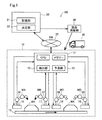
図1は、第1実施形態の生産システム100の構成を示す概略構成図である。生産システム100は、複数の製造機械MA,MB,MC,MDが設置された工場10と、工場10と広域ネットワーク(NW)25を介して通信可能な計画部としての生産本部20とを備える。生産本部20は、外部のベンダーまたは自社の倉庫である部品供給部30に対して、部品の発注が可能であり、部品供給部30は、発注された製品を最短の納期で、例えばトラック40等を用いて、工場10に発送する。
A. Hardware configuration of the embodiment:
FIG. 1 is a schematic configuration diagram illustrating a configuration of the
工場10には、製造機械MA,MB,MC,MDを統括・制御する生産制御部11が設けられている。この生産制御部11は、製造機械MA,MB,MC,MDに設けられた駆動部16,17,18,19に対して駆動指示を出力し、各製造機械MA,MB,MC,MDの動作を制御する。製造機械MA,MB,MC,MDは、インテリジェントな装置であり、予めプログラムされた動作を自律的に行なう、いわばロボットである。本実施形態において、製造機械MA,MB,MC,MDのうち、製造機械MA,MBは溶接ロボットであり、製造機械MC,MDは塗装ロボットである。
The
これらの製造機械MA,MB,MC,MDは、コンベアー15により搬送されるワークWKに対して、生産制御部11により指示されたタクトタイムで、必要な数のスポット溶接と塗装とを行なう。製造機械MA,MB,MC,MDは、製造機械の稼働状況を取得するために動作状態を表わす状態量を収集し、生産制御部11に出力するデータ収集装置36,37,38,39を備える。状態量は、例えば、製造機械MA,MB,MC,MDに設けられたモーターなどのトルクや回転数、その際に要した電力、モーターの駆動軸などに生じた振動などである。
These manufacturing machines MA, MB, MC, and MD perform a required number of spot welding and painting on the work WK conveyed by the
生産制御部11は、プロセッサーやメモリーを内蔵したコンピューターとして構成されており、製造機械MA,MB,MC,MDに動作に関して、後述する各製造機械MA,MB,MC,MDの稼働量の制御を行なう。稼働量は、本実施形態では、各製造機械に割り当てられる動作時間と作業速度として定められる。また、生産制御部11は、検出部12と予測部13とを備える。検出部12は、データ収集装置36,37,38,39から受信した状態量から、製造機械MA,MB,MC,MDの故障の予兆を検出する。他方、予測部13は、故障の予兆を検出したとき故障の予兆が検出された製造機械MA,MB,MC,MDの故障時期を予測する。検出部12や予測部13を用いた工場における製造機械の制御については、後で詳しく説明する。
The
生産本部20は、プロセッサーやメモリーを内蔵したコンピューターとして構成されており、計画部21や決定部22を備える。生産本部20は、工場10での生産を統括しており、ネットワーク25を介して、工場10に生産指示を送信し、また工場10における生産の状況を受信する。生産本部20は、工場10の生産を計画および変更する。具体的には、溶接であれば、製造機械MA,MBによるスポット溶接の数や溶接完了までの時間などの配分を行なう。生産本部20は、工場10の各製造機械MA,MBの能力、つまりスポット溶接の場所までアームを移動するのに要する時間(作業速度)の下限値から上限値までの範囲などを、予め基礎的なデータとして記憶している。従って、生産本部20が、ワークWKに対して溶接が完了するタクトタイム(作業時間)が短くなるように各製造機械MA,MBに対してスポット溶接箇所および溶接する順序を設定する。製造機械ごとの、どの場所のスポット溶接を、計何カ所分担させるかという設定、つまり動作時間と作業速度とを、以下、製造機械ごとの稼働量と呼ぶ。塗装用の製造機械MC,MDに関しても同様である。計画部21は、こうした製造機械MA,MB,MC,MDごとの稼働量を計画する。
The
決定部22は、工場10のメンテナンス時期を特定する。メンテナンス時期とは、故障した部品や製造機械を取り替えることで、故障により稼働を停止する製造機械を稼働状態に戻せる時期である。具体的には、故障の予兆が検出された製造機械やその部品を、部品供給部30に発注して、その製造機械や部品が、工場10に届けられる時期である。もとより、部品を交換する処置に限られず、製造機械の調整や消耗品の補充により、稼働状態に復する場合も含んでいる。調整等には、専用のセンサーや装置が必要な場合があり、そうした装置の手配に時間を要する場合もあるからである。潤滑油や触媒などの消耗品も同様にメンテナンス時期を前後する要因になり得る。こうした要因の影響を受けるメンテナンス時期は、発注や納品の情報をオンラインでやり取りすることで、コンピューターが特定してもよいし、発注や納品の情報を担当者が扱って、メンテナンス時期を特定し、これを生産本部20において、端末から入力することで、特定するものとしてもよい。この場合、メンテナンス時期はマニュアルで入力され、決定部22は、これを特定する処理を行なうに留まる。
The deciding
メンテナンス時期は、製造計画が、何月何日の何時何分から製造を開始するといった絶対的日時を用いて立てられる場合は、何月何日の何時何分に部品等の取り替えが可能になるという絶対的な日時である。もとより、製造計画が、製造を開始する日時を、生産の原点0とする場合は、この開始時期からの相対的な時期として特定される。本実施形態では、後者の手法で製造計画等を立てており、メンテナンス時期は値0から数えるものとし、符号Tmで表記する。同様に、故障の予兆を検出した時期を故障予兆時期と呼び、符号T0と表記する。また、故障が実際に生じて製造機械が使えなくなると予測される時期を故障時期と呼び、符号Tdと表記する。
If the maintenance schedule is based on an absolute date and time, such as what date, when, and what day of the month the production plan starts, it will be possible to replace parts, etc., at what date, at what time and at what time. It is an absolute date and time. In the case where the date and time at which the production starts in the production plan is the
B.生産本部の処理:
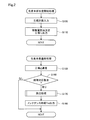
図2は、生産本部20が実施する二つの処理である生産本部生産開始処理と生産本部通常処理のそれぞれを示すフローチャートである。生産本部生産開始処理は、工場10での生産に先立って、生産本部20が実施する処理であり、ステップS100からS110からなる。生産システム100に対して、まずいつまでに何を何個生産するといった生産計画が、工場10の管理者などにより立てられ、生産本部20に入力される(ステップS100)。生産本部20は、工場10に配置された各製造機械MA,MB,MC,MDにより生産計画が達成できるように、各製造機械の稼働量の割当を決定し、これを工場10に出力する(ステップS110)。
B. Production headquarters processing:
FIG. 2 is a flowchart showing each of the production headquarters production start process and the production headquarters normal process, which are two processes performed by the
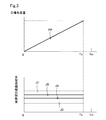
図3は、生産本部20が入力した生産計画から各製造機械MA,MB,MC,MDの稼働量を割り当てる様子を示す説明図である。生産本部20は、生産計画、つまりいつまでに何個の生産を行なうか、という計画に従って、生産開始(日時0)から目標生産量の生産が完了する生産終了時期Teまでの単位時間当りの生産量、つまり生産率を決定し、この間の生産量PPを定める。その上で、この生産量PPを達成するために必要な製造機械MA,MB,MC,MDの稼働量を決定する。図3の下段には、各製造機械MA,MB,MC,MDの稼働量をグラフJA,JB,JC,JDを示した。各製造機械MA,MB,MC,MDの稼働量は、各製造機械MA,MB,MC,MDが故障なく安定して動作できる範囲内で決定される。通常は、同じスポット溶接を行なう製造機械MA,MBや、同じ塗装を行なう製造機械MC,MDの稼働量は同じに設定されるが、以後の説明における図示の都合上、図3では、各製造機械MA,MB,MC,MDの稼働量は異なるものとして示した。
FIG. 3 is an explanatory diagram showing a manner in which the operation amounts of the respective manufacturing machines MA, MB, MC, MD are assigned from the production plan input by the
生産本部20が実行するもう一つの処理である生産本部通常処理は、工場10での生産が始まった後、生産本部20が工場10と連携して実行する処理である。この処理には、図2に示したステップS150〜S180が含まれる。生産本部20は、工場10での生産が始まると、工場10と定期的に通信し(ステップS150)、工場10から故障対応の要求の有無を受信する(ステップS160)。故障対応の要求とは、工場10内の製造機械に故障などが生じたり、故障が生じる予兆が検出された場合などに、交換部品などの手配を工場10の生産制御部11が生産本部20に依頼することを言う。
The production headquarters normal process, which is another process executed by the
生産本部20は、故障対応を工場10から要求されたと判断すると(ステップS160:「YES」)、交換部品等の発注処理を行ない(ステップS200)、交換部品等が工場10に配達されて交換が完了し、製造機械が稼働できる時期、つまりメンテナンス時期Tmを決定し、これを工場10に出力する(ステップS180)。メンテナンス時期Tmは、生産本部20が交換部品を部品供給部30に対して発注し、部品供給部30が配送の確定日を生産本部20に返信することにより確定される。なお、本実施形態では、メンテナンス時期Tmは、上記の様に生産本部20経由で工場10に出力されるが、部品供給部30から直接工場10に出力されるものとすることも可能である。
When the
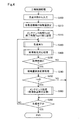
次に、図4、図5を用いて、工場10における生産制御部11が実行する処理については説明する。図4は、工場10おける生産を制御するために生産制御部11が実行する工場制御処理を示すフローチャートである。また、図5は、工場制御処理内の故障対応処理の詳細を示すフローチャートである。
Next, the processing executed by the
生産制御部11は、生産のための図4に示した処理を開始すると、まず生産本部20が図2のステップS110で出力す各製造機械MA,MB,MC,MDの稼働量を入力する(ステップS200)。次に、入力した値を用いて、各製造機械MA,MB,MC,MDの稼働量を設定する(ステップS210)。その上で、生産制御部11は、メンテナンス時期Tmを生産終了時期Teより後に設定する(ステップS220)。これは、生産計画の段階では、製造機械MA,MB,MC,MDの故障は予定されていないから、生産の終了時期Teまでには、部品の交換などを行なう可能性はなく、生産が終了してから、必要なメンテナンスを行なえば足りるからである。従って、生産計画を入力した時点での、生産終了時期Teとメンテナンス時期Tmとの関係は、図3に示したように、Tm>Teとなる。
When the
続いて、生産制御部11は、各製造機械MA,MB,MC,MDを駆動して、生産を実行する(ステップS300)。図1に示した例では、生産は、2台のスポット溶接用の製造機械MA,MBと、2台の塗装用に製造機械MC,MDとにより行なわれるが、以後は、説明の便を図って、2台のスポット溶接用の製造機械MA,MBによる生産を限定して説明する。2台の製造機械MA,MBは、図3に示した稼働量JA,JBにより稼働する。具体的には、製造機械MAが、ワークWKの図示左側の10箇所のスポット溶接を担当して、所定の動作時間および作業速度で溶接を行ない、製造機械MBが、ワークWKの図示右側の10箇所のスポット溶接を担当して所定の動作時間および作業速度で溶接するものとする。両者の溶接箇所は同じ10箇所だが、製造機械MBの溶接点の総距離が製造機械MAの溶接点の総距離と比べて長いことかから、同じタクトタイムまたはお互いのタクトタイムの差が最初となるタクトタイムでスポット溶接が完了するものとすると、製造機械MAの作業速度は製造機械MBの作業速度より遅い。この結果、製造機械MAの稼働量JAの方が、製造機械MBの稼働量JBより低い稼働量に設定される。この状態で2台の製造機械MA,MBにより生産が実行される。
Subsequently, the
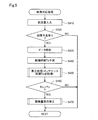
次に、生産制御部11は、故障対応処理を実行する(ステップS400)。この処理の詳細を図5に示した。故障対応処理では、生産制御部11は、生産を継続しながら、各製造機械MA,MB,MC,MDのデータ収集装置36〜39から状態量を受信する処理を行なう(ステップS410)。この状態量には、既述したように、各製造機械MA,MB,MC,MDを構成するモーター等のトルクや回転数、その際に要した電力、モーターの駆動軸などが含まれる。
Next, the
生産制御部11は、受信した状態量から故障の予兆が存在するかを判断する(ステップS420)。故障の予兆とは、例えば回転軸の振動が所定の強度以上となっていることなど、受信した状態量から直接検出するものとしてもよいし、受信した状態量に含まれるフィードバック制御の情報などから検出してもよい。製造機械MA,MBのモーターを例にとると、製造機械MA,MBは、モーターの回転数やトルクの目標値を与え、実際の回転数やトルクが目標値に一致していない場合には、フィードバック制御を行なう。こうしたフィードバック制御により回転数やトルクが目標値に一致するまでの時間が、設計値から逸脱している場合などに、モーターの駆動系に故障が生じる可能性が高まっているとして、故障の予兆を検出するものとしてもよい。ステップS420において故障の入力したデータから、特に故障の予兆を検出しなかった場合(ステップS420:「NO」)には、「NEXT」に抜けて、故障対応処理を終了する。
The
他方、故障の予兆が検出されると(ステップS420:「YES」)、生産制御部11は、データ解析を行なう(ステップS430)。データ解析とは、各製造機械MA,MBのデータ収集装置36,37から受信した状態量を解析して、故障の予兆の進行状況などを知る処理である。生産制御部11は、生産の開始から、繰り返し、データ収集装置36,37から状態量を受信するので、故障の予兆を検出したとき、過去のデータを解析することで、故障の予兆の進行状況を知ることができる。例えば、回転軸の振動が、次第に大きくなっている場合には、このまま振動が大きくなれば、どの時点で製造装置が生産に適さない状況となるかを予測することができる。フィードバック制御の状況などについても同様である。このように、故障とは、実際に製造機械の1つが動作を停止してしまうことのみを意味するのではなく、生産に適さない状況となることを含んでいる。例えばモーターの回転軸の振動が大きくなれば、スポット溶接の精度は低下し、溶接されたワークWKは、製品としては不良品と判定されてしまう可能性が生じる。またフィードバック制御の遅れが大きくなれば、タクトタイム内に溶接が完了せず、コンベアー15を停止させたり、その搬送速度を遅くしたりしなければならなくなる可能性も生じる。これらの場合も、製造装置の故障と判断される。
On the other hand, when a sign of failure is detected (step S420: “YES”), the
そこで、データを解析した結果を用いて、生産制御部11は、故障時期Tdを予測する処理を行なう(ステップS440)。故障時期Tdの予測は、故障の予兆の進行状況から故障の予兆が閾値を超えると予測されるまでの期間を求める手法により行なってもよいし、過去に同様の故障の予兆が進行した場合において、実際に故障と判断された時期までのデータがあれば、それらを参照して行なってもよい。
Thus, using the result of analyzing the data, the
故障時期Tdを求めた後、生産制御部11は、故障対応を生産本部20に要求し、生産本部20からメンテナンス時期Tmを取得する(ステップS450)。具体的には、故障時期Tdを予測した部品を交換するために、部品の発注を生産本部20に対して行なう。生産本部20は、図2に示した発注処理(ステップS170)により、部品供給部30から、交換部品の配達の時期を取得し、メンテナンス時期Tmとして、これを出力するから(ステップS180)、生産制御部11は、発注処理(ステップS450)において、このメンテナンス時期Tmを受け取ることができる。
After finding the failure time Td, the
生産制御部11は、受け取ったメンテナンス時期Tmが故障時期Tdより大きいか否かを判断する(ステップS460)。メンテナンス時期Tmが故障時期Tdより大きい、つまり交換部品などが届くより前に故障が起きて、製造機械の1つが使えなくなると判断した場合(ステップS460:「YES」)には、生産制御部11は稼働量割当を修正する処理(ステップS470)を行なう。稼働量の割当の修正を行なった後、「NEXT」に抜けて、故障対応処理を終了する。この結果、図4のステップS230以下の処理が実行される。稼働量の割当の修正は、ステップS230以下の処理において、生産実行の処理(ステップS300)が行なわれるタイミングから反映される。つまり、各製造機械の稼働量、延いては生産率の変更は、生産計画を変更可能な時期から行なう。
The
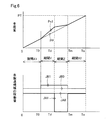
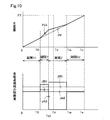
ここで、稼働量割当の修正の一例は図6を用いて説明される。ここでは、製造機械MAにおいて故障の予兆が検出されたものとする。また、検出された故障の予兆に従ってデータ解析した結果、故障時期Tdよりメンテナンス時期Tmの方が大きい、つまり時間的に後であるとする。図6は、こうした場合の生産量の推移と、これを実現する各製造機械の稼働量を示すグラフである。各製造機械としては、スポット溶接用の製造機械MA,MBのみを取り上げる。 Here, an example of the correction of the operation amount allocation will be described with reference to FIG. Here, it is assumed that a sign of failure has been detected in the manufacturing machine MA. Further, as a result of analyzing the data according to the detected sign of the failure, it is assumed that the maintenance time Tm is larger than the failure time Td, that is, it is later in time. FIG. 6 is a graph showing the transition of the production amount in such a case and the operation amount of each manufacturing machine that realizes this. As the respective manufacturing machines, only the manufacturing machines MA and MB for spot welding will be described.
図6は、生産終了までに生産すべき量、つまり目標生産量PTを、故障の予兆の有無に関わらず変更しないで生産を行なう場合を示す。メンテナンス時期Tm以降、生産終了までの期間X2では、部品が交換されることから、故障の予兆が検出されるまでの期間X1と同じ生産が可能となる。従って、生産制御部11、故障の予兆が検出された時点T0からメンテナンス時期Tmまでの間の各製造機械MA,MBの稼働量を修正する。この期間のうち、故障の予兆が検出された時点T0から故障が起きるであろう時点である故障時期Tdまでを期間Y、故障時期Tdからメンテナンス時期Tmまでを期間Zと呼ぶものとする。
FIG. 6 shows a case where the production is performed without changing the quantity to be produced by the end of production, that is, the target production quantity PT irrespective of the presence or absence of a failure sign. In the period X2 from the maintenance time Tm to the end of the production, since the parts are replaced, the same production as the period X1 until the sign of failure is detected is possible. Therefore, the
期間Zでは、故障時期Tdで製造機械MAに故障が生じるため、メンテナンス時期Tmまで、製造機械MAが使用できない期間である。このため、この期間Zでは、製造機械MBだけで生産を行なうことになり、生産能力は減少する。そこで、本実施形態では、その前の期間Yにおいて、生産能力を増加させる。期間Yにおける生産能力の増加は、製造機械MA,MBの稼働量を修正することにより実現される。この稼働量の修正については、後でまとめ、複数の実施形態を併せて説明する。いずれにせよ、この期間YおよびZの製造機械の稼働量を修正することにより、生産開始から生産終了の時期Teまでの生産量を確保する。なお、本実施例では、期間Yおよび期間Zにおいて、当初の生産計画による生産量に修正するように製造機械の稼働量を修正したが、期間X2において当初の生産計画による生産量に修正しても構わない。ただし、他の製造装置の故障の予兆など別の要因により生産率が低下する可能性を考慮すると、期間Zで生産量を修正することが好ましい。 The period Z is a period during which the manufacturing machine MA cannot be used until the maintenance time Tm because a failure occurs in the manufacturing machine MA at the failure time Td. For this reason, in this period Z, the production is performed only by the manufacturing machine MB, and the production capacity decreases. Therefore, in the present embodiment, the production capacity is increased in the preceding period Y. The increase in the production capacity in the period Y is realized by correcting the operation amounts of the manufacturing machines MA and MB. The correction of the operation amount will be summarized later and a plurality of embodiments will be described together. In any case, by correcting the operation amounts of the manufacturing machines in the periods Y and Z, the production amount from the start of production to the end time Te of production is secured. In the present embodiment, in the period Y and the period Z, the operation amount of the manufacturing machine is corrected so as to be corrected to the production amount according to the initial production plan. However, in the period X2, the operation amount is corrected to the production amount according to the initial production plan. No problem. However, considering the possibility that the production rate will decrease due to another factor such as a sign of a failure of another manufacturing apparatus, it is preferable to correct the production amount in the period Z.
このように、図5に示した故障対応処理において故障の予兆が検出された場合には、メンテナンス時期Tmと故障時期Tdとの関係で、稼働量の修正を行なう場合があるが、仮にメンテナンス時期Tmが故障時期Td以下の場合には(ステップS460:「NO」)、製造機械が故障するまでに交換部品が届き、メンテナンスを行なって生産を継続できる可能性が高いので、何を行なわずに、「NEXT」に抜けて、処理を終了する。この場合は、生産の終了まで、製造機械MA,MB,MC,MDを用いた生産が継続される。なお、部品の交換には実際には時間を要するので、その分、稼働量は低下し生産量も減少する可能性が存在するが、ここでは部品交換に要する時間は生産量から見て無視できるほど短いか、あるいは毎日存在する定期メンテナンスの時間内に交換できるものとし、メンテナンスに要する時間は考慮しないものとした。もとより、部品交換などに要する時間を考慮して、稼働量の修正を行なっても差し支えない。 As described above, when a sign of a failure is detected in the failure handling process shown in FIG. 5, the operation amount may be corrected depending on the relationship between the maintenance time Tm and the failure time Td. If Tm is equal to or less than the failure time Td (step S460: "NO"), there is a high possibility that the replacement parts will arrive before the manufacturing machine fails and maintenance can be performed to continue production. , "NEXT", and terminates the process. In this case, the production using the production machines MA, MB, MC, MD is continued until the production ends. In addition, since it takes time to actually replace parts, there is a possibility that the amount of operation will decrease and the amount of production will decrease accordingly, but here, the time required for parts replacement can be ignored from the viewpoint of the amount of production. It can be replaced within a short period of time or during regular maintenance hours that exist every day, and the time required for maintenance is not considered. Of course, the operation amount may be corrected in consideration of the time required for parts replacement and the like.
故障対応処理が終了すると、次に、故障時期Tdとなったか否かの判断を行なう(ステップS230)。故障時期Tdになっていれば、期間Yは経過としたとして、期間Zの稼働量に割当を変更する処理(ステップS240)を行なう。ここでは、実際に故障が起きていなくても、故障時期Tdとなっていれば、稼働量を変更するものとした。これは後述するように、期間Yでは、故障の予兆が検出されていない製造機械MBの稼働量を高めているため、期間Yを延ばさないという判断をしているためである。もとより、故障が起きていないので、製造機械MA,MBの稼働量を期間X1の稼働量に戻すものとしても良い。なお、故障時期Tdとなるまえに実際の故障が生じた場合も、ステップS230の判断で検出すものしてもよい。この場合には、製造機械MAは、使用できないので、稼働量を期間Z用のものに変更する。 When the failure handling process ends, it is determined whether or not the failure time Td has come (step S230). If it is the failure time Td, it is determined that the period Y has elapsed, and a process of changing the allocation to the operation amount in the period Z (step S240) is performed. Here, even if no failure has actually occurred, the operating amount is changed if it is the failure time Td. This is because, as will be described later, in the period Y, since the operating amount of the manufacturing machine MB for which no sign of failure has been detected is increased, it is determined that the period Y is not to be extended. Of course, since no failure has occurred, the operation amounts of the manufacturing machines MA and MB may be returned to the operation amounts in the period X1. Note that, even when an actual failure occurs before the failure time Td, it may be detected by the determination in step S230. In this case, since the manufacturing machine MA cannot be used, the operation amount is changed to that for the period Z.
故障時期Tdに至っていない場合(ステップS230:「YES」)や故障時期Tdに至って稼働量の割当を修正した後では(ステップS240)、次に、メンテナンス時期Tmとなっているか否かの判断を行なう(ステップS250)。故障の予兆がなければ、既述したようにメンテナンス時期Tmは、生産終了時期Teより後なので、ステップS250での判断は「NO」となり、メンテナンス処理(ステップS500)を行なうことなく、生産が終了したかの判断を行ない(ステップS260)、生産が終了するまで、ステップS300に戻って、生産の実行や故障対応処理(ステップS400)など上述した処理を繰り返す。 When the failure time Td has not been reached (step S230: “YES”) or after the operation amount allocation has been corrected up to the failure time Td (step S240), it is next determined whether or not the maintenance time Tm has been reached. Perform (Step S250). If there is no sign of failure, the maintenance time Tm is after the production end time Te as described above, so the determination in step S250 is “NO”, and the production ends without performing the maintenance process (step S500). It is determined whether or not the process has been performed (step S260), and the process returns to step S300 and repeats the above processes such as the execution of the production and the failure handling process (step S400) until the production ends.
このように各製造機械MA,MBの稼働量の割当を修正して処理を繰り返していると、やがてメンテナンス時期Tmとなる(ステップS250:「YES」)。メンテナンス時期Tmとなれば、交換部品が到着し、故障した部品の交換が可能となる。そこで、部品を交換することにより、製造機械MAは、稼働状態に復する。従って、この後の期間X2では、当初の期間X1と同様の稼働量に戻して生産を継続する。こうして生産終了時期Teに至れば、生産制御部11は、「END」に抜けて、製造機械MA,MB,MC,MDの運転を停止する。
As described above, when the allocation of the operation amounts of the respective manufacturing machines MA and MB is corrected and the processing is repeated, the maintenance time Tm will be reached (Step S250: “YES”). At the maintenance time Tm, a replacement part arrives, and the failed part can be replaced. Therefore, by exchanging the parts, the manufacturing machine MA returns to the operating state. Accordingly, in the subsequent period X2, the operation is returned to the same operation amount as in the initial period X1, and the production is continued. In this way, when the production end time Te is reached, the
C.稼働量の割当・修正・変更:
以上説明した生産システム100において、各製造機械MA,MBの稼働量の割当やその修正、および変更についてまとめて説明する。図6は、第1実施形態の生産システム100での製造機械MA,MBの稼働量を示す。図6において、破線JA0,JB0は、故障の予兆が検出されない場合の稼働量を示す。この稼働量は、図3に示したものと同一である。故障の予兆が検出されるまでの期間X1と、メンテナンス時期Tm以降、つまり部品が交換されて正常な状態に復した後の期間X2では、この稼働量JA0,JB0で、製造機械MA,MBは運転される。
C. Assignment / modification / change of operating volume:
In the
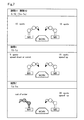
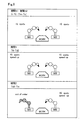
製造機械MA,MBの溶接箇所数とスポット溶接箇所間を移動する際のスピードを、各期間に分けて、図7に示した。期間X1,X2では、製造機械MA,MBのスポット溶接箇所は、共に10箇所である。次に、故障の予兆が検出されて、故障時期Tdが予測された場合、期間Yでは、製造機械MAの稼働量は、期間X1と同程度に保たれ、製造機械MBの稼働量は増加され、結果的にこの期間Yでの単位時間当りの生産量である生産率は増加する。これは、図6の生産量のグラフPs1が、期間Yにおいて、高い傾きを持っていることに照応している。具体的には、製造機械MA,MBのスポット溶接箇所は、故障の予兆が検出された製造機械MAについては5箇所に、故障の予兆が検出されていない製造機械MBについては15箇所に、それぞれ修正される。この場合、製造機械MAについては、スポット溶接する箇所が減るので、従前のタクトタイムより短いタクトタイムで作業を終らせるものの、モーターによる移動スピードは、期間X1,X2より低減(down)されるか従前のスピードに維持(const.)される。製造機械MAは、スポット溶接箇所が減っているので、スピードを上げなくても、タクトタイムを短くして、生産量を増やすことができる。この場合の製造機械MAの稼働量は、期間X1と同一であるものとして表示したが、稼働量は低下しているとみなしても差し支えない。他方、製造機械MBについては、スポット溶接する箇所が15箇所に増えるので、従前のタクトタイムより短い時間で作業を終らせるために、モーターによる移動スピードは、期間X1,X2より増大(up)される。このとき、製造機械MBの稼働量は、図6に稼働量JB1として示したように高い稼働量に修正される。 FIG. 7 shows the number of welding spots of the manufacturing machines MA and MB and the speed of moving between spot welding spots in each period. In the periods X1 and X2, the spot welding spots of the manufacturing machines MA and MB are both 10 spots. Next, when a sign of a failure is detected and the failure time Td is predicted, in the period Y, the operation amount of the manufacturing machine MA is kept approximately equal to the period X1, and the operation amount of the manufacturing machine MB is increased. As a result, the production rate, which is the production amount per unit time in this period Y, increases. This corresponds to the fact that the production amount graph Ps1 in FIG. Specifically, the spot welding spots of the manufacturing machines MA and MB are provided at five locations for the manufacturing machine MA for which a sign of failure has been detected, and at fifteen locations for the manufacturing machine MB for which no sign of failure has been detected. Will be modified. In this case, since the spots to be spot-welded on the manufacturing machine MA are reduced, the work is completed in a shorter takt time than the previous takt time, but the moving speed by the motor is reduced (down) from the periods X1 and X2. The previous speed is maintained (const.). Since the number of spot welding points is reduced in the manufacturing machine MA, the tact time can be shortened and the production amount can be increased without increasing the speed. In this case, the operation amount of the manufacturing machine MA is displayed as being the same as the period X1, but the operation amount may be considered to be decreasing. On the other hand, the number of spots to be spot-welded to the manufacturing machine MB is increased to fifteen, so that the moving speed by the motor is increased (up) from the periods X1 and X2 in order to finish the operation in a shorter time than the conventional tact time. You. At this time, the operation amount of the manufacturing machine MB is corrected to a high operation amount as indicated by the operation amount JB1 in FIG.
故障時期Tdからメンテナンス時期Tmまでの期間Zでは、実際に製造機械MAに故障が生じた場合はもとより、例え故障が生じていなくても、製造機械MAの稼働は取りやめられる。したがって、製造機械MAの稼働量は値0である。他方、製造機械MBの稼働量は、期間Yと同一に保たれる。但し、製造機械MBは、スポット溶接の全箇所、つまり20箇所を担当するよう変更される。この場合、製造機械MBが、全20箇所のスポット溶接を行なうので、ワークWKのスポット溶接は完了するが、タクトタイム内では作業は完了しない。このため、図6に示したように、生産率は、期間Yはもとより、期間X1より低下する。これは、図6の生産量のグラフPs1の傾きが、期間Zにおいて、他の期間X1や期間Yより小さいことに照応している。 In the period Z from the failure time Td to the maintenance time Tm, the operation of the manufacturing machine MA is canceled not only when the manufacturing machine MA actually fails but also when no failure occurs. Therefore, the operation amount of the manufacturing machine MA is zero. On the other hand, the operation amount of the manufacturing machine MB is kept the same as the period Y. However, the manufacturing machine MB is changed to be in charge of all spot welding, that is, 20 spots. In this case, since the manufacturing machine MB performs the spot welding at all 20 locations, the spot welding of the work WK is completed, but the work is not completed within the tact time. For this reason, as shown in FIG. 6, the production rate is lower than the period X1 as well as the period Y. This corresponds to the fact that the slope of the production amount graph Ps1 in FIG. 6 is smaller in the period Z than in the other periods X1 and Y.
メンテナンス時期Tmになれば、部品の交換が行なわれるので、製造機械MA,MBは正常な状態に復し、その稼働量も元に戻される。従って、生産率も期間X1と同様となり、生産終了時期Teまでの期間X2では、その生産率で生産が行なわれる。 At the maintenance time Tm, parts are replaced, so that the manufacturing machines MA and MB return to a normal state, and the operating amount is returned to the original state. Therefore, the production rate is the same as that in the period X1, and in the period X2 until the production end time Te, the production is performed at the production rate.
以上説明した第1実施形態での各製造機械MA,MBの期間YおよびZでの稼働量をまとめると以下の様になる。ここで、「長い」「短い」「速い」「遅い」といった比較は、期間X1での動作距離や作業速度と比較したものである。
(1)期間Y:
製造機械MA:動作距離・短い、作業速度・遅いまたは一定、負荷・低い
製造機械MB:動作距離・長い、作業速度・速い、 負荷・高い
(2)期間Z:
製造機械MA:停止
製造機械MB:動作距離・長い、作業速度・速い、タクトタイム・長い
なお、製造機械の作業速度は、一定や遅いであっても、差し支えない。必要な生産率が実現できればよい。
The operating amounts of the manufacturing machines MA and MB in the periods Y and Z in the first embodiment described above are summarized as follows. Here, comparisons such as “long”, “short”, “fast”, and “slow” are comparisons with the operating distance and the working speed in the period X1.
(1) Period Y:
Manufacturing machine MA: working distance / short, working speed / slow or constant, load / low Manufacturing machine MB: working distance / long, working speed / fast, load / high (2) period Z:
Manufacturing machine MA: Stopping Manufacturing machine MB: Operating distance / long, working speed / fast, tact time / long The working speed of the manufacturing machine may be constant or slow. It is only necessary that the required production rate can be realized.
D.第1実施形態の効果:
以上説明した第1実施形態では、製造機械MAに故障の予兆が検出されてから、故障が生じると予測される故障時期Tdまでの間、製造機械MAの稼働量を落さず、製造機械MBの稼働量JB0を稼働量JB1へと若干高め、この期間Yでの生産率を高めている。このため、故障時期Tdにとなって、製造機械MAの使用を中止して、メンテナンス時期Tmまでの期間Zにおいて、製造機械MBだけで生産を継続しても、メンテナンス時期Tmに至った時点での生産量は、製造機械MAの故障が生じなかった場合と比べて大幅に低下するということはない。この間、製造機械MBは、稼働量JB1で運転されるために、モーター等のスピードは増加されるが、製造機械MAの稼働量を積極的に下げるという対応は取っていないので、製造機械MBの稼働量の増加を抑制的なものにでき、製造機械MBが生産の終了時期Teまでに故障するといった事態を回避している。
D. Effects of the first embodiment:
In the first embodiment described above, the operation amount of the manufacturing machine MA is not reduced from the detection of the sign of failure of the manufacturing machine MA until the failure time Td at which the failure is predicted to occur. The operation amount JB0 is slightly increased to the operation amount JB1 to increase the production rate in the period Y. For this reason, at the failure time Td, the use of the manufacturing machine MA is stopped, and during the period Z until the maintenance time Tm, even if the production is continued only with the manufacturing machine MB, the maintenance time Tm is reached. Is not significantly reduced as compared with the case where no failure of the manufacturing machine MA occurs. During this time, since the manufacturing machine MB is operated at the operation amount JB1, the speed of the motor and the like is increased, but since the operation amount of the manufacturing machine MA is not actively reduced, the manufacturing machine MB is not operated. The increase in the operation amount can be suppressed, and a situation in which the manufacturing machine MB breaks down by the production end time Te is avoided.
上記実施形態では、故障時期Tdの時点で、実際に製造機械MAが故障していなくても製造機械MAの稼働を停止したが、製造機械MAについては、実際の故障が生じるまで、稼働することも可能である。その場合には、メンテナンス時期Tmまでの生産率は、図6に示した例より高くなるが、その場合には、終了時期Teを早めるといった対応を取ることも可能である。上記の実施形態では、一台の製造機械が故障したとき、その作業の全てを他の製造機械(ここでは製造機械MB)が代替するものとして説明した(図7、期間Z)が、1つの製造機械の作業の全てを他の1つの製造機械が代替するものに限定する必要はなく、例えば3台の製造機械が動作している場合、他の一台の製造機械は、故障した製造機械の少なくとも一部の作業を代替できれば良い。他の製造機械が代替しない作業があれば、別の製造機械で代替すればよく、場合によっては、作業者が残りの作業を代替してもよい。この関係は、以下に説明する他の実施形態でも同様である。 In the above embodiment, at the time of the failure time Td, the operation of the manufacturing machine MA is stopped even if the manufacturing machine MA has not actually failed, but the manufacturing machine MA must be operated until an actual failure occurs. Is also possible. In that case, the production rate up to the maintenance time Tm is higher than in the example shown in FIG. 6, but in that case, it is also possible to take measures such as earliering the end time Te. In the above embodiment, when one manufacturing machine fails, all of the work is described as being replaced by another manufacturing machine (here, the manufacturing machine MB) (FIG. 7, period Z). It is not necessary to limit all operations of a manufacturing machine to those that are replaced by another manufacturing machine. For example, if three manufacturing machines are operating, the other manufacturing machine is a failed manufacturing machine. It would be good if at least a part of the work could be replaced. If there is an operation that is not replaced by another manufacturing machine, it may be replaced by another manufacturing machine, and in some cases, the operator may replace the remaining work. This relationship is the same in the other embodiments described below.
E.第2,第3実施形態:
上記第1実施形態では、故障の予兆が検出された製造機械MAの期間Yでの稼働量を下げることなく、他の製造機械MBの稼働量を上げ、期間Yでの生産率を高め、生産終了時期Teまでの生産システム100の生産量を低減しないないものとした。こうした生産終了時期Teまでの生産量を落さない対応として、他のいくつかの実施形態を考えることができる。
E. FIG. Second and third embodiments:
In the first embodiment, the operating amount of the other manufacturing machine MB is increased without lowering the operating amount of the manufacturing machine MA in the period Y where the sign of failure is detected, and the production rate in the period Y is increased. It is assumed that the production amount of the
(1)第2実施形態:
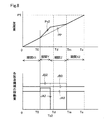
第2実施形態では、製造機械MAの故障の予兆が検出された場合、実際に故障が生じるまでの期間Yの製造機械MAの稼働量を高める対応を取る点で、上述した第1実施形態と異なる。この様子を図8に示した。この例では、故障の予兆が検出された製造機械MAとその他の製造機械MBとの稼働量を、図示JA2,JB2のように、共に高めている。具体的には、図9に示したように、期間Yでの製造機械MA,MBの稼働量を、スポット溶接箇所10とし、それぞれのモーターのスピードを増大する。これに拠り、タクトタイムは短くなり、この期間Yの生産率は第1実施形態の期間Yでの生産率より高くなる。このことは、図8の生産量Ps2の期間Yでの傾きが、図6の期間Yでの傾きより大きくなっていることに対応している。なお、他の期間X1,Z,X2での各製造機械の稼働量は第1実施形態と同様である。
(1) Second embodiment:
In the second embodiment, when a sign of a failure of the manufacturing machine MA is detected, the operation amount of the manufacturing machine MA in the period Y until the failure actually occurs is taken to be increased. different. This state is shown in FIG. In this example, the operating amounts of the manufacturing machine MA and the other manufacturing machines MB in which the sign of failure is detected are both increased as shown in JA2 and JB2. Specifically, as shown in FIG. 9, the operation amounts of the manufacturing machines MA and MB in the period Y are set to the spot welding points 10, and the speeds of the respective motors are increased. As a result, the takt time is shortened, and the production rate in this period Y is higher than the production rate in the period Y of the first embodiment. This corresponds to the fact that the slope in the period Y of the production amount Ps2 in FIG. 8 is larger than the slope in the period Y in FIG. The operating amounts of the respective manufacturing machines in the other periods X1, Z, X2 are the same as in the first embodiment.
第2実施形態での各製造機械MA,MBの期間YおよびZでの稼働量をまとめると以下の様になる。ここで、「長い」「短い」「速い」「遅い」といった比較は、期間X1での動作距離や作業速度と比較したものであることは、第1実施形態と同様である。
(3)期間Y:
製造機械MA:動作距離・一定、作業速度・速い、負荷・高い
製造機械MB:動作距離・一定、作業速度・速い、負荷・高い
(4)期間Z:
製造機械MA:停止
製造機械MB:動作距離・長い、作業速度・速い、タクトタイム・長い
なお、製造機械の作業速度は、一定や遅いであっても、差し支えない。必要な生産率が実現できればよい。
The operation amounts of the manufacturing machines MA and MB in the periods Y and Z in the second embodiment are summarized as follows. Here, the comparison such as “long”, “short”, “fast”, and “slow” is similar to the first embodiment in that it is compared with the operating distance and the working speed in the period X1.
(3) Period Y:
Manufacturing machine MA: Operating distance / constant, working speed / fast, load / high Manufacturing machine MB: Operating distance / constant, working speed / fast, load / high (4) period Z:
Manufacturing machine MA: Stopping Manufacturing machine MB: Operating distance / long, working speed / fast, tact time / long The working speed of the manufacturing machine may be constant or slow. It is only necessary that the required production rate can be realized.
図8に示したように、故障の予兆が検出されたときに、製造機械MA,MBの稼働量を高めるためにモーターのスピードを増大すると、製造機械MAの故障時期Tdは、稼働量を高めない場合と比べて、時期的に早まる可能性が高い。本実施形態では、データ解析(図5、ステップS430)において、この点を合せて解析し、故障が発生する時期を故障時期Td2として予測している。従って、この実施形態での故障時期Td2は、図6に示した故障時期Tdより早い時期として予測されており、期間Yは短くなっている。また、期間Yが短くなっているため、相対的期間Zは、長くなっている。期間Zでは、第1実施形態と同様に、製造機械MBだけで生産が行なわれるので、その生産率は低下する。この結果、短い期間Yにおける高い生産率での生産と、長い期間Zでの低い生産率での生産とを併せた全期間の生産量は、当初の生産計画による生産量とほぼ同じになっている。 As shown in FIG. 8, when a sign of failure is detected, if the speed of the motor is increased to increase the operation amount of the manufacturing machines MA and MB, the failure time Td of the manufacturing machine MA increases the operation amount. It is more likely to be earlier in time than in the absence. In the present embodiment, this point is also analyzed in the data analysis (FIG. 5, step S430), and the time at which a failure occurs is predicted as the failure time Td2. Therefore, the failure time Td2 in this embodiment is predicted to be earlier than the failure time Td shown in FIG. 6, and the period Y is shorter. Further, since the period Y is short, the relative period Z is long. In the period Z, as in the first embodiment, the production is performed only by the manufacturing machine MB, so that the production rate decreases. As a result, the production amount of the entire period including the production at the high production rate in the short period Y and the production at the low production rate in the long period Z is almost the same as the production amount according to the original production plan. I have.
(2)第3実施形態:
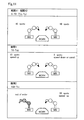
第3実施形態では、製造機械MAの故障の予兆が検出された場合、実際に故障が生じるまでの期間Yの製造機械MAの稼働量を、第2実施形態より更に高める対応を取っている。他方、製造機械MBについては、期間Yでの稼働量を、期間X1での稼働量より低くしている。この様子を図10に示した。この例では、故障の予兆が検出された製造機械MAの稼働量は図示JA3まで高められ、その他の製造機械MBの稼働量は図示JB3のように、低下されている。具体的には、図11に示したように、期間Yでの製造機械MAの稼働量を、スポット溶接箇所15とし、モーターによるアーム等の駆動スピードを増大する。他方、期間Yでの製造機械MBの稼働量を、スポット溶接箇所5とし、モーターによるアーム等の駆動スピードを従前のスピードより低下または維持する。これに拠り、タクトタイムは短くなり、この期間Yの生産率は第2実施形態の期間Yでの生産率より更に高くなる。このことは、図10の生産量Ps3の期間Yでの傾きが、図8の期間Yでの傾きより大きくなっていることに対応している。
(2) Third embodiment:
In the third embodiment, when a sign of a failure of the manufacturing machine MA is detected, the operation amount of the manufacturing machine MA in the period Y until an actual failure occurs is further increased compared to the second embodiment. On the other hand, for the manufacturing machine MB, the operation amount in the period Y is lower than the operation amount in the period X1. This state is shown in FIG. In this example, the operation amount of the manufacturing machine MA in which the sign of failure has been detected is increased to JA3 in the figure, and the operation amounts of the other manufacturing machines MB are reduced as shown in JB3 in the figure. Specifically, as shown in FIG. 11, the operation amount of the manufacturing machine MA in the period Y is set to the
図10に示したように、故障の予兆が検出されたときに、製造機械MAの稼働量を高めるためにモーターのスピードを第2実施形態より更に増大すると、製造機械MAの故障時期Tdは、稼働量を高めない場合と比べて、時期的に更に早まる可能性が高い。本実施形態では、データ解析(図5、ステップS430)において、この点を合せて解析し、故障が発生する時期を故障時期Td3として予測している。従って、この実施形態での故障時期Td3は、図8に示した故障時期Td2より更に早い時期として予測されており、期間Yは更に短くなっている。また、期間Yが短くなっているため、相対的期間Zは、長くなっている。期間Zでは、第1実施形態と同様に、製造機械MBだけで生産が行なわれるので、その生産率は低下する。 As shown in FIG. 10, when a sign of failure is detected, if the speed of the motor is further increased from the second embodiment to increase the operation amount of the manufacturing machine MA, the failure time Td of the manufacturing machine MA becomes: There is a high possibility that the timing will be further earlier than when the operation amount is not increased. In the present embodiment, this point is also analyzed in the data analysis (FIG. 5, step S430), and the time at which a failure occurs is predicted as the failure time Td3. Therefore, the failure time Td3 in this embodiment is predicted to be earlier than the failure time Td2 shown in FIG. 8, and the period Y is shorter. Further, since the period Y is short, the relative period Z is long. In the period Z, as in the first embodiment, the production is performed only by the manufacturing machine MB, so that the production rate decreases.
第3実施形態での各製造機械MA,MBの期間YおよびZでの稼働量をまとめると以下の様になる。
(5)期間Y:
製造機械MA:動作距離・長い、作業速度・速い、 負荷・高い
製造機械MB:動作距離・短い、作業速度・遅いまたは一定、負荷・低い
(6)期間Z:
製造機械MA:停止
製造機械MB:動作距離・長い、作業速度・速い、タクトタイム・長い
The operation amounts of the manufacturing machines MA and MB in the periods Y and Z in the third embodiment are summarized as follows.
(5) Period Y:
Manufacturing machine MA: Operating distance / long, working speed / fast, load / high Manufacturing machine MB: Operating distance / short, working speed / slow or constant, load / low (6) period Z:
Manufacturing machine MA: Stop Manufacturing machine MB: Operating distance / long, working speed / fast, tact time / long
上記の生産率増加制御を行なう結果、第3実施形態では、短い期間Yにおける更に高い生産率での生産と、長い期間Zでの低い生産率での生産とを併せた全期間の生産量は、当初の生産計画による生産量とほぼ同じになっている。 As a result of performing the above-described production rate increase control, in the third embodiment, the production amount in the entire period, which is a combination of the production at the higher production rate in the short period Y and the production at the lower production rate in the long period Z, is , Which is almost the same as the original production plan.
F.一般解:
上記各実施形態では、2台の製造機械を想定し、一方の製造機械MAについて故障の予兆が検出されたとき、期間Yに関して、各製造機械の稼働量を挙げることによる生産率の向上を図っている。生産率を向上させるために、製造機械の稼働量をどのように調整すれば良いかは、以下の式により一般解を求めることができる。従って、生産システムに含まれる製造機械は何台であっても差し支えない。また、製造機械の種類も、スポット溶接機や塗装機に限らず、部品の組み付けを行なう組付機械や、はんだ付け装置、パーツフィーダー、プレス機、射出成形機、ロボットなど、生産システムを構成でき、他の製造機械の作業を代替できる製造機械と組み合わせられるものであれば、どのような種類のものであっても差し支えない。
F. General solution:
In the above embodiments, two manufacturing machines are assumed, and when a sign of failure is detected for one of the manufacturing machines MA, the production rate is improved by raising the operation amount of each of the manufacturing machines for the period Y. ing. A general solution can be obtained by the following equation as to how to adjust the operation amount of the manufacturing machine in order to improve the production rate. Therefore, any number of manufacturing machines may be included in the production system. In addition, the types of manufacturing machines are not limited to spot welding machines and painting machines, and production systems such as assembly machines for assembling parts, soldering equipment, parts feeders, press machines, injection molding machines, and robots can be configured. Any type can be used as long as it can be combined with a manufacturing machine that can replace the work of another manufacturing machine.
各製造機械のうちの第i番目の製造機械Miの実生産率Piは、製造機械Miの稼働量を、動作時間と作業速度で定義するものとすれば、
Pi=Pi(ti ,vi )−{α(ti )+β(vi )} …(1)
と表わすことができる。Pi(ti ,vi )は、製造機械Miを、動作時間ti 、作業速度vi で稼働した場合の理論上の生産率である。α(ti )は、部品の交換サイクルにより生じる生産率の低下を表わし、これが製造機械Miの動作時間ti に依存することを表わす。β(vi )は、不良品の発生により生じる生産率の低下分を表わし、これが製造機械Miの作業速度vi に依存することを表わす。従って、実生産率Piは、理論上の生産率Pi(ti ,vi )から、部品交換や不良品発生などの要因による生産率の低下分を差引した値となる。
If the actual production rate Pi of the i-th manufacturing machine Mi among the manufacturing machines is to define the operation amount of the manufacturing machine Mi by operating time and working speed,
Pi = Pi (ti, vi)-{α (ti) + β (vi)} (1)
Can be expressed as Pi (ti, vi) is a theoretical production rate when the manufacturing machine Mi is operated at the operation time ti and the working speed vi. α (ti) represents the reduction in production rate caused by the part replacement cycle, which depends on the operating time ti of the manufacturing machine Mi. β (vi) represents a decrease in the production rate caused by the occurrence of defective products, and it depends on the working speed vi of the manufacturing machine Mi. Therefore, the actual production rate Pi is a value obtained by subtracting a decrease in the production rate due to factors such as replacement of parts or occurrence of defective products from the theoretical production rate Pi (ti, vi).
製造機械Miの生産率の初期値、つまり最初に生産計画が立てられ、製造機械Miに、動作時間として初期値ti0が割り当てられ、作業速度として初期値vi0が割り当てられるとする。このとき、製造機械Miの生産率の初期値Pi0は、
Pi0=Pi(ti0,vi0)−{α(ti0)+β(vi0)} …(2)
と表わすことができる。初期値Pi0は、製造機械Miの動作時間がti0であり、作業速度がvi0である場合の生産率を表わす。
It is assumed that an initial value of the production rate of the manufacturing machine Mi, that is, a production plan is initially set, and the initial value ti0 is assigned to the manufacturing machine Mi as an operation time and the initial value vi0 is assigned to a working speed. At this time, the initial value Pi0 of the production rate of the manufacturing machine Mi is:
Pi0 = Pi (ti0, vi0)-{α (ti0) + β (vi0)} (2)
Can be expressed as The initial value Pi0 represents the production rate when the operation time of the manufacturing machine Mi is ti0 and the working speed is vi0.
上記式(1)で表わされた製造機械Miの生産率Piは、製造機械Miの動作時間ti や作業速度vi が変化すると、ほぼ線形に変化する。そこで、動作時間ti や作業速度vi の初期値ti0,vi0に対する割合を、
Δti =ti /ti0
Δvi =vi/vi0
と定義すると、製造機械Miの生産率Piの初期値Pi0からの増減部ΔPiは、
ΔPi=Pi0・Δti +Pi0・Δvi −{α(Δti )+β(Δvi )} …(3)
と表わすことができる。右辺第1項は、その製造機械Miの動作時間の増減による生産率の増減分を示し、右辺第2項は、その製造機械Miの作業速度の増減による生産率の増減分を示す。右辺第3項は、動作時間に依存する部品交換サイクルの増減に伴う生産率の低下の増減分を示し、右辺第4項は、作業速度に依存する不良品発生の増減に伴う生産率の低下の増減分を示す。
The production rate Pi of the manufacturing machine Mi represented by the above equation (1) changes substantially linearly when the operating time ti or the working speed vi of the manufacturing machine Mi changes. Then, the ratio of the operation time ti and the working speed vi to the initial values ti0 and vi0 is
Δti = ti / ti0
Δvi = vi / vi0
Is defined as the increase / decrease portion ΔPi of the production rate Pi of the manufacturing machine Mi from the initial value Pi0,
ΔPi = Pi0 · Δti + Pi0 · Δvi− {α (Δti) + β (Δvi)} (3)
Can be expressed as The first term on the right side indicates an increase or decrease in the production rate due to an increase or decrease in the operation time of the manufacturing machine Mi, and the second term on the right side indicates an increase or decrease in the production rate due to an increase or decrease in the working speed of the manufacturing machine Mi. The third term on the right side indicates the increase or decrease in the production rate due to the increase or decrease in the part replacement cycle depending on the operation time, and the fourth term on the right side indicates the decrease in the production rate due to the increase or decrease in the occurrence of defective products depending on the work speed. Shows the increase or decrease of.
そこで、各実施形態で説明したように、故障の予兆を検出した際の各製造装置の稼働量を修正する際には、生産システム100全体の生産率は、修正後の各製造機械Mi(i=1〜n)の各生産率Piの最小値になること、つまり生産システム100全体の生産率はPPは、
Ps=min(P1,P2,・・・・Pn) …(4)
となることを利用して、期間Yでの生産率Psを所望の生産率Psiまで高めるには、制約条件
Σn i=1ΔPi≧1 つまり、
(ΔP1+ΔP2+・・・・ΔPn)≧1
の元で、式(4)を解いて、生産率Psが所望の値となるように、各製造機械Miの動作時間ti と作業速度vi を求めればよい。
Therefore, as described in each embodiment, when correcting the operation amount of each manufacturing apparatus when detecting a sign of a failure, the production rate of the
Ps = min (P1, P2,... Pn) (4)
By utilizing the fact that a, in order to increase the production rate Ps of the period Y to the desired production rate Psi, constraint Σ n i = 1 ΔPi ≧ 1 words,
(ΔP1 + ΔP2 +... ΔPn) ≧ 1
Equation (4) may be solved to obtain the operation time ti and the working speed vi of each manufacturing machine Mi so that the production rate Ps becomes a desired value.
G.その他の実施の態様:
[1]この他、以下の構成での実施が可能である。第1の態様は、生産量の計画に基づいて複数の製造機械を運用する生産システムとして態様である。この生産システムは、前記複数の製造機械のうちの一つであり、第1作業を実施する第1製造機械と、前記複数の製造機械のうちの一つであり、第2作業を実施する第2製造機械であって、前記第1製造機械の前記第1作業の少なくとも一部を代替可能である第2製造機械と、所定期間の生産量として計画された合計生産量に従って、前記第1,第2製造機械による合計の生産率である合計生産率を計画する計画部と、前記第1製造機械から動作状態を表わす状態量を取得して、前記第1製造機械が故障する予兆を検出する検出部と、前記検出部が前記故障の予兆を検出したとき、前記第1製造機械の稼働が前記故障により停止する時期である停止時期を予測する予測部と、前記故障により稼働を停止する前記第1製造機械を稼働状態に戻せる時期であるメンテナンス時期を決定する決定部と、前記計画部によって前記計画された合計生産率である第1合計生産率を達成するように、前記第1製造機械および前記第2製造機械の各稼働量を制御する生産制御部と、を備える。ここで、前記生産制御部は、前記第1製造機械の前記故障の予兆が検出されたとき、前記予測された前記停止時期が前記メンテナンス時期より前である場合には、少なくとも前記第1製造機械の稼働量を、前記故障の予兆が検出されるまでの稼働量以上に制御し、前記停止時期までの前記合計生産率を、前記第1合計生産率より高い第2合計生産率とする生産率増加制御を行なうものとしてよい。
G. FIG. Other embodiments:
[1] In addition, implementation with the following configuration is possible. The first aspect is an aspect as a production system that operates a plurality of manufacturing machines based on a production amount plan. The production system is one of the plurality of manufacturing machines, and is a first manufacturing machine that performs a first operation, and a first manufacturing machine that is one of the plurality of manufacturing machines and performs a second operation. A second manufacturing machine that is capable of replacing at least a part of the first operation of the first manufacturing machine; and the first and second production machines according to a total production amount planned as a production amount for a predetermined period. A planning unit that plans a total production rate that is a total production rate by the second manufacturing machine; and a state quantity that represents an operation state from the first manufacturing machine, and detects a sign of the failure of the first manufacturing machine. A detecting unit, a predicting unit that predicts a stop time when the operation of the first manufacturing machine stops due to the failure when the detecting unit detects the sign of the failure, and a stop unit that stops operation due to the failure. Return the first production machine to operation A determining unit that determines a maintenance time that is a time, and operating each of the first manufacturing machine and the second manufacturing machine so as to achieve a first total production rate that is the total production rate planned by the planning unit. A production control unit for controlling the amount. Here, the production control unit may be configured to, when the predictive sign of the failure of the first manufacturing machine is detected, if the predicted stop time is earlier than the maintenance time, at least the first manufacturing machine The production rate is controlled to be equal to or more than the operation quantity until the sign of the failure is detected, and the total production rate up to the stop time is set to a second total production rate higher than the first total production rate. Increase control may be performed.
この生産システムによれば、第1製造機械の故障の予兆が検出されたとき、メンテナンス時期までの間、少なくとも前記第1製造機械の稼働量を、故障の予兆が検出されるまでの稼働量以上に制御し、停止時期までの合計生産率を、前記第1合計生産率より高い第2合計生産率とすることができる。このため、故障の予兆が検出されても、生産システムの生産計画からの生産量の減少を抑制することができる。 According to this production system, when a sign of failure of the first manufacturing machine is detected, at least the operating amount of the first manufacturing machine is equal to or more than the operating amount until the sign of failure is detected until the maintenance time. And the total production rate up to the stop time can be a second total production rate higher than the first total production rate. For this reason, even if a sign of failure is detected, a decrease in the production amount from the production plan of the production system can be suppressed.
こうした生産システムは、実施形態の様に、生産本部と工場とに分かれていてもよいし、一体に構成されていてもよい。例えば、交換部品の発注やメンテナンス時期の決定は、工場の生産制御部がまとめて行なっても差し支えない。また、メンテナンス時期の決定は、担当者がマニュアルで行ない、生産システムに入力するものとしてもよい。 Such a production system may be divided into a production headquarters and a factory as in the embodiment, or may be configured integrally. For example, the order of replacement parts and the determination of the maintenance time may be performed collectively by the production control unit of the factory. The maintenance time may be determined manually by a person in charge and input to the production system.
[2]こうした生産システムにおいて、前記生産制御部は、前記生産率増加制御として、前記第1製造機械の稼働量を、前記故障の予兆が検出されるまでと同じ稼働量に維持し、前記第2製造機械の稼働量を、前記第2合計生産率を達成する稼働量に高める制御を行なってもよい。こうすれば、故障の予兆が検出された第1製造機械の稼働量を高めることなく、生産システムの生産率を高めることができるので、予測された故障時期まで、第1製造機械を稼働させることができる可能性を高めることができる。 [2] In such a production system, the production control unit maintains the operation amount of the first manufacturing machine at the same operation amount as before the sign of the failure is detected, as the production rate increase control. Control for increasing the operation amount of the second manufacturing machine to the operation amount that achieves the second total production rate may be performed. With this configuration, the production rate of the production system can be increased without increasing the operation amount of the first manufacturing machine in which the sign of failure has been detected, so that the first manufacturing machine can be operated until the predicted failure time. Can be increased.
[3]こうした生産システムにおいて、前記生産制御部は、前記生産率増加制御として、前記第1製造機械の稼働量を、前記故障の予兆が検出されるまでの稼働量より高く制御し、前記第2製造機械の稼働量を、前記第2合計生産率を達成する稼働量とする制御を行なうものとしてもよい。こうすれば、第2製造機械の稼働量の増加を抑制することができ、第2製造機械にかける負担を抑制することができる。生産率増加制御における第1製造機械と第2製造機械との稼働量の組合せは、少なくとも前記第1製造機械の稼働量を、前記故障の予兆が検出されるまでの稼働量以上に制御した上で、停止時期までの合計生産率を、第1合計生産率より高い第2合計生産率にできれば、どのような組み合わせであってもよい。 [3] In such a production system, the production control unit controls the operation amount of the first manufacturing machine to be higher than the operation amount until the sign of the failure is detected, as the production rate increase control. (2) The operation amount of the manufacturing machine may be controlled to be an operation amount that achieves the second total production rate. In this case, it is possible to suppress an increase in the operation amount of the second manufacturing machine, and it is possible to suppress a burden on the second manufacturing machine. The combination of the operating amounts of the first manufacturing machine and the second manufacturing machine in the production rate increase control is such that at least the operating amount of the first manufacturing machine is controlled to be equal to or more than the operating amount until the failure sign is detected. Then, any combination may be used as long as the total production rate up to the stop time can be set to the second total production rate higher than the first total production rate.
[4]こうした生産システムにおいて、前記生産制御部は、前記生産率増加制御を、前記生産計画を変更可能な時期から行なうもとのしてもよい。生産システムはシステムとして動作しているので、各製造機械の稼働量を変更できるタイミングを、生産計画を変更可能な時期からとすることで、稼働量の変更をスムースに行なうことができる。もとより、稼働量の変更を演算して求めた時点から、稼働量を変更するものとしてもよい。 [4] In such a production system, the production control unit may perform the production rate increase control from a time when the production plan can be changed. Since the production system operates as a system, the amount of operation of each manufacturing machine can be changed from the time when the production plan can be changed, so that the amount of operation can be changed smoothly. Of course, the operation amount may be changed from the time when the change in the operation amount is calculated and obtained.
[5]こうした生産システムであって、更に前記第1製造機械の稼働情報を取得する稼働情報取得部を備え、前記検出部は、前記第1製造機械の稼働情報を利用して、前記故障の予兆を検出するものとしてもよい。こうすれば、第1製造機械の故障の予兆を容易に検出することができる。もとより、故障の予兆の検出は製造装置の外部に置いた監視カメラやセンサなどの信号に基づいて行なってもよい。 [5] In such a production system, the production system further includes an operation information acquisition unit that acquires operation information of the first manufacturing machine, and the detection unit uses the operation information of the first manufacturing machine to detect the failure of the first manufacturing machine. A sign may be detected. This makes it possible to easily detect a sign of failure of the first manufacturing machine. Of course, detection of a sign of a failure may be performed based on a signal from a monitoring camera or a sensor placed outside the manufacturing apparatus.
[6]こうした生産システムにおいて、更に、前記検出部の検出した前記故障の予兆に従って、前記第1製造機械の故障を回避または修復するために交換すべき部品を特定する特定部と、前記特定された交換すべき部品の納品の予定を管理する交換部品管理部とを備えるもとのしてよい。ここで、決定部は、前記メンテナンス時期を、前記交換すべき部品の納品の予定に従って決定すればよい。こうすれば、メンテナンス時期を容易に決定することができる。もとよりメンテナンス時期の決定は、交換部品を特定せずに行なってもよい。例えば、故障の予兆が検出された製造機械全体を交換するものとして、メンテナンス時期を決定してもよい。 [6] In such a production system, further, a specifying unit that specifies a part to be replaced in order to avoid or repair a failure of the first manufacturing machine according to the sign of the failure detected by the detection unit; And a replacement part management unit that manages the delivery schedule of the parts to be replaced. Here, the determining unit may determine the maintenance time according to a schedule for delivery of the part to be replaced. In this case, the maintenance time can be easily determined. Of course, the maintenance time may be determined without specifying a replacement part. For example, the maintenance time may be determined on the assumption that the entire manufacturing machine in which the sign of failure has been detected is to be replaced.
[7]こうした生産システムにおいて、前記予測部は、前記停止時期の予測を、前記生産率増加制御において制御される前記第1製造機械の稼働量に従って行なうものとしてもよい。メンテナンス時期までの第1製造機械の稼働量を変更すると、故障が実際に発生して第1製造機械を停止する停止時期が変ることが有り得るからである。 [7] In such a production system, the prediction unit may perform the prediction of the stop time according to the operation amount of the first manufacturing machine controlled in the production rate increase control. This is because, if the operation amount of the first manufacturing machine is changed until the maintenance time, a failure may actually occur and the stop time for stopping the first manufacturing machine may change.
[8]こうた生産システムにおいて、生産制御部は、前記停止時期までの前記第2合計生産率と前記停止時期から前記メンテナンス時期までの合計生産率である第3合計生産率とを、前記メンテナンス時期までに前記第1合計生産率で前記第1,第2製造機械が稼働した場合の合計生産量と同等の合計生産量となるように修正してもよい。こうすれば、故障により第1製造機械を停止しても、生産システム全体としての生産量を確保することができる。 [8] In such a production system, the production control unit compares the second total production rate up to the stop time and a third total production rate that is a total production rate from the stop time to the maintenance time with the maintenance time. A modification may be made so that the total production amount is equivalent to the total production amount when the first and second manufacturing machines are operated at the first total production rate by the time. In this case, even if the first manufacturing machine is stopped due to a failure, it is possible to secure the production amount of the entire production system.
[9]第2の態様は、生産量の計画に基づいて複数の製造機械を運用する生産方法としての態様である。この生産方法は、複数の製造機械のうちの一つである第1製造機械と、前記第1製造機械の作業の一部を代替可能である第2製造機械とによる合計の生産率である合計生産率を計画し、前記第1製造機械が故障する予兆を検出し、前記故障の予兆を検出したとき、前記第1製造機械の稼働が前記故障により停止する時期である停止時期を予測し、前記故障により稼働を停止する前記第1製造機械を稼働状態に戻せる時期であるメンテナンス時期を決定し、前記計画された合計生産率である第1合計生産率を達成するように、前記第1製造機械および前記第2製造機械の各稼働量を制御し、前記第1製造機械の前記故障の予兆が検出されたとき、前記予測された前記停止時期が前記メンテナンス時期より前である場合には、少なくとも前記第1製造機械の稼働量を、前記故障の予兆が検出されるまでの稼働量以上に制御し、前記停止時期までの前記合計生産率を、前記第1合計生産率より高い第2合計生産率とする。こうしても、前述した生産システムと同様の作用効果を奏することができる。 [9] The second aspect is an aspect as a production method for operating a plurality of manufacturing machines based on a production amount plan. This production method includes a total production rate, which is a total production rate of a first production machine that is one of a plurality of production machines and a second production machine that can partially replace a part of the operation of the first production machine. Planning a production rate, detecting a sign of failure of the first manufacturing machine, and when detecting the sign of failure, predicting a stop time, which is a time when the operation of the first manufacturing machine stops due to the failure, A maintenance time, which is a time when the first manufacturing machine whose operation is stopped due to the failure can be returned to an operation state, is determined, and the first manufacturing is performed so as to achieve the first total production rate, which is the planned total production rate. Controlling the respective operation amounts of the machine and the second manufacturing machine, and when the sign of the failure of the first manufacturing machine is detected, when the predicted stop time is earlier than the maintenance time, At least the first The operation amount of the building machine is controlled to be equal to or more than the operation amount until the sign of the failure is detected, and the total production rate up to the stop time is set to a second total production rate higher than the first total production rate. . Even in this case, the same operation and effect as the above-described production system can be obtained.
本開示は、上述の実施形態に限られるものではなく、その趣旨を逸脱しない範囲において種々の構成で実現することができる。例えば、発明の概要の欄に記載した各形態中の技術的特徴に対応する実施形態の技術的特徴は、上述の課題の一部又は全部を解決するために、あるいは、上述の効果の一部又は全部を達成するために、適宜、差し替えや、組み合わせを行うことが可能である。また、その技術的特徴が本明細書中に必須なものとして説明されていなければ、適宜、削除することが可能である。例えば、上記実施形態においてハードウェアにより実現した構成の一部は、ソフトウェアにより実現することができる。また、ソフトウェアにより実現している構成の少なくとも一部は、ディスクリートな回路構成により実現することも可能である。 The present disclosure is not limited to the above-described embodiments, and can be implemented with various configurations without departing from the spirit thereof. For example, the technical features of the embodiments corresponding to the technical features in each embodiment described in the summary of the invention may be used to solve some or all of the above-described problems, or to provide some of the above-described effects. Or, in order to achieve all of them, replacement and combination can be appropriately performed. Unless the technical features are described as essential in the present specification, they can be deleted as appropriate. For example, a part of the configuration realized by hardware in the above embodiment can be realized by software. Also, at least a part of the configuration realized by software can be realized by a discrete circuit configuration.
MA〜MD,Mi…製造機械、WK…ワーク、10…工場、11…生産制御部、12…検出部、13…予測部、15…コンベアー、16〜19…駆動部、20…生産本部、21…計画部、22…決定部、25…ネットワーク、30…部品供給部、36〜39…データ収集装置、100…生産システム MA to MD, Mi: Manufacturing machine, WK: Work, 10: Factory, 11: Production control unit, 12: Detection unit, 13: Prediction unit, 15: Conveyor, 16 to 19: Drive unit, 20: Production headquarters, 21 ... Planning department, 22 ... Determining department, 25 ... Network, 30 ... Parts supply department, 36-39 ... Data collection device, 100 ... Production system
Claims (9)
前記複数の製造機械のうちの一つであり、第1作業を実施する第1製造機械と、
前記複数の製造機械のうちの一つであり、第2作業を実施する第2製造機械であって、前記第1製造機械の前記第1作業の少なくとも一部を代替可能である第2製造機械と、
所定期間の生産量として計画された合計生産量に従って、前記第1,第2製造機械による合計の生産率である合計生産率を計画する計画部と、
前記第1製造機械から動作状態を表わす状態量を取得して、前記第1製造機械が故障する予兆を検出する検出部と、
前記検出部が前記故障の予兆を検出したとき、前記第1製造機械の稼働が前記故障により停止する時期である停止時期を予測する予測部と、
前記故障により稼働を停止する前記第1製造機械を稼働状態に戻せる時期であるメンテナンス時期を特定する決定部と、
前記計画部によって前記計画された合計生産率である第1合計生産率を達成するように、前記第1製造機械および前記第2製造機械の各稼働量を制御する生産制御部と、
を備え、
前記生産制御部は、前記第1製造機械の前記故障の予兆が検出されたとき、前記予測された前記停止時期が前記メンテナンス時期より前である場合には、少なくとも前記第1製造機械の稼働量を、前記故障の予兆が検出されるまでの稼働量以上に制御し、前記停止時期までの前記合計生産率を、前記第1合計生産率より高い第2合計生産率とする生産率増加制御を行なう
生産システム。 A production system that operates a plurality of manufacturing machines based on a production volume plan,
A first manufacturing machine that is one of the plurality of manufacturing machines and performs a first operation;
A second manufacturing machine that is one of the plurality of manufacturing machines and performs a second operation, and is capable of replacing at least a part of the first operation of the first manufacturing machine. When,
A planning unit that plans a total production rate that is a total production rate by the first and second manufacturing machines according to a total production amount that is planned as a production amount for a predetermined period;
A detection unit that obtains a state quantity representing an operation state from the first manufacturing machine, and detects a sign of failure of the first manufacturing machine;
A prediction unit that predicts a stop time when the operation of the first manufacturing machine stops due to the failure when the detection unit detects the sign of the failure;
A determination unit that specifies a maintenance time that is a time when the first manufacturing machine whose operation is stopped due to the failure can be returned to an operation state;
A production control unit that controls each operation amount of the first manufacturing machine and the second manufacturing machine so as to achieve a first total production rate that is the total production rate planned by the planning unit;
With
The production control unit may include, when the predictive sign of the failure of the first manufacturing machine is detected, when the predicted stop time is earlier than the maintenance time, at least an operation amount of the first manufacturing machine. Is controlled to be equal to or greater than the operation amount until the failure sign is detected, and the total production rate up to the stop time is set to a second production rate higher than the first total production rate. Perform production system.
前記生産制御部は、前記生産率増加制御として、
前記第1製造機械の稼働量を、前記故障の予兆が検出されるまでと同じ稼働量に維持し、
前記第2製造機械の稼働量を、前記第2合計生産率を達成する稼働量に高める制御を行なう
生産システム。 The production system according to claim 1, wherein
The production control unit, as the production rate increase control,
Maintaining the operation amount of the first manufacturing machine at the same operation amount as before the sign of the failure is detected,
A production system that performs control to increase the operation amount of the second manufacturing machine to an operation amount that achieves the second total production rate.
前記生産制御部は、前記生産率増加制御として、
前記第1製造機械の稼働量を、前記故障の予兆が検出されるまでの稼働量より高く制御し、
前記第2製造機械の稼働量を、前記第2合計生産率を達成する稼働量とする制御を行なう
生産システム。 The production system according to claim 1, wherein
The production control unit, as the production rate increase control,
Controlling the operation amount of the first manufacturing machine to be higher than the operation amount until the sign of the failure is detected;
A production system for controlling an operation amount of the second manufacturing machine to be an operation amount that achieves the second total production rate.
前記生産制御部は、前記生産率増加制御を、前記生産量の前記計画を変更可能な時期から行なう生産システム。 The production system according to any one of claims 1 to 3, wherein
The production system, wherein the production control unit performs the production rate increase control from a time when the plan of the production amount can be changed.
前記第1製造機械の稼働情報を取得する稼働情報取得部を備え、
前記検出部は、前記第1製造機械の稼働情報を利用して、前記故障の予兆を検出する生産システム。 The production system according to any one of claims 1 to 4, further comprising an operation information acquisition unit configured to acquire operation information of the first manufacturing machine,
The production system, wherein the detection unit detects the sign of the failure by using operation information of the first manufacturing machine.
更に、前記検出部の検出した前記故障の予兆に従って、前記第1製造機械の前記故障を回避または修復するために交換すべき部品を特定する特定部と、
前記特定された交換すべき部品の納品の予定を管理する交換部品管理部と
を備え、
決定部は、前記メンテナンス時期を、前記交換すべき部品の納品の予定に従って特定する生産システム。 The production system according to any one of claims 1 to 5, wherein
Further, a specifying unit that specifies a part to be replaced in order to avoid or repair the failure of the first manufacturing machine according to the sign of the failure detected by the detection unit.
A replacement part management unit that manages a delivery schedule of the specified part to be replaced,
The production system, wherein the determination unit specifies the maintenance time according to a delivery schedule of the part to be replaced.
前記予測部は、前記停止時期の予測を、前記生産率増加制御において制御される前記第1製造機械の稼働量に従って行なう生産システム。 The production system according to any one of claims 1 to 6, wherein
The production system, wherein the prediction unit performs the prediction of the stop time according to an operation amount of the first manufacturing machine controlled in the production rate increase control.
前記生産制御部は、前記停止時期までの前記第2合計生産率と前記停止時期から前記メンテナンス時期までの合計生産率である第3合計生産率とを、前記メンテナンス時期までに前記第1合計生産率で前記第1,第2製造機械が稼働した場合の合計生産量と同等の合計生産量となるように修正する
生産システム。 The production system according to any one of claims 1 to 7, wherein
The production control unit calculates the second total production rate up to the stop time and a third total production rate that is a total production rate from the stop time to the maintenance time by the first total production rate by the maintenance time. A production system for correcting the total production volume at a rate equal to the total production volume when the first and second manufacturing machines are operated.
前記複数の製造機械のうちの一つである第1製造機械と、前記第1製造機械が行なう作業の少なくとも一部を代替可能である第2製造機械とによる合計の生産率である合計生産率を計画し、
前記第1製造機械が故障する予兆を検出し、
前記故障の予兆を検出したとき、前記第1製造機械の稼働が前記故障により停止する時期である停止時期を予測し、
前記故障により稼働を停止する前記第1製造機械を稼働状態に戻せる時期であるメンテナンス時期を特定し、
前記計画された合計生産率である第1合計生産率を達成するように、前記第1製造機械および前記第2製造機械の各稼働量を制御し、
前記第1製造機械の前記故障の予兆が検出されたとき、前記予測された前記停止時期が前記メンテナンス時期より前である場合には、少なくとも前記第1製造機械の稼働量を、前記故障の予兆が検出されるまでの稼働量以上に制御し、前記停止時期までの前記合計生産率を、前記第1合計生産率より高い第2合計生産率とする
生産方法。 There is a production method that operates multiple manufacturing machines based on the production volume plan.
A total production rate that is a total production rate of a first production machine that is one of the plurality of production machines and a second production machine that can replace at least a part of the work performed by the first production machine. Plan,
Detecting a sign of failure of the first manufacturing machine;
When detecting the sign of the failure, predicting a stop time that is a time when the operation of the first manufacturing machine stops due to the failure,
Specifying a maintenance time that is a time when the first manufacturing machine whose operation is stopped due to the failure can be returned to an operation state,
Controlling each operation amount of the first manufacturing machine and the second manufacturing machine so as to achieve a first total production rate that is the planned total production rate;
When the sign of the failure of the first manufacturing machine is detected, if the predicted stop time is earlier than the maintenance time, at least the operation amount of the first manufacturing machine is changed to the sign of the failure. And controlling the total production rate up to the stop time to be a second total production rate higher than the first total production rate.
Priority Applications (3)
| Application Number | Priority Date | Filing Date | Title |
|---|---|---|---|
| JP2018184164A JP7107144B2 (en) | 2018-09-28 | 2018-09-28 | Production system and method |
| CN201910911478.2A CN110968049B (en) | 2018-09-28 | 2019-09-25 | Production system and production method |
| US16/584,571 US11774949B2 (en) | 2018-09-28 | 2019-09-26 | Production system and production method |
Applications Claiming Priority (1)
| Application Number | Priority Date | Filing Date | Title |
|---|---|---|---|
| JP2018184164A JP7107144B2 (en) | 2018-09-28 | 2018-09-28 | Production system and method |
Publications (2)
| Publication Number | Publication Date |
|---|---|
| JP2020052931A true JP2020052931A (en) | 2020-04-02 |
| JP7107144B2 JP7107144B2 (en) | 2022-07-27 |
Family
ID=69947449
Family Applications (1)
| Application Number | Title | Priority Date | Filing Date |
|---|---|---|---|
| JP2018184164A Active JP7107144B2 (en) | 2018-09-28 | 2018-09-28 | Production system and method |
Country Status (3)
| Country | Link |
|---|---|
| US (1) | US11774949B2 (en) |
| JP (1) | JP7107144B2 (en) |
| CN (1) | CN110968049B (en) |
Cited By (3)
| Publication number | Priority date | Publication date | Assignee | Title |
|---|---|---|---|---|
| JP2022191591A (en) * | 2021-06-16 | 2022-12-28 | 株式会社日立製作所 | Equipment diagnosis device and equipment diagnosis method |
| JP2023074027A (en) * | 2021-11-17 | 2023-05-29 | トヨタ自動車株式会社 | Production planning system and production planning method |
| WO2025254093A1 (en) * | 2024-06-04 | 2025-12-11 | Dmg森精機株式会社 | Management device, management system, management method, and management program |
Families Citing this family (2)
| Publication number | Priority date | Publication date | Assignee | Title |
|---|---|---|---|---|
| CN114029942A (en) * | 2021-09-29 | 2022-02-11 | 西门子(中国)有限公司 | Method and device for controlling and monitoring robot operation and computer readable storage medium |
| CN117377918A (en) * | 2022-04-27 | 2024-01-09 | 东芝三菱电机产业系统株式会社 | Plant operation support system |
Citations (7)
| Publication number | Priority date | Publication date | Assignee | Title |
|---|---|---|---|---|
| JP2004165216A (en) * | 2002-11-08 | 2004-06-10 | Matsushita Electric Ind Co Ltd | Production management method and production management device |
| JP2009098875A (en) * | 2007-10-16 | 2009-05-07 | Nippon Steel Corp | Method and apparatus for creating a tank plan for a raw material storage tank |
| US20150185729A1 (en) * | 2012-02-07 | 2015-07-02 | Google Inc. | Systems and Methods for Allocating Tasks to a Plurality of Robotic Devices |
| WO2016189603A1 (en) * | 2015-05-22 | 2016-12-01 | 株式会社日立製作所 | Operation optimization assistance system and operation optimization assistance method |
| JP2017037479A (en) * | 2015-08-10 | 2017-02-16 | 富士通株式会社 | Process management apparatus |
| JP2018149597A (en) * | 2017-03-09 | 2018-09-27 | 花王株式会社 | Casting support system |
| US11016468B1 (en) * | 2018-06-12 | 2021-05-25 | Ricky Dale Barker | Monitoring system for use in industrial operations |
Family Cites Families (12)
| Publication number | Priority date | Publication date | Assignee | Title |
|---|---|---|---|---|
| US5850342A (en) * | 1996-09-24 | 1998-12-15 | Nakamura; Kaoru | Machine tool control system |
| JP2988472B1 (en) | 1998-08-06 | 1999-12-13 | 横河電機株式会社 | Production system |
| US6400999B1 (en) | 1998-07-06 | 2002-06-04 | Yokogawa Electric Corporation | Production system and manufacturing equipment selecting method on production system |
| JP2000141047A (en) | 1998-11-04 | 2000-05-23 | Honda Motor Co Ltd | Simulation method of work distribution in production line |
| JP4347944B2 (en) * | 1999-03-17 | 2009-10-21 | シャープ株式会社 | Production management method, method for securing the number of safe work in process on the production line, and production line |
| EP2267305B1 (en) * | 2009-06-24 | 2016-01-13 | Vestas Wind Systems A/S | A method and a system for controlling operation of a wind turbine |
| US20120173299A1 (en) * | 2011-01-04 | 2012-07-05 | Mcmullin Dale Robert | Systems and methods for use in correcting a predicted failure in a production process |
| US8560474B2 (en) * | 2011-03-07 | 2013-10-15 | Cisco Technology, Inc. | System and method for providing adaptive manufacturing diagnoses in a circuit board environment |
| US9080553B2 (en) * | 2012-01-20 | 2015-07-14 | General Electric Company | Method and apparatus for control of redundant devices in a wind turbine |
| JP6285403B2 (en) * | 2015-11-30 | 2018-02-28 | ファナック株式会社 | Cell control device and production system for predicting failure of manufacturing machine |
| US20170308802A1 (en) * | 2016-04-21 | 2017-10-26 | Arundo Analytics, Inc. | Systems and methods for failure prediction in industrial environments |
| JP7056574B2 (en) * | 2016-10-31 | 2022-04-19 | 日本電気株式会社 | Production control equipment, methods, programs |
-
2018
- 2018-09-28 JP JP2018184164A patent/JP7107144B2/en active Active
-
2019
- 2019-09-25 CN CN201910911478.2A patent/CN110968049B/en active Active
- 2019-09-26 US US16/584,571 patent/US11774949B2/en active Active
Patent Citations (7)
| Publication number | Priority date | Publication date | Assignee | Title |
|---|---|---|---|---|
| JP2004165216A (en) * | 2002-11-08 | 2004-06-10 | Matsushita Electric Ind Co Ltd | Production management method and production management device |
| JP2009098875A (en) * | 2007-10-16 | 2009-05-07 | Nippon Steel Corp | Method and apparatus for creating a tank plan for a raw material storage tank |
| US20150185729A1 (en) * | 2012-02-07 | 2015-07-02 | Google Inc. | Systems and Methods for Allocating Tasks to a Plurality of Robotic Devices |
| WO2016189603A1 (en) * | 2015-05-22 | 2016-12-01 | 株式会社日立製作所 | Operation optimization assistance system and operation optimization assistance method |
| JP2017037479A (en) * | 2015-08-10 | 2017-02-16 | 富士通株式会社 | Process management apparatus |
| JP2018149597A (en) * | 2017-03-09 | 2018-09-27 | 花王株式会社 | Casting support system |
| US11016468B1 (en) * | 2018-06-12 | 2021-05-25 | Ricky Dale Barker | Monitoring system for use in industrial operations |
Cited By (6)
| Publication number | Priority date | Publication date | Assignee | Title |
|---|---|---|---|---|
| JP2022191591A (en) * | 2021-06-16 | 2022-12-28 | 株式会社日立製作所 | Equipment diagnosis device and equipment diagnosis method |
| JP7724086B2 (en) | 2021-06-16 | 2025-08-15 | 株式会社日立製作所 | Equipment diagnosis device and equipment diagnosis method |
| JP2023074027A (en) * | 2021-11-17 | 2023-05-29 | トヨタ自動車株式会社 | Production planning system and production planning method |
| JP7694352B2 (en) | 2021-11-17 | 2025-06-18 | トヨタ自動車株式会社 | Production planning system and production planning method |
| WO2025254093A1 (en) * | 2024-06-04 | 2025-12-11 | Dmg森精機株式会社 | Management device, management system, management method, and management program |
| JP2025183093A (en) * | 2024-06-04 | 2025-12-16 | Dmg森精機株式会社 | Management device, management system, management method, and management program |
Also Published As
| Publication number | Publication date |
|---|---|
| CN110968049B (en) | 2023-01-10 |
| US11774949B2 (en) | 2023-10-03 |
| US20200103863A1 (en) | 2020-04-02 |
| CN110968049A (en) | 2020-04-07 |
| JP7107144B2 (en) | 2022-07-27 |
Similar Documents
| Publication | Publication Date | Title |
|---|---|---|
| CN110968049B (en) | Production system and production method | |
| US10274931B2 (en) | Cell control apparatus which predicts failure of manufacturing machines and production system | |
| US10268187B2 (en) | Manufacturing cell machine management system based on component degree of consumption | |
| KR101965914B1 (en) | Systems and methods for dynamic control of task assignments in a fabrication process | |
| US20220197265A1 (en) | Planning system and method for processing workpieces | |
| US20060190120A1 (en) | Semiconductor manufacturing apparatus, management apparatus therefor, component management apparatus therefor, and semiconductor wafer storage vessel transport apparatus | |
| CA2310067A1 (en) | Processing apparatus | |
| US11878428B2 (en) | Control apparatus and control method for robot | |
| US20170343994A1 (en) | Manufacturing management device for controlling manufacturing cells in which maintenance work is conducted | |
| JP2005258585A (en) | Molding machine part automatic ordering method, system, and program | |
| CN119335972A (en) | Cooperative control method of industrial production robot | |
| JPH11129147A (en) | Work management system for processing system consisting of many processing steps | |
| US10725460B2 (en) | Cell production system including manufacturing cell for autonomous manufacturing | |
| CN120911880A (en) | Intelligent printing job scheduling method, device and storage medium | |
| JP3351209B2 (en) | Work management device | |
| JP2004355172A (en) | Job shop type production system, tracking device, tracking method, program and recording medium | |
| JP2743688B2 (en) | Cell controller | |
| JP7784971B2 (en) | Control device for automatic production line and control method thereof | |
| EP4432030A1 (en) | Soft reset - error handling in shop floor executable schedule generation | |
| CN119904061A (en) | Tool production scheduling method, tool production scheduling system, control equipment and program product | |
| CN119536169A (en) | Guidance equipment dispatching system, method and device | |
| WO2024257218A1 (en) | Tool transport system, control method for tool transport system, and control program for tool transport system | |
| JP2025164693A (en) | Management device, management method, and management program | |
| Aini | Optimizing Manufacturing Processes through the Integration of Dynamic Job Shop Scheduling and Maintenance Planning | |
| US20230222046A1 (en) | Device state monitoring system |
Legal Events
| Date | Code | Title | Description |
|---|---|---|---|
| A621 | Written request for application examination |
Free format text: JAPANESE INTERMEDIATE CODE: A621 Effective date: 20210706 |
|
| A977 | Report on retrieval |
Free format text: JAPANESE INTERMEDIATE CODE: A971007 Effective date: 20220518 |
|
| TRDD | Decision of grant or rejection written | ||
| A01 | Written decision to grant a patent or to grant a registration (utility model) |
Free format text: JAPANESE INTERMEDIATE CODE: A01 Effective date: 20220614 |
|
| A61 | First payment of annual fees (during grant procedure) |
Free format text: JAPANESE INTERMEDIATE CODE: A61 Effective date: 20220627 |
|
| R150 | Certificate of patent or registration of utility model |
Ref document number: 7107144 Country of ref document: JP Free format text: JAPANESE INTERMEDIATE CODE: R150 |