JP2020172702A - Thermal spray material and its manufacturing method, thermal spray coating and its formation method, and thermal spraying member - Google Patents
Thermal spray material and its manufacturing method, thermal spray coating and its formation method, and thermal spraying member Download PDFInfo
- Publication number
- JP2020172702A JP2020172702A JP2020067359A JP2020067359A JP2020172702A JP 2020172702 A JP2020172702 A JP 2020172702A JP 2020067359 A JP2020067359 A JP 2020067359A JP 2020067359 A JP2020067359 A JP 2020067359A JP 2020172702 A JP2020172702 A JP 2020172702A
- Authority
- JP
- Japan
- Prior art keywords
- rare earth
- aluminum
- thermal spray
- oxide
- spray coating
- Prior art date
- Legal status (The legal status is an assumption and is not a legal conclusion. Google has not performed a legal analysis and makes no representation as to the accuracy of the status listed.)
- Granted
Links
Images
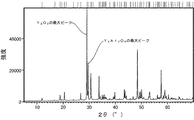
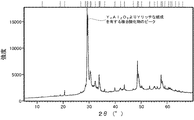
Classifications
-
- C—CHEMISTRY; METALLURGY
- C23—COATING METALLIC MATERIAL; COATING MATERIAL WITH METALLIC MATERIAL; CHEMICAL SURFACE TREATMENT; DIFFUSION TREATMENT OF METALLIC MATERIAL; COATING BY VACUUM EVAPORATION, BY SPUTTERING, BY ION IMPLANTATION OR BY CHEMICAL VAPOUR DEPOSITION, IN GENERAL; INHIBITING CORROSION OF METALLIC MATERIAL OR INCRUSTATION IN GENERAL
- C23C—COATING METALLIC MATERIAL; COATING MATERIAL WITH METALLIC MATERIAL; SURFACE TREATMENT OF METALLIC MATERIAL BY DIFFUSION INTO THE SURFACE, BY CHEMICAL CONVERSION OR SUBSTITUTION; COATING BY VACUUM EVAPORATION, BY SPUTTERING, BY ION IMPLANTATION OR BY CHEMICAL VAPOUR DEPOSITION, IN GENERAL
- C23C4/00—Coating by spraying the coating material in the molten state, e.g. by flame, plasma or electric discharge
- C23C4/04—Coating by spraying the coating material in the molten state, e.g. by flame, plasma or electric discharge characterised by the coating material
- C23C4/10—Oxides, borides, carbides, nitrides or silicides; Mixtures thereof
- C23C4/11—Oxides
-
- C—CHEMISTRY; METALLURGY
- C01—INORGANIC CHEMISTRY
- C01F—COMPOUNDS OF THE METALS BERYLLIUM, MAGNESIUM, ALUMINIUM, CALCIUM, STRONTIUM, BARIUM, RADIUM, THORIUM, OR OF THE RARE-EARTH METALS
- C01F17/00—Compounds of rare earth metals
- C01F17/20—Compounds containing only rare earth metals as the metal element
- C01F17/206—Compounds containing only rare earth metals as the metal element oxide or hydroxide being the only anion
-
- C—CHEMISTRY; METALLURGY
- C04—CEMENTS; CONCRETE; ARTIFICIAL STONE; CERAMICS; REFRACTORIES
- C04B—LIME, MAGNESIA; SLAG; CEMENTS; COMPOSITIONS THEREOF, e.g. MORTARS, CONCRETE OR LIKE BUILDING MATERIALS; ARTIFICIAL STONE; CERAMICS; REFRACTORIES; TREATMENT OF NATURAL STONE
- C04B35/00—Shaped ceramic products characterised by their composition; Ceramics compositions; Processing powders of inorganic compounds preparatory to the manufacturing of ceramic products
- C04B35/01—Shaped ceramic products characterised by their composition; Ceramics compositions; Processing powders of inorganic compounds preparatory to the manufacturing of ceramic products based on oxide ceramics
-
- C—CHEMISTRY; METALLURGY
- C04—CEMENTS; CONCRETE; ARTIFICIAL STONE; CERAMICS; REFRACTORIES
- C04B—LIME, MAGNESIA; SLAG; CEMENTS; COMPOSITIONS THEREOF, e.g. MORTARS, CONCRETE OR LIKE BUILDING MATERIALS; ARTIFICIAL STONE; CERAMICS; REFRACTORIES; TREATMENT OF NATURAL STONE
- C04B35/00—Shaped ceramic products characterised by their composition; Ceramics compositions; Processing powders of inorganic compounds preparatory to the manufacturing of ceramic products
- C04B35/01—Shaped ceramic products characterised by their composition; Ceramics compositions; Processing powders of inorganic compounds preparatory to the manufacturing of ceramic products based on oxide ceramics
- C04B35/10—Shaped ceramic products characterised by their composition; Ceramics compositions; Processing powders of inorganic compounds preparatory to the manufacturing of ceramic products based on oxide ceramics based on aluminium oxide
-
- C—CHEMISTRY; METALLURGY
- C04—CEMENTS; CONCRETE; ARTIFICIAL STONE; CERAMICS; REFRACTORIES
- C04B—LIME, MAGNESIA; SLAG; CEMENTS; COMPOSITIONS THEREOF, e.g. MORTARS, CONCRETE OR LIKE BUILDING MATERIALS; ARTIFICIAL STONE; CERAMICS; REFRACTORIES; TREATMENT OF NATURAL STONE
- C04B35/00—Shaped ceramic products characterised by their composition; Ceramics compositions; Processing powders of inorganic compounds preparatory to the manufacturing of ceramic products
- C04B35/50—Shaped ceramic products characterised by their composition; Ceramics compositions; Processing powders of inorganic compounds preparatory to the manufacturing of ceramic products based on rare-earth compounds
- C04B35/505—Shaped ceramic products characterised by their composition; Ceramics compositions; Processing powders of inorganic compounds preparatory to the manufacturing of ceramic products based on rare-earth compounds based on yttrium oxide
-
- C—CHEMISTRY; METALLURGY
- C04—CEMENTS; CONCRETE; ARTIFICIAL STONE; CERAMICS; REFRACTORIES
- C04B—LIME, MAGNESIA; SLAG; CEMENTS; COMPOSITIONS THEREOF, e.g. MORTARS, CONCRETE OR LIKE BUILDING MATERIALS; ARTIFICIAL STONE; CERAMICS; REFRACTORIES; TREATMENT OF NATURAL STONE
- C04B41/00—After-treatment of mortars, concrete, artificial stone or ceramics; Treatment of natural stone
- C04B41/009—After-treatment of mortars, concrete, artificial stone or ceramics; Treatment of natural stone characterised by the material treated
-
- C—CHEMISTRY; METALLURGY
- C04—CEMENTS; CONCRETE; ARTIFICIAL STONE; CERAMICS; REFRACTORIES
- C04B—LIME, MAGNESIA; SLAG; CEMENTS; COMPOSITIONS THEREOF, e.g. MORTARS, CONCRETE OR LIKE BUILDING MATERIALS; ARTIFICIAL STONE; CERAMICS; REFRACTORIES; TREATMENT OF NATURAL STONE
- C04B41/00—After-treatment of mortars, concrete, artificial stone or ceramics; Treatment of natural stone
- C04B41/45—Coating or impregnating, e.g. injection in masonry, partial coating of green or fired ceramics, organic coating compositions for adhering together two concrete elements
- C04B41/50—Coating or impregnating, e.g. injection in masonry, partial coating of green or fired ceramics, organic coating compositions for adhering together two concrete elements with inorganic materials
- C04B41/5025—Coating or impregnating, e.g. injection in masonry, partial coating of green or fired ceramics, organic coating compositions for adhering together two concrete elements with inorganic materials with ceramic materials
- C04B41/5045—Rare-earth oxides
-
- C—CHEMISTRY; METALLURGY
- C04—CEMENTS; CONCRETE; ARTIFICIAL STONE; CERAMICS; REFRACTORIES
- C04B—LIME, MAGNESIA; SLAG; CEMENTS; COMPOSITIONS THEREOF, e.g. MORTARS, CONCRETE OR LIKE BUILDING MATERIALS; ARTIFICIAL STONE; CERAMICS; REFRACTORIES; TREATMENT OF NATURAL STONE
- C04B41/00—After-treatment of mortars, concrete, artificial stone or ceramics; Treatment of natural stone
- C04B41/80—After-treatment of mortars, concrete, artificial stone or ceramics; Treatment of natural stone of only ceramics
- C04B41/81—Coating or impregnation
- C04B41/85—Coating or impregnation with inorganic materials
- C04B41/87—Ceramics
-
- C—CHEMISTRY; METALLURGY
- C23—COATING METALLIC MATERIAL; COATING MATERIAL WITH METALLIC MATERIAL; CHEMICAL SURFACE TREATMENT; DIFFUSION TREATMENT OF METALLIC MATERIAL; COATING BY VACUUM EVAPORATION, BY SPUTTERING, BY ION IMPLANTATION OR BY CHEMICAL VAPOUR DEPOSITION, IN GENERAL; INHIBITING CORROSION OF METALLIC MATERIAL OR INCRUSTATION IN GENERAL
- C23C—COATING METALLIC MATERIAL; COATING MATERIAL WITH METALLIC MATERIAL; SURFACE TREATMENT OF METALLIC MATERIAL BY DIFFUSION INTO THE SURFACE, BY CHEMICAL CONVERSION OR SUBSTITUTION; COATING BY VACUUM EVAPORATION, BY SPUTTERING, BY ION IMPLANTATION OR BY CHEMICAL VAPOUR DEPOSITION, IN GENERAL
- C23C4/00—Coating by spraying the coating material in the molten state, e.g. by flame, plasma or electric discharge
- C23C4/04—Coating by spraying the coating material in the molten state, e.g. by flame, plasma or electric discharge characterised by the coating material
- C23C4/10—Oxides, borides, carbides, nitrides or silicides; Mixtures thereof
-
- C—CHEMISTRY; METALLURGY
- C23—COATING METALLIC MATERIAL; COATING MATERIAL WITH METALLIC MATERIAL; CHEMICAL SURFACE TREATMENT; DIFFUSION TREATMENT OF METALLIC MATERIAL; COATING BY VACUUM EVAPORATION, BY SPUTTERING, BY ION IMPLANTATION OR BY CHEMICAL VAPOUR DEPOSITION, IN GENERAL; INHIBITING CORROSION OF METALLIC MATERIAL OR INCRUSTATION IN GENERAL
- C23C—COATING METALLIC MATERIAL; COATING MATERIAL WITH METALLIC MATERIAL; SURFACE TREATMENT OF METALLIC MATERIAL BY DIFFUSION INTO THE SURFACE, BY CHEMICAL CONVERSION OR SUBSTITUTION; COATING BY VACUUM EVAPORATION, BY SPUTTERING, BY ION IMPLANTATION OR BY CHEMICAL VAPOUR DEPOSITION, IN GENERAL
- C23C4/00—Coating by spraying the coating material in the molten state, e.g. by flame, plasma or electric discharge
- C23C4/12—Coating by spraying the coating material in the molten state, e.g. by flame, plasma or electric discharge characterised by the method of spraying
- C23C4/134—Plasma spraying
-
- C—CHEMISTRY; METALLURGY
- C23—COATING METALLIC MATERIAL; COATING MATERIAL WITH METALLIC MATERIAL; CHEMICAL SURFACE TREATMENT; DIFFUSION TREATMENT OF METALLIC MATERIAL; COATING BY VACUUM EVAPORATION, BY SPUTTERING, BY ION IMPLANTATION OR BY CHEMICAL VAPOUR DEPOSITION, IN GENERAL; INHIBITING CORROSION OF METALLIC MATERIAL OR INCRUSTATION IN GENERAL
- C23C—COATING METALLIC MATERIAL; COATING MATERIAL WITH METALLIC MATERIAL; SURFACE TREATMENT OF METALLIC MATERIAL BY DIFFUSION INTO THE SURFACE, BY CHEMICAL CONVERSION OR SUBSTITUTION; COATING BY VACUUM EVAPORATION, BY SPUTTERING, BY ION IMPLANTATION OR BY CHEMICAL VAPOUR DEPOSITION, IN GENERAL
- C23C4/00—Coating by spraying the coating material in the molten state, e.g. by flame, plasma or electric discharge
- C23C4/18—After-treatment
Landscapes
- Chemical & Material Sciences (AREA)
- Engineering & Computer Science (AREA)
- Organic Chemistry (AREA)
- Materials Engineering (AREA)
- Plasma & Fusion (AREA)
- Physics & Mathematics (AREA)
- Ceramic Engineering (AREA)
- Chemical Kinetics & Catalysis (AREA)
- Metallurgy (AREA)
- Mechanical Engineering (AREA)
- Structural Engineering (AREA)
- Inorganic Chemistry (AREA)
- Manufacturing & Machinery (AREA)
- Life Sciences & Earth Sciences (AREA)
- Geology (AREA)
- Coating By Spraying Or Casting (AREA)
- Compounds Of Alkaline-Earth Elements, Aluminum Or Rare-Earth Metals (AREA)
- Drying Of Semiconductors (AREA)
Abstract
【解決手段】希土類(R)、アルミニウム及び酸素を含有し、希土類及びアルミニウムを含有する複合酸化物の結晶相を含む溶射皮膜であり、希土類及びアルミニウムを含有する複合酸化物の結晶相が、希土類・アルミニウム・モノクリニック(R4Al2O9)のAl原子のサイトの一部が希土類(R)原子で置換された、希土類・アルミニウム・モノクリニック(R4Al2O9)の化学量論組成より希土類リッチな組成を有する複合酸化物の結晶相を含む溶射皮膜。【効果】ハロゲン系ガスプラズマとの反応によって発生するパーティクル量が少なく、耐プラズマエッチング性能に優れた高耐食性の溶射皮膜を形成することができ、このような溶射皮膜は、半導体製造工程において用いられるプラズマエッチング装置内の部品、部材等に形成される溶射皮膜として優れている。【選択図】図2SOLUTION: The spray film contains rare earth (R), aluminum and oxygen, and contains a crystal phase of a composite oxide containing rare earth and aluminum, and the crystal phase of the composite oxide containing rare earth and aluminum is a rare earth. -Composite oxidation with a rare earth rich composition than the chemical quantitative composition of the rare earth aluminum monoclinic (R4Al2O9), in which a part of the Al atom site of the aluminum monoclinic (R4Al2O9) is replaced with a rare earth (R) atom. A spray film containing the crystalline phase of an object. [Effect] The amount of particles generated by the reaction with halogen-based gas plasma is small, and a highly corrosion-resistant thermal spray coating with excellent plasma etching resistance can be formed. Such a thermal spray coating is used in the semiconductor manufacturing process. It is excellent as a thermal spray coating formed on parts and members in a plasma etching apparatus. [Selection diagram] Fig. 2
Description
本発明は、半導体製造工程において用いられるプラズマエッチング装置内の部品、部材等での使用に好適な溶射皮膜及びその形成方法、溶射皮膜の形成に用いられる溶射材料及びその製造方法に関する。また、本発明は、半導体製造工程において用いられるプラズマエッチング装置内等の使用に好適な溶射部材に関する。 The present invention relates to a thermal spray coating suitable for use in parts, members, etc. in a plasma etching apparatus used in a semiconductor manufacturing process and a method for forming the thermal spray coating, and a thermal spray material used for forming the thermal spray coating and a method for producing the same. The present invention also relates to a thermal spraying member suitable for use in a plasma etching apparatus used in a semiconductor manufacturing process.
半導体製造工程において用いられるプラズマエッチング装置内では、被処理物であるウェハーが、高腐食性のフッ素系、塩素系のハロゲン系ガスプラズマ雰囲気で処理される。このフッ素系ガスとしては、SF6、CF4、CHF3、ClF3、HF、NF3等が、また、塩素系ガスとしてはCl2、BCl3、HCl、CCl4、SiCl4等が用いられている。 In the plasma etching apparatus used in the semiconductor manufacturing process, the wafer to be processed is processed in a highly corrosive fluorine-based or chlorine-based halogen-based gas plasma atmosphere. SF 6 , CF 4 , CHF 3 , ClF 3 , HF, NF 3, etc. are used as the fluorine-based gas, and Cl 2 , BCl 3 , HCl, CCl 4 , SiCl 4, etc. are used as the chlorine-based gas. ing.
プラズマエッチング装置の、高腐食性のガスプラズマ雰囲気に晒される部品、部材の製造には、一般に、希土類化合物等の原料を粉末の形態で供給する大気プラズマ溶射(APS)法や、原料を分散媒に分散させたスラリーの形態で溶射するサスペンションプラズマ溶射(SPS)法等を用いて、基材の表面に耐食性の溶射皮膜を形成することが行われている。この希土類化合物としては、酸化イットリウム、フッ化イットリウム、オキシフッ化イットリウム、イットリウム・アルミニウム・ガーネット等が挙げられる。 In the production of parts and members exposed to a highly corrosive gas plasma atmosphere of a plasma etching apparatus, generally, an atmospheric spraying (APS) method in which a raw material such as a rare earth compound is supplied in the form of a powder or a dispersion medium is used. A corrosion-resistant thermal spray coating is formed on the surface of the base material by using a suspension plasma spraying (SPS) method or the like in which thermal spraying is performed in the form of a slurry dispersed in. Examples of this rare earth compound include yttrium oxide, yttrium fluoride, yttrium oxyfluoride, yttrium aluminum garnet and the like.
しかし、希土類化合物の溶射皮膜では、腐食性のハロゲン系ガスプラズマに対して耐食性に優れる酸化イットリウム溶射皮膜は、耐プラズマエッチング性能には優れるが、イットリウム系パーティクル量が多いという問題があり、フッ化イットリウム系溶射皮膜は、耐プラズマ性能に優れると考えられてはいるが、皮膜硬度が低い傾向にあり、耐プラズマエッチング性能が劣る。また、イットリウム・アルミニウム・ガーネット皮膜は、希土類パーティクル量は少なく、皮膜硬度は高いが、耐食性が不足しており、耐プラズマエッチング性能が劣る。 However, in the sprayed coating of rare earth compounds, the yttrium oxide sprayed coating, which has excellent corrosion resistance against corrosive halogen-based gas plasma, has excellent plasma etching resistance, but has a problem that the amount of yttrium-based particles is large, and fluoride. Although the yttrium-based thermal spray coating is considered to have excellent plasma resistance, the coating tends to have low hardness and is inferior in plasma etching resistance. Further, the yttrium aluminum garnet film has a small amount of rare earth particles and a high film hardness, but lacks corrosion resistance and is inferior in plasma etching resistance.
一方、特開2003−63883号公報(特許文献1)には、希土類・アルミニウム・モノクリニックを主相とし、副相として希土類・アルミニウム・ペロブスカイト、希土類・アルミニウム・ガーネット、希土類酸化物のいずれか1種類以上の相との混合相を、基板上に積層した部材が提案されているが、特に、耐食性の観点では、更に改善の余地があった。 On the other hand, Japanese Patent Application Laid-Open No. 2003-63883 (Patent Document 1) states that the main phase is rare earth / aluminum / monoclinic, and the subphase is any one of rare earth / aluminum / perovskite, rare earth / aluminum / garnet, and rare earth oxide. A member in which a mixed phase with more than one kind of phase is laminated on a substrate has been proposed, but there is room for further improvement especially from the viewpoint of corrosion resistance.
プラズマエッチング装置の部品、部材に用いられる耐食性溶射皮膜には、従来、耐プラズマ性を有する酸化イットリウム溶射皮膜やフッ化イットリウム溶射皮膜、イットリウム・アルミニウム・ガーネット溶射皮膜等が用いられてきたが、腐食性のハロゲン系ガスプラズマとの反応によるイットリウム系パーティクルの大量発生や、皮膜が低硬度であること又は低耐食性であるため、耐プラズマエッチング性能が不足していることが問題となっている。 As the corrosion-resistant thermal spray coating used for parts and members of plasma etching equipment, conventionally, plasma-resistant yttrium oxide thermal spray coating, yttrium fluoride thermal spray coating, yttrium aluminum garnet thermal spray coating, etc. have been used, but corrosion. There are problems that a large amount of yttrium particles are generated by the reaction with the sexual halogen-based gas plasma, and that the film has low hardness or low corrosion resistance, so that the plasma etching resistance is insufficient.
本発明は、上記事情に鑑みてなされたものであり、プラズマエッチング装置内の部品・部材等に使用され、ハロゲン系ガスプラズマとの反応によって発生するパーティクル量が少なく、かつ耐プラズマエッチング性能に優れた高耐食性の溶射皮膜及びその形成方法、このような溶射皮膜を形成できる溶射材料及びその製造方法、並びにこのような溶射皮膜を備える溶射部材を提供することを目的とする。 The present invention has been made in view of the above circumstances, is used for parts and members in a plasma etching apparatus, has a small amount of particles generated by a reaction with a halogen-based gas plasma, and has excellent plasma etching resistance. It is an object of the present invention to provide a thermal spray coating having high corrosion resistance and a method for forming the same, a thermal spray material capable of forming such a thermal spray coating and a method for producing the same, and a thermal spray member provided with such a thermal spray coating.
そこで、本発明者らは、上記課題を解決するために鋭意検討を重ねた結果、希土類(R)、アルミニウム及び酸素を含有し、希土類(R)・アルミニウム・モノクリニック(R4Al2O9)の結晶相及び希土類酸化物(R2O3)の結晶相を含む粉末状の溶射材料として、所定の構造、物性を有する溶射材料が、ハロゲン系ガスプラズマとの反応によって発生するパーティクル量が少なく、耐プラズマエッチング性能に優れた高耐食性の溶射皮膜を形成できること、このような溶射材料が、希土類塩水溶液に酸化アルミニウムを分散させてスラリーを形成し、スラリーに沈殿剤を添加して、希土類及びアルミニウムを含有する前駆体物質を沈殿として晶出させ、沈殿を固液分離して回収し、得られた希土類及びアルミニウムを含有する前駆体物質を、酸素ガス含有雰囲気下で焼成することにより好適に製造できることを見出した。 Therefore, as a result of diligent studies to solve the above problems, the present inventors have made a rare earth (R), aluminum and oxygen-containing rare earth (R) aluminum monoclinic (R 4 Al 2 O 9). ) And the powdery spray material containing the crystal phase of the rare earth oxide (R 2 O 3 ), the spray material having a predetermined structure and physical properties has the amount of particles generated by the reaction with the halogen-based gas plasma. It is possible to form a highly corrosion-resistant spray film with less plasma etching resistance, and such a spray material disperses aluminum oxide in a rare earth salt aqueous solution to form a slurry, and a precipitant is added to the slurry to form a rare earth element. It is preferable to crystallize the precursor material containing aluminum and aluminum as a precipitate, separate the precipitate by solid-liquid separation and recover, and fire the obtained rare earth and the precursor substance containing aluminum in an oxygen gas-containing atmosphere. It was found that it can be manufactured in.
更に、本発明者らは、このような溶射材料を用いれば、溶射、特にプラズマ溶射により、希土類及びアルミニウムを含む複合酸化物を含む溶射皮膜を形成できること、特に、このような溶射材料を用いて形成した溶射皮膜が、希土類(R)、アルミニウム及び酸素を含有し、希土類及びアルミニウムを含有する複合酸化物の結晶相が、希土類・アルミニウム・モノクリニック(R4Al2O9)のAl原子のサイトの一部が希土類(R)原子で置換された、希土類・アルミニウム・モノクリニック(R4Al2O9)の化学量論組成より希土類リッチな組成を有する複合酸化物の結晶相を含み、ハロゲン系ガスプラズマとの反応によって発生するパーティクル量が少なく、耐プラズマエッチング性能に優れた高耐食性の溶射皮膜であること、また、基材上に、直接又は下地皮膜を介して溶射皮膜を形成した溶射部材が、プラズマエッチング装置内の部品・部材として優れていることを見出し、本発明をなすに至った。 Furthermore, the present inventors can form a thermal spray coating containing a composite oxide containing rare earths and aluminum by thermal spraying, particularly plasma spraying, using such a thermal spray material, particularly using such a thermal spray material. The formed sprayed coating contains rare earth (R), aluminum and oxygen, and the crystal phase of the rare earth and the composite oxide containing aluminum is the Al atom of the rare earth aluminum monoclinic (R 4 Al 2 O 9 ). It contains a crystal phase of a composite oxide having a composition richer in rare earth than the chemical quantitative composition of rare earth aluminum monoclinic (R 4 Al 2 O 9 ) in which a part of the site is replaced with a rare earth (R) atom. It is a highly corrosion-resistant thermal spray coating with a small amount of particles generated by the reaction with halogen-based gas plasma and excellent plasma etching resistance, and a thermal spray coating is formed on the substrate directly or via an undercoat. We have found that the thermal spraying member is excellent as a component / member in a plasma etching apparatus, and have come to the present invention.
従って、本発明は、下記の溶射材料、溶射材料の製造方法、溶射皮膜の形成方法、溶射皮膜及び溶射部材を提供する。
1.希土類(R)、アルミニウム及び酸素を含有し、希土類(R)・アルミニウム・モノクリニック(R4Al2O9)の結晶相及び希土類酸化物(R2O3)の結晶相を含む粉末状の溶射材料であって、
X線回折法(特性X線:Cu−Kα)によって、回折角2θ=10〜70°の範囲内に検出される結晶相の回折ピークのうち、希土類酸化物(R2O3)に帰属される回折ピークの最大ピークの積分強度値I(R)と、希土類・アルミニウム・モノクリニック(R4Al2O9)に帰属される回折ピークの最大ピークの積分強度値I(RAL)との強度比I(R)/I(RAL)が1以上であることを特徴とする溶射材料。
2.BET比表面積S(m2/g)が1以上、嵩密度ρ(g/cm3)が2以下であることを特徴とする1記載の溶射材料。
3.上記BET比表面積Sを上記嵩密度ρで除したS/ρの値が1〜4であることを特徴とする2記載の溶射材料。
4.希土類(R)及びアルミニウムの含有量から算出される希土類酸化物(R2O3)相当量及び酸化アルミニウム(Al2O3)相当量が、希土類酸化物(R2O3)と酸化アルミニウム(Al2O3)との合計に対して、希土類酸化物(R2O3)が75〜99質量%、酸化アルミニウム(Al2O3)が1〜25質量%であることを特徴とする1〜3のいずれかに記載の溶射材料。
5.上記希土類(R)が、イットリウム(Y)、ガドリニウム(Gd)、テルビウム(Tb)、ジスプロシウム(Dy)、ホルミウム(Ho)、エルビウム(Er)、ツリウム(Tm)、イッテルビウム(Yb)及びルテチウム(Lu)から選ばれる1種以上の元素を含むことを特徴とする1〜4のいずれかに記載の溶射材料。
6.平均粒子径D50が1〜50μmであることを特徴とする1〜5のいずれかに記載の溶射材料。
7.1〜6のいずれかに記載の溶射材料と、分散媒とを含むスラリーであり、上記溶射材料の含有率が10〜70質量%であることを特徴とする溶射材料。
8.上記分散媒が水系分散媒であることを特徴とする7に記載の溶射材料。
9.更に、分散剤を含むことを特徴とする7又は8に記載の溶射材料。
10.粘度が15mPa・s未満であることを特徴とする7〜9のいずれかに記載の溶射材料。
11.希土類塩水溶液に酸化アルミニウムを分散させてスラリーを形成する工程、
上記スラリーに沈殿剤を添加して、希土類及びアルミニウムを含有する前駆体物質を沈殿として晶出させる工程、
上記沈殿を固液分離して回収する工程、及び
得られた上記希土類及びアルミニウムを含有する前駆体物質を、酸素ガス含有雰囲気下で焼成する工程
を含むことを特徴とする溶射材料の製造方法。
12.1〜10のいずれかに記載の溶射材料を用いて、プラズマ溶射により、基材上に、直接又は下地皮膜を介して、希土類及びアルミニウムを含有する複合酸化物を含む溶射皮膜を形成することを特徴とする溶射皮膜の形成方法。
13.希土類(R)、アルミニウム及び酸素を含有し、希土類及びアルミニウムを含有する複合酸化物の結晶相を含む溶射皮膜であって、
上記希土類及びアルミニウムを含有する複合酸化物の結晶相が、希土類・アルミニウム・モノクリニック(R4Al2O9)のAl原子のサイトの一部が希土類(R)原子で置換された、希土類・アルミニウム・モノクリニック(R4Al2O9)の化学量論組成より希土類リッチな組成を有する複合酸化物の結晶相を含むことを特徴とする溶射皮膜。
14.更に、希土類酸化物(R2O3)の結晶相を含むことを特徴とする13に記載の溶射皮膜。
15.更に、希土類・アルミニウム・モノクリニック(R4Al2O9)の結晶相、希土類・アルミニウム・ペロブスカイト(RAlO3)の結晶相及び希土類・アルミニウム・ガーネット(R3Al5O12)の結晶相から選ばれる1種以上の結晶相を含むことを特徴とする13又は14に記載の溶射皮膜。
16.希土類(R)及びアルミニウムの含有量から算出される希土類酸化物(R2O3)相当量及び酸化アルミニウム(Al2O3)相当量が、希土類酸化物(R2O3)と酸化アルミニウム(Al2O3)との合計に対して、希土類酸化物(R2O3)が75〜99質量%、酸化アルミニウム(Al2O3)が1〜25質量%であることを特徴とする13〜15のいずれかに記載の溶射皮膜。
17.上記希土類(R)が、イットリウム(Y)、ガドリニウム(Gd)、テルビウム(Tb)、ジスプロシウム(Dy)、ホルミウム(Ho)、エルビウム(Er)、ツリウム(Tm)、イッテルビウム(Yb)及びルテチウム(Lu)から選ばれる1種以上の元素を含むことを特徴とする13〜16のいずれかに記載の溶射皮膜。
18.面粗度Raが8μm以下であることを特徴とする13〜17のいずれかに記載の溶射皮膜。
19.膜厚が10〜500μmであることを特徴とする13〜18のいずれかに記載の溶射皮膜。
20.ビッカース硬度HV0.3が600以上であることを特徴とする13〜19のいずれかに記載の溶射皮膜。
21.気孔率が5%以下であることを特徴とする13〜20のいずれかに記載の溶射皮膜。
22.基材上に、直接又は下地皮膜を介して形成された、13〜21のいずれかに記載の溶射皮膜を備えることを特徴とする溶射部材。
Therefore, the present invention provides the following thermal spray material, a method for producing a thermal spray material, a method for forming a thermal spray coating, a thermal spray coating and a thermal spray member.
1. 1. A powdery substance containing rare earth (R), aluminum and oxygen, and containing a crystal phase of rare earth (R), aluminum monoclinic (R 4 Al 2 O 9 ) and a crystal phase of rare earth oxide (R 2 O 3 ). It is a spray material
Of the diffraction peaks of the crystal phase detected within the range of diffraction angle 2θ = 10 to 70 ° by the X-ray diffraction method (characteristic X-ray: Cu-Kα), it is assigned to the rare earth oxide (R 2 O 3 ). The intensity of the integrated intensity value I (R) of the maximum peak of the diffraction peak and the integrated intensity value I (RAL) of the maximum peak of the diffraction peak belonging to the rare earth / aluminum monoclinic (R 4 Al 2 O 9 ). A spraying material having a ratio I (R) / I (RAL) of 1 or more.
2. The thermal spray material according to 1, wherein the BET specific surface area S (m 2 / g) is 1 or more, and the bulk density ρ (g / cm 3 ) is 2 or less.
3. 3. 2. The sprayed material according to 2, wherein the value of S / ρ obtained by dividing the BET specific surface area S by the bulk density ρ is 1 to 4.
4. Rare earth oxide (R 2 O 3 ) equivalent amount and aluminum oxide (Al 2 O 3 ) equivalent amount calculated from the contents of rare earth (R) and aluminum are rare earth oxide (R 2 O 3 ) and aluminum oxide (R 2 O 3 ). relative to the sum of the Al 2 O 3), wherein the rare earth oxide (R 2 O 3) is 75 to 99 mass%, aluminum oxide (Al 2 O 3) is from 1 to 25 wt% 1 The spraying material according to any one of ~ 3.
5. The rare earths (R) are ytterbium (Y), gadolinium (Gd), ytterbium (Tb), dysprosium (Dy), formium (Ho), erbium (Er), thulium (Tm), ytterbium (Yb) and lutetium (Lu). ), The spray material according to any one of 1 to 4, which comprises one or more elements selected from).
6. The thermal spray material according to any one of 1 to 5, wherein the average particle size D50 is 1 to 50 μm.
A slurry containing the thermal spraying material according to any one of 7.1 to 6 and a dispersion medium, wherein the content of the thermal spraying material is 10 to 70% by mass.
8. 7. The thermal spray material according to 7, wherein the dispersion medium is an aqueous dispersion medium.
9. 7. The thermal spray material according to 7 or 8, which further comprises a dispersant.
10. The thermal spray material according to any one of 7 to 9, wherein the thermal spray material has a viscosity of less than 15 mPa · s.
11. A process of dispersing aluminum oxide in a rare earth salt aqueous solution to form a slurry,
A step of adding a precipitant to the above slurry to crystallize a precursor substance containing rare earths and aluminum as a precipitate.
A method for producing a thermal spray material, which comprises a step of solid-liquid separation and recovery of the precipitate, and a step of calcining the obtained precursor substance containing rare earths and aluminum in an oxygen gas-containing atmosphere.
Using the thermal spray material according to any one of 12.1 to 10, a thermal spray coating containing a composite oxide containing rare earths and aluminum is formed on a base material by plasma spraying, either directly or via an undercoat. A method for forming a thermal spray coating.
13. A thermal spray coating containing rare earth (R), aluminum and oxygen, and containing a crystal phase of a composite oxide containing rare earth and aluminum.
The crystal phase of the above rare earth and aluminum-containing composite oxide is a rare earth / aluminum monoclinic (R 4 Al 2 O 9 ) in which a part of the Al atom site is replaced with a rare earth (R) atom. A spray coating characterized by containing a crystal phase of a composite oxide having a composition rich in rare earths from the chemical quantitative composition of aluminum monoclinic (R 4 Al 2 O 9 ).
14. The thermal spray coating according to 13, further comprising a crystal phase of a rare earth oxide (R 2 O 3 ).
15. Furthermore, from the crystal phase of rare earth / aluminum monoclinic (R 4 Al 2 O 9 ), the crystal phase of rare earth / aluminum perovskite (RAO 3 ), and the crystal phase of rare earth / aluminum garnet (R 3 Al 5 O 12 ). 13. The spray coating according to 13 or 14, which comprises one or more selected crystal phases.
16. Rare earth oxide (R 2 O 3 ) equivalent amount and aluminum oxide (Al 2 O 3 ) equivalent amount calculated from the contents of rare earth (R) and aluminum are rare earth oxide (R 2 O 3 ) and aluminum oxide (R 2 O 3 ). relative to the sum of the Al 2 O 3), wherein the rare earth oxide (R 2 O 3) is 75 to 99 mass%, aluminum oxide (Al 2 O 3) 1 to 25 wt% 13 The spray coating according to any one of ~ 15.
17. The rare earths (R) are ytterbium (Y), gadolinium (Gd), ytterbium (Tb), dysprosium (Dy), formium (Ho), erbium (Er), thulium (Tm), ytterbium (Yb) and lutetium (Lu). The spray coating according to any one of 13 to 16, which comprises one or more elements selected from).
18. The sprayed coating according to any one of 13 to 17, wherein the surface roughness Ra is 8 μm or less.
19. The thermal spray coating according to any one of 13 to 18, wherein the film thickness is 10 to 500 μm.
20. The thermal spray coating according to any one of 13 to 19, wherein the Vickers hardness HV 0.3 is 600 or more.
21. The sprayed coating according to any one of 13 to 20, which has a porosity of 5% or less.
22. The thermal spraying member according to any one of 13 to 21, which is formed on a base material directly or through an undercoat film.
本発明によれば、ハロゲン系ガスプラズマとの反応によって発生するパーティクル量が少なく、耐プラズマエッチング性能に優れた高耐食性の溶射皮膜を形成することができ、このような溶射皮膜は、半導体製造工程において用いられるプラズマエッチング装置内の部品、部材等に形成される溶射皮膜として優れている。 According to the present invention, it is possible to form a highly corrosion-resistant thermal spray coating having a small amount of particles generated by the reaction with a halogen-based gas plasma and having excellent plasma etching resistance. Such a thermal spray coating can be used in a semiconductor manufacturing process. It is excellent as a thermal spray coating formed on parts, members, etc. in the plasma etching apparatus used in.
以下、本発明について、更に詳細に説明する。
本発明の溶射材料は、半導体製造工程において用いられるプラズマエッチング装置内の部品、部材等での使用に好適な溶射皮膜の形成、特に、プラズマ溶射による溶射皮膜の形成に好適に用いられる。本発明の溶射材料は、希土類(R)、アルミニウム及び酸素を含有し、希土類(R)及びアルミニウムを含む複合酸化物の結晶相を含んでいることが好ましく、希土類(R)・アルミニウム・モノクリニック(R4Al2O9)の結晶相と、希土類酸化物(R2O3)の結晶相とを含むことがより好ましい。また、本発明の溶射材料の形態は、通常、粉末状(粒子状)である。本発明の溶射材料は、腐食性のハロゲン系ガスプラズマに対して、希土類パーティクルの発生が少なく、耐プラズマエッチング性能(耐食性)が優れた溶射皮膜を形成することができる。
Hereinafter, the present invention will be described in more detail.
The thermal spraying material of the present invention is suitably used for forming a thermal spray coating suitable for use in parts, members, etc. in a plasma etching apparatus used in a semiconductor manufacturing process, and in particular, for forming a thermal spray coating by plasma spraying. The sprayed material of the present invention contains rare earth (R), aluminum and oxygen, and preferably contains a crystal phase of a composite oxide containing rare earth (R) and aluminum, and is preferably a rare earth (R) aluminum monoclinic. It is more preferable to include a crystal phase of (R 4 Al 2 O 9 ) and a crystal phase of a rare earth oxide (R 2 O 3 ). The form of the sprayed material of the present invention is usually in the form of powder (particulate). The thermal spraying material of the present invention can form a thermal spray coating having less generation of rare earth particles and excellent plasma etching resistance (corrosion resistance) with respect to corrosive halogen-based gas plasma.
本発明の溶射材料は、X線回折法(特性X線:Cu−Kα)によって、回折角2θ=10〜70°の範囲内に検出される結晶相の回折ピークのうち、希土類酸化物(R2O3)に帰属される回折ピークの最大ピークの積分強度値I(R)と、希土類・アルミニウム・モノクリニック(R4Al2O9)に帰属される回折ピークの最大ピークの積分強度値I(RAL)との強度比I(R)/I(RAL)が1以上、特に1.1以上であることが好ましい。強度比I(R)/I(RAL)の上限は、通常45以下である。ピークの積分強度値は、得られるXRDプロファイル(回折強度プロファイル)からピーク強度を積算(ピーク面積を積分)することによって求めることができる。希土類・アルミニウム・モノクリニック(R4Al2O9)が、例えば、イットリウム・アルミニウム・モノクリニック(Y4Al2O9)である場合、その最大ピークは、特に限定されるものではないが、一般的に、結晶格子の(−122)面に帰属される回折ピークとなる。この回折ピークは、通常2θ=29.6°前後に検出される。また、希土類酸化物(R2O3)が、例えば、立方晶の酸化イットリウム(Y2O3)である場合、その最大ピークは、特に限定されるものではないが、一般的に、結晶格子の(222)面に帰属される回折ピークとなる。この回折ピークは、通常2θ=29.2°前後に検出される。 The sprayed material of the present invention is a rare earth oxide (R) among the diffraction peaks of the crystal phase detected within the range of the diffraction angle 2θ = 10 to 70 ° by the X-ray diffraction method (characteristic X-ray: Cu-Kα). The integrated intensity value I (R) of the maximum peak of the diffraction peak attributed to 2 O 3 ) and the integrated intensity value of the maximum peak of the diffraction peak attributed to the rare earth / aluminum monoclinic (R 4 Al 2 O 9 ). The intensity ratio I (R) / I (RAL) with I (RAL) is preferably 1 or more, particularly 1.1 or more. The upper limit of the intensity ratio I (R) / I (RAL) is usually 45 or less. The integrated intensity value of the peak can be obtained by integrating the peak intensity (integrating the peak area) from the obtained XRD profile (diffraction intensity profile). When the rare earth aluminum monoclinic (R 4 Al 2 O 9 ) is, for example, the yttrium aluminum mono clinic (Y 4 Al 2 O 9 ), its maximum peak is not particularly limited, but Generally, it is a diffraction peak attributed to the (-122) plane of the crystal lattice. This diffraction peak is usually detected around 2θ = 29.6 °. When the rare earth oxide (R 2 O 3 ) is, for example, cubic yttrium oxide (Y 2 O 3 ), its maximum peak is not particularly limited, but is generally a crystal lattice. It is a diffraction peak attributed to the (222) plane of. This diffraction peak is usually detected around 2θ = 29.2 °.
本発明の溶射材料は、比表面積S(m2/g)が1以上であることが好ましい。比表面積Sは、BET法によって測定された比表面積が適用できる。比表面積Sは1.1以上であることがより好ましい。比表面積が大きいほど、プラズマ溶射した際に、粒子の内部までフレームの熱が浸透しやすくなり、溶融粒子が、基材、又は基材上に形成された皮膜に衝突してスプラットを形成した際、皮膜が緻密になりやすく、スプラット間の結合も強固となる。比表面積Sの上限は、特に制限はないが、3.5以下であることが好ましく、3以下であることがより好ましい。比表面積が小さいほど、溶射フレームに入りきらずに形成された皮膜の表層部に付着してパーティクル汚染の原因となる微小粒子や、溶射フレームに入った場合に過剰な入熱によって蒸発してしまう微小粒子を減らすことができる。 The sprayed material of the present invention preferably has a specific surface area S (m 2 / g) of 1 or more. As the specific surface area S, the specific surface area measured by the BET method can be applied. The specific surface area S is more preferably 1.1 or more. The larger the specific surface area, the easier it is for the heat of the frame to penetrate into the inside of the particles during plasma spraying, and when the molten particles collide with the base material or the film formed on the base material to form splats. , The film tends to become dense, and the bond between splats becomes strong. The upper limit of the specific surface area S is not particularly limited, but is preferably 3.5 or less, and more preferably 3 or less. The smaller the specific surface area, the finer particles that adhere to the surface layer of the film formed without being able to fit in the thermal spray frame and cause particle contamination, and the finer particles that evaporate due to excessive heat input when they enter the thermal spray frame. Particles can be reduced.
本発明の溶射材料は、嵩密度ρ(g/cm3)が2以下であることが好ましい。嵩密度ρは、通常、ゆるみ嵩密度が適用される。嵩密度ρは1.8以下であることがより好ましい。嵩密度が低いほど、プラズマ溶射した際に、単位粒子当たりのフレーム熱浸透性が向上し、高硬度な皮膜を形成することが可能である。嵩密度ρの下限は、特に制限はないが、0.4以上であることが好ましく、0.5以上であることがより好ましい。嵩密度が高いほど、プラズマ溶射した際にスプラットを形成しやすくなり、形成される溶射皮膜が緻密になりやすい。また、粒子中の空隙内に含まれるガス成分が少ないので、形成される溶射皮膜の特性悪化のリスクを減らすことができる。 The sprayed material of the present invention preferably has a bulk density ρ (g / cm 3 ) of 2 or less. For the bulk density ρ, a loose bulk density is usually applied. The bulk density ρ is more preferably 1.8 or less. The lower the bulk density, the better the frame thermal permeability per unit particle when plasma spraying is performed, and it is possible to form a high hardness film. The lower limit of the bulk density ρ is not particularly limited, but is preferably 0.4 or more, and more preferably 0.5 or more. The higher the bulk density, the easier it is for plasma spraying to form splats, and the denser the sprayed coating that is formed. Further, since the amount of gas contained in the voids in the particles is small, the risk of deterioration of the characteristics of the formed sprayed coating can be reduced.
本発明の溶射材料は、比表面積S(m2/g)を、嵩密度ρ(g/cm3)で除したS/ρの値が1〜4であることが好ましい。S/ρが4を超える場合、比表面積Sが過大で、嵩密度ρが過小であり、パーティクル汚染の原因となる粒子や、粗雑な皮膜を形成してしまうスプラットを形成し易い粒子が増加するおそれがある。一方、S/ρが1未満の場合、比表面積Sが過小で、嵩密度ρが過大であり、未溶融部位が増加して粗雑な皮膜を形成してしまう粒子や、熱浸透性が悪いために形成した皮膜の硬度を低くしてしまう粒子が増加するおそれがある。S/ρの値は、1.2以上、特に1.5以上であることがより好ましく、また、3.8以下、特に3.5以下であることがより好ましい。 In the sprayed material of the present invention, the value of S / ρ obtained by dividing the specific surface area S (m 2 / g) by the bulk density ρ (g / cm 3 ) is preferably 1 to 4. When S / ρ exceeds 4, the specific surface area S is excessive and the bulk density ρ is too small, and the number of particles that cause particle contamination and the number of particles that easily form splats that form a coarse film increase. There is a risk. On the other hand, when S / ρ is less than 1, the specific surface area S is too small, the bulk density ρ is too large, the number of unmelted parts increases to form a coarse film, and the heat permeability is poor. There is a risk that the number of particles that reduce the hardness of the film formed on the surface will increase. The value of S / ρ is more preferably 1.2 or more, particularly 1.5 or more, and more preferably 3.8 or less, particularly 3.5 or less.
本発明の溶射材料は、希土類(R)及びアルミニウムの含有量から算出される希土類酸化物(R2O3)相当量及び酸化アルミニウム(Al2O3)相当量が、希土類酸化物(R2O3)と酸化アルミニウム(Al2O3)との合計に対して、希土類酸化物(R2O3)が75〜99質量%、酸化アルミニウム(Al2O3)が1〜25質量%であることが好ましい。希土類酸化物(R2O3)相当量は、80質量%以上、特に85質量%以上であることがより好ましく、また、97質量%以下、特に95質量%以下であることがより好ましい。一方、酸化アルミニウム(Al2O3)相当量は、3質量%以上、特に5質量%以上であることがより好ましく、また、20質量%以下、特に15質量%以下であることがより好ましい。 In the sprayed material of the present invention, the equivalent amount of rare earth oxide (R 2 O 3 ) and the equivalent amount of aluminum oxide (Al 2 O 3 ) calculated from the contents of rare earth (R) and aluminum are the rare earth oxide (R 2). the total of the O 3) and aluminum oxide (Al 2 O 3), rare earth oxide (R 2 O 3) is 75 to 99 mass%, aluminum oxide (Al 2 O 3) is 1 to 25 wt% It is preferable to have. The amount equivalent to the rare earth oxide (R 2 O 3 ) is more preferably 80% by mass or more, particularly 85% by mass or more, and more preferably 97% by mass or less, particularly 95% by mass or less. On the other hand, the amount equivalent to aluminum oxide (Al 2 O 3 ) is more preferably 3% by mass or more, particularly 5% by mass or more, and more preferably 20% by mass or less, particularly 15% by mass or less.
本発明の溶射材料においては、主成分酸化物(希土類及びアルミニウムを含有する複合酸化物及び希土類酸化物(2種)、更に酸化アルミニウムを含む場合は、希土類及びアルミニウムを含有する複合酸化物、希土類酸化物及び酸化アルミニウム(3種))の質量の合計を、希土類酸化物及び酸化アルミニウム相当量の質量の合計とし、溶射材料中の希土類及びアルミニウムの含有量から、希土類酸化物の基本組成であるR2O3及び酸化アルミニウムの基本組成であるAl2O3に換算した量を、各々、希土類酸化物相当量及び酸化アルミニウム相当量とする。溶射材料は、特に制限されるものではないが、主成分酸化物以外の酸化物の総量は、3質量%以下、特に1質量%以下であることが好ましく、実質的に含まれていないこと(溶射材料が、実質的に主成分酸化物を構成する上記2種又は3種からなること)がより好ましい。溶射材料中の希土類及びアルミニウムの含有量の測定は、例えば、ICP発光分光分析法、蛍光X線分析法等により測定することができるが、蛍光X線分析法は、主成分酸化物を構成する希土類及びアルミニウムを特定して測定することができるため、より好ましい。 In the sprayed material of the present invention, main component oxides (composite oxides containing rare earths and aluminum and rare earth oxides (2 types), and when aluminum oxide is contained, rare earths and composite oxides containing aluminum, rare earths) The total mass of oxides and aluminum oxide (3 types)) is taken as the sum of the masses of rare earth oxides and aluminum oxide, and the basic composition of rare earth oxides is based on the content of rare earths and aluminum in the spray material. The amounts converted into R 2 O 3 and Al 2 O 3 which is the basic composition of aluminum oxide shall be the amount equivalent to rare earth oxides and the amount equivalent to aluminum oxide, respectively. The thermal spray material is not particularly limited, but the total amount of oxides other than the main component oxides is preferably 3% by mass or less, particularly 1% by mass or less, and is substantially not contained ( It is more preferable that the thermal spraying material is composed of the above two or three types substantially constituting the main component oxide). The contents of rare earth and aluminum in the sprayed material can be measured by, for example, ICP emission spectroscopy, fluorescent X-ray analysis, etc., but the fluorescent X-ray analysis constitutes the main component oxide. It is more preferable because rare soil and aluminum can be specified and measured.
本発明の溶射材料中の希土類(R)には、イットリウム(Y)及びランタン(La)からルテチウム(Lu)まで(原子番号57から71まで)のランタノイド元素から選ばれる1種以上の元素が含まれる。希土類(R)としては、イットリウム(Y)、ガドリニウム(Gd)、テルビウム(Tb)、ジスプロシウム(Dy)、ホルミウム(Ho)、エルビウム(Er)、ツリウム(Tm)、イッテルビウム(Yb)及びルテチウム(Lu)から選ばれる1種以上の元素が好ましく、イットリウム(Y)、ガドリニウム(Gd)、ジスプロシウム(Dy)、エルビウム(Er)及びイッテルビウム(Yb)から選ばれる1種以上の元素がより好ましい。希土類(R)元素は、1種を単独で又は2種以上を組み合わせて用いることができる。 The rare earth element (R) in the spray material of the present invention contains one or more elements selected from yttrium (Y) and lanthanoid elements from lanthanum (La) to lutetium (Lu) (atomic numbers 57 to 71). Is done. Rare earths (R) include ytterbium (Y), gadolinium (Gd), dysprosium (Tb), dysprosium (Dy), formium (Ho), erbium (Er), turium (Tm), ytterbium (Yb) and lutethium (Lu). ) Is preferred, and one or more elements selected from ytterbium (Y), gadolinium (Gd), dysprosium (Dy), erybium (Er) and ytterbium (Yb) are more preferred. The rare earth (R) element may be used alone or in combination of two or more.
本発明の溶射材料は、平均粒子径D50が50μm以下であることが好ましい。本発明において、平均粒子径D50は、体積基準の粒子径分布における累積50%径(メジアン径)である。溶射材料の粒子の粒子径が小さくなるほど、溶射した際、溶融粒子が、基材、又は基材上に形成された皮膜に衝突して形成されるスプラットの径が小さくなり、形成される溶射皮膜の気孔率を低くすることができ、スプラット中に生成するクラックを抑制することができる。平均粒子径D50は、より好ましくは45μm以下、更に好ましくは40μm以下である。一方、本発明の溶射材料の平均粒子径D50は、1μm以上であることが好ましい。溶射材料の粒子の粒子径が大きくなるほど、溶融粒子が大きな運動量を有することによって、基材、又は基材上に形成された皮膜に衝突してスプラットを形成しやすくなる。平均粒子径D50は、より好ましくは1.2μm以上、更に好ましくは1.5μm以上である。 The sprayed material of the present invention preferably has an average particle diameter D50 of 50 μm or less. In the present invention, the average particle diameter D50 is a cumulative 50% diameter (median diameter) in the volume-based particle diameter distribution. The smaller the particle size of the particles of the thermal spray material, the smaller the diameter of the splat formed by the molten particles colliding with the base material or the film formed on the base material when sprayed, and the sprayed film formed. The porosity of the particles can be lowered, and cracks generated in the splat can be suppressed. The average particle size D50 is more preferably 45 μm or less, still more preferably 40 μm or less. On the other hand, the average particle size D50 of the sprayed material of the present invention is preferably 1 μm or more. The larger the particle size of the particles of the thermal spray material, the larger the momentum of the molten particles, and the easier it is to collide with the base material or the film formed on the base material to form splats. The average particle size D50 is more preferably 1.2 μm or more, still more preferably 1.5 μm or more.
本発明の粒子状の溶射材料は、分散媒中に分散させて、スラリー状の溶射材料(溶射用スラリー)としてもよい。溶射材料の含有率(スラリー全体に対する含有率)は、70質量%以下であることが好ましい。溶射材料の含有率が70質量%を超えると、溶射時にスラリーが供給装置内で閉塞する場合があり、溶射皮膜を形成することができないおそれがある。溶射用スラリー中の溶射材料の含有率が低いほど、スラリー流の粒子の運動が活発になり、分散性が高まる。また、溶射用スラリー中の溶射材料の含有率が低いほど、スラリーの流動性が向上し、スラリー供給に好適である。溶射材料粒子の含有率は、より好ましくは65質量%以下、更に好ましくは60質量%以下、特に好ましくは52質量%以下である。より高い流動性が求められる場合には、溶射材料粒子の含有率を更に低くすることができ、45質量%以下とすることが好ましく、より好ましくは40質量%以下、更に好ましくは35質量%以下である。一方、溶射用スラリーの溶射材料の含有率(スラリー全体に対する含有率)は、10質量%以上であることが好ましい。溶射用スラリー中の溶射材料粒子の含有率が高いほど、スラリーの溶射によって形成される溶射皮膜の付着効率が向上し、スラリー消費量を減らすこと(溶射歩留りを向上させること)ができる。また、溶射用スラリー中の溶射材料粒子の含有率が高いほど、溶射時間を短縮することができる。溶射材料粒子の含有率は、より好ましくは15質量%以上、更に好ましくは20質量%以上である。 The particulate thermal spraying material of the present invention may be dispersed in a dispersion medium to form a slurry-like thermal spraying material (slurry for thermal spraying). The content of the sprayed material (content with respect to the entire slurry) is preferably 70% by mass or less. If the content of the thermal spray material exceeds 70% by mass, the slurry may be clogged in the supply device during thermal spraying, and the thermal spray coating may not be formed. The lower the content of the thermal spray material in the thermal spray slurry, the more active the movement of the particles in the slurry flow and the higher the dispersibility. Further, the lower the content of the thermal spraying material in the thermal spraying slurry, the higher the fluidity of the slurry, which is suitable for supplying the slurry. The content of the sprayed material particles is more preferably 65% by mass or less, further preferably 60% by mass or less, and particularly preferably 52% by mass or less. When higher fluidity is required, the content of the sprayed material particles can be further reduced, preferably 45% by mass or less, more preferably 40% by mass or less, still more preferably 35% by mass or less. Is. On the other hand, the content of the thermal spray material of the thermal spraying slurry (content to the entire slurry) is preferably 10% by mass or more. The higher the content of the thermal spray material particles in the thermal spraying slurry, the higher the adhesion efficiency of the thermal spray coating formed by the thermal spraying of the slurry, and the more the slurry consumption can be reduced (the thermal spray yield can be improved). Further, the higher the content of the thermal spray material particles in the thermal spraying slurry, the shorter the thermal spraying time can be. The content of the sprayed material particles is more preferably 15% by mass or more, still more preferably 20% by mass or more.
本発明の溶射用スラリーには、本発明の溶射材料以外の粒子(例えば、希土類及びアルミニウムを含む複合酸化物を含まない希土類化合物の粒子)を、本発明の効果を損なわない程度の少量であれば含んでいてもよい。本発明の溶射材料以外の粒子の量は、溶射用スラリー中の本発明の溶射材料粒子に対して、好ましくは10質量%以下、より好ましくは5質量%以下、更に好ましくは3質量%以下であるが、溶射用スラリーが本発明の溶射材料粒子以外の粒子を、実質的に含んでいないことが最も好ましい。本発明の溶射材料以外の粒子を構成する希土類化合物としては、例えば、希土類酸化物、希土類フッ化物、希土類オキシフッ化物、希土類水酸化物、希土類炭酸塩等が挙げられる。 In the thermal spraying slurry of the present invention, particles other than the thermal spraying material of the present invention (for example, particles of a rare earth compound containing rare earths and composite oxides containing aluminum) may be contained in a small amount so as not to impair the effects of the present invention. May be included. The amount of particles other than the thermal spray material of the present invention is preferably 10% by mass or less, more preferably 5% by mass or less, still more preferably 3% by mass or less, based on the thermal spray material particles of the present invention in the thermal spraying slurry. However, it is most preferable that the thermal spraying slurry does not substantially contain particles other than the thermal spray material particles of the present invention. Examples of the rare earth compound constituting the particles other than the sprayed material of the present invention include rare earth oxides, rare earth fluorides, rare earth oxyfluorides, rare earth hydroxides, rare earth carbonates and the like.
本発明の溶射材料を分散媒に分散させて、溶射用スラリーとした際、分散媒としては、水系分散媒から選ばれる1種又は2種以上を用いることが好ましい。水系分散媒は、水を単独で用いても、水に有機溶媒を混合して用いてもよい。有機溶媒としては、特に制限はないが、例えば、アルコール、エーテル、エステル、ケトン等が挙げられる。より具体的には、炭素数が2〜6の一価又は二価のアルコール、エチルセロソルブ等の炭素数が3〜8のエーテル、ジメチルジグリコール(DMDG)等の炭素数が4〜8のグリコールエーテル、エチルセロソルブアセテート、ブチルセロソルブアセテート等の炭素数が4〜8のグリコールエステル、イソホロン等の炭素数が6〜9の環状ケトン等が好ましい。有機溶媒は、水と混合できる水溶性有機溶媒がより好適であり、分散媒は、特に、水単独、又は水とアルコールとの混合物からなることが特に好ましい。水と有機溶媒を混合して使用する際の水と有機溶媒との混合比率は、分散媒の全体の質量に対して、水が50質量%以上、特に70質量%以上で、100質量%未満、特に99質量%以下であることが好ましく、有機溶媒が0質量%超、特に1質量%以上で、50質量%以下、特に30質量%以下であることが好ましい。 When the thermal spraying material of the present invention is dispersed in a dispersion medium to prepare a slurry for thermal spraying, it is preferable to use one or more selected from aqueous dispersion media as the dispersion medium. As the aqueous dispersion medium, water may be used alone, or water may be mixed with an organic solvent. The organic solvent is not particularly limited, and examples thereof include alcohols, ethers, esters, ketones and the like. More specifically, monohydric or divalent alcohols having 2 to 6 carbon atoms, ethers having 3 to 8 carbon atoms such as ethyl cellosolve, and glycols having 4 to 8 carbon atoms such as dimethyl diglycol (DMDG). Glycol esters having 4 to 8 carbon atoms such as ether, ethyl cellosolve acetate and butyl cellosolve acetate, and cyclic ketones having 6 to 9 carbon atoms such as isophorone are preferable. The organic solvent is more preferably a water-soluble organic solvent that can be mixed with water, and the dispersion medium is particularly preferably water alone or a mixture of water and alcohol. When using a mixture of water and an organic solvent, the mixing ratio of water and the organic solvent is 50% by mass or more, particularly 70% by mass or more, and less than 100% by mass with respect to the total mass of the dispersion medium. In particular, it is preferably 99% by mass or less, and the organic solvent is preferably more than 0% by mass, particularly 1% by mass or more, and 50% by mass or less, particularly 30% by mass or less.
溶射材料の粒子を分散媒に分散させて溶射用スラリーとする場合、粒子の凝集をより効果的に防ぐために、溶射用スラリーは、分散剤を含んでいることが好ましい。分散剤の含有率(スラリー全体に対する含有率)は、3質量%以下であることが好ましい。分散剤としては、特に制限されるものではないが、カチオン性分散剤、アニオン性分散剤、ノニオン性分散剤等を用いることができる。カチオン性分散剤としては、例えば、ポリアルキレンイミン系カチオン性分散剤、ポリアルキレンポリアミン系カチオン性分散剤、四級アンモニウム系カチオン性分散剤、アルキルアミン系カチオン性分散剤等が挙げられる。アニオン性分散剤としては、例えば、ポリカルボン酸系アニオン性分散剤、ポリアクリル酸系アニオン性分散剤、ポリスルホン酸系アニオン性分散剤等が挙げられる。ノニオン系分散剤としては、例えば、ポリビニルアルコール系ノニオン系分散剤、ポリアクリルアミド系ノニオン系分散剤等が挙げられる。溶射スラリー中の分散剤の含有率は、より好ましくは2質量%以下、更に好ましくは1質量%以下である。 When the particles of the thermal spraying material are dispersed in a dispersion medium to obtain a thermal spraying slurry, the thermal spraying slurry preferably contains a dispersant in order to prevent the particles from aggregating more effectively. The content of the dispersant (content with respect to the entire slurry) is preferably 3% by mass or less. The dispersant is not particularly limited, but a cationic dispersant, an anionic dispersant, a nonionic dispersant and the like can be used. Examples of the cationic dispersant include a polyalkyleneimine-based cationic dispersant, a polyalkylene polyamine-based cationic dispersant, a quaternary ammonium-based cationic dispersant, and an alkylamine-based cationic dispersant. Examples of the anionic dispersant include a polycarboxylic acid-based anionic dispersant, a polyacrylic acid-based anionic dispersant, and a polysulfonic acid-based anionic dispersant. Examples of the nonionic dispersant include polyvinyl alcohol-based nonionic dispersants, polyacrylamide-based nonionic dispersants, and the like. The content of the dispersant in the sprayed slurry is more preferably 2% by mass or less, still more preferably 1% by mass or less.
溶射用スラリーの粘度は、15mPa・s未満であることが好ましい。スラリー粘度が低いほど、スラリー中の粒子の運動が活発になり、スラリーの流動性が向上する。スラリーの粘度は、より好ましくは10mPa・s以下、更に好ましくは7mPa・s以下である。スラリーの粘度の下限は、特に制限されるものではないが、1mPa・s以上であることが好ましく、より好ましくは1.5mPa・s以上、更に好ましくは2mPa・s以上である。 The viscosity of the thermal spraying slurry is preferably less than 15 mPa · s. The lower the slurry viscosity, the more active the movement of the particles in the slurry, and the more fluid the slurry becomes. The viscosity of the slurry is more preferably 10 mPa · s or less, still more preferably 7 mPa · s or less. The lower limit of the viscosity of the slurry is not particularly limited, but is preferably 1 mPa · s or more, more preferably 1.5 mPa · s or more, and further preferably 2 mPa · s or more.
溶射用スラリーは、粒子の沈降速度が50μm/秒以上であることが好ましい。沈降速度が速いことは、粒子がスラリー中で周囲の抵抗を受けずに動きやすいことを意味し、沈降速度が速いほど、スラリーに含まれる粒子の流動性が向上する。スラリーの沈降速度は、より好ましくは55μm/秒以上、更に好ましくは60μm/秒以上である。 The spraying slurry preferably has a particle settling rate of 50 μm / sec or more. A high settling speed means that the particles can easily move in the slurry without receiving ambient resistance, and the higher the settling speed, the better the fluidity of the particles contained in the slurry. The sedimentation rate of the slurry is more preferably 55 μm / sec or more, still more preferably 60 μm / sec or more.
本発明の溶射材料は、例えば、
(A)希土類塩水溶液に酸化アルミニウムを分散させてスラリーを形成する工程、
(B)スラリーに沈殿剤を添加して、希土類及びアルミニウムを含有する前駆体物質を沈殿として晶出させる工程、
(C)沈殿を固液分離して回収する工程、及び
(D)得られた希土類及びアルミニウムを含有する前駆体物質を、酸素ガス含有雰囲気下で焼成する工程
により製造することができる。
The thermal spray material of the present invention is, for example,
(A) A step of dispersing aluminum oxide in a rare earth salt aqueous solution to form a slurry.
(B) A step of adding a precipitant to the slurry to crystallize a precursor substance containing rare earths and aluminum as a precipitate.
It can be produced by (C) a step of solid-liquid separation and recovery of the precipitate, and (D) a step of firing the obtained precursor substance containing rare earth and aluminum in an oxygen gas-containing atmosphere.
この方法では、溶射材料を製造するために、予め前駆体物質を製造する。(A)工程においては、希土類塩水溶液に酸化アルミニウムを分散させてスラリーを形成するが、この際、希土類塩及び酸化アルミニウムについて、得られる溶射材料に含まれる希土類及びアルミニウムが、溶射材料の上述した希土類酸化物(R2O3)相当量及び酸化アルミニウム(Al2O3)相当量の範囲内の割合となるように、希土類塩及び酸化アルミニウムの割合を調整することが好ましい。希土類塩としては、硝酸塩、塩酸塩等が挙げられる。 In this method, a precursor substance is produced in advance in order to produce a thermal spray material. In the step (A), aluminum oxide is dispersed in a rare earth salt aqueous solution to form a slurry. At this time, with respect to the rare earth salt and aluminum oxide, the rare earth and aluminum contained in the obtained sprayed material are the above-mentioned sprayed materials. It is preferable to adjust the ratio of the rare earth salt and the aluminum oxide so that the ratio is within the range of the equivalent amount of the rare earth oxide (R 2 O 3 ) and the equivalent amount of the aluminum oxide (Al 2 O 3 ). Examples of rare earth salts include nitrates, hydrochlorides and the like.
次に、(B)工程において、スラリーに沈殿剤を添加するが、希土類塩系水溶液中に酸化アルミニウムを均一に分散させた状態で、沈殿剤を添加する。沈殿剤としては、蓚酸、尿素、炭酸アンモニウム、炭酸水素アンモニウム等が挙げられる。沈殿剤の添加量は、希土類(R)に対して、5〜20倍モル量とすることが好ましい。スラリーに沈殿剤を添加すると、希土類塩と沈殿剤とが反応して、希土類及びアルミニウムを含有する前駆体物質が、沈殿として晶出する。この際の反応温度は、通常、70〜100℃であり、反応時間は、通常、2〜12時間である。 Next, in the step (B), a precipitant is added to the slurry, and the precipitant is added in a state where aluminum oxide is uniformly dispersed in the rare earth salt aqueous solution. Examples of the precipitant include oxalic acid, urea, ammonium carbonate, ammonium hydrogen carbonate and the like. The amount of the precipitant added is preferably 5 to 20 times the molar amount of the rare earth (R). When a precipitant is added to the slurry, the rare earth salt reacts with the precipitant, and the precursor substance containing the rare earth and aluminum crystallizes as a precipitate. The reaction temperature at this time is usually 70 to 100 ° C., and the reaction time is usually 2 to 12 hours.
次に、(C)工程において、希土類及びアルミニウムを含有する前駆体物質である沈殿を、ろ過等の方法で固液分離し、必要に応じて洗浄して、含水固形分として希土類及びアルミニウムを含有する前駆体物質が回収される。回収した沈殿は、必要に応じて、大気雰囲気等の酸素ガス含有雰囲気下で、予備焼成してもよい。予備焼成は、例えば、600〜1,000℃の温度で、1〜8時間実施すればよい。なお、予備焼成は、前駆体物質から本発明の溶射材料への反応が完結しない程度で実施される。予備焼成後は、必要に応じて、ハンマーミル等の解砕機を用いて解砕してもよい。 Next, in the step (C), the precipitate, which is a precursor substance containing rare earths and aluminum, is solid-liquid separated by a method such as filtration, washed if necessary, and contains rare earths and aluminum as a hydrous solid content. Precursor material is recovered. If necessary, the recovered precipitate may be pre-baked in an oxygen gas-containing atmosphere such as an air atmosphere. The pre-baking may be carried out, for example, at a temperature of 600 to 1,000 ° C. for 1 to 8 hours. The pre-baking is carried out to the extent that the reaction from the precursor substance to the thermal spray material of the present invention is not completed. After the pre-baking, if necessary, it may be crushed using a crusher such as a hammer mill.
次に、(D)工程において、希土類及びアルミニウムを含有する前駆体物質を、大気雰囲気等の酸素ガス含有雰囲気下で焼成する。ここで、前駆体物質を焼成する前に、前駆体物質の粒子から造粒(小粒径の粒子を集合させて大粒径の粒子を形成する方法であり、一般に、集合した小粒径の粒子間に空隙が形成された粒子が得られる。)して造粒粒子を形成してもよい。焼成温度は、900〜1,700℃とすることが好ましい。焼成温度は、より好ましくは1,000℃以上、更に好ましくは1,100℃以上、特に好ましくは1,200℃以上である。また、焼成時間は、通常、2〜6時間である。 Next, in the step (D), the precursor substance containing rare earths and aluminum is calcined in an oxygen gas-containing atmosphere such as an air atmosphere. Here, before firing the precursor substance, granulation (a method of aggregating small particle size particles to form large particle size particles from the particles of the precursor material, and generally, the aggregated small particle size Particles in which voids are formed between the particles can be obtained.) The granulated particles may be formed. The firing temperature is preferably 900 to 1,700 ° C. The firing temperature is more preferably 1,000 ° C. or higher, further preferably 1,100 ° C. or higher, and particularly preferably 1,200 ° C. or higher. The firing time is usually 2 to 6 hours.
平均粒子径D50が1〜10μmの溶射材料を製造する場合、焼成後に、粉末が強く凝集する傾向があるため、焼成後に得られた溶射材料は、必要に応じてボールミルやジェットミル等で粉砕してもよく、また、必要に応じて分級してもよい。 When a sprayed material having an average particle diameter D50 of 1 to 10 μm is produced, the powder tends to strongly agglomerate after firing. Therefore, the sprayed material obtained after firing is pulverized with a ball mill, jet mill, or the like as necessary. It may be classified as necessary.
平均粒子径D50が10〜50μmの溶射材料を製造する場合は、造粒による製造が効果的である。この場合、例えば、得られた前駆体物質を900〜1,700℃で焼成し、必要に応じてボールミルやジェットミル等で粉砕し、必要に応じて分級した後、得られた粉末をスラリー化して、スプレードライヤーを用いて造粒後、更に、1,100〜1,700℃で焼成すればよい。この場合も、必要に応じて分級してもよい。 When a sprayed material having an average particle diameter D50 of 10 to 50 μm is produced, the production by granulation is effective. In this case, for example, the obtained precursor substance is calcined at 900 to 1,700 ° C., pulverized with a ball mill, jet mill or the like as necessary, classified as necessary, and then the obtained powder is slurried. After granulation using a spray dryer, the mixture may be further fired at 1,100 to 1,700 ° C. In this case as well, classification may be performed if necessary.
本発明においては、例えば、本発明の溶射材料を用いることにより、基材上に、直接又は下地皮膜(下層皮膜)を介して、半導体製造装置用の部品、部材等に好ましく適用される、希土類及びアルミニウムを含有する複合酸化物を含む溶射皮膜(表層皮膜)を形成することができ、基材上に、直接又は下地皮膜(下層皮膜)を介して形成された溶射皮膜(表層皮膜)を備える溶射部材を製造することができる。 In the present invention, for example, by using the thermal spray material of the present invention, rare earths that are preferably applied to parts, members, etc. for semiconductor manufacturing equipment directly or via a base film (underlayer film) on a base material. And an aluminum-containing composite oxide-containing thermal spray coating (surface layer coating) can be formed, and a thermal spray coating (surface layer coating) formed directly or via an undercoat film (underlayer coating) is provided on the substrate. A thermal spraying member can be manufactured.
基材の材質としては、特に制限はないが、ステンレススチール、アルミニウム、ニッケル、クロム、亜鉛、それらの合金等の金属、アルミナ、ジルコニア、窒化アルミニウム、窒化珪素、炭化珪素、石英ガラス等の無機化合物(セラミックス)、カーボン等が挙げられ、溶射部材の用途(例えば、半導体製造装置用等の用途)に応じて、好適な材質が選択される。例えば、アルミニウム金属又はアルミニウム合金の基材の場合は、耐酸性のあるアルマイト処理が施された基材が好ましい。基材の形状も、例えば、平板形状、円筒形状を有するもの等が挙げられ、特に制限はない。 The material of the base material is not particularly limited, but is limited to metals such as stainless steel, aluminum, nickel, chromium, zinc and alloys thereof, and inorganic compounds such as alumina, zirconia, aluminum nitride, silicon nitride, silicon carbide and quartz glass. Examples thereof include (ceramics) and carbon, and a suitable material is selected according to the application of the sprayed member (for example, the application for semiconductor manufacturing equipment). For example, in the case of an aluminum metal or aluminum alloy base material, an acid-resistant alumite-treated base material is preferable. Examples of the shape of the base material include those having a flat plate shape and a cylindrical shape, and are not particularly limited.
基材に溶射皮膜を形成する際、例えば、基材の溶射皮膜を形成する面を、アセトン脱脂し、例えばコランダム等の研磨材を用いて粗面化処理して、面粗度(表面粗さ)Raを高くしておくことが好ましい。基材を粗面化処理することにより、溶射施工後に、溶射皮膜と基材の熱膨張係数の差から生じる皮膜の剥離を効果的に抑制することができる。粗面化処理の程度は、基材の材質等に応じて適宜調整すればよい。 When forming a thermal spray coating on a base material, for example, the surface on which the thermal spray coating is formed on the base material is degreased with acetone and roughened using an abrasive such as corundum to roughen the surface (surface roughness). ) It is preferable to keep Ra high. By roughening the base material, it is possible to effectively suppress the peeling of the film caused by the difference in the coefficient of thermal expansion between the sprayed film and the base material after the thermal spraying operation. The degree of roughening treatment may be appropriately adjusted according to the material of the base material and the like.
溶射皮膜を形成する前に、基材上に、予め、下層皮膜を形成することにより、溶射皮膜を、下地皮膜を介して形成することができる。下地皮膜は、膜厚を、例えば50〜300μmとすることができる。下層皮膜の上に、好ましくは下層皮膜と接して、溶射皮膜を形成すれば、下地皮膜を下層皮膜、溶射皮膜を表層皮膜として形成でき、基材上に形成される皮膜を、複層構造の皮膜とすることができる。 By forming a lower layer film on the base material in advance before forming the thermal spray coating, the thermal spray coating can be formed via the base film. The film thickness of the undercoat can be, for example, 50 to 300 μm. If a thermal spray coating is formed on the lower coating, preferably in contact with the lower coating, the undercoat can be formed as the lower coating and the thermal spray coating can be formed as the surface coating, and the coating formed on the base material has a multi-layer structure. It can be a film.
下地皮膜の材料としては、例えば、希土類酸化物、希土類フッ化物、希土類オキシフッ化物等が挙げられる。下地皮膜の材料を構成する希土類としては、溶射材料中の希土類(R)として例示した元素と同様のものを挙げることができ、特に、イットリウム(Y)が好適である。下地皮膜は、例えば常圧での大気プラズマ溶射、サスペンションプラズマ溶射等の溶射により形成することができる。 Examples of the material of the base film include rare earth oxides, rare earth fluorides, rare earth oxyfluorides and the like. Examples of the rare earth element constituting the material of the base film include the same elements as those exemplified as the rare earth element (R) in the thermal spray material, and yttrium (Y) is particularly preferable. The base film can be formed by thermal spraying such as atmospheric plasma spraying at normal pressure and suspension plasma spraying.
下地皮膜の気孔率は、5%以下であることが好ましく、より好ましくは4%以下、更に好ましくは3%以下である。なお、気孔率の下限は、特に限定されるものではないが、通常、0.1%以上である。また、下地皮膜の面粗度(表面粗さ)Raは10μm以下であることが好ましく、より好ましくは6μm以下である。面粗度(表面粗さ)Raの下限は、より低い方がよいが、通常、0.1μm以上である。面粗度(表面粗さ)Raが低い下地皮膜の上に、好ましくは下地皮膜と接して、溶射皮膜を表層皮膜として形成すれば、表層皮膜の面粗度(表面粗さ)Raも低くすることができるため好適である。 The porosity of the undercoat is preferably 5% or less, more preferably 4% or less, still more preferably 3% or less. The lower limit of the porosity is not particularly limited, but is usually 0.1% or more. Further, the surface roughness (surface roughness) Ra of the base film is preferably 10 μm or less, more preferably 6 μm or less. The lower limit of the surface roughness (surface roughness) Ra is preferably lower, but is usually 0.1 μm or more. If a sprayed coating is formed as a surface film on a base film having a low surface roughness (surface roughness) Ra, preferably in contact with the base film, the surface roughness (surface roughness) Ra of the surface film is also reduced. It is suitable because it can be used.
このような低い気孔率や、低い面粗度(表面粗さ)Raを有する下地皮膜を形成する方法は、特に制限されるものではないが、例えば、原料として平均粒子径D50が0.5μm以上、好ましくは1μm以上で、50μm以下、好ましくは30μm以下の単一粒子粉又は造粒溶射粉を用い、プラズマ溶射、爆発溶射等により、粒子を十分に溶融させて溶射を行うことにより、気孔率や面粗度(表面粗さ)Raが低い、緻密な下地皮膜を形成することができる。ここで、単一粒子粉とは、球状粉、角状粉、粉砕粉等の形態で、中身が詰まった粒子の粉末を意味する。単一粒子粉を用いた場合、単一粒子粉が、造粒溶射粉よりも粒径が小さな細かい粒子でも中身が詰まった粒子で構成された粉末であるため、スプラット径が小さく、クラックの発生が抑制された下地皮膜を形成することができる。 The method for forming the base film having such a low porosity and low surface roughness (surface roughness) Ra is not particularly limited, but for example, the average particle diameter D50 as a raw material is 0.5 μm or more. Porosity is preferably obtained by sufficiently melting the particles by plasma spraying, explosive spraying, or the like using a single particle powder or granulated sprayed powder having a size of 1 μm or more and 50 μm or less, preferably 30 μm or less. It is possible to form a dense base film having a low surface roughness (surface roughness) Ra. Here, the single particle powder means a powder of particles filled with contents in the form of spherical powder, horn powder, crushed powder, or the like. When single particle powder is used, since the single particle powder is a powder composed of fine particles having a smaller particle size than the granulated sprayed powder but the contents are packed, the splat diameter is small and cracks occur. It is possible to form an undercoat film in which
また、下地皮膜は、機械研磨(平面研削、内筒加工、鏡面加工等)や、微小ビーズ等を使用したブラスト処理、ダイヤモンドパッドを使用した手研磨等の表面加工によって、面粗度(表面粗さ)Raを低くすることができる。 The base film is surface-roughened (surface roughness) by mechanical polishing (plane grinding, inner cylinder processing, mirror surface processing, etc.), blast processing using fine beads, etc., and hand polishing using a diamond pad. Ra) Ra can be lowered.
本発明において、溶射材料を用いて溶射皮膜(表層皮膜)を形成する際の溶射方法は、特に限定されるものではないが、プラズマ溶射が好適である。プラズマ溶射は、大気プラズマ溶射であっても、サスペンションプラズマ溶射であってもよい。 In the present invention, the thermal spraying method for forming a thermal spray coating (surface layer coating) using a thermal spray material is not particularly limited, but plasma spraying is preferable. The plasma spraying may be atmospheric plasma spraying or suspension plasma spraying.
大気プラズマ溶射においてプラズマを形成するために用いられるプラズマガスは、アルゴンガス単体、窒素ガス単体、アルゴンガス、水素ガス、ヘリウムガス及び窒素ガスから選ばれる2種以上の混合ガス等が挙げられるが、特に限定されるものではない。また、大気プラズマ溶射における溶射距離は、好ましくは150mm以下である。溶射距離が短くなるにつれて、溶射皮膜の付着効率が向上し、また、硬度が増し、気孔率が低くなる。溶射距離は、より好ましくは140mm以下、更に好ましくは130mm以下である。溶射距離の下限は、特に制限されるものではないが、50mm以上が好ましく、より好ましくは60mm以上、更に好ましくは70mm以上である。 Examples of the plasma gas used for forming plasma in atmospheric plasma spraying include a single argon gas, a single nitrogen gas, a mixed gas of two or more kinds selected from argon gas, hydrogen gas, helium gas, and nitrogen gas. It is not particularly limited. The thermal spraying distance in atmospheric plasma spraying is preferably 150 mm or less. As the spraying distance becomes shorter, the adhesion efficiency of the sprayed coating is improved, the hardness is increased, and the porosity is lowered. The thermal spraying distance is more preferably 140 mm or less, still more preferably 130 mm or less. The lower limit of the thermal spraying distance is not particularly limited, but is preferably 50 mm or more, more preferably 60 mm or more, and further preferably 70 mm or more.
サスペンションプラズマ溶射においてプラズマを形成するために用いられるプラズマガスは、アルゴンガス、水素ガス、ヘリウムガス及び窒素ガスから選ばれる2種以上の混合ガス等が挙げられ、アルゴンガス、水素ガス及び窒素ガスの3種の混合ガス、アルゴンガス、水素ガス、ヘリウムガス及び窒素ガスの4種の混合ガスがより好ましいが、特に制限されるものではない。サスペンションプラズマ溶射における溶射距離は、好ましくは100mm以下である。溶射距離が短くなるにつれて溶射皮膜の付着効率が向上し、また、硬度が増し、気孔率が低くなる。溶射距離は、より好ましくは90mm以下、更に好ましくは80mm以下である。溶射距離の下限は、特に制限されるものではないが、50mm以上が好ましく、より好ましくは55mm以上、更に好ましくは60mm以上である。 Examples of the plasma gas used for forming plasma in suspension plasma spraying include two or more mixed gases selected from argon gas, hydrogen gas, helium gas and nitrogen gas, and of argon gas, hydrogen gas and nitrogen gas. Four kinds of mixed gas of three kinds of mixed gas, argon gas, hydrogen gas, helium gas and nitrogen gas are more preferable, but are not particularly limited. The thermal spraying distance in suspension plasma spraying is preferably 100 mm or less. As the spraying distance becomes shorter, the adhesion efficiency of the sprayed coating improves, the hardness increases, and the porosity decreases. The thermal spraying distance is more preferably 90 mm or less, still more preferably 80 mm or less. The lower limit of the thermal spraying distance is not particularly limited, but is preferably 50 mm or more, more preferably 55 mm or more, and further preferably 60 mm or more.
基材、又は基材上に形成された皮膜(下地皮膜)に溶射皮膜を形成する際、基材、基材上に形成された皮膜(下地皮膜)、更には、形成される溶射皮膜(表層皮膜)を冷却しながら溶射することが好ましい。冷却方法として、例えば、空冷や水冷等が挙げられる。 When forming a thermal spray coating on a base material or a film (undercoat) formed on the base material, the base material, a film formed on the base material (undercoat), and further, a thermal spray coating (surface layer) formed. It is preferable to spray while cooling the film). Examples of the cooling method include air cooling and water cooling.
特に、溶射時に、基材、又は基材及び基材上に形成された皮膜の温度を100℃以上とすることが好ましい。温度が高いほど、基材と、形成される溶射皮膜との間、又は基材上に形成された皮膜(下地皮膜)と、形成される溶射皮膜(表層皮膜)との間の結合が強くなり、溶射皮膜を緻密にすることができる。また、高温になるほど、急冷応力が発生し、形成される溶射皮膜の硬度が向上する。溶射時の基材、又は基材及び基材上に形成された皮膜の温度は、130℃以上がより好ましく、150℃以上が更に好ましい。 In particular, it is preferable that the temperature of the base material or the base material and the film formed on the base material is 100 ° C. or higher at the time of thermal spraying. The higher the temperature, the stronger the bond between the base material and the sprayed coating formed, or between the film (undercoat) formed on the base material and the sprayed coating (surface layer) formed. , The sprayed coating can be made dense. Further, the higher the temperature, the more quenching stress is generated, and the hardness of the formed sprayed coating is improved. The temperature of the base material at the time of thermal spraying, or the base material and the film formed on the base material is more preferably 130 ° C. or higher, further preferably 150 ° C. or higher.
一方、溶射時の基材、又は基材及び基材上に形成された皮膜の温度は、300℃以下とすることが好ましい。温度が低いほど、熱による基材、又は基材及び基材上に形成された皮膜の損傷や変形を防ぐことができる。また、低温になるほど熱応力の発生を抑えることができ、基材と、形成される溶射皮膜との間、又は基材上に形成された皮膜(下地皮膜)と、形成される溶射皮膜との間の剥離を防ぐことができる。溶射時の基材、又は基材及び基材上に形成された皮膜の温度は、270℃以下がより好ましく、250℃以下が更に好ましい。この温度は、冷却能力を制御することにより達成することができる。 On the other hand, the temperature of the base material at the time of thermal spraying, or the base material and the film formed on the base material is preferably 300 ° C. or lower. The lower the temperature, the more it is possible to prevent damage or deformation of the base material or the base material and the film formed on the base material due to heat. Further, the lower the temperature, the more the generation of thermal stress can be suppressed, and the coating formed between the base material and the sprayed coating formed or on the base material (base film) and the sprayed coating formed It is possible to prevent peeling between them. The temperature of the base material at the time of thermal spraying, or the base material and the film formed on the base material is more preferably 270 ° C. or lower, and further preferably 250 ° C. or lower. This temperature can be achieved by controlling the cooling capacity.
プラズマ溶射における溶射材料(溶射スラリー)の供給速度、ガス供給量、印加電力(電流値、電圧値)等の、他の溶射条件に、特に制限はなく、従来公知の条件を適用することができ、基材、溶射材料、得られる溶射部材の用途等に応じて、適宜設定すればよい。 There are no particular restrictions on other thermal spraying conditions such as the supply rate of thermal spray material (thermal spray slurry), gas supply amount, and applied power (current value, voltage value) in plasma spraying, and conventionally known conditions can be applied. , The base material, the thermal spray material, the application of the obtained thermal spraying member, and the like may be appropriately set.
特に、基材に溶射皮膜を直接形成する際には、上述したように、基材の溶射皮膜を形成する面の面粗度(表面粗さ)Raを高くしておき、更に、基材の温度を上述した温度とすることで、より剥離し難く、より高硬度で緻密な溶射皮膜を形成することが可能である。このようにした場合、形成された溶射皮膜の面粗度(表面粗さ)Raが高くなる傾向にあるので、機械研磨(平面研削、内筒加工、鏡面加工等)や、微小ビーズ等を使用したブラスト処理、ダイヤモンドパッドを使用した手研磨等の表面加工によって、面粗度(表面粗さ)Raを低くすることで、より剥離し難く、より高硬度で緻密で、かつ面粗度(表面粗さ)Raが低い、潤滑な溶射皮膜を形成することができる。 In particular, when the thermal spray coating is directly formed on the base material, as described above, the surface roughness (surface roughness) Ra of the surface on which the thermal spray coating of the base material is formed is set high, and further, the base material By setting the temperature to the above-mentioned temperature, it is possible to form a more difficult to peel off, higher hardness and dense thermal spray coating. In this case, the surface roughness (surface roughness) Ra of the formed sprayed coating tends to be high, so mechanical polishing (plane grinding, inner cylinder processing, mirror surface processing, etc.), fine beads, etc. are used. By lowering the surface roughness (surface roughness) Ra by surface processing such as blasting and hand polishing using a diamond pad, it is more difficult to peel off, and it is harder, denser, and has a surface roughness (surface roughness). Roughness) It is possible to form a lubricating sprayed film having a low Ra.
本発明の溶射皮膜は、半導体製造工程において用いられるプラズマエッチング装置内の部品、部材等での使用に好適である。本発明の溶射皮膜は、希土類(R)、アルミニウム及び酸素を含有し、希土類及びアルミニウムを含む複合酸化物の結晶相を含むことが好ましい。本発明の溶射皮膜は、腐食性のハロゲン系ガスプラズマに対して、希土類パーティクルの発生が少なく、耐プラズマエッチング性能(耐食性)が優れている。 The thermal spray coating of the present invention is suitable for use in parts, members, etc. in a plasma etching apparatus used in a semiconductor manufacturing process. The sprayed coating of the present invention preferably contains a rare earth (R), aluminum and oxygen, and preferably contains a crystal phase of a composite oxide containing the rare earth and aluminum. The thermal spray coating of the present invention has less generation of rare earth particles and excellent plasma etching resistance (corrosion resistance) with respect to corrosive halogen-based gas plasma.
本発明の溶射皮膜は、希土類及びアルミニウムを含む複合酸化物の結晶相として、希土類・アルミニウム・モノクリニック(R4Al2O9)のAl原子のサイトの一部が希土類(R)原子で置換された、希土類・アルミニウム・モノクリニック(R4Al2O9)の化学量論組成より希土類リッチな組成を有する複合酸化物の結晶相を含んでいることが好ましい。 In the spray coating of the present invention, a part of the Al atom site of the rare earth / aluminum monoclinic (R 4 Al 2 O 9 ) is replaced with a rare earth (R) atom as a crystal phase of a composite oxide containing rare earth and aluminum. It is preferable to contain a crystal phase of a composite oxide having a rare earth-rich composition rather than the chemical quantitative composition of the rare earth aluminum monoclinic (R 4 Al 2 O 9 ).
希土類・アルミニウム・モノクリニック(R4Al2O9)の化学量論組成より希土類リッチな組成を有する複合酸化物の結晶相を含有する溶射皮膜は、例えば、本発明の溶射材料を用いた溶射、特に、プラズマ溶射により形成することができる。また、希土類・アルミニウム・モノクリニック(R4Al2O9)の化学量論組成より希土類リッチな組成を有する複合酸化物の結晶相の含有は、希土類・アルミニウム・モノクリニック(R4Al2O9)に帰属されるX線回折ピークの最大ピークの回折角、特に、溶射皮膜の形成に用いた溶射材料において希土類・アルミニウム・モノクリニック(R4Al2O9)に帰属されるX線回折ピークの最大ピークの回折角から、差分で、例えば0.05〜0.5°低角度側にピークが存在することにより、確認することができる。この差分は、0.1°以上であることが好ましく、また、0.3°以下であることが好ましい。 The thermal spray coating containing the crystal phase of a composite oxide having a composition richer in rare earth than the chemical quantitative composition of rare earth / aluminum monoclinic (R 4 Al 2 O 9 ) is, for example, thermal spraying using the thermal spray material of the present invention. In particular, it can be formed by plasma spraying. In addition, the content of the crystal phase of the composite oxide having a composition rich in rare earth from the chemical quantitative composition of rare earth aluminum monoclinic (R 4 Al 2 O 9 ) is contained in the rare earth aluminum mono clinic (R 4 Al 2 O 9). The diffraction angle of the maximum peak of the X-ray diffraction peak attributed to 9 ), in particular, the X-ray diffraction attributed to rare earth, aluminum, and monoclinic (R 4 Al 2 O 9 ) in the sprayed material used to form the spray film. It can be confirmed from the diffraction angle of the maximum peak of the peak by the difference, for example, the presence of the peak on the low angle side of 0.05 to 0.5 °. This difference is preferably 0.1 ° or more, and preferably 0.3 ° or less.
希土類・アルミニウム・モノクリニック(R4Al2O9)が、例えば、イットリウム・アルミニウム・モノクリニック(Y4Al2O9)である場合、その最大ピークは、特に限定されるものではないが、一般的に、結晶格子の(−122)面に帰属される回折ピークとなる。この回折ピークは、通常2θ=29.6°前後に検出される。また、通常、希土類・アルミニウム・モノクリニック(R4Al2O9)に帰属されるX線回折ピークのうち、最大ピーク以外の一部又は全部のX線回折ピークの低角度側にも、希土類・アルミニウム・モノクリニック(R4Al2O9)の化学量論組成より希土類リッチな組成を有する複合酸化物の結晶相のピークが確認される。 When the rare earth aluminum monoclinic (R 4 Al 2 O 9 ) is, for example, the yttrium aluminum mono clinic (Y 4 Al 2 O 9 ), its maximum peak is not particularly limited, but Generally, it is a diffraction peak attributed to the (-122) plane of the crystal lattice. This diffraction peak is usually detected around 2θ = 29.6 °. In addition, among the X-ray diffraction peaks usually attributed to rare earth / aluminum monoclinic (R 4 Al 2 O 9 ), some or all of the X-ray diffraction peaks other than the maximum peak are also rare earth on the low angle side. -The peak of the crystal phase of the composite oxide having a rare earth-rich composition is confirmed from the chemical quantitative composition of the aluminum monoclinic (R 4 Al 2 O 9 ).
希土類・アルミニウム・モノクリニック(R4Al2O9)の化学量論組成より希土類リッチな組成を有する複合酸化物の結晶相は、R4Al2O9中のAl3+の一部が、R3+によって同型置換されて、格子面間隔dが広がっている。希土類・アルミニウム・モノクリニック(R4Al2O9)の化学量論組成より希土類リッチな組成を有する複合酸化物の回折ピークは、2dsinθ=nλ(式中、dは格子面間隔、θはX線の視射角、nは正の整数、λはX線の波長である。)で表されるブラッグ条件に従うので、X線の視射角θが減少することによって、希土類・アルミニウム・モノクリニック(R4Al2O9)に帰属される回折ピークの回折角より低角度側に出現すると考えられる。例えば、希土類・アルミニウム・モノクリニック(R4Al2O9)が、例えば、イットリウム・アルミニウム・モノクリニック(Y4Al2O9)である場合、Y4Al2O9中のAl3+(6配位の場合のイオン半径:0.535Å)の一部が、イオン半径が大きいY3+(6配位の場合のイオン半径:0.900Å)によって同型置換されると、格子面間隔dが広がることになる。 The crystal phase of the composite oxide having a composition rich in rare earths from the chemical quantitative composition of the rare earth aluminum monoclinic (R 4 Al 2 O 9 ) is a part of Al 3+ in R 4 Al 2 O 9 . The same type is replaced by R 3+ , and the lattice spacing d is widened. The diffraction peak of the composite oxide having a composition rich in rare earths from the chemical quantitative composition of the rare earth aluminum monoclinic (R 4 Al 2 O 9 ) is 2dsin θ = nλ (in the formula, d is the lattice spacing and θ is X. Since it follows the Bragg condition represented by the line viewing angle, n is a positive integer, and λ is the wavelength of the X-ray), the reduction of the X-ray viewing angle θ causes rare earths, aluminum, and monoclinics. It is considered that the diffraction peak attributed to (R 4 Al 2 O 9 ) appears on the lower angle side than the diffraction angle. For example, rare earth aluminum monoclinic (R 4 Al 2 O 9) is, for example, if a yttrium aluminum monoclinic (Y 4 Al 2 O 9) , Al 3+ in Y 4 Al 2 O 9 ( When a part of the ionic radius (0.535 Å) in the case of 6 coordination is homomorphically replaced by Y 3+ (ionic radius: 0.900 Å in the case of 6 coordination) having a large ion radius, the lattice spacing d Will spread.
このような希土類・アルミニウム・モノクリニック(R4Al2O9)の化学量論組成より希土類リッチな組成を有する複合酸化物の回折ピークは、X線回折のデータベース(例えば、JCPDS等)中には存在しないが、希土類・アルミニウム・モノクリニック(R4Al2O9)に帰属される回折ピークの回折角より低角度側にシフトした回折ピークの存在は、希土類・アルミニウム・モノクリニック(R4Al2O9)の化学量論組成より希土類リッチな組成を有する複合酸化物の結晶相の存在を意味している。 Diffraction peaks of composite oxides having a composition richer in rare earths than the chemical quantitative composition of such rare earth aluminum monoclinics (R 4 Al 2 O 9 ) are found in X-ray diffraction databases (for example, JCPDS). Does not exist, but the presence of diffraction peaks shifted to a lower angle than the diffraction angle of the diffraction peaks attributed to the rare earth aluminum monoclinic (R 4 Al 2 O 9 ) is found in the rare earth aluminum monoclinic (R 4). It means the existence of a crystal phase of a composite oxide having a rare earth rich composition from the chemical quantitative composition of Al 2 O 9 ).
耐食性の観点からは、希土類・アルミニウム・モノクリニック(R4Al2O9)よりも、希土類酸化物(R2O3)の方が優れており、希土類・アルミニウム・モノクリニック(R4Al2O9)の化学量論組成より希土類リッチな組成を有する複合酸化物は、耐食性に優れていると言える。従来、含まれる結晶相が、希土類・アルミニウム・モノクリニック(R4Al2O9)の結晶相と、希土類酸化物(R2O3)の結晶相との混合相である溶射皮膜は、プラズマ溶射では得られておらず、特に、希土類・アルミニウム・モノクリニック(R4Al2O9)の化学量論組成より希土類リッチな組成を有する複合酸化物の結晶相を含む溶射皮膜は知られていない。希土類・アルミニウム・モノクリニック(R4Al2O9)の化学量論組成より希土類リッチな組成を有する複合酸化物の結晶相を含む本発明の溶射皮膜は、腐食性のハロゲン系ガスプラズマに対して、希土類パーティクルの発生が特に少なく、耐プラズマエッチング性能(耐食性)にも優れた溶射皮膜である。 From the viewpoint of corrosion resistance, than the rare earth aluminum monoclinic (R 4 Al 2 O 9) , and is better of rare earth oxides (R 2 O 3), rare earth aluminum monoclinic (R 4 Al 2 It can be said that the composite oxide having a rare earth rich composition from the chemical quantitative composition of O 9 ) is excellent in corrosion resistance. Conventionally, the crystal phase contained is a mixed phase of a crystal phase of rare earth / aluminum monoclinic (R 4 Al 2 O 9 ) and a crystal phase of rare earth oxide (R 2 O 3 ). It has not been obtained by spraying, and in particular, a sprayed film containing a crystal phase of a composite oxide having a composition rich in rare earths is known from the chemical quantitative composition of rare earths, aluminum, and monoclinics (R 4 Al 2 O 9 ). Absent. The thermal spray coating of the present invention containing the crystal phase of a composite oxide having a composition rich in rare earths from the chemical quantitative composition of rare earth aluminum monoclinic (R 4 Al 2 O 9 ) is suitable for corrosive halogen gas plasma. Therefore, it is a thermal spray coating that generates less rare earth particles and has excellent plasma etching resistance (corrosion resistance).
本発明の溶射皮膜は、希土類酸化物(R2O3)の結晶相を含んでいてもよい。希土類酸化物を含むことは、溶射皮膜の耐食性が向上する点で有利である。 The thermal spray coating of the present invention may contain a crystal phase of a rare earth oxide (R 2 O 3 ). The inclusion of rare earth oxides is advantageous in that the corrosion resistance of the sprayed coating is improved.
本発明の溶射皮膜は、希土類・アルミニウム・モノクリニック(R4Al2O9)の結晶相、希土類・アルミニウム・ペロブスカイト(RAlO3)の結晶相及び希土類・アルミニウム・ガーネット(R3Al5O12)の結晶相から選ばれる1種以上の結晶相を含んでいてもよい。R4Al2O9、RAlO3又はR3Al5O12を含むことは、溶射皮膜からの希土類パーティクルの発生が抑制される点で有利である。 The spray coating of the present invention includes a crystal phase of rare earth / aluminum monoclinic (R 4 Al 2 O 9 ), a crystal phase of rare earth / aluminum perovskite (RAO 3 ), and a rare earth / aluminum garnet (R 3 Al 5 O 12). ) May contain one or more crystal phases selected from the crystal phases. The inclusion of R 4 Al 2 O 9 , R Al O 3 or R 3 Al 5 O 12 is advantageous in that the generation of rare earth particles from the sprayed coating is suppressed.
本発明の溶射皮膜は、希土類(R)及びアルミニウムの含有量から算出される希土類酸化物(R2O3)相当量及び酸化アルミニウム(Al2O3)相当量が、希土類酸化物(R2O3)と酸化アルミニウム(Al2O3)との合計に対して、希土類酸化物(R2O3)が75〜99質量%、酸化アルミニウム(Al2O3)が1〜25質量%であることが好ましい。希土類酸化物(R2O3)相当量は、80質量%以上、特に85質量%以上であることがより好ましく、また、97質量%以下、特に95質量%以下であることがより好ましい。一方、酸化アルミニウム(Al2O3)相当量は、3質量%以上、特に5質量%以上であることがより好ましく、また、20質量%以下、特に15質量%以下であることがより好ましい。 In the sprayed coating of the present invention, the equivalent amount of rare earth oxide (R 2 O 3 ) and the equivalent amount of aluminum oxide (Al 2 O 3 ) calculated from the contents of rare earth (R) and aluminum are the rare earth oxide (R 2). the total of the O 3) and aluminum oxide (Al 2 O 3), rare earth oxide (R 2 O 3) is 75 to 99 mass%, aluminum oxide (Al 2 O 3) is 1 to 25 wt% It is preferable to have. The amount equivalent to the rare earth oxide (R 2 O 3 ) is more preferably 80% by mass or more, particularly 85% by mass or more, and more preferably 97% by mass or less, particularly 95% by mass or less. On the other hand, the amount equivalent to aluminum oxide (Al 2 O 3 ) is more preferably 3% by mass or more, particularly 5% by mass or more, and more preferably 20% by mass or less, particularly 15% by mass or less.
本発明の溶射皮膜においては、主成分酸化物(希土類及びアルミニウムを含有する複合酸化物、希土類酸化物及び酸化アルミニウム)の質量の合計を、希土類酸化物及び酸化アルミニウム相当量の質量の合計とし、溶射皮膜中の希土類及びアルミニウムの含有量から、希土類酸化物の基本組成であるR2O3及び酸化アルミニウムの基本組成であるAl2O3に換算した量を、各々、希土類酸化物相当量及び酸化アルミニウム相当量とする。溶射皮膜には、特に制限されるものではないが、主成分酸化物以外の酸化物は、実質的に含まれていないこと(溶射皮膜が、実質的に主成分酸化物を構成する1種又は2種以上からなること)が好ましい。溶射皮膜中の希土類及びアルミニウムの含有量の測定は、例えば、ICP発光分光分析法、蛍光X線分析法等により測定することができるが、蛍光X線分析法は、主成分酸化物を構成する希土類及びアルミニウムを特定して測定することができるため、より好ましい。 In the sprayed coating of the present invention, the total mass of the main component oxides (composite oxide containing rare earth and aluminum, rare earth oxide and aluminum oxide) is taken as the total mass of the amount equivalent to the rare earth oxide and aluminum oxide. The amounts converted from the contents of rare earth and aluminum in the sprayed film to R 2 O 3 which is the basic composition of rare earth oxide and Al 2 O 3 which is the basic composition of aluminum oxide are converted into the equivalent amount of rare earth oxide and the amount of Al 2 O 3 , respectively. The amount is equivalent to aluminum oxide. The thermal spray coating is not particularly limited, but does not substantially contain oxides other than the main component oxide (one type in which the thermal spray coating substantially constitutes the main component oxide or (Consists of two or more types) is preferable. The contents of rare earth and aluminum in the sprayed coating can be measured by, for example, ICP emission spectroscopy, fluorescent X-ray analysis, etc., but the fluorescent X-ray analysis constitutes a main component oxide. It is more preferable because rare soil and aluminum can be specified and measured.
本発明の溶射皮膜中の希土類(R)には、イットリウム(Y)及びランタン(La)からルテチウム(Lu)まで(原子番号57から71まで)のランタノイド元素から選ばれる1種以上の元素が含まれる。希土類(R)としては、イットリウム(Y)、ガドリニウム(Gd)、テルビウム(Tb)、ジスプロシウム(Dy)、ホルミウム(Ho)、エルビウム(Er)、ツリウム(Tm)、イッテルビウム(Yb)及びルテチウム(Lu)から選ばれる1種以上の元素が好ましく、イットリウム(Y)、ガドリニウム(Gd)、ジスプロシウム(Dy)、エルビウム(Er)及びイッテルビウム(Yb)から選ばれる1種以上の元素がより好ましい。希土類(R)元素は、1種を単独で又は2種以上を組み合わせて用いることができる。 The rare earth element (R) in the sprayed coating of the present invention contains one or more elements selected from yttrium (Y) and lanthanoid elements from lanthanum (La) to lutetium (Lu) (atomic numbers 57 to 71). Is done. Rare earths (R) include ytterbium (Y), gadolinium (Gd), dysprosium (Tb), dysprosium (Dy), formium (Ho), erbium (Er), turium (Tm), ytterbium (Yb) and lutethium (Lu). ) Is preferred, and one or more elements selected from ytterbium (Y), gadolinium (Gd), dysprosium (Dy), erybium (Er) and ytterbium (Yb) are more preferred. The rare earth (R) element may be used alone or in combination of two or more.
本発明の溶射皮膜は、面粗度(表面粗さ)Raが8μm以下であることが好ましい。皮膜表面の面粗度(表面粗さ)Raが8μm以下であると、ハロゲン系ガスプラズマによるパーティクルの生成がより抑制できる点で有利である。面粗度(表面粗さ)Raはより好ましくは7μm以下、更に好ましくは6μm以下である。一方、本発明の溶射皮膜の面粗度(表面粗さ)Raの下限は、より低い方がよいが、通常、0.1μm以上である。0.1μm以上であれば、膜厚調整の際の過剰な機械加工により溶射皮膜にダメージを与え難く、脱粒を引き起こし難い。 The sprayed coating of the present invention preferably has a surface roughness (surface roughness) Ra of 8 μm or less. When the surface roughness (surface roughness) Ra of the film surface is 8 μm or less, it is advantageous in that the generation of particles by the halogen-based gas plasma can be further suppressed. The surface roughness (surface roughness) Ra is more preferably 7 μm or less, still more preferably 6 μm or less. On the other hand, the lower limit of the surface roughness (surface roughness) Ra of the sprayed coating of the present invention should be lower, but is usually 0.1 μm or more. If it is 0.1 μm or more, it is difficult to damage the sprayed coating due to excessive machining at the time of adjusting the film thickness, and it is difficult to cause shedding.
本発明の溶射皮膜は、膜厚が10μm以上であることが好ましい。膜厚が10μm以上であると、ハロゲン系ガスプラズマに対する耐食性がより発揮される。膜厚は、30μm以上であることがより好ましく、50μm以上であることが更に好ましい。一方、溶射皮膜の膜厚の上限は、500μm以下であることが好ましい。皮膜の厚さが500μm以下であれば、基材、又は基材上に形成された皮膜(下地皮膜)からより剥離し難くなる。膜厚の上限は、より好ましくは400μm以下、更に好ましくは300μm以下である。 The thermal spray coating of the present invention preferably has a film thickness of 10 μm or more. When the film thickness is 10 μm or more, corrosion resistance to halogen-based gas plasma is more exhibited. The film thickness is more preferably 30 μm or more, and further preferably 50 μm or more. On the other hand, the upper limit of the film thickness of the sprayed coating is preferably 500 μm or less. When the thickness of the film is 500 μm or less, it becomes more difficult to peel off from the base material or the film (undercoat film) formed on the base material. The upper limit of the film thickness is more preferably 400 μm or less, still more preferably 300 μm or less.
本発明の溶射皮膜は、ビッカース硬度HV0.3が600以上であることが好ましい。ビッカース硬度HV0.3が600以上であると、ハロゲン系ガスプラズマにより皮膜表面がプラズマエッチングされ難くなり、耐食性がより高くなる。ビッカース硬度HV0.3は、630以上であることがより好ましく、650以上であることが更に好ましい。一方、ビッカース硬度HV0.3の上限は、より高い方がよいが、通常、1,000以下である。ビッカース硬度HV0.3が1,000以下であれば、基材、又は基材上に形成された皮膜(下地皮膜)からより剥離し難くなる。 The sprayed coating of the present invention preferably has a Vickers hardness HV of 0.3 or more. When the Vickers hardness HV0.3 is 600 or more, the surface of the film is less likely to be plasma-etched by the halogen-based gas plasma, and the corrosion resistance becomes higher. The Vickers hardness HV0.3 is more preferably 630 or more, and further preferably 650 or more. On the other hand, the upper limit of the Vickers hardness HV0.3 should be higher, but is usually 1,000 or less. When the Vickers hardness HV0.3 is 1,000 or less, it becomes more difficult to peel off from the base material or the film (undercoat film) formed on the base material.
本発明の溶射皮膜は、気孔率が5%以下であることが好ましい。気孔率が5%以下であれば、ハロゲン系ガスプラズマによるパーティクルの生成がより抑制できる点で有利であり、また、耐食性が向上しやすくなる点で有利である。気孔率は、4%以下であることがより好ましく、3%以下であることが更に好ましい。なお、気孔率の下限は、特に限定されるものではないが、通常、0.1%以上である。 The sprayed coating of the present invention preferably has a porosity of 5% or less. When the porosity is 5% or less, it is advantageous in that the generation of particles by the halogen-based gas plasma can be further suppressed, and it is advantageous in that the corrosion resistance is easily improved. The porosity is more preferably 4% or less, and even more preferably 3% or less. The lower limit of the porosity is not particularly limited, but is usually 0.1% or more.
以下に、実施例及び比較例を示して本発明を具体的に説明するが、本発明は下記の実施例に制限されるものではない。 Hereinafter, the present invention will be specifically described with reference to Examples and Comparative Examples, but the present invention is not limited to the following Examples.
[実施例1]
硝酸イットリウム(Y(NO3)3)と、酸化アルミニウム(Al2O3)とを、溶射材料としたとき、酸化イットリウム(Y2O3)相当量及び酸化アルミニウム(Al2O3)相当量が、酸化イットリウム(Y2O3)と酸化アルミニウム(Al2O3)との合計に対して、表1に示される割合となるように準備し、0.01mol/Lの硝酸イットリウム水溶液に、酸化アルミニウム(Al2O3)粉末(平均粒子径D50=0.5μm)を分散させてスラリーを調製した。次に、得られたスラリーに、尿素を、硝酸イットリウム1モルに対して10モルに相当する量添加し、撹拌して、沈殿を晶出させ、得られた希土類(イットリウム)及びアルミニウムを含有する前駆体物質の沈殿を固液分離して回収した。
[Example 1]
When yttrium nitrate (Y (NO 3 ) 3 ) and aluminum oxide (Al 2 O 3 ) are used as spraying materials, the equivalent amount of yttrium oxide (Y 2 O 3 ) and the equivalent amount of aluminum oxide (Al 2 O 3 ) Is prepared so as to have a ratio shown in Table 1 with respect to the total of yttrium oxide (Y 2 O 3 ) and aluminum oxide (Al 2 O 3 ), and prepared in a 0.01 mol / L yttrium nitrate aqueous solution. An aluminum oxide (Al 2 O 3 ) powder (average particle size D50 = 0.5 μm) was dispersed to prepare a slurry. Next, urea was added to the obtained slurry in an amount corresponding to 10 mol with respect to 1 mol of yttrium nitrate, and the mixture was stirred to crystallize the precipitate, and the obtained rare earth (yttrium) and aluminum were contained. The precipitate of the precursor substance was collected by solid-liquid separation.
次に、得られた沈殿(前駆体物質)を水に分散させ、バインダーとしてカルボキシメチルセルロースを加えてスラリーを調製し、得られたスラリーからスプレードライヤーを用いて造粒し、得られた造粒粒子を、大気雰囲気下、1,600℃で2時間焼成して、溶射材料を得た。 Next, the obtained precipitate (precursor substance) was dispersed in water, carboxymethyl cellulose was added as a binder to prepare a slurry, and the obtained slurry was granulated using a spray dryer to obtain the obtained granulated particles. Was fired at 1,600 ° C. for 2 hours in an air atmosphere to obtain a sprayed material.
得られた溶射材料について、X線回折(XRD)により結晶相を同定して、結晶構成を分析し、最大ピークを特定して、希土類酸化物(R2O3)に帰属される回折ピークの最大ピークの積分強度値I(R)と、希土類・アルミニウム・モノクリニック(R4Al2O9)に帰属される回折ピークの最大ピークの積分強度値I(RAL)との強度比I(R)/I(RAL)を算出した。なお、X線回折(XRD)は、Malvern Panalytical社製 X線回折測定装置 X’Pert PRO/MPDを用いて測定し、Malvern Panalytical社製 解析ソフトウェア HighScore Plusを用いて結晶相同定及び積分強度の算出を行った。
測定条件は、特性X線:Cu−Kα(管電圧45kV、管電流40mA)、走査範囲:2θ=5〜70°、ステップサイズ:0.0167113°、タイムパーステップ:13.970秒、スキャンスピード:0.151921°/秒とした。
また、BET比表面積S、嵩密度ρを測定して、S/ρを算出した。また、蛍光X線分析法によるイットリウム及びアルミニウムの定量結果から、酸化イットリウム(Y2O3)相当量及び酸化アルミニウム(Al2O3)相当量として、両者の合計に対する割合を求めた。更に、粒度分布(平均粒子径D50)を測定した。結果を表1に示す。なお、希土類・アルミニウム・モノクリニック(R4Al2O9)に帰属される回折ピークの最大ピークの回折角(2θ(RAL))は、表3に示した。また、各々の測定、分析の詳細については後述する。
For the obtained sprayed material, the crystal phase is identified by X-ray diffraction (XRD), the crystal composition is analyzed, the maximum peak is identified, and the diffraction peak attributed to the rare earth oxide (R 2 O 3 ) is identified. The intensity ratio I (R) of the integrated intensity value I (R) of the maximum peak and the integrated intensity value I (RAL) of the maximum peak of the diffraction peak belonging to the rare earth / aluminum monoclinic (R 4 Al 2 O 9 ). ) / I (RAL) was calculated. The X-ray diffraction (XRD) is measured by using the X-ray diffraction measuring device X'Pert PRO / MPD manufactured by Malvern Panalytic, and the crystal phase identification and the calculation of the integrated intensity are performed by using the analysis software HighScore Plus manufactured by Malvern Panalytic. Was done.
The measurement conditions are characteristic X-ray: Cu-Kα (tube voltage 45 kV, tube current 40 mA), scanning range: 2θ = 5 to 70 °, step size: 0.0167113 °, time per step: 13.970 seconds, scanning speed. : 0.151921 ° / sec.
Further, the BET specific surface area S and the bulk density ρ were measured to calculate S / ρ. In addition, from the quantification results of yttrium and aluminum by the fluorescent X-ray analysis method, the ratio of the equivalent amount of yttrium oxide (Y 2 O 3 ) and the equivalent amount of aluminum oxide (Al 2 O 3 ) to the total was determined. Further, the particle size distribution (average particle size D50) was measured. The results are shown in Table 1. The diffraction angle (2θ (RAL)) of the maximum peak of the diffraction peak belonging to the rare earth / aluminum monoclinic (R 4 Al 2 O 9 ) is shown in Table 3. The details of each measurement and analysis will be described later.
[実施例2]
実施例1と同様の方法で前駆体物質を得、得られた前駆体物質を、大気雰囲気下、1,600℃で2時間焼成した後、ジェットミルで粉砕して、溶射材料を得た。得られた溶射材料について、実施例1と同様の測定、分析を実施した。結果を表1、3に示す。また、XRDプロファイルを図1に示す。
[Example 2]
A precursor substance was obtained in the same manner as in Example 1, and the obtained precursor substance was calcined at 1,600 ° C. for 2 hours in an air atmosphere and then pulverized with a jet mill to obtain a thermal spray material. The obtained sprayed material was subjected to the same measurement and analysis as in Example 1. The results are shown in Tables 1 and 3. The XRD profile is also shown in FIG.
また、得られた溶射材料を、分散剤と共に、分散媒に混合し、分散させてスラリー状の溶射材料を得た。スラリー濃度、用いた分散媒、並びに用いた分散剤及びそのスラリー中の濃度を表2に示す。更に、得られたスラリーについて、粘度を測定した。結果を表2に示す。なお、粘度の測定の詳細については後述する。 Further, the obtained thermal spraying material was mixed with a dispersion medium together with a dispersant and dispersed to obtain a slurry-like thermal spraying material. Table 2 shows the slurry concentration, the dispersion medium used, the dispersant used, and the concentration in the slurry. Further, the viscosity of the obtained slurry was measured. The results are shown in Table 2. The details of the viscosity measurement will be described later.
[実施例3]
前駆体物質の焼成温度を1,300℃、焼成時間を4時間とした以外は、実施例2と同様にして、溶射材料を得た。得られた溶射材料について、実施例1と同様の測定、分析を実施した。結果を表1、3に示す。また、実施例2と同様の方法でスラリー状の溶射材料を得、粘度を測定した。スラリー濃度、用いた分散媒、用いた分散剤及びそのスラリー中の濃度並びに粘度を表2に示す。
[Example 3]
A thermal spray material was obtained in the same manner as in Example 2 except that the firing temperature of the precursor substance was 1,300 ° C. and the firing time was 4 hours. The obtained sprayed material was subjected to the same measurement and analysis as in Example 1. The results are shown in Tables 1 and 3. Further, a slurry-like sprayed material was obtained by the same method as in Example 2, and the viscosity was measured. Table 2 shows the slurry concentration, the dispersion medium used, the dispersant used, and the concentration and viscosity in the slurry.
[実施例4]
イットリウム(Y)をガドリニウム(Gd)に変更した(原料として、硝酸イットリウム(Y(NO3)3)の代わりに硝酸ガドリニウム(Gd(NO3)3)を用いた)以外は実施例1と同様の方法で前駆体物質を得、得られた前駆体物質を、大気雰囲気下、1,200℃で2時間焼成した後、ジェットミルで粉砕して、溶射材料を得た。得られた溶射材料について、実施例1と同様の測定、分析を実施した。結果を表1、3に示す。また、実施例2と同様の方法でスラリー状の溶射材料を得、粘度を測定した。スラリー濃度、用いた分散媒、用いた分散剤及びそのスラリー中の濃度並びに粘度を表2に示す。
[Example 4]
Same as Example 1 except that yttrium (Y) was changed to gadolinium (Gd) (gadolinium nitrate (Gd (NO 3 ) 3 ) was used instead of yttrium nitrate (Y (NO 3 ) 3 ) as a raw material). The precursor material was obtained by the above method, and the obtained precursor material was fired at 1,200 ° C. for 2 hours in an air atmosphere and then pulverized with a jet mill to obtain a sprayed material. The obtained sprayed material was subjected to the same measurement and analysis as in Example 1. The results are shown in Tables 1 and 3. Further, a slurry-like sprayed material was obtained by the same method as in Example 2, and the viscosity was measured. Table 2 shows the slurry concentration, the dispersion medium used, the dispersant used, and the concentration and viscosity in the slurry.
[実施例5]
イットリウム(Y)をイッテルビウム(Yb)に変更した(原料として、硝酸イットリウム(Y(NO3)3)の代わりに硝酸イッテルビウム(Yb(NO3)3)を用いた)以外は実施例1と同様の方法で前駆体物質を得、得られた前駆体物質を、大気雰囲気下、1,500℃で2時間焼成した後、ジェットミルで粉砕して、溶射材料を得た。得られた溶射材料について、実施例1と同様の測定、分析を実施した。結果を表1、3に示す。また、実施例2と同様の方法でスラリー状の溶射材料を得、粘度を測定した。スラリー濃度、用いた分散媒、用いた分散剤及びそのスラリー中の濃度並びに粘度を表2に示す。
[Example 5]
Same as Example 1 except that ytterbium (Y) was changed to ytterbium (Yb) (ytterbium nitrate (Yb (NO 3 ) 3 ) was used instead of yttrium nitrate (Y (NO 3 ) 3 ) as a raw material). The precursor material was obtained by the above method, and the obtained precursor material was fired at 1,500 ° C. for 2 hours in an air atmosphere and then pulverized with a jet mill to obtain a sprayed material. The obtained sprayed material was subjected to the same measurement and analysis as in Example 1. The results are shown in Tables 1 and 3. Further, a slurry-like sprayed material was obtained by the same method as in Example 2, and the viscosity was measured. Table 2 shows the slurry concentration, the dispersion medium used, the dispersant used, and the concentration and viscosity in the slurry.
[実施例6]
実施例2と同様にして得られた溶射材料について、実施例1と同様の測定、分析を実施した。結果を表1、3に示す。また、実施例2と同様の方法でスラリー状の溶射材料を得、粘度を測定した。スラリー濃度、用いた分散媒及び粘度を表2に示す。
[Example 6]
The sprayed material obtained in the same manner as in Example 2 was subjected to the same measurement and analysis as in Example 1. The results are shown in Tables 1 and 3. Further, a slurry-like sprayed material was obtained by the same method as in Example 2, and the viscosity was measured. Table 2 shows the slurry concentration, the dispersion medium used, and the viscosity.
[比較例1]
酸化イットリウム(Y2O3)粉末(平均粒子径D50=1.2μm)を水に分散させ、バインダーとしてカルボキシメチルセルロースを加えてスラリーを調製し、得られたスラリーからスプレードライヤーを用いて造粒し、得られた造粒粒子を、大気雰囲気下、1,600℃で2時間焼成して、溶射材料を得た。得られた溶射材料について、実施例1と同様の測定、分析を実施した。結果を表1に示す。
[Comparative Example 1]
Yttrium oxide (Y 2 O 3 ) powder (average particle size D50 = 1.2 μm) is dispersed in water, carboxymethyl cellulose is added as a binder to prepare a slurry, and the obtained slurry is granulated using a spray dryer. The obtained granulated particles were calcined at 1,600 ° C. for 2 hours in an air atmosphere to obtain a thermal spray material. The obtained sprayed material was subjected to the same measurement and analysis as in Example 1. The results are shown in Table 1.
[比較例2]
酸化イットリウム(Y2O3)と、酸化アルミニウム(Al2O3)とを、溶射材料としたとき、酸化イットリウム(Y2O3)相当量及び酸化アルミニウム(Al2O3)相当量が、酸化イットリウム(Y2O3)と酸化アルミニウム(Al2O3)との合計に対して、表1に示される割合となるように準備し、これらを水に分散させ、バインダーとしてカルボキシメチルセルロースを加えてスラリーを調製し、得られたスラリーを、酸化アルミニウム製のポット内で、酸化アルミニウム製ボールを用いたボールミルによって24時間混合・粉砕した。次に、得られた混合・粉砕後のスラリーからプレードライヤーを用いて造粒し、得られた造粒粒子を、大気雰囲気下、1,400℃で2時間焼成して、溶射材料を得た。得られた溶射材料について、実施例1と同様の測定、分析を実施した。結果を表1に示す。
[Comparative Example 2]
When yttrium oxide (Y 2 O 3 ) and aluminum oxide (Al 2 O 3 ) are used as spraying materials, the equivalent amount of yttrium oxide (Y 2 O 3 ) and the equivalent amount of aluminum oxide (Al 2 O 3 ) are Prepare the yttrium oxide (Y 2 O 3 ) and aluminum oxide (Al 2 O 3 ) at the ratio shown in Table 1 to the total, disperse them in water, and add carboxymethyl cellulose as a binder. The slurry was prepared, and the obtained slurry was mixed and pulverized in a pot made of aluminum oxide for 24 hours by a ball mill using aluminum oxide balls. Next, the obtained mixed and pulverized slurry was granulated using a play dryer, and the obtained granulated particles were calcined at 1,400 ° C. for 2 hours in an air atmosphere to obtain a thermal spray material. .. The obtained sprayed material was subjected to the same measurement and analysis as in Example 1. The results are shown in Table 1.
[比較例3]
酸化イットリウム(Y2O3)を、大気雰囲気下、1,600℃で2時間焼成した後、ジェットミルで粉砕し、分級して、溶射材料を得た。得られた溶射材料について、実施例1と同様の測定、分析を実施した。結果を表1に示す。また、実施例2と同様の方法でスラリー状の溶射材料を得、粘度を測定した。スラリー濃度、用いた分散媒、用いた分散剤及びそのスラリー中の濃度並びに粘度を表2に示す。
[Comparative Example 3]
Yttrium oxide (Y 2 O 3 ) was calcined at 1,600 ° C. for 2 hours in an air atmosphere, then pulverized with a jet mill and classified to obtain a thermal spray material. The obtained sprayed material was subjected to the same measurement and analysis as in Example 1. The results are shown in Table 1. Further, a slurry-like sprayed material was obtained by the same method as in Example 2, and the viscosity was measured. Table 2 shows the slurry concentration, the dispersion medium used, the dispersant used, and the concentration and viscosity in the slurry.
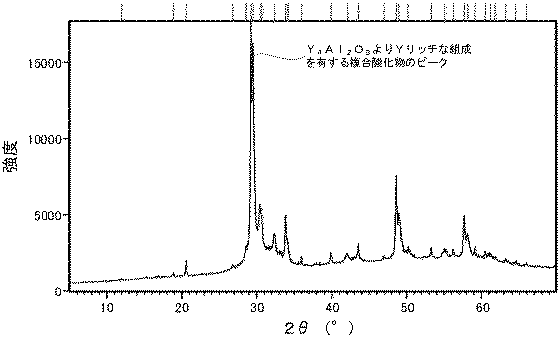
[実施例7〜12、比較例4〜6]
実施例1〜6及び比較例1〜3で得られた溶射材料を用いて、表3に示される粒度のコランダムの研磨材を用いて表面をブラスト研磨して粗面化処理した表3に示される材質の基材上に、直接又は下地皮膜を介して、プラズマ溶射により溶射皮膜を形成して、溶射部材を得た。実施例7及び比較例4、5は、粉末状の溶射材料を用いて大気プラズマ溶射(APS)で、実施例8〜12及び比較例6は、スラリー状の溶射材料を用いてサスペンションプラズマ溶射(SPS)で、基材に直接(実施例8以外)又は基材上に大気プラズマ溶射により形成した下地皮膜(下層皮膜)を介して(実施例8)、溶射皮膜を、表3に示される表層皮膜として形成した。実施例8で用いた下層皮膜については、X線回折(XRD)により結晶相を同定して、結晶構成を分析した。また、面粗度(表面粗さ)Ra、膜厚及び気孔率を測定した。結果を表3に示す。なお、各々の測定、分析の詳細については後述する。
[Examples 7 to 12, Comparative Examples 4 to 6]
Using the sprayed materials obtained in Examples 1 to 6 and Comparative Examples 1 to 3, the surface was blast-polished with a corundum abrasive having a particle size shown in Table 3 to roughen the surface, as shown in Table 3. A thermal spray coating was formed by plasma spraying directly or via a base film on a base material made of the same material to obtain a thermal spray member. Examples 7 and Comparative Examples 4 and 5 are atmospheric spray spraying (APS) using a powdery thermal spray material, and Examples 8 to 12 and Comparative Example 6 are suspension plasma spraying using a slurry thermal spray material (APS). In SPS), the sprayed coating was applied to the surface layer shown in Table 3 directly on the substrate (other than Example 8) or via the undercoat (underlayer coating) formed on the substrate by atmospheric plasma spraying (Example 8). Formed as a film. For the underlayer film used in Example 8, the crystal phase was identified by X-ray diffraction (XRD), and the crystal composition was analyzed. Moreover, the surface roughness (surface roughness) Ra, the film thickness and the porosity were measured. The results are shown in Table 3. The details of each measurement and analysis will be described later.
大気プラズマ溶射はプラクスエア社の溶射機SG−100を用い、サスペンションプラズマ溶射は、プログレッシブ社の溶射機100HEを用い、大気雰囲気下(大気サスペンションプラズマ溶射)で、常圧で実施した。溶射皮膜(表層皮膜)を形成した大気プラズマ溶射及びサスペンションプラズマ溶射の溶射条件を表4に示す。 Atmospheric plasma spraying was carried out using a thermal sprayer SG-100 manufactured by Plaxair, and suspension plasma spraying was carried out using a thermal sprayer 100HE manufactured by Progressive Co., Ltd. under an atmospheric atmosphere (atmospheric suspension plasma spraying) at normal pressure. Table 4 shows the thermal spraying conditions for atmospheric plasma spraying and suspension plasma spraying on which a thermal spray coating (surface coating) was formed.
得られた溶射皮膜(表層皮膜)について、X線回折(XRD)により結晶相を同定して、結晶構成を分析し、用いた溶射材料において希土類・アルミニウム・モノクリニック(R4Al2O9)に帰属される回折ピークの最大ピークの回折角から、差分で0.05〜0.5°低角度側に位置するピークの回折角(2θ(R+AL))を計測した。また、蛍光X線分析法による希土類及びアルミニウムの定量結果から、希土類酸化物(R2O3)相当量及び酸化アルミニウム(Al2O3)相当量として、両者の合計に対する割合を求めた。また、面粗度(表面粗さ)Ra、膜厚、ビッカース硬度HV0.3及び気孔率を測定した。更に、得られた溶射部材を用いて、溶射皮膜の耐食性及び希土類パーティクルの発生量を評価した。結果を表3に示す。また、実施例8のXRDプロファイルを図2に示す。なお、各々の測定、分析、評価の詳細については後述する。 Regarding the obtained thermal spray coating (surface coating), the crystal phase was identified by X-ray diffraction (XRD), the crystal composition was analyzed, and the thermal spray material used was a rare earth / aluminum monoclinic (R 4 Al 2 O 9 ). From the diffraction angle of the maximum peak of the diffraction peak attributed to, the diffraction angle (2θ (R + AL)) of the peak located on the low angle side of 0.05 to 0.5 ° was measured. In addition, from the quantitative results of rare earth and aluminum by the fluorescent X-ray analysis method, the ratio of the equivalent amount of rare earth oxide (R 2 O 3 ) and the equivalent amount of aluminum oxide (Al 2 O 3 ) to the total was determined. Further, the surface roughness (surface roughness) Ra, the film thickness, the Vickers hardness HV0.3 and the porosity were measured. Further, using the obtained thermal spraying member, the corrosion resistance of the thermal spray coating and the amount of rare earth particles generated were evaluated. The results are shown in Table 3. The XRD profile of Example 8 is shown in FIG. The details of each measurement, analysis, and evaluation will be described later.
[X線回折(XRD)]
特性X線をCu−Kαとし、回折角2θ=10〜70°の範囲で回折プロファイルを得た。
[X-ray diffraction (XRD)]
The characteristic X-ray was Cu—Kα, and a diffraction profile was obtained in the range of diffraction angle 2θ = 10 to 70 °.
[BET比表面積]
(株)マウンテック製、全自動比表面積測定装置Macsorb HM model−1208を用いて測定した。
[BET specific surface area]
The measurement was performed using a fully automatic specific surface area measuring device Macsorb HM model-1208 manufactured by Mountech Co., Ltd.
[嵩密度]
ホソカワミクロン(株)製、パウダテスタPT−Xを用いて測定した。
[The bulk density]
The measurement was performed using a powder tester PT-X manufactured by Hosokawa Micron Co., Ltd.
[希土類酸化物及び酸化アルミニウムの割合]
蛍光X線分析法により希土類及びアルミニウムの含有量を測定し、これらに基づき、希土類酸化物相当量及び酸化アルミニウム相当量として、両者の割合を算出した。
[Rare earth oxides and aluminum oxide ratio]
The contents of rare earths and aluminum were measured by fluorescent X-ray analysis, and based on these, the ratios of both were calculated as the equivalent amount of rare earth oxides and the equivalent amount of aluminum oxide.
[粒度分布]
体積基準の粒子径分布をレーザー回折法により測定し、平均粒子径D50を評価した。
[Particle size distribution]
The volume-based particle size distribution was measured by a laser diffraction method, and the average particle size D50 was evaluated.
[スラリー粘度]
東機産業(株)製、TVB−10型粘度計を用い、回転速度を60rpm、回転時間を1分間に設定して測定した。
[Slurry viscosity]
Using a TVB-10 type viscometer manufactured by Toki Sangyo Co., Ltd., the measurement was performed by setting the rotation speed to 60 rpm and the rotation time to 1 minute.
[面粗度(表面粗さ)Ra]
(株)東京精密製、表面粗さ測定器HANDYSURF E−35Aを用いて測定した。
[Surface roughness (surface roughness) Ra]
The measurement was performed using a surface roughness measuring instrument HANDYSURF E-35A manufactured by Tokyo Seimitsu Co., Ltd.
[膜厚]
(株)ケツト科学研究所製、渦電流膜厚計LH−300Jを用いて測定した。
[Film thickness]
The measurement was performed using an eddy current film thickness meter LH-300J manufactured by Kett Science Institute Headquarters.
[ビッカース硬度HV0.3]
皮膜試験片の表面を加工して鏡面(面粗度Ra=0.1μm)とし、(株)島津製作所製、マイクロビッカース硬度計HMV−Gを用い、荷重を2.942N、保持時間を10秒間に設定して、試験片の鏡面加工した表面で測定し、5箇所の平均値として評価した。
[Vickers hardness HV0.3]
The surface of the film test piece was processed to a mirror surface (surface roughness Ra = 0.1 μm), and a load of 2.942 N and a holding time of 10 seconds were used using a micro Vickers hardness tester HMV-G manufactured by Shimadzu Corporation. Was set to, and the measurement was performed on the mirror-finished surface of the test piece, and the value was evaluated as the average value of 5 points.
[気孔率]
皮膜試験片を樹脂に埋め込み、断面を切り出して、その表面を加工して鏡面(面粗度Ra=0.1μm)とした後、電子顕微鏡により断面の写真(倍率:1,000倍)を撮影した。5視野(1視野の撮影面積:0.01mm2)の撮影を行った後、画像解析ソフトウェア「ImageJ」(National Institutes of Healthによるパブリックソフトウェア)を使って気孔率の定量化を行い、画像全体の面積に対する気孔面積の百分率を気孔率として、5視野の平均値として評価した。気孔率の測定は、具体的には、以下の手順で実施した。
(1)9mm×9mm角、厚さ5mm(基材を含む)に切り出した皮膜試験片を樹脂に埋め込む。
(2)断面を鏡面研磨する(面粗度Ra=0.1μm)。
(3)SEMで倍率1,000倍の断面写真(反射電子像)を撮影する。
(4)画像解析ソフトウェア「ImageJ」を使用し、断面写真の画像処理する範囲を指定し、トリミング加工を行う。
(5)画像をグレースケールに変換する。
(6)画像の閾値の設定として、低レベル側閾値を0、高レベル側閾値を、空隙部分が全て赤色になる数値に設定する。
(7)画像を二値化する。
(8)空隙部分の総面積を計算する。
(9)長さ単位をピクセルに設定し、空隙部分の総面積(pixel)を求める。
(10)画像の閾値の設定を、低レベル側閾値を0、高レベル側閾値を255に設定して、画像の全面積(pixel)を求める。
(11)空隙部分の総面積(pixel)を、画像の全面積(pixel)で除して、気孔率を算出する。
[Porosity]
The film test piece is embedded in resin, the cross section is cut out, the surface is processed to make a mirror surface (surface roughness Ra = 0.1 μm), and then a photograph of the cross section (magnification: 1,000 times) is taken with an electron microscope. did. After shooting 5 fields (1 field area: 0.01 mm 2 ), the porosity is quantified using the image analysis software "ImageJ" (public software by National Institutes of Health), and the entire image is quantified. The percentage of the pore area with respect to the area was evaluated as the porosity as the average value of the five visual fields. Specifically, the porosity was measured by the following procedure.
(1) A film test piece cut out to a size of 9 mm × 9 mm square and a thickness of 5 mm (including a base material) is embedded in a resin.
(2) The cross section is mirror-polished (surface roughness Ra = 0.1 μm).
(3) Take a cross-sectional photograph (reflected electron image) at a magnification of 1,000 times with SEM.
(4) Using the image analysis software "ImageJ", specify the range of image processing of the cross-sectional photograph and perform the trimming process.
(5) Convert the image to grayscale.
(6) As the threshold value of the image, the low level side threshold value is set to 0, and the high level side threshold value is set to a numerical value in which all the void portions are red.
(7) Binarize the image.
(8) Calculate the total area of the void portion.
(9) The length unit is set to pixels, and the total area (pixels) of the void portion is obtained.
(10) The threshold value of the image is set to 0 for the low level side threshold value and 255 for the high level side threshold value, and the total area (pixel) of the image is obtained.
(11) The porosity is calculated by dividing the total area (pixel) of the void portion by the total area (pixel) of the image.
[耐食性の評価試験]
溶射部材試験片の溶射皮膜(表層皮膜)の表面を鏡面仕上げ(Ra=0.1μm)し、マスキングテープで被覆した部分と、皮膜露出部分とを形成した後に、試験片をリアクティブイオンプラズマ試験装置にセットし、プラズマ出力440W、ガス種CF4+O2(20vol%)、流量20sccm、ガス圧5Pa、8時間の条件でプラズマに曝した。プラズマに曝した後の試験片について、Bruker Nano社製、触針式表面形状測定器Dektak3030を用い、マスキングテープで被覆した部分と皮膜露出部分との間に、腐食によって生じた段差の高さを測定し、測定箇所4点の平均値を求めて、耐食性を評価した。この試験による評価では、段差の高さの平均値(平均段差)が、3.5μm以下であることが好ましい。平均段差が3.5μmを超えると、プラズマエッチング装置内で使用した際に、十分な耐プラズマエッチング性能を発揮できない場合がある。平均段差は、3.2μm以下がより好ましく、3μm以下が更に好ましい。
[Evaluation test of corrosion resistance]
The surface of the thermal spray coating (surface film) of the thermal spray member test piece is mirror-finished (Ra = 0.1 μm) to form a portion covered with masking tape and an exposed portion of the film, and then the test piece is subjected to a reactive ion plasma test. It was set in the apparatus and exposed to plasma under the conditions of plasma output 440 W, gas type CF 4 + O 2 (20 vol%),
[希土類パーティクル発生量の評価試験]
溶射部材試験片を20mlの超純水の中に浸漬して、更に5分間の超音波洗浄を行った。超音波洗浄後、試験片を取り出し、超音波洗浄後の超純水に、5.3規定の硝酸水溶液を2ml加えて、超純水中に含まれる希土類パーティクルを溶かした。回収された希土類パーティクル中の希土類量を、ICP発光分光分析法により測定し、試験片の溶射皮膜の表面積当たりの希土類量として評価した。この試験による評価では、希土類パーティクル量が、3μg/cm2以下であることが好ましい。希土類パーティクルが3μg/cm2を超えると、パーティクルの発生が多すぎて、プラズマエッチング装置内での使用に耐えられないおそれがある。希土類パーティクル量は、2.5μg/cm2以下がより好ましく、2μg/cm2以下が更に好ましい。
[Evaluation test of rare earth particle generation amount]
The thermal spray member test piece was immersed in 20 ml of ultrapure water and ultrasonically cleaned for another 5 minutes. After ultrasonic cleaning, the test piece was taken out, and 2 ml of a 5.3-specified nitric acid aqueous solution was added to the ultrapure water after ultrasonic cleaning to dissolve rare earth particles contained in the ultrapure water. The amount of rare earth in the recovered rare earth particles was measured by ICP emission spectroscopic analysis and evaluated as the amount of rare earth per surface area of the spray film of the test piece. In the evaluation by this test, the amount of rare earth particles is preferably 3 μg / cm 2 or less. If the rare earth particles exceed 3 μg / cm 2 , too many particles may be generated and the particles may not be used in the plasma etching apparatus. The amount of rare earth particles is more preferably 2.5 μg / cm 2 or less, and even more preferably 2 μg / cm 2 or less.
実施例7〜12で得られた溶射皮膜(表層皮膜)では、腐食性のハロゲン系ガスプラズマとの反応により発生する希土類パーティクルの量が少なく、耐プラズマエッチング性能(耐食性)が優れている。希土類パーティクルの発生は、溶射皮膜の表面がハロゲン系ガスプラズマによってハロゲン化されたとき、アルミニウムハロゲン化物は蒸発してパーティクルとして残存しないが、発生する希土類ハロゲン化物は蒸発せずにパーティクルとして残存してしまうことに関係する。一方、耐プラズマエッチング性能の点では、希土類リッチの場合の方が、アルミニウムリッチの場合より優れており、また、希土類パーティクルの発生においても、希土類リッチの溶射材料の場合の方が、アルミニウムリッチの溶射材料の場合より、パーティクル汚染の原因となる粒子や、粗雑な皮膜を形成してしまう粒子が少ないことが関係する。 In the thermal spray coatings (surface coatings) obtained in Examples 7 to 12, the amount of rare earth particles generated by the reaction with the corrosive halogen-based gas plasma is small, and the plasma etching resistance (corrosion resistance) is excellent. When the surface of the spray film is halogenated by a halogen-based gas plasma, the aluminum halide evaporates and does not remain as particles, but the generated rare earth halide remains as particles without evaporating. It has to do with getting rid of it. On the other hand, in terms of plasma etching resistance, the rare earth rich case is superior to the aluminum rich case, and the rare earth particle-rich thermal spray material is also more aluminum-rich in the generation of rare earth particles. It is related to the fact that there are fewer particles that cause particle contamination and particles that form a coarse film than in the case of thermal spray materials.
実施例1〜6で得られた溶射材料は、X線回折法による強度比I(R)/I(RAL)が1以上であり、このような溶射材料を用いることにより、希土類酸化物相当量と酸化アルミニウム(Al2O3)相当量として、希土類酸化物が75〜99質量%、酸化アルミニウムが1〜25質量%と希土類リッチな組成であり、希土類・アルミニウム・モノクリニック(R4Al2O9)の化学量論組成より希土類リッチな組成を有する複合酸化物(R+AL)を含む溶射皮膜を好適に形成できる。また、特に、表面積Sを嵩密度ρで除したS/ρの値が1〜4の範囲内であるため、パーティクル汚染の原因となる粒子や、粗雑な皮膜を形成してしまう粒子が少ない。そのため、希土類パーティクルの発生が少なく、耐プラズマエッチング性能(耐食性)が優れた溶射皮膜を形成するための溶射材料として優れていることがわかる。 The sprayed materials obtained in Examples 1 to 6 have an intensity ratio I (R) / I (RAL) of 1 or more by the X-ray diffraction method, and by using such a sprayed material, an amount equivalent to a rare earth oxide is used. Rare earth oxide is 75 to 99% by mass and aluminum oxide is 1 to 25% by mass, which are rich in rare earth and aluminum oxide (Al 2 O 3 ). Rare earth, aluminum, monoclinic (R 4 Al 2) A sprayed film containing a composite oxide (R + AL) having a composition rich in rare earths can be preferably formed from the chemical quantitative composition of O 9 ). Further, in particular, since the value of S / ρ obtained by dividing the surface area S by the bulk density ρ is in the range of 1 to 4, there are few particles that cause particle contamination and particles that form a coarse film. Therefore, it can be seen that the generation of rare earth particles is small and the material is excellent as a thermal spraying material for forming a thermal spray coating having excellent plasma etching resistance (corrosion resistance).
また、実施例7〜12で得られた溶射皮膜(表層皮膜)においては、用いた溶射材料において希土類・アルミニウム・モノクリニック(R4Al2O9)に帰属される回折ピークの最大ピークの回折角から、差分で0.05〜0.5°低角度側にピークが存在し、このピークの存在により、溶射皮膜に、希土類・アルミニウム・モノクリニック(R4Al2O9)のAl原子のサイトの一部が希土類(R)原子で置換された、希土類・アルミニウム・モノクリニック(R4Al2O9)の化学量論組成より希土類リッチな組成を有する複合酸化物(R+AL)が含まれていることが確認されている。そして、実施例7〜12で得られた溶射皮膜は、このような希土類リッチな組成を有する複合酸化物(R+AL)が含まれていることにより、希土類パーティクルの発生が少なく、耐プラズマエッチング性能(耐食性)が優れた溶射皮膜となっていることがわかる。 Further, in the sprayed coatings (surface coatings) obtained in Examples 7 to 12, the times of the maximum peaks of the diffraction peaks belonging to the rare earth / aluminum monoclinic (R 4 Al 2 O 9 ) in the sprayed materials used. There is a peak on the low angle side of 0.05 to 0.5 ° from the angle of difference, and due to the presence of this peak, the Al atom of rare earth, aluminum, monoclinic (R 4 Al 2 O 9 ) is present on the sprayed coating. A composite oxide (R + AL) having a rare earth-rich composition than the chemical quantitative composition of rare earth aluminum monoclinic (R 4 Al 2 O 9 ) in which a part of the site is replaced with a rare earth (R) atom It has been confirmed that it is included. The sprayed coatings obtained in Examples 7 to 12 contain a composite oxide (R + AL) having such a rare earth rich composition, so that rare earth particles are less generated and plasma etching resistance is reduced. It can be seen that the sprayed film has excellent performance (corrosion resistance).
Claims (22)
X線回折法(特性X線:Cu−Kα)によって、回折角2θ=10〜70°の範囲内に検出される結晶相の回折ピークのうち、希土類酸化物(R2O3)に帰属される回折ピークの最大ピークの積分強度値I(R)と、希土類・アルミニウム・モノクリニック(R4Al2O9)に帰属される回折ピークの最大ピークの積分強度値I(RAL)との強度比I(R)/I(RAL)が1以上であることを特徴とする溶射材料。 A powdery substance containing rare earth (R), aluminum and oxygen, and containing a crystal phase of rare earth (R), aluminum monoclinic (R 4 Al 2 O 9 ) and a crystal phase of rare earth oxide (R 2 O 3 ). It is a spray material
Of the diffraction peaks of the crystal phase detected within the range of diffraction angle 2θ = 10 to 70 ° by the X-ray diffraction method (characteristic X-ray: Cu-Kα), it is assigned to the rare earth oxide (R 2 O 3 ). The intensity of the integrated intensity value I (R) of the maximum peak of the diffraction peak and the integrated intensity value I (RAL) of the maximum peak of the diffraction peak belonging to the rare earth / aluminum monoclinic (R 4 Al 2 O 9 ). A spraying material having a ratio I (R) / I (RAL) of 1 or more.
上記スラリーに沈殿剤を添加して、希土類及びアルミニウムを含有する前駆体物質を沈殿として晶出させる工程、
上記沈殿を固液分離して回収する工程、及び
得られた上記希土類及びアルミニウムを含有する前駆体物質を、酸素ガス含有雰囲気下で焼成する工程
を含むことを特徴とする溶射材料の製造方法。 A process of dispersing aluminum oxide in a rare earth salt aqueous solution to form a slurry,
A step of adding a precipitant to the above slurry to crystallize a precursor substance containing rare earths and aluminum as a precipitate.
A method for producing a thermal spray material, which comprises a step of solid-liquid separation and recovery of the precipitate, and a step of calcining the obtained precursor substance containing rare earths and aluminum in an oxygen gas-containing atmosphere.
上記希土類及びアルミニウムを含有する複合酸化物の結晶相が、希土類・アルミニウム・モノクリニック(R4Al2O9)のAl原子のサイトの一部が希土類(R)原子で置換された、希土類・アルミニウム・モノクリニック(R4Al2O9)の化学量論組成より希土類リッチな組成を有する複合酸化物の結晶相を含むことを特徴とする溶射皮膜。 A thermal spray coating containing rare earth (R), aluminum and oxygen, and containing a crystal phase of a composite oxide containing rare earth and aluminum.
The crystal phase of the above rare earth and aluminum-containing composite oxide is a rare earth / aluminum monoclinic (R 4 Al 2 O 9 ) in which a part of the Al atom site is replaced with a rare earth (R) atom. A spray coating characterized by containing a crystal phase of a composite oxide having a composition rich in rare earths from the chemical quantitative composition of aluminum monoclinic (R 4 Al 2 O 9 ).
Priority Applications (1)
| Application Number | Priority Date | Filing Date | Title |
|---|---|---|---|
| JP2023122917A JP2023138599A (en) | 2019-04-12 | 2023-07-28 | Thermal spray coatings and sprayed parts |
Applications Claiming Priority (2)
| Application Number | Priority Date | Filing Date | Title |
|---|---|---|---|
| JP2019076099 | 2019-04-12 | ||
| JP2019076099 | 2019-04-12 |
Related Child Applications (1)
| Application Number | Title | Priority Date | Filing Date |
|---|---|---|---|
| JP2023122917A Division JP2023138599A (en) | 2019-04-12 | 2023-07-28 | Thermal spray coatings and sprayed parts |
Publications (2)
| Publication Number | Publication Date |
|---|---|
| JP2020172702A true JP2020172702A (en) | 2020-10-22 |
| JP7331762B2 JP7331762B2 (en) | 2023-08-23 |
Family
ID=72747758
Family Applications (2)
| Application Number | Title | Priority Date | Filing Date |
|---|---|---|---|
| JP2020067359A Active JP7331762B2 (en) | 2019-04-12 | 2020-04-03 | Thermal spray material, method for producing same, and method for forming thermal spray coating |
| JP2023122917A Pending JP2023138599A (en) | 2019-04-12 | 2023-07-28 | Thermal spray coatings and sprayed parts |
Family Applications After (1)
| Application Number | Title | Priority Date | Filing Date |
|---|---|---|---|
| JP2023122917A Pending JP2023138599A (en) | 2019-04-12 | 2023-07-28 | Thermal spray coatings and sprayed parts |
Country Status (5)
| Country | Link |
|---|---|
| US (1) | US11891701B2 (en) |
| JP (2) | JP7331762B2 (en) |
| KR (2) | KR102823794B1 (en) |
| CN (1) | CN111826601B (en) |
| TW (1) | TWI834861B (en) |
Cited By (5)
| Publication number | Priority date | Publication date | Assignee | Title |
|---|---|---|---|---|
| WO2022130946A1 (en) * | 2020-12-15 | 2022-06-23 | 信越化学工業株式会社 | Slurry for plasma thermal spraying, method for producing thermally sprayed film, aluminum oxide thermally sprayed film, and thermally sprayed member |
| JP2022098519A (en) * | 2020-12-22 | 2022-07-04 | 信越化学工業株式会社 | Rare earth oxide thermal spray material, method for manufacturing the same, rare earth oxide thermal spray coating and method for forming the same |
| KR20230146583A (en) | 2021-03-29 | 2023-10-19 | 토토 가부시키가이샤 | Composite structures and semiconductor manufacturing devices with composite structures |
| KR20250019608A (en) | 2023-07-28 | 2025-02-10 | 주식회사 히타치하이테크 | Components for plasma treatment devices and their manufacturing methods |
| JP2025515060A (en) * | 2022-05-04 | 2025-05-13 | サン-ゴバン サントル ド レシェルシュ エ デテュド ユーロペアン | Flexible cord for supplying a thermal spray torch, and thermal spray device |
Families Citing this family (11)
| Publication number | Priority date | Publication date | Assignee | Title |
|---|---|---|---|---|
| CN114102440A (en) * | 2020-08-28 | 2022-03-01 | 长鑫存储技术有限公司 | Surface treatment method for quartz member |
| KR102266655B1 (en) * | 2020-12-10 | 2021-06-18 | (주)코미코 | The method of producing thermal spray coating using the yittrium powder and the yittrium coating produced by the mothod |
| KR102266658B1 (en) * | 2020-12-10 | 2021-06-18 | 주식회사 미코 | Yittrium granular powder for thermal spray and thermal spray coating produced using the same |
| KR102266656B1 (en) * | 2020-12-10 | 2021-06-18 | (주)코미코 | Yittrium granular powder for thermal spray and thermal spray coating produced using the same |
| CN118434702A (en) * | 2022-03-31 | 2024-08-02 | 东华隆株式会社 | Surface treatment method of ceramic thermal spray coating and ceramic thermal spray coating |
| CN115093225B (en) * | 2022-05-06 | 2025-02-14 | 中国科学院金属研究所 | A preparation method of Y4Al2O9/Y2O3 eutectic ceramic powder and spherical feed |
| KR102693617B1 (en) | 2022-08-31 | 2024-08-09 | 주식회사 코미코 | Yttrium-based powder for thermal spraying and yttrium-based thermal spray coating using the same |
| KR102685027B1 (en) * | 2022-10-20 | 2024-07-17 | 주식회사 한탑 | Forming method of ceramic nanopowder thin film by using suspension plasma spray coating and Nano ceramic thin film formed the method |
| CN115849920B (en) * | 2022-11-14 | 2024-07-09 | 有研稀土新材料股份有限公司 | Rare earth steel continuous casting nozzle surface coating and preparation method thereof |
| CN116065115A (en) * | 2023-01-30 | 2023-05-05 | 福建阿石创新材料股份有限公司 | Y (Y) 2 O 3 -YAlO 3 Composite material, preparation method and application thereof |
| CN118421113B (en) * | 2024-03-30 | 2025-11-18 | 包头稀土研究院 | A rare earth-doped alumina titanium spraying material, its coating and preparation method |
Citations (12)
| Publication number | Priority date | Publication date | Assignee | Title |
|---|---|---|---|---|
| JPH02107570A (en) * | 1988-10-15 | 1990-04-19 | Murata Mfg Co Ltd | Production of aluminum nitride sintered body |
| JPH07187612A (en) * | 1993-08-11 | 1995-07-25 | Sumitomo Chem Co Ltd | Composite metal oxide powder and method for producing the same |
| JP2000302542A (en) * | 1999-04-22 | 2000-10-31 | Shin Etsu Chem Co Ltd | Jig for sintering |
| JP2001158620A (en) * | 1999-09-20 | 2001-06-12 | Shin Etsu Chem Co Ltd | Rare earth / aluminum / garnet fine powder, method for producing the same, and sintered body using the powder |
| JP2001226773A (en) * | 1999-12-10 | 2001-08-21 | Tokyo Electron Ltd | Processing apparatus and corrosion resistant member used therein |
| JP2002080954A (en) * | 2000-06-29 | 2002-03-22 | Shin Etsu Chem Co Ltd | Thermal-spraying powder and thermal-sprayed film |
| JP2002363724A (en) * | 2001-03-08 | 2002-12-18 | Shin Etsu Chem Co Ltd | Thermal spray spherical particles and thermal spray members |
| JP2003063883A (en) * | 2001-08-29 | 2003-03-05 | Shin Etsu Chem Co Ltd | Oxide member containing rare earths |
| JP2017515001A (en) * | 2014-05-07 | 2017-06-08 | アプライド マテリアルズ インコーポレイテッドApplied Materials,Incorporated | Slurry plasma spraying of plasma resistant ceramic coating |
| JP2019203192A (en) * | 2018-05-18 | 2019-11-28 | 信越化学工業株式会社 | Thermal spray material, thermal spray member and method for manufacturing the same |
| JP2020026579A (en) * | 2018-08-10 | 2020-02-20 | 信越化学工業株式会社 | Slurry for suspension plasma spraying and method for forming sprayed coating |
| WO2020217552A1 (en) * | 2019-04-26 | 2020-10-29 | 日本イットリウム株式会社 | Powder for film formation or sintering |
Family Cites Families (7)
| Publication number | Priority date | Publication date | Assignee | Title |
|---|---|---|---|---|
| EP1167565B1 (en) * | 2000-06-29 | 2007-03-07 | Shin-Etsu Chemical Co., Ltd. | Method for thermal spray coating and rare earth oxide powder used therefor |
| JP4277973B2 (en) * | 2001-07-19 | 2009-06-10 | 日本碍子株式会社 | Yttria-alumina composite oxide film production method, yttria-alumina composite oxide film, and corrosion-resistant member |
| WO2008076961A1 (en) | 2006-12-15 | 2008-06-26 | Board Of Regents, The University Of Texas System | Nitric oxide increases switching of t cells into t regulatory cells |
| US9212099B2 (en) * | 2012-02-22 | 2015-12-15 | Applied Materials, Inc. | Heat treated ceramic substrate having ceramic coating and heat treatment for coated ceramics |
| CN106605008B (en) * | 2014-09-03 | 2019-08-27 | 福吉米株式会社 | Slurry for spray coating, spray coating film, and method for forming spray coating film |
| US20170342539A1 (en) * | 2015-02-10 | 2017-11-30 | Nippon Yttrium Co., Ltd. | Powder for film formation and material for film formation |
| US10975469B2 (en) * | 2017-03-17 | 2021-04-13 | Applied Materials, Inc. | Plasma resistant coating of porous body by atomic layer deposition |
-
2020
- 2020-04-03 JP JP2020067359A patent/JP7331762B2/en active Active
- 2020-04-08 US US16/842,945 patent/US11891701B2/en active Active
- 2020-04-09 KR KR1020200043139A patent/KR102823794B1/en active Active
- 2020-04-10 CN CN202010277350.8A patent/CN111826601B/en active Active
- 2020-04-10 TW TW109112123A patent/TWI834861B/en active
-
2023
- 2023-07-28 JP JP2023122917A patent/JP2023138599A/en active Pending
-
2025
- 2025-06-17 KR KR1020250079290A patent/KR20250096666A/en active Pending
Patent Citations (12)
| Publication number | Priority date | Publication date | Assignee | Title |
|---|---|---|---|---|
| JPH02107570A (en) * | 1988-10-15 | 1990-04-19 | Murata Mfg Co Ltd | Production of aluminum nitride sintered body |
| JPH07187612A (en) * | 1993-08-11 | 1995-07-25 | Sumitomo Chem Co Ltd | Composite metal oxide powder and method for producing the same |
| JP2000302542A (en) * | 1999-04-22 | 2000-10-31 | Shin Etsu Chem Co Ltd | Jig for sintering |
| JP2001158620A (en) * | 1999-09-20 | 2001-06-12 | Shin Etsu Chem Co Ltd | Rare earth / aluminum / garnet fine powder, method for producing the same, and sintered body using the powder |
| JP2001226773A (en) * | 1999-12-10 | 2001-08-21 | Tokyo Electron Ltd | Processing apparatus and corrosion resistant member used therein |
| JP2002080954A (en) * | 2000-06-29 | 2002-03-22 | Shin Etsu Chem Co Ltd | Thermal-spraying powder and thermal-sprayed film |
| JP2002363724A (en) * | 2001-03-08 | 2002-12-18 | Shin Etsu Chem Co Ltd | Thermal spray spherical particles and thermal spray members |
| JP2003063883A (en) * | 2001-08-29 | 2003-03-05 | Shin Etsu Chem Co Ltd | Oxide member containing rare earths |
| JP2017515001A (en) * | 2014-05-07 | 2017-06-08 | アプライド マテリアルズ インコーポレイテッドApplied Materials,Incorporated | Slurry plasma spraying of plasma resistant ceramic coating |
| JP2019203192A (en) * | 2018-05-18 | 2019-11-28 | 信越化学工業株式会社 | Thermal spray material, thermal spray member and method for manufacturing the same |
| JP2020026579A (en) * | 2018-08-10 | 2020-02-20 | 信越化学工業株式会社 | Slurry for suspension plasma spraying and method for forming sprayed coating |
| WO2020217552A1 (en) * | 2019-04-26 | 2020-10-29 | 日本イットリウム株式会社 | Powder for film formation or sintering |
Cited By (6)
| Publication number | Priority date | Publication date | Assignee | Title |
|---|---|---|---|---|
| WO2022130946A1 (en) * | 2020-12-15 | 2022-06-23 | 信越化学工業株式会社 | Slurry for plasma thermal spraying, method for producing thermally sprayed film, aluminum oxide thermally sprayed film, and thermally sprayed member |
| JP2022098519A (en) * | 2020-12-22 | 2022-07-04 | 信越化学工業株式会社 | Rare earth oxide thermal spray material, method for manufacturing the same, rare earth oxide thermal spray coating and method for forming the same |
| JP7359136B2 (en) | 2020-12-22 | 2023-10-11 | 信越化学工業株式会社 | Methods for producing particulate thermal spray materials and rare earth oxide thermal spray materials, and rare earth oxide thermal spray coatings and methods for forming the same. |
| KR20230146583A (en) | 2021-03-29 | 2023-10-19 | 토토 가부시키가이샤 | Composite structures and semiconductor manufacturing devices with composite structures |
| JP2025515060A (en) * | 2022-05-04 | 2025-05-13 | サン-ゴバン サントル ド レシェルシュ エ デテュド ユーロペアン | Flexible cord for supplying a thermal spray torch, and thermal spray device |
| KR20250019608A (en) | 2023-07-28 | 2025-02-10 | 주식회사 히타치하이테크 | Components for plasma treatment devices and their manufacturing methods |
Also Published As
| Publication number | Publication date |
|---|---|
| US11891701B2 (en) | 2024-02-06 |
| CN111826601B (en) | 2025-08-26 |
| KR102823794B1 (en) | 2025-06-23 |
| US20200325570A1 (en) | 2020-10-15 |
| CN111826601A (en) | 2020-10-27 |
| KR20250096666A (en) | 2025-06-27 |
| TW202110741A (en) | 2021-03-16 |
| JP2023138599A (en) | 2023-10-02 |
| KR20200120537A (en) | 2020-10-21 |
| TWI834861B (en) | 2024-03-11 |
| JP7331762B2 (en) | 2023-08-23 |
Similar Documents
| Publication | Publication Date | Title |
|---|---|---|
| JP7331762B2 (en) | Thermal spray material, method for producing same, and method for forming thermal spray coating | |
| JP6939853B2 (en) | Thermal spray coating, method of manufacturing thermal spray coating, and thermal spraying member | |
| CN107287545B (en) | Yttrium fluoride spray coating, spray material therefor, and anti-corrosion coating including spray coating | |
| JP7367824B2 (en) | rare earth oxide particles | |
| JP5636573B2 (en) | Thermal spray material | |
| JP7147675B2 (en) | Thermal spray material and method for producing thermal spray member | |
| JP4560387B2 (en) | Thermal spray powder, thermal spraying method and thermal spray coating | |
| JP7306490B2 (en) | Yttrium fluoride-based thermal spray coating, thermal sprayed member, and method for producing yttrium fluoride-based thermal spray coating | |
| WO2018052128A1 (en) | Material for thermal spraying | |
| JP7626260B2 (en) | Thermal spray coating, thermal spray member, method for forming thermal spray coating, and method for manufacturing thermal spray member | |
| JP2017061737A (en) | Thermal spray material | |
| JP2007126712A (en) | Powder for thermal spraying and method for forming thermally sprayed coating | |
| JP2022159349A (en) | Film-forming powder and film-forming method | |
| JP4480951B2 (en) | Corrosion resistant material | |
| JP2001097768A (en) | YAG-based ceramic raw material and method for producing the same | |
| JP7359136B2 (en) | Methods for producing particulate thermal spray materials and rare earth oxide thermal spray materials, and rare earth oxide thermal spray coatings and methods for forming the same. | |
| JP7585574B2 (en) | Powder for cold spray, cold spray film, and method for producing the film |
Legal Events
| Date | Code | Title | Description |
|---|---|---|---|
| A621 | Written request for application examination |
Free format text: JAPANESE INTERMEDIATE CODE: A621 Effective date: 20220422 |
|
| A977 | Report on retrieval |
Free format text: JAPANESE INTERMEDIATE CODE: A971007 Effective date: 20230130 |
|
| A131 | Notification of reasons for refusal |
Free format text: JAPANESE INTERMEDIATE CODE: A131 Effective date: 20230131 |
|
| A601 | Written request for extension of time |
Free format text: JAPANESE INTERMEDIATE CODE: A601 Effective date: 20230324 |
|
| A521 | Request for written amendment filed |
Free format text: JAPANESE INTERMEDIATE CODE: A523 Effective date: 20230406 |
|
| TRDD | Decision of grant or rejection written | ||
| A01 | Written decision to grant a patent or to grant a registration (utility model) |
Free format text: JAPANESE INTERMEDIATE CODE: A01 Effective date: 20230711 |
|
| A61 | First payment of annual fees (during grant procedure) |
Free format text: JAPANESE INTERMEDIATE CODE: A61 Effective date: 20230724 |
|
| R150 | Certificate of patent or registration of utility model |
Ref document number: 7331762 Country of ref document: JP Free format text: JAPANESE INTERMEDIATE CODE: R150 |