JP2022008048A - Additives for resins, their manufacturing methods and molded products - Google Patents
Additives for resins, their manufacturing methods and molded products Download PDFInfo
- Publication number
- JP2022008048A JP2022008048A JP2021068278A JP2021068278A JP2022008048A JP 2022008048 A JP2022008048 A JP 2022008048A JP 2021068278 A JP2021068278 A JP 2021068278A JP 2021068278 A JP2021068278 A JP 2021068278A JP 2022008048 A JP2022008048 A JP 2022008048A
- Authority
- JP
- Japan
- Prior art keywords
- resin
- group
- mass
- siloxane
- parts
- Prior art date
- Legal status (The legal status is an assumption and is not a legal conclusion. Google has not performed a legal analysis and makes no representation as to the accuracy of the status listed.)
- Granted
Links
Images
Landscapes
- Compositions Of Macromolecular Compounds (AREA)
Abstract
【課題】樹脂に対する分散性に優れながら、有機系紫外線吸収剤および/またはラジカル捕捉剤の徐放性に優れる樹脂用添加剤、その製造方法、および、樹脂用添加剤を含有する成形体を提供すること。【解決手段】樹脂用添加剤は、多孔質粒子と、多孔質粒子に取り込まれた有機系紫外線吸収剤および/またはラジカル捕捉剤と、有機系紫外線吸収剤および/またはラジカル捕捉剤を多孔質粒子内において封止し、シロキサン硬化物とを含む。【選択図】図1[Problem] To provide a resin additive that has excellent dispersibility in resin while also having excellent sustained release of an organic ultraviolet absorber and/or radical scavenger, a method for producing the same, and a molded article containing the resin additive. [Solution] The resin additive includes porous particles, an organic ultraviolet absorber and/or radical scavenger incorporated in the porous particles, and a siloxane cured product in which the organic ultraviolet absorber and/or radical scavenger is sealed within the porous particles. [Selected Figure] Figure 1
Description
本発明は、樹脂用添加剤、その製造方法および成形体に関する。 The present invention relates to an additive for a resin, a method for producing the same, and a molded product.
従来、樹脂と、有機系紫外線吸収剤、ラジカル捕捉剤などの樹脂用添加剤とを配合することによって、樹脂成形体の耐光性を向上させることが知られている。 Conventionally, it has been known to improve the light resistance of a resin molded body by blending a resin with an additive for a resin such as an organic ultraviolet absorber and a radical scavenger.
例えば、多孔質シリカと、シリカの多孔内に取り込まれた紫外線吸収剤と、多孔質シリカの表面をコーティングするシリコーンオイルとを含む粉体を、樹脂に練り込むことが提案されている(例えば、下記特許文献1参照。)。 For example, it has been proposed to knead a powder containing porous silica, an ultraviolet absorber incorporated into the porous silica, and silicone oil that coats the surface of the porous silica into a resin (for example,). See Patent Document 1 below.).
しかし、特許文献1の粉体を樹脂に練り込むときに、紫外線吸収剤を迅速に放出してしまい、そのため、成形体の耐光性が低下したり、紫外線吸収剤がブリードアウトするなどの不具合がある。 However, when the powder of Patent Document 1 is kneaded into the resin, the ultraviolet absorber is rapidly released, which causes problems such as deterioration of the light resistance of the molded product and bleeding out of the ultraviolet absorber. be.
また、粉体の樹脂への優れた分散性も求められる。 Further, excellent dispersibility of the powder in the resin is also required.
本発明は、樹脂に対する分散性に優れながら、有機系紫外線吸収剤および/またはラジカル捕捉剤の徐放性に優れる樹脂用添加剤、その製造方法、および、樹脂用添加剤を含有する成形体を提供する。 The present invention provides a molded product containing an additive for resin, a method for producing the same, and an additive for resin, which are excellent in dispersibility in resin but also excellent in sustained release of organic ultraviolet absorber and / or radical scavenger. offer.
本発明(1)は、多孔質粒子と、前記多孔質粒子に取り込まれた有機系紫外線吸収剤および/またはラジカル捕捉剤と、前記有機系紫外線吸収剤および/または前記ラジカル捕捉剤を前記多孔質粒子内において封止するシロキサン硬化物とを含む、樹脂用添加剤を含む。 In the present invention (1), the porous particles, the organic ultraviolet absorber and / or the radical scavenger incorporated into the porous particles, and the organic ultraviolet absorber and / or the radical scavenger are made porous. Contains additives for resins, including cured siloxanes that seal in the particles.
本発明(2)は、前記シロキサン硬化物が、-SiR2O-(2つのRは、互いに同一または相異なってもよく、それぞれ、1価の飽和炭化水素基および1価の芳香族炭化水素基からなる群から選ばれる少なくとも1つの1価の炭化水素基を示す。)で示されるシロキサンユニットを含有せず、RO基(Rは、1価の飽和炭化水素基を示す。)を含有するRO基含有シロキサンユニットを含有する第1オリゴマーを含有するシロキサン組成物の硬化物を含む、(1)に記載の樹脂用添加剤を含む。 In the present invention (2), the cured siloxane product is -SiR 2 O- (two Rs may be the same or different from each other, and are monovalent saturated hydrocarbon groups and monovalent aromatic hydrocarbons, respectively. It does not contain the siloxane unit represented by at least one monovalent hydrocarbon group selected from the group consisting of groups), but contains an RO group (R indicates a monovalent saturated hydrocarbon group). The resin additive according to (1), which comprises a cured product of a siloxane composition containing a first oligomer containing an RO group-containing siloxane unit.
本発明(3)は、前記シロキサン硬化物が、4官能オルガノシランの縮合重合体である第2オリゴマーを含有するシロキサン組成物の硬化物を含む、(1)または(2)に記載の樹脂用添加剤を含む。 The present invention (3) is for the resin according to (1) or (2), wherein the cured siloxane product contains a cured product of a siloxane composition containing a second oligomer which is a condensation polymer of tetrafunctional organosilane. Contains additives.
本発明(4)は、前記シロキサン組成物が、-SiR2O-(2つのRは、互いに同一または相異なってもよく、それぞれ、1価の飽和炭化水素基および1価の芳香族炭化水素基からなる群から選ばれる少なくとも1つの1価の炭化水素基を示す。)で示されるシロキサンユニットと、RO基(Rは、1価の飽和炭化水素基を示す。)を含有するRO基含有シロキサンユニットとを含有する第3オリゴマーを含有する、(2)または(3)に記載の樹脂用添加剤を含む。 In the present invention (4), the siloxane composition is -SiR 2 O- (two Rs may be the same or different from each other, and a monovalent saturated hydrocarbon group and a monovalent aromatic hydrocarbon, respectively. Contains a siloxane unit represented by at least one monovalent hydrocarbon group selected from the group consisting of groups) and an RO group containing an RO group (R represents a monovalent saturated hydrocarbon group). The resin additive according to (2) or (3), which contains a third oligomer containing a siloxane unit.
本発明(5)は、前記シロキサン組成物が、-SiR2O-(2つのRは、互いに同一または相異なってもよく、それぞれ、1価の飽和炭化水素基および1価の芳香族炭化水素基からなる群から選ばれる少なくとも1つの1価の炭化水素基を示す。)で示されるシロキサンユニットを含有するシリコーンオイルをさらに含有する、(2)~(4)のいずれか一項に記載の樹脂用添加剤を含む。 In the present invention (5), the siloxane composition is -SiR 2 O- (two Rs may be the same or different from each other, and a monovalent saturated hydrocarbon group and a monovalent aromatic hydrocarbon, respectively. The item according to any one of (2) to (4), further containing a silicone oil containing a siloxane unit represented by (1), which indicates at least one monovalent hydrocarbon group selected from the group consisting of groups. Contains additives for resins.
本発明(6)は、前記多孔質粒子が、80mL/100g以上の吸油量を有する、(1)~(5)のいずれか一項に記載の樹脂用添加剤を含む。 The present invention (6) contains the resin additive according to any one of (1) to (5), wherein the porous particles have an oil absorption amount of 80 mL / 100 g or more.
本発明(7)は、前記多孔質粒子が、無機粒子であることを特徴とする、(1)~(6)のいずれか一項に記載の樹脂用添加剤を含む。 The present invention (7) includes the resin additive according to any one of (1) to (6), wherein the porous particles are inorganic particles.
本発明(8)は、前記無機粒子が、シリカ系粒子を含有する、(7)に記載の樹脂用添加剤を含む。 The present invention (8) contains the resin additive according to (7), wherein the inorganic particles contain silica-based particles.
本発明(9)は、前記有機系紫外線吸収剤および/または前記ラジカル捕捉剤を前記シロキサン硬化物で封止した前記多孔質粒子がRO基含有シラン化合物によって表面処理され、前記RO基含有シラン化合物は、RO基(Rは、1価の飽和炭化水素基および1価の芳香族炭化水素基からなる群から選ばれる少なくとも1つの1価の炭化水素基を示す。)と、前記RO基以外の部分であって、樹脂と反応可能および/または親和可能な前記部分とを含有する、(8)に記載の樹脂用添加剤を含む。 In the present invention (9), the porous particles in which the organic ultraviolet absorber and / or the radical trapping agent are sealed with the siloxane cured product are surface-treated with the RO group-containing silane compound, and the RO group-containing silane compound is prepared. Indicates an RO group (R represents at least one monovalent hydrocarbon group selected from the group consisting of a monovalent saturated hydrocarbon group and a monovalent aromatic hydrocarbon group) and the RO group. Includes the resin additive according to (8), which comprises said moiety that is reactive and / or compatible with the resin.
本発明(10)は、多孔質粒子と、有機系紫外線吸収剤および/またはラジカル捕捉剤と、シロキサン組成物とを配合する第1工程と、前記シロキサン組成物を硬化させて、そのシロキサン硬化物により、前記有機系紫外線吸収剤および/または前記ラジカル捕捉剤を、前記多孔質粒子内において封止する第2工程とを備える、樹脂用添加剤の製造方法を含む。 In the present invention (10), the first step of blending the porous particles, the organic ultraviolet absorber and / or the radical scavenger, and the siloxane composition, and the curing of the siloxane composition, the siloxane cured product thereof. The present invention comprises a method for producing an additive for a resin, comprising a second step of sealing the organic ultraviolet absorber and / or the radical scavenger in the porous particles.
本発明(11)は、前記第1工程では、前記有機系紫外線吸収剤を前記多孔質粒子に配合し、その後、前記ラジカル捕捉剤を前記多孔質粒子に配合する、(10)に記載の樹脂用添加剤の製造方法を含む。 According to the present invention (11), the resin according to (10), wherein in the first step, the organic ultraviolet absorber is blended into the porous particles, and then the radical scavenger is blended into the porous particles. Includes a method for producing additives for use.
本発明(12)は、前記有機系紫外線吸収剤および/または前記ラジカル捕捉剤を前記シロキサン硬化物で封止した前記多孔質粒子を、RO基含有シラン化合物によって表面処理する第3工程をさらに備え、前記RO基含有シラン化合物は、RO基(Rは、1価の飽和炭化水素基および1価の芳香族炭化水素基からなる群から選ばれる少なくとも1つの1価の炭化水素基を示す。)と、前記RO基以外の部分であって、樹脂と反応可能および/または親和可能な前記部分とを含有する、(10)または(11)に記載の樹脂用添加剤の製造方法を含む。 The present invention (12) further comprises a third step of surface-treating the porous particles in which the organic ultraviolet absorber and / or the radical trapping agent is sealed with the siloxane cured product with a RO group-containing silane compound. , The RO group-containing silane compound is an RO group (R represents at least one monovalent hydrocarbon group selected from the group consisting of monovalent saturated hydrocarbon groups and monovalent aromatic hydrocarbon groups). The method for producing an additive for a resin according to (10) or (11), which comprises the portion other than the RO group and which is capable of reacting with and / or being compatible with the resin.
本発明(13)は、樹脂と、(1)~(9)のいずれか一項に記載の樹脂用添加剤とを含有する、成形体を含む。 The present invention (13) includes a molded product containing a resin and the resin additive according to any one of (1) to (9).
本発明の製造方法により得られる本発明の樹脂用添加剤は、樹脂に対する分散性に優れながら、有機系紫外線吸収剤および/またはラジカル捕捉剤の徐放性に優れる。そのため、樹脂用添加剤および樹脂を含有する樹脂組成物から成形された本発明の成形体は、耐光性に優れる。 The resin additive of the present invention obtained by the production method of the present invention is excellent in dispersibility in the resin, and is also excellent in sustained release of the organic ultraviolet absorber and / or radical scavenger. Therefore, the molded product of the present invention molded from the resin additive and the resin composition containing the resin is excellent in light resistance.
<樹脂用添加剤>
本発明の樹脂用添加剤は、樹脂に添加される添加剤であり、樹脂組成物(樹脂成形体)に含有される添加剤である。樹脂用添加剤は、多孔質粒子と、有機系紫外線吸収剤および/またはラジカル捕捉剤と、シロキサン硬化物とを含む。
<Additives for resin>
The additive for resin of the present invention is an additive added to a resin and is an additive contained in a resin composition (resin molded body). Additives for resins include porous particles, organic UV absorbers and / or radical scavengers, and cured siloxanes.
<多孔質粒子>
多孔質粒子は、有機系紫外線吸収剤および/またはラジカル捕捉剤を取り込む担体(基体)である。
<Porous particles>
Porous particles are carriers (bases) that take up organic UV absorbers and / or radical scavengers.
多孔質粒子の比表面積は、例えば、100m2/g以上、好ましくは、200m2/g以上であり、また、1000m2/g以下である。多孔質粒子の比表面積は、BET法(窒素吸着法)に準拠して測定される。多孔質粒子の吸油量は、例えば、80mL/100g以上、好ましくは、150mL/100g以上、より好ましくは、200mL/100g以上であり、また、例えば、500mL/100g以下である。無機粒子の吸油量は、JIS K 5101-13-2に準拠して測定される。多孔質粒子の吸油量が上記した下限以上であれば、有機系紫外線吸収剤および/またはラジカル補足剤を確実に取り込み、さらには、それらを封止するシロキサン硬化体も担持できる。 The specific surface area of the porous particles is, for example, 100 m 2 / g or more, preferably 200 m 2 / g or more, and 1000 m 2 / g or less. The specific surface area of the porous particles is measured according to the BET method (nitrogen adsorption method). The oil absorption of the porous particles is, for example, 80 mL / 100 g or more, preferably 150 mL / 100 g or more, more preferably 200 mL / 100 g or more, and for example, 500 mL / 100 g or less. The oil absorption of the inorganic particles is measured according to JIS K 5101-13.2. When the oil absorption of the porous particles is equal to or higher than the above-mentioned lower limit, an organic ultraviolet absorber and / or a radical catching agent can be reliably taken in, and a siloxane cured product that seals them can also be supported.
多孔質粒子の外形形状は、特に限定されず、例えば、略球状、略板状(葉片状)、略針状、略多面体状(四面体、6面体(立方体など)など)などが挙げられ、好ましくは、優れた分散性を得る観点から、略球状、略板状が挙げられる。また、多孔質粒子は、表面に孔を有しており、かかる孔が外部と内部とを連絡し、そして、内部が中空である中空球状粒子を含むことができる。 The outer shape of the porous particles is not particularly limited, and examples thereof include a substantially spherical shape, a substantially plate shape (leaf piece shape), a substantially needle shape, a substantially polyhedral shape (tetrahedron, hexahedron (cube, etc.), etc.). From the viewpoint of obtaining excellent dispersibility, a substantially spherical shape and a substantially plate shape can be mentioned. Further, the porous particles have pores on the surface, and the pores communicate the outside and the inside, and can include hollow spherical particles having a hollow inside.
多孔質粒子のメジアン径は、例えば、0.5μm以上、好ましくは、1μm以上、より好ましくは、2μm以上であり、また、例えば、50μm以下、好ましくは、20μm以下、より好ましくは、10μm以下である。多孔質粒子のメジアン径は、レーザー回折法で測定される。多孔質粒子のメジアン径が上記した下限以上、上限以下であれば、樹脂用添加剤の樹脂に対する分散性に優れる。 The median diameter of the porous particles is, for example, 0.5 μm or more, preferably 1 μm or more, more preferably 2 μm or more, and for example, 50 μm or less, preferably 20 μm or less, more preferably 10 μm or less. be. The median diameter of the porous particles is measured by laser diffraction. When the median diameter of the porous particles is not less than the above-mentioned lower limit and not more than the upper limit, the dispersibility of the resin additive with respect to the resin is excellent.
多孔質粒子は、特に限定されず、例えば、無機粒子、有機粒子(セルロース系粒子など)、それらの複合粒子などが挙げられる。これらは、単独使用または併用することができる。多孔質粒子として、好ましくは、無機粒子が挙げられる。 The porous particles are not particularly limited, and examples thereof include inorganic particles, organic particles (cellulose-based particles, etc.), composite particles thereof, and the like. These can be used alone or in combination. Preferred examples of the porous particles include inorganic particles.
無機粒子としては、例えば、シリカ系粒子(シリカ粒子、シリカアルミナ粒子など)、窒化ホウ素粒子、酸化マグネシム粒子、セリサイト粒子、マイカ粒子、硫酸バリウム粒子、タルク粒子、炭酸カルシウム粒子などが挙げられる。無機粒子として、シロキサン組成物が硬化する時に無機粒子との間に化学結合を形成する観点から、好ましくは、シリカ系粒子が挙げられる。なお、シリカ系粒子は、その材料が、シリカを含むシリカ系材料であって、シリカ粒子、また、シリカを構成単位として含むシリカ含有複合酸化物粒子(具体的には、シリカアルミナ粒子、シリカマグネシア粒子など)などが挙げられる。 Examples of the inorganic particles include silica-based particles (silica particles, silica-alumina particles, etc.), boron nitride particles, magnesium oxide particles, sericite particles, mica particles, barium sulfate particles, talc particles, calcium carbonate particles, and the like. As the inorganic particles, silica-based particles are preferable from the viewpoint of forming a chemical bond with the inorganic particles when the siloxane composition is cured. The silica-based particles are silica-based materials containing silica, and the silica particles and silica-containing composite oxide particles containing silica as a constituent unit (specifically, silica-alumina particles and silica magnesia). Particles, etc.).
シリカ系粒子としては、沈降法シリカ、ゲル法シリカなどの湿式法シリカが挙げられる。また、シリカ系粒子として、例えば、特開平9-295808に記載される板状シリカ粒子(板状劈開性シリカ粒子)、例えば、特開平5-193927に記載される球状シリカ粒子、例えば、中空球状シリカ粒子などが挙げられる。 Examples of the silica-based particles include wet silica such as sedimentation silica and gel silica. Further, as the silica-based particles, for example, plate-shaped silica particles (plate-shaped devitable silica particles) described in JP-A-9-295808, for example, spherical silica particles described in JP-A-5-193927, for example, hollow spherical particles. Examples include silica particles.
なお、シリカ系粒子は、シリカ粒子と、酸化マグネシウム粒子などの弱塩基性酸化物粒子との粒子内で混合された組成物(粒子内混合物)を含むこともできる。シリカ系粒子が粒子内組成物である場合において、シリカ粒子の粒子内組成物における割合は、例えば、50質量%超過、好ましくは、55質量%以上であり、また、例えば、99質量%以下、好ましくは、90質量%以下である。 The silica-based particles may also include a composition (intraparticle mixture) in which the silica particles and weakly basic oxide particles such as magnesium oxide particles are mixed in the particles. When the silica-based particles are an in-particle composition, the proportion of the silica particles in the in-particle composition is, for example, 50% by mass or more, preferably 55% by mass or more, and for example, 99% by mass or less. It is preferably 90% by mass or less.
多孔質粒子の樹脂用添加剤における割合は、例えば、20質量%以上、好ましくは、35質量%以上であり、また、例えば、75質量%以下、好ましくは、50質量%以下である。 The proportion of the porous particles in the resin additive is, for example, 20% by mass or more, preferably 35% by mass or more, and for example, 75% by mass or less, preferably 50% by mass or less.
<有機系紫外線吸収剤およびラジカル捕捉剤>
有機系紫外線吸収剤および/またはラジカル捕捉剤は、多孔質粒子の細孔内に取り込まれている。有機系紫外線吸収剤は、紫外線を吸収して、樹脂に直接照射される紫外線の量を低減する。ラジカル捕捉剤は、樹脂が紫外線を受光することに起因して生成するアルキルラジカルおよび/またはペルオキシラジカルを捕捉する。
<Organic UV absorbers and radical scavengers>
Organic UV absorbers and / or radical scavengers are incorporated into the pores of the porous particles. The organic UV absorber absorbs UV light and reduces the amount of UV light directly applied to the resin. The radical scavenger captures alkyl radicals and / or peroxy radicals generated by the resin receiving ultraviolet light.
有機系紫外線吸収剤としては、例えば、ジヒドロキシベンゾフェノン、テトラヒドロキシベンゾフェノン、2-ヒドロキシ-4-メトキシベンゾフェノン、ジヒドロキシジメトキシベンゾフェノン、2-ヒドロキシ-4-n-オクチロキシベンゾフェノン(アデカスタブ1413、ADEKA社製)、2-ヒドロキシ-4-n-ドデシルオキシベンゾフェノン、2,2’-ジヒドロキシ-4-オクチロキシベンゾフェノン、2,2’-ジヒドロキシ-4-ブチルオキシベンゾフェノンなどのベンゾフェノン系化合物、例えば、2-(2’-ヒドロキシ-5’-メチルフェニル)ベンゾトリアゾール、2-(2H-ベンゾトリアゾール-2-イル)-4,6-ビス(1-メチルー1-フェニルエチル)フェノールなどのベンゾトリアゾール系化合物、4-オクチルフェニルサリシレート、ビスフェノールA-ジサリシレート、4-t-ブチルフェニルサリシレート、フェニルサリシレートなどのサリチル酸エステル系化合物、例えば、2,4,6-トリス(2-ヒドロキシ-4-ヘキサロイルオキシ-3-メチルフェニル)-1,3,5-トリアジン、2-(4,6-ジフェニル-1,3,5-トリアジン-2-イル)-5-[2-(2-エチルヘキサノイルオイキシ)エトキシ]フェノールなどのトリアジン系化合物、例えば、エチル-2-シアノ-3,3-ジフェニルアクリレート、2-エチルヘキシル-2-シアノ-3,3-ジフェニルアクリレートなどのシアノアクリレート系化合物が挙げられる。有機系紫外線吸収剤として、好ましくは、汎用性が高い観点から、ベンゾフェノン化合物、より好ましくは、[2-ヒドロキシ-4-(オクチロキシ)フェニル](フェニル)メタノン(アデカスタブ1413)が挙げられる。 Examples of the organic ultraviolet absorber include dihydroxybenzophenone, tetrahydroxybenzophenone, 2-hydroxy-4-methoxybenzophenone, dihydroxydimethoxybenzophenone, 2-hydroxy-4-n-octyloxybenzophenone (Adecastab 1413, manufactured by ADEKA), and the like. Benzophenone compounds such as 2-hydroxy-4-n-dodecyloxybenzophenone, 2,2'-dihydroxy-4-octyroxybenzophenone, 2,2'-dihydroxy-4-butyloxybenzophenone, for example 2- (2'). -Benzotriazole compounds such as -hydroxy-5'-methylphenyl) benzotriazole, 2- (2H-benzotriazole-2-yl) -4,6-bis (1-methyl-1-phenylethyl) phenol, 4-octyl Salicylic acid ester compounds such as phenyl salicylate, bisphenol A-disalicylate, 4-t-butylphenyl salicylate, phenyl salicylate, for example 2,4,6-tris (2-hydroxy-4-hexaloyloxy-3-methylphenyl). )-1,3,5-triazine, 2- (4,6-diphenyl-1,3,5-triazine-2-yl) -5- [2- (2-ethylhexanoyloxy) ethoxy] phenol, etc. Examples thereof include cyanoacrylate compounds such as ethyl-2-cyano-3,3-diphenylacrylate and 2-ethylhexyl-2-cyano-3,3-diphenylacrylate. Examples of the organic ultraviolet absorber include a benzophenone compound from the viewpoint of high versatility, and more preferably [2-hydroxy-4- (octyloxy) phenyl] (phenyl) metanone (adecastab 1413).
ラジカル捕捉剤としては、例えば、ヒンダードアミン系ラジカル捕捉剤(HALS)(Hindered amine light stabilizers)、ヒンダードフェノール系ラジカル捕捉剤、アミノケトン系酸化防止剤、芳香族第2級アミン系酸化防止剤、亜リン酸系酸化防止剤、有機チオ系酸化防止剤などが挙げられる。これらは、単独使用または併用できる。 Examples of the radical scavenger include hindered amine-based radical scavengers (HALS) (Hindered amino light stabilizers), hindered phenol-based radical scavengers, aminoketone-based antioxidants, aromatic secondary amine-based antioxidants, and subphosphorus. Examples thereof include acid-based antioxidants and organic thio-based antioxidants. These can be used alone or in combination.
ヒンダードアミン系ラジカル捕捉剤としては、例えば、1,2,3,4-ブタンテトラカルボン酸と、1,2,2,6,6-ペンタメチル-4-ピペリジノールおよびβ,β,β’,β’-テトラメチル-2,4,8,10-テトラオキサスピロ [5.5]ウンデカン-3,9-ジエタノールとのエステル(アデカスタブ LA-63P、ADEKA社製)、テトラキス(1,2,2,6,6-ペンタメチル-4-ピペリジル)ブタン-1,2,3,4-テトラカルボキシレート(アデカスタブLA-52、ADEKA社製)、テトラキス(2,2,6,6-テトラメチル-4-ピペリジル)ブタン-1,2,3,4-テトラカルボキシレート(アデカスタブLA-57、ADEKA社製)などが挙げられる。好ましくは、アデカスタブ LA-63Pが挙げられる。 Examples of the hindered amine radical trapping agent include 1,2,3,4-butanetetracarboxylic acid, 1,2,2,6,6-pentamethyl-4-piperidinol and β, β, β', β'-. Tetramethyl-2,4,8,10-Tetraoxaspiro [5.5] Ester with undecane-3,9-diethanol (ADEKA STAB LA-63P, manufactured by ADEKA), Tetrakiss (1,2,2,6) 6-Pentamethyl-4-piperidyl) butane-1,2,3,4-tetracarboxylate (ADEKA STAB LA-52, manufactured by ADEKA), tetrakis (2,2,6,6-tetramethyl-4-piperidyl) butane -1,2,3,4-tetracarboxylate (ADEKA STAB LA-57, manufactured by ADEKA) and the like can be mentioned. Preferably, Adecastab LA-63P is mentioned.
ヒンダードフェノール系ラジカル捕捉剤としては、例えば、2,6-ジ(tert-ブチル)-4-メチルフェノール(別名:ジブチルヒドロキシトルエン、以下、BHTと略する場合がある。)、[3-[3-(3,5-ジ-tert-ブチル-4-ヒドロキシフェニル)プロパノイルオキシ]-2,2-ビス[3-(3,5-ジ-tert-ブチル-4-ヒドロキシフェニル)プロパノイルオキシメチル]プロピル]3-(3,5-ジtert-ブチル-4-ヒドロキシフェニル)プロパノエート(イルガノックス1010、チバ・ジャパン社製)、オクタデシル3-(3,5-ジ-tert-ブチル-4-ヒドロキシフェニル)プロピオナート(イルガノックス1076、チバ・ジャパン社製)などが挙げられる。 Examples of the hindered phenol-based radical trapping agent include 2,6-di (tert-butyl) -4-methylphenol (also known as dibutylhydroxytoluene, hereinafter abbreviated as BHT), [3- [. 3- (3,5-di-tert-butyl-4-hydroxyphenyl) propanoyloxy] -2,2-bis [3- (3,5-di-tert-butyl-4-hydroxyphenyl) propanoyloxy] Methyl] propyl] 3- (3,5-ditert-butyl-4-hydroxyphenyl) propanoate (Irganox 1010, manufactured by Ciba Japan), octadecyl 3- (3,5-di-tert-butyl-4-) Hydroxyphenyl) propionate (Irganox 1076, manufactured by Ciba Japan Co., Ltd.) and the like can be mentioned.
アミノケトン系酸化防止剤としては、例えば、6-エトキシ-1,2-ジヒドロ-2,2’-4-トリメチルキノリンなどが挙げられる。 Examples of the aminoketone-based antioxidant include 6-ethoxy-1,2-dihydro-2,2'-4-trimethylquinoline and the like.
芳香族第2級アミン系酸化防止剤としては、例えば、N-フェニル-1-ナフチルアミン、N-フェニル-N’-(1,3-ジメチルブチル)-p-フェニレンジアミンなどが挙げられる。 Examples of the aromatic secondary amine-based antioxidant include N-phenyl-1-naphthylamine and N-phenyl-N'-(1,3-dimethylbutyl) -p-phenylenediamine.
亜リン酸系酸化防止剤としては、例えば、トリス(ノニルフェニル)フォスファイトなどが挙げられる。 Examples of the phosphorous acid-based antioxidant include tris (nonylphenyl) phosphite and the like.
有機チオ系酸化防止剤としては、例えば、チオジプロピオン酸ジラウリルなどが挙げられる。 Examples of the organic thio-based antioxidant include dilauryl thiodipropionate.
ラジカル捕捉剤として、好ましくは、ヒンダードアミン系ラジカル捕捉剤(HALS)が挙げられる。 The radical scavenger preferably includes a hindered amine-based radical scavenger (HALS).
多孔質粒子100質量部に対する有機系紫外線吸収剤の質量部数は、例えば、10質量部以上、好ましくは、25質量部以上であり、また、例えば、250質量部以下、好ましくは、100質量部以下である。樹脂用添加剤における有機系紫外線吸収剤の割合は、例えば、5質量%以上、好ましくは、10質量%以上であり、また、例えば、60質量%以下、好ましくは、40質量%以下である。 The number of parts by mass of the organic ultraviolet absorber with respect to 100 parts by mass of the porous particles is, for example, 10 parts by mass or more, preferably 25 parts by mass or more, and for example, 250 parts by mass or less, preferably 100 parts by mass or less. Is. The proportion of the organic ultraviolet absorber in the resin additive is, for example, 5% by mass or more, preferably 10% by mass or more, and for example, 60% by mass or less, preferably 40% by mass or less.
多孔質粒子100質量部に対するラジカル捕捉剤の質量部数は、例えば、10質量部以上、好ましくは、25質量部以上であり、また、例えば、250質量部以下、好ましくは、100質量部以下である。樹脂用添加剤におけるラジカル捕捉剤の割合は、例えば、5質量%以上、好ましくは、10質量%以上であり、また、例えば、60質量%以下、好ましくは、40質量%以下である。 The number of parts by mass of the radical scavenger with respect to 100 parts by mass of the porous particles is, for example, 10 parts by mass or more, preferably 25 parts by mass or more, and for example, 250 parts by mass or less, preferably 100 parts by mass or less. .. The ratio of the radical scavenger in the resin additive is, for example, 5% by mass or more, preferably 10% by mass or more, and for example, 60% by mass or less, preferably 40% by mass or less.
有機系紫外線吸収剤およびラジカル捕捉剤が併用される場合には、有機系紫外線吸収剤100質量部に対するラジカル捕捉剤の質量部数は、例えば、10質量部以上、好ましくは、50質量部以上であり、また、例えば、1000質量部以下、好ましくは、200質量部以下である。多孔質粒子100質量部に対する有機系紫外線吸収剤およびラジカル捕捉剤の総量の質量部数は、例えば、20質量部以上、好ましくは、50質量部以上であり、また、例えば、500質量部以下、好ましくは、200質量部以下である。 When the organic ultraviolet absorber and the radical scavenger are used in combination, the number of parts by mass of the radical scavenger with respect to 100 parts by mass of the organic ultraviolet absorber is, for example, 10 parts by mass or more, preferably 50 parts by mass or more. Further, for example, it is 1000 parts by mass or less, preferably 200 parts by mass or less. The total number of parts by mass of the organic ultraviolet absorber and the radical scavenger with respect to 100 parts by mass of the porous particles is, for example, 20 parts by mass or more, preferably 50 parts by mass or more, and for example, 500 parts by mass or less, preferably 500 parts by mass or less. Is 200 parts by mass or less.
<シロキサン硬化物>
シロキサン硬化物は、多孔質粒子に取り込まれた有機系紫外線吸収剤および/またはラジカル捕捉剤を封止している。具体的には、シロキサン硬化物は、多孔質粒子の細孔における内表面に担持された有機系紫外線吸収剤および/またはラジカル捕捉剤を多孔質粒子に対して封止している。また、シロキサン硬化物は、有機系紫外線吸収剤および/またはラジカル捕捉剤をシロキサン硬化物中に分散させながら、それらが多孔質粒子の細孔に取り込まれていてもよい。
<Cured siloxane>
The cured siloxane seals the organic UV absorber and / or radical scavenger incorporated into the porous particles. Specifically, the cured siloxane product seals the porous particles with an organic ultraviolet absorber and / or a radical scavenger supported on the inner surface of the pores of the porous particles. Further, in the cured siloxane product, the organic ultraviolet absorber and / or the radical scavenger may be dispersed in the cured siloxane product, and they may be incorporated into the pores of the porous particles.
シロキサン硬化物は、シロキサン組成物の硬化物である。シロキサン組成物は、加水分解して、縮合反応して、シロキサン硬化物を生成する。シロキサン組成物としては、次に説明する第1オリゴマーを含有する第1のシロキサン組成物、第2オリゴマーを含有する第2のシロキサン組成物などが挙げられる。 The cured siloxane product is a cured product of the siloxane composition. The siloxane composition is hydrolyzed and undergoes a condensation reaction to produce a cured siloxane product. Examples of the siloxane composition include a first siloxane composition containing the first oligomer described below, a second siloxane composition containing the second oligomer, and the like.
<第1のシロキサン組成物>
第1のシロキサン組成物は、例えば、第1オリゴマーと、第3オリゴマーと、シリコーンオイルとを含有する。
<First siloxane composition>
The first siloxane composition contains, for example, a first oligomer, a third oligomer, and silicone oil.
第1オリゴマーは、シロキサン硬化物におけるネットワーク構造を形成して多孔質粒子の細孔を封止し、紫外線吸収剤および/またはラジカル捕捉剤を多孔質粒子に固着する役割を担う。 The first oligomer forms a network structure in the cured siloxane product, seals the pores of the porous particles, and plays a role of fixing the ultraviolet absorber and / or the radical scavenger to the porous particles.
第1オリゴマーは、硬化時に、シロキサン硬化物の主成分をなす。第1オリゴマーは、-SiR2O-(2つのRは、互いに同一または相異なってもよく、それぞれ、1価の飽和炭化水素基および1価の芳香族炭化水素基からなる群から選ばれる少なくとも1つの1価の炭化水素基を示す。)で示されるシロキサンユニットを含有せず、RO基(Rは、1価の飽和炭化水素基を示す。)を含有するRO基含有シロキサンユニットを含有する。 The first oligomer forms the main component of the cured siloxane product at the time of curing. The first oligomer is -SiR 2 O- (the two Rs may be the same or different from each other and are at least selected from the group consisting of monovalent saturated hydrocarbon groups and monovalent aromatic hydrocarbon groups, respectively. It does not contain the siloxane unit represented by one monovalent hydrocarbon group), but contains an RO group-containing siloxane unit containing an RO group (R indicates a monovalent saturated hydrocarbon group). ..
1価の飽和炭化水素基としては、例えば、アルキル基が挙げられる。アルキル基としては、例えば、メチル、エチル、n-プロピル、iso-プロピル、n-ブチル、sec-ブチル、iso-ブチル、tert-ブチル、n-ペンチル、iso-ペンチル、n-ヘキシル、iso-ヘキシルなどの炭素数1~6のアルキル基が挙げられる。好ましくは、メチルである。 Examples of the monovalent saturated hydrocarbon group include an alkyl group. Examples of the alkyl group include methyl, ethyl, n-propyl, iso-propyl, n-butyl, sec-butyl, iso-butyl, tert-butyl, n-pentyl, iso-pentyl, n-hexyl and iso-hexyl. Examples thereof include alkyl groups having 1 to 6 carbon atoms. Methyl is preferred.
1価の芳香族炭化水素基としては、例えば、アリール基が挙げられる。アリール基としては、例えば、フェニル、ナフチルなどの炭素数6~10のアリール基が挙げられる。好ましくは、フェニルである。 Examples of the monovalent aromatic hydrocarbon group include an aryl group. Examples of the aryl group include an aryl group having 6 to 10 carbon atoms such as phenyl and naphthyl. It is preferably phenyl.
また、1価の炭化水素基としては、好ましくは、メチル、エチルおよび/またはフェニルが挙げられ、より好ましくは、メチルである。 The monovalent hydrocarbon group preferably includes methyl, ethyl and / or phenyl, and more preferably methyl.
第1オリゴマーに含有されず、-SiR2O-で示されるシロキサンユニットは、次に説明する第3オリゴマーに含有される直鎖シロキシユニットである。 The siloxane unit not contained in the first oligomer and represented by —SiR2O— is a linear syroxy unit contained in the third oligomer described below.
具体的には、第1オリゴマーは、例えば、-SiR2O-で示される直鎖シロキシユニットを含有しない直鎖シロキシユニット不含-アルキル系オリゴマー、例えば、-SiR2O-で示される直鎖シロキシユニットを含有しない直鎖シロキシユニット不含-アルキルアリール系オリゴマーなどが挙げられる。直鎖シロキシユニット不含-アルキル系オリゴマーは、アルキルアリールシロキサンユニットを含有しない。 Specifically, the first oligomer is, for example, a linear siroxy unit-free-alkyl-based oligomer that does not contain the linear syroxy unit represented by -SiR 2 O-, for example, the straight chain represented by -SiR 2 O-. Examples thereof include linear syroxy unit-free-alkylaryl oligomers that do not contain syroxy units. The linear syroxy unit-free-alkyl oligomer contains no alkylarylsiloxane unit.
より具体的には、直鎖シロキシユニット不含-アルキル系オリゴマーとしては、好ましくは、直鎖シロキシユニット不含-メチル系オリゴマーが挙げられる。直鎖シロキシユニット不含-メチル系オリゴマーは、例えば、メチルトリメトキシシランから生成される。 More specifically, the linear syroxyunit-free-alkyl-based oligomer preferably includes a linear syroxyunit-free-methyl-based oligomer. The linear syroxyunit-free-methyl oligomer is produced, for example, from methyltrimethoxysilane.
直鎖シロキシユニット不含-アルキルアリール系オリゴマーとしては、例えば、直鎖シロキシユニット不含-メチルフェニル系オリゴマーなどが挙げられる。直鎖シロキシユニット不含-メチルフェニル系オリゴマーは、例えば、フェニルトリメトキシシランとメチルトリメトキシシランとから生成される。 Examples of the linear syroxyunit-free-alkylaryl-based oligomer include linear syroxyunit-free-methylphenyl-based oligomers. The linear syroxyunit-free-methylphenyl-based oligomer is produced from, for example, phenyltrimethoxysilane and methyltrimethoxysilane.
第1オリゴマーの分子量は、例えば、500以上、好ましくは、1000以上であり、また、例えば、4000以下、好ましくは、3000以下である。 The molecular weight of the first oligomer is, for example, 500 or more, preferably 1000 or more, and for example, 4000 or less, preferably 3000 or less.
第1オリゴマーは市販品が用いられる。例えば、KC-89S、KR515(信越化学工業社製)、KR500、X-40-9225(いずれも直鎖シロキシユニット不含-メチル系オリゴマー、信越化学工業社製)、US-SG2403(東レ・ダウコーニング社製)、KR401N(直鎖シロキシユニット不含-メチルフェニル系オリゴマー、信越化学工業社製)などが例示できる。 Commercially available products are used as the first oligomer. For example, KC-89S, KR515 (manufactured by Shin-Etsu Chemical Co., Ltd.), KR500, X-40-9225 (all without linear syroxy unit-methyl oligomer, manufactured by Shin-Etsu Chemical Co., Ltd.), US-SG2403 (Toray Dow). Examples include KR401N (manufactured by Corning Co., Ltd.), KR401N (linear siloxy unit-free-methylphenyl-based oligomer, manufactured by Shin-Etsu Chemical Co., Ltd.) and the like.
第1のシロキサン組成物における第1オリゴマーの割合は、例えば、20質量%以上、好ましくは、30質量%以上、より好ましくは、35質量%以上、さらに好ましくは、40質量%以上であり、また、例えば、60質量%未満、好ましくは、50質量%以下である。 The proportion of the first oligomer in the first siloxane composition is, for example, 20% by mass or more, preferably 30% by mass or more, more preferably 35% by mass or more, still more preferably 40% by mass or more, and also. For example, it is less than 60% by mass, preferably 50% by mass or less.
第3オリゴマーは、シロキサン硬化物において、第1オリゴマーとともにシロキサンマトリックスを形成する。第3オリゴマーは、第1のシロキサン組成物中においては、シリコーンオイルと第1オリゴマーとに対する両親媒性の性質を有するので、硬化時に表層に層分離(あるいは相分離)したシリコーンオイルとシロキサンマトリクスとの界面を安定化させてシロキサン硬化物表面の疎水性を発現させる役割を担う。それによって、樹脂用添加剤と樹脂との親和性を向上させ、これによって、樹脂用添加剤の樹脂(特にポリオレフィン系樹脂)における分散性を向上させる。 The third oligomer forms a siloxane matrix together with the first oligomer in the cured siloxane product. Since the third oligomer has an amphoteric property for the silicone oil and the first oligomer in the first siloxane composition, the silicone oil and the siloxane matrix separated (or phase-separated) on the surface layer at the time of curing are used. It plays a role in stabilizing the interface of the siloxane to develop the hydrophobicity of the surface of the cured siloxane product. Thereby, the affinity between the resin additive and the resin is improved, thereby improving the dispersibility of the resin additive in the resin (particularly the polyolefin-based resin).
第3オリゴマーは、-SiR2O-(2つのRは、互いに同一または相異なってもよく、それぞれ、1価の飽和炭化水素基および1価の芳香族炭化水素基からなる群から選ばれる少なくとも1つの1価の炭化水素基を示す。)で示されるシロキサンユニットと、RO基(Rは、1価の飽和炭化水素基を示す。)を含有するRO基含有シロキサンユニットとを含有する。 The third oligomer is -SiR 2 O- (two Rs may be the same or different from each other and are at least selected from the group consisting of monovalent saturated hydrocarbon groups and monovalent aromatic hydrocarbon groups, respectively. It contains a siloxane unit represented by one monovalent hydrocarbon group) and an RO group-containing siloxane unit containing an RO group (R indicates a monovalent saturated hydrocarbon group).
1価の炭化水素基およびRO基は、上記した第1オリゴマーと同様の1価の炭化水素基およびRO基が挙げられる。 Examples of the monovalent hydrocarbon group and RO group include the same monovalent hydrocarbon group and RO group as the above-mentioned first oligomer.
-SiR2O-で示されるシロキサンユニットは、反応時に、直鎖シロキサン結合を硬化体に導入するための直鎖シロキシユニット(骨格)である。-SiR2O-で示されるシロキサンユニットとして、好ましくは、ジアルキルシロキサンユニット、アルキルアリールシロキサンユニットが挙げられる。ジアルキルシロキサンユニットとしては、好ましくは、ジメチルシロキサンユニットが挙げられる。アルキルアリールシロキサンユニットとしては、好ましくは、メチルフェニルシロキサンユニットが挙げられる。 The siloxane unit represented by —SiR 2 O— is a linear syroxy unit (skeleton) for introducing a linear siloxane bond into the cured product during the reaction. Preferred examples of the siloxane unit represented by −SiR 2 O— include a dialkylsiloxane unit and an alkylarylsiloxane unit. The dialkylsiloxane unit is preferably a dimethylsiloxane unit. The alkylarylsiloxane unit is preferably a methylphenylsiloxane unit.
RO基として、例えば、アルコキシ基、アリールオキシ基が挙げられ、好ましくは、アルコキシ基が挙げられ、より好ましくは、メトキシである。 Examples of the RO group include an alkoxy group and an aryloxy group, preferably an alkoxy group, and more preferably methoxy.
第3オリゴマーとしては、例えば、ジアルキルシロキサンユニット含有オリゴマー、例えば、アルキルアリールシロキサンユニットを含有する、アルキルアリールシロキサンユニット含有オリゴマーが挙げられる。ジアルキルシロキサンユニット含有オリゴマーは、アルキルアリールシロキサンユニットを含有しない。一方、アルキルアリールシロキサンユニット含有オリゴマーは、ジアルキルシロキサンユニットをさらに含有してもよい。 Examples of the third oligomer include a dialkylsiloxane unit-containing oligomer, for example, an alkylarylsiloxane unit-containing oligomer containing an alkylarylsiloxane unit. The dialkylsiloxane unit-containing oligomer does not contain an alkylarylsiloxane unit. On the other hand, the alkylarylsiloxane unit-containing oligomer may further contain a dialkylsiloxane unit.
より具体的には、ジアルキルシロキサンユニット含有オリゴマーとしては、好ましくは、ジメチルシロキサンユニットを含有する、ジメチルシロキサンユニット含有オリゴマーが挙げられる。ジメチルシロキサンユニット含有オリゴマーは、例えば、メチルトリメトキシシランおよびジメチルジメトキシシランから生成される。 More specifically, examples of the dialkylsiloxane unit-containing oligomer include a dimethylsiloxane unit-containing oligomer containing a dimethylsiloxane unit. Dimethylsiloxane unit-containing oligomers are produced, for example, from methyltrimethoxysilane and dimethyldimethoxysilane.
アルキルアリールシロキサンユニット含有オリゴマーとしては、好ましくは、メチルフェニルシロキサンユニットを含有する、メチルフェニルシロキサンユニット含有オリゴマーが挙げられる。メチルフェニルシロキサンユニット含有オリゴマーは、ジメチルシロキサンユニットをさらに含有してもよい。メチルフェニルシロキサンユニット含有オリゴマーは、例えば、メチルフェニルジメトキシシランおよびメチルトリメトキシシランから生成される。 The alkylarylsiloxane unit-containing oligomer preferably includes a methylphenylsiloxane unit-containing oligomer containing a methylphenylsiloxane unit. The methylphenylsiloxane unit-containing oligomer may further contain a dimethylsiloxane unit. Methylphenylsiloxane unit-containing oligomers are produced, for example, from methylphenyldimethoxysilane and methyltrimethoxysilane.
第3オリゴマーの分子量は、例えば、500以上、好ましくは、1000以上であり、また、例えば、3000以下、好ましくは、2000以下である。 The molecular weight of the third oligomer is, for example, 500 or more, preferably 1000 or more, and for example, 3000 or less, preferably 2000 or less.
第3オリゴマーは、市販品が用いられる。例えば、X-40-9250(ジメチルシロキサンユニット含有オリゴマー、信越化学工業社製)などが例示される。 Commercially available products are used as the third oligomer. For example, X-40-9250 (oligomer containing a dimethylsiloxane unit, manufactured by Shin-Etsu Chemical Co., Ltd.) and the like are exemplified.
第1のシロキサン組成物における第3オリゴマーの割合は、例えば、1質量%以上、好ましくは、3質量%以上、より好ましくは、6質量%以上であり、また、例えば、50質量%未満、好ましくは、40質量%以下、より好ましくは、30質量%以下、さらに好ましくは、20質量%以下、とりわけ好ましくは、15質量%以下である。 The proportion of the third oligomer in the first siloxane composition is, for example, 1% by mass or more, preferably 3% by mass or more, more preferably 6% by mass or more, and for example, less than 50% by mass, preferably less than 50% by mass. Is 40% by mass or less, more preferably 30% by mass or less, still more preferably 20% by mass or less, and particularly preferably 15% by mass or less.
第1オリゴマーに対する第3オリゴマーの質量比は、例えば、0.1以上、好ましくは、0.2以上である。また、第1オリゴマーに対する第3オリゴマーの質量比は、例えば、0.6以下、好ましくは、0.4以下である。 The mass ratio of the third oligomer to the first oligomer is, for example, 0.1 or more, preferably 0.2 or more. The mass ratio of the third oligomer to the first oligomer is, for example, 0.6 or less, preferably 0.4 or less.
第1のシロキサン組成物における第1オリゴマーおよび第3オリゴマー(硬化成分)の総量の割合は、例えば、20質量%以上、好ましくは、25質量%以上、より好ましくは、30質量%以上である。上記した総量の割合が上記した下限以上であれば、シロキサン硬化物を確実に形成できる。第1のシロキサン組成物における第1オリゴマーおよび第3オリゴマー(硬化成分)の総量の割合は、例えば、75質量%以下、好ましくは、65質量%以下、より好ましくは、55質量%以下、さらに好ましくは、50質量%以下である。上記した総量の割合が上記した上限以下であれば、多孔質粒子の細孔中に第1のシロキサン組成物を十分に浸透させることができる。 The ratio of the total amount of the first oligomer and the third oligomer (curing component) in the first siloxane composition is, for example, 20% by mass or more, preferably 25% by mass or more, and more preferably 30% by mass or more. When the ratio of the above-mentioned total amount is equal to or more than the above-mentioned lower limit, the cured siloxane product can be reliably formed. The ratio of the total amount of the first oligomer and the third oligomer (curing component) in the first siloxane composition is, for example, 75% by mass or less, preferably 65% by mass or less, more preferably 55% by mass or less, still more preferable. Is 50% by mass or less. When the ratio of the above-mentioned total amount is not more than the above-mentioned upper limit, the first siloxane composition can be sufficiently permeated into the pores of the porous particles.
シリコーンオイルは、硬化時には、第1オリゴマーおよび第3オリゴマーから層分離(あるいは相分離)して、シロキサン硬化物表面の疎水性を発現させ、それによって、樹脂用添加剤と樹脂との親和性をより一層向上させ、これによって、樹脂用添加剤の分散性を向上させることができる。 At the time of curing, the silicone oil is layer-separated (or phase-separated) from the first oligomer and the third oligomer to develop the hydrophobicity of the surface of the cured siloxane product, thereby improving the affinity between the resin additive and the resin. It can be further improved, whereby the dispersibility of the resin additive can be improved.
シリコーンオイルは、-SiR2O-(2つのRは、互いに同一または相異なってもよく、それぞれ、1価の飽和炭化水素基および1価の芳香族炭化水素基からなる群から選ばれる少なくとも1つの1価の炭化水素基を示す。)で示されるシロキサンユニットを含有する。 The silicone oil is -SiR 2 O- (two Rs may be the same or different from each other and are at least one selected from the group consisting of monovalent saturated hydrocarbon groups and monovalent aromatic hydrocarbon groups, respectively. It contains a siloxane unit represented by one monovalent hydrocarbon group.).
Rで示される1価の炭化水素基は、第1オリゴマーで挙げた1価の炭化水素基と同様である。 The monovalent hydrocarbon group represented by R is the same as the monovalent hydrocarbon group mentioned in the first oligomer.
シリコーンオイルとしては、例えば、ポリジメチルシロキサン、ポリメチルフェニルシロキサン、ポリジフェニルシロキサンなどの未変性シリコーンオイルが挙げられる。好ましくは、ポリジメチルシロキサンが挙げられる。 Examples of the silicone oil include unmodified silicone oils such as polydimethylsiloxane, polymethylphenylsiloxane, and polydiphenylsiloxane. Preferred is polydimethylsiloxane.
シリコーンオイルの25℃における動粘度は、特に限定されず、例えば、1mm2/s以上、好ましくは、10mm2/s以上、より好ましくは、100mm2/s以上であり、また、例えば、100万mm2/s以下、好ましくは、10万mm2/s以下、より好ましくは、1万mm2/s以下である。シリコーンオイルの動粘度が上記した上限以下であれば、シリコーンオイルを簡便に取り扱って、第1のシロキサン組成物を簡便に調製することができる。 The kinematic viscosity of the silicone oil at 25 ° C. is not particularly limited and is, for example, 1 mm 2 / s or more, preferably 10 mm 2 / s or more, more preferably 100 mm 2 / s or more, and for example, 1 million. It is mm 2 / s or less, preferably 100,000 mm 2 / s or less, and more preferably 10,000 mm 2 / s or less. When the kinematic viscosity of the silicone oil is not more than the above-mentioned upper limit, the silicone oil can be easily handled and the first siloxane composition can be easily prepared.
シリコーンオイルは、市販品が用いられる。例えば、KF-96シリーズ(信越化学工業社製)、KF-965シリーズ(信越化学工業社製)、SH200シリーズ(東レ・ダウコーニング社製)、TSF451シリーズ(モメンティブ・パフォーマンス・マテリアル・ジャパン社製)、YF-33シリーズ(モメンティブ・パフォーマンス・マテリアル・ジャパン社製)などが用いられる。 Commercially available products are used as the silicone oil. For example, KF-96 series (manufactured by Shin-Etsu Chemical Co., Ltd.), KF-965 series (manufactured by Shin-Etsu Chemical Co., Ltd.), SH200 series (manufactured by Toray Dow Corning), TSF451 series (manufactured by Momentive Performance Materials Japan). , YF-33 series (manufactured by Momentive Performance Materials Japan), etc. are used.
第1のシロキサン組成物に対するシリコーンオイルの割合は、例えば、0.1質量%以上、好ましくは、0.5質量%以上、より好ましくは、1.0質量%以上であり、また、例えば、10質量%以下、好ましくは、5質量%以下、より好ましくは、3質量%以下である。第3オリゴマー100質量部に対するシリコーンオイルの質量部数は、例えば、5質量部以上、好ましくは、10質量部以上、より好ましくは、20質量部以上であり、また、例えば、100質量部以下、好ましくは、50質量部以下、より好ましくは、35質量部以下である。 The ratio of the silicone oil to the first siloxane composition is, for example, 0.1% by mass or more, preferably 0.5% by mass or more, more preferably 1.0% by mass or more, and for example, 10% by mass. By mass or less, preferably 5% by mass or less, more preferably 3% by mass or less. The number of parts by mass of the silicone oil with respect to 100 parts by mass of the third oligomer is, for example, 5 parts by mass or more, preferably 10 parts by mass or more, more preferably 20 parts by mass or more, and for example, 100 parts by mass or less, preferably 100 parts by mass or less. Is 50 parts by mass or less, more preferably 35 parts by mass or less.
第1のシロキサン組成物に対する、第1オリゴマーと第3オリゴマーとシリコーンオイルとの総量の割合は、例えば、20質量%以上、好ましくは、25質量%以上、より好ましくは、30質量%以上、さらに好ましくは、35質量%以上である。上記した総量の割合が上記した下限以上であれば、硬化成分の割合が過度に少なくなることを防止して、シロキサン硬化物を確実に形成することができる。第1のシロキサン組成物に対する第1オリゴマーと第3オリゴマーとシリコーンオイルとの総量の割合は、例えば、75質量%以下、好ましくは、65質量%以下、より好ましくは、55質量%以下である。上記した総量の割合が上記した上限以下であれば、多孔質粒子の細孔中に第1のシロキサン組成物を十分に浸透させることができる。 The ratio of the total amount of the first oligomer, the third oligomer and the silicone oil to the first siloxane composition is, for example, 20% by mass or more, preferably 25% by mass or more, more preferably 30% by mass or more, and further. It is preferably 35% by mass or more. When the ratio of the total amount described above is equal to or higher than the above lower limit, it is possible to prevent the ratio of the cured component from becoming excessively small and to reliably form the cured siloxane product. The ratio of the total amount of the first oligomer, the third oligomer and the silicone oil to the first siloxane composition is, for example, 75% by mass or less, preferably 65% by mass or less, and more preferably 55% by mass or less. When the ratio of the above-mentioned total amount is not more than the above-mentioned upper limit, the first siloxane composition can be sufficiently permeated into the pores of the porous particles.
また、第1のシロキサン組成物は、触媒、有機溶剤をさらに含有することができる。 Further, the first siloxane composition can further contain a catalyst and an organic solvent.
触媒は、シロキサン組成物を硬化するときに、空気中の水分と反応して加水分解して、第1オリゴマーおよび第3オリゴマーを縮合反応させる硬化触媒である。 The catalyst is a curing catalyst that reacts with water in the air to hydrolyze and condense the first oligomer and the third oligomer when the siloxane composition is cured.
触媒としては、例えば、チタンアルコキシド、ジルコニウムアルコキシド、錫アルコキシド、アルミニウムアルコキシドなどの金属アルコキシド、例えば、チタンアセチルアセトネート、チタンテトラアセチルアセトネート、チタンアルキルアセトネート、ジルコニウムテトラアセチルアセトネートなどのキレート化金属などが挙げられる。 Examples of the catalyst include metal alkoxides such as titanium alkoxide, zirconium alkoxide, tin alkoxide and aluminum alkoxide, and chelated metals such as titanium acetylacetonate, titaniumtetraacetylacetonate, titaniumalkylacetonate and zirconiumtetraacetylacetonate. And so on.
金属アルコキシドとしては、好ましくは、チタンアルコキシドなどが挙げられ、より好ましくは、チタンテトラn-ブトキシドが挙げられる。触媒は、市販品が用いられ、例えば、D-25(信越化学工業社製)などが用いられる。触媒の配合部数は、第1オリゴマーおよび第3オリゴマーの総量100質量部に対して、例えば、1質量部以上、好ましくは、3質量部以上、より好ましくは、5質量部以上であり、また、例えば、25質量部以下、好ましくは、15質量部以下、より好ましくは、10質量部以下である。 Examples of the metal alkoxide include titanium alkoxide and the like, and more preferably titanium tetra n-butoxide. As the catalyst, a commercially available product is used, and for example, D-25 (manufactured by Shin-Etsu Chemical Co., Ltd.) or the like is used. The number of parts of the catalyst to be blended is, for example, 1 part by mass or more, preferably 3 parts by mass or more, more preferably 5 parts by mass or more, and more than 1 part by mass with respect to 100 parts by mass of the total amount of the first oligomer and the third oligomer. For example, it is 25 parts by mass or less, preferably 15 parts by mass or less, and more preferably 10 parts by mass or less.
有機溶剤は、特に限定されず、例えば、酢酸エチル、酢酸ブチルなどのエステル系溶剤、例えば、メタノール、エタノール、プロパノール、イソプロパノールなどのアルコール系溶剤、例えば、アセトン、メチルエチルケトンなどのケトン系溶剤、例えば、グリコールエーテル系溶剤、パラフィン系溶剤、ナフテン系溶剤、芳香族系溶剤などが挙げられる。好ましくは、エステル系溶剤、アルコール系溶剤、ケトン系溶剤が挙げられる。有機溶剤は、第1オリゴマー、第3オリゴマー、および、シリコーンオイル以外の溶剤である。第1のシロキサン組成物の硬化時の固形分量が、例えば、80質量%以下、好ましくは、60質量%以下となり、また、例えば、10質量%以上、好ましくは、20質量%以上、より好ましくは、30質量%以上となるように、有機溶剤が第1のシロキサン組成物に含有される。 The organic solvent is not particularly limited, and is, for example, an ester solvent such as ethyl acetate and butyl acetate, an alcohol solvent such as methanol, ethanol, propanol and isopropanol, and a ketone solvent such as acetone and methyl ethyl ketone, for example. Examples thereof include glycol ether solvents, paraffin solvents, naphthen solvents, aromatic solvents and the like. Preferred examples include an ester solvent, an alcohol solvent, and a ketone solvent. The organic solvent is a solvent other than the first oligomer, the third oligomer, and silicone oil. The solid content of the first siloxane composition at the time of curing is, for example, 80% by mass or less, preferably 60% by mass or less, and for example, 10% by mass or more, preferably 20% by mass or more, more preferably. , 30% by mass or more of the organic solvent is contained in the first siloxane composition.
上記した固形分量は、硬化前の第1のシロキサン組成物の質量に対するシロキサン硬化物の質量の割合である。なお、シロキサン硬化物(およびシロキサン硬化物中に取り込まれる成分(具体的には、シリコーンオイル、触媒など))の質量は、各成分の総量から、有機溶剤および加水分解生成物を差し引いた質量である。なお、シロキサン硬化物の質量は、硬化前後における第1のシロキサン組成物の質量減少量からも算出される。 The above-mentioned solid content is the ratio of the mass of the cured siloxane product to the mass of the first siloxane composition before curing. The mass of the cured siloxane product (and the components (specifically, silicone oil, catalyst, etc.) incorporated into the cured siloxane product) is the mass obtained by subtracting the organic solvent and the hydrolysis product from the total amount of each component. be. The mass of the cured siloxane product is also calculated from the amount of mass reduction of the first siloxane composition before and after curing.
<第2のシロキサン組成物>
第2のシロキサン組成物は、第2オリゴマーと、第3オリゴマーと、シリコーンオイルとを含有する。
<Second siloxane composition>
The second siloxane composition contains a second oligomer, a third oligomer, and silicone oil.
第2オリゴマーは、4官能オルガノシランの縮合重合体である。第2オリゴマーの硬化物は、第1オリゴマーの硬化物より縮合時の脱離アルコール量が多く、多孔性が高い傾向があるため、第1オリゴマーの硬化物より、封止された有機系紫外線吸収剤および/またはラジカル捕捉剤の徐放性が高い。 The second oligomer is a condensation polymer of tetrafunctional organosilane. Since the cured product of the second oligomer has a larger amount of desorbed alcohol during condensation and tends to be more porous than the cured product of the first oligomer, it absorbs more sealed organic ultraviolet rays than the cured product of the first oligomer. High sustained release of the agent and / or radical trapping agent.
4官能オルガノシランとしては、例えば、テトラメトキシシラン、テトラエトキシシラン、テトラプロポキシシラン、テトラブトキシシランなどのテトラアルコキシシラン、例えば、テトラフェノキシシランなどのテトラアリールオキシシランが挙げられ、好ましくは、テトラアルコキシシランが挙げられ、より好ましくは、テトラメトキシシランが挙げられる。 Examples of the tetrafunctional organosilane include tetraalkoxysilanes such as tetramethoxysilane, tetraethoxysilane, tetrapropoxysilane, and tetrabutoxysilane, and tetraaryloxysilanes such as tetraphenoxysilane, and tetraalkoxysilane is preferable. Silanes are mentioned, more preferably tetramethoxysilanes.
第2オリゴマーとしては、例えば、テトラエトキシシラン、テトラプロポキシシラン、テトラブトキシシランなどのホモ縮合オリゴマーおよび共縮合オリゴマーが挙げられ、好ましくは、加水分解して縮合する時の質量減少を小さくし、反応速度を高くする観点から、ホモ縮合オリゴマーが挙げられ、より好ましくは、テトラメトキシシランのホモ縮合オリゴマーが挙げられる。オリゴマーの平均重合度は、例えば、3以上、好ましくは、4以上であり、また、例えば、15以下、好ましくは、10以下である。 Examples of the second oligomer include homocondensation oligomers such as tetraethoxysilane, tetrapropoxysilane, and tetrabutoxysilane, and cocondensation oligomers. From the viewpoint of increasing the velocity, a homocondensation oligomer can be mentioned, and more preferably, a homocondensation oligomer of tetramethoxysilane can be mentioned. The average degree of polymerization of the oligomer is, for example, 3 or more, preferably 4 or more, and for example, 15 or less, preferably 10 or less.
第2オリゴマーは、市販品が用いられ、例えば、シリケートオリゴマーシリーズ(三菱化学社製)などが例示される。 As the second oligomer, a commercially available product is used, and examples thereof include a silicate oligomer series (manufactured by Mitsubishi Chemical Corporation).
第2のシロキサン組成物における第2オリゴマーの割合は、例えば、25質量%以上、好ましくは、30質量%以上、より好ましくは、40質量%以上、さらに好ましくは、45質量%以上であり、また、例えば、70質量%以下、好ましくは、60質量%以下である。 The proportion of the second oligomer in the second siloxane composition is, for example, 25% by mass or more, preferably 30% by mass or more, more preferably 40% by mass or more, still more preferably 45% by mass or more, and also. For example, it is 70% by mass or less, preferably 60% by mass or less.
第2オリゴマーに対する第3オリゴマーの質量比は、例えば、0.05以上、好ましくは、0.1以上である。また、第2オリゴマーに対する第3オリゴマーの質量比は、例えば、0.5以下、好ましくは、0.3以下である。 The mass ratio of the third oligomer to the second oligomer is, for example, 0.05 or more, preferably 0.1 or more. The mass ratio of the third oligomer to the second oligomer is, for example, 0.5 or less, preferably 0.3 or less.
第2のシロキサン組成物における第2オリゴマーおよび第3オリゴマー(硬化成分)の総量の割合は、例えば、20質量%以上、好ましくは、25質量%以上、より好ましくは、30質量%以上、さらに好ましくは、40質量%以上、とりわけ好ましくは、50質量%以上、最も好ましくは、55質量%以上である。上記した総量の割合が上記した下限以上であれば、シロキサン硬化物を確実に形成できる。第2のシロキサン組成物における第2オリゴマーと第3オリゴマーと(硬化成分)の総量の割合は、例えば、80質量%以下、好ましくは、75質量%以下、より好ましくは、70質量%以下、さらに好ましくは、65質量%以下である。上記した総量の割合が上記した上限以下であれば、多孔質粒子の細孔中に第2のシロキサン組成物を十分に浸透させることができる。 The ratio of the total amount of the second oligomer and the third oligomer (curing component) in the second siloxane composition is, for example, 20% by mass or more, preferably 25% by mass or more, more preferably 30% by mass or more, still more preferable. Is 40% by mass or more, particularly preferably 50% by mass or more, and most preferably 55% by mass or more. When the ratio of the above-mentioned total amount is equal to or more than the above-mentioned lower limit, the cured siloxane product can be reliably formed. The ratio of the total amount of the second oligomer, the third oligomer and the (curing component) in the second siloxane composition is, for example, 80% by mass or less, preferably 75% by mass or less, more preferably 70% by mass or less, and further. It is preferably 65% by mass or less. When the ratio of the above-mentioned total amount is not more than the above-mentioned upper limit, the second siloxane composition can be sufficiently permeated into the pores of the porous particles.
第3オリゴマーは、第2のシロキサン組成物において、第2オリゴマーとともにシロキサンマトリックスを形成する。第3オリゴマーの割合は、第1のシロキサン組成物における第3オリゴマーのそれと同様である。 The third oligomer forms a siloxane matrix with the second oligomer in the second siloxane composition. The proportion of the third oligomer is similar to that of the third oligomer in the first siloxane composition.
シリコーンオイルは、第2のシロキサン組成物において、硬化時には、第2オリゴマーと第3オリゴマーとから層分離(あるいは相分離)して、シロキサン硬化物表面の疎水性を発現させ、それによって、樹脂用添加剤と樹脂との親和性を向上させ、これによって、樹脂用添加剤の分散性を向上させることができる。シリコーンオイルの割合は、第1のシロキサン組成物におけるシリコーンオイルのそれと同様である。 In the second siloxane composition, the silicone oil is layer-separated (or phase-separated) from the second oligomer and the third oligomer at the time of curing to develop the hydrophobicity of the surface of the cured siloxane product, thereby for the resin. The affinity between the additive and the resin can be improved, whereby the dispersibility of the resin additive can be improved. The proportion of silicone oil is similar to that of silicone oil in the first siloxane composition.
第2のシロキサン組成物に対する、第2オリゴマーとシリコーンオイルと第3オリゴマーとの総量の割合は、例えば、20質量%以上、好ましくは、25質量%以上、より好ましくは、30質量%以上、さらに好ましくは、35質量%以上、さらにまた好ましくは、40質量%以上、とりわけ好ましくは、50質量%以上、最も好ましくは、60質量%以上である。上記した総量の割合が上記した下限以上であれば、硬化成分の割合が過度に少なくなることを防止して、シロキサン硬化物を確実に形成することができる。第2のシロキサン組成物に対する第2オリゴマーとシリコーンオイルと第3オリゴマーとの総量の割合は、例えば、80質量%以下、好ましくは、75質量%以下、好ましくは、65質量%以下である。上記した総量の割合が上記した上限以下であれば、多孔質粒子の細孔中に第2のシロキサン組成物を十分に浸透させることができる。 The ratio of the total amount of the second oligomer, the silicone oil, and the third oligomer to the second siloxane composition is, for example, 20% by mass or more, preferably 25% by mass or more, more preferably 30% by mass or more, and further. It is preferably 35% by mass or more, more preferably 40% by mass or more, particularly preferably 50% by mass or more, and most preferably 60% by mass or more. When the ratio of the total amount described above is equal to or higher than the above lower limit, it is possible to prevent the ratio of the cured component from becoming excessively small and to reliably form the cured siloxane product. The ratio of the total amount of the second oligomer, the silicone oil, and the third oligomer to the second siloxane composition is, for example, 80% by mass or less, preferably 75% by mass or less, and preferably 65% by mass or less. When the ratio of the above-mentioned total amount is not more than the above-mentioned upper limit, the second siloxane composition can be sufficiently permeated into the pores of the porous particles.
また、第2のシロキサン組成物は、触媒、有機溶剤をさらに含有することができる。触媒および有機溶剤のそれぞれの割合は、上記した第1のシリコーン組成におけるそれらと同様である。有機溶剤は、第2オリゴマー、第3オリゴマー、および、シリコーンオイル以外の溶剤である。 Further, the second siloxane composition can further contain a catalyst and an organic solvent. The respective proportions of the catalyst and the organic solvent are similar to those in the first silicone composition described above. The organic solvent is a solvent other than the second oligomer, the third oligomer, and silicone oil.
多孔質粒子100質量部に対するシロキサン硬化物の質量部数は、例えば、10質量部以上、好ましくは、25質量部以上であり、また、例えば、75質量部以下、好ましくは、60質量部以下である。有機系紫外線吸収剤およびラジカル捕捉剤の総量100質量部に対するシロキサン硬化物の質量部数は、例えば、10質量部以上、好ましくは、25質量部以上であり、また、例えば、75質量部以下、好ましくは、60質量部以下である。 The number of parts by mass of the cured siloxane product with respect to 100 parts by mass of the porous particles is, for example, 10 parts by mass or more, preferably 25 parts by mass or more, and for example, 75 parts by mass or less, preferably 60 parts by mass or less. .. The number of parts by mass of the cured siloxane product with respect to 100 parts by mass of the total amount of the organic ultraviolet absorber and the radical scavenger is, for example, 10 parts by mass or more, preferably 25 parts by mass or more, and for example, 75 parts by mass or less, preferably. Is 60 parts by mass or less.
シロキサン硬化物の樹脂用添加剤に対する割合は、例えば、1質量%以上、好ましくは、5質量%以上、より好ましくは、10質量%以上であり、また、例えば、50質量%以下、好ましくは、40質量%以下、より好ましくは、30質量%以下である。シロキサン硬化物の質量部および/または割合が上記した下限以上であれば、シロキサン硬化物が有機系紫外線吸収剤およびラジカル捕捉剤の徐放性を制御することができる。シロキサン硬化物の質量部および/または割合が上記した上限以下であれば、シロキサン硬化物が有機系紫外線吸収剤およびラジカル捕捉剤を充分に内包することができる。 The ratio of the cured siloxane to the resin additive is, for example, 1% by mass or more, preferably 5% by mass or more, more preferably 10% by mass or more, and for example, 50% by mass or less, preferably preferably. It is 40% by mass or less, more preferably 30% by mass or less. When the mass part and / or the ratio of the cured siloxane product is at least the above lower limit, the cured siloxane product can control the sustained release properties of the organic ultraviolet absorber and the radical scavenger. When the mass part and / or the ratio of the cured siloxane product is not more than the above upper limit, the cured siloxane product can sufficiently contain the organic ultraviolet absorber and the radical scavenger.
なお、樹脂用添加剤は、次の製造方法の説明上、有機系紫外線吸収剤とラジカル捕捉剤とを含む第1の樹脂用添加剤、および、有機系紫外線吸収剤とラジカル捕捉剤とのうち、いずれか一方を含み、他方を含まない第2の樹脂用添加剤に類別される。好ましくは、耐光性のさらなる向上の観点から、第1の樹脂用添加剤が挙げられる。 The resin additive is a first resin additive containing an organic ultraviolet absorber and a radical scavenger, and an organic ultraviolet absorber and a radical scavenger, for the purpose of explaining the following production method. , Which is classified as a second resin additive containing or not containing one of them. Preferably, from the viewpoint of further improving the light resistance, the first resin additive can be mentioned.
<第1の樹脂用添加剤の製造方法>
第1の樹脂用添加剤の製造方法を説明する。第1の樹脂用添加剤の製造方法は、多孔質粒子と、有機系紫外線吸収剤およびラジカル捕捉剤と、シロキサン組成物とを配合する第1工程と、シロキサン組成物を硬化させて、そのシロキサン硬化物により、有機系紫外線吸収剤およびラジカル捕捉剤を、多孔質粒子内において封止する第2工程とを備える。
<Manufacturing method of the first resin additive>
A method for producing the first resin additive will be described. The first method for producing an additive for resin is a first step of blending porous particles, an organic ultraviolet absorber and a radical scavenger, and a siloxane composition, and the siloxane composition is cured and the siloxane thereof is cured. The cured product comprises a second step of sealing the organic UV absorber and the radical scavenger in the porous particles.
第1の樹脂用添加剤の製造方法としては、例えば、多孔質粒子に、有機系紫外線吸収剤とラジカル捕捉剤とを取り込ませ、その後、かかる多孔質粒子にシロキサン組成物を取り込ませる第1の製造方法、例えば、多孔質粒子に、有機系紫外線吸収剤とラジカル捕捉剤とのうち一方を取り込ませ、その後、かかる多孔質粒子に、他方を含むシロキサン組成物を取り込ませる第2の製造方法、例えば、多孔質粒子に、有機系紫外線吸収剤とラジカル捕捉剤とを含むシロキサン組成物を取り込ませる第3の製造方法などが挙げられる。 As a first method for producing an additive for a resin, for example, a first method of incorporating an organic ultraviolet absorber and a radical scavenger into porous particles and then incorporating a siloxane composition into the porous particles. A second production method, for example, a second production method in which one of an organic ultraviolet absorber and a radical scavenger is incorporated into porous particles, and then a siloxane composition containing the other is incorporated into the porous particles. For example, a third production method in which a siloxane composition containing an organic ultraviolet absorber and a radical scavenger is incorporated into porous particles can be mentioned.
<第1の製造方法>
第1の製造方法における第1工程では、多孔質粒子と、有機系紫外線吸収剤と、ラジカル捕捉剤とを配合する。これにより、多孔質粒子に、有機系紫外線吸収剤とラジカル捕捉剤とを担持させる。担持方法としては、例えば、有機系紫外線吸収剤とラジカル捕捉剤とを一度に多孔質粒子に担持させる第1の担持方法、例えば、有機系紫外線吸収剤とラジカル捕捉剤とをこの順で多孔質粒子に担持させる第2の担持方法などが挙げられる。
<First manufacturing method>
In the first step in the first production method, the porous particles, the organic ultraviolet absorber, and the radical scavenger are blended. As a result, the porous particles are supported with the organic ultraviolet absorber and the radical scavenger. As a supporting method, for example, a first supporting method in which an organic ultraviolet absorber and a radical scavenger are supported on porous particles at once, for example, an organic ultraviolet absorber and a radical scavenger are porous in this order. A second method of supporting the particles can be mentioned.
<第1の担持方法>
第1の担持方法において、例えば、有機系紫外線吸収剤とラジカル捕捉剤とが固体状であれば、有機系紫外線吸収剤とラジカル捕捉剤とを溶媒で溶解して、混合溶液を調製し、次いで、混合溶液を多孔質粒子に配合して、それらを攪拌混合する。これにより、有機系紫外線吸収剤とラジカル捕捉剤とが多孔質粒子の細孔内に取り込まれる(吸収される)。
<First carrier method>
In the first carrying method, for example, if the organic ultraviolet absorber and the radical scavenger are in a solid state, the organic ultraviolet absorber and the radical scavenger are dissolved in a solvent to prepare a mixed solution, and then a mixed solution is prepared. , Mix the mixed solutions into the porous particles and stir and mix them. As a result, the organic ultraviolet absorber and the radical scavenger are incorporated (absorbed) into the pores of the porous particles.
溶媒としては、上記した有機溶剤が挙げられる。混合溶液の質量部数は、その総体積が多孔質粒子の吸油可能体積未満となるように設定され、具体的には、多孔質粒子100質量部に対して、例えば、60質量部以上、好ましくは、80質量部以上であり、また、例えば、150質量部以下である。 Examples of the solvent include the above-mentioned organic solvents. The mass number of parts of the mixed solution is set so that the total volume thereof is less than the oil-absorbable volume of the porous particles, and specifically, for example, 60 parts by mass or more, preferably 60 parts by mass or more with respect to 100 parts by mass of the porous particles. , 80 parts by mass or more, and for example, 150 parts by mass or less.
これにより、混合溶液が多孔質粒子の細孔内に取り込まれる。有機系紫外線吸収剤とラジカル捕捉剤とが多孔質粒子に担持される。 As a result, the mixed solution is incorporated into the pores of the porous particles. An organic ultraviolet absorber and a radical scavenger are supported on the porous particles.
その後、混合溶液における有機系紫外線吸収剤とラジカル捕捉剤とを取り込んだ多孔質粒子から、溶媒を除去する。具体的には、多孔質粒子を、常温(25℃)で24時間以上放置する。なお、時間短縮を図る観点から、多孔質粒子を、例えば、100℃以下で、例えば、1時間以上、5時間以下、加熱することもできる。 Then, the solvent is removed from the porous particles incorporating the organic ultraviolet absorber and the radical scavenger in the mixed solution. Specifically, the porous particles are left at room temperature (25 ° C.) for 24 hours or more. From the viewpoint of shortening the time, the porous particles can be heated at, for example, 100 ° C. or lower, for example, for 1 hour or more and 5 hours or less.
<第2の担持方法>
第2の担持方法では、まず、有機系紫外線吸収剤を多孔質粒子に担持させ、その後、かかる多孔質粒子にラジカル捕捉剤を担持させる。
<Second supporting method>
In the second supporting method, an organic ultraviolet absorber is first supported on the porous particles, and then a radical scavenger is supported on the porous particles.
有機系紫外線吸収剤が固体状であれば、有機系紫外線吸収剤を溶媒で溶解して、有機系紫外線吸収剤溶液を調製する。ラジカル捕捉剤が固体状であれば、ラジカル捕捉剤を溶媒で溶解して、ラジカル捕捉剤溶液を調製する。溶媒としては、上記した有機溶剤が挙げられる。有機系紫外線吸収剤溶液およびラジカル捕捉剤溶液のそれぞれの質量部数は、その総体積が多孔質粒子の吸油可能体積未満となるように設定され、具体的には、多孔質粒子100質量部に対して、例えば、60質量部以上、好ましくは、80質量部以上であり、また、例えば、150質量部以下である。 If the organic UV absorber is in a solid state, the organic UV absorber is dissolved in a solvent to prepare an organic UV absorber solution. If the radical scavenger is in solid form, the radical scavenger is dissolved in a solvent to prepare a radical scavenger solution. Examples of the solvent include the above-mentioned organic solvents. The mass parts of each of the organic ultraviolet absorber solution and the radical scavenger solution are set so that the total volume thereof is less than the oil-absorbable volume of the porous particles, and specifically, with respect to 100 parts by mass of the porous particles. For example, it is 60 parts by mass or more, preferably 80 parts by mass or more, and for example, 150 parts by mass or less.
まず、有機系紫外線吸収剤溶液を多孔質粒子に配合して、それらを攪拌混合する。これにより、有機系紫外線吸収剤が多孔質粒子の細孔内に取り込まれる(吸収される)。次いで、多孔質粒子から、溶媒を除去する。溶媒の除去方法は、混合溶液における溶媒の除去方法と同様である。 First, an organic ultraviolet absorber solution is blended with the porous particles, and they are stirred and mixed. As a result, the organic ultraviolet absorber is taken in (absorbed) into the pores of the porous particles. The solvent is then removed from the porous particles. The method for removing the solvent is the same as the method for removing the solvent in the mixed solution.
その後、ラジカル捕捉剤溶液を多孔質粒子に配合して、それらを攪拌混合する。これにより、ラジカル捕捉剤が多孔質粒子の細孔内に取り込まれる(吸収される)。有機系紫外線吸収剤とラジカル捕捉剤とが多孔質粒子の細孔内に順に取り込まれる(吸収される)。 Then, the radical scavenger solution is added to the porous particles, and they are stirred and mixed. As a result, the radical scavenger is incorporated (absorbed) into the pores of the porous particles. The organic ultraviolet absorber and the radical scavenger are sequentially incorporated (absorbed) into the pores of the porous particles.
その後、多孔質粒子から、溶媒を除去する。溶媒の除去方法は、混合溶液における溶媒の除去方法と同様である。第2の担持方法では、好ましくは、有機系紫外線吸収剤とラジカル捕捉剤とのそれぞれが層状に配置される。この場合には、有機系紫外線吸収剤が内部(内側)に配置され、ラジカル捕捉剤が外部(外側)に配置される。 Then, the solvent is removed from the porous particles. The method for removing the solvent is the same as the method for removing the solvent in the mixed solution. In the second carrier method, the organic ultraviolet absorber and the radical scavenger are preferably arranged in layers. In this case, the organic UV absorber is arranged inside (inside) and the radical scavenger is arranged outside (outside).
第1~第2の担持方法のうち、好ましくは、第2の担持方法である。第2の担持方法では、ラジカル捕捉剤を有機系紫外線吸収剤より表側に配置させることができる。従って、この配置によれば、樹脂用添加剤を樹脂に添加して、成形体を成形したときに、有機系紫外線吸収剤が多孔質粒子内に長く留まって紫外線を吸収できる一方、ラジカル捕捉剤が多孔質粒子から樹脂中に徐放され分散されて、樹脂から生成されるアルキルラジカルおよび/またはペルオキシラジカルを捕捉できる。つまり、第2の担持方法では、工程数は増えるものの、有機系紫外線吸収剤とラジカル捕捉剤とのそれぞれの機能を発揮させやすい場所に配置でき、つまり、有機系紫外線吸収剤を内側(樹脂に対して離れた側)に、ラジカル捕捉剤を外側(樹脂に対して近い側)に配置できる。 Of the first and second carrying methods, the second carrying method is preferable. In the second carrier method, the radical scavenger can be arranged on the front side of the organic ultraviolet absorber. Therefore, according to this arrangement, when the resin additive is added to the resin to form the molded body, the organic ultraviolet absorber can stay in the porous particles for a long time to absorb the ultraviolet rays, while the radical scavenger. Can be sustained and dispersed in the resin from the porous particles to capture alkyl radicals and / or peroxy radicals generated from the resin. That is, in the second carrying method, although the number of steps is increased, it can be arranged in a place where the functions of the organic ultraviolet absorber and the radical scavenger can be easily exerted, that is, the organic ultraviolet absorber is placed inside (in the resin). On the far side), the radical scavenger can be placed on the outside (closer to the resin).
次いで、第1の製造方法では、有機系紫外線吸収剤とラジカル捕捉剤とを取り込んだ多孔質粒子に、シロキサン組成物を配合する。これにより、多孔質粒子に、シロキサン組成物を新たに担持させる。 Next, in the first production method, the siloxane composition is blended with the porous particles incorporating the organic ultraviolet absorber and the radical scavenger. As a result, the siloxane composition is newly supported on the porous particles.
有機系紫外線吸収剤とラジカル捕捉剤とを取り込んだ多孔質粒子100質量部に対するシロキサン組成物の質量部数は、例えば、5質量部以上、好ましくは、10質量部以上であり、また、例えば、100質量部以下、好ましくは、70質量部以下である。 The number of parts by mass of the siloxane composition with respect to 100 parts by mass of the porous particles incorporating the organic ultraviolet absorber and the radical scavenger is, for example, 5 parts by mass or more, preferably 10 parts by mass or more, and for example, 100 parts. By mass or less, preferably 70 parts by mass or less.
これによって、第1の製造方法の第1工程を実施する。 Thereby, the first step of the first manufacturing method is carried out.
その後、第1の製造方法では、第2工程を実施する。第2工程では、シロキサン組成物が配合された多孔質粒子を、例えば、常温(25℃)で放置する。放置する時間は、特に限定されず、シロキサン組成物に含まれる有機溶剤が留去(除去)されるとともに、第1のシロキサン組成物または第2のシロキサン組成物に配合されたオリゴマーが硬化できる時間であって、具体的には、例えば、30分以上、好ましくは、1時間以上、より好ましくは、10時間以上、さらに好ましくは、20時間以上であり、また、例えば、100時間以下である。なお、第2工程の時間短縮を図る観点から、シロキサン組成物が配合された多孔質粒子を、例えば、100℃以下で、例えば、1時間以上、5時間以下、加熱することもできる。 After that, in the first manufacturing method, the second step is carried out. In the second step, the porous particles containing the siloxane composition are left at room temperature (25 ° C.), for example. The leaving time is not particularly limited, and the organic solvent contained in the siloxane composition can be distilled off (removed) and the oligomer contained in the first siloxane composition or the second siloxane composition can be cured. Specifically, it is, for example, 30 minutes or more, preferably 1 hour or more, more preferably 10 hours or more, still more preferably 20 hours or more, and for example, 100 hours or less. From the viewpoint of shortening the time in the second step, the porous particles containing the siloxane composition can be heated, for example, at 100 ° C. or lower, for example, for 1 hour or more and 5 hours or less.
これによって、第1のシロキサン組成物における第1オリゴマーと第3オリゴマーとの硬化反応、または、第2のシロキサン組成物における第2オリゴマーと、第3オリゴマーとの硬化反応が進行する。 As a result, the curing reaction between the first oligomer and the third oligomer in the first siloxane composition or the curing reaction between the second oligomer and the third oligomer in the second siloxane composition proceeds.
第1のシロキサン組成物における第1オリゴマーと第3オリゴマーとのアルコキシ基から生じるアルコール、または、第2のシロキサン組成物における第2オリゴマーと、第3オリゴマーとのアルコキシ基から生じるアルコールは、除去(留去)される。 Alcohols generated from the alkoxy groups of the first oligomer and the third oligomer in the first siloxane composition, or alcohols generated from the alkoxy groups of the second oligomer and the third oligomer in the second siloxane composition are removed ( Will be removed).
これにより、シロキサン組成物を硬化させて、シロキサン硬化物が得られる。シロキサン硬化物によって、多孔質粒子の細孔に担持された有機系光エネルギー線吸収剤およびラジカル捕捉剤を封止する。つまり、このシロキサン硬化物は、多孔質粒子の細孔内において、有機系光エネルギー線吸収剤およびラジカル捕捉剤を封止する封止体を形成する。 As a result, the siloxane composition is cured to obtain a cured siloxane product. The cured siloxane seals the organic photoenergy ray absorber and radical scavenger carried in the pores of the porous particles. That is, this siloxane cured product forms a sealing body that seals the organic light energy ray absorber and the radical scavenger in the pores of the porous particles.
これにより、多孔質粒子と有機系光エネルギー線吸収剤とラジカル捕捉剤とシロキサン硬化物とを含む樹脂用添加剤を製造する。 As a result, an additive for resin containing porous particles, an organic light energy ray absorber, a radical scavenger, and a cured siloxane product is produced.
<第2の製造方法>
第2の製造方法では、好ましくは、まず、多孔質粒子に、有機系紫外線吸収剤を取り込ませ、その後、かかる多孔質粒子に、ラジカル捕捉剤を含むシロキサン組成物を取り込ませる。
<Second manufacturing method>
In the second production method, preferably, the porous particles are first incorporated with an organic ultraviolet absorber, and then the porous particles are incorporated with a siloxane composition containing a radical scavenger.
この方法によれば、ラジカル捕捉剤を有機系紫外線吸収剤より表側に配置させることができ、樹脂用添加剤を樹脂に添加したときに、有機系紫外線吸収剤が多孔質粒子内に長く留まって紫外線を吸収できる一方、ラジカル捕捉剤が多孔質粒子から樹脂中に徐放され分散されて、樹脂から生成されるアルキルラジカルおよび/またはペルオキシラジカルを捕捉できる。 According to this method, the radical scavenger can be arranged on the front side of the organic ultraviolet absorber, and when the resin additive is added to the resin, the organic ultraviolet absorber stays in the porous particles for a long time. While it can absorb ultraviolet light, the radical scavenger can be sustained and dispersed in the resin from the porous particles to capture the alkyl radicals and / or peroxy radicals generated from the resin.
多孔質粒子に有機系紫外線吸収剤を取り込ませる方法としては、上記した第1の製造方法における第2の担持方法における有機系紫外線吸収剤を多孔質粒子に担持させる方法と同様である。 The method of incorporating the organic ultraviolet absorber into the porous particles is the same as the method of supporting the organic ultraviolet absorber on the porous particles in the second supporting method in the above-mentioned first production method.
ラジカル捕捉剤を含むシロキサン組成物は、上記したシロキサン組成物とラジカル捕捉剤とを配合して調製される。好ましくは、ラジカル捕捉剤を含有する捕捉剤含有シロキサン組成物を調製する。具体的には、シロキサン組成物が第1のシロキサン組成物であれば、ラジカル捕捉剤と、第1オリゴマーと、第3オリゴマーと、シリコーンオイルとを配合して、捕捉剤含有シロキサン組成物を調製する。シロキサン組成物が第2のシロキサン組成物であれば、ラジカル捕捉剤と、第2オリゴマーと、第3オリゴマーと、シリコーンオイルとを配合して、捕捉剤含有シロキサン組成物を調製する。 The siloxane composition containing the radical scavenger is prepared by blending the above-mentioned siloxane composition and the radical scavenger. Preferably, a scavenger-containing siloxane composition containing a radical scavenger is prepared. Specifically, if the siloxane composition is the first siloxane composition, a radical scavenger, a first oligomer, a third oligomer, and silicone oil are blended to prepare a scavenger-containing siloxane composition. do. If the siloxane composition is a second siloxane composition, a radical scavenger, a second oligomer, a third oligomer, and silicone oil are mixed to prepare a scavenger-containing siloxane composition.
有機系紫外線吸収剤を取り込んだ多孔質粒子100質量部に対する捕捉剤含有シロキサン組成物の質量部数は、例えば、5質量部以上、好ましくは、50質量部以上、より好ましくは、100質量部以上であり、また、例えば、200質量部以下、好ましくは、150質量部以下である。 The number of parts by mass of the scavenger-containing siloxane composition with respect to 100 parts by mass of the porous particles incorporating the organic ultraviolet absorber is, for example, 5 parts by mass or more, preferably 50 parts by mass or more, and more preferably 100 parts by mass or more. Yes, and for example, it is 200 parts by mass or less, preferably 150 parts by mass or less.
これによって、第2の製造方法の第1工程を実施する。 Thereby, the first step of the second manufacturing method is carried out.
その後、第2の製造方法では、第2工程を実施する。第2の製造方法における第2工程は、第1の製造方法における第2工程と同様である。 After that, in the second manufacturing method, the second step is carried out. The second step in the second manufacturing method is the same as the second step in the first manufacturing method.
これによって、多孔質粒子において、有機系紫外線吸収剤とラジカル捕捉剤とのうち、有機系紫外線吸収剤が細孔における内表面に担持され、ラジカル捕捉剤がシロキサン硬化体中に分散されることによって、それらがシロキサン硬化体によって封止された樹脂用添加剤が得られる。 As a result, in the porous particles, the organic ultraviolet absorber among the organic ultraviolet absorber and the radical scavenger is supported on the inner surface of the pores, and the radical scavenger is dispersed in the cured siloxane body. , Additives for resins are obtained in which they are sealed with a cured siloxane.
<第3の製造方法>
第3の製造方法では、多孔質粒子に、有機系紫外線吸収剤とラジカル捕捉剤とを含むシロキサン組成物を取り込ませる。
<Third manufacturing method>
In the third production method, the porous particles are made to incorporate a siloxane composition containing an organic ultraviolet absorber and a radical scavenger.
有機系紫外線吸収剤とラジカル捕捉剤とを含むシロキサン組成物は、有機系紫外線吸収剤とラジカル捕捉剤と上記したシロキサン組成物とを配合して、吸収剤-捕捉剤含有シロキサン組成物として調製する。多孔質粒子100質量部に対する吸収剤-捕捉剤含有シロキサン組成物の質量部数は、例えば、10質量部以上であり、また、例えば、200質量部以下である。 The siloxane composition containing the organic UV absorber and the radical scavenger is prepared as an absorbent-scavenger-containing siloxane composition by blending the organic UV absorber, the radical scavenger and the above-mentioned siloxane composition. .. The number of parts by mass of the absorbent-scavenger-containing siloxane composition with respect to 100 parts by mass of the porous particles is, for example, 10 parts by mass or more, and for example, 200 parts by mass or less.
その後、第3の製造方法では、第2工程を実施する。第3の製造方法における第2工程は、第1の製造方法における第2工程と同様である。 After that, in the third manufacturing method, the second step is carried out. The second step in the third manufacturing method is the same as the second step in the first manufacturing method.
これによって、多孔質粒子において、有機系紫外線吸収剤とラジカル捕捉剤とがシロキサン硬化体中に分散されながら、それらがシロキサン硬化体によって封止された樹脂用添加剤が得られる。 As a result, in the porous particles, an organic ultraviolet absorber and a radical scavenger are dispersed in the cured siloxane body, and an additive for resin in which they are sealed by the cured siloxane body is obtained.
<第2の樹脂用添加剤の製造方法>
第2の樹脂用添加剤の製造方法を説明する。第2の樹脂用添加剤の製造方法は、多孔質粒子と、有機系紫外線吸収剤およびラジカル捕捉剤のうちの一方と、シロキサン組成物とを配合する第1工程と、シロキサン組成物を硬化させて、そのシロキサン硬化物により、一方を、多孔質粒子内において封止する第2工程とを備える。
<Manufacturing method of the second resin additive>
A method for producing the second resin additive will be described. The second method for producing the resin additive is a first step of blending porous particles, one of an organic ultraviolet absorber and a radical scavenger, and a siloxane composition, and curing the siloxane composition. The siloxane cured product is provided with a second step of sealing one of them in the porous particles.
第2の樹脂用添加剤の製造方法としては、例えば、多孔質粒子に、有機系紫外線吸収剤とラジカル捕捉剤とのうちの一方を取り込ませ、その後、かかる多孔質粒子にシロキサン組成物を取り込ませる第4の製造方法、例えば、多孔質粒子に、有機系紫外線吸収剤とラジカル捕捉剤とのうちの一方を含むシロキサン組成物を取り込ませる第5の製造方法などが挙げられる。 As a method for producing the second resin additive, for example, one of the organic ultraviolet absorber and the radical scavenger is incorporated into the porous particles, and then the siloxane composition is incorporated into the porous particles. A fourth production method for incorporating a siloxane composition containing one of an organic ultraviolet absorber and a radical scavenger into porous particles can be mentioned.
<第4の製造方法>
多孔質粒子に一方を取り込ませる方法としては、例えば、上記した第1の製造方法における第2の担持方法における有機系紫外線吸収剤を多孔質粒子に担持させる方法が挙げられる。ラジカル捕捉剤を多孔質粒子に担持させる方法は、上記した有機系紫外線吸収剤を多孔質粒子に担持させる方法に準じて実施できる。多孔質粒子にシロキサン組成物を取り込ませる方法は、上記した第1の製造方法において多孔質粒子にシロキサン組成物を新たに担持させる方法と同様である。
<Fourth manufacturing method>
As a method for incorporating one of the porous particles, for example, a method of supporting the organic ultraviolet absorber in the second supporting method in the first manufacturing method described above can be mentioned. The method of supporting the radical scavenger on the porous particles can be carried out according to the method of supporting the organic ultraviolet absorber described above on the porous particles. The method of incorporating the siloxane composition into the porous particles is the same as the method of newly supporting the siloxane composition on the porous particles in the above-mentioned first production method.
<第5の製造方法>
第5の製造方法では、有機系紫外線吸収剤を含むシロキサン組成物、または、ラジカル捕捉剤を含むシロキサン組成物を調製する。有機系紫外線吸収剤を含むシロキサン組成物は、例えば、有機系紫外線吸収剤とシロキサン組成物とを含有する吸収剤含有シロキサン組成物として調製される。ラジカル捕捉剤を含むシロキサン組成物としては、上記した第2の製造方法における捕捉剤含有シロキサン組成物と同様である。吸収剤含有シロキサン組成物または捕捉剤含有シロキサン組成物を多孔質粒子に取り込ませ、その後、シロキサン硬化体を形成する方法は、第2の製造方法の第2工程と同様である。
<Fifth manufacturing method>
In the fifth production method, a siloxane composition containing an organic ultraviolet absorber or a siloxane composition containing a radical scavenger is prepared. The siloxane composition containing the organic ultraviolet absorber is prepared, for example, as an absorbent-containing siloxane composition containing the organic ultraviolet absorber and the siloxane composition. The siloxane composition containing the radical scavenger is the same as the scavenger-containing siloxane composition in the second production method described above. The method of incorporating the absorbent-containing siloxane composition or the scavenger-containing siloxane composition into the porous particles and then forming the cured siloxane product is the same as the second step of the second production method.
第4の製造方法~第5の製造方法によって、多孔質粒子と、有機系紫外線吸収剤およびラジカル捕捉剤のうちの一方と、それを封止するシロキサン硬化体とを含む樹脂用添加剤が得られる。 From the fourth production method to the fifth production method, an additive for resin containing porous particles, one of an organic ultraviolet absorber and a radical scavenger, and a siloxane cured product that seals the porous particles is obtained. Be done.
第1~第5の製造方法により製造された第1または第2の樹脂用添加剤は、耐光性が要求される樹脂に添加されて、樹脂組成物が調製される。 The first or second resin additive produced by the first to fifth production methods is added to a resin that requires light resistance to prepare a resin composition.
<樹脂>
樹脂は、官能基を有してもよい。官能基としては、例えば、ヒドロキシル基、カルボキシル基、アミノ基、ビニレン基(-CH=CH-)など挙げられる。また、樹脂は、長鎖アルキル部分を有してもよい。具体的には、樹脂としては、例えば、ポリオレフィン系樹脂、シリコーン樹脂、フッ素樹脂、ポリスチレン樹脂、変性ポリフェニレンエーテル樹脂、ABS樹脂、AS樹脂、塩化ビニル(PVC)樹脂、アクリル樹脂(PMMA樹脂を含む)、酢酸ビニル樹脂、熱可塑性ポリエステル樹脂、熱可塑性ウレタン樹脂、ポリアミド樹脂、ポリカーボネート樹脂などの熱可塑性樹脂が挙げられる。なお、樹脂は、ゴム(エラストマー)を包含する。本願において、樹脂とゴム(エラストマー)とは、峻別されず、ゴムは、樹脂の概念に包含される。ゴムとしては、例えば、スチレン-ブタジエン(SBR)ゴム、メタクリル酸メチルとブタジエンとが主原料であるゴム(MBR)、アクリロニトリル-ブタジエン(NBR)ゴム、イソプレンゴム(IR)、クロロプレンゴム(CR)などのジエン系ゴムが挙げられる。SBRゴムは、カルボキシ変性SBRゴムを含む。また、ゴムとしては、例えば、エチレン-プロピレンゴム(EPR、EPDM)などの非ジエン系ゴムも挙げられる。
<Resin>
The resin may have a functional group. Examples of the functional group include a hydroxyl group, a carboxyl group, an amino group and a vinylene group (-CH = CH-). Further, the resin may have a long-chain alkyl moiety. Specifically, the resin includes, for example, a polyolefin resin, a silicone resin, a fluororesin, a polystyrene resin, a modified polyphenylene ether resin, an ABS resin, an AS resin, a vinyl chloride (PVC) resin, and an acrylic resin (including PMMA resin). , Vinyl acetate resin, thermoplastic polyester resin, thermoplastic urethane resin, polyamide resin, polycarbonate resin and other thermoplastic resins. The resin includes rubber (elastomer). In the present application, resin and rubber (elastomer) are not distinguished, and rubber is included in the concept of resin. Examples of the rubber include styrene-butadiene (SBR) rubber, rubber (MBR) whose main raw materials are methyl methacrylate and butadiene, acrylonitrile-butadiene (NBR) rubber, isoprene rubber (IR), and chloroprene rubber (CR). Diene rubber can be mentioned. The SBR rubber contains a carboxy-modified SBR rubber. Further, examples of the rubber include non-diene rubber such as ethylene-propylene rubber (EPR, EPDM).
これら樹脂は、単独使用または2種以上併用することができる。 These resins can be used alone or in combination of two or more.
樹脂用添加剤の表面におけるシリコーンオイルとの親和性により、好ましくは、ポリオレフィン系樹脂が挙げられる。ポリオレフィン系樹脂としては、例えば、低密度ポリエチレン(LLDPEを含む)、高密度ポリエチレン、ポリプロピレン、エチレンプロピレン共重合樹脂(EPRゴム)、エチレンプロピレンジエン共重合樹脂(EPDMゴム)、ブタジエン系熱可塑性エラストマー(SBS、SEBSを含む)、イソプレン系熱可塑性エラストマー(SIS、SEPSを含む)、エチレン酢酸ビニル共重合体樹脂、エチレン塩ビ共重合樹脂、アイオノマー樹脂などが挙げられる。 Polyolefin-based resins are preferable because of their affinity with silicone oil on the surface of the resin additive. Examples of the polyolefin-based resin include low-density polyethylene (including LLDPE), high-density polyethylene, polypropylene, ethylene propylene copolymer resin (EPR rubber), ethylene propylene diene copolymer resin (EPDM rubber), and butadiene-based thermoplastic elastomer ( (Including SBS and SEBS), isoprene-based thermoplastic elastomer (including SIS and SEPS), ethylene vinyl acetate copolymer resin, ethylene vinyl chloride copolymer resin, ionomer resin and the like.
樹脂組成物における樹脂用添加剤の割合は、例えば、0.1質量%以上、好ましくは、1質量%以上であり、また、例えば、50質量%以下、好ましくは、30質量%以下である。 The proportion of the resin additive in the resin composition is, for example, 0.1% by mass or more, preferably 1% by mass or more, and for example, 50% by mass or less, preferably 30% by mass or less.
樹脂組成物を調製するには、例えば、樹脂用添加剤と樹脂とをドライブレンド(配合)して、それらを二軸押出機などを用いて溶融混練して、樹脂組成物をコンパウンドとして調製する。あるいは、一旦、それらを溶融混錬して、樹脂に対して樹脂用添加剤の比率の高いマスターバッチとして調製しておき、その後にマスターバッチと樹脂を溶融混練して、樹脂組成物を調製してもよい。なお、マスターバッチと樹脂とを溶融混練する場合におけるマスターバッチの添加量は、樹脂添加剤の割合が、マスターバッチと樹脂との総量に対して、例えば、0.1質量%以上、好ましくは、1質量%以上となり、また、例えば、50質量%以下、好ましくは、30質量%以下となるように、調整される。 To prepare a resin composition, for example, a resin additive and a resin are dry-blended (blended) and melt-kneaded using a twin-screw extruder or the like to prepare a resin composition as a compound. .. Alternatively, they are once melt-kneaded to prepare a masterbatch having a high ratio of resin additives to the resin, and then the masterbatch and the resin are melt-kneaded to prepare a resin composition. You may. The amount of the masterbatch added in the case of melt-kneading the masterbatch and the resin is such that the ratio of the resin additive is, for example, 0.1% by mass or more, preferably 0.1% by mass or more, based on the total amount of the masterbatch and the resin. It is adjusted to be 1% by mass or more, and for example, 50% by mass or less, preferably 30% by mass or less.
樹脂がラテックスとして調製されている場合には、樹脂用添加剤とラテックスとをコロイドミルやディスパーなどの高速攪拌分散機を用いてウエットブレンド(配合)して、樹脂組成物をラテックスコンパウンドとして調製する。なお、樹脂用添加剤を安定に分散させるため、予め、ラテックスにピロリン酸ナトリウムやβ-ナフタレンスルホン酸ホルムアルデヒド縮合物ナトリウムなどの分散剤を適宜の割合で配合(追加)できる。また、脱泡のために適宜、消泡剤を添加することができる。 When the resin is prepared as latex, the resin additive and latex are wet-blended (blended) using a high-speed stirring / dispersing machine such as a colloid mill or a disper to prepare a resin composition as a latex compound. .. In order to stably disperse the resin additive, a dispersant such as sodium pyrophosphate or β-naphthalene sulfonic acid formaldehyde condensate sodium can be added (added) to the latex in advance. In addition, an antifoaming agent can be appropriately added for defoaming.
樹脂がクラムゴムである場合には、ニーダー、ロール、バンバリーミキサーなどを用いて混練りし、樹脂組成物をゴムコンパウンドとして調製する。クラムゴムは、加硫していない固体の生ゴムである。 When the resin is crumb rubber, it is kneaded using a kneader, a roll, a Banbury mixer or the like to prepare a resin composition as a rubber compound. Crumb rubber is solid raw rubber that has not been vulcanized.
その後、樹脂組成物を、例えば、押出成形、射出成形、加圧成形、注型成形など成形方法を用いて、所望の形状を有する成形体(樹脂成形体)を作製する。 Then, the resin composition is produced into a molded body (resin molded body) having a desired shape by using a molding method such as extrusion molding, injection molding, pressure molding, or casting molding.
成形体における樹脂用添加剤の割合は、上記した樹脂組成物における樹脂用添加剤の割合と同様である。 The ratio of the resin additive in the molded product is the same as the ratio of the resin additive in the above-mentioned resin composition.
<効果>
上記した製造方法により得られる樹脂用添加剤は、樹脂に対する分散性に優れながら、有機系紫外線吸収剤および/またはラジカル捕捉剤の徐放性の制御に優れる。なお、徐放性の制御とは、有機系紫外線吸収剤、ラジカル捕捉剤のそれぞれの機能に応じて、徐放速度を制御することを意味する。粒子表面からの距離、封止しているシロキサン硬化物の多孔性に依存して、溶融混練、および成形時に、樹脂中に徐放される。そのため、樹脂用添加剤を含有する樹脂組成物から成形された成形体は、耐光性に優れる。
<Effect>
The resin additive obtained by the above-mentioned production method is excellent in dispersibility in the resin, and is also excellent in controlling the sustained release of the organic ultraviolet absorber and / or the radical scavenger. Note that the sustained release control means controlling the sustained release rate according to the functions of the organic ultraviolet absorber and the radical scavenger. Depending on the distance from the particle surface and the porosity of the sealed siloxane cured product, it is slowly released into the resin during melt kneading and molding. Therefore, the molded product molded from the resin composition containing the resin additive is excellent in light resistance.
具体的には、溶融混練時、および成形時に、樹脂用添加剤粒子が樹脂中に均一に分散される。シロキサン硬化物は、紫外線を透過する性質があるため、紫外線吸収剤は、均一に分散された粒子内に留まることで、紫外線吸収剤として機能を発揮し、かつブリードアウトなどの成形不良を起こしにくいという優れた特徴をもつ。そのため、紫外線吸収剤は、徐放されにくい方が望ましく、粒子の細孔内でかつ内層(最内層)に担持されること、多孔性の低いシロキサン硬化物での封止が好条件となる。一方、ラジカル捕捉剤は、樹脂中に放出されて、単体として存在することで、ラジカル捕捉剤としての機能を発揮する。そのため、ラジカル捕捉剤は、徐放されやすい方が望ましく、粒子の外層に担持されること、多孔性の高いシロキサン硬化物での封止が好条件となる。紫外線吸収剤とラジカル捕捉剤の機能が異なるために、紫外線吸収剤およびラジカル捕捉剤の表面からの距離(内包される場所)、封止硬化物による多孔性(徐放速度)の相乗効果により優れた光安定化効果を発揮することとなる。 Specifically, the additive particles for resin are uniformly dispersed in the resin during melt-kneading and molding. Since the cured siloxane product has the property of transmitting ultraviolet rays, the ultraviolet absorber functions as an ultraviolet absorber by staying in the uniformly dispersed particles, and is less likely to cause molding defects such as bleed-out. It has an excellent feature. Therefore, it is desirable that the ultraviolet absorber is not easily released slowly, and it is a favorable condition that the ultraviolet absorber is supported in the pores of the particles and in the inner layer (innermost layer) and is sealed with a cured siloxane product having low porosity. On the other hand, the radical scavenger is released into the resin and exists as a simple substance, thereby exhibiting a function as a radical scavenger. Therefore, it is desirable that the radical scavenger is easily released slowly, and it is a favorable condition that the radical scavenger is supported on the outer layer of the particles and that the radical scavenger is sealed with a highly porous siloxane cured product. Due to the different functions of the UV absorber and the radical scavenger, it is superior due to the synergistic effect of the distance from the surface of the UV absorber and the radical scavenger (where it is contained) and the porosity (sustained release rate) of the sealed cured product. It will exert a light stabilizing effect.
従って、光に長時間暴露した成形体の機械強度(引張破断伸びや引張弾性率など)の低下(つまり、光の暴露に起因する成形体の機械強度の低下)、および、伸び(引張破断伸びなど)の低下(つまり、光の暴露に起因する成形体の伸びの低下)を抑制できる。 Therefore, the decrease in mechanical strength (such as tensile elongation at break and tensile modulus) of the molded product exposed to light for a long time (that is, the decrease in mechanical strength of the molded product due to exposure to light) and elongation (tensile elongation at break). (That is, the decrease in the elongation of the molded product due to exposure to light) can be suppressed.
<変形例>
変形例において、上記と同様の成分および工程については、その詳細な説明を省略する。また、変形例は、特記する以外、上記と同様の作用効果を奏することができる。
<Modification example>
In the modified example, detailed description of the same components and steps as described above will be omitted. Further, the modified example can exhibit the same action and effect as described above, except for special mention.
<第1のシロキサン組成物の変形例>
第1のシロキサン組成物は、第3オリゴマーと、シリコーンオイルとを含有せず、第1オリゴマーを含有してもよい。この場合には、第1のシロキサン組成物における第1オリゴマーの割合は、例えば、40質量%以上、好ましくは、50質量%以上であり、また、例えば、100質量%以下、好ましくは、95質量%以下である。
<Variation example of the first siloxane composition>
The first siloxane composition does not contain the third oligomer and the silicone oil, but may contain the first oligomer. In this case, the proportion of the first oligomer in the first siloxane composition is, for example, 40% by mass or more, preferably 50% by mass or more, and for example, 100% by mass or less, preferably 95% by mass. % Or less.
また、第1のシロキサン組成物は、第3オリゴマーを含有せず、第1オリゴマーと、シリコーンオイルとを含有してもよい。シリコーンオイルとしては、上記した-SiR2O-で示されるシロキサンユニットを含有するシリコーンオイルが挙げられ、さらには、両末端または片末端に官能基(例えば、第1オリゴマーで例示したRO基など)を有するシリコーンオイルも挙げられる。シリコーンオイルとして、好ましくは、樹脂との反応性の観点から、両末端または片末端に官能基を有するシリコーンオイルが挙げられる。官能基を有するシリコーンオイルは、市販品が用いられ、具体的には、片末端に官能基を有するシリコーンオイルとして、例えば、KR-4000A(アルコキシ変性)、X-22-170BX(カルビノール変性)、X-22-170DX(ジオール変性、いずれも信越化学工業社製)が挙げられる。両末端に官能基を有するシリコーンオイルとして、例えば、X-21-5841、KF-9701(いずれも信越化学工業社製)、XC96-C7123、XC96-C7124(いずれもモメンティブ・パフォーマンス・マテリアルズ・ジャパン合同社製)が挙げられる。シリコーンオイルとして両末端または片末端に官能基を有するシリコーンオイルを使用することで、第3オリゴマーとシリコーンオイルの役割を兼ねることができる。これらの変形例では、第1のシロキサン組成物は、いずれも、シロキサン硬化物を生成する。 Further, the first siloxane composition does not contain the third oligomer, but may contain the first oligomer and silicone oil. Examples of the silicone oil include silicone oils containing the siloxane unit represented by -SiR 2 O- described above, and further, functional groups at both ends or one end (for example, RO group exemplified by the first oligomer). Also mentioned is a silicone oil having. The silicone oil is preferably a silicone oil having a functional group at both ends or one end from the viewpoint of reactivity with the resin. Commercially available products are used as the silicone oil having a functional group. Specifically, as the silicone oil having a functional group at one end, for example, KR-4000A (alkoxy-modified), X-22-170BX (carbinol-modified). , X-22-170DX (diol denaturation, both manufactured by Shin-Etsu Chemical Co., Ltd.). As silicone oils having functional groups at both ends, for example, X-21-5841, KF-9701 (all manufactured by Shin-Etsu Chemical Co., Ltd.), XC96-C7123, XC96-C7124 (all are Momentive Performance Materials Japan). (Made by a joint venture). By using a silicone oil having a functional group at both ends or one end as the silicone oil, the role of the third oligomer and the silicone oil can be combined. In these modifications, each of the first siloxane compositions produces a cured siloxane product.
第1のシロキサン組成物における第1オリゴマーとシリコーンオイルとの総量の割合は、例えば、40質量%以上、好ましくは、50質量%以上であり、また、例えば、100質量%以下、好ましくは、95質量%以下である。第1オリゴマー100質量部に対するシリコーンオイルの質量部数は、例えば、1質量部以上、好ましくは、2質量部以上、より好ましくは、3質量部以上であり、また、例えば、30質量部以下、好ましくは、20質量部以下、より好ましくは、10質量部以下である。 The ratio of the total amount of the first oligomer to the silicone oil in the first siloxane composition is, for example, 40% by mass or more, preferably 50% by mass or more, and for example, 100% by mass or less, preferably 95% by mass. It is less than mass%. The number of parts by mass of the silicone oil with respect to 100 parts by mass of the first oligomer is, for example, 1 part by mass or more, preferably 2 parts by mass or more, more preferably 3 parts by mass or more, and for example, 30 parts by mass or less, preferably 30 parts by mass or less. Is 20 parts by mass or less, more preferably 10 parts by mass or less.
<第2のシロキサン組成物の変形例>
第2のシロキサン組成物は、第3オリゴマーと、シリコーンオイルとを含有せず、第2オリゴマーを含有してもよい。この場合には、第2のシロキサン組成物における第2オリゴマーの割合は、例えば、50質量%以上、好ましくは、60質量%以上であり、また、例えば、100質量%以下、好ましくは、95質量%以下である。
<Variation example of the second siloxane composition>
The second siloxane composition does not contain the third oligomer and the silicone oil, but may contain the second oligomer. In this case, the proportion of the second oligomer in the second siloxane composition is, for example, 50% by mass or more, preferably 60% by mass or more, and for example, 100% by mass or less, preferably 95% by mass. % Or less.
また、第2のシロキサン組成物は、第3オリゴマーを含有せず、第2オリゴマーと、シリコーンオイルとを含有してもよい。シリコーンオイルとしては、上記した-SiR2O-で示されるシロキサンユニットを含有するシリコーンオイルが挙げられ、さらには、両末端または片末端に官能基を有するシリコーンオイルも挙げられる。シリコーンオイルとして、好ましくは、両末端または片末端に官能基を有するシリコーンオイルが挙げられる。官能基を有するシリコーンオイルは、上記した市販品が用いられる。官能基を有するシリコーンオイルは、第3オリゴマーとシリコーンオイルとの役割を兼ねることができる。これらの変形例では、第2のシロキサン組成物は、いずれも、シロキサン硬化物を生成する。 Further, the second siloxane composition does not contain the third oligomer, but may contain the second oligomer and the silicone oil. Examples of the silicone oil include silicone oils containing the siloxane unit represented by the above-mentioned —SiR2O— , and further include silicone oils having functional groups at both ends or one end. As the silicone oil, a silicone oil having a functional group at both ends or one end is preferable. As the silicone oil having a functional group, the above-mentioned commercially available product is used. The silicone oil having a functional group can also serve as the third oligomer and the silicone oil. In these modifications, each of the second siloxane compositions produces a cured siloxane product.
第2のシロキサン組成物における第2オリゴマーとシリコーンオイルとの総量の割合は、50質量%以上、好ましくは、60質量%以上であり、また、例えば、100質量%以下、好ましくは、95質量%以下である。第2オリゴマー100質量部に対するシリコーンオイルの質量部数は、例えば、1質量部以上、好ましくは、2質量部以上、より好ましくは、3質量部以上であり、また、例えば、30質量部以下、好ましくは、20質量部以下、より好ましくは、10質量部以下である。 The ratio of the total amount of the second oligomer to the silicone oil in the second siloxane composition is 50% by mass or more, preferably 60% by mass or more, and for example, 100% by mass or less, preferably 95% by mass. It is as follows. The number of parts by mass of the silicone oil with respect to 100 parts by mass of the second oligomer is, for example, 1 part by mass or more, preferably 2 parts by mass or more, more preferably 3 parts by mass or more, and for example, 30 parts by mass or less, preferably 30 parts by mass or less. Is 20 parts by mass or less, more preferably 10 parts by mass or less.
<第3のシロキサン組成物>
上記した説明では、第1のシロキサン組成物は、第2オリゴマーを含有せず、第2のシロキサン組成物は、第1オリゴマーを含有しない。しかし、第1オリゴマーおよび第2オリゴマーを含有する第3のシロキサン組成物をシロキサン硬化物の材料として例示することができる。第3のシロキサン組成物は、具体的には、第1オリゴマーと、第2オリゴマーと、第3オリゴマーと、シリコーンオイルとを含有する。シリコーンオイルとしては、例えば、上記したシリコーンオイルが挙げられ、好ましくは、未変性シリコーンオイルが挙げられる。
<Third siloxane composition>
In the above description, the first siloxane composition does not contain the second oligomer and the second siloxane composition does not contain the first oligomer. However, a third siloxane composition containing the first oligomer and the second oligomer can be exemplified as a material for the cured siloxane product. Specifically, the third siloxane composition contains a first oligomer, a second oligomer, a third oligomer, and silicone oil. Examples of the silicone oil include the above-mentioned silicone oils, and preferably unmodified silicone oils.
第1オリゴマー100質量部に対する第2オリゴマーの質量部数は、例えば、10質量部以上、好ましくは、50質量部以上であり、また、例えば、1000質量部以下、好ましくは、200質量部以下である。第1オリゴマーと第2オリゴマーとの総量100質量部に対する第3オリゴマーの質量部数は、例えば、5質量部以上、好ましくは、20質量部以上であり、また、例えば、75質量部以下、好ましくは、35質量部以下である。第1オリゴマーと第2オリゴマーと第3オリゴマーとの総量100質量部に対するシリコーンオイルの質量部数は、例えば、1質量部以上、好ましくは、2質量部以上であり、また、例えば、25質量部以下、好ましくは、10質量部以下である。第3のシロキサン組成物における第1オリゴマーと第2オリゴマーと第3オリゴマーとシリコーンオイルとの総量の質量割合は、例えば、45質量%以上、好ましくは、55質量%以上であり、また、例えば、100質量%以下、好ましくは、95質量%以下である。 The number of parts by mass of the second oligomer with respect to 100 parts by mass of the first oligomer is, for example, 10 parts by mass or more, preferably 50 parts by mass or more, and for example, 1000 parts by mass or less, preferably 200 parts by mass or less. .. The number of parts by mass of the third oligomer with respect to 100 parts by mass of the total amount of the first oligomer and the second oligomer is, for example, 5 parts by mass or more, preferably 20 parts by mass or more, and for example, 75 parts by mass or less, preferably 75 parts by mass or less. , 35 parts by mass or less. The number of parts by mass of the silicone oil with respect to 100 parts by mass of the total amount of the first oligomer, the second oligomer and the third oligomer is, for example, 1 part by mass or more, preferably 2 parts by mass or more, and for example, 25 parts by mass or less. It is preferably 10 parts by mass or less. The mass ratio of the total amount of the first oligomer, the second oligomer, the third oligomer and the silicone oil in the third siloxane composition is, for example, 45% by mass or more, preferably 55% by mass or more, and for example. It is 100% by mass or less, preferably 95% by mass or less.
<RO基含有シラン化合物>
シロキサン硬化物の原料として、RO基含有シラン化合物を挙げることもできる。RO基含有シラン化合物は、後述する。RO基含有シラン化合物によって、有機系紫外線吸収剤および/またはラジカル捕捉剤を、多孔質粒子内において封止して、樹脂用添加剤を得る方法は、上記した各製造方法に準じて実施できる。
<RO group-containing silane compound>
As a raw material for the cured siloxane product, a RO group-containing silane compound can also be mentioned. The RO group-containing silane compound will be described later. The method of sealing the organic ultraviolet absorber and / or the radical scavenger in the porous particles with the RO group-containing silane compound to obtain the resin additive can be carried out according to the above-mentioned production methods.
また、有機系紫外線吸収剤および/またはラジカル捕捉剤をシロキサン硬化物で封止した多孔質粒子は、RO基含有シラン化合物によって表面処理されていてもよい。この変形例では、具体的には、有機系紫外線吸収剤および/またはラジカル捕捉剤をシリカ硬化物で封止したシリカ系粒子が、RO基含有シラン化合物によって表面処理されている。 Further, the porous particles in which the organic ultraviolet absorber and / or the radical scavenger are sealed with a cured siloxane product may be surface-treated with a RO group-containing silane compound. In this modification, specifically, silica-based particles in which an organic ultraviolet absorber and / or a radical scavenger is sealed with a cured silica product are surface-treated with an RO group-containing silane compound.
RO基含有シラン化合物で有機系紫外線吸収剤および/またはラジカル捕捉剤を多孔質粒子内において封止した樹脂用添加剤に比べて、製造コストの低減の観点から、RO基含有シラン化合物によって多孔質粒子が表面処理された樹脂用添加剤が好適である。一方、RO基含有シラン化合物で有機系紫外線吸収剤および/またはラジカル捕捉剤を多孔質粒子内において封止した樹脂用添加剤は、RO基含有シラン化合物によって多孔質粒子が表面処理された樹脂用添加剤と異なり、表面処理工程を省くことができる。 Compared with the resin additive in which the organic ultraviolet absorber and / or the radical scavenger is sealed in the porous particles with the RO group-containing silane compound, the RO group-containing silane compound is porous from the viewpoint of reducing the manufacturing cost. Additives for resins with surface-treated particles are suitable. On the other hand, the additive for resin in which the organic ultraviolet absorber and / or the radical trapping agent is sealed in the porous particles with the RO group-containing silane compound is for the resin whose porous particles are surface-treated with the RO group-containing silane compound. Unlike additives, the surface treatment step can be omitted.
RO基含有シラン化合物は、RO基(Rは、1価の飽和炭化水素基および1価の芳香族炭化水素基からなる群から選ばれる少なくとも1つの1価の炭化水素基を示す。)と、RO基以外の部分であって、樹脂と反応可能および/または親和可能な部分とを含有する。 The RO group-containing silane compound includes an RO group (R represents at least one monovalent hydrocarbon group selected from the group consisting of a monovalent saturated hydrocarbon group and a monovalent aromatic hydrocarbon group). It contains a moiety other than the RO group, which is reactive and / or compatible with the resin.
Rとしては、好ましくは、1価の飽和炭化水素基が挙げられ、より好ましくは、メチルが挙げられる。RO基として、例えば、アルコキシ基、アリールオキシ基が挙げられ、好ましくは、アルコキシ基が挙げられ、より好ましくは、メトキシ基、エトキシ基が挙げられる。 As R, preferably, a monovalent saturated hydrocarbon group is mentioned, and more preferably, methyl is mentioned. Examples of the RO group include an alkoxy group and an aryloxy group, preferably an alkoxy group, and more preferably a methoxy group and an ethoxy group.
RO基以外の部分の一例であって、樹脂と反応可能な部分としては、例えば、エポキシ基、チオール基、スルフィド基、イソシアネート基、無水酸基(無水コハク酸基など)などが挙げられる。 Examples of the portion other than the RO group and capable of reacting with the resin include an epoxy group, a thiol group, a sulfide group, an isocyanate group, a hydroxyl group-free group (anhydrous succinic acid group, etc.) and the like.
RO基以外の部分の他の例であって、樹脂と親和可能な部分としては、炭素数8以上の長鎖アルキル基が挙げられる。 Examples of the portion other than the RO group, which is compatible with the resin, include a long-chain alkyl group having 8 or more carbon atoms.
樹脂と反応可能な部分を含有するRO基含有シラン化合物としては、例えば、エポキシ基含有シラン化合物、チオール基含有シラン化合物、スルフィド基含有シラン化合物、イソシアネート基含有シラン化合物、無水酸基含有シラン化合物が挙げられる。 Examples of the RO group-containing silane compound containing a portion that can react with the resin include an epoxy group-containing silane compound, a thiol group-containing silane compound, a sulfide group-containing silane compound, an isocyanate group-containing silane compound, and a hydroxyl group-free silane compound. Be done.
エポキシ基含有シラン化合物としては、例えば、2-(3,4-エポキシシクロヘキシル)エチルトリメトキシシラン、3-グリシドキシプロピルメチルジメトキシシラン、3-グリシドキシプロピルトリメトキシシラン、3-グリシドキシプロピルメチルジエトキシシラン、3-グリシドキシプロピルトリエトキシシランなどが挙げられる。好ましくは、3-グリシドキシプロピルトリメトキシシランが挙げられる。 Examples of the epoxy group-containing silane compound include 2- (3,4-epoxycyclohexyl) ethyltrimethoxysilane, 3-glycidoxypropylmethyldimethoxysilane, 3-glycidoxypropyltrimethoxysilane, and 3-glycidoxy. Examples thereof include propylmethyldiethoxysilane and 3-glycidoxypropyltriethoxysilane. Preferred are 3-glycidoxypropyltrimethoxysilane.
チオール基含有シラン化合物としては、例えば、3-メルカプトプロピルメチルジメトキシシラン、3-メルカプトプロピルトリメトキシシランなどが挙げられる。好ましくは、3-メルカプトプロピルトリメトキシシランが挙げられる。 Examples of the thiol group-containing silane compound include 3-mercaptopropylmethyldimethoxysilane and 3-mercaptopropyltrimethoxysilane. Preferred are 3-mercaptopropyltrimethoxysilane.
スルフィド基含有シラン化合物としては、例えば、ビス(トリエトキシプロピル)テトラスルフィド、ビス(トリエトキシプロピル)ジスルフィドなどが挙げられる。 Examples of the sulfide group-containing silane compound include bis (triethoxypropyl) tetrasulfide and bis (triethoxypropyl) disulfide.
イソシアネート基含有シラン化合物としては、例えば、3-イソシアネートプロピルトリエトキシシランなどが挙げられる。 Examples of the isocyanate group-containing silane compound include 3-isocyanatepropyltriethoxysilane.
無水酸基含有シラン化合物としては、例えば、3-トリメトキシシリルプロピルコハク酸無水物などが挙げられる。 Examples of the hydroxyl group-free silane compound include 3-trimethoxysilylpropyl succinic anhydride.
これらのうち、好ましくは、エポキシ基含有シラン化合物、チオール基含有シラン化合物が挙げられる。 Of these, an epoxy group-containing silane compound and a thiol group-containing silane compound are preferable.
樹脂と親和可能な部分を含有するRO基含有シラン化合物としては、例えば、シリル基含有ポリマーが挙げられ、具体的には、(RO)3Si-が側鎖に結合したビニルポリマーが挙げられ、好ましくは、トリアルコキシリルが主鎖に結合したポリアクリル酸メチル(PMMA)が挙げられ、より好ましくは、トリメトキシシリルが主鎖に結合したPMMAが挙げられる。トリメトキシシリルが主鎖に結合したPMMAの重量平均分子量は、例えば、10,000以上、好ましくは、20,000以上、より好ましくは、30,000以上であり、また、例えば、50,000以下である。また、樹脂と親和可能な部分を含有するRO基含有シラン化合物としては、炭素数8以上の長鎖アルキル基の側鎖に(RO)3Si-が結合した化合物も挙げられ、具体的には、トリエトキシカプルリルシランなどのトリアルコキシ長鎖アルキルシランが挙げられる。上記多孔質粒子は、好ましくは、シリコーンオイルを含まない。この好適な例によれば、シリコーンオイルが表面にあることに起因するRO基含有シラン化合物による表面処理の障害になることを抑制できる。 Examples of the RO group-containing silane compound containing a portion compatible with the resin include a silyl group-containing polymer, and specific examples thereof include a vinyl polymer in which (RO) 3Si- is bonded to a side chain. Preferred is methyl polyacrylate (PMMA) in which trialkoxyryl is attached to the main chain, and more preferably, PMMA in which trimethoxysilyl is attached to the main chain. The weight average molecular weight of PMMA to which trimethoxysilyl is attached to the main chain is, for example, 10,000 or more, preferably 20,000 or more, more preferably 30,000 or more, and for example, 50,000 or less. Is. In addition, examples of the RO group-containing silane compound containing a portion compatible with the resin include compounds in which (RO) 3Si- is bonded to the side chain of a long-chain alkyl group having 8 or more carbon atoms. , Trialkoxy long chain alkylsilanes such as triethoxycaprylylsilane. The porous particles preferably do not contain silicone oil. According to this preferred example, it is possible to suppress the hindrance of the surface treatment by the RO group-containing silane compound due to the presence of the silicone oil on the surface.
RO基含有シラン化合物によって、有機系紫外線吸収剤および/またはラジカル捕捉剤をシロキサン硬化物で封止した多孔質粒子を表面処理するには、RO基含有シラン化合物と、有機系紫外線吸収剤および/またはラジカル捕捉剤をシロキサン硬化物で封止した多孔質粒子とを配合する(第3工程)。この変形例において、以下、有機系紫外線吸収剤および/またはラジカル捕捉剤をシロキサン硬化物で封止した多孔質粒子を、単に「多孔質粒子」と称呼する。好ましくは、RO基含有シラン化合物を含有する溶液と、多孔質粒子とを配合する。さらには、必要により、触媒を配合する。 To surface-treat porous particles in which an organic ultraviolet absorber and / or a radical trapping agent is sealed with a siloxane cured product using an RO group-containing silane compound, an RO group-containing silane compound and an organic ultraviolet absorber and / or Alternatively, the radical trapping agent is blended with the porous particles sealed with the cured siloxane (third step). In this modification, the porous particles in which the organic ultraviolet absorber and / or the radical scavenger are sealed with a cured siloxane product are hereinafter simply referred to as “porous particles”. Preferably, the solution containing the RO group-containing silane compound and the porous particles are blended. Further, if necessary, a catalyst is added.
RO基含有シラン化合物による表面処理は、第2工程の後に実施される第3工程であって、RO基が加水分解して、多孔質粒子(具体的には、シリカ系粒子、さらには、シロキサン硬化物)の表面におけるシラノールと縮合反応する。他方、RO基以外の部分であって、反応性を有する部分は、上記した表面処理においても、まだ反応しない。 The surface treatment with the RO group-containing silane compound is a third step carried out after the second step, in which the RO group is hydrolyzed and the porous particles (specifically, silica-based particles, further, siloxane) are hydrolyzed. Condensation reaction with silanol on the surface of the cured product). On the other hand, the portion other than the RO group and having reactivity does not yet react even in the above-mentioned surface treatment.
溶液は、RO基含有シラン化合物と、溶媒とを含む。溶媒としては、上記した有機溶剤が挙げられる。ただし、RO基含有シラン化合物が、エポキシ基、イソシアネート基、および、無水酸基のいずれか少なくとも1つを含有する場合には、水酸基やアミノ基などの活性水素を含む溶媒を使用しない。上記した溶液におけるRO基含有シラン化合物の割合は、例えば、40質量%以上、好ましくは、70質量%以上であり、また、例えば、95質量%以下、好ましくは、85質量%以下である。多孔質粒子100質量部に対するRO基含有シラン化合物の質量部数は、例えば、5質量部以上、好ましくは、15質量部以上であり、また、例えば、50質量部未満、好ましくは、35質量部以下である。 The solution contains a RO group-containing silane compound and a solvent. Examples of the solvent include the above-mentioned organic solvents. However, when the RO group-containing silane compound contains at least one of an epoxy group, an isocyanate group, and a hydroxyl group-free, a solvent containing active hydrogen such as a hydroxyl group or an amino group is not used. The proportion of the RO group-containing silane compound in the above solution is, for example, 40% by mass or more, preferably 70% by mass or more, and for example, 95% by mass or less, preferably 85% by mass or less. The mass number of parts of the RO group-containing silane compound with respect to 100 parts by mass of the porous particles is, for example, 5 parts by mass or more, preferably 15 parts by mass or more, and for example, less than 50 parts by mass, preferably 35 parts by mass or less. Is.
触媒は、RO基の加水分解を促進して、多孔質粒子(好ましくは、シリカ系粒子)におけるシラノール基と縮合反応させる。触媒としては、上記した硬化触媒が挙げられ、好ましくは、金属アルコキシドが挙げられる。 The catalyst promotes hydrolysis of the RO group to cause a condensation reaction with the silanol group in the porous particles (preferably silica-based particles). Examples of the catalyst include the above-mentioned curing catalyst, and preferably metal alkoxide.
溶液を分割して、多孔質粒子に配合してもよい。例えば、溶液の一部を多孔質粒子に配合し乾燥させ、次いで、溶液の残部を乾燥後の多孔質粒子に配合し乾燥させる。 The solution may be divided and blended into the porous particles. For example, a part of the solution is mixed with the porous particles and dried, and then the rest of the solution is mixed with the dried porous particles and dried.
その後、それらを加熱により乾燥させる。加熱温度は、例えば、40℃以上、好ましくは、60℃以上であり、また、例えば、100℃以下、好ましくは、90℃以下である。
加熱時間は、例えば、0.5時間以上、好ましくは、1時間以上であり、また、例えば、10時間以下、好ましくは、4時間以下である。
Then they are dried by heating. The heating temperature is, for example, 40 ° C. or higher, preferably 60 ° C. or higher, and for example, 100 ° C. or lower, preferably 90 ° C. or lower.
The heating time is, for example, 0.5 hours or more, preferably 1 hour or more, and for example, 10 hours or less, preferably 4 hours or less.
上記した加熱による乾燥によって、溶媒が除去されるとともに、RO基が加水分解して、多孔質粒子(具体的には、シリカ系粒子、さらには、シロキサン硬化物)の表面におけるシラノール基と縮合反応する。 The solvent is removed by the above-mentioned drying by heating, and the RO group is hydrolyzed to undergo a condensation reaction with the silanol group on the surface of the porous particles (specifically, silica-based particles and further, a cured siloxane product). do.
これにより、表面処理された多孔質粒子を、変形例の樹脂用添加剤として得る。 As a result, the surface-treated porous particles are obtained as an additive for the resin of the modified example.
変形例の樹脂用添加剤と、樹脂とを配合する際にも、触媒を適宜の割合で配合することができる。具体的には、RO基含有シラン化合物がエポキシ基を有する場合には、触媒として、例えば、ジアザビシクロウンデセンなどの3級アミン化合物が挙げられる。例えば、チオール基またはスルフィド基を有するRO基含有シラン化合物をジエン系ゴムに配合する場合には、触媒として、例えば、亜鉛華(酸化亜鉛)などの酸化金属、例えば、アミン系、チオウレア系などの加硫促進剤が挙げられる。 When the resin additive of the modified example and the resin are blended, the catalyst can be blended in an appropriate ratio. Specifically, when the RO group-containing silane compound has an epoxy group, examples of the catalyst include a tertiary amine compound such as diazabicycloundecene. For example, when a RO group-containing silane compound having a thiol group or a sulfide group is blended in a diene-based rubber, as a catalyst, for example, an oxide metal such as zinc oxide (zinc oxide), for example, an amine-based or thiourea-based compound may be used. Examples include vulcanization accelerators.
(変形例の効果)
RO基含有シラン化合物によって表面処理された樹脂用添加剤と、RO基含有シラン化合物によって表面処理されていない樹脂用添加剤とを、光にまだ暴露されていない状態の成形体において対比する。この状態においては、樹脂のみから成形体に比べて、表面処理されていない樹脂用添加剤を含有する成形体は、引張破断強度および引張破断伸びのいずれもが低下し、引張弾性率が高くなる場合がある。このことは、成形体の用途によって、成形体の機械物性の低下を意味する場合がある。
(Effect of modified example)
The resin additive surface-treated with the RO group-containing silane compound and the resin additive not surface-treated with the RO group-containing silane compound are compared in a molded product that has not yet been exposed to light. In this state, the molded body containing the additive for resin which has not been surface-treated has a lower tensile breaking strength and a higher tensile elastic modulus than the molded body made only of resin. In some cases. This may mean a decrease in the mechanical properties of the molded body depending on the use of the molded body.
しかし、表面処理された樹脂用添加剤を含有する成形体は、多孔質粒子の表面に存在する部分(エポキシ基、チオール基、PMMA鎖など)が、樹脂と反応可能および/または親和可能である。そのため、成形時の加熱などによって、部分が樹脂と反応および/または親和する。すると、樹脂用添加剤の樹脂への分散性が向上するとともに、樹脂用添加剤と樹脂との界面接着力が高くなる。その結果、表面処理された樹脂用添加剤を含有する成形体は、表面処理されていない樹脂用添加剤を含有する成形体に比べて、引張破断強度、引張弾性率および引張破断伸びが高くなる。 However, in the molded product containing the surface-treated resin additive, the portion existing on the surface of the porous particles (epoxide group, thiol group, PMMA chain, etc.) can react with the resin and / or be compatible with the resin. .. Therefore, the portion reacts with the resin and / or becomes compatible with the resin due to heating at the time of molding or the like. Then, the dispersibility of the resin additive in the resin is improved, and the interfacial adhesive force between the resin additive and the resin is increased. As a result, the molded body containing the surface-treated resin additive has higher tensile breaking strength, tensile elastic modulus and tensile breaking elongation than the molded body containing the non-surface-treated resin additive. ..
以下の記載において用いられる配合割合(含有割合)、物性値、パラメータなどの具体的数値は、上記の「発明を実施するための形態」において記載されている、それらに対応する配合割合(含有割合)、物性値、パラメータなど該当記載の上限値(「以下」、「未満」として定義されている数値)または下限値(「以上」、「超過」として定義されている数値)に代替することができる。また、以下の記載において特に言及がない限り、「部」および「%」は質量基準である。 Specific numerical values such as the compounding ratio (content ratio), physical property values, parameters, etc. used in the following description are the compounding ratios (content ratios) corresponding to those described in the above-mentioned "mode for carrying out the invention". ), Physical property values, parameters, etc. can be replaced with the upper limit value (value defined as "less than or equal to" or "less than") or the lower limit value (value defined as "greater than or equal to" or "excess"). can. In addition, unless otherwise specified in the following description, "part" and "%" are based on mass.
調製例1
<第1のシロキサン組成物の調製>
表1に記載の処方に従って、第1のシロキサン組成物を調製した。具体的には、ガラス容器に、KR500(第1オリゴマー)40.4部、X-40-9250(第3オリゴマー)10.0部、KF-96-1000cs(シリコーンオイル)2.6部、イソプロパノール(溶媒)44.1部、チタンn-テトラブトキシド(触媒、D-25、信越化学工業社製)2.9部を配合し、アンカー型攪拌機を用いて、常温(25℃)で20分間攪拌して、第1のシロキサン組成物100.0部を調製した。なお、この第1のシロキサン組成物を、硬化させたときのシロキサン硬化物の質量割合は、硬化前の第1のシロキサン組成物の質量に対して、42.4質量%であった。
Preparation Example 1
<Preparation of the first siloxane composition>
The first siloxane composition was prepared according to the formulation shown in Table 1. Specifically, in a glass container, 40.4 parts of KR500 (first oligomer), 10.0 parts of X-40-9250 (third oligomer), 2.6 parts of KF-96-1000cs (silicone oil), isopropanol. 44.1 parts (solvent) and 2.9 parts of titanium n-tetrabutoxide (catalyst, D-25, manufactured by Shin-Etsu Chemical Co., Ltd.) are mixed and stirred at room temperature (25 ° C.) for 20 minutes using an anchor type stirrer. Then, 100.0 parts of the first siloxane composition was prepared. The mass ratio of the cured siloxane composition when the first siloxane composition was cured was 42.4% by mass with respect to the mass of the first siloxane composition before curing.
調製例2
<第2のシロキサン組成物の調製>
表2に記載の処方に従って、第2のシロキサン組成物を調製した。具体的には、ガラス容器に、第2オリゴマーとしてのMKCシリケートMS56S(テトラメトキシシランのオリゴマー、三菱化学社製)53.0部、X-40-9250(第3オリゴマー)10.0部、KF-96-1000cs(シリコーンオイル)2.6部、イソプロパノール(溶媒)31.5部、チタンn-テトラブトキシド(触媒、D-25信越化学工業社製)2.9部を配合し、アンカー型攪拌機を用いて、常温(25℃)で20分間攪拌して、第2のシロキサン組成物100.0部を調製した。なお、第2のシロキサン組成物を、硬化させたときのシロキサン硬化物の質量割合は、硬化前のシロキサン組成物の質量に対して、42.4質量%であった。
Preparation Example 2
<Preparation of second siloxane composition>
A second siloxane composition was prepared according to the formulation shown in Table 2. Specifically, in a glass container, 53.0 parts of MKC silicate MS56S (tetramethoxysilane oligomer, manufactured by Mitsubishi Chemical Corporation) as the second oligomer, 10.0 parts of X-40-9250 (third oligomer), KF. -96-1000 cs (silicone oil) 2.6 parts, isopropanol (solvent) 31.5 parts, titanium n-tetrabutoxide (catalyst, manufactured by D-25 Shin-Etsu Chemical Co., Ltd.) 2.9 parts, anchor type stirrer Was stirred at room temperature (25 ° C.) for 20 minutes to prepare 100.0 parts of the second siloxane composition. The mass ratio of the cured siloxane composition when the second siloxane composition was cured was 42.4% by mass with respect to the mass of the siloxane composition before curing.
実施例1
<第1の樹脂用添加剤の製造>
<第2の製造方法>
<多孔質粒子への紫外線吸収剤の担持>
有機系紫外線吸収剤(ベンゾフェノン系化合物、アデカスタブ1413、ADEKA社製)40部を酢酸エチル(溶媒)30部に溶解させて、有機系紫外線吸収剤溶液を調製した。ミズパールK-500L(シリカ系粒子、メジアン径4.6μm、比表面積225m2/g、吸油量245mL/100g)80部を攪拌機(カワタ社製スーパーミキサー・ピッコロ)に仕込み、300rpmで攪拌しながら、有機系紫外線吸収剤溶液を2分かけて滴下し、5分間攪拌を継続して均一になるまで混合した。これにより、有機系紫外線吸収剤溶液を取り込んだシリカ系粒子を得た。次いで、80℃で3時間攪拌して、酢酸エチルを留去することにより、有機系紫外線吸収剤が、シリカ系粒子の細孔内に取り込まれたシリカ系粒子を得た。
Example 1
<Manufacturing of the first resin additive>
<Second manufacturing method>
<Supporting UV absorber on porous particles>
An organic ultraviolet absorber solution was prepared by dissolving 40 parts of an organic ultraviolet absorber (benzophenone compound, ADEKA STUB 1413, manufactured by ADEKA) in 30 parts of ethyl acetate (solvent). 80 parts of Mizupearl K-500L (silica particles, median diameter 4.6 μm, specific surface area 225 m 2 / g, oil absorption 245 mL / 100 g) was charged into a stirrer (Kawata Super Mixer Piccolo), and while stirring at 300 rpm, The organic UV absorber solution was added dropwise over 2 minutes, and stirring was continued for 5 minutes until uniform. As a result, silica-based particles incorporating an organic ultraviolet absorber solution were obtained. Then, the mixture was stirred at 80 ° C. for 3 hours to distill off ethyl acetate to obtain silica-based particles in which the organic ultraviolet absorber was incorporated into the pores of the silica-based particles.
<多孔質粒子への捕捉剤含有シロキサン組成物の担持および封止>
次いで、ヒンダードアミン系ラジカル捕捉剤(HALS、アデカスタブLA-63P、ADEKA社製)40部を第1のシロキサン組成物94.3部に溶解させ、捕捉剤含有シロキサン組成物を調製した。有機系紫外線吸収剤を取り込んだシリカ系粒子を常温(25℃)に戻し、300rpmで攪拌しながら、捕捉剤含有シロキサン組成物94.3部を10分かけて滴下し、10分間攪拌を継続して均一になるまで混合した。23℃で2日静置して、捕捉剤含有シロキサン組成物に含まれるイソプロパノールを揮散させながら、シロキサン組成物(第1オリゴマーと第3オリゴマーと)を硬化させた。得られた粉体をジェットミルで解砕して、樹脂用添加剤を得た。
<Supporting and encapsulating a scavenger-containing siloxane composition on porous particles>
Next, 40 parts of a hindered amine radical scavenger (HALS, ADEKA STUB LA-63P, manufactured by ADEKA) was dissolved in 94.3 parts of the first siloxane composition to prepare a scavenger-containing siloxane composition. The silica-based particles incorporating the organic ultraviolet absorber are returned to room temperature (25 ° C.), and 94.3 parts of the scavenger-containing siloxane composition is added dropwise over 10 minutes while stirring at 300 rpm, and stirring is continued for 10 minutes. And mixed until uniform. The mixture was allowed to stand at 23 ° C. for 2 days to cure the siloxane composition (the first oligomer and the third oligomer) while volatilizing the isopropanol contained in the scavenger-containing siloxane composition. The obtained powder was crushed with a jet mill to obtain an additive for resin.
実施例2
<第1の樹脂用添加剤の製造>
<第1の製造方法>
第1の製造方法に変更した点、および、有機系紫外線吸収剤とラジカル捕捉剤とアセトンとを含有する混合溶液をシリカ系粒子に配合する第1の担持方法を用いた点以外は、表3に従って、実施例1と同様に処理して、樹脂用添加剤を得た。具体的には、以下の通りである。
Example 2
<Manufacturing of the first resin additive>
<First manufacturing method>
Table 3 except that the method was changed to the first production method and the first carrier method was used in which a mixed solution containing an organic ultraviolet absorber, a radical scavenger, and acetone was blended into silica-based particles. Therefore, the same treatment as in Example 1 was carried out to obtain an additive for resin. Specifically, it is as follows.
<多孔質粒子への紫外線吸収剤の担持>
<第1の担持方法>
有機系紫外線吸収剤(アデカスタブ1413、ADEKA社製)40部と、ヒンダードアミン系ラジカル捕捉剤(HALS、アデカスタブLA-63P、ADEKA社製)40部とを、アセトン(溶媒)60部に溶解させて、混合溶液を調製した。ミズパールK-500L(シリカ系粒子、メジアン径4.6μm、比表面積225m2/g、吸油量245mL/100g)80部を攪拌機(カワタ社製スーパーミキサー・ピッコロ)に仕込み、300rpmで攪拌しながら、混合溶液を2分かけて滴下し、5分間攪拌を継続して均一になるまで混合した。これにより、混合溶液を取り込んだシリカ系粒子を得た。次いで、80℃で3時間攪拌して、アセトンを留去することにより、有機系紫外線吸収剤とラジカル捕捉剤とが、シリカ系粒子の細孔内に取り込まれたシリカ系粒子を得た。
<Supporting UV absorber on porous particles>
<First carrier method>
40 parts of an organic ultraviolet absorber (ADEKA STAB 1413, manufactured by ADEKA) and 40 parts of a hindered amine radical scavenger (HALS, ADEKA STAB LA-63P, manufactured by ADEKA) were dissolved in 60 parts of acetone (solvent). A mixed solution was prepared. 80 parts of Mizupearl K-500L (silica particles, median diameter 4.6 μm, specific surface area 225 m 2 / g, oil absorption 245 mL / 100 g) was charged into a stirrer (Kawata Super Mixer Piccolo), and while stirring at 300 rpm, The mixed solution was added dropwise over 2 minutes, stirring was continued for 5 minutes and the mixture was mixed until uniform. As a result, silica-based particles incorporating the mixed solution were obtained. Then, the mixture was stirred at 80 ° C. for 3 hours to distill off acetone to obtain silica-based particles in which the organic ultraviolet absorber and the radical scavenger were incorporated into the pores of the silica-based particles.
<有機系紫外線吸収剤およびラジカル捕捉剤のシロキサン組成物による封止>
次いで、有機系紫外線吸収剤とラジカル捕捉剤とを取り込んだシリカ系粒子を常温(25℃)に戻し、300rpmで攪拌しながら、第1のシロキサン組成物94.3部を10分かけて滴下し、10分間攪拌を継続して均一になるまで混合した。23℃で2日静置して、第1のシロキサン組成物に含まれるイソプロパノールを揮散させながら、第1のシロキサン組成物(第1オリゴマーと第3オリゴマーと)を硬化させた。得られた粉体をジェットミルで解砕して、樹脂用添加剤を得た。
<Seal of organic UV absorber and radical scavenger with siloxane composition>
Next, the silica-based particles incorporating the organic ultraviolet absorber and the radical scavenger were returned to room temperature (25 ° C.), and 94.3 parts of the first siloxane composition was added dropwise over 10 minutes while stirring at 300 rpm. Stirring was continued for 10 minutes and mixed until uniform. The mixture was allowed to stand at 23 ° C. for 2 days to cure the first siloxane composition (the first oligomer and the third oligomer) while volatilizing the isopropanol contained in the first siloxane composition. The obtained powder was crushed with a jet mill to obtain an additive for resin.
実施例3
<有機系紫外線吸収剤を含有する第2の樹脂用添加剤の製造>
<第4の製造方法>
第4の製造方法に変更した点、および、有機系紫外線吸収剤と酢酸エチルとを含有する有機系紫外線吸収剤溶液をシリカ系粒子に配合した点以外は、表3に従って、実施例1と同様に処理して、樹脂用添加剤を得た。
Example 3
<Manufacturing of a second resin additive containing an organic UV absorber>
<Fourth manufacturing method>
Same as Example 1 according to Table 3 except that the method was changed to the fourth production method and the organic ultraviolet absorber solution containing the organic ultraviolet absorber and ethyl acetate was blended into the silica-based particles. To obtain an additive for resin.
実施例4
<ラジカル補足剤を含有する第2の樹脂用添加剤の製造>
<第4の製造方法>
第4の製造方法に変更した点、および、ヒンダードアミン系ラジカル捕捉剤とアセトンとを含有するラジカル捕捉剤溶液をシリカ系粒子に配合した点以外は、表3に従って、実施例1と同様に処理して、樹脂用添加剤を得た。
Example 4
<Manufacturing of a second resin additive containing a radical supplement>
<Fourth manufacturing method>
The treatment was carried out in the same manner as in Example 1 according to Table 3 except that the method was changed to the fourth production method and a radical scavenger solution containing a hindered amine radical scavenger and acetone was blended into the silica particles. To obtain an additive for resin.
実施例5
<第1の樹脂用添加剤の製造>
<第1の製造方法>
第1の製造方法に変更した点、および、有機系紫外線吸収剤と酢酸エチルとを含有する有機系紫外線吸収剤溶液と、ヒンダードアミン系ラジカル捕捉剤とアセトンとを含有するラジカル捕捉剤溶液とをこの順で多孔質粒子に担持させる第2の担持方法を用いた点以外は、表3に従って、実施例2と同様に処理して、樹脂用添加剤を得た。
Example 5
<Manufacturing of the first resin additive>
<First manufacturing method>
The change to the first production method, an organic ultraviolet absorber solution containing an organic ultraviolet absorber and ethyl acetate, and a radical scavenger solution containing a hindered amine radical scavenger and acetone are used. An additive for resin was obtained by treating in the same manner as in Example 2 according to Table 3 except that the second supporting method of supporting the porous particles in order was used.
実施例6
<第1の樹脂用添加剤の製造>
<第2の製造方法>
表3に示すように、ヒンダードアミン系ラジカル捕捉剤(HALS、アデカスタブLA-63P、ADEKA社製)に代えて、ヒンダードフェノール系ラジカル捕捉剤(イルガノックス1010、チバ・ジャパン社製)を用いた以外は、実施例1と同様に処理して、樹脂用添加剤を得た。
Example 6
<Manufacturing of the first resin additive>
<Second manufacturing method>
As shown in Table 3, a hindered phenolic radical scavenger (Irganox 1010, manufactured by Ciba Japan) was used instead of the hindered amine radical scavenger (HALS, ADEKA STUB LA-63P, manufactured by ADEKA). Was treated in the same manner as in Example 1 to obtain an additive for resin.
実施例7
<第1の樹脂用添加剤の製造>
<第1の製造方法>
第1のシロキサン組成物に代えて第2のシロキサン組成物を用いた以外は、実施例2と同様に処理して、樹脂用添加剤を得た。
Example 7
<Manufacturing of the first resin additive>
<First manufacturing method>
A resin additive was obtained by the same treatment as in Example 2 except that the second siloxane composition was used instead of the first siloxane composition.
実施例8
<有機系紫外線吸収剤を含有する第2の樹脂用添加剤の製造>
<第4の製造方法>
第1のシロキサン組成物に代えて第2のシロキサン組成物を用いた以外は、実施例3と同様に処理して、樹脂用添加剤を得た。
Example 8
<Manufacturing of a second resin additive containing an organic UV absorber>
<Fourth manufacturing method>
A resin additive was obtained by the same treatment as in Example 3 except that the second siloxane composition was used instead of the first siloxane composition.
実施例9
第1のシロキサン組成物に代えて第2のシロキサン組成物を用いた以外は、実施例5と同様に処理して、樹脂用添加剤を得た。
Example 9
The same treatment as in Example 5 was carried out except that the second siloxane composition was used instead of the first siloxane composition to obtain an additive for a resin.
比較例1
表4に従って、捕捉剤含有シロキサン組成物を配合せず、シロキサン硬化体を形成しなかった以外は、実施例2と同様に処理して、樹脂用添加剤を得た。この樹脂用添加剤は、シロキサン硬化体を含まない。
Comparative Example 1
According to Table 4, the same treatment as in Example 2 was carried out in the same manner as in Example 2 except that the scavenger-containing siloxane composition was not blended and the cured siloxane was not formed, to obtain an additive for resin. This resin additive does not contain a cured siloxane.
比較例2
表4に従って、シロキサン組成物に代えて、シリコーンオイル(KF-96-1000cs)を用いた以外は、実施例2と同様に処理して、樹脂用添加剤を得た。この樹脂用添加剤は、シロキサン硬化体を含まず、有機系紫外線吸収剤およびラジカル補足剤を被覆するシリコーンオイルを含む。
Comparative Example 2
According to Table 4, the same treatment as in Example 2 was carried out except that silicone oil (KF-96-1000cs) was used instead of the siloxane composition to obtain an additive for resin. This resin additive does not contain a cured siloxane, but contains a silicone oil that coats an organic UV absorber and a radical catcher.
比較例3
表4に従って、第1のシリコーン樹脂組成物に代えて、不飽和ポリエステル樹脂組成物を用いた以外は、実施例2と同様に処理して、樹脂用添加剤を得た。
Comparative Example 3
According to Table 4, the same treatment as in Example 2 was carried out except that the unsaturated polyester resin composition was used instead of the first silicone resin composition to obtain an additive for resin.
不飽和ポリエステル樹脂組成物は、不飽和ポリエステル樹脂「ポリホープRHF1077M」(ジャパン・コンポジット社製)500質量部にスチレンモノマー195質量部を添加し、次いで、ハイドロキノン0.07部を配合して、常温ゲル化時間(JIS K6901-A法(2008))を25分に調整することにより、調製した。不飽和ポリエステル樹脂組成物の粘度(BM型粘度計、60rpm、23℃)は、68mPa・sであった。 The unsaturated polyester resin composition is prepared by adding 195 parts by mass of a styrene monomer to 500 parts by mass of an unsaturated polyester resin "Polyhope RHF1077M" (manufactured by Japan Composite Co., Ltd.), and then blending 0.07 parts of hydroquinone to form a room temperature gel. It was prepared by adjusting the saturation time (JIS K6901-A method (2008)) to 25 minutes. The viscosity of the unsaturated polyester resin composition (BM type viscometer, 60 rpm, 23 ° C.) was 68 mPa · s.
<評価>
実施例1~実施例9および比較例1~比較例3の樹脂用添加剤について下記の事項を評価した。
<Evaluation>
The following items were evaluated for the resin additives of Examples 1 to 9 and Comparative Examples 1 to 3.
<引張破断伸びおよび引張破断強度>
低密度ポリエチレン樹脂「ノバテックLD」LF244E(日本ポリエチレン社製)98質量部と、樹脂用添加剤2質量部とをドライブレンドし、二軸押出機(サーモサイエンティフィック社製プロセス11卓上二軸スクリューエクストルーダー)を用いて220℃で混練して、樹脂組成物を調製した。樹脂組成物を、再度上記押出機を通して溶融し、同社の射出成形機MiniJet Proで、図1に示す形状および寸法を有する引張試験片(樹脂成形体)を成形した。また、比較例4の引張試験片として、樹脂用添加剤を配合せず、ポリエチレン樹脂のみからなる引張試験片(樹脂成形体)を成形した。実施例1~実施例9および比較例1~比較例4の引張試験片の厚みは、1.5mmであった。
<Tension fracture elongation and tensile fracture strength>
Low-density polyethylene resin "Novatec LD" LF244E (manufactured by Japan Polyethylene) 98 parts by mass and 2 parts by mass of resin additive are dry blended and a twin-screw extruder (Thermo Scientific process 11 tabletop twin-screw screw). A resin composition was prepared by kneading at 220 ° C. using an extruder). The resin composition was melted again through the extruder, and a tensile test piece (resin molded product) having the shape and dimensions shown in FIG. 1 was molded by the company's injection molding machine MiniJet Pro. Further, as the tensile test piece of Comparative Example 4, a tensile test piece (resin molded body) made of only polyethylene resin was molded without adding a resin additive. The thickness of the tensile test pieces of Examples 1 to 9 and Comparative Examples 1 to 4 was 1.5 mm.
各引張試験片を、スーパーキセノンウェザーメーターSX75(スガ試験機社製)で180W/m2、640時間の耐光促進試験を実施した。 Each tensile test piece was subjected to a light resistance acceleration test at 180 W / m 2 for 640 hours using a Super Xenon Weather Meter SX75 (manufactured by Suga Test Instruments Co., Ltd.).
その後、引張試験片について、島津製作所製オートグラフAGS-10kNXにより、引張速度2mm/分で引張試験を実施した。そして、引張破断伸びおよび引張破断強度を求めた。結果を表3~表4に示す。 Then, the tensile test piece was subjected to a tensile test with an autograph AGS-10kNX manufactured by Shimadzu Corporation at a tensile speed of 2 mm / min. Then, the tensile elongation at break and the tensile strength at break were determined. The results are shown in Tables 3 to 4.
<実施例1~実施例9との対比における比較例1~3の考察>
比較例1~比較例2は、有機系紫外線吸収剤を顕著に迅速に放出してしまい、また、それらが樹脂に対して均一に分散されておらず、そのため、引張破断伸びおよび引張破断強度が、実施例1~実施例9のそれらに対して、低いと推測される。
<Consideration of Comparative Examples 1 to 3 in comparison with Examples 1 to 9>
In Comparative Examples 1 and 2, the organic UV absorbers were released remarkably rapidly, and they were not uniformly dispersed with respect to the resin, so that the tensile elongation at break and the tensile strength at break were increased. , It is presumed to be lower than those of Examples 1 to 9.
一方、比較例3は、ラジカル捕捉剤の放出が顕著に遅く、また、樹脂用添加剤が樹脂に対して均一に分散されていないことから、引張破断伸びおよび引張破断強度が、実施例1~実施例9のそれらに対して、低いと推測される。 On the other hand, in Comparative Example 3, since the release of the radical scavenger was remarkably slow and the additive for resin was not uniformly dispersed in the resin, the tensile elongation at break and the tensile strength at break were exhibited in Examples 1 to 1. It is presumed to be lower than those of Example 9.
<原料>
以降の実施例等で用いる原料を以下に記載する。
3-グリシドキシプロピルトリメトキシシラン:RO基含有シラン化合物、富士フィルム和光純薬社製 試薬
3-メルカプトプロピルトリメトキシシラン:RO基含有シラン化合物、富士フィルム和光純薬社製 試薬
トリメトキシシリル基が側鎖に結合したPMMA樹脂:RO基含有シラン化合物、大成ファイン社製、アクリット85Q-1052、重量平均分子量35,000、メトキシプロピルアセテート45%溶液
亜鉛華50%水分散液:触媒、大崎工業社製、AZ-SW
ジアザビシクロウンデセン:触媒、3級アミン化合物、富士フィルム和光純薬社製 試薬
D-25:テトラブトキシチタン 硬化触媒 信越化学工業社製
デモールNL:β-ナフタレンスルホン酸ホルムアルデヒド縮合物ナトリウム塩の41%水溶液、分散剤、花王社製
カルボキシ変性SBRゴムラテックス:日本エイアンドエル社製、ナルスターSR-116、固形分濃度50.5%
ABS樹脂:日本エイアンドエル社製、クララスチックGA-704、MFR:62cm3/10min、密度:1.04g/cm3
PMMA樹脂:住友化学社製、スミペックスHT55X、MFR:2g/10min、密度:1.17g/cm3
<Raw materials>
The raw materials used in the following examples are described below.
3-glycidoxypropyltrimethoxysilane: RO group-containing silane compound, Fuji Film Wako Junyaku Co., Ltd. reagent 3-Mercaptopropyltrimethoxysilane: RO group-containing silane compound, Fuji Film Wako Junyaku Co., Ltd. reagent trimethoxysilyl group PMMA resin bonded to the side chain: RO group-containing silane compound, manufactured by Taisei Fine Co., Ltd., Acryt 85Q-1052, weight average molecular weight 35,000, methoxypropyl acetate 45% solution Zinchua 50% aqueous dispersion: catalyst, Osaki Kogyo Made by AZ-SW
Diazabicycloundecene: Catalyst, tertiary amine compound, Fuji Film Wako Junyaku Co., Ltd. Reagent D-25: Tetrabutoxytitanium curing catalyst Shinetsu Chemical Industry Co., Ltd. Demor NL: β-naphthalene sulfonic acid formaldehyde condensate sodium salt 41 % Aqueous solution, dispersant, carboxy-modified SBR rubber latex manufactured by Kao Co., Ltd .: Nalstar SR-116 manufactured by Nippon A & L Co., Ltd., solid content concentration 50.5%
ABS resin: Nippon A & L Inc., Clarastic GA-704, MFR: 62 cm 3/10 min, density: 1.04 g / cm 3
PMMA resin: Sumitomo Chemical Co., Ltd., Sumipex HT55X, MFR: 2g / 10min, Density: 1.17g / cm 3
調製例3
<有機系紫外線吸収剤とラジカル捕捉剤とが取り込まれたシリカ系粒子の調製>
有機系紫外線吸収剤(ベンゾフェノン系化合物、アデカスタブ1413、ADEKA社製)32部、ラジカル捕捉剤(アデカスタブLA-63P)32部をアセトン(溶媒)48部に溶解させて、混合溶液を調製した。ミズパールK-500L(シリカ系粒子、メジアン径4.6μm、比表面積225m2/g、吸油量245mL/100g)80部を攪拌機(カワタ社製スーパーミキサー・ピッコロ、以下同様)に仕込み、300rpmで攪拌しながら、上記した混合溶液を2分かけて滴下し、5分間攪拌を継続して均一になるまで混合した。これにより、上記した混合溶液を取り込んだシリカ系粒子を得た。次いで、80℃で3時間攪拌して、アセトンを留去し、室温に冷却することにより、有機系紫外線吸収剤とラジカル捕捉剤とが、シリカ系粒子の細孔内に取り込まれたシリカ系粒子144部を得た。
Preparation Example 3
<Preparation of silica-based particles incorporating an organic UV absorber and a radical scavenger>
A mixed solution was prepared by dissolving 32 parts of an organic ultraviolet absorber (benzophenone compound, ADEKA STUB 1413, manufactured by ADEKA) and 32 parts of a radical scavenger (ADEKA STUB LA-63P) in 48 parts of acetone (solvent). 80 parts of Mizupearl K-500L (silica particles, median diameter 4.6 μm, specific surface area 225 m 2 / g, oil absorption 245 mL / 100 g) was charged into a stirrer (Kawata Super Mixer Piccolo, the same applies hereinafter) and stirred at 300 rpm. Then, the above-mentioned mixed solution was added dropwise over 2 minutes, and stirring was continued for 5 minutes until the mixture became uniform. As a result, silica-based particles incorporating the above-mentioned mixed solution were obtained. Then, the mixture was stirred at 80 ° C. for 3 hours, acetone was distilled off, and the mixture was cooled to room temperature, so that the organic ultraviolet absorber and the radical scavenger were incorporated into the pores of the silica-based particles. Obtained 144 copies.
調製例4
<第3のシロキサン組成物の調製>
ガラス容器に、KR500(第1オリゴマー)18.0部、MKCシリケートMS56S(第2オリゴマー)23.5部、X-40-9250(第3オリゴマー)9.4部、KF-96-1000cs(シリコーンオイル)2.5部、イソプロパノール(溶媒)32部、チタンn-テトラブトキシド(触媒、D-25、信越化学工業社製)3.0部を配合し、アンカー型攪拌機を用いて、常温(25℃)で20分間攪拌して、第3のシロキサン組成物100部を調製した。なお、この第3のシロキサン組成物を、硬化させたときのシロキサン硬化物の質量割合は、硬化前の第3のシロキサン組成物の質量に対して、43.4質量%であった。調製例4の処方を、表5における実施例16(後述)欄における中欄に示す。
Preparation Example 4
<Preparation of a third siloxane composition>
In a glass container, 18.0 parts of KR500 (first oligomer), 23.5 parts of MKC silicate MS56S (second oligomer), 9.4 parts of X-40-9250 (third oligomer), KF-96-1000cs (silicone). 2.5 parts of oil), 32 parts of isopropanol (solvent), 3.0 parts of titanium n-tetrabutoxide (catalyst, D-25, manufactured by Shin-Etsu Chemical Co., Ltd.) are mixed, and at room temperature (25) using an anchor type stirrer. The mixture was stirred at (° C.) for 20 minutes to prepare 100 parts of the third siloxane composition. The mass ratio of the cured siloxane product when the third siloxane composition was cured was 43.4% by mass with respect to the mass of the third siloxane composition before curing. The formulation of Preparation Example 4 is shown in the middle column of Example 16 (described later) in Table 5.
実施例10
<第1のシロキサン組成物の変形例のシリコーン硬化物で有機系紫外線吸収剤およびラジカル捕捉剤を封止し、表面処理がされていないシリカ粒子の製造>
第1オリゴマーとしてのKR-500 48.0部(メチルトリメトキシシシランのオリゴマー、信越化学社製)、イソプロパノール32.0部、D-25 2.7部を配合して、溶液を調製した。調製例3のシリカ系粒子144質量部を攪拌機に仕込み、300rpmで攪拌しながら、上記した溶液を10分かけて滴下し、10分間攪拌を継続して均一になるまで混合した。23℃で2日静置して、イソプロパノールを揮散させながら、シロキサン組成物を硬化させて、固形分181.7質量部の樹脂用添加剤を得た。この樹脂用添加剤は、有機系紫外線吸収剤およびラジカル捕捉剤が取り込まれ、シリコーン硬化物で封止されたシリカ粒子である。実施例10の配合処方を表5に示す。以下の実施例11~20についても併せて表5と表6とに示す。
Example 10
<Manufacture of silica particles not surface-treated by sealing an organic ultraviolet absorber and a radical scavenger with a cured silicone of a modified example of the first siloxane composition>
A solution was prepared by blending 48.0 parts of KR-500 (oligomer of methyltrimethoxycisilane, manufactured by Shin-Etsu Chemical Co., Ltd.), 32.0 parts of isopropanol, and 2.7 parts of D-25 as the first oligomer. 144 parts by mass of the silica-based particles of Preparation Example 3 were charged into a stirrer, and the above solution was added dropwise over 10 minutes while stirring at 300 rpm, and the mixture was continuously stirred for 10 minutes until uniform. The mixture was allowed to stand at 23 ° C. for 2 days to cure the siloxane composition while volatilizing isopropanol to obtain an additive for resin having a solid content of 181.7 parts by mass. This resin additive is a silica particle in which an organic ultraviolet absorber and a radical scavenger are incorporated and sealed with a cured silicone product. The formulation of Example 10 is shown in Table 5. The following Examples 11 to 20 are also shown in Tables 5 and 6.
実施例11
<第1のシロキサン組成物の変形例のシリコーン硬化物で有機系紫外線吸収剤およびラジカル捕捉剤を封止し、表面処理がされたシリカ粒子の製造>
第1オリゴマーとしてのKR-500 45.0部、片末端アルコキシ変性シリコーンオイル KR-4000A 2.7部、イソプロパノール32.0部、D-25 2.7部を配合して、溶液を調製した。調製例3のシリカ系粒子144質量部を攪拌機に仕込み、300rpmで攪拌しながら、上記した溶液を10分かけて滴下し、10分間攪拌を継続して均一になるまで混合した。23℃で2日静置して、イソプロパノールを揮散させながら、シロキサン組成物を硬化させて、固形分181.7質量部の樹脂用添加剤を得た。この樹脂用添加剤は、有機系紫外線吸収剤およびラジカル捕捉剤が取り込まれ、シリコーン硬化物で封止されたシリカ粒子である。このシリカ粒子は、片末端アルコキシ変性シリコーンオイルが表面に相分離し、表面処理されていた。
Example 11
<Manufacture of silica particles surface-treated by sealing an organic ultraviolet absorber and a radical scavenger with a cured silicone of a modified example of the first siloxane composition>
A solution was prepared by blending 45.0 parts of KR-500 as the first oligomer, 2.7 parts of one-ended alkoxy-modified silicone oil KR-4000A, 32.0 parts of isopropanol, and 2.7 parts of D-25. 144 parts by mass of the silica-based particles of Preparation Example 3 were charged into a stirrer, and the above solution was added dropwise over 10 minutes while stirring at 300 rpm, and the mixture was continuously stirred for 10 minutes until uniform. The mixture was allowed to stand at 23 ° C. for 2 days to cure the siloxane composition while volatilizing isopropanol to obtain an additive for resin having a solid content of 181.7 parts by mass. This resin additive is a silica particle in which an organic ultraviolet absorber and a radical scavenger are incorporated and sealed with a cured silicone product. The silica particles were surface-treated with one-terminal alkoxy-modified silicone oil phase-separated on the surface.
実施例12
<第1のシロキサン組成物の変形例のシリコーン硬化物で有機系紫外線吸収剤およびラジカル捕捉剤を封止し、表面処理の効果を奏するシリカ粒子の製造>
第1オリゴマーとしてのKR-500 36.0部、第3オリゴマー X-40-9250 11.7部、イソプロパノール32.0部、D-25 2.7部を配合して、溶液を調製した。調製例3のシリカ系粒子144質量部を攪拌機に仕込み、300rpmで攪拌しながら、上記した溶液を10分かけて滴下し、10分間攪拌を継続して均一になるまで混合した。23℃で2日静置して、イソプロパノールを揮散させながら、シロキサン組成物を硬化させて、固形分181.7質量部の樹脂用添加剤を得た。この樹脂用添加剤は、有機系紫外線吸収剤およびラジカル捕捉剤が取り込まれ、シリコーン硬化物で封止されたシリカ粒子である。また、このシリカ粒子では、ポリジメチルシロキサンのセグメントが表面に相分離しており、表面処理の効果を奏した。
Example 12
<Manufacture of silica particles having an effect of surface treatment by sealing an organic ultraviolet absorber and a radical scavenger with a cured silicone of a modified example of the first siloxane composition>
A solution was prepared by blending 36.0 parts of KR-500 as the first oligomer, 11.7 parts of X-40-9250 of the third oligomer, 32.0 parts of isopropanol, and 2.7 parts of D-25. 144 parts by mass of the silica-based particles of Preparation Example 3 were charged into a stirrer, and the above solution was added dropwise over 10 minutes while stirring at 300 rpm, and the mixture was continuously stirred for 10 minutes until uniform. The mixture was allowed to stand at 23 ° C. for 2 days to cure the siloxane composition while volatilizing isopropanol to obtain an additive for resin having a solid content of 181.7 parts by mass. This resin additive is a silica particle in which an organic ultraviolet absorber and a radical scavenger are incorporated and sealed with a cured silicone product. Further, in these silica particles, the polydimethylsiloxane segment was phase-separated on the surface, which was effective in surface treatment.
実施例13
<第2のシロキサン組成物の変形例のシリコーン硬化物で有機系紫外線吸収剤およびラジカル捕捉剤を封止し、表面処理がされていないシリカ粒子の製造>
第2オリゴマーとしてのMKCシリケートMS56S(テトラメトキシシランのオリゴマー、三菱化学社製)57.2部、イソプロパノール8.0部、D-25 4.0部を配合して、溶液を調製した。調製例3のシリカ系粒子144質量部を攪拌機に仕込み、300rpmで攪拌しながら、上記した溶液を10分かけて滴下し、10分間攪拌を継続して均一になるまで混合した。23℃で2日静置して、アセトンを揮散させながら、シロキサン組成物を硬化させて、固形分178.5質量部の樹脂用添加剤を得た。この樹脂用添加剤は、有機系紫外線吸収剤およびラジカル捕捉剤が取り込まれ、シリカ硬化物で封止されたシリカ粒子である。
Example 13
<Manufacture of silica particles not surface-treated by sealing an organic ultraviolet absorber and a radical scavenger with a cured silicone of a modified example of the second siloxane composition>
A solution was prepared by blending 57.2 parts of MKC silicate MS56S (oligomer of tetramethoxysilane, manufactured by Mitsubishi Chemical Corporation), 8.0 parts of isopropanol, and 4.0 parts of D-25 as the second oligomer. 144 parts by mass of the silica-based particles of Preparation Example 3 were charged into a stirrer, and the above solution was added dropwise over 10 minutes while stirring at 300 rpm, and the mixture was continuously stirred for 10 minutes until uniform. The siloxane composition was cured by allowing it to stand at 23 ° C. for 2 days while volatilizing acetone to obtain a resin additive having a solid content of 178.5 parts by mass. This resin additive is silica particles in which an organic ultraviolet absorber and a radical scavenger are incorporated and sealed with a cured silica product.
実施例14
<第2のシロキサン組成物の変形例のシリコーン硬化物で有機系紫外線吸収剤およびラジカル捕捉剤を封止し、表面処理がされたシリカ粒子の製造>
第2オリゴマーとしてのMKCシリケートMS56S 53.3部、片末端アルコキシ変性シリコーンオイル KR-4000A 2.7部、イソプロパノール8.0部、D-25 4.0部を配合して、溶液を調製した。調製例3のシリカ系粒子144質量部を攪拌機に仕込み、300rpmで攪拌しながら、上記した溶液を10分かけて滴下し、10分間攪拌を継続して均一になるまで混合した。23℃で2日静置して、アセトンを揮散させながら、シロキサン組成物を硬化させて、固形分178.5質量部の樹脂用添加剤を得た。この樹脂用添加剤は、有機系紫外線吸収剤およびラジカル捕捉剤が取り込まれ、シリコーン硬化物で封止されたシリカ粒子である。このシリカ粒子は、片末端アルコキシ変性シリコーンオイルが表面に相分離しており、表面処理の効果を奏した。
Example 14
<Manufacture of silica particles surface-treated by sealing an organic ultraviolet absorber and a radical scavenger with a cured silicone of a modified example of the second siloxane composition>
A solution was prepared by blending 53.3 parts of MKC silicate MS56S as the second oligomer, 2.7 parts of one-ended alkoxy-modified silicone oil KR-4000A, 8.0 parts of isopropanol, and 4.0 parts of D-25. 144 parts by mass of the silica-based particles of Preparation Example 3 were charged into a stirrer, and the above solution was added dropwise over 10 minutes while stirring at 300 rpm, and the mixture was continuously stirred for 10 minutes until uniform. The siloxane composition was cured by allowing it to stand at 23 ° C. for 2 days while volatilizing acetone to obtain a resin additive having a solid content of 178.5 parts by mass. This resin additive is a silica particle in which an organic ultraviolet absorber and a radical scavenger are incorporated and sealed with a cured silicone product. The silica particles had one-terminal alkoxy-modified silicone oil phase-separated on the surface, and had an effect of surface treatment.
実施例15
<第2のシロキサン組成物の変形例のシリコーン硬化物で有機系紫外線吸収剤およびラジカル捕捉剤を封止し、表面処理の効果を奏するシリカ粒子の製造>
第2オリゴマーとしてのMKCシリケートMS56S 41.4部、第3オリゴマー X-40-9250 11.7部、イソプロパノール8.0部、D-25 4.0部を配合して、溶液を調製した。調製例3のシリカ系粒子144質量部を攪拌機に仕込み、300rpmで攪拌しながら、上記した溶液を10分かけて滴下し、10分間攪拌を継続して均一になるまで混合した。23℃で2日静置して、アセトンを揮散させながら、シロキサン組成物を硬化させて、固形分178.5質量部の樹脂用添加剤を得た。この樹脂用添加剤は、有機系紫外線吸収剤およびラジカル捕捉剤が取り込まれ、シリコーン硬化物で封止され、ポリジメチルシロキサンのセグメントが表面に相分離したシリカ粒子である。
Example 15
<Manufacture of silica particles having an effect of surface treatment by sealing an organic ultraviolet absorber and a radical scavenger with a cured silicone of a modified example of the second siloxane composition>
A solution was prepared by blending 41.4 parts of MKC silicate MS56S as the second oligomer, 11.7 parts of the third oligomer X-40-9250, 8.0 parts of isopropanol, and 4.0 parts of D-25. 144 parts by mass of the silica-based particles of Preparation Example 3 were charged into a stirrer, and the above solution was added dropwise over 10 minutes while stirring at 300 rpm, and the mixture was continuously stirred for 10 minutes until uniform. The siloxane composition was cured by allowing it to stand at 23 ° C. for 2 days while volatilizing acetone to obtain a resin additive having a solid content of 178.5 parts by mass. This resin additive is a silica particle in which an organic ultraviolet absorber and a radical scavenger are incorporated, sealed with a cured silicone product, and a segment of polydimethylsiloxane is phase-separated on the surface.
実施例16
<第3のシロキサン組成物のシリコーン硬化物で有機系紫外線吸収剤およびラジカル捕捉剤を封止し、表面処理がされたシリカ粒子の製造>
調製例3のシリカ系粒子144質量部を攪拌機に仕込み、300rpmで攪拌しながら、調製例4の溶液を10分かけて滴下し、10分間攪拌を継続して均一になるまで混合した。23℃で2日静置して、イソプロパノールを揮散させながら、シロキサン組成物を硬化させて、固形分182.4質量部の樹脂用添加剤を得た。この樹脂用添加剤は、有機系紫外線吸収剤およびラジカル捕捉剤が取り込まれ、シリコーン硬化物で封止されたシリカ粒子である。また、このシリカ粒子は、シリコーンオイルが表面に相分離し、表面処理されていた。
Example 16
<Manufacture of silica particles surface-treated by sealing an organic ultraviolet absorber and a radical scavenger with a cured silicone of a third siloxane composition>
144 parts by mass of silica-based particles of Preparation Example 3 were charged into a stirrer, and the solution of Preparation Example 4 was added dropwise over 10 minutes while stirring at 300 rpm, and stirring was continued for 10 minutes and mixed until uniform. The mixture was allowed to stand at 23 ° C. for 2 days to cure the siloxane composition while volatilizing isopropanol to obtain an additive for a resin having a solid content of 182.4 parts by mass. This resin additive is a silica particle in which an organic ultraviolet absorber and a radical scavenger are incorporated and sealed with a cured silicone product. In addition, the silica particles were surface-treated with silicone oil phase-separated on the surface.
<引張破断伸びおよび引張破断強度>
上記した実施例1~実施例9および比較例1~比較例3における引張破断伸びおよび引張破断強度の評価と同様にして、実施例10~実施例16の樹脂用添加剤から引張試験片(樹脂成形体)を成形し、これの引張破断伸びおよび引張破断強度を評価した。その結果を表5に示す。
<Tension fracture elongation and tensile fracture strength>
Similar to the evaluation of tensile elongation at break and tensile strength at break in Examples 1 to 9 and Comparative Examples 1 to 3 described above, tensile test pieces (resins) from the resin additives of Examples 10 to 16 A molded product) was formed, and the tensile elongation at break and the tensile strength at break were evaluated. The results are shown in Table 5.
<実施例10~実施例16との対比における比較例1~3の考察>
比較例1~比較例2は、有機系紫外線吸収剤を顕著に迅速に放出してしまい、また、それらが樹脂に対して均一に分散されておらず、そのため、引張破断伸びおよび引張破断強度が、実施例10~実施例16のそれらに対して、低いと推測される。
<Consideration of Comparative Examples 1 to 3 in comparison with Examples 10 to 16>
In Comparative Examples 1 and 2, the organic UV absorbers were released remarkably rapidly, and they were not uniformly dispersed with respect to the resin, so that the tensile elongation at break and the tensile strength at break were increased. , It is presumed to be lower than those of Examples 10 to 16.
一方、比較例3は、ラジカル捕捉剤の放出が顕著に遅く、また、樹脂用添加剤が樹脂に対して均一に分散されていないことから、引張破断伸びおよび引張破断強度が、実施例10~実施例16のそれらに対して、低いと推測される。 On the other hand, in Comparative Example 3, since the release of the radical scavenger was remarkably slow and the additive for resin was not uniformly dispersed with respect to the resin, the tensile elongation at break and the tensile strength at break were exhibited in Examples 10 to 10. It is presumed to be lower than those of Example 16.
<RO基含有シラン化合物で表面処理がされたシリカ粒子の製造>
実施例17
3-グリシドキシプロピルトリメトキシシラン32.8部にアセトン4.0部とD-25 2.0部を加えて溶液を調製した。実施例13の表面処理されていないシリカ系粒子176.8部を攪拌機に仕込み、300rpmで攪拌しながら、上記した溶液を8分かけて滴下し、8分間攪拌を継続して均一になるまで混合した。23℃で1日静置後。80℃で3時間乾燥して、3-グリシドキシプロピルトリメトキシシランによって表面処理した。得られた粉体をジェットミルで解砕し、215.6部のトータル仕込み量で200部の樹脂用添加剤を得た。樹脂用添加剤は、3-グリシドキシプロピルシランでシリカ粒子が表面処理されている。
<Manufacturing of silica particles surface-treated with RO group-containing silane compound>
Example 17
A solution was prepared by adding 4.0 parts of acetone and 2.0 parts of D-25 to 32.8 parts of 3-glycidoxypropyltrimethoxysilane. 176.8 parts of unsurface-treated silica-based particles of Example 13 were charged into a stirrer, and the above solution was added dropwise over 8 minutes while stirring at 300 rpm, and stirring was continued for 8 minutes until uniform. did. After standing at 23 ° C for 1 day. It was dried at 80 ° C. for 3 hours and surface-treated with 3-glycidoxypropyltrimethoxysilane. The obtained powder was crushed by a jet mill to obtain 200 parts of a resin additive with a total charge of 215.6 parts. The resin additive has silica particles surface-treated with 3-glycidoxypropylsilane.
実施例18
3-メルカプトプロピルトリメトキシシラン36.5部にアセトン4.0部とD-25 2.0部を加えて溶液を調製した。実施例13の表面処理されていないシリカ系粒子176.8部を攪拌機に仕込み、300rpmで攪拌しながら、上記した溶液を8分かけて滴下し、8分間攪拌を継続して均一になるまで混合した。23℃で1日静置後、80℃で3時間乾燥して、3-メルカプトプロピルトリメトキシシランによって表面処理した。得られた粉体をジェットミルで解砕し、219.3部のトータル仕込み量で200部の樹脂用添加剤を得た。樹脂用添加剤は、3-メルカプトプロピルシランでシリカ粒子が表面処理されている。
Example 18
A solution was prepared by adding 4.0 parts of acetone and 2.0 parts of D-25 to 36.5 parts of 3-mercaptopropyltrimethoxysilane. 176.8 parts of unsurface-treated silica-based particles of Example 13 were charged into a stirrer, and the above solution was added dropwise over 8 minutes while stirring at 300 rpm, and stirring was continued for 8 minutes until uniform. did. After allowing to stand at 23 ° C. for 1 day, it was dried at 80 ° C. for 3 hours and surface-treated with 3-mercaptopropyltrimethoxysilane. The obtained powder was crushed by a jet mill to obtain 200 parts of a resin additive with a total charge of 219.3 parts. The resin additive has silica particles surface-treated with 3-mercaptopropylsilane.
実施例19
3-メルカプトプロピルトリメトキシシラン36.5部にアセトン4.0部とD-25 2.0部を加えて溶液を調製した。調製例3のシリカ系粒子144質量部を攪拌機に仕込み、300rpmで攪拌しながら、上記した溶液を10分かけて滴下し、10分間攪拌を継続して均一になるまで混合した。23℃で2日静置して、アセトンを揮散させながら、シロキサン組成物を硬化させて、固形分176.8質量部の樹脂用添加剤を得た。この樹脂用添加剤は、有機系紫外線吸収剤およびラジカル捕捉剤が取り込まれ、シリコーン硬化物で封止され、メルカプト基が表面に存在するシリカ粒子である。
Example 19
A solution was prepared by adding 4.0 parts of acetone and 2.0 parts of D-25 to 36.5 parts of 3-mercaptopropyltrimethoxysilane. 144 parts by mass of the silica-based particles of Preparation Example 3 were charged into a stirrer, and the above solution was added dropwise over 10 minutes while stirring at 300 rpm, and the mixture was continuously stirred for 10 minutes until uniform. The siloxane composition was cured by allowing it to stand at 23 ° C. for 2 days while volatilizing acetone to obtain a resin additive having a solid content of 176.8 parts by mass. This resin additive is a silica particle in which an organic ultraviolet absorber and a radical scavenger are incorporated, sealed with a cured silicone product, and a mercapto group is present on the surface.
実施例20
アクリット85Q-1052 50.4部にアセトン21.2部を加えて溶液を調製した。実施例13の表面処理されていないシリカ系粒子176.8部を攪拌機に仕込み、300rpmで攪拌しながら、上記した溶液の半分量を、5分かけて滴下し、5分間攪拌を継続して均一になるまで混合した。80℃で2時間真空乾燥した後に、23℃に冷却し、上記した溶液の残量を同様の操作で攪拌下混合した。80℃で2時間真空乾燥した後に、23℃に冷却し、攪拌下、チタンn-テトラブトキシド(触媒、D-25、信越化学工業社製)2部、アセトン4部を含有する溶液を配合し、23℃で1日静置後、80℃で3時間真空乾燥して、アクリット85Q-1052で表面処理した。得られた粉体をジェットミルで解砕し、256.4部のトータル仕込み量で200部の樹脂用添加剤を得た。樹脂用添加剤は、アクリット85Q-1052でシリカ粒子が表面処理されている。
Example 20
A solution was prepared by adding 21.2 parts of acetone to 50.4 parts of Acritte 85Q-1052. 176.8 parts of unsurface-treated silica-based particles of Example 13 were charged into a stirrer, and while stirring at 300 rpm, half the amount of the above solution was added dropwise over 5 minutes, and stirring was continued for 5 minutes to make it uniform. It was mixed until it became. After vacuum drying at 80 ° C. for 2 hours, the mixture was cooled to 23 ° C., and the remaining amount of the above solution was mixed under stirring in the same operation. After vacuum drying at 80 ° C. for 2 hours, the mixture is cooled to 23 ° C., and a solution containing 2 parts of titanium n-tetrabutoxide (catalyst, D-25, manufactured by Shin-Etsu Chemical Co., Ltd.) and 4 parts of acetone is mixed under stirring. After allowing to stand at 23 ° C. for 1 day, the mixture was vacuum dried at 80 ° C. for 3 hours and surface-treated with Acryt 85Q-1052. The obtained powder was crushed by a jet mill to obtain 200 parts of a resin additive with a total charge of 256.4 parts. As the resin additive, silica particles are surface-treated with Acryt 85Q-1052.
<ラテックスコンパウンドの作製、および、注型フィルムの作製>
作製例1
カルボキシ変性SBRゴムラテックス19.8部にデモールNL(分散剤)1%水溶液7.9部、ジアザビシクロウンデセン(触媒)の10%水溶液0.5部を加え、ホモディスパー2.5型(プライミクス社製)で高速攪拌を行いながら、実施例17の樹脂用添加剤8.4部を徐々に加えて分散させ、攪拌脱泡装置(クラボウ社製マゼルスター)で脱泡して固形分濃度50.5%のラテックスコンパウンドを調製した。一辺14cmの正方形のガラス製型枠に、乾燥膜厚約0.3mmとなるようにラテックスコンパウンドを流し込み、温度23℃、湿度55%で72時間静置して、注型成形して、注型フィルムを作製した。注型フィルムを型枠から離型し、140℃、30分の熱処理を実施した。その後、注型フィルムをダンベルカッター(ダンベル社製SD型レバー式試料裁断機)で打ち抜き、ダンベル状の試験片(JIS K6251、2号形試験片)を作製した。
<Making a latex compound and making a casting film>
Production Example 1
To 19.8 parts of carboxy-modified SBR rubber latex, 7.9 parts of a 1% aqueous solution of demol NL (dispersant) and 0.5 part of a 10% aqueous solution of diazabicycloundecene (catalyst) were added, and homodisper 2.5 type ( While performing high-speed stirring with (Primix), 8.4 parts of the resin additive of Example 17 was gradually added and dispersed, and defoamed with a stirring defoaming device (Mazelstar manufactured by Kurabou) to have a solid content concentration of 50. A 5.5% latex compound was prepared. A latex compound is poured into a square glass mold with a side of 14 cm so that the dry film thickness is about 0.3 mm, and the mixture is allowed to stand at a temperature of 23 ° C. and a humidity of 55% for 72 hours. A film was made. The cast film was released from the mold and heat-treated at 140 ° C. for 30 minutes. Then, the casting film was punched out with a dumbbell cutter (SD type lever type sample cutting machine manufactured by Dumbbell Co., Ltd.) to prepare a dumbbell-shaped test piece (JIS K6251, No. 2 type test piece).
作製例2~作製例4および比較作製例1
作製例1と同様にして、表7に示す配合で、作製例2~作製例4および比較作製例1のそれぞれのラテックスコンパウンドを調製した。ラテックスコンパウンドから注型フィルムを作製、熱処理後、試験片を作製した。
Production Example 2 to Production Example 4 and Comparative Production Example 1
In the same manner as in Production Example 1, the latex compounds of Production Examples 2 to 4 and Comparative Production Example 1 were prepared with the formulations shown in Table 7. A cast film was prepared from the latex compound, and after heat treatment, a test piece was prepared.
<樹脂コンパウンドの調製と成形>
作製例5
(ABS樹脂と実施例20の樹脂用添加剤とのコンパウンドの調製、および、試験片の作製)
ABS樹脂90部と、実施例20の樹脂用添加剤10部とをドライブレンドして、樹脂組成物を得た。その後、樹脂組成物を、二軸押出機(サーモサイエンティフィック社製プロセス11卓上二軸スクリューエクストルーダー)を用いて240℃で混練して、ペレット(樹脂成形体)を成形した。ペレットを再度上記二軸押出機を通して溶融し、同社の射出成形機MiniJet Proで、ダンベル状の樹脂成形体(JIS K7161-2、1B形試験片)に成形した。
<Preparation and molding of resin compound>
Production Example 5
(Preparation of compound of ABS resin and additive for resin of Example 20 and preparation of test piece)
90 parts of ABS resin and 10 parts of the resin additive of Example 20 were dry-blended to obtain a resin composition. Then, the resin composition was kneaded at 240 ° C. using a twin-screw extruder (Process 11 desktop twin-screw extruder manufactured by Thermo Scientific Co., Ltd.) to form pellets (resin molded product). The pellets were melted again through the above twin-screw extruder and molded into a dumbbell-shaped resin molded body (JIS K7161-2, 1B type test piece) by the company's injection molding machine MiniJet Pro.
作製例6~作製例8、比較作製例2、および、比較作製例3
作製例5と同様にして、表8に示す配合で、作製例6~作製例8、比較作製例2、および、比較作製例3のそれぞれのコンパウンドを調製し、表8に示す混練温度で、樹脂成形体(試験片)を成形した。
Production Example 6 to Production Example 8, Comparative Production Example 2, and Comparative Production Example 3
In the same manner as in Production Example 5, the compounds of Production Example 6 to Production Example 8, Comparative Production Example 2, and Comparative Production Example 3 were prepared with the formulations shown in Table 8, and at the kneading temperature shown in Table 8, the compounds were prepared. A resin molded body (test piece) was molded.
<作製例1~作製例4と比較作製例1との注型フィルムの引張試験>
作製例1~作製例4と比較作製例1とのそれぞれの注型フィルムの引張試験を実施して、25℃における引張破断強度、引張弾性率および引張破断伸びのそれぞれを測定した。結果を表9に示す。なお、引張弾性率は、破断までの平均弾性率として求めた。
引張試験の規格:JIS K6251(2017)
測定機器:AGS-50NX(島津製作所製オートグラフ)
引張速度:200mm/min
<Tensile test of cast film between Fabrication Example 1 to Fabrication Example 4 and Comparative Fabrication Example 1>
Tensile tests of each of the cast films of Fabrication Examples 1 to 4 and Comparative Fabrication Example 1 were carried out, and the tensile strength at break, the tensile modulus, and the elongation at break at 25 ° C. were measured. The results are shown in Table 9. The tensile elastic modulus was determined as the average elastic modulus until fracture.
Tensile test standard: JIS K6251 (2017)
Measuring equipment: AGS-50NX (Autograph manufactured by Shimadzu Corporation)
Tensile speed: 200 mm / min
<作製例5~作製例8と比較作製例2~比較作製例3との引張試験>
作製例5~作製例8と比較作製例2~比較作製例3とのそれぞれの成形試験片の引張試験を実施して、25℃における引張破断強度、引張弾性率および引張破断伸びのそれぞれを測定した。結果を表9に示す。
引張試験の規格:JIS K7161-2(2014)
測定機器:AGS-10kNX(島津製作所製オートグラフ)
引張速度:10mm/min
<Tensile test between Fabrication Example 5 to Fabrication Example 8 and Comparative Fabrication Example 2 to Comparative Fabrication Example 3>
Tensile tests were carried out on each of the molding test pieces of Production Example 5 to Production Example 8 and Comparative Production Example 2 to Comparative Production Example 3, and the tensile breaking strength, tensile elastic modulus and tensile breaking elongation at 25 ° C. were measured. did. The results are shown in Table 9.
Tensile test standard: JIS K7161-2 (2014)
Measuring equipment: AGS-10kNX (Autograph manufactured by Shimadzu Corporation)
Tensile speed: 10 mm / min
<作製例1~作製例4と比較作製例1との考察>
光にまだ暴露していない成形試験片において、表面処理されていない樹脂用添加剤を分散させて作製した作製例4は、樹脂用添加剤を分散していない比較作製例1に対して、無機粒子を充填した効果により高い引張弾性率を示したが、引張破断強度および引張破断伸びはいずれも低下した。表面処理された樹脂用添加剤を分散させた作製例1~作製例3では、引張破断強度、引張弾性率および引張破断伸びが、作製例4のそれらに対して、いずれも高くなった。その結果、作製例1および作製例2は、比較作製例1より高い引張破断強度および高い引張弾性率を示した。これは、作製例1ではエポキシ基がSBRのカルボキシル基との反応に基づいて、作製例2および作製例3ではチオール基がSBRの二重結合残基との反応に基づいて、樹脂用添加剤とSBRとの界面接着力が高くなったと考察される。作製例1~作製例3の注型フィルムは、作製例4の注型フィルムより透明感が強いことから、分散性が改良されたことも示唆された。
<Discussion between Production Example 1 to Production Example 4 and Comparative Production Example 1>
In the molded test piece that has not been exposed to light yet, the preparation example 4 prepared by dispersing the additive for resin which has not been surface-treated is inorganic with respect to the comparative preparation example 1 in which the additive for resin is not dispersed. A high tensile modulus was exhibited due to the effect of filling the particles, but both the tensile strength at break and the elongation at break decreased. In Production Examples 1 to 3 in which the surface-treated resin additives were dispersed, the tensile strength at break, the tensile elastic modulus, and the elongation at break were all higher than those in Production Example 4. As a result, Preparation Example 1 and Preparation Example 2 showed higher tensile strength at break and higher tensile modulus than Comparative Preparation Example 1. This is an additive for resin based on the reaction of the epoxy group with the carboxyl group of SBR in Production Example 1 and the reaction of the thiol group with the double bond residue of SBR in Production Example 2 and Production Example 3. It is considered that the interfacial adhesive strength between the and SBR has increased. Since the cast films of Preparation Examples 1 to 3 had a stronger transparency than the cast films of Preparation Example 4, it was also suggested that the dispersibility was improved.
<作製例5と作製例6と比較作製例2との考察>
光にまだ暴露していない成形試験片において、表面処理されていない樹脂用添加剤を分散させて作製した作製例6は、樹脂用添加剤を分散していない比較作製例2に対して、無機粒子を充填した効果により高い引張弾性率を示したが、引張破断強度および引張破断伸びはいずれも低下した。表面処理された樹脂用添加剤を分散させた作製例5では、引張破断強度、引張弾性率および引張破断伸びが、作製例6のそれらに対して、いずれも高くなった。その結果、作製例5は、比較作製例2より高い引張破断強度および高い引張弾性率を示した。これは、作製例5では粒子表面のPMMA鎖がABS樹脂のマトリクスを形成するアクリロニトリル-スチレン共重合体(AS樹脂)と高い親和性を示すため、界面接着力が高くなったと考察される。
<Discussion between Production Example 5, Production Example 6 and Comparative Production Example 2>
In the molded test piece that has not been exposed to light yet, the preparation example 6 prepared by dispersing the additive for resin which has not been surface-treated is inorganic with respect to the comparative preparation example 2 in which the additive for resin is not dispersed. A high tensile modulus was exhibited due to the effect of filling the particles, but both the tensile strength at break and the elongation at break decreased. In Production Example 5 in which the surface-treated resin additive was dispersed, the tensile breaking strength, the tensile elastic modulus and the tensile elongation at break were all higher than those in Production Example 6. As a result, Fabrication Example 5 showed higher tensile breaking strength and higher tensile modulus than Comparative Fabrication Example 2. It is considered that this is because the PMMA chain on the surface of the particles shows high affinity with the acrylonitrile-styrene copolymer (AS resin) forming the matrix of the ABS resin in Production Example 5, and thus the interfacial adhesive strength is increased.
<作製例7と作製例8と比較作製例3との考察>
光にまだ暴露していない成形試験片において、表面処理されていない樹脂添加剤を分散させて作製した作製例8は、樹脂添加剤を分散していない比較作製例3に対して、無機粒子を充填した効果により高い引張弾性率を示したが、引張破断強度および引張破断伸びはいずれも低下した。表面処理された樹脂添加剤を分散させた作製例7では、引張破断強度、引張弾性率および引張破断伸びが、作製例8のそれらに対して、いずれも高くなった。その結果、作製例7は、比較作製例3より高い引張破断強度および高い引張弾性率を示した。これは、作製例7では粒子表面のPMMA鎖がマトリクスを形成するPMMA樹脂と相溶し、界面接着力が高くなったと考察される。
<Discussion between Production Example 7, Production Example 8 and Comparative Production Example 3>
In the molding test piece not yet exposed to light, the preparation example 8 prepared by dispersing the resin additive not surface-treated had inorganic particles as compared with the comparative preparation example 3 in which the resin additive was not dispersed. Although it showed a high tensile modulus due to the filling effect, both the tensile strength at break and the elongation at break decreased. In Production Example 7 in which the surface-treated resin additive was dispersed, the tensile breaking strength, the tensile elastic modulus and the tensile elongation at break were all higher than those in Production Example 8. As a result, Fabrication Example 7 showed higher tensile breaking strength and higher tensile modulus than Comparative Fabrication Example 3. It is considered that in Production Example 7, the PMMA chain on the particle surface is compatible with the PMMA resin forming the matrix, and the interfacial adhesive strength is increased.
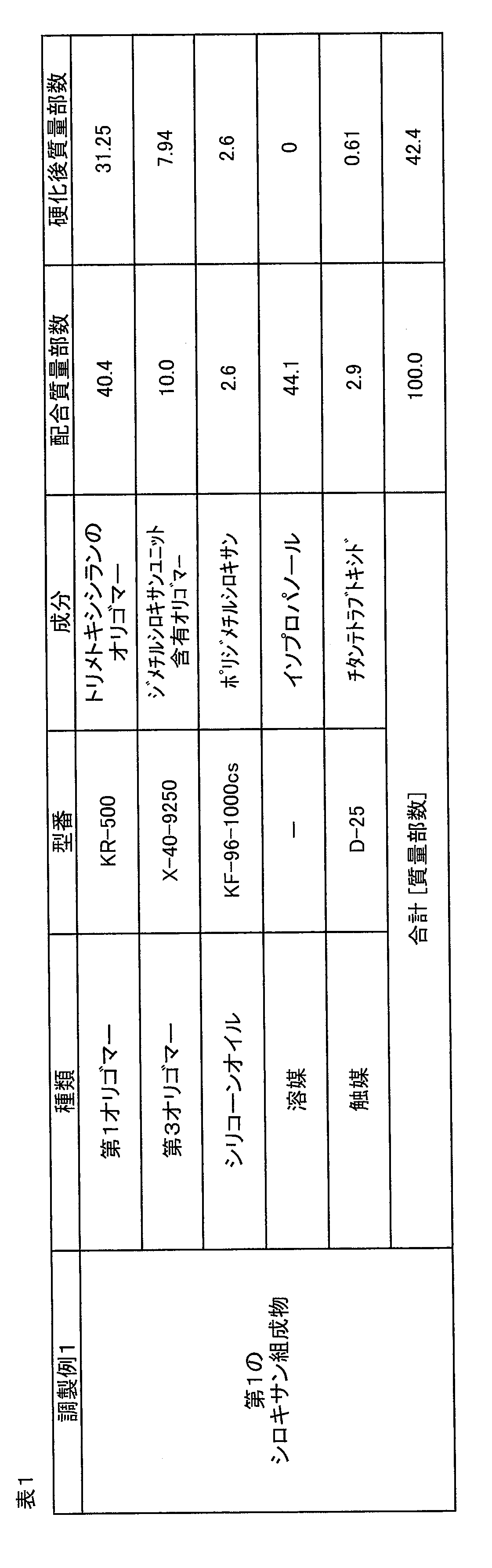
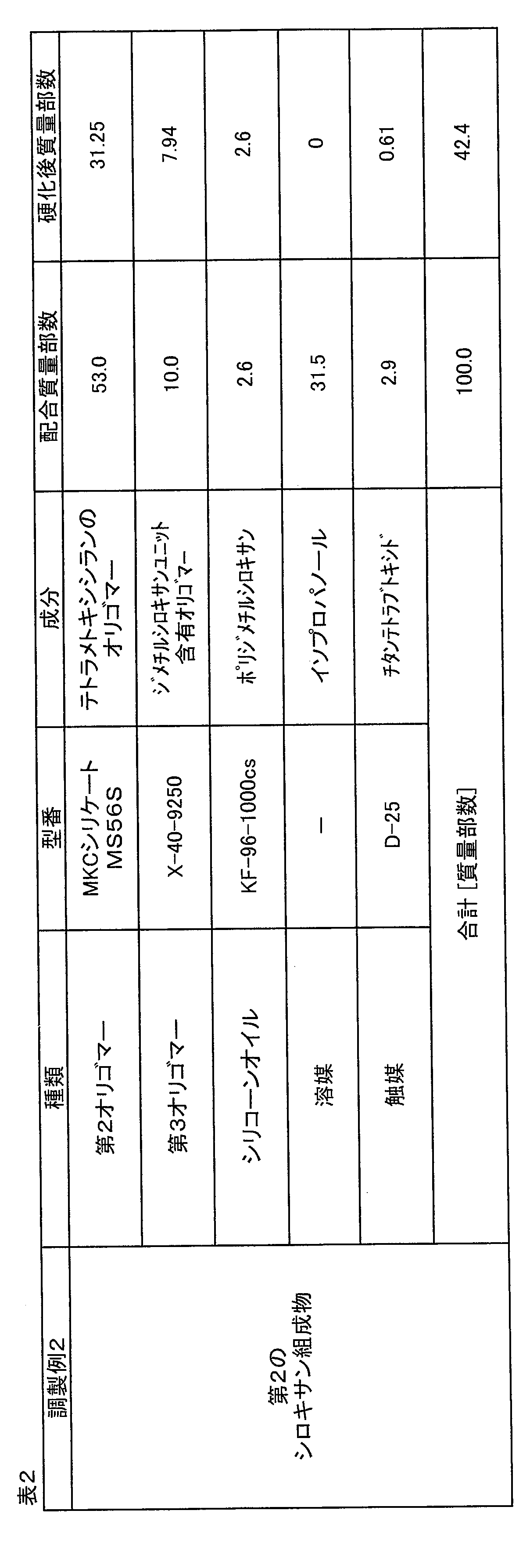


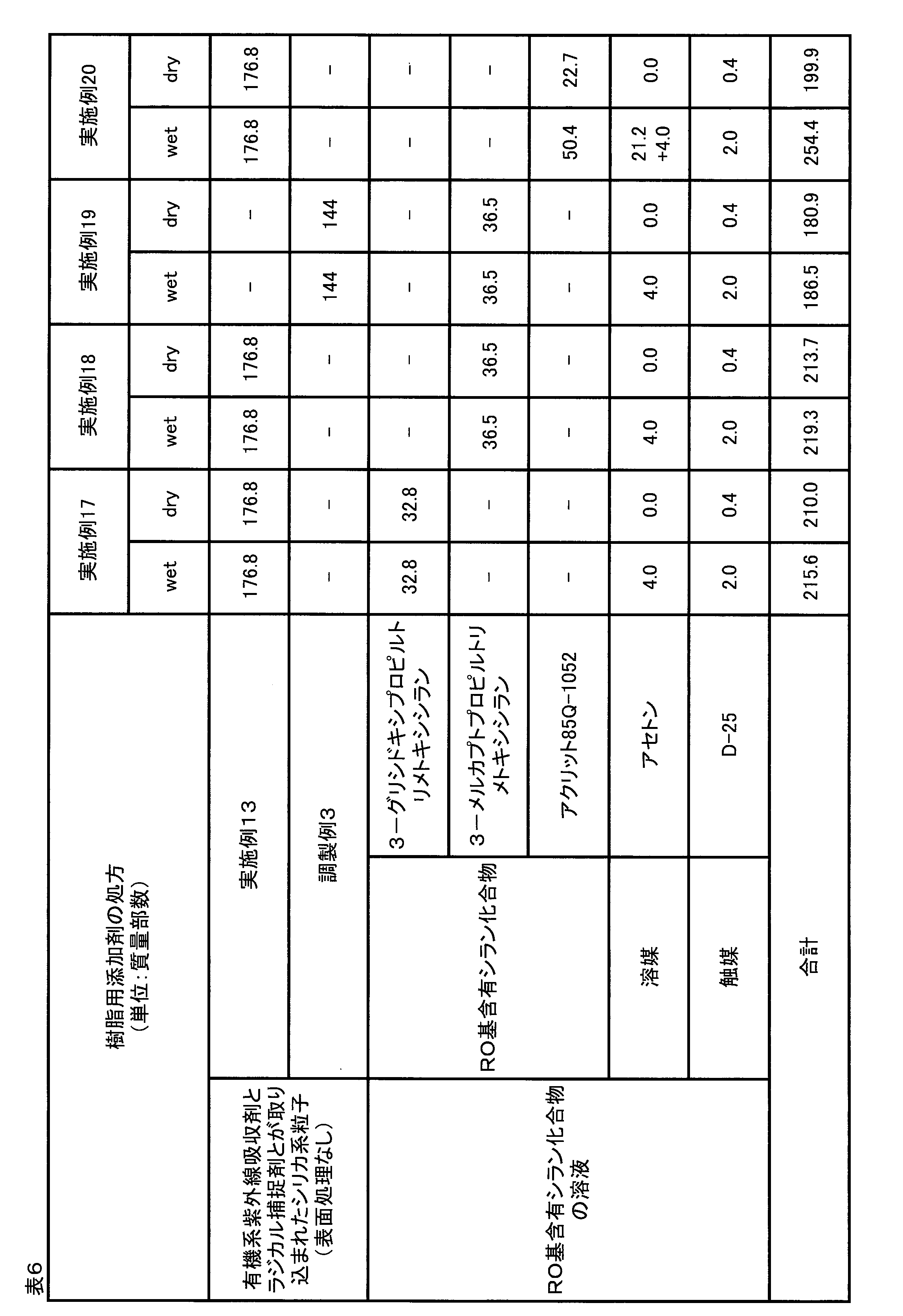
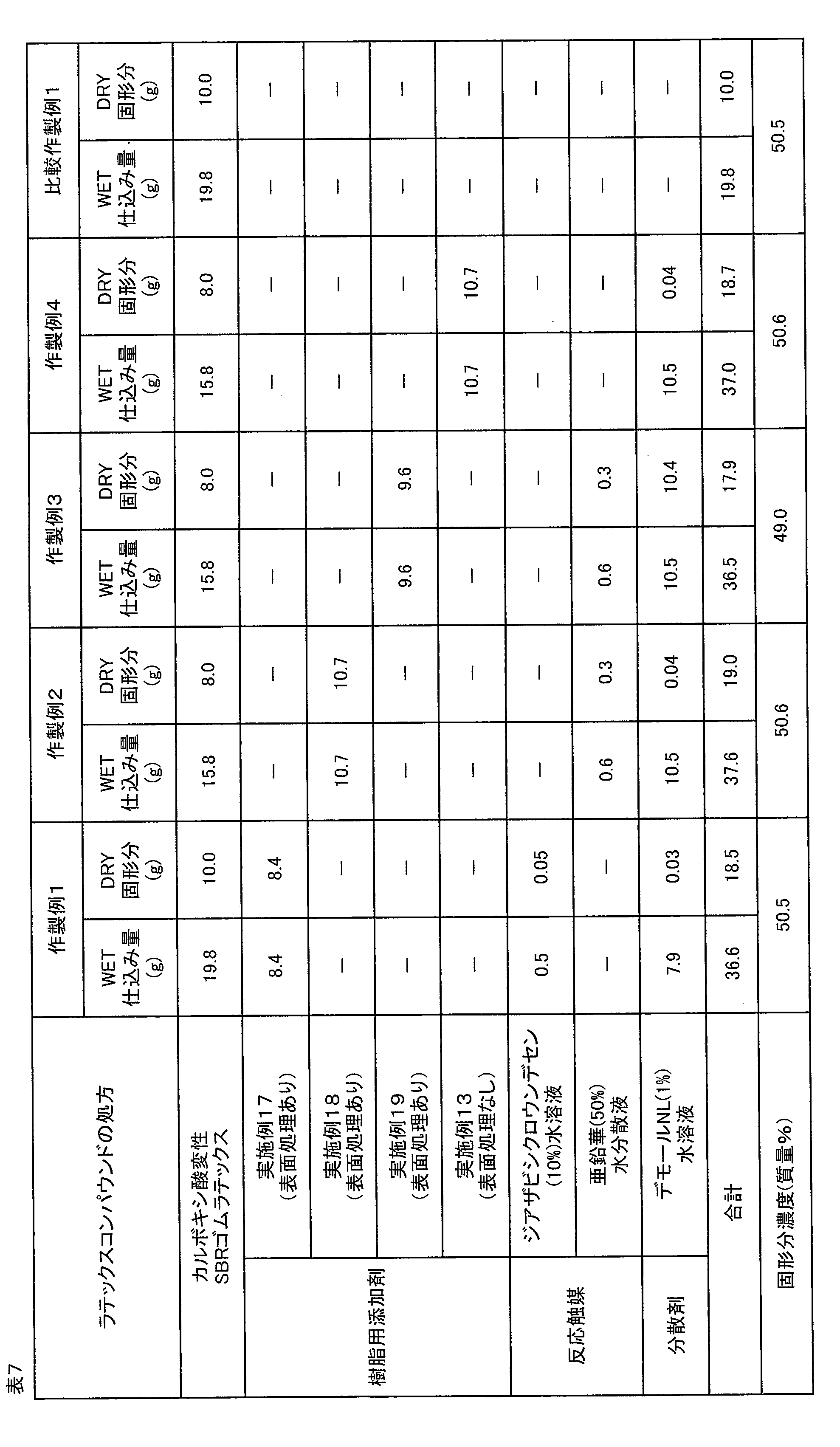


Claims (13)
前記多孔質粒子に取り込まれた有機系紫外線吸収剤および/またはラジカル捕捉剤と、
前記有機系紫外線吸収剤および/または前記ラジカル捕捉剤を前記多孔質粒子内において封止するシロキサン硬化物とを含むことを特徴とする、樹脂用添加剤。 Porous particles and
An organic UV absorber and / or a radical scavenger incorporated into the porous particles,
An additive for a resin, which comprises a siloxane cured product that seals the organic ultraviolet absorber and / or the radical scavenger in the porous particles.
前記RO基含有シラン化合物は、RO基(Rは、1価の飽和炭化水素基および1価の芳香族炭化水素基からなる群から選ばれる少なくとも1つの1価の炭化水素基を示す。)と、前記RO基以外の部分であって、樹脂と反応可能および/または親和可能な前記部分とを含有することを特徴とする、請求項8に記載の樹脂用添加剤。 The porous particles in which the organic ultraviolet absorber and / or the radical scavenger are sealed with the siloxane cured product are surface-treated with an RO group-containing silane compound.
The RO group-containing silane compound includes an RO group (R represents at least one monovalent hydrocarbon group selected from the group consisting of a monovalent saturated hydrocarbon group and a monovalent aromatic hydrocarbon group). The resin additive according to claim 8, wherein the moiety other than the RO group contains the moiety capable of reacting with and / or being compatible with the resin.
前記シロキサン組成物を硬化させて、そのシロキサン硬化物により、前記有機系紫外線吸収剤および/または前記ラジカル捕捉剤を、前記多孔質粒子内において封止する第2工程と
を備えることを特徴とする、樹脂用添加剤の製造方法。 The first step of blending the porous particles, the organic ultraviolet absorber and / or the radical scavenger, and the siloxane composition.
It is characterized by comprising a second step of curing the siloxane composition and sealing the organic ultraviolet absorber and / or the radical scavenger in the porous particles by the siloxane cured product. , Manufacturing method of additive for resin.
前記RO基含有シラン化合物は、RO基(Rは、1価の飽和炭化水素基および1価の芳香族炭化水素基からなる群から選ばれる少なくとも1つの1価の炭化水素基を示す。)と、前記RO基以外の部分であって、樹脂と反応可能および/または親和可能な前記部分とを含有することを特徴とする、請求項10または11に記載の樹脂用添加剤の製造方法。 A third step of surface-treating the porous particles in which the organic ultraviolet absorber and / or the radical scavenger is sealed with the siloxane cured product with a RO group-containing silane compound is further provided.
The RO group-containing silane compound includes an RO group (R represents at least one monovalent hydrocarbon group selected from the group consisting of a monovalent saturated hydrocarbon group and a monovalent aromatic hydrocarbon group). The method for producing an additive for a resin according to claim 10 or 11, wherein the moiety other than the RO group and which is capable of reacting with and / or being compatible with the resin is contained.
請求項1~9のいずれか一項に記載の樹脂用添加剤と
を含有することを特徴とする、成形体。 With resin
A molded product containing the resin additive according to any one of claims 1 to 9.
Applications Claiming Priority (4)
| Application Number | Priority Date | Filing Date | Title |
|---|---|---|---|
| JP2020072917 | 2020-04-15 | ||
| JP2020072917 | 2020-04-15 | ||
| JP2020189875 | 2020-11-13 | ||
| JP2020189875 | 2020-11-13 |
Publications (2)
| Publication Number | Publication Date |
|---|---|
| JP2022008048A true JP2022008048A (en) | 2022-01-13 |
| JP7570273B2 JP7570273B2 (en) | 2024-10-21 |
Family
ID=80110170
Family Applications (1)
| Application Number | Title | Priority Date | Filing Date |
|---|---|---|---|
| JP2021068278A Active JP7570273B2 (en) | 2020-04-15 | 2021-04-14 | Additive for resin, its manufacturing method and molded product |
Country Status (1)
| Country | Link |
|---|---|
| JP (1) | JP7570273B2 (en) |
Citations (7)
| Publication number | Priority date | Publication date | Assignee | Title |
|---|---|---|---|---|
| JPH0170831U (en) * | 1987-10-29 | 1989-05-11 | ||
| JPH07278350A (en) * | 1992-04-29 | 1995-10-24 | General Electric Co <Ge> | Solid silicone additive system |
| JPH0867867A (en) * | 1994-06-23 | 1996-03-12 | Suzuki Yushi Kogyo Kk | Ultraviolet rays blocking material, ultraviolet rays blocking synthetic resin, ultraviolet rays blocking cosmetic and ultraviolet rays blocking coating film respectively using the same |
| JPH08253625A (en) * | 1995-03-16 | 1996-10-01 | Toray Dow Corning Silicone Co Ltd | Water-repellent powder, its production and curable polymer composition |
| WO2019039468A1 (en) * | 2017-08-22 | 2019-02-28 | 大阪ガスケミカル株式会社 | Curable composition and use of same |
| JP2020033324A (en) * | 2018-08-31 | 2020-03-05 | テイカ株式会社 | UV protection composite material, dispersion using the UV protection composite material, and cosmetics |
| WO2020075582A1 (en) * | 2018-10-09 | 2020-04-16 | 大阪ガスケミカル株式会社 | Cosmetic additive and method for producing same |
-
2021
- 2021-04-14 JP JP2021068278A patent/JP7570273B2/en active Active
Patent Citations (7)
| Publication number | Priority date | Publication date | Assignee | Title |
|---|---|---|---|---|
| JPH0170831U (en) * | 1987-10-29 | 1989-05-11 | ||
| JPH07278350A (en) * | 1992-04-29 | 1995-10-24 | General Electric Co <Ge> | Solid silicone additive system |
| JPH0867867A (en) * | 1994-06-23 | 1996-03-12 | Suzuki Yushi Kogyo Kk | Ultraviolet rays blocking material, ultraviolet rays blocking synthetic resin, ultraviolet rays blocking cosmetic and ultraviolet rays blocking coating film respectively using the same |
| JPH08253625A (en) * | 1995-03-16 | 1996-10-01 | Toray Dow Corning Silicone Co Ltd | Water-repellent powder, its production and curable polymer composition |
| WO2019039468A1 (en) * | 2017-08-22 | 2019-02-28 | 大阪ガスケミカル株式会社 | Curable composition and use of same |
| JP2020033324A (en) * | 2018-08-31 | 2020-03-05 | テイカ株式会社 | UV protection composite material, dispersion using the UV protection composite material, and cosmetics |
| WO2020075582A1 (en) * | 2018-10-09 | 2020-04-16 | 大阪ガスケミカル株式会社 | Cosmetic additive and method for producing same |
Also Published As
| Publication number | Publication date |
|---|---|
| JP7570273B2 (en) | 2024-10-21 |
Similar Documents
| Publication | Publication Date | Title |
|---|---|---|
| CN102105532B (en) | thermoplastic polyester resin composition | |
| JP4823431B2 (en) | Room temperature curable silicone rubber composition | |
| CN100354373C (en) | Self-adhesive, addition cross-linking silicone-rubber blends, method for their production, method for producing composite moulded parts and use of the latter | |
| US4560719A (en) | Flame retardant polyolefin-based rubber composition | |
| US7105614B2 (en) | Curable epoxy resin composition | |
| WO2008075752A1 (en) | Polycarbonate resin composition and molded article thereof | |
| JP2010265410A (en) | Led sealing agent | |
| JPH05262989A (en) | Room temperature curable organopolysiloxane composition | |
| JPH0113730B2 (en) | ||
| TW202204260A (en) | Functionalized silica particles and their use | |
| JPWO2010055632A1 (en) | Silicone polymer particles and silicone composition | |
| US7368495B2 (en) | Flame-retardant resin composition free from halogen | |
| JP2010248384A (en) | Silicone composition | |
| JP4171868B2 (en) | Room temperature curable organopolysiloxane composition | |
| CN101724270B (en) | Flame retardant organoplysiloxane composition | |
| JPH11152408A (en) | Silicone rubber composition for high voltage electrical insulator and polymer insulator | |
| JP7570273B2 (en) | Additive for resin, its manufacturing method and molded product | |
| JP2005220215A (en) | Room temperature curable organopolysiloxane composition | |
| JP2008045039A (en) | Silicone-based polymer particle and silicone-based composition containing the same | |
| CN113242897B (en) | Adhesives | |
| JP5946684B2 (en) | Thermosetting resin composition, tablet, package for light emitting diode, and production method thereof | |
| JP4530136B2 (en) | Room temperature curable organopolysiloxane composition and method for producing the same | |
| CN114044938B (en) | Anti-short wave ultraviolet stabilizer and preparation method and application thereof | |
| JP2008045005A (en) | Silicone-based composition containing silicone-based polymer particles | |
| JP4400983B2 (en) | Curable composition |
Legal Events
| Date | Code | Title | Description |
|---|---|---|---|
| A621 | Written request for application examination |
Free format text: JAPANESE INTERMEDIATE CODE: A621 Effective date: 20240116 |
|
| A977 | Report on retrieval |
Free format text: JAPANESE INTERMEDIATE CODE: A971007 Effective date: 20240912 |
|
| TRDD | Decision of grant or rejection written | ||
| A01 | Written decision to grant a patent or to grant a registration (utility model) |
Free format text: JAPANESE INTERMEDIATE CODE: A01 Effective date: 20241001 |
|
| A61 | First payment of annual fees (during grant procedure) |
Free format text: JAPANESE INTERMEDIATE CODE: A61 Effective date: 20241008 |
|
| R150 | Certificate of patent or registration of utility model |
Ref document number: 7570273 Country of ref document: JP Free format text: JAPANESE INTERMEDIATE CODE: R150 |