JP5111723B2 - Method for managing metal anode or cast metal anode, method for managing quantity in metal smelting, and label - Google Patents
Method for managing metal anode or cast metal anode, method for managing quantity in metal smelting, and label Download PDFInfo
- Publication number
- JP5111723B2 JP5111723B2 JP2004192260A JP2004192260A JP5111723B2 JP 5111723 B2 JP5111723 B2 JP 5111723B2 JP 2004192260 A JP2004192260 A JP 2004192260A JP 2004192260 A JP2004192260 A JP 2004192260A JP 5111723 B2 JP5111723 B2 JP 5111723B2
- Authority
- JP
- Japan
- Prior art keywords
- metal anode
- label
- anode
- cast
- cast metal
- Prior art date
- Legal status (The legal status is an assumption and is not a legal conclusion. Google has not performed a legal analysis and makes no representation as to the accuracy of the status listed.)
- Expired - Fee Related
Links
Images





Classifications
-
- Y—GENERAL TAGGING OF NEW TECHNOLOGICAL DEVELOPMENTS; GENERAL TAGGING OF CROSS-SECTIONAL TECHNOLOGIES SPANNING OVER SEVERAL SECTIONS OF THE IPC; TECHNICAL SUBJECTS COVERED BY FORMER USPC CROSS-REFERENCE ART COLLECTIONS [XRACs] AND DIGESTS
- Y02—TECHNOLOGIES OR APPLICATIONS FOR MITIGATION OR ADAPTATION AGAINST CLIMATE CHANGE
- Y02P—CLIMATE CHANGE MITIGATION TECHNOLOGIES IN THE PRODUCTION OR PROCESSING OF GOODS
- Y02P10/00—Technologies related to metal processing
- Y02P10/20—Recycling
Landscapes
- Electrolytic Production Of Metals (AREA)
Description
本発明は、金属製錬において、精製した金属(例えば銅(銅アノード))及び金属(例えば銅)アノードの電解精製後に発生する、鋳返し金属アノード(使用済み金属(例えば銅)アノード)を管理する方法に関する。詳細には、鋳造した金属(例えば銅)アノードの表面に、アノードのハンドリング及び電解精製における電解槽内の高温多湿かつ酸性雰囲気に耐久しうるラベルを専用装置で貼付け、このラベルを電解精製前後の任意の場所で、固定式もしくはハンディ式リーダーによって読み取り、金属(例えば銅)アノード及び鋳返し金属(例えば銅)アノードを管理する方法に関する。
更には、金属(例えば銅)製錬における物量管理においても有効な方法に関する。
The present invention manages refined metal (eg, copper (copper anode)) and cast metal anode (used metal (eg, copper) anode) generated after electrolytic refining of refined metal (eg, copper (copper anode)) and metal (eg, copper) anode in metal smelting. On how to do. Specifically, a label capable of withstanding the high temperature and humidity and acid atmosphere in the electrolytic cell in the anode handling and electrolytic refining is affixed to the surface of the cast metal (for example, copper) anode, and this label is attached before and after the electrolytic refining. The present invention relates to a method of managing a metal (eg, copper) anode and a cast metal (eg, copper) anode at any location by a fixed or handheld reader.
Furthermore, it is related with the method effective also in quantity control in metal (for example, copper) smelting.
一般に、例えば銅の製錬工程としては種々の工程が実施されているが、その代表的なプロセスとしては自溶炉においてマットを作り、そのマットを転炉で処理して銅含有量98.5%程度の粗銅を得て、さらにその粗銅を精製して銅含有量を99.3%〜99.5%程度まで上昇させてからアノードを鋳造し、最終的に電解精製するプロセスがある。 In general, for example, various processes are performed as a copper smelting process. As a typical process, a mat is made in a flash smelting furnace, and the mat is processed in a converter to have a copper content of about 98.5%. There is a process in which the crude copper is obtained, the crude copper is further refined to raise the copper content to about 99.3% to 99.5%, the anode is cast, and finally electrolytic purification is performed.
精製炉の容量を400tとし、アノードの単重を約350kgとした場合、アノードは1ロットで1100枚以上鋳造される。図1に示すように、鋳造されたアノード1は、アノード置場に立てた状態で並べられ一時保管され、必要に応じて電解工場に搬送される。
電解工場では、アノードを整列させる機械(以下「整列機」と称する。)を通した後、専用クレーンで電解槽に装入することが多い。また、鉛製錬等に於いても同様な手法がある。
When the capacity of the refining furnace is 400 tons and the anode unit weight is about 350 kg, 1100 or more anodes are cast in one lot. As shown in FIG. 1, the cast anodes 1 are arranged and temporarily stored in a standing state on the anode yard, and are transported to an electrolytic plant as necessary.
In an electrolytic factory, after passing through a machine for aligning anodes (hereinafter referred to as “alignment machine”), it is often charged into an electrolytic cell with a dedicated crane. There is a similar method in lead smelting.
電解精製で得られたカソード(電気銅)及びアノードの残基である使用済みとなったアノード(以下、鋳返しと称す。)は、再びクレーンにて引揚げられる。その際、引き揚げた電気銅及び鋳返しは再び整列機を通り、それぞれ分離、分類された後、電気銅は製品として出荷され、鋳返しは中間製品として、一旦ボート等の容器に入れられた後、運搬され転炉もしくは精製炉に装入される。 The cathode (electrocopper) obtained by electrolytic refining and the used anode (hereinafter referred to as casting), which is a residue of the anode, are lifted again by a crane. At that time, the lifted electrolytic copper and the cast iron are again passed through the aligning machine, separated and sorted, respectively, and then the copper is shipped as a product, and the cast copper is once placed in a container such as a boat as an intermediate product. , Transported and charged into converter or refining furnace.
前記アノードは精製炉でバッチごとに製造される為、固有のバッチ(ロット)番号が付けられるのが普通である。またアノードへのロット番号の付番は、ペンキや油性マーカー、またはチョークなどにより記入されることが多い。またボート等への付番も同様に、ペンキや油性マーカー、チョークなどで記入されることが多い。 Since the anode is manufactured batch by batch in a refining furnace, it is usually assigned a unique batch (lot) number. In addition, the lot number assigned to the anode is often entered by paint, an oil marker, or chalk. Similarly, the numbering of boats is often entered with paint, oil-based markers, chalk, and the like.
従来、銅アノードにラベルを貼付け管理する方法としては、特許文献1の開示があるが、これは、「ラベルにバーコードを使用する」、「ラベルを貼付けることによりアノードの管理が可能になるというアイデア」に関する内容である。
これは、バーコードであると全方位から検知ができないこと、汚れに対して、検知能力が極端に低下すること、酸性雰囲気で取り扱われるにもかかわらず、耐酸性の対策が成されて無いこと、耐さっか性、耐水性等の対策がないことから現実に実施が成されていないと思われる。
Conventionally, as a method of pasting and managing a label on a copper anode, there is a disclosure of Patent Document 1, but this can be performed by “using a barcode on a label” or “a label is pasted to manage the anode. This is the content related to the idea.
This means that barcodes cannot be detected from all directions, the detection capability against dirt is extremely reduced, and no acid-proof measures have been taken despite being handled in an acidic atmosphere. However, since there are no measures such as resistance to water and water resistance, it seems that the actual implementation has not been made.
上記のように1ロット1100枚以上製造される、大量のアノード全てにロット番号を記入するのは、相当な労力と時間を要する。作業負荷を考慮し、従来は図1のように、主にアノードの耳の部分2にペンキで着色し、そのペンキの色や位置によってロットを識別し、数枚または数十枚に1枚、ロット番号を記入するという方法を用いていた。
As described above, it takes a lot of labor and time to write lot numbers on all the large numbers of anodes that are manufactured in 1100 or more lots. Considering the work load, conventionally, as shown in Fig. 1, the
しかし、色によってのみ識別する場合は、作業者が目視によりロット番号を確認する必要があるため、用いるペンキの色は数色が限界であり、さらにアノードの板厚は30〜60mm程度であることが多く、ペンキやマーカーでこの部分にロット番号を記入すると、判読しにくい数字が生じてしまうために、判読ミスが生じ、数え間違いなども発生するという問題があった。 However, when identifying only by color, it is necessary for the operator to confirm the lot number by visual inspection, so the color of the paint to be used is limited to several colors, and the plate thickness of the anode is about 30 to 60 mm. In many cases, if lot numbers are entered in this part with paint or markers, numbers that are difficult to read are generated, so that there is a problem of misreading and miscounting.
上記理由からアノードへの付番の際、番号記入用の専用機械を設置することも考えられるが、アノードの表面性状は非常に粗く、また個々によりサイズ・形状が微妙に異なることが多い為、前記専用機械の設置は非常に困難であることが多い。
また鋳返しボートに関しては、ボートを縦積みしたり、並べて置いたりした場合、記載された番号を目視で読み取るのが困難な場合があり、ボート番号によるボート管理が困難になることがあった。
For the above reasons, it may be possible to install a dedicated machine for entering the number when assigning numbers to the anode, but the surface properties of the anode are very rough, and the size and shape are often slightly different depending on the individual. The installation of the dedicated machine is often very difficult.
In addition, regarding the reverse boat, when the boats are stacked vertically or placed side by side, it may be difficult to visually read the described numbers, and boat management by boat numbers may be difficult.
本発明は以上の事情を背景としてなされたもので、アノードに精確かつ簡易にロット番号を付番し、金属アノード及び鋳返し金属アノードを管理する方法として、アノードの表面形状、ハンドリングなどの輸送及び電解精製における電解槽内の高温多湿かつ酸性雰囲気に耐久しうる専用ラベルをアノードに専用装置で貼付け、このラベルを電解精製前後の任意の場所で、固定式もしくはハンディ式リーダーによって読み取り、銅アノード及び鋳返し銅アノードを管理することを目的とする。
また鋳返し等のボートにIDタグを貼付け、IDタグリーダーを任意の場所に設置することで、ボートの搬出入管理を行うことを目的とする。
The present invention has been made against the background described above. As a method for accurately and easily assigning a lot number to an anode and managing a metal anode and a cast metal anode, transportation of the anode surface shape, handling, etc. A special label that can withstand high-temperature and high-humidity and acidic atmosphere in the electrolytic cell in electrolytic refining is attached to the anode with a dedicated device, and this label is read by a fixed or hand-held reader at any place before and after electrolytic refining. The purpose is to manage the cast copper anode.
In addition, the purpose is to carry in and out the boat by attaching an ID tag to a boat such as cast-back and installing an ID tag reader at an arbitrary location.
上記目的を達成するために鋭意検討した結果、本発明では、アノード耳部の表面に、ロット番号を印刷した高分子系のラベルを、専用のハンディ型貼付器で連続的に貼付、アノード及び鋳返しを管理するという方法が、実操業において適用できるということを見出した。 As a result of diligent studies to achieve the above object, in the present invention, a polymer label printed with a lot number is continuously applied to the surface of the anode ear with a dedicated handy applicator. We found that the method of managing the return can be applied in actual operation.
即ち本発明は、
(1)高分子系材料からなるフィルムで表面が保護され、アクリル系樹脂の糊層を備えた高分子系のシート基材からなるラベルを、鋳造後、60℃以上120℃以下に冷却した、粗雑な表面を有する金属アノード又は鋳返し金属アノードに貼付けることにより、前記糊層を軟化させて粘着性を向上させ、電解精製の工程中も継続して前記糊層の粘性を維持させることを特徴とする金属アノード又は鋳返し金属アノードの管理方法。
(2)前記金属アノード又は前記鋳返し金属アノードに貼付けた前記ラベルは、前記ラベル貼付面とラベルリーダーのモニタ面のなす角度が22度以下となるように配置したことを特徴とする上記(1)記載の金属アノード又は鋳返し金属アノードの管理方法。
(3)金属アノード又は鋳返し金属アノードが銅アノード又は鋳返し銅アノードである、上記(1)又は(2)記載の金属アノード又は鋳返し金属アノードの管理方法。
That is, the present invention
(1) The surface was protected with a film made of a polymer material, and the label made of a polymer sheet substrate provided with an acrylic resin glue layer was cooled to 60 ° C. or more and 120 ° C. or less after casting. By sticking to a metal anode or a rolled metal anode having a rough surface, the adhesive layer is softened to improve the adhesiveness, and the viscosity of the adhesive layer is maintained continuously during the electrolytic purification process. A method for managing a featured metal anode or cast metal anode.
(2) The label attached to the metal anode or the cast metal anode is arranged so that an angle formed by the label application surface and the monitor surface of the label reader is 22 degrees or less (1) ) A method for managing a metal anode or a cast metal anode as described.
(3) The method for managing a metal anode or a rolled metal anode according to the above (1) or (2), wherein the metal anode or the rolled metal anode is a copper anode or a rolled copper anode .
(4)前記金属アノード又は前記鋳返し金属アノードに貼付けた前記ラベルにQR(QuickResponse)コード及び又は英数字を記載する上記(1)〜(3)のいずれかに記載の金属アノード又は鋳返し金属アノードの管理方法。
(5)前記金属アノード又は前記鋳返し金属アノードに貼付けた前記ラベルに耐溶剤性、耐熱性、耐さっか性、耐酸性、耐水性リボンで印字を施す上記(1)〜(4)のいずれかに記載の金属アノード又は鋳返し金属アノードの管理方法。
(4) The metal anode or the rolled metal according to any one of the above (1) to (3), wherein a QR (QuickResponse) code and / or alphanumeric characters are written on the label attached to the metal anode or the rolled metal anode. Anode management method.
(5) Any one of the above (1) to (4), wherein the label attached to the metal anode or the cast metal anode is printed with solvent resistance, heat resistance, brittleness resistance, acid resistance, and water resistance ribbon . The management method of the metal anode or cast metal anode described in 1 .
(6)前記金属アノード又は前記鋳返し金属アノードに貼付けた前記ラベルで、該ラベルの一部もしくは全部にカラーリングを施し、ラベルを目視により簡易に判断することを特徴とする上記(1)〜(5)のいずれかに記載の金属アノード又は鋳返し金属アノードの管理方法。
(7)前記金属アノード又は前記鋳返し金属アノードに貼付けた前記ラベルを手動のハンディラベル貼付器により、巻き取りラベルをセットし、レバーを握ることにより、精確かつ簡易にラベル貼付を可能とする上記(1)〜(6)のいずれかに記載の金属アノード又は鋳返し金属アノードの管理方法。
(6) The above- mentioned (1) to (1) , wherein the label attached to the metal anode or the cast metal anode is colored on a part or all of the label, and the label is easily judged visually. (5) The management method of the metal anode or the cast metal anode according to any one of (5) .
(7) by the metal anode or manual handy labeling device the label adhered to the cast-back metal anode, and sets the winding labels, above enables by gripping the lever, a label affixed to precisely and easily (1) The management method of the metal anode in any one of (6) or a cast metal anode.
(8)前記金属アノード又は前記鋳返し金属アノードに貼付けた前記ラベルを、ラベルリーダーにより読み取る上記(1)〜(7)のいずれかに記載の金属製錬における物量管理方法。
(9)高分子系のシートにアクリル系樹脂の糊層を備え、高分子系材料からなるフィルムで表面を保護し、60℃以上120℃以下の粗雑な表面を有する金属アノード又は鋳返し金属アノードに貼付けることにより、前記糊層を軟化させて粘着性を向上させ、電解精製の工程中も継続して前記糊層の粘性を維持させるラベル。
(8) The quantity management method in metal smelting in any one of said (1)-(7) which reads the said label affixed on the said metal anode or the said cast metal anode with a label reader.
(9) A metal anode or a cast metal anode having a rough surface of 60 ° C. or higher and 120 ° C. or lower with a polymer-based sheet provided with a paste layer of an acrylic resin and a surface made of a polymer material. A label that softens the glue layer to improve adhesiveness by sticking to the label, and maintains the viscosity of the glue layer continuously during the electrolytic purification process.
本発明の実施により奏される効果は、次のとおりである。
(1)銅の電解工場および各置場でのアノード及び鋳返しの在庫量、仕掛銅量、貴金属量などのリアルタイムでの管理が可能となる。
(2)上記(1)を基礎とした銅及び副産物の生産計画を迅速に行える。
(3)上記(1)を基礎とした高精度な貴金属の生産計画が可能となる。
このように、本発明ではラベルにQRコード及び英数字を印刷する方法を採用し、具体的なラベルの貼付方法や、耐酸・耐熱の特徴(0040項に詳細耐久性能を記述)を持ったラベルの材質及びラベルの読み取り方法を試験し、明記した本発明と、特許文献1に記載の発明とは根本的に異なる。
The effects produced by the implementation of the present invention are as follows.
(1) It is possible to manage in real time the quantity of anodes and copper inventories, the amount of in-process copper, the amount of precious metals, etc. at the copper electrolytic plant and at each yard.
(2) A copper and by-product production plan based on the above (1) can be quickly made.
(3) A highly accurate production plan for precious metals based on the above (1) can be realized.
In this way, the present invention employs a method of printing QR codes and alphanumeric characters on the label, and has a specific label application method and a label having acid / heat resistance characteristics (detailed durability performance is described in paragraph 0040). The present invention described by testing and specifying the material and label reading method is fundamentally different from the invention described in Patent Document 1.
以下にその手段の詳細を説明する。
本発明に於ける処理対象金属は、銅の他鉛等の金属に適用される。例えば銅アノードの表面の粗れた部分においても貼付け可能で、銅アノードのハンドリング及び電解槽での高温多湿及び酸性雰囲気に耐久しうるラベルとしては、高分子系のシート基材とアクリル樹脂系糊層及び表面保護フィルム(高分子系)から構成されたものを適用するものである。
Details of the means will be described below.
The metal to be treated in the present invention is applied to metals such as lead in addition to copper. For example, a label that can be applied to a rough surface of a copper anode and that can withstand the handling of the copper anode and high temperature and humidity in an electrolytic cell and an acidic atmosphere includes a polymer-based sheet substrate and an acrylic resin-based paste. What consists of a layer and a surface protection film (polymer type) is applied.
上記ラベルをアノードに添付する際には、鋳造後アノード置場に保管されたアノードの表面温度が60℃から120℃程度であることから、この温度に耐えうるものが好ましい。また電解槽では、操業管理上、アノードの耳部分への物体の接触があり、ラベルに不均一な応力がかかる為、ラベルの素材は柔軟なものである方がより効果的である。 When the label is attached to the anode, the surface temperature of the anode stored in the anode storage after casting is about 60 ° C. to 120 ° C., and the one that can withstand this temperature is preferable. Moreover, in the electrolytic cell, in terms of operation management, there is contact of an object with the ear portion of the anode, and non-uniform stress is applied to the label. Therefore, it is more effective that the label material is flexible.
上記ラベルに、QRコードリーダーにて360度全方向の読み取りが可能な「QRコード」及び英数字を耐性リボンを用いて専用プリンタで印刷し、巻き取られたラベルを専用のハンディ貼付器にセットし、アノードの耳部分の定位置に連続的に貼付ける。 Print the QR code and alphanumeric characters that can be read in 360 degrees in all directions with a QR code reader on the above label with a special printer using a resistant ribbon, and set the wound label on a special handy applicator. Then, it is continuously pasted at a fixed position of the ear part of the anode.
アノードの電解槽への装入前後に、固定式またはハンディ式のQRコードリーダーを用いて、電解槽に装入するアノード及び電解槽から取り出す鋳返しの枚数とロット番号を自動的に読み取る。 Before and after loading the anode into the electrolytic cell, a fixed or handy QR code reader is used to automatically read the anode loaded into the electrolytic cell and the number of reversals taken out from the electrolytic cell and the lot number.
アノードおよび鋳返しのロット番号の読み取りに関しては、固定式リーダー(スキャナーやカメラ等)のほか、ハンディタイプで無線通信可能なスキャナーを用いてもよい。
ロット毎に成分分析を行うことにより、例えば、銅、鉛、砒素、アンチモン、金、銀、白金、カドミウム、セレン、パラジウム、ルテニウム等の成分は、迅速に把握されている。
このデータと相まって、物量管理が容易に行われ、適正な生産スケジュールの作成が可能となるのである。
Regarding the reading of the anode and reverse lot numbers, in addition to a fixed reader (scanner, camera, etc.), a handy type scanner capable of wireless communication may be used.
By performing component analysis for each lot, for example, components such as copper, lead, arsenic, antimony, gold, silver, platinum, cadmium, selenium, palladium, and ruthenium are quickly grasped.
Coupled with this data, the quantity management is easily performed, and an appropriate production schedule can be created.
鋳返しはボート等の専用容器に入れられ、ボート単位で輸送することが多いため、ボートにもロット番号をつけて管理する。ボートに貼付けるラベルは前記ラベルでも可能であるが、IDタグを用いてもよい。なおIDタグを使用した場合は、電解工場および転炉工場、または各置場にIDタグリーダーを設置することにより、自動的な鋳返しボートの搬出入管理が可能になる。 Since turn-over is put in a special container such as a boat and is often transported by boat, the boat is assigned a lot number and managed. The label attached to the boat can be the label, but an ID tag may be used. When ID tags are used, automatic turning-on / out management of the reversing boat becomes possible by installing ID tag readers at the electrolytic plant and converter plant, or at each yard.
本発明の好適な実施例について、各項目について、添付図面を参照しながら説明する。 In the preferred embodiment of the present invention, each item will be described with reference to the accompanying drawings.
(ラベルへ印刷するコード)
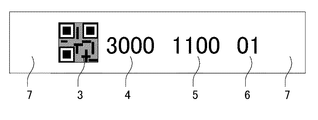
本発明でラベルに印刷する「QRコード+英数字」例を図2に示す。このQRコード3は、後述する英数字および漢字などの情報をコード化したものであり、これによりリーダーでの360度全方向での読み取りが可能になる。具体的には、図6の21のように、ラベルを斜め、または通常と反対方向に貼付けても、読み取りが可能になる。
(Code to be printed on the label)
An example of “QR code + alphanumeric characters” printed on a label according to the present invention is shown in FIG. This
図2で示したように、同時に英数字を記載することにより、ロット番号4、通し番号5、成分品位6などをラベルに書き込むことが可能であり、目視でのこれらの確認が即座に可能である。
また、ラベルには数色の着色が可能である。ロット番号や成分品位により、ラベルの両端7に着色した数色の組み合せにより、複数ロットの識別を目視判断により明瞭にすることが可能である。
As shown in FIG. 2, it is possible to write lot number 4,
The label can be colored in several colors. The identification of a plurality of lots can be made clear by visual judgment by combining several colors colored on both
(ラベル)
ラベルは、高分子系材料のシート部に、アクリル系樹脂の糊剤を備えたものを用いるが、その構造は図3のようにシート基材8の表面にフィルム9を施したものである。ラベルに耐溶剤性、耐熱性、耐さっか性、耐酸性、耐水性リボンで印字を施すことが好ましい。
(label)
As the label, a polymer material sheet portion provided with an acrylic resin glue is used, and the structure is such that a
糊剤10としては、アクリル系樹脂を主成分とする内容のため0℃〜120℃の範囲で接着可能であるが、50〜60℃以上になると、シートと共に糊剤が軟化し、より密着性が発揮されることにより粗雑なアノード表面への粘着性が向上する。電解槽での雰囲気温度が約60℃であることから、糊剤の粘着性の観点からしても、前記糊剤が好適である。この状態でのコード番号の読み取りは、通常時と変わらず可能である。
尚、ラベルの粘着性・耐水性が高いことから電解槽にてラベルに電解液やダストなどの付着物が発生した場合にも、ラベル表面の水洗処理による洗浄が可能である。
The
Since the label has high adhesiveness and water resistance, the surface of the label can be washed with water even when deposits such as electrolyte and dust are generated on the label in the electrolytic bath.
(アノード耳部へのラベル貼付)
アノードへのラベルの貼付は、電解工場で電解槽に装入されるまでの間で任意の場所で任意の時間に実施して良いが、図1のようにロットごとにアノードを立てかけて並べた状態で貼付けるのが、作業効率が最も良い。
(Label affixed to the anode ear)
Attaching the label to the anode may be carried out at any place at any time until it is loaded into the electrolytic cell at the electrolytic plant, but the anodes are arranged upright for each lot as shown in FIG. Affixing in the state is the best work efficiency.
上記を考慮すると、例えば鋳造直後の、鋳造機付近のアノード置場での貼付が考えられる。アノードは通常、冷却水槽を通って冷却されるが、水槽を出た直後はまだ高温であることが多い。しかし本発明で使用する高分子系のラベルは耐用温度が約120℃であることから、アノードが冷却されてから貼付けるのが適当である。
(アノード耳部の冷却速度確認試験)
In consideration of the above, for example, it is possible to apply the paste at the anode yard near the casting machine immediately after casting. The anode is usually cooled through a cooling water tank, but is often still hot immediately after leaving the water tank. However, since the polymer label used in the present invention has a service temperature of about 120 ° C., it is appropriate to apply the label after the anode is cooled.
(Anode ear cooling rate confirmation test)
通常、アノードは、冷却水槽から一定枚数ごとに引き上げられ、フォークリフト等で運搬される。そこで、水槽から20枚ごとに引き上げられた場合、前記20枚のうち、最も遅く水槽に入ってきたものを「1」として、「1」〜「20」の番号を付け、自然放冷した時のアノード耳部の冷却速度を確認した。その結果を図4に示す。図4によると、水槽から出た時に最も温度が高いものは約270℃あり、これが120℃まで冷却されるのに、30分程度かかる。また、水槽出側直後に120℃を超えているものは「1」〜「4」のアノードであり、それ以外は既に100℃以下まで冷却されている。 Usually, the anode is pulled up from the cooling water tank by a certain number and conveyed by a forklift or the like. Therefore, when it is pulled up from the water tank every 20 sheets, the latest one of the 20 sheets that has entered the water tank is set to “1”, and the numbers “1” to “20” are assigned and the air is allowed to cool naturally. The cooling rate of the anode ear was confirmed. The results are shown in FIG. According to FIG. 4, the highest temperature when leaving the water tank is about 270 ° C., and it takes about 30 minutes to cool down to 120 ° C. Moreover, what exceeded 120 degreeC immediately after a water tank exit side is an anode of "1"-"4", and others are already cooled to 100 degrees C or less.
以上のように、水槽出側直後のアノードには、120℃を越えるものが約20%程度存在するが、その冷却速度は比較的早く、自然放冷でも30分以上経過すれば、ラベルを貼付けることが可能である。 As described above, there are about 20% of anodes that exceed 120 ° C immediately after the exit from the water tank, but the cooling rate is relatively fast. Is possible.
(ハンディ型ラベル貼付器)
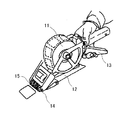
図5において示されるハンディ型ラベル貼付器(以後、「貼付器」と称する)は、ラベルを台紙から剥離させる機能により片手作業でのラベルの貼付を容易にさせる。
巻き取りラベルをハンディ型貼付器にセットした時の模式図を図5に示す。専用プリンタで印刷された巻き取りラベルをラベルホルダー11にセットし、台紙をラベル押さえ12にセットする。レバー13を握ることにより、台紙が巻き取られ、ラベルのみが取り出し口14から排出され、回転式ローラー15でラベルを抑えることにより、簡易にラベルが貼り付けられる構造となっている。
図1のようにアノードが並べられている時に、上記貼付器を用いて貼付けることにより、連続的なラベルの貼付けが容易となる。
(Handy type label sticker)
The handy-type label applicator shown in FIG. 5 (hereinafter referred to as “applicator”) makes it easy to apply a label by one-hand operation by the function of peeling the label from the mount.
FIG. 5 shows a schematic diagram when the winding label is set on the handy applicator. The take-up label printed by the dedicated printer is set on the
When the anodes are arranged as shown in FIG. 1, it is possible to easily apply a continuous label by applying the anode using the applicator.
(コード読み取り)
ラベルのQRコードを読み取るリーダーは、固定式及びハンディ式がある。アノード及び鋳返しがコンベヤ等で整列的に運搬される場所には固定式カメラを適用し、その他電解槽や各置場などアノードや鋳返しが一時的に配置される場所ではハンディ式を適用するのが好ましい。
また固定式リーダーについては、任意の場所に取り付けることが可能であるが、アノード及び鋳返しを管理する上では、電解槽への装入前後、アノード・鋳返し各置場、及び転炉または精製炉周辺等に設置するのが効果的である。
(Code reading)
There are two types of readers that read the QR code on the label: a fixed type and a handy type. Apply the fixed cameras in place the anode and cast barbs are aligned manner transported in a conveyor or the like, applying the handy type in the location where the anode and cast flashing and other electrolytic bath or each yard are temporarily placed It is preferable to do this.
In addition, the fixed reader can be installed at any place. However, in order to manage the anode and reversing, before and after charging into the electrolytic cell, each anode and reversing place, converter or refining furnace It is effective to install in the vicinity.
例えば電解工場中のアノードまたは鋳返し整列機にリーダーを設置する場合、整列機上のアノードまたは鋳返しは、一定の速度でコンベヤにより運ばれる。このコンベヤ上でのラベル読み取りの模式図を図6に示す。通常、アノードまたは鋳返し耳部16は水平に対してある程度の傾斜角(鋳型から抜く為の抜け勾配)がある。リーダー位置を17のように、リーダーのモニタ面がラベル面18に対して水平になるように取付け角度を調整することが望ましいが、19のように地面に対してある程度水平に設置しても、読み取りが可能である。
本発明では、コンベヤ20の速度が4.2m/min、アノード耳部の傾斜角16が22度であったが、リーダー位置19においても良好な読み取りが確認された。
For example, when installing a leader on an anode or a tapping aligner in an electrolytic plant, the anode or tapping on the aligner is carried by a conveyor at a constant speed. A schematic diagram of label reading on this conveyor is shown in FIG. Usually, the anode or the cast-
In the present invention, the speed of the
(IDタグ)
鋳返しは通常、ボート等に入れられ運搬される。ボート等はフォークリフトやクレーン等の重機によって、各置場もしくは転炉または精製炉などの鋳返しを装入する炉の周辺に搬送される。このように、鋳返しはボート等の単位で管理することが多く、また搬送時にコンベヤなどの固定ラインを通らないため付番に関しては、読み取り範囲が広く、タグとリーダーとの離隔距離が長く、対面角度の広角なIDタグが好適である。
ボートに付けるIDタグの位置は任意の場所で良いが、例えば図7に示すように、ボートの側壁22にセットすれば、フォークリフトにセットしたリーダー23で読み取ることが可能である。
(ID tag)
The reverse casting is usually carried in a boat or the like. Boats and the like are transported to the surroundings of furnaces that are loaded with reversal, such as each yard or converter or refining furnace, by heavy machinery such as forklifts and cranes. In this way, rewinding is often managed in units such as boats, and because it does not pass through fixed lines such as conveyors during transport, the numbering is wide, and the separation distance between the tag and the reader is long, A wide-angle ID tag with a facing angle is suitable.
The position of the ID tag attached to the boat may be arbitrary, but if it is set on the
また固定リーダーを電解工場および転炉工場、または各置場に設置することにより、自動的な鋳返しボートの搬出入管理が可能になる。 In addition, by installing fixed readers at the electrolytic plant and converter plant, or at each yard, it is possible to automatically carry in and out the wrought boat.
(アノード、鋳返し付番、読み取りシステム) (Anode, turn-over number, reading system)
以上の手法を用いた場合の、アノード、鋳返し及び鋳返し等のボートへの付番及び、読み取りシステムの構成例を図8に示す。鋳造工程、電解工程、繰返し工程の各工程、及び各置場に、図示のように端末、ラベルプリンター、ハンディ型及び自動のQRラベル及びIDタグリーダーを設置し、通信回路で繋ぐことにより、アノード、鋳返し及びボートの入出庫管理が可能になる。
尚、通信回路は無線やLANの適用も可能である。
FIG. 8 shows a configuration example of numbering and reading systems for boats such as anodes, reverse casting and reverse casting when the above method is used. By installing terminals, label printers, handheld and automatic QR labels and ID tag readers as shown in the casting process, electrolysis process, repetitive process, and each place, the anode, It will be possible to manage the stocking and unloading of boats.
The communication circuit can be applied wirelessly or LAN.
更に、ロット毎に成分分析を行うことにより、例えば、銅、鉛、砒素、アンチモン、金、銀、白金、カドミウム、セレン、パラジウム、ルテニウム等の成分は、迅速に把握されている。
上記成分組成データとロット毎の重量と相まって、物量管理が容易に行われ、適正な生産スケジュールの作成が可能となるのである。
(比較例)
Furthermore, by performing component analysis for each lot, for example, components such as copper, lead, arsenic, antimony, gold, silver, platinum, cadmium, selenium, palladium, and ruthenium are quickly grasped.
Combined with the above component composition data and the weight of each lot, the quantity management is easily performed, and an appropriate production schedule can be created.
(Comparative example)
ラベル及び糊剤の選定に当たっては、耐衝撃・耐擦性・耐熱性・耐さっか性・耐水性及び耐溶剤性を満たすべく、基礎試験及び現場試験により多くの種類の組み合わせ評価をしたが、そのうちの代表的なものとして、表1の比較例1〜3に示したものがあった。 In selecting labels and pastes, many types of combinations were evaluated by basic tests and field tests in order to satisfy impact resistance, abrasion resistance, heat resistance, plaster resistance, water resistance, and solvent resistance. As representative examples, there are those shown in Comparative Examples 1 to 3 in Table 1.

比較例1、2においては、基礎試験では耐衝撃・耐擦性・耐熱性・対さっか性・耐水性及び耐溶剤性を満たしたが、実際に電解槽(硫酸銅溶液)に装入したところ、表面が電解液やその他のダストなどにより汚れ、リーダーでの読取が不可能となった。またシリコン系ゴムは非常に強い粘着力を示したが、前記したような電解槽上などでラベルが受ける不均一な応力に耐久することができず、ラベルが剥離した。これはラベル基材が硬い素材であったために、応力に対する自在性が少なく接合面から剥離したものと考えられる。 In Comparative Examples 1 and 2, the basic test satisfied the impact resistance, rub resistance, heat resistance, resistance to resistance, water resistance and solvent resistance, but was actually charged in an electrolytic cell (copper sulfate solution). The surface was soiled with electrolyte or other dust, and reading with a reader became impossible. Silicon rubber showed very strong adhesive strength, but could not endure the uneven stress that the label received on the electrolytic cell as described above, and the label peeled off. This is presumably because the label base material was a hard material, so that it had less flexibility with respect to stress and peeled off from the joint surface.
比較例3においても基礎試験では耐衝撃・耐擦性・耐熱性・耐さっか性・耐水性及び耐溶剤性を満たしたが、電解槽での耐久試験において糊剤の粘着力がなくなり、ラベルが剥離した。これは糊剤であるゴム系樹脂が、電解槽での温度(約60℃)や酸性液付着で軟化し半液状となり、粘着性が非常に弱くなったことが原因と考えられる。
(比較例)
Even in Comparative Example 3, the basic test satisfied impact resistance, abrasion resistance, heat resistance, plaster resistance, water resistance, and solvent resistance. However, in the durability test in the electrolytic cell, the adhesive strength of the adhesive disappeared and the label was removed. It peeled. This is probably because the rubber-based resin, which is a paste, softens and becomes semi-liquid due to the temperature in the electrolytic cell (about 60 ° C.) and the adhesion of acidic liquid, and the adhesiveness becomes very weak.
(Comparative example)
ラベルに印刷するコードとしては、すでに多くの方面で使用されているバーコード等を採用する方法もあるが、QRコードは、その規格から同一情報が複数印字されているため表面の汚れや欠損に対してバーコードよりも読取率が高い。電解液やダストの付着など、ラベル表面が汚れる因子の多い場所でバーコードを採用した場合、リーダーでの読み取りが困難になることがある。
また1次元コードであるバーコードは横方向にのみしか情報を持たせることができず、同じ情報量でも2次元コードのQRコードより表示面積が大きくなり、取り扱える情報量には格段の差がある。さらに英数字も記入した場合、ラベルの大きさが大きくなりアノード耳部への貼付けに支障を来たすため採用しなかった。
As a code to be printed on the label, there is a method of using a bar code or the like that has already been used in many directions. However, since QR codes are printed with multiple pieces of the same information according to the standard, they can be used to prevent stains and defects on the surface. On the other hand, the reading rate is higher than that of bar codes. When barcodes are used in places where there are many factors that can contaminate the label surface, such as adhesion of electrolyte or dust, reading with a reader may be difficult.
In addition, barcodes that are one-dimensional codes can have information only in the horizontal direction, and even with the same amount of information, the display area is larger than the QR code of two-dimensional codes, and the amount of information that can be handled is significantly different. . Furthermore, when alphanumeric characters were entered, the size of the label was increased, and this was not adopted because it hindered application to the anode ear.
Claims (9)
Priority Applications (1)
| Application Number | Priority Date | Filing Date | Title |
|---|---|---|---|
| JP2004192260A JP5111723B2 (en) | 2004-06-29 | 2004-06-29 | Method for managing metal anode or cast metal anode, method for managing quantity in metal smelting, and label |
Applications Claiming Priority (1)
| Application Number | Priority Date | Filing Date | Title |
|---|---|---|---|
| JP2004192260A JP5111723B2 (en) | 2004-06-29 | 2004-06-29 | Method for managing metal anode or cast metal anode, method for managing quantity in metal smelting, and label |
Publications (2)
| Publication Number | Publication Date |
|---|---|
| JP2006009133A JP2006009133A (en) | 2006-01-12 |
| JP5111723B2 true JP5111723B2 (en) | 2013-01-09 |
Family
ID=35776693
Family Applications (1)
| Application Number | Title | Priority Date | Filing Date |
|---|---|---|---|
| JP2004192260A Expired - Fee Related JP5111723B2 (en) | 2004-06-29 | 2004-06-29 | Method for managing metal anode or cast metal anode, method for managing quantity in metal smelting, and label |
Country Status (1)
| Country | Link |
|---|---|
| JP (1) | JP5111723B2 (en) |
Families Citing this family (3)
| Publication number | Priority date | Publication date | Assignee | Title |
|---|---|---|---|---|
| JP4916491B2 (en) * | 2008-09-11 | 2012-04-11 | パンパシフィック・カッパー株式会社 | Method and system for selecting and removing defective cathode plate |
| JP4916493B2 (en) * | 2008-09-18 | 2012-04-11 | パンパシフィック・カッパー株式会社 | Method and system for selecting and removing defective cathode plate |
| JP5591474B2 (en) * | 2009-01-29 | 2014-09-17 | パンパシフィック・カッパー株式会社 | Current efficiency summary system |
Family Cites Families (10)
| Publication number | Priority date | Publication date | Assignee | Title |
|---|---|---|---|---|
| JPH01136985A (en) * | 1987-11-20 | 1989-05-30 | Mitsubishi Metal Corp | Method for controlling copper anode |
| JPH06110388A (en) * | 1992-02-14 | 1994-04-22 | Lintec Corp | Information display sheet and its production |
| JPH0781725A (en) * | 1993-09-14 | 1995-03-28 | Csk Corp | Article management system using slip with id tag |
| JPH09244536A (en) * | 1996-03-14 | 1997-09-19 | Matsushita Electric Ind Co Ltd | label |
| JP3925983B2 (en) * | 1997-03-04 | 2007-06-06 | 日鉱金属株式会社 | Electrolytic smelting abnormality detection method and abnormality detection system for implementing the same |
| JP2000016415A (en) * | 1998-07-01 | 2000-01-18 | Towa Seiko Kk | Labeling machine with printer |
| JP2000319618A (en) * | 1999-01-26 | 2000-11-21 | Oji Paper Co Ltd | Adhesive sheet |
| JP2002356792A (en) * | 2001-05-31 | 2002-12-13 | Nippon Mining & Metals Co Ltd | Storage basket used for electrolytic refining of cast copper alloy |
| JP3945213B2 (en) * | 2001-10-12 | 2007-07-18 | 株式会社豊田自動織機 | Process inventory management method |
| JP2003223104A (en) * | 2002-01-31 | 2003-08-08 | Sato Corp | Laminated label |
-
2004
- 2004-06-29 JP JP2004192260A patent/JP5111723B2/en not_active Expired - Fee Related
Also Published As
| Publication number | Publication date |
|---|---|
| JP2006009133A (en) | 2006-01-12 |
Similar Documents
| Publication | Publication Date | Title |
|---|---|---|
| JP4294057B2 (en) | Defective cathode plate sorting device and defective cathode plate sorting method | |
| CN1300742C (en) | Identification label and identified article | |
| JP4588092B2 (en) | Defective cathode plate sorting device and defective cathode plate sorting method | |
| CN208945383U (en) | A kind of laser marking device | |
| JP5111723B2 (en) | Method for managing metal anode or cast metal anode, method for managing quantity in metal smelting, and label | |
| CN209306017U (en) | Automatic labeling label apparatus | |
| CN104834953A (en) | Tape for feeding electrical components, apparatus for mouning electrical components using the tape and apparatus for printng tags on the tape | |
| TW201039703A (en) | Quality control and inspection process flow for printed circuit board manufacturing | |
| KR20060055581A (en) | Warehouse location management method and system using RFID | |
| CN1932858B (en) | IC tag, reader/writer for the IC tag and system using the IC tag | |
| JP4509689B2 (en) | Method for managing metal anode or cast metal anode, method for managing quantity in metal smelting | |
| CN112561017A (en) | Snake-shaped pipe weld joint mark tracing system | |
| KR101000743B1 (en) | JR code printing signs and how to make them | |
| JP4916493B2 (en) | Method and system for selecting and removing defective cathode plate | |
| CN118024347A (en) | Film cutting device and film cutting method | |
| JP4916491B2 (en) | Method and system for selecting and removing defective cathode plate | |
| US20090302115A1 (en) | Bar Code Obliteration System and Method | |
| JP2017019707A (en) | Glass roll, product containing glass roll, and device and method for producing product | |
| WO2018218698A1 (en) | Automatic template sorting system and method, readable storage medium and computer device | |
| JP2008269201A (en) | Ic tag | |
| WO2016097968A1 (en) | Anode rod tracking system for electrolysis plants | |
| CN215006685U (en) | Material tracking system | |
| US11363721B2 (en) | Radio-frequency identification (RFID) label or conductive trace thermal transfer printing method | |
| CN106557797A (en) | A kind of high temperature resistant bar-code label and preparation method thereof, using method and application | |
| CN114386546A (en) | An RFID item identification system |
Legal Events
| Date | Code | Title | Description |
|---|---|---|---|
| A711 | Notification of change in applicant |
Free format text: JAPANESE INTERMEDIATE CODE: A711 Effective date: 20060529 |
|
| A711 | Notification of change in applicant |
Free format text: JAPANESE INTERMEDIATE CODE: A712 Effective date: 20060529 |
|
| A621 | Written request for application examination |
Free format text: JAPANESE INTERMEDIATE CODE: A621 Effective date: 20070319 |
|
| A977 | Report on retrieval |
Free format text: JAPANESE INTERMEDIATE CODE: A971007 Effective date: 20091221 |
|
| A131 | Notification of reasons for refusal |
Free format text: JAPANESE INTERMEDIATE CODE: A131 Effective date: 20100202 |
|
| A521 | Request for written amendment filed |
Free format text: JAPANESE INTERMEDIATE CODE: A523 Effective date: 20100330 |
|
| A131 | Notification of reasons for refusal |
Free format text: JAPANESE INTERMEDIATE CODE: A131 Effective date: 20100427 |
|
| A521 | Request for written amendment filed |
Free format text: JAPANESE INTERMEDIATE CODE: A523 Effective date: 20100603 |
|
| A711 | Notification of change in applicant |
Free format text: JAPANESE INTERMEDIATE CODE: A712 Effective date: 20100818 |
|
| A131 | Notification of reasons for refusal |
Free format text: JAPANESE INTERMEDIATE CODE: A131 Effective date: 20110510 |
|
| A521 | Request for written amendment filed |
Free format text: JAPANESE INTERMEDIATE CODE: A523 Effective date: 20110603 |
|
| A131 | Notification of reasons for refusal |
Free format text: JAPANESE INTERMEDIATE CODE: A131 Effective date: 20120306 |
|
| A521 | Request for written amendment filed |
Free format text: JAPANESE INTERMEDIATE CODE: A523 Effective date: 20120413 |
|
| TRDD | Decision of grant or rejection written | ||
| A01 | Written decision to grant a patent or to grant a registration (utility model) |
Free format text: JAPANESE INTERMEDIATE CODE: A01 Effective date: 20121009 |
|
| A01 | Written decision to grant a patent or to grant a registration (utility model) |
Free format text: JAPANESE INTERMEDIATE CODE: A01 |
|
| A61 | First payment of annual fees (during grant procedure) |
Free format text: JAPANESE INTERMEDIATE CODE: A61 Effective date: 20121010 |
|
| FPAY | Renewal fee payment (event date is renewal date of database) |
Free format text: PAYMENT UNTIL: 20151019 Year of fee payment: 3 |
|
| R150 | Certificate of patent or registration of utility model |
Ref document number: 5111723 Country of ref document: JP Free format text: JAPANESE INTERMEDIATE CODE: R150 Free format text: JAPANESE INTERMEDIATE CODE: R150 |
|
| S111 | Request for change of ownership or part of ownership |
Free format text: JAPANESE INTERMEDIATE CODE: R313115 |
|
| R350 | Written notification of registration of transfer |
Free format text: JAPANESE INTERMEDIATE CODE: R350 |
|
| R250 | Receipt of annual fees |
Free format text: JAPANESE INTERMEDIATE CODE: R250 |
|
| S531 | Written request for registration of change of domicile |
Free format text: JAPANESE INTERMEDIATE CODE: R313531 |
|
| S533 | Written request for registration of change of name |
Free format text: JAPANESE INTERMEDIATE CODE: R313533 |
|
| R350 | Written notification of registration of transfer |
Free format text: JAPANESE INTERMEDIATE CODE: R350 |
|
| R250 | Receipt of annual fees |
Free format text: JAPANESE INTERMEDIATE CODE: R250 |
|
| R250 | Receipt of annual fees |
Free format text: JAPANESE INTERMEDIATE CODE: R250 |
|
| R250 | Receipt of annual fees |
Free format text: JAPANESE INTERMEDIATE CODE: R250 |
|
| S533 | Written request for registration of change of name |
Free format text: JAPANESE INTERMEDIATE CODE: R313533 |
|
| R350 | Written notification of registration of transfer |
Free format text: JAPANESE INTERMEDIATE CODE: R350 |
|
| R250 | Receipt of annual fees |
Free format text: JAPANESE INTERMEDIATE CODE: R250 |
|
| R250 | Receipt of annual fees |
Free format text: JAPANESE INTERMEDIATE CODE: R250 |
|
| S531 | Written request for registration of change of domicile |
Free format text: JAPANESE INTERMEDIATE CODE: R313531 |
|
| R350 | Written notification of registration of transfer |
Free format text: JAPANESE INTERMEDIATE CODE: R350 |
|
| R250 | Receipt of annual fees |
Free format text: JAPANESE INTERMEDIATE CODE: R250 |
|
| R250 | Receipt of annual fees |
Free format text: JAPANESE INTERMEDIATE CODE: R250 |
|
| S111 | Request for change of ownership or part of ownership |
Free format text: JAPANESE INTERMEDIATE CODE: R313117 |
|
| R350 | Written notification of registration of transfer |
Free format text: JAPANESE INTERMEDIATE CODE: R350 |
|
| LAPS | Cancellation because of no payment of annual fees |