JP5717521B2 - Moisture permeable waterproof fabric - Google Patents
Moisture permeable waterproof fabric Download PDFInfo
- Publication number
- JP5717521B2 JP5717521B2 JP2011091895A JP2011091895A JP5717521B2 JP 5717521 B2 JP5717521 B2 JP 5717521B2 JP 2011091895 A JP2011091895 A JP 2011091895A JP 2011091895 A JP2011091895 A JP 2011091895A JP 5717521 B2 JP5717521 B2 JP 5717521B2
- Authority
- JP
- Japan
- Prior art keywords
- moisture
- polyurethane resin
- propylene glycol
- permeable waterproof
- waterproof fabric
- Prior art date
- Legal status (The legal status is an assumption and is not a legal conclusion. Google has not performed a legal analysis and makes no representation as to the accuracy of the status listed.)
- Active
Links
Images


Landscapes
- Treatments For Attaching Organic Compounds To Fibrous Goods (AREA)
Description
本発明は、透湿防水加工布帛に関するものであり、詳しくは織編物、不織布、紙、多孔性フィルム等と組み合わせることで、フィッシングウェアや登山衣等のアウトドアウェア、スキー関連ウェア、ウィンドブレーカー、アスレチックウェア、ゴルフウェア、テニスウェア、レインウェア、カジュアルコート、屋内外作業着、手袋や靴等の衣料、衣料資材分野に好適に用いることができる透湿防水加工布帛に関するものである。 The present invention relates to a moisture-permeable and waterproof fabric, and in particular, in combination with woven / knitted fabric, non-woven fabric, paper, porous film, etc., outdoor wear such as fishing wear, mountaineering clothing, ski related wear, windbreaker, athletic. The present invention relates to a moisture-permeable and waterproof fabric that can be suitably used for clothing, golf wear, tennis wear, rainwear, casual coat, indoor / outdoor work clothes, clothing such as gloves and shoes, and clothing materials.
従来、透湿防水加工布帛を用いた衣料の多くには、その防水性能と着用時の衣服内のムレ感を軽減する快適性能を満足する為に、透湿性を有するポリテトラフルオロエチレン樹脂を延伸して多孔質化させたフィルムや、同じく透湿性を有するポリウレタン樹脂製の湿式成膜フィルムのような微多孔質膜や、親水性を有するポリウレタン樹脂製の無孔膜等を利用したものが多数存在し、幅広く活用されている。様々な用途で用いられる透湿防水加工布帛ではあるが、用いられるポリウレタン樹脂の原料は石油系原料が主体であり、石油系原料の枯渇および入手価格の高騰の観点から、今後も安定的に透湿防水加工布帛を生産するためには、非石油系の樹脂を活用した新技術の開発が必須であり、多数の検討がされている。中でも、ポリウレタン樹脂の原料となるポリオール成分を非石油系の原料から得る検討が盛んであり、とくにヒマシ油変性ポリオールに着目した技術報告が多数存在する。しかし、単にヒマシ油変性ポリオールとMDIを重合したポリウレタン樹脂からなる透湿防水加工布帛は、その商品としての非石油系原料比率は高まるものの、その防水性能は既存の石油系ポリウレタン樹脂からなる透湿防水布帛におよばず、防水性能を向上させる為に、更に別の石油系ポリウレタン膜を追加加工する必要があり、逆に製造原価の悪化を招いているのが現状である。 Conventionally, many garments using moisture-permeable and waterproof fabrics have been stretched with moisture-permeable polytetrafluoroethylene resin in order to satisfy its waterproof performance and comfortable performance that reduces the feeling of stuffiness when worn. Many films using porous films, microporous films such as wet film-forming films made of polyurethane resin that are also permeable to moisture, non-porous films made of polyurethane resin that have hydrophilicity, etc. It exists and is widely used. Although it is a moisture-permeable and waterproof fabric used in various applications, the raw materials for polyurethane resin used are mainly petroleum-based raw materials. From the viewpoints of depletion of petroleum-based raw materials and rising acquisition prices, it will continue to be stable and transparent. In order to produce a moisture-proof fabric, it is essential to develop a new technology using a non-petroleum resin, and many studies have been made. In particular, studies on obtaining a polyol component as a raw material for a polyurethane resin from a non-petroleum-based raw material have been actively conducted, and there are many technical reports focusing particularly on castor oil-modified polyol. However, the moisture-permeable waterproof fabric made of a polyurethane resin obtained by simply polymerizing castor oil-modified polyol and MDI increases the ratio of non-petroleum raw materials as a product, but the waterproof performance is a moisture-permeable waterproof fabric made of an existing petroleum polyurethane resin. In order to improve the waterproof performance, not only the waterproof fabric, it is necessary to additionally process another petroleum-based polyurethane membrane, and conversely, the manufacturing cost is deteriorated.
本発明者らは非石油系の原料の中でも、単なるヒマシ油変性ポリオールではなく、ヒマシ油を分解して得られるセバシン酸と非石油系原料から得られる1−3プロピレングリコールからなるポリエステルジオールを活用したポリウレタン樹脂を成膜することで得られる透湿防水加工布帛ならば、既存の石油系ポリウレタン樹脂からなる透湿防水加工布帛同等の性能が得られることを鋭意検討の末に見出した。しかし、この場合の非石油系のポリウレタン樹脂は分子構造が直線性に富んでいるため、気温低下や湿度上昇等の成膜環境の変化に伴いポリウレタン樹脂自身がにこごり状に凝集し、流動性を一切失ってしまうという低温固化の状態を引き起こす恐れがあることが最近明らかになり、安定成膜に至らないという問題があった。 Among the non-petroleum raw materials, the present inventors utilize a polyester diol composed of sebacic acid obtained by decomposing castor oil and 1-3 propylene glycol obtained from the non-petroleum raw material, not just a castor oil-modified polyol. As a result of intensive studies, it has been found that a moisture-permeable waterproof fabric obtained by forming a film of the polyurethane resin can achieve the same performance as a moisture-permeable waterproof fabric made of an existing petroleum polyurethane resin. However, the non-petroleum polyurethane resin in this case has a highly linear molecular structure, so the polyurethane resin itself aggregates in a dusty shape due to changes in the film-forming environment such as a decrease in temperature and an increase in humidity. Recently, it has become clear that there is a risk of causing a low-temperature solidification state in which all of the film is lost, and there has been a problem that stable film formation cannot be achieved.
本発明は、既存の石油系ポリウレタン樹脂より形成される透湿防水加工布帛と同等の防水性能および透湿性能を維持しつつ、非石油系のポリウレタン樹脂であっても成膜環境の変化に左右されること無く安定した成膜が可能な透湿防水加工布帛を提供することを目的とする。 The present invention maintains the waterproof performance and moisture permeability performance equivalent to the moisture-permeable waterproof fabric formed from existing petroleum-based polyurethane resins, and is affected by changes in the film forming environment even with non-petroleum-based polyurethane resins. An object of the present invention is to provide a moisture permeable and waterproof fabric capable of forming a stable film without being formed.
上記の課題を解決するために、本発明に係る透湿防水加工布帛は、ポリエステルジオールと有機ジイソシアネートとを合成してなるポリウレタン樹脂で形成される透湿防水層を有し、上記ポリエステルジオールが、1−2プロピレングリコールと、1−3プロピレングリコールと、セバシン酸とを合成成分として含むことを特徴とするものからなる。 In order to solve the above problems, moisture permeable waterproof fabric of the present invention has a moisture-permeable waterproof layer formed of a polyurethane resin obtained by synthesizing the port re ester diol and an organic diisocyanate, the polyester diol It comprises 1-2 propylene glycol , 1-3 propylene glycol , and sebacic acid as synthetic components .
本発明によれば、透湿防水層を、ヒマシ油等から得られるセバシン酸と1−2プロピレングリコールと1−3プロピレングリコールとを含むポリエステルジオールからなるポリウレタン樹脂で形成することにより、環境温度が13℃以下であっても低温固化を起こさず安定した透湿防水層の成膜が可能となるので、非常に好適な防水性能と透湿性能を有する透湿防水加工布帛が提供される。 According to the present invention, by forming the moisture-permeable waterproof layer with a polyurethane resin composed of polyester diol containing sebacic acid obtained from castor oil or the like, 1-2 propylene glycol, and 1-3 propylene glycol, the environmental temperature is increased. Since a stable moisture-permeable waterproof layer can be formed without solidifying at a low temperature even at a temperature of 13 ° C. or lower, a moisture-permeable waterproof fabric having a very suitable waterproof performance and moisture-permeable performance is provided.
セバシン酸は例えばヒマシ油から得られる非石油系成分であり、石油系原料から得られるものではない。セバシン酸の合成方法としては、ヒマの種から得られる油をアルカリにより開裂反応させて、ジカルボン酸の形で得る方法が一般的である。 Sebacic acid is a non-petroleum component obtained from, for example, castor oil, and is not obtained from a petroleum-based raw material. As a method for synthesizing sebacic acid, a method in which an oil obtained from castor seeds is cleaved with an alkali to obtain a dicarboxylic acid is generally used.
ポリエステルジオール成分は、セバシン酸と1−2プロピレングリコールと1−3プロピレングリコールを合成して得ることができる。一般にポリウレタン樹脂を合成する際に必要とされるポリオール成分としては、ポリエーテルポリオール、ポリエステルポリオールなどが用いられる。しかし、透湿防水加工布帛の製造においては、ポリオール成分の水酸基数が2.1個を超えると、3価以上のポリオールの分枝構造と架橋構造により、極微量でも粘性変化が起きたり、架橋が増大し過ぎて、透湿防水膜を形成するためのコーティングに適したポリウレタン樹脂を得ることができなくなる恐れがある。コーティングに適したポリウレタン樹脂を得るためには、ポリウレタン樹脂のポリオールは平均水酸基が1.95〜2.05個のジオールを使用することが望ましく、これを非石油系原料で得るには、ヒマの油をアルカリにより開裂反応させて得られるジカルボン酸の一種であるセバシン酸とトウモロコシより得られる1−3プロピレングリコールを合成することで、完全に非石油系であるジオールを得るに至るが、有機ジイソシアネート成分と合成して得られるポリウレタン樹脂は、その分子構造が直線性に富んでいるため、環境の気温が13℃を下回るとポリウレタン樹脂自身が、にこごり状に凝集し、流動性を一切失ってしまうという低温固化の問題を起こしてしまい、ポリウレタンの成膜が不可能となる恐れがある。 The polyester diol component can be obtained by synthesizing sebacic acid, 1-2 propylene glycol and 1-3 propylene glycol. In general, polyether polyols, polyester polyols, and the like are used as polyol components required when synthesizing a polyurethane resin. However, in the manufacture of moisture-permeable and waterproof fabrics, if the number of hydroxyl groups in the polyol component exceeds 2.1, the branched structure and cross-linked structure of the trivalent or higher polyol can cause a change in viscosity even in a very small amount. Increases too much, and there is a possibility that a polyurethane resin suitable for coating for forming a moisture-permeable waterproof film cannot be obtained. In order to obtain a polyurethane resin suitable for coating, it is desirable to use a diol having an average hydroxyl group of 1.95 to 2.05 as the polyol of the polyurethane resin. By synthesizing sebacic acid, which is a kind of dicarboxylic acid obtained by cleavage reaction of oil with alkali, and 1-3 propylene glycol obtained from corn, a diol that is completely non-petroleum is obtained. The polyurethane resin obtained by synthesizing with the components has a highly linear molecular structure, so when the ambient temperature falls below 13 ° C, the polyurethane resin itself aggregates in a dusty shape and loses fluidity at all. This may cause the problem of low-temperature solidification, which may make polyurethane film formation impossible.
本発明者らは、鋭意検討の末、1−3プロピレングリコールに対して異なる分子構造を有する1−2プロピレングリコールに注目し、これをセバシン酸および1−3プロピレングリコールと併用しポリエステルジオールを得ることで、本発明に至った。この1−2プロピレングリコールを併用することで得られたポリエステルジオールの分子構造はその異なる分子構造による効果で直線性が崩されており、外気温が13℃以下になっても低温固化を起こさない。詳しくは、1−3プロピレングリコールに対して1−2プロピレングリコールを1:9〜9:1、より好ましくは3:7〜7:3の重量割合でセバシン酸と合成したポリエステルジオールを用いたポリウレタン樹脂は低温固化を起こさず、好適に用いることができる。一方で1−2プロパンジオールは石油系原料であるため、その使用量を極力少なくすることが、非石油系比率を維持するという観点で更に好ましい。 The inventors of the present invention have paid attention to 1-2 propylene glycol having a molecular structure different from that of 1-3 propylene glycol as a result of intensive studies, and use this together with sebacic acid and 1-3 propylene glycol to obtain a polyester diol. This led to the present invention. The molecular structure of the polyester diol obtained by using this 1-2 propylene glycol in combination is broken in linearity due to the effect of the different molecular structure, and does not cause low-temperature solidification even when the outside air temperature is 13 ° C. or lower. . Specifically, polyurethane using polyester diol synthesized with sebacic acid in a weight ratio of 1-2: 9 to 9: 1, more preferably 3: 7 to 7: 3 with respect to 1-3 propylene glycol. The resin does not cause solidification at a low temperature and can be suitably used. On the other hand, since 1-2 propanediol is a petroleum-based raw material, it is more preferable to reduce the amount used as much as possible from the viewpoint of maintaining a non-petroleum-based ratio.
また、低温固化の現象について動的粘弾性評価を行うことで、より定量的な評価も実施した。貯蔵弾性率および損失弾性率ならびに複素粘度は、一般的な動的粘弾性測定により得られるものである。測定装置としては一般的な動的粘弾性を測定できるものならば特に限定されるものではない。後述する実施例においては、株式会社三井化学分析センターにて、ティー・エイ・インスツルメント社製の粘弾性測定装置を用い、測定モードをずりモード(Auto Strain制御)、測定温度を30℃から−20℃に3℃/minで冷却し、連続で−20℃から50℃まで3℃/minで加熱し、窒素ガスをパージして測定を行った。また、動的粘弾性特性である貯蔵弾性率および損失弾性率ならびに複素粘度の変化率は、上記測定の冷却過程における20℃の貯蔵弾性率および損失弾性率ならびに複素粘度と5℃の貯蔵弾性率および損失弾性率ならびに複素粘度の変化率を意味する。 Moreover, more quantitative evaluation was also performed by performing dynamic viscoelasticity evaluation about the phenomenon of low-temperature solidification. Storage elastic modulus and loss elastic modulus and complex viscosity are obtained by general dynamic viscoelasticity measurement. The measuring device is not particularly limited as long as it can measure general dynamic viscoelasticity. In the examples described later, at the Mitsui Chemical Analysis Center, Inc., using a viscoelasticity measuring device manufactured by TA Instruments Inc., the measurement mode is the shear mode (Auto Strain control), and the measurement temperature is from 30 ° C. The sample was cooled to −20 ° C. at 3 ° C./min, continuously heated from −20 ° C. to 50 ° C. at 3 ° C./min, and purged with nitrogen gas for measurement. Further, the storage elastic modulus and loss elastic modulus and the change rate of the complex viscosity, which are dynamic viscoelastic properties, are the storage elastic modulus and loss elastic modulus at 20 ° C. and the complex viscosity and the storage elastic modulus at 5 ° C. in the cooling process of the above measurement. And the rate of change in loss modulus and complex viscosity.
ポリウレタン樹脂に合成する際の有機ジイソシアネートとしては、4,4‘−ジフェニルメタンジイソシアネート(以下、MDIと略記する)、2,4−および/または2,6−トリレンジイソシアネート等の芳香族ジイソシアネート;ヘキサメチレンジイソシアネート、リジンジイソシアネート等の脂肪族ジイソシアネート;イソホロンジイソシアネート、ジシクロヘキシルメタン−4,4’−ジイソシアネート等の脂環式ジイソシアネート等が挙げられ、これらの2種以上の混合物も使用可能である。これらのうち好ましいものはMDIである。 The organic diisocyanate used in the synthesis of the polyurethane resin includes aromatic diisocyanates such as 4,4′-diphenylmethane diisocyanate (hereinafter abbreviated as MDI), 2,4- and / or 2,6-tolylene diisocyanate; Aliphatic diisocyanates such as diisocyanate and lysine diisocyanate; alicyclic diisocyanates such as isophorone diisocyanate and dicyclohexylmethane-4,4′-diisocyanate, and the like, and mixtures of two or more of these can also be used. Of these, MDI is preferred.
ポリウレタン樹脂の製造法としては一般的な方法を用いることができる。例えば、極性溶媒(DMF、DMSOなどに代表される)やメチルエチルケトン、トルエン、キシレン等の溶剤に2価のセバシン酸からなるポリエステルジオールと有機ジイソシアネートを添加し十分に反応させ、末端イソシアネートまたは水酸基を有するプレポリマーを作った後、2価のセバシン酸からなるポリエステルジオールと有機ジイソシアネートを添加し、鎖長反応で重合度を上げることによってポリウレタン樹脂を製造することができる。なお、プレポリマーを製造する際に2価のセバシン酸からなるポリエステルジオールに加えて、2価のポリオール(エチレンアジペート、ポリブチレンアジペート、ポリカプロラクトンジオール、ポリエチレングリコール、ポリプロピレングリコール、ポリテトラメチレングリコールなど)を共重合することも可能である。2価のセバシン酸からなるポリエステルジオールを用いてなるポリウレタン樹脂の重合方法は、これらの方法に特に限定されるものではない。 A general method can be used as a manufacturing method of a polyurethane resin. For example, a polyester diol composed of divalent sebacic acid and an organic diisocyanate are added to a solvent such as a polar solvent (typified by DMF, DMSO, etc.), methyl ethyl ketone, toluene, xylene, etc., and sufficiently reacted to have terminal isocyanate or hydroxyl group After making a prepolymer, a polyester resin diol composed of divalent sebacic acid and an organic diisocyanate are added, and a polyurethane resin can be produced by increasing the degree of polymerization by a chain length reaction. In addition to the polyester diol composed of divalent sebacic acid when producing the prepolymer, divalent polyols (ethylene adipate, polybutylene adipate, polycaprolactone diol, polyethylene glycol, polypropylene glycol, polytetramethylene glycol, etc.) It is also possible to copolymerize. A method for polymerizing a polyurethane resin using a polyester diol composed of divalent sebacic acid is not particularly limited to these methods.
布帛としては、使用目的等に応じて適宜なものを用いるが、例を挙げると、ナイロン繊維やポリエステル繊維、ポリアミド繊維の如き合成繊維、アセテート繊維の如き半合成繊維、綿や麻や羊毛の如き天然繊維を単独でまたは2種以上を混合して、織物や編物、不織布等、特に限定することなく用いることができる。 As the fabric, an appropriate one is used depending on the purpose of use. For example, synthetic fibers such as nylon fiber, polyester fiber, and polyamide fiber, semi-synthetic fibers such as acetate fiber, cotton, hemp, wool, etc. Natural fibers can be used alone or in admixture of two or more without any particular limitation, such as woven fabrics, knitted fabrics and nonwoven fabrics.
透湿防水層の積層方法としては、布帛にダイレクトにコーティングしたり、離型基材上にコーティング等で形成した透湿防水層を接着剤を用いて、ドットもしくは全面接着で布帛に接合させた後離型基材を剥離する方法等があるが、そのいずれかに限定されるものではない。なお、コーティング方式としてはナイフコーティング、ナイフオーバーロールコーティング、リバースロールコーティングなど各種のコーティング法を実施できる。主としてポリウレタン樹脂を水に可溶な溶剤に溶解させてなるポリウレタン溶液を布帛にコーティングしこれを湿式ゲル化させて微多孔質な透湿防水層を形成する方法や、透湿性を有するポリウレタンを主成分とする樹脂を布帛にコーティングしこれを乾燥させることにより無孔質な透湿防水層を形成する方法を採用するのが好ましい。 As a method of laminating the moisture permeable waterproof layer, the moisture permeable waterproof layer coated directly on the cloth or formed on the release substrate by coating or the like was bonded to the fabric with dots or full adhesion using an adhesive. Although there is a method of peeling the post-release substrate, it is not limited to any of them. As a coating method, various coating methods such as knife coating, knife over roll coating, and reverse roll coating can be performed. A method of forming a microporous moisture-permeable waterproof layer by coating a fabric with a polyurethane solution in which a polyurethane resin is mainly dissolved in a water-soluble solvent and forming a wet gel, and a polyurethane having moisture permeability are mainly used. It is preferable to employ a method of forming a non-porous moisture-permeable waterproof layer by coating a resin as a component on a fabric and drying it.
また、防水層の性能を示す耐水圧とは、JIS規格L1092法で規定される評価方法で測定することができ、一般的に3000mmH2O以上あれば防水性能はあると言えるが、非常に降雨量の多い場合や、降雨時にバイクの運転をする様な、濡れた椅子部に長時間座る場合や、釣りやヨット等のように長時間水中にて作業する場合にはより高い耐水圧が無いと漏水してしまう恐れがある。その様な非常に過酷な環境での用途を考慮した場合、耐水圧は5000mmH2O以上さらに好ましくは8000mmH2O以上のものが好適とされる。 Further, the water pressure resistance indicating the performance of the waterproof layer can be measured by an evaluation method defined by the JIS standard L1092, and generally it can be said that if it is 3000 mmH 2 O or more, there is waterproof performance, but it is very rainy. There is no higher water pressure when there is a large amount, when sitting in a wet chair for a long time, such as driving a motorcycle when it rains, or when working underwater for a long time such as fishing or sailing There is a risk of leaking water. In consideration of the use in such a severe environment, the water pressure resistance is preferably 5000 mmH 2 O or more, more preferably 8000 mmH 2 O or more.
また、透湿防水加工布帛に要求される透湿性能としては、使用環境により必要性能は異なるが、一般にJIS規格L1099A−1法とB−1法により測定したA−1透湿度が2500g/m2・24h以上、B−1透湿度が4000g/m2・24h以上であることが好ましい。 Further, the moisture permeability required for the moisture permeable waterproof fabric is different depending on the usage environment, but generally the A-1 moisture permeability measured by the JIS standard L1099A-1 method and the B-1 method is 2500 g / m. 2 · 24h or more, B-1 moisture permeability is preferably 4000g / m 2 · 24h or more.
以下、本発明を実施例で詳細に説明するが、本発明はこれらに限定されるものではない。 EXAMPLES Hereinafter, although an Example demonstrates this invention in detail, this invention is not limited to these.
なお、本実施例における透湿防水性布帛の評価は下記の方法に準じた。
(1)耐水圧
JIS L−1092法による。
(2)透湿度
JIS L−1099記載のA−1法およびB−1法による。
(3)20℃から5℃までの冷却時の貯蔵弾性率変化率
(4)20℃から5℃までの冷却時の損失弾性率変化率
(5)20℃から5℃までの冷却時の複素粘度
(6)洗濯方法
JIS L−0217(103)に準じた方法による。
In addition, evaluation of the moisture-permeable waterproof fabric in a present Example followed the following method.
(1) Water pressure resistance According to JIS L-1092 method.
(2) Moisture permeability According to A-1 method and B-1 method described in JIS L-1099.
(3) Storage elastic modulus change rate during cooling from 20 ° C to 5 ° C (4) Loss elastic modulus change rate during cooling from 20 ° C to 5 ° C (5) Complex during cooling from 20 ° C to 5 ° C Viscosity (6) Washing method According to JIS L-0217 (103).
[実施例1]
40デニールのナイロンフィラメントヤーンで構成されたナイロンリップタフタを、ダイキン工業(株)製フッ素系撥水剤・ユニダイン(登録商標)TG−571:30g/Lの希釈液に浸漬し、絞り率40%でマングルで絞った後、120℃で乾燥し、160℃で30秒間熱処理し、撥水処理を行った。
[Example 1]
Nylon lip taffeta composed of 40 denier nylon filament yarn is immersed in a dilute solution of fluorinated water repellent and Unidyne (registered trademark) TG-571 manufactured by Daikin Industries, Ltd., and the drawing rate is 40%. After squeezing with a mangle, it was dried at 120 ° C. and heat-treated at 160 ° C. for 30 seconds to perform a water repellent treatment.
次に、下記処方1に示すポリウレタン樹脂配合溶液を先の撥水加工ナイロンリップタフタにナイフオーバーロールコーターで150g/m2の塗布量でコーティングし、DMFを15重量%含有する水溶液をゲル化浴とする浴槽に30℃で2分間浸漬してポリウレタン樹脂配合塗布液を湿式凝固させ、ついで50℃の温湯で10分間水洗し、120℃にて3分間熱風乾燥し微多孔質の透湿防水層を形成した。 Next, the polyurethane resin blend solution shown in the following prescription 1 is coated on the water-repellent nylon lip taffeta with a knife over roll coater at a coating amount of 150 g / m 2 , and an aqueous solution containing 15% by weight of DMF is used as a gelling bath. The polyurethane resin-containing coating solution is wet-coagulated by dipping in a bath at 30 ° C. for 2 minutes, then washed with hot water at 50 ° C. for 10 minutes, and dried with hot air at 120 ° C. for 3 minutes to form a microporous moisture-permeable waterproof layer Formed.
<処方1>
東レコーテックス(株)製ポリウレタン・U−5060:100重量部
U−5060は、セバシン酸と1−2プロピレングリコールと1−3プロピレングリコールからなるポリエステルジオールとMDIからなるポリウレタン樹脂である。ポリエステルジオール中の1−2プロピレングリコールと1−3プロピレングリコールの重量比で1:1である。
日本アエロジル(株)製シリカ微粉末・R−972:6重量部
大日精化(株)製フッ素撥水剤・ダイアロマーFF−121D:1重量部
DIC(株)製顔料・DILAC(登録商標) WHITE L7551:3重量部
日本ポリウレタン(株)製架橋剤・コロネート(登録商標)HL:1重量部
DMF:50重量部
<Prescription 1>
Polyurethane U-5060 manufactured by Toray Cortex Co., Ltd .: U-5060: 100 parts by weight U-5060 is a polyurethane resin composed of polyester diol composed of sebacic acid, 1-2 propylene glycol and 1-3 propylene glycol, and MDI. The weight ratio of 1-2 propylene glycol and 1-3 propylene glycol in the polyester diol is 1: 1.
Nippon Aerosil Co., Ltd. Silica fine powder ・ R-972: 6 parts by weight Dainichi Seika Co., Ltd. fluorine water repellent ・ Diaroma FF-121D: 1 part by weight DIC Corporation pigment ・ DILAC (registered trademark) WHITE L7551: 3 parts by weight Nippon Polyurethane Co., Ltd. cross-linking agent Coronate (registered trademark) HL: 1 part by weight DMF: 50 parts by weight
[実施例2]
実施例1と同様の処理を施したナイロンリップタフタに、下記処方2に示すポリウレタン樹脂配合溶液を先の撥水加工ナイロンリップタフタにナイフオーバーロールコーターで150g/m2の塗布量でコーティングし、DMFを15重量%含有する水溶液をゲル化浴とする浴槽に30℃で2分間浸漬してポリウレタン樹脂配合塗布液を湿式凝固させ、ついで50℃の温湯で10分間水洗し、120℃にて3分間熱風乾燥し微多孔質の透湿防水層を形成した。
[Example 2]
A nylon lip taffeta treated in the same manner as in Example 1 was coated with a polyurethane resin-blended solution shown in Formula 2 below on a water-repellent nylon lip taffeta with a knife over roll coater at a coating amount of 150 g / m 2 . An aqueous solution containing 15% by weight of DMF is immersed in a bath using a gelling bath at 30 ° C. for 2 minutes to wet-coagulate the polyurethane resin-containing coating solution, then washed with hot water at 50 ° C. for 10 minutes, and washed at 120 ° C. for 3 minutes. A microporous moisture-permeable waterproof layer was formed by drying with hot air for 5 minutes.
<処方2>
東レコーテックス(株)製ポリウレタン・U−5060A:100重量部
U−5060Aは、セバシン酸と1−2プロピレングリコールと1−3プロピレングリコールからなるポリエステルジオールとMDIからなるポリウレタン樹脂である。ポリエステルジオール中の1−2プロピレングリコールと1−3プロピレングリコールの重量比で3:7である。
日本アエロジル(株)製シリカ微粉末・R−972:6重量部
大日精化(株)製フッ素撥水剤・ダイアロマー(登録商標)FF−121D:1重量部
DIC(株)製顔料・DILAC(登録商標) WHITE L7551:3重量部
日本ポリウレタン(株)製架橋剤・コロネート(登録商標)HL:1重量部
DMF:50重量部
<Prescription 2>
Polyurethane U-5060A manufactured by Toray Cortex Co., Ltd .: 100 parts by weight U-5060A is a polyurethane resin composed of polyester diol and MDI composed of sebacic acid, 1-2 propylene glycol and 1-3 propylene glycol. The weight ratio of 1-2 propylene glycol and 1-3 propylene glycol in the polyester diol is 3: 7.
Nippon Aerosil Co., Ltd. Silica Fine Powder ・ R-972: 6 parts by weight Fluorine water repellent ・ Diaroma (registered trademark) FF-121D: 1 part by weight Pigment made by DIC Corporation ・ DILAC ( (Registered trademark) WHITE L7551: 3 parts by weight Nippon Polyurethane Co., Ltd. cross-linking agent Coronate (registered trademark) HL: 1 part by weight DMF: 50 parts by weight
[実施例3]
実施例1と同様の処理を施したナイロンリップタフタに、下記処方3に示すポリウレタン樹脂配合溶液を先の撥水加工ナイロンリップタフタにナイフオーバーロールコーターで150g/m2の塗布量でコーティングし、DMFを15重量%含有する水溶液をゲル化浴とする浴槽に30℃で2分間浸漬してポリウレタン樹脂配合塗布液を湿式凝固させ、ついで50℃の温湯で10分間水洗し、120℃にて3分間熱風乾燥し微多孔質の透湿防水層を形成した。
[Example 3]
The nylon lip taffeta treated in the same manner as in Example 1 was coated with the polyurethane resin blend solution shown in the following prescription 3 on the water-repellent nylon lip taffeta with a knife over roll coater at a coating amount of 150 g / m 2 . An aqueous solution containing 15% by weight of DMF is immersed in a bath using a gelling bath at 30 ° C. for 2 minutes to wet-coagulate the polyurethane resin-containing coating solution, then washed with hot water at 50 ° C. for 10 minutes, and washed at 120 ° C. for 3 minutes. A microporous moisture-permeable waterproof layer was formed by drying with hot air for 5 minutes.
<処方3>
東レコーテックス(株)製ポリウレタン・U−5060B:100重量部
U−5060Bは、セバシン酸と1−2プロピレングリコールと1−3プロピレングリコールからなるポリエステルジオールとMDIからなるポリウレタン樹脂である。ポリエステルジオール中の1−2プロピレングリコールと1−3プロピレングリコールの重量比で7:3である。
日本アエロジル(株)製シリカ微粉末・R−972:6重量部
大日精化(株)製フッ素撥水剤・ダイアロマー(登録商標)FF−121D:1重量部
DIC(株)製顔料・DILAC(登録商標) WHITE L7551:3重量部
日本ポリウレタン(株)製架橋剤・コロネート(登録商標)HL:1重量部
DMF:50重量部
<Prescription 3>
Polyurethane U-5060B manufactured by Toray Cortex Co., Ltd .: 100 parts by weight U-5060B is a polyurethane resin composed of polyester diol composed of sebacic acid, 1-2 propylene glycol and 1-3 propylene glycol, and MDI. The weight ratio of 1-2 propylene glycol and 1-3 propylene glycol in the polyester diol is 7: 3.
Nippon Aerosil Co., Ltd. Silica Fine Powder ・ R-972: 6 parts by weight Fluorine water repellent ・ Diaroma (registered trademark) FF-121D: 1 part by weight Pigment made by DIC Corporation ・ DILAC ( (Registered trademark) WHITE L7551: 3 parts by weight Nippon Polyurethane Co., Ltd. cross-linking agent Coronate (registered trademark) HL: 1 part by weight DMF: 50 parts by weight
[比較例1]
実施例1と同様の処理を施したナイロンリップタフタに、下記処方4に示すポリウレタン樹脂配合溶液を先の撥水加工ナイロンリップタフタにナイフオーバーロールコーターで150g/m2の塗布量でコーティングし、DMFを15重量%含有する水溶液をゲル化浴とする浴槽に30℃で2分間浸漬してポリウレタン樹脂配合塗布液を湿式凝固させ、ついで50℃の温湯で10分間水洗し、120℃にて3分間熱風乾燥し微多孔質の透湿防水層を形成した。
[Comparative Example 1]
A nylon lip taffeta treated in the same manner as in Example 1 was coated with a polyurethane resin-blended solution shown in Formula 4 below on a water-repellent nylon lip taffeta with a knife over roll coater at a coating amount of 150 g / m 2 . An aqueous solution containing 15% by weight of DMF is immersed in a bath using a gelling bath at 30 ° C. for 2 minutes to wet-coagulate the polyurethane resin-containing coating solution, then washed with hot water at 50 ° C. for 10 minutes, and washed at 120 ° C. for 3 minutes. A microporous moisture-permeable waterproof layer was formed by drying with hot air for 5 minutes.
<処方4>
東レコーテックス(株)製ポリウレタン・U−5306:100重量部
U−5306は、重量比が1:1のセバシン酸と1−3プロピレングリコールからなるポリエステルジオールとMDIからなるポリウレタン樹脂である。
日本アエロジル(株)製シリカ微粉末・R−972:6重量部
大日精化(株)製フッ素撥水剤・ダイアロマー(登録商標)FF−121D:1重量部
DIC(株)製顔料・DILAC(登録商標) WHITE L7551:3重量部
日本ポリウレタン(株)製架橋剤・コロネート(登録商標)HL:1重量部
DMF:50重量部
<Prescription 4>
Polyurethane U-5306: 100 parts by weight U-5306 manufactured by Toray Cortex Co., Ltd. is a polyurethane resin composed of MDI and polyester diol composed of sebacic acid and 1-3 propylene glycol in a weight ratio of 1: 1.
Nippon Aerosil Co., Ltd. Silica Fine Powder ・ R-972: 6 parts by weight Fluorine water repellent ・ Diaroma (registered trademark) FF-121D: 1 part by weight Pigment made by DIC Corporation ・ DILAC ( (Registered trademark) WHITE L7551: 3 parts by weight Nippon Polyurethane Co., Ltd. cross-linking agent Coronate (registered trademark) HL: 1 part by weight DMF: 50 parts by weight
[比較例2]
実施例1と同様の処理を施したナイロンリップタフタに、下記処方5に示すポリウレタン樹脂配合溶液を先の撥水加工ナイロンリップタフタにナイフオーバーロールコーターで150g/m2の塗布量でコーティングし、DMFを15重量%含有する水溶液をゲル化浴とする浴槽に30℃で2分間浸漬してポリウレタン樹脂配合塗布液を湿式凝固させ、ついで50℃の温湯で10分間水洗し、120℃にて3分間熱風乾燥し微多孔質の透湿防水層を形成した。
[Comparative Example 2]
A nylon lip taffeta treated in the same manner as in Example 1 was coated with a polyurethane resin-blended solution shown in Formula 5 below on a water-repellent nylon lip taffeta with a knife over roll coater at a coating amount of 150 g / m 2 . An aqueous solution containing 15% by weight of DMF is immersed in a bath using a gelling bath at 30 ° C. for 2 minutes to wet-coagulate the polyurethane resin-containing coating solution, then washed with hot water at 50 ° C. for 10 minutes, and washed at 120 ° C. for 3 minutes. A microporous moisture-permeable waterproof layer was formed by drying with hot air for 5 minutes.
<処方5>
東レコーテックス(株)製ポリウレタン・U−5376:100重量部
U−5376は、石油系のポリウレタン樹脂であり、セバシン酸と1−2プロピレングリコールおよび1−3プロピレングリコールは一切含まれない。
日本アエロジル(株)製シリカ微粉末・R−972:6重量部
大日精化(株)製フッ素撥水剤・ダイアロマー(登録商標)FF−121D:1重量部
DIC(株)製顔料・DILAC(登録商標) WHITE L7551:3重量部
日本ポリウレタン(株)製架橋剤・コロネート(登録商標)HL:1重量部
DMF:50重量部
<Prescription 5>
Polyurethane U-5376: 100 parts by weight U-5376 manufactured by Toray Cortex Co., Ltd. is a petroleum-based polyurethane resin and does not contain sebacic acid, 1-2 propylene glycol and 1-3 propylene glycol.
Nippon Aerosil Co., Ltd. Silica Fine Powder ・ R-972: 6 parts by weight Fluorine water repellent ・ Diaroma (registered trademark) FF-121D: 1 part by weight Pigment made by DIC Corporation ・ DILAC ( (Registered trademark) WHITE L7551: 3 parts by weight Nippon Polyurethane Co., Ltd. cross-linking agent Coronate (registered trademark) HL: 1 part by weight DMF: 50 parts by weight
表1より、石油系原料のポリウレタン樹脂を使用した比較例1に対してセバシン酸からなるポリエステルジオールを含有するポリウレタン樹脂を使用した実施例はいずれも耐水圧、透湿の項目は同等もしくはそれ以上の性能を有していることが判る。また、比較例2に対してセバシン酸からなるポリエステルジオールに、1−2プロピレングリコールと1−3プロピレングリコールが両方含まれる実施例1、2、3については、低温固化の現象を引きこさず、安定したポリウレタンの成膜が可能となる。 From Table 1, the examples using the polyurethane resin containing the polyester diol composed of sebacic acid compared to Comparative Example 1 using the petroleum-based raw material polyurethane resin are equivalent or more in terms of water pressure resistance and moisture permeability. It turns out that it has the performance of. Moreover, about Examples 1, 2, and 3 in which both the 1-2 propylene glycol and the 1-3 propylene glycol are contained in the polyester diol composed of sebacic acid with respect to Comparative Example 2, the phenomenon of low-temperature solidification is not caused. A stable polyurethane film can be formed.

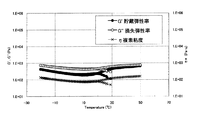
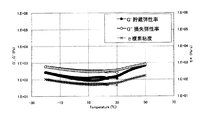
また低温固化の現象をより定量的に分析した動的粘弾性評価において、比較例1で示すとおりセバシン酸と1−3プロピレングリコールのポリエステルジオールを含有するポリウレタン樹脂の場合、図4から20℃から5℃までの冷却時に貯蔵弾性率と損失弾性率の数値の差が大きく変動し、最終的には逆転するまでに至っていることが判る。つまり比較例1で使用しているポリウレタン樹脂は、その分子構造が直線性に富んでいるため、環境温度が低くなることでポリウレタン樹脂の流動性が大きく損なわれ、低温固化の現象を引き起こすことを定量的に証明している。 Moreover, in the dynamic viscoelasticity evaluation which analyzed the phenomenon of low-temperature solidification more quantitatively, as shown in Comparative Example 1, in the case of a polyurethane resin containing a polyester diol of sebacic acid and 1-3 propylene glycol, from FIG. It can be seen that the difference between the values of the storage elastic modulus and the loss elastic modulus greatly fluctuates during cooling to 5 ° C., and finally it is reversed. That is, the polyurethane resin used in Comparative Example 1 has a highly linear molecular structure, so that the fluidity of the polyurethane resin is greatly impaired by lowering the environmental temperature, causing a phenomenon of solidification at low temperature. It is proved quantitatively.
一方、実施例1〜3で示すとおりセバシン酸からなるポリエステルジオールが、1−2プロピレングリコールと1−3プロピレングリコールを3:7〜7:3の重量比で含む場合、ポリウレタン樹脂の分子構造の直線性が崩されているため、図1〜3から−20℃まで冷却しても貯蔵弾性率と損失弾性率および複素粘度は大きく変化をしないことを確認できた。これは、比較例2で示す従来の石油系ポリウレタン樹脂(図5)と同様に外気温が13℃以下になっても低温固化を起こさず、加工安定性を有することを意味し、同時に非石油系ポリウレタン樹脂であっても、従来の石油系ポリウレタン樹脂による透湿防水加工布帛と比較しても同等の性能であり、かつ環境温度の制限無しに安定的に加工できることを意味する。 On the other hand, when the polyester diol composed of sebacic acid as shown in Examples 1 to 3 contains 1-2 propylene glycol and 1-3 propylene glycol in a weight ratio of 3: 7 to 7: 3, the molecular structure of the polyurethane resin Since the linearity was broken, it was confirmed that the storage elastic modulus, the loss elastic modulus and the complex viscosity did not change greatly even when cooled to −20 ° C. from FIGS. This means that the conventional petroleum-based polyurethane resin shown in Comparative Example 2 (FIG. 5) does not cause low-temperature solidification even when the outside air temperature is 13 ° C. or lower, and has processing stability. This means that even a polyurethane-based polyurethane resin has the same performance as a conventional moisture-permeable waterproof fabric made of petroleum-based polyurethane resin, and can be stably processed without restriction of environmental temperature.
本発明に係る透湿防水加工布帛は、フィッシングウェアや登山衣等のアウトドアウェア、スキー関連ウェア、ウィンドブレーカー、アスレチックウェア、ゴルフウェア、テニスウェア、レインウェア、カジュアルコート、屋内外作業着、手袋や靴等の衣料等材料として利用可能である。
The moisture permeable waterproof fabric according to the present invention includes outdoor wear such as fishing wear and mountaineering clothing, ski-related wear, windbreakers, athletic wear, golf wear, tennis wear, rainwear, casual coats, indoor / outdoor work clothes, gloves, It can be used as a material for clothing such as shoes.
Claims (4)
Priority Applications (1)
| Application Number | Priority Date | Filing Date | Title |
|---|---|---|---|
| JP2011091895A JP5717521B2 (en) | 2011-04-18 | 2011-04-18 | Moisture permeable waterproof fabric |
Applications Claiming Priority (1)
| Application Number | Priority Date | Filing Date | Title |
|---|---|---|---|
| JP2011091895A JP5717521B2 (en) | 2011-04-18 | 2011-04-18 | Moisture permeable waterproof fabric |
Publications (3)
| Publication Number | Publication Date |
|---|---|
| JP2012224951A JP2012224951A (en) | 2012-11-15 |
| JP2012224951A5 JP2012224951A5 (en) | 2015-03-19 |
| JP5717521B2 true JP5717521B2 (en) | 2015-05-13 |
Family
ID=47275430
Family Applications (1)
| Application Number | Title | Priority Date | Filing Date |
|---|---|---|---|
| JP2011091895A Active JP5717521B2 (en) | 2011-04-18 | 2011-04-18 | Moisture permeable waterproof fabric |
Country Status (1)
| Country | Link |
|---|---|
| JP (1) | JP5717521B2 (en) |
Families Citing this family (4)
| Publication number | Priority date | Publication date | Assignee | Title |
|---|---|---|---|---|
| KR102778729B1 (en) * | 2019-06-25 | 2025-03-12 | 디아이씨 가부시끼가이샤 | Laminate |
| WO2021054130A1 (en) * | 2019-09-20 | 2021-03-25 | Dic株式会社 | Moisture-permeable waterproof fabric |
| WO2021132657A1 (en) * | 2019-12-26 | 2021-07-01 | 東レコーテックス株式会社 | Moisture-permeable waterproof fabric |
| CN112442307A (en) * | 2020-11-25 | 2021-03-05 | 浙江戈美其鞋业有限公司 | Waterproof single shoe and processing technology thereof |
Family Cites Families (2)
| Publication number | Priority date | Publication date | Assignee | Title |
|---|---|---|---|---|
| DE2431846C3 (en) * | 1974-07-02 | 1979-01-11 | Bayer Ag, 5090 Leverkusen | Process for coating textile, web-shaped substrates by the reverse process with polyurethane solutions |
| JP3063342B2 (en) * | 1991-12-03 | 2000-07-12 | 荒川化学工業株式会社 | Polyurethane and method for producing the same |
-
2011
- 2011-04-18 JP JP2011091895A patent/JP5717521B2/en active Active
Also Published As
| Publication number | Publication date |
|---|---|
| JP2012224951A (en) | 2012-11-15 |
Similar Documents
| Publication | Publication Date | Title |
|---|---|---|
| JP7042515B2 (en) | Water repellent fabric and water repellent down products containing it | |
| JP5680052B2 (en) | Moisture permeable waterproof fabric | |
| KR101502194B1 (en) | Cloth waterproofed with vegetable component | |
| JP5867653B2 (en) | Porous body and polishing pad | |
| JP5717521B2 (en) | Moisture permeable waterproof fabric | |
| JP2014001475A (en) | Synthetic leather | |
| CN101381962A (en) | Water proof and moisture permeable artificial leather and method for making same | |
| KR20120036794A (en) | Process for producing porous object, and porous object, layered product, and leather-like sheet each obtained thereby | |
| JP3810479B2 (en) | Method for producing coated fabric | |
| JP6486282B2 (en) | Waterproof fabric and textile product using the same | |
| JP2004256939A (en) | Water-repellent fabric and clothes using the same | |
| CA3165455C (en) | Moisture-permeable waterproof fabric | |
| JP6691699B2 (en) | Method for manufacturing waterproof fabric | |
| KR102104718B1 (en) | Water Proof Breathable Outdoor knit Fabric and manufacturing method thereof | |
| JPH11124774A (en) | Moisture-permeable waterproof fabric and method for producing the same | |
| JP6650124B2 (en) | Urethane resin composition and leather-like sheet | |
| JP2021055250A (en) | Manufacturing method waterproof finish fabric | |
| JPH06316871A (en) | Moisture-permeable water-proofing cloth and its production | |
| KR960004914B1 (en) | Breathable waterproof fabric and manufacturing method thereof | |
| JP2002129479A (en) | Method for producing moisture-permeating waterproof coated cloth having soft feeling | |
| JP4328552B2 (en) | Anti-static moisture permeable waterproof fabric | |
| JPH1161648A (en) | Moisture-permeable and waterproof fabric | |
| JP6422115B2 (en) | Fabric and manufacturing method thereof | |
| JP4359818B2 (en) | Coated fabric | |
| CN118791702A (en) | A resin material for hydrolysis-resistant, breathable, and moisture-permeable wet-process coating and a preparation method thereof |
Legal Events
| Date | Code | Title | Description |
|---|---|---|---|
| A621 | Written request for application examination |
Free format text: JAPANESE INTERMEDIATE CODE: A621 Effective date: 20140411 |
|
| A521 | Request for written amendment filed |
Free format text: JAPANESE INTERMEDIATE CODE: A523 Effective date: 20150129 |
|
| A871 | Explanation of circumstances concerning accelerated examination |
Free format text: JAPANESE INTERMEDIATE CODE: A871 Effective date: 20150129 |
|
| A977 | Report on retrieval |
Free format text: JAPANESE INTERMEDIATE CODE: A971007 Effective date: 20150225 |
|
| TRDD | Decision of grant or rejection written | ||
| A975 | Report on accelerated examination |
Free format text: JAPANESE INTERMEDIATE CODE: A971005 Effective date: 20150224 |
|
| A01 | Written decision to grant a patent or to grant a registration (utility model) |
Free format text: JAPANESE INTERMEDIATE CODE: A01 Effective date: 20150303 |
|
| A61 | First payment of annual fees (during grant procedure) |
Free format text: JAPANESE INTERMEDIATE CODE: A61 Effective date: 20150317 |
|
| R150 | Certificate of patent or registration of utility model |
Ref document number: 5717521 Country of ref document: JP Free format text: JAPANESE INTERMEDIATE CODE: R150 |
|
| R250 | Receipt of annual fees |
Free format text: JAPANESE INTERMEDIATE CODE: R250 |
|
| R250 | Receipt of annual fees |
Free format text: JAPANESE INTERMEDIATE CODE: R250 |
|
| R250 | Receipt of annual fees |
Free format text: JAPANESE INTERMEDIATE CODE: R250 |
|
| R250 | Receipt of annual fees |
Free format text: JAPANESE INTERMEDIATE CODE: R250 |
|
| R250 | Receipt of annual fees |
Free format text: JAPANESE INTERMEDIATE CODE: R250 |
|
| R250 | Receipt of annual fees |
Free format text: JAPANESE INTERMEDIATE CODE: R250 |
|
| R250 | Receipt of annual fees |
Free format text: JAPANESE INTERMEDIATE CODE: R250 |
|
| R250 | Receipt of annual fees |
Free format text: JAPANESE INTERMEDIATE CODE: R250 |
|
| R250 | Receipt of annual fees |
Free format text: JAPANESE INTERMEDIATE CODE: R250 |