JP7584533B2 - Ferritic stainless steel and exhaust gas parts - Google Patents
Ferritic stainless steel and exhaust gas parts Download PDFInfo
- Publication number
- JP7584533B2 JP7584533B2 JP2022557621A JP2022557621A JP7584533B2 JP 7584533 B2 JP7584533 B2 JP 7584533B2 JP 2022557621 A JP2022557621 A JP 2022557621A JP 2022557621 A JP2022557621 A JP 2022557621A JP 7584533 B2 JP7584533 B2 JP 7584533B2
- Authority
- JP
- Japan
- Prior art keywords
- mass
- less
- content
- stainless steel
- ferritic stainless
- Prior art date
- Legal status (The legal status is an assumption and is not a legal conclusion. Google has not performed a legal analysis and makes no representation as to the accuracy of the status listed.)
- Active
Links
Images
Classifications
-
- C—CHEMISTRY; METALLURGY
- C23—COATING METALLIC MATERIAL; COATING MATERIAL WITH METALLIC MATERIAL; CHEMICAL SURFACE TREATMENT; DIFFUSION TREATMENT OF METALLIC MATERIAL; COATING BY VACUUM EVAPORATION, BY SPUTTERING, BY ION IMPLANTATION OR BY CHEMICAL VAPOUR DEPOSITION, IN GENERAL; INHIBITING CORROSION OF METALLIC MATERIAL OR INCRUSTATION IN GENERAL
- C23C—COATING METALLIC MATERIAL; COATING MATERIAL WITH METALLIC MATERIAL; SURFACE TREATMENT OF METALLIC MATERIAL BY DIFFUSION INTO THE SURFACE, BY CHEMICAL CONVERSION OR SUBSTITUTION; COATING BY VACUUM EVAPORATION, BY SPUTTERING, BY ION IMPLANTATION OR BY CHEMICAL VAPOUR DEPOSITION, IN GENERAL
- C23C8/00—Solid state diffusion of only non-metal elements into metallic material surfaces; Chemical surface treatment of metallic material by reaction of the surface with a reactive gas, leaving reaction products of surface material in the coating, e.g. conversion coatings, passivation of metals
- C23C8/06—Solid state diffusion of only non-metal elements into metallic material surfaces; Chemical surface treatment of metallic material by reaction of the surface with a reactive gas, leaving reaction products of surface material in the coating, e.g. conversion coatings, passivation of metals using gases
- C23C8/08—Solid state diffusion of only non-metal elements into metallic material surfaces; Chemical surface treatment of metallic material by reaction of the surface with a reactive gas, leaving reaction products of surface material in the coating, e.g. conversion coatings, passivation of metals using gases only one element being applied
- C23C8/10—Oxidising
-
- C—CHEMISTRY; METALLURGY
- C21—METALLURGY OF IRON
- C21D—MODIFYING THE PHYSICAL STRUCTURE OF FERROUS METALS; GENERAL DEVICES FOR HEAT TREATMENT OF FERROUS OR NON-FERROUS METALS OR ALLOYS; MAKING METAL MALLEABLE, e.g. BY DECARBURISATION OR TEMPERING
- C21D1/00—General methods or devices for heat treatment, e.g. annealing, hardening, quenching or tempering
- C21D1/74—Methods of treatment in inert gas, controlled atmosphere, vacuum or pulverulent material
-
- C—CHEMISTRY; METALLURGY
- C21—METALLURGY OF IRON
- C21D—MODIFYING THE PHYSICAL STRUCTURE OF FERROUS METALS; GENERAL DEVICES FOR HEAT TREATMENT OF FERROUS OR NON-FERROUS METALS OR ALLOYS; MAKING METAL MALLEABLE, e.g. BY DECARBURISATION OR TEMPERING
- C21D6/00—Heat treatment of ferrous alloys
- C21D6/002—Heat treatment of ferrous alloys containing Cr
-
- C—CHEMISTRY; METALLURGY
- C21—METALLURGY OF IRON
- C21D—MODIFYING THE PHYSICAL STRUCTURE OF FERROUS METALS; GENERAL DEVICES FOR HEAT TREATMENT OF FERROUS OR NON-FERROUS METALS OR ALLOYS; MAKING METAL MALLEABLE, e.g. BY DECARBURISATION OR TEMPERING
- C21D6/00—Heat treatment of ferrous alloys
- C21D6/004—Heat treatment of ferrous alloys containing Cr and Ni
-
- C—CHEMISTRY; METALLURGY
- C21—METALLURGY OF IRON
- C21D—MODIFYING THE PHYSICAL STRUCTURE OF FERROUS METALS; GENERAL DEVICES FOR HEAT TREATMENT OF FERROUS OR NON-FERROUS METALS OR ALLOYS; MAKING METAL MALLEABLE, e.g. BY DECARBURISATION OR TEMPERING
- C21D8/00—Modifying the physical properties of ferrous metals or ferrous alloys by deformation combined with, or followed by, heat treatment
- C21D8/02—Modifying the physical properties of ferrous metals or ferrous alloys by deformation combined with, or followed by, heat treatment during manufacturing of plates or strips
-
- C—CHEMISTRY; METALLURGY
- C21—METALLURGY OF IRON
- C21D—MODIFYING THE PHYSICAL STRUCTURE OF FERROUS METALS; GENERAL DEVICES FOR HEAT TREATMENT OF FERROUS OR NON-FERROUS METALS OR ALLOYS; MAKING METAL MALLEABLE, e.g. BY DECARBURISATION OR TEMPERING
- C21D8/00—Modifying the physical properties of ferrous metals or ferrous alloys by deformation combined with, or followed by, heat treatment
- C21D8/02—Modifying the physical properties of ferrous metals or ferrous alloys by deformation combined with, or followed by, heat treatment during manufacturing of plates or strips
- C21D8/0221—Modifying the physical properties of ferrous metals or ferrous alloys by deformation combined with, or followed by, heat treatment during manufacturing of plates or strips characterised by the working steps
- C21D8/0226—Hot rolling
-
- C—CHEMISTRY; METALLURGY
- C21—METALLURGY OF IRON
- C21D—MODIFYING THE PHYSICAL STRUCTURE OF FERROUS METALS; GENERAL DEVICES FOR HEAT TREATMENT OF FERROUS OR NON-FERROUS METALS OR ALLOYS; MAKING METAL MALLEABLE, e.g. BY DECARBURISATION OR TEMPERING
- C21D8/00—Modifying the physical properties of ferrous metals or ferrous alloys by deformation combined with, or followed by, heat treatment
- C21D8/02—Modifying the physical properties of ferrous metals or ferrous alloys by deformation combined with, or followed by, heat treatment during manufacturing of plates or strips
- C21D8/0221—Modifying the physical properties of ferrous metals or ferrous alloys by deformation combined with, or followed by, heat treatment during manufacturing of plates or strips characterised by the working steps
- C21D8/0236—Cold rolling
-
- C—CHEMISTRY; METALLURGY
- C21—METALLURGY OF IRON
- C21D—MODIFYING THE PHYSICAL STRUCTURE OF FERROUS METALS; GENERAL DEVICES FOR HEAT TREATMENT OF FERROUS OR NON-FERROUS METALS OR ALLOYS; MAKING METAL MALLEABLE, e.g. BY DECARBURISATION OR TEMPERING
- C21D8/00—Modifying the physical properties of ferrous metals or ferrous alloys by deformation combined with, or followed by, heat treatment
- C21D8/02—Modifying the physical properties of ferrous metals or ferrous alloys by deformation combined with, or followed by, heat treatment during manufacturing of plates or strips
- C21D8/0247—Modifying the physical properties of ferrous metals or ferrous alloys by deformation combined with, or followed by, heat treatment during manufacturing of plates or strips characterised by the heat treatment
- C21D8/0273—Final recrystallisation annealing
-
- C—CHEMISTRY; METALLURGY
- C21—METALLURGY OF IRON
- C21D—MODIFYING THE PHYSICAL STRUCTURE OF FERROUS METALS; GENERAL DEVICES FOR HEAT TREATMENT OF FERROUS OR NON-FERROUS METALS OR ALLOYS; MAKING METAL MALLEABLE, e.g. BY DECARBURISATION OR TEMPERING
- C21D8/00—Modifying the physical properties of ferrous metals or ferrous alloys by deformation combined with, or followed by, heat treatment
- C21D8/02—Modifying the physical properties of ferrous metals or ferrous alloys by deformation combined with, or followed by, heat treatment during manufacturing of plates or strips
- C21D8/0278—Modifying the physical properties of ferrous metals or ferrous alloys by deformation combined with, or followed by, heat treatment during manufacturing of plates or strips involving a particular surface treatment
-
- C—CHEMISTRY; METALLURGY
- C21—METALLURGY OF IRON
- C21D—MODIFYING THE PHYSICAL STRUCTURE OF FERROUS METALS; GENERAL DEVICES FOR HEAT TREATMENT OF FERROUS OR NON-FERROUS METALS OR ALLOYS; MAKING METAL MALLEABLE, e.g. BY DECARBURISATION OR TEMPERING
- C21D9/00—Heat treatment, e.g. annealing, hardening, quenching or tempering, adapted for particular articles; Furnaces therefor
- C21D9/46—Heat treatment, e.g. annealing, hardening, quenching or tempering, adapted for particular articles; Furnaces therefor for sheet metals
-
- C—CHEMISTRY; METALLURGY
- C22—METALLURGY; FERROUS OR NON-FERROUS ALLOYS; TREATMENT OF ALLOYS OR NON-FERROUS METALS
- C22C—ALLOYS
- C22C38/00—Ferrous alloys, e.g. steel alloys
- C22C38/001—Ferrous alloys, e.g. steel alloys containing N
-
- C—CHEMISTRY; METALLURGY
- C22—METALLURGY; FERROUS OR NON-FERROUS ALLOYS; TREATMENT OF ALLOYS OR NON-FERROUS METALS
- C22C—ALLOYS
- C22C38/00—Ferrous alloys, e.g. steel alloys
- C22C38/002—Ferrous alloys, e.g. steel alloys containing In, Mg, or other elements not provided for in one single group C22C38/001 - C22C38/60
-
- C—CHEMISTRY; METALLURGY
- C22—METALLURGY; FERROUS OR NON-FERROUS ALLOYS; TREATMENT OF ALLOYS OR NON-FERROUS METALS
- C22C—ALLOYS
- C22C38/00—Ferrous alloys, e.g. steel alloys
- C22C38/004—Very low carbon steels, i.e. having a carbon content of less than 0,01%
-
- C—CHEMISTRY; METALLURGY
- C22—METALLURGY; FERROUS OR NON-FERROUS ALLOYS; TREATMENT OF ALLOYS OR NON-FERROUS METALS
- C22C—ALLOYS
- C22C38/00—Ferrous alloys, e.g. steel alloys
- C22C38/005—Ferrous alloys, e.g. steel alloys containing rare earths, i.e. Sc, Y, Lanthanides
-
- C—CHEMISTRY; METALLURGY
- C22—METALLURGY; FERROUS OR NON-FERROUS ALLOYS; TREATMENT OF ALLOYS OR NON-FERROUS METALS
- C22C—ALLOYS
- C22C38/00—Ferrous alloys, e.g. steel alloys
- C22C38/008—Ferrous alloys, e.g. steel alloys containing tin
-
- C—CHEMISTRY; METALLURGY
- C22—METALLURGY; FERROUS OR NON-FERROUS ALLOYS; TREATMENT OF ALLOYS OR NON-FERROUS METALS
- C22C—ALLOYS
- C22C38/00—Ferrous alloys, e.g. steel alloys
- C22C38/02—Ferrous alloys, e.g. steel alloys containing silicon
-
- C—CHEMISTRY; METALLURGY
- C22—METALLURGY; FERROUS OR NON-FERROUS ALLOYS; TREATMENT OF ALLOYS OR NON-FERROUS METALS
- C22C—ALLOYS
- C22C38/00—Ferrous alloys, e.g. steel alloys
- C22C38/04—Ferrous alloys, e.g. steel alloys containing manganese
-
- C—CHEMISTRY; METALLURGY
- C22—METALLURGY; FERROUS OR NON-FERROUS ALLOYS; TREATMENT OF ALLOYS OR NON-FERROUS METALS
- C22C—ALLOYS
- C22C38/00—Ferrous alloys, e.g. steel alloys
- C22C38/06—Ferrous alloys, e.g. steel alloys containing aluminium
-
- C—CHEMISTRY; METALLURGY
- C22—METALLURGY; FERROUS OR NON-FERROUS ALLOYS; TREATMENT OF ALLOYS OR NON-FERROUS METALS
- C22C—ALLOYS
- C22C38/00—Ferrous alloys, e.g. steel alloys
- C22C38/18—Ferrous alloys, e.g. steel alloys containing chromium
- C22C38/34—Ferrous alloys, e.g. steel alloys containing chromium with more than 1.5% by weight of silicon
-
- C—CHEMISTRY; METALLURGY
- C22—METALLURGY; FERROUS OR NON-FERROUS ALLOYS; TREATMENT OF ALLOYS OR NON-FERROUS METALS
- C22C—ALLOYS
- C22C38/00—Ferrous alloys, e.g. steel alloys
- C22C38/18—Ferrous alloys, e.g. steel alloys containing chromium
- C22C38/40—Ferrous alloys, e.g. steel alloys containing chromium with nickel
- C22C38/42—Ferrous alloys, e.g. steel alloys containing chromium with nickel with copper
-
- C—CHEMISTRY; METALLURGY
- C22—METALLURGY; FERROUS OR NON-FERROUS ALLOYS; TREATMENT OF ALLOYS OR NON-FERROUS METALS
- C22C—ALLOYS
- C22C38/00—Ferrous alloys, e.g. steel alloys
- C22C38/18—Ferrous alloys, e.g. steel alloys containing chromium
- C22C38/40—Ferrous alloys, e.g. steel alloys containing chromium with nickel
- C22C38/44—Ferrous alloys, e.g. steel alloys containing chromium with nickel with molybdenum or tungsten
-
- C—CHEMISTRY; METALLURGY
- C22—METALLURGY; FERROUS OR NON-FERROUS ALLOYS; TREATMENT OF ALLOYS OR NON-FERROUS METALS
- C22C—ALLOYS
- C22C38/00—Ferrous alloys, e.g. steel alloys
- C22C38/18—Ferrous alloys, e.g. steel alloys containing chromium
- C22C38/40—Ferrous alloys, e.g. steel alloys containing chromium with nickel
- C22C38/46—Ferrous alloys, e.g. steel alloys containing chromium with nickel with vanadium
-
- C—CHEMISTRY; METALLURGY
- C22—METALLURGY; FERROUS OR NON-FERROUS ALLOYS; TREATMENT OF ALLOYS OR NON-FERROUS METALS
- C22C—ALLOYS
- C22C38/00—Ferrous alloys, e.g. steel alloys
- C22C38/18—Ferrous alloys, e.g. steel alloys containing chromium
- C22C38/40—Ferrous alloys, e.g. steel alloys containing chromium with nickel
- C22C38/48—Ferrous alloys, e.g. steel alloys containing chromium with nickel with niobium or tantalum
-
- C—CHEMISTRY; METALLURGY
- C22—METALLURGY; FERROUS OR NON-FERROUS ALLOYS; TREATMENT OF ALLOYS OR NON-FERROUS METALS
- C22C—ALLOYS
- C22C38/00—Ferrous alloys, e.g. steel alloys
- C22C38/18—Ferrous alloys, e.g. steel alloys containing chromium
- C22C38/40—Ferrous alloys, e.g. steel alloys containing chromium with nickel
- C22C38/50—Ferrous alloys, e.g. steel alloys containing chromium with nickel with titanium or zirconium
-
- C—CHEMISTRY; METALLURGY
- C22—METALLURGY; FERROUS OR NON-FERROUS ALLOYS; TREATMENT OF ALLOYS OR NON-FERROUS METALS
- C22C—ALLOYS
- C22C38/00—Ferrous alloys, e.g. steel alloys
- C22C38/18—Ferrous alloys, e.g. steel alloys containing chromium
- C22C38/40—Ferrous alloys, e.g. steel alloys containing chromium with nickel
- C22C38/52—Ferrous alloys, e.g. steel alloys containing chromium with nickel with cobalt
-
- C—CHEMISTRY; METALLURGY
- C22—METALLURGY; FERROUS OR NON-FERROUS ALLOYS; TREATMENT OF ALLOYS OR NON-FERROUS METALS
- C22C—ALLOYS
- C22C38/00—Ferrous alloys, e.g. steel alloys
- C22C38/18—Ferrous alloys, e.g. steel alloys containing chromium
- C22C38/40—Ferrous alloys, e.g. steel alloys containing chromium with nickel
- C22C38/54—Ferrous alloys, e.g. steel alloys containing chromium with nickel with boron
-
- C—CHEMISTRY; METALLURGY
- C22—METALLURGY; FERROUS OR NON-FERROUS ALLOYS; TREATMENT OF ALLOYS OR NON-FERROUS METALS
- C22C—ALLOYS
- C22C38/00—Ferrous alloys, e.g. steel alloys
- C22C38/60—Ferrous alloys, e.g. steel alloys containing lead, selenium, tellurium, or antimony, or more than 0.04% by weight of sulfur
-
- C—CHEMISTRY; METALLURGY
- C23—COATING METALLIC MATERIAL; COATING MATERIAL WITH METALLIC MATERIAL; CHEMICAL SURFACE TREATMENT; DIFFUSION TREATMENT OF METALLIC MATERIAL; COATING BY VACUUM EVAPORATION, BY SPUTTERING, BY ION IMPLANTATION OR BY CHEMICAL VAPOUR DEPOSITION, IN GENERAL; INHIBITING CORROSION OF METALLIC MATERIAL OR INCRUSTATION IN GENERAL
- C23C—COATING METALLIC MATERIAL; COATING MATERIAL WITH METALLIC MATERIAL; SURFACE TREATMENT OF METALLIC MATERIAL BY DIFFUSION INTO THE SURFACE, BY CHEMICAL CONVERSION OR SUBSTITUTION; COATING BY VACUUM EVAPORATION, BY SPUTTERING, BY ION IMPLANTATION OR BY CHEMICAL VAPOUR DEPOSITION, IN GENERAL
- C23C10/00—Solid state diffusion of only metal elements or silicon into metallic material surfaces
- C23C10/06—Solid state diffusion of only metal elements or silicon into metallic material surfaces using gases
- C23C10/08—Solid state diffusion of only metal elements or silicon into metallic material surfaces using gases only one element being diffused
-
- C—CHEMISTRY; METALLURGY
- C23—COATING METALLIC MATERIAL; COATING MATERIAL WITH METALLIC MATERIAL; CHEMICAL SURFACE TREATMENT; DIFFUSION TREATMENT OF METALLIC MATERIAL; COATING BY VACUUM EVAPORATION, BY SPUTTERING, BY ION IMPLANTATION OR BY CHEMICAL VAPOUR DEPOSITION, IN GENERAL; INHIBITING CORROSION OF METALLIC MATERIAL OR INCRUSTATION IN GENERAL
- C23C—COATING METALLIC MATERIAL; COATING MATERIAL WITH METALLIC MATERIAL; SURFACE TREATMENT OF METALLIC MATERIAL BY DIFFUSION INTO THE SURFACE, BY CHEMICAL CONVERSION OR SUBSTITUTION; COATING BY VACUUM EVAPORATION, BY SPUTTERING, BY ION IMPLANTATION OR BY CHEMICAL VAPOUR DEPOSITION, IN GENERAL
- C23C30/00—Coating with metallic material characterised only by the composition of the metallic material, i.e. not characterised by the coating process
- C23C30/005—Coating with metallic material characterised only by the composition of the metallic material, i.e. not characterised by the coating process on hard metal substrates
-
- C—CHEMISTRY; METALLURGY
- C23—COATING METALLIC MATERIAL; COATING MATERIAL WITH METALLIC MATERIAL; CHEMICAL SURFACE TREATMENT; DIFFUSION TREATMENT OF METALLIC MATERIAL; COATING BY VACUUM EVAPORATION, BY SPUTTERING, BY ION IMPLANTATION OR BY CHEMICAL VAPOUR DEPOSITION, IN GENERAL; INHIBITING CORROSION OF METALLIC MATERIAL OR INCRUSTATION IN GENERAL
- C23C—COATING METALLIC MATERIAL; COATING MATERIAL WITH METALLIC MATERIAL; SURFACE TREATMENT OF METALLIC MATERIAL BY DIFFUSION INTO THE SURFACE, BY CHEMICAL CONVERSION OR SUBSTITUTION; COATING BY VACUUM EVAPORATION, BY SPUTTERING, BY ION IMPLANTATION OR BY CHEMICAL VAPOUR DEPOSITION, IN GENERAL
- C23C8/00—Solid state diffusion of only non-metal elements into metallic material surfaces; Chemical surface treatment of metallic material by reaction of the surface with a reactive gas, leaving reaction products of surface material in the coating, e.g. conversion coatings, passivation of metals
- C23C8/02—Pretreatment of the material to be coated
-
- C—CHEMISTRY; METALLURGY
- C23—COATING METALLIC MATERIAL; COATING MATERIAL WITH METALLIC MATERIAL; CHEMICAL SURFACE TREATMENT; DIFFUSION TREATMENT OF METALLIC MATERIAL; COATING BY VACUUM EVAPORATION, BY SPUTTERING, BY ION IMPLANTATION OR BY CHEMICAL VAPOUR DEPOSITION, IN GENERAL; INHIBITING CORROSION OF METALLIC MATERIAL OR INCRUSTATION IN GENERAL
- C23C—COATING METALLIC MATERIAL; COATING MATERIAL WITH METALLIC MATERIAL; SURFACE TREATMENT OF METALLIC MATERIAL BY DIFFUSION INTO THE SURFACE, BY CHEMICAL CONVERSION OR SUBSTITUTION; COATING BY VACUUM EVAPORATION, BY SPUTTERING, BY ION IMPLANTATION OR BY CHEMICAL VAPOUR DEPOSITION, IN GENERAL
- C23C8/00—Solid state diffusion of only non-metal elements into metallic material surfaces; Chemical surface treatment of metallic material by reaction of the surface with a reactive gas, leaving reaction products of surface material in the coating, e.g. conversion coatings, passivation of metals
- C23C8/06—Solid state diffusion of only non-metal elements into metallic material surfaces; Chemical surface treatment of metallic material by reaction of the surface with a reactive gas, leaving reaction products of surface material in the coating, e.g. conversion coatings, passivation of metals using gases
- C23C8/08—Solid state diffusion of only non-metal elements into metallic material surfaces; Chemical surface treatment of metallic material by reaction of the surface with a reactive gas, leaving reaction products of surface material in the coating, e.g. conversion coatings, passivation of metals using gases only one element being applied
- C23C8/10—Oxidising
- C23C8/16—Oxidising using oxygen-containing compounds, e.g. water, carbon dioxide
-
- C—CHEMISTRY; METALLURGY
- C23—COATING METALLIC MATERIAL; COATING MATERIAL WITH METALLIC MATERIAL; CHEMICAL SURFACE TREATMENT; DIFFUSION TREATMENT OF METALLIC MATERIAL; COATING BY VACUUM EVAPORATION, BY SPUTTERING, BY ION IMPLANTATION OR BY CHEMICAL VAPOUR DEPOSITION, IN GENERAL; INHIBITING CORROSION OF METALLIC MATERIAL OR INCRUSTATION IN GENERAL
- C23C—COATING METALLIC MATERIAL; COATING MATERIAL WITH METALLIC MATERIAL; SURFACE TREATMENT OF METALLIC MATERIAL BY DIFFUSION INTO THE SURFACE, BY CHEMICAL CONVERSION OR SUBSTITUTION; COATING BY VACUUM EVAPORATION, BY SPUTTERING, BY ION IMPLANTATION OR BY CHEMICAL VAPOUR DEPOSITION, IN GENERAL
- C23C8/00—Solid state diffusion of only non-metal elements into metallic material surfaces; Chemical surface treatment of metallic material by reaction of the surface with a reactive gas, leaving reaction products of surface material in the coating, e.g. conversion coatings, passivation of metals
- C23C8/80—After-treatment
-
- C—CHEMISTRY; METALLURGY
- C23—COATING METALLIC MATERIAL; COATING MATERIAL WITH METALLIC MATERIAL; CHEMICAL SURFACE TREATMENT; DIFFUSION TREATMENT OF METALLIC MATERIAL; COATING BY VACUUM EVAPORATION, BY SPUTTERING, BY ION IMPLANTATION OR BY CHEMICAL VAPOUR DEPOSITION, IN GENERAL; INHIBITING CORROSION OF METALLIC MATERIAL OR INCRUSTATION IN GENERAL
- C23G—CLEANING OR DE-GREASING OF METALLIC MATERIAL BY CHEMICAL METHODS OTHER THAN ELECTROLYSIS
- C23G1/00—Cleaning or pickling metallic material with solutions or molten salts
- C23G1/02—Cleaning or pickling metallic material with solutions or molten salts with acid solutions
- C23G1/08—Iron or steel
-
- C—CHEMISTRY; METALLURGY
- C23—COATING METALLIC MATERIAL; COATING MATERIAL WITH METALLIC MATERIAL; CHEMICAL SURFACE TREATMENT; DIFFUSION TREATMENT OF METALLIC MATERIAL; COATING BY VACUUM EVAPORATION, BY SPUTTERING, BY ION IMPLANTATION OR BY CHEMICAL VAPOUR DEPOSITION, IN GENERAL; INHIBITING CORROSION OF METALLIC MATERIAL OR INCRUSTATION IN GENERAL
- C23G—CLEANING OR DE-GREASING OF METALLIC MATERIAL BY CHEMICAL METHODS OTHER THAN ELECTROLYSIS
- C23G1/00—Cleaning or pickling metallic material with solutions or molten salts
- C23G1/02—Cleaning or pickling metallic material with solutions or molten salts with acid solutions
- C23G1/08—Iron or steel
- C23G1/085—Iron or steel solutions containing HNO3
-
- C—CHEMISTRY; METALLURGY
- C23—COATING METALLIC MATERIAL; COATING MATERIAL WITH METALLIC MATERIAL; CHEMICAL SURFACE TREATMENT; DIFFUSION TREATMENT OF METALLIC MATERIAL; COATING BY VACUUM EVAPORATION, BY SPUTTERING, BY ION IMPLANTATION OR BY CHEMICAL VAPOUR DEPOSITION, IN GENERAL; INHIBITING CORROSION OF METALLIC MATERIAL OR INCRUSTATION IN GENERAL
- C23G—CLEANING OR DE-GREASING OF METALLIC MATERIAL BY CHEMICAL METHODS OTHER THAN ELECTROLYSIS
- C23G1/00—Cleaning or pickling metallic material with solutions or molten salts
- C23G1/02—Cleaning or pickling metallic material with solutions or molten salts with acid solutions
- C23G1/08—Iron or steel
- C23G1/086—Iron or steel solutions containing HF
-
- C—CHEMISTRY; METALLURGY
- C25—ELECTROLYTIC OR ELECTROPHORETIC PROCESSES; APPARATUS THEREFOR
- C25F—PROCESSES FOR THE ELECTROLYTIC REMOVAL OF MATERIALS FROM OBJECTS; APPARATUS THEREFOR
- C25F1/00—Electrolytic cleaning, degreasing, pickling or descaling
- C25F1/02—Pickling; Descaling
- C25F1/04—Pickling; Descaling in solution
- C25F1/06—Iron or steel
-
- C—CHEMISTRY; METALLURGY
- C21—METALLURGY OF IRON
- C21D—MODIFYING THE PHYSICAL STRUCTURE OF FERROUS METALS; GENERAL DEVICES FOR HEAT TREATMENT OF FERROUS OR NON-FERROUS METALS OR ALLOYS; MAKING METAL MALLEABLE, e.g. BY DECARBURISATION OR TEMPERING
- C21D2211/00—Microstructure comprising significant phases
- C21D2211/005—Ferrite
Landscapes
- Chemical & Material Sciences (AREA)
- Engineering & Computer Science (AREA)
- Metallurgy (AREA)
- Organic Chemistry (AREA)
- Materials Engineering (AREA)
- Mechanical Engineering (AREA)
- Chemical Kinetics & Catalysis (AREA)
- Crystallography & Structural Chemistry (AREA)
- Physics & Mathematics (AREA)
- Thermal Sciences (AREA)
- General Chemical & Material Sciences (AREA)
- Electrochemistry (AREA)
- Heat Treatment Of Sheet Steel (AREA)
- Cleaning And De-Greasing Of Metallic Materials By Chemical Methods (AREA)
- Coating With Molten Metal (AREA)
- Exhaust Gas Treatment By Means Of Catalyst (AREA)
- Catalysts (AREA)
Description
本発明はフェライト系ステンレス鋼及び排ガス用部品に関する。より具体的には、高温水蒸気雰囲気下において、耐赤スケール性に優れるフェライト系ステンレス鋼、及びそのフェライト系ステンレス鋼を素材として得られた排ガス用部品に関する。
本願は、2020年10月23日に、日本に出願された特願2020-178302号に基づき優先権を主張し、その内容をここに援用する。
The present invention relates to a ferritic stainless steel and an exhaust gas part, more specifically to a ferritic stainless steel having excellent resistance to red scale in a high-temperature steam atmosphere, and an exhaust gas part obtained by using the ferritic stainless steel as a raw material.
This application claims priority based on Japanese Patent Application No. 2020-178302, filed on October 23, 2020, the contents of which are incorporated herein by reference.
ステンレス鋼は、排ガス経路部材、ストーブ燃焼機材、燃料電池用部材、またはプラント関連材などの用途に用いられる場合、通常300~900℃の高温まで加熱される。また上記の用途では、水蒸気が含まれる環境下で当該ステンレス鋼が用いられるため、赤スケール(Fe系酸化物)が生成することがある。この生成した赤スケールは、場合によっては飛散することで他部品へ付着し悪影響を及ぼす可能性があることに加え、酸化による減肉で高温強度を低下させる虞がある。 When stainless steel is used for applications such as exhaust gas route components, stove combustion equipment, fuel cell components, or plant-related materials, it is usually heated to high temperatures of 300 to 900°C. Furthermore, in the above applications, the stainless steel is used in an environment containing water vapor, which can result in the formation of red scale (iron-based oxides). In some cases, this red scale can fly off and adhere to other parts, causing adverse effects, and there is also the risk of reducing high-temperature strength due to thinning caused by oxidation.
そのため、高温水蒸気雰囲気下において、耐赤スケール性を有するフェライト系ステンレス鋼が所望される。従来、耐赤スケール性を向上させるために様々な方法が知られている。Therefore, ferritic stainless steels that are resistant to red scale formation in high-temperature steam atmospheres are desirable. Various methods have been known to improve red scale resistance.
特許文献1および特許文献2には、Siを添加することにより、Crの拡散を促進させてCr系酸化物の生成量を向上させ、酸化被膜を強化することが記載されている。これにより、特許文献1および特許文献2に記載の発明は耐水蒸気酸化性および耐赤スケール性を向上させている。 Patent Document 1 and Patent Document 2 state that the addition of Si promotes the diffusion of Cr, increases the amount of Cr-based oxides produced, and strengthens the oxide film. As a result, the inventions described in Patent Document 1 and Patent Document 2 improve steam oxidation resistance and red scale resistance.
上述のような従来技術は、鋼中のCrおよびSiに着目し、鋼中のCrおよびSiの含有量を適正化するものである。しかしながら、このような合金元素の添加での制御は、製造性の悪化、コストの上昇を招く。そこで、本発明者らは、合金元素の添加以外の方法での耐赤スケール性向上について検討した。具体的には、本発明者らは、耐赤スケール性の向上のため、ステンレス鋼の表面における特定組成の酸化物に着目した。 The above-mentioned conventional techniques focus on Cr and Si in steel and optimize the Cr and Si contents in the steel. However, such control by adding alloy elements leads to poor manufacturability and increased costs. Therefore, the inventors have investigated ways to improve red scale resistance other than by adding alloy elements. Specifically, the inventors have focused on oxides of a specific composition on the surface of stainless steel to improve red scale resistance.
本発明は、優れた耐赤スケール性を有するフェライト系ステンレス鋼及びそのフェライト系ステンレス鋼を素材とした、優れた耐赤スケール性を有する排ガス用部品を提供することを目的とする。 The present invention aims to provide a ferritic stainless steel having excellent red scale resistance and an exhaust gas part made from this ferritic stainless steel having excellent red scale resistance.
上記の課題を解決するための、本発明の要旨は以下の通りである。
[1]本発明の一態様に係るフェライト系ステンレス鋼は、化学組成として、0.05質量%以上2.50質量%以下のSi、0.05質量%以上1.50質量%以下のMn、0.025質量%以下のC、0.040質量%以下のP、0.003質量%以下のS、0.025質量%以下のN、0.01質量%以上0.50質量%以下のNi、10.50質量%以上25.00質量%以下のCr、0.01質量%以上1.80質量%以下のCu、0.002質量%以上0.200質量%以下のAl、0.001質量%以上1.00質量%以下のNb、0質量%以上2.5質量%以下のW、0質量%以上3.00質量%以下のMo、0質量%以上0.500質量%以下のTi、0質量%以上0.0100質量%以下のB、0質量%以上0.0030質量%以下のCa、0質量%以上0.50質量%以下のHf、0質量%以上0.40質量%以下のZr、0質量%以上0.50質量%以下のSb、0質量%以上0.30質量%以下のCo、0質量%以上1.0質量%以下のTa、0質量%以上1.00質量%以下のSn、0質量%以上0.30質量%以下のGa、0質量%以上0.50質量%以下のV、0質量%以上0.003質量%以下のMg、および0質量%以上0.20質量%以下のREMを含有し、残部にFeおよび不純物を含み、表面において、Alを5質量%以上含有した酸化物、およびSiを5質量%以上含有した酸化物のうち少なくとも一方の酸化物が存在し、かつ、観察視野において前記表面に存在する前記酸化物のうち下記式(1)で表される径Dが0.1μm以上2.0μm以下である酸化物の個数が、93μm2当たり10個以上である。
D=(Dmax+Dmin)/2 ・・・(1)
(前記式(1)中、Dmaxは前記表面における前記酸化物の最大径であり、Dminは前記表面における前記酸化物の最小径である。)
In order to solve the above problems, the gist of the present invention is as follows.
[1] The ferritic stainless steel according to one embodiment of the present invention has a chemical composition of 0.05% by mass or more and 2.50% by mass or less of Si, 0.05% by mass or more and 1.50% by mass or less of Mn, 0.025% by mass or less of C, 0.040% by mass or less of P, 0.003% by mass or less of S, 0.025% by mass or less of N, 0.01% by mass or more and 0.50% by mass or less of Ni, 10.50% by mass or more and 25.0 ... Cr below 0.01 mass% and 1.80 mass% and less, Cu from 0.002 mass% to 0.200 mass% and less, Nb from 0.001 mass% to 1.00 mass% and less, W from 0 mass% to 2.5 mass% and less, Mo from 0 mass% to 3.00 mass% and less, Ti from 0 mass% to 0.500 mass% and less, B from 0 mass% to 0.0100 mass% and less, Ca from 0 mass% to 0.0030 mass% and less, 0 The oxide contains at least one of oxides containing 5% or more by mass of Al and oxides containing 5% or more by mass of Si on the surface, and the number of oxides having a diameter D of 0.1 μm or more and 2.0 μm or less, represented by the following formula (1), among the oxides present on the surface in an observation field of view , is 10 or more per 93 μm2 .
D=(Dmax+Dmin)/2...(1)
(In the formula (1), Dmax is the maximum diameter of the oxide on the surface, and Dmin is the minimum diameter of the oxide on the surface.)
上記構成によれば、優れた耐赤スケール性を有するフェライト系ステンレス鋼を実現することができる。 According to the above configuration, it is possible to realize a ferritic stainless steel having excellent red scale resistance.
[2][1]に記載のフェライト系ステンレス鋼は、前記表面について、D65光源を拡散照明方式で使用し、前記表面の法線に対して8°の方向で受光することにより、視野角:10°視野、測定時間:1秒で測定されるCIE 1976 明度L*が60以上であってもよい。 [2] The ferritic stainless steel according to [1] may have a CIE 1976 lightness L* of 60 or more when the surface is measured using a D65 light source in a diffuse lighting system with light received at an angle of 8° to the normal to the surface, with a viewing angle of 10° and a measurement time of 1 second.
上記構成によれば、優れた意匠性を有するフェライト系ステンレス鋼を実現することができる。 The above configuration makes it possible to realize a ferritic stainless steel with excellent design properties.
[3][1]または[2]に記載のフェライト系ステンレス鋼は、前記化学組成が、0.01質量%以上2.5質量%以下のW、0.01質量%以上3.00質量%以下のMo、0.001質量%以上0.500質量%以下のTi、0.0002質量%以上0.0100質量%以下のB、0.0002質量%以上0.0030質量%以下のCa、0.001質量%以上0.50質量%以下のHf、0.01質量%以上0.40質量%以下のZr、0.005質量%以上0.50質量%以下のSb、0.01質量%以上0.30質量%以下のCo、0.001質量%以上1.0質量%以下のTa、0.002質量%以上1.00質量%以下のSn、0.0002質量%以上0.30質量%以下のGa、0.01質量%以上0.50質量%以下のV、0.0003質量%以上0.003質量%以下のMg、および0.001質量%以上0.20質量%以下のREMのうちの1種または2種以上を含有してもよい。[3] The ferritic stainless steel described in [1] or [2] has a chemical composition of 0.01% by mass or more and 2.5% by mass or less of W, 0.01% by mass or more and 3.00% by mass or less of Mo, 0.001% by mass or more and 0.500% by mass or less of Ti, 0.0002% by mass or more and 0.0100% by mass or less of B, 0.0002% by mass or more and 0.0030% by mass or less of Ca, 0.001% by mass or more and 0.50% by mass or less of Hf, 0.01% by mass or more and 0.40% by mass or less of Zr, 0.00 The alloy may contain one or more of 5 mass % or more and 0.50 mass % or less of Sb, 0.01 mass % or more and 0.30 mass % or less of Co, 0.001 mass % or more and 1.0 mass % or less of Ta, 0.002 mass % or more and 1.00 mass % or less of Sn, 0.0002 mass % or more and 0.30 mass % or less of Ga, 0.01 mass % or more and 0.50 mass % or less of V, 0.0003 mass % or more and 0.003 mass % or less of Mg, and 0.001 mass % or more and 0.20 mass % or less of REM.
上記構成によれば、鋼板の加工性、高温強度、耐食性、耐酸化性、フェライト系ステンレス鋼を使用して製造される成形品の二次加工性等を向上させることができる。 According to the above configuration, it is possible to improve the workability, high-temperature strength, corrosion resistance, oxidation resistance of the steel plate, and secondary workability of molded products manufactured using ferritic stainless steel.
[4][1]~[3]のいずれかに記載のフェライト系ステンレス鋼は、300~900℃の雰囲気で100時間以上保持された後の、表面から1.0μmまでの範囲において、単位質量%で、Cr含有量を[Cr]、Si含有量を[Si]、Al含有量を[Al]としたとき、以下の式(2)を満たしてもよい。
[Cr]+[Si]+[Al]≧18.0…(2)
[4] The ferritic stainless steel according to any one of [1] to [3] may satisfy the following formula (2) in a range from the surface to 1.0 μm after being held in an atmosphere of 300 to 900° C. for 100 hours or more, where the Cr content is [Cr], the Si content is [Si], and the Al content is [Al], all in mass %:
[Cr]+[Si]+[Al]≧18.0…(2)
[5]本発明の別の態様に係るフェライト系ステンレス鋼では、表面から1.0μmまでの範囲において、単位質量%で、Cr含有量を[Cr]、Si含有量を[Si]、Al含有量を[Al]としたとき、以下の式(2)を満たす。
36.7≧[Cr]+[Si]+[Al]≧18.0…(2)
[5] In the ferritic stainless steel according to another embodiment of the present invention, the following formula (2) is satisfied in the range from the surface to 1.0 μm, where the Cr content is [Cr], the Si content is [Si], and the Al content is [Al], all in unit mass %:
36.7≧ [Cr]+[Si]+[Al]≧18.0…(2)
[6]本発明の一態様に係る排ガス用部品は、[1]~[5]のいずれかに記載のフェライト系ステンレス鋼を含む。 [6] An exhaust gas part according to one embodiment of the present invention comprises a ferritic stainless steel according to any one of [1] to [5].
本発明の上記態様によれば、優れた耐赤スケール性を有するフェライト系ステンレス鋼及び優れた耐赤スケール性を有する排ガス用部品を提供することができる。According to the above aspect of the present invention, it is possible to provide a ferritic stainless steel having excellent red scale resistance and an exhaust gas component having excellent red scale resistance.
以下、本発明の一実施形態に係るフェライト系ステンレス鋼(本実施形態に係るフェライト系ステンレス鋼)、本実施形態に係るフェライト系ステンレス鋼の製造方法、本実施形態に係るフェライト系ステンレス鋼を素材として得られる排ガス用部品(本実施形態に係る排ガス用部品)について説明する。以下の記載は、発明の趣旨をより良く理解させるためのものであり、特に指定のない限り、本発明を限定するものではない。また、本明細書において、「A~B」は、A以上B以下であることを示している。 Below, we will explain a ferritic stainless steel according to one embodiment of the present invention (the ferritic stainless steel according to this embodiment), a manufacturing method for the ferritic stainless steel according to this embodiment, and an exhaust gas part obtained using the ferritic stainless steel according to this embodiment as a material (the exhaust gas part according to this embodiment). The following description is intended to provide a better understanding of the gist of the invention, and does not limit the present invention unless otherwise specified. Also, in this specification, "A to B" indicates A or more and B or less.
また、本明細書において、「ステンレス鋼」との用語は、具体的な形状が限定されないステンレス鋼材を意味する。このステンレス鋼材としては、例えば、鋼板、鋼管、条鋼、などが挙げられる。In this specification, the term "stainless steel" refers to a stainless steel material whose specific shape is not limited. Examples of stainless steel materials include steel plates, steel pipes, and bar steel.
<<フェライト系ステンレス鋼>>
<化学組成>
本発明の一実施形態におけるフェライト系ステンレス鋼が含有する成分の組成(化学組成)は、以下のとおりである。当該フェライト系ステンレス鋼は、以下に示す各成分以外は、鉄(Fe)、および/または、原料から、あるいは製造工程において混入し得る少量の不純物(不純物)からなる。
<<Ferritic stainless steel>>
<Chemical composition>
The composition (chemical composition) of components contained in the ferritic stainless steel according to one embodiment of the present invention is as follows. In addition to the components shown below, the ferritic stainless steel is made up of iron (Fe) and/or small amounts of impurities (impurities) that may be mixed in from the raw materials or during the manufacturing process.
(クロム:Cr)
Crは、不動態被膜を形成し、耐食性を確保するために必須の元素である。また、耐赤スケール性を確保するためにも有効である。この効果を得るため、Cr含有量は10.50質量%以上である。Cr含有量は、好ましくは12.50質量%以上である。
一方、Crを過度に含有すると、材料コストが上昇するとともに、靭性低下の要因となる。そのため、Cr含有量は、25.00質量%以下である。Cr含有量は、好ましくは23.00質量%以下である。
(Chromium: Cr)
Cr is an essential element for forming a passive film and ensuring corrosion resistance. It is also effective for ensuring red scale resistance. To obtain this effect, the Cr content is 10.50 mass% or more. The Cr content is preferably 12.50 mass% or more.
On the other hand, an excessive Cr content increases the material cost and reduces the toughness, so the Cr content is set to 25.00 mass% or less, and preferably 23.00 mass% or less.
(ケイ素:Si)
Siは、耐赤スケール性の改善に有効な元素である。この効果を得るため、Si含有量は0.05質量%以上である。Si含有量は、好ましくは0.10質量%以上である。
一方、Siを過度に含有すると、靭性や加工性が低下する要因となる。そのため、Si含有量は2.50質量%以下である。Si含有量は、好ましくは、2.00質量%以下である。
(Silicon: Si)
Silicon is an element effective in improving red scale resistance. To obtain this effect, the silicon content is 0.05 mass% or more. The silicon content is preferably 0.10 mass% or more.
On the other hand, if the Si content is excessive, it causes a decrease in toughness and workability. Therefore, the Si content is 2.50 mass% or less, and preferably 2.00 mass% or less.
(銅:Cu)
Cuは、高温強度確保のために含有させる元素である。この効果を得るため、Cu含有量は0.01質量%以上である。Cu含有量は好ましくは0.02質量%以上である。
一方、Cuを過度に含有すると、フェライト相が不安定化するとともに、材料コストが上昇する。そのため、Cu含有量は1.80質量%以下である。Cu含有量は、好ましくは、1.60質量%以下である。
(Copper: Cu)
Cu is an element contained to ensure high-temperature strength. To obtain this effect, the Cu content is 0.01 mass % or more, and preferably 0.02 mass % or more.
On the other hand, if the Cu content is excessive, the ferrite phase becomes unstable and the material cost increases. Therefore, the Cu content is 1.80 mass% or less, and preferably 1.60 mass% or less.
(ニオブ:Nb)
Nbは、高温強度確保のために含有させる元素である。この効果を得るため、Nb含有量は0.001%以上である。Nb含有量は、好ましくは0.05質量%以上、より好ましくは0.10質量%以上である。
一方、Nbを過度に含有すると、加工性および靭性が劣化する可能性がある。そのため、Nb含有量は、1.00質量%以下である。Nb含有量は、好ましくは、0.70質量%以下であり、より好ましくは、0.45質量%以下である。
(Niobium: Nb)
Nb is an element contained to ensure high-temperature strength. To obtain this effect, the Nb content is 0.001% or more. The Nb content is preferably 0.05% by mass or more, and more preferably 0.10% by mass or more.
On the other hand, if Nb is contained excessively, there is a possibility that workability and toughness may be deteriorated. Therefore, the Nb content is 1.00 mass% or less. The Nb content is preferably 0.70 mass% or less, and more preferably 0.45 mass% or less.
(マンガン:Mn)
Mnは、フェライト系ステンレス鋼において、スケールの密着性を向上させる元素である。この効果を得るため、Mn含有量は、0.05質量%以上である。Mn含有量は、好ましくは0.10質量%以上である。
一方、Mnを過度に含有すると、フェライト相が不安定化するとともに腐食起点となるMnSの発生が促進される。そのため、Mn含有量は、1.50質量%以下とする。Mn含有量は、好ましくは、1.20質量%以下である。
(Manganese: Mn)
Mn is an element that improves the adhesion of scale in ferritic stainless steel. To obtain this effect, the Mn content is 0.05 mass% or more, and preferably 0.10 mass% or more.
On the other hand, excessive Mn content destabilizes the ferrite phase and promotes the generation of MnS, which is the starting point of corrosion, so the Mn content is set to 1.50 mass% or less, and preferably 1.20 mass% or less.
(ニッケル:Ni)
Niは、フェライト系ステンレス鋼の耐食性を向上させる元素である。この効果を得るため、Ni含有量は0.01質量%以上である。Ni含有量は、好ましくは0.05質量%以上である。
一方、Niを過度に含有すると、フェライト相が不安定化するとともに、材料コストが上昇する。そのため、Ni含有量は0.50質量%以下である。Ni含有量は、好ましくは、0.30質量%以下である。
(Nickel: Ni)
Ni is an element that improves the corrosion resistance of ferritic stainless steel. To obtain this effect, the Ni content is 0.01 mass% or more, and preferably 0.05 mass% or more.
On the other hand, if the Ni content is excessive, the ferrite phase becomes unstable and the material cost increases. Therefore, the Ni content is 0.50 mass% or less, and preferably 0.30 mass% or less.
(炭素:C)
Cが過度に含有されると、フェライト系ステンレス鋼中の炭化物量が増加し、鋼の耐食性が低下する。そのため、C含有量は0.025質量%以下である。C含有量は好ましくは0.020質量%以下である。
C含有量は少ないほど好ましく、0%でもよいが、C含有量を必要以上に低下させると、コストが上昇するので、C含有量を0.002質量%以上としてもよい。
(Carbon: C)
If C is contained excessively, the amount of carbides in the ferritic stainless steel increases, and the corrosion resistance of the steel decreases. Therefore, the C content is 0.025 mass% or less. The C content is preferably 0.020 mass% or less.
The lower the C content, the more preferable, and 0% is acceptable; however, reducing the C content more than necessary increases the cost, so the C content may be 0.002 mass% or more.
(リン:P)
Pが過度に含有されると、フェライト系ステンレス鋼の加工性が低下する。そのため、P含有量は0.040質量%以下である。P含有量は、好ましくは、0.030質量%以下である。P含有量は少ないほど好ましく、0%でもよいが、P含有量を必要以上に低下させると、コストが上昇するので、P含有量を0.001質量%以上としてもよい。
(Rin: P)
If P is contained excessively, the workability of the ferritic stainless steel is reduced. Therefore, the P content is 0.040 mass% or less. The P content is preferably 0.030 mass% or less. The lower the P content, the more preferable it is, and 0% is also acceptable. However, if the P content is reduced more than necessary, the cost increases, so the P content may be 0.001 mass% or more.
(硫黄:S)
Sが過度に含有されると、フェライト系ステンレス鋼において腐食起点の発生が促進される。そのため、S含有量は0.003質量%以下である。S含有量は、好ましくは、0.002質量%以下である。S含有量は少ないほど好ましく、0%でもよいが、S含有量を必要以上に低下させると、コストが上昇するので、S含有量を0.0001質量%以上としてもよい。
(Sulfur: S)
If S is contained excessively, the generation of corrosion starting points is promoted in ferritic stainless steel. Therefore, the S content is 0.003 mass% or less. The S content is preferably 0.002 mass% or less. The lower the S content, the more preferable it is, and 0% is also acceptable. However, if the S content is reduced more than necessary, the cost increases, so the S content may be 0.0001 mass% or more.
(窒素:N)
Nが過度に含有されると、Nが他の元素と窒化物を形成して、フェライト系ステンレス鋼の硬質化を招く。そのため、N含有量は0.025質量%以下である。N含有量は、好ましくは0.020質量%以下である。N含有量は少ないほど好ましく、0%でもよいが、N含有量を必要以上に低下させると、コストが上昇するので、N含有量を0.003質量%以上としてもよい。
(Nitrogen: N)
If N is contained excessively, N will form nitrides with other elements, which will lead to hardening of the ferritic stainless steel. Therefore, the N content is 0.025 mass% or less. The N content is preferably 0.020 mass% or less. The lower the N content, the better, and 0% is acceptable, but if the N content is reduced more than necessary, the cost will increase, so the N content may be 0.003 mass% or more.
(アルミニウム:Al)
Alは、フェライト系ステンレス鋼の耐食性を向上させるとともに、耐赤スケール性を改善するために有効な元素である。また、Alは製鋼時の脱酸剤として有効な元素である。これらの効果を得るため、Al含有量は0.002質量%以上である。Al含有量は、好ましくは0.008質量%以上である。
一方、Alを過度に含有すると、表面品質が劣化する可能性がある。そのため、Al含有量は0.200質量%以下である。
(Aluminum: Al)
Al is an element effective for improving the corrosion resistance of ferritic stainless steel and for improving red scale resistance. Furthermore, Al is an element effective as a deoxidizer during steelmaking. To obtain these effects, the Al content is 0.002 mass% or more. The Al content is preferably 0.008 mass% or more.
On the other hand, if an excessive amount of Al is contained, there is a possibility that the surface quality may deteriorate. Therefore, the Al content is set to 0.200 mass% or less.
(その他の成分)
本発明の一実施形態に係るフェライト系ステンレス鋼は、0.01質量%以上2.5質量%以下のW、0.01質量%以上3.00質量%以下のMo、0.001質量%以上0.500質量%以下のTi、0.0002質量%以上0.0100質量%以下のB、0.0002質量%以上0.0030質量%以下のCa、0.001質量%以上0.50質量%以下のHf、0.01質量%以上0.40質量%以下のZr、0.005質量%以上0.50質量%以下のSb、0.01質量%以上0.30質量%以下のCo、0.001質量%以上1.0質量%以下のTa、0.002質量%以上1.00質量%以下のSn、0.0002質量%以上0.30質量%以下のGa、0.01質量%以上0.50質量%以下のV、0.001質量%以上0.20質量%以下のREMおよび0.0003質量%以上0.003質量%以下のMgのうちの1種または2種以上を更に含有していてもよい。また、本実施形態に係るフェライト系ステンレス鋼は、REMとして、0.20質量%以下、好ましくは0.10質量%以下のLa、または、0.20質量%以下、好ましくは0.05質量%以下のCeを含有していてもよい。
ただし、これらの元素の含有は必須ではないので、その含有量は0%でもよく、後述する範囲未満の含有量であってもよい。
(Other ingredients)
The ferritic stainless steel according to one embodiment of the present invention contains 0.01 mass% or more and 2.5 mass% or less of W, 0.01 mass% or more and 3.00 mass% or less of Mo, 0.001 mass% or more and 0.500 mass% or less of Ti, 0.0002 mass% or more and 0.0100 mass% or less of B, 0.0002 mass% or more and 0.0030 mass% or less of Ca, 0.001 mass% or more and 0.50 mass% or less of Hf, 0.01 mass% or more and 0.40 mass% or less of Zr, 0.005 mass% or more and 0.006 mass% or less of Cr, and 0.005 mass% or more and 0.008 mass% or less of Ni. It may further contain one or more of 50 mass% or less Sb, 0.01 mass% or more and 0.30 mass% or less Co, 0.001 mass% or more and 1.0 mass% or less Ta, 0.002 mass% or more and 1.00 mass% or less Sn, 0.0002 mass% or more and 0.30 mass% or less Ga, 0.01 mass% or more and 0.50 mass% or less V, 0.001 mass% or more and 0.20 mass% or less REM, and 0.0003 mass% or more and 0.003 mass% or less Mg. In addition, the ferritic stainless steel according to this embodiment may contain 0.20 mass% or less, preferably 0.10 mass% or less La, or 0.20 mass% or less, preferably 0.05 mass% or less Ce as REM.
However, since the inclusion of these elements is not essential, the content may be 0% or may be less than the range described below.
(タングステン:W)
Wは、高温強度確保のために含有させてもよい元素である。この効果を得る場合、W含有量は0.01質量%以上であることが好ましい。より好ましくは0.1質量%以上である。
一方、Wを過度に含有すると、材料コストが上昇する。そのため、本実施形態に係るフェライト系ステンレス鋼では、W含有量は2.5質量%以下である。W含有量は、好ましくは1.5質量%以下であり、より好ましくは1.3質量%以下である。
(Tungsten: W)
W is an element that may be contained to ensure high-temperature strength. To obtain this effect, the W content is preferably 0.01 mass % or more, and more preferably 0.1 mass % or more.
On the other hand, excessive W content increases material costs. Therefore, in the ferritic stainless steel according to the present embodiment, the W content is 2.5 mass% or less. The W content is preferably 1.5 mass% or less, and more preferably 1.3 mass% or less.
(モリブデン:Mo)
Moは、高温強度および耐赤スケール性確保のために含有させてもよい元素である。この効果を得る場合、Mo含有量は0.01質量%以上であることが好ましい。
一方、Moを過度に含有すると硬質化し、加工性が低下するとともに材料コストが上昇する。そのため、Mo含有量は、3.00質量%以下である。Mo含有量は、好ましくは、2.50質量%以下である。
(Molybdenum: Mo)
Mo is an element that may be contained to ensure high-temperature strength and red scale resistance. To obtain this effect, the Mo content is preferably 0.01 mass % or more.
On the other hand, excessive Mo content hardens the steel, reduces workability, and increases material costs. Therefore, the Mo content is 3.00 mass% or less, and preferably 2.50 mass% or less.
(チタン:Ti)
Tiは、Cおよび/またはNと反応することにより、フェライト系ステンレス鋼を900~1000℃においてフェライト系単相にすることができ、耐赤スケール性および加工性を向上させる元素である。そのため、含有させてもよい。この効果を得る場合、Ti含有量は0.001質量%以上であることが好ましい。Ti含有量は、好ましくは0.010質量%以上、より好ましくは0.050質量%以上である。
一方、Tiを過度に含有すると、加工性および表面品質が劣化する可能性がある。そのため、Ti含有量は、0.500質量%以下である。Ti含有量は、好ましくは、0.300質量%以下であり、より好ましくは、0.250質量%以下である。
(Titanium: Ti)
Ti is an element that can convert ferritic stainless steel into a ferritic single phase at 900 to 1000°C by reacting with C and/or N, improving red scale resistance and workability. Therefore, Ti may be contained. To obtain this effect, the Ti content is preferably 0.001 mass% or more. The Ti content is preferably 0.010 mass% or more, and more preferably 0.050 mass% or more.
On the other hand, if Ti is contained excessively, the workability and surface quality may be deteriorated. Therefore, the Ti content is 0.500 mass% or less. The Ti content is preferably 0.300 mass% or less, and more preferably 0.250 mass% or less.
(ホウ素:B)
Bは、フェライト系ステンレス鋼を使用して製造された成形品の二次加工性を向上させる元素である。この効果を得る場合、B含有量は0.0002質量%以上であることが好ましい。
一方、Bを過剰に含有させると、Cr2B等の化合物が形成されやすくなり、耐赤スケール性が劣化する可能性がある。そのため、B含有量は、0.0100質量%以下である。B含有量は、好ましくは0.0080質量%以下、0.0030質量%以下である。
(Boron: B)
B is an element that improves the secondary workability of molded articles produced using ferritic stainless steel. To obtain this effect, the B content is preferably 0.0002 mass % or more.
On the other hand, if B is contained in excess, compounds such as Cr 2 B are likely to be formed, and red scale resistance may deteriorate. Therefore, the B content is 0.0100 mass% or less. The B content is preferably 0.0080 mass% or less, and more preferably 0.0030 mass% or less.
(カルシウム:Ca)
Caは、耐高温酸化性を促進する元素である。そのため、必要に応じてCaを含有させてもよい。この効果を得る場合、Ca含有量は0.0002質量%以上であることが好ましい。
一方、Caの過度な含有は耐食性の低下を招く。そのため、Ca含有量は0.0030質量%以下である。
(Calcium: Ca)
Ca is an element that promotes high-temperature oxidation resistance. Therefore, Ca may be contained as necessary. To obtain this effect, the Ca content is preferably 0.0002 mass% or more.
On the other hand, an excessive Ca content leads to a decrease in corrosion resistance, so the Ca content is set to 0.0030 mass% or less.
(ハフニウム:Hf)
Hfは耐食性、高温強度および耐酸化性を向上させる元素である。必要に応じてHfを含有させてもよい。この効果を得る場合、Hf含有量は0.001質量%以上であることが好ましい。Hf含有量はより好ましくは0.01質量%以上である。
一方、Hfの過度な含有は加工性および製造性の低下を招く虞がある。そのため、Hf含有量は0.50質量%以下である。
(Hafnium: Hf)
Hf is an element that improves corrosion resistance, high-temperature strength, and oxidation resistance. Hf may be contained as necessary. To obtain this effect, the Hf content is preferably 0.001 mass% or more. The Hf content is more preferably 0.01 mass% or more.
On the other hand, an excessive Hf content may deteriorate workability and manufacturability, so the Hf content is set to 0.50 mass% or less.
(ジルコニウム:Zr)
Zrは、高温強度、耐食性および耐高温酸化性を向上させる元素である。そのため、必要に応じてZrを含有させてもよい。この効果を得る場合、Zr含有量は0.01質量%以上であることが好ましい。
一方、Zrの過度な含有は加工性、製造性の低下を招く。そのため、Zr含有量は0.40質量%以下である。
(Zirconium: Zr)
Zr is an element that improves high-temperature strength, corrosion resistance, and high-temperature oxidation resistance. Therefore, Zr may be contained as necessary. To obtain this effect, the Zr content is preferably 0.01 mass% or more.
On the other hand, an excessive Zr content leads to deterioration of workability and manufacturability, so the Zr content is set to 0.40 mass% or less.
(アンチモン:Sb)
Sbは、高温強度を向上させる元素である。そのため、必要に応じてSbを含有させてもよい。この効果を得る場合、Sb含有量は0.005質量%以上であることが好ましい。Sb含有量は、より好ましくは0.01質量%以上である。
一方、Sbの過度な含有により溶接性、靭性が低下する。そのためSb含有量は0.50質量%以下である。
(Antimony: Sb)
Sb is an element that improves high-temperature strength. Therefore, Sb may be contained as necessary. To obtain this effect, the Sb content is preferably 0.005 mass% or more. The Sb content is more preferably 0.01 mass% or more.
On the other hand, an excessive Sb content reduces weldability and toughness, so the Sb content is set to 0.50 mass % or less.
(コバルト:Co)
Coは、高温強度を向上させる元素である。そのため、必要に応じてCoを含有させてもよい。この効果を得る場合、Co含有量は0.01質量%以上であることが好ましい。
一方、Coの過度な含有により靭性が低下することで製造性が低下する。そのため、Co含有量は0.30質量%以下である。
(Cobalt: Co)
Co is an element that improves high-temperature strength. Therefore, Co may be contained as necessary. To obtain this effect, the Co content is preferably 0.01 mass % or more.
On the other hand, an excessive Co content reduces toughness and hence manufacturability, so the Co content is set to 0.30 mass% or less.
(タンタル:Ta)
Taは、高温強度を向上させる元素である。そのため、必要に応じてTaを含有させてもよい。この効果を得る場合、Ta含有量は0.001質量%以上であることが好ましい。Ta含有量は、より好ましくは0.01質量%以上、さらに好ましくは0.1質量%以上である。
一方、Taの過度な含有により溶接性、靭性が低下する。そのため、Ta含有量は1.0質量%以下である。
(Tantalum: Ta)
Ta is an element that improves high-temperature strength. Therefore, Ta may be contained as necessary. To obtain this effect, the Ta content is preferably 0.001 mass% or more. The Ta content is more preferably 0.01 mass% or more, and further preferably 0.1 mass% or more.
On the other hand, an excessive Ta content reduces weldability and toughness, so the Ta content is set to 1.0 mass % or less.
(スズ:Sn)
Snは、耐食性および高温強度を向上させる元素である。そのため、必要に応じてSnを含有させてもよい。この効果を得る場合、Sn含有量は0.002質量%以上であることが好ましい。Sn含有量は、より好ましくは0.01質量%以上である。
一方、Snの過度の含有は、靭性および製造性の低下を招く虞がある。そのため、Sn含有量は1.00質量%以下である。
(Tin: Sn)
Sn is an element that improves corrosion resistance and high-temperature strength. Therefore, Sn may be contained as necessary. To obtain this effect, the Sn content is preferably 0.002 mass% or more. The Sn content is more preferably 0.01 mass% or more.
On the other hand, an excessive Sn content may cause a decrease in toughness and manufacturability, so the Sn content is set to 1.00 mass% or less.
(ガリウム:Ga)
Gaは、耐食性および耐水素脆化特性を向上させる元素である。そのため、必要に応じてGaを含有させてもよい。この効果を得る場合、Ga含有量は0.0002質量%以上であることが好ましい。Ga含有量は、より好ましくは0.01質量%以上である。
一方、Gaの過度な含有により、溶接性、靭性が低下する。そのため、Ga含有量は0.30質量%以下である。
(Gallium: Ga)
Ga is an element that improves corrosion resistance and hydrogen embrittlement resistance. Therefore, Ga may be contained as necessary. To obtain this effect, the Ga content is preferably 0.0002 mass% or more. The Ga content is more preferably 0.01 mass% or more.
On the other hand, an excessive Ga content reduces weldability and toughness, so the Ga content is set to 0.30 mass% or less.
(バナジウム:V)
Vは鋼中の固溶C、Nを化合物として固定し、鋼の延性や加工性を向上させる元素である。そのため、必要に応じてVを含有させてもよい。この効果を得る場合、V含有量は0.01質量%以上であることが好ましい。
一方、Vの過度な含有により、鋼の加工性が低下する。そのため、V含有量は0.50質量%以下である。
(Vanadium: V)
V is an element that fixes solute C and N in steel as compounds and improves the ductility and workability of the steel. Therefore, V may be contained as necessary. To obtain this effect, the V content is preferably 0.01 mass% or more.
On the other hand, an excessive V content reduces the workability of the steel, so the V content is set to 0.50 mass % or less.
(マグネシウム:Mg)
Mgは、脱酸元素であることに加え、スラブの組織を微細化させ、成型性を向上させる元素である。そのため、必要に応じてMgを含有させてもよい。この効果を得る場合、Mg含有量は0.0003質量%以上であることが好ましい。
一方、Mgの過度な含有は耐食性、溶接性、表面品質の低下を招くため、Ca含有量は0.003質量%以下である。
(Magnesium: Mg)
Mg is a deoxidizing element and also an element that refines the structure of the slab and improves the formability. Therefore, Mg may be contained as necessary. To obtain this effect, the Mg content is preferably 0.0003 mass% or more.
On the other hand, since an excessive Mg content leads to deterioration of corrosion resistance, weldability, and surface quality, the Ca content is 0.003 mass % or less.
(希土類元素:REM)
REMは、スカンジウム(Sc)とランタン(La)からルテチウム(Lu)までの15元素(ランタノイド元素)の総称を指す。REMは、ランタノイド元素のいずれか1種が単独で含有されてもよく、ランタノイド元素の2種以上が含有されてもよい。REMとしてランタノイド元素のいずれか1種を含有する場合は、例えば後述するように、La及びCeのいずれか一方を含有してもよく、La、Ce以外のランタノイド元素を単独で含有してもよい。また、REMとしてランタノイド元素の2種以上を含有する場合は、元素の組み合わせに特に制限はないが、一例として、La及びCeを含有させてもよく、ミッシュメタルの添加によってミッシュメタルに含まれる複数のランタノイド元素をREMとして含有させてもよい。
REMは、ステンレス鋼の清浄度を向上させるとともに、耐高温酸化性も改善する元素である。そのため、必要に応じてREMを含有させてもよい。これらの効果を得る場合、REM含有量は0.001質量%以上であることが好ましい。REM含有量はより好ましくは、0.01質量%以上である。
一方、REMの過度な含有により、合金コストは上昇し、製造性は低下する。そのため、REM含有量は0.20質量%以下である。
(Rare earth element: REM)
REM is a collective term for scandium (Sc) and 15 elements from lanthanum (La) to lutetium (Lu) (lanthanoid elements). REM may contain any one of the lanthanoid elements alone. In the case where any one of the lanthanoid elements is contained as the REM, for example, either La or Ce may be contained as described later, and La and Ce may be contained. In addition, when two or more lanthanoid elements are contained as REM, the combination of elements is not particularly limited. For example, La and Ce may be contained. Preferably, a misch metal may be added so that a plurality of lanthanoid elements contained in the misch metal are contained as REM.
REM is an element that improves the cleanliness of stainless steel and also improves high-temperature oxidation resistance. Therefore, REM may be contained as necessary. To obtain these effects, the REM content is 0. The REM content is preferably 0.001% by mass or more. The REM content is more preferably 0.01% by mass or more.
On the other hand, an excessive REM content increases the alloy cost and reduces manufacturability, so the REM content is set to 0.20 mass% or less.
(ランタン:La)
REMとして、Laを含有させてもよい。Laは、ステンレス鋼の清浄度を向上させるとともに、耐高温酸化性も改善する元素であり、更には、耐赤スケール性および耐スケール剥離性を向上させる元素である。この効果を得るためLaを(金属La等を用いて)含有させる場合、La含有量は、0.001質量%以上とすることが好ましい。La含有量は、より好ましくは0.01質量%以上である。
一方、Laを過度に含有すると、材料コストが上昇する。そのため、La含有量は0.20質量%以下である。La含有量は、好ましくは0.10質量%以下であり、コストを考慮すると、La含有量は、0.05質量%以下であることがより好ましく、0.03質量%以下であることがさらに好ましい。
(Lantern: La)
La may be contained as the REM. La is an element that improves the cleanliness of stainless steel and also improves high-temperature oxidation resistance, and further improves red scale resistance and scale spalling resistance. When La is contained (using metallic La or the like) to obtain this effect, the La content is preferably 0.001 mass% or more. The La content is more preferably 0.01 mass% or more.
On the other hand, excessive La content increases material costs. Therefore, the La content is 0.20 mass% or less. The La content is preferably 0.10 mass% or less, and in consideration of costs, the La content is more preferably 0.05 mass% or less, and further preferably 0.03 mass% or less.
(セリウム:Ce)
REMとして、Ceを含有させてもよい。Ceは、ステンレス鋼の清浄度を向上させるとともに、耐高温酸化性も改善する元素であり、更には、耐赤スケール性および耐スケール剥離性を向上させる元素である。この効果を得るためCeを(金属Ce等を用いて)含有させる場合、Ce含有量は、0.001質量%以上であることが好ましい。Ce含有量はより好ましくは0.01質量%以上である。
一方、Ceを過度に含有すると、材料コストが上昇する。そのため、Ce含有量は0.20質量%以下である。Ce含有量は、好ましくは0.05質量%以下である。
(Cerium: Ce)
Ce may be contained as the REM. Ce is an element that improves the cleanliness of stainless steel and also improves high-temperature oxidation resistance, and further improves red scale resistance and scale spalling resistance. When Ce is contained (using metallic Ce or the like) to obtain this effect, the Ce content is preferably 0.001 mass% or more. The Ce content is more preferably 0.01 mass% or more.
On the other hand, excessive Ce content increases material costs, so the Ce content is 0.20 mass% or less, and preferably 0.05 mass% or less.
本実施形態に係るフェライト系ステンレス鋼の化学組成は、表面から板厚の1/4深さ位置(厚さ方向に表面から厚さの1/8~3/8の範囲であれば許容される)から、ICP-AESなどの、一般的な方法で元素分析を行うことによって得られる。また、CおよびSは燃焼-赤外線吸収法を用い、Nは不活性ガス融解-熱伝導度法を用い、Oは不活性ガス融解-赤外線吸収法を用いて測定すればよい。The chemical composition of the ferritic stainless steel according to this embodiment can be obtained by performing elemental analysis using a general method such as ICP-AES from a depth position of 1/4 of the plate thickness from the surface (a range of 1/8 to 3/8 of the thickness from the surface in the thickness direction is acceptable). C and S can be measured using the combustion-infrared absorption method, N using the inert gas fusion-thermal conductivity method, and O using the inert gas fusion-infrared absorption method.
<AlまたはSiを含有する酸化物>
本実施形態に係るフェライト系ステンレス鋼は、表面において、Alを5質量%以上含有した酸化物、およびSiを5質量%以上含有した酸化物のうち少なくとも一方の酸化物が存在し、かつ、表面に存在する当該酸化物のうち下記式(1)で表される径Dが0.1μm以上2.0μm以下である酸化物(以下、「Al/Si系酸化物」と称する)の個数が、93μm2当たり10個以上である。
この酸化物により、耐赤スケール性が向上する。
D=(Dmax+Dmin)/2 ・・・(1)
(前記式(1)中、Dmaxは表面における各酸化物の最大径であり、Dminは表面における各酸化物の最小径である。)
<Oxide containing Al or Si>
The ferritic stainless steel according to this embodiment has at least one of oxides containing 5% by mass or more of Al and oxides containing 5% by mass or more of Si on the surface, and the number of oxides having a diameter D represented by the following formula (1) of 0.1 μm or more and 2.0 μm or less (hereinafter referred to as "Al/Si-based oxides") on the surface is 10 or more per 93 μm2 .
This oxide improves red scale resistance.
D=(Dmax+Dmin)/2...(1)
(In the above formula (1), Dmax is the maximum diameter of each oxide on the surface, and Dmin is the minimum diameter of each oxide on the surface.)
フェライト系ステンレス鋼の表面における酸化物の寸法は、例えば走査電子顕微鏡(Scanning Electron Microscope:SEM)により測定することができる。
具体的には、走査電子顕微鏡(SEM)を用い、鋼材の表面のSEM写真を撮影する。1視野の面積は、93μm2とする。このSEM写真から、酸化物の最大径および最小径を、画像解析ソフト、例えば「Photoshop(登録商標)」(アドビ株式会社製)により算出する。
ここで、フェライト系ステンレス鋼の表面の酸化物におけるAlおよびSiの含有量は、例えばエネルギー分散型元素分析装置(Energy dispersive X-ray spectroscopy:EDS)により測定することができる。すなわち、EDSにより、酸化物が、個数をカウントする酸化物(Alを5質量%以上含有した酸化物またはSiを5質量%以上含有した酸化物)であるかを判断することができる。
本実施形態において、酸化物の「最大径」とは、当該酸化物を平面視したときに、2本の平行線で酸化物を挟んだときの2本の平行線間の最大幅を意味する。また、本明細書において、酸化物の「最小径」とは、当該酸化物を平面視したときに、2本の平行線で酸化物を挟んだときの2本の平行線間の最小幅を意味する。
The size of the oxides on the surface of the ferritic stainless steel can be measured, for example, by a scanning electron microscope (SEM).
Specifically, a scanning electron microscope (SEM) is used to take an SEM photograph of the surface of the steel material. The area of one field of view is 93 μm2 . From this SEM photograph, the maximum and minimum diameters of the oxides are calculated using image analysis software, for example, "Photoshop (registered trademark)" (manufactured by Adobe Co., Ltd.).
Here, the Al and Si contents in the oxides on the surface of the ferritic stainless steel can be measured, for example, by energy dispersive X-ray spectroscopy (EDS). That is, by EDS, it can be determined whether the oxides are oxides whose number is counted (oxides containing 5% by mass or more of Al or oxides containing 5% by mass or more of Si).
In this embodiment, the "maximum diameter" of an oxide means the maximum width between two parallel lines when the oxide is sandwiched between the two parallel lines when the oxide is viewed in a plan view. Also, in this specification, the "minimum diameter" of an oxide means the minimum width between two parallel lines when the oxide is sandwiched between the two parallel lines when the oxide is viewed in a plan view.
Alを5質量%以上含有した酸化物、またはSiを5質量%以上含有した酸化物(Al/Si系酸化物という場合がある)が耐赤スケール性を改善する理由は、下記の通りと考えられる。第1に、Al/Si系酸化物が保護被膜として作用することが挙げられる。第2に、加熱によってAl/Si系酸化物が成長し、Al/Si系酸化物周辺の酸素分圧を低下させることが挙げられる。Al、Si、Cr、Feは、この順に、酸化されやすいため、FeよりもAl、SiおよびCrの方が優先的に酸化される。したがって、Al/Si系酸化物の成長により、Fe系酸化物である赤スケールの生成を低減することができる。 The reasons why oxides containing 5% or more by mass of Al or oxides containing 5% or more by mass of Si (sometimes called Al/Si-based oxides) improve red scale resistance are believed to be as follows. First, Al/Si-based oxides act as a protective coating. Second, Al/Si-based oxides grow when heated, lowering the oxygen partial pressure around the Al/Si-based oxides. Since Al, Si, Cr, and Fe are more likely to be oxidized in that order, Al, Si, and Cr are oxidized preferentially over Fe. Therefore, the growth of Al/Si-based oxides can reduce the formation of red scale, which is an Fe-based oxide.
ただし、フェライト系ステンレス鋼の表面にAl/Si系酸化物が過剰に存在する場合、Al/Si系酸化物によりフェライト系ステンレス鋼の表面の明度が低下し、フェライト系ステンレス鋼の意匠性が悪化する虞がある。そのため、フェライト系ステンレス鋼の表面におけるAl/Si系酸化物の個数は、93μm2当たり25個以下であることが好ましく、22個以下であることがより好ましい。この場合、フェライト系ステンレス鋼の表面における明度を向上し、意匠性を良好に保つことができる。本実施形態において、「明度」とは、D65光源を拡散照明方式で使用し、フェライト系ステンレス鋼の表面の法線に対して8°の方向で受光することにより、視野角:10°視野、測定時間:1秒で測定されるCIE 1976 明度L*を意味する。 However, when an excessive amount of Al/Si oxides is present on the surface of the ferritic stainless steel, the Al/Si oxides may reduce the brightness of the surface of the ferritic stainless steel, and the design of the ferritic stainless steel may be deteriorated. Therefore, the number of Al/Si oxides on the surface of the ferritic stainless steel is preferably 25 or less per 93 μm2 , and more preferably 22 or less. In this case, the brightness of the surface of the ferritic stainless steel can be improved and the design can be maintained well. In this embodiment, "brightness" means CIE 1976 brightness L* measured by using a D65 light source in a diffuse lighting method, receiving light in a direction of 8° with respect to the normal line of the surface of the ferritic stainless steel, with a viewing angle of 10° and a measurement time of 1 second .
フェライト系ステンレス鋼の表面において、AlまたはSiを5質量%以上含有する酸化物の径Dが0.1μm未満である場合、酸化物による耐赤スケール性の改善効果が低い。そのため、本実施形態では、径Dが0.1μm以上である酸化物を対象とする。
一方、AlまたはSiを5質量%以上含有する酸化物のうち、径Dが2.0μmを超える酸化物が存在すると、フェライト系ステンレス鋼の表面の明度が低下し、フェライト系ステンレス鋼の意匠性が悪化する虞がある。したがって、フェライト系ステンレス鋼の表面において、AlまたはSiを5質量%以上含有し、かつ径Dが0.1μm以上2.0μm以下である酸化物の個数を所定の範囲に制御することが好ましい。
When the diameter D of oxides containing 5 mass% or more of Al or Si on the surface of ferritic stainless steel is less than 0.1 μm, the effect of the oxides in improving red scale resistance is low. Therefore, in this embodiment, the target is oxides having a diameter D of 0.1 μm or more.
On the other hand, among oxides containing 5% or more by mass of Al or Si, the presence of oxides having a diameter D exceeding 2.0 μm may reduce the brightness of the surface of the ferritic stainless steel, which may deteriorate the design properties of the ferritic stainless steel. Therefore, it is preferable to control the number of oxides containing 5% or more by mass of Al or Si and having a diameter D of 0.1 μm or more and 2.0 μm or less on the surface of the ferritic stainless steel to within a predetermined range.
また、フェライト系ステンレス鋼の表面において、AlまたはSiを5質量%以上含有し、かつ径Dが2.0μmを超える酸化物は少ない(例えば93μm2当たり5個以下)ことが好ましく、存在しないことが最も好ましい。この場合、フェライト系ステンレス鋼の表面の明度を向上させ、フェライト系ステンレス鋼の意匠性を向上させることができる。 Furthermore, it is preferable that the surface of the ferritic stainless steel contains 5 mass% or more of Al or Si and has a small number of oxides (e.g., 5 or less per 93 μm2 ) with a diameter D exceeding 2.0 μm, and it is most preferable that no oxides are present. In this case, the brightness of the surface of the ferritic stainless steel can be improved, and the design of the ferritic stainless steel can be improved.
本発明者らは、フェライト系ステンレス鋼の表面におけるAl/Si系酸化物に着目し、Al/Si系酸化物の個数を所定の範囲に制御することにより、優れた耐赤スケール性を有するフェライト系ステンレス鋼を実現することができるという知見を得るに至った。The inventors focused on Al/Si oxides on the surface of ferritic stainless steel and discovered that by controlling the number of Al/Si oxides within a predetermined range, it is possible to realize a ferritic stainless steel with excellent red scale resistance.
本実施形態に係るフェライト系ステンレス鋼の表面にはAl/Si系酸化物の他に、不動態被膜が2.0~8.0nmの厚みで存在する。不動態被膜とは、Crを主とする水和オキシ水酸化クロムと酸化クロムからなる非常に緻密で密着性の高い被膜である。In addition to the Al/Si oxides, a passive film with a thickness of 2.0 to 8.0 nm exists on the surface of the ferritic stainless steel according to this embodiment. The passive film is a very dense and highly adhesive film consisting of hydrated chromium oxyhydroxide and chromium oxide, mainly composed of Cr.
不動態被膜の厚みは、高周波グロー放電発光分析装置(GDS)を用いて求めることができる。具体的には、GDS分析装置(例えばHORIBA製GD-Profiler2または同等の装置)を用い、表面から厚み方向に2.5nmピッチ酸素濃度を分析し、表面から、酸素濃度がピークの値の半分の値を示す位置までを不動態被膜とし、その厚みを測定して求める。
例えば、その他GDS測定条件は、以下の通りである。
ガス置換時間:200秒、
予備スパッタ時間:30秒、
バックグラウンド:5秒、
深さ:1.01μm、
圧力:600Pa、
出力:35W、
実効値:8.75W、
モジュール:8V、
フェーズ:4V、
周波数:100Hzデューティサイクル:0.25。
The thickness of the passive film can be determined by using a high-frequency glow discharge optical emission spectrometer (GDS). Specifically, a GDS analyzer (e.g., a GD-Profiler 2 manufactured by HORIBA or an equivalent device) is used to analyze the oxygen concentration at a pitch of 2.5 nm in the thickness direction from the surface, and the portion from the surface to the position where the oxygen concentration is half the peak value is defined as the passive film, and the thickness of the passive film is measured.
For example, other GDS measurement conditions are as follows:
Gas replacement time: 200 seconds,
Pre-sputtering time: 30 seconds,
Background: 5 seconds,
Depth: 1.01 μm,
Pressure: 600 Pa,
Output: 35W,
Effective value: 8.75 W,
Module: 8V,
Phase: 4V,
Frequency: 100Hz Duty cycle: 0.25.
本実施形態に係るフェライト系ステンレス鋼では、水蒸気が含まれる高温で使用される場合、Al/Si系酸化物が、成長し、Al/Si系酸化物周辺の酸素分圧を低下させる。その結果、通常のフェライト系ステンレス鋼とは異なり、赤スケールの主となるFe系酸化物の生成は低減し、Cr、Al、Si系酸化物の生成が増加した表面形態となることで耐赤スケール性に優れる。
例えば、300~900℃の雰囲気で100時間以上保持された後の、表面から1.0μmまでの範囲(表層部)において、単位質量%で、Cr含有量を[Cr]、Si含有量を[Si]、Al含有量を[Al]としたとき、以下の式(2)を満たす。
[Cr]+[Si]+[Al]≧18.0…(2)
式(2)を満足しない場合は、表面にはFe系酸化物が主体、すなわち赤スケールが過剰に生成していると考えられる。
[Cr]+[Si]+[Al]は、好ましくは20.0(質量%)以上である。
In the ferritic stainless steel according to this embodiment, when used at high temperatures in the presence of water vapor, Al/Si oxides grow and reduce the oxygen partial pressure around the Al/Si oxides. As a result, unlike ordinary ferritic stainless steel, the surface morphology is such that the generation of Fe oxides, which are the main component of red scale, is reduced and the generation of Cr, Al, and Si oxides is increased, resulting in excellent red scale resistance.
For example, after being held in an atmosphere of 300 to 900° C. for 100 hours or more, the following formula (2) is satisfied in the range from the surface to 1.0 μm (surface layer portion), where the Cr content is [Cr], the Si content is [Si], and the Al content is [Al], all in unit mass %.
[Cr]+[Si]+[Al]≧18.0…(2)
When formula (2) is not satisfied, it is believed that the surface is mainly composed of Fe-based oxides, that is, red scale is excessively formed.
[Cr] + [Si] + [Al] is preferably 20.0 (mass %) or more.
表面から1.0μmまでの範囲の、Cr含有量[Cr]、Si含有量[Si]、Al含有量[Al]のそれぞれを限定する必要はないが、赤スケールの抑制効果の点で、Si含有量及び/またはAl含有量が、それぞれ3.0質量%以上であることが好ましい。There is no need to limit the Cr content [Cr], Si content [Si], and Al content [Al] within the range from the surface to 1.0 μm, but in terms of the effect of suppressing red scale, it is preferable that the Si content and/or Al content are each 3.0 mass% or more.
高温雰囲気下において、一定時間までは徐々にAl/Si系酸化物が成長するが、100時間以上になると、大きく変化しないので、Cr、Si、Alの存在状態も大きく変化しなくなると考えられる。
すなわち、排ガス経路部材、ストーブ燃焼機材、燃料電池用部材、またはプラント関連材などの部品として、本実施形態に係るフェライト系ステンレス鋼が用いられた場合、表層部のCr、Al、Siの含有量が、式(2)を満たすと考えられる。
一方、上記保持を行った場合でも、1/4深さ位置の化学組成は、変化しない。
In a high-temperature atmosphere, Al/Si-based oxides grow gradually for a certain period of time, but once the period exceeds 100 hours, there is no significant change, and it is believed that the states of Cr, Si, and Al also do not change significantly.
In other words, when the ferritic stainless steel according to this embodiment is used as a component such as an exhaust gas path component, a stove combustion equipment component, a fuel cell component, or a plant-related material, it is considered that the contents of Cr, Al, and Si in the surface layer satisfy formula (2).
On the other hand, even if the above-mentioned holding is performed, the chemical composition at the 1/4 depth position does not change.
<<排ガス用部品>>
本実施形態に係る排ガス用部品は、本実施形態に係るフェライト系ステンレス鋼を素材として、これを加工することによって得られる。そのため、本実施形態に係る排ガス用部品は、加工等によって得られた段階(部品としての使用前)では、化学組成として、0.05質量%以上2.50質量%以下のSi、0.05質量%以上1.50質量%以下のMn、0.025質量%以下のC、0.040質量%以下のP、0.003質量%以下のS、0.025質量%以下のN、0.01質量%以上0.50質量%以下のNi、10.50質量%以上25.00質量%以下のCr、0.01質量%以上1.80質量%以下のCu、0.002質量%以上0.200質量%以下のAl、0.001質量%以上1.00質量%以下のNb、0質量%以上2.5質量%以下のW、0質量%以上3.00質量%以下のMo、0質量%以上0.500質量%以下のTi、0質量%以上0.0100質量%以下のB、0質量%以上0.0030質量%以下のCa、0質量%以上0.50質量%以下のHf、0質量%以上0.40質量%以下のZr、0質量%以上0.50質量%以下のSb、0質量%以上0.30質量%以下のCo、0質量%以上1.0質量%以下のTa、0質量%以上1.00質量%以下のSn、0質量%以上0.30質量%以下のGa、0質量%以上0.50質量%以下のV、0質量%以上0.003質量%以下のMg、および0質量%以上0.20質量%以下のREMを含有し、残部にFeおよび不純物を含み、表面において、Alを5質量%以上含有した酸化物、およびSiを5質量%以上含有した酸化物のうち少なくとも一方の酸化物が存在し、かつ、前記表面に存在する前記酸化物のうち下記式(1)で表される径Dが0.1μm以上2.0μm以下である酸化物の個数が、93μm2当たり10個以上である。
D=(Dmax+Dmin)/2 ・・・(1)
前記式(1)中、Dmaxは前記表面における前記酸化物の最大径であり、Dminは前記表面における前記酸化物の最小径である。
また、さらに、前記表面について、D65光源を拡散照明方式で使用し、前記表面の法線に対して8°の方向で受光することにより、視野角:10°視野、測定時間:1秒で測定されるCIE 1976 明度L*が60以上である、場合もある。
また、この本実施形態に係る排ガス用部品は、300~900℃の雰囲気で100時間以上保持された後の、表面から1.0μmまでの範囲において、単位質量%で、Cr含有量を[Cr]、Si含有量を[Si]、Al含有量を[Al]としたとき、以下の式(2)を満たす。
[Cr]+[Si]+[Al]≧18.0…(2)
すなわち、本実施形態に係る排ガス用部品は、例えば排ガス経路部材、ストーブ燃焼機材、燃料電池用部材、またはプラント関連材などの部品であり、このような用途で通常の条件で一定期間使用された場合(使用後)には、表面から1.0μmまでの範囲において、単位質量%で、Cr含有量を[Cr]、Si含有量を[Si]、Al含有量を[Al]としたとき、以下の式(2)を満たす。
[Cr]+[Si]+[Al]≧18.0…(2)
<<Exhaust gas parts>>
The exhaust gas component according to this embodiment is obtained by processing the ferritic stainless steel according to this embodiment as a raw material. Therefore, the exhaust gas component according to this embodiment has a chemical composition at the stage obtained by processing or the like (before being used as a component) of 0.05% to 2.50% by mass of Si, 0.05% to 1.50% by mass of Mn, 0.025% by mass or less of C, 0.040% by mass or less of P, 0.003% by mass or less of S, 0.025% by mass or less of N, 0.01% to 0.50% by mass of Ni, 1.0% by mass or less of Cr, 0.01% by mass or less of Ni, 0.02% by mass or less of Ni ... 0.50 mass% or more and 25.00 mass% or less of Cr, 0.01 mass% or more and 1.80 mass% or less of Cu, 0.002 mass% or more and 0.200 mass% or less of Al, 0.001 mass% or more and 1.00 mass% or less of Nb, 0 mass% or more and 2.5 mass% or less of W, 0 mass% or more and 3.00 mass% or less of Mo, 0 mass% or more and 0.500 mass% or less of Ti, 0 mass% or more and 0.0100 mass% or less of B, 0 mass% or more and 0.05 mass% or less of C, 0 mass% or more and 0.2 mass% or less of C, 0 mass% or more and 0.4 mass% or less of C The oxide contains 0% by mass or more of Ca and 0.50% by mass or less of Hf, 0% by mass or more of Zr and 0.40% by mass or less of Sb, 0% by mass or more of Sb and 0.50% by mass or less of Co, 0% by mass or more of Ta and 1.0% by mass or less of Ta, 0% by mass or more of Sn and 0.30% by mass or less of Ga, 0% by mass or more of V and 0.50% by mass or less of Mg and 0% by mass or more of REM, with the balance being Fe and impurities. At least one of an oxide containing 5% by mass or more of Al and an oxide containing 5% by mass or more of Si is present on the surface, and the number of oxides present on the surface having a diameter D represented by the following formula (1) of 0.1 μm or more and 2.0 μm or less is 10 or more per 93 μm2.
D=(Dmax+Dmin)/2...(1)
In the formula (1), Dmax is the maximum diameter of the oxide on the surface, and Dmin is the minimum diameter of the oxide on the surface.
Furthermore, the surface may have a CIE 1976 lightness L* of 60 or greater, measured using a D65 light source in a diffuse illumination mode, receiving light at an angle of 8° to the normal to the surface, with a viewing angle of 10° and a measurement time of 1 second.
In addition, the exhaust gas part according to this embodiment satisfies the following formula (2) in a range from the surface to 1.0 μm after being held in an atmosphere of 300 to 900° C. for 100 hours or more, where the Cr content is [Cr], the Si content is [Si], and the Al content is [Al], all in unit mass %:
[Cr]+[Si]+[Al]≧18.0…(2)
In other words, the exhaust gas part according to this embodiment is, for example, an exhaust gas path component, a stove combustion equipment, a fuel cell component, or a plant-related material, and when used for a certain period of time under normal conditions for such applications (after use), in the range from the surface to 1.0 μm, the following formula (2) is satisfied, where the Cr content is [Cr], the Si content is [Si], and the Al content is [Al], all in unit mass %:
[Cr]+[Si]+[Al]≧18.0…(2)
本実施形態に係るフェライト系ステンレス鋼、本実施形態に係る排ガス用部品のいずれにおいても、表面から1.0μmまでの範囲における、Cr含有量[Cr]、Si含有量[Si]、Al含有量[Al]は、GDSを用いて測定することができる。
具体的には、分析領域はφ4mmとし、深さ1.0μmまでを2.5nmピッチで、各鋼に含有するCおよびN以外のすべての元素を選択して測定する。測定結果から、深さ1.0μmまでの範囲において、Cr、AlおよびSiがそれぞれピークを示した位置での、Cr、Al、Siのそれぞれの含有量を算出する。
In both the ferritic stainless steel according to this embodiment and the exhaust gas component according to this embodiment, the Cr content [Cr], Si content [Si], and Al content [Al] in the range from the surface to 1.0 μm can be measured using GDS.
Specifically, the analysis region is φ4 mm, and all elements contained in each steel are selected and measured at 2.5 nm pitches up to a depth of 1.0 μm, except for C and N. From the measurement results, the contents of Cr, Al, and Si are calculated at the positions where Cr, Al, and Si each show a peak within the range up to a depth of 1.0 μm.
<<フェライト系ステンレス鋼の製造方法>>
従来、耐赤スケール性を向上させるための手法として、仕上げ加工として表面研磨をすることで鋼中のCr拡散を促進し、Crの酸化物の生成を促す手法、または溶融めっき層を表層に形成する手法などが用いられている。
<<Method of manufacturing ferritic stainless steel>>
Conventionally, methods for improving red scale resistance have been used, such as a method of promoting Cr diffusion in the steel by surface polishing as a finishing process and encouraging the generation of Cr oxides, or a method of forming a hot-dip plating layer on the surface.
本発明者らは、例えば、以下の製造方法により、表面において、Al/Si系酸化物の個数が、93μm2当たり10個以上であり、優れた耐赤スケール性を有するフェライト系ステンレス鋼を得ることができることを見出した。 The present inventors have found that, for example, by the following manufacturing method, it is possible to obtain a ferritic stainless steel having excellent red scale resistance and in which the number of Al/Si-based oxides on the surface is 10 or more per 93 μm2 .
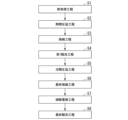
本発明の一実施形態におけるフェライト系ステンレス鋼は、例えば、フェライト系ステンレス鋼帯として得られる。図1は、本実施形態に係るフェライト系ステンレス鋼の製造方法の一例を示すフローチャートである。図1に示すように、本実施形態におけるフェライト系ステンレス鋼帯の製造方法は、前処理工程S1、熱間圧延工程S2、焼鈍工程S3、第1酸洗工程S4、冷間圧延工程S5、最終焼鈍工程S6、硝酸電解工程S7、および最終酸洗工程S8を含む。
各工程の好ましい条件を説明する。以下、説明しない条件については公知の条件を採用することができる。
The ferritic stainless steel according to one embodiment of the present invention is obtained, for example, as a ferritic stainless steel strip. Fig. 1 is a flow chart showing an example of a method for producing a ferritic stainless steel according to this embodiment. As shown in Fig. 1, the method for producing a ferritic stainless steel strip according to this embodiment includes a pretreatment step S1, a hot rolling step S2, an annealing step S3, a first pickling step S4, a cold rolling step S5, a final annealing step S6, a nitric acid electrolysis step S7, and a final pickling step S8.
The preferred conditions for each step will be described below. For conditions not described below, known conditions can be used.
<前処理工程>
前処理工程S1では、まず、真空またはアルゴン雰囲気の溶解炉を用いて、上述した本発明の範囲内となるように化学組成を調整した鋼を溶製し、この鋼を鋳造して、スラブを製造する。その後、該スラブから熱間圧延用のスラブ片を切り出す。そして、当該スラブ片を大気雰囲気中で1100℃~1300℃の温度域に加熱する。該スラブ片を加熱して保持する時間は、限定されない。工業的に前処理工程を行う場合、前記鋳造は連続鋳造であってよい。
<Pretreatment process>
In the pretreatment step S1, first, a melting furnace in a vacuum or argon atmosphere is used to melt steel having a chemical composition adjusted to fall within the range of the present invention described above, and the steel is cast to produce a slab. Then, a slab piece for hot rolling is cut out from the slab. The slab piece is then heated to a temperature range of 1100°C to 1300°C in an air atmosphere. The time for which the slab piece is heated and held is not limited. When the pretreatment step is carried out industrially, the casting may be continuous casting.
<熱間圧延工程>
熱間圧延工程S2は、前処理工程S1において得られるスラブ(鋼塊)を熱間圧延することにより、所定の厚みの熱延鋼帯を製造する工程である。熱間圧延の条件については限定されず、要求される機械的特性等に応じて調整すればよい。
<Hot rolling process>
The hot rolling step S2 is a step of producing a hot rolled steel strip having a predetermined thickness by hot rolling the slab (steel ingot) obtained in the pretreatment step S1. The hot rolling conditions are not limited and may be adjusted according to the required mechanical properties, etc.
<焼鈍工程>
焼鈍工程S3は、熱間圧延工程S2で得られた熱延鋼帯を加熱することによって、鋼帯の軟質化を図る工程である。この焼鈍工程S3は、必要に応じて実施される工程であり、実施されなくてもよい。
<Annealing process>
The annealing step S3 is a step for softening the hot-rolled steel strip obtained in the hot rolling step S2 by heating the steel strip. This annealing step S3 is a step that is performed as necessary, and does not necessarily have to be performed.
<第1酸洗工程>
第1酸洗工程S4は、鋼帯表面に付着したスケールを、塩酸または硝酸と弗酸との混合液などの酸洗液を用いて洗い落とす工程である。
<First pickling process>
The first pickling step S4 is a step of washing off scale adhering to the surface of the steel strip with a pickling solution such as hydrochloric acid or a mixture of nitric acid and hydrofluoric acid.
<冷間圧延工程>
冷間圧延工程S5は、第1酸洗工程S4においてスケール除去された鋼帯を、さらに薄く圧延する工程である。
<Cold rolling process>
The cold rolling step S5 is a step of further rolling the steel strip that has been descaled in the first pickling step S4 to make it thinner.
<最終焼鈍工程>
最終焼鈍工程S6は、冷間圧延工程S5において薄く圧延された鋼帯を加熱することによってひずみを除去し、鋼帯の軟質化を図る工程である。また、(Fe,Cr)3O4またはCr2O3などの外層酸化物とともに、AlまたはSi等の酸化物である内部酸化物を形成する工程である。
最終焼鈍工程S6における焼鈍は、上記の目的のため、合金成分に応じて900~1100℃程度の温度で30~90秒の時間の範囲、雰囲気としては大気、液化燃焼ガス(LNG)などの燃焼ガス雰囲気で行う。
<Final annealing process>
The final annealing step S6 is a step for removing distortion by heating the steel strip thinly rolled in the cold rolling step S5, thereby softening the steel strip, and for forming an inner oxide, which is an oxide of Al or Si, etc., together with an outer oxide, such as (Fe, Cr) 3 O 4 or Cr 2 O 3 .
For the above-mentioned purpose, the annealing in the final annealing step S6 is performed at a temperature of about 900 to 1100° C. for a time period of 30 to 90 seconds depending on the alloy components in an atmosphere of a combustion gas such as air or liquefied combustion gas (LNG).
<硝酸電解工程>
硝酸電解工程S7は、最終焼鈍工程S6で得られた鋼帯を、硝酸水溶液中で電解処理する工程である。硝酸電解工程S7において、鋼帯の表面に付着した酸化物が部分的に除去される。
具体的には、最終焼鈍工程S6で得られる鋼帯の表面には、例えば(Fe,Cr)3O4またはCr2O3などの外層酸化物が形成されている。また、この外層酸化物と母材との間には、主にAlまたはSi等の酸化物である内部酸化物が形成されている。硝酸電解工程S7では、外層酸化物の大部分を除去しつつ、内部酸化物の大部分が残存するような条件で硝酸電解を行う。内部酸化物の大部分は残存するものの、内部酸化物の一部はやや剥離し、最終酸洗工程S8により除去されやすい状態とすることが好ましい。
<Nitric acid electrolysis process>
The nitric acid electrolysis step S7 is a step in which the steel strip obtained in the final annealing step S6 is electrolyzed in an aqueous nitric acid solution. In the nitric acid electrolysis step S7, oxides adhering to the surface of the steel strip are partially removed.
Specifically, an outer oxide layer, such as (Fe, Cr) 3 O 4 or Cr 2 O 3 , is formed on the surface of the steel strip obtained in the final annealing step S6. In addition, an inner oxide, which is mainly an oxide of Al or Si, is formed between this outer oxide layer and the base metal. In the nitric acid electrolysis step S7, nitric acid electrolysis is performed under conditions such that most of the outer oxide layer is removed while most of the inner oxide remains. Although most of the inner oxide remains, it is preferable that some of the inner oxide is slightly peeled off and made into a state that is easily removed in the final pickling step S8.
硝酸電解工程S7における硝酸濃度は、150g/L以下であることが好ましい。この場合、最終酸洗工程S8後に、鋼帯の表面に93μm2当たり10個以上のAl/Si系酸化物を残存させることが容易である。
一方、必要以上のAl/Si系酸化物が残存すると、表面の明度が低下する。そのため、最終酸洗工程を経た後の表面のAl/Si系酸化物の量を好ましい範囲とするためには、硝酸電解工程S7における硝酸濃度は、100g/L以上であることが好ましい。また、短時間で効率的に外層酸化物を除去するためには、硝酸電解工程S7における硝酸濃度は、130g/L以上であることが好ましい。
The nitric acid concentration in the nitric acid electrolysis step S7 is preferably 150 g/L or less. In this case, it is easy to leave 10 or more Al/Si-based oxides per 93 μm2 on the surface of the steel strip after the final pickling step S8.
On the other hand, if more Al/Si-based oxides than necessary remain, the brightness of the surface decreases. Therefore, in order to keep the amount of Al/Si-based oxides on the surface after the final pickling step within a preferred range, the nitric acid concentration in the nitric acid electrolysis step S7 is preferably 100 g/L or more. In order to efficiently remove the outer layer oxides in a short time, the nitric acid concentration in the nitric acid electrolysis step S7 is preferably 130 g/L or more.
硝酸電解工程S7における液温は、70℃以下であることが好ましく、60℃以下であることがより好ましい。この場合、最終酸洗工程S8後に、鋼帯の表面に93μm2当たり10個以上のAl/Si系酸化物を残存させることが容易である。
一方、硝酸電解工程S7における液温は、50℃以上であることが好ましく、60℃以上であることがより好ましい。この場合、短時間で効率的に外層酸化物を除去することができる。
The solution temperature in the nitric acid electrolysis step S7 is preferably 70° C. or less, and more preferably 60° C. or less. In this case, it is easy to leave 10 or more Al/Si-based oxides per 93 μm 2 on the surface of the steel strip after the final pickling step S8.
On the other hand, the solution temperature in the nitric acid electrolysis step S7 is preferably 50° C. or higher, and more preferably 60° C. or higher. In this case, the outer oxide layer can be removed efficiently in a short time.
硝酸電解工程S7における電流密度は、150mA/cm2以下であることが好ましい。この場合、最終酸洗工程S8後に、鋼帯の表面に93μm2当たり10個以上のAl/Si系酸化物を残存させることが容易である。
一方、硝酸電解工程S7における電流密度は、100mA/cm2以上であることが好ましく、120mA/cm2以上であることがより好ましく、130mA/cm2以上であることがさらに好ましい。この場合、短時間で効率的に外層酸化物を除去することができる。
The current density in the nitric acid electrolysis step S7 is preferably 150 mA/ cm2 or less. In this case, it is easy to leave 10 or more Al/Si-based oxides per 93 μm2 on the surface of the steel strip after the final pickling step S8.
On the other hand, the current density in the nitric acid electrolysis step S7 is preferably 100 mA/cm2 or more , more preferably 120 mA/cm2 or more , and even more preferably 130 mA/cm2 or more . In this case, the outer oxide layer can be efficiently removed in a short time.
硝酸電解工程S7における電解時間は、120秒以下であることがより好ましい。この場合、最終酸洗工程S8後に、鋼帯の表面に93μm2当たり10個以上のAl/Si系酸化物を残存させることができる。
一方、硝酸電解工程S7における電解時間は、60秒以上であることが好ましい。この場合、外層酸化物の大部分を確実に除去するとともに、内部酸化物の一部を剥離しやすい状態とし、最終酸洗工程後のAl/Si系酸化物の残存量を好ましい範囲とすることができる。
The electrolysis time in the nitric acid electrolysis step S7 is more preferably 120 seconds or less. In this case, 10 or more Al/Si-based oxide particles per 93 μm2 can be left on the surface of the steel strip after the final pickling step S8.
On the other hand, the electrolysis time in the nitric acid electrolysis step S7 is preferably 60 seconds or more, which can reliably remove most of the outer oxide layer, while making part of the inner oxide easily peelable, and can keep the amount of remaining Al/Si-based oxide after the final pickling step within a preferred range.
<最終酸洗工程>
最終酸洗工程S8は、硝酸電解工程S7後の鋼帯を硝酸と弗酸との混合液などの酸洗液に浸漬する工程である。最終酸洗工程S8では、硝酸電解工程S7においてやや剥離した内部酸化物が除去される。これにより、鋼帯の表面に93μm2当たり10個以上のAl/Si系酸化物を確保しつつ、必要以上のAl/Si系酸化物を除去し、明度を向上させることができる。
<Final pickling process>
The final pickling step S8 is a step in which the steel strip after the nitric acid electrolysis step S7 is immersed in a pickling solution such as a mixture of nitric acid and hydrofluoric acid. In the final pickling step S8, the inner oxides that have peeled off slightly in the nitric acid electrolysis step S7 are removed. This makes it possible to remove more than necessary Al/Si-based oxides while securing 10 or more Al/Si-based oxides per 93 μm2 on the surface of the steel strip, thereby improving the lightness.
上述したように、従来技術では、耐赤スケール性を向上させるための仕上げ工程として、研磨仕上げまたはめっき層の形成などの工程がさらに行われる。しかしながら、このような仕上げ工程は、当該仕上げ工程のために新たな装置を導入する必要があり、製造コストが高くなるという問題がある。このような観点から、製造コストを上げずに、耐赤スケール性に優れたフェライト系ステンレス鋼を製造する製造方法が求められている。As described above, in the conventional technology, a finishing process such as polishing or forming a plating layer is further carried out as a finishing process to improve red scale resistance. However, such a finishing process requires the introduction of new equipment for the finishing process, which increases the manufacturing cost. From this perspective, there is a demand for a manufacturing method for manufacturing ferritic stainless steel with excellent red scale resistance without increasing the manufacturing cost.
本実施形態に係る上記製造方法では、硝酸電解工程S7および最終酸洗工程S8において、酸洗工程で一般的に使用される装置を使用できるので、製造コストを上げずに、優れた耐赤スケール性を有するフェライト系ステンレス鋼を実現することができる。In the above-described manufacturing method according to this embodiment, the nitric acid electrolysis step S7 and the final pickling step S8 can use equipment commonly used in pickling steps, making it possible to produce a ferritic stainless steel with excellent red scale resistance without increasing manufacturing costs.
<排ガス用部品の製造方法>
本実施形態に係る排ガス用部品は、上述した本実施形態に係るフェライト系ステンレス鋼を、公知の加工方法で所定の部品形状に加工することによって得られる。
<Manufacturing method for exhaust gas parts>
The exhaust gas component according to this embodiment is obtained by processing the above-mentioned ferritic stainless steel according to this embodiment into a predetermined component shape by a known processing method.
<実施例>
本発明の実施例について、以下に説明する。まず、下記の表1に示す成分を原料とし、上記製造方法の最終焼鈍工程S6までを全て同じ条件で行った後、表2に示す電解時間で硝酸電解工程S7を行い、その後、最終酸洗工程S8を行うことにより、フェライト系ステンレス鋼を製造した。
<Example>
Examples of the present invention will be described below. First, using the components shown in Table 1 below as raw materials, the steps up to the final annealing step S6 of the above-mentioned manufacturing method were all carried out under the same conditions, followed by the nitric acid electrolysis step S7 for the electrolysis time shown in Table 2, and then the final pickling step S8, to manufacture ferritic stainless steel.
本実施例では、表1に示される各ステンレス鋼の組成は、質量%で示されている。また、表1に示す各成分以外の残部は、Fe及び不純物である。また、表1中の下線は、本発明の比較例に係る各ステンレス鋼に含まれる各成分の範囲が、本発明の範囲外であることを示している。In this example, the composition of each stainless steel shown in Table 1 is shown in mass %. The remainder other than each component shown in Table 1 is Fe and impurities. The underlines in Table 1 indicate that the range of each component contained in each stainless steel according to the comparative example of the present invention is outside the range of the present invention.

表1に示すように、化学組成が本発明の範囲となるように作製したフェライト系ステンレス鋼を、鋼種A1~A10とした。また、化学組成が本発明の範囲外となるように作製したフェライト系ステンレス鋼を、鋼種B1~B3とした。As shown in Table 1, ferritic stainless steels manufactured so that their chemical compositions were within the range of the present invention were designated as steel types A1 to A10. Ferritic stainless steels manufactured so that their chemical compositions were outside the range of the present invention were designated as steel types B1 to B3.
表2は、鋼種A1~A10および鋼種B1~B3を用いて、鋼材No.1~46の鋼材を製造するために用いた条件および各鋼材の評価結果を示す表である。表2に示す各鋼材を製造するにあたり、用いた条件は以下のとおりである。 Table 2 shows the conditions used to manufacture steel products No. 1 to 46 using steel types A1 to A10 and steel types B1 to B3, and the evaluation results of each steel product. The conditions used to manufacture each steel product shown in Table 2 are as follows.
・前処理工程S1における溶解炉の雰囲気 真空
・前処理工程S1において製造されるスラブ片の質量 30kg
・前処理工程S1におけるスラブ片の加熱温度 1230℃
・前処理工程S1におけるスラブ片の加熱時間 2時間
・熱間圧延工程S2後の板厚 4mm
・焼鈍工程S3 実施せず
・第1酸洗工程S4で用いた酸洗液 硝弗酸液(弗酸濃度:30g/Lおよび硝酸濃度:100g/Lの水溶液)
・第1酸洗工程S4における液温 40~50℃
・冷間圧延工程S5後の板厚 1.5mm
・最終焼鈍工程S6における焼鈍温度 900~1100℃(合金組成に応じて変更)
・最終焼鈍工程S6における焼鈍時間 60秒
・最終焼鈍工程S6における焼鈍雰囲気 大気
・硝酸電解工程S7における硝酸濃度 150g/L
・硝酸電解工程S7における液温 50~70℃
・硝酸電解工程S7における電流密度 150mA/cm2
・硝酸電解工程S7における電解時間 30~180秒(表2に示す)
・最終酸洗工程S8で用いた酸洗液 硝弗酸液(弗酸濃度:20g/Lおよび硝酸濃度:70~80g/Lの水溶液)
・最終酸洗工程S8における液温 40~50℃
Atmosphere of melting furnace in pretreatment step S1: vacuum Mass of slab piece produced in pretreatment step S1: 30 kg
Heating temperature of slab piece in pretreatment step S1: 1230° C.
Heating time of the slab in the pretreatment process S1: 2 hours; Plate thickness after the hot rolling process S2: 4 mm
Annealing step S3: Not performed. Pickling solution used in first pickling step S4: Nitric hydrofluoric acid solution (aqueous solution with hydrofluoric acid concentration of 30 g/L and nitric acid concentration of 100 g/L).
- Solution temperature in the first pickling process S4: 40 to 50°C
・ Sheet thickness after cold rolling process S5 1.5 mm
Annealing temperature in the final annealing step S6: 900 to 1100°C (changes depending on the alloy composition)
Annealing time in the final annealing step S6: 60 seconds; Annealing atmosphere in the final annealing step S6: air; Nitric acid concentration in the nitric acid electrolysis step S7: 150 g/L
・Liquid temperature in nitric acid electrolysis step S7: 50 to 70°C
Current density in nitric acid electrolysis step S7: 150 mA/cm 2
Electrolysis time in the nitric acid electrolysis step S7: 30 to 180 seconds (shown in Table 2)
Pickling solution used in the final pickling process S8 Nitric hydrofluoric acid solution (aqueous solution with hydrofluoric acid concentration of 20 g/L and nitric acid concentration of 70 to 80 g/L)
・Liquid temperature in the final pickling process S8: 40 to 50°C

鋼材No.1~46について、以下に詳述する方法により、Al/Si系酸化物の個数を測定した。測定結果を表2に示す。The number of Al/Si-based oxides was measured for steel materials No. 1 to 46 using the method described in detail below. The measurement results are shown in Table 2.
<Al/Si系酸化物の個数>
下記の通り、鋼材の表面におけるAl/Si系酸化物の個数を測定した。まず、走査電子顕微鏡(SEM)SU5000((株)日立ハイテクノロジーズ製)を用い、倍率1万倍にて鋼材の表面のSEM写真を撮影した。1視野の寸法は、縦8.34μm×横11.2μmであり、1視野の面積は、93μm2であった。また、酸化物の組成について、電子顕微鏡用エネルギー分散型元素分析装置(Energy dispersive X-ray spectroscopy:EDS)(株式会社堀場製作所製)を用い、加速電圧15kV、分析時間60秒で元素分析を行った。
<Number of Al/Si-based oxides>
The number of Al/Si-based oxides on the surface of the steel material was measured as follows. First, a scanning electron microscope (SEM) SU5000 (manufactured by Hitachi High-Technologies Corporation) was used to take an SEM photograph of the surface of the steel material at a magnification of 10,000 times. The dimensions of one field of view were 8.34 μm vertical x 11.2 μm horizontal, and the area of one field of view was 93 μm2. In addition, elemental analysis was performed on the composition of the oxides using an energy dispersive X-ray spectroscopy (EDS) for electron microscopes (manufactured by Horiba, Ltd.) at an acceleration voltage of 15 kV and an analysis time of 60 seconds.
撮影したSEM写真を画像解析ソフト「Photoshop(登録商標)」(アドビ株式会社製)により画像解析することにより、AlまたはSiを5質量%以上含有し、かつ径Dが0.1μm以上2.0μm以下である酸化物の個数、すなわちAl/Si系酸化物の個数を算出した。The SEM photographs were analyzed using the image analysis software "Photoshop (registered trademark)" (Adobe Inc.) to calculate the number of oxides containing 5 mass% or more of Al or Si and having a diameter D of 0.1 μm or more and 2.0 μm or less, i.e., the number of Al/Si-based oxides.
また、上述した方法で不動態被膜の厚みを測定した。表には示さないが、不動態被膜の厚みは、2.0~8.0nmであった。The thickness of the passive film was also measured using the method described above. Although not shown in the table, the thickness of the passive film was 2.0 to 8.0 nm.
図2A、図2Bは、上記の方法で撮影したSEM写真の例を示す。図2Aに示すように、発明例である鋼材No.6の表面に存在するAl/Si系酸化物の個数は、1視野に10個以上であった。これに対し、図2Bに示すように、比較例である鋼材No.8の表面に存在するAl/Si系酸化物の個数は、1視野に10個未満であった。鋼材No.6のSEM写真では、1視野に酸化物が30個以上存在するように見える。しかしながら、AlまたはSiを5質量%以上含有し、かつ径Dが0.1μm以上2.0μm以下である酸化物、すなわちAl/Si系酸化物の個数は、1視野に19個であった。2A and 2B show examples of SEM photographs taken by the above method. As shown in FIG. 2A, the number of Al/Si-based oxides present on the surface of steel No. 6, which is an example of the invention, was 10 or more per visual field. In contrast, as shown in FIG. 2B, the number of Al/Si-based oxides present on the surface of steel No. 8, which is a comparative example, was less than 10 per visual field. In the SEM photograph of steel No. 6, it appears that there are 30 or more oxides in one visual field. However, the number of oxides containing 5 mass% or more of Al or Si and having a diameter D of 0.1 μm or more and 2.0 μm or less, i.e., Al/Si-based oxides, was 19 per visual field.
表2に示すように、鋼種A1~A10であり、電解時間が30秒~120秒であった鋼材No.1~3、5~7、9~11、13~15、17~19、21~23、25~27、29~30、32~33、35、36は、径Dが0.1μm以上2.0μm以下であるAl/Si系酸化物の個数が93μm2当たり10個以上であった。
一方、鋼種A1~A9であっても、電解時間が180秒であった鋼材No.4、8、12、16、20、24、28、31および34は、Al/Si系酸化物の個数が93μm2当たり10個未満であった。
As shown in Table 2, in the steel materials Nos. 1 to 3, 5 to 7, 9 to 11, 13 to 15, 17 to 19, 21 to 23, 25 to 27, 29 to 30, 32 to 33, 35, and 36, which were steel types A1 to A10 and had electrolysis times of 30 to 120 seconds, the number of Al/Si-based oxides having a diameter D of 0.1 μm or more and 2.0 μm or less was 10 or more per 93 μm2.
On the other hand, even among the steel types A1 to A9, in the steel materials Nos. 4, 8, 12, 16, 20, 24, 28, 31 and 34 in which the electrolysis time was 180 seconds, the number of Al/Si-based oxides was less than 10 per 93 μm2 .
一方、鋼種B1またはB2では、鋼材No.37~42のいずれにおいても、Al/Si系酸化物の個数が93μm2当たり10個未満であった。 On the other hand, in the case of steel type B1 or B2, the number of Al/Si-based oxides was less than 10 per 93 μm 2 in all of steel materials Nos. 37 to 42.
鋼種B3では、電解時間が40~60秒であった鋼材No.43および44は、Al/Si系酸化物の個数が93μm2当たり10個以上であったが、鋼種B3であり、電解時間が120~180秒であった鋼材No.45および46は、Al/Si系酸化物の個数が93μm2当たり10個未満であった。 In the case of steel type B3, steel materials No. 43 and 44 in which the electrolysis time was 40 to 60 seconds had 10 or more Al/Si-based oxide particles per 93 μm2 , but in the case of steel materials No. 45 and 46 in which the electrolysis time was 120 to 180 seconds, the number of Al/Si-based oxide particles was less than 10 per 93 μm2.
<酸化増量(耐赤スケール性評価)>
また、鋼材No.1~46について、耐赤スケール性を評価するため、JIS Z 2281:1993(金属材料の高温連続酸化試験方法)に準拠し、下記の通り、鋼材の酸化増量を測定した。
まず、各鋼材から、20mm×25mmの試験片を切り出した。この試験片を、石油系燃料を燃焼させた状況を想定し、水蒸気濃度10vol%の大気環境中で、当該試験片を600℃で100時間連続加熱した。酸化増量は、試験前後の質量変化より算出した。
耐赤スケール性評価の判断基準として、酸化増量が0.20mg/cm2以下であれば、耐赤スケール性に優れると判断した。
<Oxidation Increase (Red Scale Resistance Evaluation)>
In addition, for Steel Nos. 1 to 46, in order to evaluate the red scale resistance, the oxidation weight gain of the steel was measured as follows in accordance with JIS Z 2281:1993 (High-temperature continuous oxidation test method for metallic materials).
First, a test piece measuring 20 mm x 25 mm was cut out from each steel material. The test piece was continuously heated at 600°C for 100 hours in an atmospheric environment with a water vapor concentration of 10 vol%, simulating a situation in which a petroleum fuel was burned. The oxidation weight gain was calculated from the change in mass before and after the test.
As a criterion for evaluating red scale resistance, an oxidation weight increase of 0.20 mg/ cm2 or less was determined to be excellent in red scale resistance.
表2に示すように、鋼種A1~A10で、Al/Si系酸化物の個数が93μm2当たり10個以上であった鋼材No.1~3、5~7、9~11、13~15、17~19、21~23、25~27、29~30、32~33、35、36は、酸化増量が0.20mg/cm2以下であった。したがって、これらの鋼材では、耐赤スケール性が良好であることが示された。 As shown in Table 2, among the steel types A1 to A10, the steel materials Nos. 1 to 3, 5 to 7, 9 to 11, 13 to 15, 17 to 19, 21 to 23, 25 to 27, 29 to 30, 32 to 33, 35, and 36 in which the number of Al/ Si -based oxides was 10 or more per 93 μm2 had an oxidation weight gain of 0.20 mg/ cm2 or less. Therefore, it was shown that these steel materials had good red scale resistance.
一方、鋼種A1~A9であっても、Al/Si系酸化物の個数が93μm2当たり10個未満であった鋼材No.4、8、12、16、20、24、28、31および34は、酸化増量が0.20mg/cm2を超えた。したがって、これらの鋼材では、耐赤スケール性が低いことが示された。 On the other hand, even among the steel types A1 to A9, the oxidation weight gain exceeded 0.20 mg/ cm2 in steel materials Nos. 4, 8, 12, 16, 20, 24, 28, 31 and 34, in which the number of Al/Si-based oxides was less than 10 per 93 μm2. Therefore, it was shown that these steel materials had low red scale resistance.
また、鋼種B1またはB2であり、Al/Si系酸化物の個数が93μm2当たり10個未満であった鋼材No.37~42は、酸化増量が0.20mg/cm2を超えた。したがって、これらの鋼材では、耐赤スケール性が低いことが示された。 In addition, in the steel materials Nos. 37 to 42, which were steel types B1 or B2 and had less than 10 Al/Si-based oxides per 93 μm2, the oxidation weight gain exceeded 0.20 mg/ cm2 . Therefore, it was shown that these steel materials had low red scale resistance.
鋼種B3では、Al/Si系酸化物の個数によらず、全ての鋼材No.43~46で酸化増量が0.20mg/cm2を超えた。したがって、これらの鋼材では、耐赤スケール性が低いことが示された。鋼種B3では、Al含有量が0.001質量%と低いため、Al/Si系酸化物の個数が10個以上であっても、耐赤スケール性が低かったと推測される。 In steel type B3, the oxidation weight gain exceeded 0.20 mg/ cm2 in all steel materials Nos. 43 to 46, regardless of the number of Al/Si-based oxides. This indicates that these steel materials have low red scale resistance. It is presumed that steel type B3 had low red scale resistance even when the number of Al/Si-based oxides was 10 or more, because the Al content was low at 0.001 mass%.
<長時間試験後の表面形態>
長時間試験後の表面の酸化物形態を評価するため、前述の酸化増量(耐赤スケール性評価)を評価した試験片の内、鋼材No.1~4、13~16、32~34および37~39について、グロー放電発行分光分析装置(Glow Discharge Spectroscopy:GDS)(HORIBA製GD-Profiler2)を用い、試験片の任意の箇所のCr、Si、Al含有量を測定した。分析領域はφ4mmとし、表面から深さ1.0μmまでを2.5nmピッチで測定した。
分析元素は、任意の箇所を各鋼に含有するCおよびN以外のすべての元素を選択し測定した。
その他GDS測定条件は、以下の通りとした。
ガス置換時間:200秒、
予備スパッタ時間:30秒、
バックグラウンド:5秒、
深さ:1.01μm、
圧力:600Pa、
出力:35W、
実効値:8.75W、
モジュール:8V、
フェーズ:4V、
周波数:100Hzデューティサイクル:0.25。
測定後は、深さ1.0μmまでのCr、AlおよびSiがそれぞれピークを示した位置でのそれぞれの含有量を式(2)に代入して計算し、満足するか確認した。表中には、式(2)の左辺([Cr]+[Si]+[Al])の値を示す。
<Surface morphology after long-term testing>
In order to evaluate the oxide morphology on the surface after the long-term test, among the test pieces for which the above-mentioned oxidation increase (red scale resistance evaluation) was evaluated, the Cr, Si, and Al contents at arbitrary points of the test pieces were measured using a glow discharge spectroscopy (GDS) (GD-Profiler 2 manufactured by HORIBA) for steel materials Nos. 1 to 4, 13 to 16, 32 to 34, and 37 to 39. The analysis area was φ4 mm, and measurements were made at 2.5 nm pitches from the surface to a depth of 1.0 μm.
The elements analyzed were all elements other than C and N contained in each steel at random locations and were measured.
Other GDS measurement conditions were as follows:
Gas replacement time: 200 seconds,
Pre-sputtering time: 30 seconds,
Background: 5 seconds,
Depth: 1.01 μm,
Pressure: 600 Pa,
Output: 35W,
Effective value: 8.75 W,
Module: 8V,
Phase: 4V,
Frequency: 100Hz Duty cycle: 0.25.
After the measurement, the contents of Cr, Al, and Si at the positions where they each showed a peak up to a depth of 1.0 μm were substituted into formula (2) to perform calculations and confirm whether they were satisfactory. The value of the left side of formula (2) ([Cr] + [Si] + [Al]) is shown in the table.
表2に示すように、酸化増量が0.20mg/cm2以下であり、耐赤スケール性が高かったNo.1~3、13~15および32~33は、式(2)を満足していた。
一方、酸化増量は酸化増量が0.20mg/cm2超となり、耐赤スケール性が低かったNo.4、16、34および37~39は、式(2)を満足してしなかった。
As shown in Table 2, Nos. 1 to 3, 13 to 15, and 32 to 33, which had an oxidation weight gain of 0.20 mg/ cm2 or less and had high red scale resistance, satisfied formula (2).
On the other hand, the oxidation weight gain exceeded 0.20 mg/ cm2 , and Nos. 4, 16, 34, and 37 to 39 had low red scale resistance and did not satisfy formula (2).
<明度>
鋼材の意匠性を評価するため、下記の要領で、鋼材No.1~46の表面における明度を測定した。
分光測色計(型号:CM-700d、コニカミノルタ製)を用い、室温23℃にて白色校正を行った後、同温度で鋼材の表面における明度L*を測定した。評価の判断基準として、明度L*が60以上を意匠性に優れると判断した。
<Lightness>
In order to evaluate the design of the steel materials, the brightness of the surface of steel materials No. 1 to 46 was measured in the following manner.
Using a spectrophotometer (model: CM-700d, manufactured by Konica Minolta), white calibration was performed at room temperature of 23° C., and then the lightness L * of the surface of the steel material was measured at the same temperature. As a criterion for evaluation, a lightness L * of 60 or more was judged to be excellent in design.
表2に示すように、鋼種A1~A10で、電解時間が60秒~180秒であった鋼材No.2~4、6~8、10~12、14~16、18~20、22~24、26~28、29~31および33~34は、明度L*が60以上であった。したがって、これらの鋼材では、意匠性が良好であることが示された。 As shown in Table 2, the steel materials Nos. 2 to 4, 6 to 8, 10 to 12, 14 to 16, 18 to 20, 22 to 24, 26 to 28, 29 to 31, and 33 to 34, which were steel types A1 to A10 and had electrolysis times of 60 to 180 seconds, had a lightness L * of 60 or more. Therefore, it was shown that these steel materials had good design properties.
一方、鋼種A1~A9で、電解時間が30~40秒であった鋼材No.1、5、9、13、17、21、25、および32は、明度L*が60未満であった。 On the other hand, in the steel materials Nos. 1, 5, 9, 13, 17, 21, 25, and 32 of the steel types A1 to A9 in which the electrolysis time was 30 to 40 seconds, the lightness L * was less than 60.
(付記事項)
本発明は上述した各実施形態に限定されるものではなく、請求項に示した範囲で種々の変更が可能であり、異なる実施形態にそれぞれ開示された技術的手段を適宜組み合わせて得られる実施形態についても本発明の技術的範囲に含まれる。
(Additional Notes)
The present invention is not limited to the above-described embodiments, and various modifications are possible within the scope of the claims. Embodiments obtained by appropriately combining the technical means disclosed in different embodiments are also included in the technical scope of the present invention.
Claims (6)
0.05質量%以上2.50質量%以下のSi、
0.05質量%以上1.50質量%以下のMn、
0.025質量%以下のC、
0.040質量%以下のP、
0.003質量%以下のS、
0.025質量%以下のN、
0.01質量%以上0.50質量%以下のNi、
10.50質量%以上25.00質量%以下のCr、
0.01質量%以上1.80質量%以下のCu、
0.002質量%以上0.200質量%以下のAl、
0.001質量%以上1.00質量%以下のNb、
0質量%以上2.5質量%以下のW、
0質量%以上3.00質量%以下のMo、
0質量%以上0.500質量%以下のTi、
0質量%以上0.0100質量%以下のB、
0質量%以上0.0030質量%以下のCa、
0質量%以上0.50質量%以下のHf、
0質量%以上0.40質量%以下のZr、
0質量%以上0.50質量%以下のSb、
0質量%以上0.30質量%以下のCo、
0質量%以上1.0質量%以下のTa、
0質量%以上1.00質量%以下のSn、
0質量%以上0.30質量%以下のGa、
0質量%以上0.50質量%以下のV、
0質量%以上0.003質量%以下のMg、および
0質量%以上0.20質量%以下のREM
を含有し、残部にFeおよび不純物を含み、
表面において、Alを5質量%以上含有した酸化物、およびSiを5質量%以上含有した酸化物のうち少なくとも一方の酸化物が存在し、かつ、観察視野において前記表面に存在する前記酸化物のうち下記式(1)で表される径Dが0.1μm以上2.0μm以下である酸化物の個数が、93μm2当たり10個以上である、
フェライト系ステンレス鋼。
D=(Dmax+Dmin)/2 ・・・(1)
ここで、前記式(1)中、Dmaxは前記表面における前記酸化物の最大径であり、Dminは前記表面における前記酸化物の最小径である。 The chemical composition is:
0.05% by mass or more and 2.50% by mass or less of Si;
0.05% by mass or more and 1.50% by mass or less of Mn,
0.025% by weight or less of C,
0.040% by weight or less of P,
0.003% by weight or less of S;
0.025% by weight or less of N,
0.01% by mass or more and 0.50% by mass or less of Ni;
10.50% by mass or more and 25.00% by mass or less of Cr;
0.01% by mass or more and 1.80% by mass or less of Cu,
0.002% by mass or more and 0.200% by mass or less of Al;
0.001% by mass or more and 1.00% by mass or less of Nb;
0% by mass or more and 2.5% by mass or less of W;
Mo, from 0% by mass to 3.00% by mass
Ti, from 0% by mass to 0.500% by mass;
B,
0% by mass or more and 0.0030% by mass or less of Ca,
Hf of 0 mass% or more and 0.50 mass% or less,
0% by mass or more and 0.40% by mass or less of Zr;
Sb,
0% by mass or more and 0.30% by mass or less of Co,
Ta, from 0% by mass to 1.0% by mass
0% by mass or more and 1.00% by mass or less of Sn,
Ga, from 0% by mass to 0.30% by mass;
V, 0% by mass or more and 0.50% by mass or less;
0% by mass or more and 0.003% by mass or less of Mg, and 0% by mass or more and 0.20% by mass or less of REM
The balance includes Fe and impurities,
At least one of an oxide containing 5% by mass or more of Al and an oxide containing 5% by mass or more of Si is present on the surface, and the number of oxides having a diameter D represented by the following formula (1) of 0.1 μm or more and 2.0 μm or less among the oxides present on the surface in an observation field of view is 10 or more per 93 μm2 .
Ferritic stainless steel.
D=(Dmax+Dmin)/2...(1)
Here, in the formula (1), Dmax is the maximum diameter of the oxide on the surface, and Dmin is the minimum diameter of the oxide on the surface.
請求項1に記載のフェライト系ステンレス鋼。 The surface has a CIE 1976 lightness L * of 60 or more, measured using a D65 light source in a diffuse illumination mode, receiving light at an angle of 8° to the normal to the surface, with a viewing angle of 10° and a measurement time of 1 second.
The ferritic stainless steel according to claim 1.
0.01質量%以上2.5質量%以下のW、
0.01質量%以上3.00質量%以下のMo、
0.001質量%以上0.500質量%以下のTi、
0.0002質量%以上0.0100質量%以下のB、
0.0002質量%以上0.0030質量%以下のCa、
0.001質量%以上0.50質量%以下のHf、
0.01質量%以上0.40質量%以下のZr、
0.005質量%以上0.50質量%以下のSb、
0.01質量%以上0.30質量%以下のCo、
0.001質量%以上1.0質量%以下のTa、
0.002質量%以上1.00質量%以下のSn、
0.0002質量%以上0.30質量%以下のGa、
0.01質量%以上0.50質量%以下のV、
0.0003質量%以上0.003質量%以下のMg、および
0.001質量%以上0.20質量%以下のREM
のうちの1種または2種以上を含有する、
請求項1または2に記載のフェライト系ステンレス鋼。 The chemical composition is
0.01% by mass or more and 2.5% by mass or less of W;
0.01% by mass or more and 3.00% by mass or less of Mo;
0.001% by mass or more and 0.500% by mass or less of Ti;
0.0002% by mass or more and 0.0100% by mass or less of B;
0.0002% by mass or more and 0.0030% by mass or less of Ca;
Hf of 0.001% by mass or more and 0.50% by mass or less,
0.01% by mass or more and 0.40% by mass or less of Zr;
0.005% by mass or more and 0.50% by mass or less of Sb;
0.01% by mass or more and 0.30% by mass or less of Co;
Ta of 0.001% by mass or more and 1.0% by mass or less,
0.002% by mass or more and 1.00% by mass or less of Sn,
0.0002% by mass or more and 0.30% by mass or less of Ga;
0.01% by mass or more and 0.50% by mass or less of V;
0.0003% by mass or more and 0.003% by mass or less of Mg, and 0.001% by mass or more and 0.20% by mass or less of REM
Contains one or more of the following:
The ferritic stainless steel according to claim 1 or 2.
請求項1~3のいずれか一項に記載のフェライト系ステンレス鋼。
[Cr]+[Si]+[Al]≧18.0…(2) After being held in an atmosphere of 300 to 900 ° C. for 100 hours or more, in the range from the surface to 1.0 μm, the following formula (2) is satisfied, where the Cr content is [Cr], the Si content is [Si], and the Al content is [Al], in unit mass%,
The ferritic stainless steel according to any one of claims 1 to 3.
[Cr]+[Si]+[Al]≧18.0…(2)
フェライト系ステンレス鋼。
36.7≧[Cr]+[Si]+[Al]≧18.0…(2) In the range from the surface to 1.0 μm, when the Cr content is [Cr], the Si content is [Si], and the Al content is [Al], the following formula (2) is satisfied:
Ferritic stainless steel.
36.7≧ [Cr]+[Si]+[Al]≧18.0…(2)
Applications Claiming Priority (3)
| Application Number | Priority Date | Filing Date | Title |
|---|---|---|---|
| JP2020178302 | 2020-10-23 | ||
| JP2020178302 | 2020-10-23 | ||
| PCT/JP2021/039115 WO2022085788A1 (en) | 2020-10-23 | 2021-10-22 | Ferrite-based stainless steel and component for exhaust gas |
Publications (2)
| Publication Number | Publication Date |
|---|---|
| JPWO2022085788A1 JPWO2022085788A1 (en) | 2022-04-28 |
| JP7584533B2 true JP7584533B2 (en) | 2024-11-15 |
Family
ID=81290654
Family Applications (1)
| Application Number | Title | Priority Date | Filing Date |
|---|---|---|---|
| JP2022557621A Active JP7584533B2 (en) | 2020-10-23 | 2021-10-22 | Ferritic stainless steel and exhaust gas parts |
Country Status (7)
| Country | Link |
|---|---|
| US (1) | US20230383390A1 (en) |
| EP (1) | EP4234770A4 (en) |
| JP (1) | JP7584533B2 (en) |
| KR (1) | KR102917622B1 (en) |
| CN (1) | CN116323995A (en) |
| MX (1) | MX2023004503A (en) |
| WO (1) | WO2022085788A1 (en) |
Families Citing this family (4)
| Publication number | Priority date | Publication date | Assignee | Title |
|---|---|---|---|---|
| JPWO2024096114A1 (en) * | 2022-11-04 | 2024-05-10 | ||
| CN120153112A (en) * | 2022-11-04 | 2025-06-13 | 日铁不锈钢株式会社 | Ferritic stainless steel sheet, method for producing the same, and component |
| WO2026062616A1 (en) | 2024-09-23 | 2026-03-26 | Acciai Speciali Terni S.P.A. | Strip made of ferritic stainless steel and related production process |
| CN121874653B (en) * | 2026-03-20 | 2026-07-17 | 鞍钢股份有限公司 | High-surface-quality high-strength steel for automobiles and production method thereof |
Citations (6)
| Publication number | Priority date | Publication date | Assignee | Title |
|---|---|---|---|---|
| JP2009035755A (en) | 2007-07-31 | 2009-02-19 | Nisshin Steel Co Ltd | Al-PLATED STEEL SHEET FOR EXHAUST GAS PASSAGEWAY MEMBER OF MOTORCYCLE AND MEMBER |
| JP2012112025A (en) | 2010-11-26 | 2012-06-14 | Nippon Steel & Sumikin Stainless Steel Corp | Ferritic stainless steel sheet for part of urea scr system and method for production thereof |
| WO2014157341A1 (en) | 2013-03-26 | 2014-10-02 | 新日鐵住金ステンレス株式会社 | Ferritic stainless steel and method for manufacturing same |
| JP2016030854A (en) | 2014-07-29 | 2016-03-07 | 新日鐵住金ステンレス株式会社 | Ferritic stainless steel for fuel cells and method for producing the same |
| JP2017088977A (en) | 2015-11-13 | 2017-05-25 | Jfeスチール株式会社 | Ferritic stainless steel |
| JP2019173075A (en) | 2018-03-27 | 2019-10-10 | 日鉄ステンレス株式会社 | Ferritic stainless steel and manufacturing method therefor, and fuel battery member |
Family Cites Families (14)
| Publication number | Priority date | Publication date | Assignee | Title |
|---|---|---|---|---|
| JP2746902B2 (en) * | 1988-03-16 | 1998-05-06 | 川崎製鉄株式会社 | Method for producing bright annealed ferritic stainless steel strip with excellent rust resistance |
| JP3263426B2 (en) * | 1992-03-26 | 2002-03-04 | 日新製鋼株式会社 | Ferritic stainless steel sheet excellent in weather resistance and method for producing the same |
| JP3253722B2 (en) * | 1993-02-10 | 2002-02-04 | 川崎製鉄株式会社 | Resin-coated ferritic stainless steel sheet and method for producing the same |
| JPH1150202A (en) * | 1997-07-29 | 1999-02-23 | Sumitomo Metal Ind Ltd | Ferritic stainless steel bright annealing material excellent in rust resistance and method for producing the same |
| JP3910419B2 (en) | 2001-11-22 | 2007-04-25 | 日新製鋼株式会社 | Ferritic stainless steel for alcohol fuel reformers |
| JP3942876B2 (en) | 2001-11-22 | 2007-07-11 | 日新製鋼株式会社 | Ferritic stainless steel for hydrocarbon fuel reformer |
| JP5018257B2 (en) * | 2007-06-11 | 2012-09-05 | Jfeスチール株式会社 | Ferritic stainless steel sheet excellent in abrasiveness and corrosion resistance and method for producing the same |
| JP4998132B2 (en) * | 2007-08-06 | 2012-08-15 | Jfeスチール株式会社 | Ferritic stainless steel sheet for use around water |
| JP2010116622A (en) * | 2008-11-14 | 2010-05-27 | Nisshin Steel Co Ltd | Ferritic stainless steel for heat pipe and steel sheet, and heat pipe and high temperature waste heat recovery device |
| JP6295155B2 (en) * | 2014-07-22 | 2018-03-14 | 新日鐵住金ステンレス株式会社 | Ferritic stainless steel, manufacturing method thereof, and heat exchanger using ferritic stainless steel as a member |
| JP6796708B2 (en) * | 2017-03-27 | 2020-12-09 | 日鉄ステンレス株式会社 | Ferritic stainless steel sheet and its manufacturing method, and exhaust parts |
| KR102030158B1 (en) * | 2017-12-26 | 2019-10-08 | 주식회사 포스코 | Method of manufacturing lean duplex stainless steel with good surface quality |
| JP2020178302A (en) | 2019-04-22 | 2020-10-29 | 日本精機株式会社 | Communication device |
| MX2022011262A (en) * | 2020-03-12 | 2022-10-03 | Nippon Steel Stainless Steel Corp | Ferritic stainless steel and method for manufacturing same. |
-
2021
- 2021-10-22 US US18/032,771 patent/US20230383390A1/en active Pending
- 2021-10-22 KR KR1020237013155A patent/KR102917622B1/en active Active
- 2021-10-22 WO PCT/JP2021/039115 patent/WO2022085788A1/en not_active Ceased
- 2021-10-22 CN CN202180071452.7A patent/CN116323995A/en active Pending
- 2021-10-22 JP JP2022557621A patent/JP7584533B2/en active Active
- 2021-10-22 EP EP21882927.3A patent/EP4234770A4/en active Pending
- 2021-10-22 MX MX2023004503A patent/MX2023004503A/en unknown
Patent Citations (6)
| Publication number | Priority date | Publication date | Assignee | Title |
|---|---|---|---|---|
| JP2009035755A (en) | 2007-07-31 | 2009-02-19 | Nisshin Steel Co Ltd | Al-PLATED STEEL SHEET FOR EXHAUST GAS PASSAGEWAY MEMBER OF MOTORCYCLE AND MEMBER |
| JP2012112025A (en) | 2010-11-26 | 2012-06-14 | Nippon Steel & Sumikin Stainless Steel Corp | Ferritic stainless steel sheet for part of urea scr system and method for production thereof |
| WO2014157341A1 (en) | 2013-03-26 | 2014-10-02 | 新日鐵住金ステンレス株式会社 | Ferritic stainless steel and method for manufacturing same |
| JP2016030854A (en) | 2014-07-29 | 2016-03-07 | 新日鐵住金ステンレス株式会社 | Ferritic stainless steel for fuel cells and method for producing the same |
| JP2017088977A (en) | 2015-11-13 | 2017-05-25 | Jfeスチール株式会社 | Ferritic stainless steel |
| JP2019173075A (en) | 2018-03-27 | 2019-10-10 | 日鉄ステンレス株式会社 | Ferritic stainless steel and manufacturing method therefor, and fuel battery member |
Also Published As
| Publication number | Publication date |
|---|---|
| MX2023004503A (en) | 2023-05-10 |
| KR102917622B1 (en) | 2026-01-28 |
| WO2022085788A1 (en) | 2022-04-28 |
| CN116323995A (en) | 2023-06-23 |
| CA3195974A1 (en) | 2022-04-28 |
| US20230383390A1 (en) | 2023-11-30 |
| EP4234770A1 (en) | 2023-08-30 |
| EP4234770A4 (en) | 2025-10-01 |
| KR20230070270A (en) | 2023-05-22 |
| JPWO2022085788A1 (en) | 2022-04-28 |
Similar Documents
| Publication | Publication Date | Title |
|---|---|---|
| KR102917622B1 (en) | Ferritic stainless steel and exhaust gas components | |
| RU2573154C2 (en) | High-strength steel plate with excellent impact strength, and method of its manufacturing, and high-strength galvanised steel plate, and method of its manufacturing | |
| JP6392501B2 (en) | Stainless steel substrate for solar cell with excellent insulation and small thermal expansion coefficient and method for producing the same | |
| KR101692660B1 (en) | Ferritic stainless steel sheet having excellent heat resistance | |
| CN111433382B (en) | Ferritic stainless steel having excellent high-temperature oxidation resistance and method for producing same | |
| WO2021100687A1 (en) | Ferritic stainless steel sheet | |
| US10927438B2 (en) | Fe-Ni-Cr alloy, Fe-Ni-Cr alloy strip, sheath heater, method of manufacturing Fe-Ni-Cr alloy, and method of manufacturing sheath heater | |
| JP6388056B2 (en) | Manufacturing method of hot-rolled steel sheet and manufacturing method of cold-rolled full hard steel sheet | |
| KR20130083482A (en) | Steel wire material and production method for same | |
| TW201831707A (en) | Black ferrite-based stainless steel sheet | |
| JP2009035755A (en) | Al-PLATED STEEL SHEET FOR EXHAUST GAS PASSAGEWAY MEMBER OF MOTORCYCLE AND MEMBER | |
| WO2021182266A1 (en) | Ferritic stainless steel and method for manufacturing same | |
| JP2010031313A (en) | Corrosion resistant austenitic stainless steel | |
| TW202204647A (en) | Precipitation-hardening type martensitic stainless steel sheet having excellent fatigue resistance | |
| WO2019188601A1 (en) | Ferritic stainless steel having excellent salt corrosion resistance | |
| JP7656463B2 (en) | Austenitic stainless steel | |
| JP5513148B2 (en) | Plated steel sheet and manufacturing method thereof | |
| JP6678217B2 (en) | Stainless steel | |
| JP2004076154A (en) | Ferritic stainless steel with excellent corrosion resistance, high temperature strength and high temperature oxidation resistance | |
| WO2020017609A1 (en) | Steel sheet | |
| JP4184869B2 (en) | High corrosion resistance duplex stainless steel | |
| JP7645098B2 (en) | Ferritic stainless steel and method for producing same | |
| JP2021055141A (en) | Ferritic stainless steel | |
| JP2017088977A (en) | Ferritic stainless steel | |
| JP6663377B2 (en) | Equipment with bathtub for molten zinc bath |
Legal Events
| Date | Code | Title | Description |
|---|---|---|---|
| A621 | Written request for application examination |
Free format text: JAPANESE INTERMEDIATE CODE: A621 Effective date: 20230403 |
|
| A131 | Notification of reasons for refusal |
Free format text: JAPANESE INTERMEDIATE CODE: A131 Effective date: 20240625 |
|
| A521 | Request for written amendment filed |
Free format text: JAPANESE INTERMEDIATE CODE: A523 Effective date: 20240805 |
|
| TRDD | Decision of grant or rejection written | ||
| A01 | Written decision to grant a patent or to grant a registration (utility model) |
Free format text: JAPANESE INTERMEDIATE CODE: A01 Effective date: 20241008 |
|
| A61 | First payment of annual fees (during grant procedure) |
Free format text: JAPANESE INTERMEDIATE CODE: A61 Effective date: 20241105 |
|
| R150 | Certificate of patent or registration of utility model |
Ref document number: 7584533 Country of ref document: JP Free format text: JAPANESE INTERMEDIATE CODE: R150 |
|
| S111 | Request for change of ownership or part of ownership |
Free format text: JAPANESE INTERMEDIATE CODE: R313111 |
|
| R350 | Written notification of registration of transfer |
Free format text: JAPANESE INTERMEDIATE CODE: R350 |