KR20140051981A - Process for preparing aramid copolymer - Google Patents
Process for preparing aramid copolymer Download PDFInfo
- Publication number
- KR20140051981A KR20140051981A KR1020147004833A KR20147004833A KR20140051981A KR 20140051981 A KR20140051981 A KR 20140051981A KR 1020147004833 A KR1020147004833 A KR 1020147004833A KR 20147004833 A KR20147004833 A KR 20147004833A KR 20140051981 A KR20140051981 A KR 20140051981A
- Authority
- KR
- South Korea
- Prior art keywords
- polymer
- salt
- solvent
- mixture
- nmp
- Prior art date
- Legal status (The legal status is an assumption and is not a legal conclusion. Google has not performed a legal analysis and makes no representation as to the accuracy of the status listed.)
- Granted
Links
Classifications
-
- C—CHEMISTRY; METALLURGY
- C08—ORGANIC MACROMOLECULAR COMPOUNDS; THEIR PREPARATION OR CHEMICAL WORKING-UP; COMPOSITIONS BASED THEREON
- C08G—MACROMOLECULAR COMPOUNDS OBTAINED OTHERWISE THAN BY REACTIONS ONLY INVOLVING UNSATURATED CARBON-TO-CARBON BONDS
- C08G69/00—Macromolecular compounds obtained by reactions forming a carboxylic amide link in the main chain of the macromolecule
- C08G69/02—Polyamides derived from amino-carboxylic acids or from polyamines and polycarboxylic acids
- C08G69/04—Preparatory processes
-
- C—CHEMISTRY; METALLURGY
- C08—ORGANIC MACROMOLECULAR COMPOUNDS; THEIR PREPARATION OR CHEMICAL WORKING-UP; COMPOSITIONS BASED THEREON
- C08G—MACROMOLECULAR COMPOUNDS OBTAINED OTHERWISE THAN BY REACTIONS ONLY INVOLVING UNSATURATED CARBON-TO-CARBON BONDS
- C08G69/00—Macromolecular compounds obtained by reactions forming a carboxylic amide link in the main chain of the macromolecule
- C08G69/02—Polyamides derived from amino-carboxylic acids or from polyamines and polycarboxylic acids
- C08G69/26—Polyamides derived from amino-carboxylic acids or from polyamines and polycarboxylic acids derived from polyamines and polycarboxylic acids
- C08G69/32—Polyamides derived from amino-carboxylic acids or from polyamines and polycarboxylic acids derived from polyamines and polycarboxylic acids from aromatic diamines and aromatic dicarboxylic acids with both amino and carboxylic groups aromatically bound
-
- C—CHEMISTRY; METALLURGY
- C08—ORGANIC MACROMOLECULAR COMPOUNDS; THEIR PREPARATION OR CHEMICAL WORKING-UP; COMPOSITIONS BASED THEREON
- C08G—MACROMOLECULAR COMPOUNDS OBTAINED OTHERWISE THAN BY REACTIONS ONLY INVOLVING UNSATURATED CARBON-TO-CARBON BONDS
- C08G73/00—Macromolecular compounds obtained by reactions forming a linkage containing nitrogen with or without oxygen or carbon in the main chain of the macromolecule, not provided for in groups C08G12/00 - C08G71/00
- C08G73/06—Polycondensates having nitrogen-containing heterocyclic rings in the main chain of the macromolecule
- C08G73/18—Polybenzimidazoles
Landscapes
- Chemical & Material Sciences (AREA)
- Health & Medical Sciences (AREA)
- Chemical Kinetics & Catalysis (AREA)
- Medicinal Chemistry (AREA)
- Polymers & Plastics (AREA)
- Organic Chemistry (AREA)
- Polyamides (AREA)
- Artificial Filaments (AREA)
Abstract
본 발명은, 테레프탈로일 클로라이드, 파라페닐렌 다이아민, 및 하기 화학식 I:
[화학식 I]

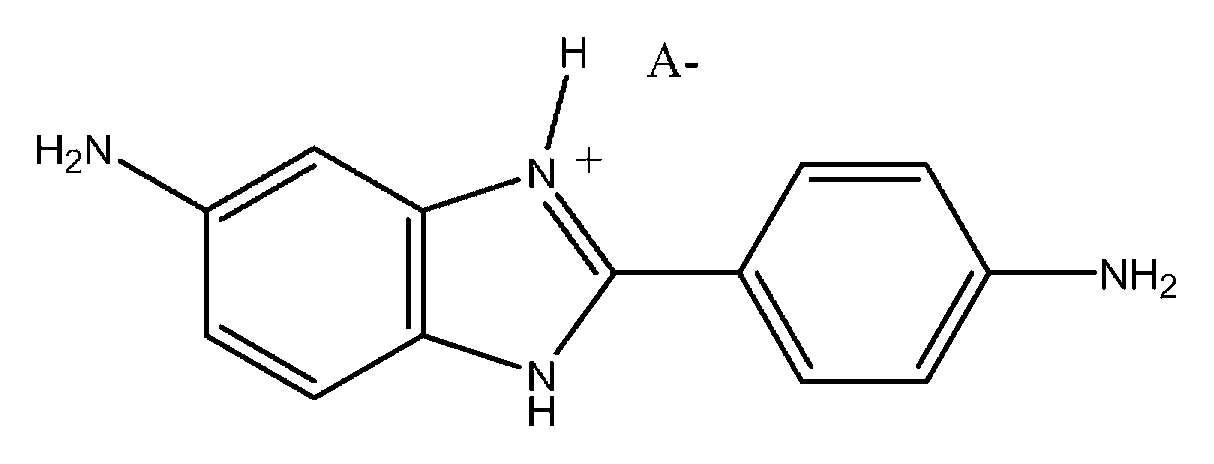
(여기서, A-는 할로겐 음이온, HSO4-, OH-, NO3-, C2H3O2-, 또는 H2PO4-임)의 염의 잔기를 포함하는 중합체를 형성하는 방법에 관한 것으로, 본 방법은 a) 유기 용매 및 무기염을 포함하는 용매 시스템 중에 화학식 I의 염 및 파라페닐렌 다이아민을 포함하는 혼합물을 형성하는 단계; 및 b) 혼합물에 테레프탈로일 클로라이드를 첨가하고 중합체를 형성하게 하는 단계를 포함한다.The present invention relates to terephthaloyl chloride, paraphenylene diamine,
(I)
Relates to a method of forming a polymer comprising the residue of a salt (wherein, A- is a halogen anion, HSO 4-, OH-, NO 3- , C 2 H 3 O 2-, or H 2 PO 4- Im) , The process comprising: a) forming a mixture comprising a salt of formula I and a paraphenylenediamine in a solvent system comprising an organic solvent and an inorganic salt; And b) adding terephthaloyl chloride to the mixture to form a polymer.
Description
본 출원은, 우수한 물리적 특성을 갖는 섬유를 형성할 수 있는, 5(6)-아미노-2-(p-아미노페닐)벤즈이미다졸 (DAPBI), 파라-페닐렌다이아민 (PPD) 및 테레프탈로일 다이클로라이드 (TCl)로부터 유도되는 아라미드 공중합체를 제조하는 방법에 관한 것이다.The present application discloses 5 (6) -amino-2- (p-aminophenyl) benzimidazole (DAPBI), para-phenylenediamine (PPD) and terephthalo ≪ / RTI > dichloride (TCI).
5(6)-아미노-2-(p-아미노페닐)벤즈이미다졸 (DAPBI), 파라-페닐렌다이아민 (PPD) 및 테레프탈로일 다이클로라이드 (TCl 또는 T, 일반적으로 테레프탈로일 클로라이드로도 지칭됨)로부터 유도되는 섬유가 본 기술 분야에 공지되어 있다. 그러한 공중합체는, 예를 들어, 상표명 아르모스(Armos)(등록상표) 및 루사르(Rusar)(등록상표)로 러시아에서 제조되는 고강도 섬유의 기초가 된다. 예를 들어, 러시아 특허 출원 제2,045,586호를 참조한다.(DAPBI), para-phenylenediamine (PPD), and terephthaloyl dichloride (TCI or T, typically terephthaloyl chloride), as well as 5 (6) -amino-2- (p- aminophenyl) benzimidazole ) Are known in the art. Such copolymers are the basis for high strength fibers made in Russia, for example under the trade names Armos < (R) > and Rusar < (R) >. See, for example, Russian Patent Application No. 2,045,586.
공단량체로서 DAPBI를 갖는 공중합체의 사용에 대한 한 가지 단점은 DAPBI가 고가의 단량체라는 점이다. 고비용의 한 가지 주된 원인은, 사용되는 합성 화학에 따른, 황산 또는 염산과 같은 중간체 염으로부터의 유리-염기의 형성 및 정제이다.One drawback to the use of copolymers having DAPBI as comonomer is that DAPBI is an expensive monomer. One major cause of high cost is the formation and purification of free-bases from intermediate salts such as sulfuric acid or hydrochloric acid, according to the synthetic chemistry used.
일부 태양에서, 본 발명은 테레프탈로일 클로라이드, 파라페닐렌 다이아민, 및 하기 화학식 I:In some embodiments, the present invention relates to terephthaloyl chloride, paraphenylene diamine,
[화학식 I](I)

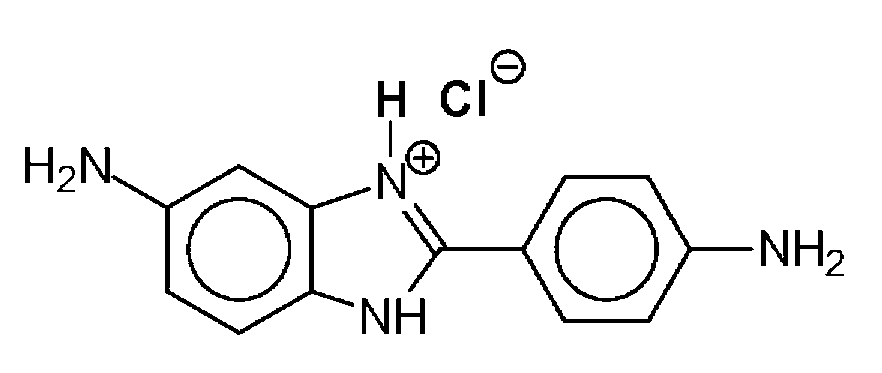
(여기서, A-는 할로겐 음이온, HSO4-, OH-, NO3-, C2H3O2-, 또는 H2PO4-임)의 염의 잔기를 포함하는 중합체를 형성하는 방법에 관한 것으로, 본 방법은 a) 유기 용매 및 무기염을 포함하는 용매 시스템 중에 화학식 I의 염 및 파라페닐렌 다이아민을 포함하는 혼합물을 형성하는 단계; 및 b) 혼합물에 테레프탈로일 클로라이드를 첨가하고 중합체를 형성하게 하는 단계를 포함한다. 일부 실시 형태에서, 화학식 I의 염은 하기 화학식 II 또는 화학식 III의 염이다:Relates to a method of forming a polymer comprising the residue of a salt (wherein, A- is a halogen anion, HSO 4-, OH-, NO 3- , C 2 H 3 O 2-, or H 2 PO 4- Im) , The process comprising: a) forming a mixture comprising a salt of formula I and a paraphenylenediamine in a solvent system comprising an organic solvent and an inorganic salt; And b) adding terephthaloyl chloride to the mixture to form a polymer. In some embodiments, the salt of formula (I) is a salt of formula (II) or (III)
[화학식 II]≪ RTI ID = 0.0 &
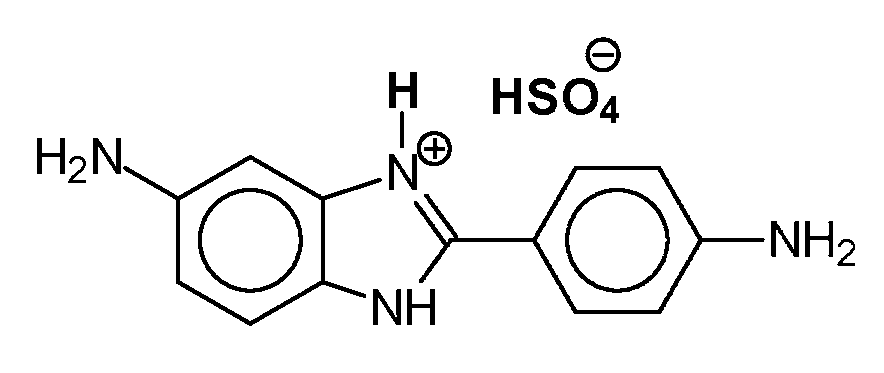
[화학식 III](III)

일부 바람직한 실시 형태에서는, 테레프탈로일 클로라이드의 화학량론적 양이 혼합물에 첨가된다. 일부 방법의 경우, 테레프탈로일 클로라이드는 2 이상의 단계로 첨가된다. 일부 실시 형태에서, 단계 b)는 제1 첨가 단계에서 테레프탈로일 클로라이드의 20 내지 50%를 첨가하여 제2 혼합물을 형성하는 것, 제2 혼합물을 1분 이상 동안 교반하는 것, 및 교반된 제2 혼합물에 나머지 테레프탈로일 클로라이드를 하나 이상의 첨가 단계로 첨가하는 것을 포함한다. 소정 실시 형태에서, 단계 b)는 -10 내지 30℃의 온도에서 수행된다.In some preferred embodiments, a stoichiometric amount of terephthaloyl chloride is added to the mixture. In some methods, terephthaloyl chloride is added in two or more steps. In some embodiments, step b) comprises: adding 20 to 50% of terephthaloyl chloride in a first addition step to form a second mixture, stirring the second mixture for at least 1 minute, 2 mixture and adding the remaining terephthaloyl chloride to the mixture in one or more addition steps. In certain embodiments, step b) is carried out at a temperature of from -10 to 30 캜.
일부 실시 형태에서, 유기 용매는 N-메틸-2-피롤리돈 (NMP) 또는 다이메틸아세트아미드 (DMAC)이다. 적합한 무기염에는 LiCl 및 CaCl2가 포함된다. 바람직한 일 실시 형태에서, 용매 시스템은 NMP/CaCl2이다. 소정 실시 형태에서, NMP/CaCl2 용매는 CaCl2의 중량%가 1 내지 10%의 범위이다.In some embodiments, the organic solvent is N- methyl-2-pyrrolidone (NMP) or dimethylacetamide (DMAC). Suitable inorganic salts include LiCl and CaCl 2. In a preferred embodiment, the solvent system is NMP / CaCl 2 . In some embodiments, the NMP / CaCl 2 solvent has a weight percent of CaCl 2 in the range of 1 to 10%.
본 발명의 일부 실시 형태에서, 파라페닐렌 다이아민에 대한 화학식 I의 염의 몰 비는 0.5 내지 4.0의 범위이다.In some embodiments of the present invention, the molar ratio of the salt of formula (I) to the paraphenylenediamine ranges from 0.5 to 4.0.
본 발명은 본 명세서의 일부를 형성하는 첨부 도면 및 실시예와 관련하여 취해진 하기의 상세한 설명을 참조함으로써 보다 용이하게 이해될 수 있다. 본 발명은 본 명세서에 기술되고/되거나 도시된 특정 장치, 방법, 조건 또는 파라미터에 한정되지 않으며, 본 명세서에서 사용되는 용어는 단지 예로서 특정 실시 형태를 설명하기 위한 것이고 청구된 발명을 한정하고자 하는 것은 아님을 이해하여야 한다.The invention may be more readily understood by reference to the following detailed description taken in conjunction with the accompanying drawings and embodiments which form a part hereof. It is to be understood that the invention is not limited to the particular devices, methods, conditions, or parameters described and / or shown herein, and that the terms used herein are for the purpose of describing particular embodiments only as examples, It should be understood that it is not.
DAPBI/PPD-T 공중합체는, 정제된 DAPBI 단량체 대신에 DAPBI의 중간체 산 염 (예를 들어, 하기 구조식들에 도시된 것들, 여기서, A는 산의 짝염기임)을 사용하여 제조된다. 그러한 공중합체는 적어도 4 dL/g 이상, 바람직하게는 4 내지 7 dL/g 범위의 유용한 고유 점도를 갖는다. 이러한 중간체 산 염은 중합 매질에서 더 우수한 용해도를 갖는다. 하기 구조식 I에서, A-는 단량체 안정성 또는 중합 반응을 방해하지 않는 임의의 반대 이온일 수 있다. 일부 실시 형태에서, A-는 할로겐 음이온, HSO4-, OH-, NO3-, C2H3O2-, 또는 H2PO4-이다.The DAPBI / PPD-T copolymer is prepared using an intermediate acid salt of DAPBI (for example, those shown in the following structural formulas, wherein A is the conjugate base of an acid) instead of the purified DAPBI monomer. Such copolymers have useful intrinsic viscosity in the range of at least 4 dL / g, preferably in the range of 4 to 7 dL / g. Such an intermediate acid salt has better solubility in the polymerization medium. In the following structural formula I, A- may be any of the counterions that do not interfere with monomer stability or polymerization. In some embodiments, A- is a halogen anion, HSO 4-, OH-, NO 3- , C 2 H 3 O 2-, or H 2 PO 4-.
[구조식 I][Structural formula I]

구조식 I의 염은 본 기술 분야에 공지된 방법에 의해 제조될 수 있다. 예를 들어, 미국 특허 제4,417,056호는 주기율표의 VIII족에 속하는 금속에 기반한 촉매의 존재 하에 할로겐 가스를 사용하는 N-(4-니트로벤조일)2,4-다이니트로아닐린의 고리화환원(cycloreduction)에 의한 그러한 화합물의 생성을 교시한다. 이러한 반응은 산의 수용액의 존재 하에 진행될 것이다.Salts of formula I may be prepared by methods known in the art. For example, U.S. Patent No. 4,417,056 discloses the cycloreduction of N- (4-nitrobenzoyl) 2,4-dinitroaniline using halogen gas in the presence of a catalyst based on a metal belonging to Group VIII of the Periodic Table, ≪ / RTI > This reaction will proceed in the presence of an aqueous solution of the acid.
DAPBI의 중간체 산 염의 두 가지 예에는 하기 구조식 II 및 구조식 III에 도시된 황산염 및 염산염이 포함된다. 제조 방법에 다른 산을 사용함으로써 다른 염이 제조될 수 있다.Two examples of intermediate acid salts of DAPBI include sulfate and hydrochloride salts shown in Structural Formulas II and III below. Other salts may be prepared by using other acids in the preparation process.
[구조식 II][Structural Formula II]
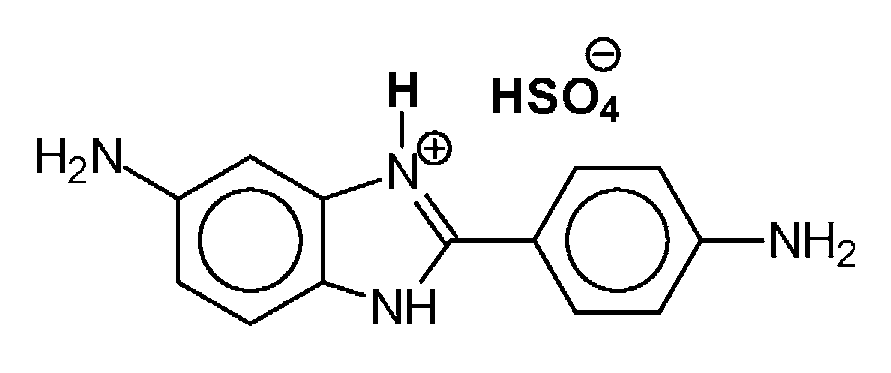
[구조식 III][Structural Formula III]

일부 실시 형태에서, 유기 용매는 N-메틸-2-피롤리돈 (NMP) 또는 다이메틸아세트아미드 (DMAC)이다. 적합한 무기염에는 LiCl 및 CaCl2가 포함된다. 바람직한 일 실시 형태에서, 용매 시스템은 NMP/CaCl2이다. 소정 실시 형태에서, NMP/CaCl2 용매는 CaCl2의 중량%가 1 내지 10%의 범위이다. NMP에서의 CaCl2의 용해도는 약 8%임에 유의하여야 한다. 따라서, 8% 초과의 CaCl2가 사용되는 경우, 일부 용해되지 않은 CaCl2가 용매 시스템 중에 존재한다. 용매 및 염은 상업적 공급처로부터 입수할 수 있으며, 원한다면, 당업자에게 공지된 방법으로 정제할 수 있다.In some embodiments, the organic solvent is N- methyl-2-pyrrolidone (NMP) or dimethylacetamide (DMAC). Suitable inorganic salts include LiCl and CaCl 2. In a preferred embodiment, the solvent system is NMP / CaCl 2 . In some embodiments, the NMP / CaCl 2 solvent has a weight percent of CaCl 2 in the range of 1 to 10%. It should be noted that the solubility of CaCl 2 in NMP is about 8%. Therefore, when the CaCl 2 is used in excess of 8%, and a part that is not dissolved CaCl 2 present in the solvent system. Solvents and salts are available from commercial sources and, if desired, can be purified by methods known to those skilled in the art.
일부 방법에서, 페닐렌 다이아민에 대한 DAPBI (구조식 I의 염)의 몰 비는 0.25 내지 4.0의 범위이다. 이러한 비는 20/80 내지 80/20의 DAPBI/PPD 비에 해당한다. 소정 방법에서, 단계 (a)에서 DAPBI의 양은 슬러리의 0.5 내지 10 중량%의 범위이다.In some methods, the molar ratio of DAPBI (salt of formula I) to phenylenediamine ranges from 0.25 to 4.0. This ratio corresponds to a DAPBI / PPD ratio of 20/80 to 80/20. In some methods, the amount of DAPBI in step (a) ranges from 0.5 to 10% by weight of the slurry.
일부 실시 형태에서, 하나 이상의 공정 단계가 교반 하에 수행될 수 있다. 일부 실시 형태에서 중합체는 단리될 수 있다. 단리된 중합체는, 가공 및 보관에 도움을 주기 위해, 요구되는 입자 크기로 분쇄될 수 있다. 중합체는 하나 이상의 세척 단계, 중화 단계, 또는 이들 단계 둘 모두로 처리될 수 있다. 이러한 세척 및/또는 중화 단계는 중합체를 분쇄하기 전에 또는 후에 수행될 수 있다. 반응 혼합물의 교반, 세척 및 중화 단계, 및 중합체 분쇄에 사용하기에 적합한 장비는 당업자에게 공지되어 있다.In some embodiments, one or more processing steps may be performed under agitation. In some embodiments, the polymer can be isolated. The isolated polymer can be ground to the required particle size to aid in processing and storage. The polymer may be treated with one or more washing steps, neutralization steps, or both. This washing and / or neutralization step may be carried out before or after the polymer is pulverized. Apparatus suitable for use in stirring, washing and neutralizing the reaction mixture, and polymer milling are known to those skilled in the art.
중합체의 분자량은 전형적으로 하나 이상의 묽은 용액 점도 측정에 의해 모니터링되며 그와 관련된다. 따라서, 상대 점도 ("Vrel" 또는 "ηrel" 또는 "nrel") 및 고유 점도 ("Vinh" 또는 "ηinh" 또는 "ninh")의 묽은 용액 측정이 전형적으로 중합체 분자량을 모니터링하는 데 사용된다. 묽은 중합체 용액의 상대 점도와 고유 점도는 하기 식에 따라 연관된다.The molecular weight of the polymer is typically monitored and related to at least one dilute solution viscosity measurement. Thus, dilute solution measurements of relative viscosity ("V rel " or "η rel " or "n rel ") and intrinsic viscosity ("V inh " or "η inh " or "n inh ") typically monitor the molecular weight of the polymer . The relative viscosity and intrinsic viscosity of the dilute polymer solution are related according to the following equation.
Vinh = ln (Vrel) / C, V inh = ln (V rel) / C,
여기서, ln은 자연 대수 함수이고, C는 중합체 용액의 농도이다. Vrel은 무단위 비이고, 따라서 Vinh는 농도의 역, 전형적으로 데시리터/그램 ("dl/g")의 단위로 표시된다. Here, ln is the natural logarithm function, C is the concentration of the polymer solution. V rel is the unsteady ratio, and thus V inh is expressed in units of deciteters per gram ("dl / g"), inverse of the concentration.
중합체를 염기와 접촉시킴으로써, 하나 이상의 단계에서 중합체의 중화가 일어날 수 있다. 적합한 염기에는 NaOH; KOH; Na2CO3; NaHCO3; NH4OH; Ca(OH)2; K2CO3; KHCO3; 또는 트라이알킬아민, 바람직하게는 트라이부틸아민; 기타 아민; 또는 그 혼합물이 포함된다. 일 실시 형태에서, 염기는 수용성이다. 일부 바람직한 예에서, 중화 용액은 염기의 수용액이다.By contacting the polymer with a base, neutralization of the polymer can occur in one or more steps. Suitable bases include NaOH; KOH; Na 2 CO 3 ; NaHCO 3; NH 4 OH; Ca (OH) 2 ; K 2 CO 3 ; KHCO 3 ; Or trialkylamines, preferably tributylamine; Other amines; Or mixtures thereof. In one embodiment, the base is water soluble. In some preferred embodiments, the neutralizing solution is an aqueous solution of a base.
중화 단계와 독립적으로, 또는 중화 단계 전에 및/또는 후에, 중합체를 또한 물로 세척할 수 있다.Independently of the neutralization step, or before and / or after the neutralization step, the polymer may also be washed with water.
일부 태양에서, 추가로 본 발명은 황산을 포함하는 용매에 중합체를 용해하여 섬유 방사에 적합한 용액 ("방사 도프"(spin dope)로도 지칭됨)을 형성하는 단계에 관한 것이다. 용해될 중합체에는 세척 및/또는 중화되어 있을 수 있거나 세척 및/또는 중화되어 있지 않을 수 있는 단리된 중합체가 포함되며 중합체는 분쇄되어 있을 수 있거나 분쇄되어 있지 않을 수 있다. 용해된 중합체는 당업자에게 공지된 통상적인 기술에 의해 섬유로 방사될 수 있다.In some aspects, the invention further relates to the step of dissolving the polymer in a solvent comprising sulfuric acid to form a solution (also referred to as a "spin dope ") suitable for fiber spinning. Polymers which are to be dissolved include isolated polymers which may be washed and / or neutralized or not washed and / or neutralized and the polymer may or may not be pulverized. The dissolved polymer may be spun into fibers by conventional techniques known to those skilled in the art.
본 명세서에 기재된 공중합체를 함유하는 방사 도프는 다수의 공정을 사용하여 도프 필라멘트로 방사될 수 있으나; 습식 방사 및 "에어-갭" 방사(air-gap spinning)가 가장 잘 알려져 있다. 이러한 방사 공정을 위한 방사구 및 조(bath)의 일반적인 배열은 본 기술 분야에 잘 알려져 있으며, 미국 특허 제3,227,793호; 제3,414,645호; 제3,767,756호; 및 제5,667,743호의 도면은 고강도 중합체를 위한 그러한 방사 공정을 예시한다. "에어-갭" 방사에서, 방사구는 전형적으로 섬유를 먼저 공기와 같은 가스 내로 압출하며, 바람직한 필라멘트 형성 방법이다.The radial dope containing the copolymers described herein can be radiated with a dope filament using a number of processes; Wet spinning and "air-gap spinning " are best known. Common arrangements of spouts and baths for such spinning processes are well known in the art and are described in U.S. Patent Nos. 3,227,793; 3,414,645; 3,767,756; And 5,667, 743 illustrate such a spinning process for high strength polymers. In "air-gap" radiation, the spinneret typically extrudes the fibers first into a gas such as air, which is the preferred method of filament formation.
본 명세서에 사용되는 바와 같이, 필라멘트 및 섬유라는 용어는 상호 교환가능하게 사용된다.As used herein, the terms filament and fiber are used interchangeably.
섬유는 하나 이상의 세척조 또는 세척 캐비닛(cabinet)과 접촉될 수 있다. 세척은 섬유를 조에 침지함으로써 또는 섬유에 수용액을 분무함으로써 달성될 수 있다. 세척 캐비닛은 하나 이상의 롤을 수용하는 밀폐 캐비닛 - 얀이 캐비닛을 빠져나가기 전에 롤 주위로 다회 지나가고 롤을 가로질러 지나감 - 을 전형적으로 포함한다. 얀이 롤 주위로 지나갈 때, 얀에 세척액이 분무된다. 세척액은 캐비닛 하부에 연속적으로 수집되고 그로부터 배출된다.The fibers may be in contact with one or more wash tanks or wash cabinets. Washing can be accomplished by immersing the fibers in a bath or by spraying an aqueous solution onto the fibers. The cleaning cabinet typically includes an enclosed cabinet that houses one or more rolls - a plurality of passes around the roll before the yarn exits the cabinet and passes across the roll. When the yarn passes around the roll, the washing liquid is sprayed onto the yarn. The cleaning liquid is continuously collected in the lower portion of the cabinet and discharged therefrom.
세척액(들)의 온도는 바람직하게는 30℃ 초과이다. 세척액은 또한 증기 형태(스팀)로 적용될 수 있지만, 더 편리하게는 액체 형태로 사용된다. 바람직하게는, 다수의 세척조 또는 세척 캐비닛이 사용된다. 임의의 하나의 세척조 또는 세척 캐비닛에서의 얀의 체류 시간은 얀 내의 잔류 황의 요구되는 농도에 따라 좌우될 것이다. 연속 공정에서, 바람직한 다수의 세척 조(들) 및/또는 세척 캐비닛(들)에서의 전체 세척 공정의 지속시간은 바람직하게는 약 10분 이하, 더욱 바람직하게는 약 5초 초과이다. 일부 실시 형태에서, 전체 세척 공정의 지속 시간은 20초 이상이고; 일부 실시 형태에서, 전체 세척은 400초 이하에 달성된다. 배치식 공정에서, 전체 세척 공정의 지속 시간은 수 시간 정도일 수 있으며, 12 내지 24시간 또는 그 이상 만큼일 수 있다.The temperature of the wash liquor (s) is preferably above 30 占 폚. The wash liquid may also be applied in vapor form (steam), but is more conveniently used in liquid form. Preferably, a plurality of wash tanks or wash cabinets are used. The residence time of the yarn in any one washing or cleaning cabinet will depend on the required concentration of residual sulfur in the yarn. In a continuous process, the duration of the overall cleaning process in the preferred plurality of cleaning baths (s) and / or cleaning cabinet (s) is preferably less than about 10 minutes, more preferably greater than about 5 seconds. In some embodiments, the duration of the overall cleaning process is at least 20 seconds; In some embodiments, the total wash is achieved in less than 400 seconds. In a batch process, the duration of the overall wash process can be as long as several hours, and can be as long as 12 to 24 hours or more.
필요하다면, 얀 중의 산 (예를 들어, 황산 용매)의 중화가 조 또는 캐비닛에서 일어날 수 있다. 일부 실시 형태에서, 중화조 또는 중화 캐비닛이 하나 이상의 세척조 또는 세척 캐비닛의 다음에 올 수 있다. 세척은 섬유를 조에 침지함으로써 또는 섬유에 수용액을 분무함으로써 달성될 수 있다. 중화는 하나의 조 또는 캐비닛에서 또는 다수의 조 또는 캐비닛에서 일어날 수 있다. 일부 실시 형태에서, 황산 불순물의 중화를 위해 바람직한 염기에는 NaOH; KOH; Na2CO3; NaHCO3; NH4OH; Ca(OH)2; K2CO3; KHCO3; 또는 트라이알킬아민, 바람직하게는 트라이부틸아민; 기타 아민; 또는 그 혼합물이 포함된다. 일 실시 형태에서, 염기는 수용성이다. 일부 바람직한 예에서 중화 용액은 리터당 0.01 내지 1.25 몰의 염기, 바람직하게는 리터당 0.01 내지 0.5 몰의 염기를 함유하는 수용액이다. 양이온의 양은 또한 염기에 대한 노출 시간 및 온도와 세척 방법에 따라 좌우된다. 일부 바람직한 실시 형태에서, 염기는 NaOH 또는 Ca(OH)2이다.If necessary, neutralization of the acid (e.g., sulfuric acid solvent) in the yarn may occur in the bath or cabinet. In some embodiments, a neutralization or neutralization cabinet may follow one or more of the wash basins or wash basins. Washing can be accomplished by immersing the fibers in a bath or by spraying an aqueous solution onto the fibers. Neutralization can occur in a bath or cabinet or in multiple baths or cabinets. In some embodiments, preferred bases for neutralization of sulfuric acid impurities include NaOH; KOH; Na 2 CO 3 ; NaHCO 3; NH 4 OH; Ca (OH) 2 ; K 2 CO 3 ; KHCO 3 ; Or trialkylamines, preferably tributylamine; Other amines; Or mixtures thereof. In one embodiment, the base is water soluble. In some preferred examples, the neutralizing solution is an aqueous solution containing 0.01 to 1.25 moles of base per liter, preferably 0.01 to 0.5 moles of base per liter. The amount of cation is also dependent on the exposure time and temperature for the base and the washing method. In some preferred embodiments, the base is NaOH or Ca (OH) 2 .
섬유를 염기로 처리한 후에, 본 방법은 물 또는 산을 함유하는 세척 용액과 얀을 접촉시켜 모든 또는 사실상 모든 여분의 염기를 제거하는 단계를 선택적으로 포함할 수 있다. 이러한 세척 용액은 하나 이상의 세척조 또는 세척 캐비닛에서 적용될 수 있다.After treating the fibers with a base, the method may optionally include the step of contacting the yarn with a wash solution containing water or acid to remove all or substantially all of the excess base. Such a cleaning solution may be applied in one or more cleaning tanks or cleaning cabinets.
세척 및 중화 후에, 섬유 또는 얀을 건조기에서 건조하여 물 및 기타 액체를 제거할 수 있다. 하나 이상의 건조기가 사용될 수 있다. 소정 실시 형태에서, 건조기는 가열된 공기를 사용하여 섬유를 건조하는 오븐일 수 있다. 다른 실시 형태에서, 가열된 롤을 사용하여 섬유를 가열할 수 있다. 섬유는, 섬유의 수분 함량이 섬유의 20 중량% 이하가 될 때까지, 건조기에서 약 20℃ 이상이지만 약 100℃ 미만인 온도로 가열된다. 일부 실시 형태에서 섬유는 85℃ 이하로 가열된다. 일부 실시 형태에서 섬유는, 섬유의 수분 함량이 섬유의 14 중량% 이하가 될 때까지 그러한 조건 하에서 가열된다. 본 발명자들은 저온 건조가 섬유 강도를 개선하기에 바람직한 수단임을 발견하였다. 구체적으로, 본 발명자들은, 비건조 얀이 겪는 첫 번째 건조 단계 (즉, 가열된 롤, 오븐 내에서와 같은 가열된 분위기 등)가, 상업적 규모에서 고강도 섬유를 건조하는 데 사용되는 연속 공정에서는 보통 사용되지 않는 온건한 온도에서 수행될 때 최상의 강도 특성이 달성된다는 것을 알아내었다. 공중합체 섬유는 PPD-T 단일중합체보다 물에 대해 더 큰 친화성을 가지며; 이러한 친화성은 건조 동안 중합체 밖으로의 물의 확산 속도를 늦추고, 그 결과로, 큰 열적 구동력을 생성하고 건조 시간을 감소시키기 위해 일반적으로 사용되는 전형적인 높은 건조 온도에 비건조 얀이 직접 노출되는 경우, 섬유에 대한 회복할 수 없는 손상이 일어나서 더 낮은 섬유 강도를 야기하는 것으로 여겨진다. 일부 실시 형태에서, 섬유는 약 30℃ 이상으로 가열되며; 일부 실시 형태에서 섬유는 약 40℃ 이상으로 가열된다.After washing and neutralization, the fibers or yarns can be dried in a dryer to remove water and other liquids. More than one dryer can be used. In some embodiments, the dryer may be an oven that uses heated air to dry the fibers. In another embodiment, a heated roll may be used to heat the fibers. The fibers are heated to a temperature of at least about 20 캜 but less than about 100 캜 in the dryer until the moisture content of the fibers is less than 20% by weight of the fibers. In some embodiments, the fibers are heated to 85 占 폚 or lower. In some embodiments, the fibers are heated under such conditions until the moisture content of the fibers is no more than 14% by weight of the fibers. The present inventors have found that low temperature drying is a preferred means for improving fiber strength. Specifically, the present inventors have found that the first drying step (i.e., a heated roll, a heated atmosphere such as in an oven, etc.) suffered by the non-dried yarn is usually carried out in a continuous process that is used to dry high- It has been found that the best strength properties are achieved when carried out at unused, moderate temperatures. The copolymer fibers have a greater affinity for water than the PPD-T homopolymer; This affinity can be achieved by slowing the diffusion rate of water out of the polymer during drying and, as a result, if the non-drying yarn is directly exposed to the typical high drying temperature typically used to produce a large thermal driving force and reduce drying time, It is believed that irreversible damage to the fiber occurs resulting in lower fiber strength. In some embodiments, the fibers are heated to about 30 캜 or higher; In some embodiments, the fibers are heated to about 40 캜 or higher.
건조기 체류 시간은 10분 미만이며 바람직하게는 180초 미만이다. 건조기에는 질소 또는 다른 비-반응성 분위기가 제공될 수 있다. 건조 단계는 전형적으로 대기압에서 수행된다. 그러나, 요구되는 경우, 이 단계는 감압 하에 수행될 수 있다. 일 실시 형태에서, 필라멘트는 0.1 gpd 이상의 장력, 바람직하게는 2 gpd 이상의 장력 하에 건조된다.The dryer residence time is less than 10 minutes and preferably less than 180 seconds. The dryer may be provided with nitrogen or other non-reactive atmosphere. The drying step is typically carried out at atmospheric pressure. However, if desired, this step may be carried out under reduced pressure. In one embodiment, the filament is dried under a tension of at least 0.1 gpd, preferably at least 2 gpd.
정의Justice
본 명세서에 사용되는 바와 같이, 소정 화학종의 "잔기"라는 용어는, 특정 반응 스킴(reaction scheme) 또는 후속 제형 또는 화학 제품에서의 그 화학종의 생성되는 생성물인 모이어티(moiety)를 지칭하는데, 이는 상기 모이어티가 실제로 그 화학종으로부터 얻어지는지와는 상관이 없다. 따라서, 파라페닐렌 다이아민의 잔기를 포함하는 공중합체는 화학식:As used herein, the term "residue" of a given chemical species refers to a moiety that is a product of a particular reaction scheme or subsequent formulation or chemical species in the chemical product , Which is irrelevant to whether the moiety is actually derived from the chemical species. Thus, the copolymer comprising the residue of paraphenylenediamine has the formula:
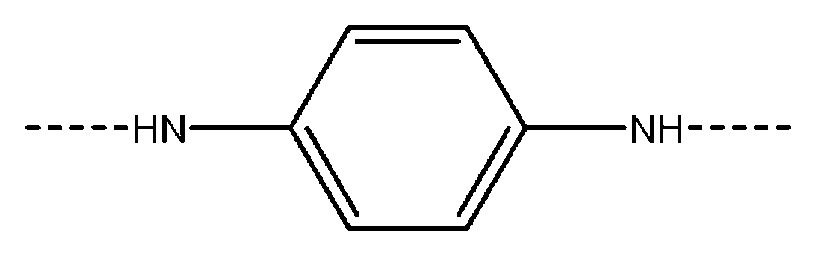
의 하나 이상의 단위를 갖는 공중합체를 지칭한다.Quot; refers to a copolymer having at least one unit of < / RTI >
유사하게, DAPBI 또는 DAPBI 염의 잔기를 포함하는 공중합체는 구조식:Similarly, a copolymer comprising residues of a DAPBI or DAPBI salt can have the structure:

의 하나 이상의 단위를 함유한다.Of one or more units.
테레프탈산 다이클로라이드의 잔기를 갖는 공중합체는 화학식:Copolymers having residues of terephthalic acid dichloride have the formula:
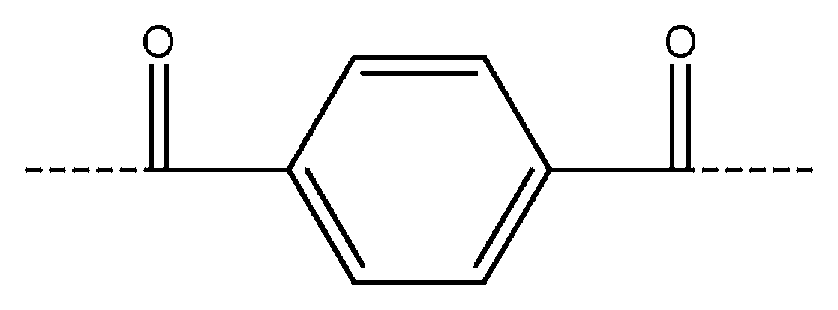
의 하나 이상의 단위를 함유한다.Of one or more units.
"중합체"라는 용어는, 본 명세서에 사용되는 바와 같이, 동일한 유형이든 상이한 유형이든 단량체들을 중합하여 제조되는 중합체 화합물을 의미한다. 용어 "공중합체" (2가지 상이한 단량체로부터 제조되는 중합체를 지칭함), 용어 "삼원공중합체" (3가지 상이한 유형의 단량체로부터 제조되는 중합체를 지칭함), 및 용어 "사원공중합체" (4가지 상이한 유형의 단량체를 갖는 중합체를 지칭함)가 중합체의 정의에 포함된다.The term "polymer" as used herein means a polymeric compound prepared by polymerizing monomers, whether of the same type or of a different type. The term "copolymer" refers to a polymer made from two different monomers, the term "ternary copolymer" refers to a polymer made from three different types of monomers, and the term " Refers to a polymer having the type of monomer) is included in the definition of the polymer.
중합체를 언급할 때 "분말"이라는 용어는 섬유 또는 펄프와 같은 섬유질 특질을 갖지 않으며 파이브리드(fibrid)와 같은 섬유질 필름-유사 특질도 갖지 않는 공중합체의 입자를 의미한다. 개별 입자는 피브릴이 없는 경향이 있고, 랜덤 형상을 가지며, 유효 입자 직경이 840 마이크로미터 이하이다. 미국 특허 제5,474,842호 및 제5,811,042호가 실례가 된다.The term "powder" when referring to a polymer refers to a particle of a copolymer that does not have fibrous properties such as fibers or pulp and has no fibrous film-like character, such as fibrids. The individual particles tend to be free of fibrils, have a random shape, and have an effective particle diameter of 840 micrometers or less. U.S. Patent Nos. 5,474,842 and 5,811,042 are exemplary.
본 명세서에 사용되는 바와 같이, "화학량론적 양"은 한 성분이 이론적으로 제2 성분의 반응기 전부와 반응하는 데 필요한 양을 의미한다. 예를 들어, "화학량론적 양"은 아민 성분 (파라페닐렌 다이아민 및 DAPBI 염)의 아민 기의 사실상 전부와 반응하는 데 필요한 테레프탈산 다이클로라이드의 몰을 지칭한다. "화학량론적 양"이라는 용어는 전형적으로 이론적 양의 10% 이내인 양의 범위를 지칭하는 것으로 당업자에게 이해된다. 예를 들어, 중합 반응에 사용되는 테레프탈산 다이클로라이드의 화학량론적 양은, 이론적으로 파라페닐렌 다이아민 및 DPABI 아민 염 기 전부와 반응하는 데 필요한 테레프탈산의 양의 90 내지 110%일 수 있다.As used herein, "stoichiometric amount" means the amount required for one component to react theoretically with all of the reactants of the second component. For example, "stoichiometric amount" refers to the mole of terephthalic acid dichloride required to react with virtually all of the amine groups of the amine component (paraphenylenediamine and DAPBI salt). The term "stoichiometric amount" is understood by those skilled in the art to refer to a range of amounts typically within 10% of the theoretical amount. For example, the stoichiometric amount of terephthalic acid dichloride used in the polymerization reaction may theoretically be 90 to 110% of the amount of terephthalic acid required to react with all of the paraphenylenediamine and DPABI amine salt groups.
"섬유"는 그의 길이에 수직인 그의 단면 영역을 가로지르는 폭에 대한 길이의 비가 큰, 비교적 가요성이며 거시적으로 균질한 몸체를 지칭한다. 바람직한 실시 형태에서, 섬유는 검사 시에 단면이 본질적으로 중실(solid) 상태이되, 섬유 내의 결함으로서 여겨지는 랜덤 공극 또는 개방 영역을 거의 갖지 않는다."Fiber" refers to a relatively flexible, macroscopically homogeneous body having a large ratio of length to width across its cross-sectional area perpendicular to its length. In a preferred embodiment, the fibers are essentially solid in cross-section at the time of testing and have few random voids or open areas considered defects in the fibers.
"유기 용매"라는 용어는 단일 성분 유기 용매, 또는 둘 이상의 유기 용매의 혼합물을 포함하는 것으로 본 명세서에서 이해된다. 일부 실시 형태에서, 유기 용매는 다이메틸포름아미드, 다이메틸아세트아미드 (DMAC), N-메틸-2-피롤리돈 (NMP), 또는 다이메틸설폭사이드이다. 일부 바람직한 실시 형태에서, 유기 용매는 N-메틸-2-피롤리돈 또는 다이메틸아세트아미드이다.The term "organic solvent" is understood herein to include a single component organic solvent, or a mixture of two or more organic solvents. In some embodiments, the organic solvent is dimethylformamide, dimethylacetamide (DMAC), N-methyl-2-pyrrolidone (NMP), or dimethylsulfoxide. In some preferred embodiments, the organic solvent is N-methyl- 2 -pyrrolidone or dimethylacetamide.
"무기염"이라는 용어는 단일 무기염, 또는 둘 이상의 무기염의 혼합물을 지칭한다. 일부 실시 형태에서, 무기염은 용매에 충분히 용해성이며, 원자 번호를 갖는 할로겐 원자의 이온을 용매 중에 유리시킨다. 일부 실시 형태에서, 바람직한 무기염은 KCl, ZnCl2, LiCl 또는 CaCl2이다. 소정의 바람직한 실시 형태에서, 무기염은 LiCl 또는 CaCl2이다.The term "inorganic salt" refers to a single inorganic salt, or a mixture of two or more inorganic salts. In some embodiments, the inorganic salt is sufficiently soluble in the solvent to liberate ions of a halogen atom having an atomic number in the solvent. In some embodiments, the preferred inorganic salt is KCl, ZnCl 2, LiCl or CaCl 2. In certain preferred embodiments, the inorganic salt is LiCl or CaCl 2.
"비건조"는 섬유의 수분 함량이 섬유의 75 중량% 이상임을 의미한다."Non-drying" means that the moisture content of the fibers is at least 75 wt% of the fibers.
또한, 첨부된 특허청구범위를 포함하는 명세서에서 사용될 때, 문맥에서 명백히 달리 기술되지 않는다면, 단수형은 복수형을 포함하며 특정 수치 값에 대한 언급은 적어도 그 특정 값을 포함한다. 값의 범위가 표현될 때, 다른 실시 형태는 하나의 특정 값으로부터 및/또는 다른 특정 값까지를 포함한다. 이와 유사하게, 앞에 "약"을 사용하여 값을 근사치로 표현할 때, 특정 값이 다른 실시 형태를 형성한다는 것이 이해될 것이다. 모든 범위는 포괄적이며 조합가능하다. 임의의 성분 또는 임의의 화학식에서 임의의 변수가 1회를 초과하여 나타나는 경우, 각각 나타날 때 그의 정의는 모든 다른 경우의 그의 정의와 독립적이다. 치환체 및/또는 변수의 조합이 안정한 화합물을 야기하기만 한다면, 그러한 조합이 허용된다.Also, when used in the specification that includes the appended claims, unless the context clearly dictates otherwise, the singular includes the plural and references to a particular numerical value include at least the particular value. When a range of values is expressed, other embodiments include from one particular value and / or to another specific value. Similarly, it will be understood that when expressing a value by approximation using the word " about "in front, the particular value forms another embodiment. All ranges are inclusive and combinable. When any variable or any variable in any formula appears more than once, its definition when it appears is independent of its definition in all other cases. As long as the combination of substituents and / or variables results in a stable compound, such combination is permissible.
시험 방법Test Methods
고유 점도는, 0.5 g/dl의 중합체 농도 (C) 및 25℃의 온도에서, 96 중량%의 농도를 갖는 진한 황산에 중합체가 용해된 용액을 사용하여 결정할 수 있다. 이어서, 고유 점도를 ln (tpoly/tsolv)/C로 계산하는데, 여기서, tpoly는 중합체 용액의 낙하 시간이고 tsolv는 순수 용매의 낙하 시간이다.The intrinsic viscosity can be determined using a solution of the polymer in concentrated sulfuric acid having a concentration of 96% by weight at a polymer concentration (C) of 0.5 g / dl and a temperature of 25 캜. Then, to calculate the intrinsic viscosity to ln (t poly / t solv) / C, where, t is a falling time and poly t solv of polymer solution is a falling time of the pure solvent.
본 발명을 하기 실시예에 의해 예시하며, 이는 사실상 제한하고자 하는 것이 아니다.The present invention is illustrated by the following examples, which are not intended to be limiting in nature.
실시예Example
NMP, DMAC, LiCl, CaCl2, DAPBI, PPD 및 TCl은 상업적 공급처로부터 입수하였다. DAPBI 황산염은 당업자에게 공지된 방법에 의해 실험실에서 제조하였다.NMP, DMAC, LiCl, CaCl 2 , DAPBI, PPD and TCI were obtained from commercial sources. DAPBI sulphate was prepared in the laboratory by methods known to those skilled in the art.
실시예 1Example 1
바스켓 교반기(basket stirrer), 질소 입구/출구가 구비된 1 리터 반응 용기에, 83.709 그램의 NMP/CaCl2 프리믹스 (8.3 중량%(염의 중량 / 염+용매의 총 중량)), 109.620 그램의 NMP (N-메틸-2-피롤리돈), 14.123 그램 (0.044 몰)의 DAPBI 황산염, 및 2.031 그램 (0.019 몰)의 PPD (p-페닐렌 다이아민)을 첨가하고 실온에서 30분 동안 교반하였다. 내용물을 얼음-물 조에서 교반하여 혼합물을 10℃ 미만으로 냉각하였다. 4.459 그램 (0.022 몰)의 TCl (테레프탈로일 다이클로라이드)를 모두 한꺼번에 첨가하고 5분 동안 교반하였다. 이 시점에는 DAPBI가 TCl와 반응하였기 때문에 용액이 투명해졌다. 얼음물 조를 제거하였다. 이어서, 8.281 그램 (0.041 몰)의 TCl을 모두 한꺼번에 첨가하고 교반하였다. 용액이 약 7분 후에 매우 큰 점성을 갖게 되고 겔화되었으며 약 10분 후에 최종적으로 잘게 부서졌다. 생성된 크럼(crumb)을 추가 20분 동안 고속 교반하였다.(8.3 wt.% (Total weight of salt / salt + solvent) of 83.709 grams of NMP / CaCl 2 premix), 109.620 grams of NMP (CaCl 2 ) N-methyl-2-pyrrolidone), 14.123 grams (0.044 mole) of DAPBI sulfate, and 2.031 grams (0.019 mole) of PPD (p-phenylenediamine) were added and stirred at room temperature for 30 minutes. The mixture was cooled to below < RTI ID = 0.0 > 10 C < / RTI > by stirring the contents in an ice-water bath. 4.459 grams (0.022 mole) of TCI (terephthaloyl dichloride) were added all at once and stirred for 5 minutes. At this point, the solution became clear because DAPBI reacted with TCl. The ice water bath was removed. Then, 8.281 grams (0.041 mole) of TCl were added all at once and stirred. The solution had a very large viscosity after about 7 minutes, became gelled and finally crumbled after about 10 minutes. The resulting crumb was stirred at high speed for an additional 20 minutes.
생성된 중합체를 워링(Waring)(등록상표) 블렌더로 옮기고, 작은 입자로 분쇄하고, 수회 세척하여, 용매 (NMP/CaCl2), 및 반응에 의해 발생된 HCl 및 H2SO4를 제거하였다. 이어서, 중합체를 중탄산나트륨으로 중화시키고 마지막으로 물로 수회 세척하여 중성 중합체를 얻었다. 중합체를 트레이로 옮기고, 질소 스위프(sweep)와 함께 진공 오븐 내에서 하룻밤 120℃에서 건조하였다. 시험 방법에 따라 황산에 용해하여 측정할 때 중합체 고유 점도는 4.34 dl/g이었다.The resulting polymer was transferred to a Waring (R) blender, pulverized into small particles and washed several times to remove the solvent (NMP / CaCl 2 ), and the HCl and H 2 SO 4 generated by the reaction. The polymer was then neutralized with sodium bicarbonate and finally washed several times with water to obtain a neutral polymer. The polymer was transferred to a tray and dried in a vacuum oven overnight with a nitrogen sweep at 120 < 0 > C. The intrinsic viscosity of the polymer measured by dissolving in sulfuric acid according to the test method was 4.34 dl / g.
실시예 2Example 2
실시예 1의 중합체를, 황산을 포함하는 용매와 조합한다. 온도 제어가 필요하다면 냉각하면서, 중합체가 용매에 완전히 용해되어 섬유 방사에 적합한 용액이 형성될 때까지 조합물을 교반한다.The polymer of Example 1 is combined with a solvent comprising sulfuric acid. If temperature control is required, the mixture is stirred while cooling until the polymer is completely dissolved in the solvent and a solution suitable for fiber spinning is formed.
Claims (19)
[화학식 I]
(여기서, A-는 할로겐 음이온, HSO4-, OH-, NO3-, C2H3O2-, 또는 H2PO4-임)의 염의 잔기를 포함하는 중합체를 형성하는 방법으로서,
a) 유기 용매 및 무기염을 포함하는 용매 시스템 중에 화학식 I의 염 및 파라페닐렌 다이아민을 포함하는 혼합물을 형성하는 단계; 및
b) 혼합물에 테레프탈로일 클로라이드를 첨가하고 상기 중합체를 형성하게 하는 단계를 포함하는 방법.Terephthaloyl chloride, paraphenylenediamine, and the following formula (I): <
(I)
A method of forming a polymer comprising the residue of a salt (wherein, A- is a halogen anion, HSO 4-, OH-, NO 3-, C 2 H 3 O 2-, or H 2 PO 4- Lim),
a) forming a mixture comprising a salt of formula I and a paraphenylenediamine in a solvent system comprising an organic solvent and an inorganic salt; And
b) adding terephthaloyl chloride to the mixture to form said polymer.
[화학식 II]

[화학식 III]
≪ RTI ID = 0.0 &
(III)
제1 첨가 단계에서 테레프탈로일 클로라이드의 20 내지 50%를 첨가하여 제2 혼합물을 형성하는 것,
제2 혼합물을 1분 이상 동안 교반하는 것, 및
교반된 제2 혼합물에 나머지 테레프탈로일 클로라이드를 하나 이상의 첨가 단계로 첨가하는 것을 포함하는 방법.8. The method of claim 7, wherein step b)
Adding 20 to 50% of terephthaloyl chloride in the first addition step to form a second mixture,
Stirring the second mixture for at least 1 minute, and
And adding the remaining terephthaloyl chloride to the stirred second mixture in one or more addition steps.
Applications Claiming Priority (3)
| Application Number | Priority Date | Filing Date | Title |
|---|---|---|---|
| US201161513020P | 2011-07-29 | 2011-07-29 | |
| US61/513,020 | 2011-07-29 | ||
| PCT/US2012/048444 WO2013019579A1 (en) | 2011-07-29 | 2012-07-27 | Process for preparing aramid copolymer |
Publications (2)
| Publication Number | Publication Date |
|---|---|
| KR20140051981A true KR20140051981A (en) | 2014-05-02 |
| KR101900128B1 KR101900128B1 (en) | 2018-09-18 |
Family
ID=46724606
Family Applications (1)
| Application Number | Title | Priority Date | Filing Date |
|---|---|---|---|
| KR1020147004833A Active KR101900128B1 (en) | 2011-07-29 | 2012-07-27 | Process for preparing aramid copolymer |
Country Status (7)
| Country | Link |
|---|---|
| US (1) | US8809434B2 (en) |
| EP (1) | EP2736956B1 (en) |
| JP (1) | JP6104908B2 (en) |
| KR (1) | KR101900128B1 (en) |
| CN (1) | CN103703055B (en) |
| BR (1) | BR112014000537A2 (en) |
| WO (1) | WO2013019579A1 (en) |
Citations (6)
| Publication number | Priority date | Publication date | Assignee | Title |
|---|---|---|---|---|
| US4172938A (en) * | 1976-06-23 | 1979-10-30 | Teijin Limited | Process for producing polyamides with lactam or urea solvent and CaCl2 |
| US5039785A (en) * | 1989-12-05 | 1991-08-13 | E. I. Du Pont De Nemours And Company | Preparation of aromatic polyamide having pendant carboxyl groups |
| US5571891A (en) * | 1994-04-06 | 1996-11-05 | Hoechst Aktiengesellschaft | Aromatic copolyamides, production thereof, formed structures and production thereof |
| WO2005054337A1 (en) * | 2003-11-21 | 2005-06-16 | Teijin Twaron B.V. | Process for making dapbi-containing aramid crumbs |
| KR20110008041A (en) * | 2008-04-18 | 2011-01-25 | 데이진 아라미드 비.브이. | Large scale polymerization method of 5 (6) -amino-2- (vi-aminophenyl) benzimidazole (DAPPI) -containing polyaramid |
| WO2012097236A1 (en) * | 2011-01-13 | 2012-07-19 | E. I. Du Pont De Nemours And Company | Neutralized copolymer crumb and processes for making same |
Family Cites Families (22)
| Publication number | Priority date | Publication date | Assignee | Title |
|---|---|---|---|---|
| US3063966A (en) | 1958-02-05 | 1962-11-13 | Du Pont | Process of making wholly aromatic polyamides |
| US3227793A (en) | 1961-01-23 | 1966-01-04 | Celanese Corp | Spinning of a poly(polymethylene) terephthalamide |
| US3414645A (en) | 1964-06-19 | 1968-12-03 | Monsanto Co | Process for spinning wholly aromatic polyamide fibers |
| US3600350A (en) | 1970-04-20 | 1971-08-17 | Du Pont | Poly(p-benzamide) composition,process and product |
| US3767756A (en) | 1972-06-30 | 1973-10-23 | Du Pont | Dry jet wet spinning process |
| JPS6031208B2 (en) | 1974-07-10 | 1985-07-20 | 帝人株式会社 | polyamide solution |
| FR2502151A1 (en) | 1981-03-20 | 1982-09-24 | Ugine Kuhlmann | PROCESS FOR THE PREPARATION OF (AMINO-4-PHENYL) -2-AMINO-BENZIMIDAZOLE AND SUBSTITUTED DERIVATIVES |
| US5474842A (en) | 1991-08-20 | 1995-12-12 | Hoiness; David E. | Aramid particles as wear additives |
| US5233004A (en) | 1992-05-20 | 1993-08-03 | E. I. Du Pont De Nemours And Company | Chromium carbonyl complexes of polyamide |
| RU2017866C1 (en) | 1992-08-04 | 1994-08-15 | Черных Татьяна Егоровна | Molded article |
| RU2045586C1 (en) | 1993-07-09 | 1995-10-10 | Владимир Николаевич Сугак | Anisotropic solution for molding thread and thread which is prepared of said solution |
| DE4411755A1 (en) | 1994-04-06 | 1995-10-12 | Hoechst Ag | Prodn. of fibres and film based on aromatic polyamide |
| US5667743A (en) | 1996-05-21 | 1997-09-16 | E. I. Du Pont De Nemours And Company | Wet spinning process for aramid polymer containing salts |
| AU3104300A (en) | 1998-12-01 | 2000-06-19 | Syntrix Biochip, Inc. | Solvent resistant photosensitive compositions |
| RU2285761C1 (en) | 2005-07-13 | 2006-10-20 | Ооо "Лирсот" | Method of manufacturing high-strength heat-resistant threads from aromatic copolyamide having heterocycles in the chain |
| RU2285760C1 (en) | 2005-07-13 | 2006-10-20 | Ооо "Лирсот" | Method of manufacturing high heat-resistant threads from copolyamidobenzimidazole with reduced degree of shrinkage |
| RU2283307C1 (en) * | 2005-07-18 | 2006-09-10 | Открытое акционерное общество "Каменскволокно" (ОАО "Каменскволокно") | Method for preparing 5(6)-amino-2-(4'-aminophenyl)-benzimidazole |
| RU2285071C1 (en) * | 2005-08-29 | 2006-10-10 | ОАО "Каменскволокно" | Method of manufacturing threads and fibers from aromatic copolyamide |
| CN100551949C (en) | 2006-10-20 | 2009-10-21 | 四川华通特种工程塑料研究中心有限公司 | Method for producing polyarylamide resin modified with aromatic heterocycle and chlorinated monomer |
| WO2008075751A1 (en) | 2006-12-15 | 2008-06-26 | Teijin Techno Products Limited | Heterocyclic ring-containing aromatic polyamide fiber, method for producing the same, fabric comprising the fiber, fiber-reinforced composite material reinforced with the fiber |
| WO2008105547A1 (en) | 2007-02-27 | 2008-09-04 | Teijin Limited | Solid polymer electrolyte |
| CN101787582B (en) | 2010-02-10 | 2011-09-28 | 中蓝晨光化工研究院有限公司 | Preparation method of high-tensile high-model heterocycle aramid fiber |
-
2012
- 2012-07-27 BR BR112014000537A patent/BR112014000537A2/en not_active IP Right Cessation
- 2012-07-27 CN CN201280036109.XA patent/CN103703055B/en active Active
- 2012-07-27 KR KR1020147004833A patent/KR101900128B1/en active Active
- 2012-07-27 WO PCT/US2012/048444 patent/WO2013019579A1/en not_active Ceased
- 2012-07-27 JP JP2014523036A patent/JP6104908B2/en active Active
- 2012-07-27 EP EP12750637.6A patent/EP2736956B1/en active Active
- 2012-07-27 US US13/559,661 patent/US8809434B2/en active Active
Patent Citations (7)
| Publication number | Priority date | Publication date | Assignee | Title |
|---|---|---|---|---|
| US4172938A (en) * | 1976-06-23 | 1979-10-30 | Teijin Limited | Process for producing polyamides with lactam or urea solvent and CaCl2 |
| US5039785A (en) * | 1989-12-05 | 1991-08-13 | E. I. Du Pont De Nemours And Company | Preparation of aromatic polyamide having pendant carboxyl groups |
| US5571891A (en) * | 1994-04-06 | 1996-11-05 | Hoechst Aktiengesellschaft | Aromatic copolyamides, production thereof, formed structures and production thereof |
| WO2005054337A1 (en) * | 2003-11-21 | 2005-06-16 | Teijin Twaron B.V. | Process for making dapbi-containing aramid crumbs |
| KR20070027493A (en) * | 2003-11-21 | 2007-03-09 | 데이진 트와론 비.브이. | Manufacturing method of DAPVI containing aramid crumb |
| KR20110008041A (en) * | 2008-04-18 | 2011-01-25 | 데이진 아라미드 비.브이. | Large scale polymerization method of 5 (6) -amino-2- (vi-aminophenyl) benzimidazole (DAPPI) -containing polyaramid |
| WO2012097236A1 (en) * | 2011-01-13 | 2012-07-19 | E. I. Du Pont De Nemours And Company | Neutralized copolymer crumb and processes for making same |
Also Published As
| Publication number | Publication date |
|---|---|
| US20130203906A1 (en) | 2013-08-08 |
| CN103703055A (en) | 2014-04-02 |
| EP2736956A1 (en) | 2014-06-04 |
| US8809434B2 (en) | 2014-08-19 |
| BR112014000537A2 (en) | 2017-02-14 |
| JP6104908B2 (en) | 2017-03-29 |
| WO2013019579A1 (en) | 2013-02-07 |
| KR101900128B1 (en) | 2018-09-18 |
| CN103703055B (en) | 2015-12-09 |
| JP2014521781A (en) | 2014-08-28 |
| EP2736956B1 (en) | 2018-10-24 |
Similar Documents
| Publication | Publication Date | Title |
|---|---|---|
| EP2877517B1 (en) | Process for forming an aramid copolymer | |
| JP6423480B2 (en) | Aramid copolymer | |
| JP6045084B2 (en) | Method for producing aramid copolymer | |
| JP6049030B2 (en) | Aramid copolymer | |
| KR101900533B1 (en) | Process for forming an aramid copoltmer | |
| US9102788B2 (en) | Process for forming an aramid copolymer | |
| JP6120414B2 (en) | Method for producing aramid copolymer | |
| KR101900128B1 (en) | Process for preparing aramid copolymer | |
| JP5976804B2 (en) | Method for producing aramid copolymer | |
| JP6243332B2 (en) | Method for producing aramid copolymer |
Legal Events
| Date | Code | Title | Description |
|---|---|---|---|
| PA0105 | International application |
St.27 status event code: A-0-1-A10-A15-nap-PA0105 |
|
| PG1501 | Laying open of application |
St.27 status event code: A-1-1-Q10-Q12-nap-PG1501 |
|
| R18-X000 | Changes to party contact information recorded |
St.27 status event code: A-3-3-R10-R18-oth-X000 |
|
| A201 | Request for examination | ||
| E13-X000 | Pre-grant limitation requested |
St.27 status event code: A-2-3-E10-E13-lim-X000 |
|
| P11-X000 | Amendment of application requested |
St.27 status event code: A-2-2-P10-P11-nap-X000 |
|
| P13-X000 | Application amended |
St.27 status event code: A-2-2-P10-P13-nap-X000 |
|
| PA0201 | Request for examination |
St.27 status event code: A-1-2-D10-D11-exm-PA0201 |
|
| E902 | Notification of reason for refusal | ||
| PE0902 | Notice of grounds for rejection |
St.27 status event code: A-1-2-D10-D21-exm-PE0902 |
|
| R17-X000 | Change to representative recorded |
St.27 status event code: A-3-3-R10-R17-oth-X000 |
|
| P11-X000 | Amendment of application requested |
St.27 status event code: A-2-2-P10-P11-nap-X000 |
|
| P13-X000 | Application amended |
St.27 status event code: A-2-2-P10-P13-nap-X000 |
|
| E701 | Decision to grant or registration of patent right | ||
| PE0701 | Decision of registration |
St.27 status event code: A-1-2-D10-D22-exm-PE0701 |
|
| GRNT | Written decision to grant | ||
| PR0701 | Registration of establishment |
St.27 status event code: A-2-4-F10-F11-exm-PR0701 |
|
| PR1002 | Payment of registration fee |
St.27 status event code: A-2-2-U10-U12-oth-PR1002 Fee payment year number: 1 |
|
| PG1601 | Publication of registration |
St.27 status event code: A-4-4-Q10-Q13-nap-PG1601 |
|
| FPAY | Annual fee payment |
Payment date: 20210818 Year of fee payment: 4 |
|
| PR1001 | Payment of annual fee |
St.27 status event code: A-4-4-U10-U11-oth-PR1001 Fee payment year number: 4 |
|
| FPAY | Annual fee payment |
Payment date: 20220818 Year of fee payment: 5 |
|
| PR1001 | Payment of annual fee |
St.27 status event code: A-4-4-U10-U11-oth-PR1001 Fee payment year number: 5 |
|
| PN2301 | Change of applicant |
St.27 status event code: A-5-5-R10-R11-asn-PN2301 |
|
| PN2301 | Change of applicant |
St.27 status event code: A-5-5-R10-R14-asn-PN2301 |
|
| PR1001 | Payment of annual fee |
St.27 status event code: A-4-4-U10-U11-oth-PR1001 Fee payment year number: 6 |
|
| PN2301 | Change of applicant |
St.27 status event code: A-5-5-R10-R13-asn-PN2301 St.27 status event code: A-5-5-R10-R11-asn-PN2301 |
|
| PR1001 | Payment of annual fee |
St.27 status event code: A-4-4-U10-U11-oth-PR1001 Fee payment year number: 7 |
|
| PR1001 | Payment of annual fee |
St.27 status event code: A-4-4-U10-U11-oth-PR1001 Fee payment year number: 8 |
|
| U11 | Full renewal or maintenance fee paid |
Free format text: ST27 STATUS EVENT CODE: A-4-4-U10-U11-OTH-PR1001 (AS PROVIDED BY THE NATIONAL OFFICE) Year of fee payment: 8 |
|
| R18 | Changes to party contact information recorded |
Free format text: ST27 STATUS EVENT CODE: A-5-5-R10-R18-OTH-X000 (AS PROVIDED BY THE NATIONAL OFFICE) |
|
| R18-X000 | Changes to party contact information recorded |
St.27 status event code: A-5-5-R10-R18-oth-X000 |