KR20170053636A - Methods of utilizing thermostable mismatch endonuclease - Google Patents
Methods of utilizing thermostable mismatch endonuclease Download PDFInfo
- Publication number
- KR20170053636A KR20170053636A KR1020177007069A KR20177007069A KR20170053636A KR 20170053636 A KR20170053636 A KR 20170053636A KR 1020177007069 A KR1020177007069 A KR 1020177007069A KR 20177007069 A KR20177007069 A KR 20177007069A KR 20170053636 A KR20170053636 A KR 20170053636A
- Authority
- KR
- South Korea
- Prior art keywords
- amino acid
- mismatch
- acid sequence
- nucleic acid
- polypeptide
- Prior art date
- Legal status (The legal status is an assumption and is not a legal conclusion. Google has not performed a legal analysis and makes no representation as to the accuracy of the status listed.)
- Abandoned
Links
Images






Classifications
-
- C—CHEMISTRY; METALLURGY
- C12—BIOCHEMISTRY; BEER; SPIRITS; WINE; VINEGAR; MICROBIOLOGY; ENZYMOLOGY; MUTATION OR GENETIC ENGINEERING
- C12Q—MEASURING OR TESTING PROCESSES INVOLVING ENZYMES, NUCLEIC ACIDS OR MICROORGANISMS; COMPOSITIONS OR TEST PAPERS THEREFOR; PROCESSES OF PREPARING SUCH COMPOSITIONS; CONDITION-RESPONSIVE CONTROL IN MICROBIOLOGICAL OR ENZYMOLOGICAL PROCESSES
- C12Q1/00—Measuring or testing processes involving enzymes, nucleic acids or microorganisms; Compositions therefor; Processes of preparing such compositions
- C12Q1/68—Measuring or testing processes involving enzymes, nucleic acids or microorganisms; Compositions therefor; Processes of preparing such compositions involving nucleic acids
-
- C—CHEMISTRY; METALLURGY
- C12—BIOCHEMISTRY; BEER; SPIRITS; WINE; VINEGAR; MICROBIOLOGY; ENZYMOLOGY; MUTATION OR GENETIC ENGINEERING
- C12Q—MEASURING OR TESTING PROCESSES INVOLVING ENZYMES, NUCLEIC ACIDS OR MICROORGANISMS; COMPOSITIONS OR TEST PAPERS THEREFOR; PROCESSES OF PREPARING SUCH COMPOSITIONS; CONDITION-RESPONSIVE CONTROL IN MICROBIOLOGICAL OR ENZYMOLOGICAL PROCESSES
- C12Q1/00—Measuring or testing processes involving enzymes, nucleic acids or microorganisms; Compositions therefor; Processes of preparing such compositions
- C12Q1/68—Measuring or testing processes involving enzymes, nucleic acids or microorganisms; Compositions therefor; Processes of preparing such compositions involving nucleic acids
- C12Q1/6813—Hybridisation assays
- C12Q1/6827—Hybridisation assays for detection of mutation or polymorphism
- C12Q1/683—Hybridisation assays for detection of mutation or polymorphism involving restriction enzymes, e.g. restriction fragment length polymorphism [RFLP]
-
- C—CHEMISTRY; METALLURGY
- C12—BIOCHEMISTRY; BEER; SPIRITS; WINE; VINEGAR; MICROBIOLOGY; ENZYMOLOGY; MUTATION OR GENETIC ENGINEERING
- C12N—MICROORGANISMS OR ENZYMES; COMPOSITIONS THEREOF; PROPAGATING, PRESERVING, OR MAINTAINING MICROORGANISMS; MUTATION OR GENETIC ENGINEERING; CULTURE MEDIA
- C12N9/00—Enzymes; Proenzymes; Compositions thereof; Processes for preparing, activating, inhibiting, separating or purifying enzymes
- C12N9/14—Hydrolases (3)
- C12N9/16—Hydrolases (3) acting on ester bonds (3.1)
- C12N9/22—Ribonucleases [RNase]; Deoxyribonucleases [DNase]
-
- C—CHEMISTRY; METALLURGY
- C12—BIOCHEMISTRY; BEER; SPIRITS; WINE; VINEGAR; MICROBIOLOGY; ENZYMOLOGY; MUTATION OR GENETIC ENGINEERING
- C12N—MICROORGANISMS OR ENZYMES; COMPOSITIONS THEREOF; PROPAGATING, PRESERVING, OR MAINTAINING MICROORGANISMS; MUTATION OR GENETIC ENGINEERING; CULTURE MEDIA
- C12N15/00—Mutation or genetic engineering; DNA or RNA concerning genetic engineering, vectors, e.g. plasmids, or their isolation, preparation or purification; Use of hosts therefor
- C12N15/09—Recombinant DNA-technology
-
- C—CHEMISTRY; METALLURGY
- C12—BIOCHEMISTRY; BEER; SPIRITS; WINE; VINEGAR; MICROBIOLOGY; ENZYMOLOGY; MUTATION OR GENETIC ENGINEERING
- C12Q—MEASURING OR TESTING PROCESSES INVOLVING ENZYMES, NUCLEIC ACIDS OR MICROORGANISMS; COMPOSITIONS OR TEST PAPERS THEREFOR; PROCESSES OF PREPARING SUCH COMPOSITIONS; CONDITION-RESPONSIVE CONTROL IN MICROBIOLOGICAL OR ENZYMOLOGICAL PROCESSES
- C12Q1/00—Measuring or testing processes involving enzymes, nucleic acids or microorganisms; Compositions therefor; Processes of preparing such compositions
- C12Q1/68—Measuring or testing processes involving enzymes, nucleic acids or microorganisms; Compositions therefor; Processes of preparing such compositions involving nucleic acids
- C12Q1/6844—Nucleic acid amplification reactions
- C12Q1/6848—Nucleic acid amplification reactions characterised by the means for preventing contamination or increasing the specificity or sensitivity of an amplification reaction
-
- C—CHEMISTRY; METALLURGY
- C12—BIOCHEMISTRY; BEER; SPIRITS; WINE; VINEGAR; MICROBIOLOGY; ENZYMOLOGY; MUTATION OR GENETIC ENGINEERING
- C12Q—MEASURING OR TESTING PROCESSES INVOLVING ENZYMES, NUCLEIC ACIDS OR MICROORGANISMS; COMPOSITIONS OR TEST PAPERS THEREFOR; PROCESSES OF PREPARING SUCH COMPOSITIONS; CONDITION-RESPONSIVE CONTROL IN MICROBIOLOGICAL OR ENZYMOLOGICAL PROCESSES
- C12Q2521/00—Reaction characterised by the enzymatic activity
- C12Q2521/30—Phosphoric diester hydrolysing, i.e. nuclease
- C12Q2521/301—Endonuclease
Landscapes
- Chemical & Material Sciences (AREA)
- Life Sciences & Earth Sciences (AREA)
- Health & Medical Sciences (AREA)
- Organic Chemistry (AREA)
- Engineering & Computer Science (AREA)
- Zoology (AREA)
- Wood Science & Technology (AREA)
- Genetics & Genomics (AREA)
- Bioinformatics & Cheminformatics (AREA)
- Molecular Biology (AREA)
- Biotechnology (AREA)
- General Engineering & Computer Science (AREA)
- General Health & Medical Sciences (AREA)
- Microbiology (AREA)
- Proteomics, Peptides & Aminoacids (AREA)
- Biochemistry (AREA)
- Physics & Mathematics (AREA)
- Biophysics (AREA)
- Biomedical Technology (AREA)
- Analytical Chemistry (AREA)
- Immunology (AREA)
- Medicinal Chemistry (AREA)
- Chemical Kinetics & Catalysis (AREA)
- Plant Pathology (AREA)
- Enzymes And Modification Thereof (AREA)
- Measuring Or Testing Involving Enzymes Or Micro-Organisms (AREA)
Abstract
미스매치를 인식해서 절단하는 미스매치 엔도뉴클레아제 활성을 가지는 폴리펩티드, 당해 폴리펩티드를 사용한 미스매치 특이적 절단반응, 당해 폴리펩티드를 이용한 핵산 증폭 반응에 있어서의 에러의 제거방법, 핵산 증폭 반응 중에 특정한 염기서열을 가지는 핵산의 증폭을 억제하는 방법, 및 그 억제방법을 이용한 단일 염기 다형 변이를 가지는 핵산을 검출하는 방법. A mismatch-specific cleavage reaction using the polypeptide, a method of eliminating errors in a nucleic acid amplification reaction using the polypeptide, a method of detecting a specific base A method for inhibiting the amplification of a nucleic acid having a sequence, and a method for detecting a nucleic acid having a single base polymorphism using the method.
Description
본 발명은 더블-스트랜드 핵산 중의 미스매치 염기쌍을 인식해서 절단하는 내열성의 신규 미스매치 엔도뉴클레아제, 당해 미스매치 엔도뉴클레아제를 포함하는 조성물, 및 미스매치 엔도뉴클레아제를 사용한 방법에 관한 것이다.The present invention relates to a novel mismatch endonuclease, a composition comprising said mismatch endonuclease, and a method of using the mismatch endonuclease, will be.
최근의 돌연변이 해석방법의 발전은 놀랍고, 농작물의 개량이나 유용 미생물의 분리, 제작뿐만 아니라, 인간의 유전자 진단 등에 이용되게 되었고, 일반생활 상에도 커다란 은혜를 제공하고 있다.The recent development of mutation analysis methods is surprising, and has been used not only for the improvement of crops, the separation and production of useful microorganisms, but also for the diagnosis of human genes, and also provides a great benefit in general life.
이것들의 돌연변이의 해석법은 게놈 배열을 직접 해석하는 방법이 주류이지만, 그 외에 미스매치 염기쌍을 인식하는 효소군을 이용하는 방법이 수행되어왔다. 돌연변이형과 야생형의 DNA를 짝짓기시켜서 형성된 미스매치 염기쌍에 대해서, 미스매치 염기쌍에 특이적 결합 능력이 있는 인자를 결합시켜서 검출하는 해석방법이 그 하나이고, 대표적인 예로서는 대장균의 MutS, MutT, MutL 복합체를 이용한 변이 부위의 검색을 들 수 있다(특허문헌 1).Although analysis of these mutations is the main method of directly analyzing the genome sequence, a method using an enzyme group recognizing a mismatched base pair has been performed. Mutation, MutT, and MutL complexes of Escherichia coli are one example of a method for detecting mismatched base pairs formed by mating mutant and wild-type DNA by binding a mismatched base pair with a factor having specific binding ability. And searching for a mutation site used (Patent Document 1).
또, 미스매치 부위를 특이적으로 절단하는 미스매치 엔도뉴클레아제를 이용하는 방법도 수행되고 있다. 이 경우에는, 미스매치 엔도뉴클레아제를 이용하고, 미스매치 염기쌍 부근에서 절단된 DNA 단편을 해석함으로서, 돌연변이의 유무나 그 위치를 검출한다.A method using a mismatch endonuclease that specifically cleaves a mismatch site has also been performed. In this case, mismatch endonuclease is used to analyze the DNA fragment that has been cleaved in the vicinity of the mismatched base pair to detect the presence or absence of the mutation and its position.
대표적인 예로서는 셀러리 유래의 Cell 유전자 산물을 이용하는 방법이 알려지고 있고(특허문헌 2), 실제로 돌연변이 염기의 해석에 이용되고 있다. 그러나, 이 효소는 내열성을 가지지 않고, PCR법 등 고온의 반응과정을 포함하는 수법에는 직접 사용할 수 없다. 이 때문에, 돌연변이 염기의 검출을 실시할 때에도, 증폭, 미스매치 형성, 미스매치 절단, 검출의 4스텝이 필요하게 된다.As a representative example, a method using a cell gene product derived from celery is known (Patent Document 2) and is actually used for the analysis of a mutant base. However, this enzyme has no heat resistance and can not be used directly in a method involving a high-temperature reaction process such as PCR. Therefore, even when the mutation base is detected, four steps of amplification, mismatch formation, mismatch cleavage and detection are required.
최근, 내열성의 미스매치 엔도뉴클레아제가 개발되고, 그 이용이 기대되고 있다. 당해 미스매치 엔도뉴클레아제는 G-G, G-T, T-G, T-T의 미스매치 부위를 인식해서 그 주변에서 DNA의 양쪽 스트랜드를 절단하는 것을 특징으로 한다(특허문헌 3).In recent years, a mismatch endo-nuclease of heat resistance has been developed and its use is expected. The mismatch endonuclease is characterized in recognizing a mismatch region of G-G, G-T, T-G and T-T and cleaving both strands of DNA at the periphery thereof (Patent Document 3).
또, 돌연변이 해석에도 큰 영향을 끼치고 있는 생물 공학적 기술로서는 핵산 증폭 기술을 들 수 있다.In addition, nucleic acid amplification technology is a biotechnological technology that has a great influence on mutation analysis.
이 핵산 증폭 기술 중에서 대표적인 기술인 폴리머라아제 연쇄반응(Polymerase Chain Reaction; PCR)법은 시험관 내에 있어서 간편하게 소망하는 핵산 단편을 증폭하는 기술이고, 유전자에 관한 연구뿐만 아니라, 생물학, 의학, 농업 등의 폭넓은 분야에 있어서 불가결의 실험 수법이 되고 있다. PCR법은 돌연변이형 유전자의 검출이나, DNA의 메틸화의 해석에도 응용되고 있다.Polymerase Chain Reaction (PCR), a typical technique in this nucleic acid amplification technology, is a technique for amplifying a desired nucleic acid fragment easily in a test tube. It is a technique for amplifying a desired nucleic acid fragment in a test tube, It becomes an indispensable experimental technique in a wide field. The PCR method has been applied to the detection of mutant genes and to the analysis of DNA methylation.
또, 등온 핵산 증폭 방법의 LAMP법이나 ICAN법 등은 특별한 기기를 필요로 하지 않기 때문에, 보다 저렴한 핵산검출법으로서 사용되고 있다.In addition, the LAMP method and the ICAN method of the isothermal nucleic acid amplification method do not require a special instrument and are therefore used as a cheaper nucleic acid detection method.
또한 최근 들어 수행되게 된 게놈 전체의 구조해석에 있어서는 특히 희소인 시료로부터의 해석을 실시한 후에, 전체 게놈 증폭법은 중요한 기술이다.In addition, the whole genome amplification method is an important technique in the structural analysis of the whole genome which has recently been performed, especially after analysis from rare samples.
이것들의 핵산 증폭법의 문제점으로서, 일정 확률로 틀린 염기의 합입을 일으키는 것을 들 수 있다. 폴리머라아제의 개량 등을 통해서 이 확률은 저감되어 왔지만, 여전히 정밀한 해석의 시에는 장애가 되고 있다.A problem with these nucleic acid amplification methods is that they cause the incorporation of the wrong base with a certain probability. This probability has been reduced through the improvement of polymerase, but it is still a hindrance in precise analysis.
또, 게놈 라이브러리나 cDNA 라이브러리의 구축 등에 있어서, 핵산 증폭법에서는 함유율이 높은 DNA 분자가 우선적으로 증폭되고, 다양한 종류의 DNA의 해석이나 스크리닝의 장애가 되는 경우가 있다.In addition, in the construction of a genomic library or a cDNA library, in the nucleic acid amplification method, DNA molecules having a high content rate are preferentially amplified, which sometimes hinders analysis and screening of various kinds of DNA.
그 문제를 해결하기 위해서, 자기 하이브리다이제이션을 이용한 정규화(normalization)에 의해 함유율이 높은 DNA의 비율의 저감이 수행되고 있다(비특허문헌 1). 또 PCR법과 자기 하이브리다이제이션을 조합시킨 SSH-PCR법도 사용되고 있지(비특허문헌 2)만, 함유율이 높은 DNA와 상동성을 가지는 DNA도 제거되는 위험성도 존재하고 있다.In order to solve the problem, reduction of the proportion of DNA having a high content ratio is performed by normalization using magnetic hybridization (Non-Patent Document 1). In addition, the SSH-PCR method combining a PCR method and magnetic hybridization is also used (Non-Patent Document 2), but there is also a risk that DNA having homology with a DNA having a high content is also removed.
또, 핵산 증폭법에 의한 DNA의 검출에 있어서는 검출 대상의 DNA의 증폭과, 검출 대상이 아닌 DNA의 증폭이 경합하는 경우가 있다. 즉, 검출 대상 이외의 DNA도 동시에 증폭되고, 대상의 DNA의 검출이 곤란한 경우이다. 사이클링 프로브나 TaqMan 프로브 등의 프로브를 사용한 리얼타임 PCR에 의해 검출 대상의 DNA의 증폭만을 검출해서 상기한 문제를 해소할 수 있는 경우도 있지만, 검출 대상이 아닌 DNA가 검출 대상의 DNA에 대해서 대 과잉으로 존재하는 경우에는 다수의 유사 DNA의 존재에 의한 위양성 반응 때문에, 검출 대상의 DNA의 정확한 검출은 곤란하게 된다.In the detection of DNA by the nucleic acid amplification method, the amplification of the DNA to be detected and the amplification of the DNA not to be detected may be contended with each other. That is, DNAs other than the detection target are amplified at the same time, and it is difficult to detect the target DNA. In some cases, only the amplification of the DNA to be detected can be detected by real-time PCR using a probe such as a cycling probe or a TaqMan probe to solve the above-mentioned problem. However, , It is difficult to accurately detect the DNA to be detected because of the false positive reaction due to the presence of a large number of pseudo DNAs.
이러한 문제는, 예를 들면 정상대립 유전자의 존재 하에 있어서의 소수의 돌연변이 대립유전자의 검출(혈중 순환 종양 DNA의 검출 등), 에피제네틱 어세이에서의 소수의 메틸화 혹은 비메틸화 대립유전자의 검출, 모친의 혈액 중에 순환하는 소량의 태아 DNA 서열의 검출 등의 실시에 있어서 일어날 수 있다.Such problems include, for example, detection of a small number of mutant alleles in the presence of a normal allele (detection of blood circulating tumor DNA, etc.), detection of a small number of methylated or unmethylated alleles in an epigenetic assay, Such as the detection of small amounts of fetal DNA sequences circulating in the blood of the fetus.
상기의 문제를 해결하기 위해서, Restriction endonuclease-mediated selective polymerase chain reaction(REMS PCR)이라 불리는 방법이 개발되었다(비특허문헌 3). 이 방법은 내열성의 제한효소를 이용하고, 예를 들면 주형이 정상형의 염기 서열을 가지는 경우에만 이 제한효소에 의한 절단이 일어나게 설계한 프라이머를 사용하고, 돌연변이형의 염기서열을 가지는 DNA만을 선택적으로 검출하는 방법이다. 그렇지만, 검출하려고 하는 DNA에 따라서는 REMS PCR에 의한 선택적 검출에 적합한 인식 서열을 가지는 내열성의 제한효소가 존재하지 않을 경우도 있어, 범용성이 나쁘다. In order to solve the above problem, a method called Restriction endonuclease-mediated selective polymerase chain reaction (REMS PCR) has been developed (Non-Patent Document 3). This method uses a thermostable restriction enzyme, for example, a primer designed to cause cleavage by the restriction enzyme only when the template has a nucleotide sequence of a normal type, and only a DNA having a mutant nucleotide sequence is selectively . However, depending on the DNA to be detected, there is no heat-resistant restriction enzyme having a recognition sequence suitable for selective detection by REMS PCR, and the versatility is poor.
이상과 같이, 핵산 증폭 방법을 따르는 돌연변이 검출방법에 있어서는 검출 대상이 아닌 DNA가 검출 대상의 DNA에 대해서 대 과잉으로 존재하는 경우에도, 다수의 유사 DNA의 존재에 의한 위양성 반응을 회피하는 방법이 요구되고 있다.As described above, in the mutation detection method based on the nucleic acid amplification method, even when a DNA that is not a detection target exists in a large amount over the DNA to be detected, a method of avoiding a false positive reaction due to the presence of a large number of similar DNAs is required .
본 발명의 목적은 신규 미스매치 엔도뉴클레아제, 당해 미스매치 엔도뉴클레아제를 포함하는 조성물, 및 미스매치 엔도뉴클레아제의 용도를 제공하는 것에 있다.It is an object of the present invention to provide a novel mismatch endonuclease, a composition comprising the mismatch endonuclease, and a use of a mismatch endonuclease.
본 발명자들은 상기의 사정을 감안해서 예의 노력한 결과, 복제 기구에 1인자로 생각되고 있었던 Thermococci kodakarensis 유래의 폴리펩티드가 내열성의 미스매치 엔도뉴클레아제의 효소활성을 가지는 것을 발견했다. 이후, 당해 효소활성을 가지는 폴리펩티드를 TKO NucS라고 부른다.The inventors of the present invention, as a result of intensive efforts in view of the circumstances described above, have found that a thermococci It has been found that a polypeptide derived from kodakarensis has an enzymatic activity of a heat-resistant mismatch endonuclease. Hereinafter, the polypeptide having the enzyme activity is called TKO NucS.
또, 이 내열성의 미스매치 엔도뉴클레아제를 기초로 해서, 천연형과 다른 염기특이성을 향상시킨 돌연변이형 미스매치 엔도뉴클레아제의 창제에 성공하고, 당해 돌연변이형 미스매치 엔도뉴클레아제 및/또는 천연형 미스매치 엔도뉴클레아제를 단독 혹은 조합시켜서 사용함으로서, 특정한 미스매치 염기쌍 이외의 절단이 억제되고, 보다 특이적인 증폭 억제가 가능한 것을 발견하고, 본 발명을 완성시켰다.Further, based on this heat-resistant mismatch-endo-nuclease, a mutant-type mismatch-endo-nuclease having improved base specificity different from that of the natural type has been successfully established, and the mutant mismatch endonuclease and / Or natural type mismatch endonuclease is used singly or in combination, disruption other than a specific mismatched base pair is suppressed, and more specific amplification inhibition is possible. Thus, the present invention has been accomplished.
즉, 본 발명의 제1 발명은 더블-스트랜드 핵산의 절단방법이며, 하기 (i)∼(iii)으로 이루어지는 그룹에서 선택된 적어도 일종의 폴리펩티드를 미스매치 염기쌍을 가지는 더블-스트랜드 핵산에 작용시키고, 당해 더블-스트랜드 핵산의 양쪽 스트랜드를 G-G, G-T 혹은 T-T 미스매치 염기쌍 부위에서 인식해서 절단하는 것을 특징으로 하는 방법:That is, the first invention of the present invention is a method for cleaving a double-strand nucleic acid, wherein at least one kind of polypeptide selected from the group consisting of (i) to (iii) is caused to act on a double- stranded nucleic acid having a mismatch base pair, Characterized in that both strands of the strand nucleic acid are recognized and cleaved in the GG, GT or TT mismatched base pair region,
(i) 서열목록의 서열번호 1에 기재된 아미노산 서열을 가지는 폴리펩티드;(i) a polypeptide having an amino acid sequence as set forth in SEQ ID NO: 1 of the Sequence Listing;
(ii) 서열목록의 서열번호 1에 기재된 아미노산 서열에 있어서 1 내지 수개의 아미노산 잔기가 치환, 결실, 삽입, 및/또는 부가되어 이루어지는 아미노산 서열을 가지며, 또 G-G, G-T 혹은 T-T 미스매치를 인식해서 절단하는 미스매치 엔도뉴클레아제 활성을 가지는 폴리펩티드; 및(ii) having an amino acid sequence consisting of 1 to several amino acid residues substituted, deleted, inserted, and / or added in the amino acid sequence of SEQ ID NO: 1 in the Sequence Listing and recognizing GG, GT or TT mismatch A polypeptide having mismatched endonuclease activity; And
(iii) 서열목록의 서열번호 1에 기재된 아미노산 서열에 대해서 95% 이상의 아미노산 서열의 동일성을 가지는 아미노산 서열을 가지며, 또 G-G, G-T 혹은 T-T 미스매치를 인식해서 절단하는 미스매치 엔도뉴클레아제 활성을 가지는 폴리펩티드에 관한 것이다.(iii) a mismatch endonuclease activity that has an amino acid sequence having an amino acid sequence identity of 95% or more with respect to the amino acid sequence of SEQ ID NO: 1 in the Sequence Listing and that recognizes and cleaves a GG, GT, or TT mismatch ≪ / RTI >
본 발명의 제2 발명은 하기 (a)∼(c)를 포함하는 조성물:A second invention of the present invention is a composition comprising the following (a) to (c):
(a) DNA 폴리머라아제;(a) a DNA polymerase;
(b) 적어도 한 쌍의 올리고뉴클레오티드 프라이머; 및(b) at least one pair of oligonucleotide primers; And
(c) 하기 (i)∼(iii)으로 이루어지는 그룹에서 선택된 적어도 일종의 폴리펩티드:(c) at least one polypeptide selected from the group consisting of the following (i) to (iii):
(i) 서열목록의 서열번호 1에 기재된 아미노산 서열을 가지는 폴리펩티드;(i) a polypeptide having an amino acid sequence as set forth in SEQ ID NO: 1 of the Sequence Listing;
(ii) 서열목록의 서열번호 1에 기재된 아미노산 서열에 있어서 1 내지 수개의 아미노산 잔기가 치환, 결실, 삽입, 및/또는 부가되어 이루어지는 아미노산 서열을 가지며, 또 G-G, G-T 혹은 T-T 미스매치를 인식해서 절단하는 미스매치 엔도뉴클레아제 활성을 가지는 폴리펩티드; 및(ii) having an amino acid sequence consisting of 1 to several amino acid residues substituted, deleted, inserted, and / or added in the amino acid sequence of SEQ ID NO: 1 in the Sequence Listing and recognizing GG, GT or TT mismatch A polypeptide having mismatched endonuclease activity; And
(iii) 서열목록의 서열번호 1에 기재된 아미노산 서열에 대해서 95% 이상의 아미노산 서열의 동일성을 가지는 아미노산 서열을 가지며, 또 G-G, G-T 혹은 T-T 미스매치를 인식해서 절단하는 미스매치 엔도뉴클레아제 활성을 가지는 폴리펩티드에 관한 것이다.(iii) a mismatch endonuclease activity that has an amino acid sequence having an amino acid sequence identity of 95% or more with respect to the amino acid sequence of SEQ ID NO: 1 in the Sequence Listing and that recognizes and cleaves a GG, GT, or TT mismatch ≪ / RTI >
본 발명의 제3 발명은 핵산의 증폭 방법으로서, 하기 (a)∼(b)의 공정을 포함하는 방법:A third invention of the present invention is a method for amplifying a nucleic acid, which comprises the following steps (a) to (b):
(a) 본 발명의 제2 발명의 조성물과 주형이 되는 핵산분자를 포함하는 조성물을 조제하는 공정; 및(a) preparing a composition comprising the composition of the second invention of the present invention and a nucleic acid molecule to be a template; And
(b) 공정(a)에 의해 수득된 조성물을 적절한 조건하에서 반응시키고, 핵산 증폭을 실시하는 공정에 관한 것이다.(b) reacting the composition obtained by the step (a) under appropriate conditions and performing nucleic acid amplification.
본 발명의 제4 발명은 하기 (a)∼(C)로 이루어지는 그룹에서 선택되는 폴리펩티드:(A) 서열목록의 서열번호 3에 기재된 아미노산 서열을 가지는 폴리펩티드,A fourth invention of the present invention is a polypeptide selected from the group consisting of the following (a) to (C): (A) a polypeptide having the amino acid sequence of SEQ ID NO: 3,
(B) 상기 (a)의 폴리펩티드의 아미노산 서열에 있어서, 47번째 및 76번째의 아미노산 잔기를 제외하는 1 내지 수개의 아미노산 잔기가 치환, 결실, 삽입, 및/또는 부가되어 이루어지는 아미노산 서열을 가지며, 또 A-A, A-C 혹은 C-C 미스매치를 인식해서 절단하는 미스매치 엔도뉴클레아제 활성을 가지는 폴리펩티드; 및(B) an amino acid sequence having an amino acid sequence in which one to several amino acid residues except for the 47th and 76th amino acid residues are substituted, deleted, inserted, and / or added in the amino acid sequence of the polypeptide of (a) A polypeptide having mismatch endonuclease activity that recognizes and cleaves AA, AC, or CC mismatches; And
(C) 서열목록의 서열번호 3에 기재된 아미노산 서열에 대해서 90% 이상의 아미노산 서열의 동일성을 가지는 아미노산 서열에 있어서, 서열목록의 서열번호 1에 기재된 아미노산 서열에 있어서의 47번째의 세린 및 76번째의 아스파라긴에 대응하는 아미노산 잔기가 다른 아미노산 잔기로 치환되어 이루어지는 아미노산 서열을 가지며, 또 A-A, A-C 혹은 C-C 미스매치를 인식해서 절단하는 미스매치 엔도뉴클레아제 활성을 가지는 폴리펩티드에 관한 것이다.(C) an amino acid sequence having an amino acid sequence identity of 90% or more with respect to the amino acid sequence of SEQ ID NO: 3 in the Sequence Listing, the 47th serine in the amino acid sequence of SEQ ID NO: 1 and the 76th The present invention relates to a polypeptide having an amino acid sequence in which an amino acid residue corresponding to asparagine is substituted with another amino acid residue and has a mismatch endonuclease activity that recognizes and cleaves AA, AC, or CC mismatches.
본 발명의 제5 발명은 하기 (a)∼(c)를 포함하는 조성물:A fifth invention of the present invention is a composition comprising the following (a) to (c):
(a) DNA 폴리머라아제;(a) a DNA polymerase;
(b) 적어도 한 쌍의 올리고뉴클레오티드 프라이머; 및(b) at least one pair of oligonucleotide primers; And
(c) 하기 (i)∼(iii)으로 이루어지는 그룹에서 선택된 적어도 일종의 폴리펩티드:(c) at least one polypeptide selected from the group consisting of the following (i) to (iii):
(i) 서열목록의 서열번호 3에 기재된 아미노산 서열을 가지는 폴리펩티드;(i) a polypeptide having the amino acid sequence of SEQ ID NO: 3 in the Sequence Listing;
(ii) 상기 (i)의 폴리펩티드의 아미노산 서열에 있어서, 47번째 및 76번째의 아미노산 잔기를 제외하는 1 내지 수개의 아미노산 잔기가 치환, 결실, 삽입, 및/또는 부가되어 이루어지는 아미노산 서열을 가지며, 또 A-A, A-C 혹은 C-C 미스매치를 인식해서 절단하는 미스매치 엔도뉴클레아제 활성을 가지는 폴리펩티드; 및(ii) a polypeptide having an amino acid sequence consisting of 1 to several amino acid residues except for the 47th and 76th amino acid residues substituted, deleted, inserted, and / or added in the amino acid sequence of the polypeptide of (i) A polypeptide having mismatch endonuclease activity that recognizes and cleaves AA, AC, or CC mismatches; And
(iii) 서열목록의 서열번호 3에 기재된 아미노산 서열에 대해서 90% 이상의 아미노산 서열의 동일성을 가지는 아미노산 서열에 있어서, 서열목록의 서열번호 1에 기재된 아미노산 서열에 있어서의 47번째의 세린 및 76번째의 아스파라긴에 대응하는 아미노산 잔기가 다른 아미노산 잔기로 치환되어 이루어지는 아미노산 서열을 가지며, 또 A-A, A-C 혹은 C-C 미스매치를 인식해서 절단하는 미스매치 엔도뉴클레아제 활성을 가지는 폴리펩티드에 관한 것이다.(iii) an amino acid sequence having an amino acid sequence identity of 90% or more with respect to the amino acid sequence of SEQ ID NO: 3 in the Sequence Listing, the 47th serine in the amino acid sequence of SEQ ID NO: 1 and the The present invention relates to a polypeptide having an amino acid sequence in which an amino acid residue corresponding to asparagine is substituted with another amino acid residue and has a mismatch endonuclease activity that recognizes and cleaves AA, AC, or CC mismatches.
본 발명의 제6 발명은 핵산의 증폭 방법으로서, 하기 (a)∼(b)의 공정을 포함하는 방법:A sixth invention of the present invention is a nucleic acid amplification method comprising the following steps (a) to (b):
(a) 본 발명의 제5 발명의 조성물과 주형이 되는 핵산분자를 포함하는 조성물을 조제하는 공정; 및(a) preparing a composition comprising the composition of the fifth aspect of the present invention and a nucleic acid molecule to be a template; And
(b) 공정(a)에 의해 수득된 조성물을 적절한 조건하에서 반응시키고, 핵산 증폭을 실시하는 공정에 관한 것이다.(b) reacting the composition obtained by the step (a) under appropriate conditions and performing nucleic acid amplification.
본 발명의 제7 발명은 핵산 증폭 반응에 있어서 특정한 염기서열을 가지는 핵산의 증폭을 억제하는 방법으로서, 하기의 (a)∼(d)의 존재 하에서 핵산 증폭 반응을 실시하는 공정을 포함하는 방법:A seventh aspect of the present invention is a method for suppressing amplification of a nucleic acid having a specific nucleotide sequence in a nucleic acid amplification reaction, comprising the step of performing a nucleic acid amplification reaction in the presence of the following (a) to (d)
(a) 상기 특정의 염기서열을 가지는 핵산 또는 그 상보 스트랜드와 하이브리드화시켰을 때에 1개 혹은 수개의 미스매치를 발생하도록 설계된 올리고데옥시리보뉴클레오티드;(a) an oligodeoxyribonucleotide designed to generate one or several mismatches when hybridized with a nucleic acid having the specific nucleotide sequence or a complementary strand thereof;
(b) DNA 폴리머라아제;(b) a DNA polymerase;
(c) 적어도 한 쌍의 올리고뉴클레오티드 프라이머; 및(c) at least one pair of oligonucleotide primers; And
(d) 본 발명의 제1 발명에서 사용하는 폴리펩티드 및/또는 제4 발명의 폴리펩티드에 관한 것이다.(d) a polypeptide used in the first invention of the present invention and / or a polypeptide of the fourth invention.
본 발명의 제7 발명의 방법에 있어서, 사용하는 미스매치 엔도뉴클레아제는 본 발명의 제1 발명에서 사용하는 폴리펩티드 또는 제4 발명의 폴리펩티드와 동등한 미스매치 엔도뉴클레아제 활성을 가지는 별도의 내열성균 유래의 것으로 치환할 수도 있다. In the method of the seventh invention of the present invention, the mismatch endonuclease used may be a polypeptide used in the first invention of the present invention, or a heat-resistant mutant having the mismatch endonuclease activity equivalent to the polypeptide of the fourth invention It may be substituted with a derivative derived from a germ.
본 발명의 제8 발명은 표적 핵산을 우선적으로 증폭하는 방법으로서, 당해 표적 핵산과 1개 혹은 수개의 염기가 다른 염기서열의 핵산 증폭을 본 발명의 제7 발명 의 방법에서 억제하는 것을 특징으로 하는 방법에 관한 것이다.An eighth invention of the present invention is a method for preferentially amplifying a target nucleic acid, characterized in that nucleic acid amplification of a base sequence having one or several bases different from the target nucleic acid is inhibited by the method of the seventh invention of the present invention ≪ / RTI >
본 발명의 제8 발명의 방법에 있어서, 추가로 내열성균 유래의 증식세포 핵항원(PCNA) 혹은 그 호모로그의 존재 하에서 증폭할 수도 있다.In the method of the eighth invention of the present invention, the amplification may be carried out in the presence of a proliferating cell nuclear antigen (PCNA) derived from a thermostable bacterium or a homolog thereof.
본 발명의 제9 발명은 본 발명의 제1 발명에서 사용하는 폴리펩티드 및/또는 제4 발명의 폴리펩티드를 사용한 표적 핵산의 돌연변이 검출방법에 관한 것이다. 당해 방법에 있어서, 사용하는 미스매치 엔도뉴클레아제는 본 발명의 제1 발명에서 사용하는 폴리펩티드 또는 제4 발명의 폴리펩티드와 동등한 미스매치 엔도뉴클레아제 활성을 가지는 별도의 내열성균 유래의 것과 치환할 수도 있다. The ninth invention of the present invention relates to a method for detecting a mutation of a target nucleic acid using the polypeptide used in the first invention of the present invention and / or the polypeptide of the fourth invention. In this method, the mismatch endonuclease used is substituted with a polypeptide used in the first invention of the present invention or a gene derived from a different heat-resistant bacterium having mismatch endonuclease activity equivalent to that of the polypeptide of the fourth invention It is possible.
본 발명에 의해, 생물 공학상 이용가치가 높은 미스매치 인식 서열이 다른 미스매치 엔도뉴클레아제, 당해 미스매치 엔도뉴클레아제를 포함하는 조성물, 및 미스매치 엔도뉴클레아제를 사용한 방법이 제공된다.According to the present invention, there is provided a method using a mismatch endonuclease, a composition comprising the mismatch endonuclease, and a mismatch endonuclease, wherein the mismatch recognition sequence having a high biologically useful value is different .
도 1은 본 발명의 미스매치 엔도뉴클레아제의 정제 결과를 나타내는 SDS-PAGE 결과이다.
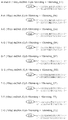
도 2는 본 발명의 미스매치 엔도뉴클레아제 활성측정에서 사용한 기질 DNA 일람이다.
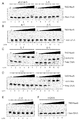
도 3은 본 발명의 미스매치 엔도뉴클레아제의 미스매치 DNA 절단활성을 나타내는 Native-PAGE 결과와 그래프이다.
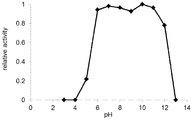
도 4는 본 발명의 미스매치 엔도뉴클레아제의 미스매치 DNA 절단반응에 대한pH의 영향을 나타내는 그래프이다.
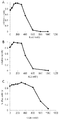
도 5는 본 발명의 미스매치 엔도뉴클레아제의 미스매치 DNA 절단반응에 대한 염화나트륨, 염화칼륨, 및 글루타민산칼륨의 영향을 나타내는 그래프이다.
도 6은 본 발명의 미스매치 엔도뉴클레아제의 미스매치 DNA 절단반응에 대한 염화 마그네슘의 영향을 나타내는 그래프이다.
도 7은 본 발명의 미스매치 엔도뉴클레아제의 미스매치 DNA 절단반응에 대한 염화 망간의 영향을 나타내는 그래프이다.
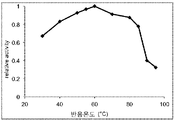
도 8은 본 발명의 미스매치 엔도뉴클레아제의 미스매치 DNA 절단반응 온도의 영향을 나타내는 그래프이다.
도 9는 본 발명의 미스매치 엔도뉴클레아제가 다양한 미스매치 DNA에 대한 절단활성을 나타내는 그래프이다.
도 10은 본 발명의 미스매치 엔도뉴클레아제의 DNA결합활성 측정에서 사용한 프로브 DNA의 일람이다.
도 11은 본 발명의 미스매치 엔도뉴클레아제의 DNA 결합 활성 측정을 나타내는 Native-PAGE의 결과이다.
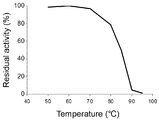
도 12는 본 발명의 미스매치 엔도뉴클레아제의 내열성을 나타내는 그래프이다.
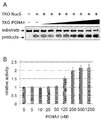
도 13은 본 발명의 미스매치 엔도뉴클레아제의 TKO 유래 PCNA1 존재 하 미스매치 DNA 절단활성을 나타내는 Native-PAGE 결과와 그래프이다.
도 14는 본 발명의 미스매치 엔도뉴클레아제의 A-A 미스매치 DNA에 대한 절단활성을 나타내는 Native-PAGE의 결과이다.Figure 1 shows the result of SDS-PAGE showing the purification result of the mismatch endonuclease of the present invention.
2 is a list of substrate DNAs used in the measurement of mismatch endonuclease activity of the present invention.
FIG. 3 is a graph showing the result of Native-PAGE showing the mismatch DNA cleavage activity of the mismatch endonuclease of the present invention.
Figure 4 is a graph showing the effect of pH on the mismatch DNA cleavage of the mismatch endonuclease of the present invention.
Figure 5 is a graph showing the effect of sodium chloride, potassium chloride, and potassium glutamate on the mismatch DNA cleavage of the mismatch endonuclease of the present invention.
Figure 6 is a graph showing the effect of magnesium chloride on the mismatch DNA cleavage of the mismatch endonuclease of the present invention.
7 is a graph showing the effect of manganese chloride on the mismatch DNA cleavage of the mismatch endonuclease of the present invention.
8 is a graph showing the influence of the mismatch DNA cleavage reaction temperature of the mismatch endonuclease of the present invention.
9 is a graph showing the mismatch endonuclease activity of the present invention showing the cleavage activity against various mismatch DNAs.
10 is a list of probe DNAs used in the measurement of the DNA binding activity of the mismatch endonuclease of the present invention.
Figure 11 is the result of Native-PAGE showing the DNA binding activity measurement of the mismatch endonuclease of the present invention.
12 is a graph showing the heat resistance of the mismatch endonuclease of the present invention.
FIG. 13 is a graph showing the result of Native-PAGE showing the mismatch DNA cleavage activity in the presence of TKO-derived PCNA1 of the mismatch endonuclease of the present invention.
Figure 14 shows the result of Native-PAGE showing the cleavage activity of the mismatch endonuclease of the present invention against AA mismatch DNA.
이하에 본 발명을 상세하게 설명한다.Hereinafter, the present invention will be described in detail.
본 발명에 있어서 「미스매치」란 더블-스트랜드 핵산 중에 존재하는 Watson-Crick 염기쌍과는 다른 염기 짝짓기, 즉 G(구아닌 염기)-C(사이토신 염기), A(아데닌 염기)-T(티민 염기) 또는 U(우라실 염기)의 염기쌍 결합 이외의 조합의 염기결합을 나타낸다.In the present invention, " mismatch " refers to a base pairing that is different from the Watson-Crick base pair in the double-strand nucleic acid, i.e., G (guanine base) -C (cytosine base), A (adenine base) ) Or U (uracil base).
(1) 본 발명의 내열성 미스매치 엔도뉴클레아제 및 그 돌연변이체(1) Heat-resistant mismatch endonuclease of the present invention and its mutant
본 명세서에 있어서, 「미스매치 엔도뉴클레아제 활성을 가지는 폴리펩티드(미스매치 엔도뉴클레아제와 기재하는 경우가 있다)」란 더블-스트랜드 핵산 중의 미스매치 부위를 절단하는 활성을 가지는 뉴클레아제를 말한다. 상기의 미스매치 엔도뉴클레아제 활성은 미스매치 염기쌍을 형성하는 뉴클레오티드에 인접하는 인산이에스터르 결합을 절단하는 활성 외에, 미스매치 염기쌍으로부터 1∼5염기쌍, 바람직하게는 1∼3염기쌍 떨어진 뉴클레오티드에 인접하는 인산이에스터르 결합을 절단하는 활성을 포함한다. 본 발명에 있어서 미스매치 엔도뉴클레아제는 특정한 미스매치 염기쌍을 특이적으로 인식해서 더블-스트랜드 핵산을 절단하는 활성을 가지는 것이 바람직하고, 예를 들면, 적어도 G-G, G-T 혹은 T-T 미스매치를 인식해서 절단하는 엔도뉴클레아제를 들 수 있다. 상기 엔도뉴클레아제는 G- G미스매치만, G-T미스매치만, 혹은 T-T 미스매치만을 인식ㆍ절단하는 것일 수도 있다. 또 G-G미스매치, G-T미스매치 및 T-T 미스매치 가운데 어느 2개의 미스매치를 인식ㆍ절단하는 것일 수도 있다. 또 G-G 미스매치, G-T 미스매치 및 T-T 미스매치의 전부를 인식ㆍ절단하는 것일 수도 있다.In the present specification, " a polypeptide having mismatch endonuclease activity (sometimes referred to as a mismatch endonuclease) " refers to a nuclease having activity of cleaving a mismatch site in a double-stranded nucleic acid It says. The above mismatch endonuclease activity is not limited to the activity of cleaving an ester linkage adjacent to a nucleotide forming a mismatched base pair, but also to a nucleotide which is separated from a mismatched base pair by 1 to 5 base pairs, preferably 1 to 3 base pairs And the activity of the adjacent phosphate to cleave the ester linkage. In the present invention, the mismatch endonuclease preferably has an activity of specifically recognizing a specific mismatched base pair and cleaving double-strand nucleic acid, and recognizes at least GG, GT or TT mismatches And endonucleases for cleavage. The endonuclease may be one that recognizes and cleaves only G-G mismatch, G-T mismatch, or T-T mismatch. It is also possible to recognize or cut any two mismatches among G-G mismatch, G-T mismatch, and T-T mismatch. It is also possible to recognize and cut all of the G-G mismatch, G-T mismatch, and T-T mismatch.
또 본 발명에 있어서 추가로 별도의 미스매치 엔도뉴클레아제가 예시된다. 예를 들면, 적어도 A-A, A-C 혹은 C-C 미스매치를 인식해서 절단하는 엔도뉴클레아제를 들 수 있다. 상기 엔도뉴클레아제는 A-A 미스매치만, A-C 미스매치만, 혹은 C-C 미스매치만을 인식ㆍ절단하는 것일 수도 있다. 또 A-A 미스매치, A-C 미스매치 및 C-C 미스매치 가운데 어느 2개의 미스매치를 인식ㆍ절단하는 것일 수도 있다. 또 A-A 미스매치, A-C 미스매치 및 C-C 미스매치의 전부를 인식ㆍ절단하는 것일 수도 있다.In the present invention, another mismatch endonuclease is further exemplified. For example, endonuclease can be at least recognized by recognizing A-A, A-C or C-C mismatches. The endonuclease may be one that recognizes and cleaves only A-A mismatches, A-C mismatches, or C-C mismatches. It is also possible to recognize or cut out any two mismatches among A-A mismatch, A-C mismatch, and C-C mismatch. A-A mismatch, A-C mismatch, and C-C mismatch.
이것들의 내열성의 미스매치 엔도뉴클레아제는 더블-스트랜드 핵산 중의 미스매치 부위를 절단하는 활성의 이외에, 싱글-스트랜드 DNA, 싱글-스트랜드 핵산과 더블-스트랜드 핵산의 정션 부분, 더블플랩 구조, 복제분기점구조, D-루프 구조, 및/또는 닉(nick)이 들어 간 홀리데이 정션 구조를 인식해서 핵산을 절단하는 활성을 가질 수도 있다. 또, 본 명세서에 있어서 내열성의 미스매치 엔도뉴클레아제는 40℃ 이상, 바람직하게는 50℃ 이상, 더욱 바람직하게는 60℃ 이상의 온도에 있어서 더블-스트랜드 핵산 중의 미스매치 부위를 절단하는 활성을 나타내는 뉴클레아제가 바람직하다.These heat-resistant mismatch endonucleases can be used for cleaving mismatch sites in double-stranded nucleic acids, as well as single stranded DNA, single-stranded nucleic acids and double-stranded nucleic acid junctions, double- Structure, a D-loop structure, and / or nicking nicks to recognize nucleic acid cleavage activity. In the present specification, the heat-resistant mismatch endonuclease is an enzyme that cleaves a mismatch site in the double-stranded nucleic acid at a temperature of 40 ° C or more, preferably 50 ° C or more, more preferably 60 ° C or more Nuclease is preferred.
본 발명을 특별하게 한정하나 것은 아니지만, 본 발명에 사용되는 내열성의 미스매치 엔도뉴클레아제로서는 Thermococcus kodakarensis(혹은 Thermococcus kodakaraensis) 유래의 내열성 미스매치 엔도뉴클레아제 활성을 가지는 폴리펩티드가 예시된다. 본 발명자들은 Thermococcus kodakarensis 유래의 폴리펩티드(서열목록의 서열번호 1)가 내열성의 G-G, G-T 혹은 T-T 미스매치를 인식해서 절단하는 엔도뉴클레아제인 것을 발견했다. 게다가, 서열목록의 서열번호 1에 기재된 아미노산 서열을 가지는 폴리펩티드의 호모 로그, 예를 들면, 서열목록의 서열번호 1에 기재된 아미노산 서열에 있어서 1 내지 수개, 예를 들면, 1 내지 15개, 바람직하게는 1 내지 9개, 더 바람직하게는 1 내지 5개, 더욱 바람직하게는 1 내지 3개의 아미노산 잔기가 치환, 결실, 삽입, 및/또는 부가되어 이루어지는 아미노산 서열을 가지는 폴리펩티드, 및 서열목록의 서열번호 1에 기재된 아미노산 서열에 대해서 95% 이상의 아미노산 서열의 동일성을 가지는 아미노산 서열을 가지는 폴리펩티드도 본 발명에 있어서의 내열성의 G-G, G-T 혹은 T-T 미스매치를 인식해서 절단하는 엔도뉴클레아제로서 호적하다. 또 예를 들면, 서열목록의 서열번호 2에 기재된 염기서열을 가지는 상기 엔도뉴클레아제가 호적하게 사용될 수 있다.As the heat-resistant mismatch endonuclease used in the present invention, there is exemplified a thermostable mismatch endonuclease activity-derived polypeptide derived from Thermococcus kodakarensis (or Thermococcus kodakaraensis), although the present invention is not particularly limited. The present inventors have found that a polypeptide derived from Thermococcus kodakarensis (SEQ ID NO: 1 in the Sequence Listing) is an endo-nuclease which recognizes and cleaves thermostable G-G, G-T or T-T mismatches. Furthermore, a homologue of a polypeptide having an amino acid sequence shown in SEQ ID NO: 1 in the Sequence Listing, for example, 1 to several, such as 1 to 15, in the amino acid sequence shown in SEQ ID NO: 1 Is a polypeptide having an amino acid sequence in which 1 to 9, more preferably 1 to 5, and more preferably 1 to 3 amino acid residues are substituted, deleted, inserted, and / or added, and SEQ ID NO: A polypeptide having an amino acid sequence having an identity of 95% or more with respect to the amino acid sequence of SEQ ID NO: 1 is also regarded as an endo-nuclease which recognizes and cleaves heat-resistant GG, GT or TT mismatches in the present invention. In addition, for example, the endonuclease having the nucleotide sequence shown in SEQ ID NO: 2 of the Sequence Listing can be suitably used.
또, 본 발명자들은 서열목록의 서열번호 1에 기재된 아미노산 서열 가운데, 47번째의 세린 잔기 및 76번째의 아스파라긴 잔기가 다른 아미노산 잔기, 바람직하게는 47번째가 알라닌으로, 76번째가 알라닌으로 치환되어 이루어지는 아미노산 서열을 가지는 돌연변이형 폴리펩티드가 A-A, A-C 혹은 C-C 미스매치를 특이적으로 인식하는 내열성의 미스매치 엔도뉴클레아제인 것을 발견했다. 따라서 이렇게 해서 작성된 서열목록의 서열번호 3에 기재된 아미노산 서열을 가지는 폴리펩티드, 및 그 호모로그는 본 발명의 1형태이다. 서열목록의 서열번호 3에 기재된 아미노산 서열을 가지는 폴리펩티드의 호모로그로서는 서열목록의 서열번호 3에 기재된 아미노산 서열에 있어서, 47번째 및 76번째의 아미노산 잔기를 제외하는 1 내지 수개, 예를 들면, 1 내지 15개, 바람직하게는 1 내지 9개, 더 바람직하게는 1 내지 5개, 더욱 바람직하게는 1 내지 3개의 아미노산 잔기가 치환, 결실, 삽입, 및/또는 부가되어 이루어지는 아미노산 서열을 가지는 폴리펩티드로서, A-A, A-C 혹은 C-C 미스매치를 인식해서 절단하는 엔도뉴클레아제 활성을 가지는 폴리펩티드, 서열목록의 서열번호 3에 기재된 아미노산 서열에 있어서의 47번째의 알라닌 잔기 및 76번째의 알라닌 잔기가 다른 아미노산 잔기로 치환되어 이루어지는 폴리펩티드로서, A-A, A-C 혹은 C-C 미스매치를 인식해서 절단하는 엔도뉴클레아제 활성을 가지는 폴리펩티드, 당해 폴리펩티드의 아미노산 서열에 있어서, 47번째 및 76번째의 아미노산 잔기를 제외하는 1 내지 수개, 예를 들면, 1 내지 15개, 바람직하게는 1 내지 9개, 더 바람직하게는 1 내지 5개, 더욱 바람직하게는 1 내지 3개의 아미노산 잔기가 치환, 결실, 삽입, 및/또는 부가되어 이루어지는 아미노산 서열을 가지는 폴리펩티드로서, A-A, A-C 혹은 C-C 미스매치를 인식해서 절단하는 엔도뉴클레아제 활성을 가지는 폴리펩티드, 및 서열목록의 서열번호 3에 기재된 아미노산 서열에 대해서 90% 이상, 바람직하게는 95% 이상의 아미노산 서열의 동일성을 가지는 아미노산 서열을 가지는 폴리펩티드이며, 또 서열목록의 서열번호 3에 기재된 아미노산 서열에 있어서의 47번째의 알라닌 잔기에 대응하는 아미노산 잔기가 세린 이외의 아미노산 잔기이며, 또 76번째의 알라닌 잔기에 대응하는 아미노산 잔기가 아스파라긴 이외의 아미노산 잔기이며, 또 A-A, A-C 혹은 C-C 미스매치를 인식해서 절단하는 엔도뉴클레아제 활성을 가지는 폴리펩티드가 예시된다. 추가로 예를 들면, 서열목록의 서열번호 4기재의 염기서열을 가지는 상기 엔도뉴클레아제가 호적하게 사용할 수 있다. 이것들의 미스매치 엔도뉴클레아제는 후술하는 여러 용도, 예를 들면 특이적 DNA서열을 함유하는 DNA를 배제해하고, 기타의 DNA를 증폭, 검출하는 방법에 호적하다.The present inventors have also found that the amino acid sequence of SEQ ID NO: 1 of the Sequence Listing, wherein the 47th serine residue and the 76th asparagine residue are different amino acid residues, preferably the 47th amino acid alanine and the 76th amino acid residue, It has been found that a mutant polypeptide having an amino acid sequence is a heat-resistant mismatch endonuclease that specifically recognizes AA, AC, or CC mismatches. Therefore, the polypeptide having the amino acid sequence shown in SEQ ID NO: 3 of the sequence listing thus prepared, and the homolog thereof are one embodiment of the present invention. As the homologue of the polypeptide having the amino acid sequence shown in SEQ ID NO: 3 in the sequence listing, 1 to several, for example, 1 in the amino acid sequence shown in SEQ ID NO: 3 in the sequence listing, except for the 47th and 76th amino acid residues, To 15, preferably 1 to 9, more preferably 1 to 5, and more preferably 1 to 3 amino acid residues are substituted, deleted, inserted, and / or added as a polypeptide having an amino acid sequence , A polypeptide having endo-nuclease activity that recognizes and cleaves AA, AC, or CC mismatches, the 47th alanine residue and the 76th alanine residue in the amino acid sequence shown in SEQ ID NO: 3 in the sequence listing, As an endonuclease excising enzyme that recognizes and cleaves AA, AC, or CC mismatches, In the amino acid sequence of the polypeptide, 1 to several, such as 1 to 15, preferably 1 to 9, more preferably 1 to 6, amino acid residues other than the 47th and 76th amino acid residues, 5, more preferably 1 to 3 amino acid residues are substituted, deleted, inserted, and / or added, and the endo-nuclease activity that recognizes and cleaves AA, AC, or CC mismatch And a polypeptide having an amino acid sequence having an amino acid sequence identity of 90% or more, preferably 95% or more, with respect to the amino acid sequence of SEQ ID NO: 3 in the Sequence Listing, and the amino acid sequence of SEQ ID NO: 3 The amino acid residue corresponding to the 47th alanine residue in the sequence is an amino acid residue other than serine , And is the amino acid residue corresponding to the alanine residue in the 76th amino acid residue other than asparagine, is also A-A, a polypeptide having an A-C or C-C endonuclease activity of cutting that detects the mismatch and the like. Further, for example, the endonuclease having the nucleotide sequence shown in SEQ ID NO: 4 in the Sequence Listing can be suitably used. These mismatch endonucleases are suitable for various uses described below, for example, a method of excluding DNA containing a specific DNA sequence and amplifying and detecting other DNAs.
본 발명에 있어서, 당해 미스매치 엔도뉴클레아제의 활성은 미스매치 염기쌍을 함유하는 더블-스트랜드 핵산을 기질로 해서 측정할 수 있다. 구체적으로는 미스매치 염기쌍을 함유하는 더블-스트랜드 핵산을 조제한 후, 미스매치 엔도뉴클레아제에 대해서 과잉량의 당해 더블-스트랜드 핵산을 미스매치 엔도뉴클레아제와 반응시키고, 단위 시간당의 절단 핵산량을 측정하는 것으로 활성측정이 실시된다. 절단된 더블-스트랜드 핵산은 전기영동 등에 의해 절단을 받지 않은 핵산과 분리해서 정량하는 것이 가능하다. 절단을 받았을 경우에만 형광강도의 증가가 검출될 수 있도록 형광시료와 소광물질로 이중으로 표지한 더블-스트랜드 핵산을 사용하면, 반응용액 중의 형광강도를 적당한 시간별로 측정하는 것에 의해 활성을 간편하게 측정할 수 있다. 또, 기질이 되는 더블-스트랜드 핵산 중의 미스매치 염기쌍의 염기를 바꿈으로서, 특정한 미스매치 염기쌍에 대한 절단활성을 조사하는 것도 가능하다.In the present invention, the activity of the mismatch endonuclease can be measured using a double-stranded nucleic acid containing a mismatched base pair as a substrate. Specifically, after preparing a double-stranded nucleic acid containing a mismatch base pair, an excessive amount of the double-stranded nucleic acid is reacted with a mismatch endonuclease to the mismatch endonuclease, and the amount of the cleaved nucleic acid per unit time The activity measurement is carried out. The cleaved double-stranded nucleic acid can be quantitatively separated from the nucleic acid not cleaved by electrophoresis or the like. Using a double-stranded nucleic acid double labeled with a fluorescent sample and a small mineral so that an increase in fluorescence intensity can be detected only when it is cut, the activity can be easily measured by measuring the fluorescence intensity in the reaction solution over a suitable time . It is also possible to examine the cleavage activity against a specific mismatched base pair by changing the base of the mismatch base pair in the double-stranded nucleic acid serving as the substrate.
(2) 본 발명의 미스매치 엔도뉴클레아제를 사용한 더블-스트랜드 핵산의 절단방법(2) A method for cleaving a double-stranded nucleic acid using the mismatch endonuclease of the present invention
본 발명의 더블-스트랜드 핵산의 절단방법은 미스매치 염기쌍을 가지는 더블-스트랜드 핵산에 서열목록의 서열번호 1 또는 서열번호 3에 기재된 아미노산 서열을 가지는 폴리펩티드, 또는 그 호모로그를 작용시킴으로서 수행된다. 서열목록의 서열번호 1 또는 서열번호 3에 기재된 아미노산 서열을 가지는 폴리펩티드의 호모로그로서는 본 발명을 특별하게 한정하는 것은 아니지만, 서열목록의 서열번호 1 또는 서열번호 3에 기재된 아미노산 서열에 있어서 1 내지 수개, 예를 들면, 1 내지 15개, 바람직하게는 1 내지 9개, 더 바람직하게는 1 내지 5개, 더욱 바람직하게는 1 내지 3개의 아미노산 잔기가 치환, 결실, 삽입, 및/또는 부가되어 이루어지는 아미노산 서열을 가지며, 또 미스매치 엔도뉴클레아제 활성을 가지는 폴리펩티드, 및 서열목록의 서열번호 1 또는 서열번호 3에 기재된 아미노산 서열에 대해서 90% 이상, 바람직하게는 95% 이상의 아미노산 서열의 동일성을 가지는 아미노산 서열을 가지며, 또 미스매치 엔도뉴클레아제 활성을 가지는 폴리펩티드가 예시된다. 예를 들면, 상기 「(1)본 발명의 내열성 미스매치 엔도뉴클레아제 및 그 돌연변이체」의 섹션에서 예시된 서열번호 1 또는 서열번호 3에 기재된 아미노산 서열을 가지는 폴리펩티드의 호모로그를 들 수 있다.The method for cleaving a double-stranded nucleic acid of the present invention is performed by reacting a double-stranded nucleic acid having a mismatch base pair with a polypeptide having the amino acid sequence of SEQ ID NO: 1 or SEQ ID NO: 3, or a homologue thereof. The homologue of the polypeptide having the amino acid sequence shown in SEQ ID NO: 1 or SEQ ID NO: 3 in the Sequence Listing does not particularly limit the present invention. However, the homologue of the polypeptide having the amino acid sequence shown in SEQ ID NO: 1 or SEQ ID NO: Deleted, inserted, and / or added, for example, 1 to 15, preferably 1 to 9, more preferably 1 to 5, and more preferably 1 to 3 amino acid residues A polypeptide having an amino acid sequence and having mismatch endonuclease activity and a polypeptide having an identity of 90% or more, preferably 95% or more, with respect to the amino acid sequence of SEQ ID NO: 1 or 3 of the Sequence Listing A polypeptide having an amino acid sequence and having mismatch endonuclease activity is exemplified. For example, a homologue of a polypeptide having the amino acid sequence of SEQ ID NO: 1 or SEQ ID NO: 3 exemplified in the section of (1) the heat-resistant mismatch endonuclease of the present invention and its mutant .
또, 본 발명의 더블-스트랜드 핵산의 절단방법은 내열성균 유래의 증식세포 핵항원(PCNA)의 존재 하에 수행할 수도 있다. 특별하게 한정은 되지 않지만, Pyrococcus속, Thermococcus속, Methanopyrus속, 및 Methanococcus속 유래의 PCNA나 그것들의 호모로그를 사용 할 수 있다. PCNA의 공존 하에서 미스매치를 가지는 더블-스트랜드 핵산의 절단을 실시하는 것에 의해, 절단의 효율이 향상한다.The method for cleaving double-stranded nucleic acids of the present invention may also be carried out in the presence of proliferating cell nuclear antigen (PCNA) derived from heat-stable germ. Although not particularly limited, PCNAs or their homologues from the genera Pyrococcus, Thermococcus, Methanopyrus, and Methanococcus can be used. By performing cutting of a double-stranded nucleic acid having a mismatch under the coexistence of PCNA, the efficiency of cleavage is improved.
본 발명의 더블-스트랜드 핵산의 절단방법에 있어서의 미스매치 염기쌍은 더블-스트랜드 핵산의 내부(통상의 염 기짝짓기를 실시하는 2개의 염기쌍의 사이)에 존재하는 것이라면 더블-스트랜드 핵산 중에 1개의 미스매치 염기쌍이 존재하는 것에 한정되지 않고, 미스매치 염기쌍이 간격을 두고 복수 개 존재하는 것 일 수도 있고, 2 이상의 연속하는 미스매치 염기쌍이 존재할 수도 있다. 본 발명의 더블-스트랜드 핵산의 절단방법에 있어서의 미스매치 염기쌍으로서는 바람직하게는 더블-스트랜드 핵산의 내부에 존재하는 1 또는 8 이하의 연속하는 미스매치 염기쌍, 더 바람직하게는 1 또는 4 이하의 연속하는 미스매치 염기쌍, 또 더 바람직하게는 2개의 연속하는 미스매치 염기쌍 또는 1개의 미스매치 염기쌍이 예시된다. 본 발명의 더블-스트랜드 핵산의 절단방법에 있어서 더블-스트랜드 핵산 중에 복수의 미스매치 염기쌍이 존재하는 경우에는 해당 복수의 미스매치 염기쌍은 동종의 미스매치 염기쌍일 수도 있고, 또는 다른 종류의 미스매치 염기쌍일 수도 있다.The mismatch base pair in the double-stranded nucleic acid cleavage method of the present invention may be a double-stranded nucleic acid in which the double-stranded nucleic acid is double-stranded nucleic acid, It is not limited that a match base pair is present, and a plurality of mismatched base pairs may exist at intervals, or there may be two or more continuous mismatched base pairs. The mismatch base pairs in the double-stranded nucleic acid cleavage method of the present invention preferably include 1 or 8 contiguous mismatched base pairs present in the double-strand nucleic acid, more preferably 1 or 4 contiguous And more preferably two consecutive mismatch base pairs or one mismatch base pair are exemplified. In the double-stranded nucleic acid cleavage method of the present invention, when a plurality of mismatch base pairs exist in the double-stranded nucleic acid, the plurality of mismatch base pairs may be homologous mismatch base pairs, or the other kinds of mismatch base pairs Lt; / RTI >
당해 미스매치 엔도뉴클레아제의 타깃이 되는 미스매치 염기쌍을 가지는 더블-스트랜드 핵산으로서는 PCR 산물, 게놈 DNA나 그 단편 등의 생물 시료 유래의 핵산, 및 합성 핵산 등이 예시된다. 또, 미스매치 염기쌍을 가지는 더블-스트랜드 핵산은 복수의 생물 시료 유래의 혼합물 또는 생물 시료 유래의 핵산과 합성 핵산과의 혼합물을 융해, 재어닐링시켜서 생성된 핵산 혼합물 일 수도 있다. 예를 들면, 돌연변이를 가지는 핵산과 야생형의 핵산을 혼합하고, 융해, 재어닐링했을 경우, 미스매치 염기쌍이 형성되고, 이 부위에서 미스매치 엔도뉴클레아제의 절단을 받는다. 이렇게 해서 발생한 미스매치 엔도뉴클레아제에 의한 절단 후의 핵산 단편의 크기를 관찰함으로서, 돌연변이의 유무, 위치를 검증할 수 있다.Examples of the double-strand nucleic acid having a mismatch base pair as a target of the mismatch endonuclease include a PCR product, a nucleic acid derived from a biological sample such as a genomic DNA or a fragment thereof, and a synthetic nucleic acid. The double-stranded nucleic acid having a mismatched base pair may be a mixture of a plurality of biological sample-derived nucleic acids or a mixture of nucleic acids obtained by melting and re-annealing a mixture of a nucleic acid derived from a biological sample and a synthetic nucleic acid. For example, when a nucleic acid having a mutation and a wild-type nucleic acid are mixed and melted and reannealed, a mismatch base pair is formed, and a mismatch endonuclease is cleaved at this site. By observing the size of the nucleic acid fragment after cleavage by the mismatch endonuclease thus generated, the presence or the location of the mutation can be verified.
(3) 본 발명의 미스매치 엔도뉴클레아제를 사용한 핵산의 증폭 방법(3) Method for amplifying nucleic acid using mismatch endonuclease of the present invention
본 발명의 미스매치 엔도뉴클레아제를 이용하는 것에 의해, PCR법 등의 핵산 증폭법의 반응액에 이 미스매치 엔도뉴클레아제를 첨가만 하는 1단계의 반응에서 돌연변이 해석을 실시하는 것이 가능하다. PCR법에 있어서는 그 사이클 수가 있는 문턱값을 넘으면, 반응산물이 증가하지 않음이 알려져 있다. 첨가되고 있는 dNTP의 고갈이나, 프라이머와 반응 산물의 어닐링 경합이 그 주원인이지만, 이 때에는 반응 산물끼리의 어닐링이 일어나고 있으며, 돌연변이를 가지는 주형과 야생형의 주형이 혼재하고 있으면, 이들로부터 증폭한 반응 산물끼리의 어닐링에 의해 변이 부위에 미스매치 염기쌍이 발생하게 된다. 따라서 본 발명의 미스매치 엔도뉴클레아제의 공존 하에서의 PCR을 통상보다도 증가시킨 사이클 수로 실시하는 것만으로, 돌연변이 해석이 가능하게 된다. 즉, 본 발명은 서열목록의 서열번호 1 및/또는 서열번호 3에 기재된 아미노산 서열을 가지는 폴리펩티드 또는 그 호모로그를 더블-스트랜드 핵산에 작용시키는 것을 포함하는 돌연변이 해석방법을 제공한다.By using the mismatch endonuclease of the present invention, mutation analysis can be performed in a single step reaction in which the mismatch endonuclease is added only to the reaction solution of the nucleic acid amplification method such as the PCR method. In the PCR method, it is known that when the number of cycles exceeds the threshold value, the reaction products do not increase. The main reason for this is the depletion of dNTP added and the annealing competition between the primer and the reaction product. At this time, annealing of the reaction products occurs, and if the mutant and wild type templates are mixed, Mismatched base pairs are generated at the mutation site by annealing each other. Therefore, mutation analysis can be performed only by carrying out the PCR under the coexistence of the mismatch endonuclease of the present invention with an increased number of cycles. That is, the present invention provides a mutation analysis method comprising reacting a double-stranded nucleic acid with a polypeptide having the amino acid sequence of SEQ ID NO: 1 and / or SEQ ID NO: 3 of the Sequence Listing, or a homolog thereof.
또, 핵산 증폭 반응의 과정에서도 본 발명의 더블-스트랜드 핵산의 절단방법을 실시할 수 있다. 핵산 증폭의 반응액에 본 발명의 미스매치 엔도뉴클레아제를 첨가함으로서, 증폭 과정이 잘못된 뉴클레오티드의 합입으로 발생한 미스매치 염기쌍을 가지는 더블-스트랜드 핵산이 절단된다. 이 결과, 반응 개시 전의 주형 핵산과는 다른 서열의 핵산 증폭이 억제된다. 이렇게 해서, 에러율이 저감된 핵산 증폭이 가능하게 된다. 즉, 본 발명은 서열목록의 서열번호 1 및/또는 서열번호 3에 기재된 아미노산 서열을 가지는 폴리펩티드 또는 그 호모로그를 사용해서 미스매치 염기쌍을 가지는 더블-스트랜드 핵산을 절단하는 공정을 포함하는, 핵산 증폭 방법을 제공한다. 또, DNA 폴리머라아제, 적어도 한 쌍의 올리고뉴클레오티드 프라이머, 및 서열목록의 서열번호 1 및/또는 서열번호 3에 기재된 아미노산 서열을 가지는 폴리펩티드 또는 그 호모로그를 포함하는 조성물과, 주형이 되는 핵산분자를 포함하는 조성물을 조제하는 공정, 및 수득된 이 조성물을 적절한 조건하에서 반응시키고, 핵산 증폭을 실시하는 공정을 포함하는 핵산의 증폭 방법도 본 발명에 1형태이다.Also, the double-stranded nucleic acid cleavage method of the present invention can be carried out in the course of the nucleic acid amplification reaction. By adding the mismatch endonuclease of the present invention to the reaction mixture of nucleic acid amplification, the double-stranded nucleic acid having a mismatched base pair generated by incorporation of the wrong nucleotide in the amplification process is cleaved. As a result, nucleic acid amplification with a sequence different from that of the template nucleic acid before the initiation of the reaction is inhibited. In this way, nucleic acid amplification with reduced error rate becomes possible. That is, the present invention provides a nucleic acid amplification method comprising a step of cleaving a double-stranded nucleic acid having a mismatch base pair using a polypeptide having the amino acid sequence of SEQ ID NO: 1 and / or SEQ ID NO: 3 of the Sequence Listing, ≪ / RTI > In addition, it is also possible to use a DNA polymerase, at least a pair of oligonucleotide primers, and a composition comprising a polypeptide having the amino acid sequence of SEQ ID NO: 1 and / or SEQ ID NO: 3 or a homolog thereof, , And a method for amplifying a nucleic acid comprising a step of reacting the obtained composition under suitable conditions and performing a nucleic acid amplification, is also a form of the present invention.
상기의 핵산의 증폭법으로서는 본 발명을 특별하게 한정하나 것은 아니지만, DNA를 증폭하는 방법이 예시된다. DNA를 증폭하는 방법으로서는 예를 들면 폴리머라아제 연쇄반응(PCR)법, MDA(Multiple displacement amplification)법, 및 ICAN법이나 LAMP법 등의 등온 핵산 증폭법을 들 수 있다.As the amplification method of the nucleic acid, the present invention is not particularly limited, but a method of amplifying DNA is exemplified. Examples of the method for amplifying the DNA include a polymerase chain reaction (PCR) method, an MDA (multiple displacement amplification) method, and an isothermal nucleic acid amplification method such as an ICAN method or a LAMP method.
본 발명의 핵산 증폭 방법에 있어서는, 내열성균 유래의 증식세포 핵항원(PCNA)을 조합시킬 수 있다. 특별하게 한정은 되지 않지만, Pyrococcus속, Thermococcus속, Methanopyrus속, 및 Methanococcus속 유래의 PCNA나 그것들의 호모로그를 사용할 수 있다. PCNA의 공존 하에서 미스매치를 가지는 더블-스트랜드 핵산의 절단을 실시하는 것에 의해, 절단의 효율이 향상한다.In the nucleic acid amplification method of the present invention, a proliferating cell nuclear antigen (PCNA) derived from a thermostable germ can be combined. Although not particularly limited, PCNAs or their homologues from the genera Pyrococcus, Thermococcus, Methanopyrus, and Methanococcus can be used. By performing cutting of a double-stranded nucleic acid having a mismatch under the coexistence of PCNA, the efficiency of cleavage is improved.
(4) 본 발명의 조성물(4) The composition of the present invention
본 발명의 조성물은 DNA 폴리머라아제, 적어도 한 쌍의 올리고뉴클레오티드 프라이머, 및 서열목록의 서열번호 1 및/또는 서열번호 3에 기재된 아미노산 서열을 가지는 폴리펩티드 또는 그 호모로그를 포함하고, 핵산의 증폭 방법에 사용할 수 있다. 본 발명의 핵산 증폭 방법에서 사용하는 조성물은 DNA 폴리머라아제, 적어도 한 쌍의 올리고뉴클레오티드 프라이머, 및 서열목록의 서열번호 1 및/또는 서열번호 3에 기재된 아미노산 서열을 가지는 폴리펩티드 또는 그 호모로그 이외에, 추가로 반응 완충제, 2가의 금속이온, 데옥시리보뉴클레오티드, 올리고뉴클레오티드 프로브, 및 인터칼레이팅 색소로부터 선택되는 적어도 1종을 포함할 수도 있다. 또, 상기의 조성물을 핵산 증폭 반응에 사용하는 경우, 상기의 조성물은 추가로 핵산 증폭 반응의 주형이 되는 핵산을 포함할 수도 있다. 본 발명에 사용되는 반응 완충제로서는 예를 들면 Tris-HCl, HEPES-KOH 등의 굳버퍼나 인산 나트륨 버퍼 등의 인산 버퍼를 들 수 있다. 특별하게 한정은 없지만, pH6∼11의 인산 나트륨 버퍼 혹은 Tris-HCl 완충액이 바람직하다. 또, 2가의 금속이온으로서는 예를 들면 마그네슘이온, 망간이온, 아연이온, 및 코발트이온을 들 수 있다. 2가의 금속이온은 염화물, 황산염, 또는 아세트산염 등의 염 형태로 공급될 수 있다. 특별하게 한정은 되지 않지만, 예를 들면 마그네슘이온은 최종농도로 0.5∼50mM의 범위, 망간이온은 최종농도로 0.5∼15mM의 범위이다. 여기에서, 최종농도란 핵산 증폭 반응에 적용하는 반응액 중의 농도를 의미한다(이하, 동일). 또, 본 발명의 조성물에 있어서는 Bovine serum albumin(BSA), 계면활성제, 무기염을 포함할 수도 있다. 특별하게 한정은 되지 않지만, 예를 들면 BSA는 최종농도로 0∼0.2mg/㎖의 범위이다. 계면활성제로서는, Twee n20, Triton X-100, 및 NP-40을 들 수 있다. 특별하게 한정은 되지 않지만, 예를 들면 계면활성제는 최종농도로 0∼0.2%의 범위이다. 무기염으로서는 예를 들면 염화나트륨, 염화칼륨, 글루타민산칼륨, 및 황산암모늄을 들 수 있다. 특별하게 한정은 되지 않지만, 예를 들면 염화나트륨은 최종농도로 0∼0.3M의 범위, 염화칼륨은 최종농도로 0∼0.2M의 범위, 글루타민산칼륨은 최종농도로 0∼0.6M의 범위, 황산암모늄은 최종농도로 0∼0.05M의 범위이다. 추가로, 내열성 균 유래의 PCNA를 포함할 수도 있다. 특별하게 한정은 되지 않지만, Pyrococcus속, Thermococcus속, Methanopyrus속, 및 Methanococcus속 유래의 PCNA가 호적하다.The composition of the present invention comprises a DNA polymerase, at least a pair of oligonucleotide primers, and a polypeptide having the amino acid sequence shown in SEQ ID NO: 1 and / or SEQ ID NO: 3 of the sequence listing or a homolog thereof, . The composition for use in the nucleic acid amplification method of the present invention may further comprise a DNA polymerase, at least one pair of oligonucleotide primers, and a polypeptide having the amino acid sequence of SEQ ID NO: 1 and / or SEQ ID NO: 3 or a homolog thereof, And may further comprise at least one species selected from reaction buffers, divalent metal ions, deoxyribonucleotides, oligonucleotide probes, and intercalating pigments. When the above composition is used in a nucleic acid amplification reaction, the above composition may further include a nucleic acid that becomes a template for a nucleic acid amplification reaction. Examples of the reaction buffer used in the present invention include a hard buffer such as Tris-HCl and HEPES-KOH, and a phosphate buffer such as a sodium phosphate buffer. Although not particularly limited, sodium phosphate buffer or Tris-HCl buffer having a pH of 6 to 11 is preferable. Examples of the divalent metal ions include magnesium ion, manganese ion, zinc ion, and cobalt ion. The divalent metal ion may be supplied in a salt form such as a chloride, a sulfate, or an acetate. For example, the magnesium ion is in the range of 0.5 to 50 mM at the final concentration, and the manganese ion is in the range of 0.5 to 15 mM at the final concentration. Here, the final concentration means the concentration in the reaction solution applied to the nucleic acid amplification reaction (hereinafter the same). In addition, the composition of the present invention may contain Bovine serum albumin (BSA), a surfactant, and an inorganic salt. Although not particularly limited, for example, BSA is in a range of 0 to 0.2 mg / ml in a final concentration. Surfactants include Twee n20, Triton X-100, and NP-40. Although not particularly limited, for example, the surfactant is in a range of 0 to 0.2% as a final concentration. Examples of inorganic salts include sodium chloride, potassium chloride, potassium glutamate, and ammonium sulfate. For example, in the range of 0 to 0.3M in the final concentration of sodium chloride, in the range of 0 to 0.2M in the final concentration of potassium chloride, in the range of 0 to 0.6M in the final concentration of potassium glutamate, The final concentration ranges from 0 to 0.05M. In addition, it may contain PCNA derived from heat-resistant bacteria. Although not particularly limited, PCNA derived from the genus Pyrococcus, Thermococcus, Methanopyrus, and Methanococcus is preferred.
상기의 핵산 증폭 반응용의 조성물 중의 미스매치 엔도뉴클레아제 활성을 가지는 폴리펩티드의 농도는 적당하게 각각의 반응계에서 DNA의 증폭 반응을 저해하지 않는 농도나 미스매치 염기쌍의 절단에 유효한 농도를 검정해서 결정할 수 있다.The concentration of the polypeptide having mismatch endonuclease activity in the above composition for nucleic acid amplification reaction is determined by appropriately determining the concentration that does not inhibit the amplification reaction of the DNA in each reaction system or the concentration effective for cleavage of the mismatch base pair .
상기의 핵산 증폭 반응용의 조성물에 사용되는 적어도 1쌍의 프라이머로서는 각종 핵산 증폭법에 적합한 2개 이상의 프라이머가 선택된다. 이것들은, 소망의 증폭이 발생하는 것이라면 DNA, RNA 외에, DNA의 일부가 RNA에 치환되고 있는 소위 키메라 프라이머일 수도 있다. 또, 공지의 핵산 아날로그를 포함하는 프라이머나 검출 등을 목적으로 한 형광 염료 등에 의해 표지된 프라이머일 수도 있다.As the at least one pair of primers used in the composition for amplification of nucleic acid, two or more primers suitable for various nucleic acid amplification methods are selected. These may be so-called chimeric primers in which a portion of the DNA is replaced with RNA, in addition to DNA and RNA, if desired amplification occurs. It may also be a primer containing a known nucleic acid analog or a primer labeled with a fluorescent dye for the purpose of detection or the like.
(5) 본 발명의 특정서열 핵산의 증폭 억제방법 및 돌연변이 검출방법(5) Amplification Suppression Method and Mutation Detection Method of Specific Sequence Nucleic Acid of the Present Invention
또, 본 발명자들은 본 발명의 기질 특이성이 서로 다른 미스매치 엔도뉴클레아제와 적절하게 설계된 올리고데옥시리보뉴클레오티드를 이용해서, 핵산 증폭 반응에 있어서 특정한 염기서열을 가지는 핵산의 증폭을 억제 가능한 것을 찾아냈다. 따라서(a) 상기 특정의 염기서열을 가지는 핵산과 하이브리드화시켰을 때에 1개 혹은 수개의 미스매치를 발생하도록 설계된 올리고데옥시리보뉴클레오티드,(b) DNA 폴리머라아제,(c) 적어도 한 쌍의 프라이머, 및(d) 적어도 1종류의 미스매치 엔도뉴클레아제 활성을 가지는 폴리펩티드의 존재 하에서 핵산 증폭 반응을 실시하는 공정을 포함하는, 핵산 증폭 반응에 있어서 특정한 염기서열을 가지는 핵산의 증폭을 억제하는 방법도, 본 발명에 1형태이다. 또, 이 방법을 사용해서 표적 핵산의 염기서열과 1개 혹은 수개의 염기가 서로 다른 특정한 염기서열을 가지는 핵산의 증폭을 억제하는 것에 의해서, 표적 핵산을 우선적으로 증폭하는 방법도 본 발명에 1형태이다.The inventors of the present invention have found that by using a mismatch endonuclease different from the substrate specificity of the present invention and a properly designed oligodeoxyribonucleotide, it is possible to inhibit amplification of a nucleic acid having a specific nucleotide sequence in a nucleic acid amplification reaction I got it. (A) an oligodeoxyribonucleotide designed to generate one or several mismatches when hybridized with a nucleic acid having the specific nucleotide sequence, (b) a DNA polymerase, (c) at least one pair of primers , And (d) a step of performing a nucleic acid amplification reaction in the presence of a polypeptide having at least one kind of mismatch endonuclease activity, a method of suppressing amplification of a nucleic acid having a specific nucleotide sequence in a nucleic acid amplification reaction Is also one form of the present invention. Also, a method of preferentially amplifying a target nucleic acid by suppressing amplification of a nucleic acid having a specific base sequence different from the base sequence of the target nucleic acid and one or several bases using this method is also included in the present invention to be.
상기 (a)의 올리고데옥시리보뉴클레오티드는 특정한 염기서열을 가지는 핵산과 하이브리드화시켰을 때에 1개 혹은 수개의 미스매치를 발생하도록 설계된 올리고데옥시리보뉴클레오티드라면 특별하게 한정은 없고, DNA의 일부가 RNA로 치환되고 있는 소위 키메라올리고데욕시 리보뉴클레오티드일 수도 있다. 또, 본 발명을 특별하게 한정하나 것은 아니지만, 이 올리고데옥시리보뉴클레오티드에 3’말단은 이 올리고데옥시리보뉴클레오티드로부터의 DNA 폴리머라아제에 의한 신장 반응을 억제하기 위한 수식(modification)이 실시될 수도 있다. 예를 들면, 아미노화 등의 수식이 예시된다. 또, 올리고데옥시리보뉴클레오티드는 이 올리고데옥시리보뉴클레오티드가 결합하는 핵산이 미스매치 엔도뉴클레아제 활성을 가지는 폴리펩티드의 절단을 받는 한에 있어서, 포스포로 티오에이트화나 기타의 수식에 의해 데옥시리보 뉴클레아제로부터의 절단으로부터 보호될 수도 있다. 또, 검출 등을 목적으로 한 형광 염료나 소광물질 등에 의해 표지될 수도 있다.The oligodeoxyribonucleotide of (a) is not particularly limited as long as it is an oligodeoxyribonucleotide designed to generate one or several mismatches when hybridized with a nucleic acid having a specific nucleotide sequence. Or a so-called " chimeric oligosaccharide ribonucleotide " In addition, although the present invention is not particularly limited, the 3 'end of the oligodeoxyribonucleotide is subjected to modification for inhibiting the elongation reaction by the DNA polymerase from the oligodeoxyribonucleotide It is possible. For example, formulas such as amination are exemplified. In addition, oligodeoxyribonucleotides can be obtained by cleaving a polypeptide having a mismatch endonuclease activity with a nucleic acid to which the oligodeoxyribonucleotide binds, by phosphorothioate or other equations, It may be protected against cleavage from nuclease. It may also be labeled with fluorescent dyes or small minerals for the purpose of detection or the like.
상기 올리고데옥시리보뉴클레오티드의 스트랜드 길이는 실시되는 반응의 조건 하에서 상기 특정의 염기서열을 가지는 핵산과 이 올리고데옥시리보뉴클레오티드가 하이브리드화할 수 있도록, 적당하게 결정할 수 있다. 또, 특정한 염기서열을 가지는 핵산과 하이브리드화시켰을 때에 미스매치를 발생하는 위치는 이 올리고데옥시리보뉴클레오티드에 5’말단, 3’말단의 양쪽으로부터 적어도 3뉴클레오티드 이상 떨어져 있는 것이 바람직하다.The strand length of the oligodeoxyribonucleotide can be appropriately determined so that the oligodeoxyribonucleotide can hybridize with the nucleic acid having the specific nucleotide sequence under the conditions of the reaction to be carried out. In addition, it is preferable that a position at which a mismatch is generated when hybridized with a nucleic acid having a specific nucleotide sequence is at least 3 nucleotides apart from both the 5'-terminal and the 3'-terminal of the oligodeoxyribonucleotide.
본 발명의 핵산 증폭 반응에 있어서 특정한 염기서열을 가지는 핵산의 증폭을 억제하는 방법에는 미스매치 부위를 특이적으로 절단하는 활성을 가지는 본 발명의 미스매치 엔도뉴클레아제를 사용할 수 있다. 예를 들면, 핵산 증폭법으로서 고온에서의 반응을 포함하는 PCR법과 같은 방법으로 내열성 DNA 폴리머라아제를 사용하는 경우에는, 미스매치 엔도뉴클레아제도 내열성을 가지는 것을 사용하는 것이 바람직하다. 본 발명을 특별하게 한정하나 것은 아니지만, 이러한 경우에는 상기의 내열성의 G-G, G-T 혹은 T-T 미스매치를 인식해서 절단하는 엔도뉴클레아제, 즉, (i) 서열목록의 서열번호 1에 기재된 아미노산 서열을 가지는 폴리펩티드, (ii) 서열목록의 서열번호 1에 기재된 아미노산 서열에 있어서 1 내지 수개, 예를 들면, 1 내지 15개, 바람직하게는 1 내지 9개, 더 바람직하게는 1 내지 5개, 더욱 바람직하게는 1 내지 3개의 아미노산 잔기가 치환, 결실, 삽입, 및/또는 부가되어 이루어지는 아미노산 서열을 가지며, 또 G-G, G-T 혹은 T-T 미스매치를 인식해서 절단하는 엔도뉴클레아제 활성을 가지는 폴리펩티드, (iii) 서열목록의 서열번호 1에 기재된 아미노산 서열에 대해서 95% 이상의 아미노산 서열의 동일성을 가지는 아미노산 서열을 가지며, 또 G-G, G-T 혹은 T-T 미스매치를 인식해서 절단하는 엔도뉴클레아제 활성을 가지는 폴리펩티드, 및/또는 A-A, A-C 혹은 C-C 미스매치를 인식해서 절단하는 엔도뉴클레아제, 즉, (iv) 서열목록의 서열번호 3에 기재된 아미노산 서열을 가지는 폴리펩티드, (V) 서열목록의 서열번호 3에 기재된 아미노산 서열에 있어서 1 내지 수개, 예를 들면, 1 내지 15개, 바람직하게는 1 내지 9개, 더욱 바람직하게는 1 내지 5개, 더욱 바람직하게는 1 내지 3개의 아미노산 잔기가 치환, 결실, 삽입, 및/또는 부가되어 이루어지는 아미노산 서열을 가지며, 또 A-A, A-C 혹은 C-C 미스매치를 인식해서 절단하는 엔도뉴클레아제 활성을 가지는 폴리펩티드, (vi) 서열목록의 서열번호 3에 기재된 아미노산 서열에 대해서 90% 이상, 바람직하게는 95% 이상의 아미노산 서열의 동일성을 가지는 아미노산 서열을 가지며, 또 A-A, A-C 혹은 C-C 미스매치를 인식해서 절단하는 엔도뉴클레아제 활성을 가지는 폴리펩티드를 사용하는 것이 호적하다.In the method for inhibiting the amplification of a nucleic acid having a specific base sequence in the nucleic acid amplification reaction of the present invention, the mismatch endonuclease of the present invention having an activity of specifically cleaving a mismatch site can be used. For example, when a heat-resistant DNA polymerase is used as a nucleic acid amplification method, such as a PCR method including a reaction at a high temperature, it is preferable to use a mismatch endonuclease resistant to heat. Although the present invention is not particularly limited, in such a case, an endonuclease which recognizes and cleaves the heat-resistant GG, GT or TT mismatch, that is, (i) the amino acid sequence shown in SEQ ID NO: 1 of the Sequence Listing (Ii) 1 to several, for example, 1 to 15, preferably 1 to 9, more preferably 1 to 5, and even more preferably 1 to 5 amino acids in the amino acid sequence of SEQ ID No. 1 of the Sequence Listing A polypeptide having an amino acid sequence consisting of 1 to 3 amino acid residues substituted, deleted, inserted, and / or added and having an endonuclease activity that recognizes and cleaves a GG, GT or TT mismatch, (iii) ) Having an amino acid sequence having an amino acid sequence identity of 95% or more with respect to the amino acid sequence set forth in SEQ ID NO: 1 in the sequence listing, and having an amino acid sequence having a GG, GT or TT mismatch A polypeptide having endonuclease activity that recognizes and cleaves, and / or an endonuclease that recognizes and cleaves AA, AC, or CC mismatches, i.e., (iv) a polypeptide having an amino acid sequence as set forth in SEQ ID NO: 3 1 to several, for example, 1 to 15, preferably 1 to 9, more preferably 1 to 5, and still more preferably 1 to 5 amino acids in the amino acid sequence of SEQ ID NO: 3 in the Sequence Listing of (V) (Vi) a polypeptide having an amino acid sequence in which one to three amino acid residues are substituted, deleted, inserted, and / or added and having endonuclease activity to recognize and cleave AA, AC, or CC mismatches; Has an amino acid sequence having an amino acid sequence identity of 90% or more, preferably 95% or more, relative to the amino acid sequence of SEQ ID NO: 3 in the Sequence Listing, and AA, AC Or a polypeptide having endo-nuclease activity that recognizes and cleaves a C-C mismatch.
본 발명의 핵산 증폭 반응에 있어서 특정한 염기서열을 가지는 핵산의 증폭을 억제하는 방법에는 특정한 미스매치 염기쌍을 포함하는 더블-스트랜드 핵산만을 특이적으로 절단하는 활성을 가지는 미스매치 엔도뉴클레아제를 사용하는 것이 더욱 바람직하다. 이 경우, 증폭 억제하는 염기서열을 1종류로 한정하는 것이 가능하다. 예를 들면, 서열목록의 서열번호 1 또는 서열번호 3에 기재된 아미노산 서열을 가지는 폴리펩티드 혹은 그 호모로그를 사용했을 경우, G-G, G-T 혹은 T-T 미스매치 혹은, A-A, A-C 혹은 C-C 미스매치를 포함하는 더블-스트랜드 핵산을 인식해서 절단하기 위해서, 이들 특정한 미스매치 이외의 미스매치 염기쌍을 포함하는 더블-스트랜드 핵산은 절단되지 않고, 증폭 억제를 받는 경우이 없다. 따라서 특정한 염기서열을 가지는 핵산의 증폭을 억제하는 방법이 호적하다. 이들의 미스매치 엔도뉴클레아제는 증폭을 억제하고 싶은 염기서열에 따라서, 단독 혹은 조합해서 사용할 수 있다.In the nucleic acid amplification reaction of the present invention, a method of inhibiting the amplification of a nucleic acid having a specific base sequence includes the use of a mismatch endonuclease having an activity of specifically cleaving only double-stranded nucleic acids containing a specific mismatch base pair Is more preferable. In this case, it is possible to limit the base sequence to be amplified to one type. For example, when a polypeptide having the amino acid sequence of SEQ ID NO: 1 or SEQ ID NO: 3 of SEQ ID NO: 3 or a homolog thereof is used, a GG, GT or TT mismatch or a double including AA, AC, or CC mismatch - In order to recognize and cleave strand nucleic acids, double-stranded nucleic acids containing mismatched base pairs other than these specific mismatches are not cleaved and undergo amplification inhibition. Therefore, a method of inhibiting amplification of a nucleic acid having a specific nucleotide sequence is preferable. These mismatch endonuclease can be used alone or in combination depending on the base sequence to be amplified.
본 발명의 핵산 증폭 반응에 있어서 특정한 염기서열을 가지는 핵산의 증폭을 억제하는 방법에 있어서, 미스매치 엔도뉴클레아제 활성을 가지는 폴리펩티드의 농도는 적당하게 각각의 반응계에서 DNA의 증폭 반응을 저해하지 않는 농도나 미스매치 염기쌍의 절단에 유효한 농도를 검정해서 결정할 수 있다. (a)의 올리고데옥시리보뉴클레오티드의 농도는 주형량이나 목적 DNA의 증폭 효율을 감안해서 사용 농도를 최적화하고, 결정할 수 있다. 예를 들면 증폭 반응에 사용되는 프라이머의 농도 0.1배∼10배의 농도로 실시가능하다.In the method for suppressing amplification of a nucleic acid having a specific nucleotide sequence in the nucleic acid amplification reaction of the present invention, the concentration of the polypeptide having mismatch endonuclease activity is suitably selected so that the amplification reaction of the DNA is not inhibited in each reaction system It can be determined by testing the concentration or concentration effective for cleavage of mismatched base pairs. The concentration of the oligodeoxyribonucleotide of (a) can be determined by optimizing the concentration of use in consideration of the template amount and the amplification efficiency of the target DNA. For example, at a concentration of 0.1 to 10 times the concentration of the primer used in the amplification reaction.
본 발명의 핵산 증폭 반응에 있어서 특정한 염기서열을 가지는 핵산의 증폭을 억제하는 방법은 임의의 핵산 증폭법에 있어서 실시할 수 있다. 본 발명을 특별하게 한정하나 것은 아니지만, DNA를 증폭하는 방법이 특히 호적하다. 예를 들면 PCR법, MDA법, 및 ICAN법이나 LAMP법 등의 등온 핵산 증폭법 등으로 본 발명을 실시할 수 있다.In the nucleic acid amplification reaction of the present invention, a method of suppressing the amplification of a nucleic acid having a specific nucleotide sequence can be carried out in any nucleic acid amplification method. Although the present invention is not particularly limited, a method of amplifying DNA is particularly favorable. For example, the PCR method, the MDA method, and the isothermal nucleic acid amplification method such as the ICAN method and the LAMP method.
본 발명의 핵산 증폭 반응에 있어서 특정한 염기서열을 가지는 핵산의 증폭을 억제하는 방법은 임의의 핵산을 대상으로 해서 실시할 수 있다. DNA를 증폭 대상으로 하는 경우에는, 인공적으로 제작된 DNA 혼합물, 환경 유래 시료나 생물 유래의 시료, 또는 그 시료로 조제된 DNA 혼합물 중에 존재하는 DNA가 예시된다. 본 발명을 특별하게 한정하나 것은 아니지만, 생물 유래의 시료로서는 인간 등의 포유류 유래의 시료가 예시된다. 또, 본 발명을 특별하게 한정하나 것은 아니지만, DNA 혼합물로서는 단편화된 게놈 DNA 혼합물, mRNA에서 역전사 반응에 의해 발생한 cDNA 혼합물, 복수의 PCR산물의 혼합물 등이 예시된다. 증폭이 억제되는 특정한 염기서열을 가지는 DNA로서는 분리되지 않고 남는 rRNA 유래의 역전사 산물이나, 프라이머끼리의 짝짓기에 의해 발생하는 저분자 DNA 등이 예시된다. 나중에 기능적 스크리닝을 실시하는 유전자 라이브러리를 증폭하는 경우에는, 양성을 나타내는 기지의 유전자 서열을 가지는 DNA의 증폭을 억제함으로서, 보다 효율적으로 미지 유전자를 탐색할 수 있는 라이브러리의 제작도 가능하게 된다.In the nucleic acid amplification reaction of the present invention, a method of suppressing the amplification of a nucleic acid having a specific nucleotide sequence can be performed on any nucleic acid. When the DNA is to be amplified, an artificially prepared DNA mixture, an environmentally-derived sample, a biologically-derived sample, or a DNA existing in a DNA mixture prepared with the sample is exemplified. The present invention is not particularly limited, but examples of biological samples include mammal-derived samples such as human. Although the present invention is not particularly limited, examples of the DNA mixture include a fragmented genomic DNA mixture, a cDNA mixture generated by reverse transcription in mRNA, and a mixture of plural PCR products. Examples of the DNA having a specific base sequence whose amplification is inhibited include a reverse transcription product derived from rRNA that is not separated and a low molecular DNA generated by mating of primers. Later, when amplifying a gene library carrying out functional screening, it is possible to produce a library capable of searching unknown genes more efficiently by inhibiting the amplification of a DNA having a known gene sequence showing positive.
본 발명의 표적 핵산을 우선적으로 증폭하는 방법에 있어서는, 추가로 증폭된 표적 핵산을 검출하는 공정을 포함할 수도 있다. 본 명세서에 있어서는 본 발명의 이 형태를 「본 발명의 검출 방법」으로 기재하는 경우가 있다. 예를 들면, DNA를 검출 대상으로 하는 본 발명의 검출 방법에 의하면, 검출 대상이 아닌 DNA(특정의 염기서열을 가지는 DNA)가 검출 대상의 DNA(표적 DNA)에 대해서 대 과잉으로 존재하는 경우에 있어서도, 본 발명의 핵산 증폭 반응에 있어서 특정한 염기서열을 가지는 핵산의 증폭을 억제하는 방법에 있어서의(a)의 올리고데옥시리보뉴클레오티드와(d)의 미스매치 엔도뉴클레아제 활성을 가지는 폴리펩티드에 의해서 검출 대상이 아닌 DNA를 주형으로 한 DNA의 증폭이 억제되기 때문에, 검출 대상의 DNA의 검출을 실시하는 것이 가능하게 된다.The method of preferentially amplifying the target nucleic acid of the present invention may include a step of detecting the amplified target nucleic acid. In the present specification, this embodiment of the present invention may be described as " the detection method of the present invention ". For example, according to the detection method of the present invention in which DNA is to be detected, when DNA (DNA having a specific base sequence) that is not a detection target exists in a large excess relative to DNA (target DNA) to be detected Even in the method of suppressing the amplification of a nucleic acid having a specific nucleotide sequence in the nucleic acid amplification reaction of the present invention, the oligodeoxyribonucleotide of (a) and the polypeptide having mismatch endonuclease activity of (d) It is possible to detect the DNA to be detected because the amplification of the DNA having the DNA as the template as the detection target is suppressed.
또, 본 발명의 검출 방법은 예를 들면 돌연변이의 존재가 알려져 있는 유전자에 대응하는 핵산에 대해서, 야생형과 돌연변이형을 구별해서 검출하는 것을 가능하게 한다. 특정한 염기서열을 가지는 핵산으로서 야생형의 염기서열을 함유하는 DNA를 설정해서 본 발명의 검출 방법을 실시하는 것에 의해 대 과잉의 정상 대립 유전자(즉 야생형의 염기서열을 가지는 DNA)의 존재 하에서의 소수의 돌연변이 대립 유전자의 검출이 가능하게 된다. 예를 들면 혈중 순환 종양 DNA의 검출이나 모친의 혈액 중에 함유되어 있는 소량의 태아 DNA 서열의 검출에 본 발명의 방법은 유용하다. 따라서 본 발명의 미스매치 엔도뉴클레아제를 사용한 돌연변이 검출방법 역시 발명의 1형태이다. 당해 돌연변이로서는 미소 결실 및 점돌연변이가 예시된다. 또, 점돌연변이에 의해 발생한 다형은 단일 염기 다형(SNPs)이라 불린다. 본 명세서에 있어서는 SNPs 가운데 돌연변이형의 염기서열을 가지는 DNA를 단일 염기 다형 변이를 가지는 DNA라고 기재하는 경우가 있다.In addition, the detection method of the present invention makes it possible to distinguish between wild type and mutant type, for example, with respect to a nucleic acid corresponding to a gene for which the presence of a mutation is known. By carrying out the detection method of the present invention by setting a DNA containing a wild type nucleotide sequence as a nucleic acid having a specific nucleotide sequence, a few mutations in the presence of a large normal allele (i.e., a DNA having a wild type nucleotide sequence) Detection of an allele becomes possible. For example, the method of the present invention is useful for detecting blood circulating tumor DNA or for detecting a small amount of fetal DNA sequence contained in the blood of a mother. Therefore, the mutation detection method using the mismatch endonuclease of the present invention is also a form of the invention. Examples of the mutation include a smear deletion and a point mutation. Also, polymorphisms caused by point mutations are called single nucleotide polymorphisms (SNPs). In the present specification, a DNA having a mutated base sequence among SNPs is sometimes referred to as a DNA having a single base polymorphism.
본 발명을 특별하게 한정하나 것은 아니지만, 본 발명의 검출 방법을 이용할 수 있는 핵산으로서는 종양 마커로서 이용되는 단일 염기 다형 변이, 암 치료용 약제에 의한 치료효과와 상관하는 단일 염기 다형 변이, 및 세포의 암화와의 상관이 알려져 있는 단일 염기 다형 변이로 이루어지는 그룹에서 선택된 적어도 1개의 단일 염기 다형 변이를 포함하는 핵산이 바람직하다. SNPs에는 종양세포에 고빈도로 인정되는 것이나, 암 치료용 약제에 의한 치료효과나 발암과의 상관이 알려져 있는 것이 있다. 이러한 SNPs로서는 K-ras 유전자, B-raf 유전자, 표피 성장인자 수용체(EGFR) 유전자의 SNPs가 예시된다. K-ras 유전자의 체세포 돌연변이는 결장 직장암, 폐선암, 갑상선암 등에 있어서 고빈도로 인정된다. B-raf 유전자의 체세포 돌연변이는 결장 직장암, 악성 흑색종, 갑상선 유두암, 비소 세포 폐암, 폐선암 등에 있어서 고빈도로 인정된다. 또, EGFR 유전자의 체세포 돌연변이는 여러가지 고형 종양에 있어서 고빈도로 인정된다. 게피티닙이나 엘로티닙 등의 EGFR 저해제에 의한 암의 치료는 암 조직의 EGFR 유전자가 특정한 단일 염기 다형 변이를 가지는 경우에 유효할 가능성이 높은 것이 알려져 있다. 한편, 암조직의 K-ras 유전자가 단일 염기 다형 변이를 가지는 경우에는 EGFR 저해제로의 저항성을 나타낼 가능성이 높은 것이 알려져 있다.Although the present invention is not particularly limited, nucleic acids that can be used in the detection method of the present invention include single nucleotide polymorphisms used as tumor markers, single nucleotide polymorphism mutations correlated with the therapeutic effect by the cancer treating agent, A nucleic acid comprising at least one single nucleotide polymorphism selected from the group consisting of a single nucleotide polymorphism mutation known to be correlated with cancerous is preferable. SNPs are known to be highly frequent in tumor cells, and some have been known to have a therapeutic effect on cancer therapy or correlation with carcinogenesis. Examples of such SNPs include SNPs of K-ras gene, B-raf gene, and epidermal growth factor receptor (EGFR) gene. Somatic mutations of the K-ras gene are recognized as high frequency in colorectal cancer, lung cancer, and thyroid cancer. Somatic mutations in the B-raf gene are highly frequent in colorectal cancer, malignant melanoma, papillary thyroid carcinoma, non-small cell lung cancer, and lung cancer. In addition, somatic mutation of the EGFR gene is recognized as a high frequency in various solid tumors. It is known that the treatment of cancer by an EGFR inhibitor such as gefitinib or elotinib is highly effective when the EGFR gene of cancer tissue has a specific single nucleotide polymorphism. On the other hand, it is known that when the K-ras gene of cancer tissue has a single nucleotide polymorphism, it is highly likely to exhibit resistance to an EGFR inhibitor.
본 발명의 미스매치 엔도뉴클레아제는 돌연변이 검출방법에 이용할 수 있다. 본 발명의 검출 방법은 예를 들면, 생물 유래 시료로부터 추출한 메틸화 DNA를 포함하는 조성물을 아황산수소염 처리한 후에 수득된 DNA를 재료로 해서 실시할 수도 있다. 본 발명의 검출 방법에 의하면, 대과잉의 비메틸화 대립 유전자의 존재 하에서의 소수의 메틸화 대립 유전자의 검출, 혹은 대과잉의 메틸화 대립 유전자의 존재 하에서의 소수의 비메틸화 대립 유전자의 검출을 실시할 수 있다.The mismatch endonuclease of the present invention can be used in a mutation detection method. The detection method of the present invention can also be carried out, for example, using DNA obtained after a sulfurous acid salt treatment of a composition containing methylated DNA extracted from a biological sample. According to the detection method of the present invention, it is possible to detect a small number of methylated alleles in the presence of a large unmethylated allele, or to detect a small number of unmethylated alleles in the presence of a large methylated allele.
상기의 아황산 수소염에 의한 처리로서 메틸화 DNA의 검출에 사용할 수 있는 공지의 아황산 수소염법(바이설파이트법)을 이용할 수 있다. 당해 처리에 의해 비메틸화 사이토신은 우라실로 변환되지만, 메틸화 사이토신은 변화되지 않는다. 추가로, 이 바이설파이트 처리 완료의 반응액을 PCR법으로 증폭하면, 우라실은 타이민으로 변환되고, 메틸화 사이토신은 사이토신이 된다. 즉 특정한 부위에서의 대과잉의 비메틸화 대립 유전자의 존재 하에서의 소수의 메틸화 대립 유전자의 검출, 혹은 대과잉의 메틸화 대립 유전자의 존재 하에서의 소수의 비메틸화 대립 유전자의 검출은 각각 대 과잉의 타이민 중의 사이토신 존재, 또는 대과잉의 사이토신 중의 타이민 존재를 검증하는 것이다. 여기에서 대 과잉으로 존재하는 타이민 혹은 사이토신을 함유하는 DNA로부터의 증폭을 억제할 수 있으면, 소수의 메틸화 대립 유전자 혹은 비메틸화 대립 유전자의 존재는 간단하게 검증할 수 있다.As a treatment with the above-mentioned hydrogen sulfite, a known hydrogen sulfurous acid method (bisulfite method), which can be used for the detection of methylated DNA, can be used. By this treatment, unmethylated cytosine is converted to uracil, but methylated cytosine is not changed. In addition, when the reaction solution having undergone this bisulfite treatment is amplified by PCR, uracil is converted to tyramine, and methylated cytosine is cytosine. That is, the detection of a small number of methylated alleles in the presence of a large non-methylated allele at a particular site, or the detection of a small number of unmethylated alleles in the presence of a large methylated allele, To verify the presence of a god, or a god, in a superfluous cytosine. Here, the presence of a small number of methylated alleles or non-methylated alleles can be simply verified if the amplification from DNA containing a large excess of tymine or cytosine can be inhibited.
본 발명의 검출 방법에 있어서의 표적 핵산을 검출하는 공정에는 전기영동, 염기서열해석, 사이클링 프로브나 TaqMan 프로브 등의 프로브를 사용한 리얼타임 PCR을 이용할 수 있다. 이것들의 검정방법은 일반적인 수법을 그대로 사용하는 것이 가능하다. 특히 HRM(High Resolution Melting) 해석법을 사용했을 경우, 목적 DNA의 증폭과 검출을 1단계로 실시할 수 있고, 신속 또한 간편한 목적 DNA의 검증이 가능하게 된다.The step of detecting the target nucleic acid in the detection method of the present invention can be performed using electrophoresis, base sequence analysis, real-time PCR using a probe such as a cycling probe or a TaqMan probe. These test methods can be used as usual. In particular, when HRM (High Resolution Melting) analysis method is used, the amplification and detection of the target DNA can be performed in one step, and the target DNA can be quickly and easily verified.
본 발명의 특정서열핵산의 증폭 억제방법 및 돌연변이 검출방법에 있어서는 내열성균 유래의 PCNA를 조합시킬 수 있다. 특별하게 한정은 되지 않지만, Pyrococcus속, Thermococcus속, Methanopyrus속, 및 Methanococcus속 유래의 PCNA나 그 호모로그를 사용 할 수 있다.In the method for inhibiting amplification of a specific sequence nucleic acid of the present invention and the mutation detection method, PCNA derived from a thermostable bacterium can be combined. Although not particularly limited, PCNA or its homologues from the genera Pyrococcus, Thermococcus, Methanopyrus, and Methanococcus can be used.
또, (a) 특정한 염기서열을 가지는 핵산과 하이브리드화시켰을 때에 1개 혹은 수개의 미스매치를 발생하도록 설계된 올리고데옥시리보뉴클레오티드,(b) DNA 폴리머라아제,(c) 적어도 한 쌍의 프라이머, 및(d) 적어도 1종류의 미스매치 엔도뉴클레아제 활성을 가지는 폴리펩티드를 포함하는 핵산 증폭 반응용 조성물도 역시 본 발명에 1형태이다. 상기 조성물은 추가로, 반응 완충제, 2가의 금속이온, 데옥시리보뉴클레오티드, 올리고뉴클레오티드 프로브, 및 인터칼레이팅 색소로부터 선택되는 적어도 1종을 포함할 수 있다. 상기의 조성물을 핵산 증폭 반응에 사용하는 경우, 상기의 조성물은 추가로 핵산 증폭 반응의 주형이 되는 핵산을 포함할 수도 있다. 상기 조성물은 Bovine serum albumin(BSA), 계면활성제, 무기염을 포함할 수도 있다. 또, 내열성균 유래의 PCNA를 포함할 수도 있다.(A) an oligodeoxyribonucleotide designed to generate one or several mismatches when hybridized with a nucleic acid having a specific nucleotide sequence, (b) a DNA polymerase, (c) at least one pair of primers, And (d) a polypeptide having at least one kind of mismatch endonuclease activity is also a form of the present invention. The composition may further comprise at least one member selected from reaction buffers, divalent metal ions, deoxyribonucleotides, oligonucleotide probes, and intercalating pigments. When the above composition is used in a nucleic acid amplification reaction, the above composition may further include a nucleic acid which becomes a template for a nucleic acid amplification reaction. The composition may also include Bovine serum albumin (BSA), a surfactant, and an inorganic salt. It may also contain PCNA derived from heat-resistant bacteria.
실시예Example
이하에 본 발명을 실시예에 의해 구체적으로 설명하지만, 본 발명의 범위는 이것들 실시예에 한정되는 것은 아니다.Hereinafter, the present invention will be described concretely with reference to Examples, but the scope of the present invention is not limited to these Examples.
조제예Preparation example 1: 게놈 DNA의 조제 1: Preparation of genomic DNA
Thermococcus kodakarensis KOD1주(JCM 12380T, 이하, 'TKO'라 부른다)는 교토대학 공학 연구과의 아토미 하루유키 교수로부터 분여되었다. 본 주를 이하의 방법으로 배양했다. 즉, 피루브산 나트륨(Nacalai Tesque, Inc.) 5g를 첨가한 artificial seawater(이하, 'ASW'라 부른다) -YT 배지(0.8×ASW, 5g/ℓ 농도의 Bacto Yeast Extract(DIFCO사), 5g/ℓ 농도의 Bacto Trypton(Becton Dickinson사), 0.1% resazurin(Nacalai Tesque, Inc.) 1ℓ에 배지가 무색이 될 때까지 황화나트륨을 첨가했다. 그 후에 상기 KOD1주를 접종하고, 85℃에서 16시간 혐기 배양한 후, 집균하고, 이후의 실험에 사용했다. 또, ASW-YT 배지 중에 포함되는 0.8×ASW의 조성은 16g/ℓ 농도의 NaCl, 2.4g/ℓ 농도의 MgCl2ㆍ6H2O, 4.8g/ℓ 농도의 MgSO4ㆍ7H2O, 0.8g/ℓ 농도의 (NH4)2SO4, 0.16g/ℓ 농도의 NaHCO3, 0.24g/ℓ 농도의 CaCl2ㆍ2H2O, 0.4g/ℓ 농도의 KCl, 0.336g/ℓ 농도의 KH2PO4, 0.04g/ℓ 농도의 NaBr, 0.016g/ℓ 농도의 SrCl2ㆍ6H2O, 0.008g/ℓ 농도의 Fe(NH4)citrate다. 상기의 배양에서 얻은 약 2g의 균체를 완충액 L(10mM 트리스-염산(pH8.0), 1mM EDTA, 100mM NaCl) 100㎖에 현탁하고, 10% SDS를 1㎖ 첨가했다. 이 균체 현탁액을 교반한 후, 20mg/㎖ 농도의 프로테이나제 K(TAKARA BIO INC.)를 1㎖ 첨가하고, 55℃에서 60분 스탠딩했다. 프로테이나제 K 처리 후의 균체 현탁액에 차례로 페놀 추출, 페놀/클로로포름 추출, 클로로포름 추출을 실시한 후, 수득된 수층에 에탄올을 첨가해서 DNA를 침전시켰다.Thermococcus kodakarensis KOD1 (JCM 12380T, hereinafter referred to as "TKO") was introduced from Professor Atsumi Harumi of the Graduate School of Engineering, Kyoto University. This strain was cultured in the following manner. That is, an artificial seawater (hereinafter referred to as ASW) -YT medium (0.8 × ASW, Bacto Yeast Extract (DIFCO) at a concentration of 5 g / l, 5 g / ℓ) containing 5 g of sodium pyruvate (Nacalai Tesque, Inc.) Sodium sulphide was added to 1 liter of Bacto Trypton (Becton Dickinson), 0.1% resazurin (Nacalai Tesque, Inc.) at a concentration of 1: 1 and then the KOD1 strain was inoculated, The composition of 0.8 × ASW contained in the ASW-YT medium was NaCl at a concentration of 16 g / l, MgCl 2 .6H 2 O at a concentration of 2.4 g / l, and 4.8 of g / ℓ MgSO 4 and concentration in 7H 2 O, 0.8g / ℓ concentration of (NH 4) 2 SO 4, 0.16g / ℓ concentration of NaHCO 3, 0.24g / ℓ concentration of CaCl 2 and 2H 2 O, 0.4g (NH 4 ) citrate at a concentration of 0.008 g / l, a concentration of 0.02 g / l of KCl, a concentration of 0.336 g / l of KH 2 PO 4 , a concentration of 0.04 g / l of NaBr, a concentration of 0.016 g / l of SrCl 2 .6H 2 O, C. Approximately 2 g of the microbial cells obtained in the above culture was dissolved in buffer L (10 mM Tris-hydrochloric acid (pH 8.0) 1 mM EDTA, 100 mM NaCl), and 1 mL of 10% SDS was added. After stirring the cell suspension, 1 mL of Proteinase K (TAKARA BIO INC.) At a concentration of 20 mg / , Followed by standing at 55 ° C for 60 minutes. The cell suspension after the treatment with proteinase K was subjected to phenol extraction, phenol / chloroform extraction and chloroform extraction successively, and then ethanol was added to the obtained aqueous layer to precipitate DNA.
회수한 DNA를 100㎖의 TE액(10mM Tris-HCl(pH8.0), 1mM EDTA)에 용해하고,0.75mg의 RNaseA(Nacalai Tesque, Inc.)를 첨가해서 37℃에서 60분 반응시켰다. 그 후 반응액에 페놀 추출, 페놀/클로로포름 추출, 클로로포름 추출을 차례로 실시해서 수득된 수층에서, 에탄올 침전에 의해 DNA를 회수했다. 최종적으로 7.5mg의 DNA가 수득되었다.The recovered DNA was dissolved in 100 ml of TE solution (10 mM Tris-HCl (pH 8.0), 1 mM EDTA) and 0.75 mg of RNaseA (Nacalai Tesque, Inc.) was added and reacted at 37 캜 for 60 minutes. Thereafter, phenol extraction, phenol / chloroform extraction and chloroform extraction were successively performed on the reaction solution, and DNA was recovered by ethanol precipitation in the obtained water layer. Finally, 7.5 mg of DNA was obtained.
실시예Example 1: TKO 1: TKO NucS의NucS 조제 pharmacy
(1) TKO NucS의 발현용 플라스미드의 제작(1) Production of plasmid for expressing TKO NucS
서열번호 1에 기재된 아미노산 서열을 가지는 폴리펩티드를 코딩하는 유전자, 즉 TKO nucS 유전자의 클로닝은 이하의 방법으로 실시했다. 우선, 조제예 1에서 조제한 TKO 게놈 DNA 100ng를 주형으로 해서, 서열목록의 서열번호 5에 기재된 염기서열을 가지는 TK1898-F 및 서열목록의 서열번호 6에 기재된 염기서열을 가지는 TK1898-R을 프라이머로 사용해서 PCR을 실시했다. 또, TK1898-F는 제한효소 NdeI의 인식서열을 가지고, TK1898-R은 제한효소 NotI의 인식서열을 갖는. 반응액 조성은 각 프라이머 농도는 0.5㎛, 2.5mM dNTP, 1.5mM MgCl2, 1U의 KOD-Plus-NeoDNA 폴리머라아제(TOYOBO사)를 사용해서 50㎕의 반응 용량이다. PCR 조건은 98℃ 10초, 55℃ 30초, 68℃ 1분을 1사이클로 하는 30사이클 반응으로 실시했다.The gene encoding the polypeptide having the amino acid sequence shown in SEQ ID NO: 1, that is, the TKO nucS gene was cloned by the following method. First, TK1898-F having the nucleotide sequence shown in SEQ ID NO: 5 in the Sequence Listing and TK1898-R having the nucleotide sequence shown in SEQ ID NO: 6 in the Sequence Listing were used as primers with the use of 100 ng of the TKO genomic DNA prepared in Preparation Example 1 as a template PCR was carried out. In addition, TK1898-F has a recognition sequence of a restriction enzyme NdeI, and TK1898-R has a recognition sequence of a restriction enzyme NotI. The reaction solution composition had a reaction volume of 50 μl using 0.5 μm of each primer concentration, 2.5 mM dNTP, 1.5
반응액을 아가로오스 전기영동하고, TKO nucS 유전자에 상당하는 약 800bp의 밴드를 잘라내고, 여기서부터 통상의 방법으로 DNA를 정제했다. 이 DNA를 제한효소 NdeI 및 NotI(모두, TAKARA BIO INC.)로 소화하고, 재차 아가로오스 전기영동과 겔로부터의 DNA 단편 정제를 실시했다. 이 DNA 단편을 미리 NdeI 및 NotI로 소화한 pET21a(Novagen사)과 혼합하고, 라이게이션 반응 후, JM109 대장균에 도입해서 제작한 형질 전환체를 암피실린 함유 LB 한천 배지 상에서 배양했다. 그 후 발생한 콜로니를 암피실린 함유 LB 배지에서 배양해서 수득된 균체에서 Pure LinkR Hi Pure Plasmid Midiprep Kit(Life Technologies Corporation.)을 사용해서 플라스미드를 정제했다. 이 플라스미드의 삽입 단편 염기서열을 통상의 방법에 의해 해독하고, 올바르게 TKO nucS 유전자가 클로닝되고 있는 것을 확인했다. 이 TKO nucS 유전자 함유 플라스미드를 pET21a-TKONucS라고 명명했다.The reaction solution was subjected to agarose electrophoresis, and a band of about 800 bp corresponding to the TKO nucS gene was cut out. From this, DNA was purified by a conventional method. This DNA was digested with restriction enzymes NdeI and NotI (both, TAKARA BIO INC.), And again subjected to agarose electrophoresis and DNA fragment purification from the gel. This DNA fragment was mixed with pET21a (Novagen) previously digested with NdeI and NotI, and after ligation reaction, introduced into E. coli JM109, the transformant was cultured on an LB agar medium containing ampicillin. The resulting colonies were cultured in LB medium containing ampicillin, and the plasmids were purified from the obtained cells using a Pure LinkR Hi Pure Plasmid Midiprep Kit (Life Technologies Corporation). The inserted fragment base sequence of this plasmid was decoded by a conventional method, and it was confirmed that the TKO nucS gene was correctly cloned. This plasmid containing the TKO nucS gene was named pET21a-TKONucS.
(2) TKO NucS의 발현(2) Expression of TKO NucS
TKO NucS의 발현 플라스미드인 pET21a-TKONucS는 상기 실시예 1(1)에서 제작된 것을 이용했다. 재조합 단백질의 생산에는 Novagen사의 대장균 재조합 단백질 발현 시스템(pET system)을 이용했다. 우선, pET21a-TKONucS를 사용해서 대장균 BL21-CodonPlus(DE3)-RIL주(Agilent Technologies)를 설명서 기재된 방법으로 형질전환했다. 형질전환된 균체는 50㎍/㎖ 농도의 암피실린 및 34㎍/㎖ 농도의 클로람페니콜을 포함하는 LB 배지 100ml에서 포화할 때까지 배양했다. 이렇게 해서 수득된 배양액을, 50㎍/㎖ 농도의 암피실린 및 34㎍/㎖ 농도의 클로람페니콜을 포함하는 LB배지 1ℓ에 OD600이 0.01가 되도록 접종 하고, OD600이 0.4가 될 때까지 37℃에서 진탕배양한 후, IPTG을 첨가(최종농도 1mM)함으로서, 목적 단백질의 생산 유도를 실시했다. IPTG 첨가 후, 25℃에서 16시간 진탕 배양해서 얻은 배양액을 원심분리(5,000×g, 10분간, 4℃)해서 균체를 회수했다.PET21a-TKONucS, which is an expression plasmid of TKO NucS, was prepared as described in Example 1 (1) above. Production of the recombinant protein was carried out using Novagen's E. coli recombinant protein expression system (pET system). First, Escherichia coli BL21-CodonPlus (DE3) -RIL strain (Agilent Technologies) was transformed with pET21a-TKONucS by the method described in the manual. The transformed cells were cultured until saturation in 100 ml of LB medium containing 50 μg / ml of ampicillin and 34 μg / ml of chloramphenicol. The thus-obtained culture was inoculated into 1 L of LB medium containing 50 μg / ml of ampicillin and 34 μg / ml of chloramphenicol at an OD 600 of 0.01, and shaken at 37 ° C. until the OD 600 reached 0.4 After culturing, the production of the target protein was induced by adding IPTG (final concentration: 1 mM). After addition of IPTG, the culture was obtained by culturing at 25 DEG C for 16 hours with shaking, and the resulting culture was centrifuged (5,000 x g, 10 minutes at 4 DEG C) to recover the cells.
회수한 균체를 0.5M 염화나트륨, 1mM PMSF를 포함하는 용액 A(50mM Tris-HCl(pH8.0), 0.5mM DTT, 0.1mM EDTA, 10% glycerol) 25㎖에 현탁하고, 얼음 상에서 초음파 파쇄(10초간 on/10초간 off로 계 10분간)를 실시했다. 이 초음파 파쇄액을 원심분리(24,000×g, 10분간, 4℃)해서 얻은 상청액에 열처리(80℃, 30분간)를 하고, 이어서, 원심(24,000×g, 10분간, 4℃)하는 것에 의해, 열변성한 대장균 유래의 단백질을 제거했다.The recovered cells were suspended in 25 ml of solution A (50 mM Tris-HCl (pH 8.0), 0.5 mM DTT, 0.1 mM EDTA, 10% glycerol) containing 0.5 M sodium chloride and 1 mM PMSF and sonicated 10 seconds on / off for 10 minutes). The supernatant obtained by centrifugal separation (24,000 x g for 10 minutes at 4 DEG C) of this ultrasonic disruption solution was subjected to heat treatment (80 DEG C for 30 minutes) and then centrifugation (24,000 x g, 10 minutes at 4 DEG C) , And the thermally denatured Escherichia coli-derived protein was removed.
(3) TKO NucS의 정제(3) Purification of TKO NucS
상기(2)에서 취득한 열처리, 원심분리 후의 상청액에 포함되는 TKO NucS 단백질을 정제하기 위해서, 우선 최종농도 0.15%의 폴리에틸렌이민을 이 상청액에 첨가해서 혼입하고 있는 핵산을 불용화했다. 원심(24,000×g, 10분간, 4℃)에 의해 핵산을 제거하고, 상청액을 얻었다. 이 상청액 에 대해서, 80% 포화가 되도록 (NH4) 2SO4를 첨가하고, 4도로 밤새 교반하고, 목적 단백질을 염석 했다. 이 용액을 원심분리(24,000×g, 10분간, 4℃)해서, 수득된 침전을 1.5M (NH4)2SO4를 포함하는 용액 A 20㎖에 용해시키고, AKTA purifier시스템(GE healthcare사)을 사용하고, 소수성 상호작용 칼럼 크로마트그래피 칼럼 HiTrap Phenyl HP 5㎖(GE healthcare사)에 적용했다. 1.5M으로부터 0M의 (NH4)2SO4의 농도구배에 의해 단백질을 용출하고, 1.4∼0.73M (NH4)2SO4에 상당하는 용출 분획을 모았다. 이 분획을 0.3M 염화나트륨을 포함하는 용액 A에서 하룻밤 투석했다. 투석 후의 용액을 원심분리(23,708×g, 10분간, 4℃)해서 수득된 상청액을 어피니티 크로마토그래피 칼럼 HisTrap Heparin HP 1ml(GE healthcare사)에 적용했다. 0.3M으로부터 1M의 염화나트륨의 농도구배에 의해 단백질을 용출하고, 0.58∼0.8M 염화나트륨에 상당하는 용출 분획을 모았다. 이 분획을 0.35M 염화나트륨을 포함하는 용액 A에서 하룻밤 투석했다. 투석 후의 용액을 원심분리(24,000×g, 10분간, 4℃)해서 수득된 상청액을 양이온 교환 크로마토그래피 칼럼 HiTrap SP HP 1ml(GE healthcare사)에 적용했다. 0.35M으로부터 1M의 염화나트륨의 농도구배에 의해 단백질을 용출하고, 용출 분획을 최종 정제분획으로 했다. 이 최종정제 산물에 대해서 12% SDS-PAGE에 의해 순도를 확인했다. 그 결과를 도 1에 나타낸다. 정제 단백질의 농도는 ProtParam tool(http://web.expasy.org/protparam/)에서 수득된 몰흡광계수 ε280=12950M-1cm-1을 사용하고, 정제 단백질에 280nm에 있어서의 흡광도로부터 산출했다.In order to purify the TKO NucS protein contained in the supernatant after the heat treatment and centrifugation obtained in the above (2), polyethyleneimine having a final concentration of 0.15% was added to the supernatant to insolubilize the entrapped nucleic acid. The nucleic acid was removed by centrifugation (24,000 x g, 10 minutes, 4 캜) to obtain a supernatant. To this supernatant, (NH 4 ) 2 SO 4 was added to 80% saturation, and the mixture was stirred at 4 ° C overnight, and the desired protein was salted out. The resulting precipitate was dissolved in 20 mL of a solution A containing 1.5 M (NH 4 ) 2 SO 4, and the solution was diluted with an AKTA purifier system (GE healthcare). The solution was centrifuged at 24,000 × g for 10 minutes at 4 ° C., And applied to a hydrophobic interaction column chromatography column HiTrap Phenyl HP 5ml (GE healthcare). Proteins were eluted by a concentration gradient from 1.5 M to (NH 4 ) 2 SO 4 at 0 M and eluted fractions corresponding to 1.4-0.73 M (NH 4 ) 2 SO 4 were collected. This fraction was dialyzed overnight in Solution A containing 0.3 M sodium chloride. The supernatant obtained by centrifuging the solution after dialysis (23,708 x g, 10 minutes, 4 캜) was applied to 1 ml of affinity chromatography column HisTrap Heparin HP (GE healthcare). The protein was eluted by a concentration gradient of 0.3 M to 1 M sodium chloride, and eluted fractions corresponding to 0.58 to 0.8 M sodium chloride were collected. This fraction was dialyzed overnight in Solution A containing 0.35 M sodium chloride. The supernatant obtained by centrifuging the solution after dialysis (24,000 x g for 10 minutes at 4 캜) was applied to 1 ml of cation exchange chromatography column HiTrap SP HP (GE healthcare). The protein was eluted by a concentration gradient of 0.35 M to 1 M sodium chloride and the eluted fraction was used as the final purified fraction. The purity of the final purified product was confirmed by 12% SDS-PAGE. The results are shown in Fig. The concentration of the purified protein was calculated from the absorbance at 280 nm in the purified protein using the molar extinction coefficient? 280 = 12950 M -1 cm -1 obtained from the ProtParam tool (http://web.expasy.org/protparam/) .
실시예Example 2: TKO 2: TKO NucS의NucS 효소학적 성질 Enzymological properties
(1) 미스매치 DNA 절단반응용 기질의 조제(1) Preparation of substrate for mismatched DNA cleavage reaction
TKO NucS의 미스매치 절단활성에 대해서 실험을 실시했다. 본 실시예에서 사용한 올리고뉴클레오티드와 그것들의 염기서열은 서열목록의 서열번호 7∼16에 나타낸다. 또, 서열목록의 서열번호 7∼9은, 5’말단에 Cy5 형광표지를 가지는 올리고뉴클레오티드이다.Experiments were conducted on the mismatch cleavage activity of TKO NucS. The oligonucleotides used in this example and their nucleotide sequences are shown in SEQ ID NOS: 7 to 16 of the Sequence Listing. SEQ ID NOS: 7 to 9 of the sequence listing are oligonucleotides having a Cy5 fluorescent label at the 5 'end.
도 2 에 나타나 있는 바와 같이, 서열목록의 서열번호 7∼16에 기재된 올리고뉴클레오타이드를 조합시킴으로서, 45bp의 미스매치를 포함하지 않는 더블-스트랜드 DNA(all match dsDNA)과, 각각이 1개소의 미스매치를 포함하는 8종류의 더블-스트랜드 DNA기질(아데닌과 아데닌의 미스매치를 포함하는 더블-스트랜드 DNA(A-A dsDNA), 아데닌과 사이토신의 미스매치를 포함하는 더블-스트랜드 DNA(A-C dsDNA), 아데닌과 구아닌의 미스매치를 포함하는 더블-스트랜드 DNA(A-G dsDNA), 구아닌과 타이민의 미스매치를 포함하는 더블-스트랜드 DNA(G-T dsDNA), 구아닌과 구아닌의 미스매치를 포함하는 더블-스트랜드 DNA(G-G dsDNA), 타이민과 사이토신의 미스매치를 포함하는 더블-스트랜드 DNA(T-C dsDNA), 타이민과 타이민의 미스매치를 포함하는 더블-스트랜드 DNA(T-T dsDNA), 사이토신과 사이토신의 미스매치를 포함하는 더블-스트랜드 DNA(C-C dsDNA))를 조제했다. Cy5로 형광표지된 올리고뉴클레오타이드와 비표지의 올리고뉴클레오타이드를 1대1.6의 비로 포함하는 어닐링 용액 A(20mM Tris-HCl(pH8.0), 6mM (NH4)2SO4, 2mM MgCl2) 50㎕ 중에서 전술한 미스매치 올리고뉴클레오타이드를 어닐링시켜서, 50nM의 농도로 형광표지된 DNA를 포함하는 기질용액을 조제했다.As shown in Fig. 2, by combining the oligonucleotides shown in SEQ ID NOS: 7 to 16 of the Sequence Listing, double-strand DNA (all match dsDNA) containing no mismatch of 45 bp and each mismatch Stranded DNA substrates (double-stranded DNA (AA dsDNA) containing mismatches of adenine and adenine), double-stranded DNA (AC dsDNA) containing mismatches of adenine and cytosine, adenine Double stranded DNA (AG dsDNA) containing a mismatch of guanine, double-stranded DNA (GT dsDNA) containing a mismatch of guanine and thymine, double-stranded DNA containing a mismatch of guanine and guanine (GG dsDNA ), Double-stranded DNA (TC dsDNA) including mismatches of tymimin and cytosine, double-stranded DNA (TT dsDNA) containing mismatches of tymine and thymine, cytosine and cytosine miRNA To prepare a strand DNA (CC dsDNA)) - including a double match. Oligonucleotides fluorescently labeled with Cy5 solution annealing of the oligonucleotide and unlabeled oligonucleotide containing the nucleotide in a ratio of 1 to 1.6 A (20mM Tris-HCl ( pH8.0), 6mM (NH 4) 2
어닐링 조건은 98℃ 5분간, 80℃ 30초간, 80℃에서 60℃가 될 때까지 30분간, 60℃에서 30초간, 60℃에서 40℃가 될 때까지 30분간, 25℃에 30초간의 조건으로 실시했다. 또, 이가 금속 이온을 포함하지 않는 기질 DNA 용액은 상기의 표지 및 비표지 올리고뉴클레오타이드의 맞추기, 어닐링 조건에서 어닐링 용액 B(20mM Tris-HCl(pH8.0), 100mM NaCl, 6mM (NH4)2SO4) 50㎕ 중에서 올리고뉴클레오타이드의 어닐링을 실시하고, 50nM의 농도의 형광표지된 DNA 기질용액을 조제했다.The annealing conditions were as follows: 98 ° C for 5 minutes, 80 ° C for 30 seconds, 30 ° C for 30 minutes to 80 ° C, 30 ° C for 30 seconds, 60 ° C to 40 ° C for 30 minutes, . The substrate DNA solution containing no divalent metal ions was annealed in the annealing solution B (20 mM Tris-HCl (pH 8.0), 100 mM NaCl, 6 mM (NH 4 ) 2 SO 4 ) was annealed to prepare a fluorescently labeled DNA substrate solution at a concentration of 50 nM.
(2) 미스매치 DNA 절단활성 측정(2) Measurement of mismatch DNA cleavage activity
반응 용액(20mM Tris-HCl(pH8.0), 100mM NaCl, 6mM (NH4)2SO4, 2mM MgCl2, 0.1% Triton X-100, 0.1mg/㎖ 농도의 BSA) 20㎕ 중에서 각 농도의 TKO NucS(단량체로서 0, 1, 2, 5, 10, 20, 50 및 100nM)와 5nM의 기질(G-T dsDNA)을 55℃, 5분간 반응시킨 후, 0.5M EDTA 1㎕을 첨가해서 반응을 정지시켰다. 반응정지 후, 반응액에 5mg/㎖ 농도의 프로테이나제 K를 0.5㎕ 첨가하고, 30분간 처리함으로서 단백질의 분해를 실시했다. 프로테이나제 K 처리 후의 반응액에, 겔로딩 버퍼(15% Ficoll, 10mM Tris-HCl(pH8.0), 0.1% Orange G) 4㎕를 첨가하고, 이 용액을 10% 폴리아크릴아마이드젤에 적용하고, 1×TBE 중, 25mA에서 30분간의 전기영동을 실시했다. 그 결과를 도 3-A에 나타낸다. 도 3-A에 있어서 레인(lane)1∼8은 각각 TKO NucS의 0∼100nM에 상당한다. 추가로, 전기영동 후의 겔에 대해서, Typhoon Trio+imager(GE healthcare사)를 사용해서 반응생성물의 검출을 실시하고, Image Quant TL로 절단된 올리고뉴클레오티드에 상당하는 밴드의 정량을 실시했다. 그 결과를 도 3-B에 나타낸다. 도 3-B에 있어서 종축은 절단 효율(%)이고, 횡축은 TKO NucS의 농도이다.To 20 μl of the reaction solution (20 mM Tris-HCl (pH 8.0), 100 mM NaCl, 6 mM (NH 4 ) 2 SO 4 , 2 mM MgCl 2 , 0.1% Triton X-100, 0.1 mg / After reacting TKO NucS (0, 1, 2, 5, 10, 20, 50 and 100 nM as monomers) and 5 nM substrate (GT dsDNA) at 55 ℃ for 5 minutes, 1 μL of 0.5 M EDTA was added to stop the reaction . After stopping the reaction, 0.5 μl of Proteinase K at a concentration of 5 mg / ml was added to the reaction solution, and the protein was decomposed by treatment for 30 minutes. 4 μl of gel loading buffer (15% Ficoll, 10 mM Tris-HCl (pH 8.0), 0.1% Orange G) was added to the reaction solution after the proteinase K treatment, and this solution was added to 10% And electrophoresis was carried out in 1 x TBE at 25 mA for 30 minutes. The results are shown in Fig. 3-A. In FIG. 3-A,
(3) TKO NucS의 미스매치 DNA 절단반응에 있어서의 최적 pH의 검토(3) Examination of optimum pH in the mismatched DNA cleavage reaction of TKO NucS
TKO NucS의 미스매치 DNA 절단반응에 있어서의 최적 pH의 검토는 아래와 같이 수행했다. 즉, 20mM Glycine-HCl 완충액(pH3.0), 20mM CH3COOH-CH3COONa 완충액(pH4.0 및, pH5.0), 20mM MES-HCl 완충액(pH6.0), 20mM Bis-Tris-HCl 완충액(pH7.0), 20mM Tris-HCl 완충액(pH8.0), 20mM Glycine-NaOH 완충액(pH9.0 및 pH10.0), 20mM CAPS-NaOH 완충액(pH11.0), 20mM Phosphate-NaOH 완충액(pH12.0)의 각 완충액 및 0.1M NaOH의 용액(pH13.0)에, 40mM NaCl, 10mM KCl, 6mM (NH4)2SO4, 2mM MgCl2, 0.1% Triton X-100, 0.1mg/㎖ 농도의 BSA가 되도록 첨가한 것에, 추가로 TKO NucS 2nM과, 도 2에 나타낸 G-T dsDNA(서열목록의 서열번호 8에 기재된 염기서열을 가지는 Cy5-45-mismatch 올리고뉴클레오티드와 서열목록의 서열번호 10에 기재된 염기서열을 가지는 temp45-normal 올리고뉴클레오티드로 이루어지는 더블-스트랜드 DNA) 5nM을 첨가해서 55℃에서 5분간 인큐베이션했다. 인큐베이션 후, 반응액을 프로테이나제 K 처리하고, 그 후 전기영동에 적용해 절단활성을 측정했다. 그 결과를 도 4에 나타낸다. 즉, 도 4는 반응 최적 pH를 나타내는 도면이고, 종축은 상대활성을 나타내고, 횡축은 pH를 나타낸다.The optimum pH in the mismatched DNA cleavage reaction of TKO NucS was examined as follows. That is, 20 mM Glycine-HCl buffer (pH 3.0), 20 mM CH 3 COOH-CH 3 COONa buffer (pH 4.0 and pH 5.0), 20 mM MES-HCl buffer (pH 6.0), 20 mM Bis- (PH 8.0), 20 mM Glycine-NaOH buffer (pH 9.0 and pH 10.0), 20 mM CAPS-NaOH buffer (pH 11.0), 20 mM Phosphate-NaOH buffer (pH 7.0), 20 mM Tris-HCl buffer to a solution (pH13.0) in each of the buffer and 0.1M NaOH pH12.0), 40mM NaCl, 10mM KCl , 6mM (NH 4) 2
(4) 염의 종류와 농도가 TKO NucS의 미스매치 DNA 절단반응에 제공하는 영향(4) Effect of salt type and concentration on the mismatch DNA cleavage reaction of TKO NucS
염의 종류와 농도가 TKO NucS의 미스매치 DNA 절단반응에 제공하는 영향을 검토했다. 우선, 20mM Tris-HCl 완충액(pH8.0), 6mM (NH4)2SO4, 2mM MgCl2, 0.1% Triton X-100, 0.1mg/㎖ 농도의 BSA에 대해서, 0, 50, 100, 150, 200, 300, 400, 600, 800 및 1000mM의 NaCl, KCl 혹은 K-Glu(글루타민산 칼륨)을 포함하는 반응액을 조제하고, 거기에 TKO NucS 2nM과 G-T dsDNA 5nM을 첨가해서 55℃에서 5분간 인큐베이션시켰다. 인큐베이션 후, 반응액을 프로테이나제 K 처리하고, 그 후 전기영동에 적용해서 절단활성을 측정했다. 그 결과를 도 5에 나타낸다. 즉, 도5(A)는 염화나트륨 농도의 영향을 나타내는 도면이고, 종축은 상대활성을 나타내고, 횡축은 염농도를 나타내고, 도 5(B)는 염화칼륨 농도의 영향을 나타내는 도면이고, 종축은 상대활성을 나타내고, 횡축은 염농도를 나타내고, 도 5(C)는 글루타민산 칼륨 농도의 영향을 나타내는 도면이고, 종축은 상대활성을 나타내고, 횡축은 염 농도를 나타낸다.The effect of salt type and concentration on the mismatched DNA cleavage reaction of TKO NucS was examined. 50, 100, and 150% for 20 mM Tris-HCl buffer (pH 8.0), 6 mM (NH 4 ) 2 SO 4 , 2 mM MgCl 2 , 0.1% Triton X- , 200, 300, 400, 600, 800 and 1000 mM of NaCl, KCl or K-Glu (potassium glutamate) was prepared by adding 2 nM of
(5) 이가금속 이온이 TKO NucS의 미스매치 DNA 절단반응에 미치는 영향(5) Effect of divalent metal ion on mismatch DNA cleavage of TKO NucS
이가금속 이온이 TKO NucS의 미스매치 DNA 절단반응에 미치는 영향을 검토했다. 반응액은 20mM Tris-HCl 완충액(pH8.0), 6mM (NH4)2SO4, 200mM NaCl, 0.1% Triton X-100, 0.1mg/㎖ 농도의 BSA에 대해서, 0,0.5, 1, 2, 5, 10, 20, 50, 100 및 200mM의 MgCl2, 혹은 0, 0.5, 1, 2, 5, 10 및 20mM의 MnCl2를 포함하는 반응액을 조제하고, 거기에 TKO NucS 2nM과 G-T dsDNA 5nM을 첨가해서 55℃에서 5분간 인큐베이션시켰다. 인큐베이션 후, 반응액을 프로테이나제 K 처리하고, 그 후 전기영동에 적용해서 절단활성을 측정했다. 그 결과를 도 6, 및 도 7에 나타낸다. 즉, 도 6은 염화마그네슘 농도의 영향을 나타내는 도면이고, 종축은 상대활성을 나타내고, (A)의 횡축은 0∼200mM의 농도를 나타내고, (B)의 횡축은 0∼20mM 농도를 나타낸다. 동일하게 도 7은, 염화망간의 영향을 나타내는 도면이고, 종축은 상대활성을 나타내고, 횡축은 염화망간 농도를 나타낸다.The effect of divalent metal ions on the mismatched DNA cleavage reaction of TKO NucS was examined. The reaction solution was adjusted to 0, 0.5, 1, and 2 for 20 mM Tris-HCl buffer (pH 8.0), 6 mM (NH 4 ) 2 SO 4 , 200 mM NaCl, 0.1% Triton X- , 5, 10, 20, 50, 100 and 200 mM of MgCl 2 or 0, 0.5, 1, 2, 5, 10 and 20 mM of MnCl 2 were added to the reaction solution. TKO NucS 2nM and
(6) TKO NucS의 미스매치 DNA 절단반응에 있어서의 최적온도의 검토(6) Examination of optimum temperature in the mismatched DNA cleavage reaction of TKO NucS
TKO NucS의 미스매치 DNA 절단반응에 있어서의 최적 온도의 검토는 아래와 같이 수행했다. 즉, 20mM Tris-HCl 완충액(pH8.0), 6mM (NH4)2SO4, 100mM NaCl, 2mM MgCl2, 0.1% Triton X-100, 0.1mg/㎖ 농도의 BSA를 포함하는 반응액을 조제하고, 거기에 TKO NucS 2nM과 G-T dsDNA 5nM을 첨가해서 30℃에서 95℃의 반응온도에서 5분간 인큐베이션시켰다. 인큐베이션후, 반응액을 프로테이나제 K 처리하고, 그 후 전기영동에 적용해 절단활성을 측정했다. 그 결과를 도 8에 나타낸다. 즉, 도 8은 최적온도를 나타내는 도면이고, 종축은 상대활성을 나타내고, 횡축은 반응온도를 나타낸다.A study of the optimum temperature in the mismatched DNA cleavage reaction of TKO NucS was carried out as follows. That is, a reaction solution containing 20 mM Tris-HCl buffer (pH 8.0), 6 mM (NH 4 ) 2 SO 4 , 100 mM NaCl, 2 mM MgCl 2 , 0.1% Triton X-100 and 0.1 mg / 2 nM of TKO NucS and 5 nM of GT dsDNA were added thereto, followed by incubation at a reaction temperature of 30 ° C and 95 ° C for 5 minutes. After incubation, the reaction solution was treated with proteinase K, and then subjected to electrophoresis to measure cleavage activity. The results are shown in Fig. That is, FIG. 8 shows the optimum temperature, the vertical axis shows the relative activity, and the horizontal axis shows the reaction temperature.
실시예Example 3: TKO 3: TKO NucS의NucS 미스매치Mismatch 절단활성의 확인 Identification of cleavage activity
(1) 다양한 미스매치 DNA에 대한 절단활성(1) cleavage activity against various mismatch DNAs
실시예 2(1)에서 어닐링해서 제작한 45bp의 미스매치를 포함하지 않는 더블-스트랜드 DNA(all match dsDNA)와, 각각이 1개소의 미스매치를 포함하는 8종류의 더블-스트랜드 DNA기질을 사용해서, TKO NucS가 다양한 미스매치 DNA에 대한 절단활성을 검토했다. 즉, 반응 용액(20mM Tris-HCl(pH8.0), 100mM NaCl, 6mM (NH4)2SO4, 2mM MgCl2, 0.1% Triton X-100,0.1mg/㎖ 농도의 BSA) 20㎕ 중에서 각 농도의 TKO NucS(단량체로서 0, 1, 2, 5, 10, 20, 50 및 100nM)와 5nM의 기질(all match dsDNA, A-A dsDNA, A-C dsDNA, A-G dsDNA, G-T dsDNA, G-G dsDNA, T-C dsDNA, T-T dsDNA, 및 C-C dsDNA)을 55℃, 5분간 반응시킨 후, 0.5M EDTA 1㎕을 첨가해 반응을 정지시켰다. 반응 정지후, 반응액에 5mg/㎖ 농도의 프로테이나제 K를 0.5㎕ 첨가하고, 30분간 처리함으로서 단백질의 분해를 실시했다. 프로테이나제 K 처리 후의 반응액에 겔로딩버퍼 4㎕을 첨가하고, 이 용액을 10% 폴리아크릴아마이드젤에 적용하고, 1×TBE 중, 25mA에서 30분간의 전기영동을 실시했다. 전기영동 후의 겔에 대해서, Typhoon Trio+imager(GE healthcare사)를 사용해서 반응생성물의 검출을 실시하고, Image Quant TL로 절단된 올리고뉴클레오티드에 상당하는 밴드의 정량을 실시했다. 그 결과를 도 9에 나타낸다. 도 9에 있어서 종축은 절단 효율(%)이고, 횡축은 TKO NucS의 농도이다. 각각의 미스매치 기질의 절단 효율을 범례에 나타나 있는 바와 같은 다른 마커로 나타내서 그래프로 나타냈다. 도 9로부터, TKO NucS는 G-T dsDNA, G-G dsDNA, T-T dsDNA, T-C dsDNA 및 A-G dsDNA를 절단하는 것을 확인할 수 있었다.Stranded DNA (all match dsDNA) which does not contain a mismatch of 45 bp produced by annealing in Example 2 (1), and eight kinds of double-stranded DNA substrates each containing one mismatch Thus, TKO NucS examined cleavage activity against various mismatch DNAs. That is, in 20 μl of the reaction solution (20 mM Tris-HCl (pH 8.0), 100 mM NaCl, 6 mM (NH 4 ) 2 SO 4 , 2 mM MgCl 2 , 0.1% Triton X-100 and 0.1 mg / AG dsDNA, GT dsDNA, GG dsDNA, and TC dsDNA (all matched dsDNA, AA dsDNA, AC dsDNA, AG dsDNA, GT dsDNA, TT dsDNA, and CC dsDNA) were reacted at 55 ° C for 5 minutes, and then 1 μl of 0.5 M EDTA was added to stop the reaction. After stopping the reaction, 0.5 μl of Proteinase K at a concentration of 5 mg / ml was added to the reaction solution, and the protein was decomposed by treatment for 30 minutes. To the reaction solution after the proteinase K treatment, 4 μl of a gel loading buffer was added, and this solution was applied to a 10% polyacrylamide gel and electrophoresed in 1 × TBE at 25 mA for 30 minutes. For the gel after electrophoresis, the reaction product was detected using a Typhoon Trio + imager (GE healthcare), and a band corresponding to the oligonucleotide cleaved with Image Quant TL was quantified. The results are shown in Fig. 9, the ordinate indicates the cutting efficiency (%), and the abscissa indicates the concentration of TKO NucS. The cutting efficiency of each mismatch substrate is represented graphically by the other markers as shown in the legend. From Fig. 9, it was confirmed that TKO NucS cleaves GT dsDNA, GG dsDNA, TT dsDNA, TC dsDNA and AG dsDNA.
(2) TKO NucS의 DNA결합활성의 측정(2) Measurement of DNA binding activity of TKO NucS
TKO NucS의 DNA결합활성에 대해서 검토했다. 우선 기질특이성을 조사하기 위해서, 결합 용액(20mM Tris-HCl(pH8.0), 100mM NaCl, 6mM (NH4)2SO4, 2mM MgCl2, 0.1% Triton X-100, 0.1mg/㎖ 농도의 BSA, 1mM DTT) 20㎕ 중에서 각 농도의 TKO NucS(단량체로서 0, 1, 2, 5, 10 및 20nM)와 서열목록의 서열번호 17에 기재된 염기서열을 가지고, 그 5’말단에 Cy5 형광표지를 가지는 Cy5-15 binding 올리고뉴클레오티드와 서열목록의 서열번호 18∼26에 기재된 염기서열을 가지는 각 15binding 올리고뉴클레오티드를 도 10에 나타낸 조합으로 조제한 프로브 DNA(ssDNA(Cy5-15binding), all match(15bp)dsDNA, A-A(15bp)dsDNA, A-C(15bp)dsDNA, A-G(15bp)dsDNA, G-T(15bp)dsDNA, G-G(15bp)dsDNA, T-C(15bp)dsDNA, T-T(15bp)dsDNA 및 C-C(15bp)dsDNA)의 5nM을 37℃에서 5분간 보온했다. 보온 종료 후의 반응액에 겔로딩버퍼 4㎕을 첨가하고, 이 용액을 8% 폴리아크릴아마이드젤에 적용하고,0.5×TBE 중, 25mA에서 30분간의 전기영동을 실시했다. 전기영동 후, Typhoon Trio+imager를 사용해서 결합활성의 검출을 실시했다. 그 결과를 도 11에 나타낸다. 도 11에 있어서 레인 1∼6 및 레인 7∼12는 각각 TKO NucS의 0∼20nM에 상당한다. 도 11로부터, TKO NucS는 G-T(15bp)dsDNA, G-G(15bp)dsDNA 및 T-T(15bp)dsDNA에 결합하는 것을 확인할 수 있었다.The DNA binding activity of TKO NucS was examined. First, in order to investigate the substrate specificity, a binding solution (20 mM Tris-HCl (pH 8.0), 100 mM NaCl, 6 mM (NH 4 ) 2 SO 4 , 2 mM MgCl 2 , 0.1% Triton X- 1, 2, 5, 10 and 20 nM as monomers) and SEQ ID NO: 17 of the Sequence Listing in 20 μl of each of the 5 ' (SsDNA (Cy5-15 binding), all matches (15 bp)) prepared by the combination shown in Fig. 10 were added to each of the 15 binding oligonucleotides having the nucleotide sequences shown in SEQ ID NOS: 18 to 26 of the Sequence Listing, (15 bp) dsDNA, TT (15 bp) dsDNA, CC (15 bp) dsDNA, AG (15 bp) dsDNA, GI (15 bp) dsDNA, Was incubated at 37 占 폚 for 5 minutes. To the reaction solution after warming-up, 4 of gel loading buffer was added, and this solution was applied to 8% polyacrylamide gel and subjected to electrophoresis in 0.5 × TBE at 25 mA for 30 minutes. After electrophoresis, binding activity was detected using Typhoon Trio + imager. The results are shown in Fig. 11,
(3) TKO NucS의 내열성 검토(3) Examination of heat resistance of TKO NucS
내열성의 검토는 아래와 같이 수행했다. 즉, 실시예 3(2)의 기재에 따라서, 단량체로서 2nM TKO NucS를 포함하며, 또 기질을 포함하지 않는 반응액 18μl을 조제했다. 이 반응액을 각 온도(50, 60, 70, 80, 85, 90 및 95℃)에서 30분간 처리한 후에 5nM의 기질(G-T 미스매치 dsDNA)을 첨가하고, 55℃, 5분간 반응시킨 후, 0.5M EDTA 1μl을 첨가해 반응을 정지시켰다.A review of the heat resistance was carried out as follows. That is, according to the description of Example 3 (2), 18 μl of a reaction solution containing 2 nM TKO NucS as a monomer and containing no substrate was prepared. The reaction solution was treated at each temperature (50, 60, 70, 80, 85, 90 and 95 캜) for 30 minutes and then added with 5 nM substrate (GT mismatch dsDNA) The reaction was stopped by adding 1 [mu] l of 0.5 M EDTA.
반응 정지후, 반응액에 5mg/㎖ 농도의 프로테이나제 K 0.5㎕를 첨가하고, 30분간 처리함으로서 단백질의 분해를 실시했다. 프로테이나제 K 처리후의 반응액에 겔로딩버퍼 4㎕을 첨가하고, 이 용액을 10% 폴리아크릴아미드 겔에 적용하고, 1×TBE 중, 25mA에서 30분간의 전기영동을 실시했다. 전기영동 후의 겔에 대해서 Typhoon Trio+imager를 사용해서 반응생성물의 검출을 실시하고, Image Quant TLfh 절단된 올리고뉴클레오타이드에 상당하는 밴드의 정량을 실시했다. 그 결과를 도 12에 나타낸다.After the reaction was stopped, 0.5 μl of Proteinase K at a concentration of 5 mg / ml was added to the reaction solution, and the protein was decomposed by treatment for 30 minutes. To the reaction solution after the proteinase K treatment, 4 μl of a gel loading buffer was added, and this solution was applied to a 10% polyacrylamide gel and electrophoresed in 1 × TBE at 25 mA for 30 minutes. For the gel after electrophoresis, the reaction product was detected using Typhoon Trio + imager, and a band corresponding to the Image Quant TLfh cleaved oligonucleotide was quantified. The results are shown in Fig.
즉, 도 12는 내열성을 나타내는 도면이고, 종축은 잔존활성을 나타내고, 횡축은 처리 온도를 나타낸다. 도 12로부터, TKO NucS는 80℃에서 30분간 처리해도 약 80%의 미스매치 절단활성이 남아 있는 것을 확인할 수 있었다.That is, FIG. 12 is a diagram showing heat resistance, wherein the vertical axis indicates the residual activity, and the horizontal axis indicates the treatment temperature. 12, it was confirmed that even when TKO NucS was treated at 80 DEG C for 30 minutes, about 80% of mismatch cleavage activity remained.
실시예Example 4: 4: ThermococciThermococci kodakarensiskodakarensis 유래 origin PCNA1에On PCNA1 의한 TKO TKO by NucS의NucS 절단활성의 촉진 Promoting cleavage activity
T.kodakarensis 유래의 PCNA1(Genes to Cells, 2012년, 제11권, 2호, p. 923-937, 이하, 'TKO PCNA'라 부른다)에 의한 TKO NucS의 미스매치 DNA 절단반응에의 영향을 검토했다. 즉, 염화나트륨 400mM을 포함하는 절단반응용액C의 20㎕ 중에서, 이량체로서 2.5nM의 야생형 TKO NucS, 5nM의 기질 DNA(G-T dsDNA), 및 각 농도의 TKO PCNA(3량체로서 0, 5, 10, 25, 50, 125, 250, 500, 및 1250nM)를 55℃에서 5분간 반응시킨 후, 0.5M EDTA 1㎕을 첨가해서 반응을 정지시켰다. 반응 정지후, 반응액에 5mg/㎖ 농도의 프로테이나제 K 1㎕및 10% SDS 1㎕을 첨가하고, 50℃에서 1시간 반응시키는 것으로 단백질의 분해를 실시했다.The effect of TKO NucS on mismatched DNA cleavage by PCNA1 (Genes to Cells, 2012, Vol. 11, No. 2, p. 923-937, hereinafter referred to as "TKO PCNA") derived from T. kodakarensis Review. Namely, in 20 μl of the cleavage reaction solution C containing 400 mM of sodium chloride, 2.5 nM of wild-type TKO NucS as a dimer, 5 nM of substrate DNA (GT dsDNA), and each concentration of TKO PCNA , 25, 50, 125, 250, 500, and 1250 nM) were reacted at 55 ° C for 5 minutes, and 1 μl of 0.5 M EDTA was added to stop the reaction. After the reaction was stopped, 1 μl of proteinase K at a concentration of 5 mg / ml and 1 μl of 10% SDS was added to the reaction solution, and the reaction was allowed to proceed at 50 ° C for 1 hour to decompose the protein.
프로테이나제 K/SDS 처리 후의 반응액에 겔로딩버퍼를 4.5㎕ 첨가하고, 이 용액을 10% 폴리아크릴아마이드젤에 적용하고, 1×TBE 중, 25mA에서 20분간의 전기영동을 실시했다.4.5 μl of a gel loading buffer was added to the reaction solution after proteinase K / SDS treatment, and this solution was applied to a 10% polyacrylamide gel and electrophoresed in 1 × TBE at 25 mA for 20 minutes.
전기영동 후의 겔에 대해서 Typhoon Trio+imager를 사용해서 반응생성물의 검출을 실시하고, Image Quant TL로 절단된 올리고뉴클레오티드에 상당하는 밴드의 정량을 실시했다. 그 결과를 도 13에 나타낸다. 도 13 중, (A)는 native-PAGE 사진을 나타낸다. 또, (B)는 Image Quant TL로기질과 절단 산물의 밴드강도를 정량화한 것으로, 종축은 상대활성을 나타내고, PCNA를 포함하지 않을 때의 활성을 1로 했을 때가 다양한 농도의 PCNA 첨가 후의 상대활성이다. 도 13에 나타나 있는 바와 같이 반응 저해가 일어나는 400mM NaCl 존재 하에서도, TKO PCNA가 존재하면, 미스매치 절단활성이 촉진되는 것임을 확인할 수 있었다.For the gel after electrophoresis, the reaction product was detected using Typhoon Trio + imager, and the band corresponding to the oligonucleotide cleaved with Image Quant TL was quantified. The results are shown in Fig. 13, (A) shows a native-PAGE photograph. (B) is a quantitative measurement of the band intensity of the substrate and cleavage product with Image Quant TL. The vertical axis indicates relative activity, and the activity when PCNA is not included is 1, and the relative activity after PCNA addition at various concentrations to be. As shown in FIG. 13, when TKO PCNA was present even in the presence of 400 mM NaCl in which reaction inhibition occurred, mismatch cleavage activity was promoted.
실시예Example 5: 5: 돌연변이형Mutant type TKO TKO NucS의NucS 조제 pharmacy
(1) 돌연변이형 TKO NucS의 발현용 플라스미드의 제작(1) Production of plasmid for expression of mutant TKO NucS
TKO NucS의 각종 부위 특이적 돌연변이체 발현용 플라스미드를 구축하기 위해서, 서열목록의 서열번호 27∼30에 기재된 염기서열을 가지는 프라이머를 제작했다. 다음에, 돌연변이형 TKO NucS 생산용 플라스미드를 구축하기 위해서, PCR를 이용한 돌연변이 도입법을 사용했다.In order to construct plasmids for expressing various site-specific mutants of TKO NucS, primers having the nucleotide sequences shown in SEQ ID NOS: 27 to 30 of the Sequence Listing were prepared. Next, in order to construct a plasmid for producing mutant TKO NucS, mutagenesis using PCR was used.
47번째의 잔기로의 돌연변이도입 및 76번째의 잔기로의 돌연변이 도입을 위해서, 이하의 방법을 2회 반복했다. 2개의 1×PCR Buffer for KOD-Plus-Neo(TOYOBO사),0.2mM each dNTP, 1.5mM 마그네슘이온, 0.02U/㎕의 KOD-Plus-Neo를 포함하는 25μl의 반응 용액 중에, 주형으로서 1회째는 TKO NucS 발현 플라스미드(pET21a-Tko NucS) 25ng를, 계속해서 2회째는 1회째에 제작한 플라스미드 25ng를 사용하고, 1회째에는 각각 7.5pmol의 서열번호 27 및 28의 프라이머를, 2회째에는 각각 7.5pmol의 서열번호 29 및 30의 프라이머를 첨가했다. 반응조건은 98℃ 1분 후, 98℃ 10초, 55℃ 30초, 68℃ 5분을 1사이클로 하는 14사이클 반응, 68℃ 5분, 25℃ 5초로 실시했다.In order to introduce a mutation into the 47th residue and a mutation into the 76th residue, the following method was repeated twice. As a template, 25 μl of the reaction solution containing 1 × PCR Buffer for KOD-Plus-Neo (TOYOBO), 0.2 mM each dNTP, 1.5 mM magnesium ion and 0.02 U / μl KOD-Plus- 25 ng of the TKO NucS expression plasmid (pET21a-Tko NucS), 25 ng of the plasmid prepared in the first round of the second round, 7.5 pmol of the primers of SEQ ID NOs: 27 and 28, respectively, 7.5 pmol of primers of SEQ ID Nos. 29 and 30 were added. The reaction conditions were 98 ° C for 1 minute, 14 cycles of 98 ° C for 10 seconds, 55 ° C for 30 seconds, and 68 ° C for 5 minutes as one cycle, 68 ° C for 5 minutes, and 25 ° C for 5 seconds.
PCR 후, 용액에 20U/㎕의 DpnI(TAKARA BIO INC.)를 0.5㎕ 첨가하고, 37℃에 1시간 반응시켰다. DpnI 처리 후의 반응 용액을 사용해서 대장균 JM109주를 형질전환했다. 이 균체를 50㎍/㎖ 암피실린을 포함하는 LB배지 25㎖에서 진탕배양한 후, 플라스미드 추출을 PureLink(등록상표)HiPure Plasmid Midiprep Kit를 사용해서 실시했다. 추출한 플라스미드의 TKO NucS가 코딩되고 있는 염기서열을 통상의 방법으로 해독하고, 돌연변이형 TKO NucS 단백질 생산용 플라스미드가 조제될 수 있음을 확인했다. 제작한 플라스미드는 pET21a-TKO NucS_S47A/N76A라고 명명했다. 또, 돌연변이형 TKO NucS S47A/N76A의 발현ㆍ정제는 실시예 1(2) 및(3)에 기재된 방법으로 실시했다.After the PCR, 0.5 U of 20 U / μl of DpnI (TAKARA BIO INC.) Was added to the solution and reacted at 37 ° C for 1 hour. Escherichia coli JM109 strain was transformed using the reaction solution after DpnI treatment. The cells were shake-cultured in 25 ml of LB medium containing 50 μg / ml of ampicillin, and plasmid extraction was performed using a PureLink (registered trademark) HiPure Plasmid Midiprep Kit. It was confirmed that the nucleotide sequence coding for TKO NucS of the extracted plasmid was decoded by a conventional method to prepare a plasmid for producing a mutant TKO NucS protein. The resulting plasmid was named pET21a-TKO NucS_S47A / N76A. Expression and purification of the mutant TKO NucS S47A / N76A were carried out by the methods described in Examples 1 (2) and (3).
실시예Example 6: 6: 돌연변이형Mutant type TKO TKO NucSNucS S47AS47A // N76A의N76A 미스매치Mismatch DNA 절단활성 DNA cleavage activity
돌연변이형 TKO NucS S47A/N76A의 미스매치 DNA 절단활성을 해석했다. 즉, 반응 용액(20mM Tris-HCl(pH8.0), 100mM NaCl, 6mM (NH4)2SO4, 2mM MgCl2, 0.1% Triton X-100, 0.1mg/㎖ 농도의 BSA) 20㎕ 중에서 5nM의 기질(A-A dsDNA)과 각각 야생형 TKO NucS 및 돌연변이형 TKO NucS S47A/N76A를 이량체로 해서 50nM 첨가하고, 55℃, 5분간 반응시켰다. 그 후에 0.5M EDTA 1㎕를 첨가해 반응을 정지시켰다. 반응 정지후, 반응액에 5mg/㎖ 농도의 프로테이나제 K를 0.5㎕ 첨가하고, 30분간 처리함으로서 단백질의 분해를 실시했다. 프로테이나제 K 처리 후의 반응액에 겔로딩버퍼 4㎕를 첨가하고, 이 용액을 10% 폴리아크릴아마이드젤에 적용하고, 1×TBE 중, 25mA에서 30분간의 전기영동을 실시했다.The mismatch DNA cleavage activity of the mutant TKO NucS S47A / N76A was analyzed. That is, in 20 μl of the reaction solution (20 mM Tris-HCl (pH 8.0), 100 mM NaCl, 6 mM (NH 4 ) 2 SO 4 , 2 mM MgCl 2 , 0.1% Triton X-100, 0.1 mg / (AA dsDNA) and 50 nM of wild-type TKO NucS and mutant TKO NucS S47A / N76A, respectively, and reacted at 55 ° C for 5 minutes. Then, 1 μl of 0.5 M EDTA was added to stop the reaction. After stopping the reaction, 0.5 μl of Proteinase K at a concentration of 5 mg / ml was added to the reaction solution, and the protein was decomposed by treatment for 30 minutes. 4 μl of gel loading buffer was added to the reaction solution after the proteinase K treatment, and this solution was applied to 10% polyacrylamide gel and electrophoresed in 1 × TBE at 25 mA for 30 minutes.
그 결과를 도 14에 나타낸다. 도 14에 있어서 레인(lane)1∼3은 각각 TKO NucS 단백질을 포함하지 않는 반응액, 야생형 TKO NucS, 및 돌연변이형 TKO NucS S47A/N76A에 상당한다. 그 결과, 돌연변이형 TKO NucS S47A/N76A가 A-A 미스매치를 인식해 절단하는 것임을 확인할 수 있었다. 이것으로부터, G-G, G-T 혹은 T-T 미스매치를 인식해서 절단하는 미스매치 엔도뉴클레아제와 적어도 A-A 미스매치를 인식해서 절단하는 미스매치 엔도뉴클레아제의 양쪽을 제작할 수 있었다.The results are shown in Fig. In FIG. 14,
(산업상의 이용가능성)(Industrial availability)
본 발명은 유전자공학, 생물학, 의학, 농학등이 폭넓은 분야에 있어서 유용하다.The present invention is useful in a wide range of fields such as gene engineering, biology, medicine, agriculture, and the like.
서열표의 프리텍스트Free text in the sequence table
SEQ ID NO: 1: amino acid sequence of wild type endonuclease NucS from Thermococcus kodakarensis SEQ ID NO: 1: amino acid sequence of wild type endonuclease NucS from Thermococcus kodakarensis
SEQ ID NO: 2: nucleotide sequence of wild type endonuclease NucS from Thermococcus kodakarensis SEQ ID NO: 2: nucleotide sequence of wild type endonuclease NucS from Thermococcus kodakarensis
SEQ ID NO: 3: amino acid sequence of mutant endonuclease NucS from Thermococcus kodakarensis SEQ ID NO: 3: amino acid sequence of mutant endonuclease NucS from Thermococcus kodakarensis
SEQ ID NO: 4: nucleotide sequence of mutant endonuclease NucS from Thermococcus kodakarensisSEQ ID NO: 4: nucleotide sequence of mutant endonuclease NucS from Thermococcus kodakarensis
SEQ ID NO: 5: TK1898-F primerSEQ ID NO: 5: TK1898-F primer
SEQ ID NO: 6: TK1898-R primerSEQ ID NO: 6: TK1898-R primer
SEQ ID NO: 7: Substrate for TKO NucS, named as Cy5-45-nondamaged. "5'-end is labeled with Cy5"SEQ ID NO: 7: Substrate for TKO NucS, named as Cy5-45-nondamaged. "5'-end is labeled with Cy5"
SEQ ID NO: 8: Substrate for TKO NucS, named as Cy5-45-mismatch. "5'-end is labeled with Cy5"SEQ ID NO: 8: Substrate for TKO NucS, named as Cy5-45-mismatch. "5'-end is labeled with Cy5"
SEQ ID NO: 9: Substrate for TKO NucS, named as Cy5-temp45. "5'-end is labeled with Cy5"SEQ ID NO: 9: Substrate for TKO NucS, named as Cy5-temp45. "5'-end is labeled with Cy5"
SEQ ID NO: 10: Substrate for TKO NucS, named as temp45-normal.SEQ ID NO: 10: Substrate for TKO NucS, named as temp45-normal.
SEQ ID NO: 11: Substrate for TKO NucS, named as temp45-21A.SEQ ID NO: 11: Substrate for TKO NucS, named as temp45-21A.
SEQ ID NO: 12: Substrate for TKO NucS, named as temp45-21C.SEQ ID NO: 12: Substrate for TKO NucS, named as temp45-21C.
SEQ ID NO: 13: Substrate for TKO NucS, named as temp45-21G.SEQ ID NO: 13: Substrate for TKO NucS, named as temp45-21G.
SEQ ID NO: 14: Substrate for TKO NucS, named as 45-mismatch25C.SEQ ID NO: 14: Substrate for TKO NucS, named as 45-mismatch25C.
SEQ ID NO: 15: Substrate for TKO NucS, named as 45-mismatch25T.SEQ ID NO: 15: Substrate for TKO NucS, named as 45-mismatch25T.
SEQ ID NO: 16: Substrate for TKO NucS, named as nondamaged-22C.SEQ ID NO: 16: Substrate for TKO NucS, named as nondamaged-22C.
SEQ ID NO: 17: Substrate for TKO NucS, named as Cy5-15binding. "5'-end is labeled with Cy5"SEQ ID NO: 17: Substrate for TKO NucS, named as Cy5-15binding. "5'-end is labeled with Cy5"
SEQ ID NO: 18: Substrate for TKO NucS, named as 15binding_AT.SEQ ID NO: 18: Substrate for TKO NucS, named as 15 binding_AT.
SEQ ID NO: 19: Substrate for TKO NucS, named as 15binding_AA.SEQ ID NO: 19: Substrate for TKO NucS, named as 15binding_AA.
SEQ ID NO: 20: Substrate for TKO NucS, named as 15binding_CA.SEQ ID NO: 20: Substrate for TKO NucS, named as 15binding_CA.
SEQ ID NO: 21: Substrate for TKO NucS, named as 15binding_GA.SEQ ID NO: 21: Substrate for TKO NucS, named as 15 binding_GA.
SEQ ID NO: 22: Substrate for TKO NucS, named as 15binding_GT.SEQ ID NO: 22: Substrate for TKO NucS, named as 15 binding_GT.
SEQ ID NO: 23: Substrate for TKO NucS, named as 15binding_GG.SEQ ID NO: 23: Substrate for TKO NucS, named as 15 binding_GG.
SEQ ID NO: 24: Substrate for TKO NucS, named as 15binding_CT.SEQ ID NO: 24: Substrate for TKO NucS, named as 15binding_CT.
SEQ ID NO: 25: Substrate for TKO NucS, named as 15binding_TT.SEQ ID NO: 25: Substrate for TKO NucS, named as 15 binding_TT.
SEQ ID NO: 26: Substrate for TKO NucS, named as 15binding_CC.SEQ ID NO: 26: Substrate for TKO NucS, named as 15 binding_CC.
SEQ ID NO: 27: A47-F primerSEQ ID NO: 27: A47-F primer
SEQ ID NO: 28: A47-R primerSEQ ID NO: 28: A47-R primer
SEQ ID NO: 29: A76-F primerSEQ ID NO: 29: A76-F primer
SEQ ID NO: 30: A76-R primerSEQ ID NO: 30: A76-R primer
SEQUENCE LISTING <110> TAKARA BIO INC. Kyushu University Educational Corporation Kansai Bunri Sougougakuen <120> A utilizing method of novel mismatch endonuclease <130> 672543 <150> JP 2014-184934 <151> 2014-9-11 <160> 30 <170> PatentIn version 3.5 <210> 1 <211> 252 <212> PRT <213> Thermococcus kodakarensis <400> 1 Met Ser Lys Asp Lys Val Thr Val Ile Thr Ser Pro Ser Thr Glu Glu 1 5 10 15 Leu Val Ser Leu Val Asn Ser Ala Leu Leu Glu Glu Ala Met Leu Thr 20 25 30 Ile Phe Ala Arg Cys Lys Val His Tyr Asp Gly Arg Ala Lys Ser Glu 35 40 45 Leu Gly Ser Gly Asp Arg Val Ile Ile Val Lys Pro Asp Gly Ser Phe 50 55 60 Leu Ile His Gln Ser Lys Lys Arg Glu Pro Val Asn Trp Gln Pro Pro 65 70 75 80 Gly Ser Arg Val Arg Leu Glu Leu Arg Glu Asn Pro Val Leu Val Ser 85 90 95 Ile Arg Arg Lys Pro Arg Glu Thr Leu Glu Val Glu Leu Glu Glu Val 100 105 110 Tyr Met Val Ser Val Phe Arg Ala Glu Asp Tyr Glu Glu Leu Ala Leu 115 120 125 Thr Gly Ser Glu Ala Glu Met Ala Glu Leu Ile Phe Glu Asn Pro Glu 130 135 140 Val Ile Glu Pro Gly Phe Lys Pro Leu Phe Arg Glu Lys Ala Ile Gly 145 150 155 160 Thr Gly Ile Val Asp Val Leu Gly Arg Asp Ser Asp Gly Asn Ile Val 165 170 175 Val Leu Glu Leu Lys Arg Arg Arg Ala Glu Leu His Ala Val Arg Gln 180 185 190 Leu Lys Ser Tyr Val Glu Ile Leu Arg Glu Glu Tyr Gly Asp Lys Val 195 200 205 Arg Gly Ile Leu Val Ala Pro Ser Leu Thr Ser Gly Ala Lys Arg Leu 210 215 220 Leu Glu Lys Glu Gly Leu Glu Phe Arg Lys Leu Glu Pro Pro Lys Arg 225 230 235 240 Asp Ser Lys Lys Lys Gly Arg Gln Lys Thr Leu Phe 245 250 <210> 2 <211> 759 <212> DNA <213> Thermococcus kodakarensis <400> 2 atgtccaagg ataaggtaac ggtcatcacg tcgccatcaa ccgaagaact cgtttcgcta 60 gtcaattcag ctctcttaga agaggccatg ctgacgattt ttgcccgctg taaggtccac 120 tacgatggaa gggcaaagag cgagctcggc tccggcgata gggtcatcat agtcaagccc 180 gacggctctt ttctcatcca ccagagcaag aagcgcgagc ccgtgaactg gcagccaccg 240 ggtagcagag tgaggctgga gctgagggag aacccagttc tcgtctcgat aaggagaaag 300 ccgagggaga cccttgaggt cgagctcgaa gaggtctaca tggtctccgt cttccgagct 360 gaggactacg aggagctcgc ccttacgggg agcgaggccg agatggcgga gcttatcttt 420 gaaaatccag aggtcataga gcctggcttc aagccgctgt tcagggagaa ggcgatagga 480 actggaatcg ttgatgtcct tggaagggac agtgatggga atatagttgt ccttgagctt 540 aagcgcagga gggcggaact ccatgccgtt agacagctca agagctacgt cgagattctg 600 agagaggagt acggcgataa agtccgtgga attctcgttg ctccctcgct cacttctggg 660 gcaaaaagac tcctggaaaa ggagggcctc gagttcagga agctcgaacc gcctaaaaga 720 gactccaaaa agaagggcag acagaagaca ctgttttag 759 <210> 3 <211> 252 <212> PRT <213> Thermococcus kodakarensis <400> 3 Met Ser Lys Asp Lys Val Thr Val Ile Thr Ser Pro Ser Thr Glu Glu 1 5 10 15 Leu Val Ser Leu Val Asn Ser Ala Leu Leu Glu Glu Ala Met Leu Thr 20 25 30 Ile Phe Ala Arg Cys Lys Val His Tyr Asp Gly Arg Ala Lys Ala Glu 35 40 45 Leu Gly Ser Gly Asp Arg Val Ile Ile Val Lys Pro Asp Gly Ser Phe 50 55 60 Leu Ile His Gln Ser Lys Lys Arg Glu Pro Val Ala Trp Gln Pro Pro 65 70 75 80 Gly Ser Arg Val Arg Leu Glu Leu Arg Glu Asn Pro Val Leu Val Ser 85 90 95 Ile Arg Arg Lys Pro Arg Glu Thr Leu Glu Val Glu Leu Glu Glu Val 100 105 110 Tyr Met Val Ser Val Phe Arg Ala Glu Asp Tyr Glu Glu Leu Ala Leu 115 120 125 Thr Gly Ser Glu Ala Glu Met Ala Glu Leu Ile Phe Glu Asn Pro Glu 130 135 140 Val Ile Glu Pro Gly Phe Lys Pro Leu Phe Arg Glu Lys Ala Ile Gly 145 150 155 160 Thr Gly Ile Val Asp Val Leu Gly Arg Asp Ser Asp Gly Asn Ile Val 165 170 175 Val Leu Glu Leu Lys Arg Arg Arg Ala Glu Leu His Ala Val Arg Gln 180 185 190 Leu Lys Ser Tyr Val Glu Ile Leu Arg Glu Glu Tyr Gly Asp Lys Val 195 200 205 Arg Gly Ile Leu Val Ala Pro Ser Leu Thr Ser Gly Ala Lys Arg Leu 210 215 220 Leu Glu Lys Glu Gly Leu Glu Phe Arg Lys Leu Glu Pro Pro Lys Arg 225 230 235 240 Asp Ser Lys Lys Lys Gly Arg Gln Lys Thr Leu Phe 245 250 <210> 4 <211> 759 <212> DNA <213> Thermococcus kodakarensis <400> 4 atgtccaagg ataaggtaac ggtcatcacg tcgccatcaa ccgaagaact cgtttcgcta 60 gtcaattcag ctctcttaga agaggccatg ctgacgattt ttgcccgctg taaggtccac 120 tacgatggaa gggcaaaggc cgagctcggc tccggcgata gggtcatcat agtcaagccc 180 gacggctctt ttctcatcca ccagagcaag aagcgcgagc ccgtggcctg gcagccaccg 240 ggtagcagag tgaggctgga gctgagggag aacccagttc tcgtctcgat aaggagaaag 300 ccgagggaga cccttgaggt cgagctcgaa gaggtctaca tggtctccgt cttccgagct 360 gaggactacg aggagctcgc ccttacgggg agcgaggccg agatggcgga gcttatcttt 420 gaaaatccag aggtcataga gcctggcttc aagccgctgt tcagggagaa ggcgatagga 480 actggaatcg ttgatgtcct tggaagggac agtgatggga atatagttgt ccttgagctt 540 aagcgcagga gggcggaact ccatgccgtt agacagctca agagctacgt cgagattctg 600 agagaggagt acggcgataa agtccgtgga attctcgttg ctccctcgct cacttctggg 660 gcaaaaagac tcctggaaaa ggagggcctc gagttcagga agctcgaacc gcctaaaaga 720 gactccaaaa agaagggcag acagaagaca ctgttttag 759 <210> 5 <211> 34 <212> DNA <213> Artificial Sequence <220> <223> TK1898-F primer <400> 5 cgcgcatatg tccaaggata aggtaacggt catc 34 <210> 6 <211> 39 <212> DNA <213> Artificial Sequence <220> <223> TK1898-R primer <400> 6 ggggcggccg ctcaaaacag tgtcttctgt ctgcccttc 39 <210> 7 <211> 45 <212> DNA <213> Artificial Sequence <220> <223> Substrate for TKO NucS, named as Cy5-45-nondamaged. "5'-end is labeled with Cy5" <400> 7 cgaactgcct ggaatcctga cgacatgtag cgaacgatca cctca 45 <210> 8 <211> 45 <212> DNA <213> Artificial Sequence <220> <223> Substrate for TKO NucS, named as Cy5-45-mismatch. "5'-end is labeled with Cy5" <400> 8 cgaactgcct ggaatcctga cgacgtgtag cgaacgatca cctca 45 <210> 9 <211> 45 <212> DNA <213> Artificial Sequence <220> <223> Substrate for TKO NucS, named as Cy5-temp45. "5'-end is labeled with Cy5" <400> 9 tgaggtgatc gttcgctaca tgtcgtcagg attccaggca gttcg 45 <210> 10 <211> 45 <212> DNA <213> Artificial Sequence <220> <223> Substrate for TKO NucS, named as temp45-normal. <400> 10 tgaggtgatc gttcgctaca tgtcgtcagg attccaggca gttcg 45 <210> 11 <211> 45 <212> DNA <213> Artificial Sequence <220> <223> Substrate for TKO NucS, named as temp45-21A. <400> 11 tgaggtgatc gttcgctaca agtcgtcagg attccaggca gttcg 45 <210> 12 <211> 45 <212> DNA <213> Artificial Sequence <220> <223> Substrate for TKO NucS, named as temp45-21C. <400> 12 tgaggtgatc gttcgctaca cgtcgtcagg attccaggca gttcg 45 <210> 13 <211> 45 <212> DNA <213> Artificial Sequence <220> <223> Substrate for TKO NucS, named as temp45-21G. <400> 13 tgaggtgatc gttcgctaca ggtcgtcagg attccaggca gttcg 45 <210> 14 <211> 45 <212> DNA <213> Artificial Sequence <220> <223> Substrate for TKO NucS, named as 45-mismatch25C. <400> 14 cgaactgcct ggaatcctga cgacctgtag cgaacgatca cctca 45 <210> 15 <211> 45 <212> DNA <213> Artificial Sequence <220> <223> Substrate for TKO NucS, named as 45-mismatch25T. <400> 15 cgaactgcct ggaatcctga cgacttgtag cgaacgatca cctca 45 <210> 16 <211> 45 <212> DNA <213> Artificial Sequence <220> <223> Substrate for TKO NucS, named as nondamaged-22C. <400> 16 cgaactgcct ggaatcctga ccacatgtag cgaacgatca cctca 45 <210> 17 <211> 15 <212> DNA <213> Artificial Sequence <220> <223> Substrate for TKO NucS, named as Cy5-15binding. "5'-end is labeled with Cy5" <400> 17 cgctacatgt cgtcc 15 <210> 18 <211> 15 <212> DNA <213> Artificial Sequence <220> <223> Substrate for TKO NucS, named as 15binding_AT. <400> 18 ggacgacatg tagcg 15 <210> 19 <211> 15 <212> DNA <213> Artificial Sequence <220> <223> Substrate for TKO NucS, named as 15binding_AA. <400> 19 ggacgacaag tagcg 15 <210> 20 <211> 15 <212> DNA <213> Artificial Sequence <220> <223> Substrate for TKO NucS, named as 15binding_CA. <400> 20 ggacgacacg tagcg 15 <210> 21 <211> 15 <212> DNA <213> Artificial Sequence <220> <223> Substrate for TKO NucS, named as 15binding_GA. <400> 21 ggacgacagg tagcg 15 <210> 22 <211> 15 <212> DNA <213> Artificial Sequence <220> <223> Substrate for TKO NucS, named as 15binding_GT. <400> 22 ggacgacgtg tagcg 15 <210> 23 <211> 15 <212> DNA <213> Artificial Sequence <220> <223> Substrate for TKO NucS, named as 15binding_GG. <400> 23 ggacgagatg tagcg 15 <210> 24 <211> 15 <212> DNA <213> Artificial Sequence <220> <223> Substrate for TKO NucS, named as 15binding_CT. <400> 24 ggacgacctg tagcg 15 <210> 25 <211> 15 <212> DNA <213> Artificial Sequence <220> <223> Substrate for TKO NucS, named as 15binding_TT. <400> 25 ggacgacttg tagcg 15 <210> 26 <211> 15 <212> DNA <213> Artificial Sequence <220> <223> Substrate for TKO NucS, named as 15binding_CC. <400> 26 ggacgacatc tagcg 15 <210> 27 <211> 33 <212> DNA <213> Artificial Sequence <220> <223> A47-F primer <400> 27 cgatggaagg gcaaaggccg agctcggctc cgg 33 <210> 28 <211> 33 <212> DNA <213> Artificial Sequence <220> <223> A47-R primer <400> 28 ccggagccga gctcggcctt tgcccttcca tcg 33 <210> 29 <211> 33 <212> DNA <213> Artificial Sequence <220> <223> A76-F primer <400> 29 gaagcgcgag cccgtggcct ggcagccacc ggg 33 <210> 30 <211> 33 <212> DNA <213> Artificial Sequence <220> <223> A76-R primer <400> 30 cccggtggct gccaggccac gggctcgcgc ttc 33 SEQUENCE LISTING <110> TAKARA BIO INC. Kyushu University Educational Corporation Kansai Bunri Sougougakuen <120> A using method of novel mismatch endonuclease <130> 672543 <150> JP 2014-184934 <151> 2014-9-11 <160> 30 <170> PatentIn version 3.5 <210> 1 <211> 252 <212> PRT <213> Thermococcus kodakarensis <400> 1 Met Ser Lys Asp Lys Val Thr Val Ile Thr Ser Pro Ser Thr Glu Glu 1 5 10 15 Leu Val Ser Leu Val Asn Ser Ala Leu Leu Glu Ala Met Leu Thr 20 25 30 Ile Phe Ala Arg Cys Lys Val His Tyr Asp Gly Arg Ala Lys Ser Glu 35 40 45 Leu Gly Ser Gly Asp Arg Val Ile Ile Val Lys Pro Asp Gly Ser Phe 50 55 60 Leu Ile His Gln Ser Lys Lys Arg Glu Pro Val Asn Trp Gln Pro Pro 65 70 75 80 Gly Ser Arg Val Val Leu Glu Leu Arg Glu Asn Pro Val Leu Val Ser 85 90 95 Ile Arg Arg Lys Pro Arg Glu Thr Leu Glu Val Glu Leu Glu Glu Val 100 105 110 Tyr Met Val Ser Val Phe Arg Ala Glu Asp Tyr Glu Glu Leu Ala Leu 115 120 125 Thr Gly Ser Glu Ala Glu Met Ala Glu Leu Ile Phe Glu Asn Pro Glu 130 135 140 Val Ile Glu Pro Gly Phe Lys Pro Leu Phe Arg Glu Lys Ala Ile Gly 145 150 155 160 Thr Gly Ile Val Asp Val Leu Gly Arg Asp Ser Asp Gly Asn Ile Val 165 170 175 Val Leu Glu Leu Lys Arg Arg Arg Ala Glu Leu His Ala Val Arg Gln 180 185 190 Leu Lys Ser Tyr Val Glu Ile Leu Arg Glu Glu Tyr Gly Asp Lys Val 195 200 205 Arg Gly Ile Leu Val Ala Pro Ser Leu Thr Ser Gly Ala Lys Arg Leu 210 215 220 Leu Glu Lys Glu Gly Leu Glu Phe Arg Lys Leu Glu Pro Pro Lys Arg 225 230 235 240 Asp Ser Lys Lys Lys Gly Arg Gln Lys Thr Leu Phe 245 250 <210> 2 <211> 759 <212> DNA <213> Thermococcus kodakarensis <400> 2 atgtccaagg ataaggtaac ggtcatcacg tcgccatcaa ccgaagaact cgtttcgcta 60 gtcaattcag ctctcttaga agaggccatg ctgacgattt ttgcccgctg taaggtccac 120 tacgatggaa gggcaaagag cgagctcggc tccggcgata gggtcatcat agtcaagccc 180 gcggctctt ttctcatcca ccagagcaag aagcgcgagc ccgtgaactg gcagccaccg 240 ggtagcagag tgaggctgga gctgagggag aacccagttc tcgtctcgat aaggagaaag 300 ccgagggaga cccttgaggt cgagctcgaa gaggtctaca tggtctccgt cttccgagct 360 gaggactacg aggagctcgc ccttacgggg agcgaggccg agatggcgga gcttatcttt 420 gaaaatccag aggtcataga gcctggcttc aagccgctgt tcagggagaa ggcgatagga 480 actggaatcg ttgatgtcct tggaagggac agtgatggga atatagttgt ccttgagctt 540 aagcgcagga gggcggaact ccatgccgtt agacagctca agagctacgt cgagattctg 600 agagaggagt acggcgataa agtccgtgga attctcgttg ctccctcgct cacttctggg 660 gcaaaaagac tcctggaaaa ggagggcctc gagttcagga agctcgaacc gcctaaaaga 720 gactccaaaa agaagggcag acagaagaca ctgttttag 759 <210> 3 <211> 252 <212> PRT <213> Thermococcus kodakarensis <400> 3 Met Ser Lys Asp Lys Val Thr Val Ile Thr Ser Pro Ser Thr Glu Glu 1 5 10 15 Leu Val Ser Leu Val Asn Ser Ala Leu Leu Glu Ala Met Leu Thr 20 25 30 Ile Phe Ala Arg Cys Lys Val His Tyr Asp Gly Arg Ala Lys Ala Glu 35 40 45 Leu Gly Ser Gly Asp Arg Val Ile Ile Val Lys Pro Asp Gly Ser Phe 50 55 60 Leu Ile His Gln Ser Lys Lys Arg Glu Pro Val Ala Trp Gln Pro Pro 65 70 75 80 Gly Ser Arg Val Val Leu Glu Leu Arg Glu Asn Pro Val Leu Val Ser 85 90 95 Ile Arg Arg Lys Pro Arg Glu Thr Leu Glu Val Glu Leu Glu Glu Val 100 105 110 Tyr Met Val Ser Val Phe Arg Ala Glu Asp Tyr Glu Glu Leu Ala Leu 115 120 125 Thr Gly Ser Glu Ala Glu Met Ala Glu Leu Ile Phe Glu Asn Pro Glu 130 135 140 Val Ile Glu Pro Gly Phe Lys Pro Leu Phe Arg Glu Lys Ala Ile Gly 145 150 155 160 Thr Gly Ile Val Asp Val Leu Gly Arg Asp Ser Asp Gly Asn Ile Val 165 170 175 Val Leu Glu Leu Lys Arg Arg Arg Ala Glu Leu His Ala Val Arg Gln 180 185 190 Leu Lys Ser Tyr Val Glu Ile Leu Arg Glu Glu Tyr Gly Asp Lys Val 195 200 205 Arg Gly Ile Leu Val Ala Pro Ser Leu Thr Ser Gly Ala Lys Arg Leu 210 215 220 Leu Glu Lys Glu Gly Leu Glu Phe Arg Lys Leu Glu Pro Pro Lys Arg 225 230 235 240 Asp Ser Lys Lys Lys Gly Arg Gln Lys Thr Leu Phe 245 250 <210> 4 <211> 759 <212> DNA <213> Thermococcus kodakarensis <400> 4 atgtccaagg ataaggtaac ggtcatcacg tcgccatcaa ccgaagaact cgtttcgcta 60 gtcaattcag ctctcttaga agaggccatg ctgacgattt ttgcccgctg taaggtccac 120 tacgatggaa gggcaaaggc cgagctcggc tccggcgata gggtcatcat agtcaagccc 180 gcggctctt ttctcatcca ccagagcaag aagcgcgagc ccgtggcctg gcagccaccg 240 ggtagcagag tgaggctgga gctgagggag aacccagttc tcgtctcgat aaggagaaag 300 ccgagggaga cccttgaggt cgagctcgaa gaggtctaca tggtctccgt cttccgagct 360 gaggactacg aggagctcgc ccttacgggg agcgaggccg agatggcgga gcttatcttt 420 gaaaatccag aggtcataga gcctggcttc aagccgctgt tcagggagaa ggcgatagga 480 actggaatcg ttgatgtcct tggaagggac agtgatggga atatagttgt ccttgagctt 540 aagcgcagga gggcggaact ccatgccgtt agacagctca agagctacgt cgagattctg 600 agagaggagt acggcgataa agtccgtgga attctcgttg ctccctcgct cacttctggg 660 gcaaaaagac tcctggaaaa ggagggcctc gagttcagga agctcgaacc gcctaaaaga 720 gactccaaaa agaagggcag acagaagaca ctgttttag 759 <210> 5 <211> 34 <212> DNA <213> Artificial Sequence <220> <223> TK1898-F primer <400> 5 cgcgcatatg tccaaggata aggtaacggt catc 34 <210> 6 <211> 39 <212> DNA <213> Artificial Sequence <220> <223> TK1898-R primer <400> 6 ggggcggccg ctcaaaacag tgtcttctgt ctgcccttc 39 <210> 7 <211> 45 <212> DNA <213> Artificial Sequence <220> <223> Substrate for TKO NucS, named as Cy5-45-nondamaged. "5'-end is labeled with Cy5 " <400> 7 cgaactgcct ggaatcctga cgacatgtag cgaacgatca cctca 45 <210> 8 <211> 45 <212> DNA <213> Artificial Sequence <220> <223> Substrate for TKO NucS, named as Cy5-45-mismatch. "5'-end is labeled with Cy5 " <400> 8 cgaactgcct ggaatcctga cgacgtgtag cgaacgatca cctca 45 <210> 9 <211> 45 <212> DNA <213> Artificial Sequence <220> <223> Substrate for TKO NucS, named as Cy5-temp45. "5'-end is labeled with Cy5 " <400> 9 tgaggtgatc gttcgctaca tgtcgtcagg attccaggca gttcg 45 <210> 10 <211> 45 <212> DNA <213> Artificial Sequence <220> <223> Substrate for TKO NucS, named as temp45-normal. <400> 10 tgaggtgatc gttcgctaca tgtcgtcagg attccaggca gttcg 45 <210> 11 <211> 45 <212> DNA <213> Artificial Sequence <220> <223> Substrate for TKO NucS, named as temp45-21A. <400> 11 tgaggtgatc gttcgctaca agtcgtcagg attccaggca gttcg 45 <210> 12 <211> 45 <212> DNA <213> Artificial Sequence <220> <223> Substrate for TKO NucS, named as temp45-21C. <400> 12 tgaggtgatc gttcgctaca cgtcgtcagg attccaggca gttcg 45 <210> 13 <211> 45 <212> DNA <213> Artificial Sequence <220> <223> Substrate for TKO NucS, named as temp45-21G. <400> 13 tgaggtgatc gttcgctaca ggtcgtcagg attccaggca gttcg 45 <210> 14 <211> 45 <212> DNA <213> Artificial Sequence <220> <223> Substrate for TKO NucS, named as 45-mismatch25C. <400> 14 cgaactgcct ggaatcctga cgacctgtag cgaacgatca cctca 45 <210> 15 <211> 45 <212> DNA <213> Artificial Sequence <220> <223> Substrate for TKO NucS, named as 45-mismatch25T. <400> 15 cgaactgcct ggaatcctga cgacttgtag cgaacgatca cctca 45 <210> 16 <211> 45 <212> DNA <213> Artificial Sequence <220> <223> Substrate for TKO NucS, named as nondamaged-22C. <400> 16 cgaactgcct ggaatcctga ccacatgtag cgaacgatca cctca 45 <210> 17 <211> 15 <212> DNA <213> Artificial Sequence <220> <223> Substrate for TKO NucS, named as Cy5-15binding. "5'-end is labeled with Cy5 " <400> 17 cgctacatgt cgtcc 15 <210> 18 <211> 15 <212> DNA <213> Artificial Sequence <220> <223> Substrate for TKO NucS, named as 15 binding_AT. <400> 18 ggacgacatg tagcg 15 <210> 19 <211> 15 <212> DNA <213> Artificial Sequence <220> <223> Substrate for TKO NucS, named as 15 binding_AA. <400> 19 ggacgacaag tagcg 15 <210> 20 <211> 15 <212> DNA <213> Artificial Sequence <220> <223> Substrate for TKO NucS, named as 15binding_CA. <400> 20 ggacgacacg tagcg 15 <210> 21 <211> 15 <212> DNA <213> Artificial Sequence <220> <223> Substrate for TKO NucS, named as 15 binding_GA. <400> 21 ggacgacagg tagcg 15 <210> 22 <211> 15 <212> DNA <213> Artificial Sequence <220> <223> Substrate for TKO NucS, named as 15 binding_GT. <400> 22 ggacgacgtg tagcg 15 <210> 23 <211> 15 <212> DNA <213> Artificial Sequence <220> <223> Substrate for TKO NucS, named as 15 binding_GG. <400> 23 ggacgagatg tagcg 15 <210> 24 <211> 15 <212> DNA <213> Artificial Sequence <220> <223> Substrate for TKO NucS, named as 15 binding_CT. <400> 24 ggacgacctg tagcg 15 <210> 25 <211> 15 <212> DNA <213> Artificial Sequence <220> <223> Substrate for TKO NucS, named as 15binding_TT. <400> 25 ggacgacttg tagcg 15 <210> 26 <211> 15 <212> DNA <213> Artificial Sequence <220> <223> Substrate for TKO NucS, named as 15 binding_CC. <400> 26 ggacgacatc tagcg 15 <210> 27 <211> 33 <212> DNA <213> Artificial Sequence <220> <223> A47-F primer <400> 27 cgatggaagg gcaaaggccg agctcggctc cgg 33 <210> 28 <211> 33 <212> DNA <213> Artificial Sequence <220> <223> A47-R primer <400> 28 ccggagccga gctcggcctt tgcccttcca tcg 33 <210> 29 <211> 33 <212> DNA <213> Artificial Sequence <220> <223> A76-F primer <400> 29 gaagcgcgag cccgtggcct ggcagccacc ggg 33 <210> 30 <211> 33 <212> DNA <213> Artificial Sequence <220> <223> A76-R primer <400> 30 cccggtggct gccaggccac gggctcgcgc ttc 33
Claims (10)
(i) 서열목록의 서열번호 1에 기재된 아미노산 서열을 가지는 폴리펩티드;
(ii) 서열목록의 서열번호 1에 기재된 아미노산 서열에 있어서 1 내지 수개의 아미노산 잔기가 치환, 결실, 삽입, 및/또는 부가되어 이루어지는 아미노산 서열을 가지며, 또 G-G, G-T 혹은 T-T 미스매치를 인식해서 절단하는 미스매치 엔도뉴클레아제 활성을 가지는 폴리펩티드; 및
(iii) 서열목록의 서열번호 1에 기재된 아미노산 서열에 대해서 95% 이상의 아미노산 서열의 동일성을 가지는 아미노산 서열을 가지며, 또 G-G, G-T 혹은 T-T 미스매치를 인식해서 절단하는 미스매치 엔도뉴클레아제 활성을 가지는 폴리펩티드.A method for cleaving double-strand nucleic acids, which comprises reacting at least one polypeptide selected from the group consisting of the following (i) to (iii) on a double-stranded nucleic acid having a mismatch base pair, GG, GT, or TT mismatched base pairs.
(i) a polypeptide having an amino acid sequence as set forth in SEQ ID NO: 1 of the Sequence Listing;
(ii) having an amino acid sequence consisting of 1 to several amino acid residues substituted, deleted, inserted, and / or added in the amino acid sequence of SEQ ID NO: 1 in the Sequence Listing and recognizing GG, GT or TT mismatch A polypeptide having mismatched endonuclease activity; And
(iii) a mismatch endonuclease activity that has an amino acid sequence having an amino acid sequence identity of 95% or more with respect to the amino acid sequence of SEQ ID NO: 1 in the Sequence Listing and that recognizes and cleaves a GG, GT, or TT mismatch Lt; / RTI >
(a) DNA 폴리머라아제;
(b) 적어도 한 쌍의 올리고뉴클레오티드 프라이머; 및
(c) 하기 (i)∼(iii)으로 이루어지는 그룹에서 선택된 적어도 일종의 폴리펩티드:
(i) 서열목록의 서열번호 1에 기재된 아미노산 서열을 가지는 폴리펩티드;
(ii) 서열목록의 서열번호 1에 기재된 아미노산 서열에 있어서 1 내지 수개의 아미노산 잔기가 치환, 결실, 삽입, 및/또는 부가되어 이루어지는 아미노산 서열을 가지며, 또 G-G, G-T 혹은 T-T 미스매치를 인식해서 절단하는 미스매치 엔도뉴클레아제 활성을 가지는 폴리펩티드; 및
(iii) 서열목록의 서열번호 1에 기재된 아미노산 서열에 대해서 95% 이상의 아미노산 서열의 동일성을 가지는 아미노산 서열을 가지며, 또 G-G, G-T 혹은 T-T 미스매치를 인식해서 절단하는 미스매치 엔도뉴클레아제 활성을 가지는 폴리펩티드.A composition comprising (a) - (c):
(a) a DNA polymerase;
(b) at least one pair of oligonucleotide primers; And
(c) at least one polypeptide selected from the group consisting of the following (i) to (iii):
(i) a polypeptide having an amino acid sequence as set forth in SEQ ID NO: 1 of the Sequence Listing;
(ii) having an amino acid sequence consisting of 1 to several amino acid residues substituted, deleted, inserted, and / or added in the amino acid sequence of SEQ ID NO: 1 in the Sequence Listing and recognizing GG, GT or TT mismatch A polypeptide having mismatched endonuclease activity; And
(iii) a mismatch endonuclease activity that has an amino acid sequence having an amino acid sequence identity of 95% or more with respect to the amino acid sequence of SEQ ID NO: 1 in the Sequence Listing and that recognizes and cleaves a GG, GT, or TT mismatch Lt; / RTI >
(a) 제2 항에 기재된 조성물과 주형이 되는 핵산분자를 포함하는 조성물을 조제하는 공정; 및
(b) 공정(a)에 의해 수득된 조성물을 적절한 조건하에서 반응시키고, 핵산 증폭을 실시하는 공정.A nucleic acid amplification method comprising the steps of: (a)
(a) preparing a composition comprising a composition according to claim 2 and a nucleic acid molecule to be a template; And
(b) a step of reacting the composition obtained by the step (a) under appropriate conditions and performing nucleic acid amplification.
(A) 서열목록의 서열번호 3에 기재된 아미노산 서열을 가지는 폴리펩티드,
(B) 상기 (a)의 폴리펩티드의 아미노산 서열에 있어서, 47번째와 76번째의 아미노산 잔기를 제외하는 1 내지 수개의 아미노산 잔기가 치환, 결실, 삽입, 및/또는 부가되어 이루어지는 아미노산 서열을 가지며, 또 A-A, A-C 혹은 C-C 미스매치를 인식해서 절단하는 미스매치 엔도뉴클레아제 활성을 가지는 폴리펩티드; 및
(C) 서열목록의 서열번호 3에 기재된 아미노산 서열에 대해서 90% 이상의 아미노산 서열의 동일성을 가지는 아미노산 서열에 있어서, 서열목록의 서열번호 1에 기재된 아미노산 서열에 있어서의 47번째의 세린과 76번째의 아스파라긴에 대응하는 아미노산 잔기가 다른 아미노산 잔기로 치환되어 이루어지는 아미노산 서열을 가지며, 또 A-A, A-C 혹은 C-C 미스매치를 인식해서 절단하는 미스매치 엔도뉴클레아제 활성을 가지는 폴리펩티드.A polypeptide selected from the group consisting of the following (a) to (c):
(A) a polypeptide having the amino acid sequence of SEQ ID NO: 3 in the Sequence Listing,
(B) an amino acid sequence having an amino acid sequence in which one to several amino acid residues other than the 47th and 76th amino acid residues are substituted, deleted, inserted, and / or added in the amino acid sequence of the polypeptide of (a) A polypeptide having mismatch endonuclease activity that recognizes and cleaves AA, AC, or CC mismatches; And
(C) an amino acid sequence having an amino acid sequence identity of 90% or more with respect to the amino acid sequence of SEQ ID NO: 3 in the Sequence Listing, the 47th serine in the amino acid sequence of SEQ ID NO: 1 and the 76th A polypeptide having an amino acid sequence in which an amino acid residue corresponding to asparagine is substituted with another amino acid residue and having a mismatch endonuclease activity that recognizes and cleaves an AA, AC, or CC mismatch.
(a) DNA 폴리머라아제;
(b) 적어도 한 쌍의 올리고뉴클레오티드 프라이머; 및
(c) 하기 (i)∼(iii)으로 이루어지는 그룹에서 선택된 적어도 1종의 폴리펩티드:
(i) 서열목록의 서열번호 3에 기재된 아미노산 서열을 가지는 폴리펩티드;
(ii) 상기 (i)의 폴리펩티드의 아미노산 서열에 있어서, 47번째와 76번째의 아미노산 잔기를 제외하는 1 내지 수개의 아미노산 잔기가 치환, 결실, 삽입, 및/또는 부가되어 이루어지는 아미노산 서열을 가지며, 또 A-A, A-C 혹은 C-C 미스매치를 인식해서 절단하는 미스매치 엔도뉴클레아제 활성을 가지는 폴리펩티드; 및
(iii) 서열목록의 서열번호 3에 기재된 아미노산 서열에 대해서 90% 이상의 아미노산 서열의 동일성을 가지는 아미노산 서열에 있어서, 서열목록의 서열번호 1에 기재된 아미노산 서열에 있어서의 47번째의 세린과 76번째의 아스파라긴에 대응하는 아미노산 잔기가 다른 아미노산 잔기로 치환되어 이루어지는 아미노산 서열을 가지며, 또 A-A, A-C 혹은 C-C 미스매치를 인식해서 절단하는 미스매치 엔도뉴클레아제 활성을 가지는 폴리펩티드.A composition comprising (a) - (c):
(a) a DNA polymerase;
(b) at least one pair of oligonucleotide primers; And
(c) at least one polypeptide selected from the group consisting of the following (i) to (iii):
(i) a polypeptide having the amino acid sequence of SEQ ID NO: 3 in the Sequence Listing;
(ii) a polypeptide having an amino acid sequence in which one to several amino acid residues except for the 47th and 76th amino acid residues are substituted, deleted, inserted, and / or added in the amino acid sequence of the polypeptide of (i) A polypeptide having mismatch endonuclease activity that recognizes and cleaves AA, AC, or CC mismatches; And
(iii) an amino acid sequence having an amino acid sequence identity of 90% or more with respect to the amino acid sequence of SEQ ID NO: 3 in the Sequence Listing, the 47th serine in the amino acid sequence of SEQ ID NO: 1 and the 76th A polypeptide having an amino acid sequence in which an amino acid residue corresponding to asparagine is substituted with another amino acid residue and having a mismatch endonuclease activity that recognizes and cleaves an AA, AC, or CC mismatch.
(a) 제5 항에 기재된 조성물과 주형이 되는 핵산분자를 포함하는 조성물을 조제하는 공정; 및
(b) 공정(a)에 의해 수득된 조성물을 적절한 조건하에서 반응시키고, 핵산 증폭을 실시하는 공정.A nucleic acid amplification method comprising the steps of: (a)
(a) preparing a composition comprising the nucleic acid molecule as a template and the composition of claim 5; And
(b) a step of reacting the composition obtained by the step (a) under appropriate conditions and performing nucleic acid amplification.
(a) 상기 특정의 염기서열을 가지는 핵산 또는 그 상보 스트랜드와 하이브리드화시켰을 때에 1개 혹은 수개의 미스매치를 발생하도록 설계된 올리고데옥시리보뉴클레오티드;
(b) DNA 폴리머라아제;
(c) 적어도 한 쌍의 올리고뉴클레오티드 프라이머; 및
(d) 제1 항에 기재된 방법에서 사용하는 폴리펩티드 및/또는 제4 항에 기재된 폴리펩티드.A method for inhibiting the amplification of a nucleic acid having a specific nucleotide sequence in a nucleic acid amplification reaction, comprising the step of performing a nucleic acid amplification reaction in the presence of the following (a) to (d):
(a) an oligodeoxyribonucleotide designed to generate one or several mismatches when hybridized with a nucleic acid having the specific nucleotide sequence or a complementary strand thereof;
(b) a DNA polymerase;
(c) at least one pair of oligonucleotide primers; And
(d) a polypeptide used in the method according to claim 1 and / or a polypeptide according to claim 4.
Applications Claiming Priority (3)
| Application Number | Priority Date | Filing Date | Title |
|---|---|---|---|
| JPJP-P-2014-184934 | 2014-09-11 | ||
| JP2014184934 | 2014-09-11 | ||
| PCT/JP2015/075603 WO2016039377A1 (en) | 2014-09-11 | 2015-09-09 | Methods of utilizing thermostable mismatch endonuclease |
Publications (1)
| Publication Number | Publication Date |
|---|---|
| KR20170053636A true KR20170053636A (en) | 2017-05-16 |
Family
ID=55459121
Family Applications (1)
| Application Number | Title | Priority Date | Filing Date |
|---|---|---|---|
| KR1020177007069A Abandoned KR20170053636A (en) | 2014-09-11 | 2015-09-09 | Methods of utilizing thermostable mismatch endonuclease |
Country Status (6)
| Country | Link |
|---|---|
| US (1) | US10975415B2 (en) |
| EP (1) | EP3192868A4 (en) |
| JP (1) | JP6550649B2 (en) |
| KR (1) | KR20170053636A (en) |
| CN (1) | CN107002067A (en) |
| WO (1) | WO2016039377A1 (en) |
Families Citing this family (13)
| Publication number | Priority date | Publication date | Assignee | Title |
|---|---|---|---|---|
| JP6009649B2 (en) | 2013-03-14 | 2016-10-19 | タカラバイオ株式会社 | How to use thermostable mismatch endonuclease |
| CN106604994B (en) | 2014-06-23 | 2021-12-14 | 通用医疗公司 | Genome-wide unbiased identification of DSBs assessed by sequencing (GUIDE-Seq) |
| KR20170053636A (en) | 2014-09-11 | 2017-05-16 | 다카라 바이오 가부시키가이샤 | Methods of utilizing thermostable mismatch endonuclease |
| EP3272865A4 (en) * | 2015-03-20 | 2018-10-17 | Takara Bio Inc. | High-sensitivity method for detecting target nucleic acid |
| WO2019005463A1 (en) * | 2017-06-28 | 2019-01-03 | New England Biolabs, Inc. | Method for removing and/or detecting nucleic acids having mismatched nucleotides |
| WO2019075197A1 (en) * | 2017-10-11 | 2019-04-18 | The General Hospital Corporation | Methods for detecting site-specific and spurious genomic deamination induced by base editing technologies |
| US11898203B2 (en) | 2018-04-17 | 2024-02-13 | The General Hospital Corporation | Highly sensitive in vitro assays to define substrate preferences and sites of nucleic-acid binding, modifying, and cleaving agents |
| EP4017994A1 (en) * | 2019-08-22 | 2022-06-29 | New England Biolabs, Inc. | Cleavage of single stranded dna having a modified nucleotide |
| EP4114972A1 (en) * | 2020-03-06 | 2023-01-11 | Life Technologies Corporation | High sequence fidelity nucleic acid synthesis and assembly |
| JP7511832B2 (en) * | 2020-03-13 | 2024-07-08 | 国立大学法人九州大学 | Method for cleaving nucleic acid with a heat-stable mismatch endonuclease |
| CN119242611A (en) | 2020-03-19 | 2025-01-03 | 宝生物工程株式会社 | Thermostable mismatch endonuclease variants |
| CN111748610A (en) * | 2020-06-24 | 2020-10-09 | 西北农林科技大学 | T7EI-like nuclease reaction buffer system, DNA mismatch detection method and application |
| CN119343466A (en) * | 2022-06-16 | 2025-01-21 | 深圳华大智造科技股份有限公司 | Excision reagent containing glycine-NaOH buffer and its application in nucleic acid sequencing |
Family Cites Families (34)
| Publication number | Priority date | Publication date | Assignee | Title |
|---|---|---|---|---|
| US3395021A (en) | 1964-10-14 | 1968-07-30 | Gen Foods Corp | Beverage powder producing pulpy mouth feel when dissolved |
| US4889818A (en) | 1986-08-22 | 1989-12-26 | Cetus Corporation | Purified thermostable enzyme |
| US6582908B2 (en) | 1990-12-06 | 2003-06-24 | Affymetrix, Inc. | Oligonucleotides |
| US5602011A (en) * | 1995-01-18 | 1997-02-11 | Pharmacia Biotech Inc. | Purified Thermococcus barossii DNA polymerase |
| US6428955B1 (en) | 1995-03-17 | 2002-08-06 | Sequenom, Inc. | DNA diagnostics based on mass spectrometry |
| AUPN245295A0 (en) | 1995-04-13 | 1995-05-11 | Johnson & Johnson Research Pty. Limited | Assay for genetic abnormalities |
| WO1997021837A1 (en) | 1995-12-15 | 1997-06-19 | Amersham Life Science, Inc. | Methods for the detection and removal of mutant sequences that arise during enzymatic amplification using mismatch repair systems |
| EP0964929B1 (en) | 1996-06-05 | 2004-10-20 | Fox Chase Cancer Center | Mismatch endonucleases and uses thereof in identifying mutations in targeted polynucleotide strands |
| WO1999042595A1 (en) | 1998-02-19 | 1999-08-26 | Trevigen, Inc. | Mismatch cleavage enzymes from extreme thermophiles and uses thereof |
| ATE342378T1 (en) * | 1999-03-19 | 2006-11-15 | Cornell Res Foundation Inc | METHOD BASED ON THE COUPLED REACTIONS OF POLYMERASE CHAIN REACTION (PCR) DIGESTION WITH RESTRICTION ENZYMES AND LIGASE DETECTION |
| AUPQ495700A0 (en) * | 2000-01-05 | 2000-02-03 | Johnson & Johnson Research Pty. Limited | Method for concurrent amplification and real time detection of polymorphic nucleic acid sequences |
| US20020128215A1 (en) | 2000-02-02 | 2002-09-12 | Hans-Ulrich Thomann | Novel sequence variants of the human N-acetyltransferase -2 (NAT -2) gene and use thereof |
| AU2001247212B2 (en) * | 2000-02-22 | 2005-12-22 | Fox Chase Cancer Center | Nucleic acid molecule encoding a mismatch endonuclease and methods of use thereof |
| US6391557B1 (en) | 2000-02-22 | 2002-05-21 | Fox Chase Cancer Center | Nucleic acid molecule encoding a mismatch endonuclease and methods of use thereof |
| AU2002230526A1 (en) | 2000-12-01 | 2002-06-11 | Cornell Research Foundation, Inc. | Detection of nucleic acid differences using combined endonuclease cleavage and ligation reactions |
| EP1347060A4 (en) | 2000-12-26 | 2004-08-18 | Takara Bio Inc | Method of detecting pathogenic microorganism |
| EP1367136A4 (en) | 2001-02-15 | 2005-01-12 | Takara Bio Inc | Method of detecting nucleotide polymorphism |
| JPWO2002101042A1 (en) | 2001-06-12 | 2005-04-07 | タカラバイオ株式会社 | Method for stabilizing and storing reagent for nucleic acid amplification or detection reaction |
| US20030143605A1 (en) | 2001-12-03 | 2003-07-31 | Si Lok | Methods for the selection and cloning of nucleic acid molecules free of unwanted nucleotide sequence alterations |
| CA2497338A1 (en) | 2002-08-30 | 2004-03-18 | Japan Science And Technology Corporation | Method of targeted gene disruption, genome of hyperthermostable bacterium and genome chip using the same |
| JP2008520245A (en) | 2004-11-23 | 2008-06-19 | ワン,シャオ・ビン | Detection of nucleic acid diversity by cleavage-amplification method |
| US20100291548A1 (en) | 2006-03-12 | 2010-11-18 | Applera Corporation | Methods of Detecting Target Nucleic Acids |
| JP2007295838A (en) | 2006-04-28 | 2007-11-15 | Fujifilm Corp | Nucleic acid mismatch detection method using nucleic acid amplification |
| JP2007319096A (en) | 2006-06-01 | 2007-12-13 | Institute Of Physical & Chemical Research | Nucleic acid amplification method using nicking activity of endonuclease |
| JP4918409B2 (en) | 2006-07-26 | 2012-04-18 | 西川ゴム工業株式会社 | Nucleic acid sequence amplification method |
| WO2011102802A1 (en) | 2010-02-18 | 2011-08-25 | Agency For Science, Technology And Research | Method for reducing mismatches in double-stranded dna molecules |
| KR101312241B1 (en) | 2010-04-27 | 2013-09-27 | 사회복지법인 삼성생명공익재단 | Method of detecting gene mutation using a blocking primer |
| WO2012064975A1 (en) | 2010-11-12 | 2012-05-18 | Gen9, Inc. | Protein arrays and methods of using and making the same |
| US10424394B2 (en) | 2011-10-06 | 2019-09-24 | Sequenom, Inc. | Methods and processes for non-invasive assessment of genetic variations |
| EP3597764A3 (en) | 2012-02-01 | 2020-05-06 | SGI-DNA, Inc. | Material and methods for the synthesis of error-minimized nucleic acid molecules |
| US20150353921A9 (en) | 2012-04-16 | 2015-12-10 | Jingdong Tian | Method of on-chip nucleic acid molecule synthesis |
| JPWO2013175815A1 (en) | 2012-05-22 | 2016-01-12 | 国立研究開発法人理化学研究所 | Method for suppressing errors in nucleic acid amplification reactions |
| JP6009649B2 (en) | 2013-03-14 | 2016-10-19 | タカラバイオ株式会社 | How to use thermostable mismatch endonuclease |
| KR20170053636A (en) | 2014-09-11 | 2017-05-16 | 다카라 바이오 가부시키가이샤 | Methods of utilizing thermostable mismatch endonuclease |
-
2015
- 2015-09-09 KR KR1020177007069A patent/KR20170053636A/en not_active Abandoned
- 2015-09-09 WO PCT/JP2015/075603 patent/WO2016039377A1/en not_active Ceased
- 2015-09-09 JP JP2016547473A patent/JP6550649B2/en not_active Expired - Fee Related
- 2015-09-09 US US15/507,796 patent/US10975415B2/en not_active Expired - Fee Related
- 2015-09-09 CN CN201580048826.8A patent/CN107002067A/en active Pending
- 2015-09-09 EP EP15839690.3A patent/EP3192868A4/en not_active Withdrawn
Also Published As
| Publication number | Publication date |
|---|---|
| JPWO2016039377A1 (en) | 2017-06-22 |
| JP6550649B2 (en) | 2019-07-31 |
| CN107002067A (en) | 2017-08-01 |
| US20170253909A1 (en) | 2017-09-07 |
| US10975415B2 (en) | 2021-04-13 |
| WO2016039377A1 (en) | 2016-03-17 |
| EP3192868A4 (en) | 2018-03-14 |
| EP3192868A1 (en) | 2017-07-19 |
Similar Documents
| Publication | Publication Date | Title |
|---|---|---|
| JP6550649B2 (en) | Method of using thermostable mismatch endonuclease | |
| US20250340914A1 (en) | Polynucleotide enrichment using crispr-cas system | |
| US10294465B2 (en) | Method for using heat-resistant mismatch endonuclease | |
| EP2825645B1 (en) | Methods and compositions for discrimination between cytosine and modifications thereof, and for methylome analysis | |
| KR20230116944A (en) | Use of high-temperature-resistant cas protein, and method and reagent kit for detecting target nucleic acid molecule | |
| CN110234770A (en) | Identify that base editor is missed the target the method in site by DNA single-strand break | |
| US20180163263A1 (en) | High-sensitivity method for detecting target nucleic acid | |
| CN115210380B (en) | Thermostable mismatch endonuclease variants | |
| US20250146059A1 (en) | Method and Reagent Kit for Targeted Genomic Enrichment |
Legal Events
| Date | Code | Title | Description |
|---|---|---|---|
| PA0105 | International application |
Patent event date: 20170314 Patent event code: PA01051R01D Comment text: International Patent Application |
|
| PG1501 | Laying open of application | ||
| A201 | Request for examination | ||
| A302 | Request for accelerated examination | ||
| PA0201 | Request for examination |
Patent event code: PA02012R01D Patent event date: 20200903 Comment text: Request for Examination of Application |
|
| PA0302 | Request for accelerated examination |
Patent event date: 20200903 Patent event code: PA03022R01D Comment text: Request for Accelerated Examination |
|
| E902 | Notification of reason for refusal | ||
| PE0902 | Notice of grounds for rejection |
Comment text: Notification of reason for refusal Patent event date: 20201111 Patent event code: PE09021S01D |
|
| E701 | Decision to grant or registration of patent right | ||
| PE0701 | Decision of registration |
Patent event code: PE07011S01D Comment text: Decision to Grant Registration Patent event date: 20210427 |
|
| NORF | Unpaid initial registration fee | ||
| PC1904 | Unpaid initial registration fee |