KR20200038533A - Binder - Google Patents
Binder Download PDFInfo
- Publication number
- KR20200038533A KR20200038533A KR1020207007972A KR20207007972A KR20200038533A KR 20200038533 A KR20200038533 A KR 20200038533A KR 1020207007972 A KR1020207007972 A KR 1020207007972A KR 20207007972 A KR20207007972 A KR 20207007972A KR 20200038533 A KR20200038533 A KR 20200038533A
- Authority
- KR
- South Korea
- Prior art keywords
- seq
- amino acid
- antigen
- acid sequence
- clone
- Prior art date
- Legal status (The legal status is an assumption and is not a legal conclusion. Google has not performed a legal analysis and makes no representation as to the accuracy of the status listed.)
- Granted
Links
Images










Classifications
-
- C—CHEMISTRY; METALLURGY
- C07—ORGANIC CHEMISTRY
- C07K—PEPTIDES
- C07K16/00—Immunoglobulins [IG], e.g. monoclonal or polyclonal antibodies
- C07K16/18—Immunoglobulins [IG], e.g. monoclonal or polyclonal antibodies against material from animals or humans
- C07K16/28—Immunoglobulins [IG], e.g. monoclonal or polyclonal antibodies against material from animals or humans against receptors, cell surface antigens or cell surface determinants
- C07K16/2803—Immunoglobulins [IG], e.g. monoclonal or polyclonal antibodies against material from animals or humans against receptors, cell surface antigens or cell surface determinants against the immunoglobulin superfamily
-
- C—CHEMISTRY; METALLURGY
- C07—ORGANIC CHEMISTRY
- C07K—PEPTIDES
- C07K16/00—Immunoglobulins [IG], e.g. monoclonal or polyclonal antibodies
- C07K16/18—Immunoglobulins [IG], e.g. monoclonal or polyclonal antibodies against material from animals or humans
- C07K16/28—Immunoglobulins [IG], e.g. monoclonal or polyclonal antibodies against material from animals or humans against receptors, cell surface antigens or cell surface determinants
-
- A—HUMAN NECESSITIES
- A61—MEDICAL OR VETERINARY SCIENCE; HYGIENE
- A61K—PREPARATIONS FOR MEDICAL, DENTAL OR TOILETRY PURPOSES
- A61K39/00—Medicinal preparations containing antigens or antibodies
- A61K39/0005—Vertebrate antigens
- A61K39/0011—Cancer antigens
- A61K39/001102—Receptors, cell surface antigens or cell surface determinants
- A61K39/001129—Molecules with a "CD" designation not provided for elsewhere
-
- A—HUMAN NECESSITIES
- A61—MEDICAL OR VETERINARY SCIENCE; HYGIENE
- A61P—SPECIFIC THERAPEUTIC ACTIVITY OF CHEMICAL COMPOUNDS OR MEDICINAL PREPARATIONS
- A61P35/00—Antineoplastic agents
-
- A—HUMAN NECESSITIES
- A61—MEDICAL OR VETERINARY SCIENCE; HYGIENE
- A61K—PREPARATIONS FOR MEDICAL, DENTAL OR TOILETRY PURPOSES
- A61K39/00—Medicinal preparations containing antigens or antibodies
- A61K39/395—Antibodies; Immunoglobulins; Immune serum, e.g. antilymphocytic serum
- A61K39/39533—Antibodies; Immunoglobulins; Immune serum, e.g. antilymphocytic serum against materials from animals
- A61K39/39558—Antibodies; Immunoglobulins; Immune serum, e.g. antilymphocytic serum against materials from animals against tumor tissues, cells, antigens
-
- C—CHEMISTRY; METALLURGY
- C07—ORGANIC CHEMISTRY
- C07K—PEPTIDES
- C07K2317/00—Immunoglobulins specific features
- C07K2317/20—Immunoglobulins specific features characterized by taxonomic origin
- C07K2317/21—Immunoglobulins specific features characterized by taxonomic origin from primates, e.g. man
-
- C—CHEMISTRY; METALLURGY
- C07—ORGANIC CHEMISTRY
- C07K—PEPTIDES
- C07K2317/00—Immunoglobulins specific features
- C07K2317/20—Immunoglobulins specific features characterized by taxonomic origin
- C07K2317/24—Immunoglobulins specific features characterized by taxonomic origin containing regions, domains or residues from different species, e.g. chimeric, humanized or veneered
-
- C—CHEMISTRY; METALLURGY
- C07—ORGANIC CHEMISTRY
- C07K—PEPTIDES
- C07K2317/00—Immunoglobulins specific features
- C07K2317/30—Immunoglobulins specific features characterized by aspects of specificity or valency
- C07K2317/33—Crossreactivity, e.g. for species or epitope, or lack of said crossreactivity
-
- C—CHEMISTRY; METALLURGY
- C07—ORGANIC CHEMISTRY
- C07K—PEPTIDES
- C07K2317/00—Immunoglobulins specific features
- C07K2317/50—Immunoglobulins specific features characterized by immunoglobulin fragments
- C07K2317/56—Immunoglobulins specific features characterized by immunoglobulin fragments variable (Fv) region, i.e. VH and/or VL
- C07K2317/565—Complementarity determining region [CDR]
-
- C—CHEMISTRY; METALLURGY
- C07—ORGANIC CHEMISTRY
- C07K—PEPTIDES
- C07K2317/00—Immunoglobulins specific features
- C07K2317/70—Immunoglobulins specific features characterized by effect upon binding to a cell or to an antigen
- C07K2317/76—Antagonist effect on antigen, e.g. neutralization or inhibition of binding
-
- C—CHEMISTRY; METALLURGY
- C07—ORGANIC CHEMISTRY
- C07K—PEPTIDES
- C07K2317/00—Immunoglobulins specific features
- C07K2317/90—Immunoglobulins specific features characterized by (pharmaco)kinetic aspects or by stability of the immunoglobulin
- C07K2317/92—Affinity (KD), association rate (Ka), dissociation rate (Kd) or EC50 value
Landscapes
- Health & Medical Sciences (AREA)
- Chemical & Material Sciences (AREA)
- Life Sciences & Earth Sciences (AREA)
- Immunology (AREA)
- Medicinal Chemistry (AREA)
- General Health & Medical Sciences (AREA)
- Organic Chemistry (AREA)
- Veterinary Medicine (AREA)
- Pharmacology & Pharmacy (AREA)
- Animal Behavior & Ethology (AREA)
- Public Health (AREA)
- Epidemiology (AREA)
- Oncology (AREA)
- Mycology (AREA)
- Microbiology (AREA)
- Proteomics, Peptides & Aminoacids (AREA)
- Molecular Biology (AREA)
- Genetics & Genomics (AREA)
- Biophysics (AREA)
- Biochemistry (AREA)
- Cell Biology (AREA)
- Chemical Kinetics & Catalysis (AREA)
- General Chemical & Material Sciences (AREA)
- Nuclear Medicine, Radiotherapy & Molecular Imaging (AREA)
- Engineering & Computer Science (AREA)
- Biomedical Technology (AREA)
- Bioinformatics & Cheminformatics (AREA)
- Peptides Or Proteins (AREA)
- Medicines Containing Antibodies Or Antigens For Use As Internal Diagnostic Agents (AREA)
- Preparation Of Compounds By Using Micro-Organisms (AREA)
- Micro-Organisms Or Cultivation Processes Thereof (AREA)
- Medicinal Preparation (AREA)
- Medicines That Contain Protein Lipid Enzymes And Other Medicines (AREA)
- Epoxy Compounds (AREA)
- Medicines Containing Material From Animals Or Micro-Organisms (AREA)
- Pharmaceuticals Containing Other Organic And Inorganic Compounds (AREA)
- Steroid Compounds (AREA)
- Saccharide Compounds (AREA)
- Plural Heterocyclic Compounds (AREA)
- Nitrogen And Oxygen Or Sulfur-Condensed Heterocyclic Ring Systems (AREA)
Abstract
본 발명은 CD47 (인테그린 관련 단백질 [IAP]이라고도 알려진 분화 클러스터 47)에 특이적으로 결합하는 항체 분자 및 이의 항원-결합 부분에 관한 것이다. 본 발명의 양상에서, 항-CD47 항체 분자 및 이의 항원-결합 부분은 인간 CD47 및 시노몰구스 원숭이 CD47에 특이적으로 결합한다. 본 발명의 항-CD47 항체 분자 및 항원-결합 부분의 의학적 용도가 개시되어 있다. 본 발명의 항-CD47 항체 분자 및 항원-결합 부분은 WO2014/093678A2에 기재된 VxP037 뮤린/인간화 항-CD47 항체와 비교하여 변형되고 최적화된 결합 분자를 나타낸다.The present invention relates to antibody molecules and antigen-binding portions thereof that specifically bind CD47 (differentiation cluster 47, also known as integrin related protein [IAP]). In aspects of the invention, the anti-CD47 antibody molecule and antigen-binding portion thereof specifically bind human CD47 and cynomolgus monkey CD47. Medical uses of the anti-CD47 antibody molecules and antigen-binding portions of the invention are disclosed. The anti-CD47 antibody molecule and antigen-binding portion of the invention represents a modified and optimized binding molecule compared to the VxP037 murine / humanized anti-CD47 antibody described in WO2014 / 093678A2.
Description
본 발명은 CD47 (인테그린 관련 단백질 (IAP)로도 알려진 분화 클러스터 47)에 특이적으로 결합하는 항체 분자 및 이의 의학적 용도에 관한 것이다.The present invention relates to antibody molecules that specifically bind CD47 (differentiation cluster 47, also known as integrin related protein (IAP)) and its medical use.
CD47 (인테그린 관련 단백질 [IAP]이라고도 함)은 면역글로불린 수퍼 패밀리에 속하며, 막 인테그린, 트롬보스폰딘-1 (TSP-1) 및 신호-조절 단백질 알파 (SIRPα)를 포함한 여러 알려진 파트너에 결합하는 막 관통 단백질이다. CD47은 세포의 아폽토시스, 증식, 부착 및 이동을 포함한 다양한 세포 과정과 관련이 있으며, 중요하게는, 이는 면역 및 혈관 형성 반응에서 중요한 역할을 한다. CD47-SIRPα 신호 전달은 대식세포 및 다른 골수세포에 의한 식세포 작용의 활성을 억제하는 중요한 분자 상호 작용이다. 이것은 종양세포의 생존을 촉진하고 따라서 골수 계통-특이적 면역 체크 포인트로서 작용한다.CD47 (also called integrin-related protein [IAP]) belongs to the immunoglobulin super family and membranes that bind to several known partners, including membrane integrins, thrombospondin-1 (TSP-1) and signal-regulating protein alpha (SIRPα). It is a penetrating protein. CD47 is involved in a variety of cellular processes, including cell apoptosis, proliferation, adhesion and migration, and importantly, it plays an important role in immune and angiogenic responses. CD47-SIRPα signaling is an important molecular interaction that inhibits the activity of phagocytosis by macrophages and other bone marrow cells. It promotes tumor cell survival and thus acts as a bone marrow lineage-specific immune checkpoint.
전임상 증거는 CD47-SIRPα의 신호 전달 차단이 혈액학적 및 고형 악성 종양의 수많은 실험 모델에서 대식세포의 식작용 활성을 향상시키고 이종 이식편의 성장을 억제할 수 있음을 시사한다. 대식세포 활성은 또한 조직 섬유증 및 죽상경화성 플라크의 형성과 같은 염증 관련 조직 리모델링의 생물학에서 인식되는 인자이기 때문에, CD47-SIRPα 신호 전달 축은 또한 비-암성 질병에서 상당한 치료 가능성이 있다. 따라서, 항-CD47 mAb는 암 및 다른 환경에서 면역 치료제로서 작용할 수 있고 현재 확립된 치료의 효과를 증폭시킬 가능성이 있다.Preclinical evidence suggests that blocking signaling of CD47-SIRPα can enhance the phagocytic activity of macrophages and inhibit the growth of xenografts in numerous experimental models of hematologic and solid malignancies. Since macrophage activity is also a factor recognized in the biology of inflammation-related tissue remodeling, such as tissue fibrosis and formation of atherosclerotic plaques, the CD47-SIRPα signaling axis also has significant therapeutic potential in non-cancerous diseases. Thus, anti-CD47 mAb can act as an immunotherapeutic agent in cancer and other environments and has the potential to amplify the effectiveness of currently established treatments.
현재 승인된 항체 치료제의 대부분은 면역화된 설치류에서 유래한다. 이들 항체 중 다수는 뮤린 CDR의 인간 v-유전자 프레임워크 서열로의 "이식 (grafting)"을 통한 "인간화 (humanization)"로 알려진 과정을 겪었다 (Nelson et al., 2010, Nat Rev Drug Discov 9: 767-774 참조). 이 과정은 종종 부정확하고, 생성된 항체의 표적 결합 친화도의 감소로 이어진다. 원래 항체의 결합 친화도로 회복시키기 위해, 뮤린 잔기는 일반적으로, 이식되는 v-도메인의 가변 도메인 프레임워크의 주요 위치에 도입된다 ("복귀-돌연변이"라고도 함).Most of the currently approved antibody therapeutics are from immunized rodents. Many of these antibodies have undergone a process known as “humanization” through “grafting” of murine CDRs into the human v-gene framework sequence (Nelson et al. , 2010, Nat Rev Drug Discov 9: 767-774). This process is often inaccurate and leads to a decrease in the target binding affinity of the resulting antibody. To restore the original antibody's binding affinity, murine residues are generally introduced at key positions in the variable domain framework of the grafted v-domain (also called "return-mutation").
CDR 이식 및 복귀 돌연변이를 통해 인간화된 항체는 완전히 뮤린 v-도메인을 갖는 항체에 비해 임상에서 낮은 면역 반응률을 유도하는 것으로 나타났지만, 이러한 기본적인 이식 방법을 사용하여 인간화된 항체는 잠재적인 물리적 불안정성 및 이식된 CDR 루프에 여전히 수용되는 면역원성 모티프로 인해 여전히 상당한 임상시험 진행의 위험을 수반한다. 면역 세포상의 수용체를 표적으로 하고 항원 제시를 통해 면역 반응을 자극하는 약리학적 기능을 갖는 CD47 억제제와 같은 항체는 항-약물 항체 반응을 유발할 위험이 높아진다. 환자에서의 이러한 항-약물 항체 반응은 임상 사용 동안 약물 반감기, 효능 및 안전성을 감소시킬 수 있다. 단백질 면역원성의 동물 시험은 종종 사람의 면역 반응을 예측하지 못하기 때문에, 치료적 사용을 위한 항체 공학은 예측된 인간 T-세포 에피토프 함량, 비-인간 생식 계열 아미노산 함량 및 정제된 단백질의 응집 가능성을 최소화하는데 중점을 둔다.Antibodies humanized through CDR grafting and return mutations have been shown to induce a lower immune response rate in clinical than antibodies with fully murine v-domains, but antibodies humanized using these basic transplantation methods have potential physical instability and transplantation. Immunogenic motifs still accepted in the CDR loops still carry a significant risk of clinical trial progression. Antibodies such as CD47 inhibitors, which have a pharmacological function that targets receptors on immune cells and stimulates the immune response through antigen presentation, increase the risk of triggering an anti-drug antibody response. Such anti-drug antibody responses in patients can reduce drug half-life, efficacy and safety during clinical use. Since animal testing of protein immunogenicity often does not predict a human immune response, antibody engineering for therapeutic use has predicted human T-cell epitope content, non-human germline amino acid content and potential for aggregation of purified proteins. Focus on minimizing.
이상적인 인간화된 길항제 항-CD47 항체는 따라서 v-도메인에서, 잘 특성화된 인간 생식 계열 서열의 프레임워크 및 CDR 모두에서 발견되는 잔기와 가능한 한 많은 동일한 잔기를 가질 것이다. Townsend et al. (2015; PNAS 112: 15354-15359)는 랫트, 토끼 및 마우스 항체로부터 유래된 CDR이 바람직한 인간 프레임워크에 이식된 후 "증강된 이진 치환 (Augmented Binary Substitution)"으로 지칭되는 인간 생식계 접근법에 적용되는 항체를 생성하는 방법을 기재하고 있다. 이 접근법은 원래의 항체 파라토프에서 근본적인 가소성을 입증했지만, 매우 정확한 항체-항원 공-결정 구조 데이터가 없는 경우, 임의의 주어진 항체의 CDR 루프에서 어떤 개별 잔기가 인간 생식 계열로 전환될 수 있는지, 어떤 조합으로 전환될 수 있는지를 확실하게 예측하는 것은 여전히 불가능하다.The ideal humanized antagonist anti-CD47 antibody will thus have as many residues as possible in the v-domain, as found in both the framework and CDRs of the well-characterized human germline sequence. Townsend et al. (2015; PNAS 112: 15354-15359) is applied to a human reproductive system approach referred to as "Augmented Binary Substitution" after CDRs derived from rat, rabbit and mouse antibodies are transplanted into a preferred human framework. Methods for generating antibodies are described. This approach demonstrated fundamental plasticity in the original antibody paratope, but in the absence of very accurate antibody-antigen co-crystal structure data, which individual residues can be converted to the human germline in the CDR loop of any given antibody, It is still impossible to reliably predict which combinations can be converted.
따라서, CDR 생식 계열은 분자의 다중 기능적 특성, 예를 들어 표적 결합 특이성, 인간 및 동물 시험 종 (예를 들어, 게잡이 원숭이라고도 알려진 시노몰구스 원숭이, 즉, Macaca fascicularis)의 CD47에 대한 친화도, v-도메인 생물물리학적 안정성 및/또는 IgG 발현 수율이 바람직하게 유지되어야 하기 때문에 복잡하고 다인성 문제이다. 항체 공학 연구에 따르면 주요 CDR에서의 단일 잔기 위치의 돌연변이도 이러한 원하는 분자 특성 모두에 극적인 영향을 미칠 수 있는 것으로 나타났다.Thus, the CDR germ line has multiple functional properties of the molecule, such as target binding specificity, affinity for human and animal test species (e.g., cynomolgus monkeys, also known as crab monkeys, i.e. , Macaca fascicularis ) to CD47. , v-domain Biophysical stability and / or IgG expression yield is a complex and multifactorial issue because the yield should be maintained preferably. Antibody engineering studies have shown that mutations in single residue positions in the major CDRs can also have a dramatic impact on all of these desired molecular properties.
WO2014/093678A2는 "VxP037"로 지칭되는 길항성 뮤린 항-CD47 IgG 분자 및 또한 인간화된 형태의 VxP037의 제조를 기재한다. 이러한 인간화된 형태의 VxP037은 고전적인 인간화 기술을 사용하여, 즉 Kabat-정의된 뮤린 CDR을 인간 중쇄 및 경쇄 프레임워크 서열로 이식함으로써, 일부 인간 프레임워크 잔기가 상응하게 위치된 VxP037 뮤린 잔기로 잠재적으로 복귀-돌연변이되어 생성되었다. 상기 언급된 이유로, WO2014/093678A2에 기재된 이러한 인간화 형태의 VxP037은 이상적이지 않다.WO2014 / 093678A2 describes the preparation of antagonistic murine anti-CD47 IgG molecules referred to as "VxP037" and also humanized form of VxP037. This humanized form of VxP037 can potentially be converted into a VxP037 murine residue where some human framework residues are correspondingly located using classical humanization techniques, ie by grafting the Kabat-defined murine CDRs into the human heavy and light chain framework sequences. It was produced by return-mutation. For the reasons mentioned above, this humanized form of VxP037 described in WO2014 / 093678A2 is not ideal.
본 발명은 다수의 최적화된 항-CD47 항체 및 이의 의약 용도를 제공한다.The present invention provides a number of optimized anti-CD47 antibodies and pharmaceutical uses thereof.
본 발명의 일 양상에 따르면, 인간 CD47, 및 선택적으로 시노몰구스 원숭이 CD47 및/또는 마우스 CD47 또는 이의 항원-결합 부분에 특이적으로 결합하는 항체 분자가 제공되며, 상기 항체 분자 또는 항원-결합 부분은 하기를 갖는 중쇄 가변 영역을 포함한다:According to one aspect of the invention, there is provided an antibody molecule that specifically binds human CD47, and optionally cynomolgus monkey CD47 and / or mouse CD47 or an antigen-binding portion thereof, wherein the antibody molecule or antigen-binding portion Includes heavy chain variable regions having:
하기 순서로 아미노산 서열을 갖는 HCDR1: G-Y-T 또는 임의의 아미노산 (예를 들어, S, N 또는 R)-F-T 또는 T-N의 보존적 치환 또는 N-Y-Y-I의 보존적 치환 또는 I-F 또는 임의의 아미노산 (예를 들어, V 또는 G)의 보존적 치환 (서열번호 1);HCDR1 having the amino acid sequence in the following order: GYT or any amino acid (e.g., S, N or R)-conservative substitution of FT or TN or conservative substitution of NYYI or IF or any amino acid (e.g., V or G) conservative substitution (SEQ ID NO: 1);
하기 순서로 아미노산 서열을 갖는 HCDR2: M 또는 M-G-I의 보존적 치환 또는 임의의 아미노산 (예를 들어, N, V 또는 D)-I-N 또는 임의의 아미노산 (예를 들어, Y)-P-V 또는 임의의 아미노산 (예를 들어, G 또는 F)-D 또는 D-G의 보존적 치환 또는 G-D-T-N의 보존적 치환 또는 N의 보존적 치환 (예를 들어, R)-Y 또는 Y-N의 보존적 치환 또는 N의 보존적 치환 (예를 들어, S)-P-S-F-Q-G (서열번호 2); 및HCDR2 having the amino acid sequence in the following order: conservative substitution of M or MGI or any amino acid (e.g. N, V or D) -IN or any amino acid (e.g. Y) -PV or any amino acid (E.g., G or F) -D or DG conservative substitution or GDTN conservative substitution or N conservative substitution (e.g. R) -Y or YN conservative substitution or N conservative substitution (Eg, S) -PSFQG (SEQ ID NO: 2); And
하기 순서로 아미노산 서열을 갖는 HCDR3: G-G-Y 또는 임의의 아미노산 (예를 들어, H, I, Q 또는 F)-T 또는 임의의 아미노산 (예를 들어, V 또는 I)-M 또는 임의의 아미노산 (예를 들어, T, R, P, A 또는 L)-D 또는 임의의 아미노산 (예를 들어, G)-R 또는 임의의 아미노산 (예를 들어, Q, N, Y, S, W, K, A, E, F, H, I, L, M, T 또는 V) (서열번호 3).HCDR3 with the amino acid sequence in the following order: GGY or any amino acid (e.g. H, I, Q or F) -T or any amino acid (e.g. V or I) -M or any amino acid (e.g. For example, T, R, P, A or L) -D or any amino acid (e.g. G) -R or any amino acid (e.g. Q, N, Y, S, W, K, A , E, F, H, I, L, M, T or V) (SEQ ID NO: 3).
본 발명의 양상에서, 항체 분자 또는 항원-결합 부분의 HCDR1은 서열 GYTFTNYYVF (서열번호 4) (WO2014/093678A2에 개시된 VxP037 뮤린/인간화 항체 HCDR1)을 배제할 수 있고, 및/또는 항체 분자 또는 항원-결합 부분의 HCDR3은 서열 GGYTMDY (서열번호 5) (WO2014/093678A2에 개시된 VxP037 뮤린/인간화 항체 HCDR3)을 배제할 수 있다.In an aspect of the invention, the HCDR1 of an antibody molecule or antigen-binding portion can exclude the sequence GYTFTNYYVF (SEQ ID NO: 4) (VxP037 murine / humanized antibody HCDR1 disclosed in WO2014 / 093678A2), and / or the antibody molecule or antigen- HCDR3 of the binding portion can exclude the sequence GGYTMDY (SEQ ID NO: 5) (VxP037 murine / humanized antibody HCDR3 disclosed in WO2014 / 093678A2).
항체 분자 또는 항원-결합 부분은 하기를 갖는 경쇄 가변 영역을 추가로 포함할 수 있다:The antibody molecule or antigen-binding portion may further include a light chain variable region having:
하기 순서로 아미노산 서열을 갖는 LCDR1: R-S-S-Q 또는 Q-S-L의 보존적 치환 또는 L-L의 보존적 치환 또는 L-H-S-N의 보존적 치환 또는 임의의 아미노산 (예를 들어, Q, S, T, A 또는 G) 또는 N (예를 들어, Q, S, T 또는 G)-G의 보존적 치환 또는 G (예를 들어, A)-Y의 보존적 치환 또는 임의의 아미노산 (예를 들어, N 또는 S)-T 또는 T (예를 들어, N)-Y-L-H의 보존적 치환 또는 임의의 아미노산 (예를 들어, D) (서열번호 6);LCDR1 with amino acid sequence in the following order: conservative substitution of RSSQ or QSL or conservative substitution of LL or conservative substitution of LHSN or any amino acid (e.g. Q, S, T, A or G) or N ( For example, conservative substitutions of Q, S, T or G) -G or conservative substitutions of G (eg A) -Y or any amino acids (eg N or S) -T or T (Eg, conservative substitution of N) -YLH or any amino acid (eg, D) (SEQ ID NO: 6);
하기 순서로 아미노산 서열을 갖는 LCDR2: K 또는 임의의 아미노산 (예를 들어, L 또는 M)-V 또는 임의의 아미노산 (예를 들어, G)-S-N 또는 임의의 아미노산 (예를 들어, Y)-R-L 또는 임의의 아미노산 (예를 들어, F, A 또는 S)-S (서열번호 7); 및LCDR2 having the amino acid sequence in the following order: K or any amino acid (eg, L or M) -V or any amino acid (eg, G) -SN or any amino acid (eg, Y)- RL or any amino acid (eg, F, A or S) -S (SEQ ID NO: 7); And
하기 순서로 아미노산 서열을 갖는 LCDR3: F 또는 임의의 아미노산 (예를 들어, L, M, S, T 또는 V)-Q-Q 또는 임의의 아미노산 (예를 들어, N, A, T 또는 S)-T 또는 임의의 아미노산 (예를 들어, L, M 또는 I)-H 또는 H-T의 보존적 치환 또는 임의의 아미노산 (예를 들어, V, I, A 또는 F)-P 또는 임의의 아미노산 (예를 들어, L)-R 또는 임의의 아미노산 (예를 들어, W) -T (서열번호 8).LCDR3 with the amino acid sequence in the following order: F or any amino acid (e.g., L, M, S, T or V) -QQ or any amino acid (e.g., N, A, T or S) -T Or any amino acid (e.g. L, M or I)-conservative substitution of H or HT or any amino acid (e.g. V, I, A or F) -P or any amino acid (e.g. , L) -R or any amino acid (eg, W) -T (SEQ ID NO: 8).
본 발명의 양상에서, 항체 분자 또는 항원-결합 부분의 LCDR1은 서열 RSSQSLVHSNGNTYLH (서열번호 9) (WO2014/093678A2에 개시된 VxP037 뮤린/인간화 항체 LCDR1)을 배제할 수 있고, 및/또는 항체 분자 또는 항원-결합 부분의 LCDR2는 서열 KVSYRFS (서열번호 10) (WO2014/093678A2에 개시된 VxP037 뮤린/인간화 항체 LCDR2)을 배제할 수 있고, 및/또는 항체 분자 또는 항원-결합 부분의 LCDR3은 서열 SQNTHVPRT (서열번호 11) (WO2014/093678A2에 개시된 VxP037 뮤린/인간화 항체 LCDR3)을 배제할 수 있다.In aspects of the invention, the LCDR1 of the antibody molecule or antigen-binding portion can exclude the sequence RSSQSLVHSNGNTYLH (SEQ ID NO: 9) (VxP037 murine / humanized antibody LCDR1 disclosed in WO2014 / 093678A2), and / or the antibody molecule or antigen- The LCDR2 of the binding portion can exclude the sequence KVSYRFS (SEQ ID NO: 10) (VxP037 murine / humanized antibody LCDR2 disclosed in WO2014 / 093678A2), and / or the LCDR3 of the antibody molecule or antigen-binding portion has the sequence SQNTHVPRT (SEQ ID NO: 11 ) (VxP037 murine / humanized antibody LCDR3 disclosed in WO2014 / 093678A2) can be excluded.
상기 CDR 서열은 표 1에 제시되고 하기에 기재되는 바와 같은 "통합" 정의를 사용하여 정의된다. 대안적으로, 본 발명의 CDR 서열은 구조 생물학에 기초하고 모든 면역 글로불린 v-도메인에 대한 명명법을 통일하는 것을 목표로 하는 더 짧은 "AHo" 정의 (표 1 참조)를 사용하여 정의될 수 있다.The CDR sequences are defined using the “integration” definition as shown in Table 1 and described below. Alternatively, the CDR sequences of the invention can be defined using a shorter "AHo" definition (see Table 1) that is based on structural biology and aims to unify the nomenclature for all immunoglobulin v-domains.
더 짧은 "AHo" CDR 정의를 사용하여, 일 양상에서 본 발명은 인간 CD47, 및 선택적으로 시노몰구스 원숭이 CD47 및/또는 마우스 CD47 또는 이의 항원-결합 부분에 또한 특이적으로 결합하는 항체 분자를 제공하며, 상기 항체 분자 또는 항원-결합 부분은 하기를 갖는 중쇄 가변 영역을 포함한다:Using a shorter “AHo” CDR definition, the invention in one aspect provides an antibody molecule that specifically also binds human CD47, and optionally cynomolgus monkey CD47 and / or mouse CD47 or antigen-binding portion thereof. And the antibody molecule or antigen-binding portion comprises a heavy chain variable region having:
하기 순서로 아미노산 서열을 갖는 HCDR1: G-S-G-Y-T 또는 임의의 아미노산 (예를 들어, S, N 또는 R)-F-T 또는 T-N의 보존적 치환 또는 N-Y-Y의 보존적 치환 (서열번호 12);HCDR1 having the amino acid sequence in the following sequence: G-S-G-Y-T or any amino acid (eg, S, N or R) -F-T or T-N conservative substitution or N-Y-Y conservative substitution (SEQ ID NO: 12);
하기 순서로 아미노산 서열을 갖는 HCDR2: I-N 또는 임의의 아미노산 (예를 들어, Y)-P-V 또는 임의의 아미노산 (예를 들어, G 또는 F)-D 또는 D-G의 보존적 치환 또는 G-D-T-N의 보존적 치환 또는 N (예를 들어 R)-Y의 보존적 치환 또는 Y-N의 보존적 치환 또는 N (예를 들어, S)-P-S-F-Q-G의 보존적 치환 (서열번호 13); 및HCDR2 having the amino acid sequence in the following order: conservative substitution of IN or any amino acid (eg Y) -PV or any amino acid (eg G or F) -D or DG or conservative substitution of GDTN Or a conservative substitution of N (eg R) -Y or a conservative substitution of YN or a conservative substitution of N (eg S) -PSFQG (SEQ ID NO: 13); And
하기 순서로 아미노산 서열을 갖는 HCDR3: G-G-Y 또는 임의의 아미노산 (예를 들어, H, I, Q 또는 F)-T 또는 임의의 아미노산 (예를 들어, V 또는 I)-M 또는 임의의 아미노산 (예를 들어, T, R, P, A 또는 L)-D 또는 임의의 아미노산 (예를 들어, G) (서열번호 14).HCDR3 with the amino acid sequence in the following order: GGY or any amino acid (e.g. H, I, Q or F) -T or any amino acid (e.g. V or I) -M or any amino acid (e.g. For example, T, R, P, A or L) -D or any amino acid (eg, G) (SEQ ID NO: 14).
AHo 정의를 사용하여, 항체 분자 또는 항원-결합 부분의 HCDR1은 서열 GSGYTFTNYY (서열번호 15) (WO2014/093678A2에 개시된 VxP037 뮤린/인간화 항체 HCDR1)을 배제할 수 있고, 및/또는 항체 분자 또는 항원-결합 부분의 HCDR3은 서열 GGYTMD (서열번호 16) (WO2014/093678A2에 개시된 VxP037 뮤린/인간화 항체 HCDR3)을 배제할 수 있다.Using the AHo definition, the antibody molecule or antigen-binding portion of HCDR1 can exclude the sequence GSGYTFTNYY (SEQ ID NO: 15) (VxP037 murine / humanized antibody HCDR1 disclosed in WO2014 / 093678A2), and / or the antibody molecule or antigen- HCDR3 of the binding portion can exclude the sequence GGYTMD (SEQ ID NO: 16) (VxP037 murine / humanized antibody HCDR3 disclosed in WO2014 / 093678A2).
항체 분자 또는 항원-결합 부분은 하기와 같이 AHo 정의를 사용하여 정의된 CDR을 갖는 경쇄 가변 영역을 추가로 포함할 수 있다:The antibody molecule or antigen-binding portion may further comprise a light chain variable region having a CDR defined using the AHo definition as follows:
하기 순서로 아미노산 서열을 갖는 LCDR1: S-S-Q 또는 Q-S-L의 보존적 치환 또는 L-L의 보존적 치환 또는 L-H-S-N의 보존적 치환 또는 임의의 아미노산 (예를 들어, Q, S, T, A 또는 G) 또는 N (예를 들어, Q, S, T 또는 G)-G의 보존적 치환 또는 G (예를 들어, A)-Y의 보존적 치환 또는 임의의 아미노산 (예를 들어, N 또는 S)-T 또는 T (예를 들어, N)-Y의 보존적 치환 (서열번호 17);LCDR1 with amino acid sequence in the following order: conservative substitution of SSQ or QSL or conservative substitution of LL or conservative substitution of LHSN or any amino acid (e.g. Q, S, T, A or G) or N ( For example, conservative substitutions of Q, S, T or G) -G or conservative substitutions of G (eg A) -Y or any amino acids (eg N or S) -T or T (Eg, conservative substitution of N) -Y (SEQ ID NO: 17);
하기 순서로 아미노산 서열을 갖는 LCDR2: K 또는 임의의 아미노산 (예를 들어, L 또는 M)-V 또는 임의의 아미노산 (예를 들어, G)-S-N 또는 임의의 아미노산 (예를 들어, Y)-R-L 또는 임의의 아미노산 (예를 들어, F, A 또는 S)-S (서열번호 7); 및LCDR2 having the amino acid sequence in the following order: K or any amino acid (eg, L or M) -V or any amino acid (eg, G) -SN or any amino acid (eg, Y)- RL or any amino acid (eg, F, A or S) -S (SEQ ID NO: 7); And
하기 순서로 아미노산 서열을 갖는 LCDR3: Q 또는 임의의 아미노산 (예를 들어, N, A, T 또는 S)-T 또는 임의의 아미노산 (예를 들어, L, M 또는 I)-H 또는 H-T의 보존적 치환 또는 임의의 아미노산 (예를 들어, V, I, A 또는 F)-P 또는 임의의 아미노산 (예를 들어, L)-R 또는 임의의 아미노산 (예를 들어, W) (서열번호 18).LCDR3 with amino acid sequence in the following order: Q or any amino acid (e.g., N, A, T or S) -T or any amino acid (e.g., L, M or I) -H or HT conservation Red or any amino acid (e.g. V, I, A or F) -P or any amino acid (e.g. L) -R or any amino acid (e.g. W) (SEQ ID NO: 18) .
AHo 정의를 사용하여, 본 발명의 양상에서, 항체 분자 또는 항원-결합 부분의 LCDR1은 서열 SSQSLVHSNGNTY (서열번호 19) (WO2014/093678A2에 개시된 VxP037 뮤린/인간화 항체 LCDR1)을 배제할 수 있고, 및/또는 항체 분자 또는 항원-결합 부분의 LCDR2는 서열 KVSYRFS (서열번호 10) (WO2014/093678A2에 개시된 VxP037 뮤린/인간화 항체 LCDR2)을 배제할 수 있고, 및/또는 항체 분자 또는 항원-결합 부분의 LCDR3는 서열 NTHVPR (서열번호 20) (WO2014/093678A2에 개시된 VxP037 뮤린/인간화 항체 LCDR3)을 배제할 수 있다.Using the AHo definition, in an aspect of the invention, the LCDR1 of the antibody molecule or antigen-binding portion can exclude the sequence SSQSLVHSNGNTY (SEQ ID NO: 19) (VxP037 murine / humanized antibody LCDR1 disclosed in WO2014 / 093678A2), and / or Alternatively, the LCDR2 of the antibody molecule or antigen-binding portion can exclude the sequence KVSYRFS (SEQ ID NO: 10) (VxP037 murine / humanized antibody LCDR2 disclosed in WO2014 / 093678A2), and / or the LCDR3 of the antibody molecule or antigen-binding portion is The sequence NTHVPR (SEQ ID NO: 20) (VxP037 murine / humanized antibody LCDR3 disclosed in WO2014 / 093678A2) can be excluded.
또한 본 발명에 따라 치료제에 연결된 본원에 정의된 바와 같은 항체 분자 또는 이의 항원-결합 부분을 포함하는 면역 접합체가 제공된다.Also provided according to the present invention is an immunoconjugate comprising an antibody molecule as defined herein or an antigen-binding portion thereof linked to a therapeutic agent.
다른 양상에서, 본 발명은 본원에 정의된 바와 같은 항체 분자 또는 이의 항원-결합 부분을 암호화하는 핵산 분자를 제공한다.In another aspect, the invention provides a nucleic acid molecule encoding an antibody molecule or antigen-binding portion thereof as defined herein.
본 발명의 핵산 분자를 포함하는 벡터가 추가로 제공된다.Vectors comprising the nucleic acid molecules of the invention are further provided.
본원에 정의된 바와 같은 본 발명의 핵산 분자 또는 벡터를 포함하는 숙주 세포가 또한 제공된다.Also provided is a host cell comprising a nucleic acid molecule or vector of the invention as defined herein.
추가의 양상에서, 항체 및/또는 이의 항원-결합 부분의 발현 및/또는 생성을 낳는 조건 하에서 본 발명의 숙주 세포를 배양하는 단계 및 숙주 세포 또는 배양물로부터 항체 및/또는 이의 항원-결합 부분을 분리하는 단계를 포함하는, 항-CD47 항체 및/또는 이의 항체-결합 부분의 제조 방법이 제공된다.In a further aspect, the step of culturing the host cell of the invention under conditions that result in the expression and / or production of the antibody and / or antigen-binding portion thereof and the antibody and / or antigen-binding portion thereof from the host cell or culture. A method of making an anti-CD47 antibody and / or antibody-binding portion thereof, comprising isolating.
본 발명의 다른 양상에서, 본원에 정의된 바와 같은 본 발명의 항체 분자 또는 이의 항원-결합 부분, 또는 본원에 정의된 바와 같은 본 발명의 면역 접합체 또는 본원에 정의된 바와 같은 본 발명의 핵산 분자 또는 본원에 정의된 바와 같은 본 발명의 벡터를 포함하는 약학적 조성물이 제공된다.In another aspect of the invention, an antibody molecule of the invention as defined herein or an antigen-binding portion thereof, or an immunoconjugate of the invention as defined herein or a nucleic acid molecule of the invention as defined herein, or Provided is a pharmaceutical composition comprising a vector of the invention as defined herein.
본원에 정의된 바와 같은 본 발명의 항체 분자 또는 이의 항원-결합 부분, 또는 본원에 정의된 바와 같은 본 발명의 면역 접합체, 또는 본원에 정의된 바와 같은 본 발명의 핵산 분자, 또는 본원에 정의된 바와 같은 본 발명의 벡터, 또는 본원에 정의된 바와 같은 본 발명의 약학적 조성물의 유효량을 투여하는 단계를 포함하는, 개체에서 면역 반응을 향상시키는 방법이 추가로 제공된다.The antibody molecule of the invention as defined herein or an antigen-binding portion thereof, or the immunoconjugate of the invention as defined herein, or the nucleic acid molecule of the invention as defined herein, or as defined herein Further provided is a method of enhancing an immune response in a subject, comprising administering an effective amount of a vector of the invention, or a pharmaceutical composition of the invention as defined herein.
추가의 양상에서, 본원에 정의된 바와 같은 본 발명의 항체 분자 또는 이의 항원-결합 부분, 또는 본원에 정의된 바와 같은 본 발명의 면역 접합체, 또는 본원에 정의된 바와 같은 본 발명의 핵산 분자, 또는 본원에 정의된 바와 같은 본 발명의 벡터, 또는 본원에 정의된 바와 같은 본 발명의 약학적 조성물의 유효량을 투여하는 단계를 포함하는, 개체에서 암을 치료 또는 예방하는 방법이 제공된다.In a further aspect, an antibody molecule of the invention as defined herein or an antigen-binding portion thereof, or an immune conjugate of the invention as defined herein, or a nucleic acid molecule of the invention as defined herein, or A method of treating or preventing cancer in a subject is provided, comprising administering an effective amount of a vector of the invention as defined herein, or a pharmaceutical composition of the invention as defined herein.
본 발명은 또한 암의 치료에 사용하기 위한, 본원에 정의된 바와 같은 본 발명의 항체 분자 또는 이의 항원-결합 부분, 또는 본원에 정의된 바와 같은 본 발명의 면역 접합체, 또는 본원에 정의된 바와 같은 본 발명의 핵산 분자, 또는 본원에 정의된 바와 같은 본 발명의 벡터, 또는 본원에 정의된 바와 같은 본 발명의 약학적 조성물을 제공한다.The invention also provides for use in the treatment of cancer, an antibody molecule of the invention as defined herein or an antigen-binding portion thereof, or an immune conjugate of the invention as defined herein, or as defined herein. Provided are nucleic acid molecules of the invention, or vectors of the invention as defined herein, or pharmaceutical compositions of the invention as defined herein.
다른 양상에서, 본 발명은 개별적으로, 순차적으로, 또는 동시에 제 2 치료제, 예를 들어 항암제와 조합하여 병용 사용을 위한, 본원에 정의된 바와 같은 본 발명의 항체 분자 또는 이의 항원-결합 부분, 또는 면역 접합체, 또는 핵산 분자, 또는 사용하기 위한 벡터, 또는 치료 방법을 제공한다.In another aspect, the invention provides an antibody molecule of the invention or an antigen-binding portion thereof, as defined herein, for use in combination, individually, sequentially, or simultaneously with a second therapeutic agent, e.g., an anti-cancer agent, or Provided are immunoconjugates, or nucleic acid molecules, or vectors for use, or methods of treatment.
추가의 양상에서, 암의 치료를 위한 의약의 제조에서의, 본원에 정의된 바와 같은 본 발명의 항체 분자 또는 이의 항원-결합 부분, 또는 본원에 정의된 바와 같은 본 발명의 면역 접합체, 또는 본원에 정의된 바와 같은 본 발명의 핵산 분자, 또는 본원에 정의된 바와 같은 본 발명의 벡터, 또는 본원에 정의된 바와 같은 본 발명의 약학적 조성물의 용도가 제공된다.In a further aspect, in the manufacture of a medicament for the treatment of cancer, an antibody molecule of the invention as defined herein or an antigen-binding portion thereof, or an immune conjugate of the invention as defined herein, or herein Uses of nucleic acid molecules of the invention as defined, or vectors of the invention as defined herein, or pharmaceutical compositions of the invention as defined herein are provided.
본 발명은 또한 본원에 정의된 바와 같은 항체 분자 또는 이의 항원-결합 부분, 또는 본원에 정의된 바와 같은 면역 접합체, 또는 본원에 정의된 바와 같은 핵산 분자, 또는 본원에 정의된 바와 같은 벡터, 또는 본원에 정의된 바와 같은 약학적 조성물의 유효량을 투여하는 단계를 포함하는, 개체에서 허혈-재관류 손상, 자가면역 질환 또는 염증성 질환을 치료 또는 예방하는 방법을 제공한다.The invention also provides an antibody molecule as defined herein or an antigen-binding portion thereof, or an immunoconjugate as defined herein, or a nucleic acid molecule as defined herein, or a vector as defined herein, or herein Provided is a method of treating or preventing ischemia-reperfusion injury, autoimmune disease or inflammatory disease in an individual, comprising administering an effective amount of a pharmaceutical composition as defined in.
자가면역 질환 또는 염증성 질환은 관절염, 다발성 경화증, 건선, 크론병, 염증성 장 질환, 루푸스, 그레이브스병 (Grave's disease) 및 하시모토 갑상선염 (Hashimoto's thyroiditis) 및 강직성 척추염으로 이루어진 군으로부터 모든 양상에서 선택될 수 있다.Autoimmune diseases or inflammatory diseases can be selected from all aspects from the group consisting of arthritis, multiple sclerosis, psoriasis, Crohn's disease, inflammatory bowel disease, lupus, Grave's disease and Hashimoto's thyroiditis and ankylosing spondylitis. .
모든 양상에서의 허혈-재관류 손상은 장기 이식, 급성 신장 손상, 심폐 우회 수술, 폐 고혈압, 겸상 적혈구 질환, 심근 경색, 뇌졸중, 외과적 절제 및 재건 수술, 부속기 또는 다른 신체 부위의 재부착, 피부 이식 또는 외상에서 발생할 수 있다.Ischemic-reperfusion injury in all aspects includes organ transplantation, acute kidney damage, cardiopulmonary bypass surgery, pulmonary hypertension, sickle cell disease, myocardial infarction, stroke, surgical resection and reconstruction surgery, appendage or other body parts reattachment, skin transplantation Or it may occur in trauma.
또한 허혈-재관류 손상, 자가면역 질환 또는 염증성 질환의 치료에 사용하기 위한, 본원에 정의된 바와 같은 항체 분자 또는 이의 항원-결합 부분, 또는 본원에 정의된 바와 같은 면역 접합체, 또는 본원에 정의된 바와 같은 핵산 분자, 또는 본원에 정의된 바와 같은 벡터, 또는 본원에 정의된 바와 같은 약학적 조성물이 제공된다.Also for use in the treatment of ischemia-reperfusion injury, autoimmune disease or inflammatory disease, an antibody molecule as defined herein or an antigen-binding portion thereof, or an immune conjugate as defined herein, or as defined herein The same nucleic acid molecule, or vector as defined herein, or pharmaceutical composition as defined herein is provided.
허혈-재관류 손상, 자가면역 질환 또는 염증성 질환의 치료를 위한 의약의 제조에서의, 본원에 정의된 바와 같은 항체 분자 또는 이의 항원-결합 부분, 또는 본원에 정의된 바와 같은 면역 접합체, 또는 본원에 정의된 바와 같은 핵산 분자, 또는 본원에 정의된 바와 같은 벡터, 또는 본원에 정의된 바와 같은 약학적 조성물의 용도가 추가로 제공된다.Antibody molecule as defined herein or an antigen-binding portion thereof, or an immune conjugate as defined herein, in the manufacture of a medicament for the treatment of ischemia-reperfusion injury, autoimmune disease or inflammatory disease, or as defined herein Further provided is the use of a nucleic acid molecule as defined, or a vector as defined herein, or a pharmaceutical composition as defined herein.
본 발명은 또한 본원에 정의된 바와 같은 항체 분자 또는 이의 항원-결합 부분, 또는 본원에 정의된 바와 같은 면역 접합체, 또는 본원에 정의된 바와 같은 핵산 분자, 또는 본원에 정의된 바와 같은 벡터, 또는 본원에 정의된 바와 같은 약학적 조성물의 유효량을 투여하는 단계를 포함하는, 개체에서 심혈관 질환 또는 섬유화 질환을 치료 또는 예방하는 방법을 제공한다.The invention also provides an antibody molecule as defined herein or an antigen-binding portion thereof, or an immunoconjugate as defined herein, or a nucleic acid molecule as defined herein, or a vector as defined herein, or herein Provided is a method of treating or preventing a cardiovascular disease or fibrotic disease in an individual, comprising administering an effective amount of a pharmaceutical composition as defined in.
또한 심혈관 질환 또는 섬유화 질환의 치료에 사용하기 위한, 본원에 정의된 바와 같은 항체 분자 또는 이의 항원-결합 부분, 또는 본원에 정의된 바와 같은 면역 접합체, 또는 본원에 정의된 바와 같은 핵산 분자, 또는 본원에 정의된 바와 같은 벡터, 또는 본원에 정의된 바와 같은 약학적 조성물이 제공된다. Also for use in the treatment of cardiovascular disease or fibrotic disease, an antibody molecule as defined herein or an antigen-binding portion thereof, or an immunoconjugate as defined herein, or a nucleic acid molecule as defined herein, or herein Vectors as defined herein, or pharmaceutical compositions as defined herein are provided.
허혈-재관류 손상, 자가면역 질환, 염증성 질환 또는 섬유화 질환의 치료를 위한 의약의 제조에서의, 본원에 정의된 바와 같은 항체 분자 또는 이의 항원-결합 부분, 또는 본원에 정의된 바와 같은 면역 접합체, 또는 본원에 정의된 바와 같은 핵산 분자, 또는 본원에 정의된 바와 같은 벡터, 또는 본원에 정의된 바와 같은 약학적 조성물의 용도가 추가로 제공된다.An antibody molecule as defined herein or an antigen-binding portion thereof, or an immune conjugate as defined herein, in the manufacture of a medicament for the treatment of ischemia-reperfusion injury, autoimmune disease, inflammatory disease or fibrotic disease, or Further provided is the use of a nucleic acid molecule as defined herein, or a vector as defined herein, or a pharmaceutical composition as defined herein.
본 발명의 임의의 양상에서 심혈관 질환은 예를 들어 관상 동맥 심장 질환 또는 죽상 동맥 경화증일 수 있다.The cardiovascular disease in any aspect of the invention can be, for example, coronary heart disease or atherosclerosis.
본 발명의 임의의 양상에서 섬유화 질환은 심근 경색, 협심증, 골관절염, 폐 섬유증, 낭포성 섬유증, 기관지염 및 천식으로 이루어진 군으로부터 선택될 수 있다.In any aspect of the invention, the fibrotic disease may be selected from the group consisting of myocardial infarction, angina pectoris, osteoarthritis, pulmonary fibrosis, cystic fibrosis, bronchitis and asthma.
본 발명은 또한 하기 단계를 포함하는, 인간 CD47 및 선택적으로 시노몰구스 원숭이 CD47 및/또는 마우스 CD47 또는 이의 항원-결합 부분에 특이적으로 결합하는 항체 분자를 제조하는 방법을 제공한다:The invention also provides a method of making an antibody molecule that specifically binds human CD47 and optionally cynomolgus monkey CD47 and / or mouse CD47 or antigen-binding portion thereof comprising the following steps:
(1) 비-인간 공급원으로부터의 항-CD47 CDR을 인간 v-도메인 프레임워크에 이식하여 인간화된 항-CD47 항체 분자 또는 이의 항원-결합 부분을 생성하는 단계;(1) implanting an anti-CD47 CDR from a non-human source into a human v-domain framework to produce a humanized anti-CD47 antibody molecule or antigen-binding portion thereof;
(2) CDR에서 하나 이상의 돌연변이를 포함하는 인간화된 항-CD47 항체 분자 또는 이의 항원-결합 부분의 클론의 파지 라이브러리를 생성하는 단계;(2) generating a phage library of a clone of a humanized anti-CD47 antibody molecule or antigen-binding portion thereof comprising one or more mutations in a CDR;
(3) 상기 파지 라이브러리를, 인간 CD47 및 선택적으로 시노몰구스 원숭이 CD47 및/또는 마우스 CD47에 결합에 대해 스크리닝하는 단계;(3) screening the phage library for binding to human CD47 and optionally cynomolgus monkey CD47 and / or mouse CD47;
(4) 스크리닝 단계 (3)으로부터, 인간 CD47 및 선택적으로 시노몰구스 원숭이 CD47 및/또는 마우스 CD47에 대한 결합 특이성을 갖는 클론을 선별하는 단계; 및(4) selecting a clone having binding specificity for human CD47 and optionally cynomolgus monkey CD47 and / or mouse CD47 from screening step (3); And
(5) 단계 (4)에서 선별된 클론으로부터 인간 CD47 및 선택적으로 시노몰구스 원숭이 CD47 및/또는 마우스 CD47 또는 이의 항원-결합 부분에 특이적으로 결합하는 항체 분자를 생성하는 단계.(5) Generating antibody molecules that specifically bind human CD47 and optionally cynomolgus monkey CD47 and / or mouse CD47 or antigen-binding portion thereof from the clone selected in step (4).
상기 방법은 단계 (5)에서 생성된 항체 분자 또는 이의 항원-결합 부분에서 인간화 향상 및/또는 인간 T 세포 에피토프 함량을 최소화 및/또는 제조 특성을 개선시키기 위해, 단계 (4)에서 선별된 클론에 기초하여, 예를 들어 단계 (4)에서 선별된 클론의 CDR의 특정 위치에서의 추가 탐색 돌연변이 유발에 기초하여, 추가적인 클론을 생성하는 추가 단계를 포함할 수 있다.The method is directed to the clone selected in step (4) to enhance humanization and / or minimize human T cell epitope content and / or improve manufacturing properties in the antibody molecule or antigen-binding portion thereof produced in step (5). Based on, for example, based on further search mutagenesis at a specific position of the CDR of the clone selected in step (4), an additional step of generating additional clones may be included.
상기 방법은 단계 (4)에서 선별된 클론 또는 단계 (5)에서 생성된 항체 분자에서 하나 이상의 v-도메인의 면역원성을 평가하는 단계, 및 선택적으로 예를 들어 면역원성을 감소시키기 위해 CDR 및 프레임워크 영역에서 하나 이상의 추가 돌연변이를 발생시키는 추가 단계를 포함할 수 있다. 면역원성은 예를 들어 본원에 기재된 바와 같은 인 실리코 (in silico) 기술을 사용하여, T 세포 에피토프의 위치를 식별함으로써 평가될 수 있다.The method comprises evaluating the immunogenicity of one or more v-domains in the clone selected in step (4) or the antibody molecule produced in step (5), and optionally CDRs and frames, for example to reduce immunogenicity It may include an additional step of generating one or more additional mutations in the work region. Immunogenicity can be assessed by identifying the location of the T cell epitope, for example, using in silico techniques as described herein.
본 발명의 제 1 양상에 따르면, 인간 CD47, 및 선택적으로 시노몰구스 원숭이 CD47 및/또는 마우스 CD47, 또는 이들의 항원-결합 부분에 특이적으로 결합하는 항체 분자가 제공되며, 상기 항체 분자 또는 항원-결합 부분은 하기를 갖는 중쇄 가변 영역을 포함한다:According to a first aspect of the invention, there is provided an antibody molecule that specifically binds human CD47, and optionally cynomolgus monkey CD47 and / or mouse CD47, or an antigen-binding portion thereof, wherein the antibody molecule or antigen -The binding portion comprises a heavy chain variable region having:
하기 순서로 아미노산 서열을 갖는 HCDR1: G-Y-T 또는 임의의 아미노산 (예를 들어, S, N 또는 R)-F-T 또는 T-N의 보존적 치환 또는 N-Y-Y-I의 보존적 치환 또는 I-F 또는 임의의 아미노산 (예를 들어, V 또는 G)의 보존적 치환 (서열번호 1);HCDR1 having the amino acid sequence in the following order: GYT or any amino acid (e.g., S, N or R)-conservative substitution of FT or TN or conservative substitution of NYYI or IF or any amino acid (e.g., V or G) conservative substitution (SEQ ID NO: 1);
하기 순서로 아미노산 서열을 갖는 HCDR2: M 또는 M-G-I의 보존적 치환 또는 임의의 아미노산 (예를 들어, N, V 또는 D)-I-N 또는 임의의 아미노산 (예를 들어, Y)-P-V 또는 임의의 아미노산 (예를 들어, G 또는 F)-D 또는 D-G의 보존적 치환 또는 G-D-T-N의 보존적 치환 또는 N의 보존적 치환 (예를 들어, R)-Y 또는 Y-N의 보존적 치환 또는 N의 보존적 치환 (예를 들어, S)-P-S-F-Q-G (서열번호 2); 및HCDR2 having the amino acid sequence in the following order: conservative substitution of M or MGI or any amino acid (e.g. N, V or D) -IN or any amino acid (e.g. Y) -PV or any amino acid (E.g., G or F) -D or DG conservative substitution or GDTN conservative substitution or N conservative substitution (e.g. R) -Y or YN conservative substitution or N conservative substitution (Eg, S) -PSFQG (SEQ ID NO: 2); And
하기 순서로 아미노산 서열을 갖는 HCDR3: G-G-Y 또는 임의의 아미노산 (예를 들어, H, I, Q 또는 F)-T 또는 임의의 아미노산 (예를 들어, V 또는 I)-M 또는 임의의 아미노산 (예를 들어, T, R, P, A 또는 L)-D 또는 임의의 아미노산 (예를 들어, G)-R 또는 임의의 아미노산 (예를 들어, Q, N, Y, S, W, K, A, E, F, H, I, L, M, T 또는 V) (서열번호 3).HCDR3 with the amino acid sequence in the following order: GGY or any amino acid (e.g. H, I, Q or F) -T or any amino acid (e.g. V or I) -M or any amino acid (e.g. For example, T, R, P, A or L) -D or any amino acid (e.g. G) -R or any amino acid (e.g. Q, N, Y, S, W, K, A , E, F, H, I, L, M, T or V) (SEQ ID NO: 3).
본 발명의 양상에서, 항체 분자 또는 항원-결합 부분의 HCDR1은 서열 GYTFTNYYVF (서열번호 4) (WO2014/093678A2에 개시된 VxP037 뮤린/인간화 항체 HCDR1)을 배제할 수 있고, 및/또는 항체 분자 또는 항원-결합 부분의 HCDR3은 서열 GGYTMDY (서열번호 5) (WO2014/093678A2에 개시된 VxP037 뮤린/인간화 항체 HCDR3)을 배제할 수 있다.In an aspect of the invention, the HCDR1 of an antibody molecule or antigen-binding portion can exclude the sequence GYTFTNYYVF (SEQ ID NO: 4) (VxP037 murine / humanized antibody HCDR1 disclosed in WO2014 / 093678A2), and / or the antibody molecule or antigen- HCDR3 of the binding portion can exclude the sequence GGYTMDY (SEQ ID NO: 5) (VxP037 murine / humanized antibody HCDR3 disclosed in WO2014 / 093678A2).
본 발명에 따른 항체 분자 또는 항원-결합 부분은 하기를 갖는 경쇄 가변 영역을 추가로 포함할 수 있다:The antibody molecule or antigen-binding portion according to the invention may further comprise a light chain variable region having:
하기 순서로 아미노산 서열을 갖는 LCDR1: R-S-S-Q 또는 Q-S-L의 보존적 치환 또는 L-L의 보존적 치환 또는 L-H-S-N의 보존적 치환 또는 임의의 아미노산 (예를 들어, Q, S, T, A 또는 G) 또는 N (예를 들어, Q, S, T 또는 G)-G의 보존적 치환 또는 G (예를 들어, A)-Y의 보존적 치환 또는 임의의 아미노산 (예를 들어, N 또는 S)-T 또는 T (예를 들어, N)-Y-L-H의 보존적 치환 또는 임의의 아미노산 (예를 들어, D) (서열번호 6);LCDR1 with amino acid sequence in the following order: conservative substitution of RSSQ or QSL or conservative substitution of LL or conservative substitution of LHSN or any amino acid (e.g. Q, S, T, A or G) or N ( For example, conservative substitutions of Q, S, T or G) -G or conservative substitutions of G (eg A) -Y or any amino acids (eg N or S) -T or T (Eg, conservative substitution of N) -YLH or any amino acid (eg, D) (SEQ ID NO: 6);
하기 순서로 아미노산 서열을 갖는 LCDR2: K 또는 임의의 아미노산 (예를 들어, L 또는 M)-V 또는 임의의 아미노산 (예를 들어, G)-S-N 또는 임의의 아미노산 (예를 들어, Y)-R-L 또는 임의의 아미노산 (예를 들어, F, A 또는 S)-S (서열번호 7); 및LCDR2 having the amino acid sequence in the following order: K or any amino acid (eg, L or M) -V or any amino acid (eg, G) -SN or any amino acid (eg, Y)- RL or any amino acid (eg, F, A or S) -S (SEQ ID NO: 7); And
하기 순서로 아미노산 서열을 갖는 LCDR3: F 또는 임의의 아미노산 (예를 들어, L, M, S, T 또는 V)-Q-Q 또는 임의의 아미노산 (예를 들어, N, A, T 또는 S)-T 또는 임의의 아미노산 (예를 들어, L, M 또는 I)-H 또는 H-T의 보존적 치환 또는 임의의 아미노산 (예를 들어, V, I, A 또는 F)-P 또는 임의의 아미노산 (예를 들어, L)-R 또는 임의의 아미노산 (예를 들어, W)-T (서열번호 8).LCDR3 with the amino acid sequence in the following order: F or any amino acid (e.g., L, M, S, T or V) -QQ or any amino acid (e.g., N, A, T or S) -T Or any amino acid (e.g. L, M or I)-conservative substitution of H or HT or any amino acid (e.g. V, I, A or F) -P or any amino acid (e.g. , L) -R or any amino acid (eg, W) -T (SEQ ID NO: 8).
본 발명의 양상에서, 항체 분자 또는 항원-결합 부분의 LCDR1은 서열 RSSQSLVHSNGNTYLH (서열번호 9) (WO2014/093678A2에 개시된 VxP037 뮤린/인간화 항체 LCDR1)을 배제할 수 있고, 및/또는 항체 분자 또는 항원-결합 부분의 LCDR2는 서열 KVSYRFS (서열번호 10) (WO2014/093678A2에 개시된 VxP037 뮤린/인간화 항체 LCDR2)을 배제할 수 있고, 및/또는 항체 분자 또는 항원-결합 부분의 LCDR3은 서열 SQNTHVPRT (서열번호 11) (WO2014/093678A2에 개시된 VxP037 뮤린/인간화 항체 LCDR3)을 배제할 수 있다.In aspects of the invention, the LCDR1 of the antibody molecule or antigen-binding portion can exclude the sequence RSSQSLVHSNGNTYLH (SEQ ID NO: 9) (VxP037 murine / humanized antibody LCDR1 disclosed in WO2014 / 093678A2), and / or the antibody molecule or antigen- The LCDR2 of the binding portion can exclude the sequence KVSYRFS (SEQ ID NO: 10) (VxP037 murine / humanized antibody LCDR2 disclosed in WO2014 / 093678A2), and / or the LCDR3 of the antibody molecule or antigen-binding portion has the sequence SQNTHVPRT (SEQ ID NO: 11 ) (VxP037 murine / humanized antibody LCDR3 disclosed in WO2014 / 093678A2) can be excluded.
상기 CDR 서열은 표 1에 제시되고 하기에 기재되는 바와 같은 "통합" 정의를 사용하여 정의된다. 대안적으로, 본 발명의 CDR 서열은 구조 생물학에 기초하고 모든 면역 글로불린 v-도메인에 대한 명명법을 통일하는 것을 목표로 하는 더 짧은 "AHo" 정의 (표 1 참조)를 사용하여 정의될 수 있다.The CDR sequences are defined using the “integration” definition as shown in Table 1 and described below. Alternatively, the CDR sequences of the invention can be defined using a shorter "AHo" definition (see Table 1) that is based on structural biology and aims to unify the nomenclature for all immunoglobulin v-domains.
더 짧은 "AHo" CDR 정의를 사용하여, 일 양상에서 본 발명은 인간 CD47, 및 선택적으로 시노몰구스 원숭이 CD47 및/또는 마우스 CD47에 특이적으로 결합하는 항체 분자 또는 이의 항원-결합 부분을 제공하며, 상기 항체 분자 또는 항원-결합 부분은 하기를 갖는 중쇄 가변 영역을 포함한다:Using a shorter “AHo” CDR definition, the invention in one aspect provides an antibody molecule or antigen-binding portion thereof that specifically binds human CD47, and optionally cynomolgus monkey CD47 and / or mouse CD47 , The antibody molecule or antigen-binding portion comprises a heavy chain variable region having:
하기 순서로 아미노산 서열을 갖는 HCDR1: G-S-G-Y-T 또는 임의의 아미노산 (예를 들어, S, N 또는 R)-F-T 또는 T-N의 보존적 치환 또는 N-Y-Y의 보존적 치환 (서열번호 12);HCDR1 having the amino acid sequence in the following sequence: G-S-G-Y-T or any amino acid (eg, S, N or R) -F-T or T-N conservative substitution or N-Y-Y conservative substitution (SEQ ID NO: 12);
하기 순서로 아미노산 서열을 갖는 HCDR2: I-N 또는 임의의 아미노산 (예를 들어, Y)-P-V 또는 임의의 아미노산 (예를 들어, G 또는 F)-D 또는 D-G의 보존적 치환 또는 G-D-T-N의 보존적 치환 또는 N (예를 들어 R)-Y의 보존적 치환 또는 Y-N의 보존적 치환 또는 N (예를 들어, S)-P-S-F-Q-G의 보존적 치환 (서열번호 13); 및HCDR2 having the amino acid sequence in the following order: conservative substitution of IN or any amino acid (eg Y) -PV or any amino acid (eg G or F) -D or DG or conservative substitution of GDTN Or a conservative substitution of N (eg R) -Y or a conservative substitution of YN or a conservative substitution of N (eg S) -PSFQG (SEQ ID NO: 13); And
하기 순서로 아미노산 서열을 갖는 HCDR3: G-G-Y 또는 임의의 아미노산 (예를 들어, H, I, Q 또는 F)-T 또는 임의의 아미노산 (예를 들어, V 또는 I)-M 또는 임의의 아미노산 (예를 들어, T, R, P, A 또는 L)-D 또는 임의의 아미노산 (예를 들어, G) (서열번호 14).HCDR3 with the amino acid sequence in the following order: GGY or any amino acid (e.g. H, I, Q or F) -T or any amino acid (e.g. V or I) -M or any amino acid (e.g. For example, T, R, P, A or L) -D or any amino acid (eg, G) (SEQ ID NO: 14).
AHo 정의를 사용하여, 항체 분자 또는 항원-결합 부분의 HCDR1은 서열 GSGYTFTNYY (서열번호 15) (WO2014/093678A2에 개시된 VxP037 뮤린/인간화 항체 HCDR1)을 배제할 수 있고, 및/또는 항체 분자 또는 항원-결합 부분의 HCDR3은 서열 GGYTMD (서열번호 16) (WO2014/093678A2에 개시된 VxP037 뮤린/인간화 항체 HCDR3)을 배제할 수 있다.Using the AHo definition, the antibody molecule or antigen-binding portion of HCDR1 can exclude the sequence GSGYTFTNYY (SEQ ID NO: 15) (VxP037 murine / humanized antibody HCDR1 disclosed in WO2014 / 093678A2), and / or the antibody molecule or antigen- HCDR3 of the binding portion can exclude the sequence GGYTMD (SEQ ID NO: 16) (VxP037 murine / humanized antibody HCDR3 disclosed in WO2014 / 093678A2).
상기 항체 분자 또는 항원-결합 부분은 하기를 갖는 경쇄 가변 영역을 추가로 포함할 수 있다:The antibody molecule or antigen-binding portion may further include a light chain variable region having:
하기 순서로 아미노산 서열을 갖는 LCDR1: S-S-Q 또는 Q-S-L의 보존적 치환 또는 L-L의 보존적 치환 또는 L-H-S-N의 보존적 치환 또는 임의의 아미노산 (예를 들어, Q, S, T, A 또는 G) 또는 N (예를 들어, Q, S, T 또는 G)-G의 보존적 치환 또는 G (예를 들어, A)-Y의 보존적 치환 또는 임의의 아미노산 (예를 들어, N 또는 S)-T 또는 T (예를 들어, N)-Y의 보존적 치환 (서열번호 17);LCDR1 with amino acid sequence in the following order: conservative substitution of SSQ or QSL or conservative substitution of LL or conservative substitution of LHSN or any amino acid (e.g. Q, S, T, A or G) or N ( For example, conservative substitutions of Q, S, T or G) -G or conservative substitutions of G (eg A) -Y or any amino acids (eg N or S) -T or T (Eg, conservative substitution of N) -Y (SEQ ID NO: 17);
하기 순서로 아미노산 서열을 갖는 LCDR2: K 또는 임의의 아미노산 (예를 들어, L 또는 M)-V 또는 임의의 아미노산 (예를 들어, G)-S-N 또는 임의의 아미노산 (예를 들어, Y)-R-L 또는 임의의 아미노산 (예를 들어, F, A 또는 S)-S (서열번호 7); 및LCDR2 having the amino acid sequence in the following order: K or any amino acid (eg, L or M) -V or any amino acid (eg, G) -SN or any amino acid (eg, Y)- RL or any amino acid (eg, F, A or S) -S (SEQ ID NO: 7); And
하기 순서로 아미노산 서열을 갖는 LCDR3: Q 또는 임의의 아미노산 (예를 들어, N, A, T 또는 S)-T 또는 임의의 아미노산 (예를 들어, L, M 또는 I)-H 또는 H-T의 보존적 치환 또는 임의의 아미노산 (예를 들어, V, I, A 또는 F)-P 또는 임의의 아미노산 (예를 들어, L)-R 또는 임의의 아미노산 (예를 들어, W) (서열번호 18).LCDR3 with amino acid sequence in the following order: Q or any amino acid (e.g., N, A, T or S) -T or any amino acid (e.g., L, M or I) -H or HT conservation Red or any amino acid (e.g. V, I, A or F) -P or any amino acid (e.g. L) -R or any amino acid (e.g. W) (SEQ ID NO: 18) .
AHo 정의를 사용하여, 본 발명의 양상에서, 항체 분자 또는 항원-결합 부분의 LCDR1은 서열 SSQSLVHSNGNTY (서열번호 19) (WO2014/093678A2에 개시된 VxP037 뮤린/인간화 항체 LCDR1)을 배제할 수 있고, 및/또는 항체 분자 또는 항원-결합 부분의 LCDR2는 서열 KVSYRFS (서열번호 10) (WO2014/093678A2에 개시된 VxP037 뮤린/인간화 항체 LCDR2)을 배제할 수 있고, 및/또는 항체 분자 또는 항원-결합 부분의 LCDR3는 서열 NTHVPR (서열번호 20) (WO2014/093678A2에 개시된 VxP037 뮤린/인간화 항체 LCDR3)을 배제할 수 있다.Using the AHo definition, in an aspect of the invention, the LCDR1 of the antibody molecule or antigen-binding portion can exclude the sequence SSQSLVHSNGNTY (SEQ ID NO: 19) (VxP037 murine / humanized antibody LCDR1 disclosed in WO2014 / 093678A2), and / or Alternatively, the LCDR2 of the antibody molecule or antigen-binding portion can exclude the sequence KVSYRFS (SEQ ID NO: 10) (VxP037 murine / humanized antibody LCDR2 disclosed in WO2014 / 093678A2), and / or the LCDR3 of the antibody molecule or antigen-binding portion is The sequence NTHVPR (SEQ ID NO: 20) (VxP037 murine / humanized antibody LCDR3 disclosed in WO2014 / 093678A2) can be excluded.
본원에서 상세하게 설명된 바와 같이, 본 발명자들은 WO2014/093678A2에 개시된 뮤린 항-CD47 항체 VxP037로부터 유래된 CDR 서열을 사용하여 다수의 최적화된 항-CD47 항체 분자를 생성하는데 처음으로 성공하였다. 본 발명의 구체예에서, 이들 항체 분자는 인간 CD47뿐만 아니라 시노몰구스 원숭이 CD47, 및 일부 클론의 경우, 마우스 CD47 (동물 시험 종에서의 연구를 용이하게 함) 둘 다에 결합 특이성을 갖도록 선별되었다. 본원에 기재된 바와 같은 최적화된 항체 분자의 추가 정제는 CD47의 마우스 오솔로그에 대한 개선된 결합, 마우스 CD47-SIRPα 신호 전달의 중화에서 개선된 효능, 개선된 가변 도메인 안정성, 높은 발현 수율, 및/또는 감소된 면역원성을 제공한다. 예를 들어, 본 발명자들은 본원에서 뮤린 항-CD47 항체 VxP037에 대한 전구체 분자는 고전적인 인간화 기술 (WO2014/093678A2에 사용된)을 통해 수행될 LCDR1 및 LCDR2에서 2 가지 주요 면역원성 위험을 수반하지만, 본원에 기재된 바와 같은 최적화된 항체 분자에서 개선됨을 입증하였다.As described in detail herein, the inventors have succeeded in generating a number of optimized anti-CD47 antibody molecules using CDR sequences derived from the murine anti-CD47 antibody VxP037 disclosed in WO2014 / 093678A2. In embodiments of the invention, these antibody molecules were selected to have binding specificity to both human CD47 as well as cynomolgus monkey CD47, and, in some clones, mouse CD47 (which facilitates studies in animal test species). . Further purification of the optimized antibody molecule as described herein can result in improved binding of CD47 to mouse orthologs, improved efficacy in neutralizing mouse CD47-SIRPα signaling, improved variable domain stability, high expression yield, and / or Provides reduced immunogenicity. For example, we present precursor molecules for the murine anti-CD47 antibody VxP037 herein carry two major immunogenic risks in LCDR1 and LCDR2 to be performed through classical humanization techniques (used in WO2014 / 093678A2), It has been demonstrated to be improved in optimized antibody molecules as described herein.
본 발명의 항체 분자 또는 항원-결합 부분은 서열번호 4 (HCDR1), 123 (HCDR2), 5 (HCDR3), 9 (LCDR1), 10 (LCDR2) 및 11 (LCDR3)의 CDR 서열을 포함하는 항체 분자와 비교하여 개선된 인 실리코 (in silico) 면역원성을 가질 수 있다.The antibody molecule or antigen-binding portion of the invention comprises an antibody molecule comprising the CDR sequences of SEQ ID NO: 4 (HCDR1), 123 (HCDR2), 5 (HCDR3), 9 (LCDR1), 10 (LCDR2) and 11 (LCDR3) It may have improved in silico immunogenicity compared to.
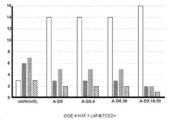
본 발명의 항체 분자 또는 항원-결합 부분은 서열 번호 4 (HCDR1), 123 (HCDR2), 5 (HCDR3), 9 (LCDR1), 10 (LCDR2) 및 11 (LCDR3)의 CDR 서열을 포함하는 항체 분자와 비교하여 햄스터 CD47에 결합하지 않거나 햄스터 CD47에 대한 감소된 결합을 나타낼 수 있다. 예를 들어, 본 발명의 항체 분자 또는 항원-결합 부분은 서열번호 4 (HCDR1), 123 (HCDR2), 5 (HCDR3), 9 (LCDR1), 10 (LCDR2) 및 11 (LCDR3) 의 CDR 서열을 포함하는 항체와 비교하여, 유세포 분석에 의해 측정될 때 CHO 세포에 결합하지 않거나, 유세포 분석에 의해 측정될 때 CHO 세포에 대한 감소된 결합을 나타낼 수 있다. 도 15에 나타낸 바와 같이, 본 발명의 대표적인 항체 분자는 CHO 세포와의 교차-반응성이 거의 없거나 전혀 없는 반면, IgG1 널 또는 IgG4 형태에서 클론 mVH/mVL의 원래 뮤린 v-도메인은 CHO 세포에 대해 강한 농도-의존적 결합을 유도한다. The antibody molecule or antigen-binding portion of the invention comprises an antibody molecule comprising the CDR sequences of SEQ ID NO: 4 (HCDR1), 123 (HCDR2), 5 (HCDR3), 9 (LCDR1), 10 (LCDR2) and 11 (LCDR3). Compared to hamster CD47 or may indicate reduced binding to hamster CD47. For example, the antibody molecule or antigen-binding portion of the invention comprises the CDR sequences of SEQ ID NO: 4 (HCDR1), 123 (HCDR2), 5 (HCDR3), 9 (LCDR1), 10 (LCDR2) and 11 (LCDR3). Compared to the antibody comprising, it may not bind to CHO cells as measured by flow cytometry, or may show reduced binding to CHO cells as measured by flow cytometry. As shown in Figure 15, representative antibody molecules of the present invention have little or no cross-reactivity with CHO cells, whereas the original murine v-domain of clone mVH / mVL in IgG1 null or IgG4 form is strong against CHO cells. Induces concentration-dependent binding.
본 발명의 바람직한 최적화된 항-CD47 항체 분자는 상응하는 뮤린 CDR 또는 다른 (예를 들어, 프레임워크) 아미노산 위치에서 최대 수의 인간 생식계 치환을 가질 필요는 없다. 하기의 실시예 부분에서 상세하게 설명된 바와 같이, 본 발명자들은 "최대 인간화" 항체 분자가 항-CD47 결합 특성 및/또는 다른 바람직한 특징의 관점에서 반드시 "최대 최적화"되는 것은 아님을 발견하였다.Preferred optimized anti-CD47 antibody molecules of the invention need not have a maximum number of human germline substitutions at corresponding murine CDRs or other (eg, framework) amino acid positions. As detailed in the Examples section below, the inventors have discovered that “maximum humanized” antibody molecules are not necessarily “maximum optimized” in terms of anti-CD47 binding properties and / or other desirable characteristics.
본 발명은 본원에 정의된 바와 같은 항체 분자 또는 이의 항원-결합 부분의 아미노산 서열에 대한 변형을 포함한다. 예를 들어, 본 발명은 활성 및/또는 친화도를 향상시키거나 감소시킨 변이체 뿐만 아니라 그들의 특성에 유의하게 영향을 미치지 않는 기능적으로 동등한 가변 영역 및 CDR을 포함하는 항체 분자 및 이의 상응하는 항원-결합 부분을 포함한다. 예를 들어, 아미노산 서열을 돌연변이시켜 CD47에 대한 원하는 결합 친화도를 갖는 항체를 얻을 수 있다. 단일 또는 다중 아미노산 잔기의 서열 내 삽입뿐만 아니라, 하나의 잔기에서 100 개 이상의 잔기를 포함하는 폴리펩티드까지의 길이 범위의 아미노- 및/또는 카복실- 말단 결합을 포함하는 삽입이 예상된다. 말단 삽입의 예는 N-말단 메티오닐 잔기를 갖는 항체 분자 또는 에피토프 태그에 결합된 항체 분자를 포함한다. 항체 분자의 다른 삽입 변이체는 혈액 순환에서 항체의 반감기를 증가시키는 효소 또는 폴리펩티드의 항체의 N- 또는 C- 말단에 대한 융합을 포함한다.The invention includes modifications to the amino acid sequence of an antibody molecule or antigen-binding portion thereof as defined herein. For example, the present invention provides antibodies molecules and corresponding antigen-bindings thereof comprising functionally equivalent variable regions and CDRs that do not significantly affect their properties as well as variants that enhance or decrease activity and / or affinity. Includes part. For example, the amino acid sequence can be mutated to obtain an antibody with the desired binding affinity for CD47. It is contemplated that insertions within a sequence of single or multiple amino acid residues, as well as amino- and / or carboxyl-terminal linkages ranging in length from one residue to a polypeptide comprising 100 or more residues. Examples of terminal insertions include antibody molecules having N-terminal methionyl residues or antibody molecules bound to epitope tags. Other insertional variants of the antibody molecule include fusion of the enzyme or polypeptide to the N- or C-terminus of the antibody, which increases the half-life of the antibody in blood circulation.
본 발명의 항체 분자 또는 항원-결합 부분은 글리코실화 및 비글리코실화 폴리펩티드 뿐만 아니라 다른 번역 후 변형을 갖는 폴리펩티드, 예를 들어 상이한 당과의 글리코실화, 아세틸화 및 인산화를 포함할 수 있다. 본 발명의 항체 분자 또는 항원-결합 부분은 예를 들어 글리코실화 부위를 형성 또는 제거하기 위해 하나 이상의 아미노산 잔기를 첨가, 제거 또는 대체함으로써 돌연변이되어 이러한 번역 후 변형을 변경할 수 있다.Antibody molecules or antigen-binding portions of the invention can include glycosylated and non-glycosylated polypeptides, as well as polypeptides with other post-translational modifications, such as glycosylation, acetylation and phosphorylation with different sugars. Antibody molecules or antigen-binding portions of the invention can be mutated, for example, by adding, removing or replacing one or more amino acid residues to form or remove glycosylation sites to alter these post-translational modifications.
본 발명의 항체 분자 또는 항원-결합 부분은 예를 들어 아미노산 치환에 의해 변형되어 항체에서 잠재적 단백질 분해 부위를 제거할 수 있다.The antibody molecule or antigen-binding portion of the invention can be modified, for example, by amino acid substitution to remove potential proteolytic sites in the antibody.
항체 분자 또는 이의 항원-결합 부분에서, HCDR1은 아미노산 서열: G-Y-T/S/N/R-F-T/N-N/S-Y-Y/V-F/V/G (서열번호 21)을 가질 수 있다; HCDR2는 아미노산 서열: M/I-G-V/N/I/D-I-N/Y-P-V/G/F-N/D-G/S-D-T-N/R/K-F/Y-N/S-P-S-F-Q-G (서열번호 22)을 가질 수 있다; 및 HCDR3은 아미노산 서열: G-G-F/H/I/Q/Y-T/V/I-M/T/R/P/A/L-D/G-Y/Q/N/R/S/W/K/A/E/F/H/I/L/M/T/V (서열번호 23)을 가질 수 있다. 대안적으로, AHo 정의를 사용하여, 항체 분자 또는 이의 항원 결합 부분에서, HCDR1은 아미노산 서열: G-S-G-Y-T/S/N/R-F-T/N-N/S-Y-Y (서열번호 24)을 가질 수 있다; HCDR2는 아미노산 서열: I-N/Y-P-V/G/F-N/D-G/S-D-T-N/R/K-F/Y-N/S-P-S-F-Q-G (서열번호 25)을 가질 수 있다; 및 HCDR3은 아미노산 서열: G-G-F/H/I/Q/Y-T/V/I-M/T/R/P/A/L-D/G (서열번호 26)을 가질 수 있다.In the antibody molecule or antigen-binding portion thereof, HCDR1 may have the amino acid sequence: G-Y-T / S / N / R-F-T / N-N / S-Y-Y / V-F / V / G (SEQ ID NO: 21); HCDR2 may have the amino acid sequence: M / I-G-V / N / I / D-I-N / Y-P-V / G / F-N / D-G / S-D-T-N / R / K-F / Y-N / S-P-S-F-Q-G (SEQ ID NO: 22); And HCDR3 is the amino acid sequence: GGF / H / I / Q / YT / V / IM / T / R / P / A / LD / GY / Q / N / R / S / W / K / A / E / F / H / I / L / M / T / V (SEQ ID NO: 23). Alternatively, using the AHo definition, in an antibody molecule or antigen-binding portion thereof, HCDR1 may have the amino acid sequence: G-S-G-Y-T / S / N / R-F-T / N-N / S-Y-Y (SEQ ID NO: 24); HCDR2 may have the amino acid sequence: I-N / Y-P-V / G / F-N / D-G / S-D-T-N / R / K-F / Y-N / S-P-S-F-Q-G (SEQ ID NO: 25); And HCDR3 may have the amino acid sequence: G-G-F / H / I / Q / Y-T / V / I-M / T / R / P / A / L-D / G (SEQ ID NO: 26).
예를 들어, HCDR1은 아미노산 서열: G-Y-T/S-F-T-N-Y-Y-I-F (서열번호 27)을 가질 수 있다; HCDR2는 아미노산 서열: M/I-G-I/D-I-N-P-V-N/D-G-D-T-N/R-F/Y-N/S-P-S-F-Q-G (서열번호 28)을 가질 수 있다; 및 HCDR3은 아미노산 서열: G-G-F/Y-T-M/P-D-Y/R/K/I (서열번호 29)을 가질 수 있다. 대안적으로, AHo 정의를 사용하여, HCDR1은 아미노산 서열: G-S-G-Y-T/S-F-T-N-Y-Y (서열번호 30)을 가질 수 있다; HCDR2는 아미노산 서열: I-N-P-V-N/D-G-D-T-N/R-F/Y-N/S-P-S-F-Q-G (서열번호 31)을 가질 수 있다; 및 HCDR3은 아미노산 서열: G-G-F/Y-T-M /P-D (서열번호 32)을 가질 수 있다.For example, HCDR1 may have the amino acid sequence: G-Y-T / S-F-T-N-Y-Y-I-F (SEQ ID NO: 27); HCDR2 may have the amino acid sequence: M / I-G-I / D-I-N-P-V-N / D-G-D-T-N / R-F / Y-N / S-P-S-F-Q-G (SEQ ID NO: 28); And HCDR3 may have the amino acid sequence: G-G-F / Y-T-M / P-D-Y / R / K / I (SEQ ID NO: 29). Alternatively, using the AHo definition, HCDR1 can have the amino acid sequence: G-S-G-Y-T / S-F-T-N-Y-Y (SEQ ID NO: 30); HCDR2 may have the amino acid sequence: I-N-P-V-N / D-G-D-T-N / R-F / Y-N / S-P-S-F-Q-G (SEQ ID NO: 31); And HCDR3 may have the amino acid sequence: G-G-F / Y-T-M / P-D (SEQ ID NO: 32).
항체 분자 또는 이의 항원-결합 부분에서, LCDR1은 아미노산 서열: R-S-S-Q/H-S-F/L-L/V-H-S-N/Q/A-G/A-Y/N/S-N/T-Y-L-H/D (서열번호 33)을 가질 수 있다; LCDR2는 아미노산 서열: L/K/M-V/G-S-N/Y-R-A/F/L/S-S (서열번호 34)을 가질 수 있다; 및 LCDR3은 아미노산 서열: F/L/M/S/T/V-Q-Q/N/A/T/S-T/L/M/I-Q/H-T/V/I/A/F-P/L-R/W-T (서열번호 35)을 가질 수 있다. 대안적으로, AHo 정의를 사용하여, 항체 분자 또는 이의 항원-결합 부분에서, LCDR1은 아미노산 서열: S-S-Q/H-S-F/L-L/V-H-S-N/Q/A-G/A-Y/N/S-N/T-Y (서열번호 36)을 가질 수 있다; LCDR2는 아미노산 서열: L/K/M-V/G-S-N/Y-R-A/F/L/S-S (서열번호 34)을 가질 수 있다; 및 LCDR3은 아미노산 서열: Q/N/A/T/S-T/L/M/I-Q/H-T/V/I/A/F-P/L-R/W (서열번호 37)을 가질 수 있다.In the antibody molecule or antigen-binding portion thereof, LCDR1 may have the amino acid sequence: R-S-S-Q / H-S-F / L-L / V-H-S-N / Q / A-G / A-Y / N / S-N / T-Y-L-H / D (SEQ ID NO: 33); LCDR2 may have the amino acid sequence: L / K / M-V / G-S-N / Y-R-A / F / L / S-S (SEQ ID NO: 34); And LCDR3 is an amino acid sequence: F / L / M / S / T / VQQ / N / A / T / ST / L / M / IQ / HT / V / I / A / FP / LR / WT (SEQ ID NO: 35) Can have Alternatively, using the AHo definition, in the antibody molecule or antigen-binding portion thereof, LCDR1 displays the amino acid sequence: SSQ / HSF / LL / VHSN / Q / AG / AY / N / SN / TY (SEQ ID NO: 36). Can have; LCDR2 may have the amino acid sequence: L / K / M-V / G-S-N / Y-R-A / F / L / S-S (SEQ ID NO: 34); And LCDR3 may have the amino acid sequence: Q / N / A / T / S-T / L / M / I-Q / H-T / V / I / A / F-P / L-R / W (SEQ ID NO: 37).
예를 들어, LCDR1은 아미노산 서열: R-S-S-Q-S-L-L/V-H-S-N/Q/A-G-Y/N-N/T-Y-L-H/D (서열번호 38)을 가질 수 있다; LCDR2는 아미노산 서열: L/K-V/G-S-N/Y-R-A/F/L-S (서열번호 39)을 가질 수 있다; 및 LCDR3은 아미노산 서열: F/S-Q-Q/N/A-T/L-Q/H-T/V-P-R-T (서열번호 40)을 가질 수 있다. 대안적으로, AHo 정의를 사용하여, LCDR1은 아미노산 서열: S-S-Q-S-L-L/V-H-S-N/Q/A-G-Y/N-N/T-Y (서열번호 41)을 가질 수 있다; LCDR2는 아미노산 서열: L/K-V/G-S-N/Y-R-A/F/L-S (서열번호 39)을 가질 수 있다; 및 LCDR3은 아미노산 서열: Q/N/A-T/L-Q/H-T/V-P-R (서열번호 42)을 가질 수 있다.For example, LCDR1 may have the amino acid sequence: R-S-S-Q-S-L-L / V-H-S-N / Q / A-G-Y / N-N / T-Y-L-H / D (SEQ ID NO: 38); LCDR2 may have the amino acid sequence: L / K-V / G-S-N / Y-R-A / F / L-S (SEQ ID NO: 39); And LCDR3 may have the amino acid sequence: F / S-Q-Q / N / A-T / L-Q / H-T / V-P-R-T (SEQ ID NO: 40). Alternatively, using the AHo definition, LCDR1 can have the amino acid sequence: S-S-Q-S-L-L / V-H-S-N / Q / A-G-Y / N-N / T-Y (SEQ ID NO: 41); LCDR2 may have the amino acid sequence: L / K-V / G-S-N / Y-R-A / F / L-S (SEQ ID NO: 39); And LCDR3 may have the amino acid sequence: Q / N / A-T / L-Q / H-T / V-P-R (SEQ ID NO: 42).
통합 CDR 정의를 사용하여 정의된 본 발명의 특정 구체예에서, 항체 분자 또는 항원-결합 부분은 하기를 포함할 수 있다:In certain embodiments of the invention defined using the integrated CDR definition, an antibody molecule or antigen-binding portion may include:
(a) 아미노산 서열 GYSFTNYYIF (서열번호 43) (HCDR1), MGDINPVNGDTNYSPSFQG (서열번호 44) (HCDR2), GGYTPDY (서열번호 45) (HCDR3), RSSQSLLHSNGYNYLH (서열번호 46) (LCDR1), KGSNRFS (서열번호 47) (LCDR2) 및 SQNLHVPRT (서열번호 48) (LCDR3) [클론 D-H3]; 또는(a) Amino acid sequence GYSFTNYYIF (SEQ ID NO: 43) (HCDR1), MGDINPVNGDTNYSPSFQG (SEQ ID NO: 44) (HCDR2), GGYTPDY (SEQ ID NO: 45) (HCDR3), RSSQSLLHSNGYNYLH (SEQ ID NO: 46) (LCDR1), KGSNRFS (SEQ ID NO: 47 ) (LCDR2) and SQNLHVPRT (SEQ ID NO: 48) (LCDR3) [clone D-H3]; or
(b) 아미노산 서열 GYTFTNYYIF (서열번호 49) (HCDR1), MGIINPVDGDTNYNPSFQG (서열번호 50) (HCDR2), GGYTMDR (서열번호 51) (HCDR3), RSSQSLLHSNGYTYLH (서열번호 52) (LCDR1), KVSNRLS (서열번호 53) (LCDR2) 및 FQNTHTPRT (서열번호 54) (LCDR3) [클론 A-D5]; 또는(b) Amino acid sequence GYTFTNYYIF (SEQ ID NO: 49) (HCDR1), MGIINPVDGDTNYNPSFQG (SEQ ID NO: 50) (HCDR2), GGYTMDR (SEQ ID NO: 51) (HCDR3), RSSQSLLHSNGYTYLH (SEQ ID NO: 52) (LCDR1), KVSNRLS (SEQ ID NO: 53 ) (LCDR2) and FQNTHTPRT (SEQ ID NO: 54) (LCDR3) [clone A-D5]; or
(c) 아미노산 서열 GYSFTNYYIF (서열번호 43) (HCDR1), IGDINPVNGDTNFSPSFQG (서열번호 55) (HCDR2), GGYTMDK (서열번호 56) (HCDR3), RSSQSLVHSNGYTYLH (서열번호 57) (LCDR1), KGSYRAS (서열번호 58) (LCDR2) 및 SQNTQTPRT (서열번호 59) (LCDR3) [클론 G-B6]; 또는(c) Amino acid sequence GYSFTNYYIF (SEQ ID NO: 43) (HCDR1), IGDINPVNGDTNFSPSFQG (SEQ ID NO: 55) (HCDR2), GGYTMDK (SEQ ID NO: 56) (HCDR3), RSSQSLVHSNGYTYLH (SEQ ID NO: 57) (LCDR1), KGSYRAS (SEQ ID NO: 58 ) (LCDR2) and SQNTQTPRT (SEQ ID NO: 59) (LCDR3) [clone G-B6]; or
(d) 아미노산 서열 GYSFTNYYIF (서열번호 43) (HCDR1), MGIINPVNGDTNYNPSFQG (서열번호 60) (HCDR2), GGYTMGK (서열번호 61) (HCDR3), RSSQSLVHSNGNTYLD (서열번호 62) (LCDR1), KGSYRFS (서열번호 63) (LCDR2) 및 SQATHTPRT (서열번호 64) (LCDR3) [클론 F-E7]; 또는(d) Amino acid sequence GYSFTNYYIF (SEQ ID NO: 43) (HCDR1), MGIINPVNGDTNYNPSFQG (SEQ ID NO: 60) (HCDR2), GGYTMGK (SEQ ID NO: 61) (HCDR3), RSSQSLVHSNGNTYLD (SEQ ID NO: 62) (LCDR1), KGSYRFS (SEQ ID NO: 63 ) (LCDR2) and SQATHTPRT (SEQ ID NO: 64) (LCDR3) [clone F-E7]; or
(e) 아미노산 서열 GYSFTNYYIF (서열번호 43) (HCDR1), MGIINPVDGDTRYSPSFQG (서열번호 65) (HCDR2), GGFTMDY (서열번호 66) (HCDR3), RSSQSLLHSNGYNYLH (서열번호 46) (LCDR1), KGSNRAS (서열번호 67) (LCDR2) 및 SQNTHTPRT (서열번호 68) (LCDR3) [클론 VH-A1/VL-B1]; 또는(e) Amino acid sequence GYSFTNYYIF (SEQ ID NO: 43) (HCDR1), MGIINPVDGDTRYSPSFQG (SEQ ID NO: 65) (HCDR2), GGFTMDY (SEQ ID NO: 66) (HCDR3), RSSQSLLHSNGYNYLH (SEQ ID NO: 46) (LCDR1), KGSNRAS (SEQ ID NO: 67 ) (LCDR2) and SQNTHTPRT (SEQ ID NO: 68) (LCDR3) [clone VH-A1 / VL-B1]; or
(f) 아미노산 서열 GYSFTNYYIF (서열번호 43) (HCDR1), IGIINPVDGDTRYSPSFQG (서열번호 69) (HCDR2), GGYTMDI (서열번호 70) (HCDR3), RSSQSLLHSNGYNYLH (서열번호 46) (LCDR1), LGSNRFS (서열번호 71) (LCDR2) 및 SQNTQTPRT (서열번호 59) (LCDR3) [클론 MH]; 또는(f) Amino acid sequence GYSFTNYYIF (SEQ ID NO: 43) (HCDR1), IGIINPVDGDTRYSPSFQG (SEQ ID NO: 69) (HCDR2), GGYTMDI (SEQ ID NO: 70) (HCDR3), RSSQSLLHSNGYNYLH (SEQ ID NO: 46) (LCDR1), LGSNRFS (SEQ ID NO: 71) ) (LCDR2) and SQNTQTPRT (SEQ ID NO: 59) (LCDR3) [clone MH]; or
(g) 아미노산 서열 GYSFTNYYIF (서열번호 43) (HCDR1), MGIINPVDGDTRYSPSFQG (서열번호 65) (HCDR2), GGYTMDI (서열번호 70) (HCDR3), RSSQSLLHSNGYNYLH (서열번호 46) (LCDR1), LGSNRAS (서열번호 72) (LCDR2) 및 SQATQTPRT (서열번호 73) (LCDR3) [클론 TTP]; 또는(g) Amino acid sequence GYSFTNYYIF (SEQ ID NO: 43) (HCDR1), MGIINPVDGDTRYSPSFQG (SEQ ID NO: 65) (HCDR2), GGYTMDI (SEQ ID NO: 70) (HCDR3), RSSQSLLHSNGYNYLH (SEQ ID NO: 46) (LCDR1), LGSNRAS (SEQ ID NO: 72 ) (LCDR2) and SQATQTPRT (SEQ ID NO: 73) (LCDR3) [clone TTP]; or
(h) 아미노산 서열 GYSFTNYYIF (서열번호 43) (HCDR1), MGIINPVDGDTNYNPSFQG (서열번호 50) (HCDR2), GGYTMDR (서열번호 51) (HCDR3), RSSQSLLHSNGYTYLH (서열번호 52) (LCDR1), KVSNRLS (서열번호 53) (LCDR2) 및 FQNTHTPRT (서열번호 54) (LCDR3) [클론 A-D5.1]; 또는(h) Amino acid sequence GYSFTNYYIF (SEQ ID NO: 43) (HCDR1), MGIINPVDGDTNYNPSFQG (SEQ ID NO: 50) (HCDR2), GGYTMDR (SEQ ID NO: 51) (HCDR3), RSSQSLLHSNGYTYLH (SEQ ID NO: 52) (LCDR1), KVSNRLS (SEQ ID NO: 53 ) (LCDR2) and FQNTHTPRT (SEQ ID NO: 54) (LCDR3) [clone A-D5.1]; or
(i) 아미노산 서열 GYSFTNYYIF (서열번호 43) (HCDR1), MGIINPVDGDTRYNPSFQG (서열번호 74) (HCDR2), GGYTMDR (서열번호 51) (HCDR3), RSSQSLLHSNGYTYLH (서열번호 52) (LCDR1), KVSNRLS (서열번호 53) (LCDR2) 및 FQNTHTPRT (서열번호 54) (LCDR3) [클론 A-D5.2]; 또는(i) Amino acid sequence GYSFTNYYIF (SEQ ID NO: 43) (HCDR1), MGIINPVDGDTRYNPSFQG (SEQ ID NO: 74) (HCDR2), GGYTMDR (SEQ ID NO: 51) (HCDR3), RSSQSLLHSNGYTYLH (SEQ ID NO: 52) (LCDR1), KVSNRLS (SEQ ID NO: 53 ) (LCDR2) and FQNTHTPRT (SEQ ID NO: 54) (LCDR3) [clone A-D5.2]; or
(j) 아미노산 서열 GYSFTNYYIF (서열번호 43) (HCDR1), MGIINPVDGDTRYSPSFQG (서열번호 65) (HCDR2), GGYTMDR (서열번호 51) (HCDR3), RSSQSLLHSNGYTYLH (서열번호 52) (LCDR1), KVSNRLS (서열번호 53) (LCDR2) 및 FQNTHTPRT (서열번호 54) (LCDR3) [클론 A-D5.3]; 또는(j) Amino acid sequence GYSFTNYYIF (SEQ ID NO: 43) (HCDR1), MGIINPVDGDTRYSPSFQG (SEQ ID NO: 65) (HCDR2), GGYTMDR (SEQ ID NO: 51) (HCDR3), RSSQSLLHSNGYTYLH (SEQ ID NO: 52) (LCDR1), KVSNRLS (SEQ ID NO: 53 ) (LCDR2) and FQNTHTPRT (SEQ ID NO: 54) (LCDR3) [clone A-D5.3]; or
(k) 아미노산 서열 GYTFTNYYIF (서열번호 49) (HCDR1), MGIINPVDGDTNYNPSFQG (서열번호 50) (HCDR2), GGYTMDR (서열번호 51) (HCDR3), RSSQSLLHSNGYNYLH (서열번호 46) (LCDR1), KVSNRLS (서열번호 53) (LCDR2) 및 FQNTHTPRT (서열번호 54) (LCDR3) [클론 A-D5.4]; 또는(k) Amino acid sequence GYTFTNYYIF (SEQ ID NO: 49) (HCDR1), MGIINPVDGDTNYNPSFQG (SEQ ID NO: 50) (HCDR2), GGYTMDR (SEQ ID NO: 51) (HCDR3), RSSQSLLHSNGYNYLH (SEQ ID NO: 46) (LCDR1), KVSNRLS (SEQ ID NO: 53 ) (LCDR2) and FQNTHTPRT (SEQ ID NO: 54) (LCDR3) [clone A-D5.4]; or
(l) 아미노산 서열 GYTFTNYYIF (서열번호 49) (HCDR1), MGIINPVDGDTNYNPSFQG (서열번호 50) (HCDR2), GGYTMDR (서열번호 51) (HCDR3), RSSQSLLHSNGYNYLH (서열번호 46) (LCDR1), KGSNRLS (서열번호 75) (LCDR2) 및 FQNTHTPRT (서열번호 54) (LCDR3) [클론 A-D5.5]; 또는(l) Amino acid sequence GYTFTNYYIF (SEQ ID NO: 49) (HCDR1), MGIINPVDGDTNYNPSFQG (SEQ ID NO: 50) (HCDR2), GGYTMDR (SEQ ID NO: 51) (HCDR3), RSSQSLLHSNGYNYLH (SEQ ID NO: 46) (LCDR1), KGSNRLS (SEQ ID NO: 75 ) (LCDR2) and FQNTHTPRT (SEQ ID NO: 54) (LCDR3) [clone A-D5.5]; or
(m) 아미노산 서열 GYTFTNYYIF (서열번호 49) (HCDR1), MGIINPVDGDTNYNPSFQG (서열번호 50) (HCDR2), GGYTMDR (서열번호 51) (HCDR3), RSSQSLLHSNGYNYLH (서열번호 46) (LCDR1), KGSNRLS (서열번호 75) (LCDR2) 및 FQNTQTPRT (서열번호 76) (LCDR3) [클론 A-D5.6]; 또는(m) Amino acid sequence GYTFTNYYIF (SEQ ID NO: 49) (HCDR1), MGIINPVDGDTNYNPSFQG (SEQ ID NO: 50) (HCDR2), GGYTMDR (SEQ ID NO: 51) (HCDR3), RSSQSLLHSNGYNYLH (SEQ ID NO: 46) (LCDR1), KGSNRLS (SEQ ID NO: 75 ) (LCDR2) and FQNTQTPRT (SEQ ID NO: 76) (LCDR3) [clone A-D5.6]; or
(n) 아미노산 서열 GYTFTNYYIF (서열번호 49) (HCDR1), MGIINPVDGDTNYNPSFQG (서열번호 50) (HCDR2), GGYTMDR (서열번호 51) (HCDR3), RSSQSLLHSNGYNYLH (서열번호 46) (LCDR1), LGSNRLS (서열번호 77) (LCDR2) 및 FQNTQTPRT (서열번호 76) (LCDR3) [클론 A-D5.7]; 또는 (n) Amino acid sequence GYTFTNYYIF (SEQ ID NO: 49) (HCDR1), MGIINPVDGDTNYNPSFQG (SEQ ID NO: 50) (HCDR2), GGYTMDR (SEQ ID NO: 51) (HCDR3), RSSQSLLHSNGYNYLH (SEQ ID NO: 46) (LCDR1), LGSNRLS (SEQ ID NO: 77 ) (LCDR2) and FQNTQTPRT (SEQ ID NO: 76) (LCDR3) [clone A-D5.7]; or
(o) 아미노산 서열 GYTFTNYYIF (서열번호 49) (HCDR1), MGIINPVDGDTNYNPSFQG (서열번호 50) (HCDR2), GGYTMDR (서열번호 51) (HCDR3), RSSQSLLHSQGYTYLH (서열번호 78) (LCDR1), KVSNRLS (서열번호 53) (LCDR2) 및 FQNTHTPRT (서열번호 54) (LCDR3) [클론 A-D5.8]; 또는(o) Amino acid sequence GYTFTNYYIF (SEQ ID NO: 49) (HCDR1), MGIINPVDGDTNYNPSFQG (SEQ ID NO: 50) (HCDR2), GGYTMDR (SEQ ID NO: 51) (HCDR3), RSSQSLLHSQGYTYLH (SEQ ID NO: 78) (LCDR1), KVSNRLS (SEQ ID NO: 53 ) (LCDR2) and FQNTHTPRT (SEQ ID NO: 54) (LCDR3) [clone A-D5.8]; or
(p) 아미노산 서열 GYTFTNYYIF (서열번호 49) (HCDR1), MGIINPVDGDTNYNPSFQG (서열번호 50) (HCDR2), GGYTMDR (서열번호 51) (HCDR3), RSSQSLLHSNGYTYLH (서열번호 52) (LCDR1), KVSNRLS (서열번호 53) (LCDR2) 및 FQQTHTPRT (서열번호 79) (LCDR3) [클론 A-D5.9]; 또는(p) Amino acid sequence GYTFTNYYIF (SEQ ID NO: 49) (HCDR1), MGIINPVDGDTNYNPSFQG (SEQ ID NO: 50) (HCDR2), GGYTMDR (SEQ ID NO: 51) (HCDR3), RSSQSLLHSNGYTYLH (SEQ ID NO: 52) (LCDR1), KVSNRLS (SEQ ID NO: 53 ) (LCDR2) and FQQTHTPRT (SEQ ID NO: 79) (LCDR3) [clone A-D5.9]; or
(q) 아미노산 서열 GYTFTNYYIF (서열번호 49) (HCDR1), MGIINPVDGDTNYNPSFQG (서열번호 50) (HCDR2), GGYTMDR (서열번호 51) (HCDR3), RSSQSLLHSQGYTYLH (서열번호 78) (LCDR1), KVSNRLS (서열번호 53) (LCDR2) 및 FQQTHTPRT (서열번호 79) (LCDR3) [클론 A-D5.10]; 또는(q) Amino acid sequence GYTFTNYYIF (SEQ ID NO: 49) (HCDR1), MGIINPVDGDTNYNPSFQG (SEQ ID NO: 50) (HCDR2), GGYTMDR (SEQ ID NO: 51) (HCDR3), RSSQSLLHSQGYTYLH (SEQ ID NO: 78) (LCDR1), KVSNRLS (SEQ ID NO: 53 ) (LCDR2) and FQQTHTPRT (SEQ ID NO: 79) (LCDR3) [clone A-D5.10]; or
(r) 아미노산 서열 GYSFTNYYIF (서열번호 43) (HCDR1), MGIINPVDGDTNYNPSFQG (서열번호 50) (HCDR2), GGYTMDR (서열번호 51) (HCDR3), RSSQSLLHSNGYNYLH (서열번호 46) (LCDR1), KVSNRLS (서열번호 53) (LCDR2) 및 FQNTHTPRT (서열번호 54) (LCDR3) [클론 A-D5.11]; 또는(r) Amino acid sequence GYSFTNYYIF (SEQ ID NO: 43) (HCDR1), MGIINPVDGDTNYNPSFQG (SEQ ID NO: 50) (HCDR2), GGYTMDR (SEQ ID NO: 51) (HCDR3), RSSQSLLHSNGYNYLH (SEQ ID NO: 46) (LCDR1), KVSNRLS (SEQ ID NO: 53 ) (LCDR2) and FQNTHTPRT (SEQ ID NO: 54) (LCDR3) [clone A-D5.11]; or
(s) 아미노산 서열 GYSFTNYYIF (서열번호 43) (HCDR1), MGIINPVDGDTRYNPSFQG (서열번호 74) (HCDR2), GGYTMDR (서열번호 51) (HCDR3), RSSQSLLHSNGYNYLH (서열번호 46) (LCDR1), KVSNRLS (서열번호 53) (LCDR2) 및 FQNTHTPRT (서열번호 54) (LCDR3) [클론 A-D5.12]; 또는(s) Amino acid sequence GYSFTNYYIF (SEQ ID NO: 43) (HCDR1), MGIINPVDGDTRYNPSFQG (SEQ ID NO: 74) (HCDR2), GGYTMDR (SEQ ID NO: 51) (HCDR3), RSSQSLLHSNGYNYLH (SEQ ID NO: 46) (LCDR1), KVSNRLS (SEQ ID NO: 53 ) (LCDR2) and FQNTHTPRT (SEQ ID NO: 54) (LCDR3) [clone A-D5.12]; or
(t) 아미노산 서열 GYSFTNYYIF (서열번호 43) (HCDR1), MGIINPVDGDTRYSPSFQG (서열번호 65) (HCDR2), GGYTMDR (서열번호 51) (HCDR3), RSSQSLLHSNGYNYLH (서열번호 46) (LCDR1), KVSNRLS (서열번호 53) (LCDR2) 및 FQNTHTPRT (서열번호 54) (LCDR3) [클론 A-D5.13]; 또는(t) Amino acid sequence GYSFTNYYIF (SEQ ID NO: 43) (HCDR1), MGIINPVDGDTRYSPSFQG (SEQ ID NO: 65) (HCDR2), GGYTMDR (SEQ ID NO: 51) (HCDR3), RSSQSLLHSNGYNYLH (SEQ ID NO: 46) (LCDR1), KVSNRLS (SEQ ID NO: 53 ) (LCDR2) and FQNTHTPRT (SEQ ID NO: 54) (LCDR3) [clone A-D5.13]; or
(u) 아미노산 서열 GYSFTNYYIF (서열번호 43) (HCDR1), MGIINPVDGDTRYSPSFQG (서열번호 65) (HCDR2), GGYTMDR (서열번호 51) (HCDR3), RSSQSLLHSSGYNYLH (서열번호 80) (LCDR1), KVSNRLS (서열번호 53) (LCDR2) 및 FQNTHTPRT (서열번호 54) (LCDR3) [클론 A-D5.14]; 또는(u) Amino acid sequence GYSFTNYYIF (SEQ ID NO: 43) (HCDR1), MGIINPVDGDTRYSPSFQG (SEQ ID NO: 65) (HCDR2), GGYTMDR (SEQ ID NO: 51) (HCDR3), RSSQSLLHSSGYNYLH (SEQ ID NO: 80) (LCDR1), KVSNRLS (SEQ ID NO: 53 ) (LCDR2) and FQNTHTPRT (SEQ ID NO: 54) (LCDR3) [clone A-D5.14]; or
(v) 아미노산 서열 GYSFTNYYIF (서열번호 43) (HCDR1), MGIINPVDGDTRYSPSFQG (서열번호 65) (HCDR2), GGYTMDR (서열번호 51) (HCDR3), RSSQSLLHSGGYNYLH (서열번호 81) (LCDR1), KVSNRLS (서열번호 53) (LCDR2) 및 FQNTHTPRT (서열번호 54) (LCDR3) [클론 A-D5.15]; 또는(v) Amino acid sequence GYSFTNYYIF (SEQ ID NO: 43) (HCDR1), MGIINPVDGDTRYSPSFQG (SEQ ID NO: 65) (HCDR2), GGYTMDR (SEQ ID NO: 51) (HCDR3), RSSQSLLHSGGYNYLH (SEQ ID NO: 81) (LCDR1), KVSNRLS (SEQ ID NO: 53 ) (LCDR2) and FQNTHTPRT (SEQ ID NO: 54) (LCDR3) [clone A-D5.15]; or
(w) 아미노산 서열 GYSFTNYYIF (서열번호 43) (HCDR1), MGIINPVDGDTRYSPSFQG (서열번호 65) (HCDR2), GGYTMDR (서열번호 51) (HCDR3), RSSQSLLHSAGYNYLH (서열번호 82) (LCDR1), KVSNRLS (서열번호 53) (LCDR2) 및 FQNTHTPRT (서열번호 54) (LCDR3) [클론 A-D5.16]; 또는(w) Amino acid sequence GYSFTNYYIF (SEQ ID NO: 43) (HCDR1), MGIINPVDGDTRYSPSFQG (SEQ ID NO: 65) (HCDR2), GGYTMDR (SEQ ID NO: 51) (HCDR3), RSSQSLLHSAGYNYLH (SEQ ID NO: 82) (LCDR1), KVSNRLS (SEQ ID NO: 53 ) (LCDR2) and FQNTHTPRT (SEQ ID NO: 54) (LCDR3) [clone A-D5.16]; or
(x) 아미노산 서열 GYSFTNYYIF (서열번호 43) (HCDR1), MGIINPVDGDTRYSPSFQG (서열번호 65) (HCDR2), GGYTMDR (서열번호 51) (HCDR3), RSSQSLLHSTGYNYLH (서열번호 83) (LCDR1), KVSNRLS (서열번호 53) (LCDR2) 및 FQNTHTPRT (서열번호 54) (LCDR3) [클론 A-D5.17]; 또는(x) Amino acid sequence GYSFTNYYIF (SEQ ID NO: 43) (HCDR1), MGIINPVDGDTRYSPSFQG (SEQ ID NO: 65) (HCDR2), GGYTMDR (SEQ ID NO: 51) (HCDR3), RSSQSLLHSTGYNYLH (SEQ ID NO: 83) (LCDR1), KVSNRLS (SEQ ID NO: 53 ) (LCDR2) and FQNTHTPRT (SEQ ID NO: 54) (LCDR3) [clone A-D5.17]; or
(y) 아미노산 서열 GYSFTNYYIF (서열번호 43) (HCDR1), MGIINPVDGDTRYSPSFQG (서열번호 65) (HCDR2), GGYTMDR (서열번호 51) (HCDR3), RSSQSLLHSNAYNYLH (서열번호 84) (LCDR1), KVSNRLS (서열번호 53) (LCDR2) 및 FQNTHTPRT (서열번호 54) (LCDR3) [클론 A-D5.18]; 또는(y) Amino acid sequence GYSFTNYYIF (SEQ ID NO: 43) (HCDR1), MGIINPVDGDTRYSPSFQG (SEQ ID NO: 65) (HCDR2), GGYTMDR (SEQ ID NO: 51) (HCDR3), RSSQSLLHSNAYNYLH (SEQ ID NO: 84) (LCDR1), KVSNRLS (SEQ ID NO: 53 ) (LCDR2) and FQNTHTPRT (SEQ ID NO: 54) (LCDR3) [clone A-D5.18]; or
(z) 아미노산 서열 GYSFTNYYIF (서열번호 43) (HCDR1), MGIINPVDGDTRYSPSFQG (서열번호 65) (HCDR2), GGYTMDR (서열번호 51) (HCDR3), RSSQSLLHSAGYNYLH (서열번호 82) (LCDR1), KVSNRFS (서열번호 85) (LCDR2) 및 FQNTHTPRT (서열번호 54) (LCDR3) [클론 A-D5.16-DI]; 또는(z) Amino acid sequence GYSFTNYYIF (SEQ ID NO: 43) (HCDR1), MGIINPVDGDTRYSPSFQG (SEQ ID NO: 65) (HCDR2), GGYTMDR (SEQ ID NO: 51) (HCDR3), RSSQSLLHSAGYNYLH (SEQ ID NO: 82) (LCDR1), KVSNRFS (SEQ ID NO: 85 ) (LCDR2) and FQNTHTPRT (SEQ ID NO: 54) (LCDR3) [clone A-D5.16-DI]; or
(z.1) 아미노산 서열 GYTFTNYYIF (서열번호 49) (HCDR1), MGIINPVDGDTNYNPSFQG (서열번호 50) (HCDR2), GGYTMDR (서열번호 51) (HCDR3), RSSQSLLHSNGYTYLH (서열번호 52) (LCDR1), KVSNRFS (서열번호 85) (LCDR2) 및 FQNTHTPRT (서열번호 54) (LCDR3) [클론 A-D5-DI].(z.1) Amino acid sequence GYTFTNYYIF (SEQ ID NO: 49) (HCDR1), MGIINPVDGDTNYNPSFQG (SEQ ID NO: 50) (HCDR2), GGYTMDR (SEQ ID NO: 51) (HCDR3), RSSQSLLHSNGYTYLH (SEQ ID NO: 52) (LCDR1), KVSNRFS (SEQ ID NO: No. 85) (LCDR2) and FQNTHTPRT (SEQ ID NO: 54) (LCDR3) [clone A-D5-DI].
본 발명의 상기 특정 구체예에서, CDR은 대안적으로 항체 분자 또는 항원-결합 부분이 하기를 포함하도록 AHo CDR 정의를 사용하여 정의될 수 있다:In this particular embodiment of the invention, CDRs may alternatively be defined using AHo CDR definitions such that the antibody molecule or antigen-binding portion comprises:
(a) 아미노산 서열 GSGYSFTNYY (서열번호 86) (HCDR1), INPVNGDTNYSPSFQG (서열번호 87) (HCDR2), GGYTPD (서열번호 88) (HCDR3), SSQSLLHSNGYNY (서열번호 89) (LCDR1), KGSNRFS (서열번호 47) (LCDR2) 및 NLHVPR (서열번호 90) (LCDR3) [클론 D-H3]; 또는(a) Amino acid sequence GSGYSFTNYY (SEQ ID NO: 86) (HCDR1), INPVNGDTNYSPSFQG (SEQ ID NO: 87) (HCDR2), GGYTPD (SEQ ID NO: 88) (HCDR3), SSQSLLHSNGYNY (SEQ ID NO: 89) (LCDR1), KGSNRFS (SEQ ID NO: 47) ) (LCDR2) and NLHVPR (SEQ ID NO: 90) (LCDR3) [clone D-H3]; or
(b) 아미노산 서열 GSGYTFTNYY (서열번호 15) (HCDR1), INPVDGDTNYNPSFQG (서열번호 91) (HCDR2), GGYTMD (서열번호 16) (HCDR3), SSQSLLHSNGYTY (서열번호 92) (LCDR1), KVSNRLS (서열번호 53) (LCDR2) 및 NTHTPR (서열번호 93) (LCDR3) [클론 A-D5]; 또는(b) Amino acid sequence GSGYTFTNYY (SEQ ID NO: 15) (HCDR1), INPVDGDTNYNPSFQG (SEQ ID NO: 91) (HCDR2), GGYTMD (SEQ ID NO: 16) (HCDR3), SSQSLLHSNGYTY (SEQ ID NO: 92) (LCDR1), KVSNRLS (SEQ ID NO: 53 ) (LCDR2) and NTHTPR (SEQ ID NO: 93) (LCDR3) [clone A-D5]; or
(c) 아미노산 서열 GSGYSFTNYY (서열번호 86) (HCDR1), INPVNGDTNFSPSFQG (서열번호 94) (HCDR2), GGYTMD (서열번호 16) (HCDR3), SSQSLVHSNGYTY (서열번호 95) (LCDR1), KGSYRAS (서열번호 58) (LCDR2) 및 NTQTPR (서열번호 96) (LCDR3) [클론 G-B6]; 또는(c) Amino acid sequence GSGYSFTNYY (SEQ ID NO: 86) (HCDR1), INPVNGDTNFSPSFQG (SEQ ID NO: 94) (HCDR2), GGYTMD (SEQ ID NO: 16) (HCDR3), SSQSLVHSNGYTY (SEQ ID NO: 95) (LCDR1), KGSYRAS (SEQ ID NO: 58 ) (LCDR2) and NTQTPR (SEQ ID NO: 96) (LCDR3) [clone G-B6]; or
(d) 아미노산 서열 GSGYSFTNYY (서열번호 86) (HCDR1), INPVNGDTNYNPSFQG (서열번호 97) (HCDR2), GGYTMG (서열번호 98) (HCDR3), SSQSLVHSNGNTY (서열번호 19) (LCDR1), KGSYRFS (서열번호 63) (LCDR2) 및 ATHTPR (서열번호 99) (LCDR3) [클론 F-E7]; 또는(d) Amino acid sequence GSGYSFTNYY (SEQ ID NO: 86) (HCDR1), INPVNGDTNYNPSFQG (SEQ ID NO: 97) (HCDR2), GGYTMG (SEQ ID NO: 98) (HCDR3), SSQSLVHSNGNTY (SEQ ID NO: 19) (LCDR1), KGSYRFS (SEQ ID NO: 63 ) (LCDR2) and ATHTPR (SEQ ID NO: 99) (LCDR3) [clone F-E7]; or
(e) 아미노산 서열 GSGYSFTNYY (서열번호 86) (HCDR1), INPVDGDTRYSPSFQG (서열번호 100) (HCDR2), GGFTMD (서열번호 101) (HCDR3), SSQSLLHSNGYNY (서열번호 89) (LCDR1), KGSNRAS (서열번호 67) (LCDR2) 및 NTHTPR (서열번호 93) (LCDR3) [클론 VH-A1/VL-B1]; 또는(e) Amino acid sequence GSGYSFTNYY (SEQ ID NO: 86) (HCDR1), INPVDGDTRYSPSFQG (SEQ ID NO: 100) (HCDR2), GGFTMD (SEQ ID NO: 101) (HCDR3), SSQSLLHSNGYNY (SEQ ID NO: 89) (LCDR1), KGSNRAS (SEQ ID NO: 67 ) (LCDR2) and NTHTPR (SEQ ID NO: 93) (LCDR3) [clone VH-A1 / VL-B1]; or
(f) 아미노산 서열 GSGYSFTNYY (서열번호 86) (HCDR1), INPVDGDTRYSPSFQG (서열번호 100) (HCDR2), GGYTMD (서열번호 16) (HCDR3), SSQSLLHSNGYNY (서열번호 89) (LCDR1), LGSNRFS (서열번호 71) (LCDR2) 및 NTQTPR (서열번호 96) (LCDR3) [클론 MH]; 또는(f) Amino acid sequence GSGYSFTNYY (SEQ ID NO: 86) (HCDR1), INPVDGDTRYSPSFQG (SEQ ID NO: 100) (HCDR2), GGYTMD (SEQ ID NO: 16) (HCDR3), SSQSLLHSNGYNY (SEQ ID NO: 89) (LCDR1), LGSNRFS (SEQ ID NO: 71 ) (LCDR2) and NTQTPR (SEQ ID NO: 96) (LCDR3) [clone MH]; or
(g) 아미노산 서열 GSGYSFTNYY (서열번호 86) (HCDR1), INPVDGDTRYSPSFQG (서열번호 100) (HCDR2), GGYTMD (서열번호 16) (HCDR3), SSQSLLHSNGYNY (서열번호 89) (LCDR1), LGSNRAS (서열번호 72) (LCDR2) 및 ATQTPR (서열번호 102) (LCDR3) [클론 TTP]; 또는(g) Amino acid sequence GSGYSFTNYY (SEQ ID NO: 86) (HCDR1), INPVDGDTRYSPSFQG (SEQ ID NO: 100) (HCDR2), GGYTMD (SEQ ID NO: 16) (HCDR3), SSQSLLHSNGYNY (SEQ ID NO: 89) (LCDR1), LGSNRAS (SEQ ID NO: 72 ) (LCDR2) and ATQTPR (SEQ ID NO: 102) (LCDR3) [clone TTP]; or
(h) 아미노산 서열 GSGYSFTNYY (서열번호 86) (HCDR1), INPVDGDTNYNPSFQG (서열번호 91) (HCDR2), GGYTMD (서열번호 16) (HCDR3), SSQSLLHSNGYTY (서열번호 92) (LCDR1), KVSNRLS (서열번호 53) (LCDR2) 및 NTHTPR (서열번호 93) (LCDR3) [클론 A-D5.1]; 또는(h) Amino acid sequence GSGYSFTNYY (SEQ ID NO: 86) (HCDR1), INPVDGDTNYNPSFQG (SEQ ID NO: 91) (HCDR2), GGYTMD (SEQ ID NO: 16) (HCDR3), SSQSLLHSNGYTY (SEQ ID NO: 92) (LCDR1), KVSNRLS (SEQ ID NO: 53 ) (LCDR2) and NTHTPR (SEQ ID NO: 93) (LCDR3) [clone A-D5.1]; or
(i) 아미노산 서열 GSGYSFTNYY (서열번호 86) (HCDR1), INPVDGDTRYNPSFQG (서열번호 103) (HCDR2), GGYTMD (서열번호 16) (HCDR3), SSQSLLHSNGYTY (서열번호 92) (LCDR1), KVSNRLS (서열번호 53) (LCDR2) 및 NTHTPR (서열번호 93) (LCDR3) [클론 A-D5.2]; 또는(i) Amino acid sequence GSGYSFTNYY (SEQ ID NO: 86) (HCDR1), INPVDGDTRYNPSFQG (SEQ ID NO: 103) (HCDR2), GGYTMD (SEQ ID NO: 16) (HCDR3), SSQSLLHSNGYTY (SEQ ID NO: 92) (LCDR1), KVSNRLS (SEQ ID NO: 53 ) (LCDR2) and NTHTPR (SEQ ID NO: 93) (LCDR3) [clone A-D5.2]; or
(j) 아미노산 서열 GSGYSFTNYY (서열번호 86) (HCDR1), INPVDGDTRYSPSFQG (서열번호 100) (HCDR2), GGYTMD (서열번호 16) (HCDR3), SSQSLLHSNGYTY (서열번호 92) (LCDR1), KVSNRLS (서열번호 53) (LCDR2) 및 NTHTPR (서열번호 93) (LCDR3) [클론 A-D5.3]; 또는(j) Amino acid sequence GSGYSFTNYY (SEQ ID NO: 86) (HCDR1), INPVDGDTRYSPSFQG (SEQ ID NO: 100) (HCDR2), GGYTMD (SEQ ID NO: 16) (HCDR3), SSQSLLHSNGYTY (SEQ ID NO: 92) (LCDR1), KVSNRLS (SEQ ID NO: 53 ) (LCDR2) and NTHTPR (SEQ ID NO: 93) (LCDR3) [clone A-D5.3]; or
(k) 아미노산 서열 GSGYTFTNYY (서열번호 15) (HCDR1), INPVDGDTNYNPSFQG (서열번호 91) (HCDR2), GGYTMD (서열번호 16) (HCDR3), SSQSLLHSNGYNY (서열번호 89) (LCDR1), KVSNRLS (서열번호 53) (LCDR2) 및 NTHTPR (서열번호 93) (LCDR3) [클론 A-D5.4]; 또는(k) Amino acid sequence GSGYTFTNYY (SEQ ID NO: 15) (HCDR1), INPVDGDTNYNPSFQG (SEQ ID NO: 91) (HCDR2), GGYTMD (SEQ ID NO: 16) (HCDR3), SSQSLLHSNGYNY (SEQ ID NO: 89) (LCDR1), KVSNRLS (SEQ ID NO: 53 ) (LCDR2) and NTHTPR (SEQ ID NO: 93) (LCDR3) [clone A-D5.4]; or
(l) 아미노산 서열 GSGYTFTNYY (서열번호 15) (HCDR1), INPVDGDTNYNPSFQG (서열번호 91) (HCDR2), GGYTMD (서열번호 16) (HCDR3), SSQSLLHSNGYNY (서열번호 89) (LCDR1), KGSNRLS (서열번호 75) (LCDR2) 및 NTHTPR (서열번호 93) (LCDR3) [클론 A-D5.5]; 또는(l) Amino acid sequence GSGYTFTNYY (SEQ ID NO: 15) (HCDR1), INPVDGDTNYNPSFQG (SEQ ID NO: 91) (HCDR2), GGYTMD (SEQ ID NO: 16) (HCDR3), SSQSLLHSNGYNY (SEQ ID NO: 89) (LCDR1), KGSNRLS (SEQ ID NO: 75 ) (LCDR2) and NTHTPR (SEQ ID NO: 93) (LCDR3) [clone A-D5.5]; or
(m) 아미노산 서열 GSGYTFTNYY (서열번호 15) (HCDR1), INPVDGDTNYNPSFQG (서열번호 91) (HCDR2), GGYTMD (서열번호 16) (HCDR3), SSQSLLHSNGYNY (서열번호 89) (LCDR1), KGSNRLS (서열번호 75) (LCDR2) 및 NTQTPR (서열번호 96) (LCDR3) [클론 A-D5.6]; 또는(m) Amino acid sequence GSGYTFTNYY (SEQ ID NO: 15) (HCDR1), INPVDGDTNYNPSFQG (SEQ ID NO: 91) (HCDR2), GGYTMD (SEQ ID NO: 16) (HCDR3), SSQSLLHSNGYNY (SEQ ID NO: 89) (LCDR1), KGSNRLS (SEQ ID NO: 75 ) (LCDR2) and NTQTPR (SEQ ID NO: 96) (LCDR3) [clone A-D5.6]; or
(n) 아미노산 서열 GSGYTFTNYY (서열번호 15) (HCDR1), INPVDGDTNYNPSFQG (서열번호 91) (HCDR2), GGYTMD (서열번호 16) (HCDR3), SSQSLLHSNGYNY (서열번호 89) (LCDR1), LGSNRLS (서열번호 77) (LCDR2) 및 NTQTPR (서열번호 96) (LCDR3) [클론 A-D5.7]; 또는(n) Amino acid sequence GSGYTFTNYY (SEQ ID NO: 15) (HCDR1), INPVDGDTNYNPSFQG (SEQ ID NO: 91) (HCDR2), GGYTMD (SEQ ID NO: 16) (HCDR3), SSQSLLHSNGYNY (SEQ ID NO: 89) (LCDR1), LGSNRLS (SEQ ID NO: 77 ) (LCDR2) and NTQTPR (SEQ ID NO: 96) (LCDR3) [clone A-D5.7]; or
(o) 아미노산 서열 GSGYTFTNYY (서열번호 15) (HCDR1), INPVDGDTNYNPSFQG (서열번호 91) (HCDR2), GGYTMD (서열번호 16) (HCDR3), SSQSLLHSQGYTY (서열번호 104) (LCDR1), KVSNRLS (서열번호 53) (LCDR2) 및 NTHTPR (서열번호 93) (LCDR3) [클론 A-D5.8]; 또는(o) Amino acid sequence GSGYTFTNYY (SEQ ID NO: 15) (HCDR1), INPVDGDTNYNPSFQG (SEQ ID NO: 91) (HCDR2), GGYTMD (SEQ ID NO: 16) (HCDR3), SSQSLLHSQGYTY (SEQ ID NO: 104) (LCDR1), KVSNRLS (SEQ ID NO: 53 ) (LCDR2) and NTHTPR (SEQ ID NO: 93) (LCDR3) [clone A-D5.8]; or
(p) 아미노산 서열 GSGYTFTNYY (서열번호 15) (HCDR1), INPVDGDTNYNPSFQG (서열번호 91) (HCDR2), GGYTMD (서열번호 16) (HCDR3), SSQSLLHSNGYTY (서열번호 92) (LCDR1), KVSNRLS (서열번호 53) (LCDR2) 및 QTHTPR (서열번호 105) (LCDR3) [클론 A-D5.9]; 또는(p) Amino acid sequence GSGYTFTNYY (SEQ ID NO: 15) (HCDR1), INPVDGDTNYNPSFQG (SEQ ID NO: 91) (HCDR2), GGYTMD (SEQ ID NO: 16) (HCDR3), SSQSLLHSNGYTY (SEQ ID NO: 92) (LCDR1), KVSNRLS (SEQ ID NO: 53 ) (LCDR2) and QTHTPR (SEQ ID NO: 105) (LCDR3) [clone A-D5.9]; or
(q) 아미노산 서열 GSGYTFTNYY (서열번호 15) (HCDR1), INPVDGDTNYNPSFQG (서열번호 91) (HCDR2), GGYTMD (서열번호 16) (HCDR3), SSQSLLHSQGYTY (서열번호 104) (LCDR1), KVSNRLS (서열번호 53) (LCDR2) 및 QTHTPR (서열번호 105) (LCDR3) [클론 A-D5.10]; 또는(q) Amino acid sequence GSGYTFTNYY (SEQ ID NO: 15) (HCDR1), INPVDGDTNYNPSFQG (SEQ ID NO: 91) (HCDR2), GGYTMD (SEQ ID NO: 16) (HCDR3), SSQSLLHSQGYTY (SEQ ID NO: 104) (LCDR1), KVSNRLS (SEQ ID NO: 53 ) (LCDR2) and QTHTPR (SEQ ID NO: 105) (LCDR3) [clone A-D5.10]; or
(r) 아미노산 서열 GSGYSFTNYY (서열번호 86) (HCDR1), INPVDGDTNYNPSFQG (서열번호 91) (HCDR2), GGYTMD (서열번호 16) (HCDR3), SSQSLLHSNGYNY (서열번호 89) (LCDR1), KVSNRLS (서열번호 53) (LCDR2) 및 NTHTPR (서열번호 93) (LCDR3) [클론 A-D5.11]; 또는(r) Amino acid sequence GSGYSFTNYY (SEQ ID NO: 86) (HCDR1), INPVDGDTNYNPSFQG (SEQ ID NO: 91) (HCDR2), GGYTMD (SEQ ID NO: 16) (HCDR3), SSQSLLHSNGYNY (SEQ ID NO: 89) (LCDR1), KVSNRLS (SEQ ID NO: 53 ) (LCDR2) and NTHTPR (SEQ ID NO: 93) (LCDR3) [clone A-D5.11]; or
(s) 아미노산 서열 GSGYSFTNYY (서열번호 86) (HCDR1), INPVDGDTRYNPSFQG (서열번호 103) (HCDR2), GGYTMD (서열번호 16) (HCDR3), SSQSLLHSNGYNY (서열번호 89) (LCDR1), KVSNRLS (서열번호 53) (LCDR2) 및 NTHTPR (서열번호 93) (LCDR3) [클론 A-D5.12]; 또는(s) Amino acid sequence GSGYSFTNYY (SEQ ID NO: 86) (HCDR1), INPVDGDTRYNPSFQG (SEQ ID NO: 103) (HCDR2), GGYTMD (SEQ ID NO: 16) (HCDR3), SSQSLLHSNGYNY (SEQ ID NO: 89) (LCDR1), KVSNRLS (SEQ ID NO: 53 ) (LCDR2) and NTHTPR (SEQ ID NO: 93) (LCDR3) [clone A-D5.12]; or
(t) 아미노산 서열 GSGYSFTNYY (서열번호 86) (HCDR1), INPVDGDTRYSPSFQG (서열번호 100) (HCDR2), GGYTMD (서열번호 16) (HCDR3), SSQSLLHSNGYNY (서열번호 89) (LCDR1), KVSNRLS (서열번호 53) (LCDR2) 및 NTHTPR (서열번호 93) (LCDR3) [클론 A-D5.13]; 또는(t) Amino acid sequence GSGYSFTNYY (SEQ ID NO: 86) (HCDR1), INPVDGDTRYSPSFQG (SEQ ID NO: 100) (HCDR2), GGYTMD (SEQ ID NO: 16) (HCDR3), SSQSLLHSNGYNY (SEQ ID NO: 89) (LCDR1), KVSNRLS (SEQ ID NO: 53 ) (LCDR2) and NTHTPR (SEQ ID NO: 93) (LCDR3) [clone A-D5.13]; or
(u) 아미노산 서열 GSGYSFTNYY (서열번호 86) (HCDR1), INPVDGDTRYSPSFQG (서열번호 100) (HCDR2), GGYTMD (서열번호 16) (HCDR3), SSQSLLHSSGYNY (서열번호 106) (LCDR1), KVSNRLS (서열번호 53) (LCDR2) 및 NTHTPR (서열번호 93) (LCDR3) [클론 A-D5.14]; 또는(u) Amino acid sequence GSGYSFTNYY (SEQ ID NO: 86) (HCDR1), INPVDGDTRYSPSFQG (SEQ ID NO: 100) (HCDR2), GGYTMD (SEQ ID NO: 16) (HCDR3), SSQSLLHSSGYNY (SEQ ID NO: 106) (LCDR1), KVSNRLS (SEQ ID NO: 53 ) (LCDR2) and NTHTPR (SEQ ID NO: 93) (LCDR3) [clone A-D5.14]; or
(v) 아미노산 서열 GSGYSFTNYY (서열번호 86) (HCDR1), INPVDGDTRYSPSFQG (서열번호 100) (HCDR2), GGYTMD (서열번호 16) (HCDR3), SSQSLLHSGGYNY (서열번호 107) (LCDR1), KVSNRLS (서열번호 53) (LCDR2) 및 NTHTPR (서열번호 93) (LCDR3) [클론 A-D5.15]; 또는(v) Amino acid sequence GSGYSFTNYY (SEQ ID NO: 86) (HCDR1), INPVDGDTRYSPSFQG (SEQ ID NO: 100) (HCDR2), GGYTMD (SEQ ID NO: 16) (HCDR3), SSQSLLHSGGYNY (SEQ ID NO: 107) (LCDR1), KVSNRLS (SEQ ID NO: 53 ) (LCDR2) and NTHTPR (SEQ ID NO: 93) (LCDR3) [clone A-D5.15]; or
(w) 아미노산 서열 GSGYSFTNYY (서열번호 86) (HCDR1), INPVDGDTRYSPSFQG (서열번호 100) (HCDR2), GGYTMD (서열번호 16) (HCDR3), SSQSLLHSAGYNY (서열번호 108) (LCDR1), KVSNRLS (서열번호 53) (LCDR2) 및 NTHTPR (서열번호 93) (LCDR3) [클론 A-D5.16]; 또는(w) Amino acid sequence GSGYSFTNYY (SEQ ID NO: 86) (HCDR1), INPVDGDTRYSPSFQG (SEQ ID NO: 100) (HCDR2), GGYTMD (SEQ ID NO: 16) (HCDR3), SSQSLLHSAGYNY (SEQ ID NO: 108) (LCDR1), KVSNRLS (SEQ ID NO: 53 ) (LCDR2) and NTHTPR (SEQ ID NO: 93) (LCDR3) [clone A-D5.16]; or
(x) 아미노산 서열 GSGYSFTNYY (서열번호 86) (HCDR1), INPVDGDTRYSPSFQG (서열번호 100) (HCDR2), GGYTMD (서열번호 16) (HCDR3), SSQSLLHSTGYNY (서열번호 109) (LCDR1), KVSNRLS (서열번호 53) (LCDR2) 및 NTHTPR (서열번호 93) (LCDR3) [클론 A-D5.17]; 또는(x) Amino acid sequence GSGYSFTNYY (SEQ ID NO: 86) (HCDR1), INPVDGDTRYSPSFQG (SEQ ID NO: 100) (HCDR2), GGYTMD (SEQ ID NO: 16) (HCDR3), SSQSLLHSTGYNY (SEQ ID NO: 109) (LCDR1), KVSNRLS (SEQ ID NO: 53 ) (LCDR2) and NTHTPR (SEQ ID NO: 93) (LCDR3) [clone A-D5.17]; or
(y) 아미노산 서열 GSGYSFTNYY (서열번호 86) (HCDR1), INPVDGDTRYSPSFQG (서열번호 100) (HCDR2), GGYTMD (서열번호 16) (HCDR3), SSQSLLHSNAYNY (서열번호 110) (LCDR1), KVSNRLS (서열번호 53) (LCDR2) 및 NTHTPR (서열번호 93) (LCDR3) [클론 A-D5.18]; 또는(y) Amino acid sequence GSGYSFTNYY (SEQ ID NO: 86) (HCDR1), INPVDGDTRYSPSFQG (SEQ ID NO: 100) (HCDR2), GGYTMD (SEQ ID NO: 16) (HCDR3), SSQSLLHSNAYNY (SEQ ID NO: 110) (LCDR1), KVSNRLS (SEQ ID NO: 53 ) (LCDR2) and NTHTPR (SEQ ID NO: 93) (LCDR3) [clone A-D5.18]; or
(z) 아미노산 서열 GSGYSFTNYY (서열번호 86) (HCDR1), INPVDGDTRYSPSFQG (서열번호 100) (HCDR2), GGYTMD (서열번호 16) (HCDR3), SSQSLLHSAGYNY (서열번호 108) (LCDR1), KVSNRFS (서열번호 85) (LCDR2) 및 NTHTPR (서열번호 93) (LCDR3) [클론 A-D5.16-DI]; 또는(z) Amino acid sequence GSGYSFTNYY (SEQ ID NO: 86) (HCDR1), INPVDGDTRYSPSFQG (SEQ ID NO: 100) (HCDR2), GGYTMD (SEQ ID NO: 16) (HCDR3), SSQSLLHSAGYNY (SEQ ID NO: 108) (LCDR1), KVSNRFS (SEQ ID NO: 85 ) (LCDR2) and NTHTPR (SEQ ID NO: 93) (LCDR3) [clone A-D5.16-DI]; or
(z.1) 아미노산 서열 GSGYTFTNYY (서열번호 15) (HCDR1), INPVDGDTNYNPSFQG (서열번호 91) (HCDR2), GGYTMD (서열번호 16) (HCDR3), SSQSLLHSNGYTY (서열번호 92) (LCDR1), KVSNRFS (서열번호 85) (LCDR2) 및 NTHTPR (서열번호 93) LCDR3) [클론 A-D5-DI].(z.1) Amino acid sequence GSGYTFTNYY (SEQ ID NO: 15) (HCDR1), INPVDGDTNYNPSFQG (SEQ ID NO: 91) (HCDR2), GGYTMD (SEQ ID NO: 16) (HCDR3), SSQSLLHSNGYTY (SEQ ID NO: 92) (LCDR1), KVSNRFS (SEQ ID NO: No. 85) (LCDR2) and NTHTPR (SEQ ID NO: 93) LCDR3) [clone A-D5-DI].
본 발명의 항체 분자 또는 항원-결합 부분 (AHo 정의를 사용하여 정의됨)은 하기를 포함할 수 있다: 아미노산 서열 GSGYTFTNYY (서열번호 15) 또는 GSGYSFTNYY (서열번호 86)를 갖는 HCDR1;Antibody molecules or antigen-binding portions of the invention (defined using the AHo definition) may include: HCDR1 having the amino acid sequence GSGYTFTNYY (SEQ ID NO: 15) or GSGYSFTNYY (SEQ ID NO: 86);
아미노산 서열 INPVDGDTNYNPSFQG (서열번호 91) 또는 INPVDGDTRYSPSFQG (서열번호 100)를 갖는 HCDR2; 및HCDR2 having the amino acid sequence INPVDGDTNYNPSFQG (SEQ ID NO: 91) or INPVDGDTRYSPSFQG (SEQ ID NO: 100); And
아미노산 서열 GGYTMD (서열번호 16)를 갖는 HCDR3, 및 선택적으로 하기를 추가로 포함한다:HCDR3 having the amino acid sequence GGYTMD (SEQ ID NO: 16), and optionally further comprising:
아미노산 서열 SSQSLLHSNGYNY (서열번호 89) 또는 SSQSLLHSNGYTY (서열번호 92) 또는 SSQSLLHSAGYNY (서열번호 108)를 갖는 LCDR1;LCDR1 having the amino acid sequence SSQSLLHSNGYNY (SEQ ID NO: 89) or SSQSLLHSNGYTY (SEQ ID NO: 92) or SSQSLLHSAGYNY (SEQ ID NO: 108);
아미노산 서열 KVSNRLS (서열번호 53) 또는 KVSNRFS (서열번호 85)를 갖는 LCDR2; 및LCDR2 having the amino acid sequence KVSNRLS (SEQ ID NO: 53) or KVSNRFS (SEQ ID NO: 85); And
아미노산 서열 NTHTPR (서열번호 93)를 갖는 LCDR3.LCDR3 with amino acid sequence NTHTPR (SEQ ID NO: 93).
상기 항체 분자 또는 항원-결합 부분은 본원에 개시된 바와 같은 동등한 통합 CDR 정의를 사용하여 대안적으로 정의될 수 있다.The antibody molecule or antigen-binding portion can alternatively be defined using equivalent integrated CDR definitions as disclosed herein.
본 발명의 특정 구체예에서, 항체 분자 또는 항원-결합 부분은 상기 정의된 바와 같은 클론 A-D5, 클론 A-D5.4 또는 클론 A-D5.16 또는 클론 A-D5.16-DI 또는 클론 A-D5-DI의 6 개의 CDR 서열을 포함할 수 있거나 또는 이들 클론 각각으로부터의 CDR 서열의 적절한 조합을 포함할 수 있다.In certain embodiments of the invention, the antibody molecule or antigen-binding portion is clone A-D5, clone A-D5.4 or clone A-D5.16 or clone A-D5.16-DI or clone as defined above. 6 CDR sequences of A-D5-DI, or suitable combinations of CDR sequences from each of these clones.
예를 들어, 통합 CDR 정의를 사용하여 정의된 바와 같은 항체 분자 또는 항원-결합 부분에서, HCDR1은 아미노산 서열: G-Y-T/S-F-T-N-Y-Y-I-F (서열번호 27)을 가질 수 있다; HCDR2는 아미노산 서열: M-G-I-I-N-P-V-D-G-D-T-N/R-Y-N/S-P-S-F-Q-G (서열번호 111)을 가질 수 있다; HCDR3은 아미노산 서열: G-G-Y-T-M-D-R (서열번호 51)을 가질 수 있다; LCDR1은 아미노산 서열: R-S-S-Q-S-L-L-H-S-N/A-G-Y-N/T-Y-L-H (서열번호 112)을 가질 수 있다; LCDR2는 아미노산 서열: K-V-S-N-R-L/F-S (서열번호 113)을 가질 수 있다; 및 LCDR3은 아미노산 서열: F-Q-N-T-H-T-P-R-T (서열번호 54)을 가질 수 있다.For example, in an antibody molecule or antigen-binding portion as defined using the integrated CDR definition, HCDR1 may have the amino acid sequence: G-Y-T / S-F-T-N-Y-Y-I-F (SEQ ID NO: 27); HCDR2 may have the amino acid sequence: M-G-I-I-N-P-V-D-G-D-T-N / R-Y-N / S-P-S-F-Q-G (SEQ ID NO: 111); HCDR3 may have the amino acid sequence: G-G-Y-T-M-D-R (SEQ ID NO: 51); LCDR1 may have the amino acid sequence: R-S-S-Q-S-L-L-H-S-N / A-G-Y-N / T-Y-L-H (SEQ ID NO: 112); LCDR2 may have the amino acid sequence: K-V-S-N-R-L / F-S (SEQ ID NO: 113); And LCDR3 may have the amino acid sequence: F-Q-N-T-H-T-P-R-T (SEQ ID NO: 54).
대안적으로, AHo 정의를 사용하여 정의된 바와 같은 항체 분자 또는 항원-결합 부분에서, HCDR1은 아미노산 서열: G-S-G-Y-T/S-F-T-N-Y-Y (서열번호 30)을 가질 수 있다; HCDR2는 아미노산 서열: I-N-P-V-D-G-D-T-N/R-Y-N/S-P-S-F-Q-G (서열번호 114)을 가질 수 있다; HCDR3은 아미노산 서열: G-G-Y-T-M-D (서열번호 16)을 가질 수 있다; LCDR1은 아미노산 서열: S-S-Q-S-L-L-H-S-N/A-G-Y-N/T-Y (서열번호 115)을 가질 수 있다; LCDR2는 아미노산 서열: K-V-S-N-R-L/F-S (서열번호 113)을 가질 수 있다; 및 LCDR3은 아미노산 서열: N-T-H-T-P-R (서열번호 93)을 가질 수 있다.Alternatively, in an antibody molecule or antigen-binding portion as defined using the AHo definition, HCDR1 may have the amino acid sequence: G-S-G-Y-T / S-F-T-N-Y-Y (SEQ ID NO: 30); HCDR2 may have the amino acid sequence: I-N-P-V-D-G-D-T-N / R-Y-N / S-P-S-F-Q-G (SEQ ID NO: 114); HCDR3 may have the amino acid sequence: G-G-Y-T-M-D (SEQ ID NO: 16); LCDR1 may have the amino acid sequence: S-S-Q-S-L-L-H-S-N / A-G-Y-N / T-Y (SEQ ID NO: 115); LCDR2 may have the amino acid sequence: K-V-S-N-R-L / F-S (SEQ ID NO: 113); And LCDR3 may have the amino acid sequence: N-T-H-T-P-R (SEQ ID NO: 93).
본원에 정의된 항체 분자 또는 항원-결합 부분은 번역 후 변형 (PTM) 부위, 예를 들어 글리코실화 부위 (N-결합 또는 O-결합), 탈아미노화 부위, 인산화 부위 또는 이성질화/단편화 부위를 제거하는 하나 이상의 치환, 결실 및/또는 삽입을 포함할 수 있다.Antibody molecules or antigen-binding moieties as defined herein include post-translational modification (PTM) sites, such as glycosylation sites (N- or O-binding), deamination sites, phosphorylation sites, or isomerization / fragmentation sites. It may include one or more substitutions, deletions and / or insertions to remove.
350 개 이상의 PTM 유형이 알려져 있다. PTM의 주요 형태는 인산화, 글리코실화 (N- 및 O-결합), 수모닐화, 팔미토일화, 아세틸화, 황화, 미리스토일화, 프레닐화 및 메틸화 (K 및 R 잔기의)를 포함한다. 특정 PTM에 대한 원인으로 추정되는 아미노산 부위를 확인하는 통계적 방법은 당업계에 공지되어 있다 (Zhou et al., 2016, Nature Protocols 1: 1318-1321 참조). 예를 들어 치환, 결실 및/또는 삽입에 의한 이러한 부위의 제거 및 이어서 선택적으로 (a) 결합 활성 및/또는 (b) PTM의 손실에 대해 (실험적으로 및/또는 이론적으로) 시험하는 것이 고려된다.More than 350 PTM types are known. The main forms of PTM include phosphorylation, glycosylation (N- and O-linking), summonylation, palmitoylation, acetylation, sulfation, myristoylation, prenylation and methylation (of K and R residues). Statistical methods for identifying amino acid sites likely to be responsible for a particular PTM are known in the art (see Zhou et al ., 2016, Nature Protocols 1: 1318-1321). It is contemplated to test (experimentally and / or theoretically) for removal of these sites by substitution, deletion and / or insertion and then optionally (a) binding activity and / or (b) loss of PTM. .
예를 들어, VxP037 뮤린 LCDR1 (본원에 정의된 바와 같이, 즉 아미노산 서열 RSSQSLVHSNGNTYLH (서열번호 9))은 잔기 10 (N) 및/또는 12 (N)에 추정되는 탈아미드화 부위를 갖는 것으로 확인되었다. 예를 들어 보존적 치환 (예를 들어 S, A, Q 또는 D로)에 의해 본 발명의 LCDR1의 동등한 위치에서 이들 부위 둘 다의 제거가 예상된다 (예를 들어 클론 A-D5.8, 클론 A-D5 및 표 3 및 4에서 다른 클론에서, 또는 표 5에서 클론 A-D5.11 내지 A-D5.18에서).For example, VxP037 murine LCDR1 (as defined herein, i.e. the amino acid sequence RSSQSLVHSNGNTYLH (SEQ ID NO: 9)) was found to have a deamidation site estimated at residues 10 (N) and / or 12 (N). . Removal of both of these sites at equivalent positions of the LCDR1 of the present invention, for example by conservative substitutions (eg with S, A, Q or D), is expected (eg clone A-D5.8, clone A-D5 and other clones in Tables 3 and 4, or in clones A-D5.11 to A-D5.18 in Table 5).
유사하게, VxP037 뮤린 LCDR3 (본원에 정의된 바와 같이, 즉 아미노산 서열 SQNTHVPRT (서열번호 11))은 잔기 3 (N)에 추정되는 탈아미드화 부위를 갖는 것으로 확인되었다. 예를 들어 보존적 또는 비-보존적 치환 (예를 들어 A, S, H, D, T, K, G, E, Q 또는 R로)에 의해 본 발명의 LCDR3의 동등한 위치에서 이 부위의 제거가 예상된다 (예를 들어 클론 F-E7 및 표 3 및 4의 다른 클론에서).Similarly, the VxP037 murine LCDR3 (as defined herein, ie amino acid sequence SQNTHVPRT (SEQ ID NO: 11)) was found to have a deamidation site presumed at residue 3 (N). Removal of this site at the equivalent position of the LCDR3 of the invention by, for example, conservative or non-conservative substitutions (e.g. with A, S, H, D, T, K, G, E, Q or R) Is expected (e.g. in clone F-E7 and other clones in Tables 3 and 4).
유사하게, VxP037 뮤린 HCDR3 (본원에 정의된 바와 같이, 즉 아미노산 서열 GGYTMDY (서열번호 5))은 잔기 5 (M)에서 추정되는 산화 부위를 갖는 것으로 확인되었다. 예를 들어 보존적 또는 비-보존적 치환 (예를 들어 P, A, T, S, L, F, W, V, I, Y 또는 R)에 의해 본 발명의 HCDR3의 동등한 위치에서 이 부위의 제거가 예상된다 (예를 들어 클론 D-H3 및 표 3 및 4의 다른 클론에서).Similarly, VxP037 murine HCDR3 (as defined herein, i.e. the amino acid sequence GGYTMDY (SEQ ID NO: 5)) was found to have an oxidized site estimated at residue 5 (M). Of this site at the equivalent position of the HCDR3 of the invention, for example by conservative or non-conservative substitutions (e.g. P, A, T, S, L, F, W, V, I, Y or R) Removal is expected (eg, in clone D-H3 and other clones in Tables 3 and 4).
항체 분자 또는 이의 항원-결합 부분은 인간, 인간화 또는 키메라일 수 있다.The antibody molecule or antigen-binding portion thereof can be human, humanized or chimeric.
항체 분자 또는 이의 항원-결합 부분은 CDR이 삽입된 하나 이상의 인간 가변 도메인 프레임워크 스캐폴드를 포함할 수 있다.The antibody molecule or antigen-binding portion thereof may comprise one or more human variable domain framework scaffolds with inserted CDRs.
항체 분자 또는 이의 항원-결합 부분은 상응하는 HCDR 서열이 삽입된 IGHV5-51 인간 생식계 스캐폴드를 포함할 수 있다.The antibody molecule or antigen-binding portion thereof may comprise an IGHV5-51 human germline scaffold with the corresponding HCDR sequence inserted.
항체 분자 또는 이의 항원-결합 부분은 상응하는 LCDR 서열이 삽입된 IGKV2-28 인간 생식계 스캐폴드를 포함할 수 있다.The antibody molecule or antigen-binding portion thereof may comprise an IGKV2-28 human germline scaffold with the corresponding LCDR sequence inserted.
항체 분자 또는 이의 항원-결합 부분은 면역학적으로 불활성인 불변 영역을 포함할 수 있다.The antibody molecule or antigen-binding portion thereof may comprise an immunologically inactive constant region.
항체 분자 또는 이의 항원-결합 부분은 Fab 단편, F(ab)2 단편, Fv 단편, 4량체 항체, 4가 항체, 다중 특이적 항체 (예를 들어, 2가 항체), 단일 도메인 항체 (예를 들어, 샤크 (shark) 항체 [VNAR 항체] 또는 이의 단편, 또는 카멜리드 항체 [VHH 항체] 또는 이의 단편), 단일 클론 항체 또는 융합 단백질일 수 있다. 항체 분자 및 이들의 구성 및 사용 방법은 예를 들어 Holliger & Hudson (2005, Nature Biotechnol. 23(9): 1126-1136)에 기재되어 있다.Antibody molecules or antigen-binding portions thereof include Fab fragments, F (ab) 2 fragments, Fv fragments, tetrameric antibodies, tetravalent antibodies, multispecific antibodies (e.g., bivalent antibodies), single domain antibodies (e.g. For example, it may be a shark antibody [V NAR antibody] or fragment thereof, or a camelid antibody [V H H antibody] or fragment thereof), monoclonal antibody or fusion protein. Antibody molecules and their construction and methods of use are described, for example, in Holliger & Hudson (2005, Nature Biotechnol. 23 (9): 1126-1136).
본 발명의 다른 양상에서, 본원에 정의된 바와 같은 치료제에 연결된 본 발명의 항체 분자 또는 이의 항원-결합 부분을 포함하는 면역 접합체가 제공된다.In another aspect of the invention, an immunoconjugate comprising an antibody molecule of the invention or an antigen-binding portion thereof linked to a therapeutic agent as defined herein is provided.
적합한 치료제의 예는 세포 독소, 방사성 동위 원소, 화학 요법제, 면역 조절제, 항-혈관 형성제, 항증식제, 세포 사멸제 및 세포 증식 억제 및 세포 용해성 효소 (예를 들어, RNAse)를 포함한다. 추가의 치료제는 면역 조절제, 항-혈관 형성제, 항증식제, 또는 세포 사멸제를 암호화하는 유전자와 같은 치료용 핵산을 포함한다. 이들 약물 기술어(drug descriptors)는 상호 배타적이지 않으므로, 치료제는 상기 용어 중 하나 이상을 사용하여 기재될 수 있다.Examples of suitable therapeutic agents include cell toxins, radioactive isotopes, chemotherapeutic agents, immunomodulators, anti-angiogenic agents, anti-proliferative agents, cell death agents and cell proliferation inhibition and cytolytic enzymes (eg RNAse). . Additional therapeutic agents include therapeutic nucleic acids, such as genes encoding immunomodulators, anti-angiogenic agents, antiproliferative agents, or cell death agents. Since these drug descriptors are not mutually exclusive, therapeutic agents may be described using one or more of the above terms.
면역 접합체에 사용하기에 적합한 치료제의 예는 탁산, 메이탄신, CC-1065 및 듀오카마이신, 칼리키아미신 및 다른 엔다이인(enediynes), 및 아우리스타틴을 포함한다. 다른 예로는 항-폴레이트, 빈카 알칼로이드 및 안트라사이클린을 포함한다. 식물 독소, 다른 생물 활성 단백질, 효소 (즉, ADEPT), 방사성 동위 원소, 광감작제 (photosensitizers)가 면역 접합체에도 사용될 수 있다. 또한, 리포좀 또는 중합체와 같은 세포 독성제로서 2 차 담체를 사용하여 접합체를 제조할 수 있으며, 적합한 세포 독소는 세포의 기능을 억제 또는 방지하고 및/또는 세포를 파괴시키는 작용제를 포함한다. 대표적인 세포 독소는 항생제, 튜불린 중합 억제제, DNA에 결합하여 이를 저해하는 알킬화제, 및 단백질 합성 또는 단백질 키나아제, 포스파타아제, 토포이소머라아제, 효소 및 시클린과 같은 필수 세포 단백질의 기능을 저해하는 작용제를 포함한다.Examples of therapeutic agents suitable for use in immunoconjugates include taxanes, maytansine, CC-1065 and duokamycin, calicheamicin and other enediynes, and auristatin. Other examples include anti-folate, vinca alkaloids and anthracyclines. Plant toxins, other bioactive proteins, enzymes (ie ADEPT), radioactive isotopes, and photosensitizers can also be used in the immune conjugate. In addition, conjugates can be prepared using secondary carriers as cytotoxic agents such as liposomes or polymers, and suitable cell toxins include agents that inhibit or prevent cell function and / or destroy cells. Representative cell toxins include antibiotics, tubulin polymerization inhibitors, alkylating agents that bind to and inhibit DNA, and protein synthesis or protein kinase, phosphatase, topoisomerase, enzymes and cyclins that inhibit the function of essential cell proteins Agonists.
대표적인 세포 독소는 독소루비신, 다우노루비신, 이다루비신, 아클라루비신, 조루비신, 미톡산트론, 에피루비신, 카루비신, 노갈라마이신, 메노가릴, 피라루비신, 발루비신, 사이타라빈, 젬시타빈, 트라이플루리딘, 안시타빈, 에노시타빈, 아자시티딘, 독시플루리딘, 펜토스타틴, 브록수딘 (broxuhdine), 카페시타빈, 클라드리빈, 데시타빈, 플록스유리딘, 플루다라빈, 고우게로틴 (gougerotin), 퓨로마이신, 테가푸르, 티아조푸린, 아드하마이신 (adhamycin), 시스플라틴, 카보플라틴, 시클로포스파미드, 다카바진, 빈블라스틴, 빈크리스틴, 미톡산트론, 블레오마이신, 메클로르에타민, 프레드니손, 프로카르바진, 메토트렉세이트, 플루오로우라실, 에토포시드, 탁솔, 탁솔 유사체, 시스-플라틴 및 카보-플라틴과 같은 플라틴, 미토마이신, 티오테파, 탁산, 빈크리스틴, 다우노루비신, 에피루비신, 악티노마이신, 안트라마이신, 아자세린, 블레오마이신, 타목시펜, 이다루비신, 돌라스타틴/아우리스타틴, 헤미아스테린, 에스페라마이신 및 메이탄시노이드를 포함하나 이에 제한되지 않는다. Representative cellular toxins include doxorubicin, daunorubicin, idarubicin, aclarubicin, zrubicin, mitoxantrone, epirubicin, carubicin, nogalamycin, menogalyl, pyrarubicin, valrubicin, cytarabine , Gemcitabine, trifluridine, ancitabine, enocitabine, azacitidine, doxyfluridine, pentostatin, broxuhdine, capecitabine, cladribine, decitabine, phloxuridine, flu Darabin, gougerotin, puromycin, tegapur, thiazoprine, adhamycin, cisplatin, carboplatin, cyclophosphamide, dacarbazine, vinblastine, vincristine, mi Toxantrone, bleomycin, mechlorethamine, prednisone, procarbazine, methotrexate, fluorouracil, etoposide, taxol, taxol analogs, plastics like cis-platin and carbo-platin, mitomycin, thio Tepa, taxane, vincristine, Contains daunorubicin, epirubicin, actinomycin, anthramycin, azaserine, bleomycin, tamoxifen, idarubicin, dolastatin / austatin, hemiasterin, esperamycin and maytansinoid It is not limited to this.
적합한 면역 조절제는 종양에 대한 호르몬 작용을 차단하는 항-호르몬 및 사이토카인 생성을 억제하거나, 자가-항원 발현을 하향-조절하거나, 또는 MHC 항원을 차폐하는 면역 억제제를 포함한다.Suitable immunomodulators include immunosuppressants that inhibit anti-hormonal and cytokine production that blocks hormonal action against the tumor, down-regulate self-antigen expression, or mask the MHC antigen.
본원에 정의된 바와 같은 본 발명의 항체 분자 또는 이의 항원-결합 부분을 암호화하는 핵산 분자가 또한 제공된다.Also provided are nucleic acid molecules encoding the antibody molecules of the invention or antigen-binding portions thereof as defined herein.
본원에 정의된 바와 같은 본 발명의 핵산 분자를 포함하는 벡터가 추가로 제공된다.Vectors comprising nucleic acid molecules of the invention as defined herein are further provided.
본원에 정의된 바와 같은 본 발명의 핵산 분자 또는 벡터를 포함하는 숙주 세포가 또한 제공된다.Also provided is a host cell comprising a nucleic acid molecule or vector of the invention as defined herein.
추가의 양상에서, 항체 및/또는 이의 항원-결합 부분의 발현 및/또는 생성을 낳는 조건 하에서 본 발명의 숙주 세포를 배양하는 단계 및 숙주 세포 또는 배양물로부터 항체 및/또는 이의 항원-결합 부분을 분리하는 단계를 포함하는, 항-CD47 항체 및/또는 이의 항체-결합 부분의 제조 방법이 제공된다.In a further aspect, the step of culturing the host cell of the invention under conditions that result in the expression and / or production of the antibody and / or antigen-binding portion thereof and the antibody and / or antigen-binding portion thereof from the host cell or culture. A method of making an anti-CD47 antibody and / or antibody-binding portion thereof, comprising isolating.
본 발명의 다른 양상에서, 본원에 정의된 바와 같은 본 발명의 항체 분자 또는 이의 항원-결합 부분, 또는 본원에 정의된 바와 같은 본 발명의 핵산 분자 또는 본원에 정의된 바와 같은 본 발명의 벡터를 포함하는 약학적 조성물이 제공된다.In another aspect of the invention, an antibody molecule of the invention as defined herein or an antigen-binding portion thereof, or a nucleic acid molecule of the invention as defined herein or a vector of the invention as defined herein A pharmaceutical composition is provided.
본원에 정의된 바와 같은 본 발명의 항체 분자 또는 이의 항원-결합 부분, 또는 본원에 정의된 바와 같은 본 발명의 면역 접합체, 또는 본원에 정의된 바와 같은 본 발명의 핵산 분자, 또는 본원에 정의된 바와 같은 본 발명의 벡터, 또는 본원에 정의된 바와 같은 본 발명의 약학적 조성물의 유효량을 투여하는 단계를 포함하는, 개체에서 면역 반응을 향상시키는 방법이 추가로 제공된다.The antibody molecule of the invention as defined herein or an antigen-binding portion thereof, or the immunoconjugate of the invention as defined herein, or the nucleic acid molecule of the invention as defined herein, or as defined herein Further provided is a method of enhancing an immune response in a subject, comprising administering an effective amount of a vector of the invention, or a pharmaceutical composition of the invention as defined herein.
추가의 양상에서, 본원에 정의된 바와 같은 본 발명의 항체 분자 또는 이의 항원-결합 부분, 또는 본원에 정의된 바와 같은 본 발명의 면역 접합체, 또는 본원에 정의된 바와 같은 본 발명의 핵산 분자, 또는 본원에 정의된 바와 같은 본 발명의 벡터, 또는 본원에 정의된 바와 같은 본 발명의 약학적 조성물의 유효량을 투여하는 단계를 포함하는, 개체에서 암을 치료 또는 예방하는 방법이 제공된다.In a further aspect, an antibody molecule of the invention as defined herein or an antigen-binding portion thereof, or an immune conjugate of the invention as defined herein, or a nucleic acid molecule of the invention as defined herein, or A method of treating or preventing cancer in a subject is provided, comprising administering an effective amount of a vector of the invention as defined herein, or a pharmaceutical composition of the invention as defined herein.
암은 예를 들어 췌장암, 흑색종, 유방암, 폐암, 기관지암, 결장 직장암, 전립선암, 위암, 난소암, 방광암, 뇌 또는 중추 신경계암, 말초 신경계암, 식도암, 자궁 경부암, 자궁암 또는 자궁 내막암, 구강암 또는 인두암, 간암, 신장암, 고환암, 담관암, 소장 또는 맹장암, 침샘암, 갑상선암, 부신암, 골육종, 연골육종 및 혈액학적 조직의 암으로 이루어진 군으로부터 선택될 수 있다.Cancers include, for example, pancreatic cancer, melanoma, breast cancer, lung cancer, bronchial cancer, colon rectal cancer, prostate cancer, stomach cancer, ovarian cancer, bladder cancer, brain or central nervous system cancer, peripheral nervous system cancer, esophageal cancer, cervical cancer, uterine cancer or endometrial cancer , Oral cancer or pharyngeal cancer, liver cancer, kidney cancer, testicular cancer, bile duct cancer, small intestine or appendix cancer, salivary gland cancer, thyroid cancer, adrenal cancer, osteosarcoma, chondrosarcoma and hematologic cancer.
본 발명은 또한 암의 치료에 사용하기 위한, 본원에 정의된 바와 같은 본 발명의 항체 분자 또는 이의 항원-결합 부분, 또는 본원에 정의된 바와 같은 본 발명의 면역 접합체, 또는 본원에 정의된 바와 같은 본 발명의 핵산 분자, 또는 본원에 정의된 바와 같은 본 발명의 벡터, 또는 본원에 정의된 바와 같은 본 발명의 약학적 조성물을 제공한다.The invention also provides for use in the treatment of cancer, an antibody molecule of the invention as defined herein or an antigen-binding portion thereof, or an immune conjugate of the invention as defined herein, or as defined herein. Provided are nucleic acid molecules of the invention, or vectors of the invention as defined herein, or pharmaceutical compositions of the invention as defined herein.
다른 양상에서, 본 발명은 개별적으로, 순차적으로, 또는 동시에 제 2 치료제, 예를 들어 항암제와 조합하여 병용 사용을 위한, 본원에 정의된 바와 같은 본 발명의 항체 분자 또는 이의 항원-결합 부분, 또는 면역 접합체, 또는 핵산 분자, 또는 사용하기 위한 벡터, 또는 치료 방법을 제공한다.In another aspect, the invention provides an antibody molecule of the invention or an antigen-binding portion thereof, as defined herein, for use in combination, individually, sequentially, or simultaneously with a second therapeutic agent, e.g., an anti-cancer agent, or Provided are immunoconjugates, or nucleic acid molecules, or vectors for use, or methods of treatment.
추가의 양상에서, 암의 치료를 위한 의약의 제조에서의, 본원에 정의된 바와 같은 본 발명의 항체 분자 또는 이의 항원-결합 부분, 또는 본원에 정의된 바와 같은 본 발명의 면역 접합체, 또는 본원에 정의된 바와 같은 본 발명의 핵산 분자, 또는 본원에 정의된 바와 같은 본 발명의 벡터, 또는 본원에 정의된 바와 같은 본 발명의 약학적 조성물의 용도가 제공된다.In a further aspect, in the manufacture of a medicament for the treatment of cancer, an antibody molecule of the invention as defined herein or an antigen-binding portion thereof, or an immune conjugate of the invention as defined herein, or herein Uses of nucleic acid molecules of the invention as defined, or vectors of the invention as defined herein, or pharmaceutical compositions of the invention as defined herein are provided.
본 발명은 또한 본원에 정의된 바와 같은 항체 분자 또는 이의 항원-결합 부분, 또는 본원에 정의된 바와 같은 면역 접합체, 또는 본원에 정의된 바와 같은 핵산 분자, 또는 본원에 정의된 바와 같은 벡터, 또는 본원에 정의된 바와 같은 약학적 조성물의 유효량을 투여하는 단계를 포함하는, 개체에서 허혈-재관류 손상, 자가면역 질환 또는 염증성 질환을 치료 또는 예방하는 방법을 제공한다.The invention also provides an antibody molecule as defined herein or an antigen-binding portion thereof, or an immunoconjugate as defined herein, or a nucleic acid molecule as defined herein, or a vector as defined herein, or herein Provided is a method of treating or preventing ischemia-reperfusion injury, autoimmune disease or inflammatory disease in an individual, comprising administering an effective amount of a pharmaceutical composition as defined in.
모든 양상에서의 허혈-재관류 손상은 장기 이식, 급성 신장 손상, 심폐 우회 수술, 폐 고혈압, 겸상 적혈구 질환, 심근 경색, 뇌졸중, 외과적 절제 및 재건 수술, 부속기 또는 다른 신체 부위의 재부착, 피부 이식 또는 외상에서 발생할 수 있다.Ischemic-reperfusion injury in all aspects includes organ transplantation, acute kidney damage, cardiopulmonary bypass surgery, pulmonary hypertension, sickle cell disease, myocardial infarction, stroke, surgical resection and reconstruction surgery, appendage or other body parts reattachment, skin transplantation Or it may occur in trauma.
자가면역 질환 또는 염증성 질환은 관절염, 다발성 경화증, 건선, 크론병, 염증성 장 질환, 루푸스, 그레이브스병 (Grave's disease) 및 하시모토 갑상선염 (Hashimoto's thyroiditis) 및 강직성 척추염으로 이루어진 군으로부터 모든 양상에서 선택될 수 있다.Autoimmune diseases or inflammatory diseases can be selected from all aspects from the group consisting of arthritis, multiple sclerosis, psoriasis, Crohn's disease, inflammatory bowel disease, lupus, Grave's disease and Hashimoto's thyroiditis and ankylosing spondylitis. .
또한 허혈-재관류 손상, 자가면역 질환 또는 염증성 질환의 치료에 사용하기 위한, 본원에 정의된 바와 같은 항체 분자 또는 이의 항원-결합 부분, 또는 본원에 정의된 바와 같은 면역 접합체, 또는 본원에 정의된 바와 같은 핵산 분자, 또는 본원에 정의된 바와 같은 벡터, 또는 본원에 정의된 바와 같은 약학적 조성물이 제공된다.Also for use in the treatment of ischemia-reperfusion injury, autoimmune disease or inflammatory disease, an antibody molecule as defined herein or an antigen-binding portion thereof, or an immune conjugate as defined herein, or as defined herein The same nucleic acid molecule, or vector as defined herein, or pharmaceutical composition as defined herein is provided.
허혈-재관류 손상, 자가면역 질환 또는 염증성 질환의 치료를 위한 의약의 제조에서의, 본원에 정의된 바와 같은 항체 분자 또는 이의 항원-결합 부분, 또는 본원에 정의된 바와 같은 면역 접합체, 또는 본원에 정의된 바와 같은 핵산 분자, 또는 본원에 정의된 바와 같은 벡터, 또는 본원에 정의된 바와 같은 약학적 조성물의 용도가 추가로 제공된다.Antibody molecule as defined herein or an antigen-binding portion thereof, or an immune conjugate as defined herein, in the manufacture of a medicament for the treatment of ischemia-reperfusion injury, autoimmune disease or inflammatory disease, or as defined herein Further provided is the use of a nucleic acid molecule as defined, or a vector as defined herein, or a pharmaceutical composition as defined herein.
본 발명은 또한 본원에 정의된 바와 같은 항체 분자 또는 이의 항원-결합 부분, 또는 본원에 정의된 바와 같은 면역 접합체, 또는 본원에 정의된 바와 같은 핵산 분자, 또는 본원에 정의된 바와 같은 벡터, 또는 본원에 정의된 바와 같은 약학적 조성물의 유효량을 투여하는 단계를 포함하는, 개체에서 심혈관 질환 또는 섬유화 질환을 치료 또는 예방하는 방법을 제공한다.The invention also provides an antibody molecule as defined herein or an antigen-binding portion thereof, or an immunoconjugate as defined herein, or a nucleic acid molecule as defined herein, or a vector as defined herein, or herein Provided is a method of treating or preventing a cardiovascular disease or fibrotic disease in an individual, comprising administering an effective amount of a pharmaceutical composition as defined in.
또한 심혈관 질환 또는 섬유화 질환의 치료에 사용하기 위한, 본원에 정의된 바와 같은 항체 분자 또는 이의 항원-결합 부분, 또는 본원에 정의된 바와 같은 면역 접합체, 또는 본원에 정의된 바와 같은 핵산 분자, 또는 본원에 정의된 바와 같은 벡터, 또는 본원에 정의된 바와 같은 약학적 조성물이 제공된다. Also for use in the treatment of cardiovascular disease or fibrotic disease, an antibody molecule as defined herein or an antigen-binding portion thereof, or an immunoconjugate as defined herein, or a nucleic acid molecule as defined herein, or herein Vectors as defined herein, or pharmaceutical compositions as defined herein are provided.
심혈관 질환 또는 섬유화 질환의 치료를 위한 의약의 제조에서의, 본원에 정의된 바와 같은 항체 분자 또는 이의 항원-결합 부분, 또는 본원에 정의된 바와 같은 면역 접합체, 또는 본원에 정의된 바와 같은 핵산 분자, 또는 본원에 정의된 바와 같은 벡터, 또는 본원에 정의된 바와 같은 약학적 조성물의 용도가 추가로 제공된다. In the manufacture of a medicament for the treatment of a cardiovascular disease or fibrotic disease, an antibody molecule as defined herein or an antigen-binding portion thereof, or an immunoconjugate as defined herein, or a nucleic acid molecule as defined herein, Or further provided is the use of a vector as defined herein, or a pharmaceutical composition as defined herein.
본 발명의 임의의 양상에서 심혈관 질환은 예를 들어 관상 동맥 심장 질환 또는 죽상 동맥 경화증일 수 있다.The cardiovascular disease in any aspect of the invention can be, for example, coronary heart disease or atherosclerosis.
본 발명의 임의의 양상에서 섬유화 질환은 심근 경색, 협심증, 골관절염, 폐 섬유증, 천식, 낭포성 섬유증, 기관지염 및 으로 이루어진 군으로부터 선택될 수 있다.In any aspect of the invention, the fibrotic disease may be selected from the group consisting of myocardial infarction, angina pectoris, osteoarthritis, pulmonary fibrosis, asthma, cystic fibrosis, bronchitis and the like.
본 발명의 약학적 조성물은 약학적으로 허용되는 부형제를 포함할 수 있다. 약학적으로 허용되는 부형제는 2 차 반응을 유발하지 않으며, 예를 들어 항-CD47 항체 분자의 투여 촉진, 수명 및/또는 신체에서의 효능 증가 또는 용액에서의 용해도 증가가 되도록 하는 약학적 조성물로 들어가는 화합물 또는 화합물의 조합일 수 있다. 이들 약학적으로 허용되는 비히클은 공지되어 있으며, 항-CD47 항체 분자의 투여 방식의 기능으로서 당업자에 의해 조정될 것이다.The pharmaceutical composition of the present invention may include a pharmaceutically acceptable excipient. Pharmaceutically acceptable excipients do not induce secondary reactions and enter, for example, pharmaceutical compositions that promote administration of the anti-CD47 antibody molecule, increase lifespan and / or increase efficacy in the body or increase solubility in solution. It can be a compound or a combination of compounds. These pharmaceutically acceptable vehicles are known and will be adjusted by those skilled in the art as a function of the mode of administration of the anti-CD47 antibody molecule.
일부 구체예에서, 항-CD47 항체 분자는 투여 전에 재구성을 위해 동결 건조된 형태로 제공될 수 있다. 예를 들어, 동결 건조된 항체 분자는 멸균수에서 재구성될 수 있고 개인에게 투여하기 전에 식염수와 혼합될 수 있다.In some embodiments, the anti-CD47 antibody molecule can be provided in lyophilized form for reconstitution prior to administration. For example, lyophilized antibody molecules can be reconstituted in sterile water and mixed with saline before administration to the individual.
항-CD47 항체 분자는 일반적으로 약학적 조성물의 형태로 투여될 것이며, 이는 항체 분자 이외에 하나 이상의 성분을 포함할 수 있다. 따라서, 약학적 조성물은 항-CD47 항체 분자 이외에 약학적으로 허용되는 부형제, 담체, 완충제, 안정제 또는 당업자에게 잘 알려진 다른 물질을 포함할 수 있다. 이러한 물질은 비-독성이어야 하고 항-CD47 항체 분자의 효능을 방해하지 않아야 한다. 담체 또는 다른 물질의 정확한 성질은 투여 경로에 따라 다를 것이며, 이는 후술하는 바와 같이 볼루스 (bolus), 주입, 주사 또는 임의의 다른 적합한 경로일 수 있다.The anti-CD47 antibody molecule will generally be administered in the form of a pharmaceutical composition, which may contain one or more components in addition to the antibody molecule. Accordingly, the pharmaceutical composition may contain, in addition to the anti-CD47 antibody molecule, a pharmaceutically acceptable excipient, carrier, buffer, stabilizer, or other material well known to those skilled in the art. These substances should be non-toxic and should not interfere with the efficacy of the anti-CD47 antibody molecule. The exact nature of the carrier or other substance will depend on the route of administration, which can be bolus, infusion, injection, or any other suitable route, as described below.
비경구, 예를 들어 피하 또는 정맥 내 투여의 경우, 예를 들어 주사에 의해, 항-CD47 항체 분자를 포함하는 약학적 조성물은 피로젠-프리 (pyrogen-free)이고 적합한 pH, 등장성 및 안정성을 갖는 비경구적으로 허용되는 수용액의 형태일 수 있다. 당업자는, 예를 들어 염화나트륨 주사제, 링거 주사제, 젖산 링거 주사제와 같은 등장성 비히클을 사용하여 적합한 용액을 제조할 수 있다. 인산염, 시트레이트 및 기타 유기산과 같은 완충제; 아스코르브산 및 메티오닌과 같은 항산화제; 보존제 (예컨대 옥타데실디메틸벤질 암모늄 클로라이드; 헥사메토늄 클로라이드; 벤즈알코늄 클로라이드; 벤제토늄 클로라이드; 페놀, 부틸 또는 벤질 알코올; 메틸 또는 프로필 파라벤과 같은 알킬 파라벤; 카테콜; 레조르시놀; 시클로헥사놀; 3'-펜탄올; 및 m-크레졸); 저 분자량 폴리펩티드; 혈청 알부민, 젤라틴 또는 면역 글로불린과 같은 단백질; 폴리비닐피롤리돈과 같은 친수성 중합체; 글리신, 글루타민, 아스파라긴, 히스티딘, 아르기닌 또는 리신과 같은 아미노산; 글루코오스, 만노오스 또는 덱스트린을 포함하는 단당류, 이당류 및 기타 탄수화물; EDTA와 같은 킬레이트제; 수크로오스, 만니톨, 트레할로오스 또는 소르비톨과 같은 당; 나트륨과 같은 염-형성 반대-이온; 금속 착물 (예를 들면, Zn-단백질 착물); 및/또는 TWEEN™, PLURONICS™ 또는 폴리에틸렌 글리콜 (PEG)과 같은 비-이온성 계면 활성제를 포함하여 필요에 따라 보존제, 안정화제, 완충제, 항산화제 및/또는 다른 첨가제가 사용될 수 있다.For parenteral, e.g. subcutaneous or intravenous administration, e.g., by injection, a pharmaceutical composition comprising an anti-CD47 antibody molecule is pyrogen-free and suitable pH, isotonic and stability. It may be in the form of a parenterally acceptable aqueous solution having a. Those skilled in the art can prepare suitable solutions using isotonic vehicles such as, for example, sodium chloride injection, Ringer injection, lactate Ringer injection. Buffers such as phosphate, citrate and other organic acids; Antioxidants such as ascorbic acid and methionine; Preservatives (such as octadecyldimethylbenzyl ammonium chloride; hexamethonium chloride; benzalkonium chloride; benzethonium chloride; phenol, butyl or benzyl alcohol; alkyl parabens such as methyl or propyl paraben; catechol; resorcinol; cyclohexanol ; 3'-pentanol; and m-cresol); Low molecular weight polypeptides; Proteins such as serum albumin, gelatin or immunoglobulins; Hydrophilic polymers such as polyvinylpyrrolidone; Amino acids such as glycine, glutamine, asparagine, histidine, arginine or lysine; Monosaccharides, disaccharides, and other carbohydrates including glucose, mannose, or dextrins; Chelating agents such as EDTA; Sugars such as sucrose, mannitol, trehalose or sorbitol; Salt-forming counter-ions such as sodium; Metal complexes (eg, Zn-protein complexes); And / or non-ionic surfactants such as TWEEN ™, PLURONICS ™ or polyethylene glycol (PEG), preservatives, stabilizers, buffers, antioxidants and / or other additives can be used as needed.
항-CD47 항체 분자를 포함하는 약학적 조성물은 치료될 상태에 따라 동시에 또는 순차적으로 단독으로 또는 다른 치료제와 조합되어 투여될 수 있다.Pharmaceutical compositions comprising anti-CD47 antibody molecules may be administered alone or in combination with other therapeutic agents simultaneously or sequentially depending on the condition to be treated.
본원에 기재된 항-CD47 항체 분자는 예방적 또는 예방적 치료를 포함하여 (예를 들어, 개인에게서 발생하는 질병의 위험을 감소시키기 위해 개인에게서 질병이 발병되기 전의 치료; 발병 지연; 또는 발병 후 심각도 감소), 인간 또는 동물 신체의 치료 방법에 사용될 수 있다. 치료 방법은 항-CD47 항체 분자를 이를 필요로 하는 개체에게 투여하는 단계를 포함할 수 있다.Anti-CD47 antibody molecules described herein include prophylactic or prophylactic treatment (e.g., treatment prior to the onset of the disease in the individual to reduce the risk of the disease occurring in the individual; delayed onset; or severity after onset) Reduction), human or animal body. The method of treatment may include administering an anti-CD47 antibody molecule to an individual in need thereof.
투여는 일반적으로 "치료적 유효량"으로, 이는 환자에게 이점을 나타내기에 충분하다. 이러한 이점은 적어도 하나의 증상의 적어도 개선일 수 있다. 실제 투여량 및 투여 속도 및 투여 시간 경과는 치료되는 대상의 성질 및 심각성, 치료되는 특정 포유 동물, 개별 환자의 임상 상태, 장애의 원인, 조성물의 전달 부위, 투여 방법, 투여 스케줄 및 의료 전문가에게 공지된 다른 요인에 따라 달라질 것이다. 치료 처방, 예를 들어 투여량 등에 대한 결정 등은 일반의 및 기타 의료 전문가의 책임이며, 증상의 중증도 및/또는 치료되는 질병의 진행에 따라 달라질 수 있다. 적절한 투여량의 항체 분자는 당업계에 잘 알려져 있다 (Ledermann JA et al., 1991, Int. J. Cancer 47: 659-664; Bagshawe KD et al., 1991, Antibody, Immunoconjugates and Radiopharmaceuticals 4: 915-922). 투여되는 약제의 유형에 적합한 특정 투여량이 본 명세서 또는 Physician's Desk Reference (2003)에 표시될 수 있다. 치료적 유효량 또는 적절한 투여량의 항체 분자는 동물 모델에서 항체 분자의 인 비트로 (in vitro) 활성과 인 비보 (in vivo) 활성을 비교함으로써 결정될 수 있다. 마우스 및 다른 시험 동물에서 유효량을 인간에게 외삽하는 방법이 공지되어 있다. 정확한 용량은 항체가 예방 또는 치료를 위한 것인지, 치료될 부위의 크기 및 위치, 항체의 정확한 성질 (예를 들어, 전체 항체, 단편) 및 항체에 부착된 임의의 검출 가능한 표지 또는 다른 분자의 성질에 따라 다르다.Administration is generally a “therapeutically effective amount”, which is sufficient to show benefit to the patient. This advantage may be at least an improvement of at least one symptom. The actual dosage and rate of administration and the time course of administration are known to the nature and severity of the subject being treated, the specific mammal being treated, the clinical condition of the individual patient, the cause of the disorder, the site of delivery of the composition, the method of administration, the schedule of administration and the medical professional Will depend on other factors. The treatment regimen, e.g., determination of dosage, etc., is the responsibility of the general practitioner and other medical professionals, and may vary depending on the severity of the symptoms and / or the progress of the disease being treated. Suitable doses of antibody molecules are well known in the art (Ledermann JA et al ., 1991, Int. J. Cancer 47: 659-664; Bagshawe KD et al ., 1991, Antibody, Immunoconjugates and Radiopharmaceuticals 4: 915- 922). Specific dosages suitable for the type of medicament being administered may be indicated herein or in the Physician's Desk Reference (2003). A therapeutically effective amount or an appropriate dose of an antibody molecule can be determined by comparing the in vitro and in vivo activity of the antibody molecule in an animal model. Methods for extrapolating effective amounts to humans in mice and other test animals are known. The exact dose depends on whether the antibody is for prevention or treatment, the size and location of the site to be treated, the exact nature of the antibody (e.g., whole antibody, fragment) and the properties of any detectable label or other molecule attached to the antibody. It depends.
전형적인 항체 투여량은 전신 적용의 경우 100 μg 내지 1 g, 국소 적용의 경우 1 μg 내지 1 mg의 범위일 것이다. 초기의 더 높은 부하 용량 (loading dose)에 이어 하나 이상의 더 낮은 용량이 투여될 수 있다. 전형적으로, 항체는 전체 항체, 예를 들어 IgG1 또는 IgG4 이소타입일 수 있다. 이것은 성인 환자의 단일 치료를 위한 용량으로, 어린이와 유아에 대해 비례적으로 조정될 수 있으며 분자량에 비례하여 다른 항체 형태에 대해서도 조정될 수 있다. 치료는 의사의 재량에 따라 매일, 매주 두번, 매주 또는 매월 간격으로 반복될 수 있다. 개인의 치료 스케줄은 항체 조성물의 약동학적 및 약력학적 특성, 투여 경로 및 치료되는 질병의 성질에 따라 달라질 수 있다.Typical antibody dosages will range from 100 μg to 1 g for systemic application and 1 μg to 1 mg for topical application. The initial higher loading dose may be followed by one or more lower doses. Typically, the antibody can be an entire antibody, for example an IgG1 or IgG4 isotype. This is a single treatment dose for adult patients, which can be adjusted proportionally for children and infants and for other antibody types in proportion to molecular weight. Treatment may be repeated daily, twice weekly, weekly or monthly, at the discretion of the physician. Individual treatment schedules may vary depending on the pharmacokinetic and pharmacodynamic properties of the antibody composition, the route of administration and the nature of the disease being treated.
치료는 주기적일 수 있고, 투여 사이의 기간은 약 2 주 이상일 수 있으며, 예를 들어 약 3 주 이상, 약 4 주 이상, 약 한 달에 한 번 이상, 약 5 주 이상 또는 약 6 주 이상일 수 있다. 예를 들어, 치료는 2 내지 4 주마다 또는 4 내지 8 주마다 있을 수 있다. 치료는 수술 전 및/또는 후에 제공될 수 있고, 및/또는 외과적 치료 또는 침습적 절차의 해부학적 부위에서 직접 투여되거나 적용될 수 있다. 적합한 제형 및 투여 경로는 상기에 기재되어 있다.Treatment can be periodic, and the period between administrations can be about 2 weeks or more, for example about 3 weeks or more, about 4 weeks or more, about once a month or more, about 5 weeks or more, or about 6 weeks or more have. For example, treatment can be every 2 to 4 weeks or every 4 to 8 weeks. Treatment may be provided before and / or after surgery, and / or may be administered or applied directly at the anatomical site of a surgical treatment or invasive procedure. Suitable formulations and routes of administration are described above.
일부 구체예에서, 본원에 기재된 항-CD47 항체 분자는 피하 주사로 투여될 수 있다. 피하 주사는 예를 들어 장기 예방/치료를 위해 자동 주사기를 사용하여 투여될 수 있다.In some embodiments, the anti-CD47 antibody molecules described herein can be administered by subcutaneous injection. Subcutaneous injection can be administered, for example, using an automatic syringe for long-term prophylaxis / treatment.
일부 바람직한 구체예에서, 항-CD47 항체 분자의 치료 효과는 투여량에 따라 수 개의 반감기 동안 지속될 수 있다. 예를 들어, 단일 투여량의 항-CD47 항체 분자의 치료 효과는 1 개월 이상, 2 개월 이상, 3 개월 이상, 4 개월 이상, 5 개월 이상 또는 6 개월 이상 동안 개체에서 지속될 수 있다.In some preferred embodiments, the therapeutic effect of the anti-CD47 antibody molecule may last for several half lives depending on the dose. For example, the therapeutic effect of a single dose of anti-CD47 antibody molecule can persist in a subject for at least 1 month, at least 2 months, at least 3 months, at least 4 months, at least 5 months or at least 6 months.
본 발명은 또한 하기 단계를 포함하는, 인간 CD47 및 선택적으로 시노몰구스 원숭이 CD47 및/또는 마우스 CD47 또는 이의 항원-결합 부분에 특이적으로 결합하는 항체 분자를 제조하는 방법을 제공한다:The invention also provides a method of making an antibody molecule that specifically binds human CD47 and optionally cynomolgus monkey CD47 and / or mouse CD47 or antigen-binding portion thereof comprising the following steps:
(1) 비-인간 공급원으로부터의 항-CD47 CDR을 인간 v-도메인 프레임워크에 이식하여 인간화된 항-CD47 항체 분자 또는 이의 항원-결합 부분을 생성하는 단계;(1) implanting an anti-CD47 CDR from a non-human source into a human v-domain framework to produce a humanized anti-CD47 antibody molecule or antigen-binding portion thereof;
(2) CDR에서 하나 이상의 돌연변이를 포함하는 인간화된 항-CD47 항체 분자 또는 이의 항원-결합 부분의 클론의 파지 라이브러리를 생성하는 단계;(2) generating a phage library of a clone of a humanized anti-CD47 antibody molecule or antigen-binding portion thereof comprising one or more mutations in a CDR;
(3) 상기 파지 라이브러리를, 인간 CD47 및 선택적으로 시노몰구스 원숭이 CD47 및/또는 마우스 CD47에 결합에 대해 스크리닝하는 단계;(3) screening the phage library for binding to human CD47 and optionally cynomolgus monkey CD47 and / or mouse CD47;
(4) 스크리닝 단계 (3)으로부터, 인간 CD47 및 선택적으로 시노몰구스 원숭이 CD47 및/또는 마우스 CD47에 대한 결합 특이성을 갖는 클론을 선별하는 단계; 및(4) selecting a clone having binding specificity for human CD47 and optionally cynomolgus monkey CD47 and / or mouse CD47 from screening step (3); And
(5) 단계 (4)에서 선별된 클론으로부터 인간 CD47 및 선택적으로 시노몰구스 원숭이 CD47 및/또는 마우스 CD47 또는 이의 항원-결합 부분에 특이적으로 결합하는 항체 분자를 생성하는 단계.(5) Generating antibody molecules that specifically bind human CD47 and optionally cynomolgus monkey CD47 and / or mouse CD47 or antigen-binding portion thereof from the clone selected in step (4).
상기 방법은 단계 (5)에서 생성된 항체 분자 또는 이의 항원-결합 부분에서 인간화 향상, 인간 T 세포 에피토프 함량을 최소화 및/또는 제조 특성을 개선시키기 위해, 단계 (4)에서 선별된 클론에 기초하여, 예를 들어 단계 (4)에서 선별된 클론의 CDR의 특정 위치에서의 추가 탐색 돌연변이 유발에 기초하여, 추가적인 클론을 생성하는 추가 단계를 포함할 수 있다.The method is based on the clone selected in step (4) to improve humanization, minimize human T cell epitope content and / or improve manufacturing properties in the antibody molecule or antigen-binding portion thereof produced in step (5). , For example, based on further search mutagenesis at a specific position of the CDR of the clone selected in step (4), may include an additional step of generating additional clones.
상기 방법은 단계 (4)에서 선별된 클론 또는 단계 (5)에서 생성된 항체 분자에서 하나 이상의 v-도메인의 면역원성을 평가하는 단계, 및 선택적으로 예를 들어 면역원성을 감소시키기 위해 CDR 및 프레임워크 영역에서 하나 이상의 추가 돌연변이를 발생시키는 추가 단계를 포함할 수 있다. 면역원성은 예를 들어 본원에 기재된 바와 같은 인 실리코 (in silico) 기술을 사용하여, T 세포 에피토프의 위치를 식별함으로써 평가될 수 있다.The method comprises evaluating the immunogenicity of one or more v-domains in the clone selected in step (4) or the antibody molecule produced in step (5), and optionally CDRs and frames, for example to reduce immunogenicity It may include an additional step of generating one or more additional mutations in the work region. Immunogenicity can be assessed by identifying the location of the T cell epitope, for example, using in silico techniques as described herein.
상기 방법에 적용 가능한 상세(refinements)는 하기 실시예 1에 기재된 바와 같다.The refinements applicable to the method are as described in Example 1 below.
본원에 사용된 용어 "CD47"은 CD47의 생물학적 활성의 적어도 일부를 보유하는 인테그린 관련 단백질 (IAP) 및 이의 변이체를 지칭한다. 본원에 사용된 바와 같이, CD47은 인간, 랫트, 마우스 및 닭을 포함한 모든 포유 동물 종의 고유 서열 CD47을 포함한다. 용어 "CD47"은 인간 CD47의 변이체, 이소형 및 종 동족체를 포함하는 데 사용된다. 본 발명의 항체는 인간 이외의 종의 CD47, 특히 시노몰구스 원숭이 (Macaca fascicularis)의 CD47과 교차 반응할 수 있다. 특정 구체예에서, 항체는 인간 CD47에 대해 완전히 특이적일 수 있고 비-인간 교차-반응성을 나타내지 않을 수 있다.The term “CD47” as used herein refers to integrin related proteins (IAPs) and variants thereof that retain at least a portion of the biological activity of CD47. As used herein, CD47 includes the native sequence CD47 of all mammalian species, including humans, rats, mice and chickens. The term “CD47” is used to include variants, isotypes and species homologues of human CD47. Antibodies of the invention can cross-react with CD47 from non-human species, particularly CD47 from cynomolgus monkeys ( Macaca fascicularis ). In certain embodiments, the antibody may be completely specific for human CD47 and may not exhibit non-human cross-reactivity.
본원에 사용된 바와 같이, 본 발명의 항체 또는 "항-CD47 길항제 항체" (교환 가능하게 "항-CD47 항체"로 지칭됨)의 맥락에서 사용된 "길항제"는 CD47에 결합할 수 있는 항체를 지칭하고 CD47 신호 전달에 의해 매개되는 CD47 생물학적 활성 및/또는 다운스트림 경로(들)를 억제한다. 항-CD47 길항제 항체는 수용체 결합 및/또는 CD47에 대한 세포 반응의 유발과 같은 CD47 신호 전달에 의해 매개되는 다운스트림 경로를 포함하는, CD47 생물학적 활성을 차단, 길항, 억제 또는 감소시킬 수 있는 (상당하게를 포함) 항체를 포함한다. 본 발명의 목적을 위해, 용어 "항-CD47 길항제 항체"는 CD47 자체 및 CD47 생물학적 활성 (골수 계통의 세포에 의한 식세포 작용의 활성을 향상시키는 능력을 포함하나 이에 제한되지 않는다)을 포함하는 모든 용어, 제목 및 기능적 상태 및 특징, 또는 활성 또는 생물학적 활성의 결과가 실질적으로 무의미하거나, 감소되거나 또는 임의의 유의미한 정도로 중화됨을 포함하는 것을 명백히 이해할 수 있을 것이다.As used herein, an “antagonist” as used in the context of an antibody of the invention or an “anti-CD47 antagonist antibody” (exchangeably referred to as an “anti-CD47 antibody”) refers to an antibody capable of binding CD47. Refers to and inhibits CD47 biological activity and / or downstream pathway (s) mediated by CD47 signal transduction. Anti-CD47 antagonist antibodies are capable of blocking, antagonizing, inhibiting or reducing CD47 biological activity (equivalent to downstream pathways mediated by CD47 signaling, such as receptor binding and / or triggering cellular responses to CD47). Antibody). For the purposes of the present invention, the term “anti-CD47 antagonist antibody” is any term including CD47 itself and CD47 biological activity (including but not limited to the ability to enhance the activity of phagocytosis by cells of the bone marrow lineage). , It will be clearly understood that the subject and functional status and features, or results of the activity or biological activity, are substantially insignificant, reduced or neutralized to any significant degree.
CD47이 다른 수용체에 결합하는 것보다 더 큰 친화성, 결합 활성으로 보다 용이하게 결합하고, 및/또는 더 긴 지속 시간으로 결합하는 경우, CD47은 CD47과 "특이적으로 결합", "특이적으로 상호 작용", "우선적으로 결합", "결합" 또는 "상호 작용"한다.When CD47 binds more easily with greater affinity, binding activity, and / or longer duration than it binds to other receptors, CD47 “specifically binds” to CD47, “specifically Interact "," Priority binding "," Binding "or" Interact ".
"항체 분자"는 면역 글로불린 분자의 가변 영역에 위치한 적어도 하나의 항원 인식 부위를 통해 탄수화물, 폴리뉴클레오티드, 지질, 폴리펩티드 등과 같은 표적에 특이적으로 결합할 수 있는 면역 글로불린 분자이다. 본원에 사용된 용어 "항체 분자"는 온전한 폴리클로날 또는 모노클로날 항체 뿐만 아니라 임의의 항원 결합 단편 (예를 들어, "항원-결합 부분") 또는 이의 단일 사슬, 항체를 포함하는 융합 단백질, 및 항원 인식 부위를 포함하는 면역 글로불린 분자의 임의의 다른 변형된 구성, 예를 들어 scFv, 단일 도메인 항체 (예를 들어, 샤크 (shark) 항체 [VNAR 항체] 또는 이의 단편, 및 카멜리드 항체 [VHH 항체] 또는 이의 단편), 맥시바디, 미니바디, 인트라바디, 디아바디, 트리아바디, 테트라바디 및 비스-scFv을 포함하나 이에 제한되지 않는 구성을 포함한다.An "antibody molecule" is an immunoglobulin molecule capable of specifically binding to a target such as a carbohydrate, polynucleotide, lipid, polypeptide, etc., through at least one antigen recognition site located in the variable region of the immunoglobulin molecule. The term “antibody molecule” as used herein is an intact polyclonal or monoclonal antibody as well as any antigen binding fragment (eg, “antigen-binding portion”) or single chain thereof, fusion protein comprising the antibody, And any other modified configuration of an immunoglobulin molecule comprising an antigen recognition site, eg scFv, single domain antibody (eg, shark antibody [V NAR antibody] or fragment thereof, and camelid antibody [ V H H antibody] or fragments thereof), maxibody, minibody, intrabody, diabodies, triabodies, tetrabodies and bis-scFv.
"항체 분자"는 임의의 클래스의 항체, 예컨대 IgG, IgA 또는 IgM (또는 이의 서브-클래스)을 포함하며, 항체는 임의의 특정 클래스일 필요는 없다. 중쇄의 불변 영역의 항체 아미노산 서열에 따라, 면역 글로불린은 상이한 클래스에 배정될 수 있다. 면역 글로불린의 하기의 5 가지 주요 클래스가 있다: IgA, IgD, IgE, IgG 및 IgM. 이들 중 일부는 서브 클래스 (이소타입), 예를 들어 lgG1, lgG2, lgG3, lgG4, lgA1 및 lgA2로 더 나누어질 수 있다. 상이한 클래스의 면역 글로불린에 상응하는 중쇄 불변 영역을 각각 알파, 델타, 엡실론, 감마 및 뮤라고 한다. 상이한 클래스의 면역 글로불린의 서브유닛 구조 및 3 차원 구성이 공지되어 있다.“Antibody molecule” includes any class of antibodies, such as IgG, IgA or IgM (or sub-class thereof), and the antibodies need not be of any particular class. Depending on the amino acid sequence of the antibody in the constant region of the heavy chain, immunoglobulins can be assigned to different classes. There are five main classes of immunoglobulins: IgA, IgD, IgE, IgG and IgM. Some of these can be further divided into subclasses (isotypes), for example lgG1, lgG2, lgG3, lgG4, lgA1 and lgA2. The heavy chain constant regions corresponding to different classes of immunoglobulins are called alpha, delta, epsilon, gamma and mu, respectively. Subunit structures and three-dimensional configurations of different classes of immunoglobulins are known.
본원에 사용된 항체 분자의 "항원 결합 부분"이라는 용어는 CD47에 특이적으로 결합하는 능력을 보유하는 온전한 항체의 하나 이상의 단편을 지칭한다. 항체 분자의 항원 결합 기능은 온전한 항체의 단편에 의해 수행될 수 있다. 항체 분자의 "항원 결합 부분"이라는 용어에 포함되는 결합 단편의 예는 Fab; Fab'; F(ab')2; VH 및 CH1 도메인으로 구성된 Fd 단편; 항체의 단일 암 (arm)의 VL 및 VH 도메인으로 구성된 Fv 단편; 단일 도메인 항체 (dAb) 단편 및 분리된 상보성 결정 영역 (CDR)을 포함한다. The term "antigen-binding portion" of an antibody molecule as used herein refers to one or more fragments of an intact antibody that retains the ability to specifically bind CD47. The antigen-binding function of antibody molecules can be performed by fragments of intact antibodies. Examples of binding fragments included in the term “antigen-binding portion” of an antibody molecule include Fab; Fab '; F (ab ') 2; Fd fragment consisting of VH and CH1 domains; Fv fragment consisting of the VL and VH domains of a single arm of an antibody; Single domain antibody (dAb) fragments and isolated complementarity determining regions (CDRs).
용어 "Fc 영역"은 면역 글로불린 중쇄의 C-말단 영역을 정의하는데 사용된다. "Fc 영역"은 고유 서열 Fc 영역 또는 변이체 Fc 영역일 수 있다. 면역 글로불린 중쇄의 Fc 영역의 경계는 다양할 수 있지만, 인간 IgG 중쇄 Fc 영역은 일반적으로 위치 Cys226의 아미노산 잔기로부터 또는 Pro230에서 이의 카복실-말단으로 신장되는 것으로 정의된다. Fc 영역에서 잔기의 넘버링은 Kabat에서와 같이 EU 인덱스의 넘버링이다. 면역 글로불린의 Fc 영역은 일반적으로 CH2 및 CH3의 2 개의 불변 도메인을 포함한다. 당업계에 공지된 바와 같이, Fc 영역은 이량체 또는 단량체 형태로 존재할 수 있다.The term “Fc region” is used to define the C-terminal region of an immunoglobulin heavy chain. The “Fc region” may be a native sequence Fc region or variant Fc region. Although the boundaries of the Fc region of the immunoglobulin heavy chain may vary, the human IgG heavy chain Fc region is generally defined to extend from the amino acid residue at position Cys226 or to its carboxyl-terminal at Pro230. The numbering of residues in the Fc region is the numbering of the EU index as in Kabat. The Fc region of an immunoglobulin generally comprises two constant domains of CH2 and CH3. As known in the art, the Fc region can exist in dimeric or monomeric form.
항체의 "가변 영역"은 항체 경쇄의 가변 영역 또는 항체 중쇄의 가변 영역을 단독으로 또는 조합하여 지칭한다. 당업계에 공지된 바와 같이, 중쇄 및 경쇄의 가변 영역은 각각 초가변 영역 (hypervariable regions)으로도 알려진 3 개의 상보성 결정 영역 (CDR)에 의해 연결된 4 개의 프레임워크 영역 (FR)으로 구성되며, 항체의 항원 결합 부위의 형성에 기여한다. CDR을 플랭킹 (flank)하기 위해 FR을 선별할 때, 예를 들어 항체를 인간화 또는 최적화 할 때, 동일한 표준 클래스에서 CDR 서열을 포함하는 항체로부터의 FR이 바람직하다.The “variable region” of an antibody refers to the variable region of an antibody light chain or the variable region of an antibody heavy chain, alone or in combination. As is known in the art, the variable regions of the heavy and light chains are composed of four framework regions (FR), each linked by three complementarity determining regions (CDRs), also known as hypervariable regions, and antibodies It contributes to the formation of antigen-binding sites. When selecting FRs for flanking CDRs, for example when humanizing or optimizing antibodies, FRs from antibodies comprising CDR sequences in the same standard class are preferred.
본 출원에 사용된 CDR 정의는 면역 글로불린 레퍼토리 분석 및 항체와 항원과의 공-결정으로 분리된 항체의 구조적 분석의 조합에 기초하여, 현장에서 생성된 많은 이종의, 종종 상충되는 구조에 사용된 도메인을 조합한다 (Swindells et al., 2016, abYsis: Integrated Antibody Sequence and Structure-Management, Analysis, and Prediction. J Mol Biol. [PMID: 27561707; Epub 22 August 2016] 참조). 본원에 사용된 CDR 정의 ("통합" 정의)는 이러한 모든 이전 통찰의 내용을 포함하고, 잠재적으로 표적-결합 상보성을 매개하는 전체 잔류물 랜드스케이프를 샘플링하는데 필요한 모든 적절한 루프 위치를 포함한다.The CDR definitions used in this application are based on a combination of immunoglobulin repertoire analysis and structural analysis of antibodies isolated by co-determination of antibody and antigen, domains used for many heterogeneous, often conflicting structures generated in the field. (Swindells et al. , 2016, abYsis: Integrated Antibody Sequence and Structure-Management, Analysis, and Prediction. J Mol Biol. [PMID: 27561707; Epub 22 August 2016]). As used herein, the CDR definitions (“integration” definitions) include the content of all these prior insights and include all appropriate loop positions necessary to sample the entire residue landscape potentially mediating target-binding complementarity.
표 1은 동일한 CDR을 정의하기 위한 잘 알려진 대안 시스템과 비교하여, 본원에 정의된 VxP037 뮤린 항-CD47 항체 CDR의 아미노산 서열 ("통합" 구조)을 나타낸다.Table 1 shows the amino acid sequence ("integrated" structure) of the VxP037 murine anti-CD47 antibody CDRs as defined herein, compared to the well-known alternative system for defining the same CDRs.
본원에 사용된 용어 "보존적 치환"은 아미노산을 기능적 활성을 현저하게 해롭게 변화시키지 않는 다른 아미노산으로 치환하는 것을 지칭한다. "보존적 치환"의 바람직한 예는 하기 BLOSUM 62 치환 매트릭스에서 값이 ≥ 0 인 다른 아미노산으로 하나의 아미노산을 치환하는 것이다 (Henikoff & Henikoff, 1992, PNAS 89: 10915-10919 참조):The term "conservative substitution" as used herein refers to the substitution of an amino acid with another amino acid that does not significantly detrimentally change its functional activity. A preferred example of "conservative substitution" is the substitution of one amino acid with another amino acid having a value ≥ 0 in the BLOSUM 62 substitution matrix below (see Henikoff & Henikoff, 1992, PNAS 89: 10915-10919):
A R N D C Q E G H I L K M F P S T W Y V A R N D C Q E G H I L K M F P S T W Y V
A 4 -1 -2 -2 0 -1 -1 0 -2 -1 -1 -1 -1 -2 -1 1 0 -3 -2 0 A 4 -1 -2 -2 0 -1 -1 0 -2 -1 -1 -1 -1 -2 -1 1 0 -3 -2 0
R -1 5 0 -2 -3 1 0 -2 0 -3 -2 2 -1 -3 -2 -1 -1 -3 -2 -3 R -1 5 0 -2 -3 1 0 -2 0 -3 -2 2 -1 -3 -2 -1 -1 -3 -2 -3
N -2 0 6 1 -3 0 0 0 1 -3 -3 0 -2 -3 -2 1 0 -4 -2 -3 N -2 0 6 1 -3 0 0 0 1 -3 -3 0 -2 -3 -2 1 0 -4 -2 -3
D -2 -2 1 6 -3 0 2 -1 -1 -3 -4 -1 -3 -3 -1 0 -1 -4 -3 -3 D -2 -2 1 6 -3 0 2 -1 -1 -3 -4 -1 -3 -3 -1 0 -1 -4 -3 -3
C 0 -3 -3 -3 9 -3 -4 -3 -3 -1 -1 -3 -1 -2 -3 -1 -1 -2 -2 -1 C 0 -3 -3 -3 9 -3 -4 -3 -3 -1 -1 -3 -1 -2 -3 -1 -1 -2 -2 -1
Q -1 1 0 0 -3 5 2 -2 0 -3 -2 1 0 -3 -1 0 -1 -2 -1 -2 Q -1 1 0 0 -3 5 2 -2 0 -3 -2 1 0 -3 -1 0 -1 -2 -1 -2
E -1 0 0 2 -4 2 5 -2 0 -3 -3 1 -2 -3 -1 0 -1 -3 -2 -2 E -1 0 0 2 -4 2 5 -2 0 -3 -3 1 -2 -3 -1 0 -1 -3 -2 -2
G 0 -2 0 -1 -3 -2 -2 6 -2 -4 -4 -2 -3 -3 -2 0 -2 -2 -3 -3 G 0 -2 0 -1 -3 -2 -2 6 -2 -4 -4 -2 -3 -3 -2 0 -2 -2 -3 -3
H -2 0 1 -1 -3 0 0 -2 8 -3 -3 -1 -2 -1 -2 -1 -2 -2 2 -3 H -2 0 1 -1 -3 0 0 -2 8 -3 -3 -1 -2 -1 -2 -1 -2 -2 2 -3
I -1 -3 -3 -3 -1 -3 -3 -4 -3 4 2 -3 1 0 -3 -2 -1 -3 -1 3 I -1 -3 -3 -3 -1 -3 -3 -4 -3 4 2 -3 1 0 -3 -2 -1 -3 -1 3
L -1 -2 -3 -4 -1 -2 -3 -4 -3 2 4 -2 2 0 -3 -2 -1 -2 -1 1 L -1 -2 -3 -4 -1 -2 -3 -4 -3 2 4 -2 2 0 -3 -2 -1 -2 -1 1
K -1 2 0 -1 -3 1 1 -2 -1 -3 -2 5 -1 -3 -1 0 -1 -3 -2 -2 K -1 2 0 -1 -3 1 1 -2 -1 -3 -2 5 -1 -3 -1 0 -1 -3 -2 -2
M -1 -1 -2 -3 -1 0 -2 -3 -2 1 2 -1 5 0 -2 -1 -1 -1 -1 1 M -1 -1 -2 -3 -1 0 -2 -3 -2 1 2 -1 5 0 -2 -1 -1 -1 -1 1
F -2 -3 -3 -3 -2 -3 -3 -3 -1 0 0 -3 0 6 -4 -2 -2 1 3 -1 F -2 -3 -3 -3 -2 -3 -3 -3 -1 0 0 -3 0 6 -4 -2 -2 1 3 -1
P -1 -2 -2 -1 -3 -1 -1 -2 -2 -3 -3 -1 -2 -4 7 -1 -1 -4 -3 -2 P -1 -2 -2 -1 -3 -1 -1 -2 -2 -3 -3 -1 -2 -4 7 -1 -1 -4 -3 -2
S 1 -1 1 0 -1 0 0 0 -1 -2 -2 0 -1 -2 -1 4 1 -3 -2 -2 S 1 -1 1 0 -1 0 0 0 -1 -2 -2 0 -1 -2 -1 4 1 -3 -2 -2
T 0 -1 0 -1 -1 -1 -1 -2 -2 -1 -1 -1 -1 -2 -1 1 5 -2 -2 0 T 0 -1 0 -1 -1 -1 -1 -2 -2 -1 -1 -1 -1 -2 -1 1 5 -2 -2 0
W -3 -3 -4 -4 -2 -2 -3 -2 -2 -3 -2 -3 -1 1 -4 -3 -2 11 2 -3 W -3 -3 -4 -4 -2 -2 -3 -2 -2 -3 -2 -3 -1 1 -4 -3 -2 11 2 -3
Y -2 -2 -2 -3 -2 -1 -2 -3 2 -1 -1 -2 -1 3 -3 -2 -2 2 7 -1 Y -2 -2 -2 -3 -2 -1 -2 -3 2 -1 -1 -2 -1 3 -3 -2 -2 2 7 -1
V 0 -3 -3 -3 -1 -2 -2 -3 -3 3 1 -2 1 -1 -2 -2 0 -3 -1 4. V 0 -3 -3 -3 -1 -2 -2 -3 -3 3 1 -2 1 -1 -2 -2 0 -3 -1 4.
용어 "단일 클론 항체" (Mab)는 예를 들어 임의의 진핵 생물, 원핵 생물 또는 파지 클론을 포함하는 단일 카피 또는 클론으로부터 유래된 항체 또는 이의 항원-결합 부분을 지칭하고, 이것이 생산되는 방법이 아니다. 바람직하게는, 본 발명의 단일 클론 항체는 동종 또는 실질적으로 동종 집단으로 존재한다.The term “monoclonal antibody” (Mab) refers to an antibody or antigen-binding portion thereof derived from a single copy or clone, including, for example, any eukaryotic, prokaryotic or phage clone, and is not the method by which it is produced . Preferably, the monoclonal antibodies of the invention are present in a homogeneous or substantially homogeneous population.
"인간화된" 항체 분자는 비-인간 면역 글로불린으로부터 유래된 최소 서열을 포함하는 키메라 면역 글로불린, 면역 글로불린 사슬 또는 이의 단편 (예컨대, Fv, Fab, Fab', F(ab')2 또는 항체의 다른 항원-결합 서브 서열)인 비-인간 (예를 들어, 뮤린) 항체 분자 또는 이의 항원-결합 부분의 형태를 지칭한다. 인간화된 항체는 수용자의 CDR 유래 잔기가 원하는 특이성, 친화도 및 수용력을 갖는 마우스, 랫트 또는 토끼와 같은 비-인간 종 (공여자 항체)의 CDR 유래 잔기로 치환된 인간 면역 글로불린 (수용자 항체)일 수 있다.A “humanized” antibody molecule is a chimeric immunoglobulin, immunoglobulin chain or fragment thereof (eg, Fv, Fab, Fab ', F (ab') 2 or other antibody) comprising a minimal sequence derived from a non-human immunoglobulin Antigen-binding subsequence) refers to the form of a non-human (eg, murine) antibody molecule or antigen-binding portion thereof. The humanized antibody can be a human immunoglobulin (receptor antibody) in which the CDR-derived residues of the recipient have been replaced with CDR-derived residues of a non-human species (donor antibody), such as a mouse, rat or rabbit, having the desired specificity, affinity and capacity. have.
"인간 항체 또는 완전한 인간 항체"는 인간 항체 유전자를 보유하는 유전자 이식 마우스 또는 인간 세포로부터 유래된 항체 분자 또는 이의 항원-결합 부분을 지칭한다.“Human antibody or fully human antibody” refers to an antibody molecule or antigen-binding portion thereof derived from a transgenic mouse or human cell bearing the human antibody gene.
용어 "키메라 항체"는 가변 영역 서열은 마우스 항체로부터 유래되고 불변 영역 서열은 인간 항체로부터 유래된 항체 분자와 같은, 가변 영역 서열이 한 종으로부터 유래되고 불변 영역 서열은 다른 종으로부터 유래된 항체 분자 또는 이의 항원-결합 부분을 지칭하는 것으로 의도된다.The term “chimeric antibody” is an antibody molecule in which the variable region sequence is from one species and the constant region sequence is from another species, such as an antibody molecule from which the variable region sequence is derived from a mouse antibody and the constant region sequence is from a human antibody, or It is intended to refer to the antigen-binding portion thereof.
"항체-약물 접합체" 및 "면역 접합체"는 CD47에 결합하고 세포 독성, 세포 증식 억제제 및/또는 치료제에 접합된 항체 유도체를 포함하는 항체 분자 또는 이의 항원-결합 부분을 지칭한다.“Antibody-drug conjugate” and “immune conjugate” refer to an antibody molecule or antigen-binding portion thereof comprising antibody derivatives that bind CD47 and are conjugated to cytotoxicity, cell proliferation inhibitors and / or therapeutic agents.
본 발명의 항체 분자 또는 이의 항원-결합 부분은 당업계에 공지된 기술, 예를 들어 재조합 기술, 파지 디스플레이 기술, 합성 기술 또는 이러한 기술의 조합 또는 당업계에 쉽게 알려진 다른 기술을 사용하여 생성될 수 있다.Antibody molecules of the invention or antigen-binding portions thereof can be generated using techniques known in the art, for example, recombinant techniques, phage display techniques, synthetic techniques or combinations of these techniques or other techniques readily known in the art. have.
용어 "에피토프"는 항체 분자의 항원-결합 영역 중 하나 이상에서 항체 분자, 또는 이의 항원-결합 부분에 의해 인식되고 결합될 수 있는 분자의 부분을 지칭한다. 에피토프는 1 차 2 차 또는 3 차 단백질 구조의 한정된 영역으로 구성될 수 있으며, 항체의 항원 결합 영역, 또는 이의 항원-결합 부분에 의해 인식되는 표적의 2 차 구조 단위 또는 구조 도메인의 조합을 포함한다. 에피토프는 마찬가지로 아미노산 또는 당 측쇄와 같은 분자의 한정된 화학적 활성 표면 그룹으로 구성될 수 있으며, 특정 3 차원 구조적 특성 뿐만 아니라 특이적 전하 특성을 가질 수 있다. 본원에 사용된 용어 "항원 에피토프"는 당업계에 공지된 임의의 방법, 예를 들어 통상적인 면역 분석, 항체 경쟁적 결합 분석 또는 x-선 결정학 또는 관련 구조 결정 방법 (예들 들어, NMR)에 의해 항체 분자가 특이적으로 결합할 수 있는 폴리펩티드의 일부로서 정의된다.The term “epitope” refers to a portion of a molecule that can be recognized and bound by an antibody molecule, or antigen-binding portion thereof, in one or more of the antigen-binding regions of the antibody molecule. An epitope may be composed of a defined region of a primary secondary or tertiary protein structure, and includes a combination of a secondary structural unit or structural domain of a target recognized by an antigen binding region of an antibody, or an antigen-binding portion thereof. . Epitopes can likewise consist of a limited group of chemically active surfaces of a molecule, such as an amino acid or sugar side chain, and can have specific three-dimensional structural properties as well as specific charge properties. The term “antigen epitope” as used herein is an antibody by any method known in the art, such as conventional immunoassays, antibody competitive binding assays or x-ray crystallography or related structure determination methods (eg, NMR). It is defined as the part of a polypeptide to which a molecule can specifically bind.
용어 "결합 친화도" 또는 "KD"는 특정 항원-항체 상호 작용의 해리도를 지칭한다. KD는 "오프-레이트 (off-rate) (koff)"라고도 하는 해리 상수와 결합 상수 또는 "온-레이트 (on-rate) (kon)"의 비율이다. 따라서 KD는 koff/kon과 같으며 몰 농도 (M)로 표시된다. KD가 작을수록 결합 친화력이 강해진다. 따라서, 1 μM의 KD는 1 nM의 KD와 비교하여 약한 결합 친화도를 나타낸다. 항체에 대한 KD 값은 당업계에 잘 확립된 방법을 사용하여 결정될 수 있다. 항체의 KD를 결정하는 한 가지 방법은 표면 플라즈몬 공명 (SPR)을 사용하는 것이고, 일반적으로 Biacore®시스템과 같은 바이오 센서 시스템을 사용한다. The terms “binding affinity” or “KD” refer to the dissociation degree of a particular antigen-antibody interaction. KD is the ratio of the dissociation constant, also referred to as “off-rate (k off )” and the binding constant, or “on-rate (k on )”. Therefore, K D is equal to k off / k on and is expressed in molar concentration (M). The smaller the K D , the stronger the binding affinity. Thus, 1 μM of K D shows a weak binding affinity compared to 1 nM of K D. KD values for antibodies can be determined using methods well established in the art. One method of determining the KD of an antibody is to use surface plasmon resonance (SPR), and generally a biosensor system such as the Biacore® system.
용어 "역가"는 생물학적 활성의 측정치이며, IC50, 즉 본원에 기재된 CD47 활성 분석에서 측정된 50 %의 활성을 억제하기 위한, 항원 CD47에 대한 항체 또는 항체 약물 접합체의 유효 농도로서 지정될 수 있다.The term “titer” is a measure of biological activity and can be designated as the effective concentration of an antibody or antibody drug conjugate against the antigen CD47 to inhibit 50% of the activity measured in the IC 50 , CD47 activity assay described herein. .
본원에 사용된 어구 "유효량" 또는 "치료적 유효량"은 원하는 치료 결과를 달성하기 위해 필요한 양 (투여량 및 기간 및 투여 수단에)을 지칭한다. 유효량은 객체에게 치료적 이점을 부여하는데 필요한 활성제의 적어도 최소량 이상이지만 독성량 미만이다.As used herein, the phrase “effective amount” or “therapeutically effective amount” refers to the amount (in dosage and duration and means of administration) necessary to achieve the desired therapeutic result. An effective amount is at least a minimum amount of active agent necessary to impart a therapeutic benefit to the subject, but less than a toxic amount.
본 발명의 항체 분자의 생체 활성과 관련하여 본원에 사용된 용어 "억제" 또는 "중화"는 예를 들어, 항체 분자의 CD47에 대한 생물학적 활성 또는 결합 상호 작용을 포함하나 이에 제한되지 않는 진행 또는 중증도를 실질적으로 길항, 금지, 방지, 억제, 둔화, 방해, 제거, 정지, 감소 또는 역전하는 항체의 능력을 의미한다.The term “inhibition” or “neutralization” as used herein in reference to the bioactivity of an antibody molecule of the invention includes, but is not limited to, progression or severity, including but not limited to, biological activity or binding interactions of the antibody molecule with CD47. Refers to the ability of an antibody to substantially antagonize, inhibit, prevent, inhibit, slow, interfere, eliminate, stop, reduce or reverse.
"숙주 세포"는 폴리뉴클레오티드 삽입체의 도입을 위한 벡터(들)의 수용자이거나 수용될 수 있는 개별 세포 또는 세포 배양물을 포함한다. 숙주 세포는 단일 숙주 세포의 자손을 포함하고, 자손은 자연적, 우발적 또는 고의적인 돌연변이로 인해 원래의 모 세포와 (형태학 또는 게놈 DNA 보체에서) 완전히 동일할 필요는 없다. 숙주 세포는 본 발명의 폴리뉴클레오티드(들)로 인 비보 형질 감염된 세포를 포함한다.“Host cell” includes an individual cell or cell culture that can be or is a recipient of a vector (s) for introduction of a polynucleotide insert. The host cell contains the progeny of a single host cell, and the progeny need not be completely identical (in morphological or genomic DNA complement) to the original parent cell due to natural, accidental or deliberate mutation. Host cells include cells transfected in vivo with the polynucleotide (s) of the invention.
본원에 사용된 "벡터"는 숙주 세포에서 관심있는 하나 이상의 유전자(들) 또는 서열(들)을 전달하고, 바람직하게는 발현할 수 있는 구조물을 의미한다. 벡터의 예는 바이러스 벡터, 네이키드 (naked) DNA 또는 RNA 발현 벡터, 플라스미드, 코스미드 또는 파지 벡터, 양이온성 축합제와 관련된 DNA 또는 RNA 발현 벡터, 리포좀에 캡슐화된 DNA 또는 RNA 발현 벡터 및 생산자 세포와 같은 특정 진핵 세포를 포함하나, 이에 제한되지 않는다.As used herein, “vector” refers to a construct capable of delivering and preferably expressing one or more gene (s) or sequence (s) of interest in a host cell. Examples of vectors are viral vectors, naked DNA or RNA expression vectors, plasmids, cosmids or phage vectors, DNA or RNA expression vectors associated with cationic condensing agents, DNA or RNA expression vectors encapsulated in liposomes and producer cells Specific eukaryotic cells such as, but not limited to.
본원에 사용된 용어 "치료하는"은 달리 지시되지 않는 한, 이러한 용어가 적용되는 장애 또는 질병, 또는 하나 이상의 이러한 장애 또는 질병의 증상을 역전, 완화, 진행 억제, 진행 지연, 발병 지연 또는 예방하는 것을 의미한다. 본원에 사용된 용어 "치료"는 달리 지시되지 않는 한, 상기 정의된 바와 같은 치료 행위를 지칭한다. 용어 "치료하는"은 또한 객체의 보조제 및 신보조제 치료를 포함한다. 의심의 여지를 피하기 위해, 본원의 "치료"에 대한 언급은 치유, 일시적 처방 및 예방 치료에 대한 언급을 포함한다. 의심의 여지를 피하기 위해, 본원의 "치료"에 대한 언급은 치유, 일시적 처방 및 예방 치료에 대한 언급을 포함한다.The term “treating” as used herein, unless indicated otherwise, refers to a disorder or disease to which the term applies, or to reverse, alleviate, inhibit progression, delay progression, delay onset or prevent symptoms of one or more such disorders or conditions. Means As used herein, the term "treatment" refers to a therapeutic action as defined above, unless indicated otherwise. The term “treating” also includes adjuvant and neoadjuvant treatment of the subject. For the avoidance of doubt, references herein to “treatment” include references to healing, temporary prescription and prophylactic treatment. For the avoidance of doubt, references herein to “treatment” include references to healing, temporary prescription and prophylactic treatment.
본 명세서에서 "포함하는"이라는 언어로 구체예들이 설명되는 경우, 그 외의 "구성되는" 및/또는 "필수적으로 구성되는"의 용어로 설명된 유사한 구체예들도 제공되는 것으로 이해된다.When embodiments are described herein in the language of “comprising”, it is understood that similar embodiments described in terms of “consisting of” and / or “consisting essentially of” are also provided.
본 발명의 양상 또는 구체예가 마쿠쉬 (Markush) 그룹 또는 다른 대안의 그룹화에 의해 설명되는 경우, 본 발명은 전체이지만 그룹의 각 구성원을 개별적으로 열거된 전체 그룹 및 주요 그룹의 모든 가능한 하위 그룹 뿐만 아니라 그룹 구성원 중 하나 이상이 없는 주요 그룹도 포함한다. 본 발명은 또한 청구된 발명에서 임의의 그룹 구성원 중 하나 이상을 명시적으로 배제하는 것을 예상한다.When aspects or embodiments of the present invention are described by the grouping of Markush groups or other alternatives, the present invention is as a whole, as well as all possible subgroups of the main group and all groups individually listed for each member of the group Includes major groups without one or more of the group members. The present invention is also contemplated to explicitly exclude one or more of any group member from the claimed invention.
달리 정의되지 않는 한, 본원에 사용된 모든 기술 및 과학 용어는 본 발명이 속하는 기술 분야의 통상의 기술자에 의해 일반적으로 이해되는 것과 동일한 의미를 갖는다. 충돌이 있을 경우, 정의를 포함한 본 명세서가 우선할 것이다. 본 명세서 및 청구 범위 전체에서, 용어 "포함하다" 또는 "포함하다" 또는 "포함하는"과 같은 변형은 언급된 정수 또는 정수 그룹을 포함하나 다른 정수 또는 정수 그룹을 배제하는 것을 의미하지 않는 것으로 이해될 것이다. 문맥상 달리 요구되지 않는 한, 단수형은 복수를 포함하고 복수형은 단수를 포함할 것이다. 용어 "예컨대" 또는 ”예를 들어” 뒤에 나오는 모든 예(들)은 완전하거나 제한하려는 것이 아니다.Unless defined otherwise, all technical and scientific terms used herein have the same meaning as commonly understood by one of ordinary skill in the art to which this invention belongs. In case of conflict, the present specification, including definitions, will control. Throughout this specification and claims, variations such as the term “comprises” or “comprises” or “comprising” include the integers or groups of integers recited, but are not meant to exclude other integers or groups of integers. Will be. Unless otherwise required by context, singular forms shall include pluralities and plurals shall include the singular. All example (s) following the term “example” or “for example” are not intended to be exhaustive or limiting.
달리 지시되지 않는 한, 본 발명의 실시는 당업자에게 속하는 분자 생물학 (재조합 기술 포함), 미생물학, 세포 생물학, 생화학 및 면역학의 종래 기술을 이용할 것이다.Unless otherwise indicated, the practice of the present invention will utilize prior art techniques of molecular biology (including recombination techniques), microbiology, cell biology, biochemistry and immunology belonging to those skilled in the art.
본 발명의 특정한 비-제한적인 구체예가 이제 첨부 도면을 참조하여 설명될 것이다.Certain non-limiting embodiments of the present invention will now be described with reference to the accompanying drawings.
도 1. 인간 및 마우스 CD47-Fc 단백질에 대한 라이브러리-유래 항-CD47 scFv의 직접 결합 ELISA. 클론은 3 개의 분리된 파지 선별 분지 (A는 분지 A periprep ELISA를 나타내고; B는 분지 B periprep ELISA를 나타내며; C는 분지 C periprep ELISA를 나타냄)에서 유래하였으며, 여기서 파지 집단은 각 라운드에서의 비오틴화 된 인간, 마우스 및/또는 시노몰구스 원숭이 CD47-Fc 단백질에서 선별되었다. 각 선별 라운드 후, 라이브러리-유래 클론 (검은색 원)을 인간 및 마우스 CD47-Fc에 대해 스크리닝하였다. 각 단계의 평균 ± SD 값은 회색 막대로 표시되었다. 각 그래프에서, X-축은 선별 단계 ("R")를 나타내고, "H"는 인간을 나타내며 "M"은 마우스를 나타내고, Y-축은 결합 신호 (OD 450nm)를 나타낸다.
도 2. 생식계 돌연변이에 대한 CDR 잔기 내성 분석. 854 개의 고유한 scFv 클론의 ELISA-양성 집단의 CDR에서 뮤린 아미노산 보유 빈도의 플롯이 각각 VH (A) 및 VL (B) 도메인에 대해 도시되어 있다. HCDR3 이외의 인간/뮤린 잔기 돌연변이 유발을 표적으로 하는 잔기만이 플롯팅되었다. 각각의 플롯에서, CDR 잔기는 X-축에 나타내고 Y-축은 각 뮤린 잔기의 보유율을 나타낸다. X-축에서 괄호 안에 표시된 CDR 잔기는 이식에 사용된 인간 생식계에서 발견된 것과 동일하다 (IGKV2-28 및 IGHV5-51). 괄호 안에 없지만 값이 0으로 설정된 HCDR2의 잔기는 이식 과정 동안 인간 생식계로 돌연변이되었다. 두 플롯 모두에서 75 %의 회색 점선은 인간 생식계에 의한 뮤린 잔기 대체의 내성에 대한 컷오프를 나타낸다.
도 3. 인간, 마우스 및 시노 (cyno) CD47-Fc 단백질에 대한 IgG 결합에 대한 직접 적정 ELISA. 키메라 항-CD47 (mVH/mVL), 인간 IgG1 널(null) 형태의 라이브러리-유래 클론을 인간, 마우스 및 시노 CD47-Fc 단백질 (A-H)에 대한 직접 결합 ELISA에서 적정하였다 (μg/ml). mVH/mVL, 라이브러리-유래 클론 및 디자이너 클론 MH는 CD47의 3 개의 오솔로그 (ortholog) 모두에 대한 결합 활성을 입증하였다. 클론 VH-A1/VL-B1은 인간 및 시노 CD47에 결합하지만 마우스에는 결합하지 않는다. 클론 TTP는 거의 모든 결합 기능을 잃었다. 각 그래프에서, X-축은 μg/ml의 IgG 농도를 나타내고 Y-축은 결합 신호 (OD 450 nm)를 나타낸다.
도 4. ELISA-기반 CD47-Fc-SIRPα 경쟁 분석. 플레이트-결합된 인간 SIRPα에 대한 인간 (A), 시노 (B) 및 마우스 (C) CD47-Fc 단백질에 대한 ELISA 결합 신호를 적정 경쟁자 라이브러리-유래 리드의 존재하에 시험하였다: IgG1 널 형태의 A-D5, G-B6, D-H3 및 VH-A1/VL-B1, 음성 대조군으로서 이소타입 IgG1 및 양성 대조군으로서 IgG1 널 형태의 mVH/mVL. 모든 라이브러리-유래 IgG 및 mVH/mVL은 인간, 뮤린 및 시노 CD47-Fc 단백질의 결합에서 농도-의존적 감소를 나타내어 공유 에피토프의 유지를 시사한다. 특히, 클론 A-D5는 mVH/mVL과 비교하여 마우스 CD47의 중화에서 현저하게 증가된 효능을 나타내었고, VH-A1/VL-B1은 뮤린 CD47의 활성을 중화시키는 능력을 나타내지 않았다. 디자이너 클론 MH 및 TTP는 둘다 어떠한 중화 신호도 나타내지 않았으며 명확성을 위해 여기에 플롯팅되지 않았다. 각 그래프에서, X-축은 nM의 항체 농도를 나타내고 Y-축은 결합 신호 (OD 450 nm)를 나타낸다. 도면 범례에서 "IC"는 이소타입 대조군을 지칭한다.
도 5. 우선 순위가 지정된 리드 클론에 대한 결합 특이성 분석. IgG1 (A) 및 IgG1 널 (B) 형태에서의 mVH/mVL에 대한 오프-타겟 동족체 결합 위험 및 IgG1 널 형태에서의 라이브러리-유래 리드 A-D5 (C), VH-A1/VL-B1 (D), F-E7 (E), D-H3 (F) 및 G-B6 (G)는 CD47-Fc 오솔로그상의 직접 ELISA 및 각각의 X-축 상에 표지된 14 개의 인간 면역 글로불린 수퍼패밀리 단백질의 패널에 의해 시험되었다 ("B"는 빈칸을 지칭함). 인간, 시노 및 뮤린 CD47-Fcs (h/c/mCD47-Fc)에 대한 결합은 1 μg/ml의 IgG 농도에서 수행되었다. 다른 모든 단백질에 대한 결합은 10 μg/ml의 IgG 농도에서 수행되었다. 각 플롯에서 Y-축은 결합 신호 (OD 450nm)를 나타낸다. 거의 모든 IgG에 대해, hCD47-Fc, mCD37-Fc 및 cCD47-Fc 단독에 대한 결합이 관찰되었다. 다른 인간 단백질에 대해서는 백그라운드 이상의 결합이 관찰되지 않았다. 특히, 클론 VH-A1/VL-B1은 뮤린 CD47에 대한 반응성을 다시 나타내지 않았다.
도 6. 인간 및 시노 CD47+ CHO-K1 세포에 대한 유세포 분석 결합. 상업용 항-CD47 항체 MS1991, 인간 IgG1 ("I IgG1") 및 IgG4 ("I IgG4") 이소타입 대조군, IgG1 널 ("IgG1N") 및 IgG4 (S228P) 형태의 리드 라이브러리-유래 IgG는 시노-형질 감염된 CHO-K1 세포 (A), 인간-형질 감염된 CHO-K1 세포 (B) 및 야생형 (wt, 즉 형질 감염되지 않은) CHO-K1 세포 (C)에 대한 특이적 결합에 대해 시험되었다. IgG는 24-100,000 ng/ml 범위의 농도에서 시험되었다. 농도-의존적 결합은 모든 CD47-특이적 항체에 대한 인간 및 시노 세포주 모두에 대해 관찰되었지만 이소타입 대조군은 아니었다. 백그라운드 이상의 낮은-수준 결합 신호는 대부분의 항체에 대한 야생형 CHO-K1 세포에 대해 관찰되었으며, mVH/mVL-유래 IgG에 대한 신호는 더욱 강력했고 VH-A1/VL-B1 IgG에 대한 신호는 특히 낮았다. 각 그래프에서, X-축은 시험된 각각의 IgG 및 그 농도를 ng/ml로 나타내고, Y-축은 평균 형광 강도 (MFI)를 나타낸다.
도 7. 인간 HL60 세포에 대한 결합의 유세포 분석 테스트. 상업용 항-CD47 항체 MS1991, 인간 IgG1 및 IgG4 이소타입 대조군 (각각 "I IgG1"및 "I IgG4"), IgG1 널 ("IgG1N) 및 IgG4 (S228P) 형태의 리드 라이브러리-유래 IgG는 HL60 세포상에서 특이적 결합에 대해 시험되었다. IgG는 24-100000 ng/ml 범위의 농도에서 시험되었다. 이소타입 대조군 이외의 모든 클론에 대해 농도-의존적 결합이 관찰되었다. 각 그래프에서, X-축은 시험된 각각의 IgG 및 그 농도를 ng/ml로 나타내고, Y-축은 평균 형광 강도 (MFI)를 나타낸다.
도 8. 성장 위험 ELISA. 이 분석은 IgG1 널 형태의 A-D5, G-B6, D-H3, VH-A1/VL-B1 및 mVH/mVL 항체가 음으로 하전된 생체 분자 인슐린 (A), 이중-가닥 DNA (dsDNA) (B) 및 단일-가닥 DNA (ssDNA) (C)에 거의 또는 전혀 결합하지 않음을 보여주었다. 각 그래프에서, X-축은 μg/ml의 IgG 농도를 나타내고 Y-축은 결합 신호 (OD 450 nm)를 나타낸다. 보코시주맙 (Bococizumab) 및 브리아키누맙 (Briakinumab) 유사체에 대해 관찰된 바와 같이, 이들 분자에 대한 강한 오프-타겟 결합은 치료용 항체의 임상 성능이 부실하다는 고위험 지표인 것으로 나타났다.
도 9. 인간, 마우스 및 시노 CD47-Fc 단백질에 결합하는 디자이너 IgG에 대한 직접 적정 ELISA. 키메라 항-CD47 (mVH/mVL), 인간 IgG1 널 형태의 디자이너 A-D5-유래 클론을 인간 (A), 시노 (B) 및 마우스 (C) CD47-Fc 단백질에 대한 직접 결합 ELISA에서 적정하였다 (μg/ml으로). 각 그래프에서, X-축은 μg/ml의 IgG 농도를 나타내고 Y-축은 결합 신호 (OD 450 nm)를 나타낸다. 클론 A-D5.7은 단지 시노 CD47에 대한 약한 결합을 나타냈고 클론 A-D5.10은 마우스 CD47에 대한 거의 모든 결합 기능을 상실했지만, 대부분의 클론은 CD47의 모든 3 개 오솔로그에 대한 결합 활성을 입증하였다. 도면 범례에서, "IgG1NI"는 IgG1 널 이소타입을 지칭한다.
도 10. 디자이너 IgG에 대한 ELISA-기반 CD47-Fc-SIRPα 경쟁 분석. 플레이트-결합된 인간 SIRPα에 대한 인간 (A), 시노 (B) 및 마우스 (C) CD47-Fc 단백질에 대한 ELISA 결합 신호를 IgG1 널 형태의 적정된 경쟁자 디자이너 IgG의 존재하에, 음성 대조군으로서 이소타입 IgG1 ("IgG1NI"로 표시됨) 및 IgG1 널 형태의 mVH/mVL을 양성 대조군으로 하여 시험하였다. 각 그래프에서, X-축은 nM의 IgG 농도를 나타내고 Y-축은 결합 신호 (OD 450 nm)를 나타낸다. 특히, 몇몇 A-D5-유래 클론은 mVH/mVL과 비교하여 마우스 CD47의 중화에서 현저하게 증가된 효능을 나타냈다. 디자이너 클론 A-D5.7 및 A-D5.10는 약한 ELISA 결합 신호를 보이는 오솔로그에서 둘다 어떠한 중화 신호도 나타내지 않았으며 명확성을 위해 여기에 플롯팅되지 않았다.
도 11. 인간, 마우스 및 시노 CD47-Fc 단백질에 결합하는 A-D5.4-유래 디자이너 IgG에 대한 직접 적정 ELISA. 인간 IgG1 널 형태의 키메라 항-CD47 (mVH/mVL), 디자이너 A-D5.4-유래 클론을 인간 (A), 시노 (B) 및 마우스 (C) CD47-Fc 단백질에 대한 직접 결합 ELISA에서 적정하였다 (μg/ml으로). 각 그래프에서, X-축은 μg/ml의 IgG 농도를 나타내고 Y-축은 결합 신호 (OD 450 nm)를 나타낸다. 모든 클론은 CD47의 모든 3 개 오솔로그에 대한 결합 활성을 나타냈다. 도면 범례에서, "IgG1NI"는 IgG1 널 이소타입을 지칭한다.
도 12. 디자이너 IgG에 대한 ELISA-기반 CD47-Fc-SIRPα 경쟁 분석. 플레이트-결합된 인간 SIRPα에 대한 인간 (A), 시노 (B) 및 마우스 (C) CD47-Fc 단백질에 대한 ELISA 결합 신호를 IgG1 널 형태의 적정된 경쟁자 디자이너 IgG의 존재하에, 음성 대조군으로서 이소타입 IgG1 ("IgG1NI"로 표시됨) 및 IgG1 널 형태의 mVH/mVL을 양성 대조군으로 하여 시험하였다. 각 그래프에서, X-축은 nM의 IgG 농도를 나타내고 Y-축은 결합 신호 (OD 450 nm)를 나타낸다. 특히, 몇몇 A-D5.4-유래 클론은 mVH/mVL과 비교하여 마우스 CD47의 중화에서 현저하게 증가된 효능을 나타냈다.
도 13. 디자이너 클론 A-D5.4 및 A-D5.16에 대한 결합 특이성 분석. IgG1 널 형태의 A-D5.4 (A) 및 A-D5.16 (B)에 대한 오프-타겟 동족체 결합 위험은 CD47-Fc 오솔로그상의 직접 ELISA 및 14 개의 인간 면역 글로불린 수퍼패밀리 단백질의 패널에 의해 시험되었다 (각 X-축에 표지되어 있는 "B"는 빈칸을 지칭함). 모든 단백질에 대한 결합은 10 μg/ml의 IgG 농도에서 수행되었다. 각 플롯에서 Y-축은 결합 신호 (OD 450nm)를 나타낸다. 두 IgG 모두에 대해, hCD47-Fc, mCD37-Fc 및 cCD47-Fc 단독에 대한 결합이 관찰되었다. 다른 인간 단백질에 대해서는 백그라운드 이상의 결합이 관찰되지 않았다.
도 14. 디자이너 클론 A-D5.4 및 A-D5.16에 대한 성장 위험 ELISA. 이 분석은 IgG1 널 형태의 A-D5.4 및 A-D5.16 항체가 음으로 하전된 생체 분자 인슐린 (A), 이중-가닥 DNA (dsDNA) (B) 및 단일-가닥 DNA (ssDNA) (C)에 낮은 (음성 대조군인 우스테키누맙 (Ustekinumab) 이하) 결합을 나타냄을 보여주었다. 각 그래프에서, X-축은 μg/ml의 IgG 농도를 나타내고 Y-축은 결합 신호 (OD 450 nm)를 나타낸다. 보코시주맙 및 브리아키누맙 유사체에 대해 관찰된 바와 같이, 이들 분자에 대한 강한 오프-타겟 결합은 치료용 항체의 임상 성능이 부실하다는 고위험 지표인 것으로 나타났다.
도 15. CHO-K1 세포에 대한 라이브러리-유래 및 디자이너 IgG의 유세포 분석 결합. 상업용 항-CD47 항체 MS1991, 인간 IgG1 및 IgG4 이소타입 대조군 (각각 "I IgG1"및 "I IgG4"로 표시됨) 및 IgG1 널 및 IgG 형태 둘다의 리드 IgG A-D5, A-D5.4 및 A-D5.16는 야생형 (즉, 형질 감염되지 않은) CHO-K1 세포에 대한 특이적 결합에 대해 시험되었다. IgG는 24-25,000 ng/ml 범위의 농도에서 시험되었다. 농도-의존적 결합은 IgG1 널 및 IgG4 형태 둘다에서 모 mVH/mVL 항체에 대해 관찰되었지만, 이소타입 대조군, MS1991 및 IgG A-D5, 두개의 IgG 형태에서의 A-D5.4 및 A-D5에 대해서는 결합이 약하거나 또는 전혀 관찰되지 않았다. 각 그래프에서, X-축은 ng/ml의 IgG 농도를 나타내고, Y-축은 MFI를 나타낸다.
도 16. 인간 HL60 세포에 대한 결합의 유세포 분석 시험. 상업용 항-CD47 항체 MS1991, 인간 IgG1 및 IgG4 이소타입 대조군 (각각 "I IgG1"및 "I IgG4"로 표시됨), IgG1 널 및 IgG4 (S228P) 형태의 리드 IgG가 HL60 세포에 대한 특이적 결합에 대해 시험되었다. IgG는 24-100000 ng/ml 범위의 농도에서 시험되었다. 이소타입 대조군 이외의 모든 클론에 대해 농도-의존적 결합이 관찰되었다. 각 그래프에서, X-축은 ng/ml의 IgG 농도를 나타내고, Y-축은 MFI를 나타낸다.
도 17. 리드 항체 v-도메인에서의 T 세포 에피토프 펩티드 함량. mVH/mVL, A-D5, A-D5.4 A-D5.16 및 A-D5.16-DI 항체의 v-도메인은 생식계 (GE), 고 친화성 외래 (HAF), 저 친화성 외래 (LAF) 및 TCED+ T 세포 수용체 에피토프의 존재하에 시험되었다. mVH/mVL의 VH 및 VL 도메인은 다수의 고위험 인간 T 세포 에피토프 및 적은 생식계 에피토프를 포함하는 것으로 밝혀졌다. 모든 리드 클론에서, 고위험 에피토프 함량은 현저히 감소되었고 생식계 에피토프 함량은 상당히 개선되었다.
도 18. 인간, 마우스 및 시노 CD47-Fc 단백질에 결합하는 A-D5.16 및 A-D5.16-DI 디자이너 IgG에 대한 직접 적정 ELISA. 인간 IgG1 널 형식의 키메라 항-CD47 (mVH/mVL), 디자이너 A-D5.16 및 A-D5.16-DI 클론은 인간 (A), 시노 (B) 및 마우스 (C) CD47-Fc 단백질에 대한 직접 결합 ELISA에서 적정되었다 (μg/ml으로). 모든 클론은 CD47의 모든 3 개 오솔로그에 대한 결합 활성을 나타냈다. 각 그래프에서, X-축은 ng/ml의 IgG의 농도를 나타내고, Y-축은 결합 신호 (OD 450 nm)를 나타낸다.
도 19. 디자이너 IgG에 대한 ELISA-기반 CD47-Fc-SIRPα 경쟁 분석. 플레이트-결합된 인간 SIRPα에 대한 인간 (A), 시노 (B) 및 마우스 (C) CD47-Fc 단백질에 대한 ELISA 결합 신호를 IgG1 널 형태의 적정된 경쟁자 디자이너 IgG의 존재하에, 음성 대조군으로서 이소타입 IgG1 및 IgG1 널 형태의 mVH/mVL을 양성 대조군으로 하여 시험하였다. 각 그래프에서, X-축은 nM의 항체 농도를 나타내고, Y-축은 결합 신호 (OD 450 nm)를 나타낸다.
도 20. 유세포 분석 식세포 작용 분석. (A) 인간 CD14+ 대식세포에 의한 CSFE-표지된 HL60 세포의 식세포 작용의 유세포 분석을 IgG4 (S228P) 형태의 클론 A-D5, A-D5.4, A-D5.16 및 mVH/mVL 및 추가적으로 IgG1 널 형식의 A-D5 ("IgG1 A-D5N"으로 표시됨)에 대해 다중 농도로 수행하였다 (X-축에 나타낸 바와 같이). X-축은 항체 농도 (μg/ml)를 나타내고, Y-축은 CFSE+ 및 CD14+인 세포%를 나타낸다. (B) 이어서 분석을 표준 농도 10 μg/ml에서 IgG4 형태의 A-D5 및 mVH/mVL에 대한 다수의 인간 대식세포 공여자에 걸쳐 반복하였다. X-축은 공여자 번호를 나타내고, Y-축은 CFSE+ 및 CD14+인 세포%를 나타낸다. "V"는 비히클을 나타낸다. Figure 1.Direct binding ELISA of library-derived anti-CD47 scFv for human and mouse CD47-Fc protein. Clones were derived from three separate phage selection branches ( A represents branch A periprep ELISA; B represents branch B periprep ELISA; C represents branch C periprep ELISA), where the phage population is biotin in each round. Selected humanized, mouse and / or cynomolgus monkey CD47-Fc proteins. After each round of selection, library-derived clones (black circles) were screened for human and mouse CD47-Fc. The mean ± SD values for each step are indicated by gray bars. In each graph, the X-axis represents the selection phase (“R”), “H” represents humans, “M” represents mice, and the Y-axis represents binding signals (OD 450 nm).
Figure 2. CDR residue resistance analysis for germline mutations. A plot of the frequency of murine amino acid retention in the CDRs of the ELISA-positive population of 854 unique scFv clones is shown for the V H ( A ) and V L ( B ) domains, respectively. Only residues targeting human / murine residue mutagenesis other than HCDR3 were plotted. In each plot, the CDR residues are on the X-axis and the Y-axis is the retention of each murine residue. The CDR residues shown in parentheses on the X-axis are identical to those found in the human germline used for transplantation (IGKV2-28 and IGHV5-51). Residues of HCDR2 that are not in parentheses but set to a value of 0 were mutated to the human reproductive system during the transplantation process. A gray dotted line of 75% in both plots indicates a cutoff for resistance of murine residue replacement by the human reproductive system.
Figure 3. Direct titration ELISA for IgG binding to human, mouse and cyno CD47-Fc proteins. Chimeric anti-CD47 (mVH / mVL), library-derived clones of human IgG1 null form were titrated in direct binding ELISA to human, mouse and cyno CD47-Fc protein ( AH ) (μg / ml). mVH / mVL, library-derived clones and designer clone MHs demonstrated binding activity to all three orthologs of CD47. Clone VH-A1 / VL-B1 binds human and cyno CD47 but not mice. Clone TTP lost almost all binding functions. In each graph, the X-axis represents the IgG concentration in μg / ml and the Y-axis represents the binding signal (OD 450 nm).
Figure 4. ELISA-based CD47-Fc-SIRPα competition analysis. ELISA binding signals for human ( A ), cyno ( B ) and mouse ( C ) CD47-Fc proteins against plate-bound human SIRPα were tested in the presence of appropriate competitor library-derived reads: IgG1 null form A- D5, G-B6, D-H3 and VH-A1 / VL-B1, isotype IgG1 as negative control and mVH / mVL in null form of IgG1 null as positive control. All library-derived IgG and mVH / mVL showed concentration-dependent reduction in the binding of human, murine and cyno CD47-Fc proteins, suggesting maintenance of a covalent epitope. In particular, clone A-D5 showed significantly increased efficacy in neutralizing mouse CD47 compared to mVH / mVL, and VH-A1 / VL-B1 did not show the ability to neutralize the activity of murine CD47. Designer clones MH and TTP both showed no neutralizing signal and were not plotted here for clarity. In each graph, the X-axis represents the antibody concentration in nM and the Y-axis represents the binding signal (OD 450 nm). “IC” in the drawing legend refers to the isotype control.
Figure 5. Analysis of binding specificity for prioritized lead clones. Off-target homolog binding risk to mVH / mVL in IgG1 ( A ) and IgG1 null ( B ) forms and library-derived leads in IgG1 null form A-D5 ( C ), VH-A1 / VL-B1 ( D ), F-E7 ( E ), D-H3 ( F ) and G-B6 ( G ) are direct ELISA on CD47-Fc orthologs and 14 human immunoglobulin superfamily proteins labeled on each X-axis. Tested by panel ("B" refers to blank). Binding to human, cyno and murine CD47-Fcs (h / c / mCD47-Fc) was performed at an IgG concentration of 1 μg / ml. Binding to all other proteins was performed at an IgG concentration of 10 μg / ml. The Y-axis in each plot represents the binding signal (OD 450 nm). For almost all IgG, binding to hCD47-Fc, mCD37-Fc and cCD47-Fc alone was observed. No binding beyond background was observed for other human proteins. In particular, clone VH-A1 / VL-B1 did not show reactivity to murine CD47 again.
Figure 6. Flow cytometry binding for human and cyno CD47 + CHO-K1 cells. Commercial anti-CD47 antibodies MS1991, human IgG1 ("I IgG1") and IgG4 ("I IgG4") isotype controls, lead library-derived IgG in the form of IgG1 null ("IgG1N") and IgG4 (S228P) are cyno-plasmids It was tested for specific binding to infected CHO-K1 cells ( A ), human-type infected CHO-K1 cells ( B ) and wild-type (wt, ie untransfected) CHO-K1 cells ( C ). IgG was tested at concentrations ranging from 24-100,000 ng / ml. Concentration-dependent binding was observed for both human and cyno cell lines for all CD47-specific antibodies but was not an isotype control. Low-level binding signals above background were observed for wild-type CHO-K1 cells for most antibodies, the signal for mVH / mVL-derived IgG was more robust and the signal for VH-A1 / VL-B1 IgG was particularly low. . In each graph, the X-axis represents each IgG tested and its concentration in ng / ml, and the Y-axis represents the mean fluorescence intensity (MFI).
Figure 7. Flow cytometry test of binding to human HL60 cells. Commercial anti-CD47 antibodies MS1991, human IgG1 and IgG4 isotype controls (“I IgG1” and “I IgG4”, respectively), lead library-derived IgG in the form of IgG1 null (“IgG1N) and IgG4 (S228P), are specific on HL60 cells IgG was tested at concentrations ranging from 24-100000 ng / ml Concentration-dependent binding was observed for all clones other than the isotype control In each graph, the X-axis was the individual tested. IgG and its concentration are expressed in ng / ml, and the Y-axis represents the mean fluorescence intensity (MFI).
Figure 8. Growth risk ELISA. This analysis revealed that biomolecule insulin ( A ), double-stranded DNA (dsDNA) with negatively charged IgG1 null forms of A-D5, G-B6, D-H3, VH-A1 / VL-B1 and mVH / mVL antibodies ( B ) and single-stranded DNA (ssDNA) ( C ). In each graph, the X-axis represents the IgG concentration in μg / ml and the Y-axis represents the binding signal (OD 450 nm). As observed for Bococizumab and Briakinumab analogs, strong off-target binding to these molecules has been shown to be a high-risk indicator of poor clinical performance of therapeutic antibodies.
Figure 9. Direct titration ELISA for designer IgG binding to human, mouse and cyno CD47-Fc proteins. Chimeric anti-CD47 (mVH / mVL), a designer A-D5-derived clone in human IgG1 null form, was titrated in direct binding ELISA to human ( A ), cyno ( B ) and mouse ( C ) CD47-Fc proteins ( μg / ml). In each graph, the X-axis represents the IgG concentration in μg / ml and the Y-axis represents the binding signal (OD 450 nm). Clone A-D5.7 only showed weak binding to cyno CD47 and clone A-D5.10 lost almost all binding function to mouse CD47, but most clones bound to all 3 orthologs of CD47 Activity was demonstrated. In the drawing legend, “IgG1NI” refers to the IgG1 null isotype.
Figure 10. ELISA-based CD47-Fc-SIRPα competition analysis for designer IgG. ELISA binding signals for human ( A ), cyno ( B ) and mouse ( C ) CD47-Fc proteins to plate-bound human SIRPα are isotypes as negative controls in the presence of titrated competitor designer IgG in the form of IgG1 null. IgG1 (labeled “IgG1NI”) and mVH / mVL in the form of IgG1 null were tested as positive controls. In each graph, the X-axis represents the IgG concentration of nM and the Y-axis represents the binding signal (OD 450 nm). In particular, some A-D5-derived clones showed significantly increased efficacy in neutralization of mouse CD47 compared to mVH / mVL. Designer clones A-D5.7 and A-D5.10 both showed no neutralizing signal in orthologs showing weak ELISA binding signals and were not plotted here for clarity.
11. Direct titration ELISA for A-D5.4-derived designer IgG binding to human, mouse and cyno CD47-Fc proteins. Titration of human IgG1 null form of chimeric anti-CD47 (mVH / mVL), designer A-D5.4-derived clones in direct binding ELISA to human ( A ), cyno ( B ) and mouse ( C ) CD47-Fc proteins (In μg / ml). In each graph, the X-axis represents the IgG concentration in μg / ml and the Y-axis represents the binding signal (OD 450 nm). All clones showed binding activity to all 3 orthologs of CD47. In the drawing legend, “IgG1NI” refers to the IgG1 null isotype.
Figure 12. ELISA-based CD47-Fc-SIRPα competition analysis for designer IgG. ELISA binding signals for human ( A ), cyno ( B ) and mouse ( C ) CD47-Fc proteins to plate-bound human SIRPα are isotypes as negative controls in the presence of titrated competitor designer IgG in the form of IgG1 null. IgG1 (labeled “IgG1NI”) and mVH / mVL in the form of IgG1 null were tested as positive controls. In each graph, the X-axis represents the IgG concentration of nM and the Y-axis represents the binding signal (OD 450 nm). In particular, some A-D5.4-derived clones showed significantly increased efficacy in neutralization of mouse CD47 compared to mVH / mVL.
Figure 13. Analysis of binding specificity for designer clones A-D5.4 and A-D5.16. The risk of off-target homolog binding to A-D5.4 ( A ) and A-D5.16 ( B ) in the form of IgG1 nulls was determined by direct ELISA on CD47-Fc orthologs and panel of 14 human immunoglobulin superfamily proteins. Tested ("B" on each X-axis refers to a blank). Binding to all proteins was performed at an IgG concentration of 10 μg / ml. The Y-axis in each plot represents the binding signal (OD 450 nm). For both IgGs, binding to hCD47-Fc, mCD37-Fc and cCD47-Fc alone was observed. No binding beyond background was observed for other human proteins.
Figure 14. Growth risk ELISA for designer clones A-D5.4 and A-D5.16 . This analysis revealed that the biomolecule insulin ( A ), double-stranded DNA (dsDNA) ( B ) and single-stranded DNA (ssDNA) (negatively charged with A-D5.4 and A-D5.16 antibodies in IgG1 null form) ( C ) showed low (below negative control Ustekinumab) binding. In each graph, the X-axis represents the IgG concentration in μg / ml and the Y-axis represents the binding signal (OD 450 nm). As observed for vorcolizumab and briakinumab analogs, strong off-target binding to these molecules has been shown to be a high risk indicator of poor clinical performance of therapeutic antibodies.
Figure 15. Flow cytometry analysis of library-derived and designer IgG for CHO-K1 cells. Commercial anti-CD47 antibodies MS1991, human IgG1 and IgG4 isotype controls (labeled "I IgG1" and "I IgG4" respectively) and lead IgG A-D5, A-D5.4 and A- in both IgG1 null and IgG forms D5.16 was tested for specific binding to wild type (ie untransfected) CHO-K1 cells. IgG was tested at concentrations ranging from 24-25,000 ng / ml. Concentration-dependent binding was observed for parent mVH / mVL antibodies in both IgG1 null and IgG4 forms, but for the isotype control, MS1991 and IgG A-D5, A-D5.4 and A-D5 in both IgG forms. The binding was weak or not observed at all. In each graph, the X-axis represents the IgG concentration in ng / ml and the Y-axis represents MFI.
16. Flow cytometric assay of binding to human HL60 cells. Commercial anti-CD47 antibodies MS1991, human IgG1 and IgG4 isotype controls (labeled “I IgG1” and “I IgG4”, respectively), IgG1 null and IgG4 (S228P) forms of lead IgG for specific binding to HL60 cells Was tested. IgG was tested at concentrations ranging from 24-100000 ng / ml. Concentration-dependent binding was observed for all clones other than the isotype control. In each graph, the X-axis represents the IgG concentration in ng / ml and the Y-axis represents MFI.
17. T cell epitope peptide content in reed antibody v-domain. The v-domains of the mVH / mVL, A-D5, A-D5.4 A-D5.16 and A-D5.16-DI antibodies are reproductive (GE), high affinity ambulatory (HAF), low affinity ambulatory ( LAF) and TCED + T cell receptor epitopes. The VH and VL domains of mVH / mVL have been found to contain a number of high-risk human T cell epitopes and fewer reproductive system epitopes. In all lead clones, the high-risk epitope content was significantly reduced and the reproductive system epitope content was significantly improved.
18. Direct titration ELISA for A-D5.16 and A-D5.16-DI designer IgG binding to human, mouse and cyno CD47-Fc proteins. The chimeric anti-CD47 (mVH / mVL), designer A-D5.16 and A-D5.16-DI clones of the human IgG1 null format were linked to human ( A ), cyno ( B ) and mouse ( C ) CD47-Fc proteins. Titrated in direct binding ELISA (in μg / ml). All clones showed binding activity to all 3 orthologs of CD47. In each graph, the X-axis represents the concentration of IgG in ng / ml, and the Y-axis represents the binding signal (OD 450 nm).
Figure 19. ELISA-based CD47-Fc-SIRPα competition analysis for designer IgG. ELISA binding signals for human ( A ), cyno ( B ) and mouse ( C ) CD47-Fc proteins to plate-bound human SIRPα are isotypes as negative controls in the presence of titrated competitor designer IgG in the form of IgG1 null. MVH / mVL in the form of IgG1 and IgG1 null were tested as positive controls. In each graph, the X-axis represents the antibody concentration in nM, and the Y-axis represents the binding signal (OD 450 nm).
Figure 20. Flow cytometry analysis of phagocytic activity. ( A ) Flow cytometric analysis of phagocytosis of CSFE-labeled HL60 cells by human CD14 + macrophages in clones A-D5, A-D5.4, A-D5.16 and mVH / mVL of IgG4 (S228P) form and additionally IgG1 null format A-D5 (labeled “IgG1 A-D5N”) was performed at multiple concentrations (as shown on the X-axis). The X-axis represents the antibody concentration (μg / ml), and the Y-axis represents the percentage of cells that are CFSE + and CD14 + . ( B ) The assay was then repeated across multiple human macrophage donors for A-D5 and mVH / mVL in the form of IgG4 at a standard concentration of 10 μg / ml. The X-axis represents the donor number, and the Y-axis represents the percentage of cells that are CFSE + and CD14 + . "V" represents vehicle.
소개Introduce
이 실시예에서, 본 발명자들은 길항적이고 최적화된 항-CD47 항체의 패널을 성공적으로 생성했다. 이들 항-CD47 항체는 잘 발현되고, 생물리학적으로 안정적이고, 가용성이 높으며, 바람직한 인간 생식계에 대한 동일성이 최대화된다.In this example, we successfully generated a panel of antagonistic and optimized anti-CD47 antibodies. These anti-CD47 antibodies are well expressed, biophysically stable, highly soluble, and maximize identity to the desired human germline.
재료 및 방법Materials and methods
IgG 클로닝, 일시적 발현, 정제IgG cloning, transient expression, purification
항체 v-도메인 암호화 DNA 서열을 제한-결찰 클로닝(restriction-ligation cloning)을 통해 별도의 플라스미드 벡터에서 별개의 IgG 중쇄 및 경쇄 발현 카세트로 클로닝 하였다. 항체는 다음의 2 가지 형태의 조작된 인간 IgG로 발현된다: IgG4 경첩 (hinge)를 안정화시키기 위해 S228P 돌연변이를 갖는 IgG4 및 Fcγ 수용체-유도된 이펙터 기능을 최소화하는 하부 경첩 돌연변이 L234A/L235A/G237A를 갖는 IgG1 널-IgG1. 내독소가 없는 IgG 발현 플라스미드 제제로 제조사의 프로토콜에 따라 일시적 형질 감염 후 HEK-293expi 세포에서 IgG를 발현시켰다. 단일-단계 프로토콜을 사용하여 IgG를 정제하였다: 컨디셔닝된 배지를 1 ml ProA 세파로오스 컬럼 상에 로딩하고 (깔끔하게), PBS pH7.4에서 사전 평형화시켰다. 5 컬럼 부피의 PBS pH7.4로 컬럼을 세척한 후, 단백질을 100mM 글리신, pH 2.7로 용리시키고, 30 kDa 컷오프 투석 막을 사용하여 PBS pH 7.4에서 투석시켰다. Antibody v-domain coding DNA sequences were cloned into separate IgG heavy and light chain expression cassettes in separate plasmid vectors via restriction-ligation cloning. Antibodies are expressed in two forms of engineered human IgG: IgG4 with S228P mutation to stabilize the IgG4 hinge and lower hinge mutation L234A / L235A / G237A that minimizes Fcγ receptor-induced effector function. Having IgG1 null-IgG1. IgG was expressed in HEK-293expi cells after transient transfection according to the manufacturer's protocol with an endotoxin-free IgG expressing plasmid preparation. IgG was purified using a single-step protocol: Conditioned medium was loaded onto a 1 ml ProA Sepharose column (clean) and pre-equilibrated in PBS pH7.4. After washing the column with 5 column volumes of PBS pH7.4, the protein was eluted with 100 mM glycine, pH 2.7 and dialyzed at PBS pH 7.4 using a 30 kDa cutoff dialysis membrane.
IgG 적정 결합 ELISAIgG titration binding ELISA
Greiner Bio-One High bind ELISA 플레이트를 코팅하기 위해, 표적 단백질을 탄산염 완충액에서 1 μg/ml로 희석하고, 4 ℃에서 o/n에서 웰당 100 μl로 첨가하였다. 코팅된 플레이트를 PBS pH 7.4로 3 회 세척하고, 실온에서 1 시간 동안 PBS (380 μl/웰) 중 1 % BSA로 차단한 다음, PBS-Tween 20 (PBST)으로 3 회 세척하였다. 이어서, CD47 항체 (100 μl/웰; PBST로 희석)를 첨가한 다음 실온에서 1 시간 동안 인큐베이션 하였다. 이어서, 플레이트를 PBST로 3 회 세척하고 염소 항-인간 카파 사슬-HRP를 첨가하여 (100 μl/웰) 실온에서 1시간 동안 두었다. 이어서, 플레이트를 웰당 100 μl TMB를 첨가하기 전에 PBST로 3 회 및 PBS로 2 회 세척하였다. 100 μl 2M H2SO4/웰을 첨가하여 반응을 중지시키고 450 nm에서 플레이트 판독기상에서 OD를 판독하였다.To coat the Greiner Bio-One High bind ELISA plate, the target protein was diluted to 1 μg / ml in carbonate buffer and added at 100 ° l / well at o / n at 4 ° C. The coated plate was washed 3 times with PBS pH 7.4, blocked with 1% BSA in PBS (380 μl / well) for 1 hour at room temperature, and then washed 3 times with PBS-Tween 20 (PBST). Then, CD47 antibody (100 μl / well; diluted with PBST) was added and then incubated for 1 hour at room temperature. The plate was then washed 3 times with PBST and goat anti-human kappa chain-HRP was added (100 μl / well) and left at room temperature for 1 hour. The plate was then washed 3 times with PBST and 2 times with PBS before adding 100 μl TMB per well. The reaction was stopped by adding 100 μl 2M H 2 SO 4 / well and the OD was read on a plate reader at 450 nm.
항-CD47 항체를 ELISA에 의해 다반응성 시험을 하였다. 정제된, 재조합, 표적 및 비-표적 항원을 96-웰 Nunc maxisorp 플레이트에 카보네이트 완충액에서 웰당 100 ng로 4 ℃에서 밤새 코팅하였다. 이어서, 플레이트를 PBS로 3 회 세척하고, PBS 중 1 % BSA로 차단한 다음, PBS-Tween20으로 3 회 세척하였다. 이어서 일련의 희석된 일차 항체를 적용하고, 플레이트를 PBS-Tween20으로 3 회 세척한 다음 염소 항-인간 카파 사슬-HRP 1:4,000 이차 항체를 적용하였다. 이어서, 웰을 PBS-Tween20으로 3 회 및 PBS로 2x로 세척하고, 웰당 100 μl의 TMB 퍼옥시다아제 기질을 첨가하고, 100 μl의 2M H2SO4를 첨가하여 반응을 중단시키고, 450nm에서 흡광도를 판독하였다. 음으로 하전된 생체 분자 표면에서 ELISA를 통한 IgG 결합 분석은 전술한 바와 같이 수행되었다 (Mouque et al., 2010, Nature 467: 591-595 참조).Anti-CD47 antibodies were tested for multi-reactivity by ELISA. Purified, recombinant, target and non-target antigens were coated in 96-well Nunc maxisorp plates at 100 ° C. per well in carbonate buffer overnight at 4 ° C. Subsequently, the plate was washed 3 times with PBS, blocked with 1% BSA in PBS, and then washed 3 times with PBS-Tween20. A series of diluted primary antibodies were then applied, the plate was washed 3 times with PBS-Tween20 and then goat anti-human kappa chain-HRP 1: 4,000 secondary antibody was applied. Then, the wells were washed 3 times with PBS-Tween20 and 2x with PBS, 100 μl of TMB peroxidase substrate per well was added, and the reaction was stopped by adding 100 μl of 2M H 2 SO 4 , absorbance at 450 nm. Read. Analysis of IgG binding via ELISA on the negatively charged biomolecule surface was performed as described above (see Mouque et al ., 2010, Nature 467: 591-595).
CD47 라이브러리 생성 및 선별CD47 library creation and screening
CD47 scFv 레퍼토리는 매스 올리고 (mass oligo) 합성 및 PCR에 의해 조립되었다. 증폭된 scFv 레퍼토리는 이어서 제한-결찰을 통해 파지미드 벡터로 클로닝되고, E.coli TG-1 세포로 형질 전환되었고, 파지 레퍼토리는 이전에 상세히 기술된 바와 같이 근본적으로 구조되었다 (Finlay et al., 2011, Methods Mol Biol 681: 383-401).The CD47 scFv repertoire was assembled by mass oligo synthesis and PCR. The amplified scFv repertoire was then cloned into a phagemid vector through restriction-ligation, transformed into E.coli TG-1 cells, and the phage repertoire was essentially structured as previously detailed (Finlay et al ., 2011, Methods Mol Biol 681: 383-401).
파지 선별은 스트렙타비딘 자성 마이크로 비드를 CD47-Fc 단백질 (인간 또는 시노)로 코팅하고, 비드를 PBS로 3 회 세척하고, 5 % 탈지유 단백질 (MPBS)이 있는 PBS pH 7.4에 재현탁시킴으로써 수행하였다. 이들 비드는 선별 1 라운드에서 200 nM 표적 단백질로 코팅된 후, 후속 라운드에서 100, 50 및 10 nM로 코팅되었다.Phage selection was performed by coating streptavidin magnetic microbeads with CD47-Fc protein (human or cyno), washing the beads three times with PBS, and resuspending in PBS pH 7.4 with 5% skim milk protein (MPBS). . These beads were coated with 200 nM target protein in
CD47-SIRPα 결합 경쟁 분석CD47-SIRPα binding competition assay
SIRPα와 CD47의 결합 상호 작용을 차단하는 최적화된 리드의 용량을 시험하기 위해 경쟁 ELISA 분석을 수행하였다. Greiner Bio-One High bind ELISA 플레이트를 코팅하기 위해, 탄산염 코팅 완충액 중의 10 μg/ml 인간 SIRPα-Fc를 웰당 100 μl로 첨가하여 4 ℃에서 o/n 하였다. 코팅된 플레이트를 PBS pH 7.4로 3 회 세척하고, 실온에서 1 시간 동안 PBS (380 μl/웰) 중 1 % BSA로 차단한 다음, PBS-Tween 20 (PBST)으로 3 회 세척하였다. 이어서, 비오틴화 된 인간, 마우스 또는 시노 CD47-Fc를 경쟁 IgG의 첨가 또는 첨가 없이 60 분 동안 실온에서 PBS 중 0.2 μg/ml, 웰당 100 μl로 첨가하였다. 이어서, 플레이트를 PBST로 3 회 세척하고, 스트렙타비딘-HRP를 실온에서 1 시간 동안 첨가하였다 (100 μl/웰). 이어서, 플레이트를 웰당 100 μl TMB를 첨가하기 전에 PBST로 3 회 및 PBS로 2 회 세척하였다. 100 μl 2M H2SO4/웰을 첨가하여 반응을 중지시키고 450 nm에서 플레이트 판독기상에서 OD를 판독하였다.Competitive ELISA analysis was performed to test the dose of optimized reads blocking the binding interaction of SIRPα and CD47. To coat the Greiner Bio-One High bind ELISA plate, 10 μg / ml human SIRPα-Fc in carbonate coating buffer was added at 100 μl per well and o / n at 4 ° C. The coated plate was washed 3 times with PBS pH 7.4, blocked with 1% BSA in PBS (380 μl / well) for 1 hour at room temperature, and then washed 3 times with PBS-Tween 20 (PBST). Subsequently, biotinylated human, mouse or cyno CD47-Fc was added at 0.2 μg / ml in PBS and 100 μl per well at room temperature for 60 minutes with or without competition IgG. The plate was then washed 3 times with PBST, and streptavidin-HRP was added at room temperature for 1 hour (100 μl / well). The plate was then washed 3 times with PBST and 2 times with PBS before adding 100 μl TMB per well. The reaction was stopped by adding 100 μl 2M H 2 SO 4 / well and the OD was read on a plate reader at 450 nm.
항체 v-도메인 T 세포 에피토프 함량: 인 실리코 (Antibody v-domain T cell epitope content: phosphorus silico ( in silicoin silico ) 분석) analysis
치료용 항체 및 단백질에서 T 세포 에피토프의 위치를 확인하는 것에 기초한 인 실리코 (in silico) 기술 (Abzena, Ltd.)은 항체 v-도메인에서의 잠재적 면역원성을 평가하기 위해 사용되었다. iTope™를 사용하여 인간 MHC 클래스 II에 대한 무차별 고친화성 결합을 갖는 펩티드에 대한 주요 리드(key leads)의 VL 및 VH 서열을 분석하였다. 무차별 고친화성 MHC 클래스 II 결합 펩티드는 약물 단백질의 임상 면역원성에 대한 높은 위험 지표인 T 세포 에피토프의 존재와 상관 관계가 있는 것으로 생각된다. iTope™ 소프트웨어는 34 개의 인간 MHC 클래스 II 대립 유전자의 개방-말단 결합 홈 내에서 펩티드의 아미노산 측쇄와 특이적 결합 포켓 (특히 포켓 위치; p1, p4, p6, p7 및 p9) 간의 유리한 상호 작용을 예측한다. 이들 대립 유전자는 특정 민족 집단에서 가장 많이 발견된 것들에 대한 가중치를 부여하지 않고, 전세계에서 발견된 가장 일반적인 HLA-DR 대립 유전자를 나타낸다. 20 개의 대립 유전자는 '개방' p1 구성을 포함하고, 14 개는 83 번 위치의 글리신이 발린으로 치환되는 '폐쇄' 구성 (closed configuration)을 포함한다. 주요 결합 잔기의 위치는 시험 단백질 서열에 걸쳐있는 8 개의 아미노산에 의해 중첩되는 9mer 펩티드의 인 실리코 생성에 의해 달성된다. 이 과정은 MHC 클래스 II 분자에 결합하거나 결합하지 않는 펩티드 사이에서 높은 정확도로 성공적으로 구별된다.In silico technology (Abzena, Ltd.), based on locating T cell epitopes in therapeutic antibodies and proteins, was used to assess potential immunogenicity in antibody v-domains. iTope ™ was used to analyze the VL and VH sequences of the key leads to peptides with indiscriminate high affinity binding to human MHC class II. Promiscuous high affinity MHC class II binding peptides are believed to correlate with the presence of T cell epitopes, a high risk indicator for the clinical immunogenicity of drug proteins. iTope ™ software predicts favorable interactions between the amino acid side chains of peptides and specific binding pockets (especially pocket positions; p1, p4, p6, p7 and p9) within the open-terminal binding grooves of 34 human MHC class II alleles do. These alleles do not weight the most found in a particular ethnic group, and represent the most common HLA-DR alleles found around the world. Twenty alleles contain a 'open' p1 configuration, and fourteen contain a 'closed configuration' in which glycine at position 83 is substituted with valine. The position of the main binding residue is achieved by phosphorylation of the 9mer peptide overlaid by 8 amino acids across the test protein sequence. This process is successfully distinguished with high accuracy between peptides that bind or do not bind MHC class II molecules.
또한, 다른 단백질 서열의 인 비트로 (in vitro) 인간 T 세포 에피토프 맵핑 분석에 의해 이전에 확인된 T 세포 에피토프에 매치시기키 위해 TCED™ (T 세포 에피토프 데이터베이스™) 검색을 사용하여, 서열을 분석하였다. TCED™는 관련이 없는 단백질 및 항체 서열로부터 유래된 펩티드의 대규모 (> 10,000 개의 펩티드) 데이터베이스에 대해 임의의 시험 서열을 검색하는데 사용된다.In addition, the sequences were analyzed using a TCED ™ (T Cell Epitope Database ™) search to match T cell epitopes previously identified by in vitro human T cell epitope mapping analysis of other protein sequences. . TCED ™ is used to search for any test sequence against a large (> 10,000 peptides) database of peptides derived from unrelated protein and antibody sequences.
암세포 식세포 작용 분석Cancer cell phagocytosis analysis
인간 말초 혈액 단핵 세포 (PBMC)를 밀도 구배 원심 분리에 의해 전혈로부터 분리하였다. 그런 다음, CD14+ PBMC를 CD14 마이크로 비드를 사용한 자기 세포 분리를 통해 분리하였다. 동시에, HL-60 세포를 녹색 CFSE (카복시-플루오르세인 디아세테이트, 숙신이미딜 에스테르) 세포 추적 염료를 사용하여 표지하였다. 총 1.25 x 10⁶ 표지된 HL-60 세포를, 5 % CO2를 포함한 가습된 대기에서 37 ℃에서 1 시간 동안 24 웰 플레이트에서 항-CD47 항체의 존재 하에서 예비 배양하였다. 배양 후, 5 x 10⁵ CD14 양성 세포를 각각의 웰에 첨가하고 동일한 배양 조건 하에서 추가로 1 시간 동안 배양하였다. 세포를 격렬한 피펫팅으로 수거하고, 빙냉 4 % 파라포름알데히드를 사용하여 10 분 동안 고정시킨 후, Fc 수용체 결합 억제제 단일 클론 항체로 10 분 동안 차단하였다. 차단 단계 후, 세포를 실온에서 30 분 동안 Alexa Fluor 647 (AF647) 접합된 항-인간 CD14 항체와 함께 배양하고 5 분 동안 4 % 파라포름알데히드에서 추가로 고정시켰다.Human peripheral blood mononuclear cells (PBMC) were isolated from whole blood by density gradient centrifugation. CD14 + PBMCs were then isolated via magnetic cell separation using CD14 microbeads. At the same time, HL-60 cells were labeled using green CFSE (carboxy-fluorescein diacetate, succinimidil ester) cell tracking dye. A total of 1.25 x 10 6 labeled HL-60 cells were pre-incubated in the presence of anti-CD47 antibody in a 24-well plate at 37 ° C. for 1 hour in a humidified atmosphere containing 5% CO 2 . After incubation, 5 x 10 5 CD14 positive cells were added to each well and incubated for an additional 1 hour under the same culture conditions. Cells were harvested by vigorous pipetting, fixed for 10 min using ice-cold 4% paraformaldehyde, and then blocked for 10 min with an Fc receptor binding inhibitor monoclonal antibody. After the blocking step, cells were incubated with Alexa Fluor 647 (AF647) conjugated anti-human CD14 antibody for 30 minutes at room temperature and further fixed in 4% paraformaldehyde for 5 minutes.
CFSE 및 AF647 형광 강도 데이터와 함께 측면 산란 및 전방 산란 특성을 기록하는 BD Fortessa 유세포 분석기로 세포를 분석하였다. 적어도 1 x 10⁴ AF647 양성 사건이 기록될 때까지 데이터를 포착하였다. FlowJo 소프트웨어 (버전 10.4.2)를 사용하여 획득 후 데이터를 분석하였다. 간단히 말하면, 산란 특성 (SSC-Area by FSC-Area)에 의해 세포 잔해가 게이팅 아웃 (gated out)되었다. 단일 세포는 또한 SSC-영역에 의해 SSC-높이에 의해, 이어서 FSC-영역에 의해 FSC-높이에 의해 게이팅되었다. 나머지 단일 세포 집단으로부터, CFSE 및 CD14 이중 양성 세포를 비히클 처리된 시험에서 CD14 양성 세포의 집단에 기초하여 배치된 사분면 게이트를 사용하여 게이팅 하였다. CD14 양성 집단으로부터 CFSE 양성 세포의 백분율을 계산하고 GraphPad Prism 소프트웨어 (버전 7.0a)를 사용하여 플롯팅 하였다.Cells were analyzed with a BD Fortessa flow cytometer recording lateral and forward scattering characteristics along with CFSE and AF647 fluorescence intensity data. Data were captured until at least 1 x 10 4 AF647 positive events were recorded. Data were analyzed after acquisition using FlowJo software (version 10.4.2). Briefly, cell debris was gated out by scattering properties (SSC-Area by FSC-Area). Single cells were also gated by SSC-height by SSC-region, followed by FSC-height by FSC-region. From the remaining single cell population, CFSE and CD14 double positive cells were gated using a quadrant gate placed based on the population of CD14 positive cells in a vehicle treated test. The percentage of CFSE positive cells from the CD14 positive population was calculated and plotted using GraphPad Prism software (version 7.0a).
결과 및 논의Results and discussion
바람직한 인간 생식계 v-유전자에 대한 CDR 이식CDR transplantation for the preferred human germline v-gene
길항적 뮤린 항-CD47 IgG VP037의 CDR (mVH/mVL; WO2014/093678 및 표 2 참조)은 CDR 이식을 사용하여 인간 생식계 면역 글로불린 v-도메인 프레임워크 서열 스캐폴드에 초기에 도입되었다. 최적의 약물-유사 특성을 갖는 최종 리드 치료용 IgG 화합물에 대한 우리의 조작 노력을 편향시키기 위해, 본 발명자들은 모 항체의 CDR을 우수한 용해도를 갖고 발현된 인간 항체 레퍼토리에서 고주파수로 사용되는 것으로 알려진 "바람직한" 생식계 스캐폴드 IGHV5-51 및 IGKV2-28에 이식하기로 결정하였다.CDRs of the antagonistic murine anti-CD47 IgG VP037 (mVH / mVL; see WO2014 / 093678 and Table 2) were initially introduced into the human reproductive system immunoglobulin v-domain framework sequence scaffold using CDR grafting. In order to bias our manipulation efforts towards final lead therapeutic IgG compounds with optimal drug-like properties, we found that the CDRs of the parent antibodies are used at high frequencies in human antibody repertoires with good solubility and expressed " It was decided to transplant to the preferred "reproductive system scaffolds IGHV5-51 and IGKV2-28.
이러한 스캐폴드 및 이식된 CDR 정의는 표 2에 요약되어 있다. 뮤린 항-CD47 항체에 대한 중쇄 및 경쇄 서열도 표 2에 나타나 있다. 이러한 CDR 이식 과정은 잘 알려져 있지만, 주어진 인간 v-도메인 서열의 세트가 비-인간 CDR 이식에 적합한 수용체 프레임워크로서 작용할 것인지 예측하는 것은 여전히 문제가 있다. 부적합한 프레임워크의 사용은 표적 결합 기능의 손실, 단백질 안정성 문제 또는 심지어 최종 IgG의 발현 장애를 야기할 수 있다. 따라서, IGHV5-51/IGKV2-28 이식편은 CDR 돌연변이 유발 및 개선된 클론의 선별을 위한 주형으로 채택되었다. These scaffold and grafted CDR definitions are summarized in Table 2. The heavy and light chain sequences for the murine anti-CD47 antibody are also shown in Table 2. While this CDR grafting process is well known, it is still problematic to predict whether a given set of human v-domain sequences will act as a suitable receptor framework for non-human CDR grafting. The use of an inappropriate framework can lead to loss of target binding function, protein stability problems or even impaired expression of the final IgG. Therefore, the IGHV5-51 / IGKV2-28 graft was adopted as a template for CDR mutagenesis and improved screening of clones.
라이브러리 생성 및 스크리닝Library creation and screening
CDR-이식된 IGHV5-51/IGKV2-28 v-도메인 서열을 VL-VH scFv 형식으로 조합하고 돌연변이 유발 라이브러리 카세트를 매스 올리고 합성 및 조립에 의해 생성하였다. 최종 scFv 라이브러리를 파지 디스플레이 벡터에 결합하고 전기 천공법을 통해 이.콜라이 (E.coli)로 형질 전환시켜 1.3 x 10⁹ 독립 클론을 생성하였다. 96 개의 클론을 시퀀싱함으로써 라이브러리 구축 품질을 검증하였다. 이 시퀀싱 데이터는 각 분산 위치에서 뮤린 또는 인간 생식계 잔기를 암호화하는 위치가 대략 50 %의 빈도로 효과적으로 샘플링되었음을 보여주었다. 헬퍼 파지 M13을 사용하여 라이브러리를 구하고 3 개의 개별 분지 A, B 및 C에서 비오틴화된 인간, 마우스 및 시노몰구스 원숭이 CD47-Fc 단백질에 대해 선별을 수행하였다.CDR-grafted IGHV5-51 / IGKV2-28 v-domain sequences were combined in VL-VH scFv format and mutagenic library cassettes were generated by mass oligo synthesis and assembly. The final scFv library was bound to a phage display vector and transformed with E. coli via electroporation to generate a 1.3 x 10 9 independent clone. The quality of library construction was verified by sequencing 96 clones. This sequencing data showed that the positions encoding murine or human germline residues at each variance site were effectively sampled at a frequency of approximately 50%. The library was obtained using helper phage M13 and screening was performed on biotinylated human, mouse and cynomolgus monkey CD47-Fc proteins in three separate branches A, B and C.
선택 후 스크리닝 (도 1) 및 DNA 서열 분석은 CDR 내에서 인간 함량이 유의하게 증가된 854 개의 독특한 인간 및 마우스 CD47-결합 scFv 클론의 존재를 나타내었고, 프레임워크 서열은 완전히 생식계를 유지하였다. 이들 854 개의 클론 중에서, 모든 CDR에서 생식계 돌연변이가 관찰되었다 (표 3). 리드 클론은 인간 및 마우스 CD47-Fc에 대한 결합에 대한 CDR 생식계 대 ELISA 신호의 수준에 기초하여 순위가 매겨졌다 (도 1). 이 순위에서 4 개의 최상위 클론의 v-도메인과 가장 인간화된 두 개의 중쇄 및 경쇄 v-도메인을 결합한 5 번째 클론 ('VH-A1/VL-B1')을 IgG 발현 벡터로 서브 클로닝하여 하기와 같은 추가 시험을 하였다 (표 4).Post-selection screening (Figure 1) and DNA sequencing showed the presence of 854 unique human and mouse CD47-binding scFv clones with significantly increased human content within the CDRs, and the framework sequence remained fully reproductive. Of these 854 clones, germline mutations were observed in all CDRs (Table 3). Lead clones were ranked based on the level of CDR germline versus ELISA signals for binding to human and mouse CD47-Fc (FIG. 1). In this ranking, the fifth clone ('VH-A1 / VL-B1'), which combines the v-domain of the four top-level clones with the two most humanized heavy and light chain v-domains, was subcloned into an IgG expression vector to Additional testing was done (Table 4).
라이브러리 선별로부터 직접 유래된 리드 클론에 대한 모든 CDR에서 생식계 돌연변이가 관찰되었지만, 서열 분석으로 인해 추가 클론이 최대 인간화를 갖도록 설계될 수 있었다. 따라서, 인간 및 마우스 단백질에 대한 결합 신호를 갖는 854 개의 서열-특정 히트를 사용하여 이 기능적으로 특성화된 집단의 CDR에서 뮤린 아미노산에 대한 보유 빈도를 분석하였다. 위치상의 아미노산 보유 빈도는 VH 및 VL 도메인에서 발견된 백분율로 표시되었다 (도 2A 및 B). RF < 75 % 인 뮤린 잔기는 일련의 조합 설계에서 표적-결합 파라토프에 필수적이지 않고 생식계에 개방될 수 있는 위치로 간주되었다.Germline mutations were observed in all CDRs for the lead clones derived directly from library selection, but due to sequencing further clones could be designed to have maximum humanization. Thus, the retention frequency for murine amino acids in the CDRs of this functionally characterized population was analyzed using 854 sequence-specific hits with binding signals for human and mouse proteins. The frequency of amino acid retention on position was expressed as a percentage found in the V H and V L domains (FIGS. 2A and B). A murine residue with RF <75% was considered a position that is not essential for target-binding paratopes in a series of combinatorial designs and can be opened to the reproductive system.
RF > 75 % 인 뮤린 잔기만을 포함하는 설계를 "MH" (MH = 최대 인간화)로 지정하였다. 집단에서 관찰된 가장 인간화된 CDR 5 개를 결합한 또 다른 디자이너 클론 ('TTP' = 이론적으로 가능한 합계)도 만들어졌다. MH 및 TTP 클론을 유전자 합성에 의해 생성하고 (상기 개요된 4 개의 라이브러리-유래 클론 및 양성 대조군 mVH/mVL 및 음성 대조군 이소 타입-매칭된 비-CD47-반응적 v-도메인과 함께), IgG1 널 및 IgG4 (S228P)로 생산하기 위해 인간 발현 벡터로 클로닝 하였다. 모든 IgG는 HEK-293 세포의 일시적 형질 감염으로부터 쉽게 발현되고 정제되었다.Designs containing only murine residues with RF> 75% were designated as "MH" (MH = maximum humanization). Another designer clone ('TTP' = theoretically possible total) was also created that combined the five most humanized CDRs observed in the population. MH and TTP clones were generated by gene synthesis (with the four library-derived clones outlined above and positive control mVH / mVL and negative control isotype-matched non-CD47-reactive v-domain), IgG1 null And cloned into a human expression vector to produce with IgG4 (S228P). All IgG was easily expressed and purified from transient transfection of HEK-293 cells.
리드 IgG 특이성 및 역가 특성Lead IgG specificity and titer properties
이어서, 상기 기재된 정제된 IgG를 직접 적정 ELISA 형식으로 인간, 마우스 및 시노 CD47-Fc에 대한 결합에 대해 시험하였다 (도 3). 놀랍게도, 이 분석은 클론 MH, A-D5 및 D-H3가 CD47의 모든 3 개의 오솔로그에 대한 결합 친화성을 유지하였고, 2 개의 클론은 마우스 CD47 (G-B6 및 F-E7)에 대해 감소된 결합을 나타냈으며, 하나의 클론 (VHA-1/VL-B1)은 인간 및 마우스 CD47 모두에 필적하는 결합을 유지했지만, 마우스 CD47에 대한 교차-반응성을 상실하였고, 하나의 클론 (TTP)은 거의 모든 결합 기능을 상실하였다.The purified IgG described above was then tested for binding to human, mouse and cyno CD47-Fc in direct titration ELISA format (Figure 3). Surprisingly, this analysis revealed that clones MH, A-D5 and D-H3 maintained binding affinity for all three orthologs of CD47, and two clones decreased for mouse CD47 (G-B6 and F-E7). Showed binding, one clone (VHA-1 / VL-B1) retained binding comparable to both human and mouse CD47, but lost cross-reactivity to mouse CD47, and one clone (TTP) Almost all binding functions were lost.
CD47-SIRPα 차단 분석 (도 4)에서, A-D5, G-B6, F-E7 및 D-H3는 mVH/mVL IgG1 항체와 유사한 농도 범위에서 SIRPα-Fc와 인간, 마우스 및 시노 CD47 상호 작용의 농도-의존적 차단을 나타냈다. 특히, VH-A1/VL-B1 IgG1은 인간 및 시노 CD47의 강력한 차단을 나타내었지만, 마우스 CD47의 차단은 나타내지 않았다. 흥미롭게도, 클론 MH는 ELISA에서 CD47의 3 개의 오솔로그에 모두 결합하는 것으로 나타났음에도 불구하고, 어떠한 분석에서도 차단 신호를 나타내지 않았다. 클론 TTP는 또한 모든 차단 분석에서 음성이었다.In the CD47-SIRPα blocking assay (FIG. 4), A-D5, G-B6, F-E7, and D-H3 were compared to human, mouse, and cyno CD47 interactions with SIRPα-Fc in a concentration range similar to the mVH / mVL IgG1 antibody. Concentration-dependent blocking was shown. In particular, VH-A1 / VL-B1 IgG1 showed strong blockade of human and cyno CD47, but not mouse CD47. Interestingly, clone MH showed no blocking signal in any assay, although ELISA showed all binding to CD47's three orthologs. Clone TTP was also negative in all blocking assays.
돌연변이 및 재선별 과정 동안 리드 클론이 표적 특이성을 상실하지 않도록 하기 위해; 리드 및 대조군 IgG1 클론을 면역 글로불린 수퍼 패밀리로부터 14 개의 정제된 인간 단백질의 패널에 결합하는지 시험하였다 (도 5). 5 개의 IgG 모두 1 μg/ml에서 CD47-Fc에 대한 결합 신호 (인간 OD450 nm > 2.0, 시노 > 2.0, 마우스 > 1.25)를 나타내었고, 다른 단백질에 대해서는 검출 가능한 결합이 없었다 (OD450 nm < 0.1). 한 가지 주목할 만한 예외는 VH-A1/V1-B1 클론인데, 이는 다시 인간 및 시노 CD47에 강한 결합을 나타내었지만, 마우스 CD47에 대한 신호는 없었다.To ensure that the lead clone does not lose target specificity during the mutation and reselection process; Lead and control IgG1 clones were tested to bind to a panel of 14 purified human proteins from the immunoglobulin super family (FIG. 5). All 5 IgGs showed a binding signal for CD47-Fc (human OD450 nm> 2.0, cyno> 2.0, mouse> 1.25) at 1 μg / ml and no detectable binding to other proteins (OD450 nm <0.1) . One notable exception is the VH-A1 / V1-B1 clone, which again showed strong binding to human and cyno CD47, but there was no signal for mouse CD47.
세포막에서 리드 IgG 결합 특이성의 유세포 분석Flow cytometric analysis of lead IgG binding specificity in the cell membrane
CD47에 대한 항체를 유세포 분석을 통해 세포 표면에서 농도 의존적 결합에 대해 분석하였다. CHO-K1 세포를 인간, 마우스 또는 시노 CD47 전장 cDNA로 안정적으로 형질 감염시켰다. 이어서, 항-CD47 IgG mVH/mVL, VH-A1/VL-B1, A-D5, G-B6, F-E7 및 D-H3, 및 이소 타입 대조군 IgG1이 인간, 시노 또는 야생형 대조군 ('wt', 즉 형질 감염되지 않은) CHO-K1에 결합하기 위해 100,000-24 ng/ml의 농도 범위에 걸쳐, 판매되는 마우스 항-인간 CD47 단일 클론 MS1991과 함께 모두 IgG1 널 및 IgG4 (S228P) 형식으로 시험되었다. 이소 타입 대조군 이외의 모든 IgG는 인간 및 시노 CD47+ 세포에 대한 농도-의존적 결합을 나타내었으며, 각각의 경우 최대 MFI는 형질 감염되지 않은 CHO-K1에 결합하기 위한 관찰된 신호보다 > 10 배 더 높았다 (도 6). CHO-K1 wt 세포에 대한 측정 가능한 결합은 VH-A1/VL-B1 이외의 모든 클론에 대해 관찰되었지만, 높은 항체 농도에서만 관찰되었다. 그러나, mVH/mVL IgG는 24 ng/ml의 낮은 농도에서 '항체 없음' 음성 대조군보다 > 10 배 더 높은 신호로 가장 강한 반응성을 나타냈다. 이러한 백그라운드 결합은 마우스 뿐만 아니라 햄스터 CD47에 대한 교차-반응성을 갖는 원래의 마우스 항체 VxP037을 나타낼 수 있다. 항체가 임상 용도를 위해 CHO 세포 배양에서 전형적으로 생성될 것이기 때문에, 햄스터 CD47에 대한 이러한 교차-반응성의 최소화는 치료용 단백질에 바람직하다. 햄스터 CD47 단백질에 대한 높은 IgG 결합 친화도는 잠재적으로 생산 과정에서 원치 않는 공동-정제된 CD47 숙주 세포 단백질의 함량을 상당히 증가시킬 수 있으며, 이는 환자의 면역원성을 피하기 위해 의약품에서 제거되어야 한다.Antibodies against CD47 were analyzed for concentration dependent binding at the cell surface via flow cytometry. CHO-K1 cells were stably transfected with human, mouse or cyno CD47 full-length cDNA. Subsequently, anti-CD47 IgG mVH / mVL, VH-A1 / VL-B1, A-D5, G-B6, F-E7 and D-H3, and the isotype control IgG1 are human, cyno or wild type controls ('wt' , Ie untransfected) were tested in both IgG1 null and IgG4 (S228P) formats with the mouse anti-human CD47 monoclonal MS1991 sold, over a concentration range of 100,000-24 ng / ml to bind to CHO-K1 . All IgGs other than the isotype control showed concentration-dependent binding to human and cyno CD47 + cells, and in each case the maximum MFI was> 10 times higher than the observed signal for binding to untransfected CHO-K1 ( Fig. 6). Measurable binding to CHO-K1 wt cells was observed for all clones except VH-A1 / VL-B1, but only at high antibody concentrations. However, mVH / mVL IgG showed the strongest reactivity with a signal> 10-fold higher than the 'no antibody' negative control at a low concentration of 24 ng / ml. This background binding may represent the original mouse antibody VxP037 with cross-reactivity to hamster CD47 as well as mice. Minimization of this cross-reactivity to hamster CD47 is desirable for therapeutic proteins, since antibodies will typically be produced in CHO cell cultures for clinical use. The high IgG binding affinity for the hamster CD47 protein can potentially significantly increase the content of unwanted co-purified CD47 host cell protein during production, which must be removed from the drug product to avoid patient immunogenicity.
CD47+ 인간 암 세포에 대한 리드 IgG의 결합을 검사하기 위해, HL60 세포 (인간 급성 골수성 백혈병에서 유래)를 상기와 같이 유세포 분석에 사용하였다. 이소 타입 대조군 IgG 이외의 모든 항체는 HL60 세포에 강한 농도-의존적 결합을 나타냈다 (도 7).To test the binding of lead IgG to CD47 + human cancer cells, HL60 cells (derived from human acute myeloid leukemia) were used for flow cytometry as above. All antibodies other than the isotype control IgG showed strong concentration-dependent binding to HL60 cells (FIG. 7).
'개발성' ELISA 분석(developability ELISA assays)에서 리드 IgG 분석Lead IgG analysis in 'developability ELISA assays'
치료적 사용을 목적으로 하는 몇 가지 지표적 생물학적 기질에 대한 IgG의 결합은 생체 이용률이 낮고 인 비보 (in vivo) 반감기가 짧기 때문에 환자에서 낮은 성능에 대한 높은 위험 지표라는 것이 당업계에 공지되어 있다. 이러한 3 가지 생물학적 기질은 인슐린, dsDNA 및 ssDNA다. 따라서, 이 3 가지 기질을 사용하여 ELISA 플레이트를 코팅하고 최적화된 리드 항체의 IgG1 널 버전의 결합을 시험했다. 이들 인간 IgG-기반 항체에 대한 결합 신호는 다반응성과 낮은 성능으로 밝혀지고 임상 연구에서 그들의 진행을 멈추는 '양성 대조군' 인간 IgG 항체 (보코시주맙 및 브리아키누맙 인간 IgG1 유사체)와 비교되었다. 음성 대조군 인간 IgG1 항체의 경우, IgG1 우스테키누맙 유사체는 브리아키누맙과 동일한 치료 표적과 반응하지만 pK가 더 길고 치료제로서 성공적으로 승인되었기 때문에 사용되었다. 도 8에 나타낸 ELISA 분석에서, 양성 대조군 항체는 3 개의 기질 모두에 대해 예상되는 강한 반응성을 나타낸 반면, 음성 대조군은 낮은 반응성을 나타냈다. 중요하게도, 시험된 모든 IgG1 널 리드 단백질은 3 가지 기질 모두에 대해 음성 대조군에 이하로 ≤ 결합하는 것으로 나타났다. 이 발견은 최적화된 클론 A-D5, G-B6, D-H3 및 VH-A1/VL-B1에서 고도로 특이적인 표적-유도 결합의 유지를 강조했다. It is known in the art that binding of IgG to several indicative biological substrates intended for therapeutic use is a high risk indicator for low performance in patients due to low bioavailability and short in vivo half-life. . These three biological substrates are insulin, dsDNA and ssDNA. Therefore, these three substrates were used to coat the ELISA plate and test the binding of the IgG1 null version of the optimized lead antibody. The binding signal for these human IgG-based antibodies was found to be multi-responsive and low performance and compared to 'positive control' human IgG antibodies (bocoxizumab and briakinumab human IgG1 analogues) that stopped their progression in clinical studies. For the negative control human IgG1 antibody, the IgG1 Ustekinumab analog was used because it reacted with the same therapeutic target as Briakinumab, but the pK was longer and successfully approved as a therapeutic agent. In the ELISA analysis shown in Figure 8, the positive control antibody showed the expected strong reactivity for all three substrates, while the negative control showed low reactivity. Significantly, all IgG1 null lead proteins tested were found to bind ≤ to the negative control for all three substrates. This discovery highlighted the maintenance of highly specific target-induced binding in optimized clones A-D5, G-B6, D-H3 and VH-A1 / VL-B1.
리드 클론 A-D5에 기반한 디자이너 IgG 분석Designer IgG analysis based on lead clone A-D5
전술한 바와 같이, 클론 A-D5는 인간, 시노 및 마우스 CD47에 대한 높은 특이적 결합, 낮은 오프-타겟 결합 가능성, 마우스 CD47의 중화 개선, CHO 세포에 대한 백그라운드 결합 감소 및 CDR에서 다수의 인간 생식 돌연변이를 갖는 것으로 입증되었다. 그러나, 라이브러리-유래 클론으로서, A-D5 서열은 여전히 도 2A 및 2B에서 발견된 데이터에 의해 잠재적으로 불필요한 것으로 제안된 다수의 비-생식계 (마우스 유래) 잔기를 보유하였다. A-D5 서열 및 다른 모든 라이브러리-유래 클론은, 길고 유연한 IGKV2-28 생식계-템플릿 CDR-L1 루프의 정점에서 높은 용매 노출을 나타내는 것으로 밝혀져 탈아미드화 위험이 높은 CDR-L1에서의 'NG'모티프를 유지했다. A-D5의 가변 도메인에서 인간 생식계 서열을 동시에 최대화하고 단백질에서 고-위험 탈아미드화 모티프 함량을 최소화하기 위해 일련의 디자이너 클론이 생성되었다. 이러한 노력은 두 단계로 수행되었으며, 표 4에 요약된 CDR 서열을 포함하는 첫 번째 단계의 A-D5.1 내지 A-D5.10 클론으로 수행되었다. 이들 클론을 IgG1 널 형식으로 발현시키고 정제하고 모든 CD47 오솔로그 (도 9A, B, C)에서 ELISA에 의한 표적 결합 및 모든 오솔로그에 대한 CD47-SIRPα 상호 작용의 중화를 시험하였다 (도 10A, B, C). 이 단계에서, 인간 생식계 및 이러한 개선은 중간 정도의 역가의 손실과 결합될 수 있음이 밝혀졌다. 또한, 표적-결합 ELISA 및 CD47-SIRPα 상호 작용의 중화 둘 다에서 역가의 감소에도 불구하고, CDR-L1에서 'NG'모티프를 제거하려는 초기 돌연변이 (Q로의 N의 보존적 치환을 통해)는 성공적이었다 (도 10A, B, C).As described above, clone A-D5 has high specific binding to human, cyno and mouse CD47, low off-target binding potential, improved neutralization of mouse CD47, reduced background binding to CHO cells and multiple human reproduction in CDRs. It has been demonstrated to have mutations. However, as a library-derived clone, the A-D5 sequence still retained a number of non-reproductive (mouse derived) residues suggested by the data found in Figures 2A and 2B as potentially unnecessary. The A-D5 sequence and all other library-derived clones were found to exhibit high solvent exposure at the apex of the long, flexible IGKV2-28 germline-template CDR-L1 loop, resulting in a 'NG' motif in CDR-L1 at high risk of deamidation Maintained. A series of designer clones were generated to simultaneously maximize the human germline sequence in the variable domain of A-D5 and minimize the high-risk deamidation motif content in the protein. This effort was performed in two steps, with the first steps A-D5.1 to A-D5.10 clones comprising the CDR sequences summarized in Table 4. These clones were expressed and purified in IgG1 null format and tested for target binding by ELISA on all CD47 orthologs (Figures 9A, B, C) and neutralization of CD47-SIRPα interactions for all orthologs (Figures 10A, B). , C). At this stage, it has been found that the human reproductive system and this improvement can be combined with moderate loss of titer. In addition, despite a decrease in titer in both neutralization of target-bound ELISA and CD47-SIRPα interactions, the initial mutation (via conservative substitution of N with Q) to remove the 'NG' motif in CDR-L1 was successful. (Fig. 10A, B, C).
두 번째 단계에서, 일련의 추가 돌연변이체는 단계 1: A-D5.4 (표 5)의 최고 성능의 돌연변이체에 설계되었다. 이들 9 개의 돌연변이체는 또한 'NG' 탈아미드화 위험 모티프의 'N'을 S, G, A 및 T와 같은 보존적 및 비-보존적 돌연변이체로 대체하거나 또는 'G' 잔기를 A로 대체하거나 대체 없이, A-D.4의 CDR-H2의 추가 인간화를 샘플링하였다. 이들 클론을 다시 IgG1 널 형식으로 발현 및 정제하고 모든 CD47 오솔로그 (도 11A, B, C)에서 ELISA에 의한 표적 결합 및 모든 오솔로그 (도 12A, B, C)에 대한 CD47-SIRPα 상호 작용의 중화를 시험하였다. 이 단계에서, CDR-H2의 인간 생식계 함량은 클론 A-D5와 비교하여 효능의 손실 없이 2 개의 추가 잔기에 의해 증가될 수 있음을 발견하였다. 또한, N의 치환을 통해 CDR-L1에서 'NG' 모티프를 제거하려는 돌연변이가 성공적이었고, 비-보존적 N 대 A 돌연변이를 포함한 클론 A-D5.16 및 A-D5 및 mVL/mVH 둘 다에 비해, 표적-결합 ELISA 또는 CD47-SIRPα의 중화에서 효능이 약간 (약 3 배) 감소된 최대로 인간화된 CDR-H2 결과를 낳았다. A-D.16 'RSSQSLLHSAGYNYLH' (서열번호 82) (및 클론 A-D5.14, A-D5.15, A-D5.17 및 A-D5.28)의 CDR-L1 서열은 단지 2 개의 위치 (밑줄로 표시됨)에 비-생식계를 포함하였고, 최대 인간 생식계 함량과 최대 안정성 특성 사이의 최적화된 균형을 달성하였다.In the second stage, a series of additional mutants were designed for the highest performance mutants of stage 1: A-D5.4 (Table 5). These nine mutants also replace the 'N' of the 'NG' deamidation risk motif with conservative and non-conservative mutants such as S, G, A and T, or the 'G' residue with A Without replacement, additional humanization of CDR-H2 of AD.4 was sampled. These clones were again expressed and purified in the IgG1 null format and target binding by ELISA on all CD47 orthologs (Figures 11A, B, C) and of CD47-SIRPα interactions on all orthologs (Figures 12A, B, C). Neutralization was tested. At this stage, it was found that the human reproductive system content of CDR-H2 can be increased by two additional residues without loss of efficacy compared to clone A-D5. In addition, mutations to remove the 'NG' motif from CDR-L1 through substitution of N were successful, and to both clones A-D5.16 and A-D5 and mVL / mVH, including non-conservative N to A mutations. In comparison, the neutralization of target-bound ELISA or CD47-SIRPα resulted in a maximally humanized CDR-H2 with a slight (approximately 3-fold) reduced efficacy. The CDR-L1 sequence of AD.16 'RSSQSLLHS A GYNYL H ' (SEQ ID NO: 82) (and clones A-D5.14, A-D5.15, A-D5.17 and A-D5.28) has only 2 A non-reproductive system was included in the position (indicated by underline), and an optimized balance between maximum human reproductive system content and maximum stability characteristics was achieved.
A-D5 유도체 A-D5.4 및 A-D5.16은 또한 돌연변이 및 재선택 과정 동안 표적 특이성의 손실이 없는 것을 보장하기 위해, 결합 특이성의 유지를 위해 IgG1 널 형식으로 시험되었다; 두 클론 모두 면역 글로불린 수퍼 패밀리로부터 14 개의 정제된 인간 단백질의 패널에 결합하는 것으로 시험되었다 (도 13). 두 IgG 모두 CD47-Fc에 대하여 10 μg/ml에서 결합 신호 (인간, 시노 및 마우스 모두 > 2.0 OD450 nm)를 나타냈고, 다른 단백질에 대해서는 검출 가능한 결합 (OD450 nm < 0.1)을 나타내지 않았다. 도 14에 나타낸 '개발성' ELISA 분석에서, 양성 대조군 항체는 3 개의 기질 모두에 대해 예상되는 강한 반응성을 나타냈고, 음성 대조군은 낮은 반응성을 나타냈다. 중요하게는, A-D5.4 및 A-D5.16 IgG1 널 리드 단백질 둘 다는 3 가지 기질 모두에 대해 음성 대조군의 경우 이하로 ≤ 결합하는 것으로 나타났다. 이 발견은 최적화된 클론 A-D5, A-D5.4 및 A-D5.16에서 매우 특이적인 표적-유도 결합의 유지를 강조했다.The A-D5 derivatives A-D5.4 and A-D5.16 were also tested in IgG1 null format to maintain binding specificity, to ensure that there was no loss of target specificity during the mutation and reselection process; Both clones were tested to bind a panel of 14 purified human proteins from the immunoglobulin super family (FIG. 13). Both IgGs showed binding signals (> 2.0 OD450 nm for both human, cyno and mouse) at 10 μg / ml for CD47-Fc, and no detectable binding (OD450 nm <0.1) for other proteins. In the 'developmental' ELISA analysis shown in Figure 14, the positive control antibody showed the expected strong reactivity to all three substrates, and the negative control showed low reactivity. Importantly, both A-D5.4 and A-D5.16 IgG1 null lead proteins were shown to bind ≤ for the negative control for all three substrates. This finding highlights the maintenance of highly specific target-induced binding in optimized clones A-D5, A-D5.4 and A-D5.16.
마지막으로, A-D5 유도체 돌연변이체 A-D5.4 및 A-D5.16을 유세포 분석법에 의해 야생형 CHO (도 15) 및 HL60 (도 16) 세포에 대한 그들의 결합에 대해 검사하였다. 이들 분석은 IgG1 널 또는 IgG4 형식에서 클론 mVH/mVL의 원래 뮤린 v-도메인이 CHO 세포에 대한 강한 농도-의존적 결합을 유도하는 반면, 클론 A-D5, A-D5.4 및 A-D5.16은 IgG 형식에서 결합 신호가 거의 없거나 아예 없음을 매개한다는 것을 확인하였다 (도 15). 대조적으로, 클론 mVH/mVL, A-D5, A-D5.4 및 A-D5.16은 모두 인간 CD47+ HL60 세포에 강한 결합을 나타내었고 (도 16), 이는 세포막에서의 인간 CD47 결합은 실제로는 최적화된 클론에서 유지되지만, 햄스터 CD47 반응성이 개선됨을 나타낸다.Finally, A-D5 derivative mutants A-D5.4 and A-D5.16 were examined for their binding to wild-type CHO (FIG. 15) and HL60 (FIG. 16) cells by flow cytometry. These analyzes revealed that the original murine v-domain of clone mVH / mVL in the IgG1 null or IgG4 format induces strong concentration-dependent binding to CHO cells, whereas clones A-D5, A-D5.4 and A-D5.16. It was confirmed that it mediates little or no binding signal in the IgG format (Fig. 15). In contrast, clones mVH / mVL, A-D5, A-D5.4 and A-D5.16 all showed strong binding to human CD47 + HL60 cells (FIG. 16), which indicates that human CD47 binding in the cell membrane is actually It is maintained in the optimized clone, but shows improved hamster CD47 responsiveness.
항체 v-도메인 T 세포 에피토프 분석Antibody v-domain T cell epitope analysis
치료용 항체 및 단백질에서 T 세포 에피토프의 위치를 확인하는 것에 기반한 인 실리코 (in silico) 기술 (Abzena, Ltd.)은 mVH/mVL 및 리드 항체 v-도메인 둘 다의 면역원성을 평가하기 위해 사용되었다. v-도메인 서열의 분석은 중첩된 9mer 펩티드 (각각 최종 펩티드가 8 개의 잔기에 의해 중첩됨)를 이용하여 수행하였고, 이는 34 개의 MHC 클래스 II 동종형 각각에 대해 시험하였다. 각각의 9mer는 잠재적인 '적합성' 및 MHC 클래스 II 분자와의 상호 작용에 기초하여 점수를 매겼다. 소프트웨어에 의해 계산된 펩티드 점수는 0과 1 사이에 있다. 높은 평균 결합 점수 (iTope™ 점수 기록 기능에서 >0.55)를 생성한 펩티드가 강조되었고, MHC 클래스 II 결합 펩티드의 > 50 % (즉, 34 개의 대립 유전자 중 17 개)가 높은 결합 친화도 (점수 >0.6)를 갖는 경우, 이러한 펩티드는 CD4+ T 세포 에피토프를 포함할 위험이 높은 것으로 간주되는 '고친화성' MHC 클래스 II 결합 펩티드로 정의되었다. 낮은 친화성 MHC 클래스 II 결합 펩티드는 결합 점수 >0.55 (그러나 대다수가 >0.6이 아닌)로 많은 수의 대립 유전자 (>50 %)에 결합한다. TCED™를 사용하여 서열의 추가 분석을 수행하였다. 이 서열은 Abzena Ltd에서 수행된 이전의 인 비트로 (in vitro) T 세포 에피토프 맵핑 연구에서 T 세포 반응을 자극하는 관련되지 않은 단백질/항체로부터의 펩티드 (T 세포 에피토프) 사이의 임의의 높은 서열 상동성을 확인하기 위해 BLAST 검색에 의해 TCED™를 조사하는데 사용되었다.In silico technology (Abzena, Ltd.), based on locating T cell epitopes in therapeutic antibodies and proteins, was used to assess the immunogenicity of both mVH / mVL and lead antibody v-domains. . Analysis of the v-domain sequence was performed using overlapping 9mer peptides (each final peptide overlapped by 8 residues), which was tested for each of the 34 MHC class II isoforms. Each 9mer was scored based on potential 'compatibility' and interaction with MHC class II molecules. The peptide score calculated by the software is between 0 and 1. Peptides that generated a high average binding score (> 0.55 in iTope ™ score recording function) were highlighted, and binding affinity (score>) of> 50% of MHC class II binding peptides (i.e., 17 out of 34 alleles) 0.6), these peptides were defined as 'high affinity' MHC class II binding peptides that are considered to be at high risk of containing a CD4 + T cell epitope. Low affinity MHC class II binding peptides bind a large number of alleles (> 50%) with a binding score> 0.55 (but the majority are not> 0.6). Further analysis of the sequence was performed using TCED ™. This sequence is any high sequence homology between peptides (T cell epitopes) from unrelated proteins / antibodies that stimulate T cell responses in previous in vitro T cell epitope mapping studies performed at Abzena Ltd. It was used to investigate TCED ™ by BLAST search to confirm.
펩티드는 다음의 4 개의 클래스로 그룹화되었다: 고친화성 외래 ('HAF' - 높은 면역원성 위험), 저 친화성 외래 ('LAF' - 낮은 면역원성 위험), TCED+ (이전에 TCED™ 데이터베이스에서 확인된 에피토프) 및 생식계 에피토프 ('GE' - 높은 MHC 클래스 II 결합 친화성을 갖는 인간 생식계 펩티드 서열). 생식계 에피토프 9mer 펩티드는 광범위한 생식계 펩티드에 대한 이전의 연구에 의해 입증된 바와 같이, T 세포 내성 (즉, 이러한 펩티드는 숙주에서 '자기'로 인식됨)으로 인해 면역원성 가능성을 갖지 않을 것이다. 중요하게도, 이러한 생식계 v-도메인 에피토프 (인간 항체 불변 영역에서 유사한 서열에 의해 추가로 제공됨)는 또한 항원 제시 세포의 막에서 MHC 클래스 II 점유를 위해 경쟁하여, T 세포 자극에 필요한 '활성 역치'를 달성하기 위해 충분한 외래 펩티드 제시 위험을 감소시킨다. 따라서 높은 GE 함량은 항체 치료제의 임상 개발에서 유리한 품질이다.Peptides were grouped into four classes: high affinity outpatient ('HAF'-high immunogenic risk), low affinity outpatient ('LAF'-low immunogenicity risk), TCED + (previously identified in the TCED ™ database) Epitopes) and germline epitopes ('GE'-human germline peptide sequences with high MHC class II binding affinity). Reproductive system epitope 9mer peptides will not have the potential for immunogenicity due to T cell resistance (ie, these peptides are recognized as 'self' in the host), as demonstrated by previous studies on a wide range of reproductive system peptides. Importantly, these germline v-domain epitopes (which are additionally provided by similar sequences in the human antibody constant region) also compete for MHC class II occupancy in the membrane of antigen presenting cells, providing the 'active threshold' required for T cell stimulation. Reduces the risk of presenting sufficient foreign peptides to achieve. Therefore, the high GE content is a favorable quality in the clinical development of antibody therapeutics.
도 17에 나타낸 바와 같이, 주요 리드 v-도메인은 mVH/mVL과 비교하여 펩티드 에피토프 함량에서 상당히 유익한 변화를 나타냈다. 여기에서 수행된 v-도메인 조작 과정이 프레임워크에 포함된 어떠한 뮤린 잔기의 필요 없이 항-CD47 효능을 유지하는 항체를 성공적으로 선별하였으므로 (표 2), mVH/mVL의 중쇄 및 경쇄 v-도메인의 프레임워크에서 발견되는 다수의 HAF 및 LAF 에피토프는 모든 라이브러리-유래 및 디자이너 리드에 존재하지 않았다 (도 17). GE 에피토프 함량은 특히 모든 리드에서 GE 함량이 0에서 9로 증가한 리드 클론의 VH 영역에서, (모든 리드에서 3에서 ≥14로) 크게 증가한 것으로 나타났으며, TCED+ 에피토프는 모든 리드에서 3에서 2까지 감소했다 (표 8). 그러나, 중요하게도, 다수의 외래 에피토프는 또한 리드 클론의 CDR에서 발견되는 생식계 돌연변이에 의해 제거되었다. 예를 들어, mVH/mVL의 LCDR-1에서 발견된 TCED+ 펩티드 'LVHSNGNTY'(서열번호 116) (및 CDR 이식에 의해 사전에 인간화된 모든 형태의 VxP037에서)는 위치 2에서의 V>L 및 위치 7에서의 N>Y 돌연변이에 의해 대부분의 리드 클론에서 제거되었다. (표 4 및 5). 유사하게, VL 프레임워크 2-LCDR2-프레임워크 3에 걸친 3 개의 외래 에피토프 펩티드에 대해 암호화된 mVH/mVL 서열로부터의 LCDR2. 이들은 2 개의 HAF 펩티드 ('LLIYKVSYR' (서열번호 117) 및 'YRFSGVPDR' (서열번호 118)) 및 하나의 LAF 펩티드 ('LIYKVSYRF' (서열번호 119))를 포함했다. 인간 생식계 프레임워크 IGKV2-28에 LCDR2의 삽입은, mVH/mVL의 총 서열 'LLIYKVSYRFSGVPDR' (서열번호 120)이 IGKV2-28 이식된 서열에서 100 % 동일성을 유지하기 때문에 이 문제를 완전히 제거하지 못했다 (표 2). 클론 A-D5, A-D5.4 및 A-D5.16에 대해 하나의 HAF 및 2 개의 LAF 펩티드가 여전히 이 영역에서 발견되었으며, HAF 서열 'YRFSGVPDR' (서열번호 118)은 위치 1에서 돌연변이 Y> N에 의해 결실되었다. 그러나 놀랍게도, 라이브러리 스크리닝 동안 기능적 결합 집단에서 확인되고 (표 3) 위치 4에서 단일 인간 생식계 돌연변이 Y>N을 포함한 LCDR2 서열 KVSNRFS (서열번호 85)는, 2 개의 추가 GE 서열이 또한 생성되는 동안 이 영역에서 모든 예측된 외래 에피토프를 완전히 개선하는 것으로 밝혀졌다 (예측된 HAF, LAF 또는 TCED+ 펩티드는 없음) (도 18). 또한, 리드 클론 A-D5 및 이의 모든 디자이너 유도체 (표 4 및 5)는 VL 프레임워크 3 및 LCDR3 영역에 걸쳐 TCED+인 HAF 펩티드 'VGVYYCFQN' (서열번호 121)을 보유하는 것으로 관찰되었다. 이 펩티드의 1 번 위치에서 V가 A, T 또는 F 로의 돌연변이는 모두 예측된 에피토프 구조를 방해하고 이 펩티드의 면역원성 위험을 제거하는 것으로 밝혀졌다. As shown in Figure 17, the main lead v-domain showed a significant beneficial change in peptide epitope content compared to mVH / mVL. Since the v-domain manipulation procedure performed here successfully screened for antibodies that maintain anti-CD47 efficacy without the need for any murine residues included in the framework (Table 2), the heavy and light chain v-domains of mVH / mVL Many of the HAF and LAF epitopes found in the framework were not present in all library-derived and designer leads (FIG. 17). The GE epitope content was found to increase significantly (from 3 to ≥14 in all reads), especially in the VH region of the lead clones where the GE content increased from 0 to 9 in all reads, and TCED + epitopes from 3 to 2 in all reads Decreased (Table 8). Importantly, however, many foreign epitopes were also removed by germline mutations found in the CDRs of the lead clones. For example, the TCED + peptide 'LVHSNGNTY' found in LCDR-1 at mVH / mVL (SEQ ID NO: 116) (and in all forms of VxP037 previously humanized by CDR grafting) is V> L and position at
상기 발견은 A-D5.16 VH 서열 (표 4)과 짝을 이루는 최대 탈면역된 경쇄 서열의 설계를 가능하게 하여 클론 'A-D5.16-DI'를 형성하였다. A-D5.16-DI는 LCDR 서열 'RSSQSLLHSAGYNYLH' (서열번호 82), LCDR2 서열 'KVSNRFS' (서열번호 85) 및 프레임워크 2-LCDR3 서열 'AGVYYCFQNTHTPRT' (서열번호 122) (밑줄로 표시된 프레임워크 2 잔기)을 포함한다. 이 클론은 IgG1 널 형식으로 쉽게 발현되었으며, mVH/mVL IgG (마우스에서 감소된, 도 18C)와 비슷한 인간, 시노 및 마우스 CD47 (도 18. A-C)에 대한 표적 결합 친화성을 보유하는 것으로 밝혀졌다. A-D5.16-DI는 또한 A-D5.16과 비교하여 개선된 CD47-SIRPα 차단 및 인간 및 시노 CD47에 대해 mVH/mVL에 대한 차단이 비슷하고 마우스에서 약간 감소된 것으로 나타났다 (도 19). 이러한 결과는 LCDR 서열 "RSSQSLLHSNGYTYLH" (서열번호 52) (또는 AHo 정의를 사용하는 SSQSLLHSNGYTY [서열번호 92]), LCDR2 서열 "KVSNRFS" (서열번호 85) 및 프레임워크 2-LCDR3 서열 "AGVYYCFQNTHTPRT" (서열번호 12s2) (밑줄로 표시된 프레임 워크 2 잔기)를 함유하는 경쇄 디자인을 갖는 탈면역화된 클론 A-D5.4-DI, 를 가져왔다. This discovery allowed the design of the maximum deimmunized light chain sequence paired with the A-D5.16 VH sequence (Table 4) to form clone 'A-D5.16-DI'. A-D5.16-DI is the LCDR sequence 'RSSQSLLHSAGYNYLH' (SEQ ID NO: 82), the LCDR2 sequence 'KVSNRFS' (SEQ ID NO: 85) and the framework 2-LCDR3 sequence ' AGVYYC FQNTHTPRT' (SEQ ID NO: 122) (frame underlined)
암 세포의 식세포 작용Cancer cell phagocytosis
인간 1 차 대식세포에 의한 HL60 인간 암 세포의 식세포 작용을 유도함에 있어서 CD47 차단의 상대적인 역가를 시험하기 위한 연구를 수행하였다. 도 20A에 나타낸 바와 같이, IgG4 (S228P) 형식에서-mVH/mVL, A-D5, A-D5.4 및 A-D5.16가 시험된 모든 농도에서 모두 유의한 식세포 작용을 유도하였다. IgG1 널 형식의 A-D5는 20 μg/ml에서 유의한 역가를 나타내지 않아, 식세포 작용을 유발하는 Fc 감마 수용체 1 결합 친화성의 필요성을 입증했다. 예기치 않게, IgG4 A-D5, A-D5.4 및 A-D5.16은 모두 mVH/mVL과 비교할 때, 1 및 10 μg/ml 모두에서 훨씬 더 강력한 식세포 작용을 유도했다. 이 현상은 4 개의 분리된 인간 대식세포 공여자에 걸쳐 IgG4 A-D5 및 mVH/mVL에 대해 조사되었다 (도 20B). 이 분석은 도 20A에 나타낸 높은 역가가 정확하고, 모든 공여자에서 A-D5가 상당히 더 강력하다는 것을 나타냈다 (도 20B).A study was conducted to test the relative titer of CD47 blockade in inducing phagocytosis of HL60 human cancer cells by human primary macrophages. As shown in FIG. 20A, -mVH / mVL, A-D5, A-D5.4 and A-D5.16 in the IgG4 (S228P) format induced significant phagocytic action at all concentrations tested. The IgG1 null type A-D5 did not show a significant titer at 20 μg / ml, demonstrating the need for
본 발명은 바람직한 또는 예시적인 구체예를 참조하여 설명되었지만, 당업자는 본 발명의 사상 및 범위를 벗어나지 않으면서 다양한 변형 및 변화가 달성될 수 있고 그러한 변형이 본 명세서에서 고려됨을 인식할 것이다. 본 명세서에 개시되고 첨부된 청구 범위에 제시된 특정 구체예에 대한 제한은 의도되지 않으며, 또한 추론되어서는 안 된다.Although the present invention has been described with reference to preferred or exemplary embodiments, those skilled in the art will recognize that various modifications and variations can be achieved and such modifications considered herein without departing from the spirit and scope of the invention. The limitations on the specific embodiments disclosed herein and set forth in the appended claims are not intended and should not be inferred.
본 명세서에 인용된 모든 문헌은 그 전문이 참고로 포함된다.All documents cited in this specification are incorporated by reference in their entirety.
표 1. 대안적 정의와 비교하여 본원에 정의된 바와 같은 아미노산 서열 뮤린 항-CD47 CDR ("통합" 구조). 서열번호는 괄호 안에 표시된다. Table 1 . Amino acid sequence murine anti-CD47 CDR (“integrated” structure) as defined herein compared to alternative definitions. Sequence numbers are indicated in parentheses.

표 2. VXP037 뮤린 항-CD47 v-도메인 (mVH/mVL) 및 인간 생식계 CDR 이식편 (VH1/VL1)의 아미노산 서열. 서열번호는 괄호 안에 표시된다. Table 2. Amino acid sequences of VXP037 murine anti-CD47 v-domain (mVH / mVL) and human germline CDR grafts (VH1 / VL1). Sequence numbers are indicated in parentheses.

1IMGT 시스템을 기반으로, 이식에 사용되는 인간 생식계 정의. 2CDR 잔기는 볼트체 및 밑줄로 표시되어 있다. 상기 언급한 바와 같이, 이 원고에 사용된 "통합" CDR 정의는 기존의 Kabat 정의와 비교하여 확장된 정의이다. 1 Definition of the human reproductive system used for transplantation, based on the IMGT system. 2 CDR residues are indicated in volts and underlined. As mentioned above, the “integrated” CDR definition used in this manuscript is an extended definition compared to the existing Kabat definition.
표 3. 854 개의 고유한 항-CD47 v-도메인으로부터의 고유한 CDR의 아미노산 서열(통합 정의 사용). 서열번호는 괄호 안에 표시된다. Table 3 . Amino acid sequence of unique CDRs from 854 unique anti-CD47 v-domains (using integration definition). Sequence numbers are indicated in parentheses.

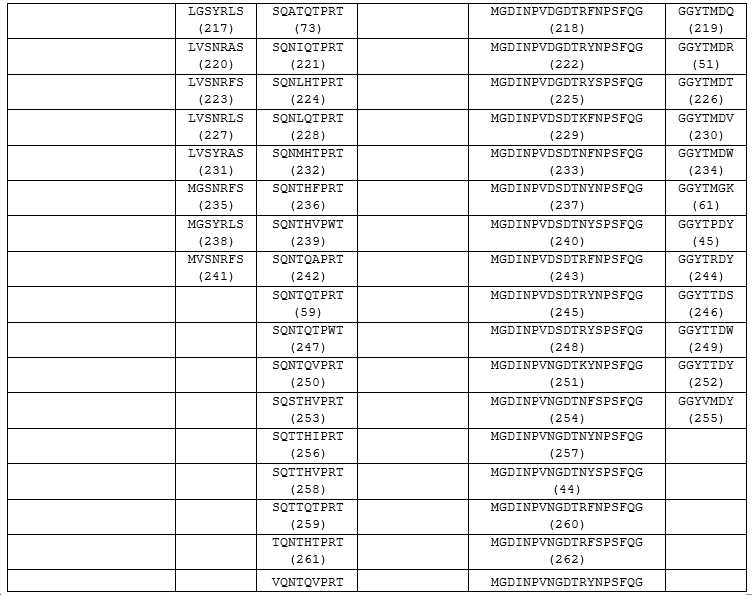


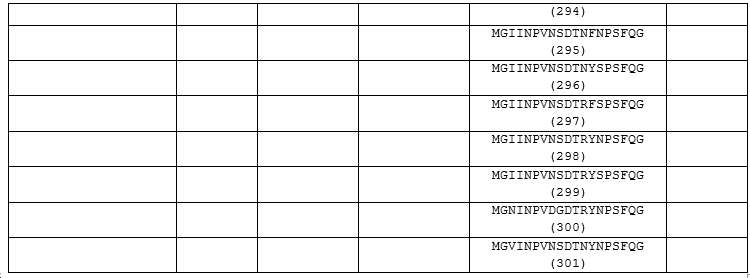
표 4. 고유한, 라이브러리-유래 및 디자이너, CD47-SIRPα 상호 작용-차단 항-CD47 IgG의 CDR의 아미노산 서열 (통합 정의 사용). 서열 번호는 괄호 안에 표시된다. Table 4 . Unique, library-derived and designer, amino acid sequence of CDR of the CD47-SIRPα interaction-blocking anti-CD47 IgG (using integration definition). Sequence numbers are indicated in parentheses.


표 5. 고유한, A-D5-유래, CD47-SIRPα 상호 작용-차단, 디자이너 항-CD47 IgG의 CDR의 아미노산 서열 (통합 정의 사용). 서열 번호는 괄호 안에 표시된다. Table 5 . Amino acid sequence of CDRs of native, A-D5-derived, CD47-SIRPα interaction-blocking, designer anti-CD47 IgG (using integration definition). Sequence numbers are indicated in parentheses.

SEQUENCE LISTING <110> UltraHuman Four Limited <120> Binding Agents <130> P/76795.WO01/MR <150> GB 1713298.6 <151> 2017-08-18 <150> GB 1802595.7 <151> 2018-02-16 <150> GB 1808570.4 <151> 2018-05-24 <160> 301 <170> PatentIn version 3.5 <210> 1 <211> 10 <212> PRT <213> Artificial Sequence <220> <223> Modified CDR <220> <221> VARIANT <222> (3)..(3) <223> T or any amino acid (for example, S, N or R) <220> <221> VARIANT <222> (5)..(5) <223> T or a conservative substitution of T <220> <221> VARIANT <222> (6)..(6) <223> N or a conservative substitution of N <220> <221> VARIANT <222> (9)..(9) <223> I or a conservative substitution of I <220> <221> VARIANT <222> (10)..(10) <223> F or any amino acid (for example, V or G) <400> 1 Gly Tyr Xaa Phe Xaa Xaa Tyr Tyr Xaa Xaa 1 5 10 <210> 2 <211> 19 <212> PRT <213> Artificial Sequence <220> <223> Modified CDR <220> <221> VARIANT <222> (1)..(1) <223> M or a conservative substitution of M <220> <221> VARIANT <222> (3)..(3) <223> I or any amino acid (for example, N, V or D) <220> <221> VARIANT <222> (5)..(5) <223> N or any amino acid (for example, Y) <220> <221> VARIANT <222> (7)..(7) <223> V or any amino acid (for example, G or F) <220> <221> VARIANT <222> (8)..(8) <223> D or a conservative substitution of D <220> <221> VARIANT <222> (9)..(9) <223> G or a conservative substitution of G <220> <221> VARIANT <222> (12)..(12) <223> N or a conservative substitution of N (for example, R) <220> <221> VARIANT <222> (13)..(13) <223> Y or a conservative substitution of Y <220> <221> VARIANT <222> (14)..(14) <223> N or a conservative substitution of N (for example, S) <400> 2 Xaa Gly Xaa Ile Xaa Pro Xaa Xaa Xaa Asp Thr Xaa Xaa Xaa Pro Ser 1 5 10 15 Phe Gln Gly <210> 3 <211> 7 <212> PRT <213> Artificial Sequence <220> <223> Modified CDR <220> <221> VARIANT <222> (3)..(3) <223> Y or any amino acid (for example, H, I, Q or F) <220> <221> VARIANT <222> (4)..(4) <223> T or any amino acid (for example, V or I) <220> <221> VARIANT <222> (5)..(5) <223> M or any amino acid (for example, T, R, P, A or L) <220> <221> VARIANT <222> (6)..(6) <223> D or any amino acid (for example, G) <220> <221> VARIANT <222> (7)..(7) <223> R or any amino acid (for example, Q, N, Y, S, W, K, A, E, F, H, I, L, M, T or V) <400> 3 Gly Gly Xaa Xaa Xaa Xaa Xaa 1 5 <210> 4 <211> 10 <212> PRT <213> Muridae <400> 4 Gly Tyr Thr Phe Thr Asn Tyr Tyr Val Phe 1 5 10 <210> 5 <211> 7 <212> PRT <213> Muridae <400> 5 Gly Gly Tyr Thr Met Asp Tyr 1 5 <210> 6 <211> 16 <212> PRT <213> Artificial Sequence <220> <223> Modified CDR <220> <221> VARIANT <222> (4)..(4) <223> Q or a conservative substitution of Q <220> <221> VARIANT <222> (6)..(6) <223> L or a conservative substitution of L <220> <221> VARIANT <222> (7)..(7) <223> L or a conservative substitution of L <220> <221> VARIANT <222> (10)..(10) <223> N or any amino acid (for example, Q, S, T, A or G) or a conservative substitution of N (for example, Q, S, T or G) <220> <221> VARIANT <222> (11)..(11) <223> G or a conservative substitution of G (for example, A) <220> <221> VARIANT <222> (12)..(12) <223> Y or any amino acid (for example, N or S) <220> <221> VARIANT <222> (13)..(13) <223> T or a conservative substitution of T (for example, N) <220> <221> VARIANT <222> (16)..(16) <223> H or any amino acid (for example, D) <400> 6 Arg Ser Ser Xaa Ser Xaa Xaa His Ser Xaa Xaa Xaa Xaa Tyr Leu Xaa 1 5 10 15 <210> 7 <211> 7 <212> PRT <213> Artificial Sequence <220> <223> Modified CDR <220> <221> VARIANT <222> (1)..(1) <223> K or any amino acid (for example, L or M) <220> <221> VARIANT <222> (2)..(2) <223> V or any amino acid (for example, G) <220> <221> VARIANT <222> (4)..(4) <223> N or any amino acid (for example, Y) <220> <221> VARIANT <222> (6)..(6) <223> L or any amino acid (for example, F, A or S) <400> 7 Xaa Xaa Ser Xaa Arg Xaa Ser 1 5 <210> 8 <211> 9 <212> PRT <213> Artificial Sequence <220> <223> Modified CDR <220> <221> VARIANT <222> (1)..(1) <223> F or any amino acid (for example, L, M, S, T or V) <220> <221> VARIANT <222> (3)..(3) <223> Q or any amino acid (for example, N, A, T or S) <220> <221> VARIANT <222> (4)..(4) <223> T or any amino acid (for example, L, M or I) <220> <221> VARIANT <222> (5)..(5) <223> H or a conservative substitution of H <220> <221> VARIANT <222> (6)..(6) <223> T or any amino acid (for example, V, I, A or F) <220> <221> VARIANT <222> (7)..(7) <223> P or any amino acid (for example, L) <220> <221> VARIANT <222> (8)..(8) <223> R or any amino acid (for example, W) <400> 8 Xaa Gln Xaa Xaa Xaa Xaa Xaa Xaa Thr 1 5 <210> 9 <211> 16 <212> PRT <213> Muridae <400> 9 Arg Ser Ser Gln Ser Leu Val His Ser Asn Gly Asn Thr Tyr Leu His 1 5 10 15 <210> 10 <211> 7 <212> PRT <213> Muridae <400> 10 Lys Val Ser Tyr Arg Phe Ser 1 5 <210> 11 <211> 9 <212> PRT <213> Muridae <400> 11 Ser Gln Asn Thr His Val Pro Arg Thr 1 5 <210> 12 <211> 10 <212> PRT <213> Artificial Sequence <220> <223> Modified CDR <220> <221> VARIANT <222> (5)..(5) <223> T or any amino acid (for example, S, N or R) <220> <221> VARIANT <222> (7)..(7) <223> T or a conservative substitution of T <220> <221> VARIANT <222> (8)..(8) <223> N or a conservative substitution of N <400> 12 Gly Ser Gly Tyr Xaa Phe Xaa Xaa Tyr Tyr 1 5 10 <210> 13 <211> 16 <212> PRT <213> Artificial Sequence <220> <223> Modified CDR <220> <221> VARIANT <222> (2)..(2) <223> N or any amino acid (for example, Y) <220> <221> VARIANT <222> (4)..(4) <223> V or any amino acid (for example, G or F) <220> <221> VARIANT <222> (5)..(5) <223> D or a conservative substitution of D <220> <221> VARIANT <222> (6)..(6) <223> G or a conservative substitution of G <220> <221> VARIANT <222> (9)..(9) <223> N or a conservative substitution of N (for example, R) <220> <221> VARIANT <222> (10)..(10) <223> Y or a conservative substitution of Y <220> <221> VARIANT <222> (11)..(11) <223> N or a conservative substitution of N (for example, S) <400> 13 Ile Xaa Pro Xaa Xaa Xaa Asp Thr Xaa Xaa Xaa Pro Ser Phe Gln Gly 1 5 10 15 <210> 14 <211> 6 <212> PRT <213> Artificial Sequence <220> <223> Modified CDR <220> <221> VARIANT <222> (3)..(3) <223> Y or any amino acid (for example, H, I, Q or F) <220> <221> VARIANT <222> (4)..(4) <223> T or any amino acid (for example, V or I) <220> <221> VARIANT <222> (5)..(5) <223> M or any amino acid (for example, T, R, P, A or L) <220> <221> VARIANT <222> (6)..(6) <223> D or any amino acid (for example, G) <400> 14 Gly Gly Xaa Xaa Xaa Xaa 1 5 <210> 15 <211> 10 <212> PRT <213> Muridae <400> 15 Gly Ser Gly Tyr Thr Phe Thr Asn Tyr Tyr 1 5 10 <210> 16 <211> 6 <212> PRT <213> Muridae <400> 16 Gly Gly Tyr Thr Met Asp 1 5 <210> 17 <211> 13 <212> PRT <213> Artificial Sequence <220> <223> Modified CDR <220> <221> VARIANT <222> (3)..(3) <223> Q or a conservative substitution of Q <220> <221> VARIANT <222> (5)..(5) <223> L or a conservative substitution of L <220> <221> VARIANT <222> (6)..(6) <223> L or a conservative substitution of L <220> <221> VARIANT <222> (9)..(9) <223> N or any amino acid (for example, Q, S, T, A or G) or a conservative substitution of N (for example, Q, S, T or G) <220> <221> VARIANT <222> (10)..(10) <223> G or a conservative substitution of G (for example, A) <220> <221> VARIANT <222> (11)..(11) <223> Y or any amino acid (for example, N or S) <220> <221> VARIANT <222> (12)..(12) <223> T or a conservative substitution of T (for example, N) <400> 17 Ser Ser Xaa Ser Xaa Xaa His Ser Xaa Xaa Xaa Xaa Tyr 1 5 10 <210> 18 <211> 6 <212> PRT <213> Artificial Sequence <220> <223> Modified CDR <220> <221> VARIANT <222> (1)..(1) <223> Q or any amino acid (for example, N, A, T or S) <220> <221> VARIANT <222> (2)..(2) <223> T or any amino acid (for example, L, M or I) <220> <221> VARIANT <222> (3)..(3) <223> H or a conservative substitution of H <220> <221> VARIANT <222> (4)..(4) <223> T or any amino acid (for example, V, I, A or F) <220> <221> VARIANT <222> (5)..(5) <223> P or any amino acid (for example, L) <220> <221> VARIANT <222> (6)..(6) <223> R or any amino acid (for example, W) <400> 18 Xaa Xaa Xaa Xaa Xaa Xaa 1 5 <210> 19 <211> 13 <212> PRT <213> Muridae <400> 19 Ser Ser Gln Ser Leu Val His Ser Asn Gly Asn Thr Tyr 1 5 10 <210> 20 <211> 6 <212> PRT <213> Muridae <400> 20 Asn Thr His Val Pro Arg 1 5 <210> 21 <211> 10 <212> PRT <213> Artificial Sequence <220> <223> Modified CDR <220> <221> VARIANT <222> (3)..(3) <223> T/S/N/R <220> <221> VARIANT <222> (5)..(5) <223> T/N <220> <221> VARIANT <222> (6)..(6) <223> N/S <220> <221> VARIANT <222> (9)..(9) <223> I/V <220> <221> VARIANT <222> (10)..(10) <223> F/V/G <400> 21 Gly Tyr Xaa Phe Xaa Xaa Tyr Tyr Xaa Xaa 1 5 10 <210> 22 <211> 19 <212> PRT <213> Artificial Sequence <220> <223> Modified CDR <220> <221> VARIANT <222> (1)..(1) <223> M/I <220> <221> VARIANT <222> (3)..(3) <223> V/N/I/D <220> <221> VARIANT <222> (5)..(5) <223> N/Y <220> <221> VARIANT <222> (7)..(7) <223> V/G/F <220> <221> VARIANT <222> (8)..(8) <223> N/D <220> <221> VARIANT <222> (9)..(9) <223> G/S <220> <221> VARIANT <222> (12)..(12) <223> N/R/K <220> <221> VARIANT <222> (13)..(13) <223> F/Y <220> <221> VARIANT <222> (14)..(14) <223> N/S <400> 22 Xaa Gly Xaa Ile Xaa Pro Xaa Xaa Xaa Asp Thr Xaa Xaa Xaa Pro Ser 1 5 10 15 Phe Gln Gly <210> 23 <211> 7 <212> PRT <213> Artificial Sequence <220> <223> Modified CDR <220> <221> VARIANT <222> (3)..(3) <223> F/H/I/Q/Y <220> <221> VARIANT <222> (4)..(4) <223> T/V/I <220> <221> VARIANT <222> (5)..(5) <223> M/T/R/P/A/L <220> <221> VARIANT <222> (6)..(6) <223> D/G <220> <221> VARIANT <222> (7)..(7) <223> Y/Q/N/R/S/W/K/A/E/F/H/I/L/M/T/V <400> 23 Gly Gly Xaa Xaa Xaa Xaa Xaa 1 5 <210> 24 <211> 10 <212> PRT <213> Artificial Sequence <220> <223> Modified CDR <220> <221> VARIANT <222> (5)..(5) <223> T/S/N/R <220> <221> VARIANT <222> (7)..(7) <223> T/N <220> <221> VARIANT <222> (8)..(8) <223> N/S <400> 24 Gly Ser Gly Tyr Xaa Phe Xaa Xaa Tyr Tyr 1 5 10 <210> 25 <211> 16 <212> PRT <213> Artificial Sequence <220> <223> Modified CDR <220> <221> VARIANT <222> (2)..(2) <223> N/Y <220> <221> VARIANT <222> (4)..(4) <223> V/G/F <220> <221> VARIANT <222> (5)..(5) <223> N/D <220> <221> VARIANT <222> (6)..(6) <223> G/S <220> <221> VARIANT <222> (9)..(9) <223> N/R/K <220> <221> VARIANT <222> (10)..(10) <223> F/Y <220> <221> VARIANT <222> (11)..(11) <223> N/S <400> 25 Ile Xaa Pro Xaa Xaa Xaa Asp Thr Xaa Xaa Xaa Pro Ser Phe Gln Gly 1 5 10 15 <210> 26 <211> 6 <212> PRT <213> Artificial Sequence <220> <223> Modified CDR <220> <221> VARIANT <222> (3)..(3) <223> F/H/I/Q/Y <220> <221> VARIANT <222> (4)..(4) <223> T/V/I <220> <221> VARIANT <222> (5)..(5) <223> M/T/R/P/A/L <220> <221> VARIANT <222> (6)..(6) <223> D/G <400> 26 Gly Gly Xaa Xaa Xaa Xaa 1 5 <210> 27 <211> 10 <212> PRT <213> Artificial Sequence <220> <223> Modified CDR <220> <221> VARIANT <222> (3)..(3) <223> T/S <400> 27 Gly Tyr Xaa Phe Thr Asn Tyr Tyr Ile Phe 1 5 10 <210> 28 <211> 19 <212> PRT <213> Artificial Sequence <220> <223> Modified CDR <220> <221> VARIANT <222> (1)..(1) <223> M/I <220> <221> VARIANT <222> (3)..(3) <223> I/D <220> <221> VARIANT <222> (8)..(8) <223> N/D <220> <221> VARIANT <222> (12)..(12) <223> N/R <220> <221> VARIANT <222> (13)..(13) <223> F/Y <220> <221> VARIANT <222> (14)..(14) <223> N/S <400> 28 Xaa Gly Xaa Ile Asn Pro Val Xaa Gly Asp Thr Xaa Xaa Xaa Pro Ser 1 5 10 15 Phe Gln Gly <210> 29 <211> 7 <212> PRT <213> Artificial Sequence <220> <223> Modified CDR <220> <221> VARIANT <222> (3)..(3) <223> F/Y <220> <221> VARIANT <222> (5)..(5) <223> M/P <220> <221> VARIANT <222> (7)..(7) <223> Y/R/K/I <400> 29 Gly Gly Xaa Thr Xaa Asp Xaa 1 5 <210> 30 <211> 10 <212> PRT <213> Artificial Sequence <220> <223> Modified CDR <220> <221> VARIANT <222> (5)..(5) <223> T/S <400> 30 Gly Ser Gly Tyr Xaa Phe Thr Asn Tyr Tyr 1 5 10 <210> 31 <211> 16 <212> PRT <213> Artificial Sequence <220> <223> Modified CDR <220> <221> VARIANT <222> (5)..(5) <223> N/D <220> <221> VARIANT <222> (9)..(9) <223> N/R <220> <221> VARIANT <222> (10)..(10) <223> F/Y <220> <221> VARIANT <222> (11)..(11) <223> N/S <400> 31 Ile Asn Pro Val Xaa Gly Asp Thr Xaa Xaa Xaa Pro Ser Phe Gln Gly 1 5 10 15 <210> 32 <211> 6 <212> PRT <213> Artificial Sequence <220> <223> Modified CDR <220> <221> VARIANT <222> (3)..(3) <223> F/Y <220> <221> VARIANT <222> (5)..(5) <223> M/P <400> 32 Gly Gly Xaa Thr Xaa Asp 1 5 <210> 33 <211> 16 <212> PRT <213> Artificial Sequence <220> <223> Modified CDR <220> <221> VARIANT <222> (4)..(4) <223> Q/H <220> <221> VARIANT <222> (6)..(6) <223> F/L <220> <221> VARIANT <222> (7)..(7) <223> L/V <220> <221> VARIANT <222> (10)..(10) <223> N/Q/A <220> <221> VARIANT <222> (11)..(11) <223> G/A <220> <221> VARIANT <222> (12)..(12) <223> Y/N/S <220> <221> VARIANT <222> (13)..(13) <223> N/T <220> <221> VARIANT <222> (16)..(16) <223> H/D <400> 33 Arg Ser Ser Xaa Ser Xaa Xaa His Ser Xaa Xaa Xaa Xaa Tyr Leu Xaa 1 5 10 15 <210> 34 <211> 7 <212> PRT <213> Artificial Sequence <220> <223> Modified CDR <220> <221> VARIANT <222> (1)..(1) <223> L/K/M <220> <221> VARIANT <222> (2)..(2) <223> V/G <220> <221> VARIANT <222> (4)..(4) <223> N/Y <220> <221> VARIANT <222> (6)..(6) <223> A/F/L/S <400> 34 Xaa Xaa Ser Xaa Arg Xaa Ser 1 5 <210> 35 <211> 9 <212> PRT <213> Artificial Sequence <220> <223> Modified CDR <220> <221> VARIANT <222> (1)..(1) <223> F/L/M/S/T/V <220> <221> VARIANT <222> (3)..(3) <223> Q/N/A/T/S <220> <221> VARIANT <222> (4)..(4) <223> T/L/M/I <220> <221> VARIANT <222> (5)..(5) <223> Q/H <220> <221> VARIANT <222> (6)..(6) <223> T/V/I/A/F <220> <221> VARIANT <222> (7)..(7) <223> P/L <220> <221> VARIANT <222> (8)..(8) <223> R/W <400> 35 Xaa Gln Xaa Xaa Xaa Xaa Xaa Xaa Thr 1 5 <210> 36 <211> 13 <212> PRT <213> Artificial Sequence <220> <223> Modified CDR <220> <221> VARIANT <222> (3)..(3) <223> Q/H <220> <221> VARIANT <222> (5)..(5) <223> F/L <220> <221> VARIANT <222> (6)..(6) <223> L/V <220> <221> VARIANT <222> (9)..(9) <223> N/Q/A <220> <221> VARIANT <222> (10)..(10) <223> G/A <220> <221> VARIANT <222> (11)..(11) <223> Y/N/S <220> <221> VARIANT <222> (12)..(12) <223> N/T <400> 36 Ser Ser Xaa Ser Xaa Xaa His Ser Xaa Xaa Xaa Xaa Tyr 1 5 10 <210> 37 <211> 6 <212> PRT <213> Artificial Sequence <220> <223> Modified CDR <220> <221> VARIANT <222> (1)..(1) <223> Q/N/A/T/S <220> <221> VARIANT <222> (2)..(2) <223> T/L/M/I <220> <221> VARIANT <222> (3)..(3) <223> Q/H <220> <221> VARIANT <222> (4)..(4) <223> T/V/I/A/F <220> <221> VARIANT <222> (5)..(5) <223> P/L <220> <221> VARIANT <222> (6)..(6) <223> R/W <400> 37 Xaa Xaa Xaa Xaa Xaa Xaa 1 5 <210> 38 <211> 16 <212> PRT <213> Artificial Sequence <220> <223> Modified CDR <220> <221> VARIANT <222> (7)..(7) <223> L/V <220> <221> VARIANT <222> (10)..(10) <223> N/Q/A <220> <221> VARIANT <222> (12)..(12) <223> Y/N <220> <221> VARIANT <222> (13)..(13) <223> N/T <220> <221> VARIANT <222> (16)..(16) <223> H/D <400> 38 Arg Ser Ser Gln Ser Leu Xaa His Ser Xaa Gly Xaa Xaa Tyr Leu Xaa 1 5 10 15 <210> 39 <211> 7 <212> PRT <213> Artificial Sequence <220> <223> Modified CDR <220> <221> VARIANT <222> (1)..(1) <223> L/K <220> <221> VARIANT <222> (2)..(2) <223> V/G <220> <221> VARIANT <222> (4)..(4) <223> N/Y <220> <221> VARIANT <222> (6)..(6) <223> A/F/L <400> 39 Xaa Xaa Ser Xaa Arg Xaa Ser 1 5 <210> 40 <211> 9 <212> PRT <213> Artificial Sequence <220> <223> Modified CDR <220> <221> VARIANT <222> (1)..(1) <223> F/S <220> <221> VARIANT <222> (3)..(3) <223> Q/N/A <220> <221> VARIANT <222> (4)..(4) <223> T/L <220> <221> VARIANT <222> (5)..(5) <223> Q/H <220> <221> VARIANT <222> (6)..(6) <223> T/V <400> 40 Xaa Gln Xaa Xaa Xaa Xaa Pro Arg Thr 1 5 <210> 41 <211> 13 <212> PRT <213> Artificial Sequence <220> <223> Modified CDR <220> <221> VARIANT <222> (6)..(6) <223> L/V <220> <221> VARIANT <222> (9)..(9) <223> N/Q/A <220> <221> VARIANT <222> (11)..(11) <223> Y/N <220> <221> VARIANT <222> (12)..(12) <223> N/T <400> 41 Ser Ser Gln Ser Leu Xaa His Ser Xaa Gly Xaa Xaa Tyr 1 5 10 <210> 42 <211> 6 <212> PRT <213> Artificial Sequence <220> <223> Modified CDR <220> <221> VARIANT <222> (1)..(1) <223> Q/N/A <220> <221> VARIANT <222> (2)..(2) <223> T/L <220> <221> VARIANT <222> (3)..(3) <223> Q/H <220> <221> VARIANT <222> (4)..(4) <223> T/V <400> 42 Xaa Xaa Xaa Xaa Pro Arg 1 5 <210> 43 <211> 10 <212> PRT <213> Artificial Sequence <220> <223> Modified CDR <400> 43 Gly Tyr Ser Phe Thr Asn Tyr Tyr Ile Phe 1 5 10 <210> 44 <211> 19 <212> PRT <213> Artificial Sequence <220> <223> Modified CDR <400> 44 Met Gly Asp Ile Asn Pro Val Asn Gly Asp Thr Asn Tyr Ser Pro Ser 1 5 10 15 Phe Gln Gly <210> 45 <211> 7 <212> PRT <213> Artificial Sequence <220> <223> Modified CDR <400> 45 Gly Gly Tyr Thr Pro Asp Tyr 1 5 <210> 46 <211> 16 <212> PRT <213> Artificial Sequence <220> <223> Modified CDR <400> 46 Arg Ser Ser Gln Ser Leu Leu His Ser Asn Gly Tyr Asn Tyr Leu His 1 5 10 15 <210> 47 <211> 7 <212> PRT <213> Artificial Sequence <220> <223> Modified CDR <400> 47 Lys Gly Ser Asn Arg Phe Ser 1 5 <210> 48 <211> 9 <212> PRT <213> Artificial Sequence <220> <223> Modified CDR <400> 48 Ser Gln Asn Leu His Val Pro Arg Thr 1 5 <210> 49 <211> 10 <212> PRT <213> Artificial Sequence <220> <223> Modified CDR <400> 49 Gly Tyr Thr Phe Thr Asn Tyr Tyr Ile Phe 1 5 10 <210> 50 <211> 19 <212> PRT <213> Artificial Sequence <220> <223> Modified CDR <400> 50 Met Gly Ile Ile Asn Pro Val Asp Gly Asp Thr Asn Tyr Asn Pro Ser 1 5 10 15 Phe Gln Gly <210> 51 <211> 7 <212> PRT <213> Artificial Sequence <220> <223> Modified CDR <400> 51 Gly Gly Tyr Thr Met Asp Arg 1 5 <210> 52 <211> 16 <212> PRT <213> Artificial Sequence <220> <223> Modified CDR <400> 52 Arg Ser Ser Gln Ser Leu Leu His Ser Asn Gly Tyr Thr Tyr Leu His 1 5 10 15 <210> 53 <211> 7 <212> PRT <213> Artificial Sequence <220> <223> Modified CDR <400> 53 Lys Val Ser Asn Arg Leu Ser 1 5 <210> 54 <211> 9 <212> PRT <213> Artificial Sequence <220> <223> Modified CDR <400> 54 Phe Gln Asn Thr His Thr Pro Arg Thr 1 5 <210> 55 <211> 19 <212> PRT <213> Artificial Sequence <220> <223> Modified CDR <400> 55 Ile Gly Asp Ile Asn Pro Val Asn Gly Asp Thr Asn Phe Ser Pro Ser 1 5 10 15 Phe Gln Gly <210> 56 <211> 7 <212> PRT <213> Artificial Sequence <220> <223> Modified CDR <400> 56 Gly Gly Tyr Thr Met Asp Lys 1 5 <210> 57 <211> 16 <212> PRT <213> Artificial Sequence <220> <223> Modified CDR <400> 57 Arg Ser Ser Gln Ser Leu Val His Ser Asn Gly Tyr Thr Tyr Leu His 1 5 10 15 <210> 58 <211> 7 <212> PRT <213> Artificial Sequence <220> <223> Modified CDR <400> 58 Lys Gly Ser Tyr Arg Ala Ser 1 5 <210> 59 <211> 9 <212> PRT <213> Artificial Sequence <220> <223> Modified CDR <400> 59 Ser Gln Asn Thr Gln Thr Pro Arg Thr 1 5 <210> 60 <211> 19 <212> PRT <213> Artificial Sequence <220> <223> Modified CDR <400> 60 Met Gly Ile Ile Asn Pro Val Asn Gly Asp Thr Asn Tyr Asn Pro Ser 1 5 10 15 Phe Gln Gly <210> 61 <211> 7 <212> PRT <213> Artificial Sequence <220> <223> Modified CDR <400> 61 Gly Gly Tyr Thr Met Gly Lys 1 5 <210> 62 <211> 16 <212> PRT <213> Artificial Sequence <220> <223> Modified CDR <400> 62 Arg Ser Ser Gln Ser Leu Val His Ser Asn Gly Asn Thr Tyr Leu Asp 1 5 10 15 <210> 63 <211> 7 <212> PRT <213> Artificial Sequence <220> <223> Modified CDR <400> 63 Lys Gly Ser Tyr Arg Phe Ser 1 5 <210> 64 <211> 9 <212> PRT <213> Artificial Sequence <220> <223> Modified CDR <400> 64 Ser Gln Ala Thr His Thr Pro Arg Thr 1 5 <210> 65 <211> 19 <212> PRT <213> Artificial Sequence <220> <223> Modified CDR <400> 65 Met Gly Ile Ile Asn Pro Val Asp Gly Asp Thr Arg Tyr Ser Pro Ser 1 5 10 15 Phe Gln Gly <210> 66 <211> 7 <212> PRT <213> Artificial Sequence <220> <223> Modified CDR <400> 66 Gly Gly Phe Thr Met Asp Tyr 1 5 <210> 67 <211> 7 <212> PRT <213> Artificial Sequence <220> <223> Modified CDR <400> 67 Lys Gly Ser Asn Arg Ala Ser 1 5 <210> 68 <211> 9 <212> PRT <213> Artificial Sequence <220> <223> Modified CDR <400> 68 Ser Gln Asn Thr His Thr Pro Arg Thr 1 5 <210> 69 <211> 19 <212> PRT <213> Artificial Sequence <220> <223> Modified CDR <400> 69 Ile Gly Ile Ile Asn Pro Val Asp Gly Asp Thr Arg Tyr Ser Pro Ser 1 5 10 15 Phe Gln Gly <210> 70 <211> 7 <212> PRT <213> Artificial Sequence <220> <223> Modified CDR <400> 70 Gly Gly Tyr Thr Met Asp Ile 1 5 <210> 71 <211> 7 <212> PRT <213> Artificial Sequence <220> <223> Modified CDR <400> 71 Leu Gly Ser Asn Arg Phe Ser 1 5 <210> 72 <211> 7 <212> PRT <213> Artificial Sequence <220> <223> Modified CDR <400> 72 Leu Gly Ser Asn Arg Ala Ser 1 5 <210> 73 <211> 9 <212> PRT <213> Artificial Sequence <220> <223> Modified CDR <400> 73 Ser Gln Ala Thr Gln Thr Pro Arg Thr 1 5 <210> 74 <211> 19 <212> PRT <213> Artificial Sequence <220> <223> Modified CDR <400> 74 Met Gly Ile Ile Asn Pro Val Asp Gly Asp Thr Arg Tyr Asn Pro Ser 1 5 10 15 Phe Gln Gly <210> 75 <211> 7 <212> PRT <213> Artificial Sequence <220> <223> Modified CDR <400> 75 Lys Gly Ser Asn Arg Leu Ser 1 5 <210> 76 <211> 9 <212> PRT <213> Artificial Sequence <220> <223> Modified CDR <400> 76 Phe Gln Asn Thr Gln Thr Pro Arg Thr 1 5 <210> 77 <211> 7 <212> PRT <213> Artificial Sequence <220> <223> Modified CDR <400> 77 Leu Gly Ser Asn Arg Leu Ser 1 5 <210> 78 <211> 16 <212> PRT <213> Artificial Sequence <220> <223> Modified CDR <400> 78 Arg Ser Ser Gln Ser Leu Leu His Ser Gln Gly Tyr Thr Tyr Leu His 1 5 10 15 <210> 79 <211> 9 <212> PRT <213> Artificial Sequence <220> <223> Modified CDR <400> 79 Phe Gln Gln Thr His Thr Pro Arg Thr 1 5 <210> 80 <211> 16 <212> PRT <213> Artificial Sequence <220> <223> Modified CDR <400> 80 Arg Ser Ser Gln Ser Leu Leu His Ser Ser Gly Tyr Asn Tyr Leu His 1 5 10 15 <210> 81 <211> 16 <212> PRT <213> Artificial Sequence <220> <223> Modified CDR <400> 81 Arg Ser Ser Gln Ser Leu Leu His Ser Gly Gly Tyr Asn Tyr Leu His 1 5 10 15 <210> 82 <211> 16 <212> PRT <213> Artificial Sequence <220> <223> Modified CDR <400> 82 Arg Ser Ser Gln Ser Leu Leu His Ser Ala Gly Tyr Asn Tyr Leu His 1 5 10 15 <210> 83 <211> 16 <212> PRT <213> Artificial Sequence <220> <223> Modified CDR <400> 83 Arg Ser Ser Gln Ser Leu Leu His Ser Thr Gly Tyr Asn Tyr Leu His 1 5 10 15 <210> 84 <211> 16 <212> PRT <213> Artificial Sequence <220> <223> Modified CDR <400> 84 Arg Ser Ser Gln Ser Leu Leu His Ser Asn Ala Tyr Asn Tyr Leu His 1 5 10 15 <210> 85 <211> 7 <212> PRT <213> Artificial Sequence <220> <223> Modified CDR <400> 85 Lys Val Ser Asn Arg Phe Ser 1 5 <210> 86 <211> 10 <212> PRT <213> Artificial Sequence <220> <223> Modified CDR <400> 86 Gly Ser Gly Tyr Ser Phe Thr Asn Tyr Tyr 1 5 10 <210> 87 <211> 16 <212> PRT <213> Artificial Sequence <220> <223> Modified CDR <400> 87 Ile Asn Pro Val Asn Gly Asp Thr Asn Tyr Ser Pro Ser Phe Gln Gly 1 5 10 15 <210> 88 <211> 6 <212> PRT <213> Artificial Sequence <220> <223> Modified CDR <400> 88 Gly Gly Tyr Thr Pro Asp 1 5 <210> 89 <211> 13 <212> PRT <213> Artificial Sequence <220> <223> Modified CDR <400> 89 Ser Ser Gln Ser Leu Leu His Ser Asn Gly Tyr Asn Tyr 1 5 10 <210> 90 <211> 6 <212> PRT <213> Artificial Sequence <220> <223> Modified CDR <400> 90 Asn Leu His Val Pro Arg 1 5 <210> 91 <211> 16 <212> PRT <213> Artificial Sequence <220> <223> Modified CDR <400> 91 Ile Asn Pro Val Asp Gly Asp Thr Asn Tyr Asn Pro Ser Phe Gln Gly 1 5 10 15 <210> 92 <211> 13 <212> PRT <213> Artificial Sequence <220> <223> Modified CDR <400> 92 Ser Ser Gln Ser Leu Leu His Ser Asn Gly Tyr Thr Tyr 1 5 10 <210> 93 <211> 6 <212> PRT <213> Artificial Sequence <220> <223> Modified CDR <400> 93 Asn Thr His Thr Pro Arg 1 5 <210> 94 <211> 16 <212> PRT <213> Artificial Sequence <220> <223> Modified CDR <400> 94 Ile Asn Pro Val Asn Gly Asp Thr Asn Phe Ser Pro Ser Phe Gln Gly 1 5 10 15 <210> 95 <211> 13 <212> PRT <213> Artificial Sequence <220> <223> Modified CDR <400> 95 Ser Ser Gln Ser Leu Val His Ser Asn Gly Tyr Thr Tyr 1 5 10 <210> 96 <211> 6 <212> PRT <213> Artificial Sequence <220> <223> Modified CDR <400> 96 Asn Thr Gln Thr Pro Arg 1 5 <210> 97 <211> 16 <212> PRT <213> Artificial Sequence <220> <223> Modified CDR <400> 97 Ile Asn Pro Val Asn Gly Asp Thr Asn Tyr Asn Pro Ser Phe Gln Gly 1 5 10 15 <210> 98 <211> 6 <212> PRT <213> Artificial Sequence <220> <223> Modified CDR <400> 98 Gly Gly Tyr Thr Met Gly 1 5 <210> 99 <211> 6 <212> PRT <213> Artificial Sequence <220> <223> Modified CDR <400> 99 Ala Thr His Thr Pro Arg 1 5 <210> 100 <211> 16 <212> PRT <213> Artificial Sequence <220> <223> Modified CDR <400> 100 Ile Asn Pro Val Asp Gly Asp Thr Arg Tyr Ser Pro Ser Phe Gln Gly 1 5 10 15 <210> 101 <211> 6 <212> PRT <213> Artificial Sequence <220> <223> Modified CDR <400> 101 Gly Gly Phe Thr Met Asp 1 5 <210> 102 <211> 6 <212> PRT <213> Artificial Sequence <220> <223> Modified CDR <400> 102 Ala Thr Gln Thr Pro Arg 1 5 <210> 103 <211> 16 <212> PRT <213> Artificial Sequence <220> <223> Modified CDR <400> 103 Ile Asn Pro Val Asp Gly Asp Thr Arg Tyr Asn Pro Ser Phe Gln Gly 1 5 10 15 <210> 104 <211> 13 <212> PRT <213> Artificial Sequence <220> <223> Modified CDR <400> 104 Ser Ser Gln Ser Leu Leu His Ser Gln Gly Tyr Thr Tyr 1 5 10 <210> 105 <211> 6 <212> PRT <213> Artificial Sequence <220> <223> Modified CDR <400> 105 Gln Thr His Thr Pro Arg 1 5 <210> 106 <211> 13 <212> PRT <213> Artificial Sequence <220> <223> Modified CDR <400> 106 Ser Ser Gln Ser Leu Leu His Ser Ser Gly Tyr Asn Tyr 1 5 10 <210> 107 <211> 13 <212> PRT <213> Artificial Sequence <220> <223> Modified CDR <400> 107 Ser Ser Gln Ser Leu Leu His Ser Gly Gly Tyr Asn Tyr 1 5 10 <210> 108 <211> 13 <212> PRT <213> Artificial Sequence <220> <223> Modified CDR <400> 108 Ser Ser Gln Ser Leu Leu His Ser Ala Gly Tyr Asn Tyr 1 5 10 <210> 109 <211> 13 <212> PRT <213> Artificial Sequence <220> <223> Modified CDR <400> 109 Ser Ser Gln Ser Leu Leu His Ser Thr Gly Tyr Asn Tyr 1 5 10 <210> 110 <211> 13 <212> PRT <213> Artificial Sequence <220> <223> Modified CDR <400> 110 Ser Ser Gln Ser Leu Leu His Ser Asn Ala Tyr Asn Tyr 1 5 10 <210> 111 <211> 19 <212> PRT <213> Artificial Sequence <220> <223> Modified CDR <220> <221> VARIANT <222> (12)..(12) <223> N/R <220> <221> VARIANT <222> (14)..(14) <223> N/S <400> 111 Met Gly Ile Ile Asn Pro Val Asp Gly Asp Thr Xaa Tyr Xaa Pro Ser 1 5 10 15 Phe Gln Gly <210> 112 <211> 16 <212> PRT <213> Artificial Sequence <220> <223> Modified CDR <220> <221> VARIANT <222> (10)..(10) <223> N/A <220> <221> VARIANT <222> (13)..(13) <223> N/T <400> 112 Arg Ser Ser Gln Ser Leu Leu His Ser Xaa Gly Tyr Xaa Tyr Leu His 1 5 10 15 <210> 113 <211> 7 <212> PRT <213> Artificial Sequence <220> <223> Modified CDR <220> <221> VARIANT <222> (6)..(6) <223> L/F <400> 113 Lys Val Ser Asn Arg Xaa Ser 1 5 <210> 114 <211> 16 <212> PRT <213> Artificial Sequence <220> <223> Modified CDR <220> <221> VARIANT <222> (9)..(9) <223> N/R <220> <221> VARIANT <222> (11)..(11) <223> N/S <400> 114 Ile Asn Pro Val Asp Gly Asp Thr Xaa Tyr Xaa Pro Ser Phe Gln Gly 1 5 10 15 <210> 115 <211> 13 <212> PRT <213> Artificial Sequence <220> <223> Modified CDR <220> <221> VARIANT <222> (9)..(9) <223> N/A <220> <221> VARIANT <222> (12)..(12) <223> N/T <400> 115 Ser Ser Gln Ser Leu Leu His Ser Xaa Gly Tyr Xaa Tyr 1 5 10 <210> 116 <211> 9 <212> PRT <213> Muridae <400> 116 Leu Val His Ser Asn Gly Asn Thr Tyr 1 5 <210> 117 <211> 9 <212> PRT <213> Muridae <400> 117 Leu Leu Ile Tyr Lys Val Ser Tyr Arg 1 5 <210> 118 <211> 9 <212> PRT <213> Muridae <400> 118 Tyr Arg Phe Ser Gly Val Pro Asp Arg 1 5 <210> 119 <211> 9 <212> PRT <213> Muridae <400> 119 Leu Ile Tyr Lys Val Ser Tyr Arg Phe 1 5 <210> 120 <211> 16 <212> PRT <213> Muridae <400> 120 Leu Leu Ile Tyr Lys Val Ser Tyr Arg Phe Ser Gly Val Pro Asp Arg 1 5 10 15 <210> 121 <211> 9 <212> PRT <213> Muridae <400> 121 Val Gly Val Tyr Tyr Cys Phe Gln Asn 1 5 <210> 122 <211> 15 <212> PRT <213> Artificial Sequence <220> <223> Modified CDR <400> 122 Ala Gly Val Tyr Tyr Cys Phe Gln Asn Thr His Thr Pro Arg Thr 1 5 10 15 <210> 123 <211> 19 <212> PRT <213> Muridae <400> 123 Ile Gly Asp Ile Asn Pro Val Asn Gly Asp Thr Asn Phe Asn Glu Lys 1 5 10 15 Phe Lys Asn <210> 124 <211> 5 <212> PRT <213> Muridae <400> 124 Asn Tyr Tyr Val Phe 1 5 <210> 125 <211> 17 <212> PRT <213> Muridae <400> 125 Asp Ile Asn Pro Val Asn Gly Asp Thr Asn Phe Asn Glu Lys Phe Lys 1 5 10 15 Asn <210> 126 <211> 7 <212> PRT <213> Muridae <400> 126 Gly Tyr Thr Phe Thr Asn Tyr 1 5 <210> 127 <211> 6 <212> PRT <213> Muridae <400> 127 Asn Pro Val Asn Gly Asp 1 5 <210> 128 <211> 8 <212> PRT <213> Muridae <400> 128 Gly Tyr Thr Phe Thr Asn Tyr Tyr 1 5 <210> 129 <211> 8 <212> PRT <213> Muridae <400> 129 Ile Asn Pro Val Asn Gly Asp Thr 1 5 <210> 130 <211> 9 <212> PRT <213> Muridae <400> 130 Thr Arg Gly Gly Tyr Thr Met Asp Tyr 1 5 <210> 131 <211> 11 <212> PRT <213> Muridae <400> 131 Gln Ser Leu Val His Ser Asn Gly Asn Thr Tyr 1 5 10 <210> 132 <211> 16 <212> PRT <213> Muridae <400> 132 Ile Asn Pro Val Asn Gly Asp Thr Asn Phe Asn Glu Lys Phe Lys Asn 1 5 10 15 <210> 133 <211> 10 <212> PRT <213> Muridae <400> 133 Asp Ile Asn Pro Val Asn Gly Asp Thr Asn 1 5 10 <210> 134 <211> 6 <212> PRT <213> Muridae <400> 134 Thr Asn Tyr Tyr Val Phe 1 5 <210> 135 <211> 12 <212> PRT <213> Muridae <400> 135 Ile Gly Asp Ile Asn Pro Val Asn Gly Asp Thr Asn 1 5 10 <210> 136 <211> 8 <212> PRT <213> Muridae <400> 136 Thr Arg Gly Gly Tyr Thr Met Asp 1 5 <210> 137 <211> 11 <212> PRT <213> Muridae <400> 137 His Ser Asn Gly Asn Thr Tyr Leu His Trp Tyr 1 5 10 <210> 138 <211> 10 <212> PRT <213> Muridae <400> 138 Leu Leu Ile Tyr Lys Val Ser Tyr Arg Phe 1 5 10 <210> 139 <211> 8 <212> PRT <213> Muridae <400> 139 Ser Gln Asn Thr His Val Pro Arg 1 5 <210> 140 <211> 116 <212> PRT <213> Muridae <220> <221> DOMAIN <222> (1)..(116) <223> VH DOMAIN <400> 140 Glu Val Gln Leu Gln Gln Phe Gly Ala Glu Leu Val Lys Pro Gly Ala 1 5 10 15 Ser Met Lys Leu Ser Cys Lys Ala Ser Gly Tyr Thr Phe Thr Asn Tyr 20 25 30 Tyr Val Phe Trp Val Lys Gln Arg Pro Gly Gln Gly Leu Glu Trp Ile 35 40 45 Gly Asp Ile Asn Pro Val Asn Gly Asp Thr Asn Phe Asn Glu Lys Phe 50 55 60 Lys Asn Lys Ala Thr Leu Thr Val Asp Lys Ser Ser Thr Thr Thr Tyr 65 70 75 80 Leu Gln Leu Ser Ser Leu Thr Ser Glu Asp Ser Ala Val Tyr Tyr Cys 85 90 95 Thr Arg Gly Gly Tyr Thr Met Asp Tyr Trp Gly Gln Gly Thr Leu Val 100 105 110 Thr Val Ser Ser 115 <210> 141 <211> 116 <212> PRT <213> Artificial Sequence <220> <223> VH DOMAIN <400> 141 Glu Val Gln Leu Val Gln Ser Gly Ala Glu Val Lys Lys Pro Gly Glu 1 5 10 15 Ser Leu Lys Ile Ser Cys Lys Gly Ser Gly Tyr Thr Phe Thr Asn Tyr 20 25 30 Tyr Val Phe Trp Val Arg Gln Met Pro Gly Lys Gly Leu Glu Trp Ile 35 40 45 Gly Asp Ile Asn Pro Val Asn Gly Asp Thr Asn Phe Asn Glu Ser Phe 50 55 60 Gln Gly Gln Val Thr Ile Ser Ala Asp Lys Ser Ile Ser Thr Ala Tyr 65 70 75 80 Leu Gln Trp Ser Ser Leu Lys Ala Ser Asp Thr Ala Met Tyr Tyr Cys 85 90 95 Ala Arg Gly Gly Tyr Thr Met Asp Tyr Trp Gly Gln Gly Thr Leu Val 100 105 110 Thr Val Ser Ser 115 <210> 142 <211> 112 <212> PRT <213> Muridae <220> <221> DOMAIN <222> (1)..(112) <223> VL DOMAIN <400> 142 Asp Val Val Met Thr Gln Thr Pro Leu Ser Leu Ser Val Ser Leu Gly 1 5 10 15 Asp Gln Ala Ser Ile Ser Cys Arg Ser Ser Gln Ser Leu Val His Ser 20 25 30 Asn Gly Asn Thr Tyr Leu His Trp Tyr Leu Gln Lys Pro Gly Gln Ser 35 40 45 Pro Lys Leu Leu Ile Tyr Lys Val Ser Tyr Arg Phe Ser Gly Val Pro 50 55 60 Asp Arg Phe Ser Gly Ser Gly Ser Gly Thr Asp Phe Thr Leu Lys Ile 65 70 75 80 Ser Arg Val Glu Ala Glu Asp Leu Gly Val Tyr Phe Cys Ser Gln Asn 85 90 95 Thr His Val Pro Arg Thr Phe Gly Gln Gly Thr Lys Val Glu Ile Lys 100 105 110 <210> 143 <211> 112 <212> PRT <213> Artificial Sequence <220> <223> VL DOMAIN <400> 143 Asp Ile Val Met Thr Gln Ser Pro Leu Ser Leu Pro Val Thr Pro Gly 1 5 10 15 Glu Pro Ala Ser Ile Ser Cys Arg Ser Ser Gln Ser Leu Val His Ser 20 25 30 Asn Gly Asn Thr Tyr Leu His Trp Tyr Leu Gln Lys Pro Gly Gln Ser 35 40 45 Pro Gln Leu Leu Ile Tyr Lys Val Ser Tyr Arg Phe Ser Gly Val Pro 50 55 60 Asp Arg Phe Ser Gly Ser Gly Ser Gly Thr Asp Phe Thr Leu Lys Ile 65 70 75 80 Ser Arg Val Glu Ala Glu Asp Val Gly Val Tyr Tyr Cys Ser Gln Asn 85 90 95 Thr His Val Pro Arg Thr Phe Gly Gln Gly Thr Lys Val Glu Ile Lys 100 105 110 <210> 144 <211> 16 <212> PRT <213> Artificial Sequence <220> <223> Modified CDR <400> 144 Arg Ser Ser His Ser Leu Val His Ser Asn Gly Asn Thr Tyr Leu His 1 5 10 15 <210> 145 <211> 10 <212> PRT <213> Artificial Sequence <220> <223> Modified CDR <400> 145 Gly Tyr Asn Phe Thr Asn Tyr Tyr Ile Phe 1 5 10 <210> 146 <211> 19 <212> PRT <213> Artificial Sequence <220> <223> Modified CDR <400> 146 Met Gly Asp Ile Asn Pro Phe Asn Gly Asp Thr Asn Phe Asn Pro Ser 1 5 10 15 Phe Gln Gly <210> 147 <211> 16 <212> PRT <213> Artificial Sequence <220> <223> Modified CDR <400> 147 Arg Ser Ser Gln Ser Phe Leu His Ser Asn Gly Asn Asn Tyr Leu His 1 5 10 15 <210> 148 <211> 9 <212> PRT <213> Artificial Sequence <220> <223> Modified CDR <400> 148 Leu Gln Asn Thr His Thr Pro Arg Thr 1 5 <210> 149 <211> 10 <212> PRT <213> Artificial Sequence <220> <223> Modified CDR <400> 149 Gly Tyr Arg Phe Thr Asn Tyr Tyr Ile Phe 1 5 10 <210> 150 <211> 19 <212> PRT <213> Artificial Sequence <220> <223> Modified CDR <400> 150 Met Gly Asp Ile Asn Pro Gly Asp Gly Asp Thr Asn Phe Asn Pro Ser 1 5 10 15 Phe Gln Gly <210> 151 <211> 7 <212> PRT <213> Artificial Sequence <220> <223> Modified CDR <400> 151 Gly Gly His Thr Met Asp Tyr 1 5 <210> 152 <211> 16 <212> PRT <213> Artificial Sequence <220> <223> Modified CDR <400> 152 Arg Ser Ser Gln Ser Leu Leu His Ser Asn Gly Asn Asn Tyr Leu Asp 1 5 10 15 <210> 153 <211> 7 <212> PRT <213> Artificial Sequence <220> <223> Modified CDR <400> 153 Lys Gly Ser Asn Arg Ser Ser 1 5 <210> 154 <211> 9 <212> PRT <213> Artificial Sequence <220> <223> Modified CDR <400> 154 Met Gln Ala Leu His Thr Pro Trp Thr 1 5 <210> 155 <211> 10 <212> PRT <213> Artificial Sequence <220> <223> Modified CDR <400> 155 Gly Tyr Arg Phe Thr Asn Tyr Tyr Val Phe 1 5 10 <210> 156 <211> 19 <212> PRT <213> Artificial Sequence <220> <223> Modified CDR <400> 156 Met Gly Asp Ile Asn Pro Gly Asn Gly Asp Thr Asn Phe Asn Pro Ser 1 5 10 15 Phe Gln Gly <210> 157 <211> 7 <212> PRT <213> Artificial Sequence <220> <223> Modified CDR <400> 157 Gly Gly Ile Thr Met Asp Tyr 1 5 <210> 158 <211> 16 <212> PRT <213> Artificial Sequence <220> <223> Modified CDR <400> 158 Arg Ser Ser Gln Ser Leu Leu His Ser Asn Gly Asn Asn Tyr Leu His 1 5 10 15 <210> 159 <211> 9 <212> PRT <213> Artificial Sequence <220> <223> Modified CDR <400> 159 Met Gln Ala Leu His Val Pro Arg Thr 1 5 <210> 160 <211> 10 <212> PRT <213> Artificial Sequence <220> <223> Modified CDR <400> 160 Gly Tyr Ser Phe Asn Asn Tyr Tyr Ile Phe 1 5 10 <210> 161 <211> 19 <212> PRT <213> Artificial Sequence <220> <223> Modified CDR <400> 161 Met Gly Asp Ile Asn Pro Gly Asn Gly Asp Thr Asn Tyr Asn Pro Ser 1 5 10 15 Phe Gln Gly <210> 162 <211> 7 <212> PRT <213> Artificial Sequence <220> <223> Modified CDR <400> 162 Gly Gly Gln Thr Met Asp Gln 1 5 <210> 163 <211> 16 <212> PRT <213> Artificial Sequence <220> <223> Modified CDR <400> 163 Arg Ser Ser Gln Ser Leu Leu His Ser Asn Gly Asn Thr Tyr Leu Asp 1 5 10 15 <210> 164 <211> 9 <212> PRT <213> Artificial Sequence <220> <223> Modified CDR <400> 164 Met Gln Ala Leu Gln Val Pro Trp Thr 1 5 <210> 165 <211> 19 <212> PRT <213> Artificial Sequence <220> <223> Modified CDR <400> 165 Met Gly Asp Ile Asn Pro Gly Asn Gly Asp Thr Asn Tyr Ser Pro Ser 1 5 10 15 Phe Gln Gly <210> 166 <211> 7 <212> PRT <213> Artificial Sequence <220> <223> Modified CDR <400> 166 Gly Gly Tyr Ile Met Asp Tyr 1 5 <210> 167 <211> 16 <212> PRT <213> Artificial Sequence <220> <223> Modified CDR <400> 167 Arg Ser Ser Gln Ser Leu Leu His Ser Asn Gly Asn Thr Tyr Leu His 1 5 10 15 <210> 168 <211> 7 <212> PRT <213> Artificial Sequence <220> <223> Modified CDR <400> 168 Lys Gly Ser Tyr Arg Leu Ser 1 5 <210> 169 <211> 9 <212> PRT <213> Artificial Sequence <220> <223> Modified CDR <400> 169 Met Gln Ala Thr His Val Pro Trp Thr 1 5 <210> 170 <211> 10 <212> PRT <213> Artificial Sequence <220> <223> Modified CDR <400> 170 Gly Tyr Ser Phe Thr Ser Tyr Tyr Ile Phe 1 5 10 <210> 171 <211> 19 <212> PRT <213> Artificial Sequence <220> <223> Modified CDR <400> 171 Met Gly Asp Ile Asn Pro Gly Asn Gly Asp Thr Arg Phe Asn Pro Ser 1 5 10 15 Phe Gln Gly <210> 172 <211> 7 <212> PRT <213> Artificial Sequence <220> <223> Modified CDR <400> 172 Gly Gly Tyr Thr Ala Asp Tyr 1 5 <210> 173 <211> 16 <212> PRT <213> Artificial Sequence <220> <223> Modified CDR <400> 173 Arg Ser Ser Gln Ser Leu Leu His Ser Asn Gly Ser Asn Tyr Leu His 1 5 10 15 <210> 174 <211> 7 <212> PRT <213> Artificial Sequence <220> <223> Modified CDR <400> 174 Lys Val Ser Asn Arg Ala Ser 1 5 <210> 175 <211> 9 <212> PRT <213> Artificial Sequence <220> <223> Modified CDR <400> 175 Met Gln Ala Thr Gln Val Pro Trp Thr 1 5 <210> 176 <211> 10 <212> PRT <213> Artificial Sequence <220> <223> Modified CDR <400> 176 Gly Tyr Ser Phe Thr Ser Tyr Tyr Ile Val 1 5 10 <210> 177 <211> 19 <212> PRT <213> Artificial Sequence <220> <223> Modified CDR <400> 177 Met Gly Asp Ile Asn Pro Gly Asn Gly Asp Thr Arg Phe Ser Pro Ser 1 5 10 15 Phe Gln Gly <210> 178 <211> 7 <212> PRT <213> Artificial Sequence <220> <223> Modified CDR <400> 178 Gly Gly Tyr Thr Leu Asp Tyr 1 5 <210> 179 <211> 9 <212> PRT <213> Artificial Sequence <220> <223> Modified CDR <400> 179 Met Gln Asn Leu Gln Thr Pro Arg Thr 1 5 <210> 180 <211> 10 <212> PRT <213> Artificial Sequence <220> <223> Modified CDR <400> 180 Gly Tyr Ser Phe Thr Ser Tyr Tyr Val Phe 1 5 10 <210> 181 <211> 19 <212> PRT <213> Artificial Sequence <220> <223> Modified CDR <400> 181 Met Gly Asp Ile Asn Pro Gly Asn Gly Asp Thr Arg Tyr Asn Pro Ser 1 5 10 15 Phe Gln Gly <210> 182 <211> 7 <212> PRT <213> Artificial Sequence <220> <223> Modified CDR <400> 182 Gly Gly Tyr Thr Met Asp Ala 1 5 <210> 183 <211> 16 <212> PRT <213> Artificial Sequence <220> <223> Modified CDR <400> 183 Arg Ser Ser Gln Ser Leu Leu His Ser Asn Gly Tyr Thr Tyr Leu Asp 1 5 10 15 <210> 184 <211> 9 <212> PRT <213> Artificial Sequence <220> <223> Modified CDR <400> 184 Met Gln Asn Thr His Ile Pro Arg Thr 1 5 <210> 185 <211> 10 <212> PRT <213> Artificial Sequence <220> <223> Modified CDR <400> 185 Gly Tyr Ser Phe Thr Ser Tyr Tyr Val Gly 1 5 10 <210> 186 <211> 19 <212> PRT <213> Artificial Sequence <220> <223> Modified CDR <400> 186 Met Gly Asp Ile Asn Pro Gly Asn Gly Asp Thr Arg Tyr Ser Pro Ser 1 5 10 15 Phe Gln Gly <210> 187 <211> 7 <212> PRT <213> Artificial Sequence <220> <223> Modified CDR <400> 187 Gly Gly Tyr Thr Met Asp Glu 1 5 <210> 188 <211> 7 <212> PRT <213> Artificial Sequence <220> <223> Modified CDR <400> 188 Lys Val Ser Tyr Arg Ala Ser 1 5 <210> 189 <211> 9 <212> PRT <213> Artificial Sequence <220> <223> Modified CDR <400> 189 Met Gln Asn Thr His Thr Leu Arg Thr 1 5 <210> 190 <211> 19 <212> PRT <213> Artificial Sequence <220> <223> Modified CDR <400> 190 Met Gly Asp Ile Asn Pro Gly Asn Ser Asp Thr Asn Phe Asn Pro Ser 1 5 10 15 Phe Gln Gly <210> 191 <211> 7 <212> PRT <213> Artificial Sequence <220> <223> Modified CDR <400> 191 Gly Gly Tyr Thr Met Asp Phe 1 5 <210> 192 <211> 16 <212> PRT <213> Artificial Sequence <220> <223> Modified CDR <400> 192 Arg Ser Ser Gln Ser Leu Val His Ser Asn Gly Asn Asn Tyr Leu Asp 1 5 10 15 <210> 193 <211> 7 <212> PRT <213> Artificial Sequence <220> <223> Modified CDR <400> 193 Lys Val Ser Tyr Arg Leu Ser 1 5 <210> 194 <211> 9 <212> PRT <213> Artificial Sequence <220> <223> Modified CDR <400> 194 Met Gln Asn Thr His Thr Pro Arg Thr 1 5 <210> 195 <211> 10 <212> PRT <213> Artificial Sequence <220> <223> Modified CDR <400> 195 Gly Tyr Thr Phe Thr Ser Tyr Tyr Ile Phe 1 5 10 <210> 196 <211> 19 <212> PRT <213> Artificial Sequence <220> <223> Modified CDR <400> 196 Met Gly Asp Ile Asn Pro Gly Asn Ser Asp Thr Asn Tyr Asn Pro Ser 1 5 10 15 Phe Gln Gly <210> 197 <211> 7 <212> PRT <213> Artificial Sequence <220> <223> Modified CDR <400> 197 Gly Gly Tyr Thr Met Asp His 1 5 <210> 198 <211> 9 <212> PRT <213> Artificial Sequence <220> <223> Modified CDR <400> 198 Met Gln Asn Thr His Val Pro Arg Thr 1 5 <210> 199 <211> 10 <212> PRT <213> Artificial Sequence <220> <223> Modified CDR <400> 199 Gly Tyr Thr Phe Thr Ser Tyr Tyr Val Phe 1 5 10 <210> 200 <211> 19 <212> PRT <213> Artificial Sequence <220> <223> Modified CDR <400> 200 Met Gly Asp Ile Asn Pro Val Asp Gly Asp Thr Lys Tyr Asn Pro Ser 1 5 10 15 Phe Gln Gly <210> 201 <211> 16 <212> PRT <213> Artificial Sequence <220> <223> Modified CDR <400> 201 Arg Ser Ser Gln Ser Leu Val His Ser Asn Gly Asn Asn Tyr Leu His 1 5 10 15 <210> 202 <211> 9 <212> PRT <213> Artificial Sequence <220> <223> Modified CDR <400> 202 Met Gln Asn Thr Gln Thr Pro Arg Thr 1 5 <210> 203 <211> 19 <212> PRT <213> Artificial Sequence <220> <223> Modified CDR <400> 203 Met Gly Asp Ile Asn Pro Val Asp Gly Asp Thr Asn Phe Asn Pro Ser 1 5 10 15 Phe Gln Gly <210> 204 <211> 9 <212> PRT <213> Artificial Sequence <220> <223> Modified CDR <400> 204 Met Gln Thr Thr His Thr Pro Arg Thr 1 5 <210> 205 <211> 19 <212> PRT <213> Artificial Sequence <220> <223> Modified CDR <400> 205 Met Gly Asp Ile Asn Pro Val Asp Gly Asp Thr Asn Phe Ser Pro Ser 1 5 10 15 Phe Gln Gly <210> 206 <211> 7 <212> PRT <213> Artificial Sequence <220> <223> Modified CDR <400> 206 Gly Gly Tyr Thr Met Asp Leu 1 5 <210> 207 <211> 16 <212> PRT <213> Artificial Sequence <220> <223> Modified CDR <400> 207 Arg Ser Ser Gln Ser Leu Val His Ser Asn Gly Tyr Asn Tyr Leu His 1 5 10 15 <210> 208 <211> 7 <212> PRT <213> Artificial Sequence <220> <223> Modified CDR <400> 208 Leu Gly Ser Tyr Arg Ala Ser 1 5 <210> 209 <211> 9 <212> PRT <213> Artificial Sequence <220> <223> Modified CDR <400> 209 Met Gln Thr Thr Gln Ile Pro Arg Thr 1 5 <210> 210 <211> 19 <212> PRT <213> Artificial Sequence <220> <223> Modified CDR <400> 210 Met Gly Asp Ile Asn Pro Val Asp Gly Asp Thr Asn Tyr Asn Pro Ser 1 5 10 15 Phe Gln Gly <210> 211 <211> 7 <212> PRT <213> Artificial Sequence <220> <223> Modified CDR <400> 211 Gly Gly Tyr Thr Met Asp Met 1 5 <210> 212 <211> 16 <212> PRT <213> Artificial Sequence <220> <223> Modified CDR <400> 212 Arg Ser Ser Gln Ser Leu Val His Ser Asn Gly Tyr Thr Tyr Leu Asp 1 5 10 15 <210> 213 <211> 7 <212> PRT <213> Artificial Sequence <220> <223> Modified CDR <400> 213 Leu Gly Ser Tyr Arg Phe Ser 1 5 <210> 214 <211> 9 <212> PRT <213> Artificial Sequence <220> <223> Modified CDR <400> 214 Ser Gln Ala Thr His Phe Pro Arg Thr 1 5 <210> 215 <211> 19 <212> PRT <213> Artificial Sequence <220> <223> Modified CDR <400> 215 Met Gly Asp Ile Asn Pro Val Asp Gly Asp Thr Asn Tyr Ser Pro Ser 1 5 10 15 Phe Gln Gly <210> 216 <211> 7 <212> PRT <213> Artificial Sequence <220> <223> Modified CDR <400> 216 Gly Gly Tyr Thr Met Asp Asn 1 5 <210> 217 <211> 7 <212> PRT <213> Artificial Sequence <220> <223> Modified CDR <400> 217 Leu Gly Ser Tyr Arg Leu Ser 1 5 <210> 218 <211> 19 <212> PRT <213> Artificial Sequence <220> <223> Modified CDR <400> 218 Met Gly Asp Ile Asn Pro Val Asp Gly Asp Thr Arg Phe Asn Pro Ser 1 5 10 15 Phe Gln Gly <210> 219 <211> 7 <212> PRT <213> Artificial Sequence <220> <223> Modified CDR <400> 219 Gly Gly Tyr Thr Met Asp Gln 1 5 <210> 220 <211> 7 <212> PRT <213> Artificial Sequence <220> <223> Modified CDR <400> 220 Leu Val Ser Asn Arg Ala Ser 1 5 <210> 221 <211> 9 <212> PRT <213> Artificial Sequence <220> <223> Modified CDR <400> 221 Ser Gln Asn Ile Gln Thr Pro Arg Thr 1 5 <210> 222 <211> 19 <212> PRT <213> Artificial Sequence <220> <223> Modified CDR <400> 222 Met Gly Asp Ile Asn Pro Val Asp Gly Asp Thr Arg Tyr Asn Pro Ser 1 5 10 15 Phe Gln Gly <210> 223 <211> 7 <212> PRT <213> Artificial Sequence <220> <223> Modified CDR <400> 223 Leu Val Ser Asn Arg Phe Ser 1 5 <210> 224 <211> 9 <212> PRT <213> Artificial Sequence <220> <223> Modified CDR <400> 224 Ser Gln Asn Leu His Thr Pro Arg Thr 1 5 <210> 225 <211> 19 <212> PRT <213> Artificial Sequence <220> <223> Modified CDR <400> 225 Met Gly Asp Ile Asn Pro Val Asp Gly Asp Thr Arg Tyr Ser Pro Ser 1 5 10 15 Phe Gln Gly <210> 226 <211> 7 <212> PRT <213> Artificial Sequence <220> <223> Modified CDR <400> 226 Gly Gly Tyr Thr Met Asp Thr 1 5 <210> 227 <211> 7 <212> PRT <213> Artificial Sequence <220> <223> Modified CDR <400> 227 Leu Val Ser Asn Arg Leu Ser 1 5 <210> 228 <211> 9 <212> PRT <213> Artificial Sequence <220> <223> Modified CDR <400> 228 Ser Gln Asn Leu Gln Thr Pro Arg Thr 1 5 <210> 229 <211> 19 <212> PRT <213> Artificial Sequence <220> <223> Modified CDR <400> 229 Met Gly Asp Ile Asn Pro Val Asp Ser Asp Thr Lys Phe Asn Pro Ser 1 5 10 15 Phe Gln Gly <210> 230 <211> 7 <212> PRT <213> Artificial Sequence <220> <223> Modified CDR <400> 230 Gly Gly Tyr Thr Met Asp Val 1 5 <210> 231 <211> 7 <212> PRT <213> Artificial Sequence <220> <223> Modified CDR <400> 231 Leu Val Ser Tyr Arg Ala Ser 1 5 <210> 232 <211> 9 <212> PRT <213> Artificial Sequence <220> <223> Modified CDR <400> 232 Ser Gln Asn Met His Thr Pro Arg Thr 1 5 <210> 233 <211> 19 <212> PRT <213> Artificial Sequence <220> <223> Modified CDR <400> 233 Met Gly Asp Ile Asn Pro Val Asp Ser Asp Thr Asn Phe Asn Pro Ser 1 5 10 15 Phe Gln Gly <210> 234 <211> 7 <212> PRT <213> Artificial Sequence <220> <223> Modified CDR <400> 234 Gly Gly Tyr Thr Met Asp Trp 1 5 <210> 235 <211> 7 <212> PRT <213> Artificial Sequence <220> <223> Modified CDR <400> 235 Met Gly Ser Asn Arg Phe Ser 1 5 <210> 236 <211> 9 <212> PRT <213> Artificial Sequence <220> <223> Modified CDR <400> 236 Ser Gln Asn Thr His Phe Pro Arg Thr 1 5 <210> 237 <211> 19 <212> PRT <213> Artificial Sequence <220> <223> Modified CDR <400> 237 Met Gly Asp Ile Asn Pro Val Asp Ser Asp Thr Asn Tyr Asn Pro Ser 1 5 10 15 Phe Gln Gly <210> 238 <211> 7 <212> PRT <213> Artificial Sequence <220> <223> Modified CDR <400> 238 Met Gly Ser Tyr Arg Leu Ser 1 5 <210> 239 <211> 9 <212> PRT <213> Artificial Sequence <220> <223> Modified CDR <400> 239 Ser Gln Asn Thr His Val Pro Trp Thr 1 5 <210> 240 <211> 19 <212> PRT <213> Artificial Sequence <220> <223> Modified CDR <400> 240 Met Gly Asp Ile Asn Pro Val Asp Ser Asp Thr Asn Tyr Ser Pro Ser 1 5 10 15 Phe Gln Gly <210> 241 <211> 7 <212> PRT <213> Artificial Sequence <220> <223> Modified CDR <400> 241 Met Val Ser Asn Arg Phe Ser 1 5 <210> 242 <211> 9 <212> PRT <213> Artificial Sequence <220> <223> Modified CDR <400> 242 Ser Gln Asn Thr Gln Ala Pro Arg Thr 1 5 <210> 243 <211> 19 <212> PRT <213> Artificial Sequence <220> <223> Modified CDR <400> 243 Met Gly Asp Ile Asn Pro Val Asp Ser Asp Thr Arg Phe Asn Pro Ser 1 5 10 15 Phe Gln Gly <210> 244 <211> 7 <212> PRT <213> Artificial Sequence <220> <223> Modified CDR <400> 244 Gly Gly Tyr Thr Arg Asp Tyr 1 5 <210> 245 <211> 19 <212> PRT <213> Artificial Sequence <220> <223> Modified CDR <400> 245 Met Gly Asp Ile Asn Pro Val Asp Ser Asp Thr Arg Tyr Asn Pro Ser 1 5 10 15 Phe Gln Gly <210> 246 <211> 7 <212> PRT <213> Artificial Sequence <220> <223> Modified CDR <400> 246 Gly Gly Tyr Thr Thr Asp Ser 1 5 <210> 247 <211> 9 <212> PRT <213> Artificial Sequence <220> <223> Modified CDR <400> 247 Ser Gln Asn Thr Gln Thr Pro Trp Thr 1 5 <210> 248 <211> 19 <212> PRT <213> Artificial Sequence <220> <223> Modified CDR <400> 248 Met Gly Asp Ile Asn Pro Val Asp Ser Asp Thr Arg Tyr Ser Pro Ser 1 5 10 15 Phe Gln Gly <210> 249 <211> 7 <212> PRT <213> Artificial Sequence <220> <223> Modified CDR <400> 249 Gly Gly Tyr Thr Thr Asp Trp 1 5 <210> 250 <211> 9 <212> PRT <213> Artificial Sequence <220> <223> Modified CDR <400> 250 Ser Gln Asn Thr Gln Val Pro Arg Thr 1 5 <210> 251 <211> 19 <212> PRT <213> Artificial Sequence <220> <223> Modified CDR <400> 251 Met Gly Asp Ile Asn Pro Val Asn Gly Asp Thr Lys Tyr Asn Pro Ser 1 5 10 15 Phe Gln Gly <210> 252 <211> 7 <212> PRT <213> Artificial Sequence <220> <223> Modified CDR <400> 252 Gly Gly Tyr Thr Thr Asp Tyr 1 5 <210> 253 <211> 9 <212> PRT <213> Artificial Sequence <220> <223> Modified CDR <400> 253 Ser Gln Ser Thr His Val Pro Arg Thr 1 5 <210> 254 <211> 19 <212> PRT <213> Artificial Sequence <220> <223> Modified CDR <400> 254 Met Gly Asp Ile Asn Pro Val Asn Gly Asp Thr Asn Phe Ser Pro Ser 1 5 10 15 Phe Gln Gly <210> 255 <211> 7 <212> PRT <213> Artificial Sequence <220> <223> Modified CDR <400> 255 Gly Gly Tyr Val Met Asp Tyr 1 5 <210> 256 <211> 9 <212> PRT <213> Artificial Sequence <220> <223> Modified CDR <400> 256 Ser Gln Thr Thr His Ile Pro Arg Thr 1 5 <210> 257 <211> 19 <212> PRT <213> Artificial Sequence <220> <223> Modified CDR <400> 257 Met Gly Asp Ile Asn Pro Val Asn Gly Asp Thr Asn Tyr Asn Pro Ser 1 5 10 15 Phe Gln Gly <210> 258 <211> 9 <212> PRT <213> Artificial Sequence <220> <223> Modified CDR <400> 258 Ser Gln Thr Thr His Val Pro Arg Thr 1 5 <210> 259 <211> 9 <212> PRT <213> Artificial Sequence <220> <223> Modified CDR <400> 259 Ser Gln Thr Thr Gln Thr Pro Arg Thr 1 5 <210> 260 <211> 19 <212> PRT <213> Artificial Sequence <220> <223> Modified CDR <400> 260 Met Gly Asp Ile Asn Pro Val Asn Gly Asp Thr Arg Phe Asn Pro Ser 1 5 10 15 Phe Gln Gly <210> 261 <211> 9 <212> PRT <213> Artificial Sequence <220> <223> Modified CDR <400> 261 Thr Gln Asn Thr His Thr Pro Arg Thr 1 5 <210> 262 <211> 19 <212> PRT <213> Artificial Sequence <220> <223> Modified CDR <400> 262 Met Gly Asp Ile Asn Pro Val Asn Gly Asp Thr Arg Phe Ser Pro Ser 1 5 10 15 Phe Gln Gly <210> 263 <211> 9 <212> PRT <213> Artificial Sequence <220> <223> Modified CDR <400> 263 Val Gln Asn Thr Gln Val Pro Arg Thr 1 5 <210> 264 <211> 19 <212> PRT <213> Artificial Sequence <220> <223> Modified CDR <400> 264 Met Gly Asp Ile Asn Pro Val Asn Gly Asp Thr Arg Tyr Asn Pro Ser 1 5 10 15 Phe Gln Gly <210> 265 <211> 19 <212> PRT <213> Artificial Sequence <220> <223> Modified CDR <400> 265 Met Gly Asp Ile Asn Pro Val Asn Gly Asp Thr Arg Tyr Ser Pro Ser 1 5 10 15 Phe Gln Gly <210> 266 <211> 19 <212> PRT <213> Artificial Sequence <220> <223> Modified CDR <400> 266 Met Gly Asp Ile Asn Pro Val Asn Ser Asp Thr Lys Tyr Asn Pro Ser 1 5 10 15 Phe Gln Gly <210> 267 <211> 19 <212> PRT <213> Artificial Sequence <220> <223> Modified CDR <400> 267 Met Gly Asp Ile Asn Pro Val Asn Ser Asp Thr Asn Phe Asn Pro Ser 1 5 10 15 Phe Gln Gly <210> 268 <211> 19 <212> PRT <213> Artificial Sequence <220> <223> Modified CDR <400> 268 Met Gly Asp Ile Asn Pro Val Asn Ser Asp Thr Asn Tyr Ser Pro Ser 1 5 10 15 Phe Gln Gly <210> 269 <211> 19 <212> PRT <213> Artificial Sequence <220> <223> Modified CDR <400> 269 Met Gly Asp Ile Asn Pro Val Asn Ser Asp Thr Arg Phe Asn Pro Ser 1 5 10 15 Phe Gln Gly <210> 270 <211> 19 <212> PRT <213> Artificial Sequence <220> <223> Modified CDR <400> 270 Met Gly Asp Ile Asn Pro Val Asn Ser Asp Thr Arg Phe Ser Pro Ser 1 5 10 15 Phe Gln Gly <210> 271 <211> 19 <212> PRT <213> Artificial Sequence <220> <223> Modified CDR <400> 271 Met Gly Asp Ile Asn Pro Val Asn Ser Asp Thr Arg Tyr Asn Pro Ser 1 5 10 15 Phe Gln Gly <210> 272 <211> 19 <212> PRT <213> Artificial Sequence <220> <223> Modified CDR <400> 272 Met Gly Asp Ile Asn Pro Val Asn Ser Asp Thr Arg Tyr Ser Pro Ser 1 5 10 15 Phe Gln Gly <210> 273 <211> 19 <212> PRT <213> Artificial Sequence <220> <223> Modified CDR <400> 273 Met Gly Asp Ile Tyr Pro Gly Asn Ser Asp Thr Lys Tyr Asn Pro Ser 1 5 10 15 Phe Gln Gly <210> 274 <211> 19 <212> PRT <213> Artificial Sequence <220> <223> Modified CDR <400> 274 Met Gly Asp Ile Tyr Pro Val Asn Gly Asp Thr Arg Tyr Asn Pro Ser 1 5 10 15 Phe Gln Gly <210> 275 <211> 19 <212> PRT <213> Artificial Sequence <220> <223> Modified CDR <400> 275 Met Gly Ile Ile Asn Pro Gly Asn Gly Asp Thr Arg Tyr Asn Pro Ser 1 5 10 15 Phe Gln Gly <210> 276 <211> 19 <212> PRT <213> Artificial Sequence <220> <223> Modified CDR <400> 276 Met Gly Ile Ile Asn Pro Val Asp Gly Asp Thr Lys Tyr Asn Pro Ser 1 5 10 15 Phe Gln Gly <210> 277 <211> 19 <212> PRT <213> Artificial Sequence <220> <223> Modified CDR <400> 277 Met Gly Ile Ile Asn Pro Val Asp Gly Asp Thr Asn Tyr Ser Pro Ser 1 5 10 15 Phe Gln Gly <210> 278 <211> 19 <212> PRT <213> Artificial Sequence <220> <223> Modified CDR <400> 278 Met Gly Ile Ile Asn Pro Val Asp Gly Asp Thr Arg Phe Asn Pro Ser 1 5 10 15 Phe Gln Gly <210> 279 <211> 19 <212> PRT <213> Artificial Sequence <220> <223> Modified CDR <400> 279 Met Gly Ile Ile Asn Pro Val Asp Gly Asp Thr Arg Phe Ser Pro Ser 1 5 10 15 Phe Gln Gly <210> 280 <211> 19 <212> PRT <213> Artificial Sequence <220> <223> Modified CDR <400> 280 Met Gly Ile Ile Asn Pro Val Asp Ser Asp Thr Asn Tyr Asn Pro Ser 1 5 10 15 Phe Gln Gly <210> 281 <211> 19 <212> PRT <213> Artificial Sequence <220> <223> Modified CDR <400> 281 Met Gly Ile Ile Asn Pro Val Asp Ser Asp Thr Arg Phe Asn Pro Ser 1 5 10 15 Phe Gln Gly <210> 282 <211> 19 <212> PRT <213> Artificial Sequence <220> <223> Modified CDR <400> 282 Met Gly Ile Ile Asn Pro Val Asp Ser Asp Thr Arg Tyr Asn Pro Ser 1 5 10 15 Phe Gln Gly <210> 283 <211> 19 <212> PRT <213> Artificial Sequence <220> <223> Modified CDR <400> 283 Met Gly Ile Ile Asn Pro Val Asp Ser Asp Thr Arg Tyr Ser Pro Ser 1 5 10 15 Phe Gln Gly <210> 284 <211> 19 <212> PRT <213> Artificial Sequence <220> <223> Modified CDR <400> 284 Met Gly Ile Ile Asn Pro Val Asn Gly Asp Thr Lys Phe Asn Pro Ser 1 5 10 15 Phe Gln Gly <210> 285 <211> 19 <212> PRT <213> Artificial Sequence <220> <223> Modified CDR <400> 285 Met Gly Ile Ile Asn Pro Val Asn Gly Asp Thr Lys Tyr Asn Pro Ser 1 5 10 15 Phe Gln Gly <210> 286 <211> 19 <212> PRT <213> Artificial Sequence <220> <223> Modified CDR <400> 286 Met Gly Ile Ile Asn Pro Val Asn Gly Asp Thr Lys Tyr Ser Pro Ser 1 5 10 15 Phe Gln Gly <210> 287 <211> 19 <212> PRT <213> Artificial Sequence <220> <223> Modified CDR <400> 287 Met Gly Ile Ile Asn Pro Val Asn Gly Asp Thr Asn Phe Asn Pro Ser 1 5 10 15 Phe Gln Gly <210> 288 <211> 19 <212> PRT <213> Artificial Sequence <220> <223> Modified CDR <400> 288 Met Gly Ile Ile Asn Pro Val Asn Gly Asp Thr Asn Phe Ser Pro Ser 1 5 10 15 Phe Gln Gly <210> 289 <211> 19 <212> PRT <213> Artificial Sequence <220> <223> Modified CDR <400> 289 Met Gly Ile Ile Asn Pro Val Asn Gly Asp Thr Asn Tyr Ser Pro Ser 1 5 10 15 Phe Gln Gly <210> 290 <211> 19 <212> PRT <213> Artificial Sequence <220> <223> Modified CDR <400> 290 Met Gly Ile Ile Asn Pro Val Asn Gly Asp Thr Arg Phe Asn Pro Ser 1 5 10 15 Phe Gln Gly <210> 291 <211> 19 <212> PRT <213> Artificial Sequence <220> <223> Modified CDR <400> 291 Met Gly Ile Ile Asn Pro Val Asn Gly Asp Thr Arg Phe Ser Pro Ser 1 5 10 15 Phe Gln Gly <210> 292 <211> 19 <212> PRT <213> Artificial Sequence <220> <223> Modified CDR <400> 292 Met Gly Ile Ile Asn Pro Val Asn Gly Asp Thr Arg Tyr Asn Pro Ser 1 5 10 15 Phe Gln Gly <210> 293 <211> 19 <212> PRT <213> Artificial Sequence <220> <223> Modified CDR <400> 293 Met Gly Ile Ile Asn Pro Val Asn Gly Asp Thr Arg Tyr Ser Pro Ser 1 5 10 15 Phe Gln Gly <210> 294 <211> 19 <212> PRT <213> Artificial Sequence <220> <223> Modified CDR <400> 294 Met Gly Ile Ile Asn Pro Val Asn Ser Asp Thr Lys Tyr Asn Pro Ser 1 5 10 15 Phe Gln Gly <210> 295 <211> 19 <212> PRT <213> Artificial Sequence <220> <223> Modified CDR <400> 295 Met Gly Ile Ile Asn Pro Val Asn Ser Asp Thr Asn Phe Asn Pro Ser 1 5 10 15 Phe Gln Gly <210> 296 <211> 19 <212> PRT <213> Artificial Sequence <220> <223> Modified CDR <400> 296 Met Gly Ile Ile Asn Pro Val Asn Ser Asp Thr Asn Tyr Ser Pro Ser 1 5 10 15 Phe Gln Gly <210> 297 <211> 19 <212> PRT <213> Artificial Sequence <220> <223> Modified CDR <400> 297 Met Gly Ile Ile Asn Pro Val Asn Ser Asp Thr Arg Phe Ser Pro Ser 1 5 10 15 Phe Gln Gly <210> 298 <211> 19 <212> PRT <213> Artificial Sequence <220> <223> Modified CDR <400> 298 Met Gly Ile Ile Asn Pro Val Asn Ser Asp Thr Arg Tyr Asn Pro Ser 1 5 10 15 Phe Gln Gly <210> 299 <211> 19 <212> PRT <213> Artificial Sequence <220> <223> Modified CDR <400> 299 Met Gly Ile Ile Asn Pro Val Asn Ser Asp Thr Arg Tyr Ser Pro Ser 1 5 10 15 Phe Gln Gly <210> 300 <211> 19 <212> PRT <213> Artificial Sequence <220> <223> Modified CDR <400> 300 Met Gly Asn Ile Asn Pro Val Asp Gly Asp Thr Arg Tyr Asn Pro Ser 1 5 10 15 Phe Gln Gly <210> 301 <211> 19 <212> PRT <213> Artificial Sequence <220> <223> Modified CDR <400> 301 Met Gly Val Ile Asn Pro Val Asn Ser Asp Thr Asn Tyr Asn Pro Ser 1 5 10 15 Phe Gln Gly SEQUENCE LISTING <110> UltraHuman Four Limited <120> Binding Agents <130> P / 76795.WO01 / MR <150> GB 1713298.6 <151> 2017-08-18 <150> GB 1802595.7 <151> 2018-02-16 <150> GB 1808570.4 <151> 2018-05-24 <160> 301 <170> PatentIn version 3.5 <210> 1 <211> 10 <212> PRT <213> Artificial Sequence <220> <223> Modified CDR <220> <221> VARIANT <222> (3) .. (3) <223> T or any amino acid (for example, S, N or R) <220> <221> VARIANT <222> (5) .. (5) <223> T or a conservative substitution of T <220> <221> VARIANT <222> (6) .. (6) <223> N or a conservative substitution of N <220> <221> VARIANT <222> (9) .. (9) <223> I or a conservative substitution of I <220> <221> VARIANT <222> (10) .. (10) <223> F or any amino acid (for example, V or G) <400> 1 Gly Tyr Xaa Phe Xaa Xaa Tyr Tyr Xaa Xaa 1 5 10 <210> 2 <211> 19 <212> PRT <213> Artificial Sequence <220> <223> Modified CDR <220> <221> VARIANT <222> (1) .. (1) <223> M or a conservative substitution of M <220> <221> VARIANT <222> (3) .. (3) <223> I or any amino acid (for example, N, V or D) <220> <221> VARIANT <222> (5) .. (5) <223> N or any amino acid (for example, Y) <220> <221> VARIANT <222> (7) .. (7) <223> V or any amino acid (for example, G or F) <220> <221> VARIANT <222> (8) .. (8) <223> D or a conservative substitution of D <220> <221> VARIANT <222> (9) .. (9) <223> G or a conservative substitution of G <220> <221> VARIANT <222> (12) .. (12) <223> N or a conservative substitution of N (for example, R) <220> <221> VARIANT <222> (13) .. (13) <223> Y or a conservative substitution of Y <220> <221> VARIANT <222> (14) .. (14) <223> N or a conservative substitution of N (for example, S) <400> 2 Xaa Gly Xaa Ile Xaa Pro Xaa Xaa Xaa Asp Thr Xaa Xaa Xaa Pro Ser 1 5 10 15 Phe Gln Gly <210> 3 <211> 7 <212> PRT <213> Artificial Sequence <220> <223> Modified CDR <220> <221> VARIANT <222> (3) .. (3) <223> Y or any amino acid (for example, H, I, Q or F) <220> <221> VARIANT <222> (4) .. (4) <223> T or any amino acid (for example, V or I) <220> <221> VARIANT <222> (5) .. (5) <223> M or any amino acid (for example, T, R, P, A or L) <220> <221> VARIANT <222> (6) .. (6) <223> D or any amino acid (for example, G) <220> <221> VARIANT <222> (7) .. (7) <223> R or any amino acid (for example, Q, N, Y, S, W, K, A, E, F, H, I, L, M, T or V) <400> 3 Gly Gly Xaa Xaa Xaa Xaa Xaa 1 5 <210> 4 <211> 10 <212> PRT <213> Muridae <400> 4 Gly Tyr Thr Phe Thr Asn Tyr Tyr Val Phe 1 5 10 <210> 5 <211> 7 <212> PRT <213> Muridae <400> 5 Gly Gly Tyr Thr Met Asp Tyr 1 5 <210> 6 <211> 16 <212> PRT <213> Artificial Sequence <220> <223> Modified CDR <220> <221> VARIANT <222> (4) .. (4) <223> Q or a conservative substitution of Q <220> <221> VARIANT <222> (6) .. (6) <223> L or a conservative substitution of L <220> <221> VARIANT <222> (7) .. (7) <223> L or a conservative substitution of L <220> <221> VARIANT <222> (10) .. (10) <223> N or any amino acid (for example, Q, S, T, A or G) or a conservative substitution of N (for example, Q, S, T or G) <220> <221> VARIANT <222> (11) .. (11) <223> G or a conservative substitution of G (for example, A) <220> <221> VARIANT <222> (12) .. (12) <223> Y or any amino acid (for example, N or S) <220> <221> VARIANT <222> (13) .. (13) <223> T or a conservative substitution of T (for example, N) <220> <221> VARIANT <222> (16) .. (16) <223> H or any amino acid (for example, D) <400> 6 Arg Ser Ser Xaa Ser Xaa Xaa His Ser Xaa Xaa Xaa Xaa Tyr Leu Xaa 1 5 10 15 <210> 7 <211> 7 <212> PRT <213> Artificial Sequence <220> <223> Modified CDR <220> <221> VARIANT <222> (1) .. (1) <223> K or any amino acid (for example, L or M) <220> <221> VARIANT <222> (2) .. (2) <223> V or any amino acid (for example, G) <220> <221> VARIANT <222> (4) .. (4) <223> N or any amino acid (for example, Y) <220> <221> VARIANT <222> (6) .. (6) <223> L or any amino acid (for example, F, A or S) <400> 7 Xaa Xaa Ser Xaa Arg Xaa Ser 1 5 <210> 8 <211> 9 <212> PRT <213> Artificial Sequence <220> <223> Modified CDR <220> <221> VARIANT <222> (1) .. (1) <223> F or any amino acid (for example, L, M, S, T or V) <220> <221> VARIANT <222> (3) .. (3) <223> Q or any amino acid (for example, N, A, T or S) <220> <221> VARIANT <222> (4) .. (4) <223> T or any amino acid (for example, L, M or I) <220> <221> VARIANT <222> (5) .. (5) <223> H or a conservative substitution of H <220> <221> VARIANT <222> (6) .. (6) <223> T or any amino acid (for example, V, I, A or F) <220> <221> VARIANT <222> (7) .. (7) <223> P or any amino acid (for example, L) <220> <221> VARIANT <222> (8) .. (8) <223> R or any amino acid (for example, W) <400> 8 Xaa Gln Xaa Xaa Xaa Xaa Xaa Xaa Thr 1 5 <210> 9 <211> 16 <212> PRT <213> Muridae <400> 9 Arg Ser Ser Gln Ser Leu Val His Ser Asn Gly Asn Thr Tyr Leu His 1 5 10 15 <210> 10 <211> 7 <212> PRT <213> Muridae <400> 10 Lys Val Ser Tyr Arg Phe Ser 1 5 <210> 11 <211> 9 <212> PRT <213> Muridae <400> 11 Ser Gln Asn Thr His Val Pro Arg Thr 1 5 <210> 12 <211> 10 <212> PRT <213> Artificial Sequence <220> <223> Modified CDR <220> <221> VARIANT <222> (5) .. (5) <223> T or any amino acid (for example, S, N or R) <220> <221> VARIANT <222> (7) .. (7) <223> T or a conservative substitution of T <220> <221> VARIANT <222> (8) .. (8) <223> N or a conservative substitution of N <400> 12 Gly Ser Gly Tyr Xaa Phe Xaa Xaa Tyr Tyr 1 5 10 <210> 13 <211> 16 <212> PRT <213> Artificial Sequence <220> <223> Modified CDR <220> <221> VARIANT <222> (2) .. (2) <223> N or any amino acid (for example, Y) <220> <221> VARIANT <222> (4) .. (4) <223> V or any amino acid (for example, G or F) <220> <221> VARIANT <222> (5) .. (5) <223> D or a conservative substitution of D <220> <221> VARIANT <222> (6) .. (6) <223> G or a conservative substitution of G <220> <221> VARIANT <222> (9) .. (9) <223> N or a conservative substitution of N (for example, R) <220> <221> VARIANT <222> (10) .. (10) <223> Y or a conservative substitution of Y <220> <221> VARIANT <222> (11) .. (11) <223> N or a conservative substitution of N (for example, S) <400> 13 Ile Xaa Pro Xaa Xaa Xaa Asp Thr Xaa Xaa Xaa Pro Ser Phe Gln Gly 1 5 10 15 <210> 14 <211> 6 <212> PRT <213> Artificial Sequence <220> <223> Modified CDR <220> <221> VARIANT <222> (3) .. (3) <223> Y or any amino acid (for example, H, I, Q or F) <220> <221> VARIANT <222> (4) .. (4) <223> T or any amino acid (for example, V or I) <220> <221> VARIANT <222> (5) .. (5) <223> M or any amino acid (for example, T, R, P, A or L) <220> <221> VARIANT <222> (6) .. (6) <223> D or any amino acid (for example, G) <400> 14 Gly Gly Xaa Xaa Xaa Xaa 1 5 <210> 15 <211> 10 <212> PRT <213> Muridae <400> 15 Gly Ser Gly Tyr Thr Phe Thr Asn Tyr Tyr 1 5 10 <210> 16 <211> 6 <212> PRT <213> Muridae <400> 16 Gly Gly Tyr Thr Met Asp 1 5 <210> 17 <211> 13 <212> PRT <213> Artificial Sequence <220> <223> Modified CDR <220> <221> VARIANT <222> (3) .. (3) <223> Q or a conservative substitution of Q <220> <221> VARIANT <222> (5) .. (5) <223> L or a conservative substitution of L <220> <221> VARIANT <222> (6) .. (6) <223> L or a conservative substitution of L <220> <221> VARIANT <222> (9) .. (9) <223> N or any amino acid (for example, Q, S, T, A or G) or a conservative substitution of N (for example, Q, S, T or G) <220> <221> VARIANT <222> (10) .. (10) <223> G or a conservative substitution of G (for example, A) <220> <221> VARIANT <222> (11) .. (11) <223> Y or any amino acid (for example, N or S) <220> <221> VARIANT <222> (12) .. (12) <223> T or a conservative substitution of T (for example, N) <400> 17 Ser Ser Xaa Ser Xaa Xaa His Ser Xaa Xaa Xaa Xaa Tyr 1 5 10 <210> 18 <211> 6 <212> PRT <213> Artificial Sequence <220> <223> Modified CDR <220> <221> VARIANT <222> (1) .. (1) <223> Q or any amino acid (for example, N, A, T or S) <220> <221> VARIANT <222> (2) .. (2) <223> T or any amino acid (for example, L, M or I) <220> <221> VARIANT <222> (3) .. (3) <223> H or a conservative substitution of H <220> <221> VARIANT <222> (4) .. (4) <223> T or any amino acid (for example, V, I, A or F) <220> <221> VARIANT <222> (5) .. (5) <223> P or any amino acid (for example, L) <220> <221> VARIANT <222> (6) .. (6) <223> R or any amino acid (for example, W) <400> 18 Xaa Xaa Xaa Xaa Xaa Xaa 1 5 <210> 19 <211> 13 <212> PRT <213> Muridae <400> 19 Ser Ser Gln Ser Leu Val His Ser Asn Gly Asn Thr Tyr 1 5 10 <210> 20 <211> 6 <212> PRT <213> Muridae <400> 20 Asn Thr His Val Pro Arg 1 5 <210> 21 <211> 10 <212> PRT <213> Artificial Sequence <220> <223> Modified CDR <220> <221> VARIANT <222> (3) .. (3) <223> T / S / N / R <220> <221> VARIANT <222> (5) .. (5) <223> T / N <220> <221> VARIANT <222> (6) .. (6) <223> N / S <220> <221> VARIANT <222> (9) .. (9) <223> I / V <220> <221> VARIANT <222> (10) .. (10) <223> F / V / G <400> 21 Gly Tyr Xaa Phe Xaa Xaa Tyr Tyr Xaa Xaa 1 5 10 <210> 22 <211> 19 <212> PRT <213> Artificial Sequence <220> <223> Modified CDR <220> <221> VARIANT <222> (1) .. (1) <223> M / I <220> <221> VARIANT <222> (3) .. (3) <223> V / N / I / D <220> <221> VARIANT <222> (5) .. (5) <223> N / Y <220> <221> VARIANT <222> (7) .. (7) <223> V / G / F <220> <221> VARIANT <222> (8) .. (8) <223> N / D <220> <221> VARIANT <222> (9) .. (9) <223> G / S <220> <221> VARIANT <222> (12) .. (12) <223> N / R / K <220> <221> VARIANT <222> (13) .. (13) <223> F / Y <220> <221> VARIANT <222> (14) .. (14) <223> N / S <400> 22 Xaa Gly Xaa Ile Xaa Pro Xaa Xaa Xaa Asp Thr Xaa Xaa Xaa Pro Ser 1 5 10 15 Phe Gln Gly <210> 23 <211> 7 <212> PRT <213> Artificial Sequence <220> <223> Modified CDR <220> <221> VARIANT <222> (3) .. (3) <223> F / H / I / Q / Y <220> <221> VARIANT <222> (4) .. (4) <223> T / V / I <220> <221> VARIANT <222> (5) .. (5) <223> M / T / R / P / A / L <220> <221> VARIANT <222> (6) .. (6) <223> D / G <220> <221> VARIANT <222> (7) .. (7) <223> Y / Q / N / R / S / W / K / A / E / F / H / I / L / M / T / V <400> 23 Gly Gly Xaa Xaa Xaa Xaa Xaa 1 5 <210> 24 <211> 10 <212> PRT <213> Artificial Sequence <220> <223> Modified CDR <220> <221> VARIANT <222> (5) .. (5) <223> T / S / N / R <220> <221> VARIANT <222> (7) .. (7) <223> T / N <220> <221> VARIANT <222> (8) .. (8) <223> N / S <400> 24 Gly Ser Gly Tyr Xaa Phe Xaa Xaa Tyr Tyr 1 5 10 <210> 25 <211> 16 <212> PRT <213> Artificial Sequence <220> <223> Modified CDR <220> <221> VARIANT <222> (2) .. (2) <223> N / Y <220> <221> VARIANT <222> (4) .. (4) <223> V / G / F <220> <221> VARIANT <222> (5) .. (5) <223> N / D <220> <221> VARIANT <222> (6) .. (6) <223> G / S <220> <221> VARIANT <222> (9) .. (9) <223> N / R / K <220> <221> VARIANT <222> (10) .. (10) <223> F / Y <220> <221> VARIANT <222> (11) .. (11) <223> N / S <400> 25 Ile Xaa Pro Xaa Xaa Xaa Asp Thr Xaa Xaa Xaa Pro Ser Phe Gln Gly 1 5 10 15 <210> 26 <211> 6 <212> PRT <213> Artificial Sequence <220> <223> Modified CDR <220> <221> VARIANT <222> (3) .. (3) <223> F / H / I / Q / Y <220> <221> VARIANT <222> (4) .. (4) <223> T / V / I <220> <221> VARIANT <222> (5) .. (5) <223> M / T / R / P / A / L <220> <221> VARIANT <222> (6) .. (6) <223> D / G <400> 26 Gly Gly Xaa Xaa Xaa Xaa 1 5 <210> 27 <211> 10 <212> PRT <213> Artificial Sequence <220> <223> Modified CDR <220> <221> VARIANT <222> (3) .. (3) <223> T / S <400> 27 Gly Tyr Xaa Phe Thr Asn Tyr Tyr Ile Phe 1 5 10 <210> 28 <211> 19 <212> PRT <213> Artificial Sequence <220> <223> Modified CDR <220> <221> VARIANT <222> (1) .. (1) <223> M / I <220> <221> VARIANT <222> (3) .. (3) <223> I / D <220> <221> VARIANT <222> (8) .. (8) <223> N / D <220> <221> VARIANT <222> (12) .. (12) <223> N / R <220> <221> VARIANT <222> (13) .. (13) <223> F / Y <220> <221> VARIANT <222> (14) .. (14) <223> N / S <400> 28 Xaa Gly Xaa Ile Asn Pro Val Xaa Gly Asp Thr Xaa Xaa Xaa Pro Ser 1 5 10 15 Phe Gln Gly <210> 29 <211> 7 <212> PRT <213> Artificial Sequence <220> <223> Modified CDR <220> <221> VARIANT <222> (3) .. (3) <223> F / Y <220> <221> VARIANT <222> (5) .. (5) <223> M / P <220> <221> VARIANT <222> (7) .. (7) <223> Y / R / K / I <400> 29 Gly Gly Xaa Thr Xaa Asp Xaa 1 5 <210> 30 <211> 10 <212> PRT <213> Artificial Sequence <220> <223> Modified CDR <220> <221> VARIANT <222> (5) .. (5) <223> T / S <400> 30 Gly Ser Gly Tyr Xaa Phe Thr Asn Tyr Tyr 1 5 10 <210> 31 <211> 16 <212> PRT <213> Artificial Sequence <220> <223> Modified CDR <220> <221> VARIANT <222> (5) .. (5) <223> N / D <220> <221> VARIANT <222> (9) .. (9) <223> N / R <220> <221> VARIANT <222> (10) .. (10) <223> F / Y <220> <221> VARIANT <222> (11) .. (11) <223> N / S <400> 31 Ile Asn Pro Val Xaa Gly Asp Thr Xaa Xaa Xaa Pro Ser Phe Gln Gly 1 5 10 15 <210> 32 <211> 6 <212> PRT <213> Artificial Sequence <220> <223> Modified CDR <220> <221> VARIANT <222> (3) .. (3) <223> F / Y <220> <221> VARIANT <222> (5) .. (5) <223> M / P <400> 32 Gly Gly Xaa Thr Xaa Asp 1 5 <210> 33 <211> 16 <212> PRT <213> Artificial Sequence <220> <223> Modified CDR <220> <221> VARIANT <222> (4) .. (4) <223> Q / H <220> <221> VARIANT <222> (6) .. (6) <223> F / L <220> <221> VARIANT <222> (7) .. (7) <223> L / V <220> <221> VARIANT <222> (10) .. (10) <223> N / Q / A <220> <221> VARIANT <222> (11) .. (11) <223> G / A <220> <221> VARIANT <222> (12) .. (12) <223> Y / N / S <220> <221> VARIANT <222> (13) .. (13) <223> N / T <220> <221> VARIANT <222> (16) .. (16) <223> H / D <400> 33 Arg Ser Ser Xaa Ser Xaa Xaa His Ser Xaa Xaa Xaa Xaa Tyr Leu Xaa 1 5 10 15 <210> 34 <211> 7 <212> PRT <213> Artificial Sequence <220> <223> Modified CDR <220> <221> VARIANT <222> (1) .. (1) <223> L / K / M <220> <221> VARIANT <222> (2) .. (2) <223> V / G <220> <221> VARIANT <222> (4) .. (4) <223> N / Y <220> <221> VARIANT <222> (6) .. (6) <223> A / F / L / S <400> 34 Xaa Xaa Ser Xaa Arg Xaa Ser 1 5 <210> 35 <211> 9 <212> PRT <213> Artificial Sequence <220> <223> Modified CDR <220> <221> VARIANT <222> (1) .. (1) <223> F / L / M / S / T / V <220> <221> VARIANT <222> (3) .. (3) <223> Q / N / A / T / S <220> <221> VARIANT <222> (4) .. (4) <223> T / L / M / I <220> <221> VARIANT <222> (5) .. (5) <223> Q / H <220> <221> VARIANT <222> (6) .. (6) <223> T / V / I / A / F <220> <221> VARIANT <222> (7) .. (7) <223> P / L <220> <221> VARIANT <222> (8) .. (8) <223> R / W <400> 35 Xaa Gln Xaa Xaa Xaa Xaa Xaa Xaa Thr 1 5 <210> 36 <211> 13 <212> PRT <213> Artificial Sequence <220> <223> Modified CDR <220> <221> VARIANT <222> (3) .. (3) <223> Q / H <220> <221> VARIANT <222> (5) .. (5) <223> F / L <220> <221> VARIANT <222> (6) .. (6) <223> L / V <220> <221> VARIANT <222> (9) .. (9) <223> N / Q / A <220> <221> VARIANT <222> (10) .. (10) <223> G / A <220> <221> VARIANT <222> (11) .. (11) <223> Y / N / S <220> <221> VARIANT <222> (12) .. (12) <223> N / T <400> 36 Ser Ser Xaa Ser Xaa Xaa His Ser Xaa Xaa Xaa Xaa Tyr 1 5 10 <210> 37 <211> 6 <212> PRT <213> Artificial Sequence <220> <223> Modified CDR <220> <221> VARIANT <222> (1) .. (1) <223> Q / N / A / T / S <220> <221> VARIANT <222> (2) .. (2) <223> T / L / M / I <220> <221> VARIANT <222> (3) .. (3) <223> Q / H <220> <221> VARIANT <222> (4) .. (4) <223> T / V / I / A / F <220> <221> VARIANT <222> (5) .. (5) <223> P / L <220> <221> VARIANT <222> (6) .. (6) <223> R / W <400> 37 Xaa Xaa Xaa Xaa Xaa Xaa 1 5 <210> 38 <211> 16 <212> PRT <213> Artificial Sequence <220> <223> Modified CDR <220> <221> VARIANT <222> (7) .. (7) <223> L / V <220> <221> VARIANT <222> (10) .. (10) <223> N / Q / A <220> <221> VARIANT <222> (12) .. (12) <223> Y / N <220> <221> VARIANT <222> (13) .. (13) <223> N / T <220> <221> VARIANT <222> (16) .. (16) <223> H / D <400> 38 Arg Ser Ser Gln Ser Leu Xaa His Ser Xaa Gly Xaa Xaa Tyr Leu Xaa 1 5 10 15 <210> 39 <211> 7 <212> PRT <213> Artificial Sequence <220> <223> Modified CDR <220> <221> VARIANT <222> (1) .. (1) <223> L / K <220> <221> VARIANT <222> (2) .. (2) <223> V / G <220> <221> VARIANT <222> (4) .. (4) <223> N / Y <220> <221> VARIANT <222> (6) .. (6) <223> A / F / L <400> 39 Xaa Xaa Ser Xaa Arg Xaa Ser 1 5 <210> 40 <211> 9 <212> PRT <213> Artificial Sequence <220> <223> Modified CDR <220> <221> VARIANT <222> (1) .. (1) <223> F / S <220> <221> VARIANT <222> (3) .. (3) <223> Q / N / A <220> <221> VARIANT <222> (4) .. (4) <223> T / L <220> <221> VARIANT <222> (5) .. (5) <223> Q / H <220> <221> VARIANT <222> (6) .. (6) <223> T / V <400> 40 Xaa Gln Xaa Xaa Xaa Xaa Pro Arg Thr 1 5 <210> 41 <211> 13 <212> PRT <213> Artificial Sequence <220> <223> Modified CDR <220> <221> VARIANT <222> (6) .. (6) <223> L / V <220> <221> VARIANT <222> (9) .. (9) <223> N / Q / A <220> <221> VARIANT <222> (11) .. (11) <223> Y / N <220> <221> VARIANT <222> (12) .. (12) <223> N / T <400> 41 Ser Ser Gln Ser Leu Xaa His Ser Xaa Gly Xaa Xaa Tyr 1 5 10 <210> 42 <211> 6 <212> PRT <213> Artificial Sequence <220> <223> Modified CDR <220> <221> VARIANT <222> (1) .. (1) <223> Q / N / A <220> <221> VARIANT <222> (2) .. (2) <223> T / L <220> <221> VARIANT <222> (3) .. (3) <223> Q / H <220> <221> VARIANT <222> (4) .. (4) <223> T / V <400> 42 Xaa Xaa Xaa Xaa Pro Arg 1 5 <210> 43 <211> 10 <212> PRT <213> Artificial Sequence <220> <223> Modified CDR <400> 43 Gly Tyr Ser Phe Thr Asn Tyr Tyr Ile Phe 1 5 10 <210> 44 <211> 19 <212> PRT <213> Artificial Sequence <220> <223> Modified CDR <400> 44 Met Gly Asp Ile Asn Pro Val Asn Gly Asp Thr Asn Tyr Ser Pro Ser 1 5 10 15 Phe Gln Gly <210> 45 <211> 7 <212> PRT <213> Artificial Sequence <220> <223> Modified CDR <400> 45 Gly Gly Tyr Thr Pro Asp Tyr 1 5 <210> 46 <211> 16 <212> PRT <213> Artificial Sequence <220> <223> Modified CDR <400> 46 Arg Ser Ser Gln Ser Leu Leu His Ser Asn Gly Tyr Asn Tyr Leu His 1 5 10 15 <210> 47 <211> 7 <212> PRT <213> Artificial Sequence <220> <223> Modified CDR <400> 47 Lys Gly Ser Asn Arg Phe Ser 1 5 <210> 48 <211> 9 <212> PRT <213> Artificial Sequence <220> <223> Modified CDR <400> 48 Ser Gln Asn Leu His Val Pro Arg Thr 1 5 <210> 49 <211> 10 <212> PRT <213> Artificial Sequence <220> <223> Modified CDR <400> 49 Gly Tyr Thr Phe Thr Asn Tyr Tyr Ile Phe 1 5 10 <210> 50 <211> 19 <212> PRT <213> Artificial Sequence <220> <223> Modified CDR <400> 50 Met Gly Ile Ile Asn Pro Val Asp Gly Asp Thr Asn Tyr Asn Pro Ser 1 5 10 15 Phe Gln Gly <210> 51 <211> 7 <212> PRT <213> Artificial Sequence <220> <223> Modified CDR <400> 51 Gly Gly Tyr Thr Met Asp Arg 1 5 <210> 52 <211> 16 <212> PRT <213> Artificial Sequence <220> <223> Modified CDR <400> 52 Arg Ser Ser Gln Ser Leu Leu His Ser Asn Gly Tyr Thr Tyr Leu His 1 5 10 15 <210> 53 <211> 7 <212> PRT <213> Artificial Sequence <220> <223> Modified CDR <400> 53 Lys Val Ser Asn Arg Leu Ser 1 5 <210> 54 <211> 9 <212> PRT <213> Artificial Sequence <220> <223> Modified CDR <400> 54 Phe Gln Asn Thr His Thr Pro Arg Thr 1 5 <210> 55 <211> 19 <212> PRT <213> Artificial Sequence <220> <223> Modified CDR <400> 55 Ile Gly Asp Ile Asn Pro Val Asn Gly Asp Thr Asn Phe Ser Pro Ser 1 5 10 15 Phe Gln Gly <210> 56 <211> 7 <212> PRT <213> Artificial Sequence <220> <223> Modified CDR <400> 56 Gly Gly Tyr Thr Met Asp Lys 1 5 <210> 57 <211> 16 <212> PRT <213> Artificial Sequence <220> <223> Modified CDR <400> 57 Arg Ser Ser Gln Ser Leu Val His Ser Asn Gly Tyr Thr Tyr Leu His 1 5 10 15 <210> 58 <211> 7 <212> PRT <213> Artificial Sequence <220> <223> Modified CDR <400> 58 Lys Gly Ser Tyr Arg Ala Ser 1 5 <210> 59 <211> 9 <212> PRT <213> Artificial Sequence <220> <223> Modified CDR <400> 59 Ser Gln Asn Thr Gln Thr Pro Arg Thr 1 5 <210> 60 <211> 19 <212> PRT <213> Artificial Sequence <220> <223> Modified CDR <400> 60 Met Gly Ile Ile Asn Pro Val Asn Gly Asp Thr Asn Tyr Asn Pro Ser 1 5 10 15 Phe Gln Gly <210> 61 <211> 7 <212> PRT <213> Artificial Sequence <220> <223> Modified CDR <400> 61 Gly Gly Tyr Thr Met Gly Lys 1 5 <210> 62 <211> 16 <212> PRT <213> Artificial Sequence <220> <223> Modified CDR <400> 62 Arg Ser Ser Gln Ser Leu Val His Ser Asn Gly Asn Thr Tyr Leu Asp 1 5 10 15 <210> 63 <211> 7 <212> PRT <213> Artificial Sequence <220> <223> Modified CDR <400> 63 Lys Gly Ser Tyr Arg Phe Ser 1 5 <210> 64 <211> 9 <212> PRT <213> Artificial Sequence <220> <223> Modified CDR <400> 64 Ser Gln Ala Thr His Thr Pro Arg Thr 1 5 <210> 65 <211> 19 <212> PRT <213> Artificial Sequence <220> <223> Modified CDR <400> 65 Met Gly Ile Ile Asn Pro Val Asp Gly Asp Thr Arg Tyr Ser Pro Ser 1 5 10 15 Phe Gln Gly <210> 66 <211> 7 <212> PRT <213> Artificial Sequence <220> <223> Modified CDR <400> 66 Gly Gly Phe Thr Met Asp Tyr 1 5 <210> 67 <211> 7 <212> PRT <213> Artificial Sequence <220> <223> Modified CDR <400> 67 Lys Gly Ser Asn Arg Ala Ser 1 5 <210> 68 <211> 9 <212> PRT <213> Artificial Sequence <220> <223> Modified CDR <400> 68 Ser Gln Asn Thr His Thr Pro Arg Thr 1 5 <210> 69 <211> 19 <212> PRT <213> Artificial Sequence <220> <223> Modified CDR <400> 69 Ile Gly Ile Ile Asn Pro Val Asp Gly Asp Thr Arg Tyr Ser Pro Ser 1 5 10 15 Phe Gln Gly <210> 70 <211> 7 <212> PRT <213> Artificial Sequence <220> <223> Modified CDR <400> 70 Gly Gly Tyr Thr Met Asp Ile 1 5 <210> 71 <211> 7 <212> PRT <213> Artificial Sequence <220> <223> Modified CDR <400> 71 Leu Gly Ser Asn Arg Phe Ser 1 5 <210> 72 <211> 7 <212> PRT <213> Artificial Sequence <220> <223> Modified CDR <400> 72 Leu Gly Ser Asn Arg Ala Ser 1 5 <210> 73 <211> 9 <212> PRT <213> Artificial Sequence <220> <223> Modified CDR <400> 73 Ser Gln Ala Thr Gln Thr Pro Arg Thr 1 5 <210> 74 <211> 19 <212> PRT <213> Artificial Sequence <220> <223> Modified CDR <400> 74 Met Gly Ile Ile Asn Pro Val Asp Gly Asp Thr Arg Tyr Asn Pro Ser 1 5 10 15 Phe Gln Gly <210> 75 <211> 7 <212> PRT <213> Artificial Sequence <220> <223> Modified CDR <400> 75 Lys Gly Ser Asn Arg Leu Ser 1 5 <210> 76 <211> 9 <212> PRT <213> Artificial Sequence <220> <223> Modified CDR <400> 76 Phe Gln Asn Thr Gln Thr Pro Arg Thr 1 5 <210> 77 <211> 7 <212> PRT <213> Artificial Sequence <220> <223> Modified CDR <400> 77 Leu Gly Ser Asn Arg Leu Ser 1 5 <210> 78 <211> 16 <212> PRT <213> Artificial Sequence <220> <223> Modified CDR <400> 78 Arg Ser Ser Gln Ser Leu Leu His Ser Gln Gly Tyr Thr Tyr Leu His 1 5 10 15 <210> 79 <211> 9 <212> PRT <213> Artificial Sequence <220> <223> Modified CDR <400> 79 Phe Gln Gln Thr His Thr Pro Arg Thr 1 5 <210> 80 <211> 16 <212> PRT <213> Artificial Sequence <220> <223> Modified CDR <400> 80 Arg Ser Ser Gln Ser Leu Leu His Ser Ser Gly Tyr Asn Tyr Leu His 1 5 10 15 <210> 81 <211> 16 <212> PRT <213> Artificial Sequence <220> <223> Modified CDR <400> 81 Arg Ser Ser Gln Ser Leu Leu His Ser Gly Gly Tyr Asn Tyr Leu His 1 5 10 15 <210> 82 <211> 16 <212> PRT <213> Artificial Sequence <220> <223> Modified CDR <400> 82 Arg Ser Ser Gln Ser Leu Leu His Ser Ala Gly Tyr Asn Tyr Leu His 1 5 10 15 <210> 83 <211> 16 <212> PRT <213> Artificial Sequence <220> <223> Modified CDR <400> 83 Arg Ser Ser Gln Ser Leu Leu His Ser Thr Gly Tyr Asn Tyr Leu His 1 5 10 15 <210> 84 <211> 16 <212> PRT <213> Artificial Sequence <220> <223> Modified CDR <400> 84 Arg Ser Ser Gln Ser Leu Leu His Ser Asn Ala Tyr Asn Tyr Leu His 1 5 10 15 <210> 85 <211> 7 <212> PRT <213> Artificial Sequence <220> <223> Modified CDR <400> 85 Lys Val Ser Asn Arg Phe Ser 1 5 <210> 86 <211> 10 <212> PRT <213> Artificial Sequence <220> <223> Modified CDR <400> 86 Gly Ser Gly Tyr Ser Phe Thr Asn Tyr Tyr 1 5 10 <210> 87 <211> 16 <212> PRT <213> Artificial Sequence <220> <223> Modified CDR <400> 87 Ile Asn Pro Val Asn Gly Asp Thr Asn Tyr Ser Pro Ser Phe Gln Gly 1 5 10 15 <210> 88 <211> 6 <212> PRT <213> Artificial Sequence <220> <223> Modified CDR <400> 88 Gly Gly Tyr Thr Pro Asp 1 5 <210> 89 <211> 13 <212> PRT <213> Artificial Sequence <220> <223> Modified CDR <400> 89 Ser Ser Gln Ser Leu Leu His Ser Asn Gly Tyr Asn Tyr 1 5 10 <210> 90 <211> 6 <212> PRT <213> Artificial Sequence <220> <223> Modified CDR <400> 90 Asn Leu His Val Pro Arg 1 5 <210> 91 <211> 16 <212> PRT <213> Artificial Sequence <220> <223> Modified CDR <400> 91 Ile Asn Pro Val Asp Gly Asp Thr Asn Tyr Asn Pro Ser Phe Gln Gly 1 5 10 15 <210> 92 <211> 13 <212> PRT <213> Artificial Sequence <220> <223> Modified CDR <400> 92 Ser Ser Gln Ser Leu Leu His Ser Asn Gly Tyr Thr Tyr 1 5 10 <210> 93 <211> 6 <212> PRT <213> Artificial Sequence <220> <223> Modified CDR <400> 93 Asn Thr His Thr Pro Arg 1 5 <210> 94 <211> 16 <212> PRT <213> Artificial Sequence <220> <223> Modified CDR <400> 94 Ile Asn Pro Val Asn Gly Asp Thr Asn Phe Ser Pro Ser Phe Gln Gly 1 5 10 15 <210> 95 <211> 13 <212> PRT <213> Artificial Sequence <220> <223> Modified CDR <400> 95 Ser Ser Gln Ser Leu Val His Ser Asn Gly Tyr Thr Tyr 1 5 10 <210> 96 <211> 6 <212> PRT <213> Artificial Sequence <220> <223> Modified CDR <400> 96 Asn Thr Gln Thr Pro Arg 1 5 <210> 97 <211> 16 <212> PRT <213> Artificial Sequence <220> <223> Modified CDR <400> 97 Ile Asn Pro Val Asn Gly Asp Thr Asn Tyr Asn Pro Ser Phe Gln Gly 1 5 10 15 <210> 98 <211> 6 <212> PRT <213> Artificial Sequence <220> <223> Modified CDR <400> 98 Gly Gly Tyr Thr Met Gly 1 5 <210> 99 <211> 6 <212> PRT <213> Artificial Sequence <220> <223> Modified CDR <400> 99 Ala Thr His Thr Pro Arg 1 5 <210> 100 <211> 16 <212> PRT <213> Artificial Sequence <220> <223> Modified CDR <400> 100 Ile Asn Pro Val Asp Gly Asp Thr Arg Tyr Ser Pro Ser Phe Gln Gly 1 5 10 15 <210> 101 <211> 6 <212> PRT <213> Artificial Sequence <220> <223> Modified CDR <400> 101 Gly Gly Phe Thr Met Asp 1 5 <210> 102 <211> 6 <212> PRT <213> Artificial Sequence <220> <223> Modified CDR <400> 102 Ala Thr Gln Thr Pro Arg 1 5 <210> 103 <211> 16 <212> PRT <213> Artificial Sequence <220> <223> Modified CDR <400> 103 Ile Asn Pro Val Asp Gly Asp Thr Arg Tyr Asn Pro Ser Phe Gln Gly 1 5 10 15 <210> 104 <211> 13 <212> PRT <213> Artificial Sequence <220> <223> Modified CDR <400> 104 Ser Ser Gln Ser Leu Leu His Ser Gln Gly Tyr Thr Tyr 1 5 10 <210> 105 <211> 6 <212> PRT <213> Artificial Sequence <220> <223> Modified CDR <400> 105 Gln Thr His Thr Pro Arg 1 5 <210> 106 <211> 13 <212> PRT <213> Artificial Sequence <220> <223> Modified CDR <400> 106 Ser Ser Gln Ser Leu Leu His Ser Ser Gly Tyr Asn Tyr 1 5 10 <210> 107 <211> 13 <212> PRT <213> Artificial Sequence <220> <223> Modified CDR <400> 107 Ser Ser Gln Ser Leu Leu His Ser Gly Gly Tyr Asn Tyr 1 5 10 <210> 108 <211> 13 <212> PRT <213> Artificial Sequence <220> <223> Modified CDR <400> 108 Ser Ser Gln Ser Leu Leu His Ser Ala Gly Tyr Asn Tyr 1 5 10 <210> 109 <211> 13 <212> PRT <213> Artificial Sequence <220> <223> Modified CDR <400> 109 Ser Ser Gln Ser Leu Leu His Ser Thr Gly Tyr Asn Tyr 1 5 10 <210> 110 <211> 13 <212> PRT <213> Artificial Sequence <220> <223> Modified CDR <400> 110 Ser Ser Gln Ser Leu Leu His Ser Asn Ala Tyr Asn Tyr 1 5 10 <210> 111 <211> 19 <212> PRT <213> Artificial Sequence <220> <223> Modified CDR <220> <221> VARIANT <222> (12) .. (12) <223> N / R <220> <221> VARIANT <222> (14) .. (14) <223> N / S <400> 111 Met Gly Ile Ile Asn Pro Val Asp Gly Asp Thr Xaa Tyr Xaa Pro Ser 1 5 10 15 Phe Gln Gly <210> 112 <211> 16 <212> PRT <213> Artificial Sequence <220> <223> Modified CDR <220> <221> VARIANT <222> (10) .. (10) <223> N / A <220> <221> VARIANT <222> (13) .. (13) <223> N / T <400> 112 Arg Ser Ser Gln Ser Leu Leu His Ser Xaa Gly Tyr Xaa Tyr Leu His 1 5 10 15 <210> 113 <211> 7 <212> PRT <213> Artificial Sequence <220> <223> Modified CDR <220> <221> VARIANT <222> (6) .. (6) <223> L / F <400> 113 Lys Val Ser Asn Arg Xaa Ser 1 5 <210> 114 <211> 16 <212> PRT <213> Artificial Sequence <220> <223> Modified CDR <220> <221> VARIANT <222> (9) .. (9) <223> N / R <220> <221> VARIANT <222> (11) .. (11) <223> N / S <400> 114 Ile Asn Pro Val Asp Gly Asp Thr Xaa Tyr Xaa Pro Ser Phe Gln Gly 1 5 10 15 <210> 115 <211> 13 <212> PRT <213> Artificial Sequence <220> <223> Modified CDR <220> <221> VARIANT <222> (9) .. (9) <223> N / A <220> <221> VARIANT <222> (12) .. (12) <223> N / T <400> 115 Ser Ser Gln Ser Leu Leu His Ser Xaa Gly Tyr Xaa Tyr 1 5 10 <210> 116 <211> 9 <212> PRT <213> Muridae <400> 116 Leu Val His Ser Asn Gly Asn Thr Tyr 1 5 <210> 117 <211> 9 <212> PRT <213> Muridae <400> 117 Leu Leu Ile Tyr Lys Val Ser Tyr Arg 1 5 <210> 118 <211> 9 <212> PRT <213> Muridae <400> 118 Tyr Arg Phe Ser Gly Val Pro Asp Arg 1 5 <210> 119 <211> 9 <212> PRT <213> Muridae <400> 119 Leu Ile Tyr Lys Val Ser Tyr Arg Phe 1 5 <210> 120 <211> 16 <212> PRT <213> Muridae <400> 120 Leu Leu Ile Tyr Lys Val Ser Tyr Arg Phe Ser Gly Val Pro Asp Arg 1 5 10 15 <210> 121 <211> 9 <212> PRT <213> Muridae <400> 121 Val Gly Val Tyr Tyr Cys Phe Gln Asn 1 5 <210> 122 <211> 15 <212> PRT <213> Artificial Sequence <220> <223> Modified CDR <400> 122 Ala Gly Val Tyr Tyr Cys Phe Gln Asn Thr His Thr Pro Arg Thr 1 5 10 15 <210> 123 <211> 19 <212> PRT <213> Muridae <400> 123 Ile Gly Asp Ile Asn Pro Val Asn Gly Asp Thr Asn Phe Asn Glu Lys 1 5 10 15 Phe Lys Asn <210> 124 <211> 5 <212> PRT <213> Muridae <400> 124 Asn Tyr Tyr Val Phe 1 5 <210> 125 <211> 17 <212> PRT <213> Muridae <400> 125 Asp Ile Asn Pro Val Asn Gly Asp Thr Asn Phe Asn Glu Lys Phe Lys 1 5 10 15 Asn <210> 126 <211> 7 <212> PRT <213> Muridae <400> 126 Gly Tyr Thr Phe Thr Asn Tyr 1 5 <210> 127 <211> 6 <212> PRT <213> Muridae <400> 127 Asn Pro Val Asn Gly Asp 1 5 <210> 128 <211> 8 <212> PRT <213> Muridae <400> 128 Gly Tyr Thr Phe Thr Asn Tyr Tyr 1 5 <210> 129 <211> 8 <212> PRT <213> Muridae <400> 129 Ile Asn Pro Val Asn Gly Asp Thr 1 5 <210> 130 <211> 9 <212> PRT <213> Muridae <400> 130 Thr Arg Gly Gly Tyr Thr Met Asp Tyr 1 5 <210> 131 <211> 11 <212> PRT <213> Muridae <400> 131 Gln Ser Leu Val His Ser Asn Gly Asn Thr Tyr 1 5 10 <210> 132 <211> 16 <212> PRT <213> Muridae <400> 132 Ile Asn Pro Val Asn Gly Asp Thr Asn Phe Asn Glu Lys Phe Lys Asn 1 5 10 15 <210> 133 <211> 10 <212> PRT <213> Muridae <400> 133 Asp Ile Asn Pro Val Asn Gly Asp Thr Asn 1 5 10 <210> 134 <211> 6 <212> PRT <213> Muridae <400> 134 Thr Asn Tyr Tyr Val Phe 1 5 <210> 135 <211> 12 <212> PRT <213> Muridae <400> 135 Ile Gly Asp Ile Asn Pro Val Asn Gly Asp Thr Asn 1 5 10 <210> 136 <211> 8 <212> PRT <213> Muridae <400> 136 Thr Arg Gly Gly Tyr Thr Met Asp 1 5 <210> 137 <211> 11 <212> PRT <213> Muridae <400> 137 His Ser Asn Gly Asn Thr Tyr Leu His Trp Tyr 1 5 10 <210> 138 <211> 10 <212> PRT <213> Muridae <400> 138 Leu Leu Ile Tyr Lys Val Ser Tyr Arg Phe 1 5 10 <210> 139 <211> 8 <212> PRT <213> Muridae <400> 139 Ser Gln Asn Thr His Val Pro Arg 1 5 <210> 140 <211> 116 <212> PRT <213> Muridae <220> <221> DOMAIN <222> (1) .. (116) <223> VH DOMAIN <400> 140 Glu Val Gln Leu Gln Gln Phe Gly Ala Glu Leu Val Lys Pro Gly Ala 1 5 10 15 Ser Met Lys Leu Ser Cys Lys Ala Ser Gly Tyr Thr Phe Thr Asn Tyr 20 25 30 Tyr Val Phe Trp Val Lys Gln Arg Pro Gly Gln Gly Leu Glu Trp Ile 35 40 45 Gly Asp Ile Asn Pro Val Asn Gly Asp Thr Asn Phe Asn Glu Lys Phe 50 55 60 Lys Asn Lys Ala Thr Leu Thr Val Asp Lys Ser Ser Thr Thr Thr Tyr 65 70 75 80 Leu Gln Leu Ser Ser Leu Thr Ser Glu Asp Ser Ala Val Tyr Tyr Cys 85 90 95 Thr Arg Gly Gly Tyr Thr Met Asp Tyr Trp Gly Gln Gly Thr Leu Val 100 105 110 Thr Val Ser Ser 115 <210> 141 <211> 116 <212> PRT <213> Artificial Sequence <220> <223> VH DOMAIN <400> 141 Glu Val Gln Leu Val Gln Ser Gly Ala Glu Val Lys Lys Pro Gly Glu 1 5 10 15 Ser Leu Lys Ile Ser Cys Lys Gly Ser Gly Tyr Thr Phe Thr Asn Tyr 20 25 30 Tyr Val Phe Trp Val Arg Gln Met Pro Gly Lys Gly Leu Glu Trp Ile 35 40 45 Gly Asp Ile Asn Pro Val Asn Gly Asp Thr Asn Phe Asn Glu Ser Phe 50 55 60 Gln Gly Gln Val Thr Ile Ser Ala Asp Lys Ser Ile Ser Thr Ala Tyr 65 70 75 80 Leu Gln Trp Ser Ser Leu Lys Ala Ser Asp Thr Ala Met Tyr Tyr Cys 85 90 95 Ala Arg Gly Gly Tyr Thr Met Asp Tyr Trp Gly Gln Gly Thr Leu Val 100 105 110 Thr Val Ser Ser 115 <210> 142 <211> 112 <212> PRT <213> Muridae <220> <221> DOMAIN <222> (1) .. (112) <223> VL DOMAIN <400> 142 Asp Val Val Met Thr Gln Thr Pro Leu Ser Leu Ser Val Ser Leu Gly 1 5 10 15 Asp Gln Ala Ser Ile Ser Cys Arg Ser Ser Gln Ser Leu Val His Ser 20 25 30 Asn Gly Asn Thr Tyr Leu His Trp Tyr Leu Gln Lys Pro Gly Gln Ser 35 40 45 Pro Lys Leu Leu Ile Tyr Lys Val Ser Tyr Arg Phe Ser Gly Val Pro 50 55 60 Asp Arg Phe Ser Gly Ser Gly Ser Gly Thr Asp Phe Thr Leu Lys Ile 65 70 75 80 Ser Arg Val Glu Ala Glu Asp Leu Gly Val Tyr Phe Cys Ser Gln Asn 85 90 95 Thr His Val Pro Arg Thr Phe Gly Gln Gly Thr Lys Val Glu Ile Lys 100 105 110 <210> 143 <211> 112 <212> PRT <213> Artificial Sequence <220> <223> VL DOMAIN <400> 143 Asp Ile Val Met Thr Gln Ser Pro Leu Ser Leu Pro Val Thr Pro Gly 1 5 10 15 Glu Pro Ala Ser Ile Ser Cys Arg Ser Ser Gln Ser Leu Val His Ser 20 25 30 Asn Gly Asn Thr Tyr Leu His Trp Tyr Leu Gln Lys Pro Gly Gln Ser 35 40 45 Pro Gln Leu Leu Ile Tyr Lys Val Ser Tyr Arg Phe Ser Gly Val Pro 50 55 60 Asp Arg Phe Ser Gly Ser Gly Ser Gly Thr Asp Phe Thr Leu Lys Ile 65 70 75 80 Ser Arg Val Glu Ala Glu Asp Val Gly Val Tyr Tyr Cys Ser Gln Asn 85 90 95 Thr His Val Pro Arg Thr Phe Gly Gln Gly Thr Lys Val Glu Ile Lys 100 105 110 <210> 144 <211> 16 <212> PRT <213> Artificial Sequence <220> <223> Modified CDR <400> 144 Arg Ser Ser His Ser Leu Val His Ser Asn Gly Asn Thr Tyr Leu His 1 5 10 15 <210> 145 <211> 10 <212> PRT <213> Artificial Sequence <220> <223> Modified CDR <400> 145 Gly Tyr Asn Phe Thr Asn Tyr Tyr Ile Phe 1 5 10 <210> 146 <211> 19 <212> PRT <213> Artificial Sequence <220> <223> Modified CDR <400> 146 Met Gly Asp Ile Asn Pro Phe Asn Gly Asp Thr Asn Phe Asn Pro Ser 1 5 10 15 Phe Gln Gly <210> 147 <211> 16 <212> PRT <213> Artificial Sequence <220> <223> Modified CDR <400> 147 Arg Ser Ser Gln Ser Phe Leu His Ser Asn Gly Asn Asn Tyr Leu His 1 5 10 15 <210> 148 <211> 9 <212> PRT <213> Artificial Sequence <220> <223> Modified CDR <400> 148 Leu Gln Asn Thr His Thr Pro Arg Thr 1 5 <210> 149 <211> 10 <212> PRT <213> Artificial Sequence <220> <223> Modified CDR <400> 149 Gly Tyr Arg Phe Thr Asn Tyr Tyr Ile Phe 1 5 10 <210> 150 <211> 19 <212> PRT <213> Artificial Sequence <220> <223> Modified CDR <400> 150 Met Gly Asp Ile Asn Pro Gly Asp Gly Asp Thr Asn Phe Asn Pro Ser 1 5 10 15 Phe Gln Gly <210> 151 <211> 7 <212> PRT <213> Artificial Sequence <220> <223> Modified CDR <400> 151 Gly Gly His Thr Met Asp Tyr 1 5 <210> 152 <211> 16 <212> PRT <213> Artificial Sequence <220> <223> Modified CDR <400> 152 Arg Ser Ser Gln Ser Leu Leu His Ser Asn Gly Asn Asn Tyr Leu Asp 1 5 10 15 <210> 153 <211> 7 <212> PRT <213> Artificial Sequence <220> <223> Modified CDR <400> 153 Lys Gly Ser Asn Arg Ser Ser 1 5 <210> 154 <211> 9 <212> PRT <213> Artificial Sequence <220> <223> Modified CDR <400> 154 Met Gln Ala Leu His Thr Pro Trp Thr 1 5 <210> 155 <211> 10 <212> PRT <213> Artificial Sequence <220> <223> Modified CDR <400> 155 Gly Tyr Arg Phe Thr Asn Tyr Tyr Val Phe 1 5 10 <210> 156 <211> 19 <212> PRT <213> Artificial Sequence <220> <223> Modified CDR <400> 156 Met Gly Asp Ile Asn Pro Gly Asn Gly Asp Thr Asn Phe Asn Pro Ser 1 5 10 15 Phe Gln Gly <210> 157 <211> 7 <212> PRT <213> Artificial Sequence <220> <223> Modified CDR <400> 157 Gly Gly Ile Thr Met Asp Tyr 1 5 <210> 158 <211> 16 <212> PRT <213> Artificial Sequence <220> <223> Modified CDR <400> 158 Arg Ser Ser Gln Ser Leu Leu His Ser Asn Gly Asn Asn Tyr Leu His 1 5 10 15 <210> 159 <211> 9 <212> PRT <213> Artificial Sequence <220> <223> Modified CDR <400> 159 Met Gln Ala Leu His Val Pro Arg Thr 1 5 <210> 160 <211> 10 <212> PRT <213> Artificial Sequence <220> <223> Modified CDR <400> 160 Gly Tyr Ser Phe Asn Asn Tyr Tyr Ile Phe 1 5 10 <210> 161 <211> 19 <212> PRT <213> Artificial Sequence <220> <223> Modified CDR <400> 161 Met Gly Asp Ile Asn Pro Gly Asn Gly Asp Thr Asn Tyr Asn Pro Ser 1 5 10 15 Phe Gln Gly <210> 162 <211> 7 <212> PRT <213> Artificial Sequence <220> <223> Modified CDR <400> 162 Gly Gly Gln Thr Met Asp Gln 1 5 <210> 163 <211> 16 <212> PRT <213> Artificial Sequence <220> <223> Modified CDR <400> 163 Arg Ser Ser Gln Ser Leu Leu His Ser Asn Gly Asn Thr Tyr Leu Asp 1 5 10 15 <210> 164 <211> 9 <212> PRT <213> Artificial Sequence <220> <223> Modified CDR <400> 164 Met Gln Ala Leu Gln Val Pro Trp Thr 1 5 <210> 165 <211> 19 <212> PRT <213> Artificial Sequence <220> <223> Modified CDR <400> 165 Met Gly Asp Ile Asn Pro Gly Asn Gly Asp Thr Asn Tyr Ser Pro Ser 1 5 10 15 Phe Gln Gly <210> 166 <211> 7 <212> PRT <213> Artificial Sequence <220> <223> Modified CDR <400> 166 Gly Gly Tyr Ile Met Asp Tyr 1 5 <210> 167 <211> 16 <212> PRT <213> Artificial Sequence <220> <223> Modified CDR <400> 167 Arg Ser Ser Gln Ser Leu Leu His Ser Asn Gly Asn Thr Tyr Leu His 1 5 10 15 <210> 168 <211> 7 <212> PRT <213> Artificial Sequence <220> <223> Modified CDR <400> 168 Lys Gly Ser Tyr Arg Leu Ser 1 5 <210> 169 <211> 9 <212> PRT <213> Artificial Sequence <220> <223> Modified CDR <400> 169 Met Gln Ala Thr His Val Pro Trp Thr 1 5 <210> 170 <211> 10 <212> PRT <213> Artificial Sequence <220> <223> Modified CDR <400> 170 Gly Tyr Ser Phe Thr Ser Tyr Tyr Ile Phe 1 5 10 <210> 171 <211> 19 <212> PRT <213> Artificial Sequence <220> <223> Modified CDR <400> 171 Met Gly Asp Ile Asn Pro Gly Asn Gly Asp Thr Arg Phe Asn Pro Ser 1 5 10 15 Phe Gln Gly <210> 172 <211> 7 <212> PRT <213> Artificial Sequence <220> <223> Modified CDR <400> 172 Gly Gly Tyr Thr Ala Asp Tyr 1 5 <210> 173 <211> 16 <212> PRT <213> Artificial Sequence <220> <223> Modified CDR <400> 173 Arg Ser Ser Gln Ser Leu Leu His Ser Asn Gly Ser Asn Tyr Leu His 1 5 10 15 <210> 174 <211> 7 <212> PRT <213> Artificial Sequence <220> <223> Modified CDR <400> 174 Lys Val Ser Asn Arg Ala Ser 1 5 <210> 175 <211> 9 <212> PRT <213> Artificial Sequence <220> <223> Modified CDR <400> 175 Met Gln Ala Thr Gln Val Pro Trp Thr 1 5 <210> 176 <211> 10 <212> PRT <213> Artificial Sequence <220> <223> Modified CDR <400> 176 Gly Tyr Ser Phe Thr Ser Tyr Tyr Ile Val 1 5 10 <210> 177 <211> 19 <212> PRT <213> Artificial Sequence <220> <223> Modified CDR <400> 177 Met Gly Asp Ile Asn Pro Gly Asn Gly Asp Thr Arg Phe Ser Pro Ser 1 5 10 15 Phe Gln Gly <210> 178 <211> 7 <212> PRT <213> Artificial Sequence <220> <223> Modified CDR <400> 178 Gly Gly Tyr Thr Leu Asp Tyr 1 5 <210> 179 <211> 9 <212> PRT <213> Artificial Sequence <220> <223> Modified CDR <400> 179 Met Gln Asn Leu Gln Thr Pro Arg Thr 1 5 <210> 180 <211> 10 <212> PRT <213> Artificial Sequence <220> <223> Modified CDR <400> 180 Gly Tyr Ser Phe Thr Ser Tyr Tyr Val Phe 1 5 10 <210> 181 <211> 19 <212> PRT <213> Artificial Sequence <220> <223> Modified CDR <400> 181 Met Gly Asp Ile Asn Pro Gly Asn Gly Asp Thr Arg Tyr Asn Pro Ser 1 5 10 15 Phe Gln Gly <210> 182 <211> 7 <212> PRT <213> Artificial Sequence <220> <223> Modified CDR <400> 182 Gly Gly Tyr Thr Met Asp Ala 1 5 <210> 183 <211> 16 <212> PRT <213> Artificial Sequence <220> <223> Modified CDR <400> 183 Arg Ser Ser Gln Ser Leu Leu His Ser Asn Gly Tyr Thr Tyr Leu Asp 1 5 10 15 <210> 184 <211> 9 <212> PRT <213> Artificial Sequence <220> <223> Modified CDR <400> 184 Met Gln Asn Thr His Ile Pro Arg Thr 1 5 <210> 185 <211> 10 <212> PRT <213> Artificial Sequence <220> <223> Modified CDR <400> 185 Gly Tyr Ser Phe Thr Ser Tyr Tyr Val Gly 1 5 10 <210> 186 <211> 19 <212> PRT <213> Artificial Sequence <220> <223> Modified CDR <400> 186 Met Gly Asp Ile Asn Pro Gly Asn Gly Asp Thr Arg Tyr Ser Pro Ser 1 5 10 15 Phe Gln Gly <210> 187 <211> 7 <212> PRT <213> Artificial Sequence <220> <223> Modified CDR <400> 187 Gly Gly Tyr Thr Met Asp Glu 1 5 <210> 188 <211> 7 <212> PRT <213> Artificial Sequence <220> <223> Modified CDR <400> 188 Lys Val Ser Tyr Arg Ala Ser 1 5 <210> 189 <211> 9 <212> PRT <213> Artificial Sequence <220> <223> Modified CDR <400> 189 Met Gln Asn Thr His Thr Leu Arg Thr 1 5 <210> 190 <211> 19 <212> PRT <213> Artificial Sequence <220> <223> Modified CDR <400> 190 Met Gly Asp Ile Asn Pro Gly Asn Ser Asp Thr Asn Phe Asn Pro Ser 1 5 10 15 Phe Gln Gly <210> 191 <211> 7 <212> PRT <213> Artificial Sequence <220> <223> Modified CDR <400> 191 Gly Gly Tyr Thr Met Asp Phe 1 5 <210> 192 <211> 16 <212> PRT <213> Artificial Sequence <220> <223> Modified CDR <400> 192 Arg Ser Ser Gln Ser Leu Val His Ser Asn Gly Asn Asn Tyr Leu Asp 1 5 10 15 <210> 193 <211> 7 <212> PRT <213> Artificial Sequence <220> <223> Modified CDR <400> 193 Lys Val Ser Tyr Arg Leu Ser 1 5 <210> 194 <211> 9 <212> PRT <213> Artificial Sequence <220> <223> Modified CDR <400> 194 Met Gln Asn Thr His Thr Pro Arg Thr 1 5 <210> 195 <211> 10 <212> PRT <213> Artificial Sequence <220> <223> Modified CDR <400> 195 Gly Tyr Thr Phe Thr Ser Tyr Tyr Ile Phe 1 5 10 <210> 196 <211> 19 <212> PRT <213> Artificial Sequence <220> <223> Modified CDR <400> 196 Met Gly Asp Ile Asn Pro Gly Asn Ser Asp Thr Asn Tyr Asn Pro Ser 1 5 10 15 Phe Gln Gly <210> 197 <211> 7 <212> PRT <213> Artificial Sequence <220> <223> Modified CDR <400> 197 Gly Gly Tyr Thr Met Asp His 1 5 <210> 198 <211> 9 <212> PRT <213> Artificial Sequence <220> <223> Modified CDR <400> 198 Met Gln Asn Thr His Val Pro Arg Thr 1 5 <210> 199 <211> 10 <212> PRT <213> Artificial Sequence <220> <223> Modified CDR <400> 199 Gly Tyr Thr Phe Thr Ser Tyr Tyr Val Phe 1 5 10 <210> 200 <211> 19 <212> PRT <213> Artificial Sequence <220> <223> Modified CDR <400> 200 Met Gly Asp Ile Asn Pro Val Asp Gly Asp Thr Lys Tyr Asn Pro Ser 1 5 10 15 Phe Gln Gly <210> 201 <211> 16 <212> PRT <213> Artificial Sequence <220> <223> Modified CDR <400> 201 Arg Ser Ser Gln Ser Leu Val His Ser Asn Gly Asn Asn Tyr Leu His 1 5 10 15 <210> 202 <211> 9 <212> PRT <213> Artificial Sequence <220> <223> Modified CDR <400> 202 Met Gln Asn Thr Gln Thr Pro Arg Thr 1 5 <210> 203 <211> 19 <212> PRT <213> Artificial Sequence <220> <223> Modified CDR <400> 203 Met Gly Asp Ile Asn Pro Val Asp Gly Asp Thr Asn Phe Asn Pro Ser 1 5 10 15 Phe Gln Gly <210> 204 <211> 9 <212> PRT <213> Artificial Sequence <220> <223> Modified CDR <400> 204 Met Gln Thr Thr His Thr Pro Arg Thr 1 5 <210> 205 <211> 19 <212> PRT <213> Artificial Sequence <220> <223> Modified CDR <400> 205 Met Gly Asp Ile Asn Pro Val Asp Gly Asp Thr Asn Phe Ser Pro Ser 1 5 10 15 Phe Gln Gly <210> 206 <211> 7 <212> PRT <213> Artificial Sequence <220> <223> Modified CDR <400> 206 Gly Gly Tyr Thr Met Asp Leu 1 5 <210> 207 <211> 16 <212> PRT <213> Artificial Sequence <220> <223> Modified CDR <400> 207 Arg Ser Ser Gln Ser Leu Val His Ser Asn Gly Tyr Asn Tyr Leu His 1 5 10 15 <210> 208 <211> 7 <212> PRT <213> Artificial Sequence <220> <223> Modified CDR <400> 208 Leu Gly Ser Tyr Arg Ala Ser 1 5 <210> 209 <211> 9 <212> PRT <213> Artificial Sequence <220> <223> Modified CDR <400> 209 Met Gln Thr Thr Gln Ile Pro Arg Thr 1 5 <210> 210 <211> 19 <212> PRT <213> Artificial Sequence <220> <223> Modified CDR <400> 210 Met Gly Asp Ile Asn Pro Val Asp Gly Asp Thr Asn Tyr Asn Pro Ser 1 5 10 15 Phe Gln Gly <210> 211 <211> 7 <212> PRT <213> Artificial Sequence <220> <223> Modified CDR <400> 211 Gly Gly Tyr Thr Met Asp Met 1 5 <210> 212 <211> 16 <212> PRT <213> Artificial Sequence <220> <223> Modified CDR <400> 212 Arg Ser Ser Gln Ser Leu Val His Ser Asn Gly Tyr Thr Tyr Leu Asp 1 5 10 15 <210> 213 <211> 7 <212> PRT <213> Artificial Sequence <220> <223> Modified CDR <400> 213 Leu Gly Ser Tyr Arg Phe Ser 1 5 <210> 214 <211> 9 <212> PRT <213> Artificial Sequence <220> <223> Modified CDR <400> 214 Ser Gln Ala Thr His Phe Pro Arg Thr 1 5 <210> 215 <211> 19 <212> PRT <213> Artificial Sequence <220> <223> Modified CDR <400> 215 Met Gly Asp Ile Asn Pro Val Asp Gly Asp Thr Asn Tyr Ser Pro Ser 1 5 10 15 Phe Gln Gly <210> 216 <211> 7 <212> PRT <213> Artificial Sequence <220> <223> Modified CDR <400> 216 Gly Gly Tyr Thr Met Asp Asn 1 5 <210> 217 <211> 7 <212> PRT <213> Artificial Sequence <220> <223> Modified CDR <400> 217 Leu Gly Ser Tyr Arg Leu Ser 1 5 <210> 218 <211> 19 <212> PRT <213> Artificial Sequence <220> <223> Modified CDR <400> 218 Met Gly Asp Ile Asn Pro Val Asp Gly Asp Thr Arg Phe Asn Pro Ser 1 5 10 15 Phe Gln Gly <210> 219 <211> 7 <212> PRT <213> Artificial Sequence <220> <223> Modified CDR <400> 219 Gly Gly Tyr Thr Met Asp Gln 1 5 <210> 220 <211> 7 <212> PRT <213> Artificial Sequence <220> <223> Modified CDR <400> 220 Leu Val Ser Asn Arg Ala Ser 1 5 <210> 221 <211> 9 <212> PRT <213> Artificial Sequence <220> <223> Modified CDR <400> 221 Ser Gln Asn Ile Gln Thr Pro Arg Thr 1 5 <210> 222 <211> 19 <212> PRT <213> Artificial Sequence <220> <223> Modified CDR <400> 222 Met Gly Asp Ile Asn Pro Val Asp Gly Asp Thr Arg Tyr Asn Pro Ser 1 5 10 15 Phe Gln Gly <210> 223 <211> 7 <212> PRT <213> Artificial Sequence <220> <223> Modified CDR <400> 223 Leu Val Ser Asn Arg Phe Ser 1 5 <210> 224 <211> 9 <212> PRT <213> Artificial Sequence <220> <223> Modified CDR <400> 224 Ser Gln Asn Leu His Thr Pro Arg Thr 1 5 <210> 225 <211> 19 <212> PRT <213> Artificial Sequence <220> <223> Modified CDR <400> 225 Met Gly Asp Ile Asn Pro Val Asp Gly Asp Thr Arg Tyr Ser Pro Ser 1 5 10 15 Phe Gln Gly <210> 226 <211> 7 <212> PRT <213> Artificial Sequence <220> <223> Modified CDR <400> 226 Gly Gly Tyr Thr Met Asp Thr 1 5 <210> 227 <211> 7 <212> PRT <213> Artificial Sequence <220> <223> Modified CDR <400> 227 Leu Val Ser Asn Arg Leu Ser 1 5 <210> 228 <211> 9 <212> PRT <213> Artificial Sequence <220> <223> Modified CDR <400> 228 Ser Gln Asn Leu Gln Thr Pro Arg Thr 1 5 <210> 229 <211> 19 <212> PRT <213> Artificial Sequence <220> <223> Modified CDR <400> 229 Met Gly Asp Ile Asn Pro Val Asp Ser Asp Thr Lys Phe Asn Pro Ser 1 5 10 15 Phe Gln Gly <210> 230 <211> 7 <212> PRT <213> Artificial Sequence <220> <223> Modified CDR <400> 230 Gly Gly Tyr Thr Met Asp Val 1 5 <210> 231 <211> 7 <212> PRT <213> Artificial Sequence <220> <223> Modified CDR <400> 231 Leu Val Ser Tyr Arg Ala Ser 1 5 <210> 232 <211> 9 <212> PRT <213> Artificial Sequence <220> <223> Modified CDR <400> 232 Ser Gln Asn Met His Thr Pro Arg Thr 1 5 <210> 233 <211> 19 <212> PRT <213> Artificial Sequence <220> <223> Modified CDR <400> 233 Met Gly Asp Ile Asn Pro Val Asp Ser Asp Thr Asn Phe Asn Pro Ser 1 5 10 15 Phe Gln Gly <210> 234 <211> 7 <212> PRT <213> Artificial Sequence <220> <223> Modified CDR <400> 234 Gly Gly Tyr Thr Met Asp Trp 1 5 <210> 235 <211> 7 <212> PRT <213> Artificial Sequence <220> <223> Modified CDR <400> 235 Met Gly Ser Asn Arg Phe Ser 1 5 <210> 236 <211> 9 <212> PRT <213> Artificial Sequence <220> <223> Modified CDR <400> 236 Ser Gln Asn Thr His Phe Pro Arg Thr 1 5 <210> 237 <211> 19 <212> PRT <213> Artificial Sequence <220> <223> Modified CDR <400> 237 Met Gly Asp Ile Asn Pro Val Asp Ser Asp Thr Asn Tyr Asn Pro Ser 1 5 10 15 Phe Gln Gly <210> 238 <211> 7 <212> PRT <213> Artificial Sequence <220> <223> Modified CDR <400> 238 Met Gly Ser Tyr Arg Leu Ser 1 5 <210> 239 <211> 9 <212> PRT <213> Artificial Sequence <220> <223> Modified CDR <400> 239 Ser Gln Asn Thr His Val Pro Trp Thr 1 5 <210> 240 <211> 19 <212> PRT <213> Artificial Sequence <220> <223> Modified CDR <400> 240 Met Gly Asp Ile Asn Pro Val Asp Ser Asp Thr Asn Tyr Ser Pro Ser 1 5 10 15 Phe Gln Gly <210> 241 <211> 7 <212> PRT <213> Artificial Sequence <220> <223> Modified CDR <400> 241 Met Val Ser Asn Arg Phe Ser 1 5 <210> 242 <211> 9 <212> PRT <213> Artificial Sequence <220> <223> Modified CDR <400> 242 Ser Gln Asn Thr Gln Ala Pro Arg Thr 1 5 <210> 243 <211> 19 <212> PRT <213> Artificial Sequence <220> <223> Modified CDR <400> 243 Met Gly Asp Ile Asn Pro Val Asp Ser Asp Thr Arg Phe Asn Pro Ser 1 5 10 15 Phe Gln Gly <210> 244 <211> 7 <212> PRT <213> Artificial Sequence <220> <223> Modified CDR <400> 244 Gly Gly Tyr Thr Arg Asp Tyr 1 5 <210> 245 <211> 19 <212> PRT <213> Artificial Sequence <220> <223> Modified CDR <400> 245 Met Gly Asp Ile Asn Pro Val Asp Ser Asp Thr Arg Tyr Asn Pro Ser 1 5 10 15 Phe Gln Gly <210> 246 <211> 7 <212> PRT <213> Artificial Sequence <220> <223> Modified CDR <400> 246 Gly Gly Tyr Thr Thr Asp Ser 1 5 <210> 247 <211> 9 <212> PRT <213> Artificial Sequence <220> <223> Modified CDR <400> 247 Ser Gln Asn Thr Gln Thr Pro Trp Thr 1 5 <210> 248 <211> 19 <212> PRT <213> Artificial Sequence <220> <223> Modified CDR <400> 248 Met Gly Asp Ile Asn Pro Val Asp Ser Asp Thr Arg Tyr Ser Pro Ser 1 5 10 15 Phe Gln Gly <210> 249 <211> 7 <212> PRT <213> Artificial Sequence <220> <223> Modified CDR <400> 249 Gly Gly Tyr Thr Thr Asp Trp 1 5 <210> 250 <211> 9 <212> PRT <213> Artificial Sequence <220> <223> Modified CDR <400> 250 Ser Gln Asn Thr Gln Val Pro Arg Thr 1 5 <210> 251 <211> 19 <212> PRT <213> Artificial Sequence <220> <223> Modified CDR <400> 251 Met Gly Asp Ile Asn Pro Val Asn Gly Asp Thr Lys Tyr Asn Pro Ser 1 5 10 15 Phe Gln Gly <210> 252 <211> 7 <212> PRT <213> Artificial Sequence <220> <223> Modified CDR <400> 252 Gly Gly Tyr Thr Thr Asp Tyr 1 5 <210> 253 <211> 9 <212> PRT <213> Artificial Sequence <220> <223> Modified CDR <400> 253 Ser Gln Ser Thr His Val Pro Arg Thr 1 5 <210> 254 <211> 19 <212> PRT <213> Artificial Sequence <220> <223> Modified CDR <400> 254 Met Gly Asp Ile Asn Pro Val Asn Gly Asp Thr Asn Phe Ser Pro Ser 1 5 10 15 Phe Gln Gly <210> 255 <211> 7 <212> PRT <213> Artificial Sequence <220> <223> Modified CDR <400> 255 Gly Gly Tyr Val Met Asp Tyr 1 5 <210> 256 <211> 9 <212> PRT <213> Artificial Sequence <220> <223> Modified CDR <400> 256 Ser Gln Thr Thr His Ile Pro Arg Thr 1 5 <210> 257 <211> 19 <212> PRT <213> Artificial Sequence <220> <223> Modified CDR <400> 257 Met Gly Asp Ile Asn Pro Val Asn Gly Asp Thr Asn Tyr Asn Pro Ser 1 5 10 15 Phe Gln Gly <210> 258 <211> 9 <212> PRT <213> Artificial Sequence <220> <223> Modified CDR <400> 258 Ser Gln Thr Thr His Val Pro Arg Thr 1 5 <210> 259 <211> 9 <212> PRT <213> Artificial Sequence <220> <223> Modified CDR <400> 259 Ser Gln Thr Thr Gln Thr Pro Arg Thr 1 5 <210> 260 <211> 19 <212> PRT <213> Artificial Sequence <220> <223> Modified CDR <400> 260 Met Gly Asp Ile Asn Pro Val Asn Gly Asp Thr Arg Phe Asn Pro Ser 1 5 10 15 Phe Gln Gly <210> 261 <211> 9 <212> PRT <213> Artificial Sequence <220> <223> Modified CDR <400> 261 Thr Gln Asn Thr His Thr Pro Arg Thr 1 5 <210> 262 <211> 19 <212> PRT <213> Artificial Sequence <220> <223> Modified CDR <400> 262 Met Gly Asp Ile Asn Pro Val Asn Gly Asp Thr Arg Phe Ser Pro Ser 1 5 10 15 Phe Gln Gly <210> 263 <211> 9 <212> PRT <213> Artificial Sequence <220> <223> Modified CDR <400> 263 Val Gln Asn Thr Gln Val Pro Arg Thr 1 5 <210> 264 <211> 19 <212> PRT <213> Artificial Sequence <220> <223> Modified CDR <400> 264 Met Gly Asp Ile Asn Pro Val Asn Gly Asp Thr Arg Tyr Asn Pro Ser 1 5 10 15 Phe Gln Gly <210> 265 <211> 19 <212> PRT <213> Artificial Sequence <220> <223> Modified CDR <400> 265 Met Gly Asp Ile Asn Pro Val Asn Gly Asp Thr Arg Tyr Ser Pro Ser 1 5 10 15 Phe Gln Gly <210> 266 <211> 19 <212> PRT <213> Artificial Sequence <220> <223> Modified CDR <400> 266 Met Gly Asp Ile Asn Pro Val Asn Ser Asp Thr Lys Tyr Asn Pro Ser 1 5 10 15 Phe Gln Gly <210> 267 <211> 19 <212> PRT <213> Artificial Sequence <220> <223> Modified CDR <400> 267 Met Gly Asp Ile Asn Pro Val Asn Ser Asp Thr Asn Phe Asn Pro Ser 1 5 10 15 Phe Gln Gly <210> 268 <211> 19 <212> PRT <213> Artificial Sequence <220> <223> Modified CDR <400> 268 Met Gly Asp Ile Asn Pro Val Asn Ser Asp Thr Asn Tyr Ser Pro Ser 1 5 10 15 Phe Gln Gly <210> 269 <211> 19 <212> PRT <213> Artificial Sequence <220> <223> Modified CDR <400> 269 Met Gly Asp Ile Asn Pro Val Asn Ser Asp Thr Arg Phe Asn Pro Ser 1 5 10 15 Phe Gln Gly <210> 270 <211> 19 <212> PRT <213> Artificial Sequence <220> <223> Modified CDR <400> 270 Met Gly Asp Ile Asn Pro Val Asn Ser Asp Thr Arg Phe Ser Pro Ser 1 5 10 15 Phe Gln Gly <210> 271 <211> 19 <212> PRT <213> Artificial Sequence <220> <223> Modified CDR <400> 271 Met Gly Asp Ile Asn Pro Val Asn Ser Asp Thr Arg Tyr Asn Pro Ser 1 5 10 15 Phe Gln Gly <210> 272 <211> 19 <212> PRT <213> Artificial Sequence <220> <223> Modified CDR <400> 272 Met Gly Asp Ile Asn Pro Val Asn Ser Asp Thr Arg Tyr Ser Pro Ser 1 5 10 15 Phe Gln Gly <210> 273 <211> 19 <212> PRT <213> Artificial Sequence <220> <223> Modified CDR <400> 273 Met Gly Asp Ile Tyr Pro Gly Asn Ser Asp Thr Lys Tyr Asn Pro Ser 1 5 10 15 Phe Gln Gly <210> 274 <211> 19 <212> PRT <213> Artificial Sequence <220> <223> Modified CDR <400> 274 Met Gly Asp Ile Tyr Pro Val Asn Gly Asp Thr Arg Tyr Asn Pro Ser 1 5 10 15 Phe Gln Gly <210> 275 <211> 19 <212> PRT <213> Artificial Sequence <220> <223> Modified CDR <400> 275 Met Gly Ile Ile Asn Pro Gly Asn Gly Asp Thr Arg Tyr Asn Pro Ser 1 5 10 15 Phe Gln Gly <210> 276 <211> 19 <212> PRT <213> Artificial Sequence <220> <223> Modified CDR <400> 276 Met Gly Ile Ile Asn Pro Val Asp Gly Asp Thr Lys Tyr Asn Pro Ser 1 5 10 15 Phe Gln Gly <210> 277 <211> 19 <212> PRT <213> Artificial Sequence <220> <223> Modified CDR <400> 277 Met Gly Ile Ile Asn Pro Val Asp Gly Asp Thr Asn Tyr Ser Pro Ser 1 5 10 15 Phe Gln Gly <210> 278 <211> 19 <212> PRT <213> Artificial Sequence <220> <223> Modified CDR <400> 278 Met Gly Ile Ile Asn Pro Val Asp Gly Asp Thr Arg Phe Asn Pro Ser 1 5 10 15 Phe Gln Gly <210> 279 <211> 19 <212> PRT <213> Artificial Sequence <220> <223> Modified CDR <400> 279 Met Gly Ile Ile Asn Pro Val Asp Gly Asp Thr Arg Phe Ser Pro Ser 1 5 10 15 Phe Gln Gly <210> 280 <211> 19 <212> PRT <213> Artificial Sequence <220> <223> Modified CDR <400> 280 Met Gly Ile Ile Asn Pro Val Asp Ser Asp Thr Asn Tyr Asn Pro Ser 1 5 10 15 Phe Gln Gly <210> 281 <211> 19 <212> PRT <213> Artificial Sequence <220> <223> Modified CDR <400> 281 Met Gly Ile Ile Asn Pro Val Asp Ser Asp Thr Arg Phe Asn Pro Ser 1 5 10 15 Phe Gln Gly <210> 282 <211> 19 <212> PRT <213> Artificial Sequence <220> <223> Modified CDR <400> 282 Met Gly Ile Ile Asn Pro Val Asp Ser Asp Thr Arg Tyr Asn Pro Ser 1 5 10 15 Phe Gln Gly <210> 283 <211> 19 <212> PRT <213> Artificial Sequence <220> <223> Modified CDR <400> 283 Met Gly Ile Ile Asn Pro Val Asp Ser Asp Thr Arg Tyr Ser Pro Ser 1 5 10 15 Phe Gln Gly <210> 284 <211> 19 <212> PRT <213> Artificial Sequence <220> <223> Modified CDR <400> 284 Met Gly Ile Ile Asn Pro Val Asn Gly Asp Thr Lys Phe Asn Pro Ser 1 5 10 15 Phe Gln Gly <210> 285 <211> 19 <212> PRT <213> Artificial Sequence <220> <223> Modified CDR <400> 285 Met Gly Ile Ile Asn Pro Val Asn Gly Asp Thr Lys Tyr Asn Pro Ser 1 5 10 15 Phe Gln Gly <210> 286 <211> 19 <212> PRT <213> Artificial Sequence <220> <223> Modified CDR <400> 286 Met Gly Ile Ile Asn Pro Val Asn Gly Asp Thr Lys Tyr Ser Pro Ser 1 5 10 15 Phe Gln Gly <210> 287 <211> 19 <212> PRT <213> Artificial Sequence <220> <223> Modified CDR <400> 287 Met Gly Ile Ile Asn Pro Val Asn Gly Asp Thr Asn Phe Asn Pro Ser 1 5 10 15 Phe Gln Gly <210> 288 <211> 19 <212> PRT <213> Artificial Sequence <220> <223> Modified CDR <400> 288 Met Gly Ile Ile Asn Pro Val Asn Gly Asp Thr Asn Phe Ser Pro Ser 1 5 10 15 Phe Gln Gly <210> 289 <211> 19 <212> PRT <213> Artificial Sequence <220> <223> Modified CDR <400> 289 Met Gly Ile Ile Asn Pro Val Asn Gly Asp Thr Asn Tyr Ser Pro Ser 1 5 10 15 Phe Gln Gly <210> 290 <211> 19 <212> PRT <213> Artificial Sequence <220> <223> Modified CDR <400> 290 Met Gly Ile Ile Asn Pro Val Asn Gly Asp Thr Arg Phe Asn Pro Ser 1 5 10 15 Phe Gln Gly <210> 291 <211> 19 <212> PRT <213> Artificial Sequence <220> <223> Modified CDR <400> 291 Met Gly Ile Ile Asn Pro Val Asn Gly Asp Thr Arg Phe Ser Pro Ser 1 5 10 15 Phe Gln Gly <210> 292 <211> 19 <212> PRT <213> Artificial Sequence <220> <223> Modified CDR <400> 292 Met Gly Ile Ile Asn Pro Val Asn Gly Asp Thr Arg Tyr Asn Pro Ser 1 5 10 15 Phe Gln Gly <210> 293 <211> 19 <212> PRT <213> Artificial Sequence <220> <223> Modified CDR <400> 293 Met Gly Ile Ile Asn Pro Val Asn Gly Asp Thr Arg Tyr Ser Pro Ser 1 5 10 15 Phe Gln Gly <210> 294 <211> 19 <212> PRT <213> Artificial Sequence <220> <223> Modified CDR <400> 294 Met Gly Ile Ile Asn Pro Val Asn Ser Asp Thr Lys Tyr Asn Pro Ser 1 5 10 15 Phe Gln Gly <210> 295 <211> 19 <212> PRT <213> Artificial Sequence <220> <223> Modified CDR <400> 295 Met Gly Ile Ile Asn Pro Val Asn Ser Asp Thr Asn Phe Asn Pro Ser 1 5 10 15 Phe Gln Gly <210> 296 <211> 19 <212> PRT <213> Artificial Sequence <220> <223> Modified CDR <400> 296 Met Gly Ile Ile Asn Pro Val Asn Ser Asp Thr Asn Tyr Ser Pro Ser 1 5 10 15 Phe Gln Gly <210> 297 <211> 19 <212> PRT <213> Artificial Sequence <220> <223> Modified CDR <400> 297 Met Gly Ile Ile Asn Pro Val Asn Ser Asp Thr Arg Phe Ser Pro Ser 1 5 10 15 Phe Gln Gly <210> 298 <211> 19 <212> PRT <213> Artificial Sequence <220> <223> Modified CDR <400> 298 Met Gly Ile Ile Asn Pro Val Asn Ser Asp Thr Arg Tyr Asn Pro Ser 1 5 10 15 Phe Gln Gly <210> 299 <211> 19 <212> PRT <213> Artificial Sequence <220> <223> Modified CDR <400> 299 Met Gly Ile Ile Asn Pro Val Asn Ser Asp Thr Arg Tyr Ser Pro Ser 1 5 10 15 Phe Gln Gly <210> 300 <211> 19 <212> PRT <213> Artificial Sequence <220> <223> Modified CDR <400> 300 Met Gly Asn Ile Asn Pro Val Asp Gly Asp Thr Arg Tyr Asn Pro Ser 1 5 10 15 Phe Gln Gly <210> 301 <211> 19 <212> PRT <213> Artificial Sequence <220> <223> Modified CDR <400> 301 Met Gly Val Ile Asn Pro Val Asn Ser Asp Thr Asn Tyr Asn Pro Ser 1 5 10 15 Phe Gln Gly
Claims (34)
하기 순서로 아미노산 서열을 갖는 HCDR1 : G-S-G-Y-T/S-F-T-N-Y-Y (서열번호 30);
하기 순서로 아미노산 서열을 갖는 HCDR2: I-N-P-V-N/D-G-D-T-N/R-F/Y-N/S-P-S-F-Q-G (서열번호 31); 및
하기 순서로 아미노산 서열을 갖는 HCDR3: G-G-F/Y-T-M/P-D (서열번호 32).An antibody molecule that specifically binds human CD47 and cynomolgus monkey CD47 and optionally binds to mouse CD47 or an antigen-binding portion thereof, the antibody molecule or antigen-binding portion comprising a heavy chain variable region having Antibody molecule, which is:
HCDR1 having the amino acid sequence in the following sequence: GSGYT / SFTNYY (SEQ ID NO: 30);
HCDR2 having the amino acid sequence in the following sequence: INPVN / DGDTN / RF / YN / SPSFQG (SEQ ID NO: 31); And
HCDR3 having the amino acid sequence in the following sequence: GGF / YTM / PD (SEQ ID NO: 32).
하기 순서로 아미노산 서열을 갖는 LCDR1: S-S-Q-S-L-L/V-H-S-N/Q/A-G-Y/N-N/T-Y (서열번호 41);
하기 순서로 아미노산 서열을 갖는 LCDR2: L/K-V/G-S-N/Y-R-A/F/L-S (서열번호 39); 및
하기 순서로 아미노산 서열을 갖는 LCDR3: Q/N/A-T/L-Q/H-T/V-P-R (서열번호 42).The antibody molecule or antigen-binding portion of claim 1 comprising a light chain variable region having:
LCDR1 having the amino acid sequence in the following sequence: SSQSLL / VHSN / Q / AGY / NN / TY (SEQ ID NO: 41);
LCDR2 having the amino acid sequence in the following order: L / KV / GSN / YRA / F / LS (SEQ ID NO: 39); And
LCDR3 with amino acid sequence in the following order: Q / N / AT / LQ / HT / VPR (SEQ ID NO: 42).
(a) 아미노산 서열 GSGYSFTNYY (서열번호 86) (HCDR1), INPVNGDTNYSPSFQG (서열번호 87) (HCDR2), GGYTPD (서열번호 88) (HCDR3), SSQSLLHSNGYNY (서열번호 89) (LCDR1), KGSNRFS (서열번호 47) (LCDR2) 및 NLHVPR (서열번호 90) (LCDR3) [클론 D-H3]; 또는
(b) 아미노산 서열 GSGYTFTNYY (서열번호 15) (HCDR1), INPVDGDTNYNPSFQG (서열번호 91) (HCDR2), GGYTMD (서열번호 16) (HCDR3), SSQSLLHSNGYTY (서열번호 92) (LCDR1), KVSNRLS (서열번호 53) (LCDR2) 및 NTHTPR (서열번호 93) (LCDR3) [클론 A-D5]; 또는
(c) 아미노산 서열 GSGYSFTNYY (서열번호 86) (HCDR1), INPVNGDTNFSPSFQG (서열번호 94) (HCDR2), GGYTMD (서열번호 16) (HCDR3), SSQSLVHSNGYTY (서열번호 95) (LCDR1), KGSYRAS (서열번호 58) (LCDR2) 및 NTQTPR (서열번호 96) (LCDR3) [클론 G-B6]; 또는
(d) 아미노산 서열 GSGYSFTNYY (서열번호 86) (HCDR1), INPVNGDTNYNPSFQG (서열번호 97) (HCDR2), GGYTMG (서열번호 98) (HCDR3), SSQSLVHSNGNTY (서열번호 19) (LCDR1), KGSYRFS (서열번호 63) (LCDR2) 및 ATHTPR (서열번호 99) (LCDR3) [클론 F-E7]; 또는
(e) 아미노산 서열 GSGYSFTNYY (서열번호 86) (HCDR1), INPVDGDTRYSPSFQG (서열번호 100) (HCDR2), GGFTMD (서열번호 101) (HCDR3), SSQSLLHSNGYNY (서열번호 89) (LCDR1), KGSNRAS (서열번호 67) (LCDR2) 및 NTHTPR (서열번호 93) (LCDR3) [클론 VH-A1/VL-B1]; 또는
(f) 아미노산 서열 GSGYSFTNYY (서열번호 86) (HCDR1), INPVDGDTRYSPSFQG (서열번호 100) (HCDR2), GGYTMD (서열번호 16) (HCDR3), SSQSLLHSNGYNY (서열번호 89) (LCDR1), LGSNRFS (서열번호 71) (LCDR2) 및 NTQTPR (서열번호 96) (LCDR3) [클론 MH]; 또는
(g) 아미노산 서열 GSGYSFTNYY (서열번호 86) (HCDR1), INPVDGDTRYSPSFQG (서열번호 100) (HCDR2), GGYTMD (서열번호 16) (HCDR3), SSQSLLHSNGYNY (서열번호 89) (LCDR1), LGSNRAS (서열번호 72) (LCDR2) 및 ATQTPR (서열번호 102) (LCDR3) [클론 TTP]; 또는
(h) 아미노산 서열 GSGYSFTNYY (서열번호 86) (HCDR1), INPVDGDTNYNPSFQG (서열번호 91) (HCDR2), GGYTMD (서열번호 16) (HCDR3), SSQSLLHSNGYTY (서열번호 92) (LCDR1), KVSNRLS (서열번호 53) (LCDR2) 및 NTHTPR (서열번호 93) (LCDR3) [클론 A-D5.1]; 또는
(i) 아미노산 서열 GSGYSFTNYY (서열번호 86) (HCDR1), INPVDGDTRYNPSFQG (서열번호 103) (HCDR2), GGYTMD (서열번호 16) (HCDR3), SSQSLLHSNGYTY (서열번호 92) (LCDR1), KVSNRLS (서열번호 53) (LCDR2) 및 NTHTPR (서열번호 93) (LCDR3) [클론 A-D5.2]; 또는
(j) 아미노산 서열 GSGYSFTNYY (서열번호 86) (HCDR1), INPVDGDTRYSPSFQG (서열번호 100) (HCDR2), GGYTMD (서열번호 16) (HCDR3), SSQSLLHSNGYTY (서열번호 92) (LCDR1), KVSNRLS (서열번호 53) (LCDR2) 및 NTHTPR (서열번호 93) (LCDR3) [클론 A-D5.3]; 또는
(k) 아미노산 서열 GSGYTFTNYY (서열번호 15) (HCDR1), INPVDGDTNYNPSFQG (서열번호 91) (HCDR2), GGYTMD (서열번호 16) (HCDR3), SSQSLLHSNGYNY (서열번호 89) (LCDR1), KVSNRLS (서열번호 53) (LCDR2) 및 NTHTPR (서열번호 93) (LCDR3) [클론 A-D5.4]; 또는
(l) 아미노산 서열 GSGYTFTNYY (서열번호 15) (HCDR1), INPVDGDTNYNPSFQG (서열번호 91) (HCDR2), GGYTMD (서열번호 16) (HCDR3), SSQSLLHSNGYNY (서열번호 89) (LCDR1), KGSNRLS (서열번호 75) (LCDR2) 및 NTHTPR (서열번호 93) (LCDR3) [클론 A-D5.5]; 또는
(m) 아미노산 서열 GSGYTFTNYY (서열번호 15) (HCDR1), INPVDGDTNYNPSFQG (서열번호 91) (HCDR2), GGYTMD (서열번호 16) (HCDR3), SSQSLLHSNGYNY (서열번호 89) (LCDR1), KGSNRLS (서열번호 75) (LCDR2) 및 NTQTPR (서열번호 96) (LCDR3) [클론 A-D5.6]; 또는
(n) 아미노산 서열 GSGYTFTNYY (서열번호 15) (HCDR1), INPVDGDTNYNPSFQG (서열번호 91) (HCDR2), GGYTMD (서열번호 16) (HCDR3), SSQSLLHSNGYNY (서열번호 89) (LCDR1), LGSNRLS (서열번호 77) (LCDR2) 및 NTQTPR (서열번호 96) (LCDR3) [클론 A-D5.7]; 또는
(o) 아미노산 서열 GSGYTFTNYY (서열번호 15) (HCDR1), INPVDGDTNYNPSFQG (서열번호 91) (HCDR2), GGYTMD (서열번호 16) (HCDR3), SSQSLLHSQGYTY (서열번호 104) (LCDR1), KVSNRLS (서열번호 53) (LCDR2) 및 NTHTPR (서열번호 93) (LCDR3) [클론 A-D5.8]; 또는
(p) 아미노산 서열 GSGYTFTNYY (서열번호 15) (HCDR1), INPVDGDTNYNPSFQG (서열번호 91) (HCDR2), GGYTMD (서열번호 16) (HCDR3), SSQSLLHSNGYTY (서열번호 92) (LCDR1), KVSNRLS (서열번호 53) (LCDR2) 및 QTHTPR (서열번호 105) (LCDR3) [클론 A-D5.9]; 또는
(q) 아미노산 서열 GSGYTFTNYY (서열번호 15) (HCDR1), INPVDGDTNYNPSFQG (서열번호 91) (HCDR2), GGYTMD (서열번호 16) (HCDR3), SSQSLLHSQGYTY (서열번호 104) (LCDR1), KVSNRLS (서열번호 53) (LCDR2) 및 QTHTPR (서열번호 105) (LCDR3) [클론 A-D5.10]; 또는
(r) 아미노산 서열 GSGYSFTNYY (서열번호 86) (HCDR1), INPVDGDTNYNPSFQG (서열번호 91) (HCDR2), GGYTMD (서열번호 16) (HCDR3), SSQSLLHSNGYNY (서열번호 89) (LCDR1), KVSNRLS (서열번호 53) (LCDR2) 및 NTHTPR (서열번호 93) (LCDR3) [클론 A-D5.11]; 또는
(s) 아미노산 서열 GSGYSFTNYY (서열번호 86) (HCDR1), INPVDGDTRYNPSFQG (서열번호 103) (HCDR2), GGYTMD (서열번호 16) (HCDR3), SSQSLLHSNGYNY (서열번호 89) (LCDR1), KVSNRLS (서열번호 53) (LCDR2) 및 NTHTPR (서열번호 93) (LCDR3) [클론 A-D5.12]; 또는
(t) 아미노산 서열 GSGYSFTNYY (서열번호 86) (HCDR1), INPVDGDTRYSPSFQG (서열번호 100) (HCDR2), GGYTMD (서열번호 16) (HCDR3), SSQSLLHSNGYNY (서열번호 89) (LCDR1), KVSNRLS (서열번호 53) (LCDR2) 및 NTHTPR (서열번호 93) (LCDR3) [클론 A-D5.13]; 또는
(u) 아미노산 서열 GSGYSFTNYY (서열번호 86) (HCDR1), INPVDGDTRYSPSFQG (서열번호 100) (HCDR2), GGYTMD (서열번호 16) (HCDR3), SSQSLLHSSGYNY (서열번호 106) (LCDR1), KVSNRLS (서열번호 53) (LCDR2) 및 NTHTPR (서열번호 93) (LCDR3) [클론 A-D5.14]; 또는
(v) 아미노산 서열 GSGYSFTNYY (서열번호 86) (HCDR1), INPVDGDTRYSPSFQG (서열번호 100) (HCDR2), GGYTMD (서열번호 16) (HCDR3), SSQSLLHSGGYNY (서열번호 107) (LCDR1), KVSNRLS (서열번호 53) (LCDR2) 및 NTHTPR (서열번호 93) (LCDR3) [클론 A-D5.15]; 또는
(w) 아미노산 서열 GSGYSFTNYY (서열번호 86) (HCDR1), INPVDGDTRYSPSFQG (서열번호 100) (HCDR2), GGYTMD (서열번호 16) (HCDR3), SSQSLLHSAGYNY (서열번호 108) (LCDR1), KVSNRLS (서열번호 53) (LCDR2) 및 NTHTPR (서열번호 93) (LCDR3) [클론 A-D5.16]; 또는
(x) 아미노산 서열 GSGYSFTNYY (서열번호 86) (HCDR1), INPVDGDTRYSPSFQG (서열번호 100) (HCDR2), GGYTMD (서열번호 16) (HCDR3), SSQSLLHSTGYNY (서열번호 109) (LCDR1), KVSNRLS (서열번호 53) (LCDR2) 및 NTHTPR (서열번호 93) (LCDR3) [클론 A-D5.17]; 또는
(y) 아미노산 서열 GSGYSFTNYY (서열번호 86) (HCDR1), INPVDGDTRYSPSFQG (서열번호 100) (HCDR2), GGYTMD (서열번호 16) (HCDR3), SSQSLLHSNAYNY (서열번호 110) (LCDR1), KVSNRLS (서열번호 53) (LCDR2) 및 NTHTPR (서열번호 93) (LCDR3) [클론 A-D5.18]; 또는
(z) 아미노산 서열 GSGYSFTNYY (서열번호 86) (HCDR1), INPVDGDTRYSPSFQG (서열번호 100) (HCDR2), GGYTMD (서열번호 16) (HCDR3), SSQSLLHSAGYNY (서열번호 108) (LCDR1), KVSNRFS (서열번호 85) (LCDR2) 및 NTHTPR (서열번호 93) (LCDR3) [클론 A-D5.16-DI]; 또는
(z.1) 아미노산 서열 GSGYTFTNYY (서열번호 15) (HCDR1), INPVDGDTNYNPSFQG (서열번호 91) (HCDR2), GGYTMD (서열번호 16) (HCDR3), SSQSLLHSNGYTY (서열번호 92) (LCDR1), KVSNRFS (서열번호 85) (LCDR2) 및 NTHTPR (서열번호 93) LCDR3) [클론 A-D5-DI].The antibody molecule or antigen-binding portion of claim 2, comprising:
(a) Amino acid sequence GSGYSFTNYY (SEQ ID NO: 86) (HCDR1), INPVNGDTNYSPSFQG (SEQ ID NO: 87) (HCDR2), GGYTPD (SEQ ID NO: 88) (HCDR3), SSQSLLHSNGYNY (SEQ ID NO: 89) (LCDR1), KGSNRFS (SEQ ID NO: 47) ) (LCDR2) and NLHVPR (SEQ ID NO: 90) (LCDR3) [clone D-H3]; or
(b) Amino acid sequence GSGYTFTNYY (SEQ ID NO: 15) (HCDR1), INPVDGDTNYNPSFQG (SEQ ID NO: 91) (HCDR2), GGYTMD (SEQ ID NO: 16) (HCDR3), SSQSLLHSNGYTY (SEQ ID NO: 92) (LCDR1), KVSNRLS (SEQ ID NO: 53 ) (LCDR2) and NTHTPR (SEQ ID NO: 93) (LCDR3) [clone A-D5]; or
(c) Amino acid sequence GSGYSFTNYY (SEQ ID NO: 86) (HCDR1), INPVNGDTNFSPSFQG (SEQ ID NO: 94) (HCDR2), GGYTMD (SEQ ID NO: 16) (HCDR3), SSQSLVHSNGYTY (SEQ ID NO: 95) (LCDR1), KGSYRAS (SEQ ID NO: 58 ) (LCDR2) and NTQTPR (SEQ ID NO: 96) (LCDR3) [clone G-B6]; or
(d) Amino acid sequence GSGYSFTNYY (SEQ ID NO: 86) (HCDR1), INPVNGDTNYNPSFQG (SEQ ID NO: 97) (HCDR2), GGYTMG (SEQ ID NO: 98) (HCDR3), SSQSLVHSNGNTY (SEQ ID NO: 19) (LCDR1), KGSYRFS (SEQ ID NO: 63 ) (LCDR2) and ATHTPR (SEQ ID NO: 99) (LCDR3) [clone F-E7]; or
(e) Amino acid sequence GSGYSFTNYY (SEQ ID NO: 86) (HCDR1), INPVDGDTRYSPSFQG (SEQ ID NO: 100) (HCDR2), GGFTMD (SEQ ID NO: 101) (HCDR3), SSQSLLHSNGYNY (SEQ ID NO: 89) (LCDR1), KGSNRAS (SEQ ID NO: 67 ) (LCDR2) and NTHTPR (SEQ ID NO: 93) (LCDR3) [clone VH-A1 / VL-B1]; or
(f) Amino acid sequence GSGYSFTNYY (SEQ ID NO: 86) (HCDR1), INPVDGDTRYSPSFQG (SEQ ID NO: 100) (HCDR2), GGYTMD (SEQ ID NO: 16) (HCDR3), SSQSLLHSNGYNY (SEQ ID NO: 89) (LCDR1), LGSNRFS (SEQ ID NO: 71 ) (LCDR2) and NTQTPR (SEQ ID NO: 96) (LCDR3) [clone MH]; or
(g) Amino acid sequence GSGYSFTNYY (SEQ ID NO: 86) (HCDR1), INPVDGDTRYSPSFQG (SEQ ID NO: 100) (HCDR2), GGYTMD (SEQ ID NO: 16) (HCDR3), SSQSLLHSNGYNY (SEQ ID NO: 89) (LCDR1), LGSNRAS (SEQ ID NO: 72 ) (LCDR2) and ATQTPR (SEQ ID NO: 102) (LCDR3) [clone TTP]; or
(h) Amino acid sequence GSGYSFTNYY (SEQ ID NO: 86) (HCDR1), INPVDGDTNYNPSFQG (SEQ ID NO: 91) (HCDR2), GGYTMD (SEQ ID NO: 16) (HCDR3), SSQSLLHSNGYTY (SEQ ID NO: 92) (LCDR1), KVSNRLS (SEQ ID NO: 53 ) (LCDR2) and NTHTPR (SEQ ID NO: 93) (LCDR3) [clone A-D5.1]; or
(i) Amino acid sequence GSGYSFTNYY (SEQ ID NO: 86) (HCDR1), INPVDGDTRYNPSFQG (SEQ ID NO: 103) (HCDR2), GGYTMD (SEQ ID NO: 16) (HCDR3), SSQSLLHSNGYTY (SEQ ID NO: 92) (LCDR1), KVSNRLS (SEQ ID NO: 53 ) (LCDR2) and NTHTPR (SEQ ID NO: 93) (LCDR3) [clone A-D5.2]; or
(j) Amino acid sequence GSGYSFTNYY (SEQ ID NO: 86) (HCDR1), INPVDGDTRYSPSFQG (SEQ ID NO: 100) (HCDR2), GGYTMD (SEQ ID NO: 16) (HCDR3), SSQSLLHSNGYTY (SEQ ID NO: 92) (LCDR1), KVSNRLS (SEQ ID NO: 53 ) (LCDR2) and NTHTPR (SEQ ID NO: 93) (LCDR3) [clone A-D5.3]; or
(k) Amino acid sequence GSGYTFTNYY (SEQ ID NO: 15) (HCDR1), INPVDGDTNYNPSFQG (SEQ ID NO: 91) (HCDR2), GGYTMD (SEQ ID NO: 16) (HCDR3), SSQSLLHSNGYNY (SEQ ID NO: 89) (LCDR1), KVSNRLS (SEQ ID NO: 53 ) (LCDR2) and NTHTPR (SEQ ID NO: 93) (LCDR3) [clone A-D5.4]; or
(l) Amino acid sequence GSGYTFTNYY (SEQ ID NO: 15) (HCDR1), INPVDGDTNYNPSFQG (SEQ ID NO: 91) (HCDR2), GGYTMD (SEQ ID NO: 16) (HCDR3), SSQSLLHSNGYNY (SEQ ID NO: 89) (LCDR1), KGSNRLS (SEQ ID NO: 75 ) (LCDR2) and NTHTPR (SEQ ID NO: 93) (LCDR3) [clone A-D5.5]; or
(m) Amino acid sequence GSGYTFTNYY (SEQ ID NO: 15) (HCDR1), INPVDGDTNYNPSFQG (SEQ ID NO: 91) (HCDR2), GGYTMD (SEQ ID NO: 16) (HCDR3), SSQSLLHSNGYNY (SEQ ID NO: 89) (LCDR1), KGSNRLS (SEQ ID NO: 75 ) (LCDR2) and NTQTPR (SEQ ID NO: 96) (LCDR3) [clone A-D5.6]; or
(n) Amino acid sequence GSGYTFTNYY (SEQ ID NO: 15) (HCDR1), INPVDGDTNYNPSFQG (SEQ ID NO: 91) (HCDR2), GGYTMD (SEQ ID NO: 16) (HCDR3), SSQSLLHSNGYNY (SEQ ID NO: 89) (LCDR1), LGSNRLS (SEQ ID NO: 77 ) (LCDR2) and NTQTPR (SEQ ID NO: 96) (LCDR3) [clone A-D5.7]; or
(o) Amino acid sequence GSGYTFTNYY (SEQ ID NO: 15) (HCDR1), INPVDGDTNYNPSFQG (SEQ ID NO: 91) (HCDR2), GGYTMD (SEQ ID NO: 16) (HCDR3), SSQSLLHSQGYTY (SEQ ID NO: 104) (LCDR1), KVSNRLS (SEQ ID NO: 53 ) (LCDR2) and NTHTPR (SEQ ID NO: 93) (LCDR3) [clone A-D5.8]; or
(p) Amino acid sequence GSGYTFTNYY (SEQ ID NO: 15) (HCDR1), INPVDGDTNYNPSFQG (SEQ ID NO: 91) (HCDR2), GGYTMD (SEQ ID NO: 16) (HCDR3), SSQSLLHSNGYTY (SEQ ID NO: 92) (LCDR1), KVSNRLS (SEQ ID NO: 53 ) (LCDR2) and QTHTPR (SEQ ID NO: 105) (LCDR3) [clone A-D5.9]; or
(q) Amino acid sequence GSGYTFTNYY (SEQ ID NO: 15) (HCDR1), INPVDGDTNYNPSFQG (SEQ ID NO: 91) (HCDR2), GGYTMD (SEQ ID NO: 16) (HCDR3), SSQSLLHSQGYTY (SEQ ID NO: 104) (LCDR1), KVSNRLS (SEQ ID NO: 53 ) (LCDR2) and QTHTPR (SEQ ID NO: 105) (LCDR3) [clone A-D5.10]; or
(r) Amino acid sequence GSGYSFTNYY (SEQ ID NO: 86) (HCDR1), INPVDGDTNYNPSFQG (SEQ ID NO: 91) (HCDR2), GGYTMD (SEQ ID NO: 16) (HCDR3), SSQSLLHSNGYNY (SEQ ID NO: 89) (LCDR1), KVSNRLS (SEQ ID NO: 53 ) (LCDR2) and NTHTPR (SEQ ID NO: 93) (LCDR3) [clone A-D5.11]; or
(s) Amino acid sequence GSGYSFTNYY (SEQ ID NO: 86) (HCDR1), INPVDGDTRYNPSFQG (SEQ ID NO: 103) (HCDR2), GGYTMD (SEQ ID NO: 16) (HCDR3), SSQSLLHSNGYNY (SEQ ID NO: 89) (LCDR1), KVSNRLS (SEQ ID NO: 53 ) (LCDR2) and NTHTPR (SEQ ID NO: 93) (LCDR3) [clone A-D5.12]; or
(t) Amino acid sequence GSGYSFTNYY (SEQ ID NO: 86) (HCDR1), INPVDGDTRYSPSFQG (SEQ ID NO: 100) (HCDR2), GGYTMD (SEQ ID NO: 16) (HCDR3), SSQSLLHSNGYNY (SEQ ID NO: 89) (LCDR1), KVSNRLS (SEQ ID NO: 53 ) (LCDR2) and NTHTPR (SEQ ID NO: 93) (LCDR3) [clone A-D5.13]; or
(u) Amino acid sequence GSGYSFTNYY (SEQ ID NO: 86) (HCDR1), INPVDGDTRYSPSFQG (SEQ ID NO: 100) (HCDR2), GGYTMD (SEQ ID NO: 16) (HCDR3), SSQSLLHSSGYNY (SEQ ID NO: 106) (LCDR1), KVSNRLS (SEQ ID NO: 53 ) (LCDR2) and NTHTPR (SEQ ID NO: 93) (LCDR3) [clone A-D5.14]; or
(v) Amino acid sequence GSGYSFTNYY (SEQ ID NO: 86) (HCDR1), INPVDGDTRYSPSFQG (SEQ ID NO: 100) (HCDR2), GGYTMD (SEQ ID NO: 16) (HCDR3), SSQSLLHSGGYNY (SEQ ID NO: 107) (LCDR1), KVSNRLS (SEQ ID NO: 53 ) (LCDR2) and NTHTPR (SEQ ID NO: 93) (LCDR3) [clone A-D5.15]; or
(w) Amino acid sequence GSGYSFTNYY (SEQ ID NO: 86) (HCDR1), INPVDGDTRYSPSFQG (SEQ ID NO: 100) (HCDR2), GGYTMD (SEQ ID NO: 16) (HCDR3), SSQSLLHSAGYNY (SEQ ID NO: 108) (LCDR1), KVSNRLS (SEQ ID NO: 53 ) (LCDR2) and NTHTPR (SEQ ID NO: 93) (LCDR3) [clone A-D5.16]; or
(x) Amino acid sequence GSGYSFTNYY (SEQ ID NO: 86) (HCDR1), INPVDGDTRYSPSFQG (SEQ ID NO: 100) (HCDR2), GGYTMD (SEQ ID NO: 16) (HCDR3), SSQSLLHSTGYNY (SEQ ID NO: 109) (LCDR1), KVSNRLS (SEQ ID NO: 53 ) (LCDR2) and NTHTPR (SEQ ID NO: 93) (LCDR3) [clone A-D5.17]; or
(y) Amino acid sequence GSGYSFTNYY (SEQ ID NO: 86) (HCDR1), INPVDGDTRYSPSFQG (SEQ ID NO: 100) (HCDR2), GGYTMD (SEQ ID NO: 16) (HCDR3), SSQSLLHSNAYNY (SEQ ID NO: 110) (LCDR1), KVSNRLS (SEQ ID NO: 53 ) (LCDR2) and NTHTPR (SEQ ID NO: 93) (LCDR3) [clone A-D5.18]; or
(z) Amino acid sequence GSGYSFTNYY (SEQ ID NO: 86) (HCDR1), INPVDGDTRYSPSFQG (SEQ ID NO: 100) (HCDR2), GGYTMD (SEQ ID NO: 16) (HCDR3), SSQSLLHSAGYNY (SEQ ID NO: 108) (LCDR1), KVSNRFS (SEQ ID NO: 85 ) (LCDR2) and NTHTPR (SEQ ID NO: 93) (LCDR3) [clone A-D5.16-DI]; or
(z.1) Amino acid sequence GSGYTFTNYY (SEQ ID NO: 15) (HCDR1), INPVDGDTNYNPSFQG (SEQ ID NO: 91) (HCDR2), GGYTMD (SEQ ID NO: 16) (HCDR3), SSQSLLHSNGYTY (SEQ ID NO: 92) (LCDR1), KVSNRFS (SEQ ID NO: No. 85) (LCDR2) and NTHTPR (SEQ ID NO: 93) LCDR3) [clone A-D5-DI].
아미노산 서열 GSGYTFTNYY (서열번호 15) 또는 GSGYSFTNYY (서열번호 86)를 갖는 HCDR1;
아미노산 서열 INPVDGDTNYNPSFQG (서열번호 91) 또는 INPVDGDTRYSPSFQG (서열번호 100)를 갖는 HCDR2; 및
아미노산 서열 GGYTMD (서열번호 16)를 갖는 HCDR3을 포함하고, 선택적으로 하기를 추가로 포함하는 것인 항체 분자 또는 항원-결합 부분:
아미노산 서열 SSQSLLHSNGYNY (서열번호 89) 또는 SSQSLLHSNGYTY (서열번호 92) 또는 SSQSLLHSAGYNY (서열번호 108)를 갖는 LCDR1;
아미노산 서열 KVSNRLS (서열번호 53) 또는 KVSNRFS (서열번호 85)를 갖는 LCDR2; 및
아미노산 서열 NTHTPR (서열번호 93)를 갖는 LCDR3.The method according to claim 1,
HCDR1 having the amino acid sequence GSGYTFTNYY (SEQ ID NO: 15) or GSGYSFTNYY (SEQ ID NO: 86);
HCDR2 having the amino acid sequence INPVDGDTNYNPSFQG (SEQ ID NO: 91) or INPVDGDTRYSPSFQG (SEQ ID NO: 100); And
An antibody molecule or antigen-binding portion comprising HCDR3 having the amino acid sequence GGYTMD (SEQ ID NO: 16), and optionally further comprising:
LCDR1 having the amino acid sequence SSQSLLHSNGYNY (SEQ ID NO: 89) or SSQSLLHSNGYTY (SEQ ID NO: 92) or SSQSLLHSAGYNY (SEQ ID NO: 108);
LCDR2 having the amino acid sequence KVSNRLS (SEQ ID NO: 53) or KVSNRFS (SEQ ID NO: 85); And
LCDR3 with amino acid sequence NTHTPR (SEQ ID NO: 93).
(a) 아미노산 서열 GSGYTFTNYY (서열번호 15) (HCDR1), INPVDGDTNYNPSFQG (서열번호 91) (HCDR2), GGYTMD (서열번호 16) (HCDR3), SSQSLLHSNGYTY (서열번호 92) (LCDR1), KVSNRLS (서열번호 53) (LCDR2) 및 NTHTPR (서열번호 93) (LCDR3) [클론 A-D5]; 또는
(b) 아미노산 서열 GSGYTFTNYY (서열번호 15) (HCDR1), INPVDGDTNYNPSFQG (서열번호 91) (HCDR2), GGYTMD (서열번호 16) (HCDR3), SSQSLLHSNGYNY (서열번호 89) (LCDR1), KVSNRLS (서열번호 53) (LCDR2) 및 NTHTPR (서열번호 93) (LCDR3) [클론 A-D5.4]; 또는
(c) 아미노산 서열 GSGYSFTNYY (서열번호 86) (HCDR1), INPVDGDTRYSPSFQG (서열번호 100) (HCDR2), GGYTMD (서열번호 16) (HCDR3), SSQSLLHSAGYNY (서열번호 108) (LCDR1), KVSNRLS (서열번호 53) (LCDR2) 및 NTHTPR (서열번호 93) (LCDR3) [클론 A-D5.16]; 또는
(d) 아미노산 서열 GSGYSFTNYY (서열번호 86) (HCDR1), INPVDGDTRYSPSFQG (서열번호 100) (HCDR2), GGYTMD (서열번호 16) (HCDR3), SSQSLLHSAGYNY (서열번호 108) (LCDR1), KVSNRFS (서열번호 85) (LCDR2) 및 NTHTPR (서열번호 93) (LCDR3) [클론 A-D5.16-DI]; 또는
(e) 아미노산 서열 GSGYTFTNYY (서열번호 15) (HCDR1), INPVDGDTNYNPSFQG (서열번호 91) (HCDR2), GGYTMD (서열번호 16) (HCDR3), SSQSLLHSNGYTY (서열번호 92) (LCDR1), KVSNRFS (서열번호 85) (LCDR2) 및 NTHTPR (서열번호 93) (LCDR3) [클론 A-D5-DI].The antibody molecule or antigen-binding portion of claim 3 or 4 comprising:
(a) Amino acid sequence GSGYTFTNYY (SEQ ID NO: 15) (HCDR1), INPVDGDTNYNPSFQG (SEQ ID NO: 91) (HCDR2), GGYTMD (SEQ ID NO: 16) (HCDR3), SSQSLLHSNGYTY (SEQ ID NO: 92) (LCDR1), KVSNRLS (SEQ ID NO: 53 ) (LCDR2) and NTHTPR (SEQ ID NO: 93) (LCDR3) [clone A-D5]; or
(b) Amino acid sequence GSGYTFTNYY (SEQ ID NO: 15) (HCDR1), INPVDGDTNYNPSFQG (SEQ ID NO: 91) (HCDR2), GGYTMD (SEQ ID NO: 16) (HCDR3), SSQSLLHSNGYNY (SEQ ID NO: 89) (LCDR1), KVSNRLS (SEQ ID NO: 53 ) (LCDR2) and NTHTPR (SEQ ID NO: 93) (LCDR3) [clone A-D5.4]; or
(c) Amino acid sequence GSGYSFTNYY (SEQ ID NO: 86) (HCDR1), INPVDGDTRYSPSFQG (SEQ ID NO: 100) (HCDR2), GGYTMD (SEQ ID NO: 16) (HCDR3), SSQSLLHSAGYNY (SEQ ID NO: 108) (LCDR1), KVSNRLS (SEQ ID NO: 53 ) (LCDR2) and NTHTPR (SEQ ID NO: 93) (LCDR3) [clone A-D5.16]; or
(d) Amino acid sequence GSGYSFTNYY (SEQ ID NO: 86) (HCDR1), INPVDGDTRYSPSFQG (SEQ ID NO: 100) (HCDR2), GGYTMD (SEQ ID NO: 16) (HCDR3), SSQSLLHSAGYNY (SEQ ID NO: 108) (LCDR1), KVSNRFS (SEQ ID NO: 85 ) (LCDR2) and NTHTPR (SEQ ID NO: 93) (LCDR3) [clone A-D5.16-DI]; or
(e) Amino acid sequence GSGYTFTNYY (SEQ ID NO: 15) (HCDR1), INPVDGDTNYNPSFQG (SEQ ID NO: 91) (HCDR2), GGYTMD (SEQ ID NO: 16) (HCDR3), SSQSLLHSNGYTY (SEQ ID NO: 92) (LCDR1), KVSNRFS (SEQ ID NO: 85 ) (LCDR2) and NTHTPR (SEQ ID NO: 93) (LCDR3) [clone A-D5-DI].
항체 및/또는 이의 항원-결합 부분의 발현 및/또는 생성을 유발하는 조건 하에서 청구항 16에 정의된 바와 같은 숙주 세포를 배양하는 단계,및
숙주 세포 또는 배양물로부터 항체 및/또는 이의 항원-결합 부분을 분리하는 단계.Methods of making an anti-CD47 antibody and / or antigen-binding portion thereof comprising:
Culturing the host cell as defined in claim 16 under conditions that cause expression and / or production of the antibody and / or antigen-binding portion thereof, and
Isolating the antibody and / or antigen-binding portion thereof from the host cell or culture.
(1) 비-인간 공급원으로부터의 항-CD47 CDR을 인간 v-도메인 프레임워크에 이식하여 인간화된 항-CD47 항체 분자 또는 이의 항원-결합 부분을 생성하는 단계;
(2) CDR에서 하나 이상의 돌연변이를 포함하는 인간화된 항-CD47 항체 분자 또는 이의 항원-결합 부분의 클론의 파지 라이브러리를 생성하는 단계;
(3) 상기 파지 라이브러리를, 인간 CD47 및 시노몰구스 원숭이 CD47 및 선택적으로 마우스 CD47에 결합에 대해 스크리닝하는 단계;
(4) 스크리닝 단계 (3)으로부터, 인간 CD47 및 시노몰구스 원숭이 CD47 및 선택적으로 마우스 CD47에 대한 결합 특이성을 갖는 클론을 선별하는 단계; 및
(5) 단계 (4)에서 선별된 클론으로부터 인간 CD47 및 시노몰구스 원숭이 CD47 및 선택적으로 마우스 CD47 또는 이의 항원-결합 부분에 특이적으로 결합하는 항체 분자를 생성하는 단계.A method of making antibody molecules that specifically bind to human CD47 and cynomolgus monkey CD47 and optionally mouse CD47, or antigen-binding portions thereof, comprising the following steps:
(1) implanting an anti-CD47 CDR from a non-human source into a human v-domain framework to produce a humanized anti-CD47 antibody molecule or antigen-binding portion thereof;
(2) generating a phage library of a clone of a humanized anti-CD47 antibody molecule or antigen-binding portion thereof comprising one or more mutations in a CDR;
(3) screening the phage library for binding to human CD47 and cynomolgus monkey CD47 and optionally mouse CD47;
(4) selecting from the screening step (3) a clone having binding specificity for human CD47 and cynomolgus monkey CD47 and optionally mouse CD47; And
(5) Generating an antibody molecule specifically binding to human CD47 and cynomolgus monkey CD47 and optionally mouse CD47 or an antigen-binding portion thereof from the clone selected in step (4).
Applications Claiming Priority (7)
| Application Number | Priority Date | Filing Date | Title |
|---|---|---|---|
| GB1713298.6 | 2017-08-18 | ||
| GBGB1713298.6A GB201713298D0 (en) | 2017-08-18 | 2017-08-18 | Binding agents |
| GB1802595.7 | 2018-02-16 | ||
| GBGB1802595.7A GB201802595D0 (en) | 2018-02-16 | 2018-02-16 | Binding agents |
| GBGB1808570.4A GB201808570D0 (en) | 2018-05-24 | 2018-05-24 | Binding agents |
| GB1808570.4 | 2018-05-24 | ||
| PCT/GB2018/052347 WO2019034895A1 (en) | 2017-08-18 | 2018-08-17 | Binding agents |
Publications (2)
| Publication Number | Publication Date |
|---|---|
| KR20200038533A true KR20200038533A (en) | 2020-04-13 |
| KR102781208B1 KR102781208B1 (en) | 2025-03-17 |
Family
ID=63371721
Family Applications (1)
| Application Number | Title | Priority Date | Filing Date |
|---|---|---|---|
| KR1020207007972A Active KR102781208B1 (en) | 2017-08-18 | 2018-08-17 | binder |
Country Status (14)
| Country | Link |
|---|---|
| US (4) | US10683350B2 (en) |
| EP (2) | EP3668897B1 (en) |
| JP (3) | JP7256580B2 (en) |
| KR (1) | KR102781208B1 (en) |
| CN (1) | CN111212852A (en) |
| AU (2) | AU2018316742B2 (en) |
| BR (1) | BR112020003306A2 (en) |
| CA (1) | CA3072998A1 (en) |
| ES (1) | ES2983651T3 (en) |
| IL (1) | IL272643A (en) |
| MX (1) | MX2020001873A (en) |
| RU (1) | RU2020109544A (en) |
| SG (1) | SG11202001425TA (en) |
| WO (1) | WO2019034895A1 (en) |
Cited By (3)
| Publication number | Priority date | Publication date | Assignee | Title |
|---|---|---|---|---|
| WO2022124764A1 (en) * | 2020-12-07 | 2022-06-16 | (주)이노베이션바이오 | Antibody specific for cd47 and use thereof |
| WO2023277281A1 (en) * | 2021-06-30 | 2023-01-05 | (주)이노베이션바이오 | Humanized antibody specific to cd47 and pharmaceutical composition comprising same for preventing or treating cd47-related disease |
| WO2023191117A1 (en) * | 2022-03-28 | 2023-10-05 | (주)이노베이션바이오 | Affinity matured cd47-specific humanized antibody |
Families Citing this family (50)
| Publication number | Priority date | Publication date | Assignee | Title |
|---|---|---|---|---|
| CN111212852A (en) | 2017-08-18 | 2020-05-29 | 超人肆有限公司 | Binding agents |
| GB201804860D0 (en) | 2018-03-27 | 2018-05-09 | Ultrahuman Two Ltd | CD47 Binding agents |
| GB201906685D0 (en) | 2019-05-13 | 2019-06-26 | Ultrahuman Six Ltd | Activatable protein constructs and uses thereof |
| PH12021553197A1 (en) | 2019-06-19 | 2022-11-07 | Lepu Biopharma Co Ltd | Anti-cd47 antibodies and uses thereof |
| KR20240137107A (en) | 2019-07-16 | 2024-09-19 | 길리애드 사이언시즈, 인코포레이티드 | Hiv vaccines and methods of making and using |
| JP2022548310A (en) * | 2019-09-23 | 2022-11-17 | シートムエックス セラピューティクス,インコーポレイテッド | Anti-CD47 antibodies, activatable anti-CD47 antibodies, and methods of use thereof |
| ES2973832T3 (en) | 2019-10-18 | 2024-06-24 | Forty Seven Inc | Combination therapies for the treatment of myelodysplastic syndromes and acute myeloid leukemia |
| JP2022552748A (en) | 2019-10-31 | 2022-12-19 | フォーティ セブン, インコーポレイテッド | Treatment of hematological cancers with anti-CD47 and anti-CD20 |
| IL294032A (en) | 2019-12-24 | 2022-08-01 | Carna Biosciences Inc | Diacylglycerol kinase modulating compounds |
| WO2021142331A1 (en) * | 2020-01-10 | 2021-07-15 | Dyne Therapeutics, Inc. | Muscle targeting complexes and uses thereof for modulation of genes associated with cardiac muscle disease |
| WO2021142269A1 (en) * | 2020-01-10 | 2021-07-15 | Dyne Therapeutics, Inc. | Muscle targeting complexes and uses thereof for modulation of genes associated with muscle atrophy |
| TWI890283B (en) | 2020-02-14 | 2025-07-11 | 美商基利科學股份有限公司 | Antibodies and fusion proteins that bind to ccr8 and uses thereof |
| CN115916963A (en) | 2020-03-27 | 2023-04-04 | 门德斯有限公司 | Ex vivo use of leukemia-derived modified cells to enhance the efficacy of adoptive cell therapy |
| EP4171617A1 (en) | 2020-06-30 | 2023-05-03 | Mendus B.V. | Use of leukemia-derived cells in ovarian cancer vaccines |
| CN111733162A (en) * | 2020-07-01 | 2020-10-02 | 江苏莱森生物科技研究院有限公司 | Genetically modified CD47 protein, monoclonal antibody thereof and application |
| WO2022007947A1 (en) * | 2020-07-10 | 2022-01-13 | 信达生物制药(苏州)有限公司 | Combination of anti-cd47 antibody or antigen binding fragment thereof and dna methyltransferase inhibitor and use thereof |
| US12071481B2 (en) | 2020-12-23 | 2024-08-27 | D-10 Therapeutics, Inc. | Anti-CD47 antibodies and uses thereof |
| CA3212351A1 (en) | 2021-03-12 | 2022-09-15 | Mendus B.V. | Methods of vaccination and use of cd47 blockade |
| CN112794903B (en) * | 2021-04-14 | 2021-06-25 | 广州市雷德生物科技有限公司 | Antibody specifically binding IFN-gamma and application thereof |
| TW202302145A (en) | 2021-04-14 | 2023-01-16 | 美商基利科學股份有限公司 | Co-inhibition of cd47/sirpα binding and nedd8-activating enzyme e1 regulatory subunit for the treatment of cancer |
| AU2022299051B2 (en) | 2021-06-23 | 2025-03-13 | Gilead Sciences, Inc. | Diacylglyercol kinase modulating compounds |
| JP7686091B2 (en) | 2021-06-23 | 2025-05-30 | ギリアード サイエンシーズ, インコーポレイテッド | Diacylglycerol kinase modulating compounds |
| JP7651018B2 (en) | 2021-06-23 | 2025-03-25 | ギリアード サイエンシーズ, インコーポレイテッド | Diacylglycerol kinase modulating compounds |
| MX2023014762A (en) | 2021-06-23 | 2024-01-15 | Gilead Sciences Inc | DIACYL GLYCEROL KINASE MODULATING COMPOUNDS. |
| WO2023070353A1 (en) * | 2021-10-27 | 2023-05-04 | Adagene Pte. Ltd. | Anti-cd47 antibodies and methods of use thereof |
| AU2022375782B2 (en) | 2021-10-28 | 2026-02-26 | Gilead Sciences, Inc. | Pyridizin-3(2h)-one derivatives |
| JP7787991B2 (en) | 2021-10-29 | 2025-12-17 | ギリアード サイエンシーズ, インコーポレイテッド | CD73 compound |
| US12122764B2 (en) | 2021-12-22 | 2024-10-22 | Gilead Sciences, Inc. | IKAROS zinc finger family degraders and uses thereof |
| KR20240123836A (en) | 2021-12-22 | 2024-08-14 | 길리애드 사이언시즈, 인코포레이티드 | Icarus zinc finger family decomposers and their uses |
| TW202340168A (en) | 2022-01-28 | 2023-10-16 | 美商基利科學股份有限公司 | Parp7 inhibitors |
| CA3251615A1 (en) | 2022-01-31 | 2023-08-03 | Centessa Pharmaceuticals (Uk) Limited | Activatable bispecific anti-cd47 and anti-pd-l1 proteins and uses thereof |
| WO2023178181A1 (en) | 2022-03-17 | 2023-09-21 | Gilead Sciences, Inc. | Ikaros zinc finger family degraders and uses thereof |
| KR20240165995A (en) | 2022-03-24 | 2024-11-25 | 길리애드 사이언시즈, 인코포레이티드 | Combination therapy for the treatment of TROP-2 expressing cancers |
| TWI876305B (en) | 2022-04-05 | 2025-03-11 | 美商基利科學股份有限公司 | Combination therapy for treating colorectal cancer |
| CR20240451A (en) | 2022-04-21 | 2024-12-04 | Gilead Sciences Inc | Kras g12d modulating compounds |
| KR20250028371A (en) | 2022-07-01 | 2025-02-28 | 길리애드 사이언시즈, 인코포레이티드 | CD73 compound |
| CA3259040A1 (en) | 2022-07-12 | 2024-01-18 | Gilead Sciences, Inc. | Hiv immunogenic polypeptides and vaccines and uses thereof |
| WO2024064668A1 (en) | 2022-09-21 | 2024-03-28 | Gilead Sciences, Inc. | FOCAL IONIZING RADIATION AND CD47/SIRPα DISRUPTION ANTICANCER COMBINATION THERAPY |
| AU2023409398A1 (en) | 2022-12-22 | 2025-06-05 | Gilead Sciences, Inc. | Prmt5 inhibitors and uses thereof |
| AU2024252725A1 (en) | 2023-04-11 | 2025-11-06 | Gilead Sciences, Inc. | Kras modulating compounds |
| CR20250446A (en) | 2023-04-21 | 2025-12-02 | Gilead Sciences Inc | PRMT5 INHIBITORS AND THEIR USES |
| AU2024306338A1 (en) | 2023-06-30 | 2026-01-08 | Gilead Sciences, Inc. | Kras modulating compounds |
| CN121620513A (en) | 2023-07-26 | 2026-03-06 | 吉利德科学公司 | PARP7 inhibitors |
| KR20260046403A (en) | 2023-07-26 | 2026-04-07 | 길리애드 사이언시즈, 인코포레이티드 | PARP7 inhibitor |
| US20250109147A1 (en) | 2023-09-08 | 2025-04-03 | Gilead Sciences, Inc. | Kras g12d modulating compounds |
| US20250101042A1 (en) | 2023-09-08 | 2025-03-27 | Gilead Sciences, Inc. | Kras g12d modulating compounds |
| US20250154172A1 (en) | 2023-11-03 | 2025-05-15 | Gilead Sciences, Inc. | Prmt5 inhibitors and uses thereof |
| WO2025137640A1 (en) | 2023-12-22 | 2025-06-26 | Gilead Sciences, Inc. | Azaspiro wrn inhibitors |
| WO2025245003A1 (en) | 2024-05-21 | 2025-11-27 | Gilead Sciences, Inc. | Prmt5 inhibitors and uses thereof |
| US20260098049A1 (en) | 2024-08-12 | 2026-04-09 | Gilead Sciences, Inc. | Kras modulating compounds |
Citations (2)
| Publication number | Priority date | Publication date | Assignee | Title |
|---|---|---|---|---|
| KR20060121150A (en) * | 2003-11-11 | 2006-11-28 | 추가이 세이야쿠 가부시키가이샤 | Humanized Anti-CD47 Antibody |
| WO2014093678A2 (en) * | 2012-12-12 | 2014-06-19 | Frazier William A | Therapeutic cd47 antibodies |
Family Cites Families (13)
| Publication number | Priority date | Publication date | Assignee | Title |
|---|---|---|---|---|
| DE102007001370A1 (en) * | 2007-01-09 | 2008-07-10 | Curevac Gmbh | RNA-encoded antibodies |
| CN101231382B (en) | 2008-02-26 | 2010-09-01 | 上海激光等离子体研究所 | Light spectrum modulation reshaping device for chirp pulse amplification |
| PT2569013T (en) | 2010-05-14 | 2017-02-08 | Univ Leland Stanford Junior | HUMANIZED AND CHEMISTRY MONOCLONAL ANTIBODIES FOR CD47 |
| KR102100388B1 (en) * | 2012-02-06 | 2020-04-13 | 인히브릭스, 인크. | Cd47 antibodies and methods of use thereof |
| US20140140989A1 (en) | 2012-02-06 | 2014-05-22 | Inhibrx Llc | Non-Platelet Depleting and Non-Red Blood Cell Depleting CD47 Antibodies and Methods of Use Thereof |
| US9221908B2 (en) * | 2012-12-12 | 2015-12-29 | Vasculox, Inc. | Therapeutic CD47 antibodies |
| EP3221358B1 (en) * | 2014-11-18 | 2021-07-21 | Janssen Pharmaceutica, N.V. | Cd47 antibodies, methods, and uses |
| MX391051B (en) * | 2014-12-30 | 2025-03-21 | Celgene Corp | ANTI-CD47 ANTIBODIES AND THEIR USES. |
| US10647756B2 (en) * | 2015-05-18 | 2020-05-12 | Pfizer Inc. | Humanized antibodies |
| RU2748401C2 (en) * | 2015-09-18 | 2021-05-25 | Арч Онколоджи, Инк. | Therapeutic antibodies to CD47 |
| PT3402820T (en) * | 2016-01-11 | 2020-08-20 | Forty Seven Inc | Humanized, mouse or chimeric anti-cd47 monoclonal antibodies |
| CN111212852A (en) | 2017-08-18 | 2020-05-29 | 超人肆有限公司 | Binding agents |
| GB201804860D0 (en) | 2018-03-27 | 2018-05-09 | Ultrahuman Two Ltd | CD47 Binding agents |
-
2018
- 2018-08-17 CN CN201880066662.5A patent/CN111212852A/en active Pending
- 2018-08-17 CA CA3072998A patent/CA3072998A1/en active Pending
- 2018-08-17 WO PCT/GB2018/052347 patent/WO2019034895A1/en not_active Ceased
- 2018-08-17 BR BR112020003306-5A patent/BR112020003306A2/en unknown
- 2018-08-17 SG SG11202001425TA patent/SG11202001425TA/en unknown
- 2018-08-17 ES ES18759711T patent/ES2983651T3/en active Active
- 2018-08-17 RU RU2020109544A patent/RU2020109544A/en unknown
- 2018-08-17 MX MX2020001873A patent/MX2020001873A/en unknown
- 2018-08-17 AU AU2018316742A patent/AU2018316742B2/en active Active
- 2018-08-17 JP JP2020530735A patent/JP7256580B2/en active Active
- 2018-08-17 KR KR1020207007972A patent/KR102781208B1/en active Active
- 2018-08-17 EP EP18759711.7A patent/EP3668897B1/en active Active
- 2018-08-17 EP EP24179206.8A patent/EP4435008A2/en not_active Withdrawn
-
2019
- 2019-08-19 US US16/543,884 patent/US10683350B2/en active Active
-
2020
- 2020-02-12 IL IL272643A patent/IL272643A/en unknown
- 2020-05-19 US US16/877,938 patent/US11370840B2/en active Active
-
2022
- 2022-06-24 US US17/849,101 patent/US20220332819A1/en not_active Abandoned
-
2023
- 2023-03-27 JP JP2023049983A patent/JP7564274B2/en active Active
-
2024
- 2024-09-23 US US18/893,023 patent/US20250109202A1/en active Pending
- 2024-09-26 JP JP2024167571A patent/JP7825015B2/en active Active
-
2025
- 2025-06-26 AU AU2025204808A patent/AU2025204808A1/en active Pending
Patent Citations (2)
| Publication number | Priority date | Publication date | Assignee | Title |
|---|---|---|---|---|
| KR20060121150A (en) * | 2003-11-11 | 2006-11-28 | 추가이 세이야쿠 가부시키가이샤 | Humanized Anti-CD47 Antibody |
| WO2014093678A2 (en) * | 2012-12-12 | 2014-06-19 | Frazier William A | Therapeutic cd47 antibodies |
Cited By (3)
| Publication number | Priority date | Publication date | Assignee | Title |
|---|---|---|---|---|
| WO2022124764A1 (en) * | 2020-12-07 | 2022-06-16 | (주)이노베이션바이오 | Antibody specific for cd47 and use thereof |
| WO2023277281A1 (en) * | 2021-06-30 | 2023-01-05 | (주)이노베이션바이오 | Humanized antibody specific to cd47 and pharmaceutical composition comprising same for preventing or treating cd47-related disease |
| WO2023191117A1 (en) * | 2022-03-28 | 2023-10-05 | (주)이노베이션바이오 | Affinity matured cd47-specific humanized antibody |
Also Published As
| Publication number | Publication date |
|---|---|
| AU2018316742B2 (en) | 2025-04-10 |
| MX2020001873A (en) | 2020-10-22 |
| US20200277375A1 (en) | 2020-09-03 |
| JP7825015B2 (en) | 2026-03-05 |
| EP3668897B1 (en) | 2024-06-05 |
| AU2025204808A1 (en) | 2025-07-17 |
| BR112020003306A2 (en) | 2020-08-25 |
| CA3072998A1 (en) | 2019-02-21 |
| JP7256580B2 (en) | 2023-04-12 |
| JP2023073339A (en) | 2023-05-25 |
| JP2025000787A (en) | 2025-01-07 |
| ES2983651T3 (en) | 2024-10-24 |
| SG11202001425TA (en) | 2020-03-30 |
| AU2018316742A1 (en) | 2020-03-19 |
| JP7564274B2 (en) | 2024-10-08 |
| US10683350B2 (en) | 2020-06-16 |
| IL272643A (en) | 2020-03-31 |
| EP4435008A2 (en) | 2024-09-25 |
| EP3668897A1 (en) | 2020-06-24 |
| KR102781208B1 (en) | 2025-03-17 |
| US11370840B2 (en) | 2022-06-28 |
| RU2020109544A (en) | 2021-09-20 |
| US20190375840A1 (en) | 2019-12-12 |
| WO2019034895A1 (en) | 2019-02-21 |
| US20220332819A1 (en) | 2022-10-20 |
| JP2020531048A (en) | 2020-11-05 |
| US20250109202A1 (en) | 2025-04-03 |
| CN111212852A (en) | 2020-05-29 |
Similar Documents
| Publication | Publication Date | Title |
|---|---|---|
| JP7564274B2 (en) | Binder | |
| KR102929571B1 (en) | CD47 binding agent | |
| US11851460B2 (en) | PD1 binding agents | |
| JP7169296B2 (en) | binder | |
| US12415861B2 (en) | Anti C-MET antibodies | |
| CN114981301B (en) | PD1 and VEGFR2 dual binding agents | |
| HK40116834A (en) | Binding agents | |
| AU2026202717A1 (en) | Anti c-met antibodies | |
| HK40028664A (en) | Binding agents | |
| HK40028664B (en) | Binding agents |
Legal Events
| Date | Code | Title | Description |
|---|---|---|---|
| PA0105 | International application |
Patent event date: 20200318 Patent event code: PA01051R01D Comment text: International Patent Application |
|
| PG1501 | Laying open of application | ||
| A201 | Request for examination | ||
| PA0201 | Request for examination |
Patent event code: PA02012R01D Patent event date: 20210813 Comment text: Request for Examination of Application |
|
| E902 | Notification of reason for refusal | ||
| PE0902 | Notice of grounds for rejection |
Comment text: Notification of reason for refusal Patent event date: 20240329 Patent event code: PE09021S01D |
|
| E701 | Decision to grant or registration of patent right | ||
| PE0701 | Decision of registration |
Patent event code: PE07011S01D Comment text: Decision to Grant Registration Patent event date: 20241209 |
|
| GRNT | Written decision to grant | ||
| PR0701 | Registration of establishment |
Comment text: Registration of Establishment Patent event date: 20250310 Patent event code: PR07011E01D |
|
| PR1002 | Payment of registration fee |
Payment date: 20250311 End annual number: 3 Start annual number: 1 |
|
| PG1601 | Publication of registration |