KR20200055801A - Cell reprogramming using temporal and transient plasmid vector expression systems - Google Patents
Cell reprogramming using temporal and transient plasmid vector expression systems Download PDFInfo
- Publication number
- KR20200055801A KR20200055801A KR1020207013353A KR20207013353A KR20200055801A KR 20200055801 A KR20200055801 A KR 20200055801A KR 1020207013353 A KR1020207013353 A KR 1020207013353A KR 20207013353 A KR20207013353 A KR 20207013353A KR 20200055801 A KR20200055801 A KR 20200055801A
- Authority
- KR
- South Korea
- Prior art keywords
- cell
- cells
- reprogramming
- pluripotent
- ebna
- Prior art date
- Legal status (The legal status is an assumption and is not a legal conclusion. Google has not performed a legal analysis and makes no representation as to the accuracy of the status listed.)
- Granted
Links
Images




Classifications
-
- C—CHEMISTRY; METALLURGY
- C12—BIOCHEMISTRY; BEER; SPIRITS; WINE; VINEGAR; MICROBIOLOGY; ENZYMOLOGY; MUTATION OR GENETIC ENGINEERING
- C12N—MICROORGANISMS OR ENZYMES; COMPOSITIONS THEREOF; PROPAGATING, PRESERVING, OR MAINTAINING MICROORGANISMS; MUTATION OR GENETIC ENGINEERING; CULTURE MEDIA
- C12N5/00—Undifferentiated human, animal or plant cells, e.g. cell lines; Tissues; Cultivation or maintenance thereof; Culture media therefor
- C12N5/06—Animal cells or tissues; Human cells or tissues
- C12N5/0602—Vertebrate cells
- C12N5/0696—Artificially induced pluripotent stem cells, e.g. iPS
-
- C—CHEMISTRY; METALLURGY
- C07—ORGANIC CHEMISTRY
- C07K—PEPTIDES
- C07K14/00—Peptides having more than 20 amino acids; Gastrins; Somatostatins; Melanotropins; Derivatives thereof
- C07K14/435—Peptides having more than 20 amino acids; Gastrins; Somatostatins; Melanotropins; Derivatives thereof from animals; from humans
- C07K14/46—Peptides having more than 20 amino acids; Gastrins; Somatostatins; Melanotropins; Derivatives thereof from animals; from humans from vertebrates
- C07K14/47—Peptides having more than 20 amino acids; Gastrins; Somatostatins; Melanotropins; Derivatives thereof from animals; from humans from vertebrates from mammals
-
- A—HUMAN NECESSITIES
- A61—MEDICAL OR VETERINARY SCIENCE; HYGIENE
- A61K—PREPARATIONS FOR MEDICAL, DENTAL OR TOILETRY PURPOSES
- A61K35/00—Medicinal preparations containing materials or reaction products thereof with undetermined constitution
- A61K35/12—Materials from mammals; Compositions comprising non-specified tissues or cells; Compositions comprising non-embryonic stem cells; Genetically modified cells
-
- C—CHEMISTRY; METALLURGY
- C07—ORGANIC CHEMISTRY
- C07K—PEPTIDES
- C07K14/00—Peptides having more than 20 amino acids; Gastrins; Somatostatins; Melanotropins; Derivatives thereof
- C07K14/005—Peptides having more than 20 amino acids; Gastrins; Somatostatins; Melanotropins; Derivatives thereof from viruses
-
- C—CHEMISTRY; METALLURGY
- C07—ORGANIC CHEMISTRY
- C07K—PEPTIDES
- C07K14/00—Peptides having more than 20 amino acids; Gastrins; Somatostatins; Melanotropins; Derivatives thereof
- C07K14/435—Peptides having more than 20 amino acids; Gastrins; Somatostatins; Melanotropins; Derivatives thereof from animals; from humans
- C07K14/46—Peptides having more than 20 amino acids; Gastrins; Somatostatins; Melanotropins; Derivatives thereof from animals; from humans from vertebrates
- C07K14/47—Peptides having more than 20 amino acids; Gastrins; Somatostatins; Melanotropins; Derivatives thereof from animals; from humans from vertebrates from mammals
- C07K14/4701—Peptides having more than 20 amino acids; Gastrins; Somatostatins; Melanotropins; Derivatives thereof from animals; from humans from vertebrates from mammals not used
- C07K14/4702—Regulators; Modulating activity
-
- C—CHEMISTRY; METALLURGY
- C12—BIOCHEMISTRY; BEER; SPIRITS; WINE; VINEGAR; MICROBIOLOGY; ENZYMOLOGY; MUTATION OR GENETIC ENGINEERING
- C12N—MICROORGANISMS OR ENZYMES; COMPOSITIONS THEREOF; PROPAGATING, PRESERVING, OR MAINTAINING MICROORGANISMS; MUTATION OR GENETIC ENGINEERING; CULTURE MEDIA
- C12N15/00—Mutation or genetic engineering; DNA or RNA concerning genetic engineering, vectors, e.g. plasmids, or their isolation, preparation or purification; Use of hosts therefor
- C12N15/09—Recombinant DNA-technology
- C12N15/63—Introduction of foreign genetic material using vectors; Vectors; Use of hosts therefor; Regulation of expression
- C12N15/79—Vectors or expression systems specially adapted for eukaryotic hosts
- C12N15/85—Vectors or expression systems specially adapted for eukaryotic hosts for animal cells
-
- C—CHEMISTRY; METALLURGY
- C07—ORGANIC CHEMISTRY
- C07K—PEPTIDES
- C07K2319/00—Fusion polypeptide
- C07K2319/50—Fusion polypeptide containing protease site
-
- C—CHEMISTRY; METALLURGY
- C12—BIOCHEMISTRY; BEER; SPIRITS; WINE; VINEGAR; MICROBIOLOGY; ENZYMOLOGY; MUTATION OR GENETIC ENGINEERING
- C12N—MICROORGANISMS OR ENZYMES; COMPOSITIONS THEREOF; PROPAGATING, PRESERVING, OR MAINTAINING MICROORGANISMS; MUTATION OR GENETIC ENGINEERING; CULTURE MEDIA
- C12N2501/00—Active agents used in cell culture processes, e.g. differentation
- C12N2501/10—Growth factors
- C12N2501/15—Transforming growth factor beta (TGF-β)
-
- C—CHEMISTRY; METALLURGY
- C12—BIOCHEMISTRY; BEER; SPIRITS; WINE; VINEGAR; MICROBIOLOGY; ENZYMOLOGY; MUTATION OR GENETIC ENGINEERING
- C12N—MICROORGANISMS OR ENZYMES; COMPOSITIONS THEREOF; PROPAGATING, PRESERVING, OR MAINTAINING MICROORGANISMS; MUTATION OR GENETIC ENGINEERING; CULTURE MEDIA
- C12N2501/00—Active agents used in cell culture processes, e.g. differentation
- C12N2501/60—Transcription factors
-
- C—CHEMISTRY; METALLURGY
- C12—BIOCHEMISTRY; BEER; SPIRITS; WINE; VINEGAR; MICROBIOLOGY; ENZYMOLOGY; MUTATION OR GENETIC ENGINEERING
- C12N—MICROORGANISMS OR ENZYMES; COMPOSITIONS THEREOF; PROPAGATING, PRESERVING, OR MAINTAINING MICROORGANISMS; MUTATION OR GENETIC ENGINEERING; CULTURE MEDIA
- C12N2501/00—Active agents used in cell culture processes, e.g. differentation
- C12N2501/70—Enzymes
- C12N2501/72—Transferases [EC 2.]
- C12N2501/727—Kinases (EC 2.7.)
-
- C—CHEMISTRY; METALLURGY
- C12—BIOCHEMISTRY; BEER; SPIRITS; WINE; VINEGAR; MICROBIOLOGY; ENZYMOLOGY; MUTATION OR GENETIC ENGINEERING
- C12N—MICROORGANISMS OR ENZYMES; COMPOSITIONS THEREOF; PROPAGATING, PRESERVING, OR MAINTAINING MICROORGANISMS; MUTATION OR GENETIC ENGINEERING; CULTURE MEDIA
- C12N2506/00—Differentiation of animal cells from one lineage to another; Differentiation of pluripotent cells
- C12N2506/13—Differentiation of animal cells from one lineage to another; Differentiation of pluripotent cells from connective tissue cells, from mesenchymal cells
- C12N2506/1307—Differentiation of animal cells from one lineage to another; Differentiation of pluripotent cells from connective tissue cells, from mesenchymal cells from adult fibroblasts
-
- C—CHEMISTRY; METALLURGY
- C12—BIOCHEMISTRY; BEER; SPIRITS; WINE; VINEGAR; MICROBIOLOGY; ENZYMOLOGY; MUTATION OR GENETIC ENGINEERING
- C12N—MICROORGANISMS OR ENZYMES; COMPOSITIONS THEREOF; PROPAGATING, PRESERVING, OR MAINTAINING MICROORGANISMS; MUTATION OR GENETIC ENGINEERING; CULTURE MEDIA
- C12N2510/00—Genetically modified cells
-
- C—CHEMISTRY; METALLURGY
- C12—BIOCHEMISTRY; BEER; SPIRITS; WINE; VINEGAR; MICROBIOLOGY; ENZYMOLOGY; MUTATION OR GENETIC ENGINEERING
- C12N—MICROORGANISMS OR ENZYMES; COMPOSITIONS THEREOF; PROPAGATING, PRESERVING, OR MAINTAINING MICROORGANISMS; MUTATION OR GENETIC ENGINEERING; CULTURE MEDIA
- C12N2710/00—MICROORGANISMS OR ENZYMES; COMPOSITIONS THEREOF; PROPAGATING, PRESERVING, OR MAINTAINING MICROORGANISMS; MUTATION OR GENETIC ENGINEERING; CULTURE MEDIA dsDNA viruses
- C12N2710/00011—Details
- C12N2710/16011—Herpesviridae
- C12N2710/16211—Lymphocryptovirus, e.g. human herpesvirus 4, Epstein-Barr Virus
-
- C—CHEMISTRY; METALLURGY
- C12—BIOCHEMISTRY; BEER; SPIRITS; WINE; VINEGAR; MICROBIOLOGY; ENZYMOLOGY; MUTATION OR GENETIC ENGINEERING
- C12N—MICROORGANISMS OR ENZYMES; COMPOSITIONS THEREOF; PROPAGATING, PRESERVING, OR MAINTAINING MICROORGANISMS; MUTATION OR GENETIC ENGINEERING; CULTURE MEDIA
- C12N2800/00—Nucleic acids vectors
- C12N2800/10—Plasmid DNA
-
- C—CHEMISTRY; METALLURGY
- C12—BIOCHEMISTRY; BEER; SPIRITS; WINE; VINEGAR; MICROBIOLOGY; ENZYMOLOGY; MUTATION OR GENETIC ENGINEERING
- C12N—MICROORGANISMS OR ENZYMES; COMPOSITIONS THEREOF; PROPAGATING, PRESERVING, OR MAINTAINING MICROORGANISMS; MUTATION OR GENETIC ENGINEERING; CULTURE MEDIA
- C12N2800/00—Nucleic acids vectors
- C12N2800/10—Plasmid DNA
- C12N2800/106—Plasmid DNA for vertebrates
Landscapes
- Health & Medical Sciences (AREA)
- Life Sciences & Earth Sciences (AREA)
- Chemical & Material Sciences (AREA)
- Engineering & Computer Science (AREA)
- Organic Chemistry (AREA)
- Genetics & Genomics (AREA)
- Biomedical Technology (AREA)
- Zoology (AREA)
- Biotechnology (AREA)
- Bioinformatics & Cheminformatics (AREA)
- Wood Science & Technology (AREA)
- General Health & Medical Sciences (AREA)
- Biochemistry (AREA)
- General Engineering & Computer Science (AREA)
- Developmental Biology & Embryology (AREA)
- Microbiology (AREA)
- Cell Biology (AREA)
- Medicinal Chemistry (AREA)
- Molecular Biology (AREA)
- Biophysics (AREA)
- Transplantation (AREA)
- Gastroenterology & Hepatology (AREA)
- Proteomics, Peptides & Aminoacids (AREA)
- Toxicology (AREA)
- Virology (AREA)
- Immunology (AREA)
- Plant Pathology (AREA)
- Physics & Mathematics (AREA)
- Pharmacology & Pharmacy (AREA)
- Epidemiology (AREA)
- Animal Behavior & Ethology (AREA)
- Public Health (AREA)
- Veterinary Medicine (AREA)
- Micro-Organisms Or Cultivation Processes Thereof (AREA)
- Medicines That Contain Protein Lipid Enzymes And Other Medicines (AREA)
- Medicines Containing Material From Animals Or Micro-Organisms (AREA)
Abstract
수명이 짧은 이식 유전자의 일시적 및 시간적 발현을 제공하는 벡터 시스템을 이용하여 요망되는 성질을 갖는 iPSC로의 비-만능성의 재프로그래밍을 유도하기 위한 방법 및 조성물이 제공된다. 또한, 제공된 재프로그래밍 방법 및 조성물을 사용한 재프로그래밍 세포 및 iPSC 집단 또는 클론 세포주가 제공된다. 또한, 하나 이상의 선택된 게놈 유전자좌에서의 삽입 및 결실을 포함하는 타깃화된 편집을 포함하기 위해 게놈-조작된 iPSC 및 이로부터 재분화된 유도된 세포가 제공된다.Methods and compositions are provided for inducing non-pluripotent reprogramming to iPSCs with desired properties using vector systems that provide transient and temporal expression of short-lived transgenes. Also provided are reprogramming cells and iPSC populations or clone cell lines using the provided reprogramming methods and compositions. In addition, genome-engineered iPSCs and re-differentiated derived cells therefrom are provided to include targeted editing comprising insertions and deletions at one or more selected genomic loci.
Description
관련 출원Related applications
본 출원은 2017년 10월 11일자로 출원된 미국 가출원 제62/571,105호를 우선권으로 주장하며, 이러한 문헌의 개시내용은 전문이 본 명세서에 참조에 의해 원용된다.This application claims priority to U.S. Provisional Application No. 62 / 571,105, filed on October 11, 2017, the disclosure of which is incorporated herein by reference in its entirety.
전자적으로 제출된 서열 Electronically submitted sequences 목록에 대한 참조Reference to the list
본 출원은 참고로 13601-187-228_SEQ_LISTING.txt의 명칭을 가지고, 2018년 10월 9일자로 생성되고 크기가 9,600 바이트인, 본 출원과 함께 제출된 ASCII 텍스트 포맷의 서열 목록의 컴퓨터 판독 가능한 형태(Computer Readable Form: CRF)를 포함한다.This application has the name 13601-187-228_SEQ_LISTING.txt for reference and is a computer readable form of the sequence listing in ASCII text format submitted with this application, created on October 9, 2018 and sized 9,600 bytes ( Computer Readable Form (CRF).
발명의 분야Field of invention
본 개시내용은 대체로, 인간 유도 만능 줄기세포(induced pluripotent stem cell)(iPSC 또는 iPS 세포)를 생성시키는 분야에 관한 것이다. 보다 구체적으로, 본 개시내용은 높은 효능을 갖는 요망되는 성질을 갖는 무-풋-프린트(foot-print free) iPSC를 얻기 위한 플라스미드 벡터들의 조합물의 용도에 관한 것이다.The present disclosure generally relates to the field of producing human induced pluripotent stem cells (iPSCs or iPS cells). More specifically, the present disclosure relates to the use of combinations of plasmid vectors to obtain foot-print free iPSCs with desired properties with high efficacy.
iPSC는 본래 중요한 전사 인자를 발현시키기 위해 통합 바이러스 시스템을 이용하여 생성되었다. 폴리시스트론성 및 유도성 시스템을 포함하는 레트로바이러스 및 렌티바이러스 시스템은 현재 iPSC 생성에서 성공적으로 이용되고 있다. 그러나, 삽입 돌연변이유발로 인한 영구 게놈 변화 및 iPSC 분화 후 외인성 유전자 재활성화에 대한 가능성은 이러한 방법에 의해 생성된 세포의 후속 약물 스크리닝 및 치료학적 적용에 대해 잠재적인 문제를 나타낼 수 있다. 실제로, 동일한 바이러스 시스템을 사용하여 생성된 iPSC 클론들 간의 유의미한 차이가 보고되었으며, 분화된 신경구로서 이식될 때 설치류에서 대량의 클론이 종양을 형성한다. 연구에서는, 동일한 바이러스 방법을 이용하여 생성된 iPSC가 분화 직후에 상이하게 거동할 수 있다는 것을 제시한다. 이소성 유전자 통합 부위에서의 차이는 이식 유전자 발현의 상이한 삽입 돌연변이유발 및 후성유전학적 조절을 야기시킬 수 있다. 통합 시스템을 포함하는 iPSC 생성 방법을 위하여, 만능성 및 분화된 상태 둘 모두에서 안정한 클론을 식별하기 위해 많은 클론이 유도되고 스크리닝되어야 할 수 있다.iPSC was originally created using an integrated viral system to express important transcription factors. Retroviral and lentiviral systems, including polycistronic and inducible systems, are now successfully used in iPSC production. However, the potential for permanent genomic changes due to insertion mutagenesis and exogenous gene reactivation after iPSC differentiation may present potential problems for subsequent drug screening and therapeutic applications of cells produced by this method. Indeed, significant differences have been reported between iPSC clones generated using the same viral system, and large numbers of clones in rodents form tumors when implanted as differentiated neurospheres. The study suggests that iPSCs generated using the same virus method may behave differently immediately after differentiation. Differences in sites of ectopic gene integration can lead to different insertional mutagenesis and epigenetic regulation of transplanted gene expression. For iPSC generation methods involving an integrated system, many clones may need to be derived and screened to identify stable clones in both pluripotent and differentiated states.
바이러스 및 비-바이러스 방법을 포함하는 iPSC 생성을 위한 다양한 비-통합 시스템이 입증되었다. 재프로그래밍(reprogramming)을 위한 비-통합 바이러스 시스템은 아데노바이러스 벡터, 센다이 바이러스 벡터 및 엡스타인-바 바이러스 기반 에피솜 벡터를 포함한다. 재프로그래밍을 위한 비-통합 비-바이러스 시스템의 예는 미니사이클 벡터(최소 DNA 벡터), PiggyBac(트랜스포손), RNA(mRNA 또는 miRNA) 및 단백질(재조합 폴리펩타이드)을 포함한다.Various non-integrated systems for iPSC generation, including viral and non-viral methods, have been demonstrated. Non-integrated viral systems for reprogramming include adenovirus vectors, Sendai virus vectors and Epstein-Barr virus based episomal vectors. Examples of non-integrated non-viral systems for reprogramming include minicycle vectors (minimal DNA vectors), PiggyBac (transposons), RNA (mRNA or miRNA) and proteins (recombinant polypeptides).
당해 분야에서 바람직하게는, "나이브(naive)" 또는 "기저(grounded)" 상태의 만능성에서, 그리고 바람직하게는, 규정된 배양 조건에서, 무-풋-프린트 iPSC의 동종 집단의 효율적인 생성이 실질적으로 요구된다. "나이브" 또는 "기저" 상태의 만능성은 iPSC에 높은 클론 형성능, 지속 가능한 자기-재생, 최소 자연 분화 및 게놈 이상, 및 해리된 단일 세포로서의 높은 생존 가능성을 포함하지만, 이로 제한되지 않는 특성을 부여한다. 본 발명의 방법 및 조성물, 및 구체적으로, 신규한 플라스미드 벡터 시스템은 이러한 필요성을 해결하고, 세포 재프로그래밍 분야에서 다른 관련된 장점을 제공한다.Efficient generation of a homogeneous population of no-footprint iPSCs is desirable in the art, preferably in the pluripotency of the “naive” or “grounded” state, and preferably in defined culture conditions. Practically required. The pluripotency of the “naive” or “basal” state confers iPSC with properties including, but not limited to, high clonability, sustainable self-renewal, minimal natural differentiation and genomic abnormalities, and high viability as dissociated single cells. do. The methods and compositions of the present invention, and specifically, the novel plasmid vector system address this need and provide other related advantages in the field of cell reprogramming.
숙주 게놈 통합의 확률을 감소시키기 위해 외인성 유전자의 존재를 최소화하는 효율적이지만 일시적 및 시간적 발현 시스템을 이용함으로써, 본 개시의 목적은 재프로그래밍의 유도를 위해 비-만능 세포에 도입된 외인성 DNA를 포함하지 않으면서 iPSC를 생성시키는데 효율적인 방법 및 조성물을 제공하는 것이다. 본 개시의 목적은 "나이브" 또는 "기저" 상태의 만능성 및/또는 높은 클론 형성능을 갖는 iPSC를 효율적으로 생성시키기 위한 조합 플라스미드 시스템을 제공하는 것이다. 기저 상태 만능성을 갖는 iPSC는 단일 세포 해리된 iPSC의 장기간 생존 및 유전적 안정성을 가능하게 하고, 이에 따라, iPSC의 동종 집단의 단일 세포 분류 및/또는 결실, 클론 iPSC 타깃화된 게놈 편집, 및 지향된 재분화와 같은 뱅킹(banking) 및 조작을 위해 적합한 클론 iPSC 라인을 생성시키는 것을 가능하게 만든다. 이에 따라, 또한, 본 개시의 목적은 폴리뉴클레오타이드 삽입, 결실, 및 치환을 포함하고 변형이 분화, 탈분화, 재프로그래밍, 확장, 계대배양 및/또는 이식 후 후속하여 유도된 세포에서 보유되고 여전히 기능성인, 선택된 부위에서 하나 또는 수 개의 유전적 변형을 포함하는, 단일 세포 유래 iPSC 클론 라인, 또는 이로부터의 유도체 세포를 생성시키기 위한 방법 및 조성물을 제공하는 것이다.By using an efficient, but transient and temporal expression system that minimizes the presence of exogenous genes to reduce the probability of host genome integration, the objective of the present disclosure is not to include exogenous DNA introduced into non-pluripotent cells for induction of reprogramming. It is to provide an efficient method and composition for generating iPSC. It is an object of the present disclosure to provide a combinatorial plasmid system for efficiently generating iPSCs having pluripotency in the "naive" or "base" state and / or high clonability. IPSCs with basal-state pluripotency enable long-term survival and genetic stability of single-cell dissociated iPSCs, thus single cell sorting and / or deletion of homogeneous populations of iPSCs, clonal iPSC targeted genome editing, and It makes it possible to generate suitable clone iPSC lines for banking and manipulation such as directed re-differentiation. Accordingly, also, the objects of the present disclosure include polynucleotide insertions, deletions, and substitutions, and modifications are retained and still functional in cells subsequently derived after differentiation, dedifferentiation, reprogramming, expansion, subculture and / or implantation. , To provide methods and compositions for generating single cell-derived iPSC clone lines, or derivative cells therefrom, comprising one or several genetic modifications at selected sites.
본 출원의 일 양태는 만능 세포 또는 이의 집단을 생성시키기 위해 비-만능 세포를 재프로그래밍하는 방법으로서, 비-만능 세포를 하나 이상의 제1 플라스미드로 트랜스펙션시키는 단계로서, 제1 플라스미드는 복제 기점(replication origin), 및 하나 이상의 재프로그래밍 인자를 암호화하지만 EBNA 또는 이의 유도체를 암호화하지 않는 폴리뉴클레오타이드를 포함하며, 하나 이상의 제1 플라스미드 중 적어도 하나는 OCT4를 암호화하는 폴리뉴클레오타이드를 포함하며; 하나 이상의 제1 플라스미드의 도입은 재프로그래밍 과정을 유도하는, 상기 트랜스펙션시키는 단계; 및 선택적으로, 비-만능 세포에, EBNA를 암호화하는 뉴클레오타이드 서열을 포함하고, 복제 기점 또는 재프로그래밍 인자(들)를 암호화하는 폴리뉴클레오타이드(들)를 포함하지 않는 제2 플라스미드; EBNA mRNA; 및 EBNA 단백질 중 하나를 도입하는 단계를 포함하는 방법을 제공한다. 트랜스펙션된 세포는 이후에, 출발 비-만능 세포로부터의 형태학적 변화를 포함하고, EBNA가 본질적으로 존재하지 않고, 만능 세포 모폴로지가 결여되어 있고, 내인성 OCT4 발현을 포함하지 않는 재프로그래밍 세포를 생성하기 위해 배양된다. 재프로그래밍 세포가 충분한 시간 동안 추가로 배양될 때, 하나 이상의 만능 세포가 생성된다. 본 명세서에 제공된 재프로그래밍 방법은 세포 게놈 내에 통합시키고 유도체 세포를 생성시킬 때 탈분화를 이끌어 내거나 임상 환경에서 사용될 때 종양형성에 대한 경향을 증가시키기 위해 재활성화시킬 가능성을 갖는 외인성 이식 유전자의 발현에 대한 만능 세포의 노출을 최소화한다.One aspect of the present application is a method of reprogramming a non-potential cell to generate a pluripotent cell or a population thereof, wherein the non-potential cell is transfected with one or more first plasmids, the first plasmid is the origin of replication (replication origin), and a polynucleotide encoding one or more reprogramming factors but not EBNA or a derivative thereof, at least one of the one or more first plasmids comprising a polynucleotide encoding OCT4; The introduction of one or more first plasmids leads to a reprogramming process, said transfection; And, optionally, a second plasmid in the non-pluripotent cell comprising a nucleotide sequence encoding EBNA and not including a polynucleotide (s) encoding origin of replication or reprogramming factor (s); EBNA mRNA; And introducing one of the EBNA proteins. Transfected cells then include reprogramming cells that contain morphological changes from starting non-pluripotent cells, are essentially free of EBNA, lack pluripotent cell morphology, and do not contain endogenous OCT4 expression. Incubated to produce. When the reprogramming cells are further cultured for a sufficient time, one or more pluripotent cells are produced. The reprogramming methods provided herein are directed to expression of exogenous transplant genes that have the potential to integrate into the cell genome and reactivate to increase declining tendency to tumorigenesis when used in clinical settings or to lead to dedifferentiation when generating derivative cells. Minimize the exposure of pluripotent cells.
일 실시형태에서, 재프로그래밍 방법은 먼저 비-만능 세포에 플라스미드의 조합물을 도입하여 재프로그래밍을 유도하는 단계를 포함한다. 상기 플라스미드의 조합물은 하나 이상의 제1 플라스미드를 포함하되, 여기서, 제1 플라스미드는 복제 기점, 및 하나 이상의 재프로그래밍 인자를 암호화하지만 EBNA 또는 이의 유도체를 암호화하지 않는 폴리뉴클레오타이드를 포함하며, 적어도 하나의 제1 플라스미드는 OCT4를 암호화하는 폴리뉴클레오타이드를 포함한다. 하나 이상의 제1 플라스미드를 포함하는 상기 플라스미드의 조합물은 EBNA를 암호화하는 뉴클레오타이드 서열을 포함하지만, 복제 기점 또는 재프로그래밍 인자(들)를 암호화하는 폴리뉴클레오타이드(들)를 포함하지 않는 제2 플라스미드를 더 포함한다. 재프로그래밍을 유도하기 위해 비-만능 세포에 플라스미드 시스템을 도입한 후에, 세포는 플라스미드의 조합물이 도입된 출발 비-만능 세포로부터의 형태학적 변화를 포함하는 재프로그래밍 세포를 생성하기 위해 배양된다. 형태학적 변화를 나타낸 재프로그래밍 세포에는 EBNA가 본질적으로 존재하지 않고, 만능 세포 모폴로지가 결여되어 있고, 내인성 OCT4 발현을 포함하지 않는다. 제공된 재프로그래밍의 방법에서, 상기 재프로그래밍 세포는 하나 이상의 만능 세포를 생성하기 위해 충분한 시간 동안 추가로 배양된다. 일부 실시형태에서, 재프로그래밍 세포의 배양은 TGFβ 억제제, GSK3 억제제, MEK 억제제 및 ROCK 억제제 중 적어도 하나를 포함하는 소분자 화합물의 존재하에서 이루어진다. 일부 실시형태에서, 소분자 화합물은 TGFβ 억제제, GSK3 억제제, MEK 억제제 및 ROCK 억제제의 조합물을 포함한다.In one embodiment, the reprogramming method comprises first introducing a combination of plasmids into non-potent cells to induce reprogramming. The combination of plasmids comprises one or more first plasmids, wherein the first plasmid comprises a polynucleotide that encodes an origin of replication, and one or more reprogramming factors but does not encode EBNA or derivatives thereof, and at least one The first plasmid contains a polynucleotide encoding OCT4. The combination of plasmids comprising one or more first plasmids further comprises a second plasmid comprising a nucleotide sequence encoding EBNA, but no polynucleotide (s) encoding origin of replication or reprogramming factor (s). Includes. After introducing the plasmid system into non-pluripotent cells to induce reprogramming, the cells are cultured to produce reprogramming cells containing morphological changes from the starting non-pluripotent cells into which the combination of plasmids has been introduced. Reprogrammed cells exhibiting morphological changes are essentially free of EBNA, lack pluripotent cell morphology, and do not contain endogenous OCT4 expression. In the method of reprogramming provided, the reprogramming cells are further cultured for a sufficient time to produce one or more pluripotent cells. In some embodiments, culturing the reprogramming cells is in the presence of a small molecule compound comprising at least one of a TGFβ inhibitor, a GSK3 inhibitor, a MEK inhibitor and a ROCK inhibitor. In some embodiments, the small molecule compound comprises a combination of TGFβ inhibitor, GSK3 inhibitor, MEK inhibitor and ROCK inhibitor.
일부 실시형태에서, 상기 일반적인 방법은 만능 세포를 해리시켜 단일 세포 해리된 만능 세포를 얻는 단계를 더 포함한다. 일부 실시형태에서, 단일 세포 해리된 만능 세포는 배지 중에 현탁된다. 일부 실시형태에서, 단일 세포 해리된 만능 세포는 선택된 마커(들)를 발현시키는 만능 세포를 풍부화시키기 위해 하나 이상의 만능성 마커를 발현시키는 세포를 선택하고 단리시킴으로써 분류된다. 일부 다른 실시형태에서, 만능 세포, 또는 이로부터 현탁되거나 분류되거나 풍부화된 단일 해리된 세포는 GSK3 억제제, MEK 억제제 및 ROCK 억제제 중 적어도 하나를 포함하는 소분자 화합물의 존재하에서 만능성을 유지시키기 위해 배양된다. 일부 실시형태에서, 장기간 만능성 유지는 적어도 5, 10, 15 또는 20회 계대, 또는 그 이상 동안 이루어진다.In some embodiments, the general method further comprises dissociating pluripotent cells to obtain single cell dissociated pluripotent cells. In some embodiments, single cell dissociated pluripotent cells are suspended in the medium. In some embodiments, single cell dissociated pluripotent cells are sorted by selecting and isolating cells expressing one or more pluripotent markers to enrich pluripotent cells expressing the selected marker (s). In some other embodiments, pluripotent cells, or single dissociated cells suspended or sorted or enriched therefrom are cultured to maintain pluripotency in the presence of a small molecule compound comprising at least one of a GSK3 inhibitor, a MEK inhibitor, and a ROCK inhibitor. . In some embodiments, long-term maintenance of pluripotency occurs for at least 5, 10, 15 or 20 passages, or more.
일부 실시형태에서, 상기 방법은 체세포, 전구체 세포, 또는 다능성 세포의 재프로그래밍을 유도하기 위해 이용된다. 본 방법의 일부 실시형태에서, 재프로그래밍을 위한 비-만능 세포는 인간 세포이다. 본 방법의 일부 실시형태에서, 재프로그래밍을 위한 비-만능 세포는 면역 세포이다. 일부 다른 실시형태에서, 재프로그래밍을 위한 면역 세포는 환자-특이적, 약물 반응-특이적, 또는 질환 상태-특이적일 수 있다. 일 실시형태에서, 본 방법을 이용하여 재프로그래밍하기 위한 비-만능 세포가 개시될 때, 재프로그래밍 세포에 의해 제시된 형태학적 변화는 MET(mesenchymal to epithelial transition: 간엽-상피 이행)의 형태학적 변화이다.In some embodiments, the method is used to induce reprogramming of somatic cells, progenitor cells, or pluripotent cells. In some embodiments of the method, the non-pluripotent cells for reprogramming are human cells. In some embodiments of the method, the non-pluripotent cells for reprogramming are immune cells. In some other embodiments, immune cells for reprogramming can be patient-specific, drug response-specific, or disease state-specific. In one embodiment, when a non-pluripotent cell for reprogramming using the method is initiated, the morphological change presented by the reprogramming cell is a morphological change in the mesenchymal to epithelial transition (MET). .
상기 방법의 일 실시형태에서, 재프로그래밍 세포에는 제2 플라스미드에 의해 운반되는 EBNA가 본질적으로 존재하지 않는다. 일 실시형태에서, 재프로그래밍 세포에는 제2 플라스미드가 본질적으로 존재하지 않는다. 본 방법의 일부 실시형태는 약 4 내지 10일(즉, 플라스미드의 트랜스펙션 후 4 내지 10일), 5 내지 10일, 6 내지 10일 동안, 또는 이들 사이의 임의의 일자 동안 유도된, 플라스미드 조합물의 재프로그래밍 세포를 제공한다. 본 방법의 일부 실시형태는 트랜스펙션 후 4 내지 12일, 또는 이들 사이의 임의의 일자에 재프로그래밍 세포를 제공한다. 본 방법의 다른 일부 실시형태는 트랜스펙션 후 4 내지 14일, 또는 이들 사이의 임의의 일자 동안 유도된 재프로그래밍 세포를 제공한다. 본 방법의 또 다른 일부 실시형태는 트랜스펙션 후 4 내지 21 또는 4 내지 25일 동안, 또는 이들 사이의 임의의 일자의 재프로그래밍 세포를 제공한다.In one embodiment of the method, the reprogramming cells are essentially free of EBNA carried by the second plasmid. In one embodiment, the reprogramming cells are essentially free of a second plasmid. Some embodiments of the method have a plasmid derived from about 4 to 10 days (ie, 4 to 10 days after transfection of the plasmid), 5 to 10 days, 6 to 10 days, or any date in between. Reprogrammed cells of the combination are provided. Some embodiments of the method provide reprogramming
일부 실시형태에서, 본 방법은 예를 들어, oriP 및 EBNA 둘 모두를 포함하는 추가적인 플라스미드가 도입된 세포와 비교하여, 감소된 만능성 복귀 또는 자연 분화를 갖는 만능 세포를 생성한다. 일부 다른 실시형태에서, 상기 방법은 플라스미드 조합물의 폴리뉴클레오타이드가 본질적으로 존재하지 않는 만능 세포를 생성한다. 일부 실시형태에서, 만능 세포에는, 만능 세포의 선택 또는 광범위한 계대배양에 대한 필요 없이, 생성된 플라스미드의 폴리뉴클레오타이드가 본질적으로 존재하지 않는다. 일 실시형태에서, 본 방법은 높은 클론 형성능, 유전적 안정성, 및 기저 상태 만능성의 성질들 중 적어도 하나를 갖는 만능 세포를 생성한다. 일부 실시형태에서, 본 방법은 배아외 세포와 관련된 재활성화된 유전자를 포함하는 만능 세포를 생성시킨다.In some embodiments, the method produces pluripotent cells with reduced pluripotent return or spontaneous differentiation, for example, compared to cells introduced with additional plasmids comprising both oriP and EBNA. In some other embodiments, the method produces pluripotent cells essentially free of polynucleotides of the plasmid combination. In some embodiments, pluripotent cells are essentially free of polynucleotides of the resulting plasmid, without the need for pluripotent cells selection or extensive passage. In one embodiment, the method produces pluripotent cells having at least one of the properties of high clonability, genetic stability, and basal state pluripotency. In some embodiments, the method produces pluripotent cells comprising reactivated genes associated with extraembryonic cells.
일부 실시형태에서, 본 방법은 높은 손실률을 갖는 제2 플라스미드의 용도를 포함하며, 이에 따라, 제2 플라스미드에 의한 EBNA의 발현은, EBNA가 빠르게 손실되고 세포질에서 그리고 iPSC 모폴로지 또는 내인성 만능성 유전자 발현의 출현 전에 발현된다는 측면에서, 수명이 짧고, 일시적 및 시간적이다. 본 방법의 일부 실시형태에서, 제1 및 제2 플라스미드에 각각 포함된 복제 기점 및/또는 EBNA는 EBV-기반이다. 본 방법의 일부 실시형태에서, 재프로그래밍 과정은 무-피더 조건(feeder-free condition) 하에서, 즉, 무-피더인 배지에서 수행된다. 본 방법의 일부 다른 실시형태에서, 배지에 포함된 ROCK 억제제는 티아조비빈(thiazovivin)이다.In some embodiments, the method includes the use of a second plasmid with a high rate of loss, and accordingly, expression of EBNA by the second plasmid results in rapid loss of EBNA and cytoplasmic and iPSC morphology or endogenous pluripotent gene expression. In terms of being expressed before the emergence of, the life span is short, temporary and temporal. In some embodiments of the method, the origin of replication and / or EBNA included in the first and second plasmids, respectively, is EBV-based. In some embodiments of the method, the reprogramming process is performed under feeder-free conditions, ie in a feeder-free medium. In some other embodiments of the method, the ROCK inhibitor included in the medium is thiazovivin.
본 출원의 다른 양태는 비-만능 세포를 하나 이상의 제1 플라스미드로 트랜스펙션시킨 후 얻어진 재프로그래밍 세포 또는 이의 집단을 제공하되, 여기서, 제1 플라스미드는 복제 기점, 및 하나 이상의 재프로그래밍 인자를 암호화하지만 EBNA 또는 이의 유도체를 암호화하지 않는 폴리뉴클레오타이드를 포함하고; 하나 이상의 제1 플라스미드 중 적어도 하나는 OCT4를 암호화하는 폴리뉴클레오타이드; 및 선택적으로, EBNA를 암호화하는 뉴클레오타이드 서열을 포함하고 복제 기점 또는 재프로그래밍 인자(들)를 암호화하는 폴리뉴클레오타이드(들)를 포함하지 않는 제2 플라스미드, EBNA mRNA, 및 EBNA 단백질 중 하나를 포함하며, 재프로그래밍 세포는 플라스미드의 조합물의 도입 전에 비-만능 세포로부터의 형태학적 변화를 포함하고, EBNA 또는 이의 유도체가 본질적으로 존재하지 않으며, 재프로그래밍 세포는 (i) 만능 세포 모폴로지; 및 (ii) 내인성 OCT4 발현을 포함하지 않으며, 재프로그래밍 세포는 만능 세포를 생성하기 위해 충분한 시간을 제공한 경우 안정한 만능성을 확립시킬 수 있다. 일 실시형태에서, EBNA를 암호화하는 뉴클레오타이드 서열을 포함하는 제2 플라스미드는 재프로그래밍 세포 및 iPSC를 생성시키기 위해 사용되며, 여기서, 제2 플라스미드는 복제 기점, 또는 재프로그래밍 인자(들)를 암호화하는 폴리뉴클레오타이드(들)를 포함하지 않는다. 일 실시형태에서, 제2 플라스미드 대신에, EBNA mRNA는 재프로그래밍을 유도하고 개시된 바와 같은 성질들을 갖는 재프로그래밍 세포 및 iPSC를 생성하기 위해 하나 이상의 제1 플라스미드와 함께 사용된다. 다른 실시형태에서, EBNA 단백질 또는 폴리펩타이드는 재프로그래밍을 유도하고 개시된 바와 같은 성질들을 갖는 재프로그래밍 세포 및 iPSC를 생성하기 위해 하나 이상의 제1 플라스미드와 함께 사용된다.Another aspect of the present application provides a reprogramming cell or population thereof obtained after transfection of a non-pluripotent cell with one or more first plasmids, wherein the first plasmid encodes an origin of replication, and one or more reprogramming factors. However, it includes polynucleotides that do not encode EBNA or derivatives thereof; At least one of the one or more first plasmids comprises a polynucleotide encoding OCT4; And, optionally, one of a second plasmid, EBNA mRNA, and EBNA protein comprising a nucleotide sequence encoding EBNA and no polynucleotide (s) encoding origin of replication or reprogramming factor (s), Reprogramming cells include morphological changes from non-pluripotent cells prior to the introduction of the combination of plasmids, EBNA or derivatives thereof are essentially absent, and the reprogramming cells include (i) pluripotent cell morphology; And (ii) endogenous OCT4 expression, and reprogramming cells can establish stable pluripotency if given sufficient time to generate pluripotent cells. In one embodiment, a second plasmid comprising the nucleotide sequence encoding EBNA is used to generate reprogramming cells and iPSC, wherein the second plasmid is the origin of replication, or a poly encoding the reprogramming factor (s) It does not contain nucleotide (s). In one embodiment, instead of the second plasmid, EBNA mRNA is used with one or more first plasmids to induce reprogramming and to generate reprogramming cells and iPSCs with properties as disclosed. In other embodiments, the EBNA protein or polypeptide is used with one or more first plasmids to induce reprogramming and to generate reprogramming cells and iPSCs with properties as disclosed.
재프로그래밍 세포 또는 이의 집단의 일부 실시형태에서, 세포는 약 4 내지 10, 내지 12, 내지 14, 내지 21, 내지 25일, 또는 이들 사이의 임의의 일자 동안 유도된 것이다. 일부 실시형태에서, 재프로그래밍 세포 또는 이의 집단은 TGFβ 억제제, GSK3 억제제, MEK 억제제 및 ROCK 억제제의 존재하에 배양된다. 일부 다른 실시형태에서, 재프로그래밍 세포 또는 이의 집단은 섬유아세포로부터 유도되며, 이와 같이, 재프로그래밍의 형태학적 변화는 MET(간엽-상피 이행)의 것을 포함한다. 일부 실시형태에서, 재프로그래밍 세포 또는 이의 집단에는 제1 및 제2 플라스미드가 본질적으로 존재하지 않는다. 일부 실시형태에서, 재프로그래밍 세포는 만능 세포의 선택 또는 광범위한 계대배양에 대한 필요 없이, 플라스미드의 폴리뉴클레오타이드가 본질적으로 존재하지 않는 만능 세포를 생성시킨다. 일부 다른 실시형태에서, 재프로그래밍 세포 또는 이의 집단은 예를 들어, oriP 및 EBNA 둘 모두를 포함하는 추가적인 플라스미드가 도입된 세포와 비교하여, 감소된 만능성 복귀 또는 자연 분화를 갖는 만능 세포를 생성시킨다. 또 다른 일부 실시형태에서, 재프로그래밍 세포 또는 이의 집단은 높은 클론 형성능; 유전적 안정성, 및 기저 상태 만능성의 성질들 중 적어도 하나를 갖는 만능 세포를 생성시킨다. 또 다른 실시형태에서, 재프로그래밍 세포 또는 이의 집단은 배아외 세포와 관련된 재활성화된 유전자를 포함하는 만능 세포를 생성시킨다.In some embodiments of a reprogramming cell or population thereof, the cell is derived for about 4 to 10, to 12, to 14, to 21, to 25 days, or any date in between. In some embodiments, the reprogramming cell or population thereof is cultured in the presence of a TGFβ inhibitor, GSK3 inhibitor, MEK inhibitor and ROCK inhibitor. In some other embodiments, the reprogramming cells or populations thereof are derived from fibroblasts, and as such, morphological changes in reprogramming include those of MET (mesenchymal-epithelial transition). In some embodiments, the reprogramming cell or population thereof is essentially free of first and second plasmids. In some embodiments, the reprogramming cells produce pluripotent cells essentially free of polynucleotides of the plasmid, without the need for selection of pluripotent cells or extensive passage. In some other embodiments, the reprogramming cell or population thereof produces pluripotent cells with reduced pluripotent return or spontaneous differentiation, e.g., compared to cells introduced with additional plasmids comprising both oriP and EBNA. . In some other embodiments, the reprogramming cells or populations thereof have high clonability; Produce pluripotent cells with at least one of the properties of genetic stability, and ground state pluripotency. In another embodiment, the reprogramming cell or population thereof produces pluripotent cells comprising reactivated genes associated with extraembryonic cells.
이에 따라, 본 출원의 다른 양태는 상기에 기술된 바와 같은 재프로그래밍 세포 또는 이의 집단을 포함하는 조성물을 제공한다. 일부 실시형태에서, 조성물은 TGFβ 억제제, GSK3 억제제, MEK 억제제 및 ROCK 억제제를 포함하는 배지를 더 포함한다. 일 실시형태에서, 조성물의 배지에 포함된 ROCK 억제제는 티아조비빈이다. 다른 실시형태에서, 배지는 무-피더이다. 본 출원의 추가 양태는 본 명세서에 개시된 상기 방법에 의해 생성된 단리된 만능 세포 또는 만능 세포주를 제공한다. 일부 실시형태에서, 이에 따라 생성된 단리된 만능 세포 또는 만능 세포주는 비-천연 유래 세포로 추가로 게놈 조작되고/되거나 재-분화될 수 있다. 일부 실시형태에서, 단리된 만능 세포 또는 만능 세포주로부터 재분화된 비-천연 유래 세포는 CD34 세포, 혈구 내피 세포, 조혈 줄기 또는 전구체 세포, 조혈 다능성 전구체 세포, T 세포 전구체, NK 세포 전구체, T 세포, NKT 세포, NK 세포, B 세포, 및 면역 조절 세포를 포함하지만, 이로 제한되지 않는 면역 세포이다. 일부 실시형태에서, 만능 세포 또는 만능 세포주로부터 유래된 비-천연 세포는 이의 천연 세포 대응물과 비교하여, 이질염색질의 전체적 증가; 미토콘드리아성 기능 개선; DNA 손상 반응 증가; 텔로미어 신장 및 짧은 텔로미어 백분율의 감소; 노쇠화 세포의 분율의 감소; 및 증식, 생존, 지속, 또는 기억 유사 기능에 대한 더 높은 가능성의 성질들 중 적어도 하나를 포함하는 회춘 세포이다.Accordingly, another aspect of the present application provides a composition comprising a reprogramming cell or population thereof as described above. In some embodiments, the composition further comprises a medium comprising a TGFβ inhibitor, a GSK3 inhibitor, a MEK inhibitor, and a ROCK inhibitor. In one embodiment, the ROCK inhibitor included in the medium of the composition is thiazobibin. In other embodiments, the medium is feeder-free. An additional aspect of the present application provides an isolated pluripotent cell or pluripotent cell line produced by the method disclosed herein. In some embodiments, isolated pluripotent cells or pluripotent cell lines thus generated may be further genomically engineered and / or re-differentiated into non-naturally derived cells. In some embodiments, isolated pluripotent cells or non-naturally derived cells re-differentiated from pluripotent cell lines are CD34 cells, hematopoietic endothelial cells, hematopoietic stem or precursor cells, hematopoietic pluripotent precursor cells, T cell precursors, NK cell precursors, T cells , NKT cells, NK cells, B cells, and immune regulatory cells. In some embodiments, a pluripotent cell or a non-natural cell derived from a pluripotent cell line has an overall increase in heterochromatin compared to its natural cell counterpart; Improved mitochondrial function; Increased DNA damage response; Reduction of telomere elongation and short telomere percentage; Reduction in the fraction of senescent cells; And higher likelihood properties for proliferation, survival, persistence, or memory-like function.
본 출원의 추가 양태는 본 명세서에 기술된 바와 같은 방법에 의해 얻어진 만능 세포, 및 선택적으로, 하나 이상의 추가의 치료제를 포함하는 치료적 용도를 위한 조성물을 제공한다. 또한, 본 명세서에 기술된 바와 같은 방법에 의해 얻어진 청구항의 게놈 조작된 만능 세포 또는 유도된 비-천연 세포, 및 선택적으로, 하나 이상의 추가의 치료제를 포함하는 치료적 용도를 위한 조성물이 제공된다. 일부 실시형태에서, 치료적 용도를 위한 이러한 조성물은 이를 필요로 하는 대상체를 치료하는데 사용하기 위한 것이다. 본 출원은 또한, 세포-기반 치료법에서 적용하기 위한 만능 세포를 제조하는데 사용하기 위한 조성물을 제공한다. 일부 실시형태에서, 만능 세포는 동종이계, 즉, 세포-기반 치료법을 수용하는 대상체와는 다른 대상체로부터의 세포로부터 재프로그래밍되이거나, 자연 발생적인(autologous), 즉, 세포-기반 치료법을 수용한 동일한 대상체로부터의 세포로부터 재프로그래밍된다.Additional aspects of the present application provide compositions for therapeutic use comprising pluripotent cells obtained by a method as described herein, and, optionally, one or more additional therapeutic agents. Also provided are compositions for therapeutic use comprising the genome engineered pluripotent cells or induced non-natural cells of the claims obtained by a method as described herein, and, optionally, one or more additional therapeutic agents. In some embodiments, such compositions for therapeutic use are for use in treating a subject in need thereof. The present application also provides compositions for use in preparing pluripotent cells for application in cell-based therapies. In some embodiments, the pluripotent cells are reprogrammed from cells from a subject that is allogeneic, i.e., a subject that is different from a subject receiving a cell-based therapy, or is autologous, i.e., receiving a cell-based therapy. Reprogrammed from cells from the same subject.
기술된 바와 같은 상기 방법에 의해 얻어진 만능 세포를 포함하는 키트가 제공된다. 일부 실시형태에서, 키트에 포함된 만능 세포는 게놈 조작된다. 또한, 기술된 바와 같은 상기 방법에 의해 얻어진 만능 세포로부터 유래된 비-천연 세포를 포함하는 키트가 제공된다.Kits comprising pluripotent cells obtained by the above method as described are provided. In some embodiments, pluripotent cells included in the kit are genome engineered. Also provided is a kit comprising non-natural cells derived from pluripotent cells obtained by the above method as described.
본 출원의 또 다른 양태는 비-만능 세포에서 재프로그래밍을 개시하기 위한 시험관내 시스템을 제공하는데, 여기서, 본 시스템은 (1) 제1 플라스미드가 복제 기점, 및 하나 이상의 재프로그래밍 인자를 암호화하지만 EBNA 또는 이의 유도체를 암호화하지 않는 폴리뉴클레오타이드를 포함하며, 하나 이상의 제1 플라스미드 중 적어도 하나는 OCT4를 암호화하는 폴리뉴클레오타이드를 포함하는, 하나 이상의 제1 플라스미드; 및 선택적으로, (2) EBNA를 암호화하는 뉴클레오타이드 서열을 포함하고, 복제 기점 또는 재프로그래밍 인자(들)를 암호화하는 폴리뉴클레오타이드(들)를 포함하지 않는 제2 플라스미드, (ii) EBNA mRNA, 및 (iii) EBNA 단백질 중 하나를 포함한다. 일부 실시형태에서, 시스템의 제2 플라스미드는 높은 손실률을 가지며, 여기서, 제2 플라스미드에 의한 EBNA의 발현은 수명이 짧고, 일시적 및 시간적이다. 일부 다른 실시형태에서, 시스템은 핵에서 EBNA 복제 및/또는 연속 발현을 제공하지 않는다. 일 실시형태에서, 시스템은 단기간 동안, 및 만능성 세포 모폴로지의 출현 및 내인성 만능성 유전자의 유도된 발현 이전에, EBNA의 일시적/세포질 발현을 가능하게 할 수 있다. 일부 실시형태에서, EBNA 발현에 대한 단기간은 트랜스펙션 후 약 4, 5, 6, 7 또는 8일이지만, 트랜스펙션 후 14, 15, 16, 17, 18, 20, 21, 22, 22, 23, 24 또는 25일 이하이다. 일부 다른 실시형태에서, 시스템은 또한, 단기간 동안, 및 만능성 세포 모폴로지의 출현 및 내인성 만능성 유전자의 유도된 발현 이전에, 제1 플라스미드(들)에 포함된 하나 이상의 재프로그래밍 인자의 일시적/세포질 발현을 가능하게 한다.Another aspect of the present application provides an in vitro system for initiating reprogramming in non-pluripotent cells, wherein the system comprises (1) the first plasmid encodes the origin of replication, and one or more reprogramming factors, but EBNA Or a polynucleotide that does not encode a derivative thereof, wherein at least one of the one or more first plasmids comprises a polynucleotide encoding OCT4, the one or more first plasmids; And, optionally, (2) a second plasmid comprising a nucleotide sequence encoding EBNA, and not including a polynucleotide (s) encoding origin of replication or reprogramming factor (s), (ii) EBNA mRNA, and ( iii) EBNA protein. In some embodiments, the second plasmid of the system has a high loss rate, where expression of EBNA by the second plasmid is short-lived, transient and temporal. In some other embodiments, the system does not provide EBNA replication and / or continuous expression in the nucleus. In one embodiment, the system may enable transient / cytoplasmic expression of EBNA for a short period of time, and prior to the emergence of the pluripotent cell morphology and induced expression of the endogenous pluripotent gene. In some embodiments, the short term for EBNA expression is about 4, 5, 6, 7 or 8 days after transfection, but 14, 15, 16, 17, 18, 20, 21, 22, 22, after
시스템의 일 실시형태에서, 제1 플라스미드(들)의 복제 기점은 폴리오마비리네 바이러스, 파필로마비리네 바이러스, 및 감마헤르페스비리네 바이러스로 이루어진 군으로부터 선택된 것이다. 일부 실시형태에서, 복제 기점은 SV40, BK 바이러스(BKV), 소 유두종 바이러스(BPV), 또는 엡스타인-바 바이러스(EBV)로 이루어진 군으로부터 선택된 것이다. 하나의 특정 실시형태에서, 복제 기점은 EBV의 야생형 복제 기점에 상응하거나, 이로부터 유래된다. 일부 다른 실시형태에서, 시스템에서 제2 플라스미드의 EBNA는 EBV-기반이다. 일부 실시형태에서, 시스템은 OCT4, SOX2, NANOG, KLF, LIN28, c-MYC, ECAT1, UTF1, ESRRB, HESRG, CDH1, TDGF1, DPPA4, DNMT3B, ZIC3 및 L1TD1 중 하나 이상을 포함하는 재프로그래밍 인자(들)를 암호화하는 폴리뉴클레오타이드를 총괄적으로 포함하는 하나 이상의 제1 플라스미드를 제공한다. 일부 실시형태에서, 재프로그래밍 인자를 암호화하는 폴리뉴클레오타이드는 제1 플라스미드에서 폴리시스트론성 작제물 또는 비-폴리시스트론성 작제물에 포함된다. 폴리시스트론성 작제물의 일 실시형태에서, 이는 단일 오픈 리딩 프레임 또는 다수의 오픈 리딩 프레임을 포함한다. 시스템이 둘 이상의 제1 플라스미드를 포함하는 실시형태에서, 각 제1 플라스미드는 폴리뉴클레오타이드의 적어도 하나의 카피에 의해 암호화된 동일하거나 상이한 재프로그래밍 인자를 포함할 수 있다. 그러한 실시형태에서, 시스템이 둘 이상의 제1 플라스미드를 포함하는 경우에, 시스템은 재프로그래밍 인자 화학량론의 제어를 제공한다.In one embodiment of the system, the origin of replication of the first plasmid (s) is selected from the group consisting of polyomavirine virus, papillomavirine virus, and gamma-herpesvirine virus. In some embodiments, the origin of replication is selected from the group consisting of SV40, BK virus (BKV), bovine papilloma virus (BPV), or Epstein-Barr virus (EBV). In one particular embodiment, the origin of replication corresponds to or is derived from the wild-type origin of replication of EBV. In some other embodiments, the EBNA of the second plasmid in the system is EBV-based. In some embodiments, the system includes reprogramming factors (including one or more of OCT4, SOX2, NANOG, KLF, LIN28, c-MYC, ECAT1, UTF1, ESRRB, HESRG, CDH1, TDGF1, DPPA4, DNMT3B, ZIC3 and L1TD1). One or more first plasmids collectively comprising polynucleotides encoding (s) are provided. In some embodiments, the polynucleotide encoding the reprogramming factor is included in the polycistronic construct or the non-polycistronic construct in the first plasmid. In one embodiment of a polycistronic construct, it comprises a single open reading frame or multiple open reading frames. In embodiments in which the system comprises two or more first plasmids, each first plasmid can include the same or different reprogramming factors encoded by at least one copy of the polynucleotide. In such embodiments, if the system comprises two or more first plasmids, the system provides control of the reprogramming factor stoichiometry.
시스템의 일부 실시형태에서, 제1 플라스미드는 재프로그래밍 인자를 암호화하는 하나 초과의 폴리뉴클레오타이드를 포함하되, 여기서, 인접한 폴리뉴클레오타이드는 자가-절단 펩타이드 또는 IRES를 암호화하는 링커 서열에 의해 작동되게 연결된다. 일 실시형태에서, 자가-절단 펩타이드는 F2A, E2A, P2A 및 T2A를 포함하는 군으로부터 선택된 2A 펩타이드이다. 다른 실시형태에서, 제1 플라스미드 작제물에 포함된 2A 펩타이드는 동일하거나 상이할 수 있다. 시스템의 플라스미드가 다수의 2A를 포함하는 또 다른 실시형태에서, 이웃하는 위치에서의 2개의 2A 펩타이드는 상이하다. 시스템의 일부 다른 실시형태에서, 제1 및 제2 플라스미드 각각은 재프로그래밍 인자 및 EBNA의 발현을 위한 하나 이상의 프로모터를 포함하며, 하나 이상의 프로모터는 CMV, EF1α, PGK, CAG, UBC, 및 구성적, 유도성, 내인성으로 조절되거나, 시간적-, 조직- 또는 세포 타입-특이적인 다른 적합한 프로모터 중 적어도 하나를 포함한다. 일 실시형태에서, 제1 및 제2 플라스미드 각각은 CAG 프로모터를 포함한다.In some embodiments of the system, the first plasmid comprises more than one polynucleotide encoding a reprogramming factor, wherein adjacent polynucleotides are operably linked by a self-cleaving peptide or linker sequence encoding IRES. In one embodiment, the self-cleaving peptide is a 2A peptide selected from the group comprising F2A, E2A, P2A and T2A. In other embodiments, the 2A peptides included in the first plasmid construct may be the same or different. In another embodiment where the plasmid of the system comprises multiple 2As, the 2 2A peptides at neighboring positions are different. In some other embodiments of the system, each of the first and second plasmids comprises a reprogramming factor and one or more promoters for the expression of EBNA, one or more promoters CMV, EF1α, PGK, CAG, UBC, and constitutive, Inducible, endogenous, or temporally, tissue- or cell type-specific, at least one of the other suitable promoters. In one embodiment, each of the first and second plasmids comprises a CAG promoter.
또한, 본 명세서에 기술된 바와 같은 시험관내 시스템을 포함하는 키트가 제공된다.Also provided is a kit comprising an in vitro system as described herein.
본 방법 및 조성물의 사용의 다양한 목적 및 장점은 예시 및 예로서, 본 발명의 특정 실시형태를 기술하는 첨부된 도면과 함께 하기 설명으로부터 명백하게 될 것이다.Various objects and advantages of the use of the methods and compositions will become apparent from the following description, along with the accompanying drawings describing specific embodiments of the invention, by way of example and example.
본 특허 또는 출원 파일은 칼라로 작성된 적어도 하나의 도면을 포함한다. 칼라 도면(들)을 갖는 이러한 특허 또는 특허 출원 공보의 사본은 필요한 수수료의 요청 및 지불 시에 특허청에 의해 제공될 것이다.
도 1은 STTR(Short-lived Transient and Temporal Reprogramming) 시스템에서 사용되는 벡터 1 및 벡터 2, 및 EmTTR(EBNA-매개 일시적 및 시간적 재프로그래밍) 시스템을 위한 벡터 1 및 2와 함께 사용되는 추가적인 벡터 3의 DNA 작제물의 다이아그램을 도시한 것이다.
도 2는 EmTTR 시스템을 이용하여 섬유아세포의 트랜스펙션 후 15일에 SSEA4+/TRA181+ 만능성 마커 발현에 대한 유세포 분석을 도시한 것이다.
도 3은 EmTTR 시스템을 이용하여 iPSC 마커를 발현시키는 콜로니의 출현을 확인하기 위해 트랜스펙션 후 30일에 만능성 마커 OCT4, NANOG, TRA181, 및 SSEA4 염색을 도시한 것이다.
도 4는 STTR 시스템을 이용하여 섬유아세포의 트랜스펙션 후 15일에 SSEA4+/TRA181+ 만능성 마커 발현에 대한 유세포 분석을 도시한 것이다.
도 5는 STTR 시스템을 이용하여 iPSC 마커를 발현시키는 콜로니의 출현을 확인하기 위해 트랜스펙션 후 30일에 만능성 마커 OCT4, NANOG, TRA181, 및 SSEA4 염색을 도시한 것이다.
도 6은 STTR로부터 유래된 대부분의 집단이 만능성의 모두 3개의 마커의 발현을 유지하였으며, EmTTR 유래 집단이 트랜스펙션 후 25일에 CD30 발현의 큰 감소에 의해 명시된 바와 같이 만능성을 잃는 것으로 나타남을 도시한 것이다.
도 7A 및 도 7B는, 만능성의 안정성이 D28에서 일련의 계대배양 후 EmTTR 및 STTR로부터 얻어진 iPSC 콜로니에서 상이함을 도시한 것이다. A: 두 집단 모두에서 배양물 중의 iPSC 콜로니 및 분화된 클러스터의 모폴로지; B: STTR 집단은 최소 자연 분화를 갖는 iPSC 콜로니를 유지하였으며, EmTTR 집단은 단지 수 개의 iPSC 콜로니의 존재와 함께 높은 수준의 자연 분화를 나타내었다.
도 8은 STTR 시스템을 이용하여 섬유아세포의 세포 재프로그래밍 동안 세포 집단에서의 벡터 2 및 내인성 OCT4 발현에서 운반된 EBNA의 유전자 발현 분석을 도시한 것이다.
도 9A 내지 도 9D는 마우스에서 만능성 발현 및 기형종 형성의 입증을 위해 STTR을 사용하여 얻어진 iPSC의 특징분석을 도시한 것이다. A. iPSC 클론의 위상 이미지. B. SSEA4+/TRA181+ 만능성 마커 발현의 흐름 분석. C. 만능성 마커 OCT4, NANOG, TRA181, 및 SSEA4에 대한 클론의 면역형광 염색. D. 3개의 배엽층, 즉, 내배엽, 중배엽 및 외배엽으로 분화하는 iPSC 클론의 능력.
도 10은 추가적인 재프로그래밍 인자를 갖는 STTR 시스템을 이용하여 섬유아세포의 트랜스펙션 후 15일에 SSEA4+/TRA181+ 만능성 마커 발현에 대한 유세포 분석을 도시한 것이다.This patent or application file contains at least one drawing in color. A copy of this patent or patent application publication with color drawing (s) will be provided by the Patent Office upon request and payment of the required fee.
1 shows
FIG. 2 shows flow cytometry analysis for SSEA4 + / TRA181 +
Figure 3 shows the pluripotent markers OCT4, NANOG, TRA181, and
FIG. 4 shows flow cytometry analysis for SSEA4 + / TRA181 +
FIG. 5 shows the pluripotent markers OCT4, NANOG, TRA181, and
FIG. 6 shows that most populations derived from STTR maintained expression of all three markers of pluripotency, and EmTTR derived populations lost pluripotency as indicated by a large decrease in
7A and 7B show that the stability of pluripotency differs in iPSC colonies obtained from EmTTR and STTR after a series of passages at D28. A: morphology of iPSC colonies and differentiated clusters in culture in both populations; B: The STTR population maintained iPSC colonies with minimal natural differentiation, and the EmTTR population showed high levels of natural differentiation with the presence of only a few iPSC colonies.
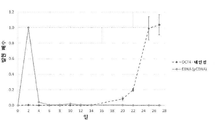
8 shows gene expression analysis of EBNA carried in
9A-9D show the characterization of iPSCs obtained using STTR to demonstrate pluripotent expression and teratoma formation in mice. A. Phase image of the iPSC clone. B. Flow analysis of SSEA4 + / TRA181 + pluripotency marker expression. C. Immunofluorescence staining of clones for pluripotency markers OCT4, NANOG, TRA181, and SSEA4. D. The ability of iPSC clones to differentiate into three germ layers, namely endoderm, mesoderm and ectoderm.
FIG. 10 shows flow cytometry analysis for SSEA4 + / TRA181 +
정의Justice
달리 정의되지 않는 한, 본 명세서에서 사용되는 모든 기술적 및 과학적 용어는 본 발명이 속하는 기술 분야의 당업자에 의해 통상적으로 이해되는 것과 동일한 의미를 갖는다. 본 발명의 목적을 위해, 다음의 용어를 이하에서 정의한다. 단수의 용어는 문법적 대상의 하나 또는 하나 초과(즉, 적어도 하나)를 지칭하기 위해 본 명세서에서 사용된다. 예로서, "요소"는 하나의 요소 또는 하나 초과의 요소를 의미한다.Unless defined otherwise, all technical and scientific terms used herein have the same meaning as commonly understood by one of ordinary skill in the art to which this invention belongs. For the purposes of the present invention, the following terms are defined below. Singular terms are used herein to refer to one or more (ie, at least one) of a grammatical object. By way of example, “element” means one element or more than one element.
대안의(예를 들어, "또는")의 사용은 대안 중 하나, 둘 다 또는 이들의 임의의 조합을 의미하는 것으로 이해되어야 한다. 용어 "및/또는"은 대안 중 하나, 또는 둘 다를 의미하는 것으로 이해되어야 한다.It should be understood that the use of an alternative (eg, “or”) means one, both or any combination of the alternatives. The term “and / or” should be understood to mean one or both of the alternatives.
본 명세서에서 사용되는 용어 "약" 또는 "대략"은 기준 양, 수준, 값, 숫자, 빈도, 백분율, 치수, 크기, 양, 중량 또는 길이에 비해 15%, 10%, 9%, 8%, 7%, 6%, 5%, 4%, 3%, 2% 또는 1%만큼 많이 변하는 양, 수준, 값, 숫자, 빈도, 백분율, 치수, 크기, 양, 중량 또는 길이를 지칭한다. 일 실시형태에서, 용어 "약" 또는 "대략"은 양, 수준, 값, 숫자, 빈도, 백분율, 치수, 크기, 양, 중량 또는 길이에 관해 양, 수준, 값, 숫자, 빈도, 백분율, 치수, 크기, 양, 중량 또는 길이 ± 15%, ± 10%, ± 9%, ± 8%, ± 7%, ± 6%, ± 5%, ± 4%, ± 3%, ± 2% 또는 ± 1%의 범위를 지칭한다.The term “about” or “approximately” as used herein refers to 15%, 10%, 9%, 8%, relative to a reference amount, level, value, number, frequency, percentage, dimension, size, amount, weight or length. It refers to an amount, level, value, number, frequency, percentage, dimension, size, amount, weight or length that varies by as much as 7%, 6%, 5%, 4%, 3%, 2% or 1%. In one embodiment, the terms “about” or “approximately” refer to amount, level, value, number, frequency, percentage, dimension in terms of amount, level, value, number, frequency, percentage, dimension, size, amount, weight or length , Size, quantity, weight or length ± 15%, ± 10%, ± 9%, ± 8%, ± 7%, ± 6%, ± 5%, ± 4%, ± 3%, ± 2% or ± 1 Refers to the range of%.
본 명세서에서 사용되는 용어 "실질적으로" 또는 "본질적으로"는 기준 양, 수준, 값, 숫자, 빈도, 백분율, 치수, 크기, 양, 중량 또는 길이에 비해 약 90%, 91%, 92%, 93%, 94%, 95%, 96%, 97%, 98% 또는 99% 또는 더 높은 양, 수준, 값, 숫자, 빈도, 백분율, 치수, 크기, 양, 중량 또는 길이를 지칭한다. 일 실시형태에서, 용어 "본질적으로 동일한" 또는 "실질적으로 동일한"은 기준 양, 수준, 값, 숫자, 빈도, 백분율, 치수, 크기, 양, 중량 또는 길이와 거의 동일한 기준 양, 수준, 값, 숫자, 빈도, 백분율, 치수, 크기, 양, 중량 또는 길이의 범위를 지칭한다.The term “substantially” or “essentially” as used herein refers to about 90%, 91%, 92%, relative to a reference amount, level, value, number, frequency, percentage, dimension, size, amount, weight or length, 93%, 94%, 95%, 96%, 97%, 98% or 99% or higher refers to an amount, level, value, number, frequency, percentage, dimension, size, amount, weight or length. In one embodiment, the terms “essentially identical” or “substantially identical” refer to a reference quantity, level, value that is substantially equal to a reference quantity, level, value, number, frequency, percentage, dimension, size, quantity, weight or length, It refers to a range of numbers, frequencies, percentages, dimensions, sizes, amounts, weights or lengths.
본 명세서에서 사용되는 용어 "실질적으로 존재하지 않는" 및 "본질적으로 존재하지 않는"은 상호 호환적으로 사용되고, 조성물, 예를 들어, 세포 집단 또는 배양 배지를 기재하기 위해 사용될 때, 특정된 물질 또는 그의 공급원이 없는, 예를 들어, 구체화된 물질 또는 그의 공급원이 95% 없는, 96% 없는, 97% 없는, 98% 없는, 99% 없거나, 또는 통상적인 수단에 의해 측정하여 검출 불가능한 조성물을 지칭한다. 조성물 중의 특정 성분 또는 물질이 "존재하지 않는" 또는 "본질적으로 존재하지 않는"이라는 용어는 또한 이러한 성분 또는 물질이 (1) 임의의 농도로 조성물 중에 포함되지 않거나, 또는 (2) 기능적으로 비활성이지만, 저농도인 조성물 중에 포함되지 않는다는 것을 의미한다. 조성물의 특정 물질 또는 그의 공급원의 부재를 지칭할 때, 용어 "의 부재"에 유사한 의미가 적용될 수 있다.As used herein, the terms “substantially non-existent” and “essentially non-existent” are used interchangeably, and when used to describe a composition, eg, a cell population or culture medium, the specified substance or Refers to a composition that is free of its source, eg, a specified material or 95% free, 96% free, 97% free, 98% free, 99% free, or undetectable by conventional means. . The term “non-existent” or “essentially not present” of a particular component or material in the composition is also such that the component or material is (1) not included in the composition at any concentration, or (2) functionally inert. , It means that it is not included in the low concentration composition. Similar meanings can be applied to the term “absence” when referring to the absence of a particular substance or source of the composition.
본 명세서에서 사용되는 용어 "단리된" 등은 이의 본래 환경으로부터 분리된 세포, 또는 세포의 집단을 지칭하며, 즉, 단리된 세포의 환경은 "비-단리된" 기준 세포가 존재하는 환경에서 발견되는 바와 같은 적어도 하나의 성분이 실질적으로 존재하지 않는다. 이러한 용어는 이의 천연 환경에서 발견되는 바와 같은 일부 또는 모든 성분, 예를 들어, 조직, 생검으로부터 제거된 세포를 포함한다. 이러한 용어는 또한, 비-자연 발생 환경, 예를 들어, 배양물, 세포 현탁액에서 발견된 세포로서 적어도 하나, 일부 또는 모든 성분으로부터 제거된 세포를 포함한다. 이에 따라, 단리된 세포는 자연에서 발견된 바와 같이, 또는 비-천연 발생 환경에서 성장되거나, 저장되거나, 존속될 때, 다른 물질, 세포 또 집단을 포함하는 적어도 하나의 성분들로부터 일부 또는 전부 분리된다. 단리된 세포의 특정 예는 일부 순수한 세포, 실질적으로 순수한 세포, 및 비-자연적으로 발생하는 배지에서 배양된 세포를 포함한다. 단리된 세포는 환경에서 다른 물질 또는 세포로부터, 요망되는 세포, 또는 이의 집단을 분리시키는 것으로부터, 또는 환경으로부터 하나 이상의 다른 세포 집단 또는 하위집단을 제거하는 것으로부터 얻어질 수 있다.As used herein, the term "isolated", etc. refers to a cell, or population of cells, isolated from its native environment, ie, the environment of an isolated cell is found in an environment in which a "non-isolated" reference cell is present. At least one component as is substantially absent. The term includes cells removed from some or all components, such as tissues, biopsies, as found in its natural environment. These terms also include cells that have been removed from at least one, some, or all components as cells found in a non-naturally occurring environment, eg, cultures, cell suspensions. Accordingly, an isolated cell is partially or wholly isolated from at least one component, including other substances, cells or populations, as found in nature, or when grown, stored, or persisted in a non-naturally occurring environment. do. Specific examples of isolated cells include some pure cells, substantially pure cells, and cells cultured in a non-naturally occurring medium. Isolated cells can be obtained from other substances or cells in the environment, by isolating a desired cell, or population thereof, or by removing one or more other cell populations or subpopulations from the environment.
본 명세서에서 사용되는 용어 "정제하다" 등은 순도를 증가시키는 것을 지칭한다. 예를 들어, 순도는 적어도 50%, 60%, 70%, 80%, 90%, 95%, 99%, 또는 100%까지 증가될 수 있다.As used herein, the term "purify" refers to increasing purity. For example, the purity can be increased by at least 50%, 60%, 70%, 80%, 90%, 95%, 99%, or 100%.
본 명세서 전체적으로, 문맥에서 달리 요구되지 않는 한, 단어 "포함한다(comprise)", "포함한다(comprises)" 및 "포함하는"은 단계들 또는 요소들의 언급된 단계 또는 요소의 포함을 나타내지만, 단계들 또는 요소들의 임의의 다른 단계 또는 요소 또는 그룹의 제외를 나타내는 것으로 이해될 것이다. 특정 실시형태에서, 용어 "포함하다(include)", "가지다(has)", "함유한다(contain)" 및 "포함하다(comprise)"는 동의어로 사용된다.Throughout this specification, unless otherwise required by context, the words “comprise”, “comprises” and “comprising” refer to the inclusion of the stated step or element of the steps or elements, It will be understood that it indicates the exclusion of any other step or element or group of steps or elements. In certain embodiments, the terms “include”, “has”, “contain” and “comprise” are used synonymously.
"이루어진"은 어구 "이루어진"에 따르는 것은 무엇이든 포함하지만, 이것으로 제한되지 않는다는 것을 의미한다. 따라서, 어구 "이루어진"은 열거된 요소가 필요하거나 또는 필수적인 것, 다른 요소가 존재하지 않을 수도 있다는 것을 나타낸다.“Consisting of” means that anything following the phrase “consisting of” includes, but is not limited to. Thus, the phrase “consisting of” indicates that the listed elements are necessary or necessary, and other elements may not be present.
"필수적으로 포함하는(consisting essentially of)"은 어구 다음에 열거된 임의의 요소를 포함하고, 열거된 요소에 대해 개시내용에서 구체화된 활성 또는 작용을 방해하지 않거나 또는 기여하지 않는 다른 요소로 제한된다는 것을 의미한다. 따라서, 어구 "본질적으로 이루어진"은 열거된 요소가 필요하거나 또는 필수적인 것이지만, 다른 요소가 선택적이지는 않고, 그들이 열거된 요소의 활성 또는 작용에 영향을 미치는지의 여부에 따라 제공될 수도 있고 제공되지 않을 수도 있다는 것을 나타낸다.“Consisting essentially of” includes any element listed after the phrase and is limited to other elements that do not interfere with or do not interfere with the activity or action specified in the disclosure for the element listed. Means Thus, the phrase “consisting essentially of is that the listed elements are necessary or necessary, but other elements are not optional and may or may not be provided depending on whether they affect the activity or action of the listed elements. Indicates that it may.
본 명세서 전체적으로 "일 실시형태", "실시형태", "특정 실시형태", "관련된 실시형태", "특정 실시형태", "추가적인 실시형태" 또는 "추가 실시형태" 또는 이들의 조합에 대한 언급은 실시형태와 관련하여 기재된 특정 특성, 구조 또는 특징이 본 발명의 적어도 하나의 실시형태에 포함된다는 것을 의미한다. 따라서, 본 명세서 전체적으로 다양한 곳에서 앞서 언급한 어구의 출현은 반드시 동일한 실시형태를 모두 언급할 필요는 없다. 더 나아가, 특정 특성, 구조 또는 특징은 하나 이상의 실시형태에서 임의의 적합한 방식으로 조합될 수 있다.References throughout this specification to "one embodiment", "an embodiment", "specific embodiment", "related embodiment", "specific embodiment", "additional embodiment" or "additional embodiment" or combinations thereof Means that a particular characteristic, structure, or characteristic described in connection with the embodiment is included in at least one embodiment of the invention. Thus, the appearances of the phrases mentioned above in various places throughout this specification are not necessarily all referring to the same embodiment. Furthermore, specific features, structures or features may be combined in any suitable way in one or more embodiments.
용어 "생체외"은 일반적으로 유기체 밖, 예를 들어, 바람직하게는 천연 조건의 최소 변형을 갖는 유기체 밖의 인공 환경에서의 살아있는 조직 내 또는 살아있는 조직 상에서 행해지는 실험 또는 측정에서 일어나는 활성을 지칭한다. 특정 실시형태에서, "생체외" 절차는 유기체로부터 취해지고, 보통 멸균 조건 하에 실험 장치에서, 그리고 전형적으로 환경에 따라서 몇 시간 동안 또는 약 24시간까지(48시간 또는 72시간 또는 그 이상을 포함))배양되는 살아있는 세포 또는 조직을 수반한다. 특정 실시형태에서, 이러한 조직 또는 세포는 수집되고, 냉동될 수 있고, 이후에 생체밖 처리를 위해 해동될 수 있다. 살아있는 세포 또는 조직을 이용하여 며칠보다 더 길게 지속되는 조직 배양 실험 또는 절차는 전형적으로 "시험관내"가 (특정 실시형태에서, 이 용어가 생체밖과 상호호환적으로 사용될 수는 있지만) 되는 것으로 고려된다.The term “ex vivo” generally refers to activity occurring in an experiment or measurement performed on or on living tissue in an artificial environment outside the organism, for example, in an artificial environment, preferably outside the organism with minimal modification of natural conditions. In certain embodiments, the “ex vivo” procedure is taken from an organism, usually in a laboratory device under sterile conditions, and typically for several hours or up to about 24 hours (including 48 hours or 72 hours or more) depending on the environment. ) Involves living cells or tissue being cultured. In certain embodiments, such tissue or cells can be collected, frozen, and subsequently thawed for ex vivo treatment. Tissue culture experiments or procedures that last longer than a few days using living cells or tissue are typically considered to be "in vitro" (although in certain embodiments the term may be used interchangeably with ex vivo). do.
용여 "생체내"는 일반적으로 유기체 내에서 일어나는 활동을 지칭한다.Utilization “in vivo” generally refers to activity occurring within an organism.
본 명세서에서 사용되는 용어 "재프로그래밍" 또는 "탈분화" 또는 세포 효능의 증가" 또는 "발생 효능의 증가"는 세포의 효능을 증가시키거나 또는 세포를 덜 분화된 상태로 분화시키는 방법을 지칭한다. 예를 들어, 증가된 세포 효능을 갖는 세포는 비-재프로그래밍 상태에서의 동일 세포에 비해 더 발생된 가소성을 갖는다(즉, 더 많은 세포 타입으로 분화할 수 있음). 다시 말해서, 재프로그래밍된 세포는 비-재프로그래밍 상태에서의 동일 세포보다 덜 분화된 상태의 것이다. "재프로그래밍 세포"는 재프로그래밍된 세포와 상반되게, OCT4, NANOG, SOX2, SSEA4, TRA181, CD30 및/또는 CD50와 같은 만능 줄기세포 모폴로지 또는 안정한 내인성 만능성 유전자 발현을 포함하는, 만능 세포의 특징을 가지지 않고 변화 모폴로지(즉, 모폴로지의 변형)를 나타내는, 만능성 상태로의 재프로그래밍/탈분화를 겪은 비-만능 세포를 지칭한다. 재프로그래밍 세포의 변화 모폴로지는 재프로그래밍 유도 전에 출발 비-만능 세포뿐만 아니라 배아 줄기세포 특징 모폴로지를 갖는 재프로그래밍된 세포와 이러한 세포를 구별한다. 예를 들어, 섬유아세포를 재프로그래밍할 때, 재프로그래밍 세포의 형태학적 변화는 MET(간엽-상피 이행)를 포함한다. 당업자는, 다양한 타입의 체세포에 대한 이러한 변화 모폴로지를 용이하게 이해하고 식별한다. 일부 실시형태에서, 재프로그래밍 세포는 적어도 1, 2, 3, 4, 5, 6, 7, 8일 이상, 그리고 21, 22, 24, 26, 28, 30, 32, 35, 40일 이하, 또는 이들 사이의 임의의 일수 동안 재프로그래밍하기 위해 유도된 중간 세포이며, 세포는 자기-유지 또는 자기-지속 만능성 상태 상태로 진입하지 못한다. 비-만능 세포는 세포가 하나 이상의 재프로그래밍 인자로 도입될 때 재프로그래밍하도록 유도된다. 1, 2, 3, 또는 4일 동안 재프로그래밍하기 위해 유도된 재프로그래밍 세포는 재프로그래밍 인자의 형질 도입 후 1, 2, 3, 또는 4일에서의 세포이다(형질 도입의 일자는 0일임). 재프로그래밍 인자의 외인성 발현에 노출 전의 체세포와는 달리, 재프로그래밍 세포는 안정한 만능성 상태로 도달하기 위해 재프로그래밍 과정을 진행시키고, 충분한 시간이 제공되는 한, 심지어 외인성 발현 재프로그래밍 인자의 부재 하에서도 재프로그래밍된 세포가 될 수 있다.As used herein, the terms "reprogramming" or "dedifferentiation" or increasing cell efficacy "or" increasing developmental efficacy "refer to a method of increasing the efficacy of a cell or differentiating a cell into a less differentiated state. For example, cells with increased cell potency have more developed plasticity (ie, can differentiate into more cell types) than the same cells in a non-reprogrammed state, that is, reprogrammed cells. Is in a less differentiated state than the same cells in the non-reprogrammed state, “Reprogrammed cells” are pluripotent, such as OCT4, NANOG, SOX2, SSEA4, TRA181, CD30 and / or CD50, as opposed to reprogrammed cells. Refers to a non-pluripotent cell that has undergone reprogramming / dedifferentiation to a pluripotent state that does not have the characteristics of a pluripotent cell and exhibits a change morphology (i.e., a modification of the morphology), including stem cell morphology or stable endogenous pluripotent gene expression. Changes in reprogramming cells The morphology distinguishes these cells from reprogrammed cells with embryonic stem cell characteristic morphology, as well as starting non-pluripotent cells prior to induction of reprogramming. For example, when reprogramming fibroblasts, Morphological changes in reprogramming cells include MET (mesenchymal-epithelial migration) The skilled artisan readily understands and identifies this change morphology for various types of somatic cells In some embodiments, the reprogramming cells have at least 1 To reprogram for 2, 3, 4, 5, 6, 7, 8 days or more, and 21, 22, 24, 26, 28, 30, 32, 35, 40 days or less, or any number of days between them It is an induced intermediate cell, and the cell does not enter a self-sustaining or self-sustaining pluripotent state Non-pluripotent cells are induced to reprogram when cells are introduced with one or more reprogramming factors. Reprogrammed cells induced to reprogram for 3, or 4 days are 1, 2, 3, or 4 days after transfection of the reprogramming factor Cells in (the date of transduction is 0 days). Unlike somatic cells prior to exposure to exogenous expression of reprogramming factors, reprogramming cells undergo a reprogramming process to reach a stable, pluripotent state, and as long as sufficient time is provided, even in the absence of exogenous expression reprogramming factors It can be a reprogrammed cell.
본 명세서에서 사용되는 용어 "유도 만능 줄기세포" 또는 "iPSC"는 줄기세포가 유도 또는 변화된, 즉, 모두 3가지의 배아 또는 진피층(중배엽, 내배엽 및 외배엽)으로 분화할 수 있는 세포로 유도되거나 변경된(즉, 재프로그래밍된) 성인, 신생아 또는 태아 세포로부터 생성된다는 것을 의미한다.As used herein, the term "derived pluripotent stem cell" or "iPSC" is derived or altered to a cell in which stem cells are induced or changed, that is, cells capable of differentiating into all three embryonic or dermal layers (mesoderm, endoderm and ectoderm). It means that it is produced from adult (negatively reprogrammed), neonatal or fetal cells.
본 명세서에서 사용되는 용어 "배아 줄기세포"는 배아 배반포의 내부 세포 덩어리의 천연 유도 만능 줄기세포를 지칭한다. 배아 줄기세포는 만능성이며, 3가지의 1차 배엽(외배엽, 내배엽 및 중배엽)의 모든 유도체로의 발생 동안 생기게 한다. 그들은 배아외막 또는 태반에 기여하지 않으며, 즉, 전능성이 아니다.The term "embryonic stem cell" as used herein refers to a naturally induced pluripotent stem cell of the inner cell mass of the embryonic blastocyst. Embryonic stem cells are pluripotent and develop during the development of all derivatives of the three primary germ (ectoderm, endoderm and mesoderm). They do not contribute to the embryonic membrane or placenta, that is, they are not omnipotent.
본 명세서에서 사용되는 용어 "다능성 줄기세포"는 하나 이상의 배엽(외배엽, 중배엽 및 내배엽)(그러나 3가지 모두는 아님)의 세포로 분화하는 발생 가능성을 갖는 세포를 지칭한다. 따라서, 다능성 세포는 또한 "부분적으로 분화된 세포"로 지칭될 수 있다. 다능성 세포는 당업계에 잘 공지되어 있고, 다능성 세포의 예는 성체 줄기세포, 예를 들어, 조혈 줄기세포 및 신경 줄기세포를 포함한다. "다능성"은 세포가 주어진 계통에서 다수 타입의 세포(그러나 다른 계통의 세포는 아님)를 형성할 수 있다는 것을 나타낸다. 예를 들어, 다능성 조혈 세포는 다수의 상이한 타입의 혈액 세포(적혈구, 백혈구, 혈소판 등)를 형성할 수 있지만, 뉴런을 형성할 수 없다. 따라서, 용어 "다능성"은 전능성 및 만능성보다 더 적은 발생 가능성 정도를 갖는 세포 상태를 지칭한다.As used herein, the term “pluripotent stem cell” refers to a cell with a likelihood of development that differentiates into cells of one or more germ cells (exoderm, mesoderm and endoderm) (but not all three). Thus, pluripotent cells can also be referred to as “partially differentiated cells”. Pluripotent cells are well known in the art and examples of pluripotent cells include adult stem cells, such as hematopoietic stem cells and neural stem cells. "Pluripotent" indicates that a cell can form multiple types of cells in a given lineage (but not cells of other lineages). For example, pluripotent hematopoietic cells can form a number of different types of blood cells (red blood cells, white blood cells, platelets, etc.), but not neurons. Thus, the term “pluripotency” refers to a cell state that has a lesser degree of development than pluripotency and pluripotency.
본 명세서에서 사용되는 용어 "만능성"은 신체 또는 체세포의 모든 계통(즉, 배아 적합)을 형성하는 세포의 능력을 지칭한다. 예를 들어, 배아 줄기세포는 각각 3개의 배층, 즉, 외배엽, 중배엽 및 내배엽으로부터 세포를 형성할 수 있는 만능 줄기세포의 타입이다. 만능성은 완전한 유기체를 더 원시적으로 발생되게 할 수 없는 불완전하게 또는 부분적으로 만능 세포(예를 들어, 원외배엽 줄기세포 또는 EpiSC), 완전한 유기체(예를 들어, 배아 줄기세포)가 생기게 할 수 있는 더 만능 세포의 범위에 있는 발생 효능의 연속체이다.As used herein, the term “pluripotency” refers to the ability of cells to form all lineages of a body or somatic cell (ie embryonic fit). For example, embryonic stem cells are each a type of pluripotent stem cell capable of forming cells from three germ layers, namely ectoderm, mesoderm and endoderm. Pluripotency is more likely to result in incomplete or partially pluripotent cells (eg ectodermal stem cells or EpiSC), complete organisms (eg embryonic stem cells) that cannot cause a complete organism to develop more primitively. It is a continuum of developmental efficacy in the range of pluripotent cells.
만능성은 부분적으로 세포의 만능성 특징을 평가함으로써 결정될 수 있다. 만능성 특징은 (i) 만능 줄기세포 형태; (ii) 비제한적 자기-재생을 위한 가능성; (iii) SSEA1(마우스 단독), SSEA3/4, SSEA5, TRA1-60, TRA1-81, TRA1-85, TRA2-54, GCTM-2, TG343, TG30, CD9, CD29, CD133//프로미닌, CD140a, CD56, CD73, CD90, CD105, OCT4, NANOG, SOX2, CD30 및/또는 CD50을 포함하지만, 이들로 제한되지 않는 만능 줄기세포 마커의 발현; (iv) 모두 3가지의 체세포 계통(외배엽, 중배엽 및 내배엽)으로 분화하는 능력; (v) 3가지 체세포 계통으로 이루어진 기형종 형성; 및 (vi) 3가지 체세포 계통으로부터의 세포로 이루어진 배상체의 형성을 포함하지만, 이들로 제한되지 않는다.Pluripotency can be determined in part by evaluating the pluripotent characteristics of the cell. Pluripotent features include (i) pluripotent stem cell morphology; (ii) possibilities for non-limiting self-renewal; (iii) SSEA1 (mouse only), SSEA3 / 4, SSEA5, TRA1-60, TRA1-81, TRA1-85, TRA2-54, GCTM-2, TG343, TG30, CD9, CD29, CD133 // Prominin, CD140a , Expression of pluripotent stem cell markers including, but not limited to, CD56, CD73, CD90, CD105, OCT4, NANOG, SOX2, CD30 and / or CD50; (iv) the ability to differentiate into all three somatic lineages (ectoderm, mesoderm and endoderm); (v) teratoma formation consisting of three somatic lineages; And (vi) formation of embryoid bodies consisting of cells from three somatic lineages.
2가지 타입의 만능성이 이전에 기재되었다: 후기 배반포의 원외배엽 줄기세포(EpiSC)와 유사한 만능성의 "프라이밍된" 또는 "전이성" 상태, 및 초기/이식전 배반포의 내부 세포 덩어리와 유사한 만능성의 "나이브" 또는 "기저" 상태. 만능성 상태는 둘 다 상기 기재한 바와 같은 특징을 나타내지만, 나이브 또는 기저 상태는 추가로 다음을 나타낸다: (i) 여성 세포에서 X-염색체의 사전-비활성화 또는 재활성화; (ii) 단일-세포 배양 동안 개선된 클론성 및 생존; (iii) DNA 메틸화에서의 전반적 감소; (iv) 발생 조절 유전자 프로모터에 대한 H3K27me3 억제염색질 마크 침착의 감소; 및 (v) 만능 세포의 프라이밍된 상태에 비해 분화 마커의 감소된 발현. 외인성 만능성 유전자가 체세포에 도입되고, 발현되며, 이어서 얻어진 만능 세포로부터 침묵되거나 제거된 세포 프로그래밍의 표준 방법은 일반적으로 만능성의 프라이밍-상태의 특징을 갖는 것으로 보인다. 표준 만능 세포 배양 조건하에서, 외인성 이식유전자 발현이 유지되지 않는 한 이러한 세포는 프라이밍된 상태로 남아있되, 기저 상태의 특징이 관찰된다.Two types of pluripotency have been previously described: a pluripotent “primed” or “metastatic” state similar to ectodermal stem cells (EpiSC) of late blastocysts, and a pluripotency similar to the inner cell mass of early / pre-transplant blastocysts. "Nive" or "Base" status. The pluripotent state both exhibit the features as described above, but the naive or basal state further indicates: (i) pre-inactivation or reactivation of the X-chromosome in female cells; (ii) improved clonality and survival during single-cell culture; (iii) overall reduction in DNA methylation; (iv) reduction of H3K27me3 inhibitory chromatin mark deposition on developmental regulatory gene promoters; And (v) reduced expression of differentiation markers compared to the primed state of pluripotent cells. Standard methods of cellular programming in which exogenous pluripotent genes are introduced into somatic cells, expressed, and then silenced or removed from the resulting pluripotent cells, generally appear to be characterized by pluripotent priming-states. Under standard pluripotent cell culture conditions, these cells remain primed unless the exogenous transgene expression is maintained, but the characteristics of the basal state are observed.
본 명세서에서 사용되는 용어 "만능 줄기세포 형태"는 배아 줄기세포의 고전적 형태 특징을 지칭한다. 정상 배아 줄기세포 형태는 높은 핵-대-세포질 비, 핵소체의 주목할 만한 존재 및 전형적인 세포내 간격과 함께 형상이 둥글고 작은 것을 특징으로 한다.As used herein, the term "pluripotent stem cell form" refers to the classical morphological features of embryonic stem cells. Normal embryonic stem cell morphology is characterized by a rounded and small shape with a high nuclear-to-cytoplasmic ratio, notable presence of nucleolus and typical intracellular spacing.
"만능 인자" 또는 "재프로그래밍 인자"는 단독으로 또는 다른 제제와 조합하여, 세포의 발생 효능을 증가시킬 수 있는 제제를 지칭한다. 만능 인자는 폴리뉴클레오타이드, 폴리펩타이드 및 소분자를 포함하지만, 이들로 제한되지 않는다. 예시적인 만능 인자는, 예를 들어, 전사 인자 및 소분자 재프로그래밍 제제를 포함한다. 예시적인 만능성 인자는 예를 들어, 전사 인자 OCT4 및 SOX2, 및 소분자 재프로그래밍 제제, 예를 들어, TGFβ 억제제, GSK3 억제제, MEK 억제제 및 ROCK 억제제를 포함한다."All-round factor" or "reprogramming factor" refers to an agent that, alone or in combination with other agents, can increase the developmental efficacy of cells. Universal agents include, but are not limited to, polynucleotides, polypeptides, and small molecules. Exemplary pluripotent factors include, for example, transcription factors and small molecule reprogramming agents. Exemplary pluripotency factors include, for example, transcription factors OCT4 and SOX2, and small molecule reprogramming agents such as TGFβ inhibitors, GSK3 inhibitors, MEK inhibitors and ROCK inhibitors.
본 명세서에서 사용되는 용어 "분화"는 비전문화된("관련되지 않은") 또는 덜 전문화된 세포가 전문화된 세포, 예를 들어, 혈액 세포 또는 근육 세포의 특징을 획득하는 과정이다. 분화된 또는 분화-유도 세포는 세포 계통 내에서 더 전문화된("수임된(committed)") 위치 상에서 취해진 것이다. 용어 "수임된"은 분화 과정에 적용될 때, 정상 환경 하에서 그것이 특정 세포 타입 또는 세포 타입의 서브세트로 분화를 계속할 수 있는 지점으로 분화 경로에서 진행하고, 정상 환경 하에서 상이하나 세포 타입으로 분화하거나 또는 덜 분화된 세포 타입으로 되돌아가는 지점까지 분화 경로에서 진행되는 세포를 지칭한다.The term "differentiation" as used herein is the process by which non-cultured ("unrelated") or less specialized cells acquire the characteristics of specialized cells, eg, blood cells or muscle cells. Differentiated or differentiated-derived cells are taken on a more specialized ("committed") position within the cell lineage. The term “committed”, when applied to a differentiation process, proceeds in a differentiation pathway to a point where under normal circumstances it can continue to differentiate into a particular cell type or subset of cell types, and differs under normal circumstances but into cell types, or Refers to cells that progress in the differentiation pathway to the point where they return to a less differentiated cell type.
만능 줄기세포의 분화는 배양 시스템의 변화, 예를 들어, 배양 배지 또는 세포의 물리적 상태에서 자극제의 변화를 필요로 한다. 가장 통상적인 전략은 계통-특이적 분화를 개시하기 위해 통상적이고 중요한 중간체로서 배상체(EB)의 형성을 이용한다. EB는 그들의 3차원 면적 내에서 수많은 계통을 생기게 하기 때문에 배아 발생을 모방하는 것으로 나타난 3차원 클러스터이다. 분화 과정, 전형적으로 몇 시간 내지 며칠을 통해, 단순한 EB(예를 들어, 응집된 만능 줄기세포는 분화하도록 유발됨)는 성숙을 계속하고, 그들이 추가로 분화를 계속하도록 진행되는 시간, 전형적으로 며칠 내지 몇 주에 낭포성 EB로 발생된다. 세포의 3차원 다층 클러스터에서 만능 줄기세포가 서로 근접하게 함으로써 EB 형성이 개시되며, 전형적으로 이는 만능 세포가 액적 중의 침전을 허용하는 단계, 세포를 "U"형 바닥 웰-플레이트 내로 또는 기계적 교반에 의해 침전시키는 단계를 포함하는 몇몇 방법 중 하나에 의해 달성된다. EB 발생을 촉진시키기 위해, 만능 줄기세포 응집물은 추가적인 분화 신호가 필요한데, 만능성 배양물 유지 배지 내에 유지된 응집물이 적절한 EB를 형성하지 않기 때문이다. 이렇게 해서, 만능 줄기세포 응집물은 선택 계통에 대한 유발 신호를 제공하는 분화 배지로 전달될 필요가 있다. 만능 줄기세포의 EB-기반 배양물은 전형적으로 EB 세포 클러스터 내에서 보통의 증식을 갖는 분화된 세포 집단(외배엽, 중배엽 및 내배엽의 배엽)의 생성을 초래한다. 세포 분화를 용이하게 하는 것으로 증명되었지만, 그러나 EB는 3차원 구조에서 세포의 환경으로부터의 분화 신호에 대한관 일치되지 않는 노출 때문에 가변성 분화 상태로 이종성 세포가 생기게 한다. 추가로, EB는 생성 및 유지하는데 힘이 든다. 또한, EB를 통한 세포 분화는 보통 세포 확장을 수반하는데, 이는 또한 낮은 분화 효율에 기여한다.Differentiation of pluripotent stem cells requires changes in the culture system, eg, stimulators in the culture medium or the physical state of the cells. The most common strategy uses the formation of embryoid bodies (EBs) as a common and important intermediate to initiate lineage-specific differentiation. EBs are three-dimensional clusters that have been shown to mimic embryonic development because they produce numerous lines within their three-dimensional area. Through the differentiation process, typically several hours to several days, simple EBs (e.g., aggregated pluripotent stem cells are induced to differentiate) continue to mature, and the time they progress to continue further differentiation, typically several days Cystic EB occurs within a few weeks. EB formation is initiated by bringing pluripotent stem cells close to each other in a three-dimensional multi-layer cluster of cells, typically allowing the pluripotent cells to settle in droplets, placing the cells into a "U" bottom well-plate or mechanical stirring. It is achieved by one of several methods, including the step of precipitating by. To promote EB development, pluripotent stem cell aggregates require an additional differentiation signal because aggregates retained in the pluripotent culture maintenance medium do not form the appropriate EB. In this way, pluripotent stem cell aggregates need to be delivered to a differentiation medium that provides trigger signals for the select lineage. EB-based cultures of pluripotent stem cells typically result in the generation of differentiated cell populations (exoderm, mesoderm and endoderm endoderm) with moderate proliferation within the EB cell cluster. It has been demonstrated to facilitate cell differentiation, but EB causes heterogeneous cells in a variable differentiation state due to inconsistent exposure to differentiation signals from the cell's environment in a three-dimensional structure. Additionally, EB is difficult to create and maintain. In addition, cell differentiation through EB usually involves cell expansion, which also contributes to low differentiation efficiency.
비교하면, "EB 형성"과 별개인 "응집물 형성"은 만능 줄기세포 유래 세포의 집단을 확장시키는 데 사용될 수 있다. 예를 들어, 응집물-기반 만능 줄기세포 확장 동안, 배양물 배지는 증식 및 만능성을 유지하도록 선택된다. 세포 증식은 일반적으로 응집물의 크기를 증가시켜 더 큰 응집물을 형성하고, 이들 응집물은 배양물 내의 세포 증식을 유지시키기 위해 그리고 세포 수를 증가시키기 위해 더 작은 응집물로 일상적으로 기계적으로 또는 효소적으로 해리될 수 있다. EB 배양물과 별개로, 유지 배양물 중의 응집물 내에서 배양된 세포는 만능성 마커를 유지한다. 만능 줄기세포 응집물은 분화를 유도하기 위한 추가적인 분화 신호를 필요로 한다.In comparison, "aggregate formation" separate from "EB formation" can be used to expand a population of pluripotent stem cell derived cells. For example, during aggregate-based pluripotent stem cell expansion, the culture medium is selected to maintain proliferation and pluripotency. Cell proliferation generally increases the size of aggregates to form larger aggregates, which are routinely mechanically or enzymatically dissociated into smaller aggregates to maintain cell proliferation in culture and to increase cell number. Can be. Apart from EB cultures, cells cultured in aggregates in maintenance cultures retain pluripotency markers. Pluripotent stem cell aggregates require additional differentiation signals to induce differentiation.
본 명세서에서 사용되는 "단일층 분화"는 세포의 3차원 다층 클러스터, 즉, "형성"을 통한 분화와 별개인 분화 방법을 지칭하는 용어이다. 단일층 분화, 본 명세서에 개시된 이점 중에서, 분화 개시를 위한 EB 형성에 대한 필요를 회피한다. 단일층 배양은 배아 발생, 예를 들어, EB 형성을 모방하지 않기 때문에, 특정 계통에 대한 분화는 EB에서의 모두 3가지 배엽 분화에 비해 최소인 것으로 여겨진다.As used herein, "single-layer differentiation" is a term referring to a three-dimensional multi-layer cluster of cells, that is, a differentiation method separate from differentiation through "formation". Single layer differentiation, among the advantages disclosed herein, avoids the need for EB formation to initiate differentiation. Since monolayer culture does not mimic embryonic development, eg EB formation, differentiation for a particular lineage is considered minimal compared to all three germline differentiation in EB.
본 명세서에서 사용되는 "해리된" 세포는 다른 세포로부터 또는 표면(예를 들어, 배양 플레이트 표면)으로부터 실질적으로 분리되거나 또는 정제된 세포를 지칭한다. 예를 들어, 세포는 기계적 또는 효소적 방법에 의해 동물 또는 조직으로부터 해리될 수 있다. 대안적으로, 시험관내에서 응집하는 세포는 서로로부터, 예를 들어, 클러스터, 단일 세포 또는 단일 세포와 클러스터의 혼합물의 현탁액으로 해리에 의해 효소적으로 또는 기계적으로 해리될 수 있다. 또 다른 대안의 실시형태에서, 부착 세포는 배양 플레이트 또는 다른 표면으로부터 해리된다. 따라서 해리는 세포외 기질(ECM) 및 기질(예를 들어, 배양 표면)과의 세포 상호작용을 파괴하는 것 또는 세포 사이의 ECM을 파괴하는 것을 수반할 수 있다.As used herein, “dissociated” cells refer to cells that have been substantially isolated or purified from other cells or from surfaces (eg, culture plate surfaces). For example, cells can be dissociated from animals or tissues by mechanical or enzymatic methods. Alternatively, cells that aggregate in vitro can be dissociated enzymatically or mechanically from each other, for example by dissociation into a cluster, a single cell or a suspension of a mixture of single cells and clusters. In another alternative embodiment, adherent cells dissociate from the culture plate or other surface. Thus, dissociation may involve disrupting cellular interactions with the extracellular matrix (ECM) and the substrate (eg, culture surface) or destroying the ECM between cells.
본 명세서에서 사용되는 "피더 세포" 또는 "피더"는 피더 세포가 제2 세포 타입의 지지체에 대한 성장 인자 및 영양소를 제공하기 때문에 제2 타입의 세포가 성장할 수 있는 환경을 제공하는 제2 타입의 세포와 함께 공동배양되는 한 가지 타입의 세포를 기재하는 용어이다. 피더 세포는 그들의 지지하는 세포와 상이한 종으로부터 선택적으로 유래된다. 예를 들어, 줄기세포를 포함하는 특정 타입의 인간 세포는 마우스 배아 섬유아세포, 또는 불멸 마우스 배아 섬유아세포의 1차 배양물에 의해 지지될 수 있다. 피더 세포는 그들이 지지하는 세포보다 더 커지는 것을 방지하기 위해 방사선 조사 또는 항-유사분열제, 예를 들어, 미토마이신에 의한 처리에 의해 다른 세포와 함께 공동배양시킬 때 전형적으로 비활성화될 수 있다. 피더 세포는 내피세포, 기질 세포(예를 들어, 상피 세포 또는 섬유아세포) 및 백혈병 세포를 포함할 수 있다. 앞서 언급한 것으로 제한하는 일 없이, 한 가지의 특정 피더 세포 타입은 인간 피더, 예를 들어, 인간 피부 섬유아세포일 수 있다. 다른 피더 세포 타입은 마우스 배아 섬유아세포(MEF)일 수 있다. 일반적으로, 다양한 피더 세포는 특정 계통에 대한 만능성, 직접적 분화를 유지하기 위해 그리고 전문화된 세포 타입, 예를 들어, 이펙터 세포로의 성숙을 촉진시키기 위해 부분적으로 사용될 수 있다.As used herein, “feeder cell” or “feeder” is a second type of cell that provides an environment in which a cell of the second type can grow because the feeder cell provides growth factors and nutrients for the support of the second cell type. A term that describes one type of cell co-cultured with the cell. Feeder cells are selectively derived from species different from their supporting cells. For example, certain types of human cells, including stem cells, can be supported by primary cultures of mouse embryonic fibroblasts, or immortal mouse embryonic fibroblasts. Feeder cells can typically be inactivated when co-cultured with other cells by irradiation or treatment with an anti-mitotic agent such as mitomycin to prevent them from becoming larger than the cells they support. Feeder cells may include endothelial cells, stromal cells (eg, epithelial cells or fibroblasts) and leukemia cells. Without limiting to the foregoing, one specific feeder cell type can be a human feeder, eg, human skin fibroblasts. Another feeder cell type may be mouse embryo fibroblast (MEF). In general, various feeder cells can be used in part to maintain pluripotency, direct differentiation for a particular lineage, and to promote maturation into specialized cell types, such as effector cells.
본 명세서에서 사용되는 "무-피더"(FF) 환경은 피더 또는 기질 세포가 본질적으로 없고, 그리고/또는 피더 세포의 배양에 의해 사전 조건화되지 않은 배양 조건, 세포 배양물 또는 배양 배지와 같은 환경을 지칭한다. "사전 조건화된" 배지는 피더 세포가 시간 기간 동안, 예를 들어, 적어도 1일 동안 배지 내에서 배양된 후에 채취된 배지를 지칭한다. 사전 조건화된 배지는 배지에서 배양된 피더 세포에 의해 분화된 성장 인자 및 사이토카인을 포함하는 다수의 매개체 물질을 함유한다. 일부 실시형태에서, 무-피더 환경은 두 피더 세포 모두가 존재하지 않고 또한, 피더 세포의 배양에 의해 사전-조건화되지 않는다. 피더 세포는 간질 세포, 마우스 배아 섬유아세포, 인간 섬유아세포, 케라티노사이트, 및 배아 줄기세포를 포함하지만, 이로 제한되지 않는다.As used herein, a “feeder-free” (FF) environment refers to an environment such as a culture condition, cell culture or culture medium that is essentially free of feeder or stromal cells and / or is not preconditioned by the culture of the feeder cells. Refers to. "Pre-conditioned" medium refers to a medium harvested after feeder cells have been cultured in the medium for a period of time, eg, at least 1 day. The pre-conditioned medium contains a number of mediator materials including growth factors and cytokines differentiated by feeder cells cultured in the medium. In some embodiments, the feeder-free environment is free of both feeder cells and is not pre-conditioned by culturing the feeder cells. Feeder cells include, but are not limited to, interstitial cells, mouse embryo fibroblasts, human fibroblasts, keratinocytes, and embryonic stem cells.
"배양물" 또는 "세포 배양물"은 시험관내 환경에서 세포의 유지, 성장 및/또는 분화를 지칭한다. "세포 배양물 배지", "배양물 배지"(각각의 경우에 단수 "배지"), "보충물" 및 "배지 보충물"은 세포 배양물을 배양하는 영양 조성물을 지칭한다.“Culture” or “cell culture” refers to the maintenance, growth and / or differentiation of cells in an in vitro environment. "Cell culture medium", "culture medium" (in each case singular "medium"), "supplement" and "medium supplement" refer to the nutritional composition for culturing the cell culture.
"배양하다" 또는 "유지하다"는, 예를 들어 멸균 플라스틱(또는 코팅된 플라스틱)세포 배양물 접시 또는 플라스크에서 조직 또는 신체 밖에서 세포를 지속하고/하거나, 증식(성장)시키고/시키거나 분화시키는 것을 지칭한다. "배양" 또는 "유지하는"은 세포를 증식시키고/시키거나 지속시키는 데 도움이 되는 영양소, 호르몬 및/또는 다른 인자의 공급원으로서 배양 배지를 이용할 수 있다.“Cultivate” or “retain” means to persist, and / or proliferate (grow) and / or differentiate cells, for example, in a sterile plastic (or coated plastic) cell culture dish or flask, outside the tissue or body. Refers to “Cultivating” or “maintaining” can utilize a culture medium as a source of nutrients, hormones, and / or other factors that help proliferate and / or sustain cells.
본 명세서에서 사용되는 "계대" 또는 "계대배양"은 세포가 요망되는 정도까지 증식될 때 다수의 세포 배양물 표면 또는 용기 내에 세포를 분할하고 플레이팅함으로써 배양된 세포를 나누는 행위를 지칭한다. 일부 실시형태에서, "계대" 또는 "계대배양"은 세포를 분할하고, 희석시키고, 플레이팅하는 것을 지칭한다. 세포가 1차 배양물 표면 또는 용기로부터 후속 세트의 표면 또는 용기로 계대배양되기 때문에, 후속 배양물은 본 명세서에서 "2차 배양물" 또는 "제1 계대" 등으로서 지칭될 수 있다. 새로운 배양 용개 내로 분할하고 플레이팅하는 각 행위는 하나의 계대로 여겨진다. 일부 실시형태에서, 배양된 세포는 1, 2, 3, 4, 5, 6, 7일 이상 마다 계대배양된다. 일부 실시형태에서, 재프로그래밍 후 초기에 선택된 iPSC는 3 내지 7일마다 1회 계대배양된다.As used herein, “passage” or “passaging” refers to the act of dividing the cultured cells by dividing and plating the cells within the surface or container of multiple cell cultures when the cells have proliferated to the desired degree. In some embodiments, “passaging” or “passaging” refers to dividing, diluting, and plating cells. Since the cells are passaged from the primary culture surface or vessel to a subsequent set of surfaces or vessels, the subsequent culture may be referred to herein as "secondary culture" or "first passage", and the like. Each act of splitting and plating into a new culture vessel is considered a passage. In some embodiments, the cultured cells are passaged every 1, 2, 3, 4, 5, 6, 7 or more days. In some embodiments, iPSCs initially selected after reprogramming are passaged once every 3-7 days.
iPSC, 및 이로부터 분화된 유도된 비-만능 세포의 게놈 편집 또는 변형, 또는 비-만능 세포 및 이로부터 재프로그래밍된 유도된 iPSC의 게놈 편집 또는 변형의 문맥에서 사용되는 "기능성"은 (1) 유전자 수준에서는-성공적인 녹-인, 녹-아웃, 녹-다운 유전자 발현, 유전자 이식된 또는 제어된 유전자 발현, 예를 들어, 요망되는 세포 발생 스테이지에서 유도성 또는 일시적 발현(이는 직접적인 게놈 편집 또는 변형을 통해서 또는 초기에 게놈 조작된 출발 세포로부터의 분화 또는 출발 세포의 재프로그래밍을 통한 "패싱-온(passing-on)"을 통해서 달성됨)을 지칭하거나; (2) 세포 수준에서는 - (i) 직접적인 게놈 편집을 통해서 상기 세포에서 수득된 유전자 발현 변형, (ii) 초기에 게놈 조작된 출발 세포로부터의 분화 또는 출발 세포의 재프로그래밍을 통한 "패싱-온"을 통해서 상기 세포에서 유지된 유전자 발현 별형; (iii) 상기 세포의 초기 발달 단계에서만 보이거나, 또는 분화 또는 재프로그래밍을 통해서 상기 세포를 생성시키는 출발 세포에서만 보이는 유전자 발현 변형의 결과로서의 상기 세포에서의 하류 유전자 조절; 또는 (iv) iPSC, 전구체 또는 탈분화된 세포 기원에서 수행된 게놈 편집 또는 변형으로부터 초기에 유래된, 성숙 세포 산물 내에 나타난 향상되거나 또는 새로 성취된 세포 기능 또는 속성을 통해서 세포 기능/특징을 성공적으로 제거, 부가 또는 변경한 것을 지칭한다.“Functionality” used in the context of genome editing or modification of iPSCs, and derived non- pluripotent cells differentiated therefrom, or of iPSCs derived from and reprogrammed from non-pluripotent cells (1) At the genetic level--successful knock-in, knock-out, knock-down gene expression, transgenic or controlled gene expression, e.g., inducible or transient expression at the desired cell development stage (which is direct genome editing or modification) Through or through differentiation from initially genomically engineered starting cells or "passing-on" through reprogramming of starting cells); (2) At the cell level-"i" a gene expression modification obtained from the cell through direct genome editing, (ii) "passing-on" through initially differentiating from a genomically engineered starting cell or reprogramming the starting cell. A gene expression star maintained in the cell through; (iii) downstream gene regulation in the cell as a result of gene expression modifications seen only in the early stages of development of the cell, or only in starting cells that produce the cell through differentiation or reprogramming; Or (iv) successful removal of cell function / features through enhanced or newly achieved cell function or attributes that appear in mature cell products, initially derived from genome editing or modification performed on iPSC, precursor or dedifferentiated cell origin. , Refers to additions or changes.
본 명세서에서 사용되는 용어 "유전자 각인"은 소스 세포 또는 iPSC에서 우선적 치료적 속성에 기여하는 유전적 또는 후성적 정보를 지칭하고, 소스 세포 유래 iPSC 및/또는 iPSC-유래 조혈 계통 세포에서 보유 가능하다. 본 명세서에서 사용되는 "소스 세포"는 재프로그래밍을 통해 iPSC를 생성하기 위해 사용될 수 있는 비-만능 세포이고, 소스 세포 유래 iPSC는 임의의 조혈 계통 세포를 포함하는 특정 세포 타입으로 추가로 분화될 수 있다. 소스 세포 유래 iPSC, 및 그것으로부터의 분화 세포는 때때로 내용에 따라서 "유래 세포"로 총괄적으로 불린다. 우선적 치료 속성을 부여하는 본 명세서에 사용되는 바와 같은 유전자 각인(들)은 공여자-, 질환- 또는 치료 반응-특이적인 선택된 소스 세포의 재프로그래밍을 통해 또는 게놈 편집을 이용하여 유전자 변형된 양상을 iPSC에 도입하는 것을 통해 iPSC 내에 혼입된다. 구체적으로 선택된 공여자, 질환 또는 치료 내용으로부터 얻은 소스 세포의 양상에서, 우선적 치료적 속성에 기여하는 유전자 각인은 동정되든 아니든 근본적인 분자 사건과 상관없이 선택된 소스 세포의 유도체 세포 상에서 통과된 보유 가능한 표현형, 즉, 우선적 치료 속성을 나타내는 임의의 내용 특이적인 유전적 또는 후성적 변형을 포함할 수 있다. 공여자-, 질환- 또는 치료 반응- 특이적 소스 세포는 iPSC에서 보유 가능한 유전자 각인 및 유래된 조혈 계통 세포를 포함할 수 있으며, 이 유전자 각인은, 예를 들어, 바이러스 특이적 T 세포 또는 비변이체 자연 살해 T(iNKT) 세포로부터의 사전 배열된 단일 특이적 TCR; 추적할 수 있는 그리고 바람직한 유전적 다형성, 예를 들어, 선택된 공여자에서 고친화도 CD16 수용체를 암호화하는 점 돌연변이에 대한 동형접합성; 및 사전 결정된 HLA 필요, 즉, 증가된 집단을 갖는 단상형을 나타내는 선택된 HLA-매칭된 공여자 세포를 포함하지만, 이들로 제한되지 않는다. 본 명세서에 사용되는 바와 같이, 우선적 치료적 속성은 유래된 세포의 개선된 생착, 수송, 귀소, 생존도, 자기-재생, 지속성, 면역 반응 조절 및 조정, 생존 및 세포독성을 포함한다. 우선적 치료 속성은 또한 항원 타깃화 수용체 발현; HLA 제시 또는 이의 결여; 종양 미세환경에 대한 내성; 방관자 면역 세포 및 면역 조정의 유도; 종양을 벗어난 효과가 감소된 개선된 타깃에 대한 특이성; 화학요법과 같은 치료에 대한 내성에 관한 것일 수 있다.The term “gene imprinting” as used herein refers to genetic or epigenetic information contributing to preferential therapeutic properties in a source cell or iPSC, and is retainable in iPSC and / or iPSC-derived hematopoietic lineage cells derived from a source cell. . As used herein, “source cell” is a non-pluripotent cell that can be used to generate iPSCs through reprogramming, and source cell derived iPSCs can be further differentiated into specific cell types, including any hematopoietic lineage cells. have. IPSCs derived from source cells, and differentiated cells from them are sometimes referred to collectively as “derived cells” depending on the content. Genetic imprinting (s) as used herein conferring preferential therapeutic properties iPSCs of genetically modified aspects through reprogramming of donor-, disease- or therapeutic response-specific selected source cells or using genomic editing. It is incorporated into the iPSC through the introduction to. In aspects of a source cell obtained from a specifically selected donor, disease or treatment content, the gene imprint that contributes to the preferential therapeutic attribute, whether identified or not, is a retainable phenotype passed on the derivative cell of the selected source cell regardless of the underlying molecular event, i.e. , Any content-specific genetic or epigenetic modification that exhibits preferential therapeutic properties. The donor-, disease- or therapeutic response-specific source cells can include gene imprinting and derived hematopoietic lineage cells that can be retained in iPSC, which gene imprinting can be, for example, virus specific T cells or non-variant nature. A pre-arranged single specific TCR from killer T (iNKT) cells; Traceable and desirable genetic polymorphisms, eg, homozygous for point mutations encoding high affinity CD16 receptors in selected donors; And selected HLA-matched donor cells that exhibit a pre-determined HLA need, i.e., a monophasic form with an increased population. As used herein, preferential therapeutic properties include improved engraftment, transport, homing, viability, self-renewal, persistence, regulation and regulation of immune responses, survival and cytotoxicity of derived cells. Preferred therapeutic properties also include antigen targeting receptor expression; Presentation of HLA or lack thereof; Resistance to tumor microenvironment; Induction of bystander immune cells and immune modulation; Specificity for improved targets with reduced off-tumor effects; It may be about resistance to treatment, such as chemotherapy.
본 명세서에서 사용되는 "유전적 변형"은 (1) 재배열, 돌연변이, 유전자 각인 및/또는 후성적 변형으로부터 천연 유래되거나, (2) 또는 세포 게놈에서 삽입, 결실 또는 치환을 통한 게놈 조작을 통해 얻는 것을 포함하는 게놈 편집을 지칭한다. 본 명세서에서 사용되는 게놈 변형은 또한 공여자-, 질환- 또는 치료 반응-특이적인 공급원 특이적 면역 세포의 한 가지 이상의 보유 가능한 치료적 속성을 포함한다.As used herein, “genetic modification” is (1) naturally derived from rearrangements, mutations, gene imprinting and / or epigenetic modifications, or (2) or through genomic manipulation through insertion, deletion or substitution in the cell genome. Genome editing, including obtaining. Genomic modifications as used herein also include one or more retainable therapeutic properties of donor-, disease- or therapeutic response-specific source specific immune cells.
본 명세서에서 사용되는 용어 "향상된 치료적 특성"은 동일한 일반적 세포 타입의 전형적 면역 세포에 비해 향상된 세포의 치료적 특성을 지칭한다. 예를 들어, "치료적 특성"을 갖는 NK 세포는 전형적, 비변형 및/또는 천연 유래 NK 세포에 비해 향상된, 개선된 그리고/또는 증가된 치료적 특성을 가질 것이다. 면역 세포의 치료적 특성은 세포 생착, 수송, 귀소, 생존도, 자기-재생, 지속성, 면역 반응 조절 및 조정, 생존 및 세포독성을 포함할 수 있지만, 이들로 제한되지 않는다. 면역 세포의 치료적 특성은 또한 항원 타깃화 수용체 발현; HLA 제시 또는 이의 결여; 종양 미세환경에 대한 내성; 방관자 면역 세포 및 면역 조정의 유도; 종양을 벗어난 효과가 감소된 개선된 타깃에 대한 특이성; 화학요법과 같은 치료에 대한 내성에 의해 나타낸다.As used herein, the term “improved therapeutic properties” refers to the improved therapeutic properties of cells compared to typical immune cells of the same general cell type. For example, NK cells with “therapeutic properties” will have improved, improved and / or increased therapeutic properties compared to typical, unmodified and / or naturally derived NK cells. The therapeutic properties of immune cells may include, but are not limited to, cell engraftment, transport, homing, viability, self-renewal, persistence, modulating and modulating immune responses, survival and cytotoxicity. The therapeutic properties of immune cells also include antigen targeting receptor expression; Presentation of HLA or lack thereof; Resistance to tumor microenvironment; Induction of bystander immune cells and immune modulation; Specificity for improved targets with reduced off-tumor effects; It is indicated by resistance to treatment such as chemotherapy.
"통합"은 작제물의 하나 이상의 뉴클레오타이드가 세포 게놈 내로 안정하게 삽입되는 것, 즉 세포의 염색체 DNA 내의 핵산 서열에 공유 연결되는 것을 의미한다. "타깃화된 통합"은 작제물의 뉴클레오타이드(들)이 미리-선택된 부위 또는 "통합 부위"에서 세포의 염색체 또는 미토콘드리아 DNA에 삽입되는 것을 의미한다. 본 명세서에서 사용되는 용어 "통합"은 통합 부위에서 내인성 서열 또는 뉴클레오타이드의 결실이 있거나 또는 결실이 없는, 작제물의 1종 이상의 외인성 서열 또는 뉴클레오타이드의 삽입에 관련된 과정을 추가로 지칭한다. 이러한 경우, 삽입 부위 내에 결실이 존재하는 경우, "통합"은 하나 이상의 삽입된 뉴클레오타이드가 결실된 내인성 서열 또는 뉴클레오타이드의 대체를 더 포함할 수 있다.“Integration” means that one or more nucleotides of a construct are stably inserted into the cell genome, ie covalently linked to a nucleic acid sequence in a cell's chromosomal DNA. “Targeted integration” means that the nucleotide (s) of a construct is inserted into a chromosome or mitochondrial DNA of a cell at a pre-selected site or “integration site”. The term “integration” as used herein further refers to a process involved in the insertion of one or more exogenous sequences or nucleotides of a construct, with or without deletion of an endogenous sequence or nucleotide at the site of integration. In such a case, when a deletion is present within the insertion site, “integration” may further include replacement of the endogenous sequence or nucleotide in which one or more inserted nucleotides have been deleted.
"작제물"은 시험관내 또는 생체내에서 숙주 세포에 전달될 폴리뉴클레오타이드를 포함하는 거대분자 또는 분자의 복합체를 지칭한다. 본 명세서에서 사용되는 "벡터"는 외부 유전 물질의 타깃 세포로의 전달 또는 이송을 안내할 수 있는 임의의 핵산 작제물을 지칭하고, 여기서 그것은 복제 및/또는 발현될 수 있다. 본 명세서에서 사용되는 용어 "벡터"는 전달될 작제물을 포함한다. 벡터는 선형 또는 원형 분자일 수 있다. 벡터는 통합 또는 비통합될 수 있다. 벡터의 주요 타입은 플라스미드, 에피솜 벡터, 바이러스 벡터, 코스미드 및 인공 염색체를 포함하지만 이들로 제한되지 않는다. 바이러스 벡터는 아데노바이러스 벡터, 아데노-연관 바이러스 벡터, 레트로바이러스 벡터, 렌티바이러스 벡터, 센다이 바이러스 벡터 등을 포함하지만 이들로 제한되지 않는다."Construction" refers to a macromolecule or a complex of molecules comprising a polynucleotide to be delivered to a host cell in vitro or in vivo. “Vector” as used herein refers to any nucleic acid construct capable of directing the transfer or transfer of foreign genetic material to target cells, where it can be replicated and / or expressed. As used herein, the term "vector" includes the construct to be delivered. Vectors can be linear or circular molecules. Vectors can be integrated or non-integrated. The main types of vectors include, but are not limited to, plasmids, episomal vectors, viral vectors, cosmids and artificial chromosomes. Viral vectors include, but are not limited to, adenovirus vectors, adeno-associated virus vectors, retroviral vectors, lentiviral vectors, Sendai virus vectors, and the like.
본 명세서에서 사용되는 용어 "암호화"는 뉴클레오타이드(즉, rRNA, tRNA 및 mRNA)의 정의된 서열 또는 아미노산의 정의된 서열 중 어느 하나 및 그로부터 생성된 생물학적 특성을 갖는 생물학적 과정에서 다른 폴리머 및 거대분자의 합성을 위한 템플레이트로서 기능하는 폴리뉴클레오타이드, 예를 들어, 유전자, cDNA, 또는 mRNA에서의 뉴클레오타이드의 특이적 서열의 고유 특성을 지칭한다. 따라서, 유전자는, 그 유전자에 상응하는 mRNA의 전사 및 번역이 세포 또는 다른 생물계에서 단백질을 생산하는 경우 단백질을 암호화한다. 유전자 또는 cDNA의 전사를 위한 템플레이트로서 사용되는, 뉴클레오타이드 서열이 mRNA 서열과 동일하고, 통상적으로 서열 목록으로 제공되는 암호화 가닥, 및 비-암호화 가닥 둘 모두는 그 유전자 또는 cDNA의 단백질 또는 다른 산물을 암호화한다고 지칭될 수 있다.As used herein, the term “coding” refers to either defined sequences of nucleotides (ie, rRNA, tRNA and mRNA) or defined sequences of amino acids and other polymers and macromolecules in biological processes with biological properties produced therefrom. Refers to the unique properties of a specific sequence of nucleotides in a polynucleotide, eg, gene, cDNA, or mRNA, that serves as a template for synthesis. Thus, a gene encodes a protein when the transcription and translation of the mRNA corresponding to that gene produces the protein in a cell or other biological system. The nucleotide sequence, which is used as a template for the transcription of a gene or cDNA, is identical to the mRNA sequence, and both the coding strand, usually provided as a sequence listing, and the non-coding strand encode the protein or other product of the gene or cDNA. It can be referred to as.
본 명세서에서 사용되는 바와 같이, 용어 "외인성"은 언급된 분자 또는 활성이 숙주 세포에 도입되는 것을 의미하도록 의도된다. 분자는 예를 들어, 암호화 핵산을 숙주 유전 물질에 도입함으로써, 예를 들어, 숙주 염색체에 또는 비-염색체 유전 물질, 예를 들어 플라스미드로서 통합시킴으로써 도입될 수 있다. 이에 따라, 암호화 핵산의 발현과 관련하여 사용되는 바와 같이 이 용어는 발현성 형태의 암호화 핵산의 세포로의 도입을 지칭한다. 용어 "내인성"은 숙수 세포에 존재하는 언급된 분자 또는 활성을 지칭한다. 유사하게, 암호화 핵산의 발현과 관련하여 사용되는 경우 이러한 용어는 외인성으로 도입된 것이 아닌 세포 내에 함유된 암호화 핵산의 발현을 지칭한다.As used herein, the term “exogenous” is intended to mean that the stated molecule or activity is introduced into a host cell. Molecules can be introduced, for example, by introducing a coding nucleic acid into the host genetic material, for example, by integrating into the host chromosome or as a non-chromosomal genetic material, such as a plasmid. Accordingly, the term, as used in reference to the expression of the encoding nucleic acid, refers to the introduction of the expressive form of the encoding nucleic acid into the cell. The term “endogenous” refers to the stated molecule or activity present in mature cells. Similarly, when used in reference to the expression of a coding nucleic acid, this term refers to the expression of the coding nucleic acid contained within a cell that is not exogenously introduced.
본 명세서에서 사용되는 "고려되는 유전자" 또는 "고려되는 폴리뉴클레오타이드 서열"은 RNA로 전사되고, 일부 예에서는 적절한 조절 서열의 제어 하에서 일어나는 경우 생체내에서 폴리펩타이드로 번역되는 DNA 서열이다. 고려되는 유전자 또는 폴리뉴클레오타이드는 원핵생물 서열, 진핵생물 mRNA로부터의 cDNA, 진핵생물(예를 들어 포유동물) DNA로부터의 게놈 DNA 서열 및 합성 DNA 서열을 포함할 수 있지만, 이들로 제한되지 않는다. 예를 들어, 고려되는 유전자는 miRNA, shRNA, 네이티브 폴리펩타이드(즉, 자연에서 발견되는 폴리펩타이드) 또는 이의 단편; 변이체 폴리펩타이드(즉, 네이티브 폴리펩타이드과 100% 미만의 서열 동일성을 갖는 네이티브 폴리펩타이드의 돌연변이) 또는 이의 단편; 조작된 폴리펩타이드 또는 펩타이드 단편, 치료 펩타이드 또는 폴리펩타이드, 영상화 마커, 선택성 마커 등을 암호화할 수 있다.As used herein, “considered gene” or “considered polynucleotide sequence” is a DNA sequence that is transcribed into RNA and, in some instances, translated into a polypeptide in vivo when it occurs under the control of appropriate regulatory sequences. Genes or polynucleotides of interest may include, but are not limited to, prokaryotic sequences, cDNA from eukaryotic mRNA, genomic DNA sequences from eukaryotic (eg mammalian) DNA, and synthetic DNA sequences. For example, genes of interest include miRNAs, shRNAs, native polypeptides (ie, polypeptides found in nature) or fragments thereof; Variant polypeptides (ie, mutations in native polypeptides having less than 100% sequence identity with native polypeptides) or fragments thereof; Engineered polypeptides or peptide fragments, therapeutic peptides or polypeptides, imaging markers, selectable markers, and the like can be encoded.
본 명세서에서 사용되는 용어 "폴리뉴클레오타이드"는 데옥시리보뉴클레오타이드 또는 리보뉴클레오타이드 또는 이들의 유사체인, 임의의 길이의 뉴클레오타이드의 폴리머 형태를 지칭한다. 폴리뉴클레오타이드의 서열은 4개의 뉴클레오타이드 염기: 아데닌(A); 사이토신(C); 구아닌(G); 티민(T); 및 폴리뉴클레오타이드가 RNA인 경우 티민에 대해서 우라실(U)으로 구성된다. 폴리뉴클레오타이드는 유전자 또는 유전자 단편(예를 들어, 프로브, 프라이머, EST 또는 SAGE 태그), 엑손, 인트론, 메신저 RNA(mRNA), 트랜스퍼 RNA, 리보솜 RNA, 리보자임, cDNA, 재조합 폴리뉴클레오타이드, 분지형 폴리뉴클레오타이드, 플라스미드, 벡터, 임의의 서열의 단리된 DNA, 임의의 서열의 단리된 RNA, 핵산 프로브 및 프라이머를 포함할 수 있다. 폴리뉴클레오타이드는 또한 이중-가닥 분자 및 단일-가닥 분자 둘 모두를 지칭한다.The term "polynucleotide" as used herein refers to a polymer form of nucleotides of any length, deoxyribonucleotides or ribonucleotides or analogs thereof. The sequence of the polynucleotide is four nucleotide base: adenine (A); Cytosine (C); Guanine (G); Thymine (T); And uracil (U) for thymine when the polynucleotide is RNA. Polynucleotides include genes or gene fragments (e.g., probes, primers, EST or SAGE tags), exons, introns, messenger RNA (mRNA), transfer RNA, ribosomal RNA, ribozymes, cDNA, recombinant polynucleotides, branched poly Nucleotides, plasmids, vectors, isolated DNA of any sequence, isolated RNA of any sequence, nucleic acid probes and primers. Polynucleotides also refer to both double-stranded molecules and single-stranded molecules.
본 명세서에서 사용되는 용어 "펩타이드," "폴리펩타이드," 및 "단백질"은 상호 호환적으로 사용되고, 펩타이드 결합에 의해서 공유 연결된 아미노산 잔기를 갖는 분자를 지칭한다. 폴리펩타이드는 적어도 2개의 아미노산을 함유해야 하고, 폴리펩타이드의 아미노산의 최대 수에는 제한이 없다. 본 명세서에서 사용되는 용어는 또한 일반적으로 관련 기술 분야에서 예를 들어, 펩타이드, 올리고펩타이드 및 올리고머라 지칭되는 단쇄, 및 일반적으로 관련 기술 분야에서 폴리펩타이드 또는 단백질이라 지칭되는 장쇄 둘 모두를 지칭한다. "폴리펩타이드"는 예를 들어, 특히 생물학적 활성 단편, 실질적으로 상동성인 폴리펩타이드, 올리고펩타이드, 호모다이머, 헤테로다이머, 폴리펩타이드의 변이체, 변형된 폴리펩타이드, 유도체, 유사체, 융합 단백질을 포함한다. 폴리펩타이드는 자연 폴리펩타이드, 재조합 폴리펩타이드, 합성 폴리펩타이드 또는 이들의 조합물을 포함한다.As used herein, the terms “peptide,” “polypeptide,” and “protein” are used interchangeably and refer to molecules having amino acid residues covalently linked by peptide bonds. The polypeptide must contain at least two amino acids, and there is no limit to the maximum number of amino acids in the polypeptide. The term used herein also generally refers to both short chains, for example peptides, oligopeptides and oligomers in the art, and long chains, generally referred to as polypeptides or proteins in the art. “Polypeptide” includes, for example, biologically active fragments, substantially homologous polypeptides, oligopeptides, homodimers, heterodimers, variants of polypeptides, modified polypeptides, derivatives, analogs, fusion proteins. Polypeptides include natural polypeptides, recombinant polypeptides, synthetic polypeptides, or combinations thereof.
"작동 가능하게-연결된"은 하나의 기능이 서로에 의해서 영향을 받도록 하는 단일 핵산 단편 상에서의 핵산 서열의 회합을 지칭한다. 예를 들어, 프로모터는 그것이 그 암호 서열 또는 기능성 RNA의 발현에 영향을 줄 수 있는 경우(즉, 암호화 서열 또는 기능성 RNA가 프로모터의 전사 제어 하에 있는 경우) 암호 서열 또는 기능성 RNA와 작동 가능하게-연결된다. 암호화 서열은 센스 또는 안티센스 방향으로 조절 서열에 작동 가능하게-연결될 수 있다.“Operably-linked” refers to the association of nucleic acid sequences on a single nucleic acid fragment such that one function is affected by each other. For example, a promoter is operably-linked to a coding sequence or functional RNA if it can affect the expression of the coding sequence or functional RNA (ie, the coding sequence or functional RNA is under the transcriptional control of the promoter). do. The coding sequence can be operably linked to regulatory sequences in the sense or antisense direction.
본 명세서에서 사용되는 용어 "관여자"는 면역 세포, 예를 들어, T 세포, NK 세포, NKT 세포, B 세포, 대식세포, 호중구 및 종양 세포 사이에 연결을 형성할 수 있고; 면역 세포를 활성화시킬 수 있는 분자, 예를 들어 융합 폴리펩타이드를 지칭한다. 관여자의 예는 이중 특이적 T 세포 관여자(bi-specific T cell engager: BiTE), 이중 특이적 살해 세포 관여자(bi-specific killer cell engager: BiKE), 삼중 특이적 살해 세포 관여자 또는 다중 특이적 살해 세포 관여자 또는 다수 면역 세포 유형과 적합한 보편적 관여자(universal engager)를 포함하지만, 이들로 제한되지 않는다.The term “donor” as used herein can form a link between immune cells, eg, T cells, NK cells, NKT cells, B cells, macrophages, neutrophils and tumor cells; It refers to a molecule capable of activating immune cells, for example, a fusion polypeptide. Examples of participants include bi-specific T cell engager (BiTE), bi-specific killer cell engager (BiKE), trispecific killer cell engager (BiKE), or triple specific killer cell engager or multiple Specific killer cell involvers or multiple immune cell types and suitable universal engagers.
본 명세서에서 사용되는 용어 "표면 촉발 수용체"는 면역 반응, 예를 들어, 세포독성 반응을 촉발시키거나 또는 개시할 수 있는 수용체를 지칭한다. 표면 촉발 수용체는 조작될 수 있고, 이펙터 세포, 예를 들어, T 세포, NK 세포, NKT 세포, B 세포, 대식세포, 호중구 상에서 발현될 수 있다. 일부 실시형태에서, 표면 촉발 수용체는 이펙터 세포의 자연적 수용체 및 세포 타입과 독립적인 이펙터 세포와 특정 타깃 세포 예를 들어, 종양 세포 사이의 이중- 또는 다중-특이적 항체 관여를 용이하게 한다. 이 접근을 사용하여, 보편적 표면 촉발 수용체를 포함하는 iPSC를 생성할 수 있고, 이어서, 이러한 iPSC를 보편적 표면 촉발 수용체를 발현시키는 다양한 이펙터 세포 타입의 집단으로 분화시킬 수 있다. "보편적"은 표면 촉발 수용체가 세포 타입과 상관없이 임의의 이펙터 세포에서 발현되고, 활성화시킬 수 있으며, 보편적 수용체를 발현시키는 모든 이펙터 세포는 관여자의 종양 결합 특이성과 상관없이 표면 촉발 수용체에 의해 인식될 수 있는 동일한 에피토프를 갖는 관여자에 결합되거나 또는 연결될 수 있다는 것을 의미한다. 일부 실시형태에서, 동일한 종양 타깃화 특이성을 갖는 관여자는 보편적 표면 촉발 수용체와 결합하기 위해 사용된다. 일부 실시형태에서, 상이한 종양 타깃화 특이성을 갖는 관여자는 보편적 표면 촉발 수용체와 결합하기 위해 사용된다. 이렇게 해서, 하나 또는 다중 이펙터 세포 타입은 일부 경우에 종양 세포의 하나의 특정 타입을 사멸시키기 위해 그리고 일부 다른 경우에 2 이상의 타입의 종양을 사멸시키기 위해 관련될 수 있다. 표면 촉발 수용체는 일반적으로 이펙터 세포 활성화를 위한 공자극 도메인 및 관여자의 에피토프에 특이적인 항-에피토프를 포함한다. 이중 특이적 관여자는 한 말단 상에서 표면 촉발 수용체의 항-에피토프에 특이적이고, 다른 말단 상에서 종양 항원에 특이적이다.The term “surface triggering receptor” as used herein refers to a receptor capable of triggering or initiating an immune response, eg, a cytotoxic response. Surface triggered receptors can be engineered and expressed on effector cells, such as T cells, NK cells, NKT cells, B cells, macrophages, neutrophils. In some embodiments, the surface triggering receptor facilitates dual- or multi-specific antibody involvement between effector cells independent of the natural receptor and cell type of effector cells and certain target cells, such as tumor cells. Using this approach, iPSCs comprising universal surface trigger receptors can be generated, and then these iPSCs can be differentiated into a population of various effector cell types expressing universal surface trigger receptors. “Universal” means that surface triggering receptors can be expressed and activated in any effector cell, regardless of cell type, and all effector cells expressing universal receptors are recognized by surface triggering receptors regardless of the tumor binding specificity of the participants. This means that it can be or can be linked to an associate with the same epitope as possible. In some embodiments, participants with the same tumor targeting specificity are used to bind universal surface trigger receptors. In some embodiments, participants with different tumor targeting specificities are used to bind universal surface trigger receptors. In this way, one or multiple effector cell types can be involved in some cases to kill one specific type of tumor cells and in some other cases to kill two or more types of tumors. Surface triggered receptors generally include a costimulatory domain for effector cell activation and an anti-epitope specific for the participant's epitope. The dual specific participant is specific for the anti-epitope of the surface triggering receptor on one end and the tumor antigen on the other end.
본 명세서에서 사용되는 용어 "안전 스위치 단백질"은 세포 요법의 잠정적인 독성 또는 다른 유해 효과를 방지하도록 설계된 조작 단백질을 지칭한다. 일부 상황에서, 안전 스위치 단백질 발현은 안전 스위치 단백질을 그의 게놈으로 암호화하는 유전자 내에 영구적으로 혼입된 이식 조작 세포에 대한 안전 문제를 처리하기 위해 조건적으로 제어된다. 이 조건적 조절은 가변적일 수 있고, 소분자-매개 번역 후 활성화 및 조직-특이적 및/또는 일시적 전사 조절을 통한 제어를 포함할 수 있다. 안전 스위치는 세포자멸사의 저해, 단백질 합성의 저해, DNA 복제, 성장 저지, 전사 및 전사 후 유전적 조절 및/또는 항체-매개 고갈을 매개할 수 있었다. 일부 예에서, 안전 스위치 단백질은 활성화될 때 치료 세포의 세포자멸사 및/또는 세포사를 촉발시키는 외인성 분자, 예를 들어, 프로드러그에 의해 활성화된다. 안전한 스위치 단백질의 예는, 자살 유전자, 예를 들어, 카스파제 9(또는 카스파제3 또는 7), 티미딘 키나제, 사이토신 탈아미나제, B-세포 CD20, 수정된 EGFR, 및 이들의 임의의 조합을 포함하지만, 이들로 제한되지 않는다. 이 전략에서, 유해 사건이 있는 경우에 투여되는 프로드러그는 자살-유전자 산물에 의해 활성화되고, 형질도입 세포를 사멸시킨다.The term “safe switch protein” as used herein refers to an engineered protein designed to prevent the potential toxicity or other deleterious effects of cell therapy. In some situations, safety switch protein expression is conditionally controlled to address safety issues for transplant engineered cells that are permanently incorporated into genes encoding the safety switch protein into its genome. This conditional regulation can be variable and can include control through small molecule-mediated post-translational activation and tissue-specific and / or transient transcriptional regulation. Safety switches could mediate inhibition of apoptosis, inhibition of protein synthesis, DNA replication, growth inhibition, transcription and post-transcriptional genetic regulation and / or antibody-mediated depletion. In some instances, the safety switch protein is activated by an exogenous molecule that, when activated, triggers apoptosis and / or cell death of a therapeutic cell, such as a prodrug. Examples of safe switch proteins include suicidal genes such as caspase 9 (or
본 명세서에서 사용되는 용어 "약제학적으로 활성인 단백질 또는 펩타이드"는 유기체에 대한 생물학적 및/또는 약제학적 효과를 달성할 수 있는 단백질 또는 펩타이드를 지칭한다. 약제학적으로 활성인 단백질은 질환에 대한 치유하는 근치적 또는 고식적 특성을 가지며, 질환의 중증도를 개선시키거나, 경감시키거나, 완화시키거나, 반전시키거나 또는 줄이기 위해 투여될 수 있다. 약제학적으로 활성인 단백질은 또한 예방적 특성을 가지며, 질환의 개시를 방지하기 위해 또는 그것이 생길 때 이러한 질환 또는 병리적 병태의 중증도를 줄이기 위해 사용된다. 약제학적으로 활성인 단백질은 전체 단백질 또는 펩타이드 또는 이의 약제학적으로 활성인 단편을 포함한다. 또한 단백질 또는 펩타이드의 약제학적으로 활성인 유사체 또는 단백질 또는 펩타이드의 단편의 유사체를 포함한다. 용어 약제학적으로 활성인 단백질은 또한 치료적 이점을 제공하기 위해 협력적으로 또는 상승적으로 작용하는 복수의 단백질 또는 펩타이드를 지칭한다. 약제학적으로 활성인 단백질 또는 펩타이드의 예는 수용체, 결합 단백질, 전사 및 번역 인자, 종양 성장 억제 단백질, 항체 또는 이의 단편, 성장 인자 및/또는 사이토카인을 포함하지만, 이들로 제한되지 않는다.The term "pharmaceutically active protein or peptide" as used herein refers to a protein or peptide capable of achieving a biological and / or pharmaceutical effect on an organism. Pharmaceutically active proteins have healing or curative or palliative properties to the disease and can be administered to improve, alleviate, alleviate, reverse or reduce the severity of the disease. Pharmaceutically active proteins also have prophylactic properties and are used to prevent the onset of disease or to reduce the severity of such disease or pathological condition when it occurs. Pharmaceutically active proteins include whole proteins or peptides or pharmaceutically active fragments thereof. Also included are pharmaceutically active analogs of proteins or peptides or analogs of fragments of proteins or peptides. The term pharmaceutically active protein also refers to a plurality of proteins or peptides that act cooperatively or synergistically to provide therapeutic benefits. Examples of pharmaceutically active proteins or peptides include, but are not limited to, receptors, binding proteins, transcription and translation factors, tumor growth inhibitory proteins, antibodies or fragments thereof, growth factors and / or cytokines.
본 명세서에서 사용되는 용어 "신호전달 분자"는 세포 신호 형질도입을 조절하거나, 이에 참여하거나, 저해하거나, 활성화시키거나, 감소시키거나 또는 증가시키는 임의의 분자를 지칭한다. 신호 형질도입은 세포에서 생화학적 사건을 궁극적으로 촉발시키는 경로를 따라서 단백질 복합체의 동원에 의한 화학적 변형의 형태로 분자 신호의 전달을 지칭한다. 신호 형질도입 경로는 당업계에 잘 공지되어 있고, G 단백질 결합 수용체 신호전달, 타이로신 키나제 수용체 신호전달, 인테그린 신호전달, 톨 게이트 신호전달, 리간드-개폐 이온 통로 신호전달, ERK/MAPK 신호전달 경로, Wnt 신호전달 경로, cAMP-의존적 경로, 및 IP3/DAG 신호전달 경로를 포함하지만, 이들로 제한되지 않는다.The term “signaling molecule” as used herein refers to any molecule that modulates, participates in, inhibits, activates, reduces, or increases cellular signal transduction. Signal transduction refers to the delivery of molecular signals in the form of chemical modifications by mobilization of protein complexes along the pathway that ultimately triggers biochemical events in cells. Signal transduction pathways are well known in the art, G protein binding receptor signaling, tyrosine kinase receptor signaling, integrin signaling, toll gate signaling, ligand-gated ion channel signaling, ERK / MAPK signaling pathway, Wnt signaling pathway, cAMP-dependent pathway, and IP3 / DAG signaling pathway.
본 명세서에서 사용되는 용어 "타깃화 양상"은 i) 독특한 키메라 항원 수용체(chimeric antigen receptor: CAR) 또는 T 세포 수용체(T cell receptor: TCR)와 관련된 항원 특이성, ii) 단클론성 항체 또는 이중특이적 관여자와 관련된 관여자 특이성, iii) 형질전환 세포의 타깃화, iv) 암 줄기세포의 타깃화, 및 v) 특정 항원 또는 표면 분자의 부재 하에서의 다른 타깃화 전략을 포함하지만, 이들로 제한되지 않는 항원 및/또는 에피토프 특이성을 촉진시키기 위해 세포 내에 유전적으로 혼입된 분자, 예를 들어, 폴리펩타이드를 지칭한다.The term "targeting pattern" as used herein refers to i) antigen specificity associated with a unique chimeric antigen receptor (CAR) or T cell receptor (TCR), ii) monoclonal antibody or bispecific Includes, but is not limited to, participant specificity associated with the participant, iii) targeting of transformed cells, iv) targeting of cancer stem cells, and v) other targeting strategies in the absence of specific antigens or surface molecules. Refers to a molecule genetically incorporated into a cell, eg, a polypeptide, to promote antigen and / or epitope specificity.
본 명세서에서 사용되는 용어 "특이적" 또는 "특이성"은 비특이적 또는 비선택적 결합과 대조적으로 타깃 분자에 선택적으로 결합하는 분자, 예를 들어 수용체 또는 관여자의 능력을 지칭하기 위해 사용될 수 있다.As used herein, the term “specific” or “specificity” can be used to refer to the ability of a molecule, eg, a receptor or a participant, to selectively bind a target molecule as opposed to a non-specific or non-selective binding.
HLA-부류 I 결핍, 또는 HLA-부류 II 결핍, 또는 둘 모두를 비롯한, "HLA 결핍"은 HLA 부류 I 단백질 헤테로다이머 및/또는 HLA 부류 II 헤테로다이머를 포함하는 완전한 MHC 복합체의 표면 발현이 결여되거나 또는 더이상 유지되지 않거나 또는 감소되어, 줄어들거나 또는 감소된 수준이 다른 세포에 의해서 또는 합성 방법에 의해서 자연적으로 검출 가능한 수준보다 낮은, 세포를 지칭한다. HLA 부류 I 결핍은 HLA 부류 I 유전자좌(염색체 6p21)의 임의의 영역의 기능성 결실, 또는 베타-2 마이크로글로불린(B2M) 유전자, TAP 1 유전자, TAP 2 유전자 및 타파신을 포함하지만 이들로 제한되지 않는 HLA 부류-I 연관된 유전자의 결실 또는 이의 발현 수준의 감소에 의해서 달성될 수 있다. HLA 부류 II 결핍은 RFXANK, CIITA, RFX5 및 RFXAP를 포함하지만 이들로 제한되지 않는 HLAII 연관된 유전자의 기능성 결실 또는 감소에 의해서 달성될 수 있다. 본 발명 이전에는 HLA 복합체 결핍 또는 변경된 iPSC가 조절된 활성을 보유하면서, 발달하고, 성숙하고, 기능성 분화된 세포를 생성시키는 능력을 가지는 지의 여부가 명확하지 않았다. 또한, 본 발명 이전에는, HLA 복합체 결핍 분화된 세포가 HLA 복합체 결핍을 가지면서, iPSC로 재프로그래밍될 수 있고, 만능 줄기세포로서 유지될 수 있는지의 여부가 명확하지 않았다. 세포 재프로그래밍, 만능성의 유지 및 분화 동안의 예상치 못한 실패는 발달 단계 특이적 유전자 발현 또는 이의 부족, HLA 복합체 제시에 대한 요구, 도입된 표면 발현 양상의 단백질 셰딩, 적절하고 효율적인 클론성 재프로그래밍에 대한 필요성, 및 분화 프로토콜의 재구성에 대한 필요성을 포함하지만 이들로 제한되지 않는 양상에 관련될 수 있다.“HLA deficiency”, including HLA-class I deficiency, or HLA-class II deficiency, or both, lacks the surface expression of a complete MHC complex comprising HLA class I protein heterodimer and / or HLA class II heterodimer or Or cells that are no longer maintained or reduced, so that the reduced or reduced level is lower than the level naturally detectable by other cells or by synthetic methods. HLA class I deficiencies include, but are not limited to, functional deletion of any region of the HLA class I locus (chromosome 6p21), or beta-2 microglobulin (B2M) gene,
본 명세서에서 사용되는 "변형된 HLA 결핍 iPSC"는 개선된 분화 가능성, 항원 타깃화, 항원 제시, 항체 인식, 지속성, 면역 회피, 억제에 대한 내성, 증식, 공자극, 사이토카인 자극, 사이토카인 생산(오토크린 또는 파라크린), 주화성, 및 세포 세포독성, 예를 들어 비-고전적 HLA 부류 I 단백질(예를 들어, HLA-E 및 HLA-G), 키메라 항원 수용체(CAR), T 세포 수용체(TCR), CD16 Fc 수용체, BCL11b, NOTCH, RUNX1, IL15, 41BB, DAP10, DAP12, CD24, CD3z, 41BBL, CD47, CD113 및 PDL1로 제한되지 않는 관련된 단백질을 발현하는 유전자를 도입함으로써 추가로 변형된 HLA 결핍 iPSC를 지칭한다. "변형된 HLA 결핍"된 세포는 iPSC가 아닌 세포를 또한 포함한다.As used herein, “modified HLA deficient iPSC” means improved differentiation potential, antigen targeting, antigen presentation, antibody recognition, persistence, immune avoidance, resistance to inhibition, proliferation, co-stimulation, cytokine stimulation, cytokine production (Autocrine or paracrine), chemotactic, and cellular cytotoxicity, e.g. non-classical HLA class I proteins (e.g. HLA-E and HLA-G), chimeric antigen receptor (CAR), T cell receptor (TCR), CD16 Fc receptor, BCL11b, NOTCH, RUNX1, IL15, 41BB, DAP10, DAP12, CD24, CD3z, 41BBL, CD47, CD113 and further modified by introducing genes expressing related proteins that are not limited to PDL1 Refers to HLA deficient iPSC. Cells that are "modified HLA deficient" also include cells that are not iPSCs.
FcR로 약칭되는 "Fc 수용체"는 그것이 인식한 항체의 타입을 기반으로 분류된다. 예를 들어, 항체의 가장 일반적인 부류, IgG에 결합하는 것은 Fc-감마 수용체(FcγR)라 지칭되며, IgA에 결합하는 것은 Fc-알파 수용체(FcαR)라 지칭되고, IgE에 결합하는 것은 Fc-엡실론 수용체(FcεR)라 지칭된다. FcR의 부류는 또한 이를 발현하는 세포(대식세포, 과립구, 자연 살해 세포, T 및 B 세포) 및 각각의 수용체의 신호전달 특성에 의해서 구별된다. Fc-감마 수용체(FcγR)는 몇몇 구성원, FcγRI(CD64), FcγRIIA(CD32), FcγRIIB(CD32), FcγRIIIA(CD16a), FcγRIIIB(CD16b)를 포함하는데, 이것은 이의 상이한 분자 구조로 인해서 이이의 항체 친화도가 상이하다.The "Fc receptor", abbreviated FcR, is classified based on the type of antibody it recognizes. For example, the most common class of antibodies, binding to IgG is called Fc-gamma receptor (FcγR), binding to IgA is called Fc-alpha receptor (FcαR), and binding to IgE is Fc-epsilon Referred to as the receptor (FcεR). The class of FcRs is also distinguished by the cells expressing them (macrophages, granulocytes, natural killer cells, T and B cells) and the signaling properties of each receptor. Fc-gamma receptors (FcγR) include several members, FcγRI (CD64), FcγRIIA (CD32), FcγRIIB (CD32), FcγRIIIA (CD16a), FcγRIIIB (CD16b), due to their different molecular structure, their antibody affinity The degrees are different.
CD16은 두 아이소폼, Fc 수용체 FcγRIIIa(CD16a) 및 FcγRIIIb(CD16b)로서 식별되어 있다. CD16a는 타깃 세포에 부착된 단량체 IgG에 결합하여 NK 세포를 활성화시켜 항체-의존적인 세포-매개된 세포독성(ADCC)을 가능하게 하는, NK 세포에 의해서 발현된 막관통 단백질이다. "고 친화도 CD16", "비-절단성 CD16", 또는 "고 친화도 비-절단성 CD16"은, 본 명세서에 사용되는 바와 같이, CD16의 변이체를 지칭한다. 야생형 CD16은 낮은 친화도를 갖고, NK 세포 활성화 시 백혈구 상의 다양한 세포 표면 분자의 세포 표면 밀도를 조절하는 단백질분해 절단 과정인, 엑토도메인(extodomain) 셰딩되는 경향이 있다. F176V 및 F158V는 높은 친화도를 갖는 예시적인 CD16 변이체인 반면; S197P 변이체는 CD16의 비-절단성 버전의 예이다.CD16 has been identified as two isoforms, Fc receptors FcγRIIIa (CD16a) and FcγRIIIb (CD16b). CD16a is a transmembrane protein expressed by NK cells that binds to monomeric IgG attached to target cells and activates NK cells to enable antibody-dependent cell-mediated cytotoxicity (ADCC). “High affinity CD16”, “non-cleavable CD16”, or “high affinity non-cleavable CD16”, as used herein, refers to a variant of CD16. Wild-type CD16 has a low affinity and tends to be extodomain shedding, a proteolytic cleavage process that regulates the cell surface density of various cell surface molecules on leukocytes upon NK cell activation. F176V and F158V are exemplary CD16 variants with high affinity; The S197P variant is an example of a non-cleavable version of CD16.
본 명세서에서 사용되는 용어 "입양 세포 요법"은 본 명세서에서 사용되는 바와 같이 상기 형질도입 전에 생체외에서 확장된, 유전적으로 변형되거나 변형되지 않은, CD34 세포, 혈구 내피 세포, 조혈 줄기 또는 전구체 세포, 조혈 다능성 전구체 세포, T 세포 전구체, NK 세포 전구체, T 세포, NKT 세포, NK 세포, B 세포, 또는 면역 조절 세포와 같은 자가 또는 동종이계 림프구의 형질도입에 관한 세포-기반 면역요법을 지칭한다.The term "adoptive cell therapy" as used herein, as used herein, is CD34 cells, hematopoietic stem cells, hematopoietic stem or progenitor cells, hematopoietic stem cells, hematopoietic stem cells or hematopoietic cells, expanded ex vivo before the transduction Refers to cell-based immunotherapy for transduction of autologous or allogeneic lymphocytes such as pluripotent precursor cells, T cell precursors, NK cell precursors, T cells, NKT cells, NK cells, B cells, or immune regulatory cells.
본 명세서에서 사용되는 "치료적으로 충분한 양"은 그의 의미 내에서 비독성이지만 충분하고 그리고/또는 유효한 양의 특정 치료적 및/또는 약제학적 조성물을 포함하며, 목적으로 하는 치료 효과를 제공하는 것을 언급한다. 필요한 정확한 양은 환자의 일반적 건강상태, 환자의 연령 및 병기 및 병태의 중증도와 같은 인자에 따라서 대상체에 따라 다를 것이다. 특정 실시형태에서, 치료적으로 충분한 양은 치료 중인 대상체의 질환 또는 병태와 관련된 적어도 하나의 증상을 개선시키고/시키거나, 감소시키고/시키거나 좋아지게 하는데 충분하고/하거나 효과적이다.As used herein, "therapeutically sufficient amount" includes, within its meaning, a non-toxic but sufficient and / or effective amount of a specific therapeutic and / or pharmaceutical composition, to provide the desired therapeutic effect. To mention. The exact amount needed will vary from subject to subject, depending on factors such as the patient's general health, age and stage and severity of the condition. In certain embodiments, a therapeutically sufficient amount is sufficient and / or effective to ameliorate, reduce, and / or improve at least one symptom associated with the disease or condition of the subject being treated.
본 명세서에서 사용되는 용어 "대상체"는 임의의 동물, 바람직하게는, 인간 환자, 가축 또는 다른 집에서 기르는 동물을 지칭한다.The term “subject” as used herein refers to any animal, preferably a human patient, livestock or other domesticated animal.
본 명세서에서 사용되는 용어 "치료하는", "치료" 등은 치료학적 치료를 필요로 하는 대상체와 관련하여 사용될 때, 질환의 증상의 개선 또는 제거를 달성하는 것을 포함하지만 이로 제한되지 않는 요망되는 약리학적 및/또는 생리학적 효과를 얻는 것을 지칭한다. 이러한 효과는 질환 또는 이의 증상을 완전히 또는 일부 예방한다는 면에서 예방적일 수 있고/있거나, 증상의 개선 또는 제거를 달성하거나 질환 및/또는 질환에 기여할 수 있는 부작용에 대한 부분적 또는 완전한 치유의 면에서 치료적일 수 있다. 용어 "치료"는 포유동물, 특히, 인간에서 질환의 임의의 치료를 포함하고, (a) 질환의 성향이 있을 수 있지만, 아직 그것이 있는 것으로 진단되지 않은 대상체에서 질환이 생기는 것을 방지하는 것; (b) 질환을 저해하는 것, 즉, 그의 발생을 저지하는 것; (c) 질환을 경감시키거나 질환의 퇴행을 야기시키거나, 질환의 증상을 완전히 또는 부분적으로 제거하는 것; 및 (d) 조혈 시스템을 재구성하는 것과 같은, 질환전 상태로 개체를 회복시키는 것을 포함한다.The terms "treating", "treatment", and the like as used herein, when used in connection with a subject in need of therapeutic treatment, include, but are not limited to, achieving the improvement or elimination of symptoms of a disease, the desired pharmacology. Refers to obtaining red and / or physiological effects. These effects can be prophylactic in terms of preventing or partially preventing a disease or its symptoms, and / or treating in terms of partial or complete healing of side effects that can achieve or eliminate symptoms or contribute to the disease and / or disease It can be an enemy. The term “treatment” includes any treatment of a disease in a mammal, particularly a human, and (a) preventing the disease from developing in a subject who may be prone to the disease but has not yet been diagnosed as having it; (b) inhibiting the disease, ie, preventing its occurrence; (c) alleviating the disease or causing regression of the disease, or completely or partially eliminating the symptoms of the disease; And (d) restoring the individual to a pre-disease condition, such as reconstructing the hematopoietic system.
I. 신규한 재프로그래밍 시스템 및 이로부터 생성된 세포I. Novel reprogramming system and cells produced therefrom
일반적으로, 본 개시내용은 비-만능 세포를 적어도 하나의 재프로그래밍 인자와, 및 선택적으로, TGFβ 수용체/ALK 억제제, MEK 억제제, GSK3 억제제 및 ROCK 억제제의 조합물의 존재하에서 접촉시킴으로써 개시된 재프로그래밍 과정을 제공한다(FRM; 표 1).In general, the present disclosure provides a reprogramming process initiated by contacting a non-pluripotent cell with at least one reprogramming factor and, optionally, in the presence of a combination of TGFβ receptor / ALK inhibitor, MEK inhibitor, GSK3 inhibitor and ROCK inhibitor. Provided (FRM; Table 1).

본 발명의 일 양태는 일시적 및 시간적 이식 유전자 발현을 매개하는 플라스미드 시스템을 이용하여 무-풋프린트 iPSC를 수득하는 방법을 제공한다. 플라스미드 시스템은 복제 기점 및 재프로그래밍 인자(들)을 암호화하지만 EBNA를 갖지 않는 폴리뉴클레오타이드를 운반하는 하나 이상의 제1 플라스미드(V1), 및 폴리뉴클레오타이드를 암호화하지만 복제 기점 또는 재프로그래밍 인자 암호화 서열을 갖지 않는 EBNA를 포함하는 제2 플라스미드(V2)를 포함한다.One aspect of the present invention provides a method of obtaining a footprint-free iPSC using a plasmid system that mediates transient and temporal transplant gene expression. The plasmid system encodes the origin of replication and reprogramming factor (s) but one or more first plasmids carrying polynucleotides that do not have EBNA (V1), and the polynucleotides but does not have the origin of replication or reprogramming factor coding sequence. And a second plasmid (V2) comprising EBNA.
플라스미드의 조합물은 형질 도입 시에 세포에서 일시적으로 이식 유전자(EBNA 및 외인성 재프로그래밍 인자)의 세포질 발현을 가능하게 하고, 변화 모폴로지, 또는 형태학적 변화(예를 들어, 간엽-상피 이행(MET))를 나타내는 무-EBNA 중간 세포의 집단을 생성하지만, OCT4와 같은 임의의 만능 세포 모폴로지 또는 내인성 만능성 유전자 발현이 결여되고, 또한, 안정한 자기-유지 만능성 상태로 들어갈 수 있다. 이에 따라, 이러한 구별되는 세포 집단은 "재프로그래밍 세포"로 언급된다. 본 명세서에 기술된 바와 같은 재프로그래밍 세포는 또한, 재프로그래밍 과정(예를 들어, FMM)을 지지하는 배양 조건하에 충분한 시간 동안 제공된 만능성 상태로 재프로그래밍할 수 있다는 점에서, 재프로그래밍 인자의 도입 전에, 모폴로지적으로 뿐만 아니라 기능적으로 체세포와 다르다. 이와 같이, 본 개시의 일 양태는 변화 모폴로지를 가지고 안정한 만능성 상태를 확립시키기 위해 재프로그래밍 과정을 수행할 수 있는 EBNA-부재 재프로그래밍 세포를 제공한다. 일부 실시형태에서, EBNA-부재 재프로그래밍 세포는 무-이식 유전자이다. 이에 따라, 얻어진 iPSC 집단 및 iPSC는 EBNA에 대한 선택, 또는 에피솜 재프로그래밍에서 요구되는 바와 같은 EBNA 및 이식 유전자의 제거를 위한 연속 계대배양을 필요로 하지 않는 무-풋프린트이다. 또한, 이러한 일시적 및 시간적인 수명이 짧은 플라스미드 시스템을 이용하여 생성된 iPSC는 개선된 클론 형성능 및 유전적 안정성, 높은 동질성, 높은 비율의 정상 핵형, 최소 복귀 또는 자연 분화를 포함하는 성질들 중 하나를 가지고, 피더 조건과 함께 또는 이의 없이, 단일 세포 생존 및 분류, 장기간 확장 및 자기-재생, 및 단일층 분화를 가능하게 한다.The combination of plasmids enables cytoplasmic expression of the transgene (EBNA and exogenous reprogramming factors) temporarily in the cell upon transduction, and changes morphology, or morphological changes (eg, mesenchymal-epithelial transition (MET) ), But lacks any pluripotent cell morphology or endogenous pluripotent gene expression, such as OCT4, and can also enter a stable self-retaining pluripotent state. Accordingly, this distinct cell population is referred to as "reprogramming cells." Reprogramming cells as described herein can also be reprogrammed to a pluripotent state provided for a sufficient period of time under culture conditions that support the reprogramming process (e.g., FMM). Before, morphologically as well as functionally different from somatic cells. As such, one aspect of the present disclosure provides an EBNA-free reprogramming cell capable of performing a reprogramming process to establish a stable pluripotent state with a change morphology. In some embodiments, the EBNA-free reprogramming cells are graft-free genes. Accordingly, the obtained iPSC population and iPSC are zero-footprints that do not require continuous passage for selection of EBNA or removal of EBNA and transplant genes as required in episomal reprogramming. In addition, iPSCs generated using these short and temporally short-lived plasmid systems have one of the following properties: improved clonability and genetic stability, high homogeneity, high rate of normal karyotype, minimal return or natural differentiation. Take, with or without feeder conditions, enables single cell survival and sorting, long-term expansion and self-renewal, and monolayer differentiation.
일반적으로, 본 분야에서, 외인성으로 도입된 재프로그래밍 인자가 iPSC를 생성시키기 위해 적어도 10 내지 12일 동안 발현되어야 한다는 것이 허용된다[Okita et al., Science (2008); 322:949-953; Brambrink et al., Cell Stem Cell (2008); 2(2):151-159; Stadtfeld et al., Cell Stem Cell (2008); 2(3):230-240]. 외인성 전사 인자의 아데노바이러스 형질 도입은 비-통합 바이러스 벡터에 의해 매개된 유전자 발현의 일시적 특성으로 인하여, 때때로, 반복된 트랜스펙션을 필요로 한다. 또한, 아데노바이러스 방법을 이용한 재프로그래밍 효능은 단지 마우스에서 0.001 내지 0.0001%[Stadtfeld et al., Science (2008); 322:945-946], 및 인간 세포에서 0.0002%[Zhou et al., Stem Cells (2009); 27:2667-2674]이다. 센다이 바이러스 벡터 매개 재프로그래밍의 경우에, 다수의 형질 도입은, 이러한 바이러스 벡터가 긴 기간에 걸쳐 대량의 외인성 단백질을 연속적으로 형성하여 만능성을 유지시키기 위해 이식 유전자 발현의 특정 의존성을 생성시킬 수 있기 때문에 필요한 것은 아니다. 센다이 바이러스는 0.1% 내지 1%의 더 높은 효능에서 약 25일에 혈액 세포뿐만 아니라 신생아 및 성인 섬유아세포를 재프로그래밍할 수 있다. 그러나, 이는 바이러스가 최근에 재프로그래밍된 iPSC로부터 완전히 손실되는데 약 10회 계대 소요되며, 이는 만능성 유전자의 내인성 회로가 아닌 이식 유전자 발현에 의해 지지되는 iPSC-유사 클론의 DNA 통합 또는 선택의 증가된 기회를 포함하는 센다이-기반 재프로그래밍의 단점으로서 간주된다[Fusaki et al., Proc Jpn Acad Ser B Phys Biol Sci. (2009); 85:348-362; Seki et al., Cell Stem Cell (2010); 7:11-14; Ban et al., PNAS (2011); 108:14234-14239].In general, in the art, it is permitted that exogenously introduced reprogramming factors must be expressed for at least 10 to 12 days to produce iPSCs [Okita et al., Science (2008); 322: 949-953; Brambrink et al., Cell Stem Cell (2008); 2 (2): 151-159; Stadtfeld et al., Cell Stem Cell (2008); 2 (3): 230-240]. Adenovirus transduction of exogenous transcription factors sometimes requires repeated transfections, due to the transient nature of gene expression mediated by non-integrated viral vectors. In addition, the reprogramming efficacy using the adenovirus method was only 0.001 to 0.0001% in mice [Stadtfeld et al., Science (2008); 322: 945-946], and 0.0002% in human cells [Zhou et al., Stem Cells (2009); 27: 2667-2674. In the case of Sendai virus vector mediated reprogramming, multiple transfections can result in these viral vectors continuously forming a large amount of exogenous protein over a long period of time, creating a specific dependence of transplant gene expression to maintain pluripotency. Because it is not necessary. Sendai virus can reprogram blood cells as well as neonatal and adult fibroblasts at about 25 days at a higher efficacy of 0.1% to 1%. However, it takes about 10 passages for the virus to be completely lost from a recently reprogrammed iPSC, which increases the DNA integration or selection of iPSC-like clones supported by transplanted gene expression rather than the endogenous circuit of the pluripotent gene. It is considered as a drawback of Sendai-based reprogramming involving opportunities [Fusaki et al., Proc Jpn Acad Ser B Phys Biol Sci. (2009); 85: 348-362; Seki et al., Cell Stem Cell (2010); 7: 11-14; Ban et al., PNAS (2011); 108: 14234-14239].
프로모터 및 이식 유전자(들)를 함유한, 플라스미드는 불량한 핵 흡수를 가지고, 복제 가능하지 않고, 트랜스펙션된 세포로부터 빠르게 손실된다. iPS 세포를 생성시키기 위해 사용될 때, 미니서클 DNA 벡터(박테리아 DNA가 존재하지 않는 최소 플라스미드)를 포함하는, 플라스미드 벡터는 허용 가능하지 않게 낮은 효능으로 피더 조건하에 재프로그래밍된 세포를 야기시키는 것으로 나타났고, 반복된 일일 트랜스펙션에 의해서만, 효율적인 재프로그래밍을 나타내지만, 종종 트랜스펙션된 이식 유전자의 숙주 게놈 통합을 야기시킨다[Okita et al., Science (2008); 322:949-953: 반복된 일일 트랜스펙션과 함께 표준 플라스미드를 사용하고, 게놈 통합을 관찰하였으며, 10E6개의 세포로부터 1 내지 4 무통합 클론을 수득함; Narsinh et al., Nat Protoc. (2011); 6(1): 78-88: 효율 대략 0.005%]. The plasmid, which contains the promoter and transplant gene (s), has poor nuclear uptake, is not replicable, and is rapidly lost from transfected cells. When used to generate iPS cells, it has been shown that plasmid vectors, including minicircle DNA vectors (minimal plasmids without bacterial DNA), unacceptably cause reprogrammed cells under feeder conditions with low potency. , Only by repeated daily transfection, shows efficient reprogramming, but often results in host genome integration of transfected transgenes [Okita et al., Science (2008); 322: 949-953: standard plasmid was used with repeated daily transfections, genomic integration was observed, and 1-4 unintegrated clones were obtained from 10E6 cells; Narsinh et al., Nat Protoc. (2011); 6 (1): 78-88: efficiency approximately 0.005%].
플라스미드와 비교하여, 에피솜은 세포질에서 자율적으로 또는 분할 숙주 세포의 염색체와 함께 유지 및 복제할 수 있다. 에피솜 벡터 매개 세포 재프로그래밍은 엡스타인-바 바이러스(EBV) 기반 에피솜 벡터의 적용으로 주로 나타났다. 고려되는 외인성 유전자(들) 이외에, EBV-기반 에피솜 벡터는 엡스타인-바 핵 항원-1(EBNA1)을 암호화하는 폴리뉴클레오타이드를 포함하고, EBV로부터 유래된 복제의 기원(oriP)을 운반한다. EBNA는 세포 염색체에 결합하여, 벡터의 핵 국소화 및 자매 염색분체에 대한 oriP의 테더링(tethering)을 가능하게 한다. 이에 따라, 안정하게 발현된 EBNA는 분열 세포의 핵에서 에피솜 벡터를 복제하고 유지하기 위해 oriP와 공동으로 작용하는데, 이는 세포에서 EBNA를 포함하는 외인성 유전자의 안정한 및 장기간 발현을 제공하여, 에피솜 벡터가 통상적으로 대략 4 내지 8주 동안 지속하기 때문에 이식 유전자 통합의 가능성을 증가시킨다[Yates et al., 1984, 1985; Reisman et al., 1985; Sugden et al.,1985]. 그러나, oriP/EBNA 에피솜 벡터가 플라스미드 재프로그래밍에서 재프로그래밍 효능을 개선시키지만, 이는 여전히 0.006% 내지 0.1%의 대략 만족스럽지 않은 범위이다[Malik et al., Methods Mol Biol. (2013); 997:23-33].Compared to plasmids, episomes can maintain and replicate autonomously in the cytoplasm or with chromosomes of split host cells. Episomal vector mediated cell reprogramming has been shown primarily by the application of Epstein-Barr virus (EBV) based episomal vectors. In addition to the exogenous gene (s) contemplated, the EBV-based episomal vector contains a polynucleotide encoding Epstein-Bar nuclear antigen-1 (EBNA1) and carries the origin of replication (oriP) derived from EBV. EBNA binds to cellular chromosomes, allowing for nuclear localization of vectors and tethering of oriP to sister chromosomes. Accordingly, the stably expressed EBNA acts in concert with oriP to replicate and maintain the episomal vector in the nucleus of the dividing cell, which provides stable and long-term expression of the exogenous gene containing EBNA in the cell, thus providing an episomal The likelihood of grafting gene integration increases as vectors typically last for approximately 4-8 weeks [Yates et al., 1984, 1985; Reisman et al., 1985; Sugden et al., 1985]. However, although oriP / EBNA episomal vectors improve the reprogramming efficacy in plasmid reprogramming, it is still in the approximately unsatisfactory range of 0.006% to 0.1% [Malik et al., Methods Mol Biol. (2013); 997: 23-33].
oriP와 동일한 벡터에서 연속적으로 발현하는 EBNA 이외에, EBNA가 복제할 뿐만 아니라 전사되는 경우에, 안정하게 발현된 EBNA는 또한, oriP 및 이식 유전자를 함유한 벡터의 트랜스펙션 속도를 개선시키기 위해 숙주 세포의 게놈에서 EBNA 암호화 서열을 통합함으로써 제공될 수 있다[Mazda et al., 1997, J. Immunol. methods; 204:143-151]. 그러나, 이러한 디자인은, 세포의 추가적인 조작 없이, 궁극적으로, 무-풋프린트 만능 세포를 얻을 목적을 실패한다.In addition to EBNAs that are continuously expressed in the same vector as oriP, when EBNAs are not only replicating but also transcribed, stably expressed EBNAs can also host cells to improve the rate of transfection of vectors containing oriPs and transplanted genes. Can be provided by integrating the EBNA coding sequence in the genome of [Mazda et al., 1997, J. Immunol. methods; 204: 143-151]. However, this design, without further manipulation of the cells, ultimately fails the purpose of obtaining a zero-footprint pluripotent cell.
본 재프로그래밍 시스템은, 일부 실시형태에서, 적어도 하나의 제1 플라스미드 및 적어도 하나의 제2 플라스미드를 포함하며, 여기서, 제1 플라스미드는 oriP 및 하나 이상의 재프로그래밍 인자를 제공하지만 EBNA를 제공하지 않는 작제물을 가지며; 제2 플라스미드는 EBNA를 제공하지만 oriP 또는 재프로그래밍 인자를 제공하지 않는 작제물을 갖는다. 일부 실시형태에서, 재프로그래밍 시스템은 하나 초과의 제1 플라스미드를 포함하며, 여기서, 각 제1 플라스미드는 동일하거나 상이한 재프로그래밍 인자 또는 이들의 조합물을 제공한다. 이러한 플라스미드 시스템을 이용한 재프로그래밍은 새포의 다수의 트랜스펙션의 불필요, 이식 유전자의 게놈 통합의 없음, 및 훨씬 더 높은 재프로그래밍 효능이 존재한다는 점에서 본 분야에 공지된 통상적인 플라스미드 재프로그래밍 방법과는 상이하다. EBNA 및 재프로그래밍 인자(들)가 동일한 발현 카세트에 그리고 동일한 벡터에 존재하는 oriP와 함깨 배치되는 에피솜 재프로그래밍과 비교하여, 일부 실시형태의 플라스미드 시스템은 핵에서 EBNA 복제 및/또는 EBNA 및 이식 유전자의 연속 발현을 제공하지 않고, 단지 단기간 동안 그리고 만능성 세포 모폴로지의 출현 및 OCT4와 같은 내인성 만능성 유전자의 유도된 발현 전에 일시적/세포질 발현을 가능하게 한다. 이에 따라, 본 개시내용은 에피솜 재프로그래밍에서 무-풋프린트 iPSC를 얻기 위해 iPSC의 달리 필수적인 포지티브 선택 또는 연속 계대배양을 제거하는, 초기 스테이지에서(예를 들어, 통상적인 21 내지 32일 재프로그래밍 과장의 트랜스펙션 후 대략 4 내지 6일) EBNA 발현이 존재하지 않는 재프로그래밍 세포로부터 생성된 무-풋프린트 iPSC를 제공한다. 일부 실시형태에서, EBNA 발현에 대한 단기간은 트랜스펙션 후 약 4, 5, 6, 7 또는 8일이고 트랜스펙션 후 14, 15, 16, 17, 18, 20, 21, 22, 22, 23, 24 또는 25일 이하이다.The present reprogramming system comprises, in some embodiments, at least one first plasmid and at least one second plasmid, wherein the first plasmid provides oriP and one or more reprogramming factors but no EBNA Have an offering; The second plasmid has a construct that provides EBNA but no oriP or reprogramming factor. In some embodiments, the reprogramming system comprises more than one first plasmid, wherein each first plasmid provides the same or different reprogramming factors or combinations thereof. Reprogramming with such a plasmid system is a common plasmid reprogramming method known in the art in that there is no need for multiple transfections of vesicles, no genomic integration of the transplanted gene, and much higher reprogramming efficacy. Is different. Compared to episomal reprogramming in which EBNA and reprogramming factor (s) are placed in the same expression cassette and with oriP present in the same vector, the plasmid system of some embodiments provides EBNA replication and / or EBNA and transplantation genes in the nucleus. It does not provide for continuous expression, but allows for transient / cytoplasmic expression only for a short period of time and prior to the emergence of pluripotent cell morphology and induced expression of endogenous pluripotent genes such as OCT4. Accordingly, the present disclosure reprograms at an initial stage (e.g., typical 21-32 day re-programming), which eliminates otherwise essential positive selection or continuous passage of iPSC to obtain a zero-footprint iPSC in episomal reprogramming. Approximately 4-6 days after exaggerated transfection) provides a zero-footprint iPSC generated from reprogrammed cells without EBNA expression. In some embodiments, the short term for EBNA expression is about 4, 5, 6, 7 or 8 days after transfection and 14, 15, 16, 17, 18, 20, 21, 22, 22, 23 after transfection , 24 or 25 days or less.
복제 기점(oriP)은 DNA 복제가 개시하고 2개의 시스-작용 서열을 포함하는 부위이거나 그 부근의 부위이며, FR(반복부의 패밀리)은 EBNA(엡스타인-바 핵 항원)-결합 부위 및 또한 시스에서 프로모터에 대한 전사 향상제로서 역할을 하며, DS(dyad 대칭 요소)는 FR의 EBNA 결합 시에 DNA 합성의 개시를 위한 것이고 숙주 세포 복제 시스템에 의해 조절된다. FR 부위에 대한 EBNA 결합은 세포당 1회 주기 복제 후 oriP 플라스미드의 효율적인 분할을 가져오며, 이는 oriP 플라스미드를 핵으로 국소화시키고, 부모 세포 분열 시에 두 딸 세포 모두에서 플라스미드 보유를 유지한다. 일 실시형태에서, oriP는 파포바비리데 바이러스, 또는 헤르페스비리데 바이러스의 복제 기점일 수 있다. 일부 실시형태에서, oriP는 폴리오마비리네 바이러스, 파필로마비리네 바이러스, 또는 감마헤르페스비리네 바이러스의 복제 기점일 수 있다. 일부 다른 실시형태에서, oriP는 SV40, BK 바이러스(BKV), 소 유두종 바이러스(BPV), 또는 엡스타인-바 바이러스(EBV)의 복제 기점일 수 있다. 일 실시형태에서, oriP는 EBV의 야생형 복제 기점에 해당하거나, 이로부터 유도된다. 일 실시형태에서, EBNA는 EBV의 EBNA-1에 해당하는 야생형 단백질 또는 이의 유도체에 해당하는 폴리펩타이드이다(UniProtKB/Swiss-Prot Accession No: P03211; 서열번호 1). EBNA-1의 유도체는 상응하는 야생형 폴리펩타이드에 대해, EBNA-1의 하나 이상의 아미노산의 결실, 삽입 또는 치환을 포함하는 변형된 아미노산 서열을 갖는다. 일 실시형태에서, EBNA의 유도체는 야생형 EBNA와 비교하여 절단을 포함한다. 일 실시형태에서, 절단된 EBNA 단백질은 서열번호 2의 폴리펩타이드를 갖는다. 다른 실시형태에서, EBNA-1의 유도체는 EBNA-1에서 잔기 약 1 내지 약 90, 잔기 1 내지 약 40, 잔기 약 41 내지 약 90, 잔기 약 91 내지 약 324(GA 풍부 반복 영역), 잔기 약 325 내지 약 377, 잔기 약 378 내지 약 386, 잔기 약 451 내지 약 608, 및/또는 잔기 약 609 내지 약 641에 대해 적어도 80% 아미노산 서열 동일성을 갖는 단백질을 암호화한다.The origin of replication (oriP) is the site where DNA replication begins and contains two cis-acting sequences, or the site of its vicinity, FR (family of repeats) is at the EBNA (Epstein-Bar Nuclear Antigen) -binding site and also at the cis Serves as a transcriptional enhancer for the promoter, and DS (dyad symmetric element) is for the initiation of DNA synthesis upon EBNA binding of FR and is regulated by the host cell replication system. EBNA binding to the FR site results in efficient cleavage of the oriP plasmid after one cycle of replication per cell, which localizes the oriP plasmid to the nucleus and maintains plasmid retention in both daughter cells upon parental cell division. In one embodiment, oriP may be a papovaviride virus, or an origin of replication of herpes viride virus. In some embodiments, the oriP may be the origin of replication of the polyomavirine virus, papillomavirine virus, or gamma-herpesvirine virus. In some other embodiments, oriP can be the origin of replication of SV40, BK virus (BKV), bovine papilloma virus (BPV), or Epstein-Barr virus (EBV). In one embodiment, oriP corresponds to, or is derived from, a wild-type origin of replication of EBV. In one embodiment, the EBNA is a polypeptide corresponding to a wild-type protein corresponding to EBNA-1 of EBV or a derivative thereof (UniProtKB / Swiss-Prot Accession No: P03211; SEQ ID NO: 1). Derivatives of EBNA-1 have modified amino acid sequences that include deletions, insertions or substitutions of one or more amino acids of EBNA-1, relative to the corresponding wild-type polypeptide. In one embodiment, the derivative of EBNA comprises cleavage compared to wild type EBNA. In one embodiment, the truncated EBNA protein has the polypeptide of SEQ ID NO: 2. In other embodiments, the derivative of EBNA-1 comprises residues from about 1 to about 90,
본 분야에서 줄기세포 재프로그래밍을 위해 알려진 재프로그래밍 인자는 모두 본 재프로그래밍 시스템 및 방법과 함께 사용될 수 있다. 일 실시형태에서, 재프로그래밍 인자는 OCT4, SOX2, NANOG, KLF, LIN28, c-MYC, ECAT1, UTF1, ESRRB, HESRG, CDH1, TDGF1, DPPA4, DNMT3B, ZIC3 및 L1TD1을 포함하지만, 이로 제한되지 않는다. 이러한 재프로그래밍 인자를 암호화하는 폴리뉴클레오타이드는 oriP를 함유하지만 EBNA를 함유하지 않은 동일한 플라스미드 작제물(즉, 동일한 제1 플라스미드)에 포함될 수 있다. 이러한 재프로그래밍 인자를 암호화하는 폴리뉴클레오타이드는 각각 oriP를 함유하지만 EBNA를 함유하지 않는 적어도 2개의 플라스미드 작제물(즉, 다수의 제1 플라스미드)에 포함될 수 있다. 이러한 재프로그래밍 인자를 암호화하는 폴리뉴클레오타이드는 폴리시스트론성 작제물(즉, 하나의 프로모터에 의해 조절된 다수의 암호화 서열) 또는 비-폴리시스트론성 작제물(일부는 하나의 프로모터에 의해 조절되고 일부가 상이한 프로모터에 의해 조절된 다수의 암호화 서열)에 포함될 수 있다. 프로모터는 예를 들어, CMV, EF1α, PGK, CAG, UBC, 및 구성적, 유도성, 내인성으로 조절되거나, 시간적-, 조직- 또는 세포 타입-특이적인 다른 적합한 프로모터일 수 있다. 일 실시형태에서, 프로모터는 CAG이다. 다른 실시형태에서, 프로모터는 EF1α이다. 일부 실시형태에서, 폴리시스트론성 작제물은 단일 오픈 리딩 프레임(예를 들어, 다수의 암호화 서열은 2A와 같은 자가-절단 펩타이드 암호화 서열에 의해 작동되게 연결됨) 또는 다수의 오픈 리딩 프레임(예를 들어, 내부 리보솜 진입 부위, 또는 IRES에 의해 연결된 다수의 암호화 서열)을 제공할 수 있다.Any of the reprogramming factors known for stem cell reprogramming in the art can be used with the present reprogramming system and method. In one embodiment, the reprogramming factors include, but are not limited to, OCT4, SOX2, NANOG, KLF, LIN28, c-MYC, ECAT1, UTF1, ESRRB, HESRG, CDH1, TDGF1, DPPA4, DNMT3B, ZIC3 and L1TD1. . Polynucleotides encoding these reprogramming factors can be included in the same plasmid construct (ie, the same first plasmid) containing oriP but not EBNA. The polynucleotides encoding these reprogramming factors can be included in at least two plasmid constructs (ie, multiple first plasmids), each containing oriP but not EBNA. Polynucleotides encoding these reprogramming factors can be polycistronic constructs (ie, multiple coding sequences regulated by one promoter) or non-polycistronic constructs (some controlled by one promoter) Some may be included in multiple coding sequences regulated by different promoters. The promoter can be, for example, CMV, EF1α, PGK, CAG, UBC, and other suitable promoters that are regulated constitutively, inducible, endogenous, or temporal-, tissue- or cell type-specific. In one embodiment, the promoter is CAG. In other embodiments, the promoter is EF1α. In some embodiments, a polycistronic construct comprises a single open reading frame (e.g., multiple coding sequences operably linked by self-cleaving peptide coding sequences such as 2A) or multiple open reading frames (e.g. For example, an internal ribosome entry site, or multiple coding sequences linked by IRES).
본 출원의 플라스미드 시스템의 일부 실시형태에서, 하나 이상의 플라스미드 작제물(제1 플라스미드)은 총괄적으로, OCT4, SOX2, NANOG, KLF, LIN28, c-MYC, ECAT1, UTF1, ESRRB, HESRG, CDH1, TDGF1, DPPA4, DNMT3B, ZIC3 및 L1TD1로 이루어진 군으로부터 선택된 하나 이상의 재프로그래밍 인자를 암호화하는 폴리뉴클레오타이드를 포함한다. 일부 실시형태에서, 단지 하나의 제1 플라스미드 작제물이 시스템에 존재하고, 모든 선택된 재프로그래밍 인자를 제공한다. 일부 다른 실시형태에서, 하나 이상의 재프로그래밍 인자를 제공하는 시스템에 둘 이상의 제1 플라스미드 작제물이 존재하며, 각 작제물은 폴리뉴클레오타이드의 적어도 하나의 카피에 의해 암호화된 동일하거나 상이한 재프로그래밍 인자를 포함한다. 일 실시형태에서, 시스템에서 하나 이상의 제1 플라스미드 작제물은 OCT4를 암호화하는 적어도 하나의 폴리뉴클레오타이드를 포함한다. 일 실시형태에서, 하나 이상의 제1 플라스미드 작제물은 총괄적으로, OCT4를 암호화하는 적어도 2개의 폴리뉴클레오타이드를 포함한다. 다른 실시형태에서, 하나 이상의 제1 플라스미드 작제물은 총괄적으로, OCT4 및 SOX2를 암호화하는 폴리뉴클레오타이드를 포함한다. 일 실시형태에서, 하나 이상의 제1 플라스미드 작제물은 총괄적으로, OCT4를 암호화하지만 c-MYC를 암호화하지 않는 적어도 하나의 폴리뉴클레오타이드를 포함한다. 일부 실시형태에서, 하나 이상의 제1 플라스미드 작제물은 총괄적으로, OCT4를 암호화하는 적어도 2개의 폴리뉴클레오타이드, 및 ECAT1, UTF1, ESRRB, HESRG, CDH1, TDGF1, DPPA4, DNMT3B, ZIC3 및 L1TD1 중 적어도 하나를 암호화하는 하나 이상의 폴리뉴클레오타이드를 포함한다.In some embodiments of the plasmid system of the present application, one or more plasmid constructs (first plasmid) are collectively, OCT4, SOX2, NANOG, KLF, LIN28, c-MYC, ECAT1, UTF1, ESRRB, HESRG, CDH1, TDGF1 , Polynucleotides encoding one or more reprogramming factors selected from the group consisting of DPPA4, DNMT3B, ZIC3 and L1TD1. In some embodiments, only one first plasmid construct is present in the system and provides all selected reprogramming factors. In some other embodiments, there are two or more first plasmid constructs in a system that provides one or more reprogramming factors, each construct comprising the same or different reprogramming factors encoded by at least one copy of the polynucleotide. do. In one embodiment, at least one first plasmid construct in the system comprises at least one polynucleotide encoding OCT4. In one embodiment, the one or more first plasmid constructs collectively include at least two polynucleotides encoding OCT4. In other embodiments, the one or more first plasmid constructs collectively include polynucleotides encoding OCT4 and SOX2. In one embodiment, the one or more first plasmid constructs collectively comprise at least one polynucleotide encoding OCT4 but not c-MYC. In some embodiments, the one or more first plasmid constructs collectively comprise at least two polynucleotides encoding OCT4, and at least one of ECAT1, UTF1, ESRRB, HESRG, CDH1, TDGF1, DPPA4, DNMT3B, ZIC3 and L1TD1 It contains one or more polynucleotides that encode.
제1 플라스미드 작제물이 재프로그래밍 인자를 암호화하는 하나 초과의 폴리뉴클레오타이드를 포함할 때, 인접한 폴리뉴클레오타이드는 자가-절단 펩타이드 또는 IRES를 암호화하는 링커 서열에 의해 작동되게 연결된다. 자가-절단 펩타이드는 2A 펩타이드일 수 있다. 2A 펩타이드는 FMDV(구제역 바이러스), ERAV(말 비염 A 바이러스), PTV-1(돼지 테스코 바이러스-1), 또는 TaV(극동 아시그나 바이러스)로부터 유래될 수 있으며, 이는 각각 F2A, E2A, P2A 및 T2A로서 지칭된다. 제1 플라스미드 작제물에서 다수의 2A 펩타이드는 동일하거나 상이할 수 있다. 일부 실시형태에서, 2개의 가장 가까운 이웃하는 2A 펩타이드는 상이하며, 예를 들어, RF-2A1-RF-2A2-RF-2A1인 경우에, 2A1 및 2A2는 상이하다.When the first plasmid construct comprises more than one polynucleotide encoding a reprogramming factor, adjacent polynucleotides are operably linked by a self-cleaving peptide or linker sequence encoding IRES. The self-cleaving peptide can be a 2A peptide. The 2A peptide can be derived from FMDV (foot-and-mouth disease virus), ERAV (horse rhinitis A virus), PTV-1 (porcine Tesco virus-1), or TaV (Far East Aegna virus), which are respectively F2A, E2A, P2A and Referred to as T2A. Multiple 2A peptides in the first plasmid construct may be the same or different. In some embodiments, the two closest neighboring 2A peptides are different, for example, in the case of RF-2A1-RF-2A2-RF-2A1, 2A1 and 2A2 are different.
제1 플라스미드 작제물의 라이브러리는 사전-작제화될 수 있으며, 각 작제물은 다양한 수, 타입 및/또는 조합의 재프로그래밍 인자를 암호화하는 하나 이상의 폴리뉴클레오타이드를 함유한다. 재프로그래밍은 지연 시간이 긴 비효율적이고 확률적 과정인 것으로 알려져 있다. 발현의 타이밍 및 수준, 및 재프로그래밍 인자의 화학량론은 상이한 재프로그래밍 시기 및 재프로그래밍을 겪은 세포의 중간 상태에서 재프로그래밍 동력학을 유도하고, 재프로그래밍의 완료를 결정한다. 재프로그래밍 인자 화학량론은 또한, 재프로그래밍 효능에 영향을 미치고, iPSC의 클론 형성능, 자기-재생, 동질성, 및 만능성 유지(자연 분화와는 상반됨)를 포함하는 관련된 생물학적 성질, 및 프라이밍된 대 기저 상태 만능성과 같은 다양한 특성을 갖는 iPSC를 생성한다. 화학량론은 반응 과정에서 시약들 간의 정량적 관계를 측정하고, 제공된 반응에서 요구되는 시약의 양, 및 때때로 생성된 생성물의 양을 결정하기 위해 사용된다. 화학량론은 시약의 화학량론적 양 또는 시약의 화학량론적 비율 둘 모두를 고려하는데, 이는 반응을 완료하기 위한 시약(들)의 최적의 양 또는 비율이다. 본 출원의 일 양태는 하나 이상의 제1 플라스미드가 라이브러리로부터 보편적으로 선택되고, 혼합- 및 매칭되고, 투약량-조정되고, 공동-트랜스펙션되게 함으로써 재프로그래밍 인자 화학량론을 평가하거나 사용하는 시스템 및 방법을 제공한다.The library of first plasmid constructs can be pre-engineered, each construct containing one or more polynucleotides encoding various numbers, types and / or combinations of reprogramming factors. Reprogramming is known to be an inefficient and stochastic process with a long delay. The timing and level of expression, and the stoichiometry of the reprogramming factors induce reprogramming kinetics at different reprogramming timings and intermediate states of cells undergoing reprogramming, and determine the completion of reprogramming. Reprogramming factor stoichiometry also affects reprogramming efficacy and related biological properties including iPSC clonability, self-renewal, homogeneity, and maintaining pluripotency (as opposed to natural differentiation), and primed versus It produces iPSCs with various properties, such as ground state pluripotency. The stoichiometry is used to measure the quantitative relationship between reagents in the course of the reaction, and to determine the amount of reagent required in a given reaction, and sometimes the amount of product produced. The stoichiometry considers both the stoichiometric amount of reagent or the stoichiometric ratio of reagent, which is the optimal amount or ratio of reagent (s) to complete the reaction. One aspect of the present application is a system and method for evaluating or using reprogramming factor stoichiometry by allowing one or more first plasmids to be universally selected, mixed- and matched, dose-adjusted, and co-transfected from a library. Gives
본 재프로그래밍 시스템의 제2 플라스미드는 폴리뉴클레오타이드를 암호화하는 EBNA 및 프로모터를 포함하는 발현 카세트를 제공하며, 여기서, 발현 카세트 및 제2 플라스미드는 재프로그래밍 인자를 암호화하는 어떠한 폴리뉴클레오타이드를 포함하지 않는다. 제2 플라스미드에 포함된 프로모터는 예를 들어, CMV, EF1α, PGK, CAG, UBC, 및 구성적, 유도성, 내인성으로 조절되거나, 시간적-, 조직- 또는 세포 타입-특이적인 다른 적합한 프로모터일 수 있다. 일 실시형태에서, 프로모터는 CAG이다. 다른 실시형태에서, 프로모터는 EF1α이다. 비-만능 세포를 적어도 하나의 제1 플라스미드 및 제2 플라스미드의 전술한 조합물과 함께 공동-트랜스펙션시킴으로써, 가닥-단독 EBNA 및 oriP는 적어도 하나의 재프로그래밍 인자와 함께, 재프로그래밍을 개시하기 위해 비-만능 세포에 도입된다.The second plasmid of the present reprogramming system provides an expression cassette comprising an EBNA encoding a polynucleotide and a promoter, wherein the expression cassette and the second plasmid do not contain any polynucleotide encoding the reprogramming factor. The promoter included in the second plasmid can be, for example, CMV, EF1α, PGK, CAG, UBC, and other suitable promoters that are regulated constitutively, inducible, endogenous, or temporally, tissue- or cell type-specific. have. In one embodiment, the promoter is CAG. In other embodiments, the promoter is EF1α. By co-transfecting non-pluripotent cells with the aforementioned combination of at least one first plasmid and second plasmid, the strand-only EBNA and oriP, together with at least one reprogramming factor, initiate reprogramming To non-potential cells.
일부 실시형태에서, 재프로그래밍은 TGFβ 수용체/ALK 억제제, MEK 억제제, GSK3 억제제 및 ROCK 억제제를 포함하는 소분자 화합물들의 조합물의 존재하에서 개시되며, iPSC는 충분한 기간 후에 생성된다. 일부 실시형태에서, 재프로그래밍은 무-피더 조건하에 수행된다. 특정 실시형태에서, 무-피더 환경에는 인간 피더 세포가 본질적으로 존재하지 않고, 비제한적으로, 마우스 배아 섬유아세포, 인간 섬유아세포, 케라티노사이트, 및 배아 줄기세포를 포함하는 피더 세포에 의해 사전-컨디셔닝되지 않는다.In some embodiments, reprogramming is initiated in the presence of a combination of small molecule compounds including TGFβ receptor / ALK inhibitors, MEK inhibitors, GSK3 inhibitors and ROCK inhibitors, and iPSCs are produced after a sufficient period of time. In some embodiments, reprogramming is performed under feeder-free conditions. In certain embodiments, the human feeder cell is essentially free of a feeder-free environment, and is not limited to, by a feeder cell comprising mouse embryonic fibroblasts, human fibroblasts, keratinocytes, and embryonic stem cells. It is not conditioned.
일부 실시형태에서, 약 7 내지 35, 10 내지 32, 15 내지 31일, 약 17 내지 29일, 약 19 내지 27일, 또는 약 21 내지 약 25일 동안 유도된 후의 세포는 세포가 효소 또는 기계적 수단에 의해 단일 세포 현탁액으로 해리되도록, 선택적으로 해리된다. 해리된 세포는 세포를 유지시키거나 세포 분류를 수행하기 위한 임의의 적합한 용액 또는 배지에 재현탁될 수 있다. 일부 실시형태에서, 단일 해리된 세포 현탁액은 ROCK 억제제를 포함한다. 일부 다른 실시형태에서, 단일 해리된 세포 현탁액은 GSK3 억제제, MEK 억제제 및 ROCK 억제제를 포함한다. 특정 실시형태에서, 단일 세포 현탁액은 GSK3 억제제, MEK 억제제 및 ROCK 억제제를 함유하고, TFGβ 억제제가 결여되어 있다. 특정 실시형태에서, GSK3 억제제는 CHIR99021이고/이거나, MEK 억제제는 PD0325901이고/이거나, Rock 억제제는 티아조비빈이다.In some embodiments, the cells after induced for about 7 to 35, 10 to 32, 15 to 31 days, about 17 to 29 days, about 19 to 27 days, or about 21 to about 25 days, the cells are enzymatic or mechanical means To dissociate into a single cell suspension. Dissociated cells can be resuspended in any suitable solution or medium to maintain cells or perform cell sorting. In some embodiments, the single dissociated cell suspension comprises a ROCK inhibitor. In some other embodiments, the single dissociated cell suspension comprises a GSK3 inhibitor, MEK inhibitor and ROCK inhibitor. In certain embodiments, the single cell suspension contains GSK3 inhibitors, MEK inhibitors and ROCK inhibitors, and lacks TFGβ inhibitors. In certain embodiments, the GSK3 inhibitor is CHIR99021, and / or the MEK inhibitor is PD0325901, and / or the rock inhibitor is thiazobibin.
일부 실시형태에서, 단일 해리된 세포 현탁액은 추가로 분류될 수 있다. 일 실시형태에서, 농축은 비교적 짧은 시간에 클론 iPSC 콜로니를 유도하여 iPSC 생성의 효능을 개선시키는 방법을 제공한다. 농축은 만능성의 세포 발현 마커를 식별하고 얻어서, 농축된 만능 세포의 집단을 수득함으로써 세포의 집단을 분류하는 것을 포함할 수 있다. 추가적인 농축 방법은 분화, 비-프로그래밍된 또는 비-만능 세포의 세포 발현 마커의 결실을 포함한다. 일부 실시형태에서, 분류를 위한 세포는 만능 세포이다. 일부 실시형태에서, 분류를 위한 세포는 재프로그래밍 세포이다. 일부 실시형태에서, 분류를 위한 세포는 적어도 1, 2, 3, 4, 5, 6, 7, 8일 이상, 그러나 25, 26, 28, 30, 32, 35, 40일 이하, 또는 이들 사이의 임의의 일수 동안 프로그래밍하도록 유도되었다. 일부 실시형태에서, 분류를 위한 세포는 약 21 내지 25일, 약 19 내지 23일, 약 17 내지 21일, 약 15 내지 약 19, 또는 약 16 내지 약 18일 동안 재프로그래밍하도록 유도되었다.In some embodiments, single dissociated cell suspensions can be further classified. In one embodiment, enrichment provides a method to induce clone iPSC colonies in a relatively short time to improve the efficacy of iPSC production. Concentration may include sorting the population of cells by identifying and obtaining pluripotent cell expression markers, thereby obtaining a population of concentrated pluripotent cells. Additional enrichment methods include deletion of cell expression markers of differentiated, non-programmed or non-pluripotent cells. In some embodiments, the cells for sorting are pluripotent cells. In some embodiments, the cells for sorting are reprogramming cells. In some embodiments, cells for sorting are at least 1, 2, 3, 4, 5, 6, 7, 8 days or more, but 25, 26, 28, 30, 32, 35, 40 days or less, or between It was induced to program for any number of days. In some embodiments, cells for sorting were induced to reprogram for about 21 to 25 days, about 19 to 23 days, about 17 to 21 days, about 15 to about 19, or about 16 to about 18 days.
세포는 세포를 분류하는 임의의 적합한 방법, 예를 들어, 자기 비드 또는 유세포 분석(FACS) 분류에 의해 분류될 수 있다. 세포는 SSEA3/4, TRA1-60/81, TRA1-85, TRA2-54, GCTM-2, TG343, TG30, CD9, CD29, CD133/프로미닌, CD140a, CD56, CD73, CD105, OCT4, NANOG, SOX2, KLF4, SSEA1(마우스), CD30, SSEA5, CD90 및/또는 CD50의 발현을 포함하지만, 이로 제한되지 않는, 만능성의 하나 이상의 마커를 기반하여 분류될 수 있다. 다양한 실시형태에서, 세포는 만능성 또는 분화의 적어도 2, 적어도 3, 또는 적어도 4개의 마커에 기반하여 분류된다. 특정 실시형태에서, 세포는 SSEA4의 발현에 기반하여, 그리고 특정 실시형태에서 TRA1-81 및/또는 TRA1-60과 조합한 SSEA4의 발현에 기반하여 분류된다. 특정 실시형태에서, 세포는 SSEA4, TRA1-81 또는 TRA1-60 및/또는 CD30 발현에 기반하여 분류된다. 일 실시형태에서, 세포는 SSEA4, TRA1-81 및 CD30에 기반하여 분류된다. 다른 실시형태에서, 세포는 SSEA4, TRA1-60 및 CD30에 기반하여 분류된다. 특정 실시형태에서, 세포는 CD13, CD26, CD34, CD45, CD31, CD46 및 CD7를 포함하지만, 이로 제한되지 않는 세포를 분화시키는 하나 이상의 표면 마커를 이용하는 비-재프로그래밍된 세포에 대해 초기에 결여되고, 이후에, 만능성 마커, 예를 들어, SSEA4, TRA1-81 및/또는 CD30가 풍부하다.Cells can be sorted by any suitable method of sorting cells, such as magnetic beads or flow cytometry (FACS) sorting. Cells are SSEA3 / 4, TRA1-60 / 81, TRA1-85, TRA2-54, GCTM-2, TG343, TG30, CD9, CD29, CD133 / Prominin, CD140a, CD56, CD73, CD105, OCT4, NANOG, SOX2 , KLF4, SSEA1 (mouse), CD30, SSEA5, CD90 and / or CD50, but can be classified based on one or more markers of pluripotency. In various embodiments, cells are sorted based on at least 2, at least 3, or at least 4 markers of pluripotency or differentiation. In certain embodiments, cells are sorted based on the expression of SSEA4 and in certain embodiments based on the expression of SSEA4 in combination with TRA1-81 and / or TRA1-60. In certain embodiments, cells are sorted based on SSEA4, TRA1-81 or TRA1-60 and / or CD30 expression. In one embodiment, cells are sorted based on SSEA4, TRA1-81 and CD30. In another embodiment, cells are sorted based on SSEA4, TRA1-60 and CD30. In certain embodiments, the cells are initially lacking for non-reprogrammed cells using one or more surface markers to differentiate cells, including, but not limited to, CD13, CD26, CD34, CD45, CD31, CD46 and CD7 , Afterwards, are pluripotent markers such as SSEA4, TRA1-81 and / or CD30.
재프로그래밍 후에, iPSC는 유지되고, 계대배양되고, 확장된다. 일부 실시형태에서, iPSC는 유지 배지, 예를 들어, 표 1에 나타낸 바와 같은 FMM에서 연장된 기간 동안 단일 세포로서, 배양되고, 즉, 유지되고, 계대배양되고, 확장된다. FMM에서 배양된 iPSC는 이의 미분화된, 및 기저 또는 나이브, 프로파일; 배양 세정 또는 선택을 필요로 하지 않는 게놈 안정성; 및 모드 3개의 체세포 계통을 용이하게 일으킴, 배아체 또는 단일층(배아체 형성되지 않음)을 통한 시험관내 분화; 및 기형종 형성에 의한 생체내 분화를 계속 유지시키는 것으로 나타났다[예를 들어, 미국 특허 출원 제61/947,979호 및 미국 특허 출원 공개 제20170073643호 참조, 이러한 문헌의 개시내용은 본 명세서에 참고로 포함됨]. 본 재프로그래밍 시스템 및 방법을 이용하여 재프로그래밍하기에 적합한 세포는 일반적으로, 임의의 비-만능 세포를 포함한다. 비-만능 세포는 말단 분화된 세포; 또는 다능성 또는 전구체 세포를 포함하지만, 이로 제한되지 않으며, 이는 모든 3가지 타입의 배엽층 계통 세포를 발생시키지 못한다. 일부 실시형태에서, 재프로그래밍을 위한 비-만능 세포는 1차 세포, 즉, 인간 또는 동물 조직으로부터 직접적으로 단리된 세포이다. 일부 실시형태에서, 재프로그래밍을 위한 비-만능 세포는 소스 특이적 세포, 예를 들어, 공여자-, 질환-, 또는 치료 반응-특이적이다. 일부 실시형태에서, 재프로그래밍을 위한 비-만능 세포는 1차 면역 세포이다. 일부 실시형태에서, 재프로그래밍을 위한 비-만능 세포 자체는 배아 줄기세포 및 유도된 만능 줄기세포를 포함하는, 만능 세포로부터 유래된다. 일부 실시형태에서, 재프로그래밍을 위한 비-만능 세포는 유래된 면역 세포, 예를 들어, iPSC-유래 비-천연 T- 또는 NK-유사 세포이다.After reprogramming, the iPSC is maintained, subcultured and expanded. In some embodiments, iPSCs are cultured, ie maintained, passaged, and expanded as single cells for extended periods in maintenance medium, eg, FMM as shown in Table 1. IPSCs cultured in FMMs have their micronized, and basal or naive, profile; Genomic stability that does not require culture washing or selection; And
일부 다른 실시형태에서, 재프로그래밍을 위한 비-만능 세포는 게놈적으로 변형된 1차 또는 유도된 세포이다. 비-만능 세포에 포함된 유전적 변형은 게놈에서 삽입, 결실, 또는 치환을 포함하며, 이는 유전자 발현의 녹-인, 녹-아웃 또는 녹-다운을 초래한다. 재프로그래밍을 위한 비-만능 세포에서의 변형된 발현은 구성적이거나 유도성일 수 있다(예를 들어, 발달 단계-, 조직-, 세포-, 또는 유도자-특이적). 일부 실시형태에서, 삽입 또는 치환은 유전자좌 특이적 타깃화된 통합이다. 일부 실시형태에서, 통합을 위한 선택된 유전자좌는 안전한 하버 유전자좌 또는 고려되는 내인성 유전자좌이다. 안전한 하버 유전자좌는 AAVS1, CCR5, ROSA26, 콜라겐, HTRP, H11, 베타-2 마이크로글로불린, GAPDH, TCR 또는 RUNX1, 및 게놈 안전 하버의 기준을 충족하는 다른 유전자좌를 포함할 수 있다. 잠재적인 안전한 하버 유전자좌이기 위한 통합 부위에 대하여, 이는 이상적으로 서열 주석에 의해 판단하는 경우에, 조절 요소 또는 유전자의 파괴의 부재를 포함하지만 이로 제한되지 않는 기준을 충족시켜야 하고, 유전자 조밀 구역에서 유전자간 영역 또는 반대 방향으로 전사되는 2개의 유전자 사이의 수렴하는 위치이고, 인접한 유전자, 특히, 암-관련 및 microRNA 유전자의 프로모터와 벡터-암호화된 전사 활성자 간의 장거리 상호작용의 가능성을 최소화하기 위해 거리를 유지시키고, 유비쿼터스 전사 활성을 나타내는, 넓은 공간 및 시간 표현 서열 태그(expressed sequence tag: EST)에 의해 반영한 경우에, 명백한 유비쿼터스 전사 활성을 갖는다. 이러한 후자 특징은 만능 세포와 관련하여 특히 중요하며, 여기서, 분화 동안, 크로마틴 리모델링은 통상적으로, 일부 유전자좌의 침묵 및 다른 것의 잠재적인 활성화를 초래한다. 외인성 삽입에 적합한 영역 내에서, 삽입을 위해 선택된 정밀한 유전자좌는 반복 요소 및 보존 서열이 없어야 하며, 여기에 상동성의 증폭을 위한 프라이머가 용이하게 설계될 수 있다. 일 예에서, 본 시스템 및 방법을 이용하여 재프로그래밍하기 위한 비-만능 세포는 내인성 TCR 유전자좌에서 CAR을 포함하는 T 세포이며, TCR 발현은 CAR 통합의 결과로서 파괴된다.In some other embodiments, the non-pluripotent cells for reprogramming are genomically modified primary or induced cells. Genetic modifications included in non-pluripotent cells include insertions, deletions, or substitutions in the genome, resulting in knock-in, knock-out or knock-down of gene expression. Modified expression in non-pluripotent cells for reprogramming can be constitutive or inducible (eg, developmental stage-, tissue-, cell-, or inducer-specific). In some embodiments, insertions or substitutions are locus specific targeted integrations. In some embodiments, the selected locus for integration is a safe harbor locus or an endogenous locus contemplated. Safe harbor loci can include AAVS1, CCR5, ROSA26, collagen, HTRP, H11, beta-2 microglobulin, GAPDH, TCR or RUNX1, and other loci that meet the criteria of the genomic safety harbor. For an integration site to be a potential safe harbor locus, it should ideally meet criteria that include, but are not limited to, the absence of regulatory elements or destruction of genes, as judged by sequence annotation, and genes in the dense region of the gene. It is a convergent position between two genes that are transcribed in the liver region or in opposite directions, and distances to minimize the possibility of long-distance interactions between promoters of adjacent genes, particularly cancer-related and microRNA genes, and vector-encoded transcriptional activators. And retains ubiquitous transcriptional activity, as reflected by a wide spatial and temporal expressed sequence tag (EST), which exhibits ubiquitous transcriptional activity. This latter characteristic is particularly important with respect to pluripotent cells, where during differentiation, chromatin remodeling typically results in silence of some loci and potential activation of others. Within regions suitable for exogenous insertion, the precise locus selected for insertion should be free of repeating elements and conservative sequences, where primers for amplification of homology can be readily designed. In one example, the non-pluripotent cells for reprogramming using the present systems and methods are T cells comprising CAR at the endogenous TCR locus, and TCR expression is disrupted as a result of CAR integration.
일 실시형태에서, 유전적으로 변형된 비-만능 세포의 재프로그래밍은 동일한 유전적 변형(들)을 포함하는 게놈 조작된 iPSC를 수득하는 것이다. 이와 같이, 일부 다른 실시형태에서, 하나 이상의 이러한 게놈 편집은 다른 게놈-조작된 iPSC를 얻기 위해 재프로그래밍 후 iPSC에 도입될 수 있다. 일 실시형태에서, 게놈 편집을 위한 iPSC는 클론 iPS 세포의 클론 라인 또는 집단이다.In one embodiment, reprogramming the genetically modified non-potential cells is to obtain a genomic engineered iPSC comprising the same genetic modification (s). As such, in some other embodiments, one or more such genome editing may be introduced into the iPSC after reprogramming to obtain other genome-engineered iPSCs. In one embodiment, the iPSC for genome editing is a clone line or population of clone iPS cells.
일부 실시형태에서, 하나 이상의 타깃화된 유전자 편집을 포함하는 게놈-조작된 iPSC는 MEKi, GSKi, 및 ROCKi를 포함하지만, TGFβ 수용체/ALK5 억제제가 존재하지 않거나 본질적으로 존재하지 않는 배지에서 유지되고, 계대배양되고, 확장되며, 여기서, iPSC는 선택된 부위에서 온전한 및 기능성 타깃화 편집을 유지한다. 일부 실시형태에서, 유전자 편집은 안전 스위치 단백질, 타깃화 양상, 수용체, 신호전달 분자, 전사 인자, 약제학적 활성 단백질 또는 펩타이드, 약물 타깃 후보물질, 및 만능 세포 및/또는 이의 유도체 세포의 단백질 증진 생착, 수송, 귀소, 종양 침입, 생존력, 자기-재생, 지속성, 및/또는 생존 중 하나 이상을 도입한다. 일 실시형태에서, 게놈 조작된 iPSC는 비제한적으로, 카스파제 9(또는 카스파제 3 또는 7), 티미딘 키나제, 시토신 데아미나제, B-세포 CD20, 변형된 EGFR, 및 이들의 임의의 조합을 포함하는 하나 이상의 자살 유전자 매개 안전 스위치를 포함한다. 일부 실시형태에서, 게놈 조작된 iPSC는 키메라 수용체, 귀소 수용체, 항-염증 분자, 면역 체크포인트 단백질, 사이토카인/케모카인 디코이 수용체, 성장 인자, 변형된 전-염증성 사이토카인 수용체, CAR, 또는 바이- 또는 멀티-특이적 또는 보편적 관여자와 커플링하기 위한 표면 촉발 수용체의 도입되거나 증가된 발현; 또는 공동-자극 유전자의 감소된 또는 침묵된 발현을 포함하는 적어도 하나의 게놈 변형을 갖는다. 일부 실시형태에서, 게놈-조작된 iPSC는 타깃화 양상으로서 높은 친화력 및/또는 비-절단 가능한 CD16을 포함한다. 일부 다른 실시형태에서, 게놈-조작된 iPSC에 포함된 타깃화 양상은 T 세포 특이적, 또는 NK 세포 특이적이거나 T 세포 및 NK 세포 둘 모두에 대해 양립 가능한 키메라 항원 수용체(CAR)이다.In some embodiments, a genome-engineered iPSC comprising one or more targeted gene edits is maintained in a medium that includes MEKi, GSKi, and ROCKi, but is free or essentially free of TGFβ receptor / ALK5 inhibitors, Passed and expanded, where iPSC maintains intact and functional targeted editing at selected sites. In some embodiments, gene editing is a protein enhancing engraftment of safety switch proteins, targeting patterns, receptors, signaling molecules, transcription factors, pharmaceutically active proteins or peptides, drug target candidates, and pluripotent cells and / or derivatives thereof. , Transport, homing, tumor invasion, viability, self-renewal, persistence, and / or survival. In one embodiment, the genomic engineered iPSC is, but is not limited to, caspase 9 (or
일부 실시형태에서, 게놈-조작된 iPSC는 하나 이상의 내인성 유전자에서 in/del 또는 하나 이상의 외인성 폴리뉴클레오타이드를 포함한다. 일부 실시형태에서, 내인성 유전자에 포함된 in/del은 유전자 발현의 파괴를 야기시킨다. 일부 실시형태에서, 내인성 유전자에 포함된 in/del은 편집된 유전자의 녹-아웃을 야기시킨다. 일부 실시형태에서, 내인성 유전자에 포함된 in/del은 편집된 유전자의 녹-아웃을 야기시킨다. 일부 실시형태에서, 선택된 부위(들)에서 하나 이상의 외인성 폴리뉴클레오타이드를 포함하는 게놈-조작된 iPSC는 선택된 부위(들)에서 in/del을 포함하는 하나 이상의 타깃화된 편집을 더 포함할 수 있다. 일부 실시형태에서, in/del은 면역 반응 조절 및 매개와 관련된 하나 이상의 내인성 유전자에 포함된다. 일부 실시형태에서, in/del은 하나 이상의 내인성 체크 포인트 유전자에 포함된다. 일부 실시형태에서, in/del은 하나 이상의 내인성 T 세포 수용체 유전자에 포함된다. 일부 실시형태에서, in/del은 하나 이상의 내인성 MHC 부류 I 억제제 유전자에 포함된다. 일부 실시형태에서, in/del은 주요 조직접합성 복합물과 관련된 하나 이상의 내인성 유전자에 포함된다. 일 실시형태에서, 변형된 iPS 세포는 B2M, TAP1, TAP2, 타파신, NLRC5, RFXANK, CIITA, RFX5, RFXAP, 및 염색체 6p21 영역에서의 임의의 HLA 유전자 중 적어도 하나에서 결실 또는 감소된 발현을 포함한다. 다른 실시형태에서, 변형된 iPS 세포는 HLA-E 또는 HLA-G의 도입된 또는 증가된 발현을 포함한다. 또 다른 일부 실시형태에서, 게놈-조작된 iPS 세포는 중단된 TCR 유전자좌를 포함한다.In some embodiments, the genome-engineered iPSC comprises in / del or one or more exogenous polynucleotides in one or more endogenous genes. In some embodiments, in / del included in the endogenous gene causes disruption of gene expression. In some embodiments, in / del included in the endogenous gene causes knock-out of the edited gene. In some embodiments, in / del included in the endogenous gene causes knock-out of the edited gene. In some embodiments, a genome-engineered iPSC comprising one or more exogenous polynucleotides at selected site (s) can further include one or more targeted edits comprising in / del at selected site (s). In some embodiments, in / del is included in one or more endogenous genes involved in modulating and mediating the immune response. In some embodiments, in / del is included in one or more endogenous check point genes. In some embodiments, in / del is included in one or more endogenous T cell receptor genes. In some embodiments, in / del is included in one or more endogenous MHC class I inhibitor genes. In some embodiments, in / del is included in one or more endogenous genes associated with the major histocompatibility complex. In one embodiment, the modified iPS cell comprises deletion or reduced expression in at least one of the B2M, TAP1, TAP2, tapasin, NLRC5, RFXANK, CIITA, RFX5, RFXAP, and any HLA genes in the chromosome 6p21 region. do. In other embodiments, the modified iPS cells include introduced or increased expression of HLA-E or HLA-G. In some other embodiments, the genome-engineered iPS cells comprise a discontinued TCR locus.
특히, 다중-유전자좌 타깃화 전략에서 다중-유전자를 갖는 단일 세포 수준에서 iPSC를 효과적으로 조작하기 위한 iPSC의 다양한 타깃화된 유전적 편집 방법은 예를 들어, 국제출원공개 WO 2017/079673호에 기술된 것을 포함하며, 이러한 문헌의 개시내용은 본 명세서에 참고로 포함된다.In particular, various targeted genetic editing methods of iPSCs for effectively manipulating iPSCs at the single cell level with multi-genes in a multi-locus targeting strategy are described, for example, in WO 2017/079673. And the disclosures of these documents are incorporated herein by reference.
본 발명은 또한, 체세포를 덜 분화된 상태로 재프로그래밍하는 제제를 식별하는 방법뿐만 아니라, 이에 따라 식별된 제제를 제공한다. 일 실시형태에서, 본 방법은 본 명세서에 개시된 바와 같은 재프로그래밍 조성물 및 방법을 이용하여 체세포를 재프로그래밍하되, 적어도 하나의 벡터가 후보 제제를 포함하고; 만능성 세포 모폴로지의 출현 및 OCT4와 같은 적어도 하나의 내인성 만능성 유전자의 유도된 발현을 갖는 세포를 선택하는 것을 포함한다. 적절한 선택 가능한 마커를 발현시키는 세포의 존재는 제제가 체세포를 재프로그래밍하는 것을 지시한다. 이러한 제제는 본 출원의 목적을 위한 재프로그래밍 제제로서 간주된다. 추가 실시형태에서, 본 방법은 본 명세서에 개시된 바와 같은 재프로그래밍 조성물 및 방법을 이용하여 체세포를 후보 제제와 접촉시키고, 적절한 선택 가능한 마커를 발현시키는 세포를 선택하고, 만능성 특징에 대해 이에 따라 선택된 세포를 평가하는 것을 포함한다. 만능성 특징의 완전한 세트의 존재는 제제가 만능성이 되도록 체세포를 재프로그래밍하는 것을 지시한다. 본 발명에서 사용되는 후보 제제는 여러 화학 물질 부류를 포함하지만, 통상적으로, 이는 작은 유기 화합물을 포함하는 유기 분자이다. 후보 제제는 또한, 펩타이드, 사카라이드, 지방산, 스테로이드, 퓨린, 피리미딘, 핵산 및 유도체, 이의 구조적 유사체 또는 조합물을 포함하는 생체분자 중에서 발견된다. 후보 제제는 자연적으로 재조합을 일으키거나 실험실에서 설계될 수 있다. 후보 제제는 미생물, 동물 또는 식물로부터 단리될 수 있거나, 재조합으로 생성되거나 당해 분야에 공지된 화학적 방법에 의해 합성될 수 있다. 일부 실시형태에서, 후보 제제는 본 발명의 방법을 이용하여 합성 또는 천연 화합물의 라이브러리로부터 단리된다. 예를 들어, 랜덤화된 올리고뉴클레오타이드 및 올리고펩타이드의 발현을 포함하는, 매우 다양한 유기 화합물 및 생체분자의 랜덤 및 유도된 합성을 위한 여러 수단이 이용 가능하다. 대안적으로, 박테리아, 진균, 식물 및 동물 추출물 형태의 천연 화합물의 라이브러리는 입수 가능하거나 용이하게 생성된다. 추가적으로, 천연 또는 합성적으로 생성된 라이브러리 및 화합물은 통상적인 화학적, 물리적 및 생화학적 수단을 통해 용이하게 변경되고, 조합 라이브러리를 생성하기 위해 사용될 수 있다. 공지된 약리학적 제제는 구조적 유사체를 생성하기 위해 아실화, 알킬화, 에스테르화, 아미드화를 포함하는, 유도된 또는 랜덤 화학적 변형으로 수행될 수 있다. 예를 들어, ChemBridge DIVERSetTM를 포함하는 여러 상업적으로 입수 가능한 화합물 라이브러리가 존재한다.The present invention also provides methods for identifying agents that reprogram somatic cells to a less differentiated state, as well as agents identified accordingly. In one embodiment, the method reprograms somatic cells using a reprogramming composition and method as disclosed herein, wherein at least one vector comprises a candidate agent; Selecting cells with the emergence of pluripotent cell morphology and induced expression of at least one endogenous pluripotent gene such as OCT4. The presence of cells expressing appropriate selectable markers directs the agent to reprogram somatic cells. Such formulations are considered as reprogramming formulations for the purposes of this application. In a further embodiment, the method uses a reprogramming composition and method as disclosed herein to contact somatic cells with a candidate agent, select cells expressing appropriate selectable markers, and are selected accordingly for pluripotency characteristics. Evaluating cells. The presence of a complete set of pluripotent features directs the reprogramming of somatic cells so that the agent is pluripotent. Candidate agents used in the present invention include several classes of chemicals, but typically, they are organic molecules comprising small organic compounds. Candidate agents are also found among biomolecules comprising peptides, saccharides, fatty acids, steroids, purines, pyrimidines, nucleic acids and derivatives, structural analogs or combinations thereof. Candidate formulations can be naturally recombined or designed in the laboratory. Candidate agents can be isolated from microorganisms, animals or plants, can be produced recombinantly or synthesized by chemical methods known in the art. In some embodiments, candidate agents are isolated from a library of synthetic or natural compounds using the methods of the invention. Several means are available for random and directed synthesis of a wide variety of organic compounds and biomolecules, including, for example, expression of randomized oligonucleotides and oligopeptides. Alternatively, libraries of natural compounds in the form of bacterial, fungal, plant and animal extracts are available or readily generated. Additionally, natural or synthetically generated libraries and compounds are readily altered through conventional chemical, physical and biochemical means and can be used to generate combinatorial libraries. Known pharmacological agents can be performed with induced or random chemical modifications, including acylation, alkylation, esterification, amidation, to generate structural analogs. For example, there are several commercially available compound libraries including ChemBridge DIVERSet ™ .
상기에 언급된 스크리닝 방법은 세포 상에서 수행된 검정을 기초로 한 것이다. 이러한 세포-기반 검정은 고속 대량 스크리닝(HTS) 포맷으로 수행될 수 있으며, 이는 당해 분야에 기술되어 있다. 예를 들어, Stockwell 등은 번역후 변형을 포함하는 소형화된 포유동물 세포-기반 검정에서 소분자의 고속 대량 스크리닝을 기술하였다[Stockwell et al., 1999]. 마찬가지로, Qian 등은 항암제에 대한 고속 대량 스크리닝을 위한 백혈병 세포-기반 검정을 기술하였다[Qian et al., 2001]. 두 참고문헌 모두는 전문이 본 명세서에 참고로 포함된다.The screening methods mentioned above are based on assays performed on cells. Such cell-based assays can be performed in a high-speed mass screening (HTS) format, which has been described in the art. For example, Stockwell et al. Described high-speed bulk screening of small molecules in miniaturized mammalian cell-based assays including post-translational modifications [Stockwell et al., 1999]. Likewise, Qian et al. Described a leukemia cell-based assay for rapid mass screening for anticancer agents [Qian et al., 2001]. Both references are incorporated herein by reference in their entirety.
II. II. 시험관내에서In vitro 수득된Obtained iPSCiPSC 유도체 세포 Derivative cells
본 발명은 또한, 일부 실시형태에서, 본 명세서에 개시된 바와 같은 시스템 및 방법을 이용하여 얻어진 iPSC로부터 유래된 비-만능 세포를 제공한다. 일부 실시형태에서, 유도체 비-만능 세포를 생성시키기 위한 iPSC는 iPSC의 타깃화된 편집을 통해, 부위 특이적 통합 또는 in/del을 갖는 재프로그래밍 게놈-조작된 비-만능 세포를 통해, 게놈-조작된다. 일부 실시형태에서, iPSC-유도된 비-만능 세포는 전구체 세포 또는 완전-분화된 세포이다. 일부 실시형태에서, 게놈-조작된 iPSC에 포함된 동일한 타깃화된 편집을 유지하는 iPSC-유래 세포는 비-천연 중배엽 세포, CD34 세포, 혈구 내피 세포, 조혈 줄기 또는 전구체 세포, 조혈 다능성 전구체 세포, T 세포 전구체, NK 세포 전구체, T 세포, NKT 세포, NK 세포, B 세포, 면역 조절 세포 또는 임의의 배엽층 계통의 임의의 요망되는 세포이다. 일부 실시형태에서, iPSC-유래 비-천연 면역 조절 세포는 골수성-유래 억제제 세포(myeloid-derived suppressor cell: MDSC), 조절 대식세포, 조절 수지상 세포 또는 중간엽 간질 세포를 포함하며, 이는 NK, B, 및 T 세포의 강력한 면역 조절제이다.The invention also provides, in some embodiments, non-potential cells derived from iPSCs obtained using systems and methods as disclosed herein. In some embodiments, iPSCs for generating derivative non-pluripotent cells are genome-through targeted editing of iPSCs, through site-specific integration or reprogramming genome-engineered non-pluripotent cells with in / del. Is manipulated. In some embodiments, iPSC-induced non-potential cells are precursor cells or fully-differentiated cells. In some embodiments, iPSC-derived cells that maintain the same targeted editing included in the genome-engineered iPSC are non-natural mesenchymal cells, CD34 cells, hematopoietic endothelial cells, hematopoietic stem or precursor cells, hematopoietic pluripotent precursor cells. , T cell precursor, NK cell precursor, T cell, NKT cell, NK cell, B cell, immune regulatory cell or any desired cell of any germ layer lineage. In some embodiments, iPSC-derived non-native immune regulatory cells include myeloid-derived suppressor cells (MDSC), regulatory macrophages, regulatory dendritic cells or mesenchymal stromal cells, which are NK, B , And a powerful immune modulator of T cells.
공여자 소스로부터 단리를 통해 얻기 어려운 특정 타입 또는 하위타입의 무한한 수의 세포를 생성하는 것 이외에, 재프로그래밍 과정이 세포 운명(특이적인/만능으로의 분화로부터)뿐만 아니라 초기 체세포 공여자의 연령과 독립적인 공여자 세포 집단의 대기적 연령 특징을 재설정하도록, 인간 iPSC 유래 계통이 운명-스테이지 세포의 성질을 나타낸다는 것을 나타낸다. 신경, 심장, 또는 췌장 세포를 포함하는 iPSC-유래 계통에서 관찰된 태아-유사 성질 이외에, 노화의 세포 특징은 재프로그래밍 과정 후에 iPSC로부터 재분화된 세포의 회춘을 나타내는 측정 가능한 변화를 나타내었다. 나이든 공여자 섬유아세포 집단에서 발현된 연령-관련된 파라미터는 iPSC 유도 및 iPSC-유래 섬유아세포-유사 세포로의 분화 후에 재설정되었다[Miller et al., 2013]. T-세포 클론으로부터 재프로그래밍된 iPSC로부터 분화된 iPSC-유래 항원-특이적 T 세포는 본래 T 세포 클론에서의 것에 비해 긴 텔로미어를 통해 회춘을 나타낸다. 회춘 과정을 나타내는 완전히 분화된 세포에서의 추가적인 변화는 이질염색질의 전체적인 증가, 개선된 미토콘드리아성 기능(ROS 감소, 감소된 mtDNA 돌연변이, 초구조체의 존재), 증가된 DNA 손상 반응, 텔로미어 신장 및 짧은 텔로미어의 백분율의 감소, 및 노쇠화 세포 분율의 감소를 포함하지만, 이로 제한되지 않는다[Nishimura et al., 2013]. 이러한 다양한 연령-관련 양태에서의 긍정적인 재설정은 증식, 생존, 지속성, 및 기억 유사 기능에 대해 더 높은 잠재력을 갖는 비-천연 세포를 초래한다. 이에 따라, 재프로그래밍 및 재분화 매개 회춘은 완전 분화된 iPSC-유래 세포에서 여러 분자, 표현형 및 기능적 성질을 부여하며, 이의 비-천연 성질은 세포 계통에서 이의 유사성에도 불구하고 이의 1차-세포 대응물과 구별된다.In addition to generating an infinite number of cells of a particular type or subtype that are difficult to obtain through isolation from a donor source, the reprogramming process is independent of cell fate (from specific / universal differentiation) as well as the age of the initial somatic cell donor. To reestablish the atmospheric age characteristics of the donor cell population, it is shown that the human iPSC derived lineage exhibits the properties of fate-stage cells. In addition to the fetal-like properties observed in iPSC-derived lineages including nerve, heart, or pancreatic cells, cellular characteristics of aging showed measurable changes indicating rejuvenation of redifferentiated cells from iPSC after the reprogramming process. Age-related parameters expressed in the older donor fibroblast population were reset after iPSC induction and differentiation into iPSC-derived fibroblast-like cells [Miller et al., 2013]. IPSC-derived antigen-specific T cells differentiated from iPSCs reprogrammed from T-cell clones show rejuvenation through longer telomeres compared to those in the original T cell clone. Additional changes in fully differentiated cells indicating the rejuvenation process include an overall increase in heterochromatin, improved mitochondrial function (reduction of ROS, reduced mtDNA mutation, presence of superstructures), increased DNA damage response, telomere elongation and short telomeres. It includes, but is not limited to, a decrease in percentage of, and a decrease in senescent cell fraction [Nishimura et al., 2013]. Positive resetting in these various age-related aspects results in non-natural cells with higher potential for proliferation, survival, persistence, and memory like function. Accordingly, reprogramming and re-differentiation mediated rejuvenation confer multiple molecular, phenotypic and functional properties in fully differentiated iPSC-derived cells, and their non-natural properties despite their similarity in the cell lineage are their primary-cell counterparts. It is distinguished from.
iPSC-유래된 조혈 세포 계통을 얻기 위한 적용 가능한 분화 방법 및 조성물은 예를 들어, 국제출원 PCT/US2016/044122호에 기술된 것을 포함하며, 이러한 문헌의 개시내용은 본 명세서에 참고로 포함된다. 제공된 바와 같이, 조혈 세포 계통을 생성하기 위한 방법 및 조성물은 무-혈청, 무-피더, 및/또는 무-기질 조건하에 그리고 EB 형성을 필요로 하지 않는 확장 가능하고 단일층 배양 플랫폼에서 iPSC를 포함하는, 만능 줄기세포로부터 유래된 확정적 혈구 내피(hemogenic endothelium: HE)를 통하는 것이다. 제공된 방법에 따라 분화될 수 있는 세포는 만능 줄기세포로부터 특정 말기에 분화되는 세포 및 교차분화되는(transdifferentiated) 세포로 구속된 전구체 세포, 만능 중간체를 통하는 일 없이 조혈 운명으로 직접 이행되는 다양한 계통의 세포의 범위에 있다. 유사하게, 줄기세포의 분화에 의해 생성된 세포는 다능성 줄기 또는 전구체 세포로부터 말기에 분화되는 줄기세포, 및 모든 사이에 오는 조혈 세포 계통까지의 범위에 있다.Applicable differentiation methods and compositions for obtaining iPSC-derived hematopoietic cell lineages include, for example, those described in International Application PCT / US2016 / 044122, the disclosures of which are incorporated herein by reference. As provided, methods and compositions for generating hematopoietic cell lineages include iPSCs in a scalable, monolayer culture platform under serum-free, feeder-free, and / or substrate-free conditions and that do not require EB formation. This is through a definitive blood cell endothelium (HE) derived from pluripotent stem cells. Cells capable of differentiating according to the methods provided are progenitor cells constrained from pluripotent stem cells to cells that differentiate at a specific stage and transdifferentiated cells, cells of various lineages that migrate directly to hematopoietic fate without going through the pluripotent intermediate. Is in the scope of. Similarly, cells produced by stem cell differentiation range from pluripotent stem or precursor cells to terminally differentiated stem cells, and all intervening hematopoietic cell lineages.
단일층 배양에서 만능 줄기세포로부터 조혈 계통의 세포를 분화 및 확장시키는 방법은 만능 줄기세포를 BMP 경로 활성자, 및 선택적으로, bFGF와 접촉시키는 것을 포함한다. 제공되는 바와 같이, 만능 줄기세포-유래 중배엽 세포는 만능 줄기세포로부터 배아체를 형성하지 않으면서 얻어지고 확장된다. 중배엽 세포는 이후에, 만능 줄기세포로부터 배아체를 형성하지 않으면서, 확정적 혈구 내피(HE) 가능성을 갖는 확장된 중배엽 세포를 얻기 위해 BMP 경로 활성자, bFGF, 및 WNT 경로 활성자와 접촉한다. bFGF, 및 선택적으로, ROCK 억제제, 및/또는 WNT 경로 활성자와의 후속 접촉에 의해, 확정적 HE 가능성을 갖는 중배엽 세포는 확정적 HE 세포로 분화되며, 이는 또한, 분화 동안 확장된다.Methods of differentiating and expanding cells of the hematopoietic lineage from pluripotent stem cells in a monolayer culture include contacting the pluripotent stem cells with a BMP pathway activator, and, optionally, bFGF. As provided, pluripotent stem cell-derived mesodermal cells are obtained and expanded without forming embryoid bodies from pluripotent stem cells. Mesoderm cells are then contacted with BMP pathway activators, bFGF, and WNT pathway activators to obtain expanded mesodermal cells with definitive hematopoietic endothelial (HE) potential, without forming embryoid bodies from pluripotent stem cells. By subsequent contact with bFGF, and, optionally, a ROCK inhibitor, and / or WNT pathway activator, mesodermal cells with definitive HE potential differentiate into definitive HE cells, which also expand during differentiation.
조혈 계통의 세포를 얻기 위한 본 명세서에 제공된 방법은 EB-매개 만능 줄기세포 분화보다 우수한데, 왜냐하면, EB 형성은 중간 내지 최소 세포 확장을 야기시키고, 집단 내 세포의 균일한 확장 및 균일한 분화를 필요로 하는 다수의 적용분야에 중요한 단일층 배양을 허용하지 않고, 힘이 들며, 효율이 낮기 때문이다.The methods provided herein for obtaining cells of the hematopoietic lineage are superior to EB-mediated pluripotent stem cell differentiation, because EB formation results in medium to minimal cell expansion, and uniform expansion and uniform differentiation of cells in the population. This is because it does not allow single layer cultivation, which is important for many applications required, is laborious and has low efficiency.
제공된 단일층 분화 플랫폼은 조혈 줄기세포 및 분화된 자손, 예를 들어, T, B, NKT, NK 세포, 및 조절 세포의 유도를 초래하는 확정적 혈구 내피로의 분화를 용이하게 한다. 단일층 분화 전략은 다양한 치료적 적용을 위해 치료적으로 관련된 수의 만능 줄기세포-유래된 조혈 세포의 전달을 가능하게 하는 대규모 확장과 향상된 분화 효능을 조합한다. 또한, 본 명세서에 제공된 방법을 이용한 단일층 배양은 시험관내 분화, 생체외 조절, 및 생체내 장기간 조혈 자기-재생, 재구성 및 생착의 완전한 범위를 가능하게 하는 기능성 조혈 계통 세포를 야기시킨다. 제공되는 바와 같이, iPSC 유래 조혈 계통 세포는 확정적 혈구 내피, 조혈 다능성 전구체 세포, 조혈 줄기 및 전구체 세포, T 세포 전구체, NK 세포 전구체, T 세포, NK 세포, NKT 세포, B 세포, 대식세포, 호중구, 골수성-유래 억제제 세포(MDSC), 조절 대식세포, 조절 수지상 세포, 및 중간엽 간질 세포를 포함하지만, 이로 제한되지 않는다.The provided monolayer differentiation platform facilitates differentiation into definitive blood cell endothelial leading to induction of hematopoietic stem cells and differentiated progeny, eg, T, B, NKT, NK cells, and regulatory cells. The monolayer differentiation strategy combines enhanced differentiation efficacy with large-scale expansion that enables the delivery of a therapeutically relevant number of pluripotent stem cell-derived hematopoietic cells for a variety of therapeutic applications. In addition, monolayer culture using the methods provided herein results in functional hematopoietic lineage cells that enable a complete range of in vitro differentiation, ex vivo regulation, and long-term hematopoietic self-renewal, reconstitution and engraftment in vivo. As provided, iPSC-derived hematopoietic lineage cells are definitive hematopoietic endothelial, hematopoietic pluripotent precursor cells, hematopoietic stem and precursor cells, T cell precursors, NK cell precursors, T cells, NK cells, NKT cells, B cells, macrophages, Neutrophils, myeloid-derived inhibitor cells (MDSC), regulatory macrophages, regulatory dendritic cells, and mesenchymal stromal cells.
만능 줄기세포의 확정적 조혈 계통의 세포로의 분화를 유도하는 방법으로서, 본 방법은 (i) 만능 줄기세포로부터 중배엽 세포의 분화 및 확장을 개시하기 위해, 만능 줄기세포를 BMP 활성자, 및 선택적으로, bFGF를 포함하는 조성물과 접촉시키는 단계; (ii) 중배엽 세포로부터 확정적 HE 가능성을 갖는 중배엽 세포의 분화 및 확장을 개시하기 위해, 중배엽 세포를 BMP 활성자, bFGF, 및 GSK3 억제제를 포함하지만 선택적으로 TGFβ 수용체/ALK 억제제가 존재하지 않는 조성물과 접촉시키는 단계; (iii) 확정적 혈구 내피 가능성을 갖는 만능 줄기세포-유래 중배엽 세포로부터 확정적 혈구 내피의 분화 및 확장을 개시하기 위해, 확정적 HE 가능성을 갖는 중배엽 세포를 ROCK 억제제; bFGF, VEGF, SCF, IGF, EPO, IL6, 및 IL11로 이루어진 군으로부터 선택된 하나 이상의 성장 인자 및 사이토카인; 및 선택적으로, Wnt 경로 활성자를 포함하지만, 선택적으로, TGFβ 수용체/ALK 억제제가 존재하지 않는 조성물과 접촉시키는 단계를 포함한다.A method of inducing the differentiation of pluripotent stem cells into cells of a definite hematopoietic lineage, the method comprising: (i) pluripotent stem cells to initiate differentiation and expansion of mesenchymal stem cells from pluripotent stem cells; , contacting the composition comprising bFGF; (ii) To initiate differentiation and expansion of mesenchymal cells with definitive HE potential from mesodermal cells, mesodermal cells comprise a composition comprising a BMP activator, bFGF, and GSK3 inhibitor but optionally no TGFβ receptor / ALK inhibitor. Contacting; (iii) ROCK inhibitors of mesodermal cells with definitive HE potential to initiate differentiation and expansion of definitive hematopoietic endothelial cells from pluripotent stem cell-derived mesodermal cells with definitive hematopoietic endothelial potential; one or more growth factors and cytokines selected from the group consisting of bFGF, VEGF, SCF, IGF, EPO, IL6, and IL11; And, optionally, a Wnt pathway activator, but optionally, contacting a composition free of TGFβ receptor / ALK inhibitor.
일부 실시형태에서, 본 방법은 만능 줄기세포를 시딩하고 팽창시키기 위해, MEK 억제제, GSK3 억제제, 및 ROCK 억제제를 포함하지만, TGFβ 수용체/ALK 억제제가 존재하지 않는 조성물과 만능 줄기세포를 접촉시키는 것을 더 포함한다. 일부 실시형태에서, 만능 줄기세포는 iPSC, 또는 나이브 iPSC, 또는 하나 이상의 유전자 각인을 포함하는 iPSC이며; iPSC에 포함된 하나 이상의 유전자 각인은 이로부터 분화된 조혈 세포에 유지된다. 만능 줄기세포의 조혈 계통 세포로의 분화를 유도하기 위한 방법의 일부 실시형태에서, 만능 줄기세포의 조혈 계통 세포로의 분화는 배아체를 생성하지 않고, 단일층 배양 형태를 갖는다.In some embodiments, the method further comprises contacting pluripotent stem cells with a composition that does not contain a TGFβ receptor / ALK inhibitor, including MEK inhibitors, GSK3 inhibitors, and ROCK inhibitors, to seed and expand pluripotent stem cells. Includes. In some embodiments, the pluripotent stem cell is iPSC, or naive iPSC, or iPSC comprising one or more gene imprints; One or more gene imprints contained in iPSC are maintained in hematopoietic cells differentiated therefrom. In some embodiments of the method for inducing differentiation of pluripotent stem cells into hematopoietic lineage cells, the differentiation of pluripotent stem cells into hematopoietic lineage cells does not produce embryoid bodies and has a monolayer culture.
상기 방법의 일부 실시형태에서, 얻어진 만능 줄기세포-유래 확정적 혈구 내피 세포는 CD34+이다. 일부 실시형태에서, 얻어진 확정적 혈구 내피 세포는 CD34+CD43-이다. 일부 실시형태에서, 확정적 혈구 내피 세포는 CD34+CD43-CXCR4-CD73-이다. 일부 실시형태에서, 확정적 혈구 내피 세포는 CD34+ CXCR4-CD73-이다. 일부 실시형태에서, 확정적 혈구 내피 세포는 CD34+CD43-CD93-이다. 일부 실시형태에서, 확정적 혈구 내피 세포는 CD34+ CD93-이다. 일부 실시형태에서, 확정적 혈구 내피 세포는 CD34+CD93-CD73-이다.In some embodiments of the method, the obtained pluripotent stem cell-derived definitive blood cell endothelial cell is CD34 +. In some embodiments, the definitive blood cell endothelial cells obtained are CD34 + CD43-. In some embodiments, the definitive blood cell endothelial cell is CD34 + CD43-CXCR4-CD73-. In some embodiments, the definitive blood cell endothelial cell is CD34 + CXCR4-CD73-. In some embodiments, the definitive blood cell endothelial cell is CD34 + CD43-CD93-. In some embodiments, the definitive blood cell endothelial cell is CD34 + CD93-. In some embodiments, the definitive blood cell endothelial cell is CD34 + CD93-CD73-.
상기 방법의 일부 실시형태에서, 본 방법은 (i) 확정적 혈구 내피의 전-T 세포 전구체로의 분화를 개시하기 위해 만능 줄기세포-유래 확정적 혈구 내피를 ROCK 억제제; VEGF, bFGF, SCF, Flt3L, TPO, 및 IL7로 이루어진 군으로부터 선택된 하나 이상의 성장 인자 및 사이토카인; 및 선택적으로, BMP 활성자를 포함하는 조성물과 접촉시키는 단계; 및 선택적으로, (ii) 전-T 세포 전구체의 T 세포 전구체 또는 T 세포로의 분화를 개시하기 위해 전-T 세포 전구체를 SCF, Flt3L, 및 IL7로 이루어진 군으로부터 선택된 하나 이상의 성장 인자 및 사이토카인을 포함하지만 VEGF, bFGF, TPO, BMP 활성자 및 ROCK 억제제 중 하나 이상이 존재하지 않는 조성물과 접촉시키는 단계를 더 포함한다. 본 방법의 일부 실시형태에서, 만능 줄기세포-유래 T 세포 전구체는 CD34+CD45+CD7+이다. 본 방법의 일부 실시형태에서, 만능 줄기세포-유래 T 세포 전구체는 CD45+CD7+이다. 일부 실시형태에서, 만능 줄기세포-유래 T 세포는 공여자 소스로부터 단리된 1차 T 세포보다 훨씬 더 높은 분율의 γδT 세포를 포함한다.In some embodiments of the method, the method comprises (i) a ROCK inhibitor of pluripotent stem cell-derived definitive blood cell endothelium to initiate differentiation of definitive blood cell endothelium into a pre-T cell precursor; One or more growth factors and cytokines selected from the group consisting of VEGF, bFGF, SCF, Flt3L, TPO, and IL7; And optionally, contacting a composition comprising a BMP activator; And, optionally, (ii) one or more growth factors and cytokines selected from the group consisting of SCF, Flt3L, and IL7 of the pre-T cell precursor to initiate differentiation of the pre-T cell precursor into a T cell precursor or T cell. But further comprising contacting the composition with one or more of VEGF, bFGF, TPO, BMP activator and ROCK inhibitor. In some embodiments of the method, the pluripotent stem cell-derived T cell precursor is CD34 + CD45 + CD7 +. In some embodiments of the method, the pluripotent stem cell-derived T cell precursor is CD45 + CD7 +. In some embodiments, pluripotent stem cell-derived T cells comprise a much higher fraction of γδ T cells than primary T cells isolated from donor sources.
만능 줄기세포의 조혈 계통의 세포로의 분화를 유도하기 위한 상기 방법의 다른 일부 실시형태에서, 본 방법은 (i) 확정적 혈구 내피의 전-NK 세포 전구체로의 분화를 개시하기 위해 만능 줄기세포-유래 확정적 혈구 내피를 ROCK 억제제; VEGF, bFGF, SCF, Flt3L, TPO, IL3, IL7, 및 IL15로 이루어진 군으로부터 선택된 하나 이상의 성장 인자 및 사이토카인; 및 선택적으로, MBP 활성자를 포함하는 조성물을 접촉시키는 단계; 및 선택적으로, (ii) 전-NK 세포 전구체의 NK 세포 전구체 또는 NK 세포로의 분화를 개시하기 위해 만능 줄기세포-유래 전-NK 세포 전구체를 SCF, Flt3L, IL3, IL7, 및 IL15로 이루어진 군으로부터 선택된 하나 이상의 성장 인자 및 사이토카인을 포함하지만, VEGF, bFGF, TPO, BMP 활성자 및 ROCK 억제제 중 하나 이상이 존재하지 않는 조성물과 접촉시키는 단계를 더 포함한다. 일부 실시형태에서, 만능 줄기세포-유래 NK 전구체는 CD3-CD45+CD56+CD7+이다. 일부 실시형태에서, 만능 줄기세포-유래 NK 세포는 CD3-CD45+CD56+이다. 일부 실시형태에서, 만능 줄기세포-유래 NK 세포는 선택적으로, NKp46(CD335), NKp30(CD337), DNAM-1(CD226), 2B4(CD244), CD57 및 CD16 중 하나 이상에 의해 추가로 규정된다.In some other embodiments of the above method for inducing the differentiation of pluripotent stem cells into cells of the hematopoietic lineage, the method comprises (i) pluripotent stem cells to initiate differentiation of definitive blood cell endothelium into pro-NK cell precursors- Derived definitive blood cell endothelial ROCK inhibitor; One or more growth factors and cytokines selected from the group consisting of VEGF, bFGF, SCF, Flt3L, TPO, IL3, IL7, and IL15; And optionally, contacting a composition comprising an MBP activator; And optionally, (ii) a pluripotent stem cell-derived pre-NK cell precursor comprising SCF, Flt3L, IL3, IL7, and IL15 to initiate differentiation of the pre-NK cell precursor to NK cell precursor or NK cell. And at least one growth factor and cytokine selected from, but further comprising contacting the composition with one or more of VEGF, bFGF, TPO, BMP activator and ROCK inhibitor. In some embodiments, the pluripotent stem cell-derived NK precursor is CD3-CD45 + CD56 + CD7 +. In some embodiments, the pluripotent stem cell-derived NK cells are CD3-CD45 + CD56 +. In some embodiments, pluripotent stem cell-derived NK cells are optionally further defined by one or more of NKp46 (CD335), NKp30 (CD337), DNAM-1 (CD226), 2B4 (CD244), CD57 and CD16. .
본 방법의 다른 실시형태에서, 본 방법은 ROCK 억제제, MCSF, GMCSF, 및 IL1b, IL3, IL6, IL4, IL10, IL13, TGFβ, bFGF, VEGF, SCF, 및 FLT3L로 이루어진 군으로부터 선택된 하나 이상의 성장 인자 및 사이토카인, 및 선택적으로, AhR 길항제 및 프로스타글란딘 경로 효능제 중 하나 또는 둘 모두를 포함하는 배지와 만능 줄기세포-유래 확정적 HE를 접촉시키는 것으로부터 면역 조절 세포를 생성할 수 있다.In another embodiment of the method, the method comprises one or more growth factors selected from the group consisting of ROCK inhibitors, MCSF, GMCSF, and IL1b, IL3, IL6, IL4, IL10, IL13, TGFβ, bFGF, VEGF, SCF, and FLT3L. And cytokine, and optionally, a pluripotent stem cell-derived definitive HE from contacting a medium comprising one or both of an AhR antagonist and a prostaglandin pathway agonist.
일부 실시형태에서, 유래된 면역 조절 세포는 골수성 유래 억제제 세포(MDSC)를 포함한다. 일 실시형태에서, 유래된 면역 조절 세포의 집단은 CD45+CD33+ 세포를 포함한다. 일부 실시형태에서, 유래된 면역 조절 세포의 집단은 단핵구를 포함한다. 일부 실시형태에서, 단핵구는 CD45+CD33+CD14+ 세포를 포함한다. 또 다른 일부 실시형태에서, 유래된 면역 조절 세포의 집단은 CD45+CD33+PDL1+ 세포를 포함한다. 본 발명의 일 양태는 CD45+CD33+, CD45+CD33+CD14+, 또는 CD45+CD33+PDL1+ 세포를 포함하는 iPSC-유래 면역 조절 세포의 농축된 세포 집단 또는 하위집단을 제공한다. 일부 다른 실시형태에서, 유래된 면역 조절 세포의 집단은 CD33+CD15+CD14-CD11b- 세포를 포함한다. 일부 실시형태에서, iMDSC를 포함하는 유래된 면역 조절 세포의 집단은 50%, 40%, 30%, 20%, 10%, 5%, 2%, 1%, 0.1% 미만의 적혈구, 림프구, 과립구, CD45-CD235+ 세포, CD45+CD7+ 세포, 또는 CD45+CD33+CD66b+ 세포를 포함한다. 일부 실시형태에서, 유래된 면역 조절 세포의 집단에는 적혈구, 림프구, 과립구, CD45-CD235+ 세포, CD45+CD7+ 세포, 또는 CD45+CD33+CD66b+ 세포가 본질적으로 존재하지 않는다. In some embodiments, the derived immune regulatory cells include myeloid derived inhibitor cells (MDSC). In one embodiment, the population of derived immune regulatory cells comprises CD45 + CD33 + cells. In some embodiments, the population of immune modulating cells derived comprises monocytes. In some embodiments, monocytes comprise CD45 + CD33 + CD14 + cells. In some other embodiments, the population of derived immune regulatory cells comprises CD45 + CD33 + PDL1 + cells. One aspect of the invention provides a enriched cell population or subpopulation of iPSC-derived immune regulatory cells comprising CD45 + CD33 +, CD45 + CD33 + CD14 +, or CD45 + CD33 + PDL1 + cells. In some other embodiments, the population of derived immune regulatory cells comprises CD33 + CD15 + CD14-CD11b- cells. In some embodiments, the population of derived immune regulatory cells comprising iMDSC is less than 50%, 40%, 30%, 20%, 10%, 5%, 2%, 1%, less than 0.1% of red blood cells, lymphocytes, granulocytes , CD45-CD235 + cells, CD45 + CD7 + cells, or CD45 + CD33 + CD66b + cells. In some embodiments, the population of derived immune regulatory cells is essentially free of red blood cells, lymphocytes, granulocytes, CD45-CD235 + cells, CD45 + CD7 + cells, or CD45 + CD33 + CD66b + cells.
III. III. iPSCiPSC 및 이로부터의 유도체 면역 세포의 치료적 용도 And derivatives therefrom for therapeutic use of immune cells
본 발명은 일부 실시형태에서, 개시된 바와 같은 방법 및 조성물을 이용하여 iPSC 및/또는 iPSC로부터 유래된 면역 세포의 단리된 집단 또는 하위집단을 포함하는 조성물을 제공한다. 일부 실시형태에서, iPSC는 iPSC-유래 면역 세포에서 보유될 수 있는 하나 이상의 타깃화된 유전자 편집을 포함하며, 여기서, 유전적으로 조작된 iPSC 및 이의 유도체 세포는 세포 기반 입양 치료법을 위해 적합하다. 일 실시형태에서, 유전적으로 조작된 면역 세포의 단리된 집단 또는 하위집단은 iPSC 유래 HSC 세포를 포함한다. 일 실시형태에서, 유전적으로 조작된 면역 세포의 단리된 집단 또는 하위집단은 iPSC 유래 HSC 세포를 포함한다. 일 실시형태에서, 유전적으로 조작된 면역 세포의 단리된 집단 또는 하위집단은 iPSC 유래 proT 또는 T 세포를 포함한다. 일 실시형태에서, 유전적으로 조작된 면역 세포의 단리된 집단 또는 하위집단은 iPSC 유래 proNK 또는 NK 세포를 포함한다. 일 실시형태에서, 유전적으로 조작된 면역 세포의 단리된 집단 또는 하위집단은 iPSC 유래 면역 조절 세포 또는 골수성 유래 억제제 세포(MDSC)를 포함한다. 일부 실시형태에서, iPSC 유래 유전적으로 조작된 면역 세포는 생체외에서 개선된 치료 가능성을 위해 추가로 조절된다. 일 실시형태에서, iPSC로부터 유래된 유전적으로 조작된 면역 세포의 단리된 집단 또는 하위집단은 증가된 수 또는 비율의 나이브 T 세포, 줄기세포 기억 T 세포, 및/또는 중심 기억 T 세포를 포함한다. 일 실시형태에서, iPSC로부터 유래된 유전적으로 조작된 면역 세포의 단리된 집단 또는 하위집단은 증가된 수 또는 비율의 타입 I NKT 세포를 포함한다. 다른 실시형태에서, iPSC로부터 유래된 유전적으로 조작된 면역 세포의 단리된 집단 또는 하위집단은 증가된 수 또는 비율의 적응성 NK 세포를 포함한다. 일부 실시형태에서, iPSC로부터 유래된 유전적으로 조작된 CD34 세포, HSC 세포, T 세포, NK 세포, 또는 골수성 유래 억제제 세포의 단리된 집단 또는 하위집단은 동종이계이다. 일부 다른 실시형태에서, iPSC로부터 유래된 유전적으로 조작된 CD34 세포, HSC 세포, T 세포, NK 세포, 또는 MDSC의 단리된 집단 또는 하위집단은 자연 발생적이다.The present invention, in some embodiments, provides a composition comprising an isolated population or subpopulation of immune cells derived from iPSC and / or iPSC using methods and compositions as disclosed. In some embodiments, iPSCs include one or more targeted gene editing that can be retained in iPSC-derived immune cells, where genetically engineered iPSCs and derivative cells thereof are suitable for cell-based adoption therapy. In one embodiment, an isolated population or subpopulation of genetically engineered immune cells comprises iPSC derived HSC cells. In one embodiment, an isolated population or subpopulation of genetically engineered immune cells comprises iPSC derived HSC cells. In one embodiment, an isolated population or subpopulation of genetically engineered immune cells comprises iPSC derived proT or T cells. In one embodiment, an isolated population or subpopulation of genetically engineered immune cells comprises iPSC derived proNK or NK cells. In one embodiment, the isolated population or subpopulation of genetically engineered immune cells comprises iPSC derived immune regulatory cells or myeloid derived inhibitor cells (MDSC). In some embodiments, iPSC derived genetically engineered immune cells are further modulated for improved therapeutic potential in vitro. In one embodiment, an isolated population or subpopulation of genetically engineered immune cells derived from iPSCs comprises an increased number or proportion of naive T cells, stem cell memory T cells, and / or central memory T cells. In one embodiment, an isolated population or subpopulation of genetically engineered immune cells derived from iPSCs comprises an increased number or proportion of Type I NKT cells. In another embodiment, an isolated population or subpopulation of genetically engineered immune cells derived from iPSCs comprises an increased number or proportion of adaptive NK cells. In some embodiments, the isolated population or subpopulation of genetically engineered CD34 cells, HSC cells, T cells, NK cells, or myeloid derived inhibitor cells derived from iPSCs is allogeneic. In some other embodiments, an isolated population or subpopulation of genetically engineered CD34 cells, HSC cells, T cells, NK cells, or MDSCs derived from iPSCs is naturally occurring.
일부 실시형태에서, 분화를 위한 iPSC는 이펙터 세포에서 요망되는 치료적 t속성을 전달하는 유전자 각인을 포함하며, 이는 유전자 각인은 상기 iPSC로부터 유래된 분화된 조혈 세포에서 유지되고 기능성이다.In some embodiments, iPSCs for differentiation include gene imprinting that delivers the desired therapeutic t attribute in effector cells, which are imprinted and functional in differentiated hematopoietic cells derived from the iPSC.
일부 실시형태에서, 만능 줄기세포의 유전자 각인은 (i) 비-만능 세포를 iPSC로 재프로그래밍한 동안에 또는 후에 만능 세포 게놈에서 게놈 삽입, 결실 또는 치환을 통해 얻은 하나 이상의 유전자 변형된 양상; 또는 (ii) 공여자-, 질환- 또는 치료 반응-특이적인 공급원 특이적 면역 세포의 하나 이상의 보유 가능한 치료적 속성을 포함하되, 상기 만능 세포는 공급원 특이적 면역 세포로부터 재프로그래밍되고, iPSC는 공급원 치료적 속성을 보유하는데, 이는 또한 iPSC 유래 조혈 계통 세포에 포함된다.In some embodiments, the genetic imprinting of pluripotent stem cells comprises (i) one or more genetically modified aspects obtained through genomic insertion, deletion or substitution in the pluripotent cell genome during or after reprogramming non-pluripotent cells with iPSC; Or (ii) one or more retainable therapeutic properties of a donor-, disease- or therapeutic response-specific source specific immune cell, wherein said pluripotent cell is reprogrammed from a source specific immune cell, and iPSC is a source treatment. It possesses red blood properties, which are also included in iPSC-derived hematopoietic lineage cells.
일부 실시형태에서, 유전자 변형된 양상은 안전한 스위치 단백질, 타깃화 양상, 수용체, 신호전달 분자, 전사 인자, 약제학적으로 활성인 단백질 및 펩타이드, 약물 타깃 후보; 또는 iPSC 또는 이의 유도체 세포의 생착, 수송, 귀소, 생존도, 자기-재생, 지속성, 면역 반응 조절 및 조정, 및/또는 생존을 촉진시키는 단백질 중 하나 이상을 포함한다. 일부 다른 실시형태에서, 유전자 변형된 양상은 (i) B2M, TAP1, TAP2, 타파신, NLRC5, PD1, LAG3, TIM3, RFXANK, CITTA, RFX5 또는 RFXAP 및 염색체 6p21 영역에서의 임의의 HLA 유전자의 결실 또는 감소된 발현; (ii) 이중- 또는 다중-특이적 또는 보편적 관여자와의 결합을 위한 HLA-E, HLA-G, HACD16, 41BBL, CD3, CD4, CD8, CD47, CD113, CD131, CD137, CD80, PDL1, A2AR, CAR, TCR 또는 표면 촉발 수용체의 도입된 또는 증가된 발현 중 하나 이상을 포함한다.In some embodiments, genetically modified modalities include safe switch proteins, targeting modalities, receptors, signaling molecules, transcription factors, pharmaceutically active proteins and peptides, drug target candidates; Or one or more proteins that promote the engraftment, transport, homing, viability, self-renewal, persistence, regulation and regulation of immune responses, and / or survival of iPSCs or derivatives thereof. In some other embodiments, the genetically modified aspect comprises (i) deletion of any HLA gene in the B2M, TAP1, TAP2, tapasin, NLRC5, PD1, LAG3, TIM3, RFXANK, CITTA, RFX5 or RFXAP and chromosome 6p21 regions. Or reduced expression; (ii) HLA-E, HLA-G, HACD16, 41BBL, CD3, CD4, CD8, CD47, CD113, CD131, CD137, CD80, PDL1, A2AR for binding with dual- or multi-specific or universal stakeholders , CAR, TCR or surface triggered receptors.
일부 또 다른 실시형태에서, 조혈 계통 세포는 (i) 항원 타깃화 수용체 발현; (ii) HLA 제시 또는 이의 결여; (iii) 종양 미세환경에 대한 내성; (iv) 방관자 면역 세포 및 면역 조정의 유도; (iv) 종양을 벗어난 효과가 감소된 개선된 타깃에 대한 특이성; (v) 화학요법과 같은 치료에 대한 내성; 및 (vi) 개선된 귀소, 지속성 및 세포독성 중 하나 이상에 관한 공급원 특이적 면역 세포의 치료적 속성을 포함한다.In some other embodiments, the hematopoietic lineage cell comprises (i) antigen targeting receptor expression; (ii) HLA presentation or lack thereof; (iii) resistance to tumor microenvironment; (iv) induction of bystander immune cells and immune modulation; (iv) specificity for improved targets with reduced off-tumor effects; (v) resistance to treatment such as chemotherapy; And (vi) therapeutic properties of source specific immune cells with respect to one or more of improved homing, persistence and cytotoxicity.
일부 실시형태에서, iPSC 및 그의 유도체 조혈 세포는 B2M 널(null) 또는 그 이하, HLA-E/G, PDL1, A2AR, CD47, LAG3 널 또는 그 이하, TIM3 널 또는 그 이하, TAP1 널 또는 그 이하, TAP2 널 또는 그 이하, 타파신 널(Tapasin) 또는 그 이하, NLRC5 널 또는 그 이하, PD1 널 또는 그 이하, RFKANK 널 또는 그 이하, CITTA 널 또는 그 이하, RFX5 널 또는 그 이하 및 RFXAP 널 또는 그 이하 중 하나 이상을 포함한다. 변형된 HLA 클래스 I 및/또는 II를 갖는 이들 세포는 면역 검출에 대한 증가된 내성을 가지며, 따라서 개선된 생체내 지속성을 제공한다. 또한, 이러한 세포는 입양 세포 요법에서 HLA 매칭에 대한 필요를 회피할 수 있고, 따라서, 보편적, 기성품의 치료 요법의 공급원을 제공한다.In some embodiments, the iPSC and its derivative hematopoietic cells are B2M null or less, HLA-E / G, PDL1, A2AR, CD47, LAG3 null or less, TIM3 null or less, TAP1 null or less , TAP2 board or less, tapasin or less, NLRC5 board or less, PD1 board or less, RFKANK board or less, CITTA board or less, RFX5 board or less and RFXAP board or It includes one or more of the following. These cells with modified HLA class I and / or II have increased resistance to immune detection, thus providing improved in vivo persistence. In addition, these cells can avoid the need for HLA matching in adoptive cell therapy, thus providing a universal, ready-made source of therapeutic therapy.
일부 실시형태에서, iPSC 및 그의 유도체 조혈 세포는 hnCD16(고친화도 비절단성 CD16), HLA-E, HLA-G, 41BBL, CD3, CD4, CD8, CD47, CD113, CD131, CD137, CD80, PDL1, A2AR, CAR, 또는 TCR 중 하나 이상을 포함한다. 이러한 세포는 개선된 이펙터 능력을 갖는다.In some embodiments, iPSC and its derivative hematopoietic cells are hnCD16 (high affinity non-cleavable CD16), HLA-E, HLA-G, 41BBL, CD3, CD4, CD8, CD47, CD113, CD131, CD137, CD80, PDL1, A 2A R, CAR, or TCR. These cells have improved effector capacity.
일부 실시형태에서, iPSC 및 이의 유도체 조혈 세포는 항원 특이적이다.In some embodiments, iPSC and its derivative hematopoietic cells are antigen specific.
다양한 질환은 입양 세포 요법에 적합한 대상체에게 본 발명의 면역 세포를 도입함으로써 개선될 수 있다. 질환의 예는 원형 탈모증, 자가면역성 용혈성 빈혈, 자가면역성 간염, 피부근육염, 당뇨병(1형), 일부 형태의 소아 특발성 관절염, 사구체신염, 그레이브스병, 길랑바레 증후군, 특발성 혈소판 감소성 자반증, 중증 근무력증, 일부 형태의 심근염, 다발성 경화증, 천포창/유사천포창, 악성빈혈, 결절성 다발동맥염, 다발근육염, 원발성 담즙성 간병변, 건선, 류마티스 관절염, 피부경화증/전신 경화증, 쇼그렌 증후군, 전신성 홍반성 낭창, 일부 형태의 갑상선염, 일부 형태의 포도막염, 백반증, 다발혈관염 육아종증(베게너 육아종증)을 포함하지만, 이들로 제한되지 않는 다양한 자가면역 장애; 급성 및 만성 백혈병, 림프종, 다발성 골수종 및 골수 이형성 증후군을 포함하지만, 이들로 제한되지 않는 혈액학적 악성 종양; 뇌, 전립선, 유방, 폐, 결장, 자궁, 피부, 간, 뼈, 췌장, 난소, 고환, 방광, 신장, 머리, 목, 위, 자궁경부, 직장, 후두 또는 식도의 종양을 포함하지만, 이들로 제한되지 않는 고형 종양; 및 HIV-(인간 면역결핍 바이러스), RSV-(호흡기 세포융합 바이러스), EBV-(엡스타인-바 바이러스), CMV-(거대세포바이러스), 아데노바이러스- 및 BK 폴리오마 바이러스-관련 장애를 포함하지만, 이들로 제한되지 않는 감염을 포함한다.Various diseases can be improved by introducing the immune cells of the present invention into a subject suitable for adoptive cell therapy. Examples of diseases include alopecia areata, autoimmune hemolytic anemia, autoimmune hepatitis, dermatomyositis, diabetes (type 1), some forms of childhood idiopathic arthritis, glomerulonephritis, Graves' disease, Guillain-Barré syndrome, idiopathic thrombocytopenic purpura, myasthenia gravis , Some forms of myocarditis, multiple sclerosis, pemphigus / similar pemphigus, malignant anemia, nodular polyarteritis, polymyositis, primary biliary liver lesions, psoriasis, rheumatoid arthritis, sclerosis / systemic sclerosis, Sjogren's syndrome, systemic lupus erythematosus, some forms Various autoimmune disorders including, but not limited to, thyroiditis, uveitis in some form, vitiligo, polyangiitis granulomatosis (Wegener's granulomatosis); Hematologic malignancy, including, but not limited to, acute and chronic leukemia, lymphoma, multiple myeloma and myelodysplastic syndrome; Brain, prostate, breast, lung, colon, uterus, skin, liver, bone, pancreas, ovary, testes, bladder, kidney, head, neck, stomach, cervix, rectum, larynx or esophageal tumor Non-limiting solid tumors; And HIV- (human immunodeficiency virus), RSV- (respiratory syncytial virus), EBV- (Epstein-Barr virus), CMV- (giant cell virus), adenovirus- and BK polyoma virus-related disorders, , Including infections not limited to these.
일부 실시형태에 따르면, 본 발명은 또한, 본 명세서에 개시된 방법 및 조성물에 의해 제조된 만능 세포 유래된 조혈 계통 세포를 포함하는 치료적 용도를 위한 조성물을 제공하며, 여기서, 약제 조성물은 약제학적으로 허용되는 배지를 더 포함한다. 일 실시형태에서, 치료적 용도를 위한 조성물은 본 명세서에 개시된 방법 및 조성물에 의해 제조된 만능 세포 유래 T 세포를 포함한다. 일 실시형태에서, 치료적 용도를 위한 조성물은 본 명세서에 개시된 방법 및 조성물에 의해 제조된 만능 세포 유래 NK 세포를 포함한다. 일 실시형태에서, 치료적 용도를 위한 조성물은 본 명세서에 개시된 방법 및 조성물에 의해 제조된 만능 세포 유래 CD34+ HE 세포를 포함한다. 일 실시형태에서, 치료적 용도를 위한 조성물은 본 명세서에 개시된 방법 및 조성물에 의해 제조된 만능 세포 유래 HSC를 포함한다. 일 실시형태에서, 치료적 용도를 위한 조성물은 본 명세서에 개시된 방법 및 조성물에 의해 제조된 만능 세포 유래 MDSC를 포함한다.According to some embodiments, the present invention also provides a composition for therapeutic use comprising pluripotent cell derived hematopoietic lineage cells prepared by the methods and compositions disclosed herein, wherein the pharmaceutical composition is pharmaceutically It further includes an acceptable medium. In one embodiment, the composition for therapeutic use comprises pluripotent cell derived T cells prepared by the methods and compositions disclosed herein. In one embodiment, the composition for therapeutic use comprises pluripotent cell-derived NK cells prepared by the methods and compositions disclosed herein. In one embodiment, the composition for therapeutic use comprises pluripotent cell derived CD34 + HE cells prepared by the methods and compositions disclosed herein. In one embodiment, the composition for therapeutic use comprises pluripotent cell derived HSCs prepared by the methods and compositions disclosed herein. In one embodiment, the composition for therapeutic use comprises pluripotent cell derived MDSC prepared by the methods and compositions disclosed herein.
추가적으로, 본 발명은 입양 세포 요법에 적합한 대상체에게 조성물을 도입하는 것에 의한 상기 치료 조성물의 치료적 용도를 제공하되, 대상체는 자가면역 장애; 혈액 악성종양; 고형 종양; 또는 HIV, RSV, EBV, CMV, 아데노바이러스 또는 BK 폴리오마 바이러스와 관련된 감염을 갖는다.Additionally, the present invention provides a therapeutic use of the therapeutic composition by introducing the composition into a subject suitable for adoptive cell therapy, wherein the subject has an autoimmune disorder; Hematologic malignancy; Solid tumors; Or HIV, RSV, EBV, CMV, adenovirus or BK polyoma virus.
단리된 만능 줄기세포 유래된 조혈 계통 세포는 적어도 50%, 60%, 70%, 80%, 90%, 95%, 98%, 또는 99% T 세포, NK 세포, NKT 세포, proT 세포, proNK 세포, CD34+ HE 세포, HSC, B 세포, 골수성-유래 억제제 세포(MDSC), 조절 대식세포, 조절 수지상 세포 또는 중간엽 간질 세포를 제공할 수 있다. 일부 실시형태에서, 단리된 만능 줄기세포 유래된 조혈 계통 세포는 약 95% 내지 약 100% T 세포, NK 세포, NKT 세포, proT 세포, proNK 세포, CD34+ HE 세포, HSC, B 세포, 골수성-유래 억제제 세포(MDSC), 조절 대식세포, 조절 수지상 세포 또는 중간엽 간질 세포를 갖는다. 일부 실시형태에서, 본 발명은 세포 치료법을 필요로 하는 대상체를 치료하기 위해 정제된 T 세포, NK 세포, NKT 세포, CD34+ HE 세포, proT 세포, proNK 세포, HSC, B 세포, 골수성-유래 억제제 세포(MDSC), 조절 대식세포, 조절 수지상 세포, 또는 중간엽 간질 세포를 갖는 치료 조성물, 예를 들어, 약 95% T 세포, NK 세포, NKT 세포, proT 세포, proNK 세포, CD34+ HE 세포, HSC, B 세포, 골수성-유래 억제제 세포(MDSC), 조절 대식세포, 조절 수지상 세포 또는 중간엽 간질 세포의 단리된 집단을 갖는 조성물을 제공한다.Isolated pluripotent stem cell derived hematopoietic lineage cells are at least 50%, 60%, 70%, 80%, 90%, 95%, 98%, or 99% T cells, NK cells, NKT cells, proT cells, proNK cells , CD34 + HE cells, HSC, B cells, myeloid-derived inhibitor cells (MDSC), regulatory macrophages, regulatory dendritic cells or mesenchymal stromal cells. In some embodiments, isolated pluripotent stem cell derived hematopoietic lineage cells are from about 95% to about 100% T cells, NK cells, NKT cells, proT cells, proNK cells, CD34 + HE cells, HSC, B cells, myeloid-derived Inhibitor cells (MDSC), regulatory macrophages, regulatory dendritic cells or mesenchymal stromal cells. In some embodiments, the invention provides purified T cells, NK cells, NKT cells, CD34 + HE cells, proT cells, proNK cells, HSC, B cells, myeloid-derived inhibitor cells to treat subjects in need of cell therapy. (MDSC), a therapeutic composition with regulatory macrophages, regulatory dendritic cells, or mesenchymal stromal cells, e.g., about 95% T cells, NK cells, NKT cells, proT cells, proNK cells, CD34 + HE cells, HSC, Provided are compositions having an isolated population of B cells, myeloid-derived inhibitor cells (MDSC), regulatory macrophages, regulatory dendritic cells or mesenchymal stromal cells.
본 명세서에 개시된 실시형태의 유래된 조혈 계통 세포를 사용한 치료는 증상 시에, 또는 재발 방지를 위해 수행될 수 있다. 용어 "치료하는," "치료" 등은 일반적으로 목적으로 하는 약학적 및/또는 생리적 효과를 얻는 것을 의미한다. 효과는 질환을 완전히 또는 부분적으로 방지한다는 면에서 예방적일 수 있고/있거나 질환 및/또는 질환에 기여하는 유해 효과에 대한 부분적 또는 완전한 치유의 면에서 치료적일 수 있다. 본 명세서에서 사용되는 "치료"는 포유류에서 질환의 임의의 치료를 아우르며, 질환의 성향이 있을 수 있지만, 아직 그것이 있는 것으로 진단되지 않은 대상체에서 질환이 생기는 것을 방지하는 것; 질환을 저해하는 것, 즉, 그의 발생을 저지하는 것; 또는 질환을 없애는 것, 즉, 질환의 질환의 퇴행을 야기하는 것을 포함한다. 치료제 또는 조성물은 질환 또는 손상의 개시 전에, 동안에 또는 후에 투여될 수 있다. 진행 중인 질환의 치료는, 치료가 환자의 요망되지 않는 임상 증상을 안정화시키거나 감소시키는 경우에, 또한 특정 관심 대상이다. 특정 실시형태에서, 치료를 필요로 하는 대상체는 세포 치료법에 의해 적어도 하나의 관련된 증상을 치료, 완화 및/또는 개선시킬 수 있는 질환, 병태 및/또는 손상을 갖는다. 특정 실시형태는, 세포 치료법을 필요로 하는 대상체가 골수 또는 줄기세포 이식을 위한 후보, 화학요법 또는 방사선 조사 요법을 받은 대상체, 과증식성 장애 또는 암, 예를 들어, 조혈 시스템의 과증식성 장애 또는 암을 갖거나 가질 위험이 있는 대상체, 종양, 예를 들어, 고형 종양을 갖거나 발병할 위험이 있는 대상체, 바이러스 감염 또는 바이러스 감염과 관련된 질환을 갖거나 가질 위험이 있는 대상체를 포함하지만, 이로 제한되지 않는다는 것을 고려한다.Treatment with derived hematopoietic lineage cells of the embodiments disclosed herein can be performed upon symptoms or to prevent recurrence. The terms "treating", "treatment" and the like generally mean obtaining the desired pharmacological and / or physiological effect. The effect may be prophylactic in terms of completely or partially preventing the disease and / or therapeutic in terms of partial or complete healing of the disease and / or adverse effects contributing to the disease. “Treatment” as used herein encompasses any treatment of a disease in a mammal, and may prevent the development of a disease in a subject who may be prone to the disease, but has not yet been diagnosed as having it; Inhibiting the disease, ie, preventing its occurrence; Or eliminating the disease, that is, causing regression of the disease. The therapeutic agent or composition can be administered before, during or after the onset of the disease or injury. Treatment of an ongoing disease is also of particular interest if treatment stabilizes or reduces the patient's undesired clinical symptoms. In certain embodiments, the subject in need of treatment has a disease, condition and / or injury that can treat, alleviate and / or ameliorate at least one related symptom by cell therapy. In certain embodiments, a subject in need of cell therapy is a candidate for bone marrow or stem cell transplantation, a subject who has undergone chemotherapy or radiation therapy, a hyperproliferative disorder or cancer, such as a hyperproliferative disorder of the hematopoietic system or cancer Includes, but is not limited to, a subject having or at risk of having a tumor, e.g., a subject with or at risk of developing a solid tumor, a subject with or at risk of a viral infection or a disease associated with a viral infection. Consider not.
개시된 바와 같은 유래된 조혈 계통 세포를 포함하는 치료 조성물은 치료 전, 동안, 및/또는 후에 대상체에 투여될 수 있다. 이와 같이, 병용 치료법의 방법은 추가의 치료제의 사용 전, 동안, 및/또는 후에 iPSC 유래 면역 세포의 투여 또는 제조를 포함할 수 있다. 상기에 제공된 바와 같이, 하나 이상의 추가의 치료제는 펩타이드, 사이토카인, 미토겐, 성장 인자, 작은 RNA, dsRNA(이중 가닥 RNA), 단핵 혈액 세포, 피더 세포, 피더 세포 성분 또는 이의 대체 인자, 고려되는 하나 이상의 폴리핵산을 포함하는 벡터, 항체, 화학치료제, 또는 방사성 모이어티, 또는 면역조절 약물(IMiD)을 포함한다. iPSC 유래 면역 세포의 투여는 추가적인 치료 투여로부터 수 시간, 수 일 또는 심지어 수 주 시간적으로 분리될 수 있다. 추가적으로 또는 대안적으로, 투여는 항신생물제, 비-약물 치료법, 예를 들어, 수술과 같은, 그러나 비제한적으로, 다른 생물학적 활성자 또는 양상과 병용될 수 있다.A therapeutic composition comprising derived hematopoietic lineage cells as disclosed can be administered to a subject before, during, and / or after treatment. As such, methods of the combination therapy may include administration or preparation of iPSC derived immune cells before, during, and / or after use of the additional therapeutic agent. As provided above, one or more additional therapeutic agents include peptides, cytokines, mitogens, growth factors, small RNA, dsRNA (double stranded RNA), mononuclear blood cells, feeder cells, feeder cell components or replacement factors thereof, contemplated Vectors, antibodies, chemotherapeutic agents, or radioactive moieties comprising one or more polynucleic acids, or immunomodulatory drugs (IMiD). Administration of iPSC-derived immune cells can be separated hours, days or even weeks from the time of additional therapeutic administration. Additionally or alternatively, administration can be combined with other biologically active agents or modalities, such as, but not limited to, anti-neoplastic agents, non-drug therapies, such as surgery.
일부 실시형태에서, 추가의 치료제는 항체, 또는 항체 단편을 포함한다. 일부 실시형태에서, 항체는 모노클론 항체이다. 일부 실시형태에서, 항체는 인간화된 항체, 인간화된 모노클론 항체, 또는 키메라 항체일 수 있다. 일부 실시형태에서, 항체, 또는 항체 단편은 바이러스 항원에 특이적으로 결합한다. 다른 실시형태에서, 항체, 또는 항체 단편은 종양 또는 항원에 특이적으로 결합한다. 일부 실시형태에서, 종양 또는 바이러스 특이적 항원은 이의 사멸 능력을 향상시키기 위해 투여된 iPSC 유래 조혈 계통 세포를 활성화시킨다. 일부 실시형태에서, 투여된 iPSC 유래 조혈 계통 세포에 추가의 치료제로서 병용 치료에 적합한 항체는 항-CD20(레툭시맙, 벨투주맙, 오파투무맙, 우블리툭시맙, 오카라투주맙, 오비누투주맙), 항-Her2(트라스투주맙), 항-CD52(알렘투주맙), 항-EGFR(세르툭시맙), 및 항-CD38(다라투무맙, 이사툭시맙, MOR202), 및 이의 인간화된 및 Fc 변형된 변이체를 포함하지만, 이로 제한되지 않는다.In some embodiments, the additional therapeutic agent comprises an antibody, or antibody fragment. In some embodiments, the antibody is a monoclonal antibody. In some embodiments, the antibody can be a humanized antibody, a humanized monoclonal antibody, or a chimeric antibody. In some embodiments, the antibody, or antibody fragment, specifically binds a viral antigen. In other embodiments, the antibody, or antibody fragment, specifically binds a tumor or antigen. In some embodiments, the tumor or virus specific antigen activates iPSC derived hematopoietic lineage cells administered to enhance its ability to kill. In some embodiments, the antibody suitable for combination therapy as an additional therapeutic agent to the administered iPSC-derived hematopoietic lineage cells is anti-CD20 (retuximab, beltuzumab, opatumumab, ublituximab, okaratuzumab, o Soaptuzumab), anti-Her2 (trastuzumab), anti-CD52 (alemtuzumab), anti-EGFR (sertuximab), and anti-CD38 (daratumumab, isatuximab, MOR202), And humanized and Fc modified variants thereof.
일부 실시형태에서, 추가의 치료제는 하나 이상의 화학치료제 또는 방사성 모이어티를 포함한다. 화학치료제는 세포독성 항신생물제, 즉, 우선적으로 신생 세포를 사멸시키거나 빠르게 증식하는 세포의 세포 주기를 파괴하거나 줄기 암 세포를 퇴치하고, 신생 세포의 성장을 예방하거나 감소시키기 위해 치료학적으로 사용되는 화학제를 지칭한다. 화학치료제는 또한, 때때로 항신생 또는 세포독성 약물 또는 제제로서 지칭되고, 당해 분야에 널리 공지되어 있다.In some embodiments, the additional therapeutic agent comprises one or more chemotherapeutic agents or radioactive moieties. Chemotherapeutic agents are cytotoxic anti-neoplastic agents, i.e. preferentially used to kill new cells, destroy cell cycles of rapidly proliferating cells, combat stem cancer cells, and prevent or reduce the growth of new cells. Refers to the chemical agent. Chemotherapeutic agents are also sometimes referred to as anti-neoplastic or cytotoxic drugs or agents, and are well known in the art.
일부 실시형태에서, 화학치료제는 안트라사이클린, 알킬화제, 알킬 설포네이트, 아지리딘, 에틸렌이민, 메틸렌아민, 질소 머스터드, 나이트로소유레아, 항생제, 항대사물질, 엽산 유사체, 퓨린 유사체, 피리미딘 유사체, 효소, 포도필로톡신, 백금-함유제, 인터페론 및 인터류킨을 포함한다. 예시적인 화학치료제는 알킬화제(사이클로포스포아마이드, 메클로르에타민, 메팔린, 클로람부실, 헤아메틸멜라민, 티오테파, 부설판, 카무스틴, 로무스틴, 세무스틴), 항대사물질(메토트렉세이트, 플루오로유라실, 플록수리딘, 사이타라빈, 6-머캅토퓨린, 티오구아닌, 펜토스타틴), 빈카 알칼로이드(빈크리스틴, 빈블라스틴, 빈데신), 에피도필로톡신(에토포사이드, 에토포사이드 오쏘퀴논, 및 테니포사이드), 항생제(다우노루비신, 독소루비신, 미톡산트론, 비산트렌, 악티노마이신 D, 플리카마이신, 퓨로마이신 및 그라미시딘 D), 파클리탁셀, 콜히친, 사이토칼라신 B, 에메틴, 메이탄신 및 암사크린을 포함하지만, 이들로 제한되지 않는다. 추가적인 제제는 아민글루테티미드, 시스플라틴, 카보플라틴, 미토마이신, 알트레타민, 사이클로포스포아마이드, 로무스틴(CCNU), 카무스틴(BCNU), 이리노테칸(CPT-11), 알렘투자맙, 알트레타민, 아나스트로졸, L-아스파라기나제, 아자시티딘, 베바시주맙, 벡사로텐, 블레오마이신, 보르테조밉, 부설판, 칼루스테론, 카페시타빈, 셀레콕십, 세툭시맙, 클라드리빈, 클로푸라빈, 사이타라빈, 다카르바진, 데니류킨 디프티톡스, 다이에틀스틸베스트롤, 도세탁셀, 드로모스타놀론, 에피루비신, 에를로티닙, 에스트라무스틴, 에토포사이드, 에티닐 에스트라다이올, 엑셈스탄, 플록수리딘, 5-플루오로유라실, 플루다라빈, 플루타마이드, 풀베스트란트, 게피티닙, 겜시타빈, 고세렐린, 하이드록시유레아, 이브리투모맙, 이다루비신, 이포스파마이드, 이마티닙, 인터페론 알파(2a, 2b), 이리노테칸, 레트로졸, 류코보린, 류플로라이드, 레바미졸, 메클로르에타민, 메게스트롤, 멜팔린, 머캅토퓨린, 메토트렉세이트, 메톡스살렌, 미토마이신 C, 미토탄, 미톡산트론, 난드롤론, 노페투모맙, 옥살리플라틴, 파클리탁셀, 파미드로네이트, 페메트렉세드, 페가데마제, 페가스파라가제, 펜토스타틴, 피포브로만, 플리카마이신, 폴리페프로산, 포르피머, 프로카바진, 퀴나크린, 리툭시맙, 사르그라모스팀, 스트렙토조신, 타목시펜, 테모졸로마이드, 테니포사이드, 테스톨락톤, 티오구아닌, 티오테파, 토페테칸, 토레미펜, 토시투모맙, 트라스투주맙, 트레티노인, 유라실 머스터드, 발루비신, 비노렐빈, 및 졸레드로네이트를 포함한다. 다른 적합한 제제는 화학치료제 또는 방사선치료제로서 인간 용도로 승인된 것(승인될 것을 포함) 및 당업계에 공지된 것이다. 이러한 제제는 다수의 표준 의사 및 종양학자 문헌을 통해(예를 들어 문헌[Goodman & Gilman's The Pharmacological Basis of Therapeutics, Ninth Edition, McGraw-Hill, N.Y., 1995]) 또는 국립 암 연구소 웹사이트(fda.gov/cder/cancer/druglistfrarne.htm)를 통해(둘 다 시간에 따라 업데이트됨) 언급될 수 있다.In some embodiments, the chemotherapeutic agent is anthracycline, alkylating agent, alkyl sulfonate, aziridine, ethyleneimine, methyleneamine, nitrogen mustard, nitrosourea, antibiotic, anti-metabolite, folic acid analog, purine analog, pyrimidine analog, Enzymes, podophyllotoxins, platinum-containing agents, interferons and interleukins. Exemplary chemotherapeutic agents are alkylating agents (cyclophosphoamides, mechlorethamine, mephaline, chlorambucil, heamethylmelamine, thiotepa, busulfan, carmustine, lomustine, semustine), anti-metabolites (methotrexate, Fluorouracil, Floxuridine, Cytarabine, 6-Mercaptopurine, Thioguanine, Pentostatin), Vinca Alkaloids (Vincristine, Vinblastine, Vindesine), Epidophyllotoxin (Etoposide, Etoposide Orthoquinone, and teniposide), antibiotics (daunorubicin, doxorubicin, mitoxantrone, bisantrene, actinomycin D, plicamycin, puromycin and gramicidine D), paclitaxel, colchicine, cytocalacin B, Emmetin, maytansine, and amsacrine. Additional formulations include amineglutethimide, cisplatin, carboplatin, mitomycin, altretamine, cyclophosphoamide, lomustine (CCNU), carmustine (BCNU), irinotecan (CPT-11), alemtuzumab, al Tretamine, anastrozole, L-asparaginase, azacitidine, bevacizumab, bexarotene, bleomycin, bortezomib, busulfan, calosterone, capecitabine, celecoxib, cetuximab, cladrie Vin, clofurabine, cytarabine, dacarbazine, denirukine diftitox, dietylstilbestrol, docetaxel, dromostanolone, epirubicin, erlotinib, estradiol, etoposide, ethynyl Estradiol, Exemstan, Floxuridine, 5-Fluorouracil, Fludarabine, Flutamide, Fulvestrant, Gefitinib, Gemcitabine, Goserelin, Hydroxyurea, Ibritumomab, Ida Rubicin, ifosfamide, imatinib, interferon alpha (2a, 2b), irinotecan, letrozole, leucovorin, leuploride, lebamizol, mechlorethamine, megestrol, melphaline, mercaptopurine, methotrexate, Metoxalene, Mitomycin C, Mitotan, Mitoxantrone, Nandrolone, Nofetumomab, Oxaliplatin, Paclitaxel, Pamidronate, Pemetrexed, Pegadase, Pegasparagase, Pentostatin, Pifobro Bay, plicamycin, polypeproic acid, porphymer, procarbazine, quinacrine, rituximab, sargramostim, streptozocin, tamoxifen, temozolomide, teniposide, testolactone, thioguanine, thio Tepa, topetecan, toremifene, tositumomab, trastuzumab, tretinoin, uracil mustard, valrubicin, vinorelbine, and zoledronate. Other suitable agents are those that have been approved for human use (including those approved) and are known in the art as chemotherapeutic or radiotherapeutic agents. Such formulations can be obtained through a number of standard physician and oncologist literature (e.g., Goodman & Gilman's The Pharmacological Basis of Therapeutics, Ninth Edition, McGraw-Hill, NY, 1995) or the National Cancer Institute website (fda.gov) /cder/cancer/druglistfrarne.htm) (both updated over time).
염증조절 약물(IMiD), 예를 들어, 탈리도마이드, 레날리도마이드 및 포말리도마이드는 NK 세포와 T 세포를 둘 다 자극한다. 본 명세서에서 제공되는 바와 같은, IMiD는 암 치료를 위해 조정된 치료적 면역 세포를 이용하여 사용될 수 있다.Inflammatory control drugs (IMiD), such as thalidomide, lenalidomide and pomalidomide, stimulate both NK and T cells. As provided herein, IMiD can be used with therapeutic immune cells that are tailored for the treatment of cancer.
당업자는, 본 명세서의 방법 및 조성물을 기초로 하여 iPSC로부터 유래된 자가 및 동종이계 조혈 계통 세포 둘 모두가 전술한 바와 같은 세포 치료법에서 사용될 수 있다는 것을 이해할 것이다. 자가 이식에 대하여, 유래된 조혈 계통 세포의 단리된 집단은 환자와 완전 또는 부분 HLA-매칭된다. 다른 실시형태에서, 유래된 조혈 계통 세포는 대상체와 HLA-매칭되지 않는다.Those skilled in the art will understand that both autologous and allogeneic hematopoietic lineage cells derived from iPSCs can be used in cell therapy as described above based on the methods and compositions herein. For autologous transplantation, isolated populations of derived hematopoietic lineage cells are fully or partially HLA-matched with patients. In another embodiment, the derived hematopoietic lineage cells are not HLA-matched with the subject.
일부 실시형태에서, 치료 조성물에서 유래된 조혈 계통 세포의 수는 용량당 적어도 0.1×10⁵개의 세포, 적어도 1×10⁵개의 세포, 적어도 5×10⁵개의 세포, 적어도 1×10⁶개의 세포, 적어도 5×10⁶개의 세포, 적어도 1×10⁷개의 세포, 적어도 5×10⁷개의 세포, 적어도 1×10⁸개의 세포, 적어도 5×10⁸개의 세포, 적어도 1×10⁹개의 세포, 또는 적어도 5×10⁹개의 세포이다. 일부 실시형태에서, 치료 조성물에서 유래된 조혈 계통 세포의 수는 용량당 약 0.1×10⁵개의 세포 내지 약 1×10⁶개의 세포; 용량당 약 0.5×10⁶개의 세포 내지 약 1× 10⁷개의 세포; 용량당 약 0.5×10⁷개의 세포 내지 약 1×10⁸개의 세포; 용량당 약 0.5×10⁸개의 세포 내지 약 1×10⁹개의 세포; 용량당 약 1×10⁹개의 세포 내지 약 5×10⁹개의 세포; 용량당 약 0.5×10⁹개의 세포 내지 약 8×10⁹개의 세포; 용량당 약 3×10⁹개의 세포 내지 약 3×10¹⁰개의 세포, 또는 이들 사이의 임의의 범위이다. 일반적으로, 1×10⁸개의 세포/용량은 60 kg 환자에 대해 1.67×10⁶개의 세포/kg으로 변환된다.In some embodiments, the number of hematopoietic lineage cells derived from the therapeutic composition is at least 0.1 × 10 5 cells per dose, at least 1 × 10 5 cells, at least 5 × 10 5 cells, at least 1 × 10 6 cells, At least 5 × 10 6 cells, at least 1 × 10 7 cells, at least 5 × 10 7 cells, at least 1 × 10 8 cells, at least 5 × 10 8 cells, at least 1 × 10 9 cells, or at least 5 × 10 9 cells. In some embodiments, the number of hematopoietic lineage cells derived from the therapeutic composition ranges from about 0.1 × 10 5 cells to about 1 × 10 6 cells per dose; From about 0.5 × 10 6 cells to about 1 × 10 7 cells per dose; From about 0.5 × 10 7 cells to about 1 × 10 8 cells per dose; From about 0.5 × 10 8 cells to about 1 × 10 9 cells per dose; From about 1 × 10 9 cells to about 5 × 10 9 cells per dose; About 0.5 × 10 9 cells to about 8 × 10 9 cells per dose; From about 3 × 10 9 cells per dose to about 3 × 10 10 cells, or any range in between. Typically, 1 × 10 8 cells / dose is converted to 1.67 × 10 6 cells / kg for a 60 kg patient.
일 실시형태에서, 치료 조성물에서 유래된 조혈 계통 세포의 수는 부분 또는 단일 코드의 혈액에서 면역 세포의 수이거나, 적어도 0.1×10⁵개의 세포/kg 체중, 적어도 0.5×10⁵개의 세포/kg 체중, 적어도 1×10⁵개의 세포/kg 체중, 적어도 5×10⁵개의 세포/kg 체중, 적어도 10×105개의 세포/kg 체중, 적어도 0.75×10⁶개의 세포/kg 체중, 적어도 1.25×10⁶개의 세포/kg 체중, 적어도 1.5×10⁶개의 세포/kg 체중, 적어도 1.75×10⁶개의 세포/kg 체중, 적어도 2×10⁶개의 세포/kg 체중, 적어도 2.5×10⁶개의 세포/kg 체중, 적어도 3×10⁶개의 세포/kg 체중, 적어도 4×10⁶개의 세포/kg 체중, 적어도 5×10⁶개의 세포/kg 체중, 적어도 10×106개의 세포/kg 체중, 적어도 15×106개의 세포/kg 체중, 적어도 20×106개의 세포/kg 체중, 적어도 25×106개의 세포/kg 체중, 적어도 30×106개의 세포/kg 체중, 1×10⁸개의 세포/kg 체중, 5×10⁸개의 세포/kg 체중, 또는 1×10⁹ 세포/kg 체중이다.In one embodiment, the number of hematopoietic lineage cells derived from the therapeutic composition is the number of immune cells in partial or single coded blood, or at least 0.1 × 10 5 cells / kg body weight, at least 0.5 × 10 5 cells / kg body weight , At least 1 × 10 5 cells / kg body weight, at least 5 × 10 5 cells / kg body weight, at least 10 × 10 5 cells / kg body weight, at least 0.75 × 10 6 cells / kg body weight, at least 1.25 × 10 6 Cells / kg body weight, at least 1.5 × 10 6 cells / kg body weight, at least 1.75 × 10 6 cells / kg body weight, at least 2 × 10 6 cells / kg body weight, at least 2.5 × 10 6 cells / kg body weight, At least 3 × 10 6 cells / kg body weight, at least 4 × 10 6 cells / kg body weight, at least 5 × 10 6 cells / kg body weight, at least 10 × 10 6 cells / kg body weight, at least 15 × 10 6 cells Cell / kg body weight, at least 20 × 10 6 cells / kg body weight, at least 25 × 10 6 cells / kg body weight, at least 30 × 10 6 cells / kg body weight, 1 × 10 8 cells / kg body weight, 5 × 10 8 cells / kg body weight, or 1 × 10⁹ cells / kg body weight.
일 실시형태에서, 유래된 조혈 계통 세포의 용량은 대상체로 전달된다. 하나의 예시적인 실시형태에서, 대상체에 제공되는 세포의 유효량은 적어도 2×10⁶개의 세포/kg, 적어도 3×10⁶개의 세포/kg, 적어도 4×10⁶개의 세포/kg, 적어도 5×10⁶개의 세포/kg, 적어도 6×10⁶개의 세포/kg, 적어도 7×10⁶개의 세포/kg, 적어도 8×10⁶개의 세포/kg, 적어도 9×10⁶개의 세포/kg, 또는 적어도 10×106개의 세포/kg, 또는 그 이상의 세포/kg이고, 모든 개재 용량의 세포를 포함한다.In one embodiment, the dose of derived hematopoietic lineage cells is delivered to the subject. In one exemplary embodiment, an effective amount of cells provided to a subject is at least 2 × 10 6 cells / kg, at least 3 × 10 6 cells / kg, at least 4 × 10 6 cells / kg, at least 5 × 10 6 cells / kg, at least 6 × 10 6 cells / kg, at least 7 × 10 6 cells / kg, at least 8 × 10 6 cells / kg, at least 9 × 10 6 cells / kg, or at least 10 × 10 6 cells / kg, or more cells / kg, and includes all intervening doses of cells.
다른 예시적인 실시형태에서, 대상체에 제공되는 세포의 유효량은 약 2×10⁶개의 세포/kg, 약 3×10⁶개의 세포/kg, 약 4×10⁶개의 세포/kg, 약 5×10⁶개의 세포/kg, 약 6×10⁶개의 세포/kg, 약 7×10⁶개의 세포/kg, 약 8×10⁶개의 세포/kg, 약 9×10⁶개의 세포/kg, 또는 약 10×106개의 세포/kg, 또는 그 이상의 세포/kg이고, 모든 개재 용량의 세포를 포함한다.In another exemplary embodiment, the effective amount of cells provided to a subject is about 2 × 10 6 cells / kg, about 3 × 10 6 cells / kg, about 4 × 10 6 cells / kg, about 5 × 10 6 Cells / kg, about 6 × 10 6 cells / kg, about 7 × 10 6 cells / kg, about 8 × 10 6 cells / kg, about 9 × 10 6 cells / kg, or about 10 × 10 6 cells / kg, or more cells / kg, and includes all intervening cells.
다른 예시적인 실시형태에서, 대상체에 제공되는 세포의 유효량은 약 2×10⁶개의 세포/kg 내지 약 10×106개의 세포/kg, 약 3×10⁶개의 세포/kg 내지 약 10×106개의 세포/kg, 약 4×10⁶개의 세포/kg 내지 약 10×106개의 세포/kg, 약 5×10⁶개의 세포/kg 내지 약 10×106개의 세포/kg, 2×10⁶개의 세포/kg 내지 약 6×10⁶개의 세포/kg, 2×10⁶개의 세포/kg 내지 약 7×10⁶개의 세포/kg, 2×10⁶개의 세포/kg 내지 약 8×10⁶개의 세포/kg, 3×10⁶개의 세포/kg 내지 약 6×10⁶개의 세포/kg, 3×10⁶개의 세포/kg 내지 약 7×10⁶개의 세포/kg, 3×10⁶개의 세포/kg 내지 약 8×10⁶개의 세포/kg, 4×10⁶개의 세포/kg 내지 약 6×10⁶개의 세포/kg, 4×10⁶개의 세포/kg 내지 약 7×10⁶개의 세포/kg, 4×10⁶개의 세포/kg 내지 약 8×10⁶개의 세포/kg, 5×10⁶개의 세포/kg 내지 약 6×10⁶개의 세포/kg, 5×10⁶개의 세포/kg 내지 약 7×10⁶개의 세포/kg, 5×10⁶개의 세포/kg 내지 약 8×10⁶개의 세포/kg, 또는 6×10⁶세포/kg 내지 약 8×10⁶개의 세포/kg이며, 모든 개재 용량의 세포를 포함한다.In another exemplary embodiment, the effective amount of cells provided to a subject is from about 2 × 10 6 cells / kg to about 10 × 10 6 cells / kg, from about 3 × 10 6 cells / kg to about 10 × 10 6 Cells / kg, about 4 × 10 6 cells / kg to about 10 × 10 6 cells / kg, about 5 × 10 6 cells / kg to about 10 × 10 6 cells / kg, 2 × 10 6 cells Cells / kg to about 6 × 10 6 cells / kg, 2 × 10 6 cells / kg to about 7 × 10 6 cells / kg, 2 × 10 6 cells / kg to about 8 × 10 6 cells / kg, 3 × 10 6 cells / kg to about 6 × 10 6 cells / kg, 3 × 10 6 cells / kg to about 7 × 10 6 cells / kg, 3 × 10 6 cells / kg to about 8 × 10 6 cells / kg, 4 × 10 6 cells / kg to about 6 × 10 6 cells / kg, 4 × 10 6 cells / kg to about 7 × 10 6 cells / kg, 4 × 10 6 cells / kg to about 8 × 10 6 cells / kg, 5 × 10 6 cells / kg to about 6 × 10 6 cells / kg, 5 × 10 6 cells / kg to about 7 × 10 6 Cells / kg, 5 × 10 6 cells / kg to about 8 × 10 6 cells / kg, or 6 × 10 6 cells / kg to about 8 × 10 6 cells / kg, including all intervening cells do.
투여량의 일부 변화는 반드시 치료되는 대상체의 상태에 따라 일어날 것이다. 투여에 책임이 있는 사람은 임의의 사건에서, 개개 대상체에 대해 적절한 용량을 결정할 것이다.Some change in dosage will necessarily occur depending on the condition of the subject being treated. The person responsible for administration will, in any event, determine an appropriate dose for an individual subject.
일부 실시형태에서, 유래된 조혈 계통 세포의 치료적 용도는 단일-용량 치료이다. 일부 실시형태에서, 유래된 조혈 계통 세포의 치료적 용도는 다중-용량 치료이다. 일부 실시형태에서, 다중-용량 치료는 매일, 3일마다, 7일마다, 10일마다, 15일마다, 20일마다, 25일마다, 30일마다, 35일마다, 40일마다, 45일마다, 또는 50일마다, 또는 이들 사이의 임의의 일수마다 1회 용량이다.In some embodiments, the therapeutic use of the derived hematopoietic lineage cells is single-dose therapy. In some embodiments, the therapeutic use of the derived hematopoietic lineage cells is multi-dose therapy. In some embodiments, the multi-dose treatment is daily, every 3 days, every 7 days, every 10 days, every 15 days, every 20 days, every 25 days, every 30 days, every 35 days, every 40 days, every 45 days The dose is once every, or every 50 days, or any number of days in between.
본 발명의 유래된 조혈 계통 세포의 집단을 포함하는 조성물은 멸균성일 수 있고, 인간 환자에게 투여하기에 적합하고 준비될 수 있다(즉, 임의의 추가 가공 없이 투여될 수 있다). 투여를 위해 준비된 세포 기반 조성물은, 조성물이 대상체에 이식 또는 투여 전에 임의의 추가 처리 또는 조작을 필요로 하지 않음을 의미한다. 다른 실시형태에서, 본 발명은 하나 이상의 제제와 함께 투여하기 전에 확장되고/되거나 조절되는 유래된 조혈 계통 세포의 단리된 집단을 제공한다. 재조합 TCR 또는 CAR을 발현시키기 위해 유전적으로 조작된 유래된 조혈 계통 세포에 대하여, 세포는 예를 들어, 미국 특허 제6,352,694호에 기술된 바와 같은 방법을 이용하여 활성화되고 확장될 수 있다.Compositions comprising a population of derived hematopoietic lineage cells of the invention can be sterile, suitable for administration to human patients, and can be prepared (i.e., administered without any further processing). Cell-based composition prepared for administration means that the composition does not require any further treatment or manipulation prior to implantation or administration to a subject. In another embodiment, the invention provides an isolated population of derived hematopoietic lineage cells that are expanded and / or regulated prior to administration with one or more agents. For derived hematopoietic lineage cells genetically engineered to express a recombinant TCR or CAR, the cells can be activated and expanded using methods as described, for example, in US Pat. No. 6,352,694.
특정 실시형태에서, 유래된 유전자 조작된 조혈 계통 세포에 대한 1차 자극 신호 및 공자극 신호는 상이한 프로토콜에 의해 제공될 수 있다. 예를 들어, 각각의 신호를 제공하는 제제는 용액 중에 있을 수 있거나 또는 표면에 결합될 수 있다. 표면에 결합될 때, 제제는 동일한 표면(즉, "시스" 형성)에 또는 별개의 표면(즉, "트랜스" 형성)에 결합될 수 있다. 대안적으로, 하나의 제제는 표면에 결합될 수 있고, 다른 제제는 용액 중에 있다. 일 실시형태에서, 공자극 신호를 제공하는 신호는 세포 표면에 결합될 수 있고, 1차 활성화 신호를 제공하는 제제는 용액 중에 있거나 또는 표면에 결합된다. 특정 실시형태에서, 제제는 둘 다 용액 중에 있을 수 있다. 다른 실시형태에서, 제제는 가용성 형태일 수 있고, 이어서, 세포 발현 Fc 수용체 또는 본 발명에서 T 림프구를 활성화 및 확장시킴에 있어서 사용하기 위해 상정되는 인공 항원 제시 세포(aAPC)에 대해 미국 특허 출원 공개 제20040101519호 및 제20060034810호에 개시된 것과 같은 제제에 결합하는 다른 결합제와 같이 표면에 가교된다.In certain embodiments, primary stimulation signals and co-stimulation signals for derived genetically engineered hematopoietic lineage cells may be provided by different protocols. For example, agents that provide each signal can be in solution or can be bound to a surface. When bound to a surface, the agent can be bound to the same surface (ie, “cis” formation) or to a separate surface (ie, “trans” formation). Alternatively, one agent can be bound to the surface and the other agent is in solution. In one embodiment, the signal providing the co-stimulatory signal can be bound to the cell surface, and the agent providing the primary activation signal is in solution or bound to the surface. In certain embodiments, both agents may be in solution. In other embodiments, the formulation may be in a soluble form, and then published US patent application for a cell expressing Fc receptor or artificial antigen presenting cell (aAPC) that is contemplated for use in activating and expanding T lymphocytes in the present invention. Crosslinked to the surface like other binders that bind formulations such as those disclosed in 20040101519 and 20060034810.
환자에 투여하기에 적합한 치료 조성물은 하나 이상의 약제학적으로 허용되는 담체(첨가제) 및/또는 희석제(예를 들어, 약제학적으로 허용되는 배지, 예를 들어, 세포 배양 배지), 또는 다른 약제학적으로 허용되는 성분들을 포함할 수 있다. 약제학적으로 허용되는 담체 및/또는 희석제는 부분적으로, 투여되는 특정 조성물뿐만 아니라, 치료 조성물을 투여하기 위해 이용되는 특정 방법에 의해 결정된다. 이에 따라, 본 발명의 치료 조성물의 매우 다양한 적합한 제형이 존재한다[예를 들어, 문헌[Remington's Pharmaceutical Sciences, 17th ed. 1985] 참조, 이러한 문헌의 개시내용은 전문이 본 명세서에 참고로 포함됨.A therapeutic composition suitable for administration to a patient may include one or more pharmaceutically acceptable carriers (additives) and / or diluents (eg, pharmaceutically acceptable media, eg, cell culture media), or other pharmaceutically It may contain acceptable ingredients. Pharmaceutically acceptable carriers and / or diluents are determined, in part, by the particular composition being administered, as well as the particular method used to administer the therapeutic composition. Accordingly, a wide variety of suitable formulations of the therapeutic compositions of the present invention exist [eg, Remington's Pharmaceutical Sciences, 17 th ed. 1985], the disclosure of which is incorporated herein by reference in its entirety.
특정 실시형태에서, iPSC 유래 조혈 계통 세포의 단리된 집단을 갖는 치료 세포 조성물은 또한 약제학적으로 허용되는 세포 배양 배지, 또는 약제학적으로 허용되는 담체 및/또는 희석제를 갖는다. 본 명세서에 개시된 바와 같은 iPSC 유래 조혈 계통 세포의 집단을 포함하는 치료 조성물은 정맥내, 복강내, 장관, 또는 기관 투여 방법에 의해 별도로, 또는 요망되는 치료 목적을 달성하기 위한 다른 적합한 화합물과 조합하여 투여될 수 있다.In certain embodiments, therapeutic cell compositions having an isolated population of iPSC-derived hematopoietic lineage cells also have a pharmaceutically acceptable cell culture medium, or a pharmaceutically acceptable carrier and / or diluent. Therapeutic compositions comprising a population of iPSC-derived hematopoietic lineage cells as disclosed herein can be administered by intravenous, intraperitoneal, intestinal, or organ administration methods separately, or in combination with other suitable compounds to achieve the desired therapeutic purpose. Can be administered.
이러한 약제학적으로 허용 가능한 담체 및/또는 희석제는 치료 조성물의 pH를 약 3 내지 약 10으로 유지하는데 충분한 양으로 존재할 수 있다. 이렇게 해서, 완충제는 총 조성물을 기준으로 중량에 따라 약 5%만큼일 수 있다. 전해질, 예를 들어, 그러나 비제한적으로, 염화나트륨 및 염화칼륨은 또한 치료 조성물 중에 포함될 수 있다. 일 양태에서, 치료 조성물의 pH는 약 4 내지 약 10의 범위이다. 대안적으로, 치료 조성물의 pH는 약 5 내지 약 9, 약 6 내지 약 9, 또는 약 6.5 내지 약 8의 범위이다. 다른 실시형태에서, 치료 조성물은 상기 pH 범위 중 하나의 pH를 갖는 완충제를 포함한다. 다른 실시형태에서, 치료 조성물은 pH가 약 7이다. 대안적으로, 치료 조성물은 pH 범위가 약 6.8 내지 약 7.4이다. 또 다른 실시형태에서, 치료 조성물은 pH가 약 7.4이다.Such pharmaceutically acceptable carriers and / or diluents may be present in an amount sufficient to maintain the pH of the therapeutic composition between about 3 and about 10. In this way, the buffer can be as much as about 5% by weight based on the total composition. Electrolytes such as, but not limited to, sodium chloride and potassium chloride can also be included in the therapeutic composition. In one aspect, the pH of the therapeutic composition ranges from about 4 to about 10. Alternatively, the pH of the therapeutic composition ranges from about 5 to about 9, from about 6 to about 9, or from about 6.5 to about 8. In another embodiment, the therapeutic composition comprises a buffer having a pH in one of the above pH ranges. In other embodiments, the therapeutic composition has a pH of about 7. Alternatively, the therapeutic composition has a pH range of about 6.8 to about 7.4. In another embodiment, the therapeutic composition has a pH of about 7.4.
본 발명은 또한, 부분적으로, 본 발명의 특정 조성물 및/또는 배양물에서의 약제학적으로 허용되는 세포 배양 배지의 용도를 제공한다. 이러한 조성물은 인간 대상체에 투여하기에 적합하다. 일반적으로 말하면, 본 발명의 실시형태에 따른 iPSC 유래 면역 세포의 유지, 성장, 및/또는 건강을 지지하는 임의의 배지는 약제학적 세포 배양 배지로서 사용하기에 적합하다. 특정 실시형태에서, 약제학적으로 허용되는 세포 배양 배지는 무혈청 및/또는 무-피더 배지이다. 다양한 실시형태에서, 무-혈청 배지는 무 동물이고, 선택적으로, 무 단백질일 수 있다. 선택적으로, 배지는 생약제학적으로 허용되는 재조합 단백질을 함유할 수 있다. 무 동물 배지는 성분들이 비-동물 소소로부터 유도된 배지를 지칭한다. 재조합 단백질은 무 동물 배지에서 천연 동물 단백질을 대체하며, 영양소는 합성, 식물 또는 미생물 소스로부터 얻어진다. 대조적으로, 무 단백질 배지는 단백질이 실질적으로 존재하지 않는 것으로서 규정된다. 당업자는, 상기 배지의 예가 예시적이고 어떠한 방식으로도 본 발명에서 사용하기에 적합한 배지의 제형을 제한하지 않는다는 것을 인식할 것이다.The invention also provides, in part, the use of a pharmaceutically acceptable cell culture medium in certain compositions and / or cultures of the invention. Such compositions are suitable for administration to human subjects. Generally speaking, any medium that supports maintenance, growth, and / or health of iPSC-derived immune cells according to embodiments of the present invention is suitable for use as a pharmaceutical cell culture medium. In certain embodiments, the pharmaceutically acceptable cell culture medium is serum-free and / or feeder-free medium. In various embodiments, the serum-free medium can be animal-free and, optionally, protein-free. Optionally, the medium can contain a biopharmaceutical acceptable recombinant protein. An animal-free medium refers to a medium from which components are derived from a non-animal cattle. Recombinant proteins replace natural animal proteins in animal-free media, and nutrients are obtained from synthetic, plant or microbial sources. In contrast, protein-free medium is defined as being substantially free of protein. Those skilled in the art will recognize that the examples of the medium are exemplary and do not limit the formulation of the medium suitable for use in the present invention in any way.
서열목록Sequence Listing
서열번호 1SEQ ID NO: 1
길이: 641 Length: 641
타입: PRTType: PRT
유기체: 인간 헤르페스바이러스 4Organism:
MSDEGPGTGPGNGLGEKGDTSGPEGSGGSGPQRRGGDNHGRGRGRGRGRGGGRPGAPGGSGSGPRHRDGVRRPQKRPSCIGCKGTHGGTGAGAGAGGAGAGGAGAGGGAGAGGGAGGAGGAGGAGAGGGAGAGGGAGGAGGAGAGGGAGAGGGAGGAGAGGGAGGAGGAGAGGGAGAGGGAGGAGAGGGAGGAGGAGAGGGAGAGGAGGAGGAGAGGAGAGGGAGGAGGAGAGGAGAGGAGAGGAGAGGAGGAGAGGAGGAGAGGAGGAGAGGGAGGAGAGGGAGGAGAGGAGGAGAGGAGGAGAGGAGGAGAGGGAGAGGAGAGGGGRGRGGSGGRGRGGSGGRGRGGSGGRRGRGRERARGGSRERARGRGRGRGEKRPRSPSSQSSSSGSPPRRPPPGRRPFFHPVGEADYFEYHQEGGPDGEPDVPPGAIEQGPADDPGEGPSTGPRGQGDGGRRKKGGWFGKHRGQGGSNPKFENIAEGLRALLARSHVERTTDEGTWVAGVFVYGGSKTSLYNLRRGTALAIPQCRLTPLSRLPFGMAPGPGPQPGPLRESIVCYFMVFLQTHIFAEVLKDAIKDLVMTKPAPTCNIRVTVCSFDDGVDLPPWFPPMVEGAAAEGDDGDDGDEGGDGDEGEEGQEMSDEGPGTGPGNGLGEKGDTSGPEGSGGSGPQRRGGDNHGRGRGRGRGRGGGRPGAPGGSGSGPRHRDGVRRPQKRPSCIGCKGTHGGTGAGAGAGGAGAGGAGAGGGAGAGGGAGGAGGAGGAGAGGGAGAGGGAGGAGGAGAGGGAGAGGGAGGAGAGGGAGGAGGAGAGGGAGAGGGAGGAGAGGGAGGAGGAGAGGGAGAGGAGGAGGAGAGGAGAGGGAGGAGGAGAGGAGAGGAGAGGAGAGGAGGAGAGGAGGAGAGGAGGAGAGGGAGGAGAGGGAGGAGAGGAGGAGAGGAGGAGAGGAGGAGAGGGAGAGGAGAGGGGRGRGGSGGRGRGGSGGRGRGGSGGRRGRGRERARGGSRERARGRGRGRGEKRPRSPSSQSSSSGSPPRRPPPGRRPFFHPVGEADYFEYHQEGGPDGEPDVPPGAIEQGPADDPGEGPSTGPRGQGDGGRRKKGGWFGKHRGQGGSNPKFENIAEGLRALLARSHVERTTDEGTWVAGVFVYGGSKTSLYNLRRGTALAIPQCRLTPLSRLPFGMAPGPGPQPGPLRESIVCYFMVFLQTHIFAEVLKDAIKDLVMTKPAPTCNIRVTVCSFDDGVDLPPWFPPMVEGAAAEGDDGDDGDEGGDGDEGEEGQE
서열번호 2SEQ ID NO: 2
길이: 422Length: 422
타입: PRTType: PRT
유기체: 인간 헤르페스바이러스 4Organism:
MSDEGPGTGPGNGLGEKGDTSGPEGSGGSGPQRRGGDNHGRGRGRGRGRGGGRPGAPGGSGSGPRHRDGVRRPQKRPSCIGCKGTHGGTGAGAGAGGAGAGGAGAGGGGRGRGGSGGRGRGGSGGRGRGGSGGRRGRGRERARGGSRERARGRGRGRGEKRPRSPSSQSSSSGSPPRRPPPGRRPFFHPVGEADYFEYHQEGGPDGEPDVPPGAIEQGPADDPGEGPSTGPRGQGDGGRRKKGGWFGKHRGQGGSNPKFENIAEGLRALLARSHVERTTDEGTWVAGVFVYGGSKTSLYNLRRGTALAIPQCRLTPLSRLPFGMAPGPGPQPGPLRESIVCYFMVFLQTHIFAEVLKDAIKDLVMTKPAPTCNIRVTVCSFDDGVDLPPWFPPMVEGAAAEGDDGDDGDEGGDGDEGEEGQEMSDEGPGTGPGNGLGEKGDTSGPEGSGGSGPQRRGGDNHGRGRGRGRGRGGGRPGAPGGSGSGPRHRDGVRRPQKRPSCIGCKGTHGGTGAGAGAGGAGAGGAGAGGGGRGRGGSGGRGRGGSGGRGRGGSGGRRGRGRERARGGSRERARGRGRGRGEKRPRSPSSQSSSSGSPPRRPPPGRRPFFHPVGEADYFEYHQEGGPDGEPDVPPGAIEQGPADDPGEGPSTGPRGQGDGGRRKKGGWFGKHRGQGGSNPKFENIAEGLRALLARSHVERTTDEGTWVAGVFVYGGSKTSLYNLRRGTALAIPQCRLTPLSRLPFGMAPGPGPQPGPLRESIVCYFMVFLQTHIFAEVLKDAIKDLVMTKPAPTCNIRVTVCSFDDGVDLPPWFPPMVEGAAAEGDDGDDGDEGGDGDEGEEGQE
실시예Example
하기 실시예는 예시의 방법에 의해, 그리고 제한적이지 않은 방법에 의해 제공된다.The following examples are provided by way of example and not by way of limitation.
실시예Example 1 - 물질 및 방법 1-substances and methods
단일 세포 해리. 모든 재프로그래밍 배양물을 트랜스펙션 후 14일에 FMM으로 교체하였다. FMM으로 교체한 직후에, 모든 재프로그래밍 배양물을 Accutase에서 유지시키고 해리시켰다. 이후에, 단일 세포를 마트리겔 또는 비트로넥틴 코팅된 표면 상에서 계대배양하였다. 이후에, 단일 세포 해리된 세포를 유세포 분류 분석까지 FMM에서 확장시키고, 유지시켰다. Single cell dissociation . All reprogramming cultures were replaced with
유세포 분석 및 분류. 단일 세포 해리된 재프로그래밍 풀을 냉각된 염색 완충제에 재현탁시켰다. SSEA4-FITC, TRA181-Alexa Fluor-647 및 CD30-PE(BD Biosciences)를 포함하는 컨주게이션된 1차 항체를 세포 용액에 첨가하고, 15분 동안 얼음 상에서 인큐베이션하였다. 모든 항체를 1백만개의 세포당 100㎕ 염색 완충제 중 7 내지 10㎕로 사용하였다. 염색 완충제 중 재현탁된 해리된 단일 세포를 스핀 다운시키고, ROCK 억제제를 함유한 염색 완충제 중에 재현탁시키고, 유세포 분류 분석을 위해 얼음 상에 유지시켰다. 유세포 분류 분석을 결과 섹션에 기술된 게이팅 전략을 이용하여 FACS Aria II(BD Biosciences) 상에서 수행하였다. 분류된 세포를 웰당 3 및 9 이벤트의 농도로 96-웰 플레이트에 직접 방출시켰다. 각 웰을 FMM으로 사전충전하였다. 분류의 완료 시에, 96-웰 플레이트를 콜로니 형성 및 확장을 위해 인큐베이션하였다. 분류 후 7 내지 10일 후에, 세포를 계대배양하였다. FMM에서의 후속 계대배양은 대략 75 내지 90% 컨플루언시로 수행되었다. 유세포 분석을 Guava EasyCyte 8 HT(Millipore) 상에서 수행하고, FCS Express 4(De Novo Software)를 이용하여 분석하였다. Flow cytometry analysis and classification . Single cell dissociated reprogramming pools were resuspended in cold staining buffer. Conjugated primary antibody comprising SSEA4-FITC, TRA181-Alexa Fluor-647 and CD30-PE (BD Biosciences) was added to the cell solution and incubated on ice for 15 minutes. All antibodies were used in 7-10 μl of 100 μl staining buffer per 1 million cells. The dissociated single cells resuspended in staining buffer were spun down, resuspended in staining buffer containing ROCK inhibitor, and kept on ice for flow cytometry analysis. Flow cytometry analysis was performed on FACS Aria II (BD Biosciences) using the gating strategy described in the Results section. Sorted cells were released directly into 96-well plates at concentrations of 3 and 9 events per well. Each well was pre-filled with FMM. Upon completion of sorting, 96-well plates were incubated for colony formation and expansion. Cells were passaged 7-10 days after sorting. Subsequent passage in FMM was performed with approximately 75-90% confluency. Flow cytometry analysis was performed on
이식 유전자 존재 시험. 게놈 DNA를 QIAamp® DNA 미니 키트 및 프로테아나제 K 소화(Qiagen)를 이용하여 단리시켰다. 100 ng의 게놈 DNA를 Taq PCR 마스터 믹스 키트(Qiagen)를 이용하여 재프로그래밍 인자 및 EBNA1을 포함하는 이식 유전자에 대해 특이적인 프라이머 세트를 사용하여 증폭시켰다. PCR 반응을 하기와 같이 35회 사이클 동안 수행하였다: 30초 동안 94℃(변성), 30초 동안 60 내지 64℃(어닐링) 및 1분 동안 72℃(확장). 렌티바이러스 방법을 이용하여 생성된 hiPSC 및 섬유아세포로부터의 게놈 DNA를 음성 대조군으로서 사용하였다. 에피솜 작제물의 DNA를 양성 대조군으로서 사용하였다. Transplant gene presence test . Genomic DNA was isolated using QIAamp® DNA mini kit and protease K digestion (Qiagen). 100 ng of genomic DNA was amplified using a Taq PCR Master Mix Kit (Qiagen) using a primer set specific for the reprogramming factor and the transplanted gene containing EBNA1. The PCR reaction was performed for 35 cycles as follows: 94 ° C. (denaturation) for 30 seconds, 60-64 ° C. (annealing) for 30 seconds and 72 ° C. (extension) for 1 minute. The gePS DNA from hiPSCs and fibroblasts generated using the lentiviral method was used as a negative control. The DNA of the episomal construct was used as a positive control.
알칼리 포스파타제 염색. 세포를 4% v/v 파라포름알데하이드(Alfa Aesar)에서 고정시키고, PBS로 3회 세척하고, 알칼리 포스파타제 키트(Millipore)로 염색하였다. 간단하게, 2부의 Fast Red Violet, 1부의 Naphtol AS-BI Phosphaste 및 1부의 물을 혼합하고, 고정된 세포에 첨가하고, 25℃에서 15분 동안 인큐베이션한 후에 PBS로 세척하였다. Alkali phosphatase staining . Cells were fixed in 4% v / v paraformaldehyde (Alfa Aesar), washed 3 times with PBS and stained with alkaline phosphatase kit (Millipore). Briefly, 2 parts Fast Red Violet, 1 part Naphtol AS-BI Phosphaste and 1 part water were mixed, added to fixed cells, incubated at 25 ° C. for 15 minutes, and then washed with PBS.
핵형 분석. 세포유전학적 분석을 WiCell Research Institute(위스콘신주 매디슨 소재)에 의해 G-밴드 중기 세포에 대해 수행하였다. 각 핵형 분석은 최소 20 스프레드(spread) 계수치를 포함하며, 분석은 비클론 수차가 최초 20에서 식별될 때 40 스프레드 계수치로 확장하였다. Karyotype analysis . Cytogenetic analysis was performed on G-band metaphase cells by WiCell Research Institute (Madison, Wis.). Each karyotype analysis includes a minimum of 20 spread counts, and the analysis has been expanded to a 40 spread count when non-clone aberrations are identified in the first 20.
기형종 형성. 200㎕ 용액(100㎕ FMM 및 100㎕ 마트리겔)당 0.5 내지 3백만개의 세포의 농도의 단일 세포 해리된 hiPSC를 NOD/SCID/γ눌 마우스 내에 피하 주사하였다. 5 내지 6주(3백만개 세포 주사) 및 7 내지 8주(5십만개의 세포 주사) 후에, 기형종을 수확하고, 고정시키고, 처리를 위해 유지시켰다. 샘플을 섹션화, 염색 및 검사를 위해 UCSD Histology Core Facility에 제공하였다. Teratoma formation . Single cell dissociated hiPSCs at concentrations of 0.5 to 3 million cells per 200 μl solution (100 μl FMM and 100 μl Matrigel) were injected subcutaneously into NOD / SCID / γ-null mice. After 5-6 weeks (3 million cell injections) and 7-8 weeks (500,000 injections), teratomas were harvested, fixed, and maintained for treatment. Samples were provided to UCSD Histology Core Facility for sectioning, staining and testing.
통계학적 분석. 적어도 3회의 독립적 실험을 수행하였다. 값은 평균 + SEM으로서 보고된다. 통계학적 분석을 ANOVA로 수행하였으며, p < 0.05가 유의미한 것으로 고려된다. Statistical analysis . At least three independent experiments were performed. Values are reported as means + SEM. Statistical analysis was performed by ANOVA and p <0.05 is considered significant.
배양 배지. 통상적인 hESC 배양물은 20% 넉아웃 혈청 보충물, 0.1mM(또는 1% v/v) 비-필수 아미노산, 1 내지 2mM L-글루타민, 0.1mM ß-머캅토에탄올 및 10 내지 100 ng/㎖ bFGF가 보충된 DMEM/F12 배양 배지를 함유한다. 비교하여, 다단계 배양 배지는 ROCK 억제제; 및 GSK3 억제제, MEK 억제제 및 TGFβ 억제제 중 하나 이상을 추가적으로 포함한다. 이러한 단계-특이적 배양 플랫폼은, 또한, 무-피더 재프로그래밍 및 유지를 지지한다. Culture medium . Typical hESC cultures are 20% knockout serum supplement, 0.1 mM (or 1% v / v) non-essential amino acid, 1-2 mM L-glutamine, 0.1 mM β-mercaptoethanol and 10-100 ng / ml Contains DMEM / F12 culture medium supplemented with bFGF. In comparison, multi-stage culture media include ROCK inhibitors; And GSK3 inhibitors, MEK inhibitors and TGFβ inhibitors. This step-specific culture platform also supports feeder reprogramming and maintenance.
특정 적용에서, 통상적인 배양물을 위한 구성성분 이외에, 재프로그래밍 배지(FRM)는 SMC4: ROCK 억제제, GSK3 억제제, MEK 억제제 및 TGFβ 억제제의 조합물을 함유하며, 유지 배지(FMM)는 SMC3: ROCK 억제제, GSK3 억제제 및 MEK 억제제의 조합물을 함유한다.In certain applications, in addition to the components for conventional culture, the reprogramming medium (FRM) contains a combination of SMC4: ROCK inhibitor, GSK3 inhibitor, MEK inhibitor and TGFβ inhibitor, and maintenance medium (FMM) is SMC3: ROCK Inhibitors, GSK3 inhibitors and MEK inhibitors.
실시예Example 2 - 일시적 및 시간적 재프로그래밍 시스템을 이용한 재프로그래밍 2-Reprogramming using temporary and temporal reprogramming system
플라스미드 및 에피솜 벡터 둘 모두는 비-통합 염색체외 DNA이다. 표준 플라스미드는 단지 프로모터 및 발현되는 폴리뉴클레오타이드(들)를 함유하고, 자율적으로 또는 숙주 세포 염색체와 함께 복제할 수 없다. 이에 따라, 플라스미드에 의해 매개된 이식 유전자 발현은 연속적이거나 안정적이지 않고 일시적(세포질)이고 시간적(단기간)이고, 트랜스펙션 효능, 카피 수 및 플라스미드의 손실률에 영향을 받을 수 있는 생존한 입력 벡터 DNA에 의해 지시된다. 플라스미드 벡터의 반복된 일일 트랜스펙션에 의해서만 재프로그래밍이 허용되지 않게 낮은 효능으로 달성되었다는 것이 나타났다[Okita et al., Science (2008); 322:949-953].Both plasmid and episomal vectors are non-integrated extrachromosomal DNA. Standard plasmids only contain the promoter and the polynucleotide (s) being expressed and cannot replicate autonomously or in conjunction with the host cell chromosome. Thus, the expression of the transgene mediated by the plasmid is either continuous or unstable, transient (cytoplasmic) and temporal (short-term), and surviving input vector DNA that can be affected by transfection efficacy, copy number and loss rate of the plasmid. Is indicated by. It has been shown that reprogramming was achieved with unacceptably low efficacy only by repeated daily transfection of plasmid vectors [Okita et al., Science (2008); 322: 949-953].
플라스미드 벡터와 비교하여, 에피솜 벡터는 자율적으로 세포질에 또는 염색체의 일부로서 존재하고 복제할 수 있다. 이에 따라, 에피솜 벡터에 의해 매개된 이식 유전자 발현은 벡터의 복제로 인해 연속적이고 안정적이다. 예를 들어, 고려되는 이식 유전자(들) 이외에, EBV-기반 에피솜 벡터는 엡스타인-바 핵 항원-1(EBNA1) 단백질 및 EBV로부터 유래된 복제 기점(oriP) 둘 모두를 암호화하며, 이는 분열하는 세포의 핵에서 에피솜 벡터를 복제하고 유지하기 위해 공동으로 작용한다. 에피솜 벡터에서 발현된 EBNA는 oriP를 결합시키고 숙주 세포 염색체 복제와 함께 oriP가 벡터 DNA의 복제를 개시할 수 있게 하기 위해 세포 DNA 복제 복합물 성분을 모집한다. 이후에, EBNA-1은 S 단계 동안에 생성된 딸 에피솜을 oriP를 통해 숙주 딸 염색제에 테더링하여, 에피솜의 핵 보유를 유지하고, 이에 따라, 연속 이식 유전자(들) 및 EBNA 발현을 유지한다[Gil et al., Gene Ther 2010 17(10):1288-1293]. EBNA-매개 에피솜 테더링은 유사분열 동안 에피솜의 각 딸 에피솜으로의 분리를 부여하여, 세포당 일정한 수의 에피솜을 보장한다[Gil et al., 2010]. oriP 및 EBNA-1 발현 카세트 둘 모두를 함유한 에피솜 플라스미드는 선택 없이 세포 주기당 약 95% 에피솜 보유로 배양된 인간 세포를 복제하는데 지속할 수 있다[Gil et al., 2010]. EBV-기반 에피솜 벡터는 적어도 12일 동안 외인성 재프로그래밍 인자의 연속 발현을 제공한다[자기-유지 만능성 상태를 확립하기 위해 요구되는 시간[문헌[Okita et al., Science (2008); 322:949-953] 참조]; 또는 미국 특허 제8,5546,140호에는 적어도 8일 내지 적어도 30일이 기술됨].Compared to plasmid vectors, episomal vectors can exist and replicate autonomously in the cytoplasm or as part of a chromosome. Thus, expression of the transgene mediated by the episomal vector is continuous and stable due to the replication of the vector. For example, in addition to the contemplated transgene (s), the EBV-based episomal vector encodes both the Epstein-Bar nuclear antigen-1 (EBNA1) protein and the origin of replication (oriP) derived from EBV, which divides It acts jointly to replicate and maintain the episomal vector in the nucleus of the cell. The EBNA expressed in the episomal vector recruits cellular DNA replication complex components to bind oriP and enable oriP to initiate replication of the vector DNA along with host cell chromosomal replication. Subsequently, EBNA-1 tethers the daughter episomes generated during the S phase to the host daughter staining agent through oriP, thereby maintaining the nuclear retention of the episomes, thereby maintaining continuous transplant gene (s) and EBNA expression. [Gil et al., Gene Ther 2010 17 (10): 1288-1293]. EBNA-mediated episomal tethering confers separation of episomes into each daughter episome during mitosis, ensuring a constant number of episomes per cell [Gil et al., 2010]. Episomal plasmids containing both oriP and EBNA-1 expression cassettes can continue to replicate human cells cultured with about 95% episomal retention per cell cycle without selection [Gil et al., 2010]. EBV-based episomal vectors provide continuous expression of exogenous reprogramming factors for at least 12 days [time required to establish self-maintaining pluripotency state [Okita et al., Science (2008); 322: 949-953]; Or US Patent No. 8,5546,140 describes at least 8 days to at least 30 days].
본 출원의 일시적 및 시간적 재프로그래밍 시스템을 이용하여 재프로그래밍을 수행하기 위하여, 수 개의 벡터는 표 1 및 도 1에 나타낸 바와 같이 작제화되었다. 벡터 1(V1)은 선택된 재프로그래밍 인자(들)(RF) 및 oriP의 발현을 유도하는 프로모터를 함유한 플라스미드 벡터이다. 벡터 1은 EBNA 암호화 서열을 가지지 않고, 결과적으로, 숙주 세포에서 짧아진 체류 시간을 갖는다. 벡터 1은 또한, oriP/RF 플라스미드로서 지칭된다. 벡터 1이 하나 초과의 재프로그래밍 인자를 암호화하는 경우에, 인자는 자가-절단 2A 펩타이드, IRES에 의해 분리될 수 있다. 다수의 V1은 다수의 재프로그래밍 인자의 상이한 조합이 요망되는 경우인 공동-트랜스펙션을 위해 사용될 수 있으며, 재프로그래밍 인자의 화학량론은 V1과 조합하여 각 재프로그래밍 인자의 상대적 카피 수를 조절함으로써 사전결정될 수 있다. 벡터 2(V2)는 프로모터 및 발현이 프로모터에 의해 유도되는 EBNA 암호화 서열을 함유한 플라스미드이다. 더욱 중요하게, V2는 트랜스펙션된 숙주 세포 집단에서 유의미하게 감소된 V2 체류 시간을 야기시키는 oriP가 결여되어 있다. 벡터 2는 또한, EBNA 플라스미드로 불리워진다. V2는 또한, EBNA mRNA 또는 단백질/펩타이드로 대체될 수 있다. mRNA 매개 재프로그래밍을 위한 방법 및 물질은 예를 들어, 문헌[Warren et al. (Cell Stem Cell (2010):7, 618-630)]에 기술되어 있으며, 재조합 단백질 매개 재프로그래밍을 위해, 예를 들어, 문헌[Zhou et al. (Cell Stem Cell (2009):4, 381-384)]에 기술되어 있으며, 이러한 문헌 모두는 본 명세서에 참고로 포함된다. 벡터 3(V3)은 oriP 및 EBNA 둘 모두를 발현시키는 벡터이지만, 임의의 재프로그래밍 인자 암호화 서열을 갖지 않는다. 이러한 벡터가 재프로그래밍을 지지하는 지의 여부를 시험하기 위해, V1, V2 및 V3을 단독으로 또는 상이한 조합물로 인간 섬유아세포에 형질도입하였다(표 2 참조).To perform reprogramming using the temporal and temporal reprogramming systems of the present application, several vectors were constructed as shown in Table 1 and FIG. 1. Vector 1 (V1) is a plasmid vector containing a promoter that drives the expression of the selected reprogramming factor (s) (RF) and oriP.

EBNA의 장기간 발현, 지속적인 이식 유전자 보유 및 효과적인 재프로그래밍을 유도하기 위해 먼저 V1, V2 및 V3(EmTTR, EBNA-매개 일시적 및 시간적 재프로그래밍 시스템)의 조합물을 시험하였다. 이러한 조합물에서 사용되는 재프로그래밍 인자는 OCT4, NANOG 및 SOX2(V1A 및 V1B)를 포함하였다. 트랜스펙션 후 15일(D15) 후에, 재프로그래밍 풀을 만능성 상태를 지시하는, SSEA4 및 TRA181 둘 모두를 발현시키는 세포에 대해 유세포 분석에 의해 분류하였다. 이러한 만능성 마커에서 세포의 현저한 21.4%는 이중 양성이다(도 2), 트랜스펙션 후 30일(D30) 후에, 재프로그래밍 풀을 iPSC 만능성 마커 TRA181, SSEA4 및 CD30(NANOG에 대한 대용 마커)에 대해 염색하였다(도 3). OCT4 및 NANOG에 대한 면역형광 염색은 성공적인 재프로그래밍을 지시하는 iPSC 만능성 마커를 발현시키는 콜로니의 출현을 확인한다.The combination of V1, V2 and V3 (EmTTR, EBNA-mediated transient and temporal reprogramming system) was first tested to induce long-term expression of EBNA, sustained transplant gene retention and effective reprogramming. The reprogramming factors used in this combination included OCT4, NANOG and SOX2 (V1A and V1B). After 15 days after transfection (D15), the reprogramming pool was sorted by flow cytometry for cells expressing both SSEA4 and TRA181, indicating pluripotency. A significant 21.4% of the cells in these pluripotency markers are double positive (FIG. 2), 30 days after transfection (D30), after reprogramming pool iPSC pluripotency markers TRA181, SSEA4 and CD30 (alternative markers for NANOG) Was stained for (FIG. 3). Immunofluorescence staining for OCT4 and NANOG confirms the appearance of colonies expressing iPSC pluripotency markers indicating successful reprogramming.
V3이 트랜스에서(in trans) EmTTR 시스템에서 이식 유전자 발현의 과-생리학적 양을 생성시켜 재프로그래밍을 유도하는데 내인성 만능성 인자로 시기 적절하게 전환시키기보다 오히려 이식 유전자 발현에 과잉 의존적인 세포를 생성시킬 가능성을 제거하기 위해, 본 발명자는 조성물로부터 V3을 제거하였고, STTR(수명이 짧은 일시적 및 시간적 재프로그래밍)로서 명명되는 단지 V1(V1A+V1B) 및 V2만으로 섬유아세포를 트랜스펙션시켰다. 놀랍게도, V1 및 V2 조합물은 재프로그래밍을 초래하고, V1 및 V2의 반복된 트랜스펙션을 필요로 하지 않고 보통의 효능을 갖는다. 트랜스펙션 후 D15에서 2.35% SSEA/TRA181 이중 양성 세포가 존재하였다(도 4). 트랜스펙션 후 27일 후에, 재프로그래밍 풀을 iPSC 만능성 마커 TRA181, SSEA4 및 CD30에 대해 염색하였다. 면역형광 염색은 STTR 시스템(단지 V1 및 V2)을 이용하여 성공적인 재프로그래밍을 지시하는, iPSC 만능성 마커를 발현시키는 콜로니의 출현을 확인한다(도 5).V3 in trans produces an over-physiological amount of transplant gene expression in the EmTTR system to induce reprogramming to generate cells that are overly dependent on transplant gene expression rather than timely converting to endogenous pluripotency factor. To eliminate the possibility of this, we removed V3 from the composition and transfected fibroblasts with only V1 (V1A + V1B) and V2, termed STTR (short-lived temporal and temporal reprogramming). Surprisingly, the V1 and V2 combination results in reprogramming and does not require repeated transfection of V1 and V2 and has moderate efficacy. After transfection there were 2.35% SSEA / TRA181 double positive cells in D15 (Figure 4). 27 days after transfection, the reprogramming pool was stained for iPSC pluripotency markers TRA181, SSEA4 and CD30. Immunofluorescence staining confirms the appearance of colonies expressing iPSC pluripotency markers, indicating successful reprogramming using the STTR system (V1 and V2 only) (FIG. 5).
이는 전혀 예상치 못한 결과였다. 수명이 짧은 이식 유전자 발현이 기간 또는 타이밍에서 충분치 않은 것으로 추정되었기 때문에, STTR 시스템이 재프로그래밍을 지지하지 않을 것이라는 것이 인식되었다.This was an unexpected result. It was recognized that the STTR system would not support reprogramming, as short-lived transplant gene expression was estimated to be insufficient at period or timing.

또한, EmTTR 시스템에 의한 초기 재프로그래밍이 이중 양성 세포의 백분율을 기초로 하여 STTR 재프로그래밍과 비교하여 훨씬 더 효율적인 것으로 나타나지만, STTR은 자기-유지 만능성을 갖고 장기간 동안 유지될 수 있는 갖는 iPSC를 생성시키기 위한 세포 재프로그래밍을 잘 지지한다. EmTTR 및 STTR 시스템을 이용하여 재프로그래밍하기 위해 유도된 섬유아세포 세포를 각각 25일 동안 유지시키고, 만능성 마커 SSEA4, TRA181 및 CD30의 발현에 대해 평가하였다. 도 6에 도시된 바와 같이, D25에서 STTR로부터 유도된 대부분의 집단이 만능성의 모두 3가지 마커의 발현을 유지시켰지만, D25에 EmTTR 유도된 집단은 CD30 발현의 주요 감소에 의해 명시되는 바와 같이 만능성을 손실시키는 것으로 나타나는데, 이는 비-지속 가능한 또는 불안정한 만능성 상태와 관련된 복귀를 지시하는 것이다. 두 집단 모두를 이후에, 계대배양하였으며, 배양물에서 iPSC 콜로니 및 분화된 클러스터의 모폴로지를 후속하여 관찰하고 D28에 비교하였다(도 7A). SSEA4, TRA181 및 CD30의 공동발현을 유지하는 것으로 초기에 주지되었지만, STTR 집단은 주로 최소 자연 분화를 갖는 iPSC 콜로니로서 유지되었으며, EmTTR 집단은 높은 자연 분화 수준을 나타내었다(도 7B).In addition, although initial reprogramming by the EmTTR system appears to be much more efficient compared to STTR reprogramming based on the percentage of double positive cells, STTR produces iPSCs with self-maintaining pluripotency and which can be maintained for long periods of time. Supports cell reprogramming to make it well. Fibroblast cells induced for reprogramming using the EmTTR and STTR systems were maintained for 25 days respectively and evaluated for expression of pluripotency markers SSEA4, TRA181 and CD30. As shown in Figure 6, most of the populations derived from STTR at D25 maintained the expression of all three markers of pluripotency, whereas the populations of EmTTR induced at D25 were pluripotent as indicated by a major decrease in CD30 expression. Appears to be loss, indicating a return associated with a non-sustainable or unstable pluripotent state. Both groups were subsequently passaged, followed by observing iPSC colonies and morphology of differentiated clusters in culture and comparing to D28 (FIG. 7A). Although initially noted as maintaining co-expression of SSEA4, TRA181 and CD30, the STTR population remained primarily as iPSC colonies with minimal natural differentiation, and the EmTTR population exhibited high levels of natural differentiation (FIG. 7B).
STTR 시스템의 일시적 및 시간적 특성을 분석하기 위하여, 본 발명자는 정량적 RT-PCR을 이용하여 트랜스펙션 후 세포 집단에서 EBNA 발현을 분석하였다. 또한, 세포 집단에서 만능성 상태의 출현을 나타내는 내인성 OCT4 발현을 모니터링하였다. 도 8에 도시된 바와 같이, EBNA 발현은 트랜스펙션 후에 나타났고, D2에서 가장 높은 포인트에 도달하였고, 이후에, D4에 의해 1% 미만까지 급격하게 감소하여, 세포 분열당 90% 이상 V2 플라스미드의 손실률을 반영한다(EBV-기반 에피솜 벡터의 약 5% 손실률과 비교함). 통상적인 검정은 실험의 개시 시에 플라스미드에 대한 선택을 제거하고, 장기간 집단 성장에 걸쳐 무-플라스미드 세포의 출현에 대해 스크리닝한다. D6에 의해, 집단에서 EBNA 발현은 본질적으로, 검출 가능하지 않은데, 이는 일시적인 발현 시스템을 특징화한다. 이러한 EBNA 발현의 빠른 손실은 이의 극도의 단기 및 시산적 특징을 결정하였는데, 이는 핵 흡수 및 염색체 테더링 또는 게놈 통합의 이점 없이 세포질에서 V2 플라스미드의 일시적 보유를 가장 잘 지시한다. 더욱 중요하게, EBNA는 배양물에서 임의의 iPSC 모폴로지가 나타나기 전에 및 확실하게, 자기-유지 만능성 상태가 형성되기 전에 손실되었다. 본 명세서에 제공된 방법은 EBNA-매개 플라스미드 체류 시간을 감소시켰고, 에피솜 매개 재프로그래밍에서 안정한 EBNA 발현에 대한 필요성과는 명백히 상반된다[예를 들어, US 8,546,140호, 이는 적어도 8일 내지 적어도 30일 동안 안정한 EBNA 발현을 필요로 하거나, 문헌[Mazda et al., 1997]에서 호스팅 세포에서 구성적 발현을 필요로 함].To analyze the temporal and temporal properties of the STTR system, we analyzed EBNA expression in the cell population after transfection using quantitative RT-PCR. In addition, endogenous OCT4 expression was monitored to indicate the appearance of a pluripotent state in the cell population. As shown in FIG. 8, EBNA expression appeared after transfection, reached the highest point in D2, and then rapidly decreased to less than 1% by D4, at least 90% V2 plasmid per cell division Reflects the loss rate (compared to a loss rate of about 5% of EBV-based episomal vectors). Conventional assays eliminate the choice for plasmids at the start of the experiment and screen for the appearance of plasmid-free cells over long term population growth. By D6, EBNA expression in the population is essentially undetectable, which characterizes the transient expression system. This rapid loss of EBNA expression determined its extreme short-term and computational characteristics, which best indicates the transient retention of the V2 plasmid in the cytoplasm without the benefit of nuclear uptake and chromosomal tethering or genomic integration. More importantly, EBNA was lost before any iPSC morphology appeared in culture and certainly, before a self-retaining pluripotency state was formed. The methods provided herein reduced EBNA-mediated plasmid residence time and clearly contradicted the need for stable EBNA expression in episomal mediated reprogramming [eg, US 8,546,140, at least 8 days to at least 30 days While requiring stable EBNA expression, or constitutive expression in hosting cells in Mazda et al., 1997].
문헌[Howden et al., 2006 (Human Gene Therapy; 17:833-844)]에서는 EBV 기반 에피솜 벡터와 EBNA mRNA의 공동-트랜스펙션이 핵 흡수를 증가시키며, 이에 따라, EBV-기반 에피솜 벡터의 염색체 테더링을 증가시키고, 이에 따라, 트랜스펙션 효능을 10배 증가시킴을 나타내었다. 본 출원에서, STTR 시스템에서 V2 플라스미드 트랜스펙션에 의한 EBNA 발현의 일시적인 스파이크는 EBNA mRNA와 형태에 있어서 유사할 수 있지만, oriP만을 함유하고 EBNA를 발현시키지 않는, 본 명세서의 V1 플라스미드는 트랜스펙션률에 의미있게 영향을 미치게 하기 위해 벡터 DNA을 장기간 보유하고 복제하기 위해 연속 EBNA 발현에 의존하는 EBV-기반 에피솜의 테더링 메커니즘이 없다. 세포질로부터 핵으로 V1과 같은 oriP 함유 플라스미드의 운반이 2개의 플라스미드의 공동-트랜스펙션의 경우에 일시적으로 발현된 EBNA 플라스미드 V2에 의해 증가되더라도, V1은 여전히 V1과 V2 사이에 유사한 손실률에 의해 명시된 바와 같이 재프로그래밍 인자 이식 유전자의 장기간 발현을 지지하지 못한다.In Howden et al., 2006 (Human Gene Therapy; 17: 833-844), co-transfection of EBV-based episomal vector and EBNA mRNA increases nuclear uptake, thus, EBV-based episome It was shown that the chromosomal tethering of the vector was increased, and accordingly, the transfection efficacy was increased 10-fold. In the present application, the transient spike of EBNA expression by V2 plasmid transfection in the STTR system may be similar in form to EBNA mRNA, but the V1 plasmid herein, which contains only oriP and does not express EBNA, has a transfection rate. There is no tethering mechanism of EBV-based episomes that rely on continuous EBNA expression for long-term retention and replication of vector DNA to significantly affect the effect. Although the transport of oriP containing plasmids such as V1 from the cytoplasm to the nucleus is increased by the EBNA plasmid V2 expressed temporarily in the case of co-transfection of the two plasmids, V1 is still indicated by a similar loss rate between V1 and V2. As such, it does not support long-term expression of reprogramming factor transplant genes.
이에 따라, V1 및 V2를 이용한 STTR 재프로그래밍은 비교되는 핵 위치 및 장기적인 에피솜 재프로그램과는 상이한, 완전히 일시적(염색체외 및 세포질) 시간적(기간적으로 매우 짧음) 것으로서 특징되는 플라스미드의 메커니즘을 통한 것이다. 다수의 트랜스펙션을 필요로 하지 않으면서, V1 및 V2 매기 플라스미드 재프로그래밍은 놀랍게도 효율적이다. 또한, 플라스미드 재프로그래밍은 D6에 의해 모든 EBNA 플라스미드를 손실시키는 것으로 나타났으며, 이러한 시점에 iPSC, 또는 만능성 상태가 형성되지 않았다. EBNA 검출을 통해, STTR 시스템은, 이식 유전자 손실이 빠르고, 일반적으로, 마커 중 하나로서 강조된 내인성 OCT4 발현과 함께 대략 D21 내지 D32인 만능성 상태를 설정하기 전에 유의미한 것으로 나타났다.Thus, STTR reprogramming with V1 and V2 is through a mechanism of plasmids characterized as completely transitory (extrachromosomal and cytoplasmic) temporal (very short in duration), different from the compared nuclear position and long-term episomal reprogramming. will be. V1 and V2 Mag plasmid reprogramming is surprisingly efficient, without requiring multiple transfections. In addition, plasmid reprogramming was shown to lose all EBNA plasmids by D6, at which time no iPSC, or pluripotent state was formed. Through EBNA detection, the STTR system was shown to be significant prior to establishing a pluripotent state of approximately D21 to D32, with a fast transgene loss, generally with an endogenous OCT4 expression highlighted as one of the markers.
흥미롭게도, EmTTR 시스템과는 달리, STTR 시스템을 이용한 재프로그래밍 효능이 EmTTR 시스템에 비해 더 낮았지만(대략 2% 대 21%), 본 발명자는, STTR 시스템에서 대부분의 생성된 iPSC가 이의 iPSC 상태를 유지하고 모두 3개의 배엽층, 즉, 내배엽, 중배엽 및 외배엽으로 분화할 수 있기 때문에, STTR 시스템에서 iPSC의 만능성 복귀 및/또는 자연 분화를 검출하지 못하였다(도 9). 이는 부분적으로, 재프로그래밍이 EmTTR에서 나타난 바와 같이 EBNA의 장기간 발현에 의해 존재가 지속될 수 있는 외인성 재프로그래밍 인자에 의해 크게 유도되게보다는, 유도된 내인성 발달 시스템 및 동력학을 이용하는데 더욱 기울이도록 세포 집단에 대한 단기간의 이식 유전자 노출에 기여할 수 있다.Interestingly, unlike the EmTTR system, the reprogramming efficacy with the STTR system was lower (approximately 2% vs. 21%) compared to the EmTTR system, however, the inventor maintained that most of the generated iPSCs in the STTR system maintain their iPSC state. And since all can be differentiated into three germ layers, i.e., endoderm, mesoderm and ectoderm, iPSC pluripotent return and / or spontaneous differentiation was not detected in the STTR system (Fig. 9). This is partly due to the long-term expression of EBNA, as reprogramming showed in EmTTR, rather than being largely driven by exogenous reprogramming factors whose existence can be sustained, rather than by inducing endogenous development systems and kinetics induced cell populations to be more inclined. It may contribute to short-term transplant gene exposure.
새로이 형성된 iPSC에서 V1 DNA의 부재에 대한 추가 증거를 제공하기 위해, 본 발명자는 하이그로마이신의 존재하에서 생존을 위해 다수의 iPSC 라인(D25-D30)에서 기능 시험을 수행하였다. 모든 시험된 hiPSC 라인은 STTR의 임의의 유전 성분이 없는 것으로 나타났고, STTR 시스템에서 V1 DNA의 완전한 손실의 추가 증거인 하이그로마이신에 대해 내성적인 것으로 나타났다. 선택된 클론을 무-피더 환경에서 단일 세포로서 연속적으로 계대배양하였고, 3개의 체세포 계통으로 효율적으로 분화하는 능력을 나타내면서, 미분화된 세포의 균일한 집단을 유지하는 것으로 나타났다. 핵형 및 카피 수 변이 분석은 FMM에서 유지된 장기간 배양 동안에 게놈적으로 안정한 hiPSC 라인을 나타내었다. 또한, 선택된 클론은, 3개의 배엽층의 세포를 생성시키는 능력을 나타내었고, 유도될 때, CD34+ 세포, NK 세포 및 T 세포를 포함하는 조혈 세포에 대한 균일한 방식으로 분화되었다.To provide additional evidence for the absence of V1 DNA in newly formed iPSCs, we performed functional tests on multiple iPSC lines (D25-D30) for survival in the presence of hygromycin. All tested hiPSC lines were shown to lack any genetic component of STTR and appeared to be resistant to hygromycin, an additional evidence of complete loss of V1 DNA in the STTR system. The selected clones were successively passaged as single cells in a feeder-free environment and were shown to maintain a homogeneous population of undifferentiated cells, showing the ability to efficiently differentiate into three somatic lineages. Karyotype and copy number variation analysis showed a gePS stable hiPSC line during long-term culture maintained in FMM. In addition, the selected clones showed the ability to produce cells of the three germ layers and, when induced, differentiated in a uniform manner to hematopoietic cells, including CD34 + cells, NK cells and T cells.
STTR 시스템은 또한, 다른 V1 벡터에 의해 운반되는 다양한 재프로그래밍 인자 조합물과는 무관하게 재프로그래밍을 개시하는데 효과적인 것으로 나타났다[도 10 및 표 3].The STTR system has also been shown to be effective in initiating reprogramming independent of various reprogramming factor combinations carried by other V1 vectors [Figure 10 and Table 3].

본 STTR 시스템을 이용한 재프로그래밍 및 EBV-기반 에피솜 벡터를 사용한 재프로그래밍은 외인성 DNA 함량을 측면에서 상이한 iPSC를 생성한다. EBV-기반 에피솜 재프로그래밍은 무-풋-프린트 iPSC를 생성시키는데 찬사를 받았지만, 세포 분열당 약 3 내지 5%의 느린 에피솜 DNA 손실률에 크기 의존적이다[Leight et al., Mol Cell Biol (2001); 21:4149-4161]. 이에 따라, 에피솜 벡터가 재프로그래밍을 위해 사용될 때, 무-풋프린트 iPSC 집단은 다수의 라운드의 iPS 세포 계대배양 후에만 가능하다. 본질적으로 무-풋프린트인 만능 줄기세포 집단을 얻기 위해 초기에 얻어진 iPSC의 적어도 12 내지 15회 계대배양을 선택없이 취하는 것으로 나타났다(4 내지 7일마다 분할되는 각 배양은 1회 계대배양으로서 계수됨)[Cheng et al., Cell Stem Cell (2012); 10:337-344]. 그때까지, 이에 따라 생성된 iPSC 집단은 이의 외인성 DNA 함량의 측면에서 매우 불균질하다. 하나의 연구에서는, 트랜스펙션후 약 20일에 집단에서 iPSC의 약 2/3이 oriP/EBNA 에피솜 벡터를 함유함을 나타내었다[Leight et al., Mol Cell Biol (2001); 21:4149-4161; Yu et al., Science (2009); 324(5928): 797-801]. 뚜렷한 또는 높은 자연 분화율을 갖는 재프로그래밍된 세포에 대하여, 장기간의 자연 계대배양 과정을 통해 무-풋프린트 iPSC를 얻는 것은 훨씬 더 불충분하다.Reprogramming with this STTR system and reprogramming with EBV-based episomal vectors produce different iPSCs in terms of exogenous DNA content. EBV-based episomal reprogramming has been praised for producing no-print-printed iPSCs, but is size dependent on a slow episomal DNA loss rate of about 3-5% per cell division [Leight et al., Mol Cell Biol (2001) ); 21: 4149-4161]. Accordingly, when the episomal vector is used for reprogramming, a non-footprint iPSC population is possible only after multiple rounds of iPS cell passage. It has been shown to take at least 12 to 15 passages of iPSC initially obtained without selection to obtain an essentially free-footprint of pluripotent stem cell population (each culture divided every 4 to 7 days is counted as one passage) Cheng et al., Cell Stem Cell (2012); 10: 337-344]. Until then, the iPSC population thus produced is very heterogeneous in terms of its exogenous DNA content. In one study, about 2/3 of the iPSCs in the population at about 20 days after transfection contained oriP / EBNA episomal vectors [Leight et al., Mol Cell Biol (2001); 21: 4149-4161; Yu et al., Science (2009); 324 (5928): 797-801]. For reprogrammed cells with a pronounced or high natural differentiation rate, it is much more insufficient to obtain a zero-footprint iPSC through a long-term natural passage process.
총괄적으로, 데이터는 무-풋프린트 hiPSC가 본 명세서에 제공된 수명이 짧은 플라스미드 벡터 조합물을 이용하여 재프로그래밍 유전자를 일시적으로 및 시간적으로 발현시킴으로써 용이하게 생성될 수 있으며, 플랫폼은 실질적으로 균질한 무-풋-프린트 iPSC 집단의 효율적이고 신속한 생성을 지지한다. 일부 실시형태에서, 무-풋-프린트 iPSC 집단은 광범위한 계대배양에 대한 필요성 없이, 및 선택적으로, 완전히 무-피더 환경에서 생성된다.Collectively, the data can be easily generated by transiently and temporally expressing reprogramming genes using a short-lived plasmid vector combination provided herein with no-footprint hiPSC, and the platform is substantially homogeneous. -Support the efficient and rapid creation of foot print iPSC populations. In some embodiments, a no-foot-print iPSC population is created in a completely no-feeder environment, and, optionally, without the need for extensive passage.
실시예Example 3 - 치료적 용도를 위한 유도체 세포의 소스로서 단일 세포-유래 iPSC 뱅크를 생성시키기 위한 일시적 및 시간적 재프로그래밍 시스템 3-Temporary and temporal reprogramming system to generate single cell-derived iPSC banks as a source of derivative cells for therapeutic use
STTR 재프로그래밍 조성물 및 방법은 상용 면역요법을 위한 재생 가능하고 신뢰성 있는 세포 소스로서 사용하기 위해 클론 마스터 iPSC 라인을 생성하는데 사용되었다. 공여자-동의 섬유아세포를 개시된 바와 같이 플라스미드 조합물로 트랜스펙션하였다. 재프로그래밍 세포를 96-웰 플레이트 내로 클론 밀도로 분류하고, 단일 세포-유래 iPSC 클론을 만능성, 재프로그래밍 플라스미드의 손실, 게놈 안정성 및 분화 가능성을 포함하는 요망되는 특성에 대해 확장하고 스크리닝하였다. 선택된 클론 iPSC 라인을 엄격한 제조 및 공정 품질 관리하에 제조하고 냉동보존하고, 라인을 관련 규제 하에서 요망되는 바와 같이 "마스터 세포 뱅크"로서 자격을 얻기 위해 또한 광범위한 특징분석 및 시험하였다. 제조된 iPSC 뱅크를 현재 양호한 제조 실무에 따라 임상적으로 적절한 규모로 자연 킬러(NK) 세포로 분화하였다. 유도체 세포를 관련 규제 하에서 요망되는 "약물 물질 및 약물 제품"으로서 자격을 얻기 위해 또한 광범위한 특징분석 및 시험을 하였다. iPSC-유래 NK 세포를 냉동보존하여 단일 치료법 또는 면역 체크포인트 억제제와 조합하여 혈액 및 고형 암에 대한 입양 세포 요법에서 사용하기 위해 약 1×10⁸개의 세포/용량의 다수의 용량으로 생성하였다. 일반적으로, 1×10⁸개의 세포/용량은 60 kg 환자에 대하여 1.67×10⁶개의 세포/kgh 변환된다. 각 적응증에 대한 투약 형태, 투여 경로 및 투약 요법을 시험관내 및 생체내의 GLP(우수 실험실 관리기준(Good Laboratory Practice)) 및 비-GLP 연구로부터의 전임상 데이터에 따라 설계하고 결정하였다.STTR reprogramming compositions and methods were used to generate clone master iPSC lines for use as a renewable and reliable cell source for commercial immunotherapy. Donor-aware fibroblasts were transfected with a plasmid combination as disclosed. Reprogrammed cells were sorted into clone density into 96-well plates and single cell-derived iPSC clones were expanded and screened for desired properties including pluripotency, loss of reprogramming plasmids, genomic stability and differentiation potential. Selected clone iPSC lines were prepared and cryopreserved under stringent manufacturing and process quality control, and the lines were also extensively characterized and tested to qualify as a “master cell bank” as desired under relevant regulations. The prepared iPSC bank was differentiated into natural killer (NK) cells on a clinically appropriate scale according to current good manufacturing practices. Extensive characterization and testing have also been conducted to qualify derivative cells as the desired "drug substance and drug product" under relevant regulations. iPSC-derived NK cells were cryopreserved to generate multiple doses of about 1 × 10 8 cells / dose for use in adoptive cell therapy for blood and solid cancer in combination with a single therapy or immune checkpoint inhibitor. Typically, 1 × 10 8 cells / dose is converted to 1.67 × 10 6 cells / kgh for a 60 kg patient. The dosage form, route of administration, and dosing regimen for each indication were designed and determined according to GLP (Good Laboratory Practice) in vitro and in vivo and preclinical data from non-GLP studies.
암 및 면역 질환을 치료하기 위해 iPSC-유래 면역 세포를 지지하는 것 이외에, STTR 재프로그래밍 플랫폼에 의해 생성된 무-풋프린트 및 무-피더 세포 마스터 iPSC 라인은 황반 변성, 당뇨병, 파킨슨병, 혈액 장애 내지 심혈관 질환의 범위의 퇴행성 장애에 대한 기성 세포 치료법을 가능하는 가능성을 갖는다.In addition to supporting iPSC-derived immune cells to treat cancer and immune disorders, the footprint-free and feeder-free cell master iPSC line produced by the STTR reprogramming platform includes macular degeneration, diabetes, Parkinson's disease, and blood disorders It has the potential to enable ready-made cell therapy for degenerative disorders in the range of cardiovascular diseases.
관련 기술 분야의 통상의 기술자는 본 명세서에 기술된 방법, 조성물 및 생성물이 예시적인 구체예를 대표하고, 본 발명의 범주를 제한하는 것으로 의도되지 않는다는 것을 쉽게 인식할 것이다. 다양한 치환 및 변형은 본 발명의 범주 및 사상으로부터 벗어나지 않으면서 본 명세서에 개시된 본 개시에 행해질 수 있음은 관련 기술 분야의 통상의 기술자에게 쉽게 자명할 것이다.Those skilled in the art will readily appreciate that the methods, compositions and products described herein represent exemplary embodiments and are not intended to limit the scope of the invention. It will be readily apparent to those skilled in the art that various substitutions and modifications can be made to the present disclosure disclosed herein without departing from the scope and spirit of the invention.
본 명세서에 언급된 모든 특허 및 간행물은 본 발명이 속한 기술 분야의 통상의 기술자의 수준을 나타낸다. 모든 특허 및 간행물은 각각의 개별 간행물이 구체적으로 그리고 개별적으로 참고로 포함된 것과 동일한 정도로 본 명세서에 참고로 포함된다.All patents and publications mentioned in this specification represent the level of those skilled in the art to which this invention belongs. All patents and publications are incorporated herein by reference to the same extent that each individual publication is specifically and individually incorporated by reference.
본 명세서에 예시적으로 기술된 본 개시내용은 본 명세서에 구체적으로 개시되지 않은 임의의 요소 또는 요소들, 제한 또는 제한들의 부재 하에서 적합하게 실시될 수 있다. 이에 따라, 예를 들어, 각각의 예에서 본 명세서에서 용어 "포함하는", "본질적으로 이루어진" 및 "이루어진" 중 임의의 것은 다른 2개의 용어 중 어느 하나에 의해 대체될 수 있다. 사용된 용어 및 표현은 제한이 아니라 설명의 관점에서 사용되고, 도시되고 기술된 특징의 임의의 등가물 또는 이의 부분을 배제하는 이러한 용어 및 표현의 사용에서 의도가 없지만, 다양한 변형이 청구된 개시의 범주 내에서 가능하다는 것이 인식된다. 이에 따라, 본 개시가 바람직한 구체예 및 선택적인 특징에 의해 구체적으로 개시되어 있지만, 본 명세서에 개시된 개념의 변형 및 변경은 관련 기술 분야의 통사의 기술자에 의해서 분류될 수 있고, 이러한 변형 및 변경은 첨부된 청구범위에 의해서 정의되는 바와 같은 본 발명의 범주에 포함되는 것으로 간주되는 것으로 이해되어야 한다.The present disclosure exemplarily described herein may be suitably implemented in the absence of any element or elements, limitations or limitations not specifically disclosed herein. Thus, for example, any of the terms “comprising”, “consisting essentially of” and “consisting of” herein in each example may be replaced by either of the other two terms. The terms and expressions used are intended to be used in terms of description, not limitation, and are not intended to be used in the use of these terms and expressions to exclude any equivalents or portions of features shown and described, but various modifications are within the scope of the claimed disclosure. It is recognized that it is possible. Accordingly, although the present disclosure is specifically disclosed by preferred embodiments and optional features, modifications and variations of the concepts disclosed herein can be categorized by those skilled in the art. It should be understood that it is considered to be within the scope of the invention as defined by the appended claims.
SEQUENCE LISTING <110> FATE THERAPEUTICS, INC. <120> CELLULAR REPROGRAMMING USING TEMPORAL AND TRANSIENT PLASMID VECTOR EXPRESSION SYSTEM <130> WO2019/075057 <140> PCT/US2018/055208 <141> 2018-10-10 <150> 62/571,105 <151> 2017-10-11 <160> 2 <170> PatentIn version 3.5 <210> 1 <211> 641 <212> PRT <213> Homo sapiense <220> <223> Human herpesvirus 4 <400> 1 Met Ser Asp Glu Gly Pro Gly Thr Gly Pro Gly Asn Gly Leu Gly Glu 1 5 10 15 Lys Gly Asp Thr Ser Gly Pro Glu Gly Ser Gly Gly Ser Gly Pro Gln 20 25 30 Arg Arg Gly Gly Asp Asn His Gly Arg Gly Arg Gly Arg Gly Arg Gly 35 40 45 Arg Gly Gly Gly Arg Pro Gly Ala Pro Gly Gly Ser Gly Ser Gly Pro 50 55 60 Arg His Arg Asp Gly Val Arg Arg Pro Gln Lys Arg Pro Ser Cys Ile 65 70 75 80 Gly Cys Lys Gly Thr His Gly Gly Thr Gly Ala Gly Ala Gly Ala Gly 85 90 95 Gly Ala Gly Ala Gly Gly Ala Gly Ala Gly Gly Gly Ala Gly Ala Gly 100 105 110 Gly Gly Ala Gly Gly Ala Gly Gly Ala Gly Gly Ala Gly Ala Gly Gly 115 120 125 Gly Ala Gly Ala Gly Gly Gly Ala Gly Gly Ala Gly Gly Ala Gly Ala 130 135 140 Gly Gly Gly Ala Gly Ala Gly Gly Gly Ala Gly Gly Ala Gly Ala Gly 145 150 155 160 Gly Gly Ala Gly Gly Ala Gly Gly Ala Gly Ala Gly Gly Gly Ala Gly 165 170 175 Ala Gly Gly Gly Ala Gly Gly Ala Gly Ala Gly Gly Gly Ala Gly Gly 180 185 190 Ala Gly Gly Ala Gly Ala Gly Gly Gly Ala Gly Ala Gly Gly Ala Gly 195 200 205 Gly Ala Gly Gly Ala Gly Ala Gly Gly Ala Gly Ala Gly Gly Gly Ala 210 215 220 Gly Gly Ala Gly Gly Ala Gly Ala Gly Gly Ala Gly Ala Gly Gly Ala 225 230 235 240 Gly Ala Gly Gly Ala Gly Ala Gly Gly Ala Gly Gly Ala Gly Ala Gly 245 250 255 Gly Ala Gly Gly Ala Gly Ala Gly Gly Ala Gly Gly Ala Gly Ala Gly 260 265 270 Gly Gly Ala Gly Gly Ala Gly Ala Gly Gly Gly Ala Gly Gly Ala Gly 275 280 285 Ala Gly Gly Ala Gly Gly Ala Gly Ala Gly Gly Ala Gly Gly Ala Gly 290 295 300 Ala Gly Gly Ala Gly Gly Ala Gly Ala Gly Gly Gly Ala Gly Ala Gly 305 310 315 320 Gly Ala Gly Ala Gly Gly Gly Gly Arg Gly Arg Gly Gly Ser Gly Gly 325 330 335 Arg Gly Arg Gly Gly Ser Gly Gly Arg Gly Arg Gly Gly Ser Gly Gly 340 345 350 Arg Arg Gly Arg Gly Arg Glu Arg Ala Arg Gly Gly Ser Arg Glu Arg 355 360 365 Ala Arg Gly Arg Gly Arg Gly Arg Gly Glu Lys Arg Pro Arg Ser Pro 370 375 380 Ser Ser Gln Ser Ser Ser Ser Gly Ser Pro Pro Arg Arg Pro Pro Pro 385 390 395 400 Gly Arg Arg Pro Phe Phe His Pro Val Gly Glu Ala Asp Tyr Phe Glu 405 410 415 Tyr His Gln Glu Gly Gly Pro Asp Gly Glu Pro Asp Val Pro Pro Gly 420 425 430 Ala Ile Glu Gln Gly Pro Ala Asp Asp Pro Gly Glu Gly Pro Ser Thr 435 440 445 Gly Pro Arg Gly Gln Gly Asp Gly Gly Arg Arg Lys Lys Gly Gly Trp 450 455 460 Phe Gly Lys His Arg Gly Gln Gly Gly Ser Asn Pro Lys Phe Glu Asn 465 470 475 480 Ile Ala Glu Gly Leu Arg Ala Leu Leu Ala Arg Ser His Val Glu Arg 485 490 495 Thr Thr Asp Glu Gly Thr Trp Val Ala Gly Val Phe Val Tyr Gly Gly 500 505 510 Ser Lys Thr Ser Leu Tyr Asn Leu Arg Arg Gly Thr Ala Leu Ala Ile 515 520 525 Pro Gln Cys Arg Leu Thr Pro Leu Ser Arg Leu Pro Phe Gly Met Ala 530 535 540 Pro Gly Pro Gly Pro Gln Pro Gly Pro Leu Arg Glu Ser Ile Val Cys 545 550 555 560 Tyr Phe Met Val Phe Leu Gln Thr His Ile Phe Ala Glu Val Leu Lys 565 570 575 Asp Ala Ile Lys Asp Leu Val Met Thr Lys Pro Ala Pro Thr Cys Asn 580 585 590 Ile Arg Val Thr Val Cys Ser Phe Asp Asp Gly Val Asp Leu Pro Pro 595 600 605 Trp Phe Pro Pro Met Val Glu Gly Ala Ala Ala Glu Gly Asp Asp Gly 610 615 620 Asp Asp Gly Asp Glu Gly Gly Asp Gly Asp Glu Gly Glu Glu Gly Gln 625 630 635 640 Glu <210> 2 <211> 422 <212> PRT <213> Homo sapiense <220> <223> Human herpesvirus 4 <400> 2 Met Ser Asp Glu Gly Pro Gly Thr Gly Pro Gly Asn Gly Leu Gly Glu 1 5 10 15 Lys Gly Asp Thr Ser Gly Pro Glu Gly Ser Gly Gly Ser Gly Pro Gln 20 25 30 Arg Arg Gly Gly Asp Asn His Gly Arg Gly Arg Gly Arg Gly Arg Gly 35 40 45 Arg Gly Gly Gly Arg Pro Gly Ala Pro Gly Gly Ser Gly Ser Gly Pro 50 55 60 Arg His Arg Asp Gly Val Arg Arg Pro Gln Lys Arg Pro Ser Cys Ile 65 70 75 80 Gly Cys Lys Gly Thr His Gly Gly Thr Gly Ala Gly Ala Gly Ala Gly 85 90 95 Gly Ala Gly Ala Gly Gly Ala Gly Ala Gly Gly Gly Gly Arg Gly Arg 100 105 110 Gly Gly Ser Gly Gly Arg Gly Arg Gly Gly Ser Gly Gly Arg Gly Arg 115 120 125 Gly Gly Ser Gly Gly Arg Arg Gly Arg Gly Arg Glu Arg Ala Arg Gly 130 135 140 Gly Ser Arg Glu Arg Ala Arg Gly Arg Gly Arg Gly Arg Gly Glu Lys 145 150 155 160 Arg Pro Arg Ser Pro Ser Ser Gln Ser Ser Ser Ser Gly Ser Pro Pro 165 170 175 Arg Arg Pro Pro Pro Gly Arg Arg Pro Phe Phe His Pro Val Gly Glu 180 185 190 Ala Asp Tyr Phe Glu Tyr His Gln Glu Gly Gly Pro Asp Gly Glu Pro 195 200 205 Asp Val Pro Pro Gly Ala Ile Glu Gln Gly Pro Ala Asp Asp Pro Gly 210 215 220 Glu Gly Pro Ser Thr Gly Pro Arg Gly Gln Gly Asp Gly Gly Arg Arg 225 230 235 240 Lys Lys Gly Gly Trp Phe Gly Lys His Arg Gly Gln Gly Gly Ser Asn 245 250 255 Pro Lys Phe Glu Asn Ile Ala Glu Gly Leu Arg Ala Leu Leu Ala Arg 260 265 270 Ser His Val Glu Arg Thr Thr Asp Glu Gly Thr Trp Val Ala Gly Val 275 280 285 Phe Val Tyr Gly Gly Ser Lys Thr Ser Leu Tyr Asn Leu Arg Arg Gly 290 295 300 Thr Ala Leu Ala Ile Pro Gln Cys Arg Leu Thr Pro Leu Ser Arg Leu 305 310 315 320 Pro Phe Gly Met Ala Pro Gly Pro Gly Pro Gln Pro Gly Pro Leu Arg 325 330 335 Glu Ser Ile Val Cys Tyr Phe Met Val Phe Leu Gln Thr His Ile Phe 340 345 350 Ala Glu Val Leu Lys Asp Ala Ile Lys Asp Leu Val Met Thr Lys Pro 355 360 365 Ala Pro Thr Cys Asn Ile Arg Val Thr Val Cys Ser Phe Asp Asp Gly 370 375 380 Val Asp Leu Pro Pro Trp Phe Pro Pro Met Val Glu Gly Ala Ala Ala 385 390 395 400 Glu Gly Asp Asp Gly Asp Asp Gly Asp Glu Gly Gly Asp Gly Asp Glu 405 410 415 Gly Glu Glu Gly Gln Glu 420 SEQUENCE LISTING <110> FATE THERAPEUTICS, INC. <120> CELLULAR REPROGRAMMING USING TEMPORAL AND TRANSIENT PLASMID VECTOR EXPRESSION SYSTEM <130> WO2019 / 075057 <140> PCT / US2018 / 055208 <141> 2018-10-10 <150> 62 / 571,105 <151> 2017-10-11 <160> 2 <170> PatentIn version 3.5 <210> 1 <211> 641 <212> PRT <213> Homo sapiense <220> <223> Human herpesvirus 4 <400> 1 Met Ser Asp Glu Gly Pro Gly Thr Gly Pro Gly Asn Gly Leu Gly Glu 1 5 10 15 Lys Gly Asp Thr Ser Gly Pro Glu Gly Ser Gly Gly Ser Gly Pro Gln 20 25 30 Arg Arg Gly Gly Asp Asn His Gly Arg Gly Arg Gly Arg Gly Arg Gly 35 40 45 Arg Gly Gly Gly Arg Pro Gly Ala Pro Gly Gly Ser Gly Ser Gly Pro 50 55 60 Arg His Arg Asp Gly Val Arg Arg Pro Gln Lys Arg Pro Ser Cys Ile 65 70 75 80 Gly Cys Lys Gly Thr His Gly Gly Thr Gly Ala Gly Ala Gly Ala Gly 85 90 95 Gly Ala Gly Ala Gly Gly Ala Gly Ala Gly Gly Gly Ala Gly Ala Gly 100 105 110 Gly Gly Ala Gly Gly Ala Gly Gly Ala Gly Gly Ala Gly Ala Gly Gly 115 120 125 Gly Ala Gly Ala Gly Gly Gly Ala Gly Gly Ala Gly Gly Ala Gly Ala 130 135 140 Gly Gly Gly Ala Gly Ala Gly Gly Gly Ala Gly Gly Ala Gly Ala Gly 145 150 155 160 Gly Gly Ala Gly Gly Ala Gly Gly Ala Gly Ala Gly Gly Gly Ala Gly 165 170 175 Ala Gly Gly Gly Ala Gly Gly Ala Gly Ala Gly Gly Gly Ala Gly Gly 180 185 190 Ala Gly Gly Ala Gly Ala Gly Gly Gly Ala Gly Ala Gly Gly Ala Gly 195 200 205 Gly Ala Gly Gly Ala Gly Ala Gly Gly Ala Gly Ala Gly Gly Gly Ala 210 215 220 Gly Gly Ala Gly Gly Ala Gly Ala Gly Gly Ala Gly Ala Gly Gly Ala 225 230 235 240 Gly Ala Gly Gly Ala Gly Ala Gly Gly Ala Gly Gly Ala Gly Ala Gly 245 250 255 Gly Ala Gly Gly Ala Gly Ala Gly Gly Ala Gly Gly Ala Gly Ala Gly 260 265 270 Gly Gly Ala Gly Gly Ala Gly Ala Gly Gly Gly Ala Gly Gly Ala Gly 275 280 285 Ala Gly Gly Ala Gly Gly Ala Gly Ala Gly Gly Ala Gly Gly Ala Gly 290 295 300 Ala Gly Gly Ala Gly Gly Ala Gly Ala Gly Gly Gly Ala Gly Ala Gly 305 310 315 320 Gly Ala Gly Ala Gly Gly Gly Gly Arg Gly Arg Gly Gly Ser Gly Gly 325 330 335 Arg Gly Arg Gly Gly Ser Gly Gly Arg Gly Arg Gly Gly Ser Gly Gly 340 345 350 Arg Arg Gly Arg Gly Arg Glu Arg Ala Arg Gly Gly Ser Arg Glu Arg 355 360 365 Ala Arg Gly Arg Gly Arg Gly Arg Gly Glu Lys Arg Pro Arg Ser Pro 370 375 380 Ser Ser Gln Ser Ser Ser Ser Gly Ser Pro Pro Arg Arg Pro Pro Pro 385 390 395 400 Gly Arg Arg Pro Phe Phe His Pro Val Gly Glu Ala Asp Tyr Phe Glu 405 410 415 Tyr His Gln Glu Gly Gly Pro Asp Gly Glu Pro Asp Val Pro Pro Gly 420 425 430 Ala Ile Glu Gln Gly Pro Ala Asp Asp Pro Gly Glu Gly Pro Ser Thr 435 440 445 Gly Pro Arg Gly Gln Gly Asp Gly Gly Arg Arg Lys Lys Gly Gly Trp 450 455 460 Phe Gly Lys His Arg Gly Gln Gly Gly Ser Asn Pro Lys Phe Glu Asn 465 470 475 480 Ile Ala Glu Gly Leu Arg Ala Leu Leu Ala Arg Ser His Val Glu Arg 485 490 495 Thr Thr Asp Glu Gly Thr Trp Val Ala Gly Val Phe Val Tyr Gly Gly 500 505 510 Ser Lys Thr Ser Leu Tyr Asn Leu Arg Arg Gly Thr Ala Leu Ala Ile 515 520 525 Pro Gln Cys Arg Leu Thr Pro Leu Ser Arg Leu Pro Phe Gly Met Ala 530 535 540 Pro Gly Pro Gly Pro Gln Pro Gly Pro Leu Arg Glu Ser Ile Val Cys 545 550 555 560 Tyr Phe Met Val Phe Leu Gln Thr His Ile Phe Ala Glu Val Leu Lys 565 570 575 Asp Ala Ile Lys Asp Leu Val Met Thr Lys Pro Ala Pro Thr Cys Asn 580 585 590 Ile Arg Val Thr Val Cys Ser Phe Asp Asp Gly Val Asp Leu Pro Pro 595 600 605 Trp Phe Pro Pro Met Val Glu Gly Ala Ala Ala Glu Gly Asp Asp Gly 610 615 620 Asp Asp Gly Asp Glu Gly Gly Asp Gly Asp Glu Gly Glu Glu Gly Gln 625 630 635 640 Glu <210> 2 <211> 422 <212> PRT <213> Homo sapiense <220> <223> Human herpesvirus 4 <400> 2 Met Ser Asp Glu Gly Pro Gly Thr Gly Pro Gly Asn Gly Leu Gly Glu 1 5 10 15 Lys Gly Asp Thr Ser Gly Pro Glu Gly Ser Gly Gly Ser Gly Pro Gln 20 25 30 Arg Arg Gly Gly Asp Asn His Gly Arg Gly Arg Gly Arg Gly Arg Gly 35 40 45 Arg Gly Gly Gly Arg Pro Gly Ala Pro Gly Gly Ser Gly Ser Gly Pro 50 55 60 Arg His Arg Asp Gly Val Arg Arg Pro Gln Lys Arg Pro Ser Cys Ile 65 70 75 80 Gly Cys Lys Gly Thr His Gly Gly Thr Gly Ala Gly Ala Gly Ala Gly 85 90 95 Gly Ala Gly Ala Gly Gly Ala Gly Ala Gly Gly Gly Gly Arg Gly Arg 100 105 110 Gly Gly Ser Gly Gly Arg Gly Arg Gly Gly Ser Gly Gly Arg Gly Arg 115 120 125 Gly Gly Ser Gly Gly Arg Arg Gly Arg Gly Arg Glu Arg Ala Arg Gly 130 135 140 Gly Ser Arg Glu Arg Ala Arg Gly Arg Gly Arg Gly Arg Gly Glu Lys 145 150 155 160 Arg Pro Arg Ser Pro Ser Ser Gln Ser Ser Ser Ser Gly Ser Pro Pro 165 170 175 Arg Arg Pro Pro Pro Gly Arg Arg Pro Phe Phe His Pro Val Gly Glu 180 185 190 Ala Asp Tyr Phe Glu Tyr His Gln Glu Gly Gly Pro Asp Gly Glu Pro 195 200 205 Asp Val Pro Pro Gly Ala Ile Glu Gln Gly Pro Ala Asp Asp Pro Gly 210 215 220 Glu Gly Pro Ser Thr Gly Pro Arg Gly Gln Gly Asp Gly Gly Arg Arg 225 230 235 240 Lys Lys Gly Gly Trp Phe Gly Lys His Arg Gly Gln Gly Gly Ser Asn 245 250 255 Pro Lys Phe Glu Asn Ile Ala Glu Gly Leu Arg Ala Leu Leu Ala Arg 260 265 270 Ser His Val Glu Arg Thr Thr Asp Glu Gly Thr Trp Val Ala Gly Val 275 280 285 Phe Val Tyr Gly Gly Ser Lys Thr Ser Leu Tyr Asn Leu Arg Arg Gly 290 295 300 Thr Ala Leu Ala Ile Pro Gln Cys Arg Leu Thr Pro Leu Ser Arg Leu 305 310 315 320 Pro Phe Gly Met Ala Pro Gly Pro Gly Pro Gln Pro Gly Pro Leu Arg 325 330 335 Glu Ser Ile Val Cys Tyr Phe Met Val Phe Leu Gln Thr His Ile Phe 340 345 350 Ala Glu Val Leu Lys Asp Ala Ile Lys Asp Leu Val Met Thr Lys Pro 355 360 365 Ala Pro Thr Cys Asn Ile Arg Val Thr Val Cys Ser Phe Asp Asp Gly 370 375 380 Val Asp Leu Pro Pro Trp Phe Pro Pro Met Val Glu Gly Ala Ala Ala 385 390 395 400 Glu Gly Asp Asp Gly Asp Asp Gly Asp Glu Gly Gly Asp Gly Asp Glu 405 410 415 Gly Glu Glu Gly Gln Glu 420
Claims (65)
(a) 비-만능 세포인 제1 세포에,
복제 기점(replication origin), 및 하나 이상의 재프로그래밍 인자(reprogramming factor)를 암호화하지만 EBNA 또는 이의 유도체를 암호화하지 않는 폴리뉴클레오타이드를 포함하는 하나 이상의 제1 플라스미드로서, 상기 하나 이상의 제1 플라스미드 중 적어도 하나는 OCT4를 암호화하는 폴리뉴클레오타이드를 포함하고, 상기 하나 이상의 제1 플라스미드의 도입은 재프로그래밍 과정을 유도하는, 상기 하나 이상의 제1 플라스미드; 및 선택적으로,
(1) EBNA를 암호화하는 뉴클레오타이드 서열을 포함하는 제2 플라스미드로서, 복제 기점, 또는 재프로그래밍 인자(들)를 암호화하는 폴리뉴클레오타이드(들)를 포함하지 않는, 상기 제2 플라스미드; (2) EBNA mRNA; 및 (3) EBNA 단백질 중 하나
를 도입하는 단계;
(b) 제2 세포를 생성하기 위해 단계 (a)로부터 상기 세포를 배양하는 단계로서, 상기 제2 세포는 재프로그래밍 세포이며, 상기 재프로그래밍 세포는 상기 제1 세포로부터의 형태학적 변화(morphological change)를 포함하고, EBNA가 본질적으로 존재하지 않으며; 상기 재프로그래밍 세포는,
(1) 만능 세포 모폴로지(pluripotent cell morphology); 및
(2) 내인성 OCT4 발현
을 포함하지 않는, 상기 세포를 배양하는 단계; 및
(c) 만능 세포를 생성하기에 충분한 시간 동안 단계 (b)에서 얻어진 상기 제2 세포를 추가로 배양하는 단계를 포함하는, 비-만능 세포를 재프로그래밍하는 방법.A method of reprogramming a non-pluripotent cell to produce a pluripotent cell, cell line or population thereof,
(a) a first cell that is a non-potential cell,
At least one first plasmid comprising a polynucleotide encoding a replication origin, and one or more reprogramming factors but not EBNA or derivatives thereof, wherein at least one of the one or more first plasmids is A polynucleotide encoding OCT4, wherein the introduction of said one or more first plasmids leads to a reprogramming process, said one or more first plasmids; And optionally,
(1) a second plasmid comprising a nucleotide sequence encoding EBNA, wherein the second plasmid does not contain an origin of replication, or polynucleotide (s) encoding reprogramming factor (s); (2) EBNA mRNA; And (3) one of the EBNA proteins
Introducing a;
(b) culturing the cell from step (a) to produce a second cell, wherein the second cell is a reprogramming cell, and the reprogramming cell is a morphological change from the first cell. ), And EBNA is essentially absent; The reprogramming cell,
(1) pluripotent cell morphology; And
(2) Endogenous OCT4 expression
Culturing the cells that do not contain; And
(c) further culturing the second cell obtained in step (b) for a time sufficient to produce pluripotent cells, the method of reprogramming non-pluripotent cells.
상기 만능 세포를 해리시켜 단일 세포 해리된 만능 세포를 얻는 단계를 더 포함하는, 비-만능 세포를 재프로그래밍하는 방법.According to claim 1,
A method of reprogramming a non-pluripotent cell, further comprising dissociating the pluripotent cell to obtain a single cell dissociated pluripotent cell.
상기 단일 세포 해리된 만능 세포를 현탁시키는 단계를 더 포함하는, 비-만능 세포를 재프로그래밍하는 방법.The method according to any one of claims 1 to 3,
A method of reprogramming non-pluripotent cells, further comprising suspending the single cell dissociated pluripotent cells.
마커(들)를 발현시키는 만능 세포를 풍부화시키기 위해 하나 이상의 만능성 마커(pluripotency marker)를 발현시키는 세포를 선택하고 단리시킴으로써 상기 단일 세포 해리된 만능 세포를 분류하는 단계를 더 포함하는, 비-만능 세포를 재프로그래밍하는 방법.The method according to any one of claims 1 to 4,
Further comprising sorting the single cell dissociated pluripotent cells by selecting and isolating cells expressing one or more pluripotency markers to enrich pluripotent cells expressing the marker (s). How to reprogram cells.
만능성을 유지하기 위해 GSK3 억제제, MEK 억제제 및 ROCK 억제제의 존재하에서 상기 만능 세포를 배양하는 단계를 더 포함하되, 상기 만능 세포는 적어도 5, 10, 15 또는 20회 계대(passage) 동안 만능성을 유지하는, 비-만능 세포를 재프로그래밍하는 방법.The method according to any one of claims 1 to 5,
Culturing the pluripotent cells in the presence of a GSK3 inhibitor, MEK inhibitor and ROCK inhibitor to maintain pluripotency, wherein the pluripotent cells are capable of pluripotency for at least 5, 10, 15 or 20 passages. How to reprogram non-potential cells to maintain.
(1) 높은 클론 형성능(clonality);
(2) 유전적 안정성; 및
(3) 기저 상태 만능성
의 성질들 중 적어도 하나를 갖는, 비-만능 세포를 재프로그래밍하는 방법.The method of claim 1, wherein the pluripotent cells,
(1) high clonality;
(2) genetic stability; And
(3) Basal all-rounder
A method of reprogramming a non-pluripotent cell having at least one of the following properties.
복제 기점, 및 하나 이상의 재프로그래밍 인자를 암호화하지만 EBNA 또는 이의 유도체를 암호화하지 않는 폴리뉴클레오타이드를 포함하는 하나 이상의 제1 플라스미드로서, 상기 하나 이상의 제1 플라스미드 중 적어도 하나는 OCT4를 암호화하는 폴리뉴클레오타이드를 포함하는, 상기 하나 이상의 제1 플라스미드; 및 선택적으로,
(1) EBNA를 암호화하는 뉴클레오타이드 서열을 포함하는 제2 플라스미드로서, 복제 기점 또는 재프로그래밍 인자(들)를 암호화하는 폴리뉴클레오타이드(들)를 포함하지 않는, 상기 제2 플라스미드; (2) EBNA mRNA; 및 (3) EBNA 단백질 중 하나
를 도입한 후에 얻어진 재프로그래밍 세포 또는 이의 집단으로서,
상기 재프로그래밍 세포는 플라스미드의 조합물의 도입 전에 상기 비-만능 세포로부터의 형태학적 변화를 포함하고, EBNA 또는 이의 유도체가 본질적으로 존재하지 않으며;
상기 재프로그래밍 세포는 (1) 만능 세포 모폴로지; 및 (2) 내인성 OCT4 발현을 포함하지 않고;
상기 재프로그래밍 세포는 만능 세포를 생성하기 위해 충분한 시간 동안 안정한 또는 자기-유지(self-sustaining) 만능성을 확립시킬 수 있는, 재프로그래밍 세포 또는 이의 집단.In non-pluripotent cells,
At least one first plasmid comprising a polynucleotide encoding an origin of replication and one or more reprogramming factors but not EBNA or derivatives thereof, wherein at least one of the one or more first plasmids comprises a polynucleotide encoding OCT4 Wherein the one or more first plasmids; And optionally,
(1) a second plasmid comprising a nucleotide sequence encoding EBNA, wherein the second plasmid does not contain a polynucleotide (s) encoding an origin of replication or reprogramming factor (s); (2) EBNA mRNA; And (3) one of the EBNA proteins
As a reprogramming cell or a population thereof obtained after introducing
The reprogramming cell comprises a morphological change from the non-pluripotent cell prior to the introduction of the combination of plasmids, essentially no EBNA or derivatives thereof;
The reprogramming cells include (1) pluripotent cell morphology; And (2) endogenous OCT4 expression;
The reprogramming cell or population thereof is capable of establishing a stable or self-sustaining pluripotency for a sufficient time to produce a pluripotent cell.
(1) 높은 클론 형성능;
(2) 유전적 안정성; 및
(3) 기저 상태 만능성
의 성질들 중 적어도 하나를 갖는, 재프로그래밍 세포 또는 이의 집단.The pluripotent cell according to any one of claims 20 to 26,
(1) high cloning ability;
(2) genetic stability; And
(3) Basal all-rounder
A reprogramming cell or population thereof, having at least one of the following properties:
복제 기점, 및 하나 이상의 재프로그래밍 인자를 암호화하지만 EBNA 또는 이의 유도체를 암호화하지 않는 폴리뉴클레오타이드를 포함하는, 하나 이상의 제1 플라스미드로서, 상기 하나 이상의 제1 플라스미드 중 적어도 하나는 OCT4를 암호화하는 폴리뉴클레오타이드를 포함하는, 상기 하나 이상의 제1 플라스미드; 및 선택적으로,
(1) EBNA를 암호화하는 뉴클레오타이드 서열을 포함하는 제2 플라스미드로서, 복제 기점, 또는 재프로그래밍 인자(들)를 암호화하는 폴리뉴클레오타이드(들)를 포함하지 않는, 상기 제2 플라스미드; (2) EBNA mRNA; 및 (3) EBNA 단백질 중 하나를 포함하는, 시험관내 시스템.An in vitro system for initiating reprogramming in non-pluripotent cells, the system comprising:
One or more first plasmids comprising a polynucleotide encoding an origin of replication and one or more reprogramming factors but not EBNA or derivatives thereof, wherein at least one of the one or more first plasmids comprises a polynucleotide encoding OCT4 Comprising, the one or more first plasmids; And optionally,
(1) a second plasmid comprising a nucleotide sequence encoding EBNA, wherein the second plasmid does not contain an origin of replication, or polynucleotide (s) encoding reprogramming factor (s); (2) EBNA mRNA; And (3) EBNA protein.
Applications Claiming Priority (3)
| Application Number | Priority Date | Filing Date | Title |
|---|---|---|---|
| US201762571105P | 2017-10-11 | 2017-10-11 | |
| US62/571,105 | 2017-10-11 | ||
| PCT/US2018/055208 WO2019075057A1 (en) | 2017-10-11 | 2018-10-10 | Cellular reprogramming using temporal and transient plasmid vector expression system |
Publications (2)
| Publication Number | Publication Date |
|---|---|
| KR20200055801A true KR20200055801A (en) | 2020-05-21 |
| KR102786649B1 KR102786649B1 (en) | 2025-03-25 |
Family
ID=66101711
Family Applications (1)
| Application Number | Title | Priority Date | Filing Date |
|---|---|---|---|
| KR1020207013353A Active KR102786649B1 (en) | 2017-10-11 | 2018-10-10 | Cellular reprogramming using temporal and transient plasmid vector expression systems |
Country Status (12)
| Country | Link |
|---|---|
| US (2) | US12247226B2 (en) |
| EP (1) | EP3694986A4 (en) |
| JP (2) | JP7554670B2 (en) |
| KR (1) | KR102786649B1 (en) |
| CN (1) | CN111278967A (en) |
| AU (2) | AU2018348142B2 (en) |
| BR (1) | BR112020007228A2 (en) |
| CA (1) | CA3078734A1 (en) |
| IL (1) | IL273864B1 (en) |
| MX (1) | MX2020003739A (en) |
| SG (1) | SG11202002625YA (en) |
| WO (1) | WO2019075057A1 (en) |
Families Citing this family (9)
| Publication number | Priority date | Publication date | Assignee | Title |
|---|---|---|---|---|
| WO2017123789A1 (en) * | 2016-01-12 | 2017-07-20 | Lonza Walkersville, Inc. | Methods and vectors to produce vector free induced pluripotent stem cells |
| IL316257A (en) | 2017-12-22 | 2024-12-01 | Fate Therapeutics Inc | Enhanced effector training cells and their use |
| BR112022025806A2 (en) | 2020-06-19 | 2023-03-07 | Fate Therapeutics Inc | IPSC-DERIVED EFFECTOR CELL TYPE COMBINATION FOR USE IN IMMUNOTHERAPY |
| AU2021353586A1 (en) * | 2020-10-02 | 2023-05-11 | Fate Therapeutics, Inc. | Improved reprogramming, maintenance and preservation for induced pluripotent stem cells |
| CN114645018A (en) * | 2020-12-18 | 2022-06-21 | 未来智人再生医学研究院(广州)有限公司 | A pluripotent stem cell expressing CD38 targeting inhibitor and its derivative and application |
| CN114277190B (en) * | 2021-12-31 | 2024-07-23 | 安徽中盛溯源生物科技有限公司 | Specific DNA fragment, primer, kit and detection method for detecting exogenous gene residues in hiPSC |
| US20250222029A1 (en) | 2022-04-08 | 2025-07-10 | Fate Therapeutics, Inc. | Chimeric antigen receptor for tumor targeting |
| US20250228943A1 (en) | 2022-04-08 | 2025-07-17 | Fate Therapeutics, Inc. | Cells having solid tumor targeting backbone and use thereof |
| EP4649087A2 (en) * | 2023-01-11 | 2025-11-19 | Engage Biologics Inc. | Non-viral expression systems and methods of use thereof |
Citations (2)
| Publication number | Priority date | Publication date | Assignee | Title |
|---|---|---|---|---|
| KR20120107953A (en) * | 2009-11-04 | 2012-10-04 | 셀룰러 다이내믹스 인터내셔널, 인코포레이티드 | Episomal reprogramming with chemicals |
| WO2017123789A1 (en) * | 2016-01-12 | 2017-07-20 | Lonza Walkersville, Inc. | Methods and vectors to produce vector free induced pluripotent stem cells |
Family Cites Families (10)
| Publication number | Priority date | Publication date | Assignee | Title |
|---|---|---|---|---|
| US6352694B1 (en) | 1994-06-03 | 2002-03-05 | Genetics Institute, Inc. | Methods for inducing a population of T cells to proliferate using agents which recognize TCR/CD3 and ligands which stimulate an accessory molecule on the surface of the T cells |
| US7745140B2 (en) | 2002-01-03 | 2010-06-29 | The Trustees Of The University Of Pennsylvania | Activation and expansion of T-cells using an engineered multivalent signaling platform as a research tool |
| WO2005118788A2 (en) | 2004-05-27 | 2005-12-15 | The Trustees Of The University Of Pennsylvania | Novel artificial antigen presenting cells and uses therefor |
| EP3279314A1 (en) | 2008-06-04 | 2018-02-07 | Cellular Dynamics International, Inc. | Methods for the production of ips cells using non-viral approach |
| CA2806858C (en) | 2010-08-04 | 2021-06-15 | Cellular Dynamics International, Inc. | Reprogramming immortalized b cells |
| EP2655601A4 (en) | 2010-12-22 | 2014-09-10 | Fate Therapeutics Inc | CELL CULTURE PLATFORM FOR ISOLATED CELL SORTING AND ENHANCED IPSC REPROGRAMMING |
| AU2013264708B2 (en) | 2012-05-23 | 2019-03-07 | Kyoto University | Highly efficient method for establishing artificial pluripotent stem cell |
| CA2941004A1 (en) | 2014-03-04 | 2015-09-11 | Peter Flynn | Improved reprogramming methods and cell culture platforms |
| CN117737124A (en) | 2015-10-16 | 2024-03-22 | 菲特治疗公司 | Platform for inducing and maintaining ground state pluripotency |
| SG11201803145RA (en) | 2015-11-04 | 2018-05-30 | Fate Therapeutics Inc | Methods and compositions for inducing hematopoietic cell differentiation |
-
2018
- 2018-10-10 JP JP2020520249A patent/JP7554670B2/en active Active
- 2018-10-10 WO PCT/US2018/055208 patent/WO2019075057A1/en not_active Ceased
- 2018-10-10 AU AU2018348142A patent/AU2018348142B2/en active Active
- 2018-10-10 US US16/649,084 patent/US12247226B2/en active Active
- 2018-10-10 CN CN201880065667.6A patent/CN111278967A/en active Pending
- 2018-10-10 CA CA3078734A patent/CA3078734A1/en active Pending
- 2018-10-10 SG SG11202002625YA patent/SG11202002625YA/en unknown
- 2018-10-10 KR KR1020207013353A patent/KR102786649B1/en active Active
- 2018-10-10 EP EP18865806.6A patent/EP3694986A4/en active Pending
- 2018-10-10 MX MX2020003739A patent/MX2020003739A/en unknown
- 2018-10-10 BR BR112020007228-1A patent/BR112020007228A2/en unknown
-
2020
- 2020-04-07 IL IL273864A patent/IL273864B1/en unknown
-
2024
- 2024-04-18 JP JP2024067673A patent/JP7757457B2/en active Active
-
2025
- 2025-02-07 US US19/048,707 patent/US20250263670A1/en active Pending
- 2025-06-27 AU AU2025204863A patent/AU2025204863A1/en active Pending
Patent Citations (2)
| Publication number | Priority date | Publication date | Assignee | Title |
|---|---|---|---|---|
| KR20120107953A (en) * | 2009-11-04 | 2012-10-04 | 셀룰러 다이내믹스 인터내셔널, 인코포레이티드 | Episomal reprogramming with chemicals |
| WO2017123789A1 (en) * | 2016-01-12 | 2017-07-20 | Lonza Walkersville, Inc. | Methods and vectors to produce vector free induced pluripotent stem cells |
Also Published As
| Publication number | Publication date |
|---|---|
| IL273864B1 (en) | 2026-01-01 |
| MX2020003739A (en) | 2020-11-06 |
| IL273864A (en) | 2020-05-31 |
| EP3694986A1 (en) | 2020-08-19 |
| AU2025204863A1 (en) | 2025-07-17 |
| BR112020007228A2 (en) | 2020-10-13 |
| US20250263670A1 (en) | 2025-08-21 |
| AU2018348142A1 (en) | 2020-04-02 |
| CA3078734A1 (en) | 2019-04-18 |
| JP7757457B2 (en) | 2025-10-21 |
| JP2020536551A (en) | 2020-12-17 |
| CN111278967A (en) | 2020-06-12 |
| SG11202002625YA (en) | 2020-04-29 |
| KR102786649B1 (en) | 2025-03-25 |
| JP2024099655A (en) | 2024-07-25 |
| WO2019075057A1 (en) | 2019-04-18 |
| AU2018348142B2 (en) | 2025-04-17 |
| US20200270581A1 (en) | 2020-08-27 |
| US12247226B2 (en) | 2025-03-11 |
| JP7554670B2 (en) | 2024-09-20 |
| EP3694986A4 (en) | 2021-07-14 |
Similar Documents
| Publication | Publication Date | Title |
|---|---|---|
| AU2023202753B2 (en) | Genomic engineering of pluripotent cells | |
| US12173274B2 (en) | Enhanced immune effector cells and use thereof | |
| JP7757457B2 (en) | Cellular reprogramming using transient and transient plasmid vector expression systems | |
| EP3775228B1 (en) | Engineered immune effector cells and use thereof | |
| US20240034999A1 (en) | Improved reprogramming, maintenance and preservation for induced pluripotent stem cells | |
| HK40020701A (en) | Cellular reprogramming using temporal and transient plasmid vector expression system | |
| HK40085019A (en) | Genomic engineering of pluripotent cells | |
| HK40092735A (en) | Improved reprogramming, maintenance and preservation for induced pluripotent stem cells | |
| HK1258739B (en) | Genomic engineering of pluripotent cells | |
| HK1260759A1 (en) | Genomic engineering of pluripotent cells | |
| HK1260759B (en) | Genomic engineering of pluripotent cells |
Legal Events
| Date | Code | Title | Description |
|---|---|---|---|
| PA0105 | International application |
Patent event date: 20200508 Patent event code: PA01051R01D Comment text: International Patent Application |
|
| PG1501 | Laying open of application | ||
| A201 | Request for examination | ||
| PA0201 | Request for examination |
Patent event code: PA02012R01D Patent event date: 20211008 Comment text: Request for Examination of Application |
|
| E902 | Notification of reason for refusal | ||
| PE0902 | Notice of grounds for rejection |
Comment text: Notification of reason for refusal Patent event date: 20240422 Patent event code: PE09021S01D |
|
| E701 | Decision to grant or registration of patent right | ||
| PE0701 | Decision of registration |
Patent event code: PE07011S01D Comment text: Decision to Grant Registration Patent event date: 20241223 |
|
| GRNT | Written decision to grant | ||
| PR0701 | Registration of establishment |
Comment text: Registration of Establishment Patent event date: 20250321 Patent event code: PR07011E01D |
|
| PR1002 | Payment of registration fee |
Payment date: 20250321 End annual number: 3 Start annual number: 1 |
|
| PG1601 | Publication of registration |