US10080366B2 - Agent for increasing sugar content in fruit - Google Patents
Agent for increasing sugar content in fruit Download PDFInfo
- Publication number
- US10080366B2 US10080366B2 US14/387,112 US201314387112A US10080366B2 US 10080366 B2 US10080366 B2 US 10080366B2 US 201314387112 A US201314387112 A US 201314387112A US 10080366 B2 US10080366 B2 US 10080366B2
- Authority
- US
- United States
- Prior art keywords
- fruit
- sugar content
- grape
- ion
- plant
- Prior art date
- Legal status (The legal status is an assumption and is not a legal conclusion. Google has not performed a legal analysis and makes no representation as to the accuracy of the status listed.)
- Active
Links
Images




Classifications
-
- A—HUMAN NECESSITIES
- A01—AGRICULTURE; FORESTRY; ANIMAL HUSBANDRY; HUNTING; TRAPPING; FISHING
- A01N—PRESERVATION OF BODIES OF HUMANS OR ANIMALS OR PLANTS OR PARTS THEREOF; BIOCIDES, e.g. AS DISINFECTANTS, AS PESTICIDES OR AS HERBICIDES; PEST REPELLANTS OR ATTRACTANTS; PLANT GROWTH REGULATORS
- A01N47/00—Biocides, pest repellants or attractants, or plant growth regulators containing organic compounds containing a carbon atom not being member of a ring and having no bond to a carbon or hydrogen atom, e.g. derivatives of carbonic acid
- A01N47/02—Biocides, pest repellants or attractants, or plant growth regulators containing organic compounds containing a carbon atom not being member of a ring and having no bond to a carbon or hydrogen atom, e.g. derivatives of carbonic acid the carbon atom having no bond to a nitrogen atom
- A01N47/06—Biocides, pest repellants or attractants, or plant growth regulators containing organic compounds containing a carbon atom not being member of a ring and having no bond to a carbon or hydrogen atom, e.g. derivatives of carbonic acid the carbon atom having no bond to a nitrogen atom containing —O—CO—O— groups; Thio analogues thereof
-
- A—HUMAN NECESSITIES
- A01—AGRICULTURE; FORESTRY; ANIMAL HUSBANDRY; HUNTING; TRAPPING; FISHING
- A01G—HORTICULTURE; CULTIVATION OF VEGETABLES, FLOWERS, RICE, FRUIT, VINES, HOPS OR SEAWEED; FORESTRY; WATERING
- A01G7/00—Botany in general
-
- A—HUMAN NECESSITIES
- A01—AGRICULTURE; FORESTRY; ANIMAL HUSBANDRY; HUNTING; TRAPPING; FISHING
- A01N—PRESERVATION OF BODIES OF HUMANS OR ANIMALS OR PLANTS OR PARTS THEREOF; BIOCIDES, e.g. AS DISINFECTANTS, AS PESTICIDES OR AS HERBICIDES; PEST REPELLANTS OR ATTRACTANTS; PLANT GROWTH REGULATORS
- A01N37/00—Biocides, pest repellants or attractants, or plant growth regulators containing organic compounds containing a carbon atom having three bonds to hetero atoms with at the most two bonds to halogen, e.g. carboxylic acids
- A01N37/02—Saturated carboxylic acids or thio analogues thereof; Derivatives thereof
-
- A—HUMAN NECESSITIES
- A01—AGRICULTURE; FORESTRY; ANIMAL HUSBANDRY; HUNTING; TRAPPING; FISHING
- A01N—PRESERVATION OF BODIES OF HUMANS OR ANIMALS OR PLANTS OR PARTS THEREOF; BIOCIDES, e.g. AS DISINFECTANTS, AS PESTICIDES OR AS HERBICIDES; PEST REPELLANTS OR ATTRACTANTS; PLANT GROWTH REGULATORS
- A01N37/00—Biocides, pest repellants or attractants, or plant growth regulators containing organic compounds containing a carbon atom having three bonds to hetero atoms with at the most two bonds to halogen, e.g. carboxylic acids
- A01N37/02—Saturated carboxylic acids or thio analogues thereof; Derivatives thereof
- A01N37/04—Saturated carboxylic acids or thio analogues thereof; Derivatives thereof polybasic
-
- A—HUMAN NECESSITIES
- A01—AGRICULTURE; FORESTRY; ANIMAL HUSBANDRY; HUNTING; TRAPPING; FISHING
- A01N—PRESERVATION OF BODIES OF HUMANS OR ANIMALS OR PLANTS OR PARTS THEREOF; BIOCIDES, e.g. AS DISINFECTANTS, AS PESTICIDES OR AS HERBICIDES; PEST REPELLANTS OR ATTRACTANTS; PLANT GROWTH REGULATORS
- A01N37/00—Biocides, pest repellants or attractants, or plant growth regulators containing organic compounds containing a carbon atom having three bonds to hetero atoms with at the most two bonds to halogen, e.g. carboxylic acids
- A01N37/36—Biocides, pest repellants or attractants, or plant growth regulators containing organic compounds containing a carbon atom having three bonds to hetero atoms with at the most two bonds to halogen, e.g. carboxylic acids containing at least one carboxylic group or a thio analogue, or a derivative thereof, and a singly bound oxygen or sulfur atom attached to the same carbon skeleton, this oxygen or sulfur atom not being a member of a carboxylic group or of a thio analogue, or of a derivative thereof, e.g. hydroxy-carboxylic acids
-
- A—HUMAN NECESSITIES
- A01—AGRICULTURE; FORESTRY; ANIMAL HUSBANDRY; HUNTING; TRAPPING; FISHING
- A01N—PRESERVATION OF BODIES OF HUMANS OR ANIMALS OR PLANTS OR PARTS THEREOF; BIOCIDES, e.g. AS DISINFECTANTS, AS PESTICIDES OR AS HERBICIDES; PEST REPELLANTS OR ATTRACTANTS; PLANT GROWTH REGULATORS
- A01N59/00—Biocides, pest repellants or attractants, or plant growth regulators containing elements or inorganic compounds
-
- A—HUMAN NECESSITIES
- A01—AGRICULTURE; FORESTRY; ANIMAL HUSBANDRY; HUNTING; TRAPPING; FISHING
- A01N—PRESERVATION OF BODIES OF HUMANS OR ANIMALS OR PLANTS OR PARTS THEREOF; BIOCIDES, e.g. AS DISINFECTANTS, AS PESTICIDES OR AS HERBICIDES; PEST REPELLANTS OR ATTRACTANTS; PLANT GROWTH REGULATORS
- A01N59/00—Biocides, pest repellants or attractants, or plant growth regulators containing elements or inorganic compounds
- A01N59/04—Carbon disulfide; Carbon monoxide; Carbon dioxide
-
- A—HUMAN NECESSITIES
- A01—AGRICULTURE; FORESTRY; ANIMAL HUSBANDRY; HUNTING; TRAPPING; FISHING
- A01N—PRESERVATION OF BODIES OF HUMANS OR ANIMALS OR PLANTS OR PARTS THEREOF; BIOCIDES, e.g. AS DISINFECTANTS, AS PESTICIDES OR AS HERBICIDES; PEST REPELLANTS OR ATTRACTANTS; PLANT GROWTH REGULATORS
- A01N59/00—Biocides, pest repellants or attractants, or plant growth regulators containing elements or inorganic compounds
- A01N59/06—Aluminium; Calcium; Magnesium; Compounds thereof
-
- A—HUMAN NECESSITIES
- A01—AGRICULTURE; FORESTRY; ANIMAL HUSBANDRY; HUNTING; TRAPPING; FISHING
- A01N—PRESERVATION OF BODIES OF HUMANS OR ANIMALS OR PLANTS OR PARTS THEREOF; BIOCIDES, e.g. AS DISINFECTANTS, AS PESTICIDES OR AS HERBICIDES; PEST REPELLANTS OR ATTRACTANTS; PLANT GROWTH REGULATORS
- A01N59/00—Biocides, pest repellants or attractants, or plant growth regulators containing elements or inorganic compounds
- A01N59/26—Phosphorus; Compounds thereof
-
- A—HUMAN NECESSITIES
- A23—FOODS OR FOODSTUFFS; TREATMENT THEREOF, NOT COVERED BY OTHER CLASSES
- A23B—PRESERVATION OF FOODS, FOODSTUFFS OR NON-ALCOHOLIC BEVERAGES; CHEMICAL RIPENING OF FRUIT OR VEGETABLES
- A23B7/00—Preservation of fruit or vegetables; Chemical ripening of fruit or vegetables
- A23B7/14—Preserving or ripening with chemicals not covered by group A23B7/08 or A23B7/10
- A23B7/153—Preserving or ripening with chemicals not covered by group A23B7/08 or A23B7/10 in the form of liquids or solids
- A23B7/157—Inorganic compounds
-
- A—HUMAN NECESSITIES
- A23—FOODS OR FOODSTUFFS; TREATMENT THEREOF, NOT COVERED BY OTHER CLASSES
- A23L—FOODS, FOODSTUFFS OR NON-ALCOHOLIC BEVERAGES, NOT OTHERWISE PROVIDED FOR; PREPARATION OR TREATMENT THEREOF
- A23L19/00—Products from fruits or vegetables; Preparation or treatment thereof
- A23L19/03—Products from fruits or vegetables; Preparation or treatment thereof consisting of whole pieces or fragments without mashing the original pieces
-
- C—CHEMISTRY; METALLURGY
- C05—FERTILISERS; MANUFACTURE THEREOF
- C05B—PHOSPHATIC FERTILISERS
- C05B13/00—Fertilisers produced by pyrogenic processes from phosphatic materials
- C05B13/06—Alkali and alkaline earth meta- or polyphosphate fertilisers
-
- C—CHEMISTRY; METALLURGY
- C05—FERTILISERS; MANUFACTURE THEREOF
- C05B—PHOSPHATIC FERTILISERS
- C05B7/00—Fertilisers based essentially on alkali or ammonium orthophosphates
-
- C—CHEMISTRY; METALLURGY
- C05—FERTILISERS; MANUFACTURE THEREOF
- C05D—INORGANIC FERTILISERS NOT COVERED BY SUBCLASSES C05B, C05C; FERTILISERS PRODUCING CARBON DIOXIDE
- C05D1/00—Fertilisers containing potassium
-
- C—CHEMISTRY; METALLURGY
- C05—FERTILISERS; MANUFACTURE THEREOF
- C05F—ORGANIC FERTILISERS NOT COVERED BY SUBCLASSES C05B, C05C, e.g. FERTILISERS FROM WASTE OR REFUSE
- C05F11/00—Other organic fertilisers
-
- C—CHEMISTRY; METALLURGY
- C12—BIOCHEMISTRY; BEER; SPIRITS; WINE; VINEGAR; MICROBIOLOGY; ENZYMOLOGY; MUTATION OR GENETIC ENGINEERING
- C12G—WINE; PREPARATION THEREOF; ALCOHOLIC BEVERAGES; PREPARATION OF ALCOHOLIC BEVERAGES NOT PROVIDED FOR IN SUBCLASSES C12C OR C12H
- C12G1/00—Preparation of wine or sparkling wine
- C12G1/02—Preparation of must from grapes; Must treatment and fermentation
-
- A—HUMAN NECESSITIES
- A23—FOODS OR FOODSTUFFS; TREATMENT THEREOF, NOT COVERED BY OTHER CLASSES
- A23V—INDEXING SCHEME RELATING TO FOODS, FOODSTUFFS OR NON-ALCOHOLIC BEVERAGES AND LACTIC OR PROPIONIC ACID BACTERIA USED IN FOODSTUFFS OR FOOD PREPARATION
- A23V2002/00—Food compositions, function of food ingredients or processes for food or foodstuffs
-
- C—CHEMISTRY; METALLURGY
- C12—BIOCHEMISTRY; BEER; SPIRITS; WINE; VINEGAR; MICROBIOLOGY; ENZYMOLOGY; MUTATION OR GENETIC ENGINEERING
- C12G—WINE; PREPARATION THEREOF; ALCOHOLIC BEVERAGES; PREPARATION OF ALCOHOLIC BEVERAGES NOT PROVIDED FOR IN SUBCLASSES C12C OR C12H
- C12G1/00—Preparation of wine or sparkling wine
Definitions
- the present invention relates to an agent for increasing a sugar content in a fruit of a plant and a method for increasing a sugar content in a fruit of a plant.
- alcoholic beverages With the recent diversification of consumers' preferences, various types of alcoholic beverages have been produced.
- wine is enjoyed by a wide range of generations, as well as beer, Japanese sake, and the like.
- Noble rot wine is a white wine made from a fruit of grape infected with a noble rot fungus called Botrytis cinerea .
- Botrytis cinerea a noble rot fungus created by the noble rot fungus creates numerous holes on the skin of the fruit, and water in excess evaporates therethrough. Thus, the sugar content increases, which results in a very sweet wine with rich in aroma.
- the harvest time is delayed to winter, and the fruit of grape is frozen and thawed repeatedly several times in the climate. As a result, water in the fruit of grape gradually decreases, so that grape with a high sugar content is harvested. Hence, a sweet and aromatic wine can be produced.
- Patent Literature 1 describes a method in which a plant is grown, while a solution containing an iodine-cyclodextrin inclusion compound is sprayed to flowers or leaves of the plant.
- Patent Literature 1 Japanese Patent Application Publication No. 2002-322008
- the noble rot fungus, Botrytis cinerea used to produce noble rot wine is a pathogenic fungus for various plants such as fruit plants, vegetables, and beans.
- Botrytis cinerea acts as a pathogenic fungus, in general, and adheres to and rots grape during aging. For this reason, increasing the sugar content in the fruit without allowing grape to rot generates problems such as restrictions of the cultivation area and climatic environment.
- ice wine requires the repetition of freezing and thawing of the fruit of grape before the harvest, and hence has such a problem that ice wine cannot be produced in regions other than regions suitable for such freezing and thawing.
- the present invention has been made in view of the above-described problems, and is to provide a novel agent for increasing a sugar content in a fruit capable of increasing a sugar content in a fruit by a simple approach, without being restricted by a cultivation area or a climatic environment.
- Another object of the present invention is to provide a method for producing a dried grape by which the drying time can be made shorter than that in a conventional case.
- Another object of the present invention is to provide an agent for preventing and/or treating a physiological plant disorder caused by calcium deficiency.
- Another object of the present invention is to provide an agent for preventing fruit cracking of a fruit of a plant.
- Another object of the present invention is to provide an amino acid concentration-increasing agent for increasing a concentration of an amino acid contained in a plant body.
- the present inventors have conducted an intensive study to solve the above-described problems, and found that the use of a specific compound or a composition containing the compound remarkably increases the sugar content in a fruit of a plant.
- gist of the present invention is as follows.
- An agent for increasing a sugar content in a fruit of a plant comprising a compound represented by the formula MX as an active ingredient, wherein M represents alkali metal ion or alkaline earth metal ion, and X represents carbonate ion, hydrogen carbonate ion, acetate ion, citrate ion, succinate ion, phosphate ion, hydrogen phosphate ion, or pyrophosphate ion.
- M represents alkali metal ion or alkaline earth metal ion
- X represents carbonate ion, hydrogen carbonate ion, acetate ion, citrate ion, succinate ion, phosphate ion, hydrogen phosphate ion, or pyrophosphate ion.
- a method for increasing a sugar content in a fruit of a plant comprising applying to the plant the agent for increasing a sugar content in a fruit according to any one of the above-described 1 to 6. 8.
- a method for producing a fruit wine comprising using as a raw material a fruit to which the agent for increasing a sugar content in a fruit according to any one of the above-described 1 to 6 has been applied.
- a method for producing a dried grape comprising adding a compound represented by the formula MX to a grape, wherein M represents alkali metal ion or alkaline earth metal ion, and X represents carbonate ion, hydrogen carbonate ion, acetate ion, citrate ion, succinate ion, phosphate ion, hydrogen phosphate ion, or pyrophosphate ion. 13.
- An agent for preventing and/or treating a physiological plant disorder caused by calcium deficiency comprising a compound represented by the formula MX as an active ingredient, wherein M represents alkali metal ion or alkaline earth metal ion, and X represents carbonate ion, hydrogen carbonate ion, acetate ion, citrate ion, succinate ion, phosphate ion, hydrogen phosphate ion, or pyrophosphate ion. 14.
- An agent for preventing fruit cracking of a fruit of a plant comprising a compound represented by the formula MX as an active ingredient, wherein M represents alkali metal ion or alkaline earth metal ion, and X represents carbonate ion, hydrogen carbonate ion, acetate ion, citrate ion, succinate ion, phosphate ion, hydrogen phosphate ion, or pyrophosphate ion. 15.
- An agent for increasing a concentration of an amino acid contained in a plant body comprising a compound represented by the formula MX as an active ingredient, wherein M represents alkali metal ion or alkaline earth metal ion, and X represents carbonate ion, hydrogen carbonate ion, acetate ion, citrate ion, succinate ion, phosphate ion, hydrogen phosphate ion, or pyrophosphate ion.
- the present invention makes it possible to increase a sugar content in a fruit by a simple method, without being restricted by a cultivation area of a plant or a climatic environment.
- the present invention also makes it possible to produce dried grape in a shorter drying time than in a conventional case.
- the present invention makes it possible to prevent and/or treat a physiological plant disorder caused by calcium deficiency.
- the present invention makes it possible to prevent fruit cracking of a fruit of a plant.
- the present invention makes it possible to increase a concentration of an amino acid contained in a plant body.
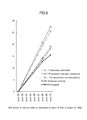
- FIG. 1 is a graph showing changes in sugar content and acidity in a case where agents for increasing a sugar content in a fruit of the present invention were applied to Chardonnay in Example 1.
- FIG. 2 is a graph showing changes in sugar content and acidity in a case where the agents for increasing a sugar content in a fruit of the present invention were applied to Merlot in Example 1.
- FIG. 3 is a graph showing changes in sugar content and acidity in a case where the agents for increasing a sugar content in a fruit of the present invention were applied to Cabernet Sauvignon in Example 1.
- FIG. 4 is a graph showing changes in sugar content and acidity in a case where the agents for increasing a sugar content in a fruit of the present invention were applied to Pinot noir in Example 1.
- FIG. 5 is a graph showing changes in sugar content in a case where agents for increasing a sugar content in a fruit of the present invention (to which vegetable oils were added) were applied to Pinot noir in Example 2.
- FIG. 6 is a graph showing the decrease ratio of the mass of fruit of grape achieved by agents for increasing a sugar content in a fruit of the present invention in Example 3.
- FIG. 7 is a graph in which comparisons are made between the sugar content (%) in fruit of grape on the date of the application (June 2) and the sugar content (%) in fruit of grape 8 days (June 10) after application of each agent for increasing a sugar content in a fruit of the present invention in Example 3.
- FIG. 8 is a graph in which the sugar content (%) in fruit of grape 8 days (June 10) after each agent for increasing a sugar content in a fruit of the present invention was applied in Example 3 was compared between the actually measured value (left) and the calculated value (right).
- FIG. 9 shows photographs of the appearance of fruit of grape 20 days after application (March 30) in Example 5.
- Part (a) shows fruit of grape treated with potassium hydrogen carbonate (10 g/L)
- Part (b) shows fruit of grape treated with potassium hydrogen carbonate (5 g/L)
- Part (c) shows untreated fruit of grape.
- FIG. 10 is a graph showing the mass (g) of fruit on each date of measurement per 100 g of the fruit on the date of application in Example 6.
- FIG. 11 is a graph showing the estimated amount (g) of transpiration on each date of measurement per 100 g of fruit on the date of application in Example 6.
- FIG. 12 is a graph showing the decrease ratio (%) of the mass of fruit on each date of measurement in Example 7.
- FIG. 13 is a graph showing the amount (g) of decrease in mass of fruit per day on each date of measurement per 100 g of the fruit in Example 7.
- FIG. 14 is a graph in which the sugar content (%) (actually measured value) on the date of application and the sugar content (%) (calculated value) on the date of test are compared with each other in the case where each compound was applied in Example 7.
- a first aspect of the present invention is an agent for increasing a sugar content in a fruit of a plant, comprising a compound represented by the formula MX as an active ingredient.
- M represents alkali metal ion or alkaline earth metal ion.
- the alkali metal ion is preferably potassium ion or sodium ion
- the alkaline earth metal ion is preferably magnesium ion or calcium ion.
- M is preferably alkali metal ion, and is particularly preferably potassium ion or sodium ion.
- X represents carbonate ion, hydrogen carbonate ion, acetate ion, citrate ion, succinate ion, phosphate ion, hydrogen phosphate ion, or pyrophosphate ion.
- X is preferably carbonate ion, hydrogen carbonate ion, pyrophosphate ion, or acetate ion, more preferably carbonate ion, hydrogen carbonate ion, or pyrophosphate ion, and particularly preferably carbonate ion or hydrogen carbonate ion.
- MX means K 2 CO 3 .
- Examples of the compound represented by the formula MX include potassium hydrogen carbonate, sodium hydrogen carbonate, calcium hydrogen carbonate, magnesium hydrogen carbonate, potassium carbonate, sodium carbonate, calcium carbonate, magnesium carbonate, potassium acetate, sodium acetate, calcium acetate, magnesium acetate, tripotassium phosphate, trisodium phosphate, dipotassium hydrogen phosphate, disodium hydrogen phosphate, tetrapotassium pyrophosphate, tetrasodium pyrophosphate, potassium citrate, sodium citrate, potassium succinate, sodium succinate, and the like.
- potassium hydrogen carbonate sodium hydrogen carbonate, potassium carbonate, sodium carbonate, potassium acetate, and sodium acetate
- potassium hydrogen carbonate sodium hydrogen carbonate, potassium carbonate, and sodium carbonate
- potassium hydrogen carbonate and potassium carbonate particularly preferred are potassium hydrogen carbonate and potassium carbonate.
- Potassium carbonate is the most preferable.
- a vegetable oil and/or fat in addition to the compound represented by the formula MX.
- the inclusion of the vegetable oil and/or fat increases the period for which the active ingredient adheres to the plant, enabling the active ingredient to act on the plant for a longer period.
- the vegetable oil and/or fat includes soybean oil, rapeseed oil, canola oil, sunflower oil, corn oil, olive oil, palm oil, palm kernel oil, coconut oil, castor oil, peanut oil, sesame oil, flaxseed oil, camellia oil, cottonseed oil, and safflower oil. Sunflower oil, soybean oil, safflower oil, and rapeseed oil are particularly preferable.
- One vegetable oil and/or fat may be used alone, or two or more of vegetable oils and/or fats may be used in combination.
- the vegetable oil and/or fat is preferably added at a ratio of 1 to 30 parts by mass, and more preferably 3 to 25 parts by mass, relative to 100 parts by mass of the compound represented by the formula MX.
- a surfactant may be used as an emulsifier and/or a spreader/sticker, if necessary.
- the addition of the surfactant increases the period for which the active ingredient adheres to the plant, enabling the active ingredient to act on the plant for a longer period.
- the surfactant also acts as an emulsifier, and makes it easier to emulsify the vegetable oil and/or fat in water, when the agent for increasing a sugar content in a fruit of the present invention is diluted with water.
- any one of a nonionic surfactant, a cationic surfactant, and an anionic surfactant may be used.
- One surfactant may be used alone, or two or more surfactants may be used in combination.
- a nonionic surfactant and/or a cationic surfactant are preferable.
- Preferred nonionic surfactants include polyoxyethylene alkyl ethers, polyoxyethylene alkylphenyl ethers (for example, polyoxyethylene nonylphenyl ether), polyoxyethylene polyoxypropylene ethers, polyoxyethylene alkyl esters, sorbitan fatty acid esters, polyoxyethylene sorbitan fatty acid esters, polyoxyethylene-polyoxypropylene block polymers, higher-fatty acid alkanolamides, and the like), and a polyoxyethylene alkyl ether or a polyoxyethylene sorbitan fatty acid ester is particularly preferable.
- Preferred cationic surfactants include alkylamine salts, quaternary ammonium salts, and the like, and polyoxyethylene cocoamine is particularly preferable.
- Preferred anionic surfactants include lignosulfonic acid salts (for example, calcium ligninsulfonate), alkylbenzenesulfonic acid salts (for example, sodium alkylbenzenesulfonates), alkylnaphthalenesulfonic acid salts (for example, sodium alkylnaphthalenesulfonates), higher-alcohol sulfates, higher-alcohol ether sulfates, dialkylsulfosuccinates, higher-fatty acid alkali metal salts, and the like.
- lignosulfonic acid salts for example, calcium ligninsulfonate
- alkylbenzenesulfonic acid salts for example, sodium alkylbenzenesulfonates
- alkylnaphthalenesulfonic acid salts for example, sodium alkylnaphthalenesulfonates
- higher-alcohol sulfates higher-alcohol ether sulf
- surfactants include polyoxyethylene cocoamine (SORPOL 7643, TOHO CHEMICAL INDUSTRY Co., Ltd.), polyoxyethylene alkyl ether (B-205, Riken Vitamin Co., Ltd.), polyoxyethylene sorbitan fatty acid ester (Sorbon T-20, TOHO CHEMICAL INDUSTRY Co., Ltd.), diglycerinmonooleate (RIKEMAL DO-100, Riken Vitamin Co., Ltd.), and the like.
- SORPOL 7643 polyoxyethylene alkyl ether
- B-205 Riken Vitamin Co., Ltd.
- polyoxyethylene sorbitan fatty acid ester Sorbon T-20, TOHO CHEMICAL INDUSTRY Co., Ltd.
- diglycerinmonooleate RIKEMAL DO-100, Riken Vitamin Co., Ltd.
- surfactants such as polyglycerin monooleates, glycerin fatty acid esters, sorbitan fatty acid esters, propylene fatty acid esters, higher-alcohol fatty acid esters, and ethylene oxide adducts thereof.
- the surfactant is added at a ratio of preferably 0.1 to 50 parts by mass, more preferably 1 to 30 parts by mass, and further preferably 1 to 10 parts by mass, relative to 100 parts by mass of the compound represented by the formula MX.
- One surfactant may be used alone, or two or more surfactants may be used in combination.
- the target plant is not particularly limited, as long as the plant bears fruit.
- the target plant is preferably grape, tomato (cherry tomato), apple, and Mikan ( Citrus unshiu ). Of these plants, grape is particularly preferable.
- grape Chardonnay, Merlot, Cabernet Sauvignon, Pinot noir, Barikan, Steuben, Red Globe, Crimson, Sauvignon Blanc, Riesling, and Koshu are preferable.
- the agent can be used also for table grapes varieties, when the table grapes varieties are used for processing or fermentation. Examples of the table grapes varieties include Pione, Delaware, Aki Queen, Gold, Niagara, Hakuho, Unicorn, Red Queen, and the like.
- the agent for increasing a sugar content in a fruit of the present invention is capable of increasing a sugar content in a fruit by a simple method, without being restricted by a cultivation area or a climatic environment. Accordingly, in regions of insufficient sugar content, the present invention makes it possible to obtain a fruit with a necessary sugar content. In addition, the present invention also makes it possible to obtain a fruit with an increased sugar content, when applied to a fruit with a normal sugar content. Accordingly, for example, in the cases of wines, wines with desired sugar contents can be produced ranging from an ordinary wine to a wine corresponding to a noble rot wine.
- a second aspect of the present invention is a method for increasing a sugar content in a fruit of a plant, the method comprising applying the above-described agent for increasing a sugar content in a fruit to the plant.
- the compound represented by the formula MX is preferably applied to the plant at a concentration of 1 g/L to 100 g/L.
- the concentration is more preferably 1 to 50 g/L, and particularly preferably 3 to 20 g/L.
- a preparation a solution composition containing the compound represented by the formula MX and the vegetable oil and/or fat but substantially not containing water
- the preparation of the agent for increasing a sugar content in a fruit contains the vegetable oil and/or fat in an amount of preferably 1 to 30 parts by mass, and more preferably 3 to 25 parts by mass, relative to 100 parts by mass of the compound represented by the formula MX.
- the compound represented by the formula MX is applied in an amount of preferably 1 to 100 kg/ha, more preferably 1 to 50 kg/ha, further preferably 1 to 30 kg/ha, and particularly preferably 4 to 30 kg/ha.
- the application period varies depending on the desired sugar content, the number of times of the application, and the like.
- the application is preferably conducted in a period from 2 months, 1.5 months, 1 month, or 0 months (i.e., on an expected harvest date or a harvest date) before the expected harvest date or the harvest date to 1 month, 1.5 months, or 2 months after the expected harvest date or the harvest time.
- a longer application period increases the sugar content more.
- the agent for increasing a sugar content in a fruit of the present invention can remarkably increase the sugar content in the fruit, even when the above-described application period is short.
- the “harvest date” means the date on which the fruit is actually harvested
- the “expected harvest date” means the date on which the fruit is expected to be harvested.
- the expression “to 1 month, 1.5 months, or 2 months after the expected harvest date or the harvest date” means not only the period to 1 month, 1.5 months, or 2 months after the harvest date in a case where the fruit is actually harvested, but also the period to 1 month, 1.5 months, or 2 months after the expected harvest date in a case where the fruit is not harvested on the expected harvest date, but is allowed to continue to grow.
- the agent for increasing a sugar content in a fruit of the present invention can promote the evaporation of water from the fruit and increase the sugar content in the fruit.
- the expected harvest date varies depending on the kind of the fruit.
- the expected harvest date refers to a harvest time of the fruit estimated by agriculture workers for that season.
- the actual expected harvest date of grape is determined considering the appearance and the taste, as well as the acid and sugar concentrations, the astringency of the seeds, and the like.
- the expected harvest dates of apple, Mikan, tomato, and the like are also determined, as appropriate, based on the appearance and the taste.
- the agent may be applied to the entire plant body, or may be directly applied only to the fruit of the plant.
- the direct application to the fruit is preferable from the economical viewpoint.
- the agent when the agent is applied after harvest, it is only necessary to directly apply the agent to the fruit of the plant.
- the number of times of the application of the agent for increasing a sugar content in a fruit to the plant may be only one, and is preferably about two to eight, and more preferably about three to six, from the viewpoint of the sugar content-increasing effect.
- the interval of the application is not particularly limited, and is preferably 3 days to 2 weeks, and further preferably 5 days to 10 days.
- a third aspect of the present invention is a method for producing a fruit wine including grape wine, the method comprising using, as a raw material, a fruit, especially fruit of grape, to which the above-described agent for increasing a sugar content in a fruit has been applied.
- a method which is the same as a conventionally employed method for producing a fruit wine may be employed, except that a fruit to which the agent for increasing a sugar content in a fruit has been applied is used as a raw material.
- the fruit wine is produced through steps such as crushing, destemming, pressing, fermentation, and barrel aging.
- the fruit wine obtained by the method for producing a fruit wine of the present invention has a high sugar content, because the fruit to which the agent for increasing a sugar content in a fruit has been applied is used as a raw material. Consequently, the obtained fruit wine has a very sweet and mellow flavor. Accordingly, for example, in a case of grape wine, a desired wine ranging from a ordinary wine to a noble rot wine can be produced at will by using fruit of grape having a sugar content suitable for the need.
- a fourth aspect of the present invention is a method for producing dried grape, comprising the step of adding (applying) a compound represented by the formula MX to grape.
- M and X are the same as M and X in the agent for increasing a sugar content in a fruit of the first aspect.
- the timing of the addition may be before harvest of the grape, or after harvest of the grape.
- the timing of the addition is preferably within a period from 2 months, 1.5 months, 1 month, or 0 months before the expected harvest date or the harvest date of the grape to 1 month, 1.5 months, or 2 months after the expected harvest date or the harvest date.
- the compound when the compound is added to the grape after harvest, the compound may be added to the grape before drying in the sun, or during the drying in the sun.
- the number of times of the addition is not particularly limited, and the compound may be added, for example, 1 to 10 times, preferably 2 to 8 times, and more preferably 3 to 6 times.
- the interval of the addition is not particularly limited, either, and, for example, the compound can be added at intervals of 1 day to 1 week.
- the concentration and the added amount of the compound at the addition may be the same as the concentration and the application amount described in the second aspect.
- dried grape is produced as follows. Specifically, harvested grape is dried in the sun for 2 to 3 weeks. After the water content in the raisin reached approximately 16% in the third week, the fruit is wrapped with a paper tray, and is left for further 2 to 3 days to achieve an uniform water distribution.
- the production of raisin requires time and labor during the period from the cutting of the grape to the completion of the drying in the sun.
- the use of the method of the present invention makes it possible to dry in advance the grape kept on vines, without cutting the grape from the vines. Hence, the time taken by the production of dried grape can be reduced to a great extent.
- the use of the method of the present invention can increase the amount of water transpiration, and can make the time for drying the fruit of grape shorter than a conventional case.
- the use of the method also can increase the concentration of amino acids contained in the raisin.
- a fifth aspect of the present invention is an agent for preventing and/or treating a physiological plant disorder caused by calcium deficiency, the agent comprising a compound represented by the formula MX as an active ingredient.
- M and X are the same as M and X in the agent for increasing a sugar content in a fruit of the first aspect.
- the agent of the present invention may comprise other components besides the compound represented by the formula MX.
- Examples of the other components include the components described in the first aspect.
- the target plant may be cherry, lettuce, celery, cabbage, nappa cabbage, strawberry, cucumber, tomato, eggplant, bell pepper, or the like.
- the physiological plant disorder caused by calcium deficiency may be water-soaked symptom, tipburn, heart rot symptom (lettuce, nappa cabbage, and the like), blossom-end rot symptom (tomato, eggplant, and bell pepper), or curvature symptom.
- concentration and the application amount of the agent of the present invention may be the same as the concentration and the application amount described in the second aspect.
- the timing of the application, the number of times of the application, and the like may be adjusted according to the timing in which the physiological plant disorder caused by calcium deficiency occurs, the symptom of the physiological plant disorder, and the like.
- the physiological plant disorder calcium deficiency symptom
- the agent may be applied from summer to fall about 1 to 10 times at intervals of several days to several weeks.
- a sixth aspect of the present invention is an agent for preventing fruit cracking of a fruit of a plant, the agent comprising a compound represented by the formula MX as an active ingredient.
- M and X are the same as M and X in the agent for increasing a sugar content in a fruit of the first aspect.
- the agent for preventing fruit cracking of the present invention may comprise other components besides the compound represented by the formula MX.
- the other components include the components described in the first aspect.
- the target plant is not particularly limited, as long as the plant is known to undergo fruit cracking.
- Examples of the target plant include cherry, grape, tomato, plum, peach, melon, watermelon, apple, pear, Mikan, and the like.
- concentration and the application amount of the agent of the present invention may be the same as the concentration and the application amount described in the second aspect.
- the timing of the application, the number of times of the application, and the like may be adjusted according to the timing in which the fruit cracking occurs.
- fruit cracking occurs near the expected harvest date of the fruit of the plant.
- the agent may be applied 1 to 10 times at intervals of several days to several weeks in a period from 2 months, 1.5 months, 1 month, or 0.5 months before the expected harvest date to the harvest date.
- the agent for preventing fruit cracking of the present invention prevents the fruit cracking is presumably as follows. Specifically, the agent for preventing fruit cracking of the present invention increases the amount of transpiration of water from a fruit of a plant. Hence, the water content in the fruit decreases, and the skin of the fruit gets wrinkles. Presumably, as a result of this, the skin of the fruit becomes resistant to rupture, so that the fruit cracking can be prevented, even when the fruit receives an impact because of rainfall or the like.
- a seventh aspect of the present invention is an agent for maintaining acidity and/or pH of a fruit of a plant, the agent comprising a compound represented by the formula MX as an active ingredient.
- M and X are the same as M and X in the agent for increasing a sugar content in a fruit of the first aspect.
- the maintaining agent of the present invention may comprise other components besides the compound represented by the formula MX.
- Examples of the other components include the components described in the first aspect.
- Examples of the target plant include grape, tomato, and citrus fruits (Mikan etc.).
- the concentration, the application amount, application timing, application method, and the like of the maintaining agent of the present invention may be the same as the concentration, application amount, application timing, application method, and the like described in the second aspect.
- the timing of the application is preferably before the harvest of the fruit of the plant, and is more preferably a time point which is in a period from 2 months, 1.5 months, 1 month, or 0 months before the expected harvest date to 1 month, 1.5 months, or 2 months after the expected harvest date and which is before the harvest of the fruit of the plant.
- the fruit of the plant to which the maintaining agent of the present invention is applied can retain the acidity in a high state and the low pH for a longer period than a fruit of the plant to which the maintaining agent is not applied. Hence, such fruit is suitable for production of a wine with a high sugar content and a high acidity.
- An eighth aspect of the present invention is an agent for increasing a concentration of an amino acid contained in a plant body (fruit, leaf, stem, and/or root of the plant), the agent comprising a compound represented by the formula MX as an active ingredient.
- M and X are the same as those in the agent for increasing a sugar content in a fruit of the first aspect.
- the agent for increasing a concentration of an amino acid of the present invention may comprise other components besides the compound represented by the formula MX.
- Examples of the other components include the same components as those described in the first aspect.
- the target plant is not particularly limited, and examples thereof include grape, tomato, lettuce, wheat, rice plant, cabbage, soybean, potato, cabbage, spinach, and the like.
- concentration, application amount, application timing, application method, and the like of the agent for increasing a concentration of an amino acid of the present invention may be the same as the concentration, application amount, application timing, application method, and the like described in the second aspect.
- the agent for increasing a concentration of an amino acid of the present invention is capable of increasing the total mass of all the amino acids contained in a plant body.
- the amounts of arginine, glutamine (GluNH 2 ), ornithine, alanine, citrulline, asparagine (AspNH 2 ), aspartic acid, glutamic acid, a-ABA, threonine, serine, lysine, histidine, glycine, and phenylalanine can be remarkably increased, and particularly the amounts of arginine, glutamine (GluNH 2 ), ornithine, and alanine can be increased.
- Arginine is the most remarkably increased amino acid.
- the agent for increasing a concentration of an amino acid of the present invention increases the amino acid concentration is presumably as follows. Specifically, the ratio of the amino acid concentration in the fruit of the plant treated with the compound of the present invention to the amino acid concentration contained in fruit of an untreated plant is higher than the ratio of the sugar content in the fruit of the plant treated with the compound of the present invention to the sugar content of the fruit of the untreated plant. Hence, it can be understood that the increase in amino acid concentration cannot be explained only by concentration of the amino acids by transpiration. Presumably, the application of the compound of the present invention increases the amounts of amino acids themselves by the action of some mechanism other than the transpiration of water.
- an agent containing Sorbon T-20 as a spreader/sticker at a concentration of 200 ⁇ L/L
- a potassium hydrogen carbonate concentration of 5 g/L or 10 g/L was applied in a sufficient amount (3000 L/ha (in this case, the amount of potassium hydrogen carbonate was 15 kg/ha for the 5 g/L sample or 30 kg/ha for the 10 g/L sample) each time.
- the application was repeatedly conducted at intervals of approximately 2 weeks or approximately 1 week as shown in FIGS. 1 to 4 .
- the sugar concentration in the fruit was measured over time. As a control, unapplied vines were provided. The sampling was started before the first application, and a sample was collected before each application, and measured for the sugar content. Three vines were used for each treated group. Note that the expected harvest dates were September 20 for Chardonnay, October 10 for Merlot, October 20 for Cabernet Sauvignon, and September 30 for Pinot noir.
- FIGS. 1 to 4 show the results. Note that, in each of FIGS. 1 to 4 , the numeric values on the vertical axis indicate the sugar content or the acidity in percentage (%).
- the vegetable oils, surfactants, and emulsifiers listed in Table 1 below were mixed with each other, and melted by heating at approximately 60° C. Next, the active ingredients listed in Table 1 were added to the obtained mixture liquids, followed by sufficient mixing. Thus, preparations of agents for increasing a sugar content in a fruit containing sodium hydrogen carbonate or potassium hydrogen carbonate were prepared (the preparations are also referred to as a sodium hydrogen carbonate preparation and a potassium hydrogen carbonate preparation, respectively). Note that parts in the table represents parts by mass.
- Each of the prepared preparations of the agents for increasing a sugar content in a fruit were diluted with water to have a concentration of sodium hydrogen carbonate or potassium hydrogen carbonate of 10 g/L.
- application solutions were prepared.
- the diluted solutions were each applied in a sufficient amount (1000 L/ha) each time to only fruits of grapes (varieties: Pinot noir, approximately 7 years old) in a farm field.
- the application was started 3 weeks (September 13) before the expected harvest date (October 4), and conducted five times in total at intervals of approximately 1 week (dates of application: September 13, September 20, September 27, October 4, and October 11).
- an untreated group was provided as a control.
- the sampling was started before the first application, and a sample was collected before each application and measured for the sugar content.
- FIG. 5 shows the results. Note that each numeric value on the vertical axis in FIG. 5 represents the sugar content (%) or the acidity (%).
- Example 2 shows by what degree the potassium hydrogen carbonate preparation to which the vegetable oils and the like were added increased the sugar content of Pinot noir.
- Example 1 shows by what degree the potassium hydrogen carbonate to which no vegetable oil or the like was added increased the sugar content of Pinot noir, which was the same as in Example 2.
- the results shown in FIG. 4 and the results shown in FIG. 5 cannot be simply compared with each other, because the number of times of the application was different. However, from the results of the two, it can be seen that the sugar content increased more after the expected harvest time (on October 13 and October 20) in the case where the mixture of potassium hydrogen carbonate with the vegetable oils and the like was used than in the case where no vegetable oil or the like was mixed.
- the results above suggest that the addition of a vegetable oil and the like to potassium hydrogen carbonate further enhances the action of potassium hydrogen carbonate to increase a sugar content in a fruit of a plant.
- Agents for increasing a sugar content in a fruit (containing Sorbon T-20 as a spreader/sticker at a final concentration of 200 ⁇ L/L) diluted with water to contain one of the compounds listed in Table 2 as an active ingredient at a concentration of 10 g/L were each applied to harvested fruit of grape (variety: Barikan) purchased on the market.
- the fruit of grape was maintained in an air-conditioned greenhouse (temperature: 25° C.), and measured for the mass over time.
- the sugar content of the fruit was measured before the application and 8 days after the application with a sugar content meter.
- the vertical axis in FIG. 6 represents the amount (g) of decrease in mass of the fruit of grape on each date of measurement per 100 g of the fruit of grape on the date of application (in other words, the ratio (%) of decrease in mass of the fruit of grape on each date of measurement).
- a comparison among potassium carbonate, potassium hydrogen carbonate, tetrapotassium pyrophosphate, calcium chloride, and the untreated group shows that potassium carbonate was the best in terms of the action to increase the sugar content in the fruit of grape, followed by potassium hydrogen carbonate and tetrapotassium pyrophosphate in this order.
- the ratio of increase in sugar content achieved by calcium chloride was almost the same as that of the untreated group.
- the masses of the fruits of the group treated with potassium carbonate, potassium hydrogen carbonate, and tetrapotassium pyrophosphate decreased in 8 days from June 2 to June 10 by 25.56%, 27.3%, and 19.1%, respectively (Table 2).
- the sugar contents which were initially 18%, 18%, and 17.5%, increased to 24.5%, 24%, and 21.5%, respectively (actually measured values).
- the calculated values are 24.2%, 24.8%, and 21.6%, respectively, which are in extremely good agreement with the actually measured values.
- the sugar content calculated on the assumption that the decrease in the mass of the fruit was attributable to the loss of water was almost the same as the actually measured value.
- the decrease in mass of the fruit was due to transpiration of water.
- the agent for increasing a sugar content in a fruit of the present invention increased the sugar content in the fruit by causing transpiration of water in the fruit.
- Example 3 From the results of Example 3, it was found that the increase in sugar content in a fruit achieved by the agent for increasing a sugar content in a fruit of the present invention was an increase in sugar content achieved through decrease in mass of the fruit due to transpiration of water in the fruit. In this respect, indirect evaluations were made as to whether or not each compound has an action to increase a sugar content in a fruit by investigating the degrees of decrease in mass in various plants in the following Examples.
- An agent for increasing a sugar content in a fruit (containing Sorbon T-20 as a spreader/sticker at a final concentration of 200 ⁇ L/L) diluted with water to contain potassium hydrogen carbonate at 10 g/L was prepared.
- the mass of fruit of grape (variety: Steuben) purchased on the market was measured.
- the prepared agent for increasing a sugar content in a fruit was applied by spraying to the fruit of grape.
- the fruit of grape was allowed to stand in an air-conditioned greenhouse (temperature: 25° C.), and the mass was measured over time (date of application: Feb. 7, 2011).
- the mass of untreated grape was measured on each of the dates of measurement in the same manner. Table 3 shows the results.
- the mass of the fruit of grape of the untreated group decreased from 100 g to 79.9 g, whereas the mass of the fruit of grape treated with potassium hydrogen carbonate decreased to 74.9 g. Accordingly, on the assumption that the decrease in mass was entirely due to transpiration of water, 20 ml of water was lost per 100 g of the untreated grape, whereas approximately 25 ml of water was lost per 100 g of the grape treated with potassium hydrogen carbonate. In other words, it is conceivable that the treatment with potassium hydrogen carbonate increases the amount of transpiration from the fruit by about 25% in comparison with the untreated group.
- the ratios of change in sugar content in the fruit calculated from the above-described values were as follows. Specifically, on the assumption that the sugar content in the fruit on the date of application was 15%, the sugar content of the untreated group 7 days later was 18.8%, whereas the sugar content of the group treated with potassium hydrogen carbonate was increased to 20.0%.
- Agents for increasing a sugar content in a fruit (containing Sorbon T-20 as a spreader/sticker at a final concentration of 200 ⁇ L/L) diluted with water to have the concentrations of potassium hydrogen carbonate shown in Table 4 were prepared.
- the mass of fruit of grape (variety: Red Globe) purchased on the market was measured.
- the prepared agents for increasing a sugar content in a fruit were applied by spraying to the fruit of grape, which was then allowed to stand in an air-conditioned greenhouse (temperature: 25° C.).
- the mass of the fruit of grape was measured over time (date of application: Mar. 10, 2011).
- the mass of untreated grape was measured on each date of measurement in the same manner. Table 4 shows the results, and FIG.
- FIG. 9 shows the appearance of the grape on March 30 ( FIG. 9 ( a ) : application of potassium hydrogen carbonate (10 g/L), FIG. 9 ( b ) : application of potassium hydrogen carbonate (5 g/L), FIG. 9( c ) : untreated).
- the decrease ratio (cumulative, %) represents the percentage (%) of the mass decreased from the date of application to each of the dates of measurement
- the fruits to which potassium hydrogen carbonate was applied had higher ratios of decrease in mass than the untreated fruit. Accordingly, potassium hydrogen carbonate is capable of significantly increasing the sugar content in the fruit of Red Globe in comparison with the untreated case.
- the decrease ratio of mass was lower in the case where the concentration of potassium hydrogen carbonate was 5 g/L than in the case where the concentration was 10 g/L.
- the sugar content can be increased more in the case of 10 g/L than in the case of 5 g/L.
- An agent for increasing a sugar content in a fruit (containing Sorbon T-20 as a spreader/sticker at a final concentration of 200 ⁇ L/L) diluted with water to have a potassium hydrogen carbonate concentration of 10 g/L was prepared.
- the mass of fruit of grape (variety: Red Globe) purchased on the market was measured.
- the prepared agent for increasing a sugar content in a fruit was applied by spraying to the fruit of grape.
- the fruit of grape was allowed to stand in an air-conditioned greenhouse (temperature: 25° C.), and the mass was measured over time (date of application: Apr. 27, 2011; dates of test: May 2, 2011, May 6, 2011, May 9, 2011, May 11, 2011, May 13, 2011, and May 16, 2011).
- the mass of untreated grape was measured on each date of measurement in the same manner.
- the vertical axis in FIG. 10 represents the mass (g) of the fruit of grape on each of the dates of measurement per 100 g of the fruit of grape on the date of application
- the vertical axis in FIG. 11 represents the estimated amount (g) of transpiration on each of the dates of measurement per 100 g of the fruit of grape on the date of application.
- the estimated amount (g) of transpiration on each of the dates of measurement per 100 g of the fruit of grape on the date of application (the mass (g) of the fruit of grape on the date of application ⁇ the mass (g) of the fruit of grape on the date of measurement)/the mass of the fruit of grape on the date of application ⁇ 100
- the estimated amount of transpiration of the fruit of grape to which the sodium salt or potassium salt solution was applied increased in comparison with that of the untreated fruit.
- the largest estimated amount of transpiration was that of the fruit of grape to which the dilute aqueous solution of potassium carbonate was applied.
- the ratio of transpiration of the fruit of grape approximately 3 weeks later (19 days later) was 58.6%, and the mass decreased to 41.4% of the mass on the date of application.
- the second largest estimated amount of transpiration was that of the fruit of grape to which the dilute aqueous solution of potassium hydrogen carbonate was applied.
- the ratio of transpiration of the fruit of grape approximately 3 weeks later (19 days later) was 55.3%, and the mass of the fruit decreased to 44.7% of the mass on the date of application.
- Agents for increasing a sugar content in a fruit (containing Sorbon T-20 as a spreader/sticker at a final concentration of 200 ⁇ L/L) diluted with water to have concentrations of compounds shown in Table 7 were prepared.
- the mass of fruit of grape (variety: Red Globe) purchased on the market was measured.
- the prepared agents for increasing a sugar content in a fruit were applied by spraying to the fruit of grape, which was then allowed to stand in an air-conditioned greenhouse (temperature: 25° C.). With the mass of the grape on the date of application being 100 g, the mass of the grape after the application was measured over time (date of application: May 16, 2011; dates of test: May 19, May 23, May 27, May 30, and Jun. 2, 2011).
- the mass of untreated grape was measured in the same manner. The results are shown in Tables 7 and 8 and FIGS. 12 to 14 .
- the vertical axis in FIG. 12 represents the amount (g) of decrease in mass of the fruit of grape on each of the dates of measurement per 100 g of the fruit of grape on the date of application
- the vertical axis in FIG. 13 represents the amount (g) of decrease per day of the fruit of grape on each of the dates of measurement per 100 g of the fruit of grape on the date of application
- the vertical axis in FIG. 14 represents the sugar content (%).
- Each numeric value in the table represents the mass (g) of the fruit.
- the largest decrease in mass was that of the fruit of grape treated with the tetrapotassium pyrophosphate solution, and the mass of the fruit of grape 17 days later was 57.3% of the mass on the date of application.
- the mass was decreased to 65% by 10 g/L potassium carbonate, and 66.6% by 5 g/L potassium carbonate.
- the mass of the fruit of the untreated group after the same period had elapsed was 70.9% of the mass on the date of application. Accordingly, it can be seen that the decrease in mass of the fruit was promoted in each of the cases where these compounds were applied in comparison with the untreated case.
- the highest ratio of decrease in mass per day was that of the potassium pyrophosphate.
- the ratio of decrease decreased in order of 10 g/L potassium carbonate and 5 g/L potassium carbonate.
- the lowest ratio of decrease was that of the untreated group.
- the estimated sugar concentration (Brix %) in the fruit at the last time point was the highest in the fruit treated with potassium pyrophosphate, and was 29%, followed by 28% with 10 g/L potassium carbonate and by 26.5% with 5 g/L potassium carbonate in this order.
- An agent for increasing a sugar content in a fruit (containing Sorbon T-20 as a spreader/sticker at a final concentration of 200 ⁇ L/L) diluted with water to have a potassium hydrogen carbonate concentration of 10 g/L was prepared.
- the masses of fruits of apple and cherry tomato purchased on the market were measured.
- the prepared agent for increasing a sugar content in a fruit was applied by spraying to the fruits.
- the fruits were allowed to stand still in an air-conditioned greenhouse, and the masses of the apples and cherry tomatoes were measured on the date of application (date of application: Nov. 30, 2011; date of test: Dec. 5, 2011).
- the masses of untreated apples and cherry tomatoes were measured in the same manner. Table 9 shows the results.
- the estimated transpiration ratio (%) was calculated by “the estimated amount (g) of transpiration/the mass (g) before application ⁇ 100.”
- the transpiration ratio was calculated by “the estimated transpiration ratio of the target sample (treated by application of potassium hydrogen carbonate or untreated)/the estimated transpiration ratio of the untreated sample.”
- the amount of transpiration from the untreated fruit was estimated to be 5.24%, whereas the amount lost from the treated fruit was estimated to be 10.12%.
- the amount of water lost from the treated fruit reached 1.93 times of water lost from the untreated fruit.
- the agent for increasing a sugar content in a fruit of the present invention is capable of increasing the amount of transpiration and, in turn, increasing the sugar content in the cases of not only grape, but also apple and tomato in the same manner.
- Solutions (containing Sorbon T-20 as a spreader/sticker at a final concentration of 200 ⁇ L/L) diluted with water to have concentrations of the compounds listed in Table 10 of 10 g/L were applied by spraying to grape clusters in the same manner, and the transpiration ratios were investigated 8 days later.
- the compound represented by the formula MX wherein M is alkali metal ion or alkaline earth metal ion, and X is hydrogen carbonate ion, carbonate ion, acetate ion, phosphate ion (including hydrogen phosphate ion and pyrophosphate ion), citrate ion, or succinate ion, can promotes the transpiration from fruit to decrease the mass, and thereby increase the sugar content in the fruit (Nos. 1 to 12).
- Solutions (containing Sorbon T-20 as a spreader/sticker at a final concentration of 200 ⁇ L/L) diluted with water to have concentrations of the compounds listed in Table 11 of 10 g/L (100-times diluted samples) or 20 g/L (50-times diluted samples) were applied by spraying to tomato, grape, and Mikan in the same manner, and the ratios of decrease in weights of the fruits were investigated 6 days later.
- the criteria of the acceptability were based the appearance (appearance associated with mold, rot, or the like, whether or not the fruit juice or fruit pulp was lost, and the like), taste (whether or not the berry was normal, when eaten, and the like), and odor (whether or not a foreign odor or the like was present).
- a berry having no problem in terms of any of the appearance, taste, and odor was determined to be acceptable, and a berry having any problem was determined to be not acceptable.
- Table 12 shows the results. Note that the acceptable ratio of the untreated group is an average acceptable ratio of Examples 1 and 2.
- the water-soaked symptom in cherry is known to be caused by calcium deficiency.
- an investigation was made as to whether or not the degree of occurrence of water-soaked symptom 28 days after the date of the first application was different between untreated cherries and cherries to which an aqueous potassium hydrogen carbonate solution (5 g/L) was applied three times at intervals of 7 days one month before the harvest time.
- Table 14 shows the results.
- the occurrence (%) of water-soaked symptom the number of cherries in which the water-soaked symptom occurred/the number of cherries tested ⁇ 100
- the water-soaked symptom was less frequent in the group to which the aqueous potassium hydrogen carbonate solution was applied presumably because the transpiration was activated, and the absorption of water through the roots increased by that much.
- calcium deficiency is hardly recovered by application on the surfaces of leaves.
- recovery from calcium deficiency is easily achieved by increasing the absorption through roots.
- the water-soaked symptom was less frequent in the cherries to which the aqueous potassium hydrogen carbonate solution was applied, presumably for the following reason. Specifically, the treatment activated the transpiration, and the amount of absorption increased with this activation. As a result, the amount of calcium absorbed through roots with water increased. Hence, the occurrence of the water-soaked symptom (calcium deficiency) was suppressed.
- an aqueous potassium hydrogen carbonate solution (5 g/L for lettuce and 10 g/L for the other plants) was applied three times at intervals of one week from one month before the harvest. The plants were harvested three weeks after the start of the application. Untreated plants not treated with the aqueous potassium hydrogen carbonate solution were harvested at the same time. After the harvest, the total amount of amino acids in each sample was determined, and the ratio of the total amount of amino acids in the plant treated with potassium hydrogen carbonate to the total amount of amino acids in the untreated plant was determined. Table 16 shows the results.
- potassium hydrogen carbonate diluted with water to a concentration of 10 g/L (Table 17) or 20 g/L (Table 18) was applied three times in total at intervals of 7 days.
- the grape was harvested 21 days after the first application, and the masses of amino acids contained in each of the fruit of grape treated with potassium hydrogen carbonate and untreated fruit of grape were measured.
- the degree of increase in the concentration of each amino acid in the grape treated with potassium hydrogen carbonate in comparison with the concentration of the amino acid in the untreated grape was determined as a ratio of “the concentration of the amino acid in the grape treated with potassium hydrogen carbonate/the concentration of the amino acid in the untreated grape.”
- the sugar contents in the grape treated with potassium hydrogen carbonate and the untreated grape were also measured, and the ratio (the sugar content in the grape treated with potassium hydrogen carbonate/the sugar content in the untreated grape) was determined. Tables 17 and 18 show the results.
- Arg arginine, GluNH 2 : glutamine, Orn: ornithine, Ala: alanine, NH 3 : ammonia, Cit: citrulline, AspNH 2 : asparagine, a-ABA: ⁇ -amino-n-butyric acid, Glu: glutamic acid, Asp: aspartic acid, Thr: threonine, Ser: serine, Lys: lysine, His: histidine, Gly: glycine, Phe: phenylalanine, Sar: sarcosine, Val: valine, Cys: cysteine, b-AiBA: ⁇ -aminoisobutyric acid, PEA: phosphoethanolamine, a-AAA: ⁇ -aminoadipic acid, EOHNH 2 : ethanolamine, b-Ala: ⁇ -alanine, Leu: leucine, g-ABA: ⁇ -aminoacetic acid, Ile: is
- the grape treated with potassium hydrogen carbonate dried faster than the untreated grape. This made it possible to produce dried grape in a shorter time.
- potassium hydrogen carbonate was applied to the grape before the harvest.
- the compound of the present invention can promote the transpiration, even when applied to harvested fruit, it is conceivable that, also when potassium hydrogen carbonate is applied to harvested grape, the grape can be dried in a short period in the same manner.
- the present invention makes it possible to increase a sugar content in a fruit by a simple method, without being restricted by a cultivation area of a plant or a climatic environment. Hence, the present invention is very industrially useful.
Landscapes
- Life Sciences & Earth Sciences (AREA)
- Chemical & Material Sciences (AREA)
- Engineering & Computer Science (AREA)
- Health & Medical Sciences (AREA)
- Zoology (AREA)
- Wood Science & Technology (AREA)
- General Health & Medical Sciences (AREA)
- Environmental Sciences (AREA)
- Agronomy & Crop Science (AREA)
- Dentistry (AREA)
- Plant Pathology (AREA)
- Pest Control & Pesticides (AREA)
- Organic Chemistry (AREA)
- Inorganic Chemistry (AREA)
- Chemical Kinetics & Catalysis (AREA)
- Food Science & Technology (AREA)
- Polymers & Plastics (AREA)
- Biochemistry (AREA)
- Genetics & Genomics (AREA)
- Bioinformatics & Cheminformatics (AREA)
- General Engineering & Computer Science (AREA)
- Biodiversity & Conservation Biology (AREA)
- Botany (AREA)
- Ecology (AREA)
- Forests & Forestry (AREA)
- Nutrition Science (AREA)
- General Chemical & Material Sciences (AREA)
- Cultivation Of Plants (AREA)
- Agricultural Chemicals And Associated Chemicals (AREA)
- Storage Of Fruits Or Vegetables (AREA)
Applications Claiming Priority (3)
| Application Number | Priority Date | Filing Date | Title |
|---|---|---|---|
| JP2012-065780 | 2012-03-22 | ||
| JP2012065780 | 2012-03-22 | ||
| PCT/JP2013/058406 WO2013141381A1 (ja) | 2012-03-22 | 2013-03-22 | 果実糖度上昇剤 |
Related Parent Applications (1)
| Application Number | Title | Priority Date | Filing Date |
|---|---|---|---|
| PCT/JP2013/058406 A-371-Of-International WO2013141381A1 (ja) | 2012-03-22 | 2013-03-22 | 果実糖度上昇剤 |
Related Child Applications (1)
| Application Number | Title | Priority Date | Filing Date |
|---|---|---|---|
| US16/106,886 Continuation US10798944B2 (en) | 2012-03-22 | 2018-08-21 | Agent for increasing sugar content in fruit |
Publications (2)
| Publication Number | Publication Date |
|---|---|
| US20150057156A1 US20150057156A1 (en) | 2015-02-26 |
| US10080366B2 true US10080366B2 (en) | 2018-09-25 |
Family
ID=49222829
Family Applications (2)
| Application Number | Title | Priority Date | Filing Date |
|---|---|---|---|
| US14/387,112 Active US10080366B2 (en) | 2012-03-22 | 2013-03-22 | Agent for increasing sugar content in fruit |
| US16/106,886 Active US10798944B2 (en) | 2012-03-22 | 2018-08-21 | Agent for increasing sugar content in fruit |
Family Applications After (1)
| Application Number | Title | Priority Date | Filing Date |
|---|---|---|---|
| US16/106,886 Active US10798944B2 (en) | 2012-03-22 | 2018-08-21 | Agent for increasing sugar content in fruit |
Country Status (6)
| Country | Link |
|---|---|
| US (2) | US10080366B2 (es) |
| EP (1) | EP2829180B1 (es) |
| JP (1) | JP6171234B2 (es) |
| ES (1) | ES2654201T3 (es) |
| PT (1) | PT2829180T (es) |
| WO (1) | WO2013141381A1 (es) |
Cited By (1)
| Publication number | Priority date | Publication date | Assignee | Title |
|---|---|---|---|---|
| US10798944B2 (en) * | 2012-03-22 | 2020-10-13 | Riken | Agent for increasing sugar content in fruit |
Families Citing this family (3)
| Publication number | Priority date | Publication date | Assignee | Title |
|---|---|---|---|---|
| JP2013231003A (ja) * | 2012-04-27 | 2013-11-14 | Institute Of Physical & Chemical Research | ブラックシガトカ病害用防除剤 |
| AU2016265674A1 (en) * | 2015-05-18 | 2017-11-30 | Riken | Composition for the control of grapevine esca, black dead arm, and/or Eutypa dieback |
| CN117158266B (zh) * | 2023-10-27 | 2024-03-26 | 山东永盛农业发展有限公司 | 一种提高番茄含糖量的栽培方法 |
Citations (18)
| Publication number | Priority date | Publication date | Assignee | Title |
|---|---|---|---|---|
| SU719995A1 (ru) * | 1978-05-04 | 1980-03-05 | Институт Неорганической И Физической Химии Ан Азербайджанской Сср | Способ получени удобрени |
| JPH04300808A (ja) | 1991-03-29 | 1992-10-23 | A N Sogo Kagaku Kenkyusho Kk | 植物生長促進剤 |
| JPH0680488A (ja) | 1992-08-31 | 1994-03-22 | Koei Kagaku Kogyo Kk | 光合成増進剤および光合成増進方法 |
| JPH06172069A (ja) | 1992-12-04 | 1994-06-21 | Naikai Engiyou Kk | マグネシウム肥料 |
| EP0934917A2 (en) | 1998-02-06 | 1999-08-11 | Kao Corporation | Fertilizer composition and use thereof |
| JPH11292707A (ja) | 1998-04-01 | 1999-10-26 | Nippon Soda Co Ltd | 光に安定な農薬製剤 |
| JP2001010914A (ja) | 1999-07-01 | 2001-01-16 | Hiroshi Kawai | 植物茎葉散布用組成物およびその使用方法 |
| JP2001190154A (ja) | 2000-01-11 | 2001-07-17 | Yoshizawa Lime Industry | 作物の栽培方法および作物の品質改善剤 |
| JP2002322008A (ja) | 2001-04-25 | 2002-11-08 | Nippo Kagaku Kk | 植物生長調節剤 |
| JP2003274761A (ja) | 2002-01-18 | 2003-09-30 | Mitsui Touatsu Hiryo Kk | 葉面散布剤 |
| JP2004238248A (ja) | 2003-02-06 | 2004-08-26 | Royal Industries Kk | 有機酸と炭酸カルシウムとを含む水溶性カルシウム剤 |
| CN1781485A (zh) * | 2005-09-02 | 2006-06-07 | 北京阜康仁生物制药科技有限公司 | 一种改进的恩替卡韦口腔崩解片及其制备方法 |
| JP2006193498A (ja) | 2005-01-17 | 2006-07-27 | Color Chemical Kogyo Kk | 植物用養分補給剤及びその製造方法 |
| WO2006090666A1 (ja) | 2005-02-22 | 2006-08-31 | Maruo Calcium Company Limited | 植物品質向上剤及びその製造方法 |
| WO2007083445A1 (ja) | 2006-01-17 | 2007-07-26 | Osamu Yamada | 植物の生育促進及び品質改良方法、並びに同方法に使用する生育促進剤及び品質改良剤 |
| JP2010030998A (ja) | 2008-06-25 | 2010-02-12 | Ishihara Sangyo Kaisha Ltd | 除草組成物 |
| JP2010158207A (ja) | 2009-01-09 | 2010-07-22 | Manns Wine Co Ltd | 果実酒およびその製造法 |
| JP2012017293A (ja) | 2010-07-08 | 2012-01-26 | Dainichiseika Color & Chem Mfg Co Ltd | 収穫後農産植物用糖度向上剤及び収穫後農産植物の糖度向上方法 |
Family Cites Families (1)
| Publication number | Priority date | Publication date | Assignee | Title |
|---|---|---|---|---|
| WO2013141381A1 (ja) * | 2012-03-22 | 2013-09-26 | 独立行政法人理化学研究所 | 果実糖度上昇剤 |
-
2013
- 2013-03-22 WO PCT/JP2013/058406 patent/WO2013141381A1/ja not_active Ceased
- 2013-03-22 PT PT137651667T patent/PT2829180T/pt unknown
- 2013-03-22 EP EP13765166.7A patent/EP2829180B1/en active Active
- 2013-03-22 US US14/387,112 patent/US10080366B2/en active Active
- 2013-03-22 JP JP2014506304A patent/JP6171234B2/ja not_active Expired - Fee Related
- 2013-03-22 ES ES13765166.7T patent/ES2654201T3/es active Active
-
2018
- 2018-08-21 US US16/106,886 patent/US10798944B2/en active Active
Patent Citations (23)
| Publication number | Priority date | Publication date | Assignee | Title |
|---|---|---|---|---|
| SU719995A1 (ru) * | 1978-05-04 | 1980-03-05 | Институт Неорганической И Физической Химии Ан Азербайджанской Сср | Способ получени удобрени |
| JPH04300808A (ja) | 1991-03-29 | 1992-10-23 | A N Sogo Kagaku Kenkyusho Kk | 植物生長促進剤 |
| JPH0680488A (ja) | 1992-08-31 | 1994-03-22 | Koei Kagaku Kogyo Kk | 光合成増進剤および光合成増進方法 |
| JPH06172069A (ja) | 1992-12-04 | 1994-06-21 | Naikai Engiyou Kk | マグネシウム肥料 |
| EP0934917A2 (en) | 1998-02-06 | 1999-08-11 | Kao Corporation | Fertilizer composition and use thereof |
| EP0934917A3 (en) | 1998-02-06 | 2000-08-02 | Kao Corporation | Fertilizer composition and use thereof |
| JPH11292707A (ja) | 1998-04-01 | 1999-10-26 | Nippon Soda Co Ltd | 光に安定な農薬製剤 |
| JP2001010914A (ja) | 1999-07-01 | 2001-01-16 | Hiroshi Kawai | 植物茎葉散布用組成物およびその使用方法 |
| US20020137632A1 (en) | 1999-07-01 | 2002-09-26 | Hiroshi Kawai | Composition for being sprayed on foliage of plant and use of the same |
| JP2001190154A (ja) | 2000-01-11 | 2001-07-17 | Yoshizawa Lime Industry | 作物の栽培方法および作物の品質改善剤 |
| JP2002322008A (ja) | 2001-04-25 | 2002-11-08 | Nippo Kagaku Kk | 植物生長調節剤 |
| JP2003274761A (ja) | 2002-01-18 | 2003-09-30 | Mitsui Touatsu Hiryo Kk | 葉面散布剤 |
| JP2004238248A (ja) | 2003-02-06 | 2004-08-26 | Royal Industries Kk | 有機酸と炭酸カルシウムとを含む水溶性カルシウム剤 |
| JP2006193498A (ja) | 2005-01-17 | 2006-07-27 | Color Chemical Kogyo Kk | 植物用養分補給剤及びその製造方法 |
| WO2006090666A1 (ja) | 2005-02-22 | 2006-08-31 | Maruo Calcium Company Limited | 植物品質向上剤及びその製造方法 |
| EP1854356A1 (en) | 2005-02-22 | 2007-11-14 | Maruo Calcium Company Limited | Plant quality improver and process for producing the same |
| US20080153703A1 (en) | 2005-02-22 | 2008-06-26 | Naoki Kubota | Plant Quality Improver and Process for Producing the Same |
| US8404619B2 (en) * | 2005-02-22 | 2013-03-26 | Maruo Calcium Company Limited | Particulate plant treatment composition |
| CN1781485A (zh) * | 2005-09-02 | 2006-06-07 | 北京阜康仁生物制药科技有限公司 | 一种改进的恩替卡韦口腔崩解片及其制备方法 |
| WO2007083445A1 (ja) | 2006-01-17 | 2007-07-26 | Osamu Yamada | 植物の生育促進及び品質改良方法、並びに同方法に使用する生育促進剤及び品質改良剤 |
| JP2010030998A (ja) | 2008-06-25 | 2010-02-12 | Ishihara Sangyo Kaisha Ltd | 除草組成物 |
| JP2010158207A (ja) | 2009-01-09 | 2010-07-22 | Manns Wine Co Ltd | 果実酒およびその製造法 |
| JP2012017293A (ja) | 2010-07-08 | 2012-01-26 | Dainichiseika Color & Chem Mfg Co Ltd | 収穫後農産植物用糖度向上剤及び収穫後農産植物の糖度向上方法 |
Non-Patent Citations (30)
| Title |
|---|
| A SLATNAR, M MIKULIC PETKOVSEK, F STAMPAR, R VEBERIC: "Influence of Sodium Bicarbonate, an Anti-Apple Scab Agent, on Quality Parameters of 'Golden Delicious' Apples", � VERLAG EUGEN ULMER KGJ.HORT.SCI, 1 January 2011 (2011-01-01), pages 1611 - 4426, XP055228381, Retrieved from the Internet <URL:http://www.pubhort.org/ejhs/2011/file_2593881.pdf> |
| A. Bybordi et al.: "Effects of the Foliar Application of Magnesium and Zinc on the Yield and Quality of Three Grape Cultivars Grown in the Calcareous Soils of Iran," Notulae Scientia Biologicae, Apr. 1, 2010, pp. 81-86, XP055228816. |
| A. Slatnar et al.: "Influence of Sodium Bicarbonate, an Anti-Apple Scab Agent, on Quality Parameters of 'Golden Delicious' Apples," Europ. J. Hort. Sci., vol. 76, No. 3, Mar. 10, 2011, pp. 95-101, XP055228381. |
| ANTUNES, M.D.C., COSTA, P., MIGUEL, M.G., MARTINS, D., NEVES, M.A., MARTINS, M.A. AND GOMES, C.: "THE EFFECT OF POSTHARVEST TREATMENTS WITH SODIUM BICARBONATE OR ACETIC ACID ON STORAGE ABILITY AND QUALITY OF FIG FRUIT", ACTA HORTICULTURAE, INTERNATIONAL SOCIETY FOR HORTICULTURAL SCIENCE, BE, vol. 798, 1 January 2008 (2008-01-01), BE, pages 279 - 284, XP009187192, ISSN: 0567-7572, DOI: 10.17660/ActaHortic.2008.798.40 |
| Baudoin et al.( Factors affecting photosynthesis after oil application to grapevine, Phytopathology (92, No. 6, Suppl., S142, 2002). * |
| Buchanan et al.( Control of Drosophila spp., Carpophilus spp. and Ephestia figulilella (Gregson) in sultana grapes grown for dried fruit, Australian Journal of Experimental Agriculture and Animal Husbandry (1984), vol. 24, No. 126, pp. 440-446, 2 fig., 5 refs. * |
| Christensen et al., "The Raisin Drying Process", Harvesting and Drying Raisin Grapes, 2000 (month unknown), pp. 207-216. |
| Conclusion on the peer review of the pesticide risk assessment of the active substance potassium hydrogen carbonate, EFSA Journal (2012), 10(1), 2524, 36 pp. * |
| Crisp et al.( An evaluation of biological and abiotic controls for grapevine powdery mildew. 2. Vineyard trials, Australian Journal of Grape and Wine Research (2006), vol. 12, No. 3, pp. 203-211, 23 refs.). * |
| I. Reh et al.: "Control of Powder Mildew on Grapevine with Sodium Hydrogen Carbonate," Med. Fac. Landbouww. Univ. Gent, vol. 60, No. 2a, 1995, pp. 321-327, XP009187188. |
| International Search Report (PCT/ISA/210) dated Jun. 25, 2013, by the Japanese Patent Office as the International Searching Authority for International Application No. PCT/JP2013/058406. |
| Ismail et al., "Effects of Dipping Solutions on Air-Drying Rates of the Seedless Grapes", Food Science and Technology Research, Jul. 2008, pp. 547-552, vol. 14, No. 6. |
| J. Bialczyk et al.: "Fruit Yield of Tomato Cultivated on Media with Bicarbonate and Nitrate/Ammonium as the Nitrogen Source," Journal of Plant Nutrition, vol. 30, No. 1, Jan. 1, 2007, pp. 149-161, XP055228735. |
| J.M. Navarro et al.: "Changes in quality and yield of tomato fruit with ammonium, bicarbonate and calcium fertilisation under saline conditions," Journal of Horticultural Science & Biotechnology, vol. 80, No. 3, May 1, 2005, pp. 351-357, XP055228719. |
| J.M. NAVARRO, P. FLORES, M. CARVAJAL AND V. MARTINEZ: "Changes in quality and yield of tomato fruit with ammonium, bicarbonate and calcium fertilisation under saline conditions", JOURNAL OF HORTICULTURAL SCIENCE & BIOTECHNOLOGY, vol. 80, no. 3, 1 March 2005 (2005-03-01), pages 351 - 357, XP055228719, DOI: 10.1080/14620316.2005.11511943 |
| JAN BIALCZYK, LECHOWSKI ZBIGNIEW, DZIGA DARIUSZ, MEJ EWA: "Fruit Yield of Tomato Cultivated on Media with Bicarbonate and Nitrate/Ammonium as the Nitrogen Source", JOURNAL OF PLANT NUTRITION, MARCEL DEKKER, NEW YORK, NY, US, vol. 30, no. 1, 1 January 2007 (2007-01-01), US, pages 149 - 161, XP055228735, ISSN: 0190-4167, DOI: 10.1080/01904160601055202 |
| Japanese Office Action dated Mar. 15, 2017, in corresponding Patent Application No. 2014-506304. |
| M P SERRATOSA, A MARQUEZ, A LOPEZ-TOLEDANO, J MERIDA: "Sensory Analysis of Sweet Musts in Pedro Ximenez cv. Grapes Dried using Different Methods", KARATHANOS & BELESSIOTIS PANGAVHANE ET AL, DOYMAZ & PALA, 1 January 1986 (1986-01-01), XP055228383, Retrieved from the Internet <URL:http://www.sawislibrary.co.za/dbtextimages/74398.pdf> DOI: 10.21548/33-1-1301 |
| M.D.C. Antunes et al.: "The Effect of Postharvest Treatments with Sodium Bicarbonate or Acetic Acid on Storage Ability and Quality of Fig Fruit," Acta Horticult., vol. 798, Jan. 1, 2008, pp. 279-284, XP009187192. |
| M.P. Serratosa et al.: "Sensory Analysis of Sweet Musts in Pedro Ximenez cv. Grapes Dried using Different Methods," S. Afr. J. Enology and Viticulture, vol. 33, No. 1, Jan. 1, 2012, pp. 14-20, XP055228383. |
| Milling et al.( Armicarb®—a new bio-fungicide for use in organic and conventional fruit growing in Europe, Ecofruit. 15th International Conference on Organic Fruit-Growing. Proceedings for the conference, Hohenheim, Germany, Feb. 20-22, 2012 (2012), pp. 264-267, 5 refs.). * |
| Nigro et al.( Control of table grape storage rots by pre-harvest applications of salts, Postharvest Biology and Technology (2006), 42(2),142-9)). * |
| REH I; SCHLOESSER E: "Control of powdery mildew on grapevine with sodium hydrogen carbonate", MEDEDELINGEN VAN DE FACULTEIT LANDBOUWWETENSCHAPPEN UNIVERSITEIT GENT., RIJKSUNIVERSITEIT TE GENT, BE, vol. 60, no. 2A, 1 January 1995 (1995-01-01), BE, pages 321 - 327, XP009187188, ISSN: 0368-9697 |
| Sawant et al.( Use of potassium bi-carbonates for the control of powdery mildew in table grapes, Acta Horticulturae (2008), 785(Proceedings of the International Symposium on Grape Production and Processing, 2006), 285-291). * |
| Schilder et al.( Fungicide efficacy in controlling phomopsis in grapes, 2000, Fungic.Nematic.Tests (56, SMF23, 2001). * |
| Shabi(Evaluations of strobilurin, dinocap and SBI fungicides, sulfur, potassium bicarbonate and oils for the control of grape powdery mildew (PM), 1995.). * |
| Supplementary Search Report issued by the European Patent Office in corresponding European Patent Application No. 13765166.7 dated Dec. 3, 2015 (11 pages). |
| Wenneker et al.( Use of potassium bicarbonate (Armicarb) on the control of powdery mildew (Sphaerotheca mors-uvae) of gooseberry (Ribes uva-crispa), Communications in Agricultural and Applied Biological Sciences (2010), 75(4), 563-568). * |
| Wilcox et al.( Evaluation of fungicide programs for control of grapevine powdery mildew, 1997, Fungic.Nematic.Tests (53, 107-08, 1998) 1 Tab). * |
| Written Opinion (PCT/ISA/237) dated Jun. 25, 2013, by the Japanese Patent Office as the International Searching Authority for International Application No. PCT/JP2013/058406. |
Cited By (1)
| Publication number | Priority date | Publication date | Assignee | Title |
|---|---|---|---|---|
| US10798944B2 (en) * | 2012-03-22 | 2020-10-13 | Riken | Agent for increasing sugar content in fruit |
Also Published As
| Publication number | Publication date |
|---|---|
| EP2829180B1 (en) | 2017-10-18 |
| PT2829180T (pt) | 2018-01-22 |
| US20150057156A1 (en) | 2015-02-26 |
| JP6171234B2 (ja) | 2017-08-02 |
| WO2013141381A1 (ja) | 2013-09-26 |
| US20180352812A1 (en) | 2018-12-13 |
| EP2829180A1 (en) | 2015-01-28 |
| US10798944B2 (en) | 2020-10-13 |
| ES2654201T3 (es) | 2018-02-12 |
| JPWO2013141381A1 (ja) | 2015-08-03 |
| EP2829180A4 (en) | 2016-05-11 |
Similar Documents
| Publication | Publication Date | Title |
|---|---|---|
| US10798944B2 (en) | Agent for increasing sugar content in fruit | |
| KR101690176B1 (ko) | 저온 및 고온 스트레스 하의 식물 생장 촉진용 복합비료 조성물 | |
| Khalil | Improved yield, fruit quality, and shelf life in ‘Flame Seedless’ grapevine with pre-harvest foliar applications of forchlorfenuron, gibberellic acid, and abscisic acid | |
| Yamane | Foliar calcium applications for controlling fruit disorders and storage life in deciduous fruit trees | |
| WO2019058211A1 (en) | METHOD OF TREATING AND CONTROLLING POST-HARVEST PHYSIOLOGICAL DISORDERS IN FRUITS THROUGH EDIBLE COATINGS | |
| Singh et al. | Influence of ascorbic acid application on quality and storage life of fruits | |
| US20120128860A1 (en) | Preparation of vegetable material and food products | |
| JP2793583B1 (ja) | 硝酸態窒素濃度低下剤 | |
| KR101191767B1 (ko) | 대추 동시 수확을 위한 복합비료 | |
| KR101374501B1 (ko) | 타우린을 함유하는 양액 조성물 및 이를 이용한 타우린 함유 농작물 재배방법 | |
| Kassem et al. | Improving yield, quality and profitability of flame seedless grapevine grown under arid environmental by growth regulators preharvest applications | |
| KR100748716B1 (ko) | 칼슘의 흡수를 증진시키는 친환경 비료 조성물 | |
| Agbo et al. | Seasonal variation in nutritional compositions of spider plant (Cleome gynandra L.) in south Côte d'Ivoire. | |
| CN106689172A (zh) | 含几丁聚糖和氯吡脲的组合物 | |
| Adetunji et al. | Effect of Edible Coatings from Aloe vera gel on Citrus sinensis during Ambient storage. | |
| Mohammed et al. | Application of Biodegradable Aloe vera gel and Linseed mucilage for extending the shelf life of Plums | |
| Venditti et al. | Treatments with gras compounds to keep fig fruit (Ficus carica L.) quality during cold storage | |
| JP4360931B2 (ja) | コリン塩及び褐藻抽出物を含有する日持ち向上剤 | |
| Küden et al. | Physiological effects of foliage applied paclobutrazol on Canino and Precoce de Colomer apricot cultivars | |
| KR100433786B1 (ko) | 지베레린 a4를 유효성분으로 포함하는 약제 및 이를이용한 배의 비대 및 숙기촉진 방법 | |
| CN107494711A (zh) | 新鲜蔬菜的复合保鲜剂 | |
| KR20180112450A (ko) | 식품의 저장성 향상을 위한 친환경 폴리에틸렌 필름 | |
| EP1579768A1 (en) | 6-benzyladenine based composition for improving the quali-quantitative appearance of actinidia fruits, use and method of application thereof | |
| Radivojevic et al. | Efficiency of metamitron as postbloom thinner in'Red Jonaprince'and'Golden Delicious' | |
| Abdelaal et al. | Effect of spraying NAA and Sitofex on fruiting of Washington Navel orange trees grown under Assiut conditions, Egypt |
Legal Events
| Date | Code | Title | Description |
|---|---|---|---|
| AS | Assignment |
Owner name: RIKEN, JAPAN Free format text: ASSIGNMENT OF ASSIGNORS INTEREST;ASSIGNORS:ARIMOTO, YUTAKA;KASHIMA, TAKAYUKI;REEL/FRAME:034060/0746 Effective date: 20141027 |
|
| STCF | Information on status: patent grant |
Free format text: PATENTED CASE |
|
| MAFP | Maintenance fee payment |
Free format text: PAYMENT OF MAINTENANCE FEE, 4TH YEAR, LARGE ENTITY (ORIGINAL EVENT CODE: M1551); ENTITY STATUS OF PATENT OWNER: LARGE ENTITY Year of fee payment: 4 |