US20120123079A1 - Polyimide membranes made of polymerization solutions - Google Patents
Polyimide membranes made of polymerization solutions Download PDFInfo
- Publication number
- US20120123079A1 US20120123079A1 US13/384,685 US201013384685A US2012123079A1 US 20120123079 A1 US20120123079 A1 US 20120123079A1 US 201013384685 A US201013384685 A US 201013384685A US 2012123079 A1 US2012123079 A1 US 2012123079A1
- Authority
- US
- United States
- Prior art keywords
- polyimide
- membrane
- solution
- water
- hollow fiber
- Prior art date
- Legal status (The legal status is an assumption and is not a legal conclusion. Google has not performed a legal analysis and makes no representation as to the accuracy of the status listed.)
- Abandoned
Links
- 239000012528 membrane Substances 0.000 title claims abstract description 121
- 239000004642 Polyimide Substances 0.000 title claims abstract description 79
- 229920001721 polyimide Polymers 0.000 title claims abstract description 79
- 238000006116 polymerization reaction Methods 0.000 title description 16
- 239000000203 mixture Substances 0.000 claims abstract description 38
- ZMXDDKWLCZADIW-UHFFFAOYSA-N N,N-Dimethylformamide Chemical compound CN(C)C=O ZMXDDKWLCZADIW-UHFFFAOYSA-N 0.000 claims description 153
- 239000012510 hollow fiber Substances 0.000 claims description 73
- CURLTUGMZLYLDI-UHFFFAOYSA-N Carbon dioxide Chemical compound O=C=O CURLTUGMZLYLDI-UHFFFAOYSA-N 0.000 claims description 65
- 239000007789 gas Substances 0.000 claims description 63
- IJGRMHOSHXDMSA-UHFFFAOYSA-N Atomic nitrogen Chemical compound N#N IJGRMHOSHXDMSA-UHFFFAOYSA-N 0.000 claims description 54
- XLYOFNOQVPJJNP-UHFFFAOYSA-N water Substances O XLYOFNOQVPJJNP-UHFFFAOYSA-N 0.000 claims description 50
- LFQSCWFLJHTTHZ-UHFFFAOYSA-N Ethanol Chemical compound CCO LFQSCWFLJHTTHZ-UHFFFAOYSA-N 0.000 claims description 48
- VNWKTOKETHGBQD-UHFFFAOYSA-N methane Chemical compound C VNWKTOKETHGBQD-UHFFFAOYSA-N 0.000 claims description 44
- 238000005266 casting Methods 0.000 claims description 43
- 238000000034 method Methods 0.000 claims description 42
- 239000002904 solvent Substances 0.000 claims description 39
- 229910002092 carbon dioxide Inorganic materials 0.000 claims description 34
- 230000008569 process Effects 0.000 claims description 34
- 229910052757 nitrogen Inorganic materials 0.000 claims description 27
- -1 aliphatic diamine Chemical class 0.000 claims description 24
- IAZDPXIOMUYVGZ-UHFFFAOYSA-N Dimethylsulphoxide Chemical compound CS(C)=O IAZDPXIOMUYVGZ-UHFFFAOYSA-N 0.000 claims description 18
- 239000000463 material Substances 0.000 claims description 16
- 238000004132 cross linking Methods 0.000 claims description 15
- SECXISVLQFMRJM-UHFFFAOYSA-N N-Methylpyrrolidone Chemical compound CN1CCCC1=O SECXISVLQFMRJM-UHFFFAOYSA-N 0.000 claims description 14
- 239000001569 carbon dioxide Substances 0.000 claims description 14
- FXHOOIRPVKKKFG-UHFFFAOYSA-N N,N-Dimethylacetamide Chemical compound CN(C)C(C)=O FXHOOIRPVKKKFG-UHFFFAOYSA-N 0.000 claims description 12
- 239000000654 additive Substances 0.000 claims description 11
- 150000004985 diamines Chemical class 0.000 claims description 11
- ZFPGARUNNKGOBB-UHFFFAOYSA-N 1-Ethyl-2-pyrrolidinone Chemical compound CCN1CCCC1=O ZFPGARUNNKGOBB-UHFFFAOYSA-N 0.000 claims description 10
- QVGXLLKOCUKJST-UHFFFAOYSA-N atomic oxygen Chemical compound [O] QVGXLLKOCUKJST-UHFFFAOYSA-N 0.000 claims description 8
- 229910052760 oxygen Inorganic materials 0.000 claims description 8
- 239000001301 oxygen Substances 0.000 claims description 8
- HXJUTPCZVOIRIF-UHFFFAOYSA-N sulfolane Chemical compound O=S1(=O)CCCC1 HXJUTPCZVOIRIF-UHFFFAOYSA-N 0.000 claims description 8
- 238000000926 separation method Methods 0.000 claims description 7
- GTDPSWPPOUPBNX-UHFFFAOYSA-N ac1mqpva Chemical compound CC12C(=O)OC(=O)C1(C)C1(C)C2(C)C(=O)OC1=O GTDPSWPPOUPBNX-UHFFFAOYSA-N 0.000 claims description 6
- 238000001728 nano-filtration Methods 0.000 claims description 6
- 239000011343 solid material Substances 0.000 claims description 6
- 229920002873 Polyethylenimine Polymers 0.000 claims description 5
- NAQMVNRVTILPCV-UHFFFAOYSA-N hexane-1,6-diamine Chemical compound NCCCCCCN NAQMVNRVTILPCV-UHFFFAOYSA-N 0.000 claims description 5
- 238000000108 ultra-filtration Methods 0.000 claims description 5
- 239000011148 porous material Substances 0.000 claims description 4
- PWGJDPKCLMLPJW-UHFFFAOYSA-N 1,8-diaminooctane Chemical compound NCCCCCCCCN PWGJDPKCLMLPJW-UHFFFAOYSA-N 0.000 claims description 3
- PIICEJLVQHRZGT-UHFFFAOYSA-N Ethylenediamine Chemical compound NCCN PIICEJLVQHRZGT-UHFFFAOYSA-N 0.000 claims description 3
- GHWVXCQZPNWFRO-UHFFFAOYSA-N butane-2,3-diamine Chemical compound CC(N)C(C)N GHWVXCQZPNWFRO-UHFFFAOYSA-N 0.000 claims description 3
- OWEZJUPKTBEISC-UHFFFAOYSA-N decane-1,1-diamine Chemical compound CCCCCCCCCC(N)N OWEZJUPKTBEISC-UHFFFAOYSA-N 0.000 claims description 3
- 238000007598 dipping method Methods 0.000 claims description 3
- 238000001471 micro-filtration Methods 0.000 claims description 3
- 239000003960 organic solvent Substances 0.000 claims description 3
- GPCKFIWBUTWTDH-UHFFFAOYSA-N pentane-3,3-diamine Chemical compound CCC(N)(N)CC GPCKFIWBUTWTDH-UHFFFAOYSA-N 0.000 claims description 3
- ZNZJJSYHZBXQSM-UHFFFAOYSA-N propane-2,2-diamine Chemical compound CC(C)(N)N ZNZJJSYHZBXQSM-UHFFFAOYSA-N 0.000 claims description 3
- 239000004734 Polyphenylene sulfide Substances 0.000 claims description 2
- 239000004743 Polypropylene Substances 0.000 claims description 2
- 125000003118 aryl group Chemical group 0.000 claims description 2
- 229920000069 polyphenylene sulfide Polymers 0.000 claims description 2
- 229920001155 polypropylene Polymers 0.000 claims description 2
- 230000000996 additive effect Effects 0.000 claims 2
- 239000011248 coating agent Substances 0.000 claims 2
- 238000000576 coating method Methods 0.000 claims 2
- 238000009987 spinning Methods 0.000 claims 2
- UFHFLCQGNIYNRP-UHFFFAOYSA-N Hydrogen Chemical compound [H][H] UFHFLCQGNIYNRP-UHFFFAOYSA-N 0.000 claims 1
- 238000010924 continuous production Methods 0.000 claims 1
- JMLPVHXESHXUSV-UHFFFAOYSA-N dodecane-1,1-diamine Chemical compound CCCCCCCCCCCC(N)N JMLPVHXESHXUSV-UHFFFAOYSA-N 0.000 claims 1
- 239000001257 hydrogen Substances 0.000 claims 1
- 229910052739 hydrogen Inorganic materials 0.000 claims 1
- 229920000139 polyethylene terephthalate Polymers 0.000 claims 1
- 239000005020 polyethylene terephthalate Substances 0.000 claims 1
- 230000001376 precipitating effect Effects 0.000 claims 1
- 230000008016 vaporization Effects 0.000 claims 1
- 238000004519 manufacturing process Methods 0.000 abstract description 26
- 238000000614 phase inversion technique Methods 0.000 abstract 1
- 239000000243 solution Substances 0.000 description 119
- 229920000642 polymer Polymers 0.000 description 40
- WYURNTSHIVDZCO-UHFFFAOYSA-N Tetrahydrofuran Chemical compound C1CCOC1 WYURNTSHIVDZCO-UHFFFAOYSA-N 0.000 description 36
- KFZMGEQAYNKOFK-UHFFFAOYSA-N Isopropanol Chemical compound CC(C)O KFZMGEQAYNKOFK-UHFFFAOYSA-N 0.000 description 32
- CSCPPACGZOOCGX-UHFFFAOYSA-N Acetone Chemical compound CC(C)=O CSCPPACGZOOCGX-UHFFFAOYSA-N 0.000 description 24
- IMNFDUFMRHMDMM-UHFFFAOYSA-N N-Heptane Chemical compound CCCCCCC IMNFDUFMRHMDMM-UHFFFAOYSA-N 0.000 description 22
- OKKJLVBELUTLKV-UHFFFAOYSA-N Methanol Chemical compound OC OKKJLVBELUTLKV-UHFFFAOYSA-N 0.000 description 21
- YXFVVABEGXRONW-UHFFFAOYSA-N Toluene Chemical compound CC1=CC=CC=C1 YXFVVABEGXRONW-UHFFFAOYSA-N 0.000 description 21
- 239000007787 solid Substances 0.000 description 20
- ZWEHNKRNPOVVGH-UHFFFAOYSA-N 2-Butanone Chemical compound CCC(C)=O ZWEHNKRNPOVVGH-UHFFFAOYSA-N 0.000 description 18
- PEDCQBHIVMGVHV-UHFFFAOYSA-N Glycerine Chemical compound OCC(O)CO PEDCQBHIVMGVHV-UHFFFAOYSA-N 0.000 description 18
- 150000001412 amines Chemical class 0.000 description 18
- VLKZOEOYAKHREP-UHFFFAOYSA-N n-Hexane Chemical compound CCCCCC VLKZOEOYAKHREP-UHFFFAOYSA-N 0.000 description 18
- YLQBMQCUIZJEEH-UHFFFAOYSA-N tetrahydrofuran Natural products C=1C=COC=1 YLQBMQCUIZJEEH-UHFFFAOYSA-N 0.000 description 18
- RTZKZFJDLAIYFH-UHFFFAOYSA-N Diethyl ether Chemical compound CCOCC RTZKZFJDLAIYFH-UHFFFAOYSA-N 0.000 description 16
- 230000004907 flux Effects 0.000 description 16
- YMWUJEATGCHHMB-UHFFFAOYSA-N Dichloromethane Chemical compound ClCCl YMWUJEATGCHHMB-UHFFFAOYSA-N 0.000 description 15
- XEKOWRVHYACXOJ-UHFFFAOYSA-N Ethyl acetate Chemical compound CCOC(C)=O XEKOWRVHYACXOJ-UHFFFAOYSA-N 0.000 description 15
- HEMHJVSKTPXQMS-UHFFFAOYSA-M Sodium hydroxide Chemical compound [OH-].[Na+] HEMHJVSKTPXQMS-UHFFFAOYSA-M 0.000 description 15
- 239000011521 glass Substances 0.000 description 15
- 230000035699 permeability Effects 0.000 description 15
- 239000000843 powder Substances 0.000 description 15
- 239000012466 permeate Substances 0.000 description 12
- HEDRZPFGACZZDS-UHFFFAOYSA-N Chloroform Chemical compound ClC(Cl)Cl HEDRZPFGACZZDS-UHFFFAOYSA-N 0.000 description 10
- 239000003570 air Substances 0.000 description 10
- 239000012456 homogeneous solution Substances 0.000 description 10
- 238000003756 stirring Methods 0.000 description 10
- VQVIHDPBMFABCQ-UHFFFAOYSA-N 5-(1,3-dioxo-2-benzofuran-5-carbonyl)-2-benzofuran-1,3-dione Chemical compound C1=C2C(=O)OC(=O)C2=CC(C(C=2C=C3C(=O)OC(=O)C3=CC=2)=O)=C1 VQVIHDPBMFABCQ-UHFFFAOYSA-N 0.000 description 9
- 239000006227 byproduct Substances 0.000 description 9
- 239000000835 fiber Substances 0.000 description 9
- 238000005227 gel permeation chromatography Methods 0.000 description 9
- 238000005259 measurement Methods 0.000 description 9
- 229920001223 polyethylene glycol Polymers 0.000 description 9
- LRHPLDYGYMQRHN-UHFFFAOYSA-N N-Butanol Chemical compound CCCCO LRHPLDYGYMQRHN-UHFFFAOYSA-N 0.000 description 8
- 238000010992 reflux Methods 0.000 description 8
- DVKJHBMWWAPEIU-UHFFFAOYSA-N toluene 2,4-diisocyanate Chemical compound CC1=CC=C(N=C=O)C=C1N=C=O DVKJHBMWWAPEIU-UHFFFAOYSA-N 0.000 description 8
- 230000014759 maintenance of location Effects 0.000 description 7
- RUELTTOHQODFPA-UHFFFAOYSA-N toluene 2,6-diisocyanate Chemical compound CC1=C(N=C=O)C=CC=C1N=C=O RUELTTOHQODFPA-UHFFFAOYSA-N 0.000 description 7
- RYHBNJHYFVUHQT-UHFFFAOYSA-N 1,4-Dioxane Chemical compound C1COCCO1 RYHBNJHYFVUHQT-UHFFFAOYSA-N 0.000 description 6
- UPMLOUAZCHDJJD-UHFFFAOYSA-N 4,4'-Diphenylmethane Diisocyanate Chemical compound C1=CC(N=C=O)=CC=C1CC1=CC=C(N=C=O)C=C1 UPMLOUAZCHDJJD-UHFFFAOYSA-N 0.000 description 6
- 150000001875 compounds Chemical class 0.000 description 6
- 238000009826 distribution Methods 0.000 description 6
- 150000002170 ethers Chemical class 0.000 description 6
- 238000007380 fibre production Methods 0.000 description 6
- NFDXQGNDWIPXQL-UHFFFAOYSA-N 1-cyclooctyldiazocane Chemical compound C1CCCCCCC1N1NCCCCCC1 NFDXQGNDWIPXQL-UHFFFAOYSA-N 0.000 description 5
- CTQNGGLPUBDAKN-UHFFFAOYSA-N O-Xylene Chemical compound CC1=CC=CC=C1C CTQNGGLPUBDAKN-UHFFFAOYSA-N 0.000 description 5
- 239000002202 Polyethylene glycol Substances 0.000 description 5
- 239000012973 diazabicyclooctane Substances 0.000 description 5
- 238000001035 drying Methods 0.000 description 5
- 238000000605 extraction Methods 0.000 description 5
- BDERNNFJNOPAEC-UHFFFAOYSA-N propan-1-ol Chemical compound CCCO BDERNNFJNOPAEC-UHFFFAOYSA-N 0.000 description 5
- 239000008096 xylene Substances 0.000 description 5
- AVQQQNCBBIEMEU-UHFFFAOYSA-N 1,1,3,3-tetramethylurea Chemical compound CN(C)C(=O)N(C)C AVQQQNCBBIEMEU-UHFFFAOYSA-N 0.000 description 4
- XKRFYHLGVUSROY-UHFFFAOYSA-N Argon Chemical compound [Ar] XKRFYHLGVUSROY-UHFFFAOYSA-N 0.000 description 4
- 239000004793 Polystyrene Substances 0.000 description 4
- 150000001298 alcohols Chemical class 0.000 description 4
- CDQSJQSWAWPGKG-UHFFFAOYSA-N butane-1,1-diol Chemical compound CCCC(O)O CDQSJQSWAWPGKG-UHFFFAOYSA-N 0.000 description 4
- 238000005345 coagulation Methods 0.000 description 4
- 230000015271 coagulation Effects 0.000 description 4
- 150000002576 ketones Chemical class 0.000 description 4
- AMXOYNBUYSYVKV-UHFFFAOYSA-M lithium bromide Chemical compound [Li+].[Br-] AMXOYNBUYSYVKV-UHFFFAOYSA-M 0.000 description 4
- 239000002244 precipitate Substances 0.000 description 4
- 239000000047 product Substances 0.000 description 4
- 238000012360 testing method Methods 0.000 description 4
- 238000005406 washing Methods 0.000 description 4
- 0 C*N1C(=O)C2=CC=C(C(=O)C3=CC4=C(C=C3)C(=O)N(*N3C(=O)C5=C(C=C6C(=O)N(C)C(=O)C6=C5)C3=O)C4=O)C=C2C1=O Chemical compound C*N1C(=O)C2=CC=C(C(=O)C3=CC4=C(C=C3)C(=O)N(*N3C(=O)C5=C(C=C6C(=O)N(C)C(=O)C6=C5)C3=O)C4=O)C=C2C1=O 0.000 description 3
- XDTMQSROBMDMFD-UHFFFAOYSA-N Cyclohexane Chemical compound C1CCCCC1 XDTMQSROBMDMFD-UHFFFAOYSA-N 0.000 description 3
- KWYUFKZDYYNOTN-UHFFFAOYSA-M Potassium hydroxide Chemical compound [OH-].[K+] KWYUFKZDYYNOTN-UHFFFAOYSA-M 0.000 description 3
- ZMANZCXQSJIPKH-UHFFFAOYSA-N Triethylamine Chemical compound CCN(CC)CC ZMANZCXQSJIPKH-UHFFFAOYSA-N 0.000 description 3
- 238000006243 chemical reaction Methods 0.000 description 3
- 239000006184 cosolvent Substances 0.000 description 3
- 239000003345 natural gas Substances 0.000 description 3
- 229920000728 polyester Polymers 0.000 description 3
- 229920002223 polystyrene Polymers 0.000 description 3
- 239000000126 substance Substances 0.000 description 3
- VOZKAJLKRJDJLL-UHFFFAOYSA-N 2,4-diaminotoluene Chemical class CC1=CC=C(N)C=C1N VOZKAJLKRJDJLL-UHFFFAOYSA-N 0.000 description 2
- OSVNEGAPNXBADJ-UHFFFAOYSA-N 2,4-diisocyanato-1,3,5-trimethylbenzene Chemical compound CC1=CC(C)=C(N=C=O)C(C)=C1N=C=O OSVNEGAPNXBADJ-UHFFFAOYSA-N 0.000 description 2
- RLYCRLGLCUXUPO-UHFFFAOYSA-N 2,6-diaminotoluene Chemical class CC1=C(N)C=CC=C1N RLYCRLGLCUXUPO-UHFFFAOYSA-N 0.000 description 2
- HLBLWEWZXPIGSM-UHFFFAOYSA-N 4-Aminophenyl ether Chemical compound C1=CC(N)=CC=C1OC1=CC=C(N)C=C1 HLBLWEWZXPIGSM-UHFFFAOYSA-N 0.000 description 2
- GFMMUFHUSUHWFE-UHFFFAOYSA-N C.C.C.CC1=CC(C)=C(C)C(C)=C1C.CC1=CC(C)=C(C)C=C1.CC1=CC=C(CC2=CC=C(C)C=C2)C=C1.CC1=CC=CC(C)=C1C Chemical compound C.C.C.CC1=CC(C)=C(C)C(C)=C1C.CC1=CC(C)=C(C)C=C1.CC1=CC=C(CC2=CC=C(C)C=C2)C=C1.CC1=CC=CC(C)=C1C GFMMUFHUSUHWFE-UHFFFAOYSA-N 0.000 description 2
- KSSJBGNOJJETTC-UHFFFAOYSA-N COC1=C(C=CC=C1)N(C1=CC=2C3(C4=CC(=CC=C4C=2C=C1)N(C1=CC=C(C=C1)OC)C1=C(C=CC=C1)OC)C1=CC(=CC=C1C=1C=CC(=CC=13)N(C1=CC=C(C=C1)OC)C1=C(C=CC=C1)OC)N(C1=CC=C(C=C1)OC)C1=C(C=CC=C1)OC)C1=CC=C(C=C1)OC Chemical compound COC1=C(C=CC=C1)N(C1=CC=2C3(C4=CC(=CC=C4C=2C=C1)N(C1=CC=C(C=C1)OC)C1=C(C=CC=C1)OC)C1=CC(=CC=C1C=1C=CC(=CC=13)N(C1=CC=C(C=C1)OC)C1=C(C=CC=C1)OC)N(C1=CC=C(C=C1)OC)C1=C(C=CC=C1)OC)C1=CC=C(C=C1)OC KSSJBGNOJJETTC-UHFFFAOYSA-N 0.000 description 2
- CDBYLPFSWZWCQE-UHFFFAOYSA-L Sodium Carbonate Chemical compound [Na+].[Na+].[O-]C([O-])=O CDBYLPFSWZWCQE-UHFFFAOYSA-L 0.000 description 2
- WQDUMFSSJAZKTM-UHFFFAOYSA-N Sodium methoxide Chemical compound [Na+].[O-]C WQDUMFSSJAZKTM-UHFFFAOYSA-N 0.000 description 2
- ISKQADXMHQSTHK-UHFFFAOYSA-N [4-(aminomethyl)phenyl]methanamine Chemical compound NCC1=CC=C(CN)C=C1 ISKQADXMHQSTHK-UHFFFAOYSA-N 0.000 description 2
- 125000001931 aliphatic group Chemical group 0.000 description 2
- 229910001860 alkaline earth metal hydroxide Inorganic materials 0.000 description 2
- 125000003277 amino group Chemical group 0.000 description 2
- 229910052786 argon Inorganic materials 0.000 description 2
- 150000004982 aromatic amines Chemical class 0.000 description 2
- 150000001491 aromatic compounds Chemical class 0.000 description 2
- 230000015572 biosynthetic process Effects 0.000 description 2
- MRNZSTMRDWRNNR-UHFFFAOYSA-N bis(hexamethylene)triamine Chemical compound NCCCCCCNCCCCCCN MRNZSTMRDWRNNR-UHFFFAOYSA-N 0.000 description 2
- WERYXYBDKMZEQL-UHFFFAOYSA-N butane-1,4-diol Chemical compound OCCCCO WERYXYBDKMZEQL-UHFFFAOYSA-N 0.000 description 2
- 238000003490 calendering Methods 0.000 description 2
- 239000003054 catalyst Substances 0.000 description 2
- MWKFXSUHUHTGQN-UHFFFAOYSA-N decan-1-ol Chemical compound CCCCCCCCCCO MWKFXSUHUHTGQN-UHFFFAOYSA-N 0.000 description 2
- 125000005442 diisocyanate group Chemical group 0.000 description 2
- 238000001914 filtration Methods 0.000 description 2
- 229940083124 ganglion-blocking antiadrenergic secondary and tertiary amines Drugs 0.000 description 2
- 229910052734 helium Inorganic materials 0.000 description 2
- 239000001307 helium Substances 0.000 description 2
- SWQJXJOGLNCZEY-UHFFFAOYSA-N helium atom Chemical compound [He] SWQJXJOGLNCZEY-UHFFFAOYSA-N 0.000 description 2
- IZKZIDXHCDIZKY-UHFFFAOYSA-N heptane-1,1-diamine Chemical compound CCCCCCC(N)N IZKZIDXHCDIZKY-UHFFFAOYSA-N 0.000 description 2
- QBHWPVJPWQGYDS-UHFFFAOYSA-N hexaphenylbenzene Chemical compound C1=CC=CC=C1C(C(=C(C=1C=CC=CC=1)C(C=1C=CC=CC=1)=C1C=2C=CC=CC=2)C=2C=CC=CC=2)=C1C1=CC=CC=C1 QBHWPVJPWQGYDS-UHFFFAOYSA-N 0.000 description 2
- 239000007788 liquid Substances 0.000 description 2
- 150000004988 m-phenylenediamines Chemical class 0.000 description 2
- XFKPZJBVIVCMKS-UHFFFAOYSA-N n,n'-dimethyl-n'-[6-(methylamino)hexyl]hexane-1,6-diamine Chemical compound CNCCCCCCN(C)CCCCCCNC XFKPZJBVIVCMKS-UHFFFAOYSA-N 0.000 description 2
- 150000004989 p-phenylenediamines Chemical class 0.000 description 2
- 229920000768 polyamine Polymers 0.000 description 2
- 229920001296 polysiloxane Polymers 0.000 description 2
- BWHMMNNQKKPAPP-UHFFFAOYSA-L potassium carbonate Chemical compound [K+].[K+].[O-]C([O-])=O BWHMMNNQKKPAPP-UHFFFAOYSA-L 0.000 description 2
- 238000001556 precipitation Methods 0.000 description 2
- 150000003141 primary amines Chemical class 0.000 description 2
- 239000013557 residual solvent Substances 0.000 description 2
- GETQZCLCWQTVFV-UHFFFAOYSA-N trimethylamine Chemical compound CN(C)C GETQZCLCWQTVFV-UHFFFAOYSA-N 0.000 description 2
- LWIHDJKSTIGBAC-UHFFFAOYSA-K tripotassium phosphate Chemical compound [K+].[K+].[K+].[O-]P([O-])([O-])=O LWIHDJKSTIGBAC-UHFFFAOYSA-K 0.000 description 2
- VZAWCLCJGSBATP-UHFFFAOYSA-N 1-cycloundecyl-1,2-diazacycloundecane Chemical compound C1CCCCCCCCCC1N1NCCCCCCCCC1 VZAWCLCJGSBATP-UHFFFAOYSA-N 0.000 description 1
- FFRBMBIXVSCUFS-UHFFFAOYSA-N 2,4-dinitro-1-naphthol Chemical compound C1=CC=C2C(O)=C([N+]([O-])=O)C=C([N+]([O-])=O)C2=C1 FFRBMBIXVSCUFS-UHFFFAOYSA-N 0.000 description 1
- OVEVHKOKROQOLD-UHFFFAOYSA-N 2,5-diisocyanato-1,4,5,6-tetramethylcyclohexa-1,3-diene Chemical compound CC1C(C)=C(N=C=O)C=C(C)C1(C)N=C=O OVEVHKOKROQOLD-UHFFFAOYSA-N 0.000 description 1
- LFBALUPVVFCEPA-UHFFFAOYSA-N 4-(3,4-dicarboxyphenyl)phthalic acid Chemical compound C1=C(C(O)=O)C(C(=O)O)=CC=C1C1=CC=C(C(O)=O)C(C(O)=O)=C1 LFBALUPVVFCEPA-UHFFFAOYSA-N 0.000 description 1
- 241000842962 Apoda limacodes Species 0.000 description 1
- HTVZJUDULJUAMG-UHFFFAOYSA-N C.CC1=CC(C)=C(C)C(C)=C1C.CC1=CC(C)=C(C)C=C1.CC1=CC=C(CC2=CC=C(C)C=C2)C=C1.CC1=CC=CC(C)=C1C Chemical compound C.CC1=CC(C)=C(C)C(C)=C1C.CC1=CC(C)=C(C)C=C1.CC1=CC=C(CC2=CC=C(C)C=C2)C=C1.CC1=CC=CC(C)=C1C HTVZJUDULJUAMG-UHFFFAOYSA-N 0.000 description 1
- 241000700143 Castor fiber Species 0.000 description 1
- XTHFKEDIFFGKHM-UHFFFAOYSA-N Dimethoxyethane Chemical compound COCCOC XTHFKEDIFFGKHM-UHFFFAOYSA-N 0.000 description 1
- 229910019142 PO4 Inorganic materials 0.000 description 1
- NBIIXXVUZAFLBC-UHFFFAOYSA-N Phosphoric acid Chemical compound OP(O)(O)=O NBIIXXVUZAFLBC-UHFFFAOYSA-N 0.000 description 1
- 239000004952 Polyamide Substances 0.000 description 1
- 239000004695 Polyether sulfone Substances 0.000 description 1
- UIIMBOGNXHQVGW-DEQYMQKBSA-M Sodium bicarbonate-14C Chemical compound [Na+].O[14C]([O-])=O UIIMBOGNXHQVGW-DEQYMQKBSA-M 0.000 description 1
- 229910000831 Steel Inorganic materials 0.000 description 1
- 238000013019 agitation Methods 0.000 description 1
- 238000007605 air drying Methods 0.000 description 1
- 239000003513 alkali Substances 0.000 description 1
- 229910052782 aluminium Inorganic materials 0.000 description 1
- XAGFODPZIPBFFR-UHFFFAOYSA-N aluminium Chemical compound [Al] XAGFODPZIPBFFR-UHFFFAOYSA-N 0.000 description 1
- 239000012080 ambient air Substances 0.000 description 1
- WFKAJVHLWXSISD-UHFFFAOYSA-N anhydrous dimethyl-acetamide Natural products CC(C)C(N)=O WFKAJVHLWXSISD-UHFFFAOYSA-N 0.000 description 1
- 229940090047 auto-injector Drugs 0.000 description 1
- 238000009835 boiling Methods 0.000 description 1
- 150000004649 carbonic acid derivatives Chemical class 0.000 description 1
- 230000015556 catabolic process Effects 0.000 description 1
- 239000003795 chemical substances by application Substances 0.000 description 1
- 238000009833 condensation Methods 0.000 description 1
- 230000005494 condensation Effects 0.000 description 1
- 230000001143 conditioned effect Effects 0.000 description 1
- 230000003750 conditioning effect Effects 0.000 description 1
- 239000013256 coordination polymer Substances 0.000 description 1
- 238000006731 degradation reaction Methods 0.000 description 1
- 230000003111 delayed effect Effects 0.000 description 1
- 230000001419 dependent effect Effects 0.000 description 1
- 230000001066 destructive effect Effects 0.000 description 1
- 150000001983 dialkylethers Chemical class 0.000 description 1
- 125000006159 dianhydride group Chemical group 0.000 description 1
- 150000002009 diols Chemical class 0.000 description 1
- ZPWVASYFFYYZEW-UHFFFAOYSA-L dipotassium hydrogen phosphate Chemical compound [K+].[K+].OP([O-])([O-])=O ZPWVASYFFYYZEW-UHFFFAOYSA-L 0.000 description 1
- 229910000396 dipotassium phosphate Inorganic materials 0.000 description 1
- 235000019797 dipotassium phosphate Nutrition 0.000 description 1
- 239000003480 eluent Substances 0.000 description 1
- 238000001704 evaporation Methods 0.000 description 1
- 230000008020 evaporation Effects 0.000 description 1
- ANSXAPJVJOKRDJ-UHFFFAOYSA-N furo[3,4-f][2]benzofuran-1,3,5,7-tetrone Chemical compound C1=C2C(=O)OC(=O)C2=CC2=C1C(=O)OC2=O ANSXAPJVJOKRDJ-UHFFFAOYSA-N 0.000 description 1
- XXMIOPMDWAUFGU-UHFFFAOYSA-N hexane-1,6-diol Chemical compound OCCCCCCO XXMIOPMDWAUFGU-UHFFFAOYSA-N 0.000 description 1
- 238000004128 high performance liquid chromatography Methods 0.000 description 1
- 238000005470 impregnation Methods 0.000 description 1
- 230000006872 improvement Effects 0.000 description 1
- 239000011261 inert gas Substances 0.000 description 1
- 238000002347 injection Methods 0.000 description 1
- 239000007924 injection Substances 0.000 description 1
- 229910052751 metal Inorganic materials 0.000 description 1
- 239000002184 metal Substances 0.000 description 1
- 150000004704 methoxides Chemical class 0.000 description 1
- 125000002496 methyl group Chemical group [H]C([H])([H])* 0.000 description 1
- 238000012986 modification Methods 0.000 description 1
- 230000004048 modification Effects 0.000 description 1
- 229910000402 monopotassium phosphate Inorganic materials 0.000 description 1
- 235000019796 monopotassium phosphate Nutrition 0.000 description 1
- PSHKMPUSSFXUIA-UHFFFAOYSA-N n,n-dimethylpyridin-2-amine Chemical compound CN(C)C1=CC=CC=N1 PSHKMPUSSFXUIA-UHFFFAOYSA-N 0.000 description 1
- 239000008188 pellet Substances 0.000 description 1
- 238000005191 phase separation Methods 0.000 description 1
- 235000021317 phosphate Nutrition 0.000 description 1
- 150000003013 phosphoric acid derivatives Chemical class 0.000 description 1
- PJNZPQUBCPKICU-UHFFFAOYSA-N phosphoric acid;potassium Chemical compound [K].OP(O)(O)=O PJNZPQUBCPKICU-UHFFFAOYSA-N 0.000 description 1
- 229920002647 polyamide Polymers 0.000 description 1
- 238000006068 polycondensation reaction Methods 0.000 description 1
- 229920006393 polyether sulfone Polymers 0.000 description 1
- 229920005594 polymer fiber Polymers 0.000 description 1
- 229920005597 polymer membrane Polymers 0.000 description 1
- 239000011736 potassium bicarbonate Substances 0.000 description 1
- 229910000028 potassium bicarbonate Inorganic materials 0.000 description 1
- 235000015497 potassium bicarbonate Nutrition 0.000 description 1
- 229910000027 potassium carbonate Inorganic materials 0.000 description 1
- 235000011181 potassium carbonates Nutrition 0.000 description 1
- RPDAUEIUDPHABB-UHFFFAOYSA-N potassium ethoxide Chemical compound [K+].CC[O-] RPDAUEIUDPHABB-UHFFFAOYSA-N 0.000 description 1
- TYJJADVDDVDEDZ-UHFFFAOYSA-M potassium hydrogencarbonate Chemical compound [K+].OC([O-])=O TYJJADVDDVDEDZ-UHFFFAOYSA-M 0.000 description 1
- BDAWXSQJJCIFIK-UHFFFAOYSA-N potassium methoxide Chemical compound [K+].[O-]C BDAWXSQJJCIFIK-UHFFFAOYSA-N 0.000 description 1
- 229910000160 potassium phosphate Inorganic materials 0.000 description 1
- 235000011009 potassium phosphates Nutrition 0.000 description 1
- 238000004321 preservation Methods 0.000 description 1
- 238000012545 processing Methods 0.000 description 1
- 230000000717 retained effect Effects 0.000 description 1
- 238000010008 shearing Methods 0.000 description 1
- 229910000029 sodium carbonate Inorganic materials 0.000 description 1
- 235000017550 sodium carbonate Nutrition 0.000 description 1
- QDRKDTQENPPHOJ-UHFFFAOYSA-N sodium ethoxide Chemical compound [Na+].CC[O-] QDRKDTQENPPHOJ-UHFFFAOYSA-N 0.000 description 1
- 241000894007 species Species 0.000 description 1
- 239000010959 steel Substances 0.000 description 1
- 150000003512 tertiary amines Chemical class 0.000 description 1
- FAGUFWYHJQFNRV-UHFFFAOYSA-N tetraethylenepentamine Chemical compound NCCNCCNCCNCCN FAGUFWYHJQFNRV-UHFFFAOYSA-N 0.000 description 1
- YFTHZRPMJXBUME-UHFFFAOYSA-N tripropylamine Chemical compound CCCN(CCC)CCC YFTHZRPMJXBUME-UHFFFAOYSA-N 0.000 description 1
- 239000003643 water by type Substances 0.000 description 1
- 238000010626 work up procedure Methods 0.000 description 1
Images


Classifications
-
- B—PERFORMING OPERATIONS; TRANSPORTING
- B01—PHYSICAL OR CHEMICAL PROCESSES OR APPARATUS IN GENERAL
- B01D—SEPARATION
- B01D71/00—Semi-permeable membranes for separation processes or apparatus characterised by the material; Manufacturing processes specially adapted therefor
- B01D71/06—Organic material
- B01D71/58—Other polymers having nitrogen in the main chain, with or without oxygen or carbon only
- B01D71/62—Polycondensates having nitrogen-containing heterocyclic rings in the main chain
- B01D71/64—Polyimides; Polyamide-imides; Polyester-imides; Polyamide acids or similar polyimide precursors
-
- B—PERFORMING OPERATIONS; TRANSPORTING
- B01—PHYSICAL OR CHEMICAL PROCESSES OR APPARATUS IN GENERAL
- B01D—SEPARATION
- B01D53/00—Separation of gases or vapours; Recovering vapours of volatile solvents from gases; Chemical or biological purification of waste gases, e.g. engine exhaust gases, smoke, fumes, flue gases, aerosols
- B01D53/22—Separation of gases or vapours; Recovering vapours of volatile solvents from gases; Chemical or biological purification of waste gases, e.g. engine exhaust gases, smoke, fumes, flue gases, aerosols by diffusion
- B01D53/228—Separation of gases or vapours; Recovering vapours of volatile solvents from gases; Chemical or biological purification of waste gases, e.g. engine exhaust gases, smoke, fumes, flue gases, aerosols by diffusion characterised by specific membranes
-
- B—PERFORMING OPERATIONS; TRANSPORTING
- B01—PHYSICAL OR CHEMICAL PROCESSES OR APPARATUS IN GENERAL
- B01D—SEPARATION
- B01D67/00—Processes specially adapted for manufacturing semi-permeable membranes for separation processes or apparatus
- B01D67/0002—Organic membrane manufacture
- B01D67/0009—Organic membrane manufacture by phase separation, sol-gel transition, evaporation or solvent quenching
- B01D67/00091—Organic membrane manufacture by phase separation, sol-gel transition, evaporation or solvent quenching by evaporation
-
- B—PERFORMING OPERATIONS; TRANSPORTING
- B01—PHYSICAL OR CHEMICAL PROCESSES OR APPARATUS IN GENERAL
- B01D—SEPARATION
- B01D67/00—Processes specially adapted for manufacturing semi-permeable membranes for separation processes or apparatus
- B01D67/0002—Organic membrane manufacture
- B01D67/0009—Organic membrane manufacture by phase separation, sol-gel transition, evaporation or solvent quenching
- B01D67/0011—Casting solutions therefor
-
- B—PERFORMING OPERATIONS; TRANSPORTING
- B01—PHYSICAL OR CHEMICAL PROCESSES OR APPARATUS IN GENERAL
- B01D—SEPARATION
- B01D67/00—Processes specially adapted for manufacturing semi-permeable membranes for separation processes or apparatus
- B01D67/0002—Organic membrane manufacture
- B01D67/0009—Organic membrane manufacture by phase separation, sol-gel transition, evaporation or solvent quenching
- B01D67/0013—Casting processes
-
- B—PERFORMING OPERATIONS; TRANSPORTING
- B01—PHYSICAL OR CHEMICAL PROCESSES OR APPARATUS IN GENERAL
- B01D—SEPARATION
- B01D69/00—Semi-permeable membranes for separation processes or apparatus characterised by their form, structure or properties; Manufacturing processes specially adapted therefor
- B01D69/08—Hollow fibre membranes
- B01D69/087—Details relating to the spinning process
-
- C—CHEMISTRY; METALLURGY
- C08—ORGANIC MACROMOLECULAR COMPOUNDS; THEIR PREPARATION OR CHEMICAL WORKING-UP; COMPOSITIONS BASED THEREON
- C08G—MACROMOLECULAR COMPOUNDS OBTAINED OTHERWISE THAN BY REACTIONS ONLY INVOLVING UNSATURATED CARBON-TO-CARBON BONDS
- C08G73/00—Macromolecular compounds obtained by reactions forming a linkage containing nitrogen with or without oxygen or carbon in the main chain of the macromolecule, not provided for in groups C08G12/00 - C08G71/00
- C08G73/06—Polycondensates having nitrogen-containing heterocyclic rings in the main chain of the macromolecule
- C08G73/10—Polyimides; Polyester-imides; Polyamide-imides; Polyamide acids or similar polyimide precursors
- C08G73/1042—Copolyimides derived from at least two different tetracarboxylic compounds or two different diamino compounds
-
- C—CHEMISTRY; METALLURGY
- C08—ORGANIC MACROMOLECULAR COMPOUNDS; THEIR PREPARATION OR CHEMICAL WORKING-UP; COMPOSITIONS BASED THEREON
- C08G—MACROMOLECULAR COMPOUNDS OBTAINED OTHERWISE THAN BY REACTIONS ONLY INVOLVING UNSATURATED CARBON-TO-CARBON BONDS
- C08G73/00—Macromolecular compounds obtained by reactions forming a linkage containing nitrogen with or without oxygen or carbon in the main chain of the macromolecule, not provided for in groups C08G12/00 - C08G71/00
- C08G73/06—Polycondensates having nitrogen-containing heterocyclic rings in the main chain of the macromolecule
- C08G73/10—Polyimides; Polyester-imides; Polyamide-imides; Polyamide acids or similar polyimide precursors
- C08G73/1067—Wholly aromatic polyimides, i.e. having both tetracarboxylic and diamino moieties aromatically bound
-
- C—CHEMISTRY; METALLURGY
- C08—ORGANIC MACROMOLECULAR COMPOUNDS; THEIR PREPARATION OR CHEMICAL WORKING-UP; COMPOSITIONS BASED THEREON
- C08L—COMPOSITIONS OF MACROMOLECULAR COMPOUNDS
- C08L79/00—Compositions of macromolecular compounds obtained by reactions forming in the main chain of the macromolecule a linkage containing nitrogen with or without oxygen or carbon only, not provided for in groups C08L61/00 - C08L77/00
- C08L79/04—Polycondensates having nitrogen-containing heterocyclic rings in the main chain; Polyhydrazides; Polyamide acids or similar polyimide precursors
- C08L79/08—Polyimides; Polyester-imides; Polyamide-imides; Polyamide acids or similar polyimide precursors
-
- B—PERFORMING OPERATIONS; TRANSPORTING
- B01—PHYSICAL OR CHEMICAL PROCESSES OR APPARATUS IN GENERAL
- B01D—SEPARATION
- B01D2323/00—Details relating to membrane preparation
- B01D2323/15—Use of additives
- B01D2323/18—Pore-control agents or pore formers
-
- B—PERFORMING OPERATIONS; TRANSPORTING
- B01—PHYSICAL OR CHEMICAL PROCESSES OR APPARATUS IN GENERAL
- B01D—SEPARATION
- B01D2325/00—Details relating to properties of membranes
- B01D2325/02—Details relating to pores or porosity of the membranes
- B01D2325/022—Asymmetric membranes
-
- Y—GENERAL TAGGING OF NEW TECHNOLOGICAL DEVELOPMENTS; GENERAL TAGGING OF CROSS-SECTIONAL TECHNOLOGIES SPANNING OVER SEVERAL SECTIONS OF THE IPC; TECHNICAL SUBJECTS COVERED BY FORMER USPC CROSS-REFERENCE ART COLLECTIONS [XRACs] AND DIGESTS
- Y02—TECHNOLOGIES OR APPLICATIONS FOR MITIGATION OR ADAPTATION AGAINST CLIMATE CHANGE
- Y02C—CAPTURE, STORAGE, SEQUESTRATION OR DISPOSAL OF GREENHOUSE GASES [GHG]
- Y02C20/00—Capture or disposal of greenhouse gases
- Y02C20/40—Capture or disposal of greenhouse gases of CO2
Definitions
- the invention concerns polyimide membranes produced directly from a polyimide polymerization solution without the polyimide having been isolated in the form of a solid material, particularly not as dried solid material and more particularly not as dried powder, and then redissolved.
- the polyimide membranes concerning the invention can be either flat sheet membranes or hollow fiber membranes.
- the polyimide membranes can be not only porous membranes in the form of micro-, ultra- or nanofiltration membranes but also aporous membranes for separation of gases. All the membranes are integrally asymmetrical membranes and are produced by a phase inversion process.
- This invention has for its object to provide a production process for polyimides that does not use any substances which would be a disruptive influence in the subsequent membrane production process. It further has for its object that the process provided by the invention shall make it possible to produce membranes having sufficient mechanical properties.
- phase inversion membranes generally requires polymers that are soluble in conventional water-miscible solvents. This process is currently being used to produce thousands of metric tons of polyether sulfone membranes.
- Possible solvents include inter alia but not exclusively dimethylformamide (DMF), dimethylacetamide or N-methylpyrrolidone.
- DMF dimethylformamide
- Many additives such as cosolvents, nonsolvents, pore-formers, hydrophilicizers etc are admixed in order to influence the properties of the membranes.
- the starting point for this is usually a pellet material, the casting solution being produced by pasting up with the solvents and the additives. Success in membrane production, as elsewhere, depends decisively on the molar mass and the distribution of the polymer used. In general, polymers with high molar masses and narrow distribution are required.
- P84 is a polymer which is well known in the literature and is used for the production of flat sheet membranes and hollow fiber membranes (US 2006/0156920, WO 04050223, U.S. Pat. No. 7,018,445, U.S. Pat. No. 5,635,067, EP 1457253, U.S. Pat. No. 7,169,885, US 20040177753, U.S. Pat. No. 7,025,804).
- P84 is marketed in 2 modifications (P84 type 70 and P84 HT) in powder form by HP Polymer of Lenzing in Austria. The customers then redissolve this powder in aprotic dipolar solvents and admix it with additives. Membranes can then be produced therefrom.
- P84 is also made into a blend with other polymers (US 2006/156920), so that the membranes produced therefrom have sufficiently high stabilities.
- the disadvantage here is that very good separation properties for gases, plasticization stabilities to CO 2 and chemical stabilities to many solvents are in part disruptively influenced, or even destroyed, by admixing other polymers.
- the cause for the low molar mass resides in the production process of the P84 powder. It is at this stage that the polymer loses molar mass.
- the molar masses directly after polymerization and after production of the powder are depicted in Table 1.
- P84 powder is also used for the production of flat sheet membranes (WO 2007/125367, WO 2000/06293). There are the same problems here as in the production of hollow fiber membranes.
- Dynamic viscosity ⁇ is ascertained by shearing the polymer solution in a cylindrical gap at a constant 25° C. once by mandating various rotation rates ⁇ (or shear gradients ⁇ ) and then by mandating various shear stresses ⁇ .
- the shear stress ⁇ is measured at a particular shear gradient.
- Dynamic viscosity ⁇ computes from ensuing formulae and is reported at a shear gradient of 10 s ⁇ 1 in Pa ⁇ s.
- Molar mass is determined using a gel permeation chromatography system. The system is calibrated with polystyrene standards. The molar masses reported are therefore to be understood as relative molar masses.
- Permeabilities to gases are measured by the pressure rise method.
- a flat sheet film between 10 and 70 ⁇ in thickness has a gas or gas mixture applied to it from one side.
- the permeate side there is a vacuum (ca. 10 ⁇ 2 mbar) at the start of the test. Then, pressure rise on the permeate side over time is reported.
- the polymer's permeability can be computed by the following formula:
- the permeability of hollow fibers is measured using the same pressure rise method.
- the selectivities of various pairs of gases are pure-gas selectivities.
- the selectivity between two gases computes from the ratio of permeabilities:
- Permeances of flat sheet membranes are determined using a Milipore stirred cell pressurized with 5 to 6 bar of nitrogen. What is measured is permeate flux per unit time at a defined pressure. Permeance is given by:
- Retention R is obtained from the following formula:
- the problem of molar mass degradation in the production of P84 powder is circumvented by the polymer after the polymerization in an aprotic dipolar solvent not being isolated in the form of a solid material, particularly not as dried solid material and more particularly not as dried powder, but instead the polymerization solution being used directly for producing the membranes.
- the membrane production process involves the following subsidiary steps:
- the polyimides are produced via a polycondensation of an aromatic tetracarboxylic anhydride with an aromatic diisocyanate by release of carbon dioxide.
- Preferably used substances and combinations thereof are described hereinbelow:
- the polymerization takes place in an aprotic dipolar solvent.
- Dimethylformamide, dimethylacetamide, N-methylpyrrolidone, N-ethylpyrrolidone and sulfolane are used preferably but not exclusively singly or in mixtures.
- aromatic dianhydride or mixtures of aromatic dianhydrides being dissolved in concentrations of 10% by weight to 40% by weight, preferably between 18% by weight and 32% by weight and more preferably between 22% by weight and 28% by weight in an aprotic dipolar solvent and heated to from 50° C. to 150° C., preferably 70° C. to 120° C. and more preferably to from 80° C. to 100° C.
- This solution is admixed with 0.01% by weight to 5% by weight, preferably 0.05% by weight to 1% by weight and more preferably 0.1% by weight to 0.3% by weight of a basic catalyst.
- Useful catalysts include:
- the diisocyanate is then added over a period of 1 to 25 hours, preferably 3 to 15 hours and more preferably 5 to 10 hours.
- R is selected from the group consisting of
- the result is a clear golden yellow to dark brown polymer solution having a viscosity between 1 and 300 Pa ⁇ s, preferably 20 to 150 Pa ⁇ s and more preferably 40 to 90 Pa ⁇ s.
- the molar masses Mp are greater than 100 000 g ⁇ mol ⁇ 1 and therefore differ distinctly from the polyimide polymer powders, especially the P84 polymer powders.
- the polyimide polymer of the present invention is obtained after the reaction as a solute in an aprotic dipolar solvent. There are no disruptive concomitants or by-products in the polymer solution. The viscosity is very high and suitable for production of membranes. For that reason, it is also economically advantageous for the polymer not to be precipitated and then redissolved in the same solvent. The solutions are therefore used directly—without isolating the polymer and preferably also without any other further treatment—for producing the casting solution.
- the polymer solutions obtained from the polymer condensation have a solids content between 22% by weight and 28% by weight and can be used for producing the casting solution without further treatment.
- the casting solution of the present invention is notable for the following properties:
- Casting solution viscosity is ideal when it corresponds to the entanglement point in viscosity plotted as a function of solids content. This point is that point where the function of viscosity versus solids turns from linear to exponential. This point is also very highly dependent on molar mass. The higher the molar mass, the lower the solids content at which entanglement occurs.
- the casting solutions obtainable via the process according to the present invention differ distinctly from the casting solutions of the prior art. It is only the process of the present invention that provides casting solutions combining a high viscosity with a high molar mass and a narrow molar mass distribution for the polyimide. The processes of the present invention thus make it possible to obtain membranes that have outstanding mechanical properties.
- the process of the present invention also makes it possible to add additives.
- Various amounts of additives result in different solids contents, which would then shift the entanglement point. Modulating the molar mass in the polymerization can be used to shift this entanglement point again.
- voids which are also known as macrovoids, are responsible for lower stability of the membranes to pressure in use, and limit their usefulness for example in use in natural gas cleanup.
- the formation of macrovoids can be prevented by addition of nonsolvents. Suitable for this are the following water-miscible solvents or mixtures thereof.
- evaporative removal of volatile cosolvents will also lead to very thin selective layers not only in the gas separation membrane sector but also in the nano- and ultrafiltration membrane sector.
- the degree of evaporative removal and hence the pore size is influenced by the species of volatile solvent, its concentration, the evaporation time, the casting solution temperature, the amount and temperature of ambient gas in the evaporative removal zone.
- Useful volatile solvents include the following. They should be water miscible, for example acetone, tetrahydrofuran, methanol, ethanol, propanol, isopropanol, dioxane, diethyl ether.
- Producing the casting solution is preferably effected by adding additives by metered addition of the mixture of additives or separately from each other in succession.
- the additives are gradually metered into the mixture under agitation.
- the metered addition takes between 10 min and 3 hours for preference and between 30 min and 2 hours for particular preference.
- Adding the cosolvents causes partial precipitation of polyimide at the drop entry point. But the solids dissolve again after a few minutes without leaving a residue.
- the clear solution is then additionally filtered through a 15 ⁇ steel mesh sieve in order to remove destructive concomitants which would lead to imperfections in the membrane surface.
- the devolatilized, filtered and additivized polyimide polymer solution is thermostated—preferably to from 20 to 100° C. and more preferably to from 30 to 70° C.
- the solution is gear pumped through the outer part of a two-material die.
- the external diameter of the two-material die is 600 ⁇ m, the internal diameter is 160 ⁇ m, pump rate is between 1.3 and 13.5 ml/min.
- a liquid mixture of water and one or more than one aprotic dipolar solvent in admixture is pumped in the inner part of the two-material die.
- Useful solvents include inter alia but not exclusively dimethylformamide, dimethylacetamide, N-methyl-pyrrolidone, N-ethylpyrrolidone, sulfolane or dimethyl sulfoxide.
- the composition is between solvent and water is between 10% by weight and 95% by weight of solvent and 90% by weight and 5% by weight of water, preferably between 30% by weight and 90% by weight of solvent and 70% by weight and 10% by weight of water and more preferably between 50% by weight and 80% by weight of solvent and 50% by weight and 20% by weight of water.
- Pump rate is between 0.2 ml/min and 10 ml/min.
- the resulting hollow fiber then enters a tube flooded with a dry thermostated gas.
- gases include: nitrogen, air, argon, helium, carbon dioxide, methane or other industrial inert gases.
- Gas temperature is adjusted via a heat exchanger and is preferably between 20 and 250° C., more preferably between 30 and 150° C. and even more preferably between 40 and 120° C.
- Gas velocity in the tube is preferably between 0.1 and 10 m/min, more preferably between 0.5 and 5 m/min and even more preferably between 1 and 3 m/min.
- the distance and hence tube length is preferably between 5 cm and one meter and more preferably between 10 and 50 cm.
- the thread thus conditioned then dips into a water bath to coagulate the polymer mass and thus form the membrane.
- Water bath temperature is preferably between 1 and 60° C., more preferably between 5 and 30° C. and more preferably between 8 and 16° C.
- concentration of aprotic dipolar and other solvents such as for example but not exclusively dimethylformamide, dimethylacetamide, N-methyl-pyrrolidone, N-ethylpyrrolidone, sulfolane, dimethyl sulfoxide, tetrahydrofuran, dioxane, isopropanol, ethanol or glycerol in the coagulation bath is between 0.01% by weight and 20% by weight, preferably between 0.1% by weight and 10% by weight and more preferably between 0.2% by weight and 1% by weight.
- the hollow fibers are hauled off at between 2 and 100 m/min, preferably between 10 and 50 m/min and more preferably between 20 and 40 m/min.
- the fibers are wound up onto a bobbin and washed in water until the residual solvent content is below 1%. This is followed by treatment in ethanol and hexane.
- the fibers are then dried—preferably between room temperature and 150° C. and more preferably between 50 and 100° C. Fibers are obtained with external diameters of 100 to 1000 ⁇ m, preferably between 200 and 700 ⁇ m and more preferably between 250 and 400 ⁇ .
- the process of the present invention thus provides hollow fiber membranes of polyimides that exhibit high separation performances for various gases.
- An excerpt for various polymers and gases is summarized in Table 2.
- membranes even under high CO 2 partial pressures scarcely exhibit any increase in methane permeance, retain their selectivity and therefore are scarcely plasticized. This property is necessary to process sour gases with high CO 2 contents and high pressures, as is the case for example with the workup of crude natural gas or crude biogas.
- the hollow fiber membranes can also be crosslinked with amines.
- the hollow fiber is crosslinked, this is done subsequent to the washing step.
- the hollow fiber is passed through a bath containing an amine with 2 or more amino groups per molecule such as, for example, a diamine, triamine, tetraamine or a polyamine.
- the amine may be primary or secondary or consist of mixtures of primary, secondary and tertiary amines in one molecule.
- Useful amines include aliphatic amines, aromatic amines and mixed aliphatic-aromatic amines. Silicone-based amines are also possible.
- aliphatic diamines include inter alia but not exclusively: diaminoethane, diaminopropane, diaminobutane, diaminopentane, diaminohexane, diaminoheptane, diaminooctane, diaminodecane or diamino compounds of branched or cyclic aliphatics (e.g. cis- and trans-1,4-cyclohexane) and of longer-chain compounds.
- diaminoethane diaminopropane, diaminobutane, diaminopentane, diaminohexane, diaminoheptane, diaminooctane, diaminodecane or diamino compounds of branched or cyclic aliphatics (e.g. cis- and trans-1,4-cyclohexane) and of longer-chain compounds.
- Useful aromatic compounds include inter alia but not exclusively: p-phenylenediamines, m-phenylenediamines, 2,4-tolylenediamines, 2,6-tolylenediamines, 4,4′-diaminodiphenyl ether.
- mixed aliphatic-aromatic amines include inter alia but not exclusively: aminoalkyl-substituted aromatics such as, for example, p-bis(aminomethyl)-benzene.
- Useful siliconic-based amines include inter alia but not exclusively: bis(aminoalkyl)siloxanes of differing chain length.
- polyfunctional amines include inter alia but not exclusively the following compounds: oligo- or polyethyleneimines having various molar masses (400 to 200 000 g/mol), N,N′,N′′-trimethylbis-(hexamethylene)triamine, bis(6-aminohexyl)amine
- Crosslinking is effected by emplacement into or continuous pulling of the entire hollow fiber through a solution of the particular diamine in water or a mixture of water and water-miscible solvents or other solvents which do not influence the membrane structure and which dissolves the particular amines.
- Possibilities for this are for example but not exclusively:
- the concentration of diamines is between 0.01% by weight and 10% by weight, but preferably between 0.05% by weight and 5% by weight and more preferably between 0.1% by weight and 1% by weight.
- the crosslinking solution temperature is between 1 and 100° C., preferably between 10 and 70° C. and more preferably between 20 and 50° C.
- Residence time is between 10 seconds and 10 hours, preferably between 1 minutes and 60 minutes and more preferably between 2 and 10 min.
- wash bath temperature is between 10 and 90° C. and preferably between 20 and 60° C.
- Wash bath residence time is from 1 to 200 minutes, preferably between 2 and 50 minutes and more preferably between 3 and 10 minutes.
- Hollow fibers are obtained that are no longer soluble in traditional organic solvents such as for example but not exclusively dimethylformamide, dimethylacetamide, N-methylpyrrolidone, N-ethylpyrrolidone, tetramethyl-urea, dimethyl sulfoxide or sulfolane, acetone, methyl ethyl ketone, diethyl ether, tetrahydrofuran, dioxane, ethyl acetate, dichloromethane, chloroform, toluene, xylene, hexane, heptane or cyclohexane. They can therefore be used in nano-, ultra- and microfiltration in organic solvents.
- organic solvents such as for example but not exclusively dimethylformamide, dimethylacetamide, N-methylpyrrolidone, N-ethylpyrrolidone, tetramethyl-urea, dimethyl sulfoxide or sulfolane,
- Applicator width can be up to 1.2 m.
- a calendered backing fleece of polymer fibers preferably but not exclusively in polyimide, polypropylene, polyamide, polyester or polyphenylene sulfide, passes underneath the applicator at a speed of 0.1 to 10 m/min and preferably 1 to 5 m/min.
- Fleece thickness is between 30 and 300 ⁇ and preferably between 100 and 200 ⁇ .
- Basis weight is between 20 and 300 g/m 2 and preferably between 50 and 150 g/m 2 .
- Gap width between applicator and fleece is between 100 and 800 ⁇ and preferably between 200 and 400 ⁇ .
- the coated fleece enters a channel flooded with a countercurrent stream of gas.
- gases include inter alia but not exclusively dry air, nitrogen, argon or helium.
- the gas flowing over the coated fleece moves at a speed in the range from 100 to 5000 m/h and preferably between 200 and 1000 m/h, gas temperatures can be between 10 and 150° C. and preferably between 15 and 90° C.
- the coated fleece then enters a coagulation bath, the polymer coagulates and forms the desired membrane.
- the coagulation bath consists of water or mixtures of water and one or more solvents that are miscible with water.
- Coagulation bath temperature is between 1 and 90° C. and preferably between 10 and 50° C. Following a short residence time of 10 s to 10 min and preferably 1 to 5 min the membrane is wound up in the wet state.
- wash bath temperature is between 10 and 90° C. and preferably between 20 and 60° C.
- Wash bath residence time is from 1 to 200 minutes, preferably between 2 and minutes and more preferably between 3 and 10 minutes.
- the membrane is crosslinked, this is done subsequent to the washing step.
- the membrane is passed through a bath containing an amine with 2 or more amino groups per molecule such as, for example, a diamine, triamine, tetraamine or polyamine.
- the amine may be primary or secondary or consist of mixtures of primary, secondary and tertiary amines in one molecule.
- Useful amines include aliphatic amines, aromatic amines and mixed aliphatic-aromatic amines. Silicone-based amines are also possible.
- aliphatic diamines include inter alia but not exclusively: diaminoethane, diaminopropane, diaminobutane, diaminopentane, diaminohexane, diaminoheptane, diaminooctane, diaminodecane or diamino compounds of branched or cyclic aliphatics (e.g. cis- and trans-1,4-cyclohexane) and of longer-chain compounds.
- diaminoethane diaminopropane, diaminobutane, diaminopentane, diaminohexane, diaminoheptane, diaminooctane, diaminodecane or diamino compounds of branched or cyclic aliphatics (e.g. cis- and trans-1,4-cyclohexane) and of longer-chain compounds.
- Useful aromatic compounds include inter alia but not exclusively: p-phenylenediamines, m-phenylenediamines, 2,4-tolylenediamines, 2,6-tolylenediamines, 4,4′-diaminodiphenyl ether.
- mixed aliphatic-aromatic amines include inter alia but not exclusively: aminoalkyl-substituted aromatics such as, for example, p-bis(aminomethyl)-benzene.
- Useful siliconic-based amines include inter alia but not exclusively: bis(aminoalkyl)siloxanes of differing chain length.
- Useful representatives of polyfunctional amines include inter alia but not exclusively the following compounds: oligo- or polyethyleneimines having various molar masses (400 to 200 000 g/mol), N,N′,N′′-trimethylbis(hexamethylene)triamine, bis(6-aminohexyl)amine
- Crosslinking is effected by emplacing the entire membrane into a solution of the particular diamine in water or a mixture of water and water-miscible solvents or other solvents which do not influence the membrane structure and which dissolves the particular amines.
- the concentration of diamines, the crosslinking solution temperature, the residence time and the way the washing step is carried out correspond to the values and procedures, respectively, indicated above for crosslinking the hollow fibers.
- the membrane is impregnated to ensure pore preservation during subsequent drying. This is done by dipping the membrane into a mixture of water and a water-miscible high boiler.
- Possibilities for this are for example but not exclusively: glycerol, polyethylene glycols of differing chain length in admixture or singly, polyethylene glycol dialkyl ethers of different chain lengths in admixture or singly as methyl or ethyl ethers, mono- or diols having a boiling point above 200° C. such as, for example, decanol, 1,4-butanediol, 1,6-hexanediol.
- the concentration of high boiler in water is between 5% and 95%, but preferably between 25% by weight and 75% by weight.
- Impregnating solution temperature is between 1 and 100° C., preferably between 10 and 70° C. and more preferably between 20 and 50° C.
- the residence time is between 10 seconds and 10 hours, preferably between 1 minutes and 60 minutes and more preferably between 2 and 10 min.
- the membrane After impregnation, the membrane is dried. Drying can be done in the ambient air or continuously in a convective dryer. Drying temperature is in the range from 20 to 200° C. and preferably between 50 and 120° C. Drying time is between 10 seconds and 10 hours, preferably between 1 minutes and 60 minutes and more preferably between 2 and 10 min. After drying, the final membrane is wound up and can be further processed into spiral-wound elements or pocket modules.
- the flat and hollow fiber membranes of the present invention thus comprise a polyimide having an Mp>100 000 g ⁇ mol ⁇ 1 , preferably 110 000 to 200 000 g ⁇ mol ⁇ 1 and more preferably 120 000 to 170 000 g ⁇ mol ⁇ 1 and a PDI in the range from 1.7 to 2.3 and preferably in the range from 1.8 to 2.1.
- Mp here corresponds to the peak maximum of the molar mass distribution on calibration against polystyrene standards in 0.01 mol/l of lithium bromide in dimethylformamide.
- the high molar mass effectuates an improvement in mechanical properties regarding membrane strength and toughness. This is more particularly required at high pressures in the applications.
- Flat sheet membranes have to withstand at least 40 bar in operation and certain hollow fiber membranes above 100 bar in natural gas enrichment.
- a high molar mass is also advantageous to achieve a sufficiently high viscosity even at moderate solids contents.
- Casting solutions require a certain viscosity for stable processing into membranes and hollow fibers and in order that dense and selective layers on the surface may be produced therewith.
- a 3 l glass reactor equipped with stirrer and reflux condenser is initially charged with 1622 g of anhydrous dimethylacetamide.
- a quantity of 456.4 g of 3,3′,4,4′-benzophenonetetracarboxylic dianhydride are dissolved therein and the solution is heated to 90° C.
- To this solution is added 0.45 g of sodium hydroxide.
- 266.8 g of a mixture of 64% of 2,4-tolylene diisocyanate, 16% of 2,6-tolylene diisocyanate and 20% of 4,4′-diisocyanatodiphenylmethane are metered during several hours.
- CO2 escapes as by-product and a polyimide results directly in solution.
- the highly viscous solution obtained has a golden color, a solids content of 25% and a viscosity of 49 Pa ⁇ s.
- a 3 l glass reactor equipped with stirrer and reflux condenser is initially charged with 1622 g of anhydrous dimethylformamide.
- a quantity of 456.4 g of 3,3′,4,4′-benzophenonetetracarboxylic dianhydride are dissolved therein and the solution is heated to 90° C.
- To this solution is added 0.45 g of sodium hydroxide.
- 266.8 g of a mixture of 64% of 2,4-tolylene diisocyanate, 16% of 2,6-tolylene diisocyanate and 20% of 4,4′-diisocyanatodiphenylmethane are metered during several hours.
- CO2 escapes as by-product and a polyimide results directly in solution.
- the highly viscous solution obtained has a golden color, a solids content of 27% and a viscosity of 48 Pa ⁇ s.
- a 3 l glass reactor equipped with stirrer and reflux condenser is initially charged with 1800 g of anhydrous N-methylpyrrolidone.
- a quantity of 456.4 g of 3,3′,4,4′-benzophenonetetracarboxylic dianhydride are dissolved therein and the solution is heated to 90° C.
- To this solution is added 0.45 g of sodium hydroxide.
- 266.8 g of a mixture of 64% of 2,4-tolylene diisocyanate, 16% of 2,6-tolylene diisocyanate and 20% of 4,4′-diisocyanatodiphenylmethane are metered during several hours.
- CO2 escapes as by-product and a polyimide results directly in solution.
- the highly viscous solution obtained has a golden color, a solids content of 25% and a viscosity of 45 Pa ⁇ s.
- a 3 l glass reactor equipped with stirrer and reflux condenser is initially charged with 1622 g of anhydrous N-ethylpyrrolidone.
- a quantity of 456.4 g of 3,3′,4,4′-benzophenonetetracarboxylic dianhydride are dissolved therein and the solution is heated to 90° C.
- To this solution is added 0.45 g of sodium hydroxide.
- 266.8 g of a mixture of 64% of 2,4-tolylene diisocyanate, 16% of 2,6-tolylene diisocyanate and 20% of 4,4′-diisocyanatodiphenylmethane are metered during several hours.
- CO2 escapes as by-product and a polyimide results directly in solution.
- the highly viscous solution obtained has a golden color, a solids content of 27% and a viscosity of 87 Pa ⁇ s.
- a 3 l glass reactor equipped with stirrer and reflux condenser is initially charged with 1800 g of anhydrous dimethylformamide.
- a quantity of 473.6 g of 3,3′,4,4′-benzophenonetetracarboxylic dianhydride are dissolved therein and the solution is heated to 90° C.
- To this solution is added 1.8 g of diazabicyclooctane.
- 254.4 g of a mixture of 2,4-tolylene diisocyanate are metered during several hours. In the process, CO2 escapes as by-product and a polyimide results directly in solution.
- the highly viscous solution obtained has a golden color, a solids content of 25% and a viscosity of 59 Pa ⁇ s.
- a 3 l glass reactor equipped with stirrer and reflux condenser is initially charged with 1622 g of anhydrous dimethylformamide.
- a quantity of 473.6 g of 3,3′,4,4′-benzophenonetetracarboxylic dianhydride are dissolved therein and the solution is heated to 90° C.
- To this solution is added 1.8 g of diazabicyclooctane.
- 254.4 g of a mixture of 80% of 2,4-tolylene diisocyanate and 20% of 2,6-tolylene diisocyanate are metered during several hours.
- CO2 escapes as by-product and a polyimide results directly in solution.
- the highly viscous solution obtained has a golden color, a solids content of 27% and a viscosity of 108 Pa ⁇ s.
- a 3 l glass reactor equipped with stirrer and reflux condenser is initially charged with 1800 g of anhydrous dimethylformamide.
- a quantity of 316.4 g of 3,3′,4,4′-benzophenonetetracarboxylic dianhydride and 142.8 g of pyromellitic dianhyhdride are dissolved therein and the solution is heated to 90° C.
- To this solution is added 1.8 g of diazabicyclooctane.
- 283.4 g of a mixture of 80% of 2,4-tolylene diisocyanate and 20% of 2,6-tolylene diisocyanate are metered during several hours.
- CO2 escapes as by-product and a polyimide results directly in solution.
- the highly viscous solution obtained has a golden color, a solids content of 27% and a viscosity of 70 Pa ⁇ s.
- a 3 l glass reactor equipped with stirrer and reflux condenser is initially charged with 1500 g of anhydrous dimethylformamide.
- a quantity of 369.2 g of 3,3′,4,4′-benzophenonetetracarboxylic dianhydride are dissolved therein and the solution is heated to 90° C.
- To this solution is added 1.5 g of diazabicyclooctane.
- 222.3 g of 2,4,6-trimethyl-1,3-phenylene diisocyanate are metered during several hours.
- CO2 escapes as by-product and a polyimide results directly in solution.
- the highly viscous solution obtained has a pale yellow color, a solids content of 25% and a viscosity of 5 Pa ⁇ s.
- the polymerization solutions are filtered neat through a 15 ⁇ metal sieve.
- the films are produced using an instrument from Elcometer (Elcometer 4340) with an applicator. Glass plates are coated with the polymer solutions using an applicator and a gap size of 250 ⁇ .
- the solvent is subsequently evaporated off in a circulating air drying cabinet at 70° C. (0.5 h), 150° C. (2 h) and 250° C. (12 h).
- the films are then virtually free of solvents (content ⁇ 0.1%) and are detached from the glass plates.
- the films obtained have a thickness of about 30 to 40 ⁇ m. None of the films was brittle and all exhibited good mechanical properties.
- a single gas e.g. nitrogen, oxygen, methane or carbon dioxide
- the devolatized, filtered and additized solution of P84 type 70 in dimethylformamide from Example 10 is thermostated to 50° C. and gear pumped through a two-material die. Flux is 162 g/h. While the polymer solution is conveyed in the outer region of the two-material die, a mixture of 70% of dimethylformamide and 30% of water is conveyed in the inner region in order to produce the hole in the hollow fiber. Flux is 58 ml/h. After a distance of 40 cm, the hollow fiber enters cold water at 10° C. The hollow fiber is enveloped here with a tube. This tube is flooded with a 2 l/min stream of nitrogen, tube internal temperature being 41° C.
- the fiber is then pulled through a water wash bath and finally wound up at a speed of 15 m/min. After extraction with water for several hours, the hollow fibers are dipped first in ethanol and then in heptane and subsequently air dried to obtain hollow fibers having an outer diameter of 412 ⁇ , a hole diameter of 250 ⁇ and a wall thickness of 81 ⁇ .
- the devolatized, filtered and additized solution of P84 type 70 in dimethylformamide from Example 11 is thermostated to 50° C. and gear pumped through a two-material die. Flux is 162 g/h. While the polymer solution is conveyed in the outer region of the two-material die, a mixture of 70% of dimethylformamide and 30% of water is conveyed in the inner region in order to produce the hole in the hollow fiber. Flux is 58 ml/h. After a distance of 42 cm, the hollow fiber enters cold water at 10° C. The hollow fiber is enveloped here with a tube. This tube is flooded with a 2 l/min stream of nitrogen, tube internal temperature being 46° C.
- the fiber is then pulled through a water wash bath and finally wound up at a speed of 24 m/min. After extraction with water for several hours, the hollow fibers are dipped first in ethanol and then in heptane and subsequently air dried to obtain hollow fibers having an outer diameter of 310 ⁇ , a hole diameter of 188 ⁇ and a wall thickness of 61 ⁇ .
- the devolatized, filtered and additized solution of P84 T100 in dimethylformamide from Example 13 is thermostated to 50° C. and gear pumped through a two-material die. Flux is 162 g/h. While the polymer solution is conveyed in the outer region of the two-material die, a mixture of 70% of dimethylformamide and 30% of water is conveyed in the inner region in order to produce the hole in the hollow fiber. Flux is 58 ml/h. After a distance of 42 cm, the hollow fiber enters cold water at 10° C. The hollow fiber is enveloped here with a tube. This tube is flooded with a 2 l/min stream of nitrogen, tube internal temperature being 46° C.
- the fiber is then pulled through a water wash bath and finally wound up at a speed of 20 m/min. After extraction with water for several hours, the hollow fibers are dipped first in ethanol and then in heptane and subsequently air dried to obtain hollow fibers having an outer diameter of 339 ⁇ , a hole diameter of 189 ⁇ and a wall thickness of 75 ⁇ .
- the devolatized, filtered and additized solution of P84 HT in dimethylformamide from Example 12 is thermostated to 50° C. and gear pumped through a two-material die. Flux is 162 g/h. While the polymer solution is conveyed in the outer region of the two-material die, a mixture of 700 of dimethylformamide and 30% of water is conveyed in the inner region in order to produce the hole in the hollow fiber. Flux is 58 ml/h. After a distance of 15 cm, the hollow fiber enters cold water at 10° C. The hollow fiber is enveloped here with a tube. This tube is flooded with a 1 l/min stream of nitrogen, tube internal temperature being 40° C.
- the fiber is then pulled through a water wash bath and finally wound up at a speed of 24 m/min. After extraction with water for several hours, the hollow fibers are dipped first in ethanol and then in heptane and subsequently air dried to obtain hollow fibers having an outer diameter of 306 ⁇ , a hole diameter of 180 ⁇ and a wall thickness of 63 ⁇ .
- the devolatized filtered solution of P84 HT in dimethylformamide from Example 7 is thermostated to 50° C. and gear pumped through a two-material die. Flux is 162 g/h. While the polymer solution is conveyed in the outer region of the two-material die, a mixture of 70% of dimethylformamide and 30% of water is conveyed in the inner region in order to produce the hole in the hollow fiber. Flux is 58 ml/h. After a distance of 15 cm, the hollow fiber enters cold water at 10° C. The hollow fiber is enveloped here with a tube. This tube is flooded with a 1 l/min stream of nitrogen, tube internal temperature being 70° C.
- the fiber is then pulled through a water wash bath and finally wound up at a speed of 24 m/min. After extraction with water for several hours, the hollow fibers are dipped first in ethanol and then in heptane and subsequently air dried to obtain hollow fibers having an outer diameter of 307 ⁇ , a hole diameter of 189 ⁇ and a wall thickness of 59 ⁇ .
- the fiber was additionally measured at higher pressures in order to measure plasticization characteristics and pressure stability.
- a flat sheet membrane rig is used to produce 35 cm wide membranes from a casting solution described in Example 14.
- the casting solution is coated using an application and a casting gap of 200 ⁇ onto a calendered polyester fleece having a basis weight of 100 g/m 2 and a speed of 5 m/min.
- the coated polyester fleece is then passed through a shaft through which nitrogen is flowed. The speed of flow is 339 m/h. The residence time thus achieved is 3 s.
- the coated fleece then dips into cold water at 10° C.
- the crude membrane is then wound up wet.
- the membrane is at 70° C. extracted in water and impregnated with a conditioning agent (25% of polyethylene glycol dimethyl ether (PGDME 250 from Clariant) in water). It is dried in a festoon dryer at a temperature of 60° C.
- a conditioning agent (25% of polyethylene glycol dimethyl ether (PGDME 250 from Clariant) in water. It is dried in a festoon dryer at a temperature of 60° C.
- the membrane is characterized in a Milipore stirred cell at a pressure of 5 bar.
- the solvent used is heptane in which hexaphenylbenzene is dissolved in a concentration of 12 mg/l. Measurement revealed a flux of 1.7 l ⁇ m ⁇ 2 ⁇ h ⁇ 1 ⁇ bar ⁇ 1 coupled with a retention of 94%
- the membrane is subsequently also tested at a pressure of 30 bar and 30° C. in toluene. Oligostyrenes are used as test molecules. Flux in this test with toluene was 90 l ⁇ m ⁇ 2 ⁇ h ⁇ 1 . The membrane exhibits very high retention over the entire molar mass range and has a sharp cut-off in the region between 200 and 300 daltons (see FIG. 3 ).
- the flat sheet membrane from Example 20 was placed for 16 h into a 0.1% ethanolic solution of an oligoethyleneimine ((#468533, Aldrich, typical molecular weight 423, contains 5-20% of tetraethylene-pentamine).
- the membrane crosslinks and exhibits no solubility in hexane, heptane, toluene, xylene, acetone, butanone, methanol, ethanol, isopropanol, tetrahydrofuran, dichloromethane, chloroform, dimethylformamide, dimethylacetamide, N-methyl-pyrrolidone, dimethyl sulfoxide and ethyl acetate.
- the membrane is characterized in a Milipore stirred cell at a pressure of 5 bar.
- the solvent used is dimethylformamide in which hexaphenylbenzene is dissolved in a concentration of 2.2 mg/l. Measurement revealed a flux of 1.3l ⁇ m ⁇ 2 ⁇ h ⁇ 1 ⁇ bar ⁇ 1 coupled with a retention of 89%.
- the hollow fiber membrane from Example 19 was placed for 16 h into a 0.1% solution of hexamethylenediamine in ethanol.
- the membrane crosslinks and exhibits no solubility in hexane, heptane, toluene, xylene, acetone, butanone, methanol, ethanol, isopropanol, tetrahydrofuran, dichloromethane, chloroform, dimethylformamide, dimethylacetamide, N-methyl-pyrrolidone, dimethyl sulfoxide and ethyl acetate.
- FIG. 1 Influence of concentrations of P84 type 70 in DMF on viscosity of solution: comparing a P84 polymerization solution and a P84 solution prepared from a precipitated and redissolved polymer at 25° C.
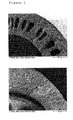
- FIG. 2 Cross sections of hollow fiber membranes with macrovoids (picture at left) and without macrovoids (picture at right)
- FIG. 3 is a diagrammatic representation of FIG. 3 :
Landscapes
- Chemical & Material Sciences (AREA)
- Chemical Kinetics & Catalysis (AREA)
- Engineering & Computer Science (AREA)
- Dispersion Chemistry (AREA)
- Manufacturing & Machinery (AREA)
- Health & Medical Sciences (AREA)
- Medicinal Chemistry (AREA)
- Polymers & Plastics (AREA)
- Organic Chemistry (AREA)
- Oil, Petroleum & Natural Gas (AREA)
- General Chemical & Material Sciences (AREA)
- Analytical Chemistry (AREA)
- Separation Using Semi-Permeable Membranes (AREA)
- Macromolecular Compounds Obtained By Forming Nitrogen-Containing Linkages In General (AREA)
- Polyurethanes Or Polyureas (AREA)
- Artificial Filaments (AREA)
- Drying Of Gases (AREA)
- Oxygen, Ozone, And Oxides In General (AREA)
- Carbon And Carbon Compounds (AREA)
- Coating Of Shaped Articles Made Of Macromolecular Substances (AREA)
- Manufacture Of Macromolecular Shaped Articles (AREA)
Applications Claiming Priority (3)
| Application Number | Priority Date | Filing Date | Title |
|---|---|---|---|
| AT11642009 | 2009-07-23 | ||
| ATA1164/2009 | 2009-07-23 | ||
| PCT/EP2010/060648 WO2011009919A1 (de) | 2009-07-23 | 2010-07-22 | Polyimidmembranen aus polymerisationslösungen |
Related Parent Applications (1)
| Application Number | Title | Priority Date | Filing Date |
|---|---|---|---|
| PCT/EP2010/060648 A-371-Of-International WO2011009919A1 (de) | 2009-07-23 | 2010-07-22 | Polyimidmembranen aus polymerisationslösungen |
Related Child Applications (1)
| Application Number | Title | Priority Date | Filing Date |
|---|---|---|---|
| US15/203,649 Continuation US10118136B2 (en) | 2009-07-23 | 2016-07-06 | Polyimide membranes made of polymerization solutions |
Publications (1)
| Publication Number | Publication Date |
|---|---|
| US20120123079A1 true US20120123079A1 (en) | 2012-05-17 |
Family
ID=42359559
Family Applications (2)
| Application Number | Title | Priority Date | Filing Date |
|---|---|---|---|
| US13/384,685 Abandoned US20120123079A1 (en) | 2009-07-23 | 2010-07-22 | Polyimide membranes made of polymerization solutions |
| US15/203,649 Active US10118136B2 (en) | 2009-07-23 | 2016-07-06 | Polyimide membranes made of polymerization solutions |
Family Applications After (1)
| Application Number | Title | Priority Date | Filing Date |
|---|---|---|---|
| US15/203,649 Active US10118136B2 (en) | 2009-07-23 | 2016-07-06 | Polyimide membranes made of polymerization solutions |
Country Status (10)
| Country | Link |
|---|---|
| US (2) | US20120123079A1 (ru) |
| EP (1) | EP2456546B1 (ru) |
| JP (2) | JP6125229B2 (ru) |
| KR (1) | KR101896721B1 (ru) |
| CN (1) | CN102470329B (ru) |
| BR (1) | BR112012001481B8 (ru) |
| CA (1) | CA2769033C (ru) |
| MY (1) | MY160267A (ru) |
| RU (1) | RU2566769C9 (ru) |
| WO (1) | WO2011009919A1 (ru) |
Cited By (19)
| Publication number | Priority date | Publication date | Assignee | Title |
|---|---|---|---|---|
| EP2799465A1 (de) | 2013-04-29 | 2014-11-05 | Evonik Industries AG | Verfahren zur Aufreinigung von Poly(arylenethern) |
| CN104722218A (zh) * | 2013-12-18 | 2015-06-24 | 天津大学 | 一种耐溶剂改性聚醚酰亚胺纳滤膜的制备方法 |
| US9272973B2 (en) | 2012-10-12 | 2016-03-01 | Evonik Industries Ag | Stable long-term method for producing C5-aldehydes |
| US20160144323A1 (en) * | 2013-06-21 | 2016-05-26 | Evonik Fibres Gmbh | Method for producing polyimide membranes |
| US9353040B2 (en) | 2012-02-23 | 2016-05-31 | Evonik Degussa Gmbh | Method and device for the hydroformylation of isobutene and for the separation of the product mixture |
| US9428433B2 (en) | 2012-12-18 | 2016-08-30 | Evonik Degussa Gmbh | Control of the viscosity of reaction solutions in hydroformylation processes |
| US9539549B2 (en) | 2009-12-01 | 2017-01-10 | Evonik Degussa Gmbh | Composite silicone membranes of high separation efficiency |
| EP3153227A1 (de) | 2015-10-07 | 2017-04-12 | Evonik Degussa GmbH | Verfahren zur herstellung von polyalkenameren für verpackungsanwendungen |
| EP3150655A4 (en) * | 2014-05-30 | 2018-02-07 | LG Chem, Ltd. | Polyimide-based liquid and polyimide-based film produced using same |
| US20180169584A1 (en) * | 2015-06-09 | 2018-06-21 | Evonik Fibres Gmbh | Hollow fibre membrane cartridge and module for the separation of fluids |
| US10040036B2 (en) | 2013-12-17 | 2018-08-07 | Evonik Fibres Gmbh | Highly-selective polyimide membranes with increased permeance, said membranes consisting of block copolyimides |
| US10118136B2 (en) | 2009-07-23 | 2018-11-06 | Evonik Fibres Gmbh | Polyimide membranes made of polymerization solutions |
| US10258921B2 (en) | 2014-03-31 | 2019-04-16 | Ube Industries, Ltd. | Gas separation system and enriched gas production method |
| EP3498361A1 (de) | 2017-12-18 | 2019-06-19 | Evonik Degussa GmbH | Verfahren zur herstellung von temperaturstabilen polyalkenameren |
| EP3546495A1 (de) | 2018-03-29 | 2019-10-02 | Evonik Degussa GmbH | Verfahren zur herstellung von temperaturstabilen polyalkenameren |
| US10456750B2 (en) | 2013-06-12 | 2019-10-29 | Evonik Fibres Gmbh | Membrane cartridge system |
| WO2022207439A1 (en) | 2021-03-30 | 2022-10-06 | Evonik Fibres Gmbh | Composite membranes comprising a selective separation layer comprising polybenzoxazole |
| US20230114525A1 (en) * | 2021-10-12 | 2023-04-13 | Air Products And Chemicals, Inc. | Biogas upgrading apparatus and process |
| US12121864B2 (en) | 2015-07-30 | 2024-10-22 | Evonik Operations Gmbh | Flexibly adaptable membrane cartridges for the separation of fluids |
Families Citing this family (38)
| Publication number | Priority date | Publication date | Assignee | Title |
|---|---|---|---|---|
| EP2588217B1 (de) | 2010-07-01 | 2017-02-22 | Evonik Fibres GmbH | Verfahren zur trennung von gasen |
| CN102671551B (zh) * | 2011-03-18 | 2014-03-05 | 中国科学院大连化学物理研究所 | 一种导电性微滤膜及其制备方法 |
| US8614288B2 (en) * | 2011-06-17 | 2013-12-24 | Uop Llc | Polyimide gas separation membranes |
| SG11201403605PA (en) | 2011-12-27 | 2014-10-30 | Evonik Fibres Gmbh | Method for separating gases |
| JP2013188742A (ja) | 2012-02-17 | 2013-09-26 | Fujifilm Corp | ガス分離複合膜、その製造方法、それを用いたガス分離モジュール、及びガス分離装置、並びにガス分離方法 |
| CN104797322B (zh) | 2012-11-14 | 2016-12-14 | 赢创纤维有限公司 | 采用膜的气体分离装置的气体组成控制 |
| JP2016501939A (ja) * | 2012-12-17 | 2016-01-21 | ビーエーエスエフ ソシエタス・ヨーロピアBasf Se | 多孔性分岐状/高分岐状ポリイミド |
| JP6071004B2 (ja) * | 2013-03-29 | 2017-02-01 | 富士フイルム株式会社 | 酸性ガス分離複合膜の製造方法及び酸性ガス分離膜モジュール |
| WO2014183977A1 (de) | 2013-05-15 | 2014-11-20 | Evonik Industries Ag | Steuerung der gaszusammensetzung einer gasseparationsanlage mit membranen |
| AU2014256431A1 (en) | 2013-11-05 | 2015-05-21 | Evonik Fibres Gmbh | Process for preparing polymer powder |
| CN104128100B (zh) * | 2014-06-30 | 2016-03-23 | 淮阴师范学院 | 纳米凹凸棒石基中空纤维微滤膜及其制备方法 |
| CN105289337B (zh) * | 2015-11-04 | 2017-07-28 | 中国科学院山西煤炭化学研究所 | 一种可交联聚酰亚胺气体分离膜及制备方法 |
| TWI629095B (zh) * | 2016-04-08 | 2018-07-11 | 財團法人紡織產業綜合研究所 | 聚醯亞胺組成物以及分離膜的製備方法 |
| US10561978B2 (en) | 2017-08-09 | 2020-02-18 | Generon Igs, Inc. | Membrane-based gas separation with retentate sweep |
| CN109694745B (zh) * | 2017-10-24 | 2021-09-21 | 中国石油化工股份有限公司 | 重质润滑油原料油脱蜡溶剂的回收方法和重质润滑油原料油脱蜡的方法 |
| CN109694746B (zh) * | 2017-10-24 | 2021-11-19 | 中国石油化工股份有限公司 | 润滑油原料油脱蜡溶剂的回收方法和润滑油原料油脱蜡的方法 |
| EP3632525A1 (en) | 2018-10-02 | 2020-04-08 | Evonik Fibres GmbH | A device and a process for separating methane from a gas mixture containing methane, carbon dioxide and hydrogen sulfide |
| CN109762166B (zh) * | 2018-12-26 | 2021-02-12 | 哈尔滨工程大学 | 一种聚酰亚胺前驱体及聚酰亚胺薄膜的制备方法 |
| DE202019001414U1 (de) | 2019-02-01 | 2019-04-12 | Evonik Canada Inc. | Vorrichtung zum Trennen von Gaskomponenten aus einem Gasstrom mit veränderlicher Zusammensetzung oder Strömungsrate |
| RU2714644C1 (ru) * | 2019-06-21 | 2020-02-18 | Денис Анджеевич Сапегин | Композиционная асимметричная полимерная первапорационная мембрана |
| KR102325598B1 (ko) * | 2019-10-29 | 2021-11-11 | 포항공과대학교 산학협력단 | 전기방사 매트를 이용한 금속 증착 기반 연신성 전극 및 그의 제조방법 |
| CN111662163A (zh) * | 2020-05-26 | 2020-09-15 | 桂林莱茵生物科技股份有限公司 | 一种有机膜在大麻提取中的应用 |
| JP7739057B2 (ja) | 2020-06-17 | 2025-09-16 | エボニック オペレーションズ ゲーエムベーハー | 架橋中空糸膜およびその新たな製造方法 |
| CN113181780B (zh) * | 2020-12-02 | 2022-11-08 | 南京工业大学 | 一种pH响应膜、制备方法及其在多组分溶质分离中的用途 |
| CN113248773B (zh) * | 2021-05-17 | 2022-07-08 | 上海瑞暨新材料科技有限公司 | 一种聚酰亚胺多孔膜及其制备方法 |
| EP4105261A1 (en) | 2021-06-14 | 2022-12-21 | Evonik Fibres GmbH | New non-toxic polyimide solutions |
| US12447434B2 (en) | 2021-07-12 | 2025-10-21 | Decarbontek LLC | Porous solid amine adsorbents and applications |
| CN114259882B (zh) * | 2021-11-15 | 2023-04-14 | 南京工业大学 | 一种内衬增强中空纤维耐溶剂纳滤膜及其制备方法 |
| EP4197619A1 (de) | 2021-12-20 | 2023-06-21 | Evonik Operations GmbH | Verfahren zur herstellung von kohlenmonoxid-haltigen strömen |
| JP2025504620A (ja) | 2022-02-01 | 2025-02-13 | コリピ・ゲーエムベーハー | バイオ生成物のバイオテクノロジー的製造のためのプロセス |
| CN116272442A (zh) * | 2023-03-15 | 2023-06-23 | 太原理工大学 | 表面改性聚酰亚胺薄膜、中空纤维的制备方法及应用 |
| US11980846B1 (en) | 2023-08-18 | 2024-05-14 | Unconventional Gas Solutions, LLC | System and method for producing renewable natural gas from biogas |
| WO2025157636A1 (en) | 2024-01-23 | 2025-07-31 | Evonik Operations Gmbh | Filter module, filter unit and filter process for gas separation |
| WO2025168379A1 (en) | 2024-02-09 | 2025-08-14 | Evonik Fibres Gmbh | Solvent soluble polyimide powders and a method for making them |
| WO2025176641A1 (de) | 2024-02-19 | 2025-08-28 | Evonik Operations Gmbh | Anlage und verfahren zur herstellung einer faser aus einer polymerlösung |
| WO2025201961A1 (en) | 2024-03-25 | 2025-10-02 | Evonik Operations Gmbh | Plant and process for producing a fibre from a polymer solution |
| US12139681B1 (en) | 2024-04-24 | 2024-11-12 | Unconventional Gas Solutions, LLC | System and method for producing renewable natural gas from biogas |
| US12139682B1 (en) | 2024-07-08 | 2024-11-12 | Unconventional Gas Solutions, LLC | System and method for producing renewable natural gas from biogas |
Citations (7)
| Publication number | Priority date | Publication date | Assignee | Title |
|---|---|---|---|---|
| US3708458A (en) * | 1971-03-16 | 1973-01-02 | Upjohn Co | Copolyimides of benzophenone tetracarboxylic acid dianhydride and mixture of diisocyanates |
| US6180008B1 (en) * | 1998-07-30 | 2001-01-30 | W. R. Grace & Co.-Conn. | Polyimide membranes for hyperfiltration recovery of aromatic solvents |
| US20040159233A1 (en) * | 2002-12-02 | 2004-08-19 | Simmons John W | Method for separating hydrocarbon-containing gas mixtures using hydrocarbon-resistant membranes |
| US7018445B2 (en) * | 2002-12-02 | 2006-03-28 | L'air Liquide, Societe Anonyme A Directoire Et Conseil De Surveillance Pour L'etude Et L'exploitation Des Procedes Georges Claude | Polyimide blends for gas separation membranes |
| WO2007125367A1 (en) * | 2006-04-28 | 2007-11-08 | Imperial Innovations Limited | Asymmetric membranes for use in nanofiltration |
| US20080134885A1 (en) * | 2005-01-24 | 2008-06-12 | Ube Industries, Ltd. | Assymmetric Hollow Fiber Gas Separation Membrane and Gas Separation Method |
| US8999038B2 (en) * | 2010-07-01 | 2015-04-07 | Evonik Fibres Gmbh | Process for separation of gases |
Family Cites Families (38)
| Publication number | Priority date | Publication date | Assignee | Title |
|---|---|---|---|---|
| US4001186A (en) | 1974-11-07 | 1977-01-04 | The Upjohn Company | Preparation of polyimide from organic diisocyanate with alkali metal salt of alcohol as catalyst |
| JPH073004B2 (ja) * | 1986-03-27 | 1995-01-18 | 三菱化成株式会社 | コポリイミド中空糸及びその製造方法 |
| US4952319A (en) | 1986-12-15 | 1990-08-28 | Mitsubishi Kasei Corporation | Process for separating liquid mixture |
| JPH0788601B2 (ja) * | 1987-01-07 | 1995-09-27 | 三菱化学株式会社 | 指型構造の空孔を有する中空糸の製造方法 |
| US5055116A (en) * | 1989-05-22 | 1991-10-08 | Hoechst Celanese Corp. | Gas separation membranes comprising miscible blends of polyimide polymers |
| JP2855668B2 (ja) | 1989-07-05 | 1999-02-10 | 三菱化学株式会社 | ポリイミド分離膜 |
| US5074891A (en) | 1989-07-27 | 1991-12-24 | Hoechst Celanese Corp. | Method of gas separation and membranes therefor |
| US5202411A (en) * | 1990-04-06 | 1993-04-13 | W. R. Grace & Co.-Conn. | Tri-component polyimide composition and preparation thereof |
| JP3287415B2 (ja) | 1992-03-26 | 2002-06-04 | 大日本インキ化学工業株式会社 | 多孔質高分子膜の製造方法 |
| US5635097A (en) | 1995-02-14 | 1997-06-03 | Concrete Structures Of The Midwest, Inc. | Rebar retention apparatus |
| US5635067A (en) | 1995-03-14 | 1997-06-03 | Praxair Technology, Inc. | Fluid separation membranes prepared from blends of polyimide polymers |
| JP3462652B2 (ja) | 1995-12-28 | 2003-11-05 | 東京電力株式会社 | ガス分離膜及びその製造方法 |
| JP3992345B2 (ja) | 1998-01-05 | 2007-10-17 | 日東電工株式会社 | 分離膜およびこれを用いたオレフィンの分離方法 |
| DE10034360A1 (de) | 2000-07-14 | 2002-01-24 | Oxeno Olefinchemie Gmbh | Mehrstufiges Verfahren zur Herstellung von Oxo-Aldehyden und/oder Alkoholen |
| DE10048301A1 (de) | 2000-09-29 | 2002-04-11 | Oxeno Olefinchemie Gmbh | Stabilisierung von Rhodiumkatalysatoren für die Hydroformylierung von Olefinen |
| CN100503542C (zh) | 2002-03-15 | 2009-06-24 | 奥克森诺奥勒芬化学股份有限公司 | 烯烃的加氢甲酰基化方法 |
| DE10220799A1 (de) | 2002-05-10 | 2003-12-11 | Oxeno Olefinchemie Gmbh | Verfahren zur Herstellung von C13-Alkoholgemischen |
| DE10220801A1 (de) | 2002-05-10 | 2003-11-20 | Oxeno Olefinchemie Gmbh | Verfahren zur Rhodium-katalysierten Hydroformylierung von Olefinen unter Reduzierung der Rhodiumverluste |
| RU2337090C2 (ru) | 2002-08-31 | 2008-10-27 | Оксено Олефинхеми Гмбх | Способ гидроформилирования олефиновых соединений в присутствии циклических эфиров угольной кислоты |
| CN1290814C (zh) | 2002-08-31 | 2006-12-20 | 奥克森诺奥勒芬化学股份有限公司 | 通过烯属不饱和化合物的加氢甲酰基化制备醛的方法,该方法在环状碳酸酯存在的条件下由未改性的金属配合物催化 |
| US7169885B2 (en) | 2003-03-13 | 2007-01-30 | National University Of Singapore | Polyimide membranes |
| DE102004033410A1 (de) | 2004-02-14 | 2005-09-01 | Oxeno Olefinchemie Gmbh | Verfahren zur Herstellung von Olefinen mit 8 bis 12 Kohlenstoffatomen |
| DE102004059292A1 (de) | 2004-12-09 | 2006-06-14 | Oxeno Olefinchemie Gmbh | Verfahren zur Herstellung von Alkoholen aus Olefinen durch Hydroformylierung und Hydrierung |
| DE102004059293A1 (de) | 2004-12-09 | 2006-06-14 | Oxeno Olefinchemie Gmbh | Verfahren zur Hydroformylierung von Olefinen |
| WO2006068626A1 (en) | 2004-12-23 | 2006-06-29 | National University Of Singapore | A method of treating a permeable membrane |
| US7393383B2 (en) | 2005-01-14 | 2008-07-01 | L'air Liquide, Societe Anonyme A Directoire Et Conseil De Surveillance Pour L'etude Et L'exploitation Des Procedes Georges Claude | Separation membrane made from blends of polyimide with polyamide or polyimide-amide polymers |
| US7422623B2 (en) | 2005-03-02 | 2008-09-09 | L'air Liquide, Societe Anonyme A Directoire Et Conseil De Surveillance Pour L'etude Et L'exploitation Des Procedes Georges Claude | Separation membrane by controlled annealing of polyimide polymers |
| DE102005046250B4 (de) | 2005-09-27 | 2020-10-08 | Evonik Operations Gmbh | Anlage zur Abtrennung von organischen Übergangsmetallkomplexkatalysatoren |
| DE102006003618A1 (de) | 2006-01-26 | 2007-08-02 | Oxeno Olefinchemie Gmbh | Verfahren zur Abtrennung von Metall-Komplexkatalysatoren aus Telomerisationsgemischen |
| US7803214B2 (en) | 2006-07-21 | 2010-09-28 | Ube Industries, Ltd. | Asymmetric hollow-fiber gas separation membrane, gas separation method and gas separation membrane module |
| DE102007061649A1 (de) | 2007-12-20 | 2009-07-02 | Evonik Oxeno Gmbh | Einstufiges kontinuierliches Verfahren zur Hydroformylierung von höheren Olefinen oder Olefingemischen |
| DE102007061648A1 (de) | 2007-12-20 | 2009-07-02 | Evonik Oxeno Gmbh | Mehrstufiges kontinuierliches Verfahren zur Hydroformylierung von höheren Olefinen oder Olefingemischen |
| DE102008002187A1 (de) | 2008-06-03 | 2009-12-10 | Evonik Oxeno Gmbh | Verfahren zur Herstellung von C5-Aldehydgemischen mit hohem n-Pentanalanteil |
| DE102008002188A1 (de) | 2008-06-03 | 2009-12-10 | Evonik Oxeno Gmbh | Verfahren zur Abtrennung von 1-Buten aus C4-haltigen Kohlenwasserstoffströmen durch Hydroformylierung |
| DE102009001230A1 (de) | 2009-02-27 | 2010-09-02 | Evonik Oxeno Gmbh | Verfahren zur Abtrennung und teilweiser Rückführung von Übergangsmetallen bzw. deren katalytisch wirksamen Komplexverbindungen aus Prozessströmen |
| DE102009001225A1 (de) | 2009-02-27 | 2010-09-02 | Evonik Oxeno Gmbh | Verfahren zur Anreicherung eines Homogenkatalysators aus einem Prozessstrom |
| KR101896721B1 (ko) | 2009-07-23 | 2018-09-07 | 에보닉 피브레 게엠베하 | 중합 용액으로 제조된 폴리이미드 막 |
| DE102009047351A1 (de) | 2009-12-01 | 2011-06-09 | Evonik Goldschmidt Gmbh | Komposit-Siliconmembranen mit hoher Trennwirkung |
-
2010
- 2010-07-22 KR KR1020127001660A patent/KR101896721B1/ko active Active
- 2010-07-22 WO PCT/EP2010/060648 patent/WO2011009919A1/de not_active Ceased
- 2010-07-22 CN CN201080032551.6A patent/CN102470329B/zh active Active
- 2010-07-22 MY MYPI2012000295A patent/MY160267A/en unknown
- 2010-07-22 RU RU2012106081/05A patent/RU2566769C9/ru active
- 2010-07-22 BR BR112012001481A patent/BR112012001481B8/pt active IP Right Grant
- 2010-07-22 JP JP2012521042A patent/JP6125229B2/ja active Active
- 2010-07-22 CA CA2769033A patent/CA2769033C/en active Active
- 2010-07-22 EP EP10734148.9A patent/EP2456546B1/de active Active
- 2010-07-22 US US13/384,685 patent/US20120123079A1/en not_active Abandoned
-
2015
- 2015-07-27 JP JP2015147904A patent/JP2015193852A/ja not_active Withdrawn
-
2016
- 2016-07-06 US US15/203,649 patent/US10118136B2/en active Active
Patent Citations (7)
| Publication number | Priority date | Publication date | Assignee | Title |
|---|---|---|---|---|
| US3708458A (en) * | 1971-03-16 | 1973-01-02 | Upjohn Co | Copolyimides of benzophenone tetracarboxylic acid dianhydride and mixture of diisocyanates |
| US6180008B1 (en) * | 1998-07-30 | 2001-01-30 | W. R. Grace & Co.-Conn. | Polyimide membranes for hyperfiltration recovery of aromatic solvents |
| US20040159233A1 (en) * | 2002-12-02 | 2004-08-19 | Simmons John W | Method for separating hydrocarbon-containing gas mixtures using hydrocarbon-resistant membranes |
| US7018445B2 (en) * | 2002-12-02 | 2006-03-28 | L'air Liquide, Societe Anonyme A Directoire Et Conseil De Surveillance Pour L'etude Et L'exploitation Des Procedes Georges Claude | Polyimide blends for gas separation membranes |
| US20080134885A1 (en) * | 2005-01-24 | 2008-06-12 | Ube Industries, Ltd. | Assymmetric Hollow Fiber Gas Separation Membrane and Gas Separation Method |
| WO2007125367A1 (en) * | 2006-04-28 | 2007-11-08 | Imperial Innovations Limited | Asymmetric membranes for use in nanofiltration |
| US8999038B2 (en) * | 2010-07-01 | 2015-04-07 | Evonik Fibres Gmbh | Process for separation of gases |
Cited By (33)
| Publication number | Priority date | Publication date | Assignee | Title |
|---|---|---|---|---|
| US10118136B2 (en) | 2009-07-23 | 2018-11-06 | Evonik Fibres Gmbh | Polyimide membranes made of polymerization solutions |
| US9539549B2 (en) | 2009-12-01 | 2017-01-10 | Evonik Degussa Gmbh | Composite silicone membranes of high separation efficiency |
| US9353040B2 (en) | 2012-02-23 | 2016-05-31 | Evonik Degussa Gmbh | Method and device for the hydroformylation of isobutene and for the separation of the product mixture |
| US9272973B2 (en) | 2012-10-12 | 2016-03-01 | Evonik Industries Ag | Stable long-term method for producing C5-aldehydes |
| US9428433B2 (en) | 2012-12-18 | 2016-08-30 | Evonik Degussa Gmbh | Control of the viscosity of reaction solutions in hydroformylation processes |
| US9598537B2 (en) | 2013-04-29 | 2017-03-21 | Evonik Degussa Gmbh | Method for the purification of poly(arylene ethers) |
| WO2014177418A1 (de) | 2013-04-29 | 2014-11-06 | Evonik Industries Ag | Verfahren zur aufreinigung von poly(arylenethern) |
| EP2799465A1 (de) | 2013-04-29 | 2014-11-05 | Evonik Industries AG | Verfahren zur Aufreinigung von Poly(arylenethern) |
| US10456750B2 (en) | 2013-06-12 | 2019-10-29 | Evonik Fibres Gmbh | Membrane cartridge system |
| US9873093B2 (en) * | 2013-06-21 | 2018-01-23 | Evonik Fibres Gmbh | Method for producing polyimide membranes |
| US20180099251A1 (en) * | 2013-06-21 | 2018-04-12 | Evonik Fibres Gmbh | Method for producing polyimide membranes |
| US20160144323A1 (en) * | 2013-06-21 | 2016-05-26 | Evonik Fibres Gmbh | Method for producing polyimide membranes |
| US10040036B2 (en) | 2013-12-17 | 2018-08-07 | Evonik Fibres Gmbh | Highly-selective polyimide membranes with increased permeance, said membranes consisting of block copolyimides |
| CN104722218A (zh) * | 2013-12-18 | 2015-06-24 | 天津大学 | 一种耐溶剂改性聚醚酰亚胺纳滤膜的制备方法 |
| US10258921B2 (en) | 2014-03-31 | 2019-04-16 | Ube Industries, Ltd. | Gas separation system and enriched gas production method |
| US10647883B2 (en) | 2014-05-30 | 2020-05-12 | Lg Chem. Ltd. | Polyimide-based solution and polyimide-based film produced using same |
| EP3150655A4 (en) * | 2014-05-30 | 2018-02-07 | LG Chem, Ltd. | Polyimide-based liquid and polyimide-based film produced using same |
| CN107722270A (zh) * | 2014-05-30 | 2018-02-23 | 株式会社Lg化学 | 聚酰亚胺基液体和使用其制备的聚酰亚胺基膜 |
| US10144847B2 (en) | 2014-05-30 | 2018-12-04 | Lg Chem, Ltd. | Polyimide-based solution and polyimide-based film produced using same |
| US10933378B2 (en) * | 2015-06-09 | 2021-03-02 | Evonik Fibres Gmbh | Hollow fibre membrane cartridge and module for the separation of fluids |
| US20180169584A1 (en) * | 2015-06-09 | 2018-06-21 | Evonik Fibres Gmbh | Hollow fibre membrane cartridge and module for the separation of fluids |
| US12121864B2 (en) | 2015-07-30 | 2024-10-22 | Evonik Operations Gmbh | Flexibly adaptable membrane cartridges for the separation of fluids |
| EP3153227A1 (de) | 2015-10-07 | 2017-04-12 | Evonik Degussa GmbH | Verfahren zur herstellung von polyalkenameren für verpackungsanwendungen |
| WO2017060363A1 (en) | 2015-10-07 | 2017-04-13 | Evonik Degussa Gmbh | Process for preparing polyalkenamers for packaging applications |
| US10829590B2 (en) | 2015-10-07 | 2020-11-10 | Evonik Operations Gmbh | Process for preparing polyalkenamers for packaging applications |
| WO2019121767A1 (de) | 2017-12-18 | 2019-06-27 | Evonik Degussa Gmbh | Verfahren zur herstellung von temperaturstabilen polyalkenameren |
| EP3498361A1 (de) | 2017-12-18 | 2019-06-19 | Evonik Degussa GmbH | Verfahren zur herstellung von temperaturstabilen polyalkenameren |
| WO2019185911A1 (de) | 2018-03-29 | 2019-10-03 | Evonik Degussa Gmbh | Verfahren zur herstellung von temperaturstabilen polyalkenameren |
| EP3546495A1 (de) | 2018-03-29 | 2019-10-02 | Evonik Degussa GmbH | Verfahren zur herstellung von temperaturstabilen polyalkenameren |
| WO2022207439A1 (en) | 2021-03-30 | 2022-10-06 | Evonik Fibres Gmbh | Composite membranes comprising a selective separation layer comprising polybenzoxazole |
| US20230114525A1 (en) * | 2021-10-12 | 2023-04-13 | Air Products And Chemicals, Inc. | Biogas upgrading apparatus and process |
| US11998872B2 (en) * | 2021-10-12 | 2024-06-04 | Air Products And Chemicals, Inc. | Biogas upgrading apparatus and process |
| IL297233B1 (en) * | 2021-10-12 | 2026-04-01 | Air Prod & Chem | Biogas upgrading facility and process |
Also Published As
| Publication number | Publication date |
|---|---|
| RU2566769C9 (ru) | 2016-07-10 |
| CA2769033A1 (en) | 2011-01-27 |
| KR101896721B1 (ko) | 2018-09-07 |
| JP2012533671A (ja) | 2012-12-27 |
| US20160310912A1 (en) | 2016-10-27 |
| JP2015193852A (ja) | 2015-11-05 |
| BR112012001481B8 (pt) | 2023-05-09 |
| EP2456546A1 (de) | 2012-05-30 |
| CA2769033C (en) | 2019-09-03 |
| CN102470329B (zh) | 2015-06-24 |
| WO2011009919A1 (de) | 2011-01-27 |
| CN102470329A (zh) | 2012-05-23 |
| HK1169075A1 (zh) | 2013-01-18 |
| BR112012001481A2 (pt) | 2016-03-15 |
| MY160267A (en) | 2017-02-28 |
| US10118136B2 (en) | 2018-11-06 |
| EP2456546B1 (de) | 2015-04-22 |
| JP6125229B2 (ja) | 2017-05-10 |
| KR20120075454A (ko) | 2012-07-06 |
| BR112012001481B1 (pt) | 2020-02-04 |
| RU2012106081A (ru) | 2013-08-27 |
| RU2566769C2 (ru) | 2015-10-27 |
Similar Documents
| Publication | Publication Date | Title |
|---|---|---|
| US10118136B2 (en) | Polyimide membranes made of polymerization solutions | |
| US9873093B2 (en) | Method for producing polyimide membranes | |
| US10040036B2 (en) | Highly-selective polyimide membranes with increased permeance, said membranes consisting of block copolyimides | |
| US11167248B2 (en) | Method to make carbon molecular sieve hollow fiber membranes | |
| JP5359957B2 (ja) | ポリイミドガス分離膜、及びガス分離方法 | |
| JP5747730B2 (ja) | ポリイミドガス分離膜、及びガス分離方法 | |
| US12179157B2 (en) | Membranes of glassy polymer blends with peg-crosslinked intrinsic microporous polymers for gas separations | |
| JP5114912B2 (ja) | Si原子含有ポリイミドによって形成された非対称膜、ガス分離膜、及びガス分離方法 | |
| HK1169075B (en) | Polyimide membranes made of polymerization solutions | |
| HK1228938A1 (en) | Highly-selective polyimide membranes with increased permeance, said membranes consisting of block copolyimides |
Legal Events
| Date | Code | Title | Description |
|---|---|---|---|
| AS | Assignment |
Owner name: EVONIK FIBRES GMBH, AUSTRIA Free format text: ASSIGNMENT OF ASSIGNORS INTEREST;ASSIGNORS:UNGERANK, MARKUS;BAUMGARTEN, GOETZ;SIGNING DATES FROM 20111026 TO 20111104;REEL/FRAME:027582/0634 |
|
| STCB | Information on status: application discontinuation |
Free format text: ABANDONED -- FAILURE TO RESPOND TO AN OFFICE ACTION |