US4737251A - Field-inversion gel electrophoresis - Google Patents
Field-inversion gel electrophoresis Download PDFInfo
- Publication number
- US4737251A US4737251A US06/781,283 US78128385A US4737251A US 4737251 A US4737251 A US 4737251A US 78128385 A US78128385 A US 78128385A US 4737251 A US4737251 A US 4737251A
- Authority
- US
- United States
- Prior art keywords
- voltage
- substances
- time interval
- gel
- electrophoresis
- Prior art date
- Legal status (The legal status is an assumption and is not a legal conclusion. Google has not performed a legal analysis and makes no representation as to the accuracy of the status listed.)
- Expired - Lifetime
Links
- 238000001502 gel electrophoresis Methods 0.000 title claims abstract description 37
- 238000000034 method Methods 0.000 claims abstract description 45
- 238000013508 migration Methods 0.000 claims abstract description 17
- 230000005012 migration Effects 0.000 claims abstract description 17
- 230000005684 electric field Effects 0.000 claims abstract description 10
- 239000000499 gel Substances 0.000 claims description 49
- 238000001962 electrophoresis Methods 0.000 claims description 30
- 238000000926 separation method Methods 0.000 claims description 19
- 239000000126 substance Substances 0.000 claims description 16
- 229920002521 macromolecule Polymers 0.000 claims description 12
- 239000000203 mixture Substances 0.000 claims description 9
- 230000000694 effects Effects 0.000 claims description 6
- 239000011543 agarose gel Substances 0.000 claims description 4
- 230000001419 dependent effect Effects 0.000 claims description 2
- 230000000737 periodic effect Effects 0.000 abstract description 5
- 102000053602 DNA Human genes 0.000 description 41
- 108020004414 DNA Proteins 0.000 description 41
- 230000037230 mobility Effects 0.000 description 18
- 240000004808 Saccharomyces cerevisiae Species 0.000 description 13
- 235000014680 Saccharomyces cerevisiae Nutrition 0.000 description 13
- 239000000872 buffer Substances 0.000 description 12
- 210000000349 chromosome Anatomy 0.000 description 9
- 239000000306 component Substances 0.000 description 8
- 102000039446 nucleic acids Human genes 0.000 description 7
- 108020004707 nucleic acids Proteins 0.000 description 7
- 150000007523 nucleic acids Chemical class 0.000 description 7
- 210000004027 cell Anatomy 0.000 description 6
- 239000013611 chromosomal DNA Substances 0.000 description 5
- 239000002609 medium Substances 0.000 description 5
- 229920000936 Agarose Polymers 0.000 description 4
- 241000701959 Escherichia virus Lambda Species 0.000 description 4
- 238000010586 diagram Methods 0.000 description 4
- 239000002245 particle Substances 0.000 description 4
- BASFCYQUMIYNBI-UHFFFAOYSA-N platinum Chemical compound [Pt] BASFCYQUMIYNBI-UHFFFAOYSA-N 0.000 description 4
- 238000012360 testing method Methods 0.000 description 4
- 241000701533 Escherichia virus T4 Species 0.000 description 3
- 238000013461 design Methods 0.000 description 3
- 239000012146 running buffer Substances 0.000 description 3
- 238000010186 staining Methods 0.000 description 3
- 229920002972 Acrylic fiber Polymers 0.000 description 2
- 241000701988 Escherichia virus T5 Species 0.000 description 2
- 241000700605 Viruses Species 0.000 description 2
- 239000012809 cooling fluid Substances 0.000 description 2
- 230000002708 enhancing effect Effects 0.000 description 2
- 239000000463 material Substances 0.000 description 2
- 229910052697 platinum Inorganic materials 0.000 description 2
- 238000002360 preparation method Methods 0.000 description 2
- 108090000623 proteins and genes Proteins 0.000 description 2
- 102000004169 proteins and genes Human genes 0.000 description 2
- 230000003134 recirculating effect Effects 0.000 description 2
- 230000001105 regulatory effect Effects 0.000 description 2
- 108091008146 restriction endonucleases Proteins 0.000 description 2
- 241001515965 unidentified phage Species 0.000 description 2
- -1 viruses Chemical class 0.000 description 2
- XLYOFNOQVPJJNP-UHFFFAOYSA-N water Substances O XLYOFNOQVPJJNP-UHFFFAOYSA-N 0.000 description 2
- 108091032973 (ribonucleotides)n+m Proteins 0.000 description 1
- ZCJJIQHVZCFSGZ-UHFFFAOYSA-N 2,8-bis(diphenylphosphoryl)dibenzothiophene Chemical compound C=1C=CC=CC=1P(C=1C=C2C3=CC(=CC=C3SC2=CC=1)P(=O)(C=1C=CC=CC=1)C=1C=CC=CC=1)(=O)C1=CC=CC=C1 ZCJJIQHVZCFSGZ-UHFFFAOYSA-N 0.000 description 1
- IBZYPBGPOGJMBF-UHFFFAOYSA-N 3,6 anhydrogalactose Natural products CCC=CCC1C(CC(=O)NC(C(C)CC)C(O)=O)CCC1=O IBZYPBGPOGJMBF-UHFFFAOYSA-N 0.000 description 1
- WZYRMLAWNVOIEX-BGPJRJDNSA-N 3,6-anhydro-D-galactose Chemical compound O=C[C@H](O)[C@H]1OC[C@@H](O)[C@@H]1O WZYRMLAWNVOIEX-BGPJRJDNSA-N 0.000 description 1
- DCQFFOLNJVGHLW-UHFFFAOYSA-N 4'-Me ether-Punctatin+ Natural products O1C(O)C(O)C2OCC1C2O DCQFFOLNJVGHLW-UHFFFAOYSA-N 0.000 description 1
- 244000105975 Antidesma platyphyllum Species 0.000 description 1
- KCXVZYZYPLLWCC-UHFFFAOYSA-N EDTA Chemical compound OC(=O)CN(CC(O)=O)CCN(CC(O)=O)CC(O)=O KCXVZYZYPLLWCC-UHFFFAOYSA-N 0.000 description 1
- 108090000790 Enzymes Chemical class 0.000 description 1
- 102000004190 Enzymes Human genes 0.000 description 1
- 102000004895 Lipoproteins Human genes 0.000 description 1
- 108090001030 Lipoproteins Proteins 0.000 description 1
- 102000011931 Nucleoproteins Human genes 0.000 description 1
- 108010061100 Nucleoproteins Proteins 0.000 description 1
- 239000004698 Polyethylene Substances 0.000 description 1
- 239000007983 Tris buffer Substances 0.000 description 1
- 230000003213 activating effect Effects 0.000 description 1
- 230000004913 activation Effects 0.000 description 1
- 238000000246 agarose gel electrophoresis Methods 0.000 description 1
- WQZGKKKJIJFFOK-PHYPRBDBSA-N alpha-D-galactose Chemical compound OC[C@H]1O[C@H](O)[C@H](O)[C@@H](O)[C@H]1O WQZGKKKJIJFFOK-PHYPRBDBSA-N 0.000 description 1
- 238000004458 analytical method Methods 0.000 description 1
- 238000013459 approach Methods 0.000 description 1
- 239000007864 aqueous solution Substances 0.000 description 1
- 238000003491 array Methods 0.000 description 1
- KGBXLFKZBHKPEV-UHFFFAOYSA-N boric acid Chemical compound OB(O)O KGBXLFKZBHKPEV-UHFFFAOYSA-N 0.000 description 1
- 239000004327 boric acid Substances 0.000 description 1
- WZYRMLAWNVOIEX-UHFFFAOYSA-N cinnamtannin B-2 Natural products O=CC(O)C1OCC(O)C1O WZYRMLAWNVOIEX-UHFFFAOYSA-N 0.000 description 1
- 239000000084 colloidal system Substances 0.000 description 1
- 239000008358 core component Substances 0.000 description 1
- 239000003599 detergent Substances 0.000 description 1
- ZMMJGEGLRURXTF-UHFFFAOYSA-N ethidium bromide Chemical compound [Br-].C12=CC(N)=CC=C2C2=CC=C(N)C=C2[N+](CC)=C1C1=CC=CC=C1 ZMMJGEGLRURXTF-UHFFFAOYSA-N 0.000 description 1
- 229960005542 ethidium bromide Drugs 0.000 description 1
- 229930182830 galactose Natural products 0.000 description 1
- 238000010353 genetic engineering Methods 0.000 description 1
- 150000004676 glycans Chemical class 0.000 description 1
- 235000009424 haa Nutrition 0.000 description 1
- 150000002500 ions Chemical class 0.000 description 1
- 150000002605 large molecules Chemical class 0.000 description 1
- 230000014759 maintenance of location Effects 0.000 description 1
- 238000005259 measurement Methods 0.000 description 1
- 230000003287 optical effect Effects 0.000 description 1
- 238000005192 partition Methods 0.000 description 1
- 229920003023 plastic Polymers 0.000 description 1
- 239000004033 plastic Substances 0.000 description 1
- 229920000573 polyethylene Polymers 0.000 description 1
- 229920001282 polysaccharide Polymers 0.000 description 1
- 239000005017 polysaccharide Substances 0.000 description 1
- 229920001296 polysiloxane Polymers 0.000 description 1
- 239000011148 porous material Substances 0.000 description 1
- 238000000746 purification Methods 0.000 description 1
- 238000011160 research Methods 0.000 description 1
- 230000003381 solubilizing effect Effects 0.000 description 1
- 239000000243 solution Substances 0.000 description 1
- 239000002904 solvent Substances 0.000 description 1
- 238000000638 solvent extraction Methods 0.000 description 1
- 238000001228 spectrum Methods 0.000 description 1
- 230000002123 temporal effect Effects 0.000 description 1
- 239000006163 transport media Substances 0.000 description 1
- LENZDBCJOHFCAS-UHFFFAOYSA-N tris Chemical compound OCC(N)(CO)CO LENZDBCJOHFCAS-UHFFFAOYSA-N 0.000 description 1
- 238000012800 visualization Methods 0.000 description 1
Images

Classifications
-
- B—PERFORMING OPERATIONS; TRANSPORTING
- B01—PHYSICAL OR CHEMICAL PROCESSES OR APPARATUS IN GENERAL
- B01D—SEPARATION
- B01D57/00—Separation, other than separation of solids, not fully covered by a single other group or subclass, e.g. B03C
- B01D57/02—Separation, other than separation of solids, not fully covered by a single other group or subclass, e.g. B03C by electrophoresis
-
- G—PHYSICS
- G01—MEASURING; TESTING
- G01N—INVESTIGATING OR ANALYSING MATERIALS BY DETERMINING THEIR CHEMICAL OR PHYSICAL PROPERTIES
- G01N27/00—Investigating or analysing materials by the use of electric, electrochemical, or magnetic means
- G01N27/26—Investigating or analysing materials by the use of electric, electrochemical, or magnetic means by investigating electrochemical variables; by using electrolysis or electrophoresis
- G01N27/416—Systems
- G01N27/447—Systems using electrophoresis
- G01N27/44756—Apparatus specially adapted therefor
- G01N27/44773—Multi-stage electrophoresis, e.g. two-dimensional electrophoresis
Definitions
- This invention relates to gel electrophoresis and more particularly to a method and apparatus for gel electrophoresis which employs periodic inversion of the electric field.
- Electrophoresis involves the separation of mixtures by differential migration of components through a transport medium in an electric field. Many particles in aqueous solution acquire an electrical charge due to ionization and thus move in response to an external electric field.
- the charged particles may be simple ions, complex macromolecules, viruses, colloids or even living cells. The rate of their migration depends upon the amount of charge, the size and shape of the particle, and the properties of the solvent.
- Electrophoresis in a gel medium is an important method of separating proteins, nucleic acids and other such macromolecules in mixture.
- the macromolecules migrate toward the oppositely charged electrode. The higher their ratio of charge to mass, the faster they move.
- the mixture of macromolecules is thereby eventually separated into a series of distinct bands in order of charge density.
- the electrophoresis is generally terminated when the leading band has migrated through most of the available gel.
- the bands can be identified by suitable means such as staining, optical scanning and the like procedures, and the macromolecules can be recovered by cutting out and solubilizing the corresponding portions of the gel. This can be done, for example, by electroelution from the gel or by chemical or physical disruption of the gel structure followed by appropriate purification techniques.
- Agarose which is a naturally occurring linear polysaccharide of galactose and 3,6-anhydrogalactose, is particularly useful as the electrophoretic support medium since it permits the separation of very large molecules such as viruses, enzyme complexes, lipoproteins and nucleic acids which are often outside the useful pore size with polyacylamide gel electrophoresis.
- a large variety of agaroses and modified agaroses are available commercially. They are usually used in concentrations ranging from about 0.1 to about 2.5% by weight.
- DNA deoxyribonucleic acid
- bp base pairs
- Most practical work has been confined to molecules less than about 2 ⁇ 10 4 bp.
- typical DNA molecules employed in genetic engineering applications are within this lower size range, the DNA molecules in chromosomes are larger.
- the disclosed Cantor and Schwartz technique has been applied with success to separate DNA molecules present in the chromosomes of lower organisms such as yeast and protozoans, the bands are somewhat distorted and nonparallel, whereby it is difficult to make lane-to-lane comparisons between samples as is obtained in conventional gel electrophoresis.
- the transverse-field gel electrophoresis technique requires complex electrode geometries. Although the theoretical minimum is three, no devices have been described that contain fewer than four, and it is common for devices to feature whole arrays of electrodes. Furthermore, the precise positioning of the electrodes has dramatic effects on the results obtained. Consequently, transverse-field-alternation gel electrophoresis does not provide for convenient gel electrophoretic practice.
- transverse-field technique also defined as orthogonal-field-alternation
- applications to the chromosomal DNA molecules from yeast are described by Carle and Olson, Nucleic Acids Res. 12, 5647-5664 (1984).
- a description of the complete analysis of the set of chromosomal DNA molecules from yeast using the transverse-field technique is further reported by Carle and Olson, Proc. Natl. Acad. Sci. U.S.A. 82, 3756-3760 (1985).
- an improved system for gel electrophoresis which is suitable for the separation of very large DNA molecules, such as chromosomal DNA, and which provides parallel bands of the separated components.
- the method and apparatus of this invention employs periodic inversion of an electric field essentially in one dimension. In essence, this system can be described as field-inversion gel electrophoresis.
- net migration is achieved by using a longer time or a higher voltage in one direction than in the other direction.
- net migration in a given direction can be achieved, for example, by partitioning each switching cycle unequally between so-called “forward" and “reverse” directions or by imposing a higher voltage in the forward direction than in the reverse direction, and vice versa.
- Resolution can be optimized in a given size range by selecting an appropriate switching regime.
- a broad size range can be explored at lower resolution by employing temporal switching-interval gradients, in which the period or internal structure of the switching cycle is varied during an electrophoresis run.
- the present invention provides substantial improvements over the transverse-field technique in resolution, experimental convenience, and practical-sample capacity.
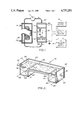
- FIG. 1 is a schematic diagram of the field-inversion gel electrophoresis system in one embodiment of the invention.
- FIG. 2 is a perspective, partly in cut-away view, of a gel box in one embodiment of the invention.
- FIG. 3 is a wiring diagram of a switching component to provide switching intervals in the field-inversion gel electrophoresis of FIG. 1.
- FIG. 4 represents the electrophoretic pattern of bands obtained by field-inversion gel electrophoresis of a series of large molecular weight DNA samples.
- FIGS. 1 to 3 a laboratory embodiment of the field-inversion gel electrophoresis system of this invention is illustrated in FIGS. 1 to 3.
- the field-inversion gel electrophoresis system is illustrated by a series of interconnected components comprising an electrophoresis chamber or gel box 10, a pump 11, a heat exchanger 12, a switching means 13, a DC regulated power supply 14 and a timing device 15.
- FIG. 1 a top view of the gel box is illustrated in which the gel layer or slab 16 and a series of sample wells 17 cast into the gel at one end of the gel layer are shown.
- the longer arrow and larger polarity signs (+and -) indicate the predominant condition. That is, in variations in which net migration is achieved by applying the same voltage in both directions, the predominant condition is one that is applied for the larger fraction of each switching cycle; in variations in which different voltages are applied for the same interval, the predominant condition would be the higher voltage.
- the usual convention of arrows pointing from +to -signifying the electrical-field (E) is employed in the figures. Because most macromolecules, including DNA, are negatively charged under electrophoretic conditions, the direction of migration is in the opposite direction of the large arrows.
- the internal structure of gel box 10 is shown in greater detail in FIG. 2.
- the gel box comprises a generally rectangular sided chamber having sidewall 20, endwalls 22 and 23, and base portions 24 and 25.
- a front sidewall which would lie opposite the rear sidewall 20 is not shown in the cut-away view of FIG. 2.
- the gel box is further provided with a raised platform or tray 28 in a plane below the top of the gel box and supported at opposite ends by partition walls 26 and 27. This platform serves as a support for the gel layer 16.
- the side-, end-, and partition-walls at each end of the gel box also form buffer chambers 30 and 31. Buffer is supplied to these buffer chambers in an amount sufficient to cover the gel layer as shown by the buffer level 32.
- Electrodes 33 and 34 made of electrochemically inert material and having suitable electrical conducting properties, for example platinum, are provided for retention within the buffer chambers 30 and 31, respectively, They are preferably positioned along the endwalls at the bottom of the buffer chambers with electrical leads 35 and 36 for connection to the switching means 13.
- Tubing 37 and 38 with openings into buffer chambers 30 and 31, respectively, are provided for re-circulation of buffer from the gel box through a heat exchanger 12 by pump 11.
- the heat exchanger serves to dissipate heat generated within the gel box during electrophoresis.
- the cooling fluid source 39 for the heat exchanger can be provided by a conventional re-circulating, refrigerated water bath (not shown).
- the switching means 13 is critical to the provision of the periodic field-inversion of the gel electrophoresis.
- This system in essence can comprise a power relay device.
- FIG. 3 is a circuit schematic that indicates the manner in which the power relay can be wired. The relay is shown in its relaxed configuration. When the timing device 15 supplies voltage to the relay's coil 40, the relay switches to its activated configuration, thereby inverting the polarity of the electrodes.
- the timing device 15 essentially controls when line voltage is or is not supplied to the coil of the power relay.
- the power supply can be any suitable source of direct current.
- the apparatus is in a configuration that allows field-inversion electrophoresis to be carried out at a constant applied voltage with a larger portion of the switching cycle devoted to forward migration than to reverse migration.
- a higher voltage is applied in one direction than the other, more complex electrical circuitry is required.
- two power supplies can be employed, wired through separate power relays to independently programmable output circuits of the timing device.
- gel electrophoresis chambers for use in the horizontal mode can be obtained from various sources such as Bethesda Research Laboratories (Gaithersburg, Maryland) Model 144 Horizontal Gel System; Bio-Rad (Richmond, California) Model 1405 and 1415 Electrophoresis Cells; Pharmacia (Uppsala, Sweden) FBE 3000 and GNA-200 Flatbed Cells; and the LKB (Bromma, Sweden) 2117 Multiphore II Electrophoresis Unit.
- Such devices can be adapted for use in the invention by appropriate combination with the other components specified herein to provide the periodic field-inversion.
- the simplified gel box as shown in FIG. 2 can be readily fabricated from rigid plastic material such as, for example, acrylic plastic.
- a convenient laboratory scale gel box can be constructed from 0.25 inch thick clear acrylic plastic with inside dimensions 8.5 ⁇ 14 inches as viewed from the top.
- the gel platform can be 8.5 ⁇ 8.5 inches set in a plane 1.5 inch below the top of the gel box.
- Buffer chambers at the two ends can extend to a depth of 3.4 inches from the top of the gel box. Electrodes 8.5 inches long, 100% platinum (26 gauge), can be set directly against the intersection of the end walls and the bottom of the buffer chambers.
- buffer can be suitably re-circulated at a rate of about 250 ml/minute using, for example, a Cole Parmer (Chicago, Ill.) Masterflex T-7553-00 drive with a T-7018-21 head equipped with silicone tubing with 5/16 inch inner diameter.
- the invention is not limited to the foregoing measurements or to the specific illustrative equipment disclosed herein which are provided for exemplification of the invention and not limitation.
- Other representative equipment which is commercially available can also be used to provide the heat exchanger, switching means, power supply and timing device.
- the heat exchanger can be fabricated from polyethylene tubing as described by Carle and Olson, Nucleic Acids Res. 12, 5647-5664, at 5651 (1984).
- the cooling fluid source and the ultimate heat sink can be a Neslab Instruments (Portsmouth, N.H.) Model RTE-9B recirculating, refrigerated water bath.
- the power relay can be, for example, a Deltrol Controls (Milwaukee, Wis.), Series 900 DPDT No. 20241-83.
- Deltrol Controls Milwaukee, Wis.
- Series 900 DPDT No. 20241-83 For higher voltages or faster switching intervals, various other switching devices are available such as vacuum relays, solid-state relays, and the like.
- Illustrative power supplies are the Heathkit (Benton Harbor, Mich.) 18-2717 Regulated High Voltage Power Supply and the Hewlett Packard (Berkeley Hights, N.J.) SCR-1P Model 6448B DC Power Supply.
- the timing device merely needs to control when line voltage is or is not supplied to the coil of the power relay.
- a laboratory timer such as a Lindburg Enterprises (San Diego, Calif.) Chrontrol Model CT-4 can be used.
- an International Business Machines (Boca Raton, Fla.) Personal Computer can be programmed to produce the desired, temporally varying pattern of standard TTL signals at the output pins of the printer adapter; and these signals can be used to control the line voltage to the coil of the relay in the switching system by way of a Sigma (Braintree, Mass.) Series 226 Model 226R1-5A1 Solid-State Relay.
- This example illustrates the separation of DNA's in the size range 15-300 kb using a constant switching cycle in apparatus illustrated by FIGS. 1 to 3. The results are shown in FIG. 4.
- the ⁇ DNA and the XhoI digest of ⁇ DNA were handled by standard sample preparation and gel loading procedures as described by Sealey and Southern, supra.
- the T4 and T5 DNA's were prepared as described by Carle and Olson, Nucleic Acids Res. 12, 5647, 5664 (1984) (hereinafter ref. 1), and the yeast DNA was prepared as described by Carle and Olson, Proc. Natl. Acad. Sci. USA 82, 3756-3760 (1985) (hereinafter ref. 2).
- the switching regime involved 3 sec in the forward direction followed by 1 sec in the backward direction, with this cycle repeated for 12 hr.
- a constant voltage of 300 V was employed under which conditions the apparatus drew a current of approximately 100 mA.
- the gel composition was 1% (wt/vol) agarose and the temperature of the recirculating buffer was approximately 13°.
- FIG. 4 shows the pattern of bands obtained in this example using a 5-lane region of the gel.
- a scale representing one inch of separation is shown at the left side of FIG. 4.
- the horizontal lines numbered 1-8 are the bands, which were visualized by conventional ethidium-bromide staining of the gel as described by Sealey and Southern, supra, with the detailed staining and visualization conditions as described by Carle and Olson, refs. 1 and 2.
- the samples loaded in the 5 lanes were as follows:
- Band 8 (approx. 14 remaining chromosomes, est. 300 kb to >1000 kb) As shown in FIG.4, the above conditions provide particularly good separation between ⁇ and T5 DNA. T4 DNA has a lower mobility under these conditions than either the smaller T5 molecule or the larger yeast chromosomes. This phenomenon of a minimum mobility in a particular size range that can be selected by varying the switching regime, is typical of field-inversion gel electrophoresis. The larger yeast chromosomes all have approximately the same mobility under these conditions, producing a single broad band.
- This example illustrates the separation of DNA's in a size range estimated to be 260 kb to >700 kb using a switching-interval gradient with a constant ratio between the forward interval and the backward interval.
- the samples were yeast DNA from strains AB972 and A364a, prepared as described in Carle and Olson, ref. 2.
- the experimental conditions were identical to those in Example 1 with the following exceptions:
- the voltage was 260 V.
- band 1-9 Good separation was obtained of bands 1-9, using the numbering system described in Carle and Olson, ref. 2, and the pattern was qualitatively similar to that obtained by transverse-field gel electrophoresis.
- the two components of band 5 (bands 5A and 5B, Carle and Olson, ref. 2), were separated in the A364a pattern by approx. 0.3 inch.
- Three broad, intense bands with lower mobility than band 9 were also present and well separated from one another, but the correspondence of these bands to the bands described in Carle and Olson, ref. 2, was not established.
- the sizes of the molecules in bands 1-6 have been estimated in Carle and Olson, ref. 1, to span the range 260-700 kb; the molecules in bands 7-9 are thought to be progressively larger than band 6, but size estimates are unavailable.
- This example illustrates the separation of DNA's in a size range estimated to be 260 kb to 700 kb using a linear gradient of forward intervals with a constant backward interval.
- band 1 the overall separation from band 1 to band 4 was approximately 1 inch, with a clear separation of all bands within this interval.
- the sizes of the molecules in these bands have been estimated in Carle and Olson, ref. 1, to be 260 kb (band 1), 290 kb (band 2), 370 kb (band 3) and 460 kb (band 4).
- This example illustrates the separation of DNA's in the size range 15-300 kb, with particularly effective results in the region from 50-125 kb.
- the time interval for the forward and reverse portions of the switching cycle were identical, while the applied voltages differed.
- the samples were the same as those specified in Example 1.
- the voltage in the forward direction was 350 V, while that in the reverse direction was 250 V.
- the switching cycle involved 2 seconds for both the forward and reverse intervals.
- the overall running time was 16 hours.
- Other conditions for the test were as described for Example 1.
- the results were similar to those obtained in Example 1 with the best resolution occurring in the region between ⁇ and T5 DNA.
- T4 DNA and the smallest yeast chromosome had negligible mobility, while the largest yeast chromosomes all had mobilities similar to that of T5 DNA.
- each power supply was connected to the electrodes through a separate power relay in such a way that the power supply was connected to the electrodes with the appropriate polarity when its relay was activated.
- the coils of the two relays were connected to independently programmable output circuits of the timing device, which was programmed to incorporate a 0.1 second delay between deactivating one relay and activating the other in order to eliminate the possibility that both relays might be activated simultaneously for a brief interval during the switching event.
- the phenomenology of the field-invention gel electrophoresis method is believed to be based on the adoption of directional conformations by macromolecules during the electrophoresis, as mentioned above.
- a molecule is to be regarded schematically as an arrow, in which the leading portion of the molecule is in a different conformation than the trailing portion.
- a molecule has a much higher mobility when the arrow is aligned with the field than when it is mis-aligned, or perhaps even in some intermediate conformation.
- a size-dependent time interval is required for a molecule to invert the directionality of its conformation.
- the field-inversion gel electrophoresis can be carried out in a variety of much simpler apparati than required for transverse-field electrophoresis. Indeed, with the exception of the external timing and switching devices and, in some instances improved temperature control, the field-inversion system can be carried out in an ordinary electrophoresis apparatus. This lack of a requirement for a gel box and electrode system of specialized design is of great importance since a large variety of electrophoresis apparati have been designed to maximize the convenience of sample handling and gel preparation, the speed of separations, the amount of sample required, the ease of visualizing the separated molecules, and other experimental variables.
- transverse-field-alternation gel electrophoresis requires complex electrode geometries, and the precise positioning of the electrodes has dramatic effects on the results obtained. Consequently, transverse-field-alternation gel electrophoresis, unlike the field-inversion technique, does not offer a convenient way of building on and greatly extending the utility of standard electrophoretic practice.
- the power of the field-inversion invention lies in the addition of a new variable to a standard electrophoresis run, which profoundly alters the electrophoretic behavior of many types of molecules, while retaining the powerful flexibility that characterizes conventional electrophoresis (i.e. many simple apparatus designs, types of electrophoretic media, etc.).
- This new variable is the field-inversion switching regime.
- the switching regime can be simple (e.g., a constant cycle with 10 sec "forward” and 5 sec “backward") or complex (e.g., a systematically varying cycle during a run), depending on the desired result.
- One example of an application of this type is the estimation of molecular sizes by comparing the mobility of a molecule of unknown size in one lane with that of a molecule of known size in a different lane.
- Another example which does not require absolute size calibration, concerns efforts to determine whether or not molecules in different samples are potentially identical or demonstrably non-identical by determining whether or not they have the same or different mobilities.
- field-inversion electrophoresis has a wide spectrum of potential applications. Its capability of enhancing the ability to resolve large DNA molecules has been demonstrated above over a size range from 15 kb to >700 kb, where the uncertainty in the upper limit of the demonstrated range of application arises because of a lack of well characterized test molecules >700 kb in size.
- the applicable size range can be expanded both to smaller and larger sizes by changes in such easily varied test conditions as the temperature, the switching regime, the composition of the electrophoretic medium, the forward and/or backward voltage, the composition of the running buffer, and the duration of the run. All these variables can be optimized for the best results for specific applications of the electrophoresis in which more sensitive effects could be obtained with the field-inversion method than with conventional electrophoresis.
- the applications of the field-inversion technique are not limited to DNA.
- the qualitative electrophoretic behavior of other charged macromolecules such as RNA, protein, nucleoprotein particles, and protein-detergent complexes is generally similar to that of DNA, and the field-inversion method is expected to increase the size range over which these molecules can be separated and allow enhanced resolution in particular size ranges that are targeted by an appropriate choice of the switching regime.
Landscapes
- Life Sciences & Earth Sciences (AREA)
- Chemical & Material Sciences (AREA)
- Health & Medical Sciences (AREA)
- Molecular Biology (AREA)
- Electrochemistry (AREA)
- Chemical Kinetics & Catalysis (AREA)
- Biochemistry (AREA)
- Immunology (AREA)
- Physics & Mathematics (AREA)
- Analytical Chemistry (AREA)
- Engineering & Computer Science (AREA)
- General Health & Medical Sciences (AREA)
- General Physics & Mathematics (AREA)
- Environmental & Geological Engineering (AREA)
- Pathology (AREA)
- Peptides Or Proteins (AREA)
- Measuring Or Testing Involving Enzymes Or Micro-Organisms (AREA)
- Investigating Or Analysing Biological Materials (AREA)
- Electrostatic Separation (AREA)
- Investigating, Analyzing Materials By Fluorescence Or Luminescence (AREA)
- Medicines That Contain Protein Lipid Enzymes And Other Medicines (AREA)
Priority Applications (12)
| Application Number | Priority Date | Filing Date | Title |
|---|---|---|---|
| US06/781,283 US4737251A (en) | 1985-09-27 | 1985-09-27 | Field-inversion gel electrophoresis |
| CA000519137A CA1292439C (en) | 1985-09-27 | 1986-09-26 | Field-inversion gel electrophoresis |
| EP86906182A EP0239624B1 (de) | 1985-09-27 | 1986-09-26 | Feldumwandlung-gel-elektrophorese |
| AT86906182T ATE86519T1 (de) | 1985-09-27 | 1986-09-26 | Feldumwandlung-gel-elektrophorese. |
| DE8686906182T DE3687975T2 (de) | 1985-09-27 | 1986-09-26 | Feldumwandlung-gel-elektrophorese. |
| AU65402/86A AU591399B2 (en) | 1985-09-27 | 1986-09-26 | Field-inversion gel electrophoresis |
| JP61505439A JP2531653B2 (ja) | 1985-09-27 | 1986-09-26 | 電場反転ゲル電気泳動 |
| IE255586A IE61688B1 (en) | 1985-09-27 | 1986-09-26 | Field-inversion gel electrophoresis |
| PCT/US1986/002038 WO1987001955A1 (en) | 1985-09-27 | 1986-09-26 | Field-inversion gel electrophoresis |
| DK273487A DK273487D0 (da) | 1985-09-27 | 1987-05-27 | Elektroforesefr4emgangsmaade og apparat til udoevelse af fremgangsmaaden |
| NO872232A NO872232D0 (no) | 1985-09-27 | 1987-05-27 | Fettinversjons-gelelektroforese. |
| US07/526,772 US5167790A (en) | 1985-09-27 | 1990-05-18 | Field-inversion gel electrophoresis |
Applications Claiming Priority (1)
| Application Number | Priority Date | Filing Date | Title |
|---|---|---|---|
| US06/781,283 US4737251A (en) | 1985-09-27 | 1985-09-27 | Field-inversion gel electrophoresis |
Related Child Applications (1)
| Application Number | Title | Priority Date | Filing Date |
|---|---|---|---|
| US17867688A Continuation-In-Part | 1985-09-27 | 1988-04-07 |
Publications (1)
| Publication Number | Publication Date |
|---|---|
| US4737251A true US4737251A (en) | 1988-04-12 |
Family
ID=25122250
Family Applications (1)
| Application Number | Title | Priority Date | Filing Date |
|---|---|---|---|
| US06/781,283 Expired - Lifetime US4737251A (en) | 1985-09-27 | 1985-09-27 | Field-inversion gel electrophoresis |
Country Status (11)
| Country | Link |
|---|---|
| US (1) | US4737251A (de) |
| EP (1) | EP0239624B1 (de) |
| JP (1) | JP2531653B2 (de) |
| AT (1) | ATE86519T1 (de) |
| AU (1) | AU591399B2 (de) |
| CA (1) | CA1292439C (de) |
| DE (1) | DE3687975T2 (de) |
| DK (1) | DK273487D0 (de) |
| IE (1) | IE61688B1 (de) |
| NO (1) | NO872232D0 (de) |
| WO (1) | WO1987001955A1 (de) |
Cited By (39)
| Publication number | Priority date | Publication date | Assignee | Title |
|---|---|---|---|---|
| US4886589A (en) * | 1985-09-30 | 1989-12-12 | The Chancellor, Masters And Scholars Of The University Of Oxford | Electrophoresis method and apparatus for separating particles in a separation medium |
| US4900416A (en) * | 1987-09-14 | 1990-02-13 | Fuji Photo Film Co., Ltd. | Electrophoretic method |
| US4911817A (en) * | 1988-10-20 | 1990-03-27 | Eastman Kodak Company | Electrophoresis apparatus |
| US4959133A (en) * | 1989-01-23 | 1990-09-25 | Eastman Kodak Company | Field inversion electroblotting & electroelution |
| US5011586A (en) * | 1988-08-12 | 1991-04-30 | Mj Research, Inc. | Constrained uniform field gel electrophoresis |
| US5027018A (en) * | 1988-09-14 | 1991-06-25 | Eastman Kodak Company | High voltage electrophoresis apparatus |
| US5084157A (en) * | 1988-03-21 | 1992-01-28 | California Institute Of Technology | Gel electrophoresis using time dependent contour controlled electric fields |
| US5167790A (en) * | 1985-09-27 | 1992-12-01 | Washington University | Field-inversion gel electrophoresis |
| US5167784A (en) * | 1991-09-04 | 1992-12-01 | Xerox Corporation | Sequencing large nucleic acid fragments |
| US5178737A (en) * | 1991-12-04 | 1993-01-12 | The University Of North Carolina At Chapel Hill | Electrophoretic resolution of single strand DNA by asymmetric field inversion |
| US5183101A (en) * | 1991-05-21 | 1993-02-02 | Bio-Rad Laboratories, Inc. | Circulating chiller for electrified solutions |
| US5286434A (en) * | 1989-04-24 | 1994-02-15 | Xerox Corporation | Processes for the preparation and separation of macromolecules |
| US5405519A (en) * | 1988-09-15 | 1995-04-11 | New York University | Pulsed oriented electrophoresis |
| US5453162A (en) * | 1993-09-09 | 1995-09-26 | University Of North Carolina At Chapel Hill | Method and apparatus for gel electrophoresis using two electric fields |
| US5486337A (en) * | 1994-02-18 | 1996-01-23 | General Atomics | Device for electrostatic manipulation of droplets |
| US5599664A (en) * | 1989-04-05 | 1997-02-04 | New York University | Method for characterizing polymer molecules or the like |
| US5720928A (en) * | 1988-09-15 | 1998-02-24 | New York University | Image processing and analysis of individual nucleic acid molecules |
| US6013166A (en) * | 1991-05-09 | 2000-01-11 | Nanogen, Inc. | Method for reducing the linear dimension necessary for high resolution electrophoretic separation |
| US6147198A (en) * | 1988-09-15 | 2000-11-14 | New York University | Methods and compositions for the manipulation and characterization of individual nucleic acid molecules |
| US6225059B1 (en) | 1993-11-01 | 2001-05-01 | Nanogen, Inc. | Advanced active electronic devices including collection electrodes for molecular biological analysis and diagnostics |
| US20020098504A1 (en) * | 2000-12-18 | 2002-07-25 | Huang Lotien Richard | Fractionation of macro-molecules using asymmetric pulsed field electrophoresis |
| US20030010637A1 (en) * | 2001-06-20 | 2003-01-16 | Cummings Eric B. | Continuous flow dielectrophoretic particle concentrator |
| US20030075444A1 (en) * | 2001-10-19 | 2003-04-24 | Huang Lotien Richard | Method and apparatus for generating electric fields and flow distributions for rapidly separating molecules |
| US6610256B2 (en) | 1989-04-05 | 2003-08-26 | Wisconsin Alumni Research Foundation | Image processing and analysis of individual nucleic acid molecules |
| US20030192180A1 (en) * | 2001-06-27 | 2003-10-16 | Colbert John L. | Holding member for the installation of land grid array multi-chip modules |
| US6652918B1 (en) | 1998-12-11 | 2003-11-25 | The Morgan Crucible Company Plc | Method of treating ceramic surfaces |
| US20040094419A1 (en) * | 2000-11-29 | 2004-05-20 | Masanori Ueda | Nucleic acid analyzing method |
| US20040251135A1 (en) * | 2003-06-12 | 2004-12-16 | Palo Alto Research Center Incorporated | Distributed multi-segmented reconfigurable traveling wave grids for separation of proteins in gel electrophoresis |
| US20040251139A1 (en) * | 2003-06-12 | 2004-12-16 | Palo Alto Research Center Incorporated | Traveling wave algorithms to focus and concentrate proteins in gel electrophoresis |
| US20040251136A1 (en) * | 2003-06-12 | 2004-12-16 | Palo Alto Research Center Incorporated | Isoelectric focusing (IEF) of proteins with sequential and oppositely directed traveling waves in gel electrophoresis |
| US20050082204A1 (en) * | 1995-04-03 | 2005-04-21 | Schwartz David C. | Micro-channel long molecule manipulation system |
| US20050123992A1 (en) * | 2003-12-03 | 2005-06-09 | Palo Alto Research Center Incorporated | Concentration and focusing of bio-agents and micron-sized particles using traveling wave grids |
| US20050150769A1 (en) * | 2002-06-07 | 2005-07-14 | Henrik Schmidt | Method of separating biocomponents contained in a liquid, a separating system and a separating unit |
| US20060088944A1 (en) * | 1995-04-03 | 2006-04-27 | Schwartz David C | Micro fluidic system for single molecule imaging |
| US7241419B2 (en) | 1993-11-01 | 2007-07-10 | Nanogen, Inc. | Circuits for the control of output current in an electronic device for performing active biological operations |
| US7309410B2 (en) | 2003-12-03 | 2007-12-18 | Palo Alto Research Center Incorporated | Traveling wave grids and algorithms for biomolecule separation, transport and focusing |
| US20100140091A1 (en) * | 2008-12-09 | 2010-06-10 | National Taiwan University | Integrated electrophoresis device and operation thereof |
| KR20230113910A (ko) * | 2022-01-24 | 2023-08-01 | 서울시립대학교 산학협력단 | 미세플라스틱 입자 분리 장치 및 이를 이용한 미세플라스틱 입자 분리 방법 |
| WO2024149979A1 (en) * | 2023-01-11 | 2024-07-18 | Genetic Microdevices Limited | Method of converging charged particles and device therefor |
Families Citing this family (8)
| Publication number | Priority date | Publication date | Assignee | Title |
|---|---|---|---|---|
| DE3715170C2 (de) * | 1987-05-07 | 1994-04-28 | Andreas Prof Dr Ziegler | Vorrichtung und Verfahren zur elektrophoretischen Trennung von Makromolekülen sowie die Verwendung des Verfahrens |
| US4830726A (en) * | 1988-02-03 | 1989-05-16 | The Wistar Institute | Separation of large DNA molecules in alternating asymmetric electric fields |
| US5122248A (en) * | 1990-05-18 | 1992-06-16 | Northeastern University | Pulsed field capillary electrophoresis |
| AU673070B2 (en) * | 1993-04-07 | 1996-10-24 | Life Therapeutics Limited | Improvements in protein separation |
| DE69427690T2 (de) * | 1993-04-07 | 2002-05-02 | Gradipore Ltd., Frenchs Forest | Verbesserungen im auftrennen von proteinen |
| JP4598989B2 (ja) * | 2001-05-29 | 2010-12-15 | アロカ株式会社 | 電気泳動装置 |
| DE10223127C1 (de) * | 2002-05-24 | 2003-10-02 | Fraunhofer Ges Forschung | Elektrisches Mikrofluidik-Multiplex-System und dessen Verwendung |
| US20070227891A1 (en) * | 2004-10-06 | 2007-10-04 | Agency For Science, Technology And Research | Differential alternating field electrophoresis method and an electrophoresis system therefor |
Citations (4)
| Publication number | Priority date | Publication date | Assignee | Title |
|---|---|---|---|---|
| DE1046370B (de) * | 1953-05-22 | 1958-12-11 | Walter J Mach Dipl Ing | Verfahren zur elektrophoresischen Trennung von Stoffgemischen |
| US3506554A (en) * | 1968-03-15 | 1970-04-14 | Samuel Raymond | Apparatus for separating electrophoretically active substances |
| US3870612A (en) * | 1972-11-24 | 1975-03-11 | Univ Illinois | Analysis for polymer mixtures in solution utilizing electrophoretic light scattering apparatus |
| US4312727A (en) * | 1979-03-23 | 1982-01-26 | The Cleveland Clinic Foundation | Glyoxal agarose and zonal immobilization of proteins therewith |
Family Cites Families (5)
| Publication number | Priority date | Publication date | Assignee | Title |
|---|---|---|---|---|
| US3470080A (en) * | 1966-06-27 | 1969-09-30 | Samuel Raymond | Multi-phase electrophoretic distribution |
| US3720593A (en) * | 1972-01-17 | 1973-03-13 | Beckman Instruments Inc | Method for high resolution zone electrophoresis |
| US4148703A (en) * | 1976-02-11 | 1979-04-10 | Morton Weintraub | Method of electrophoretic purification of enzymes and peptides by means of an adjustable, specialized, geometrically located electrode system |
| US4473452A (en) * | 1982-11-18 | 1984-09-25 | The Trustees Of Columbia University In The City Of New York | Electrophoresis using alternating transverse electric fields |
| US5176805A (en) * | 1985-07-17 | 1993-01-05 | Hoefer Scientific Instruments | Reverse-polarity gel electrophoresis |
-
1985
- 1985-09-27 US US06/781,283 patent/US4737251A/en not_active Expired - Lifetime
-
1986
- 1986-09-26 EP EP86906182A patent/EP0239624B1/de not_active Expired - Lifetime
- 1986-09-26 WO PCT/US1986/002038 patent/WO1987001955A1/en not_active Ceased
- 1986-09-26 CA CA000519137A patent/CA1292439C/en not_active Expired - Lifetime
- 1986-09-26 IE IE255586A patent/IE61688B1/en not_active IP Right Cessation
- 1986-09-26 DE DE8686906182T patent/DE3687975T2/de not_active Expired - Fee Related
- 1986-09-26 AT AT86906182T patent/ATE86519T1/de not_active IP Right Cessation
- 1986-09-26 JP JP61505439A patent/JP2531653B2/ja not_active Expired - Lifetime
- 1986-09-26 AU AU65402/86A patent/AU591399B2/en not_active Ceased
-
1987
- 1987-05-27 DK DK273487A patent/DK273487D0/da not_active Application Discontinuation
- 1987-05-27 NO NO872232A patent/NO872232D0/no unknown
Patent Citations (4)
| Publication number | Priority date | Publication date | Assignee | Title |
|---|---|---|---|---|
| DE1046370B (de) * | 1953-05-22 | 1958-12-11 | Walter J Mach Dipl Ing | Verfahren zur elektrophoresischen Trennung von Stoffgemischen |
| US3506554A (en) * | 1968-03-15 | 1970-04-14 | Samuel Raymond | Apparatus for separating electrophoretically active substances |
| US3870612A (en) * | 1972-11-24 | 1975-03-11 | Univ Illinois | Analysis for polymer mixtures in solution utilizing electrophoretic light scattering apparatus |
| US4312727A (en) * | 1979-03-23 | 1982-01-26 | The Cleveland Clinic Foundation | Glyoxal agarose and zonal immobilization of proteins therewith |
Cited By (60)
| Publication number | Priority date | Publication date | Assignee | Title |
|---|---|---|---|---|
| US5167790A (en) * | 1985-09-27 | 1992-12-01 | Washington University | Field-inversion gel electrophoresis |
| US4886589A (en) * | 1985-09-30 | 1989-12-12 | The Chancellor, Masters And Scholars Of The University Of Oxford | Electrophoresis method and apparatus for separating particles in a separation medium |
| US4900416A (en) * | 1987-09-14 | 1990-02-13 | Fuji Photo Film Co., Ltd. | Electrophoretic method |
| US5084157A (en) * | 1988-03-21 | 1992-01-28 | California Institute Of Technology | Gel electrophoresis using time dependent contour controlled electric fields |
| US5011586A (en) * | 1988-08-12 | 1991-04-30 | Mj Research, Inc. | Constrained uniform field gel electrophoresis |
| US5027018A (en) * | 1988-09-14 | 1991-06-25 | Eastman Kodak Company | High voltage electrophoresis apparatus |
| US6509158B1 (en) | 1988-09-15 | 2003-01-21 | Wisconsin Alumni Research Foundation | Image processing and analysis of individual nucleic acid molecules |
| US20030124611A1 (en) * | 1988-09-15 | 2003-07-03 | Wisconsin Alumni Research Foundation | Methods and compositions for the manipulation and characterization of individual nucleic acid molecules |
| US7049074B2 (en) | 1988-09-15 | 2006-05-23 | Wisconsin Alumni Research Foundation | Methods and compositions for the manipulation and characterization of individual nucleic acid molecules |
| US6294136B1 (en) | 1988-09-15 | 2001-09-25 | Wisconsin Alumni Research Foundation | Image processing and analysis of individual nucleic acid molecules |
| US6147198A (en) * | 1988-09-15 | 2000-11-14 | New York University | Methods and compositions for the manipulation and characterization of individual nucleic acid molecules |
| US5405519A (en) * | 1988-09-15 | 1995-04-11 | New York University | Pulsed oriented electrophoresis |
| US5720928A (en) * | 1988-09-15 | 1998-02-24 | New York University | Image processing and analysis of individual nucleic acid molecules |
| US4911817A (en) * | 1988-10-20 | 1990-03-27 | Eastman Kodak Company | Electrophoresis apparatus |
| US4959133A (en) * | 1989-01-23 | 1990-09-25 | Eastman Kodak Company | Field inversion electroblotting & electroelution |
| US5599664A (en) * | 1989-04-05 | 1997-02-04 | New York University | Method for characterizing polymer molecules or the like |
| US6610256B2 (en) | 1989-04-05 | 2003-08-26 | Wisconsin Alumni Research Foundation | Image processing and analysis of individual nucleic acid molecules |
| US5286434A (en) * | 1989-04-24 | 1994-02-15 | Xerox Corporation | Processes for the preparation and separation of macromolecules |
| US6013166A (en) * | 1991-05-09 | 2000-01-11 | Nanogen, Inc. | Method for reducing the linear dimension necessary for high resolution electrophoretic separation |
| US6488832B2 (en) | 1991-05-09 | 2002-12-03 | Nanogen, Inc. | Array based electrophoretic system for the analysis of multiple biological samples |
| US5183101A (en) * | 1991-05-21 | 1993-02-02 | Bio-Rad Laboratories, Inc. | Circulating chiller for electrified solutions |
| US5167784A (en) * | 1991-09-04 | 1992-12-01 | Xerox Corporation | Sequencing large nucleic acid fragments |
| US5178737A (en) * | 1991-12-04 | 1993-01-12 | The University Of North Carolina At Chapel Hill | Electrophoretic resolution of single strand DNA by asymmetric field inversion |
| US5453162A (en) * | 1993-09-09 | 1995-09-26 | University Of North Carolina At Chapel Hill | Method and apparatus for gel electrophoresis using two electric fields |
| US6225059B1 (en) | 1993-11-01 | 2001-05-01 | Nanogen, Inc. | Advanced active electronic devices including collection electrodes for molecular biological analysis and diagnostics |
| US7858034B2 (en) | 1993-11-01 | 2010-12-28 | Gamida For Life B.V. | Circuits for the control of output current in an electronic device for performing active biological operations |
| US7241419B2 (en) | 1993-11-01 | 2007-07-10 | Nanogen, Inc. | Circuits for the control of output current in an electronic device for performing active biological operations |
| US5486337A (en) * | 1994-02-18 | 1996-01-23 | General Atomics | Device for electrostatic manipulation of droplets |
| US7775368B2 (en) | 1995-04-03 | 2010-08-17 | Wisconsin Alumni Research Foundation | Micro-channel long molecule manipulation system |
| US20050082204A1 (en) * | 1995-04-03 | 2005-04-21 | Schwartz David C. | Micro-channel long molecule manipulation system |
| US8142708B2 (en) | 1995-04-03 | 2012-03-27 | Wisconsin Alumni Research Foundation | Micro fluidic system for single molecule imaging |
| US20060088944A1 (en) * | 1995-04-03 | 2006-04-27 | Schwartz David C | Micro fluidic system for single molecule imaging |
| US20040072508A1 (en) * | 1998-12-11 | 2004-04-15 | Cheng-Tsin Lee | Method of treating ceramic surfaces |
| US6652918B1 (en) | 1998-12-11 | 2003-11-25 | The Morgan Crucible Company Plc | Method of treating ceramic surfaces |
| US7198701B2 (en) | 2000-11-29 | 2007-04-03 | Japan Science And Technology Corporation | Nucleic acid analyzing method |
| US20040094419A1 (en) * | 2000-11-29 | 2004-05-20 | Masanori Ueda | Nucleic acid analyzing method |
| US20050161331A1 (en) * | 2000-12-18 | 2005-07-28 | Huang Lotien R. | Fractionation of macro-molecules using asymmetric pulsed field electrophoresis |
| US20020098504A1 (en) * | 2000-12-18 | 2002-07-25 | Huang Lotien Richard | Fractionation of macro-molecules using asymmetric pulsed field electrophoresis |
| US6881317B2 (en) | 2000-12-18 | 2005-04-19 | The Trustees Of Princeton University | Fractionation of macro-molecules using asymmetric pulsed field electrophoresis |
| US20090014332A1 (en) * | 2000-12-18 | 2009-01-15 | The Trustees Of Princeton University | Fractionation of Macro-Molecules Using Asymmetric Pulsed Field Electrophoresis |
| US20040026250A1 (en) * | 2001-06-20 | 2004-02-12 | Cummings Eric B. | Dielectrophoretic systems without embedded electrodes |
| US7014747B2 (en) | 2001-06-20 | 2006-03-21 | Sandia Corporation | Dielectrophoretic systems without embedded electrodes |
| US7204923B2 (en) | 2001-06-20 | 2007-04-17 | Sandia National Laboratories | Continuous flow dielectrophoretic particle concentrator |
| US20030010637A1 (en) * | 2001-06-20 | 2003-01-16 | Cummings Eric B. | Continuous flow dielectrophoretic particle concentrator |
| US20030192180A1 (en) * | 2001-06-27 | 2003-10-16 | Colbert John L. | Holding member for the installation of land grid array multi-chip modules |
| US7597791B2 (en) | 2001-10-19 | 2009-10-06 | The Trustees Of Princeton University | Method and apparatus for generating electric fields and flow distributions for rapidly separating molecules |
| US20030075444A1 (en) * | 2001-10-19 | 2003-04-24 | Huang Lotien Richard | Method and apparatus for generating electric fields and flow distributions for rapidly separating molecules |
| US20050150769A1 (en) * | 2002-06-07 | 2005-07-14 | Henrik Schmidt | Method of separating biocomponents contained in a liquid, a separating system and a separating unit |
| US7156970B2 (en) | 2003-06-12 | 2007-01-02 | Palo Alto Research Center Incorporated | Distributed multi-segmented reconfigurable traveling wave grids for separation of proteins in gel electrophoresis |
| US7282129B2 (en) | 2003-06-12 | 2007-10-16 | Palo Alto Research Center Incorporated | Traveling wave algorithms to focus and concentrate proteins in gel electrophoresis |
| US20040251135A1 (en) * | 2003-06-12 | 2004-12-16 | Palo Alto Research Center Incorporated | Distributed multi-segmented reconfigurable traveling wave grids for separation of proteins in gel electrophoresis |
| US7150813B2 (en) | 2003-06-12 | 2006-12-19 | Palo Alto Research Center Incorporated | Isoelectric focusing (IEF) of proteins with sequential and oppositely directed traveling waves in gel electrophoresis |
| US20040251136A1 (en) * | 2003-06-12 | 2004-12-16 | Palo Alto Research Center Incorporated | Isoelectric focusing (IEF) of proteins with sequential and oppositely directed traveling waves in gel electrophoresis |
| US20040251139A1 (en) * | 2003-06-12 | 2004-12-16 | Palo Alto Research Center Incorporated | Traveling wave algorithms to focus and concentrate proteins in gel electrophoresis |
| US7163611B2 (en) | 2003-12-03 | 2007-01-16 | Palo Alto Research Center Incorporated | Concentration and focusing of bio-agents and micron-sized particles using traveling wave grids |
| US7309410B2 (en) | 2003-12-03 | 2007-12-18 | Palo Alto Research Center Incorporated | Traveling wave grids and algorithms for biomolecule separation, transport and focusing |
| US20050123992A1 (en) * | 2003-12-03 | 2005-06-09 | Palo Alto Research Center Incorporated | Concentration and focusing of bio-agents and micron-sized particles using traveling wave grids |
| US20100140091A1 (en) * | 2008-12-09 | 2010-06-10 | National Taiwan University | Integrated electrophoresis device and operation thereof |
| KR20230113910A (ko) * | 2022-01-24 | 2023-08-01 | 서울시립대학교 산학협력단 | 미세플라스틱 입자 분리 장치 및 이를 이용한 미세플라스틱 입자 분리 방법 |
| WO2024149979A1 (en) * | 2023-01-11 | 2024-07-18 | Genetic Microdevices Limited | Method of converging charged particles and device therefor |
Also Published As
| Publication number | Publication date |
|---|---|
| AU591399B2 (en) | 1989-11-30 |
| ATE86519T1 (de) | 1993-03-15 |
| DE3687975T2 (de) | 1993-06-17 |
| NO872232D0 (no) | 1987-05-27 |
| EP0239624A4 (de) | 1988-02-15 |
| JPS63502131A (ja) | 1988-08-18 |
| DE3687975D1 (de) | 1993-04-15 |
| CA1292439C (en) | 1991-11-26 |
| WO1987001955A1 (en) | 1987-04-09 |
| EP0239624A1 (de) | 1987-10-07 |
| IE862555L (en) | 1987-03-27 |
| JP2531653B2 (ja) | 1996-09-04 |
| IE61688B1 (en) | 1994-11-16 |
| EP0239624B1 (de) | 1993-03-10 |
| AU6540286A (en) | 1987-04-24 |
| DK273487D0 (da) | 1987-05-27 |
Similar Documents
| Publication | Publication Date | Title |
|---|---|---|
| US4737251A (en) | Field-inversion gel electrophoresis | |
| CA1207275A (en) | Electrophoresis using alternating transverse electric fields | |
| US5165898A (en) | Electrophoresis using contour-clamped electric fields | |
| US5084157A (en) | Gel electrophoresis using time dependent contour controlled electric fields | |
| Slater et al. | Recent developments in DNA electrophoretic separations | |
| WO2000073780A1 (en) | Methods and apparatus for nonlinear mobility electrophoresis separation | |
| Bancroft et al. | Pulsed homogeneous orthogonal field gel electrophoresis (PHOGE) | |
| US5176805A (en) | Reverse-polarity gel electrophoresis | |
| Birren et al. | Pulsed field gel electrophoresis techniques for separating 1-to 50-kilobase DNA fragments | |
| US4830726A (en) | Separation of large DNA molecules in alternating asymmetric electric fields | |
| US5167790A (en) | Field-inversion gel electrophoresis | |
| Mathew et al. | High-resolution separation and accurate size determination of pulsed-field gel electrophoresis of DNA. 4. Influence of DNA topology | |
| EP0256737B1 (de) | Elektrophorese, welche homogene oder inhomogene elektrische Felder mit bestimmtem Umkreis benutzt | |
| CA2052037A1 (en) | Automatic control system for improved electrophoresis | |
| McPeek Jr et al. | Separation of large DNA molecules by modified pulsed field gradient gel electrophoresis | |
| US5549796A (en) | Electrophoresis using contour-clamped electric fields | |
| EP1211510A1 (de) | Verfahren und Vorrichtung zur nichtlinear beweglichen, elektrophoretischen Trennung | |
| JPH01503645A (ja) | 高分子dnaのゲルにおける電気泳動分離のための装置 | |
| JPH0611483A (ja) | 非対称電場逆転による一本鎖dnaの電気泳動分解の改良 | |
| Lai et al. | Relaxation intervals alter the mobility of large DNA molecules in pulsed field gel electrophoresis | |
| EP0745844A2 (de) | Vorrichtung zur Trennung von chromosomengrossen DNS-Molekülen durch Elektrophorese | |
| STATHAKOS | Electrophoresis'82; Proceedings of the Fourth International Conference, Athens, Greece, April 21-24, 1982 | |
| JPH01260356A (ja) | 電気泳動における試料塗布方法 |
Legal Events
| Date | Code | Title | Description |
|---|---|---|---|
| AS | Assignment |
Owner name: WASHINGTON UNIVERSITY A CORP OF MO Free format text: ASSIGNMENT OF ASSIGNORS INTEREST.;ASSIGNORS:CARLE, GEORGES F.;OLSON, MAYNARD V.;REEL/FRAME:004490/0998 Effective date: 19851127 |
|
| STCF | Information on status: patent grant |
Free format text: PATENTED CASE |
|
| FPAY | Fee payment |
Year of fee payment: 4 |
|
| FEPP | Fee payment procedure |
Free format text: PAYOR NUMBER ASSIGNED (ORIGINAL EVENT CODE: ASPN); ENTITY STATUS OF PATENT OWNER: LARGE ENTITY |
|
| FEPP | Fee payment procedure |
Free format text: PAYER NUMBER DE-ASSIGNED (ORIGINAL EVENT CODE: RMPN); ENTITY STATUS OF PATENT OWNER: LARGE ENTITY Free format text: PAYOR NUMBER ASSIGNED (ORIGINAL EVENT CODE: ASPN); ENTITY STATUS OF PATENT OWNER: LARGE ENTITY |
|
| FPAY | Fee payment |
Year of fee payment: 8 |
|
| FPAY | Fee payment |
Year of fee payment: 12 |