US5338659A - Method for determining analyte concentration by cross-reactivity profiling - Google Patents
Method for determining analyte concentration by cross-reactivity profiling Download PDFInfo
- Publication number
- US5338659A US5338659A US07/678,849 US67884991A US5338659A US 5338659 A US5338659 A US 5338659A US 67884991 A US67884991 A US 67884991A US 5338659 A US5338659 A US 5338659A
- Authority
- US
- United States
- Prior art keywords
- specific binding
- analytes
- analyte
- panel
- crsbr
- Prior art date
- Legal status (The legal status is an assumption and is not a legal conclusion. Google has not performed a legal analysis and makes no representation as to the accuracy of the status listed.)
- Expired - Lifetime
Links
Images


Classifications
-
- G—PHYSICS
- G01—MEASURING; TESTING
- G01N—INVESTIGATING OR ANALYSING MATERIALS BY DETERMINING THEIR CHEMICAL OR PHYSICAL PROPERTIES
- G01N33/00—Investigating or analysing materials by specific methods not covered by groups G01N1/00 - G01N31/00
- G01N33/48—Biological material, e.g. blood, urine; Haemocytometers
- G01N33/50—Chemical analysis of biological material, e.g. blood, urine; Testing involving biospecific ligand binding methods; Immunological testing
- G01N33/53—Immunoassay; Biospecific binding assay; Materials therefor
-
- G—PHYSICS
- G01—MEASURING; TESTING
- G01N—INVESTIGATING OR ANALYSING MATERIALS BY DETERMINING THEIR CHEMICAL OR PHYSICAL PROPERTIES
- G01N30/00—Investigating or analysing materials by separation into components using adsorption, absorption or similar phenomena or using ion-exchange, e.g. chromatography or field flow fractionation
- G01N30/02—Column chromatography
-
- Y—GENERAL TAGGING OF NEW TECHNOLOGICAL DEVELOPMENTS; GENERAL TAGGING OF CROSS-SECTIONAL TECHNOLOGIES SPANNING OVER SEVERAL SECTIONS OF THE IPC; TECHNICAL SUBJECTS COVERED BY FORMER USPC CROSS-REFERENCE ART COLLECTIONS [XRACs] AND DIGESTS
- Y10—TECHNICAL SUBJECTS COVERED BY FORMER USPC
- Y10S—TECHNICAL SUBJECTS COVERED BY FORMER USPC CROSS-REFERENCE ART COLLECTIONS [XRACs] AND DIGESTS
- Y10S435/00—Chemistry: molecular biology and microbiology
- Y10S435/975—Kit
-
- Y—GENERAL TAGGING OF NEW TECHNOLOGICAL DEVELOPMENTS; GENERAL TAGGING OF CROSS-SECTIONAL TECHNOLOGIES SPANNING OVER SEVERAL SECTIONS OF THE IPC; TECHNICAL SUBJECTS COVERED BY FORMER USPC CROSS-REFERENCE ART COLLECTIONS [XRACs] AND DIGESTS
- Y10—TECHNICAL SUBJECTS COVERED BY FORMER USPC
- Y10S—TECHNICAL SUBJECTS COVERED BY FORMER USPC CROSS-REFERENCE ART COLLECTIONS [XRACs] AND DIGESTS
- Y10S436/00—Chemistry: analytical and immunological testing
- Y10S436/807—Apparatus included in process claim, e.g. physical support structures
- Y10S436/808—Automated or kit
-
- Y—GENERAL TAGGING OF NEW TECHNOLOGICAL DEVELOPMENTS; GENERAL TAGGING OF CROSS-SECTIONAL TECHNOLOGIES SPANNING OVER SEVERAL SECTIONS OF THE IPC; TECHNICAL SUBJECTS COVERED BY FORMER USPC CROSS-REFERENCE ART COLLECTIONS [XRACs] AND DIGESTS
- Y10—TECHNICAL SUBJECTS COVERED BY FORMER USPC
- Y10S—TECHNICAL SUBJECTS COVERED BY FORMER USPC CROSS-REFERENCE ART COLLECTIONS [XRACs] AND DIGESTS
- Y10S436/00—Chemistry: analytical and immunological testing
- Y10S436/815—Test for named compound or class of compounds
-
- Y—GENERAL TAGGING OF NEW TECHNOLOGICAL DEVELOPMENTS; GENERAL TAGGING OF CROSS-SECTIONAL TECHNOLOGIES SPANNING OVER SEVERAL SECTIONS OF THE IPC; TECHNICAL SUBJECTS COVERED BY FORMER USPC CROSS-REFERENCE ART COLLECTIONS [XRACs] AND DIGESTS
- Y10—TECHNICAL SUBJECTS COVERED BY FORMER USPC
- Y10S—TECHNICAL SUBJECTS COVERED BY FORMER USPC CROSS-REFERENCE ART COLLECTIONS [XRACs] AND DIGESTS
- Y10S436/00—Chemistry: analytical and immunological testing
- Y10S436/815—Test for named compound or class of compounds
- Y10S436/816—Alkaloids, amphetamines, and barbiturates
-
- Y—GENERAL TAGGING OF NEW TECHNOLOGICAL DEVELOPMENTS; GENERAL TAGGING OF CROSS-SECTIONAL TECHNOLOGIES SPANNING OVER SEVERAL SECTIONS OF THE IPC; TECHNICAL SUBJECTS COVERED BY FORMER USPC CROSS-REFERENCE ART COLLECTIONS [XRACs] AND DIGESTS
- Y10—TECHNICAL SUBJECTS COVERED BY FORMER USPC
- Y10S—TECHNICAL SUBJECTS COVERED BY FORMER USPC CROSS-REFERENCE ART COLLECTIONS [XRACs] AND DIGESTS
- Y10S436/00—Chemistry: analytical and immunological testing
- Y10S436/815—Test for named compound or class of compounds
- Y10S436/817—Steroids or hormones
-
- Y—GENERAL TAGGING OF NEW TECHNOLOGICAL DEVELOPMENTS; GENERAL TAGGING OF CROSS-SECTIONAL TECHNOLOGIES SPANNING OVER SEVERAL SECTIONS OF THE IPC; TECHNICAL SUBJECTS COVERED BY FORMER USPC CROSS-REFERENCE ART COLLECTIONS [XRACs] AND DIGESTS
- Y10—TECHNICAL SUBJECTS COVERED BY FORMER USPC
- Y10S—TECHNICAL SUBJECTS COVERED BY FORMER USPC CROSS-REFERENCE ART COLLECTIONS [XRACs] AND DIGESTS
- Y10S436/00—Chemistry: analytical and immunological testing
- Y10S436/901—Drugs of abuse, e.g. narcotics, amphetamine
Definitions
- the invention relates to analysis of unknown samples using specific binding reagent-based assays. More specifically, the invention concerns the use of pattern recognition, wherein patterns are determined by reactivity of known samples with panels of specific binding reagents, to identify the analyte composition of unknown samples. The method can also recognize classes of analytes.
- Immunoassay and related techniques have become the norm for determination of various analytes in biological samples.
- a variety of formats designed to simplify and improve the accuracy of these tests is available in the art, and the number represented by this variety of formats is very high.
- the concentration ranges of these compounds are very low in typical determinations, typically 10-100 nM, or in the parts per billion range. At these low concentrations, problems of crossreactivity with more abundant materials are particularly troublesome.
- analyte concentration is difficult to make a definitive determination of analyte concentration. For example, suppose an antibody has 100 times the affinity for analyte B as for analyte A. It would not be possible to distinguish, using a single determination with that antibody, a 50 nM concentration of analyte A from a 0.5 nM concentration of analyte B. Various mixtures of A and B would also react in a quantitatively identical manner. Thus there is no mechanism to use a single antibody for assaying samples that contain mixtures of various structurally similar analytes.
- the present invention overcomes these difficulties by utilizing mathematical pattern recognition techniques applied to panels of binding agents with overlapping specificities. Once a set of standard binding patterns for target analytes is determined, more reliable determination of analyte composition in experimental samples becomes possible with concomitant improvement in the accuracy of analyte quantitation.
- Methods which permit determination of analyte composition of samples where the potential analytes are closely structurally related. These methods take advantage of pattern recognition techniques and the manipulation thereof to provide detailed information as to sample composition.
- the invention is directed to a method to determine the analyte composition of a sample, which method comprises contacting the sample with a panel of specific binding reagents each of which is reactive with the members of a class of suspected analytes. A profile of reactivity is obtained for the sample, and this profile is then matched with a predetermined profile of standard known compositions.
- the invention is directed to a method to obtain the predetermined profile for various known analyte compositions which comprises contacting a set of predetermined compositions with a panel of n specific binding reagents reactive with these analytes, wherein n is preferably 2-10, and plotting the obtained profile in n-dimensional space for each composition.
- the invention is directed to the composition pattern so determined.
- the invention is directed to the use of multi-parametric statistical techniques to define which of the n dimensions have the greatest information content relative to the assay and thus permits selection of the minimum number of characteristics (dimensions) to be measured.
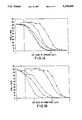
- FIG. 1A shows patterns of inhibition of binding of a series of monoclonal antibodies to immobilized atrazine as a function of concentration of related antigens in solution.
- FIG. 1B shows patterns of inhibition of binding of a series of monoclonal antibodies to immobilized prometryne as a function of concentration of related antigens in solution.
- FIG. 2A shows the experimental cross-reaction immunoassay (CRIM) profiles for triazine homologs determined at 50 parts per billion (ppb).
- FIG. 2B shows predicted cross-reaction immunoassay (CRIM) profiles for triazine homologs determined at 50 parts per billion (ppb).
- FIG. 3 shows an optimized two-dimensional projection of five-dimensional CRIM profiles for seven triazine herbicides at concentrations ranging from 10-1000 ppb.
- the methods of the invention improve the reliability of determination of analyte compositions in impure samples especially wherein the analytes suspected of being contained in the samples are relatively closely related structurally.
- determination of analyte composition is meant the ascertainment of the concentration level of each of a number of possible suspected analytes.
- Situations wherein determination of analyte composition is meaningful include those wherein a number of structurally related materials can be used for similar purposes or where these materials are manipulated in such a way so as to result in their occupying similar environments. For example, many herbicides and pesticides are homologs or analogs of each other, as are their degradation products. Exemplified below is the case of various triazine derivatives, all of which are useful as herbicides.
- families of substances which might be found in biological fluids or tissues include families of substances which might be found in biological fluids or tissues (useful in clinical analysis of biological samples). In general, these families fall into three categories. First, naturally-occurring substances which may be at enhanced or reduced elevation due to clinical conditions or their direct administration, such as steroids, protein hormones, or metabolites are of interest clinically. Second, artificial materials which are designed for therapeutic purposes, such as beta-blockers, chemotherapeutic agents, prostaglandin inhibitors, and the like, can be monitored. Third, families of various illicit drugs can be detected and distinguished for forensic purposes.
- the series of starting reagents and products in a series of reactions leading to the synthesis of a desired product can also be measured (useful in online quality control routines).
- the method of the invention for such measurement is particularly useful in instances where the materials are synthesized in families and the products represent concomitantly produced and subsequently separated fractions. Typical examples include textile dyes, PCB's used in insulators, and detergents. In all manufacturing, moreover, competing side reactions often produce members of the same family which are structurally similar and need to be distinguished from the desired product.
- Analyses related to degradation of various substances in the environment can also be determined (as in the assessment of persistence of environmentally important substances).
- the methods of the invention depend on the reactivity of the analytes with specific binding reagents. Because the analytes are structurally similar, considerable cross-reactivity is expected, and, indeed, the necessity for and practicality of the method of the invention depends on this cross-reactivity. While the specific binding reagent is most commonly an antibody, typically a monoclonal antibody, this is not a requirement, and any substance which is determined to react generally with the group of analytes whose presence, absence or quantity is to be determined is usable in the method of the invention.
- Antibodies including, for example, single chain antibodies and recombinantly produced antibodies, can be used per se, or as immunologically reactive fragments thereof, as is well understood in the art.
- Fab, Fab' or F(ab') 2 fragments are often convenient in specific binding assays.
- Any binding reagent interaction which provides suitable cross-reactivity can be used, such as enzyme-substrate or enzyme-inhibitor binding, ligand-receptor binding, or binding to an affinity reagent such as the paralogs described in U.S. Pat. No. 4,963,263 incorporated herein by reference.
- the choice of specific assay format which detects the binding of the specific binding reagent to the analyte group is optional.
- the reactivity of the sample to be tested and the production of a standard set of data points for various analyte compositions can be determined in either a direct or competitive format.
- the specific binding agent can be labeled and the binding to antigen detected by precipitating the resultant complex and determining the amount of label in the precipitate.
- the specific binding reagent is coupled to a solid support and the candidate analyte allowed to compete with a similar analyte of known binding capacity.
- a profile for a panel of specific binding reagents is determined for a series of known analyte compositions.
- the simplest such compositions, and those typically used to obtain the standard pattern, are samples containing only single member analytes at a range of concentrations.
- the standard plot ultimately obtained from these control data points permits detection of single analytes by correlation with known positions. Calculation of plot positions for mixtures permits their identification by similar matching.
- the method of the invention comprises comparing a cross-reaction immunoassay (CRIM) profile of a sample to be tested with a predetermined plot of CRIM profiles obtained from samples of known analyte composition.
- CRIM profile is meant a pattern of reactivities across a panel of specific binding reagents with respect to a single fixed analyte composition.
- CRIM profile is derived from "cross-reactive immunological materials," as set forth above, the specific binding reagent need not necessarily be an antibody.
- the profiles will also be called "cross-reactivity of specific binding reagents, or CRSBR, profile."
- CRSBR specific binding reagents
- a typical CRIM or CRSBR profile useful in the invention the reactivity of a sample with a panel of 2-10, preferably 4-6, different specific binding reagents is determined.
- each composition will have a characteristic CRIM or CRSBR profile across the panel. Larger numbers of members of the panel provide greater refinement of the assay; smaller numbers of members of the panel are more convenient.
- the choice of the number of members of the panel is arbitrary, depending on the level of fine tuning desired in the assay; the mathematical techniques disclosed herein permit selection of the most meaningful panel members and can be used to reduce the number of binding agents needed in the profile.
- each CRIM profile is plotted as a point in n dimensions, wherein n is the number of binding agents in each panel.
- a 1 For example, one might use a panel containing six different binding agents which are monoclonal antibodies. These antibodies are assumed to be cross-reactive with, for example, ten members of a class of analytes A i wherein A represents the analyte and i is an integer of 1-10.
- a 1 For example, might be chosen as a labeled competitor to determine profiles of competition for binding at various concentrations of itself and of the remaining analytes.
- the percent inhibition for example, is determined with respect to binding each antibody in the panel at various concentrations of A 1 -A 10 .
- a i For each analyte, A i , at one concentration, then, there are six data points which are percentages of inhibition with respect to labeled A 1 for binding to the various antibodies in the panel. These percentages are then treated mathematically as defining the location of a single point in six-dimensional space where the first dimension describes the percent inhibition with respect to the first antibody, the second dimension describes the percent inhibition with respect to the second antibody, and so forth. Points are thus determined representing the various concentrations of A 1 , A 2 , A 3 . . . A 10 .
- weighting factors for the various members comprising the profile can be introduced to account for the fact that those concentrations which represent inhibition of binding on the linear part of the standard curve are more informative than those in the asymptotic parts of the curve at very low or high inhibition. These factors are applied when the data are treated by "variance analysis.”
- the value represented by the dimension corresponding to each of the six monoclonal antibodies in the panel is compared separately with the corresponding value for the corresponding antibody in the unknown sample, rather than as a totality of the n-dimensional result for all six antibodies.
- the observed inhibition value for antibody #1 implies a corresponding concentration for analyte A 1 , and a different corresponding concentration for analyte A 2 , etc.
- Antibody #2 similarly generates a family of predictions, and so forth.
- the individual predictions of the six antibodies will agree more closely than for an incorrect choice of analyte.
- This approach to profile identification is a form of variance analysis, normally used to compare independent estimates made in different laboratories or methods of determination. Calculation of variances can be easily modified to weight the predictions by a factor representing the reliability of the data, as judged by the variance in the data set used to construct the standard curve. This procedure is referred to herein as "weighting the results.”
- neural net systems can also be used, wherein adjustment factors arise implicitly in the process of training the net's input/output characteristics using standards.
- the systems are outlined, for example, in Hartz, J. A., et al., Introduction to the Theory of Neural Computation (Addison Wesley, Santa Fe Institute Series on Complex Systems, 1991); Parallel Distributed Processing, 2 vols. (D. E. Rumelhart and J. L. McClelland, eds., MIT Press, 1986); or DARPA Neural Network Study (Armed Forces Communication and Electronics Association Int'l Press, 1988).
- the high reliability of analyte identification achieved through the use of small panels of binding agents that have only moderate intrinsic specificity for the compounds is unexpected from prior art binding assays wherein enormous effort has been expended to achieve higher intrinsic specificity.
- the method of the Invention is thus useful not only for improving the reliability of existing assays, but also for extending the scope of immunoassay technology by facilitating the isolation of suitable antibodies, for example, from recombinant libraries.
- kits for such an assay would include the members of a panel of binding reagents, preferably coupled to a solid support, along with labeled competitor and a means for detection of the label. Suitable labels include radioactive isotopes, fluorescence emitters, and enzymes.
- the binding agents such as antibodies, may be supplied in labeled form and a competitive analyte linked to solid support.
- a sandwich format could be used wherein antibody-coated solid supports are reacted with sample and then treated with a second antibody bearing label.
- the values obtained in the reaction of the binding agent panel with the sample are then compared to the reference data bank.
- Software supplied with the packaged reagents permits entry of the relevant results obtained from the sample and comparison to the reference panel. The nature of the software will depend on the particular mathematical processing selected, as described above.
- s-triazine compounds atrazine and simazine (see Preparation B) were conjugated to keyhole limpet hemocyanin (KLH) using NHS and EDCI (Pierce Chemical Company, Rockford, Ill.) and used to immunize mice, as described by Goodrow, M., et al., J Agric Food Chem (1990) 38:990-996.
- KLH keyhole limpet hemocyanin
- EDCI ierce Chemical Company, Rockford, Ill.
- conjugation is to a different carrier for immunization and for screening. This minimizes detection of antibodies in the screen which are raised against the carrier, rather than the desired hapten.
- the antibody to be tested plus varying concentrations of the s-triazine analog to be tested in assay buffer (PBS/Tween plus 0.1% each BSA and casein) were added to the plate in quadruplicate wells. The plates were incubated at room temperature for 2 hours. Bound antibody was quantitated using a secondary alkaline phosphatase-labeled goat antimouse IgG (1:1000) with p-nitrophenol phosphate as substrate (1 mg/ml in 0.1M diethanolamine, pH 10.3; 0.5 mM MgCl 2 ). Endpoint accumulation of reaction product was determined by measuring absorbance at 405 nm with a Vma x microplate reader (Molecular Devices, Menlo Park, Calif.).
- Inhibition curves were fitted using the Four-Parameter Logistic Program in the software package Soft Max (V.2.01C, Molecular Devices). The reduction in binding of the monoclonal antibodies to the solid phase due to the presence of the s-triazine analog at a particular concentration was expressed as a percentage of optical density of the zero-dose control (R/Ro ⁇ 100%).
- IC 50 values the concentration at which 50% inhibition was obtained
- Profiles such as those shown in FIG. 2A of Example 2 were determined for a series of concentrations of all seven triazines in the 10-1000 ppb range.
- the percent inhibition values for the five antibodies for each triazine at each concentration provides a coordinate in 5-dimensional space.
- each analog at each concentration gives a single point representing the profile in 5-dimensional space.
- the resultant pattern shows a unique series of points represented by individual analytes at various concentrations with respect to the antibody panel.
- the orientation of the two-dimensional plane used for this projection is that which best preserves the scatter of the data, i.e., which minimizes points lying on top of each other in the projection when they are well separated.
- This orientation is defined mathematically as the plane specified by the principal components of the data. Projecting points onto the plane defined by the principal components preserves the clustering and characteristics of the original data as described by Massart, D. L., et al., "Chemometrics: A Textbook” (1988) Elsevier, N.Y.
- the analyte composition of the sample can be obtained.
Landscapes
- Health & Medical Sciences (AREA)
- Life Sciences & Earth Sciences (AREA)
- Immunology (AREA)
- Engineering & Computer Science (AREA)
- Molecular Biology (AREA)
- Biomedical Technology (AREA)
- Chemical & Material Sciences (AREA)
- Hematology (AREA)
- Urology & Nephrology (AREA)
- Biotechnology (AREA)
- Microbiology (AREA)
- Cell Biology (AREA)
- Food Science & Technology (AREA)
- Medicinal Chemistry (AREA)
- Physics & Mathematics (AREA)
- Analytical Chemistry (AREA)
- Biochemistry (AREA)
- General Health & Medical Sciences (AREA)
- General Physics & Mathematics (AREA)
- Pathology (AREA)
- Investigating Or Analysing Biological Materials (AREA)
- Peptides Or Proteins (AREA)
Priority Applications (11)
| Application Number | Priority Date | Filing Date | Title |
|---|---|---|---|
| US07/678,849 US5338659A (en) | 1991-04-02 | 1991-04-02 | Method for determining analyte concentration by cross-reactivity profiling |
| JP04511681A JP3101323B2 (ja) | 1991-04-02 | 1992-04-02 | Scプロフィールによる被分析物の分類方法 |
| AU19878/92A AU662001B2 (en) | 1991-04-02 | 1992-04-02 | Method for analyte classification by SC profiles |
| PCT/US1992/002716 WO1992017784A1 (en) | 1991-04-02 | 1992-04-02 | Method for analyte classification by sc profiles |
| CA002107474A CA2107474C (en) | 1991-04-02 | 1992-04-02 | Method for analyte classification by sc profiles |
| AT92912207T ATE177207T1 (de) | 1991-04-02 | 1992-04-02 | Verfahren zur klassifikation von analyten mittels konzentrations (''sc'')-profilen |
| EP92912207A EP0581881B1 (de) | 1991-04-02 | 1992-04-02 | Verfahren zur klassifikation von analyten mittels konzentrations ("sc")-profilen |
| DE69228539T DE69228539D1 (de) | 1991-04-02 | 1992-04-02 | Verfahren zur klassifikation von analyten mittels konzentrations ("sc")-profilen |
| US08/129,413 US5674688A (en) | 1991-04-02 | 1993-09-29 | Method for analyte classification by SC profiles |
| US08/253,433 US5679643A (en) | 1987-10-13 | 1994-05-31 | Glutathione analogs and paralog panels comprising glutathione mimics |
| US08/473,397 US5763570A (en) | 1987-10-13 | 1995-06-07 | Glutathione analogs and paralog panels comprising glutathione mimics |
Applications Claiming Priority (1)
| Application Number | Priority Date | Filing Date | Title |
|---|---|---|---|
| US07/678,849 US5338659A (en) | 1991-04-02 | 1991-04-02 | Method for determining analyte concentration by cross-reactivity profiling |
Related Child Applications (3)
| Application Number | Title | Priority Date | Filing Date |
|---|---|---|---|
| US86356492A Continuation-In-Part | 1987-10-13 | 1992-04-03 | |
| US08/129,413 Continuation-In-Part US5674688A (en) | 1991-04-02 | 1993-09-29 | Method for analyte classification by SC profiles |
| US08/473,397 Continuation-In-Part US5763570A (en) | 1987-10-13 | 1995-06-07 | Glutathione analogs and paralog panels comprising glutathione mimics |
Publications (1)
| Publication Number | Publication Date |
|---|---|
| US5338659A true US5338659A (en) | 1994-08-16 |
Family
ID=24724540
Family Applications (2)
| Application Number | Title | Priority Date | Filing Date |
|---|---|---|---|
| US07/678,849 Expired - Lifetime US5338659A (en) | 1987-10-13 | 1991-04-02 | Method for determining analyte concentration by cross-reactivity profiling |
| US08/129,413 Expired - Fee Related US5674688A (en) | 1991-04-02 | 1993-09-29 | Method for analyte classification by SC profiles |
Family Applications After (1)
| Application Number | Title | Priority Date | Filing Date |
|---|---|---|---|
| US08/129,413 Expired - Fee Related US5674688A (en) | 1991-04-02 | 1993-09-29 | Method for analyte classification by SC profiles |
Country Status (8)
| Country | Link |
|---|---|
| US (2) | US5338659A (de) |
| EP (1) | EP0581881B1 (de) |
| JP (1) | JP3101323B2 (de) |
| AT (1) | ATE177207T1 (de) |
| AU (1) | AU662001B2 (de) |
| CA (1) | CA2107474C (de) |
| DE (1) | DE69228539D1 (de) |
| WO (1) | WO1992017784A1 (de) |
Cited By (23)
| Publication number | Priority date | Publication date | Assignee | Title |
|---|---|---|---|---|
| US5674688A (en) * | 1991-04-02 | 1997-10-07 | Terrapin Technologies, Inc. | Method for analyte classification by SC profiles |
| EP0821232A1 (de) * | 1996-07-24 | 1998-01-28 | SY-LAB Vertriebsges.m.b.H. | Verfahren zur Bestimmung von Bestandteilen einer Probe und Vorrichtung zur Durchführung des Verfahrens |
| US5741653A (en) * | 1994-01-06 | 1998-04-21 | Terrapin Technologies, Inc. | Profiling reference panel enriched by non-Ig proteins |
| US5798275A (en) * | 1994-01-06 | 1998-08-25 | Terrapin Technologies, Inc. | Profiling reference panel enriched by non-IG proteins |
| WO1999006839A1 (en) * | 1997-08-01 | 1999-02-11 | Novalon Pharmaceutical Corporation | Method of identifying and developing drug leads |
| WO2001020043A1 (en) * | 1999-09-17 | 2001-03-22 | Affymetrix, Inc. | Method of cluster analysis of gene expression profiles |
| US6225047B1 (en) | 1997-06-20 | 2001-05-01 | Ciphergen Biosystems, Inc. | Use of retentate chromatography to generate difference maps |
| US20020028469A1 (en) * | 1997-11-14 | 2002-03-07 | Burch Ronald M. | Method of defining genus of chemical compound and method of designing molecules |
| US6453241B1 (en) * | 1998-12-23 | 2002-09-17 | Rosetta Inpharmatics, Inc. | Method and system for analyzing biological response signal data |
| US6569631B1 (en) | 1998-11-12 | 2003-05-27 | 3-Dimensional Pharmaceuticals, Inc. | Microplate thermal shift assay for ligand development using 5-(4″dimethylaminophenyl)-2-(4′-phenyl)oxazole derivative fluorescent dyes |
| US20030109697A1 (en) * | 1998-01-23 | 2003-06-12 | Shepard H. Michael | Novel phosphoramidate compounds and methods of use |
| WO2002014858A3 (de) * | 2000-08-17 | 2003-10-30 | Nanogen Recognomics Gmbh | Verfahren zur herstellung und ermittlung geeigneter effektoren von zielmolekülen mit substanzbibliotheken |
| US6683061B1 (en) | 1999-07-22 | 2004-01-27 | Newbiotics, Inc. | Enzyme catalyzed therapeutic activation |
| US6808938B2 (en) | 1999-06-18 | 2004-10-26 | Biacore Ab | Method and apparatus for assaying a drug candidate to estimate a pharmacokinetic parameter associated therewith |
| US20050124008A1 (en) * | 2003-12-05 | 2005-06-09 | Kauvar Lawrence M. | Homogeneous competition assays |
| US7122321B2 (en) | 1997-11-12 | 2006-10-17 | Johnson & Johnson Pharmaceutical Research & Development, L.L.C. | High throughput method for functionally classifying proteins identified using a genomics approach |
| US7229782B1 (en) | 2004-08-03 | 2007-06-12 | Labone, Inc. | Antibodies specific to multiple beta blockers and methods for their use |
| US7419968B1 (en) | 1999-07-22 | 2008-09-02 | Celmed Oncology (Usa), Inc. | Methods for treating therapy-resistant tumors |
| WO2008106653A1 (en) * | 2007-03-01 | 2008-09-04 | Invitrogen Corporation | Immunoassay for cross-reacting substances |
| US7601703B2 (en) | 1998-01-23 | 2009-10-13 | Celmed Oncology (Usa), Inc. | Enzyme catalyzed therapeutic agents |
| US9973143B1 (en) | 2016-09-01 | 2018-05-15 | Daniel J Courselle | Solar panel roof modules |
| US10054543B2 (en) | 2016-02-23 | 2018-08-21 | The United States Of America, As Represented By The Secretary Of The Army | Multi-dimensional cross-reactive array for chemical sensing |
| US11346784B2 (en) | 2014-04-23 | 2022-05-31 | Konica Minolta, Inc. | Medium for resin particles containing fluorescent dye |
Families Citing this family (10)
| Publication number | Priority date | Publication date | Assignee | Title |
|---|---|---|---|---|
| EP0692096A1 (de) * | 1993-03-30 | 1996-01-17 | Terrapin Technologies, Inc. | Verfahren zum bestimmen der konzentration durch affinitätstitrierung und kompetitive verdrängung arzmittel verabreichung |
| US5356784A (en) * | 1993-03-30 | 1994-10-18 | Terrapin Technologies, Inc. | Determination of concentration by affinity titration |
| JP2002508507A (ja) * | 1997-12-18 | 2002-03-19 | セプラコア インコーポレーテッド | 新規な生物学的標的および創薬リード構造体の同時同定方法 |
| US6680377B1 (en) * | 1999-05-14 | 2004-01-20 | Brandeis University | Nucleic acid-based detection |
| ES2459745T3 (es) * | 1999-05-14 | 2014-05-12 | Brandeis University | Detección basada en aptámero |
| AU2001259476A1 (en) * | 2000-05-05 | 2001-11-20 | United States Army Medical Research And Material Command | Assay for detecting, measuring and monitoring the activities and concentrations of proteins and methods of use thereof |
| WO2002033415A2 (en) * | 2000-10-17 | 2002-04-25 | Bio-Rad Laboratories, Inc. | Pattern recognition method for diagnosis of systemic autoimmune diseases |
| GB0224446D0 (en) * | 2002-10-21 | 2002-11-27 | Univ Cambridge Tech | Affinity adsorbents for immunoglobulins |
| GB0604236D0 (en) * | 2006-03-02 | 2006-04-12 | Prometic Biosciences Ltd | Adsorbents for protein purification |
| CN109187779A (zh) * | 2018-08-29 | 2019-01-11 | 四川百特芳华医药科技有限公司 | 一种甾体化合物的分析方法 |
Family Cites Families (5)
| Publication number | Priority date | Publication date | Assignee | Title |
|---|---|---|---|---|
| DE3586772T2 (de) * | 1984-07-24 | 1993-03-04 | Coselco Mimotopes Pty Ltd | Verfahren zur bestimmung von mimotopen. |
| US5300425A (en) * | 1987-10-13 | 1994-04-05 | Terrapin Technologies, Inc. | Method to produce immunodiagnostic reagents |
| US5338659A (en) * | 1991-04-02 | 1994-08-16 | Terrapin Technologies, Inc. | Method for determining analyte concentration by cross-reactivity profiling |
| IE81146B1 (en) * | 1987-10-13 | 2000-05-03 | Terrapin Tech Inc | Method to produce immunodiagnostic reagents |
| US5217869A (en) * | 1987-10-13 | 1993-06-08 | Terrapin Technologies, Inc. | Method to produce immunodiagnostic reagents |
-
1991
- 1991-04-02 US US07/678,849 patent/US5338659A/en not_active Expired - Lifetime
-
1992
- 1992-04-02 JP JP04511681A patent/JP3101323B2/ja not_active Expired - Fee Related
- 1992-04-02 AT AT92912207T patent/ATE177207T1/de not_active IP Right Cessation
- 1992-04-02 EP EP92912207A patent/EP0581881B1/de not_active Expired - Lifetime
- 1992-04-02 CA CA002107474A patent/CA2107474C/en not_active Expired - Fee Related
- 1992-04-02 WO PCT/US1992/002716 patent/WO1992017784A1/en not_active Ceased
- 1992-04-02 DE DE69228539T patent/DE69228539D1/de not_active Expired - Lifetime
- 1992-04-02 AU AU19878/92A patent/AU662001B2/en not_active Ceased
-
1993
- 1993-09-29 US US08/129,413 patent/US5674688A/en not_active Expired - Fee Related
Non-Patent Citations (12)
| Title |
|---|
| Clark W., The Experimental Foundations of Modern Immunology (1980), John Wiley and Sons, New York, pp. 81 92. * |
| Clark W., The Experimental Foundations of Modern Immunology (1980), John Wiley and Sons, New York, pp. 81-92. |
| Davis et al (1980) Microbiology, Harpert Row, New York pp. 298 306, 314 323. * |
| Davis et al (1980) Microbiology, Harpert Row, New York pp. 298-306, 314-323. |
| Musumarra et al (1987) J Analyt Toxicol 11:154 163. * |
| Musumarra et al (1987) J Analyt Toxicol 11:154-163. |
| Newsome, J. Assoc. Offic. Anal. Chem. (1986) 69:919 923. * |
| Newsome, J. Assoc. Offic. Anal. Chem. (1986) 69:919-923. |
| Van Emon et al., "Analytical Methods for Pesticides and Plant Growth Regulators: Advanced Analytical Techniques," Sherma, J. ed., Academic Press, New York, (1989) pp. 217-263. |
| Van Emon et al., Analytical Methods for Pesticides and Plant Growth Regulators: Advanced Analytical Techniques, Sherma, J. ed., Academic Press, New York, (1989) pp. 217 263. * |
| Vanderlaan et al., Environ. Sci. Technol. (1988) 22(3):247 254. * |
| Vanderlaan et al., Environ. Sci. Technol. (1988) 22(3):247-254. |
Cited By (52)
| Publication number | Priority date | Publication date | Assignee | Title |
|---|---|---|---|---|
| US5674688A (en) * | 1991-04-02 | 1997-10-07 | Terrapin Technologies, Inc. | Method for analyte classification by SC profiles |
| US5741653A (en) * | 1994-01-06 | 1998-04-21 | Terrapin Technologies, Inc. | Profiling reference panel enriched by non-Ig proteins |
| US5798275A (en) * | 1994-01-06 | 1998-08-25 | Terrapin Technologies, Inc. | Profiling reference panel enriched by non-IG proteins |
| EP0821232A1 (de) * | 1996-07-24 | 1998-01-28 | SY-LAB Vertriebsges.m.b.H. | Verfahren zur Bestimmung von Bestandteilen einer Probe und Vorrichtung zur Durchführung des Verfahrens |
| US7160734B2 (en) | 1997-06-20 | 2007-01-09 | Ciphergen Biosystems, Inc. | Retentate chromatography and protein chip arrays with applications in biology |
| US7105339B2 (en) | 1997-06-20 | 2006-09-12 | Ciphergen Biosystems, Inc. | Retentate chromatography and protein chip arrays with applications in biology and medicine |
| US6225047B1 (en) | 1997-06-20 | 2001-05-01 | Ciphergen Biosystems, Inc. | Use of retentate chromatography to generate difference maps |
| US6818411B2 (en) | 1997-06-20 | 2004-11-16 | Ciphergen Biosystems, Inc. | Retentate chromatography and protein chip arrays with applications in biology and medicine |
| US20090181414A1 (en) * | 1997-06-20 | 2009-07-16 | Ciphergen Biosystems, Inc. | Retentate chromatography and protein chip arrays with applications in biology and medicine |
| US20020155509A1 (en) * | 1997-06-20 | 2002-10-24 | Ciphergen Biosystems, Inc. | Retentate chromatography and protein chip arrays with applications in biology |
| US7329484B2 (en) | 1997-06-20 | 2008-02-12 | Bio-Rad Laboratories, Inc. | Retentate chromatography and protein chip arrays with applications in biology and medicine |
| US20020177242A1 (en) * | 1997-06-20 | 2002-11-28 | Ciphergen Biosystems, Inc. | Retentate chromatography and protein chip arrays with applications in biology and medicine |
| US6811969B1 (en) | 1997-06-20 | 2004-11-02 | Ciphergen Biosystems, Inc. | Retentate chromatography—profiling with biospecific interaction adsorbents |
| US6844165B2 (en) | 1997-06-20 | 2005-01-18 | Ciphergen Biosystems, Inc. | Retentate chromatography and protein chip arrays with applications in biology and medicine |
| US6579719B1 (en) | 1997-06-20 | 2003-06-17 | Ciphergen Biosystems, Inc. | Retentate chromatography and protein chip arrays with applications in biology and medicine |
| US20040142493A1 (en) * | 1997-06-20 | 2004-07-22 | Ciphergen Biosystems, Inc. | Retentate chromatography and protein chip arrays with applications in biology and medicine |
| US7112453B2 (en) | 1997-06-20 | 2006-09-26 | Ciphergen Biosystems, Inc. | Retentate chromatography and protein chip arrays with applications in biology and medicine |
| US7575935B2 (en) | 1997-06-20 | 2009-08-18 | Bio-Rad Laboratories, Inc. | Retentate chromatography and protein chip arrays with applications in biology and medicine |
| US20050233306A1 (en) * | 1997-06-20 | 2005-10-20 | Ciphergen Biosystems, Inc. | Retentate chromatography and protein chip arrays with applications in biology and medicine |
| US6881586B2 (en) | 1997-06-20 | 2005-04-19 | Ciphergen Biosystems, Inc. | Retentate chromatography and protein chip arrays with applications in biology and medicine |
| US20040137427A1 (en) * | 1997-06-20 | 2004-07-15 | Ciphergen Biosystems, Inc. | Retentate chromatography and protein chip arrays with applications in biology and medicine |
| WO1999006839A1 (en) * | 1997-08-01 | 1999-02-11 | Novalon Pharmaceutical Corporation | Method of identifying and developing drug leads |
| US7122321B2 (en) | 1997-11-12 | 2006-10-17 | Johnson & Johnson Pharmaceutical Research & Development, L.L.C. | High throughput method for functionally classifying proteins identified using a genomics approach |
| US20020028469A1 (en) * | 1997-11-14 | 2002-03-07 | Burch Ronald M. | Method of defining genus of chemical compound and method of designing molecules |
| US20030109697A1 (en) * | 1998-01-23 | 2003-06-12 | Shepard H. Michael | Novel phosphoramidate compounds and methods of use |
| US7601703B2 (en) | 1998-01-23 | 2009-10-13 | Celmed Oncology (Usa), Inc. | Enzyme catalyzed therapeutic agents |
| US20090069268A1 (en) * | 1998-01-23 | 2009-03-12 | Celmed Oncology (Usa), Inc. | Novel phosphoramidate compounds and methods of use |
| US7462605B2 (en) | 1998-01-23 | 2008-12-09 | Celmed Oncology (Usa), Inc. | Phosphoramidate compounds and methods of use |
| US20030175813A1 (en) * | 1998-11-12 | 2003-09-18 | 3-Dimensional Pharmaceuticals, Inc. | Microplate thermal shift assay for ligand development using 5- (4"-dimethylaminophenyl) -2- (4' -phenyl) oxazole derivative fluorescent dyes |
| US6569631B1 (en) | 1998-11-12 | 2003-05-27 | 3-Dimensional Pharmaceuticals, Inc. | Microplate thermal shift assay for ligand development using 5-(4″dimethylaminophenyl)-2-(4′-phenyl)oxazole derivative fluorescent dyes |
| US6453241B1 (en) * | 1998-12-23 | 2002-09-17 | Rosetta Inpharmatics, Inc. | Method and system for analyzing biological response signal data |
| US20020165674A1 (en) * | 1998-12-23 | 2002-11-07 | Rosetta Inpharmatics, Inc. | Method and system for analyzing biological response signal data |
| AU776429B2 (en) * | 1998-12-23 | 2004-09-09 | Microsoft Corporation | Method and system for analyzing biological response signal data |
| US6839635B2 (en) | 1998-12-23 | 2005-01-04 | Rosetta Inpharmatics Llc | Method and system for analyzing biological response signal data |
| US20050037418A1 (en) * | 1999-06-18 | 2005-02-17 | Biacore Ab | Method and apparatus for assaying a drug candidate to estimate a pharmacokinetic parameter associated therewith |
| US6808938B2 (en) | 1999-06-18 | 2004-10-26 | Biacore Ab | Method and apparatus for assaying a drug candidate to estimate a pharmacokinetic parameter associated therewith |
| US20040077588A1 (en) * | 1999-07-22 | 2004-04-22 | Shepard H. Michael | Enzyme catalyzed therapeutic compounds |
| US7419968B1 (en) | 1999-07-22 | 2008-09-02 | Celmed Oncology (Usa), Inc. | Methods for treating therapy-resistant tumors |
| US7605144B2 (en) | 1999-07-22 | 2009-10-20 | Celmed Oncology (Usa), Inc. | Enzyme catalyzed therapeutic compounds |
| US6683061B1 (en) | 1999-07-22 | 2004-01-27 | Newbiotics, Inc. | Enzyme catalyzed therapeutic activation |
| WO2001020043A1 (en) * | 1999-09-17 | 2001-03-22 | Affymetrix, Inc. | Method of cluster analysis of gene expression profiles |
| US20040038300A1 (en) * | 2000-08-17 | 2004-02-26 | Stefan Kienle | Method for producing and identifying appropriate effectors of target molecules using substance libraries |
| WO2002014858A3 (de) * | 2000-08-17 | 2003-10-30 | Nanogen Recognomics Gmbh | Verfahren zur herstellung und ermittlung geeigneter effektoren von zielmolekülen mit substanzbibliotheken |
| US20050124008A1 (en) * | 2003-12-05 | 2005-06-09 | Kauvar Lawrence M. | Homogeneous competition assays |
| US7229782B1 (en) | 2004-08-03 | 2007-06-12 | Labone, Inc. | Antibodies specific to multiple beta blockers and methods for their use |
| US20090005267A1 (en) * | 2007-03-01 | 2009-01-01 | Invitrogen Corporation | Immunoassay for cross-reacting substances |
| WO2008106653A1 (en) * | 2007-03-01 | 2008-09-04 | Invitrogen Corporation | Immunoassay for cross-reacting substances |
| US20110136259A1 (en) * | 2007-03-01 | 2011-06-09 | Life Technologies Corporation | Immunoassay for cross-reacting substances |
| US11346784B2 (en) | 2014-04-23 | 2022-05-31 | Konica Minolta, Inc. | Medium for resin particles containing fluorescent dye |
| US10054543B2 (en) | 2016-02-23 | 2018-08-21 | The United States Of America, As Represented By The Secretary Of The Army | Multi-dimensional cross-reactive array for chemical sensing |
| US10883938B2 (en) | 2016-02-23 | 2021-01-05 | United States Of America, As Represented By The Secretary Of The Army | Method of chemical sensing using a multi-dimensional cross-reactive array |
| US9973143B1 (en) | 2016-09-01 | 2018-05-15 | Daniel J Courselle | Solar panel roof modules |
Also Published As
| Publication number | Publication date |
|---|---|
| US5674688A (en) | 1997-10-07 |
| CA2107474C (en) | 2002-06-11 |
| JPH06509865A (ja) | 1994-11-02 |
| JP3101323B2 (ja) | 2000-10-23 |
| AU662001B2 (en) | 1995-08-17 |
| EP0581881A4 (en) | 1994-07-06 |
| DE69228539D1 (de) | 1999-04-08 |
| CA2107474A1 (en) | 1992-10-03 |
| EP0581881A1 (de) | 1994-02-09 |
| AU1987892A (en) | 1992-11-02 |
| WO1992017784A1 (en) | 1992-10-15 |
| ATE177207T1 (de) | 1999-03-15 |
| EP0581881B1 (de) | 1999-03-03 |
Similar Documents
| Publication | Publication Date | Title |
|---|---|---|
| US5338659A (en) | Method for determining analyte concentration by cross-reactivity profiling | |
| Brett et al. | Design and development of immunoassays for detection of proteins | |
| Wie et al. | Comparison of coating and immunizing antigen structure on the sensitivity and specificity of immunoassays for benzoylphenyl urea insecticides | |
| US20020142356A1 (en) | Immunoassay for C-reactive protein | |
| HK207896A (en) | Detection of chemicals by immunoassay | |
| CA2478547C (en) | Identification of high affinity molecules by limited dilution screening | |
| Muldoon et al. | Evaluation of ELISA for the multianalyte analysis of s-triazines in pesticide waste and rinsate | |
| Muldoon et al. | Development of a cross-reactive monoclonal antibody to sulfonamide antibiotics: Evidence for structural conformation-selective hapten recognition | |
| US4727037A (en) | Assay kit and method for the determination of antibody class and subclass | |
| EP0173295A1 (de) | Assay für die gleichzeitige Bestimmung von Antigen und Antikörper in einem gegebenen Serum | |
| Samsonova et al. | Chemiluminescent multiassay of pesticides with horseradish peroxidase as a label | |
| Fremy et al. | Policy on characterization of antibodies used in immunochemical methods of analysis for mycotoxins and phycotoxins | |
| Hock | Enzyme Immunoassay for Pesticide Analysis Enzymimmunoassays zur Pestizidanalytik | |
| Bennett et al. | An improved procedure for the ‘dot immunobinding’analysis of hybridoma supernatants | |
| US7658922B2 (en) | Monoclonal antibodies, hybridoma cell lines, methods and kits for detecting phytase | |
| Cheung et al. | Harnessing immunochemical cross-reactivity: use of pattern recognition to classify molecular analogs | |
| WO1994028422A1 (en) | A polychlorinated biphenyls (pcb) immunoassay method, its components and a kit for use in performing the same | |
| Cordonnier et al. | Characterization by enzyme-linked immunosorbent assay of monoclonal antibodies to Pisum and Avena phytochrome | |
| US5691148A (en) | Petroleum immunoassay method, its components and a kit for use in performing the same | |
| CA2640835C (en) | Immunoassay for the simultaneous immunochemical determination of an analyte (antigen) and a treatment antibody targeting the analyte in samples (recovery immunoassay) | |
| Sellrie et al. | A competitive immunoassay to detect a hapten using an enzyme-labelled peptide mimotope as tracer | |
| Carlin et al. | Characterization of monoclonal anti-furosemide antibodies and molecular modeling studies of cross-reactive compounds | |
| Gomez-Morte et al. | Immunoassay for food quality evaluation | |
| Nugent | Enzyme-linked competitive immunoassay | |
| AU624813B2 (en) | Immunoassay for the detection of alpha-haloacetamides |
Legal Events
| Date | Code | Title | Description |
|---|---|---|---|
| AS | Assignment |
Owner name: TERRAPIN TECHNOLOGIES, INC., CALIFORNIA Free format text: ASSIGNMENT OF ASSIGNORS INTEREST.;ASSIGNOR:KAUVAR, LAWRENCE M.;REEL/FRAME:005718/0860 Effective date: 19910508 |
|
| AS | Assignment |
Owner name: TERRAPIN TECHNOLOGIES, INC., CALIFORNIA Free format text: ASSIGNMENT OF ASSIGNORS INTEREST;ASSIGNOR:AMBLER, STUART M.;REEL/FRAME:006822/0419 Effective date: 19931213 |
|
| STCF | Information on status: patent grant |
Free format text: PATENTED CASE |
|
| FPAY | Fee payment |
Year of fee payment: 4 |
|
| AS | Assignment |
Owner name: TELIK, INC., CALIFORNIA Free format text: CHANGE OF NAME;ASSIGNOR:TERRAPIN TECHNOLOGIES, INC.;REEL/FRAME:009570/0889 Effective date: 19980519 |
|
| FPAY | Fee payment |
Year of fee payment: 8 |
|
| FPAY | Fee payment |
Year of fee payment: 12 |
|
| FEPP | Fee payment procedure |
Free format text: PAYOR NUMBER ASSIGNED (ORIGINAL EVENT CODE: ASPN); ENTITY STATUS OF PATENT OWNER: SMALL ENTITY |