US5428069A - Treating cognition with, aminocyclopropanecarboxylic derivatives - Google Patents
Treating cognition with, aminocyclopropanecarboxylic derivatives Download PDFInfo
- Publication number
- US5428069A US5428069A US08/003,225 US322593A US5428069A US 5428069 A US5428069 A US 5428069A US 322593 A US322593 A US 322593A US 5428069 A US5428069 A US 5428069A
- Authority
- US
- United States
- Prior art keywords
- acid
- pharmaceutically acceptable
- training
- acpc
- nmda
- Prior art date
- Legal status (The legal status is an assumption and is not a legal conclusion. Google has not performed a legal analysis and makes no representation as to the accuracy of the status listed.)
- Expired - Fee Related
Links
Images


Classifications
-
- A—HUMAN NECESSITIES
- A61—MEDICAL OR VETERINARY SCIENCE; HYGIENE
- A61K—PREPARATIONS FOR MEDICAL, DENTAL OR TOILETRY PURPOSES
- A61K31/00—Medicinal preparations containing organic active ingredients
- A61K31/185—Acids; Anhydrides, halides or salts thereof, e.g. sulfur acids, imidic, hydrazonic or hydroximic acids
- A61K31/19—Carboxylic acids, e.g. valproic acid
- A61K31/195—Carboxylic acids, e.g. valproic acid having an amino group
-
- A—HUMAN NECESSITIES
- A61—MEDICAL OR VETERINARY SCIENCE; HYGIENE
- A61K—PREPARATIONS FOR MEDICAL, DENTAL OR TOILETRY PURPOSES
- A61K31/00—Medicinal preparations containing organic active ingredients
- A61K31/33—Heterocyclic compounds
- A61K31/395—Heterocyclic compounds having nitrogen as a ring hetero atom, e.g. guanethidine or rifamycins
- A61K31/435—Heterocyclic compounds having nitrogen as a ring hetero atom, e.g. guanethidine or rifamycins having six-membered rings with one nitrogen as the only ring hetero atom
- A61K31/47—Quinolines; Isoquinolines
-
- A—HUMAN NECESSITIES
- A61—MEDICAL OR VETERINARY SCIENCE; HYGIENE
- A61P—SPECIFIC THERAPEUTIC ACTIVITY OF CHEMICAL COMPOUNDS OR MEDICINAL PREPARATIONS
- A61P25/00—Drugs for disorders of the nervous system
-
- A—HUMAN NECESSITIES
- A61—MEDICAL OR VETERINARY SCIENCE; HYGIENE
- A61P—SPECIFIC THERAPEUTIC ACTIVITY OF CHEMICAL COMPOUNDS OR MEDICINAL PREPARATIONS
- A61P25/00—Drugs for disorders of the nervous system
- A61P25/08—Antiepileptics; Anticonvulsants
-
- A—HUMAN NECESSITIES
- A61—MEDICAL OR VETERINARY SCIENCE; HYGIENE
- A61P—SPECIFIC THERAPEUTIC ACTIVITY OF CHEMICAL COMPOUNDS OR MEDICINAL PREPARATIONS
- A61P25/00—Drugs for disorders of the nervous system
- A61P25/28—Drugs for disorders of the nervous system for treating neurodegenerative disorders of the central nervous system, e.g. nootropic agents, cognition enhancers, drugs for treating Alzheimer's disease or other forms of dementia
-
- A—HUMAN NECESSITIES
- A61—MEDICAL OR VETERINARY SCIENCE; HYGIENE
- A61P—SPECIFIC THERAPEUTIC ACTIVITY OF CHEMICAL COMPOUNDS OR MEDICINAL PREPARATIONS
- A61P43/00—Drugs for specific purposes, not provided for in groups A61P1/00-A61P41/00
Definitions
- This invention relates to the field of neuropsychiatry and relates specifically to methods for memory enhancement and treatment of memory deficits consequent to neurological disorders.
- NMDA N-methyl-D-aspartate
- LTP long-term potentiation
- the NMDA receptor also has been shown to be critically involved in various types of synaptic plasticity including enhanced synaptic transmission in the visual cortex; the kindling model of epilepsy; and vestibular compensation after unilateral labyrinthectomy.
- the NMDA-sensitive glutamate receptor domain includes recognition sites (1) for the primary transmitter, with which agonists (e.g., NMDA and L-glutamate) and competitive antagonists (e.g., AP5 and PCP) interact; (2) a site through which glycine and drugs acting at the strychnine-insensitive glycine receptors bidirectionally modulate ion channel function; (3) a cation-binding site inside the channel; and (4) an inhibitory phencyclidine (PCP) site located within the receptor-operated cation channel.
- agonists e.g., NMDA and L-glutamate
- competitive antagonists e.g., AP5 and PCP
- NMDA receptor complex The function of the NMDA receptor complex can be inhibited by drugs acting through several distinct mechanisms at the various recognition sites on the ligand-gated ion channel.
- drugs acting through several distinct mechanisms at the various recognition sites on the ligand-gated ion channel For example, neurophysiological studies have demonstrated that glycine potentiates the response to activation of NMDA receptors in cultured brain neurons. This is a strychnine-insensitive action and it is postulated to result from activation of a supraspinal glycine receptor which modulates the opening of the Na + - Ca ++ channel triggered by NMDA activation.
- Glycine agonists are believed to facilitate NMDA transmission and to have a positive effect on cognition in certain types of learning.
- D-cycloserine which exhibits a good affinity for the strychnine-insensitive glycine receptor, has been shown to facilitate acquisition of a hippocampal associated learning task and has been suggested to improve cognition.
- PCP and MK-801 can affect certain types of memory and learning.
- PCP and MK-801 have been shown to interfere with the ability of mice and rats to perform in a passive avoidance test.
- other workers have demonstrated that PCP does not have a reliable effect on place learning.
- the present invention provides methods for the improvement of cognitive function. More particularly, a method is provided wherein a patient receives, or is administered, a memory enhancing therapeutically effective dose or amount of a compound which possesses functional antagonist properties at the NMDA receptor complex through a specific action at the associated strychnine-insensitive glycine site.
- the functional antagonist comprises a compound having the formula: ##STR1## where A is -CO 2 H, or a pharmaceutically acceptable ester, amide, or salt thereof, and X is -NR 1 R 2 or a pharmaceutically acceptable acid addition salt thereof, where R 1 and R 2 are independently selected from the group consisting of hydrogen and lower alkyl, optionally which can be substituted with halogen, hydroxyl, alkoxy, oxo, mercapto, aryl, or amino, or R 1 and R 2 together with the nitrogen to which they are attached form a substituted 5-membered or 6-membered heterocycle which also can contain another heteroatom such as oxygen, sulfur, or nitrogen.
- the functional antagonist comprises 1-aminocyclopropanecarboxylic acid, or a pharmaceutically acceptable ester, amide, or salt thereof.
- the functional antagonist comprises a compound having the formula: ##STR2## where B is -CO 2 H, or a pharmaceutically acceptable ester, amide, or salt thereof, and R is -OH, or a pharmaceutically acceptable ester, ether, or salt thereof, or its pharmaceutically acceptable acid addition salts.
- the functional antagonist comprises 7-chlorokynurenic acid, or a pharmaceutically acceptable ester, amide, salt, ether, or acid addition salt thereof.
- This invention also provides a method to treat a cognitive deficit consequent to a neurological disorder, whereby a therapeutically-effective amount of a compound which possesses functional antagonist properties at the NMDA receptor complex through a specific action at the associated strychnine-insensitive glycine site is administered to a patient.
- the neurological disorder typically is the result of chronic neuronal degeneration or acute brain injury. More specifically, the following neurological disorders are included within the definition: epilepsy (or seizures); hypoxia, either alone (e.g., carbon monoxide poisoning, near drowning) or combined with ischemic blood flow reduction (e.g., cardiac arrest, stroke); anxiety; affective disorders; memory dysfunction linked to the aging process; and neurodegenerative diseases (e.g., Guam antilymphocyte serum (ALS), Parkinson disease, dementia and lathyrism).
- ALS Guam antilymphocyte serum
- Parkinson disease dementia
- lathyrism neurodegenerative diseases
- the methods of the present invention can also be employed in the treatment of memory impairment following acute brain injury, such as head trauma or multi-infarct dementia.
- FIG. 1 is a graphical representation depicting the effects of glycinergic compounds and N-methyl- ⁇ -carboline-3carboxamide (FG7142) on passive avoidance acquisition-retention 24 hours after training. All compounds were administered intraperitoneal (i.p.) 30 minutes before training. Training was performed with a 0.25 milliampere (mA) shock. Testing was 24 hours after training. Unfilled bars represent latency of non-shocked animals. Hatched bars represent latency 24 hours after training. The symbol "*" represents results that were significantly different from the saline group (p ⁇ 0.05 Mann-Whitney U-test).
- FIG. 2 is a graphical representation depicting the ability of glycine to antagonize 1-aminocyclopropanecarboxylic acid induced facilitation of acquisition-retention.
- Glycine (1 gram/kilogram (g/kg)) was administered 75 minutes before training and ACPC (400 milligrams/kilogram (mg/kg)) was administered 30 minutes before training. Training was performed with a 0.25 mA shock. Testing was 24 hours after training. Unfilled bars represent latency of non-shocked animals. Hatched bars represent latency 24 hours after training. The symbol "*" represents results that were significantly different from the control group (p ⁇ 0.05 Mann-Whitney U-test). The ability of glycine to antagonize the effects of ACPC in this measure clearly demonstrates that ACPC acts as a functional antagonist through the strychnine-insensitive glycine receptor in the passive avoidance paradigm.
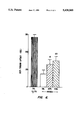
- FIG. 3 is a graphical representation showing the effects of ACPC and 7-chlorokynurenic acid (7KYN) on the passive avoidance retention deficit induced by pentylenetetrazol (PTZ).
- ACPC 400 mg/kg
- 7KYN (30 mg/kg) were administered i.p. 30 minutes before training.
- a convulsant dose of PTZ 45 mg/kg
- PTZ 45 mg/kg
- PTZ produced convulsions in all animals.
- FIG. 4 is a graphical representation depicting the effects of NMDA receptor complex ligands and diazepam (DZP) on passive avoidance acquisition-retention. All drugs were administered i.p. 30 minutes before training. Training was performed with a 0.625 mA shock. Testing was 24 hours later. Unfilled bars represent latency of non-shocked animals. Hatched bars represent latency 24 hours after training. The symbol "*" represents results that were significantly different from the control group (p ⁇ 0.05 Mann-Whitney U-test). These data demonstrate that in contrast to glycinergic compounds at the strychnine-insensitive receptor, other NMDA antagonists possess amnesic properties.
- DZP diazepam
- the competitive NMDA antagonist AP-7 and the use dependent channel blocker, MK-801 interfere with passive avoidance acquisition-retention.
- a similar effect is observed with diazepam, a benzodiazepine with well-described amnesic properties.
- FIG. 5 is a graphical representation showing the effects of NMDA receptor complex ligands and FG7142 on retention of a passive avoidance task 30 minutes and 24 hours after training. All compounds were administered i.p. immediately after training. Training was with a 0.25 mA shock. Unfilled bars represent latency of non-shocked animals. Solid bars represent latency 30 minutes after training. Hatched bars represent latency 24 hours after training. The symbols "*" and "+” represents results that were significantly different from the control group (p ⁇ 0.05 Mann-Whitney U-test). These data show that functional NMDA antagonists at the strychnine-insensitive glycine site facilitate retention of an inhibitory avoidance task also when administered post-training.
- FIG. 6 is a graphical representation showing the effects of ACPC and 7KYN on the passive avoidance acquisition-retention deficit induced by hypoxia.
- ACPC 400 mg/kg
- 7KYN (30 mg/kg) were administered i.p. immediately before hypoxia.
- Hypoxia was induced by exposing the animals to a 7% oxygen environment for 30 minutes immediately before passive avoidance training. Training was performed with a 0.625 mA shock. Testing was 7 days later.
- the filled bar represents latency of animals that were not submitted to hypoxia.
- the unfilled bar represents latency of animals submitted to hypoxia with saline pretreatment. Hatched bars represent latency of animals submitted to hypoxia but receiving pre-treatment with ACPC (400 mg/kg) or 7KYN (30 mg/kg).
- “Improvement of cognitive function” embraces treatment to improve or enhance memory and/or treatment to address a cognitive deficit consequent to a neurological disorder.
- Neurodegenerative disease as utilized herein, unless otherwise qualified, means a disorder resulting from acute brain injury or chronic neuronal degeneration. More specifically, the following neurological disorders are included within the definition: epilepsy (or seizures); hypoxia, either alone (e.g., carbon monoxide poisoning, near drowning) or combined with ischemic blood flow reduction (e.g., cardiac arrest, stroke); anxiety; affective disorders; and neurodegenerative diseases (e.g., Guam ALS, Parkinson disease, dementia and lathyrism).
- epilepsy or seizures
- hypoxia either alone (e.g., carbon monoxide poisoning, near drowning) or combined with ischemic blood flow reduction (e.g., cardiac arrest, stroke); anxiety; affective disorders; and neurodegenerative diseases (e.g., Guam ALS, Parkinson disease, dementia and lathyrism).
- “Functional antagonist at the strychnine-insensitive glycine receptor” refers to a compound that binds to the strychnine-insensitive glycine site of the NMDA receptor and has the functional consequence of reducing or antagonizing the effects of glutamate or NMDA effected through the NMDA receptor, as exemplified in, for example, a neurotoxicity assay (see Boje et al. (1992) Brain Research, "Desensitization of the NMDA receptor complex by glycinergic ligands in cerebellar granule cell cultures” (in press), portions of which are reproduced below, and Patel et al. (1990) J. Neurochem. 54:849-854).
- functional antagonists at the strychnine-insensitive glycine receptor refers to those compounds possessing functional antagonist properties at the NMDA receptor complex through a specific action at the associated strychnine-insensitive glycine site.
- Competitive antagonist refers to an antagonist that combines reversibly with the same binding sites of the receptor as the active drug and can be displaced from these sites by an excess of an agonist or antagonist with a greater binding affinity for the binding sites.
- Noncompetitive antagonist refers to a substance that interacts at a distinct binding site and blocks the approach of an agonist to its binding site. Since they bind at distinct loci, noncompetitive antagonists are not displaced with increasing concentrations of agonist.
- inhibitory avoidance task and “passive avoidance task” are equivalent and intended to refer to paradigms involving learning in response to aversive stimuli.
- “Pharmaceutically acceptable ester” refers to those esters which retain, upon hydrolysis of the ester bond, the biological effectiveness and properties of the carboxylic acid or alcohol and are not biologically or otherwise undesirable.
- esters are typically formed from the corresponding carboxylic acid and an alcohol.
- ester formation can be accomplished via conventional synthetic techniques. (See, e.g., March Advanced Organic Chemistry, 3rd Ed., John Wiley & Sons, New York (1985) p. 1157 and references cited therein, and Mark et al.
- the alcohol component of the ester will generally comprise (i) a C 2 -C 22 aliphatic alcohol that can or can not contain one or more double bonds and can or can not contain branched carbon chains or (ii) a C 7 -C 12 aromatic or heteroaromatic alcohols.
- This invention also contemplates the use of those compositions which are both esters as described herein and at the same time are the pharmaceutically acceptable acid addition salts thereof.
- “Pharmaceutically acceptable amide” refers to those amides which retain, upon hydrolysis of the amide bond, the biological effectiveness and properties of the carboxylic acid or amine and are not biologically or otherwise undesirable.
- pharmaceutically acceptable amides as prodrugs, see Bundgaard, H., ed., (1985) Design of Prodrugs, Elsevier Science Publishers, Amsterdam. These amides are typically formed from the corresponding carboxylic acid and an amine. Generally, amide formation can be accomplished via conventional synthetic techniques. (See, e.g., March Advanced Organic Chemistry, 3rd Ed., John Wiley & Sons, New York (1985) p. 1152 and Mark et al. Encyclopedia of Chemical Technology, John Wiley & Sons, New York (1980).) This invention also contemplates the use of those compositions which are both amides as described herein and at the same time are the pharmaceutically acceptable acid addition salts thereof.
- “Pharmaceutically acceptable ether” refers to those ethers which retain, upon hydrolysis of the ether bond, the biological effectiveness and properties of the hydroxyl containing compound and are not biologically or otherwise undesirable.
- pharmaceutically acceptable ethers as prodrugs, see Bundgaard, H., supra.
- ether formation can be accomplished via conventional synthetic techniques. (See, e.g., March Advanced Organic Chemistry, 3rd Ed., John Wiley & Sons, New York (1985) p.
- ethers will typically be generated from 7-chlorokynurenic acid and a alkyl halide, an aryl halide, an arylalkyl halide, or a heteroaryl halide.
- “Pharmaceutically acceptable salt” refers to those salts which retain the biological effectiveness and properties of the carboxylic acid and which are not biologically or otherwise undesirable, formed with alkali metal bases such as sodium or potassium; alkaline earth metal bases such as calcium; and with organic bases such as tromethamine, diethylamine, ethanolamine, piperidine, isopropylamine, choline, caffeine, and the like.
- alkali metal bases such as sodium or potassium
- alkaline earth metal bases such as calcium
- organic bases such as tromethamine, diethylamine, ethanolamine, piperidine, isopropylamine, choline, caffeine, and the like.
- “Pharmaceutically acceptable acid addition salt” refers to those salts which retain the biological effectiveness and properties of the free bases and which are not biologically or otherwise undesirable, formed with inorganic acids such as hydrochloric acid, hydrobromic acid, sulfuric acid, nitric acid, phosphoric acid and the like, and organic acids such as acetic acid, propionic acid, glycolic acid, pyruvic acid, oxalic acid, malic acid, malonic acid, succinic acid, maleic acid, fumaric acid, tartaric acid, citric acid, benzoic acid, cinnamic acid, mandelic acid, menthanesulfonic acid, ethanesulfonic acid, p-toluenesulfonic acid, salicylic acid and the like.
- inorganic acids such as hydrochloric acid, hydrobromic acid, sulfuric acid, nitric acid, phosphoric acid and the like
- organic acids such as acetic acid, propionic acid, glycolic acid,
- Alkyl refers to a cyclic, branched, or straight chain alkyl group containing only carbon and hydrogen. This term is further exemplified by groups such as methyl, heptyl, -(CH 2 ) 2 -, and adamantyl. Alkyl groups can either be unsubstituted or substituted with one or more non-interfering substituents, e.g., halogen, alkoxy, acyloxy, hydroxy, mercapto, carboxy, benzyloxy, phenyl, benzyl, or other functionality which has been suitably blocked with a protecting group so as to render the functionality non-interfering. Each substituent can be optionally substituted with additional non-interfering substituents.
- non-interfering characterizes the substituents as not adversely affecting any reactions to be performed in accordance with the process of this invention.
- “Lower alkyl” refers to an alkyl group having one to nine carbon atoms, which can be straight or branched, including, for example, methyl, ethyl, propyl, isopropyl, butyl, isobutyl, tertbutyl, amyl, hexyl, heptyl, octyl, nonyl, and the like.
- Halogen refers to fluorine, chlorine, bromine, and iodine atoms.
- Hydrophill refers to -OH.
- Alkoxy refers to the group alkyl-O-.
- Oxo refers to the C ⁇ O or carbonyl group.
- Amino refers to -NH 2 .
- Aryl or “Ar” refers to a monovalent aromatic carbocyclic group having a single ring (e.g., phenyl) or multiple condensed rings (e.g., naphthyl or anthryl), which can optionally be unsubstituted or substituted with hydroxy, lower alkyl, alkoxy, chloro, halo, mercapto, and other non-interfering substituents.
- Heterocycle refers to a monovalent saturated or aromatic carbocyclic group having a single ring (e.g., pyrrolidyl, pyridyl or furyl) or multiple condensed rings (e.g., indolizinyl or benzo[b]thienyl) and having at least one heteroatom, such as N, O or S, within the ring, which can optionally be unsubstituted or substituted with hydroxy, alkyl, alkoxy, halo, mercapto, and other non-interfering substituents.
- a single ring e.g., pyrrolidyl, pyridyl or furyl
- multiple condensed rings e.g., indolizinyl or benzo[b]thienyl
- heteroatom such as N, O or S
- Arylalkyl refers to the groups -R-Ar and -R-HetAr, where Ar is an aryl group, HetAr is a heteroaryl group, and R is straight-chain or branched-chain aliphatic group. Examples of arylalkyl groups include benzyl and furfuryl.
- “Therapeutically- or pharmaceutically-effective amount” as applied to the compositions of the instant invention refers to the amount of composition sufficient to induce a desired biological result. That result can be alleviation of the signs, symptoms, or causes of a disease, or any other desired alteration of a biological system. In the present invention, the result will involve the improvement or enhancement of memory or the treatment of a cognitive deficit linked to a neurological disorder.
- “Pharmaceutically or therapeutically acceptable carrier” refers to a carrier medium which does not interfere with the effectiveness of the biological activity of the active ingredients and which is not toxic to the host or patient.
- the present invention provides for the administration of compounds which possess functional antagonist properties at the NMDA receptor complex through a specific action at the associated strychnine-insensitive glycine site to a patient to improve cognitive function.
- functional antagonists include the competitive antagonist 7-chlorokynurenic acid (7KYN) and the partial agonist 1-aminocyclopropanecarboxylic acid (ACPC). These functional antagonists block many of the biochemical and pharmacological actions of excess stimulation of the NMDA receptor complex. For example, these compounds reduce the neurotoxic effects of NMDA and/or glutamate that are mediated through the NMDA receptor complex. 7KYN has also been shown to block LTP. In addition, these two substances do not appear to share many of the undesirable side effects common to competitive NMDA antagonists and channel blockers.
- Other functional antagonists can be identified through the procedure set forth in Boje et al. supra.
- the compound which possesses functional antagonist properties at the NMDA receptor complex through a specific action at the associated strychnine-insensitive glycine site will comprise a compound having the formula: ##STR3## where A is -CO 2 H, or a pharmaceutically acceptable ester, amide, or salt thereof, and X is -NR 1 R 2 or a pharmaceutically acceptable acid addition salt thereof where R 1 and R 2 are independently selected from the group consisting of hydrogen and lower alkyl, optionally substituted with halogen, hydroxyl, alkoxy, oxo, mercapto, aryl, or amino, or R 1 and R 2 together with the nitrogen to which they are attached form a substituted 5-membered or 6-membered heterocycle which can also contain another heteroatom such as oxygen, sulfur, or nitrogen.
- the functional antagonist comprises 1-aminocyclopropanecarboxylic acid, and pharmaceutically acceptable esters, amides, and salts thereof. In a preferred embodiment, the functional antagonist comprises 1-aminocyclopropanecarboxylic acid.
- esters of ACPC can be prepared by Fischer esterification of the parent carboxylic acid.
- compounds wherein "X" is a lower alkylamino or lower dialkylamino moiety can be easily prepared by reacting ACPC with lower alkyl halides.
- the functional antagonist comprises 1-aminocyclopropanecarboxylic acid.
- the compound which possesses functional antagonistic properties at the NMDA receptor complex through a specific action at the associated strychnine-insensitive glycine site will comprise a compound having the formula: ##STR4## where B is -CO 2 H, or a pharmaceutically acceptable ester, amide, or salt thereof, and R is -OH, or a pharmaceutically acceptable ester, ether or salt thereof, and its pharmaceutically acceptable acid addition salt thereof.
- B is -CO 2 H, or a pharmaceutically acceptable ester, amide, or salt thereof
- R is -OH, or a pharmaceutically acceptable ester, ether or salt thereof, and its pharmaceutically acceptable acid addition salt thereof.
- the functional antagonist comprises 7-chlorokynurenic acid, and pharmaceutically acceptable esters, amides, salts, ethers, and acid addition salts thereof.
- a method to improve or enhance memory whereby a therapeutically-effective amount of a compound which possesses functional antagonist properties at the NMDA receptor complex through a specific action at the associated strychnine-insensitive glycine site is administered to a patient.
- the methods of the present invention also can be used to treat a cognitive deficit consequent to many memory-related neurological disorders, whereby a therapeutically-effective amount of a compound having functional antagonist properties at the NMDA receptor complex through a specific action at the associated strychnine-insensitive glycine site is administered to a patient.
- Such disorders can be the result of chronic neuronal degeneration or can be the result of acute brain injury.
- epilepsy or seizures
- hypoxia either alone (e.g., carbon monoxide poisoning, near drowning) or combined with ischemic blood flow reduction (e.g., cardiac arrest, stroke); anxiety; affective disorders; memory dysfunction linked to the aging process; and neurodegenerative diseases (e.g., Guam ALS, Parkinson disease, dementia and lathyrism).
- hypoxia either alone (e.g., carbon monoxide poisoning, near drowning) or combined with ischemic blood flow reduction (e.g., cardiac arrest, stroke); anxiety; affective disorders; memory dysfunction linked to the aging process; and neurodegenerative diseases (e.g., Guam ALS, Parkinson disease, dementia and lathyrism).
- ischemic blood flow reduction e.g., cardiac arrest, stroke
- neurodegenerative diseases e.g., Guam ALS, Parkinson disease, dementia and lathyrism.
- the methods of the present invention can also be employed in the treatment of memory impairment following acute brain injury, such as head trauma or multi-infarct dementia.
- the formulations of the present invention comprise at least one compound of this invention in a therapeutically- or pharmaceutically-effective dose together with one or more pharmaceutically or therapeutically acceptable carriers and optionally other therapeutic ingredients.
- a pharmaceutical formulation comprising at least one compound of this invention in a therapeutically- or pharmaceutically-effective dose together with one or more pharmaceutically or therapeutically acceptable carriers and optionally other therapeutic ingredients.
- Various considerations are described, e.g., in Gilman et al. (eds) (1990) Goodman and Gilman's: The Pharmacological Bases of Therapeutics, 8th Ed., Pergamon Press; and Remington's Pharmaceutical Sciences, Mack Publishing Co.: Easton, PA, 17th Ed. (1985).
- compositions for administration are discussed therein, e.g., for oral, intravenous, intraperitoneal, or intramuscular administration, and others.
- Pharmaceutically acceptable carriers will include water, saline, buffers, and other compounds described, e.g., in the Merck Index, Merck & Co., Rahway, N.J.
- the pharmaceutical compositions will be administered by parenteral or oral administration for therapeutic treatment.
- the pharmaceutical compositions can be administered in a variety of unit dosage forms depending upon the method of administration.
- unit dosage forms suitable for oral administration include powder, tablets, pills, capsules and dragees.
- compositions for intravenous administration which comprise a solution of the compound dissolved or suspended in an acceptable carrier, preferably an aqueous carrier.
- an acceptable carrier preferably an aqueous carrier.
- aqueous carriers can be used, e.g., water, buffered water, 0.9% saline, and the like.
- These compositions will sometimes be sterilized by conventional, well known sterilization techniques, or can be sterile filtered.
- the resulting aqueous solutions can be packaged for use as is, or lyophilized, the lyophilized preparation being combined with a sterile aqueous solution prior to administration.
- compositions can contain pharmaceutically acceptable auxiliary substances as required to approximate physiological conditions, such as pH adjusting and buffering agents, tonicity adjusting agents, wetting agents and the like, for example, sodium acetate, sodium lactate, sodium chloride, potassium chloride, calcium chloride, sorbitan monolaurate, triethanolamine oleate, and the like.
- auxiliary substances such as pH adjusting and buffering agents, tonicity adjusting agents, wetting agents and the like, for example, sodium acetate, sodium lactate, sodium chloride, potassium chloride, calcium chloride, sorbitan monolaurate, triethanolamine oleate, and the like.
- nontoxic solid carriers can be used which include, for example, pharmaceutical grades of mannitol, lactose, starch, magnesium stearate, sodium saccharin, talcum, cellulose, glucose, sucrose, magnesium carbonate, and the like.
- a pharmaceutically acceptable nontoxic composition is formed by incorporating any of the normally employed excipients, such as those carriers previously listed, and generally 0.1-95% of active ingredient, preferably about 20%.
- compositions are administered to a patient in an amount sufficient to at least partially improve cognition or enhance memory.
- An amount adequate to accomplish this is defined as "therapeutically-effective amount or dose.” Amounts effective for this use will depend on the improvement desired and the weight and general state of the patient.
- Compounds will preferably be administered in a daily dose.
- the daily dose will vary with the nature of the active ingredient.
- ACPC will be administered in a range from about 100 mg to about 1000 mg per kilogram of body weight per day
- 7KYN will be administered in a range from about 1 mg to about 100 mg per kilogram of body weight per day.
- a more preferred dosage of ACPC will range from about 200 mg to about 800 mg per kilogram of body weight and most preferred is a dosage of about 400 mg per kilogram of body weight per day.
- a more preferred dosage of 7KYN will range from about 10 mg to about 50 mg per kilogram of body weight and most preferred is a dosage of about 30 mg per kilogram of body weight per day.
- the dosages for other functional antagonist will generally be in a range of about 0.1 mg to about 1000 mg per kilogram of body weight per day.
- a suitable dose can be administered in multiple subdoses per day. These sub-doses can be administered in unit dosage forms. Typically, a dose or sub-dose can contain from about 1 mg to about 500 mg of active compound per unit dosage form. A more preferred dosage will contain from about 10 mg to about 100 mg of active compound per unit dosage form.
- the total preincubation time in modified Locke's buffer was 40 minutes, which was previously established as a sufficient period of time to render cultured cerebellar granule neurons susceptible to L-glutamate toxicity (see Lysko et al. (1989) Brain Research 499:258-266).
- Neurotoxicity was induced by a thirty minute incubation with L-glutamately at 37° C. The cultures were washed twice with 1.5 ml aliquots of Hank's Balanced Salt Solution at the end of this incubation period. One ml of conditioned media was added to the cultures, and the cultures were returned to the incubator. In experiments examining the potential neuroprotective effects of prolonged exposure to glycinergic ligands, cultures were incubated for 20-24 hours with various agents (final concentration, 1000 ⁇ M) prior to the washing, preincubation, and glutamate neurotoxicity protocol.
- mice (Harlan Sprague-Dawley, Inc., Frederick, Md.) weighing 20-25 grams (g) were housed ten per cage (25 ⁇ 50 ⁇ 15 centimeters (cm)) with food and water freely available. They were kept in a regulated environment for at least one week before they were used, lights on from 0600 to 1800 hours at a room temperature of 22°-25° C. with a relative humidity of 50% ⁇ 10%.
- the apparatus was similar to that described by Weiskrantz and Mondadori (1991) Psychopharmacology 105:145-150 and by Baratti et al. (1984) Behav. Neural Biol. 40:155-169 with slight modifications.
- the apparatus consisted of a platform made of white lucite (5 ⁇ 5 cm), illuminated with a 25 Watt (W) bulb positioned 15 cm directly above. The platform was located 11.5 cm high on the outside of one wall of a black plastic box (12 ⁇ 12 ⁇ 30.5 cm).
- a small triangular opening (3.5 ⁇ 3.5 ⁇ 3.5 cm) in the wall with a sliding door provided access from the platform to the dark interior of the box which contained a metallic grid floor at platform level and a removable lid (19 cm above the grid floor).
- the grid floor was connected to a scrambler shock generator (Letica, Barcelona, Spain).
- Each mouse was placed on the white lighted platform and the time spent to enter the dark compartment (step-through) latency was measured.
- the hole was closed with the sliding door and a one second foot-shock was administered.
- Different footshock intensities ranging from 0.25 to 0,625 mA
- hypoxia chambers were 400 ml glass beakers (12.5 cm ⁇ 7.5 cm) covered with a rubber stopper and continuously perfused with a gas mixture consisting of 7% oxygen and 93% nitrogen or other inert gases. The flow rate was adjusted such that the gas turnover in each chamber was one liter per minute. Oxygen concentration was continuously monitored in one of the hypoxia chambers with an oxygen sensor (Oxymetre Hospitalier, Bioblock Sci., Cedex, France) .
- mice were injected intraperitoneally (0.1-0.2 ml) with either vehicle or drugs.
- the following drugs were used: 1-aminocyclopropanecarboxylic acid (ACPC, Tocris Neuramin, Essex, UK); 7-chlorokynurenic acid (7KYN, Tocris Neuramin, Essex, UK); diazepam (DZP, Prodesfarma, Barcelona, Spain); pentylenetetrazol (PTZ, Sigma, St.
- AP7, 7KYN, and 5,7DKYN were dissolved in 1.0 normal (N) aqueous sodium hydroxide (5-8% of volume) and then saline added to volume.
- DZP and FG7142 were suspended in diluted Tween 80 (polyoxyethylene (20) sorbitan monooleate, Aldrich Chemical Company, Inc., Milwaukee, Wis.).
- ACPC and 7KYN facilitate recall of a passive avoidance (i.e., an inhibitory avoidance) task in mice.
- These compounds also antagonize memory deficits in this task that are produced by pentylenetetrazol, a drug with known amnesic properties, and improve memory deficits induced by hypoxia.
- FIG. 1 shows the effect of pretraining administration of ACPC, 7KYN, DCS, 57DKYN, or FG7142 on passive avoidance acquisition-retention 24 hours after training in mice.
- the drugs were given prior to training, while testing occurred 24 hours after training.
- Administration of either ACPC, 7KYN, DCS, 57DKYN, or FG7142 resulted in significantly increased step-through latencies as compared to the control (saline) (SAL) group.
- SAL control
- compounds possessing functional antagonist properties at the NMDA receptor complex through a specific action at the associated strychnine-insensitive glycine site like ACPC, 7KYN, and 5-7KYN, facilitate learning and memory of an inhibitory avoidance task.
- the facilitatory effect of these compounds was similar to that observed with D-cycloserine, a positive NMDA modulator at the strychnine-insensitive glycine site, and with FG7142, a benzodiazepine receptor inverse agonist.
- the antagonism by glycine of the 1-aminocyclopropanecarboxylic acid (ACPC) induced facilitation of acquisition-retention is shown in FIG. 2.
- Glycine GLY, 1 gram/kilogram (g/kg)
- ACPC 400 milligrams/kilogram (mg/kg)
- Training was performed with a 0.25 mA shock. Testing was 24 hours after training.
- the ability of glycine to antagonize the facilitatory effects of ACPC in this measure clearly demonstrates that the cognitive enhancing properties of ACPC result from its action at the strychnine-insensitive glycine site as a functional NMDA receptor antagonist.
- FIG. 3 is a graphical representation showing that ACPC and 7-chlorokynurenic acid (7KYN) protect against passive avoidance retention deficits induced by pentylenetetrazol (PTZ).
- ACPC 400 mg/kg
- 7KYN (30 mg/kg) were administered i.p. 30 minutes before training.
- a convulsant dose of PTZ 45 mg/kg
- PTZ 45 mg/kg
- PTZ produced convulsions in all animals.
- NMDA receptor complex ligands and DZP The effects of NMDA receptor complex ligands and DZP on passive avoidance acquisition-retention are shown in FIG. 4. All drugs were administered i.p. 30 minutes before training. Administration of ACPC, 7KYN, and DCS gave results comparable to that of the control group. Administration of AP7, MK-801, or DZP resulted in significantly decreased step-through latencies when compared to the control group. These data demonstrate that the competitive NMDA antagonist AP-7 and the use dependent channel blocker, MK-801, interfere with passive avoidance acquisition-retention. A similar effect is observed with diazepam, a benzodiazepine with well-described amnesic properties. These data demonstrate that, in contrast to compounds binding at the strychnine-insensitive receptor, NMDA antagonists acting at other recognition sites of the NMDA receptor complex possess amnesic properties.
- FIG. 5 is a graphical representation showing the effects of NMDA receptor complex ligands and FG7142 on retention of a passive avoidance task 30 minutes and 24 hours after training. All compounds were administered i.p. immediately after training. FG7142 resulted in a statistically different step-through latency at 30 minutes when compared to the control group. Administration of ACPC, 7KYN, and DCS produced statistically significant differences in step through latencies 24 hours after training when compared to the control group. Thus, functional NMDA antagonists at the strychnine-insensitive glycine site facilitate retention of an inhibitory avoidance task also when administered post-training.
Landscapes
- Health & Medical Sciences (AREA)
- Animal Behavior & Ethology (AREA)
- Chemical & Material Sciences (AREA)
- Veterinary Medicine (AREA)
- Public Health (AREA)
- Medicinal Chemistry (AREA)
- General Health & Medical Sciences (AREA)
- Pharmacology & Pharmacy (AREA)
- Life Sciences & Earth Sciences (AREA)
- Bioinformatics & Cheminformatics (AREA)
- Engineering & Computer Science (AREA)
- Nuclear Medicine, Radiotherapy & Molecular Imaging (AREA)
- Organic Chemistry (AREA)
- General Chemical & Material Sciences (AREA)
- Chemical Kinetics & Catalysis (AREA)
- Biomedical Technology (AREA)
- Neurology (AREA)
- Neurosurgery (AREA)
- Epidemiology (AREA)
- Psychiatry (AREA)
- Hospice & Palliative Care (AREA)
- Pain & Pain Management (AREA)
- Pharmaceuticals Containing Other Organic And Inorganic Compounds (AREA)
- Medicines That Contain Protein Lipid Enzymes And Other Medicines (AREA)
- Acyclic And Carbocyclic Compounds In Medicinal Compositions (AREA)
- Saccharide Compounds (AREA)
- Quinoline Compounds (AREA)
- Organic Low-Molecular-Weight Compounds And Preparation Thereof (AREA)
Priority Applications (8)
| Application Number | Priority Date | Filing Date | Title |
|---|---|---|---|
| US08/003,225 US5428069A (en) | 1993-01-11 | 1993-01-11 | Treating cognition with, aminocyclopropanecarboxylic derivatives |
| EP94906547A EP0678021B1 (de) | 1993-01-11 | 1994-01-07 | Verfahren zur verbesserung der wahrnehmung mit partiellen agonisten des glycin/nmda-rezeptorkomplexes |
| AT94906547T ATE218061T1 (de) | 1993-01-11 | 1994-01-07 | Verfahren zur verbesserung der wahrnehmung mit partiellen agonisten des glycin/nmda- rezeptorkomplexes |
| PCT/US1994/000235 WO1994015598A2 (en) | 1993-01-11 | 1994-01-07 | Methods for the improvement of cognition with functional antagonists of the glycine nmda receptor complex |
| AU60228/94A AU679492B2 (en) | 1993-01-11 | 1994-01-07 | Methods for the improvement of cognition with functional antagonists of the glycine NMDA receptor complex |
| JP6516227A JPH08510990A (ja) | 1993-01-11 | 1994-01-07 | グリシンnmdaレセプター複合体の機能的アンタゴニストによる認識の改良方法 |
| DE69430695T DE69430695T2 (de) | 1993-01-11 | 1994-01-07 | Verfahren zur verbesserung der wahrnehmung mit partiellen agonisten des glycin/nmda-rezeptorkomplexes |
| CA002153596A CA2153596A1 (en) | 1993-01-11 | 1994-01-07 | Methods for the improvement of cognition with functional antagonists of the glycine nmda receptor complex |
Applications Claiming Priority (1)
| Application Number | Priority Date | Filing Date | Title |
|---|---|---|---|
| US08/003,225 US5428069A (en) | 1993-01-11 | 1993-01-11 | Treating cognition with, aminocyclopropanecarboxylic derivatives |
Publications (1)
| Publication Number | Publication Date |
|---|---|
| US5428069A true US5428069A (en) | 1995-06-27 |
Family
ID=21704805
Family Applications (1)
| Application Number | Title | Priority Date | Filing Date |
|---|---|---|---|
| US08/003,225 Expired - Fee Related US5428069A (en) | 1993-01-11 | 1993-01-11 | Treating cognition with, aminocyclopropanecarboxylic derivatives |
Country Status (8)
| Country | Link |
|---|---|
| US (1) | US5428069A (de) |
| EP (1) | EP0678021B1 (de) |
| JP (1) | JPH08510990A (de) |
| AT (1) | ATE218061T1 (de) |
| AU (1) | AU679492B2 (de) |
| CA (1) | CA2153596A1 (de) |
| DE (1) | DE69430695T2 (de) |
| WO (1) | WO1994015598A2 (de) |
Cited By (16)
| Publication number | Priority date | Publication date | Assignee | Title |
|---|---|---|---|---|
| US5837730A (en) * | 1995-12-07 | 1998-11-17 | Javitt; Daniel C. | Treatment of negative and cognitive symptoms of schizophrenia with glycine uptake antagonists |
| US5906976A (en) * | 1996-10-22 | 1999-05-25 | Ramot-University Authority For Applied Research And Industrial Development, Ltd. | Method and composition for treating neuronal degeneration |
| US6172041B1 (en) | 1996-07-22 | 2001-01-09 | University Of Utah Research Foundation | Use of conantokins |
| US6277825B1 (en) | 1996-07-22 | 2001-08-21 | University Of Utah Research Foundation | Use of conantokins for treating pain |
| US6284731B1 (en) | 1992-09-28 | 2001-09-04 | Bearsden Bio, Inc. | Allosteric modulators of the NMDA receptor and their use in the treatment of CNS disorders and enhancement of CNS function |
| US20020013364A1 (en) * | 1995-12-07 | 2002-01-31 | Daniel C. Javitt | Glycine site full agonist for treating a psychosis |
| US6361957B1 (en) | 1999-08-03 | 2002-03-26 | Glytech, Inc. | Assay for D-serine transport antagonist and use for treating psychosis |
| US6399574B1 (en) | 2000-03-22 | 2002-06-04 | University Of Utah Research Foundation | Use of conantokins |
| US20030022253A1 (en) * | 2001-07-25 | 2003-01-30 | Nyxis Neurotherapies, Inc. | Method for identifying, isolating and producing neuroactive binding agents and binding agents derived thereby |
| US6515103B1 (en) | 1996-07-22 | 2003-02-04 | University Of Utah Research Foundation | Conantokins |
| US20040208923A1 (en) * | 2001-03-29 | 2004-10-21 | Michael Davis | Acute pharmacologic augmentation of psyschotherapy with enhancers of learning or conditioning |
| US20060084659A1 (en) * | 2004-10-19 | 2006-04-20 | Michael Davis | Augmentation of psychotherapy with cannabinoid reuptake inhibitors |
| US20080051458A1 (en) * | 2006-07-28 | 2008-02-28 | Xuedong Dai | Acyloxyalkyl carbamate prodrugs of alpha-amino acids, methods of synthesis and use |
| US7846913B2 (en) | 2003-12-29 | 2010-12-07 | Mcdevitt Jason Patrick | Compositions and methods to treat recurrent medical conditions |
| WO2014093277A1 (en) | 2012-12-11 | 2014-06-19 | The Mclean Hospital Corporation | Xenon and/or argon treatment as an adjunct to psychotherapy for psychiatric disorders |
| WO2026061429A1 (zh) * | 2024-09-18 | 2026-03-26 | 南京宁丹新药技术股份有限公司 | 一类单硝酸异山梨酯衍生物的盐类化合物及其用途 |
Families Citing this family (5)
| Publication number | Priority date | Publication date | Assignee | Title |
|---|---|---|---|---|
| GB9311948D0 (en) * | 1993-06-10 | 1993-07-28 | Zeneca Ltd | Substituted nitrogen heterocycles |
| US5801168A (en) * | 1994-06-09 | 1998-09-01 | Zeneca Limited | Substituted nitrogen heterocycles |
| US5763393A (en) * | 1996-05-17 | 1998-06-09 | Neurotherapeutics L.P. | Neuroactive peptides |
| JP2006213611A (ja) * | 2005-02-02 | 2006-08-17 | Suzuka Univ Of Medical Science | 1‐アミノシクロプロパンカルボン酸等を主成分とする脳卒中又は脳卒中後遺症の予防用又は治療用薬剤 |
| KR102676099B1 (ko) * | 2023-10-06 | 2024-06-18 | 인하대학교 산학협력단 | 적응형 흙막이 벽체 변위 분석 시스템 및 방법 |
Citations (7)
| Publication number | Priority date | Publication date | Assignee | Title |
|---|---|---|---|---|
| US4570014A (en) * | 1978-06-03 | 1986-02-11 | Bayer Aktiengesellschaft | Cycloalkanecarboxylic acid compounds |
| US4781927A (en) * | 1985-04-15 | 1988-11-01 | General Foods Corporation | Sweetening with l-aminodicarboxylic acid esters |
| US4788332A (en) * | 1987-08-05 | 1988-11-29 | General Foods Corporation | L-aminodicarboxylic acid esters |
| US4822653A (en) * | 1987-08-05 | 1989-04-18 | National Starch And Chemical Corporation | Recyclable hot melt adhesive compositions |
| WO1989005144A1 (en) * | 1987-12-01 | 1989-06-15 | G.D. Searle & Co. | Use of a glycine b partial agonist for memory and learning enhancement or treatment of a cognitive disorder |
| WO1991001729A1 (en) * | 1989-08-08 | 1991-02-21 | The United States Of America, As Represented By The Secretary, U.S. Department Of Commerce | Partial agonists of the strychnine insensitive glycine modulatory site of the n-methyl-d-aspartate receptor complex as neuropsychopharmacological agents |
| WO1991019493A1 (en) * | 1990-06-18 | 1991-12-26 | The United States Of America, As Represented By The Secretary, U.S. Department Of Commerce | Treatment of mood disorders with functional antagonists of the glycine/nmda receptor complex |
-
1993
- 1993-01-11 US US08/003,225 patent/US5428069A/en not_active Expired - Fee Related
-
1994
- 1994-01-07 JP JP6516227A patent/JPH08510990A/ja not_active Ceased
- 1994-01-07 AT AT94906547T patent/ATE218061T1/de not_active IP Right Cessation
- 1994-01-07 DE DE69430695T patent/DE69430695T2/de not_active Expired - Fee Related
- 1994-01-07 EP EP94906547A patent/EP0678021B1/de not_active Expired - Lifetime
- 1994-01-07 AU AU60228/94A patent/AU679492B2/en not_active Ceased
- 1994-01-07 CA CA002153596A patent/CA2153596A1/en not_active Abandoned
- 1994-01-07 WO PCT/US1994/000235 patent/WO1994015598A2/en not_active Ceased
Patent Citations (8)
| Publication number | Priority date | Publication date | Assignee | Title |
|---|---|---|---|---|
| US4570014A (en) * | 1978-06-03 | 1986-02-11 | Bayer Aktiengesellschaft | Cycloalkanecarboxylic acid compounds |
| US4781927A (en) * | 1985-04-15 | 1988-11-01 | General Foods Corporation | Sweetening with l-aminodicarboxylic acid esters |
| US4788332A (en) * | 1987-08-05 | 1988-11-29 | General Foods Corporation | L-aminodicarboxylic acid esters |
| US4822653A (en) * | 1987-08-05 | 1989-04-18 | National Starch And Chemical Corporation | Recyclable hot melt adhesive compositions |
| WO1989005144A1 (en) * | 1987-12-01 | 1989-06-15 | G.D. Searle & Co. | Use of a glycine b partial agonist for memory and learning enhancement or treatment of a cognitive disorder |
| WO1991001729A1 (en) * | 1989-08-08 | 1991-02-21 | The United States Of America, As Represented By The Secretary, U.S. Department Of Commerce | Partial agonists of the strychnine insensitive glycine modulatory site of the n-methyl-d-aspartate receptor complex as neuropsychopharmacological agents |
| WO1991019493A1 (en) * | 1990-06-18 | 1991-12-26 | The United States Of America, As Represented By The Secretary, U.S. Department Of Commerce | Treatment of mood disorders with functional antagonists of the glycine/nmda receptor complex |
| US5086072A (en) * | 1990-06-18 | 1992-02-04 | The United States Of America As Represented By The Department Of Health And Human Services | Treatment of mood disorders with functional antagonists of the glycine/nmda receptor complex |
Non-Patent Citations (88)
| Title |
|---|
| Artola et al. (1987) Nature 330:649 652. * |
| Artola et al. (1987) Nature 330:649-652. |
| Baron et al. (1992) J. Pharmacol. Exp. Ther. 262:947 956. * |
| Baron et al. (1992) J. Pharmacol. Exp. Ther. 262:947-956. |
| Boje et al. (1992) Brain Res. Desensitization of the NMDA receptor complex by . . . granule cell cultures (in press). * |
| Bristow et al. (1986) Eur. J. Pharmacol. 126:303 307. * |
| Bristow et al. (1986) Eur. J. Pharmacol. 126:303-307. |
| Chiamulera et al. (1990) Psychopharm. 102:551 552. * |
| Chiamulera et al. (1990) Psychopharm. 102:551-552. |
| Clissold et al. (1992) Behavioral Pharmacol. 3:393 402. * |
| Clissold et al. (1992) Behavioral Pharmacol. 3:393-402. |
| Collingridge et al. (1983) J. Physiol. 334:33 46. * |
| Collingridge et al. (1983) J. Physiol. 334:33-46. |
| Collingridge et al. (1987) Trends Neurosci. 10:228 233. * |
| Collingridge et al. (1987) Trends Neurosci. 10:228-233. |
| Danysz et al. (1989) Neurosci. Res. Comm. 5(1):9 18. * |
| Danysz et al. (1989) Neurosci. Res. Comm. 5(1):9-18. |
| DeNoble et al. (1990) Eur. J. Pharmacol. Elsevier, pp. 197 202. * |
| DeNoble et al. (1990) Eur. J. Pharmacol. Elsevier, pp. 197-202. |
| Evoniuk et al. (1991) Psychopharm. 105:125 128. * |
| Evoniuk et al. (1991) Psychopharm. 105:125-128. |
| Foster et al. (1987) Nature 329:395 396. * |
| Foster et al. (1987) Nature 329:395-396. |
| Foster et al. (1990) Eur. J. Neurosci. 2:270 277. * |
| Foster et al. (1990) Eur. J. Neurosci. 2:270-277. |
| Galli et al. (1988) Pharmacol. Res. Comm. 20:407 408. * |
| Galli et al. (1988) Pharmacol. Res. Comm. 20:407-408. |
| Hartley et al. (1990) Eur. J. Neurosci. 2:291 295. * |
| Hartley et al. (1990) Eur. J. Neurosci. 2:291-295. |
| J. Lehmann, "The NMDA Receptor," 1989, Drugs of the Future, 14(11):1060-1071. |
| J. Lehmann, The NMDA Receptor, 1989, Drugs of the Future, 14(11):1060 1071. * |
| Jones, et al., "Effects of NMDA Modulation in Scopolamine Dementia," 1991, Annals of the New York Academy of Sciences, 640:241-244. |
| Jones, et al., Effects of NMDA Modulation in Scopolamine Dementia, 1991, Annals of the New York Academy of Sciences, 640:241 244. * |
| Kemp et al. (1988) Proc. Natl. Acad. Sci. USA 85:6547 6550. * |
| Kemp et al. (1988) Proc. Natl. Acad. Sci. USA 85:6547-6550. |
| Kleinschmidt et al. (1987) Science 238:355 358. * |
| Kleinschmidt et al. (1987) Science 238:355-358. |
| Koek et al. (1990) J. Pharmacol. Exp. Ther. 252:349 357. * |
| Koek et al. (1990) J. Pharmacol. Exp. Ther. 252:349-357. |
| Mondadori et al. (1989) Exp. Brain Res. 75:449 456. * |
| Mondadori et al. (1989) Exp. Brain Res. 75:449-456. |
| Mondadori et al. (1992) Psychopharm. 108:11 15. * |
| Mondadori et al. (1992) Psychopharm. 108:11-15. |
| Oliver et al. (1990) Int. J. Devl. Neurosci. 8(4):417 424. * |
| Oliver et al. (1990) Int. J. Devl. Neurosci. 8(4):417-424. |
| Patel et al. (1990) J. Neurochem. 54:849 854. * |
| Patel et al. (1990) J. Neurochem. 54:849-854. |
| Rao, et al., "Neuropharmacological Characterization of 1-aminocyclopropane-1-carboxylate and 1-aminocyclobutane-1-carboxylate, Ligands of the N-Methyl-D-Aspartate-Associated Glycine Receptor," 1990, Neuropharmacology, 29(3):305-309. |
| Rao, et al., Neuropharmacological Characterization of 1 aminocyclopropane 1 carboxylate and 1 aminocyclobutane 1 carboxylate, Ligands of the N Methyl D Aspartate Associated Glycine Receptor, 1990, Neuropharmacology, 29(3):305 309. * |
| Robinson et al. (1987) FASEB J. 1:446 455. * |
| Robinson et al. (1987) FASEB J. 1:446-455. |
| Sarter et al. (1992) Psychopharm. 107:461 473. * |
| Sarter et al. (1992) Psychopharm. 107:461-473. |
| Skolnick et al. (1989) Life Sci. 45:1647 1655. * |
| Skolnick et al. (1989) Life Sci. 45:1647-1655. |
| Smith, et al., "An NMDA Receptor-Associated Glycine Site Antagonist Attenuates Memory Loss After Experimental Brain Injury," 1990, Soc. Neurosci. Abstr., 16(1):779. |
| Smith, et al., An NMDA Receptor Associated Glycine Site Antagonist Attenuates Memory Loss After Experimental Brain Injury, 1990, Soc. Neurosci. Abstr., 16(1):779. * |
| Staubli (1989) Behavioral Neurosci. 103:54 60. * |
| Staubli (1989) Behavioral Neurosci. 103:54-60. |
| Staubli (1990) Psychobiology 18(3):267 268. * |
| Staubli (1990) Psychobiology 18(3):267-268. |
| T. W. Stone, "Excitatory Amino Acids," 1992, Current Opinion in Therapeutic Patents, 2(6):907-930. |
| T. W. Stone, Excitatory Amino Acids, 1992, Current Opinion in Therapeutic Patents, 2(6):907 930. * |
| Thompson et al. (1992) Nature 359:638 641. * |
| Thompson et al. (1992) Nature 359:638-641. |
| Trullas et al. (1990) Eur. J. Pharmacol. Elsevier, pp. 1 10. * |
| Trullas et al. (1990) Eur. J. Pharmacol. Elsevier, pp. 1-10. |
| Trullas et al. (1991) Eur. J. Pharmacol. Elsevier, pp. 1 7. * |
| Trullas et al. (1991) Eur. J. Pharmacol. Elsevier, pp. 1-7. |
| Upchurch et al. (1990) Psychopharm. 100:209 214. * |
| Upchurch et al. (1990) Psychopharm. 100:209-214. |
| Venable et al. (1990) Psychopharm. 100:215 221. * |
| Venable et al. (1990) Psychopharm. 100:215-221. |
| von Lubitz et al. (1992) Eur. J. Pharmacol., in press. * |
| Ward et al. (1990) Pharm. Biochem. Behavior 35:785 790. * |
| Ward et al. (1990) Pharm. Biochem. Behavior 35:785-790. |
| Watanabe, et al., "Involvement of Glycine Site Associated with the NMDA Receptor in Hippocampal Long-Term Potentiation and Acquisition of Spatial Memory in Rats," 1992, Brain Research, 582:58-64. |
| Watanabe, et al., Involvement of Glycine Site Associated with the NMDA Receptor in Hippocampal Long Term Potentiation and Acquisition of Spatial Memory in Rats, 1992, Brain Research, 582:58 64. * |
| Watson, et al., "Pharmacological Characteristics of Cyclic Homologues of Glycine at the N-Methyl-D-Aspartate Receptor-Associated Glycine Site," 1990, Neuropharmacology, 29(8):727-730. |
| Watson, et al., Pharmacological Characteristics of Cyclic Homologues of Glycine at the N Methyl D Aspartate Receptor Associated Glycine Site, 1990, Neuropharmacology, 29(8):727 730. * |
| Wood, et al., "7-Chlorokynurenic Acid Reduces CA1 Cell Loss in a Rate Model of Cerebral Ischemia in Vivo," 1991, Soc. Neurosci. Abstr., 17:1265. |
| Wood, et al., "A Glycine Antagonist 7-Chlorokynurenic Acid Attenuates Ischemia-Induced Learning Deficits," 1993, Neuroreport, 4(2):151-154. |
| Wood, et al., 7 Chlorokynurenic Acid Reduces CA1 Cell Loss in a Rate Model of Cerebral Ischemia in Vivo, 1991, Soc. Neurosci. Abstr., 17:1265. * |
| Wood, et al., A Glycine Antagonist 7 Chlorokynurenic Acid Attenuates Ischemia Induced Learning Deficits, 1993, Neuroreport, 4(2):151 154. * |
| Wroblewski et al. (1989) Ann. Rev. Pharm. 29:441 474. * |
| Wroblewski et al. (1989) Ann. Rev. Pharm. 29:441-474. |
| Zola Morgan, et al., Enduring Memory Impairment in Monkeys After Ischemic Damage to the Hippocampus, 1992, The Journal of Neuroscience, 12(7):2582 2596. * |
| Zola-Morgan, et al., "Enduring Memory Impairment in Monkeys After Ischemic Damage to the Hippocampus," 1992, The Journal of Neuroscience, 12(7):2582-2596. |
Cited By (27)
| Publication number | Priority date | Publication date | Assignee | Title |
|---|---|---|---|---|
| US6284731B1 (en) | 1992-09-28 | 2001-09-04 | Bearsden Bio, Inc. | Allosteric modulators of the NMDA receptor and their use in the treatment of CNS disorders and enhancement of CNS function |
| US20030134799A1 (en) * | 1992-09-28 | 2003-07-17 | Maria-Luisa Maccecchini | Allosteric modulators of the NMDA receptor and their use in the treatment of CNS disorders and enhancement of CNS function |
| US6511963B1 (en) | 1992-09-28 | 2003-01-28 | Bearsden Bio, Inc. | Allosteric modulators of the NMDA receptor and their use in the treatment of CNS disorders and enhancement of CNS function |
| US5837730A (en) * | 1995-12-07 | 1998-11-17 | Javitt; Daniel C. | Treatment of negative and cognitive symptoms of schizophrenia with glycine uptake antagonists |
| US6355681B2 (en) | 1995-12-07 | 2002-03-12 | Glytech, Inc. | Glycine substitutes and precursors for treating a psychosis |
| US5854286A (en) * | 1995-12-07 | 1998-12-29 | Daniel C. Javitt | Treatment of negative and cognitive symptoms of schizophrenia with glycine and its precursors |
| US6162827A (en) * | 1995-12-07 | 2000-12-19 | Daniel Javitt | Treatment of negative and cognitive symptoms of schizophrenia with D-serine |
| US20020013364A1 (en) * | 1995-12-07 | 2002-01-31 | Daniel C. Javitt | Glycine site full agonist for treating a psychosis |
| US6515103B1 (en) | 1996-07-22 | 2003-02-04 | University Of Utah Research Foundation | Conantokins |
| US6172041B1 (en) | 1996-07-22 | 2001-01-09 | University Of Utah Research Foundation | Use of conantokins |
| US6277825B1 (en) | 1996-07-22 | 2001-08-21 | University Of Utah Research Foundation | Use of conantokins for treating pain |
| US5906976A (en) * | 1996-10-22 | 1999-05-25 | Ramot-University Authority For Applied Research And Industrial Development, Ltd. | Method and composition for treating neuronal degeneration |
| US6361957B1 (en) | 1999-08-03 | 2002-03-26 | Glytech, Inc. | Assay for D-serine transport antagonist and use for treating psychosis |
| US20050159488A1 (en) * | 1999-08-03 | 2005-07-21 | Dr. Daniel Javitt | D-serine transport antagonist for treating psychosis |
| US6399574B1 (en) | 2000-03-22 | 2002-06-04 | University Of Utah Research Foundation | Use of conantokins |
| US7750030B2 (en) | 2001-03-29 | 2010-07-06 | Michael Davis | Acute pharmacologic augmentation of psychotherapy with enhancers of learning or conditioning |
| US20040208923A1 (en) * | 2001-03-29 | 2004-10-21 | Michael Davis | Acute pharmacologic augmentation of psyschotherapy with enhancers of learning or conditioning |
| US20030022253A1 (en) * | 2001-07-25 | 2003-01-30 | Nyxis Neurotherapies, Inc. | Method for identifying, isolating and producing neuroactive binding agents and binding agents derived thereby |
| WO2003010540A1 (en) * | 2001-07-25 | 2003-02-06 | Nyxis Neurotherapies, Inc. | Method of identifying nmda-related agent |
| US7846913B2 (en) | 2003-12-29 | 2010-12-07 | Mcdevitt Jason Patrick | Compositions and methods to treat recurrent medical conditions |
| US20060084659A1 (en) * | 2004-10-19 | 2006-04-20 | Michael Davis | Augmentation of psychotherapy with cannabinoid reuptake inhibitors |
| US20080051458A1 (en) * | 2006-07-28 | 2008-02-28 | Xuedong Dai | Acyloxyalkyl carbamate prodrugs of alpha-amino acids, methods of synthesis and use |
| US7531572B2 (en) | 2006-07-28 | 2009-05-12 | Xenoport, Inc. | Acyloxyalkyl carbamate prodrugs of α-amino acids, methods of synthesis and use |
| US20090192225A1 (en) * | 2006-07-28 | 2009-07-30 | Xenoport, Inc. | Acyloxyalkyl Carbamate Prodrugs of Alpha-Amino Acids, Methods of Synthesis and Use |
| US7799829B2 (en) | 2006-07-28 | 2010-09-21 | Xenoport, Inc. | Acyloxyalkyl carbamate prodrugs of α-amino acids, methods of synthesis and use |
| WO2014093277A1 (en) | 2012-12-11 | 2014-06-19 | The Mclean Hospital Corporation | Xenon and/or argon treatment as an adjunct to psychotherapy for psychiatric disorders |
| WO2026061429A1 (zh) * | 2024-09-18 | 2026-03-26 | 南京宁丹新药技术股份有限公司 | 一类单硝酸异山梨酯衍生物的盐类化合物及其用途 |
Also Published As
| Publication number | Publication date |
|---|---|
| CA2153596A1 (en) | 1994-07-21 |
| AU6022894A (en) | 1994-08-15 |
| DE69430695D1 (de) | 2002-07-04 |
| WO1994015598A3 (en) | 1994-09-15 |
| EP0678021B1 (de) | 2002-05-29 |
| EP0678021A1 (de) | 1995-10-25 |
| DE69430695T2 (de) | 2002-09-12 |
| WO1994015598A2 (en) | 1994-07-21 |
| ATE218061T1 (de) | 2002-06-15 |
| AU679492B2 (en) | 1997-07-03 |
| JPH08510990A (ja) | 1996-11-19 |
Similar Documents
| Publication | Publication Date | Title |
|---|---|---|
| US5428069A (en) | Treating cognition with, aminocyclopropanecarboxylic derivatives | |
| AU622630B2 (en) | D-cycloserine and its prodrugs as cognitive enhancers | |
| US5061721A (en) | Composition containing d-cycloserine and d-alanine for memory and learning enhancement or treatment of a cognitive or psychotic disorder | |
| Everitt et al. | Reversal of visual attentional dysfunction following lesions of the cholinergic basal forebrain by physostigmine and nicotine but not by the 5-HT3 receptor antagonist, ondansetron | |
| US4910193A (en) | Treatment of gastrointestinal disorders | |
| US5098889A (en) | Method for preventing or inhibiting loss of cognitive function employing a combination of an ace inhibitor and a drug that acts at serotonin receptors | |
| MXPA04009136A (es) | Metodo para tratar trastornos cognoscitivos. | |
| US5260324A (en) | Composition containing D-cycloserine and D-alanine for memory and learning enhancement or treatment of a cognitive or psychotic disorder | |
| US4916125A (en) | Method of treating migraine | |
| EP0617621A1 (de) | Zentrale cholecystokininantagonisten mit pharmazeutischer wirksamkeit | |
| US20040044023A1 (en) | Compositions and methods for treating or preventing memory impairment | |
| KR20010021897A (ko) | 건망증의 예방 또는 치료약 | |
| Hiramatsu et al. | Involvement of the cholinergic system in the effects of nefiracetam (DM-9384) on carbon monoxide (CO)-induced acute and delayed amnesia | |
| JPH07504890A (ja) | Nmda拮抗剤の相乗効果 | |
| US5087633A (en) | Use of a glycine B partial agonist for memory and learning enhancement or treatment of a cognitive disorder | |
| US5468763A (en) | Use of a glycine B partial agonist for memory and learning enhancement or treatment of a cognitive disorder | |
| WO1996015788A1 (en) | Use of amino-isoxazolidone compounds for improvement of implicit memory | |
| JPH02193922A (ja) | 細胞保護用組成物 | |
| US6962930B1 (en) | Compounds, compositions and method suitable for amelioration of withdrawal syndromes and withdrawal-induced brain damage | |
| Kamath | Study of Anticonvulsant Effect of Simvastatin in Maximal Electroshock and Pentylenetetrazole Induced Seizure Model in Albino Mice | |
| CA2081062A1 (en) | Treatment of anxiety in benzodiazepine-withdrawn patients |
Legal Events
| Date | Code | Title | Description |
|---|---|---|---|
| AS | Assignment |
Owner name: SKOLNICK, PHILIP, MARYLAND Free format text: ASSIGNMENT OF ASSIGNORS INTEREST;ASSIGNOR:SKOLNICK, PHILIP;REEL/FRAME:006862/0344 Effective date: 19940131 |
|
| AS | Assignment |
Owner name: GOVERNMENT OF THE UNITED STATES OF AMERICA, THE, A Free format text: RE-RECORD OF AN ASSIGNMENT RECORDED AT REEL 6862, FRAME 344 TO CORRECT THE NAME OF THE ASSIGNEE;ASSIGNOR:SKOLNICK, PHILIP;REEL/FRAME:007296/0014 Effective date: 19940131 |
|
| FEPP | Fee payment procedure |
Free format text: PAYOR NUMBER ASSIGNED (ORIGINAL EVENT CODE: ASPN); ENTITY STATUS OF PATENT OWNER: LARGE ENTITY |
|
| FEPP | Fee payment procedure |
Free format text: PAYER NUMBER DE-ASSIGNED (ORIGINAL EVENT CODE: RMPN); ENTITY STATUS OF PATENT OWNER: LARGE ENTITY |
|
| FPAY | Fee payment |
Year of fee payment: 4 |
|
| REMI | Maintenance fee reminder mailed | ||
| FEPP | Fee payment procedure |
Free format text: PAYOR NUMBER ASSIGNED (ORIGINAL EVENT CODE: ASPN); ENTITY STATUS OF PATENT OWNER: LARGE ENTITY |
|
| FPAY | Fee payment |
Year of fee payment: 8 |
|
| REMI | Maintenance fee reminder mailed | ||
| LAPS | Lapse for failure to pay maintenance fees | ||
| STCH | Information on status: patent discontinuation |
Free format text: PATENT EXPIRED DUE TO NONPAYMENT OF MAINTENANCE FEES UNDER 37 CFR 1.362 |
|
| FP | Lapsed due to failure to pay maintenance fee |
Effective date: 20070627 |