US5444044A - Synthetic polypeptides as inhibitors of HIV-1 - Google Patents
Synthetic polypeptides as inhibitors of HIV-1 Download PDFInfo
- Publication number
- US5444044A US5444044A US07/859,923 US85992392A US5444044A US 5444044 A US5444044 A US 5444044A US 85992392 A US85992392 A US 85992392A US 5444044 A US5444044 A US 5444044A
- Authority
- US
- United States
- Prior art keywords
- amino acid
- hiv
- polypeptide
- acid residue
- antiviral substance
- Prior art date
- Legal status (The legal status is an assumption and is not a legal conclusion. Google has not performed a legal analysis and makes no representation as to the accuracy of the status listed.)
- Expired - Lifetime
Links
Images




Classifications
-
- C—CHEMISTRY; METALLURGY
- C07—ORGANIC CHEMISTRY
- C07K—PEPTIDES
- C07K14/00—Peptides having more than 20 amino acids; Gastrins; Somatostatins; Melanotropins; Derivatives thereof
-
- C—CHEMISTRY; METALLURGY
- C07—ORGANIC CHEMISTRY
- C07K—PEPTIDES
- C07K14/00—Peptides having more than 20 amino acids; Gastrins; Somatostatins; Melanotropins; Derivatives thereof
- C07K14/005—Peptides having more than 20 amino acids; Gastrins; Somatostatins; Melanotropins; Derivatives thereof from viruses
-
- A—HUMAN NECESSITIES
- A61—MEDICAL OR VETERINARY SCIENCE; HYGIENE
- A61P—SPECIFIC THERAPEUTIC ACTIVITY OF CHEMICAL COMPOUNDS OR MEDICINAL PREPARATIONS
- A61P31/00—Antiinfectives, i.e. antibiotics, antiseptics, chemotherapeutics
- A61P31/12—Antivirals
-
- A—HUMAN NECESSITIES
- A61—MEDICAL OR VETERINARY SCIENCE; HYGIENE
- A61K—PREPARATIONS FOR MEDICAL, DENTAL OR TOILETRY PURPOSES
- A61K39/00—Medicinal preparations containing antigens or antibodies
-
- C—CHEMISTRY; METALLURGY
- C12—BIOCHEMISTRY; BEER; SPIRITS; WINE; VINEGAR; MICROBIOLOGY; ENZYMOLOGY; MUTATION OR GENETIC ENGINEERING
- C12N—MICROORGANISMS OR ENZYMES; COMPOSITIONS THEREOF; PROPAGATING, PRESERVING, OR MAINTAINING MICROORGANISMS; MUTATION OR GENETIC ENGINEERING; CULTURE MEDIA
- C12N2740/00—Reverse transcribing RNA viruses
- C12N2740/00011—Details
- C12N2740/10011—Retroviridae
- C12N2740/16011—Human Immunodeficiency Virus, HIV
- C12N2740/16111—Human Immunodeficiency Virus, HIV concerning HIV env
- C12N2740/16122—New viral proteins or individual genes, new structural or functional aspects of known viral proteins or genes
Definitions
- the present invention generally relates to antiviral agents useful for inhibiting the infectivity of human acquired immunodeficiency virus. More particularly, the present invention concerns synthetic polypeptides capable of inhibiting the infectivity of HIV-1.
- AIDS Acquired Immunodeficiency Syndrome
- the disease is currently recognized by medical experts as approaching epidemic proportions and there is presently no cure or vaccine available to control its spread.
- new strains are developing due to the high mutation rate of the virus. Consequently, there is a tremendous need for methods of treating HIV-infected individuals and for the prevention of HIV-1 infections.
- gp160 is a glycosylated polypeptide which has a molecular weight of 160,000 daltons and is processed to yield envelope glycoproteins gp120 and gp41.
- gp120 and gp41 both elicit immune responses which result in antibodies to HIV-1, these responses are generally immuno-specific to individual sub-types of the virus or may cause undesirable immunosuppressive effects.
- certain selected regions from gp120 and gp41 can suppress lymphocyte blastogenic responses and inhibit the activity of natural killer T-cells.
- some of the immunodominant regions of gp120 and gp41 do not contribute to protective immunity and may behave as immunological decoys.
- HIV-1 virus isolates demonstrate sequence variations, particularly in critical immunodominant regions of the virus sequence. Consequently, most virus-neutralizing antibodies are immuno-specific to individual clinical sub-types of the virus and the antibodies elicited by a vaccination against one clinical sub-type would likely be ineffective against another strain of the virus.
- the CD4 molecule was expected to become the most hopeful anti-HIV agent for both therapy and prophylaxis of HIV-1 infections since it effectively inhibited viral replication in vitro. Unfortunately, it was later discovered that the molecule was not capable of inhibiting the infectivity of many clinical sub-types or strains of the virus.
- the present invention provides a synthetic HIV-1-based polypeptide which comprises an amino acid sequence substantially corresponding to the amino acid sequence of the envelope glycoprotein of HIV-1 IIIB virus from the amino acid residue 600 to amino acid residue 862, and most preferably from amino acid residue 637 to amino acid residue 666.
- the present invention also provides a method for treating a test subject infected with HIV-1 virus.
- the method involves administering to the subject an effective amount of the synthetic HIV-1-based polypeptide of the present invention in order to inhibit replication of the virus.
- the polypeptide of the present invention includes an amino acid sequence which substantially corresponds to a portion of the amino acid sequence of the HIV-1 virus containing a domain that is critical to the ability of the virus to infect cells. This domain appears to be common to most clinical sub-types of HIV-1. Consequently, the present invention provides an antiviral substance specific to HIV-1 infections which is effective against variants and sub-types of the virus, especially those variants which have become resistant to chemical antivirals such as AZT.
- the present invention provides a method of effectively treating HIV-1 infected individuals while avoiding some of the undesirable physiological side effects associated with treatments using AZT or other similar substances. Additionally, the present invention provides both a method of treating HIV-1 infected individuals as well as a new antiviral substance against HIV-1 which does not induce undesirable side effects.
- low cytotoxicity and high antiviral activity are also important factors to be considered when evaluating an antiviral substance.
- chemical antiviral agents capable of inhibiting viral replication of HIV-1, but most of them are unacceptable due to high levels of cytotoxicity.
- the polypeptide of the present invention is quite advantageous as it falls within acceptable ranges of cytotoxicity while effectively inhibiting HIV-1 infection.
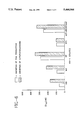
- FIG. 1 illustrates the inhibition of HIV-1 IIIB replication in MT-2 cells by synthetic peptides from gp120/gp41 of HIV-1 IIIB .
- FIG. 2 illustrates the inhibition of HIV-1 IIIB -mediated cytopathogenesis in MT-2 cells by synthetic peptides from gp120/gp41 of HIV-1 IIIB .
- FIG. 3 illustrates cytotoxicity mediated by the various synthetic peptides.
- FIG. 4 illustrates the inhibition of HIV-1 IIIB replication in U937 cells by synthetic peptides from HIV-1 IIIB gp120/gp41.
- FIG. 5 illustrates the dose-dependent inhibition of HIV-1 IIIB infection of MT-2 cells by synthetic peptide (637-666).
- FIG. 6 illustrates the inhibition of various HIV-1 isolates by synthetic peptide (637-666).
- FIG. 7 illustrates that antiserum to synthetic peptide (637-666) blocks its antiviral activity.
- FIG. 8 illustrates a comparison of monomers and dimers of synthetic peptide (637-666) as inhibitors of HIV-1 infection.
- the present invention provides for a synthetic polypeptide which effectively inhibits infectivity and viral replication of HIV-1.
- the polypeptide of the present invention has an amino acid sequence substantially corresponding to the amino acid sequence of the envelope glycoprotein of the HIV-1 IIIB virus from amino acid residue 600 to amino acid residue 862, and more preferably from amino acid residue 620 to 680.
- the polypeptide is present as a dimer and has an amino acid sequence substantially corresponding to the amino acid sequence of the envelope glycoprotein of the HIV-1 IIIB virus from amino acid residue 637 to 666.
- the synthetic polypeptide of the present invention preferably includes a Gly-Gly-Cys amino acid triplet coupled at its C-terminus, thereby facilitating dimerization or alternatively affording a means for coupling the polypeptide to other entities.
- an identical copy of a particular polypeptide can be readily produced where every amino acid in the copy appears in exactly the same sequential position as it does in the original.
- the copy has an amino acid sequence which corresponds exactly to the amino acid sequence of the original polypeptide from which it was copied.
- certain amino acids in the copy can be substituted with natural or synthetic analogs without altering any of the desired biological characteristics of the resulting polypeptide, provided that the regions containing biologically important residues are conserved.
- certain synthetic amino acid analogs can be substituted at desired positions within an amino acid sequence to impart resistance to proteolytic cleavage while maintaining the desired immunological character of the resulting polypeptide. Therefore, an identical copy of a particular polypeptide can receive certain substitutions at non-conserved regions and still retain the same biological character as the original polypeptide from which it was copied.
- the synthetic peptide of the present invention can be substituted with natural or synthetic analogs as long as the regions responsible for the biological character of the peptide remain conserved. These substitutions may be induced to impart a desired a character to the resulting polypeptide or, alternatively, may occur as natural variations in the sequence as observed in identified sub-types of HIV-1. For example, each clinical isolate of the HIV-1 virus has its own variant sequence and it is known in the art that the relative numerical alignment of the amino acid sequences for each isolate will be slightly different.
- polypeptide of the present invention can be said to "substantially correspond with" the original polypeptide or isolate from which it was copied despite natural variations in sequence and/or numerical alignment or substitutions as discussed above.
- a numerical frame of reference or standardized reading frame corresponding to the amino acid sequence of the envelope glycoprotein of HIV-1 IIIB should be consulted in order to establish the region of interest, amino acid residues 637-666.
- Several publications containing standardized amino acid sequence data for the HIV-1 virus are currently available. See, for example, Ratner, et al., "Complete nucleotide sequence of the AIDS virus," Nature, Volume 313, 277, (January, 1985). See also, “Human Retroviruses and AIDS 1991, A Compilation and Analysis of Nucleic Acid and Amino Acid Sequences,” (Myers et al. Eds.), Theoretical Biology and Biophysics Group, Los Alamos National Laboratory, Los Alamos, N. Mex., USA.
- the amino acid region of interest can be reproduced using a variety of procedures available in the art.
- a variety of automated synthesis units are currently available including the NPS 4,000 semi-automated multichannel peptide synthesizer and the Biosearch Model 9,600 automatic peptide synthesizer.
- certain recombinant DNA techniques or proteolytic cleavage techniques may be incorporated for constructing the polypeptide of the present invention.
- a carefully orchestrated proteolysis of gp160 or gp41 using proteolytic enzymes or chemical cleaving agents would be an acceptable method for producing a polypeptide of the present invention.
- synthetic polypeptide as it appears throughout the present Application, is taken to mean any non-naturally-occurring polypeptide constructed by one of the methods mentioned above or by other suitable methods known in the art.
- the Sequence Listing portion of the present Application provides examples of several synthetic polypeptides having amino acid sequences substantially corresponding to the amino acid sequences of the envelope glycoprotein of various clinical isolates of HIV-1 virus from amino acid residue 637 to 666 (see SEQ ID NOS: 1-10).
- the polypeptide of the present invention may preferably contain a Gly-Gly-Cys amino acid triplet coupled to its C-terminus in order to facilitate dimerization or attachment to another entity.
- the Sequence Listing portion of the present Application also contains each of the amino acid sequences set forth in SEQ. ID NOS: 1-10 further comprising a Gly-Gly-Cys triplet coupled to its C-terminus (see SEQ ID NOS: 11-20). These amino acid sequences constitute various synthetic polypeptides constructed in accordance with the present invention.
- the present invention also includes dimeric, trimeric and other polymeric forms of these peptides.
- the best mode of the present invention is the dimeric form of the polypeptide, wherein dimerization is achieved via the Gly-Gly-Cys triplet positioned at the C-terminus of the peptide, as illustrated in SEQ ID NOS. 11-20. Dimerization or polymerization of the polypeptide of the present invention can be induced using any number of acceptable methods known in the art.
- multimers of the polypeptide of the present invention can be produced via attachment to multimeric peptide carriers known in the art or other approaches, such as multiple antigen peptide systems (MAP) or ISCOM.
- MAP multiple antigen peptide systems
- ISCOM multiple antigen peptide systems
- additional cysteine residues found outside of the 637-666 region may be utilized to induce dimerization where the polypeptide to be dimerized has amino acid residues extending beyond residue 666.
- dimerization or polymerization may be mediated through additional -Cys- groups incorporated in or attached to the polypeptide.
- the polypeptides described herein may be coupled to protein or high molecular weight (macromolecular) polymeric carriers (or substrates) through several types of functional groups on the polypeptides. For example, thiol (--SH) groups, aromatic rings (e.g., Tyr or His), amino or carboxyl groups, etc. would be acceptable linking moieties.
- Methods designed to avoid the use of carriers by polymerizing synthetic polypeptides to give peptide polymers are also known in the art.
- MAP multiple antigen peptide system
- the polypeptide of the present invention effectively inhibits infections of various cell lines, such as the monocytic cell line U937 and CD4 + T-cell lines MT-2 and H9, by several HIV-1 isolates, including the HIV-1 isolates MN, RF, SF2, IIIB and AZT-resistant isolates.
- the polypeptide of the present invention provides for excellent inhibition of HIV-1-mediated cytopathogenesis and cell fusion, as compared with other synthetic polypeptides fashioned from other regions of the HIV-1 virus amino acid profile.
- the polypeptide of the present invention performs effective inhibitory function at acceptable levels of cytotoxicity.
- 29 peptides covering almost the entire sequence of HIV-1 IIIB gp160 and 21 peptides corresponding to the full-length V3 hypervariable loops of distinct HIV-1 isolates were synthesized.
- the syntheses were carried out on either an NPS 4000 semi-automated multichannel peptide synthesizer or a Biosearch Model 9600 automatic peptide synthesizer.
- the purity of the product was confirmed by HPLC and by amino acid analysis.
- the sequence of each peptide was determined using an Applied Biosystems Protein Sequence Model 477A with on-line HPLC analysis of PTH amino acids using an Applied Biosystems Model 120A PTH analyzer.
- H9, MT-2 and U937 cells were used as target cells.
- Five HIV-1 isolates (IIIB, MN, RF, SF2, and an AZT-resistant mutant) were cultivated in MT-2 cells, collected, and aliquoted.
- the titer of infectivity of the virus stocks were 10 4 -10 6 , 50% tissue culture infective doses(TCID 50 ).
- HIV-1 infectivity was determined by two distinct methods; an ELISA measuring HIV-1 core protein p24 production and a colorimetric assay for HIV-mediated cytopathogenesis. Briefly, 1 ⁇ 10 4 MT-2 cells in 96 well plates were infected with dilutions of HIV-1 IIIB in 200 ⁇ l RPMI 1640 medium with 10% FBS. After 24 hrs., half of the culture medium was changed. On the fourth day after incubation at 37° C., 100 ⁇ l of culture supernatant was collected from each well and an equal volume of fresh medium was added to the wells.
- the collected supernatants were mixed with equal volumes of 5% Triton X-100 and assayed for p24 using a kit from Coulter Immunology (Hialeah, Fla.).
- an indicator XTT tetrazolium dye (1 mg/ml; 50 ⁇ l/well; PolySciences, Inc., Warrington, Pa.) was added to the cells.
- intracellular formazan was determined colorimetrically at 450 nm.
- the percentage of cytopathogenesis was calculated using the following formula: [(OD 450 in negative control-OD 450 in experiment)/(OD 450 in negative control-OD 450 in positive control)] ⁇ 100.
- the negative control corresponded to cells mixed with culture medium, instead of HIV, while the positive control represented cells mixed with 100 TCID 50 of HIV-1 IIIB which lysed 100% of the MT-2 cells.
- the inhibitory effect of the peptide of the present invention on the fusion of HIV-1 infected cells with uninfected cells was also determined.
- 1.25 ⁇ 10 4 HIV-1 IIIB infected H9 cells were mixed with the peptide and an equal number of uninfected H9 cells. After incubation at 37° C. for 16 hrs., the syncytium-forming cells in a titer plate well were counted under a microscope and the inhibition of cell fusion by the peptide was calculated.
- Twenty-nine peptides from HIV-1 IIIB gp160 (gp120/gp41) and 21 peptides from V3 hypervariable loops of distinct HIV-1 isolates were screened for their inhibitory activity on HIV-1 replication and HIV-1-mediated cytopathogenesis in MT-2 cells. As shown in FIG. 1, among the 29 peptides from gp160 screened, four peptides (amino acid sequence 61-90, 102-126, 280-306, and 637-666), at a final concentration of 12.5 ⁇ g/ml, significantly inhibited HIV-1 replication, as indicated by a decrease of gag protein p24 synthesis. However, none of the peptides from V3 loops of 21 distinct HIV-1 isolates inhibited HIV-1 replication.
- cytotoxicity studies were performed using MT-2 cells at a final concentration of 12.5 ⁇ g/ml. It was found that three peptides (61-90, 102-126, and 280-306) had significant cytotoxicity, while the peptide (637-666) did not exhibit any cytotoxicity (see FIG. 3). When the concentration of the peptide (637-666) was increased to 11,145 ⁇ M, significant cytotoxicity remained undetectable.
- the peptide (637-666) was tested for its inhibitory activities on the HIV-1 replication, HIV-1-mediated cytopathogenesis and cell fusion at serial dilutions. As shown in FIG. 5, the peptide inhibited p24 production, cytopathogenesis and cell fusion in a dose-dependent manner.
- the ED 50 for inhibition of HIV-1 IIIB replication was 101.0 nM; for inhibition of cytopathogenesis mediated by HIV-1 IIIB , 142.0 nM; and, for inhibition of cell fusion, 160.0 nM.
- the aforementioned peptide (637-666) of the present invention was synthesized with a Gly-Gly-Cys amino acid triplet coupled at the C-terminus of the peptide.
- the results of the comparative assay are shown in FIG. 8.
- the dimerized form of the peptide is much more effective for inhibiting HIV-1 replication, HIV-1-mediated cytopathogenesis and cell fusion than the monomeric version of the same peptide.
- This result suggests that the peptide (637-666) will dimerize or polymerize by the addition of an extra amino acid residue, such as cysteine, at the C-terminus or the N-terminus of the peptide.
- these results also indicate that the dimerized or polymerized form of the peptide (637-666) may more effectively interfere with the process of HIV-1 infection than the monomeric version.
- the polypeptide of the present invention inhibited HIV-1 IIIB replication, HIV-1-mediated cytopathogenesis and cell fusion. Moreover, it inhibited the replication of HIV-1 in a dose-dependent manner. Its 50% effective dose (ED 50 ) for inhibition of HIV-1 replication was 101.0 nM. Its 50% effective dose for inhibition of cytopathogenesis mediated by HIV-1 was 142.0 nM. Its ED 50 for inhibition of cell fusion mediated by HIV-1 IIIB infected H9 cells was 160.0 nM. Its effective concentration is lower than that of most antiviral agents tested for inhibition of HIV-1 infection, such as aurintricarboxylic acid (ATA), and hemin. This agent had very low cytotoxicity.
- ATA aurintricarboxylic acid
- the 50% cytotoxic dose (CD 50 ), determined by a colorimetric assay, is larger than 11,145 nM. Therefore, its selective index (S.I. CD 50 /ED 50 ) is more than 110.0 for inhibition of HIV-1 IIIB replication, 78.0 for inhibition of HIV-1 IIIB -mediated cytopathogenesis and 70.0 for inhibition of HIV-1 IIIB -mediated cell fusion.
- the peptide of the present invention inhibited the replication of not only the homologous HIV-1 isolate (IIIB), but also heterologous HIV-1 isolates tested (MN, RF, and SF2). It also effectively inhibited infection by an AZT-resistant mutant which could not be effectively neutralized by AZT.
- the viral inhibitory activity of the peptide was blocked by rabbit antiserum directed against this synthetic peptide, suggesting that the virus-inhibitory activity is specifically mediated by the peptide (637-666) and not by other factors which may have contaminated the peptide preparation during peptide synthesis.
- the peptide of the present invention can dimerize, thereby enhancing its activity against HIV-1 infections.
- the polypeptide of the present invention is an ideal candidate for an antiviral agent against HIV-1, since it has a higher antiviral activity against many HIV-1 isolates than most other anti-HIV agents.
- the toxicity of this peptide for lymphocytes and monocytic cells is very low, suggesting that any adverse effects on human subjects may be also lower than that of currently used anti-HIV drugs, such as AZT.
- the polypeptide of the present invention provides for a method of treating HIV-1 infected subjects in addition to inhibiting viral replication in vitro.
- the method includes administering the polypeptide of the present invention in an amount effective to inhibit viral replication, and preferably in an amount effective to inhibit HIV-1-mediated cytopathogenesis and cell fusion.
- the amount of polypeptide administered to the subject should be sufficient to maintain an effective blood serum concentration ranging from about 0,005 mg/ml-0.01 mg/ml.
- Suitable methods of administration would include any pharmacologically acceptable approaches known in the art for delivering a therapeutic or prophylactic agent, such as oral, rectal, nasal, topical (including buccal and sub-lingual), vaginal, parenteral (including intramuscular, sub-cutaneous and intravenous), as well as approaches utilizing inhalation. Additionally, the polypeptide can be incorporated into an antiviral substance containing other active ingredients, such as AZT.
Landscapes
- Chemical & Material Sciences (AREA)
- Health & Medical Sciences (AREA)
- Life Sciences & Earth Sciences (AREA)
- Organic Chemistry (AREA)
- Medicinal Chemistry (AREA)
- General Health & Medical Sciences (AREA)
- Biophysics (AREA)
- Biochemistry (AREA)
- Genetics & Genomics (AREA)
- Gastroenterology & Hepatology (AREA)
- Molecular Biology (AREA)
- Proteomics, Peptides & Aminoacids (AREA)
- Virology (AREA)
- Chemical Kinetics & Catalysis (AREA)
- Oncology (AREA)
- Communicable Diseases (AREA)
- General Chemical & Material Sciences (AREA)
- Nuclear Medicine, Radiotherapy & Molecular Imaging (AREA)
- Pharmacology & Pharmacy (AREA)
- Animal Behavior & Ethology (AREA)
- Public Health (AREA)
- Veterinary Medicine (AREA)
- Peptides Or Proteins (AREA)
- Medicines That Contain Protein Lipid Enzymes And Other Medicines (AREA)
- Pharmaceuticals Containing Other Organic And Inorganic Compounds (AREA)
Priority Applications (10)
| Application Number | Priority Date | Filing Date | Title |
|---|---|---|---|
| US07/859,923 US5444044A (en) | 1992-03-26 | 1992-03-26 | Synthetic polypeptides as inhibitors of HIV-1 |
| AU35372/93A AU667078B2 (en) | 1992-03-26 | 1993-03-23 | Synthetic polypeptides as inhibitors of HIV-1 |
| EP93200863A EP0565164B1 (de) | 1992-03-26 | 1993-03-25 | Synthetische Polypeptide als Inhibitoren von HIV-1 |
| ES93200863T ES2107609T3 (es) | 1992-03-26 | 1993-03-25 | Polipeptidos sinteticos como inhibidores de vih-1. |
| DE69311427T DE69311427T2 (de) | 1992-03-26 | 1993-03-25 | Synthetische Polypeptide als Inhibitoren von HIV-1 |
| AT93200863T ATE154363T1 (de) | 1992-03-26 | 1993-03-25 | Synthetische polypeptide als inhibitoren von hiv- 1 |
| CA002092519A CA2092519C (en) | 1992-03-26 | 1993-03-25 | Synthetic polypeptides as inhibitors of hiv-1 |
| KR1019930004698A KR100269818B1 (ko) | 1992-03-26 | 1993-03-25 | 인간 면역 결핍 바이러스(hiv-1) 억제제로서의 합성 폴리펩타이드 |
| JP06819993A JP3587538B2 (ja) | 1992-03-26 | 1993-03-26 | Hiv−1 のインヒビターとしての合成ポリペプチド |
| US08/484,107 US5840843A (en) | 1992-03-26 | 1995-06-07 | Synthetic polypeptides as inhibitors of HIV-1 |
Applications Claiming Priority (1)
| Application Number | Priority Date | Filing Date | Title |
|---|---|---|---|
| US07/859,923 US5444044A (en) | 1992-03-26 | 1992-03-26 | Synthetic polypeptides as inhibitors of HIV-1 |
Related Child Applications (1)
| Application Number | Title | Priority Date | Filing Date |
|---|---|---|---|
| US08/484,107 Continuation US5840843A (en) | 1992-03-26 | 1995-06-07 | Synthetic polypeptides as inhibitors of HIV-1 |
Publications (1)
| Publication Number | Publication Date |
|---|---|
| US5444044A true US5444044A (en) | 1995-08-22 |
Family
ID=25332065
Family Applications (2)
| Application Number | Title | Priority Date | Filing Date |
|---|---|---|---|
| US07/859,923 Expired - Lifetime US5444044A (en) | 1992-03-26 | 1992-03-26 | Synthetic polypeptides as inhibitors of HIV-1 |
| US08/484,107 Expired - Lifetime US5840843A (en) | 1992-03-26 | 1995-06-07 | Synthetic polypeptides as inhibitors of HIV-1 |
Family Applications After (1)
| Application Number | Title | Priority Date | Filing Date |
|---|---|---|---|
| US08/484,107 Expired - Lifetime US5840843A (en) | 1992-03-26 | 1995-06-07 | Synthetic polypeptides as inhibitors of HIV-1 |
Country Status (9)
| Country | Link |
|---|---|
| US (2) | US5444044A (de) |
| EP (1) | EP0565164B1 (de) |
| JP (1) | JP3587538B2 (de) |
| KR (1) | KR100269818B1 (de) |
| AT (1) | ATE154363T1 (de) |
| AU (1) | AU667078B2 (de) |
| CA (1) | CA2092519C (de) |
| DE (1) | DE69311427T2 (de) |
| ES (1) | ES2107609T3 (de) |
Cited By (23)
| Publication number | Priority date | Publication date | Assignee | Title |
|---|---|---|---|---|
| US5656480A (en) * | 1992-07-20 | 1997-08-12 | Duke University | Compounds which inhibit HIV replication |
| US5840843A (en) * | 1992-03-26 | 1998-11-24 | The New York Blood Center | Synthetic polypeptides as inhibitors of HIV-1 |
| US20020010317A1 (en) * | 2000-03-17 | 2002-01-24 | Wild Carl T. | Method for generating immunogens that elicit neutralizing antibodies against fusion-active regions of HIV envelope proteins |
| US6506554B1 (en) | 1997-04-17 | 2003-01-14 | Whitehead Institute For Biomedical Research | Core structure of gp41 from the HIV envelope glycoprotein |
| US20030082525A1 (en) * | 1999-12-16 | 2003-05-01 | Whitehead Institute For Biomedical Research | Five-Helix protein |
| US20030125515A1 (en) * | 2001-07-11 | 2003-07-03 | Genfa Zhou | End-locked five-helix protein |
| US6605427B2 (en) | 2000-02-10 | 2003-08-12 | Panacos Pharmaceuticals, Inc. | Assay for detection of viral fusion inhibitors |
| US20040033235A1 (en) * | 1993-06-07 | 2004-02-19 | Duke University | Nucleic acids encoding DP-178 and other viral fusion inhibitor peptides useful for treating aids |
| US20040044183A1 (en) * | 1998-07-30 | 2004-03-04 | Whitehead Institute For Biomedical Research | Peptide inhibitors of HIV entry |
| US20040132011A1 (en) * | 2002-10-16 | 2004-07-08 | Panacos Pharmaceuticals, Inc. | Method for detecting viral inactivating agents |
| US6818740B1 (en) | 1997-04-17 | 2004-11-16 | Whitehead Institute For Biomedical Research | Inhibitors of HIV membrane fusion |
| US6841657B2 (en) | 1997-04-17 | 2005-01-11 | Whitehead Institute For Biomedical Research | Inhibitors of HIV membrane fusion |
| US20050221294A1 (en) * | 1998-07-30 | 2005-10-06 | Whitehead Institute For Biomedical Research | Inhibitors of HIV membrane fusion |
| US20060014139A1 (en) * | 1999-12-16 | 2006-01-19 | Whitehead Institute For Biomedical Research | Five-Helix protein |
| US20070202127A1 (en) * | 1993-06-07 | 2007-08-30 | Duke University | Nucleic acids encoding DP-178 and other viral fusion inhibitor peptides useful for treating aids |
| US20070224212A1 (en) * | 2004-06-01 | 2007-09-27 | Elisabetta Bianchi | Stable Peptide Mimetic of Hiv Gp41 Fusion Intermediate |
| US20070248613A1 (en) * | 2004-06-01 | 2007-10-25 | Shiver John W | Human Antibodies Interacting with Hiv Gp41 |
| US20090298774A1 (en) * | 2008-05-28 | 2009-12-03 | Shibo Jiang | Bifunctional Molecules for Inhibiting HIV Entry |
| US20100092505A1 (en) * | 2005-04-05 | 2010-04-15 | Elisabetta Bianchi | Method for Shielding Functional Sites or Epitopes on Proteins |
| US20100204120A1 (en) * | 2009-02-09 | 2010-08-12 | Shibo Jiang | Trimeric hiv fusion inhibitors for treating or preventing hiv infection |
| US8828932B2 (en) | 2010-05-03 | 2014-09-09 | New York Blood Center, Inc. | Bifunctional molecules for inactivating HIV and blocking HIV entry |
| WO2021155733A1 (zh) | 2020-02-05 | 2021-08-12 | 复旦大学 | 多肽、其制备方法和用途 |
| CN119613503A (zh) * | 2024-07-22 | 2025-03-14 | 山西锦波生物医药股份有限公司 | 可抑制类mers冠状病毒感染的多肽及其应用 |
Families Citing this family (9)
| Publication number | Priority date | Publication date | Assignee | Title |
|---|---|---|---|---|
| US6281331B1 (en) * | 1998-03-23 | 2001-08-28 | Trimeris, Inc. | Methods and compositions for peptide synthesis |
| WO1999048513A1 (en) * | 1998-03-23 | 1999-09-30 | Trimeris, Inc. | Methods and compositions for peptide synthesis |
| US6596497B1 (en) | 1999-03-17 | 2003-07-22 | New York Blood Center, Inc. | Screening of antiviral compounds targeted to the HIV-1 gp41 core structure |
| WO2003048187A2 (en) * | 2001-11-29 | 2003-06-12 | Mymetics, Corp. | Peptides and use thereof in therapeutic agents against hiv infection |
| WO2005060350A2 (en) | 2003-12-22 | 2005-07-07 | Yeda Research & Development Co. Ltd. | Diastereomeric peptides useful as inhibitors of membrane protein assembly |
| CA2595414A1 (en) * | 2005-01-24 | 2006-07-27 | Yeda Research & Development Co. Ltd. | Hiv-1 gp41 fusion peptides for immunomodulation |
| JP4788958B2 (ja) * | 2006-02-28 | 2011-10-05 | 東亞合成株式会社 | 抗ウイルス性ペプチドおよびその利用 |
| JP4831410B2 (ja) * | 2006-02-28 | 2011-12-07 | 東亞合成株式会社 | 抗ウイルス性ペプチドおよび抗ウイルス剤 |
| EP2447277A1 (de) | 2010-10-28 | 2012-05-02 | Laboratorios Del. Dr. Esteve, S.A. | Impfstoffzusammensetzungen auf Basis von modifizierten gp41-Immunogenen |
Citations (3)
| Publication number | Priority date | Publication date | Assignee | Title |
|---|---|---|---|---|
| WO1987007616A1 (en) * | 1986-06-12 | 1987-12-17 | Biogen N.V. | Peptides involved in the pathogenesis of hiv infection |
| EP0330359A2 (de) * | 1988-02-25 | 1989-08-30 | Bio-Rad Laboratories, Inc. | Zusammensetzung, verwendbar zur Diagnose und Behandlung von HIV-I-Infektion |
| EP0335134A2 (de) * | 1988-03-30 | 1989-10-04 | Abbott Laboratories | Monoklonale Antikörper von Mäusen gegen das gp41 Protein von menschlichem Immunmangelsyndrom-Virus |
Family Cites Families (2)
| Publication number | Priority date | Publication date | Assignee | Title |
|---|---|---|---|---|
| FR2586575B1 (fr) * | 1985-08-30 | 1991-09-06 | Lepage Pierre Alain | Programmateur d'efforts pour l'entrainement du cycliste |
| US5444044A (en) * | 1992-03-26 | 1995-08-22 | New York Blood Center | Synthetic polypeptides as inhibitors of HIV-1 |
-
1992
- 1992-03-26 US US07/859,923 patent/US5444044A/en not_active Expired - Lifetime
-
1993
- 1993-03-23 AU AU35372/93A patent/AU667078B2/en not_active Expired
- 1993-03-25 DE DE69311427T patent/DE69311427T2/de not_active Expired - Lifetime
- 1993-03-25 KR KR1019930004698A patent/KR100269818B1/ko not_active Expired - Fee Related
- 1993-03-25 AT AT93200863T patent/ATE154363T1/de not_active IP Right Cessation
- 1993-03-25 ES ES93200863T patent/ES2107609T3/es not_active Expired - Lifetime
- 1993-03-25 EP EP93200863A patent/EP0565164B1/de not_active Expired - Lifetime
- 1993-03-25 CA CA002092519A patent/CA2092519C/en not_active Expired - Fee Related
- 1993-03-26 JP JP06819993A patent/JP3587538B2/ja not_active Expired - Fee Related
-
1995
- 1995-06-07 US US08/484,107 patent/US5840843A/en not_active Expired - Lifetime
Patent Citations (3)
| Publication number | Priority date | Publication date | Assignee | Title |
|---|---|---|---|---|
| WO1987007616A1 (en) * | 1986-06-12 | 1987-12-17 | Biogen N.V. | Peptides involved in the pathogenesis of hiv infection |
| EP0330359A2 (de) * | 1988-02-25 | 1989-08-30 | Bio-Rad Laboratories, Inc. | Zusammensetzung, verwendbar zur Diagnose und Behandlung von HIV-I-Infektion |
| EP0335134A2 (de) * | 1988-03-30 | 1989-10-04 | Abbott Laboratories | Monoklonale Antikörper von Mäusen gegen das gp41 Protein von menschlichem Immunmangelsyndrom-Virus |
Non-Patent Citations (6)
| Title |
|---|
| Neurath et al., Virology, vol. 188, pp. 1 13, 1992. * |
| Neurath et al., Virology, vol. 188, pp. 1-13, 1992. |
| Neurath, et al., "B Cell Epitope Mapping of Human Immunodeficiency Virus Envelope Glycoproteins with Long (19- to 36-) Synthetic Peptides", Journal of General Virology, 71, pp. 85-95 (1990). |
| Neurath, et al., B Cell Epitope Mapping of Human Immunodeficiency Virus Envelope Glycoproteins with Long (19 to 36 ) Synthetic Peptides , Journal of General Virology, 71, pp. 85 95 (1990). * |
| Ratner, et al., "Complete Nucleotide Sequence of the AIDS Virus", Nature, vol. 313, pp. 277-284, (Jan. 24, 1985). |
| Ratner, et al., Complete Nucleotide Sequence of the AIDS Virus , Nature, vol. 313, pp. 277 284, (Jan. 24, 1985). * |
Cited By (48)
| Publication number | Priority date | Publication date | Assignee | Title |
|---|---|---|---|---|
| US5840843A (en) * | 1992-03-26 | 1998-11-24 | The New York Blood Center | Synthetic polypeptides as inhibitors of HIV-1 |
| US6573078B1 (en) | 1992-07-20 | 2003-06-03 | Duke University | Compounds which inhibit HIV replication |
| US5656480A (en) * | 1992-07-20 | 1997-08-12 | Duke University | Compounds which inhibit HIV replication |
| US20030181382A1 (en) * | 1992-07-20 | 2003-09-25 | Duke University | Compounds which inhibit HIV replication |
| US20070202123A1 (en) * | 1993-06-07 | 2007-08-30 | Duke University | Fusion proteins comprising DP-178 and other viral fusion inhibitor peptides useful for treating aids |
| US6824783B1 (en) * | 1993-06-07 | 2004-11-30 | Duke University | Methods for inhibition of membrane fusion-associated events, including HIV transmission |
| US7988974B2 (en) | 1993-06-07 | 2011-08-02 | Duke University | Antifusogenic proteins comprising human immunodeficiency virus type 1 (HIV-1) gp41 DP-178 polypeptide variants and a macromolecular carrier |
| US7794725B1 (en) * | 1993-06-07 | 2010-09-14 | Trimeris, Inc. | Isolated peptides derived from human immunodeficiency virus types 1 and 2 containing fusion inhibitory domains |
| US20070202127A1 (en) * | 1993-06-07 | 2007-08-30 | Duke University | Nucleic acids encoding DP-178 and other viral fusion inhibitor peptides useful for treating aids |
| US20040033235A1 (en) * | 1993-06-07 | 2004-02-19 | Duke University | Nucleic acids encoding DP-178 and other viral fusion inhibitor peptides useful for treating aids |
| US7273614B2 (en) | 1993-06-07 | 2007-09-25 | Duke University | Nucleic acids encoding DP-178 and other viral fusion inhibitor peptides useful for treating aids |
| US20040052820A1 (en) * | 1993-06-07 | 2004-03-18 | Duke University | Fusion proteins comprising DP-178 and other viral fusion inhibitor peptides useful for treating aids |
| US7122190B2 (en) | 1993-06-07 | 2006-10-17 | Duke University | Fusion proteins comprising DP-178 and other viral fusion inhibitor peptides useful for treating aids |
| US20100291680A1 (en) * | 1994-06-07 | 2010-11-18 | Trimeris, Inc. | Methods and compositions for inhibition of membrane fusion-associated events, including hiv transmission |
| US6818740B1 (en) | 1997-04-17 | 2004-11-16 | Whitehead Institute For Biomedical Research | Inhibitors of HIV membrane fusion |
| US20030099935A1 (en) * | 1997-04-17 | 2003-05-29 | Whitehead Institute For Biomedical Research | Core structure of GP41 from the HIV envelope glycoprotein |
| US7402396B2 (en) | 1997-04-17 | 2008-07-22 | Whitehead Institute For Biomedical Research | Core structure of gp41 from the HIV envelope glycoprotein |
| US6841657B2 (en) | 1997-04-17 | 2005-01-11 | Whitehead Institute For Biomedical Research | Inhibitors of HIV membrane fusion |
| US20050053917A1 (en) * | 1997-04-17 | 2005-03-10 | Whitehead Institute For Biomedical Research | Core structure of gp41 from the HIV envelope glycoprotein |
| US6506554B1 (en) | 1997-04-17 | 2003-01-14 | Whitehead Institute For Biomedical Research | Core structure of gp41 from the HIV envelope glycoprotein |
| US7960504B2 (en) | 1998-07-30 | 2011-06-14 | Whitehead Institute For Biomedical Research | Inhibitors of HIV membrane fusion |
| US20050221294A1 (en) * | 1998-07-30 | 2005-10-06 | Whitehead Institute For Biomedical Research | Inhibitors of HIV membrane fusion |
| US6747126B1 (en) | 1998-07-30 | 2004-06-08 | Whitehead Institute For Biomedical Research | Peptide inhibitors of HIV entry |
| US7226598B2 (en) | 1998-07-30 | 2007-06-05 | Whitehead Institute For Biomedical Research | Peptide inhibitors of HIV entry |
| US20040044183A1 (en) * | 1998-07-30 | 2004-03-04 | Whitehead Institute For Biomedical Research | Peptide inhibitors of HIV entry |
| US7811578B2 (en) | 1998-07-30 | 2010-10-12 | Whitehead Institute For Biomedical Research | Soluble chimeric peptide inhibitors of HIV entry comprising an IZ trimeric coiled-coil peptide and HIV gp41 N-helix coiled-coil peptide |
| US7053179B2 (en) | 1999-12-16 | 2006-05-30 | Whitehead Institute For Biomedical Research | Five-Helix protein |
| US8058012B2 (en) | 1999-12-16 | 2011-11-15 | Whitehead Institute For Biomedical Research | Five-helix protein |
| US7504224B2 (en) | 1999-12-16 | 2009-03-17 | Whitehead Institute For Biomedical Research | Five-Helix protein |
| US20030082525A1 (en) * | 1999-12-16 | 2003-05-01 | Whitehead Institute For Biomedical Research | Five-Helix protein |
| US20060014139A1 (en) * | 1999-12-16 | 2006-01-19 | Whitehead Institute For Biomedical Research | Five-Helix protein |
| US6605427B2 (en) | 2000-02-10 | 2003-08-12 | Panacos Pharmaceuticals, Inc. | Assay for detection of viral fusion inhibitors |
| US20020010317A1 (en) * | 2000-03-17 | 2002-01-24 | Wild Carl T. | Method for generating immunogens that elicit neutralizing antibodies against fusion-active regions of HIV envelope proteins |
| US20030125515A1 (en) * | 2001-07-11 | 2003-07-03 | Genfa Zhou | End-locked five-helix protein |
| US20040132011A1 (en) * | 2002-10-16 | 2004-07-08 | Panacos Pharmaceuticals, Inc. | Method for detecting viral inactivating agents |
| US20070224212A1 (en) * | 2004-06-01 | 2007-09-27 | Elisabetta Bianchi | Stable Peptide Mimetic of Hiv Gp41 Fusion Intermediate |
| US7811577B2 (en) | 2004-06-01 | 2010-10-12 | Merck Sharp & Dohme Corp. | Covalently stabilized chimeric coiled-coil HIV gp41 N-peptides with improved antiviral activity |
| US7744887B2 (en) | 2004-06-01 | 2010-06-29 | Merck & Co., Inc. | Human antibodies interacting with HIV gp41 |
| US20070248613A1 (en) * | 2004-06-01 | 2007-10-25 | Shiver John W | Human Antibodies Interacting with Hiv Gp41 |
| US20100092505A1 (en) * | 2005-04-05 | 2010-04-15 | Elisabetta Bianchi | Method for Shielding Functional Sites or Epitopes on Proteins |
| US20090298774A1 (en) * | 2008-05-28 | 2009-12-03 | Shibo Jiang | Bifunctional Molecules for Inhibiting HIV Entry |
| US8828931B2 (en) | 2008-05-28 | 2014-09-09 | New York Blood Center, Inc. | Bifunctional molecules for inhibiting HIV entry |
| US20100204120A1 (en) * | 2009-02-09 | 2010-08-12 | Shibo Jiang | Trimeric hiv fusion inhibitors for treating or preventing hiv infection |
| US9115186B2 (en) | 2009-02-09 | 2015-08-25 | New York Blood Center | Stabilized trimeric HIV-1 gp41 fusion polypeptides comprising the N-terminal heptad repeat (NHR) and foldon (FD) trimerization motif |
| US9724383B2 (en) | 2009-02-09 | 2017-08-08 | New York Blood Center, Inc. | Stabilized trimeric HIV-1 GP41 fusion inhibitor polypeptides comprising the N-terminal heptad repeat (NHR) and foldon (FD) trimerization motif |
| US8828932B2 (en) | 2010-05-03 | 2014-09-09 | New York Blood Center, Inc. | Bifunctional molecules for inactivating HIV and blocking HIV entry |
| WO2021155733A1 (zh) | 2020-02-05 | 2021-08-12 | 复旦大学 | 多肽、其制备方法和用途 |
| CN119613503A (zh) * | 2024-07-22 | 2025-03-14 | 山西锦波生物医药股份有限公司 | 可抑制类mers冠状病毒感染的多肽及其应用 |
Also Published As
| Publication number | Publication date |
|---|---|
| KR100269818B1 (ko) | 2000-10-16 |
| JP3587538B2 (ja) | 2004-11-10 |
| JPH06340698A (ja) | 1994-12-13 |
| EP0565164A1 (de) | 1993-10-13 |
| EP0565164B1 (de) | 1997-06-11 |
| US5840843A (en) | 1998-11-24 |
| AU667078B2 (en) | 1996-03-07 |
| CA2092519A1 (en) | 1993-09-27 |
| DE69311427T2 (de) | 1998-02-12 |
| CA2092519C (en) | 2003-03-18 |
| KR930019695A (ko) | 1993-10-18 |
| AU3537293A (en) | 1993-09-30 |
| ES2107609T3 (es) | 1997-12-01 |
| ATE154363T1 (de) | 1997-06-15 |
| DE69311427D1 (de) | 1997-07-17 |
Similar Documents
| Publication | Publication Date | Title |
|---|---|---|
| US5444044A (en) | Synthetic polypeptides as inhibitors of HIV-1 | |
| Rice et al. | Inhibition of HIV-1 infectivity by zinc-ejecting aromatic C-nitroso compounds | |
| Berman et al. | Human immunodeficiency virus type 1 challenge of chimpanzees immunized with recombinant envelope glycoprotein gp120. | |
| DE69420034T2 (de) | Synthetische mischpeptide, die die entstehung von neutralisierenden antikörpern und die wirkung der cytotoxischen t-lymphozyten gegen hiv hervorufen | |
| WO1994002505A9 (en) | Compounds which inhibit hiv replication | |
| AU4683793A (en) | Compounds which inhibit hiv replication | |
| MXPA02001344A (es) | Peptidos que bloquean la infeccion viral y metodos para su uso. | |
| WO1999024465A1 (en) | Stabilized primate lentivirus envelope glycoproteins | |
| Owens et al. | Oligopeptide inhibitors of HIV-induced syncytium formation | |
| Chen et al. | Mutations in the leucine zipper-like heptad repeat sequence of human immunodeficiency virus type 1 gp41 dominantly interfere with wild-type virus infectivity | |
| Rayne et al. | The NH2-terminal domain of the human T-cell leukemia virus type 1 capsid protein is involved in particle formation | |
| US5711947A (en) | Method to induce cytotoxic T Lymphocytes specific for a broad array of HIV-1 isolates using hybrid synthetic peptides | |
| AP502A (en) | Multiple branch peptide constructions for use against HIV. | |
| Doyle et al. | Regions required for CD4 binding in the external glycoprotein gp120 of simian immunodeficiency virus | |
| CA2274853C (en) | Multiple branch peptide constructions | |
| EP1043974B1 (de) | Liposomen mit mehrfach verzweigten peptidkonstruktionen zur verwendung gegen hiv | |
| US7285621B2 (en) | Multiple branch peptide construction | |
| Mabrouk et al. | Correlation of Antiviral Activity with. beta.-Turn Types for V3 Synthetic Multibranched Peptides from HIV-1 gp120 | |
| Mirsaliotis et al. | Conformation-specific antibodies targeting the trimer-of-hairpins motif of the human T-cell leukemia virus type 1 transmembrane glycoprotein recognize the viral envelope but fail to neutralize viral entry | |
| EP1521587A2 (de) | Gp41-peptide und darauf basierende verfahren zur inhibierung der fusion von hiv mit targetzellen | |
| JP3725899B2 (ja) | Hivに対して使用するための多分岐ペプチド構築物 | |
| JP3725899B6 (ja) | Hivに対して使用するための多分岐ペプチド構築物 | |
| Harms | Inducible herbicide resistance |
Legal Events
| Date | Code | Title | Description |
|---|---|---|---|
| AS | Assignment |
Owner name: NEW YORK BLOOD CENTER, THE, NEW YORK Free format text: ASSIGNMENT OF ASSIGNORS INTEREST.;ASSIGNORS:JIANG, SHIBO;LIN, KANG;NEURATH, A. R.;REEL/FRAME:006113/0504 Effective date: 19920406 |
|
| STCF | Information on status: patent grant |
Free format text: PATENTED CASE |
|
| AS | Assignment |
Owner name: NATIONAL INSTITUTES OF HEALTH, THE, MARYLAND Free format text: CONFIRMATORY LICENSE;ASSIGNOR:NEW YORK BLOOD CENTER;REEL/FRAME:008040/0225 Effective date: 19960129 |
|
| FPAY | Fee payment |
Year of fee payment: 4 |
|
| FPAY | Fee payment |
Year of fee payment: 8 |
|
| FEPP | Fee payment procedure |
Free format text: PAT HOLDER NO LONGER CLAIMS SMALL ENTITY STATUS, ENTITY STATUS SET TO UNDISCOUNTED (ORIGINAL EVENT CODE: STOL); ENTITY STATUS OF PATENT OWNER: LARGE ENTITY |
|
| REFU | Refund |
Free format text: REFUND - PAYMENT OF MAINTENANCE FEE, 12TH YR, SMALL ENTITY (ORIGINAL EVENT CODE: R2553); ENTITY STATUS OF PATENT OWNER: LARGE ENTITY |
|
| FPAY | Fee payment |
Year of fee payment: 12 |